EP2964745B1 - Dispositifs et procédés permettant de tester la propreté d'instruments médicaux - Google Patents
Dispositifs et procédés permettant de tester la propreté d'instruments médicaux Download PDFInfo
- Publication number
- EP2964745B1 EP2964745B1 EP14759572.2A EP14759572A EP2964745B1 EP 2964745 B1 EP2964745 B1 EP 2964745B1 EP 14759572 A EP14759572 A EP 14759572A EP 2964745 B1 EP2964745 B1 EP 2964745B1
- Authority
- EP
- European Patent Office
- Prior art keywords
- cannula
- guiding member
- sponge element
- testing
- sponge
- Prior art date
- Legal status (The legal status is an assumption and is not a legal conclusion. Google has not performed a legal analysis and makes no representation as to the accuracy of the status listed.)
- Active
Links
Images



Classifications
-
- A—HUMAN NECESSITIES
- A61—MEDICAL OR VETERINARY SCIENCE; HYGIENE
- A61B—DIAGNOSIS; SURGERY; IDENTIFICATION
- A61B1/00—Instruments for performing medical examinations of the interior of cavities or tubes of the body by visual or photographical inspection, e.g. endoscopes; Illuminating arrangements therefor
- A61B1/12—Instruments for performing medical examinations of the interior of cavities or tubes of the body by visual or photographical inspection, e.g. endoscopes; Illuminating arrangements therefor with cooling or rinsing arrangements
- A61B1/121—Instruments for performing medical examinations of the interior of cavities or tubes of the body by visual or photographical inspection, e.g. endoscopes; Illuminating arrangements therefor with cooling or rinsing arrangements provided with means for cleaning post-use
- A61B1/122—Instruments for performing medical examinations of the interior of cavities or tubes of the body by visual or photographical inspection, e.g. endoscopes; Illuminating arrangements therefor with cooling or rinsing arrangements provided with means for cleaning post-use using cleaning tools, e.g. brushes
-
- A—HUMAN NECESSITIES
- A61—MEDICAL OR VETERINARY SCIENCE; HYGIENE
- A61M—DEVICES FOR INTRODUCING MEDIA INTO, OR ONTO, THE BODY; DEVICES FOR TRANSDUCING BODY MEDIA OR FOR TAKING MEDIA FROM THE BODY; DEVICES FOR PRODUCING OR ENDING SLEEP OR STUPOR
- A61M39/00—Tubes, tube connectors, tube couplings, valves, access sites or the like, specially adapted for medical use
- A61M39/08—Tubes; Storage means specially adapted therefor
-
- A—HUMAN NECESSITIES
- A61—MEDICAL OR VETERINARY SCIENCE; HYGIENE
- A61M—DEVICES FOR INTRODUCING MEDIA INTO, OR ONTO, THE BODY; DEVICES FOR TRANSDUCING BODY MEDIA OR FOR TAKING MEDIA FROM THE BODY; DEVICES FOR PRODUCING OR ENDING SLEEP OR STUPOR
- A61M39/00—Tubes, tube connectors, tube couplings, valves, access sites or the like, specially adapted for medical use
- A61M39/10—Tube connectors; Tube couplings
- A61M39/16—Tube connectors; Tube couplings having provision for disinfection or sterilisation
-
- A—HUMAN NECESSITIES
- A61—MEDICAL OR VETERINARY SCIENCE; HYGIENE
- A61M—DEVICES FOR INTRODUCING MEDIA INTO, OR ONTO, THE BODY; DEVICES FOR TRANSDUCING BODY MEDIA OR FOR TAKING MEDIA FROM THE BODY; DEVICES FOR PRODUCING OR ENDING SLEEP OR STUPOR
- A61M39/00—Tubes, tube connectors, tube couplings, valves, access sites or the like, specially adapted for medical use
- A61M39/10—Tube connectors; Tube couplings
- A61M39/16—Tube connectors; Tube couplings having provision for disinfection or sterilisation
- A61M39/18—Methods or apparatus for making the connection under sterile conditions, i.e. sterile docking
-
- C—CHEMISTRY; METALLURGY
- C12—BIOCHEMISTRY; BEER; SPIRITS; WINE; VINEGAR; MICROBIOLOGY; ENZYMOLOGY; MUTATION OR GENETIC ENGINEERING
- C12Q—MEASURING OR TESTING PROCESSES INVOLVING ENZYMES, NUCLEIC ACIDS OR MICROORGANISMS; COMPOSITIONS OR TEST PAPERS THEREFOR; PROCESSES OF PREPARING SUCH COMPOSITIONS; CONDITION-RESPONSIVE CONTROL IN MICROBIOLOGICAL OR ENZYMOLOGICAL PROCESSES
- C12Q1/00—Measuring or testing processes involving enzymes, nucleic acids or microorganisms; Compositions therefor; Processes of preparing such compositions
- C12Q1/02—Measuring or testing processes involving enzymes, nucleic acids or microorganisms; Compositions therefor; Processes of preparing such compositions involving viable microorganisms
- C12Q1/22—Testing for sterility conditions
-
- C—CHEMISTRY; METALLURGY
- C12—BIOCHEMISTRY; BEER; SPIRITS; WINE; VINEGAR; MICROBIOLOGY; ENZYMOLOGY; MUTATION OR GENETIC ENGINEERING
- C12Q—MEASURING OR TESTING PROCESSES INVOLVING ENZYMES, NUCLEIC ACIDS OR MICROORGANISMS; COMPOSITIONS OR TEST PAPERS THEREFOR; PROCESSES OF PREPARING SUCH COMPOSITIONS; CONDITION-RESPONSIVE CONTROL IN MICROBIOLOGICAL OR ENZYMOLOGICAL PROCESSES
- C12Q1/00—Measuring or testing processes involving enzymes, nucleic acids or microorganisms; Compositions therefor; Processes of preparing such compositions
- C12Q1/66—Measuring or testing processes involving enzymes, nucleic acids or microorganisms; Compositions therefor; Processes of preparing such compositions involving luciferase
-
- G—PHYSICS
- G01—MEASURING; TESTING
- G01N—INVESTIGATING OR ANALYSING MATERIALS BY DETERMINING THEIR CHEMICAL OR PHYSICAL PROPERTIES
- G01N31/00—Investigating or analysing non-biological materials by the use of the chemical methods specified in the subgroup; Apparatus specially adapted for such methods
- G01N31/22—Investigating or analysing non-biological materials by the use of the chemical methods specified in the subgroup; Apparatus specially adapted for such methods using chemical indicators
Definitions
- the present disclosure is directed towards methods for testing the cleanliness of medical instruments.
- Another challenge includes properly determining when a cannulated device has been properly cleaned. Lumens of such device are difficult or impossible to inspect visually. Standard cleaning protocols can be followed but these do not always result in a properly cleaned device. Consequently, improved testing methods and devices are required to ensure an elongated medical instrument is properly cleaned.
- One method for testing the cleanliness of an instrument following a cleaning protocol includes passing a test swab through the "cleaned" cannula and analyzing the test swab for any biological debris or bioburden.
- One test of bioburden relies on the presence of adenosine triphosphate (ATP).
- ATP is a molecule found in and around living cells, and can provide a direct measure of biological concentration.
- current systems and methods cannot test for ATP where biological cells are contained within a biofilm.
- a biofilm is produced by a complex and coordinated network of microbes having increased resistance to detergents and antibiotics.
- Microbes within the network form an organic polymer matrix, producing a sticky mucous coating, or slime.
- the matrix provides structural support for cellular communities formed within the network. Channels may distribute nutrients within the network, allowing the communities to grow in a more isolated environment.
- Biofilms can include a variety of microbes, including aerobic and anaerobic bacteria, algae, protozoa, and fungi.
- the bacteria in a biofilm can have significantly different properties from free-floating bacteria due to the complex matrix structure.
- microbial cells within the matrix may have unique gene expression. This may allow synergistic interactions within the complex network.
- DE102011050765 discloses a method for determining degree of pollution of a narrow human medical device.
- the method involves inserting or removing a clean swab of a wire into a cavity of a medical device.
- the clean swab is introduced into a transparent test vessel using a holder fixed at an end of the wire for detection of adenosine triphosphate (ATP) or adenosine monophosphate (AMP).
- ATP adenosine triphosphate
- AMP adenosine monophosphate
- the clean swab is left in the test container for predetermined time.
- the test container is introduced into the measuring device for luminescence measurement.
- FIG. 1 shows a schematic diagram of a device 100 for cleaning a cannula of a medical instrument, according to an exemplary embodiment.
- the medical instrument can be a flexible or rigid scope, for example, an endoscope, a flexible fiberoptic, a laparoscopic instrument, a tracheostomy tube, a proctoscope, a bronchoscope, orthopedic instruments, part of an instrument or any medical device with a cannula or a lumen.
- the medical instrument can be articulated or non-articulated.
- a cannula of a medical instrument can vary in length and shape. For example, the length of a cannula can range from about 50 mm to about 500 mm. While the cross-sectional geometry of a cannula can vary, they are generally circular, oval, or have an arcuate shape.
- Device 100 can comprise an elongated flexible guiding member 110 having a first end 101 and a second end 102.
- Guiding member 110 can be flexible along its longitudinal length and configured to follow and flex based on the geometry of a cannula of the medical instrument being cleaned.
- Guiding member 110 can be made of flexible polypropylene, polyoxmethylene, or other flexible polymers or plastics.
- the diameter of guiding member 110 can range between 0.5 mm to 5 mm.
- Device 100 can further comprise a plurality of cleaning elements 115 attached to guiding member 110.
- plurality of cleaning elements 115 can be located between first end 101 and second end 102.
- plurality of cleaning elements 15 can comprise a foam element 120 and a bristle element 130.
- plurality of cleaning elements 115 can be located at one end of guiding member 110 or at some other locations along guiding member 110.
- foam element 120 can comprise a foam structure 122.
- Foam structure 122 can comprise a hydrophobic medical grade polyurethane foam that forms a backbone for an open cell foam. A coating of hydrophilic medical grade polyurethane can be formed on the hydrophobic backbone.
- Foam structure 122 can have a high porosity resulting in a plurality of pores 121. Plurality of pores 121 can vary in size and shape.
- Foam structure 122 can be generally cylindrical or another suitable shape.
- the cross-sectional diameter of foam element 120 can be approximately equal to or greater than the inner diameter of the cannula being cleaned.
- a cross-sectional diameter 123 of foam element 120 can be between about 1 mm to about 14 mm.
- Cross-sectional diameter 123 of foam element 120 can be selected based on the dimension of the cannula being cleaned. For example, cross-sectional diameter 123 can be greater than the cross-sectional diameter of the cannula being cleaned, but not so much greater that foam element 120 is unable to compress and fit within the cannula.
- a length 124 of foam element 120 can range between about 0.25 to about 5 inches.
- the cross-sectional diameter of foam element 120 can vary along length 124 of foam element 120.
- a cross-sectional diameter 125 decreases moving away from second end 102.
- a cross-sectional diameter 126 remains substantially constant over a length 127 of foam element 120.
- a cross-sectional diameter 128 varies along a length 129 of foam element 120 creating a wave like element.
- Additional embodiments of foam element 120 are contemplated.
- FIG. 3D illustrates an additional embodiment of foam element 120 wherein foam element 120 includes multiple foam sections spaced apart creating a plurality of cavities 190 between each section.
- Cavities 190 can act as collection chambers for bioburden, reducing the amount of bioburden collected on the exterior surface of foam element 120.
- surface features e.g., helical slots, protrusions, dimples, ridges, etc.
- surface features e.g., helical slots, protrusions, dimples, ridges, etc.
- Foam element 120 can be attached to guiding member 110 using an adhesive material, for example, an epoxy or glue, as would be apparent to those of ordinary skill in the art.
- foam element 120 can be attached to guiding member 110 using a heat bonding method that can eliminate the need for an adhesive material.
- the adhesive or heat bonding method used can be configured to ensure that foam element 120 will not disconnect from guiding member 110 during use.
- FIG. 4 illustrates an enlarged view of bristle element 130.
- Bristle element 130 can be located in the region of first end 101.
- Bristle element 130 can be comprised of a plurality of bristles 131 secured between a plurality of twisted metal wires 132 protruding from guiding member 110.
- Bristles 131 can be made of nylon. It is contemplated that other methods apparent to those of ordinary skill in the art for securing bristles to a brush or a support member are contemplated.
- Bristles 131 can extend out laterally from twisted metal wires 132 forming a generally cylindrical shape. Bristles 131 in addition to extending out laterally can be angled toward first end 101 or away from first end 101.
- the diameter of the generally cylindrical shape bristle element 130 can be about 1 mm to about 14 mm.
- the cross-sectional diameter of bristle element 130 can correspond to the cross-sectional diameter of foam element 120 and can be selected based on the dimension of the cannula being cleaned. It is contemplated that the cross-sectional diameter of bristle element 130 can be less than, equal to, or greater than the diameter of the foam element 120.
- the length of bristle element 130 can range between about 0.25 to about 3 inches. In various embodiments, varying the length of bristles 131 can create ridges or a helical pattern along the exterior of bristle element 130.
- Device 100 can further comprise a bulb 150 at first end 101 of device 100.
- Bulb 150 can include a rounded protrusion covering the end of metal wires 132.
- Bulb 150 can be made of rubber, plastic or polymer, for example, polypropylene.
- bulb 150 can be configured to slide freely over edges and rough surfaces to allow for easy insertion and guiding through the cannula being cleaned.
- device 100 can include additional cleaning elements beyond just foam element 120 and bristle element 130 described above.
- device 100 can comprise a plurality of bristle elements 130 extending along guiding member 110 spaced at different intervals.
- device 100 can comprise a plurality of foam elements 120 extending along guiding member 110 spaced at different intervals.
- device 100 can comprise a plurality of both foam elements 120 and bristle elements 130.
- FIG. 6 shows a flow chart 600 illustrating the method of cleaning a cannula of a medical instrument using device 100.
- the user can continue to feed guiding member 110 until bulb 150 exits from the distal end of the cannula. Once bulb 150 exits from the distal end, the user can reorient the medical instrument being cleaned and begin pulling on device 100, drawing device 100 through the cannula from the distal end instead of pushing it through from the proximal end.
- Bristle element 130 moving through the cannula first can dislodge and break up large pieces of bioburden and carry out many of the pieces. Subsequently, foam element 120 can carry out the remainder of the pieces using the flat face of foam element 120 as a plowing surface. In addition, foam element 120 can also contact the interior surface of the cannula and mechanically and chemically cleaning the surface. The user can continue to pull device 100 until foam element 120 exits the distal end of the cannula. It can be advantageous to not pull device 100 back through the proximal end because bioburden may be redeposited within the cannula. In addition, the user can rotate guiding member 110 while pushing and pulling in order to cause rotation within the cannula to enhance cleaning.
- device 100 can be thoroughly rinsed to remove all signs of bioburden. Particularly, foam element 120 and bristle element 130 can be thoroughly rinsed.
- the user can then repeat the above process one or more times until there is substantially no visible debris left on foam element 120 following removal from the cannula.
- Device 100 can be configured for single use. Once a cannula is cleaned, device 100 can be disposed of according to proper procedure. In alternate embodiments, device 100 can be cleaned, sanitized and stored for later reuse.
- FIG. 7A shows a schematic diagram of a testing device 200 configured for testing the cleanliness of a cannula or lumen of a medical instrument as described above.
- Testing device 200 can include one or more features of device 100 previously described.
- testing device 200 could include one or more of foam element 120, bristle element 130, squeegee element 160, or other type of cleaning element.
- Testing device 200 can comprise an elongated flexible guiding member 210 having a first end 201 and a second end 202.
- Guiding member 210 can be flexible along its longitudinal length and configured to follow and flex based on the geometry of a cannula of the medical instrument being tested.
- Guiding member 210 can be made of flexible polypropylene, polyoxmethylene, or other flexible polymers or plastics.
- the diameter of guiding member 110 can range between 0.5 mm to 5 mm.
- Testing device 200 can further comprise a sponge element 220 attached to coupling member 250.
- Sponge element 220 can be attached using an adhesive material, for example, an epoxy or glue, as would be apparent to those of ordinary skill in the art.
- sponge element 220 can be attached using a heat bonding method to eliminate the need for an adhesive material. The adhesive or heat bonding method used can be configured to ensure that sponge element 220 will not disconnect from coupling member 250 during use, avoiding dislodgment within the cannula during testing.
- Sponge element 220 can include one or more features of foam element 120 described above.
- Foam structure 222 can be generally cylindrical or another suitable shape.
- a cross-sectional diameter 223 of sponge element 220 can be between about 1 mm to about 14 mm.
- Cross-sectional diameter 223 of sponge element 220 can be approximately equal to or greater than the inner dimension of the cannula being cleaned.
- Cross-sectional diameter 223 of sponge element 220 can be selected based on the dimension of the cannula being tested. For example, cross-sectional diameter 223 can be greater than the cross-sectional diameter of the cannula being cleaned, but not so much greater that sponge element 220 is unable to compress and fit within the cannula.
- a length 224 of sponge element 220 can range between about 0.25 inches to about 2 inches. As described above for foam element 120, sponge element 220 can be provided in various configurations.
- coupling member 250 can include a release mechanism 255.
- Release mechanism 255 can include a latch, clip, hook, loop, or other type of detachment mechanism.
- coupling member 250 or element 255 can be flexible to pass through a cannula.
- release mechanism can have an outer dimension of less than about 2 mm.
- Test swab 1021 can be configured to be snapped when coupled to test swab tube 1010 causing reagent 1021 to release into test swab tube 1010.
- Test swab 1020 can further comprise a swabbing member 1022 configured to swab a surface or provide force to maintain an item (such as an uncoupled sponge element) within test swab tube 1010.
- Device 1030 can include a cover 1031 configured to open and expose an aperture configured to receive test swab tube 1010.
- Device 1030 can be configured to analyze the amount of contamination with the test swab tube 1010. For example, device 1030 can detect the amount of ATP collected by sponge element 220 and output a numerical value. A higher numerical value can indicate a higher level of contamination.
- sponge element 220 may be used in conjunction with other measurement devices.
- sponge element 220 can be used with a protein or a ninydrin measurement device.
- Testing device 200 as described above can be utilized as an instrument for testing the cleanliness of a cannula of a medical instrument.
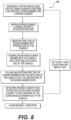
- FIG. 8 shows a flow chart 800 illustrating the method of testing the cleanliness of the cannula of a medical instrument using testing device 200, according to an exemplary embodiment.
- testing device 200 can be provided in a package (e.g., single use package) that identifies the dimensions of sponge element 220 or cannula in order to allow the user to select the correct size of testing device 200, based on the size of the cannula to be cleaned.
- a package e.g., single use package
- sponge element 220 containing extractant 230
- sponge element 220 can be immersed in extractant 230 immediately prior to use.
- the user can insert first end 201 of guiding member 210 into the proximal end of the cannula of the medical instrument being tested.
- the user can then push guiding member 210 through the cannula until first end 201 exits the distal end of the cannula.
- the medical instrument can be repositioned and guiding member 210 pulled through the cannula. Pulling can continue until sponge element 220 approaches the proximal end of the cannula. Once sponge element 220 approaches the proximal end, the user can carefully pull on guiding member 210 to ensure sponge element 220 is properly inserted into the cannula.
- sponge element 220 Once sponge element 220 is in the cannula, the user can continue to pull on guiding member 210. As a result, sponge element 220 can be pulled through the cannula causing foam structure 222 immersed in extractant 230 to contact an inner surface of the cannula. Extractant 230 can cause living biological cells in the cannula to open and release intracellular ATP. Sponge element 220 can function to collect at least intracellular ATP, along with any additional bioburden present. Testing device 200 and sponge element 220 can also collect protein and ninhydrin for analysis.
- the user can pull on guiding member 210 at a steady speed. Pulling on guiding member too rapidly can reduce the time extractant 230 has to react with the biological cells. As a result, the amount of intracellular ATP collected may be reduced. Therefore, the user can pull at a speed of between about 1 and about 5 inches/second.
- the user can continue to pull guiding member 210 until sponge element 220 exits the distal end of the cannula.
- sponge element 220 can be uncoupled from guiding member 210.
- Sponge element 220 can be uncoupled from guiding member 210 using coupling member 250.
- coupling member 250 can be cut or crease 240 bent back and forth until it snaps.
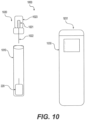
- Uncoupled sponge element 220 can be placed in test swab tube 1010, as shown in FIG. 10 .
- the user can then place test swab 1020 on top of test swab tube 1010 and couple the two together.
- the user can snap test swab 1020 causing reagent 1021 to flow down into test swab tube 1010.
- Squeezing upper portion 1023 can expedite the release of reagent 1021.
- the user can then gently shake test swab 1020 and test swab tube 1010 for about 1 to about 5 seconds.
- sponge element 220 may be placed within test swab tube 1010 and then uncoupled from guide member 210.
- sponge element 220 can be detached from guide member 210 and then placed within test swab tube 1010 if sufficient care is taken to ensure the uncoupled sponge element is not exposed to an additional source of ATP.
- the user can open cover 1031 and insert test swab 1020 and test swab tube 1010 into the opening in device 1030. After insertion, the user can close the cover and initiate the measurement reading.
- Device 1030 can be configured to analyze test swab tube 1010 to produce a signal associated with a level of cleanliness of the cannula. For example, device 1030 can output a numerical value representative of the amount of ATP.
- the amount of ATP can include extracellular ATP, intracellular ATP, combinations of both types of ATP, or other sources of ATP contained within a biofilm.
- a numerical value associated with a representation of the signal can be provided in relative light units (RLU).
- RLU relative light units
- additional cleaning can be recommended.
- RLU reading of 0 to about 45 can indicate low contamination level and therefore additional cleaning may not be recommended.
- RLU reading of about 46 or higher can indicate a high contamination level and therefore additional cleaning may be recommended.
- detection devices can be utilized that detect the amount of protein, ninhydrin, intracellular ATP, combinations of these or other indicators of bioburden.
- kit 300 can comprise at least one device 100 having a cleaning element 115 containing a cleaning solution 170 and at least one testing device 200 having a sponge element 220 containing an extractant 230.
- the size of both devices can correspond to the same size cannula.
- kit 300 can comprise additional aliquots of cleaning solution 170 and extractant 230.
- cleaning solution 170 and extractant 230 can be provided in separate containers as a kit that can be configured to be used with a variety of cleaning and testing devices for cannulated medical instruments.
- kit 300 could include testing device 200 and test swab tube 1010.
- kit 300 could include test swab 1020, reagent 1021, testing device 1030, or other various combinations of the components described above.
Landscapes
- Health & Medical Sciences (AREA)
- Life Sciences & Earth Sciences (AREA)
- Engineering & Computer Science (AREA)
- Heart & Thoracic Surgery (AREA)
- Chemical & Material Sciences (AREA)
- General Health & Medical Sciences (AREA)
- Public Health (AREA)
- Organic Chemistry (AREA)
- Veterinary Medicine (AREA)
- Animal Behavior & Ethology (AREA)
- Biomedical Technology (AREA)
- Proteomics, Peptides & Aminoacids (AREA)
- Wood Science & Technology (AREA)
- Zoology (AREA)
- Epidemiology (AREA)
- Hematology (AREA)
- Anesthesiology (AREA)
- Pulmonology (AREA)
- Molecular Biology (AREA)
- Physics & Mathematics (AREA)
- Biophysics (AREA)
- Surgery (AREA)
- Microbiology (AREA)
- Analytical Chemistry (AREA)
- General Engineering & Computer Science (AREA)
- Bioinformatics & Cheminformatics (AREA)
- Biochemistry (AREA)
- Immunology (AREA)
- Biotechnology (AREA)
- Genetics & Genomics (AREA)
- Pathology (AREA)
- Radiology & Medical Imaging (AREA)
- Nuclear Medicine, Radiotherapy & Molecular Imaging (AREA)
- Medical Informatics (AREA)
- Optics & Photonics (AREA)
- Apparatus Associated With Microorganisms And Enzymes (AREA)
- Sampling And Sample Adjustment (AREA)
- Measuring Or Testing Involving Enzymes Or Micro-Organisms (AREA)
- Materials For Medical Uses (AREA)
- Cleaning In General (AREA)
Claims (7)
- Procédé permettant de tester la propreté d'une canule d'un instrument médical à l'aide d'un dispositif de test (100), ledit dispositif de test (100) comprenant un élément de guidage (110) comportant une première extrémité arrondie (101) et une seconde extrémité (102) couplée de manière libérable à un élément spongieux contenant un agent d'extraction séché, les étapes comprenant :le mouillage de l'élément spongieux dans au moins une eau parmi de l'eau stérile et de l'eau exempte d'ATP de manière à activer l'agent d'extraction séché ;l'insertion de la première extrémité (101) de l'élément de guidage (110) dans une extrémité proximale de la canule ;la poussée de l'élément de guidage (110) dans la canule de manière à faire passer la première extrémité (101) de l'élément de guidage (110) à travers la canule jusqu'à ce que la première extrémité (101) de l'élément de guidage (110) sorte d'une extrémité distale de la canule ;la traction d'au moins une partie de l'élément de guidage (110) hors de l'extrémité distale de la canule ;la mise en contact d'une surface interne de la canule avec l'agent d'extraction activé de manière à lyser une cellule située sur la surface interne de la canule ;la traction de la seconde extrémité (102) de l'élément de guidage (110) et de l'élément spongieux hors de l'extrémité distale de la canule ;la séparation de l'élément spongieux de l'élément de guidage (110) ;l'introduction de l'élément spongieux dans un tube pour écouvillon d'essai ; etl'exposition de l'élément spongieux à un réactif dans le tube pour écouvillon d'essai.
- Procédé selon la revendication 1, ledit réactif étant une luciférase/luciférine stable aux liquides.
- Procédé selon la revendication 1, ledit élément spongieux étant détaché de l'élément de guidage (110) après introduction de l'élément spongieux dans le tube pour écouvillon d'essai.
- Procédé selon la revendication 1, comprenant en outre :l'insertion du tube pour écouvillon d'essai dans un dispositif d'analyse ;l'analyse d'au moins une partie du contenu du tube pour écouvillon d'essai à l'aide du dispositif d'analyse de manière à produire un signal associé au niveau de propreté de la canule ; etla génération d'une représentation du signal.
- Procédé selon la revendication 4, ladite analyse comprenant la détermination d'une concentration d'au moins un élément parmi l'adénosine triphosphate, la protéine et la ninhydrine ; ou comprenant en outre la détermination pour savoir si un nettoyage ultérieur de la canule est nécessaire sur la base de la représentation du signal.
- Procédé selon la revendication 1, ledit agent d'extraction comprenant au moins un composé parmi le Triton X-100, un détergent à base quaternaire, l'acide trichloroacétique et l'acide cobalatéchuique ; ou comprenant en outre la collecte d'ATP intracellulaire sur l'élément spongieux.
- Procédé selon la revendication 1, ledit dispositif de test (100) comprenant en outre un écouvillon d'essai contenant une luciférase-luciférine stable aux liquides ; ou ledit tube pour écouvillon d'essai étant conçu pour le placement au moins partiel à l'intérieur d'un dispositif portatif conçu pour générer une représentation de la propreté de la canule.
Applications Claiming Priority (2)
| Application Number | Priority Date | Filing Date | Title |
|---|---|---|---|
| US201361773419P | 2013-03-06 | 2013-03-06 | |
| PCT/US2014/020267 WO2014138043A1 (fr) | 2013-03-06 | 2014-03-04 | Dispositifs et procédés permettant de tester la propreté d'instruments médicaux |
Publications (4)
| Publication Number | Publication Date |
|---|---|
| EP2964745A1 EP2964745A1 (fr) | 2016-01-13 |
| EP2964745A4 EP2964745A4 (fr) | 2016-10-12 |
| EP2964745C0 EP2964745C0 (fr) | 2025-07-09 |
| EP2964745B1 true EP2964745B1 (fr) | 2025-07-09 |
Family
ID=51491863
Family Applications (1)
| Application Number | Title | Priority Date | Filing Date |
|---|---|---|---|
| EP14759572.2A Active EP2964745B1 (fr) | 2013-03-06 | 2014-03-04 | Dispositifs et procédés permettant de tester la propreté d'instruments médicaux |
Country Status (14)
| Country | Link |
|---|---|
| US (1) | US20160010139A1 (fr) |
| EP (1) | EP2964745B1 (fr) |
| JP (1) | JP6382855B2 (fr) |
| CN (1) | CN105051176B (fr) |
| AU (1) | AU2014225998B2 (fr) |
| BR (1) | BR112015021442A2 (fr) |
| CA (1) | CA2903263C (fr) |
| CL (1) | CL2015002464A1 (fr) |
| CO (1) | CO7461138A2 (fr) |
| HK (1) | HK1219973A1 (fr) |
| IL (1) | IL240884B (fr) |
| MX (1) | MX379078B (fr) |
| SA (1) | SA515360976B1 (fr) |
| WO (1) | WO2014138043A1 (fr) |
Families Citing this family (5)
| Publication number | Priority date | Publication date | Assignee | Title |
|---|---|---|---|---|
| EP3504531A4 (fr) | 2016-08-24 | 2020-08-05 | Novaflux, Inc. | Appareils et procédés destinés à tester l'hygiène d'un dispositif médical |
| SG11201907109PA (en) * | 2017-02-17 | 2019-08-27 | Medivators Inc | Preconditioning apparatus and process for endoscope reprocessing |
| CN110573058A (zh) * | 2017-04-28 | 2019-12-13 | 东丽株式会社 | 内窥镜通道内洁净度测定用具 |
| US11678951B2 (en) | 2020-10-01 | 2023-06-20 | American Sterilizer Company | Detection of residual fluid in endoscope channels |
| US12213846B2 (en) * | 2021-08-19 | 2025-02-04 | Sterilmed, Inc. | Apparatus and method to inspect microlumen of catheter |
Family Cites Families (17)
| Publication number | Priority date | Publication date | Assignee | Title |
|---|---|---|---|---|
| US3619843A (en) * | 1969-05-26 | 1971-11-16 | American Cyanamid Co | Sponges with dry impregnants |
| GB9100551D0 (en) * | 1991-01-10 | 1991-02-20 | Amersham Int Plc | Method and reagent for eliminating analytical interference in enzymatic analysis from substances used for extraction of intracellular metabolites |
| JP3435234B2 (ja) * | 1994-12-22 | 2003-08-11 | ペンタックス株式会社 | 内視鏡用管路掃除具の製造方法 |
| US5827675A (en) * | 1995-07-12 | 1998-10-27 | Charm Sciences, Inc. | Test apparatus, system and method for the detection of test samples |
| AUPP537098A0 (en) * | 1998-08-20 | 1998-09-10 | Novapharm Research (Australia) Pty Ltd | Endoscope cleaning device |
| US7465536B2 (en) * | 2004-05-10 | 2008-12-16 | 3M Innovative Properties Company | Biological soil detector |
| US20060102200A1 (en) * | 2004-11-18 | 2006-05-18 | Bernard Esquenet | Cannula cleaning device |
| US20060269445A1 (en) * | 2005-05-24 | 2006-11-30 | Basile Mark D | Method and system of testing tubular members for contaminates |
| WO2008014094A2 (fr) * | 2006-07-28 | 2008-01-31 | Taylor Medical, Inc. | Composants de cathéter formés d'un mélange de polymère avec des particules ou fibres |
| WO2008048823A2 (fr) * | 2006-10-17 | 2008-04-24 | Wilson-Cook Medical Inc. | Dispositif de nettoyage d'endoscope |
| WO2008137095A1 (fr) * | 2007-05-04 | 2008-11-13 | Charm Sciences, Inc. | Procédé et dispositif d'échantillonnage |
| US8821477B2 (en) * | 2007-08-06 | 2014-09-02 | Boston Scientific Scimed, Inc. | Alternative micromachined structures |
| JP5252176B2 (ja) * | 2007-11-29 | 2013-07-31 | 株式会社日立プラントテクノロジー | 捕集担体、捕集ユニット、捕集装置及び捕集・検査方法 |
| JP5140742B2 (ja) * | 2009-02-12 | 2013-02-13 | 株式会社パイオラックスメディカルデバイス | 内視鏡の管路掃除具 |
| WO2010129727A1 (fr) * | 2009-05-06 | 2010-11-11 | 3M Innovative Properties Company | Substrats enduits comprenant un agent extracteur cellulaire et procédés de biodétection associés |
| JP2010284297A (ja) * | 2009-06-11 | 2010-12-24 | Kikkoman Corp | 管路内の洗浄度測定方法及び測定キット |
| DE102011050765A1 (de) * | 2011-05-31 | 2012-12-06 | Hs System- Und Prozesstechnik Gmbh | Verfahren und Vorrichtung zum Bestimmen des Verschmutzungsgrads eines englumigen Medizinprodukts |
-
2014
- 2014-03-04 AU AU2014225998A patent/AU2014225998B2/en not_active Ceased
- 2014-03-04 JP JP2015561539A patent/JP6382855B2/ja not_active Expired - Fee Related
- 2014-03-04 CA CA2903263A patent/CA2903263C/fr active Active
- 2014-03-04 WO PCT/US2014/020267 patent/WO2014138043A1/fr not_active Ceased
- 2014-03-04 CN CN201480011886.8A patent/CN105051176B/zh not_active Expired - Fee Related
- 2014-03-04 MX MX2015011543A patent/MX379078B/es unknown
- 2014-03-04 BR BR112015021442A patent/BR112015021442A2/pt not_active Application Discontinuation
- 2014-03-04 EP EP14759572.2A patent/EP2964745B1/fr active Active
- 2014-03-04 HK HK16107875.7A patent/HK1219973A1/zh unknown
- 2014-03-04 US US14/772,437 patent/US20160010139A1/en not_active Abandoned
-
2015
- 2015-08-27 IL IL240884A patent/IL240884B/en active IP Right Grant
- 2015-08-28 CO CO15202836A patent/CO7461138A2/es unknown
- 2015-09-02 SA SA515360976A patent/SA515360976B1/ar unknown
- 2015-09-04 CL CL2015002464A patent/CL2015002464A1/es unknown
Also Published As
| Publication number | Publication date |
|---|---|
| AU2014225998A1 (en) | 2015-09-24 |
| EP2964745A4 (fr) | 2016-10-12 |
| IL240884B (en) | 2019-09-26 |
| IL240884A0 (en) | 2015-10-29 |
| EP2964745C0 (fr) | 2025-07-09 |
| CA2903263C (fr) | 2019-08-27 |
| SA515360976B1 (ar) | 2017-10-30 |
| CA2903263A1 (fr) | 2014-09-12 |
| HK1219973A1 (zh) | 2017-04-21 |
| US20160010139A1 (en) | 2016-01-14 |
| CO7461138A2 (es) | 2015-11-30 |
| AU2014225998B2 (en) | 2018-11-08 |
| WO2014138043A1 (fr) | 2014-09-12 |
| JP6382855B2 (ja) | 2018-08-29 |
| EP2964745A1 (fr) | 2016-01-13 |
| CL2015002464A1 (es) | 2016-07-15 |
| CN105051176A (zh) | 2015-11-11 |
| BR112015021442A2 (pt) | 2017-07-18 |
| MX379078B (es) | 2025-03-10 |
| MX2015011543A (es) | 2016-05-31 |
| JP2016521964A (ja) | 2016-07-28 |
| CN105051176B (zh) | 2019-04-05 |
Similar Documents
| Publication | Publication Date | Title |
|---|---|---|
| US20080098543A1 (en) | Cannula cleaning device | |
| CA2903263C (fr) | Dispositifs et procedes permettant de tester la proprete d'instruments medicaux | |
| KR102663424B1 (ko) | 검체 채취 스틱 | |
| EP2741675B1 (fr) | Dispositif pour la collecte d'échantillons biologiques, et procédé correspondant | |
| US20200155125A1 (en) | Oral sampling apparatus and uses thereof | |
| WO2000010476A1 (fr) | Dispositif de nettoyage d'endoscope | |
| WO2010093008A1 (fr) | Dispositif de nettoyage de conduit d'endoscope | |
| US20090215160A1 (en) | Endoscope washing and disinfecting evaluation apparatus | |
| RU2335257C2 (ru) | Устройство для тестирования эффективности промывания тестового образца загрязнения и удерживающее устройство для использования в таком устройстве | |
| JP2025516556A (ja) | 内視鏡デバイスを乾燥させるためのシステム及び方法 | |
| US20120204906A1 (en) | Method of controlling a decontamination process | |
| CN119866205A (zh) | 用于干燥和/或清洁装置的系统和方法 | |
| JP3652049B2 (ja) | 環境微生物検査用拭き取り器具 | |
| JP2023543412A (ja) | 検体採取スティック | |
| WO2005113796A1 (fr) | Detecteur de salissuress biologiques et procede d'utilisation de ce detecteur | |
| WO2005114184A2 (fr) | Détecteur de sol biologique et mode d’emploi | |
| JP6600614B2 (ja) | 綿棒体 | |
| AU748674B2 (en) | Endoscope cleaning device | |
| JPH08154660A (ja) | 釣菌用具 |
Legal Events
| Date | Code | Title | Description |
|---|---|---|---|
| PUAI | Public reference made under article 153(3) epc to a published international application that has entered the european phase |
Free format text: ORIGINAL CODE: 0009012 |
|
| 17P | Request for examination filed |
Effective date: 20150916 |
|
| AK | Designated contracting states |
Kind code of ref document: A1 Designated state(s): AL AT BE BG CH CY CZ DE DK EE ES FI FR GB GR HR HU IE IS IT LI LT LU LV MC MK MT NL NO PL PT RO RS SE SI SK SM TR |
|
| AX | Request for extension of the european patent |
Extension state: BA ME |
|
| DAX | Request for extension of the european patent (deleted) | ||
| A4 | Supplementary search report drawn up and despatched |
Effective date: 20160909 |
|
| RIC1 | Information provided on ipc code assigned before grant |
Ipc: A61M 39/18 20060101ALI20160905BHEP Ipc: C12Q 1/22 20060101ALI20160905BHEP Ipc: C12M 1/26 20060101AFI20160905BHEP Ipc: A61M 39/08 20060101ALI20160905BHEP Ipc: A61M 39/16 20060101ALI20160905BHEP Ipc: C12Q 1/66 20060101ALI20160905BHEP Ipc: G01N 31/22 20060101ALI20160905BHEP |
|
| REG | Reference to a national code |
Ref country code: HK Ref legal event code: DE Ref document number: 1219973 Country of ref document: HK |
|
| STAA | Information on the status of an ep patent application or granted ep patent |
Free format text: STATUS: EXAMINATION IS IN PROGRESS |
|
| 17Q | First examination report despatched |
Effective date: 20181001 |
|
| REG | Reference to a national code |
Ref country code: HK Ref legal event code: WD Ref document number: 1219973 Country of ref document: HK |
|
| REG | Reference to a national code |
Ref country code: DE Ref legal event code: R079 Free format text: PREVIOUS MAIN CLASS: C12M0001260000 Ipc: A61B0001120000 Ref country code: DE Ref legal event code: R079 Ref document number: 602014092121 Country of ref document: DE Free format text: PREVIOUS MAIN CLASS: C12M0001260000 Ipc: A61B0001120000 |
|
| GRAP | Despatch of communication of intention to grant a patent |
Free format text: ORIGINAL CODE: EPIDOSNIGR1 |
|
| STAA | Information on the status of an ep patent application or granted ep patent |
Free format text: STATUS: GRANT OF PATENT IS INTENDED |
|
| RIC1 | Information provided on ipc code assigned before grant |
Ipc: G01N 31/22 20060101ALI20240731BHEP Ipc: C12Q 1/22 20060101ALI20240731BHEP Ipc: A61M 39/18 20060101ALI20240731BHEP Ipc: A61M 39/16 20060101ALI20240731BHEP Ipc: A61M 39/08 20060101ALI20240731BHEP Ipc: A61B 1/12 20060101AFI20240731BHEP |
|
| INTG | Intention to grant announced |
Effective date: 20240903 |
|
| GRAJ | Information related to disapproval of communication of intention to grant by the applicant or resumption of examination proceedings by the epo deleted |
Free format text: ORIGINAL CODE: EPIDOSDIGR1 |
|
| STAA | Information on the status of an ep patent application or granted ep patent |
Free format text: STATUS: EXAMINATION IS IN PROGRESS |
|
| GRAP | Despatch of communication of intention to grant a patent |
Free format text: ORIGINAL CODE: EPIDOSNIGR1 |
|
| STAA | Information on the status of an ep patent application or granted ep patent |
Free format text: STATUS: GRANT OF PATENT IS INTENDED |
|
| INTC | Intention to grant announced (deleted) | ||
| INTG | Intention to grant announced |
Effective date: 20250206 |
|
| GRAS | Grant fee paid |
Free format text: ORIGINAL CODE: EPIDOSNIGR3 |
|
| GRAA | (expected) grant |
Free format text: ORIGINAL CODE: 0009210 |
|
| STAA | Information on the status of an ep patent application or granted ep patent |
Free format text: STATUS: THE PATENT HAS BEEN GRANTED |
|
| AK | Designated contracting states |
Kind code of ref document: B1 Designated state(s): AL AT BE BG CH CY CZ DE DK EE ES FI FR GB GR HR HU IE IS IT LI LT LU LV MC MK MT NL NO PL PT RO RS SE SI SK SM TR |
|
| REG | Reference to a national code |
Ref country code: GB Ref legal event code: FG4D |
|
| REG | Reference to a national code |
Ref country code: CH Ref legal event code: EP |
|
| REG | Reference to a national code |
Ref country code: IE Ref legal event code: FG4D |
|
| REG | Reference to a national code |
Ref country code: DE Ref legal event code: R096 Ref document number: 602014092121 Country of ref document: DE |
|
| U01 | Request for unitary effect filed |
Effective date: 20250806 |
|
| U07 | Unitary effect registered |
Designated state(s): AT BE BG DE DK EE FI FR IT LT LU LV MT NL PT RO SE SI Effective date: 20250826 |
|
| PG25 | Lapsed in a contracting state [announced via postgrant information from national office to epo] |
Ref country code: IS Free format text: LAPSE BECAUSE OF FAILURE TO SUBMIT A TRANSLATION OF THE DESCRIPTION OR TO PAY THE FEE WITHIN THE PRESCRIBED TIME-LIMIT Effective date: 20251109 |
|
| PG25 | Lapsed in a contracting state [announced via postgrant information from national office to epo] |
Ref country code: NO Free format text: LAPSE BECAUSE OF FAILURE TO SUBMIT A TRANSLATION OF THE DESCRIPTION OR TO PAY THE FEE WITHIN THE PRESCRIBED TIME-LIMIT Effective date: 20251009 |
|
| PG25 | Lapsed in a contracting state [announced via postgrant information from national office to epo] |
Ref country code: HR Free format text: LAPSE BECAUSE OF FAILURE TO SUBMIT A TRANSLATION OF THE DESCRIPTION OR TO PAY THE FEE WITHIN THE PRESCRIBED TIME-LIMIT Effective date: 20250709 |
|
| PG25 | Lapsed in a contracting state [announced via postgrant information from national office to epo] |
Ref country code: GR Free format text: LAPSE BECAUSE OF FAILURE TO SUBMIT A TRANSLATION OF THE DESCRIPTION OR TO PAY THE FEE WITHIN THE PRESCRIBED TIME-LIMIT Effective date: 20251010 |
|
| PG25 | Lapsed in a contracting state [announced via postgrant information from national office to epo] |
Ref country code: PL Free format text: LAPSE BECAUSE OF FAILURE TO SUBMIT A TRANSLATION OF THE DESCRIPTION OR TO PAY THE FEE WITHIN THE PRESCRIBED TIME-LIMIT Effective date: 20250709 |
|
| PG25 | Lapsed in a contracting state [announced via postgrant information from national office to epo] |
Ref country code: RS Free format text: LAPSE BECAUSE OF FAILURE TO SUBMIT A TRANSLATION OF THE DESCRIPTION OR TO PAY THE FEE WITHIN THE PRESCRIBED TIME-LIMIT Effective date: 20251009 |
|
| PG25 | Lapsed in a contracting state [announced via postgrant information from national office to epo] |
Ref country code: ES Free format text: LAPSE BECAUSE OF FAILURE TO SUBMIT A TRANSLATION OF THE DESCRIPTION OR TO PAY THE FEE WITHIN THE PRESCRIBED TIME-LIMIT Effective date: 20250709 |
|
| PG25 | Lapsed in a contracting state [announced via postgrant information from national office to epo] |
Ref country code: SM Free format text: LAPSE BECAUSE OF FAILURE TO SUBMIT A TRANSLATION OF THE DESCRIPTION OR TO PAY THE FEE WITHIN THE PRESCRIBED TIME-LIMIT Effective date: 20250709 |
|
| PGFP | Annual fee paid to national office [announced via postgrant information from national office to epo] |
Ref country code: GB Payment date: 20260106 Year of fee payment: 13 |
|
| PGFP | Annual fee paid to national office [announced via postgrant information from national office to epo] |
Ref country code: IE Payment date: 20260102 Year of fee payment: 13 |
|
| PG25 | Lapsed in a contracting state [announced via postgrant information from national office to epo] |
Ref country code: CZ Free format text: LAPSE BECAUSE OF FAILURE TO SUBMIT A TRANSLATION OF THE DESCRIPTION OR TO PAY THE FEE WITHIN THE PRESCRIBED TIME-LIMIT Effective date: 20250709 |
|
| PG25 | Lapsed in a contracting state [announced via postgrant information from national office to epo] |
Ref country code: SK Free format text: LAPSE BECAUSE OF FAILURE TO SUBMIT A TRANSLATION OF THE DESCRIPTION OR TO PAY THE FEE WITHIN THE PRESCRIBED TIME-LIMIT Effective date: 20250709 |
|
| PLBE | No opposition filed within time limit |
Free format text: ORIGINAL CODE: 0009261 |
|
| STAA | Information on the status of an ep patent application or granted ep patent |
Free format text: STATUS: NO OPPOSITION FILED WITHIN TIME LIMIT |