EP2965253B1 - Serveur mandataire de mots de passe assisté par demande d'accès de sécurité - Google Patents
Serveur mandataire de mots de passe assisté par demande d'accès de sécurité Download PDFInfo
- Publication number
- EP2965253B1 EP2965253B1 EP14760060.5A EP14760060A EP2965253B1 EP 2965253 B1 EP2965253 B1 EP 2965253B1 EP 14760060 A EP14760060 A EP 14760060A EP 2965253 B1 EP2965253 B1 EP 2965253B1
- Authority
- EP
- European Patent Office
- Prior art keywords
- user
- contextual
- challenge
- proxy
- password
- Prior art date
- Legal status (The legal status is an assumption and is not a legal conclusion. Google has not performed a legal analysis and makes no representation as to the accuracy of the status listed.)
- Active
Links
Images




Classifications
-
- H—ELECTRICITY
- H04—ELECTRIC COMMUNICATION TECHNIQUE
- H04L—TRANSMISSION OF DIGITAL INFORMATION, e.g. TELEGRAPHIC COMMUNICATION
- H04L63/00—Network architectures or network communication protocols for network security
- H04L63/02—Network architectures or network communication protocols for network security for separating internal from external traffic, e.g. firewalls
- H04L63/0281—Proxies
-
- G—PHYSICS
- G06—COMPUTING OR CALCULATING; COUNTING
- G06F—ELECTRIC DIGITAL DATA PROCESSING
- G06F21/00—Security arrangements for protecting computers, components thereof, programs or data against unauthorised activity
- G06F21/30—Authentication, i.e. establishing the identity or authorisation of security principals
- G06F21/31—User authentication
- G06F21/316—User authentication by observing the pattern of computer usage, e.g. typical user behaviour
-
- H—ELECTRICITY
- H04—ELECTRIC COMMUNICATION TECHNIQUE
- H04L—TRANSMISSION OF DIGITAL INFORMATION, e.g. TELEGRAPHIC COMMUNICATION
- H04L63/00—Network architectures or network communication protocols for network security
- H04L63/08—Network architectures or network communication protocols for network security for authentication of entities
- H04L63/083—Network architectures or network communication protocols for network security for authentication of entities using passwords
-
- H—ELECTRICITY
- H04—ELECTRIC COMMUNICATION TECHNIQUE
- H04L—TRANSMISSION OF DIGITAL INFORMATION, e.g. TELEGRAPHIC COMMUNICATION
- H04L63/00—Network architectures or network communication protocols for network security
- H04L63/14—Network architectures or network communication protocols for network security for detecting or protecting against malicious traffic
- H04L63/1408—Network architectures or network communication protocols for network security for detecting or protecting against malicious traffic by monitoring network traffic
-
- G—PHYSICS
- G06—COMPUTING OR CALCULATING; COUNTING
- G06F—ELECTRIC DIGITAL DATA PROCESSING
- G06F2221/00—Indexing scheme relating to security arrangements for protecting computers, components thereof, programs or data against unauthorised activity
- G06F2221/21—Indexing scheme relating to G06F21/00 and subgroups addressing additional information or applications relating to security arrangements for protecting computers, components thereof, programs or data against unauthorised activity
- G06F2221/2103—Challenge-response
Definitions
- a Trojan horse virus or application is a common security problem.
- One of the most common mechanisms for a Trojan virus to steal a user's authentication information is through the use of keystroke logging.
- Common counter measures for anti-key logging techniques include applications to prevent password stealing through the use of one-time passwords (OTP), on-screen keyboards, keystroke interference, as well as other non-technological methods to confuse the Trojan key logger. These techniques provide different levels of protection. However, they generally rely on at least one pre-established shared secret between the user and the website, or actions that may result in an undesirable user experience. These techniques also fail to counteract the Trojan viruses designed to capture password by ways other than keystroke logging, such as by intercepting a password transmitted to a website.
- US 2012/216 260 A1 discloses systems and methods for authenticating a user who is trying to access a computing resource. Instead of requiring the user to enter a password, contextual data is derived from the pattern of the recent activities that the user has performed when interacting with a computing device. In this manner, the user is asked for a piece of information that can be assumed to be known only to him and to the computing device with a certain probability, without having to agree such a shared secret beforehand.
- US 2005/188 210 A1 discloses a system and method for the secure storage of user credentials.
- the user has to enter a secure attention sequence, such as Control-Alt-Delete, that is intercepted at kernel level, so that any prompt for credentials cannot be spied upon by rogue user applications.
- a secure attention sequence such as Control-Alt-Delete
- US 2013/014 236 A1 discloses systems and methods for the management of a plurality of user credentials. Upon receiving a notification from a website that a password for this website needs to be changed, it is determined which other passwords in a secure password vault need to be changed from a security point of view, e.g., because they are similar to the to-be-changed password or because they are similarly valuable.
- the invention provides a method of contextual authentication comprising:
- the invention provides a contextual authentication system comprising:
- the invention provides an apparatus for authenticating a user, configured to perform the method according to the first aspect.
- the invention provides at least one machine readable medium comprising a plurality of instructions that in response to being executed on a computing device, cause the computing device to carry out a method according to the first aspect.
- Two-factor authentication using a one-time password combines something the user knows (e.g., a credential such as a username-password combination), and something the user has, for example, a token or key fob that produces a multi-digit number that is valid only for a short period of time.
- a credential such as a username-password combination
- an OTP may be generated between the user device and the authenticator using non-token based techniques such as time synchronization or a pre-established secret.
- a combination of username, password, and an OTP may provide a more secure authentication mechanism than a username and password alone.
- a token based OTP requires the user to physically have the token, which may be lost, stolen or compromised.
- Examples include methods and systems to maintain usernames and passwords for an individual that are unlocked with an individual's personal contextual information. Protection from user password being stolen by a Trojan virus may be provided through the use of a password proxy service utilizing one or more single-use security challenge questions and responses. The single-use time sensitive questions may be generated with specific user context that, in most instances, only questions the user is able to answer. This technique mitigates the risks present in the use of shared static secret passwords that may be stolen by a Trojan virus or key-logger during transmission or from client storage.
- example embodiments may improve a user's experience during interactions with secure resources by reducing or eliminating the need to remember multiple username-password combinations or other credentials.
- a user may easily respond to security challenge questions because the questions are generated based on the user's knowledge and current or recent context.
- authentication questions may be more closely related to the current context of a user's life. This provides an advantage over user's providing false information in response to challenge questions out of privacy concerns that are easily forgotten.
- an individual other than the user does not possess the user's knowledge or context and is unable to correctly answer the authentication questions.
- the difficulty of the questions may vary in direct proportion to the value of the secure resource being requested.
- FIG. 1 is a block diagram illustrating an example of a device 100 with a password proxy engine 102, according to an embodiment.
- the password proxy engine 102 is configured to receive user context data via a user interface 104 or by accessing a user data 106 that may be stored in a database or record.
- the password proxy engine 102 may store accumulated user context data in a context database 108.
- User context data may include, for example, a geographic location obtained from a GPS module, calendar data, contact information, information from user activity sensors, or any other data that may be unique to the device 100 or a user's interaction with the device 100.
- the user context data may be utilized by the password proxy engine 102 to generate one-time, in situ security challenge questions and to verify user responses.
- the password proxy engine 102 may receive data from sensors (not shown) to create context observations as needed.
- a meeting scheduled in a calendar application may indicate a time, location, and names of one or more individuals that the owner of the device 100 is meeting with in the future, is meeting with at the present time, or has met with in the past.
- GPS location data may be utilized to confirm that the device 100 is or was actually located at the location indicated in the meeting.
- Received audio data for example acquired by monitoring a microphone of the device 100, may also be used to determine if music was playing, and if so, what type of music of specific songs or artists.
- the user context data may be generated and stored that indicates the device 100 was present at a coffee shop on a specific street, in a specific city, where a meeting with an individual named Paul was scheduled under the heading "lunch.”
- the user context data may be generated and processed by the password proxy engine 102 entirely on the device 100, or the password proxy engine 102 may communicate with one or more services over network 130 (e.g., the Internet or an intranet) to analyze or store the user context data in the context database 108.
- Other sources of context data may include, but are not limited to, a user's phone log, SMS history, or e-mail exchanges.
- the password proxy engine 102 may interact with a browser or application 110 or another application configured to operate on the device 100.
- the device 100 may configured to access a network 130 through a wired or wireless interface.
- the password proxy engine 102 may be configured to receive one or more user credentials via the user interface 104.
- the one or more user credentials may include username-password combinations associated with one or more secure resources.
- a user may provide, via user interface 104 or by reference to user data 106, a uniform resource locator (URL) and username-password credential for an on-line banking portal.
- the user may have previously established a financial account with the bank, or may initiate a new relationship with the bank via the device 100 and the banking portal.
- URL uniform resource locator
- the user may provide a URL and username-password credential for less valuable websites, such as a website that provides daily coupon deals or provides access to a gaming or social network.
- the user may assign different security levels to the credentials and resources (e.g., the banking website may be categorized as a high-value resource, the coupon deal website may be categorized as a low-value resource, and social network may be categorized as an average value resource between the low and high values categories).
- Other rankings or categorization methods such as applying a numerical ranking to individual resources, may also be utilized.
- the security level may be utilized by the password proxy engine 102 to determine the number or difficulty level of context challenges that must be met before access is granted to a specific resource, as well as a length of time a specific contextual challenge is valid for or how often a new challenge must be performed.
- a secure resource may indicate the value of an account to device 100.
- a user's credentials to the daily coupon deal account are not as valuable as the credentials to their bank, or retirement account. Therefore, one easy challenge question to the daily coupon deal account might be enough, while the bank may indicate that access to an account may be granted only after a succession in which four challenging questions are answered correctly.
- four inputs to access the bank account may provide greater security than requiring that a user type a full username and password, while also requiring less effort on the part of the user.
- the policies and requirements for access to accounts may change over time, for example, the user may provide credit card information to the daily coupon deal account, which may result in raising the security level of the account from a first priority with a low security ranking to a second priority level with a higher security ranking than the first priority. As a result of the increase in security ranking, the user may be asked to answer additional medium-difficulty questions before access is granted.
- the device 100 may include a proxy user interface 114 configured to interact with the browser or application 110 such that a request made by a user to access a secure resource via the browser or application 110 may be intercepted.
- the request may be routed to the password proxy engine 102 for authentication by a user of the device 100 before access to the secure resource is allowed.
- the password proxy engine 102 may provide a security credential (e.g., username and password) to the secure resource upon the successful receipt of correct answers to the authentication challenge from the user.
- each authentication challenge (e.g., each piece of user context data) may be used only once, and then deleted or archived.
- the password proxy engine 102 may not be able to obtain any or enough user context data from the context database 108 to generate an authentication challenge. If there isn't enough context data, the password proxy engine 102 may request that a user answer an initial set of questions in order to generate an initial set of context data that may be used to generate further questions or for initial access to secure resources.
- the password proxy engine 102 may initially or periodically generate an set of questions based on public data about the user (e.g., data published on a social network) and query the user while recording the user's response time, correctness of responses, and any other input that may be available from device 100.
- This public information may be excluded from use as actual context information for generating authentication questions due to its public nature.
- the recorded data may be analyzed in order to identify what types of questions are of an easy, average, or challenging difficulty. For example, a learning protocol may be utilized in password proxy engine 102 that may determine what is easy and what is not to a particular individual.
- the password proxy engine 102 may be configured to access and maintain a proxy vault 112.
- the proxy vault 112 may be a secure database on the device 100, (e.g., in non-volatile memory) configured to store shared secrets or credentials (e.g., username and password combinations) in an encrypted format.
- the proxy vault 112 may be accessed by the password proxy engine 102 to retrieve a specific credential for a secure resource after a user has requested access to the secure resource and correctly responded to one or more challenge questions.
- the proxy vault 112 may be populated with user supplied credentials during an initial setup or updated whenever the user accesses a new secured resource for the first time.
- the device 100 may be configured to only allow the proxy vault 112 to be updated when the device is in a secure mode, for example, in a configuration where all data access to the network 130 is blocked such that a malicious key logger application may be prevented from intercepting and transmitting the credential associated with the new secure resource.
- the password proxy engine 102 and the proxy vault 112 may be configured to communicate over an encrypted link 116 to prevent interception of unencrypted (e.g., plain text) credentials.
- the device 100 may include a proxy user interface 114.
- the proxy user interface 114 may include a browser plug-in, compatible with the browser or application 110, which is configured to receive user input and provide user notifications in the browser or application 110.
- the password proxy engine 102 and the proxy user interface 114 may be configured to communicate over an encrypted link 118 to prevent interception of user inputs.
- FIG. 2 is a block diagram illustrating an example of a device 200 configured to communicate over a network 230, according to an embodiment.
- the device 200 may include a password proxy engine 202 configured to coordinate access to a secure server 240 by interacting with a user through a user interface 204. The interactions may include challenge questions based on user data 206 stored on the device 200 from contextual information obtained from sensors 208 of the device 200.
- the secure sever 240 may provide a valuable service such as hosting a website or portal (e.g., www.FirstAcmeBank.com), which requires the use of a credential to access.
- the password proxy engine 202 may communicate with a password proxy service 250 over the network 230.
- the password proxy service 250 may store, maintain and provide the user-id and password information on behalf of the user.
- the password proxy service 250 may provide the user's user-id and password information to the secure server 240 or the password proxy engine 202 upon notification of a successful challenge-and-response authentication by the password proxy engine 202.
- the password proxy service 250 may provide users with separate, secure password vaults that are independent of the device 200.
- a user may access his or her password vault on the password proxy service 250 through interactions with the password proxy engine 202, or through an alternative secure terminal or device coupled to the password proxy service 250 via network 230.
- the device 200 may access the password proxy service 250 via a separate encrypted authentication channel, thereby making it more resilient to Trojan attacks on the device 200.
- the password proxy engine 202 may be configured to communicate with the password proxy service 250 in order to receive one-time challenge questions based on specific in situ user context collected from other applications (e.g., browser or application 210) or sensors 208 on the device 200, verify the user input responses to the questions, and send notifications to the password proxy service 250 and the user.
- applications e.g., browser or application 210
- sensors 208 on the device 200 verify the user input responses to the questions, and send notifications to the password proxy service 250 and the user.
- one or more questions may be generated from this context by omitting one or more of the facts, such as "Who did you meet for lunch on Saturday?" or "Was music playing when you recently met with Paul?"
- the number of facts omitted from the challenge question may depend on how difficult the question should be with respect to the value of the secure resource being requested. Also, creating a multiple-answer question could provide different difficulty levels out of one context in order to satisfy the need for authentication.
- the device 200 may be infected with a virus or other malware, such as a key logging Trojan application 220.
- a virus or other malware such as a key logging Trojan application 220.
- the use of the device 200 with an active Trojan application 220 may be subject to monitoring by a hacker 260.
- the hacker 260 may attempt to access a user's secure data on a secure server 240.
- the Trojan application 220 may be able to intercept a user's request to access the secure server 240, as well as any challenge question responses entered via user interface 204, the hacker 260 is prevented from obtaining keystrokes that include the user's credentials for accessing the secure server 240 because any keystrokes captured by the Trojan do not include credential information.
- the need for the user to enter secure credentials is eliminated by the use of the password proxy engine 202 instructions to the password proxy service 250 to provide the user's credentials to the secure server 240 in response to one or more correctly answered contextual challenge questions. Even if the hacker 260 is able to intercept the answers to the contextual challenge questions the answers would not be useful in accessing the secure server 240 as the secure server 240 may not be using the challenging questions to verify the user. In cases where the hacker attempts to authenticate via the password proxy engine 202 on the device 200 (e.g., via malware), or the security challenge questions are generated by a proxy service 250, the hacker's attempt will fail as well because the questions are not reused by the password proxy engine 202 or the password proxy service 250. Any attempt by the hacker 260 to utilize the answers to the contextual challenge questions to interact with the password proxy service 250 will likewise fail as the password proxy service 250 may be configured to refuse the reuse of any contextual challenge question.
- the secure server 240 is not configured to present a challenge or receive a response. Instead, the password proxy service 250 handles such challenge-response activities and only passes an affirmative indication to the secure server 240 when the user correctly responds. Thus, in such a configuration, even if the hacker 260 were able to intercept answers to contextual challenge questions, such answers would be useless when attempting to directly access the secure server 240 because the secure server 240 does not participate in the challenge-response mechanism.
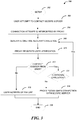
- FIG. 3 is a flow diagram illustrating an example scheme 300 for providing security challenges, according to an embodiment.
- the scheme 300 may be implemented, for example, on the device 100 of FIG. 1 or the device 200 of FIG. 2 .
- an initial setup on a device may be performed.
- the initial setup may include receiving one or more user credentials for storage in an encrypted proxy vault.
- the proxy vault may be local to the device, such as in the device 100, or maintained on a remote server, such as the password proxy service 250 of FIG. 2 .
- the initial setup may also include configuring or training a proxy engine to provide an appropriate difficulty level of contextual challenge questions based on the sophistication of an individual user and the value of any credentials stored in the proxy vault.
- the cognitive level and memory capability of a user may indicate that a greater number of simple questions may be required to establish an equivalent level of security for a user who is slow to respond with correct answers in comparison to a user who is able to rapidly respond to difficult questions.
- a user may attempt to contact a secure server with a device equipped with a proxy engine.
- the attempt may be intercepted by the proxy engine on the device.
- the interception may be performed by a module or plug-in that may be installed on the device (e.g., as part of the device's operating system) or in a web browser or other application on the device.
- the proxy engine may generate a one-time security challenge, such as a contextual question based on the user's recent activities or interactions with the user's device.
- the contextual question may be in the form of a multiple choice, a true-false question, a question requiring a text-based answer, or other question formats.
- the proxy engine may generate the contextual question on the device, or access a proxy service for user context data.
- the proxy engine may request that the user provide verification of their identity by answering the contextual question.
- the contextual question may be presented on a display in any form, such as a multiple-choice format, a true or false style question or a fill-in-a-blank query, or through a spoken question that may be answered with a voice command.
- the user's answer to the contextual question is evaluated for correctness. The evaluation may be performed on the device by a password proxy engine, or by a remote proxy service.
- the proxy engine may determine if an additional challenge is needed in order to provide a desired level of security for the requested secure resource. If an additional challenge is needed then scheme 300 may, at 308, generate a challenge question. If no additional challenge questions are needed, then at 316, the proxy engine may establish a connection with the secure server, for example, by providing a user credential from the proxy vault to the secure server over an encrypted communication channel.
- the user may be notified of any failure to correctly answer a challenge question.
- the scheme 300 may terminate at 320 upon the failure of the user to correctly answer a challenge question.
- the user may be given a fixed number of tries to answer different challenge questions before further attempts are prohibited. If further attempts are prohibited, e.g., locking the device, the device may be unlocked by providing a previously established recovery password.
- Key logging Trojan may attempt to use software or hardware to record key strokes, thereby capturing user inputs, which may be transmitted to a hacker or other malicious actor. The hacker may then uses the captured credentials to access a secure resource such as a banking website.
- Key logging Trojans may be defeated because: (1) the user does not need to key in a user-id/password combination because the credential is handled by a proxy service, and (2) the Trojan may steal the answers to challenge questions and send them to the hacker, but the information will be useless for the hacker because the questions were created based on user context at a point in time, for only a single use. Therefore these answers are not be applicable to future challenge questions, and are not utilized to access secured resources.
- MITM Man-in-the-middle
- a stealth virus automatically logs into the targeted website upon receiving the stolen credentials without significantly time delay
- the typical OTP approach would not prevent theft.
- the use of a proxy may be more effective against MITM attacks with the combination of user-id/password and challenge/response from different entities (e.g., a client device and a password proxy service).
- a hacker may be able to obtain the user credentials from channels other than Trojan key loggers; however, with the addition of a password proxy service, a hacker cannot access a secure target website directly without the ability to respond to the security challenge questions via a separate authentication channel as described herein. Similarly, attempts to use brute force attacks utilizing stolen security challenge questions/responses may be rendered useless due to the dynamic nature of the challenge questions, which may be generated on the device or by the password proxy service.
- FIG. 4 is a swim lane diagram illustrating example interactions between a requesting device 402, a proxy device 404, and a secure device 406, according to an embodiment.
- the device-device interaction 400 may include or support any of a variety of typical security protocols, including, but not limited to, transport layer security (TLS), or secure sockets layer (SSL).
- TLS transport layer security
- SSL secure sockets layer
- IETF Internet Engineering Task Force
- the device-device interaction 400 may include or support any of a variety of application layer protocols, including, but not limited to, Hypertext Transfer Protocol (HTTP), File Transfer Protocol (FTP), Simple Mail Transfer Protocol (SMTP), and Extensible Messaging and Presence Protocol (XMPP).
- HTTP Hypertext Transfer Protocol
- FTP File Transfer Protocol
- SMTP Simple Mail Transfer Protocol
- XMPP Extensible Messaging and Presence Protocol
- a requesting device 402 may send context data 403 to a proxy device 404 on an intermittent or periodic basis.
- the proxy device 404 may include a server or computing resource coupled to the requesting device 402 by a network.
- the context data 403 may be derived from a user's interactions with the requesting device 402, from data stored or accessed by one or more applications on the requesting device 402, or from other external sources (e.g., a social network, or other public data sources).
- the requesting device 402 may receiving an instruction (e.g., from a user) to access a secure device 406 (e.g., a banking system), such as from a user.
- a secure device 406 e.g., a banking system
- the requesting device transmits a request 410.
- the requesting device 402 in response to a user input requesting access to a secure resource at 408, the requesting device 402 may send a proxy request 410 to the proxy device 404.
- the request 410 may be intercepted by a proxy engine on requesting device 402.
- the proxy device 404 may, at 412, generate one or more challenge questions in response to the request 410, as well as a correct response to the one or more challenge questions.
- the proxy device 404 may also generate one or more false answers (block 414) in addition to the challenge questions generated.
- the challenge questions and false answers may both be based on context data 403 supplied to the proxy device 404 by the requesting device 402.
- the proxy device 404 may transmit the challenge questions, and correct and incorrect answers, to the requesting device 402, thereby responding to request 410.
- the requesting device 402 may prompt a user with one or more of the challenge questions and receive a response from the user.
- the user's response to the challenge question(s) may be sent to the proxy device 404 for evaluation.
- the requesting device 402 need not be provided with an indication of which potential answer to the challenge question is correct.
- the proxy device 404 may evaluate the user's answer or multiple answers if multiple questions were presented. At 424, a notification of success or failure of the evaluation is transmitted to the requesting device 402. If the evaluation is successful (e.g., all answers were correctly provided) the proxy device may provide an authentication credential 426 to a secure device 406. Optionally, the proxy device 404 may also provide the credential to the requesting device 402. Consequently, at 428, the authentication credential, provided at 426, allows the requesting device 402 and the secure device 406 to exchange data via a secure connection. The secure connection may be established after the credential is passed from the proxy device 404 to the requesting device 402 and the secure device 406, thereby providing both the requesting device 402 and the secure device 406 with a common secret key or other encryption code that may facilitate secure communications.
- FIG. 5 is a block diagram illustrating an example machine 500 upon which any one or more of the techniques (e.g., methodologies) discussed herein may be performed.
- the machine 500 may operate as a standalone device or may be connected (e.g., networked) to other machines.
- the machine 500 may operate in the capacity of a server machine, a client machine, or both in server-client network environments.
- the machine 500 may act as a peer machine in peer-to-peer (P2P) (or other distributed) network environments.
- P2P peer-to-peer
- the machine 500 may be a personal computer (PC), a tablet PC, a Personal Digital Assistant (PDA), a mobile telephone, a web appliance, or any machine capable of executing instructions (sequential or otherwise) that specify actions to be taken by that machine.
- PC personal computer
- PDA Personal Digital Assistant
- a mobile telephone a web appliance
- machine shall also be taken to include any collection of machines that individually or jointly execute a set (or multiple sets) of instructions to perform any one or more of the methodologies discussed herein, such as cloud computing, software as a service (SaaS), other computer cluster configurations.
- SaaS software as a service
- Examples, as described herein, may include, or may operate on, logic or a number of components, modules, or mechanisms.
- Modules are tangible entities capable of performing specified operations and may be configured or arranged in a certain manner.
- circuits may be arranged (e.g., internally or with respect to external entities such as other circuits) in a specified manner as a module.
- the whole or part of one or more computer systems (e.g., a standalone, client or server computer system) or one or more hardware processors may be configured by firmware or software (e.g., instructions, an application portion, or an application) as a module that operates to perform specified operations.
- the software may reside (1) on a non-transitory machine-readable medium or (2) in a transmission signal.
- the software when executed by the underlying hardware of the module, causes the hardware to perform the specified operations.
- module is understood to encompass a tangible entity, be that an entity that is physically constructed, specifically configured (e.g., hardwired), or temporarily (e.g., transitorily) configured (e.g., programmed) to operate in a specified manner or to perform part or all of any operation described herein.
- each of the modules need not be instantiated at any one moment in time.
- the modules comprise a general-purpose hardware processor configured using software
- the general-purpose hardware processor may be configured as respective different modules at different times.
- Software may accordingly configure a hardware processor, for example, to constitute a particular module at one instance of time and to constitute a different module at a different instance of time.
- Machine 500 may include a hardware processor 502 (e.g., a processing unit, a graphics processing unit (GPU), a hardware processor core, or any combination thereof), a main memory 504, and a static memory 506, some or all of which may communicate with each other via a link 508 (e.g., a bus, link, interconnect, or the like).
- the machine 500 may further include a display device 510, an input device 512 (e.g., a keyboard), and a user interface (UI) navigation device 514 (e.g., a mouse).
- the display device 510, input device 512, and UI navigation device 514 may be a touch screen display.
- the machine 500 may additionally include a mass storage (e.g., drive unit) 516, a signal generation device 518 (e.g., a speaker), a network interface device 520, and one or more sensors 521, such as a global positioning system (GPS) sensor, camera, video recorder, compass, accelerometer, or other sensor.
- the machine 500 may include an output controller 528, such as a serial (e.g., universal serial bus (USB), parallel, or other wired or wireless (e.g., infrared (IR)) connection to communicate or control one or more peripheral devices (e.g., a printer, card reader, etc.).
- a serial e.g., universal serial bus (USB), parallel, or other wired or wireless (e.g., infrared (IR) connection to communicate or control one or more peripheral devices (e.g., a printer, card reader, etc.).
- USB universal serial bus
- IR infrared
- the mass storage 516 may include a machine-readable medium 522 on which is stored one or more sets of data structures or instructions 524 (e.g., software) embodying or utilized by any one or more of the techniques or functions described herein.
- the instructions 524 may also reside, completely or at least partially, within the main memory 504, within static memory 506, or within the hardware processor 502 during execution thereof by the machine 500.
- one or any combination of the hardware processor 502, the main memory 504, the static memory 506, or the mass storage 516 may constitute machine readable media.
- machine-readable medium 522 is illustrated as a single medium, the term “machine readable medium” may include a single medium or multiple media (e.g., a centralized or distributed database, and/or associated caches and servers) that configured to store the one or more instructions 524.
- the term “machine-readable medium” may include any tangible medium that is capable of storing, encoding, or carrying instructions for execution by the machine 500 and that cause the machine 500 to perform any one or more of the techniques of the present disclosure, or that is capable of storing, encoding or carrying data structures used by or associated with such instructions.
- Non-limiting machine-readable medium examples may include solid-state memories, and optical and magnetic media.
- machine-readable media may include: non-volatile memory, such as semiconductor memory devices (e.g., Electrically Programmable Read-Only Memory (EPROM), Electrically Erasable Programmable Read-Only Memory (EEPROM)) and flash memory devices; magnetic disks, such as internal hard disks and removable disks; magneto-optical disks; and CD-ROM and DVD-ROM disks.
- non-volatile memory such as semiconductor memory devices (e.g., Electrically Programmable Read-Only Memory (EPROM), Electrically Erasable Programmable Read-Only Memory (EEPROM)) and flash memory devices
- EPROM Electrically Programmable Read-Only Memory
- EEPROM Electrically Erasable Programmable Read-Only Memory
- flash memory devices e.g., Electrically Erasable Programmable Read-Only Memory (EEPROM)
- EPROM Electrically Programmable Read-Only Memory
- EEPROM Electrically Erasable Programmable Read-Only Memory
- flash memory devices e.g., Electrically Era
- the instructions 524 may further be transmitted or received over a communications network 526 using a transmission medium via the network interface device 520 utilizing any one of a number of transfer protocols (e.g., frame relay, internet protocol (IP), transmission control protocol (TCP), user datagram protocol (UDP), hypertext transfer protocol (HTTP), etc.).
- transfer protocols e.g., frame relay, internet protocol (IP), transmission control protocol (TCP), user datagram protocol (UDP), hypertext transfer protocol (HTTP), etc.
- Example communication networks may include a local area network (LAN), a wide area network (WAN), a packet data network (e.g., the Internet), mobile telephone networks (e.g., cellular networks), Plain Old Telephone (POTS) networks, and wireless data networks (e.g., Institute of Electrical and Electronics Engineers (IEEE) 802.11 family of standards known as Wi-Fi®, IEEE 802.16 family of standards known as WiMax®), peer-to-peer (P2P) networks, among others.
- the network interface device 520 may include one or more physical jacks (e.g., Ethernet, coaxial, or phone jacks) or one or more antennas to connect to the communications network 526.
- the network interface device 520 may include a plurality of antennas to wirelessly communicate using at least one of single-input multiple-output (SIMO), multiple-input multiple-output (MIMO), or multiple-input single-output (MISO) techniques.
- SIMO single-input multiple-output
- MIMO multiple-input multiple-output
- MISO multiple-input single-output
- transmission medium shall be taken to include any intangible medium that is capable of storing, encoding or carrying instructions for execution by the machine 500, and includes digital or analog communications signals or other intangible medium to facilitate communication of such software.
Landscapes
- Engineering & Computer Science (AREA)
- Computer Security & Cryptography (AREA)
- Computer Hardware Design (AREA)
- General Engineering & Computer Science (AREA)
- Theoretical Computer Science (AREA)
- Software Systems (AREA)
- Physics & Mathematics (AREA)
- General Physics & Mathematics (AREA)
- Computing Systems (AREA)
- Computer Networks & Wireless Communication (AREA)
- Signal Processing (AREA)
- Health & Medical Sciences (AREA)
- General Health & Medical Sciences (AREA)
- Social Psychology (AREA)
- Information Transfer Between Computers (AREA)
- Storage Device Security (AREA)
Claims (15)
- Procédé (300, 400) d'authentification contextuelle consistant :à surveiller une ou plusieurs activités réalisées avec un dispositif informatique (100, 200, 404), ladite surveillance comprenant la surveillance d'un microphone (208) pour des données audio ;à transmettre (403) des données contextuelles dérivées d'une ou de plusieurs activités et lesdites données audio à un dispositif mandataire (250, 404) couplé au dispositif informatique (100, 200, 402) au moyen d'un réseau (230), lesdites données contextuelles étant dérivées des données audio indiquant si de la musique retentit ou non et, si tel est le cas, quel type de musique et/ou de la musique de quelle chanson spécifique et/ou de la musique de quel artiste spécifique ;à stocker (302) un ensemble de justificatifs d'identité d'utilisateur dans un coffre-fort crypté (112) ;à générer (308, 412), en réponse à une demande (304, 410) d'accès à une combinaison de nom d'utilisateur et de mot de passe dans l'ensemble de justificatifs d'identité d'utilisateur, une question de mise à l'épreuve basée sur les données contextuelles ;à évaluer (312, 422) une réponse (310, 420) à la question de mise à l'épreuve pour déterminer si la réponse (310, 420) est correcte ; età transmettre (316, 426) un justificatif d'identité d'utilisateur de l'ensemble de justificatifs d'identité d'utilisateur qui correspond à une ressource sécurisée (240, 406), à la ressource sécurisée (240, 406) sur le réseau (230) lorsque la réponse à la question de mise à l'épreuve est correcte.
- Procédé (300, 400) selon la revendication 1, dans lequel le dispositif informatique (100, 200) comprend le coffre-fort crypté (112) configuré pour stocker l'ensemble de justificatifs d'identité d'utilisateur.
- Procédé (300, 400) selon la revendication 2, dans lequel la ressource sécurisée (240, 406) est un site Web qui fournit un accès à une combinaison de nom d'utilisateur et de mot de passe incluse dans l'ensemble de justificatifs d'identité d'utilisateur.
- Procédé (300, 400) selon l'une quelconque des revendications 1 à 3, consistant en outre :à déterminer un état cognitif d'un utilisateur en se basant sur une réponse d'utilisateur à une ou plusieurs questions ;dans lequel la génération (308, 412) de la question de mise à l'épreuve en se basant sur les données contextuelles consiste à adapter un niveau de difficulté des questions de mise à l'épreuve à l'état cognitif de l'utilisateur.
- Procédé (300, 400) selon l'une quelconque des revendications 1 à 4, consistant en outre :à générer (414) une pluralité de réponses incorrectes à la question de mise à l'épreuve ; età afficher (418) la question de mise à l'épreuve, la pluralité de réponses incorrectes à la question de mise à l'épreuve et une réponse correcte à la question de mise à l'épreuve sur un dispositif d'affichage du dispositif informatique (100, 200, 402).
- Procédé (300, 400) selon la revendication 5, consistant en outre :à déterminer une valeur de sécurité de la ressource sécurisée ;à générer (308, 412) une ou plusieurs questions de mise à l'épreuve supplémentaires, en réponse à la valeur de sécurité qui est supérieure à un niveau de sécurité défini, la ou les questions de mise à l'épreuve supplémentaires étant basées sur un second élément de données contextuelles dans l'ensemble de données contextuelles ; età recevoir (310, 420) une entrée supplémentaire en réponse à une ou plusieurs questions de mise à l'épreuve supplémentaires ;dans lequel l'évaluation positive comprend une évaluation positive de l'entrée supplémentaire.
- Système d'authentification contextuelle comprenant :une interface utilisateur (104, 204) d'un dispositif (100, 200) couplé à un moteur mandataire (102, 202), le moteur mandataire (102, 202) étant configuré pour surveiller l'interface utilisateur (104, 204) pour des activités d'utilisateur, pour surveiller un microphone (208) pour des données audio et pour stocker des données de contexte d'utilisateur dérivées desdites activités d'utilisateur et desdites données audio dans une base de données contextuelle (108), lesdites données de contexte d'utilisateur étant dérivées des données audio indiquant si de la musique retentit ou non et, si tel est le cas, quel type de musique et/ou de la musique de quelle chanson spécifique et/ou de la musique de quel artiste spécifique ;un coffre-fort de mot de passe sécurisé (112) configuré pour conserver un ensemble de justificatifs d'identité d'utilisateur, le coffre-fort de mot de passe sécurisé (112) étant couplé au moteur mandataire (102, 202) ; etune interface mandataire (114) couplée au moteur proxy (102, 202), l'interface mandataire (114) étant configurée pour intercepter (306) une demande (304, 410) pour une ressource sécurisée (240, 406) reçue par l'interface utilisateur (104, 204) ;dans lequel, en réponse à la demande (304, 410), le moteur mandataire (102, 202) est configuré pour générer (308, 312) une mise à l'épreuve contextuelle basée sur les données de contexte d'utilisateur dans la base de données contextuelle (108), la mise à l'épreuve contextuelle étant présentée par le biais de l'interface mandataire (114) et l'accès à la ressource sécurisée (240, 406) est empêché (318) par le moteur mandataire (102, 202) jusqu'à ce qu'une réponse correcte à la mise à l'épreuve contextuelle soit reçue.
- Système d'authentification contextuelle selon la revendication 7, comprenant en outre :un service de mandataire de mot de passe (250), couplé au dispositif (100, 200) par le biais d'un réseau (230), le service de mandataire de mot de passe (250) étant configuré pour conserver le coffre-fort de mot de passe sécurisé (112) ;dans lequel, en réponse au moteur mandataire (102, 202) indiquant que la réponse correcte à la mise à l'épreuve contextuelle a été reçue, le service de mandataire de mot de passe (250) transmet (426) un justificatif d'identité, de l'ensemble de justificatifs d'identité d'utilisateur qui correspond à la ressource sécurisée, à la ressource sécurisée (240, 406).
- Système d'authentification contextuelle selon les revendications 7 ou 8, dans lequel le coffre-fort de mot de passe sécurisé (112) est configuré pour conserver un enregistrement d'une pluralité de justificatifs d'identité pour une pluralité d'utilisateurs.
- Système d'authentification contextuelle selon l'une quelconque des revendications 7 à 9, dans lequel la ressource sécurisée (240, 406) comprend : un site Web bancaire et/ou un portail d'établissement financier et/ou un établissement d'enseignement et/ou un service gouvernemental et/ou un réseau social et/ou un service de courrier électronique et/ou un organe médiatique et/ou un environnement de jeu et/ou un système de réalité virtuelle et/ou un jeu de rôle massif.
- Système d'authentification contextuelle selon la revendication 10, dans lequel la ressource sécurisée (240, 406) comprend un serveur configuré pour recevoir le justificatif d'identité.
- Système d'authentification contextuelle selon l'une quelconque des revendications 7 à 11, dans lequel la réponse correcte à la mise à l'épreuve contextuelle élimine le besoin pour un utilisateur de mémoriser ou d'entrer un nom d'utilisateur ou un mot de passe.
- Procédé selon la revendication 1, dans lequel un format de la question de mise à l'épreuve change à la suite d'un moment du jour ou d'une ou de plusieurs activités surveillées réalisées avec le dispositif informatique (100, 200) et les données contextuelles utilisées lors de la génération de la question de mise à l'épreuve sont spécifiques à un seul utilisateur.
- Appareil pour authentifier un utilisateur, configuré pour réaliser le procédé (300, 400) selon l'une quelconque des revendications 1 à 6 ou 13.
- Au moins un support lisible par une machine comprenant une pluralité d'instructions qui, à la suite de leur exécution sur un dispositif informatique, contraignent le dispositif informatique à mettre en oeuvre un procédé (300, 400) selon l'une quelconque des revendications 1 à 6 ou 13.
Applications Claiming Priority (2)
| Application Number | Priority Date | Filing Date | Title |
|---|---|---|---|
| US13/785,094 US9223950B2 (en) | 2013-03-05 | 2013-03-05 | Security challenge assisted password proxy |
| PCT/US2014/019023 WO2014137744A1 (fr) | 2013-03-05 | 2014-02-27 | Serveur mandataire de mots de passe assisté par demande d'accès de sécurité |
Publications (3)
| Publication Number | Publication Date |
|---|---|
| EP2965253A1 EP2965253A1 (fr) | 2016-01-13 |
| EP2965253A4 EP2965253A4 (fr) | 2016-11-02 |
| EP2965253B1 true EP2965253B1 (fr) | 2018-07-18 |
Family
ID=51489624
Family Applications (1)
| Application Number | Title | Priority Date | Filing Date |
|---|---|---|---|
| EP14760060.5A Active EP2965253B1 (fr) | 2013-03-05 | 2014-02-27 | Serveur mandataire de mots de passe assisté par demande d'accès de sécurité |
Country Status (5)
| Country | Link |
|---|---|
| US (2) | US9223950B2 (fr) |
| EP (1) | EP2965253B1 (fr) |
| KR (1) | KR101721032B1 (fr) |
| CN (1) | CN104969231B (fr) |
| WO (1) | WO2014137744A1 (fr) |
Families Citing this family (163)
| Publication number | Priority date | Publication date | Assignee | Title |
|---|---|---|---|---|
| US8776214B1 (en) | 2009-08-12 | 2014-07-08 | Amazon Technologies, Inc. | Authentication manager |
| US9483292B2 (en) | 2010-11-29 | 2016-11-01 | Biocatch Ltd. | Method, device, and system of differentiating between virtual machine and non-virtualized device |
| US12641120B2 (en) * | 2010-11-29 | 2026-05-26 | Biocatch Ltd. | Device, system, and method of detecting vishing attacks |
| US10776476B2 (en) | 2010-11-29 | 2020-09-15 | Biocatch Ltd. | System, device, and method of visual login |
| US10069837B2 (en) * | 2015-07-09 | 2018-09-04 | Biocatch Ltd. | Detection of proxy server |
| US10055560B2 (en) | 2010-11-29 | 2018-08-21 | Biocatch Ltd. | Device, method, and system of detecting multiple users accessing the same account |
| US10917431B2 (en) | 2010-11-29 | 2021-02-09 | Biocatch Ltd. | System, method, and device of authenticating a user based on selfie image or selfie video |
| US20190158535A1 (en) * | 2017-11-21 | 2019-05-23 | Biocatch Ltd. | Device, System, and Method of Detecting Vishing Attacks |
| US10298614B2 (en) * | 2010-11-29 | 2019-05-21 | Biocatch Ltd. | System, device, and method of generating and managing behavioral biometric cookies |
| US10474815B2 (en) | 2010-11-29 | 2019-11-12 | Biocatch Ltd. | System, device, and method of detecting malicious automatic script and code injection |
| US10164985B2 (en) | 2010-11-29 | 2018-12-25 | Biocatch Ltd. | Device, system, and method of recovery and resetting of user authentication factor |
| US10834590B2 (en) | 2010-11-29 | 2020-11-10 | Biocatch Ltd. | Method, device, and system of differentiating between a cyber-attacker and a legitimate user |
| US10970394B2 (en) | 2017-11-21 | 2021-04-06 | Biocatch Ltd. | System, device, and method of detecting vishing attacks |
| US9838373B2 (en) * | 2010-11-29 | 2017-12-05 | Biocatch Ltd. | System, device, and method of detecting a remote access user |
| US10685355B2 (en) * | 2016-12-04 | 2020-06-16 | Biocatch Ltd. | Method, device, and system of detecting mule accounts and accounts used for money laundering |
| US10083439B2 (en) | 2010-11-29 | 2018-09-25 | Biocatch Ltd. | Device, system, and method of differentiating over multiple accounts between legitimate user and cyber-attacker |
| US9531733B2 (en) * | 2010-11-29 | 2016-12-27 | Biocatch Ltd. | Device, system, and method of detecting a remote access user |
| US10586036B2 (en) | 2010-11-29 | 2020-03-10 | Biocatch Ltd. | System, device, and method of recovery and resetting of user authentication factor |
| US10897482B2 (en) | 2010-11-29 | 2021-01-19 | Biocatch Ltd. | Method, device, and system of back-coloring, forward-coloring, and fraud detection |
| US11210674B2 (en) | 2010-11-29 | 2021-12-28 | Biocatch Ltd. | Method, device, and system of detecting mule accounts and accounts used for money laundering |
| US10949757B2 (en) | 2010-11-29 | 2021-03-16 | Biocatch Ltd. | System, device, and method of detecting user identity based on motor-control loop model |
| US10395018B2 (en) | 2010-11-29 | 2019-08-27 | Biocatch Ltd. | System, method, and device of detecting identity of a user and authenticating a user |
| US10037421B2 (en) | 2010-11-29 | 2018-07-31 | Biocatch Ltd. | Device, system, and method of three-dimensional spatial user authentication |
| US10621585B2 (en) | 2010-11-29 | 2020-04-14 | Biocatch Ltd. | Contextual mapping of web-pages, and generation of fraud-relatedness score-values |
| US12101354B2 (en) * | 2010-11-29 | 2024-09-24 | Biocatch Ltd. | Device, system, and method of detecting vishing attacks |
| US10949514B2 (en) | 2010-11-29 | 2021-03-16 | Biocatch Ltd. | Device, system, and method of differentiating among users based on detection of hardware components |
| US10032010B2 (en) | 2010-11-29 | 2018-07-24 | Biocatch Ltd. | System, device, and method of visual login and stochastic cryptography |
| US10069852B2 (en) | 2010-11-29 | 2018-09-04 | Biocatch Ltd. | Detection of computerized bots and automated cyber-attack modules |
| US10404729B2 (en) | 2010-11-29 | 2019-09-03 | Biocatch Ltd. | Device, method, and system of generating fraud-alerts for cyber-attacks |
| US11269977B2 (en) | 2010-11-29 | 2022-03-08 | Biocatch Ltd. | System, apparatus, and method of collecting and processing data in electronic devices |
| US10728761B2 (en) | 2010-11-29 | 2020-07-28 | Biocatch Ltd. | Method, device, and system of detecting a lie of a user who inputs data |
| US11223619B2 (en) | 2010-11-29 | 2022-01-11 | Biocatch Ltd. | Device, system, and method of user authentication based on user-specific characteristics of task performance |
| US10476873B2 (en) | 2010-11-29 | 2019-11-12 | Biocatch Ltd. | Device, system, and method of password-less user authentication and password-less detection of user identity |
| US10747305B2 (en) | 2010-11-29 | 2020-08-18 | Biocatch Ltd. | Method, system, and device of authenticating identity of a user of an electronic device |
| US10262324B2 (en) | 2010-11-29 | 2019-04-16 | Biocatch Ltd. | System, device, and method of differentiating among users based on user-specific page navigation sequence |
| US11444936B2 (en) | 2011-07-29 | 2022-09-13 | Amazon Technologies, Inc. | Managing security credentials |
| US9767262B1 (en) | 2011-07-29 | 2017-09-19 | Amazon Technologies, Inc. | Managing security credentials |
| US10362019B2 (en) | 2011-07-29 | 2019-07-23 | Amazon Technologies, Inc. | Managing security credentials |
| US8863250B2 (en) | 2012-02-01 | 2014-10-14 | Amazon Technologies, Inc. | Logout from multiple network sites |
| US8955065B2 (en) | 2012-02-01 | 2015-02-10 | Amazon Technologies, Inc. | Recovery of managed security credentials |
| US20130263230A1 (en) * | 2012-03-30 | 2013-10-03 | Anchorfree Inc. | Method and system for statistical access control with data aggregation |
| US9578060B1 (en) | 2012-06-11 | 2017-02-21 | Dell Software Inc. | System and method for data loss prevention across heterogeneous communications platforms |
| US9779260B1 (en) | 2012-06-11 | 2017-10-03 | Dell Software Inc. | Aggregation and classification of secure data |
| US9501744B1 (en) | 2012-06-11 | 2016-11-22 | Dell Software Inc. | System and method for classifying data |
| US9223950B2 (en) | 2013-03-05 | 2015-12-29 | Intel Corporation | Security challenge assisted password proxy |
| US9282098B1 (en) * | 2013-03-11 | 2016-03-08 | Amazon Technologies, Inc. | Proxy server-based network site account management |
| US20140304789A1 (en) * | 2013-04-05 | 2014-10-09 | International Business Machines Corporation | Convenient one-time password |
| CN103200077B (zh) * | 2013-04-15 | 2015-08-26 | 腾讯科技(深圳)有限公司 | 一种语音通话时数据交互的方法、装置及系统 |
| EP3014463A4 (fr) * | 2013-06-24 | 2017-03-08 | Intel Corporation | Appareil et procédés d'affichage contextuel |
| US9298898B2 (en) * | 2013-07-18 | 2016-03-29 | At&T Intellectual Property I, L.P. | Event-based security challenges |
| US10475018B1 (en) | 2013-11-29 | 2019-11-12 | Amazon Technologies, Inc. | Updating account data for multiple account providers |
| US9473491B1 (en) | 2014-12-16 | 2016-10-18 | Amazon Technologies, Inc. | Computing device with integrated authentication token |
| US10841297B2 (en) | 2013-12-16 | 2020-11-17 | Amazon Technologies, Inc. | Providing multi-factor authentication credentials via device notifications |
| US10866711B1 (en) | 2013-12-16 | 2020-12-15 | Amazon Technologies, Inc. | Providing account information to applications |
| US10362026B2 (en) | 2013-12-16 | 2019-07-23 | Amazon Technologies, Inc. | Providing multi-factor authentication credentials via device notifications |
| CN105099674B (zh) * | 2014-04-17 | 2018-09-07 | 华为技术有限公司 | 用户认证方法、认证装置和终端 |
| US9418567B1 (en) * | 2014-04-23 | 2016-08-16 | Google Inc. | Selecting questions for a challenge-response test |
| CN105205386A (zh) * | 2014-06-25 | 2015-12-30 | 腾讯科技(深圳)有限公司 | 移动终端应用程序密码保护方法和装置 |
| US10375063B2 (en) | 2014-07-29 | 2019-08-06 | Lexisnexis Risk Solutions Inc. | Systems and methods for combined OTP and KBA identity authentication utilizing academic publication data |
| US9380057B2 (en) * | 2014-07-29 | 2016-06-28 | Lexisnexis Risk Solutions Inc. | Systems and methods for combined OTP and KBA identity authentication |
| CN105426744B (zh) * | 2014-09-22 | 2019-02-01 | 阿里巴巴集团控股有限公司 | 一种密码保护问题的设置方法和装置 |
| EP3204904A1 (fr) * | 2014-10-06 | 2017-08-16 | Emo Oil Ltd | Appareil, système et procédé d'inhibition de transactions frauduleuses par carte de paiement |
| EP3035640B1 (fr) | 2014-12-19 | 2021-03-24 | Orange | Procédé d'authentification d'un dispositif |
| US10404701B2 (en) * | 2015-01-21 | 2019-09-03 | Onion ID Inc. | Context-based possession-less access of secure information |
| US10326748B1 (en) * | 2015-02-25 | 2019-06-18 | Quest Software Inc. | Systems and methods for event-based authentication |
| US20160262017A1 (en) * | 2015-03-04 | 2016-09-08 | Microsoft Technology Licensing, Llc | Personal assistant authentication |
| US9886572B2 (en) * | 2015-03-05 | 2018-02-06 | International Business Machines Corporation | Lie vault |
| US10417613B1 (en) | 2015-03-17 | 2019-09-17 | Quest Software Inc. | Systems and methods of patternizing logged user-initiated events for scheduling functions |
| US9990506B1 (en) | 2015-03-30 | 2018-06-05 | Quest Software Inc. | Systems and methods of securing network-accessible peripheral devices |
| US9842218B1 (en) | 2015-04-10 | 2017-12-12 | Dell Software Inc. | Systems and methods of secure self-service access to content |
| US9842220B1 (en) | 2015-04-10 | 2017-12-12 | Dell Software Inc. | Systems and methods of secure self-service access to content |
| US9641555B1 (en) | 2015-04-10 | 2017-05-02 | Dell Software Inc. | Systems and methods of tracking content-exposure events |
| US9563782B1 (en) | 2015-04-10 | 2017-02-07 | Dell Software Inc. | Systems and methods of secure self-service access to content |
| US9569626B1 (en) | 2015-04-10 | 2017-02-14 | Dell Software Inc. | Systems and methods of reporting content-exposure events |
| CN104808901A (zh) * | 2015-04-14 | 2015-07-29 | 广东小天才科技有限公司 | 一种基于锁屏的信息采集方法和装置 |
| GB2539705B (en) | 2015-06-25 | 2017-10-25 | Aimbrain Solutions Ltd | Conditional behavioural biometrics |
| US10250540B2 (en) * | 2015-06-29 | 2019-04-02 | Accenture Global Services Limited | Idea generation platform for distributed work environments |
| US10305911B1 (en) * | 2015-07-06 | 2019-05-28 | Amazon Technologies, Inc. | Systems and methods for managing access to web content |
| CA2992075A1 (fr) * | 2015-07-15 | 2017-01-19 | Otorize Ltd. | Systeme et procede de controle d'acces dependant de la cognition |
| US9864852B2 (en) * | 2015-07-27 | 2018-01-09 | Amazon Technologies, Inc. | Approaches for providing multi-factor authentication credentials |
| US10536352B1 (en) | 2015-08-05 | 2020-01-14 | Quest Software Inc. | Systems and methods for tuning cross-platform data collection |
| US9817958B1 (en) * | 2015-08-25 | 2017-11-14 | Symantec Corporation | Systems and methods for authenticating users |
| US9875373B2 (en) * | 2015-09-28 | 2018-01-23 | International Business Machines Corporation | Prioritization of users during disaster recovery |
| US10157358B1 (en) | 2015-10-05 | 2018-12-18 | Quest Software Inc. | Systems and methods for multi-stream performance patternization and interval-based prediction |
| US10218588B1 (en) | 2015-10-05 | 2019-02-26 | Quest Software Inc. | Systems and methods for multi-stream performance patternization and optimization of virtual meetings |
| GB2534459B (en) * | 2015-11-19 | 2018-08-01 | F Secure Corp | Improving security of computer resources |
| US10404697B1 (en) | 2015-12-28 | 2019-09-03 | Symantec Corporation | Systems and methods for using vehicles as information sources for knowledge-based authentication |
| US10326733B2 (en) | 2015-12-30 | 2019-06-18 | Symantec Corporation | Systems and methods for facilitating single sign-on for multiple devices |
| CN106991298B (zh) | 2016-01-21 | 2021-02-02 | 斑马智行网络(香港)有限公司 | 应用程序对接口的访问方法、授权请求方法及装置 |
| US10097528B2 (en) * | 2016-02-27 | 2018-10-09 | Ncr Corporation | Non-repeatable challenge-response authentication |
| US10142391B1 (en) | 2016-03-25 | 2018-11-27 | Quest Software Inc. | Systems and methods of diagnosing down-layer performance problems via multi-stream performance patternization |
| US9887990B2 (en) | 2016-04-25 | 2018-02-06 | International Business Machines Corporation | Protection of application passwords using a secure proxy |
| US10565664B2 (en) | 2016-06-07 | 2020-02-18 | International Business Machines Corporation | Controlling access to a vault server in a multitenant environment |
| US10375114B1 (en) | 2016-06-27 | 2019-08-06 | Symantec Corporation | Systems and methods for enforcing access-control policies |
| US10462184B1 (en) | 2016-06-28 | 2019-10-29 | Symantec Corporation | Systems and methods for enforcing access-control policies in an arbitrary physical space |
| GB2552032B (en) | 2016-07-08 | 2019-05-22 | Aimbrain Solutions Ltd | Step-up authentication |
| CN106888201A (zh) * | 2016-08-31 | 2017-06-23 | 阿里巴巴集团控股有限公司 | 一种校验方法及装置 |
| US10321313B2 (en) * | 2016-09-09 | 2019-06-11 | Dell Products L.P. | Enabling remote access to a service controller having a factory-installed unique default password |
| US10469457B1 (en) | 2016-09-26 | 2019-11-05 | Symantec Corporation | Systems and methods for securely sharing cloud-service credentials within a network of computing devices |
| US10198122B2 (en) | 2016-09-30 | 2019-02-05 | Biocatch Ltd. | System, device, and method of estimating force applied to a touch surface |
| US10579784B2 (en) | 2016-11-02 | 2020-03-03 | Biocatch Ltd. | System, device, and method of secure utilization of fingerprints for user authentication |
| US10158634B2 (en) | 2016-11-16 | 2018-12-18 | Bank Of America Corporation | Remote document execution and network transfer using augmented reality display devices |
| US10212157B2 (en) | 2016-11-16 | 2019-02-19 | Bank Of America Corporation | Facilitating digital data transfers using augmented reality display devices |
| US10943229B2 (en) | 2016-11-29 | 2021-03-09 | Bank Of America Corporation | Augmented reality headset and digital wallet |
| US10600111B2 (en) | 2016-11-30 | 2020-03-24 | Bank Of America Corporation | Geolocation notifications using augmented reality user devices |
| US10685386B2 (en) | 2016-11-30 | 2020-06-16 | Bank Of America Corporation | Virtual assessments using augmented reality user devices |
| US10339583B2 (en) | 2016-11-30 | 2019-07-02 | Bank Of America Corporation | Object recognition and analysis using augmented reality user devices |
| US10311223B2 (en) | 2016-12-02 | 2019-06-04 | Bank Of America Corporation | Virtual reality dynamic authentication |
| US10607230B2 (en) | 2016-12-02 | 2020-03-31 | Bank Of America Corporation | Augmented reality dynamic authentication for electronic transactions |
| US10481862B2 (en) | 2016-12-02 | 2019-11-19 | Bank Of America Corporation | Facilitating network security analysis using virtual reality display devices |
| US10586220B2 (en) | 2016-12-02 | 2020-03-10 | Bank Of America Corporation | Augmented reality dynamic authentication |
| US10109096B2 (en) | 2016-12-08 | 2018-10-23 | Bank Of America Corporation | Facilitating dynamic across-network location determination using augmented reality display devices |
| US10109095B2 (en) | 2016-12-08 | 2018-10-23 | Bank Of America Corporation | Facilitating dynamic across-network location determination using augmented reality display devices |
| US10217375B2 (en) | 2016-12-13 | 2019-02-26 | Bank Of America Corporation | Virtual behavior training using augmented reality user devices |
| US10210767B2 (en) | 2016-12-13 | 2019-02-19 | Bank Of America Corporation | Real world gamification using augmented reality user devices |
| US10623401B1 (en) | 2017-01-06 | 2020-04-14 | Allstate Insurance Company | User authentication based on telematics information |
| US20180212958A1 (en) * | 2017-01-26 | 2018-07-26 | Teltech Systems, Inc. | Two Factor Authentication Using SMS |
| US10803190B2 (en) * | 2017-02-10 | 2020-10-13 | BlueTalon, Inc. | Authentication based on client access limitation |
| US20180241745A1 (en) * | 2017-02-20 | 2018-08-23 | Giovanni Laporta | Method and system for validating website login and online information processing |
| US20180241743A1 (en) * | 2017-02-21 | 2018-08-23 | Google Inc. | Integrated Second Factor Authentication |
| US10812981B1 (en) | 2017-03-22 | 2020-10-20 | NortonLifeLock, Inc. | Systems and methods for certifying geolocation coordinates of computing devices |
| US10171438B2 (en) | 2017-04-04 | 2019-01-01 | International Business Machines Corporation | Generating a password |
| US10606990B2 (en) * | 2017-07-06 | 2020-03-31 | Ebay Inc. | Machine learning system for computing asset access |
| US10397262B2 (en) | 2017-07-20 | 2019-08-27 | Biocatch Ltd. | Device, system, and method of detecting overlay malware |
| US10637871B2 (en) | 2017-07-25 | 2020-04-28 | Oracle International Corporation | Location-based authentication |
| US11163869B2 (en) * | 2017-10-27 | 2021-11-02 | International Business Machines Corporation | Identity authentication without entry of password |
| US10616261B2 (en) | 2017-11-30 | 2020-04-07 | Bank Of America Corporation | System for information security threat assessment based on data history |
| US10824734B2 (en) | 2017-11-30 | 2020-11-03 | Bank Of America Corporation | System for recurring information security threat assessment |
| US10607013B2 (en) | 2017-11-30 | 2020-03-31 | Bank Of America Corporation | System for information security threat assessment and event triggering |
| US10826929B2 (en) | 2017-12-01 | 2020-11-03 | Bank Of America Corporation | Exterior data deployment system using hash generation and confirmation triggering |
| US11627193B2 (en) * | 2017-12-07 | 2023-04-11 | Oracle International Corporation | Method and system for tracking application activity data from remote devices and generating a corrective action data structure for the remote devices |
| US20190199722A1 (en) * | 2017-12-19 | 2019-06-27 | Advanta Computer, LLC | Systems and methods for networked computing |
| US10812460B2 (en) | 2018-01-02 | 2020-10-20 | Bank Of America Corporation | Validation system utilizing dynamic authentication |
| US10764068B2 (en) | 2018-01-30 | 2020-09-01 | EMC IP Holding Company LLC | Computer system employing challenge/response protocol with detection of non-unique incorrect responses |
| US10728218B2 (en) * | 2018-02-26 | 2020-07-28 | Mcafee, Llc | Gateway with access checkpoint |
| WO2020017902A1 (fr) * | 2018-07-18 | 2020-01-23 | Samsung Electronics Co., Ltd. | Procédé et appareil d'authentification d'utilisateur |
| US10831870B2 (en) * | 2018-08-28 | 2020-11-10 | International Business Machines Corporation | Intelligent user identification |
| US11616774B2 (en) * | 2019-01-17 | 2023-03-28 | Blackberry Limited | Methods and systems for detecting unauthorized access by sending a request to one or more peer contacts |
| US11750585B2 (en) | 2019-09-30 | 2023-09-05 | Acumera, Inc. | Secure ephemeral access to insecure devices |
| US11134081B2 (en) * | 2019-10-31 | 2021-09-28 | International Business Machines Corporation | Authentication mechanism utilizing location corroboration |
| KR20210107439A (ko) | 2020-02-24 | 2021-09-01 | 엘지전자 주식회사 | 카트부 및 이를 포함하는 스마트 유모차 |
| KR102307516B1 (ko) * | 2020-03-11 | 2021-09-30 | 주식회사 비엠캠프 | 문답 기반 콘텐츠 공유 방법 및 문답 기반 콘텐츠 공유 시스템 |
| US11611589B2 (en) | 2020-06-05 | 2023-03-21 | Seagate Technology Llc | Data storage system with powered move attack protection |
| US11468525B2 (en) | 2020-06-16 | 2022-10-11 | Bank Of America Corporation | Coordination platform for generating and managing authority tokens |
| US11374914B2 (en) * | 2020-06-29 | 2022-06-28 | Capital One Services, Llc | Systems and methods for determining knowledge-based authentication questions |
| US12288219B1 (en) * | 2020-10-08 | 2025-04-29 | United Services Automobile Association (Usaa) | System and method for improved phone and digital communication verification and efficiency |
| US20220197989A1 (en) * | 2020-12-21 | 2022-06-23 | International Business Machines Corporation | Gamification-based multi-factor authentication |
| US11223489B1 (en) * | 2021-02-23 | 2022-01-11 | Garantir LLC | Advanced security control implementation of proxied cryptographic keys |
| US11785007B2 (en) * | 2021-05-07 | 2023-10-10 | Capital One Services, Llc | Email processing for improved authentication question accuracy |
| US11418329B1 (en) | 2021-05-28 | 2022-08-16 | Garantir LLC | Shared secret implementation of proxied cryptographic keys |
| US11218317B1 (en) | 2021-05-28 | 2022-01-04 | Garantir LLC | Secure enclave implementation of proxied cryptographic keys |
| US11606353B2 (en) | 2021-07-22 | 2023-03-14 | Biocatch Ltd. | System, device, and method of generating and utilizing one-time passwords |
| US20230098536A1 (en) * | 2021-09-30 | 2023-03-30 | Citrix Systems, Inc. | Dynamic security challenge authentication |
| WO2023106621A1 (fr) | 2021-12-08 | 2023-06-15 | 삼성전자주식회사 | Serveur en nuage destiné à l'authentification d'un utilisateur et procédé de mise en œuvre correspondant |
| US12169551B2 (en) * | 2022-03-16 | 2024-12-17 | AT&T Intellectual Proprty I, L.P. | Access to cloud-distributed applications via access credential locker service |
| WO2024050103A1 (fr) * | 2022-09-02 | 2024-03-07 | Double Zero | Systèmes, dispositifs et procédés d'authentification et d'autorisation pour fournir un accès adaptatif à des ressources |
| US12323439B2 (en) * | 2023-03-22 | 2025-06-03 | Dell Products L.P. | System and method for device authentication in a distributed environment using a twin inference model |
| US12574400B2 (en) * | 2023-03-22 | 2026-03-10 | Dell Products L.P. | System and method for device authentication using security questions based on anomalous data |
| US12368744B2 (en) | 2023-03-22 | 2025-07-22 | Dell Products L.P. | System and method for data retention based on commonalities between data processing systems |
| US12603873B2 (en) * | 2023-03-29 | 2026-04-14 | Matrixed Ip Holdings, Llc | Dynamic one-time use knowledge-based authentication via multi-sourced private data using artificial intelligence techniques |
| CN116170238B (zh) * | 2023-04-26 | 2023-07-07 | 北京中宏立达科技发展有限公司 | 一种基于服务身份标识密钥的认证方法 |
| US12664252B2 (en) * | 2023-06-27 | 2026-06-23 | Roblox Corporation | Challenge interface for web services |
| WO2026115536A1 (fr) * | 2024-11-28 | 2026-06-04 | Cyata Security Ltd | Gestion d'accès privilégié sécurisée |
Family Cites Families (25)
| Publication number | Priority date | Publication date | Assignee | Title |
|---|---|---|---|---|
| US6055637A (en) * | 1996-09-27 | 2000-04-25 | Electronic Data Systems Corporation | System and method for accessing enterprise-wide resources by presenting to the resource a temporary credential |
| AU2001251341A1 (en) | 2000-04-08 | 2001-10-23 | Sun Microsystems, Inc. | Resynchronizing media during streaming |
| GB0211488D0 (en) | 2002-05-18 | 2002-06-26 | Univ Aston | Information embedding method |
| US20040073629A1 (en) | 2002-10-10 | 2004-04-15 | International Business Machines Corporation | Method of accessing internet resources through a proxy with improved security |
| US7475146B2 (en) | 2002-11-28 | 2009-01-06 | International Business Machines Corporation | Method and system for accessing internet resources through a proxy using the form-based authentication |
| EP1664687A4 (fr) * | 2003-09-12 | 2009-01-14 | Rsa Security Inc | Systeme et procede d'authentification apres evaluation des risques |
| US7783891B2 (en) | 2004-02-25 | 2010-08-24 | Microsoft Corporation | System and method facilitating secure credential management |
| US20060026286A1 (en) | 2004-07-06 | 2006-02-02 | Oracle International Corporation | System and method for managing user session meta-data in a reverse proxy |
| US8006289B2 (en) * | 2005-12-16 | 2011-08-23 | International Business Machines Corporation | Method and system for extending authentication methods |
| EP1870804A1 (fr) * | 2006-06-22 | 2007-12-26 | Microsoft Corporation | Localisation dynamique de logiciel |
| US8689287B2 (en) * | 2006-08-17 | 2014-04-01 | Northrop Grumman Systems Corporation | Federated credentialing system and method |
| US7861289B2 (en) * | 2006-09-22 | 2010-12-28 | Oracle International Corporation | Pagelets in adaptive tags in non-portal reverse proxy |
| US20090119756A1 (en) * | 2007-11-06 | 2009-05-07 | International Business Machines Corporation | Credential Verification using Credential Repository |
| US8438382B2 (en) * | 2008-08-06 | 2013-05-07 | Symantec Corporation | Credential management system and method |
| US8161534B2 (en) | 2008-11-13 | 2012-04-17 | Palo Alto Research Center Incorporated | Authenticating users with memorable personal questions |
| US8910251B2 (en) * | 2009-03-06 | 2014-12-09 | Facebook, Inc. | Using social information for authenticating a user session |
| US20100281059A1 (en) * | 2009-05-01 | 2010-11-04 | Ebay Inc. | Enhanced user profile |
| US8401522B2 (en) * | 2011-02-21 | 2013-03-19 | Carmela R. Crawford | Systems, methods and apparatus for authenticating access to enterprise resources |
| US20130014236A1 (en) * | 2011-07-05 | 2013-01-10 | International Business Machines Corporation | Method for managing identities across multiple sites |
| US8800056B2 (en) * | 2011-08-12 | 2014-08-05 | Palo Alto Research Center Incorporated | Guided implicit authentication |
| US9304662B2 (en) | 2011-08-25 | 2016-04-05 | Vmware, Inc. | User interface virtualization techniques |
| US8776194B2 (en) * | 2012-02-01 | 2014-07-08 | Amazon Technologies, Inc. | Authentication management services |
| US8584219B1 (en) * | 2012-11-07 | 2013-11-12 | Fmr Llc | Risk adjusted, multifactor authentication |
| US8955058B2 (en) * | 2012-11-15 | 2015-02-10 | International Business Machines Corporation | Automatically generating challenge questions inferred from user history data for user authentication |
| US9223950B2 (en) | 2013-03-05 | 2015-12-29 | Intel Corporation | Security challenge assisted password proxy |
-
2013
- 2013-03-05 US US13/785,094 patent/US9223950B2/en active Active
-
2014
- 2014-02-27 KR KR1020157021108A patent/KR101721032B1/ko not_active Expired - Fee Related
- 2014-02-27 EP EP14760060.5A patent/EP2965253B1/fr active Active
- 2014-02-27 CN CN201480007612.1A patent/CN104969231B/zh active Active
- 2014-02-27 WO PCT/US2014/019023 patent/WO2014137744A1/fr not_active Ceased
-
2015
- 2015-11-05 US US14/933,593 patent/US9794228B2/en active Active
Non-Patent Citations (1)
| Title |
|---|
| None * |
Also Published As
| Publication number | Publication date |
|---|---|
| KR101721032B1 (ko) | 2017-03-29 |
| US9223950B2 (en) | 2015-12-29 |
| US20140259130A1 (en) | 2014-09-11 |
| KR20150105395A (ko) | 2015-09-16 |
| EP2965253A1 (fr) | 2016-01-13 |
| US20160057110A1 (en) | 2016-02-25 |
| CN104969231A (zh) | 2015-10-07 |
| CN104969231B (zh) | 2017-11-14 |
| WO2014137744A1 (fr) | 2014-09-12 |
| US9794228B2 (en) | 2017-10-17 |
| EP2965253A4 (fr) | 2016-11-02 |
Similar Documents
| Publication | Publication Date | Title |
|---|---|---|
| US9794228B2 (en) | Security challenge assisted password proxy | |
| US12212552B2 (en) | Disposable browsers and authentication techniques for a secure online user environment | |
| US11019048B2 (en) | Password state machine for accessing protected resources | |
| US11895144B2 (en) | Systems and methods for network security | |
| US10445487B2 (en) | Methods and apparatus for authentication of joint account login | |
| US9491155B1 (en) | Account generation based on external credentials | |
| US10038690B2 (en) | Multifactor authentication processing using two or more devices | |
| US20180295137A1 (en) | Techniques for dynamic authentication in connection within applications and sessions | |
| US20160212100A1 (en) | Transparent proxy system with automated supplemental authentication for protected access resources | |
| US10097350B2 (en) | Privacy enhanced key management for a web service provider using a converged security engine | |
| US20250254159A1 (en) | Tokenizing authentication information | |
| US20100107218A1 (en) | Secured compartment for transactions | |
| Blessing et al. | SoK: Web authentication and recovery in the age of end-to-end encryption | |
| US20250252164A1 (en) | Multidimensional local large language model user authentication | |
| Buttar et al. | Conversational AI: Security Features, Applications, and Future Scope at Cloud Platform | |
| Shukla et al. | A passwordless MFA utilizing biometrics, proximity, and contactless communication | |
| US20250007747A1 (en) | Systems, methods, computer-readable media, and devices for authenticating users | |
| EP3903468B1 (fr) | Prévention de perte de justificatif d'identité | |
| Hong et al. | Web-based biometric authentication system for web applications (WBAS) | |
| Marimuthu et al. | A Novel Way of Integrating Voice Recognition and One Time Passwords to Prevent Password Phishing Attacks |
Legal Events
| Date | Code | Title | Description |
|---|---|---|---|
| PUAI | Public reference made under article 153(3) epc to a published international application that has entered the european phase |
Free format text: ORIGINAL CODE: 0009012 |
|
| 17P | Request for examination filed |
Effective date: 20150803 |
|
| AK | Designated contracting states |
Kind code of ref document: A1 Designated state(s): AL AT BE BG CH CY CZ DE DK EE ES FI FR GB GR HR HU IE IS IT LI LT LU LV MC MK MT NL NO PL PT RO RS SE SI SK SM TR |
|
| AX | Request for extension of the european patent |
Extension state: BA ME |
|
| DAX | Request for extension of the european patent (deleted) | ||
| A4 | Supplementary search report drawn up and despatched |
Effective date: 20160930 |
|
| RIC1 | Information provided on ipc code assigned before grant |
Ipc: G06F 15/16 20060101ALI20160926BHEP Ipc: G06F 21/31 20130101ALI20160926BHEP Ipc: G06F 21/46 20130101AFI20160926BHEP Ipc: H04L 29/06 20060101ALI20160926BHEP |
|
| STAA | Information on the status of an ep patent application or granted ep patent |
Free format text: STATUS: EXAMINATION IS IN PROGRESS |
|
| 17Q | First examination report despatched |
Effective date: 20170406 |
|
| GRAP | Despatch of communication of intention to grant a patent |
Free format text: ORIGINAL CODE: EPIDOSNIGR1 |
|
| STAA | Information on the status of an ep patent application or granted ep patent |
Free format text: STATUS: GRANT OF PATENT IS INTENDED |
|
| INTG | Intention to grant announced |
Effective date: 20180205 |
|
| GRAS | Grant fee paid |
Free format text: ORIGINAL CODE: EPIDOSNIGR3 |
|
| GRAA | (expected) grant |
Free format text: ORIGINAL CODE: 0009210 |
|
| STAA | Information on the status of an ep patent application or granted ep patent |
Free format text: STATUS: THE PATENT HAS BEEN GRANTED |
|
| AK | Designated contracting states |
Kind code of ref document: B1 Designated state(s): AL AT BE BG CH CY CZ DE DK EE ES FI FR GB GR HR HU IE IS IT LI LT LU LV MC MK MT NL NO PL PT RO RS SE SI SK SM TR |
|
| REG | Reference to a national code |
Ref country code: GB Ref legal event code: FG4D |
|
| REG | Reference to a national code |
Ref country code: CH Ref legal event code: EP |
|
| REG | Reference to a national code |
Ref country code: IE Ref legal event code: FG4D |
|
| REG | Reference to a national code |
Ref country code: AT Ref legal event code: REF Ref document number: 1020121 Country of ref document: AT Kind code of ref document: T Effective date: 20180815 |
|
| REG | Reference to a national code |
Ref country code: DE Ref legal event code: R096 Ref document number: 602014028744 Country of ref document: DE |
|
| REG | Reference to a national code |
Ref country code: NL Ref legal event code: FP |
|
| REG | Reference to a national code |
Ref country code: LT Ref legal event code: MG4D |
|
| REG | Reference to a national code |
Ref country code: AT Ref legal event code: MK05 Ref document number: 1020121 Country of ref document: AT Kind code of ref document: T Effective date: 20180718 |
|
| PG25 | Lapsed in a contracting state [announced via postgrant information from national office to epo] |
Ref country code: RS Free format text: LAPSE BECAUSE OF FAILURE TO SUBMIT A TRANSLATION OF THE DESCRIPTION OR TO PAY THE FEE WITHIN THE PRESCRIBED TIME-LIMIT Effective date: 20180718 Ref country code: IS Free format text: LAPSE BECAUSE OF FAILURE TO SUBMIT A TRANSLATION OF THE DESCRIPTION OR TO PAY THE FEE WITHIN THE PRESCRIBED TIME-LIMIT Effective date: 20181118 Ref country code: AT Free format text: LAPSE BECAUSE OF FAILURE TO SUBMIT A TRANSLATION OF THE DESCRIPTION OR TO PAY THE FEE WITHIN THE PRESCRIBED TIME-LIMIT Effective date: 20180718 Ref country code: BG Free format text: LAPSE BECAUSE OF FAILURE TO SUBMIT A TRANSLATION OF THE DESCRIPTION OR TO PAY THE FEE WITHIN THE PRESCRIBED TIME-LIMIT Effective date: 20181018 Ref country code: SE Free format text: LAPSE BECAUSE OF FAILURE TO SUBMIT A TRANSLATION OF THE DESCRIPTION OR TO PAY THE FEE WITHIN THE PRESCRIBED TIME-LIMIT Effective date: 20180718 Ref country code: FI Free format text: LAPSE BECAUSE OF FAILURE TO SUBMIT A TRANSLATION OF THE DESCRIPTION OR TO PAY THE FEE WITHIN THE PRESCRIBED TIME-LIMIT Effective date: 20180718 Ref country code: NO Free format text: LAPSE BECAUSE OF FAILURE TO SUBMIT A TRANSLATION OF THE DESCRIPTION OR TO PAY THE FEE WITHIN THE PRESCRIBED TIME-LIMIT Effective date: 20181018 Ref country code: GR Free format text: LAPSE BECAUSE OF FAILURE TO SUBMIT A TRANSLATION OF THE DESCRIPTION OR TO PAY THE FEE WITHIN THE PRESCRIBED TIME-LIMIT Effective date: 20181019 Ref country code: LT Free format text: LAPSE BECAUSE OF FAILURE TO SUBMIT A TRANSLATION OF THE DESCRIPTION OR TO PAY THE FEE WITHIN THE PRESCRIBED TIME-LIMIT Effective date: 20180718 Ref country code: PL Free format text: LAPSE BECAUSE OF FAILURE TO SUBMIT A TRANSLATION OF THE DESCRIPTION OR TO PAY THE FEE WITHIN THE PRESCRIBED TIME-LIMIT Effective date: 20180718 |
|
| PG25 | Lapsed in a contracting state [announced via postgrant information from national office to epo] |
Ref country code: LV Free format text: LAPSE BECAUSE OF FAILURE TO SUBMIT A TRANSLATION OF THE DESCRIPTION OR TO PAY THE FEE WITHIN THE PRESCRIBED TIME-LIMIT Effective date: 20180718 Ref country code: HR Free format text: LAPSE BECAUSE OF FAILURE TO SUBMIT A TRANSLATION OF THE DESCRIPTION OR TO PAY THE FEE WITHIN THE PRESCRIBED TIME-LIMIT Effective date: 20180718 Ref country code: AL Free format text: LAPSE BECAUSE OF FAILURE TO SUBMIT A TRANSLATION OF THE DESCRIPTION OR TO PAY THE FEE WITHIN THE PRESCRIBED TIME-LIMIT Effective date: 20180718 |
|
| PGFP | Annual fee paid to national office [announced via postgrant information from national office to epo] |
Ref country code: NL Payment date: 20190214 Year of fee payment: 6 |
|
| REG | Reference to a national code |
Ref country code: DE Ref legal event code: R097 Ref document number: 602014028744 Country of ref document: DE |
|
| PG25 | Lapsed in a contracting state [announced via postgrant information from national office to epo] |
Ref country code: CZ Free format text: LAPSE BECAUSE OF FAILURE TO SUBMIT A TRANSLATION OF THE DESCRIPTION OR TO PAY THE FEE WITHIN THE PRESCRIBED TIME-LIMIT Effective date: 20180718 Ref country code: RO Free format text: LAPSE BECAUSE OF FAILURE TO SUBMIT A TRANSLATION OF THE DESCRIPTION OR TO PAY THE FEE WITHIN THE PRESCRIBED TIME-LIMIT Effective date: 20180718 Ref country code: ES Free format text: LAPSE BECAUSE OF FAILURE TO SUBMIT A TRANSLATION OF THE DESCRIPTION OR TO PAY THE FEE WITHIN THE PRESCRIBED TIME-LIMIT Effective date: 20180718 Ref country code: EE Free format text: LAPSE BECAUSE OF FAILURE TO SUBMIT A TRANSLATION OF THE DESCRIPTION OR TO PAY THE FEE WITHIN THE PRESCRIBED TIME-LIMIT Effective date: 20180718 Ref country code: IT Free format text: LAPSE BECAUSE OF FAILURE TO SUBMIT A TRANSLATION OF THE DESCRIPTION OR TO PAY THE FEE WITHIN THE PRESCRIBED TIME-LIMIT Effective date: 20180718 |
|
| PGFP | Annual fee paid to national office [announced via postgrant information from national office to epo] |
Ref country code: FR Payment date: 20190125 Year of fee payment: 6 Ref country code: GB Payment date: 20190227 Year of fee payment: 6 |
|
| PLBE | No opposition filed within time limit |
Free format text: ORIGINAL CODE: 0009261 |
|
| STAA | Information on the status of an ep patent application or granted ep patent |
Free format text: STATUS: NO OPPOSITION FILED WITHIN TIME LIMIT |
|
| PG25 | Lapsed in a contracting state [announced via postgrant information from national office to epo] |
Ref country code: DK Free format text: LAPSE BECAUSE OF FAILURE TO SUBMIT A TRANSLATION OF THE DESCRIPTION OR TO PAY THE FEE WITHIN THE PRESCRIBED TIME-LIMIT Effective date: 20180718 Ref country code: SM Free format text: LAPSE BECAUSE OF FAILURE TO SUBMIT A TRANSLATION OF THE DESCRIPTION OR TO PAY THE FEE WITHIN THE PRESCRIBED TIME-LIMIT Effective date: 20180718 Ref country code: SK Free format text: LAPSE BECAUSE OF FAILURE TO SUBMIT A TRANSLATION OF THE DESCRIPTION OR TO PAY THE FEE WITHIN THE PRESCRIBED TIME-LIMIT Effective date: 20180718 |
|
| 26N | No opposition filed |
Effective date: 20190423 |
|
| PG25 | Lapsed in a contracting state [announced via postgrant information from national office to epo] |
Ref country code: SI Free format text: LAPSE BECAUSE OF FAILURE TO SUBMIT A TRANSLATION OF THE DESCRIPTION OR TO PAY THE FEE WITHIN THE PRESCRIBED TIME-LIMIT Effective date: 20180718 |
|
| REG | Reference to a national code |
Ref country code: CH Ref legal event code: PL |
|
| PG25 | Lapsed in a contracting state [announced via postgrant information from national office to epo] |
Ref country code: LU Free format text: LAPSE BECAUSE OF NON-PAYMENT OF DUE FEES Effective date: 20190227 Ref country code: MC Free format text: LAPSE BECAUSE OF FAILURE TO SUBMIT A TRANSLATION OF THE DESCRIPTION OR TO PAY THE FEE WITHIN THE PRESCRIBED TIME-LIMIT Effective date: 20180718 |
|
| REG | Reference to a national code |
Ref country code: BE Ref legal event code: MM Effective date: 20190228 |
|
| REG | Reference to a national code |
Ref country code: IE Ref legal event code: MM4A |
|
| PG25 | Lapsed in a contracting state [announced via postgrant information from national office to epo] |
Ref country code: LI Free format text: LAPSE BECAUSE OF NON-PAYMENT OF DUE FEES Effective date: 20190228 Ref country code: CH Free format text: LAPSE BECAUSE OF NON-PAYMENT OF DUE FEES Effective date: 20190228 |
|
| PG25 | Lapsed in a contracting state [announced via postgrant information from national office to epo] |
Ref country code: IE Free format text: LAPSE BECAUSE OF NON-PAYMENT OF DUE FEES Effective date: 20190227 |
|
| PG25 | Lapsed in a contracting state [announced via postgrant information from national office to epo] |
Ref country code: BE Free format text: LAPSE BECAUSE OF NON-PAYMENT OF DUE FEES Effective date: 20190228 |
|
| PG25 | Lapsed in a contracting state [announced via postgrant information from national office to epo] |
Ref country code: TR Free format text: LAPSE BECAUSE OF FAILURE TO SUBMIT A TRANSLATION OF THE DESCRIPTION OR TO PAY THE FEE WITHIN THE PRESCRIBED TIME-LIMIT Effective date: 20180718 |
|
| PG25 | Lapsed in a contracting state [announced via postgrant information from national office to epo] |
Ref country code: PT Free format text: LAPSE BECAUSE OF FAILURE TO SUBMIT A TRANSLATION OF THE DESCRIPTION OR TO PAY THE FEE WITHIN THE PRESCRIBED TIME-LIMIT Effective date: 20181118 Ref country code: MT Free format text: LAPSE BECAUSE OF NON-PAYMENT OF DUE FEES Effective date: 20190227 |
|
| REG | Reference to a national code |
Ref country code: NL Ref legal event code: MM Effective date: 20200301 |
|
| GBPC | Gb: european patent ceased through non-payment of renewal fee |
Effective date: 20200227 |
|
| PG25 | Lapsed in a contracting state [announced via postgrant information from national office to epo] |
Ref country code: NL Free format text: LAPSE BECAUSE OF NON-PAYMENT OF DUE FEES Effective date: 20200301 |
|
| PG25 | Lapsed in a contracting state [announced via postgrant information from national office to epo] |
Ref country code: GB Free format text: LAPSE BECAUSE OF NON-PAYMENT OF DUE FEES Effective date: 20200227 Ref country code: FR Free format text: LAPSE BECAUSE OF NON-PAYMENT OF DUE FEES Effective date: 20200229 |
|
| PG25 | Lapsed in a contracting state [announced via postgrant information from national office to epo] |
Ref country code: CY Free format text: LAPSE BECAUSE OF FAILURE TO SUBMIT A TRANSLATION OF THE DESCRIPTION OR TO PAY THE FEE WITHIN THE PRESCRIBED TIME-LIMIT Effective date: 20180718 |
|
| PG25 | Lapsed in a contracting state [announced via postgrant information from national office to epo] |
Ref country code: HU Free format text: LAPSE BECAUSE OF FAILURE TO SUBMIT A TRANSLATION OF THE DESCRIPTION OR TO PAY THE FEE WITHIN THE PRESCRIBED TIME-LIMIT; INVALID AB INITIO Effective date: 20140227 |
|
| PG25 | Lapsed in a contracting state [announced via postgrant information from national office to epo] |
Ref country code: MK Free format text: LAPSE BECAUSE OF FAILURE TO SUBMIT A TRANSLATION OF THE DESCRIPTION OR TO PAY THE FEE WITHIN THE PRESCRIBED TIME-LIMIT Effective date: 20180718 |
|
| P01 | Opt-out of the competence of the unified patent court (upc) registered |
Effective date: 20230518 |
|
| PGFP | Annual fee paid to national office [announced via postgrant information from national office to epo] |
Ref country code: DE Payment date: 20260121 Year of fee payment: 13 |