EP2966171B1 - Processus de valorisation des microorganismes photosynthétiques pour l'utilisation intégrale de la biomasse - Google Patents
Processus de valorisation des microorganismes photosynthétiques pour l'utilisation intégrale de la biomasse Download PDFInfo
- Publication number
- EP2966171B1 EP2966171B1 EP13722787.2A EP13722787A EP2966171B1 EP 2966171 B1 EP2966171 B1 EP 2966171B1 EP 13722787 A EP13722787 A EP 13722787A EP 2966171 B1 EP2966171 B1 EP 2966171B1
- Authority
- EP
- European Patent Office
- Prior art keywords
- biomass
- photosynthetic microorganisms
- integral use
- valorization
- production
- Prior art date
- Legal status (The legal status is an assumption and is not a legal conclusion. Google has not performed a legal analysis and makes no representation as to the accuracy of the status listed.)
- Active
Links
Images
Classifications
-
- C—CHEMISTRY; METALLURGY
- C12—BIOCHEMISTRY; BEER; SPIRITS; WINE; VINEGAR; MICROBIOLOGY; ENZYMOLOGY; MUTATION OR GENETIC ENGINEERING
- C12P—FERMENTATION OR ENZYME-USING PROCESSES TO SYNTHESISE A DESIRED CHEMICAL COMPOUND OR COMPOSITION OR TO SEPARATE OPTICAL ISOMERS FROM A RACEMIC MIXTURE
- C12P5/00—Preparation of hydrocarbons or halogenated hydrocarbons
- C12P5/02—Preparation of hydrocarbons or halogenated hydrocarbons acyclic
- C12P5/023—Methane
-
- C—CHEMISTRY; METALLURGY
- C12—BIOCHEMISTRY; BEER; SPIRITS; WINE; VINEGAR; MICROBIOLOGY; ENZYMOLOGY; MUTATION OR GENETIC ENGINEERING
- C12P—FERMENTATION OR ENZYME-USING PROCESSES TO SYNTHESISE A DESIRED CHEMICAL COMPOUND OR COMPOSITION OR TO SEPARATE OPTICAL ISOMERS FROM A RACEMIC MIXTURE
- C12P13/00—Preparation of nitrogen-containing organic compounds
- C12P13/04—Alpha- or beta- amino acids
-
- C—CHEMISTRY; METALLURGY
- C12—BIOCHEMISTRY; BEER; SPIRITS; WINE; VINEGAR; MICROBIOLOGY; ENZYMOLOGY; MUTATION OR GENETIC ENGINEERING
- C12P—FERMENTATION OR ENZYME-USING PROCESSES TO SYNTHESISE A DESIRED CHEMICAL COMPOUND OR COMPOSITION OR TO SEPARATE OPTICAL ISOMERS FROM A RACEMIC MIXTURE
- C12P7/00—Preparation of oxygen-containing organic compounds
- C12P7/02—Preparation of oxygen-containing organic compounds containing a hydroxy group
- C12P7/04—Preparation of oxygen-containing organic compounds containing a hydroxy group acyclic
- C12P7/06—Ethanol, i.e. non-beverage
-
- C—CHEMISTRY; METALLURGY
- C12—BIOCHEMISTRY; BEER; SPIRITS; WINE; VINEGAR; MICROBIOLOGY; ENZYMOLOGY; MUTATION OR GENETIC ENGINEERING
- C12P—FERMENTATION OR ENZYME-USING PROCESSES TO SYNTHESISE A DESIRED CHEMICAL COMPOUND OR COMPOSITION OR TO SEPARATE OPTICAL ISOMERS FROM A RACEMIC MIXTURE
- C12P7/00—Preparation of oxygen-containing organic compounds
- C12P7/64—Fats; Fatty oils; Ester-type waxes; Higher fatty acids, i.e. having at least seven carbon atoms in an unbroken chain bound to a carboxyl group; Oxidised oils or fats
- C12P7/6436—Fatty acid esters
- C12P7/6445—Glycerides
- C12P7/6458—Glycerides by transesterification, e.g. interesterification, ester interchange, alcoholysis or acidolysis
-
- C—CHEMISTRY; METALLURGY
- C12—BIOCHEMISTRY; BEER; SPIRITS; WINE; VINEGAR; MICROBIOLOGY; ENZYMOLOGY; MUTATION OR GENETIC ENGINEERING
- C12P—FERMENTATION OR ENZYME-USING PROCESSES TO SYNTHESISE A DESIRED CHEMICAL COMPOUND OR COMPOSITION OR TO SEPARATE OPTICAL ISOMERS FROM A RACEMIC MIXTURE
- C12P7/00—Preparation of oxygen-containing organic compounds
- C12P7/64—Fats; Fatty oils; Ester-type waxes; Higher fatty acids, i.e. having at least seven carbon atoms in an unbroken chain bound to a carboxyl group; Oxidised oils or fats
- C12P7/6436—Fatty acid esters
- C12P7/649—Biodiesel, i.e. fatty acid alkyl esters
-
- Y—GENERAL TAGGING OF NEW TECHNOLOGICAL DEVELOPMENTS; GENERAL TAGGING OF CROSS-SECTIONAL TECHNOLOGIES SPANNING OVER SEVERAL SECTIONS OF THE IPC; TECHNICAL SUBJECTS COVERED BY FORMER USPC CROSS-REFERENCE ART COLLECTIONS [XRACs] AND DIGESTS
- Y02—TECHNOLOGIES OR APPLICATIONS FOR MITIGATION OR ADAPTATION AGAINST CLIMATE CHANGE
- Y02E—REDUCTION OF GREENHOUSE GAS [GHG] EMISSIONS, RELATED TO ENERGY GENERATION, TRANSMISSION OR DISTRIBUTION
- Y02E50/00—Technologies for the production of fuel of non-fossil origin
- Y02E50/10—Biofuels, e.g. bio-diesel
-
- Y—GENERAL TAGGING OF NEW TECHNOLOGICAL DEVELOPMENTS; GENERAL TAGGING OF CROSS-SECTIONAL TECHNOLOGIES SPANNING OVER SEVERAL SECTIONS OF THE IPC; TECHNICAL SUBJECTS COVERED BY FORMER USPC CROSS-REFERENCE ART COLLECTIONS [XRACs] AND DIGESTS
- Y02—TECHNOLOGIES OR APPLICATIONS FOR MITIGATION OR ADAPTATION AGAINST CLIMATE CHANGE
- Y02E—REDUCTION OF GREENHOUSE GAS [GHG] EMISSIONS, RELATED TO ENERGY GENERATION, TRANSMISSION OR DISTRIBUTION
- Y02E50/00—Technologies for the production of fuel of non-fossil origin
- Y02E50/30—Fuel from waste, e.g. synthetic alcohol or diesel
Definitions
- This invention is included within the biofuel production from photosynthetic microorganisms. More specifically, it pertains to the field of obtaining compounds of commercial interest from large-scale outdoor biomass production for the biofuels market.
- the object of the patent is an optimised process for obtaining products of interest from photosynthetic microorganisms, including the sequence of stages and the optimum operating conditions to maximise the amount and quality of the products obtained, achieving integral use of biomass in a sustainable, economically viable manner.
- the photosynthetic microorganisms valorization process for integral use of biomass of the invention is characterised in that it includes the following stages:
- Microalgae are extremely useful organisms, having a huge number of beneficial applications in a variety of fields such as pharmaceutical and nutraceutical compound production, human and animal feeds, waste water treatment and biofuel production (Spolaore, et al. 2006).
- Using microalgae as a source of biofuel has numerous advantages, including the fact that microalgal cultures can achieve much higher production levels than traditional crops, resulting in higher CO 2 fixing and a larger amount of biomass produced. Microalgal cultures also have less water requirements and do not compete with the traditional crops, as they do not require fertile soil or fresh water. Finally, they are a legally accepted source of biofuels and, given their CO 2 fixing properties, they are nowadays one of the most sustainable sources for obtaining third-generation biofuels (Chisti 2007).
- microalgae can be used to produce bioethanol, due to their high carbohydrate content (Harun and Danquah 2011).
- the carbohydrates contained in the biomass need to undergo a process of liquefaction and subsequent saccharification to obtain fermentable monosaccharides.
- the conditions proposed for performing this liquefaction and saccharification process are generally extreme, working at a pH of between 1 and 3 and temperatures between 100 and 250°C (Harun and Danquah 2011).
- the conditions for fermentation with yeasts are milder, and should be adapted to the optimum of the yeast employed, with temperatures varying between 20 and 50°C and the pH between 7 and 9 (Khaw, et al. 2006; Mesa, et al. 2010).
- microalgae can be used to produce amino acid concentrates (Romero Garcia, et al. 2012). Microalgae have a high protein content, up to 50% dry weight, with amino acid profiles of great interest for their nutritional quality (Rebolloso Fuentes, et al. 2000; Rebolloso-Fuentes, et al. 2001). Amino acid hydrolysates can be used in human and animal feeds (Morris 2008), or as biofertilizers ( ⁇ rdög, et al. 2004). They can be obtained chemically or enzymatically, the latter system being recommendable in order to maintain the optimal properties of the amino acids contained in the biomass. Prior cell rupture and amino acid release implies loss of carbohydrates, making it impossible to subsequently produce bioethanol from the carbohydrates contained in the biomass using processes of this type.
- microalgae can be used to produce oils and subsequently transesterify them, as is habitually done with vegetable oils.
- direct transesterification of the complete biomass can be performed directly (Belarbi, et al. 2000)
- the oil extraction and subsequent transesterification is hindered by the presence of water in the microalgal biomass, and highly polar solvents and harsh extraction conditions must therefore be used. This also results in complex lipids, due to the polar nature of most of the lipids contained in the microalgal biomass.
- the direct transesterification is performed at a high temperature and under high acidity conditions (temperatures of 100-300°C and a pH of 2-4), in the presence of methanol and with sulphuric acid as a catalyser, causing the total denaturation of all the compounds in the biomass.
- high acidity conditions temperatures of 100-300°C and a pH of 2-4
- methanol and with sulphuric acid as a catalyser
- This invention refers to an optimised process for obtaining products of interest from photosynthetic microorganisms, including the sequence of stages and the optimum operating conditions to maximise the amount and quality of the products to be obtained, achieving integral biomass use, the entire process being technically feasible and scalable, but above all sustainable and economically viable.
- the proposed process consists of the following stages:
- the proposed process may be performed partially or in its entirety, but the order and operating conditions indicated as optimum to maximise use of the biomass and all its components must always be observed. Whether a particular stage is performed or not will be determined by the amount of biomass compound to be utilised (carbohydrates, proteins, lipids) and the interest or value of the product to be obtained (bioethanol, peptides and amino acids, biodiesel, biogas, lactic acid, high-value fatty acids). It should however be stressed that failure to perform one of the stages would hinder rather than enhance performance of the subsequent stages, as removal of the different biomass compounds firstly reduces the presence of compounds that could interfere with the subsequent reactions, and secondly increases the richness of the products remaining in the biomass, thus improving the performance of the subsequent stages.
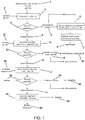
- the preferred embodiment of the invention is shown in Figure 1 . It can be observed that the photosynthetic microorganism biomass (1) obtained from the culture system and harvesting is conditioned to achieve a dry matter concentration of 15-20%.
- the photosynthetic microorganism mixture attained is placed in a stirred-tank reactor, adjusting the temperature to the optimum operating conditions of the cellulolytic enzymes (using cellulase), adding an amount of enzyme (2%) (2) and leaving it to act for 2 h. During this time, liquefaction of the sugars occurs (3) and the carbohydrates in the biomass are released.
- the concentration of carbohydrates in the mixture can reach up to 60 g/l, although it rarely exceeds 30 g/l.
- the mixture is removed from the stirred-tank reactor and filtered/centrifuged (4) to separate the solution containing the carbohydrates from the remaining biomass.
- the aforementioned concentrate is cooled to 30°C and the pH (7) adjusted to the optimum operating conditions of the Saccharomyces genus yeast. When the conditions have stabilised, 2% of yeast is added, leaving it to ferment with agitation and no aeration, under anoxic conditions, for approximately 24 h.
- the yeast can be recovered by filtering/centrifuging and recirculated to the process for a new batch.
- the water may be removed if necessary, using molecular sieves, for use as a direct biofuel mixed with gasoline.
- the residual biomass (9) resulting from the sugar extraction process can be used to obtain peptide and amino acid concentrates (10). If the previous stage is not performed, the biomass may also be used directly to obtain peptide and amino acid concentrates, but in this case the solution will also contain carbohydrates which will not be exploited.
- the first enzyme is added, followed by the second enzyme 2 h later, both in the same amount, 2%.
- the process is completed in approximately 4 h, after which most of the protein fraction will have been hydrolysed and the resulting peptide and amino acids dissolved in the liquid phase.
- the reaction mixture is centrifuged (13), resulting in a solution (14) that contains the said peptides and amino acids (10) and a residual biomass (15).
- the peptides and amino acids solution (14) must be stabilised to prevent rapid decomposition, as it is a perfect breeding ground for bacteria and yeast.
- the simplest solution is therefore to adjust the pH of the clarified solution to values preventing the growth of bacteria and yeasts. Good results are obtained with both acid and alkaline pH. Stabilisation at extreme pH values is not recommended, as in addition to being costlier and more hazardous - as the materials are more corrosive - the peptides and amino acids themselves may be denatured, losing part of their properties.
- the resulting residual biomass may be used to produce biodiesel. If the previous stages have not been performed, the biomass may also be subjected to the biodiesel production process, although the process will not perform as well and the quality of the resulting products will be lower. It is therefore recommended to carry out the previous stages, increasing the amount of products obtained from the same biomass.
- the wet biomass with a dry matter content of 15-20%, is placed in an stirred-tank reactor, adding sulphuric acid to 2% as a catalyser and methanol (16) as a reagent to an amount of 1 L for each litre of wet biomass.
- the residual biomass (21) therefore remains, in liquid phase, together with the reaction residues from all the previous stages. This biomass can be used to produce biogas.
- the resulting residual biomass (21) is subjected to a process of anaerobic digestion (22) to produce biogas (23).
- the biomass may be subjected to anaerobic digestion to produce biogas, although the process does not perform as well as the biomass is not sufficiently broken down, the nitrogen content is excessive and the chemical structure of the compounds present is too complex for the methanogenic bacteria to efficiently degrade the organic material.
- Biogas production is achieved by placing the wet biomass, with a dry matter content of 15-20%, in a continuous anaerobic digester, with a residence time of 5-8 days.
- the anaerobic digester is a sealed reactor that must previously be stabilised at a suitable temperature and pH, with no air inlet, and with bacterial flora adapted to the substrate to be metabolised.
- the biogas formed is removed through the top of the tank and the digestate (24) is removed through the bottom of the tank. With a minimal volume, it can also be used as a fertilizer for its high ammonium and phosphorus content and low COD.
Landscapes
- Chemical & Material Sciences (AREA)
- Organic Chemistry (AREA)
- Engineering & Computer Science (AREA)
- Zoology (AREA)
- Life Sciences & Earth Sciences (AREA)
- Wood Science & Technology (AREA)
- Chemical Kinetics & Catalysis (AREA)
- Microbiology (AREA)
- General Chemical & Material Sciences (AREA)
- Biotechnology (AREA)
- Health & Medical Sciences (AREA)
- Biochemistry (AREA)
- Bioinformatics & Cheminformatics (AREA)
- General Engineering & Computer Science (AREA)
- General Health & Medical Sciences (AREA)
- Genetics & Genomics (AREA)
- Oil, Petroleum & Natural Gas (AREA)
- Preparation Of Compounds By Using Micro-Organisms (AREA)
Claims (11)
- Procédé de valorisation de micro-organismes photosynthétiques pour utilisation intégrale de biomasse, caractérisé en ce qu'il comprend les étapes suivantes :- Une étape initiale par laquelle de la biomasse micro-algale (1) est placée dans une cuve avec agitateur dans laquelle des enzymes cellulolytiques (2) sont utilisées pour produire la liquéfaction des sucres (3), par rupture des parois cellulaires et libération des hydrates de carbone solubles, le reste des composants restant dans la biomasse résiduelle ; le mélange obtenu est séparé en utilisant un procédé de filtrage et/ou de centrifugation (4), générant une solution clarifiée (5) riche en hydrates de carbone et un concentré contenant la biomasse résiduelle (9).- Une étape consistant en la production de bioéthanol et autres produits dérivés tels que l'acide lactique à partir de la solution mentionnée ci-dessus (5) par une saccharification (6) des hydrates de carbone, suivie d'une fermentation alcoolique (7) avec de la levure pour transformer les monosaccharides en bioéthanol (8) avec un procédé de fermentation à haut rendement.- Une étape consistant à produire à partir de la biomasse résiduelle (9) des concentrés de peptides et d'acides aminés (10) en utilisant des enzymes protéolytiques (12) qui dégradent et solubilisent les protéines dans un procédé d'hydrolyse enzymatique (11), transformant les protéines en peptides et en acides aminés avec un poids moléculaire inférieur qui peuvent être utilisés pour des denrées alimentaires ou comme engrais agricoles de grande valeur. Le mélange de réaction obtenu est ensuite séparé en utilisant un procédé de filtrage et/ou de centrifugation (13), générant une solution (14) riche en peptides et en acides aminés et un concentré contenant la biomasse résiduelle (15).- Une étape consistant en la production de biodiesel à partir du concentré mentionné ci-dessus (15), impliquant la transestérification (17) des acides gras dans la biomasse avec de l'acide sulfurique comme catalyseur et du méthanol comme réactif (16), pour obtenir les esters méthyliques respectifs qui le constituent. Lorsque la réaction est achevée, le biodiesel (20) est extrait du mélange de réaction en utilisant de l'hexane (18), qui est ensuite évaporé pour obtenir le biodiesel (20).- Une étape consistant en la production de biogaz, par laquelle la biomasse résiduelle (21) résultant de l'étape précédente est soumise à un procédé de digestion anaérobie (22) par l'action de bactéries méthanogènes, afin de produire du biogaz (23) à partir du mélange de réaction sans méthanol et sans hexane obtenu (21), par laquelle la matière carbonée résiduelle contenue dans ce dernier est transformée en méthane, hydrogène et CO2.
- Procédé de valorisation de micro-organismes photosynthétiques pour utilisation intégrale de biomasse, selon la revendication 1, caractérisé en ce que lors de l'étape de production de bioéthanol (8), la saccharification (6) des hydrates de carbone se produit dans des conditions acides dans une fourchette de pH modéré de 1,5 à 2,5 et à une température allant de 95 à 115°C.
- Procédé de valorisation de micro-organismes photosynthétiques pour utilisation intégrale de biomasse, selon la revendication 1 ou 2, caractérisé en ce que la levure utilisée pour la fermentation appartient au genre Saccharomyces et qu'elle fermente pendant 24 h.
- Procédé de valorisation de micro-organismes photosynthétiques pour utilisation intégrale de biomasse, selon la revendication 1, 2 ou 3, caractérisé en ce que l'étape de fermentation alcoolique (7) faisant partie de l'étape de production de bioéthanol (8) est réalisée en refroidissant le concentré à 30°C et en ajustant le pH à 8.
- Procédé de valorisation de micro-organismes photosynthétiques pour utilisation intégrale de biomasse, selon l'une quelconque des revendications 1-4, caractérisé en ce que la levure est récupérée pour réutilisation en filtrant et/ou en centrifugeant, avec du bioéthanol et des résidus de sucre non métabolisé restant comme contenu dans la phase liquide.
- Procédé de valorisation de micro-organismes photosynthétiques pour utilisation intégrale de biomasse, selon la revendication 1, caractérisé en ce que le bioéthanol (8) produit est séparé au moyen d'une distillation sous vide suivie d'une dessiccation en utilisant des tamis moléculaires.
- Procédé de valorisation de micro-organismes photosynthétiques pour utilisation intégrale de biomasse, selon la revendication 1, caractérisé en ce que le procédé d'hydrolyse enzymatique (11) est réalisé en utilisant la biomasse résiduelle (9) dans un réacteur agité à un pH contrôlé de 7,7-8,1 et une température de 40-55°C pendant environ 4 h, dans des conditions douces et sans utiliser de produits toxiques ni de conditions dures.
- Procédé de valorisation de micro-organismes photosynthétiques pour utilisation intégrale de biomasse, selon la revendication 1, caractérisé en ce que le concentré de peptides et d'acides aminés (10) est stabilisé par un ajustement du pH acide ou alcalin pour empêcher la décomposition.
- Procédé de valorisation de micro-organismes photosynthétiques pour utilisation intégrale de biomasse, selon la revendication 1, caractérisé en ce que la transestérification (17) est réalisée dans des conditions douces sans séchage préalable de la biomasse, en utilisant de l'acide sulfurique à 2% et à une température de 90-110°C, pendant 2 h.
- Procédé de valorisation de micro-organismes photosynthétiques pour utilisation intégrale de biomasse, selon la revendication 1, caractérisé en ce que lors de l'étape de production de biodiesel (20), le méthanol inutilisé est retiré du mélange de réaction par distillation sous vide.
- Procédé de valorisation de micro-organismes photosynthétiques pour utilisation intégrale de biomasse, selon la revendication 1, caractérisé en ce que le procédé de digestion anaérobie (22) faisant partie de l'étape de production de biogaz a lieu dans des cuve fermées hermétiquement dans des conditions anaérobies à des températures de 30-40°C, avec un temps de séjour d'environ 5-8 jours.
Applications Claiming Priority (1)
| Application Number | Priority Date | Filing Date | Title |
|---|---|---|---|
| PCT/ES2013/070064 WO2014122331A1 (fr) | 2013-02-06 | 2013-02-06 | Processus de valorisation des microorganismes photosynthétiques pour l'utilisation intégrale de la biomasse |
Publications (2)
| Publication Number | Publication Date |
|---|---|
| EP2966171A1 EP2966171A1 (fr) | 2016-01-13 |
| EP2966171B1 true EP2966171B1 (fr) | 2019-10-09 |
Family
ID=48444415
Family Applications (1)
| Application Number | Title | Priority Date | Filing Date |
|---|---|---|---|
| EP13722787.2A Active EP2966171B1 (fr) | 2013-02-06 | 2013-02-06 | Processus de valorisation des microorganismes photosynthétiques pour l'utilisation intégrale de la biomasse |
Country Status (3)
| Country | Link |
|---|---|
| EP (1) | EP2966171B1 (fr) |
| ES (1) | ES2765050T3 (fr) |
| WO (1) | WO2014122331A1 (fr) |
Families Citing this family (2)
| Publication number | Priority date | Publication date | Assignee | Title |
|---|---|---|---|---|
| RU2675537C1 (ru) | 2015-10-08 | 2018-12-19 | Зульцер Мэнэджмент Аг | Способ и устройство для обработки биомассы |
| ES2693793B2 (es) * | 2018-09-25 | 2019-05-29 | Biorizon Biotech S L | Procedimiento de obtencion de concentrados de biofertilizantes y bioestimulantes de uso agricola a partir de biomasa de microalgas, incluyendo cianobacterias |
Family Cites Families (4)
| Publication number | Priority date | Publication date | Assignee | Title |
|---|---|---|---|---|
| EP1928994A2 (fr) * | 2005-08-25 | 2008-06-11 | Solix Biofuels, Inc. | Procede, appareil et systeme de production de biodiesel a partir d'algues |
| US7977076B2 (en) * | 2006-12-29 | 2011-07-12 | Genifuel Corporation | Integrated processes and systems for production of biofuels using algae |
| DE102010001072A1 (de) * | 2010-01-21 | 2011-07-28 | Voith Patent GmbH, 89522 | Verfahren zur Züchtung von Biomasse und CO2-Verwertungsprozesseinheit |
| US9587211B2 (en) * | 2011-04-20 | 2017-03-07 | Arizona Technology Innovation Group, Inc. | Photo-bioreactor system and method |
-
2013
- 2013-02-06 EP EP13722787.2A patent/EP2966171B1/fr active Active
- 2013-02-06 ES ES13722787T patent/ES2765050T3/es active Active
- 2013-02-06 WO PCT/ES2013/070064 patent/WO2014122331A1/fr not_active Ceased
Non-Patent Citations (1)
| Title |
|---|
| None * |
Also Published As
| Publication number | Publication date |
|---|---|
| EP2966171A1 (fr) | 2016-01-13 |
| ES2765050T3 (es) | 2020-06-05 |
| WO2014122331A1 (fr) | 2014-08-14 |
Similar Documents
| Publication | Publication Date | Title |
|---|---|---|
| Lakatos et al. | Bioethanol production from microalgae polysaccharides | |
| Ukaegbu-Obi | Single cell protein: a resort to global protein challenge and waste management | |
| Sankaran et al. | Exploitation and biorefinery of microalgae | |
| US11104920B2 (en) | Enzymatic digestion of microalgal biomass for lipid, sugar, and protein recovery | |
| Junaid et al. | Single cell proteins as a potential meat substitute: A critical review | |
| de Farias Silva et al. | Biorefinery as a promising approach to promote ethanol industry from microalgae and cyanobacteria | |
| Abdullahi et al. | Review on production of single-cell protein from food wastes | |
| CN103695526B (zh) | 一种水热预处理提高餐厨垃圾乙醇生产量的方法 | |
| Kumar et al. | Production of high value-added biomolecules by microalgae cultivation in wastewater from anaerobic digestates of food waste: a review | |
| CN103255185B (zh) | 木质纤维素同步糖化与发酵生产微生物油脂并回收使用纤维素酶的方法 | |
| CN101638673A (zh) | 一种利用植物秸秆发酵生产酒精的方法 | |
| CN105441525A (zh) | 一种通过共培养提高以蔗糖为碳源下红球藻虾青素产率的方法 | |
| Pradechboon et al. | Alkali pretreatment and enzymatic saccharification of blue-green alga Nostochopsis lobatus for bioethanol production | |
| EP2966171B1 (fr) | Processus de valorisation des microorganismes photosynthétiques pour l'utilisation intégrale de la biomasse | |
| CN105349588B (zh) | 利用裂殖壶菌生产二十二碳六烯酸的方法 | |
| CN100535103C (zh) | 以提取木糖后的玉米皮水解糖液为原料制备饲料酵母的方法 | |
| CN106893682B (zh) | 一种液化醪扩培酵母菌的方法及其应用和发酵乙醇的方法 | |
| CN105087688A (zh) | 一种微生物油脂的生产方法 | |
| Nouska et al. | Saccharomyces cerevisiae and Kefir Production using Waste Pomegranate Juice, Molasses, and Whey. | |
| CN107460223A (zh) | 一种用于微生物培养的脱脂蚕蛹水解物及其制备方法和应用 | |
| CN113667606B (zh) | 一种以碎米糖化液为碳源高效同化氨制备蛋白质的方法 | |
| CN108315381B (zh) | 蛋白核小球藻细胞利用木薯渣为主要原料制备油脂的方法 | |
| JP2007195406A (ja) | エタノール生産発酵法 | |
| Doelle et al. | Clean Technologies through Microbial Processes for Economic Benefits and Sustainability | |
| Rathoure | Microbial biomass production |
Legal Events
| Date | Code | Title | Description |
|---|---|---|---|
| PUAI | Public reference made under article 153(3) epc to a published international application that has entered the european phase |
Free format text: ORIGINAL CODE: 0009012 |
|
| 17P | Request for examination filed |
Effective date: 20141029 |
|
| AK | Designated contracting states |
Kind code of ref document: A1 Designated state(s): AL AT BE BG CH CY CZ DE DK EE ES FI FR GB GR HR HU IE IS IT LI LT LU LV MC MK MT NL NO PL PT RO RS SE SI SK SM TR |
|
| AX | Request for extension of the european patent |
Extension state: BA ME |
|
| DAX | Request for extension of the european patent (deleted) | ||
| 17Q | First examination report despatched |
Effective date: 20160614 |
|
| STAA | Information on the status of an ep patent application or granted ep patent |
Free format text: STATUS: EXAMINATION IS IN PROGRESS |
|
| GRAP | Despatch of communication of intention to grant a patent |
Free format text: ORIGINAL CODE: EPIDOSNIGR1 |
|
| STAA | Information on the status of an ep patent application or granted ep patent |
Free format text: STATUS: GRANT OF PATENT IS INTENDED |
|
| INTG | Intention to grant announced |
Effective date: 20190618 |
|
| GRAS | Grant fee paid |
Free format text: ORIGINAL CODE: EPIDOSNIGR3 |
|
| GRAA | (expected) grant |
Free format text: ORIGINAL CODE: 0009210 |
|
| STAA | Information on the status of an ep patent application or granted ep patent |
Free format text: STATUS: THE PATENT HAS BEEN GRANTED |
|
| AK | Designated contracting states |
Kind code of ref document: B1 Designated state(s): AL AT BE BG CH CY CZ DE DK EE ES FI FR GB GR HR HU IE IS IT LI LT LU LV MC MK MT NL NO PL PT RO RS SE SI SK SM TR |
|
| REG | Reference to a national code |
Ref country code: GB Ref legal event code: FG4D |
|
| REG | Reference to a national code |
Ref country code: CH Ref legal event code: EP |
|
| REG | Reference to a national code |
Ref country code: IE Ref legal event code: FG4D |
|
| REG | Reference to a national code |
Ref country code: DE Ref legal event code: R096 Ref document number: 602013061437 Country of ref document: DE |
|
| REG | Reference to a national code |
Ref country code: AT Ref legal event code: REF Ref document number: 1188850 Country of ref document: AT Kind code of ref document: T Effective date: 20191115 |
|
| REG | Reference to a national code |
Ref country code: NL Ref legal event code: MP Effective date: 20191009 |
|
| REG | Reference to a national code |
Ref country code: LT Ref legal event code: MG4D |
|
| REG | Reference to a national code |
Ref country code: AT Ref legal event code: MK05 Ref document number: 1188850 Country of ref document: AT Kind code of ref document: T Effective date: 20191009 |
|
| PG25 | Lapsed in a contracting state [announced via postgrant information from national office to epo] |
Ref country code: SE Free format text: LAPSE BECAUSE OF FAILURE TO SUBMIT A TRANSLATION OF THE DESCRIPTION OR TO PAY THE FEE WITHIN THE PRESCRIBED TIME-LIMIT Effective date: 20191009 Ref country code: FI Free format text: LAPSE BECAUSE OF FAILURE TO SUBMIT A TRANSLATION OF THE DESCRIPTION OR TO PAY THE FEE WITHIN THE PRESCRIBED TIME-LIMIT Effective date: 20191009 Ref country code: BG Free format text: LAPSE BECAUSE OF FAILURE TO SUBMIT A TRANSLATION OF THE DESCRIPTION OR TO PAY THE FEE WITHIN THE PRESCRIBED TIME-LIMIT Effective date: 20200109 Ref country code: NO Free format text: LAPSE BECAUSE OF FAILURE TO SUBMIT A TRANSLATION OF THE DESCRIPTION OR TO PAY THE FEE WITHIN THE PRESCRIBED TIME-LIMIT Effective date: 20200109 Ref country code: GR Free format text: LAPSE BECAUSE OF FAILURE TO SUBMIT A TRANSLATION OF THE DESCRIPTION OR TO PAY THE FEE WITHIN THE PRESCRIBED TIME-LIMIT Effective date: 20200110 Ref country code: NL Free format text: LAPSE BECAUSE OF FAILURE TO SUBMIT A TRANSLATION OF THE DESCRIPTION OR TO PAY THE FEE WITHIN THE PRESCRIBED TIME-LIMIT Effective date: 20191009 Ref country code: PT Free format text: LAPSE BECAUSE OF FAILURE TO SUBMIT A TRANSLATION OF THE DESCRIPTION OR TO PAY THE FEE WITHIN THE PRESCRIBED TIME-LIMIT Effective date: 20200210 Ref country code: LT Free format text: LAPSE BECAUSE OF FAILURE TO SUBMIT A TRANSLATION OF THE DESCRIPTION OR TO PAY THE FEE WITHIN THE PRESCRIBED TIME-LIMIT Effective date: 20191009 Ref country code: PL Free format text: LAPSE BECAUSE OF FAILURE TO SUBMIT A TRANSLATION OF THE DESCRIPTION OR TO PAY THE FEE WITHIN THE PRESCRIBED TIME-LIMIT Effective date: 20191009 Ref country code: AT Free format text: LAPSE BECAUSE OF FAILURE TO SUBMIT A TRANSLATION OF THE DESCRIPTION OR TO PAY THE FEE WITHIN THE PRESCRIBED TIME-LIMIT Effective date: 20191009 Ref country code: LV Free format text: LAPSE BECAUSE OF FAILURE TO SUBMIT A TRANSLATION OF THE DESCRIPTION OR TO PAY THE FEE WITHIN THE PRESCRIBED TIME-LIMIT Effective date: 20191009 |
|
| PG25 | Lapsed in a contracting state [announced via postgrant information from national office to epo] |
Ref country code: IS Free format text: LAPSE BECAUSE OF FAILURE TO SUBMIT A TRANSLATION OF THE DESCRIPTION OR TO PAY THE FEE WITHIN THE PRESCRIBED TIME-LIMIT Effective date: 20200224 Ref country code: RS Free format text: LAPSE BECAUSE OF FAILURE TO SUBMIT A TRANSLATION OF THE DESCRIPTION OR TO PAY THE FEE WITHIN THE PRESCRIBED TIME-LIMIT Effective date: 20191009 Ref country code: HR Free format text: LAPSE BECAUSE OF FAILURE TO SUBMIT A TRANSLATION OF THE DESCRIPTION OR TO PAY THE FEE WITHIN THE PRESCRIBED TIME-LIMIT Effective date: 20191009 |
|
| REG | Reference to a national code |
Ref country code: ES Ref legal event code: FG2A Ref document number: 2765050 Country of ref document: ES Kind code of ref document: T3 Effective date: 20200605 |
|
| PG25 | Lapsed in a contracting state [announced via postgrant information from national office to epo] |
Ref country code: AL Free format text: LAPSE BECAUSE OF FAILURE TO SUBMIT A TRANSLATION OF THE DESCRIPTION OR TO PAY THE FEE WITHIN THE PRESCRIBED TIME-LIMIT Effective date: 20191009 |
|
| REG | Reference to a national code |
Ref country code: DE Ref legal event code: R097 Ref document number: 602013061437 Country of ref document: DE |
|
| PG2D | Information on lapse in contracting state deleted |
Ref country code: IS |
|
| PG25 | Lapsed in a contracting state [announced via postgrant information from national office to epo] |
Ref country code: IS Free format text: LAPSE BECAUSE OF FAILURE TO SUBMIT A TRANSLATION OF THE DESCRIPTION OR TO PAY THE FEE WITHIN THE PRESCRIBED TIME-LIMIT Effective date: 20200209 Ref country code: EE Free format text: LAPSE BECAUSE OF FAILURE TO SUBMIT A TRANSLATION OF THE DESCRIPTION OR TO PAY THE FEE WITHIN THE PRESCRIBED TIME-LIMIT Effective date: 20191009 Ref country code: DK Free format text: LAPSE BECAUSE OF FAILURE TO SUBMIT A TRANSLATION OF THE DESCRIPTION OR TO PAY THE FEE WITHIN THE PRESCRIBED TIME-LIMIT Effective date: 20191009 Ref country code: RO Free format text: LAPSE BECAUSE OF FAILURE TO SUBMIT A TRANSLATION OF THE DESCRIPTION OR TO PAY THE FEE WITHIN THE PRESCRIBED TIME-LIMIT Effective date: 20191009 Ref country code: CZ Free format text: LAPSE BECAUSE OF FAILURE TO SUBMIT A TRANSLATION OF THE DESCRIPTION OR TO PAY THE FEE WITHIN THE PRESCRIBED TIME-LIMIT Effective date: 20191009 |
|
| PLBE | No opposition filed within time limit |
Free format text: ORIGINAL CODE: 0009261 |
|
| STAA | Information on the status of an ep patent application or granted ep patent |
Free format text: STATUS: NO OPPOSITION FILED WITHIN TIME LIMIT |
|
| PG25 | Lapsed in a contracting state [announced via postgrant information from national office to epo] |
Ref country code: SM Free format text: LAPSE BECAUSE OF FAILURE TO SUBMIT A TRANSLATION OF THE DESCRIPTION OR TO PAY THE FEE WITHIN THE PRESCRIBED TIME-LIMIT Effective date: 20191009 Ref country code: IT Free format text: LAPSE BECAUSE OF FAILURE TO SUBMIT A TRANSLATION OF THE DESCRIPTION OR TO PAY THE FEE WITHIN THE PRESCRIBED TIME-LIMIT Effective date: 20191009 Ref country code: SK Free format text: LAPSE BECAUSE OF FAILURE TO SUBMIT A TRANSLATION OF THE DESCRIPTION OR TO PAY THE FEE WITHIN THE PRESCRIBED TIME-LIMIT Effective date: 20191009 |
|
| REG | Reference to a national code |
Ref country code: DE Ref legal event code: R119 Ref document number: 602013061437 Country of ref document: DE |
|
| 26N | No opposition filed |
Effective date: 20200710 |
|
| REG | Reference to a national code |
Ref country code: CH Ref legal event code: PL |
|
| GBPC | Gb: european patent ceased through non-payment of renewal fee |
Effective date: 20200206 |
|
| REG | Reference to a national code |
Ref country code: BE Ref legal event code: MM Effective date: 20200229 |
|
| PG25 | Lapsed in a contracting state [announced via postgrant information from national office to epo] |
Ref country code: MC Free format text: LAPSE BECAUSE OF FAILURE TO SUBMIT A TRANSLATION OF THE DESCRIPTION OR TO PAY THE FEE WITHIN THE PRESCRIBED TIME-LIMIT Effective date: 20191009 Ref country code: LU Free format text: LAPSE BECAUSE OF NON-PAYMENT OF DUE FEES Effective date: 20200206 |
|
| PG25 | Lapsed in a contracting state [announced via postgrant information from national office to epo] |
Ref country code: LI Free format text: LAPSE BECAUSE OF NON-PAYMENT OF DUE FEES Effective date: 20200229 Ref country code: CH Free format text: LAPSE BECAUSE OF NON-PAYMENT OF DUE FEES Effective date: 20200229 Ref country code: SI Free format text: LAPSE BECAUSE OF FAILURE TO SUBMIT A TRANSLATION OF THE DESCRIPTION OR TO PAY THE FEE WITHIN THE PRESCRIBED TIME-LIMIT Effective date: 20191009 |
|
| PG25 | Lapsed in a contracting state [announced via postgrant information from national office to epo] |
Ref country code: DE Free format text: LAPSE BECAUSE OF NON-PAYMENT OF DUE FEES Effective date: 20200901 Ref country code: GB Free format text: LAPSE BECAUSE OF NON-PAYMENT OF DUE FEES Effective date: 20200206 Ref country code: FR Free format text: LAPSE BECAUSE OF NON-PAYMENT OF DUE FEES Effective date: 20200229 Ref country code: IE Free format text: LAPSE BECAUSE OF NON-PAYMENT OF DUE FEES Effective date: 20200206 |
|
| PG25 | Lapsed in a contracting state [announced via postgrant information from national office to epo] |
Ref country code: BE Free format text: LAPSE BECAUSE OF NON-PAYMENT OF DUE FEES Effective date: 20200229 |
|
| PGFP | Annual fee paid to national office [announced via postgrant information from national office to epo] |
Ref country code: ES Payment date: 20210330 Year of fee payment: 9 |
|
| PG25 | Lapsed in a contracting state [announced via postgrant information from national office to epo] |
Ref country code: TR Free format text: LAPSE BECAUSE OF FAILURE TO SUBMIT A TRANSLATION OF THE DESCRIPTION OR TO PAY THE FEE WITHIN THE PRESCRIBED TIME-LIMIT Effective date: 20191009 Ref country code: MT Free format text: LAPSE BECAUSE OF FAILURE TO SUBMIT A TRANSLATION OF THE DESCRIPTION OR TO PAY THE FEE WITHIN THE PRESCRIBED TIME-LIMIT Effective date: 20191009 Ref country code: CY Free format text: LAPSE BECAUSE OF FAILURE TO SUBMIT A TRANSLATION OF THE DESCRIPTION OR TO PAY THE FEE WITHIN THE PRESCRIBED TIME-LIMIT Effective date: 20191009 |
|
| PG25 | Lapsed in a contracting state [announced via postgrant information from national office to epo] |
Ref country code: MK Free format text: LAPSE BECAUSE OF FAILURE TO SUBMIT A TRANSLATION OF THE DESCRIPTION OR TO PAY THE FEE WITHIN THE PRESCRIBED TIME-LIMIT Effective date: 20191009 |
|
| REG | Reference to a national code |
Ref country code: ES Ref legal event code: FD2A Effective date: 20230428 |
|
| PG25 | Lapsed in a contracting state [announced via postgrant information from national office to epo] |
Ref country code: ES Free format text: LAPSE BECAUSE OF NON-PAYMENT OF DUE FEES Effective date: 20220207 |