EP2966567A1 - Prise en compte de l'infrastructure informatique virtualisée et règles d'économie d'énergie électrique innovantes - Google Patents
Prise en compte de l'infrastructure informatique virtualisée et règles d'économie d'énergie électrique innovantes Download PDFInfo
- Publication number
- EP2966567A1 EP2966567A1 EP14176395.3A EP14176395A EP2966567A1 EP 2966567 A1 EP2966567 A1 EP 2966567A1 EP 14176395 A EP14176395 A EP 14176395A EP 2966567 A1 EP2966567 A1 EP 2966567A1
- Authority
- EP
- European Patent Office
- Prior art keywords
- configuration
- service
- performance
- cost
- power
- Prior art date
- Legal status (The legal status is an assumption and is not a legal conclusion. Google has not performed a legal analysis and makes no representation as to the accuracy of the status listed.)
- Ceased
Links
Images


Classifications
-
- G—PHYSICS
- G06—COMPUTING OR CALCULATING; COUNTING
- G06F—ELECTRIC DIGITAL DATA PROCESSING
- G06F9/00—Arrangements for program control, e.g. control units
- G06F9/06—Arrangements for program control, e.g. control units using stored programs, i.e. using an internal store of processing equipment to receive or retain programs
- G06F9/46—Multiprogramming arrangements
- G06F9/50—Allocation of resources, e.g. of the central processing unit [CPU]
- G06F9/5094—Allocation of resources, e.g. of the central processing unit [CPU] where the allocation takes into account power or heat criteria
-
- G—PHYSICS
- G06—COMPUTING OR CALCULATING; COUNTING
- G06F—ELECTRIC DIGITAL DATA PROCESSING
- G06F1/00—Details not covered by groups G06F3/00 - G06F13/00 and G06F21/00
- G06F1/26—Power supply means, e.g. regulation thereof
- G06F1/32—Means for saving power
- G06F1/3203—Power management, i.e. event-based initiation of a power-saving mode
- G06F1/3206—Monitoring of events, devices or parameters that trigger a change in power modality
-
- G—PHYSICS
- G06—COMPUTING OR CALCULATING; COUNTING
- G06F—ELECTRIC DIGITAL DATA PROCESSING
- G06F1/00—Details not covered by groups G06F3/00 - G06F13/00 and G06F21/00
- G06F1/26—Power supply means, e.g. regulation thereof
- G06F1/32—Means for saving power
- G06F1/3203—Power management, i.e. event-based initiation of a power-saving mode
- G06F1/3234—Power saving characterised by the action undertaken
- G06F1/324—Power saving characterised by the action undertaken by lowering clock frequency
-
- Y—GENERAL TAGGING OF NEW TECHNOLOGICAL DEVELOPMENTS; GENERAL TAGGING OF CROSS-SECTIONAL TECHNOLOGIES SPANNING OVER SEVERAL SECTIONS OF THE IPC; TECHNICAL SUBJECTS COVERED BY FORMER USPC CROSS-REFERENCE ART COLLECTIONS [XRACs] AND DIGESTS
- Y02—TECHNOLOGIES OR APPLICATIONS FOR MITIGATION OR ADAPTATION AGAINST CLIMATE CHANGE
- Y02D—CLIMATE CHANGE MITIGATION TECHNOLOGIES IN INFORMATION AND COMMUNICATION TECHNOLOGIES [ICT], I.E. INFORMATION AND COMMUNICATION TECHNOLOGIES AIMING AT THE REDUCTION OF THEIR OWN ENERGY USE
- Y02D10/00—Energy efficient computing, e.g. low power processors, power management or thermal management
Definitions
- a computer service is based on a single application or in other cases comprises a plurality of application systems that interact with each other.
- Each application system may comprise one or more application instances and each application instance may be run on a virtual or physical server.
- Both kinds of servers may employ for execution one or more physical execution units which are commonly realized as CPUs or cores of CPUs, or virtual siblings.
- execution units may be grouped to physical servers which in turn may be grouped to pools (clusters) of which several may be comprised by a datacentre.
- a set of execution units that contribute to running a specific computer service normally perform other tasks as well so that the electric power the execution units consume is not necessarily the same as the electric power required for running the computer service.
- a service is hosted on a mutable configuration of one or more execution units together with other services.
- a method for hosting the service comprises steps of determining a computational power provided by the execution units, determining an electric power consumed by the execution units, determining a cost per service based on the electric power and the computational power, determining a service performance and adjusting the configuration in order to improve a configuration efficiency, expressible by a relationship between the cost per service and the performance.
- the configuration of the service was optimized with respect to computing power alone, the consumption of electric energy caused by the service may now also be accounted for.
- the overall performance of the system may be optimized so that a situation may be avoided in which a small saving in electric energy is accompanied by a big loss in service performance.
- a service may for instance comprise two application instances. When activity of the service gets low, a configuration of execution units for carrying out the application instances is changed. However, simply reducing the available computational power for one of the services may create a bottleneck problem that may require increased computational power for the other service. It is therefore necessary to reduce the available computational power such that the service remains balanced and does not require excessive electrical power.
- adjusting is carried out such as to minimise cost for the performance. This may especially be appropriate if the service is known to require a constant level of performance. In the above example, the second change would be preferred in this variant.
- the adjusting may be carried out such as to maximize performance for the cost. This may for instance be appropriate for a service that is desirable to be run in as short a time as possible while maintaining a predetermined cost frame. In the above example, the first change would be preferred in this variant.
- the adjusting may comprise removing an execution unit from the configuration. Unused computational power may thus quickly be returned to a pool so that cost for the runner of the service is reduced and efficiency of the configuration may be increased.
- At least one execution unit of the configuration can be operated on different electric power levels and each power level is associated to a specific computational power.
- adjusting the configuration may comprise changing the power level of the execution unit.
- a relationship between computational power and electric power is non-linear. It may be so that a big decrease in electric power provides only a small decrease in computational power and vice versa. A percentage of increase or decrease on the electric power side is thus generally not linearly related to an increase or decrease of computational power.
- a reconfiguration cost is minimised wherein the reconfiguration cost comprises a degradation of service performance over a predetermined reconfiguration time.
- service performance may be degraded.
- frequent configuration changes may be prevented.
- the cost for changing a configuration may be weighed against a possible saving between two configurations.
- a present configuration may be maintained until the cost for changing from a previous configuration into the present configuration is amortized through savings relative to the previous configuration.
- an estimation is made how long a changed configuration can be maintained and adjusting is withheld if the improved efficiency after reconfiguration does not add up to the reconfiguration cost over maintaining time.
- the service cost is determined on the additional basis of a facility operation cost. It is preferred that energy requirements of a facility that hosts the execution units are assigned to running services through a key that is based on the electric power consumption of the associated configuration of execution units. In addition, a fixed effort in electric energy or other resources for running the facility may be added.
- the configuration may be adjusted such as to minimise a facility operation cost. For instance, it may be desirable that a configuration comprises execution units that are not too close to intensively used other execution units so that thermal discharge of the execution units of the configuration may be better distributed.
- a service may comprise one or several application instances wherein some of the application instances may run directly on one or more physical execution units and some on one or more virtual execution units.
- the application instances use resources of a compute node, namely that of the execution units (CPUs) and memory.
- the efficiency of an application instance depends on the cup and memory usage in congruence to other application instances running in the same environment.
- the cache hits or misses in a memory cache, the usage of direct memory or the need to use remote memory is relevant information for an optimization process.
- a CPU type, a memory type, a clock rate and memory consumption together with a CPU memory architecture and a memory size influence both the computing power and the power consumption of a node.
- a datacentre typically has a mix of differently sized computing nodes physical and virtual.
- the computing nodes may differ in type of CPU, clock rates, CPU counts, core counts, cache sizes and cache architecture as well as size of memory, type of memory, clockrate of memory, bank usage and others.
- OS operating systems
- New physical or virtual servers can be placed or replaced in a datacentre in minutes without downtime for other components.
- the invention helps or automates identify and relocate application instances to the new or changed environment.
- the instances On an application system with several application instances, the instances have more or less dependencies to each other which leads to more or less efficiency in a given environment.
- Each application instance has typically a characteristic curve on a daily, weekly, monthly or annual base.
- a calibration application which can produce a repeatable load for different application instance types, e.g. highly multithreaded, partly threated, cache level usages data load from network storage, or direct attached storage und main memory usage to produce the set of characteristics curves together with a definite OS or hypervisor environment.
- Figure 1 shows a schematic of a computer system 100 for hosting a service.
- the computer system 100 may be comprised by a facility such as a data centre or it may be distributed geographically, in which case elements of the computer system 100 may or may not be separated by large physical distances. A physical distance may be considered large when two computer elements do not share the same hosting facility.
- the system 100 comprises a number of execution units 105 which may be implemented as a central processing unit (CPU) of a computer machine or a core of such a CPU.
- an execution unit 105 consumes electric power 110 and provides a computational power 115.
- Most of the electric power 110 is transformed into thermal power 120, which may require an additional effort to remove from the execution unit 105.
- the effort required for removing the thermal power 120 is considered to be part of the electric power 110 itself. For instance, if the electric power of an execution unit is 100 watt and cooling the execution unit 105 requires another 50 watt for ventilation, the electric power 110 for the execution unit 105 is considered to be 150 watt.
- the computational power 115 may for instance be calculated in instructions per second (IPS) or floating point operations per second (FLOPS); different marginal conditions for these figures may apply.
- Execution units 105 may be grouped, virtualized or regrouped in different ways. For instance, several CPUs 125, each containing one or more physical or virtual cores 105, may be part of one server 130. Every CPU and/or core may be connected to a cache or a series of caches of several levels. An execution unit 105 may comprise memory 106 that is local or remote. In the latter case the memory 106 may be accessed via a network. There may also be one or several levels of cache 107 and 108. Caches 107, 108, especially in hierarchical configuration, may increase the CPU efficiency. Network adapters 111 and storage adapters 112 connect the computer systems 130 to each other and to specialized storage nodes may also be provided.
- Upper and lower limits for the number of execution units 105 of a configuration 145 may depend on the service 140.
- the service 140 may for instance comprise an SAP SID with several SAP instances such as database, application server and others.
- a service 140 will show a certain performance 150.
- the performance 150 may be measured in any known way. In the above example of an SAP system, the performance 150 may specifically be determined in SAP application performance standard (SAPS) equivalents or any other hardware independent performance value.
- SAP SAP application performance standard
- a cost function for the configuration 145 that is not only dependent on the computational power 115 used for CPU and memory 106 provided by the execution units 105 of the configuration 145 but also on the electric power 110 the execution units 105 consume.
- a first one may consume more electrical power (in Watt) than a second one.
- the second one may have more computing power so that it may finish a given task in less time (in seconds) than the first one.
- a predetermined cost may therefore be associated with an electric power 110 of one Ws (1 Watt x 1 second).
- Another cost may be associated with a computational power 115 of a predetermined number of SAPs aquivalents. Both costs may be expressable in money or a different unit and a conversion factor may be employed to allow adding the cost for computational power 115 and that for electric power 110.
- the resulting costs may be periodically accumulated to provide an overall cost for the services 140 over time.
- a process may comprise a piece of software that determines said parameter and evaluates it or passes it on to another process.
- Lower level processes may report to higher level processes and in the end an overall efficiency for the service 140 may be determined.
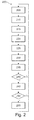
- the computational power 115 of the configuration 145 is determined in a step 215.
- the electric power 110 of the configuration 145 is determined in a step 225.
- the performance 150 of service 140 is furthermore determined in a step 230.
- a cost for the service 140 is determined on the basis of the electric power 110 determined in step 225 and the computational power 115 determined in step 215.
- efficiency of the configuration 145 is determined. The efficiency is by preference determined by dividing the performance 150 by the determined cost. A reciprocal value may alternatively be used.
- the configuration 145 may then be adjusted.
- a more efficient configuration 145 may be determined but activation of the adjusted configuration 145 may be subject to a comparison of reconfiguration cost with potential cost savings.
- a configuration for a service is determined at the time the service is started.
- the application instances of the applications that make up the service may be started on a particular frame, pool or group of systems in a datacentre.
- Relocation of an application instance may be influenced by an overall load level in a set of computing nodes. Should for instance in a datacentre with a predetermined number of nodes the overall load be high a de-escalation rule may be applied. In this case the power consumption of a server with lower prioritized services may be reduced. Such a configuration change may be performed without a relocation of an application instance.
- a similar scheme may be applied in the case of high temperature in a datacentre. Cooling problems may thus be addressed on a service level.
- a service, application or application instance may be relocated from a hot zone in a datacentre to a cooler zone.
- Such relocation may also be performed automatically.
- a group of computing nodes e.g. a server or a group of servers, may enter a power saving mode in a definable time slice like during the night or during the weekend. It is also possible to detect if a service, application or application instance has an untypical resource consumption or resource consumption change. In this case, a configuration may be changed to isolate a component in question. Both detection and relocation may be done automatically.
- Figure 3 shows a characteristic diagram 300 with an exemplary relationship between a computational power 115 (growing in an upper right direction), a number 305 of execution units 105 comprised by the configuration 145 (growing in an upper left direction) and the service performance 150 (growing vertically).
- the characteristic diagram 300 may be used for instance in step 240 of method 200 discussed above with reference to Figure 2 .
- the performance 150 generally increases when the computational power 115 of the configuration 145 is increased. Such increase may e.g. come from a higher clock rate in one or more of the execution units 105. On the other hand, mostly but not always will an increased number 305 of execution units 105 lead to a better performance 150. In some cases, performance 150 may decrease when an execution unit 105 is added to a configuration 145, even though the associated computational power 115 increases.
- every application agents checks if he can optimize the availability, the performance, or the power consumption of the application instance that is subject to the auction and determines which application instances it may take over. Every application agent decides to apply or not to apply, that is, whether or not it places a bid in the auction. Every bid contains values relevant for a target configuration and/or a configuration change, so that, depending on the type of the auction, a ranking list can be produced.
- the ranking list may contain offers of application agents for taking over certain application instances, sorted by preferrability.
- An auction can be placed more or less locally, that means only excecution units in the same group or pool can apply. Every application agent checks cyclically or after an specific event for relevant auctions.
- a control agent may open an auction to find a node for starting new application instances.
- the auctions can help to find bad configurations, can lead to reconfiguration or relocation plans on the basis of static and dynamic knowledge about the physical and virtual environment and the static and dynamic behaviour of the application instances.
Landscapes
- Engineering & Computer Science (AREA)
- Theoretical Computer Science (AREA)
- Software Systems (AREA)
- Physics & Mathematics (AREA)
- General Engineering & Computer Science (AREA)
- General Physics & Mathematics (AREA)
- Power Sources (AREA)
Priority Applications (1)
| Application Number | Priority Date | Filing Date | Title |
|---|---|---|---|
| EP14176395.3A EP2966567A1 (fr) | 2014-07-09 | 2014-07-09 | Prise en compte de l'infrastructure informatique virtualisée et règles d'économie d'énergie électrique innovantes |
Applications Claiming Priority (1)
| Application Number | Priority Date | Filing Date | Title |
|---|---|---|---|
| EP14176395.3A EP2966567A1 (fr) | 2014-07-09 | 2014-07-09 | Prise en compte de l'infrastructure informatique virtualisée et règles d'économie d'énergie électrique innovantes |
Publications (1)
| Publication Number | Publication Date |
|---|---|
| EP2966567A1 true EP2966567A1 (fr) | 2016-01-13 |
Family
ID=51176180
Family Applications (1)
| Application Number | Title | Priority Date | Filing Date |
|---|---|---|---|
| EP14176395.3A Ceased EP2966567A1 (fr) | 2014-07-09 | 2014-07-09 | Prise en compte de l'infrastructure informatique virtualisée et règles d'économie d'énergie électrique innovantes |
Country Status (1)
| Country | Link |
|---|---|
| EP (1) | EP2966567A1 (fr) |
Citations (3)
| Publication number | Priority date | Publication date | Assignee | Title |
|---|---|---|---|---|
| US20090204826A1 (en) * | 2008-02-07 | 2009-08-13 | Robert Cox | Method for Power Conservation in Virtualized Environments |
| US20090293022A1 (en) * | 2008-05-22 | 2009-11-26 | Microsoft Corporation | Virtual Machine Placement Based on Power Calculations |
| US20130318388A1 (en) * | 2012-05-24 | 2013-11-28 | Xerox Corporation | Method and system for computing energy rating for cloud-based software services |
-
2014
- 2014-07-09 EP EP14176395.3A patent/EP2966567A1/fr not_active Ceased
Patent Citations (3)
| Publication number | Priority date | Publication date | Assignee | Title |
|---|---|---|---|---|
| US20090204826A1 (en) * | 2008-02-07 | 2009-08-13 | Robert Cox | Method for Power Conservation in Virtualized Environments |
| US20090293022A1 (en) * | 2008-05-22 | 2009-11-26 | Microsoft Corporation | Virtual Machine Placement Based on Power Calculations |
| US20130318388A1 (en) * | 2012-05-24 | 2013-11-28 | Xerox Corporation | Method and system for computing energy rating for cloud-based software services |
Non-Patent Citations (1)
| Title |
|---|
| HARADA F ET AL: "Adaptive fair resource allocation for energy and QoS trade-off management", IEICE TRANSACTIONS ON FUNDAMENTALS OF ELECTRONICS,COMMUNICATIONS AND COMPUTER SCIENCES, ENGINEERING SCIENCES SOCIETY, TOKYO, JP, vol. E91A, no. 11, 1 November 2008 (2008-11-01), pages 3245 - 3252, XP001517412, ISSN: 0916-8508, DOI: 10.1093/IETFEC/E91-A.11.3245 * |
Similar Documents
| Publication | Publication Date | Title |
|---|---|---|
| US20200287961A1 (en) | Balancing resources in distributed computing environments | |
| EP3238054B1 (fr) | Mécanisme de sur-attribution d'unité centrale et de programmation de la charge de travail de calcul de nuage | |
| US9749208B2 (en) | Integrated global resource allocation and load balancing | |
| US8341441B2 (en) | Reducing energy consumption in a cloud computing environment | |
| US9807159B2 (en) | Allocation of virtual machines in datacenters | |
| Dawoud et al. | Elastic vm for cloud resources provisioning optimization | |
| Piraghaj et al. | Virtual machine customization and task mapping architecture for efficient allocation of cloud data center resources | |
| Xu et al. | Ibrownout: an integrated approach for managing energy and brownout in container-based clouds | |
| CA3176180A1 (fr) | Gestion de systeme basee sur la performance d'energie | |
| US9515905B1 (en) | Management of multiple scale out workloads | |
| Chaabouni et al. | Energy management strategy in cloud computing: a perspective study | |
| Hasan et al. | Heuristic based energy-aware resource allocation by dynamic consolidation of virtual machines in cloud data center. | |
| Zhang et al. | Cool cloud: A practical dynamic virtual machine placement framework for energy aware data centers | |
| Ammar et al. | Intra-balance virtual machine placement for effective reduction in energy consumption and SLA violation | |
| Simao et al. | Flexible slas in the cloud with a partial utility-driven scheduling architecture | |
| Yousefi et al. | A hybrid energy-aware algorithm for virtual machine placement in cloud computing | |
| Zhang et al. | A statistical based resource allocation scheme in cloud | |
| Xiao et al. | CRS: A cost-aware resource scheduling framework for deep learning task orchestration in mobile clouds | |
| Anan et al. | SLA-based optimization of energy efficiency for green cloud computing | |
| Sun et al. | Lc‐Stream: An elastic scheduling strategy with latency constraints in geo‐distributed stream computing environments | |
| Sung et al. | OMBM: optimized memory bandwidth management for ensuring QoS and high server utilization | |
| CN107203256A (zh) | 一种网络功能虚拟化场景下的节能分配方法与装置 | |
| Liao et al. | Energy optimization schemes in cluster with virtual machines | |
| Al-muqarm et al. | Dynamic cost-optimized resources management and task scheduling with deadline constraint for mobile crowd sensing environment | |
| Prasad et al. | Energy-efficient resource allocation with a combinatorial auction pricing mechanism |
Legal Events
| Date | Code | Title | Description |
|---|---|---|---|
| PUAI | Public reference made under article 153(3) epc to a published international application that has entered the european phase |
Free format text: ORIGINAL CODE: 0009012 |
|
| AK | Designated contracting states |
Kind code of ref document: A1 Designated state(s): AL AT BE BG CH CY CZ DE DK EE ES FI FR GB GR HR HU IE IS IT LI LT LU LV MC MK MT NL NO PL PT RO RS SE SI SK SM TR |
|
| AX | Request for extension of the european patent |
Extension state: BA ME |
|
| 17P | Request for examination filed |
Effective date: 20160421 |
|
| RBV | Designated contracting states (corrected) |
Designated state(s): AL AT BE BG CH CY CZ DE DK EE ES FI FR GB GR HR HU IE IS IT LI LT LU LV MC MK MT NL NO PL PT RO RS SE SI SK SM TR |
|
| 17Q | First examination report despatched |
Effective date: 20160926 |
|
| STAA | Information on the status of an ep patent application or granted ep patent |
Free format text: STATUS: EXAMINATION IS IN PROGRESS |
|
| STAA | Information on the status of an ep patent application or granted ep patent |
Free format text: STATUS: THE APPLICATION HAS BEEN REFUSED |
|
| 18R | Application refused |
Effective date: 20210315 |