EP2968018B1 - Anpassbarer medizinischer verband - Google Patents
Anpassbarer medizinischer verband Download PDFInfo
- Publication number
- EP2968018B1 EP2968018B1 EP14711124.9A EP14711124A EP2968018B1 EP 2968018 B1 EP2968018 B1 EP 2968018B1 EP 14711124 A EP14711124 A EP 14711124A EP 2968018 B1 EP2968018 B1 EP 2968018B1
- Authority
- EP
- European Patent Office
- Prior art keywords
- slits
- dressing
- backing layer
- medical dressing
- support material
- Prior art date
- Legal status (The legal status is an assumption and is not a legal conclusion. Google has not performed a legal analysis and makes no representation as to the accuracy of the status listed.)
- Active
Links
Images
Classifications
-
- A—HUMAN NECESSITIES
- A61—MEDICAL OR VETERINARY SCIENCE; HYGIENE
- A61F—FILTERS IMPLANTABLE INTO BLOOD VESSELS; PROSTHESES; DEVICES PROVIDING PATENCY TO, OR PREVENTING COLLAPSING OF, TUBULAR STRUCTURES OF THE BODY, e.g. STENTS; ORTHOPAEDIC, NURSING OR CONTRACEPTIVE DEVICES; FOMENTATION; TREATMENT OR PROTECTION OF EYES OR EARS; BANDAGES, DRESSINGS OR ABSORBENT PADS; FIRST-AID KITS
- A61F13/00—Bandages or dressings; Absorbent pads
- A61F13/02—Adhesive bandages or dressings
- A61F13/023—Adhesive bandages or dressings wound covering film layers without a fluid retention layer
- A61F13/0236—Adhesive bandages or dressings wound covering film layers without a fluid retention layer characterised by the application/handling support layer
-
- A—HUMAN NECESSITIES
- A61—MEDICAL OR VETERINARY SCIENCE; HYGIENE
- A61F—FILTERS IMPLANTABLE INTO BLOOD VESSELS; PROSTHESES; DEVICES PROVIDING PATENCY TO, OR PREVENTING COLLAPSING OF, TUBULAR STRUCTURES OF THE BODY, e.g. STENTS; ORTHOPAEDIC, NURSING OR CONTRACEPTIVE DEVICES; FOMENTATION; TREATMENT OR PROTECTION OF EYES OR EARS; BANDAGES, DRESSINGS OR ABSORBENT PADS; FIRST-AID KITS
- A61F13/00—Bandages or dressings; Absorbent pads
- A61F13/02—Adhesive bandages or dressings
- A61F13/023—Adhesive bandages or dressings wound covering film layers without a fluid retention layer
-
- A—HUMAN NECESSITIES
- A61—MEDICAL OR VETERINARY SCIENCE; HYGIENE
- A61F—FILTERS IMPLANTABLE INTO BLOOD VESSELS; PROSTHESES; DEVICES PROVIDING PATENCY TO, OR PREVENTING COLLAPSING OF, TUBULAR STRUCTURES OF THE BODY, e.g. STENTS; ORTHOPAEDIC, NURSING OR CONTRACEPTIVE DEVICES; FOMENTATION; TREATMENT OR PROTECTION OF EYES OR EARS; BANDAGES, DRESSINGS OR ABSORBENT PADS; FIRST-AID KITS
- A61F13/00—Bandages or dressings; Absorbent pads
- A61F13/02—Adhesive bandages or dressings
- A61F13/023—Adhesive bandages or dressings wound covering film layers without a fluid retention layer
- A61F13/0243—Adhesive bandages or dressings wound covering film layers without a fluid retention layer characterised by the properties of the skin contacting layer, e.g. air-vapor permeability
Definitions
- the present disclosure relates to a conformable medical dressing comprising a backing layer and a support layer that comprises a plurality of slits for enabling better elasticity.
- Transparent film dressings are widely used as protective layers over wounds because they facilitate healing in a moist environment while acting as a barrier to contaminating liquids and bacteria.
- the films are also used as surgical drapes because of their barrier properties.
- Dressings and drapes fitting the above description are available under a number of trade names such as TEGADERM TM (3M Company, St. Paul, MN) and OP-SITE TM (Smith & Nephew, Hull, England).
- the polymeric films used in those dressings and drapes are conformable, i.e., the films are extremely thin, flexible and supple. They are typically supplied with a releasable protective liner covering the adhesive coated surface of the film. When the liner is removed, the adhesive coated film tends to wrinkle and adhere to itself, interfering with the smooth, aseptic application of the dressing to a patient's skin.
- Various delivery systems have been proposed to address this problem such as those disclosed in U.S. Patent No. 6,685,682 .
- the use of a removable carrier which does not require tearing of the film after it has been placed on the patient, avoids the problems described above.
- the carrier also aids in accurate placement of the dressing on a patient.
- Thin polymeric films that are flexible and resilient are beneficial when used on skin that flexes, stretches, and retracts.
- the high flexibility and resiliency of the thin polymeric film can cause too much movement of the secured medical device. Therefore, medical dressings have been developed that further incorporate areas having secured to the thin polymeric film, stiffer, less conformable materials such as adhesives, films, or fabrics.
- US Patent 5,088,483 discloses an adhesive composite that includes a conformable backing and a permanent adhesive reinforcement around the periphery of the adhesive composite.
- TEGADERM TM IV Advanced Dressing (3M Company, St. Paul MN).
- medical dressings are applied to a patient and remain in place for several days.
- the edge of the dressing can begin to peel away from the patient possibly resulting in contamination at the site or adhesive failure entirely.
- the use of less resilient materials to add stiffness and less flexibility to areas of the dressing can contribute to adhesive failure of the dressing on skin. When the skin flexes and stretches, but the less resilient material cannot, then the adhesive will pull away from the skin.
- WO 2012/150235 A1 relates to a wound care article, comprising at least one sheet-like layer.
- the sheet-like layer has at least two wings and a central region, the wings being arranged around the central region and the wings being joined to each other via the central region.
- US 2007/049859 A1 relates to a self-adherent window dressing including a fabric layer bounded by an edge.
- the fabric layer has an adhesive side, an opposite non-adhesive side, and an opening therein to allow for viewing therethrough.
- a reinforcement member is adhered to at least a portion of the fabric layer.
- a transparent film layer closes the opening and has first and second opposing sides.
- the film layer first side is non-adhesive and is mounted on the fabric layer adhesive side to close the opening in the fabric layer.
- the film layer second side has a skin adhering adhesive portion and an adhesive-free portion.
- the adhesive-free portion is disposed inwardly of the opening.
- the film layer adhesive-free portion is adapted not to stick to a wound, connector, or catheter disposed between the film layer adhesive-free portion and skin.
- US 2010/106121 A1 relates to a wound dressing comprising an absorbent pad, an adhesive layer, and a backing layer, along with a dressing support layer configured to retain and deliver the wound dressing to a wound, the dressing support layer having a radial configuration that forms a plurality of alternating covered and uncovered portions of the backing layer along the perimeter of the wound dressing.
- US 7 294 752 B1 relates to a window dressing with an integral anchor including a fabric layer having juxtaposed insertion site viewing and anchor member portions.
- the fabric layer has an adhesive side and an opposite non-adhesive side.
- the insertion site viewing portion is defined by an opening in the fabric layer.
- a transparent film layer having an adhesive skin-adhering side and an opposite non-adhesive side is adhered to the fabric layer adhesive side and closes the opening in the fabric layer.
- the anchor member portion includes a reinforcing structure disposed on the fabric layer.
- the reinforcing structure has an adhesive side and an opposite non-adhesive side.
- the non-adhesive side is adhered to the fabric layer adhesive side.
- a first removable securement device may be removably connected to the anchor member portion opposite the insertion site viewing portion, and a second removable securement device may be removably connected to the first removable securement device.
- the disclosed medical dressing is highly flexible and conformable over skin, while maintain strong adhesive securement to skin over extended periods of time.
- the dressing comprises a backing layer, support material, and a plurality of specifically placed slits in the support material, which allow for stretching and recovery of the backing layer.
- the medical dressing comprises a first major surface, second major surface, opposite the first major surface, and a perimeter, wherein the second major surface comprises an adhesive.
- the dressing comprises a backing layer that is elastic, a support material secured to the backing layer that is less elastic than the backing layer, a plurality of slits through the support material, wherein each slit is a long narrow through cut in the support material, and wherein each slit is spaced from an adjacent slit.
- Elastic means a material able to elongate and regain some or all of its original shape.
- Slit means a long, narrow through cut. In one embodiment, the slit has a length that is significantly longer that a width. In one embodiment, the slit has a length at least 5 times greater than a width. In one embodiment, the slit has a length at least 10 times greater than a width. In one embodiment, the slit has essentially no width.
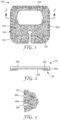
- FIG. 1 is a first embodiment of a medical dressing 100 comprising a plurality of slits 500.
- the medical dressing shown in FIG. 1 is a dressing used to cover the site of an inserted intravenous catheter.
- the medical dressing 100 has a first major surface 110 and second major surface 120, which is opposite the first major surface 110. At least a portion of the second major surface 120 comprises an adhesive 200.
- a perimeter 130 surrounds the medical dressing 100 and defines a dressing area 140.
- the medical dressing 100 has a backing layer 300 and a support material 400 that is secured to the backing layer 300. Through at least the support material 400 are a plurality of slits 500.
- the slits 500 are depicted as a relatively thick black line so as to clearly communicate the location of the slit 500 on the dressing 100. It is understood that the slit 500 can be simply a through cut and therefore not having the thickness as depicted in these images.
- FIG. 2 is a side sectional view of FIG. 1 through line 2-2.
- the backing layer 300 forms the first major surface 110.
- the support material 400 extends adjacent the entire perimeter 130, but is not continuous across the entire dressing area 140. As best seen in FIGS. 1 and 2 , the support material 400 is not located in a central window 150 of the medical dressing 100, while allows for a transparent window to view the inserted catheter. It is both the backing layer 300 and the support material 400 making up the second major surface 120.
- the adhesive 200 covers the entire second major surface 120.
- the adhesive 200 may cover only a portion of the second major surface 120.
- the adhesive 200 may cover only the portion of the second major surface 120 having the support material 400, which would be the portion adjacent the perimeter.
- FIG. 2 shows the backing layer 300 at the first major surface 110, while the support material 400 is at the second major surface 120.
- the support material 400 may be at the first major surface 110 and the backing layer 300 at the second major surface 120. It is understood that one or more additional layers may be included adjacent the backing layer 300, support material 400, between the backing layer 300 and support material 400.
- FIG. 2 The sectional view of FIG. 2 passes directly through slits 500.
- the slits 500 are only in the support material and extend from the perimeter 140 into a portion of the dressing area 140.
- the slit 500 does not entirely transverse the support material.
- Each slit 500 is separate from, and disconnected from another adjacent slit 500.
- the backing layer 300 is elastic and a sufficiently impermeable barrier to the passage of liquids and at least some gases, which protects the covered site from external contaminants. Being elastic allows for the backing layer 300 to expand, contract, stretch and recover as the underlying substrate, such as skin, moves.
- Elasticity can be measured in any number of commonly used means for evaluating stretch and recovery of a material.
- the backing layer 300 independent of the support material
- the backing layer 300 has an elongation to break of at least 200%.
- the backing layer 300 has an elongation to break of less than 500%.
- the support material 400 independent of the backing layer
- the support material 400 independent of the backing layer
- the support material 400 has an elongation to break less than 200%.
- Elasticity can be measured by an initial modulus of elasticity, which is the force require to apply a specified amount of stretch.
- the backing layer 300 has a modulus, at 10% elongation, of less than 2 Newtons. In one embodiment, the backing layer 300 has a modulus, at 10% elongation, of less than 1.5 Newtons. In one embodiment, when the support material 400 is secured with the backing layer 300 in the first portion with slits 500, the modulus at 10% elongation is less than 2 Newtons. In one embodiment, when the support material 400 is secured with the backing layer 300 in the first portion with slits 500, the modulus at 10% elongation is less than 1 Newton.
- the modulus at 10% elongation when the support material 400 is secured with the backing layer 300 in the second portion without slits, the modulus at 10% elongation is greater than 1 Newton and less than 6 Newtons. In one embodiment, when the support material 400 is secured with the backing layer 300 in the second portion without slits, the modulus at 10% elongation is greater than 2 Newton and less than 5 Newtons. In one embodiment, when the support material 400 is secured with the backing layer 300, the ratio of the modulus at 10% elongation of the second portion without slits to the modulus at 10% of the first portion with slits is at least 2:1.
- the ratio of the modulus at 10% elongation of the second portion without slits to the modulus at 10% of the first portion with slits is at least 4:1. In one embodiment, when the support material 400 is secured with the backing layer 300, the ratio of the modulus at 10% elongation of the second portion without slits to the modulus at 10% of the first portion with slits is at least 6:1.
- the support material 400 is secured to the backing layer 300, through adhesive, thermal bonding, lamination, or other commonly used securement techniques.
- the support material 400 provides structural strength to the medical dressing 100, and therefore, independently, is less elastic that the backing layer 300.
- the support material independently, has essentially no elasticity, such that is may be unable to stretch and/or it may be unable to recover from a stretch.
- the support material may be more elastic in one direction (machine direction) than in the cross direction (transverse direction), but overall is has less elasticity than the backing layer 300.
- FIG. 3 is an enlarged top view of the medical dressing 100 of FIGS. 1 and 2 , showing the stretching of the dressing 100 at several slits 500.
- the elastic backing layer 300 will stretch, but the less elastic support material 400 is less able to stretch or recover.
- the slits 500 allow the support material 400 to extend and therefore allow for elongation of the backing layer 300 at the slit, which can be seen in FIG. 3 .
- the elasticity of the backing layer 300 when recovering from the stretch, will also recover the attached support material 400, returning the dressing 100 much to the configuration as shown in FIG. 1 . Therefore, the slits allow for control of the stretch and recovery of discrete areas of the support material.
- the plurality of slits 500 are located along at least a portion of the perimeter 130 of the dressing 100.
- the slits 500 at the perimeter 130 begin directly at the perimeter 130 and extend partially in to the support material 400.
- the slits 500 are located along the entire perimeter 130.
- the slits 500 may have a variety of sizes or shapes, and it is understood that each slit can have a size and shape the same as or different from the other slits 500 on the dressing 100.
- the slits 500 are at least 1 mm in length. In one embodiment, the slits 500 are at least 5 mm in length. In one embodiment, the slits are less than 5 cm in length. In one embodiment, the slits are less than 1 cm in length.
- the slits 500 are a through cut in the support material and have essentially no width, meaning that no material was removed from the support material during cutting.
- the slits have a width less than 5 mm. In one embodiment the slits have a width less than 1 mm.
- the slits 500 at the perimeter 130 are shown extending in a straight line inward, generally perpendicular to the part of the perimeter 130 it is understood that any shape or placement of the slits 500 at the perimeter could achieve the same purpose of allowing expansion and contraction of the backing layer 300 at the perimeter 130.
- the slits 500 are only through the support material 400. It is understood that depending on the particular arrangement of layers or the particular application of the dressing the slit 500 may extend to both the backing layer and support material 400.
- Selectively placed slits 500 allow for some portions of the medical dressing 100 to have more elasticity than portions of the dressing 100 with the support material 400 that do not have the slits 500.
- the dressing area 140 has a first portion 145 adjacent the perimeter 130 with slits that have more elasticity that a second portion 147 of the dressing area 140 having support material 400 but without slits 500. This is desirable as underlying medical devices or tubing at the second portion 147 should not be allowed to stretch as much as portions of the dressing 100 at the perimeter 130.
- the support material 400 did not have slits, when the dressing 100 is subject to elongation, the elastic backing layer 300 will stretch, but the less elastic support material 400 is less able to stretch or recover. Therefore, if the underlying substrate, for example skin, continues to stretch beyond the ability of the support material 400 to stretch, then the adhesion between the adhesive 200 and the underlying substrate will begin to break. In some circumstances, more stretching occurs at the perimeter 130 of the dressing. When the adhesion breaks at the perimeter, then the edges of the dressing begin to lift away from the skin.
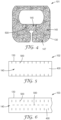
- FIG. 4 is a second embodiment of a medical dressing 101 comprising a plurality of slits 500 within in dressing area 140.
- the dressing area 140 includes a first portion 145 having the plurality of slits 500, and a second portion 147 with support material 400 without slits.
- the arrangement of slits 500 is generally radially outward from the first portion 145 so that there is a pocket that can form when the support material 400 and attached backing layer 300 are allowed to stretch.
- the location of the first portion 145 of the dressing area, containing the slits 500 coincides with the location of an underlying medical devices or tubing.
- the slits 500 allow for expansion of the support material, while the barrier layer stretches to better conform with the underlying medical device or tubing, while the strength of the support material still prevents excessive stretching and movement of the medical device or tubing.
- a single dressing may include one or more select areas may each have a plurality of slits 500.
- a single dressing may have an arrangement of slits 500 within the dressing area 140 such as shown in FIG. 4 and an arrangement of slits 500 at the perimeter 130 such as shown in FIG. 1 .
- FIG. 5 is a third embodiment of a medical dressing 102, specifically a tape, comprising a plurality of slits 500.
- the plurality of slits 500 extend along opposing portions of the longitudinally extending sides of the perimeter 130.
- the support material 400 covers the entire dressing area 140.
- each slit 500 is separate from an adjacent slit 500.
- the slits 500 at opposing portions of the longitudinally extending sides of the perimeter 130 may or may not align with one another. This arrangement of slits 500 allows for improved stretching and recovery in a direction along the longitudinally extending medical dressing 102.
- FIG. 6 is a fourth embodiment of a medical dressing 103, specifically a tape, comprising a plurality of slits 500.
- the plurality of slits 500 extend throughout the entire dressing area 140.
- the some slits 500 are arranged perpendicular to other slits. Therefore, this dressing will allow for improved stretching and recover in a direction along the longitudinally extending medical dressing 103, as well as perpendicular to the longitudinally extending medical dressing 103.
- the tape could be provided in a variety of shapes and sizes of precut tape sections or the tape may be an elongated, longitudinally extending tape that could be provided in roll form.
- the medical dressing disclosed may be made by conventional techniques (e.g., extrusion, solvent casting, calendaring, laminating, adhesive coating, and the like) which are familiar to those skilled in the art.
- US Patent 6,685,682 discloses constructions and methods for making medical dressings with backing layers and support material. It will be understood that the slits can be applied during the rotary converting process.
- the medical dressings are useful to provide an impermeable barrier to the passage of liquids and at least some gases.
- Representative barriers may include non-woven and woven fibrous webs, knits, films, foams polymeric films and other familiar backing materials.
- a transparent substrate is desirable to allow for viewing of the underlying skin or medical device.
- the substrate is an elastomeric polyurethane, polyester, or polyether block amide films. These films combine the desirable properties of resiliency, elasticity, high moisture vapor permeability, and transparency. A description of this characteristic of backing layers can be found in issued U.S. Patent Nos. 5,088,483 and 5,160,315 .
- backing materials may include the thin polymeric film backings sold under the trade names TEGADERM (3M Company), OPSITE (Smith & Nephew), etc. Many other backings may also be used, including those commonly used in the manufacture of surgical incise drapes (e.g., incise drapes manufactured by 3M Company under the trade names STERIDRAPE and IOBAN), etc.
- a relatively high moisture vapor permeable backing may not be required.
- some other potentially useful backing materials may include, e.g., metallocene polyolefins and SBS and SIS block copolymer materials could be used.
- the backing layer may be formed of polymeric films with a thickness of 200 micrometers or less, or 100 micrometers or less, potentially 50 micrometers or less, or even 25 micrometers or less.
- the support material provides strength to the thin, flexible backing layer.
- the support material therefore has more stiffness and less elasticity than the backing layer.
- the support material may be a coating, such as an adhesive, or may be a self-supporting substrate such as another film, woven, knitted, or nonwoven fabric.
- US Patent 5,088,483 discloses a permanent adhesive as a reinforcement that could be used as the support material.
- nonwoven for the support material is a high strength nonwoven fabric available from E. I. Dupont de Nemours & Company of Wilmington, Delaware under the trademark Sontara, including Sontara 8010, a hydroengangled polyester fabric.
- suitable nonwoven webs include a hydroentangled polyester fabric available from Veratec, a division of International Paper of Walpole, Mass.
- Another suitable nonwoven web is the nonwoven elastomeric web described in US Pat. 5,230,701 .
- Suitable adhesive for use in wound dressing articles include any adhesive that provides acceptable adhesion to skin and is acceptable for use on skin (e.g., the adhesive should preferably be nonirritating and non-sensitizing).
- Suitable adhesives are pressure sensitive and in certain embodiments have a relatively high moisture vapor transmission rate to allow for moisture evaporation.
- Suitable pressure sensitive adhesives include those based on acrylates, urethane, hyrdogels, hydrocolloids, block copolymers, silicones, rubber based adhesives (including natural rubber, polyisoprene, polyisobutylene, butyl rubber etc.) as well as combinations of these adhesives.
- the adhesive component may contain tackifiers, plasticizers, rheology modifiers as well as active components including for example an antimicrobial agent.
- the pressure sensitive adhesives that may be used in the wound dressings may include adhesives that are typically applied to the skin such as the acrylate copolymers described in U.S. Patent No. RE 24,906 , particularly a 97:3 isooctyl acrylate:acrylamide copolymer.
- Another example may include a 70:15:15 isooctyl acrylate: ethyleneoxide acrylate:acrylic acid terpolymer, as described in U.S. Patent No. 4,737,410 (Example 31).
- Other potentially useful adhesives are described in U.S. Patent Nos. 3,389,827 ; 4,112,213 ; 4,310,509 ; and 4,323,557 .
- Inclusion of medicaments or antimicrobial agents in the adhesive is also contemplated, as described in U.S. Patent Nos. 4,310,509 and 4,323,557 .
- the absorbent may include a hydrocolloid composition, including the hydrocolloid compositions described in U.S. Patent Nos. 5,622,711 and 5,633,010 .
- the hydrocolloid absorbent may comprise, for example, a natural hydrocolloid, such as pectin, gelatin, or carboxymethylcellulose (CMC) (Aqualon Corp., Wilmington, Del.), a semi-synthetic hydrocolloid, such as cross-linked carboxymethylcellulose (X4ink CMC) (e.g. Ac-Di-Sol; FMC Corp., Philadelphia, Pa.), a synthetic hydrocolloid, such as cross-linked polyacrylic acid (PAA) (e.g., CARBOPOL TM No. 974P; B.F. Goodrich, Brecksville, Ohio), or a combination thereof.
- Absorbent materials may also be chosen from other synthetic and natural hydrophilic materials including polymer gels and foams.
- An optional carrier may be included that covers all or a portion of the first major surface of the substrate, providing structural support if the dressing is thin and highly flexible.
- the carrier maybe removable from the first major surface once the adhesive dressing is placed on skin.
- the carrier can be constructed of a variety of materials such as fabric that are woven or kitted, nonwoven material, papers, or film.
- the carrier is along the perimeter of the first major surface of the dressing and is removable from the first major surface, similar to the carrier used the 3M Tegaderm TM Transparent Film Dressing, available from 3M Company, St. Paul, MN.
- An optional antimicrobial component may be included that is either separate from the adhesive dressing or may be integral with the dressing.
- the antimicrobial component is placed near or adjacent to the insertion site of the medical device to inhibit microbial growth in and around the insertion site.
- the antimicrobial component can be absorbent foam or gel, such as used in a 3M Tegaderm TM CHG I.V. Securement Dressing, available from 3M Company.
Landscapes
- Health & Medical Sciences (AREA)
- Engineering & Computer Science (AREA)
- Biomedical Technology (AREA)
- Heart & Thoracic Surgery (AREA)
- Vascular Medicine (AREA)
- Life Sciences & Earth Sciences (AREA)
- Animal Behavior & Ethology (AREA)
- General Health & Medical Sciences (AREA)
- Public Health (AREA)
- Veterinary Medicine (AREA)
- Dermatology (AREA)
- Materials For Medical Uses (AREA)
Claims (14)
- Ein medizinischer Verband (100, 101), aufweisend:eine erste Hauptoberfläche (110), eine zweite Hauptoberfläche (120) gegenüber der ersten Hauptoberfläche (110) und einen Umfang (130), wobei die zweite Hauptoberfläche (120) einen Klebstoff (200) aufweist;eine Trägerschicht (300), die elastisch ist;ein Stützmaterial (400), das an der Trägerschicht (300) befestigt ist, das weniger elastisch als die Trägerschicht (300) ist;eine Mehrzahl von Schlitzen (500) durch das Stützmaterial (400) hindurch, wobei jeder Schlitz ein langer, schmaler Durchgangsschnitt ist, der nicht zu einer Entfernung von Stützmaterial (400) führt, und wobei jeder Schlitz von einem angrenzenden Schlitz beabstandet ist.
- Der medizinische Verband nach Anspruch 1, wobei der Klebstoff (200) nur einen Abschnitt der zweiten Hauptoberfläche (120) bedeckt.
- Der medizinische Verband nach einem der vorstehenden Ansprüche, wobei sich die Trägerschicht (300) an der ersten Hauptoberfläche (110) befindet.
- Der medizinische Verband nach einem der vorstehenden Ansprüche, wobei die Trägerschicht (300) für sich genommen eine Reißdehnung von mindestens 200 % aufweist und die Stützschicht (400) für sich genommen eine Reißdehnung von weniger als 200 % aufweist.
- Der medizinische Verband nach einem der vorstehenden Ansprüche, wobei das Verhältnis des Moduls bei 10 % Dehnung eines zweiten Abschnitts ohne Schlitze zu dem Modul bei 10 % Dehnung eines ersten Abschnitts mit Schlitzen mindestens 2 : 1 beträgt.
- Der medizinische Verband nach einem der vorstehenden Ansprüche, wobei sich die Schlitze in dem Stützmaterial und in der Trägerschicht befinden.
- Der medizinische Verband nach einem der vorstehenden Ansprüche, wobei ein erster Abschnitt der Mehrzahl von Schlitzen parallel zueinander verläuft und ein zweiter Abschnitt der Mehrzahl von Schlitzen parallel zueinander, aber senkrecht zu dem ersten Abschnitt der Mehrzahl von Schlitzen verläuft.
- Der medizinische Verband nach einem der vorstehenden Ansprüche, wobei sich die Mehrzahl von Schlitzen (500) angrenzend an den Umfang (130) des medizinischen Verbands (100) befindet.
- Der medizinische Verband nach einem der vorstehenden Ansprüche, wobei die Mehrzahl von Schlitzen (500) einen Abschnitt des Umfangs (130) direkt berühren und sich von dem Umfang (130) nach innen erstrecken.
- Der medizinische Verband nach einem der vorstehenden Ansprüche, wobei der Umfang (130) einen Verbandbereich (140) ausbildet, und wobei sich die Mehrzahl von Schlitzen (500) in einem ersten Abschnitt (145) des Verbandbereichs (140) befindet und ein zweiter Abschnitt (147) des Verbandbereichs (140) frei von Schlitzen ist.
- Der medizinische Verband nach einem der vorstehenden Ansprüche, wobei die Mehrzahl von Schlitzen an dem ersten Abschnitt (145) des Verbandbereichs (140) Schlitze aufweist, die sich von dem ersten Abschnitt (145) des Verbandbereichs (140) radial erstrecken.
- Der medizinische Verband nach einem der vorstehenden Ansprüche, ferner aufweisend ein absorbierendes Material, das von dem Umfang (130) zurückgesetzt ist.
- Der medizinische Verband nach einem der vorstehenden Ansprüche, wobei die Trägerschicht (300) transparent ist.
- Der medizinische Verband nach einem der vorstehenden Ansprüche, wobei die Trägerschicht (300) im Allgemeinen flüssigkeitsundurchlässig ist und Feuchtigkeitsdampf mit einer Rate von mindestens 300 g/m2/24 Stunden bei 37 °C/100-10% relativer Luftfeuchtigkeit durchlassen kann.
Applications Claiming Priority (2)
| Application Number | Priority Date | Filing Date | Title |
|---|---|---|---|
| US201361775805P | 2013-03-11 | 2013-03-11 | |
| PCT/US2014/020524 WO2014149718A1 (en) | 2013-03-11 | 2014-03-05 | A conformable medical dressing |
Publications (2)
| Publication Number | Publication Date |
|---|---|
| EP2968018A1 EP2968018A1 (de) | 2016-01-20 |
| EP2968018B1 true EP2968018B1 (de) | 2025-07-09 |
Family
ID=50290334
Family Applications (1)
| Application Number | Title | Priority Date | Filing Date |
|---|---|---|---|
| EP14711124.9A Active EP2968018B1 (de) | 2013-03-11 | 2014-03-05 | Anpassbarer medizinischer verband |
Country Status (5)
| Country | Link |
|---|---|
| US (1) | US10940049B2 (de) |
| EP (1) | EP2968018B1 (de) |
| CN (1) | CN105188623B (de) |
| BR (1) | BR112015022312A2 (de) |
| WO (1) | WO2014149718A1 (de) |
Families Citing this family (80)
| Publication number | Priority date | Publication date | Assignee | Title |
|---|---|---|---|---|
| DK3193799T3 (da) * | 2014-08-28 | 2021-06-14 | Moelnlycke Health Care Ab | Selvklæbende element |
| WO2017004231A1 (en) | 2015-06-29 | 2017-01-05 | 3M Innovative Properties Company | Anti-microbial articles and methods of using same |
| EP3373985B1 (de) | 2015-11-13 | 2021-03-17 | 3M Innovative Properties Company | Antimikrobielle artikel und verfahren zur verwendung davon |
| EP3373984B1 (de) | 2015-11-13 | 2020-12-23 | 3M Innovative Properties Company | Antimikrobielle artikel und verfahren zur verwendung davon |
| US11141100B2 (en) | 2015-12-23 | 2021-10-12 | Coloplast A/S | Moisture assessment system and method for wound care |
| WO2017179716A1 (ja) * | 2016-04-15 | 2017-10-19 | 国立大学法人お茶の水女子大学 | シート材の弾性調整方法、フォースセンサ、及びシート材 |
| CN110139680A (zh) | 2016-10-19 | 2019-08-16 | 3M创新有限公司 | 抗微生物制品 |
| CA3059780A1 (en) | 2017-04-11 | 2018-10-18 | Johnson & Johnson Consumer Inc. | Extensible dressings |
| CN107049605A (zh) * | 2017-06-08 | 2017-08-18 | 李茂香 | 产妇自然分娩专用无菌敷贴 |
| US20200146892A1 (en) | 2017-06-22 | 2020-05-14 | 3M Innovative Properties Company | Negative pressure wound therapy article with features |
| GB201713511D0 (en) | 2017-08-23 | 2017-10-04 | Scapa Uk Ltd | Wound dressing |
| CN111093721A (zh) | 2017-09-15 | 2020-05-01 | 巴德阿克塞斯系统股份有限公司 | 用于医疗装置的具有衬垫的抗菌敷料 |
| USD834201S1 (en) | 2017-10-09 | 2018-11-20 | 3M Innovative Properties Company | Medical dressing |
| CN111200999A (zh) * | 2017-10-09 | 2020-05-26 | 3M创新有限公司 | 具有适形边界的固定敷料 |
| EP3703635B1 (de) | 2017-10-31 | 2025-07-23 | Solventum Intellectual Properties Company | Artikel für unterdruckwundtherapie |
| CN108078676A (zh) * | 2017-12-12 | 2018-05-29 | 成都美益达医疗科技有限公司 | 一种治疗关节部位伤口的敷贴 |
| CN108078677A (zh) * | 2017-12-12 | 2018-05-29 | 成都美益达医疗科技有限公司 | 一种促进腹部创口再生的无菌贴片 |
| US11376164B2 (en) | 2017-12-14 | 2022-07-05 | 3M Innovative Properties Company | Negative pressure wound therapy article with features |
| EP3498242A1 (de) * | 2017-12-15 | 2019-06-19 | Mölnlycke Health Care AB | Medizinischer verband |
| WO2019120449A1 (en) | 2017-12-22 | 2019-06-27 | Coloplast A/S | Ostomy system and monitor device with angular leakage detection |
| WO2019120425A1 (en) | 2017-12-22 | 2019-06-27 | Coloplast A/S | Ostomy appliance system, monitor device, and method of monitoring an ostomy appliance |
| WO2019120439A1 (en) | 2017-12-22 | 2019-06-27 | Coloplast A/S | Calibration methods for ostomy appliance tools |
| US11628084B2 (en) | 2017-12-22 | 2023-04-18 | Coloplast A/S | Sensor assembly part and a base plate for a medical appliance and a device for connecting to a base plate or a sensor assembly part |
| US11707377B2 (en) | 2017-12-22 | 2023-07-25 | Coloplast A/S | Coupling part with a hinge for a medical base plate and sensor assembly part |
| US10799385B2 (en) | 2017-12-22 | 2020-10-13 | Coloplast A/S | Ostomy appliance with layered base plate |
| EP4241744A3 (de) | 2017-12-22 | 2023-11-22 | Coloplast A/S | Grundplatte für eine stomavorrichtung und sensorbauteil für eine grundplatte und verfahren zur herstellung einer grundplatte und eines sensorbauteil |
| WO2019120438A1 (en) | 2017-12-22 | 2019-06-27 | Coloplast A/S | Tools and methods for placing an ostomy appliance on a user |
| CN111447896B (zh) | 2017-12-22 | 2023-03-28 | 科洛普拉斯特公司 | 用于造口术器具的底板、用于造口术器具的监测装置和系统 |
| EP3727224B1 (de) | 2017-12-22 | 2022-11-02 | Coloplast A/S | Grundplatte und sensorbauteil eines stomasystems mit feuchtigkeitssensor |
| US10500084B2 (en) | 2017-12-22 | 2019-12-10 | Coloplast A/S | Accessory devices of an ostomy system, and related methods for communicating leakage state |
| DK3727228T3 (da) | 2017-12-22 | 2022-09-05 | Coloplast As | Bundplade og sensorindretningsdel til en stomianordning samt fremgangsmåde til fremstilling af en bundplade og en sensorindretningsdel |
| LT3727240T (lt) | 2017-12-22 | 2022-03-10 | Coloplast A/S | Ostomijos sistemos papildomi įrenginiai ir susiję būdai veikimo būsenai perduoti |
| WO2019120441A1 (en) | 2017-12-22 | 2019-06-27 | Coloplast A/S | Sensor assembly part and a base plate for an ostomy appliance and a method for manufacturing a sensor assembly part and a base plate |
| WO2019120435A1 (en) | 2017-12-22 | 2019-06-27 | Coloplast A/S | Ostomy appliance with selective sensor points and related methods |
| LT3727234T (lt) | 2017-12-22 | 2022-04-25 | Coloplast A/S | Ostomijos prietaisas su kampinio nuotekio aptikimu |
| EP4595934A3 (de) | 2017-12-22 | 2025-11-05 | Coloplast A/S | Überwachungsvorrichtung für ein stomasystem mit einem verbinder zur verbindung mit einer grundplatte und einer zubehörvorrichtung |
| US11439352B2 (en) * | 2018-01-17 | 2022-09-13 | Medtronic Minimed, Inc. | Medical device with adhesive patch longevity |
| WO2019161862A1 (en) | 2018-02-20 | 2019-08-29 | Coloplast A/S | Sensor assembly part and a base plate and an ostomy pouch for an ostomy appliance and a device for connecting to a base plate and/or a sensor assembly part |
| EP4631480A3 (de) | 2018-02-20 | 2025-12-10 | Coloplast A/S | Zubehörgeräte für ein stomasystem und zugehörige verfahren zum wechseln einer stomavorrichtung auf der grundlage eines zukünftigen betriebszustands |
| EP3764961B1 (de) | 2018-03-15 | 2024-02-21 | Coloplast A/S | Vorrichtung und verfahren zum navigieren des benutzers einer stomavorrichtung zu einem umkleideraum |
| EP3764959B1 (de) | 2018-03-15 | 2025-10-22 | Coloplast A/S | Vorrichtung und verfahren zur bestimmung der verschleisszeit einer stomavorrichtung auf basis von sensordaten |
| US11903728B2 (en) | 2018-03-15 | 2024-02-20 | Coloplast A/S | Methods of configuring medical notifications and related accessory devices |
| EP4079266B1 (de) | 2018-03-15 | 2024-06-05 | Coloplast A/S | Verfahren zur verwaltung der resttragezeit einer stomavorrichtung und zugehörige zubehörgeräte |
| USD879972S1 (en) | 2018-04-11 | 2020-03-31 | Johnson & Johnson Consumer Inc. | Adhesive bandage with decorated pad |
| USD879973S1 (en) | 2018-04-11 | 2020-03-31 | Johnson & Johnson Consumer Inc. | Adhesive bandage with decorated pad |
| USD880705S1 (en) | 2018-04-11 | 2020-04-07 | Johnson & Johnson Consumer Inc. | Adhesive bandage with decorated pad |
| USD887564S1 (en) | 2018-06-27 | 2020-06-16 | Johnson & Johnson Consumer Inc. | Adhesive bandage with decorated pad |
| USD879974S1 (en) | 2018-06-27 | 2020-03-31 | Johnson & Johnson Consumer Inc. | Adhesive bandage with decorated pad |
| USD887563S1 (en) | 2018-06-27 | 2020-06-16 | Johnson & Johnson Consumer Inc. | Adhesive bandage with decorated pad |
| USD879975S1 (en) | 2018-06-27 | 2020-03-31 | Johnson & Johnson Consumer Inc. | Adhesive bandage with decorated pad |
| USD875953S1 (en) * | 2018-06-28 | 2020-02-18 | 3M Innovative Properties Company | Medical dressing |
| CN108836953A (zh) * | 2018-07-30 | 2018-11-20 | 西藏奇正藏药股份有限公司 | 一种可提高弹性和透气性的岛式外用贴膏剂 |
| CN108815139A (zh) * | 2018-07-30 | 2018-11-16 | 西藏奇正藏药股份有限公司 | 一种能够提高弹性和透气性的外用贴膏剂 |
| WO2020035121A1 (en) | 2018-08-15 | 2020-02-20 | Coloplast A/S | Accessory device of an ostomy system and related methods for issue identification |
| USD913507S1 (en) | 2018-12-10 | 2021-03-16 | Johnson & Johnson Consumer Inc. | Adhesive bandage with decorated pad |
| USD918398S1 (en) | 2018-12-10 | 2021-05-04 | Johnson & Johnson Consumer Inc. | Adhesive bandage with decorated pad |
| EP3894499A1 (de) | 2018-12-12 | 2021-10-20 | 3M Innovative Properties Company | Trenntintenstrahldrucktintenartikel |
| CN113227283A (zh) | 2018-12-12 | 2021-08-06 | 3M创新有限公司 | 剥离喷墨印刷油墨制品 |
| EP3894229A1 (de) | 2018-12-12 | 2021-10-20 | 3M Innovative Properties Company | Durch tintenstrahldruck auf einem klebstoff hergestellter, lösbarer artikel |
| US12558250B2 (en) | 2019-01-31 | 2026-02-24 | Coloplast A/S | Base plate and a sensor assembly part for an ostomy appliance |
| EP3946187B1 (de) * | 2019-04-01 | 2025-06-11 | Solventum Intellectual Properties Company | Anpassbarer verband |
| US20220192860A1 (en) * | 2019-04-26 | 2022-06-23 | Coloplast A/S | Sensor Patch for Attachment to a Base Plate |
| JP2022535204A (ja) * | 2019-05-28 | 2022-08-05 | スリーエム イノベイティブ プロパティズ カンパニー | 医療用デバイスの管状構成要素を固定するための医療用ドレッシング材 |
| EP4007621A1 (de) | 2019-08-01 | 2022-06-08 | 3M Innovative Properties Company | Antimikrobielle vorrichtung für eine einführnadel |
| USD921206S1 (en) | 2019-09-10 | 2021-06-01 | Medline Industries, Inc. | Window dressing |
| USD921205S1 (en) | 2019-09-10 | 2021-06-01 | Medline Industries, Inc. | Window dressing |
| USD923182S1 (en) | 2019-09-10 | 2021-06-22 | Medline Industries, Inc. | Window dressing |
| CN114502123A (zh) | 2019-10-11 | 2022-05-13 | 3M创新有限公司 | 管固定系统 |
| EP4051359A1 (de) | 2019-10-29 | 2022-09-07 | 3M Innovative Properties Company | Rohrbefestigungsband |
| CN114630876A (zh) * | 2019-11-04 | 2022-06-14 | 3M创新有限公司 | 增强粘合剂基底 |
| EP3818968B1 (de) * | 2019-11-05 | 2024-01-17 | 3M Innovative Properties Company | Medizinischer haftartikel mit flüssigkeitsmanagementeigenschaften |
| EP3939555A1 (de) | 2020-07-14 | 2022-01-19 | 3M Innovative Properties Company | Haftender lidschlussartikel |
| US20240299216A1 (en) * | 2020-12-21 | 2024-09-12 | 3M Innovative Properties Company | Dual-sided adhesive tapes with on-demand adhesion |
| USD973888S1 (en) * | 2021-03-30 | 2022-12-27 | Taylor Radeloff | Pressure relieving intravenous dressing |
| CN113208815A (zh) * | 2021-04-26 | 2021-08-06 | 惠州华阳医疗器械有限公司 | 一种预防压力性损伤的敷料 |
| WO2023031697A1 (en) | 2021-09-01 | 2023-03-09 | 3M Innovative Properties Company | Anti-virus respirator and mask |
| EP4510980A1 (de) * | 2022-04-20 | 2025-02-26 | 3M Innovative Properties Company | Dehnung zum anlegen an einen verband |
| US20240350776A1 (en) * | 2023-04-21 | 2024-10-24 | Zachary RATTNER | Device and Method to Extend the Lifetime of a Venous Pathway for Catheter Access |
| WO2024226978A2 (en) * | 2023-04-26 | 2024-10-31 | Bard Peripheral Vascular, Inc. | Catheter dressing and management system and methods of use |
| EP4704681A1 (de) * | 2023-05-05 | 2026-03-11 | Solventum Intellectual Properties Company | Artikel und sensorsystem |
Citations (3)
| Publication number | Priority date | Publication date | Assignee | Title |
|---|---|---|---|---|
| US20070049859A1 (en) * | 2005-08-23 | 2007-03-01 | Tri-State Hospital Supply Corporation | Window dressing |
| US7294752B1 (en) * | 2006-06-27 | 2007-11-13 | Tri-State Hospital Supply Corporation | Window dressing having integral anchor |
| US20100106121A1 (en) * | 2008-10-24 | 2010-04-29 | 3M Innovative Properties Company | Conformable wound dressing |
Family Cites Families (29)
| Publication number | Priority date | Publication date | Assignee | Title |
|---|---|---|---|---|
| USRE24906E (en) | 1955-11-18 | 1960-12-13 | Pressure-sensitive adhesive sheet material | |
| US4112213A (en) | 1964-09-28 | 1978-09-05 | Johnson & Johnson | Pressure sensitive adhesive tapes and method of making same |
| US3389827A (en) | 1967-04-10 | 1968-06-25 | Minnesota Mining & Mfg | Easy-open container and sealing tape |
| NO134790C (no) | 1968-07-09 | 1984-03-22 | Smith & Nephew | Klebende,; trykkfoelsomt, vanndamp-permeabelt produkt for bruk paa hud hos mennesker. |
| US4310509A (en) | 1979-07-31 | 1982-01-12 | Minnesota Mining And Manufacturing Company | Pressure-sensitive adhesive having a broad spectrum antimicrobial therein |
| US4323557A (en) | 1979-07-31 | 1982-04-06 | Minnesota Mining & Manufacturing Company | Pressure-sensitive adhesive containing iodine |
| EP0091800B2 (de) | 1982-04-08 | 1992-09-16 | SMITH & NEPHEW plc | Chirurgisches Heftpflaster |
| US4472480A (en) | 1982-07-02 | 1984-09-18 | Minnesota Mining And Manufacturing Company | Low surface energy liner of perfluoropolyether |
| US4600001A (en) | 1984-08-15 | 1986-07-15 | The Kendall Company | Combined wound dressing and delivery means composite |
| US4737410A (en) | 1986-11-28 | 1988-04-12 | Minnesota Mining And Manufacturing Company | Polyalkyloxazoline-reinforced acrylic pressure-sensitive adhesive composition |
| US4867150A (en) | 1987-01-20 | 1989-09-19 | The B. F. Goodrich Company | Perforated elastomeric soft film and wound dressing made therewith |
| US5230701A (en) | 1988-05-13 | 1993-07-27 | Minnesota Mining And Manufacturing Company | Elastomeric adhesive and cohesive materials |
| US5088483A (en) | 1988-11-04 | 1992-02-18 | Minnesota Mining And Manufacturing Co. | Adhesive frame bandage |
| US5052381A (en) * | 1990-03-19 | 1991-10-01 | The B. F. Goodrich Company | Adhesive wound dressing and perforated shield |
| US5160315A (en) | 1991-04-05 | 1992-11-03 | Minnesota Mining And Manufacturing Company | Combined adhesive strip and transparent dressing delivery system |
| CA2104046C (en) | 1992-10-05 | 1998-09-15 | Yen-Lane Chen | Adhesive compositions, wound dressings and methods |
| US6685682B1 (en) | 1993-03-22 | 2004-02-03 | 3M Innovative Properties Company | Carrier delivered dressing and method of manufacture |
| US5616387A (en) | 1993-08-31 | 1997-04-01 | Minnesota Mining And Manufacturing Company | Perforated roll of elastic wrap |
| MXPA01012972A (es) | 1999-06-18 | 2002-09-02 | 3M Innovative Properties Co | Hojas no tejidas, articulos adhesivos y metoos para fabricar los mismos. |
| US6994904B2 (en) | 2001-05-02 | 2006-02-07 | 3M Innovative Properties Company | Pressure sensitive adhesive fibers with a reinforcing material |
| US6893655B2 (en) | 2001-10-09 | 2005-05-17 | 3M Innovative Properties Co. | Transdermal delivery devices |
| US6838589B2 (en) | 2003-02-19 | 2005-01-04 | 3M Innovative Properties Company | Conformable wound dressing |
| US7399484B2 (en) * | 2004-06-30 | 2008-07-15 | Kimberly-Clark Worldwide, Inc. | System and method for providing therapy to an individual |
| US7858838B2 (en) * | 2006-08-10 | 2010-12-28 | 3M Innovative Properties Company | Conformable wound dressing |
| BRPI0919905A2 (pt) | 2008-10-29 | 2016-02-16 | 3M Innovative Properties Co | adesivo sensíveis à pressão de silicone não-funcionalizados, curados com feixe de elétrons |
| WO2010056541A1 (en) | 2008-10-29 | 2010-05-20 | 3M Innovative Properties Company | Electron beam cured silicone materials |
| EP2704674A1 (de) * | 2011-05-02 | 2014-03-12 | Birgit Riesinger | Wundpflegeartikel |
| DK2731564T3 (da) | 2011-07-14 | 2019-07-29 | Smith & Nephew | Sårbandage og fremgangsmåde til behandling dermed |
| WO2014003957A1 (en) | 2012-06-26 | 2014-01-03 | 3M Innovative Properties Company | Medical dressing with multiple adhesives |
-
2014
- 2014-03-05 EP EP14711124.9A patent/EP2968018B1/de active Active
- 2014-03-05 US US14/773,956 patent/US10940049B2/en active Active
- 2014-03-05 WO PCT/US2014/020524 patent/WO2014149718A1/en not_active Ceased
- 2014-03-05 CN CN201480014246.2A patent/CN105188623B/zh active Active
- 2014-03-05 BR BR112015022312A patent/BR112015022312A2/pt not_active IP Right Cessation
Patent Citations (3)
| Publication number | Priority date | Publication date | Assignee | Title |
|---|---|---|---|---|
| US20070049859A1 (en) * | 2005-08-23 | 2007-03-01 | Tri-State Hospital Supply Corporation | Window dressing |
| US7294752B1 (en) * | 2006-06-27 | 2007-11-13 | Tri-State Hospital Supply Corporation | Window dressing having integral anchor |
| US20100106121A1 (en) * | 2008-10-24 | 2010-04-29 | 3M Innovative Properties Company | Conformable wound dressing |
Also Published As
| Publication number | Publication date |
|---|---|
| US10940049B2 (en) | 2021-03-09 |
| WO2014149718A1 (en) | 2014-09-25 |
| EP2968018A1 (de) | 2016-01-20 |
| CN105188623A (zh) | 2015-12-23 |
| BR112015022312A2 (pt) | 2017-07-18 |
| US20160015570A1 (en) | 2016-01-21 |
| CN105188623B (zh) | 2020-09-25 |
Similar Documents
| Publication | Publication Date | Title |
|---|---|---|
| EP2968018B1 (de) | Anpassbarer medizinischer verband | |
| JP7304868B2 (ja) | 適合性のある辺縁を有する固定ドレッシング材 | |
| EP3946187B1 (de) | Anpassbarer verband | |
| EP2349154B1 (de) | Wundverband | |
| CN104994817B (zh) | 具有多种粘合剂的医疗敷料 | |
| EP3030207B1 (de) | Trägervorrichtung mit einem dämpfungselement | |
| US11246761B2 (en) | Conformable wound dressing and delivery system | |
| JP4867025B2 (ja) | カテーテル固定具 | |
| WO2015130608A1 (en) | Medical dressing | |
| JP7095195B2 (ja) | 粘着シート及び粘着シート付き物品 | |
| US20080312574A1 (en) | Dressing Provided With a Thin Film Applicator | |
| WO2021084382A1 (en) | Tube securement tape | |
| JP5282834B2 (ja) | カテーテル固定用皮膚貼付体 | |
| US20230277385A1 (en) | Conformable medical dressing | |
| US20210178056A1 (en) | Medical tubing organizer | |
| BR112019007011B1 (pt) | Artigo médico compreendendo um curativo para ferimento |
Legal Events
| Date | Code | Title | Description |
|---|---|---|---|
| PUAI | Public reference made under article 153(3) epc to a published international application that has entered the european phase |
Free format text: ORIGINAL CODE: 0009012 |
|
| 17P | Request for examination filed |
Effective date: 20150917 |
|
| AK | Designated contracting states |
Kind code of ref document: A1 Designated state(s): AL AT BE BG CH CY CZ DE DK EE ES FI FR GB GR HR HU IE IS IT LI LT LU LV MC MK MT NL NO PL PT RO RS SE SI SK SM TR |
|
| AX | Request for extension of the european patent |
Extension state: BA ME |
|
| DAX | Request for extension of the european patent (deleted) | ||
| STAA | Information on the status of an ep patent application or granted ep patent |
Free format text: STATUS: EXAMINATION IS IN PROGRESS |
|
| 17Q | First examination report despatched |
Effective date: 20180126 |
|
| RAP1 | Party data changed (applicant data changed or rights of an application transferred) |
Owner name: SOLVENTUM INTELLECTUAL PROPERTIES COMPANY |
|
| GRAP | Despatch of communication of intention to grant a patent |
Free format text: ORIGINAL CODE: EPIDOSNIGR1 |
|
| STAA | Information on the status of an ep patent application or granted ep patent |
Free format text: STATUS: GRANT OF PATENT IS INTENDED |
|
| INTG | Intention to grant announced |
Effective date: 20250226 |
|
| GRAS | Grant fee paid |
Free format text: ORIGINAL CODE: EPIDOSNIGR3 |
|
| GRAA | (expected) grant |
Free format text: ORIGINAL CODE: 0009210 |
|
| STAA | Information on the status of an ep patent application or granted ep patent |
Free format text: STATUS: THE PATENT HAS BEEN GRANTED |
|
| AK | Designated contracting states |
Kind code of ref document: B1 Designated state(s): AL AT BE BG CH CY CZ DE DK EE ES FI FR GB GR HR HU IE IS IT LI LT LU LV MC MK MT NL NO PL PT RO RS SE SI SK SM TR |
|
| REG | Reference to a national code |
Ref country code: GB Ref legal event code: FG4D |
|
| REG | Reference to a national code |
Ref country code: CH Ref legal event code: EP |
|
| REG | Reference to a national code |
Ref country code: IE Ref legal event code: FG4D |
|
| REG | Reference to a national code |
Ref country code: DE Ref legal event code: R096 Ref document number: 602014092119 Country of ref document: DE |
|
| REG | Reference to a national code |
Ref country code: NL Ref legal event code: MP Effective date: 20250709 |
|
| PG25 | Lapsed in a contracting state [announced via postgrant information from national office to epo] |
Ref country code: PT Free format text: LAPSE BECAUSE OF FAILURE TO SUBMIT A TRANSLATION OF THE DESCRIPTION OR TO PAY THE FEE WITHIN THE PRESCRIBED TIME-LIMIT Effective date: 20251110 |
|
| PG25 | Lapsed in a contracting state [announced via postgrant information from national office to epo] |
Ref country code: NL Free format text: LAPSE BECAUSE OF FAILURE TO SUBMIT A TRANSLATION OF THE DESCRIPTION OR TO PAY THE FEE WITHIN THE PRESCRIBED TIME-LIMIT Effective date: 20250709 |
|
| REG | Reference to a national code |
Ref country code: AT Ref legal event code: MK05 Ref document number: 1811143 Country of ref document: AT Kind code of ref document: T Effective date: 20250709 |
|
| PG25 | Lapsed in a contracting state [announced via postgrant information from national office to epo] |
Ref country code: IS Free format text: LAPSE BECAUSE OF FAILURE TO SUBMIT A TRANSLATION OF THE DESCRIPTION OR TO PAY THE FEE WITHIN THE PRESCRIBED TIME-LIMIT Effective date: 20251109 |
|
| PG25 | Lapsed in a contracting state [announced via postgrant information from national office to epo] |
Ref country code: NO Free format text: LAPSE BECAUSE OF FAILURE TO SUBMIT A TRANSLATION OF THE DESCRIPTION OR TO PAY THE FEE WITHIN THE PRESCRIBED TIME-LIMIT Effective date: 20251009 |
|
| REG | Reference to a national code |
Ref country code: LT Ref legal event code: MG9D |
|
| PG25 | Lapsed in a contracting state [announced via postgrant information from national office to epo] |
Ref country code: AT Free format text: LAPSE BECAUSE OF FAILURE TO SUBMIT A TRANSLATION OF THE DESCRIPTION OR TO PAY THE FEE WITHIN THE PRESCRIBED TIME-LIMIT Effective date: 20250709 |
|
| PG25 | Lapsed in a contracting state [announced via postgrant information from national office to epo] |
Ref country code: FI Free format text: LAPSE BECAUSE OF FAILURE TO SUBMIT A TRANSLATION OF THE DESCRIPTION OR TO PAY THE FEE WITHIN THE PRESCRIBED TIME-LIMIT Effective date: 20250709 |
|
| PG25 | Lapsed in a contracting state [announced via postgrant information from national office to epo] |
Ref country code: HR Free format text: LAPSE BECAUSE OF FAILURE TO SUBMIT A TRANSLATION OF THE DESCRIPTION OR TO PAY THE FEE WITHIN THE PRESCRIBED TIME-LIMIT Effective date: 20250709 |
|
| PG25 | Lapsed in a contracting state [announced via postgrant information from national office to epo] |
Ref country code: GR Free format text: LAPSE BECAUSE OF FAILURE TO SUBMIT A TRANSLATION OF THE DESCRIPTION OR TO PAY THE FEE WITHIN THE PRESCRIBED TIME-LIMIT Effective date: 20251010 |
|
| PG25 | Lapsed in a contracting state [announced via postgrant information from national office to epo] |
Ref country code: SE Free format text: LAPSE BECAUSE OF FAILURE TO SUBMIT A TRANSLATION OF THE DESCRIPTION OR TO PAY THE FEE WITHIN THE PRESCRIBED TIME-LIMIT Effective date: 20250709 |
|
| PG25 | Lapsed in a contracting state [announced via postgrant information from national office to epo] |
Ref country code: LV Free format text: LAPSE BECAUSE OF FAILURE TO SUBMIT A TRANSLATION OF THE DESCRIPTION OR TO PAY THE FEE WITHIN THE PRESCRIBED TIME-LIMIT Effective date: 20250709 |
|
| PG25 | Lapsed in a contracting state [announced via postgrant information from national office to epo] |
Ref country code: BG Free format text: LAPSE BECAUSE OF FAILURE TO SUBMIT A TRANSLATION OF THE DESCRIPTION OR TO PAY THE FEE WITHIN THE PRESCRIBED TIME-LIMIT Effective date: 20250709 Ref country code: PL Free format text: LAPSE BECAUSE OF FAILURE TO SUBMIT A TRANSLATION OF THE DESCRIPTION OR TO PAY THE FEE WITHIN THE PRESCRIBED TIME-LIMIT Effective date: 20250709 |
|
| PG25 | Lapsed in a contracting state [announced via postgrant information from national office to epo] |
Ref country code: RS Free format text: LAPSE BECAUSE OF FAILURE TO SUBMIT A TRANSLATION OF THE DESCRIPTION OR TO PAY THE FEE WITHIN THE PRESCRIBED TIME-LIMIT Effective date: 20251009 |
|
| PG25 | Lapsed in a contracting state [announced via postgrant information from national office to epo] |
Ref country code: ES Free format text: LAPSE BECAUSE OF FAILURE TO SUBMIT A TRANSLATION OF THE DESCRIPTION OR TO PAY THE FEE WITHIN THE PRESCRIBED TIME-LIMIT Effective date: 20250709 |