EP2968143B1 - Inversion resistance a plusieurs medicaments par ceramide - Google Patents
Inversion resistance a plusieurs medicaments par ceramide Download PDFInfo
- Publication number
- EP2968143B1 EP2968143B1 EP14718282.8A EP14718282A EP2968143B1 EP 2968143 B1 EP2968143 B1 EP 2968143B1 EP 14718282 A EP14718282 A EP 14718282A EP 2968143 B1 EP2968143 B1 EP 2968143B1
- Authority
- EP
- European Patent Office
- Prior art keywords
- ceramide
- liposome
- nano
- cells
- mdr
- Prior art date
- Legal status (The legal status is an assumption and is not a legal conclusion. Google has not performed a legal analysis and makes no representation as to the accuracy of the status listed.)
- Active
Links
Images










Classifications
-
- A—HUMAN NECESSITIES
- A61—MEDICAL OR VETERINARY SCIENCE; HYGIENE
- A61K—PREPARATIONS FOR MEDICAL, DENTAL OR TOILETRY PURPOSES
- A61K47/00—Medicinal preparations characterised by the non-active ingredients used, e.g. carriers or inert additives; Targeting or modifying agents chemically bound to the active ingredient
- A61K47/06—Organic compounds, e.g. natural or synthetic hydrocarbons, polyolefins, mineral oil, petrolatum or ozokerite
- A61K47/16—Organic compounds, e.g. natural or synthetic hydrocarbons, polyolefins, mineral oil, petrolatum or ozokerite containing nitrogen, e.g. nitro-, nitroso-, azo-compounds, nitriles, cyanates
- A61K47/18—Amines; Amides; Ureas; Quaternary ammonium compounds; Amino acids; Oligopeptides having up to five amino acids
-
- A—HUMAN NECESSITIES
- A61—MEDICAL OR VETERINARY SCIENCE; HYGIENE
- A61K—PREPARATIONS FOR MEDICAL, DENTAL OR TOILETRY PURPOSES
- A61K31/00—Medicinal preparations containing organic active ingredients
- A61K31/70—Carbohydrates; Sugars; Derivatives thereof
- A61K31/7028—Compounds having saccharide radicals attached to non-saccharide compounds by glycosidic linkages
- A61K31/7034—Compounds having saccharide radicals attached to non-saccharide compounds by glycosidic linkages attached to a carbocyclic compound, e.g. phloridzin
- A61K31/704—Compounds having saccharide radicals attached to non-saccharide compounds by glycosidic linkages attached to a carbocyclic compound, e.g. phloridzin attached to a condensed carbocyclic ring system, e.g. sennosides, thiocolchicosides, escin, daunorubicin
-
- A—HUMAN NECESSITIES
- A61—MEDICAL OR VETERINARY SCIENCE; HYGIENE
- A61K—PREPARATIONS FOR MEDICAL, DENTAL OR TOILETRY PURPOSES
- A61K47/00—Medicinal preparations characterised by the non-active ingredients used, e.g. carriers or inert additives; Targeting or modifying agents chemically bound to the active ingredient
- A61K47/06—Organic compounds, e.g. natural or synthetic hydrocarbons, polyolefins, mineral oil, petrolatum or ozokerite
- A61K47/24—Organic compounds, e.g. natural or synthetic hydrocarbons, polyolefins, mineral oil, petrolatum or ozokerite containing atoms other than carbon, hydrogen, oxygen, halogen, nitrogen or sulfur, e.g. cyclomethicone or phospholipids
-
- A—HUMAN NECESSITIES
- A61—MEDICAL OR VETERINARY SCIENCE; HYGIENE
- A61K—PREPARATIONS FOR MEDICAL, DENTAL OR TOILETRY PURPOSES
- A61K9/00—Medicinal preparations characterised by special physical form
- A61K9/10—Dispersions; Emulsions
- A61K9/107—Emulsions ; Emulsion preconcentrates; Micelles
- A61K9/1075—Microemulsions or submicron emulsions; Preconcentrates or solids thereof; Micelles, e.g. made of phospholipids or block copolymers
-
- A—HUMAN NECESSITIES
- A61—MEDICAL OR VETERINARY SCIENCE; HYGIENE
- A61K—PREPARATIONS FOR MEDICAL, DENTAL OR TOILETRY PURPOSES
- A61K9/00—Medicinal preparations characterised by special physical form
- A61K9/10—Dispersions; Emulsions
- A61K9/127—Synthetic bilayered vehicles, e.g. liposomes or liposomes with cholesterol as the only non-phosphatidyl surfactant
- A61K9/1271—Non-conventional liposomes, e.g. PEGylated liposomes or liposomes coated or grafted with polymers
- A61K9/1272—Non-conventional liposomes, e.g. PEGylated liposomes or liposomes coated or grafted with polymers comprising non-phosphatidyl surfactants as bilayer-forming substances, e.g. cationic lipids or non-phosphatidyl liposomes coated or grafted with polymers
Definitions
- the invention relates to compositions and methods for the reversal of multi-drug resistance in cells that overexpress the lipid transporter, P-glycoprotein (P-gp). More particularly, the invention relates to ceramide-based nano-liposomes which restore vesicular trafficking in these cells.
- MDR multidrug resistance
- P-gp lipid transporter P-glycoprotein
- P-gp (ABCB1) is a member of the ATP-binding cassette (ABC) superfamily, which exports structurally diverse hydrophobic compounds from cells, driven by ATP hydrolysis ( Chen, K.G., et al. 2012. Molecular pathways: regulation and therapeutic implications of multidrug resistance. Clin Cancer Res 18:1863-1869 ). P-gp overexpression is considered to drive efflux of chemotherapeutic drugs in human cancers, leading to MDR. P-gp substrates partition into the lipid bilayer before interacting with P-gp, which has been proposed to act like a hydrophobic vacuum cleaner.
- P-gp acts as an outwardly-directed phospholipid and sphingolipid flippase, suggesting it translocates drugs from the inner to the outer leaflet of the plasma membrane.
- Cancers considered chemoresistant such as renal cell, adrenocortical and colon cancer often display spontaneously high levels of P-gp, while other cancers such as leukemias develop high P-gp expression during therapy.
- WO 2006/051549 and WO 2010/030381 describe ceramides that can be conjugated to other composites and used to transport compounds into cells. Described therein are pharmaceutical compositions comprising liposomes carrying either a cytotoxic drug or pro-apoptotic short-chain (C2-C8) ceramides. Furthermore, WO 2012/154942 and WO 2012/125486 describe C6 ceramides as an effective choice for producing liposomes encapsulating antineoplastic chemotherapeutics.
- the present invention is based on the observation that chemoresistance as the result of mislocalization of drugs that ordinarily traffic to the nucleus can be reversed by the provision of exogenous sphingomyelinase or ceramide to the cell.
- the present invention is used in methods for reversing multidrug resistance in P-gp-overexpressing tumor cells by restoring vesicular trafficing in the cell.
- the methods comprise the administration of a C16:0 ceramide.
- the invention provides a nano-liposome comprising a C16:0 N-acyl ceramide for use in reversing multidrug resistance (MDR) in P- glycoprotein (P-gp)-overexpressing tumour cells by restoring vesicular trafficking in the cell.
- the tumour cells may be cancer cells.
- the nano-liposome is stably associated with at least one therapeutic agent, for example, an anthracycline antibiotic (daunorubicin or doxorubicin) or other chemotherapeutic agent.
- the nano-liposome may comprise a ceramide that is present in an amount between 1 % and 25% of said total lipid composition of said liposome.
- the invention also provides a pharmaceutical composition comprising a nano-liposome of the invention and a pharmaceutically acceptable carrier for use in reversing multidrug resistance (MDR) in P-glycoprotein (P-gp)-overexpressing tumour cells by restoring vesicular trafficking in the cell.
- the invention also provides the nano-liposome or the pharmaceutical composition comprising the nanoliposome for use in reversing multidrug resistance (MDR) in P-glycoprotein (P-gp)-overexpressing tumour cells by restoring vesicular trafficking in the cell.
- the tumour cells may be cancer cells.
- the invention also provides a C16:0 N-acyl chain ceramide for use in reversing multidrug resistance (MDR) in P- glycoprotein (P-gp)-overexpressing tumour cells by restoring vesicular trafficking in the cell.
- the tumour cells may be cancer cells.
- the invention also provides an in vitro method for the selection of appropriate treatment for a subject, the method comprising:
- the invention relates to use in a method for
- the invention provides a nano-liposome comprising a C16:0 N-acyl ceramide for use in reversing multidrug resistance (MDR) in P- glycoprotein (P-gp)-overexpressing tumour cells by restoring vesicular trafficking in the cell.
- the tumour cells may be cancer cells.
- the nano-liposome is stably associated with at least one therapeutic agent, for example, an anthracycline antibiotic (daunorubicin or doxorubicin) or other chemotherapeutic agent.
- the nano-liposome may comprise a ceramide that is present in an amount between 1 % and 25% of said total lipid composition of said liposome.
- the invention also provides a pharmaceutical composition comprising a nano-liposome of the invention and a pharmaceutically acceptable carrier for use in reversing multidrug resistance (MDR) in P- glycoprotein (P-gp)-overexpressing tumour cells by restoring vesicular trafficking in the cell.
- the invention also provides the nano-liposome or the pharmaceutical composition comprising the nanoliposome for use in reversing multidrug resistance (MDR) in P- glycoprotein (P-gp)-overexpressing tumour cells by restoring vesicular trafficking in the cell.
- the tumour cells may be cancer cells.
- the invention also provides a C16:0 N-acyl chain ceramide for use in reversing multidrug resistance (MDR) in P- glycoprotein (P-gp)-overexpressing tumour cells by restoring vesicular trafficking in the cell.
- the tumour cells may be cancer cells.
- the invention also provides an in vitro method for the selection of appropriate treatment for a subject, the method comprising:
- the invention relates to use in a method for selecting a treatment option for a subject, wherein the method comprises determining the expression levels of sphingomyelin, P-gp in a tumor cell from the subject and selecting a treatment option that includes administration of exogenous long chain N-palmitoyl (C16:0) ceramide when levels of any of sphingomyelin, or P-gp are elevated when compared to levels in normal cells.
- composition or nano-liposome comprising ceramide may further comprise a therapeutic agent such as doxorubicin, daunorubicin, vincristine, cisplatin etc.
- the present specification discloses a method for selective treatment of cancers that express high lipid transporter P-glycoprotein (P-gp) levels, the method comprising: administering to a subject in need thereof a composition comprising a ceramide-based nano-liposome and a therapeutic agent.
- P-gp P-glycoprotein
- the specification also describes a method for the selection of appropriate treatment for a subject, the method comprising determining the levels of lipid transporter P-glycoprotein (P-gp) in a tumor or tumor cell from the subject; Identifying the tumor or tumor cell as MDR if levels of P-gp are elevated in comparison to levels in cells that are not MDR; and administering exogenous ceramide to a subject identified as MDR.
- P-gp lipid transporter P-glycoprotein
- the present invention provides a therapy that specifically targets tumors associated with overexpression of the lipid transporter, P-glycoprotein.
- MDR cells for example, ADX, actinomycin-selected Chinese hamster lung fibroblast and P388/Dx, doxorubicin-selected murine P388 leukemia cells
- SPT serine palmitoyltransferase
- P-gp is a sphingolipid transporter
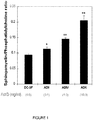
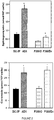
- Figure 1 shows, using a matched set of DC-3F and actinomycin D resistant lines (ADII-ADX) in which P-gp levels have been shown to linearly relate to levels of actinomycin D resistance (not shown), that sphingomyelin levels correlate directly with extent of resistance. Furthermore, a second P-gp MDR line the P388/Dx line also shows sphingomyelin accumulation, and both ADX and P-gp display increased total ceramide ( Figure 2 ).
- ADII-ADX actinomycin D resistant lines
- Table 1 shows that the ceramide de novo synthesis pathway is activated in ADX MDR cells. Sphingomyelin mass was measured by phospholipid phosphorus assay and ceramide by the diacylglycerol kinase (DAG) assay. Enzymatic activities were performed as standardized. Data (mean ⁇ S.E.) are compiled from at least three experiments performed in duplicate. n.d. activity not detected. *p ⁇ 0.01 versus DC-3F cells.
- SPT Serine palmitoyltransferase
- CS ceramide synthase
- ASMase acid sphingomyelinase
- NSMase neutral sphingomyelinase
- GCS glucocylceramide synthase
- nCDase neutral ceramidase
- aCDase alkaline ceramidase
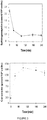
- Figures 3 and 4 show that the sphingomyelin accumulation in MDR cells is on the cell surface as it is amenable to exogenous bacterial ASMase degradation into ceramide In contrast, DC-3F cells were unaffected by sphingomyelinase treatment. Further, as the amount of ceramide generated is large the MDR but not the parental cells undergo ASMse-induced apoptotic death ( Figure 4C ).
- Anti-cancer therapeutics including anthracycline antibiotics
- Anthracycline antibiotics such as daunorubicin and doxorubicin and their derivatives are known antineoplastic agents produced by the fungus Streptomyces peucetius. Evaluation of the mechanism of daunorubicin resistance in sphingolipid-disordered ADX cells revealed that drug traffics to the nucleus of daunorubicin-sensitive parental DC-3F cells, whereas it mislocalizes into large cytoplasmic vacuoles in ADX MDR cells.
- Daunorubicin is retained in cytoplasmic vesicles in ADX MDR cells
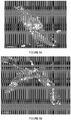
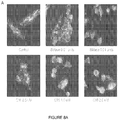
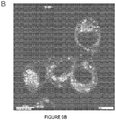
- daunorubicin traffics incorrectly in MDR cells we took advantage of the spontaneous fluorescence of anthracyclines. Whereas daunorubicin traffics to the nucleus where it finds its DNA/RNA substrates in parental chemosensitive DC-3F and P388/O cells, daunorubicin is "hung up" in cytoplasmic vesicles in ADX and P388/Dox MDR cells ( Figure 5 , higher magnification see Figure 6 ).
- Natural ceramides are categorized into long N-acyl chain (C16:0-C20:0) and very long N-acyl chain (C22:0-C24:1) species dependent on the fatty acid covalently attached by amide linkage to the primary amine at C-2 of the sphingosine backbone.
- N-acyl chain ceramide species possess distinct biologic attributes with long chain N-palmitoyl (C16:0) ceramide being pro-apoptotic, while very long chain C24:0, C24:1 ceramides are anti-apoptotic ( Mesicek, J., et al. 2010. Ceramide synthases 2, 5 and 6 confer distinct roles in radiation-induced apoptosis in HeLa cells. Cell Signal 22:1300-1307 ).
- Ceramide is one of the most hydrophobic molecules in mammalian cells, hence it cannot be delivered "naked” as it phase separates in aqueous suspension such as in blood (note that in cell culture an organic solvent, dodecane, can be used to suspend natural ceramides for cellular uptake).
- a set of ceramide-based nano-liposomes are constructed by extrusion technology. These nano-liposomes contain 2 ⁇ M (10 mol%) ceramide in the bilayer and are, on average, in the range of about 50-200nM; in one embodiment the nano-liposomes are 93 ⁇ 28 nM (mean ⁇ SD) as determined by dynamic light scattering (DLS) analysis.
- C16-ceramide was chosen as the starting point since there is a body of work indicating this ceramide is the most-often generated ceramide by anti-cancer agents (Mesicek et al. ibid; Lee, H. et al. 2011. Mitochondrial Ceramide-Rich Macrodomains Functionalize Bax upon Irradiation. PLoS ONE 6:e19783 .). Further, it was shown that this ceramide species self-associates, generating large non-bilayer macrodomains in mammalian bilayers, sites of protein oligomerization for apoptosis induction ( Stancevic, B. 2010. Ceramide-Rich Platforms Regulate Ionizing Radiation Sensitivity in Endothelium.
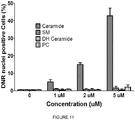
- Figure 11 shows that incubation of ADX cells pre-loaded with daunorubicin with C16-ceramide-containing nano-liposomes, but not other closely related lipid containing liposomes, results in rapid trafficking of daunorubicin into the nucleus, a pre-requisite for cell death induction.
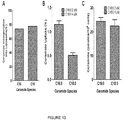
- a direct comparison of the different long chain (C16:0-C20:0) and very long chain (C22:0-C24:1) ceramides revealed that only C16:0 ceramide-containing liposomes appeared to possess this vesicular trafficking property ( Figure 12 ).
- a nanoliposome comprising C16:0 ceramide, and in some embodiments encapsulating a chemotherapeutic agent, characterized in that the nanoliposome has the diameter of 50-200 nm, in one embodiment, 75-175 nm, in another embodiment, 100-150 nm. and has the structure of a small unilamellar vesicle; the chemotherapeutic agent encapsulated in the nanoliposome has an activity corresponding to 90-100% of that of the agent prior to encapsulation.
- Nanoliposomes can be prepared in accordance with methods known to those of skill in the art, for example, as described in Liposomes: Rational Design (A. S. Janoff, ed., Marcel Dekker, Inc., New York, N.Y .) Suitable nanoliposome preparation methods include ether injection method, the surfactant method, the freeze-thaw method, the reverse-phase evaporation method, the ultrasonic treatment method, the ethanol injection method, the extrusion method and the French press method.
- the nanoliposome of the invention is prepared by the extrusion method.
- the extrusion method involves first combining lipids in chloroform to give a desired molar ration. The resulting mixture is dried under a stream of nitrogen gas and placed in a vacuum pump until the solvent is substantially removed. The samples are then hydrated in an appropriate buffer or mixture of therapeutic agent or agents. The mixture is then passed through an extrusion apparatus to obtain liposomes of a defined average size. Average liposome size can be determined by dynamic light scattering using, for example, a ZetaSizer (Malvern, Westborough, MA).
- Liposomes for use in the present invention may be prepared with surface stabilizing hydrophilic polymer-lipid conjugates such as polyethylene glycol-lipid, to enhance circulation longevity.
- liposomes comprised of approximately 20 ⁇ mol total lipid, containing 82.5/7.5/10 mol/mol of fully hydrogenated soybean phosphatidylcholine (HSPC)/ N-carbamyl-poly-(ethylene glycol methyl ether)-1,2-distearoyl-sn-glyco-3-phosphoethanolamine (2kPEG-DSPE)/ceramide, are generated as follows.
- HSPC soybean phosphatidylcholine
- 2kPEG-DSPE N-carbamyl-poly-(ethylene glycol methyl ether)-1,2-distearoyl-sn-glyco-3-phosphoethanolamine
- Each lipid is solubilized at 10 mg/ml in chloroform and transferred into a round bottomed flask, dried under nitrogen while rotating, and lyophilized at least 2 h to remove trace chloroform.
- Lipid films are hydrated for 1 h at 65°C in 1 ml PBS. During hydration, three cycles of 15-second sonication are performed every 20 min. The hydrated lipid film thereafter undergoes three cycles of freezing (at -78°C using dry ice in isopropanol x 5 min) and thawing (at 65°C x 10 min) to obtain multilamellar liposomes.
- C16:0-ceramide was identified as a pro-apoptotic ceramide species generated post-irradiation in HeLa cells (and now in numerous other cells and tissues), whereas the other two ceramides generated, C24:0 and C24:1 ceramide, were found to be anti-apoptotic (Mesicek et al. ibid). Whereas C16:0 ceramide has fusogenic properties in biophysical and biological bilayers, for technical reasons it has not been possible to determine whether the C24-ceramides also display this property.
- C16:0 ceramide appears to be the only natural ceramide capable of inducing fusion of drug-containing MDR vesicles with nuclear membranes; some non-natural hydrophilic ceramides have been shown to induce nuclear daunorubicin transfer, albeit, less effectively than C16:0 (Table 2).
- Fusion of MDR-containing drug vesicles with the nuclear membrane and deposition of cargo can be detected by conventional confocal microscopy or in real-time by confocal videography tracking daunorubicin fluorescence.
- ADX cells the timing and dose-response capabilities of natural ceramide-containing nano-liposomes to induce fusion and enhance cell death is investigated using techniques established in our lab.
- a second isogenic pair of wild type and MDR cells, the P388 leukemia and a P388 daunorubicin-resistant P-gp overexpressing isolate P388/Dx were studied to assure that the phenotype observed in the ADX cells is generalizable.
- full sphingolipid enzymatic profiling was performed to corroborate that baseline elevation in sphingomyelin/ceramide levels results from increased serine palmitoyl transferase activity.
- Preliminary evidence described above indicates that daunorubicin-resistant P388 cells display the same baseline sphingolipid abnormalities as ADX cells, and failure to traffic doxorubicin to the nucleus, making this supposition highly likely.
- P-gp status is by real time PCR and Western analysis in accordance with methods known to those of skill in the art.
- Daunorubicin or doxorubicin is immobilized in vesicles of P-gp high cancer cell lines and traffic to the nucleus in P-gp low cell lines.
- ceramide-based liposomes induce trafficking of the vesicles to the nucleus in the P-gp high cells reversing chemoresistance.
- Sphingolipid profiling by mass spectrometry is performed to determine whether altered sphingomyelin or ceramide mass or specific species define the MDR phenotype.
- Serine palmitoyl transferase enzymatic activity is similarly assessed in P-gp high and low cell types.
- the ability of C16:0 ceramide liposomes to reverse cross resistance to other MDR drugs such as vincristine and cis-platinum is tested.
- P-gp levels are measured by real time PCR as described in Bates et al. 1991. Mitotane enhances cytotoxicity of chemotherapy in cell lines expressing a multidrug resistance gene (mdr-1/P-glycoprotein) which is also expressed by adrenocortical carcinomas. J Clin Endocrinol Metab 73:18-29 .and confirmed by Western analysis using a murine anti-P-gp Ab that cross reacts with human and mouse P-gp (clone C219; Calbiochem, USA) as described, for example, in Castro et al. 2012. A cytotoxic ribonuclease reduces the expression level of P-glycoprotein in multidrug-resistant cell lines. Invest New Drugs 30:880-888 .
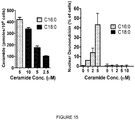
- C16:0 ceramide-based liposomes or C18:0 ceramide-based liposomes were tested using C16:0 ceramide-based liposomes or C18:0 ceramide-based liposomes in order to evaluate whether differences in MDR reversal reflect differences in ceramide delivery or properties unique to C16:0 ceramide structure.
- C16:0 and C18:0 ceramide liposomes were formulated at 10 mol% ceramide containing trace 14 C-labeled C16:0 or 14 C-labeled C18:0 ceramide.
- ADX cells were incubated with liposomes at 5 ⁇ M 14 C-labeled C16:0 or the indicated concentrations of 14 C-labeled C18:0, and after two hours cells were washed and radiolabel incorporation quantified by scintillation counting.
- C16:0 ceramide confers daunorubicin-induced cell death.
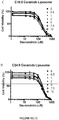
- an MTT cell viability assay was performed in drug resistant ADX cells employing liposomes containing the different ceramide species.
- C16:0-, C18:0-, C24:0-containing liposomes (at 10 mol % ceramide/liposome) and control liposomes were tested over a range of concentrations for impact on cell viability loss.
- Only C16:0 ceramide-containing liposomes displayed significant effect on cell viability loss (2-10 ⁇ M), while the other liposomes showed no effect except even at the high concentration of 10 ⁇ M ( Figure 16 ).
- the concentration range for C16:0 ceramide induction of drug trafficking to the nucleus ( Figure 12 ) is within the same range impacting cell death.
- Doxorubicin localizes to the cytoplasmic compartment of ADX tumors and the nucleus of DC-3F tumors
- ADX drug resistant cells in vivo would maintain their in vitro phenotype of drug mislocalization to the vesicular compartment was tested.
- 2.5 x 10 6 ADX or DC-3F parental cells were implanted into the right flank of athymic nude mice.
- 24 mg/kg of doxorubicin was injected i.v. into tumor-bearing mice. After 2 hours, tumors were excised and frozen at -80°C for cryosection.
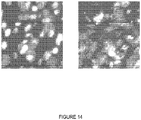
- DC-3F tumors show drug localization to the nucleus while in the right panel, ADX tumors display drug primarily localized to cytoplasm.
- doxorubicin MTD studies were performed and a dose of 8mg/kg x 3 was defined as the MTD, consistent with the literature in multiple mouse strains. Further, it was shown that parental DC3F tumor is sensitive to this dose of doxorubicin, while the MDR ADX clone is totally resistant to drug ( Figure 14 ). These data are consistent with the in vitro data and indicate that the characteristics of drug trafficking of these cell lines are maintained in tumors in vivo.
- DC-3F/ADX xenografts have been developed in Swiss nude mice (see Methods below for details).
- doxorubicin when delivered intravenously transports to the nucleus of DC-3F parental tumor cells by confocal fluorescence microscopy, and accumulates in cytoplasmic vesicles in ADX drug resistant tumor cells.
- Anirban Maitra and co-workers recently published that doxorubicin traffics poorly to the nucleus of human PC-3A MDR prostate tumor cells in vivo ( Pramanik, D. et al. 2012.
- a composite polymer nanoparticle overcomes multidrug resistance and ameliorates doxorubicin-associated cardiomyopathy.
- Initial standard MTD and pharmacokinetic studies are performed using C16:0 ceramide liposomes, although published data indicate that similar liposomes are non-toxic to normal tissues ( Barth, B.M. et al. 2011. Ceramide-based therapeutics for the treatment of cancer. Anticancer Agents Med Chem 11:911-919 .).
- tumor studies examine whether restoring drug trafficking to the nucleus of ADX MDR tumors restores tumor response (partial, complete or cure).
- C16-ceramide accumulation in tumor cells over time is compared with nuclear drug delivery and kinetics of tumor response.
- P388 paired cell lines are grown as chloromas (liquid tumors grown as solid tumors) and these phenotypic responses are re-tested.
- a subset of the cells profiled above with high and low P-gp are grown and studied as tumor xenografts for vesicle drug distribution and C16:0 ceramide liposome responsiveness.
- a preparation of C16:0 ceramide-doxorubicin liposomes is studied in these same models.
- Liposome Delivery, MTD, PK Liposomes and free doxorubicin are delivered intravenously and MTD and PK determined in accordance with known protocols. (For example, see Barenholz et al. 2012. J Control Release 160:117-134 and Pramanik et al. 2012. Oncotarget 3:640-650 ).
- DC-3F/ADX tumors DC-3F/ADX cells (2.5x10 6 ) are injected subcutaneously into the flank of 5-6 week old male Swiss nude mice (Charles River) in a 1:1 dilution with BD matrigel (BD Biosciences) final volume 200 ⁇ l. Tumors reach approximately 1 cm at 5-6 weeks, and are dissected into warm PBS, cut into 25-50 mg cubes, and implanted in anesthetized mice subcutaneously.
- tumors At 10 days to 2 weeks after implantation when tumors reach 200 mm 3 , they will be randomly divided into experimental groups (5-10 mice/group), treated with 1.5-2.3 mg/kg free doxorubicin, and after doxorubicin steady state in tumor cells has been reached (to be determined empirically), treated with C16:0 ceramide-based liposomes. Tumors will be excised for confocal fluorescence at varying times thereafter from 30 min to 24 h as per (19), or followed for tumor response by standard caliper measurement. In subsequent studies, up to 4 doses of doxorubicin will be delivered (published MTD about 9 mg/kg x 4 doses/25 g mouse) with or without C16:0-based liposomes accompanying each dose of doxorubicin).
- Vesicular transport of drugs to nuclear targets is a poorly studied area.
- the MDR phenotype which appears to disrupt this process allows for visualization of this unique compartment that contains drug frozen in time and space. Identification of this compartment found defective in P-gp overexpressing cells dependent on a unique sphingolipid C16:0 ceramide for carrying out its function represents a scientific discovery.
- the discovery that a single natural ceramide species confers vesicular transport properties has substantive implication for the field of sphingolipid signaling.
- identification of this vesicular compartment and the role of C16:0 ceramide in its function is in of itself worthy of scientific attention.
Landscapes
- Health & Medical Sciences (AREA)
- Life Sciences & Earth Sciences (AREA)
- Chemical & Material Sciences (AREA)
- Veterinary Medicine (AREA)
- Medicinal Chemistry (AREA)
- Pharmacology & Pharmacy (AREA)
- Epidemiology (AREA)
- Animal Behavior & Ethology (AREA)
- General Health & Medical Sciences (AREA)
- Public Health (AREA)
- Molecular Biology (AREA)
- Biophysics (AREA)
- Dispersion Chemistry (AREA)
- Engineering & Computer Science (AREA)
- Chemical Kinetics & Catalysis (AREA)
- General Chemical & Material Sciences (AREA)
- Oil, Petroleum & Natural Gas (AREA)
- Proteomics, Peptides & Aminoacids (AREA)
- Medicinal Preparation (AREA)
- Pharmaceuticals Containing Other Organic And Inorganic Compounds (AREA)
Claims (15)
- Nanoliposome comprenant un céramide à chaîne N-acyle C16 : 0 destiné à être utilisé dans le renversement de la multirésistance aux médicaments (MRM) dans des cellules tumorales surexprimant la P-glycoprotéine (P-gp) en rétablissant le trafic vésiculaire dans la cellule.
- Nanoliposome destiné à être utilisé selon la revendication 1, dans lequel ledit céramide est présent en une quantité de 1 % à 25 % de ladite composition lipidique totale dudit liposome.
- Nanoliposome destiné à être utilisé selon la revendication 1, dans lequel ledit céramide est présent en une quantité de 5 % à 20 % de ladite composition lipidique totale dudit liposome.
- Nanoliposome destiné à être utilisé selon la revendication 1, dans lequel ledit céramide est présent en une quantité de 10 % à 15 % de ladite composition lipidique totale dudit liposome.
- Nanoliposome destiné à être utilisé selon l'une quelconque des revendications 1 à 4, dans lequel ledit nanoliposome est constitué essentiellement de phosphatidylcholine de soja hydrogénée entièrement (HSPC), de N-carbamyl-poly-(éthylène glycol méthyl éther)-1,2-distéaroyl-sn-glyco-3-phosphoéthanolamine (2kPEG-DSPE), et de céramide dans un rapport mol/mol de 82,5/7,5/10.
- Nanoliposome destiné à être utilisé selon l'une quelconque des revendications 1 à 5, dans lequel ledit nanoliposome a un diamètre moyen d'environ 50 nM à environ 200 nM.
- Nanoliposome destiné à être utilisé selon l'une quelconque des revendications 1 à 6, dans lequel ledit nanoliposome a un diamètre moyen d'environ 75 nM à environ 150 nM.
- Nanoliposome destiné à être utilisé selon l'une quelconque des revendications 1 à 7, lequel ledit nanoliposome a un diamètre moyen d'environ 90 nM à environ 125 nM de taille.
- Nanoliposome destiné à être utilisé selon l'une quelconque des revendications 1 à 8, lequel ledit nanoliposome comprend en outre un agent thérapeutique.
- Nanoliposome destiné à être utilisé selon la revendication 9, dans lequel ledit agent thérapeutique est sélectionné parmi le groupe constitué par la doxorubicine, la daunorubicine, la vincristine, la cisplatine.
- Composition pharmaceutique comprenant un nanoliposome selon l'une quelconque des revendications 1 à 10 et un support pharmaceutiquement acceptable, destinée à être utilisée dans le renversement de la multirésistance aux médicaments (MRM) dans des cellules tumorales surexprimant la P-glycoprotéine (P-gp) en rétablissant le trafic vésiculaire dans la cellule.
- Nanoliposome selon l'une quelconque des revendications 1 à 10, ou une composition pharmaceutique selon la revendication 11, dans lequel les cellules tumorales sont des cellules cancéreuses.
- Céramide à chaîne N-acyle C16 : 0 destiné à être utilisé dans le renversement de la multirésistance aux médicaments (MRM) dans des cellules tumorales surexprimant la P-glycoprotéine (P-gp) en rétablissant le trafic vésiculaire dans la cellule.
- Céramide à chaîne N-acyle C16 : 0 destiné à être utilisé dans le renversement de la multirésistance aux médicaments (MRM) dans des cancers surexprimant la P-glycoprotéine (P-gp) en rétablissant le trafic vésiculaire dans la cellule.
- Procédé in vitro destiné à la sélection d'un traitement approprié pour un sujet, le procédé comprenant :(a) la détermination des niveaux de la P-glycoprotéine (P-gp) transporteuse des lipides dans une cellule tumorale isolée à partir du sujet ;(b) l'identification du sujet comme étant atteint de MRM si des niveaux de P-glycoprotéine (P-gp) transporteuse des lipides dans la cellule isolée à partir du sujet sont élevés par comparaison avec des niveaux d'une cellule qui est sensible aux médicaments ; et(c) si le sujet est identifié comme étant atteint de MRM le choix d'un traitement comprenant (i) un nanoliposome destiné à être utilisé selon l'une quelconque des revendications 1 à 10, ou (ii) une composition pharmaceutique destinée à être utilisée selon la revendication 11, ou (iii) un céramide à chaîne N-acyle C16 : 0 destiné à être utilisé selon la revendication 13.
Applications Claiming Priority (2)
| Application Number | Priority Date | Filing Date | Title |
|---|---|---|---|
| US201361794584P | 2013-03-15 | 2013-03-15 | |
| PCT/US2014/028828 WO2014144421A1 (fr) | 2013-03-15 | 2014-03-14 | Inversion de céramide de la résistance à plusieurs médicaments |
Publications (2)
| Publication Number | Publication Date |
|---|---|
| EP2968143A1 EP2968143A1 (fr) | 2016-01-20 |
| EP2968143B1 true EP2968143B1 (fr) | 2019-04-24 |
Family
ID=50513497
Family Applications (1)
| Application Number | Title | Priority Date | Filing Date |
|---|---|---|---|
| EP14718282.8A Active EP2968143B1 (fr) | 2013-03-15 | 2014-03-14 | Inversion resistance a plusieurs medicaments par ceramide |
Country Status (4)
| Country | Link |
|---|---|
| US (1) | US10052387B2 (fr) |
| EP (1) | EP2968143B1 (fr) |
| IL (1) | IL241653B (fr) |
| WO (1) | WO2014144421A1 (fr) |
Families Citing this family (6)
| Publication number | Priority date | Publication date | Assignee | Title |
|---|---|---|---|---|
| CN104922067A (zh) * | 2014-12-08 | 2015-09-23 | 上海张江生物技术有限公司 | 一种载药纳米脂质体、制备方法及用途 |
| WO2018005657A1 (fr) | 2016-06-28 | 2018-01-04 | Verily Life Sciences Llc | Filtration en série pour générer de petits liposomes contenant du cholestérol |
| WO2018222989A1 (fr) * | 2017-06-02 | 2018-12-06 | The Penn State Research Foundation | Nanoliposomes de céramide, compositions et procédés d'utilisation pour immunothérapie |
| MA50532A (fr) | 2017-11-03 | 2020-09-09 | Univ Virginia Patent Foundation | Compositions et méthodes pour le traitement de cancers |
| CN114045294B (zh) * | 2021-11-22 | 2023-03-24 | 昆明理工大学 | 一种脂质转运蛋白基因及其应用 |
| WO2024107924A2 (fr) * | 2022-11-17 | 2024-05-23 | Board Of Regents, The University Of Texas System | Panel de biomarqueurs lipidiques à base de sang pour une évaluation personnalisée du risque de cancer du sein |
Family Cites Families (7)
| Publication number | Priority date | Publication date | Assignee | Title |
|---|---|---|---|---|
| US4898735A (en) | 1985-12-06 | 1990-02-06 | Yissum Research And Development Company Of The Hebrew University Of Jerusalem | Liposome/doxorubicin composition and method |
| AU2004233873B2 (en) * | 2003-04-25 | 2010-11-18 | The Penn State Research Foundation | Method and system for systemic delivery of growth arresting, lipid-derived bioactive compounds |
| WO2006051549A2 (fr) * | 2004-11-15 | 2006-05-18 | Yissum Research Development Company Of The Hebrew University Of Jerusalem | Therapie combinee |
| WO2009138806A1 (fr) * | 2008-05-13 | 2009-11-19 | Dendrigen S.A. | Nouvelles formulations de cocktail de liposomes contenant de la doxorubicine et de l’amiodarone, puissant inhibiteur de la résistance à plusieurs médicaments |
| US20110177154A1 (en) * | 2008-09-15 | 2011-07-21 | Searete Llc, A Limited Liability Corporation Of The State Of Delaware | Tubular nanostructure targeted to cell membrane |
| WO2012125486A1 (fr) * | 2011-03-11 | 2012-09-20 | The United States Of America, As Represented By The Secretary, Department Of Health And Human Services | Polychimiothérapie pour le traitement du cancer |
| WO2012154942A2 (fr) * | 2011-05-10 | 2012-11-15 | The Penn State Research Foundation | Compositions de liposomes anioniques à teneur en céramide |
-
2014
- 2014-03-14 WO PCT/US2014/028828 patent/WO2014144421A1/fr not_active Ceased
- 2014-03-14 EP EP14718282.8A patent/EP2968143B1/fr active Active
-
2015
- 2015-09-15 US US14/854,891 patent/US10052387B2/en active Active
- 2015-09-16 IL IL241653A patent/IL241653B/en active IP Right Grant
Non-Patent Citations (1)
| Title |
|---|
| None * |
Also Published As
| Publication number | Publication date |
|---|---|
| WO2014144421A1 (fr) | 2014-09-18 |
| IL241653B (en) | 2019-08-29 |
| US10052387B2 (en) | 2018-08-21 |
| EP2968143A1 (fr) | 2016-01-20 |
| US20160184433A1 (en) | 2016-06-30 |
Similar Documents
| Publication | Publication Date | Title |
|---|---|---|
| EP2968143B1 (fr) | Inversion resistance a plusieurs medicaments par ceramide | |
| Johnston et al. | Characterization of the drug retention and pharmacokinetic properties of liposomal nanoparticles containing dihydrosphingomyelin | |
| Holland et al. | Poly (ethylene glycol)− lipid conjugates promote bilayer formation in mixtures of non-bilayer-forming lipids | |
| Ferreira et al. | pH-sensitive liposomes for drug delivery in cancer treatment | |
| Ju et al. | Liposomes, modified with PTDHIV-1 peptide, containing epirubicin and celecoxib, to target vasculogenic mimicry channels in invasive breast cancer | |
| Bourgaux et al. | Interactions of anticancer drugs with biomembranes: what can we learn from model membranes? | |
| Bajelan et al. | Co-delivery of doxorubicin and PSC 833 (Valspodar) by stealth nanoliposomes for efficient overcoming of multidrug resistance | |
| de Araújo Lopes et al. | Liposomes as carriers of anticancer drugs | |
| Boomer et al. | Acid-triggered release from sterically stabilized fusogenic liposomes via a hydrolytic dePEGylation strategy | |
| Tretiakova et al. | Influence of stabilizing components on the integrity of antitumor liposomes loaded with lipophilic prodrug in the bilayer | |
| Li et al. | The antitumor activity of PNA modified vinblastine cationic liposomes on Lewis lung tumor cells: In vitro and in vivo evaluation | |
| US20130052259A1 (en) | Liposomes comprising amphipathic drugs and method for their preparation | |
| WO2010009186A1 (fr) | Formulation de liposomes incorporant des composés pharmaceutiques hydrophiles et hydrophobes co-encapsulés | |
| Van Bambeke et al. | Interaction of the macrolide azithromycin with phospholipids. I. Inhibition of lysosomal phospholipase A1 activity | |
| EP1448165B1 (fr) | Compositions a vecteurs lipidiques et procedes garantissant une meilleure retention medicamenteuse | |
| US11969396B2 (en) | IPA-3-loaded liposomes and methods of use thereof | |
| Wang et al. | Bioactive Lipids-Based pH Sensitive Micelles for Co-Delivery of Doxorubicin and Ceramide to Overcome Multidrug Resistance in Leukemia: Wang et al. | |
| Shao et al. | Intracellular drug delivery by sulfatide-mediated liposomes to gliomas | |
| Wu et al. | Enhanced in vivo stability and antitumor efficacy of PEGylated liposomes of paclitaxel palmitate prodrug | |
| Schroeder | Fluorescence probes unravel asymmetric structure of membranes | |
| US20060198882A1 (en) | Stable liposomes or micelles comprising a sphinolipid and a peg-lipopolymer | |
| Rane et al. | Influence of liposome composition on paclitaxel entrapment and pH sensitivity of liposomes | |
| Chemin et al. | Supramolecular organization of S12363-liposomes prepared with two different remote loading processes | |
| EP3046542B1 (fr) | Formulation liposomale synergique pour le traitement du cancer | |
| Mayhew et al. | Stability of association of 1-O-octadecyl-2-O-methyl-sn-glycero-3-phosphocholine with liposomes is composition dependent |
Legal Events
| Date | Code | Title | Description |
|---|---|---|---|
| PUAI | Public reference made under article 153(3) epc to a published international application that has entered the european phase |
Free format text: ORIGINAL CODE: 0009012 |
|
| 17P | Request for examination filed |
Effective date: 20151014 |
|
| AK | Designated contracting states |
Kind code of ref document: A1 Designated state(s): AL AT BE BG CH CY CZ DE DK EE ES FI FR GB GR HR HU IE IS IT LI LT LU LV MC MK MT NL NO PL PT RO RS SE SI SK SM TR |
|
| AX | Request for extension of the european patent |
Extension state: BA ME |
|
| DAX | Request for extension of the european patent (deleted) | ||
| STAA | Information on the status of an ep patent application or granted ep patent |
Free format text: STATUS: EXAMINATION IS IN PROGRESS |
|
| 17Q | First examination report despatched |
Effective date: 20170612 |
|
| GRAP | Despatch of communication of intention to grant a patent |
Free format text: ORIGINAL CODE: EPIDOSNIGR1 |
|
| STAA | Information on the status of an ep patent application or granted ep patent |
Free format text: STATUS: GRANT OF PATENT IS INTENDED |
|
| INTG | Intention to grant announced |
Effective date: 20181121 |
|
| GRAS | Grant fee paid |
Free format text: ORIGINAL CODE: EPIDOSNIGR3 |
|
| GRAA | (expected) grant |
Free format text: ORIGINAL CODE: 0009210 |
|
| STAA | Information on the status of an ep patent application or granted ep patent |
Free format text: STATUS: THE PATENT HAS BEEN GRANTED |
|
| AK | Designated contracting states |
Kind code of ref document: B1 Designated state(s): AL AT BE BG CH CY CZ DE DK EE ES FI FR GB GR HR HU IE IS IT LI LT LU LV MC MK MT NL NO PL PT RO RS SE SI SK SM TR |
|
| REG | Reference to a national code |
Ref country code: GB Ref legal event code: FG4D |
|
| REG | Reference to a national code |
Ref country code: CH Ref legal event code: EP Ref country code: CH Ref legal event code: PK Free format text: BERICHTIGUNGEN |
|
| REG | Reference to a national code |
Ref country code: AT Ref legal event code: REF Ref document number: 1123288 Country of ref document: AT Kind code of ref document: T Effective date: 20190515 Ref country code: IE Ref legal event code: FG4D |
|
| RIN2 | Information on inventor provided after grant (corrected) |
Inventor name: BARENHOLZ, YECHEZKEL Inventor name: KOLESNICK, RICHARD Inventor name: KOREN, EREZ |
|
| REG | Reference to a national code |
Ref country code: DE Ref legal event code: R096 Ref document number: 602014045298 Country of ref document: DE |
|
| REG | Reference to a national code |
Ref country code: CH Ref legal event code: NV Representative=s name: TR-IP CONSULTING LLC, CH |
|
| REG | Reference to a national code |
Ref country code: NL Ref legal event code: MP Effective date: 20190424 |
|
| REG | Reference to a national code |
Ref country code: LT Ref legal event code: MG4D |
|
| PG25 | Lapsed in a contracting state [announced via postgrant information from national office to epo] |
Ref country code: NL Free format text: LAPSE BECAUSE OF FAILURE TO SUBMIT A TRANSLATION OF THE DESCRIPTION OR TO PAY THE FEE WITHIN THE PRESCRIBED TIME-LIMIT Effective date: 20190424 |
|
| PG25 | Lapsed in a contracting state [announced via postgrant information from national office to epo] |
Ref country code: SE Free format text: LAPSE BECAUSE OF FAILURE TO SUBMIT A TRANSLATION OF THE DESCRIPTION OR TO PAY THE FEE WITHIN THE PRESCRIBED TIME-LIMIT Effective date: 20190424 Ref country code: HR Free format text: LAPSE BECAUSE OF FAILURE TO SUBMIT A TRANSLATION OF THE DESCRIPTION OR TO PAY THE FEE WITHIN THE PRESCRIBED TIME-LIMIT Effective date: 20190424 Ref country code: FI Free format text: LAPSE BECAUSE OF FAILURE TO SUBMIT A TRANSLATION OF THE DESCRIPTION OR TO PAY THE FEE WITHIN THE PRESCRIBED TIME-LIMIT Effective date: 20190424 Ref country code: NO Free format text: LAPSE BECAUSE OF FAILURE TO SUBMIT A TRANSLATION OF THE DESCRIPTION OR TO PAY THE FEE WITHIN THE PRESCRIBED TIME-LIMIT Effective date: 20190724 Ref country code: PT Free format text: LAPSE BECAUSE OF FAILURE TO SUBMIT A TRANSLATION OF THE DESCRIPTION OR TO PAY THE FEE WITHIN THE PRESCRIBED TIME-LIMIT Effective date: 20190824 Ref country code: AL Free format text: LAPSE BECAUSE OF FAILURE TO SUBMIT A TRANSLATION OF THE DESCRIPTION OR TO PAY THE FEE WITHIN THE PRESCRIBED TIME-LIMIT Effective date: 20190424 Ref country code: LT Free format text: LAPSE BECAUSE OF FAILURE TO SUBMIT A TRANSLATION OF THE DESCRIPTION OR TO PAY THE FEE WITHIN THE PRESCRIBED TIME-LIMIT Effective date: 20190424 Ref country code: ES Free format text: LAPSE BECAUSE OF FAILURE TO SUBMIT A TRANSLATION OF THE DESCRIPTION OR TO PAY THE FEE WITHIN THE PRESCRIBED TIME-LIMIT Effective date: 20190424 |
|
| PG25 | Lapsed in a contracting state [announced via postgrant information from national office to epo] |
Ref country code: GR Free format text: LAPSE BECAUSE OF FAILURE TO SUBMIT A TRANSLATION OF THE DESCRIPTION OR TO PAY THE FEE WITHIN THE PRESCRIBED TIME-LIMIT Effective date: 20190725 Ref country code: RS Free format text: LAPSE BECAUSE OF FAILURE TO SUBMIT A TRANSLATION OF THE DESCRIPTION OR TO PAY THE FEE WITHIN THE PRESCRIBED TIME-LIMIT Effective date: 20190424 Ref country code: BG Free format text: LAPSE BECAUSE OF FAILURE TO SUBMIT A TRANSLATION OF THE DESCRIPTION OR TO PAY THE FEE WITHIN THE PRESCRIBED TIME-LIMIT Effective date: 20190724 Ref country code: LV Free format text: LAPSE BECAUSE OF FAILURE TO SUBMIT A TRANSLATION OF THE DESCRIPTION OR TO PAY THE FEE WITHIN THE PRESCRIBED TIME-LIMIT Effective date: 20190424 Ref country code: PL Free format text: LAPSE BECAUSE OF FAILURE TO SUBMIT A TRANSLATION OF THE DESCRIPTION OR TO PAY THE FEE WITHIN THE PRESCRIBED TIME-LIMIT Effective date: 20190424 |
|
| REG | Reference to a national code |
Ref country code: AT Ref legal event code: MK05 Ref document number: 1123288 Country of ref document: AT Kind code of ref document: T Effective date: 20190424 |
|
| PG25 | Lapsed in a contracting state [announced via postgrant information from national office to epo] |
Ref country code: IS Free format text: LAPSE BECAUSE OF FAILURE TO SUBMIT A TRANSLATION OF THE DESCRIPTION OR TO PAY THE FEE WITHIN THE PRESCRIBED TIME-LIMIT Effective date: 20190824 |
|
| REG | Reference to a national code |
Ref country code: DE Ref legal event code: R097 Ref document number: 602014045298 Country of ref document: DE |
|
| PG25 | Lapsed in a contracting state [announced via postgrant information from national office to epo] |
Ref country code: AT Free format text: LAPSE BECAUSE OF FAILURE TO SUBMIT A TRANSLATION OF THE DESCRIPTION OR TO PAY THE FEE WITHIN THE PRESCRIBED TIME-LIMIT Effective date: 20190424 Ref country code: EE Free format text: LAPSE BECAUSE OF FAILURE TO SUBMIT A TRANSLATION OF THE DESCRIPTION OR TO PAY THE FEE WITHIN THE PRESCRIBED TIME-LIMIT Effective date: 20190424 Ref country code: DK Free format text: LAPSE BECAUSE OF FAILURE TO SUBMIT A TRANSLATION OF THE DESCRIPTION OR TO PAY THE FEE WITHIN THE PRESCRIBED TIME-LIMIT Effective date: 20190424 Ref country code: CZ Free format text: LAPSE BECAUSE OF FAILURE TO SUBMIT A TRANSLATION OF THE DESCRIPTION OR TO PAY THE FEE WITHIN THE PRESCRIBED TIME-LIMIT Effective date: 20190424 Ref country code: SK Free format text: LAPSE BECAUSE OF FAILURE TO SUBMIT A TRANSLATION OF THE DESCRIPTION OR TO PAY THE FEE WITHIN THE PRESCRIBED TIME-LIMIT Effective date: 20190424 Ref country code: RO Free format text: LAPSE BECAUSE OF FAILURE TO SUBMIT A TRANSLATION OF THE DESCRIPTION OR TO PAY THE FEE WITHIN THE PRESCRIBED TIME-LIMIT Effective date: 20190424 |
|
| REG | Reference to a national code |
Ref country code: CH Ref legal event code: PCAR Free format text: NEW ADDRESS: ROUTE DU COUTSET 18, 1485 NUVILLY (CH) |
|
| PG25 | Lapsed in a contracting state [announced via postgrant information from national office to epo] |
Ref country code: SM Free format text: LAPSE BECAUSE OF FAILURE TO SUBMIT A TRANSLATION OF THE DESCRIPTION OR TO PAY THE FEE WITHIN THE PRESCRIBED TIME-LIMIT Effective date: 20190424 Ref country code: IT Free format text: LAPSE BECAUSE OF FAILURE TO SUBMIT A TRANSLATION OF THE DESCRIPTION OR TO PAY THE FEE WITHIN THE PRESCRIBED TIME-LIMIT Effective date: 20190424 |
|
| PLBE | No opposition filed within time limit |
Free format text: ORIGINAL CODE: 0009261 |
|
| STAA | Information on the status of an ep patent application or granted ep patent |
Free format text: STATUS: NO OPPOSITION FILED WITHIN TIME LIMIT |
|
| PG25 | Lapsed in a contracting state [announced via postgrant information from national office to epo] |
Ref country code: TR Free format text: LAPSE BECAUSE OF FAILURE TO SUBMIT A TRANSLATION OF THE DESCRIPTION OR TO PAY THE FEE WITHIN THE PRESCRIBED TIME-LIMIT Effective date: 20190424 |
|
| 26N | No opposition filed |
Effective date: 20200127 |
|
| PG25 | Lapsed in a contracting state [announced via postgrant information from national office to epo] |
Ref country code: SI Free format text: LAPSE BECAUSE OF FAILURE TO SUBMIT A TRANSLATION OF THE DESCRIPTION OR TO PAY THE FEE WITHIN THE PRESCRIBED TIME-LIMIT Effective date: 20190424 |
|
| PG25 | Lapsed in a contracting state [announced via postgrant information from national office to epo] |
Ref country code: MC Free format text: LAPSE BECAUSE OF FAILURE TO SUBMIT A TRANSLATION OF THE DESCRIPTION OR TO PAY THE FEE WITHIN THE PRESCRIBED TIME-LIMIT Effective date: 20190424 |
|
| REG | Reference to a national code |
Ref country code: BE Ref legal event code: MM Effective date: 20200331 |
|
| PG25 | Lapsed in a contracting state [announced via postgrant information from national office to epo] |
Ref country code: LU Free format text: LAPSE BECAUSE OF NON-PAYMENT OF DUE FEES Effective date: 20200314 |
|
| PG25 | Lapsed in a contracting state [announced via postgrant information from national office to epo] |
Ref country code: IE Free format text: LAPSE BECAUSE OF NON-PAYMENT OF DUE FEES Effective date: 20200314 |
|
| PG25 | Lapsed in a contracting state [announced via postgrant information from national office to epo] |
Ref country code: BE Free format text: LAPSE BECAUSE OF NON-PAYMENT OF DUE FEES Effective date: 20200331 |
|
| REG | Reference to a national code |
Ref country code: DE Ref legal event code: R081 Ref document number: 602014045298 Country of ref document: DE Owner name: YISSUM RESEARCH DEVELOPMENT COMPANY OF THE HEB, IL Free format text: FORMER OWNER: MEMORIAL SLOAN-KETTERING CANCER CENTER, NEW YORK, N.Y., US Ref country code: DE Ref legal event code: R081 Ref document number: 602014045298 Country of ref document: DE Owner name: MEMORIAL SLOAN-KETTERING CANCER CENTER, NEW YO, US Free format text: FORMER OWNER: MEMORIAL SLOAN-KETTERING CANCER CENTER, NEW YORK, N.Y., US |
|
| REG | Reference to a national code |
Ref country code: GB Ref legal event code: 732E Free format text: REGISTERED BETWEEN 20220127 AND 20220202 |
|
| PG25 | Lapsed in a contracting state [announced via postgrant information from national office to epo] |
Ref country code: MT Free format text: LAPSE BECAUSE OF FAILURE TO SUBMIT A TRANSLATION OF THE DESCRIPTION OR TO PAY THE FEE WITHIN THE PRESCRIBED TIME-LIMIT Effective date: 20190424 Ref country code: CY Free format text: LAPSE BECAUSE OF FAILURE TO SUBMIT A TRANSLATION OF THE DESCRIPTION OR TO PAY THE FEE WITHIN THE PRESCRIBED TIME-LIMIT Effective date: 20190424 |
|
| PG25 | Lapsed in a contracting state [announced via postgrant information from national office to epo] |
Ref country code: MK Free format text: LAPSE BECAUSE OF FAILURE TO SUBMIT A TRANSLATION OF THE DESCRIPTION OR TO PAY THE FEE WITHIN THE PRESCRIBED TIME-LIMIT Effective date: 20190424 |
|
| PGFP | Annual fee paid to national office [announced via postgrant information from national office to epo] |
Ref country code: FR Payment date: 20241231 Year of fee payment: 12 |
|
| PGFP | Annual fee paid to national office [announced via postgrant information from national office to epo] |
Ref country code: DE Payment date: 20241231 Year of fee payment: 12 |
|
| PGFP | Annual fee paid to national office [announced via postgrant information from national office to epo] |
Ref country code: GB Payment date: 20250102 Year of fee payment: 12 |
|
| PGFP | Annual fee paid to national office [announced via postgrant information from national office to epo] |
Ref country code: CH Payment date: 20250401 Year of fee payment: 12 |