EP2968227B1 - S-enantiomerically enriched compositions of beta blockers for treating amyotrophic lateral sclerosis - Google Patents
S-enantiomerically enriched compositions of beta blockers for treating amyotrophic lateral sclerosis Download PDFInfo
- Publication number
- EP2968227B1 EP2968227B1 EP14764992.5A EP14764992A EP2968227B1 EP 2968227 B1 EP2968227 B1 EP 2968227B1 EP 14764992 A EP14764992 A EP 14764992A EP 2968227 B1 EP2968227 B1 EP 2968227B1
- Authority
- EP
- European Patent Office
- Prior art keywords
- oxprenolol
- composition
- lateral sclerosis
- amyotrophic lateral
- individual
- Prior art date
- Legal status (The legal status is an assumption and is not a legal conclusion. Google has not performed a legal analysis and makes no representation as to the accuracy of the status listed.)
- Active
Links
- FNEJKCGACRPXBT-UHFFFAOYSA-N C=CCOc1ccccc1O Chemical compound C=CCOc1ccccc1O FNEJKCGACRPXBT-UHFFFAOYSA-N 0.000 description 1
- 0 CC[C@@](COc1ccccc1*CC=C)O Chemical compound CC[C@@](COc1ccccc1*CC=C)O 0.000 description 1
- GWPZQFCCOPZRMA-UHFFFAOYSA-N [O-][N+](C(CC=C1)C=C1S(OC(C1)C11OC1)(=O)=O)=O Chemical compound [O-][N+](C(CC=C1)C=C1S(OC(C1)C11OC1)(=O)=O)=O GWPZQFCCOPZRMA-UHFFFAOYSA-N 0.000 description 1
Images










Classifications
-
- A—HUMAN NECESSITIES
- A61—MEDICAL OR VETERINARY SCIENCE; HYGIENE
- A61K—PREPARATIONS FOR MEDICAL, DENTAL OR TOILETRY PURPOSES
- A61K31/00—Medicinal preparations containing organic active ingredients
- A61K31/13—Amines
- A61K31/135—Amines having aromatic rings, e.g. ketamine, nortriptyline
- A61K31/138—Aryloxyalkylamines, e.g. propranolol, tamoxifen, phenoxybenzamine
-
- A—HUMAN NECESSITIES
- A61—MEDICAL OR VETERINARY SCIENCE; HYGIENE
- A61P—SPECIFIC THERAPEUTIC ACTIVITY OF CHEMICAL COMPOUNDS OR MEDICINAL PREPARATIONS
- A61P25/00—Drugs for disorders of the nervous system
- A61P25/28—Drugs for disorders of the nervous system for treating neurodegenerative disorders of the central nervous system, e.g. nootropic agents, cognition enhancers, drugs for treating Alzheimer's disease or other forms of dementia
Definitions
- the present invention relates to S-enantiomerically enriched compositions of beta blockers or pharmaceutically acceptable salts thereof and uses thereof, including uses of the beta blocker compositions for treating amyotrophic lateral sclerosis.
- the beta blocker is oxprenolol or a pharmaceutically acceptable salt thereof.
- ALS Amyotrophic lateral sclerosis
- ALS covers a spectrum of neurodegenerative syndromes characterized by progressive muscular paralysis reflecting degeneration of motor neurons in the brain and spinal cord.
- ALS is one of the most common neurodegenerative disorders, with an incidence of 1 to 2 per 100,000 and a prevalence of 4 to 6 per 100,000; as many as 30,000 Americans have the disease at any given time ( Worms PM.
- the incidence in males is higher than in females (1.6: 1). 5-10% of patients have a positive family history of ALS, most commonly with an autosomal dominant inheritance pattern.
- ALS is a disease of mature adults, with a median age of onset of 55 years and its frequency increases with age until age 75. Overall 50% of patients die within the first three years since the first clinical manifestations. Apart from age or a positive family history, a number of factors and environmental toxins have been further studied as risk factors. A high relative risk was described in smokers, soccer players, especially Italians and veterans of the Gulf War.
- Oxprenolol is a non-selective beta blocker which possesses some intrinsic sympathomimetic activity. Because of its beta blocker function, oxprenolol has been used for the treatment of various diseases such as angina pectoris, abnormal heart rhythms, and high blood pressure. Oxprenolol is lipophilic and crosses the blood-brain barrier more easily than other more water soluble beta blockers. As a result, oxprenolol is associated with a higher incidence of CNS-related side effects than other beta blockers, but also has more central CNS modes of action. In WO 2007/014219 A2 and US 2005/143378 use of racemic oxprenolol has been suggested for treatment of amyotrophic lateral sclerosis.
- the present invention is directed is directed to a composition comprising oxprenolol of a pharmaceutically acceptable salt thereof for use in treatment of amyotrophic lateral sclerosis as defined in the claims.
- the present disclosure relates to S-enantiomerically enriched compositions of beta blockers or pharmaceutically acceptable salts thereof and uses thereof, including uses of the beta blocker compositions for treating amyotrophic lateral sclerosis.
- the beta blocker is oxprenolol or a pharmaceutically acceptable salt thereof.
- the present disclosure provides, in some embodiments, a method of treating amyotrophic lateral sclerosis in an individual having amyotrophic lateral sclerosis, comprising administering to the individual an effective amount of a composition comprising a beta blocker or a pharmaceutically acceptable salt thereof, wherein beta blocker has one chiral center and the composition is enantiomerically enriched for the S-enantiomer.
- the present disclosure provides, in some embodiments, a method of prolonging survival of an individual having amyotrophic lateral sclerosis, comprising administering to the individual an effective amount of a composition comprising a beta blocker or a pharmaceutically acceptable salt thereof, wherein beta blocker has one chiral center and the composition is enantiomerically enriched for the S-enantiomer.
- the present disclosure provides, in some embodiments, a method of delaying the development of amyotrophic lateral sclerosis in an individual having amyotrophic lateral sclerosis, comprising administering to the individual an effective amount of a composition comprising a beta blocker or a pharmaceutically acceptable salt thereof, wherein beta blocker has one chiral center and the composition is enantiomerically enriched for the S-enantiomer.
- the present disclosure provides, in some embodiments, a method of preventing loss of lean mass of an individual having amyotrophic lateral sclerosis, comprising administering to the individual an effective amount of a composition comprising a beta blocker or a pharmaceutically acceptable salt thereof, wherein beta blocker has one chiral center and the composition is enantiomerically enriched for the S-enantiomer.
- the present disclosure provides, in some embodiments, a method of preventing muscle wasting of an individual having amyotrophic lateral sclerosis, comprising administering to the individual an effective amount of a composition comprising a beta blocker or a pharmaceutically acceptable salt thereof, wherein beta blocker has one chiral center and the composition is enantiomerically enriched for the S-enantiomer.
- the present disclosure provides, in some embodiments, a method of improving quality of life in an individual having amyotrophic lateral sclerosis, comprising administering to the individual an effective amount of a composition comprising a beta blocker or a pharmaceutically acceptable salt thereof, wherein beta blocker has one chiral center and the composition is enantiomerically enriched for the S-enantiomer.
- the beta blocker is oxprenolol or a pharmaceutically acceptable salt thereof, wherein the composition is enantiomerically enriched for S-oxprenolol.
- the composition of the present invention comprises an enantiomeric excess of at least 60% of S-oxprenolol. In some embodiments, the composition comprises an enantiomeric excess of at least about 80% of S-oxprenolol. In some embodiments, the composition comprises an enantiomeric excess of at least about 99% of S-oxprenolol. In some embodiments, the composition comprises an enantiomeric excess of at least 99.9% of S-oxprenolol.
- the amyotrophic lateral sclerosis is sporadic amyotrophic lateral sclerosis. In some embodiments, the amyotrophic lateral sclerosis is familial amyotrophic lateral sclerosis. In some embodiments, the amyotrophic lateral sclerosis is Western Pacific amyotrophic lateral sclerosis. In some embodiments, the amyotrophic lateral sclerosis is juvenile amyotrophic lateral sclerosis. In some embodiments, the amyotrophic lateral sclerosis is Hiramaya Disease.
- the amyotrophic lateral sclerosis is progressive bulbar palsy (PBP), progressive muscular atrophy (PMA), primary lateral sclerosis (PLS), or ALS with multi-system involvement.
- the composition is administered orally.
- the amount of S-oxprenolol in the composition is about 80 to about 160 mg daily. In some embodiments, the composition is administered daily or twice daily.
- kits comprising a pharmaceutical composition comprising a composition comprising a beta blocker or a pharmaceutically acceptable salt thereof, wherein beta blocker has one chiral center and the composition is enantiomerically enriched for the S-enantiomer; and a pharmaceutically acceptable carrier for treating amyotrophic lateral sclerosis.
- the beta blocker is oxprenolol.
- the present invention provides use of an S-enantiomerically enriched composition of a beta blocker for achieving beneficial results in individuals having amyotrophic lateral sclerosis, such as treating amyotrophic lateral sclerosis, prolonging survival, preventing lean mass loss, improving quality of life, and/or treating muscle wasting.
- an S-enantiomerically enriched composition of a beta blocker or a pharmaceutically acceptable salt thereof the beta blocker or a pharmaceutically acceptable salt thereof has one chiral center and the composition is enantiomerically enriched for the S-enantiomer.
- S-enantiomerically enriched composition of a beta blocker refers to a beta blocker having one chiral center and the composition is enantiomerically enriched for the S-enantiomer.
- the beta blocker is oxprenolol or a pharmaceutically acceptable salt thereof.
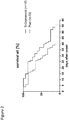
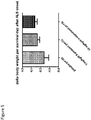
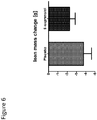
- the present invention is based on the surprising finding that S-oxprenolol significantly improved survival in animals having amyotrophic lateral sclerosis in an experiment using an amyotrophic lateral sclerosis animal model. Other effects of the compositions were observed on preserving lean body mass and preventing body weight loss in the animals. At least, these effects suggest that S-oxprenolol is effective in treating amyotrophic lateral sclerosis and prolonging survival.
- the present disclosure in one aspect, provides methods of treating amyotrophic lateral sclerosis, prolonging survival, preventing lean mass loss, preventing and/or treating muscle wasting, or improving quality of life in an individual having amyotrophic lateral sclerosis, comprising administering to the individual an effective amount of an S-enantiomerically enriched composition of a beta blocker or a pharmaceutically acceptable salt thereof.
- the beta blocker is oxprenolol or a pharmaceutically acceptable salt thereof.
- kits, unit dosages, medicines, and articles of manufacture that are useful for methods described herein.
- treatment is an approach for obtaining beneficial or desired results including clinical results.
- beneficial or desired clinical results include, but are not limited to, one or more of the following: alleviating one or more symptoms resulting from the disease, diminishing the extent of the disease, stabilizing the disease (e.g., preventing or delaying the worsening of the disease), preventing or delaying the spread ( e.g., metastasis) of the disease, preventing or delaying the recurrence of the disease, delay or slowing the progression of the disease, ameliorating the disease state, providing a remission (partial or total) of the disease, decreasing the dose of one or more other medications required to treat the disease, delaying the progression of the disease, increasing the quality of life, and/or prolonging survival.
- treatment is a reduction of pathological consequence of amyotrophic lateral sclerosis. The methods disclosed herein contemplate any one or more of these aspects of treatment.
- the term "individual” refers to a mammal and includes, but is not limited to, human, bovine, horse, feline, canine, rodent, or primate. In some embodiments, the individual is a human.
- an "at risk” individual is an individual who is at risk of developing amyotrophic lateral sclerosis.
- An individual “at risk” may or may not have detectable disease, and may or may not have displayed detectable disease prior to the treatment methods described herein.
- At risk denotes that an individual has one or more so-called risk factors, which are measurable parameters that correlate with development of amyotrophic lateral sclerosis. An individual having one or more of these risk factors has a higher probability of developing amyotrophic lateral sclerosis than an individual without these risk factor(s).
- delaying the development of a disease means to defer, hinder, slow, retard, stabilize, and/or postpone development of the disease. This delay can be of varying lengths of time, depending on the history of the disease and/or individual being treated. As is evident to one skilled in the art, a sufficient or significant delay can, in effect, encompass prevention, in that the individual does not develop the disease.
- a method that "delays" development of a disease is a method that reduces probability of disease development in a given time frame and/or reduces the extent of the disease in a given time frame, when compared to not using the method. Such comparisons are typically based on clinical studies, using a statistically significant number of subjects.
- combination therapy is meant that a first agent be administered in conjunction with another agent.
- “In conjunction with” refers to administration of one treatment modality in addition to another treatment modality, such as administration of a nanoparticle composition described herein in addition to administration of the other agent to the same individual.
- “in conjunction with” refers to administration of one treatment modality before, during, or after delivery of the other treatment modality to the individual. Such combinations are considered to be part of a single treatment regimen or regime.
- an effective amount refers to an amount of a compound or composition sufficient to treat a specified disorder, condition or disease such as ameliorate, palliate, lessen, and/or delay one or more of its symptoms.
- an effective amount comprises an amount sufficient to prevent or delay other unwanted symptoms associated with amyotrophic lateral sclerosis.
- an effective amount is an amount sufficient to delay development.
- an effective amount is an amount sufficient to prevent or delay recurrence.
- An effective amount can be administered in one or more administrations.
- first therapy and second therapy in a combination therapy are administered with a time separation of no more than about 15 minutes, such as no more than about any of 10, 5, or 1 minutes.
- first and second therapies may be contained in the same composition (e.g., a composition comprising both a first and second therapy) or in separate compositions (e.g., a first therapy in one composition and a second therapy is contained in another composition).
- the term "sequential administration" means that the first therapy and second therapy in a combination therapy are administered with a time separation of more than about 15 minutes, such as more than about any of 20, 30, 40, 50, 60, or more minutes. Either the first therapy or the second therapy may be administered first.
- the first and second therapies are contained in separate compositions, which may be contained in the same or different packages or kits.
- the term "concurrent administration” means that the administration of the first therapy and that of a second therapy in a combination therapy overlap with each other.
- pharmaceutically acceptable or “pharmacologically compatible” is meant a material that is not biologically or otherwise undesirable, e.g., the material may be incorporated into a pharmaceutical composition administered to an individual without causing any significant undesirable biological effects or interacting in a deleterious manner with any of the other components of the composition in which it is contained.
- Pharmaceutically acceptable carriers or excipients have preferably met the required standards of toxicological and manufacturing testing and/or are included on the Inactive Ingredient Guide prepared by the U.S. Food and Drug administration.
- AE refers to any untoward medical occurrence in an individual receiving a marketed pharmaceutical product or in an individual who is participating on a clinical trial who is receiving an investigational or non-investigational pharmaceutical agent.
- isomers or “stereoisomers” refers to compounds which have identical chemical constitution, but differ with regard to the arrangement of the atoms or groups in space.
- chiral refers to molecules which have the property of non-superimposability of the mirror image partner, while the term “achiral” refers to molecules which are superimposable on their mirror image partner.
- diastereomers refers to stereoisomers with two or more centers of dissymmetry and whose molecules are not mirror images of one another.
- enantiomers refers to two stereoisomers of a compound which are non-superimposable mirror images of one another.
- An equimolar mixture of two enantiomers is called a “racemic mixture” or a “racemate.”
- enantiomerically enriched means that the racemic mixture (i.e., 50/50 mixture of the enantiomers) has been purified such that one enantiomer comprises greater than 50% of the total amount of the compound present.
- a composition that is enantiomerically enriched for S-oxprenolol is a composition wherein more than 50% of the oxprenolol is the S-enantiomer of oxprenolol (S-oxprenolol).
- the degree of enantiomeric enrichment of a composition can be determined by "enantiomeric excess,” or ee.
- pharmaceutically acceptable salt means a salt which is acceptable for administration to a subject, such as a mammal (salts with counterions having acceptable mammalian safety for a given dosage regime). Such salts can be derived from pharmaceutically acceptable inorganic or organic bases and from pharmaceutically acceptable inorganic or organic acids.
- “Pharmaceutically acceptable salt” refers to pharmaceutically acceptable salts of a compound, which salts are derived from a variety of organic and inorganic counter ions well known in the art and include, by way of example only, sodium, potassium, calcium, magnesium, ammonium, tetraalkylammonium, and the like; and when the molecule contains a basic functionality, salts of organic or inorganic acids, such as hydrochloride, hydrobromide, formate, tartrate, besylate, mesylate, acetate, maleate, oxalate, and the like.
- salt thereof means a compound formed when a proton of an acid is replaced by a cation, such as a metal cation or an organic cation and the like.
- the salt is a pharmaceutically acceptable salt, although this is not required for salts of intermediate compounds that are not intended for administration to the subject.
- salts of the present compounds include those wherein the compound is protonated by an inorganic or organic acid to form a cation, with the conjugate base of the inorganic or organic acid as the anionic component of the salt.
- solvent refers to a complex formed by combination of solvent molecules with molecules or ions of the solute.
- the solvent can be an organic compound, an inorganic compound, or a mixture of both.
- Some examples of solvents include, but are not limited to, methanol, N,N- dimethylformamide, tetrahydrofuran, dimethylsulfoxide, and water. When the solvent is water, the solvate formed is a hydrate.
- conjunction with refers to administration of one treatment modality in addition to another treatment modality.
- in conjunction with refers to administration of one treatment modality before, during or after administration of the other treatment modality to the individual.
- references to "about” a value or parameter herein includes (and describes) embodiments that are directed to that value or parameter per se. For example, description referring to "about X” includes description of "X.”
- the present disclosure provides methods of treating amyotrophic lateral sclerosis.
- a method of treating amyotrophic lateral sclerosis in an individual having amyotrophic lateral sclerosis comprising administering to the individual an effective amount of an S-enantiomerically enriched composition of a beta blocker or a pharmaceutically acceptable salt thereof (such as a composition having at least about any one of 60%, 70%, 80%, 90%, 95%, 96%, 97%, 98%, 99%, or 99.9% ee).
- the beta blocker is oxprenolol or a pharmaceutically acceptable salt thereof.
- the composition comprises an enantiomeric excess of at least about 60% (such as at least about any one of 70%, 80%, 90%, 95%, 96%, 97%, 98%, 99%, or 99.9%) of S-oxprenolol.
- a method of treating amyotrophic lateral sclerosis in an individual having amyotrophic lateral sclerosis comprising administering to the individual an effective amount of a composition comprising oxprenolol or a pharmaceutically acceptable salt thereof, wherein the composition comprises an enantiomeric excess of at least about 99% (for example at least about 99.9%) of S-oxprenolol.
- a method of treating amyotrophic lateral sclerosis in an individual having amyotrophic lateral sclerosis comprising administering (such as orally administering) to the individual an effective amount of a composition comprising oxprenolol or a pharmaceutically acceptable salt thereof, wherein the composition is enantiomerically enriched for S-oxprenolol (for example comprises an enantiomeric excess of at least about 99% of S-oxprenolol), wherein the amount of S-oxprenolol in the composition is about 50 mg to about 160 mg (such as about 80 to about 160 mg, for example about 100 mg to about 160 mg).
- a method of prolonging survival of an individual having amyotrophic lateral sclerosis comprising administering to the individual an effective amount of an S-enantiomerically enriched composition of a beta blocker or a pharmaceutically acceptable salt thereof (such as a composition having at least about any one of 60%, 70%, 80%, 90%, 95%, 96%, 97%, 98%, 99%, or 99.9% ee).
- the beta blocker is oxprenolol or a pharmaceutically acceptable salt thereof.
- the composition comprises an enantiomeric excess of at least about 60% (such as at least about any one of 70%, 80%, 90%, 95%, 96%, 97%, 98%, 99%, or 99.9%) of S-oxprenolol.
- a method of prolonging survival in an individual having amyotrophic lateral sclerosis comprising administering to the individual an effective amount of a composition comprising oxprenolol or a pharmaceutically acceptable salt thereof, wherein the composition comprises an enantiomeric excess of at least about 99% (for example at least about 99.9%) of S-oxprenolol.
- a method of prolonging survival of an individual having amyotrophic lateral sclerosis comprising administering (such as orally administering) to the individual an effective amount of a composition comprising oxprenolol or a pharmaceutically acceptable salt thereof, wherein the composition is enantiomerically enriched for S-oxprenolol (for example comprises an enantiomeric excess of at least about 99% of S-oxprenolol), wherein the amount of S-oxprenolol in the composition is about 50 mg to about 160 mg (such as about 80 to about 160 mg, for example about 100 mg to about 160 mg).
- the method prolongs the survival of the individual by at least any of 1, 2, 3, 4, 5, 6, 7, 8, 9, 10, 11, 12, 18, or 24 months.
- a method of prolonging progression-free survival in an individual with amyotrophic lateral sclerosis comprising administering to the individual an effective amount of an S-enantiomerically enriched composition of a beta blocker or a pharmaceutically acceptable salt thereof (such as a composition having at least about any one of 60%, 70%, 80%, 90%, 95%, 96%, 97%, 98%, 99%, or 99.9% ee).
- the beta blocker is oxprenolol or a pharmaceutically acceptable salt thereof.
- the composition comprises an enantiomeric excess of at least about 60% (such as at least about any one of 70%, 80%, 90%, 95%, 96%, 97%, 98%, 99%, or 99.9%) of S-oxprenolol.
- a method of prolonging progression-free survival in an individual with amyotrophic lateral sclerosis comprising administering to the individual an effective amount of a composition comprising oxprenolol or a pharmaceutically acceptable salt thereof, wherein the composition comprises an enantiomeric excess of at least about 99% (for example at least about 99.9%) of S-oxprenolol.
- a method of prolonging progression-free survival in an individual with amyotrophic lateral sclerosis comprising administering (such as orally administering) to the individual an effective amount of a composition comprising oxprenolol or a pharmaceutically acceptable salt thereof, wherein the composition is enantiomerically enriched for S-oxprenolol (for example comprises an enantiomeric excess of at least about 99% of S-oxprenolol), wherein the amount of S-oxprenolol in the composition is about 50 mg to about 160 mg (such as about 80 to about 160 mg, for example about 100 mg to about 160 mg).
- a method of alleviating one or more symptoms associated with amyotrophic lateral sclerosis comprising administering to the individual an effective amount of an S-enantiomerically enriched composition of a beta blocker or a pharmaceutically acceptable salt thereof (such as a composition having at least about any one of 60%, 70%, 80%, 90%, 95%, 96%, 97%, 98%, 99%, or 99.9% ee).
- the beta blocker is oxprenolol or a pharmaceutically acceptable salt thereof.
- the composition comprises an enantiomeric excess of at least about 60% (such as at least about any one of 70%, 80%, 90%, 95%, 96%, 97%, 98%, 99%, or 99.9%) of S-oxprenolol.
- a method of alleviating one or more symptoms associated with amyotrophic lateral sclerosis comprising administering to the individual an effective amount of a composition comprising oxprenolol or a pharmaceutically acceptable salt thereof, wherein the composition comprises an enantiomeric excess of at least about 99% (for example at least about 99.9%) of S-oxprenolol.
- a method of alleviating one or more symptoms associated with amyotrophic lateral sclerosis comprising administering (such as orally administering) to the individual an effective amount of a composition comprising oxprenolol or a pharmaceutically acceptable salt thereof, wherein the composition is enantiomerically enriched for S-oxprenolol (for example comprises an enantiomeric excess of at least about 99% of S-oxprenolol), wherein the amount of S-oxprenolol in the composition is about 50 mg to about 160 mg (such as about 80 to about 160 mg, for example about 100 mg to about 160 mg).
- a method of delaying the development of amyotrophic lateral sclerosis in an individual having amyotrophic lateral sclerosis comprising administering to the individual an effective amount of an S-enantiomerically enriched composition of a beta blocker or a pharmaceutically acceptable salt thereof (such as a composition having at least about any one of 60%, 70%, 80%, 90%, 95%, 96%, 97%, 98%, 99%, or 99.9% ee).
- the composition comprises oxprenolol or a pharmaceutically acceptable salt thereof, wherein the composition is enantiomerically enriched for S-oxprenolol.
- the composition comprises an enantiomeric excess of at least about 60% (such as at least about any one of 70%, 80%, 90%, 95%, 96%, 97%, 98%, 99%, or 99.9%) of S-oxprenolol.
- a method of delaying the development of amyotrophic lateral sclerosis in an individual having amyotrophic lateral sclerosis comprising administering to the individual an effective amount of a composition comprising oxprenolol or a pharmaceutically acceptable salt thereof, wherein the composition comprises an enantiomeric excess of at least about 99% (for example at least about 99.9%) of S-oxprenolol.
- a method of delaying the development of amyotrophic lateral sclerosis in an individual having amyotrophic lateral sclerosis comprising administering (such as orally administering) to the individual an effective amount of a composition comprising oxprenolol or a pharmaceutically acceptable salt thereof, wherein the composition is enantiomerically enriched for S-oxprenolol (for example comprises an enantiomeric excess of at least about 99% of S-oxprenolol), wherein the amount of S-oxprenolol in the composition is about 50 mg to about 160 mg (such as about 80 to about 160 mg, for example about 100 mg to about 160 mg).
- the method prolongs the survival of the individual by at least any of 1, 2, 3, 4, 5, 6, 7, 8, 9, 10, 11, 12, 18, or 24 months.
- a method of preventing loss of lean body mass in an individual having amyotrophic lateral sclerosis comprising administering to the individual an effective amount of an S-enantiomerically enriched composition of a beta blocker or a pharmaceutically acceptable salt thereof (such as a composition having at least about any one of 60%, 70%, 80%, 90%, 95%, 96%, 97%, 98%, 99%, or 99.9% ee).
- an S-enantiomerically enriched composition of a beta blocker or a pharmaceutically acceptable salt thereof such as a composition having at least about any one of 60%, 70%, 80%, 90%, 95%, 96%, 97%, 98%, 99%, or 99.9% ee.
- a method of treating loss of lean body mass in an individual having amyotrophic lateral sclerosis comprising administering to the individual an effective amount of an S-enantiomerically enriched composition of a beta blocker or a pharmaceutically acceptable salt thereof (such as a composition having at least about any one of 60%, 70%, 80%, 90%, 95%, 96%, 97%, 98%, 99%, or 99.9% ee).
- the method of treating loss of lean body mass is reversing muscle wasting or increasing muscle weight.
- the beta blocker is oxprenolol or a pharmaceutically acceptable salt thereof.
- the composition comprises an enantiomeric excess of at least about 60% (such as at least about any one of 70%, 80%, 90%, 95%, 96%, 97%, 98%, 99%, or 99.9%) of S-oxprenolol.
- a method of preventing loss of lean body mass in an individual having amyotrophic lateral sclerosis comprising administering to the individual an effective amount of a composition comprising oxprenolol or a pharmaceutically acceptable salt thereof, wherein the composition comprises an enantiomeric excess of at least about 99% (for example at least about 99.9%) of S-oxprenolol.
- a method of preventing loss of lean body mass in an individual having amyotrophic lateral sclerosis comprising administering (such as orally administering) to the individual an effective amount of a composition comprising oxprenolol or a pharmaceutically acceptable salt thereof, wherein the composition is enantiomerically enriched for S-oxprenolol (for example comprises an enantiomeric excess of at least about 99% of S-oxprenolol), wherein the amount of S-oxprenolol in the composition is about 50 mg to about 160 mg (such as about 80 to about 160 mg, for example about 100 mg to about 160 mg).
- the loss of lean body mass of the individual is no more than about 10% (for example no more than about any of 10%, 9%, 8%, 7%, 6%, or 5%) of the total lean body mass. In some embodiments, the loss of lean body mass is evaluated over a time period of about 1 month to 2 years (for example, about 1, 2, 3, 4, 5, 6, 7, 8, 9, 10, 11, 12, 13, 14, 15, 16, 17, 18, 19, 20, 21, 22, 23, or 24 months).
- a method of treating muscle wasting in an individual having amyotrophic lateral sclerosis comprising administering to the individual an effective amount of an S-enantiomerically enriched composition of a beta blocker or a pharmaceutically acceptable salt thereof (such as a composition having at least about any one of 60%, 70%, 80%, 90%, 95%, 96%, 97%, 98%, 99%, or 99.9% ee).
- the beta blocker is oxprenolol or a pharmaceutically acceptable salt thereof.
- the composition comprises an enantiomeric excess of at least about 60% (such as at least about any one of 70%, 80%, 90%, 95%, 96%, 97%, 98%, 99%, or 99.9%) of S-oxprenolol.
- a method of treating muscle wasting in an individual having amyotrophic lateral sclerosis comprising administering to the individual an effective amount of a composition comprising oxprenolol or a pharmaceutically acceptable salt thereof, wherein the composition comprises an enantiomeric excess of at least about 99% (for example at least about 99.9%) of S-oxprenolol.
- a method of treating muscle wasting in an individual having amyotrophic lateral sclerosis comprising administering (such as orally administering) to the individual an effective amount of a composition comprising oxprenolol or a pharmaceutically acceptable salt thereof, wherein the composition is enantiomerically enriched for S-oxprenolol (for example comprises an enantiomeric excess of at least about 99% of S-oxprenolol), wherein the amount of S-oxprenolol in the composition is about 50 mg to about 160 mg (such as about 80 to about 160 mg, for example about 100 mg to about 160 mg).
- the muscle wasting of the individual is no more than about 10% (for example no more than about any of 10%, 9%, 8%, 7%, 6%, or 5%) of the total body weight.
- the muscle wasting is evaluated over a time period of about 1 month to 2 years (for example, about 1, 2, 3, 4, 5, 6, 7, 8, 9, 10, 11, 12, 13, 14, 15, 16, 17, 18, 19, 20, 21, 22, 23, or 24 months).
- the method leads to a reduction of muscle wasting, i.e., a slow-down of muscle loss in the individual.
- the method leads to a reversal of muscle wasting, i.e., an increase in muscle weight in the individual.
- a method of improving quality of life of an individual having amyotrophic lateral sclerosis comprising administering to the individual an effective amount of an S-enantiomerically enriched composition of a beta blocker or a pharmaceutically acceptable salt thereof (such as a composition having at least about any one of 60%, 70%, 80%, 90%, 95%, 96%, 97%, 98%, 99%, or 99.9% ee).
- the beta blocker is oxprenolol or a pharmaceutically acceptable salt thereof.
- the composition comprises an enantiomeric excess of at least about 60% (such as at least about any one of 70%, 80%, 90%, 95%, 96%, 97%, 98%, 99%, or 99.9%) of S-oxprenolol.
- a method of improving quality of life of an individual having amyotrophic lateral sclerosis comprising administering to the individual an effective amount of a composition comprising oxprenolol or a pharmaceutically acceptable salt thereof, wherein the composition comprises an enantiomeric excess of at least about 99% (for example at least about 99.9%) of S-oxprenolol.
- a method of improving quality of life of an individual having amyotrophic lateral sclerosis comprising administering (such as orally administering) to the individual an effective amount of a composition comprising oxprenolol or a pharmaceutically acceptable salt thereof, wherein the composition is enantiomerically enriched for S-oxprenolol (for example comprises an enantiomeric excess of at least about 99% of S-oxprenolol), wherein the amount of S-oxprenolol in the composition is about 50 mg to about 160 mg (such as about 80 to about 160 mg, for example about 100 mg to about 160 mg).
- Improvement of quality of life can be assessed, for example, by food intake, locomotive activity, improvement in fatigue or dyspnea or global patient assessment scores, in short physical performance battery scores, in standard clinical assessment of functional performance, muscle strength, gait speed, leg strength and hand grip strength, 6-minute corridor walk test, stair climbing power, ability to tolerate courses of chemotherapy and other tests or instruments or questionnaires assessing patient quality of life.
- a method of increasing food intake of an individual having amyotrophic lateral sclerosis comprising administering to the individual an effective amount of an S-enantiomerically enriched composition of a beta blocker or a pharmaceutically acceptable salt thereof (such as a composition having at least about any one of 60%, 70%, 80%, 90%, 95%, 96%, 97%, 98%, 99%, or 99.9% ee).
- the beta blocker is oxprenolol or a pharmaceutically acceptable salt thereof.
- the composition comprises an enantiomeric excess of at least about 60% (such as at least about any one of 70%, 80%, 90%, 95%, 96%, 97%, 98%, 99%, or 99.9%) of S-oxprenolol.
- a method of increasing food intake of an individual having amyotrophic lateral sclerosis comprising administering to the individual an effective amount of a composition comprising oxprenolol or a pharmaceutically acceptable salt thereof, wherein the composition comprises an enantiomeric excess of at least about 99% (for example at least about 99.9%) of S-oxprenolol.
- a method of increasing food intake of an individual having amyotrophic lateral sclerosis comprising administering (such as orally administering) to the individual an effective amount of a composition comprising oxprenolol or a pharmaceutically acceptable salt thereof, wherein the composition is enantiomerically enriched for S-oxprenolol (for example comprises an enantiomeric excess of at least about 99% of S-oxprenolol), wherein the amount of S-oxprenolol in the composition is about 50 mg to about 160 mg (such as about 80 to about 160 mg, for example about 100 mg to about 160 mg).
- a method of increasing locomotive activity of an individual having amyotrophic lateral sclerosis comprising administering to the individual an effective amount of an S-enantiomerically enriched composition of a beta blocker or a pharmaceutically acceptable salt thereof (such as a composition having at least about any one of 60%, 70%, 80%, 90%, 95%, 96%, 97%, 98%, 99%, or 99.9% ee).
- the beta blocker is oxprenolol or a pharmaceutically acceptable salt thereof.
- the composition comprises an enantiomeric excess of at least about 60% (such as at least about any one of 70%, 80%, 90%, 95%, 96%, 97%, 98%, 99%, or 99.9%) of S-oxprenolol.
- a method of increasing locomotive activity of an individual having amyotrophic lateral sclerosis comprising administering to the individual an effective amount of a composition comprising oxprenolol or a pharmaceutically acceptable salt thereof, wherein the composition comprises an enantiomeric excess of at least about 99% (for example at least about 99.9%) of S-oxprenolol.
- a method of increasing locomotive activity of an individual having amyotrophic lateral sclerosis comprising administering (such as orally administering) to the individual an effective amount of a composition comprising oxprenolol or a pharmaceutically acceptable salt thereof, wherein the composition is enantiomerically enriched for S-oxprenolol (for example comprises an enantiomeric excess of at least about 99% of S-oxprenolol), wherein the amount of S-oxprenolol in the composition is about 50 mg to about 160 mg (such as about 80 to about 160 mg, for example about 100 mg to about 160 mg).
- a method of improving fatigue or dyspnea in an individual having amyotrophic lateral sclerosis comprising administering to the individual an effective amount of an S-enantiomerically enriched composition of a beta blocker or a pharmaceutically acceptable salt thereof (such as a composition having at least about any one of 60%, 70%, 80%, 90%, 95%, 96%, 97%, 98%, 99%, or 99.9% ee).
- the beta blocker is oxprenolol or a pharmaceutically acceptable salt thereof.
- the composition comprises an enantiomeric excess of at least about 60% (such as at least about any one of 70%, 80%, 90%, 95%, 96%, 97%, 98%, 99%, or 99.9%) of S-oxprenolol.
- a method of improving fatigue or dyspnea in an individual having amyotrophic lateral sclerosis comprising administering to the individual an effective amount of a composition comprising oxprenolol or a pharmaceutically acceptable salt thereof, wherein the composition comprises an enantiomeric excess of at least about 99% (for example at least about 99.9%) of S-oxprenolol.
- a method of improving fatigue or dyspnea in an individual having amyotrophic lateral sclerosis comprising administering (such as orally administering) to the individual an effective amount of a composition comprising oxprenolol or a pharmaceutically acceptable salt thereof, wherein the composition is enantiomerically enriched for S-oxprenolol (for example comprises an enantiomeric excess of at least about 99% of S-oxprenolol), wherein the amount of S-oxprenolol in the composition is about 50 mg to about 160 mg (such as about 80 to about 160 mg, for example about 100 mg to about 160 mg).
- a method of preventing body weight loss of an individual having amyotrophic lateral sclerosis comprising administering to the individual an effective amount of an S-enantiomerically enriched composition of a beta blocker or a pharmaceutically acceptable salt thereof (such as a composition having at least about any one of 60%, 70%, 80%, 90%, 95%, 96%, 97%, 98%, 99%, or 99.9% ee).
- the beta blocker is oxprenolol or a pharmaceutically acceptable salt thereof.
- the composition comprises an enantiomeric excess of at least about 60% (such as at least about any one of 70%, 80%, 90%, 95%, 96%, 97%, 98%, 99%, or 99.9%) of S-oxprenolol.
- a method of preventing body weight loss in an individual having amyotrophic lateral sclerosis comprising administering to the individual an effective amount of a composition comprising oxprenolol or a pharmaceutically acceptable salt thereof, wherein the composition comprises an enantiomeric excess of at least about 99% (for example at least about 99.9%) of S-oxprenolol.
- a method of preventing body weight loss of an individual having amyotrophic lateral sclerosis comprising administering (such as orally administering) to the individual an effective amount of a composition comprising oxprenolol or a pharmaceutically acceptable salt thereof, wherein the composition is enantiomerically enriched for S-oxprenolol (for example comprises an enantiomeric excess of at least about 99% of S-oxprenolol), wherein the amount of S-oxprenolol in the composition is about 50 mg to about 160 mg (such as about 80 to about 160 mg, for example about 100 mg to about 160 mg).
- the body weight loss of the individual is no more than about 20% (for example no more than about any of 15%, 14%, 13%, 12%, 11%, 10%, 9%, 8%, 7%, 6%, or 5%) of the total body weight.
- the body weight loss is evaluated over a time period of about 1 month to 2 years (for example, about 1, 2, 3, 4, 5, 6, 7, 8, 9, 10, 11, 12, 13, 14, 15, 16, 17, 18, 19 , 20 , 21, 22, 23, or 24 months).
- a method of preventing loss of body fat in an individual having amyotrophic lateral sclerosis comprising administering to the individual an effective amount of an S-enantiomerically enriched composition of a beta blocker or a pharmaceutically acceptable salt thereof (such as a composition having at least about any one of 60%, 70%, 80%, 90%, 95%, 96%, 97%, 98%, 99%, or 99.9% ee).
- the beta blocker is oxprenolol or a pharmaceutically acceptable salt thereof.
- the composition comprises an enantiomeric excess of at least about 60% (such as at least about any one of 70%, 80%, 90%, 95%, 96%, 97%, 98%, 99%, or 99.9%) of S-oxprenolol.
- a method of preventing loss of body fat in an individual having amyotrophic lateral sclerosis comprising administering to the individual an effective amount of a composition comprising oxprenolol or a pharmaceutically acceptable salt thereof, wherein the composition comprises an enantiomeric excess of at least about 99% (for example at least about 99.9%) of S-oxprenolol.
- a method of preventing loss of body fat in an individual having amyotrophic lateral sclerosis comprising administering (such as orally administering) to the individual an effective amount of a composition comprising oxprenolol or a pharmaceutically acceptable salt thereof, wherein the composition is enantiomerically enriched for S-oxprenolol (for example comprises an enantiomeric excess of at least about 99% of S-oxprenolol), wherein the amount of S-oxprenolol in the composition is about 50 mg to about 160 mg (such as about 80 to about 160 mg, for example about 100 mg to about 160 mg).
- the loss of body fat of the individual is no more than about 10% (for example no more than about any of 15%, 14%, 13%, 12%, 11%, 10%, 9%, 8%, 7%, 6%, or 5%) of the total body fat.
- the loss of body fat is evaluated over a time period of about 1 month to 2 years (for example, about 1, 2, 3, 4, 5, 6, 7, 8, 9, 10, 11, 12, 13, 14, 15, 16, 17, 18, 19, 20, 21, 22, 23, or 24 months).
- a method of providing cardioprotective effects in an individual having amyotrophic lateral sclerosis comprising administering to the individual an effective amount of an S-enantiomerically enriched composition of a beta blocker or a pharmaceutically acceptable salt thereof (such as a composition having at least about any one of 60%, 70%, 80%, 90%, 95%, 96%, 97%, 98%, 99%, or 99.9% ee).
- an S-enantiomerically enriched composition of a beta blocker or a pharmaceutically acceptable salt thereof such as a composition having at least about any one of 60%, 70%, 80%, 90%, 95%, 96%, 97%, 98%, 99%, or 99.9% ee.
- a method of preventing wasting of a heart muscle in an individual having amyotrophic lateral sclerosis comprising administering to the individual an effective amount of an S-enantiomerically enriched composition of a beta blocker or a pharmaceutically acceptable salt thereof (such as a composition having at least about any one of 60%, 70%, 80%, 90%, 95%, 96%, 97%, 98%, 99%, or 99.9% ee).
- the beta blocker is oxprenolol or a pharmaceutically acceptable salt thereof.
- the composition comprises an enantiomeric excess of at least about 60% (such as at least about any one of 60%, 70%, 80%, 90%, 95%, 96%, 97%, 98%, 99%, or 99.9%) of S-oxprenolol.
- a method of providing cardioprotective effects in an individual having amyotrophic lateral sclerosis comprising administering to the individual an effective amount of a composition comprising oxprenolol or a pharmaceutically acceptable salt thereof, wherein the composition comprises an enantiomeric excess of at least about 99% (for example at least about 99.9%) of S-oxprenolol.
- a method of preventing wasting of a heart muscle in an individual having amyotrophic lateral sclerosis comprising administering to the individual an effective amount of a composition comprising oxprenolol or a pharmaceutically acceptable salt thereof, wherein the composition comprises an enantiomeric excess of at least about 99% (for example at least about 99.9%) of S-oxprenolol.
- a method of providing cardioprotective effects in an individual having amyotrophic lateral sclerosis comprising administering (such as orally administering) to the individual an effective amount of a composition comprising oxprenolol or a pharmaceutically acceptable salt thereof, wherein the composition is enantiomerically enriched for S-oxprenolol (for example comprises an enantiomeric excess of at least about 99% of S-oxprenolol), wherein the amount of S-oxprenolol in the composition is about 50 mg to about 160 mg (such as about 80 to about 160 mg, for example about 100 mg to about 160 mg).
- a method of preventing wasting of a heart muscle in an individual having amyotrophic lateral sclerosis comprising administering (such as orally administering) to the individual an effective amount of a composition comprising oxprenolol or a pharmaceutically acceptable salt thereof, wherein the composition is enantiomerically enriched for S-oxprenolol (for example comprises an enantiomeric excess of at least about 99% of S-oxprenolol), wherein the amount of S-oxprenolol in the composition is about 50 mg to about 160 mg (such as about 80 to about 160 mg, for example about 100 mg to about 160 mg).
- Cardioprotective effects include one or more of the following: preventing and treating atrial fibrillation and ventricular fibrillation, improving arrhythmias, improving diastolic function of a heart, and preventing and treating fibrosis of a heart.
- the methods described herein are therefore useful for any one or more of these cardioprotective effects.
- a method of preventing sudden death and/or cardiovascular death in an individual having amyotrophic lateral sclerosis comprising administering to the individual an effective amount of an S-enantiomerically enriched composition of a beta blocker or a pharmaceutically acceptable salt thereof (such as a composition having at least about any one of 60%, 70%, 80%, 90%, 95%, 96%, 97%, 98%, 99%, or 99.9% ee).
- the beta blocker is oxprenolol or a pharmaceutically acceptable salt thereof.
- the composition comprises an enantiomeric excess of at least about 60% (such as at least about any one of 60%, 70%, 80%, 90%, 95%, 96%, 97%, 98%, 99%, or 99.9%) of S-oxprenolol.
- a method of preventing sudden death and/or cardiovascular death in an individual having amyotrophic lateral sclerosis comprising administering to the individual an effective amount of a composition comprising oxprenolol or a pharmaceutically acceptable salt thereof, wherein the composition comprises an enantiomeric excess of at least about 99% (for example at least about 99.9%) of S-oxprenolol.
- a method of preventing sudden death and/or cardiovascular death in an individual having amyotrophic lateral sclerosis comprising administering (such as orally administering) to the individual an effective amount of a composition comprising oxprenolol or a pharmaceutically acceptable salt thereof, wherein the composition is enantiomerically enriched for S-oxprenolol (for example comprises an enantiomeric excess of at least about 99% of S-oxprenolol), wherein the amount of S-oxprenolol in the composition is about 50 mg to about 160 mg (such as about 80 to about 160 mg, for example about 100 mg to about 160 mg).
- the methods described herein may also be useful for any one or more of the following: 1) preventing loss of skeletal muscle associated with amyotrophic lateral sclerosis; 2) treating muscle weakness associated with amyotrophic lateral sclerosis; 3) strengthening skeletal muscle in an individual having amyotrophic lateral sclerosis; 4) treatment of muscle wasting associated with amyotrophic lateral sclerosis; 5) treating dyspnea associated with muscle changes in amyotrophic lateral sclerosis; and 6) improving fatigue resistance of muscle in amyotrophic lateral sclerosis.
- Skeletal muscle includes, but is not limited to, gastrocnemius muscle, tibialis muscle, soleus muscle, and extensor digitorum longus (EDL) muscle, quadriceps, hamstrings, postural muscles, hand muscles, triceps, biceps, masseter and other jaw muscles, and intercostal and other respiratory muscles.
- EDL extensor digitorum longus
- the individual has been diagnosed with or is suspected of having amyotrophic lateral sclerosis. In some embodiments, the individual exhibits one or more symptoms associated with amyotrophic lateral sclerosis. In some embodiments, the individual is a human. In some embodiments, the individual is at least about any of 35, 40, 45, 50, 55, 60, 65, 70, 75, 80, or 85 years old. In some embodiments, the individual is a male. In some embodiments, the individual is a female. In some embodiments, the individual has been previously treated for amyotrophic lateral sclerosis. In some embodiments, the individual has not previously been treated for amyotrophic lateral sclerosis.
- Amyotrophic lateral sclerosis covers a spectrum of neurodegenerative syndromes characterized by progressive muscular paralysis reflecting degeneration of motor neurons in the brain and spinal cord. It is a debilitating disease with varied etiology characterized by rapidly progressive weakness, muscle atrophy and fasciculations, muscle spasticity, difficulty speaking (dysarthria), difficulty swallowing (dysphagia), and difficulty breathing (dyspnea).
- Amyotrophic lateral sclerosis can be diagnosed by observation of symptoms and signs. An individual may receive neurologic examinations at regular intervals to see whether symptoms are getting worse. Symptoms may include muscle weakness, muscle atrophy, hyperreflexia (overactive reflexes, including twitching and spastic movement), and spasticity (tightening and contraction of muscles, muscle stiffening). Tests can be run to obtain definitive information to diagnose ALS or rule out diseases other than ALS. Such tests include electromyography (EMG), nerve conduction velocity (NCV) test, magnetic resonance imaging (MRI), spinal tap, x-rays, myelogram of the cervical spine, and muscle and/or nerve biopsy.
- EMG electromyography
- NMV nerve conduction velocity
- MRI magnetic resonance imaging
- spinal tap x-rays
- myelogram of the cervical spine and muscle and/or nerve biopsy.
- the individual has early stage amyotrophic lateral sclerosis. In some embodiments, the individual has middle stage amyotrophic lateral sclerosis. In some embodiments, the individual has late stage amyotrophic lateral sclerosis.
- Muscles Physical effects Symptoms may be limited to a single region of the body. Mild symptoms may affect more than one region. Muscles characterized by: May experience symptoms such as: Weak and soft or stiff, tight and spastic Fatigue Cramping and twitching Poor balance Atrophy (loss of muscle mass) Slurred words Weak grip Tripping when walking
- ALS Middle stage ALS
- Muscles Physical effects Symptoms become more widespread. Some muscles are paralyzed, while others are weakened or unaffected. Twitching may continue. Unused muscles may cause contractures - joints become rigid, painful and may be deformed. As a result of weak muscles, an individual with ALS may: Require help to stand Have difficulty eating and swallowing, causing choking Have difficulty breathing, especially lying down Some people with ALS experience bouts of uncontrolled and inappropriate laughing or crying (called pseudobulbar affect or PBA).
- ALS In late stage ALS, the individual can have any of the following symptoms. Muscles. Physical effects Most voluntary muscles are paralyzed. The ability to move air in and out of the lungs is severely compromised. Most people in the late stages of ALS have severely limited mobility and are unable to care for their own needs. Fatigue Fuzzy thinking Headaches Susceptibility to pneumonia Speech may no longer be possible Eating and drinking by mouth may no longer be possible
- ALS myotrophic lateral sclerosis
- Classical (Charcot' s) ALS Lou Gehrig's disease, motor neuron disease (MND), progressive bulbar palsy (PBP), progressive muscular atrophy (PMA), primary lateral sclerosis (PLS), bulbar onset ALS, spinal onset ALS and ALS with multi-system involvement ( Wijesekera LC and Leigh PN.
- Types of ALS include sporadic ALS, familial ALS, Western Pacific ALS, Juvenile ALS, and Hirayama Disease.
- Types of ALS include sporadic ALS, familial ALS, and variants, including Western Pacific ALS, Juvenile ALS, and Hirayama Disease.
- the present disclosure provides a method for treating ALS, including sporadic ALS, familial ALS, and variants, including Western Pacific ALS, Juvenile ALS, and Hirayama Disease.
- SALS and FALS are clinically and pathologically similar, suggesting a common pathogenesis. Both forms produce similar pathological hallmarks, including progressive muscle weakness, atrophy, and spasticity, each of which reflects the degeneration and death of upper and lower motor neurons. Denervation of the respiratory muscles and diaphragm is generally the fatal event.
- the terms "bulbar onset ALS” and “spinal onset ALS” have replaced the terms PBP and Charchot's ALS.
- limb onset Approximately two thirds of patients with typical ALS have a spinal form of the disease (limb onset) and present symptoms related to focal muscle weakness and wasting, where the symptoms may start either distally or proximally in the upper and lower limbs.
- spasticity may develop in the weakened atrophic limbs, affecting manual dexterity and gait.
- Patients with bulbar onset ALS usually present with dysarthria and dysphagia for solid or liquids, and limbs symptoms can develop almost simultaneously with bulbar symptoms, and in the vast majority of cases will occur within 1-2 years. Paralysis is progressive and leads to death due to respiratory failure within 2-3 years for bulbar onset cases and 3-5 years for limb onset ALS cases.
- Western Pacific ALS is a unique neurological disease initially identified among the Chamorro people of Guam and is characterized by a combination of symptoms including stooped posture, a blank expressionless face, dementia, slow shuffling movement, a resting tremor that stops upon deliberate action, slow movements, and muscle atrophy that results in muscles dipping down in the hand.
- Some patients have Parkinsonism features combined with dementia (Parkinsonism Dementia Complex, PDC). In still others, only dementia is observed.
- PDC Parkinsonism Dementia Complex
- ALS amyotrophic lateral sclerosis
- PD Parkinson's disease
- AD Alzheimer's disease
- Western Pacific ALS amyotrophic lateral sclerosis-Parkinsonism dementia complex of Guam
- lytico-bodig amyotrophic lateral sclerosis-Parkinsonism dementia complex of Guam
- Juvenile ALS is an adolescent motor neuron disease that is clinically indistinguishable from ALS. Onset is between ages of twelve and sixteen years and occurs below the age of 25 years.
- Hirayama Disease there is localized atrophy of one arm associated with increased reflexes implicating the presence of upper and lower motor neuron damage.
- Hirayama Disease involves a problem at the junction between the cervical spine and the skull where there is pressure on the cervical spinal cord.
- an MRI of the neck needs to be performed in different positions including neck flexion and extension.
- PBP progressive bulbar palsy
- PMA progressive muscular atrophy
- PLS primary lateral sclerosis
- PBP progressive bulbar palsy
- PBP progressive bulbar palsy
- PMA progressive muscular atrophy
- PLS primary lateral sclerosis
- ALS with multi-system involvement.
- PBP progressive bulbar palsy
- PMA progressive muscular atrophy
- PLS primary lateral sclerosis
- ALS with multi-system involvement such as progressive bulbar palsy (PBP), progressive muscular atrophy (PMA), primary lateral sclerosis (PLS), or ALS with multi-system involvement.
- PBP Progressive bulbar palsy
- PBP Progressive bulbar palsy
- Progressive bulbar palsy is a motor neuron disease, in which the nerves supplying the bulbar muscles are attacked.
- PBP is characterized by the degeneration of motor neurons in the cerebral cortex, spinal cord, brain stem, and pyramidal tracts.
- Progressive bulbar palsy symptoms can include progressive difficulty with chewing, talking, and swallowing. Patients can also exhibit reduced gag reflexes, weak palatal movements, fasciculations, and weak movement of the facial muscles and tongue. In advanced cases of PBP, the patient may be unable to protrude their tongue or manipulate food in their mouth.
- PMA Progressive muscular atrophy
- Duchenne-Aran muscular atrophy is motor neuron disease which affects the lower motor neurons. Symptoms of PMA include atrophy, fasciculation, and muscle weakness. Some patients have symptoms restricted to the arms or legs.
- PLS Primary lateral sclerosis
- Symptoms include difficulty with balance and weakness and stiffness in the legs. Other common symptoms are spasticity (involuntary muscle contraction due to the stretching of muscle). There may also be difficulty in breathing in the later stages of the disease, causing those patients who develop ventilatory failure. Hyperreflexia is another feature of PLS as seen in patients presenting with the Babinski's sign. Some people present with emotional lability and bladder urgency, and occasionally people with PLS experience mild cognitive changes detectable on neuropsychological testing, particularly on measures of executive function.
- the benefits of administering the compositions to alleviate the symptoms or treat ALS can be evaluated by the following tests: a reduction in the rate of decrease in the ALSFRS-R score, the Manual Muscle Testing (MMT) score, the Slow Vital Capacity (VC) percent predicted value, the ALS-Specific Quality of Life (ALSSQoL) score, and EuroQol-5 Dimensions (EQ-5D) Health Outcomes Scale score.
- Another suitable test for evaluation includes a reduction in the rate of increase in the Zarit Burden Interview (ZBI) score.
- Another suitable test for evaluation is the use of electrical impedance myography as a biomarker ( Rutkove et al., Amyotroph Lateral Scler. 2012 Sep; 13(5):439-4 ).
- the rate of decrease in, or the symptom measured by, the ALSFRS-R score is reduced by at least 15% as compared to an individual with ALS who is not administered S-oxprenolol.
- Beta blockers which are used to treat hypertension, can be used for preventing the onset of amyotrophic lateral sclerosis and for treating amyotrophic lateral sclerosis.
- the use of a beta blocker in an individual with ALS has shown that the individual has prolonged survival compared to an individual with ALS that did not receive a beta blocker.
- Other benefits of the use of a beta blocker include preservation of lean body mass and prevention of body weight loss.
- the beta blocker has intrinsic sympathomimetic activity (ISA). In some embodiments, the beta blocker does not have intrinsic sympathomimetic activity (ISA). Intrinsic sympathomimetic activity is used to refer to beta blockers that can show both agonism and antagonism at a given beta receptor, depending on the concentration of the agent (beta blocker) and the concentration of the antagonized agent.
- the beta blocker contains one chiral center
- the beta blocker is the enantiomerically enriched S-enantiomer or a pharmaceutically acceptable salt thereof.
- the beta blocker is oxprenolol.
- Oxprenolol is a non-selective beta blocker which possesses some intrinsic sympathomimetic activity.
- the beta blocker also has partial 5-HT 1A agonism activity.
- the 5-HT 1A receptor is a subtype of 5-HT receptor that binds the endogenous neurotransmitter serotonin (5-hydroxytryptamine, 5-HT).
- Oxprenolol is a partial 5-HT1a agonist.
- the methods described herein comprise administration of an S-enantiomerically enriched composition of a beta blocker or a pharmaceutically acceptable salt thereof (for example comprising an enantiomeric excess of at least about 99% of a beta blocker).
- a pharmaceutically acceptable salt thereof for example comprising an enantiomeric excess of at least about 99% of a beta blocker.
- present disclosure also provides such compositions which are useful for the methods disclosed herein.
- the compound When a compound has a chiral center, the compound can exist in optically active forms. Optically active compounds have the ability to rotate the plane of plane-polarized light.
- the prefixes R and S are used to denote the absolute configuration of the molecule about its chiral center(s).
- the prefixes "d” and “1” or (+) and (-) are employed to designate the sign of rotation of plane-polarized light by the compound, with (-) or 1 meaning that the compound is "levorotatory” and with (+) or d meaning that the compound is “dextrorotatory.”
- stereoisomers For a given chemical structure, these compounds, called “stereoisomers,” are identical except that they are mirror images of one another. A specific stereoisomer can also be referred to as an “enantiomer,” and a mixture of such isomers is often called an “enantiomeric” or “racemic” mixture. When a compound has one chiral center, there are two enantiomers: the S-enantiomer and the R-enantiomer.
- compositions described herein are enantiomerically enriched for S-enantiomer.
- the composition comprises an enantiomeric excess of at least about 60%, 65%, 70%, 75%, 80%, 85%, 90% or 95% of S-enantiomer of the beta blocker.
- the composition comprises an enantiomeric excess of at least about 90%, 91%, 92%, 93%, 94%, 95%, 96%, 97%, 98%, 99%, or 99.9% of S-enantiomer of the beta blocker.
- the composition comprises an enantiomeric excess of at least about 90%, 95%, 98%, 99%, or 100%, up to the detectable limit of purity, of S-enantiomer of the beta blocker. In some embodiments, the composition comprises an enantiomeric excess of any of about 60-69%, 70-79%, 80-89%, 90-99, or 100% of S-enantiomer of the beta blocker. In some embodiments, the composition comprises an enantiomeric excess of at least about 99% or 100% of S-enantiomer of the beta blocker (i.e., pure S-enantiomer of the beta blocker).
- the composition comprises an enantiomeric excess of at least 99.1, 99.2, 99.3, 99.4, 99.5, 99.6, 99.7, 99.8, 99.9 or 100% of S-enantiomer of the beta blocker (i.e., pure S-enantiomer of the beta blocker).
- S-enantiomer of the beta blocker i.e., pure S-enantiomer of the beta blocker.
- the beta blocker is oxprenolol or a pharmaceutically acceptable salt thereof.
- Oxprenolol is 1-[2-(allyloxy)phenoxy]-3-(isopropylamino)propan-2-ol.
- the structure of oxprenolol is shown below.
- Oxprenolol is a compound with one chiral center.
- As a racemic mixture there is a mixture of ( R )-(+)-oxprenolol and ( S )-(-)-oxprenolol.
- Analytical methods such as HPLC, can be used for separation and quantification of ( R )-(+)-oxprenolol and ( S )-(-)-oxprenolol in mixtures.
- the structures of ( R )-(+)-oxprenolol and ( S )-(-)-oxprenolol are shown below.
- compositions described herein are enantiomerically enriched for S-oxprenolol.
- the composition comprises an enantiomeric excess of at least about 60%, 65%, 70%, 75%, 80%, 85%, 90% or 95% of S-oxprenolol.
- the composition comprises an enantiomeric excess of at least about 90%, 91%, 92%, 93%, 94%, 95%, 96%, 97%, 98%, 99%, or 99.9% of S-oxprenolol.
- the composition comprises an enantiomeric excess of at least about 90%, 95%, 98%, 99%, or 100%, up to the detectable limit of purity, of S-oxprenolol. In some embodiments, the composition comprises an enantiomeric excess of any of about 60-69%, 70-79%, 80-89%, 90-99, or 100% of S-oxprenolol. In some embodiments, the composition comprises an enantiomeric excess of at least about 99% or 100% of S-oxprenolol (i.e., pure S-oxprenolol).
- the composition comprises an enantiomeric excess of at least 99.1, 99.2, 99.3, 99.4, 99.5, 99.6, 99.7, 99.8, 99.9 or 100% of S-oxprenolol (i.e., pure S-oxprenolol).
- S-oxprenolol i.e., pure S-oxprenolol.
- compositions described herein in some embodiments are present in pharmaceutical compositions.
- the pharmaceutical compositions may further comprise one or more pharmaceutically acceptable carrier (or excipients).
- a pharmaceutically-acceptable excipient is a substance that is non-toxic and otherwise biologically suitable for administration to a subject. Such excipients facilitate administration of the compounds described herein and are compatible with the active ingredient. Examples of pharmaceutically-acceptable excipients include stabilizers, lubricants, surfactants, diluents, anti-oxidants, binders, coloring agents, bulking agents, emulsifiers, or taste-modifying agents.
- the pharmaceutical composition is sterile.
- unit dosage forms comprising a pharmaceutical compositions described herein. These unit dosage forms can be stored in a suitable packaging in single or multiple unit dosages and may also be further sterilized and sealed. Unit dosage forms can be provided, for example, in the form of tablets, capsules, vials, and any other forms described herein.
- a composition (such as a pharmaceutical composition, for example a unit dosage) comprising oxprenolol or a pharmaceutically acceptable salt thereof, wherein the composition is enantiomerically enriched for S-oxprenolol (for example comprising an enantiomeric excess of at least about 99% of S-oxprenolol), wherein the amount of S-oxprenolol in the composition (such as pharmaceutical composition) is included in any of the following ranges: about 5 to about 10 mg, about 10 to about 20 mg, about 20 to about 30 mg, about 30 to about 40 mg, about 40 to about 50 mg, about 50 to about 60 mg, about 60 to about 70 mg, about 70 to about 80 mg, about 80 to about 90 mg, about 90 to about 100 mg, about 100 to about 110 mg, about 110 to about 120 mg, about 120 to about 130 mg, about 130 to about 140 mg, about 140 to about 150 mg, about 150 to about 160 mg.
- the amount of S-oxprenolol in the composition is about 20 to about 160 mg, including for example about 50 to about 150 mg, 80 to about 150 mg, about 90 to about 140 mg, about 100 to about 120 mg.
- the composition is suitable for oral administration.
- the composition is provided in a slow release form.
- oxprenolol can be administered in slow release form.
- compositions, formulations, and unit dosages described herein in suitable packaging for use in the methods of treatment, methods of administration, and dosage regimens described herein.
- suitable packaging for compositions described herein are known in the art, and include, for example, vial (such as sealed vials), vessels (such as sealed vessels), ampules, bottles, jars, flexible packaging (e.g., sealed Mylar or plastic bags), and the like. These articles of manufacture may further be sterilized and/or sealed.
- the dosage of the compositions described herein administered to an individual may vary with the particular composition, the method of administration, and the particular stage of amyotrophic lateral sclerosis.
- the amount should be sufficient to produce a desirable response, such as a therapeutic or prophylactic response against amyotrophic lateral sclerosis.
- the amount of the composition is a therapeutically effective amount. In some embodiments, that amount of the composition is a prophylactically effective amount.
- the amount of total oxprenolol in the composition is below the level that induces a toxicological effect (i.e., an effect above a clinically acceptable level of toxicity) or is at a level where a potential side effect can be controlled or tolerated when the composition is administered to the individual.
- the amount of an S-enantiomerically enriched composition of a beta blocker or a pharmaceutically acceptable salt thereof (e.g., S-oxprenolol) in the composition is included in any of the following ranges: about 0.5 to about 5 mg, about 5 to about 10 mg, about 10 to about 15 mg, about 15 to about 20 mg, about 20 to about 25 mg, about 20 to about 50 mg, about 25 to about 50 mg, about 50 to about 75 mg, about 50 to about 100 mg, about 75 to about 100 mg, about 100 to about 125 mg, about 125 to about 150 mg, about 150 to about 175 mg, about 175 to about 200 mg.
- a beta blocker or a pharmaceutically acceptable salt thereof e.g., S-oxprenolol
- the amount of an S-enantiomerically enriched composition of a beta blocker or a pharmaceutically acceptable salt thereof (e.g., S-oxprenolol) in the composition is included in any of the following ranges: about 5 to about 10 mg, about 10 to about 20 mg, about 20 to about 30 mg, about 30 to about 40 mg, about 40 to about 50 mg, about 50 to about 60 mg, about 60 to about 70 mg, about 70 to about 80 mg, about 80 to about 90 mg, about 90 to about 100 mg, about 100 to about 110 mg, about 110 to about 120 mg, about 120 to about 130 mg, about 130 to about 140 mg, about 140 to about 150 mg, about 150 to about 160 mg.
- a pharmaceutically acceptable salt thereof e.g., S-oxprenolol
- the amount of an S-enantiomerically enriched composition of a beta blocker or a pharmaceutically acceptable salt thereof (e.g., S-oxprenolol) in the composition is about 20 to about 160 mg, including for example about 50 to about 150 mg, 80 to about 150 mg, about 90 to about 140 mg, about 100 to about 120 mg.
- the amount of an S-enantiomerically enriched composition of a beta blocker or a pharmaceutically acceptable salt thereof (e.g., S-oxprenolol) in the composition includes at least about any of 0.1 mg/kg, 0.5 mg/kg, 1 mg/kg, 2.5 mg/kg, 5 mg/kg, 7.5 mg/kg, 10 mg/kg, 15 mg/kg, or 20 mg/kg.
- the amount of an S-enantiomerically enriched composition of a beta blocker or a pharmaceutically acceptable salt thereof (e.g., S-oxprenolol) in the composition includes less than about any of 35 mg/kg, 30 mg/kg, 25 mg/kg, 20 mg/kg, 15 mg/kg, 10 mg/kg, 5 mg/kg, 2.5 mg/kg, 2 mg/kg, 1 mg/kg, 0.5 mg/kg, or 0.1 mg/kg.
- Exemplary dosing frequencies include, but are not limited to, weekly without break; weekly, three out of four weeks; once every three weeks; once every two weeks; weekly, two out of three weeks.
- the composition is administered about once every 2 weeks, once every 3 weeks, once every 4 weeks, once every 6 weeks, or once every 8 weeks.
- the composition is administered at least about any of 1x, 2x, 3x, 4x, 5x, 6x, or 7x ( i.e., daily) a week.
- the intervals between each administration are less than about any of 6 months, 3 months, 1 month, 20 days, 15, days, 12 days, 10 days, 9 days, 8 days, 7 days, 6 days, 5 days, 4 days, 3 days, 2 days, or 1 day. In some embodiments, the intervals between each administration are more than about any of 1 month, 2 months, 3 months, 4 months, 5 months, 6 months, 8 months, or 12 months. In some embodiments, there is no break in the dosing schedule. In some embodiments, the interval between each administration is no more than about a week. In some embodiments, the composition is administered daily. In some embodiments, the composition is administered twice daily. In some embodiments, the composition is administered at least once (such as at least any of 2x, 3x, or 4x) daily.
- the administration of the composition can be extended over an extended period of time, such as from about a month up to about seven years or life-long.
- the composition is administered over a period of at least about any of 2, 3, 4, 5, 6, 7, 8, 9, 10, 11, 12, 18, 24, 30, 36, 48, 60, 72, or 84 months or life-long.
- the composition is administered over a period of at least one month, wherein the interval between each administration is no more than about a week.
- compositions described herein can be administered to an individual (such as human) via various routes, including, for example, intravenous, intra-arterial, intraperitoneal, intraportal, intrapulmonary, oral, inhalation, intravesicular, intramuscular, intra-tracheal, subcutaneous, intraocular, intrathecal, transmucosal, and transdermal.
- sustained continuous release formulation of the composition may be used.
- the dose may be adjusted for preventative or maintenance treatment.
- the dosage or the frequency of administration, or both may be reduced as a function of the symptoms, to a level at which the desired therapeutic or prophylactic effect is maintained.
- treatment may cease. Patients may, however, require intermittent treatment on a long-term basis upon any recurrence of symptoms. Patients may also require chronic treatment on a long-term basis.
- compositions described herein may be formulated as solutions, emulsions, suspensions, dispersions, or inclusion complexes such as cyclodextrins in suitable pharmaceutical solvents or carriers, or as pills, tablets, lozenges, suppositories, sachets, dragees, granules, powders, powders for reconstitution, or capsules along with solid carriers according to conventional methods known in the art for preparation of various dosage forms.
- Pharmaceutical compositions of the embodiments may be administered by a suitable route of delivery, such as oral, parenteral, rectal, nasal, topical, or ocular routes, or by inhalation.
- the compositions are formulated for intravenous or oral administration.
- compositions may be provided in a solid form, such as a tablet or capsule, or as a solution, emulsion, or suspension.
- Oral tablets may include the active ingredient(s) mixed with compatible pharmaceutically acceptable excipients such as diluents, disintegrating agents, binding agents, lubricating agents, sweetening agents, flavoring agents, coloring agents and preservative agents.
- suitable inert fillers include sodium and calcium carbonate, sodium and calcium phosphate, lactose, starch, sugar, glucose, methyl cellulose, magnesium stearate, mannitol, sorbitol, and the like.
- Exemplary liquid oral excipients include ethanol, glycerol, water, and the like.
- Starch, polyvinyl-pyrrolidone (PVP), sodium starch glycolate, microcrystalline cellulose, and alginic acid are exemplary disintegrating agents.
- Binding agents may include starch and gelatin.
- the lubricating agent if present, may be magnesium stearate, stearic acid, or talc. If desired, the tablets may be coated with a material such as glyceryl monostearate or glyceryl distearate to delay absorption in the gastrointestinal tract, or may be coated with an enteric coating.
- the oral formulations may be presented as discrete units such as capsules, cachets or tablets, each containing a predetermined amount of the active ingredient; as a powder or granules; as a solution or a suspension in an aqueous liquid or a non-aqueous liquid; or as an oil-in-water liquid emulsion or a water-in-oil liquid emulsion.
- the active ingredient may also be presented as a bolus, electuary or paste.
- Capsules for oral administration include hard and soft gelatin capsules.
- active ingredient(s) may be mixed with a solid, semi-solid, or liquid diluent.
- Soft gelatin capsules may be prepared by mixing the active ingredient with water, an oil such as peanut oil or olive oil, liquid paraffin, a mixture of mono and diglycerides of short chain fatty acids, polyethylene glycol 400, or propylene glycol.
- a tablet may be made by compression or moulding, optionally with one or more accessory ingredients.
- Compressed tablets may be prepared by compressing in a suitable machine the active ingredient in a free-flowing form such as a powder or granules, optionally mixed with a binder (eg povidone, gelatin, hydroxypropylmethyl cellulose), lubricant, inert diluent, preservative, disintegrant (eg sodium starch glycolate, cross-linked povidone, cross-linked sodium carboxymethyl cellulose), surface-active or dispersing agent.
- Moulded tablets may be made by moulding in a suitable machine a mixture of the powdered compound moistened with an inert liquid diluent.
- the tablets may optionally be coated or scored and may be formulated so as to provide slow or controlled release of the active ingredient therein using, for example, hydroxypropylmethylcellulose in varying proportions to provide desired release profile.
- Liquids for oral administration may be in the form of suspensions, solutions, emulsions, or syrups, or may be lyophilized or presented as a dry product for reconstitution with water or other suitable vehicle before use.
- Such liquid compositions may optionally contain: pharmaceutically-acceptable excipients such as suspending agents (for example, sorbitol, methyl cellulose, sodium alginate, gelatin, hydroxyethylcellulose, carboxymethylcellulose, aluminum stearate gel and the like); non-aqueous vehicles, e.g., oil (for example, almond oil or fractionated coconut oil), propylene glycol, ethyl alcohol, or water; preservatives (for example, methyl or propyl p-hydroxybenzoate or sorbic acid); wetting agents such as lecithin; and, if desired, flavoring or coloring agents.
- suspending agents for example, sorbitol, methyl cellulose, sodium alginate, gelatin, hydroxyethylcellulose, carboxymethyl
- compositions may be provided in sterile aqueous solutions or suspensions, buffered to an appropriate pH and isotonicity or in parenterally acceptable oil.
- Suitable aqueous vehicles include Ringer's solution and isotonic sodium chloride.
- Such forms may be presented in unit-dose form such as ampoules or disposable injection devices, in multi-dose forms such as vials from which the appropriate dose may be withdrawn, or in a solid form or pre-concentrate that can be used to prepare an injectable formulation.
- Formulations suitable for parenteral including intravenous administration include aqueous and non-aqueous sterile injection solutions which may contain anti-oxidants, buffers, bacteriostats and solutes which render the formulation isotonic with the blood of the intended recipient; and aqueous and non-aqueous sterile suspensions which may include suspending agents and thickening agents.
- the formulations may be presented in unit-dose or multi-dose containers, for example sealed ampoules and vials, and may be stored in a freeze-dried (lyophilised) condition requiring only the addition of the sterile liquid carrier, for example water for injections, immediately prior to use.
- Extemporaneous injection solutions and suspensions may be prepared from sterile powders, granules and tablets of the kind previously described.
- Preferred unit dosage formulations are those containing a daily dose or unit, daily sub-dose or an appropriate fraction thereof, of an active ingredient.
- the methods of the embodiments comprise administering an effective amount of at least one compound of the embodiments; optionally the compound may be administered in combination with one or more additional therapeutic agents, particularly therapeutic agents known to be useful for treating a amyotrophic lateral sclerosis afflicting the subject.
- the additional active ingredients may be administered in a separate pharmaceutical composition from a compound of the embodiments or may be included with a compound of the embodiments in a single pharmaceutical composition.
- the additional active ingredients may be administered simultaneously with, prior to, or after administration of a compound of the embodiments.
- the additional therapeutic agent is selected from the group consisting ofCK-2017357, olesoxime (TRO 19622), arimoclomol, riluzole, tretionin and pioglitazone HC1, AVP-923, memantine, talampanel, tauroursodeoxycholic acid (TUDCA), thalidomide, olanzapine, KNS-760704, lithium carbonate, NPOOl, ONO-25O6PO, tamoxifen, creatine monohydrate, coenzyme Q10, YAM80, sodium phenylbutyrate, pyrimethamine, R(+)pramipexole dihydrochloride monohydrate, vitamin E, minocycline, topiramate, gabapentin, AEOL-10150, stem cell injections, SB-509, autologous bone marrow-derived stem cells, ceftriaxone, E0302 (mecobalamin), MCI- 186, glatiram
- kits, medicines, compositions, and unit dosage forms for use in any of the methods described herein.
- Kits provided herein include one or more containers comprising any one of the compositions described herein and/or other agent(s), and in some embodiments, further comprise instructions for use in accordance with any of the methods described herein.
- the kit may further comprise a description of selection of individual suitable for treatment.
- Instructions supplied in the kits of the invention are typically written instructions on a label or package insert (e.g., a paper sheet included in the kit), but machine-readable instructions (e.g., instructions carried on a magnetic or optical storage disk) are also acceptable.
- the kit comprises a) an S-enantiomerically enriched composition of a beta blocker or a pharmaceutically acceptable salt thereof (e.g., S-oxprenolol) and a pharmaceutically acceptable carrier and b) instructions for administering the composition for treatment of amyotrophic lateral sclerosis.
- a beta blocker or a pharmaceutically acceptable salt thereof e.g., S-oxprenolol
- kits of the invention are in suitable packaging.
- suitable packaging include, but is not limited to, vials, bottles, jars, flexible packaging (e.g., sealed Mylar or plastic bags), and the like. Kits may optionally provide additional components such as buffers and interpretative information.
- the present application thus also provides articles of manufacture, which include vials (such as sealed vials), bottles, jars, flexible packaging, and the like.
- kits may be provided that contain sufficient dosages of S-oxprenolol as disclosed herein to provide effective treatment of an individual for an extended period, such as any of a week, 8 days, 9 days, 10 days, 11 days, 12 days, 13 days, 2 weeks, 3 weeks, 4 weeks, 6 weeks, 8 weeks, 3 months, 4 months, 5 months, 7 months, 8 months, 9 months, or more. Kits may also include multiple unit doses of the pharmaceutical compositions and instructions for use and packaged in quantities sufficient for storage and use in pharmacies, for example, hospital pharmacies and compounding pharmacies.
- the present disclosure provides, in some embodiments, an S-enantiomerically enriched composition of a beta blocker or a pharmaceutically acceptable salt thereof (e.g., S-oxprenolol) for treating amyotrophic lateral sclerosis in an individual having amyotrophic lateral sclerosis.
- an S-enantiomerically enriched composition of a beta blocker or a pharmaceutically acceptable salt thereof e.g., S-oxprenolol
- the present disclosure provides, in some embodiments, an S-enantiomerically enriched composition of a beta blocker or a pharmaceutically acceptable salt thereof (e.g., S-oxprenolol) for delaying the development of amyotrophic lateral sclerosis in an individual having amyotrophic lateral sclerosis.
- an S-enantiomerically enriched composition of a beta blocker or a pharmaceutically acceptable salt thereof e.g., S-oxprenolol
- the present disclosure provides, in some embodiments, an S-enantiomerically enriched composition of a beta blocker or a pharmaceutically acceptable salt thereof (e.g., S-oxprenolol) for preventing muscle wasting of an individual having amyotrophic lateral sclerosis.
- the present disclosure provides, in some embodiments, an S-enantiomerically enriched composition of a beta blocker or a pharmaceutically acceptable salt thereof (e.g., S-oxprenolol) for improving quality of life in an individual having amyotrophic lateral sclerosis.
- the present disclosure provides, in some embodiments, an S-enantiomerically enriched composition of a beta blocker or a pharmaceutically acceptable salt thereof (e.g., S-oxprenolol) for the manufacture of a medicament for treating amyotrophic lateral sclerosis in an individual having amyotrophic lateral sclerosis.
- an S-enantiomerically enriched composition of a beta blocker or a pharmaceutically acceptable salt thereof e.g., S-oxprenolol
- the present disclosure provides, in some embodiments, an S-enantiomerically enriched composition of a beta blocker or a pharmaceutically acceptable salt thereof (e.g., S-oxprenolol) for the manufacture of a medicament for delaying the development of amyotrophic lateral sclerosis in an individual having amyotrophic lateral sclerosis.
- an S-enantiomerically enriched composition of a beta blocker or a pharmaceutically acceptable salt thereof e.g., S-oxprenolol
- the present disclosure provides, in some embodiments, an S-enantiomerically enriched composition of a beta blocker or a pharmaceutically acceptable salt thereof (e.g., S-oxprenolol) for the manufacture of a medicament for preventing muscle wasting of an individual having amyotrophic lateral sclerosis.
- an S-enantiomerically enriched composition of a beta blocker or a pharmaceutically acceptable salt thereof e.g., S-oxprenolol
- an S-enantiomerically enriched composition of a beta blocker or a pharmaceutically acceptable salt thereof e.g., S-oxprenolol
- Transgenic mice over-expressing a high copy number (25 copies) of mutated human SOD1 gene with a G93A point mutation, i.e., B6SJL-TgN [SOD1-G93A]1Gur (G1H-G93A transgenic mice, JR2726; Hemizygote) ( Gurney M E, et al., Science, 264, 1772-1775, 1994 ) ("G93A SOD1 B6SJL hybrid (G93A) model"), were used.
- the transgenic mice display muscle weakness and atrophy by 90 to 100 days of age, and typically die near 130 days of age.
- the primary endpoint was survival, humanely defined as the ability of the animal to right itself in 30 seconds after being laid on its side. Secondary endpoints were body weight, body composition, spontaneous activity and food intake. Body weight of the animals was assessed weekly until onset of disease. Additionally, body composition (fat mass and lean body mass) was assessed using NMR scans (EchoMRI-100, Echo Medical Systems, Houston, USA) every 4 days. After onset of disease, body weight and body composition were assessed every two days until the end of the study. All personal handling the animals was strictly blinded to the randomized treatment allocation.
- Figure 2 shows the percent survival of mice that were administered with S-oxprenolol at dosages of 10 mg/kg/day. As shown in Figure 2 , mice receiving S-oxprenolol had longer survival than those in the placebo group.
- Treatment of G93A mice with 10 mg/kg/day of S-oxprenolol after onset of ALS significantly improved survival by about 33% compared to placebo treated mice (56 vs 42 days after onset, respectively, HR: 0.39, 95%CI: 0.171-0.88, p 0.0241, Figure 2 ). Median survival was improved from 28 days (placebo) to 37 days (S-oxprenolol, ratio: 1.32, 95%CI: 0.83-1.81).
- Figure 3 shows the percent survival of mice that were administered S-oxprenolol at a dosage of 10 mg/kg/day.
- One control group received S-pindolol at its preferred dosage of 3 mg/kg/day.
- S-oxprenolol was significantly superior to either placebo or S-pindolol at its preferred dose.
- the median survival after onset of ALS symptoms was 28 days for the placebo group; 31 days for the S-pindolol group; and 37 days for the S-oxprenolol group.
- Figure 4 shows the percent survival of mice that were administered S-oxprenolol at a dosage of 10 mg/kg/day, R-oxprenolol at a dosage of 10 mg/kg/day, oxprenolol at a dosage of 20 mg/kg/day, riluzole at a dosage of 30 mg/kg/day, or propanolol at a dosage of 10 mg/kg/day. There was also a placebo group. As shown in Figure 4 , S-oxprenolol was significantly superior to either placebo or the other compounds.
- Figure 5 shows the change of body weight (in grams per day alive after onset of ALS symptoms) per survival day after ALS onset in mice administered S-oxprenolol at a dosage of 10 mg/kg/day or S-pindolol at preferred dosage of 3 mg/kg/day.
- mice receiving S-oxprenolol had body weight loss that was close to those administered S-pindolol.
- Mice receiving S-oxprenolol had less body weight loss than those in the placebo group.
- lean mass was determined at the end of the study.
- Figure 6 shows the change in lean body mass (in grams) of mice that were administered S-oxprenolol at a dosage of 10 mg/kg/day.
- rats receiving S-oxprenolol had less change in lean body mass than those receiving a placebo.
- Figure 7 shows the change in lean body mass (in grams per day alive after onset of ALS symptoms) per survival day after ALS onset of mice that were administered S-oxprenolol at a dosage of 10 mg/kg/day or S-pindolol at preferred dosage of 3 mg/kg/day.
- rats receiving S-oxprenolol had less change in lean body mass than those receiving S-pindolol.
- Figures 8-11 show the mass of various types of skeletal muscle (in grams) of mice populations that were administered S-oxprenolol at a dosage of 10 mg/kg/day or a placebo.
- Figure 9 shows results for gastrocnemius muscle weight plotted with days after onset for the S-oxprenolol group.
- Figure 12 shows the change in fat mass (in grams) of mice administered S-oxprenolol. As shown in Figure 12 , rats receiving S-oxprenolol had no reduction in fat mass than those in the placebo group. S-oxprenolol had no effect on the loss of fat mass (p>0.5, Figure 12 ).
- Figure 13 shows the change in fat mass (in grams per day alive after onset of ALS symptoms) per survival day after ALS onset of mice that were administered S-oxprenolol at a dosage of 10 mg/kg/day or S-pindolol at preferred dosage of 3 mg/kg/day. As shown in Figure 13 , rats receiving S-oxprenolol had less change in fat mass than those receiving S-pindolol.
- Figure 14 shows the percent survival of mice that were administered with S-oxprenolol at dosages of 10 mg/kg/day or 20 mg/kg/day. Other groups of mice were administered rilutek at a dosage of 30 mg/kg/day; propanolol at a dosage of 10 mg/kg/day; oxprenolol (racemic) at a dosage of 20 mg/kg/day; R-oxprenolol at a dosage of 10 mg/kg/day or 20 mg/kg/day; or a placebo.
- the number of mice in each population is indicated as "n" in Figure 14 .
- mice receiving S-oxprenolol at a dosage of 20 mg/kg/day had longer survival than other groups.
- Figure 15 shows the percent survival of male mice that were administered with S-oxprenolol at dosages of 10 mg/kg/day or 20 mg/kg/day. Other groups of male mice were administered rilutek at a dosage of 30 mg/kg/day; propanolol at a dosage of 10 mg/kg/day; oxprenolol (racemic) at a dosage of 20 mg/kg/day; R-oxprenolol at a dosage of 10 mg/kg/day or 20 mg/kg/day; or a placebo.
- the number of male mice in each population is indicated as "n" in Figure 15 .
- male mice receiving S-oxprenolol at a dosage of 20 mg/kg/day had longer survival than other groups.
- Figure 16 shows the percent survival of female mice that were administered with S-oxprenolol at dosages of 10 mg/kg/day or 20 mg/kg/day. Other groups of female mice were administered rilutek at a dosage of 30 mg/kg/day; propanolol at a dosage of 10 mg/kg/day; oxprenolol (racemic) at a dosage of 20 mg/kg/day; R-oxprenolol at a dosage of 10 mg/kg/day or 20 mg/kg/day; or a placebo.
- the number of female mice in each population is indicated as "n" in Figure 16 .
- female mice receiving S-oxprenolol at a dosage of 20 mg/kg/day had longer survival than other groups.
- Figures 17-19 show changes in disease progression of scores in tested mice.
- the disease progression score is based on the JAX SOP ( Ludolph AC, Bendotti C, Blauground E, Hengerer B, Loffler JP, Martin J, Meininger V, Meyer T, Moussaoui S, Robberecht W, Scott S, Silani V, Van Den Berg LH (ENMC Group For The Establishment Of Guidelines For The Conduct Of Preclinical And Proof Of Concept Studies In ALS/MND Models). 2007 , which is incorporated by reference).
- Figure 17 shows the percent of mice that improved from disease progression of score 1 to score 2 that were administered with S-oxprenolol at dosages of 10 mg/kg/day or 20 mg/kg/day.
- Other groups of mice were administered rilutek at a dosage of 30 mg/kg/day; propanolol at a dosage of 10 mg/kg/day; oxprenolol (racemic) at a dosage of 20 mg/kg/day; R-oxprenolol at a dosage of 10 mg/kg/day or 20 mg/kg/day; or a placebo.
- Figure 18 shows the percent of mice that improved from disease progression of score 2 to score 3 that were administered with S-oxprenolol at dosages of 10 mg/kg/day or 20 mg/kg/day.
- Other groups of mice were administered rilutek at a dosage of 30 mg/kg/day; propanolol at a dosage of 10 mg/kg/day; oxprenolol (racemic) at a dosage of 20 mg/kg/day; R-oxprenolol at a dosage of 10 mg/kg/day or 20 mg/kg/day; or a placebo.
- Figure 19 shows the percent of mice that improved from disease progression of score 1 to score 3 that were administered with S-oxprenolol at dosages of 10 mg/kg/day or 20 mg/kg/day.
- Other groups of mice were administered rilutek at a dosage of 30 mg/kg/day; propanolol at a dosage of 10 mg/kg/day; oxprenolol (racemic) at a dosage of 20 mg/kg/day; R-oxprenolol at a dosage of 10 mg/kg/day or 20 mg/kg/day; or a placebo.
- Figure 20A-20C show the change of body weight in mice administered S-oxprenolol at a dosage of 20 mg/kg/day or 10 mg/kg/day; R-oxprenolol at a dosage of 20 mg/kg/day; rilutek at a dosage of 30 mg/kg/day; or placebo.
- Figure 20A shows results for all mice.
- Figure 20B shows results for male mice.
- Figure 20C shows results for female mice. The number of all mice in the population is indicated as "n" in at the bottom of Figures 20A-20C .
- FIGS 20D-20F show the change in lean body mass (in grams) of mice that were administered S-oxprenolol at a dosage of 20 mg/kg/day or 10 mg/kg/day; R-oxprenolol at a dosage of 20 mg/kg/day; rilutek at a dosage of 30 mg/kg/day; or placebo.
- Figure 20D shows results for all mice.
- Figure 20E shows results for male mice.
- Figure 20F shows results for female mice. The number of all mice in the population is indicated as "n" in at the bottom of Figures 20D-20F .
- FIGS 20G-20I show the change in fat mass (in grams) of mice administered S-oxprenolol at a dosage of 20 mg/kg/day or 10 mg/kg/day; R-oxprenolol at a dosage of 20 mg/kg/day; rilutek at a dosage of 30 mg/kg/day; or placebo.
- Figure 20G shows results for all mice.
- Figure 20H shows results for male mice.
- Figure 20I shows results for female mice. The number of all mice in the population is indicated as "n" in at the bottom of Figures 20G-20I .
- Figures 21A-21C show results for heart weight at the end of the study.
- Figures 21A-21C show the heart weight (in milligrams) of mice administered S-oxprenolol at a dosage of 20 mg/kg/day or 10 mg/kg/day; R-oxprenolol at a dosage of 20 mg/kg/day; rilutek at a dosage of 30 mg/kg/day; or placebo.
- Figure 21A shows results for all mice.
- Figure 21B shows results for male mice.
- Figure 21C shows results for female mice. The number of all mice in the population is indicated as "n" in at the bottom of Figures 21A-21C .
- Figures 21D-21F show results for gastrocnemius muscle weight at the end of the study.
- Figures 21D-21F show the gastrocnemius muscle weight (in milligrams) of mice administered S-oxprenolol at a dosage of 20 mg/kg/day or 10 mg/kg/day; R-oxprenolol at a dosage of 20 mg/kg/day; rilutek at a dosage of 30 mg/kg/day; or placebo.
- Figure 21D shows results for all mice.
- Figure 21E shows results for male mice.
- Figure 21F shows results for female mice. The number of all mice in the population is indicated as "n" in at the bottom of Figures 20D-20F .
- Figures 21G-21I show results for tibialis muscle weight at the end of the study.
- Figures 21G-21I show the tibialis muscle weight (in milligrams) of mice administered S-oxprenolol at a dosage of 20 mg/kg/day or 10 mg/kg/day; R-oxprenolol at a dosage of 20 mg/kg/day; rilutek at a dosage of 30 mg/kg/day; or placebo.
- Figure 21G shows results for all mice.
- Figure 21H shows results for male mice.
- Figure 21I shows results for female mice. The number of all mice in the population is indicated as "n" in at the bottom of Figures 21G-21I .
- the results for delta body weight, delta lean mass, delta fat mass, average delta body weight, average delta lean mass, average delta fat mass, heart mass, gastrocnemius mass, soleus mass, EDL, and BAT were obtained with tests according the examples herein.
Landscapes
- Health & Medical Sciences (AREA)
- Medicinal Chemistry (AREA)
- Veterinary Medicine (AREA)
- Public Health (AREA)
- General Health & Medical Sciences (AREA)
- Animal Behavior & Ethology (AREA)
- Life Sciences & Earth Sciences (AREA)
- Chemical & Material Sciences (AREA)
- Pharmacology & Pharmacy (AREA)
- Epidemiology (AREA)
- Neurosurgery (AREA)
- Neurology (AREA)
- Engineering & Computer Science (AREA)
- Bioinformatics & Cheminformatics (AREA)
- Biomedical Technology (AREA)
- Chemical Kinetics & Catalysis (AREA)
- Psychiatry (AREA)
- Hospice & Palliative Care (AREA)
- General Chemical & Material Sciences (AREA)
- Organic Chemistry (AREA)
- Nuclear Medicine, Radiotherapy & Molecular Imaging (AREA)
- Acyclic And Carbocyclic Compounds In Medicinal Compositions (AREA)
- Pharmaceuticals Containing Other Organic And Inorganic Compounds (AREA)
- Medicines That Contain Protein Lipid Enzymes And Other Medicines (AREA)
Priority Applications (1)
| Application Number | Priority Date | Filing Date | Title |
|---|---|---|---|
| PL14764992T PL2968227T3 (pl) | 2013-03-14 | 2014-03-14 | Wzbogacone s-enancjomerycznie kompozycje beta-blokerów do leczenia stwardnienia zanikowego bocznego |
Applications Claiming Priority (2)
| Application Number | Priority Date | Filing Date | Title |
|---|---|---|---|
| US201361786235P | 2013-03-14 | 2013-03-14 | |
| PCT/AU2014/000274 WO2014138814A1 (en) | 2013-03-14 | 2014-03-14 | S-enantiomerically enriched compositions of beta blockers for treating amyotrophic lateral sclerosis |
Publications (3)
| Publication Number | Publication Date |
|---|---|
| EP2968227A1 EP2968227A1 (en) | 2016-01-20 |
| EP2968227A4 EP2968227A4 (en) | 2016-10-26 |
| EP2968227B1 true EP2968227B1 (en) | 2019-02-13 |
Family
ID=51535623
Family Applications (1)
| Application Number | Title | Priority Date | Filing Date |
|---|---|---|---|
| EP14764992.5A Active EP2968227B1 (en) | 2013-03-14 | 2014-03-14 | S-enantiomerically enriched compositions of beta blockers for treating amyotrophic lateral sclerosis |
Country Status (10)
| Country | Link |
|---|---|
| US (4) | US10449166B2 (da) |
| EP (1) | EP2968227B1 (da) |
| CN (1) | CN105358140A (da) |
| AU (1) | AU2014231724B2 (da) |
| CA (1) | CA2906206C (da) |
| DK (1) | DK2968227T3 (da) |
| ES (1) | ES2725893T3 (da) |
| PL (1) | PL2968227T3 (da) |
| PT (1) | PT2968227T (da) |
| WO (1) | WO2014138814A1 (da) |
Families Citing this family (5)
| Publication number | Priority date | Publication date | Assignee | Title |
|---|---|---|---|---|
| EP3419610A4 (en) * | 2016-02-26 | 2019-10-16 | Actimed Therapeutics Ltd | S-ENANTIOMER ENHANCED COMPOSITIONS OF BETA LOAD FOR THE TREATMENT OF MUSCLE WEAKNESSES |
| HUP1800298A1 (hu) * | 2018-08-30 | 2020-05-28 | N Gene Res Laboratories Inc | Gyógyszerkombináció béta-receptor blokkolók hatásának módosítására és a mellékhatások csökkentésére |
| GB2593902B (en) | 2020-04-07 | 2022-04-13 | Actimed Therapeutics Ltd | Salt of a pharmaceutical compound |
| GB202301180D0 (en) | 2023-01-27 | 2023-03-15 | Actimed Therapeutics Ltd | Salt of a pharmaceutical compound |
| WO2025222169A1 (en) | 2024-04-19 | 2025-10-23 | Faraday Pharmaceuticals, Inc. | S-oxprenolol for preserving muscle mass, bone density, and cardiac function in weight loss treatments |
Family Cites Families (6)
| Publication number | Priority date | Publication date | Assignee | Title |
|---|---|---|---|---|
| AU4219897A (en) * | 1996-09-18 | 1998-04-14 | Daiso Co. Ltd. | Process for the preparation of 3-amino-2-hydroxy-1-propyl ethers |
| US20050143378A1 (en) * | 2003-12-29 | 2005-06-30 | Yun Anthony J. | Treatment of conditions through pharmacological modulation of the autonomic nervous system |
| US20070021421A1 (en) * | 2005-07-25 | 2007-01-25 | Hampton Thomas G | Measurement of gait dynamics and use of beta-blockers to detect, prognose, prevent and treat amyotrophic lateral sclerosis |
| CN101323580A (zh) * | 2008-07-25 | 2008-12-17 | 河北科技大学 | 手性芳氧丙醇胺类化合物及其盐的合成方法 |
| GB0907350D0 (en) | 2009-04-29 | 2009-06-10 | Myotec Therapeutics Ltd | Methods |
| EP2877247A1 (en) | 2012-07-25 | 2015-06-03 | Psioxus Therapeutics Limited | Use of s-pindolol for treating cachexia and sarcopenia |
-
2014
- 2014-03-14 CN CN201480025374.7A patent/CN105358140A/zh active Pending
- 2014-03-14 PL PL14764992T patent/PL2968227T3/pl unknown
- 2014-03-14 US US14/776,037 patent/US10449166B2/en active Active
- 2014-03-14 CA CA2906206A patent/CA2906206C/en active Active
- 2014-03-14 PT PT14764992T patent/PT2968227T/pt unknown
- 2014-03-14 EP EP14764992.5A patent/EP2968227B1/en active Active
- 2014-03-14 AU AU2014231724A patent/AU2014231724B2/en active Active
- 2014-03-14 ES ES14764992T patent/ES2725893T3/es active Active
- 2014-03-14 WO PCT/AU2014/000274 patent/WO2014138814A1/en not_active Ceased
- 2014-03-14 DK DK14764992.5T patent/DK2968227T3/da active
-
2019
- 2019-10-18 US US16/657,018 patent/US11007158B2/en active Active
-
2021
- 2021-04-15 US US17/231,789 patent/US11938102B2/en active Active
-
2024
- 2024-02-22 US US18/583,976 patent/US12303474B2/en active Active
Non-Patent Citations (1)
| Title |
|---|
| None * |
Also Published As
| Publication number | Publication date |
|---|---|
| US20160022613A1 (en) | 2016-01-28 |
| CA2906206C (en) | 2021-09-14 |
| US20200054585A1 (en) | 2020-02-20 |
| US12303474B2 (en) | 2025-05-20 |
| EP2968227A4 (en) | 2016-10-26 |
| ES2725893T3 (es) | 2019-09-30 |
| DK2968227T3 (da) | 2019-05-13 |
| CN105358140A (zh) | 2016-02-24 |
| US20240325322A1 (en) | 2024-10-03 |
| EP2968227A1 (en) | 2016-01-20 |
| NZ713051A (en) | 2020-09-25 |
| CA2906206A1 (en) | 2014-09-18 |
| AU2014231724A1 (en) | 2015-10-29 |
| PL2968227T3 (pl) | 2019-09-30 |
| US20210330615A1 (en) | 2021-10-28 |
| US10449166B2 (en) | 2019-10-22 |
| US11938102B2 (en) | 2024-03-26 |
| WO2014138814A1 (en) | 2014-09-18 |
| PT2968227T (pt) | 2019-05-30 |
| HK1220609A1 (en) | 2017-05-12 |
| US11007158B2 (en) | 2021-05-18 |
| AU2014231724B2 (en) | 2018-05-10 |
Similar Documents
| Publication | Publication Date | Title |
|---|---|---|
| US12303474B2 (en) | S-enantiomerically enriched compositions of beta blockers for treating amyotrophic lateral sclerosis | |
| US20240350453A1 (en) | Methods of treating neurological and psychiatric disorders | |
| JP7737367B2 (ja) | α1A-AR部分アゴニストを用いて神経障害を治療するための方法 | |
| JP2006507251A (ja) | 振せんの治療方法 | |
| DK2968226T3 (da) | Oxprenololsammensætninger til behandling af cancer | |
| JP2017505786A (ja) | 神経障害の処置のためのバクロフェン、アカンプロセート、及び中鎖トリグリセライドの併用 | |
| AU2022241503A1 (en) | S-enantiomerically enriched compositions of beta blockers for treating muscle weakness | |
| US20250295646A1 (en) | Methods of use of t-type calcium channel modulators | |
| JP7709202B2 (ja) | 睡眠障害を伴うcns障害の治療 | |
| US9687457B2 (en) | Detrusor hyperactivity with impaired contractility ameliorating agent | |
| HK1220609B (en) | S-enantiomerically enriched compositions of beta blockers for treating amyotrophic lateral sclerosis | |
| CN118785905A (zh) | 使用t-型钙通道调节剂的治疗方法 | |
| NZ713051B2 (en) | S-enantiomerically enriched compositions of beta blockers for treating amyotrophic lateral sclerosis | |
| JP7681328B2 (ja) | 自閉症スペクトル障害の治療における使用のためのバフィデムスタット |
Legal Events
| Date | Code | Title | Description |
|---|---|---|---|
| PUAI | Public reference made under article 153(3) epc to a published international application that has entered the european phase |
Free format text: ORIGINAL CODE: 0009012 |
|
| 17P | Request for examination filed |
Effective date: 20151006 |
|
| AK | Designated contracting states |
Kind code of ref document: A1 Designated state(s): AL AT BE BG CH CY CZ DE DK EE ES FI FR GB GR HR HU IE IS IT LI LT LU LV MC MK MT NL NO PL PT RO RS SE SI SK SM TR |
|
| AX | Request for extension of the european patent |
Extension state: BA ME |
|
| DAX | Request for extension of the european patent (deleted) | ||
| A4 | Supplementary search report drawn up and despatched |
Effective date: 20160927 |
|
| RIC1 | Information provided on ipc code assigned before grant |
Ipc: A61K 31/404 20060101ALI20160919BHEP Ipc: A61P 25/28 20060101ALI20160919BHEP Ipc: A61K 31/138 20060101AFI20160919BHEP Ipc: A61K 31/165 20060101ALI20160919BHEP |
|
| REG | Reference to a national code |
Ref country code: HK Ref legal event code: DE Ref document number: 1220609 Country of ref document: HK |
|
| STAA | Information on the status of an ep patent application or granted ep patent |
Free format text: STATUS: EXAMINATION IS IN PROGRESS |
|
| 17Q | First examination report despatched |
Effective date: 20180104 |
|
| GRAP | Despatch of communication of intention to grant a patent |
Free format text: ORIGINAL CODE: EPIDOSNIGR1 |
|
| STAA | Information on the status of an ep patent application or granted ep patent |
Free format text: STATUS: GRANT OF PATENT IS INTENDED |
|
| INTG | Intention to grant announced |
Effective date: 20180921 |
|
| GRAS | Grant fee paid |
Free format text: ORIGINAL CODE: EPIDOSNIGR3 |
|
| GRAA | (expected) grant |
Free format text: ORIGINAL CODE: 0009210 |
|
| STAA | Information on the status of an ep patent application or granted ep patent |
Free format text: STATUS: THE PATENT HAS BEEN GRANTED |
|
| AK | Designated contracting states |
Kind code of ref document: B1 Designated state(s): AL AT BE BG CH CY CZ DE DK EE ES FI FR GB GR HR HU IE IS IT LI LT LU LV MC MK MT NL NO PL PT RO RS SE SI SK SM TR |
|
| REG | Reference to a national code |
Ref country code: GB Ref legal event code: FG4D |
|
| REG | Reference to a national code |
Ref country code: CH Ref legal event code: EP Ref country code: AT Ref legal event code: REF Ref document number: 1095810 Country of ref document: AT Kind code of ref document: T Effective date: 20190215 |
|
| REG | Reference to a national code |
Ref country code: IE Ref legal event code: FG4D |
|
| REG | Reference to a national code |
Ref country code: DE Ref legal event code: R096 Ref document number: 602014041011 Country of ref document: DE |
|
| REG | Reference to a national code |
Ref country code: DK Ref legal event code: T3 Effective date: 20190508 |
|
| REG | Reference to a national code |
Ref country code: CH Ref legal event code: NV Representative=s name: HEPP WENGER RYFFEL AG, CH |
|
| REG | Reference to a national code |
Ref country code: SE Ref legal event code: TRGR |
|
| REG | Reference to a national code |
Ref country code: NL Ref legal event code: FP |
|
| REG | Reference to a national code |
Ref country code: PT Ref legal event code: SC4A Ref document number: 2968227 Country of ref document: PT Date of ref document: 20190530 Kind code of ref document: T Free format text: AVAILABILITY OF NATIONAL TRANSLATION Effective date: 20190509 |
|
| REG | Reference to a national code |
Ref country code: LT Ref legal event code: MG4D |
|
| PG25 | Lapsed in a contracting state [announced via postgrant information from national office to epo] |
Ref country code: LT Free format text: LAPSE BECAUSE OF FAILURE TO SUBMIT A TRANSLATION OF THE DESCRIPTION OR TO PAY THE FEE WITHIN THE PRESCRIBED TIME-LIMIT Effective date: 20190213 Ref country code: NO Free format text: LAPSE BECAUSE OF FAILURE TO SUBMIT A TRANSLATION OF THE DESCRIPTION OR TO PAY THE FEE WITHIN THE PRESCRIBED TIME-LIMIT Effective date: 20190513 Ref country code: FI Free format text: LAPSE BECAUSE OF FAILURE TO SUBMIT A TRANSLATION OF THE DESCRIPTION OR TO PAY THE FEE WITHIN THE PRESCRIBED TIME-LIMIT Effective date: 20190213 |
|
| PG25 | Lapsed in a contracting state [announced via postgrant information from national office to epo] |
Ref country code: RS Free format text: LAPSE BECAUSE OF FAILURE TO SUBMIT A TRANSLATION OF THE DESCRIPTION OR TO PAY THE FEE WITHIN THE PRESCRIBED TIME-LIMIT Effective date: 20190213 Ref country code: HR Free format text: LAPSE BECAUSE OF FAILURE TO SUBMIT A TRANSLATION OF THE DESCRIPTION OR TO PAY THE FEE WITHIN THE PRESCRIBED TIME-LIMIT Effective date: 20190213 Ref country code: GR Free format text: LAPSE BECAUSE OF FAILURE TO SUBMIT A TRANSLATION OF THE DESCRIPTION OR TO PAY THE FEE WITHIN THE PRESCRIBED TIME-LIMIT Effective date: 20190514 Ref country code: BG Free format text: LAPSE BECAUSE OF FAILURE TO SUBMIT A TRANSLATION OF THE DESCRIPTION OR TO PAY THE FEE WITHIN THE PRESCRIBED TIME-LIMIT Effective date: 20190513 Ref country code: LV Free format text: LAPSE BECAUSE OF FAILURE TO SUBMIT A TRANSLATION OF THE DESCRIPTION OR TO PAY THE FEE WITHIN THE PRESCRIBED TIME-LIMIT Effective date: 20190213 Ref country code: IS Free format text: LAPSE BECAUSE OF FAILURE TO SUBMIT A TRANSLATION OF THE DESCRIPTION OR TO PAY THE FEE WITHIN THE PRESCRIBED TIME-LIMIT Effective date: 20190613 |
|
| REG | Reference to a national code |
Ref country code: ES Ref legal event code: FG2A Ref document number: 2725893 Country of ref document: ES Kind code of ref document: T3 Effective date: 20190930 |
|
| PG25 | Lapsed in a contracting state [announced via postgrant information from national office to epo] |
Ref country code: EE Free format text: LAPSE BECAUSE OF FAILURE TO SUBMIT A TRANSLATION OF THE DESCRIPTION OR TO PAY THE FEE WITHIN THE PRESCRIBED TIME-LIMIT Effective date: 20190213 Ref country code: SK Free format text: LAPSE BECAUSE OF FAILURE TO SUBMIT A TRANSLATION OF THE DESCRIPTION OR TO PAY THE FEE WITHIN THE PRESCRIBED TIME-LIMIT Effective date: 20190213 Ref country code: CZ Free format text: LAPSE BECAUSE OF FAILURE TO SUBMIT A TRANSLATION OF THE DESCRIPTION OR TO PAY THE FEE WITHIN THE PRESCRIBED TIME-LIMIT Effective date: 20190213 Ref country code: RO Free format text: LAPSE BECAUSE OF FAILURE TO SUBMIT A TRANSLATION OF THE DESCRIPTION OR TO PAY THE FEE WITHIN THE PRESCRIBED TIME-LIMIT Effective date: 20190213 Ref country code: AL Free format text: LAPSE BECAUSE OF FAILURE TO SUBMIT A TRANSLATION OF THE DESCRIPTION OR TO PAY THE FEE WITHIN THE PRESCRIBED TIME-LIMIT Effective date: 20190213 |
|
| REG | Reference to a national code |
Ref country code: DE Ref legal event code: R097 Ref document number: 602014041011 Country of ref document: DE |
|
| PG25 | Lapsed in a contracting state [announced via postgrant information from national office to epo] |
Ref country code: SM Free format text: LAPSE BECAUSE OF FAILURE TO SUBMIT A TRANSLATION OF THE DESCRIPTION OR TO PAY THE FEE WITHIN THE PRESCRIBED TIME-LIMIT Effective date: 20190213 |
|
| PLBE | No opposition filed within time limit |
Free format text: ORIGINAL CODE: 0009261 |
|
| STAA | Information on the status of an ep patent application or granted ep patent |
Free format text: STATUS: NO OPPOSITION FILED WITHIN TIME LIMIT |
|
| PG25 | Lapsed in a contracting state [announced via postgrant information from national office to epo] |
Ref country code: MC Free format text: LAPSE BECAUSE OF FAILURE TO SUBMIT A TRANSLATION OF THE DESCRIPTION OR TO PAY THE FEE WITHIN THE PRESCRIBED TIME-LIMIT Effective date: 20190213 |
|
| 26N | No opposition filed |
Effective date: 20191114 |
|
| PG25 | Lapsed in a contracting state [announced via postgrant information from national office to epo] |
Ref country code: SI Free format text: LAPSE BECAUSE OF FAILURE TO SUBMIT A TRANSLATION OF THE DESCRIPTION OR TO PAY THE FEE WITHIN THE PRESCRIBED TIME-LIMIT Effective date: 20190213 |
|
| PG25 | Lapsed in a contracting state [announced via postgrant information from national office to epo] |
Ref country code: MT Free format text: LAPSE BECAUSE OF NON-PAYMENT OF DUE FEES Effective date: 20190314 |
|
| REG | Reference to a national code |
Ref country code: DE Ref legal event code: R082 Ref document number: 602014041011 Country of ref document: DE |
|
| PG25 | Lapsed in a contracting state [announced via postgrant information from national office to epo] |
Ref country code: CY Free format text: LAPSE BECAUSE OF FAILURE TO SUBMIT A TRANSLATION OF THE DESCRIPTION OR TO PAY THE FEE WITHIN THE PRESCRIBED TIME-LIMIT Effective date: 20190213 |
|
| PG25 | Lapsed in a contracting state [announced via postgrant information from national office to epo] |
Ref country code: HU Free format text: LAPSE BECAUSE OF FAILURE TO SUBMIT A TRANSLATION OF THE DESCRIPTION OR TO PAY THE FEE WITHIN THE PRESCRIBED TIME-LIMIT; INVALID AB INITIO Effective date: 20140314 |
|
| REG | Reference to a national code |
Ref country code: AT Ref legal event code: UEP Ref document number: 1095810 Country of ref document: AT Kind code of ref document: T Effective date: 20190213 |
|
| PG25 | Lapsed in a contracting state [announced via postgrant information from national office to epo] |
Ref country code: MK Free format text: LAPSE BECAUSE OF FAILURE TO SUBMIT A TRANSLATION OF THE DESCRIPTION OR TO PAY THE FEE WITHIN THE PRESCRIBED TIME-LIMIT Effective date: 20190213 |
|
| REG | Reference to a national code |
Ref country code: LU Ref legal event code: PD Owner name: ACTIMED THERAPEUTICS LIMITED; GB Free format text: FORMER OWNER: COATS, ANDREW J.S. Effective date: 20230130 Ref country code: LU Ref legal event code: PD Owner name: COATS, ANDREW J.S.; AU Free format text: FORMER OWNER: CHARITE - UNIVERSITAETSMEDIZIN BERLIN Effective date: 20230130 |
|
| REG | Reference to a national code |
Ref country code: DE Ref legal event code: R088 Ref document number: 602014041011 Country of ref document: DE |
|
| REG | Reference to a national code |
Ref country code: AT Ref legal event code: PC Ref document number: 1095810 Country of ref document: AT Kind code of ref document: T Owner name: ACTIMED THERAPEUTICS LIMITED, GB Effective date: 20230320 |
|
| REG | Reference to a national code |
Ref country code: NL Ref legal event code: QB Free format text: DETAILS LICENCE OR PLEDGE: LICENCE, NEW LICENCE REGISTRATION Name of requester: ACTIMED THERAPEUTICS LIMITED Effective date: 20230502 |
|
| REG | Reference to a national code |
Ref country code: BE Ref legal event code: QB Free format text: DETAILS LICENCE: LICENCE, NEW LICENCE REGISTRATION Name of requester: ACTIMED THERAPEUTICS LIMITED Effective date: 20230420 |
|
| P01 | Opt-out of the competence of the unified patent court (upc) registered |
Effective date: 20230328 |
|
| REG | Reference to a national code |
Ref country code: GB Ref legal event code: 732E Free format text: REGISTERED BETWEEN 20230525 AND 20230601 |
|
| REG | Reference to a national code |
Ref country code: ES Ref legal event code: GD2A Effective date: 20240509 |
|
| PGFP | Annual fee paid to national office [announced via postgrant information from national office to epo] |
Ref country code: ES Payment date: 20250411 Year of fee payment: 12 |
|
| PGFP | Annual fee paid to national office [announced via postgrant information from national office to epo] |
Ref country code: CH Payment date: 20250401 Year of fee payment: 12 |
|
| PGFP | Annual fee paid to national office [announced via postgrant information from national office to epo] |
Ref country code: FR Payment date: 20251231 Year of fee payment: 13 |
|
| PGFP | Annual fee paid to national office [announced via postgrant information from national office to epo] |
Ref country code: NL Payment date: 20260106 Year of fee payment: 13 |
|
| PGFP | Annual fee paid to national office [announced via postgrant information from national office to epo] |
Ref country code: LU Payment date: 20260227 Year of fee payment: 13 |
|
| REG | Reference to a national code |
Ref country code: CH Ref legal event code: U11 Free format text: ST27 STATUS EVENT CODE: U-0-0-U10-U11 (AS PROVIDED BY THE NATIONAL OFFICE) Effective date: 20260401 |
|
| PGFP | Annual fee paid to national office [announced via postgrant information from national office to epo] |
Ref country code: SE Payment date: 20260105 Year of fee payment: 13 |
|
| PGFP | Annual fee paid to national office [announced via postgrant information from national office to epo] |
Ref country code: GB Payment date: 20260106 Year of fee payment: 13 |
|
| PGFP | Annual fee paid to national office [announced via postgrant information from national office to epo] |
Ref country code: DE Payment date: 20260102 Year of fee payment: 13 Ref country code: DK Payment date: 20260313 Year of fee payment: 13 Ref country code: IE Payment date: 20260102 Year of fee payment: 13 |
|
| PGFP | Annual fee paid to national office [announced via postgrant information from national office to epo] |
Ref country code: AT Payment date: 20260225 Year of fee payment: 13 |
|
| PGFP | Annual fee paid to national office [announced via postgrant information from national office to epo] |
Ref country code: BE Payment date: 20260105 Year of fee payment: 13 Ref country code: IT Payment date: 20260220 Year of fee payment: 13 |
|
| PGFP | Annual fee paid to national office [announced via postgrant information from national office to epo] |
Ref country code: TR Payment date: 20260312 Year of fee payment: 13 |
|
| PGFP | Annual fee paid to national office [announced via postgrant information from national office to epo] |
Ref country code: PT Payment date: 20260311 Year of fee payment: 13 |
|
| PGFP | Annual fee paid to national office [announced via postgrant information from national office to epo] |
Ref country code: PL Payment date: 20260102 Year of fee payment: 13 |