EP2968682B1 - Cathéters résistant à l'alcool et leurs utilisations - Google Patents
Cathéters résistant à l'alcool et leurs utilisations Download PDFInfo
- Publication number
- EP2968682B1 EP2968682B1 EP14770578.4A EP14770578A EP2968682B1 EP 2968682 B1 EP2968682 B1 EP 2968682B1 EP 14770578 A EP14770578 A EP 14770578A EP 2968682 B1 EP2968682 B1 EP 2968682B1
- Authority
- EP
- European Patent Office
- Prior art keywords
- catheter
- alcohol
- alcohol resistant
- diisocyanate
- aromatic polycarbonate
- Prior art date
- Legal status (The legal status is an assumption and is not a legal conclusion. Google has not performed a legal analysis and makes no representation as to the accuracy of the status listed.)
- Active
Links
Images



Classifications
-
- A—HUMAN NECESSITIES
- A61—MEDICAL OR VETERINARY SCIENCE; HYGIENE
- A61L—METHODS OR APPARATUS FOR STERILISING MATERIALS OR OBJECTS IN GENERAL; DISINFECTION, STERILISATION OR DEODORISATION OF AIR; CHEMICAL ASPECTS OF BANDAGES, DRESSINGS, ABSORBENT PADS OR SURGICAL ARTICLES; MATERIALS FOR BANDAGES, DRESSINGS, ABSORBENT PADS OR SURGICAL ARTICLES
- A61L29/00—Materials for catheters, medical tubing, cannulae, or endoscopes or for coating catheters
- A61L29/04—Macromolecular materials
- A61L29/06—Macromolecular materials obtained otherwise than by reactions only involving carbon-to-carbon unsaturated bonds
-
- A—HUMAN NECESSITIES
- A61—MEDICAL OR VETERINARY SCIENCE; HYGIENE
- A61L—METHODS OR APPARATUS FOR STERILISING MATERIALS OR OBJECTS IN GENERAL; DISINFECTION, STERILISATION OR DEODORISATION OF AIR; CHEMICAL ASPECTS OF BANDAGES, DRESSINGS, ABSORBENT PADS OR SURGICAL ARTICLES; MATERIALS FOR BANDAGES, DRESSINGS, ABSORBENT PADS OR SURGICAL ARTICLES
- A61L29/00—Materials for catheters, medical tubing, cannulae, or endoscopes or for coating catheters
- A61L29/14—Materials characterised by their function or physical properties, e.g. lubricating compositions
-
- A—HUMAN NECESSITIES
- A61—MEDICAL OR VETERINARY SCIENCE; HYGIENE
- A61L—METHODS OR APPARATUS FOR STERILISING MATERIALS OR OBJECTS IN GENERAL; DISINFECTION, STERILISATION OR DEODORISATION OF AIR; CHEMICAL ASPECTS OF BANDAGES, DRESSINGS, ABSORBENT PADS OR SURGICAL ARTICLES; MATERIALS FOR BANDAGES, DRESSINGS, ABSORBENT PADS OR SURGICAL ARTICLES
- A61L29/00—Materials for catheters, medical tubing, cannulae, or endoscopes or for coating catheters
- A61L29/14—Materials characterised by their function or physical properties, e.g. lubricating compositions
- A61L29/18—Materials at least partially X-ray or laser opaque
Definitions
- the current disclosure relates generally to alcohol resistant polymers for use in medical applications. More specifically, the current disclosure relates to alcohol resistant aromatic polycarbonate urethanes for use in catheters.
- EP2248542 describes a vascular catheter comprising a catheter shaft having one or more lumens.
- the catheter shaft comprises a polycarbonate polyurethane and bismuth oxychloride.
- US2007/007437 a catheter including a multiple lumen catheter tube, a hub attached to the catheter tube, and a first extension leg and a second extension leg attached to the hub.
- WO2008/024514 describes a central venous access device comprising an extruded catheter shaft having one or more lumens, said catheter shaft comprising a polycarbonate polyurethane having a weight average molecule weight in excess of 90,000.
- medical catheter refers to a medical device that includes a flexible shaft, which contains one or more lumens which may be inserted into a subject for introduction of material (e.g., fluids, nutrients, medications, blood products, etc.), monitoring of the subject (e.g., pressure, temperature, fluid); and more removal of material (e.g., body fluids), or any combination thereof.
- a catheter may further include various accessory components such as extension tubes, fittings, over molded junction hub, and so forth.
- a catheter may also have various tip and shaft features including holes, splits, tapers, overmolded tips or bumps, and so forth.
- a catheter may also have various tip and shaft features including holes, splits, tapers, overmolded tips or bumps, and so forth.
- a catheter may also have various tip and shaft features including holes, splits, tapers, overmolded tips or bumps, and so forth.
- venous access device refers to a device that provides access to the venous circulation, typically the central venous circulation system. This includes but is not limited to central venous catheters, peripherally inserted venous catheters, midlines, ports, and dialysis catheters. Venous access devices may remain in place from days to years.
- the typical construction of a venous access catheter includes a flexible shaft with one or multiple lumens with various tips, splits, tapers, and so forth, that is connected by a junction hub to extension tubes with luer fitting for attachment to other devices.
- central venous catheter refers to a catheter with its tip placed directly in the central venous circulation system. These include any device, whether wholly implanted or partially implanted that delivers medication to the central parts of the heart, such as the vena cava.
- a device may include one or more of such devices
- a diol may include reference to one or more diols
- reference to “an aromatic polycarbonate urethane” may include reference to one or more of such compounds.
- catheters may be introduced for purposes of delivering fluids, nutrition, blood, glucose solutions, medications, diagnostic agents, and so forth, to the vasculature.
- Catheters may also be introduced for the purposes of withdrawing blood from the vasculature, for example, in order to treat the blood, to carry out diagnostics on the blood, and so forth.
- a central catheter can become colonized with microbes, such as bacterial and fungus, that can harm the patient.
- the catheter can become occluded with lipids.
- a method of reducing or eliminating said microbes or said lipid occlusion is through the direct and prolonged exposure of the central access device to an alcohol, such as ethanol.
- an alcohol such as ethanol.
- One such method of exposing the central catheter to alcohol is referred to by clinicians as an alcohol lock.
- Alcohol locking of a central catheter refers generally to techniques or procedures where alcohol is introduced into the catheter lumen and maintained in the lumen for a period of time greater than 10 minutes with an ethanol concentration from between 25% and 100%, for the purpose of disinfection or lipid occlusion removal.
- the practice of alcohol locking, or the internal or external application of liquid alcohol is referred to as direct and prolonged exposure.
- Silicone catheters are generally used as central catheters when there will be direct and prolonged exposure to alcohol. It is well known by clinicians and manufacturers that direct and prolonged exposure to alcohol can adversely affect the material properties of polyurethane catheters. When direct and prolonged exposure to alcohol is not used, polyurethane catheters are often used by clinicians over silicone catheters for increased durability, particularly in power injection applications requiring high flow rates and associated high pressures.
- the catheter shafts for central venous catheters are typically made from polymers. Suitable polymers are those that are biocompatible, that can be formed into tubing, and that are flexible enough to be routed through the vasculature without causing trauma to the patient. When formed into tubing, the polymer chosen should also provide strength sufficient to ensure that the lumen does not collapse in the vasculature, and should resist repeated flexure. Silicone and polyurethane based polymers are commonly employed to meet these criteria, however polyurethane catheters may be preferred because they are stronger.
- catheter shafts and accessories may be made from biocompatible flexible polymers that enable them to be inserted into the body and vasculature while causing minimal trauma to the patient. These materials may generally be required to provide chemical resistance, flexibility, biocompatibility, softness, strength, burst resistance, radiopacity, and durability.
- some catheters may be formed of thermoplastic polyurethanes. Thermoplastic polyurethanes may be melt processable and may be extruded and/or molded using heat processing, while thermoset polyurethanes may be cast molded.
- thermoplastic polyurethanes including aliphatic and aromatic polycarbonate polyurethanes
- urethanes and resultant central venous catheters when exposed to these agents may soften, swell, and lose their mechanical properties, such as modulus of elasticity and tensile strength. This effect may also be accelerated at body temperatures.
- the resultant loss of these mechanical properties may cause central venous catheter failures including, but not limited to tip instability, tip malposition, bursts during power injection, lumen collapse during fluid aspiration, cyclic fatigue failures from repeated bending, and leakage at the junction hub from the extension legs or the catheter shaft.
- medical device manufacturers are required to design-in safety factors, specify the conditions under which polyurethane central venous catheters may be used, and disallow the use of alcohol and other materials with the catheters to prevent these failures.
- the present disclosure relates to alcohol resistant aromatic polycarbonate urethane polymers.
- alcohol resistant catheters comprising the alcohol resistant aromatic polycarbonate urethane polymers disclosed herein.
- the alcohol resistant aromatic polycarbonate urethane is formed by reacting at least the following monomers: a polyisocyanate, a polyol, and a chain extender.
- the monomers provide an aromatic polycarbonate urethane having reduced swelling, improved stress crack resistance, and/or greater retention of certain mechanical properties such as hardness, modulus, and strength, upon exposure to alcohol.
- the monomers provide an aromatic polycarbonate urethane having a plurality of urethane linkages and a plurality of carbonate linkages and where the aromatic polycarbonate (relative to certain polyurethanes such as Tecoflex, Quadrathane, Quadraflex, Tecothane, Pellethane, Chronoflex and the like) exhibits reduced swelling, improved stress crack resistance, and/or greater retention of certain mechanical properties such as hardness, modulus, and strength, upon exposure to alcohol.
- certain polyurethanes such as Tecoflex, Quadrathane, Quadraflex, Tecothane, Pellethane, Chronoflex and the like
- the alcohol resistant catheters disclosed herein comprise an alcohol resistant aromatic polycarbonate urethane formed by reacting a polyisocyanate, a polyol, and a chain extender.
- the polyisocyanate may be one or more aromatic diisocyanates selected from at least one of 4,4' methylene bis diphenyl diisocyanate (MDI), p-tetramethyl xylene diisocyanate, m-tetramethyl xylene diisocyanate, bitolylene diisocyanate, toluene diisocyanate, p-phenylene diisocyanate, isophorone diisocyanate, 1 ,5-naphthalene diisocyanate, hexamethylene diisocyanate, methylene-bis cyclohexyl diisocyanate, and isomers and or mixtures thereof.
- MDI 4,4' methylene bis diphenyl diisocyanate
- the alcohol resistant catheters disclosed herein comprise an alcohol resistant aromatic polycarbonate urethane formed by reacting a polyisocyanate, a polyol, and a chain extender wherein the polyol is a polycarbonate polyol.
- the polyol may be a polycarbonate polyol having a formula HO-[-R1-O(CO)O-]n-H wherein R1 is an alkyl group of between 4 to 20 methylene units, such that greater than 99% of the R1 groups have the same chemical structure; and n is between 1 and 35.
- the polyol is a polycarbonate polyol comprising a weight average molecular weight from between 1000 to 3000 g/mol.
- the polyol is a polycarbonate polyol comprising a weight average molecular weight from between 1500 to 2500 g/mol.
- the polyol may be a polycarbonate polyol that includes a diol comprising alternating carbonate groups and linear aliphatic chains having from 4 to 20 methylene units.
- the polyol may be a polycarbonate polyol that includes polyhexanediol carbonate.
- the polyol may be a polycarbonate polyol that is present in an amount ranging from about 30 wt% to about 70 wt% of the aromatic polycarbonate urethane.
- the alcohol resistant catheters disclosed herein may comprise an alcohol resistant aromatic polycarbonate urethane formed by reacting a polyisocyanate, a polyol, and a chain extender wherein the chain extender is any compound capable of polymerizing with the polyisocyanate such that the chain extender resides in the hard segment of the polyurethane.
- the chain extender can be a compound having a molecular weight of less than 500 g/mol.
- the chain extender can be selected from at least one of the following: polyols, ethylene glycol, diethylene glycol, neopentyl glycol, 1 ,3-propane diol, 1 ,2-propanediol, 2-ethyl-2-(hydroxymethyl)propane-1,3-diol, glycerol, 1 ,4-butanediol, hydroquinone bis(2-hydroxyethyl)ether, cyclohexane dimethylol, trimethylolpropane, pentanediol, hexanediol, heptanediol, octanediol, nonanediol, decanediol, undecanediol, dodecanediol, and mixtures thereof.
- the chain extender comprises diols with 4 to 14 carbon atoms, 10 to 14 carbon atoms, or 12 carbon atoms, or combinations thereof.
- the chain extender may comprise diols having between 4 and 20 carbon atoms.
- the chain extender may comprise diols having 4, 5, 6, 7, 8, 9, 10, 11, 12, 13, 14, 15, 16, 17, 18, 19 and 20 carbon atoms.
- the chain extender can be present in the aromatic polycarbonate urethane in an amount from about 0.5 wt% to about 45 wt%.
- the chain extender can be present in the aromatic polycarbonate urethane in an amount from about 0.5 wt% to about 5 wt%. In further embodiments, the chain extender can be present in the aromatic polycarbonate urethane in an amount from about 5 wt% to about 45 wt %.
- the alcohol resistant catheters disclosed herein may comprise an alcohol resistant aromatic polycarbonate urethane having one or more radiopacifiers.
- radiopacifiers are dense fillers added to polymers to enable resultant medical devices, including catheter shafts, for instance, to be viewed under radiography when in the body.
- Radiopacifiers used in medical polymers may include barium sulfate (BaSO 4 ), tungsten metals, bismuth metals and related species (e.g., bismuthoxide, bismuth oxychloride, bismuth subcarbonate, etc.), platinum, palladium, and gold.
- the amount of radiopaque filler added to a polymer may vary from about 5 wt% to about 65 wt%.
- the addition of higher amounts of filler and/or more dense fillers may increase the radiopaqueness of the resultant medical catheter shaft, but may also deteriorate the mechanical properties of the material (elongation, tensile strength, burst strength, biocompatibility, modulus, and chemical resistance, for example).
- the amount of filler added to a catheter material may be dependent on the particular application requirements of the material. For example, in small diameter, thin walled catheters - which may become difficult to see under radiography - the appropriate amount of filler may depend highly on parameters of the device as well as the expected use of the device.
- barium sulfate may be used in PICCs.
- barium sulfate may not provide adequate radiopacity in small thin wall catheters without negatively affecting the performance of the catheter.
- barium sulfate may not provide sufficient radiopacity without compromising the properties of the device.
- bismuth metals and related species show improved radiopacity when compared to a similar weight percent of barium sulfate due to their higher densities. Historically, bismuth metals have not been used in thermoplastic polyurethanes due to polymer degradation, poor UV stability, color, and heat related discoloration.
- a select grade of a bismuth species (e.g., bismuthoxide, etc.) and the present polycarbonate urethanes may not exhibit issues with heat stability, UV stability, and polymer compatibility.
- such a combination can also provide superior radiopacity without substantial negative impact on the elongation, tensile strength, and chemical resistance of the catheter shaft.
- an aromatic thermoplastic urethane with a bismuth species(e.g., bismuthoxide, etc.) radiopacifier may be utilized to produce, for example, a catheter with particular properties for medical catheter shafts as disclosed herein.
- medical devices including central venous catheters, that may be formulated to resist the detrimental effects of solvents and chemicals upon overall mechanical properties thus enabling these materials to be used in the presence of alcohol as well as allowing the construction of smaller and more flexible central venous catheters.
- Specific methods for fabrication of such medical devices may include preparing the aromatic polycarbonate urethanes as recited herein and forming into a desired device.
- a medical device may contain a mixture of aromatic polycarbonate urethanes such as one or more alcohol resistant aromatic polycarbonate urethanes as described herein.
- the alcohol resistant aromatic polycarbonate urethanes described herein can be used in a number of medical applications.
- a medical device or instrument can be coated or manufactured, in whole or in part, with the alcohol resistant aromatic polycarbonate urethanes described herein.
- a peripherally inserted central line catheter may comprise an alcohol resistant aromatic polycarbonate urethane as disclosed herein.
- Certain such embodiments may include a PICC 100 as shown in Fig. 1 .
- a PICC 100 may be constructed from an extruded catheter 110 with one or more lumens that is affixed to corresponding extension leg tubing 115a, 115b via a junction hub 120.
- the extension leg tubing 115a, 115b may be affixed to luer hubs 116a, 116b that are designed to connect each of the extension legs 115a, 115b to a medical device such as a syringe or tubing.
- a PICC 100 comprises an alcohol resistant aromatic polycarbonate catheter shaft with a wall thickness that is from approximately 0.005" (0.013 cm) to approximately 0.021" (0.053 cm) and a length from the junction hub 120 to the distal end of that is from approximately 30 cm to approximately 60 cm.
- the PICC 100 comprises an alcohol resistant aromatic polycarbonate catheter shaft with a wall thickness that is from approximately 0.006" (0.015 cm) to approximately 0.015" (0.038 cm).
- the wall thickness, outer diameter, and elastic modulus of the material determine the stiffness of the catheter shaft. The wall thickness, lumen area, and elastic modulus determine the use pressure of the catheter during power injection.
- the wall thickness, diameter, elastic modulus, and tensile strength determine the burst pressure of the catheter during power injection or during a hydraulic load, such as an injection from a syringe by a clinician.
- a polar solvent such as alcohol or water results in a reduction of elastic modulus.
- Alcohol causes a greater reduction in elastic modulus than water because it is a stronger polar solvent than water.
- the alcohol resistant catheters disclosed herein comprise an extruded catheter shaft that results in a catheter stiffness of approximately less than 12,000 mN*mm 2 when dry and approximately greater than 400 mN*mm 2 during or after direct and prolonged exposure to alcohol.
- the alcohol resistant catheters disclosed herein can comprise an extruded catheter shaft that results in a catheter stiffness of approximately less than 12,000 mN*mm 2 when dry and approximately greater than 2,000 mN*mm 2 during or after direct and prolonged exposure to alcohol.
- the alcohol resistant catheters disclosed herein may have a stiffness such that the reduction in stiffness between the dry state and alcohol locked state is less than 60%.
- the alcohol resistant catheters disclosed herein may have a stiffness such that the reduction in stiffness between the dry state and alcohol locked state is less than 50%. In further embodiments, at least a portion of the alcohol resistant catheters disclosed herein may have a burst pressure that exceeds the use pressure, thereby surviving power injection following an alcohol lock. In still further embodiments, the alcohol resistant catheters disclosed herein may include one or more catheter shafts where the ratio of hydrated stiffness to alcohol lock stiffness is less than 1.5.
- the alcohol resistant catheters disclosed herein comprise an aromatic polycarbonate polyurethane extension leg with a wall thickness that is approximately 0.015" +/- 0.010" (0.038 cm ⁇ 0.025 cm) and a length from the junction hub to the distal end of approximately 4 cm to 10 cm.
- the extension leg is designed to not burst during power injection.
- the burst strength of the extension leg may be above 250 psi (1724 kPa) during or after prolonged exposure to alcohol.
- the burst strength of the extension leg may be above 250 psi (1724 kPa) after being clamped during or after prolonged exposure to alcohol.
- the burst strength of the extension leg can be above 250 psi after being clamped during or after prolonged exposure to alcohol of a period of 45 days.
- a wall thickness to diameter ratio of less that 0.25 is desirable so that the extension leg remains flexible.
- the alcohol resistant catheters disclosed herein comprise an aromatic polycarbonate polyurethane extension junction hub.
- the junction hub may connect a particular extension to a particular lumen of the catheter shaft.
- the catheter can leak if the bond between the junction hub and the catheter shaft or the junction hub and the extension leg tubing is compromised, especially during high pressure events such as during power injection and hydraulic pressure. Additionally, the integrity of the junction hub is reduced as the elastic modulus and the tensile strength of the junction hub polyurethane is reduced such as occurs during prolonged and direct exposure to alcohol.
- a junction hub may be molded with a rigid aromatic polyurethane with a durometer of between Shore 100A and Shore 80D.
- the combination of formulations of polyurethane for the catheter shaft and extension legs, combined with an aromatic polyurethane junction hub and rigid aromatic polyurethane luer connectors may allow for the continued current standard of performance during and after direct and prolonged exposure to alcohol.
- Example 1 Alcohol resistant aromatic polycarbonate urethane polymers
- Alcohol resistant aromatic polycarbonate urethane polymer test samples were made according to Table 1 .
- the test samples were made by standard one shot hand casting method where 4,4' methylene bis diphenyl diisocyanate (MDI), polyol (polyhexamethylene carbonate (PHMC) diol), and a chain extender are weighed into a mixing vessel, stirred for 1 -3 minutes, and poured into pans. The pans were then cured for at least 16 hours at 1 10 °C. The resulting cured sheets were granulated, then compounded on a twin-screw extruder. The resulting pellets were then injection molded into ASTM test plaques.
- MDI 4,4' methylene bis diphenyl diisocyanate
- PHMC polyhexamethylene carbonate
- Example 2 Performance of catheters comprising alcohol resistant aromatic polycarbonate urethanes.
- test Samples # 1 -3 in Table 1 catheters were fabricated according to the design shown in Fig. 1 using a catheter extrusion process.
- the performance of the catheters was compared to a commercially available control catheter comprising Carbothane 3595A. The results are shown in Table 2.
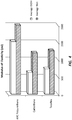
- Catheter burst strength was measured before and after direct and prolonged exposure to 70% alcohol for up to 46 hours. With reference to Fig. 2 , it was determined that the catheter burst pressure reached a minimum at approximately 2 hours following the ethanol lock and then the stiffness began to increase as the ethanol diluted through the walls of the catheter and into the surrounding bath filled with deionized water. Therefore, just 2 hours following the ethanol lock the catheter reached its approximate minimum burst strength.
- the burst strength was also monitored over the course of several days with the catheter being continuously locked with alcohol, and then relocked with alcohol just 2 hours prior to being burst. As shown Fig. 3 , the burst strength showed some degradation but then leveled out over 5 days of exposure.
- Example 3 Power injection of alcohol locked catheter samples.
- Aromatic polycarbonate urethanes listed as Test Samples # 1 -3 in Table 1 , were used to fabricate catheters according to the design shown in Fig. 1 using a catheter extrusion process.
- the catheters were alcohol locked and were cyclically kinked (representing arm bending at the antecubital fossa) over 200,000 times, and did not leak thereafter when exposed to a constant pressure of 45 psi (310 kPa).
- the extension legs were extruded from Shore 95A durometer aromatic polycarbonate urethane, with an outside diameter of 0.107" +/- 0.003" (0.212 ⁇ 0.008 cm) and a wall thickness of: 0.020" +/- 0.002" (0.051 ⁇ 0.005 cm).
- the catheter assembly, including the extension legs, was filled with 70% alcohol solution for 24 hours. While the catheter assembly was filled with alcohol the extension leg was clamped 1116 times. The catheter was pressurized to 250 psi (1723 kPa). The extension legs did not burst, and additionally no leaks were observed. Conversely, extension legs constructed from aromatic polyether polyurethane burst during the same test condition.
- Example 8 Power injection results of catheters after ethanol lock.
- Table 4 shows a comparison of power injection results of different catheters manufactured with various polyurethanes and the Test Sample # 3, following a 2 hour 70% ethanol lock. Power injection was performed with 37c visipaque 320 contrast (11.8 cP), using the flow rates as specified.
Landscapes
- Health & Medical Sciences (AREA)
- Life Sciences & Earth Sciences (AREA)
- Epidemiology (AREA)
- Animal Behavior & Ethology (AREA)
- General Health & Medical Sciences (AREA)
- Public Health (AREA)
- Veterinary Medicine (AREA)
- Chemical & Material Sciences (AREA)
- Chemical Kinetics & Catalysis (AREA)
- Optics & Photonics (AREA)
- Physics & Mathematics (AREA)
- Materials For Medical Uses (AREA)
- Urology & Nephrology (AREA)
- Biophysics (AREA)
- Pulmonology (AREA)
- Engineering & Computer Science (AREA)
- Anesthesiology (AREA)
- Biomedical Technology (AREA)
- Heart & Thoracic Surgery (AREA)
- Hematology (AREA)
Claims (12)
- Cathéter résistant à l'alcool, comprenant :une tige de cathéter avec au moins une lumière et comprenant un polycarbonate uréthane aromatique résistant à l'alcool ;un point de jonction en polycarbonate uréthane aromatique ; etau moins un tube d'extension en polycarbonate uréthane aromatique ;dans lequel le polycarbonate uréthane aromatique résistant à l'alcool est formé par la réaction d'au moins les suivants : un polyisocyanate, un polycarbonate polyol, et un extenseur de chaîne ; etdans lequel le polycarbonate polyol a un poids moléculaire moyen en poids situé entre 1 000 et 3 000 g/mol.
- Cathéter résistant à l'alcool selon la revendication 1 dans lequel le point de jonction comprend en outre une jonction moulée externe souple entourant une jonction interne dure.
- Cathéter résistant à l'alcool selon l'une quelconque des revendications 1 à 2, dans lequel le polycarbonate uréthane aromatique du tube d'extension est résistant à l'alcool.
- Cathéter résistant à l'alcool selon l'une quelconque des revendications 1 à 3, comprenant en outre au moins un connecteur Luer résistant à l'alcool comprenant un polycarbonate uréthane aromatique.
- Cathéter résistant à l'alcool selon l'une quelconque des revendications 1 à 4, dans lequel le tube d'extension comprend un tube d'extension à blocage d'alcool, serrable.
- Cathéter résistant à l'alcool selon l'une quelconque des revendications 1 à 5, dans lequel l'extenseur de chaîne est un diol ayant entre 4 et 20 atomes de carbone.
- Cathéter résistant à l'alcool selon l'une quelconque des revendications 1 à 6, dans lequel le polycarbonate polyol a la formule suivante :
HO-[-R1-O(CO)O-]n-H dans lequel R1 est un groupe alkyle ayant entre 4 à 20 unités de méthylène, de sorte que plus de 99 % des groupes R1 ont la même structure chimique ; et n est entre 1 et 35. - Cathéter résistant à l'alcool selon l'une quelconque des revendications 1 à 7, dans lequel le polycarbonate polyol est un diol comprenant des groupes carbonate alternés et des chaînes aliphatiques linéaires ayant de 4 à 20 unités de méthylène.
- Cathéter résistant à l'alcool selon l'une quelconque des revendications 1 à 8, dans lequel le polycarbonate uréthane aromatique comprend en outre un radio-opacifiant.
- Cathéter résistant à l'alcool selon l'une quelconque des revendications 1 à 9, dans lequel le polycarbonate polyol est présent dans une quantité allant de 30 % en poids à 70 % en poids du polycarbonate uréthane aromatique.
- Cathéter résistant à l'alcool selon l'une quelconque des revendications 1 à 10, dans lequel le polycarbonate polyol est un carbonate de polyhexanediol.
- Cathéter résistant à l'alcool selon l'une quelconque des revendications 1 à 11, dans lequel le polyisocyanate est un diisocyanate sélectionné parmi au moins l'un des suivants : le 4,4'-bisdiphényldiisocyanate de méthylène, le diisocyanate d'hexaméthylène, le diisocyanate de p-tétraméthylxylène, le diisocyanate de m-tétraméthylxylène, le diisocyanate de bitolylène, le diisocyanate de toluène, le diisocyanate de méthylène-bis cyclohexyle, le diisocyanate de p-phénylène, le diisocyanate d'isophorone, le diisocyanate de 1,5-naphtalène, et des isomères et/ou des mélanges de ceux-ci.
Priority Applications (1)
| Application Number | Priority Date | Filing Date | Title |
|---|---|---|---|
| EP19187273.8A EP3613448B1 (fr) | 2013-03-15 | 2014-03-13 | Cathéters résistant à l'alcool et leurs utilisations |
Applications Claiming Priority (2)
| Application Number | Priority Date | Filing Date | Title |
|---|---|---|---|
| US201361793116P | 2013-03-15 | 2013-03-15 | |
| PCT/US2014/026182 WO2014151657A1 (fr) | 2013-03-15 | 2014-03-13 | Cathéters résistant à l'alcool et leurs utilisations |
Related Child Applications (1)
| Application Number | Title | Priority Date | Filing Date |
|---|---|---|---|
| EP19187273.8A Division EP3613448B1 (fr) | 2013-03-15 | 2014-03-13 | Cathéters résistant à l'alcool et leurs utilisations |
Publications (3)
| Publication Number | Publication Date |
|---|---|
| EP2968682A1 EP2968682A1 (fr) | 2016-01-20 |
| EP2968682A4 EP2968682A4 (fr) | 2016-11-23 |
| EP2968682B1 true EP2968682B1 (fr) | 2019-08-14 |
Family
ID=51530845
Family Applications (2)
| Application Number | Title | Priority Date | Filing Date |
|---|---|---|---|
| EP14770578.4A Active EP2968682B1 (fr) | 2013-03-15 | 2014-03-13 | Cathéters résistant à l'alcool et leurs utilisations |
| EP19187273.8A Active EP3613448B1 (fr) | 2013-03-15 | 2014-03-13 | Cathéters résistant à l'alcool et leurs utilisations |
Family Applications After (1)
| Application Number | Title | Priority Date | Filing Date |
|---|---|---|---|
| EP19187273.8A Active EP3613448B1 (fr) | 2013-03-15 | 2014-03-13 | Cathéters résistant à l'alcool et leurs utilisations |
Country Status (4)
| Country | Link |
|---|---|
| US (1) | US20140276650A1 (fr) |
| EP (2) | EP2968682B1 (fr) |
| ES (1) | ES2754247T3 (fr) |
| WO (1) | WO2014151657A1 (fr) |
Families Citing this family (2)
| Publication number | Priority date | Publication date | Assignee | Title |
|---|---|---|---|---|
| US11746181B2 (en) * | 2017-11-17 | 2023-09-05 | Piper Access, Llc | Alcohol-resistant siliconized polycarbonate polyurethanes and medical devices incorporating the same |
| KR102756229B1 (ko) * | 2017-11-17 | 2025-01-21 | 파이퍼 액세스 엘엘씨 | 알코올-저항성 실리콘화 폴리카보네이트 폴리우레탄 및 이를 포함하는 의료 디바이스 |
Family Cites Families (10)
| Publication number | Priority date | Publication date | Assignee | Title |
|---|---|---|---|---|
| US5545708A (en) * | 1993-07-14 | 1996-08-13 | Becton, Dickinson And Company | Thermoplastic polyurethane method of making same and forming a medical article therefrom |
| WO1999024084A1 (fr) * | 1997-11-07 | 1999-05-20 | Salviac Limited | Produits polycarbonates urethanes biostables |
| US20110172644A1 (en) * | 2002-12-04 | 2011-07-14 | Zanoni Michael S | Multi layer coextruded catheter shaft |
| US7183531B2 (en) | 2004-03-31 | 2007-02-27 | Micron Technology, Inc. | Amplification with feedback capacitance for photodetector signals |
| US8100863B2 (en) * | 2005-03-04 | 2012-01-24 | C. R. Bard, Inc. | Catheter assembly, catheter systems including same, and method of manufacture |
| US7901395B2 (en) * | 2005-08-16 | 2011-03-08 | Borden Jonathan R | Catheter having staggered lumens and method |
| WO2007089761A2 (fr) * | 2006-01-31 | 2007-08-09 | Angiotech Biocoatings Corp. | Revêtements échogéniques lubrifiants |
| US20080051759A1 (en) | 2006-08-24 | 2008-02-28 | Boston Scientific Scimed, Inc. | Polycarbonate polyurethane venous access devices |
| US8157816B2 (en) * | 2007-08-31 | 2012-04-17 | Kimberly-Clark Worldwide, Inc. | Gastropexy kit |
| US20100256546A1 (en) | 2009-04-03 | 2010-10-07 | Davis Scott A | Polycarbonate Polyurethane Venous Access Devices Having Enhanced Strength |
-
2014
- 2014-03-13 ES ES14770578T patent/ES2754247T3/es active Active
- 2014-03-13 WO PCT/US2014/026182 patent/WO2014151657A1/fr not_active Ceased
- 2014-03-13 EP EP14770578.4A patent/EP2968682B1/fr active Active
- 2014-03-13 EP EP19187273.8A patent/EP3613448B1/fr active Active
- 2014-03-13 US US14/209,668 patent/US20140276650A1/en not_active Abandoned
Non-Patent Citations (1)
| Title |
|---|
| None * |
Also Published As
| Publication number | Publication date |
|---|---|
| EP3613448C0 (fr) | 2024-04-24 |
| EP3613448A1 (fr) | 2020-02-26 |
| US20140276650A1 (en) | 2014-09-18 |
| EP3613448B1 (fr) | 2024-04-24 |
| ES2754247T3 (es) | 2020-04-16 |
| EP2968682A4 (fr) | 2016-11-23 |
| WO2014151657A1 (fr) | 2014-09-25 |
| EP2968682A1 (fr) | 2016-01-20 |
Similar Documents
| Publication | Publication Date | Title |
|---|---|---|
| EP0595500B1 (fr) | Polyuréthane non-gonflable, ramollissant par contact avec un liquide | |
| AU661183B2 (en) | Thermoplastic polyurethane blends | |
| JP6854814B2 (ja) | 医療器具を形成するための熱可塑性ポリウレタン材料 | |
| JPH04221571A (ja) | 制御されたインビボ軟化性を備えたカテーテルチューブ | |
| EP3530296B1 (fr) | Cathéter à demeure | |
| CN111372964B (zh) | 医疗装置 | |
| CN114957597A (zh) | 聚氨酯型医疗制品 | |
| KR102569711B1 (ko) | 맞춤화 계수 응답을 이용하는 카테터 튜브 | |
| EP2068960B1 (fr) | Dispositif d'accès veineux en polycarbonate polyuréthane | |
| EP2968682B1 (fr) | Cathéters résistant à l'alcool et leurs utilisations | |
| US20230399454A1 (en) | Alcohol-resistant siliconized polycarbonate polyurethanes and medical devices incorporating the same | |
| EP2248542A2 (fr) | Dispositifs d'accès veineux en polyuréthane de polycarbonate dotés d'une plus grande résistance | |
| de Lutio | Which material and device? The choice of PICC | |
| US10513597B2 (en) | Medical device and plasticized nylon material | |
| JP2000210378A (ja) | 放射線不透過性の医療用移植部品 | |
| WO2025197955A1 (fr) | Matériau de moulage, article moulé, et cathéter |
Legal Events
| Date | Code | Title | Description |
|---|---|---|---|
| PUAI | Public reference made under article 153(3) epc to a published international application that has entered the european phase |
Free format text: ORIGINAL CODE: 0009012 |
|
| 17P | Request for examination filed |
Effective date: 20150515 |
|
| AK | Designated contracting states |
Kind code of ref document: A1 Designated state(s): AL AT BE BG CH CY CZ DE DK EE ES FI FR GB GR HR HU IE IS IT LI LT LU LV MC MK MT NL NO PL PT RO RS SE SI SK SM TR |
|
| AX | Request for extension of the european patent |
Extension state: BA ME |
|
| DAX | Request for extension of the european patent (deleted) | ||
| A4 | Supplementary search report drawn up and despatched |
Effective date: 20161020 |
|
| RIC1 | Information provided on ipc code assigned before grant |
Ipc: A61L 29/18 20060101ALI20161014BHEP Ipc: A61L 29/04 20060101AFI20161014BHEP Ipc: A61L 29/10 20060101ALI20161014BHEP |
|
| GRAP | Despatch of communication of intention to grant a patent |
Free format text: ORIGINAL CODE: EPIDOSNIGR1 |
|
| STAA | Information on the status of an ep patent application or granted ep patent |
Free format text: STATUS: GRANT OF PATENT IS INTENDED |
|
| INTG | Intention to grant announced |
Effective date: 20190227 |
|
| GRAS | Grant fee paid |
Free format text: ORIGINAL CODE: EPIDOSNIGR3 |
|
| GRAA | (expected) grant |
Free format text: ORIGINAL CODE: 0009210 |
|
| STAA | Information on the status of an ep patent application or granted ep patent |
Free format text: STATUS: THE PATENT HAS BEEN GRANTED |
|
| AK | Designated contracting states |
Kind code of ref document: B1 Designated state(s): AL AT BE BG CH CY CZ DE DK EE ES FI FR GB GR HR HU IE IS IT LI LT LU LV MC MK MT NL NO PL PT RO RS SE SI SK SM TR |
|
| REG | Reference to a national code |
Ref country code: GB Ref legal event code: FG4D |
|
| REG | Reference to a national code |
Ref country code: CH Ref legal event code: EP Ref country code: AT Ref legal event code: REF Ref document number: 1166238 Country of ref document: AT Kind code of ref document: T Effective date: 20190815 |
|
| REG | Reference to a national code |
Ref country code: IE Ref legal event code: FG4D |
|
| REG | Reference to a national code |
Ref country code: DE Ref legal event code: R096 Ref document number: 602014051781 Country of ref document: DE |
|
| REG | Reference to a national code |
Ref country code: NL Ref legal event code: MP Effective date: 20190814 |
|
| REG | Reference to a national code |
Ref country code: LT Ref legal event code: MG4D |
|
| PG25 | Lapsed in a contracting state [announced via postgrant information from national office to epo] |
Ref country code: FI Free format text: LAPSE BECAUSE OF FAILURE TO SUBMIT A TRANSLATION OF THE DESCRIPTION OR TO PAY THE FEE WITHIN THE PRESCRIBED TIME-LIMIT Effective date: 20190814 Ref country code: SE Free format text: LAPSE BECAUSE OF FAILURE TO SUBMIT A TRANSLATION OF THE DESCRIPTION OR TO PAY THE FEE WITHIN THE PRESCRIBED TIME-LIMIT Effective date: 20190814 Ref country code: BG Free format text: LAPSE BECAUSE OF FAILURE TO SUBMIT A TRANSLATION OF THE DESCRIPTION OR TO PAY THE FEE WITHIN THE PRESCRIBED TIME-LIMIT Effective date: 20191114 Ref country code: NO Free format text: LAPSE BECAUSE OF FAILURE TO SUBMIT A TRANSLATION OF THE DESCRIPTION OR TO PAY THE FEE WITHIN THE PRESCRIBED TIME-LIMIT Effective date: 20191114 Ref country code: NL Free format text: LAPSE BECAUSE OF FAILURE TO SUBMIT A TRANSLATION OF THE DESCRIPTION OR TO PAY THE FEE WITHIN THE PRESCRIBED TIME-LIMIT Effective date: 20190814 Ref country code: LT Free format text: LAPSE BECAUSE OF FAILURE TO SUBMIT A TRANSLATION OF THE DESCRIPTION OR TO PAY THE FEE WITHIN THE PRESCRIBED TIME-LIMIT Effective date: 20190814 Ref country code: PT Free format text: LAPSE BECAUSE OF FAILURE TO SUBMIT A TRANSLATION OF THE DESCRIPTION OR TO PAY THE FEE WITHIN THE PRESCRIBED TIME-LIMIT Effective date: 20191216 Ref country code: HR Free format text: LAPSE BECAUSE OF FAILURE TO SUBMIT A TRANSLATION OF THE DESCRIPTION OR TO PAY THE FEE WITHIN THE PRESCRIBED TIME-LIMIT Effective date: 20190814 |
|
| REG | Reference to a national code |
Ref country code: AT Ref legal event code: MK05 Ref document number: 1166238 Country of ref document: AT Kind code of ref document: T Effective date: 20190814 |
|
| PG25 | Lapsed in a contracting state [announced via postgrant information from national office to epo] |
Ref country code: RS Free format text: LAPSE BECAUSE OF FAILURE TO SUBMIT A TRANSLATION OF THE DESCRIPTION OR TO PAY THE FEE WITHIN THE PRESCRIBED TIME-LIMIT Effective date: 20190814 Ref country code: IS Free format text: LAPSE BECAUSE OF FAILURE TO SUBMIT A TRANSLATION OF THE DESCRIPTION OR TO PAY THE FEE WITHIN THE PRESCRIBED TIME-LIMIT Effective date: 20191214 Ref country code: GR Free format text: LAPSE BECAUSE OF FAILURE TO SUBMIT A TRANSLATION OF THE DESCRIPTION OR TO PAY THE FEE WITHIN THE PRESCRIBED TIME-LIMIT Effective date: 20191115 Ref country code: LV Free format text: LAPSE BECAUSE OF FAILURE TO SUBMIT A TRANSLATION OF THE DESCRIPTION OR TO PAY THE FEE WITHIN THE PRESCRIBED TIME-LIMIT Effective date: 20190814 Ref country code: AL Free format text: LAPSE BECAUSE OF FAILURE TO SUBMIT A TRANSLATION OF THE DESCRIPTION OR TO PAY THE FEE WITHIN THE PRESCRIBED TIME-LIMIT Effective date: 20190814 |
|
| PG25 | Lapsed in a contracting state [announced via postgrant information from national office to epo] |
Ref country code: TR Free format text: LAPSE BECAUSE OF FAILURE TO SUBMIT A TRANSLATION OF THE DESCRIPTION OR TO PAY THE FEE WITHIN THE PRESCRIBED TIME-LIMIT Effective date: 20190814 |
|
| REG | Reference to a national code |
Ref country code: ES Ref legal event code: FG2A Ref document number: 2754247 Country of ref document: ES Kind code of ref document: T3 Effective date: 20200416 |
|
| PG25 | Lapsed in a contracting state [announced via postgrant information from national office to epo] |
Ref country code: EE Free format text: LAPSE BECAUSE OF FAILURE TO SUBMIT A TRANSLATION OF THE DESCRIPTION OR TO PAY THE FEE WITHIN THE PRESCRIBED TIME-LIMIT Effective date: 20190814 Ref country code: DK Free format text: LAPSE BECAUSE OF FAILURE TO SUBMIT A TRANSLATION OF THE DESCRIPTION OR TO PAY THE FEE WITHIN THE PRESCRIBED TIME-LIMIT Effective date: 20190814 Ref country code: AT Free format text: LAPSE BECAUSE OF FAILURE TO SUBMIT A TRANSLATION OF THE DESCRIPTION OR TO PAY THE FEE WITHIN THE PRESCRIBED TIME-LIMIT Effective date: 20190814 Ref country code: PL Free format text: LAPSE BECAUSE OF FAILURE TO SUBMIT A TRANSLATION OF THE DESCRIPTION OR TO PAY THE FEE WITHIN THE PRESCRIBED TIME-LIMIT Effective date: 20190814 Ref country code: RO Free format text: LAPSE BECAUSE OF FAILURE TO SUBMIT A TRANSLATION OF THE DESCRIPTION OR TO PAY THE FEE WITHIN THE PRESCRIBED TIME-LIMIT Effective date: 20190814 |
|
| PG25 | Lapsed in a contracting state [announced via postgrant information from national office to epo] |
Ref country code: CZ Free format text: LAPSE BECAUSE OF FAILURE TO SUBMIT A TRANSLATION OF THE DESCRIPTION OR TO PAY THE FEE WITHIN THE PRESCRIBED TIME-LIMIT Effective date: 20190814 Ref country code: SK Free format text: LAPSE BECAUSE OF FAILURE TO SUBMIT A TRANSLATION OF THE DESCRIPTION OR TO PAY THE FEE WITHIN THE PRESCRIBED TIME-LIMIT Effective date: 20190814 Ref country code: IS Free format text: LAPSE BECAUSE OF FAILURE TO SUBMIT A TRANSLATION OF THE DESCRIPTION OR TO PAY THE FEE WITHIN THE PRESCRIBED TIME-LIMIT Effective date: 20200224 Ref country code: SM Free format text: LAPSE BECAUSE OF FAILURE TO SUBMIT A TRANSLATION OF THE DESCRIPTION OR TO PAY THE FEE WITHIN THE PRESCRIBED TIME-LIMIT Effective date: 20190814 |
|
| REG | Reference to a national code |
Ref country code: DE Ref legal event code: R097 Ref document number: 602014051781 Country of ref document: DE |
|
| PLBE | No opposition filed within time limit |
Free format text: ORIGINAL CODE: 0009261 |
|
| STAA | Information on the status of an ep patent application or granted ep patent |
Free format text: STATUS: NO OPPOSITION FILED WITHIN TIME LIMIT |
|
| PG2D | Information on lapse in contracting state deleted |
Ref country code: IS |
|
| 26N | No opposition filed |
Effective date: 20200603 |
|
| PG25 | Lapsed in a contracting state [announced via postgrant information from national office to epo] |
Ref country code: SI Free format text: LAPSE BECAUSE OF FAILURE TO SUBMIT A TRANSLATION OF THE DESCRIPTION OR TO PAY THE FEE WITHIN THE PRESCRIBED TIME-LIMIT Effective date: 20190814 |
|
| PG25 | Lapsed in a contracting state [announced via postgrant information from national office to epo] |
Ref country code: MC Free format text: LAPSE BECAUSE OF FAILURE TO SUBMIT A TRANSLATION OF THE DESCRIPTION OR TO PAY THE FEE WITHIN THE PRESCRIBED TIME-LIMIT Effective date: 20190814 |
|
| REG | Reference to a national code |
Ref country code: CH Ref legal event code: PL |
|
| REG | Reference to a national code |
Ref country code: BE Ref legal event code: MM Effective date: 20200331 |
|
| PG25 | Lapsed in a contracting state [announced via postgrant information from national office to epo] |
Ref country code: LU Free format text: LAPSE BECAUSE OF NON-PAYMENT OF DUE FEES Effective date: 20200313 |
|
| PG25 | Lapsed in a contracting state [announced via postgrant information from national office to epo] |
Ref country code: IE Free format text: LAPSE BECAUSE OF NON-PAYMENT OF DUE FEES Effective date: 20200313 Ref country code: CH Free format text: LAPSE BECAUSE OF NON-PAYMENT OF DUE FEES Effective date: 20200331 Ref country code: LI Free format text: LAPSE BECAUSE OF NON-PAYMENT OF DUE FEES Effective date: 20200331 |
|
| PG25 | Lapsed in a contracting state [announced via postgrant information from national office to epo] |
Ref country code: BE Free format text: LAPSE BECAUSE OF NON-PAYMENT OF DUE FEES Effective date: 20200331 |
|
| PG25 | Lapsed in a contracting state [announced via postgrant information from national office to epo] |
Ref country code: MT Free format text: LAPSE BECAUSE OF FAILURE TO SUBMIT A TRANSLATION OF THE DESCRIPTION OR TO PAY THE FEE WITHIN THE PRESCRIBED TIME-LIMIT Effective date: 20190814 Ref country code: CY Free format text: LAPSE BECAUSE OF FAILURE TO SUBMIT A TRANSLATION OF THE DESCRIPTION OR TO PAY THE FEE WITHIN THE PRESCRIBED TIME-LIMIT Effective date: 20190814 |
|
| PG25 | Lapsed in a contracting state [announced via postgrant information from national office to epo] |
Ref country code: MK Free format text: LAPSE BECAUSE OF FAILURE TO SUBMIT A TRANSLATION OF THE DESCRIPTION OR TO PAY THE FEE WITHIN THE PRESCRIBED TIME-LIMIT Effective date: 20190814 |
|
| PGFP | Annual fee paid to national office [announced via postgrant information from national office to epo] |
Ref country code: ES Payment date: 20250401 Year of fee payment: 12 |
|
| PGFP | Annual fee paid to national office [announced via postgrant information from national office to epo] |
Ref country code: GB Payment date: 20260220 Year of fee payment: 13 |
|
| PGFP | Annual fee paid to national office [announced via postgrant information from national office to epo] |
Ref country code: DE Payment date: 20260219 Year of fee payment: 13 |
|
| PGFP | Annual fee paid to national office [announced via postgrant information from national office to epo] |
Ref country code: IT Payment date: 20260219 Year of fee payment: 13 |
|
| PGFP | Annual fee paid to national office [announced via postgrant information from national office to epo] |
Ref country code: FR Payment date: 20260219 Year of fee payment: 13 |