EP2969667B1 - Verfahren zum bereitstellen eines fahrzeuges und entsprechendes system zum bereitstellen - Google Patents
Verfahren zum bereitstellen eines fahrzeuges und entsprechendes system zum bereitstellen Download PDFInfo
- Publication number
- EP2969667B1 EP2969667B1 EP14720171.9A EP14720171A EP2969667B1 EP 2969667 B1 EP2969667 B1 EP 2969667B1 EP 14720171 A EP14720171 A EP 14720171A EP 2969667 B1 EP2969667 B1 EP 2969667B1
- Authority
- EP
- European Patent Office
- Prior art keywords
- vehicle
- remote
- user
- server
- message
- Prior art date
- Legal status (The legal status is an assumption and is not a legal conclusion. Google has not performed a legal analysis and makes no representation as to the accuracy of the status listed.)
- Active
Links
Images


Classifications
-
- B—PERFORMING OPERATIONS; TRANSPORTING
- B60—VEHICLES IN GENERAL
- B60R—VEHICLES, VEHICLE FITTINGS, OR VEHICLE PARTS, NOT OTHERWISE PROVIDED FOR
- B60R25/00—Fittings or systems for preventing or indicating unauthorised use or theft of vehicles
- B60R25/01—Fittings or systems for preventing or indicating unauthorised use or theft of vehicles operating on vehicle systems or fittings, e.g. on doors, seats or windscreens
- B60R25/04—Fittings or systems for preventing or indicating unauthorised use or theft of vehicles operating on vehicle systems or fittings, e.g. on doors, seats or windscreens operating on the propulsion system, e.g. engine or drive motor
-
- B—PERFORMING OPERATIONS; TRANSPORTING
- B60—VEHICLES IN GENERAL
- B60R—VEHICLES, VEHICLE FITTINGS, OR VEHICLE PARTS, NOT OTHERWISE PROVIDED FOR
- B60R25/00—Fittings or systems for preventing or indicating unauthorised use or theft of vehicles
- B60R25/20—Means to switch the anti-theft system on or off
- B60R25/2018—Central base unlocks or authorises unlocking
-
- B—PERFORMING OPERATIONS; TRANSPORTING
- B60—VEHICLES IN GENERAL
- B60R—VEHICLES, VEHICLE FITTINGS, OR VEHICLE PARTS, NOT OTHERWISE PROVIDED FOR
- B60R25/00—Fittings or systems for preventing or indicating unauthorised use or theft of vehicles
- B60R25/20—Means to switch the anti-theft system on or off
- B60R25/209—Remote starting of engine
-
- H—ELECTRICITY
- H04—ELECTRIC COMMUNICATION TECHNIQUE
- H04L—TRANSMISSION OF DIGITAL INFORMATION, e.g. TELEGRAPHIC COMMUNICATION
- H04L63/00—Network architectures or network communication protocols for network security
- H04L63/08—Network architectures or network communication protocols for network security for authentication of entities
Definitions
- the present invention relates generally to the field of the automobile, and relates more specifically to a method of providing a vehicle to a user, particularly in the context of a car-sharing service or vehicles rental.
- a user wishing to reserve a vehicle must retrieve the vehicle key or badge from a service manager renting or sharing the vehicle, which is binding on the vehicle. user and manager.
- the key or the badge is the usual identifier of the user for starting a vehicle key or a vehicle without a key.
- the latter type of vehicle uses a badge that is identified by a vehicle calculator to allow the vehicle to start, which is then performed by pressing a start button.
- these devices are often visible from the outside and easily bypassed to allow the vehicle to start. This is the case for example when such equipment contains the vehicle badge or when it includes a simple open relay to prevent the vehicle from starting with the ignition key before the identification of the user.
- the patent application WO2008044087 discloses a system for sharing a vehicle equipped with a communication module with a remote server.
- the communication module authenticates the user who requests access to the vehicle with a portable device, comparing a generated code with the user data previously sent by the remote server, and the user data received from the device of the user.
- the unlocking of the vehicle is performed by the vehicle control unit after verifying the identity of the user and his access rights.
- the start is made by the vehicle when it detects the presence of the driver in the cabin.
- the French patent application FR1259499 describes a car-sharing system in which a user unlocks the doors of a car-sharing vehicle remotely, by calling a remote server from his mobile phone.
- This unlocking command allows, once the ignition key is set, (in the case of a keyed vehicle) or after the start authorization has been obtained (in the case of a vehicle without a key), to start the vehicle using the key or pressing the start button for keyless vehicles.
- the remote server must both identify the user and the car-sharing vehicle. This system therefore has the drawbacks of not ensuring the safety of the vehicle between the time of unlocking the doors and the start, and to require integration into a vehicle management server, often specific to a vehicle manufacturer, the car-sharing service.
- One of the aims of the invention is to overcome at least some of the disadvantages of the prior art by providing a method and system for providing a vehicle without key delivery, which provide a good level of security for the vehicle.
- vehicle owner and do not require a specific box embedded for car-sharing sharing in addition to the standard telematics box TCU (according to the English "Telematic Control Unit") developed for standard communicating vehicles.
- remote applied to a server means remote from the vehicle and the user
- unlocking applies to the electric unlocking of a vehicle door
- the reservation of the vehicle in car-sharing is done online for example via a mobile phone or a fixed terminal, and without specific equipment for car-sharing in the vehicle, the latter having no need to intervene in the identification of the user.
- more and more recent vehicles are equipped with a telecommunication box making it possible to trace to a remote server data relating to the vehicle, but also to this remote server to activate certain remote vehicle functions.
- the delivery method according to the invention uses service bricks already existing in vehicles not initially intended for car-sharing, which facilitates the implementation of this method by particular users.
- the unlocking of the doors of the vehicle at a distance does not allow the vehicle to start. Indeed the start of the vehicle requires the receipt by it of another message that the message allowing this unlocking, also sent remotely to the vehicle, this other message being said message authorizing the vehicle start. Thus the user is assured that the unlocking of the doors of the vehicle remotely, if it is not made near the vehicle, do not put it at the disposal of another person who would monopolize. Likewise, assuming that the ignition key or the vehicle badge is in the vehicle's glove box when it is left in car-sharing, the fact for a vehicle third party to seize this key or this badge by break-in does not allow it to start the vehicle.
- De-protection means in this application remote unlocking of the control system, allowing the vehicle to start.
- the interface between the remote user server and the remote vehicle management server allows the latter remote server to belong for example to the vehicle manufacturer to put in car-sharing, and the remote user server to be a developed web server. by the vehicle owner (individual or service operator).
- the vehicle owner individual or service operator.
- said remote vehicle management server sends said message authorizing the starting of said vehicle only when said remote user server has received from said user a value of a variable parameter relating to said vehicle, and in that said value corresponds to a value previously recorded by said remote vehicle management server or by said remote user server.
- the start-up authorization is given by the control system of a vehicle engine only when the user provides the remote user server with a value relating to the vehicle such as the mileage displayed on the vehicle's counter, or the level vehicle fuel, or the level of charge of a traction battery of the vehicle.
- a value relating to the vehicle such as the mileage displayed on the vehicle's counter, or the level vehicle fuel, or the level of charge of a traction battery of the vehicle.
- said control system of said vehicle authorizes the starting of said vehicle only after identification of a key or a badge of said vehicle, and reception by said vehicle of said messages allowing the unlocking of at least one door and authorizing the starting of said vehicle.
- said remote vehicle management server sends said message authorizing the starting of said vehicle only after detection of a manual opening of a door said vehicle.
- This feature makes it possible to ensure that the user has been able to retrieve the key or the badge of the vehicle before authorizing the vehicle to start, which makes it possible to secure the procedure for making the vehicle available.
- This detection can be performed for example by the vehicle that communicates with the remote server via its standard telematic box.
- the control system allowing the start of the vehicle is contained in a computer that checks multiple start-up criteria, including the successful identification of the ignition key or vehicle badge, the safe operation of the vehicle's security calculators, etc.
- the key or the badge is made available to the user of the vehicle to be shared for example in the glove box of the vehicle. Thanks to the addition in the start-up criteria, of the reception of the two independent messages allowing the unlocking then the protection of the vehicle, sent by the remote server of management of vehicles, one reduces the risks of piracy of the system by emulation of one of the starting criteria.
- the remote vehicle management server can re-protect the vehicle from a distance, after verification by the remote user server of the good state of the vehicle.
- the user does not necessarily use the same communication network as the standard telematic box of the vehicle, and it may be that he requests the release of the vehicle by telephone in a place where the vehicle is not not able to communicate with the remote vehicle management server.
- said method comprises a preliminary step of reservation of said vehicle by said user, during which said user provides said remote user server with a value allowing to delay of a predetermined duration the sending of said message allowing the unlocking of at least one door of the vehicle.
- the step of sending a message allowing the unlocking of at least one door of the vehicle takes place only after a step determining the distance between the user and said vehicle, and if the distance determined in said determining step is less than a predetermined threshold.
- This feature reduces the delay between the provision of the vehicle to the user and the unlocking of the vehicle, to limit the risk of theft of the vehicle or inside the vehicle before taking control of the vehicle by the vehicle. user.
- the invention finally relates to a computer program comprising instructions for implementing the method of providing a vehicle according to the invention, when it is executed on one or more processors.
- the delivery system of a vehicle according to the invention and the computer program according to the invention have advantages similar to those of the method of providing a vehicle according to the invention.
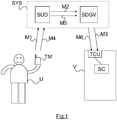
- a system SYS of availability of a vehicle of the invention includes two servers, a remote user SOUTH server dedicated to the management of users of the invention, and a vehicle management SDGV remote server, dedicated to remote management of vehicles.
- the server SUD comprises means for identifying and authenticating users such as the user U, as well as means for processing requests sent by these users.
- the SUD server is for example a web server developed by the owner of a vehicle V (which may be an individual or a service company), or a server of a car-sharing or car rental company. It comprises means for managing reservation of a vehicle or a fleet of vehicles, means of charging users, as well as means of communication with one or more servers such as the SDGV server, which is for example a server a vehicle manufacturer, capable of communicating remotely with on-board communication devices in the vehicles that it manages remotely, such as a TCU communication device of the vehicle V.
- the SYS system for providing a vehicle allows the user U to book online, for example through a mobile terminal TM, the vehicle V rented or car-sharing.
- the mobile terminal TM is for example a telephone with a GSM chip (according to the English "Global System for Mobile”) or UMTS (after the English “Universal Mobile Telecommunications System”), or a computer portable or personal assistant equipped with Wi-Fi connection means using the IEEE 802.11 standard. It allows the user U to use a wireless communication network to exchange data with the SUD server via a web interface. Alternatively, the SUD server has voice recognition means for communicating with the user U via an analog and / or digital telephone connection. In another variant, the user calls an agent of a car-sharing or rental service that informally enters the user requests in the server SUD.
- the vehicle V includes a communication TCU device for sending data to the SDGV server, and receiving data from the SDGV server.
- the data sent by the TCU device include the location of the vehicle V, its fuel level if it comprises a heat engine and / or the level of charge of a traction battery if it comprises an electric motor, its mileage, warning messages, the date of a future interview to be made, etc.
- the TCU communication device comprises a GSM or UMTS chip for sending short messages to the SDGV server, which comprises a communication interface with the telephone network.
- USSD Unstructured Supplementary Service Data
- a method of providing the vehicle V according to the invention is represented in the form of an algorithm comprising steps E1 to E11.
- Step E1 is the receipt of an M1 message by the remote user server SUD.
- This message M1 is a user request sent by the mobile terminal TM, requesting the provision of the vehicle V reserved for example during a previous exchange between the user U and the remote user server SUD.
- This user request optionally includes a delay time chosen by the user U to delay the unlocking of the doors of the vehicle V of this delay time after receipt of the message M1 by the server SUD. This duration is for example chosen by the user U on a graphical interface of his mobile terminal TM.
- the user U chooses for example a unlocking doors 10, 15, 20, or 30 seconds, or a minute to a few minutes after sending the message M1, to allow him to join the vehicle V before the unlocking.
- the next step E2 is the processing of the user request received in the message M1, by the remote user server SUD.
- the remote server SUD identifies and authenticates the user U by his telephone number and / or by a login and password of connection to a car-sharing or rental site hosted by the remote server SUD .
- the remote server SUD checks the availability and condition of the vehicle V before allowing the user U to use it.
- the user possibly receives in this step E2 a confirmation of authorization to use the vehicle. V from the SUD remote user server.
- the next step E3 is the sending of an M2 message by the remote user server SUD to the remote vehicle management server SDGV, possibly at the expiry of the delay time received in step E1 if such a duration of delay was contained in the message M1.
- This M2 message is an unlock request to unlock the doors of the vehicle V.
- This request includes the VIN identifier of the vehicle V but does not include an identifier of the user U, the latter being managed only by the user server remote SOUTH.
- the message M2 sent by the remote user server SUD to the remote vehicle management server SDGV contains the delay time possibly received in the message M1, and it is therefore the remote vehicle management server SDGV that will manage the delay. sending an M3 message in step E4, instead that this timer is managed by the remote user server SUD.
- the next step E4 is the sending of a message M3 by the remote vehicle management server SDGV to the communication device TCU of the vehicle V, this message M3 being a request for unlocking the doors of the vehicle V.
- This step is possibly conditioned by the verification that the user U is within 500 meters of the vehicle V. Other distance thresholds can of course be used.
- the remote user server SUD locates the mobile terminal TM of the user U, for example using a location server of a telephone operator, and sends the position of the user U in the message M3. It should be noted that the remote vehicle management server SDGV knows the position of the vehicle V thanks to the data sent by the communication device TCU of the vehicle V.
- the verification that the user U is within 500 meters of the vehicle V is performed by the remote user server SUD, the position of the vehicle V then being sent by the remote SDGV vehicle management server to the remote user server SUD.
- This geolocation of the user U and the vehicle V is of course optional because it requires good positioning accuracy, the ideal being that the user U is equipped with a mobile phone with GPS (according to English Integrated Global Positionning System).
- GPS according to English Integrated Global Positionning System
- the next step E5 is the unlocking of the vehicle V, that is to say in practice the electric unlocking of all its openings. This step is performed by the vehicle V itself upon receipt of the message M3.
- the vehicle preferably inhibits the visual and / or audible signaling of door unlocking usually implemented when this unlocking is triggered by the ignition key or the V vehicle badge.
- the next step E6 is sending an M4 message from the mobile terminal TM to the remote user server SUD.
- This message M4 has the value of the mileage of the vehicle V displayed on its dashboard, the user having entered the mobile terminal TM and sent via an appropriate graphical interface asking him to enter this data.
- one or other data relating to the vehicle V may be requested instead of the mileage or in addition to it, by the remote user server SUD, or by a software application hosted in the mobile terminal TM, at the user.
- These data make it possible to ensure that the user is in the vehicle or very close to him when the start authorization will be given. They are therefore preferably variable, such as the fuel level of the vehicle V or its load level, but are optionally fixed, such as a license plate number or a bar code specific to the vehicle.
- a fixed data relating to the vehicle however has the disadvantage of being able to be informed at a distance from the vehicle and in advance, since it does not vary from one use to another of the same vehicle. Random data displayed by a multimedia screen of the vehicle is therefore more secure vehicle data since this value can be generated at each provision of the vehicle V by the SDGV server.
- this embodiment of the invention one chooses as value to be entered by the user U to this step E6, the value of the mileage of the vehicle. This ensures that the user U has manually opened the vehicle, retrieved the key or the vehicle badge to turn on the vehicle dashboard, a necessary condition to obtain this mileage value. Thus we are sure to allow the start then only when the user U has found the vehicle and has installed.
- the next step E7 is sending an M5 message from the remote user server SUD to the remote vehicle management server SDGV.
- This message M5 is a de-protection message that is to say a request "unprotect" giving authorization to start the vehicle V.
- This request includes the VIN identifier of the vehicle V and the mileage received in the message M4 , but does not include an identifier of the user U, it being managed only by the remote user server SUD.
- the next step E8 is the verification by the remote SDGV vehicle management server of the validity of the mileage received in step E7, by comparing this mileage to the last mileage value sent to the SDGV server by the communication device TCU. This step validates the fact that the user U has manually opened a door of the vehicle V, since the mileage is available only after ignition of the dashboard.
- step E8 the remote server SDGV finds that the value of the mileage received in the message M5 is not valid, or if the remote server SDGV receives a message from the communication device TCU the notifier that the vehicle V s is recondamné, then we go to step E11, otherwise we go to step E9. Indeed, it should be noted that the vehicle V automatically recondamne the doors of the vehicle when no manual opening of the doors is detected after two minutes after an electric unlocking only.
- the step E11 consists of new exchanges between the user U and the remote server SUD, after a failure of the transition to step E9 that is to say that the remote server management vehicle SDGV has not could send message authorizing the vehicle to start the communication device TCU.
- This exchange consists for the user U to request the provision of the vehicle V via a new request to the remote user server SUD, which will result in the sending of new messages M2 to M5 and a new verification of the mileage of the vehicle according to the steps E3 to E8 which will be re-executed.
- Step E9 is the sending of a message M6 by the remote vehicle management server SDGV to the communication device TCU of the vehicle V, this message M6 being a start authorization of the vehicle V.
- the next step E10 is the start authorization of the vehicle V, given by the control system SC to at least one of the engines of the vehicle V.
- This step E10 takes place after reception of the messages M3 and M6 by the device TCU of communication, and after identification / authentication of the ignition key or the vehicle badge V, and after verification of other starting criteria.
- the communication TCU device receives the message M6, it transmits to the control system SC this start authorization given by the remote server SDGV vehicle management.
- the message exchanges between the user U and the remote user server SUD, between the remote user server SUD and the remote vehicle management server SDGV, between the remote vehicle management server SDGV and the communication device TCU and between the TCU communication device and the control system SC are encrypted.
- the entities of this exchange chain identify and authenticate each other before each message exchange.
- the control system SC authorizes the starting of the vehicle V only after authentication of the communication device TCU, this device having itself previously authenticated the remote server for managing vehicles.
- These authentications use for example conventional symmetric or asymmetric encryption systems with public key or private key.
- a user vehicle U is used for a phase of use of the vehicle V, which is then able to start the vehicle V and use it.
- the remote vehicle management server SDGV can communicate with the communication device TCU, that is to say that the communication network used by the communication device TCU is available at the vehicle V.
- this communication network is not necessarily the same as that used by the mobile terminal TM to communicate with the remote user server SUD, and secondly the user U is guided in the release procedure of the vehicle by an intuitive interface usable on its mobile terminal TM.
- This interface is the interface of the rental or auto-sharing web service implemented in the user server remote SUD, but the implementation of this interface can be distributed between the mobile terminal TM and the remote user server SUD.
- the user U looks at a multimedia interface of the vehicle V, if a network availability indicator is present. If this indicator is present, it informs the remote user server SUD via its mobile terminal TM. If this indicator is not present, the user U must move the vehicle V to a place where the communication network used by the communication device TCU is available at the level of the vehicle V.
- the remote user server SUD upon reception of a release request sent by the user U, the remote user server SUD sends a request to the SDGV server which sends a test message to the communication device TCU. If the TCU communication device responds to the SDGV server, then it informs the remote user server SUD and proceed to the next step E13, otherwise the remote user server SUD asks the user U to move the vehicle V in a place where the network is available for the communication device TCU, and repeating step E12.
- the step E13 is a vehicle inventory step, performed by the user U.
- the user U uses a graphical interface on his mobile terminal TM, which allows him to easily fill a list of points to be confirmed or to be completed, such as the presence of vehicle documents in the glove compartment, the good condition of the vehicle, a parking space number of the vehicle, etc.
- the graphical interface also allows him to insert photos of damaged parts of the vehicle, and to point to a three-dimensional model of the vehicle, a damaged area of the vehicle.
- the conditions necessary to finalize the inventory of the vehicle V comprise in a variant, the new value of the mileage of the vehicle V.
- the verification of the value of the mileage provided by the user to step E6 in the message M4 is not performed by the remote server SDGV vehicle management but by the remote user server SUD.
- the steps E8 and E7 are therefore reversed since it is the remote user server SUD that validates the fact that the user has manually opened at least one of the doors of the vehicle V.
- the next step E14 is the protection of the vehicle V at a distance.
- the remote vehicle management server SDGV receives a "protect" request from the remote user server SUD, asking it to remotely protect the vehicle V.
- the remote vehicle management server SDGV sends to the communication device TCU a message inhibiting the starting of the vehicle V, that is to say that the starting of the vehicle V will require the reception of a new authorization message as the message M6 in step E9.
- the next step E15 is the driving of the vehicle V at a distance.
- the remote vehicle management server SDGV receives a "lock" request from the remote user server SUD, asking it to remotely condemn the vehicle V.
- the reception of this "lock" request is not necessary. for the remote vehicle management server SDGV to perform step E15 for remote driving of the vehicle V.
- the remote vehicle management server SDGV then verifies that the key or the badge of the vehicle V are well in the passenger compartment, interrogating the TCU communication device. It communicates with a computer of the vehicle, itself connected to a detector of a badge, or to a key detector. It should be noted that some vehicles are not equipped with key sensors. In this case the verification of the presence of the key in the passenger compartment is managed by the remote user server SUD which performs this verification by querying the user U, for example before sending the request "lock".
- step E15 the presence of the key or the badge in the cockpit is confirmed by the SDGV remote vehicle management server or the remote user server SUD, then the remote vehicle management server SDGV sends a message to the device. TCU communication, asking him to condemn the vehicle V. If the doors of the vehicle have been manually closed, the vehicle V locks its doors and go to step E16. If instead the presence of the key or the badge in the passenger compartment is invalidated, or if a door is closed incorrectly, the user U is informed via his mobile terminal TM that the release of the vehicle is not possible due to the absence of a key in the passenger compartment, or a poorly closed door, and the step E15 is repeated.
- Step E16 is the release of the vehicle, which is conditioned to the smooth running of steps E12 to E15.
- the SUD server stops charging the car-sharing or rental service for user U.
Landscapes
- Engineering & Computer Science (AREA)
- Mechanical Engineering (AREA)
- Computer Hardware Design (AREA)
- Computer Security & Cryptography (AREA)
- Computing Systems (AREA)
- General Engineering & Computer Science (AREA)
- Computer Networks & Wireless Communication (AREA)
- Signal Processing (AREA)
- Lock And Its Accessories (AREA)
- Management, Administration, Business Operations System, And Electronic Commerce (AREA)
Claims (10)
- Verfahren zum Bereitstellen eines Fahrzeugs (V), das einen Schritt (E3, E4) des Sendens einer Nachricht (M2, M3), welche die Entriegelung wenigstens einer Tür des Fahrzeugs (V) gestattet, von einem entfernten Fahrzeugverwaltungsserver (SDGV) aus im Anschluss an eine Benutzeranforderung (M1) umfasst, wobei diese Benutzeranforderung Gegenstand einer Identifikation des Benutzers (U) und einer Autorisierung der Benutzung des Fahrzeugs (V) durch den Benutzer (U) war, wobei das Verfahren außerdem einen Schritt (E7, E9) des Sendens einer von der die Entriegelung gestattenden Nachricht (M2, M3) unabhängigen Nachricht (M5, M6), welche das Starten des Fahrzeugs (V) bei einem Steuerungssystem (SC) des Fahrzeugs (V) autorisiert, von dem entfernten Fahrzeugverwaltungsserver (SDGV) aus umfasst,
wobei das Verfahren dadurch gekennzeichnet ist, dass die Identifikation und die Autorisierung der Benutzung durch einen entfernten Benutzerserver (SUD) erfolgen, der von dem entfernten Fahrzeugverwaltungsserver (SDGV) verschieden ist,- wobei die Nachricht (M3), welche die Entriegelung wenigstens einer Tür gestattet, von dem entfernten Fahrzeugverwaltungsserver (SDGV) an das Fahrzeug (V) bei Empfang einer Entriegelungsnachricht (M2) gesendet wird, die von dem entfernten Benutzerserver (SUD) nach einem Schritt (E2) der Verarbeitung der Benutzeranforderung durch den entfernten Benutzerserver (SUD) gesendet wurde,- wobei die Nachricht (M6), welche das Starten des Fahrzeugs (V) autorisiert, von dem entfernten Fahrzeugverwaltungsserver (SDGV) an das Fahrzeug (V) bei Empfang einer Schutzaufhebungsnachricht (M5) gesendet wird, die von dem entfernten Benutzerserver (SUD) gesendet wurde,wobei die Entriegelungsnachricht (M2) und die Schutzaufhebungsnachricht (M5), die von dem entfernten Benutzerserver (SUD) an den entfernten Fahrzeugverwaltungsserver (SDGV) gesendet werden, nicht mit einer Kennung des Benutzers versehen sind. - Verfahren zum Bereitstellen eines Fahrzeugs (V) nach Anspruch 1, dadurch gekennzeichnet, dass der entfernte Fahrzeugverwaltungsserver (SDGV) die Nachricht (M6), welche das Starten des Fahrzeugs (V) autorisiert, nur dann sendet, wenn der entfernte Benutzerserver (SUD) von dem Benutzer (U) einen Wert eines das Fahrzeug (V) betreffenden Parameters empfangen hat, und dadurch, dass dieser Wert einem Wert entspricht, der zuvor von dem entfernten Fahrzeugverwaltungsserver (SDGV) oder von dem entfernten Benutzerserver (SUD) registriert wurde.
- Verfahren zum Bereitstellen eines Fahrzeugs nach Anspruch 1 oder 2, dadurch gekennzeichnet, dass das Steuerungssystem (SC) des Fahrzeugs (V) das Starten des Fahrzeugs (V) erst nach Identifikation eines Schlüssels oder einer Chipkarte des Fahrzeugs und Empfang der Nachrichten (M3, M6), welche die Entriegelung wenigstens einer Tür gestatten und das Starten des Fahrzeugs (V) autorisieren, durch das Fahrzeug (V) autorisiert.
- Verfahren zum Bereitstellen eines Fahrzeugs nach einem der Ansprüche 1 bis 3, dadurch gekennzeichnet, dass der entfernte Fahrzeugverwaltungsserver (SDGV) die Nachricht (M6), welche das Starten des Fahrzeugs (V) autorisiert, erst nach Erkennung eines manuellen Öffnens einer Tür des Fahrzeugs (V) autorisiert.
- Verfahren zum Bereitstellen eines Fahrzeugs nach einem der Ansprüche 1 bis 4, dadurch gekennzeichnet, dass der entfernte Benutzerserver (SUD) die Freigabe des Fahrzeugs (V) durch den Benutzer (U) nicht autorisiert, solange der entfernte Benutzerserver (SUD):- nicht die Verfügbarkeit eines Kommunikationsnetzes erkennt, welches dem Fahrzeug (V) ermöglicht, mit dem entfernten Fahrzeugverwaltungsserver (SDGV) zu kommunizieren,- und/oder keine Nachricht zur Validierung des Inventars seitens des Benutzers (U) empfängt.
- Verfahren zum Bereitstellen eines Fahrzeugs nach einem der Ansprüche 1 bis 5, dadurch gekennzeichnet, dass es einen vorangehenden Schritt der Reservierung des Fahrzeugs (V) durch den Benutzer (U) umfasst, in welchem der Benutzer (U) dem entfernten Benutzerserver (SUD) einen Wert liefert, der es ermöglicht, das Senden der Nachricht (M3), die das Entriegeln wenigstens einer Tür des Fahrzeugs ermöglicht, um eine vorbestimmte Dauer zu verzögern.
- Verfahren zum Bereitstellen eines Fahrzeugs nach einem der Ansprüche 1 bis 6, dadurch gekennzeichnet, dass der Schritt des Sendens einer Nachricht (M3), welche die Entriegelung wenigstens einer Tür des Fahrzeugs gestattet, erst nach einem Schritt der Bestimmung der Entfernung zwischen dem Benutzer (U) und dem Fahrzeug (V), und falls die in diesem Schritt der Bestimmung bestimmte Entfernung kleiner als ein vorbestimmter Schwellenwert ist, ausgeführt wird.
- Verfahren zum Bereitstellen eines Fahrzeugs nach einem der Ansprüche 1 bis 7, dadurch gekennzeichnet, dass bei Empfang der Nachricht (M3), welche die Entriegelung wenigstens einer Tür des Fahrzeugs gestattet, durch das Fahrzeug (V) das Fahrzeug (V) eine Funktion der visuellen und/oder akustischen Signalisierung des Öffnens der Türen hemmt.
- System (SYS) zum Bereitstellen eines Fahrzeugs (V), welches Mittel zum Durchführen des Verfahrens zum Bereitstellen eines Fahrzeugs (V) nach einem der Ansprüche 1 bis 8 aufweist, wobei die Mittel umfassen:- einen entfernten Benutzerserver (SUD), der geeignet ist, bei Empfang einer Benutzeranforderung (M1) einen Benutzer (U) zu identifizieren und die Benutzung des Fahrzeugs (V) durch den Benutzer (U) zu autorisieren, und einen entfernten Fahrzeugverwaltungsserver (SDGV), der von dem entfernten Benutzerserver (SUD) verschieden ist, wobei der entfernte Benutzerserver (SUD) geeignet ist, mit dem entfernten Fahrzeugverwaltungsserver (SDGV) zu kommunizieren,- wobei der entfernte Fahrzeugverwaltungsserver (SDGV) geeignet ist, im Anschluss an den Empfang einer Entriegelungsnachricht (M2), die von dem entfernten Benutzerserver (SUD) gesendet wurde, an das Fahrzeug (V) eine Nachricht (M3) zu senden, welche die Entriegelung wenigstens einer Tür des Fahrzeugs (V) gestattet,- wobei der entfernte Fahrzeugverwaltungsserver (SDGV) geeignet ist, bei Empfang einer Schutzaufhebungsnachricht (M5), die von dem entfernten Benutzerserver (SUD) gesendet wurde, an das Fahrzeug (V) eine von der die Entriegelung gestattenden Nachricht (M3) unabhängige Nachricht (M6) zu senden, welche das Starten des Fahrzeugs (V) bei einem Steuerungssystem (SC) des Fahrzeugs (V) autorisiert.
- Computerprogramm, welches Anweisungen zur Durchführung des Verfahrens zum Bereitstellen eines Fahrzeugs (V) nach einem der Ansprüche 1 bis 8, wenn es auf einem oder mehreren Prozessoren ausgeführt wird, umfasst.
Applications Claiming Priority (2)
| Application Number | Priority Date | Filing Date | Title |
|---|---|---|---|
| FR1352213A FR3003216B1 (fr) | 2013-03-13 | 2013-03-13 | Procede de mise a disposition d'un vehicule et systeme de mise a disposition correspondant |
| PCT/FR2014/050576 WO2014140490A1 (fr) | 2013-03-13 | 2014-03-13 | Procede de mise a disposition d'un vehicule et systeme de mise a disposition correspondant |
Publications (2)
| Publication Number | Publication Date |
|---|---|
| EP2969667A1 EP2969667A1 (de) | 2016-01-20 |
| EP2969667B1 true EP2969667B1 (de) | 2017-09-20 |
Family
ID=48771606
Family Applications (1)
| Application Number | Title | Priority Date | Filing Date |
|---|---|---|---|
| EP14720171.9A Active EP2969667B1 (de) | 2013-03-13 | 2014-03-13 | Verfahren zum bereitstellen eines fahrzeuges und entsprechendes system zum bereitstellen |
Country Status (7)
| Country | Link |
|---|---|
| US (1) | US9566943B2 (de) |
| EP (1) | EP2969667B1 (de) |
| JP (1) | JP6527087B2 (de) |
| CN (1) | CN104995066B (de) |
| ES (1) | ES2649738T3 (de) |
| FR (1) | FR3003216B1 (de) |
| WO (1) | WO2014140490A1 (de) |
Families Citing this family (46)
| Publication number | Priority date | Publication date | Assignee | Title |
|---|---|---|---|---|
| US20150348178A1 (en) * | 2014-05-30 | 2015-12-03 | Verizon Patent And Licensing Inc. | Method and System for Renting and Sub-Renting Vehicles |
| EP2988467A1 (de) * | 2014-08-20 | 2016-02-24 | Agco Corporation | Drahtlose bandexterne authentifizierung für ein steuerungsbereichsnetzwerk |
| DE102015205300B4 (de) * | 2015-03-24 | 2018-05-17 | Volkswagen Aktiengesellschaft | Vorrichtungen, Verfahren und Computerprogramme zum Vorrichtung zum Bereitstellen eines Schlosssteuerungssignals für ein mobiles Logistikziel |
| CN105976526A (zh) * | 2015-11-06 | 2016-09-28 | 乐卡汽车智能科技(北京)有限公司 | 基于v2x的车辆管理方法和系统 |
| US10412088B2 (en) * | 2015-11-09 | 2019-09-10 | Silvercar, Inc. | Vehicle access systems and methods |
| CN105608885A (zh) * | 2015-11-24 | 2016-05-25 | 东莞酷派软件技术有限公司 | 车辆管理方法、车辆管理装置和服务器 |
| EP3206176A1 (de) | 2016-02-09 | 2017-08-16 | Volkswagen Aktiengesellschaft | Verfahren, vorrichtungen und computerprogramme zum bereitstellen eines schlossteuerungssignals für ein mobiles logistikziel |
| JP2017172563A (ja) * | 2016-03-25 | 2017-09-28 | 株式会社オートネットワーク技術研究所 | 車載制御システム及び携帯機 |
| FR3056868B1 (fr) * | 2016-09-28 | 2019-06-21 | Renault S.A.S. | Procede de mise a jour d'un code de demarrage a distance d'un vehicule automobile |
| US9807547B1 (en) * | 2016-09-28 | 2017-10-31 | GM Global Technology Operations LLC | Relationship management for vehicle-sharing systems |
| DE102016218986B4 (de) * | 2016-09-30 | 2024-02-08 | Volkswagen Aktiengesellschaft | Verfahren zur Zugriffsverwaltung eines Fahrzeugs |
| DE102016225788A1 (de) * | 2016-12-21 | 2018-06-21 | Audi Ag | Verfahren zum Konfigurieren eines Fahrzeugs |
| US11052872B2 (en) * | 2017-03-14 | 2021-07-06 | Ford Global Technologies, Llc | Vehicle communications |
| JP6181336B1 (ja) | 2017-03-22 | 2017-08-16 | 俊之介 島野 | シェアリングシステム |
| CN110431608B (zh) * | 2017-04-01 | 2022-04-19 | 杭州青奇科技有限公司 | 用于确定车辆停放区域的系统和方法 |
| US20180322273A1 (en) * | 2017-05-04 | 2018-11-08 | GM Global Technology Operations LLC | Method and apparatus for limited starting authorization |
| CN107343022A (zh) * | 2017-05-24 | 2017-11-10 | 上海与德科技有限公司 | 寻找共享单车的方法、终端及服务器 |
| EP3643859A4 (de) * | 2017-06-23 | 2021-02-17 | Global Mobility Service, Inc. | Bordvorrichtung zum schliessen/öffnen von fahrzeugtürschlössern, fahrzeug mit der bordvorrichtung sowie system zum schliessen/öffnen von fahrzeugtürschlössern mit der bordvorrichtung |
| JP6633589B2 (ja) * | 2017-10-10 | 2020-01-22 | 株式会社東海理化電機製作所 | カーシェアリングシステム |
| JP7221589B2 (ja) * | 2017-10-24 | 2023-02-14 | トヨタ自動車株式会社 | 鍵情報管理装置、鍵情報管理方法、鍵情報管理プログラム |
| US10688961B2 (en) * | 2017-12-04 | 2020-06-23 | GM Global Technology Operations LLC | In-vehicle smoke detection and reporting system and method for car sharing and ride sharing vehicles |
| DE102017222434A1 (de) * | 2017-12-12 | 2019-06-13 | Audi Ag | Verfahren zur Authentifizierung eines Kraftfahrzeugs |
| JP2019109632A (ja) * | 2017-12-15 | 2019-07-04 | トヨタ自動車株式会社 | 駐車代行サービスの管理装置、代行者端末、管理方法、及びプログラム |
| US10861087B2 (en) * | 2018-01-26 | 2020-12-08 | Padl, Llc | Apparatuses, systems and methods for watercraft locking, sharing and rental |
| US10580236B2 (en) * | 2018-02-18 | 2020-03-03 | Ulysse McConnell | Key fob |
| DE102018001558A1 (de) * | 2018-02-28 | 2019-08-29 | Daimler Ag | Fahrberechtigungssystem |
| EP3770843A4 (de) * | 2018-03-20 | 2021-10-20 | Global Mobility Service, Inc. | Fahrzeugaktivierungsteuerungssystem, fahrzeugmontierte vorrichtung, fahrzeug, server, fahrzeugaktivierungsverfahren, fahrzeugaktivierungsprogramm und speichermedium |
| JP7387958B2 (ja) * | 2018-04-26 | 2023-11-29 | ホームネットカーズ株式会社 | 車管理方法および車管理システム |
| US10173585B1 (en) * | 2018-04-27 | 2019-01-08 | GM Global Technology Operations LLC | Door opening inhibitor into oncoming traffic |
| JP7252264B2 (ja) * | 2018-06-01 | 2023-04-04 | ベイジン ディディ インフィニティ テクノロジー アンド ディベロップメント カンパニー リミティッド | アイテムを管理するためのシステムおよび方法 |
| US10507795B1 (en) | 2018-08-06 | 2019-12-17 | Ford Global Technologies, Llc | Vehicle-based password |
| JP2020060974A (ja) * | 2018-10-10 | 2020-04-16 | トヨタ自動車株式会社 | 使用管理装置、使用管理方法、およびプログラム |
| JP7206794B2 (ja) * | 2018-10-22 | 2023-01-18 | トヨタ自動車株式会社 | 移動体制御システム |
| WO2020102059A1 (en) * | 2018-11-13 | 2020-05-22 | Carrier Corporation | A system and method for providing temporary access to a vehicle |
| JP7213956B2 (ja) * | 2019-03-29 | 2023-01-27 | 本田技研工業株式会社 | 車両管理システム、サーバ、及び車両管理方法 |
| EP3736147A1 (de) * | 2019-05-06 | 2020-11-11 | Ningbo Geely Automobile Research & Development Co. Ltd. | Verfahren und system zur steuerung eines fahrzeugmerkmals |
| JP2020189498A (ja) * | 2019-05-17 | 2020-11-26 | トヨタ自動車株式会社 | 起動システムおよび起動方法 |
| JP7702869B2 (ja) * | 2019-08-02 | 2025-07-04 | 住友重機械工業株式会社 | ショベル及びショベル用システム |
| US10854055B1 (en) * | 2019-10-17 | 2020-12-01 | The Travelers Indemnity Company | Systems and methods for artificial intelligence (AI) theft prevention and recovery |
| US11893092B2 (en) * | 2020-01-17 | 2024-02-06 | Sony Group Corporation | Privilege auto platform |
| US11161476B2 (en) * | 2020-03-18 | 2021-11-02 | GM Cruise Holdings, LLC | Automatic disabling of autonomous vehicles systems |
| CN112802241B (zh) * | 2021-01-04 | 2022-03-18 | 东风汽车股份有限公司 | 一种纯电动车用远程锁车控制方法 |
| JP7734388B2 (ja) * | 2021-10-14 | 2025-09-05 | トラスティ カーズ リミテッド | 自動車販売代理店システム及び取引方法 |
| CN116788200B (zh) * | 2022-03-14 | 2026-02-17 | 博泰车联网科技(上海)股份有限公司 | 车辆控制的方法、装置以及存储介质 |
| US12114155B2 (en) * | 2022-05-23 | 2024-10-08 | GM Global Technology Operations LLC | Method and apparatus for non-linear authentication of vehicle communications |
| WO2025126677A1 (ja) * | 2023-12-12 | 2025-06-19 | アルプスアルパイン株式会社 | 制御システム、開錠方法、端末装置、及びプログラム |
Family Cites Families (16)
| Publication number | Priority date | Publication date | Assignee | Title |
|---|---|---|---|---|
| US6850153B1 (en) * | 1999-07-07 | 2005-02-01 | The Regents Of The University Of California | Vehicle sharing system and method for controlling or securing vehicle access and/or enablement |
| SE520984C2 (sv) * | 2000-08-10 | 2003-09-16 | Volvo Technology Corp | Metod och system för att låsa upp ett föremål |
| JP2002123766A (ja) * | 2000-10-13 | 2002-04-26 | Suzuki Motor Corp | 携帯電話、車両返却管理装置、車両返却管理システム及び記憶媒体 |
| JP2002230641A (ja) * | 2001-01-31 | 2002-08-16 | Honda Motor Co Ltd | 車両貸し出しシステム |
| DE10339476B3 (de) * | 2003-08-27 | 2005-05-04 | Georg Bernitz | Verfahren und Vorrichtung zur Freigabe eines Fahrzeugs für einen Nutzer |
| US7109852B2 (en) * | 2004-01-28 | 2006-09-19 | Lear Corporation | Vehicle occupancy intruder security system |
| JP2007265223A (ja) * | 2006-03-29 | 2007-10-11 | Toyota Motor Corp | 車両情報通信システム、管理サーバ、車載端末及び車両情報通信方法 |
| WO2008044087A1 (en) * | 2006-10-11 | 2008-04-17 | Renault Trucks | Vehicle sharing system and method for a fleet of vehicles |
| DE102007015869A1 (de) * | 2007-04-02 | 2008-10-09 | GM Global Technology Operations, Inc., Detroit | System zum schlüssellosen Öffnen eines Kraftfahrzeugs und ein entsprechendes Verfahren |
| EP2229668B1 (de) * | 2007-12-11 | 2015-09-23 | Continental Teves AG & Co. oHG | Übertragung von fahrzeug-relevanten daten eines fahrzeugs über mobile kommunikation |
| US20090177336A1 (en) * | 2008-01-07 | 2009-07-09 | Mcclellan Scott | System and Method for Triggering Vehicle Functions |
| JP5254905B2 (ja) * | 2009-08-24 | 2013-08-07 | 株式会社東海理化電機製作所 | カーシェアリングシステム |
| US8719155B2 (en) | 2010-06-15 | 2014-05-06 | Ncr Corporation | Vehicle rental transaction system and method |
| US8737913B2 (en) * | 2010-12-22 | 2014-05-27 | Verizon Patent And Licensing Inc. | Methods and systems for providing a wireless automobile key service |
| KR101881167B1 (ko) * | 2011-06-13 | 2018-07-23 | 주식회사 케이티 | 차량 제어 시스템 |
| US8768565B2 (en) * | 2012-05-23 | 2014-07-01 | Enterprise Holdings, Inc. | Rental/car-share vehicle access and management system and method |
-
2013
- 2013-03-13 FR FR1352213A patent/FR3003216B1/fr active Active
-
2014
- 2014-03-13 EP EP14720171.9A patent/EP2969667B1/de active Active
- 2014-03-13 CN CN201480008903.2A patent/CN104995066B/zh active Active
- 2014-03-13 US US14/761,464 patent/US9566943B2/en active Active
- 2014-03-13 ES ES14720171.9T patent/ES2649738T3/es active Active
- 2014-03-13 JP JP2015562285A patent/JP6527087B2/ja active Active
- 2014-03-13 WO PCT/FR2014/050576 patent/WO2014140490A1/fr not_active Ceased
Non-Patent Citations (1)
| Title |
|---|
| None * |
Also Published As
| Publication number | Publication date |
|---|---|
| WO2014140490A1 (fr) | 2014-09-18 |
| FR3003216A1 (fr) | 2014-09-19 |
| FR3003216B1 (fr) | 2016-07-01 |
| CN104995066A (zh) | 2015-10-21 |
| JP2016511191A (ja) | 2016-04-14 |
| US9566943B2 (en) | 2017-02-14 |
| EP2969667A1 (de) | 2016-01-20 |
| CN104995066B (zh) | 2018-06-12 |
| US20150343993A1 (en) | 2015-12-03 |
| ES2649738T3 (es) | 2018-01-15 |
| JP6527087B2 (ja) | 2019-06-05 |
Similar Documents
| Publication | Publication Date | Title |
|---|---|---|
| EP2969667B1 (de) | Verfahren zum bereitstellen eines fahrzeuges und entsprechendes system zum bereitstellen | |
| CN107251105B (zh) | 机动车安防和机动车安全系统 | |
| EP3085131B1 (de) | Zur automatischen paarung mit einem kraftfahrzeug fähiges mobiltelefon und verfahren zur automatischen paarung | |
| US11748510B1 (en) | Protection of personal data stored in vehicular computing systems | |
| EP3683101B1 (de) | Vorrichtung, system und verfahren zur gemeinsamen nutzung von fahrzeugen | |
| EP2903867B1 (de) | Schutzsystem für ein kraftfahrzeug | |
| FR3021798A1 (fr) | Telephone mobile pour l'acces et/ou le demarrage d'un vehicule automobile | |
| EP2295298B1 (de) | Kraftfahrzeugsicherheitssystem und enstprechendes Betriebsverfahren | |
| EP3031036A2 (de) | Zugangs- und kontrollautorisierungssystem | |
| US20170334394A1 (en) | Method for controlling access to at least one function of a motor vehicle | |
| CN111742272B (zh) | 驾驶授权系统 | |
| US20240259198A1 (en) | Updating vehicle ownership authorizations | |
| CN109050467B (zh) | 车上装置及其操作方法、对应的交通工具 | |
| FR3107487A1 (fr) | Procédé de verrouillage d’un véhicule automobile à l’aide d’un smartphone. | |
| FR3107633A1 (fr) | Procédé de verrouillage d’un véhicule automobile à l’aide d’une notification sur smartphone. | |
| CN120050658A (zh) | 一种车载网络设备的安全登录系统及方法 | |
| FR3024265A1 (fr) | Procede de securisation d'une operation de restitution d'un vehicule partage par une pluralite d'utilisateurs | |
| FR3090026A1 (fr) | Demande d'acces et autorisation d'acces mains libres a un objet apte a etre verrouiller | |
| FR3103430A1 (fr) | Procédé de déverrouillage d’un véhicule automobile. | |
| TW201904787A (zh) | 車上裝置及其操作方法、對應之交通工具及交通工具防盜系統之操作方法 |
Legal Events
| Date | Code | Title | Description |
|---|---|---|---|
| PUAI | Public reference made under article 153(3) epc to a published international application that has entered the european phase |
Free format text: ORIGINAL CODE: 0009012 |
|
| 17P | Request for examination filed |
Effective date: 20150528 |
|
| AK | Designated contracting states |
Kind code of ref document: A1 Designated state(s): AL AT BE BG CH CY CZ DE DK EE ES FI FR GB GR HR HU IE IS IT LI LT LU LV MC MK MT NL NO PL PT RO RS SE SI SK SM TR |
|
| AX | Request for extension of the european patent |
Extension state: BA ME |
|
| DAX | Request for extension of the european patent (deleted) | ||
| GRAP | Despatch of communication of intention to grant a patent |
Free format text: ORIGINAL CODE: EPIDOSNIGR1 |
|
| STAA | Information on the status of an ep patent application or granted ep patent |
Free format text: STATUS: GRANT OF PATENT IS INTENDED |
|
| INTG | Intention to grant announced |
Effective date: 20170522 |
|
| GRAS | Grant fee paid |
Free format text: ORIGINAL CODE: EPIDOSNIGR3 |
|
| GRAA | (expected) grant |
Free format text: ORIGINAL CODE: 0009210 |
|
| STAA | Information on the status of an ep patent application or granted ep patent |
Free format text: STATUS: THE PATENT HAS BEEN GRANTED |
|
| AK | Designated contracting states |
Kind code of ref document: B1 Designated state(s): AL AT BE BG CH CY CZ DE DK EE ES FI FR GB GR HR HU IE IS IT LI LT LU LV MC MK MT NL NO PL PT RO RS SE SI SK SM TR |
|
| REG | Reference to a national code |
Ref country code: GB Ref legal event code: FG4D Free format text: NOT ENGLISH |
|
| REG | Reference to a national code |
Ref country code: CH Ref legal event code: EP |
|
| REG | Reference to a national code |
Ref country code: AT Ref legal event code: REF Ref document number: 929881 Country of ref document: AT Kind code of ref document: T Effective date: 20171015 |
|
| REG | Reference to a national code |
Ref country code: IE Ref legal event code: FG4D Free format text: LANGUAGE OF EP DOCUMENT: FRENCH |
|
| REG | Reference to a national code |
Ref country code: DE Ref legal event code: R096 Ref document number: 602014014801 Country of ref document: DE |
|
| REG | Reference to a national code |
Ref country code: ES Ref legal event code: FG2A Ref document number: 2649738 Country of ref document: ES Kind code of ref document: T3 Effective date: 20180115 |
|
| REG | Reference to a national code |
Ref country code: NL Ref legal event code: MP Effective date: 20170920 |
|
| PG25 | Lapsed in a contracting state [announced via postgrant information from national office to epo] |
Ref country code: HR Free format text: LAPSE BECAUSE OF FAILURE TO SUBMIT A TRANSLATION OF THE DESCRIPTION OR TO PAY THE FEE WITHIN THE PRESCRIBED TIME-LIMIT Effective date: 20170920 Ref country code: FI Free format text: LAPSE BECAUSE OF FAILURE TO SUBMIT A TRANSLATION OF THE DESCRIPTION OR TO PAY THE FEE WITHIN THE PRESCRIBED TIME-LIMIT Effective date: 20170920 Ref country code: NO Free format text: LAPSE BECAUSE OF FAILURE TO SUBMIT A TRANSLATION OF THE DESCRIPTION OR TO PAY THE FEE WITHIN THE PRESCRIBED TIME-LIMIT Effective date: 20171220 Ref country code: LT Free format text: LAPSE BECAUSE OF FAILURE TO SUBMIT A TRANSLATION OF THE DESCRIPTION OR TO PAY THE FEE WITHIN THE PRESCRIBED TIME-LIMIT Effective date: 20170920 Ref country code: SE Free format text: LAPSE BECAUSE OF FAILURE TO SUBMIT A TRANSLATION OF THE DESCRIPTION OR TO PAY THE FEE WITHIN THE PRESCRIBED TIME-LIMIT Effective date: 20170920 |
|
| REG | Reference to a national code |
Ref country code: LT Ref legal event code: MG4D |
|
| REG | Reference to a national code |
Ref country code: AT Ref legal event code: MK05 Ref document number: 929881 Country of ref document: AT Kind code of ref document: T Effective date: 20170920 |
|
| PG25 | Lapsed in a contracting state [announced via postgrant information from national office to epo] |
Ref country code: GR Free format text: LAPSE BECAUSE OF FAILURE TO SUBMIT A TRANSLATION OF THE DESCRIPTION OR TO PAY THE FEE WITHIN THE PRESCRIBED TIME-LIMIT Effective date: 20171221 Ref country code: RS Free format text: LAPSE BECAUSE OF FAILURE TO SUBMIT A TRANSLATION OF THE DESCRIPTION OR TO PAY THE FEE WITHIN THE PRESCRIBED TIME-LIMIT Effective date: 20170920 Ref country code: BG Free format text: LAPSE BECAUSE OF FAILURE TO SUBMIT A TRANSLATION OF THE DESCRIPTION OR TO PAY THE FEE WITHIN THE PRESCRIBED TIME-LIMIT Effective date: 20171220 Ref country code: LV Free format text: LAPSE BECAUSE OF FAILURE TO SUBMIT A TRANSLATION OF THE DESCRIPTION OR TO PAY THE FEE WITHIN THE PRESCRIBED TIME-LIMIT Effective date: 20170920 |
|
| REG | Reference to a national code |
Ref country code: FR Ref legal event code: PLFP Year of fee payment: 5 |
|
| PG25 | Lapsed in a contracting state [announced via postgrant information from national office to epo] |
Ref country code: NL Free format text: LAPSE BECAUSE OF FAILURE TO SUBMIT A TRANSLATION OF THE DESCRIPTION OR TO PAY THE FEE WITHIN THE PRESCRIBED TIME-LIMIT Effective date: 20170920 |
|
| PG25 | Lapsed in a contracting state [announced via postgrant information from national office to epo] |
Ref country code: PL Free format text: LAPSE BECAUSE OF FAILURE TO SUBMIT A TRANSLATION OF THE DESCRIPTION OR TO PAY THE FEE WITHIN THE PRESCRIBED TIME-LIMIT Effective date: 20170920 Ref country code: RO Free format text: LAPSE BECAUSE OF FAILURE TO SUBMIT A TRANSLATION OF THE DESCRIPTION OR TO PAY THE FEE WITHIN THE PRESCRIBED TIME-LIMIT Effective date: 20170920 Ref country code: CZ Free format text: LAPSE BECAUSE OF FAILURE TO SUBMIT A TRANSLATION OF THE DESCRIPTION OR TO PAY THE FEE WITHIN THE PRESCRIBED TIME-LIMIT Effective date: 20170920 |
|
| PG25 | Lapsed in a contracting state [announced via postgrant information from national office to epo] |
Ref country code: EE Free format text: LAPSE BECAUSE OF FAILURE TO SUBMIT A TRANSLATION OF THE DESCRIPTION OR TO PAY THE FEE WITHIN THE PRESCRIBED TIME-LIMIT Effective date: 20170920 Ref country code: SM Free format text: LAPSE BECAUSE OF FAILURE TO SUBMIT A TRANSLATION OF THE DESCRIPTION OR TO PAY THE FEE WITHIN THE PRESCRIBED TIME-LIMIT Effective date: 20170920 Ref country code: AT Free format text: LAPSE BECAUSE OF FAILURE TO SUBMIT A TRANSLATION OF THE DESCRIPTION OR TO PAY THE FEE WITHIN THE PRESCRIBED TIME-LIMIT Effective date: 20170920 Ref country code: SK Free format text: LAPSE BECAUSE OF FAILURE TO SUBMIT A TRANSLATION OF THE DESCRIPTION OR TO PAY THE FEE WITHIN THE PRESCRIBED TIME-LIMIT Effective date: 20170920 Ref country code: IS Free format text: LAPSE BECAUSE OF FAILURE TO SUBMIT A TRANSLATION OF THE DESCRIPTION OR TO PAY THE FEE WITHIN THE PRESCRIBED TIME-LIMIT Effective date: 20180120 |
|
| REG | Reference to a national code |
Ref country code: DE Ref legal event code: R097 Ref document number: 602014014801 Country of ref document: DE |
|
| PLBE | No opposition filed within time limit |
Free format text: ORIGINAL CODE: 0009261 |
|
| STAA | Information on the status of an ep patent application or granted ep patent |
Free format text: STATUS: NO OPPOSITION FILED WITHIN TIME LIMIT |
|
| PG25 | Lapsed in a contracting state [announced via postgrant information from national office to epo] |
Ref country code: DK Free format text: LAPSE BECAUSE OF FAILURE TO SUBMIT A TRANSLATION OF THE DESCRIPTION OR TO PAY THE FEE WITHIN THE PRESCRIBED TIME-LIMIT Effective date: 20170920 |
|
| 26N | No opposition filed |
Effective date: 20180621 |
|
| PG25 | Lapsed in a contracting state [announced via postgrant information from national office to epo] |
Ref country code: MT Free format text: LAPSE BECAUSE OF FAILURE TO SUBMIT A TRANSLATION OF THE DESCRIPTION OR TO PAY THE FEE WITHIN THE PRESCRIBED TIME-LIMIT Effective date: 20170920 |
|
| REG | Reference to a national code |
Ref country code: CH Ref legal event code: PL |
|
| PG25 | Lapsed in a contracting state [announced via postgrant information from national office to epo] |
Ref country code: MC Free format text: LAPSE BECAUSE OF FAILURE TO SUBMIT A TRANSLATION OF THE DESCRIPTION OR TO PAY THE FEE WITHIN THE PRESCRIBED TIME-LIMIT Effective date: 20170920 Ref country code: SI Free format text: LAPSE BECAUSE OF FAILURE TO SUBMIT A TRANSLATION OF THE DESCRIPTION OR TO PAY THE FEE WITHIN THE PRESCRIBED TIME-LIMIT Effective date: 20170920 |
|
| REG | Reference to a national code |
Ref country code: BE Ref legal event code: MM Effective date: 20180331 |
|
| REG | Reference to a national code |
Ref country code: IE Ref legal event code: MM4A |
|
| PG25 | Lapsed in a contracting state [announced via postgrant information from national office to epo] |
Ref country code: LU Free format text: LAPSE BECAUSE OF NON-PAYMENT OF DUE FEES Effective date: 20180313 |
|
| PG25 | Lapsed in a contracting state [announced via postgrant information from national office to epo] |
Ref country code: IE Free format text: LAPSE BECAUSE OF NON-PAYMENT OF DUE FEES Effective date: 20180313 |
|
| PG25 | Lapsed in a contracting state [announced via postgrant information from national office to epo] |
Ref country code: LI Free format text: LAPSE BECAUSE OF NON-PAYMENT OF DUE FEES Effective date: 20180331 Ref country code: CH Free format text: LAPSE BECAUSE OF NON-PAYMENT OF DUE FEES Effective date: 20180331 Ref country code: BE Free format text: LAPSE BECAUSE OF NON-PAYMENT OF DUE FEES Effective date: 20180331 |
|
| PG25 | Lapsed in a contracting state [announced via postgrant information from national office to epo] |
Ref country code: TR Free format text: LAPSE BECAUSE OF FAILURE TO SUBMIT A TRANSLATION OF THE DESCRIPTION OR TO PAY THE FEE WITHIN THE PRESCRIBED TIME-LIMIT Effective date: 20170920 |
|
| PG25 | Lapsed in a contracting state [announced via postgrant information from national office to epo] |
Ref country code: PT Free format text: LAPSE BECAUSE OF FAILURE TO SUBMIT A TRANSLATION OF THE DESCRIPTION OR TO PAY THE FEE WITHIN THE PRESCRIBED TIME-LIMIT Effective date: 20170920 |
|
| PG25 | Lapsed in a contracting state [announced via postgrant information from national office to epo] |
Ref country code: MK Free format text: LAPSE BECAUSE OF NON-PAYMENT OF DUE FEES Effective date: 20170920 Ref country code: CY Free format text: LAPSE BECAUSE OF FAILURE TO SUBMIT A TRANSLATION OF THE DESCRIPTION OR TO PAY THE FEE WITHIN THE PRESCRIBED TIME-LIMIT Effective date: 20170920 Ref country code: HU Free format text: LAPSE BECAUSE OF FAILURE TO SUBMIT A TRANSLATION OF THE DESCRIPTION OR TO PAY THE FEE WITHIN THE PRESCRIBED TIME-LIMIT; INVALID AB INITIO Effective date: 20140313 |
|
| PG25 | Lapsed in a contracting state [announced via postgrant information from national office to epo] |
Ref country code: AL Free format text: LAPSE BECAUSE OF FAILURE TO SUBMIT A TRANSLATION OF THE DESCRIPTION OR TO PAY THE FEE WITHIN THE PRESCRIBED TIME-LIMIT Effective date: 20170920 |
|
| P01 | Opt-out of the competence of the unified patent court (upc) registered |
Effective date: 20230608 |
|
| PGFP | Annual fee paid to national office [announced via postgrant information from national office to epo] |
Ref country code: ES Payment date: 20250429 Year of fee payment: 12 |
|
| PGFP | Annual fee paid to national office [announced via postgrant information from national office to epo] |
Ref country code: GB Payment date: 20260324 Year of fee payment: 13 |
|
| PGFP | Annual fee paid to national office [announced via postgrant information from national office to epo] |
Ref country code: DE Payment date: 20260319 Year of fee payment: 13 |
|
| PGFP | Annual fee paid to national office [announced via postgrant information from national office to epo] |
Ref country code: IT Payment date: 20260324 Year of fee payment: 13 |
|
| PGFP | Annual fee paid to national office [announced via postgrant information from national office to epo] |
Ref country code: FR Payment date: 20260320 Year of fee payment: 13 |