EP2973122B1 - Procédés et systèmes pour réduire les erreurs de crédit dues aux débordements au moyen de codes et/ou de signatures audio - Google Patents
Procédés et systèmes pour réduire les erreurs de crédit dues aux débordements au moyen de codes et/ou de signatures audio Download PDFInfo
- Publication number
- EP2973122B1 EP2973122B1 EP14773009.7A EP14773009A EP2973122B1 EP 2973122 B1 EP2973122 B1 EP 2973122B1 EP 14773009 A EP14773009 A EP 14773009A EP 2973122 B1 EP2973122 B1 EP 2973122B1
- Authority
- EP
- European Patent Office
- Prior art keywords
- media
- monitoring data
- meter
- spillover
- timestamp
- Prior art date
- Legal status (The legal status is an assumption and is not a legal conclusion. Google has not performed a legal analysis and makes no representation as to the accuracy of the status listed.)
- Not-in-force
Links
Images




Classifications
-
- H—ELECTRICITY
- H04—ELECTRIC COMMUNICATION TECHNIQUE
- H04N—PICTORIAL COMMUNICATION, e.g. TELEVISION
- H04N21/00—Selective content distribution, e.g. interactive television or video on demand [VOD]
- H04N21/40—Client devices specifically adapted for the reception of or interaction with content, e.g. set-top-box [STB]; Operations thereof
- H04N21/43—Processing of content or additional data, e.g. demultiplexing additional data from a digital video stream; Elementary client operations, e.g. monitoring of home network or synchronising decoder's clock; Client middleware
- H04N21/442—Monitoring of processes or resources, e.g. detecting the failure of a recording device, monitoring the downstream bandwidth, the number of times a movie has been viewed, the storage space available from the internal hard disk
- H04N21/44213—Monitoring of end-user related data
-
- H—ELECTRICITY
- H04—ELECTRIC COMMUNICATION TECHNIQUE
- H04N—PICTORIAL COMMUNICATION, e.g. TELEVISION
- H04N21/00—Selective content distribution, e.g. interactive television or video on demand [VOD]
- H04N21/40—Client devices specifically adapted for the reception of or interaction with content, e.g. set-top-box [STB]; Operations thereof
- H04N21/43—Processing of content or additional data, e.g. demultiplexing additional data from a digital video stream; Elementary client operations, e.g. monitoring of home network or synchronising decoder's clock; Client middleware
- H04N21/442—Monitoring of processes or resources, e.g. detecting the failure of a recording device, monitoring the downstream bandwidth, the number of times a movie has been viewed, the storage space available from the internal hard disk
- H04N21/44213—Monitoring of end-user related data
- H04N21/44222—Analytics of user selections, e.g. selection of programmes or purchase activity
-
- H—ELECTRICITY
- H04—ELECTRIC COMMUNICATION TECHNIQUE
- H04H—BROADCAST COMMUNICATION
- H04H60/00—Arrangements for broadcast applications with a direct linking to broadcast information or broadcast space-time; Broadcast-related systems
- H04H60/29—Arrangements for monitoring broadcast services or broadcast-related services
- H04H60/31—Arrangements for monitoring the use made of the broadcast services
-
- H—ELECTRICITY
- H04—ELECTRIC COMMUNICATION TECHNIQUE
- H04H—BROADCAST COMMUNICATION
- H04H60/00—Arrangements for broadcast applications with a direct linking to broadcast information or broadcast space-time; Broadcast-related systems
- H04H60/56—Arrangements characterised by components specially adapted for monitoring, identification or recognition covered by groups H04H60/29-H04H60/54
- H04H60/58—Arrangements characterised by components specially adapted for monitoring, identification or recognition covered by groups H04H60/29-H04H60/54 of audio
-
- H—ELECTRICITY
- H04—ELECTRIC COMMUNICATION TECHNIQUE
- H04N—PICTORIAL COMMUNICATION, e.g. TELEVISION
- H04N21/00—Selective content distribution, e.g. interactive television or video on demand [VOD]
- H04N21/20—Servers specifically adapted for the distribution of content, e.g. VOD servers; Operations thereof
- H04N21/25—Management operations performed by the server for facilitating the content distribution or administrating data related to end-users or client devices, e.g. end-user or client device authentication, learning user preferences for recommending movies
- H04N21/254—Management at additional data server, e.g. shopping server, rights management server
-
- H—ELECTRICITY
- H04—ELECTRIC COMMUNICATION TECHNIQUE
- H04N—PICTORIAL COMMUNICATION, e.g. TELEVISION
- H04N21/00—Selective content distribution, e.g. interactive television or video on demand [VOD]
- H04N21/20—Servers specifically adapted for the distribution of content, e.g. VOD servers; Operations thereof
- H04N21/25—Management operations performed by the server for facilitating the content distribution or administrating data related to end-users or client devices, e.g. end-user or client device authentication, learning user preferences for recommending movies
- H04N21/258—Client or end-user data management, e.g. managing client capabilities, user preferences or demographics, processing of multiple end-users preferences to derive collaborative data
- H04N21/25866—Management of end-user data
-
- H—ELECTRICITY
- H04—ELECTRIC COMMUNICATION TECHNIQUE
- H04N—PICTORIAL COMMUNICATION, e.g. TELEVISION
- H04N21/00—Selective content distribution, e.g. interactive television or video on demand [VOD]
- H04N21/40—Client devices specifically adapted for the reception of or interaction with content, e.g. set-top-box [STB]; Operations thereof
- H04N21/43—Processing of content or additional data, e.g. demultiplexing additional data from a digital video stream; Elementary client operations, e.g. monitoring of home network or synchronising decoder's clock; Client middleware
- H04N21/439—Processing of audio elementary streams
- H04N21/4394—Processing of audio elementary streams involving operations for analysing the audio stream, e.g. detecting features or characteristics in audio streams
-
- H—ELECTRICITY
- H04—ELECTRIC COMMUNICATION TECHNIQUE
- H04N—PICTORIAL COMMUNICATION, e.g. TELEVISION
- H04N21/00—Selective content distribution, e.g. interactive television or video on demand [VOD]
- H04N21/40—Client devices specifically adapted for the reception of or interaction with content, e.g. set-top-box [STB]; Operations thereof
- H04N21/43—Processing of content or additional data, e.g. demultiplexing additional data from a digital video stream; Elementary client operations, e.g. monitoring of home network or synchronising decoder's clock; Client middleware
- H04N21/442—Monitoring of processes or resources, e.g. detecting the failure of a recording device, monitoring the downstream bandwidth, the number of times a movie has been viewed, the storage space available from the internal hard disk
-
- H—ELECTRICITY
- H04—ELECTRIC COMMUNICATION TECHNIQUE
- H04H—BROADCAST COMMUNICATION
- H04H2201/00—Aspects of broadcast communication
- H04H2201/90—Aspects of broadcast communication characterised by the use of signatures
-
- H—ELECTRICITY
- H04—ELECTRIC COMMUNICATION TECHNIQUE
- H04H—BROADCAST COMMUNICATION
- H04H60/00—Arrangements for broadcast applications with a direct linking to broadcast information or broadcast space-time; Broadcast-related systems
- H04H60/35—Arrangements for identifying or recognising characteristics with a direct linkage to broadcast information or to broadcast space-time, e.g. for identifying broadcast stations or for identifying users
- H04H60/38—Arrangements for identifying or recognising characteristics with a direct linkage to broadcast information or to broadcast space-time, e.g. for identifying broadcast stations or for identifying users for identifying broadcast time or space
- H04H60/40—Arrangements for identifying or recognising characteristics with a direct linkage to broadcast information or to broadcast space-time, e.g. for identifying broadcast stations or for identifying users for identifying broadcast time or space for identifying broadcast time
Definitions
- the present disclosure relates generally to media monitoring and, more particularly, to methods and systems for reducing crediting errors due to spillover using audio codes and/or signatures.
- Audience measurement of media is typically carried out by monitoring media exposure of panelists that are statistically selected to represent particular demographic groups.
- the captured media exposure data is processed to determine the size and demographic composition of the audience(s) for programs of interest.
- the audience size and demographic information is valuable to advertisers, broadcasters and/or other entities. For example, audience size and demographic information is a factor in the placement of advertisements, as well as a factor in valuing commercial time slots during a particular program.
- US 2012/219156 A1 discloses methods and apparatus to monitor media exposure, wherein a metering device is used to detect exposure to media and electronically store a signature of the exposed media in a log using identifiers and identification codes.
- US 2010/199296 A1 relates to methods for using location information to manage spillover in an audience monitoring system are disclosed.
- a first location signal and a second location signal are received substantially simultaneously at a portable metering device.
- the first location signal is emitted via a first device located at a first location and includes a first signal characteristic associated with the first location.
- the second location signal is emitted via a second device located at a second location and includes a second signal characteristic associated with the second location.
- the first location signal or the second location signal is selected based on the first and second signal characteristics.
- Media monitoring information is generated based on the selected signal.
- WO/2008/058193 relates a method of gathering data concerning a location of an audience member proximate to a content presentation are provided.
- a stationary device is proximate to the content presentation.
- a portable monitor is carried by or with the person of an audience member.
- Location data is obtained by communicating data from the portable monitor to the stationary device, or from the stationary device to the portable monitor, or by comparing data gathered by both the stationary device and the portable monitor.
- the present invention provides a method according to independent claim 1, a spillover manager according to independent claim 4 and a computer program according to independent claim 8 that reduce crediting errors due to spillover in a dwelling or across adjacent dwellings.
- Audience measurement companies enlist persons to participate in measurement panels. Such persons (e.g., panelists) agree to allow the audience measurement company to measure their exposure to media (e.g., television programming, radio programming, Internet, advertising, signage, outdoor advertising, etc.).
- media e.g., television programming, radio programming, Internet, advertising, signage, outdoor advertising, etc.
- the audience measurement company monitors media device(s) and/or panelist(s) using meters.
- meters e.g., stationary meters
- media presentation devices e.g., televisions, stereos, speakers, computers, etc.
- a meter may be placed in a room with a television and another meter may be placed in a different room with another television.
- PPMs personal portable metering devices
- a PPM is an electronic device that is typically worn (e.g., clipped to a belt or other apparel) or carried by a panelist.
- the term "meter” as used herein refers generally to stationary meters and/or portable meters.
- media identifying meters are configured to use a variety of techniques to monitor media presentations at media presentation devices and/or exposure of panelists to media presentations.
- one technique for monitoring media exposure involves detecting or collecting media identifying information (e.g., codes (e.g., watermarks), signatures, etc.) from media signals (e.g., audio and/or video signals) that are emitted or presented by media presentation devices.
- media identifying information e.g., codes (e.g., watermarks), signatures, etc.
- media signals e.g., audio and/or video signals
- a media identifying meter may receive media signals (e.g., via a microphone) associated with the media and may detect media (e.g., audio and/or video) information associated with the media to generate media monitoring data.
- media monitoring data may include any information that is representative of (or associated with) media and/or that may be used to identify a particular media presentation (e.g., a song, a television program, a movie, a video game, an advertisement, etc.).
- the media monitoring data may include signatures that are collected or generated by the media identifying meter based on the media, audio codes that are broadcast simultaneously with (e.g., embedded in) the media, etc.
- Each media identifying meter may receive different media signals based on the media presented (e.g., tuned) on the media presentation devices to which panelists are exposed.
- Media monitoring systems may also include one or more people meters to identify panelists in a monitored audience. Identifying the panelists in the audience allows mapping of their demographics to the media. Panelists provide their demographic information when they agree to be monitored by the audience measurement system. Any method of people metering may be employed. For example, the people metering may be active in that it requires panelists to self-identify by, for instance, entering an identifier corresponding to their name, or it may be passive in that electronics (e.g., video cameras) may be used to identify and/or count persons in the audience. See U.S. Patent 7,609,853 , which is an example people metering solution.
- a panelist home may present unique monitoring challenges to the media identifying meters.
- a panelist home often includes multiple media presentation devices, each configured to present media to specific viewing and/or listening areas located within the home.
- Known media identifying meters that are located in one of the viewing and/or listening areas are typically configured to detect any media being presented in the viewing and/or listening area and to credit the media as having been presented.
- known media identifying meters operate on the premise that any media detected by the media identifying meter is media that was presented in that particular viewing and/or listening area.
- a media identifying meter may detect media that is emitted by a media presentation device that is not located within the viewing or listening proximity of a panelist in the room with the media identifying meter thereby causing the detected media to be improperly credited to the panelist currently associated with the monitored area (via, for example, a people meter).
- the ability of the media identifying meter to detect media being presented outside of the viewing and/or listening proximity of the panelist is referred to as "spillover" because the media being presented outside of the viewing and/or listening proximity of the panelist is "spilling over" into the area occupied by the media identifying meter and may not actually fall within the attention of the panelist.
- Spillover may occur, for example, when a television in a particular room is powered off, but a media identifying meter associated with that television detects media being presented on a media presentation device in a different room of the panelist home or of an adjacent home (e.g., a neighbor's condominium or apartment). In such an example, the media identifying meter improperly credits the media as being presented on the media presentation device it monitors even though no such presentation occurred.
- a media identifying meter detects different media being presented at multiple media presentation devices at the same time.
- a media identifying meter in a kitchen may detect a particular media program being presented on a media presentation device in the kitchen, but the media identifying meter may also detect a different media program that is being presented on a different media presentation device in a living room.
- the media presented by the media presentation device in the living room may, in some cases, have signals that overpower or "hijack" the signals associated with the media being presented by the media presentation device in the kitchen.
- the media identifying meter in the kitchen may inaccurately credit the media being presented in the living room and fail to credit the media being presented in the kitchen.
- Example methods and systems disclosed herein may be used to manage audio spillover and/or other sources of media monitoring inaccuracies in the course of presentations of media to more accurately assess the exposure of panelists to that media.
- Example methods and systems may be used to prevent audio spillover from adversely affecting results of media monitoring.
- Some example methods and systems analyze media monitoring data to determine if audio spillover has occurred. In some such examples, if audio spillover has not occurred, the media is credited as actual media exposure (e.g., a panelist has been exposed to the media). If audio spillover has occurred, the media is not credited as an actual media exposure.
- Example methods and systems disclosed herein detect signal spillover by analyzing audio codes and/or signatures associated with media presentations.
- Media identifying meters monitoring media presentations from proximate (e.g., in the same room) media presentation devices generate media monitoring data that is used to identify the media presentations.
- the media identifying meters timestamp the media monitoring data to indicate when the media monitoring data was collected (e.g., when a code was collected and/or when a signature was generated to identify media presentations).
- codes and/or signatures collected by a first media identifying meter are compared to codes and/or signatures collected by a second media identifying meter to determine if the first media identifying meter and the second media identifying meter collected the same code or the same signature (e.g., identify the same media presentation). In some such examples, if the first media identifying meter and the second media identifying meter did not collect the same code or the same signature, it is determined that spillover has not occurred and the media presentations identified by the codes and/or the signatures are credited with actual media exposure events.
- the first media identifying meter and the second media identifying meter collected the same code or the same signature, it is determined that spillover has occurred. In some such examples, when it is determined that spillover may have occurred (e.g., that two media identifying meters have reported the same media presentation, but the media presentation is to be associated with one media identifying meter), it is determined whether to credit the media presentation associated with the first media identifying meter or the media presentation associated with the second media identifying meter with an actual media exposure event.
- a first timestamp of the code and/or signature associated with the first media identifying meter is compared to a second timestamp of the same code and/or signature associated with the second media identifying meter to determine which code and/or signature was collected and/or generated first.
- a first media identifying meter may receive an audio signal from a proximate (e.g., in the same room) media presentation device and collect a code from that audio signal at a particular time.
- a second media identifying meter in an adjacent room may receive the same audio signal from the same media presentation device, but may collect the same code from that audio signal at a later time than the first media identifying meter.
- the second media identifying meter may collect the code from the audio signal at a later time when the audio has traveled a larger distance than expected, the audio has been transmitted through different rooms (e.g., the signal has bounced off of walls, traveled through a wall, a ceiling, or a floor, etc.), etc.
- the media associated with the code and/or signature of the first timestamp is credited with an actual media exposure event and the media associated with the code and/or signature of the second timestamp is not credited with an actual media exposure event.
- the media monitoring data collected by the first media identifying meter e.g., the meter that collected the code at the earlier time
- the media monitoring data collected by the second media identifying meter e.g., the meter that collected the code at a later time
- the media associated with the code and/or signature of the second timestamp is credited with an actual media exposure event and the media associated with the code and/or signature of the first timestamp is not credited with an actual media exposure event.
- the media monitoring data collected by the second media identifying meter is credited and the media monitoring data collected by the first media identifying meter is not credited and/or is discarded. If the first and second timestamps are identical or within a threshold time of each other, it is assumed that the media is presented on both the first and second media presentation devices and exposure credits are recorded by both media identifying meters.
- An example method disclosed herein includes determining if first media monitoring data provided from a first meter identifies a same media as second media monitoring data provided from a second meter. If the first media monitoring data identifies the same media as the second media monitoring data, the example method includes detecting if spillover occurred by determining if an absolute value of a difference between a first timestamp associated with the first media monitoring data and a second timestamp associated with the second media monitoring data is not less than a threshold. If spillover occurred, the example method includes determining which of the first media monitoring data or the second media monitoring data to credit as a media exposure.
- An example spillover manager disclosed herein includes a code and/or signature comparator to determine if first media monitoring data provided from a first meter is equivalent to second media monitoring data provided from a second meter. If the first media monitoring data is not equivalent to the second media monitoring data, the example code and/or signature comparator is to determine that spillover did not occurred.
- the example spillover manager includes a timestamp comparator to determine whether spillover occurred by determining if an absolute value of a difference between a first timestamp associated with the first media monitoring data and a second timestamp associated with the second media monitoring data is not less than a threshold and, if so, determining which of the first media monitoring data or the second media monitoring data to credit as a media exposure.
- An example tangible computer readable storage medium disclosed herein comprises instructions that, when executed, cause a computing device to at least determine if first media monitoring data provided from a first meter identifies a same media as second media monitoring data provided from a second meter. If the first media monitoring data identifies the same media as the second media monitoring data, the example instructions cause the computing device to detect if spillover occurred by determining if an absolute value of a difference between a first timestamp associated with the first media monitoring data and a second timestamp associated with the second media monitoring data is not less than a threshold. If spillover occurred, the example instructions cause the computing device to determine which of the first media monitoring data or the second media monitoring data to credit as a media exposure.
- FIG. 1 illustrates an example media monitoring system 100 in an example environment of use.
- the example of FIG. 1 includes an example spillover manager 102 implemented in accordance with the teachings of this disclosure to manage spillover to reduce (e.g., prevent) media monitoring inaccuracies in the media monitoring system 100.
- a first media identifying meter 106 monitors media presented by a first media presentation device 108 in a first room 110 and a second media identifying meter 112 monitors media presented on a second media presentation device 114 in a second room 116.
- Either or both of the first and second media presentation devices 108, 114 may be, for example, a television, a radio, a computer, a stereo system, a DVD player, a game console, etc.
- Media may include, for example, any form of content, television programming, radio programming, movies, songs, any form of advertisements, Internet information such as websites and/or streaming media, and/or any other video information, audio information, still image information, and/or computer information to which a panelist (e.g., an example panelist 118) may be exposed. While two rooms 110, 116, two media presentation devices 108, 114, and two media identifying meters 106, 112 are shown in the example of FIG. 1 , any number and/or type(s) of rooms, any number and/or type(s) of media presentation devices, and/or any number and/or type(s) of meters (including, for example, people meters) in any configuration and/or spatial relationship may be implemented in the example system 100.
- the first and second media identifying meters 106, 112 process media signals (or portions thereof such as audio portions of the media signals) respectively output by the first and second media presentation devices 108, 114 to extract codes and/or metadata, and/or to generate signatures for use in identifying the media and/or a station (e.g., a broadcaster) originating the media.
- the first media identifying meter 106 of the illustrated example is intended to monitor the first media presentation device 108 and to not monitor the second media presentation device 114.
- the second media identifying meter 112 is intended to monitor the second media presentation device 114 and to not monitor the first media presentation device 108.
- Identification codes such as watermarks, ancillary codes, etc. may be embedded within or otherwise transmitted with media signals. Identification codes are data that are inserted into media (e.g., audio or video) to uniquely identify broadcasters and/or media (e.g., content or advertisements), and/or are carried with the media for another purpose such as tuning (e.g., packet identifier headers ("PIDs") used for digital broadcasting). Codes are typically extracted using a decoding operation.
- media e.g., audio or video
- media e.g., content or advertisements
- tuning e.g., packet identifier headers
- Codes are typically extracted using a decoding operation.
- Signatures are a representation of one or more characteristic(s) of the media signal (e.g., a characteristic of the frequency spectrum of the signal). Signatures can be thought of as fingerprints. They are typically not dependent upon insertion of identification codes in the media, but instead preferably reflect an inherent characteristic of the media and/or the media signal. Systems to utilize codes and/or signatures for audience measurement are long known. See, for example, Thomas, U.S. Patent No. 5,481,294 . Codes, metadata, signatures, channel identifiers (e.g., tuned channel numbers), etc. collected and/or generated by the first or second media identifying meters 106, 112 for use in identifying media and/or a station transmitting media may be referred to generally as "media monitoring data.”
- the first and second media identifying meters 106, 112 timestamp their respective media monitoring data to indicate the time at which the codes and/or signatures were collected and/or generated at the respective meters.
- media monitoring data e.g., including timestamps
- the first and second media identifying meters 106, 112 may be communicatively coupled with the home processing system 104 via wireless and/or hardwired communications and may periodically and/or aperiodically communicate collected media monitoring information to the home processing system 104.
- People meters 128, 130 may likewise be communicatively coupled with the home processing system 104 to periodically and/or aperiodically forward people identification data to the home processing system 104.
- the home processing system 104 is communicatively coupled to a remotely located central data collection facility 120 via a network 122.
- the example home processing system 104 of FIG. 1 transfers collected media monitoring data to the central facility 120 for further processing.
- the central facility 120 of the illustrated example collects and/or stores, for example, media monitoring data that is collected by multiple media monitoring devices such as, for example, the media identifying meters 106, 112, and/or demographic information that is collected by people meters, located at multiple panelist locations.
- the central facility 120 may be, for example, a facility associated with an audience measurement entity such as The Nielsen Company (US), LLC or any affiliate of The Nielsen Company (US), LLC.
- the central facility 120 of the illustrated example includes a server 124 and a database 126 that may be implemented using any suitable processor, memory and/or data storage apparatus such as that shown in FIG. 7 .
- the home processing system 104 is located in the central facility 120.
- the network 122 of the illustrated example is used to communicate information and/or data between the example home processing system 104 and the central facility 120.
- the network 122 may be implemented using any type(s) of public and/or private network(s) such as, but not limited to, the Internet, a telephone network, a cellular network, a local area network ("LAN”), a cable network, and/or a wireless network.
- the home processing system 104 of the illustrated example includes a communication interface that enables connection to an Ethernet, a digital subscriber line ("DSL”), a telephone line, a coaxial cable, and/or any wireless connection, etc.
- DSL digital subscriber line
- Some known methods for measuring media exposure or presentation track or log media presentations to which a panelist is exposed and award a media exposure credit to a media presentation whenever the panelist is in the vicinity of that media presentation may produce inconsistent or inaccurate monitoring results due to spillover that occurs.
- spillover may occur when the first media presentation device 108 is powered off (e.g., is not presenting media), but the first media identifying meter 106 associated with the first media presentation device 108 detects media being presented by the second media presentation device 114. In such an example, the first media identifying meter 106 will incorrectly credit the media presented at the second media presentation device 114 as being presented to the panelist 118.
- Recording media data that has spilled over from another space may result in an inaccurate representation of the media presented to the panelist 118.
- the panelist 118 may not even know or be aware of the media, but the electronics of the media identifying meter 106 may still be sensitive enough to detect a code in the media presented by the second media presentation device 114.
- the spillover manager 102 of the illustrated example is used to manage spillover to reduce (e.g., prevent) media monitoring inaccuracies in the example system 100 of FIG. 1 .
- the example spillover manager 102 of FIG. 1 receives media monitoring data from the first example media identifying meter 106 and/or the second example media identifying meter 112 and analyzes the media monitoring data to determine if spillover has occurred.
- the example spillover manager 102 detects spillover associated with the first media identifying meter 106 and/or the second media identifying meter 112, the media identified in the media monitoring data is not credited as actual media exposure for the meter/monitored media presentation device that experienced the spillover and the media monitoring data associated with the uncredited media is discarded and/or marked (e.g., labeled) as invalid.
- the example spillover manager 102 does not detect spillover associated with the first media identifying meter 106 and/or the second media identifying meter 112, the media identified in the media monitoring data is credited as actual media exposure(s).
- the spillover manager 102 sends media monitoring data associated with credited media to the example central facility 120.
- the spillover manager 102 labels portion(s) of the media monitoring data as either associated with credited or uncredited media and sends the identified media monitoring data to the example central facility 120.
- the spillover manager 102 detects spillover by analyzing media monitoring data provided to the example spillover manager 102 by the media identifying meters 106, 112.
- the media monitoring data includes codes and/or signatures associated with media presentations (e.g., codes and/or signatures used to identify media presentations) and timestamps identify times at which the respective codes and/or signatures were collected/generated (e.g., to indicate when the media monitoring data was collected).
- the spillover manager 102 compares codes and/or signatures collected by the first media identifying meter 106 to respective codes and/or signatures collected by the second media identifying meter 112. The spillover manager 102 of the illustrated example determines if the first media identifying meter 106 and the second media identifying meter 112 collected the same code and/or generated the same signature (e.g., identified the same media).
- the spillover manager 102 of the illustrated example determines that spillover did not occur for the corresponding media identification events (e.g., the media identification events identified by the codes and/or signatures being analyzed).
- the person(s) e.g., the panelist 118
- the person(s) identified as present by a first people meter 128 associated with the first media identifying meter 106/first media presentation device 108 and the person(s) identified as present by a second people meter 130 associated with the second media identifying meter 112/second media presentation device 114 are credited as having been exposed to the respective media identified by the respective codes and/or signatures.
- the spillover manager 102 of the illustrated example determines that spillover may have occurred for the corresponding media identification event (e.g., identified by the same code and/or signature).
- the spillover manager 102 of the illustrated example calculates a difference between the timestamps of the identical codes and/or signatures and compares the difference to a threshold.
- the threshold is a time less than the time it takes for an audio signal to travel between the presentation device potentially providing the media that may spillover and the media identifying meter 106, 112 which is not intended to monitor that presentation device.
- the threshold is a time halfway between the time it takes for an audio signal to travel between the presentation device providing the media and the media identifying meter 106, 112 which is intended to monitor that presentation device and the time it takes for the audio signal to travel between the presentation device providing the media and the media identifying meter 106, 112 which is not intended to monitor that presentation device. If the difference is less than the threshold, the spillover manager 102 concludes spillover did not occur and the media is credited with two exposures, one at each media identifying meter 106, 112. If the difference is greater than the threshold, the spillover manager 102 determines whether to credit the media identified by the first media identifying meter 106 or to credit the media identified by the second media identifying meter 112 with an actual media exposure event.
- the spillover manager 102 of the illustrated example compares the timestamps of the respective codes and/or signatures. In particular, the spillover manager 102 of the illustrated example compares a first timestamp of the code and/or signature associated with the first media identifying meter 106 to a second timestamp of the same code and/or signature associated with the second media identifying meter 112 to determine which code and/or signature was collected or generated first.
- the media identified by the code and/or signature with the first timestamp collected by the first media identifying meter 106 is credited with an actual media exposure event and the media identified by the code and/or signature associated with the second timestamp collected by the second media identifying meter 112 is not credited with an actual media exposure event.
- the media identified by the code and/or signature with the second timestamp collected by the second media identifying meter 112 is credited with an actual media exposure event and the media identified by the code and/or signature with the first timestamp collected by the first media identifying meter 106 is not credited with an actual media exposure event.
- the first media identifying meter 106 may receive an audio signal from the first media presentation device 108 and collect a code from that audio signal at a particular time X.
- the second media identifying meter 112 may receive the same audio signal from the first media presentation device 108, but may collect the same code from the audio signal at a later time Y.
- Time Y is later than time X (e.g., 20 milliseconds later). If the difference between time X and time Y is greater than a threshold T, the spillover manager 102 of the illustrated example assumes the audio signal spilled over to the second media identifying meter 112 from the first media presentation device 108.
- the person(s) e.g., the panelist 118
- the person(s) identified as present by the first people meter 128 associated with the first media identifying meter 106 are credited as having been exposed to media identified by the code and the persons (e.g., the panelist 118) identified as present by the second people meter 130 associated with the second media identifying meter 112 are not credited as having been exposed to media identified by the code.
- spillover manager 102 of the illustrated example is shown within the example home processing system 104, the spillover manager 102 may be implemented at the first media identifying meter 106, the second media identifying meter 112, and/or at the central facility 120.
- FIG. 2 is a block diagram of an example implementation of the first and/or second media identifying meters 106, 112 of FIG. 1 .
- the media identifying meter 106, 112 of the illustrated example receives media signals (e.g., audio signals) from one or more media presentation devices (e.g., the first or second media presentation device 108, 114 of FIG. 1 ).
- the media identifying meter 106, 112 is used to collect media monitoring data (e.g., to extract and/or analyze codes and/or signatures from media signals output by a corresponding media presentation device 108, 114).
- the media identifying meter 106, 112 of the illustrated example is used to collect, aggregate, locally process, and/or transfer media monitoring data to the spillover manager 102 of FIG. 1 .
- the media identifying meter 106, 112 of the illustrated example includes an example input 202, an example code collector 204, an example signature generator 206, example control logic 208, an example timestamper 210, an example database 212, and an example transmitter 214.
- the input 202 is a microphone exposed to ambient sound and serves to collect audio signals output by monitored media presentation devices (e.g., the media presentation device 108).
- the input 202 of the illustrated example passes a received audio signal to the code collector 204 and/or the signature generator 206.
- the code collector 204 of the illustrated example extracts codes and/or the signature generator 206 generates signatures from the signal to identify broadcasters, channels, stations, and/or programs.
- the control logic 208 of the illustrated example is used to control the code collector 204 and/or the signature generator 206 to cause collection of a code, a signature, or both a code and a signature.
- the identified codes and/or signatures are timestamped at the timestamper 210 of the illustrated example.
- the example timestamper 210 may obtain times to be used as the timestamps using, for example, global positioning system (GPS) technology, cell modem technology that communicates with a cellular tower with a time base, etc.
- GPS global positioning system
- a home processing system e.g., the home processing system 104 of FIG. 1 ) obtains times using GPS technology, cell modem technology, etc. and sends the times to the example timestamper 210 (e.g., using wireless and/or wired communication systems) for use in timestamping identified codes and/or signatures.
- the example timestamper 210 timestamps the codes and/or signatures at a peak of a waveform of the audio signal containing the collected code, a peak of a waveform of the audio signal representative of a transient event, etc.
- the threshold T corresponds to the later of the time it takes an audio signal to travel from the first media presentation device to the second meter (which is not intended to monitor the first media presentation device) or the second media presentation device to the first meter (which is not intended to monitor the second media presentation device). In some examples, the threshold T corresponds to a time halfway between the time it takes an audio signal to travel from the first media presentation device to the first meter and the time it takes the audio signal to travel from the first media presentation device to the second meter.
- peaks of waveforms of the audio signal as indicators for when to timestamp collected codes and/or signatures provides consistency across media identifying meters 106, 112 so that timestamps of the media identifying meters 106, 112 may be compared to the threshold T to identify potential spillover.
- the timestamped codes and/or signatures are stored in the example database 212 and are transmitted by the example transmitter 214 to the spillover manager 102 at the home processing system 104.
- the example of FIG. 2 collects codes and/or signatures from audio signals, codes and/or signatures can additionally or alternatively be collected from other portion(s) of the signal (e.g., from the video portion).
- While an example manner of implementing the media identifying meter 106, 112 of FIG. 1 is illustrated in FIG. 2 , one or more of the elements, processes and/or devices illustrated in FIG. 2 may be combined, divided, re-arranged, omitted, eliminated and/or implemented in any other way.
- the example input 202, the example code collector 204, the example signature collector 206, the example control logic 208, the example timestamper 210, the example database 212, the example transmitter 214, and/or, more generally, the example media identifying meter 106, 112 of FIG. 1 may be implemented by hardware, software, firmware and/or any combination of hardware, software and/or firmware.
- any of the example input 202, the example code collector 204, the example signature collector 206, the example control logic 208, the example timestamper 210, the example database 212, the example transmitter 214, and/or, more generally, the example media identifying meter 106, 112 could be implemented by one or more circuit(s), programmable processor(s), application specific integrated circuit(s) (ASIC(s)), programmable logic device(s) (PLD(s)) and/or field programmable logic device(s) (FPLD(s)), etc.
- ASIC application specific integrated circuit
- PLD programmable logic device
- FPLD field programmable logic device
- At least one of the example input 202, the example code collector 204, the example signature collector 206, the example control logic 208, the example timestamper 210, the example database 212, the example transmitter 214, and/or the example media identifying meter 106, 112 are hereby expressly defined to include a tangible computer readable storage device or storage disc such as a memory, DVD, CD, Blu-ray, etc. storing the software and/or firmware.
- the example media identifying meter 106, 112 of FIG. 1 may include one or more elements, processes and/or devices in addition to, or instead of, those illustrated in FIG. 2 , and/or may include more than one of any or all of the illustrated elements, processes and devices.
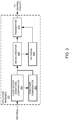
- FIG. 3 is a block diagram of an example implementation of the spillover manager 102 of FIG. 1 .
- the spillover manager 102 of the illustrated example receives media monitoring data from two or more media identifying meter(s) (e.g., the media identifying meters 106, 112 of FIG. 1 ).
- the spillover manager 102 uses the media monitoring data to determine whether spillover occurred (e.g., in the example system 100 of FIG. 1 ) and whether identified media is to be credited with actual exposure to a panelist at corresponding meters.
- the spillover manager 102 of the illustrated example transfers credited media monitoring data (e.g., media monitoring data associated with credited media programs) to the central facility 120 of FIG. 1 .
- the spillover manager 102 of the illustrated example includes an example code and/or signature comparator 302, an example timestamp comparator 304, an example media creditor 306, an example database 308, and an example transmitter 310.
- the code and/or signature comparator 302 of the illustrated example receives media monitoring data from the media identifying meter(s) (e.g., the first and second media identifying meters 106, 112 of FIG. 1 ).
- the media monitoring data includes codes and/or signatures associated with media presentations (e.g., codes and/or signatures used to identify media presentations).
- the codes and/or signatures are associated with timestamps (e.g., to indicate when the media monitoring data was collected).
- the code and/or signature comparator 302 of the illustrated example compares codes and/or signatures collected by a first media identifying meter (e.g., the first media identifying meter 106) to codes and/or signatures collected by a second media identifying meter (e.g., the second media identifying meter 112).
- the code and/or signature comparator 302 of the illustrated example determines if the first media identifying meter 106 and the second media identifying meter 112 collected the same code and/or generated the same signature (e.g., identified the same media).
- the code and/or signature comparator 302 of the illustrated example determines that spillover did not occur for the corresponding media identification events (e.g., the media identification events identified by the codes and/or signatures being analyzed). In such circumstances, the code and/or signature comparator 302 of the illustrated example instructs the example media creditor 306 to credit the media associated with all of the media identification events under analysis with actual media exposures. For example, both the media identified by the first media identifying meter 106 and the media identified by the second media identifying meter 112 are credited with actual media exposures.
- the code and/or signature comparator 302 of the illustrated example determines that spillover may have occurred for the corresponding media identification event (e.g., identified by the same code and/or signature).
- the timestamp comparator 304 of the illustrated example determines whether the absolute values of the difference in times between the first (X) and second (Y) timestamps is less than a threshold (T).
- T is a time less than the smaller of: (a) the time it takes an audio signal to travel between the first media identifying meter 106 and the second media presentation device 114 and (b) the time it takes the audio signal to travel between the second media identifying meter 112 and the first media presentation device 108.
- T is a time approximately halfway between the time it takes an audio signal to travel between the first media identifying meter 106 and the first media presentation device 108 and the time it takes the audio signal to travel between the first media identifying meter 106 and the second media presentation device 114.
- T is a time halfway between the time it takes an audio signal to travel between the second media identifying meter 112 and the second media presentation device 114 and the time it takes the audio signal to travel between the second media identifying meter 112 and the first media presentation device 108. If the absolute value of the time difference is less than the threshold (i.e., the above equation is true), then any difference between the timestamps is due to factors such as drift in the clocks of the timestampers, differences in the performance of the media identifying meters 106, 112, etc., and spillover did not actually occur. Instead, the same media are presented at both the first media presentation device 108 and the second media presentation device 114. Accordingly, the output of the timestamp comparator 304 indicates the media should be credited with an exposure at both meters 106, 112.
- the timestamp comparator 304 determines spillover did, in fact, occur and determines whether to credit the media identified by the first media identifying meter 106 or to credit the media identified by the second media identifying meter 112 with an actual media exposure event.
- the timestamp comparator 304 of the illustrated example compares timestamps of the codes and/or signatures found to be the same by the example code and/or signature comparator 302.
- the timestamp comparator 304 of the illustrated example compares a first timestamp of the code and/or signature associated with the first media identifying meter 106 to a second timestamp of the same code and/or signature associated with the second media identifying meter 112 to determine which code and/or signature was collected or generated first (i.e., earlier in time).
- the timestamp comparator 304 of the illustrated example determines that the media identified by the code and/or signature with the first timestamp collected by the first media identifying meter 106 is to be credited with an actual media exposure event.
- the timestamp comparator 304 of the illustrated example also determines that the media identified by the code and/or signature with the second timestamp collected by the second media identifying meter 112 is not to be credited with an actual media exposure event.
- the timestamp comparator 304 of the illustrated example instructs the example media creditor 306 to credit the media associated with the first media identifying meter 106 with an actual media exposure event and to not credit the media associated with the second media identifying meter 112 with an actual media exposure event.
- the timestamp comparator 304 of the illustrated example determines that the media identified by the code and/or signature with the second timestamp collected by the second media identifying meter 112 is to be credited with an actual media exposure event.
- the timestamp comparator 304 of the illustrated example also determines that the media identified by the code and/or signature with the first timestamp collected by the first media identifying meter 106 is not to be credited with an actual media exposure event.
- the timestamp comparator 304 of the illustrated example instructs the example media creditor 306 to credit the media associated with the second media identifying meter 112 with an actual media exposure event and to not credit the media associated with the first media identifying meter 106 with an actual media exposure event.
- the media creditor 306 of the illustrated example credits/does not credit media as actual media exposure based on the outputs of the example code and/or signature comparator 302 and/or the example timestamp comparator 304. If the example code and/or signature comparator 302 or the timestamp comparator 304 determine that spillover did not occur, the media creditor 306 of the illustrated example marks (e.g., labels) the media monitoring data associated with the media from both the first media identifying meter 106 and the second media identifying meter 112 as credited.
- the media creditor 306 of the illustrated example marks the media monitoring data associated with the media from the first media identifying meter 106 as credited and discards the media monitoring data associated with the media from the second media identifying meter 112.
- the media creditor 306 of the illustrated example marks the media monitoring data associated with the media from the second media identifying meter 112 as credited and discards the media monitoring data associated with the media from the first media identifying meter 106. In some examples, rather than discarding the media monitoring data associated with the media that is not credited, the example media creditor 306 marks the media monitoring data associated with the media as uncredited.
- the database 308 of the illustrated example stores the credited media monitoring data.
- the transmitter 310 of the illustrated example transmits the credited media monitoring data to a central facility (e.g., the central facility 120 of FIG. 1 ) for further processing.
- a central facility e.g., the central facility 120 of FIG. 1
- the example database stores the credited media monitoring data and the uncredited media monitoring data and the example transmitter 310 transmits the credited media monitoring data and the uncredited media monitoring data to the central facility 120 for further processing.
- While an example manner of implementing the spillover manager 102 of FIG. 1 is illustrated in FIG. 3 , one or more of the elements, processes and/or devices illustrated in FIG. 3 may be combined, divided, re-arranged, omitted, eliminated and/or implemented in any other way. Further, the example code and/or signature comparator 302, an example timestamp comparator 304, the example media creditor 306, the example database 308, the example transmitter 310, and/or, more generally, the example spillover manager 102 of FIG. 1 may be implemented by hardware, software, firmware and/or any combination of hardware, software and/or firmware.
- any of the example code and/or signature comparator 302, an example timestamp comparator 304, the example media creditor 306, the example database 308, the example transmitter 310, and/or, more generally, the example spillover manager 102 could be implemented by one or more circuit(s), programmable processor(s), application specific integrated circuit(s) (ASIC(s)), programmable logic device(s) (PLD(s)) and/or field programmable logic device(s) (FPLD(s)), etc.
- ASIC application specific integrated circuit
- PLD programmable logic device
- FPLD field programmable logic device
- At least one of the example code and/or signature comparator 302, the example timestamp comparator 304, the example media creditor 306, the example database 308, the example transmitter 310, and/or the example spillover manager 102 are hereby expressly defined to include a tangible computer readable storage device or storage disc such as a memory, DVD, CD, Blu-ray, etc. storing the software and/or firmware.
- the example spillover manager 102 of FIG. 1 may include one or more elements, processes and/or devices in addition to, or instead of, those illustrated in FIG. 3 , and/or may include more than one of any or all of the illustrated elements, processes and devices.
- FIGS. 4 , 5 , and 6 Flowcharts representative of example machine readable instructions for implementing the media identifying meter 106, 112 of FIGS. 1 and 2 and the spillover manager 102 of FIGS. 1 and 3 are shown in FIGS. 4 , 5 , and 6 .
- the machine readable instructions comprise a program for execution by a processor such as the processor 712 shown in the example processor platform 700 discussed below in connection with FIG. 7 .
- the program may be embodied in software stored on a tangible computer readable storage medium such as a CD-ROM, a floppy disk, a hard drive, a digital versatile disk (DVD), a Blu-ray disk, or a memory associated with the processor 712, but the entire program and/or parts thereof could alternatively be executed by a device other than the processor 712 and/or embodied in firmware or dedicated hardware.
- a tangible computer readable storage medium such as a CD-ROM, a floppy disk, a hard drive, a digital versatile disk (DVD), a Blu-ray disk, or a memory associated with the processor 712, but the entire program and/or parts thereof could alternatively be executed by a device other than the processor 712 and/or embodied in firmware or dedicated hardware.
- FIGS. 4 , 5 , and 6 may be implemented using coded instructions (e.g., computer and/or machine readable instructions) stored on a tangible computer readable storage medium such as a hard disk drive, a flash memory, a read-only memory (ROM), a compact disk (CD), a digital versatile disk (DVD), a cache, a random-access memory (RAM) and/or any other storage device or storage disk in which information is stored for any duration (e.g., for extended time periods, permanently, for brief instances, for temporarily buffering, and/or for caching of the information).
- a tangible computer readable storage medium is expressly defined to include any type of computer readable storage device and/or storage disk and to exclude propagating signals.
- tangible computer readable storage medium and “tangible machine readable storage medium” are used interchangeably. Additionally or alternatively, the example processes of FIGS. 4 , 5 , and 6 may be implemented using coded instructions (e.g., computer and/or machine readable instructions) stored on a non-transitory computer and/or machine readable medium such as a hard disk drive, a flash memory, a read-only memory, a compact disk, a digital versatile disk, a cache, a random-access memory and/or any other storage device or storage disk in which information is stored for any duration (e.g., for extended time periods, permanently, for brief instances, for temporarily buffering, and/or for caching of the information).
- coded instructions e.g., computer and/or machine readable instructions
- a non-transitory computer and/or machine readable medium such as a hard disk drive, a flash memory, a read-only memory, a compact disk, a digital versatile disk, a cache, a random-access memory and/or any other storage
- non-transitory computer readable medium is expressly defined to include any type of computer readable device or disc and to exclude propagating signals.
- phrase “at least” is used as the transition term in a preamble of a claim, it is open-ended in the same manner as the term “comprising” is open ended.
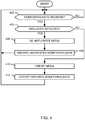
- FIG. 4 is a flow diagram representative of example machine readable instructions that may be executed to implement the example spillover manager 102 of FIG. 1 to manage audio spillover in the example system 100 of FIG. 1 .
- the spillover manager 102 of the illustrated example is used to manage spillover to reduce (e.g., prevent) media monitoring inaccuracies in the system 100.
- the example spillover manager 102 determines if media monitoring data has been received (block 402).
- the example spillover manager 102 is to receive media monitoring data from one or more media identifying meter(s) (e.g., the first and/or second media identifying meters 106, 112 of FIG. 1 ).
- the media monitoring data is representative of media that has been presented on one or more media presentation device(s) (e.g., the first and/or second media presentation devices 108, 114 of FIG. 1 ). Control remains at block 402 until media monitoring data is received by the example spillover manager 102).
- the example spillover manager 102 of the illustrated example analyzes the media monitoring data to determine if spillover has occurred (block 404). An example method to determine if spillover has occurred is described below with reference to FIG. 6 . If the example spillover manager 102 detects spillover associated with the first and/or second media identifying meters 106, 112 based on the media monitoring data, the media identified in the media monitoring data is not credited as an actual media exposure (block 406) and the media monitoring data associated with the uncredited media is discarded (block 408). Control then returns to block 402. In some examples, rather than discarding the uncredited media monitoring data, the example spillover manager 102 identifies the media monitoring data as uncredited media and exports the uncredited media monitoring data to a central facility (e.g., the example central facility 120).
- a central facility e.g., the example central facility 120
- the example spillover manager 102 of the illustrated example does not detect spillover associated with the first and/or the second media identifying meter 106, 112, the media identified in the media monitoring data is credited as an actual media exposure (block 410).
- the example spillover manager 102 of the illustrated example exports media monitoring data associated with credited media to the example central facility 120 (block 412). Control then returns to block 402 when the instructions are complete.
- FIG. 5 is a flow diagram representative of example machine readable instructions that may be executed to implement the example media identifying meter 106, 112 of FIG. 1 to collect media monitoring data.
- the media identifying meter 106, 112 extracts and/or analyzes codes and/or signatures from data and/or signals received from one or more media presentation devices (e.g., the first and/or the second media presentation devices 108, 114 of FIG. 1 ).
- the example input 202 obtains a signal (e.g., an audio signal) from the one or more media presentation devices (e.g., the first and/or the second media presentation devices 108, 114) (block 502).
- the example control logic 208 determines whether to collect a code or generate a signature from the signal obtained at the input 202 (block 504). In the illustrated example, either a code is collected or a signature is generated from the signal. In other examples, both a code and a signature are collected and/or generated.
- the example code collector 204 collects a code from the signal obtained at the input 202 (block 506). The example code collector 204 passes the collected code(s) to the timestamper 210. If a signature is to be generated, the signature generator 206 generates a signature from the signal obtained at the input 202 (block 508). The example signature generator 206 passes the generated signature(s) to the timestamper 210.
- the example timestamper 210 timestamps the collected codes and/or generated signatures (block 510).
- the example timestamper 210 passes the collected codes and/or generated signatures to the example database 212.
- the example database 212 stores the collected codes and/or generated signatures (block 512).
- the example transmitter 214 periodically and/or aperiodically transmits the collected codes and/or generated signatures to the spillover manager 102 of FIG. 1 (block 514). Control then returns to block 502.
- the media identifying meter 106, 112 collects and timestamps the data, and periodically or aperiodically exports the timestamped data for analysis by the spillover manager 102 (which may be located at the panelist site or at the central facility).
- blocks 504-508 and 512 are not performed in the media identifying meter 106, 112, and blocks 510 and 514 are modified to operate on the received signal (as opposed to on codes and/or signatures).
- FIG. 6 is a flow diagram representative of example machine readable instructions that may be executed to implement the example spillover manager 102 of FIG. 3 to manage audio spillover in the example system 100 of FIG. 1 using media monitoring data.
- the spillover manager 102 of the illustrated example is used to manage spillover to reduce media monitoring inaccuracies in the system 100.
- the example spillover manager 102 determines if media monitoring data has been received from two or more media identifying meter(s) (e.g., the first and/or second media identifying meters 106, 112 of FIG. 1 ) (block 602). If not, control advances to block 622. If so, the example spillover manager 102 uses the media monitoring data to determine whether spillover occurred (e.g., in the example system 100 of FIG. 1 ) and whether media is to be credited with an actual media exposure event.
- media monitoring data e.g., the first and/or second media identifying meters 106, 112 of FIG. 1
- the code and/or signature comparator 302 of the illustrated example compares codes and/or signatures collected by the first media identifying meter 106) to codes and/or signatures collected by the second media identifying meter 112.
- the code and/or signature comparator 302 of the illustrated example determines if the first media identifying meter 106 and the second media identifying meter 112 collected the same code and/or generated the same signature (e.g., identified the same media) (block 604).
- the code and/or signature comparator 302 of the illustrated example determines that spillover did not occur for the corresponding media identification events (e.g., the media identification events identified by the codes and/or signatures being analyzed) (block 604).
- the code and/or signature comparator 302 of the illustrated example instructs the example media creditor 306 to credit the media associated with the media identification events with actual media exposures.
- the media creditor 306 of the illustrated example marks the media monitoring data associated with the media from both the first media identifying meter 106 and the second media identifying meter 112 as credited (block 606). Control then proceeds to block 622.
- the code and/or signature comparator 302 of the illustrated example determines that the first media identifying meter 106 and the second media identifying meter 112 collected the same code and/or generated the same signature (block 604)
- the code and/or signature comparator 302 determines that spillover occurred for the corresponding media identification event (e.g., identified by the same code and/or signature).
- the timestamp comparator 304 of the illustrated example determines whether to credit the media identified by the first media identifying meter 106 or to credit the media identified by the second media identifying meter 112 with an actual media exposure event.
- the timestamp comparator 304 of the illustrated example compares timestamps of the codes and/or signatures found to be the same by the example code and/or signature comparator 302 (block 608).
- the timestamp comparator 304 of the illustrated example compares a first timestamp X of the code and/or signature associated with the first media identifying meter 106 to a second timestamp Y of the same code and/or signature associated with the second media identifying meter 112 to determine which code and/or signature was collected or generated first (block 608).
- the timestamp comparator 304 of the illustrated example determines if the absolute value of the difference between timestamp X and timestamp Y is less than a threshold (T) (block 610).
- the threshold T is a time less than the smaller of: (a) time it takes an audio signal to travel between the first media identifying meter 106 and the second media presentation device 114 and (b) the time it takes the audio signal to travel between the second media identifying meter 112 and the first media presentation device 108.
- the threshold T is a time approximately halfway between the time it takes an audio signal to travel between the first media identifying meter 106 and the first media presentation device 108 and the time it takes the audio signal to travel between the first media identifying meter 106 and the second media presentation device 114. In some examples, the threshold T is a time approximately halfway between the time it takes an audio signal to travel between the second media identifying meter 112 and the second media presentation device 114 and the time it takes the audio signal to travel between the second media identifying meter 112 and the first media presentation device 108.
- the timestamp comparator 304 of the illustrated example instructs the example media creditor 306 to credit the media associated with the media identification events with actual media exposures.
- the media creditor 306 of the illustrated example marks the media monitoring data associated with the media from both the first media identifying meter 106 and the second media identifying meter 112 as credited (block 606).
- the timestamp comparator 304 of the illustrated example determines if the timestamp X is greater than the timestamp Y (block 612). If the timestamp X is greater than the timestamp Y, the timestamp comparator 304 of the illustrated example instructs the example media creditor 306 to credit the media associated with the timestamp Y and the media creditor 306 marks the media monitoring data associated with the media for the timestamp Y as credited (block 614). The timestamp comparator 304 of the illustrated example instructs the example media creditor 306 not to credit the media associated with the timestamp X (block 616). Control then proceeds to block 622.
- the timestamp comparator 304 of the illustrated example instructs the example media creditor 306 to credit the media associated with the timestamp X and the media creditor 306 marks the media monitoring data associated with the media for the timestamp X as credited (block 618).
- the timestamp comparator 304 of the illustrated example instructs the example media creditor 306 not to credit the media associated with the timestamp Y (block 620).
- the media creditor 306 of the illustrated example determines if it is time to transmit the credited media to a central facility (e.g., the central facility 120 of FIG. 1 ) (block 622). If it is not time to transmit the credited media, control returns to block 602. If it is time to transmit the credited media, the media creditor 306 of the illustrated example stores the credited media monitoring data in the database 308 and discards the uncredited monitoring data (block 624) and the transmitter 310 of the illustrated example transmits the credited media monitoring data to the central facility 120 for further processing (block 626).
- a central facility e.g., the central facility 120 of FIG. 1
- the example database 308 stores the credited media monitoring data and the uncredited media monitoring data (block 624) and the example transmitter 310 transmits the credited media monitoring data and the uncredited media monitoring data to the central facility 120 for further processing (block 626). Control then returns to block 602 when the instructions are complete.
- the credited media monitoring data is combined with the people meter data using timestamps to align the two data sources to match demographics and audience size data to the credited media exposures.
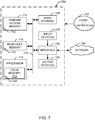
- FIG. 7 is a block diagram of an example processor platform 700 capable of executing the instructions of FIGS. 4 , 5 , and 6 to implement the media identifying meter 106, 112 of FIGS. 1 and 2 and the spillover manager 102 of FIGS. 1 and 3 .
- the processor platform 700 can be, for example, a server, a personal computer, a mobile device (e.g., a cell phone, a smart phone, a tablet such as an iPadTM), a personal digital assistant (PDA), an Internet appliance, a DVD player, a CD player, a digital video recorder, a Blu-ray player, a gaming console, a personal video recorder, a set top box, or any other type of computing device.
- a mobile device e.g., a cell phone, a smart phone, a tablet such as an iPadTM
- PDA personal digital assistant
- an Internet appliance e.g., a DVD player, a CD player, a digital video recorder, a Blu-ray player,
- the processor platform 700 of the illustrated example includes a processor 712.
- the processor 712 of the illustrated example is hardware.
- the processor 712 can be implemented by one or more integrated circuits, logic circuits, microprocessors or controllers from any desired family or manufacturer.
- the processor 712 of the illustrated example includes a local memory 713 (e.g., a cache).
- the processor 712 of the illustrated example is in communication with a main memory including a volatile memory 714 and a non-volatile memory 716 via a bus 718.
- the volatile memory 714 may be implemented by Synchronous Dynamic Random Access Memory (SDRAM), Dynamic Random Access Memory (DRAM), RAMBUS Dynamic Random Access Memory (RDRAM) and/or any other type of random access memory device.
- the non-volatile memory 716 may be implemented by flash memory and/or any other desired type of memory device. Access to the main memory 714, 716 is controlled by a memory controller.
- the processor platform 700 of the illustrated example also includes an interface circuit 720.
- the interface circuit 720 may be implemented by any type of interface standard, such as an Ethernet interface, a universal serial bus (USB), and/or a PCI express interface.
- one or more input devices 722 are connected to the interface circuit 720.
- the input device(s) 722 permit a user to enter data and commands into the processor 712.
- the input device(s) can be implemented by, for example, an audio sensor, a microphone, a camera (still or video), a keyboard, a button, a mouse, a touchscreen, a track-pad, a trackball, isopoint and/or a voice recognition system.
- One or more output devices 724 are also connected to the interface circuit 720 of the illustrated example.
- the output devices 724 can be implemented, for example, by display devices (e.g., a light emitting diode (LED), an organic light emitting diode (OLED), a liquid crystal display, a cathode ray tube display (CRT), a touchscreen, a tactile output device, a light emitting diode (LED), a printer and/or speakers).
- the interface circuit 720 of the illustrated example thus, typically includes a graphics driver card.
- the interface circuit 720 of the illustrated example also includes a communication device such as a transmitter, a receiver, a transceiver, a modem and/or network interface card to facilitate exchange of data with external machines (e.g., computing devices of any kind) via a network 726 (e.g., an Ethernet connection, a digital subscriber line (DSL), a telephone line, coaxial cable, a cellular telephone system, etc.).
- a communication device such as a transmitter, a receiver, a transceiver, a modem and/or network interface card to facilitate exchange of data with external machines (e.g., computing devices of any kind) via a network 726 (e.g., an Ethernet connection, a digital subscriber line (DSL), a telephone line, coaxial cable, a cellular telephone system, etc.).
- DSL digital subscriber line
- the processor platform 700 of the illustrated example also includes one or more mass storage devices 728 for storing software and/or data.
- mass storage devices 728 include floppy disk drives, hard drive disks, compact disk drives, Blu-ray disk drives, RAID systems, and digital versatile disk (DVD) drives.
- the coded instructions 732 of FIGS. 4 , 5 , and 6 may be stored in the mass storage device 728, in the volatile memory 714, in the non-volatile memory 716, and/or on a removable tangible computer readable storage medium such as a CD or DVD.
Landscapes
- Engineering & Computer Science (AREA)
- Signal Processing (AREA)
- Multimedia (AREA)
- Databases & Information Systems (AREA)
- Social Psychology (AREA)
- Health & Medical Sciences (AREA)
- General Health & Medical Sciences (AREA)
- Computer Networks & Wireless Communication (AREA)
- Physics & Mathematics (AREA)
- Acoustics & Sound (AREA)
- Computer Graphics (AREA)
- Testing, Inspecting, Measuring Of Stereoscopic Televisions And Televisions (AREA)
- Two-Way Televisions, Distribution Of Moving Picture Or The Like (AREA)
- Signal Processing For Digital Recording And Reproducing (AREA)
- Alarm Systems (AREA)
Claims (9)
- Procédé pour réduire les erreurs de crédit dues aux débordements dans un logement ou entre logements adjacents, comprenant :la détermination, par un processeur, de si des premières données de surveillance de médias fournies par un premier compteur identifient un même média que des deuxièmes données de surveillance de médias fournies par un deuxième compteur, le premier compteur et le deuxième compteur devant surveiller les médias présentés à différents emplacements respectifs du logement ou des logements adjacents ;si les premières données de surveillance de médias identifient le même média que les deuxièmes données de surveillance de médias, la détection, par le processeur, de si des débordements ont eu lieu en déterminant que la valeur absolue de la différence entre un premier horodatage associé aux premières données de surveillance de médias et un deuxième horodatage associé aux deuxièmes données de surveillance de médias n'est pas inférieure à un seuil ;si des débordements ont eu lieu, la détermination, par le processeur, desquelles des premières données de surveillance de médias ou des deuxièmes données de surveillance de médias doivent être créditées d'une exposition aux médias ; etle crédit des premières données de surveillance de médias ou des deuxièmes données de surveillance de médias d'une exposition aux médias correspondant à l'horodatage le plus ancien associé.
- Procédé de la revendication 1, dans lequel le seuil est une première durée inférieure à une deuxième durée nécessaire à un signal audio pour se déplacer entre le dispositif de présentation des médias destiné à être surveillé par l'un parmi le premier compteur ou le deuxième compteur et l'autre parmi le premier compteur ou le deuxième compteur non destiné à surveiller le dispositif de présentation des médias.
- Procédé de la revendication 1, comportant en outre le crédit à la fois des premières données de surveillance de médias et des deuxièmes données de surveillance de médias si les premières données de surveillance de médias n'identifient pas le même média que les deuxièmes données de surveillance de médias.
- Gestionnaire des débordements destiné à réduire les erreurs de crédit dues aux débordements dans un logement ou entre logements adjacents, comprenant :
un comparateur de médias pour :déterminer si un premier média détecté par un premier compteur est équivalent à un deuxième média détecté par un deuxième compteur, le premier compteur et le deuxième compteur devant surveiller les médias présentés à différents emplacements du logement ou des logements adjacents ; etsi le premier média n'est pas équivalent au deuxième média, déterminer qu'aucun débordement n'a eu lieu ;un comparateur d'horodatage pour, si le premier média est équivalent au deuxième média, déterminer si des débordements ont eu lieu en déterminant que la valeur absolue de la différence entre un premier horodatage associé aux premier média détecté par le premier compteur et un deuxième horodatage associé aux deuxième média détecté par le deuxième compteur n'est pas inférieure à un seuil, et pour déterminer lequel du premier média ou du deuxième média il faut créditer d'une exposition aux médias ; etun dispositif de crédit de médias pour créditer, si des débordements ont eu lieu, les premières données de surveillance de médias ou les deuxièmes données de surveillance de médias de l'exposition aux médias correspondant à l'horodatage le plus ancien associé. - Gestionnaire des débordements de la revendication 4, dans lequel le premier média est équivalent au deuxième média si le premier média et le deuxième média sont un même média.
- Gestionnaire des débordements de la revendication 4, dans lequel le dispositif de crédit de médias doit créditer à la fois le premier média et le deuxième média si le comparateur de médias détermine que le premier média n'est pas équivalent au deuxième média.
- Gestionnaire des débordements de la revendication 4, dans lequel le comparateur de médias doit déterminer si le premier média est équivalent au deuxième média sur la base d'une comparaison entre les premières données de surveillance de médias collectées par le premier compteur pour le premier média et les deuxièmes données de surveillance de médias collectées par le deuxième compteur pour le deuxième média, les premières et deuxièmes données de surveillance de médias comportant au moins l'un parmi des codes ou des signatures correspondant aux premier et deuxième média.
- Programme informatique comprenant des instructions qui, lorsqu'elles sont exécutées par un processeur, amènent le processeur à au moins :déterminer si des premières données de surveillance de médias fournies par un premier compteur identifient un même média que des deuxièmes données de surveillance de médias fournies par un deuxième compteur, le premier compteur et le deuxième compteur devant surveiller les médias présentés à différents emplacements respectifs d'un logement ou de logements adjacents ;si les premières données de surveillance de médias identifient le même média que les deuxièmes données de surveillance de médias, détecter si des débordements ont eu lieu en déterminant que la valeur absolue de la différence entre un premier horodatage associé aux premières données de surveillance de médias et un deuxième horodatage associé aux deuxièmes données de surveillance de médias n'est pas inférieure à un seuil;si des débordements ont eu lieu, déterminer lesquelles des premières données de surveillance de médias ou des deuxièmes données de surveillance de médias doivent être créditées d'une exposition aux médias ; etcréditer les premières données de surveillance de médias ou les deuxièmes données de surveillance de médias d'une exposition aux médias correspondant à l'horodatage le plus ancien associé.
- Programme informatique de la revendication 8, dans lequel le seuil est une première durée inférieure à une deuxième durée nécessaire à un signal audio pour se déplacer entre le dispositif de présentation des médias destiné à être surveillé par l'un parmi le premier compteur et le deuxième compteur et l'autre parmi le premier compteur ou deuxième compteur non destiné à surveiller le dispositif de présentation des médias.
Priority Applications (1)
| Application Number | Priority Date | Filing Date | Title |
|---|---|---|---|
| EP20203365.0A EP3793106A1 (fr) | 2013-03-14 | 2014-03-10 | Procédés et systèmes pour réduire les erreurs de crédit dues aux débordements au moyen de codes et/ou de signatures audio |
Applications Claiming Priority (3)
| Application Number | Priority Date | Filing Date | Title |
|---|---|---|---|
| US13/828,702 US9191704B2 (en) | 2013-03-14 | 2013-03-14 | Methods and systems for reducing crediting errors due to spillover using audio codes and/or signatures |
| AU2013204919A AU2013204919C1 (en) | 2013-03-14 | 2013-04-12 | Methods and systems for reducing crediting errors due to spillover using audio codes and/or signatures |
| PCT/US2014/022704 WO2014159254A1 (fr) | 2013-03-14 | 2014-03-10 | Procédés et systèmes pour réduire les erreurs de crédit dues aux débordements au moyen de codes et/ou de signatures audio |
Related Child Applications (2)
| Application Number | Title | Priority Date | Filing Date |
|---|---|---|---|
| EP20203365.0A Division EP3793106A1 (fr) | 2013-03-14 | 2014-03-10 | Procédés et systèmes pour réduire les erreurs de crédit dues aux débordements au moyen de codes et/ou de signatures audio |
| EP20203365.0A Division-Into EP3793106A1 (fr) | 2013-03-14 | 2014-03-10 | Procédés et systèmes pour réduire les erreurs de crédit dues aux débordements au moyen de codes et/ou de signatures audio |
Publications (3)
| Publication Number | Publication Date |
|---|---|
| EP2973122A1 EP2973122A1 (fr) | 2016-01-20 |
| EP2973122A4 EP2973122A4 (fr) | 2016-12-07 |
| EP2973122B1 true EP2973122B1 (fr) | 2020-12-02 |
Family
ID=51534818
Family Applications (2)
| Application Number | Title | Priority Date | Filing Date |
|---|---|---|---|
| EP20203365.0A Withdrawn EP3793106A1 (fr) | 2013-03-14 | 2014-03-10 | Procédés et systèmes pour réduire les erreurs de crédit dues aux débordements au moyen de codes et/ou de signatures audio |
| EP14773009.7A Not-in-force EP2973122B1 (fr) | 2013-03-14 | 2014-03-10 | Procédés et systèmes pour réduire les erreurs de crédit dues aux débordements au moyen de codes et/ou de signatures audio |
Family Applications Before (1)
| Application Number | Title | Priority Date | Filing Date |
|---|---|---|---|
| EP20203365.0A Withdrawn EP3793106A1 (fr) | 2013-03-14 | 2014-03-10 | Procédés et systèmes pour réduire les erreurs de crédit dues aux débordements au moyen de codes et/ou de signatures audio |
Country Status (7)
| Country | Link |
|---|---|
| US (2) | US9191704B2 (fr) |
| EP (2) | EP3793106A1 (fr) |
| CN (1) | CN104428777B (fr) |
| AU (1) | AU2013204919C1 (fr) |
| CA (1) | CA2875592C (fr) |
| MX (1) | MX351445B (fr) |
| WO (1) | WO2014159254A1 (fr) |
Families Citing this family (19)
| Publication number | Priority date | Publication date | Assignee | Title |
|---|---|---|---|---|
| WO2006037014A2 (fr) | 2004-09-27 | 2006-04-06 | Nielsen Media Research, Inc. | Procedes et appareil d'utilisation d'information d'emplacement pour gerer un debordement dans un systeme de surveillance d'audience |
| US11234029B2 (en) * | 2017-08-17 | 2022-01-25 | The Nielsen Company (Us), Llc | Methods and apparatus to generate reference signatures from streaming media |
| US9667365B2 (en) | 2008-10-24 | 2017-05-30 | The Nielsen Company (Us), Llc | Methods and apparatus to perform audio watermarking and watermark detection and extraction |
| US8359205B2 (en) | 2008-10-24 | 2013-01-22 | The Nielsen Company (Us), Llc | Methods and apparatus to perform audio watermarking and watermark detection and extraction |
| CA2760677C (fr) | 2009-05-01 | 2018-07-24 | David Henry Harkness | Procedes, appareil et articles de fabrication destines a fournir un contenu secondaire en association avec un contenu multimedia de diffusion primaire |
| US8885842B2 (en) | 2010-12-14 | 2014-11-11 | The Nielsen Company (Us), Llc | Methods and apparatus to determine locations of audience members |
| US9021516B2 (en) | 2013-03-01 | 2015-04-28 | The Nielsen Company (Us), Llc | Methods and systems for reducing spillover by measuring a crest factor |
| US9118960B2 (en) | 2013-03-08 | 2015-08-25 | The Nielsen Company (Us), Llc | Methods and systems for reducing spillover by detecting signal distortion |
| US9219969B2 (en) | 2013-03-13 | 2015-12-22 | The Nielsen Company (Us), Llc | Methods and systems for reducing spillover by analyzing sound pressure levels |
| US9191704B2 (en) | 2013-03-14 | 2015-11-17 | The Nielsen Company (Us), Llc | Methods and systems for reducing crediting errors due to spillover using audio codes and/or signatures |
| US20140379421A1 (en) * | 2013-06-25 | 2014-12-25 | The Nielsen Company (Us), Llc | Methods and apparatus to characterize households with media meter data |
| US9510038B2 (en) | 2013-12-17 | 2016-11-29 | Google Inc. | Personal measurement devices for media consumption studies |
| US9426525B2 (en) | 2013-12-31 | 2016-08-23 | The Nielsen Company (Us), Llc. | Methods and apparatus to count people in an audience |
| US9924224B2 (en) | 2015-04-03 | 2018-03-20 | The Nielsen Company (Us), Llc | Methods and apparatus to determine a state of a media presentation device |
| US10218510B2 (en) | 2015-06-01 | 2019-02-26 | Branch Banking And Trust Company | Network-based device authentication system |
| US9848222B2 (en) | 2015-07-15 | 2017-12-19 | The Nielsen Company (Us), Llc | Methods and apparatus to detect spillover |
| CN105656585B (zh) * | 2016-02-18 | 2019-02-26 | 尼尔森网联媒介数据服务有限公司 | 广播收听频率探测装置和方法 |
| US11127044B2 (en) * | 2016-12-22 | 2021-09-21 | The Nielsen Company (Us), Llc | Methods and apparatus to expand panelist enrollment |
| US10805690B2 (en) | 2018-12-04 | 2020-10-13 | The Nielsen Company (Us), Llc | Methods and apparatus to identify media presentations by analyzing network traffic |
Citations (1)
| Publication number | Priority date | Publication date | Assignee | Title |
|---|---|---|---|---|
| WO2008058193A2 (fr) * | 2006-11-07 | 2008-05-15 | Arbitron Inc. | Collecte de données de recherche à l'aide d'un moniteur portatif et d'un dispositif fixe |
Family Cites Families (205)
| Publication number | Priority date | Publication date | Assignee | Title |
|---|---|---|---|---|
| US3056135A (en) | 1957-07-09 | 1962-09-25 | A O Nielsen Company | Method and apparatus for automatically determining the listening habits of wave signal receiver users |
| US3742359A (en) * | 1971-03-04 | 1973-06-26 | Textron Inc | Auditory training device with radio receiver and hearing aid |
| US4107734A (en) | 1977-01-31 | 1978-08-15 | R. D. Percy & Company | Television viewer reaction determining system |
| US4382291A (en) | 1980-10-17 | 1983-05-03 | Secom Co., Ltd. | Surveillance system in which a reflected signal pattern is compared to a reference pattern |
| US6919803B2 (en) | 2002-06-11 | 2005-07-19 | Intelligent Technologies International Inc. | Low power remote asset monitoring |
| US4626904A (en) | 1985-11-12 | 1986-12-02 | Control Data Corporation | Meter for passively logging the presence and identity of TV viewers |
| US4644509A (en) | 1986-01-23 | 1987-02-17 | A. C. Nielsen Company | Ultrasonic audience measurement system and method |
| US4695879A (en) | 1986-02-07 | 1987-09-22 | Weinblatt Lee S | Television viewer meter |
| US4718106A (en) | 1986-05-12 | 1988-01-05 | Weinblatt Lee S | Survey of radio audience |
| US4955000A (en) | 1986-07-17 | 1990-09-04 | Nac Engineering And Marketing, Inc. | Ultrasonic personnel location identification system |
| US4779198A (en) | 1986-08-26 | 1988-10-18 | Control Data Corporation | Audience monitoring system |
| US4769697A (en) | 1986-12-17 | 1988-09-06 | R. D. Percy & Company | Passive television audience measuring systems |
| US4843562A (en) | 1987-06-24 | 1989-06-27 | Broadcast Data Systems Limited Partnership | Broadcast information classification system and method |
| US4930011A (en) | 1988-08-02 | 1990-05-29 | A. C. Nielsen Company | Method and apparatus for identifying individual members of a marketing and viewing audience |
| DE3991548C1 (de) | 1989-01-09 | 1995-05-04 | Shogaku Ikueisha Kyoiku Kenkyusho | Elektrisches Gerät zum Ermitteln der Fenrsehprogramm-Einschaltquote |
| US4972471A (en) | 1989-05-15 | 1990-11-20 | Gary Gross | Encoding system |
| US5319453A (en) | 1989-06-22 | 1994-06-07 | Airtrax | Method and apparatus for video signal encoding, decoding and monitoring |
| US6002918A (en) | 1989-06-29 | 1999-12-14 | Symbol Technologies, Inc. | Power-saving arrangement and method for mobile units in communications network |
| US4990892A (en) | 1989-08-07 | 1991-02-05 | Westcom, A Division Of Westside Communications Of Jacksonville, Inc. | Personnel locator system |
| US4972503A (en) | 1989-08-08 | 1990-11-20 | A. C. Nielsen Company | Method and apparatus for determining audience viewing habits by jamming a control signal and identifying the viewers command |
| US5226090A (en) | 1989-12-29 | 1993-07-06 | Pioneer Electronic Corporation | Voice-operated remote control system |
| WO1991011062A1 (fr) | 1990-01-18 | 1991-07-25 | Young Alan M | Procede et appareil de mesure de l'indice d'ecoute d'emissions |
| US5226177A (en) | 1990-03-27 | 1993-07-06 | Viewfacts, Inc. | Real-time wireless audience response system |
| US5119104A (en) | 1990-05-04 | 1992-06-02 | Heller Alan C | Location system adapted for use in multipath environments |
| US5382970A (en) | 1991-07-19 | 1995-01-17 | Kiefl; John B. | Television viewer monitoring system including portable data meter for each viewer |
| GB2292506B (en) | 1991-09-30 | 1996-05-01 | Arbitron Company The | Method and apparatus for automatically identifying a program including a sound signal |
| FR2681997A1 (fr) | 1991-09-30 | 1993-04-02 | Arbitron Cy | Procede et dispositif d'identification automatique d'un programme comportant un signal sonore. |
| US5146231A (en) | 1991-10-04 | 1992-09-08 | Motorola, Inc. | Electronic direction finder |
| US5285498A (en) | 1992-03-02 | 1994-02-08 | At&T Bell Laboratories | Method and apparatus for coding audio signals based on perceptual model |
| PT688487E (pt) | 1992-11-16 | 2005-02-28 | Arbitron Inc | Metodo e aparelho para codificacao/descodificacao de segmentos transmitidos ou gravados e monitorizacao da exposilcao da audiencia aos mesmos |
| US5550928A (en) | 1992-12-15 | 1996-08-27 | A.C. Nielsen Company | Audience measurement system and method |
| US5630203A (en) | 1993-01-12 | 1997-05-13 | Weinblatt; Lee S. | Technique for surveying a radio or a television audience |
| US5442343A (en) | 1993-06-21 | 1995-08-15 | International Business Machines Corporation | Ultrasonic shelf label method and apparatus |
| US5387993A (en) | 1993-06-25 | 1995-02-07 | Precision Tracking Fm, Inc. | Method for receiving and transmitting optical data and control information to and from remotely located receivers and transmitters in an optical locator system |
| US5483276A (en) | 1993-08-02 | 1996-01-09 | The Arbitron Company | Compliance incentives for audience monitoring/recording devices |
| US5481294A (en) | 1993-10-27 | 1996-01-02 | A. C. Nielsen Company | Audience measurement system utilizing ancillary codes and passive signatures |
| US5457807A (en) | 1994-03-21 | 1995-10-10 | Weinblatt; Lee S. | Technique for surveying a radio or a television audience |
| US5404377A (en) | 1994-04-08 | 1995-04-04 | Moses; Donald W. | Simultaneous transmission of data and audio signals by means of perceptual coding |
| US5692215A (en) | 1994-12-23 | 1997-11-25 | Gerotech, Inc. | System for generating periodic reports, generating trend analysis, and intervention in accordance with trend analysis from a detection subsystem for monitoring daily living activity |
| US5629739A (en) | 1995-03-06 | 1997-05-13 | A.C. Nielsen Company | Apparatus and method for injecting an ancillary signal into a low energy density portion of a color television frequency spectrum |
| EP0768629A1 (fr) | 1995-10-13 | 1997-04-16 | MATRIX S.a.s. di G. DE ZORZI e C. | Système d'alarme pour articles confinés dans une portée prédéterminée |
| US5872588A (en) | 1995-12-06 | 1999-02-16 | International Business Machines Corporation | Method and apparatus for monitoring audio-visual materials presented to a subscriber |
| US6035177A (en) | 1996-02-26 | 2000-03-07 | Donald W. Moses | Simultaneous transmission of ancillary and audio signals by means of perceptual coding |
| US5815114A (en) | 1996-04-05 | 1998-09-29 | Discovision Associates | Positioning system and method |
| US5774876A (en) | 1996-06-26 | 1998-06-30 | Par Government Systems Corporation | Managing assets with active electronic tags |
| US5812930A (en) | 1996-07-10 | 1998-09-22 | International Business Machines Corp. | Information handling systems with broadband and narrowband communication channels between repository and display systems |
| US5982808A (en) | 1996-08-30 | 1999-11-09 | Harris Corporation | System and method for communicating with plural remote transmitter |
| US6647548B1 (en) | 1996-09-06 | 2003-11-11 | Nielsen Media Research, Inc. | Coded/non-coded program audience measurement system |
| US6236365B1 (en) | 1996-09-09 | 2001-05-22 | Tracbeam, Llc | Location of a mobile station using a plurality of commercial wireless infrastructures |
| US7714778B2 (en) | 1997-08-20 | 2010-05-11 | Tracbeam Llc | Wireless location gateway and applications therefor |
| US7764231B1 (en) | 1996-09-09 | 2010-07-27 | Tracbeam Llc | Wireless location using multiple mobile station location techniques |
| GB9625208D0 (en) | 1996-12-04 | 1997-01-22 | Olivetti Research Ltd | Detection system for determining information about objects |
| US6958710B2 (en) | 2002-12-24 | 2005-10-25 | Arbitron Inc. | Universal display media exposure measurement |
| US5884278A (en) | 1997-02-11 | 1999-03-16 | Powell; Ken R. | Retail store and method employing multiple network interfaces at each cash register, and receiving signals from portable cards at each cash register |
| US5959529A (en) | 1997-03-07 | 1999-09-28 | Kail, Iv; Karl A. | Reprogrammable remote sensor monitoring system |
| AU739611B2 (en) | 1997-06-03 | 2001-10-18 | Stephen Bide | Portable information-providing apparatus |
| US6091956A (en) | 1997-06-12 | 2000-07-18 | Hollenberg; Dennis D. | Situation information system |
| US5893093A (en) | 1997-07-02 | 1999-04-06 | The Sabre Group, Inc. | Information search and retrieval with geographical coordinates |
| US6243739B1 (en) | 1997-07-11 | 2001-06-05 | Phone.Com, Inc. | Reducing perceived latency in servicing user requests on low-bandwidth communication channels |
| US6467089B1 (en) | 1997-12-23 | 2002-10-15 | Nielsen Media Research, Inc. | Audience measurement system incorporating a mobile handset |
| US6359557B2 (en) | 1998-01-26 | 2002-03-19 | At&T Corp | Monitoring and notification method and apparatus |
| US6731942B1 (en) | 1998-03-06 | 2004-05-04 | Mirafin Ag | Two-way pager for providing communication of alphanumeric messages over the GSM/GPRS network |
| NO981723D0 (no) | 1998-04-16 | 1998-04-16 | Instrutek Holding As | System for overvÕking og kontroll av gjenstander eller personer |
| US6252522B1 (en) | 1998-05-28 | 2001-06-26 | Solana Technology Development Corporation | Billboard consumption measurement system |
| US6272176B1 (en) | 1998-07-16 | 2001-08-07 | Nielsen Media Research, Inc. | Broadcast encoding system and method |
| US6098048A (en) | 1998-08-12 | 2000-08-01 | Vnu Marketing Information Services, Inc. | Automated data collection for consumer driving-activity survey |
| GB9821046D0 (en) | 1998-09-28 | 1998-11-18 | Whitesmith Howard W | Detection system |
| US20040198386A1 (en) | 2002-01-16 | 2004-10-07 | Dupray Dennis J. | Applications for a wireless location gateway |
| US20030146871A1 (en) | 1998-11-24 | 2003-08-07 | Tracbeam Llc | Wireless location using signal direction and time difference of arrival |
| US6842877B2 (en) | 1998-12-18 | 2005-01-11 | Tangis Corporation | Contextual responses based on automated learning techniques |
| US20020059218A1 (en) | 1999-01-26 | 2002-05-16 | Katherine Grace August | System and method for obtaining real time survey information for media programming using input device |
| US6396413B2 (en) | 1999-03-11 | 2002-05-28 | Telephonics Corporation | Personal alarm monitor system |
| JP2000307530A (ja) | 1999-04-21 | 2000-11-02 | Takahiro Yasuhoso | ウェアラブル視聴率メータシステム |
| JP3791249B2 (ja) | 1999-07-12 | 2006-06-28 | 株式会社日立製作所 | 携帯端末 |
| DE19962201A1 (de) | 1999-09-06 | 2001-03-15 | Holger Lausch | Verfahren und Anordnung zur Erfassung und Analyse des Rezeptionsverhaltens von Personen |
| US6539393B1 (en) | 1999-09-30 | 2003-03-25 | Hill-Rom Services, Inc. | Portable locator system |
| WO2001031816A1 (fr) | 1999-10-27 | 2001-05-03 | Nielsen Media Research, Inc. | Systeme et procede pour coder un signal audio par addition a ce signal de codes inaudible, a utiliser dans des systemes d'identification de programmes de radiodiffusion |
| JP2001166025A (ja) | 1999-12-14 | 2001-06-22 | Matsushita Electric Ind Co Ltd | 音源の方向推定方法および収音方法およびその装置 |
| US6497658B2 (en) | 1999-12-19 | 2002-12-24 | Michael F. Roizen | Alarm upon detection of impending sleep state |
| US7155159B1 (en) | 2000-03-06 | 2006-12-26 | Lee S. Weinblatt | Audience detection |
| US6654800B1 (en) | 2000-03-14 | 2003-11-25 | Rieger, Iii Charles J. | System for communicating through maps |
| US6928280B1 (en) | 2000-03-20 | 2005-08-09 | Telephia, Inc. | Method and system for measuring data quality of service in a wireless network using multiple remote units and a back end processor |
| US6766524B1 (en) | 2000-05-08 | 2004-07-20 | Webtv Networks, Inc. | System and method for encouraging viewers to watch television programs |
| KR100366708B1 (ko) | 2000-06-22 | 2003-01-09 | 주식회사 아이온커뮤니케이션즈 | 인터넷 방송 시청자 반응도 조사방법 및 그 시스템 |
| GB0021530D0 (en) | 2000-09-01 | 2000-10-18 | Applied Psychology Res Ltd | Remote control |
| US6424264B1 (en) | 2000-10-12 | 2002-07-23 | Safetzone Technologies Corporation | System for real-time location of people in a fixed environment |
| US20020174425A1 (en) | 2000-10-26 | 2002-11-21 | Markel Steven O. | Collection of affinity data from television, video, or similar transmissions |
| US7039198B2 (en) | 2000-11-10 | 2006-05-02 | Quindi | Acoustic source localization system and method |
| US7171331B2 (en) | 2001-12-17 | 2007-01-30 | Phatrat Technology, Llc | Shoes employing monitoring devices, and associated methods |
| JP2004192017A (ja) | 2001-02-06 | 2004-07-08 | Dainippon Printing Co Ltd | Icカードを装着した移動体通信端末を利用した情報家電端末の遠隔制御システムとそれに使用する移動体通信端末とicカード |
| JP4686870B2 (ja) | 2001-02-28 | 2011-05-25 | ソニー株式会社 | 携帯型情報端末装置、情報処理方法、プログラム記録媒体及びプログラム |
| US6563423B2 (en) | 2001-03-01 | 2003-05-13 | International Business Machines Corporation | Location tracking of individuals in physical spaces |
| US6934508B2 (en) | 2001-03-19 | 2005-08-23 | Navigaug Inc. | System and method for obtaining comprehensive vehicle radio listener statistics |
| US20020144259A1 (en) | 2001-03-29 | 2002-10-03 | Philips Electronics North America Corp. | Method and apparatus for controlling a media player based on user activity |
| US7047548B2 (en) | 2001-04-17 | 2006-05-16 | International Business Machines Corporation | Recall of previous program channel |
| US7076441B2 (en) | 2001-05-03 | 2006-07-11 | International Business Machines Corporation | Identification and tracking of persons using RFID-tagged items in store environments |
| MXPA03010750A (es) | 2001-05-25 | 2004-07-01 | Dolby Lab Licensing Corp | Metodo para la alineacion temporal de senales de audio usando caracterizaciones basadas en eventos auditivos. |
| US8091100B2 (en) | 2001-06-18 | 2012-01-03 | The Nielsen Company (Us), Llc | Prompting of audience member identification |
| GB2379016A (en) | 2001-07-27 | 2003-02-26 | Hewlett Packard Co | Portable apparatus monitoring reaction of user to music |
| GB2379017A (en) | 2001-07-27 | 2003-02-26 | Hewlett Packard Co | Method and apparatus for monitoring crowds |
| CA2354858A1 (fr) | 2001-08-08 | 2003-02-08 | Dspfactory Ltd. | Traitement directionnel de signaux audio en sous-bande faisant appel a un banc de filtres surechantillonne |
| JP2003061027A (ja) | 2001-08-10 | 2003-02-28 | Sony Corp | 映像コンテンツ自動分類装置及び映像コンテンツ自動分類方法 |
| EP1421721A2 (fr) | 2001-08-22 | 2004-05-26 | Nielsen Media Research, Inc. | Capteur de proximite de television |
| US6876310B2 (en) | 2001-09-27 | 2005-04-05 | Intel Corporation | Method and apparatus to locate a device in a dwelling or other enclosed space |
| US7536704B2 (en) | 2001-10-05 | 2009-05-19 | Opentv, Inc. | Method and apparatus automatic pause and resume of playback for a popup on interactive TV |
| JP2003125102A (ja) | 2001-10-12 | 2003-04-25 | Nippon Telegr & Teleph Corp <Ntt> | リアルタイム視聴率収集システムおよび方法と集計サーバおよび集計方法と集計プログラムおよび該プログラムを記録した記録媒体 |
| US6898434B2 (en) | 2001-10-30 | 2005-05-24 | Hewlett-Packard Development Company, L.P. | Apparatus and method for the automatic positioning of information access points |
| US8561095B2 (en) | 2001-11-13 | 2013-10-15 | Koninklijke Philips N.V. | Affective television monitoring and control in response to physiological data |
| US6837427B2 (en) | 2001-11-21 | 2005-01-04 | Goliath Solutions, Llc. | Advertising compliance monitoring system |
| US7038619B2 (en) | 2001-12-31 | 2006-05-02 | Rdp Associates, Incorporated | Satellite positioning system enabled media measurement system and method |
| US6882837B2 (en) | 2002-01-23 | 2005-04-19 | Dennis Sunga Fernandez | Local emergency alert for cell-phone users |
| US7471987B2 (en) | 2002-03-08 | 2008-12-30 | Arbitron, Inc. | Determining location of an audience member having a portable media monitor |
| US20030177488A1 (en) | 2002-03-12 | 2003-09-18 | Smith Geoff S. | Systems and methods for media audience measurement |
| JP3922061B2 (ja) | 2002-03-22 | 2007-05-30 | 三菱ふそうトラック・バス株式会社 | 音質評価装置及び音質評価方法 |
| NO315917B1 (no) | 2002-04-09 | 2003-11-10 | Filetrac As | System og fremgangsmåte for posisjonsbestemmelse av objekter |
| CN1685735A (zh) | 2002-04-22 | 2005-10-19 | 尼尔逊媒介研究股份有限公司 | 采集与媒体显示相关的观众信息的方法和装置 |
| US8099325B2 (en) | 2002-05-01 | 2012-01-17 | Saytam Computer Services Limited | System and method for selective transmission of multimedia based on subscriber behavioral model |
| US8046787B2 (en) | 2002-05-31 | 2011-10-25 | Opentv, Inc. | Method and system for the storage, viewing management, and delivery of targeted advertising |
| US7460827B2 (en) | 2002-07-26 | 2008-12-02 | Arbitron, Inc. | Radio frequency proximity detection and identification system and method |
| US7627872B2 (en) | 2002-07-26 | 2009-12-01 | Arbitron Inc. | Media data usage measurement and reporting systems and methods |
| US7760248B2 (en) | 2002-07-27 | 2010-07-20 | Sony Computer Entertainment Inc. | Selective sound source listening in conjunction with computer interactive processing |
| US7222071B2 (en) | 2002-09-27 | 2007-05-22 | Arbitron Inc. | Audio data receipt/exposure measurement with code monitoring and signature extraction |
| US20030126593A1 (en) | 2002-11-04 | 2003-07-03 | Mault James R. | Interactive physiological monitoring system |
| US7881485B2 (en) | 2002-11-21 | 2011-02-01 | Fraunhofer-Gesellschaft Zur Foerderung Der Angewandten Forschung E. V. | Apparatus and method of determining an impulse response and apparatus and method of presenting an audio piece |
| NO318010B1 (no) | 2002-12-04 | 2005-01-17 | Sonitor Technologies As | Ultralyd lokaliseringssystem |
| NO329096B1 (no) | 2002-12-04 | 2010-08-23 | Sonitor Technologies As | Ultralyd sporings- og lokaliseringssystem |
| CA2509644A1 (fr) | 2002-12-11 | 2004-06-24 | Nielsen Media Research, Inc. | Detection d'une composition d'une audience |
| US7483835B2 (en) | 2002-12-23 | 2009-01-27 | Arbitron, Inc. | AD detection using ID code and extracted signature |
| KR100905966B1 (ko) | 2002-12-31 | 2009-07-06 | 엘지전자 주식회사 | 홈시어터의 오디오 출력 조정 장치 및 그 방법 |
| US20040218701A1 (en) | 2003-04-29 | 2004-11-04 | Prashant Singh | Protocol agnostic method for adaptive equalization |
| JP4219749B2 (ja) | 2003-06-25 | 2009-02-04 | 株式会社Ctiサイエンスシステム | 視聴率調査システム及び視聴率調査方法 |
| US7592908B2 (en) | 2003-08-13 | 2009-09-22 | Arbitron, Inc. | Universal display exposure monitor using personal locator service |
| AU2004282954B2 (en) | 2003-10-17 | 2010-11-11 | The Nielsen Company (Us), Llc | Portable multi-purpose audience measurement system |
| US7148803B2 (en) | 2003-10-24 | 2006-12-12 | Symbol Technologies, Inc. | Radio frequency identification (RFID) based sensor networks |
| US7126454B2 (en) | 2003-11-21 | 2006-10-24 | Bulmer Michael W | Alert system |
| US8406341B2 (en) | 2004-01-23 | 2013-03-26 | The Nielsen Company (Us), Llc | Variable encoding and detection apparatus and methods |
| US20050172311A1 (en) | 2004-01-31 | 2005-08-04 | Nokia Corporation | Terminal and associated method and computer program product for monitoring at least one activity of a user |
| JP2005260728A (ja) | 2004-03-12 | 2005-09-22 | Ntt Docomo Inc | 移動端末、視聴情報収集システム、及び視聴情報収集方法 |
| US8229469B2 (en) | 2004-03-15 | 2012-07-24 | Arbitron Inc. | Methods and systems for mapping locations of wireless transmitters for use in gathering market research data |
| US20050203798A1 (en) | 2004-03-15 | 2005-09-15 | Jensen James M. | Methods and systems for gathering market research data |
| US7463143B2 (en) | 2004-03-15 | 2008-12-09 | Arbioran | Methods and systems for gathering market research data within commercial establishments |
| US7420464B2 (en) | 2004-03-15 | 2008-09-02 | Arbitron, Inc. | Methods and systems for gathering market research data inside and outside commercial establishments |
| US7295108B2 (en) | 2004-03-22 | 2007-11-13 | Symx Systems, Inc. | Active RFID tag utilizing a secondary communication mode |
| US7483975B2 (en) | 2004-03-26 | 2009-01-27 | Arbitron, Inc. | Systems and methods for gathering data concerning usage of media data |
| US7099676B2 (en) | 2004-04-09 | 2006-08-29 | Sony Corporation | System and method for location and motion detection in a home wireless network |
| US8135606B2 (en) | 2004-04-15 | 2012-03-13 | Arbitron, Inc. | Gathering data concerning publication usage and exposure to products and/or presence in commercial establishment |
| KR20050104976A (ko) | 2004-04-30 | 2005-11-03 | 삼성전자주식회사 | 자동 음질 평가 방법 및 그 시스템 |
| WO2006029022A2 (fr) | 2004-09-03 | 2006-03-16 | Arbitron Inc. | Procedes et systemes de classement d'inventaire publicitaire exterieur |
| WO2006037014A2 (fr) | 2004-09-27 | 2006-04-06 | Nielsen Media Research, Inc. | Procedes et appareil d'utilisation d'information d'emplacement pour gerer un debordement dans un systeme de surveillance d'audience |
| EP1646169A1 (fr) | 2004-10-05 | 2006-04-12 | Taylor Nelson Sofres Plc | Procédé et système d'analyse d'audience |
| WO2006058274A2 (fr) | 2004-11-29 | 2006-06-01 | Arbitron Inc. | Systemes et processus s'utilisant dans des medias et/ou dans des etudes de marche |
| JP4812302B2 (ja) | 2005-01-12 | 2011-11-09 | 学校法人鶴学園 | 音源方向推定システム、音源方向推定方法及び音源方向推定プログラム |
| JP2006215774A (ja) | 2005-02-03 | 2006-08-17 | Toppan Printing Co Ltd | 有償コンテンツ自動購入テストシステム、方法、プログラム、及びそのプログラムを記録した記録媒体 |
| CA2956981C (fr) | 2005-03-08 | 2019-05-21 | The Nielsen Company (Us), Llc | Appareils et procedes de codage et de detection variables |
| WO2006099612A2 (fr) | 2005-03-17 | 2006-09-21 | Nielsen Media Research, Inc. | Procedes et appareil permettant d'utiliser des informations relatives au comportement des membres d'une audience pour determiner si des exigences d'usage d'un systeme de mesure d'audience sont respectees |
| WO2006121681A1 (fr) | 2005-05-05 | 2006-11-16 | Sony Computer Entertainment Inc. | Ecoute selective de sources sonores conjointement avec un traitement interactif informatique |
| JP4302079B2 (ja) | 2005-05-30 | 2009-07-22 | 株式会社日立製作所 | デジタルコンテンツ販売方法及びその実施装置 |
| US7295950B2 (en) | 2005-06-23 | 2007-11-13 | International Business Machines Corporation | Monitoring multiple channels of data from real time process to detect recent abnormal behavior |
| CN100499578C (zh) * | 2005-08-05 | 2009-06-10 | 中兴通讯股份有限公司 | 一种保证媒体接收端服务质量的方法 |
| KR100959983B1 (ko) | 2005-08-11 | 2010-05-27 | 아사히 가세이 가부시키가이샤 | 음원 분리 장치, 음성 인식 장치, 휴대 전화기, 음원 분리방법, 및, 프로그램 |
| MX2008002317A (es) | 2005-08-16 | 2008-03-24 | Nielsen Media Res Inc | Metodos y aparatos de deteccion de encendido/apagado del dispositivo de visualizacion. |
| CA2634706A1 (fr) | 2005-12-20 | 2007-06-28 | Arbitron Inc. | Procedes et systemes de conduite d'operations de recherche |
| US20090133058A1 (en) | 2007-11-21 | 2009-05-21 | Michael Kouritzin | Method and apparatus to perform real-time audience estimation and commercial selection suitable for targeted advertising |
| CN101512374B (zh) | 2006-11-09 | 2012-04-11 | 松下电器产业株式会社 | 声源位置检测装置 |
| WO2008056251A2 (fr) | 2006-11-10 | 2008-05-15 | Audiogate Technologies Ltd. | Système et procédé pour fournir de la publicité à partir de la reconnaissance vocale |
| WO2008064230A2 (fr) | 2006-11-20 | 2008-05-29 | Personics Holdings Inc. | Procédés et dispositifs pour notification de la diminution de l'acuité auditive et intervention ii |
| US20080204273A1 (en) | 2006-12-20 | 2008-08-28 | Arbitron,Inc. | Survey data acquisition |
| US8457768B2 (en) | 2007-06-04 | 2013-06-04 | International Business Machines Corporation | Crowd noise analysis |
| JP4339929B2 (ja) | 2007-10-01 | 2009-10-07 | パナソニック株式会社 | 音源方向検知装置 |
| EP2063419B1 (fr) | 2007-11-21 | 2012-04-18 | Nuance Communications, Inc. | Localisation d'un locuteur |
| KR101238362B1 (ko) | 2007-12-03 | 2013-02-28 | 삼성전자주식회사 | 음원 거리에 따라 음원 신호를 여과하는 방법 및 장치 |
| US8930003B2 (en) | 2007-12-31 | 2015-01-06 | The Nielsen Company (Us), Llc | Data capture bridge |
| US8631427B2 (en) | 2008-04-07 | 2014-01-14 | Winmore, Inc. | Audience detection |
| JP5305743B2 (ja) | 2008-06-02 | 2013-10-02 | 株式会社東芝 | 音響処理装置及びその方法 |
| DE102008029352A1 (de) | 2008-06-20 | 2009-12-31 | Fraunhofer-Gesellschaft zur Förderung der angewandten Forschung e.V. | Vorrichtung, Verfahren und Computerprogramm zum Lokalisieren einer Schallquelle |
| US8266644B2 (en) | 2008-06-25 | 2012-09-11 | At&T Intellectual Property I, L.P. | Digital television channel trending |
| GB2465141B (en) | 2008-10-31 | 2014-01-22 | Media Instr Sa | Simulcast resolution in content matching systems |
| KR101097839B1 (ko) | 2008-10-31 | 2011-12-23 | 한국과학기술원 | 음환경 평가시스템 및 그 시스템을 이용한 음환경 평가방법 |
| US9179235B2 (en) | 2008-11-07 | 2015-11-03 | Adobe Systems Incorporated | Meta-parameter control for digital audio data |
| WO2010063660A2 (fr) | 2008-12-05 | 2010-06-10 | Audioasics A/S | Procédé et système de détection du bruit du vent |
| JP5302085B2 (ja) | 2009-04-27 | 2013-10-02 | 株式会社ビデオリサーチ | 調査システム |
| US8245249B2 (en) | 2009-10-09 | 2012-08-14 | The Nielson Company (Us), Llc | Methods and apparatus to adjust signature matching results for audience measurement |
| US20110091055A1 (en) | 2009-10-19 | 2011-04-21 | Broadcom Corporation | Loudspeaker localization techniques |
| EP2513897B1 (fr) | 2009-12-16 | 2014-08-20 | Robert Bosch GmbH | Système audio, procédé de génération de signal audio et programme d'ordinateur correspondant |
| US8810392B1 (en) | 2010-02-04 | 2014-08-19 | Google Inc. | Device and method for monitoring the presence of items and issuing an alert if an item is not detected |
| US8855101B2 (en) | 2010-03-09 | 2014-10-07 | The Nielsen Company (Us), Llc | Methods, systems, and apparatus to synchronize actions of audio source monitors |
| US8699723B2 (en) | 2010-07-20 | 2014-04-15 | International Business Machines Corporation | Audio device volume manager using measured volume perceived at a first audio device to control volume generation by a second audio device |
| JP5405432B2 (ja) | 2010-10-26 | 2014-02-05 | 株式会社ビデオリサーチ | 分散型照合システム及び方法 |
| US8558894B2 (en) | 2010-11-16 | 2013-10-15 | Hewlett-Packard Development Company, L.P. | Support for audience interaction in presentations |
| US8885842B2 (en) * | 2010-12-14 | 2014-11-11 | The Nielsen Company (Us), Llc | Methods and apparatus to determine locations of audience members |
| KR101313293B1 (ko) | 2010-12-16 | 2013-09-30 | 주식회사 아이플래테아 | 방송콘텐츠의 부가정보 제공 시스템 및 그 방법 |
| US8742777B2 (en) | 2010-12-29 | 2014-06-03 | The Board Of Trustees Of The University Of Alabama For And On Behalf Of The University Of Alabama | Method and system for testing an electric circuit |
| US8918802B2 (en) | 2011-02-28 | 2014-12-23 | The Nielsen Company (Us), Llc | Methods and apparatus to monitor media exposure |
| JP2012242214A (ja) | 2011-05-18 | 2012-12-10 | Honda Motor Co Ltd | 異音検査方法及び異音検査装置 |
| KR101248971B1 (ko) | 2011-05-26 | 2013-04-09 | 주식회사 마이티웍스 | 방향성 마이크 어레이를 이용한 신호 분리시스템 및 그 제공방법 |
| CN102868666B (zh) * | 2011-07-07 | 2015-09-23 | 北京东方文骏软件科技有限责任公司 | 基于用户体验交互的流媒体质量监测报告的实现方法 |
| AU2012327192C1 (en) | 2011-12-19 | 2016-07-07 | The Nielsen Company (Us), Llc | Methods and apparatus for crediting a media presentation device |
| US9106953B2 (en) | 2012-11-28 | 2015-08-11 | The Nielsen Company (Us), Llc | Media monitoring based on predictive signature caching |
| US9021516B2 (en) | 2013-03-01 | 2015-04-28 | The Nielsen Company (Us), Llc | Methods and systems for reducing spillover by measuring a crest factor |
| US9118960B2 (en) | 2013-03-08 | 2015-08-25 | The Nielsen Company (Us), Llc | Methods and systems for reducing spillover by detecting signal distortion |
| US9219969B2 (en) | 2013-03-13 | 2015-12-22 | The Nielsen Company (Us), Llc | Methods and systems for reducing spillover by analyzing sound pressure levels |
| US9191704B2 (en) | 2013-03-14 | 2015-11-17 | The Nielsen Company (Us), Llc | Methods and systems for reducing crediting errors due to spillover using audio codes and/or signatures |
| US9374629B2 (en) | 2013-03-15 | 2016-06-21 | The Nielsen Company (Us), Llc | Methods and apparatus to classify audio |
| US9197930B2 (en) | 2013-03-15 | 2015-11-24 | The Nielsen Company (Us), Llc | Methods and apparatus to detect spillover in an audience monitoring system |
| US20140379421A1 (en) | 2013-06-25 | 2014-12-25 | The Nielsen Company (Us), Llc | Methods and apparatus to characterize households with media meter data |
-
2013
- 2013-03-14 US US13/828,702 patent/US9191704B2/en active Active
- 2013-04-12 AU AU2013204919A patent/AU2013204919C1/en not_active Ceased
-
2014
- 2014-03-10 EP EP20203365.0A patent/EP3793106A1/fr not_active Withdrawn
- 2014-03-10 CA CA2875592A patent/CA2875592C/fr active Active
- 2014-03-10 WO PCT/US2014/022704 patent/WO2014159254A1/fr not_active Ceased
- 2014-03-10 CN CN201480001410.6A patent/CN104428777B/zh not_active Expired - Fee Related
- 2014-03-10 MX MX2014014735A patent/MX351445B/es active IP Right Grant
- 2014-03-10 EP EP14773009.7A patent/EP2973122B1/fr not_active Not-in-force
-
2015
- 2015-10-09 US US14/879,544 patent/US9380339B2/en active Active
Patent Citations (1)
| Publication number | Priority date | Publication date | Assignee | Title |
|---|---|---|---|---|
| WO2008058193A2 (fr) * | 2006-11-07 | 2008-05-15 | Arbitron Inc. | Collecte de données de recherche à l'aide d'un moniteur portatif et d'un dispositif fixe |
Also Published As
| Publication number | Publication date |
|---|---|
| US20140282640A1 (en) | 2014-09-18 |
| AU2013204919A1 (en) | 2014-10-02 |
| CN104428777A (zh) | 2015-03-18 |
| US9191704B2 (en) | 2015-11-17 |
| AU2013204919B2 (en) | 2016-01-21 |
| AU2013204919C1 (en) | 2016-08-04 |
| US20160037211A1 (en) | 2016-02-04 |
| CN104428777B (zh) | 2017-05-17 |
| MX351445B (es) | 2017-10-13 |
| US9380339B2 (en) | 2016-06-28 |
| WO2014159254A1 (fr) | 2014-10-02 |
| MX2014014735A (es) | 2015-08-12 |
| CA2875592C (fr) | 2016-08-16 |
| CA2875592A1 (fr) | 2014-10-02 |
| EP3793106A1 (fr) | 2021-03-17 |
| EP2973122A1 (fr) | 2016-01-20 |
| EP2973122A4 (fr) | 2016-12-07 |
| HK1208742A1 (en) | 2016-03-11 |
Similar Documents
| Publication | Publication Date | Title |
|---|---|---|
| US9380339B2 (en) | Methods and systems for reducing crediting errors due to spillover using audio codes and/or signatures | |
| EP2962215B1 (fr) | Procédés et systèmes visant à réduire un débordement par la mesure d'un facteur de crête | |
| US9332306B2 (en) | Methods and systems for reducing spillover by detecting signal distortion | |
| US9219969B2 (en) | Methods and systems for reducing spillover by analyzing sound pressure levels | |
| EP2965244B1 (fr) | Procédés et systèmes de réduction de débordement par détection de distorsion de signal | |
| AU2015200081B2 (en) | Methods and systems for reducing spillover by detecting signal distortion | |
| HK1208742B (en) | Methods and systems for reducing crediting errors due to spillover using audio codes and/or signatures |
Legal Events
| Date | Code | Title | Description |
|---|---|---|---|
| PUAI | Public reference made under article 153(3) epc to a published international application that has entered the european phase |
Free format text: ORIGINAL CODE: 0009012 |
|
| 17P | Request for examination filed |
Effective date: 20141202 |
|
| AK | Designated contracting states |
Kind code of ref document: A1 Designated state(s): AL AT BE BG CH CY CZ DE DK EE ES FI FR GB GR HR HU IE IS IT LI LT LU LV MC MK MT NL NO PL PT RO RS SE SI SK SM TR |
|
| AX | Request for extension of the european patent |
Extension state: BA ME |
|
| DAX | Request for extension of the european patent (deleted) | ||
| A4 | Supplementary search report drawn up and despatched |
Effective date: 20161107 |
|
| RIC1 | Information provided on ipc code assigned before grant |
Ipc: H04H 60/58 20080101ALI20161031BHEP Ipc: G06F 19/00 20110101AFI20161031BHEP Ipc: H04H 60/40 20080101ALI20161031BHEP |
|
| STAA | Information on the status of an ep patent application or granted ep patent |
Free format text: STATUS: EXAMINATION IS IN PROGRESS |
|
| 17Q | First examination report despatched |
Effective date: 20171011 |
|
| REG | Reference to a national code |
Ref country code: DE Ref legal event code: R079 Ref document number: 602014072952 Country of ref document: DE Free format text: PREVIOUS MAIN CLASS: G06F0019000000 Ipc: H04H0060310000 |
|
| GRAP | Despatch of communication of intention to grant a patent |
Free format text: ORIGINAL CODE: EPIDOSNIGR1 |
|
| STAA | Information on the status of an ep patent application or granted ep patent |
Free format text: STATUS: GRANT OF PATENT IS INTENDED |
|
| RIC1 | Information provided on ipc code assigned before grant |
Ipc: H04N 21/258 20110101ALI20200526BHEP Ipc: H04H 60/31 20080101AFI20200526BHEP Ipc: H04N 21/254 20110101ALI20200526BHEP Ipc: H04N 21/442 20110101ALI20200526BHEP Ipc: H04H 60/58 20080101ALI20200526BHEP Ipc: H04H 60/40 20080101ALN20200526BHEP |
|
| INTG | Intention to grant announced |
Effective date: 20200612 |
|
| GRAS | Grant fee paid |
Free format text: ORIGINAL CODE: EPIDOSNIGR3 |
|
| GRAA | (expected) grant |
Free format text: ORIGINAL CODE: 0009210 |
|
| STAA | Information on the status of an ep patent application or granted ep patent |
Free format text: STATUS: THE PATENT HAS BEEN GRANTED |
|
| AK | Designated contracting states |
Kind code of ref document: B1 Designated state(s): AL AT BE BG CH CY CZ DE DK EE ES FI FR GB GR HR HU IE IS IT LI LT LU LV MC MK MT NL NO PL PT RO RS SE SI SK SM TR |
|
| REG | Reference to a national code |
Ref country code: GB Ref legal event code: FG4D |
|
| REG | Reference to a national code |
Ref country code: AT Ref legal event code: REF Ref document number: 1342074 Country of ref document: AT Kind code of ref document: T Effective date: 20201215 Ref country code: CH Ref legal event code: EP |
|
| REG | Reference to a national code |
Ref country code: IE Ref legal event code: FG4D |
|
| REG | Reference to a national code |
Ref country code: DE Ref legal event code: R096 Ref document number: 602014072952 Country of ref document: DE |
|
| REG | Reference to a national code |
Ref country code: NL Ref legal event code: FP |
|
| PG25 | Lapsed in a contracting state [announced via postgrant information from national office to epo] |
Ref country code: GR Free format text: LAPSE BECAUSE OF FAILURE TO SUBMIT A TRANSLATION OF THE DESCRIPTION OR TO PAY THE FEE WITHIN THE PRESCRIBED TIME-LIMIT Effective date: 20210303 Ref country code: FI Free format text: LAPSE BECAUSE OF FAILURE TO SUBMIT A TRANSLATION OF THE DESCRIPTION OR TO PAY THE FEE WITHIN THE PRESCRIBED TIME-LIMIT Effective date: 20201202 Ref country code: RS Free format text: LAPSE BECAUSE OF FAILURE TO SUBMIT A TRANSLATION OF THE DESCRIPTION OR TO PAY THE FEE WITHIN THE PRESCRIBED TIME-LIMIT Effective date: 20201202 Ref country code: NO Free format text: LAPSE BECAUSE OF FAILURE TO SUBMIT A TRANSLATION OF THE DESCRIPTION OR TO PAY THE FEE WITHIN THE PRESCRIBED TIME-LIMIT Effective date: 20210302 |
|
| REG | Reference to a national code |
Ref country code: AT Ref legal event code: MK05 Ref document number: 1342074 Country of ref document: AT Kind code of ref document: T Effective date: 20201202 |
|
| PG25 | Lapsed in a contracting state [announced via postgrant information from national office to epo] |
Ref country code: BG Free format text: LAPSE BECAUSE OF FAILURE TO SUBMIT A TRANSLATION OF THE DESCRIPTION OR TO PAY THE FEE WITHIN THE PRESCRIBED TIME-LIMIT Effective date: 20210302 Ref country code: LV Free format text: LAPSE BECAUSE OF FAILURE TO SUBMIT A TRANSLATION OF THE DESCRIPTION OR TO PAY THE FEE WITHIN THE PRESCRIBED TIME-LIMIT Effective date: 20201202 Ref country code: PL Free format text: LAPSE BECAUSE OF FAILURE TO SUBMIT A TRANSLATION OF THE DESCRIPTION OR TO PAY THE FEE WITHIN THE PRESCRIBED TIME-LIMIT Effective date: 20201202 Ref country code: SE Free format text: LAPSE BECAUSE OF FAILURE TO SUBMIT A TRANSLATION OF THE DESCRIPTION OR TO PAY THE FEE WITHIN THE PRESCRIBED TIME-LIMIT Effective date: 20201202 |
|
| PG25 | Lapsed in a contracting state [announced via postgrant information from national office to epo] |
Ref country code: HR Free format text: LAPSE BECAUSE OF FAILURE TO SUBMIT A TRANSLATION OF THE DESCRIPTION OR TO PAY THE FEE WITHIN THE PRESCRIBED TIME-LIMIT Effective date: 20201202 |
|
| REG | Reference to a national code |
Ref country code: LT Ref legal event code: MG9D |
|
| PG25 | Lapsed in a contracting state [announced via postgrant information from national office to epo] |
Ref country code: RO Free format text: LAPSE BECAUSE OF FAILURE TO SUBMIT A TRANSLATION OF THE DESCRIPTION OR TO PAY THE FEE WITHIN THE PRESCRIBED TIME-LIMIT Effective date: 20201202 Ref country code: SK Free format text: LAPSE BECAUSE OF FAILURE TO SUBMIT A TRANSLATION OF THE DESCRIPTION OR TO PAY THE FEE WITHIN THE PRESCRIBED TIME-LIMIT Effective date: 20201202 Ref country code: PT Free format text: LAPSE BECAUSE OF FAILURE TO SUBMIT A TRANSLATION OF THE DESCRIPTION OR TO PAY THE FEE WITHIN THE PRESCRIBED TIME-LIMIT Effective date: 20210405 Ref country code: LT Free format text: LAPSE BECAUSE OF FAILURE TO SUBMIT A TRANSLATION OF THE DESCRIPTION OR TO PAY THE FEE WITHIN THE PRESCRIBED TIME-LIMIT Effective date: 20201202 Ref country code: SM Free format text: LAPSE BECAUSE OF FAILURE TO SUBMIT A TRANSLATION OF THE DESCRIPTION OR TO PAY THE FEE WITHIN THE PRESCRIBED TIME-LIMIT Effective date: 20201202 Ref country code: CZ Free format text: LAPSE BECAUSE OF FAILURE TO SUBMIT A TRANSLATION OF THE DESCRIPTION OR TO PAY THE FEE WITHIN THE PRESCRIBED TIME-LIMIT Effective date: 20201202 Ref country code: EE Free format text: LAPSE BECAUSE OF FAILURE TO SUBMIT A TRANSLATION OF THE DESCRIPTION OR TO PAY THE FEE WITHIN THE PRESCRIBED TIME-LIMIT Effective date: 20201202 |
|
| PG25 | Lapsed in a contracting state [announced via postgrant information from national office to epo] |
Ref country code: AT Free format text: LAPSE BECAUSE OF FAILURE TO SUBMIT A TRANSLATION OF THE DESCRIPTION OR TO PAY THE FEE WITHIN THE PRESCRIBED TIME-LIMIT Effective date: 20201202 |
|
| REG | Reference to a national code |
Ref country code: DE Ref legal event code: R097 Ref document number: 602014072952 Country of ref document: DE |
|
| PG25 | Lapsed in a contracting state [announced via postgrant information from national office to epo] |
Ref country code: IS Free format text: LAPSE BECAUSE OF FAILURE TO SUBMIT A TRANSLATION OF THE DESCRIPTION OR TO PAY THE FEE WITHIN THE PRESCRIBED TIME-LIMIT Effective date: 20210402 |
|
| PLBE | No opposition filed within time limit |
Free format text: ORIGINAL CODE: 0009261 |
|
| STAA | Information on the status of an ep patent application or granted ep patent |
Free format text: STATUS: NO OPPOSITION FILED WITHIN TIME LIMIT |
|
| PG25 | Lapsed in a contracting state [announced via postgrant information from national office to epo] |
Ref country code: AL Free format text: LAPSE BECAUSE OF FAILURE TO SUBMIT A TRANSLATION OF THE DESCRIPTION OR TO PAY THE FEE WITHIN THE PRESCRIBED TIME-LIMIT Effective date: 20201202 Ref country code: MC Free format text: LAPSE BECAUSE OF FAILURE TO SUBMIT A TRANSLATION OF THE DESCRIPTION OR TO PAY THE FEE WITHIN THE PRESCRIBED TIME-LIMIT Effective date: 20201202 Ref country code: IT Free format text: LAPSE BECAUSE OF FAILURE TO SUBMIT A TRANSLATION OF THE DESCRIPTION OR TO PAY THE FEE WITHIN THE PRESCRIBED TIME-LIMIT Effective date: 20201202 |
|
| REG | Reference to a national code |
Ref country code: CH Ref legal event code: PL |
|
| 26N | No opposition filed |
Effective date: 20210903 |
|
| GBPC | Gb: european patent ceased through non-payment of renewal fee |
Effective date: 20210310 |
|
| PG25 | Lapsed in a contracting state [announced via postgrant information from national office to epo] |
Ref country code: ES Free format text: LAPSE BECAUSE OF FAILURE TO SUBMIT A TRANSLATION OF THE DESCRIPTION OR TO PAY THE FEE WITHIN THE PRESCRIBED TIME-LIMIT Effective date: 20201202 Ref country code: DK Free format text: LAPSE BECAUSE OF FAILURE TO SUBMIT A TRANSLATION OF THE DESCRIPTION OR TO PAY THE FEE WITHIN THE PRESCRIBED TIME-LIMIT Effective date: 20201202 Ref country code: SI Free format text: LAPSE BECAUSE OF FAILURE TO SUBMIT A TRANSLATION OF THE DESCRIPTION OR TO PAY THE FEE WITHIN THE PRESCRIBED TIME-LIMIT Effective date: 20201202 |
|
| REG | Reference to a national code |
Ref country code: BE Ref legal event code: MM Effective date: 20210331 |
|
| PG25 | Lapsed in a contracting state [announced via postgrant information from national office to epo] |
Ref country code: CH Free format text: LAPSE BECAUSE OF NON-PAYMENT OF DUE FEES Effective date: 20210331 Ref country code: LU Free format text: LAPSE BECAUSE OF NON-PAYMENT OF DUE FEES Effective date: 20210310 Ref country code: LI Free format text: LAPSE BECAUSE OF NON-PAYMENT OF DUE FEES Effective date: 20210331 Ref country code: IE Free format text: LAPSE BECAUSE OF NON-PAYMENT OF DUE FEES Effective date: 20210310 Ref country code: GB Free format text: LAPSE BECAUSE OF NON-PAYMENT OF DUE FEES Effective date: 20210310 |
|
| PGFP | Annual fee paid to national office [announced via postgrant information from national office to epo] |
Ref country code: DE Payment date: 20220329 Year of fee payment: 9 |
|
| PG25 | Lapsed in a contracting state [announced via postgrant information from national office to epo] |
Ref country code: IS Free format text: LAPSE BECAUSE OF FAILURE TO SUBMIT A TRANSLATION OF THE DESCRIPTION OR TO PAY THE FEE WITHIN THE PRESCRIBED TIME-LIMIT Effective date: 20210402 |
|
| PGFP | Annual fee paid to national office [announced via postgrant information from national office to epo] |
Ref country code: FR Payment date: 20220325 Year of fee payment: 9 |
|
| PGFP | Annual fee paid to national office [announced via postgrant information from national office to epo] |
Ref country code: NL Payment date: 20220326 Year of fee payment: 9 |
|
| PG25 | Lapsed in a contracting state [announced via postgrant information from national office to epo] |
Ref country code: BE Free format text: LAPSE BECAUSE OF NON-PAYMENT OF DUE FEES Effective date: 20210331 |
|
| PG25 | Lapsed in a contracting state [announced via postgrant information from national office to epo] |
Ref country code: HU Free format text: LAPSE BECAUSE OF FAILURE TO SUBMIT A TRANSLATION OF THE DESCRIPTION OR TO PAY THE FEE WITHIN THE PRESCRIBED TIME-LIMIT; INVALID AB INITIO Effective date: 20140310 |
|
| PG25 | Lapsed in a contracting state [announced via postgrant information from national office to epo] |
Ref country code: CY Free format text: LAPSE BECAUSE OF FAILURE TO SUBMIT A TRANSLATION OF THE DESCRIPTION OR TO PAY THE FEE WITHIN THE PRESCRIBED TIME-LIMIT Effective date: 20201202 |
|
| REG | Reference to a national code |
Ref country code: DE Ref legal event code: R119 Ref document number: 602014072952 Country of ref document: DE |
|
| REG | Reference to a national code |
Ref country code: NL Ref legal event code: MM Effective date: 20230401 |
|
| PG25 | Lapsed in a contracting state [announced via postgrant information from national office to epo] |
Ref country code: NL Free format text: LAPSE BECAUSE OF NON-PAYMENT OF DUE FEES Effective date: 20230401 |
|
| PG25 | Lapsed in a contracting state [announced via postgrant information from national office to epo] |
Ref country code: FR Free format text: LAPSE BECAUSE OF NON-PAYMENT OF DUE FEES Effective date: 20230331 Ref country code: DE Free format text: LAPSE BECAUSE OF NON-PAYMENT OF DUE FEES Effective date: 20231003 |
|
| PG25 | Lapsed in a contracting state [announced via postgrant information from national office to epo] |
Ref country code: MK Free format text: LAPSE BECAUSE OF FAILURE TO SUBMIT A TRANSLATION OF THE DESCRIPTION OR TO PAY THE FEE WITHIN THE PRESCRIBED TIME-LIMIT Effective date: 20201202 |
|
| PG25 | Lapsed in a contracting state [announced via postgrant information from national office to epo] |
Ref country code: TR Free format text: LAPSE BECAUSE OF FAILURE TO SUBMIT A TRANSLATION OF THE DESCRIPTION OR TO PAY THE FEE WITHIN THE PRESCRIBED TIME-LIMIT Effective date: 20201202 |
|
| PG25 | Lapsed in a contracting state [announced via postgrant information from national office to epo] |
Ref country code: MT Free format text: LAPSE BECAUSE OF FAILURE TO SUBMIT A TRANSLATION OF THE DESCRIPTION OR TO PAY THE FEE WITHIN THE PRESCRIBED TIME-LIMIT Effective date: 20201202 |