EP2975005B1 - Procédé de production d'un agent d'ensemencement - Google Patents
Procédé de production d'un agent d'ensemencement Download PDFInfo
- Publication number
- EP2975005B1 EP2975005B1 EP13878210.7A EP13878210A EP2975005B1 EP 2975005 B1 EP2975005 B1 EP 2975005B1 EP 13878210 A EP13878210 A EP 13878210A EP 2975005 B1 EP2975005 B1 EP 2975005B1
- Authority
- EP
- European Patent Office
- Prior art keywords
- raw material
- drying
- substep
- fermentation
- seeding agent
- Prior art date
- Legal status (The legal status is an assumption and is not a legal conclusion. Google has not performed a legal analysis and makes no representation as to the accuracy of the status listed.)
- Active
Links
Images



Classifications
-
- C—CHEMISTRY; METALLURGY
- C12—BIOCHEMISTRY; BEER; SPIRITS; WINE; VINEGAR; MICROBIOLOGY; ENZYMOLOGY; MUTATION OR GENETIC ENGINEERING
- C12N—MICROORGANISMS OR ENZYMES; COMPOSITIONS THEREOF; PROPAGATING, PRESERVING, OR MAINTAINING MICROORGANISMS; MUTATION OR GENETIC ENGINEERING; CULTURE MEDIA
- C12N1/00—Microorganisms; Compositions thereof; Processes of propagating, maintaining or preserving microorganisms or compositions thereof; Processes of preparing or isolating a composition containing a microorganism; Culture media therefor
- C12N1/20—Bacteria; Culture media therefor
-
- B—PERFORMING OPERATIONS; TRANSPORTING
- B09—DISPOSAL OF SOLID WASTE; RECLAMATION OF CONTAMINATED SOIL
- B09B—DISPOSAL OF SOLID WASTE NOT OTHERWISE PROVIDED FOR
- B09B3/00—Destroying solid waste or transforming solid waste into something useful or harmless
- B09B3/60—Biochemical treatment, e.g. by using enzymes
-
- C—CHEMISTRY; METALLURGY
- C02—TREATMENT OF WATER, WASTE WATER, SEWAGE, OR SLUDGE
- C02F—TREATMENT OF WATER, WASTE WATER, SEWAGE, OR SLUDGE
- C02F3/00—Biological treatment of water, waste water, or sewage
- C02F3/34—Biological treatment of water, waste water, or sewage characterised by the microorganisms used
- C02F3/348—Biological treatment of water, waste water, or sewage characterised by the microorganisms used characterised by the way or the form in which the microorganisms are added or dosed
-
- C—CHEMISTRY; METALLURGY
- C12—BIOCHEMISTRY; BEER; SPIRITS; WINE; VINEGAR; MICROBIOLOGY; ENZYMOLOGY; MUTATION OR GENETIC ENGINEERING
- C12N—MICROORGANISMS OR ENZYMES; COMPOSITIONS THEREOF; PROPAGATING, PRESERVING, OR MAINTAINING MICROORGANISMS; MUTATION OR GENETIC ENGINEERING; CULTURE MEDIA
- C12N1/00—Microorganisms; Compositions thereof; Processes of propagating, maintaining or preserving microorganisms or compositions thereof; Processes of preparing or isolating a composition containing a microorganism; Culture media therefor
- C12N1/005—Microorganisms; Compositions thereof; Processes of propagating, maintaining or preserving microorganisms or compositions thereof; Processes of preparing or isolating a composition containing a microorganism; Culture media therefor after treatment of microbial biomass not covered by C12N1/02 - C12N1/08
-
- C—CHEMISTRY; METALLURGY
- C12—BIOCHEMISTRY; BEER; SPIRITS; WINE; VINEGAR; MICROBIOLOGY; ENZYMOLOGY; MUTATION OR GENETIC ENGINEERING
- C12N—MICROORGANISMS OR ENZYMES; COMPOSITIONS THEREOF; PROPAGATING, PRESERVING, OR MAINTAINING MICROORGANISMS; MUTATION OR GENETIC ENGINEERING; CULTURE MEDIA
- C12N3/00—Spore forming or isolating processes
-
- Y—GENERAL TAGGING OF NEW TECHNOLOGICAL DEVELOPMENTS; GENERAL TAGGING OF CROSS-SECTIONAL TECHNOLOGIES SPANNING OVER SEVERAL SECTIONS OF THE IPC; TECHNICAL SUBJECTS COVERED BY FORMER USPC CROSS-REFERENCE ART COLLECTIONS [XRACs] AND DIGESTS
- Y02—TECHNOLOGIES OR APPLICATIONS FOR MITIGATION OR ADAPTATION AGAINST CLIMATE CHANGE
- Y02W—CLIMATE CHANGE MITIGATION TECHNOLOGIES RELATED TO WASTEWATER TREATMENT OR WASTE MANAGEMENT
- Y02W10/00—Technologies for wastewater treatment
- Y02W10/30—Wastewater or sewage treatment systems using renewable energies
- Y02W10/37—Wastewater or sewage treatment systems using renewable energies using solar energy
Definitions
- the present invention relates to the field of wastewater treatment, and more specifically to a method of producing a seeding agent for effective start-up or adjustment of a function of a wastewater treatment facility.
- wastewater treatability In a facility for performing wastewater treatment by means of a microorganism, such as a septic tank, a sewerage system or a rural community wastewater treatment plant, depending on adequacy of an operational state during functional start-up or functional adjustment of the facility, subsequent wastewater treatability will greatly vary. "Seeding of a microorganism (hereinafter also referred to simply as “seeding")" during the functional start-up or functional adjustment is important for enhancing the wastewater treatability.
- seeding seeding of a microorganism
- seeding has been performed based on a method comprising: withdrawing a certain amount of sludge from an existing facility such as a night-soil treatment plant or a sewage treatment plant; and putting, as seed sludge, the withdrawn sludge into a treatment tank of a target facility to be subjected to functional start-up or functional adjustment, or putting, into the treatment tank, a soil bacteria-containing supernatant solution obtained by suspending soil in water.
- Failing to use such seed sludge causes a problem that, in many cased, it needs to take several weeks to several months before completion of the functional start-up or functional adjustment, and wastewater treatability cannot be achieved at a required level or cannot be improved.
- the conventional seeding method requires the steps of: selecting a facility capable of offering sludge suitably usable in a target facility to be subjected to functional start-up or functional adjustment, among a large number of existing facilities operated in various states; withdrawing sludge from the selected facility at an adequate timing; and putting, as seed sludge, the withdrawn sludge into the target facility.
- the overall time, effort and cost required for the work operation will be significantly increased.
- the method comprising putting the supernatant solution into the treatment tank is liable to cause instability in effect of seeding.
- seeding agent an agent for seeding (hereinafter referred to as “seeding agent”) is offered commercially.
- This seeding agent is being increasingly used in such a manner as to be put into a septic tank during functional start-up or functional adjustment thereof in order to achieve early establishment of wastewater treatability and enhancement in wastewater treatability.
- seeding agent there has been known a seeding agent formulated using a specific, single type of aseptically cultured microorganism by itself, or using a mixture of several types of microorganisms each aseptically cultured.
- the Patent Document 1 proposes a method for producing a seeding agent using livestock excrement as a raw material. Specifically, as the method for producing a seeding agent using livestock excrement as a raw material, the Patent Document 1 describes a technique of: mixing a raw material containing swage sludge, livestock excrement, seed bacteria, minnows and a moisture control agent at respective give rates; fermenting the resulting raw material while adjusting an amount of air to be supplied to the raw material (air supply amount to the raw material) in two stages; and then maturing the fermented raw material under the condition that the air supply is completely stopped.
- the Patent Document 2 proposes a method for compacting, into a block, a seeding agent prepared by mixing livestock excrement and a moisture control agent together and aerobically fermenting the resulting mixture.
- the Patent Document 2 describes a technique of compacting, into a block, a seeding agent produced, for example, by the technique described in the Patent Document 1 to thereby extend a residence time of the seeding agent in a wastewater treatment facility and thus facilitate effective utilization of the seeding agent.
- Patent Document 3 proposes a seeding agent production method comprising: mixing a raw material seeding agent containing sewage sludge and animal and plant residues, and wood chips; and fermenting the resulting mixture.
- the Patent Document 3 describes a technique of: sieving a mixture after fermentation; and observing a cross-section of a deposit of a sieved fraction to determine the progress of the fermentation to suppress quality variation.
- Soil contains an abundance of microorganisms useful for environmental cleanup, and, in particular, contains gram-positive bacteria in a large amount.
- the gram-positive bacteria include Bacillus bacteria to which natto bacteria belong, Clostridium bacteria, lactic bacteria, and actinomycetes. It is known that these bacteria effectively function for wastewater treatment, and examples of their advantageous effect include: high decomposition ability against organic pollutants; promotion of nitrogen removal; deodorizing effect, enhancement in treatment efficiency; and effect of suppressing the occurrence of excess sludge. These bacteria are highly resistant to environmental stress, and thus advantageously hard to become extinct.
- the conventional techniques have the following problems.
- the conventional commercially-available seeding agent contains a few types of effective microorganisms, and thus has low biodiversity, thereby failing to be utilized in each of a plurality of wastewater treatment facilities placed in various treatment environments, in a versatile manner.
- the seeding agent containing an aseptically-cultured effective microorganism is high in cost, and thus often used only in a limited application, in existing situations.
- the technique described in the Patent 1 relates to a seeding agent production method, its object at the time of filing of the application is focused mainly on reutilizing livestock excrement which has heretofore been discarded as industrial waste at enormous costs. Therefore, the Patent Document 1 does not make any mention of a type of bacterium contained in the seeding agent, and biodiversity of the seeding agent. That is, the technique described in the Patent Document is not based sufficient studies on a production process for obtaining a seeding agent containing a variety of and a large amount of effective microorganisms capable of effectively functioning in wastewater treatment facilities placed in various treatment environments. This also applies to the techniques described in the Patent Documents 2 and 3.
- a seeding agent capable of being conveniently put into each of a plurality of wastewater treatment facilities placed in various treatment environments in order to bring out a required treatability within a short period of time, during functional start-up or functional adjustment of the wastewater treatment facility
- a method for producing a seeding agent comprises a fermentation step, a first drying substep and a second drying substep.
- the fermentation step is a process of aerobically fermenting a raw material comprising organic waste and an auxiliary material.
- the organic waste may be one selected from the group consisting of sewage sludge, livestock excrement, and food waste, or a combination of two or more thereof.
- the first drying substep is a process of drying the fermented raw material after being subjected to the fermentation step, until a water content thereof becomes a value falling within a first range which is less than that as measured just after completion of the fermentation step.
- the first range is from 40% to 55%.
- a water content of the raw material as measured just after completion of the first drying substep is preferably 50% or less.
- the second drying substep is a process of further drying the dried raw material after being subjected to the first drying substep, until a water content thereof becomes a value falling within a second range which is less than a lower limit of the first range, within a period of time which is less than a period of time required for the first drying substep.
- the second range is from 10% to 30%. More preferably, a water content of the raw material as measured just after completion of the second drying substep is preferably 20% or less.
- the drying step is performed in two stages: the first drying substep configured to gradually dry the fermented raw material by taking a relatively long period of time; and the second drying substep configured to rapidly dry the dried raw material after being subjected to the first drying substep, within a relatively short period of time.
- the first drying substep microorganisms contained the fermented raw material are partially sporulated, and, in the second drying substep, microorganisms other than the microorganisms sporulated in the first drying substep are decomposed, so that it becomes possible to produce a seeding agent containing a variety of and a large amount of effective microorganisms including Bacillus bacteria, as microorganisms capable of effectively functioning in wastewater treatment facilities.
- the method further comprises a step of, before the second drying substep, removing a remaining part of the auxiliary material from the raw material after being subjected to the first drying substep.
- the fermentation step comprises a first fermentation substep and a second fermentation substep.
- the first fermentation substep is a process of increasing a fermentation temperature of the raw material to a temperature of 70°C or more, at least two times.
- the second fermentation substep is a process of increasing a fermentation temperature of the raw material after being subjected to the first fermentation substep, to a temperature of 50°C or more, at least one time.
- At least the second fermentation substep includes a sub-substep of plowing the raw material, wherein, when the temperature of the raw material in the sub-substep of plowing does not rise beyond 50°C any more, the fermentation step is terminated.
- Also disclosed in the present application is a block-shaped seeding agent which is obtained by compacting, into a block, a seeding agent produced by the above method (recited in any one of the appended claims 1 to 9).
- the present invention makes it possible to produce a seeding agent capable of, when it is put into a treatment tank during functional start-up or functional adjustment of each of a plurality of wastewater treatment facilities placed under different treatment conditions, completing the functional start-up or functional adjustment of the wastewater treatment facility within a short period of time, irrespective of difference in treatment conditions, while achieving a required and stable treatability.
- a seeding agent production method is characterized in that a drying step of drying a raw material after being subjected to a fermentation step is performed in two stages: a first drying substep of gradually drying the raw material; and a second drying substep of rapidly drying the raw material, so that it becomes possible to allow a seeding agent produced by the production method to contain, as effective microorganisms, a variety of and a large amount of gram-positive bacteria including Bacillus bacteria, Clostridium bacteria, lactic bacteria and actinomycetes, as compared to seeding agents produced by the conventional methods.
- a seeding agent production method can produce a seeding agent in which gram-positive bacteria account for at least 70% or more of all bacteria contained therein.
- a seeding agent may be produced as dried pellets each having a water content of about 10 to 30 weight%.
- a seeding agent may be produced as a block-shaped body or a creamlike or jellylike semisolid body formed using the pellets, or a liquid body obtained by mixing the pellets in a certain liquid.
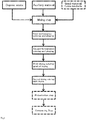
- FIG. 1 is a flow chart illustrating steps of the seeding agent production method according to this embodiment.
- organic waste and an auxiliary material are used as a raw material.
- organic waste it is possible to use, for example, sewage sludge, livestock excrement, and food waste.
- livestock excrement it is preferable to use cow dung with straw pieces. The use of such cow dung makes it possible to cause Bacillus bacteria to be mixed in a produced seeding agent in a large amount.
- the auxiliary material is a material for use as a host material, a moisture adjustment material and a density adjustment material, and it is possible to use, for example, wood chips, rice straw pieces, and sawdust.
- the wood chips are preferably softwood chips.
- the softwood chips are particularly preferable as the auxiliary material, because they are not easily decomposed, thereby being capable of withstanding repetitive use, and contain a large amount of a resin component, thereby being capable of producing a large amount of metabolite having a pathogen killing effect, through microbial metabolism during the fermentation step.
- seed compost prepared by fermenting compost, or a commercially-available microbial formulation may be optionally added as a seed material to the raw material.
- specific bacteria or soil containing the specific bacteria may be optionally added to the raw material according to the specific function.
- the organic waste and the auxiliary material, and the optional seed material, specific bacteria and/or specific bacteria-containing soil are homogeneously mixed together.
- the organic waste is preferably contained in an amount of 20 to 80 weight%
- the auxiliary material is preferably contained in an amount of 20 to 45 weight%.
- the optional seed material, specific bacteria and/or specific bacteria-containing soil are contained in an amount up to 10 weight%.
- a water content of the raw material is adjusted in such a manner as to fall within a certain range.
- the water content of the raw material can be adjusted by changing the amount of the auxiliary material to be contained in the raw material, and is preferably set to about 60 to 70 weight%, more preferably, about 65 to 69 weight%. Preferably, the water content of the raw material is changed depending on whether the raw material is used in winter or in summer, wherein, in summer, the water content is set to a higher value.
- a bulk specific gravity of the mixture can be adjusted by the amount of the auxiliary material, and is preferably set to about 0.5 to 0.6. When the raw material is used in winter, the bulk specific gravity is preferably set to a relatively high value.
- the raw material is homogeneously mixed under stirring, for example, using a manual spreader.
- the stirring is performed after stacking up the auxiliary material and the organic waste in this order.
- the homogeneously-mixed raw material in this manner is put into a fermenter.
- the homogeneously-mixed raw material is loaded into the fermenter and subjected to fermentation.
- the raw material is subjected to aerobic fermentation while an air supply amount to the raw material is controlled such that a temperature of the raw material rises to or beyond about 70°C two times or more, and rises to or beyond about 50°C one time or more.
- a temperature of the raw material respective temperatures of several depth positions apart from a surface of the loaded raw material by 1 m or less are measured, and a highest one of the measured temperatures may be defined as the temperature of the raw material in the fermentation step.
- the raw material is loaded into the fermenter, and fermented until the temperature thereof rises to or beyond about 70°C under control of the air supply amount to the raw material.
- the control of the air supply amount i.e., increasing and reducing of the air supply amount, may be performed by increasing and reducing an air supply amount per unit time, or by increasing and reducing an air supply time while maintaining the air supply amount per unit time.
- a given period of time e.g., about 3 to 14 days depending on conditions such as temperature and humidity
- the term "plowing” means an operation of stirring the raw material to supply oxygen to the entire raw material to thereby homogenously promote the fermentation, and suppress excess formation of an aggregated structure to thereby suppress excessive temperature rise to prevent carbonization of the raw material.
- the fermentation is promoted until the temperature of the raw material rises to or beyond about 70°C again, and then next plowing is performed at the same timing as that mentioned above.
- the process of fermenting the raw material under the condition that the temperature of the raw material rises to or beyond about 70°C at least two times or more, by controlling the air supply amount and performing plowing is a first fermentation substep.
- a number of times the temperature of the raw material is increased to about 70°C or more, in the first fermentation substep, is appropriately determined while taking into account quality of a finally-obtained seeding agent and a permissible production lead time.
- the first fermentation substep is terminated when the temperature of the raw material does not rise beyond 70°C any more, or when plowing is performed in response to an elapse of a given period of time (e.g., about 3 to 14 days) under the condition that the temperature of the raw material is maintained at a temperature of about 70°C or more.
- the temperature of the raw material is lowered by controlling the air supply amount (specifically, by reducing the air supply amount). Then, when the temperature of the raw material falls below about 50°C, or when a given period of time (e.g., about 5 to 14 days depending on conditions such as temperature and humidity) has elapsed after the temperature of the raw material does not rise beyond 70°C, plowing is performed. After the plowing, under control of the air supply amount, the raw material is further fermented for a given period of time (e.g., about 5 to 14 days depending on conditions such as temperature and humidity) under the condition that the temperature of the raw material is set to a temperature of about 50°C or more. This process is a second fermentation substep.
- a given period of time e.g., about 5 to 14 days depending on conditions such as temperature and humidity
- the second fermentation substep is terminated when the temperature of the raw material rises to or beyond about 50°C at least one time, and this state is maintained for a given period of time (about 5 to 10 days), or when the temperature of the raw material does not rise beyond about 50°C even after repeatedly performing plowing.
- the water content of the raw material as measured just after completion of the fermentation step is generally about 55 to 60%.
- a number of times the temperature of the raw material is increased to a temperature of about 50°C or more, in the second fermentation substep, is appropriately determined while taking into account quality of a finally-obtained seeding agent and a permissible production lead time. As the number of times the temperature of the raw material is increased to a temperature of about 50°C or more becomes larger, bacteria capable of growing in a normal temperature range become more dominant during use of a finally-obtained seeding agent.
- the fermentation step is performed under control of a target temperature during the fermentation and the number of times reaching the target temperature. This provides the following advantageous effects.
- Excess organic matter can be decomposed and removed to achieve stabilization of the seeding agent, and prevent an excessive increase in environmental load even if the seeding agent is put into a wastewater treatment facility.
- a variety of microorganisms proliferate in response to changes in environmental conditions during the fermentation, so that it becomes possible to additionally impart, to the seeding agent, microbial biodiversity and thus functionality compatible with wide wastewater treatment conditions.
- the fermentation temperature can be adequately increased to remove (e.g., annihilate) unwanted matters for the seeding agent, e.g., unwanted bacteria such as Escherichia coli, vegetable seeds, and bugs such as fly, to stabilize the seeding agent.
- unwanted bacteria e.g., Escherichia coli, vegetable seeds, and bugs such as fly
- the fermenter used in this embodiment is a type configured to supply air from a bottom thereof toward the raw material, e.g., configured such that an air blast pipe is buriedly inserted into a bottom wall thereof.
- the use of the fermenter configured as above makes it possible to adequately send air to an inside of the raw material.
- Air supply into the fermenter can be achieved, for example, by sending air to the air blast pipe provided in the bottom wall using a heretofore known air blower. More preferably, this type of fermenter is plurally provided, wherein plowing is performed by transferring the raw material from one of the fermenters to another one of the fermenters.
- the fermented raw material after being subjected to the fermentation step is then dried until the water content thereof finally falls within the range of about 10 to 30%.
- the present invention is characterized in that a drying step of drying the raw material is performed in two stages: a first drying substep; and a second drying substep.
- the first drying substep is a process of gradually drying the fermented raw material until a water content thereof becomes a value falling within a given range which is less than that as measured just after completion of the fermentation step
- the second drying substep is a process of rapidly drying the dried raw material after being subjected to the first drying substep, until a water content thereof becomes a value falling within a given range which is less than that as measured just after completion of the first drying substep.
- the first drying substep is a process of gradually drying the fermented raw material after being subjected to the fermentation step, until a water content thereof becomes a value falling within a first range which is less than that as measured just after completion of the fermentation step, by taking a certain level of time.
- the first range of the water content of the fermented raw material is about 40 to 55%, preferably, about 40 to 50%.
- grade means that a period of time necessary to dry the fermented raw material until the water content thereof becomes a value falling within the first range is greater than a period of time necessary for the second drying substep described in detail later, i.e., necessary to dry the raw material after being subjected to the first drying substep, until a water content thereof becomes a value falling within a second range which is less than a lower limit of the first range.
- the raw material is dried by supplying thereto air at normal temperature, while plowing is appropriately performed.
- a number of times of plowing during the fermentation step is greater than a number of times of plowing during the fermentation step.
- plowing is performed one time or more per week for 2 weeks, and then continuously performed one time or more per day for 10 to 14 days.
- the air supply amount may be appropriately set depending on a state of the raw material.
- the first drying substep is preferably performed for 2 to 4 weeks.
- the first drying substep may include natural drying such as sun drying, as necessary.
- the natural drying may be performed by, every time plowing of the raw material is performed, extracting a part of the raw material to expose it to the sun, and then returning the dried raw material to the original raw material.
- the water content of the raw material after being subjected to the fermentation step is reduced by taking a relatively long period of time. This provides the following advantageous effects.
- Drying by taking a relatively long period of time makes it possible to gradually apply stress to sporulating bacteria to stimulate sporulation, thereby allowing microorganism to stably exist in the seeding agent in the form of spore.
- the second drying substep is a process of rapidly drying the dried raw material after being subjected to the first drying substep, until a water content thereof becomes a value falling within a second range which is less than a lower limit of the first range.
- the second range of the water content of the dried raw material is about 10 to 30%, preferably, about 10 to 20%.
- the term "rapidly" means that a period of time necessary to dry the raw material after being subjected to the first drying substep, until the water content thereof becomes a value falling within the second range is less than the period of time necessary for the first drying substep, i.e., necessary to dry the raw material after being subjected to the fermentation step, until the water content thereof becomes a value falling within the first second range.
- the former period of time is preferably less than one-half of the latter period of time. Specifically, the former period of time is preferably 1 to 7 days, most preferably, 2 days or less.
- the raw material after being subjected to the first drying substep is forcedly dried, for example, by using a hot air from a drying device.
- the raw material is dried at a possibly low temperature.
- the water content of the raw material after being subjected to the first drying substep is reduced within a relatively short period of time. This provides the following advantageous effects.
- a microbial reaction is stopped to decompose and degrade excess organic matter other than microorganisms sporulated in the first drying substep and prevent transition and mutation of further microbial flora to thereby enhance storage stability of the seeding agent.
- Microorganisms useful for wastewater treatment are dominantly contained, and microbial metabolite is left to create a highly reactive state, so that it becomes possible to impart a starter function to the seeding agent so as to facilitate proliferation of the microorganisms when used.
- the raw material after being subjected to the first drying substep is subjected to a sieving step, before the second drying substep.
- the auxiliary material in the raw material is fully decomposed.
- a seeding agent is likely to exert a negative influence on a wastewater treatment facility when it is put into the facility.
- a hardly-decomposable auxiliary material is daringly used, in some cases.
- the raw material dried after being subjected to the second drying substep to have a water content falling within the second rage can be non-uniform in terms of particle size.
- the raw material is preferably pulverized to have an arbitrary particle size, as necessary. Through pulverization, the particle size of the raw material is uniformed, so that it becomes possible to facilitate a processing of the seeding agent to be optionally performed in a subsequent step
- a pellet-shaped seeding agent can be obtained.
- the pellet-shaped seeding agent can sufficiently function in this form, it has the following disadvantage, possibly leading to a problem. Assume that the pellet-shaped seeding agent is directly put into a treatment tank of a wastewater treatment facility. In this case, if a large volume of wastewater to be treated flows into the treatment tank within a short period of time, the pellet-shaped seeding agent is likely to be discharged outside the tank without sufficient contact with the wastewater inside the tank, resulting in causing deterioration in effect of the seeding agent.
- the pellet-shaped seeding agent is preferably compacted into a block in some way.
- the technique described in the Patent Document 4 may be employed as a method for compacting the seeding agent according to the present invention into a block.
- the technique described in the Patent Document 4 comprises the following steps. First of all, a given amount of binder is added to the pellet-shaped seeding agent.
- the binder it is possible to use, for example, rice bran, rice powder, starch and wheat flour.
- water is added to a kneaded mixture of the seeding agent and the binder. Respective amounts of the binder and water are appropriately selected depending on an amount of water contained in the seeding agent.
- the binder is preferably added in an amount of about 5 to 10 weight%, with respect to 100 weight% of the seeding agent, and water is preferably added in an amount of about 25 to 27.5 weight%, with respect to 100 weight% of the mixture of the seeding agent and the binder.
- water is added, it is added in plural additions, e.g., 15 to 30 additions, and, every time water is added, the seeding agent and the added water are homogenously kneaded.
- the seeding agent with the binder and water added thereto is put into a mold and compressed by a given pressure.
- the compression pressure is preferably about 15 to 50 kg/cm 2 .
- a mixture of dewatered sludge, cow dung, a seed material and wood chips was used as the raw material.
- the dewatered sludge, the cow dung, the seed material and the wood chips were mixed, respectively, in an amount of 50 weight%, in an amount of 20 weight%, in an amount of 10 weight% and in an amount of 20 weight%.
- a water content of the raw material was 65 weight%.
- compost prepared by fermenting organic waste was used. Although a plurality of types of bacteria and actinomycetes were mixed in the seed material, theses were not mixed as a microbial group having a specific feature under intentional control.
- the raw material was mixed using a manual spreader, and the mixed raw material was put into a fermenter.
- the fermenter had a size of 4.9 m length ⁇ 3.8 m width ⁇ 3.0 m height, and a structure in which five air blast pipes were buriedly inserted into a bottom wall thereof, and 1.5t of the raw material was loaded into the fermenter.
- a temperature of the above raw material was increased until it rose beyond 70°C, under adjustment of an air supply amount from the air blast pipes. After the temperature rose beyond 70°C, the air supply amount was reduced, and, in this state, fermentation was maintained. Subsequently, in summer, when the temperature of the raw material fell below 70°C, or when about one week had elapsed under the condition that the temperature of the raw material was maintained at 70°C, or, in winter, when the temperature of the raw material fell below 70°C, or when about 10 to 14 days had elapsed under the condition that the temperature of the raw material was maintained at 70°C, plowing was performed by transferring the raw material to another fermenter having the same size and structure. After the plowing, the temperature of the raw material was increased until it rose beyond 70°C again, under adjustment of the air supply amount, and the second plowing was performed at the same timing as that described above. The above process is equivalent to the first fermentation substep.
- the temperature of the raw material was increased until it rose beyond 50°C, under adjustment of the air supply amount, and, in this state, the fermentation was maintained.
- the temperature of the raw material fell below 50°C, or when about one week had elapsed under the condition that the temperature of the raw material was maintained at 50°C, or, in winter, when the temperature of the raw material fell below 50°C, or when about 10 to 14 days had elapsed under the condition that the temperature of the raw material was maintained at 50°C, the fermentation step was terminated. This above process is equivalent to the second fermentation substep. At this point, a weight of the raw material was about 9 t.
- FIG. 2 illustrates typical temperature profiles in summer and winter when the raw material is actually fermented under the above fermentation control.
- the raw material after being subjected to the fermentation step was gradually dried.
- the water content thereof was 57 to 59 weight%.
- the water content of the raw material was reduced to about 50% or less by supplying air at normal temperature to the raw material at a flow rate of 1.0 to 5.0 m 3 /sec for 6 to 9 hours/day over about 4 weeks, and performing plowing.
- a part of the raw material was subjected to natural drying in the sum, and returned to the original raw material to thereby promote vaporization of water.
- the above process is equivalent to the first drying substep.
- the raw material having a water content reduced to 50% or less was screened using a sieve having a sieve mesh of 10 mm to remove wood chips which had not been fully decomposed.
- the weight of the raw material after the removal of remaining wood chips was about 5 t.
- the sieved raw material i.e., the raw material after the removal of remaining wood chips
- a period of time required for the drying was 24 to 72 hours.
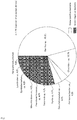
- FIG. 3 presents a result obtained by analyzing a type of microorganism contained in the seeding agent produced in the above manner.
- the analysis of the type of microorganism was performed with a focus on bacteria contained therein and using 16S rDNA clone library analysis.
- a clone library was constructed by incorporating into, a plasmid vector, a region corresponding to 9F-1451R (PCA primer 9F: GAGTTTGATCCTGGCTCAG, and 1541R: AAGGAGGTGATCCAGC) of 16S rDNA.
- FIG. 3 shows that the seeding agent according to the present invention contains 4 genera of Gram-positive bacteria in a total percentage of 71.8%.
- the feature of the present invention is in that a drying step of drying the raw material after being subjected to the fermentation step is divided into two substeps, wherein the raw material is gradually dried to reach a given range of water content by taking a relatively long period of time, and then rapidly dried to reach a given range of water content within a shorter period of time.
- a drying step of drying the raw material after being subjected to the fermentation step is divided into two substeps, wherein the raw material is gradually dried to reach a given range of water content by taking a relatively long period of time, and then rapidly dried to reach a given range of water content within a shorter period of time.
- the analysis method for the type of bacterium is the same as that in FIG. 3 .
- the sample D is equivalent to the seeding agent produced by the production method according to the present invention.
- FIGS. 4A to 4D illustrate analysis results of a type of bacterium emerging when using, as the seeding agent, each of the samples A to D.
- Gram-negative bacteria account for 84% of the total
- Gram-positive bacteria account for only 12%.
- sample B equivalent to a sample obtained by gradually drying the sample A, Gram-positive bacteria dominantly emerge, and account for 43% of the total.
- sample D i.e., a sample obtained by reducing the water content just after completion of fermentation, to 50% or less by taking about 2 weeks (equivalent to the first drying substep as set forth in the appended claims), and then further reducing the water content to 20% or less, by taking 24 hours (equivalent to the second drying substep as set forth in the appended claims), Gram-positive bacteria dominantly emerged, and no Gram-negative bacterium emerged.
- This can be deemed as a result of the phenomenon that, in the second drying substep, unwanted bacteria other than bacteria sporulated in the first substep are decomposed.
- the production method comprising the first drying substep of gradually drying the fermented raw material by taking a relatively long period of time, and the second drying substep of rapidly drying the resulting raw material is significantly effective.
- a suspension liquid containing 1% of n the seeding agent produced by the production method according to the present invention (with respect to 100% of sterile distilled water) was put into each of 11 types A to J of artificial wastewater presented in FIG. 5 , in an amount of 1/10 of an amount of the wastewater, and subjected to shake culture in a conical flask at 27°C at 120 rpm, for 5 days. After cultivation, an analysis sample for a bacterial group was collected from a culture solution.
- PCR-DGGE method gradient of acrylamide gel: 8 ⁇ 10%, concentration gradient of denaturant: 20 ⁇ 50%, migration: 0.5 ⁇ TAE, 200V, 3.5 h), while targeting V3 region of 13S rDNA of a bacterium.
- PCR-DGGE method gradient of acrylamide gel: 8 ⁇ 10%, concentration gradient of denaturant: 20 ⁇ 50%, migration: 0.5 ⁇ TAE, 200V, 3.5 h
- GC-341f 5'-GC clamp-CCTAGGGAGGCAGCAG-3'
- 517r 5'-ATTACCGCGGCTGCTGG-3'
Landscapes
- Life Sciences & Earth Sciences (AREA)
- Engineering & Computer Science (AREA)
- Chemical & Material Sciences (AREA)
- Health & Medical Sciences (AREA)
- Organic Chemistry (AREA)
- Zoology (AREA)
- Bioinformatics & Cheminformatics (AREA)
- Wood Science & Technology (AREA)
- Genetics & Genomics (AREA)
- Biotechnology (AREA)
- Microbiology (AREA)
- Biochemistry (AREA)
- Biomedical Technology (AREA)
- General Engineering & Computer Science (AREA)
- General Health & Medical Sciences (AREA)
- Medicinal Chemistry (AREA)
- Tropical Medicine & Parasitology (AREA)
- Virology (AREA)
- Environmental & Geological Engineering (AREA)
- Sustainable Development (AREA)
- Chemical Kinetics & Catalysis (AREA)
- General Chemical & Material Sciences (AREA)
- Biodiversity & Conservation Biology (AREA)
- Hydrology & Water Resources (AREA)
- Water Supply & Treatment (AREA)
- Treatment Of Sludge (AREA)
- Processing Of Solid Wastes (AREA)
- Micro-Organisms Or Cultivation Processes Thereof (AREA)
- Treatment Of Biological Wastes In General (AREA)
- Fertilizers (AREA)
Claims (8)
- Procédé de production d'un agent d'ensemencement, comprenant :une étape de fermentation consistant à produire une matière première fermentée par fermentation aérobie d'une matière première comprenant des déchets organiques et un matériau auxiliaire, un pourcentage de la teneur en eau de la matière première fermentée tel que mesuré juste après l'achèvement de l'étape de fermentation étant supérieur à une première plage ; etune étape de séchage ; caractérisé en ce que :
l'étape de séchage comporte une première sous-étape de séchage et une seconde sous-étape de séchage ; la première sous-étape de séchage et la seconde sous-étape de séchage étant :la première sous-étape de séchage de production d'une matière première séchée pour sécher la matière première fermentée jusqu'à ce qu'un pourcentage de la teneur en eau de la matière première fermentée se situe dans la première plagela seconde sous-étape de séchage pour sécher davantage la matière première séchée jusqu'à ce qu'un pourcentage de la teneur en eau de la matière première séchée se situe dans une plage qui est en-dessous d'une limite inférieure de la première plage, la première sous-étape de séchage se produisant avant la seconde sous-étape de séchage et étant d'une durée plus longue que la seconde sous-étape de séchage ; etla première plage est de 40 % à 55 %, et la plage qui est en-dessous de la limite inférieure de la première plage est de 10 % à 30 %. - Procédé selon la revendication 1, dans lequel
la première sous-étape de séchage comporte le séchage de la matière première fermentée après avoir été soumise à l'étape de fermentation, jusqu'à ce que sa teneur en eau devienne inférieure ou égale à 50 %, et
la seconde sous-étape de séchage comporte le séchage supplémentaire de la matière première séchée après avoir été soumise à la première sous-étape de séchage, jusqu'à ce que sa teneur en eau devienne inférieure ou égale à 20 %. - Procédé selon la revendication 1 ou la revendication 2, dans lequel la première sous-étape de séchage comporte des microorganismes sporulants contenus dans la matière première fermentée.
- Procédé selon la revendication 1 ou la revendication 2, dans lequel la seconde sous-étape de séchage comporte des microorganismes de décomposition autres que les microorganismes sporulés dans la première sous-étape de séchage.
- Procédé selon la revendication 1 ou la revendication 2, dans lequel l'étape de fermentation comprend :une première sous-étape de fermentation d'augmentation d'une température de fermentation de la matière première à une température de 70 °C ou plus, au moins deux fois ; etune seconde sous-étape de fermentation d'augmentation d'une température de fermentation de la matière première après avoir été soumise à la première sous-étape de fermentation, à une température de 50 °C ou plus, au moins une fois.
- Procédé selon la revendication 5, dans lequel au moins la seconde sous-étape de fermentation comporte une sous-sous-étape de labour de la matière première, et dans lequel, lorsque la température de la matière première dans la sous-sous-étape de labour ne dépasse plus 50 °C, l'étape de fermentation est terminée.
- Procédé selon la revendication 1 ou la revendication 2, qui comprend une étape, avant la seconde sous-étape de séchage, d'élimination d'une partie restante de la matière auxiliaire de la matière première après avoir été soumise à la première sous-étape de séchage.
- Procédé selon la revendication 1 ou la revendication 2, dans lequel les déchets organiques sont choisis dans le groupe constitué par les boues d'épuration, les excréments de bétail et les déchets alimentaires, ou une combinaison d'au moins deux de ceux-ci.
Applications Claiming Priority (1)
| Application Number | Priority Date | Filing Date | Title |
|---|---|---|---|
| PCT/JP2013/057017 WO2014141406A1 (fr) | 2013-03-13 | 2013-03-13 | Procédé de production d'un agent d'ensemencement |
Publications (3)
| Publication Number | Publication Date |
|---|---|
| EP2975005A1 EP2975005A1 (fr) | 2016-01-20 |
| EP2975005A4 EP2975005A4 (fr) | 2016-12-21 |
| EP2975005B1 true EP2975005B1 (fr) | 2021-07-28 |
Family
ID=51416932
Family Applications (1)
| Application Number | Title | Priority Date | Filing Date |
|---|---|---|---|
| EP13878210.7A Active EP2975005B1 (fr) | 2013-03-13 | 2013-03-13 | Procédé de production d'un agent d'ensemencement |
Country Status (5)
| Country | Link |
|---|---|
| US (1) | US20160130550A1 (fr) |
| EP (1) | EP2975005B1 (fr) |
| JP (1) | JP5557967B1 (fr) |
| DK (1) | DK2975005T3 (fr) |
| WO (1) | WO2014141406A1 (fr) |
Families Citing this family (3)
| Publication number | Priority date | Publication date | Assignee | Title |
|---|---|---|---|---|
| JP6846302B2 (ja) * | 2017-06-29 | 2021-03-24 | 猪野 貴行 | 牛糞堆肥循環処理装置 |
| JP7295685B2 (ja) * | 2019-03-29 | 2023-06-21 | Ube三菱セメント株式会社 | 下水汚泥発酵原料の製造方法 |
| JP7489809B2 (ja) * | 2020-03-30 | 2024-05-24 | Ube三菱セメント株式会社 | 発酵乾燥物の製造方法、セメントクリンカーの製造方法、及び、発酵乾燥物の使用方法 |
Family Cites Families (15)
| Publication number | Priority date | Publication date | Assignee | Title |
|---|---|---|---|---|
| JPH04119984A (ja) * | 1990-09-12 | 1992-04-21 | Shiiratsuku:Kk | 有機性廃棄物の処理方法 |
| JPH06144976A (ja) * | 1992-11-05 | 1994-05-24 | Asahi Chem Ind Co Ltd | 有機質廃棄物の堆肥化方法 |
| JP2916742B2 (ja) * | 1993-11-05 | 1999-07-05 | 奥アンツーカ株式会社 | ヒートショックを用いた有機廃棄物の発酵処理方法 |
| JPH0912387A (ja) * | 1995-04-26 | 1997-01-14 | Shikoku Chem Corp | 堆肥化処理剤 |
| JPH09227260A (ja) * | 1996-02-27 | 1997-09-02 | Mitsui Eng & Shipbuild Co Ltd | 堆肥の製造方法 |
| JP3768694B2 (ja) * | 1997-08-18 | 2006-04-19 | コーア株式会社 | Bacillussp代謝物含有材の製造方法 |
| JP2000109386A (ja) * | 1998-10-01 | 2000-04-18 | Asahi Kankyo System Kk | 有機廃棄物の堆肥化方法及び堆肥化物の評価方法 |
| JP2003334573A (ja) * | 2002-03-11 | 2003-11-25 | Shizunai Eiseisha:Kk | シーディング剤を固形化する方法、及び固形化されたシーディング剤 |
| JP4325980B2 (ja) | 2002-03-11 | 2009-09-02 | 株式会社静内衛生社 | 家畜糞尿を原料としたシーディング剤の製造方法 |
| JP4378981B2 (ja) * | 2003-03-18 | 2009-12-09 | パナソニック株式会社 | 有機性排水の処理方法 |
| JP2005041738A (ja) * | 2003-07-23 | 2005-02-17 | Ando Corp | 堆肥化処理方法 |
| JP4627718B2 (ja) * | 2004-12-21 | 2011-02-09 | 株式会社静内衛生社 | シーディング剤を固形化する方法および固形化されたシーディング剤 |
| JP2007209933A (ja) | 2006-02-10 | 2007-08-23 | Tama Tlo Kk | シーディング剤の製造方法 |
| JP2008189820A (ja) * | 2007-02-05 | 2008-08-21 | Nippon Kankyo Kk | 土壌改良材の製造方法 |
| JP4352146B1 (ja) * | 2008-11-18 | 2009-10-28 | 株式会社静内衛生社 | 高機能硝化細菌及び当該細菌を用いた尿素又はアンモニアの浄化方法 |
-
2013
- 2013-03-13 DK DK13878210.7T patent/DK2975005T3/da active
- 2013-03-13 WO PCT/JP2013/057017 patent/WO2014141406A1/fr not_active Ceased
- 2013-03-13 JP JP2013557983A patent/JP5557967B1/ja active Active
- 2013-03-13 EP EP13878210.7A patent/EP2975005B1/fr active Active
- 2013-03-13 US US14/776,214 patent/US20160130550A1/en not_active Abandoned
Non-Patent Citations (1)
| Title |
|---|
| None * |
Also Published As
| Publication number | Publication date |
|---|---|
| DK2975005T3 (da) | 2021-08-30 |
| US20160130550A1 (en) | 2016-05-12 |
| JP5557967B1 (ja) | 2014-07-23 |
| EP2975005A1 (fr) | 2016-01-20 |
| JPWO2014141406A1 (ja) | 2017-02-16 |
| WO2014141406A1 (fr) | 2014-09-18 |
| EP2975005A4 (fr) | 2016-12-21 |
Similar Documents
| Publication | Publication Date | Title |
|---|---|---|
| Qiu et al. | Microbial community responses to biochar addition when a green waste and manure mix are composted: a molecular ecological network analysis | |
| Wang et al. | Effects of the feeding ratio of food waste on fed-batch aerobic composting and its microbial community | |
| Huang et al. | Effects of earthworms on nitrification and ammonia oxidizers in vermicomposting systems for recycling of fruit and vegetable wastes | |
| Xi et al. | Effect of multi-stage inoculation on the bacterial and fungal community structure during organic municipal solid wastes composting | |
| JP7057965B2 (ja) | コンポスト化処理促進材及びコンポストの製造方法 | |
| Xi et al. | Process kinetics of inoculation composting of municipal solid waste | |
| Nie et al. | Effects of lactic acid on modulating the ammonia emissions in co-composts of poultry litter with slaughter sludge | |
| WO2019100579A1 (fr) | Procédé de réduction rapide d'antibiotiques et de gènes de résistance aux antibiotiques dans des déchets solides organiques | |
| CN107586745B (zh) | 一种畜禽粪便堆肥除臭保氮菌株、菌剂及其制备方法和应用 | |
| Sun et al. | Effects of phosphate-solubilizing bacteria on phosphorus components, humus and bacterial community metabolism during spent mushroom substrate composting | |
| Wang et al. | Thermophilic semi-continuous composting of kitchen waste: Performance evaluation and microbial community characteristics | |
| Sun et al. | Dynamic composting actuated by a Caldibacillus thermoamylovorans isolate enables biodecomposability and reusability of Cinnamomum camphora garden wastes | |
| Yan et al. | Coupling network of hydrogen sulfide precursors and bacteria in kitchen waste composting | |
| CN109851446A (zh) | 一种厌氧发酵用含磷复合添加剂及发酵方法 | |
| Li et al. | Inorganic and organic additives differently regulate compost microbiomes in response to heavy metals immobilization | |
| EP2975005B1 (fr) | Procédé de production d'un agent d'ensemencement | |
| Luo et al. | Effect of organic amendments obtained from different pretreatment technologies on soil microbial community | |
| Mohamed et al. | Performance of microbial inoculation and tricalcium phosphate on nitrogen retention and conversion: core microorganisms and enzyme activity during kitchen waste composting | |
| Zhong et al. | Bioelectrochemically-assisted vermibiofilter process enhancing stabilization of sewage sludge with synchronous electricity generation | |
| Cao et al. | Contributions of thermotolerant bacteria to organic matter degradation under a hyperthermophilic pretreatment process during chicken manure composting | |
| Yamada et al. | Successions of bacterial community in composting cow dung wastes with or without hyperthermophilic pre-treatment | |
| JP2013022293A (ja) | 環境改善資材 | |
| Tie et al. | The effect of calcium hydroxide addition on enhancing ammonia recovery during thermophilic composting in a self-heated pilot-scale reactor | |
| CN107759417A (zh) | 一种蘑菇渣生物有机肥及其制备方法 | |
| Zhan et al. | Effects of High Temperature Pretreatment and Inoculation of Bacillus coagulans on Promoting Aerobic Composting of Chicken Manure. |
Legal Events
| Date | Code | Title | Description |
|---|---|---|---|
| PUAI | Public reference made under article 153(3) epc to a published international application that has entered the european phase |
Free format text: ORIGINAL CODE: 0009012 |
|
| 17P | Request for examination filed |
Effective date: 20151013 |
|
| AK | Designated contracting states |
Kind code of ref document: A1 Designated state(s): AL AT BE BG CH CY CZ DE DK EE ES FI FR GB GR HR HU IE IS IT LI LT LU LV MC MK MT NL NO PL PT RO RS SE SI SK SM TR |
|
| AX | Request for extension of the european patent |
Extension state: BA ME |
|
| DAX | Request for extension of the european patent (deleted) | ||
| A4 | Supplementary search report drawn up and despatched |
Effective date: 20161118 |
|
| RIC1 | Information provided on ipc code assigned before grant |
Ipc: B09B 5/00 20060101ALI20161114BHEP Ipc: C12N 1/00 20060101ALI20161114BHEP Ipc: C02F 3/00 20060101AFI20161114BHEP Ipc: B09B 3/00 20060101ALI20161114BHEP Ipc: C12N 3/00 20060101ALI20161114BHEP Ipc: C12N 1/20 20060101ALI20161114BHEP Ipc: C02F 3/34 20060101ALI20161114BHEP |
|
| STAA | Information on the status of an ep patent application or granted ep patent |
Free format text: STATUS: EXAMINATION IS IN PROGRESS |
|
| 17Q | First examination report despatched |
Effective date: 20181220 |
|
| GRAP | Despatch of communication of intention to grant a patent |
Free format text: ORIGINAL CODE: EPIDOSNIGR1 |
|
| STAA | Information on the status of an ep patent application or granted ep patent |
Free format text: STATUS: GRANT OF PATENT IS INTENDED |
|
| INTG | Intention to grant announced |
Effective date: 20210226 |
|
| RIN1 | Information on inventor provided before grant (corrected) |
Inventor name: NAMIKATA, MASAHIRO Inventor name: TAKEBE, FUMIHIKO |
|
| GRAS | Grant fee paid |
Free format text: ORIGINAL CODE: EPIDOSNIGR3 |
|
| GRAA | (expected) grant |
Free format text: ORIGINAL CODE: 0009210 |
|
| STAA | Information on the status of an ep patent application or granted ep patent |
Free format text: STATUS: THE PATENT HAS BEEN GRANTED |
|
| AK | Designated contracting states |
Kind code of ref document: B1 Designated state(s): AL AT BE BG CH CY CZ DE DK EE ES FI FR GB GR HR HU IE IS IT LI LT LU LV MC MK MT NL NO PL PT RO RS SE SI SK SM TR |
|
| REG | Reference to a national code |
Ref country code: GB Ref legal event code: FG4D |
|
| REG | Reference to a national code |
Ref country code: CH Ref legal event code: EP |
|
| REG | Reference to a national code |
Ref country code: DE Ref legal event code: R096 Ref document number: 602013078574 Country of ref document: DE |
|
| REG | Reference to a national code |
Ref country code: AT Ref legal event code: REF Ref document number: 1414607 Country of ref document: AT Kind code of ref document: T Effective date: 20210815 |
|
| REG | Reference to a national code |
Ref country code: IE Ref legal event code: FG4D |
|
| REG | Reference to a national code |
Ref country code: DK Ref legal event code: T3 Effective date: 20210825 |
|
| REG | Reference to a national code |
Ref country code: SE Ref legal event code: TRGR |
|
| REG | Reference to a national code |
Ref country code: LT Ref legal event code: MG9D |
|
| REG | Reference to a national code |
Ref country code: NL Ref legal event code: MP Effective date: 20210728 |
|
| REG | Reference to a national code |
Ref country code: AT Ref legal event code: MK05 Ref document number: 1414607 Country of ref document: AT Kind code of ref document: T Effective date: 20210728 |
|
| PG25 | Lapsed in a contracting state [announced via postgrant information from national office to epo] |
Ref country code: AT Free format text: LAPSE BECAUSE OF FAILURE TO SUBMIT A TRANSLATION OF THE DESCRIPTION OR TO PAY THE FEE WITHIN THE PRESCRIBED TIME-LIMIT Effective date: 20210728 Ref country code: BG Free format text: LAPSE BECAUSE OF FAILURE TO SUBMIT A TRANSLATION OF THE DESCRIPTION OR TO PAY THE FEE WITHIN THE PRESCRIBED TIME-LIMIT Effective date: 20211028 Ref country code: LT Free format text: LAPSE BECAUSE OF FAILURE TO SUBMIT A TRANSLATION OF THE DESCRIPTION OR TO PAY THE FEE WITHIN THE PRESCRIBED TIME-LIMIT Effective date: 20210728 Ref country code: ES Free format text: LAPSE BECAUSE OF FAILURE TO SUBMIT A TRANSLATION OF THE DESCRIPTION OR TO PAY THE FEE WITHIN THE PRESCRIBED TIME-LIMIT Effective date: 20210728 Ref country code: FI Free format text: LAPSE BECAUSE OF FAILURE TO SUBMIT A TRANSLATION OF THE DESCRIPTION OR TO PAY THE FEE WITHIN THE PRESCRIBED TIME-LIMIT Effective date: 20210728 Ref country code: NL Free format text: LAPSE BECAUSE OF FAILURE TO SUBMIT A TRANSLATION OF THE DESCRIPTION OR TO PAY THE FEE WITHIN THE PRESCRIBED TIME-LIMIT Effective date: 20210728 Ref country code: PT Free format text: LAPSE BECAUSE OF FAILURE TO SUBMIT A TRANSLATION OF THE DESCRIPTION OR TO PAY THE FEE WITHIN THE PRESCRIBED TIME-LIMIT Effective date: 20211129 Ref country code: NO Free format text: LAPSE BECAUSE OF FAILURE TO SUBMIT A TRANSLATION OF THE DESCRIPTION OR TO PAY THE FEE WITHIN THE PRESCRIBED TIME-LIMIT Effective date: 20211028 Ref country code: RS Free format text: LAPSE BECAUSE OF FAILURE TO SUBMIT A TRANSLATION OF THE DESCRIPTION OR TO PAY THE FEE WITHIN THE PRESCRIBED TIME-LIMIT Effective date: 20210728 Ref country code: HR Free format text: LAPSE BECAUSE OF FAILURE TO SUBMIT A TRANSLATION OF THE DESCRIPTION OR TO PAY THE FEE WITHIN THE PRESCRIBED TIME-LIMIT Effective date: 20210728 |
|
| PG25 | Lapsed in a contracting state [announced via postgrant information from national office to epo] |
Ref country code: PL Free format text: LAPSE BECAUSE OF FAILURE TO SUBMIT A TRANSLATION OF THE DESCRIPTION OR TO PAY THE FEE WITHIN THE PRESCRIBED TIME-LIMIT Effective date: 20210728 Ref country code: LV Free format text: LAPSE BECAUSE OF FAILURE TO SUBMIT A TRANSLATION OF THE DESCRIPTION OR TO PAY THE FEE WITHIN THE PRESCRIBED TIME-LIMIT Effective date: 20210728 Ref country code: GR Free format text: LAPSE BECAUSE OF FAILURE TO SUBMIT A TRANSLATION OF THE DESCRIPTION OR TO PAY THE FEE WITHIN THE PRESCRIBED TIME-LIMIT Effective date: 20211029 |
|
| PGFP | Annual fee paid to national office [announced via postgrant information from national office to epo] |
Ref country code: DE Payment date: 20220329 Year of fee payment: 10 |
|
| REG | Reference to a national code |
Ref country code: DE Ref legal event code: R097 Ref document number: 602013078574 Country of ref document: DE |
|
| PG25 | Lapsed in a contracting state [announced via postgrant information from national office to epo] |
Ref country code: SM Free format text: LAPSE BECAUSE OF FAILURE TO SUBMIT A TRANSLATION OF THE DESCRIPTION OR TO PAY THE FEE WITHIN THE PRESCRIBED TIME-LIMIT Effective date: 20210728 Ref country code: SK Free format text: LAPSE BECAUSE OF FAILURE TO SUBMIT A TRANSLATION OF THE DESCRIPTION OR TO PAY THE FEE WITHIN THE PRESCRIBED TIME-LIMIT Effective date: 20210728 Ref country code: RO Free format text: LAPSE BECAUSE OF FAILURE TO SUBMIT A TRANSLATION OF THE DESCRIPTION OR TO PAY THE FEE WITHIN THE PRESCRIBED TIME-LIMIT Effective date: 20210728 Ref country code: EE Free format text: LAPSE BECAUSE OF FAILURE TO SUBMIT A TRANSLATION OF THE DESCRIPTION OR TO PAY THE FEE WITHIN THE PRESCRIBED TIME-LIMIT Effective date: 20210728 Ref country code: CZ Free format text: LAPSE BECAUSE OF FAILURE TO SUBMIT A TRANSLATION OF THE DESCRIPTION OR TO PAY THE FEE WITHIN THE PRESCRIBED TIME-LIMIT Effective date: 20210728 Ref country code: AL Free format text: LAPSE BECAUSE OF FAILURE TO SUBMIT A TRANSLATION OF THE DESCRIPTION OR TO PAY THE FEE WITHIN THE PRESCRIBED TIME-LIMIT Effective date: 20210728 |
|
| PGFP | Annual fee paid to national office [announced via postgrant information from national office to epo] |
Ref country code: FR Payment date: 20220325 Year of fee payment: 10 |
|
| PLBE | No opposition filed within time limit |
Free format text: ORIGINAL CODE: 0009261 |
|
| STAA | Information on the status of an ep patent application or granted ep patent |
Free format text: STATUS: NO OPPOSITION FILED WITHIN TIME LIMIT |
|
| 26N | No opposition filed |
Effective date: 20220429 |
|
| PG25 | Lapsed in a contracting state [announced via postgrant information from national office to epo] |
Ref country code: IT Free format text: LAPSE BECAUSE OF FAILURE TO SUBMIT A TRANSLATION OF THE DESCRIPTION OR TO PAY THE FEE WITHIN THE PRESCRIBED TIME-LIMIT Effective date: 20210728 |
|
| PG25 | Lapsed in a contracting state [announced via postgrant information from national office to epo] |
Ref country code: MC Free format text: LAPSE BECAUSE OF FAILURE TO SUBMIT A TRANSLATION OF THE DESCRIPTION OR TO PAY THE FEE WITHIN THE PRESCRIBED TIME-LIMIT Effective date: 20210728 |
|
| REG | Reference to a national code |
Ref country code: CH Ref legal event code: PL |
|
| REG | Reference to a national code |
Ref country code: BE Ref legal event code: MM Effective date: 20220331 |
|
| PG25 | Lapsed in a contracting state [announced via postgrant information from national office to epo] |
Ref country code: LU Free format text: LAPSE BECAUSE OF NON-PAYMENT OF DUE FEES Effective date: 20220313 Ref country code: LI Free format text: LAPSE BECAUSE OF NON-PAYMENT OF DUE FEES Effective date: 20220331 Ref country code: IE Free format text: LAPSE BECAUSE OF NON-PAYMENT OF DUE FEES Effective date: 20220313 Ref country code: CH Free format text: LAPSE BECAUSE OF NON-PAYMENT OF DUE FEES Effective date: 20220331 |
|
| PG25 | Lapsed in a contracting state [announced via postgrant information from national office to epo] |
Ref country code: BE Free format text: LAPSE BECAUSE OF NON-PAYMENT OF DUE FEES Effective date: 20220331 |
|
| REG | Reference to a national code |
Ref country code: DE Ref legal event code: R119 Ref document number: 602013078574 Country of ref document: DE |
|
| PG25 | Lapsed in a contracting state [announced via postgrant information from national office to epo] |
Ref country code: FR Free format text: LAPSE BECAUSE OF NON-PAYMENT OF DUE FEES Effective date: 20230331 Ref country code: DE Free format text: LAPSE BECAUSE OF NON-PAYMENT OF DUE FEES Effective date: 20231003 |
|
| PG25 | Lapsed in a contracting state [announced via postgrant information from national office to epo] |
Ref country code: HU Free format text: LAPSE BECAUSE OF FAILURE TO SUBMIT A TRANSLATION OF THE DESCRIPTION OR TO PAY THE FEE WITHIN THE PRESCRIBED TIME-LIMIT; INVALID AB INITIO Effective date: 20130313 |
|
| PG25 | Lapsed in a contracting state [announced via postgrant information from national office to epo] |
Ref country code: MK Free format text: LAPSE BECAUSE OF FAILURE TO SUBMIT A TRANSLATION OF THE DESCRIPTION OR TO PAY THE FEE WITHIN THE PRESCRIBED TIME-LIMIT Effective date: 20210728 Ref country code: CY Free format text: LAPSE BECAUSE OF FAILURE TO SUBMIT A TRANSLATION OF THE DESCRIPTION OR TO PAY THE FEE WITHIN THE PRESCRIBED TIME-LIMIT Effective date: 20210728 |
|
| PGFP | Annual fee paid to national office [announced via postgrant information from national office to epo] |
Ref country code: GB Payment date: 20240327 Year of fee payment: 12 |
|
| PGFP | Annual fee paid to national office [announced via postgrant information from national office to epo] |
Ref country code: SE Payment date: 20240327 Year of fee payment: 12 Ref country code: DK Payment date: 20240325 Year of fee payment: 12 |
|
| PG25 | Lapsed in a contracting state [announced via postgrant information from national office to epo] |
Ref country code: MT Free format text: LAPSE BECAUSE OF FAILURE TO SUBMIT A TRANSLATION OF THE DESCRIPTION OR TO PAY THE FEE WITHIN THE PRESCRIBED TIME-LIMIT Effective date: 20210728 |
|
| REG | Reference to a national code |
Ref country code: DK Ref legal event code: EBP Effective date: 20250331 |
|
| REG | Reference to a national code |
Ref country code: SE Ref legal event code: EUG |
|
| GBPC | Gb: european patent ceased through non-payment of renewal fee |
Effective date: 20250313 |
|
| PG25 | Lapsed in a contracting state [announced via postgrant information from national office to epo] |
Ref country code: TR Free format text: LAPSE BECAUSE OF FAILURE TO SUBMIT A TRANSLATION OF THE DESCRIPTION OR TO PAY THE FEE WITHIN THE PRESCRIBED TIME-LIMIT Effective date: 20210728 |
|
| PG25 | Lapsed in a contracting state [announced via postgrant information from national office to epo] |
Ref country code: GB Free format text: LAPSE BECAUSE OF NON-PAYMENT OF DUE FEES Effective date: 20250313 |
|
| PG25 | Lapsed in a contracting state [announced via postgrant information from national office to epo] |
Ref country code: SE Free format text: LAPSE BECAUSE OF NON-PAYMENT OF DUE FEES Effective date: 20250314 |
|
| PG25 | Lapsed in a contracting state [announced via postgrant information from national office to epo] |
Ref country code: DK Free format text: LAPSE BECAUSE OF NON-PAYMENT OF DUE FEES Effective date: 20250331 |