EP2976457B1 - Textilprodukte mit einer kräuterzusammensetzung zur darstellung eines insektenabweisenden stoffs - Google Patents
Textilprodukte mit einer kräuterzusammensetzung zur darstellung eines insektenabweisenden stoffs Download PDFInfo
- Publication number
- EP2976457B1 EP2976457B1 EP13767125.1A EP13767125A EP2976457B1 EP 2976457 B1 EP2976457 B1 EP 2976457B1 EP 13767125 A EP13767125 A EP 13767125A EP 2976457 B1 EP2976457 B1 EP 2976457B1
- Authority
- EP
- European Patent Office
- Prior art keywords
- fabric
- amount
- ppm
- machine
- gpl
- Prior art date
- Legal status (The legal status is an assumption and is not a legal conclusion. Google has not performed a legal analysis and makes no representation as to the accuracy of the status listed.)
- Active
Links
- 239000004744 fabric Substances 0.000 title claims description 398
- 239000000203 mixture Substances 0.000 title claims description 217
- 241000238631 Hexapoda Species 0.000 title claims description 29
- 239000005871 repellent Substances 0.000 title claims description 8
- 230000002940 repellent Effects 0.000 title claims description 8
- 239000004753 textile Substances 0.000 title description 58
- 238000000034 method Methods 0.000 claims description 133
- 241001584775 Tunga penetrans Species 0.000 claims description 132
- QTBSBXVTEAMEQO-UHFFFAOYSA-N Acetic acid Chemical compound CC(O)=O QTBSBXVTEAMEQO-UHFFFAOYSA-N 0.000 claims description 109
- HEMHJVSKTPXQMS-UHFFFAOYSA-M Sodium hydroxide Chemical compound [OH-].[Na+] HEMHJVSKTPXQMS-UHFFFAOYSA-M 0.000 claims description 90
- ISOLELCWKGNNOX-UHFFFAOYSA-N 9-(furan-3-yl)-3a,6a,9a,11b-tetramethyl-1,2,3,3a,4,5a,6,6a,8,9,9a,10,11,11a,11b,11c-hexadecahydrocyclopenta[7,8]phenanthro[10,1-bc]furan-1,3,6-triol Chemical compound OC1CC(O)C2(C)COC(C(C3(C)C4=CC5)O)C2C1(C)C3CCC4(C)C5C=1C=COC=1 ISOLELCWKGNNOX-UHFFFAOYSA-N 0.000 claims description 77
- XLYOFNOQVPJJNP-UHFFFAOYSA-N water Substances O XLYOFNOQVPJJNP-UHFFFAOYSA-N 0.000 claims description 71
- 239000000077 insect repellent Substances 0.000 claims description 57
- 239000000049 pigment Substances 0.000 claims description 57
- 239000000975 dye Substances 0.000 claims description 53
- 238000004043 dyeing Methods 0.000 claims description 51
- 239000010446 mirabilite Substances 0.000 claims description 46
- RSIJVJUOQBWMIM-UHFFFAOYSA-L sodium sulfate decahydrate Chemical compound O.O.O.O.O.O.O.O.O.O.[Na+].[Na+].[O-]S([O-])(=O)=O RSIJVJUOQBWMIM-UHFFFAOYSA-L 0.000 claims description 46
- 230000008569 process Effects 0.000 claims description 44
- KWAMDQVQFVBEAU-UHFFFAOYSA-N 17-Epiazadiradione Natural products O=C1C=C2C3(C)C(OC(=O)C)CC4C(C)(C)C(=O)C=CC4(C)C3CCC2(C)C1C=1C=COC=1 KWAMDQVQFVBEAU-UHFFFAOYSA-N 0.000 claims description 41
- KWAMDQVQFVBEAU-ASOIATIHSA-N Azadiradione Natural products O=C(O[C@H]1[C@]2(C)[C@@H]([C@]3(C)[C@@H](C(C)(C)C(=O)C=C3)C1)CC[C@@]1(C)[C@H](c3cocc3)C(=O)C=C21)C KWAMDQVQFVBEAU-ASOIATIHSA-N 0.000 claims description 41
- XYYAFLHHHZVPRN-GXTWGEPZSA-N Fraxinellone Chemical compound C=1([C@@H]2OC(=O)C3=C(CCC[C@]32C)C)C=COC=1 XYYAFLHHHZVPRN-GXTWGEPZSA-N 0.000 claims description 41
- KWAMDQVQFVBEAU-HMWIRDDCSA-N azadiradione Chemical compound C=1([C@H]2[C@]3(C)CC[C@@H]4[C@@]5(C)C=CC(=O)C(C)(C)[C@@H]5C[C@H]([C@]4(C3=CC2=O)C)OC(=O)C)C=COC=1 KWAMDQVQFVBEAU-HMWIRDDCSA-N 0.000 claims description 41
- XXIKKMLIDXLAIK-IZSBMLLGSA-N azadirone Natural products O=C(O[C@H]1[C@]2(C)[C@@H]([C@]3(C)[C@@H](C(C)(C)C(=O)C=C3)C1)CC[C@@]1(C)[C@H](c3cocc3)CC=C21)C XXIKKMLIDXLAIK-IZSBMLLGSA-N 0.000 claims description 41
- WPNOWVWMZUYEQO-UHFFFAOYSA-N Fraxinellone Natural products CC1=C2C(=O)OC(c3occc3)C2(C)CCC1 WPNOWVWMZUYEQO-UHFFFAOYSA-N 0.000 claims description 40
- ZQIYJHBQRBBBRZ-UHFFFAOYSA-N nimbin Natural products COC(=O)CC1C2C(C(OC(=O)C)C3OC4CC(C(=C4C13C)C)c5cocc5)C(C)(C=CC2=O)C(=O)OC ZQIYJHBQRBBBRZ-UHFFFAOYSA-N 0.000 claims description 40
- NHOIBRJOQAYBJT-IMGVWCFESA-N nimbin Chemical compound C=1([C@@H]2C[C@H]3O[C@H]4[C@](C3=C2C)(C)[C@@H]([C@]2(C(=O)C=C[C@](C)([C@@H]2[C@H]4OC(C)=O)C(=O)OC)C)CC(=O)OC)C=COC=1 NHOIBRJOQAYBJT-IMGVWCFESA-N 0.000 claims description 40
- IWERWMCSIQZTFD-UHFFFAOYSA-N salannin Natural products COC(=O)CC1C2(C)C(CC(OC(=O)C)C3(C)COC(C4OC5C(CC(=C5C14C)C)c6cocc6)C23)OC(=O)C(=CC)C IWERWMCSIQZTFD-UHFFFAOYSA-N 0.000 claims description 40
- CJHBVBNPNXOWBA-REXVOHEDSA-N salannin Chemical compound C=1([C@@H]2C[C@H]3O[C@H]4[C@](C3=C2C)(C)[C@@H]([C@]2(C)[C@@H]3[C@]([C@@H](C[C@@H]2OC(=O)C(\C)=C\C)OC(C)=O)(C)CO[C@H]34)CC(=O)OC)C=COC=1 CJHBVBNPNXOWBA-REXVOHEDSA-N 0.000 claims description 40
- SAJGFFZNQLYNRJ-UHFFFAOYSA-N Salannol Natural products CCC(C)C(=O)OC1CC(O)C2(C)COC3C4OC5CC(C(=C5C4(C)C(CC(=O)OC)C1(C)C23)C)c6cocc6 SAJGFFZNQLYNRJ-UHFFFAOYSA-N 0.000 claims description 39
- JHEAMHIBUPEMCC-UHFFFAOYSA-N Vepinin Natural products CC12C3C4(C)CCC2C2(C)C=CC(=O)C(C)(C)C2C(OC(=O)C)C1OC3CC4C=1C=COC=1 JHEAMHIBUPEMCC-UHFFFAOYSA-N 0.000 claims description 39
- FLTWOOAJLVECQQ-QJBQBLRASA-N chembl2288874 Chemical compound C=1([C@@H]2C[C@H]3O[C@H]4[C@](C3=C2C)(C)[C@@H]([C@]2(C)[C@@H]3[C@]([C@@H](C[C@@H]2OC(=O)CC(C)C)O)(C)CO[C@H]34)CC(=O)OC)C=COC=1 FLTWOOAJLVECQQ-QJBQBLRASA-N 0.000 claims description 39
- 239000011230 binding agent Substances 0.000 claims description 38
- OBFQBDOLCADBTP-UHFFFAOYSA-N aminosilicon Chemical compound [Si]N OBFQBDOLCADBTP-UHFFFAOYSA-N 0.000 claims description 37
- 238000001035 drying Methods 0.000 claims description 37
- 239000000839 emulsion Substances 0.000 claims description 37
- 238000011282 treatment Methods 0.000 claims description 35
- 239000003795 chemical substances by application Substances 0.000 claims description 34
- 235000011121 sodium hydroxide Nutrition 0.000 claims description 30
- 239000000654 additive Substances 0.000 claims description 28
- 239000005878 Azadirachtin Substances 0.000 claims description 27
- VEHPJKVTJQSSKL-UHFFFAOYSA-N azadirachtin Natural products O1C2(C)C(C3(C=COC3O3)O)CC3C21C1(C)C(O)C(OCC2(OC(C)=O)C(CC3OC(=O)C(C)=CC)OC(C)=O)C2C32COC(C(=O)OC)(O)C12 VEHPJKVTJQSSKL-UHFFFAOYSA-N 0.000 claims description 27
- FTNJWQUOZFUQQJ-NDAWSKJSSA-N azadirachtin A Chemical compound C([C@@H]([C@]1(C=CO[C@H]1O1)O)[C@]2(C)O3)[C@H]1[C@]23[C@]1(C)[C@H](O)[C@H](OC[C@@]2([C@@H](C[C@@H]3OC(=O)C(\C)=C\C)OC(C)=O)C(=O)OC)[C@@H]2[C@]32CO[C@@](C(=O)OC)(O)[C@@H]12 FTNJWQUOZFUQQJ-NDAWSKJSSA-N 0.000 claims description 27
- FTNJWQUOZFUQQJ-IRYYUVNJSA-N azadirachtin A Natural products C([C@@H]([C@]1(C=CO[C@H]1O1)O)[C@]2(C)O3)[C@H]1[C@]23[C@]1(C)[C@H](O)[C@H](OC[C@@]2([C@@H](C[C@@H]3OC(=O)C(\C)=C/C)OC(C)=O)C(=O)OC)[C@@H]2[C@]32CO[C@@](C(=O)OC)(O)[C@@H]12 FTNJWQUOZFUQQJ-IRYYUVNJSA-N 0.000 claims description 27
- 239000013505 freshwater Substances 0.000 claims description 25
- 239000003599 detergent Substances 0.000 claims description 23
- 238000009981 jet dyeing Methods 0.000 claims description 22
- 229920000742 Cotton Polymers 0.000 claims description 19
- 239000000985 reactive dye Substances 0.000 claims description 19
- UIIMBOGNXHQVGW-UHFFFAOYSA-M Sodium bicarbonate Chemical compound [Na+].OC([O-])=O UIIMBOGNXHQVGW-UHFFFAOYSA-M 0.000 claims description 18
- 238000010276 construction Methods 0.000 claims description 16
- 229920000728 polyester Polymers 0.000 claims description 15
- 238000005406 washing Methods 0.000 claims description 15
- 238000010014 continuous dyeing Methods 0.000 claims description 14
- 239000007788 liquid Substances 0.000 claims description 14
- JVBXVOWTABLYPX-UHFFFAOYSA-L sodium dithionite Chemical compound [Na+].[Na+].[O-]S(=O)S([O-])=O JVBXVOWTABLYPX-UHFFFAOYSA-L 0.000 claims description 14
- 238000007730 finishing process Methods 0.000 claims description 12
- 206010004194 Bed bug infestation Diseases 0.000 claims description 11
- 241001414835 Cimicidae Species 0.000 claims description 11
- MHAJPDPJQMAIIY-UHFFFAOYSA-N Hydrogen peroxide Chemical compound OO MHAJPDPJQMAIIY-UHFFFAOYSA-N 0.000 claims description 10
- 239000000984 vat dye Substances 0.000 claims description 10
- 235000017557 sodium bicarbonate Nutrition 0.000 claims description 9
- 229910000030 sodium bicarbonate Inorganic materials 0.000 claims description 9
- 241000255925 Diptera Species 0.000 claims description 8
- 241000257226 Muscidae Species 0.000 claims description 8
- 229910004878 Na2S2O4 Inorganic materials 0.000 claims description 7
- 241000238711 Pyroglyphidae Species 0.000 claims description 7
- 229940046533 house dust mites Drugs 0.000 claims description 7
- 241000238876 Acari Species 0.000 claims description 6
- 241000258937 Hemiptera Species 0.000 claims description 6
- 238000003306 harvesting Methods 0.000 claims description 6
- 238000011068 loading method Methods 0.000 claims description 6
- 229920000058 polyacrylate Polymers 0.000 claims description 5
- NTHWMYGWWRZVTN-UHFFFAOYSA-N sodium silicate Chemical compound [Na+].[Na+].[O-][Si]([O-])=O NTHWMYGWWRZVTN-UHFFFAOYSA-N 0.000 claims description 5
- 241000256118 Aedes aegypti Species 0.000 claims description 4
- 241001414836 Cimex Species 0.000 claims description 4
- 241000238710 Dermatophagoides Species 0.000 claims description 4
- 241000238681 Ixodes Species 0.000 claims description 4
- 241000257159 Musca domestica Species 0.000 claims description 4
- 229920000297 Rayon Polymers 0.000 claims description 4
- 241000330972 Trombidium Species 0.000 claims description 4
- 239000003906 humectant Substances 0.000 claims description 4
- 229940070721 polyacrylate Drugs 0.000 claims description 4
- 210000002268 wool Anatomy 0.000 claims description 4
- 239000007844 bleaching agent Substances 0.000 claims description 3
- 229920002678 cellulose Polymers 0.000 claims description 3
- 239000001913 cellulose Substances 0.000 claims description 3
- 238000004806 packaging method and process Methods 0.000 claims description 3
- 230000001418 larval effect Effects 0.000 claims description 2
- 239000007832 Na2SO4 Substances 0.000 claims 1
- PMZURENOXWZQFD-UHFFFAOYSA-L Sodium Sulfate Chemical compound [Na+].[Na+].[O-]S([O-])(=O)=O PMZURENOXWZQFD-UHFFFAOYSA-L 0.000 claims 1
- 229910052938 sodium sulfate Inorganic materials 0.000 claims 1
- 235000011152 sodium sulphate Nutrition 0.000 claims 1
- 239000000243 solution Substances 0.000 description 44
- 239000000126 substance Substances 0.000 description 36
- 241000282412 Homo Species 0.000 description 27
- 235000013500 Melia azadirachta Nutrition 0.000 description 25
- 239000000047 product Substances 0.000 description 24
- 244000045947 parasite Species 0.000 description 18
- 239000004615 ingredient Substances 0.000 description 15
- 238000012545 processing Methods 0.000 description 15
- 239000000758 substrate Substances 0.000 description 15
- 244000237986 Melia azadirachta Species 0.000 description 14
- 230000001846 repelling effect Effects 0.000 description 14
- 239000000463 material Substances 0.000 description 13
- 238000012360 testing method Methods 0.000 description 13
- 240000005343 Azadirachta indica Species 0.000 description 11
- 239000000575 pesticide Substances 0.000 description 10
- 241000124008 Mammalia Species 0.000 description 9
- 230000000694 effects Effects 0.000 description 9
- 150000001875 compounds Chemical class 0.000 description 8
- 230000006378 damage Effects 0.000 description 8
- 239000000284 extract Substances 0.000 description 8
- 235000015112 vegetable and seed oil Nutrition 0.000 description 8
- 241000607479 Yersinia pestis Species 0.000 description 7
- 238000012986 modification Methods 0.000 description 7
- 230000004048 modification Effects 0.000 description 7
- 241001327638 Cimex lectularius Species 0.000 description 6
- 238000009472 formulation Methods 0.000 description 6
- 239000012674 herbal formulation Substances 0.000 description 6
- 231100000252 nontoxic Toxicity 0.000 description 6
- 230000003000 nontoxic effect Effects 0.000 description 6
- 239000003086 colorant Substances 0.000 description 5
- 230000007613 environmental effect Effects 0.000 description 5
- 238000004045 reactive dyeing Methods 0.000 description 5
- 239000007921 spray Substances 0.000 description 5
- 241000238421 Arthropoda Species 0.000 description 4
- 241000253973 Schistocerca gregaria Species 0.000 description 4
- 229940093797 bioflavonoids Drugs 0.000 description 4
- 239000008280 blood Substances 0.000 description 4
- 210000004369 blood Anatomy 0.000 description 4
- 238000010924 continuous production Methods 0.000 description 4
- -1 especially Chemical compound 0.000 description 4
- 239000002018 neem oil Substances 0.000 description 4
- 231100000419 toxicity Toxicity 0.000 description 4
- 230000001988 toxicity Effects 0.000 description 4
- 206010061217 Infestation Diseases 0.000 description 3
- FAPWRFPIFSIZLT-UHFFFAOYSA-M Sodium chloride Chemical compound [Na+].[Cl-] FAPWRFPIFSIZLT-UHFFFAOYSA-M 0.000 description 3
- 239000004480 active ingredient Substances 0.000 description 3
- 230000015572 biosynthetic process Effects 0.000 description 3
- 230000003292 diminished effect Effects 0.000 description 3
- 230000002708 enhancing effect Effects 0.000 description 3
- 239000003517 fume Substances 0.000 description 3
- 239000000383 hazardous chemical Substances 0.000 description 3
- 230000005764 inhibitory process Effects 0.000 description 3
- 238000004900 laundering Methods 0.000 description 3
- 230000007774 longterm Effects 0.000 description 3
- 239000012528 membrane Substances 0.000 description 3
- 238000012856 packing Methods 0.000 description 3
- KWYUFKZDYYNOTN-UHFFFAOYSA-M potassium hydroxide Inorganic materials [OH-].[K+] KWYUFKZDYYNOTN-UHFFFAOYSA-M 0.000 description 3
- 238000002360 preparation method Methods 0.000 description 3
- 239000002994 raw material Substances 0.000 description 3
- 235000002639 sodium chloride Nutrition 0.000 description 3
- 239000007787 solid Substances 0.000 description 3
- 238000004048 vat dyeing Methods 0.000 description 3
- XBZYWSMVVKYHQN-MYPRUECHSA-N (4as,6as,6br,8ar,9r,10s,12ar,12br,14bs)-10-hydroxy-2,2,6a,6b,9,12a-hexamethyl-9-[(sulfooxy)methyl]-1,2,3,4,4a,5,6,6a,6b,7,8,8a,9,10,11,12,12a,12b,13,14b-icosahydropicene-4a-carboxylic acid Chemical compound C1C[C@H](O)[C@@](C)(COS(O)(=O)=O)[C@@H]2CC[C@@]3(C)[C@]4(C)CC[C@@]5(C(O)=O)CCC(C)(C)C[C@H]5C4=CC[C@@H]3[C@]21C XBZYWSMVVKYHQN-MYPRUECHSA-N 0.000 description 2
- 102100022583 Keratinocyte-associated protein 2 Human genes 0.000 description 2
- 101710127502 Keratinocyte-associated protein 2 Proteins 0.000 description 2
- 102100022808 Kielin/chordin-like protein Human genes 0.000 description 2
- 239000002202 Polyethylene glycol Substances 0.000 description 2
- 230000002411 adverse Effects 0.000 description 2
- 230000001887 anti-feedant effect Effects 0.000 description 2
- 230000004071 biological effect Effects 0.000 description 2
- 238000012925 biological evaluation Methods 0.000 description 2
- 231100000135 cytotoxicity Toxicity 0.000 description 2
- 230000003013 cytotoxicity Effects 0.000 description 2
- 238000011161 development Methods 0.000 description 2
- 230000018109 developmental process Effects 0.000 description 2
- 201000010099 disease Diseases 0.000 description 2
- 208000037265 diseases, disorders, signs and symptoms Diseases 0.000 description 2
- 244000079386 endoparasite Species 0.000 description 2
- 231100000206 health hazard Toxicity 0.000 description 2
- 230000036039 immunity Effects 0.000 description 2
- 239000003112 inhibitor Substances 0.000 description 2
- 230000000749 insecticidal effect Effects 0.000 description 2
- 239000002917 insecticide Substances 0.000 description 2
- 230000000670 limiting effect Effects 0.000 description 2
- 125000000067 limonoid group Chemical group 0.000 description 2
- 230000005923 long-lasting effect Effects 0.000 description 2
- 230000007246 mechanism Effects 0.000 description 2
- 229930014626 natural product Natural products 0.000 description 2
- 235000016709 nutrition Nutrition 0.000 description 2
- 229920000620 organic polymer Polymers 0.000 description 2
- 229920001223 polyethylene glycol Polymers 0.000 description 2
- 230000009467 reduction Effects 0.000 description 2
- IKGXIBQEEMLURG-NVPNHPEKSA-N rutin Chemical compound O[C@@H]1[C@H](O)[C@@H](O)[C@H](C)O[C@H]1OC[C@@H]1[C@@H](O)[C@H](O)[C@@H](O)[C@H](OC=2C(C3=C(O)C=C(O)C=C3OC=2C=2C=C(O)C(O)=CC=2)=O)O1 IKGXIBQEEMLURG-NVPNHPEKSA-N 0.000 description 2
- 239000011780 sodium chloride Substances 0.000 description 2
- 241000894007 species Species 0.000 description 2
- 150000003534 tetranortriterpenoids Chemical class 0.000 description 2
- 210000001835 viscera Anatomy 0.000 description 2
- LFQSCWFLJHTTHZ-UHFFFAOYSA-N Ethanol Chemical compound CCO LFQSCWFLJHTTHZ-UHFFFAOYSA-N 0.000 description 1
- JIGUQPWFLRLWPJ-UHFFFAOYSA-N Ethyl acrylate Chemical compound CCOC(=O)C=C JIGUQPWFLRLWPJ-UHFFFAOYSA-N 0.000 description 1
- 206010020751 Hypersensitivity Diseases 0.000 description 1
- 101710154339 Kielin/chordin-like protein Proteins 0.000 description 1
- 206010028980 Neoplasm Diseases 0.000 description 1
- 240000007817 Olea europaea Species 0.000 description 1
- 241000422846 Sequoiadendron giganteum Species 0.000 description 1
- 239000004115 Sodium Silicate Substances 0.000 description 1
- QAOWNCQODCNURD-UHFFFAOYSA-N Sulfuric acid Chemical compound OS(O)(=O)=O QAOWNCQODCNURD-UHFFFAOYSA-N 0.000 description 1
- GUGOEEXESWIERI-UHFFFAOYSA-N Terfenadine Chemical compound C1=CC(C(C)(C)C)=CC=C1C(O)CCCN1CCC(C(O)(C=2C=CC=CC=2)C=2C=CC=CC=2)CC1 GUGOEEXESWIERI-UHFFFAOYSA-N 0.000 description 1
- KWAMDQVQFVBEAU-LVPUXVGSSA-N [(8r,10r)-17-(furan-3-yl)-4,4,8,10,13-pentamethyl-3,16-dioxo-6,7,9,11,12,17-hexahydro-5h-cyclopenta[a]phenanthren-7-yl] acetate Chemical compound C1([C@@]2(C)C=CC(=O)C(C)(C)C2CC([C@]1(C1=CC2=O)C)OC(=O)C)CCC1(C)C2C=1C=COC=1 KWAMDQVQFVBEAU-LVPUXVGSSA-N 0.000 description 1
- DHKHKXVYLBGOIT-UHFFFAOYSA-N acetaldehyde Diethyl Acetal Natural products CCOC(C)OCC DHKHKXVYLBGOIT-UHFFFAOYSA-N 0.000 description 1
- 150000001241 acetals Chemical class 0.000 description 1
- 235000011054 acetic acid Nutrition 0.000 description 1
- 239000002253 acid Substances 0.000 description 1
- 239000003570 air Substances 0.000 description 1
- 239000003513 alkali Substances 0.000 description 1
- 208000026935 allergic disease Diseases 0.000 description 1
- 230000007815 allergy Effects 0.000 description 1
- 230000000843 anti-fungal effect Effects 0.000 description 1
- 230000002942 anti-growth Effects 0.000 description 1
- 230000001387 anti-histamine Effects 0.000 description 1
- 230000001754 anti-pyretic effect Effects 0.000 description 1
- 230000002421 anti-septic effect Effects 0.000 description 1
- 229940121375 antifungal agent Drugs 0.000 description 1
- 239000000739 antihistaminic agent Substances 0.000 description 1
- 239000002221 antipyretic Substances 0.000 description 1
- 238000013459 approach Methods 0.000 description 1
- QVGXLLKOCUKJST-UHFFFAOYSA-N atomic oxygen Chemical group [O] QVGXLLKOCUKJST-UHFFFAOYSA-N 0.000 description 1
- 230000009286 beneficial effect Effects 0.000 description 1
- 230000008901 benefit Effects 0.000 description 1
- 230000008033 biological extinction Effects 0.000 description 1
- 230000008512 biological response Effects 0.000 description 1
- 230000001851 biosynthetic effect Effects 0.000 description 1
- 201000011510 cancer Diseases 0.000 description 1
- 150000001733 carboxylic acid esters Chemical class 0.000 description 1
- 230000015556 catabolic process Effects 0.000 description 1
- 230000005779 cell damage Effects 0.000 description 1
- 208000037887 cell injury Diseases 0.000 description 1
- MGNCLNQXLYJVJD-UHFFFAOYSA-N cyanuric chloride Chemical compound ClC1=NC(Cl)=NC(Cl)=N1 MGNCLNQXLYJVJD-UHFFFAOYSA-N 0.000 description 1
- 231100000433 cytotoxic Toxicity 0.000 description 1
- 230000001472 cytotoxic effect Effects 0.000 description 1
- 231100000263 cytotoxicity test Toxicity 0.000 description 1
- 238000006731 degradation reaction Methods 0.000 description 1
- 230000003111 delayed effect Effects 0.000 description 1
- 238000013461 design Methods 0.000 description 1
- 206010012601 diabetes mellitus Diseases 0.000 description 1
- 238000010790 dilution Methods 0.000 description 1
- 239000012895 dilution Substances 0.000 description 1
- 125000000118 dimethyl group Chemical group [H]C([H])([H])* 0.000 description 1
- 239000000986 disperse dye Substances 0.000 description 1
- AFOSIXZFDONLBT-UHFFFAOYSA-N divinyl sulfone Chemical compound C=CS(=O)(=O)C=C AFOSIXZFDONLBT-UHFFFAOYSA-N 0.000 description 1
- 231100000673 dose–response relationship Toxicity 0.000 description 1
- 235000013601 eggs Nutrition 0.000 description 1
- 230000005611 electricity Effects 0.000 description 1
- 238000004945 emulsification Methods 0.000 description 1
- 239000003995 emulsifying agent Substances 0.000 description 1
- 150000002084 enol ethers Chemical class 0.000 description 1
- 238000003912 environmental pollution Methods 0.000 description 1
- 230000008029 eradication Effects 0.000 description 1
- 238000011156 evaluation Methods 0.000 description 1
- 238000002474 experimental method Methods 0.000 description 1
- 230000002349 favourable effect Effects 0.000 description 1
- 239000012467 final product Substances 0.000 description 1
- 230000000855 fungicidal effect Effects 0.000 description 1
- 239000007789 gas Substances 0.000 description 1
- 231100001261 hazardous Toxicity 0.000 description 1
- 230000035876 healing Effects 0.000 description 1
- 230000036541 health Effects 0.000 description 1
- 230000005802 health problem Effects 0.000 description 1
- 150000002373 hemiacetals Chemical class 0.000 description 1
- 239000012676 herbal extract Substances 0.000 description 1
- 230000003116 impacting effect Effects 0.000 description 1
- 230000002401 inhibitory effect Effects 0.000 description 1
- 230000001665 lethal effect Effects 0.000 description 1
- 150000002630 limonoids Chemical class 0.000 description 1
- 150000002632 lipids Chemical class 0.000 description 1
- 231100000053 low toxicity Toxicity 0.000 description 1
- 238000012423 maintenance Methods 0.000 description 1
- 210000004962 mammalian cell Anatomy 0.000 description 1
- 230000007721 medicinal effect Effects 0.000 description 1
- 150000004702 methyl esters Chemical class 0.000 description 1
- 125000002496 methyl group Chemical group [H]C([H])([H])* 0.000 description 1
- 238000013508 migration Methods 0.000 description 1
- 230000005012 migration Effects 0.000 description 1
- 239000003595 mist Substances 0.000 description 1
- 238000002156 mixing Methods 0.000 description 1
- 239000006272 natural pesticide Substances 0.000 description 1
- 210000000653 nervous system Anatomy 0.000 description 1
- 230000000324 neuroprotective effect Effects 0.000 description 1
- 230000035764 nutrition Effects 0.000 description 1
- 239000003921 oil Substances 0.000 description 1
- 235000019198 oils Nutrition 0.000 description 1
- 150000002924 oxiranes Chemical class 0.000 description 1
- 101710098858 p53 apoptosis effector related to PMP-22 Proteins 0.000 description 1
- 239000002245 particle Substances 0.000 description 1
- 230000037361 pathway Effects 0.000 description 1
- PNJWIWWMYCMZRO-UHFFFAOYSA-N pent‐4‐en‐2‐one Natural products CC(=O)CC=C PNJWIWWMYCMZRO-UHFFFAOYSA-N 0.000 description 1
- 239000002985 plastic film Substances 0.000 description 1
- 239000002491 polymer binding agent Substances 0.000 description 1
- 229940072033 potash Drugs 0.000 description 1
- 235000011118 potassium hydroxide Nutrition 0.000 description 1
- 230000002265 prevention Effects 0.000 description 1
- 230000001681 protective effect Effects 0.000 description 1
- 230000019617 pupation Effects 0.000 description 1
- 239000012925 reference material Substances 0.000 description 1
- 239000004627 regenerated cellulose Substances 0.000 description 1
- 238000009877 rendering Methods 0.000 description 1
- 238000011160 research Methods 0.000 description 1
- 150000003839 salts Chemical class 0.000 description 1
- 238000007127 saponification reaction Methods 0.000 description 1
- 229930000044 secondary metabolite Natural products 0.000 description 1
- 238000000926 separation method Methods 0.000 description 1
- 238000009999 singeing Methods 0.000 description 1
- 229910052911 sodium silicate Inorganic materials 0.000 description 1
- 235000019794 sodium silicate Nutrition 0.000 description 1
- 238000003756 stirring Methods 0.000 description 1
- 235000011149 sulphuric acid Nutrition 0.000 description 1
- OFMQCKGSKVARCL-CMDGGOBGSA-N tert-butyl (e)-3-(4-formylphenyl)prop-2-enoate Chemical compound CC(C)(C)OC(=O)\C=C\C1=CC=C(C=O)C=C1 OFMQCKGSKVARCL-CMDGGOBGSA-N 0.000 description 1
- 238000009988 textile finishing Methods 0.000 description 1
- 230000009466 transformation Effects 0.000 description 1
- 150000003648 triterpenes Chemical class 0.000 description 1
- 230000001196 vasorelaxation Effects 0.000 description 1
Images



Classifications
-
- D—TEXTILES; PAPER
- D06—TREATMENT OF TEXTILES OR THE LIKE; LAUNDERING; FLEXIBLE MATERIALS NOT OTHERWISE PROVIDED FOR
- D06M—TREATMENT, NOT PROVIDED FOR ELSEWHERE IN CLASS D06, OF FIBRES, THREADS, YARNS, FABRICS, FEATHERS OR FIBROUS GOODS MADE FROM SUCH MATERIALS
- D06M16/00—Biochemical treatment of fibres, threads, yarns, fabrics, or fibrous goods made from such materials, e.g. enzymatic
-
- A—HUMAN NECESSITIES
- A01—AGRICULTURE; FORESTRY; ANIMAL HUSBANDRY; HUNTING; TRAPPING; FISHING
- A01N—PRESERVATION OF BODIES OF HUMANS OR ANIMALS OR PLANTS OR PARTS THEREOF; BIOCIDES, e.g. AS DISINFECTANTS, AS PESTICIDES OR AS HERBICIDES; PEST REPELLANTS OR ATTRACTANTS; PLANT GROWTH REGULATORS
- A01N43/00—Biocides, pest repellants or attractants, or plant growth regulators containing heterocyclic compounds
- A01N43/02—Biocides, pest repellants or attractants, or plant growth regulators containing heterocyclic compounds having rings with one or more oxygen or sulfur atoms as the only ring hetero atoms
- A01N43/04—Biocides, pest repellants or attractants, or plant growth regulators containing heterocyclic compounds having rings with one or more oxygen or sulfur atoms as the only ring hetero atoms with one hetero atom
- A01N43/06—Biocides, pest repellants or attractants, or plant growth regulators containing heterocyclic compounds having rings with one or more oxygen or sulfur atoms as the only ring hetero atoms with one hetero atom five-membered rings
- A01N43/12—Biocides, pest repellants or attractants, or plant growth regulators containing heterocyclic compounds having rings with one or more oxygen or sulfur atoms as the only ring hetero atoms with one hetero atom five-membered rings condensed with a carbocyclic ring
-
- A—HUMAN NECESSITIES
- A01—AGRICULTURE; FORESTRY; ANIMAL HUSBANDRY; HUNTING; TRAPPING; FISHING
- A01N—PRESERVATION OF BODIES OF HUMANS OR ANIMALS OR PLANTS OR PARTS THEREOF; BIOCIDES, e.g. AS DISINFECTANTS, AS PESTICIDES OR AS HERBICIDES; PEST REPELLANTS OR ATTRACTANTS; PLANT GROWTH REGULATORS
- A01N43/00—Biocides, pest repellants or attractants, or plant growth regulators containing heterocyclic compounds
- A01N43/90—Biocides, pest repellants or attractants, or plant growth regulators containing heterocyclic compounds having two or more relevant hetero rings, condensed among themselves or with a common carbocyclic ring system
-
- A—HUMAN NECESSITIES
- A01—AGRICULTURE; FORESTRY; ANIMAL HUSBANDRY; HUNTING; TRAPPING; FISHING
- A01N—PRESERVATION OF BODIES OF HUMANS OR ANIMALS OR PLANTS OR PARTS THEREOF; BIOCIDES, e.g. AS DISINFECTANTS, AS PESTICIDES OR AS HERBICIDES; PEST REPELLANTS OR ATTRACTANTS; PLANT GROWTH REGULATORS
- A01N45/00—Biocides, pest repellants or attractants, or plant growth regulators, containing compounds having three or more carbocyclic rings condensed among themselves, at least one ring not being a six-membered ring
-
- A—HUMAN NECESSITIES
- A01—AGRICULTURE; FORESTRY; ANIMAL HUSBANDRY; HUNTING; TRAPPING; FISHING
- A01N—PRESERVATION OF BODIES OF HUMANS OR ANIMALS OR PLANTS OR PARTS THEREOF; BIOCIDES, e.g. AS DISINFECTANTS, AS PESTICIDES OR AS HERBICIDES; PEST REPELLANTS OR ATTRACTANTS; PLANT GROWTH REGULATORS
- A01N65/00—Biocides, pest repellants or attractants, or plant growth regulators containing material from algae, lichens, bryophyta, multi-cellular fungi or plants, or extracts thereof
- A01N65/08—Magnoliopsida [dicotyledons]
- A01N65/26—Meliaceae [Chinaberry or Mahogany family], e.g. mahogany, langsat or neem
-
- D—TEXTILES; PAPER
- D06—TREATMENT OF TEXTILES OR THE LIKE; LAUNDERING; FLEXIBLE MATERIALS NOT OTHERWISE PROVIDED FOR
- D06M—TREATMENT, NOT PROVIDED FOR ELSEWHERE IN CLASS D06, OF FIBRES, THREADS, YARNS, FABRICS, FEATHERS OR FIBROUS GOODS MADE FROM SUCH MATERIALS
- D06M13/00—Treating fibres, threads, yarns, fabrics or fibrous goods made from such materials, with non-macromolecular organic compounds; Such treatment combined with mechanical treatment
- D06M13/10—Treating fibres, threads, yarns, fabrics or fibrous goods made from such materials, with non-macromolecular organic compounds; Such treatment combined with mechanical treatment with compounds containing oxygen
- D06M13/144—Alcohols; Metal alcoholates
- D06M13/148—Polyalcohols, e.g. glycerol or glucose
-
- D—TEXTILES; PAPER
- D06—TREATMENT OF TEXTILES OR THE LIKE; LAUNDERING; FLEXIBLE MATERIALS NOT OTHERWISE PROVIDED FOR
- D06M—TREATMENT, NOT PROVIDED FOR ELSEWHERE IN CLASS D06, OF FIBRES, THREADS, YARNS, FABRICS, FEATHERS OR FIBROUS GOODS MADE FROM SUCH MATERIALS
- D06M13/00—Treating fibres, threads, yarns, fabrics or fibrous goods made from such materials, with non-macromolecular organic compounds; Such treatment combined with mechanical treatment
- D06M13/10—Treating fibres, threads, yarns, fabrics or fibrous goods made from such materials, with non-macromolecular organic compounds; Such treatment combined with mechanical treatment with compounds containing oxygen
- D06M13/224—Esters of carboxylic acids; Esters of carbonic acid
-
- D—TEXTILES; PAPER
- D06—TREATMENT OF TEXTILES OR THE LIKE; LAUNDERING; FLEXIBLE MATERIALS NOT OTHERWISE PROVIDED FOR
- D06M—TREATMENT, NOT PROVIDED FOR ELSEWHERE IN CLASS D06, OF FIBRES, THREADS, YARNS, FABRICS, FEATHERS OR FIBROUS GOODS MADE FROM SUCH MATERIALS
- D06M13/00—Treating fibres, threads, yarns, fabrics or fibrous goods made from such materials, with non-macromolecular organic compounds; Such treatment combined with mechanical treatment
- D06M13/10—Treating fibres, threads, yarns, fabrics or fibrous goods made from such materials, with non-macromolecular organic compounds; Such treatment combined with mechanical treatment with compounds containing oxygen
- D06M13/224—Esters of carboxylic acids; Esters of carbonic acid
- D06M13/228—Cyclic esters, e.g. lactones
-
- D—TEXTILES; PAPER
- D06—TREATMENT OF TEXTILES OR THE LIKE; LAUNDERING; FLEXIBLE MATERIALS NOT OTHERWISE PROVIDED FOR
- D06M—TREATMENT, NOT PROVIDED FOR ELSEWHERE IN CLASS D06, OF FIBRES, THREADS, YARNS, FABRICS, FEATHERS OR FIBROUS GOODS MADE FROM SUCH MATERIALS
- D06M13/00—Treating fibres, threads, yarns, fabrics or fibrous goods made from such materials, with non-macromolecular organic compounds; Such treatment combined with mechanical treatment
- D06M13/10—Treating fibres, threads, yarns, fabrics or fibrous goods made from such materials, with non-macromolecular organic compounds; Such treatment combined with mechanical treatment with compounds containing oxygen
- D06M13/224—Esters of carboxylic acids; Esters of carbonic acid
- D06M13/232—Organic carbonates
-
- D—TEXTILES; PAPER
- D06—TREATMENT OF TEXTILES OR THE LIKE; LAUNDERING; FLEXIBLE MATERIALS NOT OTHERWISE PROVIDED FOR
- D06M—TREATMENT, NOT PROVIDED FOR ELSEWHERE IN CLASS D06, OF FIBRES, THREADS, YARNS, FABRICS, FEATHERS OR FIBROUS GOODS MADE FROM SUCH MATERIALS
- D06M13/00—Treating fibres, threads, yarns, fabrics or fibrous goods made from such materials, with non-macromolecular organic compounds; Such treatment combined with mechanical treatment
- D06M13/322—Treating fibres, threads, yarns, fabrics or fibrous goods made from such materials, with non-macromolecular organic compounds; Such treatment combined with mechanical treatment with compounds containing nitrogen
- D06M13/35—Heterocyclic compounds
- D06M13/352—Heterocyclic compounds having five-membered heterocyclic rings
-
- D—TEXTILES; PAPER
- D06—TREATMENT OF TEXTILES OR THE LIKE; LAUNDERING; FLEXIBLE MATERIALS NOT OTHERWISE PROVIDED FOR
- D06P—DYEING OR PRINTING TEXTILES; DYEING LEATHER, FURS OR SOLID MACROMOLECULAR SUBSTANCES IN ANY FORM
- D06P1/00—General processes of dyeing or printing textiles, or general processes of dyeing leather, furs, or solid macromolecular substances in any form, classified according to the dyes, pigments, or auxiliary substances employed
- D06P1/0036—Dyeing and sizing in one process
-
- Y—GENERAL TAGGING OF NEW TECHNOLOGICAL DEVELOPMENTS; GENERAL TAGGING OF CROSS-SECTIONAL TECHNOLOGIES SPANNING OVER SEVERAL SECTIONS OF THE IPC; TECHNICAL SUBJECTS COVERED BY FORMER USPC CROSS-REFERENCE ART COLLECTIONS [XRACs] AND DIGESTS
- Y02—TECHNOLOGIES OR APPLICATIONS FOR MITIGATION OR ADAPTATION AGAINST CLIMATE CHANGE
- Y02A—TECHNOLOGIES FOR ADAPTATION TO CLIMATE CHANGE
- Y02A50/00—TECHNOLOGIES FOR ADAPTATION TO CLIMATE CHANGE in human health protection, e.g. against extreme weather
- Y02A50/30—Against vector-borne diseases, e.g. mosquito-borne, fly-borne, tick-borne or waterborne diseases whose impact is exacerbated by climate change
Definitions
- the embodiments of the present invention generally relate to a novel herbal composition and the use of the novel herbal composition for treating the textile fabrics.
- the embodiments more particularly relate to a Neem tree based herbal composition used for treating fabrics to render them insect repellent.
- the human household and surroundings have been a favorable dwelling place for a plenty of pests.
- the pests live and grow along with the humans and sometimes harm the humans.
- Such pests have been specified as being parasites.
- the parasites invade the humans and their surroundings and adversely affect their quality of life.
- the parasites are categorized as endo-parasites and exo-parasites depending upon their place of growth and mode of inflicting harm to the humans.
- the endo-parasites are the organisms that grow and live inside the human's body and damage the internal organs by drawing nutrition through them.
- the exo-parasites on the contrary are the organisms that grow and live outside the human body in their surroundings.
- the exo-parasites include bed bugs, house dust mites, houseflies, mosquitoes, harvest bugs and many other arthropods.
- the exo-parasites harm the humans in many ways such as these parasites feed on human blood or cause health problems due to allergy, etc.
- the textiles have always been the most intimate belonging of humans. Such textiles include the apparels that are worn by the humans and the home textiles which are being used by the humans for their daily scores of living. The textiles in this manner have remained closest to the humans among the other surroundings. The parasites under discussion have found very easy approach to the textiles and the textile products being used by the humans. Therefore, textiles remain the most susceptible medium where the problem starts and grows causing inconvenience and harm to the humans.
- the spray mechanism cannot be applied on all kinds of textile products because the chemicals or pesticides are not human skin friendly. Further, the use of materials in the form of the coils or liquid vapor and the electronic gadgets which emit ultrasonic waves does not have any applicability on the textile products. The currently available products are not that safe for the human usages and cause ecological disturbances in the long terms.
- the pesticides that are sprayed into the human surroundings are absolutely not safe for humans and other organism because the said pesticides comprise chemicals that cause health hazards and poses long term major environmental pollution by integrating themselves into the environmental resources and travelling down the ecological pyramid. Similarly, the chemicals that are used in the form of coils or liquids emit the fumes or vapors that are not safe to humans and pose environmental threats in the long run.
- the electronic gadgets emitting ultrasonic waves may not be polluting the environment but may pose health hazard to the humans as well as to the other organisms in a long run by affecting the internal organs or the nervous system but still may remain unnoticed of creating such damages so.
- the primary object of the present invention is to provide a herbal composition to eradicate the growth of insects in the textiles or fabrics.
- Another object of the present invention is to provide a Neem based herbal composition that is eco-friendly and poses less harm to the humans and the environment.
- Yet another object of the present invention is to provide a method of treating a plurality of fabrics with a plurality of finishes to render them insect repellant.
- Yet another object of the present invention is to provide a method that is eco-friendly, economic and easy to apply on the fabrics.
- Yet another object of the present invention is to provide a composition and a method of treating a fabric to render them repellent towards a wide range of arthropods.
- Yet another object of the present invention is to provide a composition and a method of treating a fabric to provide a long lasting insect repellant property that distracts and repels parasites like bed bugs, house dust mites, ticks, houseflies, mosquitoes and many other pests so that the humans are not attacked by them while using such treated textile products.
- the various embodiments of the present invention provide a herbal composition for rendering the fabrics insect repellant.
- the embodiments herein also provide a method of treating a fabric with the herbal composition to make the fabric insect repellant.
- the embodiments also provide various methods of treating the fabric during the various stages of dyeing and finishing processes.
- a composition for treating a fabric to make the fabric insect repellent comprises a herbal formulation, a pigment binder, an anti-thermo migrating agent, an amino silicon emulsion, a Glauber's salt and an acetic acid.
- the herbal composition comprises Bioflavonoids.
- the bioflavoboids are Azadirachtin, Azadiradione, Fraxinellone, Nimbin, Salannin, Salannol, Vepinin and Vilasinin.
- the pigment binder is poly acrylate binder.
- the anti-thermo migrating agent is a humectant.
- the amino silicon emulsion is a permanent softener.
- the composition comprises of a herbal formulation and a plurality of processing auxiliaries.
- the herbal composition comprises Bioflavonoids.
- the bioflavoboids are Azadirachtin, Azadiradione, Fraxinellone, Nimbin, Salannin, Salannol, Vepinin and Vilasinin.
- the plurality of processing auxiliaries comprises a pigment binder, an anti-thermo migrating agent, an amino silicon emulsion, a Glauber's salt and an acetic acid.
- the pigment binder is poly acrylate binder.
- the anti-thermo migrating agent is a humectant.
- the amino silicon emulsion is a permanent softener.
- the azadiradione is present in an amount of 30 to 250 ppm.
- the fraxinellone is present in an amount of 15 to 125 ppm.
- the nimbin is present in an amount of 450 to 2400 ppm.
- the salannin is present in an amount of 110 to 2050 ppm.
- the salannol is present in an amount of 168 to 3800 ppm.
- the vepinin is present in an amount of 15 to 125 ppm and the vilasinin is present in an amount of 15 to 125 ppm.
- the pigment binder is present in an amount of 12-15 gpl.
- the anti-thermo migrating agent is present in an amount of 2-5 gpl.
- the amino silicon emulsion is present in an amount of 5gpl.
- the Glauber's salt is present in an amount of 5gpl and the acetic acid is present in an amount of 0.5 gpl.
- a method of treating a fabric to make the fabric insect repellent comprises adding an herbal composition along with a plurality of additives in a fabric process at a predetermined temperature and at a pre-determined pH.
- the herbal composition comprises azadirachtin, azadiradione, fraxinellone, nimbin, salannin, salannol, vepinin and vilasinin.
- the plurality of additives includes a pigment binder, an anti-thermo migrating agent, an amino silicon emulsion, a Glauber's salt and an acetic acid.
- the fabric process is a process selected from the group consisting of a sanforization process, a bleach finishing process, a dyed finishing process, and a two step dyeing method for cotton or polyester blended fabric.
- the dyed finishing process further comprises a dyeing on jigger using a Vat dye, dyeing on jigger using a reactive dye, dyeing by a pad batch method using reactive dyes, dyeing by pad cure method using reactive dyes, continuous dyeing on a Continuous Dyeing Range Machine (CDR) or a Stenter machine with a pigment ink of any class of dyes.
- the predetermined temperature is in a range of 60°C-160°C and the predetermined pH is in a range of 5.5-6.5.
- the herbal composition is added in an amount of 20-25 gpl.
- the fabric becomes repellent to a plurality of insects after the treatment.
- the plurality of insects are bed bugs of Cimex species, house dust mites of Dermatophagoides species, ticks of Ixodes species, houseflies or Musca Domestica, mosquitoes or Aedes Aegypti and harvest bugs of Trombidium species.
- the fabric is selected from the group consisting of a cotton fabric, a regenerated viscose cellulose fabric, a wool fabric, a silk fabric, a polyester fabric and blends thereof.
- the fabric is insect repellent up to 40 times of washes.
- a method of treating a bleached fabric to render the bleached fabric insect repellent comprises preparing a herbal composition.
- the herbal composition is prepared by adding a predetermined amount of azadiradione, a predetermined amount of fraxinellone, a predetermined amount of nimbin, a predetermined amount of salannin, a predetermined amount of salannol, a predetermined amount of vepinin and a predetermined amount of vilasinin.
- the predetermined amount of azadiradione added is 30 to 250 ppm
- the predetermined amount of fraxinellone added is 15 to 125 ppm
- the predetermined amount of nimbin added is 450 to 2400 ppm
- the predetermined amount of salannin added is 110 to 2050 ppm
- the predetermined amount of salannol added is 168 to 3800 ppm
- the predetermined amount of vepinin added is 15 to 125 ppm
- the predetermined amount of vilasinin added is 15 to 125 ppm.
- the herbal composition is taken in an amount of 20-25 gpl in a treatment machine.
- a predetermined amount of a plurality of additives is added to the treatment machine.
- the plurality of additives are a pigment binder, an anti-thermo migrating agent, an amino silicon emulsion, a Glauber's salt and an acetic acid.
- the predetermined amount of the pigment binder is 12-15 gpl
- the predetermined amount of the anti-thermo migrating agent is 2-5 gpl
- the predetermined amount of the amino silicon emulsion is 5gpl
- the predetermined amount of the Glauber's salt is 5gpl
- the predetermined amount of the acetic acid is 0.5 gpl.
- the fabric is padded, dried and cured simultaneously at 160°C at a speed of 22 to 25 meters/min and sanforized.
- a method of treating a fabric on a Stenter machine to render the fabric insect repellent comprises taking a fabric of any count and construction along with a blend composition.
- the fabric padded a Stenter machine using a solution of a herbal composition.
- the herbal composition comprises an azadiradione in an amount of 30 to 250 ppm, a fraxinellone in an amount of 15 to 125 ppm, a nimbin in an amount of 450 to 2400 ppm, a salannin in amount of 110 to 2050 ppm, a salannol in an amount of 168 to 3800 ppm, a vepinin in amount of 15 to 125 ppm and a vilasinin in an amount of 15 to 125 ppm.
- the herbal composition is used in an amount of 22-25 gpl.
- a plurality of additives is added in the Stenter machine.
- the plurality of additives includes a pigment binder in an amount of 12-15 gpl, a anti-thermo migrating agent in an amount of 2-5 gpl, a amino silicon emulsion in an amount of 5gpl, a Glauber's salt in an amount of 5gpl and an acetic acid in an amount of 0.5 gpl.
- the fabric is dried on the Stenter machine while maintaining a temperature from 110°C in a first compartment followed by 160°C in next two compartments of the Stenter machine at a speed of 20-25 Mtrs of fabric per minute in the Stenter machine.
- the fabric is batched on a roll after the drying.
- the fabric is folded and packaged.
- the fabric is selected from the group consisting of a bleached fabric, a VAT dyed fabric, a reactive dyed fabrics, a pigment ink dyed fabric and a combination thereof.
- a method of treating a fabric while dyeing and finishing on a Continuous Dyeing Range (CDR) machine or on a Stenter machine using a pigment ink of any class of dyes to render the fabric insect repellent comprises taking a fabric of any count and construction along with a blend composition.
- the fabric is padded on a machine using a solution of a herbal composition, solution of plurality of additives and a solution of a pigment ink.
- the herbal composition comprises an azadiradione in an amount of 30 to 250 ppm, a fraxinellone in an amount of 15 to 125 ppm, a nimbin in an amount of 450 to 2400 ppm, a salannin in amount of 110 to 2050 ppm, a salannol in an amount of 168 to 3800 ppm, a vepinin in amount of 15 to 125 ppm and a vilasinin in an amount of 15 to 125 ppm, and the herbal composition is used in an amount of 22-25 gpl.
- the plurality of additives includes a pigment binder in an amount of 12-15 gpl, an anti-thermo migrating agent in an amount of 2-5 gpl, an amino silicon emulsion in an amount of 5gpl, a Glauber's salt in an amount of 5gpl and an acetic acid in an amount of 0.5 gpl, and the solution of a pigment ink is used in an amount of upto 5 gpl.
- the machine is selected from the group consisting of a CDR machine and a Stenter machine.
- the fabric is dried on the machine while maintaining a temperature from 110°C - 160°C at a speed.
- the speed in a Stenter machine is at 20-25 Mtrs of fabric per minute.
- the speed in a CDR machine is 40 - 60 Mtrs of fabric per Minute.
- the fabric is batched on roll after the drying. The fabric is then folded and packaged.
- a method of treating a fabric while dyeing and finishing on a Jigger machine using a dye to render the fabric insect repellent comprises taking a fabric and loading the fabric on a Jigger machine along with a cold water.
- a dye solution is added in the cold water while undergoing at least two cycles for 1 hour in the Jigger machine.
- the temperature of the Jigger machine is raised up to 60°C while again undergoing at least two cycles for 1 hour in the Jigger machine.
- a pre-determined quantity of Glauber's salt is added to the cold water while again undergoing at least two cycles for 1 hour in the Jigger machine.
- the pre-determined quantity of Glauber's salt is 10-20 gpl.
- a pre-determined quantity of a caustic soda (NaOH), a pre-determined quantity of a Sodium Hydro Sulphite (Na2S2O4) and a pre-determined quantity of the herbal composition is added while again undergoing at least two cycles for 1 hour in the Jigger machine.
- the pre-determined quantity of the caustic soda (NaOH) is 10 gpl
- the pre-determined quantity of the Sodium Hydro Sulphite (Na2S2O4) is 10 gpl
- the pre-determined quantity of the herbal composition is 4% w/w.
- the bath liquor is drained out from the Jigger machine. Fresh water is added in the Jigger machine.
- a pre-determined quantity of Hydrogen Peroxide (H2O2) of 50% strength is added into the bath in the Jigger machine.
- the pre-determined quantity of Hydrogen Peroxide is 0.50 gpl.
- the temperature of the bath is raised up to 60°C.
- the fabric is washed with a detergent inside the Jigger machine.
- the fabric is unloaded from the Jigger machine and dried on drying cylinders.
- the dye is selected from the group consisting of a VAT dye and a Reactive dye.
- a method of treating a fabric in a Pad Batch Method of dyeing to render the fabric insect repellent comprises taking a fabric and passing the fabric in a padding mangle machine having a mixture.
- the mixture comprises Sodium Silicate (Na2SiO3), a dye and a herbal composition.
- the quantity of the herbal composition is 20-25 gpl.
- the fabric is padded through the mixture and batched on a roll.
- a dye is fixed on the fabric roll.
- the fabric is washed in a Jigger machine by raising the temperature of a bath up to 60°C and undergoing at least two cycles on the Jigger machine with fresh water. The fabric is unloaded and dried.
- the herbal composition comprises azadiradione in an amount of 30 to 250 ppm, fraxinellone in an amount of 15 to 125 ppm, nimbin in an amount of 450 to 2400 ppm, salannin in an amount of 110 to 2050 ppm, salannol in an amount of 168 to 3800 ppm, vepinin in an amount of 15 to 125 ppm and vilasinin in an amount of 15 to 125 ppm.
- a method of treating a fabric in a Pad Cure Method of dyeing to render the fabric insect repellent comprises taking a fabric and passing the fabric in a padding mangle machine having a mixture.
- the mixture comprises 5-10 gpl of a Sodium Bicarbonate (NaHCO3) and 20-25 gpl of a herbal composition.
- the fabric is padded through the mixture.
- the fabric is dried in a Dryer and batched.
- the fabric is then cured in a curing chamber for at least 5 minutes at a temperature of 160°C while maintaining a speed at 40-50 Mtrs of fabric per minute.
- the cured fabric is then loaded in a Jigger machine.
- the fabric is washed with a detergent in the Jigger machine while raising the temperature of a bath up to 60°C and undergoing at least two cycles on the Jigger machine.
- the fabric is washed with fresh water in the Jigger machine while raising the temperature of the bath up to 60°C and undergoing at least two cycles on the Jigger machine.
- the fabric is then washed with a cold water while undergoing at least two cycles on the Jigger machine.
- the fabric is collected and dried on the drying cylinders.
- the herbal composition comprises azadiradione in an amount of 30 to 250 ppm, fraxinellone in an amount of 15 to 125 ppm, nimbin in an amount of 450 to 2400 ppm, salannin in an amount of 110 to 2050 ppm, salannol in an amount of 168 to 3800 ppm, vepinin in an amount of 15 to 125 ppm and vilasinin in an amount of 15 to 125 ppm.
- a method of treating a polyester fabric to render the fabric insect repellent comprises taking the fabric and loading the fabric in a JET Dyeing Machine along with water.
- a pre-determined amount of an acetic acid is added to the machine to maintain a pre-determined pH.
- the pre-determined amount of the acetic acid is 0.50 gpl and the pre-determined pH is 4.5 to 5.5.
- the fabric is circulated along with the water in the Jet Dyeing Machine for at least 10 minutes at a speed of 80 Mtrs per minute.
- a dye solution is prepared and slowly released in the Jet Dyeing machine and the temperature of the machine is raised upto 130°C.
- the fabric is circulated along with the water in the Jet Dyeing machine for a time period of 45-60 minutes.
- the liquid is then drained out of the machine.
- the fabric is washed with in the Jet Dyeing Machine and unloaded from the Jet Dyeing Machine.
- the fabric is then loaded in a Jigger machine through cold water.
- a dye solution is added in the Jigger machine.
- the temperature of the Jigger machine is raised up to 60°C while undergoing at least two cycles.
- a pre-determined quantity of a Glauber's salt (Na2SO4) is added while undergoing at least two turns evenly on the Jigger machine.
- the pre-determined quantity of the Glauber's salt is 10-20 gpl.
- a pre-determined quantity of a Caustic Soda (NaOH) and a pre-determined quantity of a herbal composition is added while undergoing at least two cycles on the Jigger machine.
- the pre-determined quantity of the Caustic Soda is 10 gpl.
- the pre-determined quantity of the herbal composition is 4% w/w.
- the liquid is then drained out of the Jigger machine.
- the fabric is washed a detergent in the Jigger machine while raising the temperature of a bath up to 60°C and undergoing at least two cycles on the Jigger machine.
- the fabric is then washed with fresh water in the Jigger machine while raising the temperature of the bath up to 60°C and undergoing at least two cycles on the Jigger machine.
- the fabric is again washed with a cold water while undergoing at least two cycles on the Jigger machine.
- the fabric is collected and fried on the drying cylinders.
- the herbal composition comprises azadiradione in an amount of 30 to 250 ppm, fraxinellone in an amount of 15 to 125 ppm, nimbin in an amount of 450 to 2400 ppm, salannin in an amount of 110 to 2050 ppm, salannol in an amount of 168 to 3800 ppm, vepinin in an amount of 15 to 125 ppm and vilasinin in an amount of 15 to 125 ppm.
- the various embodiments of the present invention provide an insect repellant herbal composition.
- the embodiments also provide a composition for treating a large variety of fabrics to render the fabrics insect repellant.
- the embodiments further provide a method of treating various kinds of fabrics along with their dyeing and finishing processes by incorporating the herbal composition of the present invention to render the fabrics insect repellent.
- the herbal composition is designed for various applications into the textiles and the textile products for achieving the insect repellency.
- the treatment process makes the textiles or the textile products enough capable of repelling insects like bed bugs, house dust mites, houseflies, mosquitoes, ticks, harvest bugs and many more that do infest the human surroundings and affect them negatively in different ways.
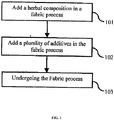
- FIG. 1 is a flowchart showing the various steps involved in the method of treating a fabric to make the fabric insect repellant, according to an embodiment herein.
- a pre-determined amount of the herbal composition is added in a fabric process ( 101 ).
- the herbal composition comprises azadiradione, fraxinellone, nimbin, salannin, salannol, vepinin and vilasinin.
- a plurality of additives is added in the fabric process ( 102 ).
- the plurality of additives includes a pigment binder, an anti-thermo migrating agent, an amino silicon emulsion, a Glauber's salt and an acetic acid.
- the herbal composition and the plurality of additives are added at a pre-determined temperature and at a pre-determined pH.
- the predetermined temperature is in a range of 60°C-160°C.
- the predetermined pH is in a range of 5.5-6.5.
- the fabric process is undergone to make the final treated fabric that is insect repellant (103) .
- the fabric process is a process selected from the group consisting of a sanforization process, a bleach finishing process, a dyed finishing process and a two step dyeing method for cotton or polyester blended fabric.
- the dyed finishing process further comprises a dyeing on jigger using a VAT dye, dyeing on jigger using a reactive dye, dyeing by a pad batch method using reactive dyes, dyeing by pad cure method using reactive dyes, continuous dyeing on a Continuous Dyeing Range Machine (CDR) or a Stenter machine with a pigment ink of any class of dyes.
- the herbal composition is added in an amount of 20-25 gpl.
- the fabric becomes repellent to a plurality of insects after the treatment.
- the plurality of insects are bed bugs of Cimex species, house dust mites of Dermatophagoides species, ticks of Ixodes species, houseflies or Musca Domestica, mosquitoes or Aedes Aegypti and harvest bugs of Trombidium species.
- the fabric is selected from the group consisting of a cotton fabric, a regenerated viscose cellulose fabric, a wool fabric, a silk fabric, a polyester fabric and blends thereof.
- the fabric is insect repellent up to 40 times of washes.
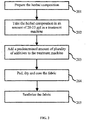
- FIG. 2 is a flowchart showing the various steps involved in the method of treating a bleached fabric to render the bleached fabric insect repellent, according to an embodiment herein.
- an herbal composition is first prepared (201) .
- the herbal composition is prepared by adding a predetermined amount of azadiradione, fraxinellone, nimbin, salannin, salannol, vepinin and vilasinin.
- the predetermined amount of azadiradione added is 30 to 250 ppm.
- the predetermined amount of fraxinellone is 15 to 125 ppm.
- the predetermined amount of nimbin is 450 to 2400 ppm.
- the predetermined amount of salannin is 110 to 2050 ppm.
- the predetermined amount of salannol is 168 to 3800 ppm.
- the predetermined amount of vepinin is 15 to 125 ppm and the predetermined amount of vilasinin is 15 to 125 ppm.
- the herbal composition is taken in an amount of 20-25 gpl in a treatment machine (202) .
- a predetermined amount of plurality of additives is added to the treatment machine (203) .
- the plurality of additives are a pigment binder, an anti-thermo migrating agent, an amino silicon emulsion, a Glauber's salt and an acetic acid.
- the predetermined amount of the pigment binder added is 12-15 gpl.
- the predetermined amount of the anti-thermo migrating agent added is 2-5 gpl.
- the predetermined amount of the amino silicon emulsion added is 5gpl.
- the predetermined amount of the Glauber's salt added is 5gpl and the predetermined amount of the acetic acid added is 0.5 gpl.
- the fabric is padded, dried and cured simultaneously at 160°C at a speed of 22 to 25 meters/min (204) .
- the fabric is taken for sanforization (205) .
- FIG. 3 is a flowchart showing the various steps involved in the method of treating the fabric on a Stenter machine to render the fabric insect repellent, according to an embodiment herein.
- a fabric of any count and construction along with a blend composition is taken (301) .
- the fabric is padded on a Stenter machine using a solution of a herbal composition (302) .
- the herbal composition comprises an azadiradione in an amount of 30 to 250 ppm, a fraxinellone in an amount of 15 to 125 ppm, a nimbin in an amount of 450 to 2400 ppm, a salannin in amount of 110 to 2050 ppm, a salannol in an amount of 168 to 3800 ppm, a vepinin in amount of 15 to 125 ppm and a vilasinin in an amount of 15 to 125 ppm.
- the herbal composition is used in an amount of 22-25 gpl.
- a plurality of additives is added in the Stenter machine (303) .
- the plurality of additives includes a pigment binder in an amount of 12-15 gpl, a anti-thermo migrating agent in an amount of 2-5 gpl, a amino silicon emulsion in an amount of 5gpl, a Glauber's salt in an amount of 5gpl and an acetic acid in an amount of 0.5 gpl.
- the fabric is dried on the Stenter machine while maintaining a temperature from 110°C in a first compartment followed by 160°C in next two compartments of the Stenter machine at a speed of 20-25 Mtrs of fabric per minute in the Stenter machine (304) .
- the fabric is batched on a roll after the drying (305) .
- the fabric is folded and packaged (306) .
- the fabric is selected from the group consisting of a bleached fabric, a VAT dyed fabric, a reactive dyed fabrics, and a pigment ink dyed fabric and a combination thereof.
- a method of treating a fabric while dyeing and finishing on a Continuous Dyeing Range (CDR) machine or on a Stenter machine using a pigment ink of any class of dyes to render the fabric insect repellent is provided.
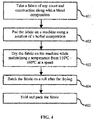
- FIG. 4 is a flowchart showing the various steps involved in the method of treating a fabric while dyeing and finishing on a Continuous Dyeing Range (CDR) machine or on a Stenter machine using a pigment ink of any class of dyes to render the fabric insect repellent, according to an embodiment herein.
- a fabric of any count and construction along with a blend composition is taken (401) .
- the fabric is padded on a machine using a solution of an herbal composition, the solution of plurality of additives and a solution of a pigment ink (402) .
- the herbal composition comprises an azadiradione in an amount of 30 to 250 ppm, a fraxinellone in an amount of 15 to 125 ppm, a nimbin in an amount of 450 to 2400 ppm, a salannin in amount of 110 to 2050 ppm, a salannol in an amount of 168 to 3800 ppm, a vepinin in amount of 15 to 125 ppm and a vilasinin in an amount of 15 to 125 ppm.
- the herbal composition is used in an amount of 22-25 gpl.
- the plurality of additives includes a pigment binder in an amount of 12-15 gpl, an anti-thermo migrating agent in an amount of 2-5 gpl, an amino silicon emulsion in an amount of 5gpl, a Glauber's salt in an amount of 5gpl and an acetic acid in an amount of 0.5 gpl.
- the solution of a pigment ink is used in an amount of upto 5 gpl.
- the machine is selected from the group consisting of a CDR machine and a Stenter machine.
- the fabric is dried on the machine while maintaining a temperature from 110°C - 160°C at a speed (403) .
- the speed in a Stenter machine is at 20-25 Mtrs of fabric per minute.
- the speed in a CDR machine is 40 - 60 Mtrs of fabric per Minute.
- the fabric is batched on a roll after drying (404) .
- the fabric is folded and packaged (405) .
- FIG. 5 is a flowchart showing the various steps involved in the method of treating a fabric while dyeing and finishing on a Jigger machine using a dye to render the fabric insect repellent, according to an embodiment herein.
- a fabric is taken (501) .
- the fabric is loaded on a Jigger machine along with cold water (502) .
- a solution of a dye is added in the cold water while undergoing at least two cycles for 1 hour in the Jigger machine (503) .
- the temperature of the Jigger machine is raised up to 60°C while again undergoing at least two cycles for 1 hour in the Jigger machine (504) .
- a pre-determined quantity of Glauber's salt is added to the cold water while again undergoing at least two cycles for 1 hour in the Jigger machine (505) .
- the pre-determined quantity of Glauber's salt is 10-20 gpl.
- a pre-determined quantity of a caustic soda (NaOH), a pre-determined quantity of a Sodium Hydro Sulphite (Na 2 S 2 O 4 ) and a pre-determined quantity of the herbal composition is added to the Jigger machine while again undergoing at least two cycles for 1 hour in the Jigger machine (506) .
- the pre-determined quantity of the caustic soda (NaOH) is 10 gpl.
- the pre-determined quantity of the Sodium Hydro Sulphite (Na 2 S 2 O 4 ) is 10 gpl.
- the pre-determined quantity of the herbal composition is 4% w/w.
- the bath is then drained out from the Jigger machine (507) .
- a fresh water is added in the Jigger machine ( 508 ).
- a pre-determined quantity of Hydrogen Peroxide (H 2 O 2 ) of 50% strength is added along with the bath in the jigger machine (509) .
- the pre-determined quantity of Hydrogen Peroxide is 0.50 gpl.
- the temperature of the bath is raised up to 60°C (510) .
- the fabric is washed with a detergent inside the Jigger machine (511).
- the fabric is unloaded from the Jigger machine (512) and dried on the drying cylinders (513) .
- the dye is selected from the group consisting of a VAT dye and a Reactive dye.
- FIG. 6 is a flowchart showing the various steps involved in the method of treating a fabric in a Pad Batch Method of dyeing to render the fabric insect repellent, according to an embodiment herein.
- a fabric is taken (601) .
- the fabric is passed in a padding mangle machine having a mixture (602) .
- the mixture comprises Sodium Silicate (Na 2 SiO 3 ), a dye and an herbal composition.
- the quantity of the herbal composition is 20-25 gpl.
- the fabric is padded through the mixture (603) .
- the fabric is batched on a roll (604) .
- a dye is fixed on the fabric roll (605) .
- the fabric is washed in a Jigger machine by raising the temperature of a bath up to 60°C and undergoing at least two cycles on the Jigger machine with fresh water (606) .
- the fabric is unloaded and dried (607) .
- the herbal composition comprises azadiradione in an amount of 30 to 250 ppm, fraxinellone in an amount of 15 to 125 ppm, nimbin in an amount of 450 to 2400 ppm, salannin in an amount of 110 to 2050 ppm, salannol in an amount of 168 to 3800 ppm, vepinin in an amount of 15 to 125 ppm and vilasinin in an amount of 15 to 125 ppm.
- FIG. 7 is a flowchart showing the various steps involved in the method of treating a fabric in a Pad Cure Method of dyeing to render the fabric insect repellent, according to an embodiment herein.
- a fabric is taken (701) .
- the fabric is passed in a padding mangle machine having a mixture (702) .
- the mixture comprises 5-10 gpl of a Sodium Bicarbonate (NaHCO3) and 20-25 gpl of an herbal composition.
- the fabric is padded through the mixture (703) .
- the fabric is dried in a Dryer (704) .
- the fabric is batched (705) .
- the batched fabric is cured in a curing chamber for at least 5 minutes at a temperature of 160°C while maintaining a speed at 40-50 Mtrs of fabric per minute (706) .
- the cured fabric is loaded in a Jigger machine (707) .
- the fabric is washed with a detergent in the Jigger machine while raising the temperature of a bath up to 60°C and undergoing at least two cycles on the Jigger machine (708) .
- the fabric is washed with fresh water in the Jigger machine while raising the temperature of the bath up to 60°C and undergoing at least two cycles on the Jigger machine (709) .
- the fabric is washed with cold water undergoing at least two cycles on the Jigger machine (710) .
- the fabric is collected and dried on drying cylinders (711) .
- the herbal composition comprises azadiradione in an amount of 30 to 250 ppm, fraxinellone in an amount of 15 to 125 ppm, nimbin in an amount of 450 to 2400 ppm, salannin in an amount of 110 to 2050 ppm, salannol in an amount of 168 to 3800 ppm, vepinin in an amount of 15 to 125 ppm and vilasinin in an amount of 15 to 125 ppm.
- FIG. 8 is a flowchart showing the various steps involved in the method of treating a polyester fabric to render the fabric insect repellent, according to an embodiment herein.
- the fabric is taken and loaded in a JET Dyeing Machine along with water (801) .
- a pre-determined amount of an acetic acid is added to maintain a pre-determined pH (802) .
- the pre-determined amount of the acetic acid is 0.50 gpl.
- the pre-determined pH is 4.5 to 5.5.
- the fabric is circulated along with the water in the Jet Dyeing machine (803) .
- the fabric is circulated for at least 10 minutes at a speed of 80 Mtrs per minute.
- a dye solution is prepared and released slowly in the Jet Dyeing machine while raising a temperature of the machine upto 130°C (804) .
- the fabric is circulated along with the water in the Jet Dyeing machine for a time period of 45-60 minutes.
- the liquid is drained out of the machine.
- the fabric is washed in the Jet Dyeing Machine (805) .
- the fabric is unloaded from the Jet Dyeing Machine.
- the fabric is loaded in a Jigger machine through cold water (806) .
- a dye solution is added in the Jigger machine.
- the temperature of the Jigger machine is raised up to 60°C while undergoing at least two cycles (807) .
- the pre-determined quantity of a Glauber's salt (Na2SO4) is added while undergoing at least two turns evenly on the Jigger machine.
- the pre-determined quantity of the Glauber's salt is 10-20 gpl.
- a pre-determined quantity of a Caustic Soda (NaOH) and a pre-determined quantity of an herbal composition is added while undergoing at least two cycles on the Jigger machine.
- the pre-determined quantity of the Caustic Soda (NaOH) is 10 gpl.
- the pre-determined quantity of the herbal composition is 4% w/w.
- the liquid is drained out a from the Jigger machine (808) .
- the fabric is washed with a detergent in the Jigger machine while raising the temperature of a bath up to 60°C and undergoing at least two cycles on the Jigger machine.
- the fabric is washed with fresh water in the Jigger machine while raising the temperature of the bath up to 60°C and undergoing at least two cycles on the Jigger machine.
- the fabric is washed with cold water while undergoing at least two cycles on the Jigger machine (809) .
- the fabric is collected and dried on the drying cylinders (810) .
- the herbal composition comprises azadiradione in an amount of 30 to 250 ppm, fraxinellone in an amount of 15 to 125 ppm, nimbin in an amount of 450 to 2400 ppm, salannin in an amount of 110 to 2050 ppm, salannol in an amount of 168 to 3800 ppm, vepinin in an amount of 15 to 125 ppm and vilasinin in an amount of 15 to 125 ppm.
- the herbal composition is one of the most effective herbal insect repellants.
- the herbal composition is based on 'NEEM OIL' extracted from the seeds of 'Neem Tree' (Botanical Name : Azadirachta Indica ) and is effective in repelling bed bugs ( cimex species), house dust mites ( Dermatophagoides species), ticks ( ixodes species), houseflies ( Musca domestica ), mosquitoes ( Aedes Aegypti ), harvest bugs ( Trombidium species) and other arthropods.
- the herbal composition is non-toxic to mammals and is free from Red Listed & Banned items including pesticides.
- the herbal composition is especially formulated for textile applications and a treatment with the herbal composition imparts the textiles or the textile products an excellent insect repellency which is tumble wash durable too.
- the 'Neem Tree' scientifically known as Azadirachta Indica is a big tree commonly found in the tropical & sub-tropical regions of Indian sub-continent.
- the Neem tree has tremendous medicinal properties and all of the parts of the tree are being widely used in Ayurveda & Unani systems of healing for curing several diseases.
- the Neem contains wide varieties of bioflavonoids that are well known for repelling insects, fighting against a host of diseases including cancer, diabetes, etc. and purifying the atmosphere on larger perspective.
- the seeds of Neem Tree are rich in lipid content as well as bitter principles like azadirachtin, azadiradione, fraxinellone, nimbin, salannin, salannol, vepinin, vilasinin, etc.
- the azadirachtin is one of the most important ingredients of the Neem seed oil extract and is known to have been used as an effective repellent to more than 200 insect species. Simultaneously, it is reported to be non-toxic to humans and other mammals.
- the present invention provides a Neem seed based herbal composition with unique properties of repelling insects and incorporates the herbal composition in fabrics to render the fabrics insect repellant.
- the bioflavonoid, especially, azadirachtin is the most active ingredient of the composition in the present invention.
- the herbal composition with their applications on textiles interferes with the parasite infestations in the human surroundings and creates a protective cover for the humans and their belongings by repelling the undesirable parasites away from them.
- the herbal based formulation is reengineered by incorporating and implementing human safe and environment friendly intermediaries and technical processes for making it usable in textile applications. For achieving the desired effects of the treatment.
- the herbal composition is applied over the textiles of all kinds including cotton, regenerated cellulose (viscose), wool, silk, polyester and blends thereof.
- the active ingredients of the herbal composition comprise azadirachtin, azadiradione, fraxinellone, nimbin, salannin, salannol, vepinin and vilasinin.
- Azadirachtin is a chemical compound belonging to the limonoid group.
- the Azadirachtin is a secondary metabolite present in the Neem seeds.
- the Azadirachtin is a highly oxidized tetranortriterpenoid which boasts a plethora of oxygen functionality, comprising an enol ether, acetal, hemiacetal and tetra-substituted oxirane as well as a variety of carboxylic esters.
- Table 1 The chemical features of Azadirachtin is shown in Table 1.
- Table 1 The chemical features of Azadirachtin IUPAC Name dimethyl (2aR,3S,4S,R,S,7aS,8S,10R,10aS,10bR)-10-(acetyloxy)-3,5-dihydroxy-4-[(1S,2S,6S,8S,9R,11S)-2-hydroxy-11-methyl-5,7,10-trioxatetracyclo[6.3.1.02,6.09,11]dodec-3-en-9-yl]-4-methyl-8- ⁇ [(2E)-2-methylbut-2-enoyl]oxy ⁇ octahydro-1H-furo[3',4':4,4a]naphtho[1,8-bc]furan-5,10a(8H)-dicarboxylate Molecular Formula C 35 H 44 O 16 Molecular Weight 720.71426 g/mol Structural Formula
- Azadirachtin was initially found to be active as a feeding inhibitor towards the desert locust ( Schistocerca gregaria ).
- the Azadirachtin is now known to affect over 200 species of insect, by acting mainly as an anti-feedant and growth disruptor, and as such it possesses considerable toxicity toward insects.
- the Azadirachtin fulfills many of the criteria needed for a natural insecticide if it is to replace synthetic compounds.
- the Azadirachtin is biodegradable as it degrades within 100 hours when exposed to light and water and shows very low toxicity to mammals making it practically non-toxic.
- Azadiradione is another triterpenoid present in the Neem seed oil that actually passes through elaborate biosynthesis process pathway for formation of Azadirachtin finally.
- Azadiradione is a chemical belonging to limonoid group and is found to be highly effective in repelling and eradicating insects. The chemical features of the chemical Azadiradione is shown in Table 2.
- Fraxinellone is another bitter principal compound found in the Neem seed oil extract that is formed by the natural degradation of limonoids. Besides the insecticidal properties, Fraxinellone has also been reported to possess neuro-protective and vasorelaxing properties.
- the chemical features of the chemical Fraxinellone is shown in Table 3. Table 3: The chemical features of Fraxinellone IUPAC Name (3R,3aR)-3-(furan-3-yl)-3a,7-dimethyl-3,4,5,6-tetrahydro-2-benzofuran-1-one Molecular Formula C 14 H 16 O 3 Molecular Weight 232.27504 g/mol Structural Formula
- Nimbin is a chemical compound classified as triterpenoid isolated from Neem seed oil. Nimbin is thought to be responsible for much of the biological activities of Neem tree and is reported to have ant-inflammatory, antipyretic, antifungal, antihistamine and antiseptic properties. The chemical features of the chemical Nimbin is shown in Table 4.
- the salannin, salannol, vepinin and vilasinin form the collective bitter principals of Neem seed oil extract apart from azadirachtin, azadiradione and salannin and do have a major role in biosynthetic transformation of triterpenoids into tetranortriterpenoids like Azadirachtin.
- the chemical features of the chemical salannin are shown in Table 5.
- Table 7 The chemical features of the chemical Vepinin is shown in Table 7.
- Table 7 The chemical features of Vepinin IUPAC Name 24-Norchola-1,20,22-trien-3-one,6-(acetyloxy)-7,15:21,23-diepoxy-4,4,8-trimethyl-, (5a,6a,7a,13a,15b,17a)-(9CI) Molecular Formula C 28 H 36 O 5 Molecular Weight 452.58240 g/mol Structural Formula
- Table 8 The chemical features of the chemical Vilasinin is shown in Table 8.
- Table 8 The chemical features of Vilasinin IUPAC Name (13S,17R)-21,23-Epoxy-4,5 ⁇ ,5',6 ⁇ -tetrahydro-4 ⁇ ,8-dimethyl-24-norchol-5-eno[6,5,4-bc]furan-14,20,22-triene-1 ⁇ ,3 ⁇ ,7 ⁇ -triol Molecular Formula C 26 H 36 O 5 Molecular Weight 428.56104 g/mol Structural Formula
- All the active ingredients of the composition of the present invention belong to the bioflavonoid class of chemicals that occur naturally in the Neem Seed Oil extract. Most important of all ingredients is azadirachtin which was initially found to be active as a feeding inhibitor towards the desert locust ( Schistocerca gregaria ), it is now known to affect over 200 species of insect, by acting mainly as an antifeedant and growth disruptor, and as such it possesses considerable toxicity toward insects. It fulfills many of the criteria needed for a natural insecticide if it is to replace synthetic compounds. Many more compounds, related to azadirachtin, are present in the seeds as well as in the leaves and the bark of the Neem tree which also show strong biological activities among various pest insects.
- Neem extracts are generally considered compatible with biological control. Because pure Neem oil contains other insecticidal and fungicidal compounds in addition to azadirachtin. Azadirachtin is generally considered appropriate to be used as a natural pesticide as compared to the synthetic ones which might be hazardous to mammals and create environmental imbalance too.
- the Pigment Binder used in the present invention and the treatment process is known as "KCP-1" which is a poly acrylate binder by nature.
- the pigment binder is used in the treatment process for achieving the enhancement of wash fastness and for stability of the substrate during laundering process.
- the KCP -1 comprises ethyl acrylate polymer binder, amino silicon emulsion and polyethylene glycol.
- the Anti-Thermo Migrating Agent used in the present invention and the treatment process is known as "KCP-2" which is a humectant by nature.
- the Anti-Thermo Migrating Agent is used in the treatment process to avoid a migration of the product under the present invention from a dorsal to a ventral surface of the substrate especially when subjected to high temperature of 160°C curing process on stenters. This way the product under the present invention spreads and penetrates into the substrate evenly despite of high temperature on the ventral surface than the dorsal one.
- the KCP-2 comprises amino silicon emulsion and polyethylene glycol.
- the Amino Silicon Emulsion used in the present invention and the treatment process is known as "BOUNCY-R" which is a Permanent Softener by nature.
- the Amino Silicon Emulsion is used in the treatment process to improve wash fastness and the stability of the substrate during laundering process, as well as to impart softness to the substrate.
- Chemically, the BOUNCY-R is somewhat water repellent and therefore it also provides support in maintaining longevity of the finish through permanent binding.
- the bouncy-R comprises amino silicon emulsion.
- the VAT dyes are themselves a special class of textile dyes that are used for dyeing of fabric of cotton and other cellulosic types.
- the VAT dyes have excellent colour fastness to washing and light.
- the VAT dyes generally give out dull shades after fixation and may be found in various colours like yellow, orange, blue, green, olive green, grey and black. These colours can be used either alone or in combination thereof depending upon the kind and depth of the required shades. All kinds of Vat dyes are used in the present invention.
- the Reactive Dyes are themselves a special class of textile dyes that react with cellulosic material and molecules thereof during dye fixation and hence the name.
- the Reactive Dyes are used for dyeing of fabric of cotton and other cellulosic types.
- the Reactive Dyes have a good colour fastness to washing however medium colour fastness to light.
- the reactive dyes give out bright colours after fixation and may be found in various colours such as yellow, orange, blue, t. blue, green, red and black. These colours can be used either alone or in combination thereof depending upon the kind and depth of the required shades. All kinds of reactive dyes can be used in the present invention.
- azadirachtin and other bioflavonoids including azadiradione, fraxinellone, nimbin, salannin, salannol, vepinin and vilasinin, the active components of the Neem seed oil extract, are inhibiting molting in larvae to pupae and adults of the most of the insects. Apart from delayed lethal action, effects on the pupation, adult emergence, and size of pupae or adults have been also observed. A baseline exposure for 10 or 20 min, ranging from 0.00001 to 0.1 ⁇ g/ml, when used, it was found causing about 20 or 22.5 to 83.5 or 97.6% inhibition (inhibition of adult-concentration-probability lines). The compounds are characterized by their inhibition or prevention of formation of adult morphology. The effects on pupae (based on proportion of undeveloped individuals) and adults (based on incomplete development, attachment to puparia, or inability to fly) are dose-dependent.
- the textile products treated with the composition under our invention have been tested thoroughly by a competent laboratory of international repute and the same have been established to be nontoxic to humans and other mammals.
- the methodology of this test is based on the perspectives of "INVITRO CYTOTOXICITY TEST" and the test standards followed are namely, ISO-10993-5:2009 (E) - Biological Evaluation of Medical Devices; Test for Invitro Cytotoxicity and EN ISO 10993-12:2004 (E) - Biological Evaluation of Medical Devices; Sample Preparation and Reference Materials.
- the above test standards are predetermined to check for the toxicity that any material may be causing to humans and other mammals and the same are internationally accredited and accepted as well.
- the test for cytotoxicity is designed to determine the biological response of mammalian cells to the test material/extract of test material. At the end of exposure time, the evaluation of the presence and the extent of cytotoxic effect are assessed. It signifies the Biological Compatibility of the test material and its potential to cause cell damage.
- composition according to the present invention does address the issue of 'Longevity of Effectiveness' more emphatically.
- effectiveness of currently present solutions to the problem remains under big question for the fact that the same is not found to last for longer time hence allowing the parasites the opportunity to return to the human surroundings once the effectiveness of the solutions gets diminished over a period of time.
- the composition according to the present invention has been tested for longevity of its effectiveness by the same competent laboratory of international repute and it has been inferred that the effectiveness is long lasting.
- the textile products treated with the composition under the present invention were subjected to laundering up to a number of wash cycles and tested for understanding the effectiveness longevity.
- the substrate was machine washed up to 40 wash cycles and tested for bed bug repellency and it was found to be moderately effective in repelling the bed bug population.
- This inference suggests that the textile products even though washed up to 40 wash cycles but is capable of moderately repelling the bed bug population.
- the present invention has been an outcome of continuous thought process and research done extensively to provide such a solution to the problem under discussion.
- the composition under the present invention is found to be the perfect solution in the sense that it has longevity more than other solutions and does not have any adverse effects on human health and surroundings at all.
- the composition has been designed and prepared with formulation based on herbal extracts of Neem Tree (Botanical Name: Azadirachta Indica ) seeds by incorporating hi-tech scientific method for making the raw materials usable for the purpose. It is taken care of during the refinement process and preparation of the final product that the natural characteristics of the raw material do not vanish. It is also ensured that the scientific process or any of the additives do not interfere into or disturb the natural essence of the raw materials but keep the same intact in all the applications thereafter.
- composition according to the present invention has been especially designed for applications on textiles/textile products for achieving excellent insect repellency.
- composition under this invention has been engineered in a way that it can be very well applied onto textiles during normal processing without affecting the nature and composition of the same. Its versatility in terms of application onto textiles is also recommendable for the reason that it can be incorporated into all kinds of processes of all types of textile products for achieving the desired effectiveness that lasts longer too.
- the herbal composition developed in the present invention other textile finishing chemicals for processing, namely, pigment binder, anti-thermo migrating agent, amino silicon emulsion, Glauber's salt, acetic acid, sodium silicate and sodium bicarbonate.
- textile dyes such as VAT, reactive, pigment and disperse.
- Textile Processing Machineries namely Singeing Machine, Jigger, Stenter, CPB (Cold Pad Batch) Machine, Jet Dyeing Machine, Soft Flow Dyeing Machine, CDR (Continuous Dyeing Range), VDR (Vertical Drying Range), Mercerizing Machine, Sanforizing Machine.
- the Oil is expelled from the Neem Seeds and filtered. Saponification of the filtered Neem Seed Oil is done.
- To 25 Kgs of filtered Neem Oil about 60 Litres of water is added and stirred with high speed at room temperature. During stirring only 7 Kgs of Caustic Soda/Potash Liquid (1:1) is added slowly and speedily stirred till 30 minutes and kept overnight afterwards. Next morning, it is added with 15 Kgs of Glauber's Salt (Na2SO4) and stirred and kept for about 4 hours. Once separation occurs, the Saponified Neem Oil Extract floats above the water. It is separated by removing the excess water and is stirred again by adding with 50 Litres of fresh water.
- the bleached fabrics are subjected to the treatment process.
- the herbal composition is prepared by mixing all the herbal ingredients in their effective amounts.
- the herbal ingredients comprise azadiradione, fraxinellone, nimbin, salannin, salannol, vepinin and vilasinin.
- Table 9 shows the composition of the herbal composition according to the present invention.
- Table 9: Composition of the herbal composition Ingredients Amount in parts per million (ppm) azadiradione 30 to 250 ppm fraxinellone 15 to 125 ppm nimbin 450 to 2400 ppm salannin 110 to 2050 ppm salannol 168 to 3800 ppm vepinin 15 to 125 ppm vilasinin 15 to 125 ppm
- additives such as the pigment binder, anti-thermo migrating agent, amino silicon emulsion, Glauber's salt and the acetic acid are added in their effective amount as mentioned in table 10.
- Table 10 Composition with their effective amounts used herein Ingredients Effective Amount Herbal composition of present invention 20-25 gpl Pigment Binder 12-15 gpl Anti-Thermo Migrating Agent 2-5 gpl Amino Silicon Emulsion 5 gpl Glauber's Salt 5 gpl Acetic Acid 0.5 gpl (to maintain pH of 5.5 to 6.5)
- the fabric is then padded, dried and cured simultaneously at 160°C with 22 to 25 meters/min of speed followed by sanforization and other finishes, if necessary.
- the present invention is used on the bleached fabrics on Stenter machine also.
- a Stenter machine is used for evenly stretching or stentering the fabrics.
- the bleached fabric of any count and construction is taken along with the blend composition.
- the fabric is padded on the Stenter using the solution having the composition shown in Table 11.
- Table 11 Composition with their effective amounts used herein Ingredients Effective Amount Herbal composition of present invention 22-25 gpl Pigment Binder 12-15 gpl Anti-Thermo Migrating Agent 2-5 gpl Amino Silicon Emulsion 5 gpl Glauber's Salt 5 gpl Acetic Acid 0.5 gpl (to maintain pH of 5.5 to 6.5)
- the herbal composition has a composition as mentioned in table 9 above.
- the fabric is then dried on the Stenter maintaining a temperature from 110°C in the first compartment followed by 160°C in the next two compartments of the Stenter.
- the speed of the fabric in the Stenter is maintained at 20-25 Mtrs of fabric per minute.
- the batching of the fabric is done on the roll after drying is over.
- the batching is a continuous process and is done simultaneously with padding and drying processes.
- the bleached and the treated fabric are then sent to folding department and quality check followed by packaging.
- the ready for dyeing (RFD) 100% cotton fabric is taken.
- the cotton fabric is of any count and construction.
- the fabric is then loaded on a Jigger through cold water.
- a pre-dispersed m/f VAT dyestuff is added to the cold water keeping the m:l ratio of 1:4 in two instalments.
- the time consumed to complete two cycles of VAT dyeing is approximately 1 hour.
- the temperature is then raised to 60°C and the fabric is worked for another two turns inside the jigger.
- pre-dissolved 10-20 gpl of Glauber's salt (Na 2 SO 4 ) is added to the bath depending upon the required depth of the shade for enhancing further exhaustion. Two turns are given evenly and the time consumed is approximately 1 hour.
- the caustic soda (NaOH) of 10gpl is added on solid basis and 10 gpl of Sodium Hydro Sulphite (Na 2 S 2 O 4 ) is also added to the bath in two equal instalments to convert the VAT dyestuff into Leuco VAT Dyestuff with 4% w/w of the herbal composition of the present invention.
- the composition is as mentioned in the Table 9 above.
- the fabric is worked till two turns and the time taken is approximately 1 hour.
- the bath is drained and the fresh water is taken into the jigger.
- An equivalent quantity of 0.50 gpl of Hydrogen Peroxide (H 2 O 2 ) of 50% strength is added to the bath.
- the temperature is raised to 60C to convert the water soluble Leuco VAT Dye(s) into parent VAT Dye(s). Two turns consuming about 1 hour is are given to the fabric during this process and the liquor is drained out.
- the fresh water is again taken into the jigger and added with 2 gpl and equivalent quantity of detergent and temperature is raised to 60°C. Two turns of about 30 minutes each are given to the fabric and the liquor is drained out.
- the fresh water is taken in the Jigger and the temperature is raised to 60°C and the fabric is again given tow turns of 30 minutes each in the hot water in order to remove the traces of the detergent by rinsing.
- the water is finally drained out and the fabric is given cold water wash in two turns of 30 minutes each.
- the fabric is unloaded to batch outside the jigger.
- the fabric is dried on frying cylinders and subjected to further processing on Stenter for required finishes.
- the VAT dyed 100% cotton fabric of any count and construction is taken.
- the fabric is padded on the Stenter using the herbal composition of the present invention as mentioned in table 9 along with the plurality of additives mentioned in table 12 with the mentioned amounts:
- Table 12 Amount of ingredients used Herbal composition of present invention 22-25 gpl Pigment Binder 12-15 gpl Anti-Thermo Migrating Agent 2-5 gpl Amino Silicon Emulsion 5 gpl Glauber's Salt 5 gpl Acetic Acid 0.5 gpl (to maintain pH of 5.5 to 6.5)
- the fabric is dried on the Stenter maintaining the temperature from 110°C in the first compartment followed by 160°C in the next two compartments of the Stenter with a speed maintenance at 20-25 Mtrs of fabric per minute.
- the ready for dyeing (RFD) 100% cotton fabric of any count and construction is taken and loaded on the jigger machine through cold water.
- a pre-dispersed reactive dyestuff is then added to the cold water keeping m:l ration of 1:4 in two instalments.
- the time consumed to complete the two cycles of reactive dyeing is approximately 1 hour.
- the temperature is raised to 60°C and the fabric is worked for another two turns inside the Jigger.
- a pre-dissolved 10-20 gpl of Glauber's salt is added to the bath depending upon the required depth of the shade for enhancing further exhaustion. Then two turns is given evenly and the time of consuming is approximately 1 hour.
- the caustic soda of 10 gpl and equivalent quantity is added on solid basis to the bath in two equal instalments to fix the dyestuff along with 4% w/w of the herbal composition of the present invention as mentioned in Table 9 above.
- the fabric is worked upon for two cycles for which the time taken is approximately 1 hour. The liquor is then drained out.
- the fresh water is taken into the Jigger and added with 2 gpl equivalent quantity of a detergent raising the temperature to 60°C.
- the fabric is worked for two turns of about 30 minutes each and the liquor is drained out. Unfixed and hydrolyzed Reactive Dyestuff is removed by the detergent.
- fresh water is taken in the Jigger raising the temperature to 60°C.
- the fabric is again given two turns of 30 minutes each in the hot water in order to remove the traces of detergent by rinsing.
- the water is finally drained out and fabric is given cold water wash in two turns of 30 minutes each. During the second turn, the fabric is unloaded to batch outside the Jigger.
- the fabric is dried on drying cylinders and subjected to further processing on Stenter for required finishes.
- the fabric is then dried on the Stenter machine maintaining the temperature at 110°C in the first compartment followed by 160°C in the next two compartments of Stenter while maintaining the speed at 20 to 25 Mtrs of fabric per Minute.
- the batching is done on the roll after the drying process is over.
- the batching is a continuous process and done simultaneously with padding and drying processes.
- the finished and treated reactive dyed fabric is now sent to folding department for cut looking and packing.
- the Ready for Dyeing (RFD) 100% cotton fabric of any count and construction is taken.
- the fabric is passed through a Padding Mangle containing an instant mixture of 200 litres of 100 gpl of Sodium Silicate (Na 2 SiO 3 ) Liquid with 600 litres of reactive dyestuff solution containing 20-25 gpl the herbal composition of the present invention as mentioned in table 9.
- the fabric is padded through this mixture and batched.
- the batched fabric roll is then covered with a plastic sheet to avoid drying and is kept continuously rotating at a speed of 4 rpm for about 10-12 hours for an even reactive dye fixation.
- the fabric is loaded on to the Jigger for washing.
- the fresh water is taken into the Jigger and added with 2 gpl equivalent quantity of a detergent while raising the temperature to 60°C.
- the fabric is given at least two turns of about 30 minutes each and the liquor is drained out.
- the fresh water is again taken into the Jigger and the temperature is raised to 60°C and the fabric is again given two turns of 30 minutes each in the hot water in order to remove the traces of detergent by rinsing.
- the water is finally drained out and fabric is given cold water wash in two turns of 30 minutes each.
- the fabric is unloaded to batch outside the Jigger while during the second turn.
- the fabric goes through the following five compartments while undergoing the washing:
- the fabric is then dried on the drying cylinders and subjected to further processing on the Stenter for required finishes.
- the Ready for Dyeing (RFD) 100% cotton fabric of any count and construction is taken.
- the fabric is passed through a Padding Mangle containing reactive dyestuff solution which comprises 5-10 gpl of Sodium Bicarbonate (NaHCO3) and 20-25 gpl of the herbal composition of the present invention as mentioned in table 9 above.
- the fabric is padded through this mixture, dried on Float Dryer and batched.
- the fabric batch is taken to curing chamber for hot air curing at temperature of 160°C for 5 minutes by maintaining the speed at 40-50 Mtrs of fabric per minute.
- the fabric is loaded on to the Jigger for washing.
- the fresh water is taken into the Jigger and added with 2 gpl equivalent quantity of a detergent while raising the temperature to 60°C.
- the fabric is given at least two turns of about 30 minutes each and the liquor is drained out.
- the fresh water is again taken into the Jigger and the temperature is raised to 60°C and the fabric is again given two turns of 30 minutes each in the hot water in order to remove the traces of detergent by rinsing.
- the water is finally drained out and fabric is given cold water wash in two turns of 30 minutes each.
- the fabric is unloaded to batch outside the Jigger while during the second turn.
- the fabric goes through the following five compartments while undergoing the washing:
- the fabric is then dried on the drying cylinders and subjected to further processing on the Stenter for required finishes.
- the fabric is dried on the CDR or Stenter maintaining the temperature from 110°C till 160°C with speed at 20 to 25 Mtrs of fabric per Minute on Stenter and 40 to 60 Mtrs of fabric per Minute on CDR.
- the batching is done on the roll after the drying process is over.
- the batching is a continuous process and done simultaneously with padding and drying processes.
- the dyed, treated and finished fabric is now sent to folding department for cut looking and packing.
- the pigment ink dyed fabric of any count, construction and blend composition are taken and the fabric is padded on Stenter using the solution having the composition mentioned in table 15.
- Table 15 Amount of the ingredients used herein Ingredients Amount Herbal composition 22-25 gpl Pigment Binder 12-15 gpl Anti-Thermo Migrating Agent 2-5 gpl Amino Silicon Emulsion 5 gpl Glauber's Salt 5 gpl Acetic Acid 0.5 gpl (To maintain the pH of 5.5 to 6.5)
- the fabric is then dried on the Stenter machine maintaining the temperature at 110°C in the first compartment followed by 160°C in the next two compartments of Stenter maintaining the speed at 20 to 25 Mtrs of fabric per Minute.
- the batching is done on the roll after the drying process is over.
- the batching is a continuous process and done simultaneously with padding and drying processes.
- the finished and treated pigment ink dyed fabric is now sent to folding department for cut looking and packing.
- Polyester Component Dyeing The RFD (Ready for Dyeing) Fabric of any count, construction and blend composition are taken. The RFD fabric is loaded on to JET Dyeing Machine along with water. Then, acetic acid with an amount of 0.50 gpl after dilution is added to the loaded fabric to maintain a pH of the solution at 4.5 to 5.5. The water and the fabric are circulated for 10 minutes at a speed of 80 Mtrs per Minute in order to ensure uniform pH.
- the Dyes solution is prepared by dispersing the dye in cold water outside the tank. The solution is prepared by taking proportionate quantity of the dyes so that it goes up to a maximum of 6% w/w of Polyester contents keeping m:l ratio of 1:10 depending upon the required depth of shades.
- the Disperse Dyes Solution is then released slowly into the Jet Dyeing Machine while circulating the water and the fabric as earlier.
- the temperature is then raised to 130°C and the process is carried out 45 - 60 minutes depending upon the required depth of shades.
- the liquor is drained out of the Jet Dyeing Machine after the process is over. This is followed by a cold water wash till 30 minutes. Afterwards, the water is drained out and fabric is unloaded into trolley.
- Cotton Component Dyeing Firstly, the fabric is loaded on the Jigger Machine through cold water. The pre-dispersed Reactive Dyestuff is then added to the cold water keeping m:l ratio of 1:4 in two installments. The time consumed to complete the two cycles of the reactive dyeing is approximately 1 hour. The quantity of reactive dyestuff taken depends upon the depth of required shades and the percentage of cotton content.
- the temperature is to be raised to 60°C and the fabric is worked for another two turns inside the Jigger machine.
- a pre-dissolved Glauber's salt Na 2 SO 4 ) with a quantity of 10-20 gpl depending upon the required depth of the shade is added to the bath for enhancing further exhaustion.
- the fabric is given at least two turns evenly.
- the time consumed is approximately 1 hour.
- a Caustic Soda Liquid (NaOH) with an equivalent quantity of 10 gpl is added to the bath on solid basis in two equal installments to fix the Dyestuff along with 4% w/w of the herbal composition of the present invention as mentioned in table 9 above.
- the fabric is worked for two more turns. The time taken is approximately 1 hour. The liquor is then drained out of the Jigger.
- the fresh water is taken into the Jigger machine and added with 2 gpl equivalent quantity of a detergent and the temperature is raised to 60°C.
- the two turns of about 30 minutes each are given to the fabric and the liquor is drained out.
- the unfixed and hydrolyzed reactive dyestuff is removed by the detergent.
- the fresh water is again taken into the Jigger and the temperature is raised to 60°C.
- the fabric is again given at least two turns of 30 minutes each in the hot water to remove the traces of detergent by rinsing.
- the water is finally drained out and fabric is given cold water wash in two turns of 30 minutes each. During the second turn, the fabric is unloaded to batch outside the Jigger.
- the fabric is dried on the drying cylinders and subjected to further processing on Stenter for required finishes.
- the composition according to the present invention has been designed in such a way that it can be used to create the desired properties in the substrates right by adding the same into the usual process route with all ease and without any hassles.
- the herbal composition is authenticated and established to be safe for humans and other mammals.
- the herbal composition does not create any ecological imbalance for the reason that the formulation is based on natural products and does not contain any such hazardous substances that create any environmental imbalance ever.
- the herbal composition has better longevity of the effectiveness.
- the effectiveness of the herbal formulation is established and authenticated by conduction due experiments and show that the herbal composition is effective on a fabric till the 40 times washes.
- the herbal composition does not leave any appearance, odor or visibility on the fabric.
- the herbal composition rather intermingles with the textile's basic structure and imparts every bit of it with the unique property of insect repellency.
- the treated fabrics with the composition according to the present invention are non-toxic to mammals and are free from Red Listed & Banned items including the pesticides.
- the treatment process according to the present invention imparts the textiles or textile products with excellent exo-parasite repellency.
- the treatment process is safe for humans and the environment.
- the ingredients used for making the herbal composition are eco- friendly and are easily available which in turn make the treatment process economic.
- the treatment process is cost effective and easy to use.
- the treatment process according to the present invention does not create any ecological imbalance because of the herbal formulation.
- the herbal formulation is made up of natural products and do not contain any hazardous substances that can create any environmental imbalance ever.
- the treatment process is applicable for a wide range of textiles that makes it a most desirous solution for repelling insects and pests of all kinds.
- the treatment process of the present invention has long effectiveness even after the textile product has been washed for 40 tumble cycles.
- the treatment process does not show any appearance, odor or visibility on the textile maintaining their design and color finish and
Landscapes
- Life Sciences & Earth Sciences (AREA)
- Engineering & Computer Science (AREA)
- Health & Medical Sciences (AREA)
- Textile Engineering (AREA)
- General Health & Medical Sciences (AREA)
- Dentistry (AREA)
- Environmental Sciences (AREA)
- Agronomy & Crop Science (AREA)
- Zoology (AREA)
- Wood Science & Technology (AREA)
- Plant Pathology (AREA)
- Natural Medicines & Medicinal Plants (AREA)
- Microbiology (AREA)
- Pest Control & Pesticides (AREA)
- Biotechnology (AREA)
- Chemical & Material Sciences (AREA)
- Biochemistry (AREA)
- Chemical Kinetics & Catalysis (AREA)
- General Chemical & Material Sciences (AREA)
- Mycology (AREA)
- Emergency Medicine (AREA)
- Treatments For Attaching Organic Compounds To Fibrous Goods (AREA)
- Agricultural Chemicals And Associated Chemicals (AREA)
- Toxicology (AREA)
Claims (17)
- Eine Zusammensetzung zur Behandlung eines Gewebes, um das Gewebe insektenabweisend zu machen, umfassend:eine pflanzliche Zusammensetzung, wobei die pflanzliche Zusammensetzung Azadirachtin, Azadiradion, Fraxinellon, Nimbin, Salannin, Salannol, Vepinin und Vilasinin enthält;wobei das Azadiradion in einer Menge von 30 bis 250 ppm vorliegt;wobei das Fraxinellon in einer Menge von 15 bis 125 ppm vorliegt;wobei das Nimbin in einer Menge von 450 bis 2400 ppm vorliegt;wobei das Salannin in einer Menge von 110 bis 2050 ppm vorliegt;wobei das Salannol in einer Menge von 168 bis 3800 ppm vorliegt;wobei das Vepinin in einer Menge von 15 bis 125 ppm vorliegt; undwobei das Vilasinin in einer Menge von 15 bis 125 ppm vorliegteinen Pigmentbinder, wobei der Pigmentbinder Polyacrylatbindemittel ist;ein Anti-Thermomigrationsmittel, wobei das Anti-Thermomigrationsmittel ein Feuchthaltemittel ist;eine Aminosilikonemulsion, wobei die Aminosilikonemulsion ein permanenter Weichmacher ist;Glaubersalz; undEssigsäure.
- Zusammensetzung gemäß Anspruch 1,
wobei der Pigmentbinder in einer Menge von 12-15 g/l vorliegt;
wobei der Pigmentbinder in einer Menge von 2-15 g/l vorliegt;
wobei die Aminosilikonemulsion in einer Menge von 5 g/l vorliegt;
wobei das Glaubersalz in einer Menge von 5 g/l vorliegt; und
wobei die Essigsäure in einer Menge von 0,5 g/l vorliegt. - Zusammensetzung gemäß Anspruch 1, wobei die Zusammensetzung ein drittes Larvenstadium von Insekten um 97,58 % hemmt.
- Verfahren zur Behandlung eines Gewebes, um das Gewebe insektenabweisend zu machen, umfassend: Zugabe einer pflanzlichen Zusammensetzung zusammen mit einer Vielzahl von Additiven in einem Stoffverarbeitungsverfahren bei einer vorbestimmten Temperatur und bei einem vorbestimmten pH-Wert,wobei die pflanzliche Zusammensetzung Azadirachtin, Azadiradion, Fraxinellon, Nimbin, Salannin, Salannol, Vepinin und Vilasinin enthält;wobei das Azadiradion in einer Menge von 30 bis 250 ppm vorliegt;wobei das Fraxinellon in einer Menge von 15 bis 125 ppm vorliegt;wobei das Nimbin in einer Menge von 450 bis 2400 ppm vorliegt;wobei das Salannin in einer Menge von 110 bis 2050 ppm vorliegt;wobei das Salannol in einer Menge von 168 bis 3800 ppm vorliegt;wobei das Vepinin in einer Menge von 15 bis 125 ppm vorliegt; undwobei das Vilasinin in einer Menge von 15 bis 125 ppm vorliegt;wobei die Vielzahl von Additiven einen Pigmentbinder, ein Anti-Thermomigrationsmittel, eine Aminosilikonemulsion, Glaubersalz und Essigsäure enthält, wobei der Pigmentbinder in einer Menge von 12-15 g/l vorliegt; wobei das Anti-Thermomigrationsmittel in einer Menge von 2-5 g/l vorliegt;wobei die Aminosilikonemulsion in einer Menge von 5 g/l vorliegt;wobei das Glaubersalz in einer Menge von 5 g/l vorliegt; undwobei die Essigsäure in einer Menge von 0,5 g/l vorliegt;wobei das Textilverarbeitungsverfahren ein aus der Gruppe ausgewähltes Verfahren ist, bestehend aus einem Sanforisierverfahren, einem Bleichveredelungsverfahren, einem Farbveredelungsverfahren und einem zweistufigen Färbeverfahren für Baumwolle oder Polyestermischgewebe, wobei das Farbveredelungsverfahren ferner ein Färben auf einem Jigger unter Verwendung eines Küpenfarbstoffs, ein Färben auf dem Jigger unter Verwendung eines Reaktivfarbstoffs, ein Färben durch ein Klotzverfahren unter Verwendung von Reaktivfarbstoffen, ein Färben durch ein Pad-Cure-Verfahren unter Verwendung von Reaktivfarbstoffen und ein kontinuierliches Färben auf einer Kontinue-Färbeanlagen (CDR) oder einer Spannrahmenanlage mit einer Pigmenttinte jeglicher Farbstoffklasse umfasst;wobei die vorbestimmte Temperatur in einem Bereich von 60 °C - 160 °C liegt; undwobei der vorbestimmte pH-Wert in einem Bereich von 5,5-6,5 liegt.
- Das Verfahren gemäß Anspruch 4, wobei die pflanzliche Zusammensetzung in einer Menge von 20-25 g/l zugesetzt wird.
- Verfahren gemäß Anspruch 4, wobei das Gewebe nach der Behandlung für eine Vielzahl von Insekten abweisend wird, wobei die Vielzahl von Insekten Bettwanzen der Spezies Cimex, Hausstaubmilben der Spezies Dermatophagoides,
Zecken der Spezies Ixodes, Stubenfliegen oder Musca Domestica, Stechmücken oder Aedes Aegypti und Laufmilben der Spezies Trombidium sind. - Verfahren gemäß Anspruch 4, wobei das Gewebe ausgewählt wird aus der Gruppe, bestehend aus einem Baumwollgewebe, einem regenerierten Viskose-Zellulose-Gewebe, einem Wollgewebe, einem Seidengewebe, einem Polyestergewebe und Mischungen derselben.
- Verfahren gemäß Anspruch 4, wobei das Gewebe bis zu 40 Waschvorgänge insektenabweisend ist.
- Verfahren zur Behandlung eines gebleichten Gewebes, um das gebleichte Gewebe gemäß Anspruch 4 insektenabweisend zu machen, umfassend:Zubereitung einer pflanzlichen Zusammensetzung, wobei die pflanzliche Zusammensetzung zubereitet wird, indem eine vorbestimmte Menge Azadiradion, eine vorbestimmte Menge Fraxinellon, eine vorbestimmte Menge Nimbin, eine vorbestimmte Menge Salannin, eine vorbestimmte Menge Salannol, eine vorbestimmte Menge Vepinin und eine vorbestimmte Menge Vilasinin zugegeben wird, wobei die vorbestimmte Menge an zugegebenem Azadiradion 30 bis 250 ppm beträgt, die vorbestimmte Menge an zugegebenem Fraxinellon 15 bis 125 ppm beträgt, die vorbestimmte Menge an zugegebenem Nimbin 450 bis 2400 ppm beträgt, die vorbestimmte Menge an zugegebenem Salannin 110 bis 2050 ppm beträgt, die vorbestimmte Menge an zugegebenem Salannol 168 bis 3800 ppm beträgt, die vorbestimmte Menge an zugegebenem Vepinin 15 bis 125 ppm beträgt und wobei die vorbestimmte Menge an zugegebenem Vilasinin 15 bis 125 ppm beträgt;Hinzufügung der pflanzlichen Zusammensetzung in einer Menge von 20-25 g/l in eine Behandlungsmaschine;Zugabe einer vorbestimmten Menge mehrerer Additive zur Behandlungsmaschine, wobei die Vielzahl von Additiven ein Pigmentbinder, ein Anti-Thermomigrationsmittel, eine Aminosilikonemulsion, Glaubersalz und Essigsäure sind, und wobei die vorbestimmte Menge des Pigmentbinders 12-15 g/l beträgt, die vorbestimmte Menge des Anti-Thermomigrationsmittels 2-5 g/l beträgt, die vorbestimmte Menge der Aminosilikonemulsion 5 g/l beträgt, die vorbestimmte Menge des Glaubersalzes 5 g/l beträgt und die vorbestimmte Menge der Essigsäure 0,5 g/l beträgt;Klotzen, Trocknen und Fixieren des Gewebes gleichzeitig bei 160 °C und einer Geschwindigkeit von 22 bis 25 m/min; undSanforisieren des Gewebes.
- Verfahren zur Behandlung eines Gewebes auf einer Spannrahmenanlage, um das Gewebe gemäß Anspruch 4 insektenabweisend zu machen, umfassend:Verwendung eines Gewebes jeglicher Fadenzahl und Konstruktion zusammen mit einer Mischungszusammensetzung;Klotzen des Gewebes auf einer Spannrahmenanlage unter Verwendung einer Lösung pflanzlicher Zusammensetzung, wobei die pflanzliche Zusammensetzung Azadiradion in einer Menge von 30 bis 250 ppm, Fraxinellon in einer Menge von 15 bis 125 ppm, Nimbin in einer Menge von 450 bis 2400 ppm, Salannin in einer Menge von 110 bis 2050 ppm, Salannol in einer Menge von 168 bis 3800 ppm, Vepinin in einer Menge von 15 bis 125 ppm und Vilasinin in einer Menge von 15 bis 125 ppm enthält, und wobei die pflanzliche Zusammensetzung in einer Menge von 22-25 g/l verwendet wird;Hinzufügung einer Vielzahl von Additiven in die Spannrahmenanlage, wobei die Vielzahl von Additiven ein Pigmentbinder in einer Menge von 12-15 g/l, ein Anti-Thermomigrationsmittel in einer Menge von 2-5 g/l, eine Aminosilikonemulsion in einer Menge von 5 g/l, Glaubersalz in einer Menge von 5 g/l und Essigsäure in einer Menge von 0,5 g/l beinhaltet;Trocknen des Gewebes auf der Spannrahmenanlage unter Beibehaltung einer Temperatur von 110 °C in einem ersten Fach, gefolgt von 160 °C in den nächsten zwei Fächern der Spannrahmenanlage bei einer Geschwindigkeit von 20-25 Metern Gewebe pro Minute in der Spannrahmenanlage;Aufwickeln des Gewebes auf einer Walze nach dem Trocknen;Falten und Verpacken des Gewebes.
- Verfahren gemäß Anspruch 10, wobei das Gewebe ausgewählt wird aus der Gruppe, bestehend aus einem gebleichten Gewebe, einem mit Küpenfarbstoff gefärbten Gewebe, einem mit Reaktivfarbstoff gefärbten Gewebe, einem mit Pigmenttinte gefärbten Gewebe und einer Kombination daraus.
- Verfahren zum Behandeln eines Gewebes während des Färbens und Veredelns auf einer Kontinue-Färbeanlage (CDR) oder auf einer Spannrahmenanlage unter Verwendung einer Pigmenttinte jeglicher Farbstoffklasse, um das Gewebe gemäß Anspruch 4 insektenabweisend zu machen, umfassend:Verwendung eines Gewebes jeglicher Fadenzahl und Konstruktion zusammen mit einer Mischungszusammensetzung;Klotzen des Gewebes auf einer Maschine unter Verwendung einer Lösung pflanzlicher Zusammensetzung, einer Lösung aus einer Vielzahl von Additiven und einer Lösung einer Pigmenttinte, wobei die pflanzliche Zusammensetzung Azadiradion in einer Menge von 30 bis 250 ppm enthält,
Fraxinellon in einer Menge von 15 bis 125 ppm, Nimbin in einer Menge von 450 bis 2400 ppm, Salannin in einer Menge von 110 bis 2050 ppm, Salannol in einer Menge von 168 bis 3800 ppm, Vepinin in einer Menge von 15 bis 125 ppm und Vilasinin in einer Menge von 15 bis 125 ppm, und wobei die pflanzliche Zusammensetzung in einer Menge von 22-25 g/l verwendet wird, wobei die Vielzahl von Additiven einen Pigmentbinder in einer Menge von 12-15 g/l, ein Anti-Thermomigrationsmittel in einer Menge von 2-5 g/l, eine Aminosilikonemulsion in einer Menge von 5 g/l, Glaubersalz in einer Menge von 5 g/l enthält und Essigsäure in einer Menge von 0,5 g/l, und wobei die Lösung einer Pigmenttinte in einer Menge von bis zu 5 g/l verwendet wird, und wobei die Maschine ausgewählt wird aus der Gruppe bestehend aus einer CDR-Anlage und einer Spannrahmenanlage;Trocknen des Gewebes auf der Maschine unter Beibehaltung einer Temperatur von 110 °C - 160 °C bei einer Geschwindigkeit, wobei die Geschwindigkeit in einer Spannrahmenanlage 20-25 Meter Gewebe pro Minute beträgt, wobei die Geschwindigkeit in einer CDR-Anlage 40-60 Meter Gewebe pro Minute beträgt;Aufwickeln des Gewebes auf einer Walze nach dem Trocknen;Falten und Verpacken des Gewebes. - Verfahren zur Behandlung eines Gewebes während des Färbens und Veredelns auf einem Jigger unter Verwendung eines Farbstoffs, um das Gewebe gemäß Anspruch 4 insektenabweisend zu machen, umfassend: Verwendung eines Gewebes;
Laden des Gewebes auf einen Jigger zusammen mit kaltem Wasser;
Zugabe einer Farbstofflösung in das kalte Wasser, während mindestens zwei Zyklen für eine Stunde auf dem Jigger durchgeführt werden;
Erhöhen der Temperatur des Jiggers auf 60 °C, während auf dem Jigger erneut mindestens zwei Zyklen für eine Stunde durchgeführt werden;
Zugabe einer vorbestimmten Menge Glaubersalz zum Kaltwasser, während auf dem Jigger erneut mindestens zwei Zyklen für eine Stunde durchgeführt werden, wobei die vorbestimmte Menge an Glaubersalz 10-20 g/l beträgt;
Zugabe einer vorbestimmten Menge einer Natronlauge (NaOH), einer vorbestimmten Menge eines Natriumhydrosulfits (Na2S204) und einer vorbestimmten Menge der pflanzlichen Zusammensetzung, während auf dem Jigger erneut mindestens zwei Zyklen für eine Stunde durchgeführt werden, wobei die vorbestimmte Menge der Natronlauge (NaOH) 10 g/l beträgt,
wobei die vorbestimmte Menge des Natriumhydrosulfits (Na2S2O4) 10 g/l beträgt und wobei die pflanzliche Zusammensetzung Azadiradion in einer Menge von 30 bis 250 ppm, Fraxinellon in einer Menge von 15 bis 125 ppm, Nimbin in einer Menge von 450 bis 2400 ppm, Salannin in einer Menge von 110 bis 2050 ppm, Salannol in einer Menge von 168 bis 3800 ppm, Vepinin in einer Menge von 15 bis 125 ppm und Vilasinin in einer Menge von 15 bis 125 ppm enthält, wobei die vorbestimmte Menge der pflanzlichen Zusammensetzung 4 Massenprozent (w/w) beträgt; Ablassen eines Bades aus dem Jigger;
Zugabe von frischem Wasser in den Jigger;
Hinzufügen einer vorbestimmten Menge an Wasserstoffperoxid (H202) 50-prozentiger Stärke zusammen mit dem Bad in den Jigger, wobei die vorbestimmte Menge an Wasserstoffperoxid 0,50 g/l beträgt;
Erhöhen der Badtemperatur auf 60 °C;
Waschen des Gewebes mit einem Reinigungsmittel im Jigger;
Entladen des Gewebes aus dem Jigger; und
Trocknen des Gewebes auf Trockenwalzen. - Verfahren gemäß Anspruch 13, wobei der Farbstoff ausgewählt wird aus der Gruppe bestehend aus einem Küpenfarbstoff und einem Reaktivfarbstoff.
- Verfahren zur Behandlung eines Gewebes im Klotzfärbeverfahren, um das Gewebe gemäß Anspruch 4 insektenabweisend zu machen, umfassend:Verwendung eines Gewebes;Durchführen des Gewebes auf einer Klotzmangel, die eine Mischung hat, wobei die Mischung Natriumsilikat (Na2SiO3), einen Farbstoff und eine pflanzliche Zusammensetzung enthält, wobei die pflanzliche Zusammensetzung Azadiradion in einer Menge von 30 bis 250 ppm, Fraxinellon in einer Menge von 15 bis 125 ppm, Nimbin in einer Menge von 450 bis 2400 ppm, Salannin in einer Menge von 110 bis 2050 ppm, Salannol in einer Menge von 168 bis 3800 ppm, Vepinin in einer Menge von 15 bis 125 ppm und Vilasinin in einer Menge von 15 bis 125 ppm enthält, wobei die Menge der pflanzliche Zusammensetzung 20-25 g/l beträgt;Klotzen des Gewebes durch die Mischung;Aufwickeln des Gewebes auf einer Walze;Fixieren des Farbstoffs auf der Gewebewalze;Waschen des Gewebes in einem Jigger, indem die Temperatur eines Bades auf 60 °C erhöht wird und auf dem Jigger mindestens zwei Zyklen mit Frischwasser durchgeführt werden;Entladen und Trocknen des Gewebes.
- Verfahren zur Behandlung eines Gewebes im Pad-Cure-Verfahren, um das Gewebe gemäß Anspruch 4 insektenabweisend zu machen, umfassend:Verwendung eines Gewebes;Durchführen des Gewebes auf einer Klotzmangel, die eine Mischung hat, wobei die Mischung 5-10 g/l Natriumbicarbonat (NaHCO3) und 20-25 g/l einer pflanzlichen Zusammensetzung enthält, wobei die pflanzliche Zusammensetzung Azadiradion in einer Menge von 30 bis 250 ppm, Fraxinellon in einer Menge von 15 bis 125 ppm, Nimbin in einer Menge von 450 bis 2400 ppm, Salannin in einer Menge von 110 bis 2050 ppm, Salannol in einer Menge von 168 bis 3800 ppm, Vepinin in einer Menge von 15 bis 125 ppm und Vilasinin in einer Menge von 15 bis 125 ppm enthält;Klotzen des Gewebes durch die Mischung;Trocknen des Gewebes in einem Trockner.Aufwickeln des Gewebes;Fixieren des aufgewickelten Gewebes in einer Fixierkammer für mindestens fünf Minuten bei einer Temperatur von 160 °C unter Beibehaltung einer Geschwindigkeit von 40-50 Metern Gewebe pro Minute;Laden des fixierten Gewebes in einen Jigger;Waschen des Gewebes mit einem Reinigungsmittel im Jigger, während die Temperatur eines Bades auf 60 °C erhöht wird und auf dem Jigger mindestens zwei Zyklen durchgeführt werden;Waschen des Gewebes im Jigger mit Frischwasser, während die Temperatur des Bades auf 60 °C erhöht wird und auf dem Jigger mindestens zwei Zyklen durchgeführt werden;Waschen des Gewebes mit kaltem Wasser, wobei auf dem Jigger mindestens zwei Zyklen durchgeführt werden;Entnehmen und Trocknen des Gewebes auf Trockenwalzen.
- Verfahren zur Behandlung eines Polyestergewebes, um das Gewebe gemäß Anspruch 4 insektenabweisend zu machen, umfassend:Verwendung des Gewebes;Laden des Gewebes in eine JET-Färbeanlage zusammen mit Wasser;Zugabe einer vorbestimmten Menge einer Essigsäure, um einen vorbestimmten pH-Wert aufrechtzuerhalten, wobei die vorbestimmte Menge der Essigsäure 0,50 g/l beträgt, wobei der vorbestimmte pH-Wert 4,5 bis 5,5 beträgt;Umwälzen des Gewebes zusammen mit dem Wasser in der Jet-Färbeanlage für mindestens 10 Minuten bei einer Geschwindigkeit von 80 Metern pro Minute;Zubereitung einer Farbstofflösung;Langsame Freisetzung der Farbstofflösung in die Jet-Färbeanlage;Erhöhen einer Temperatur der Maschine auf 130 °C;Umwälzen des Gewebes zusammen mit dem Wasser in der Jet-Färbeanlage für einen Zeitraum von 45-60 Minuten;Ablassen einer Flüssigkeit;Waschen des Gewebes in der Jet-Färbeanlage;Entladen des Gewebes aus der Jet-Färbeanlage;Laden des Gewebes auf einen Jigger durch kaltes Wasser;Zugabe einer Farbstofflösung in den Jigger;Erhöhen einer Temperatur des Jiggers auf 60 °C, während mindestens zwei Zyklen durchgeführt werden;Zugabe einer vorbestimmten Menge Glaubersalz (Na2SO4), während auf dem Jigger gleichmäßig mindestens zwei Zyklen durchgeführt werden, wobei die vorbestimmte Menge an Glaubersalz 10-20 g/l beträgt;Zugabe einer vorbestimmten Menge einer Natriumlauge (NaOH) und einer vorbestimmten Menge einer pflanzlichen Zusammensetzung, während auf dem Jigger mindestens zwei Zyklen durchgeführt werden, wobei die vorbestimmte Menge der Natronlauge (NaOH) 10 g/l beträgt, wobei die pflanzliche Zusammensetzung Azadiradion in einer Menge von 30 bis 250 ppm, Fraxinellon in einer Menge von 15 bis 125 ppm, Nimbin in einer Menge von 450 bis 2400 ppm, Salannin in einer Menge von 110 bis 2050 ppm, Salannol in einer Menge von 168 bis 3800 ppm, Vepinin in einer Menge von 15 bis 125 ppm und Vilasinin in einer Menge von 15 bis 125 ppm enthält, wobei die vorbestimmte Menge der pflanzlichen Zusammensetzung 4 Massenprozent (w/w) beträgt;Ablassen einer Flüssigkeit aus dem Jigger;Waschen des Gewebes mit einem Reinigungsmittel im Jigger, während die Temperatur eines Bades auf 60 °C erhöht wird und auf dem Jigger mindestens zwei Zyklen durchgeführt werden;Waschen des Gewebes im Jigger mit Frischwasser, während die Temperatur des Bades auf 60 °C erhöht wird und auf dem Jigger mindestens zwei Zyklen durchgeführt werden;Waschen des Gewebes mit kaltem Wasser, wobei auf dem Jigger mindestens zwei Zyklen durchgeführt werden;Entnehmen und Trocknen des Gewebes auf Trockenwalzen.
Applications Claiming Priority (2)
| Application Number | Priority Date | Filing Date | Title |
|---|---|---|---|
| IN971MU2013 | 2013-03-21 | ||
| PCT/IN2013/000295 WO2014147632A1 (en) | 2013-03-21 | 2013-05-03 | Textile products with herbal composition to render the fabrics insects repellent |
Publications (2)
| Publication Number | Publication Date |
|---|---|
| EP2976457A1 EP2976457A1 (de) | 2016-01-27 |
| EP2976457B1 true EP2976457B1 (de) | 2019-08-07 |
Family
ID=49253371
Family Applications (1)
| Application Number | Title | Priority Date | Filing Date |
|---|---|---|---|
| EP13767125.1A Active EP2976457B1 (de) | 2013-03-21 | 2013-05-03 | Textilprodukte mit einer kräuterzusammensetzung zur darstellung eines insektenabweisenden stoffs |
Country Status (4)
| Country | Link |
|---|---|
| US (1) | US9816227B2 (de) |
| EP (1) | EP2976457B1 (de) |
| AU (1) | AU2013382940B2 (de) |
| WO (1) | WO2014147632A1 (de) |
Families Citing this family (1)
| Publication number | Priority date | Publication date | Assignee | Title |
|---|---|---|---|---|
| JP7442770B2 (ja) * | 2019-07-12 | 2024-03-05 | 住江織物株式会社 | 消臭、抗菌、抗アレルゲン、抗ウイルス、防ダニ性能を有する繊維布帛 |
Family Cites Families (3)
| Publication number | Priority date | Publication date | Assignee | Title |
|---|---|---|---|---|
| US5885600A (en) * | 1997-04-01 | 1999-03-23 | Burlington Bio-Medical & Scientific Corp. | Natural insect repellent formula and method of making same |
| US20100069811A1 (en) * | 2008-09-18 | 2010-03-18 | Poddar Rohitashwa | Anti-microbial bamboo fibers and fabrics |
| EP2526224B1 (de) * | 2010-01-21 | 2016-11-02 | Advantage Nature (A Unit Of Advantage Television Pvt. Ltd.) | Verfahren zum färben und verarbeiten eines natürlichen textilprodukts mit natürlichen farbstoffen sowie neem und tulsi |
-
2013
- 2013-05-03 US US14/778,699 patent/US9816227B2/en not_active Expired - Fee Related
- 2013-05-03 AU AU2013382940A patent/AU2013382940B2/en not_active Ceased
- 2013-05-03 WO PCT/IN2013/000295 patent/WO2014147632A1/en not_active Ceased
- 2013-05-03 EP EP13767125.1A patent/EP2976457B1/de active Active
Non-Patent Citations (1)
| Title |
|---|
| None * |
Also Published As
| Publication number | Publication date |
|---|---|
| US9816227B2 (en) | 2017-11-14 |
| US20160047086A1 (en) | 2016-02-18 |
| WO2014147632A1 (en) | 2014-09-25 |
| AU2013382940A1 (en) | 2015-11-12 |
| EP2976457A1 (de) | 2016-01-27 |
| AU2013382940B2 (en) | 2018-10-04 |
Similar Documents
| Publication | Publication Date | Title |
|---|---|---|
| Repon et al. | Cleaner pathway for developing bioactive textile materials using natural dyes: a review | |
| Medha et al. | A comprehensive review on moth repellent finishing of woolen textiles | |
| ES2968664T3 (es) | Método y material polimérico que tienen actividad debilitante o inhibidora de la alimentación a partir de sangre contra mosquitos | |
| Tian et al. | Extraction and characterization of natural colorant from Melia azedarach bark and its utilization in dyeing and finishing of wool | |
| Shakyawar et al. | Antimoth finishing treatment for woollens using tannin containing natural dyes | |
| Agnihotri et al. | Insect-repellent textiles using green and sustainable approaches | |
| Sajib et al. | Mosquito repellent finishes on textile fabrics (woven & knit) by using different medicinal natural plants | |
| KATO et al. | Potentialities of natural dyestuffs as antifeedants against varied carpet beetle, Anthrenus verbasci | |
| Kumar et al. | Anti-moth efficacy of neem (Azadirachta indica A. Juss.) on woollen fabric | |
| Rastogi et al. | Development of mosquito repellent finish for textiles using neem oil: An eco-friendly approach | |
| EP2976457B1 (de) | Textilprodukte mit einer kräuterzusammensetzung zur darstellung eines insektenabweisenden stoffs | |
| KR100853997B1 (ko) | 옻의 염색방법 | |
| JP2004143613A (ja) | 含浸処理方法及び含浸処理された繊維製品 | |
| Jose et al. | Functional aspects of natural dyes | |
| EP3421660B1 (de) | Mückenabweisende textilie mit langzeitwirkung | |
| PT1432866E (pt) | Processo de tratamento anti-ácaros e anti-microbiano de materiais têxteis | |
| Devi et al. | Sustainable moth repellent finishing for wool | |
| Kantheti et al. | Development of eco-friendly mosquito repellent printed textiles with synthesized Ocimum basilicum leaf dye extract. | |
| Nabiyeva et al. | Application of biotechnology in the process of mothproof finishing of wool | |
| Niculescu et al. | Research on obtaining products for fragrance and biological protection on natural leathers and furs | |
| US2298681A (en) | Insecticide | |
| Patel | Dyeing and antimicrobial finishing of polyurethane fibre with neem leaves extract. | |
| Ali et al. | Sustainable textile finishing using natural materials | |
| Rastogi et al. | An Eco-Friendly Approach | |
| Apiwathnasorn | Development of mosquito repellent textiles using zanthoxylum limonella essential oil |
Legal Events
| Date | Code | Title | Description |
|---|---|---|---|
| PUAI | Public reference made under article 153(3) epc to a published international application that has entered the european phase |
Free format text: ORIGINAL CODE: 0009012 |
|
| 17P | Request for examination filed |
Effective date: 20151019 |
|
| AK | Designated contracting states |
Kind code of ref document: A1 Designated state(s): AL AT BE BG CH CY CZ DE DK EE ES FI FR GB GR HR HU IE IS IT LI LT LU LV MC MK MT NL NO PL PT RO RS SE SI SK SM TR |
|
| AX | Request for extension of the european patent |
Extension state: BA ME |
|
| DAX | Request for extension of the european patent (deleted) | ||
| STAA | Information on the status of an ep patent application or granted ep patent |
Free format text: STATUS: EXAMINATION IS IN PROGRESS |
|
| 17Q | First examination report despatched |
Effective date: 20180328 |
|
| GRAP | Despatch of communication of intention to grant a patent |
Free format text: ORIGINAL CODE: EPIDOSNIGR1 |
|
| STAA | Information on the status of an ep patent application or granted ep patent |
Free format text: STATUS: GRANT OF PATENT IS INTENDED |
|
| RIC1 | Information provided on ipc code assigned before grant |
Ipc: D06M 13/352 20060101ALI20181207BHEP Ipc: A01N 65/00 20090101ALI20181207BHEP Ipc: A01N 43/12 20060101ALI20181207BHEP Ipc: A01N 43/90 20060101ALI20181207BHEP Ipc: D06P 1/00 20060101ALI20181207BHEP Ipc: D06M 16/00 20060101AFI20181207BHEP Ipc: A01N 45/00 20060101ALI20181207BHEP Ipc: A01N 65/26 20090101ALI20181207BHEP Ipc: D06L 1/12 20060101ALI20181207BHEP |
|
| INTG | Intention to grant announced |
Effective date: 20190111 |
|
| GRAS | Grant fee paid |
Free format text: ORIGINAL CODE: EPIDOSNIGR3 |
|
| GRAA | (expected) grant |
Free format text: ORIGINAL CODE: 0009210 |
|
| STAA | Information on the status of an ep patent application or granted ep patent |
Free format text: STATUS: THE PATENT HAS BEEN GRANTED |
|
| AK | Designated contracting states |
Kind code of ref document: B1 Designated state(s): AL AT BE BG CH CY CZ DE DK EE ES FI FR GB GR HR HU IE IS IT LI LT LU LV MC MK MT NL NO PL PT RO RS SE SI SK SM TR |
|
| REG | Reference to a national code |
Ref country code: GB Ref legal event code: FG4D |
|
| REG | Reference to a national code |
Ref country code: CH Ref legal event code: EP Ref country code: AT Ref legal event code: REF Ref document number: 1164061 Country of ref document: AT Kind code of ref document: T Effective date: 20190815 |
|
| REG | Reference to a national code |
Ref country code: DE Ref legal event code: R096 Ref document number: 602013058827 Country of ref document: DE |
|
| REG | Reference to a national code |
Ref country code: IE Ref legal event code: FG4D |
|
| REG | Reference to a national code |
Ref country code: NL Ref legal event code: MP Effective date: 20190807 |
|
| REG | Reference to a national code |
Ref country code: LT Ref legal event code: MG4D |
|
| PG25 | Lapsed in a contracting state [announced via postgrant information from national office to epo] |
Ref country code: PT Free format text: LAPSE BECAUSE OF FAILURE TO SUBMIT A TRANSLATION OF THE DESCRIPTION OR TO PAY THE FEE WITHIN THE PRESCRIBED TIME-LIMIT Effective date: 20191209 Ref country code: LT Free format text: LAPSE BECAUSE OF FAILURE TO SUBMIT A TRANSLATION OF THE DESCRIPTION OR TO PAY THE FEE WITHIN THE PRESCRIBED TIME-LIMIT Effective date: 20190807 Ref country code: NL Free format text: LAPSE BECAUSE OF FAILURE TO SUBMIT A TRANSLATION OF THE DESCRIPTION OR TO PAY THE FEE WITHIN THE PRESCRIBED TIME-LIMIT Effective date: 20190807 Ref country code: BG Free format text: LAPSE BECAUSE OF FAILURE TO SUBMIT A TRANSLATION OF THE DESCRIPTION OR TO PAY THE FEE WITHIN THE PRESCRIBED TIME-LIMIT Effective date: 20191107 Ref country code: SE Free format text: LAPSE BECAUSE OF FAILURE TO SUBMIT A TRANSLATION OF THE DESCRIPTION OR TO PAY THE FEE WITHIN THE PRESCRIBED TIME-LIMIT Effective date: 20190807 Ref country code: NO Free format text: LAPSE BECAUSE OF FAILURE TO SUBMIT A TRANSLATION OF THE DESCRIPTION OR TO PAY THE FEE WITHIN THE PRESCRIBED TIME-LIMIT Effective date: 20191107 Ref country code: HR Free format text: LAPSE BECAUSE OF FAILURE TO SUBMIT A TRANSLATION OF THE DESCRIPTION OR TO PAY THE FEE WITHIN THE PRESCRIBED TIME-LIMIT Effective date: 20190807 Ref country code: FI Free format text: LAPSE BECAUSE OF FAILURE TO SUBMIT A TRANSLATION OF THE DESCRIPTION OR TO PAY THE FEE WITHIN THE PRESCRIBED TIME-LIMIT Effective date: 20190807 |
|
| REG | Reference to a national code |
Ref country code: AT Ref legal event code: MK05 Ref document number: 1164061 Country of ref document: AT Kind code of ref document: T Effective date: 20190807 |
|
| PG25 | Lapsed in a contracting state [announced via postgrant information from national office to epo] |
Ref country code: LV Free format text: LAPSE BECAUSE OF FAILURE TO SUBMIT A TRANSLATION OF THE DESCRIPTION OR TO PAY THE FEE WITHIN THE PRESCRIBED TIME-LIMIT Effective date: 20190807 Ref country code: IS Free format text: LAPSE BECAUSE OF FAILURE TO SUBMIT A TRANSLATION OF THE DESCRIPTION OR TO PAY THE FEE WITHIN THE PRESCRIBED TIME-LIMIT Effective date: 20191207 Ref country code: RS Free format text: LAPSE BECAUSE OF FAILURE TO SUBMIT A TRANSLATION OF THE DESCRIPTION OR TO PAY THE FEE WITHIN THE PRESCRIBED TIME-LIMIT Effective date: 20190807 Ref country code: ES Free format text: LAPSE BECAUSE OF FAILURE TO SUBMIT A TRANSLATION OF THE DESCRIPTION OR TO PAY THE FEE WITHIN THE PRESCRIBED TIME-LIMIT Effective date: 20190807 Ref country code: GR Free format text: LAPSE BECAUSE OF FAILURE TO SUBMIT A TRANSLATION OF THE DESCRIPTION OR TO PAY THE FEE WITHIN THE PRESCRIBED TIME-LIMIT Effective date: 20191108 Ref country code: AL Free format text: LAPSE BECAUSE OF FAILURE TO SUBMIT A TRANSLATION OF THE DESCRIPTION OR TO PAY THE FEE WITHIN THE PRESCRIBED TIME-LIMIT Effective date: 20190807 |
|
| PG25 | Lapsed in a contracting state [announced via postgrant information from national office to epo] |
Ref country code: TR Free format text: LAPSE BECAUSE OF FAILURE TO SUBMIT A TRANSLATION OF THE DESCRIPTION OR TO PAY THE FEE WITHIN THE PRESCRIBED TIME-LIMIT Effective date: 20190807 |
|
| PG25 | Lapsed in a contracting state [announced via postgrant information from national office to epo] |
Ref country code: RO Free format text: LAPSE BECAUSE OF FAILURE TO SUBMIT A TRANSLATION OF THE DESCRIPTION OR TO PAY THE FEE WITHIN THE PRESCRIBED TIME-LIMIT Effective date: 20190807 Ref country code: DK Free format text: LAPSE BECAUSE OF FAILURE TO SUBMIT A TRANSLATION OF THE DESCRIPTION OR TO PAY THE FEE WITHIN THE PRESCRIBED TIME-LIMIT Effective date: 20190807 Ref country code: IT Free format text: LAPSE BECAUSE OF FAILURE TO SUBMIT A TRANSLATION OF THE DESCRIPTION OR TO PAY THE FEE WITHIN THE PRESCRIBED TIME-LIMIT Effective date: 20190807 Ref country code: EE Free format text: LAPSE BECAUSE OF FAILURE TO SUBMIT A TRANSLATION OF THE DESCRIPTION OR TO PAY THE FEE WITHIN THE PRESCRIBED TIME-LIMIT Effective date: 20190807 Ref country code: AT Free format text: LAPSE BECAUSE OF FAILURE TO SUBMIT A TRANSLATION OF THE DESCRIPTION OR TO PAY THE FEE WITHIN THE PRESCRIBED TIME-LIMIT Effective date: 20190807 Ref country code: PL Free format text: LAPSE BECAUSE OF FAILURE TO SUBMIT A TRANSLATION OF THE DESCRIPTION OR TO PAY THE FEE WITHIN THE PRESCRIBED TIME-LIMIT Effective date: 20190807 |
|
| PG25 | Lapsed in a contracting state [announced via postgrant information from national office to epo] |
Ref country code: CZ Free format text: LAPSE BECAUSE OF FAILURE TO SUBMIT A TRANSLATION OF THE DESCRIPTION OR TO PAY THE FEE WITHIN THE PRESCRIBED TIME-LIMIT Effective date: 20190807 Ref country code: SK Free format text: LAPSE BECAUSE OF FAILURE TO SUBMIT A TRANSLATION OF THE DESCRIPTION OR TO PAY THE FEE WITHIN THE PRESCRIBED TIME-LIMIT Effective date: 20190807 Ref country code: SM Free format text: LAPSE BECAUSE OF FAILURE TO SUBMIT A TRANSLATION OF THE DESCRIPTION OR TO PAY THE FEE WITHIN THE PRESCRIBED TIME-LIMIT Effective date: 20190807 Ref country code: IS Free format text: LAPSE BECAUSE OF FAILURE TO SUBMIT A TRANSLATION OF THE DESCRIPTION OR TO PAY THE FEE WITHIN THE PRESCRIBED TIME-LIMIT Effective date: 20200224 |
|
| REG | Reference to a national code |
Ref country code: DE Ref legal event code: R097 Ref document number: 602013058827 Country of ref document: DE |
|
| PLBE | No opposition filed within time limit |
Free format text: ORIGINAL CODE: 0009261 |
|
| STAA | Information on the status of an ep patent application or granted ep patent |
Free format text: STATUS: NO OPPOSITION FILED WITHIN TIME LIMIT |
|
| PG2D | Information on lapse in contracting state deleted |
Ref country code: IS |
|
| 26N | No opposition filed |
Effective date: 20200603 |
|
| PG25 | Lapsed in a contracting state [announced via postgrant information from national office to epo] |
Ref country code: SI Free format text: LAPSE BECAUSE OF FAILURE TO SUBMIT A TRANSLATION OF THE DESCRIPTION OR TO PAY THE FEE WITHIN THE PRESCRIBED TIME-LIMIT Effective date: 20190807 |
|
| REG | Reference to a national code |
Ref country code: DE Ref legal event code: R119 Ref document number: 602013058827 Country of ref document: DE |
|
| PG25 | Lapsed in a contracting state [announced via postgrant information from national office to epo] |
Ref country code: MC Free format text: LAPSE BECAUSE OF FAILURE TO SUBMIT A TRANSLATION OF THE DESCRIPTION OR TO PAY THE FEE WITHIN THE PRESCRIBED TIME-LIMIT Effective date: 20190807 Ref country code: LI Free format text: LAPSE BECAUSE OF NON-PAYMENT OF DUE FEES Effective date: 20200531 Ref country code: CH Free format text: LAPSE BECAUSE OF NON-PAYMENT OF DUE FEES Effective date: 20200531 |
|
| REG | Reference to a national code |
Ref country code: BE Ref legal event code: MM Effective date: 20200531 |
|
| GBPC | Gb: european patent ceased through non-payment of renewal fee |
Effective date: 20200503 |
|
| PG25 | Lapsed in a contracting state [announced via postgrant information from national office to epo] |
Ref country code: LU Free format text: LAPSE BECAUSE OF NON-PAYMENT OF DUE FEES Effective date: 20200503 |
|
| PG25 | Lapsed in a contracting state [announced via postgrant information from national office to epo] |
Ref country code: FR Free format text: LAPSE BECAUSE OF NON-PAYMENT OF DUE FEES Effective date: 20200531 Ref country code: IE Free format text: LAPSE BECAUSE OF NON-PAYMENT OF DUE FEES Effective date: 20200503 Ref country code: GB Free format text: LAPSE BECAUSE OF NON-PAYMENT OF DUE FEES Effective date: 20200503 |
|
| PG25 | Lapsed in a contracting state [announced via postgrant information from national office to epo] |
Ref country code: DE Free format text: LAPSE BECAUSE OF NON-PAYMENT OF DUE FEES Effective date: 20201201 Ref country code: BE Free format text: LAPSE BECAUSE OF NON-PAYMENT OF DUE FEES Effective date: 20200531 |
|
| PG25 | Lapsed in a contracting state [announced via postgrant information from national office to epo] |
Ref country code: MT Free format text: LAPSE BECAUSE OF FAILURE TO SUBMIT A TRANSLATION OF THE DESCRIPTION OR TO PAY THE FEE WITHIN THE PRESCRIBED TIME-LIMIT Effective date: 20190807 Ref country code: CY Free format text: LAPSE BECAUSE OF FAILURE TO SUBMIT A TRANSLATION OF THE DESCRIPTION OR TO PAY THE FEE WITHIN THE PRESCRIBED TIME-LIMIT Effective date: 20190807 |
|
| PG25 | Lapsed in a contracting state [announced via postgrant information from national office to epo] |
Ref country code: MK Free format text: LAPSE BECAUSE OF FAILURE TO SUBMIT A TRANSLATION OF THE DESCRIPTION OR TO PAY THE FEE WITHIN THE PRESCRIBED TIME-LIMIT Effective date: 20190807 |