EP2977254A1 - Système intégré de régulation de la température ev - Google Patents
Système intégré de régulation de la température ev Download PDFInfo
- Publication number
- EP2977254A1 EP2977254A1 EP15173384.7A EP15173384A EP2977254A1 EP 2977254 A1 EP2977254 A1 EP 2977254A1 EP 15173384 A EP15173384 A EP 15173384A EP 2977254 A1 EP2977254 A1 EP 2977254A1
- Authority
- EP
- European Patent Office
- Prior art keywords
- radiator
- thermal
- refrigerant
- control circuit
- thermal control
- Prior art date
- Legal status (The legal status is an assumption and is not a legal conclusion. Google has not performed a legal analysis and makes no representation as to the accuracy of the status listed.)
- Withdrawn
Links
Images



Classifications
-
- B—PERFORMING OPERATIONS; TRANSPORTING
- B60—VEHICLES IN GENERAL
- B60H—ARRANGEMENTS OF HEATING, COOLING, VENTILATING OR OTHER AIR-TREATING DEVICES SPECIALLY ADAPTED FOR PASSENGER OR GOODS SPACES OF VEHICLES
- B60H1/00—Heating, cooling or ventilating devices
- B60H1/00271—HVAC devices specially adapted for particular vehicle parts or components and being connected to the vehicle HVAC unit
- B60H1/00278—HVAC devices specially adapted for particular vehicle parts or components and being connected to the vehicle HVAC unit for the battery
-
- B—PERFORMING OPERATIONS; TRANSPORTING
- B60—VEHICLES IN GENERAL
- B60H—ARRANGEMENTS OF HEATING, COOLING, VENTILATING OR OTHER AIR-TREATING DEVICES SPECIALLY ADAPTED FOR PASSENGER OR GOODS SPACES OF VEHICLES
- B60H1/00—Heating, cooling or ventilating devices
- B60H1/00321—Heat exchangers for air-conditioning devices
- B60H1/00328—Heat exchangers for air-conditioning devices of the liquid-air type
-
- B—PERFORMING OPERATIONS; TRANSPORTING
- B60—VEHICLES IN GENERAL
- B60H—ARRANGEMENTS OF HEATING, COOLING, VENTILATING OR OTHER AIR-TREATING DEVICES SPECIALLY ADAPTED FOR PASSENGER OR GOODS SPACES OF VEHICLES
- B60H1/00—Heating, cooling or ventilating devices
- B60H1/00357—Air-conditioning arrangements specially adapted for particular vehicles
- B60H1/00385—Air-conditioning arrangements specially adapted for particular vehicles for vehicles having an electrical drive, e.g. hybrid or fuel cell
- B60H1/00392—Air-conditioning arrangements specially adapted for particular vehicles for vehicles having an electrical drive, e.g. hybrid or fuel cell for electric vehicles having only electric drive means
-
- B—PERFORMING OPERATIONS; TRANSPORTING
- B60—VEHICLES IN GENERAL
- B60H—ARRANGEMENTS OF HEATING, COOLING, VENTILATING OR OTHER AIR-TREATING DEVICES SPECIALLY ADAPTED FOR PASSENGER OR GOODS SPACES OF VEHICLES
- B60H1/00—Heating, cooling or ventilating devices
- B60H1/32—Cooling devices
- B60H1/3204—Cooling devices using compression
- B60H1/3228—Cooling devices using compression characterised by refrigerant circuit configurations
- B60H1/32281—Cooling devices using compression characterised by refrigerant circuit configurations comprising a single secondary circuit, e.g. at evaporator or condenser side
-
- B—PERFORMING OPERATIONS; TRANSPORTING
- B60—VEHICLES IN GENERAL
- B60L—PROPULSION OF ELECTRICALLY-PROPELLED VEHICLES; SUPPLYING ELECTRIC POWER FOR AUXILIARY EQUIPMENT OF ELECTRICALLY-PROPELLED VEHICLES; ELECTRODYNAMIC BRAKE SYSTEMS FOR VEHICLES IN GENERAL; MAGNETIC SUSPENSION OR LEVITATION FOR VEHICLES; MONITORING OPERATING VARIABLES OF ELECTRICALLY-PROPELLED VEHICLES; ELECTRIC SAFETY DEVICES FOR ELECTRICALLY-PROPELLED VEHICLES
- B60L1/00—Supplying electric power to auxiliary equipment of vehicles
- B60L1/003—Supplying electric power to auxiliary equipment of vehicles to auxiliary motors, e.g. for pumps, compressors
-
- B—PERFORMING OPERATIONS; TRANSPORTING
- B60—VEHICLES IN GENERAL
- B60L—PROPULSION OF ELECTRICALLY-PROPELLED VEHICLES; SUPPLYING ELECTRIC POWER FOR AUXILIARY EQUIPMENT OF ELECTRICALLY-PROPELLED VEHICLES; ELECTRODYNAMIC BRAKE SYSTEMS FOR VEHICLES IN GENERAL; MAGNETIC SUSPENSION OR LEVITATION FOR VEHICLES; MONITORING OPERATING VARIABLES OF ELECTRICALLY-PROPELLED VEHICLES; ELECTRIC SAFETY DEVICES FOR ELECTRICALLY-PROPELLED VEHICLES
- B60L1/00—Supplying electric power to auxiliary equipment of vehicles
- B60L1/02—Supplying electric power to auxiliary equipment of vehicles to electric heating circuits
- B60L1/04—Supplying electric power to auxiliary equipment of vehicles to electric heating circuits fed by the power supply line
- B60L1/06—Supplying electric power to auxiliary equipment of vehicles to electric heating circuits fed by the power supply line using only one supply
-
- B—PERFORMING OPERATIONS; TRANSPORTING
- B60—VEHICLES IN GENERAL
- B60L—PROPULSION OF ELECTRICALLY-PROPELLED VEHICLES; SUPPLYING ELECTRIC POWER FOR AUXILIARY EQUIPMENT OF ELECTRICALLY-PROPELLED VEHICLES; ELECTRODYNAMIC BRAKE SYSTEMS FOR VEHICLES IN GENERAL; MAGNETIC SUSPENSION OR LEVITATION FOR VEHICLES; MONITORING OPERATING VARIABLES OF ELECTRICALLY-PROPELLED VEHICLES; ELECTRIC SAFETY DEVICES FOR ELECTRICALLY-PROPELLED VEHICLES
- B60L3/00—Electric devices on electrically-propelled vehicles for safety purposes; Monitoring operating variables, e.g. speed, deceleration or energy consumption
- B60L3/0023—Detecting, eliminating, remedying or compensating for drive train abnormalities, e.g. failures within the drive train
- B60L3/0061—Detecting, eliminating, remedying or compensating for drive train abnormalities, e.g. failures within the drive train relating to electrical machines
-
- B—PERFORMING OPERATIONS; TRANSPORTING
- B60—VEHICLES IN GENERAL
- B60L—PROPULSION OF ELECTRICALLY-PROPELLED VEHICLES; SUPPLYING ELECTRIC POWER FOR AUXILIARY EQUIPMENT OF ELECTRICALLY-PROPELLED VEHICLES; ELECTRODYNAMIC BRAKE SYSTEMS FOR VEHICLES IN GENERAL; MAGNETIC SUSPENSION OR LEVITATION FOR VEHICLES; MONITORING OPERATING VARIABLES OF ELECTRICALLY-PROPELLED VEHICLES; ELECTRIC SAFETY DEVICES FOR ELECTRICALLY-PROPELLED VEHICLES
- B60L50/00—Electric propulsion with power supplied within the vehicle
- B60L50/50—Electric propulsion with power supplied within the vehicle using propulsion power supplied by batteries or fuel cells
- B60L50/51—Electric propulsion with power supplied within the vehicle using propulsion power supplied by batteries or fuel cells characterised by AC-motors
-
- B—PERFORMING OPERATIONS; TRANSPORTING
- B60—VEHICLES IN GENERAL
- B60L—PROPULSION OF ELECTRICALLY-PROPELLED VEHICLES; SUPPLYING ELECTRIC POWER FOR AUXILIARY EQUIPMENT OF ELECTRICALLY-PROPELLED VEHICLES; ELECTRODYNAMIC BRAKE SYSTEMS FOR VEHICLES IN GENERAL; MAGNETIC SUSPENSION OR LEVITATION FOR VEHICLES; MONITORING OPERATING VARIABLES OF ELECTRICALLY-PROPELLED VEHICLES; ELECTRIC SAFETY DEVICES FOR ELECTRICALLY-PROPELLED VEHICLES
- B60L50/00—Electric propulsion with power supplied within the vehicle
- B60L50/50—Electric propulsion with power supplied within the vehicle using propulsion power supplied by batteries or fuel cells
- B60L50/60—Electric propulsion with power supplied within the vehicle using propulsion power supplied by batteries or fuel cells using power supplied by batteries
- B60L50/64—Constructional details of batteries specially adapted for electric vehicles
-
- B—PERFORMING OPERATIONS; TRANSPORTING
- B60—VEHICLES IN GENERAL
- B60L—PROPULSION OF ELECTRICALLY-PROPELLED VEHICLES; SUPPLYING ELECTRIC POWER FOR AUXILIARY EQUIPMENT OF ELECTRICALLY-PROPELLED VEHICLES; ELECTRODYNAMIC BRAKE SYSTEMS FOR VEHICLES IN GENERAL; MAGNETIC SUSPENSION OR LEVITATION FOR VEHICLES; MONITORING OPERATING VARIABLES OF ELECTRICALLY-PROPELLED VEHICLES; ELECTRIC SAFETY DEVICES FOR ELECTRICALLY-PROPELLED VEHICLES
- B60L50/00—Electric propulsion with power supplied within the vehicle
- B60L50/50—Electric propulsion with power supplied within the vehicle using propulsion power supplied by batteries or fuel cells
- B60L50/60—Electric propulsion with power supplied within the vehicle using propulsion power supplied by batteries or fuel cells using power supplied by batteries
- B60L50/66—Arrangements of batteries
-
- B—PERFORMING OPERATIONS; TRANSPORTING
- B60—VEHICLES IN GENERAL
- B60L—PROPULSION OF ELECTRICALLY-PROPELLED VEHICLES; SUPPLYING ELECTRIC POWER FOR AUXILIARY EQUIPMENT OF ELECTRICALLY-PROPELLED VEHICLES; ELECTRODYNAMIC BRAKE SYSTEMS FOR VEHICLES IN GENERAL; MAGNETIC SUSPENSION OR LEVITATION FOR VEHICLES; MONITORING OPERATING VARIABLES OF ELECTRICALLY-PROPELLED VEHICLES; ELECTRIC SAFETY DEVICES FOR ELECTRICALLY-PROPELLED VEHICLES
- B60L58/00—Methods or circuit arrangements for monitoring or controlling batteries or fuel cells, specially adapted for electric vehicles
- B60L58/10—Methods or circuit arrangements for monitoring or controlling batteries or fuel cells, specially adapted for electric vehicles for monitoring or controlling batteries
- B60L58/24—Methods or circuit arrangements for monitoring or controlling batteries or fuel cells, specially adapted for electric vehicles for monitoring or controlling batteries for controlling the temperature of batteries
- B60L58/26—Methods or circuit arrangements for monitoring or controlling batteries or fuel cells, specially adapted for electric vehicles for monitoring or controlling batteries for controlling the temperature of batteries by cooling
-
- B—PERFORMING OPERATIONS; TRANSPORTING
- B60—VEHICLES IN GENERAL
- B60L—PROPULSION OF ELECTRICALLY-PROPELLED VEHICLES; SUPPLYING ELECTRIC POWER FOR AUXILIARY EQUIPMENT OF ELECTRICALLY-PROPELLED VEHICLES; ELECTRODYNAMIC BRAKE SYSTEMS FOR VEHICLES IN GENERAL; MAGNETIC SUSPENSION OR LEVITATION FOR VEHICLES; MONITORING OPERATING VARIABLES OF ELECTRICALLY-PROPELLED VEHICLES; ELECTRIC SAFETY DEVICES FOR ELECTRICALLY-PROPELLED VEHICLES
- B60L58/00—Methods or circuit arrangements for monitoring or controlling batteries or fuel cells, specially adapted for electric vehicles
- B60L58/10—Methods or circuit arrangements for monitoring or controlling batteries or fuel cells, specially adapted for electric vehicles for monitoring or controlling batteries
- B60L58/24—Methods or circuit arrangements for monitoring or controlling batteries or fuel cells, specially adapted for electric vehicles for monitoring or controlling batteries for controlling the temperature of batteries
- B60L58/27—Methods or circuit arrangements for monitoring or controlling batteries or fuel cells, specially adapted for electric vehicles for monitoring or controlling batteries for controlling the temperature of batteries by heating
-
- H—ELECTRICITY
- H01—ELECTRIC ELEMENTS
- H01M—PROCESSES OR MEANS, e.g. BATTERIES, FOR THE DIRECT CONVERSION OF CHEMICAL ENERGY INTO ELECTRICAL ENERGY
- H01M10/00—Secondary cells; Manufacture thereof
- H01M10/60—Heating or cooling; Temperature control
- H01M10/61—Types of temperature control
- H01M10/613—Cooling or keeping cold
-
- H—ELECTRICITY
- H01—ELECTRIC ELEMENTS
- H01M—PROCESSES OR MEANS, e.g. BATTERIES, FOR THE DIRECT CONVERSION OF CHEMICAL ENERGY INTO ELECTRICAL ENERGY
- H01M10/00—Secondary cells; Manufacture thereof
- H01M10/60—Heating or cooling; Temperature control
- H01M10/61—Types of temperature control
- H01M10/615—Heating or keeping warm
-
- H—ELECTRICITY
- H01—ELECTRIC ELEMENTS
- H01M—PROCESSES OR MEANS, e.g. BATTERIES, FOR THE DIRECT CONVERSION OF CHEMICAL ENERGY INTO ELECTRICAL ENERGY
- H01M10/00—Secondary cells; Manufacture thereof
- H01M10/60—Heating or cooling; Temperature control
- H01M10/62—Heating or cooling; Temperature control specially adapted for specific applications
- H01M10/625—Vehicles
-
- H—ELECTRICITY
- H01—ELECTRIC ELEMENTS
- H01M—PROCESSES OR MEANS, e.g. BATTERIES, FOR THE DIRECT CONVERSION OF CHEMICAL ENERGY INTO ELECTRICAL ENERGY
- H01M10/00—Secondary cells; Manufacture thereof
- H01M10/60—Heating or cooling; Temperature control
- H01M10/65—Means for temperature control structurally associated with the cells
- H01M10/656—Means for temperature control structurally associated with the cells characterised by the type of heat-exchange fluid
- H01M10/6567—Liquids
- H01M10/6568—Liquids characterised by flow circuits, e.g. loops, located externally to the cells or cell casings
-
- H—ELECTRICITY
- H01—ELECTRIC ELEMENTS
- H01M—PROCESSES OR MEANS, e.g. BATTERIES, FOR THE DIRECT CONVERSION OF CHEMICAL ENERGY INTO ELECTRICAL ENERGY
- H01M10/00—Secondary cells; Manufacture thereof
- H01M10/60—Heating or cooling; Temperature control
- H01M10/66—Heat-exchange relationships between the cells and other systems, e.g. central heating systems or fuel cells
- H01M10/663—Heat-exchange relationships between the cells and other systems, e.g. central heating systems or fuel cells the system being an air-conditioner or an engine
-
- B—PERFORMING OPERATIONS; TRANSPORTING
- B60—VEHICLES IN GENERAL
- B60H—ARRANGEMENTS OF HEATING, COOLING, VENTILATING OR OTHER AIR-TREATING DEVICES SPECIALLY ADAPTED FOR PASSENGER OR GOODS SPACES OF VEHICLES
- B60H1/00—Heating, cooling or ventilating devices
- B60H1/00271—HVAC devices specially adapted for particular vehicle parts or components and being connected to the vehicle HVAC unit
- B60H2001/00307—Component temperature regulation using a liquid flow
-
- B—PERFORMING OPERATIONS; TRANSPORTING
- B60—VEHICLES IN GENERAL
- B60L—PROPULSION OF ELECTRICALLY-PROPELLED VEHICLES; SUPPLYING ELECTRIC POWER FOR AUXILIARY EQUIPMENT OF ELECTRICALLY-PROPELLED VEHICLES; ELECTRODYNAMIC BRAKE SYSTEMS FOR VEHICLES IN GENERAL; MAGNETIC SUSPENSION OR LEVITATION FOR VEHICLES; MONITORING OPERATING VARIABLES OF ELECTRICALLY-PROPELLED VEHICLES; ELECTRIC SAFETY DEVICES FOR ELECTRICALLY-PROPELLED VEHICLES
- B60L2210/00—Converter types
- B60L2210/10—DC to DC converters
-
- B—PERFORMING OPERATIONS; TRANSPORTING
- B60—VEHICLES IN GENERAL
- B60L—PROPULSION OF ELECTRICALLY-PROPELLED VEHICLES; SUPPLYING ELECTRIC POWER FOR AUXILIARY EQUIPMENT OF ELECTRICALLY-PROPELLED VEHICLES; ELECTRODYNAMIC BRAKE SYSTEMS FOR VEHICLES IN GENERAL; MAGNETIC SUSPENSION OR LEVITATION FOR VEHICLES; MONITORING OPERATING VARIABLES OF ELECTRICALLY-PROPELLED VEHICLES; ELECTRIC SAFETY DEVICES FOR ELECTRICALLY-PROPELLED VEHICLES
- B60L2240/00—Control parameters of input or output; Target parameters
- B60L2240/10—Vehicle control parameters
- B60L2240/12—Speed
-
- B—PERFORMING OPERATIONS; TRANSPORTING
- B60—VEHICLES IN GENERAL
- B60L—PROPULSION OF ELECTRICALLY-PROPELLED VEHICLES; SUPPLYING ELECTRIC POWER FOR AUXILIARY EQUIPMENT OF ELECTRICALLY-PROPELLED VEHICLES; ELECTRODYNAMIC BRAKE SYSTEMS FOR VEHICLES IN GENERAL; MAGNETIC SUSPENSION OR LEVITATION FOR VEHICLES; MONITORING OPERATING VARIABLES OF ELECTRICALLY-PROPELLED VEHICLES; ELECTRIC SAFETY DEVICES FOR ELECTRICALLY-PROPELLED VEHICLES
- B60L2240/00—Control parameters of input or output; Target parameters
- B60L2240/10—Vehicle control parameters
- B60L2240/34—Cabin temperature
-
- B—PERFORMING OPERATIONS; TRANSPORTING
- B60—VEHICLES IN GENERAL
- B60L—PROPULSION OF ELECTRICALLY-PROPELLED VEHICLES; SUPPLYING ELECTRIC POWER FOR AUXILIARY EQUIPMENT OF ELECTRICALLY-PROPELLED VEHICLES; ELECTRODYNAMIC BRAKE SYSTEMS FOR VEHICLES IN GENERAL; MAGNETIC SUSPENSION OR LEVITATION FOR VEHICLES; MONITORING OPERATING VARIABLES OF ELECTRICALLY-PROPELLED VEHICLES; ELECTRIC SAFETY DEVICES FOR ELECTRICALLY-PROPELLED VEHICLES
- B60L2240/00—Control parameters of input or output; Target parameters
- B60L2240/10—Vehicle control parameters
- B60L2240/36—Temperature of vehicle components or parts
-
- B—PERFORMING OPERATIONS; TRANSPORTING
- B60—VEHICLES IN GENERAL
- B60L—PROPULSION OF ELECTRICALLY-PROPELLED VEHICLES; SUPPLYING ELECTRIC POWER FOR AUXILIARY EQUIPMENT OF ELECTRICALLY-PROPELLED VEHICLES; ELECTRODYNAMIC BRAKE SYSTEMS FOR VEHICLES IN GENERAL; MAGNETIC SUSPENSION OR LEVITATION FOR VEHICLES; MONITORING OPERATING VARIABLES OF ELECTRICALLY-PROPELLED VEHICLES; ELECTRIC SAFETY DEVICES FOR ELECTRICALLY-PROPELLED VEHICLES
- B60L2240/00—Control parameters of input or output; Target parameters
- B60L2240/40—Drive Train control parameters
- B60L2240/42—Drive Train control parameters related to electric machines
- B60L2240/425—Temperature
-
- B—PERFORMING OPERATIONS; TRANSPORTING
- B60—VEHICLES IN GENERAL
- B60L—PROPULSION OF ELECTRICALLY-PROPELLED VEHICLES; SUPPLYING ELECTRIC POWER FOR AUXILIARY EQUIPMENT OF ELECTRICALLY-PROPELLED VEHICLES; ELECTRODYNAMIC BRAKE SYSTEMS FOR VEHICLES IN GENERAL; MAGNETIC SUSPENSION OR LEVITATION FOR VEHICLES; MONITORING OPERATING VARIABLES OF ELECTRICALLY-PROPELLED VEHICLES; ELECTRIC SAFETY DEVICES FOR ELECTRICALLY-PROPELLED VEHICLES
- B60L2240/00—Control parameters of input or output; Target parameters
- B60L2240/40—Drive Train control parameters
- B60L2240/48—Drive Train control parameters related to transmissions
- B60L2240/485—Temperature
-
- B—PERFORMING OPERATIONS; TRANSPORTING
- B60—VEHICLES IN GENERAL
- B60L—PROPULSION OF ELECTRICALLY-PROPELLED VEHICLES; SUPPLYING ELECTRIC POWER FOR AUXILIARY EQUIPMENT OF ELECTRICALLY-PROPELLED VEHICLES; ELECTRODYNAMIC BRAKE SYSTEMS FOR VEHICLES IN GENERAL; MAGNETIC SUSPENSION OR LEVITATION FOR VEHICLES; MONITORING OPERATING VARIABLES OF ELECTRICALLY-PROPELLED VEHICLES; ELECTRIC SAFETY DEVICES FOR ELECTRICALLY-PROPELLED VEHICLES
- B60L2240/00—Control parameters of input or output; Target parameters
- B60L2240/40—Drive Train control parameters
- B60L2240/54—Drive Train control parameters related to batteries
- B60L2240/545—Temperature
-
- B—PERFORMING OPERATIONS; TRANSPORTING
- B60—VEHICLES IN GENERAL
- B60L—PROPULSION OF ELECTRICALLY-PROPELLED VEHICLES; SUPPLYING ELECTRIC POWER FOR AUXILIARY EQUIPMENT OF ELECTRICALLY-PROPELLED VEHICLES; ELECTRODYNAMIC BRAKE SYSTEMS FOR VEHICLES IN GENERAL; MAGNETIC SUSPENSION OR LEVITATION FOR VEHICLES; MONITORING OPERATING VARIABLES OF ELECTRICALLY-PROPELLED VEHICLES; ELECTRIC SAFETY DEVICES FOR ELECTRICALLY-PROPELLED VEHICLES
- B60L2250/00—Driver interactions
- B60L2250/16—Driver interactions by display
-
- H—ELECTRICITY
- H01—ELECTRIC ELEMENTS
- H01M—PROCESSES OR MEANS, e.g. BATTERIES, FOR THE DIRECT CONVERSION OF CHEMICAL ENERGY INTO ELECTRICAL ENERGY
- H01M2220/00—Batteries for particular applications
- H01M2220/20—Batteries in motive systems, e.g. vehicle, ship, plane
-
- Y—GENERAL TAGGING OF NEW TECHNOLOGICAL DEVELOPMENTS; GENERAL TAGGING OF CROSS-SECTIONAL TECHNOLOGIES SPANNING OVER SEVERAL SECTIONS OF THE IPC; TECHNICAL SUBJECTS COVERED BY FORMER USPC CROSS-REFERENCE ART COLLECTIONS [XRACs] AND DIGESTS
- Y02—TECHNOLOGIES OR APPLICATIONS FOR MITIGATION OR ADAPTATION AGAINST CLIMATE CHANGE
- Y02E—REDUCTION OF GREENHOUSE GAS [GHG] EMISSIONS, RELATED TO ENERGY GENERATION, TRANSMISSION OR DISTRIBUTION
- Y02E60/00—Enabling technologies; Technologies with a potential or indirect contribution to GHG emissions mitigation
- Y02E60/10—Energy storage using batteries
-
- Y—GENERAL TAGGING OF NEW TECHNOLOGICAL DEVELOPMENTS; GENERAL TAGGING OF CROSS-SECTIONAL TECHNOLOGIES SPANNING OVER SEVERAL SECTIONS OF THE IPC; TECHNICAL SUBJECTS COVERED BY FORMER USPC CROSS-REFERENCE ART COLLECTIONS [XRACs] AND DIGESTS
- Y02—TECHNOLOGIES OR APPLICATIONS FOR MITIGATION OR ADAPTATION AGAINST CLIMATE CHANGE
- Y02T—CLIMATE CHANGE MITIGATION TECHNOLOGIES RELATED TO TRANSPORTATION
- Y02T10/00—Road transport of goods or passengers
- Y02T10/60—Other road transportation technologies with climate change mitigation effect
- Y02T10/64—Electric machine technologies in electromobility
-
- Y—GENERAL TAGGING OF NEW TECHNOLOGICAL DEVELOPMENTS; GENERAL TAGGING OF CROSS-SECTIONAL TECHNOLOGIES SPANNING OVER SEVERAL SECTIONS OF THE IPC; TECHNICAL SUBJECTS COVERED BY FORMER USPC CROSS-REFERENCE ART COLLECTIONS [XRACs] AND DIGESTS
- Y02—TECHNOLOGIES OR APPLICATIONS FOR MITIGATION OR ADAPTATION AGAINST CLIMATE CHANGE
- Y02T—CLIMATE CHANGE MITIGATION TECHNOLOGIES RELATED TO TRANSPORTATION
- Y02T10/00—Road transport of goods or passengers
- Y02T10/60—Other road transportation technologies with climate change mitigation effect
- Y02T10/70—Energy storage systems for electromobility, e.g. batteries
-
- Y—GENERAL TAGGING OF NEW TECHNOLOGICAL DEVELOPMENTS; GENERAL TAGGING OF CROSS-SECTIONAL TECHNOLOGIES SPANNING OVER SEVERAL SECTIONS OF THE IPC; TECHNICAL SUBJECTS COVERED BY FORMER USPC CROSS-REFERENCE ART COLLECTIONS [XRACs] AND DIGESTS
- Y02—TECHNOLOGIES OR APPLICATIONS FOR MITIGATION OR ADAPTATION AGAINST CLIMATE CHANGE
- Y02T—CLIMATE CHANGE MITIGATION TECHNOLOGIES RELATED TO TRANSPORTATION
- Y02T10/00—Road transport of goods or passengers
- Y02T10/60—Other road transportation technologies with climate change mitigation effect
- Y02T10/72—Electric energy management in electromobility
-
- Y—GENERAL TAGGING OF NEW TECHNOLOGICAL DEVELOPMENTS; GENERAL TAGGING OF CROSS-SECTIONAL TECHNOLOGIES SPANNING OVER SEVERAL SECTIONS OF THE IPC; TECHNICAL SUBJECTS COVERED BY FORMER USPC CROSS-REFERENCE ART COLLECTIONS [XRACs] AND DIGESTS
- Y02—TECHNOLOGIES OR APPLICATIONS FOR MITIGATION OR ADAPTATION AGAINST CLIMATE CHANGE
- Y02T—CLIMATE CHANGE MITIGATION TECHNOLOGIES RELATED TO TRANSPORTATION
- Y02T90/00—Enabling technologies or technologies with a potential or indirect contribution to GHG emissions mitigation
- Y02T90/10—Technologies relating to charging of electric vehicles
- Y02T90/16—Information or communication technologies improving the operation of electric vehicles
Definitions
- the present invention relates generally to electric vehicles and, more particularly, to a configurable temperature control system.
- U.S. Patent No. 6,360,835 discloses a thermal management system for use with a fuel-cell-powered vehicle, the system utilizing both low and high temperature heat transfer circuits that share a common heat transfer medium, the dual circuits required to adequately cool the vehicle's exothermic components and heat the vehicle's endothermic components.
- U.S. Patent No. 7,789,176 discloses a thermal management system that utilizes multiple cooling loops and a single heat exchanger.
- one cooling loop is used to cool the energy storage system
- a second cooling loop corresponds to the HVAC subsystem
- a third cooling loop corresponds to the drive motor cooling system.
- the use of a heater coupled to the first cooling loop is also disclosed, the heater providing a means for insuring that the batteries are warm enough during initial vehicle operation or when exposed to very low ambient temperatures.
- U.S. Patent No. 8,336,319 discloses an EV dual mode thermal management system designed to optimize efficiency between two coolant loops, the first cooling loop in thermal communication with the vehicle's batteries and the second cooling loop in thermal communication with at least one drive train component such as an electric motor or an inverter.
- the disclosed system uses a dual mode valve system to configure the thermal management system between a first mode and a second mode of operation, where in the first mode the two cooling loops operate in parallel and in the second mode the two cooling loops operate in series.
- the present invention provides a vehicle thermal management system that utilizes three separate thermal control circuits to provide an efficient thermal control system.
- the system includes (i) a refrigerant-based thermal control loop comprised of a refrigerant, a compressor, a condenser and a reversing valve where the reversing valve is settable in a first, cooling mode or a second, heating mode; (ii) a refrigerant-air heat exchanger coupled to the refrigerant-based thermal control loop by a first solenoid-controlled expansion valve and thermally coupled to a vehicle HVAC system; (iii) a first thermal control circuit utilizing a first thermal transfer fluid and a first fluid pump, where the first thermal transfer fluid is not comprised of a refrigerant, and where the first thermal control circuit is thermally coupled to a vehicle battery system; (iv) a refrigerant-fluid heat exchanger coupled to the refrigerant-based thermal control loop by a second solenoid-controlled expansion valve and thermally coupled
- the first solenoid-controlled expansion valve in a first position decouples the refrigerant-based thermal control loop from the refrigerant-air heat exchanger, and in a second position couples the refrigerant-based thermal control loop to the refrigerant-air heat exchanger.
- the first solenoid-controlled expansion valve may be configured to be adjustable over a range of positions from the first position to the second position, where the range of positions varies refrigerant flow rate from the refrigerant-based thermal control loop through the refrigerant-air heat exchanger.
- the second solenoid-controlled expansion valve in a first position decouples the refrigerant-based thermal control loop from the refrigerant-fluid heat exchanger, and in a second position couples the refrigerant-based thermal control loop to the refrigerant-fluid heat exchanger.
- the second solenoid-controlled expansion valve may be configured to be adjustable over a range of positions from the first position to the second position, where the range of positions varies refrigerant flow rate from the refrigerant-based thermal control loop through the refrigerant-fluid heat exchanger.
- the system may include a radiator coupled to the first thermal control circuit by a diverter valve, where the diverter valve in a first position couples the radiator to the first thermal control circuit and allows at least a portion of the first thermal transfer fluid to flow through the radiator, and where the diverter valve in a second position decouples the radiator from the first thermal control circuit and allows the first thermal transfer fluid within the first thermal control circuit to bypass the radiator.
- the diverter valve In the first position, the diverter valve may be configured to allow a second portion of the first thermal transfer fluid to bypass the radiator.
- the diverter valve may be configured to couple the radiator to the first thermal control circuit and allows the first thermal transfer fluid to flow through the radiator while preventing the second portion of the first thermal transfer fluid from bypassing the radiator.
- the system may further include a blower fan configured to force air through the radiator.
- the system may include a radiator coupled to the first thermal control circuit by a diverter valve, where the diverter valve in a first position couples the radiator to the first thermal control circuit and allows the first thermal transfer fluid to flow through the radiator, and where the diverter valve in a second position decouples the radiator from the first thermal control circuit and allows the first thermal transfer fluid within the first thermal control circuit to bypass the radiator.
- the system may include a radiator coupled to the second thermal control circuit by a diverter valve, where the diverter valve in a first position couples the radiator to the second thermal control circuit and allows the second thermal transfer fluid to flow through the radiator, and where the diverter valve in a second position decouples the radiator from the second thermal control circuit and allows the second thermal transfer fluid within the second thermal control circuit to bypass the radiator and flow through the fluid-fluid heat exchanger.
- the system may further include a blower fan configured to force air through the radiator.
- the system may include a HVAC radiator coupled to the second thermal control circuit by a diverter valve, where the diverter valve in a first position couples the HVAC radiator to the second thermal control circuit and allows at least a portion of the second thermal transfer fluid to flow through the HVAC radiator, and where the diverter valve in a second position decouples the HVAC radiator from the second thermal control circuit and allows the second thermal transfer fluid within the second thermal control circuit to bypass the HVAC radiator.
- the diverter valve may be configured to allow a second portion of the second thermal transfer fluid to bypass the HVAC radiator.
- the diverter valve may be configured to couple the HVAC radiator to the second thermal control circuit and allows the second thermal transfer fluid to flow through the HVAC radiator while preventing the second portion of the second thermal transfer fluid from bypassing the HVAC radiator.
- the system may further include a blower fan configured to force air through the HVAC radiator.
- the system may include a HVAC radiator coupled to the second thermal control circuit by a diverter valve, where the diverter valve in a first position couples the HVAC radiator to the second thermal control circuit and allows the second thermal transfer fluid to flow through the HVAC radiator, and where the diverter valve in a second position decouples the HVAC radiator from the second thermal control circuit and allows the second thermal transfer fluid within the second thermal control circuit to bypass the HVAC radiator.
- system may include a supplemental electric heater coupled to the vehicle HVAC system.
- system may include a supplemental electric heater coupled to the first thermal control circuit.
- the vehicle battery system may include a plurality of batteries and a plurality of cooling conduits in thermal communication with the plurality of batteries, where the first thermal transfer fluid flows through the plurality of cooling conduits.
- the vehicle battery system may further include a DC/DC converter.
- the vehicle drive train may include a motor and a power inverter.
- first and second thermal transfer fluids may be selected from the group of fluids consisting of water and water with an additive, where the additive may be selected from the group consisting of ethylene glycol and propylene glycol.
- the HVAC system may include at least one blower fan.
- battery may be used interchangeably and may refer to any of a variety of different battery configurations and chemistries. Typical battery chemistries include, but are not limited to, lithium ion, lithium ion polymer, nickel metal hydride, nickel cadmium, nickel hydrogen, nickel zinc, and silver zinc.
- battery pack and “battery pack enclosure” may be used interchangeably and refer to an enclosure containing one or more batteries electrically interconnected to achieve the desired voltage and capacity.
- electric vehicle and “EV” may be used interchangeably and may refer to an all-electric vehicle, a plug-in hybrid vehicle, also referred to as a PHEV, or a hybrid vehicle, also referred to as a HEV, where a hybrid vehicle utilizes multiple sources of propulsion including an electric drive system.
- PHEV plug-in hybrid vehicle
- HEV hybrid vehicle
- thermal control circuit and “thermal control loop” may be used interchangeably.
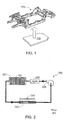
- Fig. 1 provides a perspective view of a battery pack 101 configured to be mounted under vehicle chassis 103. It should be understood that the present invention is not limited to a specific battery pack mounting scheme, battery pack size, or battery pack configuration.
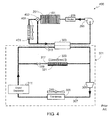
- Fig. 2 illustrates an exemplary battery thermal management system 200 in accordance with the prior art.
- the temperature of the batteries within battery pack 101 is controlled by pumping a thermal transfer medium, e.g., a liquid coolant, through a plurality of cooling conduits 201 integrated into battery pack 101.
- Conduits 201 which are fabricated from a material with a relatively high thermal conductivity, are positioned within pack 101 in order to optimize thermal communication between the individual batteries, not shown, and the conduits, thereby allowing the temperature of the batteries to be regulated by regulating the flow of coolant within conduits 201 and/or regulating the transfer of heat from the coolant to another temperature control system.
- the coolant within conduits 201 is pumped through a radiator 203 using a pump 205.
- a blower fan 207 may be used to force air through radiator 203, for example when the car is stationary or moving at low speeds, thus insuring that there is an adequate transfer of thermal energy from the coolant to the ambient environment.
- System 200 may also include a heater 209, e.g., a PTC heater, that may be used to heat the coolant within conduits 201, and thus heat the batteries within pack 101.
- a heater 209 e.g., a PTC heater
- Fig. 3 illustrates an alternate battery pack thermal management system 300.
- the coolant within conduits 201 is coupled to a secondary thermal management system 301 via a heat exchanger 303.
- thermal management system 301 is a refrigeration system and as such, includes a compressor 305 to compress the low temperature vapor in refrigerant line 307 into a high temperature vapor and a condenser 309 in which a portion of the captured heat is dissipated.
- the refrigerant After passing through condenser 309, the refrigerant changes phases from vapor to liquid, the liquid remaining at a temperature below the saturation temperature at the prevailing pressure.
- the refrigerant then passes through a dryer 311 that removes moisture from the condensed refrigerant.
- refrigerant line 307 is coupled to heat exchanger 303 via thermal expansion valve 313 which controls the flow rate of refrigerant into heat exchanger 303. Additionally, in the illustrated system a blower fan 315 is used in conjunction with condenser 309 to improve system efficiency.
- thermal management system 301 is also coupled to the vehicle's heating, ventilation and air conditioning (HVAC) system.
- HVAC heating, ventilation and air conditioning
- line 307 may also be coupled to the HVAC evaporator 317.
- a thermal expansion valve 319 is preferably used to control refrigerant flow rate into the evaporator.
- a heater for example a PTC heater 321 integrated into evaporator 317, may be used to provide warm air to the passenger cabin.
- one or more fans 323 are used to circulate air throughout the passenger cabin, where the circulating air may be ambient air, air cooled via evaporator 317, or air heated by heater 321.
- Fig. 4 illustrates such a conventional cooling system.
- the coolant passing through battery pack 101 via conduits 201 may be directed through either radiator 401 or heat exchanger 303.
- Valve 403 controls the flow of coolant through radiator 401.
- a blower fan 405 is included in system 400 as shown, thus providing means for forcing air through the radiator when necessary, for example when the car is stationary.
- Fig. 5 provides a schematic overview of the thermal control system of the invention, this figure illustrating thermal communications between the three thermal control circuits and the passenger cabin 501, the battery system 503 and the drive train 505.
- the use of three thermal control circuits allows the thermal management system to efficiently regulate the temperature of cabin 501, battery system 503 and drive train 505, specifically minimizing heat loss by recycling the heat generated by the vehicle's subsystems.
- the three control circuits preferably include a single refrigerant-based heat pump circuit and a pair of control loops that utilize a non-gaseous, heat-transfer fluid.
- heat-transfer fluid used in the latter two circuits is preferably water-based, e.g., pure water or water that includes an additive such as ethylene glycol or propylene glycol, throughout this specification these two circuits are often referred to as water-based cooling circuits. It should be understood, however, that these two circuits may utilize a non-water-based, heat-transfer fluid.
- Passenger cabin 501 includes a HVAC system that provides the vehicle's occupants means for regulating cabin temperature.
- Battery system 503 includes at least one, and typically a plurality of batteries (e.g., tens, hundreds, or thousands of batteries), contained within a battery pack enclosure.
- the batteries are cylindrically-shaped, for example utilizing an 18650 form-factor, and are positioned within the battery pack so that the cylindrical axis of each battery is substantially perpendicular to the lower battery pack enclosure panel as well as the surface of the road.
- Cooling conduits preferably deformable cooling conduits, which contain a heat transfer medium (e.g., water), are in thermal communication with the batteries.
- the cooling conduits are aligned with the battery pack's lower panel, resulting in the coolant within the conduits flowing in a direction substantially perpendicular to the axes of the cylindrical batteries.
- the temperature of the batteries may be regulated so that they remain within their preferred operating range.
- a thermal insulator e.g., an air gap or one or more layers of a material with a low thermal conductivity
- battery system 503 may include other components associated with the vehicle's electrical system that may, or may not be, coupled to the cooling conduits used to regulate the temperature of the batteries.
- battery system 503 includes a DC/DC converter that is used to convert the output of the battery pack to a voltage more suitable for use with the vehicle's various electrical accessories and auxiliary systems (e.g., exterior and interior lighting, audio system, navigation system, blower fans, etc.).
- Drive train 505 includes one or more motors, typically three phase alternating current (i.e., AC) motors, which are used to provide propulsive power to the vehicle.
- the portion of the drive train 505 that is thermally regulated and that is used as a heat source in some thermal system configurations may also include a transmission and/or a power inverter, for example as described in co-assigned U.S. Patent Application Serial No. 14/176,053, filed 8 February 2014 , the disclosure of which is incorporated herein by reference for any and all purposes.
- the power inverter converts the direct current (i.e., DC) power from the vehicle's batteries to match the power requirements of the propulsion motor(s).
- the transmission may be a single speed, fixed gear transmission or a multi-speed transmission.
- Drive train 505 generates heat during operation, heat that can either be withdrawn and discarded using a radiator 507, or recycled and used to heat other vehicle systems.
- the heat generated by drive train 505 may be used to heat battery system 503 or supply heat to passenger cabin 501.
- one of the water-based thermal control circuits is thermally coupled to battery system 503 while the second water-based thermal control circuit is thermally coupled to drive train 505.
- These thermal control circuits provide a thermal path for discarding the excess heat generated by drive train 505 through a radiator 507 and/or recycling the generated heat and using it to heat other vehicle systems and components.
- the heat generated by drive train 505 may be used to heat a cabin heating radiator 509 which, in turn, is used to heat passenger cabin 501, thereby minimizing the need for a separate, electric passenger cabin heater 511.
- excess drive train heat may be used to heat battery system 503 via a heat exchanger 513, thereby minimizing the need for an electric battery pack heater 515.
- the third thermal control circuit which is a refrigerant-based thermal control circuit as noted above, may be used in conjunction with heat exchanger 517 to either heat or cool passenger cabin 501.
- the refrigerant-based thermal control circuit may be used in conjunction with heat exchanger 519 to either heat or cool battery system 503.
- battery system 503 may be cooled by transferring heat to the ambient environment via one or more radiators 521.
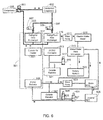
- Fig. 6 schematically illustrates a thermal control system in accordance with the invention. While Fig. 6 shows the primary components comprising the thermal control system as well as the direction of refrigerant and thermal transfer fluid flow, it does not show all of the components and subassemblies that may be used in a typical implementation of the invention.
- one or more blower fans are used to force air throughout the passenger cabin 501, where the circulating air may be ambient air, air cooled or heated via heat exchanger 517, air heated by cabin heating radiator 509, or air heated by supplemental electric heater 511.
- blower fans are typically used with the refrigeration system's condenser/evaporator 602 as well as radiators 507 and 521 as a means of improving system efficiency.
- the conduits carrying refrigerant regardless of whether the refrigerant is in the vapor phase or liquid phase, are shown as solid while the conduits carrying a water-based or non-water based heat transfer fluid for the first water-based thermal control circuit are shown as hollow and the conduits carrying a water-based or non-water based heat transfer fluid for the second water-based thermal control circuit are shown with cross-hatching.
- the refrigerant-based thermal control circuit includes a refrigerant reversing valve 601 that allows the direction of refrigerant flow to be reversed, thereby allowing the refrigerant-based system to be used in either a cooling mode or a heating mode. Due to the use of a reversing valve, the refrigerant-based control circuit also includes a component 602 that can serve either as a condenser or as an evaporator. Component 602 is referred to herein as a condenser/evaporator. As shown in Fig. 6 , interposed between compressor 305 and condenser/evaporator 602 are a pair of heat exchangers 517 and 519.
- Heat exchanger 517 is a refrigerant/air heat exchanger, thus simplifying heating and/or cooling of passenger cabin 501 using the refrigerant-based thermal control circuit.
- Heat exchanger 519 is a refrigerant/heat transfer fluid (e.g., water) exchanger that allows the refrigeration system to directly cool or heat the heat transfer fluid used in the water-based thermal control circuit coupled to battery system 503. Additionally, since the thermal control circuit coupled to battery system 503 is also coupled to a fluid/fluid exchanger 513, the refrigeration system can also be used to indirectly cool or heat the heat transfer fluid used in the water-based thermal control circuit coupled to drive train 505.
- the refrigerant-based thermal control circuit is coupled to heat exchangers 517 and 519 by a pair of expansion valves 603 and 605, respectively, which control the amount of refrigerant flowing through the heat exchangers.
- Expansion valves 603 and 605 are controlled by a pair of solenoids 607 and 609, respectively, thus allowing the vehicle's thermal management system to control refrigerant flow, and thus the temperature of the refrigerant side of heat exchangers 517 and 519.
- the flow of coolant (e.g., water or other thermal transfer fluid) within the first thermal control circuit, which is coupled to battery system 503, is controlled by pump 611.
- pump 611 operates continuously whenever the vehicle is in use, thus maintaining a relatively constant temperature throughout the battery system 503.
- pump 611 may be configured to only operate when it is necessary to heat or cool the batteries, or when the range of temperatures corresponding to the batteries within the battery pack becomes too large.
- pump 611 operates in a simple on/off configuration, while in other embodiments the coolant flow rate within this thermal loop is controlled by the operating speed of pump 611.
- the DC/DC converter 613 is shown as separate from battery system 503, albeit thermally coupled to the battery system via the thermal control loop. Alternately, the DC/DC converter 613 may be integrated within the battery system or may be excluded from this thermal control circuit.
- a first diverter valve 615 under the control of solenoid 617, is used to control the amount of coolant (e.g., water or other thermal transfer fluid) in the battery system's thermal control circuit that flows through radiator 521.
- coolant e.g., water or other thermal transfer fluid
- diverter valve 615/617 may be used to modulate the battery temperature by controlling the amount of coolant flowing through radiator 521. Eventually the batteries generate enough heat that it becomes unnecessary to actively heat the batteries, for example by using the heat pump or the supplemental electric heater.
- radiator 521 Once it becomes necessary to use the refrigeration system to actively cool the coolant via heat exchanger 519, it may or may not be advantageous to pass coolant through radiator 521. Typically as long as the ambient temperature is lower than the batteries' upper operating range limit, passing the coolant through radiator 521 will at least lower the demands placed on the refrigeration system, thereby increasing system efficiency. If the ambient temperature becomes higher than the batteries' upper operating range limit, then diverter valve 615 is preferably used to completely bypass radiator 521, thereby relying solely on the refrigeration system coupled to heat exchanger 519 to control the temperature of the battery system 503.
- the second water-based (or other fluid) thermal control circuit is coupled to the drive train 505 as described above.
- drive train 505 includes both the traction motor 619 and the power inverter 621.
- drive train 505 does not include both the traction motor 619 and the power inverter 621.
- the second thermal control loop is coupled to the first thermal control loop via heat exchanger 513. By coupling these two thermal loops together, heat generated by the drive train 505 may be used to heat batteries 503, as necessary, and cooling provided by the refrigerant-based control circuit may be used to cool the drive train 505, as necessary.
- the flow of coolant (e.g., water or other thermal transfer fluid) within the second thermal control circuit is controlled by pump 623.
- pump 623 only operates when it is necessary to transfer heat out of the drive train 505, for example to heat the batteries 503, to heat passenger cabin 501, or to cool the drive train 505.
- pump 623 may operate continuously whenever the vehicle is in use.
- pump 623 operates in a simple on/off configuration, while in other embodiments the coolant flow rate within this thermal loop is controlled by the operating speed of pump 623.
- the second thermal control circuit includes a pair of diverter valves 625 and 627 under the control of solenoids 629 and 631, respectively.
- Diverter valve 625/629 determines whether the thermal transfer fluid within this loop flows through heat exchanger 513 or radiator 507. This valve may either be configured to only offer two positions, where the first position couples the thermal loop to heat exchanger 513 and where the second position couples the thermal loop to radiator 507. Alternately, valve 625 may allow a range of positions, thus allowing a controlled portion of the coolant to flow through heat exchanger 513 and a second, controlled portion of the coolant to flow through radiator 507.
- diverter valve 625 when battery heating is required and the temperature of the water (or other heat transfer fluid) within the second thermal control circuit is higher than the current battery temperature, diverter valve 625 is set such that coolant flows through heat exchanger 513. Once battery heating is no longer required, or if the coolant temperature within the second thermal control loop is lower than the current battery temperature, the diverter valve 625 is set to couple the second thermal control loop to radiator 507.
- Diverter valve 627/631 determines the amount of coolant from the second thermal control circuit that passes through HVAC radiator 509, thus providing an efficient means of heating the passenger cabin 501.
- valve 627/631 permits a range of positions, thus allowing a portion of the coolant to be used with the HVAC system while a second portion of the coolant flows through radiator 507 and/or heat exchanger 513.
- valve 627/631 is set to completely bypass HVAC radiator 509.
- valve 627/631 is modulated to provide the desired level of heating via HVAC radiator 509.
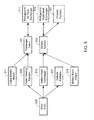
- Fig. 7 is a block diagram of an exemplary control system 700 for use with the thermal control system shown in Figs. 5 and 6 .
- Control system 700 includes a system controller 701.
- System controller 701 may be the same controller used to perform other vehicle functions, i.e., system controller 701 may be a vehicle system controller that may be used to control any of a variety of vehicle subsystem, e.g., navigation system, entertainment system, suspension (e.g., air suspension), battery charging, vehicle performance monitors, etc. Alternately, system controller 701 may be separate from the vehicle's system controller.
- System controller 701 includes a central processing unit (CPU) 703 and a memory 705.
- CPU central processing unit
- Memory 705 may be comprised of EPROM, EEPROM, flash memory, RAM, a solid state disk drive, a hard disk drive, or any other memory type or combination of memory types. Memory 705 may be used to store the preset operating temperature ranges for battery system 503 and drive train 505. If the vehicle uses a touch-screen or similar display means 707 as the user interface, controller 701 may also include a graphical processing unit (GPU) 709. CPU 703 and GPU 709 may be separate or contained on a single chip set.
- GPU graphical processing unit
- Coupled to controller 701 are a plurality of temperature sensors that monitor the temperatures of various components and systems under the control of the thermal control system.
- battery system 503 includes multiple temperature sensors 709 that provide an average battery pack temperature as well as temperature uniformity data for the battery system.
- Drive train 505 may also include one or more temperature sensors 711. Temperature sensors may also be used to monitor the temperature of the coolant within the two water-based thermal control circuits, i.e., temperature sensors 713, as well as the temperature within the passenger cabin (sensor 715) and the ambient temperature (sensor 717).
- HVAC system interface 719 that allows the desired passenger cabin temperature to be set by the driver and/or passengers, where the desired temperature may be configured to either be set by zone or a single temperature for the entire cabin.
- the HVAC system interface 719 may be a HVAC dedicated interface, e.g., temperature control switches mounted within the passenger cabin, or may utilize a common user interface such as display interface 707.
- the thermal control system of the invention uses multiple solenoid controlled valves to insure that the vehicle's subsystems, such as the passenger cabin 501 and the battery system 503, are maintained within their desired temperature range.
- controller 701 coupled to controller 701 is an actuator 721 for compressor 305, reversing valve 601, and solenoid-controlled expansion valves 603/607 and 605/609, thereby providing control of the refrigerant-based thermal control circuit.
- the three solenoid-controlled diverter valves i.e., 615/617, 625/629, and 627/631, and the two coolant pumps 611 and 623, thereby providing control of the two water-based thermal control circuits.
- multiple blower fans 723 are also coupled to controller 701, thereby allowing the system to control the air flow through condenser/evaporator 602, and/or heat exchanger 517, and/or radiators 507, 509 and 521.
- Fig. 8 provides a table that illustrates a variety of exemplary controller settings for an embodiment of the invention based on the configuration shown in Fig. 6 .
- all valves are shown as only having two states, where "1" signifies “on” or “closed” while “0” signifies “off” or “open”.
- the system may also be configured to allow at least some of the valves to have a range of positions between “0” and “1”, thus allowing increased control over the thermal circuits and the heating/cooling of the vehicle's primary thermal systems (e.g., passenger cabin 501, battery system 503 and drive train 505).
- solenoid-controlled expansion valve 603/607 when it is closed (i.e., set to "1"), the refrigerant passes through heat exchanger 517.
- solenoid-controlled expansion valve 605/609 when solenoid-controlled expansion valve 605/609 is closed (i.e., set to "1"), the refrigerant passes through heat exchanger 519.
- column 801 indicates the system that is making the heating or cooling request indicated in column 803.
- the three systems shown in column 801 are the passenger cabin 501, battery system 503 and drive train 505.
- Column 805 provides detail as to the relative thermal conditions of the various components, for example the difference between the present temperature of the requesting system and the ambient temperature and/or the coolant temperature in one of the thermal control circuits.
- Columns 807-813 provide setting information for diverter valve 615/617, diverter valve 625/629, diverter valve 627/631, solenoid-controlled expansion valve 603/607, solenoid-controlled expansion valve 605/609, reversing valve 601, and compressor 305.
- Column 815 provides an explanatory comment regarding each set of illustrated settings. A brief description of each of the conditions described in Fig. 8 follows. It should be understood that the settings shown in Fig. 8 simply illustrate possible system configurations utilizing the present invention to achieve specific results and therefore should not be viewed as a set of limiting configurations.
- the battery issues a heating request and the coolant in the second thermal control circuit, which is coupled to drive train 505, is greater than the present battery system temperature by a preset margin (e.g., by at least 10° C).
- a preset margin e.g., by at least 10° C.
- all three diverter valves are set to "1", thereby causing the coolant in the first thermal control circuit to bypass radiator 521, and the coolant in the second thermal control circuit to bypass both radiators 507 and 509.
- the coolant that is heated by the drive train 505 passes through heat exchanger 513 and heats the coolant in the first loop, and thus battery system 503.
- supplemental heater 515 may be used, as required, to augment the battery system heating provided by the drive train thermal control circuit.
- the battery issues a heating request at the same time as passenger cabin cooling is not required, thus allowing the refrigerant-based thermal control loop to be placed into the heating mode.
- compressor 305 is turned on, reversing valve is switched to the heat mode (i.e., set to "1"), and solenoid-controlled expansion valve 605/609 is set to "1" so that refrigerant passes through heat exchanger 519.
- Diverter valve 615/617 is also set to "1", thereby bypassing radiator 521.
- the coolant in the first thermal control circuit which is coupled to battery system 503, is heated by the refrigeration system operating in the heat pump mode.
- this loop may be (i) set to heat passenger cabin 501 via radiator 509, (ii) set to eliminate excess heat via radiator 507, or (iii) set to augment the heat supplied by the heat pump via heat exchanger 513.
- row 821 after the battery issues a heating request, heat is supplied by supplemental heater 515 and diverter valve 615/617 is set to "1" in order to bypass radiator 521.
- the reversing valve is set to the cooling mode (i.e., set to "0") and therefore heat is not being supplied by the refrigerant-based loop via heat exchanger 519.
- the second thermal circuit which is coupled to drive train 505, may still be used, for example this loop may be (i) set to heat passenger cabin 501 via radiator 509, (ii) set to eliminate excess heat via radiator 507, or (iii) set to augment the heat supplied by supplemental heater 515.
- the battery issues a cooling request and, based on the exterior temperature relative to the battery temperature, cooling is provided by radiator 521.
- the ambient temperature has to be lower than the battery system temperature by a preset margin (e.g., by at least 10° C) in order to utilize radiator 521 for cooling.
- battery cooling is not being augmented by the refrigerant-based loop since the solenoid-controlled expansion valve 605/609 is set to "0" and as such the refrigerant is not flowing through heat exchanger 519.
- diverter valve 625/629 is set to "0"
- the coolant in the second water-based thermal control circuit passes through radiator 507 rather than flowing through heat exchanger 513.
- diverter valve 615/617 is set to "0" so that the coolant within the first water-based thermal control loop will pass through radiator 521
- compressor 305 is turned on (i.e., set to "1")
- reversing valve 601 is set to the cooling mode (i.e., set to "0")
- solenoid-controlled expansion valve 605/609 is set to "1” so that the refrigerant is flowing through heat exchanger 519.
- diverter valve 625/629 is set to "0" the coolant in the second water-based thermal control circuit passes through radiator 507 rather than flowing through heat exchanger 513.
- diverter valve 615/617 is set to "1" thereby preventing the coolant in the first water-based thermal control circuit from flowing through radiator 521.
- the battery system is only cooled using the refrigerant-based thermal circuit.
- compressor 305 is turned on (i.e., set to "1")
- reversing valve 601 is set to the cooling mode (i.e., set to "0")
- solenoid-controlled expansion valve 605/609 is set to "1" so that the refrigerant is flowing through heat exchanger 519.
- the drive train 505 requires cooling at the same time as the battery requires heating. Under these circumstances, all three diverter valves are set to "1", thereby causing the coolant in the first thermal control circuit to bypass radiator 521, and the coolant in the second thermal control circuit to bypass both radiators 507 and 509. As a result, the coolant that is heated by the drive train 505 passes through heat exchanger 513 and heats the coolant in the first loop, thereby allowing heat to be withdrawn from the drive train 505 and used to heat the battery system 503. Note that in this configuration the refrigerant-based thermal control loop is not coupled to the first water-based thermal control loop since solenoid-controlled expansion valve 605/609 is set to "0".
- the drive train 505 requires cooling at the same time as the passenger cabin 501 requires heating. Under these circumstances, diverter valve 627/631 is set to "0", thereby causing the coolant in the second thermal control circuit to flow through HVAC radiator 509. As a result, drive train 505 is cooled while heating passenger cabin 501.
- drive train 505 is cooled using radiator 507.
- diverter valve 625/629 is set to "0" so that the coolant in the drive train cooling loop (i.e., the second water-based thermal control circuit) flows through radiator 507.
- Diverter valve 627/631 is set to "1" so that the coolant in the drive train cooling loop bypasses HVAC radiator 509.
- the passenger cabin 501 requests cooling when the outside temperature is lower than the requested temperature by a preset margin (e.g., by at least 10° C).
- diverter valve 627/631 is set to "1" so that the coolant in the drive train cooling loop bypasses HVAC radiator 509 while solenoid-controlled expansion valve 603/606 is set to "0" so that refrigerant does not pass through heat exchanger 517.
- solenoid-controlled expansion valve 603/606 setting is changed to "1” so that refrigerant does pass through heat exchanger 517.
- compressor 305 is turned on (i.e., set to "1") and reversing valve 601 is set to the cooling mode (i.e., set to "0").
- the passenger cabin 501 requests heating when the temperature of the coolant in the drive train cooling loop, i.e., the second water-based thermal control circuit, is higher than the requested temperature by a preset margin (e.g., by at least 10° C).
- a preset margin e.g., by at least 10° C.
- diverter valve 627/631 is set to "0" so that the coolant in the drive train cooling loop flows through HVAC radiator 509, thereby heating the passenger cabin 501.
- the passenger cabin 501 requests heating when the temperature of the coolant in the drive train cooling loop is not high enough to provide the requested heat.
- heat is supplied by the refrigerant-based system. Accordingly, compressor 305 is turned on (i.e., set to "1"), reversing valve is switched to the heat mode (i.e., set to "1"), and solenoid-controlled expansion valve 603/607 is set to "1" so that refrigerant passes through heat exchanger 517.
Landscapes
- Engineering & Computer Science (AREA)
- Mechanical Engineering (AREA)
- Power Engineering (AREA)
- Transportation (AREA)
- Sustainable Energy (AREA)
- Life Sciences & Earth Sciences (AREA)
- Sustainable Development (AREA)
- Manufacturing & Machinery (AREA)
- Chemical & Material Sciences (AREA)
- Chemical Kinetics & Catalysis (AREA)
- Electrochemistry (AREA)
- General Chemical & Material Sciences (AREA)
- Physics & Mathematics (AREA)
- Thermal Sciences (AREA)
- Air-Conditioning For Vehicles (AREA)
Applications Claiming Priority (1)
| Application Number | Priority Date | Filing Date | Title |
|---|---|---|---|
| US14/340,606 US20160023532A1 (en) | 2014-07-25 | 2014-07-25 | EV Integrated Temperature Control System |
Publications (1)
| Publication Number | Publication Date |
|---|---|
| EP2977254A1 true EP2977254A1 (fr) | 2016-01-27 |
Family
ID=53525053
Family Applications (1)
| Application Number | Title | Priority Date | Filing Date |
|---|---|---|---|
| EP15173384.7A Withdrawn EP2977254A1 (fr) | 2014-07-25 | 2015-06-23 | Système intégré de régulation de la température ev |
Country Status (3)
| Country | Link |
|---|---|
| US (1) | US20160023532A1 (fr) |
| EP (1) | EP2977254A1 (fr) |
| CN (1) | CN204987545U (fr) |
Cited By (13)
| Publication number | Priority date | Publication date | Assignee | Title |
|---|---|---|---|---|
| WO2017214234A1 (fr) * | 2016-06-07 | 2017-12-14 | Tesla, Inc. | Mode de chaleur résiduelle d'un moteur électrique pour chauffer une batterie |
| EP3293025A1 (fr) * | 2016-09-07 | 2018-03-14 | Thunder Power New Energy Vehicle Development Company Limited | Système de refroidissement pour véhicule comprenant plusieurs composants |
| EP3381722A3 (fr) * | 2017-03-29 | 2019-02-20 | Ford Global Technologies, LLC | Système de compresseur de véhicule |
| EP3456561A1 (fr) * | 2017-09-15 | 2019-03-20 | Toyota Jidosha Kabushiki Kaisha | Système d'échange de chaleur pour véhicule |
| FR3082784A1 (fr) * | 2018-06-26 | 2019-12-27 | Valeo Systemes Thermiques | Systeme de traitement thermique destine a un vehicule automobile |
| WO2020050517A1 (fr) * | 2018-09-03 | 2020-03-12 | Hanon Systems | Agencement de gestion thermique pour véhicules et procédé de fonctionnement d'un agencement de gestion thermique |
| DE102018218474A1 (de) * | 2018-10-29 | 2020-04-30 | Robert Bosch Gmbh | Heiz- oder Kühlmittelkreislauf für ein Elektrofahrzeug |
| CN112428770A (zh) * | 2020-09-30 | 2021-03-02 | 三花控股集团有限公司 | 流体控制组件及热管理系统 |
| EP3647086A4 (fr) * | 2017-06-27 | 2021-03-17 | Zhejiang Sanhua Intelligent Controls Co., Ltd. | Système de gestion thermique |
| US10967702B2 (en) | 2017-09-07 | 2021-04-06 | Tesla, Inc. | Optimal source electric vehicle heat pump with extreme temperature heating capability and efficient thermal preconditioning |
| WO2021170213A1 (fr) * | 2020-02-24 | 2021-09-02 | Volvo Truck Corporation | Système de gestion thermique pour un véhicule à pile à combustible |
| WO2021217069A1 (fr) * | 2020-04-24 | 2021-10-28 | Hyliion Inc. | Système de gestion thermique pour véhicule à prolongateur d'autonomie |
| US11932078B2 (en) | 2021-03-31 | 2024-03-19 | Tesla, Inc. | Electric vehicle heat pump using enhanced valve unit |
Families Citing this family (44)
| Publication number | Priority date | Publication date | Assignee | Title |
|---|---|---|---|---|
| FR2987315B1 (fr) * | 2012-02-24 | 2014-03-07 | Valeo Systemes Thermiques | Dispositif de conditionnement thermique d'un habitacle et d'une chaine de traction d'un vehicule. |
| US10290911B2 (en) * | 2015-05-18 | 2019-05-14 | Toyota Motor Engineering & Manufacturing North America, Inc. | Cooling loops and vehicles incorporating the same |
| DE102015215253A1 (de) * | 2015-08-11 | 2017-02-16 | Bayerische Motoren Werke Aktiengesellschaft | Kühlvorrichtung für Energiespeicher |
| US10513166B2 (en) * | 2015-09-03 | 2019-12-24 | Ford Global Technologies, Llc | Vehicle HVAC system with auxiliary coolant loop for heating and cooling vehicle interior |
| US10272744B2 (en) * | 2015-09-03 | 2019-04-30 | Ford Global Technologies, Llc | Vehicle HVAC system with auxiliary coolant loop for heating and cooling vehicle interior |
| US20170241308A1 (en) * | 2016-02-24 | 2017-08-24 | Ford Global Technologies, Llc | Oil maintenance strategy for electrified vehicles |
| US9947975B2 (en) * | 2016-07-01 | 2018-04-17 | Ford Global Technologies, Llc | Battery coolant circuit control |
| EP3419843B1 (fr) | 2016-09-02 | 2022-11-16 | Apple Inc. | Système de gestion thermique de véhicule et échangeurs de chaleur |
| US11002179B2 (en) * | 2016-09-27 | 2021-05-11 | Ford Global Technologies, Llc | Methods and systems for control of coolant flow through an engine coolant system |
| CN108417926B (zh) * | 2017-02-09 | 2020-12-01 | 浙江三花汽车零部件有限公司 | 动力电池组件及电动汽车 |
| TWI635318B (zh) * | 2017-04-28 | 2018-09-11 | 宏星技術股份有限公司 | 頭戴式顯示器、控制方法,以及非暫時性電腦可讀取媒體 |
| DE102017120615A1 (de) * | 2017-09-07 | 2019-03-07 | Volkswagen Aktiengesellschaft | Kraftfahrzeug mit einem Kühlsystem |
| US11848425B2 (en) | 2017-10-12 | 2023-12-19 | General Electric Company | Temperature control for energy storage system |
| KR102375845B1 (ko) * | 2017-11-24 | 2022-03-17 | 주식회사 엘지에너지솔루션 | 배터리 장치 및 배터리 온도 조절방법 |
| KR102474367B1 (ko) * | 2017-11-29 | 2022-12-05 | 현대자동차 주식회사 | 차량용 열 관리 시스템 |
| KR102474364B1 (ko) * | 2017-12-04 | 2022-12-05 | 현대자동차 주식회사 | 차량용 열 관리 시스템 |
| CN108394254A (zh) * | 2018-04-27 | 2018-08-14 | 北京新能源汽车股份有限公司 | 一种电动汽车热管理系统及控制方法 |
| US10941695B2 (en) | 2018-07-10 | 2021-03-09 | Volvo Car Corporation | System for cooling heat-generating electronic components of a vehicle |
| JP7185469B2 (ja) * | 2018-09-28 | 2022-12-07 | 株式会社Subaru | 車両の熱管理システム |
| KR20200039392A (ko) * | 2018-10-05 | 2020-04-16 | 현대자동차주식회사 | 차량의 냉매 유동시스템 및 이를 제어하는 방법 |
| CN109631204B (zh) * | 2018-12-16 | 2021-03-16 | 北京工业大学 | 房车/户用风-光-电互补储能系统及其热管理方法 |
| KR102600060B1 (ko) * | 2019-02-27 | 2023-11-07 | 현대자동차 주식회사 | 전기자동차의 냉각 시스템용 밸브 모듈 |
| US11749851B2 (en) * | 2019-03-20 | 2023-09-05 | Hamilton Sundstrand Corporation | Thermal regulation of batteries |
| CN110182017B (zh) * | 2019-04-16 | 2020-12-22 | 江苏敏安电动汽车有限公司 | 一种集成电池包加热及降温的汽车热泵空调系统 |
| US12420869B2 (en) | 2019-07-02 | 2025-09-23 | Canoo Technologies Inc. | Method to reduced lateral deflection of longitudinal members in side impact |
| CA3145383C (fr) | 2019-07-02 | 2025-05-27 | Canoo Technologies Inc. | Caractéristiques de choc |
| JP7057767B2 (ja) * | 2019-07-09 | 2022-04-20 | 株式会社Soken | 電源システム |
| WO2021050605A1 (fr) | 2019-09-09 | 2021-03-18 | Canoo Inc. | Système de suspension |
| US11221165B2 (en) * | 2019-09-17 | 2022-01-11 | Laird Thermal Systems, Inc. | Temperature regulating refrigeration systems for varying loads |
| WO2021055758A1 (fr) * | 2019-09-18 | 2021-03-25 | Canoo Inc. | Systèmes de gestion thermique pour plateformes de véhicules électriques |
| US11518209B2 (en) * | 2019-11-06 | 2022-12-06 | Ford Global Technologies, Llc | Electrified vehicle configured to power limit battery based on thermal exchange capacity |
| CN110920465B (zh) * | 2019-11-25 | 2023-10-13 | 武汉科技大学 | 一种燃料电池组和空调联合热管理系统及其控制方法 |
| JP7371467B2 (ja) * | 2019-12-03 | 2023-10-31 | 株式会社デンソー | 車両用エネルギーマネジメントシステム |
| US11597255B2 (en) | 2020-03-25 | 2023-03-07 | Pony Al Inc. | Systems and methods for cooling vehicle components |
| JP7256142B2 (ja) * | 2020-03-31 | 2023-04-11 | トヨタ自動車株式会社 | 熱要求調停装置、方法、プログラム、及び車両 |
| DE102020204555A1 (de) * | 2020-04-08 | 2021-10-14 | Denso Corporation | Kühlkreislauf mit mehreren Kühltemperaturen für Kraftfahrzeuge und ein Verfahren zum Betrieb eines solchen Kühlkreislaufs |
| US11792955B2 (en) * | 2020-04-15 | 2023-10-17 | Baidu Usa Llc | Thermal transfer system and control in multiple operating conditions |
| CN113580872B (zh) * | 2020-04-30 | 2023-11-14 | 比亚迪股份有限公司 | 车辆及其热管理系统 |
| CN112721737B (zh) * | 2021-01-20 | 2023-02-17 | 重庆邮电大学 | 一种纯电动汽车综合热能利用热管理系统及其控制方法 |
| CN115723633A (zh) * | 2021-08-31 | 2023-03-03 | 比亚迪股份有限公司 | 动力电池加热装置、电动车辆及其温度调节系统 |
| EP4152449A1 (fr) * | 2021-09-21 | 2023-03-22 | Ford Global Technologies, LLC | Systèmes et procédés de commande d'un système de refroidissement d'un véhicule |
| DE102021131736A1 (de) * | 2021-12-02 | 2023-06-07 | Dr. Ing. H.C. F. Porsche Aktiengesellschaft | Kühlanordnung |
| FR3136712A1 (fr) * | 2022-06-20 | 2023-12-22 | Psa Automobiles Sa | Dispositif de gestion thermique pour circuit de refroidissement de vehicule electrique, procede et vehicule sur la base d’un tel dispositif |
| US12472846B2 (en) * | 2022-10-17 | 2025-11-18 | Ford Global Technologies, Llc | Thermal management system for electrified vehicle using power electronics heat for heating a battery |
Citations (6)
| Publication number | Priority date | Publication date | Assignee | Title |
|---|---|---|---|---|
| US5971290A (en) * | 1997-04-30 | 1999-10-26 | Honda Giken Kogyo Kabushiki Kaisha | Heat exchange system for electric vehicle |
| US6360835B1 (en) | 2000-02-16 | 2002-03-26 | General Motors Corporation | Thermal management of fuel-cell-powered vehicles |
| US7789176B2 (en) | 2007-04-11 | 2010-09-07 | Tesla Motors, Inc. | Electric vehicle thermal management system |
| EP2305494A1 (fr) * | 2009-09-30 | 2011-04-06 | Hitachi Ltd. | Système de cycle thermodynamique pour véhicule |
| US8336319B2 (en) | 2010-06-04 | 2012-12-25 | Tesla Motors, Inc. | Thermal management system with dual mode coolant loops |
| US20140041826A1 (en) * | 2011-04-18 | 2014-02-13 | Denso Corporation | Vehicle temperature control apparatus and in-vehicle thermal system |
Family Cites Families (5)
| Publication number | Priority date | Publication date | Assignee | Title |
|---|---|---|---|---|
| FR2780490B1 (fr) * | 1998-06-30 | 2000-11-10 | Valeo Climatisation | Systeme de reglage de la temperature dans l'habitacle d'un vehicule a moteur electrique |
| US6450275B1 (en) * | 2000-11-02 | 2002-09-17 | Ford Motor Company | Power electronics cooling for a hybrid electric vehicle |
| US6370903B1 (en) * | 2001-03-14 | 2002-04-16 | Visteon Global Technologies, Inc. | Heat-pump type air conditioning and heating system for fuel cell vehicles |
| EP2305497B1 (fr) * | 2007-11-13 | 2012-06-20 | Behr GmbH & Co. KG | Appareil de refroidissement d'une source de chaleur d'un véhicule |
| US7975757B2 (en) * | 2008-07-21 | 2011-07-12 | GM Global Technology Operations LLC | Vehicle HVAC and RESS thermal management |
-
2014
- 2014-07-25 US US14/340,606 patent/US20160023532A1/en not_active Abandoned
-
2015
- 2015-06-23 EP EP15173384.7A patent/EP2977254A1/fr not_active Withdrawn
- 2015-07-22 CN CN201520536414.6U patent/CN204987545U/zh not_active Expired - Lifetime
Patent Citations (6)
| Publication number | Priority date | Publication date | Assignee | Title |
|---|---|---|---|---|
| US5971290A (en) * | 1997-04-30 | 1999-10-26 | Honda Giken Kogyo Kabushiki Kaisha | Heat exchange system for electric vehicle |
| US6360835B1 (en) | 2000-02-16 | 2002-03-26 | General Motors Corporation | Thermal management of fuel-cell-powered vehicles |
| US7789176B2 (en) | 2007-04-11 | 2010-09-07 | Tesla Motors, Inc. | Electric vehicle thermal management system |
| EP2305494A1 (fr) * | 2009-09-30 | 2011-04-06 | Hitachi Ltd. | Système de cycle thermodynamique pour véhicule |
| US8336319B2 (en) | 2010-06-04 | 2012-12-25 | Tesla Motors, Inc. | Thermal management system with dual mode coolant loops |
| US20140041826A1 (en) * | 2011-04-18 | 2014-02-13 | Denso Corporation | Vehicle temperature control apparatus and in-vehicle thermal system |
Cited By (27)
| Publication number | Priority date | Publication date | Assignee | Title |
|---|---|---|---|---|
| EP3465886B1 (fr) * | 2016-06-07 | 2022-08-03 | Tesla, Inc. | Système de refroidissement de moteur électrique |
| US11218045B2 (en) | 2016-06-07 | 2022-01-04 | Tesla, Inc. | Electric motor waste heat mode to heat battery |
| US10128705B2 (en) | 2016-06-07 | 2018-11-13 | Tesla, Inc. | Electric motor heating/cooling system |
| US11088582B2 (en) | 2016-06-07 | 2021-08-10 | Tesla, Inc. | Electric motor rotor discharge protection |
| JP2019517765A (ja) * | 2016-06-07 | 2019-06-24 | テスラ,インコーポレイテッド | 熱電池の電動機廃熱モード |
| WO2017214234A1 (fr) * | 2016-06-07 | 2017-12-14 | Tesla, Inc. | Mode de chaleur résiduelle d'un moteur électrique pour chauffer une batterie |
| US11757320B2 (en) | 2016-06-07 | 2023-09-12 | Tesla, Inc. | Electric motor rotor discharge protection |
| US10587162B2 (en) | 2016-06-07 | 2020-03-10 | Tesla, Inc. | Electric motor waste heat mode to heat battery |
| EP3293025A1 (fr) * | 2016-09-07 | 2018-03-14 | Thunder Power New Energy Vehicle Development Company Limited | Système de refroidissement pour véhicule comprenant plusieurs composants |
| EP3381722A3 (fr) * | 2017-03-29 | 2019-02-20 | Ford Global Technologies, LLC | Système de compresseur de véhicule |
| US10639957B2 (en) | 2017-03-29 | 2020-05-05 | Ford Global Technologies, Llc | Vehicle compressor system |
| US11458797B2 (en) | 2017-06-27 | 2022-10-04 | Zhejiang Sanhua Intelligent Controls Co., Ltd. | Thermal management system |
| EP3647086A4 (fr) * | 2017-06-27 | 2021-03-17 | Zhejiang Sanhua Intelligent Controls Co., Ltd. | Système de gestion thermique |
| US10967702B2 (en) | 2017-09-07 | 2021-04-06 | Tesla, Inc. | Optimal source electric vehicle heat pump with extreme temperature heating capability and efficient thermal preconditioning |
| US10814696B2 (en) | 2017-09-15 | 2020-10-27 | Toyota Jidosha Kabushiki Kaisha | Heat exchange system for vehicle |
| EP3456561A1 (fr) * | 2017-09-15 | 2019-03-20 | Toyota Jidosha Kabushiki Kaisha | Système d'échange de chaleur pour véhicule |
| FR3082784A1 (fr) * | 2018-06-26 | 2019-12-27 | Valeo Systemes Thermiques | Systeme de traitement thermique destine a un vehicule automobile |
| WO2020050517A1 (fr) * | 2018-09-03 | 2020-03-12 | Hanon Systems | Agencement de gestion thermique pour véhicules et procédé de fonctionnement d'un agencement de gestion thermique |
| US12214644B2 (en) | 2018-09-03 | 2025-02-04 | Hanon Systems | Thermal management arrangement for vehicles and method for operating a thermal management arrangement |
| DE102018218474A1 (de) * | 2018-10-29 | 2020-04-30 | Robert Bosch Gmbh | Heiz- oder Kühlmittelkreislauf für ein Elektrofahrzeug |
| WO2021170213A1 (fr) * | 2020-02-24 | 2021-09-02 | Volvo Truck Corporation | Système de gestion thermique pour un véhicule à pile à combustible |
| US12347903B2 (en) | 2020-02-24 | 2025-07-01 | Volvo Truck Corporation | Thermal management system for a fuel cell vehicle |
| WO2021217069A1 (fr) * | 2020-04-24 | 2021-10-28 | Hyliion Inc. | Système de gestion thermique pour véhicule à prolongateur d'autonomie |
| US11505030B2 (en) | 2020-04-24 | 2022-11-22 | Hyliion Inc. | Thermal management system for range extender vehicle |
| CN112428770A (zh) * | 2020-09-30 | 2021-03-02 | 三花控股集团有限公司 | 流体控制组件及热管理系统 |
| US11932078B2 (en) | 2021-03-31 | 2024-03-19 | Tesla, Inc. | Electric vehicle heat pump using enhanced valve unit |
| US12365215B2 (en) | 2021-03-31 | 2025-07-22 | Tesla, Inc. | Electric vehicle heat pump using enhanced valve unit |
Also Published As
| Publication number | Publication date |
|---|---|
| US20160023532A1 (en) | 2016-01-28 |
| CN204987545U (zh) | 2016-01-20 |
Similar Documents
| Publication | Publication Date | Title |
|---|---|---|
| EP2977254A1 (fr) | Système intégré de régulation de la température ev | |
| EP3045331B1 (fr) | Système de gestion thermique multimode ev | |
| US9758010B2 (en) | EV multi mode thermal management system | |
| US9731578B2 (en) | EV multi-mode thermal management system | |
| US9758011B2 (en) | EV multi-mode thermal management system | |
| US9731576B2 (en) | EV multi-mode thermal management system | |
| US9731577B2 (en) | EV multi-mode thermal management system | |
| US9511645B2 (en) | EV multi-mode thermal management system | |
| US9758012B2 (en) | EV multi-mode thermal management system | |
| US9533544B2 (en) | EV multi-mode thermal management system | |
| EP3088230B1 (fr) | Système de commande thermique multimode d'un véhicule électrique | |
| US9844995B2 (en) | EV muti-mode thermal control system | |
| US20160318409A1 (en) | EV Muti-Mode Thermal Control System | |
| CN103963605B (zh) | 车辆热泵系统和利用蓄热的方法 | |
| EP2392486B1 (fr) | Système de gestion thermique avec boucles de refroidissement à double mode | |
| EP2349753B1 (fr) | Système hvac à modes multiples à dispositif thermoélectrique | |
| US20160318410A1 (en) | EV Muti-Mode Thermal Control System | |
| WO2013151903A1 (fr) | Systèmes de commande de température ayant des dispositifs thermoélectriques | |
| JP2022060754A (ja) | 熱管理システム | |
| JP2025024921A (ja) | バッテリ暖機システム |
Legal Events
| Date | Code | Title | Description |
|---|---|---|---|
| PUAI | Public reference made under article 153(3) epc to a published international application that has entered the european phase |
Free format text: ORIGINAL CODE: 0009012 |
|
| AK | Designated contracting states |
Kind code of ref document: A1 Designated state(s): AL AT BE BG CH CY CZ DE DK EE ES FI FR GB GR HR HU IE IS IT LI LT LU LV MC MK MT NL NO PL PT RO RS SE SI SK SM TR |
|
| AX | Request for extension of the european patent |
Extension state: BA ME |
|
| 17P | Request for examination filed |
Effective date: 20151218 |
|
| RBV | Designated contracting states (corrected) |
Designated state(s): AL AT BE BG CH CY CZ DE DK EE ES FI FR GB GR HR HU IE IS IT LI LT LU LV MC MK MT NL NO PL PT RO RS SE SI SK SM TR |
|
| 17Q | First examination report despatched |
Effective date: 20160630 |
|
| STAA | Information on the status of an ep patent application or granted ep patent |
Free format text: STATUS: THE APPLICATION HAS BEEN WITHDRAWN |
|
| 18W | Application withdrawn |
Effective date: 20170727 |