EP2977355A1 - Ballastwasseraufbereitungssystem - Google Patents
Ballastwasseraufbereitungssystem Download PDFInfo
- Publication number
- EP2977355A1 EP2977355A1 EP14771176.6A EP14771176A EP2977355A1 EP 2977355 A1 EP2977355 A1 EP 2977355A1 EP 14771176 A EP14771176 A EP 14771176A EP 2977355 A1 EP2977355 A1 EP 2977355A1
- Authority
- EP
- European Patent Office
- Prior art keywords
- ballast water
- unit
- filter
- chlorine dioxide
- electrolysis
- Prior art date
- Legal status (The legal status is an assumption and is not a legal conclusion. Google has not performed a legal analysis and makes no representation as to the accuracy of the status listed.)
- Withdrawn
Links
- XLYOFNOQVPJJNP-UHFFFAOYSA-N water Substances O XLYOFNOQVPJJNP-UHFFFAOYSA-N 0.000 title claims abstract description 195
- OSVXSBDYLRYLIG-UHFFFAOYSA-N dioxidochlorine(.) Chemical compound O=Cl=O OSVXSBDYLRYLIG-UHFFFAOYSA-N 0.000 claims abstract description 161
- 238000005868 electrolysis reaction Methods 0.000 claims abstract description 91
- 239000004155 Chlorine dioxide Substances 0.000 claims abstract description 77
- 235000019398 chlorine dioxide Nutrition 0.000 claims abstract description 77
- GWEVSGVZZGPLCZ-UHFFFAOYSA-N Titan oxide Chemical compound O=[Ti]=O GWEVSGVZZGPLCZ-UHFFFAOYSA-N 0.000 claims abstract description 54
- 238000006386 neutralization reaction Methods 0.000 claims abstract description 31
- 244000005700 microbiome Species 0.000 claims abstract description 30
- 230000003472 neutralizing effect Effects 0.000 claims abstract description 26
- 239000003795 chemical substances by application Substances 0.000 claims abstract description 23
- 239000013535 sea water Substances 0.000 claims abstract description 15
- 238000005259 measurement Methods 0.000 claims abstract description 13
- 238000001914 filtration Methods 0.000 claims abstract description 10
- 238000011109 contamination Methods 0.000 claims abstract description 4
- 230000003993 interaction Effects 0.000 claims abstract description 3
- 239000002243 precursor Substances 0.000 claims description 22
- 239000007800 oxidant agent Substances 0.000 claims description 18
- 230000001590 oxidative effect Effects 0.000 claims description 14
- 238000012546 transfer Methods 0.000 claims description 14
- 238000003860 storage Methods 0.000 claims description 10
- 238000007599 discharging Methods 0.000 claims description 8
- 229910019093 NaOCl Inorganic materials 0.000 claims description 5
- SUKJFIGYRHOWBL-UHFFFAOYSA-N sodium hypochlorite Chemical compound [Na+].Cl[O-] SUKJFIGYRHOWBL-UHFFFAOYSA-N 0.000 claims description 5
- VEXZGXHMUGYJMC-UHFFFAOYSA-N Hydrochloric acid Chemical compound Cl VEXZGXHMUGYJMC-UHFFFAOYSA-N 0.000 claims description 4
- UKLNMMHNWFDKNT-UHFFFAOYSA-M sodium chlorite Chemical compound [Na+].[O-]Cl=O UKLNMMHNWFDKNT-UHFFFAOYSA-M 0.000 claims description 4
- 230000001954 sterilising effect Effects 0.000 abstract description 14
- 238000004659 sterilization and disinfection Methods 0.000 abstract description 5
- 238000000034 method Methods 0.000 description 24
- 230000001939 inductive effect Effects 0.000 description 21
- 125000006850 spacer group Chemical group 0.000 description 14
- 239000000126 substance Substances 0.000 description 12
- QBWCMBCROVPCKQ-UHFFFAOYSA-N chlorous acid Chemical compound OCl=O QBWCMBCROVPCKQ-UHFFFAOYSA-N 0.000 description 7
- 239000007787 solid Substances 0.000 description 7
- 230000000694 effects Effects 0.000 description 5
- WQYVRQLZKVEZGA-UHFFFAOYSA-N hypochlorite Chemical compound Cl[O-] WQYVRQLZKVEZGA-UHFFFAOYSA-N 0.000 description 5
- 238000003825 pressing Methods 0.000 description 5
- 230000001678 irradiating effect Effects 0.000 description 3
- 239000000463 material Substances 0.000 description 3
- 238000009303 advanced oxidation process reaction Methods 0.000 description 2
- 238000007865 diluting Methods 0.000 description 2
- 238000011010 flushing procedure Methods 0.000 description 2
- 238000010297 mechanical methods and process Methods 0.000 description 2
- 238000002156 mixing Methods 0.000 description 2
- 238000000053 physical method Methods 0.000 description 2
- 238000005406 washing Methods 0.000 description 2
- ZAMOUSCENKQFHK-UHFFFAOYSA-N Chlorine atom Chemical compound [Cl] ZAMOUSCENKQFHK-UHFFFAOYSA-N 0.000 description 1
- QVGXLLKOCUKJST-UHFFFAOYSA-N atomic oxygen Chemical compound [O] QVGXLLKOCUKJST-UHFFFAOYSA-N 0.000 description 1
- 238000006243 chemical reaction Methods 0.000 description 1
- 239000000460 chlorine Substances 0.000 description 1
- 229910052801 chlorine Inorganic materials 0.000 description 1
- 238000004140 cleaning Methods 0.000 description 1
- 238000010586 diagram Methods 0.000 description 1
- 239000000428 dust Substances 0.000 description 1
- 239000000417 fungicide Substances 0.000 description 1
- 125000002887 hydroxy group Chemical group [H]O* 0.000 description 1
- 239000012535 impurity Substances 0.000 description 1
- 239000011810 insulating material Substances 0.000 description 1
- 238000004519 manufacturing process Methods 0.000 description 1
- 229910044991 metal oxide Inorganic materials 0.000 description 1
- 150000004706 metal oxides Chemical class 0.000 description 1
- 238000012544 monitoring process Methods 0.000 description 1
- 239000001301 oxygen Substances 0.000 description 1
- 229910052760 oxygen Inorganic materials 0.000 description 1
- 239000004033 plastic Substances 0.000 description 1
- 238000012545 processing Methods 0.000 description 1
- AKHNMLFCWUSKQB-UHFFFAOYSA-L sodium thiosulfate Chemical compound [Na+].[Na+].[O-]S([O-])(=O)=S AKHNMLFCWUSKQB-UHFFFAOYSA-L 0.000 description 1
- 238000009281 ultraviolet germicidal irradiation Methods 0.000 description 1
Images



Classifications
-
- C—CHEMISTRY; METALLURGY
- C02—TREATMENT OF WATER, WASTE WATER, SEWAGE, OR SLUDGE
- C02F—TREATMENT OF WATER, WASTE WATER, SEWAGE, OR SLUDGE
- C02F9/00—Multistage treatment of water, waste water or sewage
-
- B—PERFORMING OPERATIONS; TRANSPORTING
- B63—SHIPS OR OTHER WATERBORNE VESSELS; RELATED EQUIPMENT
- B63J—AUXILIARIES ON VESSELS
- B63J4/00—Arrangements of installations for treating ballast water, waste water, sewage, sludge, or refuse, or for preventing environmental pollution not otherwise provided for
- B63J4/002—Arrangements of installations for treating ballast water, waste water, sewage, sludge, or refuse, or for preventing environmental pollution not otherwise provided for for treating ballast water
-
- C—CHEMISTRY; METALLURGY
- C02—TREATMENT OF WATER, WASTE WATER, SEWAGE, OR SLUDGE
- C02F—TREATMENT OF WATER, WASTE WATER, SEWAGE, OR SLUDGE
- C02F1/00—Treatment of water, waste water, or sewage
- C02F1/001—Processes for the treatment of water whereby the filtration technique is of importance
- C02F1/004—Processes for the treatment of water whereby the filtration technique is of importance using large scale industrial sized filters
-
- C—CHEMISTRY; METALLURGY
- C02—TREATMENT OF WATER, WASTE WATER, SEWAGE, OR SLUDGE
- C02F—TREATMENT OF WATER, WASTE WATER, SEWAGE, OR SLUDGE
- C02F1/00—Treatment of water, waste water, or sewage
- C02F1/008—Control or steering systems not provided for elsewhere in subclass C02F
-
- C—CHEMISTRY; METALLURGY
- C02—TREATMENT OF WATER, WASTE WATER, SEWAGE, OR SLUDGE
- C02F—TREATMENT OF WATER, WASTE WATER, SEWAGE, OR SLUDGE
- C02F1/00—Treatment of water, waste water, or sewage
- C02F1/46—Treatment of water, waste water, or sewage by electrochemical methods
- C02F1/461—Treatment of water, waste water, or sewage by electrochemical methods by electrolysis
- C02F1/46104—Devices therefor; Their operating or servicing
-
- B—PERFORMING OPERATIONS; TRANSPORTING
- B01—PHYSICAL OR CHEMICAL PROCESSES OR APPARATUS IN GENERAL
- B01D—SEPARATION
- B01D29/00—Filters with filtering elements stationary during filtration, e.g. pressure or suction filters, not covered by groups B01D24/00 - B01D27/00; Filtering elements therefor
- B01D29/44—Edge filtering elements, i.e. using contiguous impervious surfaces
- B01D29/46—Edge filtering elements, i.e. using contiguous impervious surfaces of flat, stacked bodies
-
- C—CHEMISTRY; METALLURGY
- C02—TREATMENT OF WATER, WASTE WATER, SEWAGE, OR SLUDGE
- C02F—TREATMENT OF WATER, WASTE WATER, SEWAGE, OR SLUDGE
- C02F1/00—Treatment of water, waste water, or sewage
- C02F1/30—Treatment of water, waste water, or sewage by irradiation
- C02F1/32—Treatment of water, waste water, or sewage by irradiation with ultraviolet light
-
- C—CHEMISTRY; METALLURGY
- C02—TREATMENT OF WATER, WASTE WATER, SEWAGE, OR SLUDGE
- C02F—TREATMENT OF WATER, WASTE WATER, SEWAGE, OR SLUDGE
- C02F1/00—Treatment of water, waste water, or sewage
- C02F1/46—Treatment of water, waste water, or sewage by electrochemical methods
- C02F1/461—Treatment of water, waste water, or sewage by electrochemical methods by electrolysis
-
- C—CHEMISTRY; METALLURGY
- C02—TREATMENT OF WATER, WASTE WATER, SEWAGE, OR SLUDGE
- C02F—TREATMENT OF WATER, WASTE WATER, SEWAGE, OR SLUDGE
- C02F1/00—Treatment of water, waste water, or sewage
- C02F1/66—Treatment of water, waste water, or sewage by neutralisation; pH adjustment
-
- C—CHEMISTRY; METALLURGY
- C02—TREATMENT OF WATER, WASTE WATER, SEWAGE, OR SLUDGE
- C02F—TREATMENT OF WATER, WASTE WATER, SEWAGE, OR SLUDGE
- C02F1/00—Treatment of water, waste water, or sewage
- C02F1/72—Treatment of water, waste water, or sewage by oxidation
- C02F1/725—Treatment of water, waste water, or sewage by oxidation by catalytic oxidation
-
- C—CHEMISTRY; METALLURGY
- C02—TREATMENT OF WATER, WASTE WATER, SEWAGE, OR SLUDGE
- C02F—TREATMENT OF WATER, WASTE WATER, SEWAGE, OR SLUDGE
- C02F1/00—Treatment of water, waste water, or sewage
- C02F1/72—Treatment of water, waste water, or sewage by oxidation
- C02F1/76—Treatment of water, waste water, or sewage by oxidation with halogens or compounds of halogens
-
- C—CHEMISTRY; METALLURGY
- C02—TREATMENT OF WATER, WASTE WATER, SEWAGE, OR SLUDGE
- C02F—TREATMENT OF WATER, WASTE WATER, SEWAGE, OR SLUDGE
- C02F2103/00—Nature of the water, waste water, sewage or sludge to be treated
- C02F2103/008—Originating from marine vessels, ships and boats, e.g. bilge water or ballast water
-
- C—CHEMISTRY; METALLURGY
- C02—TREATMENT OF WATER, WASTE WATER, SEWAGE, OR SLUDGE
- C02F—TREATMENT OF WATER, WASTE WATER, SEWAGE, OR SLUDGE
- C02F2209/00—Controlling or monitoring parameters in water treatment
- C02F2209/001—Upstream control, i.e. monitoring for predictive control
-
- C—CHEMISTRY; METALLURGY
- C02—TREATMENT OF WATER, WASTE WATER, SEWAGE, OR SLUDGE
- C02F—TREATMENT OF WATER, WASTE WATER, SEWAGE, OR SLUDGE
- C02F2209/00—Controlling or monitoring parameters in water treatment
- C02F2209/003—Downstream control, i.e. outlet monitoring, e.g. to check the treating agents, such as halogens or ozone, leaving the process
-
- C—CHEMISTRY; METALLURGY
- C02—TREATMENT OF WATER, WASTE WATER, SEWAGE, OR SLUDGE
- C02F—TREATMENT OF WATER, WASTE WATER, SEWAGE, OR SLUDGE
- C02F2209/00—Controlling or monitoring parameters in water treatment
- C02F2209/005—Processes using a programmable logic controller [PLC]
-
- C—CHEMISTRY; METALLURGY
- C02—TREATMENT OF WATER, WASTE WATER, SEWAGE, OR SLUDGE
- C02F—TREATMENT OF WATER, WASTE WATER, SEWAGE, OR SLUDGE
- C02F2209/00—Controlling or monitoring parameters in water treatment
- C02F2209/02—Temperature
-
- C—CHEMISTRY; METALLURGY
- C02—TREATMENT OF WATER, WASTE WATER, SEWAGE, OR SLUDGE
- C02F—TREATMENT OF WATER, WASTE WATER, SEWAGE, OR SLUDGE
- C02F2209/00—Controlling or monitoring parameters in water treatment
- C02F2209/05—Conductivity or salinity
-
- C—CHEMISTRY; METALLURGY
- C02—TREATMENT OF WATER, WASTE WATER, SEWAGE, OR SLUDGE
- C02F—TREATMENT OF WATER, WASTE WATER, SEWAGE, OR SLUDGE
- C02F2209/00—Controlling or monitoring parameters in water treatment
- C02F2209/06—Controlling or monitoring parameters in water treatment pH
-
- C—CHEMISTRY; METALLURGY
- C02—TREATMENT OF WATER, WASTE WATER, SEWAGE, OR SLUDGE
- C02F—TREATMENT OF WATER, WASTE WATER, SEWAGE, OR SLUDGE
- C02F2209/00—Controlling or monitoring parameters in water treatment
- C02F2209/22—O2
-
- C—CHEMISTRY; METALLURGY
- C02—TREATMENT OF WATER, WASTE WATER, SEWAGE, OR SLUDGE
- C02F—TREATMENT OF WATER, WASTE WATER, SEWAGE, OR SLUDGE
- C02F2209/00—Controlling or monitoring parameters in water treatment
- C02F2209/29—Chlorine compounds
-
- C—CHEMISTRY; METALLURGY
- C02—TREATMENT OF WATER, WASTE WATER, SEWAGE, OR SLUDGE
- C02F—TREATMENT OF WATER, WASTE WATER, SEWAGE, OR SLUDGE
- C02F2303/00—Specific treatment goals
- C02F2303/04—Disinfection
-
- C—CHEMISTRY; METALLURGY
- C02—TREATMENT OF WATER, WASTE WATER, SEWAGE, OR SLUDGE
- C02F—TREATMENT OF WATER, WASTE WATER, SEWAGE, OR SLUDGE
- C02F2303/00—Specific treatment goals
- C02F2303/18—Removal of treatment agents after treatment
- C02F2303/185—The treatment agent being halogen or a halogenated compound
-
- C—CHEMISTRY; METALLURGY
- C02—TREATMENT OF WATER, WASTE WATER, SEWAGE, OR SLUDGE
- C02F—TREATMENT OF WATER, WASTE WATER, SEWAGE, OR SLUDGE
- C02F2305/00—Use of specific compounds during water treatment
- C02F2305/02—Specific form of oxidant
- C02F2305/023—Reactive oxygen species, singlet oxygen, OH radical
-
- C—CHEMISTRY; METALLURGY
- C02—TREATMENT OF WATER, WASTE WATER, SEWAGE, OR SLUDGE
- C02F—TREATMENT OF WATER, WASTE WATER, SEWAGE, OR SLUDGE
- C02F2305/00—Use of specific compounds during water treatment
- C02F2305/10—Photocatalysts
-
- Y—GENERAL TAGGING OF NEW TECHNOLOGICAL DEVELOPMENTS; GENERAL TAGGING OF CROSS-SECTIONAL TECHNOLOGIES SPANNING OVER SEVERAL SECTIONS OF THE IPC; TECHNICAL SUBJECTS COVERED BY FORMER USPC CROSS-REFERENCE ART COLLECTIONS [XRACs] AND DIGESTS
- Y02—TECHNOLOGIES OR APPLICATIONS FOR MITIGATION OR ADAPTATION AGAINST CLIMATE CHANGE
- Y02A—TECHNOLOGIES FOR ADAPTATION TO CLIMATE CHANGE
- Y02A20/00—Water conservation; Efficient water supply; Efficient water use
- Y02A20/152—Water filtration
Definitions
- the present invention relates to a ballast water treatment system.
- the ballast water introduced into the vessel is filtered by using one of the methods of mechanical, physical, or chemical method to remove solids and microorganisms contained in the ballast water.
- a filtering method can be used for the ballast water which should be sterilized of microorganisms.
- the filter can be an edged wire, a wire mesh, or a disk typed filter.
- UV (ultraviolet rays) irradiating method and AOP (advanced oxidation process) method for generating OH radicals can be used for the ballast water which should be sterilized of microorganisms.
- hypochlorite (HClO) and hypochlorite ion (OCl-) producing method can be used to treat the ballast water which should be sterilized of microorganisms.
- the mechanical method has disadvantages. Difficulties can be possible in washing out the scum attached to a filter, whereby, if using a screen filter such as edged wire or a mesh typed wire filter, clogging can be occurred due to solid.
- the physical method has disadvantages in possibility of regrowth of microorganisms due to the absence of remaining sterilizing microorganisms.
- chemical method additional process is needed to neutralize residual chemicals in the ballast water.
- the present invention is conceived to solve the foregoing problems, and an aspect of the present invention provides to improve the efficiency of sterilizing microorganisms.
- ballast water treatment system which satisfies the criteria for sterilizing microorganisms of USCG (United States Coast Guard) standard.
- a ballast water treatment including: a filter and an electrolysis unit for receiving ballast water from the outside, and filtering and electrolyzing the ballast water; a first sensor unit for measuring seawater characteristics of the ballast water passing through the filter and the electrolysis unit and output the result of seawater characteristics ; a control unit for determining a contamination level of the ballast water according to the measured seawater characteristic values so as to generate control signals for determining the strength of electrolysis and the input amount of chlorine dioxide; a chlorine dioxide generation unit for generating the chlorine dioxide, receiving the control signal from a control unit, discharging the chlorine dioxide or not according to the control signal ; a UV/TiO2 system which includes a TiO2-coated plate, generates an OH radical through an interaction between ultraviolet rays and TiO2 so as to enable the OH radical to sterilize residual microorganisms included in the ballast water passing through the filter and the electrolysis unit; an automatic neutralization treatment device which includes a neutralizing agent, receive
- a filter and a filter of electrolysis unit may be a disk filter.
- a filter and an electrolysis unit may be provided by multiply laminated electrode modules with a circular shape of a plate.
- Seawater characteristics measured by sensor unit may be one among the conductivity, temperature, TRO concentration of ballast water.
- a ballast water treatment system may include the chlorine dioxide precursor storage tank which store a chlorine dioxide precursor and transfer that precursor to a chlorine dioxide generation unit.
- the chlorine dioxide precursor may be NaClO 2 , HCl, and NaOCl.
- a TiO2-coated plate of a UV/TiO2 system may be formed one of types of mesh structure or punched plate.
- a filter and an electrolysis unit remove or sterilize microorganisms and solids included in the ballast water. And during the ballasting step, according to the results of conductivity, temperature, TRO concentration of ballast water, a chlorine dioxide is discharged into the ballast water to sterilize microorganisms in the ballast water.
- a UV/TiO2 system sterilizes residual microorganisms in the ballast water additionally, and neutralizes the ballast water by an automatic neutralization treatment device.
- the sterilization efficiency for the ballast water satisfies the USCG standards during the ballasting step for the ballast water.
- the treated ballast water satisfies the criteria for sterilizing microorganisms of USCG (United States Coast Guard) standard much more.
- ballast water treatment system according to the present invention will be described with reference to accompanying drawings.
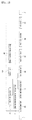
- ballast water treatment system according to the present invention will be described in detail with reference to Fig.1 .
- an embodiment of ballast water treatment system according to the present invention includes:
- ballast water treatment system is introduced for seawater (hereinafter referred to as "ballast water") from the outside of the vessel.
- ballast water is introduced into the ballast water treatment system.
- a flow rate measuring unit (20) measures the flow rate of ballast water introduced through an inlet(2), transfer the measured values to a control unit(100).
- a filter and an electrolysis unit (10) sterilize microorganisms in the ballast water introduced from the outside by mechanical and chemical method.
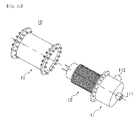
- a filter and an electrolysis unit (10) comprise inlet and outlet for introducing and discharge ballast water (hereinafter referred to as "inlet/outlet")(11), an electrolysis unit (12) including plural electrodes(121) for the electrolysis of introduced ballast water, and a cover(13) for protecting an electrolysis unit (12)
- an inlet/outlet (11) of a filter and an electrolysis unit (10) comprise inlet(112) for introducing ballast water from the outside and outlet(111) for discharging ballast water filtered in electrolyzed in a filter and an electrolysis unit (10) to the outside.
- a cover (13) has a fixed connected structure to one end of inlet/outlet(11),
- a filter element is positioned inside of a cover(13), and an electrolysis unit(12) is located inside of a filter element.
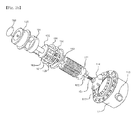
- a filter and an electrolysis unit (10) comprise a fixing plate(152), a filter pressing cover(132), a filter housing(131) located inside of a filter pressing cover(132), plural electrode modules(121), an electrode module housing(125) located for covering the outside of plural electrode modules(121), filter elements(130) located outside of the electrode module housing(125), a spacer(122) located among plural electrode modules(121), a filter compressing spring(151) rolled in support base(150), a flow path inducing unit(114) located in support base(150), and a rotating derivatives(113) located inside of the inlet/outlet(11).
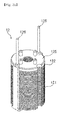
- an electrolysis unit(12) including plural electrode modules(121) will be described in detail with reference to Fig. 3a ⁇ Fig. 3d .
- an electrode module housing (125) is located for covering the outside of the plural electrode modules (121), in this case, one end of electrode module housing (125) comprise electrode bus bars (126).
- an electrode module housing (125) plays the role of support for supporting filter elements (130) also.
- an electrode module housing (125) comprises a backwash pipe (160) for back flushing filter elements (130).
- a backwash pipe (160) is formed to have plural backwash discharge holes (161).
- Two electrode bus bars (126) are located in an electrode module housing (125), being connected to an external rectifier (not shown) and being supplied with current. These electrode bus bars (126) transfer the current delivered from the rectifier (not shown) to each electrode module (121).
- two electrode bus bar(126) is provided, one electrode bus bar(126) is transmitted with the positive current, and the other electrode bus bar(126) is transmitted with the negative current.
- an electrode gap spacer(122) may be located among plural electrode modules.(121).
- plural electrode modules(121) located inside of electrode module housing(125) and transmitted with current from electrode bus bar(126) electrolyze the ballast water introducing into the inlet/outlet(11) and passing through an electrolysis unit(12).
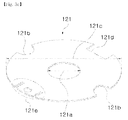
- An electrode(121) is formed as a disk shape with the third diameter(121c), and formed as punched with the second diameter(121a) in the middle of the disk.
- electrodes module(121) is provided with two of the first grooves (121b) which is punched with the semicircular shape along the circumference of the disk. Two of the first grooves (121b) are paths for the backwash pipe(160) of electrode module housing (125).
- a backwash pipe(160) is located in the first groove(121b) of electrodes module(121) so that electrodes module (121) will be connected inside of an electrode module housing (125).
- electrodes module (121) also comprises the second groove (121d) which is square-shaped, the third groove (121e) located so as to face the second groove (121d).
- the third groove (121e) includes a punched part formed thin square -shaped in a direction perpendicular with the perimeter of the disk.
- the third groove(121e) also includes the circular-shaped punched part between the two square -shaped punched parts, and, in this case, , the circular-shaped punched part should be located so as not to contact the circumference of electrodes module (121),
- electrode bus bar(126) is located passing through the second groove (121d) and the third groove(121e). Accordingly, electrodes module(121) are transmitted a current from bus bars (126) of the electrodes.
- An electrode gap spacer(122) may be located between an electrode module(121) and an electrode module(121), or among electrodes module(121) adjacent to the top(or bottom) surface of an electrode module hous ing(125).
- the electrodes gap spacer(122) located between electrodes module (121), as a spacer for inducing rotation of the water, comprises a circular ring having the first diameter(122a), wings(122b) which is connected and formed along the periphery of the ring at regular intervals.
- the distance (122c) between one wing (122b) and other one located on the opposite side of the wing(122b), i.e., the length(122c) of the electrode gap spacer(122) has shorter length than the length(the third diameter)(121c) of the electrode (121) shown in Fig. 3d .
- the first diameter (122a) of the electrode gap spacer (122) is formed longer than the second diameter(121a), which is formed on the electrode(121) shown in Figure 3d .
- an electrode gap spacer(122) is rotated by ballast water which is filtered by the filter element (130) and moves to an electrolysis unit(12).
- the electrolysis process efficiency from an electrodes module (121) is higher because the ballast water adjacent to electrode module(121) is further rotated, accordingly, the TRO(total residual oxidant) generation efficiency of the ballast water is increased.
- the ballast water electrolyzed in the electrodes module(121) is rotating, so that there is an effect that scales(impurities such as metal oxides) which may be accumulated in the filter element(130) can be removed.
- This electrode gap spacer (122) may be made of an insulating material such as plastic.
- Filter elements (130) are located outside of an electrode module housing(125).
- Filter elements (130) may be a disk filter having the form of a disk. If this disk-shaped filter elements (130) are provided with a plurality, plural filter elements (130) can be located on the outside of the electrode module housing (125) being accumulated.
- the disk -shaped filter elements(130) may be formed to have a groove in the range of 50 ⁇ m to 100 ⁇ m.
- These filter elements(130) primarily filter the ballast water introduced through the inlet /outlet (11), filtering the solids or microorganisms in the range of 50 ⁇ m to 100 ⁇ m contained in the ballast water.
- the filter elements (130) composed of a disk filter by processing back flushing using a backwash pipe(160), have an effect that clogging of dusts in the filter wires does not occur permanently.
- the rotating derivative (113) located inside the inlet/outlet(11), is formed to be a ring-shaped and rotates in one direction.
- rotating derivative (113) is provided with a part protruding at regular intervals on one surface.
- the protruding part formed on the rotating derivative (113) when the rotating derivative(113) is rotated in one direction, the ballast water adjacent to rotating derivative(113) is rotated in one direction.
- ballast water rotates in one direction so as to uniformly distributed in the ballast water, which make an effect of improved filtering efficiency of the ballast water in the filter element (130).
- This rotating derivative (113) can be rotated by receiving a power from an external motor (not shown).
- ballast water located around the rotating derivative(113), rotated in one direction according the rotation of the rotating derivative(113) may be the ballast water which is introduced from the outside through the inlet(112).
- a flow path inducing unit (114) is located adjacent to the rotating derivative (113), a rubber which is formed of a rubber material.
- a flow path inducing unit (114) has a shape like a sucker.
- the convex part of a flow path inducing unit (114) faces toward the opposite direction of the inlet/outlet (11), and the concave part of a flow path inducing unit (114) faces toward the direction of the inlet/outlet(11).
- ballast water which is filtered and electrolyzed completely and flows from filter elements(130) toward inlet/outlet(11) direction, can flow easily to the inlet/outlet(11) after passing through a flow path inducing unit (114).
- a flow path inducing unit (114) is formed with a plurality of grooves (slit), through grooves of a flow path inducing unit (114), ballast water which is filtered and electrolyzed completely flows to the outlet (111) of inlet/outlet (11).
- a flow path inducing unit (114) can be located to the direction of the electrodes module(121) or to the opposite direction.
- a flow path inducing unit (114) located so as to face the opposite direction of electrodes module(121) as shown in Fig.2b .
- a flow path inducing unit (114) when a flow path inducing unit (114) is located to face the opposite direction of electrodes module(121), a flow path inducing unit (114), as shown in Fig. 2b , is shrank, and water flow through the empty space formed in a flow path inducing unit (114) toward inlet/outlet(11).
- backwash water drawn into the backwash pipe(160) is discharged from the electrode module housing(125) to the filter element(130) direction along the backwash discharge hole (161). Accordingly, foreign materials such as dust accumulated between the filter element (130) are to be washed.
- ballast water introduced from the outside is primarily filtered by the filter element(130) and electrolyzed from plural electrodes module(121). Accordingly, there is an effect that a filter and an electrolysis unit (10) can more effectively remove solids or microorganisms contained in the ship ballast water comparing to using only one of a filter or an electrolysis module.
- ballast water discharged from a filter and an electrolysis unit(10) can satisfy standard for sterilization of ballast water based on the standard of the USCG (United States Coast Guard).
- the first sensor(30) is connected with a filter and an electrolysis unit (10), receives the treated ballast water after the process of the filtering and electrolysis, and measures conductivity, temperature, and TRO(total residual oxidant) concentration of the received ballast water.
- the first sensor unit (30) can receive only a part of the ballast water discharged from a filter and an electrolysis unit(10) through bypass.
- This first sensor unit(30) is positioned connected to the control unit (100), transferring the conductivity, the temperature and TRO concentration of the ballast water measured in the first sensor unit(30) to the control unit(100).
- chlorine dioxide precursor stored in the chlorine dioxide precursor storage tank (71) may be one or more one among NaClO 2 , HCl, NaOCl.
- the chlorine dioxide generation unit(70), as previously described is connected with the chlorine dioxide precursor storage tank (71), and is connected to the control unit (100).
- the pipe connecting the chlorine dioxide generation unit(70) and the chlorine dioxide precursor storage tank(71) can be formed including a pump. Due to the vacuum generated by operation of the pump, the chlorine dioxide precursor stored in the chlorine dioxide precursor storage tank(71) is transferred to the chlorine dioxide generation unit(70).
- This chlorine dioxide generation unit(70) produces chlorine dioxide by mixing the chlorine dioxide precursor and transfers chlorine dioxide , which is produced according to a control signal transmitted from the control unit (100), to the ballast piping.
- Ballast piping may be a pipe connecting a filter and an electrolysis unit(10) with the ballast tank(50), or a pipe connecting a filter and an electrolysis unit(10) with the first sensor unit(30).
- the concentration of chlorine dioxide produced from the chlorine dioxide generation unit(70) is from 1,000 to 10,000mg/L.
- Chlorine dioxide generation unit(70) can introduce chlorine dioxide produced into the ballast piping after diluting.
- Chlorine dioxide generation unit (70) is capable of generating chlorine dioxide by using the following chemical formula 1.
- the formula (1) is for the production of ClO 2 by diluting and mixing with NaClO 2 , NaOCl, HCl according to the reaction mole number.
- the formula (2) and (3) is for the neutralization reaction for residual ClO 2 and ClO 2 - on the condition of deballasting.
- the control signal generated from the control unit (100) may be a signal to introduce or not to introduce the chlorine dioxide, and also to adjust the input amount of the chlorine dioxide.
- a control unit (100) for generating these control signals will be described later in more detail.
- a ballast tank(50) is located with the connection of the first sensor unit(30).
- a ballast tank(50) is located with the connection of a filters and an electrolysis unit(10).
- This ballast tank(50) After filtering and sterilizing microorganisms from the electrolysis, and ballasting process of neutralization of oxidants generated from the electrolysis, receives the treated vessel ballast water and stores ballast water in the tank.
- the outlet(2) is a structure for discharging the ballast water stored in the ballast tank(50) to the outside of the ship.
- the process to neutralize the ballast water is necessary.
- an automatic neutralization treatment device(40) includes the neutralizing agent for neutralizing the ballast water stored in the ballast tank(50), and introduce a neutralizing agent in the an automatic neutralization treatment device(40) into deballasting piping according to the a neutralizing agent input control signal transmitted from the control unit(100).
- the deballasting piping may be a pipe either connecting the ballast tank(50) and outlet (2) or connecting the ballast tank(50) and the second sensor unit(31).
- a UV/TiO 2 System(60) is located with the connection of the control unit(100) and may be located with the connection of the deballasting piping which leads to the outlet(2) from a ballast tank(50).
- a UV/TiO 2 system (60) includes a coated plate, irradiates UV(ultra violet ray) to the microorganisms sterilized ballast water which is stored in a ballast tank(50).
- OH radical hydroxyl groups
- microorganisms which is either alive or in the state of regrowth in the ballast water is sterilized.
- coated plates may be formed in a mesh type or a punched type.
- UV/TiO 2 System 60
- microorganisms will be sterilized effectively in the deballasting water and by using residual oxidants, generate OH radical, which make an effect that chemicals such as neutralizing agent necessary for neutralization treatment can be minimized and the efficiency of sterilizing microorganisms in the ballast water can satisfy USCG much more.
- the second sensor unit(31) has a configuration for measuring the total residual oxide (TRO) concentration of neutralized deballasting water, measuring TRO concentration of ballast water flowing toward the outlet (2) from the ballast tank (50), transferring the measured concentration values of residual oxidants of deballasting water to the control unit (100).
- TRO total residual oxide
- control unit(100) is located with the connection of the flow rate measuring unit(20), a filter and an electrolysis unit(10), the first sensor unit(30), the second sensor unit(31), an automatic neutralization treatment device(40), UV / TiO2 system(60), a chlorine dioxide generation unit(70). And, the control unit(100) receives measurements from the flow rate measuring unit(20), the first sensor unit(30) and from the second sensor unit(31), generate a control signal according to the measured values, transfers a generated control signal to one of a filter and an electrolysis unit(10), an automatic neutralization treatment device(40), a chlorine dioxide generation unit(70).
- the control unit(100) controls the strength of electrolysis in a filter and an electrolysis unit(10).
- the control unit(100) generate a control signal for controlling so as to increase the electrolysis intensity of a filter and an electrolysis unit (10)
- the control unit(100) generate the control signal to lower the electrolysis intensity of a filter and an electrolysis unit (10).
- the control unit(100) controls the electrolysis intensity of a filter and an electrolysis unit (10).
- the control unit (100) lower the electrolysis intensity of a filter and an electrolysis unit (10) to generates a control signal for controlling so as to decrease the current application value
- the control unit(100) in order to enhance the electrolysis intensity of a filter and an electrolysis unit(10) generates a control signal for controlling so as to increase the current application value.
- control unit(100) when the temperature of the ballast water that is measured by the first sensor unit(30) is above about 10 °C, the control unit (100) generate a control signal to increase chlorine dioxide generation amount of chlorine dioxide generation unit(70), whereas, when the temperature of the ballast water that is measured by the first sensor unit(30) is less than about 10 °C, the control unit(100) generate a control signal to lower the chlorine dioxide generation amount of chlorine dioxide generation unit(70).
- the control unit (100) controls chlorine dioxide generation amount of chlorine dioxide generation unit(70) according to the residual oxidant concentration(TRO concentration) in the ballast water that has been transmitted from a first sensor unit(30).
- the control unit(100) if the value measured in a first sensor (30) is higher (2 ⁇ 3ppm or more) than the residual oxidant concentration value of a reference value of the ballast water, the control unit(100) generates a control signal for controlling so as chlorine dioxide generation unit (70) generates a large amount of chlorine dioxide, whereas, the value measured in a first sensor (30) is lower (less than 2 ⁇ 3ppm) than the residual oxidant concentration value of a reference value of the ballast water, the control unit (100) generates a control signal for controlling so as chlorine dioxide generation unit (70) generates a small amount of chlorine dioxide.
- control unit(100) controls the amount of UV irradiation of the UV/TiO 2 System(60) according to the value of the deballasting water residual TRO (residual oxidant) that has been transmitted from the second sensor unit (31).
- the controller (100) generate a control signal so as controlling the UV/TiO 2 system(60) irradiating much more ultraviolet rays to the ballast water, whereas, if the residual oxidant concentration in deballasting water that is measured by the second sensor unit(31) has a lower value, the controller (100) generate a control signal so as controlling the UV/TiO 2 system(60) reducing ultraviolet rays in ballast water.
- control unit(100) controls the amount of the input amount of neutralizing agent of an automatic neutralization device(40) according to the value of the deballasting water residual TRO (residual oxidant) that has been transmitted from the second sensor unit (31).
- the controller (100) generate a control signal so as controlling an automatic neutralization device(40) much introducing neutralizing agent to the ballast water, whereas, if the residual oxidant concentration in deballasting water that is measured by the second sensor unit(31) has a lower value, the controller (100) generate a control signal so as controlling an automatic neutralization device(40) reducing input amount of a neutralizing agent to the ballast water.
- a flow rate measuring unit(20) measures the flow rate of the ballast water that has been introduced from the outside to the ballast water treatment system (S201). If it is bypassed and measured the flow rate of only a part of the ballast water that has been introduced from the outside, a flow rate measuring unit(20) transfers(S212) the measured flow rate to a filter and an electrolysis unit (10).
- a flow rate measuring unit (20) receives the whole of the ballast water that has been introduced from the outside , when measuring the flow rate, a flow rate measuring unit (20) transfers(S211) the introduced ballast water which is flowed into the flow rate measuring unit(20) to a filter and an electrolysis unit(10), and transmits(S212) the measured flow rate values to a filter and an electrolysis unit (10) at the same time.
- a filter and an electrolysis unit(10) are introduced ballast water from the outside (or a flow rate measuring unit(20)), filter(S101) the introduced ballast water.
- filter elements(130) equipped in a filter and an electrolysis unit(10) the solid foreign materials and the microorganisms in the ballast water are filtered and the dusts accumulated in the filter elements(130) of the ballast water washed out through the backwash pipe(160).
- a filter and an electrolysis unit uses plural electrodes module (121) to electrolyze (S102) the ballast water that has been primarily filtered by the filter elements(130) and transfer(S111) electrolyzed treated ballast water to the first sensor unit(30) along the pipe.
- filtered and electrolyzed treated ballast water in a filter and an electrolysis unit(10) transferred to a ballast tank (50) along the ballast piping and stored(S112).
- the first sensor unit(30) measures(S301) the conductivity, the temperature, and the concentration of TRO(residual oxidant) of the ballast water discharged from a filter and an electrolysis unit(10), and transfers(S3011) the measurement values of sea water characteristics to the control unit (100)
- ballast water measured of characteristic of the ballast water in the first sensor unit (30) is transferred to the ballast tank(50) and is stored(S3012).
- control unit(100) according to the characteristic measurement values of the ballast water that has been transmitted from the first sensor unit (30), determines(S1001) the level of contamination of the ballast water.
- control unit(100) transfer(S1011) a control signal to control the chlorine dioxide generation amount to the chlorine dioxide generation unit(70).
- a chlorine dioxide generation unit(70) which is transmitted to a control signal from the control unit(100) receives(S601) the chlorine dioxide precursor from a chlorine dioxide precursor storage tank(71), and stores it. Depending on the chlorine dioxide generation control signal transmitted from the control unit (100), a chlorine dioxide generation unit(70) generate(S602) chlorine dioxide from the chlorine dioxide precursor.
- the chlorine dioxide generated from the chlorine dioxide generation unit(70) is introduced(S611) to the treated ballast water in a filter and an electrolysis unit (10).
- control unit(100) determine(S1002) whether the ballast water treatment process is deballasting step (S1002) or not. In this case, when the ballast water treatment process is not a deballasting step, the control unit (100) does not perform any separate step. On the other hand, when the ballast water treatment process is determined as deballasting step, the control unit(100) transfers(S1012) a control signal to an automatic neutralization treatment device(40) so as to eject a neutralizing agent by an automatic neutralization treatment device(40) (S1012).
- the ballast tank(50) transfers(S501) deballasting water to the automatic neutralization treatment device(40).
- an automatic neutralization treatment device(40) neutralize(S401) the deballasting water discharging a neutralizing agent to the deballasting water discharged from the ballast tank(50).
- a neutralizing agent is not directly charged into the ballast tanks (50), so as to extend from the ballast tanks (50) to the ballast water outlet (2) it is preferable to put into de- ballast computing piping located .
- a neutralizing agent discharged(S401) from an automatic neutralization treatment device(40) is not directly discharged into the ballast tanks (50),and recommended to discharge through the deballasting piping which located toward ballast water outlet(2) from the ballast tank(50).
- a UV/TiO 2 System irradiates ultraviolet rays to deballasting water transferred(S501) from the ballast tanks(50) and to produce OH radicals, and to sterilize(S601) residual microorganisms.
- the second sensor unit(31) measures(S311) the TRO concentration of deballasting water neutralized in an automatic neutralization treatment device(40), transfers(S3111) the measured TRO concentration to the control unit(100).
- the control unit(100) receiving measured TRO concentration values in the second sensor unit(31) determine(S1003) the measurement results, and generate(S1013) a control signal for controlling the amount of neutralizing agent to be discharged from an automatic neutralizing device (40) and a control signal for the control of the ultraviolet irradiation intensity of a UV / TiO 2 system(60).
- the ballast water can get a efficient ballasting and deballasting treatment, and sterilization standards of the treated ballast water is to satisfy the USCG standards.
- 1 Inlet for sea water 2 : Outlet of ballast water 10 : Filter and electrolysis unit 20 : Flow rate measurement unit 30 : Fist sensor unit 31 : Second sensor unit 40 : Automatic neutralization treatment device 50 : Ballast tank 60 : UV/TiO 2 System 70 : Chlorine dioxide generation unit 71 : Chlorine dioxide precursor storage tank 100 : Control unit 121 : Electrode module 122 : Electrode gap spacer 125 : Electrode module housing 126 : Electrode bus bar
Landscapes
- Engineering & Computer Science (AREA)
- Chemical & Material Sciences (AREA)
- Environmental & Geological Engineering (AREA)
- Life Sciences & Earth Sciences (AREA)
- Hydrology & Water Resources (AREA)
- Water Supply & Treatment (AREA)
- Organic Chemistry (AREA)
- Toxicology (AREA)
- General Health & Medical Sciences (AREA)
- Public Health (AREA)
- Health & Medical Sciences (AREA)
- Combustion & Propulsion (AREA)
- Mechanical Engineering (AREA)
- Ocean & Marine Engineering (AREA)
- Chemical Kinetics & Catalysis (AREA)
- Electrochemistry (AREA)
- General Chemical & Material Sciences (AREA)
- Water Treatment By Electricity Or Magnetism (AREA)
- Physical Water Treatments (AREA)
- Treatment Of Water By Oxidation Or Reduction (AREA)
Applications Claiming Priority (3)
| Application Number | Priority Date | Filing Date | Title |
|---|---|---|---|
| KR20130031157A KR101486502B1 (ko) | 2013-03-22 | 2013-03-22 | 선박평형수 처리 시스템 |
| KR20130031147A KR101486499B1 (ko) | 2013-03-22 | 2013-03-22 | 선박평형수 처리 시스템 |
| PCT/KR2014/002415 WO2014148867A1 (ko) | 2013-03-22 | 2014-03-21 | 선박평형수 처리 시스템 |
Publications (2)
| Publication Number | Publication Date |
|---|---|
| EP2977355A1 true EP2977355A1 (de) | 2016-01-27 |
| EP2977355A4 EP2977355A4 (de) | 2016-03-16 |
Family
ID=51580448
Family Applications (1)
| Application Number | Title | Priority Date | Filing Date |
|---|---|---|---|
| EP14771176.6A Withdrawn EP2977355A4 (de) | 2013-03-22 | 2014-03-21 | Ballastwasseraufbereitungssystem |
Country Status (5)
| Country | Link |
|---|---|
| US (1) | US10087095B2 (de) |
| EP (1) | EP2977355A4 (de) |
| JP (1) | JP6172875B2 (de) |
| CN (1) | CN105246837B (de) |
| WO (1) | WO2014148867A1 (de) |
Cited By (4)
| Publication number | Priority date | Publication date | Assignee | Title |
|---|---|---|---|---|
| EP3228532A1 (de) * | 2016-04-05 | 2017-10-11 | Techcross Co., Ltd. | Ballastwasserbehandlungbetriebsvorrichtung und -verfahren |
| IT201700033555A1 (it) * | 2017-03-27 | 2018-09-27 | S M S S R L | Impianto di trattamento di acque reflue |
| ES2788249A1 (es) * | 2019-04-17 | 2020-10-20 | Balizamientos Y Obras Hidraulicas De Mazarron S L | Planta de tratamiento de aguas |
| WO2023009823A3 (en) * | 2021-07-30 | 2023-03-23 | ElectroSea, LLC | Electrolytic biocide-generating unit integrated with strainer |
Families Citing this family (22)
| Publication number | Priority date | Publication date | Assignee | Title |
|---|---|---|---|---|
| CN109071282A (zh) * | 2016-04-26 | 2018-12-21 | 杰富意工程株式会社 | 压舱水处理装置及压舱水处理方法 |
| KR102387513B1 (ko) | 2016-11-30 | 2022-04-18 | 에보쿠아 워터 테크놀로지스 리미티드 | 선박 평형수 관리 시스템 |
| KR101889272B1 (ko) * | 2017-08-30 | 2018-08-17 | 주식회사 태양기전 | 염소잔류 측정모듈 실시간 모니터링 및 원격 진단 분석 시스템과 이를 이용한 원격 진단 분석 방법 |
| CN116854203A (zh) | 2017-10-05 | 2023-10-10 | 伊莱克崔西有限公司 | 船舶上船载使用的电解型杀生剂生成系统 |
| CN109368734A (zh) * | 2018-10-18 | 2019-02-22 | 九江精密测试技术研究所 | 一种船舶压载水灭菌反应器 |
| EP3666734A1 (de) * | 2018-12-14 | 2020-06-17 | ABB Schweiz AG | Ballastwasseraufbereitungssystem und verfahren zur behandlung von ballastwasser |
| US20200247691A1 (en) * | 2019-01-16 | 2020-08-06 | Envirocleanse, LLC | Ballast Water Treatment System |
| CN109607903A (zh) * | 2019-01-16 | 2019-04-12 | 江苏南极机械有限责任公司 | 高可靠抗震抗干扰压载水处理系统 |
| WO2020167645A1 (en) | 2019-02-11 | 2020-08-20 | ElectroSea, LLC | Self-treating electrolytic biocide generating system with retro-fitting features for use on-board a watercraft |
| CN109809533A (zh) * | 2019-03-29 | 2019-05-28 | 广船国际有限公司 | 一种电解式压载水处理装置淡水码头试验方法 |
| CN112028350A (zh) * | 2019-05-18 | 2020-12-04 | 九江精密测试技术研究所 | 一种复合的压载水灭菌系统 |
| CN112520866B (zh) * | 2019-09-19 | 2024-05-14 | 上海朴道水汇净水设备有限公司 | 一种自动控制净水器及系统 |
| WO2021061612A1 (en) * | 2019-09-27 | 2021-04-01 | ElectroSea, LLC | System and method for performing diagnostics of a water system on-board a watercraft |
| US11981587B2 (en) * | 2020-01-30 | 2024-05-14 | Michael Schelch | Disinfection device and method for performing disinfection cycles |
| CN112693147B (zh) * | 2020-12-09 | 2022-08-23 | 天长市奥威机电设备有限公司 | 基于压力、流量数显控制的全封闭式渣浆分离装置 |
| US12220657B2 (en) * | 2021-04-30 | 2025-02-11 | Pall Corporation | Filter disk segments |
| KR102336799B1 (ko) * | 2021-05-14 | 2021-12-07 | 서민수 | 블레이드 구동형 미세 분쇄 유닛 |
| KR102336802B1 (ko) * | 2021-07-05 | 2021-12-07 | 서민수 | 미세 분쇄 유닛을 이용한 선박 평형수 처리 시스템 |
| CN117836246A (zh) * | 2021-07-30 | 2024-04-05 | 伊莱克崔西有限公司 | 集成有过滤器的电解杀生物剂产生单元 |
| CN115259492B (zh) * | 2022-07-12 | 2024-03-05 | 大连海事大学 | 一种光电串联压载水处理方法及其应用 |
| US11969710B1 (en) * | 2023-07-05 | 2024-04-30 | King Faisal University | Lu2O3@ZnO nanocomposites for photodegradation of textile wastewater dyes |
| CN116655189B (zh) * | 2023-07-25 | 2023-10-20 | 威海中远海运重工科技有限公司 | 一种船舶压载水复合集成化处理系统 |
Family Cites Families (24)
| Publication number | Priority date | Publication date | Assignee | Title |
|---|---|---|---|---|
| US5227053A (en) * | 1990-11-30 | 1993-07-13 | Conventure Corporation | Water purification system |
| AU2002226987B2 (en) * | 2000-11-28 | 2005-10-27 | Ecochlor, Inc. | Methods, apparatus, and compositions for controlling organisms in ballast water |
| WO2003032452A1 (en) * | 2001-10-12 | 2003-04-17 | Gilmore F William | Electrocoagulation reaction chamber and method |
| HK1050811A2 (en) * | 2002-05-09 | 2003-06-13 | 爱环保有限公司 | A fluid purification and disinfection device |
| US9764264B2 (en) * | 2003-05-22 | 2017-09-19 | Coating Systems Laboratories, Inc. | Ballast water treatment systems |
| US7883622B1 (en) * | 2003-09-23 | 2011-02-08 | Barnes Ronald L | Water treatment methods and systems using combinations of ozone and chlorine generators |
| HK1069716A2 (en) * | 2004-03-31 | 2005-05-27 | 浩科环境工业有限公司 | Enhanced photocatalytic system |
| KR100963351B1 (ko) * | 2005-06-10 | 2010-06-14 | 제이에프이 엔지니어링 가부시키가이샤 | 밸러스트수 처리 장치 및 처리 방법 |
| JP4844244B2 (ja) * | 2005-06-10 | 2011-12-28 | Jfeエンジニアリング株式会社 | バラスト水処理装置及び処理方法 |
| KR100597254B1 (ko) * | 2005-09-14 | 2006-07-06 | 한국해양연구원 | 선박용 밸러스트수의 전해 소독장치 |
| KR100691380B1 (ko) | 2005-09-23 | 2007-03-09 | 박호원 | 전해 살균 정수기 필터모듈 |
| DE102006045558A1 (de) * | 2006-09-25 | 2008-04-03 | Rwo Gmbh | Wasseraufbereitungsanlage |
| SE532898C2 (sv) * | 2006-09-25 | 2010-05-04 | Alfawall Aktiebolag | Metod och anordning för behandling av vätskor |
| KR100776205B1 (ko) * | 2007-02-14 | 2007-11-28 | 주식회사 엔케이 | 여과 및 전기분해 방식의 밸러스트수 처리 시스템 및 그의구동방법 |
| CA2689646A1 (en) * | 2007-06-04 | 2008-12-11 | David T. Schwartzel | Aqueous treatment apparatus utilizing precursor materials and ultrasonics to generate customized oxidation-reduction-reactant chemistry environments in electrochemical cells and/or similar devices |
| US20110180423A1 (en) * | 2008-02-11 | 2011-07-28 | Wisconsin Alumni Research Foundation | Methods for removing contaminants from aqueous solutions using photoelectrocatalytic oxidization |
| KR101028360B1 (ko) * | 2008-04-15 | 2011-04-11 | (주)광산 | 가상 전극을 이용한 밸러스트수 처리장치 |
| AU2009282593B2 (en) * | 2008-08-18 | 2014-01-23 | Evoqua Water Technologies Gmbh | Method and system for biofouling control of shipboard components |
| KR20100059089A (ko) * | 2008-11-25 | 2010-06-04 | 한국과학기술연구원 | 해수 살균처리방법 및 장치 |
| CN201400589Y (zh) * | 2009-04-09 | 2010-02-10 | 无锡蓝天电子有限公司 | 一种改良的远洋船舶压载水处理专用系统 |
| JP5691768B2 (ja) * | 2011-04-13 | 2015-04-01 | 三浦工業株式会社 | 水無害化処理装置 |
| CN102515400A (zh) * | 2011-12-21 | 2012-06-27 | 青岛双瑞海洋环境工程股份有限公司 | 高效船舶压载水处理方法 |
| US20140229414A1 (en) * | 2013-02-08 | 2014-08-14 | Ebay Inc. | Systems and methods for detecting anomalies |
| KR101758830B1 (ko) * | 2015-05-08 | 2017-07-27 | (주) 테크로스 | 전기분해방식 선박평형수 처리장치 및 방법 |
-
2014
- 2014-03-21 US US14/779,153 patent/US10087095B2/en not_active Expired - Fee Related
- 2014-03-21 WO PCT/KR2014/002415 patent/WO2014148867A1/ko not_active Ceased
- 2014-03-21 EP EP14771176.6A patent/EP2977355A4/de not_active Withdrawn
- 2014-03-21 CN CN201480028958.XA patent/CN105246837B/zh not_active Expired - Fee Related
- 2014-03-21 JP JP2016505386A patent/JP6172875B2/ja not_active Expired - Fee Related
Cited By (5)
| Publication number | Priority date | Publication date | Assignee | Title |
|---|---|---|---|---|
| EP3228532A1 (de) * | 2016-04-05 | 2017-10-11 | Techcross Co., Ltd. | Ballastwasserbehandlungbetriebsvorrichtung und -verfahren |
| IT201700033555A1 (it) * | 2017-03-27 | 2018-09-27 | S M S S R L | Impianto di trattamento di acque reflue |
| ES2788249A1 (es) * | 2019-04-17 | 2020-10-20 | Balizamientos Y Obras Hidraulicas De Mazarron S L | Planta de tratamiento de aguas |
| WO2023009823A3 (en) * | 2021-07-30 | 2023-03-23 | ElectroSea, LLC | Electrolytic biocide-generating unit integrated with strainer |
| US12466745B2 (en) | 2021-07-30 | 2025-11-11 | ElectroSea, LLC | Electrolytic biocide-generating unit integrated with strainer |
Also Published As
| Publication number | Publication date |
|---|---|
| JP2016521200A (ja) | 2016-07-21 |
| JP6172875B2 (ja) | 2017-08-02 |
| WO2014148867A1 (ko) | 2014-09-25 |
| EP2977355A4 (de) | 2016-03-16 |
| CN105246837B (zh) | 2017-05-10 |
| US20160130165A1 (en) | 2016-05-12 |
| US10087095B2 (en) | 2018-10-02 |
| CN105246837A (zh) | 2016-01-13 |
Similar Documents
| Publication | Publication Date | Title |
|---|---|---|
| EP2977355A1 (de) | Ballastwasseraufbereitungssystem | |
| US20080277274A1 (en) | Electrolytic Sterilizing Apparatus for Ship Ballast Water | |
| US8062500B2 (en) | Method and apparatus for producing negative and positive oxidative reductive potential (ORP) water | |
| KR101486502B1 (ko) | 선박평형수 처리 시스템 | |
| KR100982195B1 (ko) | 고효율 전기분해장치를 이용한 밸러스트수 처리 시스템 | |
| KR101486501B1 (ko) | 선박평형수 처리 시스템 | |
| KR20180131200A (ko) | 수중 저온 플라즈마 발생 장치를 적용한 선박 평형수 처리 시스템 | |
| KR101486499B1 (ko) | 선박평형수 처리 시스템 | |
| KR101486503B1 (ko) | 선박평형수 처리 시스템 | |
| KR101468928B1 (ko) | 밸러스트수 처리 시스템 | |
| KR101544377B1 (ko) | 살균수 생성장치 및 이를 구비하는 비데 | |
| US20050218084A1 (en) | Enhanced photocatalytic system | |
| KR101567441B1 (ko) | 선박평형수 처리장치 | |
| CN104030504A (zh) | 一种智能选择式船舶压载水处理方法及设备 | |
| KR101486500B1 (ko) | 필터 및 전기분해장치 | |
| EP3012232A1 (de) | Elektrolysevorrichtung für ein Überwachungs- und Behandlungssystem eines Schwimmbeckens | |
| JP2018187543A (ja) | 水処理装置及び水処理方法 | |
| KR100943429B1 (ko) | 밸러스트 수 분산 처리 시스템 | |
| JP2005081248A (ja) | 水処理装置 | |
| AU2012201437B2 (en) | Method and apparatus for producing negative and positive oxidative reductive potential (ORP) water | |
| JPH09124431A (ja) | 角質除去用強酸性水 | |
| KR20230087666A (ko) | 살균여과 장치 | |
| JPH11179370A (ja) | 用水中の有害微生物の殺滅処理方法およびそのシステム | |
| KR20140115583A (ko) | 다단계 전해환원수 생성장치 | |
| WO2009074121A2 (en) | Chlorine free technology of pool water treatment |
Legal Events
| Date | Code | Title | Description |
|---|---|---|---|
| PUAI | Public reference made under article 153(3) epc to a published international application that has entered the european phase |
Free format text: ORIGINAL CODE: 0009012 |
|
| 17P | Request for examination filed |
Effective date: 20151021 |
|
| AK | Designated contracting states |
Kind code of ref document: A1 Designated state(s): AL AT BE BG CH CY CZ DE DK EE ES FI FR GB GR HR HU IE IS IT LI LT LU LV MC MK MT NL NO PL PT RO RS SE SI SK SM TR |
|
| AX | Request for extension of the european patent |
Extension state: BA ME |
|
| A4 | Supplementary search report drawn up and despatched |
Effective date: 20160217 |
|
| RIC1 | Information provided on ipc code assigned before grant |
Ipc: C02F 1/72 20060101ALN20160211BHEP Ipc: C02F 1/461 20060101AFI20160211BHEP Ipc: C02F 1/76 20060101ALN20160211BHEP Ipc: B01D 29/46 20060101ALN20160211BHEP Ipc: C02F 1/50 20060101ALI20160211BHEP Ipc: C02F 1/32 20060101ALN20160211BHEP Ipc: B63B 13/00 20060101ALI20160211BHEP Ipc: C02F 1/66 20060101ALI20160211BHEP Ipc: C02F 9/00 20060101ALN20160211BHEP Ipc: B63J 4/00 20060101ALN20160211BHEP Ipc: C02F 1/28 20060101ALI20160211BHEP Ipc: C02F 1/00 20060101ALN20160211BHEP Ipc: C02F 103/00 20060101ALN20160211BHEP |
|
| DAX | Request for extension of the european patent (deleted) | ||
| RIN1 | Information on inventor provided before grant (corrected) |
Inventor name: LEE, KISUNG Inventor name: LEE, HAIDON Inventor name: KIM, DAEWON Inventor name: KIM, YUJIN Inventor name: PARK, KYUWON Inventor name: PARK, YONGSEOK Inventor name: KIM, SEONGTAE Inventor name: KU, JAHUN |
|
| STAA | Information on the status of an ep patent application or granted ep patent |
Free format text: STATUS: EXAMINATION IS IN PROGRESS |
|
| 17Q | First examination report despatched |
Effective date: 20170223 |
|
| RIC1 | Information provided on ipc code assigned before grant |
Ipc: C02F 1/50 20060101ALI20180919BHEP Ipc: C02F 1/28 20060101ALI20180919BHEP Ipc: C02F 1/76 20060101ALN20180919BHEP Ipc: C02F 1/66 20060101ALI20180919BHEP Ipc: C02F 1/72 20060101ALN20180919BHEP Ipc: B01D 29/46 20060101ALN20180919BHEP Ipc: C02F 1/32 20060101ALN20180919BHEP Ipc: B63B 13/00 20060101ALI20180919BHEP Ipc: B63J 4/00 20060101ALN20180919BHEP Ipc: C02F 103/00 20060101ALN20180919BHEP Ipc: C02F 1/00 20060101ALN20180919BHEP Ipc: C02F 9/00 20060101ALN20180919BHEP Ipc: C02F 1/461 20060101AFI20180919BHEP |
|
| GRAP | Despatch of communication of intention to grant a patent |
Free format text: ORIGINAL CODE: EPIDOSNIGR1 |
|
| STAA | Information on the status of an ep patent application or granted ep patent |
Free format text: STATUS: GRANT OF PATENT IS INTENDED |
|
| RIC1 | Information provided on ipc code assigned before grant |
Ipc: C02F 1/76 20060101ALN20180921BHEP Ipc: C02F 9/00 20060101ALN20180921BHEP Ipc: C02F 1/66 20060101ALI20180921BHEP Ipc: C02F 1/72 20060101ALN20180921BHEP Ipc: C02F 1/50 20060101ALI20180921BHEP Ipc: B01D 29/46 20060101ALN20180921BHEP Ipc: B63J 4/00 20060101ALN20180921BHEP Ipc: C02F 1/32 20060101ALN20180921BHEP Ipc: C02F 1/461 20060101AFI20180921BHEP Ipc: C02F 1/00 20060101ALN20180921BHEP Ipc: C02F 1/28 20060101ALI20180921BHEP Ipc: C02F 103/00 20060101ALN20180921BHEP Ipc: B63B 13/00 20060101ALI20180921BHEP |
|
| RIC1 | Information provided on ipc code assigned before grant |
Ipc: C02F 1/00 20060101ALN20181016BHEP Ipc: C02F 9/00 20060101ALN20181016BHEP Ipc: C02F 1/76 20060101ALN20181016BHEP Ipc: C02F 1/50 20060101ALI20181016BHEP Ipc: C02F 1/72 20060101ALN20181016BHEP Ipc: C02F 1/66 20060101ALI20181016BHEP Ipc: B63J 4/00 20060101ALN20181016BHEP Ipc: C02F 1/32 20060101ALN20181016BHEP Ipc: C02F 1/461 20060101AFI20181016BHEP Ipc: B01D 29/46 20060101ALN20181016BHEP Ipc: B63B 13/00 20060101ALI20181016BHEP Ipc: C02F 103/00 20060101ALN20181016BHEP Ipc: C02F 1/28 20060101ALI20181016BHEP |
|
| INTG | Intention to grant announced |
Effective date: 20181031 |
|
| STAA | Information on the status of an ep patent application or granted ep patent |
Free format text: STATUS: THE APPLICATION IS DEEMED TO BE WITHDRAWN |
|
| 18D | Application deemed to be withdrawn |
Effective date: 20190312 |