EP2977428B1 - Composition de cristaux liquides contenant un composé polymérisable et élément d'affichage à cristaux liquides l'utilisant - Google Patents
Composition de cristaux liquides contenant un composé polymérisable et élément d'affichage à cristaux liquides l'utilisant Download PDFInfo
- Publication number
- EP2977428B1 EP2977428B1 EP14769199.2A EP14769199A EP2977428B1 EP 2977428 B1 EP2977428 B1 EP 2977428B1 EP 14769199 A EP14769199 A EP 14769199A EP 2977428 B1 EP2977428 B1 EP 2977428B1
- Authority
- EP
- European Patent Office
- Prior art keywords
- group
- liquid crystal
- polymerizable compound
- mass
- crystal composition
- Prior art date
- Legal status (The legal status is an assumption and is not a legal conclusion. Google has not performed a legal analysis and makes no representation as to the accuracy of the status listed.)
- Active
Links
- 0 C**ICc(cc1*)cc2c1c(*)c(*(*)I)c(*)c2 Chemical compound C**ICc(cc1*)cc2c1c(*)c(*(*)I)c(*)c2 0.000 description 17
- PLJCZIIJTVNPQN-UHFFFAOYSA-N C=CC(Oc(cc1)cc(F)c1-c(cc1)ccc1OCCOc1cc(OC(C=C)=O)cc(OC(C=C)=O)c1)=O Chemical compound C=CC(Oc(cc1)cc(F)c1-c(cc1)ccc1OCCOc1cc(OC(C=C)=O)cc(OC(C=C)=O)c1)=O PLJCZIIJTVNPQN-UHFFFAOYSA-N 0.000 description 1
- OLTZFSCLBKFTMX-UHFFFAOYSA-N C=CC(Oc(cc1)ccc1-c(cc1)ccc1OC(CCc(cc1)cc(OC(C=C)=O)c1OC(C=C)=O)=O)=O Chemical compound C=CC(Oc(cc1)ccc1-c(cc1)ccc1OC(CCc(cc1)cc(OC(C=C)=O)c1OC(C=C)=O)=O)=O OLTZFSCLBKFTMX-UHFFFAOYSA-N 0.000 description 1
- RQAZLNVXMXKLGW-UHFFFAOYSA-N C=CC(Oc(cc1)ccc1-c(cc1)ccc1[NH+]([O-])OCCc(cc1OC(C=C)=O)ccc1OC(C=C)=O)=O Chemical compound C=CC(Oc(cc1)ccc1-c(cc1)ccc1[NH+]([O-])OCCc(cc1OC(C=C)=O)ccc1OC(C=C)=O)=O RQAZLNVXMXKLGW-UHFFFAOYSA-N 0.000 description 1
- YFKQMOODNNTXCD-UHFFFAOYSA-N CC(C(Oc(cc1)ccc1-c(cc1)cc(F)c1OC(CCc(cc1)cc(OC(C(C)=C)=O)c1OC(C=C)=O)=O)=O)=C Chemical compound CC(C(Oc(cc1)ccc1-c(cc1)cc(F)c1OC(CCc(cc1)cc(OC(C(C)=C)=O)c1OC(C=C)=O)=O)=O)=C YFKQMOODNNTXCD-UHFFFAOYSA-N 0.000 description 1
- AWUKWRMHIYZRJB-UHFFFAOYSA-N CC(C(Oc(cc1)ccc1C(Oc(cc1)ccc1-c(cc1)ccc1C(OCCc(cc1OC(C=C)=O)ccc1OC(C=C)=O)=O)=O)=O)=C Chemical compound CC(C(Oc(cc1)ccc1C(Oc(cc1)ccc1-c(cc1)ccc1C(OCCc(cc1OC(C=C)=O)ccc1OC(C=C)=O)=O)=O)=O)=C AWUKWRMHIYZRJB-UHFFFAOYSA-N 0.000 description 1
- ONIWMROHDNYCOQ-LSFURLLWSA-N CC(C(Oc1ccc(/C=C/C(Oc(cc2)ccc2-c(cc2)ccc2OCCOc(cc2)cc(OC(C=C)=O)c2OC(C=C)=O)=O)cc1)=O)=C Chemical compound CC(C(Oc1ccc(/C=C/C(Oc(cc2)ccc2-c(cc2)ccc2OCCOc(cc2)cc(OC(C=C)=O)c2OC(C=C)=O)=O)cc1)=O)=C ONIWMROHDNYCOQ-LSFURLLWSA-N 0.000 description 1
- GTRBXMICTQNNIN-UHFFFAOYSA-N COC(C(C(F)(F)F)=C)=O Chemical compound COC(C(C(F)(F)F)=C)=O GTRBXMICTQNNIN-UHFFFAOYSA-N 0.000 description 1
Classifications
-
- C—CHEMISTRY; METALLURGY
- C09—DYES; PAINTS; POLISHES; NATURAL RESINS; ADHESIVES; COMPOSITIONS NOT OTHERWISE PROVIDED FOR; APPLICATIONS OF MATERIALS NOT OTHERWISE PROVIDED FOR
- C09K—MATERIALS FOR MISCELLANEOUS APPLICATIONS, NOT PROVIDED FOR ELSEWHERE
- C09K19/00—Liquid crystal materials
- C09K19/52—Liquid crystal materials characterised by components which are not liquid crystals, e.g. additives with special physical aspect: solvents, solid particles
- C09K19/54—Additives having no specific mesophase characterised by their chemical composition
- C09K19/56—Aligning agents
-
- C—CHEMISTRY; METALLURGY
- C09—DYES; PAINTS; POLISHES; NATURAL RESINS; ADHESIVES; COMPOSITIONS NOT OTHERWISE PROVIDED FOR; APPLICATIONS OF MATERIALS NOT OTHERWISE PROVIDED FOR
- C09K—MATERIALS FOR MISCELLANEOUS APPLICATIONS, NOT PROVIDED FOR ELSEWHERE
- C09K19/00—Liquid crystal materials
- C09K19/04—Liquid crystal materials characterised by the chemical structure of the liquid crystal components, e.g. by a specific unit
- C09K19/42—Mixtures of liquid crystal compounds covered by two or more of the preceding groups C09K19/06 - C09K19/40
-
- C—CHEMISTRY; METALLURGY
- C09—DYES; PAINTS; POLISHES; NATURAL RESINS; ADHESIVES; COMPOSITIONS NOT OTHERWISE PROVIDED FOR; APPLICATIONS OF MATERIALS NOT OTHERWISE PROVIDED FOR
- C09K—MATERIALS FOR MISCELLANEOUS APPLICATIONS, NOT PROVIDED FOR ELSEWHERE
- C09K19/00—Liquid crystal materials
- C09K19/04—Liquid crystal materials characterised by the chemical structure of the liquid crystal components, e.g. by a specific unit
- C09K19/06—Non-steroidal liquid crystal compounds
- C09K19/08—Non-steroidal liquid crystal compounds containing at least two non-condensed rings
- C09K19/10—Non-steroidal liquid crystal compounds containing at least two non-condensed rings containing at least two benzene rings
- C09K19/20—Non-steroidal liquid crystal compounds containing at least two non-condensed rings containing at least two benzene rings linked by a chain containing carbon and oxygen atoms as chain links, e.g. esters or ethers
- C09K19/2007—Non-steroidal liquid crystal compounds containing at least two non-condensed rings containing at least two benzene rings linked by a chain containing carbon and oxygen atoms as chain links, e.g. esters or ethers the chain containing -COO- or -OCO- groups
- C09K19/2014—Non-steroidal liquid crystal compounds containing at least two non-condensed rings containing at least two benzene rings linked by a chain containing carbon and oxygen atoms as chain links, e.g. esters or ethers the chain containing -COO- or -OCO- groups containing additionally a linking group other than -COO- or -OCO-, e.g. -CH2-CH2-, -CH=CH-, -C=C-; containing at least one additional carbon atom in the chain containing -COO- or -OCO- groups, e.g. -(CH2)m-COO-(CH2)n-
-
- C—CHEMISTRY; METALLURGY
- C09—DYES; PAINTS; POLISHES; NATURAL RESINS; ADHESIVES; COMPOSITIONS NOT OTHERWISE PROVIDED FOR; APPLICATIONS OF MATERIALS NOT OTHERWISE PROVIDED FOR
- C09K—MATERIALS FOR MISCELLANEOUS APPLICATIONS, NOT PROVIDED FOR ELSEWHERE
- C09K19/00—Liquid crystal materials
- C09K19/04—Liquid crystal materials characterised by the chemical structure of the liquid crystal components, e.g. by a specific unit
- C09K19/06—Non-steroidal liquid crystal compounds
- C09K19/32—Non-steroidal liquid crystal compounds containing condensed ring systems, i.e. fused, bridged or spiro ring systems
- C09K19/322—Compounds containing a naphthalene ring or a completely or partially hydrogenated naphthalene ring
-
- G—PHYSICS
- G02—OPTICS
- G02F—OPTICAL DEVICES OR ARRANGEMENTS FOR THE CONTROL OF LIGHT BY MODIFICATION OF THE OPTICAL PROPERTIES OF THE MEDIA OF THE ELEMENTS INVOLVED THEREIN; NON-LINEAR OPTICS; FREQUENCY-CHANGING OF LIGHT; OPTICAL LOGIC ELEMENTS; OPTICAL ANALOGUE/DIGITAL CONVERTERS
- G02F1/00—Devices or arrangements for the control of the intensity, colour, phase, polarisation or direction of light arriving from an independent light source, e.g. switching, gating or modulating; Non-linear optics
- G02F1/01—Devices or arrangements for the control of the intensity, colour, phase, polarisation or direction of light arriving from an independent light source, e.g. switching, gating or modulating; Non-linear optics for the control of the intensity, phase, polarisation or colour
- G02F1/13—Devices or arrangements for the control of the intensity, colour, phase, polarisation or direction of light arriving from an independent light source, e.g. switching, gating or modulating; Non-linear optics for the control of the intensity, phase, polarisation or colour based on liquid crystals, e.g. single liquid crystal display cells
- G02F1/133—Constructional arrangements; Operation of liquid crystal cells; Circuit arrangements
- G02F1/1333—Constructional arrangements; Manufacturing methods
- G02F1/1337—Surface-induced orientation of the liquid crystal molecules, e.g. by alignment layers
- G02F1/133711—Surface-induced orientation of the liquid crystal molecules, e.g. by alignment layers by organic films, e.g. polymeric films
-
- G—PHYSICS
- G02—OPTICS
- G02F—OPTICAL DEVICES OR ARRANGEMENTS FOR THE CONTROL OF LIGHT BY MODIFICATION OF THE OPTICAL PROPERTIES OF THE MEDIA OF THE ELEMENTS INVOLVED THEREIN; NON-LINEAR OPTICS; FREQUENCY-CHANGING OF LIGHT; OPTICAL LOGIC ELEMENTS; OPTICAL ANALOGUE/DIGITAL CONVERTERS
- G02F1/00—Devices or arrangements for the control of the intensity, colour, phase, polarisation or direction of light arriving from an independent light source, e.g. switching, gating or modulating; Non-linear optics
- G02F1/01—Devices or arrangements for the control of the intensity, colour, phase, polarisation or direction of light arriving from an independent light source, e.g. switching, gating or modulating; Non-linear optics for the control of the intensity, phase, polarisation or colour
- G02F1/13—Devices or arrangements for the control of the intensity, colour, phase, polarisation or direction of light arriving from an independent light source, e.g. switching, gating or modulating; Non-linear optics for the control of the intensity, phase, polarisation or colour based on liquid crystals, e.g. single liquid crystal display cells
- G02F1/133—Constructional arrangements; Operation of liquid crystal cells; Circuit arrangements
- G02F1/1333—Constructional arrangements; Manufacturing methods
- G02F1/1337—Surface-induced orientation of the liquid crystal molecules, e.g. by alignment layers
- G02F1/133711—Surface-induced orientation of the liquid crystal molecules, e.g. by alignment layers by organic films, e.g. polymeric films
- G02F1/133726—Surface-induced orientation of the liquid crystal molecules, e.g. by alignment layers by organic films, e.g. polymeric films made of a mesogenic material
-
- C—CHEMISTRY; METALLURGY
- C09—DYES; PAINTS; POLISHES; NATURAL RESINS; ADHESIVES; COMPOSITIONS NOT OTHERWISE PROVIDED FOR; APPLICATIONS OF MATERIALS NOT OTHERWISE PROVIDED FOR
- C09K—MATERIALS FOR MISCELLANEOUS APPLICATIONS, NOT PROVIDED FOR ELSEWHERE
- C09K19/00—Liquid crystal materials
- C09K19/04—Liquid crystal materials characterised by the chemical structure of the liquid crystal components, e.g. by a specific unit
- C09K2019/0444—Liquid crystal materials characterised by the chemical structure of the liquid crystal components, e.g. by a specific unit characterized by a linking chain between rings or ring systems, a bridging chain between extensive mesogenic moieties or an end chain group
- C09K2019/0448—Liquid crystal materials characterised by the chemical structure of the liquid crystal components, e.g. by a specific unit characterized by a linking chain between rings or ring systems, a bridging chain between extensive mesogenic moieties or an end chain group the end chain group being a polymerizable end group, e.g. -Sp-P or acrylate
-
- C—CHEMISTRY; METALLURGY
- C09—DYES; PAINTS; POLISHES; NATURAL RESINS; ADHESIVES; COMPOSITIONS NOT OTHERWISE PROVIDED FOR; APPLICATIONS OF MATERIALS NOT OTHERWISE PROVIDED FOR
- C09K—MATERIALS FOR MISCELLANEOUS APPLICATIONS, NOT PROVIDED FOR ELSEWHERE
- C09K19/00—Liquid crystal materials
- C09K19/04—Liquid crystal materials characterised by the chemical structure of the liquid crystal components, e.g. by a specific unit
- C09K2019/0444—Liquid crystal materials characterised by the chemical structure of the liquid crystal components, e.g. by a specific unit characterized by a linking chain between rings or ring systems, a bridging chain between extensive mesogenic moieties or an end chain group
- C09K2019/0466—Liquid crystal materials characterised by the chemical structure of the liquid crystal components, e.g. by a specific unit characterized by a linking chain between rings or ring systems, a bridging chain between extensive mesogenic moieties or an end chain group the linking chain being a -CF2O- chain
-
- C—CHEMISTRY; METALLURGY
- C09—DYES; PAINTS; POLISHES; NATURAL RESINS; ADHESIVES; COMPOSITIONS NOT OTHERWISE PROVIDED FOR; APPLICATIONS OF MATERIALS NOT OTHERWISE PROVIDED FOR
- C09K—MATERIALS FOR MISCELLANEOUS APPLICATIONS, NOT PROVIDED FOR ELSEWHERE
- C09K19/00—Liquid crystal materials
- C09K19/04—Liquid crystal materials characterised by the chemical structure of the liquid crystal components, e.g. by a specific unit
- C09K19/06—Non-steroidal liquid crystal compounds
- C09K19/08—Non-steroidal liquid crystal compounds containing at least two non-condensed rings
- C09K19/10—Non-steroidal liquid crystal compounds containing at least two non-condensed rings containing at least two benzene rings
- C09K19/12—Non-steroidal liquid crystal compounds containing at least two non-condensed rings containing at least two benzene rings at least two benzene rings directly linked, e.g. biphenyls
- C09K2019/121—Compounds containing phenylene-1,4-diyl (-Ph-)
- C09K2019/123—Ph-Ph-Ph
-
- C—CHEMISTRY; METALLURGY
- C09—DYES; PAINTS; POLISHES; NATURAL RESINS; ADHESIVES; COMPOSITIONS NOT OTHERWISE PROVIDED FOR; APPLICATIONS OF MATERIALS NOT OTHERWISE PROVIDED FOR
- C09K—MATERIALS FOR MISCELLANEOUS APPLICATIONS, NOT PROVIDED FOR ELSEWHERE
- C09K19/00—Liquid crystal materials
- C09K19/04—Liquid crystal materials characterised by the chemical structure of the liquid crystal components, e.g. by a specific unit
- C09K19/06—Non-steroidal liquid crystal compounds
- C09K19/08—Non-steroidal liquid crystal compounds containing at least two non-condensed rings
- C09K19/10—Non-steroidal liquid crystal compounds containing at least two non-condensed rings containing at least two benzene rings
- C09K19/20—Non-steroidal liquid crystal compounds containing at least two non-condensed rings containing at least two benzene rings linked by a chain containing carbon and oxygen atoms as chain links, e.g. esters or ethers
- C09K19/2007—Non-steroidal liquid crystal compounds containing at least two non-condensed rings containing at least two benzene rings linked by a chain containing carbon and oxygen atoms as chain links, e.g. esters or ethers the chain containing -COO- or -OCO- groups
- C09K2019/2042—Ph-Ph-COO-Ph
-
- C—CHEMISTRY; METALLURGY
- C09—DYES; PAINTS; POLISHES; NATURAL RESINS; ADHESIVES; COMPOSITIONS NOT OTHERWISE PROVIDED FOR; APPLICATIONS OF MATERIALS NOT OTHERWISE PROVIDED FOR
- C09K—MATERIALS FOR MISCELLANEOUS APPLICATIONS, NOT PROVIDED FOR ELSEWHERE
- C09K19/00—Liquid crystal materials
- C09K19/04—Liquid crystal materials characterised by the chemical structure of the liquid crystal components, e.g. by a specific unit
- C09K19/06—Non-steroidal liquid crystal compounds
- C09K19/08—Non-steroidal liquid crystal compounds containing at least two non-condensed rings
- C09K19/10—Non-steroidal liquid crystal compounds containing at least two non-condensed rings containing at least two benzene rings
- C09K19/20—Non-steroidal liquid crystal compounds containing at least two non-condensed rings containing at least two benzene rings linked by a chain containing carbon and oxygen atoms as chain links, e.g. esters or ethers
- C09K19/2007—Non-steroidal liquid crystal compounds containing at least two non-condensed rings containing at least two benzene rings linked by a chain containing carbon and oxygen atoms as chain links, e.g. esters or ethers the chain containing -COO- or -OCO- groups
- C09K2019/2078—Ph-COO-Ph-COO-Ph
-
- C—CHEMISTRY; METALLURGY
- C09—DYES; PAINTS; POLISHES; NATURAL RESINS; ADHESIVES; COMPOSITIONS NOT OTHERWISE PROVIDED FOR; APPLICATIONS OF MATERIALS NOT OTHERWISE PROVIDED FOR
- C09K—MATERIALS FOR MISCELLANEOUS APPLICATIONS, NOT PROVIDED FOR ELSEWHERE
- C09K19/00—Liquid crystal materials
- C09K19/04—Liquid crystal materials characterised by the chemical structure of the liquid crystal components, e.g. by a specific unit
- C09K19/06—Non-steroidal liquid crystal compounds
- C09K19/08—Non-steroidal liquid crystal compounds containing at least two non-condensed rings
- C09K19/30—Non-steroidal liquid crystal compounds containing at least two non-condensed rings containing saturated or unsaturated non-aromatic rings, e.g. cyclohexane rings
- C09K19/3001—Cyclohexane rings
- C09K19/3003—Compounds containing at least two rings in which the different rings are directly linked (covalent bond)
- C09K2019/3027—Compounds comprising 1,4-cyclohexylene and 2,3-difluoro-1,4-phenylene
Definitions
- the present invention relates to a polymerizable compound-containing liquid crystal composition and a liquid crystal display element using the same.
- a polymer sustained alignment (PSA) type liquid crystal display device has a polymer structure formed in a cell in order to control a pretilt angle of liquid crystal molecules, and has been developed as a liquid crystal display element due to high-speed responsiveness and high contrast.
- PSA polymer sustained alignment
- Manufacturing of a PSA type liquid crystal display element is performed by injecting a polymerizable composition containing a liquid crystal compound and a polymerizable compound between substrates, and polymerizing the polymerizable compound in a state where the liquid crystal molecules is aligned by applying a voltage to the polymerizable composition to fix the alignment of the liquid crystal molecules.
- a voltage to the polymerizable composition to fix the alignment of the liquid crystal molecules.
- the image persistence due to impurities is caused by a polymerizable compound that remains due to incomplete polymerization and by a polymerization initiator that is added to promote the progress of polymerization. Therefore, it is required to minimize the residual amount of the polymerizable compound after polymerization and to suppress the amount of the polymerization initiator to be added. For example, when a large amount of a polymerization initiator is added in order to fully perform the polymerization, the voltage retention rate of a display element is reduced by the residual polymerization initiator, so as to have negative effects on display quality.
- a change in pretilt angle of liquid crystal molecules in the liquid crystal composition containing a polymerizable compound is known. That is, when a polymer, which is a cured product of the polymerizable compound, is flexible and a display element is constituted thereof, if the same pattern continues to be displayed for a long time, the structure of the polymer is changed, and, as a result, the pretilt angle is changed. Since the change in the pretilt angle is a cause of image persistence, a polymerizable compound for forming a polymer having a rigid structure in which the polymer structure is not changed is required.
- a display element using a mixed liquid crystal composition of a bifunctional polymerizable compound and a tri or higher functional polymerizable compound such as dipentaerythritol pentaacryalte or dipentaerythritol hexaacryalte (referring to PTL 3) has been proposed.
- US 2011/253933 A1 describes a liquid crystal composition containing, as a first component, a polymerizable compound represented by general formula (Z 11 )m 11 -m 11 -(L 11 -M 12 ) n11 -COO-(M 13 -L 12 ) n12 -M 14 -(Z 12 ) m12 and a liquid crystal display element using the liquid crystal composition.
- US 2011/253936 A1 describes a liquid crystal composition containing, as a first component, a polymerizable compound represented by the following general formula (I) and a liquid crystal display element using the liquid crystal composition.
- EP 2 420 548 A1 describes a liquid crystal composition containing a polymerizable compound which is used in a liquid crystal display element to which a liquid crystal alignment capability is provided by polymerization.
- the composition contains a polymerizable compound that polymerizes without a photopolymerization initiator or with only an extremely small amount of photopolymerization initiator. Therefore, the alignment after the polymerization becomes more stable and the display characteristics do not degrade.
- the polymerizable compound is suitable as a practical component of the liquid crystal composition.
- a liquid crystal display element that uses the liquid crystal composition containing a polymerizable compound can be suitably used for VA and IPS liquid crystal display elements.
- US 2011/186776 A1 describes a liquid crystal composition containing, as a first component, a polymerizable compound represented by general formula R 11 -S 11 -L 11 -(W 11 -L 12 ) m -M 12 -L 13 -(M 13 -L 14 ) n -Z 11 and a liquid crystal display element using the liquid crystal composition.
- JP 2012 087165 A relates to the problem to provide a polymerizable compound-containing liquid crystal composition which ensures high liquid crystal alignment restraining force after polymerization and does not cause defects such as image sticking, to provide a polymerizable compound-containing liquid crystal composition in which the polymerizable compound is well compatible with a liquid crystal material and does not cause defects such as deposition, and to provide a liquid crystal display to which liquid crystal alignment capability is imparted by polymerization of a polymerizable compound-containing liquid crystal composition to exhibit excellent display performance.
- the document describes a liquid crystal composition that contains, as a first component, a polymerizable compound represented, e.g., by the following formula (I-35-a) as a constituent element.
- the liquid crystal display uses the liquid crystal composition.
- the polymerizable compound of PTL 1 or 2 has low compatibility with respect to a liquid crystal compound, at the time of preparing a liquid crystal composition, the deposition of the polymerizable compound occurs, and thus practical applications of the liquid crystal composition are difficult.
- an object of the present invention is to provide a polymerizable compound-containing liquid crystal composition capable of solving the above problems.
- the polymerizable compound which is an essential component of the present invention, has excellent compatibility with other non-polymerizable liquid crystal compounds, it is possible to obtain a stable liquid crystal composition.
- the polymerizable compound according to the present invention has a skeleton similar to that of a liquid crystal compound, and has strong alignment regulating force to the liquid crystal compound.
- the liquid crystal composition containing the polymerizable compound according to the present invention which is added in a very small amount, makes it possible to polymerize the polymerizable compound, and to eliminate or extremely reduce the non-polymerized polymerizable compound remaining after polymerization.
- liquid crystal composition containing the polymerizable compound according to the present invention energy necessary for polymerization of the polymerizable compound can be greatly reduced.
- liquid crystal composition containing the polymerizable compound according to the present invention With the liquid crystal composition containing the polymerizable compound according to the present invention, the display defect of a liquid crystal display element, which provides alignment by polymerizing a polymerizable compound in a liquid crystal material, can be greatly reduced, and an energy cost for manufacturing can be reduced, thereby improving manufacturing efficiency. Therefore, this liquid crystal composition is useful as a liquid crystal material for the liquid crystal display element.
- a first embodiment of the present invention provides the polymerizable compound-containing liquid crystal composition according to claim 1, including a polymerizable compound and a liquid crystal compound, in which the polymerizable compound-containing liquid crystal composition includes, as the polymerizable compound, at least one kind of polymerizable compounds represented by General Formula (I) as defined in claim 1.
- the polymerizable compound-containing liquid crystal composition includes, as the liquid crystal compound, 5 mass% to 80 mass% of at least one kind of compounds represented by General Formula (II): R 21 -M 21 -L 21 -M 22 -(L 22 -M 23 ) o -R 22 (II)
- the polymerizable compound-containing liquid crystal composition according to the present invention includes, in the amounts defined in claim 1: a polymerizable compound represented by the general formula (I); and at least one kind of liquid crystal compound selected from the group consisting of compounds represented by the general formulae (II), (IIIa), (IIIb), (IIIc), (IVa), (IVb), and (IVc).
- the polymerizable compound-containing composition according to the present invention is preferably a polymerizable compound-containing liquid crystal composition, including a polymerizable compound and a liquid crystal compound, in which the polymerizable compound includes at least one kind of compound represented by General Formula (I), as a first component:
- the polymerizable compound-containing liquid crystal composition according to the present invention essentially includes at least one kind of compound represented by the general formula (I) as the first component, and includes at least one kind of compound selected from the group consisting of at least one kind of compound represented by the general formula (II) as the second component, at least one kind of compounds represented by the general formulae (IIIa) to (IIIc) as the third component, and at least one kind of compounds represented by the general formulae (IVa) to (IV-) as the fourth component.
- the polymerizable compound in the polymerizable compound-containing liquid crystal composition according to the present invention has a skeleton similar to that of the liquid crystal compound (for example, the second to fourth components), and the molecular structure of this polymerizable compound has a polymerizable functional group directly connected to a ring structure, a rigid polymer having high crosslinking density can be produced by a polymerization reaction, and thus the alignment regulating force of the liquid crystal compound is considered to be strong.
- a polymer which is obtained by the polymerization of a polymerizable compound not having a spacer group (alkylene group, branched alkylene group, oxyalkylene group, or the like) between a ring structure and a polymerizable functional group and a liquid crystal compound, has a rigid crosslinked structure, and thus it is possible to express stable alignment regulating force of liquid crystal molecules over a long period of time.
- a spacer group alkylene group, branched alkylene group, oxyalkylene group, or the like
- the numerical values of the lower limit thereof are, in ascending order of preference, 60 mass%, 65 mass%, 70 mass%, 75 mass%, 80 mass%, 85 mass%, 90 mass%, 92 mass%, 95 mass%, 98 mass%, and 99 mass%, and the upper limit thereof is preferably 99.9 mass% and more preferably 99.5 mass%.
- the polymerizable compound-containing liquid crystal composition according to the present invention may be mixed with a known additive such as an antioxidant, a UV absorber, or the like.
- a known additive such as an antioxidant, a UV absorber, or the like.
- the content of the additive is preferably 0.005 mass% to 1 mass%, further preferably 0.02 mass% to 0.5 mass%, and particularly preferably 0.03 mass% to 0.1 mass%, with respect to the polymerizable compound-containing liquid crystal composition (100 mass%).
- liquid crystal compositions having positive dielectric anisotropy ⁇ or those having negative dielectric anisotropy ⁇ can be used depending on the display mode of a liquid crystal display element.
- a liquid crystal display element of an MVA mode a liquid crystal composition having a negative ⁇ is used.
- the value of ⁇ at 25°C is preferably -0.5 to -20.0, more preferably -0.7 to -15.0, and particularly preferably -1.0 to -13.0.
- the value of dielectric anisotropy ⁇ is preferably -1.0 to -7.0 in terms of response speed, and, in the case of emphasizing a driving voltage, the value thereof is preferably -3.0 to -13.0.
- the value of refractive index anisotropy ⁇ n of the polymerizable compound-containing liquid crystal composition according to the present invention at 25°C is preferably 0.060 to 0.250, and more preferably 0.080 to 0.200. More specifically, in the case of corresponding to thin cell gap (cell gap: 3.4 ⁇ m or less), the value thereof is preferably 0.100 to 0.200, and, in the case of corresponding to thick cell gap (cell gap: 3.5 ⁇ m or more), the value thereof is preferably 0.080 to 0.150.
- the upper limit value of rotational viscosity ( ⁇ 1 ) of the polymerizable compound-containing liquid crystal composition according to the present invention is preferably 200 (mPa ⁇ s) or less, more preferably 150 (mPa ⁇ s) or less, and particularly preferably 130 (mPa ⁇ s) or less.
- the lower limit value of rotational viscosity ( ⁇ 1 ) thereof is preferably 20 (mPa ⁇ s) or more, more preferably 30 (mPa ⁇ s) or more, further preferably 40 (mPa ⁇ s) or more, still further preferably 50 (mPa ⁇ s) or more, even still further preferably 60 (mPa ⁇ s) or more, and particularly preferably 70 (mPa ⁇ s) or more.
- Z which is a function between rotational viscosity and refractive index anisotropy, indicates a specific value.
- Z ⁇ 1 ⁇ n 2 (in the equation, ⁇ 1 represents rotational viscosity, and ⁇ n represents refractive index anisotropy.)
- Z is preferably 13000 or less, more preferably 12000 or less, and particularly preferably 11000 or less.
- the polymerizable compound-containing liquid crystal composition according to the present invention has a specific resistance of preferably 10 11 ( ⁇ m) or more, more preferably 10 12 ( ⁇ m), further preferably 10 13 ( ⁇ m) or more, and particularly preferably 10 14 ( ⁇ m) or more, when it is used in an active matrix display element.
- the polymerizable compound-containing liquid crystal composition according to the present invention can use nematic phase-isotropic liquid phase transition temperature (T NI ) in a wide range, but liquid crystal phase temperature range is preferably 100°C or higher and more preferably 120°C or higher.
- the phase transition temperature (T NI ) is preferably 60°C to 200°C, more preferably 65°C to 150°C, and particularly preferably 70°C to 110°C.
- the first component according to the present invention is a polymerizable compound represented by General Formula (I) as defined in claim 1.
- m is an integer of 1 to 3.
- the polymerizable compound since m is 1 or more, the polymerizable compound has 3 or more ring structures, and consequently, the polymerizable compound efficiently absorbs light energy, so that the polymerizable compound can be polymerized without using a photopolymerization initiator or by adding an extremely small amount of a photopolymerization initiator, and the non-polymerized polymerizable compound remained after polymerization can be eliminated or can be extremely reduced. In addition, it is considered that energy necessary for the polymerization of the polymerizable compound can be greatly reduced.
- n is an integer of 2 or 3.
- n 1 or more
- the number of polymerizable functional groups in the molecule of the polymerizable compound is 2 or more, and thus it is considered that the crosslinking density of the produced polymer increases, and the liquid crystal alignment regulating force after the polymerization increases.
- 1 is an integer of 1 or 2 and preferably 1.
- the number of polymerizable functional groups in the molecule of the polymerizable compound is 2 or more, and thus it is considered that the crosslinking density of the produced polymer increases, and the liquid crystal alignment regulating force after the polymerization increases.
- R 11 and R 12 each independently is one of five polymerizable functional groups represented by the formulae (R-I) and (R-IV) to (R-VII) as defined in claim 1, and these polymerizable functional groups are cured by radical polymerization, radical addition polymerization, cationic polymerization, and anionic polymerization.
- R 11 and R 12 each independently represent any one of the following formulae (R-1), (R-2), (R-3) and (R-7) to (R-13) (formulae (R-4) to (R-6), (R-14) and (R-15) not being according to the invention).
- the formulae (R-1), (R-2), (R-7), (R-11), or (R-13) is preferable, (R-1), (R-2), (R-7), (R-11), or (R-13) is more preferable, and (R-1) or (R-2) is further preferable.
- a spacer group (alkylene group, branched alkylene group, oxyalkylene group, or the like) is not formed between so-called ring structure (here, M 13 ) and the polymerizable functional group (R 12 ), and consequently, a polymer obtained after polymerization has a rigid crosslinked structure, and thus it is possible to express stable alignment regulating force of liquid crystal molecules over a long period of time. Further, it is considered that since R 11 is also directly connected to a ring structure (here, M 11 ), a synergistic effect due to rigid crosslinked structures at both ends of the polymer obtained after polymerization is also exerted.
- each of M 11 and M 12 is independently a 1,4-phenylene group
- M 13 is preferably the formulae (v), (vi), and (viii).
- Z is -R 12
- M 13 is any one of formulae (iv) to (ix) and n is 2 or more.
- the balance of polymerizable functional groups existing in the molecule of the polymerizable compound is less likely to be deviated due to the chemical structure having one or more polymerizable functional groups at both ends of the general formula (I). Therefore, when the liquid crystal composition containing the polymerizable compound is polymerized, the separation of a region having high crosslinking density and a region having low crosslinking density is suppressed, thereby suppressing and preventing the change in tilt angle of liquid crystal molecules existing in the system over time.
- alkyl group in the present specification is preferably a linear or branched alkyl group, and more preferably a linear alkyl group.
- alkyl group examples include a methyl group, an ethyl group, a propyl group, a butyl group, an isopropyl group, an isobutyl group, a t-butyl group, a 3-pentyl group, an isopentyl group, a neopentyl group, a pentyl group, a hexyl group, a heptyl group, an octyl group, a nonyl group, a decyl group, a dodecyl group, and a pentadecyl group.
- examples of alkyl groups are common, and the alkyl group is appropriately selected from these examples according to the number of carbon atoms in each alkyl group.
- alkoxy group it is preferable that at least one oxygen atom in the substituent group is present at a position where it is directly connected to a ring structure. More preferably, examples of the "alkoxy group” include a methoxy group, an ethoxy group, a propoxy group (n-propoxy group and i-propoxy group), a butoxy group, a pentyloxy group, an octyloxy group, and a decyloxy group. In the present specification, examples of alkoxy groups are common, and the alkoxy group is appropriately selected from these examples according to the number of carbon atoms in each alkoxy group.
- the polymerizable compound-containing liquid crystal composition according to the present invention contains at least one kind of polymerizable compound represented by the general formula (I), but contains preferably one to five kinds of polymerizable compounds, and particularly preferably one to three kinds of polymerizable compounds.
- the content ratio (mass%) of the compound represented by the general formula (I) in the polymerizable compound-containing liquid crystal composition according to the present invention is low, alignment regulating force to a non-polymerizable liquid crystal compound is weakened, and, when the content ratio thereof is excessively high, energy necessary for polymerization increases, and thus the amount of the polymerizable compound remained without being polymerized increases. Therefore, the lower limit of the content ratio is 0.01 mass% and preferably 0.03 mass%, and the upper limit thereof is 2.0 mass% and preferably 1.0 mass%.
- polymerizable compound represented by the general formula (I) are preferably compounds represented by the formulae (I-1) to (1-40), except formulae (1-5), (1-6), (I-11), (I-12), (I-13), (I-17), (I-18), (1-20), (I-21), (1-23), (1-24), (1-25), (I-38) and (1-40) which are not according to the invention, more preferably compounds represented by the formulae (I-1) to (I-4) and (1-7) to (I-10), (I-14) to (I-16), and (1-28) to (1-39), except (1-38), and particularly preferably compounds represented by the formulae (I-2), (I-7), (I-8), (I-16), and (I-28) to (I-37).
- the polymerizable compound is any one of compounds represented by the formulae (1-28) to (1-39), except (1-38), it is particularly preferred because a sensitizing effect is exhibited at the time of photopolymerization.
- More preferable embodiment of the first component according to the present invention is General Formula (Ia): (in the general formula (Ia), Z 1 , Z 2 , and Z 3 each independently are at least one selected from the group consisting of the above formulae (R-1), (R-2), (R-3) and (R-7) to (R-13), and, in the general formula (Ia), since R 11 , M 11 , L 11 , M 12 , L 12 , and m are common with those of the general formula (I), they will be omitted.).
- the polymerizable compound having such a chemical structure When the polymerizable compound having such a chemical structure is added to the liquid crystal composition, a polymer which is excellent in compatibility with another non-polymerizable liquid crystal compound, and is rigid and having high crosslinking density can be produced, so that the alignment regulating force of the coexisting liquid crystal compound can be maintained to be strong. Further, since the liquid crystal composition containing the polymerizable compound has three or more ring structures, when the polymerizable compound according to the present invention has three or more ring structures, light energy is efficiently absorbed, thereby performing a rapid polymerization reaction.
- the second component according to the present invention is General Formula (II).
- nematic phase-isotropic liquid phase transition temperature T NI
- liquid crystal phase temperature range phase transition temperature viscosity
- ⁇ 1 rotational viscosity
- ⁇ n refractive index anisotropy
- each of R 21 and R 22 is independently an alkyl group having 1 to 10 carbon atoms or an alkenyl group having 2 to 10 carbon atoms (including those in which one -CH 2 - or two or more non-adj acent -CH 2 - present in these groups are substituted with -O- or -S-, and those in which one or two or more hydrogen atoms present in these groups are substituted with a fluorine atom or a chlorine atom), more preferably an alkyl group having 1 to 5 carbon atoms, an alkoxy group having 1 to 5 carbon atoms, an alkenyl group having 2 to 5 carbon atoms, or an alkenyloxy group having 3 to 6 carbon atoms, and particularly preferably an alkyl group having 1 to 5 carbon atoms or an alkoxy group having 1 to 5 carbon atoms. It is further preferable that each of R 21 and R 22 is linear.
- a structure obtained by substituting a hydrogen atom in the above-described structures with a fluorine atom is not also preferable.
- a structure in which oxygen atoms are bonded with each other, a structure in which sulfur atoms are bonded with each other, and a structure in which a sulfur atom is bonded with an oxygen atom are not also preferable.
- a structure in which nitrogen atoms are bonded with each other a structure in which a nitrogen atom is bonded with an oxygen atom, and a structure in which a nitrogen atom is bonded with a sulfur atom are not also preferable.
- the general formula (II) is compounds represented by the group consisting of the following general formulae (II-A) to (II-P) as specific structures thereof.
- R 23 and R 24 each independently represent an alkyl group having 1 to 10 carbon atoms, an alkoxy group having 1 to 10 carbon atoms, an alkenyl group having 2 to 10 carbon atoms, or an alkenyloxy group having 3 to 10 carbon atoms.
- each of R 23 and R 24 is independently an alkyl group having 1 to 10 carbon atoms, an alkoxy group having 1 to 10 carbon atoms, or an alkenyl group having 2 to 10 carbon atoms, and further preferably an alkyl group having 1 to 5 carbon atoms or an alkoxy group having 1 to 10 carbon atoms. It is further preferable that each of R 23 and R 24 is linear.
- the polymerizable compound-containing liquid crystal composition according to the present invention contains at least one kind of compound represented by the general formula (II), but contains preferably one to ten kinds of compounds, and particularly preferably two to eight kinds of compounds.
- the lower limit of the content ratio of the compound represented by General Formula (II) is 5 mass%, and preferably 10 mass%, further preferably 20 mass%, and particularly preferably 30 mass%, and the upper limit thereof is 80 mass%, preferably 70 mass%, and further preferably 60 mass%.
- the third component according to the present invention is at least one selected from the group consisting of General Formulae (IIIa), (IIIb), and (IIIc).
- dielectrically positive liquid crystalline compounds represented by the above general formulae (IIIa), (IIIb), (IIIc), and (M) is contained in the liquid crystal composition, it is possible to increase the dielectric constant ⁇ // in the long axis direction of liquid crystal molecules. Since dielectric anisotropy ⁇ is given by ⁇ // - ⁇ , when the dielectric anisotropy ( ⁇ ) of the liquid crystal composition becomes positive, it is possible to drive the liquid crystal molecules by electric field application as a p-type liquid crystal.
- usable liquid crystal display elements include TN-type, STN-type, OCB-type, IPS-type, FFS-type, and GH-type liquid crystal display elements.
- each of R 31 , R 32 , and R 33 is independently an alkyl group having 1 to 10 carbon atoms, an alkenyl group having 2 to 10 carbon atoms, a linear alkyl group having 1 to 15 carbon atoms, or an alkenyl group having 2 to 15 carbon atoms (including those in which one -CH 2 - or two or more non-adj acent -CH 2 - present in these groups are substituted with -O- or -S-, and those in which one or two or more hydrogen atoms present in these groups are substituted with a fluorine atom or a chlorine atom), more preferably a linear alkyl group having 1 to 10 carbon atoms, a linear alkoxy group having 1 to 10 carbon atoms, or an alkenyl group having 2 to 10 carbon atoms, and particularly preferably a linear alkyl group having 1
- each of L 31 , L 32 , L 33 , L 34 , L 35 , L 36 , L 37 , and L 38 is independently a single bond, -OCO-, -COO-, -CH 2 CH 2 -, - (CH 2 ) 4 -, -OCH 2 -, -CH 2 O-, -OCF 2 -, -CF 2 O-, or -C ⁇ C-, more preferably a single bond, -CH 2 CH 2 -, -(CH 2 ) 4 -, or -C ⁇ C-, and particularly preferably single bond or -CH 2 CH 2 -.
- X 31 , X 32 , X 33 , X 34 , X 35 , X 36 , and X 37 each independently represent a hydrogen atom or a fluorine atom, but X 31 is preferably a fluorine atom, X 31 and X 32 are preferably fluorine atoms, X 33 is preferably a fluorine atom, X 33 and X 34 are preferably fluorine atoms, X 36 is preferably a fluorine atom, and X 36 and X 37 are preferably fluorine atoms.
- Y 31 , Y 32 , and Y 33 each independently represent preferably a hydrogen atom, a fluorine atom, a chlorine atom, a cyano group, a thiocyanate group, a trifluoromethoxy group, a trifluoromethyl group, a 2,2,2-trifluoroethyl group, a difluoromethoxy group, or an alkyl group having 1 to 12 carbon atom, more preferably a hydrogen atom, a fluorine atom, a chlorine atom, a cyano group, a trifluoromethoxy group, a trifluoromethyl group, a 2,2,2-trifluoroethyl group, or an alkyl group having 1 to 12 carbon atom, and particularly preferably a fluorine atom.
- p, q, r, s, and t each independently represent 0, 1, or 2, provided that q + r and s + t represent 2 or less.
- a structure obtained by substituting a hydrogen atom in the above-described structures with a fluorine atom is not also preferable.
- a structure in which oxygen atoms are bonded with each other, a structure in which sulfur atoms are bonded with each other, and a structure in which a sulfur atom is bonded with an oxygen atom are not also preferable.
- a structure in which nitrogen atoms are bonded with each other a structure in which a nitrogen atom is bonded with an oxygen atom, and a structure in which a nitrogen atom is bonded with a sulfur atom are not also preferable.
- R 34 represents an alkyl group having 1 to 8 carbon atoms, an alkoxyl group having 1 to 8 carbon atoms, or an alkenyl group having 2 to 8 carbon atoms
- L 39 and L 40 each independently represent a single bond, -CH 2 CH 2 -, -(CH 2 ) 4 -, -OCH 2 -, -CH 2 O-, -OCF 2 -, -CF 2 O-, or -C ⁇ C-
- M 38 represents a 1,4-phenylene group or a trans-1,4-cyclohexylene group
- X 32 represents a hydrogen atom or a fluorine atom
- p 1 represents 0 or 1
- Y 34 represents a cyano group, a fluorine atom, a chlorine atom, a trifluoromethyl group, a fluoromethoxy group, a difluoromethoxy group, or a trifluoromethoxy group.
- structures represented by the following general formulae (IIIa-2a) to (IIIa-4d) are preferable: (in the formulae, R 34 represents an alkyl group having 1 to 8 carbon atoms, an alkoxyl group having 1 to 8 carbon atoms, or an alkenyl group having 2 to 8 carbon atoms, X 31 and X 32 each independently represent a hydrogen atom or a fluorine atom, and Y 31 represents a cyano group, a fluorine atom, a chlorine atom, a trifluoromethyl group, a fluoromethoxy group, a difluoromethoxy group, or a trifluoromethoxy group.) Structures represented by the following general formulae are also preferable: (in the general formulae, R 34 represents an alkyl group having 1 to 8 carbon atoms, an alkoxyl group having 1 to 8 carbon atoms, or an alkenyl group having 2 to 8 carbon atoms, and Y 31 represents a cyano group, a
- R 35 represents an alkyl group having 1 to 8 carbon atoms, an alkoxyl group having 1 to 8 carbon atoms, or an alkenyl group having 2 to 8 carbon atoms
- Y 35 represents a cyano group, a fluorine atom, a chlorine atom, a trifluoromethyl group, a fluoromethoxy group, a difluoromethoxy group, or a trifluoromethoxy group.
- R 36 represents an alkyl group having 1 to 8 carbon atoms, an alkoxyl group having 1 to 8 carbon atoms, or an alkenyl group having 2 to 8 carbon atoms
- Y 36 represents a cyano group, a fluorine atom, a chlorine atom, a trifluoromethyl group, a fluoromethoxy group, a difluoromethoxy group, or a trifluoromethoxy group.
- the polymerizable compound-containing liquid crystal composition according to the present invention contains at least one kind of compound selected from the group consisting of compounds represented by General Formulae (IIIa), (IIIb), and (IIIc), but contains preferably one to ten kinds of compounds, and particularly preferably two to eight kinds of compounds.
- the lower limit of the content ratio of the group consisting of compounds represented by General Formulae (IIIa), (IIIb), and (IIIc) is preferably 5 mass%, more preferably 10 mass%, and preferably 20 mass%, and the upper limit thereof is preferably 80 mass%, preferably 70 mass%, preferably 60 mass%, and further preferably 50 mass%.
- the fourth component according to the present invention is at least one selected from the group consisting of compounds represented by General Formulae (IVa), (IVb), and (IVc).
- dielectrically negative liquid crystalline compounds represented by the above general formulae (IVa), (IVb), and (IVc) are contained in the liquid crystal composition, it is possible to increase the dielectric constant ⁇ ⁇ in the short axis direction of liquid crystal molecules. Since dielectric anisotropy ⁇ is given by ⁇ // - ⁇ ⁇ , when the dielectric anisotropy ( ⁇ ) of the liquid crystal composition becomes negative, it is possible to drive the liquid crystal molecules by electric field application as an n-type liquid crystal.
- usable liquid crystal display elements include VA-type, MVA-type, IPS-type, FFS-type, and GH-type liquid crystal display elements.
- each of R 41 , R 42 , R 43 , R 44 , R 45 , and R 46 is independently an alkyl group having 1 to 10 carbon atoms, an alkenyl group having 2 to 10 carbon atoms, a linear alkyl group having 1 to 15 carbon atoms, or an alkenyl group having 2 to 15 carbon atoms (including those in which one -CH 2 -or two or more non-adjacent -CH 2 - present in these groups are substituted with -O- or -S-, and those in which one or two or more hydrogen atoms present in these groups are substituted with a fluorine atom or a chlorine atom), more preferably a linear alkyl group having 1 to 10 carbon atoms, a linear alkoxy group having 1 to 10 carbon atoms, or a linear alkenyl group having 2 to 10 carbon atoms, and particularly preferably a linear alkyl group having 1 to 10 carbon atoms, an alkenyl group having 2 to 10 carbon atom
- each of L 41 , L 42 , L 43 , L 44 , L 45 , L 46 , L 47 , L 48 , and L 49 is independently a single bond, -CH 2 CH 2 -, -(CH 2 ) 4 -, -OCO-, -COO-, -OCH 2 -, -CH 2 O-, -OCF 2 -, -CF 2 O-, or -C ⁇ C-, and more preferably a single bond, -CH 2 CH 2 -, -(CH 2 ) 4 -, -OCH 2 -, -CH 2 O-, -OCF 2 -, -CF 2 O-, or -C ⁇ C-.
- X 41 , X 42 , X 43 , X 44 , X 45 , X 46 , X 47 , and X 48 each independently represent a hydrogen atom, a trifluoromethyl group, a trifluoromethoxy group, a chlorine atom, or a fluorine atom, but X 42 is preferably a fluorine atom, X 41 and X 42 are preferably fluorine atoms, X 41 is preferably a chlorine atom and X 42 is preferably a fluorine atom, X 43 is preferably a fluorine atom, X 43 and X 44 are preferably fluorine atoms, X 43 and X 45 are preferably fluorine atoms, X 43 , X 44 , and X 45 are preferably fluorine atoms, X 46 is preferably a fluorine atom, and X 47 and X 48 are preferably fluorine atoms.
- G represents a methylene group or -O-, and is preferably -O-.
- u, v, w, x, y, and z each independently represent 0, 1, or 2, but preferably u + v, w + x, and y + z represent 2 or less.
- a structure obtained by substituting a hydrogen atom in the above-described structure with a fluorine atom is not also preferable.
- a structure in which oxygen atoms are bonded with each other, a structure in which sulfur atoms are bonded with each other, and a structure in which a sulfur atom is bonded with an oxygen atom are not also preferable.
- a structure in which nitrogen atoms are bonded with each other a structure in which a nitrogen atom is bonded with an oxygen atom, and a structure in which a nitrogen atom is bonded with a sulfur atom are not also preferable.
- R 47 and R 48 each independently represent an alkyl group having 1 to 8 carbon atoms, an alkoxyl group having 1 to 8 carbon atoms, or an alkenyl group having 2 to 8 carbon atoms
- L 50 , L 51 , and L 52 each represent a single bond, -CH 2 CH 2 -, - (CH 2 ) 4 -, -OCH 2 -, -CH 2 O-, -OCF 2 -, -CF 2 O-, or -C ⁇ C-
- M 50 represents a 1,4-phenylene group or a trans-1,4-cyclohexylene group
- u 1 and v 1 each independently represent 0 or 1.
- R 47 and R 48 each independently represent an alkyl group having 1 to 8 carbon atoms, an alkoxyl group having 1 to 8 carbon atoms, or an alkenyl group having 2 to 8 carbon atoms.
- each of R 47 and R 48 is independently an alkyl group having 1 to 8 carbon atoms or an alkoxyl group having 1 to 8 carbon atoms.
- R 49 and R 50 each independently represent an alkyl group having 1 to 8 carbon atoms, an alkoxyl group having 1 to 8 carbon atoms, or an alkenyl group having 2 to 8 carbon atoms
- M 51 , M 52 , and M 53 represent a 1,4-phenylene group or a trans-1,4-cyclohexylene group
- w1 and x1 independently represent 0, 1, or 2, provided that w1 + x1 represents 2 or less.
- structures represented by the following general formulae (IVb-2a) to (IVb-3f) are preferable: (in the formulae, R 49 and R 50 each independently represent an alkyl group having 1 to 8 carbon atoms, an alkoxyl group having 1 to 8 carbon atoms, or an alkenyl group having 2 to 8 carbon atoms.)
- R 51 and R 52 each independently represent an alkyl group having 1 to 8 carbon atoms, an alkoxyl group having 1 to 8 carbon atoms, or an alkenyl group having 2 to 8 carbon atoms
- L 56 , L 57 , and L 58 each independently represent a single bond, -CH 2 CH 2 -, - (CH 2 ) 4 -, -OCH 2 -, -CH 2 O-, -OCF 2 -, -CF 2 O-, or -C ⁇ C-
- M 54 , M 55 , and M 56 represent a 1,4-phenylene group or a trans-1,4-cyclohexylene group
- y1 and z1 independently represent 0, 1, or 2, provided that y1 + z1 represents 2 or less.
- the polymerizable compound-containing liquid crystal composition according to the present invention contains at least one kind of compound selected from the group consisting of compounds represented by the general formulae (IIIa), (IIIb), and (IIIc), which are used as the third component, or at least one kind of compound selected from the group consisting of compounds represented by the general formulae (IVa), (IVb), and (IVc) but contains preferably two to ten kinds of compounds, and particularly preferably two to eight kinds of compounds.
- the lower limit of the content ratio thereof is preferably 5 mass%, and more preferably 10 mass%, and further preferably 20 mass%, and the upper limit thereof is preferably 80 mass%, preferably 70 mass%, preferably 60 mass%, and preferably 50 mass%.
- compounds represented by the following general formulae (Np-1) and (Np-2) are also preferable: (in the formulae, R Np1 and R Np2 each independently represent an alkyl group having 1 to 5 carbon atoms or an alkenyl group having 2 to 5 carbon atoms, one -CH 2 - or two or more non-adjacent -CH 2 - present in these groups may be each independently substituted with -O- or -S-, one hydrogen atom or two or more hydrogen atoms present in these groups may be each independently substituted with a fluorine atom, and X Np1 , X Np2 , X Np3 , X Np4 , and X Np5 each independently represent a hydrogen atom or a fluorine atom.)
- liquid crystal compound according to the present invention contains any one or more of compounds represented by the following general formula (M) in addition to the above first component, second component and third component, and a fourth component described above.
- the plurality of compounds represented by the general formula (M) can be used in combination thereof depending on the desired performance such as solubility at low temperature, transition temperature, electrical reliability, or birefringence.
- the kind of compounds to be used for example, there is one kind. In another embodiment of the present invention, there are two kinds. In still another embodiment of the present invention, there are three kinds. In still another embodiment of the present invention, there are four kinds. In still another embodiment of the present invention, there are five kinds. In still another embodiment of the present invention, there are six kinds. In still another embodiment of the present invention, there are seven or more kinds.
- the content ratio of the compound represented by the general formula (M) to the total mass of the liquid crystal composition of the present invention is 1 mass% to 95 mass%. In another embodiment of the present invention, the content ratio thereof is 1 mass% to 85 mass%. In still another embodiment of the present invention, the content ratio thereof is 1 mass% to 75 mass%. In still another embodiment of the present invention, the content ratio thereof is 1 mass% to 65 mass%. In still another embodiment of the present invention, the content ratio thereof is 1 mass% to 55 mass%. In still another embodiment of the present invention, the content ratio thereof is 1 mass% to 45 mass%. In still another embodiment of the present invention, the content ratio thereof is 1 mass% to 35 mass%. In still another embodiment of the present invention, the content ratio thereof is 1 mass% to 25 mass%.
- R M1 is preferably a linear alkyl group having 1 to 5 carbon atoms, a linear alkoxy group having 1 to 4 carbon atoms, or an alkenyl group having 4 to 5 carbon atoms when a ring structure bonded thereto is a phenyl group (aromatic), and R M1 is preferably a linear alkyl group having 1 to 5 carbon atoms, a linear alkoxy group having 1 to 4 carbon atoms, or a linear alkenyl group having 2 to 5 carbon atoms when a ring structure bonded thereto is a saturated ring structure such as cyclohexane, pyran, or dioxane.
- the compound represented by the general formula (M) does not have a chlorine atom in its molecule when the chemical stability of the liquid crystal composition is required.
- the compound having a chlorine atom is contained in the liquid crystal composition in an amount of preferably 5% or less, preferably 3% or less, preferably 1% or less, preferably 0.5% or less, and preferably the compound having a chlorine atom is not contained substantially in the liquid crystal composition.
- the fact that the compound is not substantially contained means that only the compound having a chlorine atom unintentionally such as the compounds produced as impurities at the time of compound production is mixed in the liquid crystal composition.
- the compound represented by the general formula (M), for example, is a compound selected from the group consisting of compounds represented by General Formula (VIII).
- R8 represents an alkyl group having 1 to 5 carbon atoms, an alkenyl group having 2 to 5 carbon atoms, or an alkoxy group having 1 to 4 carbon atoms
- X 81 to X 85 each independently represent a hydrogen atom or a fluorine atom
- Y 8 represents a fluorine atom or -OCF 3 .
- the kind of compounds that can be combined is not particularly limited, the plurality of compounds represented by the general formula (VIII) can be used in combination thereof depending on the desired performance such as solubility at low temperature, transition temperature, electrical reliability, or birefringence.
- the kind of compounds to be used for example, there is one kind. In another embodiment of the present invention, there are two kinds. In still another embodiment of the present invention, there are three or more kinds.
- the content ratio of the compound represented by the general formula (VIII) to the total mass of the liquid crystal composition of the present invention is 2 mass% to 40 mass%. In another embodiment of the present invention, for example, the content ratio thereof is 4 mass% to 40 mass%. In still another embodiment of the present invention, for example, the content ratio thereof is 5 mass% to 40 mass%. In still another embodiment of the present invention, for example, the content ratio thereof is 6 mass% to 40 mass%. In still another embodiment of the present invention, for example, the content ratio thereof is 7 mass% to 40 mass%. In still another embodiment of the present invention, for example, the content ratio thereof is 8 mass% to 40 mass%.
- the content ratio thereof is 9 mass% to 40 mass%. In still another embodiment of the present invention, for example, the content ratio thereof is 10 mass% to 40 mass%. In still another embodiment of the present invention, for example, the content ratio thereof is 11 mass% to 40 mass%. In still another embodiment of the present invention, for example, the content ratio thereof is 12 mass% to 40 mass%. In still another embodiment of the present invention, for example, the content ratio thereof is 14 mass% to 40 mass%. In still another embodiment of the present invention, for example, the content ratio thereof is 15 mass% to 40 mass%. In still another embodiment of the present invention, for example, the content ratio thereof is 21 mass% to 40 mass%. In still another embodiment of the present invention, for example, the content ratio thereof is 23 mass% to 40 mass%.
- the content ratio of the compound to the total mass of the liquid crystal composition of the present invention is 2 mass% to 40 mass%. In another embodiment of the present invention, the content ratio thereof is 2 mass% to 30 mass%. In still another embodiment of the present invention, the content ratio thereof is 2 mass% to 25 mass%. In still another embodiment of the present invention, the content ratio thereof is 2 mass% to 21 mass%. In still another embodiment of the present invention, the content ratio thereof is 2 mass% to 16 mass%. In still another embodiment of the present invention, the content ratio thereof is 2 mass% to 12 mass%. In still another embodiment of the present invention, the content ratio thereof is 2 mass% to 8 mass%. In still another embodiment of the present invention, the content ratio thereof is 2 mass% to 5 mass%.
- the compound represented by the general formula (M) is a compound represented by General Formula (X-6) .
- R 10 represents an alkyl group having 1 to 5 carbon atoms, an alkenyl group having 2 to 5 carbon atoms, or an alkoxy group having 1 to 4 carbon atoms.
- the kind of compounds that can be combined is not particularly limited, it is preferable that one kind or two or more kinds of the compounds represented by General Formula (X-6) are combined in consideration of solubility at low temperature, transition temperature, electrical reliability, or birefringence.
- the lower limit of the content of the compound to the total mass is preferably 1%, more preferably 2%, and further preferably 3%, and the upper limit of the content of the compound to the total mass is preferably 15%, more preferably 12%, further preferably 10%, particularly preferably 8%, and most preferably 7%.
- the lower limit of the total content of the two kinds of the compounds to the total mass is preferably 4%, more preferably 5%, and further preferably 6%
- the upper limit of the total content of the two kinds of the compounds to the total mass is preferably 25%, more preferably 20%, further preferably 18%, and further preferably 16%.
- the content ratio of the compound represented by the general formula (X-6) to the total mass of the liquid crystal composition of the present invention is 3 mass% to 30 mass%. In another embodiment of the present invention, the content ratio thereof is 3 mass% to 25 mass%. In still another embodiment of the present invention, the content ratio thereof is 3 mass% to 10 mass%. In still another embodiment of the present invention, the content ratio thereof is 3 mass% to 7 mass%. In still another embodiment of the present invention, the content ratio thereof is 5 mass% to 10 mass%. In still another embodiment of the present invention, the content ratio thereof is 6 mass% to 16 mass%. In still another embodiment of the present invention, the content ratio thereof is 14 mass% to 20 mass%.
- the content ratio of the compound to the total mass of the liquid crystal composition of the present invention is 1 mass% to 30 mass%. In another embodiment of the present invention, the content ratio thereof is 1 mass% to 20 mass%. In still another embodiment of the present invention, the content ratio thereof is 1 mass% to 13 mass%. In still another embodiment of the present invention, the content ratio thereof is 1 mass% to 10 mass%. In still another embodiment of the present invention, the content ratio thereof is 1 mass% to 7 mass%. In still another embodiment of the present invention, the content ratio thereof is 1 mass% to 3 mass%.
- the compound represented by the general formula (M) is a compound represented by General Formula (IX-1-1).
- R 9 represents an alkyl group having 1 to 5 carbon atoms, an alkenyl group having 2 to 5 carbon atoms, or an alkoxy group having 1 to 4 carbon atoms.
- the kind of compounds that can be combined is not particularly limited, the plurality of compounds represented by the general formula (IX-1-1) can be used in combination thereof depending on the desired performance such as solubility at low temperature, transition temperature, electrical reliability, or birefringence.
- the kind of compounds to be used for example, there is one kind. In another embodiment of the present invention, there are two kinds.
- the content ratio of the compound represented by the general formula (IX-1-1) to the total mass is 1 mass% to 40 mass%. In another embodiment of the present invention, the content ratio thereof is 1 mass% to 35 mass%. In still another embodiment of the present invention, the content ratio thereof is 1 mass% to 30 mass%. In still another embodiment of the present invention, the content ratio thereof is 1 mass% to 25 mass%. In still another embodiment of the present invention, the content ratio thereof is 1 mass% to 10 mass%. In still another embodiment of the present invention, the content ratio thereof is 1 mass% to 7 mass%. In still another embodiment of the present invention, the content ratio thereof is 1 mass% to 5 mass%.
- the liquid crystal composition contains any one kind or two kinds of the compounds represented by the formulae (28.3) and (28.5).
- the compound represented by the general formula (M) used in the liquid crystal composition of the present invention is a compound represented by General Formula (XI-1).
- R 110 represents an alkyl group having 1 to 5 carbon atoms, an alkenyl group having 2 to 5 carbon atoms, or an alkoxy group having 1 to 4 carbon atoms.
- the kind of compounds that can be combined is not particularly limited, the plurality of compounds represented by the general formula (XI-1) can be used in suitable combination thereof with respect to each embodiment in consideration of solubility at low temperature, transition temperature, electrical reliability, or birefringence.
- one kind of compound is combined.
- two kinds of compounds are combined.
- three or more kinds of compounds are combined.
- the content ratio of the compound represented by the general formula (XI-1) to the total mass of the liquid crystal composition of the present invention is preferably 1 mass% to 20 mass%, more preferably 3 mass% to 20 mass%, further preferably 4 mass% to 20 mass%, further preferably 6 mass% to 15 mass%, and particularly preferably 9 mass% to 12 mass%.
- compounds represented by Formulae (45.1) to (45.4) are preferable.
- compounds represented by Formulae (45.1) to (45.4) are preferably contained, and a compound represented by Formula (45.2) is more preferably contained.
- each of the compounds does not have partial structures in which hetero atoms are directly bonded to each other, such as -O-O-, -O-S-, and -S-S-.
- the polymerizable compound-containing liquid crystal compound according to the present invention preferably contains 0.01 mass% to 2 mass% of the compound selected from the general formula (I), 5 mass% to 70 mass% of the compound selected from the general formula (II), and 5 mass% to 70 mass% of the compound selected from the group consisting of compounds represented by the general formulae (IIIa), (IIIb) and (IIIc) or the compound selected from the group consisting of compounds represented by the general formulae (IVa), (IVb) and (IVc).
- the polymerizable compound-containing liquid crystal compound according to the present invention preferably contains 0.01 mass% to 2 mass% of the compound selected from the general formula (I), 5 mass% to 70 mass% of the compound selected from the general formula (II), and 5 mass% to 70 mass% of the compound selected from the group consisting of compounds represented by the general formula (M) .
- the refractive index anisotropy ( ⁇ n) of the liquid crystal composition of the present invention at 20°C is 0.08 to 0.25, but more preferably 0.09 to 0.15, and particularly preferably 0.09 to 0.13. More specifically, in the case of corresponding to thin cell gap, the refractive index anisotropy ( ⁇ n) thereof is preferably 0.10 to 0.13, and, in the case of corresponding to thick cell gap, the refractive index anisotropy ( ⁇ n) thereof is preferably 0.08 to 0.10.
- the liquid crystal composition of the present invention may have a positive or negative dielectric anisotropy ⁇ depending on the display mode of a liquid crystal display element.
- this composition can be used in liquid crystal display elements of MVA mode, PSVA mode, n-IPS mode, n-FFS mode, and the like.
- the dielectric anisotropy ⁇ is preferably -1 or less, and more preferably -2 or less.
- this composition can be used in liquid crystal display elements of TN mode, IPS mode, FFS mode, and the like.
- the dielectric anisotropy ⁇ is preferably +3 or more, and more preferably +5 or more.
- the liquid crystal composition of the present invention has a wide liquid crystal phase temperature range (absolute value of difference between liquid crystal phase lower limit temperature and liquid crystal phase upper limit temperature), but the liquid crystal phase temperature range is preferably 100°C or wider, and more preferably 120°C or wider. Further, the liquid crystal phase upper limit temperature is preferably 70°C or higher, and more preferably 80°C or higher. Moreover, liquid crystal phase lower limit temperature is preferably -20°C or lower, and more preferably -30°C or lower.
- the viscosity ( ⁇ ) of the liquid crystal composition of the present invention at 20°C is 5 mPa ⁇ s to 30 mPa ⁇ s, but more preferably 10 mPa ⁇ s to 25 mPa ⁇ s, and particularly preferably 10 mPa ⁇ s to 22 mPa ⁇ s.
- the rotational viscosity ( ⁇ 1 ) of the liquid crystal composition of the present invention at 20°C is 60 mPa ⁇ s to 150 mPa ⁇ s, but more preferably 60 mPa ⁇ s to 110 mPa ⁇ s, and particularly preferably 60 mPa ⁇ s to 100 mPa ⁇ s.
- the nematic phase-isotropic liquid phase transition temperature (T ni ) of the liquid crystal composition of the present invention is 60°C to 120°C, but more preferably 70°C to 100°C, and particularly preferably 70°C to 85°C.
- the elastic constant (K 33 ) of the liquid crystal composition of the present invention is 12.5 or more, but preferably 13.0 or more, more preferably 13.5 or more, and particularly preferably 14.0 or more.
- the liquid crystal composition of the present invention may contain general nematic liquid crystal, smectic liquid crystal, cholesteric liquid crystal, or the like in addition to the above-described compounds.
- the composition essentially contains the compound represented by the general formula (I) and at least one compound selected from the group consisting of the compounds represented by the general formulae (IIIa) to (IIIc). Further, when the polymerizable compound-containing liquid crystal composition according to the present invention is used as an n-type liquid crystal composition, it is preferable that the composition essentially contains the compound represented by the general formula (I) and at least one compound selected from the group consisting of the compounds represented by the general formulae (IVa) to (IVc).
- polymerization proceeds even when a polymerization initiator does not exist, but the composition may contain a polymerization initiator in order to accelerate the polymerization.
- the polymerization initiator include benzoin ethers, benzophenones, acetophenones, benzyl ketals, and acylphosphine oxides.
- a stabilizer may be added to the liquid crystal composition of the present invention in order to improve storage stability.
- the stabilizer examples include hydroquinones, hydroquinone mono alkyl ethers, tertiary butyl catechols, pyrogallols, thiophenols, nitro compounds, ⁇ -naphthylamines, ⁇ -naphthols, and nitroso compounds.
- the additive amount of the stabilizer is preferably 0.005 mass% to 1 mass%, further preferably 0.02 mass% to 0.5 mass%, and particularly preferably 0.03 mass% to 0.1 mass% with respect to the liquid crystal composition.
- the liquid crystal composition of the present invention may further contain a compound represented by General Formula (Q) .
- M Q represents a trans-1,4-cyclohexylene group, a 1,4-phenylene group, or a single bond.
- R Q1 is preferably a linear alkyl group having 1 to 10 carbon atoms or a branched alkyl group having 1 to 10 carbon atoms.
- R Q2 is preferably a linear alkyl group having 1 to 20 carbon atoms or a branched alkyl group having 1 to 20 carbon atoms.
- R Q3 is preferably a linear alkyl group having 1 to 8 carbon atoms, a branched alkyl group having 1 to 8 carbon atoms, a linear alkoxy group having 1 to 8 carbon atoms, or a branched alkoxy group having 1 to 8 carbon atoms.
- L Q is preferably a linear alkylene group having 1 to 8 carbon atoms, or a branched alkylene group having 1 to 8 carbon atoms.
- L Q2 is preferably a linear alkylene group having 2 to 12 carbon atoms, or a branched alkylene group having 2 to 12 carbon atoms.
- the compounds represented by the general formulae (Q-a) to (Q-e) are further preferable.
- the liquid crystal composition of the present invention contains one kind or two or more kinds of the compound represented by the general formula (Q), but contains preferably one to five kinds thereof, further preferably one to three kinds thereof, and particularly preferably one kind thereof. Further, the content thereof is preferably 0.001 mass% to 1 mass%, further preferably 0.001 mass% to 0.1 mass%, and particularly preferably 0.001 mass% to 0.05 mass%.
- the liquid crystal composition of the present invention is given liquid crystal alignment ability by polymerization of the polymerizable compound in the liquid crystal composition, and is used in a liquid crystal display element controlling light transmittance using the birefringence of the liquid crystal composition.
- the liquid crystal composition is useful for, as the liquid crystal display element, AM-LCD (active matrix liquid crystal display element), TN (nematic liquid crystal display element), STN-LCD (super twisted nematic liquid crystal display element), and OCB-LCD and IPS-LCD (in-plane switching liquid crystal display elements), but is particularly useful for AM-LCD.
- This liquid crystal composition can be used in a transmissive or reflective liquid crystal display element.
- Two substrates of a liquid crystal cell used in a liquid crystal display element can be made of glass or a transparent material having flexibility, such as plastic, and one of the two substrates may be made of an opaque material such as silicon.
- a transparent substrate having a transparent electrode layer for example, can be obtained by sputtering indium tin oxide (ITO) onto a transparent substrate such as a glass plate.
- a color filter for example, can be formed by a pigment dispersion method, a printing method, an electrodeposition method, or a dyeing method.
- the method of forming a color filter by the pigment dispersion method is described as an example as follows.
- a curable coloring composition for a color filter is applied onto the transparent substrate, patterned, and then heated or irradiated with light, thereby curing the coloring composition. This process is carried out with respect to each of red, green, blue and/or other colors, so as to form a pixel unit for a color filter.
- a pixel electrode provided with an active element such as a TFT, a thin film diode, a metal insulator, or a metal resistivity element, may be provided on the substrate.
- a general vacuum injection method, an ODF method, or the like can be used.
- the substrates are made to face each other such that transparent electrode layers face inward.
- the distance between the substrates may be adjusted through a spacer.
- the thickness of the obtained light-modulating layer is adjusted to be preferably 1 ⁇ m to 100 ⁇ m, and further preferably 1.5 ⁇ m to 10 ⁇ m.
- a view angle or contrast can be adjusted to be good by adjusting the polarization axis of each of the polarization plates.
- a retardation film for widening the viewing angle.
- the spacer include glass particles, plastic particles, alumina particles, and photoresist materials.
- a method of polymerizing the polymerizable compound by applying active energy rays such as ultraviolet rays or electron beams is preferable.
- active energy rays such as ultraviolet rays or electron beams
- a polarized light source may be used, or a non-polarized light source may also be used.
- the polymerization is performed in a state in which the liquid crystal composition is sandwiched between the two substrates, at least the substrate of the irradiated surface side must have appropriate transparency to active energy rays.
- a method of polymerizing the polymerizable compound may also be used which includes polymerizing only the specific portion using a mask at the time of light irradiation, changing a condition of an electric field, a magnetic field, temperature or the like to change the alignment state of the non-polymerized portion, and applying active energy rays.
- a mask at the time of light irradiation, changing a condition of an electric field, a magnetic field, temperature or the like to change the alignment state of the non-polymerized portion, and applying active energy rays.
- an alternating electric field to be applied an alternating electric field having a frequency of 10 Hz to 10 kHz is preferable, and an alternating electric field having a frequency of 50 Hz to 10 kHz is more preferable.
- a voltage is selected depending on the desired pretilt angle of the liquid crystal display element. That is, it is possible to control the pretilt angle of the liquid crystal display element by the voltage to be applied. In the liquid crystal display element of MVA mode, it is preferable that the pretilt angle is controlled to 80° to 89° from the viewpoint of alignment stability and contrast.
- the polymerizable compound-containing liquid crystal composition according to the present invention which is a polymerizable compound-containing liquid crystal composition containing a polymerizable compound, is used in a liquid crystal display element including a liquid crystal layer formed between a pair of substrates, a transparent electrode, and a polarization plate.
- a liquid crystal display element including a liquid crystal layer formed between a pair of substrates, a transparent electrode, and a polarization plate.
- the temperature at the time of irradiation is in a temperature range in which the liquid crystal state of the liquid crystal composition of the present invention is maintained. It is preferable that polymerization is performed at a temperature adjacent room temperature, that is, typically, at a temperature of 15°C to 35°C.
- a lamp for generating ultraviolet rays a metal halide lamp, a high-pressure mercury lamp, an ultrahigh-pressure mercury lamp or the like can be used.
- the wavelength of ultraviolet rays to be applied if necessary, it is preferable that ultraviolet rays is cut and used.
- the intensity of ultraviolet rays to be applied is preferably 0.1 mW/cm 2 to 100 W/cm 2 , and more preferably 2 mW/cm 2 to 50 W/cm 2 .
- the energy amount of ultraviolet rays to be applied can be appropriately adjusted, but is preferably 10 mJ/cm 2 to 500 J/cm 2 , and more preferably 100 mJ/cm 2 to 200 J/cm 2 .
- the intensity of ultraviolet rays may be changed.
- the ultraviolet irradiation time is appropriately selected depending on the intensity of ultraviolet rays to be applied, but is preferably 10 seconds to 3600 seconds.
- the physical properties of the liquid crystal composition are expressed as follows.
- a liquid crystal composition is injected to a liquid crystal cell and irradiation of ultraviolet rays is performed to polymerize a polymerizable compound. Subsequently, the liquid crystal cell is decomposed, and an acetonitrile solution of an elution component containing a liquid crystal material, a polymerized product, and an unpolymerized polymerizable compound is obtained.
- the peak area of each component is measured using high speed liquid chromatography (column: reverse-phase nonpolar column, developing solvent: acetonitrile or acetonitrile/water, detector: UV detector).
- the amount of the remained polymerizable compound was determined based on the ratio of the peak area of the liquid crystal material serving as an index and the peak area of the non-polymerizing polymerizable compound.
- the residual amount of the monomer was determined based on the value and the amount of the polymerizable compound initially added. Further, the detection limit of the residual amount of the polymerizable compound was 500 ppm.
- a liquid crystal composition LC-1 containing a compound selected from General Formula (II), a compound selected from General Formulae (IVa), (IVb), and (IVc) was prepared.
- the constituting compounds and the content ratios thereof are as follows.
- a polymerizable compound-containing liquid crystal composition CLC-1 was prepared by adding and uniformly dissolving 0.3% of the polymerizable compound represented by Formula (I-38) in 99.7% of the liquid crystal composition LC-1.
- the physical properties of CLC-1 were not changed compared to the physical properties of above-described LC-1. Accordingly, it was revealed that the polymerizable compound represented by the formula (I-38) did not degrade liquid crystalline properties of the liquid crystal composition to which it is added. Further, it was revealed that the polymerizable compound represented by the formula (I-38) had excellent compatibility with another liquid crystal compound because when the CLC-1 was stored in a cold place (-20°C) for 1 week, deposition or the like did not occur.
- the CLC-1 was injected to a cell with ITO on which a polyimide alignment film in which homeotropic alignment was induced was coated with a cell gap of 3.5 ⁇ m.
- the pretilt angle of the cell was measured (using crystal rotation method) and then the liquid crystal cell was irradiated with ultraviolet rays using a high-pressure mercury lamp via a filter cutting ultraviolet ray having a wavelength of 320 nm or less while a rectangular wave at 5.0 V with a frequency of 1 kHz was applied.
- Irradiation of ultraviolet rays was performed for 600 seconds while adjusting the irradiation intensity such that the irradiation intensity on the surface of the cell became 15 mW/cm 2 , thereby obtaining a vertical aligning liquid crystal display element in which the polymerizable compound in the polymerizable compound-containing liquid crystal composition is polymerized.
- the pretilt angle of the display element before ultraviolet irradiation was 88.8°, whereas the pretilt angle thereof after ultraviolet irradiation was 86.5°. That is, the pretilt angle of liquid crystal molecules was fixed in a state where the liquid molecules were inclined from the initial state.
- the obtained vertical aligning liquid crystal display element was put into an oven at 50°C while applying a rectangular wave having a frequency of 1 kHz to the display element with a voltage of 5.0 V, so as to carry out a stress test. From the result of the stress test, it was revealed that the pretilt angle after 24 hours was 86.4°, which was not substantially changed, and the fixing force of the pretilt was sufficiently maintained even under stress.
- a polymerizable compound-containing liquid crystal composition CLC-A was prepared by adding and uniformly dissolving 0.3% of the polymerizable compound represented by Formula (A) of JP-A-2012-87165 in 99.7% of the liquid crystal composition LC-1.
- the CLC-A was injected to a cell with ITO on which a polyimide alignment film in which homeotropic alignment was induced was coated with a cell gap of 3.5 ⁇ m.
- the pretilt angle of the cell was measured and then the liquid crystal cell was irradiated with ultraviolet rays using a high-pressure mercury lamp via a filter cutting ultraviolet ray having a wavelength of 320 nm or less while a rectangular wave at 5.0 V with a frequency of 1 kHz was applied.
- Irradiation of ultraviolet rays was performed for 600 seconds while adjusting the irradiation intensity such that the irradiation intensity on the surface of the cell became 15 mW/cm 2 , thereby obtaining a vertical aligning liquid crystal display element in which the polymerizable compound in the polymerizable compound-containing liquid crystal composition is polymerized.
- the pretilt angle of the display element before ultraviolet irradiation was 88.8°, whereas the pretilt angle thereof after ultraviolet irradiation was 87.4°. That is, the pretilt angle of liquid crystal molecules was fixed in a state where the liquid molecules were inclined from the initial state.
- the obtained vertical aligning liquid crystal display element was put into an oven at 50°C while applying a rectangular wave having a frequency of 1 kHz to the display element with a voltage of 5.0 V, so as to carry out a stress test. From the result of the stress test, it was revealed that the pretilt angle after 24 hours was 85.1°, and the fixing force of the pretilt angle was not sufficiently maintained under stress.
- the polymerizable compound represented by the formula (I-38) has high polymerization reactivity, good compatibility with liquid crystal and excellent pretilt fixing force under stress, compared to the polymerizable compound represented by the formula (A).
- a polymerizable compound-containing liquid crystal composition CLC-2 was prepared by adding and uniformly dissolving 0.3% of the polymerizable compound represented by the formula (I-28) in 99.7% of the liquid crystal composition LC-1.
- the physical properties of CLC-2 were not changed compared to the physical properties of above-described LC-1. Accordingly, it was revealed that the polymerizable compound represented by the formula (I-28) did not degrade liquid crystalline properties of the liquid crystal composition to which it is added. Further, it was revealed that the polymerizable compound represented by the formula (I-28) had excellent compatibility with another liquid crystal compound because when the CLC-2 was stored in a cold place (-20°C) for 1 week, deposition or the like did not occur.
- the CLC-2 was injected to a cell with ITO on which a polyimide alignment film in which homeotropic alignment was induced was coated with a cell gap of 3.5 ⁇ m.
- the pretilt angle of the cell was measured (using crystal rotation method) and then the liquid crystal cell was irradiated with ultraviolet rays using a high-pressure mercury lamp via a filter cutting ultraviolet ray having a wavelength of 320 nm or less while a rectangular wave at 5.0 V with a frequency of 1 kHz was applied.
- Irradiation of ultraviolet rays was performed for 600 seconds while adjusting the irradiation intensity such that the irradiation intensity on the surface of the cell became 15 mW/cm 2 , thereby obtaining a vertical aligning liquid crystal display element in which the polymerizable compound in the polymerizable compound-containing liquid crystal composition is polymerized.
- the pretilt angle of the display element before ultraviolet irradiation was 88.7°, whereas the pretilt angle thereof after ultraviolet irradiation was 85.9°. That is, the pretilt angle of liquid crystal molecules was fixed in a state where the liquid crystal molecules were inclined from the initial state.
- the obtained vertical aligning liquid crystal display element was put into an oven at 50°C while applying a rectangular wave having a frequency of 1 kHz to the display element with a voltage of 5.0 V, so as to carry out a stress test. From the result of the stress test, it was understood that the pretilt angle after 24 hours was 85.7°, which was not substantially changed, and the fixing force of the pretilt was sufficiently maintained even under stress.
- a polymerizable compound-containing liquid crystal composition CLC-B was prepared by adding and uniformly dissolving 0.3% of the polymerizable compound represented by Formula (I-11-a) of JP-A-2012-87165 in 99.7% of the liquid crystal composition LC-1.
- the polymerizable compound represented by the formula (I-11-a) similarly to Example 1, did not degrade liquid crystalline properties of the liquid crystal composition to which it is added. Further, it was revealed that the polymerizable compound represented by the formula (I-11-a) had excellent compatibility with another liquid crystal compound because when the CLC-B was stored in a cold place (-20°C) for 1 week, deposition or the like did not occur.
- the CLC-B was injected to a cell with ITO on which a polyimide alignment film in which homeotropic alignment was induced was coated with a cell gap of 3.5 ⁇ m.
- the pretilt angle of the cell was measured and then the liquid crystal cell was irradiated with ultraviolet rays using a high-pressure mercury lamp via a filter cutting ultraviolet ray having a wavelength of 320 nm or less while a rectangular wave at 5.0 V with a frequency of 1 kHz was applied.
- Irradiation of ultraviolet rays was performed for 600 seconds while adjusting the irradiation intensity such that the irradiation intensity on the surface of the cell became 15 mW/cm 2 , thereby obtaining a vertical aligning liquid crystal display element in which the polymerizable compound in the polymerizable compound-containing liquid crystal composition is polymerized.
- the pretilt angle of the display element before ultraviolet irradiation was 88.7°, whereas the pretilt angle thereof after ultraviolet irradiation was 86.1°. That is, the pretilt angle of liquid crystal molecules was fixed in a state where the liquid molecules were inclined from the initial state.
- an unpolymerized polymerizable compound which is represented by Formula (I-11-a) and contained in the display element was analyzed with liquid chromatography analysis, but the content thereof was below the detection limit. Due to this, it was verified that the polymerizable compound represented by Formula (I-11-a) was able to be polymerized without using a polymerization initiator and the amount of an unpolymerized product remained after the polymerization was below the detection limit.
- the obtained vertical aligning liquid crystal display element was put into an oven at 50°C while applying a rectangular wave having a frequency of 1 kHz to the display element with a voltage of 5.0 V, so as to carry out a stress test. From the result of the stress test, it was revealed that the pretilt angle after 24 hours was 85.1°, and the fixing force of the pretilt was not sufficiently maintained under stress.
- a polymerizable compound-containing liquid crystal composition CLC-3 was prepared by adding and uniformly dissolving 0.3% of the polymerizable compound represented by Formula (I-39) in 99.7% of the liquid crystal composition LC-1.
- the physical properties of CLC-3 were not changed compared to the physical properties of above-described LC-1. Accordingly, it was revealed that the polymerizable compound represented by the formula (I-39) did not degrade liquid crystalline properties of the liquid crystal composition to which it is added. Further, it was revealed that the polymerizable compound represented by the formula (I-39) had excellent compatibility with another liquid crystal compound because when the CLC-3 was stored in a cold place (-20°C) for 1 week, deposition or the like did not occur.
- the CLC-3 was injected to a cell with ITO on which a polyimide alignment film in which homeotropic alignment was induced was coated with a cell gap of 3.5 ⁇ m.
- the pretilt angle of the cell was measured (using crystal rotation method) and then the liquid crystal cell was irradiated with ultraviolet rays using a high-pressure mercury lamp via a filter cutting ultraviolet ray having a wavelength of 320 nm or less while a rectangular wave at 5.0 V with a frequency of 1 kHz was applied.
- Irradiation of ultraviolet rays was performed for 600 seconds while adjusting the irradiation intensity such that the irradiation intensity on the surface of the cell became 15 mW/cm 2 , thereby obtaining a vertical aligning liquid crystal display element in which the polymerizable compound in the polymerizable compound-containing liquid crystal composition is polymerized.
- the pretilt angle of the display element before ultraviolet irradiation was 88.5°, whereas the pretilt angle thereof after ultraviolet irradiation was 84.9°. That is, the pretilt angle of liquid crystal molecules was fixed in a state where the liquid crystal molecules were inclined from the initial state.
- an unpolymerized polymerizable compound which is represented by the formula (I-39) and contained in the display element was analyzed with liquid chromatography analysis, but the content thereof was not detected. Due to this, it was verified that the polymerizable compound represented by the formula (I-39) was able to be polymerized without using a polymerization initiator and the amount of an unpolymerized product remained after the polymerization was below the detection limit.
- the obtained vertical aligning liquid crystal display element was put into an oven at 50°C while applying a rectangular wave having a frequency of 1 kHz to the display element with a voltage of 5.0 V, so as to carry out a stress test. From the result of the stress test, it was revealed that the pretilt angle after 24 hours was 85.2°, which was not substantially changed, and the fixing force of the pretilt was sufficiently maintained even under stress.
- a polymerizable compound-containing liquid crystal composition CLC-C was prepared by adding and uniformly dissolving 0.3% of the polymerizable compound represented by Formula (I-33-a) of JP-A-2012-87165 in 99.7% of the liquid crystal composition LC-1.
- the CLC-C was injected to a cell with ITO on which a polyimide alignment film in which homeotropic alignment was induced was coated with a cell gap of 3.5 ⁇ m.
- the pretilt angle of the cell was measured and then the liquid crystal cell was irradiated with ultraviolet rays using a high-pressure mercury lamp via a filter cutting ultraviolet ray having a wavelength of 320 nm or less while a rectangular wave at 5.0 V with a frequency of 1 kHz was applied.
- Irradiation of ultraviolet rays was performed for 600 seconds while adjusting the irradiation intensity such that the irradiation intensity on the surface of the cell became 15 mW/cm 2 , thereby obtaining a vertical aligning liquid crystal display element in which the polymerizable compound in the polymerizable compound-containing liquid crystal composition is polymerized.
- the pretilt angle of the display element before ultraviolet irradiation was 88.8°, whereas the pretilt angle thereof after ultraviolet irradiation was 86.2°. That is, the pretilt angle of liquid crystal molecules was fixed in a state where the liquid molecules were inclined from the initial state.
- an unpolymerized polymerizable compound which is represented by Formula (I-33-a) and contained in the display element was analyzed with liquid chromatography analysis, but the content thereof was below the detection limit. Due to this, it was verified that the polymerizable compound represented by Formula (I-33-a) was able to be polymerized without using a polymerization initiator and the amount of an unpolymerized product remained after the polymerization was below the detection limit.
- the obtained vertical aligning liquid crystal display element was put into an oven at 50°C while applying a rectangular wave having a frequency of 1 kHz to the display element with a voltage of 5.0 V, so as to carry out a stress test. From the result of the stress test, it was revealed that the pretilt angle after 24 hours was 84.8°, and the fixing force of the pretilt was not sufficiently maintained under stress.
- a polymerizable compound-containing liquid crystal composition CLC-4 was prepared by adding and uniformly dissolving 0.3% of the polymerizable compound represented by Formula (I-40) in 99.7% of the liquid crystal composition LC-1.
- the physical properties of CLC-4 were not changed compared to the physical properties of above-described LC-1. Accordingly, it was revealed that the polymerizable compound represented by the formula (I-40) did not degrade liquid crystalline properties of the liquid crystal composition to which it is added. Further, it was revealed that the polymerizable compound represented by the formula (I-40) had excellent compatibility with another liquid crystal compound because when the CLC-4 was stored in a cold place (-20°C) for 1 week, deposition or the like did not occur.
- the CLC-4 was injected to a cell with ITO on which a polyimide alignment film in which homeotropic alignment was induced was coated with a cell gap of 3.5 ⁇ m.
- the pretilt angle of the cell was measured (using crystal rotation method) and then the liquid crystal cell was irradiated with ultraviolet rays using a high-pressure mercury lamp via a filter cutting ultraviolet ray having a wavelength of 320 nm or less while a rectangular wave at 5.0 V with a frequency of 1 kHz was applied.
- Irradiation of ultraviolet rays was performed for 600 seconds while adjusting the irradiation intensity such that the irradiation intensity on the surface of the cell became 15 mW/cm 2 , thereby obtaining a vertical aligning liquid crystal display element in which the polymerizable compound in the polymerizable compound-containing liquid crystal composition is polymerized.
- the pretilt angle of the display element before ultraviolet irradiation was 88.5°, whereas the pretilt angle thereof after ultraviolet irradiation was 85.9°. That is, the pretilt angle of liquid crystal molecules was fixed in a state where the liquid crystal molecules were inclined from the initial state.
- an unpolymerized polymerizable compound which is represented by the formula (I-40) and contained in the display element was analyzed with liquid chromatography analysis, but the content thereof was not detected. Due to this, it was verified that the polymerizable compound represented by the formula (I-40) was able to be polymerized without using a polymerization initiator and the amount of an unpolymerized product remained after the polymerization was below the detection limit.
- the obtained vertical aligning liquid crystal display element was put into an oven at 50°C while applying a rectangular wave having a frequency of 1 kHz to the display element with a voltage of 5.0 V, so as to carry out a stress test. From the result of the stress test, it was revealed that the pretilt angle after 24 hours was 85.6°, which was not substantially changed, and the fixing force of the pretilt was sufficiently maintained even under stress.
- a polymerizable compound-containing liquid crystal composition CLC-D was prepared by adding and uniformly dissolving 0.3% of the polymerizable compound represented by Formula (I-11-b) in 99.7% of the liquid crystal composition LC-1.
- the CLC-D was injected to a cell with ITO on which a polyimide alignment film in which homeotropic alignment was induced was coated with a cell gap of 3.5 ⁇ m.
- the pretilt angle of the cell was measured and then the liquid crystal cell was irradiated with ultraviolet rays using a high-pressure mercury lamp via a filter cutting ultraviolet ray having a wavelength of 320 nm or less while a rectangular wave at 5.0 V with a frequency of 1 kHz was applied.
- Irradiation of ultraviolet rays was performed for 600 seconds while adjusting the irradiation intensity such that the irradiation intensity on the surface of the cell became 15 mW/cm 2 , thereby obtaining a vertical aligning liquid crystal display element in which the polymerizable compound in the polymerizable compound-containing liquid crystal composition is polymerized.
- the pretilt angle of the display element before ultraviolet irradiation was 88.5°, whereas the pretilt angle thereof after ultraviolet irradiation was 86.3°. That is, the pretilt angle of liquid crystal molecules was fixed in a state where the liquid crystal molecules were inclined from the initial state.
- an unpolymerized polymerizable compound which is represented by the formula (I-11-b) and contained in the display element was analyzed with liquid chromatography analysis, but the content thereof was below the detection limit. Due to this, it was verified that the polymerizable compound represented by the formula (I-11-b) was able to be polymerized without using a polymerization initiator and the amount of an unpolymerized product remained after the polymerization was below the detection limit.
- the polymerizable compound represented by the formula (I-11-b) had poor compatibility with another liquid crystal compound because when the CLC-D was stored in a cold place (-20°C) for 1 week, deposition occurred.
- the obtained vertical aligning liquid crystal display element was put into an oven at 50°C while applying a rectangular wave having a frequency of 1 kHz to the display element with a voltage of 5.0 V, so as to carry out a stress test. From the result of the stress test, it was revealed that the pretilt angle after 24 hours was 87.5°, and the fixing force of the pretilt was not sufficiently maintained under stress.
- a polymerizable compound-containing liquid crystal composition CLC-5 was prepared by adding and uniformly dissolving 0.3% of the polymerizable compound represented by Formula (I-33) in 99.7% of the liquid crystal composition LC-1.
- the physical properties of CLC-5 were not changed compared to the physical properties of above-described LC-1. Accordingly, it was revealed that the polymerizable compound represented by the formula (I-33) did not degrade liquid crystalline properties of the liquid crystal composition to which it is added. Further, it was revealed that the polymerizable compound represented by the formula (I-33) had excellent compatibility with another liquid crystal compound because when the CLC-5 was stored in a cold place (-20°C) for 1 week, deposition or the like did not occur.
- the CLC-5 was injected to a cell with ITO on which a polyimide alignment film in which homeotropic alignment was induced was coated with a cell gap of 3.5 ⁇ m.
- the pretilt angle of the cell was measured (using crystal rotation method) and then the liquid crystal cell was irradiated with ultraviolet rays using a high-pressure mercury lamp via a filter cutting ultraviolet ray having a wavelength of 320 nm or less while a rectangular wave at 5.0 V with a frequency of 1 kHz was applied.
- Irradiated of ultraviolet rays was performed for 600 seconds while adjusting the irradiation intensity such that the irradiation intensity on the surface of the cell became 15 mW/cm 2 , thereby obtaining a vertical aligning liquid crystal display element in which the polymerizable compound in the polymerizable compound-containing liquid crystal composition is polymerized.
- the pretilt angle of the display element before ultraviolet irradiation was 89.0°, whereas the pretilt angle thereof after ultraviolet irradiation was 85.5°. That is, the pretilt angle of liquid crystal molecules was fixed in a state where the liquid crystal molecules were inclined from the initial state.
- an unpolymerized polymerizable compound which is represented by the formula (I-33) and contained in the display element was analyzed with liquid chromatography analysis, but the content thereof was not detected. Due to this, it was verified that the polymerizable compound represented by the formula (I-33) was able to be polymerized without using a polymerization initiator and the amount of an unpolymerized product remained after the polymerization was below the detection limit.
- the obtained vertical aligning liquid crystal display element was put into an oven at 50°C while applying a rectangular wave having a frequency of 1 kHz to the display element with a voltage of 5.0 V, so as to carry out a stress test. From the result of the stress test, it was revealed that the pretilt angle after 24 hours was 85.6°, which was not substantially changed, and the fixing force of the pretilt was sufficiently maintained even under stress.
- a liquid crystal composition LC-2 having the following constituents was prepared as an example containing a compound selected from General Formula (II), a compound selected from General Formulae (IVa), (IVb), and (IVc).
- a polymerizable compound-containing liquid crystal composition CLC-6 was prepared by adding and uniformly dissolving 0.3% of the polymerizable compound represented by Formula (I-33) in 99.7% of the liquid crystal composition LC-2. It was revealed that the polymerizable compound represented by Formula (I-33), similarly to Example 5, did not degrade liquid crystalline properties, and had excellent compatibility. Further, it was revealed that the polymerizable compound represented by Formula (I-33) had excellent compatibility with another liquid crystal compound because when the CLC-6 was stored in a cold place (-20°C) for 1 week, deposition or the like did not occur.
- the CLC-6 was injected to a cell with ITO on which a polyimide alignment film in which homeotropic alignment was induced was coated with a cell gap of 3.5 ⁇ m.
- the pretilt angle of the cell was measured and then the liquid crystal cell was irradiated with ultraviolet rays using a high-pressure mercury lamp via a filter cutting ultraviolet ray having a wavelength of 320 nm or less while a rectangular wave at 5.0 V with a frequency of 1 kHz was applied.
- Irradiation of ultraviolet rays was performed for 600 seconds while adjusting the irradiation intensity such that the irradiation intensity on the surface of the cell became 15 mW/cm 2 , thereby obtaining a vertical aligning liquid crystal display element in which the polymerizable compound in the polymerizable compound-containing liquid crystal composition is polymerized.
- the pretilt angle of the display element before ultraviolet irradiation was 88.7°, whereas the pretilt angle thereof after ultraviolet irradiation was 86.2°. That is, the pretilt angle of liquid crystal molecules was fixed in a state where the liquid crystal molecules were inclined from the initial state.
- the obtained vertical aligning liquid crystal display element was put into an oven at 50°C while applying a rectangular wave having a frequency of 1 kHz to the display element with a voltage of 5.0 V, so as to carry out a stress test. From the result of the stress test, it was revealed that the pretilt angle after 24 hours was 86.2°, which was not substantially changed, and the fixing force of the pretilt was sufficiently maintained even under stress.
- a liquid crystal composition LC-3 having the following constituents was prepared as an example containing a compound selected from General Formula (II), a compound selected from General Formulae (IVa), (IVb), and (IVc).
- a polymerizable compound-containing liquid crystal composition CLC-7 was prepared by adding and uniformly dissolving 0.3% of the polymerizable compound represented by Formula (I-33) in 99.7% of the liquid crystal composition LC-3. It was revealed that the polymerizable compound represented by Formula (I-33), similarly to Example 5, did not degrade liquid crystalline properties, and had excellent compatibility. Further, it was revealed that the polymerizable compound represented by Formula (I-33) had excellent compatibility with another liquid crystal compound because when the CLC-7 was stored in a cold place (-20°C) for 1 week, deposition or the like did not occur.
- the CLC-7 was injected to a cell with ITO on which a polyimide alignment film in which homeotropic alignment was induced was coated with a cell gap of 3.5 ⁇ m.
- the pretilt angle of the cell was measured and then the liquid crystal cell was irradiated with ultraviolet rays using a high-pressure mercury lamp via a filter cutting ultraviolet ray having a wavelength of 320 nm or less while a rectangular wave at 5.0 V with a frequency of 1 kHz was applied.
- Irradiation of ultraviolet rays was performed for 600 seconds while adjusting the irradiation intensity such that the irradiation intensity on the surface of the cell became 15 mW/cm 2 , thereby obtaining a vertical aligning liquid crystal display element in which the polymerizable compound in the polymerizable compound-containing liquid crystal composition is polymerized.
- the pretilt angle of the display element before ultraviolet irradiation was 88.9°, whereas the pretilt angle thereof after ultraviolet irradiation was 85.5°. That is, the pretilt angle of liquid crystal molecules was fixed in a state where the liquid crystal molecules were inclined from the initial state.
- the obtained vertical aligning liquid crystal display element was put into an oven at 50°C while applying a rectangular wave having a frequency of 1 kHz to the display element with a voltage of 5.0 V, so as to carry out a stress test. From the result of the stress test, it was revealed that the pretilt angle after 24 hours was 85.4°, which was not substantially changed, and the fixing force of the pretilt was sufficiently maintained even under stress.
- a liquid crystal composition LC-4 having the following constituents was prepared as an example containing a compound selected from General Formula (II), a compound selected from General Formulae (IVa), (IVb), and (IVc).
- a polymerizable compound-containing liquid crystal composition CLC-8 was prepared by adding and uniformly dissolving 0.3% of the polymerizable compound represented by Formula (I-33) in 99.7% of the liquid crystal composition LC-4. It was revealed that the polymerizable compound represented by Formula (I-33), similarly to Example 5, did not degrade liquid crystalline properties, and had excellent compatibility. Further, it was revealed that the polymerizable compound represented by Formula (I-33) had excellent compatibility with another liquid crystal compound because when the CLC-8 was stored in a cold place (-20°C) for 1 week, deposition or the like did not occur.
- the CLC-8 was injected to a cell with ITO on which a polyimide alignment film in which homeotropic alignment was induced was coated with a cell gap of 3.5 ⁇ m.
- the pretilt angle of the cell was measured and then the liquid crystal cell was irradiated with ultraviolet rays using a high-pressure mercury lamp via a filter cutting ultraviolet ray having a wavelength of 320 nm or less while a rectangular wave at 5.0 V with a frequency of 1 kHz was applied.
- Irradiation of ultraviolet rays was performed for 600 seconds while adjusting the irradiation intensity such that the irradiation intensity on the surface of the cell became 15 mW/cm 2 , thereby obtaining a vertical aligning liquid crystal display element in which the polymerizable compound in the polymerizable compound-containing liquid crystal composition is polymerized.
- the pretilt angle of the display element before ultraviolet irradiation was 88.9°, whereas the pretilt angle thereof after ultraviolet irradiation was 86.1°. That is, the pretilt angle of liquid crystal molecules was fixed in a state where the liquid crystal molecules were inclined from the initial state.
- the obtained vertical aligning liquid crystal display element was put into an oven at 50°C while applying a rectangular wave having a frequency of 1 kHz to the display element with a voltage of 5.0 V, so as to carry out a stress test. From the result of the stress test, it was revealed that the pretilt angle after 24 hours was 86.0°, which was not substantially changed, and the fixing force of the pretilt was sufficiently maintained even under stress.
- a liquid crystal composition LC-5 having the following constituents was prepared as an example containing a compound selected from General Formula (II), a compound selected from General Formulae (IVa), (IVb), and (IVc).
- a polymerizable compound-containing liquid crystal composition CLC-9 was prepared by adding and uniformly dissolving 0.3% of the polymerizable compound represented by Formula (I-33) in 99.7% of the liquid crystal composition LC-5. It was revealed that the polymerizable compound represented by Formula (I-33), similarly to Example 5, did not degrade liquid crystalline properties, and had excellent compatibility. Further, it was revealed that the polymerizable compound represented by Formula (I-33) had excellent compatibility with another liquid crystal compound because when the CLC-9 was stored in a cold place (-20°C) for 1 week, deposition or the like did not occur.
- the CLC-9 was injected to a cell with ITO on which a polyimide alignment film in which homeotropic alignment was induced was coated with a cell gap of 3.5 ⁇ m.
- the pretilt angle of the cell was measured and then the liquid crystal cell was irradiated with ultraviolet rays using a high-pressure mercury lamp via a filter cutting ultraviolet ray having a wavelength of 320 nm or less while a rectangular wave at 5.0 V with a frequency of 1 kHz was applied.
- Irradiation of ultraviolet rays was performed for 600 seconds while adjusting the irradiation intensity such that the irradiation intensity on the surface of the cell became 15 mW/cm 2 , thereby obtaining a vertical aligning liquid crystal display element in which the polymerizable compound in the polymerizable compound-containing liquid crystal composition is polymerized.
- the pretilt angle of the display element before ultraviolet irradiation was 88.5°, whereas the pretilt angle thereof after ultraviolet irradiation was 85.7°. That is, the pretilt angle of liquid crystal molecules was fixed in a state where the liquid crystal molecules were inclined from the initial state.
- the obtained vertical aligning liquid crystal display element was put into an oven at 50°C while applying a rectangular wave having a frequency of 1 kHz to the display element with a voltage of 5.0 V, so as to carry out a stress test. From the result of the stress test, it was revealed that the pretilt angle after 24 hours was 85.6°, which was not substantially changed, and the fixing force of the pretilt was sufficiently maintained even under stress.
- a liquid crystal composition LC-6 having the following constituents was prepared as an example containing a compound selected from General Formula (II), a compound selected from General Formulae (IVa), (IVb), and (IVc).
- a polymerizable compound-containing liquid crystal composition CLC-10 was prepared by adding and uniformly dissolving 0.3% of the polymerizable compound represented by Formula (I-33) in 99.7% of the liquid crystal composition LC-6. It was revealed that the polymerizable compound represented by Formula (I-33), similarly to Example 5, did not degrade liquid crystalline properties, and had excellent compatibility. Further, it was revealed that the polymerizable compound represented by Formula (I-33) had excellent compatibility with another liquid crystal compound because when the CLC-10 was stored in a cold place (-20°C) for 1 week, deposition or the like did not occur.
- the CLC-10 was injected to a cell with ITO on which a polyimide alignment film in which homeotropic alignment was induced was coated with a cell gap of 3.5 ⁇ m.
- the pretilt angle of the cell was measured and then the liquid crystal cell was irradiated with ultraviolet rays using a high-pressure mercury lamp via a filter cutting ultraviolet ray having a wavelength of 320 nm or less while a rectangular wave at 5.0 V with a frequency of 1 kHz was applied.
- Irradiation of ultraviolet rays was performed for 600 seconds while adjusting the irradiation intensity such that the irradiation intensity on the surface of the cell became 15 mW/cm 2 , thereby obtaining a vertical aligning liquid crystal display element in which the polymerizable compound in the polymerizable compound-containing liquid crystal composition is polymerized.
- the pretilt angle of the display element before ultraviolet irradiation was 89.1°, whereas the pretilt angle thereof after ultraviolet irradiation was 87.6°. That is, the pretilt angle of liquid crystal molecules was fixed in a state where the liquid crystal molecules were inclined from the initial state.
- the obtained vertical aligning liquid crystal display element was put into an oven at 50°C while applying a rectangular wave having a frequency of 1 kHz to the display element with a voltage of 5.0 V, so as to carry out a stress test. From the result of the stress test, it was revealed that the pretilt angle after 24 hours was 87.5°, which was not substantially changed, and the fixing force of the pretilt was sufficiently maintained even under stress.
- a liquid crystal composition LC-7 having the following constituents was prepared as an example containing a compound selected from General Formula (II), a compound selected from General Formulae (IVa), (IVb), and (IVc).
- a polymerizable compound-containing liquid crystal composition CLC-11 was prepared by adding and uniformly dissolving 0.3% of the polymerizable compound represented by Formula (I-33) in 99.7% of the liquid crystal composition LC-7. It was revealed that the polymerizable compound represented by Formula (I-33), similarly to Example 5, did not degrade liquid crystalline properties, and had excellent compatibility. Further, it was revealed that the polymerizable compound represented by Formula (I-33) had excellent compatibility with another liquid crystal compound because when the CLC-11 was stored in a cold place (-20°C) for 1 week, deposition or the like did not occur.
- the CLC-11 was injected to a cell with ITO on which a polyimide alignment film in which homeotropic alignment was induced was coated with a cell gap of 3.5 ⁇ m.
- the pretilt angle of the cell was measured and then the liquid crystal cell was irradiated with ultraviolet rays using a high-pressure mercury lamp via a filter cutting ultraviolet ray having a wavelength of 320 nm or less while a rectangular wave at 5.0V with a frequency of 1 kHz was applied.
- Irradiation of ultraviolet rays was performed for 600 seconds while adjusting the irradiation intensity such that the irradiation intensity on the surface of the cell became 15 mW/cm 2 , thereby obtaining a vertical aligning liquid crystal display element in which the polymerizable compound in the polymerizable compound-containing liquid crystal composition is polymerized.
- the pretilt angle of the display element before ultraviolet irradiation was 88.9°, whereas the pretilt angle thereof after ultraviolet irradiation was 87.2°. That is, the pretilt angle of liquid crystal molecules was fixed in a state where the liquid crystal molecules were inclined from the initial state.
- the obtained vertical aligning liquid crystal display element was put into an oven at 50°C while applying a rectangular wave having a frequency of 1 kHz to the display element with a voltage of 5.0 V, so as to carry out a stress test. From the result of the stress test, it was revealed that the pretilt angle after 24 hours was 87.3°, which was not substantially changed, and the fixing force of the pretilt was sufficiently maintained even under stress.
- a liquid crystal composition LC-8 having the following constituents was prepared as an example containing a compound selected from General Formula (II), a compound selected from General Formulae (IVa), (IVb), and (IVc).
- a polymerizable compound-containing liquid crystal composition CLC-12 was prepared by adding and uniformly dissolving 0.3% of the polymerizable compound represented by Formula (I-33) in 99.7% of the liquid crystal composition LC-8. It was revealed that the polymerizable compound represented by Formula (I-33), similarly to Example 5, did not degrade liquid crystalline properties, and had excellent compatibility. Further, it was revealed that the polymerizable compound represented by Formula (I-33) had excellent compatibility with another liquid crystal compound because when the CLC-12 was stored in a cold place (-20°C) for 1 week, deposition or the like did not occur.
- the CLC-12 was injected to a cell with ITO on which a polyimide alignment film in which homeotropic alignment was induced was coated with a cell gap of 3.5 ⁇ m.
- the pretilt angle of the cell was measured and then the liquid crystal cell was irradiated with ultraviolet rays using a high-pressure mercury lamp via a filter cutting ultraviolet ray having a wavelength of 320 nm or less while a rectangular wave at 5.0 V with a frequency of 1 kHz was applied.
- Irradiation of ultraviolet rays was performed for 600 seconds while adjusting the irradiation intensity such that the irradiation intensity on the surface of the cell became 15 mW/cm 2 , thereby obtaining a vertical aligning liquid crystal display element in which the polymerizable compound in the polymerizable compound-containing liquid crystal composition is polymerized.
- the pretilt angle of the display element before ultraviolet irradiation was 89.2°, whereas the pretilt angle thereof after ultraviolet irradiation was 87.8°. That is, the pretilt angle of liquid crystal molecules was fixed in a state where the liquid crystal molecules were inclined from the initial state.
- the obtained vertical aligning liquid crystal display element was put into an oven at 50°C while applying a rectangular wave having a frequency of 1 kHz to the display element with a voltage of 5.0 V, so as to carry out a stress test. From the result of the stress test, it was revealed that the pretilt angle after 24 hours was 87.6°, which was not substantially changed, and the fixing force of the pretilt angle was sufficiently maintained even under stress.
- a liquid crystal composition LC-9 having the following constituents was prepared as an example containing a compound selected from General Formula (II), a compound selected from General Formulae (IVa), (IVb), and (IVc).
- a polymerizable compound-containing liquid crystal composition CLC-13 was prepared by adding and uniformly dissolving 0.3% of the polymerizable compound represented by Formula (I-33) in 99.7% of the liquid crystal composition LC-9. It was revealed that the polymerizable compound represented by Formula (I-33), similarly to Example 5, did not degrade liquid crystalline properties, and had excellent compatibility. Further, it was revealed that the polymerizable compound represented by Formula (I-33) had excellent compatibility with another liquid crystal compound because when the CLC-13 was stored in a cold place (-20°C) for 1 week, deposition or the like did not occur.
- the CLC-13 was injected to a cell with ITO on which a polyimide alignment film in which homeotropic alignment was induced was coated with a cell gap of 3.5 ⁇ m.
- the pretilt angle of the cell was measured and then the liquid crystal cell was irradiated with ultraviolet rays using a high-pressure mercury lamp via a filter cutting ultraviolet ray having a wavelength of 320 nm or less while a rectangular wave at 5.0 V with a frequency of 1 kHz was applied.
- Irradiation of ultraviolet rays was performed for 600 seconds while adjusting the irradiation intensity such that the irradiation intensity on the surface of the cell became 15 mW/cm 2 , thereby obtaining a vertical aligning liquid crystal display element in which the polymerizable compound in the polymerizable compound-containing liquid crystal composition is polymerized.
- the pretilt angle of the display element before ultraviolet irradiation was 89.1°, whereas the pretilt angle thereof after ultraviolet irradiation was 88.1°. That is, the pretilt angle of liquid crystal molecules was fixed in a state where the liquid crystal molecules were inclined from the initial state.
- the obtained vertical aligning liquid crystal display element was put into an oven at 50°C while applying a rectangular wave having a frequency of 1 kHz to the display element with a voltage of 5.0 V, so as to carry out a stress test. From the result of the stress test, it was revealed that the pretilt angle after 24 hours was 88.0°, which was not substantially changed, and the fixing force of the pretilt was sufficiently maintained even under stress.
- a liquid crystal composition LC-10 having the following constituents was prepared as an example containing a compound selected from General Formula (II), a compound selected from General Formulae (IVa), (IVb), and (IVc).
- a polymerizable compound-containing liquid crystal composition CLC-14 was prepared by adding and uniformly dissolving 0.3% of the polymerizable compound represented by Formula (I-33) in 99.7% of the liquid crystal composition LC-10. It was revealed that the polymerizable compound represented by Formula (I-33), similarly to Example 5, did not degrade liquid crystalline properties, and had excellent compatibility. Further, it was revealed that the polymerizable compound represented by Formula (I-33) had excellent compatibility with another liquid crystal compound because when the CLC-14 was stored in a cold place (-20°C) for 1 week, deposition or the like did not occur.
- the CLC-14 was injected to a cell with ITO on which a polyimide alignment film in which homeotropic alignment was induced was coated with a cell gap of 3.5 ⁇ m.
- the pretilt angle of the cell was measured and then the liquid crystal cell was irradiated with ultraviolet rays using a high-pressure mercury lamp via a filter cutting ultraviolet ray having a wavelength of 320 nm or less while a rectangular wave at 5.0 V with a frequency of 1 kHz was applied.
- Irradiation of ultraviolet rays was performed for 600 seconds while adjusting the irradiation intensity such that the irradiation intensity on the surface of the cell became 15 mW/cm 2 , thereby obtaining a vertical aligning liquid crystal display element in which the polymerizable compound in the polymerizable compound-containing liquid crystal composition is polymerized.
- the pretilt angle of the display element before ultraviolet irradiation was 89.2°, whereas the pretilt angle thereof after ultraviolet irradiation was 88.3°. That is, the pretilt angle of liquid crystal molecules was fixed in a state where the liquid crystal molecules were inclined from the initial state.
- the obtained vertical aligning liquid crystal display element was put into an oven at 50°C while applying a rectangular wave having a frequency of 1 kHz to the display element with a voltage of 5.0 V, so as to carry out a stress test. From the result of the stress test, it was revealed that the pretilt angle after 24 hours was 88.2°, which was not substantially changed, and the fixing force of the pretilt was sufficiently maintained even under stress.
- a liquid crystal composition LC-11 having the following constituents was prepared as an example containing a compound selected from General Formula (II), a compound selected from General Formulae (IIIa), (IIIb), and (IIIc).
- a polymerizable compound-containing liquid crystal composition CLC-15 was prepared by adding and uniformly dissolving 0.3% of the polymerizable compound represented by Formula (I-33) in 99.7% of the liquid crystal composition LC-11. It was revealed that the polymerizable compound represented by Formula (I-33), similarly to Example 5, did not degrade liquid crystalline properties, and had excellent compatibility. Further, it was revealed that the polymerizable compound represented by Formula (I-33) had excellent compatibility with another liquid crystal compound because when the CLC-15 was stored in a cold place (-20°C) for 1 week, deposition or the like did not occur.
- the CLC-15 was injected to a cell with ITO on which a polyimide alignment film in which parallel alignment was induced was coated with a cell gap of 3.5 ⁇ m.
- the pretilt angle of the cell was measured and then the liquid crystal cell was irradiated with ultraviolet rays using a high-pressure mercury lamp via a filter cutting ultraviolet ray having a wavelength of 320 nm or less while a rectangular wave at 5.0 V with a frequency of 1 kHz was applied.
- Irradiation of ultraviolet rays was performed for 600 seconds while adjusting the irradiation intensity such that the irradiation intensity on the surface of the cell became 15 mW/cm 2 , thereby obtaining a vertical aligning liquid crystal display element in which the polymerizable compound in the polymerizable compound-containing liquid crystal composition is polymerized.
- the pretilt angle of the display element before ultraviolet irradiation was 0.5°, whereas the pretilt angle thereof after ultraviolet irradiation was 3.1°, and thus a pretilt was imparted. That is, the pretilt angle of liquid crystal molecules was fixed in a state where the liquid crystal molecules were inclined from the initial state.
- the obtained vertical aligning liquid crystal display element was put into an oven at 50°C while applying a rectangular wave having a frequency of 1 kHz to the display element with a voltage of 5.0 V, so as to carry out a stress test. From the result of the stress test, it was revealed that the pretilt angle after 24 hours was 3.2°, which was not substantially changed, and the fixing force of the pretilt was sufficiently maintained even under stress.
- a liquid crystal composition LC-12 having the following constituents was prepared as an example containing a compound selected from General Formula (II), a compound selected from General Formulae (IIIa), (IIIb), and (IIIc).
- a polymerizable compound-containing liquid crystal composition CLC-16 was prepared by adding and uniformly dissolving 0.3% of the polymerizable compound represented by Formula (I-33) in 99.7% of the liquid crystal composition LC-12. It was revealed that the polymerizable compound represented by Formula (I-33), similarly to Example 5, did not degrade liquid crystalline properties, and had excellent compatibility. Further, it was revealed that the polymerizable compound represented by Formula (I-33) had excellent compatibility with another liquid crystal compound because when the CLC-16 was stored in a cold place (-20°C) for 1 week, deposition or the like did not occur.
- the CLC-16 was injected to a cell with ITO on which a polyimide alignment film in which parallel alignment was induced was coated with a cell gap of 3.5 ⁇ m.
- the pretilt angle of the cell was measured and then the liquid crystal cell was irradiated with ultraviolet rays using a high-pressure mercury lamp via a filter cutting ultraviolet ray having a wavelength of 320 nm or less while a rectangular wave at 5.0 V with a frequency of 1 kHz was applied.
- Irradiation of ultraviolet rays was performed for 600 seconds while adjusting the irradiation intensity such that the irradiation intensity on the surface of the cell became 15 mW/cm 2 , thereby obtaining a vertical aligning liquid crystal display element in which the polymerizable compound in the polymerizable compound-containing liquid crystal composition is polymerized.
- the pretilt angle of the display element before ultraviolet irradiation was 0.5°, whereas the pretilt angle thereof after ultraviolet irradiation was 3.0°, and thus a pretilt was imparted. That is, the pretilt angle of liquid crystal molecules was fixed in a state where the liquid crystal molecules were inclined from the initial state.
- the obtained vertical aligning liquid crystal display element was put into an oven at 50°C while applying a rectangular wave having a frequency of 1 kHz to the display element with a voltage of 5.0 V, so as to carry out a stress test. From the result of the stress test, it was revealed that the pretilt angle after 24 hours was 3.1°, which was not substantially changed, and the fixing force of the pretilt angle was sufficiently maintained even under stress.
- a liquid crystal composition LC-13 having the following constituents was prepared as an example containing a compound selected from General Formula (II), a compound selected from General Formulae (IIIa), (IIIb), and (IIIc).
- a polymerizable compound-containing liquid crystal composition CLC-17 was prepared by adding and uniformly dissolving 0.3% of the polymerizable compound represented by Formula (I-33) in 99.7% of the liquid crystal composition LC-13. It was revealed that the polymerizable compound represented by Formula (I-33), similarly to Example 5, did not degrade liquid crystalline properties, and had excellent compatibility. Further, it was revealed that the polymerizable compound represented by Formula (I-33) had excellent compatibility with another liquid crystal compound because when the CLC-17 was stored in a cold place (-20°C) for 1 week, deposition or the like did not occur.
- the CLC-17 was injected to a cell with ITO on which a polyimide alignment film in which parallel alignment was induced was coated with a cell gap of 3.5 ⁇ m.
- the pretilt angle of the cell was measured and then the liquid crystal cell was irradiated with ultraviolet rays using a high-pressure mercury lamp via a filter cutting ultraviolet ray having a wavelength of 320 nm or less while a rectangular wave at 5.0 V with a frequency of 1 kHz was applied.
- Irradiation of ultraviolet rays was performed for 600 seconds while adjusting the irradiation intensity such that the irradiation intensity on the surface of the cell became 15 mW/cm 2 , thereby obtaining a vertical aligning liquid crystal display element in which the polymerizable compound in the polymerizable compound-containing liquid crystal composition is polymerized.
- the pretilt angle of the display element before ultraviolet irradiation was 0.5°, whereas the pretilt angle thereof after ultraviolet irradiation was 3.9°, and thus a pretilt was imparted. That is, the pretilt angle of liquid crystal molecules was fixed in a state where the liquid crystal molecules were inclined from the initial state.
- the obtained vertical aligning liquid crystal display element was put into an oven at 50°C while applying a rectangular wave having a frequency of 1 kHz to the display element with a voltage of 5.0 V, so as to carry out a stress test. From the result of the stress test, it was revealed that the pretilt angle after 24 hours was 4.0°, which was not substantially changed, and the fixing force of the pretilt was sufficiently maintained even under stress.
- a liquid crystal composition LC-14 having the following constituents was prepared as an example containing a compound selected from General Formula (II), a compound selected from General Formulae (IIIa), (IIIb), and (IIIc).
- a polymerizable compound-containing liquid crystal composition CLC-18 was prepared by adding and uniformly dissolving 0.3% of the polymerizable compound represented by Formula (I-33) in 99.7% of the liquid crystal composition LC-14. It was revealed that the polymerizable compound represented by Formula (I-33), similarly to Example 5, did not degrade liquid crystalline properties, and had excellent compatibility. Further, it was revealed that the polymerizable compound represented by Formula (I-33) had excellent compatibility with another liquid crystal compound because when the CLC-18 was stored in a cold place (-20°C) for 1 week, deposition or the like did not occur.
- the CLC-18 was injected to a cell with ITO on which a polyimide alignment film in which parallel alignment was induced was coated with a cell gap of 3.5 ⁇ m.
- the pretilt angle of the cell was measured and then the liquid crystal cell was irradiated with ultraviolet rays using a high-pressure mercury lamp via a filter cutting ultraviolet ray having a wavelength of 320 nm or less while a rectangular wave at 5.0 V with a frequency of 1 kHz was applied.
- Irradiation of ultraviolet rays was performed for 600 seconds while adjusting the irradiation intensity such that the irradiation intensity on the surface of the cell became 15 mW/cm 2 , thereby obtaining a vertical aligning liquid crystal display element in which the polymerizable compound in the polymerizable compound-containing liquid crystal composition is polymerized.
- the pretilt angle of the display element before ultraviolet irradiation was 0.6°, whereas the pretilt angle thereof after ultraviolet irradiation was 3.2°, and thus a pretilt was imparted. That is, the pretilt angle of liquid crystal molecules was fixed in a state where the liquid crystal molecules were inclined from the initial state.
- the obtained vertical aligning liquid crystal display element was put into an oven at 50°C while applying a rectangular wave having a frequency of 1 kHz to the display element with a voltage of 5.0 V, so as to carry out a stress test. From the result of the stress test, it was revealed that the pretilt angle after 24 hours was 3.3°, which was not substantially changed, and the fixing force of the pretilt was sufficiently maintained even under stress.
Landscapes
- Chemical & Material Sciences (AREA)
- Physics & Mathematics (AREA)
- Crystallography & Structural Chemistry (AREA)
- Engineering & Computer Science (AREA)
- Materials Engineering (AREA)
- Organic Chemistry (AREA)
- Nonlinear Science (AREA)
- Mathematical Physics (AREA)
- Spectroscopy & Molecular Physics (AREA)
- General Physics & Mathematics (AREA)
- Optics & Photonics (AREA)
- Liquid Crystal Substances (AREA)
- Liquid Crystal (AREA)
- Polymerisation Methods In General (AREA)
- Addition Polymer Or Copolymer, Post-Treatments, Or Chemical Modifications (AREA)
- Heterocyclic Carbon Compounds Containing A Hetero Ring Having Oxygen Or Sulfur (AREA)
Claims (9)
- Composition de cristaux liquides contenant un composé polymérisable, comprenant :un composé polymérisable ; etun composé de cristaux liquides,dans laquelle la composition de cristaux liquides contenant un composé polymérisable inclut, en tant que comprenant polymérisable, 0,01 % en masse à 2 % en masse d'au moins un type de composé représenté par la formule générale (I) :
 (dans la formule (I), Z représente -S1-R12, S1 est une simple liaison,R11 et R12 représentent chacun indépendamment l'un quelconque des formules (R-I), (R-IV), (R-V), (R-VI) et (R-VII) suivantes :
 dans les formules (R-I), (R-IV), (R-V), (R-VI) et (R-VII), R2, R4, R5 et R6 sont chacun indépendamment un atome d'hydrogène, un groupe alkyle ayant 1 à 5 atomes de carbone, ou un groupe alkyle halogéné ayant 1 à 5 atomes de carbone, W est une simple liaison, -O- ou un groupe méthylène, et t et q sont chacun indépendamment 0, 1 ou 2,L11 est une simple liaison, -OCH2-, -CH2O-, -C2H4-, -COO-, -OCO-, -OCOOCH2-, -CH2OCOO-, -OCH2CH2O-, -CH=CRa-COO-, -CH=CRa-OCO-, -COO-CRa=CH-, -OCO-CRa=CH-, -COO-CRa=CH-COO-, -COO-CRa=CH-OCO-, -OCO-CRa=CH-COO-, -OCO-CRa=CH-OCO-, -(CH2)z-C(=O)-O-, -(CH2)z-O-(C=O)-, -O-(C=O)-(CH2)z-, -(C=O)-O-(CH2)- ou -CH=CH- (dans les formules, les Ra représentent chacun indépendamment un atome d'hydrogène ou un groupe alkyle ayant 1 à 4 atomes de carbone, et z représente un entier parmi 2 ou 4),L12 est -OCH2-, -CH2O-, -C2H4-, -COO-, -OCO-, -OCOOCH2-, -CH2OCOO-, -OCH2CH2O-, -CH=CRa-COO-, -CH=CRa-OCO-, -COO-CRa=CH-, -OCO-CRa=CH-, -COO-CRa=CH-COO-, -COO-CRa=CH-OCO-, -OCO-CRa=CH-COO-, -OCO-CRa=CH-OCO-, -(CH2)z-C(=O)-O-, -(CH2)z-O-(C=O)-, -O-(C=O)-(CH2)z-, -(C=O)-O-(CH2)- ou -CH=CH- (dans les formules, les Ra représentent chacun indépendamment un atome d'hydrogène ou un groupe alkyle ayant 1 à 4 atomes de carbone, et z représente un entier parmi 2 ou 4),M12 représente un groupe 1,4-phénylène, mais les M12 chacun indépendamment peuvent être non substitués ou peuvent être substitués par un groupe alkyle ayant 1 à 12 atomes de carbone, un groupe alkyle halogéné ayant 1 à 12 atomes de carbone, un groupe alcoxy ayant 1 à 12 atomes de carbone, un groupe alcoxy halogéné ayant 1 à 12 atomes de carbone, un halogène, un groupe cyano ou un groupe nitro,les M13 sont chacun indépendamment l'une quelconque des formules (iv) à (ix) suivantes :
 l vaut 1 ou 2, m représente un entier parmi 1 à 3, n représente un entier parmi 2 ou 3, lorsque m représente 2 et 3, deux ou trois L11 et M12 peuvent être identiques ou différents les uns des autres, à condition que, au moins un L11 représente une simple liaison,en outre, dans le cas où l = 1, M11 représente un groupe 1,4-phénylène, mais les M11 chacun indépendamment peuvent être non substitués ou peuvent être substitués par un groupe alkyle ayant 1 à 12 atomes de carbone, un groupe alkyle halogéné ayant 1 à 12 atomes de carbone, un groupe alcoxy ayant 1 à 12 atomes de carbone, un groupe alcoxy halogéné ayant 1 à 12 atomes de carbone, un halogène, un groupe cyano ou un groupe nitro, etdans le cas où l = 2, M11 est l'une quelconque des formules (iv) à (vi) ci-dessus, etdans laquelle la composition de cristaux liquides contenant un composé polymérisable inclut, en tant que composé de cristaux liquides, 5 % en masse à 80 % en masse d'au moins un type de composé représenté par la formule générale (II) :
R21-M21-L21-M22-(L22-M23)-R22 (II)
(dans la formule générale (II), R21 et R22 représentent chacun indépendamment un groupe alkyle ayant 1 à 10 atomes de carbone ou un groupe alcényle ayant 2 à 10 atomes de carbone, un -CH2- ou deux - CH2- non adjacents ou plus présents dans ces groupes peuvent être substitués par -O- ou -S-, au moins un type d'atome d'hydrogène présent dans ces groupes peut être substitué par un atome de fluor ou un atome de chlore,M21, M22 et M23 représentent chacun indépendamment un groupe sélectionné dans le groupe consistant en :(a) un groupe trans-1,4-cyclohexylène (un -CH2- ou deux -CH2- non adjacents ou plus présents dans ce groupe peuvent être substitués par -O- ou -S-),(b) un groupe 1,4-phénylène (un -CH= ou deux -CH= non adjacents ou plus présents dans ce groupe peuvent être substitués par -N=), un groupe 2-fluoro-1,4-phénylène, un groupe 3-fluoro-1,4-phénylène et un groupe 3,5-difluoro-1,4-phénylène, et(c) un groupe 1,4-cyclohexénylène, un groupe 1,4-bicyclo[2.2.2]octylène, un groupe pipéridine-2,5-diyle, un groupe naphtalène-2,6-diyle, un groupe décahydronaphtalène-2,6-diyle et un groupe 1,2,3,4-tétrahydronaphtalène-2,6-diyle,o représente 0, 1 ou 2, etL21 et L22 représentent chacun indépendamment une simple
liaison, -CH2CH2-, -(CH2)4-, -OCH2-, -CH2O-, -OCF2-, -CF2O-, -CH=CH-, -CH=N-N=CH- ou -C=C-, lorsqu'une pluralité de L22 existe, ils peuvent être identiques ou différents les uns des autres, et lorsqu'une pluralité de M23 existe, ils peuvent être identiques ou différents les uns des autres) ; et5 % en masse à 80 % en masse d'au moins un type de composé sélectionné dans le groupe consistant en :au moins un type de composé sélectionné dans le groupe consistant en des composés représentés par les formules générales (IIIa), (IIIb) et (IIIc) :

 (dans les formules générales (IIIa), (IIIb) et (IIIc), R31, R32 et R33 représentent chacun indépendamment un groupe alkyle ayant 1 à 10 atomes de carbone ou un groupe alcényle ayant 2 à 10 atomes de carbone, un -CH2- ou deux -CH2- non adjacents ou plus présents dans ces groupes peuvent être substitués par - 0- ou -S-, au moins un type d'atome d'hydrogène présent dans ces groupes peut être substitué par un atome de fluor ou un atome de chlore,M31, M32, M33, M34, M35, M36, M37 et M38 représentent chacun indépendamment un groupe sélectionné dans le groupe consistant en :(d) un groupe trans-1,4-cyclohexylène (un -CH2- ou deux -CH2- non adjacents ou plus présents dans ce groupe peuvent être substitués par -0- ou -S-),(e) un groupe 1,4-phénylène (un -CH= ou deux -CH= non adjacents ou plus présents dans ce groupe peuvent être substitués par -N=), un groupe 3-fluoro-1,4-phénylène et un groupe 3,5-difluoro-1,4-phénylène, et(f) un groupe 1,4-cyclohexénylène, un groupe 1,4-bicyclo[2.2.2]octylène, un groupe pipéridine-2,5-diyle, un groupe naphtalène-2,6-diyle, un groupe 1,2,3,4-tétrahydronaphtalène-2,6-diyle et un groupe décahydronaphtalène-2,6-diyle, et chaque atome d'hydrogène inclus dans le groupe (d), le groupe (e) et le groupe (f) peut être substitué par un groupe cyano, un atome de fluor, un groupe trifluorométhyle, un groupe trifluorométhoxy ou un atome de chlore,L31, L32, L33, L34, L35, L36, L37 et L38 représentent chacun indépendamment une simple liaison, -COO-, -OCO-, -CH2CH2-, -(CH2)4-, -OCH2-, -CH2O-, -OCF2-, -CF2O- ou -C=C-, lorsqu'une pluralité de M32, M34, M35, M37, M38, L31, L33, L35, L36 et/ou L38 est présente, ils peuvent être identiques ou différents les uns des autres,X31, X32, X33, X34, X35, X36 et X37 représentent chacun indépendamment un atome d'hydrogène ou un atome de fluor,Y31, Y32 et Y33 représentent chacun indépendamment un atome de fluor, un atome de chlore, un groupe cyano, un groupe thiocyanate, un groupe trifluorométhoxy, un groupe trifluorométhyle, un groupe 2,2,2-trifluoroéthyle ou un groupe difluorométhoxy, etp, q, r, s et t représentent chacun indépendamment 0, 1 ou 2, à condition que chacun de q + r et s + t vaille 2 ou moins) ; etau moins un type de composé sélectionné dans le groupe consistant en des composés de cristaux liquides représentés par les formules générales (IVa), (IVb) et (IVc) :

 (dans les formules générales (IVa), (IVb) et (IVc), R41, R42, R43, R44, R45 et R46 représentent chacun indépendamment un groupe alkyle ayant 1 à 10 atomes de carbone ou un groupe alcényle ayant 2 à 10 atomes de carbone, et un -CH2- ou deux -CH2- non adjacents ou plus présents dans ces groupes peuvent être substitués par -0- ou -S-, et au moins un type d'atome d'hydrogène présent dans ces groupes peut être substitué par un atome de fluor ou un atome de chlore,M41, M42, M43, M44, M45, M46, M47, M48 et M49 représentent chacun indépendamment un groupe sélectionné dans le groupe consistant en :(g) un groupe trans-1,4-cyclohexylène (un -CH2- ou deux -CH2- non adjacents ou plus présents dans ce groupe peuvent être substitués par -0- ou -S-),(h) 1,4-phénylène (un -CH= ou deux -CH= non adjacents ou plus présents dans ce groupe peuvent être substitués par -N=), et(i) un groupe 1,4-cyclohexénylène, un groupe 1,4-bicyclo[2.2.2]octylène, un groupe pipéridine-2,5-diyle, un groupe naphtalène-2,6-diyle, un groupe 1,2,3,4-tétrahydronaphtalène-2,6-diyle et un groupe décahydronaphtalène-2,6-diyle, et chaque atome d'hydrogène contenu dans le groupe (g), (h) ou (i) peut être substitué par un groupe cyano, un atome de fluor, un groupe trifluorométhyle, un groupe trifluorométhoxy ou un atome de chlore,L41, L42, L43, L44, L45, L46, L47, L48 et L49 représentent chacun indépendamment une simple liaison, -COO-, -OCO-, -CH2CH2-, -(CH2)4-, -OCH2-, -CH2O-, -OCF2-, -CF2O- ou -C=C-, et lorsqu'une pluralité de M42, M43, M45, M46, M48, M49, L41, L43, L44, L46, L47 et/ou L49 est présente, ils peuvent être identiques ou différents les uns des autres,X41, X42, X43, X44, X45, X46, X47 et X48 représentent chacun indépendamment un atome d'hydrogène, un groupe trifluorométhyle, un groupe trifluorométhoxy, un atome de chlore ou un atome de fluor, l'un quelconque de X41 et X42 représente un atome de fluor, l'un quelconque de X43, X44 et X45 représente un atome de fluor, l'un quelconque de X46, X47 et X48 représente un atome de fluor, à condition que X46 et X47 ne représentent pas un atome de fluor en même temps et que X46 et X48 ne représentent pas un atome de fluor en même temps,G représente -CH2- ou -O-, etu, v, w, x, y et z représentent chacun 0, 1 ou 2, à condition que u + v, w + x, et y + z vaillent chacun 2 ou moins).
 - Composition de cristaux liquides contenant un composé polymérisable selon la revendication 1,
dans laquelle R11 et R12 dans la formule générale (I) représentent chacun indépendamment l'une quelconque des formules (R-1) à (R-3) et (R-7) à (R-13) suivantes :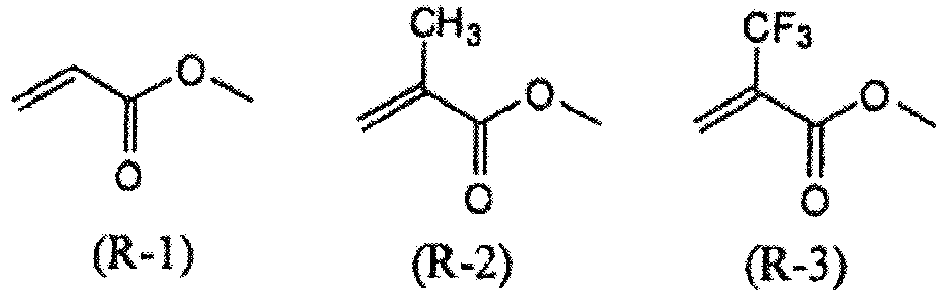


- Composition de cristaux liquides contenant un composé polymérisable selon la revendication 2,
dans laquelle m dans la formule générale (I) vaut 1 ou plus. - Composition de cristaux liquides contenant un composé polymérisable selon l'une quelconque des revendications 2 et 3,
dans laquelle, dans la formule générale (I), L11 est -OCH2-, -CH2O-, -CO-, -C2H4-, -COO-, -OCO-, -COOC2H4-, -OCOC2H4-, -C2H4OCO-, -C2H4COO-, -CH=CH-, une simple liaison, -CF2O-, -(CH2)z-C(=O)-O-, -(CH2)z-O-(C=O)-, -O-(C=O)-(CH2)z- ou -(C=O)-O-(CH2)z-,
L12 est -OCH2CH2O-, -COOC2H4-, -OCOC2H4-, -(CH2)z-C(=O)-O-, -(CH2)z-O-(C=O)-, -O-(C=O)-(CH2)z-, -(C=O)-O-(CH2)z-, -C2H4OCO- ou -C2H4COO-, et
dans les formules ci-dessus, z est un entier parmi 2 ou 4. - Composition de cristaux liquides contenant un composé polymérisable selon l'une quelconque des revendications 2 à 4,
dans laquelle au moins l'un de L11 et L12 dans la formule générale (I) est au moins l'un sélectionné dans le groupe consistant en -(CH2)z-C(=O)-O-, -(CH2)z-O-(C=O)-, -O-(C=O)-(CH2)2- et -(C=O)-O-(CH2)z-. - Composition de cristaux liquides contenant un composé polymérisable selon l'une quelconque des revendications 2 à 5,
dans laquelle la composition inclut 0,01 % en masse à 2 % en masse du composé sélectionné à partir de la formule générale (I), 5 % en masse à 70 % en masse du composé sélectionné à partir de la formule générale (II), et 5 % en masse à 70 % en masse du composé sélectionné dans le groupe consistant en des composés représentés par la formule générale (IIIa), (IIIb) ou (IIIc) ou le composé sélectionné dans le groupe consistant en des composés représentés par les formules générales (IVa), (IVb) et (IVc). - Composition de cristaux liquides contenant un composé polymérisable selon l'une quelconque des revendications 2 à 6,
dans laquelle la composition inclut au moins un composé sélectionné dans le groupe consistant en des composés représentés par la formule générale (I) et les formules générales (IVa), (IVb) et (IVc). - Composition de cristaux liquides contenant un composé polymérisable selon l'une quelconque des revendications 1 à 7, qui contient un composé polymérisable et est utilisée pour un élément d'affichage à cristaux liquides incluant une couche de cristaux liquides formée entre une paire de substrats, une électrode transparente et une plaque de polarisation,
dans laquelle une capacité d'alignement des cristaux liquides est transmise par polymérisation du composé polymérisable dans la couche de cristaux liquides dans laquelle un espace formé entre la paire de substrats est rempli par la composition de cristaux liquides contenant un composé polymérisable. - Élément d'affichage à cristaux liquides selon la revendication 8,
dans lequel la composition de cristaux liquides contenant un composé polymérisable a une anisotropie diélectrique négative.
Applications Claiming Priority (2)
| Application Number | Priority Date | Filing Date | Title |
|---|---|---|---|
| JP2013058218 | 2013-03-21 | ||
| PCT/JP2014/057279 WO2014148472A1 (fr) | 2013-03-21 | 2014-03-18 | Composition de cristaux liquides contenant un composé polymérisable et élément d'affichage à cristaux liquides l'utilisant |
Publications (3)
| Publication Number | Publication Date |
|---|---|
| EP2977428A1 EP2977428A1 (fr) | 2016-01-27 |
| EP2977428A4 EP2977428A4 (fr) | 2017-01-25 |
| EP2977428B1 true EP2977428B1 (fr) | 2018-05-02 |
Family
ID=51580150
Family Applications (1)
| Application Number | Title | Priority Date | Filing Date |
|---|---|---|---|
| EP14769199.2A Active EP2977428B1 (fr) | 2013-03-21 | 2014-03-18 | Composition de cristaux liquides contenant un composé polymérisable et élément d'affichage à cristaux liquides l'utilisant |
Country Status (7)
| Country | Link |
|---|---|
| US (1) | US9725651B2 (fr) |
| EP (1) | EP2977428B1 (fr) |
| JP (1) | JP5768942B2 (fr) |
| KR (2) | KR101691101B1 (fr) |
| CN (1) | CN105073950B (fr) |
| TW (1) | TWI572697B (fr) |
| WO (1) | WO2014148472A1 (fr) |
Families Citing this family (22)
| Publication number | Priority date | Publication date | Assignee | Title |
|---|---|---|---|---|
| KR101762217B1 (ko) * | 2013-03-21 | 2017-07-27 | 디아이씨 가부시끼가이샤 | 중합성 화합물 및 그것을 사용한 액정 조성물 |
| WO2014148197A1 (fr) * | 2013-03-21 | 2014-09-25 | Dic株式会社 | Composition de cristaux liquides contenant un composé polymérisable et élément d'affichage à cristaux liquides l'utilisant |
| CN105899644A (zh) * | 2014-01-06 | 2016-08-24 | Dic株式会社 | 向列液晶组合物及使用其的液晶显示元件 |
| US10351772B2 (en) | 2014-05-13 | 2019-07-16 | Dic Corporation | Nematic liquid crystal composition and liquid crystal display element using same |
| CN105814173A (zh) * | 2014-09-05 | 2016-07-27 | Dic株式会社 | 向列液晶组合物及使用其的液晶显示元件 |
| WO2016066242A1 (fr) * | 2014-10-31 | 2016-05-06 | Merck Patent Gmbh | Milieu cristallin liquide et composants haute fréquence comprenant ce milieu |
| WO2016104165A1 (fr) * | 2014-12-25 | 2016-06-30 | Dic株式会社 | Composition de cristaux liquides nématiques et élément d'affichage à cristaux liquides l'utilisant |
| EP3121247B1 (fr) * | 2015-06-09 | 2019-10-02 | Merck Patent GmbH | Composés polymérisables et leur utilisation dans des affichages à cristaux liquides |
| US10041001B2 (en) * | 2016-01-21 | 2018-08-07 | Samsung Display Co., Ltd. | Liquid crystal composition, liquid crystal display device including the same, and method of manufacturing liquid crystal display device |
| CN107286947B (zh) * | 2016-04-11 | 2020-08-07 | 江苏和成显示科技有限公司 | 聚合性液晶组合物及液晶显示器件 |
| CN107286957B (zh) * | 2016-04-11 | 2023-01-17 | 江苏和成显示科技有限公司 | 聚合性液晶组合物及其液晶显示器件 |
| WO2017188002A1 (fr) | 2016-04-27 | 2017-11-02 | Dic株式会社 | Composition de cristaux liquides et élément d'affichage à cristaux liquides |
| KR102313718B1 (ko) * | 2016-04-27 | 2021-10-18 | 디아이씨 가부시끼가이샤 | 중합성 화합물 및 그것을 사용한 액정 조성물 |
| CN108884392B (zh) * | 2016-06-17 | 2022-07-01 | Dic株式会社 | 液晶组合物和液晶显示元件 |
| KR102651756B1 (ko) | 2016-08-11 | 2024-03-29 | 삼성디스플레이 주식회사 | 액정 표시 장치 및 이에 포함되는 액정 조성물 |
| CN108727195B (zh) | 2017-04-21 | 2023-10-31 | 江苏和成显示科技有限公司 | 可聚合化合物及其应用 |
| CN109207165A (zh) * | 2017-06-30 | 2019-01-15 | 江苏和成显示科技有限公司 | 聚合性液晶组合物及其液晶显示器件 |
| CN109207166A (zh) * | 2017-06-30 | 2019-01-15 | 江苏和成显示科技有限公司 | 聚合性液晶组合物及其液晶显示器件 |
| CN115433589B (zh) * | 2017-09-30 | 2024-09-03 | 石家庄诚志永华显示材料有限公司 | 液晶组合物 |
| JP7298136B2 (ja) * | 2018-11-08 | 2023-06-27 | Dic株式会社 | 液晶組成物及び液晶表示素子 |
| JP7318204B2 (ja) * | 2018-12-18 | 2023-08-01 | Dic株式会社 | 液晶組成物及び液晶表示素子 |
| CN112080287B (zh) * | 2019-06-14 | 2023-08-29 | 石家庄诚志永华显示材料有限公司 | 液晶组合物、液晶显示元件、液晶显示器 |
Family Cites Families (15)
| Publication number | Priority date | Publication date | Assignee | Title |
|---|---|---|---|---|
| JP5295471B2 (ja) | 2000-11-13 | 2013-09-18 | Dic株式会社 | 重合性液晶化合物、該化合物を含有する重合性液晶組成物及びその重合体 |
| JP4175826B2 (ja) | 2002-04-16 | 2008-11-05 | シャープ株式会社 | 液晶表示装置 |
| JP4311964B2 (ja) | 2003-03-31 | 2009-08-12 | シャープ株式会社 | 液晶表示装置 |
| EP1911828B1 (fr) | 2006-10-12 | 2010-09-01 | Merck Patent GmbH | Affichage à cristaux liquides |
| EP2420548B1 (fr) * | 2009-04-14 | 2018-07-04 | DIC Corporation | Composition de cristaux liquides contenant un composé polymérisable, élément d'affichage à cristaux liquides l'utilisant |
| EP2292720A1 (fr) * | 2009-09-08 | 2011-03-09 | Merck Patent GmbH | Dispositif d'affichage à base de cristaux liquides |
| JP5720919B2 (ja) | 2010-02-04 | 2015-05-20 | Dic株式会社 | 重合性化合物を含有する液晶組成物及びそれを使用した液晶表示素子 |
| JP5692565B2 (ja) * | 2010-04-16 | 2015-04-01 | Dic株式会社 | 重合性化合物を含有する液晶組成物及びそれを使用した液晶表示素子 |
| JP5743129B2 (ja) * | 2010-04-16 | 2015-07-01 | Dic株式会社 | 重合性化合物を含有する液晶組成物及びそれを使用した液晶表示素子 |
| JP5593890B2 (ja) * | 2010-07-06 | 2014-09-24 | Dic株式会社 | 液晶組成物および液晶デバイス |
| JP5699518B2 (ja) | 2010-10-15 | 2015-04-15 | Dic株式会社 | 重合性化合物を含有する液晶組成物及びそれを使用した液晶表示素子 |
| WO2012086504A1 (fr) | 2010-12-24 | 2012-06-28 | Dic株式会社 | Composition de cristaux liquides contenant un composé polymérisable et élément d'affichage à cristaux liquides l'utilisant |
| JP5834489B2 (ja) * | 2011-05-18 | 2015-12-24 | Dic株式会社 | 重合性ナフタレン化合物 |
| JP6031781B2 (ja) | 2012-03-01 | 2016-11-24 | Dic株式会社 | 重合性化合物及びそれを用いた液晶組成物 |
| US9157027B2 (en) | 2012-04-24 | 2015-10-13 | Jnc Corporation | Compound having four polymerizable groups, liquid crystal composition and liquid crystal display device |
-
2014
- 2014-03-18 JP JP2014550557A patent/JP5768942B2/ja active Active
- 2014-03-18 KR KR1020157025782A patent/KR101691101B1/ko active Active
- 2014-03-18 US US14/778,775 patent/US9725651B2/en active Active
- 2014-03-18 WO PCT/JP2014/057279 patent/WO2014148472A1/fr not_active Ceased
- 2014-03-18 CN CN201480016831.6A patent/CN105073950B/zh active Active
- 2014-03-18 KR KR1020167010958A patent/KR101957753B1/ko active Active
- 2014-03-18 EP EP14769199.2A patent/EP2977428B1/fr active Active
- 2014-03-21 TW TW103110634A patent/TWI572697B/zh active
Non-Patent Citations (1)
| Title |
|---|
| None * |
Also Published As
| Publication number | Publication date |
|---|---|
| US20160122650A1 (en) | 2016-05-05 |
| EP2977428A4 (fr) | 2017-01-25 |
| TW201502248A (zh) | 2015-01-16 |
| CN105073950B (zh) | 2018-07-03 |
| KR20160052783A (ko) | 2016-05-12 |
| WO2014148472A1 (fr) | 2014-09-25 |
| KR101691101B1 (ko) | 2016-12-29 |
| JP5768942B2 (ja) | 2015-08-26 |
| TWI572697B (zh) | 2017-03-01 |
| CN105073950A (zh) | 2015-11-18 |
| JPWO2014148472A1 (ja) | 2017-02-16 |
| US9725651B2 (en) | 2017-08-08 |
| KR101957753B1 (ko) | 2019-03-14 |
| KR20150114578A (ko) | 2015-10-12 |
| EP2977428A1 (fr) | 2016-01-27 |
Similar Documents
| Publication | Publication Date | Title |
|---|---|---|
| EP2977428B1 (fr) | Composition de cristaux liquides contenant un composé polymérisable et élément d'affichage à cristaux liquides l'utilisant | |
| EP2420548B1 (fr) | Composition de cristaux liquides contenant un composé polymérisable, élément d'affichage à cristaux liquides l'utilisant | |
| CN102161893B (zh) | 含有聚合性化合物的液晶组合物及使用其的液晶显示元件 | |
| EP2743331B1 (fr) | Composition de cristaux liquides contenant un composé polymérisable et un élément d'affichage à cristaux liquides utilisant cette composition | |
| JP5573011B2 (ja) | 重合性化合物を含有する液晶組成物及びそれを使用した液晶表示素子 | |
| KR101643207B1 (ko) | 중합성 화합물 함유 액정 조성물 및 그를 사용한 액정 표시 소자 | |
| JP5743132B2 (ja) | 重合性化合物を含有する液晶組成物及びそれを使用した液晶表示素子 | |
| JP5692565B2 (ja) | 重合性化合物を含有する液晶組成物及びそれを使用した液晶表示素子 | |
| JP5743129B2 (ja) | 重合性化合物を含有する液晶組成物及びそれを使用した液晶表示素子 | |
| JP5699518B2 (ja) | 重合性化合物を含有する液晶組成物及びそれを使用した液晶表示素子 | |
| EP2843027A1 (fr) | Composition de cristaux liquides comprenant un composé polymérisable, et dispositif d'affichage à cristaux liquides mettant en uvre celle-ci | |
| CN102786937A (zh) | 含有聚合性化合物的液晶组合物及使用其的液晶显示元件 | |
| JP5751466B2 (ja) | 重合性化合物含有液晶組成物及びそれを使用した液晶表示素子 | |
| JP5712551B2 (ja) | 重合性化合物含有液晶組成物及びそれを使用した液晶表示素子 | |
| JP5712552B2 (ja) | 重合性化合物含有液晶組成物及びそれを使用した液晶表示素子 |
Legal Events
| Date | Code | Title | Description |
|---|---|---|---|
| PUAI | Public reference made under article 153(3) epc to a published international application that has entered the european phase |
Free format text: ORIGINAL CODE: 0009012 |
|
| 17P | Request for examination filed |
Effective date: 20151016 |
|
| AK | Designated contracting states |
Kind code of ref document: A1 Designated state(s): AL AT BE BG CH CY CZ DE DK EE ES FI FR GB GR HR HU IE IS IT LI LT LU LV MC MK MT NL NO PL PT RO RS SE SI SK SM TR |
|
| AX | Request for extension of the european patent |
Extension state: BA ME |
|
| DAX | Request for extension of the european patent (deleted) | ||
| A4 | Supplementary search report drawn up and despatched |
Effective date: 20161222 |
|
| RIC1 | Information provided on ipc code assigned before grant |
Ipc: C09K 19/32 20060101ALI20161216BHEP Ipc: C09K 19/12 20060101ALI20161216BHEP Ipc: G02F 1/1337 20060101ALI20161216BHEP Ipc: C09K 19/38 20060101ALI20161216BHEP Ipc: C09K 19/34 20060101ALI20161216BHEP Ipc: C09K 19/54 20060101ALI20161216BHEP Ipc: C09K 19/04 20060101ALI20161216BHEP Ipc: C09K 19/30 20060101ALI20161216BHEP Ipc: C09K 19/56 20060101ALI20161216BHEP Ipc: C09K 19/42 20060101AFI20161216BHEP Ipc: G02F 1/13 20060101ALI20161216BHEP Ipc: C09K 19/20 20060101ALI20161216BHEP |
|
| STAA | Information on the status of an ep patent application or granted ep patent |
Free format text: STATUS: EXAMINATION IS IN PROGRESS |
|
| 17Q | First examination report despatched |
Effective date: 20170727 |
|
| GRAP | Despatch of communication of intention to grant a patent |
Free format text: ORIGINAL CODE: EPIDOSNIGR1 |
|
| STAA | Information on the status of an ep patent application or granted ep patent |
Free format text: STATUS: GRANT OF PATENT IS INTENDED |
|
| INTG | Intention to grant announced |
Effective date: 20171128 |
|
| GRAS | Grant fee paid |
Free format text: ORIGINAL CODE: EPIDOSNIGR3 |
|
| GRAA | (expected) grant |
Free format text: ORIGINAL CODE: 0009210 |
|
| STAA | Information on the status of an ep patent application or granted ep patent |
Free format text: STATUS: THE PATENT HAS BEEN GRANTED |
|
| AK | Designated contracting states |
Kind code of ref document: B1 Designated state(s): AL AT BE BG CH CY CZ DE DK EE ES FI FR GB GR HR HU IE IS IT LI LT LU LV MC MK MT NL NO PL PT RO RS SE SI SK SM TR |
|
| REG | Reference to a national code |
Ref country code: GB Ref legal event code: FG4D |
|
| REG | Reference to a national code |
Ref country code: CH Ref legal event code: EP Ref country code: AT Ref legal event code: REF Ref document number: 995239 Country of ref document: AT Kind code of ref document: T Effective date: 20180515 |
|
| REG | Reference to a national code |
Ref country code: DE Ref legal event code: R096 Ref document number: 602014024920 Country of ref document: DE Ref country code: IE Ref legal event code: FG4D |
|
| REG | Reference to a national code |
Ref country code: DE Ref legal event code: R096 Ref document number: 602014024920 Country of ref document: DE |
|
| REG | Reference to a national code |
Ref country code: NL Ref legal event code: MP Effective date: 20180502 |
|
| REG | Reference to a national code |
Ref country code: LT Ref legal event code: MG4D |
|
| PG25 | Lapsed in a contracting state [announced via postgrant information from national office to epo] |
Ref country code: LT Free format text: LAPSE BECAUSE OF FAILURE TO SUBMIT A TRANSLATION OF THE DESCRIPTION OR TO PAY THE FEE WITHIN THE PRESCRIBED TIME-LIMIT Effective date: 20180502 Ref country code: SE Free format text: LAPSE BECAUSE OF FAILURE TO SUBMIT A TRANSLATION OF THE DESCRIPTION OR TO PAY THE FEE WITHIN THE PRESCRIBED TIME-LIMIT Effective date: 20180502 Ref country code: NO Free format text: LAPSE BECAUSE OF FAILURE TO SUBMIT A TRANSLATION OF THE DESCRIPTION OR TO PAY THE FEE WITHIN THE PRESCRIBED TIME-LIMIT Effective date: 20180802 Ref country code: ES Free format text: LAPSE BECAUSE OF FAILURE TO SUBMIT A TRANSLATION OF THE DESCRIPTION OR TO PAY THE FEE WITHIN THE PRESCRIBED TIME-LIMIT Effective date: 20180502 Ref country code: FI Free format text: LAPSE BECAUSE OF FAILURE TO SUBMIT A TRANSLATION OF THE DESCRIPTION OR TO PAY THE FEE WITHIN THE PRESCRIBED TIME-LIMIT Effective date: 20180502 Ref country code: BG Free format text: LAPSE BECAUSE OF FAILURE TO SUBMIT A TRANSLATION OF THE DESCRIPTION OR TO PAY THE FEE WITHIN THE PRESCRIBED TIME-LIMIT Effective date: 20180802 |
|
| PG25 | Lapsed in a contracting state [announced via postgrant information from national office to epo] |
Ref country code: RS Free format text: LAPSE BECAUSE OF FAILURE TO SUBMIT A TRANSLATION OF THE DESCRIPTION OR TO PAY THE FEE WITHIN THE PRESCRIBED TIME-LIMIT Effective date: 20180502 Ref country code: NL Free format text: LAPSE BECAUSE OF FAILURE TO SUBMIT A TRANSLATION OF THE DESCRIPTION OR TO PAY THE FEE WITHIN THE PRESCRIBED TIME-LIMIT Effective date: 20180502 Ref country code: LV Free format text: LAPSE BECAUSE OF FAILURE TO SUBMIT A TRANSLATION OF THE DESCRIPTION OR TO PAY THE FEE WITHIN THE PRESCRIBED TIME-LIMIT Effective date: 20180502 Ref country code: GR Free format text: LAPSE BECAUSE OF FAILURE TO SUBMIT A TRANSLATION OF THE DESCRIPTION OR TO PAY THE FEE WITHIN THE PRESCRIBED TIME-LIMIT Effective date: 20180803 Ref country code: HR Free format text: LAPSE BECAUSE OF FAILURE TO SUBMIT A TRANSLATION OF THE DESCRIPTION OR TO PAY THE FEE WITHIN THE PRESCRIBED TIME-LIMIT Effective date: 20180502 |
|
| REG | Reference to a national code |
Ref country code: AT Ref legal event code: MK05 Ref document number: 995239 Country of ref document: AT Kind code of ref document: T Effective date: 20180502 |
|
| PG25 | Lapsed in a contracting state [announced via postgrant information from national office to epo] |
Ref country code: AT Free format text: LAPSE BECAUSE OF FAILURE TO SUBMIT A TRANSLATION OF THE DESCRIPTION OR TO PAY THE FEE WITHIN THE PRESCRIBED TIME-LIMIT Effective date: 20180502 Ref country code: EE Free format text: LAPSE BECAUSE OF FAILURE TO SUBMIT A TRANSLATION OF THE DESCRIPTION OR TO PAY THE FEE WITHIN THE PRESCRIBED TIME-LIMIT Effective date: 20180502 Ref country code: DK Free format text: LAPSE BECAUSE OF FAILURE TO SUBMIT A TRANSLATION OF THE DESCRIPTION OR TO PAY THE FEE WITHIN THE PRESCRIBED TIME-LIMIT Effective date: 20180502 Ref country code: SK Free format text: LAPSE BECAUSE OF FAILURE TO SUBMIT A TRANSLATION OF THE DESCRIPTION OR TO PAY THE FEE WITHIN THE PRESCRIBED TIME-LIMIT Effective date: 20180502 Ref country code: RO Free format text: LAPSE BECAUSE OF FAILURE TO SUBMIT A TRANSLATION OF THE DESCRIPTION OR TO PAY THE FEE WITHIN THE PRESCRIBED TIME-LIMIT Effective date: 20180502 Ref country code: PL Free format text: LAPSE BECAUSE OF FAILURE TO SUBMIT A TRANSLATION OF THE DESCRIPTION OR TO PAY THE FEE WITHIN THE PRESCRIBED TIME-LIMIT Effective date: 20180502 Ref country code: CZ Free format text: LAPSE BECAUSE OF FAILURE TO SUBMIT A TRANSLATION OF THE DESCRIPTION OR TO PAY THE FEE WITHIN THE PRESCRIBED TIME-LIMIT Effective date: 20180502 |
|
| REG | Reference to a national code |
Ref country code: DE Ref legal event code: R097 Ref document number: 602014024920 Country of ref document: DE |
|
| PG25 | Lapsed in a contracting state [announced via postgrant information from national office to epo] |
Ref country code: IT Free format text: LAPSE BECAUSE OF FAILURE TO SUBMIT A TRANSLATION OF THE DESCRIPTION OR TO PAY THE FEE WITHIN THE PRESCRIBED TIME-LIMIT Effective date: 20180502 Ref country code: SM Free format text: LAPSE BECAUSE OF FAILURE TO SUBMIT A TRANSLATION OF THE DESCRIPTION OR TO PAY THE FEE WITHIN THE PRESCRIBED TIME-LIMIT Effective date: 20180502 |
|
| PLBE | No opposition filed within time limit |
Free format text: ORIGINAL CODE: 0009261 |
|
| STAA | Information on the status of an ep patent application or granted ep patent |
Free format text: STATUS: NO OPPOSITION FILED WITHIN TIME LIMIT |
|
| 26N | No opposition filed |
Effective date: 20190205 |
|
| PG25 | Lapsed in a contracting state [announced via postgrant information from national office to epo] |
Ref country code: SI Free format text: LAPSE BECAUSE OF FAILURE TO SUBMIT A TRANSLATION OF THE DESCRIPTION OR TO PAY THE FEE WITHIN THE PRESCRIBED TIME-LIMIT Effective date: 20180502 |
|
| PG25 | Lapsed in a contracting state [announced via postgrant information from national office to epo] |
Ref country code: MC Free format text: LAPSE BECAUSE OF FAILURE TO SUBMIT A TRANSLATION OF THE DESCRIPTION OR TO PAY THE FEE WITHIN THE PRESCRIBED TIME-LIMIT Effective date: 20180502 |
|
| REG | Reference to a national code |
Ref country code: CH Ref legal event code: PL |
|
| GBPC | Gb: european patent ceased through non-payment of renewal fee |
Effective date: 20190318 |
|
| PG25 | Lapsed in a contracting state [announced via postgrant information from national office to epo] |
Ref country code: LU Free format text: LAPSE BECAUSE OF NON-PAYMENT OF DUE FEES Effective date: 20190318 Ref country code: AL Free format text: LAPSE BECAUSE OF FAILURE TO SUBMIT A TRANSLATION OF THE DESCRIPTION OR TO PAY THE FEE WITHIN THE PRESCRIBED TIME-LIMIT Effective date: 20180502 |
|
| REG | Reference to a national code |
Ref country code: BE Ref legal event code: MM Effective date: 20190331 |
|
| PG25 | Lapsed in a contracting state [announced via postgrant information from national office to epo] |
Ref country code: GB Free format text: LAPSE BECAUSE OF NON-PAYMENT OF DUE FEES Effective date: 20190318 Ref country code: CH Free format text: LAPSE BECAUSE OF NON-PAYMENT OF DUE FEES Effective date: 20190331 Ref country code: LI Free format text: LAPSE BECAUSE OF NON-PAYMENT OF DUE FEES Effective date: 20190331 Ref country code: IE Free format text: LAPSE BECAUSE OF NON-PAYMENT OF DUE FEES Effective date: 20190318 |
|
| PG25 | Lapsed in a contracting state [announced via postgrant information from national office to epo] |
Ref country code: FR Free format text: LAPSE BECAUSE OF NON-PAYMENT OF DUE FEES Effective date: 20190331 Ref country code: BE Free format text: LAPSE BECAUSE OF NON-PAYMENT OF DUE FEES Effective date: 20190331 |
|
| PG25 | Lapsed in a contracting state [announced via postgrant information from national office to epo] |
Ref country code: TR Free format text: LAPSE BECAUSE OF FAILURE TO SUBMIT A TRANSLATION OF THE DESCRIPTION OR TO PAY THE FEE WITHIN THE PRESCRIBED TIME-LIMIT Effective date: 20180502 |
|
| PG25 | Lapsed in a contracting state [announced via postgrant information from national office to epo] |
Ref country code: MT Free format text: LAPSE BECAUSE OF NON-PAYMENT OF DUE FEES Effective date: 20190318 Ref country code: PT Free format text: LAPSE BECAUSE OF FAILURE TO SUBMIT A TRANSLATION OF THE DESCRIPTION OR TO PAY THE FEE WITHIN THE PRESCRIBED TIME-LIMIT Effective date: 20180903 |
|
| PG25 | Lapsed in a contracting state [announced via postgrant information from national office to epo] |
Ref country code: CY Free format text: LAPSE BECAUSE OF FAILURE TO SUBMIT A TRANSLATION OF THE DESCRIPTION OR TO PAY THE FEE WITHIN THE PRESCRIBED TIME-LIMIT Effective date: 20180502 |
|
| PG25 | Lapsed in a contracting state [announced via postgrant information from national office to epo] |
Ref country code: IS Free format text: LAPSE BECAUSE OF FAILURE TO SUBMIT A TRANSLATION OF THE DESCRIPTION OR TO PAY THE FEE WITHIN THE PRESCRIBED TIME-LIMIT Effective date: 20180902 |
|
| PG25 | Lapsed in a contracting state [announced via postgrant information from national office to epo] |
Ref country code: HU Free format text: LAPSE BECAUSE OF FAILURE TO SUBMIT A TRANSLATION OF THE DESCRIPTION OR TO PAY THE FEE WITHIN THE PRESCRIBED TIME-LIMIT; INVALID AB INITIO Effective date: 20140318 |
|
| PG25 | Lapsed in a contracting state [announced via postgrant information from national office to epo] |
Ref country code: MK Free format text: LAPSE BECAUSE OF FAILURE TO SUBMIT A TRANSLATION OF THE DESCRIPTION OR TO PAY THE FEE WITHIN THE PRESCRIBED TIME-LIMIT Effective date: 20180502 |
|
| P01 | Opt-out of the competence of the unified patent court (upc) registered |
Effective date: 20230324 |
|
| REG | Reference to a national code |
Ref country code: DE Ref legal event code: R082 Ref document number: 602014024920 Country of ref document: DE Representative=s name: WEIDNER STERN JESCHKE PATENTANWAELTE PARTNERSC, DE Ref country code: DE Ref legal event code: R081 Ref document number: 602014024920 Country of ref document: DE Owner name: SHIJIAZHUANG CHENGZHI YONGHUA DISPLAY MATERIAL, CN Free format text: FORMER OWNER: DIC CORPORATION, TOKYO, JP |
|
| PGFP | Annual fee paid to national office [announced via postgrant information from national office to epo] |
Ref country code: DE Payment date: 20251217 Year of fee payment: 13 |