EP2977445B1 - Adhärente zellen aus der plazenta und ihre verwendung bei der behandlung von erkrankungen - Google Patents
Adhärente zellen aus der plazenta und ihre verwendung bei der behandlung von erkrankungen Download PDFInfo
- Publication number
- EP2977445B1 EP2977445B1 EP15183125.2A EP15183125A EP2977445B1 EP 2977445 B1 EP2977445 B1 EP 2977445B1 EP 15183125 A EP15183125 A EP 15183125A EP 2977445 B1 EP2977445 B1 EP 2977445B1
- Authority
- EP
- European Patent Office
- Prior art keywords
- cells
- placenta
- cell
- adherent cells
- adherent
- Prior art date
- Legal status (The legal status is an assumption and is not a legal conclusion. Google has not performed a legal analysis and makes no representation as to the accuracy of the status listed.)
- Active
Links
Images





Classifications
-
- A—HUMAN NECESSITIES
- A61—MEDICAL OR VETERINARY SCIENCE; HYGIENE
- A61K—PREPARATIONS FOR MEDICAL, DENTAL OR TOILETRY PURPOSES
- A61K35/00—Medicinal preparations containing materials or reaction products thereof with undetermined constitution
- A61K35/12—Materials from mammals; Compositions comprising non-specified tissues or cells; Compositions comprising non-embryonic stem cells; Genetically modified cells
- A61K35/48—Reproductive organs
- A61K35/50—Placenta; Placental stem cells; Amniotic fluid; Amnion; Amniotic stem cells
-
- A—HUMAN NECESSITIES
- A61—MEDICAL OR VETERINARY SCIENCE; HYGIENE
- A61P—SPECIFIC THERAPEUTIC ACTIVITY OF CHEMICAL COMPOUNDS OR MEDICINAL PREPARATIONS
- A61P13/00—Drugs for disorders of the urinary system
- A61P13/12—Drugs for disorders of the urinary system of the kidneys
-
- A—HUMAN NECESSITIES
- A61—MEDICAL OR VETERINARY SCIENCE; HYGIENE
- A61P—SPECIFIC THERAPEUTIC ACTIVITY OF CHEMICAL COMPOUNDS OR MEDICINAL PREPARATIONS
- A61P15/00—Drugs for genital or sexual disorders; Contraceptives
-
- A—HUMAN NECESSITIES
- A61—MEDICAL OR VETERINARY SCIENCE; HYGIENE
- A61P—SPECIFIC THERAPEUTIC ACTIVITY OF CHEMICAL COMPOUNDS OR MEDICINAL PREPARATIONS
- A61P17/00—Drugs for dermatological disorders
-
- A—HUMAN NECESSITIES
- A61—MEDICAL OR VETERINARY SCIENCE; HYGIENE
- A61P—SPECIFIC THERAPEUTIC ACTIVITY OF CHEMICAL COMPOUNDS OR MEDICINAL PREPARATIONS
- A61P17/00—Drugs for dermatological disorders
- A61P17/02—Drugs for dermatological disorders for treating wounds, ulcers, burns, scars, keloids, or the like
-
- A—HUMAN NECESSITIES
- A61—MEDICAL OR VETERINARY SCIENCE; HYGIENE
- A61P—SPECIFIC THERAPEUTIC ACTIVITY OF CHEMICAL COMPOUNDS OR MEDICINAL PREPARATIONS
- A61P17/00—Drugs for dermatological disorders
- A61P17/06—Antipsoriatics
-
- A—HUMAN NECESSITIES
- A61—MEDICAL OR VETERINARY SCIENCE; HYGIENE
- A61P—SPECIFIC THERAPEUTIC ACTIVITY OF CHEMICAL COMPOUNDS OR MEDICINAL PREPARATIONS
- A61P19/00—Drugs for skeletal disorders
- A61P19/02—Drugs for skeletal disorders for joint disorders, e.g. arthritis, arthrosis
-
- A—HUMAN NECESSITIES
- A61—MEDICAL OR VETERINARY SCIENCE; HYGIENE
- A61P—SPECIFIC THERAPEUTIC ACTIVITY OF CHEMICAL COMPOUNDS OR MEDICINAL PREPARATIONS
- A61P19/00—Drugs for skeletal disorders
- A61P19/04—Drugs for skeletal disorders for non-specific disorders of the connective tissue
-
- A—HUMAN NECESSITIES
- A61—MEDICAL OR VETERINARY SCIENCE; HYGIENE
- A61P—SPECIFIC THERAPEUTIC ACTIVITY OF CHEMICAL COMPOUNDS OR MEDICINAL PREPARATIONS
- A61P19/00—Drugs for skeletal disorders
- A61P19/08—Drugs for skeletal disorders for bone diseases, e.g. rachitism, Paget's disease
-
- A—HUMAN NECESSITIES
- A61—MEDICAL OR VETERINARY SCIENCE; HYGIENE
- A61P—SPECIFIC THERAPEUTIC ACTIVITY OF CHEMICAL COMPOUNDS OR MEDICINAL PREPARATIONS
- A61P19/00—Drugs for skeletal disorders
- A61P19/08—Drugs for skeletal disorders for bone diseases, e.g. rachitism, Paget's disease
- A61P19/10—Drugs for skeletal disorders for bone diseases, e.g. rachitism, Paget's disease for osteoporosis
-
- A—HUMAN NECESSITIES
- A61—MEDICAL OR VETERINARY SCIENCE; HYGIENE
- A61P—SPECIFIC THERAPEUTIC ACTIVITY OF CHEMICAL COMPOUNDS OR MEDICINAL PREPARATIONS
- A61P21/00—Drugs for disorders of the muscular or neuromuscular system
-
- A—HUMAN NECESSITIES
- A61—MEDICAL OR VETERINARY SCIENCE; HYGIENE
- A61P—SPECIFIC THERAPEUTIC ACTIVITY OF CHEMICAL COMPOUNDS OR MEDICINAL PREPARATIONS
- A61P25/00—Drugs for disorders of the nervous system
-
- A—HUMAN NECESSITIES
- A61—MEDICAL OR VETERINARY SCIENCE; HYGIENE
- A61P—SPECIFIC THERAPEUTIC ACTIVITY OF CHEMICAL COMPOUNDS OR MEDICINAL PREPARATIONS
- A61P25/00—Drugs for disorders of the nervous system
- A61P25/28—Drugs for disorders of the nervous system for treating neurodegenerative disorders of the central nervous system, e.g. nootropic agents, cognition enhancers, drugs for treating Alzheimer's disease or other forms of dementia
-
- A—HUMAN NECESSITIES
- A61—MEDICAL OR VETERINARY SCIENCE; HYGIENE
- A61P—SPECIFIC THERAPEUTIC ACTIVITY OF CHEMICAL COMPOUNDS OR MEDICINAL PREPARATIONS
- A61P27/00—Drugs for disorders of the senses
- A61P27/02—Ophthalmic agents
-
- A—HUMAN NECESSITIES
- A61—MEDICAL OR VETERINARY SCIENCE; HYGIENE
- A61P—SPECIFIC THERAPEUTIC ACTIVITY OF CHEMICAL COMPOUNDS OR MEDICINAL PREPARATIONS
- A61P29/00—Non-central analgesic, antipyretic or antiinflammatory agents, e.g. antirheumatic agents; Non-steroidal antiinflammatory drugs [NSAID]
-
- A—HUMAN NECESSITIES
- A61—MEDICAL OR VETERINARY SCIENCE; HYGIENE
- A61P—SPECIFIC THERAPEUTIC ACTIVITY OF CHEMICAL COMPOUNDS OR MEDICINAL PREPARATIONS
- A61P3/00—Drugs for disorders of the metabolism
-
- A—HUMAN NECESSITIES
- A61—MEDICAL OR VETERINARY SCIENCE; HYGIENE
- A61P—SPECIFIC THERAPEUTIC ACTIVITY OF CHEMICAL COMPOUNDS OR MEDICINAL PREPARATIONS
- A61P3/00—Drugs for disorders of the metabolism
- A61P3/08—Drugs for disorders of the metabolism for glucose homeostasis
- A61P3/10—Drugs for disorders of the metabolism for glucose homeostasis for hyperglycaemia, e.g. antidiabetics
-
- A—HUMAN NECESSITIES
- A61—MEDICAL OR VETERINARY SCIENCE; HYGIENE
- A61P—SPECIFIC THERAPEUTIC ACTIVITY OF CHEMICAL COMPOUNDS OR MEDICINAL PREPARATIONS
- A61P35/00—Antineoplastic agents
-
- A—HUMAN NECESSITIES
- A61—MEDICAL OR VETERINARY SCIENCE; HYGIENE
- A61P—SPECIFIC THERAPEUTIC ACTIVITY OF CHEMICAL COMPOUNDS OR MEDICINAL PREPARATIONS
- A61P35/00—Antineoplastic agents
- A61P35/04—Antineoplastic agents specific for metastasis
-
- A—HUMAN NECESSITIES
- A61—MEDICAL OR VETERINARY SCIENCE; HYGIENE
- A61P—SPECIFIC THERAPEUTIC ACTIVITY OF CHEMICAL COMPOUNDS OR MEDICINAL PREPARATIONS
- A61P37/00—Drugs for immunological or allergic disorders
- A61P37/02—Immunomodulators
- A61P37/06—Immunosuppressants, e.g. drugs for graft rejection
-
- A—HUMAN NECESSITIES
- A61—MEDICAL OR VETERINARY SCIENCE; HYGIENE
- A61P—SPECIFIC THERAPEUTIC ACTIVITY OF CHEMICAL COMPOUNDS OR MEDICINAL PREPARATIONS
- A61P7/00—Drugs for disorders of the blood or the extracellular fluid
- A61P7/04—Antihaemorrhagics; Procoagulants; Haemostatic agents; Antifibrinolytic agents
-
- A—HUMAN NECESSITIES
- A61—MEDICAL OR VETERINARY SCIENCE; HYGIENE
- A61P—SPECIFIC THERAPEUTIC ACTIVITY OF CHEMICAL COMPOUNDS OR MEDICINAL PREPARATIONS
- A61P9/00—Drugs for disorders of the cardiovascular system
-
- A—HUMAN NECESSITIES
- A61—MEDICAL OR VETERINARY SCIENCE; HYGIENE
- A61P—SPECIFIC THERAPEUTIC ACTIVITY OF CHEMICAL COMPOUNDS OR MEDICINAL PREPARATIONS
- A61P9/00—Drugs for disorders of the cardiovascular system
- A61P9/04—Inotropic agents, i.e. stimulants of cardiac contraction; Drugs for heart failure
-
- A—HUMAN NECESSITIES
- A61—MEDICAL OR VETERINARY SCIENCE; HYGIENE
- A61P—SPECIFIC THERAPEUTIC ACTIVITY OF CHEMICAL COMPOUNDS OR MEDICINAL PREPARATIONS
- A61P9/00—Drugs for disorders of the cardiovascular system
- A61P9/10—Drugs for disorders of the cardiovascular system for treating ischaemic or atherosclerotic diseases, e.g. antianginal drugs, coronary vasodilators, drugs for myocardial infarction, retinopathy, cerebrovascula insufficiency, renal arteriosclerosis
-
- C—CHEMISTRY; METALLURGY
- C12—BIOCHEMISTRY; BEER; SPIRITS; WINE; VINEGAR; MICROBIOLOGY; ENZYMOLOGY; MUTATION OR GENETIC ENGINEERING
- C12N—MICROORGANISMS OR ENZYMES; COMPOSITIONS THEREOF; PROPAGATING, PRESERVING, OR MAINTAINING MICROORGANISMS; MUTATION OR GENETIC ENGINEERING; CULTURE MEDIA
- C12N5/00—Undifferentiated human, animal or plant cells, e.g. cell lines; Tissues; Cultivation or maintenance thereof; Culture media therefor
- C12N5/06—Animal cells or tissues; Human cells or tissues
- C12N5/0602—Vertebrate cells
- C12N5/0603—Embryonic cells ; Embryoid bodies
- C12N5/0605—Cells from extra-embryonic tissues, e.g. placenta, amnion, yolk sac, Wharton's jelly
-
- A—HUMAN NECESSITIES
- A61—MEDICAL OR VETERINARY SCIENCE; HYGIENE
- A61K—PREPARATIONS FOR MEDICAL, DENTAL OR TOILETRY PURPOSES
- A61K35/00—Medicinal preparations containing materials or reaction products thereof with undetermined constitution
- A61K35/12—Materials from mammals; Compositions comprising non-specified tissues or cells; Compositions comprising non-embryonic stem cells; Genetically modified cells
- A61K2035/122—Materials from mammals; Compositions comprising non-specified tissues or cells; Compositions comprising non-embryonic stem cells; Genetically modified cells for inducing tolerance or supression of immune responses
-
- C—CHEMISTRY; METALLURGY
- C12—BIOCHEMISTRY; BEER; SPIRITS; WINE; VINEGAR; MICROBIOLOGY; ENZYMOLOGY; MUTATION OR GENETIC ENGINEERING
- C12N—MICROORGANISMS OR ENZYMES; COMPOSITIONS THEREOF; PROPAGATING, PRESERVING, OR MAINTAINING MICROORGANISMS; MUTATION OR GENETIC ENGINEERING; CULTURE MEDIA
- C12N2502/00—Coculture with; Conditioned medium produced by
- C12N2502/02—Coculture with; Conditioned medium produced by embryonic cells
Definitions
- the present invention in some embodiments thereof, relates to adherent cells from placenta comprising at least 70% adherent cells from a fetal portion of the placenta for use in therapy, wherein the cells are from an allogeneic or xenogeneic source.
- MSCs mesenchymal stromal cells
- BMT bone marrow transplantations
- MSCs have been widely studied in regenerative medicine as the foundation to build new tissues such as bone, cartilage and fat for the repair of injury or replacement of pathologic tissues and as treatment for genetic and acquired diseases [ Fibbe and Noort, Ann N Y Acad Sci (2003) 996: 235-44 ; Horwitz et al., Cytotherapy (2005) 7(5): 393-5 ; Zimmet and Hare, Basic Res Cardiol (2005) 100(6): 471-81 ]. Furthermore, the multipotent ability of MSCs, their easy isolation and culture, as well as their high ex vivo expansion potential make them an attractive therapeutic tool [Fibbe and Noort, supra; Minguell et al. Exp Biol Med (Maywood) (2001) 226(6): 507-20 ].
- MSCs escape recognition of alloreactive cells and are considered to be immune privileged [ Le Blanc et al., Exp Hematol (2003) 31(10): 890-6 ]. Having low immunogenicity, MSCs are not rejected by the patient's immune system and therefore are considered not to require HLA matching.
- Placental derived MSCs exhibit many markers common to MSCs isolated from other tissues, e.g. CD105, CD73, CD90 and CD29, and the lack of expression of hematopoietic, endothelial and trophoblastic-specific cell markers. Adipogenic, osteogenic, and neurogenic differentiation have been achieved after culturing placental derived MSCs under appropriate conditions [ Yen et al., Stem Cells (2005) 23(1): 3-9 ]. Furthermore, MSCs isolated from placenta and cultured in vitro have been demonstrated to be immune privileged in a similar fashion as MSCs [ Li et al., Cell Res (2005) 15(7): 539-47 ]. Thus, the placenta provides an ethically non-controversial and easily accessible source of MSCs for experimental and clinical applications [ Zhang et al., Exp Hematol (2004) 32(7): 657-64 ].
- purified populations of adherent cells from the placenta comprising at least 70% adherent cells from a fetal portion of the placenta that can be used in therapy, wherein the cells are from an allogeneic or xenogeneic source.
- the adherent cells comprise a positive marker expression selected from the group consisting of CD73, CD90, CD29, CD105 and D7-fib; that is, in some embodiments the adherent cells express one or more of CD73, CD90, CD29, CD105 or D7-fib.
- the adherent cells comprise a negative marker expression selected from the group consisting of CD3, CD4, CD45, CD80, HLA-DR, CD11b, CD14, CD19, CD34, CD31, CD200, KDR, and CD79; that is, in some embodiments the adherent cells do not express CD3, CD4, CD45, CD80, HLA-DR, CD11b, CD14, CD19, CD34, CD31, CD200, KDR, or CD79.
- the adherent cells are cultured in a three-dimensional (3D) culture.
- the three-dimensional (3D) culture comprises a 3D bioreactor.
- culturing of the adherent cells in the 3D culture is effected under perfusion.
- culturing of the adherent cells is effected for at least 3 days.
- culturing of the adherent cells is effected until at least 10 % of the adherent cells are proliferating.
- the adherent cells are cultured in a two-dimensional (2D) culture.
- At least 10 % of the adherent cells are at a proliferative state; that is, at least 10 % of the adherent cells are proliferating.
- the adherent cells are less committed to an osteogenic lineage as compared to adherent cells from bone marrow grown and allowed to differentiate under the same conditions.
- the adherent cells are less committed to an adipogenic lineage as compared to adherent cells from bone marrow grown and allowed to differentiate under the same conditions.
- the maternal portion of the placenta comprises decidua basalis, decidua parietalis, or both decidua basalis and decidua parietalis.
- a population of adherent cells derived from the placenta comprising at least 70 % adherent cells from a fetal portion of placenta for use in therapy, wherein the cells are from an allogeneic or xenogeneic source.
- the fetal portion of the placenta comprises amnion.
- the fetal portion of the placenta consists of amnion.
- the fetal portion of the placenta comprises chorionic villi.
- the fetal portion of the placenta consists of chorionic villi.
- population of cells is a population in wherein not more than 3.5%, not more than 3%, not more than 2%, or not more than 1% of the population of adherent cells from a maternal portion express CD200 as measured by flow cytometry using an isotype control to define negative expression.
- the adherent cells comprise a cell diameter which is smaller than that of adherent cells derived from a fetal portion of placenta.
- the adherent cells comprise a cell proliferation capacity which is higher than that of adherent cells derived from a fetal portion of placenta.
- the adherent cells are capable of suppressing an immune reaction to a lesser extent than adherent cells from a fetal portion of placenta when tested in a mixed lymphocyte culture.
- conditioned medium isolated from a culture comprising any of the above populations of cells.
- composition comprising as an active ingredient any of the population of cells described herein or any of the conditioned media described herein and a pharmaceutically acceptable carrier.
- Also disclosed is a method of treating a medical condition that can benefit from cell or organ transplantation comprising administering to a subject in need thereof a therapeutically effective amount of any of the pharmaceutical compositions described herein, thereby treating the subject.
- the condition is selected from the group consisting of ischemia, peripheral arterial disease (PAD), critical limb ischemia (CLI), lower extremity ischemia, stroke, ischemic vascular disease, vascular disease of the kidney, ischemic heart disease, myocardial ischemia, coronary artery disease (CAD), atherosclerotic cardiovascular disease, left main coronary artery disease, arterial occlusive disease, peripheral ischemia, peripheral vascular disease, arteriosclerosis, retinopathy, retinal repair, remodeling disorder, von Hippel-Lindau syndrome, hereditary hemorrhagic telengiectasiaischemic vascular disease, Buerger's disease, ischemic renal disease, ischemic placenta, reproduction associated disorders, graft-versus-host disease, solid organ transplantation, hematopoietic stem cell transplantation, diabetes, connective tissue damage, cancer, pre-cancer, bone cancer, osteosarcoma, bone metastases, bone fracture, burn wound, articul
- the condition is selected from the group consisting of heart failure, myocardial infarction, neuropathic pain, skeletal muscle defect, stroke, and ischemic heart disease.
- the use is for treating a skeletal muscle defect comprising administering to a subject in need thereof a therapeutically effective amount of composition comprising placenta derived adherent stromal cells, thereby treating the skeletal muscle defect.
- the use is for treating neuropathic pain comprising administering to a subject in need thereof a therapeutically effective amount of composition comprising placenta derived adherent stromal cells, thereby treating the neuropathic pain.
- the neuropathic pain is associated with inflammatory pain, diabetic polyneuropathy, human immunodeficiency virus (HIV) sensory neuropathy, poststroke syndromes, ischemia, or multiple sclerosis.
- HIV human immunodeficiency virus
- the use is for treating myocardial infarction comprising administering to a subject in need thereof a therapeutically effective amount of composition comprising placenta derived adherent stromal cells, thereby treating the myocardial infarction.
- a composition comprising placenta derived adherent stromal cells for the manufacture of a medicament for treating a skeletal muscle defect, neuropathic pain, myocardial infarction.
- a pharmaceutical composition comprising as an active ingredient placenta derived adherent stromal cells for use in treating a skeletal muscle defect, neuropathic pain, or myocardial infarction.
- the pharmaceutical composition is a pharmaceutical composition for treating neuropathic pain that is associated with inflammatory pain, diabetic polyneuropathy, human immunodeficiency virus (HIV) sensory neuropathy, poststroke syndromes, ischemia, or multiple sclerosis.
- HIV human immunodeficiency virus
- the adherent cells express one or more of CD73, CD90, CD29, CD 105 or D7-fib.
- the adherent cells do not express CD3, CD4, CD45, CD80, HLA-DR, CD11b, CD14, CD19, CD34, CD31, CD200, CD271, KDR, or CD79.
- the adherent cells express one or more of beta-Endorphin, dynorphin A, leu-enkephalin, or met-enkephalin.
- the adherent cells suppress T cell activity.
- adherent cells comprising at least 70 % adherent cells from a maternal portion of the placenta.
- not more than 3.5%, not more than 3%, not more than 2%, or not more than 1% of the adherent cells from a maternal portion express CD200 as measured by flow cytometry using an isotype control to define negative expression.
- the maternal portion of the placenta comprises decidua basalis, decidua parietalis, or both decidua basalis and decidua parietalis.
- the adherent cells are produced by culture using 3D culture conditions.
- the three-dimensional (3D) culture comprises a 3D bioreactor.
- the 3D culture is effected under perfusion.
- the culturing of the adherent cells is effected for at least 3 days.
- the culturing of the adherent cells is effected until at least 10 % of said adherent cells are proliferating.
- the present invention in some embodiments thereof, relates to adherent cells from placenta comprising at least 70 % adherent cells from a fetal portion of the placenta for use in therapy, wherein the cells are from an allogeneic or xenogeneic source.
- Placenta represents a readily available source of cells endowed with unique immunosuppressive and tissue regeneration properties. Purified populations of adherent cells from the placenta or conditioned from those cells are valuable in treating conditions which can benefit from cell or organ transplantation.
- the present inventor has devised a method for isolating highly purified cell populations from different portions of placenta (see Examples section below). Surprisingly it was uncovered that isolated cell populations from maternal portions of the placenta are characterized by unique morphological and functional properties which are distinct of other cell populations isolated from fetal placental fractions (see Examples section which follows). These cells are valuable for the treatment of a myriad of medical conditions.
- Also disclosed is a population of adherent cells comprising at least about 70 %, 75 %, 80 %, 85 %, 90 %, 92 %, 94 %, 95 %, 96 %, 98 %, 99 % or even 100 % of cells from a maternal portion of placenta.
- a population of cells comprising at least about 70 %, 75 %, 80 %, 85 %, 90 %, 92 %, 94 %, 95 %, 96 %, 98 %, 99 % or even 100 % adherent cells from a fetal portion of placenta.
- the fetal portion of the placenta comprises amnion.
- the fetal portion of the placenta consists of amnion.
- the fetal portion of the placenta comprises chorionic villi.
- the fetal portion of the placenta consists of chorionic villi.
- placenta refers to the mammalian organ that connects the developing fetus to the uterine wall. Following birth, the placenta is expelled (and is referred to as a post partum placenta).
- the placenta is preferably perfused for a period of time sufficient to remove residual cells (e.g., blood).
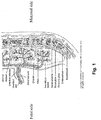
- fetal portion of placenta refers to any portion of the placenta which is not maternal (see Figure 1 for structural illustration).
- ternal portion of placenta refers to any portion of the placenta which is not fetal (see Figure 1 for structural illustration) e.g., those portions of the placenta which are derived from the decidua basalis or decidua parietalis.
- Fetal portions of placenta include the amnion, chorion, or chorionic villi, see Figure 1 .
- Tissue specimens are washed in a physiological buffer [e.g., phosphate-buffered saline (PBS) or Hank's buffer].
- a physiological buffer e.g., phosphate-buffered saline (PBS) or Hank's buffer.
- Single-cell suspensions are made by treating the tissue with a digestive enzyme (see below) or/and mincing and flushing the tissue parts through a nylon filter or by gentle pipetting (Falcon, Becton, Dickinson, San Jose, CA) with washing medium.
- Isolated adherent cells from the various portions of placenta may be derived by treating the tissue with a digestive enzyme such as collagenase, trypsin and/or dispase; and/or effective concentrations of hyaluronidase or DNAse; and ethylenediaminetetra-acetic acid (EDTA); at temperatures between 25 - 50 °C, for periods of between 10 minutes to 3 hours.
- the cells may then be passed through a nylon or cheesecloth mesh filter of between 20 microns to 1 mm. Cells are centrifuged at speeds of between 100 to 3000 x g for periods of between 1 minutes to 1 hour at temperatures of between 4- 50 °C (see U.S. Pat. No. 7,078,230 ).
- Cell retrieval is preferably effected under aseptic conditions. Once isolated cells are obtained, they are allowed to adhere to an adherent material (e.g., configured as a surface) to thereby isolate adherent cells.
- adherent material e.g., configured as a surface
- adherent cells refers to cells which are anchorage dependent, i.e., require attachment to a surface in order to grow in vitro.
- an adherent material refers to a synthetic, naturally occurring or a combination of same of a non-cytotoxic (i.e., biologically compatible) material having a chemical structure (e.g., charged surface exposed groups) which may retain the cells on a surface.
- a non-cytotoxic (i.e., biologically compatible) material having a chemical structure (e.g., charged surface exposed groups) which may retain the cells on a surface.
- adherent materials which may be used in accordance with this aspect of the invention include, but are not limited to, a polyester, a polypropylene, a polyalkylene, a polyfluorochloroethylene, a polyvinyl chloride, a polystyrene, a polysulfone, a cellulose acetate, a glass fiber, a ceramic particle, a matrigel, an extra cellular matrix component (e.g., fibronectin, vitronectin, chondronectin, laminin), a collagen, a poly L lactic acid, a dextran and an inert metal fiber.
- a polyester e.g., fibronectin, vitronectin, chondronectin, laminin
- Non-limiting examples of base media useful in culturing according to the invention include Minimum Essential Medium Eagle, ADC-1, LPM (Bovine Serum Albumin-free), F10(HAM), F12 (HAM), DCCM1, DCCM2, RPMI 1640, BGJ Medium (with and without Fitton-Jackson Modification), Basal Medium Eagle (BME-with the addition of Earle's salt base), Dulbecco's Modified Eagle Medium (DMEM-without serum), Yamane, IMEM-20, Glasgow Modification Eagle Medium (GMEM), Leibovitz L-15 Medium, McCoy's 5A Medium, Medium M199 (M199E-with Earle's sale base), Medium M199 (M199H-with Hank's salt base), Minimum Essential Medium Eagle (MEM-E-with Earle's salt base), Minimum Essential Medium Eagle (MEM-H-with Hank's salt base) and Minimum Essential Medium Eagle (MEM-NAA with non essential amino acids), among numerous others, including medium 199, CMRL 1415,
- a preferred medium for use in the invention is DMEM.
- DMEM DMEM
- These and other useful media are available from GIBCO, Grand Island, N.Y., USA and Biological Industries, Bet HaEmek, Israel, among others. A number of these media are summarized in Methods in Enzymology, Volume LVIII, "Cell Culture", pp. 62 72, edited by William B. Jakoby and Ira H. Pastan, published by Academic Press, Inc.
- the medium may be supplemented such as with serum such as fetal serum of bovine or human or other species, and optionally or alternatively, growth factors, vitamins (e.g. ascorbic acid), cytokines, salts (e.g. B-glycerophosphate), steroids (e.g.
- dexamethasone and hormones e.g., growth hormone, erythropoeitin, thrombopoietin, interleukin 3, interleukin 6, interleukin 7, macrophage colony stimulating factor, c-kit ligand/stem cell factor, osteoprotegerin ligand, insulin, insulin like growth factors, epidermal growth factor, fibroblast growth factor, nerve growth factor, cilary neurotrophic factor, platelet derived growth factor, and bone morphogenetic protein at concentrations of between picogram/ml to milligram/ml levels.
- hormones e.g., growth hormone, erythropoeitin, thrombopoietin, interleukin 3, interleukin 6, interleukin 7, macrophage colony stimulating factor, c-kit ligand/stem cell factor, osteoprotegerin ligand, insulin, insulin like growth factors, epidermal growth factor, fibroblast growth factor, nerve growth factor, cilary neurotrophic
- Such components may be antibiotics, antimycotics, albumin, amino acids, and other components known to the art for the culture of cells.
- placenta of male embryos can be qualified for fetal or maternal cells based on karyotype analysis (i.e., XX cells are maternal while XY cells are fetal, see Examples section which follows).
- adherent cells from the placenta can be used as is or propagated in culture.
- the cells may be passaged to 2D or 3D conditions. It will be appreciated though, that the cells may be transferred to a 3D-configured matrix immediately after isolation or alternatively, may be passaged to 3D settings following 2D conditions.
- two dimensional culture refers to a culture in which the cells are disposed to conditions which are compatible with cell growth while allowing the cells to grow in one plane.
- the conditions in the two dimensional culture of the invention are designed to enable expansion of the adherent cells.
- three dimensional culture refers to a culture in which the cells are disposed to conditions which are compatible with cell growth including a scaffold which allows cell to cell contacts in three dimensions. It is well appreciated that the in situ environment of a cell in a living organism (or a tissue) is in a three dimensional architecture. Cells are surrounded by other cells. They are held in a complex network of extra cellular matrix nanoscale fibers that allows the establishment of various local microenvironments. Their extra cellular ligands mediate not only the attachment to the basal membrane but also access to a variety of vascular and lymphatic vessels. Oxygen, hormones and nutrients are ferried to cells and waste products are carried away. The conditions in the three dimensional culture of the invention are designed to mimic such an environment as is further exemplified below.
- expanding and expansion refer to substantially differentiation-less maintenance of the cells and ultimately cell growth, i.e., increase of a cell population (e.g., at least 2 fold) without differentiation accompanying such increase.
- maintaining and “maintenance” refer to substantially differentiation-less cell renewal, i.e., substantially stationary cell population without differentiation accompanying such stationarity.
- placenta cells For 2D culturing, seeding of placenta cells is typically effected at a culture density of 3 ⁇ 0.2 x 10 3 cells/cm 2 . Following seeding, cell cultures are usually cultured in a tissue culture incubator under humidified conditions with 5 % CO 2 at 37 °C.
- the cells are grown in a culture medium devoid of antibiotic supplements from at least passage 2, at least passage 3, or at least passage 4.
- the cells are passaged for at least 4 passages, at least 5 passages, at least 6 passages, at least 7 passages or at least 8 passages. It will be appreciated that cells are typically passaged when the culture reaches about 70-90 % confluence, typically after 3-5 days (e.g., 1-3 doublings).
- adherent cells may be transferred to a 3D-configured matrix immediately after isolation or alternatively, may be passaged to three dimensional settings following two dimensional (2D) conditions. At times, cryopreservation of cells between the 2D culture and the 3D culture may be needed.
- the adherent material is configured for 3D culturing thereby providing a growth matrix that substantially increases the available attachment surface for the adherence of the cells so as to mimic the infrastructure of the tissue (i.e., placenta).
- culturing can be effected in a 3D bioreactor.
- bioreactors include, but are not limited to, a plug flow bioreactor, a continuous stirred tank bioreactor, a stationary-bed bioreactor (packed bed bioreactor) and a fluidized bed bioreactor.
- the Celligen bioreactor (New Brunswick Scientific) is capable of 3D expansion of adherent cells under controlled conditions (e.g. pH, temperature and oxygen levels) and with constant cell growth medium perfusion. Furthermore, the cell cultures can be monitored for concentration levels of glucose, lactate, glutamine, glutamate and ammonium. The glucose consumption rate and the lactate formation rate of the adherent cells enable one to measure cell growth rate and to determine the harvest time.
- 3D bioreactors that can be used with the invention include, but are not limited to, a continuous stirred tank bioreactor, where a culture medium is continuously fed into the bioreactor and the used medium is continuously drawn out, to maintain a time-constant steady state within the bioreactor.
- the stirred tank bioreactor may be used with fluidized bed (suspended carriers) or a fibrous bed basket (which is available for example at New Brunswick Scientific Co., Edison, NJ), a stationary-bed bioreactor, an air-lift bioreactor, where air is typically fed into the bottom of a central draught tube flowing up while forming bubbles, and disengaging exhaust gas at the top of the column, a bioreactor with Polyactive foams [as described in Wendt, D.
- a total of 200 ⁇ 100 x 10 6 cells are seeded, 3-10 x 10 6 cell / gr carrier are seeded, or 0.06-0.2 x 10 6 cell / ml are seeded.
- cell seeding is effected at 2000-9000 cells/cm2 FibraCel disks.
- Cells can be harvested when at least about 10 % of cells are proliferating while avoiding uncontrolled differentiation and senescence.
- Culturing is effected for at least about 2 days, 3 days, 4 days, 5 days, 6 days, 7 days, 10 days, 14 days, 20 days, a month or even more. It will be appreciated that culturing in a bioreactor may prolong this period. Culturing of the adherent cells in the 3D culture can be effected under a continuous flow of a culture medium. Passaging may also be effected to increase cell number. It will be appreciated that culture medium may be changed in order to prolong and improve culturing conditions.
- the cell culturing is effected under perfusion of the culture medium.
- the perfusion rate is determined by the glucose concentration in the culture medium of the adherent cells.
- the culture medium may be changed when the glucose concentration is about 500 mg/L, about 550 mg/L, or about 600 mg/L.
- Adherent cells of some embodiments of the present invention comprise at least about 10 %, 28 %, 30 %, 50 %, 80 % or more proliferative cells (as can be assayed by FACS monitoring S and G2/M phases).
- Adherent cells of some embodiments of the invention may comprise at least one "stromal cell phenotype".
- a stromal cell phenotype refers to a structural or functional phenotype typical of a bone-marrow derived stromal (i.e., mesenchymal) cell.
- the cells may have a spindle shape.
- the cells may express a marker or a collection of markers (e.g. surface marker) typical to stromal cells.
- markers e.g. surface marker
- stromal cell surface markers positive and negative
- examples of stromal cell surface markers include but are not limited to CD105 + , CD29 + , CD44 + , CD73 + , CD90 + , D7-fib + , CD3 - , CD4 - , CD34 - , CD45 - , CD80 - , CD5 - , CD20 - , CD11b - , CD14 - , CD19 - , CD79 - , HLA-DR - , CD31 - , KDR - , and FMC7 - .
- stromal cell markers include but are not limited to tyrosine hydroxylase, nestin and H-NF.
- adherent cells including those derived from either a maternal portion or a fetal portion of the placenta, do not express the stem cell marker CD271.
- stem cell refers to a cell which is not terminally differentiated.
- adherent cells derived from a fetal portion of the placenta are characterized by a positive CD200 expression (see Examples section which follows).
- not more than 3.5%, not more than 3%, not more than 2%, or not more than 1% of the adherent cells from a maternal portion express CD200 as measured by flow cytometry using an isotype control to define negative expression.
- stromal cells examples include, but are not limited to, T cell suppression activity (they don't stimulate T cells and conversely suppress same, for example, when tested in a mixed lymphocyte culture) and hematopoietic stem cell support activity.
- the adherent cells of the present invention are less committed to differentiation into osteogenic or adipogenic lineages as compared to adherent cells from the bone marrow grown and differentiated under the same conditions.
- the adherent cells of the present invention do not differentiate into osteogenic or adipogenic lineages when grown under the conditions described in Examples 4-7 of WO2010026575 .
- the adherent cells of the invention are capable of suppressing immune reaction in a subject.
- the phrase "suppressing immune reaction in a subject” refers to decreasing or inhibiting the immune reaction occurring in a subject in response to an antigen (e.g., a foreign cell or a portion thereof).
- the immune response which can be suppressed by the adherent cells include the humoral immune responses, and cellular immune responses, which involve specific recognition of pathogen antigens via antibodies and T-lymphocytes (proliferation of T cells), respectively.
- adherent cells of maternal placenta are capable of suppressing an immune reaction to a lesser extend (e.g., at least about 2% less, 5 % less, 10 % less, 15 % less, 20 % less, 30 % less, 40 % less or 50 % less) than adherent cells from a fetal portion of placenta.
- suppression of an immune reaction is determined by measuring the ability of the cells to suppress a mixed lymphocyte culture.
- suppression of an immune reaction is determined by measuring suppression of T cell blast formation induced by phytohemaglutenin (PHA) in an in vitro assay.
- PHA phytohemaglutenin
- adherent cells of maternal placenta comprise a cell diameter which is smaller (e.g., by about 2 %, 5 %, 10 %, 15 %, 20 or 30 %) than that of adherent cells derived from a fetal portion of placenta.
- adherent cells of maternal placenta comprise a cell proliferation capacity (e.g., by about 2 %, 5 %, 10 %, 15 %, 20 % or 30 %) which is higher than that of adherent cells derived from a fetal portion of placenta.
- the cells can be of allogeneic or xenogeneic source. Also disclosed are cells of autologous or syngeneic source.
- the cells can be genetically modified to express a heterologous protein.
- the cells are not genetically modified.
- conditioned medium can be isolated from cultures comprising/consisting of the cells.
- conditioned medium refers to a medium enriched with secreted factors present in the cultures described herein (i.e., comprising/consisting of any of the above cell populations) following a certain culturing period.
- the conditioned medium is produced by culturing the above cells in a growth medium under conditions suitable for producing the conditioned medium.
- the growth medium may be any growth medium suitable for growing the adherent placenta cells of the present invention, as described hereinabove.
- the growth medium may be supplemented with nutritional factors, such as amino acids, (e.g., L-glutamine), anti-oxidants (e.g., beta-mercaptoethanol) and growth factors. Serum and/or serum replacements are added at effective concentration ranges of up to 20 %.
- Cells are cultured in the growth medium for sufficient time to allow adequate accumulation of secreted factors to support immunosuppression and/or angiogenesis for example.
- the medium is conditioned by culturing for 1-5 days at 37 °C.
- the culturing period can be scaled by assessing the effect of the conditioned medium on immunosuppression and/or angiogenesis e.g., as described in the Examples.
- the medium is conditioned for 3-5 days for immunosuppression and for 24-72 hrs for angiogenesis.
- Selection of culture apparatus for conditioning the medium is based on the scale and purpose of the conditioned medium.
- Large scale production preferably involves the use of bioreactors as described hereinabove.
- growth medium i.e., conditioned medium
- the cells can be used repeatedly to condition further batches of medium over additional culture periods, provided that the cells retain their ability to condition the medium.
- conditioned medium of the present invention may be administered directly (as further described below) or extracted to concentrate the effective factor such as by salt filtration.
- conditioned medium is preferably stored frozen at -80 °C.
- Adherent cells of fetal portions can be used in various research settings such as for testing their biological properties (e.g., morphology, size) with respect to maternal portions (see e.g., Examples section).
- the purified populations of cells from the placenta described herein can be used in therapy.
- condition refers to any pathology (disease, condition, syndrome or disorder) which may benefit from cell (e.g. stromal cell) or organ transplantation.
- pathology disease, condition, syndrome or disorder
- examples include ischemic conditions, cardiovascular conditions, nervous system conditions, gastrointestinal tract conditions, orthopedic conditions, hematopoietic conditions, renal conditions and hepatic conditions, such as but are not limited to, peripheral arterial disease (PAD), such as limb ischemia and critical limb ischemia (CLI), lower extremity ischemia, ischemic vascular disease, stroke, ischemic heart disease, myocardial ischemia, acute myocardial infarction (MI), coronary artery disease (CAD), atherosclerotic cardiovascular disease, left main coronary artery disease, arterial occlusive disease, peripheral ischemia, peripheral vascular disease, arteriosclerosis, retinopathy, retinal repair, remodeling disorder, von Hippel-Lindau syndrome, hereditary hemorrhagic telengiectasiaischemic vascular
- breast cancer pre-cancer, conditions characterized by connective tissue damage such as bone cancer, osteosarcoma, bone metastases, bone fracture, degenerative disc disease, osteogenesis imperfecta (OI), burn, burn wound, articular cartilage defect, deep wound, delayed wound-healing, delayed ulcer healing, metabolic disorders, psoriasis, neuropathic pain, peripheral nerve injury, support of kidney transplantation, subchondral-bone cyst, osteoporosis, osteoarthritis (OA), degenerated bone, cartilage damage, articular cartilage defect, injured tendons (e.g. overstrain-induced injuries of tendons) and injured ligaments.
- connective tissue damage such as bone cancer, osteosarcoma, bone metastases, bone fracture, degenerative disc disease, osteogenesis imperfecta (OI), burn, burn wound, articular cartilage defect, deep wound, delayed wound-healing, delayed ulcer healing, metabolic disorders, psoriasis, neuropathic pain, peripheral nerve injury, support of kidney transplantation, subchondral
- Ischemic disease/condition is a medical condition in which tissue falls into an ischemic state due to a reduced blood flow in the vasculature caused by various factors, such as constriction of the vessel lumen, development of blood clots, vessel occlusion, vasculitis, vessel shrinkage, or an increase in blood viscosity.
- Ischemic diseases include peripheral vascular disorder, ischemic heart disease (e.g., ischemic cardiomyopathy, myocardial infarction, ischemic heart failure), ischemic cerebrovascular disease, including stroke, ischemic kidney disease, ischemic lung disease, and ischemic diseases associated with infectious diseases. Additional non-limiting examples of ischemic diseases (also referred to herein as ischemia) are listed throughout the application.
- Peripheral vascular disorder is a medical condition in which peripheral tissue falls into an ischemic state due to a reduced peripheral arterial blood flow caused by, for example, constriction of the vessel lumen, development of blood clots, vessel occlusion, vasculitis, vessel shrinkage, or an increase in blood viscosity.
- Diseases associated with peripheral vascular disorder include chronic arterial occlusive diseases such as arteriosclerosis obliterans and Buerger's disease, and progressive systemic sclerosis, systemic erythematosus, Raynaud's disease, vibration syndrome, aneurysm, and vasculitis. Additional non-limiting examples of peripheral ischemic diseases are listed throughout the application.
- the condition is heart failure, myocardial infarction, neuropathic pain, skeletal muscle defect and ischemic heart disease.
- the conditioned medium described herein is used for treating stroke.
- stroke or "acute cerebrovascular attack” refers the rapidly developing loss of brain function(s) due to disturbance in the blood supply to the brain. This can be due to ischemia (lack of glucose and oxygen supply) caused by thrombosis or embolism or due to a hemorrhage (subarachnoid hemorrhage or intracerebral hemorrhage).
- the cells of the present invention are capable of inducing immunosuppression and/or tolerance and/or are capable of inducing angiogenesis in a subject.
- the adherent cells or conditioned media derived therefrom may be used to treat any condition in need of angiogenesis and/or immunosuppression and/or tolerance.
- autoimmune cardiovascular diseases include, but are not limited to atherosclerosis ( Matsuura E. et al., Lupus. 1998;7 Suppl 2:S135 ), myocardial infarction ( Vaarala O. Lupus. 1998;7 Suppl 2:S132 ), thrombosis ( Tincani A. et al., Lupus 1998;7 Suppl 2:S107-9 ), Wegener's granulomatosis, Takayasu's arteritis, Kawasaki syndrome ( Praprotnik S. et al., Wien Klin Klin Klin Klinschr 2000 Aug 25;112 (15-16):660 ), anti-factor VIII autoimmune disease ( Lacroix-Desmazes S.
- autoimmune rheumatoid diseases include, but are not limited to rheumatoid arthritis ( Krenn V. et al., Histol Histopathol 2000 Jul;15 (3):791 ; Tisch R, McDevitt HO. Proc Natl Acad Sci units S A 1994 Jan 18;91 (2):437 ) and ankylosing spondylitis ( Jan Voswinkel et al., Arthritis Res 2001; 3 (3): 189 ).
- autoimmune glandular diseases include, but are not limited to, pancreatic disease, Type I diabetes, thyroid disease, Graves' disease, thyroiditis, spontaneous autoimmune thyroiditis, Hashimoto's thyroiditis, idiopathic myxedema, ovarian autoimmunity, autoimmune anti-sperm infertility, autoimmune prostatitis and Type I autoimmune polyglandular syndrome diseases include, but are not limited to autoimmune diseases of the pancreas, Type 1 diabetes ( Castano L. and Eisenbarth GS. Ann. Rev. Immunol. 8:647 ; Zimmet P. Diabetes Res Clin Pract 1996 Oct;34 Suppl:S125 ), autoimmune thyroid diseases, Graves' disease ( Orgiazzi J.
- autoimmune gastrointestinal diseases include, but are not limited to, chronic inflammatory intestinal diseases ( Garcia Herola A. et al., Gastroenterol Hepatol. 2000 Jan;23 (1):16 ), celiac disease ( Landau YE. and Shoenfeld Y. Harefuah 2000 Jan 16;138 (2):122 ), colitis, ileitis and Crohn's disease.
- autoimmune cutaneous diseases include, but are not limited to, autoimmune bullous skin diseases, such as, but are not limited to, pemphigus vulgaris, bullous pemphigoid and pemphigus foliaceus.
- autoimmune hepatic diseases include, but are not limited to, hepatitis, autoimmune chronic active hepatitis ( Franco A. et al., Clin Immunol Immunopathol 1990 Mar;54 (3):382 ), primary biliary cirrhosis ( Jones DE. Clin Sci (Colch) 1996 Nov;91 (5):551 ; Strassburg CP. et al., Eur J Gastroenterol Hepatol. 1999 Jun;11 (6):595 ) and autoimmune hepatitis ( Manns MP. J Hepatol 2000 Aug;33 (2):326 ).
- autoimmune neurological diseases include, but are not limited to, multiple sclerosis ( Cross AH. et al., J Neuroimmunol 2001 Jan 1;112 (1-2):1 ), Alzheimer's disease ( Oron L. et al., J Neural Transm Suppl. 1997;49:77 ), myasthenia gravis ( Infante AJ. And Kraig E, Int Rev Immunol 1999;18 (1-2):83 ; Oshima M. et al., Eur J Immunol 1990 Dec;20 (12):2563 ), neuropathies, motor neuropathies ( Kornberg AJ. J Clin Neurosci.
- autoimmune muscular diseases include, but are not limited to, myositis, autoimmune myositis and primary Sjogren's syndrome ( Feist E. et ⁇ /., Int Arch Allergy Immunol 2000 Sep;123 (1):92 ) and smooth muscle autoimmune disease ( Zauli D. et al., Biomed Pharmacother 1999 Jun;53 (5-6):234 ).
- autoimmune nephric diseases include, but are not limited to, nephritis and autoimmune interstitial nephritis ( Kelly CJ. J Am Soc Nephrol 1990 Aug;1 (2):140 ).
- autoimmune diseases related to reproduction include, but are not limited to, repeated fetal loss ( Tincani A. et al., Lupus 1998;7 Suppl 2:S107-9 ).
- autoimmune connective tissue diseases include, but are not limited to, ear diseases, autoimmune ear diseases ( Yoo TJ. et al., Cell Immunol 1994 Aug; 157 (1):249 ) and autoimmune diseases of the inner ear ( Gloddek B. et al., Ann N Y Acad Sci 1997 Dec 29;830:266 ).
- autoimmune systemic diseases include, but are not limited to, systemic lupus erythematosus ( Erikson J. et al., Immunol Res 1998;17 (1-2):49 ) and systemic sclerosis ( Renaudineau Y. et al., Clin Diagn Lab Immunol. 1999 Mar;6 (2):156 ); Chan OT. et al., Immunol Rev 1999 Jun;169:107 ).
- adherent cells or conditioned media may be used to treat diseases associated with transplantation of a graft including, but are not limited to, graft rejection, chronic graft rejection, subacute graft rejection, hyperacute graft rejection, acute graft rejection and graft versus host disease.
- treating refers to inhibiting or arresting the development of a pathology and/or causing the reduction, remission, or regression of a pathology.
- Those of skill in the art will understand that various methodologies and assays can be used to assess the development of a pathology, and similarly, various methodologies and assays may be used to assess the reduction, remission or regression of a pathology.
- the term “treating” may also refer to alleviating or diminishing a symptom associated with the pathology.
- the subject treated by the adherent cells or conditioned media may be any subject (e.g., a mammal), such as a human subject or a domesticated animal including, but not limited to, horses (i.e. equine), cattle, goat, sheep, pig, dog, cat, camel, alpaca, llama and yak who is diagnosed with or suffers from the pathology and can benefit from stromal cell transplantation.
- a mammal such as a human subject or a domesticated animal including, but not limited to, horses (i.e. equine), cattle, goat, sheep, pig, dog, cat, camel, alpaca, llama and yak who is diagnosed with or suffers from the pathology and can benefit from stromal cell transplantation.
- cells may be naive or may be genetically modified such as to derive a lineage of interest (see U.S. Pat. Appl. No. 20030219423 ).
- the cells may be of fresh or frozen (e.g., cryo-preserved) preparations.
- the subject may be administered with additional chemical drugs (e.g., immunomodulatory, chemotherapy etc.) or cells.
- additional chemical drugs e.g., immunomodulatory, chemotherapy etc.
- the cells though characterized by immuno-suppressive activity, may still provoke host or donor-derived undesirable immune response.
- Approaches have been developed to reduce the likelihood of rejection of non-autologous cells. These include either suppressing the recipient immune system or encapsulating the non-autologous cells in immunoisolating, semipermeable membranes before transplantation.
- Encapsulation techniques are generally classified as microencapsulation, involving small spherical vehicles and macroencapsulation, involving larger flat-sheet and hollow-fiber membranes ( Uludag, H. et al. Technology of mammalian cell encapsulation. Adv Drug Deliv Rev. 2000; 42: 29-64 ).
- microcapsules Methods of preparing microcapsules are known in the arts and include for example those disclosed by Lu MZ, et al., Cell encapsulation with alginate and alpha-phenoxycinnamylidene-acetylated poly(allylamine). Biotechnol Bioeng. 2000, 70: 479-83 , Chang TM and Prakash S. Procedures for microencapsulation of enzymes, cells and genetically engineered microorganisms. Mol Biotechnol. 2001, 17: 249-60 , and Lu MZ, et al., A novel cell encapsulation method using photosensitive poly(allylamine alpha-cyanocinnamylideneacetate). J Microencapsul. 2000, 17: 245-51 .
- microcapsules are prepared by complexing modified collagen with a ter-polymer shell of 2-hydroxyethyl methylacrylate (HEMA), methacrylic acid (MAA) and methyl methacrylate (MMA), resulting in a capsule thickness of 2-5 ⁇ m.
- HEMA 2-hydroxyethyl methylacrylate
- MAA methacrylic acid
- MMA methyl methacrylate
- Such microcapsules can be further encapsulated with additional 2-5 ⁇ m ter-polymer shells in order to impart a negatively charged smooth surface and to minimize plasma protein absorption ( Chia, S.M. et al. Multi-layered microcapsules for cell encapsulation Biomaterials. 2002 23: 849-56 ).
- microcapsules are based on alginate, a marine polysaccharide ( Sambanis, A. Encapsulated islets in diabetes treatment. Diabetes Technol. Ther. 2003, 5: 665-8 ) or its derivatives.
- microcapsules can be prepared by the polyelectrolyte complexation between the polyanions sodium alginate and sodium cellulose sulphate with the polycation poly(methylene-co-guanidine) hydrochloride in the presence of calcium chloride.
- immunosuppressive agents include, but are not limited to, methotrexate, cyclophosphamide, cyclosporine, cyclosporin A, chloroquine, hydroxychloroquine, sulfasalazine (sulphasalazopyrine), gold salts, D-penicillamine, leflunomide, azathioprine, anakinra, infliximab (REMICADE), etanercept, TNF.alpha. blockers, a biological agent that targets an inflammatory cytokine, and Non-Steroidal Anti-Inflammatory Drug (NSAIDs).
- methotrexate cyclophosphamide
- cyclosporine cyclosporin A
- chloroquine hydroxychloroquine
- sulfasalazine sulphasalazopyrine
- gold salts gold salts
- D-penicillamine leflunomide
- azathioprine anakin
- NSAIDs include, but are not limited to acetyl salicylic acid, choline magnesium salicylate, diflunisal, magnesium salicylate, salsalate, sodium salicylate, diclofenac, etodolac, fenoprofen, flurbiprofen, indomethacin, ketoprofen, ketorolac, meclofenamate, naproxen, nabumetone, phenylbutazone, piroxicam, sulindac, tolmetin, acetaminophen, ibuprofen, Cox-2 inhibitors and tramadol.
- the cells or conditioned media can be administered either per se or, preferably as a part of a pharmaceutical composition that further comprises a pharmaceutically acceptable carrier.
- a "pharmaceutical composition” refers to a preparation of the cells or conditioned media derived therefrom, with other chemical components such as pharmaceutically suitable carriers or excipients.
- the purpose of a pharmaceutical composition is to facilitate administration of the cells to a subject.
- the term "pharmaceutically acceptable carrier” refers to a carrier or a diluent that does not cause significant irritation to a subject and does not abrogate the biological activity and properties of the administered compound.
- examples, without limitations, of carriers are propylene glycol, saline, DMSO, HSA, emulsions and mixtures of organic solvents with water.
- excipient refers to an inert substance added to a pharmaceutical composition to further facilitate administration of a compound.
- excipients include calcium carbonate, calcium phosphate, various sugars and types of starch, cellulose derivatives, gelatin, vegetable oils and polyethylene glycols.
- compositions for use in accordance with the invention thus may be formulated in conventional manner using one or more physiologically acceptable carriers comprising excipients and auxiliaries, which facilitate processing of the active ingredients into preparations which, can be used pharmaceutically. Proper formulation is dependent upon the route of administration chosen.
- the active ingredients of the pharmaceutical composition may be formulated in aqueous solutions, preferably in physiologically compatible buffers such as Hank's solution, Ringer's solution, physiological salt buffer, or freezing medium containing cryopreservents.
- physiologically compatible buffers such as Hank's solution, Ringer's solution, physiological salt buffer, or freezing medium containing cryopreservents.
- Toxicity and therapeutic efficacy of the active ingredients described herein can be determined by standard pharmaceutical procedures in vitro, in cell cultures or experimental animals.
- dosing can be of a single or a plurality of administrations.
- amount of a composition to be administered will, of course, be dependent on the subject being treated, the severity of the affliction, the manner of administration, the judgment of the prescribing physician, etc.
- a portion of the cells of the invention preferably survive in the diseased area for a period of time (e.g. about 2-6 weeks), such that a therapeutic effect is observed.
- compositions including the preparation of the invention formulated in a compatible pharmaceutical carrier may also be prepared, placed in an appropriate container, and labeled for treatment of an indicated condition.
- compositions for the use of the invention may, if desired, be presented in a pack or dispenser device, such as an FDA approved kit, which may contain one or more unit dosage forms containing the active ingredient.
- the pack may, for example, comprise metal or plastic foil, such as a blister pack.
- the pack or dispenser device may be accompanied by instructions for administration.
- the pack or dispenser may also be accommodated by a notice associated with the container in a form prescribed by a governmental agency regulating the manufacture, use or sale of pharmaceuticals, which notice is reflective of approval by the agency of the form of the compositions or human or veterinary administration.
- Such notice for example, may be of labeling approved by the U.S. Food and Drug Administration for prescription drugs or of an approved product insert.
- composition or method may include additional ingredients and/or steps, but only if the additional ingredients and/or steps do not materially alter the basic and novel characteristics of the claimed composition or method.
- a compound or “at least one compound” may include a plurality of compounds, including mixtures thereof.
- range format is merely for convenience and brevity and should not be construed as an inflexible limitation on the scope of the invention. Accordingly, the description of a range should be considered to have specifically disclosed all the possible subranges as well as individual numerical values within that range. For example, description of a range such as from 1 to 6 should be considered to have specifically disclosed subranges such as from 1 to 3, from 1 to 4, from 1 to 5, from 2 to 4, from 2 to 6, from 3 to 6 etc., as well as individual numbers within that range, for example, 1, 2, 3, 4, 5, and 6. This applies regardless of the breadth of the range.
- method refers to manners, means, techniques and procedures for accomplishing a given task including, but not limited to, those manners, means, techniques and procedures either known to, or readily developed from known manners, means, techniques and procedures by practitioners of the chemical, pharmacological, biological, biochemical and medical arts.
- treating includes abrogating, substantially inhibiting, slowing or reversing the progression of a condition, substantially ameliorating clinical or aesthetical symptoms of a condition or substantially preventing the appearance of clinical or aesthetical symptoms of a condition.
- Adherent Stromal Cells ASC's - Term human placentas were derived following caesarean sections from healthy donor mothers following informed consent.
- the minced tissue from the placenta was incubated for 2-5 hours at 37 °C with 0.1 % Collagenase (1 mg Collagenase/ml tissue).
- Two dimensional (2D) cell medium (2D-Medium comprising DMEM supplemented with 10 % FBS, fungizone 0.25 ⁇ g/ml and Gentamycine 50 ⁇ g/ml) was added and the digested tissue was roughly filtered through a sterile metal strainer, collected in a sterile beaker and centrifuged (10 minutes, 1200 RPM, 4 °C).
- suspended cells were then diluted with 2D-Medium supplemented with antibiotics, seeded in 175 cm 2 flasks and incubated at 37 °C in a tissue culture incubator under humidified conditions supplemented with 5 % CO 2 . Following 2-3 days, in which the cells were allowed to adhere to the flask surface, they were washed with PBS and 2D-Medium was added.
- the first passage was typically carried out after 7-15 days. Beginning at passage 2 and continuing until passage 6-8, cells were passaged when the culture reached 70-90 % confluence, usually after 4-5 days (1.5-2 doublings). The cells were detached from the flasks using 0.25 % trypsin-EDTA (4 minutes at 37°C) and seeded in a culture density of 4 ⁇ 0.5 x 10 3 cells/cm 2 . Throughout the process, cultures were grown in a tissue culture incubator under humidified conditions with 5 % CO2 at 37 °C. After a total of 5-9 passages cells were collected and cryopreserved.
- cell suspensions were diluted 1:1 with 2D-Freezing Mixture (final concentrations was 10 % DMSO, 40 % FBS and 50 % 2D-Medium). Cells were stored at a final concentration of 10 x 10 6 / ml in 5 ml cryopreservation polypropylene vials. The vials were labeled and transferred to a controlled rate freezer for a graduated temperature reducing process (1 °C/min), after which they were transferred to storage in gas-phase of a liquid nitrogen freezer.
- WO2007/108003 describes three dimensional (3D) culturing conditions suitable for expansion of placental derived ASC's.
- WO2009/037690 teaches methods of treating ischemia and inducing connective tissue regeneration by administering to the subject a therapeutically effective amount of adherent cells of a tissue selected from the group consisting of a placenta and an adipose tissue.
- WO2010/026574 describes two dimensional (2D) culturing conditions suitable for expansion of placental derived ASC's.
- WO2010/026575 describes three dimensional (3D) culturing conditions involving perfusion that are suitable for expansion of placental derived ASC's.
- Placenta - Term human placentas were derived following caesarean sections of male foetuses from healthy donor mothers following informed consent.
- HBSS Hank's balanced salts solutions
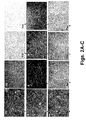
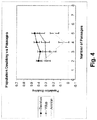
- FIG. 1 The morphology and size (in diameter) of the cells obtained from the different Placenta regions as described above was examined during cell expansion.
- Cells were cultured in DMEM (low glucose) including 8 % FBS and passaged for five to seven population doublings.
- Figures 2A-C show the morphology of cells derived from placenta decidua basalis, chorionic villus, and amniotic membrane. Phase contrast at magnification x 40 was used for all figures.
- the phase micrographs showed difference in the morphology of cells derived from Decidua basalis, Chorionic villus and Amniotic membrane of human term placenta. These results are in accordance with the cell diameter measurements (as described below).
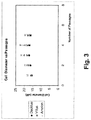
- Results show a significant difference in cell diameter per passage between decidua, villus and amniotic membrane.
- Cell size of cells originating from decidua, villus and amniotic membrane was 15.5-17, 16.0-18.1 and 18.1-21 respectively.
- FRCS analysis of membrane markers - cells were stained with monoclonal antibodies. Briefly, 400,000-600,000 cells were suspended in 0.1 ml flow cytometer buffer in a 5 ml test tube and incubated for 15 minutes at room temperature (RT), in the dark, with each of the monoclonal antibodies presented in Table 2, below. Cells were washed twice with flow cytometer buffer, resuspended in 500 ⁇ l flow cytometer buffer and analyzed by flow cytometry using FC-500 Flow Cytometer (Beckman Coulter). Negative controls were prepared with isotype-matching fluorescence molecules.
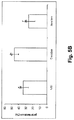
- decidua derived cells showed very low expression of CD200 in comparison to cells derived from villus and amnion.
- MNCs Human derived mononuclear cells
- RPMI 1640 medium containing 20 FBS per 96 well were stimulated with 10 ⁇ g PHA/ml (SIGMA) in the presence of 40,000 cells originating from Decidua, Villus and amniotic membrane for 3 days under humidified 5 % C02 at 37 °C.
- Cells derived from four different placentas were used. Three replicates of each group were seeded in 96-well plates. During the last 18 hrs of the 3 rd - day of culture, cells were pulsed with EdU (5-ethynyl-2'-deoxyuridine), to a final concentration of 10 ⁇ M.
- EdU EdU
- Placenta cells of the various fractions were seeded in 6 wells plate (0.5 x 10 6 /well) within 4 ml DMEM medium supplemented with 8 % FCS for 24 hours.
- DMEM was removed, wells were washed gently with 1ml PBS and replaced with 4ml BIO-MPM (Biological industries) supplemented with Fungizone (0.25 ⁇ g/ml) Gentamicin-IKA (45 ⁇ g/ml) ECGS (lmg/ml) Heparin (5U/ml) and Glutamine (2Mm) without serum.
- BIO-MPM Bio industries
- Fungizone 0.25 ⁇ g/ml
- Gentamicin-IKA 45 ⁇ g/ml
- ECGS lamg/ml
- Heparin 5U/ml
- Glutamine (2Mm) without serum.
- CM was collected and centrifuged for 1 minute in 4600 RPM. CM was either used fresh or kept at -80 °C until use.
- HUVEC Human Umbilical Vein Endothelial Cells
- HUVEC Human Umbilical Vein Endothelial Cells
- 15,000 / cells per well were thawed and seeded on fibronectin coated 12 well plates with M-199 medium supplemented with 20% FCS for 24 hours.
- Medium was removed and replaced with a mixture of 50% fresh full BIO-MPM ⁇ supplemented with Fungizone (0.25 ⁇ g/ml) Gentamicin-IKA (45 ⁇ g/ml) ECGS (lmg/ml) Heparin (5U/ml) and Glutamine (2Mm) supplemented with 10% FCS ⁇ and 50% of fresh or frozen placenta derived CM as described above.
- HUVEC proliferation was assessed 72 hrs following addition of CM by the automated Cedex cell counter Results shown in Figures 6A-C clearly indicate that CM obtained from all three placenta portions induced an elevation in HUVEC proliferation in comparison to non-conditioned similar medium BIO-MPM + 5% serum medium and even in comparison to M199 + 20% serum which is the standard growth medium utilized for HUVEC expansion.
- the therapeutic potential of the population of cells described herein in skeletal muscle regeneration was assessed in a rat model of blunt skeletal muscle trauma as described by (Matziolis, Winkler et al. 2006).
- the animals were anesthetized, and the left lower limb was shaved (Favorita II, Aesculap, Tuttlingen, Germany) and disinfected with povidone-iodine.
- the soleus muscle was mobilized and crushed bluntly.
- a curved clamp with tips surrounded by polyethylene tubes was used to avoid lesions of the muscle fascia.
- the muscle was manually clamped seven times over its complete length with exception of the entry point of the supplying neurovascular structures, which arise from the mid part of the medial gastrocnemius. After multiple irrigations with saline solution, the superficial muscle and the skin were sutured.
- the animals were re-anesthetized.
- the sciatic nerve and the soleus muscle were exposed bilaterally protecting all neurovascular structures.
- the Achilles tendon was cut and the lower extremity was fixed into the muscle force measuring device (Fish, McKee et al. 1989; Racz, Illyes et al. 1997) (Experimetria, Budapest, Hungary).
- the distal part of the soleus muscle was connected to the force transducer through a suture (4-0, silk). All muscles that were inserted through the Achilles tendon, except the soleus muscle, were cut through closest to the Achilles tendon.
- the sciatic nerve was subsequently stimulated with 9 mA/75 Hz bipolar five times, 0.1 s each (8 periods) with 5 s intervals between the pulses.
- the maximal muscle strength was measured using a stimulation protocol of 9 mA/75 Hz for five times, 3 s each with 5 s intervals, reaching tetany in all cases.
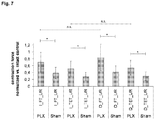
- the animals were sacrificed. Contraction forces under fast twitch ("FT") and tetanic (“TET”) stimulation were compared for every muscle and visualized in two scatter plots (injured and uninjured muscles). All force values were normalized intra-individually versus the intact right control soleus muscles.
- Results are shown in Figure 7 .
- Chronic neuropathic pain is common in clinical practice. Patients with conditions as diverse as diabetic polyneuropathy, human immunodeficiency virus (HIV) sensory neuropathy, poststroke syndromes, ischemia, and multiple sclerosis frequently experience daily pain that greatly impairs their quality of life. Management of chronic pain remains a challenge in spite of numerous drugs that are either approved or still in development. Apart from inadequate relief, there are concerns about adverse effects and addiction (Dworkin, Backonja et al. 2003). During inflammation of peripheral tissues, numerous mediators are produced by endothelial cells, resident cells, and leucocytes that are recruited to the site of injury. Many of these mediators (e.g. protons, cytokines, and nerve growth factor) are known to elicit pain by activation of specialized primary afferent neurons called nociceptors (Rittner, Brack et al. 2008).
- nociceptors e.g. protons, cytokines, and nerve growth factor
- Mechanical nociceptive thresholds were assessed using the paw pressure algesiometer (modified Randall-Selitto test; Ugo Basile; Brack, Rittner et al. 2004; Rittner, Labuz et al. 2006).
- rats were held under paper wadding, and incremental pressure is applied via a wedgeshaped, blunt piston onto the dorsal surface of the hind paw by an automated gauge.
- the pressure required eliciting paw withdrawal, the paw pressure threshold (PPT) was determined by three consecutive trials separated by 10-s intervals. The same procedure was performed on the contralateral paw; the sequence of paws was alternated between subjects to preclude order effects.
- the stimulus intensity was adjusted to give a 9 to 10 s PWL in noninflamed paws, and the cutoff was 20 s to avoid tissue damage.
- a decrease in PWL was interpreted as hyperalgesia (pain), whereas a rise in PWL was interpreted as antinociception (analgesia).
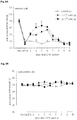
- PPT and PV were measured immediately before CFA injection, then 2 days after CFA (and right afterwards rats received PLX cells) and then daily, starting 1 day after PLX cell injection (i.e. 3 days after CFA) until the 10th day following CFA, in both hind paws.
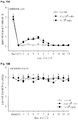
- CFA injected i.pl. into one hind paw decreased the PPT in this paw from 2 days (2d CFA) until 10 days as compared to the PPT before CFA injection (baseline; Bas) ( Fig. 8 ).
- PLX cells (2 x 10 6 ) injected into inflamed paws seem to reverse the PPT to the level before CFA injection ( Fig. 8A ).
- PLX cells did not change the PPT in contralateral paws ( Fig. 8B ).
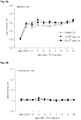
- PLX cells do not seem to alter paw edema (measured as PV) ( Fig. 9A and 9B ).
- CCI chronic constrictive injury
- mice received PLX cells), then daily for 10 days (starting 1 day after PLX cell injection), and then at 14 and 21 days after CCI, in both hind paws.
- CCI of the sciatic nerve resulted in mechanical sensitivity (defined as decreased paw withdrawal thresholds) and thermal sensitivity (defined as lowered paw withdrawal latencies) in paws innervated by the injured paws but not in contralateral paws ( Figs. 10 and 11 ).
- PLX cells injected at the nerve injury site slightly attenuated both mechanical ( Fig. 10A ) and thermal ( Fig. 11A ) sensitivity.
- PLX cells did not produce alterations in contralateral paws ( Figs. 10B and 11B ).
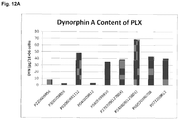
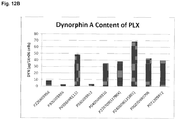
- the opioid peptide levels in PLX cells were examined in attempt to assess whether the anti-nociception effect observed in the described neuropathic pain models was mediated by released opioids from the PLX cells.
- Kits for detection of opioid peptides :
- PLX cells contain beta-Endorphin, dynorphin A , leu-enkephalin and met-enkephalin at different levels. The level of each of these opioids was determined using the fluorescent EIA kits according to the manufacturer protocol (Phoenix Laboratories Inc.). 10 7 cells from each batch were examined. Levels of these opioids in 9 different PLX batches are presented in Figures 12A-E .
- HF Heart failure
- MI myocardial infarction
- mice Distribution of mice between different experimental groups
- mice will be sacrificed at the end of the four weeks followed by the excision of the hearts. Some of the hearts would be used for RNA isolation and others will be subject to paraffin sectioning for the assessment of fine structures and cryosectioning for the detection of cardiac specific markers.
Landscapes
- Health & Medical Sciences (AREA)
- Life Sciences & Earth Sciences (AREA)
- Engineering & Computer Science (AREA)
- Bioinformatics & Cheminformatics (AREA)
- Chemical & Material Sciences (AREA)
- General Health & Medical Sciences (AREA)
- Organic Chemistry (AREA)
- Veterinary Medicine (AREA)
- Animal Behavior & Ethology (AREA)
- Public Health (AREA)
- Pharmacology & Pharmacy (AREA)
- Medicinal Chemistry (AREA)
- Nuclear Medicine, Radiotherapy & Molecular Imaging (AREA)
- General Chemical & Material Sciences (AREA)
- Chemical Kinetics & Catalysis (AREA)
- Biomedical Technology (AREA)
- Developmental Biology & Embryology (AREA)
- Reproductive Health (AREA)
- Immunology (AREA)
- Cell Biology (AREA)
- Zoology (AREA)
- Biotechnology (AREA)
- Cardiology (AREA)
- Physical Education & Sports Medicine (AREA)
- Pregnancy & Childbirth (AREA)
- Wood Science & Technology (AREA)
- Genetics & Genomics (AREA)
- Gynecology & Obstetrics (AREA)
- Heart & Thoracic Surgery (AREA)
- Orthopedic Medicine & Surgery (AREA)
- Diabetes (AREA)
- Rheumatology (AREA)
- Neurology (AREA)
- Epidemiology (AREA)
- Virology (AREA)
- Microbiology (AREA)
- Biochemistry (AREA)
- General Engineering & Computer Science (AREA)
- Hospice & Palliative Care (AREA)
- Hematology (AREA)
Claims (9)
- Population von adhärenten Zellen, die von der Plazenta abkommen, umfassend mindestens 70 % adhärente Zellen aus einem fetalen Anteil der Plazenta, zur Benutzung in der Therapie, wobei die Zellen aus einer allogenen oder xenogenen Quelle sind.
- Population von adhärenten Zellen zur Benutzung nach Anspruch 1 zur Benutzung in der Behandlung neurodegenerativer Krankheit.
- Population von adhärenten Zellen zur Benutzung nach Anspruch 1 oder 2, wobei die adhärenten Zellen eines oder mehrere von CD73, CD90, CD29, CD105 und D7-fib exprimieren.
- Population von adhärenten Zellen zur Benutzung nach Anspruch 3, wobei die adhärenten Zellen alle von CD73, CD90, CD29 und CD105 exprimieren.
- Population von adhärenten Zellen zur Benutzung nach einem von Anspruch 1 bis 4, wobei die adhärenten Zellen kein CD3, CD4, CD45, CD80, HLA-DR, CD11b, CD14, CD19, CD34, CD31, CD200, KDR oder CD79 exprimieren.
- Population von adhärenten Zellen zur Benutzung nach einem von Anspruch 1 bis 5, wobei der fetale Anteil der Plazenta das Amnion oder Chorionzotten umfasst oder daraus besteht.
- Population von adhärenten Zellen zur Benutzung nach einem von Anspruch 1 bis 6, wobei die adhärenten Zellen eines oder mehrere von Beta-Endorphin, Dynorphin A, Leu-Enkephalin und Met-Enkephalin exprimieren.
- Population von adhärenten Zellen zur Benutzung nach einem von Anspruch 1 bis 7, wobei die adhärenten Zellen in einer dreidimensionalen (3D-) Kultur gezüchtet wurden.
- Population von adhärenten Zellen zur Benutzung nach Anspruch 8, wobei die dreidimensionale (3D-) Kultur einen 3D-Bioreaktor umfasst.
Applications Claiming Priority (5)
| Application Number | Priority Date | Filing Date | Title |
|---|---|---|---|
| US27298509P | 2009-11-30 | 2009-11-30 | |
| US37145910P | 2010-08-06 | 2010-08-06 | |
| EP10807549A EP2507362A2 (de) | 2009-11-30 | 2010-11-29 | Adhärente zellen aus der plazenta und ihre verwendung bei der behandlung von erkrankungen |
| EP14170266.2A EP2806023B1 (de) | 2009-11-30 | 2010-11-29 | Adhärente Zellen aus der Plazenta und ihre Verwendung bei der Behandlung von Erkrankungen |
| PCT/IB2010/003219 WO2011064669A2 (en) | 2009-11-30 | 2010-11-29 | Adherent cells from placenta and use of same in disease treatment |
Related Parent Applications (2)
| Application Number | Title | Priority Date | Filing Date |
|---|---|---|---|
| EP10807549A Division EP2507362A2 (de) | 2009-11-30 | 2010-11-29 | Adhärente zellen aus der plazenta und ihre verwendung bei der behandlung von erkrankungen |
| EP14170266.2A Division EP2806023B1 (de) | 2009-11-30 | 2010-11-29 | Adhärente Zellen aus der Plazenta und ihre Verwendung bei der Behandlung von Erkrankungen |
Publications (3)
| Publication Number | Publication Date |
|---|---|
| EP2977445A2 EP2977445A2 (de) | 2016-01-27 |
| EP2977445A3 EP2977445A3 (de) | 2016-03-16 |
| EP2977445B1 true EP2977445B1 (de) | 2018-07-25 |
Family
ID=43901523
Family Applications (3)
| Application Number | Title | Priority Date | Filing Date |
|---|---|---|---|
| EP10807549A Withdrawn EP2507362A2 (de) | 2009-11-30 | 2010-11-29 | Adhärente zellen aus der plazenta und ihre verwendung bei der behandlung von erkrankungen |
| EP14170266.2A Active EP2806023B1 (de) | 2009-11-30 | 2010-11-29 | Adhärente Zellen aus der Plazenta und ihre Verwendung bei der Behandlung von Erkrankungen |
| EP15183125.2A Active EP2977445B1 (de) | 2009-11-30 | 2010-11-29 | Adhärente zellen aus der plazenta und ihre verwendung bei der behandlung von erkrankungen |
Family Applications Before (2)
| Application Number | Title | Priority Date | Filing Date |
|---|---|---|---|
| EP10807549A Withdrawn EP2507362A2 (de) | 2009-11-30 | 2010-11-29 | Adhärente zellen aus der plazenta und ihre verwendung bei der behandlung von erkrankungen |
| EP14170266.2A Active EP2806023B1 (de) | 2009-11-30 | 2010-11-29 | Adhärente Zellen aus der Plazenta und ihre Verwendung bei der Behandlung von Erkrankungen |
Country Status (11)
| Country | Link |
|---|---|
| US (3) | US9175262B2 (de) |
| EP (3) | EP2507362A2 (de) |
| CN (2) | CN105112357B (de) |
| AU (1) | AU2010322808B9 (de) |
| CA (1) | CA2781649C (de) |
| ES (2) | ES2553712T3 (de) |
| IL (4) | IL288647B2 (de) |
| MX (1) | MX2012006246A (de) |
| NZ (1) | NZ600651A (de) |
| WO (1) | WO2011064669A2 (de) |
| ZA (1) | ZA201203748B (de) |
Families Citing this family (63)
| Publication number | Priority date | Publication date | Assignee | Title |
|---|---|---|---|---|
| KR101738323B1 (ko) | 2007-09-19 | 2017-05-19 | 플루리스템 리미티드 | 지방 또는 태반 조직 유래의 부착 세포 및 이의 치료 용도 |
| US9358320B2 (en) | 2008-04-25 | 2016-06-07 | Allosource | Multi-layer tissue patches |
| US9480549B2 (en) | 2008-04-25 | 2016-11-01 | Allosource | Multi-layer tissue patches |
| EP2303293A1 (de) | 2008-05-27 | 2011-04-06 | Pluristem Ltd. | Verfahren zur behandlung von entzündlichen kolonerkrankungen |
| SG190659A1 (en) | 2008-09-02 | 2013-06-28 | Pluristem Ltd | Adherent cells from placenta tissue and use thereof in therapy |
| ES2553712T3 (es) | 2009-11-30 | 2015-12-11 | Pluristem Ltd. | Células adherentes de la placenta y uso de las mismas en el tratamiento de enfermedad |
| WO2011147967A1 (en) | 2010-05-27 | 2011-12-01 | Georg Duda | Skeletal muscle regeneration using mesenchymal stem cells |
| US8895291B2 (en) | 2010-10-08 | 2014-11-25 | Terumo Bct, Inc. | Methods and systems of growing and harvesting cells in a hollow fiber bioreactor system with control conditions |
| KR20190114045A (ko) * | 2010-12-17 | 2019-10-08 | 안트로제네시스 코포레이션 | 양막 유래 부착성 세포를 사용한, 면역-관련 질환 및 장애의 치료 |
| WO2012127320A1 (en) | 2011-03-22 | 2012-09-27 | Pluristem Ltd. | Methods for treating radiation or chemical injury |
| US9657266B2 (en) | 2011-04-15 | 2017-05-23 | Pluristem Ltd. | Methods and systems for harvesting cells |
| US9526770B2 (en) | 2011-04-28 | 2016-12-27 | Tissuetech, Inc. | Methods of modulating bone remodeling |
| CN102586184B (zh) * | 2011-09-05 | 2013-10-23 | 博雅干细胞科技有限公司 | 建立胎盘间充质干细胞库的方法 |
| HK1202251A1 (en) | 2011-11-07 | 2015-09-25 | Hina W. Chaudhry | Methods of cardiac repair |
| WO2013082417A1 (en) * | 2011-11-30 | 2013-06-06 | Anthrogenesis Corporation | Treatment using placental stem cells |
| US9162011B2 (en) | 2011-12-19 | 2015-10-20 | Allosource | Flowable matrix compositions and methods |
| EP2849501B1 (de) * | 2012-05-09 | 2020-09-30 | Samsung Electronics Co., Ltd. | Verfahren und vorrichtung zur steuerung des unregelmässigen empfangs in einem mobilen kommunikationssystem |
| US9950014B2 (en) | 2012-09-04 | 2018-04-24 | Pluristem Ltd. | Methods for prevention and treatment of preeclampsia |
| WO2014038864A1 (ko) * | 2012-09-05 | 2014-03-13 | 아주대학교산학협력단 | 태아연골유래 세포를 이용한 면역질환의 예방 및 치료용 조성물 |
| SI2739720T1 (sl) | 2012-09-06 | 2015-04-30 | Pluristem Ltd. | Naprave in postopki za gojenje celic |
| WO2014063035A2 (en) * | 2012-10-19 | 2014-04-24 | Anthrogenesis Corporation | Treatment of pain using amnion derived adherent cells |
| EP2959909B1 (de) * | 2013-02-20 | 2019-12-18 | Samsung Life Public Welfare Foundation | Zusammensetzung zur behandlung von entzündlichen hirnerkrankungen mit stammzellen als wirkstoff |
| EP2968646B1 (de) | 2013-03-13 | 2019-05-29 | AlloSource | Faszienfaserzusammensetzungen und verfahren zu deren verwendung und herstellung |
| WO2014141111A1 (en) * | 2013-03-14 | 2014-09-18 | Pluristem Ltd. | Methods for prevention and treatment of graft-versus-host disease |
| KR102312720B1 (ko) | 2013-03-15 | 2021-10-13 | 알로소스 | 연조직 회복 및 재생을 위한 세포 재배치된 콜라겐 매트릭스 |
| US10039792B1 (en) * | 2013-03-16 | 2018-08-07 | Brahm Holdings, Llc | Methods for the treatment of inflammation and pain using human birth tissue material composition |
| WO2015013862A1 (en) * | 2013-07-29 | 2015-02-05 | Qualcomm Incorporated | Dynamic indication of time division (tdd) duplex uplink/downlink subframe configurations |
| US10058572B2 (en) * | 2013-08-15 | 2018-08-28 | The Regents Of The University Of California | Placenta-derived multipotent stem cells |
| JP6612227B2 (ja) | 2013-11-16 | 2019-11-27 | テルモ ビーシーティー、インコーポレーテッド | バイオリアクターにおける細胞増殖 |
| AU2014360195B2 (en) | 2013-12-06 | 2018-02-08 | Allosource | Method of drying sheets of tissue |
| WO2015132729A1 (en) | 2014-03-04 | 2015-09-11 | Pluristem Ltd. | Systems and methods for growing and harvesting cells |
| US11008547B2 (en) | 2014-03-25 | 2021-05-18 | Terumo Bct, Inc. | Passive replacement of media |
| GB201406716D0 (en) * | 2014-04-15 | 2014-05-28 | Insphero Ag | Method of preparing cells for 3D tissue culture |
| TW201603818A (zh) | 2014-06-03 | 2016-02-01 | 組織科技股份有限公司 | 組成物及方法 |
| WO2016049421A1 (en) | 2014-09-26 | 2016-03-31 | Terumo Bct, Inc. | Scheduled feed |
| US10258652B2 (en) * | 2014-12-18 | 2019-04-16 | Pluristem Ltd. | Methods and compositions for treating and preventing muscle wasting disorders |
| US20180015125A1 (en) | 2015-03-23 | 2018-01-18 | Pluristem Ltd. | Use of adherent stromal cells for enhancing hematopoiesis in a subject in need thereof |
| US11146376B2 (en) | 2015-04-22 | 2021-10-12 | Qualcomm Incorporated | System type dependent master information block (MIB) |
| US10334617B2 (en) * | 2015-06-16 | 2019-06-25 | Qualcomm Incorporated | System information for enhanced machine type communication |
| WO2017004592A1 (en) | 2015-07-02 | 2017-01-05 | Terumo Bct, Inc. | Cell growth with mechanical stimuli |
| TW201733600A (zh) | 2016-01-29 | 2017-10-01 | 帝聖工業公司 | 胎兒扶持組織物及使用方法 |
| US20210205370A1 (en) * | 2016-02-18 | 2021-07-08 | Pluristem Ltd. | Methods and compositions for treating cancers and neoplasms |
| WO2017205667A1 (en) | 2016-05-25 | 2017-11-30 | Terumo Bct, Inc. | Cell expansion |
| US11104874B2 (en) | 2016-06-07 | 2021-08-31 | Terumo Bct, Inc. | Coating a bioreactor |
| US11685883B2 (en) | 2016-06-07 | 2023-06-27 | Terumo Bct, Inc. | Methods and systems for coating a cell growth surface |
| WO2018039294A1 (en) | 2016-08-24 | 2018-03-01 | Arthrex, Inc. | Tissue use for repair of injury |
| US10772986B2 (en) | 2017-01-26 | 2020-09-15 | Allosource | Fascia fibrous compositions and methods for their use and manufacture |
| US12234441B2 (en) | 2017-03-31 | 2025-02-25 | Terumo Bct, Inc. | Cell expansion |
| WO2018184028A2 (en) | 2017-03-31 | 2018-10-04 | Terumo Bct, Inc. | Cell expansion |
| US11624046B2 (en) | 2017-03-31 | 2023-04-11 | Terumo Bct, Inc. | Cell expansion |
| WO2018198012A1 (en) | 2017-04-24 | 2018-11-01 | Pluristem Ltd. | Methods and compositions for treating neurological disorders |
| US20210369786A1 (en) * | 2017-10-27 | 2021-12-02 | Alis Pharma Ltd. | Fetal tissue extract, methods for producing the extract, and the use thereof |
| CN110090227B (zh) * | 2018-04-18 | 2021-03-26 | 浙江大学 | 人羊膜上皮细胞在治疗移植物抗宿主病中的用途 |
| CN108904799A (zh) * | 2018-07-09 | 2018-11-30 | 夏荣木 | 一种抗肿瘤制剂及制备的方法 |
| CN109652363A (zh) * | 2018-11-13 | 2019-04-19 | 广东唯泰生物科技有限公司 | 胎盘壁蜕膜间充质干细胞分化为子宫内膜上皮细胞的方法 |
| US11511017B2 (en) | 2019-03-12 | 2022-11-29 | Arthrex, Inc. | Ligament reconstruction |
| US20210187037A1 (en) * | 2019-04-30 | 2021-06-24 | Alis Pharma Ltd. | Fetal tissue extract, methods for producing the same, and the uses thereof |
| JP2022546909A (ja) * | 2019-08-09 | 2022-11-10 | アクスオロトル バイオロジックス,インコーポレイテッド | ヒト羊膜細胞に由来する組成物及び関連する方法 |
| WO2021171216A2 (en) * | 2020-02-26 | 2021-09-02 | Reelabs Pvt. Ltd. | Anti-ageing cosmetic compositions for men and women, containing bioactive protein, and the method of its production |
| GB2619893A (en) | 2021-03-23 | 2023-12-20 | Terumo Bct Inc | Cell capture and expansion |
| CN113322228B (zh) * | 2021-04-13 | 2022-08-19 | 广东唯泰生物科技有限公司 | 用于治疗肿瘤的壁蜕膜间充质干细胞培养基、共培方法 |
| US12209689B2 (en) | 2022-02-28 | 2025-01-28 | Terumo Kabushiki Kaisha | Multiple-tube pinch valve assembly |
| USD1099116S1 (en) | 2022-09-01 | 2025-10-21 | Terumo Bct, Inc. | Display screen or portion thereof with a graphical user interface for displaying cell culture process steps and measurements of an associated bioreactor device |
Family Cites Families (50)
| Publication number | Priority date | Publication date | Assignee | Title |
|---|---|---|---|---|
| NL154600B (nl) | 1971-02-10 | 1977-09-15 | Organon Nv | Werkwijze voor het aantonen en bepalen van specifiek bindende eiwitten en hun corresponderende bindbare stoffen. |
| NL154598B (nl) | 1970-11-10 | 1977-09-15 | Organon Nv | Werkwijze voor het aantonen en bepalen van laagmoleculire verbindingen en van eiwitten die deze verbindingen specifiek kunnen binden, alsmede testverpakking. |
| NL154599B (nl) | 1970-12-28 | 1977-09-15 | Organon Nv | Werkwijze voor het aantonen en bepalen van specifiek bindende eiwitten en hun corresponderende bindbare stoffen, alsmede testverpakking. |
| US3901654A (en) | 1971-06-21 | 1975-08-26 | Biological Developments | Receptor assays of biologically active compounds employing biologically specific receptors |
| US3853987A (en) | 1971-09-01 | 1974-12-10 | W Dreyer | Immunological reagent and radioimmuno assay |
| US3867517A (en) | 1971-12-21 | 1975-02-18 | Abbott Lab | Direct radioimmunoassay for antigens and their antibodies |
| NL171930C (nl) | 1972-05-11 | 1983-06-01 | Akzo Nv | Werkwijze voor het aantonen en bepalen van haptenen, alsmede testverpakkingen. |
| US3850578A (en) | 1973-03-12 | 1974-11-26 | H Mcconnell | Process for assaying for biologically active molecules |
| US3935074A (en) | 1973-12-17 | 1976-01-27 | Syva Company | Antibody steric hindrance immunoassay with two antibodies |
| US3996345A (en) | 1974-08-12 | 1976-12-07 | Syva Company | Fluorescence quenching with immunological pairs in immunoassays |
| US4034074A (en) | 1974-09-19 | 1977-07-05 | The Board Of Trustees Of Leland Stanford Junior University | Universal reagent 2-site immunoradiometric assay using labelled anti (IgG) |
| US3984533A (en) | 1975-11-13 | 1976-10-05 | General Electric Company | Electrophoretic method of detecting antigen-antibody reaction |
| US4098876A (en) | 1976-10-26 | 1978-07-04 | Corning Glass Works | Reverse sandwich immunoassay |
| US4879219A (en) | 1980-09-19 | 1989-11-07 | General Hospital Corporation | Immunoassay utilizing monoclonal high affinity IgM antibodies |
| US5011771A (en) | 1984-04-12 | 1991-04-30 | The General Hospital Corporation | Multiepitopic immunometric assay |
| US4666828A (en) | 1984-08-15 | 1987-05-19 | The General Hospital Corporation | Test for Huntington's disease |
| US4683202A (en) | 1985-03-28 | 1987-07-28 | Cetus Corporation | Process for amplifying nucleic acid sequences |
| US4801531A (en) | 1985-04-17 | 1989-01-31 | Biotechnology Research Partners, Ltd. | Apo AI/CIII genomic polymorphisms predictive of atherosclerosis |
| US5902741A (en) | 1986-04-18 | 1999-05-11 | Advanced Tissue Sciences, Inc. | Three-dimensional cartilage cultures |
| US5272057A (en) | 1988-10-14 | 1993-12-21 | Georgetown University | Method of detecting a predisposition to cancer by the use of restriction fragment length polymorphism of the gene for human poly (ADP-ribose) polymerase |
| US5192659A (en) | 1989-08-25 | 1993-03-09 | Genetype Ag | Intron sequence analysis method for detection of adjacent and remote locus alleles as haplotypes |
| US5281521A (en) | 1992-07-20 | 1994-01-25 | The Trustees Of The University Of Pennsylvania | Modified avidin-biotin technique |
| US5629186A (en) | 1994-04-28 | 1997-05-13 | Lockheed Martin Corporation | Porous matrix and method of its production |
| US6132463A (en) | 1995-05-19 | 2000-10-17 | Etex Corporation | Cell seeding of ceramic compositions |
| EP1064353B1 (de) | 1998-03-18 | 2002-11-06 | Massachusetts Institute Of Technology | Vaskularisierte perfundierte anordnungen für mikrogewebe und mikroorgane |
| WO2000046349A1 (en) | 1999-02-04 | 2000-08-10 | Technion Research & Development Foundation Ltd. | Method and apparatus for maintenance and expansion of hemopoietic stem cells and/or progenitor cells |
| PT1261694E (pt) | 2000-02-26 | 2008-04-03 | Artecel Inc | Células estaminais pluripotentes produzidas a partir de células estromais derivadas de tecido adiposo e suas utilizações. |
| US20080152629A1 (en) * | 2000-12-06 | 2008-06-26 | James Edinger | Placental stem cell populations |
| US7504099B2 (en) | 2001-12-27 | 2009-03-17 | Yissum Research Development Company Of The Hebrew University Of Jerusalem | Methods of inducing or enhancing connective tissue repair |
| US7534606B2 (en) * | 2004-01-12 | 2009-05-19 | National Health Research Institutes | Placental stem cell and methods thereof |
| WO2006071802A2 (en) * | 2004-12-23 | 2006-07-06 | Ethicon Incorporated | Treatment of stroke and other acute neural degenerative disorders using postpartum derived cells |
| SG170789A1 (en) * | 2005-12-28 | 2011-05-30 | Ethicon Inc | Treatment of peripheral vascular disease using postpartum-derived cells |
| US20110293583A1 (en) | 2006-03-23 | 2011-12-01 | Pluristem Ltd. | Methods for cell expansion and uses of cells and conditioned media produced thereby for therapy |
| US20110171182A1 (en) | 2006-03-23 | 2011-07-14 | Pluristem Ltd. | Methods for cell expansion and uses of cells and conditioned media produced thereby for therapy |
| PL2548951T3 (pl) | 2006-03-23 | 2016-08-31 | Pluristem Ltd | Sposoby ekspansji komórek oraz zastosowania w terapii komórek i pożywek kondycjonowanych wytworzonych w ten sposób |
| KR101569168B1 (ko) * | 2007-02-12 | 2015-11-13 | 안트로제네시스 코포레이션 | 태반 줄기세포를 이용한 염증 질환의 치료 |
| KR101738323B1 (ko) | 2007-09-19 | 2017-05-19 | 플루리스템 리미티드 | 지방 또는 태반 조직 유래의 부착 세포 및 이의 치료 용도 |
| EP2303293A1 (de) | 2008-05-27 | 2011-04-06 | Pluristem Ltd. | Verfahren zur behandlung von entzündlichen kolonerkrankungen |
| WO2010026574A2 (en) | 2008-09-02 | 2010-03-11 | Pluristem Ltd. | Adherent cells from placenta tissue and use thereof in therapy |
| WO2010026573A1 (en) | 2008-09-02 | 2010-03-11 | Pluristem Ltd. | Methods of selection of cells for transplantation |
| SG190659A1 (en) | 2008-09-02 | 2013-06-28 | Pluristem Ltd | Adherent cells from placenta tissue and use thereof in therapy |
| ES2553712T3 (es) | 2009-11-30 | 2015-12-11 | Pluristem Ltd. | Células adherentes de la placenta y uso de las mismas en el tratamiento de enfermedad |
| US20130039892A1 (en) | 2010-04-23 | 2013-02-14 | Pluristem Ltd. | Adherent stromal cells derived from plancentas of multiple donors and uses thereof |
| WO2011147967A1 (en) | 2010-05-27 | 2011-12-01 | Georg Duda | Skeletal muscle regeneration using mesenchymal stem cells |
| US20140017209A1 (en) | 2011-03-22 | 2014-01-16 | Pluristem Ltd. | Methods for treating radiation or chemical injury |
| US9657266B2 (en) | 2011-04-15 | 2017-05-23 | Pluristem Ltd. | Methods and systems for harvesting cells |
| US9950014B2 (en) | 2012-09-04 | 2018-04-24 | Pluristem Ltd. | Methods for prevention and treatment of preeclampsia |
| SI2739720T1 (sl) | 2012-09-06 | 2015-04-30 | Pluristem Ltd. | Naprave in postopki za gojenje celic |
| EP2914104B1 (de) | 2012-10-31 | 2020-04-29 | Pluristem Ltd. | Verfahren und vorrichtung zum auftauen eines biologischen materials |
| US10351910B2 (en) | 2013-02-20 | 2019-07-16 | Pluristem Ltd | Gene and protein expression properties of adherent stromal cells cultured in 3D |
-
2010
- 2010-11-29 ES ES14170266.2T patent/ES2553712T3/es active Active
- 2010-11-29 AU AU2010322808A patent/AU2010322808B9/en active Active
- 2010-11-29 NZ NZ600651A patent/NZ600651A/en not_active IP Right Cessation
- 2010-11-29 IL IL288647A patent/IL288647B2/en unknown
- 2010-11-29 MX MX2012006246A patent/MX2012006246A/es active IP Right Grant
- 2010-11-29 CN CN201510058657.8A patent/CN105112357B/zh active Active
- 2010-11-29 EP EP10807549A patent/EP2507362A2/de not_active Withdrawn
- 2010-11-29 CA CA2781649A patent/CA2781649C/en active Active
- 2010-11-29 WO PCT/IB2010/003219 patent/WO2011064669A2/en not_active Ceased
- 2010-11-29 US US13/512,503 patent/US9175262B2/en active Active
- 2010-11-29 EP EP14170266.2A patent/EP2806023B1/de active Active
- 2010-11-29 ES ES15183125.2T patent/ES2684599T3/es active Active
- 2010-11-29 EP EP15183125.2A patent/EP2977445B1/de active Active
- 2010-11-29 CN CN201080054298.4A patent/CN102639692B/zh active Active
-
2012
- 2012-05-23 ZA ZA2012/03748A patent/ZA201203748B/en unknown
- 2012-05-29 IL IL220055A patent/IL220055B/en active IP Right Grant
-
2015
- 2015-08-25 US US14/835,124 patent/US10610545B2/en active Active
-
2018
- 2018-03-12 IL IL258037A patent/IL258037B/en active IP Right Grant
-
2020
- 2020-01-22 US US16/749,080 patent/US20200306318A1/en not_active Abandoned
-
2021
- 2021-06-13 IL IL283949A patent/IL283949B/en unknown
Non-Patent Citations (1)
| Title |
|---|
| None * |
Also Published As
Similar Documents
| Publication | Publication Date | Title |
|---|---|---|
| US20200306318A1 (en) | Adherent cells from placenta and use of same in disease treatment | |
| JP5941454B2 (ja) | 対象の造血系を増強させるための医薬組成物 | |
| CN105708862B (zh) | 来自胎盘组织的粘附细胞及其在治疗中的用途 | |
| EP2334310A2 (de) | Haftende zellen von plazentagewebe und ihre verwendung in der therapie | |
| HK1198773B (en) | Adherent cells from placenta and use of same in disease treatment | |
| HK1174356B (en) | Adherent cells from placenta and use of same in disease treatment | |
| HK1163170A (en) | Adherent cells from placenta tissue and use thereof in therapy | |
| HK1177759B (en) | Methods for cell expansion and uses of cells and conditioned media produced thereby for therapy | |
| HK1136846B (en) | Methods for cell expansion and uses of cells and conditioned media produced thereby for therapy |
Legal Events
| Date | Code | Title | Description |
|---|---|---|---|
| PUAI | Public reference made under article 153(3) epc to a published international application that has entered the european phase |
Free format text: ORIGINAL CODE: 0009012 |
|
| AC | Divisional application: reference to earlier application |
Ref document number: 2806023 Country of ref document: EP Kind code of ref document: P Ref document number: 2507362 Country of ref document: EP Kind code of ref document: P |
|
| AK | Designated contracting states |
Kind code of ref document: A2 Designated state(s): AL AT BE BG CH CY CZ DE DK EE ES FI FR GB GR HR HU IE IS IT LI LT LU LV MC MK MT NL NO PL PT RO RS SE SI SK SM TR |
|
| PUAL | Search report despatched |
Free format text: ORIGINAL CODE: 0009013 |
|
| AK | Designated contracting states |
Kind code of ref document: A3 Designated state(s): AL AT BE BG CH CY CZ DE DK EE ES FI FR GB GR HR HU IE IS IT LI LT LU LV MC MK MT NL NO PL PT RO RS SE SI SK SM TR |
|
| RIC1 | Information provided on ipc code assigned before grant |
Ipc: A61K 35/50 20150101ALI20160205BHEP Ipc: C12N 5/073 20100101AFI20160205BHEP |
|
| 17P | Request for examination filed |
Effective date: 20160913 |
|
| RBV | Designated contracting states (corrected) |
Designated state(s): AL AT BE BG CH CY CZ DE DK EE ES FI FR GB GR HR HU IE IS IT LI LT LU LV MC MK MT NL NO PL PT RO RS SE SI SK SM TR |
|
| 17Q | First examination report despatched |
Effective date: 20161025 |
|
| REG | Reference to a national code |
Ref country code: DE Ref legal event code: R079 Ref document number: 602010052272 Country of ref document: DE Free format text: PREVIOUS MAIN CLASS: C12N0005073000 Ipc: A61K0035120000 |
|
| GRAP | Despatch of communication of intention to grant a patent |
Free format text: ORIGINAL CODE: EPIDOSNIGR1 |
|
| RIC1 | Information provided on ipc code assigned before grant |
Ipc: A61K 35/12 20150101AFI20180305BHEP Ipc: C12N 5/073 20100101ALI20180305BHEP Ipc: A61K 35/50 20150101ALI20180305BHEP |
|
| INTG | Intention to grant announced |
Effective date: 20180328 |
|
| GRAS | Grant fee paid |
Free format text: ORIGINAL CODE: EPIDOSNIGR3 |
|
| GRAA | (expected) grant |
Free format text: ORIGINAL CODE: 0009210 |
|
| AC | Divisional application: reference to earlier application |
Ref document number: 2806023 Country of ref document: EP Kind code of ref document: P Ref document number: 2507362 Country of ref document: EP Kind code of ref document: P |
|
| AK | Designated contracting states |
Kind code of ref document: B1 Designated state(s): AL AT BE BG CH CY CZ DE DK EE ES FI FR GB GR HR HU IE IS IT LI LT LU LV MC MK MT NL NO PL PT RO RS SE SI SK SM TR |
|
| REG | Reference to a national code |
Ref country code: GB Ref legal event code: FG4D |
|
| REG | Reference to a national code |
Ref country code: CH Ref legal event code: EP |
|
| REG | Reference to a national code |
Ref country code: AT Ref legal event code: REF Ref document number: 1021032 Country of ref document: AT Kind code of ref document: T Effective date: 20180815 |
|
| REG | Reference to a national code |
Ref country code: IE Ref legal event code: FG4D |
|
| REG | Reference to a national code |
Ref country code: DE Ref legal event code: R096 Ref document number: 602010052272 Country of ref document: DE |
|
| REG | Reference to a national code |
Ref country code: NL Ref legal event code: FP |
|
| REG | Reference to a national code |
Ref country code: ES Ref legal event code: FG2A Ref document number: 2684599 Country of ref document: ES Kind code of ref document: T3 Effective date: 20181003 |
|
| REG | Reference to a national code |
Ref country code: LT Ref legal event code: MG4D |
|
| REG | Reference to a national code |
Ref country code: AT Ref legal event code: MK05 Ref document number: 1021032 Country of ref document: AT Kind code of ref document: T Effective date: 20180725 |
|
| PG25 | Lapsed in a contracting state [announced via postgrant information from national office to epo] |
Ref country code: FI Free format text: LAPSE BECAUSE OF FAILURE TO SUBMIT A TRANSLATION OF THE DESCRIPTION OR TO PAY THE FEE WITHIN THE PRESCRIBED TIME-LIMIT Effective date: 20180725 Ref country code: IS Free format text: LAPSE BECAUSE OF FAILURE TO SUBMIT A TRANSLATION OF THE DESCRIPTION OR TO PAY THE FEE WITHIN THE PRESCRIBED TIME-LIMIT Effective date: 20181125 Ref country code: RS Free format text: LAPSE BECAUSE OF FAILURE TO SUBMIT A TRANSLATION OF THE DESCRIPTION OR TO PAY THE FEE WITHIN THE PRESCRIBED TIME-LIMIT Effective date: 20180725 Ref country code: AT Free format text: LAPSE BECAUSE OF FAILURE TO SUBMIT A TRANSLATION OF THE DESCRIPTION OR TO PAY THE FEE WITHIN THE PRESCRIBED TIME-LIMIT Effective date: 20180725 Ref country code: NO Free format text: LAPSE BECAUSE OF FAILURE TO SUBMIT A TRANSLATION OF THE DESCRIPTION OR TO PAY THE FEE WITHIN THE PRESCRIBED TIME-LIMIT Effective date: 20181025 Ref country code: GR Free format text: LAPSE BECAUSE OF FAILURE TO SUBMIT A TRANSLATION OF THE DESCRIPTION OR TO PAY THE FEE WITHIN THE PRESCRIBED TIME-LIMIT Effective date: 20181026 Ref country code: BG Free format text: LAPSE BECAUSE OF FAILURE TO SUBMIT A TRANSLATION OF THE DESCRIPTION OR TO PAY THE FEE WITHIN THE PRESCRIBED TIME-LIMIT Effective date: 20181025 Ref country code: SE Free format text: LAPSE BECAUSE OF FAILURE TO SUBMIT A TRANSLATION OF THE DESCRIPTION OR TO PAY THE FEE WITHIN THE PRESCRIBED TIME-LIMIT Effective date: 20180725 Ref country code: PL Free format text: LAPSE BECAUSE OF FAILURE TO SUBMIT A TRANSLATION OF THE DESCRIPTION OR TO PAY THE FEE WITHIN THE PRESCRIBED TIME-LIMIT Effective date: 20180725 Ref country code: LT Free format text: LAPSE BECAUSE OF FAILURE TO SUBMIT A TRANSLATION OF THE DESCRIPTION OR TO PAY THE FEE WITHIN THE PRESCRIBED TIME-LIMIT Effective date: 20180725 |
|
| PG25 | Lapsed in a contracting state [announced via postgrant information from national office to epo] |
Ref country code: HR Free format text: LAPSE BECAUSE OF FAILURE TO SUBMIT A TRANSLATION OF THE DESCRIPTION OR TO PAY THE FEE WITHIN THE PRESCRIBED TIME-LIMIT Effective date: 20180725 Ref country code: LV Free format text: LAPSE BECAUSE OF FAILURE TO SUBMIT A TRANSLATION OF THE DESCRIPTION OR TO PAY THE FEE WITHIN THE PRESCRIBED TIME-LIMIT Effective date: 20180725 Ref country code: AL Free format text: LAPSE BECAUSE OF FAILURE TO SUBMIT A TRANSLATION OF THE DESCRIPTION OR TO PAY THE FEE WITHIN THE PRESCRIBED TIME-LIMIT Effective date: 20180725 |
|
| REG | Reference to a national code |
Ref country code: DE Ref legal event code: R097 Ref document number: 602010052272 Country of ref document: DE |
|
| PG25 | Lapsed in a contracting state [announced via postgrant information from national office to epo] |
Ref country code: CZ Free format text: LAPSE BECAUSE OF FAILURE TO SUBMIT A TRANSLATION OF THE DESCRIPTION OR TO PAY THE FEE WITHIN THE PRESCRIBED TIME-LIMIT Effective date: 20180725 Ref country code: RO Free format text: LAPSE BECAUSE OF FAILURE TO SUBMIT A TRANSLATION OF THE DESCRIPTION OR TO PAY THE FEE WITHIN THE PRESCRIBED TIME-LIMIT Effective date: 20180725 Ref country code: EE Free format text: LAPSE BECAUSE OF FAILURE TO SUBMIT A TRANSLATION OF THE DESCRIPTION OR TO PAY THE FEE WITHIN THE PRESCRIBED TIME-LIMIT Effective date: 20180725 |
|
| PG25 | Lapsed in a contracting state [announced via postgrant information from national office to epo] |
Ref country code: SM Free format text: LAPSE BECAUSE OF FAILURE TO SUBMIT A TRANSLATION OF THE DESCRIPTION OR TO PAY THE FEE WITHIN THE PRESCRIBED TIME-LIMIT Effective date: 20180725 Ref country code: DK Free format text: LAPSE BECAUSE OF FAILURE TO SUBMIT A TRANSLATION OF THE DESCRIPTION OR TO PAY THE FEE WITHIN THE PRESCRIBED TIME-LIMIT Effective date: 20180725 Ref country code: SK Free format text: LAPSE BECAUSE OF FAILURE TO SUBMIT A TRANSLATION OF THE DESCRIPTION OR TO PAY THE FEE WITHIN THE PRESCRIBED TIME-LIMIT Effective date: 20180725 |
|
| PLBE | No opposition filed within time limit |
Free format text: ORIGINAL CODE: 0009261 |
|
| STAA | Information on the status of an ep patent application or granted ep patent |
Free format text: STATUS: NO OPPOSITION FILED WITHIN TIME LIMIT |
|
| 26N | No opposition filed |
Effective date: 20190426 |
|
| PG25 | Lapsed in a contracting state [announced via postgrant information from national office to epo] |
Ref country code: MC Free format text: LAPSE BECAUSE OF FAILURE TO SUBMIT A TRANSLATION OF THE DESCRIPTION OR TO PAY THE FEE WITHIN THE PRESCRIBED TIME-LIMIT Effective date: 20180725 Ref country code: LU Free format text: LAPSE BECAUSE OF NON-PAYMENT OF DUE FEES Effective date: 20181129 |
|
| PG25 | Lapsed in a contracting state [announced via postgrant information from national office to epo] |
Ref country code: SI Free format text: LAPSE BECAUSE OF FAILURE TO SUBMIT A TRANSLATION OF THE DESCRIPTION OR TO PAY THE FEE WITHIN THE PRESCRIBED TIME-LIMIT Effective date: 20180725 |
|
| PG25 | Lapsed in a contracting state [announced via postgrant information from national office to epo] |
Ref country code: MT Free format text: LAPSE BECAUSE OF NON-PAYMENT OF DUE FEES Effective date: 20181129 |
|
| PG25 | Lapsed in a contracting state [announced via postgrant information from national office to epo] |
Ref country code: TR Free format text: LAPSE BECAUSE OF FAILURE TO SUBMIT A TRANSLATION OF THE DESCRIPTION OR TO PAY THE FEE WITHIN THE PRESCRIBED TIME-LIMIT Effective date: 20180725 |
|
| PG25 | Lapsed in a contracting state [announced via postgrant information from national office to epo] |
Ref country code: PT Free format text: LAPSE BECAUSE OF FAILURE TO SUBMIT A TRANSLATION OF THE DESCRIPTION OR TO PAY THE FEE WITHIN THE PRESCRIBED TIME-LIMIT Effective date: 20180725 |
|
| PG25 | Lapsed in a contracting state [announced via postgrant information from national office to epo] |
Ref country code: MK Free format text: LAPSE BECAUSE OF NON-PAYMENT OF DUE FEES Effective date: 20180725 Ref country code: CY Free format text: LAPSE BECAUSE OF FAILURE TO SUBMIT A TRANSLATION OF THE DESCRIPTION OR TO PAY THE FEE WITHIN THE PRESCRIBED TIME-LIMIT Effective date: 20180725 Ref country code: HU Free format text: LAPSE BECAUSE OF FAILURE TO SUBMIT A TRANSLATION OF THE DESCRIPTION OR TO PAY THE FEE WITHIN THE PRESCRIBED TIME-LIMIT; INVALID AB INITIO Effective date: 20101129 |
|
| REG | Reference to a national code |
Ref country code: DE Ref legal event code: R081 Ref document number: 602010052272 Country of ref document: DE Owner name: PLURI BIOTECH LTD, IL Free format text: FORMER OWNER: PLURISTEM LTD., HAIFA, IL |
|
| P01 | Opt-out of the competence of the unified patent court (upc) registered |
Effective date: 20230513 |
|
| PGFP | Annual fee paid to national office [announced via postgrant information from national office to epo] |
Ref country code: NL Payment date: 20231120 Year of fee payment: 14 |
|
| PGFP | Annual fee paid to national office [announced via postgrant information from national office to epo] |
Ref country code: ES Payment date: 20231213 Year of fee payment: 14 |
|
| PGFP | Annual fee paid to national office [announced via postgrant information from national office to epo] |
Ref country code: IE Payment date: 20231121 Year of fee payment: 14 |
|
| PGFP | Annual fee paid to national office [announced via postgrant information from national office to epo] |
Ref country code: BE Payment date: 20231120 Year of fee payment: 14 |
|
| REG | Reference to a national code |
Ref country code: NL Ref legal event code: HC Owner name: PLURI BIOTECH LTD; IL Free format text: DETAILS ASSIGNMENT: CHANGE OF OWNER(S), CHANGE OF OWNER(S) NAME; FORMER OWNER NAME: PLURISTEM LTD. Effective date: 20240607 |
|
| PGFP | Annual fee paid to national office [announced via postgrant information from national office to epo] |
Ref country code: DE Payment date: 20241122 Year of fee payment: 15 |
|
| PGFP | Annual fee paid to national office [announced via postgrant information from national office to epo] |
Ref country code: GB Payment date: 20241118 Year of fee payment: 15 |
|
| PGFP | Annual fee paid to national office [announced via postgrant information from national office to epo] |
Ref country code: FR Payment date: 20241115 Year of fee payment: 15 |
|
| PGFP | Annual fee paid to national office [announced via postgrant information from national office to epo] |
Ref country code: IT Payment date: 20241119 Year of fee payment: 15 |
|
| PGFP | Annual fee paid to national office [announced via postgrant information from national office to epo] |
Ref country code: CH Payment date: 20241201 Year of fee payment: 15 |
|
| REG | Reference to a national code |
Ref country code: BE Ref legal event code: HC Owner name: PLURI BIOTECH LTD; IL Free format text: DETAILS ASSIGNMENT: CHANGE OF OWNER(S), CHANGE OF OWNER(S) NAME; FORMER OWNER NAME: PLURISTEM LTD. Effective date: 20240603 |
|
| REG | Reference to a national code |
Ref country code: NL Ref legal event code: MM Effective date: 20241201 |
|
| PG25 | Lapsed in a contracting state [announced via postgrant information from national office to epo] |
Ref country code: NL Free format text: LAPSE BECAUSE OF NON-PAYMENT OF DUE FEES Effective date: 20241201 |
|
| REG | Reference to a national code |
Ref country code: BE Ref legal event code: MM Effective date: 20241130 |
|
| PG25 | Lapsed in a contracting state [announced via postgrant information from national office to epo] |
Ref country code: BE Free format text: LAPSE BECAUSE OF NON-PAYMENT OF DUE FEES Effective date: 20241130 |
|
| PG25 | Lapsed in a contracting state [announced via postgrant information from national office to epo] |
Ref country code: IE Free format text: LAPSE BECAUSE OF NON-PAYMENT OF DUE FEES Effective date: 20241129 |
|
| REG | Reference to a national code |
Ref country code: ES Ref legal event code: FD2A Effective date: 20260107 |
|
| PG25 | Lapsed in a contracting state [announced via postgrant information from national office to epo] |
Ref country code: ES Free format text: LAPSE BECAUSE OF NON-PAYMENT OF DUE FEES Effective date: 20241130 |