EP2977986B1 - Audiokommandoadaptives verarbeitungssystem und verfahren - Google Patents
Audiokommandoadaptives verarbeitungssystem und verfahren Download PDFInfo
- Publication number
- EP2977986B1 EP2977986B1 EP15176182.2A EP15176182A EP2977986B1 EP 2977986 B1 EP2977986 B1 EP 2977986B1 EP 15176182 A EP15176182 A EP 15176182A EP 2977986 B1 EP2977986 B1 EP 2977986B1
- Authority
- EP
- European Patent Office
- Prior art keywords
- audio
- ambient noise
- input device
- audio input
- aircraft
- Prior art date
- Legal status (The legal status is an assumption and is not a legal conclusion. Google has not performed a legal analysis and makes no representation as to the accuracy of the status listed.)
- Not-in-force
Links
- 238000000034 method Methods 0.000 title claims description 34
- 238000012545 processing Methods 0.000 title claims description 24
- 230000003044 adaptive effect Effects 0.000 title description 12
- 230000006870 function Effects 0.000 claims description 34
- 238000004891 communication Methods 0.000 claims description 4
- 238000001914 filtration Methods 0.000 claims description 3
- 230000005236 sound signal Effects 0.000 claims description 3
- 238000005070 sampling Methods 0.000 claims 1
- 238000010586 diagram Methods 0.000 description 2
- 230000003595 spectral effect Effects 0.000 description 2
- 230000004913 activation Effects 0.000 description 1
- 238000005282 brightening Methods 0.000 description 1
- 230000003247 decreasing effect Effects 0.000 description 1
- 238000013461 design Methods 0.000 description 1
- 230000002123 temporal effect Effects 0.000 description 1
- 238000012360 testing method Methods 0.000 description 1
Images


Classifications
-
- G—PHYSICS
- G10—MUSICAL INSTRUMENTS; ACOUSTICS
- G10L—SPEECH ANALYSIS TECHNIQUES OR SPEECH SYNTHESIS; SPEECH RECOGNITION; SPEECH OR VOICE PROCESSING TECHNIQUES; SPEECH OR AUDIO CODING OR DECODING
- G10L21/00—Speech or voice signal processing techniques to produce another audible or non-audible signal, e.g. visual or tactile, in order to modify its quality or its intelligibility
- G10L21/02—Speech enhancement, e.g. noise reduction or echo cancellation
- G10L21/0208—Noise filtering
- G10L21/0216—Noise filtering characterised by the method used for estimating noise
-
- B—PERFORMING OPERATIONS; TRANSPORTING
- B64—AIRCRAFT; AVIATION; COSMONAUTICS
- B64C—AEROPLANES; HELICOPTERS
- B64C2220/00—Active noise reduction systems
-
- G—PHYSICS
- G10—MUSICAL INSTRUMENTS; ACOUSTICS
- G10L—SPEECH ANALYSIS TECHNIQUES OR SPEECH SYNTHESIS; SPEECH RECOGNITION; SPEECH OR VOICE PROCESSING TECHNIQUES; SPEECH OR AUDIO CODING OR DECODING
- G10L21/00—Speech or voice signal processing techniques to produce another audible or non-audible signal, e.g. visual or tactile, in order to modify its quality or its intelligibility
- G10L21/02—Speech enhancement, e.g. noise reduction or echo cancellation
- G10L21/0208—Noise filtering
- G10L21/0216—Noise filtering characterised by the method used for estimating noise
- G10L2021/02161—Number of inputs available containing the signal or the noise to be suppressed
- G10L2021/02165—Two microphones, one receiving mainly the noise signal and the other one mainly the speech signal
Definitions
- the present invention generally relates systems and methods for processing audio commands, and more particularly relates to systems and methods for adaptively filtering and processing audio commands.
- the audio that represents the voice comes in from one or more audio input devices and is subject to some ambient removal to improve recognition.
- one audio input device provides audio-plus-ambient sound
- another audio input device which is often disposed directionally away from the user, to a first approximation provides only ambient noise.
- the signals (ambient plus voice and ambient only) from the two audio input devices are subtracted leaving voice.
- This capability is presently implemented in many smartphones and other handheld devices. Due to either the nature of the ambient noise or the magnitude of the ambient noise, this capability is only marginally effective in an aircraft cabin environment. For example, in a test where an unfiltered audio sample with typical aircraft engine noise in a cabin and the same sample without the engine noise were applied to an untrained voice recognizer it was found that accuracy drops from a recognition rate of just over 70% down to 4%.
- the wrong filter and/or acoustic modeling technique can ultimately make recognition rates undesirably low.
- Reduced single-word recognition can affect the state processing of multiword "natural" language recognition where each missed keyword becomes a single point of failure.
- false positive recognitions can result in an erroneous keyword which redirects the multiword recognition towards an erroneous path of options.
- EP2337024A1 discloses methods and systems for utilizing audio commands onboard an aircraft.
- a method comprises identifying a flight phase for the aircraft, resulting in an identified flight phase, receiving an audio input, resulting in received audio input, filtering the received audio input in a manner that is influenced by the identified flight phase for the aircraft, resulting in filtered audio input, and validating the filtered audio input as a first voice command of a first plurality of possible voice commands.
- the present invention provides a method according to claim 1 of the appended claims.
- the invention further provides a system according to claim 7 of the appended claims.
- FIG. 1 a simplified functional block diagram of an exemplary embodiment of a voice-commanded aircraft cabin control system 100 is depicted.
- the depicted system 100 which is preferably disposed within a vehicle 102 such as an aircraft, includes one or more audio input devices 104, a plurality of controllable cabin components 106 (106-1, 106-2, 106-3 ..., 106-N), and a processing system 108.
- the system 100 is implemented using two audio input devices - a first audio input device 104-1 and a second audio input device 104-2. It will be appreciated, however, that this is merely exemplary, and that in other embodiments the system 100 may be implemented with only a single audio device 104
- the first audio input device 104-1 is adapted to receive ambient noise in the aircraft cabin and supply ambient noise signals representative thereof, and the second audio input device is adapted to at least selectively receive audio and ambient noise and supply audio signals representative thereof.
- the first audio input device 104-1 is disposed away from the second audio input device 104-2 such that the first audio input device 104-1 receives only ambient noise, whereas the second audio device 104-2 receives both audio and ambient noise.
- the audio input device(s) 104 may be variously implemented and disposed.
- the audio input device(s) 104 may be implemented using a microphone, an audio transducer, an audio sensor, or any one of numerous other suitable devices adapted to receive or otherwise sense audio input from a user 110.
- the audio input device(s) 104 may be integrated as part of another device, such as a smart phone or other hand-held device.
- the audio input device(s) 104 may also, in some embodiments, include an activation element that comprises a physical feature, such as a button or switch, which may be utilized to enable or otherwise activate the audio input device(s) 104 (e.g., push-to-talk).
- the controllable cabin components 106 are in operable communication with (either wired or wirelessly) the processing system 108.
- the controllable cabin components 106 are each adapted to receive aircraft cabin control commands that are supplied thereto by the processing system 108 and are configured, upon receipt thereof, to implement the command.
- the controllable cabin components 106 may vary in number and type.
- the controllable cabin components 106 include one or more audio devices 106-1, one or more lights 106-2, one or more temperature control devices 106-3, and one or more video devices 106-N. It will be appreciated that the depicted components 106 are merely exemplary, and that the system 100 may include additional controllable components that are responsive to commands supplied by the processing system 108.
- the processing system 108 is in operable communication (either wired or wirelessly) with the first 104-1 and second 104-2 audio input devices. It will be appreciated that the processing system 108 may be variously implemented and disposed. For example, it may be implemented using one or more processors that are included in one or more systems in the vehicle 102. In some embodiments, the processing system 108 is integrated as part of another device, such as a smart phone or other hand-held device, and may be included in the same hand-held device as the audio input devices 104. Regardless of its implementation and location, the processing system 108 is configured, upon receipt of the audio signals from the second audio input device 104-2, to selectively generate aircraft cabin control commands, and supply the aircraft cabin control commands to the appropriate controllable cabin component(s) 106.
- the processing system 108 includes memory 112 and a processor 114.
- the memory 112 which may be variously configured and implemented, has aircraft-specific filter configuration data 1130stored therein.
- the aircraft-specific filter configuration data include data representative of various filter functions.
- the filter functions may vary and include low-pass filters, high-pass filters, band-pass filters, equalizers, and spectral subtraction filters, just to name a few.
- the aircraft-specific filter configuration data also preferably includes information regarding ambient noise level ranges and a filter function map. As is generally known, each filter function has different parameters associated therewith. Some of the associated parameters, it has been found, work best in certain aircraft or aircraft types, and at certain noise levels within these different aircraft or aircraft type.
- the aircraft-specific configuration data also include data representative of these varying filter parameters associated with the various filter functions. Moreover, because more than one filter function may be applied, the aircraft-specific configuration data also include data representative of the order in which filter functions are to be applied, if more than one filter function is to be applied.
- the processor 114 is in operable communication with the audio input devices 104 and with the memory 112, and is configured to implement various functions. Included among these functions are an adaptive filter trigger 116, a speech recognition trigger 118, a speech recognizer 122, command generator 124, a re-initialization trigger 126, and a multi-modal input trigger 128.
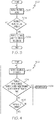
- the adaptive filter trigger 116 implements a process to actively and adaptively implement one of the filter functions stored in the memory 112. This process 200 is depicted more clearly in flowchart form in FIG. 2 , and with reference thereto will now be described.
- the first audio input device 104-1 receives (either selectively or continuously) ambient noise (202).
- the adaptive filter trigger 116 continuously samples and analyzes the received ambient (204).
- the analysis the adaptive filter function 116 implements may vary.
- the adaptive filter function 116 analyzes the sampled ambient noise for power in specific frequency bands.
- the analysis of the power in the frequency bands may be a simple comparison to a threshold value.
- the adaptive filter trigger 116 based on the analysis of the received ambient noise, selects and implements one or more of the filter functions stored in memory 112, and adjusts one or more of the associated filter parameters that are also stored in memory 112 (206).
- some of the associated parameters work best in certain aircraft or aircraft types, and at certain noise levels within these different aircraft or aircraft type, and with the location within these different aircraft or aircraft types.
- the adaptive filter function 116 may also be adapted to receive data representative of aircraft type (203), and data representative of the location with the determined aircraft type (205). The one or more filter types and the one or more filter parameters may also be selected based on these data.
- the filter function(s) is(are) selected and the associated filter parameters are adjusted, the audio and ambient noise supplied to the second audio input device 104-2 are filtered using the selected filter functions(s) (208).
- the adaptive filter trigger 116 thus supplies filtered audio to the speech recognition trigger 118.
- the speech recognition trigger 118 implements a process to selectively supply the filtered audio to the speech recognizer 122.
- This process 300 is depicted in flowchart form in FIG. 3 , and includes receiving the filtered audio from the adaptive filter trigger 116 (302), and then analyzing the filtered audio to determine when it includes human speech (304).
- the specific analysis implemented by the speech recognition trigger 118 may vary, but in the depicted embodiment the sound pressure level (SPL) of the ambient noise sample may be compared to the sample that may contain speech. If the SPL exceeds a predetermined threshold value, then it likely contains an additional sound source (e.g., speech). Alternatively, the spectral energy could be analyzed to determine if the frequency fingerprint associated with speech is present to a sufficient level to trigger the threshold where speech is deemed present.
- SPL sound pressure level
- the speech recognition trigger 118 supplies the filtered audio to the speech recognizer 122 (306). If not, then the speech recognition trigger 118 awaits more filtered audio from the adaptive filter trigger 116.
- the speech recognizer 122 receives the filtered audio from the speech recognition trigger 118, and determines the words that are included in the human speech.
- the speech recognizer 122 may implement any one of numerous speech recognition processes.
- the speech recognizer 122 uses an acoustic model 132 and a vocabulary 134 that is tuned for aircraft cabin management command words.
- the determined words are supplied to the command generator 124 for semantic analysis and generation of the appropriate aircraft cabin control command.
- the command generator 124 may implement any one of numerous processes to process the determined words and generate the appropriate aircraft cabin control command therefrom.
- a typical aircraft cabin control command phrase consists of less than ten words.
- the speech recognition trigger 118 may determine that human speech is present, when in fact there is none. When this occurs, the speech recognizer 122 may continue to produce false positive words, even after the user 110 has stopped speaking.
- the re-initialization trigger 126 is configured to prevent, or at least inhibit, this potential shortcoming.
- the re-initialization trigger 126 monitors the time it has been since no speech has occurred (using the same criteria that are used to determine if speech is present). In the depicted embodiment, the re-initialization trigger 126 also monitors the sequence of words output by the speech recognizer 124 (402), and then determines when a number of recognized words exceeds a predetermined number within a predetermined time period (404). It is noted, however, that this latter function is optional, and may be implemented as a backup in case there is a loud noise that is confused with speech.
- the re-initialization trigger 126 triggers a re-initialization (406).
- the command generator 124 fails to determine any meaningful aircraft cabin control command with the predetermined time period (408)
- the re-initialization trigger 126 also triggers the re-initialization (406).
- the re-initialization causes the one or more filter functions to be re-initialized, which in turn also cuts off the input to the speech recognizer 122. This re-initialization process 400 allows the adaptive filter trigger 116 to reset and re-adapt to the current ambient noise.
- the position trigger 136 is provided because, in an aircraft cabin environment, the controls and/or user interface are often personalized for a user's seat. Hence, the position trigger 136 supplies position data representative of the position of the user 110 within the aircraft cabin to the command generator 124.
- the position data may be generated based on data supplied from one or more sensors within a seat or in proximity thereof, from a GPS, or any one of numerous other position sensing and/or determining devices 142.
- the command generator 124 generates aircraft cabin control commands based not just on the one or more recognized words supplied from the speech recognizer, but also on the position of the user 110.
- the command generator 124 determines the nearest controls that may be personalized for the position of the user 110. For example, if the user 110 supplies the command of "lights on,” the command generator 124 may refer, for example, to control map configuration data 144, which may be stored in memory 112.
- the control map configuration data 144 are representative of the controls at or near the user's position, and can thereby better determine which lights the command should be applied.
- the user interface trigger 138 is used for controlling relative numbers such as increasing or decreasing volume, brightening or dimming lights, controlling temperature, and the like.
- the command generator 124 determines that the aircraft cabin control command includes certain action setting words, such as “set,” “reduce,” “lower, “increase,” decrease, or the like, along with contextual words, such as “lights,” “temperature,” “volume,” or the like, the command generator 124 refers to the control map configuration data 144 and, based on these data, commands a display device 146 to render one or more user interfaces based on the recognized words.
- the rendered user interfaces may be a slider, one or more buttons, one or more switches, or the like, just to name a few.
- the system and method described herein increases the effectiveness of commanding an aircraft cabin management system through voice by providing improved recognition rates across different ambient noise conditions in an aircraft cabin environment.
- Skilled artisans may implement the described functionality in varying ways for each particular application, but such implementation decisions should not be interpreted as causing a departure from the scope of the present invention.
- an embodiment of a system or a component may employ various integrated circuit components, e.g., memory elements, digital signal processing elements, logic elements, look-up tables, or the like, which may carry out a variety of functions under the control of one or more microprocessors or other control devices.
- integrated circuit components e.g., memory elements, digital signal processing elements, logic elements, look-up tables, or the like, which may carry out a variety of functions under the control of one or more microprocessors or other control devices.
- DSP digital signal processor
- ASIC application specific integrated circuit
- FPGA field programmable gate array
- a general-purpose processor may be a microprocessor, but in the alternative, the processor may be any conventional processor, controller, microcontroller, or state machine.
- a processor may also be implemented as a combination of computing devices, e.g., a combination of a DSP and a microprocessor, a plurality of microprocessors, one or more microprocessors in conjunction with a DSP core, or any other such configuration.
- a software module may reside in RAM memory, flash memory, ROM memory, EPROM memory, EEPROM memory, registers, hard disk, a removable disk, a CD-ROM, or any other form of storage medium known in the art.
- An exemplary storage medium is coupled to the processor such the processor can read information from, and write information to, the storage medium.
- the storage medium may be integral to the processor.
- the processor and the storage medium may reside in an ASIC.
- the ASIC may reside in a user terminal.
- the processor and the storage medium may reside as discrete components in a user terminal.
Landscapes
- Engineering & Computer Science (AREA)
- Multimedia (AREA)
- Health & Medical Sciences (AREA)
- Audiology, Speech & Language Pathology (AREA)
- Human Computer Interaction (AREA)
- Physics & Mathematics (AREA)
- Acoustics & Sound (AREA)
- Computational Linguistics (AREA)
- Quality & Reliability (AREA)
- Signal Processing (AREA)
- Telephone Function (AREA)
- Data Mining & Analysis (AREA)
- Control Of Amplification And Gain Control (AREA)
Claims (11)
- Verfahren (200) für adaptives Verarbeiten von Audiobefehlen, zugeführt durch einen Benutzer in einer Luftfahrzeugkabine, die folgenden Schritte umfassend:Empfangen (202) von Umgebungsgeräusch in der Luftfahrzeugkabine über eine erste Audioeingabevorrichtung (104-1);kontinuierliches Abtasten (204), mit einem Prozessor (114), des über die erste Audioeingabevorrichtung (104-1) empfangenen Umgebungsgeräusches;Bestimmen (203, 205), in dem Prozessor, eines Luftfahrzeugtyps und eines Orts in dem bestimmten Luftfahrzeugtyp;kontinuierliches Analysieren (204), in dem Prozessor, des abgetasteten Umgebungsgeräusches und, basierend auf der kontinuierlichen Analyse, des bestimmten Luftfahrzeugtyps und des bestimmten Orts in dem bestimmten Luftfahrzeugtyp, Auswählen (206) einer oder mehrerer Filterfunktionen und Anpassen eines oder mehrerer mit der einen oder den mehreren ausgewählten Filterfunktionen assoziierten Filterparameter;selektives Empfangen von Audio und Umgebungsgeräusch über eine zweite Audioeingabevorrichtung (104-2); undFiltern (208), durch das/die ausgewählte(n) eine oder mehreren Filterfunktionen, des über die zweite Audioeingabevorrichtung (104-2) empfangenen Audios und Umgebungsgeräusches, um dadurch gefiltertes Audio zuzuführen.
- Verfahren nach Anspruch 1, wobei:der Schritt des kontinuierlichen Analysierens (204) umfasst, das abgetastete Umgebungsgeräusch kontinuierlich auf Leistung in spezifischen Frequenzbändern zu analysieren; undder Schritt des Auswählens (206) des einen oder der mehreren Filtertypen und den Anpassens des einen oder der mehreren Filterparameter mindestens teilweise auf der Leistung in einem oder mehreren der spezifischen Frequenzbänder basiert.
- Verfahren nach Anspruch 1, ferner umfassend:Analysieren (302, 304) des von der zweiten Audioeingabevorrichtung empfangenen Audios, um zu bestimmen, wann es menschliche Sprache enthält, undZuführen (306) des gefilterten Audios einer Spracherkennungsvorrichtung, wenn bestimmt wird, dass das von der zweiten Audioeingabevorrichtung empfangene Audio menschliche Sprache enthält,wobei die Spracherkennungsvorrichtung ein oder mehrere erkannte Wörter zuführt.
- Verfahren nach Anspruch 3, ferner umfassend:Bestimmen (402, 404), wann eine Anzahl erkannter Wörter eine im Voraus bestimmte Anzahl innerhalb einer im Voraus bestimmten Zeitperiode überschreitet; underneutes Initialisieren (406) der einen oder mehreren Filterfunktionen, wenn bestimmt wird, dass die Anzahl erkannter Wörter die im Voraus bestimmte Anzahl innerhalb der im Voraus bestimmten Zeitperiode überschreitet.
- Verfahren nach Anspruch 3, ferner umfassend:Analysieren (408) des einen oder der mehreren erkannten Wörter, um eine Absicht davon festzustellen; underneutes Initialisieren (406) der einen oder mehreren Filterfunktionen, wenn die Absicht nicht festgestellt werden kann.
- Verfahren nach Anspruch 1, ferner umfassend:Bestimmen einer Position des Benutzers in der Luftfahrzeugkabine;mindestens selektives Erzeugen eines Luftfahrzeugkabinen-Steuerbefehls basierend auf dem einen oder den mehreren erkannten Wörtern und auf der Position des Benutzers.
- System (100) für adaptives Verarbeiten von Audiobefehlen, zugeführt durch einen Benutzer in einer Luftfahrzeugkabine, umfassend:eine erste Audioeingabevorrichtung (104-1), angepasst zum Empfangen von Umgebungsgeräusch in der Luftfahrzeugkabine und Zuführen von Umgebungsgeräuschsignalen, die dieses repräsentieren;eine zweite Audioeingabevorrichtung (104-2), angepasst zum zumindest selektiven Empfangen von Audio und Umgebungsgeräusch und Zuführen von Audiosignalen, die dieses repräsentieren; undein Verarbeitungssystem (108) in funktionsfähiger Kommunikation mit der ersten und der zweiten Audioeingabevorrichtung (104-1, 104-2), das Verarbeitungssystem konfiguriert zum:(i) Empfangen (203) von Daten, die einen Luftfahrzeugtyp repräsentieren,(ii) Empfangen (205) von Daten, die einen Ort in dem bestimmten Luftfahrzeugtyp repräsentieren,(iii) kontinuierliches Abtasten und Analysieren (204) des empfangenen Umgebungsgeräusches und, basierend auf der kontinuierlichen Analyse, des Luftfahrzeugtyps und des Orts in dem Luftfahrzeugtyp, Implementieren (206) einer oder mehrerer Filterfunktionen und Anpassen eines oder mehrerer mit der einen oder den mehreren ausgewählten Filterfunktionen assoziierten Filterparameter und(iv) Filtern (208), durch die ausgewählte(n) eine oder mehreren Filterfunktionen, des durch die zweite Audioeingabevorrichtung (104-2) empfangenen Audios und Umgebungsgeräusches, um dadurch gefiltertes Audio zuzuführen.
- System nach Anspruch 7, wobei das Verarbeitungssystem ferner konfiguriert ist zum:kontinuierlichen Analysieren (204) des abgetasteten Umgebungsgeräusches auf Leistung in spezifischen Frequenzbändern;Auswählen (206) des einen oder der mehreren Filtertypen und Anpassen des einen oder der mehreren Filterparameter basierend zumindest teilweise auf der Leistung in einem oder mehreren der spezifischen Frequenzbänder.
- System nach Anspruch 7, wobei das Verarbeitungssystem ferner konfiguriert ist zum:Implementieren einer Spracherkennungsvorrichtung, die ein oder mehrere erkannte Wörter zuführt;Analysieren (304) des der zweiten Audioeingabevorrichtung zugeführten Audios, um zu bestimmen, wann es menschliche Sprache enthält, undVerarbeiten (306) des gefilterten Audios in der Spracherkennungsvorrichtung, wenn bestimmt wird, dass das der zweiten Audioeingabevorrichtung zugeführte Audio menschliche Sprache enthält.
- System nach Anspruch 7, wobei das Verarbeitungssystem ferner konfiguriert ist zum:Bestimmen (402, 404), wann eine Anzahl erkannter Wörter eine im Voraus bestimmte Anzahl innerhalb einer im Voraus bestimmten Zeitperiode überschreitet;Analysieren (408) des einen oder der mehreren erkannten Wörter, um eine Absicht davon festzustellen; underneutes Initialisieren (406) der einen oder mehreren Filterfunktionen, wenn:(i) bestimmt wird, dass die Anzahl erkannter Wörter die im Voraus bestimmte Anzahl innerhalb der im Voraus bestimmten Zeitperiode überschreitet, oder(ii) die Absicht nicht festgestellt werden kann.
- System nach Anspruch 7, wobei das Verarbeitungssystem ferner konfiguriert ist zum:Empfangen von Daten, die eine Position des Benutzers in der Luftfahrzeugkabine repräsentieren; undzumindest selektives Erzeugen eines Luftfahrzeugkabinen-Steuerbefehls basierend auf dem einen oder den mehreren erkannten Wörtern und auf der Position des Benutzers.
Applications Claiming Priority (1)
| Application Number | Priority Date | Filing Date | Title |
|---|---|---|---|
| US14/336,181 US10276180B2 (en) | 2014-07-21 | 2014-07-21 | Audio command adaptive processing system and method |
Publications (2)
| Publication Number | Publication Date |
|---|---|
| EP2977986A1 EP2977986A1 (de) | 2016-01-27 |
| EP2977986B1 true EP2977986B1 (de) | 2018-09-12 |
Family
ID=53716319
Family Applications (1)
| Application Number | Title | Priority Date | Filing Date |
|---|---|---|---|
| EP15176182.2A Not-in-force EP2977986B1 (de) | 2014-07-21 | 2015-07-09 | Audiokommandoadaptives verarbeitungssystem und verfahren |
Country Status (3)
| Country | Link |
|---|---|
| US (1) | US10276180B2 (de) |
| EP (1) | EP2977986B1 (de) |
| CA (1) | CA2897671A1 (de) |
Families Citing this family (7)
| Publication number | Priority date | Publication date | Assignee | Title |
|---|---|---|---|---|
| US9466290B2 (en) * | 2014-05-06 | 2016-10-11 | Honeywell International Inc. | Systems and methods for aviation communication monitoring using speech recognition |
| US9799349B2 (en) * | 2015-04-24 | 2017-10-24 | Cirrus Logic, Inc. | Analog-to-digital converter (ADC) dynamic range enhancement for voice-activated systems |
| US10695663B2 (en) * | 2015-12-22 | 2020-06-30 | Intel Corporation | Ambient awareness in virtual reality |
| CN107146611B (zh) * | 2017-04-10 | 2020-04-17 | 北京猎户星空科技有限公司 | 一种语音响应方法、装置及智能设备 |
| CN113763972B (zh) * | 2020-06-02 | 2024-07-02 | 中国移动通信集团终端有限公司 | 音频参数调整的方法、装置、设备及计算机存储介质 |
| CN114676033B (zh) * | 2020-12-24 | 2025-05-27 | 金卡智能集团股份有限公司 | 滤波方法、装置、电子设备和存储介质 |
| US12485869B2 (en) * | 2022-12-30 | 2025-12-02 | Lenovo (Singapore) Pte. Ltd. | Apparatuses, methods, and systems for reducing background noise |
Family Cites Families (11)
| Publication number | Priority date | Publication date | Assignee | Title |
|---|---|---|---|---|
| US4912767A (en) | 1988-03-14 | 1990-03-27 | International Business Machines Corporation | Distributed noise cancellation system |
| FR2808917B1 (fr) | 2000-05-09 | 2003-12-12 | Thomson Csf | Procede et dispositif de reconnaissance vocale dans des environnements a niveau de bruit fluctuant |
| GB2377805B (en) | 2001-07-10 | 2003-12-17 | 20 20 Speech Ltd | Method of and apparatus for providing an input to an automatic speech recogniser in a conveyance |
| US7079645B1 (en) * | 2001-12-18 | 2006-07-18 | Bellsouth Intellectual Property Corp. | Speaker volume control for voice communication device |
| US7676363B2 (en) | 2006-06-29 | 2010-03-09 | General Motors Llc | Automated speech recognition using normalized in-vehicle speech |
| US8600741B2 (en) | 2008-08-20 | 2013-12-03 | General Motors Llc | Method of using microphone characteristics to optimize speech recognition performance |
| KR101239318B1 (ko) | 2008-12-22 | 2013-03-05 | 한국전자통신연구원 | 음질 향상 장치와 음성 인식 시스템 및 방법 |
| US8515763B2 (en) * | 2009-11-24 | 2013-08-20 | Honeywell International Inc. | Methods and systems for utilizing voice commands onboard an aircraft |
| US8370157B2 (en) | 2010-07-08 | 2013-02-05 | Honeywell International Inc. | Aircraft speech recognition and voice training data storage and retrieval methods and apparatus |
| TWI442384B (zh) | 2011-07-26 | 2014-06-21 | Ind Tech Res Inst | 以麥克風陣列為基礎之語音辨識系統與方法 |
| US9190071B2 (en) | 2012-09-14 | 2015-11-17 | Sikorsky Aircraft Corporation | Noise suppression device, system, and method |
-
2014
- 2014-07-21 US US14/336,181 patent/US10276180B2/en not_active Expired - Fee Related
-
2015
- 2015-07-09 EP EP15176182.2A patent/EP2977986B1/de not_active Not-in-force
- 2015-07-16 CA CA2897671A patent/CA2897671A1/en not_active Abandoned
Non-Patent Citations (1)
| Title |
|---|
| WIDROW B ET AL: "ADAPTIVE NOISE CANCELLING: PRINCIPLES AND APPLICATIONS", PROCEEDINGS OF THE IEEE, IEEE. NEW YORK, US, vol. 63, no. 12, 1 December 1975 (1975-12-01), pages 1692 - 1716, XP000762555, ISSN: 0018-9219 * |
Also Published As
| Publication number | Publication date |
|---|---|
| EP2977986A1 (de) | 2016-01-27 |
| US10276180B2 (en) | 2019-04-30 |
| US20160019891A1 (en) | 2016-01-21 |
| CA2897671A1 (en) | 2016-01-21 |
Similar Documents
| Publication | Publication Date | Title |
|---|---|---|
| EP2977986B1 (de) | Audiokommandoadaptives verarbeitungssystem und verfahren | |
| US9487167B2 (en) | Vehicular speech recognition grammar selection based upon captured or proximity information | |
| EP1933303B1 (de) | Sprachdialogkontrolle basierend auf Signalvorverarbeitung | |
| CN106814788B (zh) | 用于激活电路的装置和方法 | |
| US9230538B2 (en) | Voice recognition device and navigation device | |
| CN108696794B (zh) | 自适应乘员会话感知系统 | |
| JP2021189434A (ja) | 音声認識方法、装置、機器及び記憶媒体 | |
| KR102492727B1 (ko) | 전자장치 및 그 제어방법 | |
| EP2806335A1 (de) | Mensch-Maschine-Schnittstelle für Fahrzeuge mit Blickrichtungs- und Spracherkennung | |
| CN109686368B (zh) | 语音唤醒应答处理方法及装置、电子设备及存储介质 | |
| CN105913844A (zh) | 车载语音获取方法及装置 | |
| WO2015068033A1 (en) | Voice recognition device for vehicle | |
| EP3244402A1 (de) | Verfahren und systeme zur bestimmung und verwendung eines konfidenzniveaus in sprachsystemen | |
| US20170287476A1 (en) | Vehicle aware speech recognition systems and methods | |
| WO2018097969A1 (en) | Methods and systems for locating the end of the keyword in voice sensing | |
| WO2023122283A1 (en) | Voice assistant optimization dependent on vehicle occupancy | |
| US8335332B2 (en) | Fully learning classification system and method for hearing aids | |
| KR20230092180A (ko) | 차량 및 그의 제어방법 | |
| CN110312186B (zh) | 使用一键通(ptt)音频属性的音频处理系统和方法 | |
| WO2019016938A1 (ja) | 音声認識装置及び音声認識方法 | |
| US20240059303A1 (en) | Hybrid rule engine for vehicle automation | |
| US12406667B2 (en) | Method of processing dialogue, user terminal, and dialogue system | |
| US20150039312A1 (en) | Controlling speech dialog using an additional sensor | |
| RU2698773C2 (ru) | Устройство и способ распознавания речи | |
| GB2553040A (en) | Sensor input recognition |
Legal Events
| Date | Code | Title | Description |
|---|---|---|---|
| PUAI | Public reference made under article 153(3) epc to a published international application that has entered the european phase |
Free format text: ORIGINAL CODE: 0009012 |
|
| 17P | Request for examination filed |
Effective date: 20150709 |
|
| AK | Designated contracting states |
Kind code of ref document: A1 Designated state(s): AL AT BE BG CH CY CZ DE DK EE ES FI FR GB GR HR HU IE IS IT LI LT LU LV MC MK MT NL NO PL PT RO RS SE SI SK SM TR |
|
| AX | Request for extension of the european patent |
Extension state: BA ME |
|
| STAA | Information on the status of an ep patent application or granted ep patent |
Free format text: STATUS: EXAMINATION IS IN PROGRESS |
|
| 17Q | First examination report despatched |
Effective date: 20170712 |
|
| GRAP | Despatch of communication of intention to grant a patent |
Free format text: ORIGINAL CODE: EPIDOSNIGR1 |
|
| STAA | Information on the status of an ep patent application or granted ep patent |
Free format text: STATUS: GRANT OF PATENT IS INTENDED |
|
| INTG | Intention to grant announced |
Effective date: 20180314 |
|
| GRAS | Grant fee paid |
Free format text: ORIGINAL CODE: EPIDOSNIGR3 |
|
| GRAA | (expected) grant |
Free format text: ORIGINAL CODE: 0009210 |
|
| STAA | Information on the status of an ep patent application or granted ep patent |
Free format text: STATUS: THE PATENT HAS BEEN GRANTED |
|
| AK | Designated contracting states |
Kind code of ref document: B1 Designated state(s): AL AT BE BG CH CY CZ DE DK EE ES FI FR GB GR HR HU IE IS IT LI LT LU LV MC MK MT NL NO PL PT RO RS SE SI SK SM TR |
|
| REG | Reference to a national code |
Ref country code: GB Ref legal event code: FG4D |
|
| REG | Reference to a national code |
Ref country code: CH Ref legal event code: EP |
|
| REG | Reference to a national code |
Ref country code: IE Ref legal event code: FG4D |
|
| REG | Reference to a national code |
Ref country code: DE Ref legal event code: R096 Ref document number: 602015015980 Country of ref document: DE |
|
| REG | Reference to a national code |
Ref country code: AT Ref legal event code: REF Ref document number: 1041528 Country of ref document: AT Kind code of ref document: T Effective date: 20181015 |
|
| REG | Reference to a national code |
Ref country code: NL Ref legal event code: MP Effective date: 20180912 |
|
| REG | Reference to a national code |
Ref country code: LT Ref legal event code: MG4D |
|
| PG25 | Lapsed in a contracting state [announced via postgrant information from national office to epo] |
Ref country code: FI Free format text: LAPSE BECAUSE OF FAILURE TO SUBMIT A TRANSLATION OF THE DESCRIPTION OR TO PAY THE FEE WITHIN THE PRESCRIBED TIME-LIMIT Effective date: 20180912 Ref country code: LT Free format text: LAPSE BECAUSE OF FAILURE TO SUBMIT A TRANSLATION OF THE DESCRIPTION OR TO PAY THE FEE WITHIN THE PRESCRIBED TIME-LIMIT Effective date: 20180912 Ref country code: BG Free format text: LAPSE BECAUSE OF FAILURE TO SUBMIT A TRANSLATION OF THE DESCRIPTION OR TO PAY THE FEE WITHIN THE PRESCRIBED TIME-LIMIT Effective date: 20181212 Ref country code: GR Free format text: LAPSE BECAUSE OF FAILURE TO SUBMIT A TRANSLATION OF THE DESCRIPTION OR TO PAY THE FEE WITHIN THE PRESCRIBED TIME-LIMIT Effective date: 20181213 Ref country code: NO Free format text: LAPSE BECAUSE OF FAILURE TO SUBMIT A TRANSLATION OF THE DESCRIPTION OR TO PAY THE FEE WITHIN THE PRESCRIBED TIME-LIMIT Effective date: 20181212 Ref country code: SE Free format text: LAPSE BECAUSE OF FAILURE TO SUBMIT A TRANSLATION OF THE DESCRIPTION OR TO PAY THE FEE WITHIN THE PRESCRIBED TIME-LIMIT Effective date: 20180912 Ref country code: RS Free format text: LAPSE BECAUSE OF FAILURE TO SUBMIT A TRANSLATION OF THE DESCRIPTION OR TO PAY THE FEE WITHIN THE PRESCRIBED TIME-LIMIT Effective date: 20180912 |
|
| PG25 | Lapsed in a contracting state [announced via postgrant information from national office to epo] |
Ref country code: AL Free format text: LAPSE BECAUSE OF FAILURE TO SUBMIT A TRANSLATION OF THE DESCRIPTION OR TO PAY THE FEE WITHIN THE PRESCRIBED TIME-LIMIT Effective date: 20180912 Ref country code: LV Free format text: LAPSE BECAUSE OF FAILURE TO SUBMIT A TRANSLATION OF THE DESCRIPTION OR TO PAY THE FEE WITHIN THE PRESCRIBED TIME-LIMIT Effective date: 20180912 Ref country code: HR Free format text: LAPSE BECAUSE OF FAILURE TO SUBMIT A TRANSLATION OF THE DESCRIPTION OR TO PAY THE FEE WITHIN THE PRESCRIBED TIME-LIMIT Effective date: 20180912 |
|
| REG | Reference to a national code |
Ref country code: AT Ref legal event code: MK05 Ref document number: 1041528 Country of ref document: AT Kind code of ref document: T Effective date: 20180912 |
|
| PG25 | Lapsed in a contracting state [announced via postgrant information from national office to epo] |
Ref country code: IT Free format text: LAPSE BECAUSE OF FAILURE TO SUBMIT A TRANSLATION OF THE DESCRIPTION OR TO PAY THE FEE WITHIN THE PRESCRIBED TIME-LIMIT Effective date: 20180912 Ref country code: EE Free format text: LAPSE BECAUSE OF FAILURE TO SUBMIT A TRANSLATION OF THE DESCRIPTION OR TO PAY THE FEE WITHIN THE PRESCRIBED TIME-LIMIT Effective date: 20180912 Ref country code: PL Free format text: LAPSE BECAUSE OF FAILURE TO SUBMIT A TRANSLATION OF THE DESCRIPTION OR TO PAY THE FEE WITHIN THE PRESCRIBED TIME-LIMIT Effective date: 20180912 Ref country code: IS Free format text: LAPSE BECAUSE OF FAILURE TO SUBMIT A TRANSLATION OF THE DESCRIPTION OR TO PAY THE FEE WITHIN THE PRESCRIBED TIME-LIMIT Effective date: 20190112 Ref country code: AT Free format text: LAPSE BECAUSE OF FAILURE TO SUBMIT A TRANSLATION OF THE DESCRIPTION OR TO PAY THE FEE WITHIN THE PRESCRIBED TIME-LIMIT Effective date: 20180912 Ref country code: RO Free format text: LAPSE BECAUSE OF FAILURE TO SUBMIT A TRANSLATION OF THE DESCRIPTION OR TO PAY THE FEE WITHIN THE PRESCRIBED TIME-LIMIT Effective date: 20180912 Ref country code: CZ Free format text: LAPSE BECAUSE OF FAILURE TO SUBMIT A TRANSLATION OF THE DESCRIPTION OR TO PAY THE FEE WITHIN THE PRESCRIBED TIME-LIMIT Effective date: 20180912 Ref country code: NL Free format text: LAPSE BECAUSE OF FAILURE TO SUBMIT A TRANSLATION OF THE DESCRIPTION OR TO PAY THE FEE WITHIN THE PRESCRIBED TIME-LIMIT Effective date: 20180912 Ref country code: ES Free format text: LAPSE BECAUSE OF FAILURE TO SUBMIT A TRANSLATION OF THE DESCRIPTION OR TO PAY THE FEE WITHIN THE PRESCRIBED TIME-LIMIT Effective date: 20180912 |
|
| PG25 | Lapsed in a contracting state [announced via postgrant information from national office to epo] |
Ref country code: SK Free format text: LAPSE BECAUSE OF FAILURE TO SUBMIT A TRANSLATION OF THE DESCRIPTION OR TO PAY THE FEE WITHIN THE PRESCRIBED TIME-LIMIT Effective date: 20180912 Ref country code: PT Free format text: LAPSE BECAUSE OF FAILURE TO SUBMIT A TRANSLATION OF THE DESCRIPTION OR TO PAY THE FEE WITHIN THE PRESCRIBED TIME-LIMIT Effective date: 20190112 Ref country code: SM Free format text: LAPSE BECAUSE OF FAILURE TO SUBMIT A TRANSLATION OF THE DESCRIPTION OR TO PAY THE FEE WITHIN THE PRESCRIBED TIME-LIMIT Effective date: 20180912 |
|
| REG | Reference to a national code |
Ref country code: DE Ref legal event code: R097 Ref document number: 602015015980 Country of ref document: DE |
|
| PLBE | No opposition filed within time limit |
Free format text: ORIGINAL CODE: 0009261 |
|
| STAA | Information on the status of an ep patent application or granted ep patent |
Free format text: STATUS: NO OPPOSITION FILED WITHIN TIME LIMIT |
|
| PG25 | Lapsed in a contracting state [announced via postgrant information from national office to epo] |
Ref country code: DK Free format text: LAPSE BECAUSE OF FAILURE TO SUBMIT A TRANSLATION OF THE DESCRIPTION OR TO PAY THE FEE WITHIN THE PRESCRIBED TIME-LIMIT Effective date: 20180912 |
|
| 26N | No opposition filed |
Effective date: 20190613 |
|
| PG25 | Lapsed in a contracting state [announced via postgrant information from national office to epo] |
Ref country code: SI Free format text: LAPSE BECAUSE OF FAILURE TO SUBMIT A TRANSLATION OF THE DESCRIPTION OR TO PAY THE FEE WITHIN THE PRESCRIBED TIME-LIMIT Effective date: 20180912 |
|
| PGFP | Annual fee paid to national office [announced via postgrant information from national office to epo] |
Ref country code: FR Payment date: 20190725 Year of fee payment: 5 |
|
| PG25 | Lapsed in a contracting state [announced via postgrant information from national office to epo] |
Ref country code: MC Free format text: LAPSE BECAUSE OF FAILURE TO SUBMIT A TRANSLATION OF THE DESCRIPTION OR TO PAY THE FEE WITHIN THE PRESCRIBED TIME-LIMIT Effective date: 20180912 |
|
| REG | Reference to a national code |
Ref country code: CH Ref legal event code: PL |
|
| GBPC | Gb: european patent ceased through non-payment of renewal fee |
Effective date: 20190709 |
|
| PG25 | Lapsed in a contracting state [announced via postgrant information from national office to epo] |
Ref country code: TR Free format text: LAPSE BECAUSE OF FAILURE TO SUBMIT A TRANSLATION OF THE DESCRIPTION OR TO PAY THE FEE WITHIN THE PRESCRIBED TIME-LIMIT Effective date: 20180912 |
|
| REG | Reference to a national code |
Ref country code: BE Ref legal event code: MM Effective date: 20190731 |
|
| PG25 | Lapsed in a contracting state [announced via postgrant information from national office to epo] |
Ref country code: GB Free format text: LAPSE BECAUSE OF NON-PAYMENT OF DUE FEES Effective date: 20190709 |
|
| PG25 | Lapsed in a contracting state [announced via postgrant information from national office to epo] |
Ref country code: BE Free format text: LAPSE BECAUSE OF NON-PAYMENT OF DUE FEES Effective date: 20190731 Ref country code: LU Free format text: LAPSE BECAUSE OF NON-PAYMENT OF DUE FEES Effective date: 20190709 Ref country code: CH Free format text: LAPSE BECAUSE OF NON-PAYMENT OF DUE FEES Effective date: 20190731 Ref country code: LI Free format text: LAPSE BECAUSE OF NON-PAYMENT OF DUE FEES Effective date: 20190731 |
|
| PG25 | Lapsed in a contracting state [announced via postgrant information from national office to epo] |
Ref country code: IE Free format text: LAPSE BECAUSE OF NON-PAYMENT OF DUE FEES Effective date: 20190709 |
|
| PGFP | Annual fee paid to national office [announced via postgrant information from national office to epo] |
Ref country code: DE Payment date: 20200729 Year of fee payment: 6 |
|
| PG25 | Lapsed in a contracting state [announced via postgrant information from national office to epo] |
Ref country code: FR Free format text: LAPSE BECAUSE OF NON-PAYMENT OF DUE FEES Effective date: 20200731 |
|
| PG25 | Lapsed in a contracting state [announced via postgrant information from national office to epo] |
Ref country code: CY Free format text: LAPSE BECAUSE OF FAILURE TO SUBMIT A TRANSLATION OF THE DESCRIPTION OR TO PAY THE FEE WITHIN THE PRESCRIBED TIME-LIMIT Effective date: 20180912 |
|
| PG25 | Lapsed in a contracting state [announced via postgrant information from national office to epo] |
Ref country code: MT Free format text: LAPSE BECAUSE OF FAILURE TO SUBMIT A TRANSLATION OF THE DESCRIPTION OR TO PAY THE FEE WITHIN THE PRESCRIBED TIME-LIMIT Effective date: 20180912 Ref country code: HU Free format text: LAPSE BECAUSE OF FAILURE TO SUBMIT A TRANSLATION OF THE DESCRIPTION OR TO PAY THE FEE WITHIN THE PRESCRIBED TIME-LIMIT; INVALID AB INITIO Effective date: 20150709 |
|
| REG | Reference to a national code |
Ref country code: DE Ref legal event code: R119 Ref document number: 602015015980 Country of ref document: DE |
|
| PG25 | Lapsed in a contracting state [announced via postgrant information from national office to epo] |
Ref country code: DE Free format text: LAPSE BECAUSE OF NON-PAYMENT OF DUE FEES Effective date: 20220201 |
|
| PG25 | Lapsed in a contracting state [announced via postgrant information from national office to epo] |
Ref country code: MK Free format text: LAPSE BECAUSE OF FAILURE TO SUBMIT A TRANSLATION OF THE DESCRIPTION OR TO PAY THE FEE WITHIN THE PRESCRIBED TIME-LIMIT Effective date: 20180912 |
|
| P01 | Opt-out of the competence of the unified patent court (upc) registered |
Effective date: 20230525 |