EP2978192B1 - Peer-to-peer-fernsteuerungsverfahren zwischen einer oder mehreren mobilen vorrichtungen - Google Patents
Peer-to-peer-fernsteuerungsverfahren zwischen einer oder mehreren mobilen vorrichtungen Download PDFInfo
- Publication number
- EP2978192B1 EP2978192B1 EP15178083.0A EP15178083A EP2978192B1 EP 2978192 B1 EP2978192 B1 EP 2978192B1 EP 15178083 A EP15178083 A EP 15178083A EP 2978192 B1 EP2978192 B1 EP 2978192B1
- Authority
- EP
- European Patent Office
- Prior art keywords
- mobile device
- smart mobile
- peer
- helper
- beneficiary
- Prior art date
- Legal status (The legal status is an assumption and is not a legal conclusion. Google has not performed a legal analysis and makes no representation as to the accuracy of the status listed.)
- Active
Links
Images




Classifications
-
- H—ELECTRICITY
- H04—ELECTRIC COMMUNICATION TECHNIQUE
- H04L—TRANSMISSION OF DIGITAL INFORMATION, e.g. TELEGRAPHIC COMMUNICATION
- H04L67/00—Network arrangements or protocols for supporting network services or applications
- H04L67/01—Protocols
- H04L67/02—Protocols based on web technology, e.g. hypertext transfer protocol [HTTP]
- H04L67/025—Protocols based on web technology, e.g. hypertext transfer protocol [HTTP] for remote control or remote monitoring of applications
-
- H—ELECTRICITY
- H04—ELECTRIC COMMUNICATION TECHNIQUE
- H04L—TRANSMISSION OF DIGITAL INFORMATION, e.g. TELEGRAPHIC COMMUNICATION
- H04L67/00—Network arrangements or protocols for supporting network services or applications
- H04L67/01—Protocols
- H04L67/08—Protocols specially adapted for terminal emulation, e.g. Telnet
-
- H—ELECTRICITY
- H04—ELECTRIC COMMUNICATION TECHNIQUE
- H04W—WIRELESS COMMUNICATION NETWORKS
- H04W12/00—Security arrangements; Authentication; Protecting privacy or anonymity
- H04W12/06—Authentication
- H04W12/068—Authentication using credential vaults, e.g. password manager applications or one time password [OTP] applications
-
- H—ELECTRICITY
- H04—ELECTRIC COMMUNICATION TECHNIQUE
- H04W—WIRELESS COMMUNICATION NETWORKS
- H04W12/00—Security arrangements; Authentication; Protecting privacy or anonymity
- H04W12/06—Authentication
- H04W12/069—Authentication using certificates or pre-shared keys
-
- H—ELECTRICITY
- H04—ELECTRIC COMMUNICATION TECHNIQUE
- H04W—WIRELESS COMMUNICATION NETWORKS
- H04W12/00—Security arrangements; Authentication; Protecting privacy or anonymity
- H04W12/08—Access security
-
- H—ELECTRICITY
- H04—ELECTRIC COMMUNICATION TECHNIQUE
- H04W—WIRELESS COMMUNICATION NETWORKS
- H04W76/00—Connection management
- H04W76/10—Connection setup
-
- H—ELECTRICITY
- H04—ELECTRIC COMMUNICATION TECHNIQUE
- H04W—WIRELESS COMMUNICATION NETWORKS
- H04W76/00—Connection management
- H04W76/20—Manipulation of established connections
- H04W76/25—Maintenance of established connections
-
- H—ELECTRICITY
- H04—ELECTRIC COMMUNICATION TECHNIQUE
- H04W—WIRELESS COMMUNICATION NETWORKS
- H04W8/00—Network data management
- H04W8/005—Discovery of network devices, e.g. terminals
-
- H—ELECTRICITY
- H04—ELECTRIC COMMUNICATION TECHNIQUE
- H04L—TRANSMISSION OF DIGITAL INFORMATION, e.g. TELEGRAPHIC COMMUNICATION
- H04L63/00—Network architectures or network communication protocols for network security
- H04L63/02—Network architectures or network communication protocols for network security for separating internal from external traffic, e.g. firewalls
- H04L63/029—Firewall traversal, e.g. tunnelling or, creating pinholes
-
- H—ELECTRICITY
- H04—ELECTRIC COMMUNICATION TECHNIQUE
- H04L—TRANSMISSION OF DIGITAL INFORMATION, e.g. TELEGRAPHIC COMMUNICATION
- H04L67/00—Network arrangements or protocols for supporting network services or applications
- H04L67/01—Protocols
- H04L67/10—Protocols in which an application is distributed across nodes in the network
- H04L67/104—Peer-to-peer [P2P] networks
Definitions
- This application is related to mobile wireless communication devices and, in particular, viewing and operating one or more mobile wireless communication devices remotely from another mobile wireless communication device.
- smart devices such as mobile phones, tablets, watches, wearables and the like are built with advanced computing capability and connectivity features.
- Early mobile phones contained relatively simpler features such as voice call, messaging, calendar and calculator.
- Modern smart devices include all of those features plus the features of a touchscreen computer, including web browsing, video recording, emails, and Wi-Fi and 3rd party applications. Most of these smart devices require elaborate configuration setups and extensive knowledge of the different applications to ensure proper functioning and operation of the device.
- a customer support representative can engage Virtual Mobile Management Remote Control applications and services as described for example in U.S. Patent Publication No. US2012/0254762A1 , US2013/0064521A1 , US2013/0263287A1 , US2013/0260738A1 , and US2013/0263288A1 .
- customer care organizations having sophisticated tools for assistance, there is a still dissatisfaction among the smart device users about the efficiency, timeliness and consistency with which they receive assistance.
- US7,558,862B1 Tyukasz et al describes a remote access session for a client computer to reach an office host computer through a gateway.
- US2013/0263288A1 Palanichamy et al describes a password protection feature during a remote session.
- US2010/0278120A1 Haddad et al describes home agent-less MIPv6 route optimization over WAN.
- Described herein is a peer to peer remote control method through which a smart device user is able to remotely view, operate, control and draw on another smart device for the purpose of knowledge transfer, remote configuration and troubleshooting of the smart device.
- the peer to peer remote control system works in conjunction with a Virtual Mobile Management (VMM) or remote management system.
- VMM Virtual Mobile Management
- the method for peer to peer remote control might involve installing an application on the helper and the beneficiary smart devices for the purpose of viewing and operating a remote device, i.e. the beneficiary smart device.
- This application can either be pre-installed on the helper and the beneficiary smart devices by the device manufacturer or can be downloaded and installed from a secure server store post market.
- a smart device user When a smart device user needs assistance from another user, they can just call the person and request a remote connection.
- the helper might have to open the remote viewer application and enter the phone number, International Mobile Station Equipment Identity (IMEI) or email address of the remote device, i.e. the beneficiary smart device.
- IMEI International Mobile Station Equipment Identity
- the connection can also be initiated with pre-existing contacts on the phone or social media applications.
- IMEI International Mobile Station Equipment Identity
- some form of download mechanism might be conveyed to the beneficiary smart device. For example, either the client itself might be forwarded to the beneficiary smart device for installation or a secure link to the download server could be sent to the beneficiary smart device.
- the beneficiary can also initiate a request for connection from the peer to peer application installed on beneficiary smart device.
- a request can be made to contacts already existing on the beneficiary smart device or contacts from social media applications.
- an SMS or email might be sent to the helper smart device.
- the system will automatically detect if the remote viewer application exists on the helper smart device and if a remote connection has been previously established with the helper smart device. If the application does not exist on the helper smart device, the SMS or email received from the beneficiary smart device will contain an instruction to install the application.
- the SMS or email might contain the actual application as an attachment or might contain a link to the secure server or mobile application store where the viewer application might be hosted.
- the application If the application already exists on the helper smart device and a connection was established with this the helper smart previously, then the application is brought to an active state by the SMS or email and a peer to peer connection is initiated with the beneficiary smart device so as to perform a peer to peer remote control management session.
- both the devices will go through a mutual authentication process to establish a trust between the two devices and then start a peer to peer connection so as to perform a peer to peer remote control management session.
- One of the main purposes of this invention is to allow the helper to feel as if he/she is holding the beneficiary smart device in his/her own hands.
- the helper can perform actions on the beneficiary's device remotely. This includes touch actions like tapping on an applications or menu, gesture actions like swiping on the device screen from top to bottom, bottom to top, left to right and right to left and long press actions that maybe used while customizing the device user interface.
- the software and hardware buttons on the device may also be mapped to the helper smart device. This allows the helper to control the buttons on the beneficiary smart device like volume buttons, home button and the back button remotely.
- the helper can use the built-in drawing tool to draw a variety of images on the beneficiary smart device. This might include the ability to draw circles or squares, ability to draw lines and arrows, ability to draw free hand drawing on the remote device, i.e. the beneficiary smart device. This allows the helper to demonstrate how to perform certain actions on the beneficiary smart device and helps with knowledge transfer. This feature is especially useful when a beneficiary is new to smart devices and needs help in identifying different components of the device user interface.
- Yet another feature available during the peer to peer remote control management method is the ability to pause the peer to peer remote control management session from the beneficiary's smart device. This feature allows the beneficiary to open personal applications and enter confidential data while still being on a peer to peer remote control management session with a relative or acquaintance. The beneficiary can also resume the peer to peer remote control management session at any point in time.
- Yet another feature available during the peer to peer remote control management method is the ability to automatically reconnect back in case of network drops and failures.
- a Wi-Fi or a mobile data network connection might be used.
- the remote support client if the beneficiary's smart device experiences a drop in network connection, then the remote support client will automatically reestablish the peer to peer remote control management session with the helper's smart device once it reconnects back to the network. This could be a seamless procedure with minimal user interaction.
- Yet another feature available on the peer to peer remote control management method is the ability to switch back and forth between the remote viewer application and the original device on the helper smart device. While the helper is in a peer to peer remote control management session with a beneficiary smart device, the helper can switch back to his original device view at any point. The peer to peer remote control management session will remain unaffected. The helper can control the beneficiary smart remote device again by bringing the remote viewer application to the foreground. This feature is especially helpful when the helper needs to view incoming emails, messages and notifications on the helper smart device. This is also helpful when the helper needs to verify configurations and settings on their own device before making modifications on the beneficiary smart device.
- Yet another feature available on the peer to peer remote control management method is the ability to blacklist certain applications on the beneficiary smart device to prevent access to these specific applications.
- the smart device users may have certain private and confidential applications on their device like banking applications or financial applications which contain secure data.
- the smart device users might not want the helper to view data within these applications.
- Security policies can be set on the peer to peer remote control management session to prevent the helper from viewing these pre-defined set of private applications.
- Yet another feature available on the peer to peer remote control management method is the ability to grey-list certain applications on the beneficiary smart device to provide restricted access to these specific applications.
- the mobile device users may have applications on the device which contains personal data like gallery, messaging, social media applications and so on. The mobile device user might not want the helper to view the contents of these applications unless absolutely necessary.
- Security policies can be set on the peer to peer remote control session to restrict access to a set of pre-defined personal applications. When these personal applications are invoked by the helper or the beneficiary, the beneficiary is requested for additional permissions to access the application.
- Yet another feature available on the peer to peer remote control management method is the ability to whitelist applications on the beneficiary smart device.
- the whitelist feature can be utilized in cases where the mobile device user prefers to make only certain applications accessible to the beneficiary and restrict or deny access to all other applications on the beneficiary smart device.
- Yet another feature available on the peer to peer remote control management method is the ability to terminate the remote control session on both the helper smart device and beneficiary smart device at any point during the session. This allows all parties involved to end the session at any time.
- the peer to peer remote control management method allows smart device customers to seek help from their relatives and acquaintances when they require assistance on their device. This reduces calls to the customer support centers hence reducing Network Operator and Original Equipment Manufacturer costs.
- peer to peer remote control management method Another benefit of the peer to peer remote control management method is the reduction in the number of devices being returned.
- smart device customers are not familiar enough to use the device optimally and have difficulty receiving assistance, they might perceive a user error as a fault with the device. This might result in more devices being returned back (known as 'no fault found' NFF returns).
- the peer to peer remote control management method addresses such issues by allowing the smart device users to receive assistance anywhere and anytime easily.
- Yet another benefit of the peer to peer remote control method is that the mobile device customers can get personalized help from relatives and acquaintances. There would be no language barriers since the support is received from known people. They would also have a relatively more comfortable and stress free experience as they would be receiving assistance from people they know. It would also be comforting to know that personal information is protected from outsiders.
- the support process has been made relatively faster and more efficient by expanding the support group to family and friends and not just customer care organizations from network operators and device manufacturers. Repeat requests for support are relative simpler. It is almost like making a phone call to another mobile device user. This essentially makes anytime anywhere support a seamless experience.
- the current invention provides an extension to the Virtual mobile management remote control [VMM-RC] solution where a smart device customer or a user can request the assistance of acquaintances and relatives to get familiarized with the device, to configure the device correctly and troubleshoot any software issues on the device.
- VMM-RC Virtual mobile management remote control
- Similar support model can also be used by employees of businesses to request support from its IT support organization.
- the person requesting for assistance will be referred to as the beneficiary and the person providing assistance will be referred to as the helper.
- This method allows the helper to use his or her smart device to remotely view and operate beneficiary's smart device as if the helper possesses the beneficiary's smart device in his/her hands.
- a customer buys a smart device and needs help to understand how to use the device and make initial set up and configurations on the device.
- the customer can either call the mobile network operator customer service organization or original equipment manufacturer (OEM) customer service organization to request help, which would be a time consuming process. If the customer needs additional help at a later time, they would have to get back on a call with the customer service organization.
- OEM original equipment manufacturer
- the peer to peer remote control management method provides an easier solution by allowing the customer to request help from family or friends remotely, instantly eliminating any waiting time. Similar support model can also be used by employees of businesses to request support from its IT support organization.
- a business user needs to access work related emails on his smart device but has recurring connectivity issues. Instead of having to call the operator or OEM customer service organization every time such an issue occurs, the customer can request his IT administrator or co-worker to remotely connect to his device and make the necessary configuration changes on the device hence saving the business user a lot of time and effort and experience better support.
- a minor user such as a high school student wants to purchase mobile applications instantly for educational and other purposes but requires permissions and payment information to be entered on the device remotely.
- Parents can use the peer to peer remote control management method to remotely connect to their child's smart device to grant special privileges or enter onetime payment information through their smart device.
- Figure 1 describes an overall summary of the Peer to Peer remote control management set up procedure.
- the Helper H and the Beneficiary B need to execute a series of algorithms. Initially the Helper H or Beneficiary B will request for a peer to peer connection [1]. The Helper H or Beneficiary B will then check to see if the peer to peer client which can be either the helper app [HApp] or the beneficiary app [BApp] exist on the initiator's device [2]. If the peer to peer application does not exist on the initiator's device, it will be downloaded and installed from an application marketplace or a secure server [3].
- the Helper app HApp or Beneficiary app BApp will need to register itself to the secure server S as described in detail in Figure 3 and Figure 4 .
- the Helper H needs to authenticate itself with the server S [4] as described in Figure 5 .
- the peer to peer client can be opened to initiate a peer to peer connection [5]. If the peer to peer client already exists on the initiator's device, no additional download and installation will be necessary.
- the initiator can search for recipient's device from within the application using various device identifiers like phone number, contact name, and the like. [6].
- the initiator and recipient devices will perform a discovery procedure to identify each other. This is described in detail in Figures 6 , 7 and 8 .
- a connection request is sent to the recipient's device [7]. It is then checked to see if the peer to peer client exists on the recipient's device [8]. If the peer to peer client does not already exist on the recipient's device, it is downloaded and installed from an application marketplace or a secure server S [9]. The application is then registered and authenticated with the secure server S [10] as described in Figures 3 , 4 , and 5 . If the client already exists on the recipient's device no additional downloads are performed on the device. Once the initiator and recipient devices have discovered each other, they go through a process of mutual authentication in order to establish a trust relationship [11] as described in Figure 9 .
- the helper and beneficiary go through an auto connection discovery process which involves determining if both the helper and beneficiary are on the same sub network [12]. If both the helper and the beneficiary are on the same sub network as detailed in Figure 10 , then a peer to peer connection is established between them. This is described in more detail in Figures 12 , and 13 . If the helper and the beneficiary are not on the same sub network, the server S and in specific, a component of the server S called the communication endpoint gateway (CEG) will mediate the peer to peer connection between the helper and the beneficiary as shown in Figure 11 . At this point peer to peer remote control management session is established between the initiator and recipient device [13].
- CEG communication endpoint gateway
- FIG. 2 shows the architecture of the peer to peer remote control management system.
- the following are the different components of the system- HApp 100 is the application that is resident on the Helper device, BApp 200 is the application that is resident on the Beneficiary device, Server S 300 and the Communication Endpoint Gateway 400.
- the Helper application HApp 100 has the following components-Graphical Control Interface 101, Peer Profile Manager 102, Communication Module 103, and Codec and Protocol Processor 104.
- the Graphical Control Interface 101 is responsible for receiving and displaying the beneficiary's smart device screen on the helper's user interface.
- the peer profile manager 102 is responsible for storing and managing the contact information of all known beneficiaries.
- the communication module 103 is responsible for setting up and maintaining a dedicated communication channel with the beneficiary smart device and the server.
- the codec and protocol processor 104 is a module that contains communication message encoding and decoding capabilities that includes the protocol layer as well as the application layer messages. These capabilities include message format, structure and data types used within the protocol messages.
- the Beneficiary application BApp 200 has the following components- Remote Control Service Module 201, System Call Processor 202, Codec and Protocol Processor 203, Peer Profile Manager 204, Security Control Function 205 and Communication Module 206.
- Remote Control Service Module 201 is responsible for providing the remote control service.
- the key functions provided to manage devices remotely include: Display Capture - this method involves the capturing of the device screen; Key event Injection - this method involves the injection of key events into the device screen; and Touch event injection - this method involves the simulation of touch events on the device screen.
- the System Call Processor 202 is responsible for the invocation and translation of low level system calls (API) into commands that are translated into an abstract data structure that can be consumed by various modules within the application.
- API low level system calls
- the Codec and protocol processor 203 is a module that contains communication message encoding and decoding capabilities that includes the protocol layer as well as the application layer messages. These capabilities include message format, structure and data types used within the protocol messages.
- the peer profile manager 204 is responsible for storing and managing the contact information of all known helper devices.
- Security Control Function 205 is responsible to establish and maintain trust relationship with the server S. This module is further responsible to manage and protect mutual authentication profiles with helper devices and perform certificate/credential management functions.
- the communication module 206 is responsible for setting up and maintaining a dedicated communication channel with the beneficiary and the server.
- the Server S 300 contains the following components - Registration and Authentication Function 302, Peer Discovering Function 301, Data Repository 303.
- the Registration and Authentication function 302 is responsible for enrolling the helper and beneficiary devices to server S and authenticating the devices. It is also responsible for user enrollment and user authentication.
- the Peer Discovery Function 301 is responsible for discovering the network endpoints for the helper and beneficiary device and to verify if the incoming request originated from valid authorized users.
- Data Repository 303 is the data warehouse that stores the information about the helper and beneficiary smart devices, server configuration, tasks and status settings. These databases are pivotal to configure and update managed devices and server components. It is also responsible for maintaining the user login information as well as device authentication information.
- CEG 400 The primary responsibility of CEG 400 is to manage and mediate sessions such as a peer to peer remote control management session.
- the server provides communication endpoints between helper 100 and Beneficiary 200.
- the CEG 400 provides a consistent manner of device connection and Tool service in a system with heterogeneous devices running different operating systems.
- CEG 400 is comprised of the Peer Connectivity Bridge 401, Connection Authorizer 402 and the State machine 403.
- the primary function of 401 is to mediate all remote control traffic between Helper 100 and Beneficiary 200.
- Connection Authorizer 402 receives the communication endpoint data for helper and beneficiary and authenticates all inbound connections.
- the state machine 403 maintains the different states of the CEG 400.
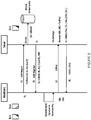
- FIG. 3 outlines the beneficiary registration algorithm.
- Beneficiary is designated by B and the server is designated by S.
- S is designated by S.
- Beneficiary B contains the server public key Spub.
- Step 1 Beneficiary B sends Auth-Request.
- Step (2) Server sends Auth-Response
- Step (3) B sends Key-Exchange Request.
- Step (4) S sends Key-Exchange Response
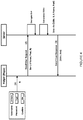
- Helper is designated as H
- Helper App is designated as HApp
- Server is designated as S.
- the Helper application is installed on the device. Helper invokes the application.
- HApp contains the server public key Spub.
- Step (1) Helper application presents login screen.
- Step (2) HApp transmits Enroll User Request message.
- Step (3) S transmits EnrollUser Response to HApp.
- the response contains profile parameters, SSK and Ssig.
- Figure 5 outlines the helper authentication process.
- Helper App [HApp] is installed on the Helper's device and is registered with the server S.
- the Helper H further shares a valid username and password with the server.
- FIG. 6 and 7 outline Helper-Beneficiary Discovery procedure using existing contacts on the helper or beneficiary device.
- HApp or BApp performs an auto-scan on the respective devices and gathers all contacts including those within 3 rd party social media applications (1). These contacts are then presented to the user (Helper or Beneficiary) (2).
- the initiating application [HApp/BApp] sends out a specially crafted message with a Peering Token (Pt) to the recipient application [HApp/BApp]. If the contact happens to be part of the phone contact list, an SMS will be sent (3).
- Pt Peering Token
- HApp or BApp When the recipient (Helper or Beneficiary) receives this message and clicks on the message, HApp or BApp is invoked automatically and the Peering token (Pt) is passed to it as a parameter (4).
- This Peering Token Pt is used for mutual trust establishment.
- Figure 8 outlines the Helper-Beneficiary Discovery procedure using the Server S.
- Helper HApp is used as the initiator of the discover procedure request and BApp is used as the recipient for illustration purposes only. But in other scenario either of them can be the initiator of discovery procedure.
- helper beneficiary discovery needs to be performed directly using server S, either the Helper or the Beneficiary can enter a device identifier like phone number, user name, and the like from within the respective application (1). Once the device identifier is entered, the search request is submitted within the respective application (2). The search request is then forwarded to the Server S along with the device identifier (3).
- the server will forward the Peering Token (Pt) to the other peer (4).
- the recipient application [HApp/BApp] is invoked using the peering token Pt (5).
- Mutual trust is established between the two after discovery is complete.
- Figure 9 outlines the Helper-Beneficiary Mutual Trust Establishment.
- HApp and BApp share the same Peering Token (Pt).
- Pt Peering Token
- BApp and HApp are pre-authenticated with S.
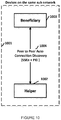
- Figure 10 outlines the Auto connection discovery process between the helper device and the beneficiary's device when both are in the same sub network 1001. While in the same sub network, the Helper H 1002 and Beneficiary B 1003 will use the shared secret data SSKH and Public Key Infrastructure 1004 to mutually authenticate each other and establish a peer to peer connection. This is explained in greater detail with respect to Figure 10 and Figure 11 .
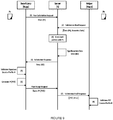
- FIG 11 outlines the process that occurs when the Helper and the Beneficiary are unable to mutually authenticate each other.
- the Server S and in particular the Communication Endpoint Gateway [CEG] which is a component of the Server S assists in the peer to peer connection establishment process.
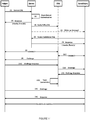
- the Helper H transmits Session Request to Server S, passing the device ID to which a connection is requested (1).
- S checks internally if H is authorized to connect to Beneficiary B (2).
- S transmits Session Response passing in the Session Handle and a Random Session Token (ST) to Helper H (3).
- the ST is encrypted with SSKh.
- S transmits a Session Policy to CEG (4).
- S sends a wakeup message to B (5).
- B connects to S and transmits a Session Solicitation Request (6).
- S transmits a Session Handle and ST.
- ST is encrypted with SSK2 (7).
- H establishes connection with CEG (8).
- CEG transmits Challenge to H (9).
- H transmits Challenge-Response to CEG (10).
- Independently B establishes connection with CEG (11).
- CEG transmits Challenge to B (12).
- B transmits Challenge-Response to CEG (13).
- CEG Upon mutual authentication of H and B with CEG connections, CEG teams the connections (14).
- H transmits Challenge to B (15).
- B transmits Challenge-Response to H (16). If H and B mutually authenticate each other, the peer to peer connection is established, at which point, control messages are transmitted between H and B.
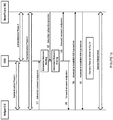
- Figure 12 outlines the peer to peer network discovery procedure.
- the Beneficiary is mutually authenticated with the CEG.
- the Helper is mutually authenticated with the CEG.
- the Helper is mutually authenticated with the Beneficiary.
- the Helper and the beneficiary go through the process of network discovery to determine if the peer to peer connection can be established directly [Peer to Peer] without the assistance of the CEG.
- the Helper H advertises its network endpoints which include its IP Address and Port to the CEG [1].
- the Beneficiary B also advertises its network endpoints which include its IP Address and Port to the CEG [2].
- the CEG determines the network binding of the Helper H and forwards the network endpoints to Beneficiary B [3].
- the CEG also determines the network binding of the Beneficiary B and forwards the network endpoints to Helper H [4].
- the outcome of the P2P connection attempts from helper H and beneficiary B is dependent on the decision flow described in Figure 13 .
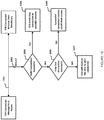
- Figure 13 outlines the decision flow that occurs after the Helper and beneficiary have attempted to establish a peer to peer connection to each other.
- the Helper and Beneficiary attempt to establish a peer to peer connection with each other [1301].
- the status of this connection attempt is forwarded to the CEG [1302].
- the CEG checks if both the attempts were successful [1303]. If both the Helper and the Beneficiary were successful is establishing the connection, then the CEG will decide which connection should remain open and be used for the peer to peer remote control management session and which connection should be terminated [1304]. If only one attempt was successful [1305], then the successful connection is used for the peer to peer remote control management session [1306]. If both the attempts failed to result in a peer to peer connection, then the CEG will take control and mediate the peer to peer connection between the Helper and Beneficiary [1307].
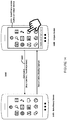
- Figure 14 shows an example of how the user interface on helper smart device 1400 and beneficiary smart device 1405 might look during a peer to peer remote control management session 1410.
- the helper can then remotely view and control the beneficiary's device from within the helper application [HApp] in real time during a peer to peer remote control management session 1410.
- the helper can perform actions like touch, swipe, and scroll on the helper application user interface 1415 which will be sent to the beneficiary's smart device 1405 as a command 1420.
- the command is executed on the beneficiary's smart device.
- a method for providing peer to peer remote control management between a helper smart device and a beneficiary smart device includes registering, by the helper smart device and the beneficiary smart device, with a secure server; authenticating, by the helper smart device, with the secure server; performing a discovery by at least one of the helper smart device and the beneficiary smart device with respect to at least the other of the helper smart device and the beneficiary smart device; establishing a trust relationship between the helper smart device and the beneficiary smart device by performing mutual authentication between the helper smart device and the beneficiary smart device; performing an auto connection discovery process to determine if the helper smart device and the beneficiary smart device are on a same sub network; establishing a peer to peer connection between the helper smart device and the beneficiary smart device for performing a peer to peer remote control management session on a condition that the helper smart device and the beneficiary smart device are on the same sub network; and using the secure server to mediate discovery, establishment and maintenance of a peer to peer connection between the helper smart device and the beneficiary smart device for performing a peer to peer
- a system for providing peer to peer remote control management between a helper smart device and a beneficiary smart device includes a secure server, a helper smart device configured to register and authenticate with secure server; and a beneficiary smart device configured to register with the secure server.
- One of the helper smart device and the beneficiary smart device is configured to perform discovery with a remaining one of the helper smart device and the beneficiary smart device.
- the helper smart device and the beneficiary smart device is configured to establish a trust relationship between the helper smart device and the beneficiary smart device by performing mutual authentication between the helper smart device and the beneficiary smart device.
- the helper smart device and the beneficiary smart device is configured to perform an auto connection discovery process to determine if the helper smart device and the beneficiary smart device are on a same sub network.
- the helper smart device and the beneficiary smart device is configured to establish a peer to peer connection between the helper smart device and the beneficiary smart device for performing a peer to peer remote control management session on a condition that the helper smart device and the beneficiary smart device are on the same sub network.
- the helper smart device and the beneficiary smart device is configured to use the secure server to mediate discovery, establishment and maintenance of a peer to peer connection between the helper smart device and the beneficiary smart device for a peer to peer remote control management session on a condition that the helper smart device and the beneficiary smart device are on different sub networks
- the helper smart device is able to remotely view, operate, control, and draw on beneficiary smart device during the peer to peer remote control management session.
- a remote support request is initiated by sending a text message to a contact on at least one of the helper smart device and the beneficiary smart device.
- the remote support request is initiated by sending an email message to a contact on at least one of the helper smart device and the beneficiary smart device.
- the remote support application is pre-installed on the helper smart device.
- the remote support application is downloaded upon request on the helper smart device.
- a remote support application is pre-installed on the beneficiary smart device.
- the remote support application is downloaded upon request on the beneficiary smart device.
- the beneficiary smart device is mapped onto the helper smart device enabling remote view and operation of the beneficiary smart device in real time.
- the helper smart device is able to annotate on the beneficiary smart device.
- security policies prevent the helper smart device from viewing a pre-defined set of private applications.
- the security policies require beneficiary permission to access personal applications.
- the security policies allow access to only certain applications.
- a helper remote support application enables to switch active and background on the helper smart device.
- the peer to peer remote control management session is re-established due to network drop and failure. In an embodiment, the peer to peer remote control management session is paused from the beneficiary's smart device. In an embodiment, the paused peer to peer remote control management session is resumed from the beneficiary's smart device.
- private data entry fields on the beneficiary smart device are not visible on the helper smart device.
- At least one of the helper smart device and beneficiary smart device can terminate the peer to peer remote control management session.
Landscapes
- Engineering & Computer Science (AREA)
- Computer Networks & Wireless Communication (AREA)
- Signal Processing (AREA)
- Computer Security & Cryptography (AREA)
- Databases & Information Systems (AREA)
- Telephonic Communication Services (AREA)
- Computer And Data Communications (AREA)
Claims (15)
- Verfahren zum Bereitstellen von Peer-to-Peer-Fernsteuerverwaltung zwischen einer intelligenten mobilen Helfervorrichtung (100) und einer intelligenten mobilen Begünstigtenvorrichtung (200), umfassend:Registrieren einer Fernunterstützungsanwendung auf der intelligenten mobilen Helfervorrichtung (100) bei einem sicheren Server (300) und Registrieren einer Fernunterstützungsanwendung auf der intelligenten mobilen Begünstigtenvorrichtung (200) bei dem sicheren Server (300);Authentifizierung durch die Fernunterstützungsanwendung auf der intelligenten mobilen Helfervorrichtung (100) mit dem sicheren Server (300);Durchführen eines Vorrichtungsermittlungsprozesses durch entweder die intelligente mobile Helfervorrichtung (100) oder die intelligente mobile Begünstigtenvorrichtung (200) als eine Initiatorvorrichtung in Bezug auf die andere von der intelligenten mobilen Helfervorrichtung (100) und der intelligenten mobilen Begünstigtenvorrichtung (200) als eine Empfängervorrichtung, einschließlich des Sendens einer Nachricht per E-Mail oder Textnachrichtendienst von der Initiatorvorrichtung (100, 200) an die Empfängervorrichtung (200, 100), die ein Peering-Token für die Fernunterstützungsanwendung auf der Empfängervorrichtung (200, 100) bereitstellt;Herstellen einer Vertrauensbeziehung zwischen der intelligenten mobilen Helfervorrichtung (100) und der intelligenten mobilen Begünstigtenvorrichtung (200) durch Durchführen einer gegenseitigen Authentifizierung zwischen der intelligenten mobilen Helfervorrichtung (100) und der intelligenten mobilen Begünstigtenvorrichtung (200) unter Verwendung des Peering-Tokens aus dem Vorrichtungsermittlungsprozess;Durchführen eines automatischen Verbindungsnetzwerk-Ermittlungsprozesses, um zu bestimmen, ob die intelligente mobile Helfervorrichtung (100) und die intelligente mobile Begünstigtenvorrichtung (200) sich in demselben Subnetzwerk (1001) befinden, einschließlich:Ankündigen von Netzwerkendpunktinformationen durch jede der intelligenten mobilen Helfervorrichtung (100) und der intelligenten mobilen Begünstigtenvorrichtung (200) an den sicheren Server (300);Empfangen, durch die intelligente mobile Helfervorrichtung (100) und die intelligente mobile Begünstigtenvorrichtung (200), der gegenseitigen Netzwerkendpunktinformationen, die von dem sicheren Server (300) weitergeleitet wurden;Versuchen, durch die intelligente mobile Helfervorrichtung (100) und die intelligente mobile Begünstigtenvorrichtung (200), eine direkte Peer-to-Peer-Verbindung unter Verwendung der empfangenen Netzwerkendpunktinformationen herzustellen; undbeim Herstellen einer Peer-to-Peer-Verbindung direkt zwischen der intelligenten mobilen Helfervorrichtung (100) und der intelligenten mobilen Begünstigtenvorrichtung (200), Durchführen einer Peer-to-Peer-Fernsteuerverwaltungssitzung zwischen der intelligenten mobilen Helfervorrichtung (100) und der intelligenten mobilen Begünstigtenvorrichtung (200) ohne Unterstützung durch den sicheren Server (300); undbei Versagen, eine Peer-to-Peer-Verbindung direkt zwischen der intelligenten mobilen Helfervorrichtung (100) und der intelligenten mobilen Begünstigtenvorrichtung (200) herzustellen, den sicheren Server (300) zu verwenden, um das Ermitteln, Herstellen und Aufrechterhalten einer Peer-to-Peer-Verbindung zwischen der intelligenten mobilen Helfervorrichtung (100) und der intelligenten mobilen Begünstigtenvorrichtung (200) zu vermitteln, um eine Peer-to-Peer-Fernsteuerverwaltungssitzung dazwischen durchzuführen.
- Verfahren nach Anspruch 1, wobei die intelligente mobile Helfervorrichtung (100) in der Lage ist, die intelligente mobile Begünstigtenvorrichtung (200) während der Peer-to-Peer-Fernsteuerverwaltungssitzung aus der Ferne zu betrachten, zu bedienen, zu steuern und darauf zurückzugreifen.
- Verfahren nach Anspruch 1, wobei der Vorrichtungsermittlungsprozess das Scannen von Kontakten auf der Initiatorvorrichtung (100, 200) durch die Fernunterstützungsanwendung auf dieser Vorrichtung, das Senden der Nachricht an einen dieser vom Benutzer ausgewählten Kontakte und das Empfangen der Nachricht auf der Empfängervorrichtung (200, 100) beinhaltet.
- Verfahren nach Anspruch 3, wobei das Scannen das Scannen von Kontakten in einer oder mehreren Social-Media-Anwendungen von Drittparteien auf der Initiatorvorrichtung (100, 200) beinhaltet.
- Verfahren nach Anspruch 1, wobei:die Fernunterstützungsanwendung auf der intelligenten mobilen Helfervorrichtung (100) vorinstalliert ist, oder bei Anforderung auf die intelligente mobile Helfervorrichtung (100) heruntergeladen wird, unddie Fernunterstützungsanwendung auf der intelligenten mobilen Begünstigtenvorrichtung (200) vorinstalliert ist, oder bei Anforderung auf die intelligente mobile Begünstigtenvorrichtung (200) heruntergeladen wird.
- Verfahren nach Anspruch 1, wobei die intelligente mobile Helfervorrichtung (100) dazu ausgelegt ist, auf der intelligenten mobilen Begünstigtenvorrichtung (200) Anmerkungen zu machen.
- Verfahren nach Anspruch 1, wobei Sicherheitsrichtlinien verhindern, dass die intelligente mobile Helfervorrichtung (100) einen vordefinierten Satz privater Anwendungen auf der intelligenten mobilen Begünstigtenvorrichtung (200) betrachtet.
- Verfahren nach Anspruch 1, wobei die Helfer-Fernunterstützungsanwendung dazu ausgelegt ist, auf der intelligenten mobilen Helfervorrichtung (100) zwischen aktiv und Hintergrund umzuschalten.
- Verfahren nach Anspruch 1, wobei die Peer-to-Peer-Fernsteuerverwaltungssitzung aufgrund eines Netzwerkabfalls und -ausfalls wiederhergestellt wird.
- Verfahren nach Anspruch 1, wobei die Peer-to-Peer-Fernsteuerverwaltungssitzung von der intelligenten mobilen Begünstigtenvorrichtung (200) pausiert wird.
- Verfahren nach Anspruch 10, wobei die pausierte Peer-to-Peer-Fernsteuerverwaltungssitzung von der intelligenten mobilen Begünstigtenvorrichtung (200) wieder aufgenommen wird.
- Verfahren nach Anspruch 1, wobei private Dateneingabefelder auf der intelligenten mobilen Begünstigtenvorrichtung (200) auf der intelligenten mobilen Helfervorrichtung (100) nicht sichtbar sind.
- Verfahren nach Anspruch 1, wobei mindestens eine der intelligenten mobilen Helfervorrichtung (100) und der intelligenten mobilen Begünstigtenvorrichtung (200) die Peer-to-Peer-Fernsteuerverwaltungssitzung beenden kann.
- System zum Bereitstellen von Peer-to-Peer-Fernsteuerverwaltung zwischen einer intelligenten mobilen Helfervorrichtung (100) und einer intelligenten mobilen Begünstigtenvorrichtung (200), umfassend:einen sicheren Server (300);eine intelligente mobile Helfervorrichtung (100) mit einer Fernunterstützungsanwendung, die dazu ausgelegt ist, sich bei dem sicheren Server (300) zu registrieren und zu authentifizieren;eine intelligente mobile Begünstigtenvorrichtung (200) mit einer Fernunterstützungsanwendung, die dazu ausgelegt ist, sich bei dem sicheren Server (300) zu registrieren und zu authentifizieren;wobei eine von der intelligenten mobilen Helfervorrichtung (100) und der intelligenten mobilen Begünstigtenvorrichtung (200) dazu ausgelegt ist, als eine Initiatorvorrichtung einen Vorrichtungsermittlungsprozess mit einer verbleibenden von der intelligenten Helfervorrichtung (100) und der intelligenten mobilen Begünstigtenvorrichtung (200) als eine Empfängervorrichtung durchzuführen, einschließlich des Sendens einer Nachricht per E-Mail oder Textnachrichtendienst von der Initiatorvorrichtung (100, 200) an die Empfängervorrichtung (200, 100), die ein Peering-Token für die Fernunterstützungsanwendung auf der Empfängervorrichtung (200, 100) bereitstellt;wobei die intelligente mobile Helfervorrichtung (100) und die intelligente mobile Begünstigtenvorrichtung (200) dazu ausgelegt sind, eine Vertrauensbeziehung zwischen der intelligenten mobilen Helfervorrichtung (100) und der intelligenten mobilen Begünstigtenvorrichtung (200) durch Durchführen einer gegenseitigen Authentifizierung zwischen der intelligenten mobilen Helfervorrichtung (100) und der intelligenten mobilen Begünstigtenvorrichtung (200) unter Verwendung des Peering-Tokens aus dem Vorrichtungsermittlungsprozess herzustellen;wobei die intelligente mobile Helfervorrichtung (100) und die intelligente mobile Begünstigtenvorrichtung (200) dazu ausgelegt sind, einen automatischen Verbindungsnetzwerk-Ermittlungsprozess durchzuführen, um zu bestimmen, ob die intelligente mobile Helfervorrichtung (100) und die intelligente mobile Begünstigtenvorrichtung (200) in demselben Subnetzwerk sind, durch Ankündigen von Netzwerkendpunktinformationen durch jede der intelligenten mobilen Helfervorrichtung (100) und der intelligenten mobilen Begünstigtenvorrichtung (200) an den sicheren Server (300), Empfangen der von dem sicheren Server (300) weitergeleiteten Netzwerkendpunktinformationen der jeweils anderen Vorrichtung, und Versuchen, eine direkte Peer-to-Peer-Verbindung unter Verwendung der empfangenen Netzwerkendpunktinformationen herzustellen;wobei beim Herstellen einer direkten Peer-to-Peer-Verbindung unter Verwendung der empfangenen Netzwerkendpunktinformationen die intelligente mobile Helfervorrichtung (100) und die intelligente mobile Begünstigtenvorrichtung (200) dazu ausgelegt sind, eine Peer-to-Peer-Fernsteuerverwaltungssitzung ohne Unterstützung durch den sicheren Server (300) durchzuführen; undwobei die intelligente mobile Helfervorrichtung (100) und die intelligente mobile Begünstigtenvorrichtung (200) bei Versagen des Herstellens der direkten Peer-to-Peer-Verbindung dazu ausgelegt sind, den sicheren Server (300) zu verwenden, um das Ermitteln, Herstellen und Aufrechterhalten einer Peer-to-Peer-Verbindung zwischen der intelligenten mobilen Helfervorrichtung (100) und der intelligenten mobilen Begünstigtenvorrichtung (200) für eine Peer-to-Peer-Fernsteuerverwaltungssitzung dazwischen zu vermitteln.
- System nach Anspruch 14, wobei die intelligente mobile Helfervorrichtung (100) in der Lage ist, die intelligente mobile Begünstigtenvorrichtung (200) während der Peer-to-Peer-Fernsteuerverwaltungssitzung aus der Ferne zu betrachten, zu bedienen, zu steuern und darauf zurückzugreifen.
Applications Claiming Priority (1)
| Application Number | Priority Date | Filing Date | Title |
|---|---|---|---|
| US201462029021P | 2014-07-25 | 2014-07-25 |
Publications (2)
| Publication Number | Publication Date |
|---|---|
| EP2978192A1 EP2978192A1 (de) | 2016-01-27 |
| EP2978192B1 true EP2978192B1 (de) | 2021-06-02 |
Family
ID=53761217
Family Applications (1)
| Application Number | Title | Priority Date | Filing Date |
|---|---|---|---|
| EP15178083.0A Active EP2978192B1 (de) | 2014-07-25 | 2015-07-23 | Peer-to-peer-fernsteuerungsverfahren zwischen einer oder mehreren mobilen vorrichtungen |
Country Status (2)
| Country | Link |
|---|---|
| US (1) | US9603018B2 (de) |
| EP (1) | EP2978192B1 (de) |
Families Citing this family (9)
| Publication number | Priority date | Publication date | Assignee | Title |
|---|---|---|---|---|
| US9648164B1 (en) | 2014-11-14 | 2017-05-09 | United Services Automobile Association (“USAA”) | System and method for processing high frequency callers |
| US11061540B2 (en) * | 2015-01-21 | 2021-07-13 | Logmein, Inc. | Remote support service with smart whiteboard |
| CN106657312A (zh) * | 2016-12-14 | 2017-05-10 | 广州视源电子科技股份有限公司 | 远程管理方法、装置及系统 |
| US10805404B2 (en) | 2017-12-27 | 2020-10-13 | Vmware, Inc. | Managing remote support |
| US11165786B2 (en) | 2018-12-18 | 2021-11-02 | International Business Machines Corporation | Remote assistance controller that provides control over what a remote assistor can access |
| US11888894B2 (en) * | 2021-04-21 | 2024-01-30 | Oracle International Corporation | Methods, systems, and computer readable media for mitigating network function (NF) update and deregister attacks |
| CN113132529B (zh) * | 2021-04-30 | 2022-12-09 | Tcl通讯(宁波)有限公司 | 一种设备远程控制方法、系统及计算机可读存储介质 |
| FR3129796B1 (fr) * | 2021-11-26 | 2024-08-23 | Banks And Acquirers Int Holding | Procédé de prise de contrôle à distance d’un terminal de paiement ou assimilé, terminal de paiement associé. |
| US12341765B2 (en) | 2022-11-15 | 2025-06-24 | Oracle International Corporation | Methods, systems, and computer readable media for detecting stolen access tokens |
Family Cites Families (15)
| Publication number | Priority date | Publication date | Assignee | Title |
|---|---|---|---|---|
| US8005937B2 (en) * | 2004-03-02 | 2011-08-23 | Fatpot Technologies, Llc | Dynamically integrating disparate computer-aided dispatch systems |
| US7558862B1 (en) * | 2004-12-09 | 2009-07-07 | LogMeln, Inc. | Method and apparatus for remotely controlling a computer with peer-to-peer command and data transfer |
| US8244179B2 (en) * | 2005-05-12 | 2012-08-14 | Robin Dua | Wireless inter-device data processing configured through inter-device transmitted data |
| US7421067B2 (en) * | 2006-04-19 | 2008-09-02 | Emotive Communications, Inc. | System and methodology for peer-to-peer voice communication employing a pushed interactive multimedia announcement |
| US9124650B2 (en) * | 2006-12-13 | 2015-09-01 | Quickplay Media Inc. | Digital rights management in a mobile environment |
| US8775647B2 (en) * | 2007-12-10 | 2014-07-08 | Deluxe Media Inc. | Method and system for use in coordinating multimedia devices |
| US9294621B2 (en) | 2008-04-21 | 2016-03-22 | Aetherpal Inc. | Virtual mobile management—remote control |
| US8726082B2 (en) * | 2011-09-02 | 2014-05-13 | Verizon Patent And Licensing Inc. | Method and system for providing incomplete action monitoring and service for data transactions |
| US20130064521A1 (en) | 2011-09-09 | 2013-03-14 | Deepak Gonsalves | Session recording with event replay in virtual mobile management |
| US20150245167A1 (en) * | 2011-12-19 | 2015-08-27 | Empath Technologies Patent Holdings, LLC | Proximity-related device determinations |
| US9069973B2 (en) | 2012-03-30 | 2015-06-30 | Aetherpal Inc. | Password protect feature for application in mobile device during a remote session |
| US9473953B2 (en) | 2012-03-30 | 2016-10-18 | Aetherpal Inc. | Roaming detection and session recovery during VMM-RC |
| US9224001B2 (en) | 2012-03-30 | 2015-12-29 | Aetherpal Inc. | Access control list for applications on mobile devices during a remote control session |
| US20130344804A1 (en) * | 2012-06-22 | 2013-12-26 | Research In Motion Limited | Nfc transport auto discovery |
| US20150074195A1 (en) * | 2013-09-09 | 2015-03-12 | Qualcomm Incorporated | Increasing power savings through intelligent synchronizing of data |
-
2015
- 2015-07-23 EP EP15178083.0A patent/EP2978192B1/de active Active
- 2015-07-24 US US14/808,567 patent/US9603018B2/en active Active
Non-Patent Citations (1)
| Title |
|---|
| None * |
Also Published As
| Publication number | Publication date |
|---|---|
| EP2978192A1 (de) | 2016-01-27 |
| US20160029216A1 (en) | 2016-01-28 |
| US9603018B2 (en) | 2017-03-21 |
Similar Documents
| Publication | Publication Date | Title |
|---|---|---|
| US9603018B2 (en) | Peer to peer remote control method between one or more mobile devices | |
| US12381869B2 (en) | Multifactor contextual authentication and entropy from device or device input or gesture authentication | |
| US11469894B2 (en) | Computing system and methods providing session access based upon authentication token with different authentication credentials | |
| US10397778B2 (en) | Computer network providing secure mobile device enrollment features and related methods | |
| US9628448B2 (en) | User and device authentication in enterprise systems | |
| JP6687641B2 (ja) | サーバまたは他の装置からのエントロピーに基づくクライアント装置の認証 | |
| EP3162103B1 (de) | Unternehmensauthentifizierung über authentifizierungsunterstützung durch dritte | |
| US10116448B2 (en) | Transaction authorization method and system | |
| US20170374551A1 (en) | Method for connecting network access device to wireless network access point, network access device, and application server | |
| US9344417B2 (en) | Authentication method and system | |
| US10945131B2 (en) | Methods and apparatus for securely storing, using and/or updating credentials using a network device at a customer premises | |
| WO2019120091A1 (zh) | 身份认证方法、系统及计算设备 | |
| JP2020078067A (ja) | モバイルデバイスを有するユーザがスタンドアロンコンピューティングデバイスの能力にアクセスすることをセキュアに可能にするためのシステム及び方法 | |
| CN105378768A (zh) | 企业系统中的接近度和环境感知的移动工作空间 | |
| CN104205891A (zh) | 虚拟sim卡云平台 | |
| EP3198398A1 (de) | Zugang zu softwareanwendungen | |
| JP6334275B2 (ja) | 認証装置、認証方法、認証プログラム、及び認証システム | |
| Batyuk et al. | Multi-device key management using visual side channels in pervasive computing environments |
Legal Events
| Date | Code | Title | Description |
|---|---|---|---|
| PUAI | Public reference made under article 153(3) epc to a published international application that has entered the european phase |
Free format text: ORIGINAL CODE: 0009012 |
|
| AK | Designated contracting states |
Kind code of ref document: A1 Designated state(s): AL AT BE BG CH CY CZ DE DK EE ES FI FR GB GR HR HU IE IS IT LI LT LU LV MC MK MT NL NO PL PT RO RS SE SI SK SM TR |
|
| AX | Request for extension of the european patent |
Extension state: BA ME |
|
| 17P | Request for examination filed |
Effective date: 20160628 |
|
| RBV | Designated contracting states (corrected) |
Designated state(s): AL AT BE BG CH CY CZ DE DK EE ES FI FR GB GR HR HU IE IS IT LI LT LU LV MC MK MT NL NO PL PT RO RS SE SI SK SM TR |
|
| STAA | Information on the status of an ep patent application or granted ep patent |
Free format text: STATUS: EXAMINATION IS IN PROGRESS |
|
| 17Q | First examination report despatched |
Effective date: 20170711 |
|
| RAP1 | Party data changed (applicant data changed or rights of an application transferred) |
Owner name: VMWARE, INC. |
|
| GRAP | Despatch of communication of intention to grant a patent |
Free format text: ORIGINAL CODE: EPIDOSNIGR1 |
|
| STAA | Information on the status of an ep patent application or granted ep patent |
Free format text: STATUS: GRANT OF PATENT IS INTENDED |
|
| RIC1 | Information provided on ipc code assigned before grant |
Ipc: H04W 12/06 20090101ALN20201214BHEP Ipc: H04W 76/10 20180101ALI20201214BHEP Ipc: H04L 29/08 20060101AFI20201214BHEP Ipc: H04W 12/08 20090101ALN20201214BHEP Ipc: H04W 76/25 20180101ALI20201214BHEP Ipc: H04L 29/06 20060101ALN20201214BHEP |
|
| INTG | Intention to grant announced |
Effective date: 20210114 |
|
| GRAS | Grant fee paid |
Free format text: ORIGINAL CODE: EPIDOSNIGR3 |
|
| GRAA | (expected) grant |
Free format text: ORIGINAL CODE: 0009210 |
|
| STAA | Information on the status of an ep patent application or granted ep patent |
Free format text: STATUS: THE PATENT HAS BEEN GRANTED |
|
| REG | Reference to a national code |
Ref country code: CH Ref legal event code: EP |
|
| AK | Designated contracting states |
Kind code of ref document: B1 Designated state(s): AL AT BE BG CH CY CZ DE DK EE ES FI FR GB GR HR HU IE IS IT LI LT LU LV MC MK MT NL NO PL PT RO RS SE SI SK SM TR |
|
| REG | Reference to a national code |
Ref country code: GB Ref legal event code: FG4D |
|
| REG | Reference to a national code |
Ref country code: AT Ref legal event code: REF Ref document number: 1399531 Country of ref document: AT Kind code of ref document: T Effective date: 20210615 |
|
| REG | Reference to a national code |
Ref country code: IE Ref legal event code: FG4D |
|
| REG | Reference to a national code |
Ref country code: DE Ref legal event code: R096 Ref document number: 602015069930 Country of ref document: DE |
|
| REG | Reference to a national code |
Ref country code: LT Ref legal event code: MG9D |
|
| PG25 | Lapsed in a contracting state [announced via postgrant information from national office to epo] |
Ref country code: HR Free format text: LAPSE BECAUSE OF FAILURE TO SUBMIT A TRANSLATION OF THE DESCRIPTION OR TO PAY THE FEE WITHIN THE PRESCRIBED TIME-LIMIT Effective date: 20210602 Ref country code: BG Free format text: LAPSE BECAUSE OF FAILURE TO SUBMIT A TRANSLATION OF THE DESCRIPTION OR TO PAY THE FEE WITHIN THE PRESCRIBED TIME-LIMIT Effective date: 20210902 Ref country code: FI Free format text: LAPSE BECAUSE OF FAILURE TO SUBMIT A TRANSLATION OF THE DESCRIPTION OR TO PAY THE FEE WITHIN THE PRESCRIBED TIME-LIMIT Effective date: 20210602 Ref country code: LT Free format text: LAPSE BECAUSE OF FAILURE TO SUBMIT A TRANSLATION OF THE DESCRIPTION OR TO PAY THE FEE WITHIN THE PRESCRIBED TIME-LIMIT Effective date: 20210602 |
|
| REG | Reference to a national code |
Ref country code: NL Ref legal event code: MP Effective date: 20210602 |
|
| REG | Reference to a national code |
Ref country code: AT Ref legal event code: MK05 Ref document number: 1399531 Country of ref document: AT Kind code of ref document: T Effective date: 20210602 |
|
| REG | Reference to a national code |
Ref country code: DE Ref legal event code: R079 Ref document number: 602015069930 Country of ref document: DE Free format text: PREVIOUS MAIN CLASS: H04L0029080000 Ipc: H04L0065000000 |
|
| PG25 | Lapsed in a contracting state [announced via postgrant information from national office to epo] |
Ref country code: SE Free format text: LAPSE BECAUSE OF FAILURE TO SUBMIT A TRANSLATION OF THE DESCRIPTION OR TO PAY THE FEE WITHIN THE PRESCRIBED TIME-LIMIT Effective date: 20210602 Ref country code: RS Free format text: LAPSE BECAUSE OF FAILURE TO SUBMIT A TRANSLATION OF THE DESCRIPTION OR TO PAY THE FEE WITHIN THE PRESCRIBED TIME-LIMIT Effective date: 20210602 Ref country code: PL Free format text: LAPSE BECAUSE OF FAILURE TO SUBMIT A TRANSLATION OF THE DESCRIPTION OR TO PAY THE FEE WITHIN THE PRESCRIBED TIME-LIMIT Effective date: 20210602 Ref country code: NO Free format text: LAPSE BECAUSE OF FAILURE TO SUBMIT A TRANSLATION OF THE DESCRIPTION OR TO PAY THE FEE WITHIN THE PRESCRIBED TIME-LIMIT Effective date: 20210902 Ref country code: LV Free format text: LAPSE BECAUSE OF FAILURE TO SUBMIT A TRANSLATION OF THE DESCRIPTION OR TO PAY THE FEE WITHIN THE PRESCRIBED TIME-LIMIT Effective date: 20210602 Ref country code: GR Free format text: LAPSE BECAUSE OF FAILURE TO SUBMIT A TRANSLATION OF THE DESCRIPTION OR TO PAY THE FEE WITHIN THE PRESCRIBED TIME-LIMIT Effective date: 20210903 |
|
| PG25 | Lapsed in a contracting state [announced via postgrant information from national office to epo] |
Ref country code: ES Free format text: LAPSE BECAUSE OF FAILURE TO SUBMIT A TRANSLATION OF THE DESCRIPTION OR TO PAY THE FEE WITHIN THE PRESCRIBED TIME-LIMIT Effective date: 20210602 Ref country code: NL Free format text: LAPSE BECAUSE OF FAILURE TO SUBMIT A TRANSLATION OF THE DESCRIPTION OR TO PAY THE FEE WITHIN THE PRESCRIBED TIME-LIMIT Effective date: 20210602 Ref country code: RO Free format text: LAPSE BECAUSE OF FAILURE TO SUBMIT A TRANSLATION OF THE DESCRIPTION OR TO PAY THE FEE WITHIN THE PRESCRIBED TIME-LIMIT Effective date: 20210602 Ref country code: PT Free format text: LAPSE BECAUSE OF FAILURE TO SUBMIT A TRANSLATION OF THE DESCRIPTION OR TO PAY THE FEE WITHIN THE PRESCRIBED TIME-LIMIT Effective date: 20211004 Ref country code: AT Free format text: LAPSE BECAUSE OF FAILURE TO SUBMIT A TRANSLATION OF THE DESCRIPTION OR TO PAY THE FEE WITHIN THE PRESCRIBED TIME-LIMIT Effective date: 20210602 Ref country code: SM Free format text: LAPSE BECAUSE OF FAILURE TO SUBMIT A TRANSLATION OF THE DESCRIPTION OR TO PAY THE FEE WITHIN THE PRESCRIBED TIME-LIMIT Effective date: 20210602 Ref country code: SK Free format text: LAPSE BECAUSE OF FAILURE TO SUBMIT A TRANSLATION OF THE DESCRIPTION OR TO PAY THE FEE WITHIN THE PRESCRIBED TIME-LIMIT Effective date: 20210602 Ref country code: CZ Free format text: LAPSE BECAUSE OF FAILURE TO SUBMIT A TRANSLATION OF THE DESCRIPTION OR TO PAY THE FEE WITHIN THE PRESCRIBED TIME-LIMIT Effective date: 20210602 Ref country code: EE Free format text: LAPSE BECAUSE OF FAILURE TO SUBMIT A TRANSLATION OF THE DESCRIPTION OR TO PAY THE FEE WITHIN THE PRESCRIBED TIME-LIMIT Effective date: 20210602 |
|
| REG | Reference to a national code |
Ref country code: CH Ref legal event code: PL |
|
| REG | Reference to a national code |
Ref country code: DE Ref legal event code: R097 Ref document number: 602015069930 Country of ref document: DE |
|
| PG25 | Lapsed in a contracting state [announced via postgrant information from national office to epo] |
Ref country code: MC Free format text: LAPSE BECAUSE OF FAILURE TO SUBMIT A TRANSLATION OF THE DESCRIPTION OR TO PAY THE FEE WITHIN THE PRESCRIBED TIME-LIMIT Effective date: 20210602 |
|
| REG | Reference to a national code |
Ref country code: BE Ref legal event code: MM Effective date: 20210731 |
|
| PLBE | No opposition filed within time limit |
Free format text: ORIGINAL CODE: 0009261 |
|
| STAA | Information on the status of an ep patent application or granted ep patent |
Free format text: STATUS: NO OPPOSITION FILED WITHIN TIME LIMIT |
|
| PG25 | Lapsed in a contracting state [announced via postgrant information from national office to epo] |
Ref country code: LI Free format text: LAPSE BECAUSE OF NON-PAYMENT OF DUE FEES Effective date: 20210731 Ref country code: DK Free format text: LAPSE BECAUSE OF FAILURE TO SUBMIT A TRANSLATION OF THE DESCRIPTION OR TO PAY THE FEE WITHIN THE PRESCRIBED TIME-LIMIT Effective date: 20210602 Ref country code: CH Free format text: LAPSE BECAUSE OF NON-PAYMENT OF DUE FEES Effective date: 20210731 |
|
| 26N | No opposition filed |
Effective date: 20220303 |
|
| PG25 | Lapsed in a contracting state [announced via postgrant information from national office to epo] |
Ref country code: LU Free format text: LAPSE BECAUSE OF NON-PAYMENT OF DUE FEES Effective date: 20210723 Ref country code: AL Free format text: LAPSE BECAUSE OF FAILURE TO SUBMIT A TRANSLATION OF THE DESCRIPTION OR TO PAY THE FEE WITHIN THE PRESCRIBED TIME-LIMIT Effective date: 20210602 |
|
| PG25 | Lapsed in a contracting state [announced via postgrant information from national office to epo] |
Ref country code: IT Free format text: LAPSE BECAUSE OF FAILURE TO SUBMIT A TRANSLATION OF THE DESCRIPTION OR TO PAY THE FEE WITHIN THE PRESCRIBED TIME-LIMIT Effective date: 20210602 Ref country code: IE Free format text: LAPSE BECAUSE OF NON-PAYMENT OF DUE FEES Effective date: 20210723 Ref country code: BE Free format text: LAPSE BECAUSE OF NON-PAYMENT OF DUE FEES Effective date: 20210731 |
|
| PG25 | Lapsed in a contracting state [announced via postgrant information from national office to epo] |
Ref country code: HU Free format text: LAPSE BECAUSE OF FAILURE TO SUBMIT A TRANSLATION OF THE DESCRIPTION OR TO PAY THE FEE WITHIN THE PRESCRIBED TIME-LIMIT; INVALID AB INITIO Effective date: 20150723 |
|
| PG25 | Lapsed in a contracting state [announced via postgrant information from national office to epo] |
Ref country code: CY Free format text: LAPSE BECAUSE OF FAILURE TO SUBMIT A TRANSLATION OF THE DESCRIPTION OR TO PAY THE FEE WITHIN THE PRESCRIBED TIME-LIMIT Effective date: 20210602 |
|
| REG | Reference to a national code |
Ref country code: DE Ref legal event code: R081 Ref document number: 602015069930 Country of ref document: DE Owner name: OMNISSA LLC, PALO ALTO, US Free format text: FORMER OWNER: VMWARE, INC., PALO ALTO, CA, US Ref country code: DE Ref legal event code: R081 Ref document number: 602015069930 Country of ref document: DE Owner name: VMWARE LLC, PALO ALTO, US Free format text: FORMER OWNER: VMWARE, INC., PALO ALTO, CA, US |
|
| PG25 | Lapsed in a contracting state [announced via postgrant information from national office to epo] |
Ref country code: MK Free format text: LAPSE BECAUSE OF FAILURE TO SUBMIT A TRANSLATION OF THE DESCRIPTION OR TO PAY THE FEE WITHIN THE PRESCRIBED TIME-LIMIT Effective date: 20210602 |
|
| PG25 | Lapsed in a contracting state [announced via postgrant information from national office to epo] |
Ref country code: TR Free format text: LAPSE BECAUSE OF FAILURE TO SUBMIT A TRANSLATION OF THE DESCRIPTION OR TO PAY THE FEE WITHIN THE PRESCRIBED TIME-LIMIT Effective date: 20210602 |
|
| PG25 | Lapsed in a contracting state [announced via postgrant information from national office to epo] |
Ref country code: MT Free format text: LAPSE BECAUSE OF FAILURE TO SUBMIT A TRANSLATION OF THE DESCRIPTION OR TO PAY THE FEE WITHIN THE PRESCRIBED TIME-LIMIT Effective date: 20210602 |
|
| REG | Reference to a national code |
Ref country code: DE Ref legal event code: R081 Ref document number: 602015069930 Country of ref document: DE Owner name: OMNISSA LLC, PALO ALTO, US Free format text: FORMER OWNER: VMWARE LLC, PALO ALTO, CA, US |
|
| REG | Reference to a national code |
Ref country code: GB Ref legal event code: 732E Free format text: REGISTERED BETWEEN 20250220 AND 20250226 |
|
| PGFP | Annual fee paid to national office [announced via postgrant information from national office to epo] |
Ref country code: DE Payment date: 20250728 Year of fee payment: 11 |
|
| PGFP | Annual fee paid to national office [announced via postgrant information from national office to epo] |
Ref country code: GB Payment date: 20250722 Year of fee payment: 11 |
|
| PGFP | Annual fee paid to national office [announced via postgrant information from national office to epo] |
Ref country code: FR Payment date: 20250725 Year of fee payment: 11 |