EP2978794B1 - Härtbare mischungen basierend auf xylylenbismaleimid - Google Patents
Härtbare mischungen basierend auf xylylenbismaleimid Download PDFInfo
- Publication number
- EP2978794B1 EP2978794B1 EP14709323.1A EP14709323A EP2978794B1 EP 2978794 B1 EP2978794 B1 EP 2978794B1 EP 14709323 A EP14709323 A EP 14709323A EP 2978794 B1 EP2978794 B1 EP 2978794B1
- Authority
- EP
- European Patent Office
- Prior art keywords
- curable
- curable mixture
- formula
- group
- carbon atoms
- Prior art date
- Legal status (The legal status is an assumption and is not a legal conclusion. Google has not performed a legal analysis and makes no representation as to the accuracy of the status listed.)
- Active
Links
- 0 CC(CBC(N*)=O)=O Chemical compound CC(CBC(N*)=O)=O 0.000 description 5
Classifications
-
- C—CHEMISTRY; METALLURGY
- C08—ORGANIC MACROMOLECULAR COMPOUNDS; THEIR PREPARATION OR CHEMICAL WORKING-UP; COMPOSITIONS BASED THEREON
- C08F—MACROMOLECULAR COMPOUNDS OBTAINED BY REACTIONS ONLY INVOLVING CARBON-TO-CARBON UNSATURATED BONDS
- C08F222/00—Copolymers of compounds having one or more unsaturated aliphatic radicals, each having only one carbon-to-carbon double bond, and at least one being terminated by a carboxyl radical and containing at least one other carboxyl radical in the molecule; Salts, anhydrides, esters, amides, imides, or nitriles thereof
- C08F222/36—Amides or imides
- C08F222/40—Imides, e.g. cyclic imides
- C08F222/404—Imides, e.g. cyclic imides substituted imides comprising oxygen other than the carboxy oxygen
-
- C—CHEMISTRY; METALLURGY
- C08—ORGANIC MACROMOLECULAR COMPOUNDS; THEIR PREPARATION OR CHEMICAL WORKING-UP; COMPOSITIONS BASED THEREON
- C08G—MACROMOLECULAR COMPOUNDS OBTAINED OTHERWISE THAN BY REACTIONS ONLY INVOLVING UNSATURATED CARBON-TO-CARBON BONDS
- C08G73/00—Macromolecular compounds obtained by reactions forming a linkage containing nitrogen with or without oxygen or carbon in the main chain of the macromolecule, not provided for in groups C08G12/00 - C08G71/00
- C08G73/06—Polycondensates having nitrogen-containing heterocyclic rings in the main chain of the macromolecule
- C08G73/10—Polyimides; Polyester-imides; Polyamide-imides; Polyamide acids or similar polyimide precursors
-
- C—CHEMISTRY; METALLURGY
- C08—ORGANIC MACROMOLECULAR COMPOUNDS; THEIR PREPARATION OR CHEMICAL WORKING-UP; COMPOSITIONS BASED THEREON
- C08G—MACROMOLECULAR COMPOUNDS OBTAINED OTHERWISE THAN BY REACTIONS ONLY INVOLVING UNSATURATED CARBON-TO-CARBON BONDS
- C08G73/00—Macromolecular compounds obtained by reactions forming a linkage containing nitrogen with or without oxygen or carbon in the main chain of the macromolecule, not provided for in groups C08G12/00 - C08G71/00
- C08G73/06—Polycondensates having nitrogen-containing heterocyclic rings in the main chain of the macromolecule
- C08G73/10—Polyimides; Polyester-imides; Polyamide-imides; Polyamide acids or similar polyimide precursors
- C08G73/12—Unsaturated polyimide precursors
-
- C—CHEMISTRY; METALLURGY
- C08—ORGANIC MACROMOLECULAR COMPOUNDS; THEIR PREPARATION OR CHEMICAL WORKING-UP; COMPOSITIONS BASED THEREON
- C08K—Use of inorganic or non-macromolecular organic substances as compounding ingredients
- C08K5/00—Use of organic ingredients
- C08K5/04—Oxygen-containing compounds
- C08K5/13—Phenols; Phenolates
-
- C—CHEMISTRY; METALLURGY
- C08—ORGANIC MACROMOLECULAR COMPOUNDS; THEIR PREPARATION OR CHEMICAL WORKING-UP; COMPOSITIONS BASED THEREON
- C08L—COMPOSITIONS OF MACROMOLECULAR COMPOUNDS
- C08L79/00—Compositions of macromolecular compounds obtained by reactions forming in the main chain of the macromolecule a linkage containing nitrogen with or without oxygen or carbon only, not provided for in groups C08L61/00 - C08L77/00
- C08L79/04—Polycondensates having nitrogen-containing heterocyclic rings in the main chain; Polyhydrazides; Polyamide acids or similar polyimide precursors
- C08L79/08—Polyimides; Polyester-imides; Polyamide-imides; Polyamide acids or similar polyimide precursors
-
- C—CHEMISTRY; METALLURGY
- C08—ORGANIC MACROMOLECULAR COMPOUNDS; THEIR PREPARATION OR CHEMICAL WORKING-UP; COMPOSITIONS BASED THEREON
- C08L—COMPOSITIONS OF MACROMOLECULAR COMPOUNDS
- C08L79/00—Compositions of macromolecular compounds obtained by reactions forming in the main chain of the macromolecule a linkage containing nitrogen with or without oxygen or carbon only, not provided for in groups C08L61/00 - C08L77/00
- C08L79/04—Polycondensates having nitrogen-containing heterocyclic rings in the main chain; Polyhydrazides; Polyamide acids or similar polyimide precursors
- C08L79/08—Polyimides; Polyester-imides; Polyamide-imides; Polyamide acids or similar polyimide precursors
- C08L79/085—Unsaturated polyimide precursors
Definitions
- the present invention relates to curable thermosetting polyimide resin compositions based on m-xylylene bismaleimide, polyimide, and co-monomers.
- the present invention also relates to crosslinked resins obtainable by curing such compositions.
- the new thermosetting resin systems find uses as structural adhesives, as matrix resins for prepregs and moulding compounds, and as structural and/or electrical composites.
- the new resin compositions are in particular suitable for the manufacture of advanced composites by wet processing techniques such as filament winding, resin transfer moulding (RTM), resin infusion moulding (RIM), and prepregging.
- Polyimides e.g. bismaleimide functional compounds
- Such polyimides are known to be capable of polymerizing to yield polymerization- and polyaddition products possessing high glass transition temperature, high modulus, and good heat resistance properties.
- EP 0 469 684 A1 discloses mixtures comprising N,N'-bismaleimides or mixtures of N,N'-bismaleimides and alkenylphenoxyalkanes as comonomers. Although these curable mixtures possess relatively low viscosity in the molten state, they suffer from crystallization instability, which makes them almost unusable for the manufacture of fibre-reinforced composites via hot melt techniques, such as filament winding and resin transfer moulding. In addition, their solubility in common solvents is poor, which limits their applicability for solvent/solution prepregging.
- US 2008/0075965 A1 discloses adhesive formulations comprising only one maleimide and an aromatic diene, or an aromatic monoene.
- the favoured compositions of this application are based on 1,3-diisopropenylbenzene and oligomers thereof, or on compounds that carry isopropenyl functional groups combined with limonene-bismaleimide as the favoured maleimide.
- Such compositions are extremely fast-curing and are, therefore, unsuitable for the manufacture of fibre-reinforced composites via filament winding, resin transfer moulding and the like. The mixtures suffer from viscosity instability due to rapid resin advancement.
- US 2012/0049106 A1 discloses amorphous low-melting bismaleimide mixtures, which are synthesized by employing a mixture of maleic anhydride and alkenyl-substituted succinic anhydride.
- these mixtures when cured in the presence of co-monomers, provide cured products that suffer from low glass transition temperature and reduced long-term thermal stability due to the long aliphatic side chains of the succinic anhydride precursor.
- curable mixtures based on polyimides which are tough and heat-resistant after cure, and which provide improved processing properties as hot melts and/or as solutions to fiber-reinforced composites.
- EP 0469684A1 discloses that the eutectic mixture of 4,4'-bismaleimidodiphenylmethane and 2,4-bismaleimidotoluene may be employed in combination with bis(alkenylphenoxy)alkane as a comonomer, alone or in combination with other comonomers, for tough cured products.
- these curable mixtures possess relatively low viscosity in the molten state, they suffer from crystallization instability, which makes them almost unusable for the manufacture of fibre-reinforced composites via hot melt techniques, such as filament winding and resin transfer moulding.
- their solubility in common solvents is poor, which limits their applicability for solvent/solution prepregging.
- curable mixtures that are low melting, possess low viscosity at the lowest possible temperature, that are, further, stable at the processing temperature in terms of no or only slight (low viscosity) advancement during processing, at least for a time sufficient to manufacture a part, and which are, in addition, stable in terms of no crystallization of resin components throughout the manufacturing process.
- FW filament winding
- RTM resin transfer moulding
- RIM resin infusion moulding
- the problem underlying the present invention thus, resides in providing curable mixtures exhibiting above-mentioned desired characteristics. It has been found that this problem is solved by the curable mixtures defined below.
- the present invention in one aspect, relates to a curable mixture comprising:
- the polyimide component consists of at least one polyimide of formula (II), wherein A is selected from the following difunctional groups:
- B in formula (II) is selected from the following groups:
- the polyimide component consists of at least one polyimide selected from 4,4'-bismaleimidodiphenylmethane, bis(3-methyl-5-ethyl-4-maleimidophenyl)methane, bis(3,5-dimethyl-4-maleimidophenyl)methane, 4,4'-bismaleimidodiphenyl ether, 4,4'-bismaleimidodiphenylsulfone, 3,3'-bismaleimidodiphenylsulfone, bismaleimidodiphenylindane, 2,4-bismaleimidotoluene, 2,6-bismaleimidotoluene, 1,3-bismaleimidobenzene, 1,2-bismaleimidobenzene, 1,4-bismaleimidobenzene, 1,2-bismaleimidoethane, 1,6-bismaleimidohexane, 1,6-bismaleimido-(2,2,4-trimethyl)he
- the comonomer component consists of at least one comonomer selected from:
- R 1 and R 4 are selected from the following groups: and and R 2 , R 3 , R 5 and R 6 are preferably identical and are 1-propenyl or 2-propenyl; wherein R 8 and R 11 are preferably selected from the following groups: and R 7 , R 9 , R 10 and R 12 are identical and are 1-propenyl or 2-propenyl; wherein R 13 and R 15 are difunctional aromatic groups selected from the following groups: and and wherein R 14 and R 16 are 1-propenyl or 2-propenyl.
- the comonomer component consists of at least one comonomer selected from: 3,3'-diallylbisphenol A, diallyl ether of bisphenol A, bis-(o-propenylphenoxy)benzophenone, m -aminobenzhydrazide, bisphenol A dicyanate ester, diallyl phthalate, triallyl isocyanurate, triallyl cyanurate, styrene, and divinylbenzene.
- the comonomer component consists of at least one comonomer selected from: 3,3'-diallylbisphenol A, diallyl ether of bisphenol A, bis-(o-propenylphenoxy)benzophenone, m -aminobenzhydrazide, and bisphenol A dicyanate ester.
- RM% is defined as 5 wt% to 70 wt%; RP% is defined as 1 wt% to 60 wt%; and RC% is defined as 20 wt% to 80 wt%.
- the curable mixture of the invention further comprises a cure accelerator or a cure inhibitor.
- the invention relates to a method for the preparation of a curable mixture as defined above, comprising the step of:
- the invention relates to a method for the preparation of a curable mixture as defined above, comprising the steps of:
- the solvent is 1,3-dioxolane or a 1,3-dioxolane-containing solvent.
- the invention relates to a method for the preparation of a curable prepolymer comprising the step of:
- the invention relates to a curable prepolymer obtainable according to the method as defined above.
- the invention relates to a method for the preparation of a crosslinked polymer comprising the step of:
- the invention relates to a crosslinked polymer obtainable by the method as defined above.
- the invention relates to a method for the preparation of a composite material comprising the steps of:
- the invention relates to a composite material obtainable according to the method as defined above.
- the composite material is a fiber-reinforced or a particulate-filled composite.
- the invention relates to the use of a curable mixture as defined above for the preparation of a prepolymer or a crosslinked polymer.
- curable means that an original compound(s) or mixture material(s) can be transformed into a solid, substantially non-flowing material by means of chemical reaction, crosslinking, radiation crosslinking or the like.
- mixture means a physical or mechanical aggregation or a combination of three or more individual, chemically distinct compounds that are not chemically united.
- polyimide component means one polyimide or a mixture of two or more polyimides, preferably one polyimide or a mixture of two to four polyimides.
- the term "comonomer” means a compound that can undergo polymerization or copolymerization, thereby contributing constitutional units to the essential structure of a polymer.
- the term "comonomer component” means one comonomer or a mixture of two or more comonomers, preferably one comonomer or a mixture of two to four comonomers.
- RM% indicates the amount in wt%, in which m-xylylene bismaleimide of formula (I) is present in the curable mixture.
- RP% indicates the amount in wt%, in which the polyimide component is present in the curable mixture.
- RC% indicates the amount in wt%, in which the comonomer component is present in the curable mixture.
- alkenylphenol means organic compounds comprising at least one alkenyl-substituted phenol group.
- alkenylphenol comprises alkenylphenols, wherein two phenol groups are bridged via a difunctional group, e.g. alkenylbisphenols. Examples include 3,3'-diallyl-bisphenol A.
- alkenylphenyl ether means organic compounds comprising at least one alkenyloxyphenyl group, i.e. an ether group wherein the ether oxygen atom is connected on one hand to an alkenyl residue and on the other hand to a phenyl residue.
- alkenylphenyl ether comprises alkenylphenyl ethers, wherein two phenyl groups are bridged by a difunctional group, e.g. alkenylbisphenol ether. Examples include diallyl ether of bisphenol A.
- alkenylphenol ether means organic compounds comprising at least one alkenylphenoxy group, e.g. an ether group wherein the ether oxygen atom is connected on one hand to an alkenylphenyl group and on the other hand to a an alkyl or an aryl group.
- alkenylphenol ether comprises organic compounds, wherein two alkenylphenoxy groups are bridged by a difunctional group, e.g. by an aromatic group such as a benzophenone group. Examples include bis-( o -propenylphenoxy)benzophenone.
- polyamine means an organic compound having two or more primary amino groups -NH 2 .
- examples include, but are not limited to 4,4'-diaminodiphenylmethane, 4,4'-diaminodiphenylsulfone, 3,3'-diaminodiphenylsulfone, diaminodiphenylindane, m -phenylenediamine, p -phenylenediamine, 2,4-diaminotoluene, 2,6-diaminotoluene, m -xylylenediamine and aliphatic diamines such as ethylenediamine, hexamethylenediamine, trimethylhexamethylenediamine, and 1,12-diaminododecane.
- aminophenol means amino-substituted phenols. Examples include m -aminophenol and p -aminophenol.
- amino acid hydrazides means any hydrazides of amino acids. Examples include m -aminobenzhydrazide and p -aminobenzhydrazide.
- cyanate ester means a bisphenol or polyphenol, e.g. novolac, derivative, in which the hydrogen atom of the phenolic OH group is substituted by a cyano-group, resulting in an -OCN group.
- examples include bisphenol A dicyanate ester, commercially available as, e.g. Primaset BADCy from Lonza or AroCy B-10 from Huntsman, as well as other Primaset or AroCy types, e.g.
- Any bond intersected by a bracket indicates a bond that connects the moiety within the bracket to other moieties of the same compound.
- the two bonds of the ethenyl group intersected by the bracket on the right side connect this moiety to other moieties of the compound containing this ethenyl group.
- halogen means a fluorine, chlorine, bromine or iodine atom, preferably a fluorine or chlorine atom, more preferably a fluorine atom.
- alkyl means a straight-chain or branched alkyl group.
- alkyl with n to m carbon atoms means an alkyl group with n to m carbon atoms. If not denoted otherwise, “alkyl” means an alkyl with 1 to 6 carbon atoms. In the context of the present invention, preferred alkyl groups are straight-chain or branched alkyl groups with 1 to 4 carbon atoms.
- straight-chain and branched alkyl groups include, but are not limited to methyl, ethyl, propyl, isopropyl, butyl, isobutyl, tert.-butyl, the isomeric pentyls, the isomeric hexyls, preferably methyl and ethyl and most preferred methyl.
- alkylene means a difunctional alkyl group.
- alkylene with n to m carbon atoms means an alkylene group with n to m carbon atoms. If not denoted otherwise, “alkylene” means an alkylene with 1 to 12 carbon atoms.
- preferred alkylene groups are alkylene groups with 1 to 9 carbon atoms, more preferably from 1 to 6 carbon atoms.Examples include, but are not limited to methylene, ethylene, propylene, butylene, hexamethylene and 2,2,4-trimethylhexamethylene. Particularly preferred is 2,2,4-trimethylhexamethylene.
- alkoxy means a straight-chain or branched alkyl group, which is bonded to the compound via an oxygen atom (-O-).
- alkoxy with n to m carbon atoms means an alkoxy with n to m carbon atoms. If not denoted otherwise, "alkoxy” means a straight-chain or branched alkyl group with 1 to 6 carbon atoms. In the context of the present invention, preferred alkoxy groups are straight-chain or branched alkoxy groups with 1 to 4 carbon atoms.
- alkenyl means a straight-chain or branched hydrocarbon group comprising a carbon-carbon double bond.
- alkenyl with n to m carbon atoms means an alkenyl with n to m carbon atoms. If not denoted otherwise, "alkenyl” means a straight-chain or branched hydrocarbon group comprising a carbon-carbon double bond in any desired position and 2 to 10 carbon atoms. In the context of the present invention, preferred alkenyl groups comprise a carbon-carbon double bond in any desired position and 2 to 6, more preferably 2 to 4 carbon atoms.
- alkenyl groups include, but are not limited to ethenyl, 1-propenyl, 2-propenyl, isopropenyl, 1-butenyl, 2-butenyl, 3-butenyl and isobutenyl. Preferred examples are 1-propenyl and 2-propenyl.
- monocarbocyclic aliphatic group means a cycloalkylene group.
- cycloalkylene means a difunctional carbocyclic saturated ring system.
- cycloalkylene with n to m carbon atoms means a cycloalkylene with n to m carbon atoms. If not denoted otherwise, "cycloalkylene” means a cycloalkylene group with 3 to 8 carbon atoms. In the context of the present invention preferred cycloalkylene groups are cycloalkylene groups with 5 to 7, more preferably 5 or 6 carbon atoms.
- Examples include, but are not limited to cyclopropylene, cyclobutylene, cyclopentylene, cyclohexylene, cycloheptylene or cyclooctylene, preferably cyclopentylene and cyclohexylene.
- dicarbocyclic aliphatic group means a difunctional bicyclic condensed, bridged or fused saturated ring system. If not denoted otherwise, “dicarbocyclic aliphatic group” means a difunctional bicyclic condensed, bridged or fused saturated ring system with 9 to 20 carbon atoms. Examples include, but are not limited to decalinyl, hydrindanyl and norbornyl.
- bridged multicyclic aliphatic group means a group comprising two or more mono- or dicarbocyclic aliphatic groups, which are linked to each other by a direct carbon-carbon bond or by a difunctional group such as -O-, -S- or alkylene with 1 to 3 carbon atoms; preferably the term “bridged multicyclic aliphatic group” means two monocyclic aliphatic groups, which are linked to each other by a direct carbon-carbon bond or by a difunctional group such as -O-, -S- or alkylene with 1 to 3 carbon atoms; particularly preferred the term "bridged multicyclic aliphatic group” means two cyclohexylene rings, which are linked to each other by a direct carbon-carbon bond or by a difunctional group such as - O-, -S- or alkylene with 1 to 3 carbon atoms.
- heterocyclic aliphatic group means a difunctional saturated ring system which, in addition to carbon atoms, comprises one, two or three atoms selected from nitrogen, oxygen and/or sulfur.
- Preferred heterocyclic aliphatic groups are those containing 4 to 5 carbon atoms and one nitrogen, oxygen or sulfur atom.
- the term "mono- or dicarbocyclic aromatic group” means a difunctional mono- or dicyclic aromatic system, preferably with 6 to 12 carbon atoms, preferably a monocyclic aromatic system. Examples include, but are not limited to, toluene, phenylene, naphthylene, tetrahydronaphthylene, indenylene, indanylene, pentalenylene, fluorenylene and the like, preferably toluene, phenylene or indanylene.
- bridged multicyclic aromatic group means a group comprising two or more mono- or dicarbocyclic aromatic groups, preferably with 6 to 12 carbon atoms each, which are linked to each other by a direct carbon-carbon bond or by a difunctional group such as -O-, -S- or alkylene with 1 to 3 carbon atoms; preferably the term “bridged multicyclic aromatic group” means two monocyclic aromatic groups, which are linked to each other by a direct carbon-carbon bond or by a difunctional group such as -O-, -S- or alkylene with 1 to 3 carbon atoms; particularly preferred the term "bridged multicyclic aromatic group” means two phenylene rings, which are linked to each other by a direct carbon-carbon bond or by a difunctional group such as -O-, -S- or alkylene with 1 to 3 carbon atoms.
- heterocyclic aromatic group means a monocyclic aromatic 5- or 6-membered ring, which comprises one, two or three atoms selected from nitrogen, oxygen and/or sulfur, or a bicyclic aromatic group comprising two 5- or 6- membered rings, in which one or both rings can contain one, two or three atoms selected from nitrogen, oxygen or sulfur.
- Examples include, but are not limited to pyridyl, pyrazinyl, pyrimidinyl, pyridazinyl, oxazolyl, oxydiazolyl, isoxazolyl, thiadiazolyl, tetrazolyl, pyrazolyl, imidazolyl, thiazolyl, thienyl, quinolinyl, isoquinolinyl, cinnolinyl, pyrazolo[1,5-a]pyridyl, imidazo[1,2-a]pyridyl, quinoxalinyl, benzothiazolyl, benzotriazolyl, indolyl, indazolyl.
- unsubstituted or “substituted” means that the respective groups are unsubstituted or carry from 1 to 4 substituents selected from alkyl, alkoxy and halogen. Preferred substituents are methyl or ethyl.
- X-functional group means a group, which is bonded to the remainder of the compound via X-, Y- or Z-bond(s), respectively.
- the "X-functional group”, “Y-functional group” and “Z-functional group” is a difunctional group, i.e. X, Y and Z are preferably 2.
- difunctional group means a group, which is bonded to the remainder of the compoundsvia two bonds.
- Difunctional groups include but are not limited to, difunctional aliphatic groups and difunctional aromatic groups.
- Difunctional aliphatic groups include but are not limited to the following groups:
- Difunctional aromatic groups include but are not limited to the following groups:
- difunctional groups include, but are not limited to the following groups:
- Glass transition temperature means the temperature of reversible transition of an amorphous solid, e.g. polymer, between high elastic state and vitreous (glassy) state, when the polymer becomes brittle on cooling, or soft on heating. More specifically, it defines a pseudo second order phase transition, in which a supercooled melt yields, on cooling, a glassy structure and properties similar to those of crystalline materials, e.g. of an isotropic solid material.
- flexural modulus means a measure of the stiffness of a material. Within the limits of elasticity, modulus is the ratio of the linear stress to the linear strain, which can be determined from the slope of a stress-strain curve created during flexural testing.
- the present invention in one aspect, relates to a curable mixture comprising:
- curable mixtures as defined above can be processed to tough and temperature resistant cured products via solutions and hot melts. Further, it has been found that the curable mixtures of the invention as defined above are stable upon storage with no crystallisation.
- the m-xylylene bismaleimide of formula (I), the polyimide components, and the comonomers are commercially available, or can be obtained by processes known to the skilled person.
- Methods for the preparation of polyimide components of formula (II) and structures are described in US 3,127,414 , US 3,839,358 , US 4,229,351 , US 4,855,450 , and US 5,747,615 .
- Alkenylphenols, alkenyl phenyl ethers and phenyl allyl ethers are described in US 4,100,140 , US 4,789,704 , US 4,981,934 , US 4,632,966 , and US 4,853,449 .
- X is an integer from 2 to 4. Particularly preferred X is 2.
- A is selected from the following difunctional groups:
- A is selected from the following difunctional groups:
- A is selected from the following difunctional groups:
- B is selected from the following groups:
- B is selected from the following groups:
- B is
- the polyimide component consists of at least one polyimide selected from 4,4'-bismaleimidodiphenylmethane, bis(3-methyl-5-ethyl-4-maleimidophenyl)methane, bis(3,5-dimethyl-4-maleimidophenyl)methane, 4,4'-bismaleimidodiphenyl ether, 4,4'-bismaleimidodiphenylsulfone, 3,3'-bismaleimidodiphenylsulfone, bismaleimidodiphenylindane, 2,4-bismaleimidotoluene, 2,6-bismaleimidotoluene, 1,3-bismaleimidobenzene, 1,2-bismaleimidobenzene, 1,4-bismaleimidobenzene, 1,2-bismaleimidoethane, 1,6-bismaleimidohexane, 1,6-bismaleimido-(2,2,4-trimethyl)he
- the comonomer component consists of at least one comonomer selected from:
- R 1 is selected from the following groups:
- R 1 is
- R 2 and R 3 are identical and are 1-propenyl or 2-propenyl; preferably 1-propenyl.
- the compound of formula (III) is 3,3'-diallyl-bisphenol A of formula (IIIa)
- R 4 is selected from the following groups:
- R 4 is
- R 5 and R 6 are identical and are 1-propenyl or 2-propenyl; preferably 1-propenyl.
- the compound of formula (IV) is diallyl ether of bisphenol A of formula (IVa)
- R 8 is a difunctional aromatic group.
- R 8 is selected from the following groups:
- R 8 is
- R 7 and R 9 are identical and are 1-propenyl or 2-propenyl; preferably 1-propenyl.
- the compound of formula (V) is bis-(o-propenylphenoxy) benzophenone of formula (Va)
- R 11 is a difunctional aromatic group.
- R 11 is selected from the following groups:
- R 11 is
- R 10 and R 12 are identical and are 1-propenyl or 2-propenyl; preferably 1-propenyl.
- Y is an integer from 1 to 4, preferably from 1 or 2. Particularly preferred Y is 2.
- R 13 is a difunctional aromatic group.
- R 13 is selected from the following groups:
- R 14 is 1-propenyl or 2-propenyl; preferably 1-propenyl.
- Z is an integer from 1 to 4, preferably from 1 or 2. Particularly preferred Z is 2.
- R 15 is a difunctional aromatic group.
- R 15 is selected from the following groups:
- R 16 is 1-propenyl or 2-propenyl; preferably 1-propenyl.
- the comonomer component consists of at least one comonomer selected from: 3,3'-diallylbisphenol A, diallyl ether of bisphenol A, bis-(o-propenylphenoxy)benzophenone, m-aminobenzhydrazide, bisphenol A dicyanate ester, diallyl phthalate, triallyl isocyanurate, triallyl cyanurate, styrene, and divinylbenzene.
- the comonomer component consists of at least one comonomer selected from: 3,3'-diallylbisphenol A, diallyl ether of bisphenol A, bis-(o-propenylphenoxy)benzophenone, m-aminobenzhydrazide, and bisphenol A dicyanate ester.
- the polyimide component consists of at least one polyimide selected from 4,4'-bismaleimidodiphenylmethane, bis(3-methyl-5-ethyl-4-maleimidophenyl)methane, bis(3,5-dimethyl-4-maleimidophenyl)methane, 4,4'-bismaleimidodiphenyl ether, 4,4'-bismaleimidodiphenylsulfone, 3,3'-bismaleimidodiphenylsulfone, bismaleimidodiphenylindane, 2,4-bismaleimidotoluene, 2,6-bismaleimidotoluene, 1,3-bismaleimidobenzene, 1,2-bismaleimidobenzene, 1,4-bismaleimidobenzene, 1,2-bismaleimidoethane, 1,6-bismaleimidohexane, 1,6-bismaleimido-(2,2,4-trimethyl)hexan
- the polyimide component consists of at least one polyimide selected from 4,4'-bismaleimidodiphenylmethane, bis(3-methyl-5-ethyl-4-maleimidophenyl)methane, bis(3,5-dimethyl-4-maleimidophenyl)methane, 4,4'-bismaleimidodiphenyl ether, 4,4'-bismaleimidodiphenylsulfone, 3,3'-bismaleimidodiphenylsulfone, bismaleimidodiphenylindane, 2,4-bismaleimidotoluene, 2,6-bismaleimidotoluene, 1,3-bismaleimidobenzene, 1,2-bismaleimidobenzene, 1,4-bismaleimidobenzene, 1,2-bismaleimidoethane, 1,6-bismaleimidohexane, 1,6-bismaleimido-(2,2,4-trimethyl)hexan
- the polyimide component consists of at least one polyimide selected from bis(3-methyl-5-ethyl-4-maleimidophenyl)methane, bis(3,5-dimethyl-4-maleimidophenyl)methane, 3,3'-bismaleimidodiphenylsulfone, bismaleimidodiphenylindane, 1,2-bismaleimidobenzene, 1,6-bismaleimido-(2,4,4-trimethyl)hexane, 1,4-bismaleimidocyclohexane, 1,3-bis(maleimidomethyl)cyclohexane, 1,4-bis(maleimidomethyl)cyclohexane; and the comonomer component consists of at least one comonomer selected from 3,3'-diallylbisphenol A, 3,3'-diallylbisphenol F, diallyl ether of bisphenol A, diallyl ether of bisphenol F, bis-( o -propenylphen
- RM% is defined as ranging from 1 wt% to 95 wt%; e.g. from 1 wt% to 90 wt%, from 1 wt% to 85 wt%, from 1 wt% to 80 wt%, from 1 wt% to 75 wt%, from 5 wt% to 70 wt%, from 10 wt% to 70 wt%, or from 10 wt% to 65 wt%.
- RP% is defined as ranging from 1 wt% to 95 wt%; e.g. from 1 wt% to 90 wt%, from 1 wt% to 85 wt%, from 1 wt% to 80 wt%, from 1 wt% to 75 wt%, from 1 wt% to 70 wt%, from 1 wt% to 65 wt%, from 1 wt% to 60 wt%, from 2 wt% to 55 wt%, from 2 wt% to 50 wt% or from 5 wt% to 50 wt%.
- RC% is defined as ranging from 5 wt% to 95 wt%; e.g. from 10 wt% to 90 wt%, from 15 wt% to 85 wt%, from 20 wt% to 80 wt%, from 20 wt% to 75 wt%, from 20 wt% to 70 wt%, from 21 wt% to 65 wt%, from 22 wt% to 60 wt%, from 23 wt% to 55 wt%, from 24 wt% to 50 wt% or from 25 wt% to 45 wt%.
- RM% is defined as 5 wt% to 70 wt%; RP% is defined as 1 wt% to 60 wt%; and RC% is defined as 20 wt% to 80 wt%.
- curable mixtures wherein RM% ranges from 10 wt% to 65 wt%, have a very low viscosity at temperatures ranging from 70 °C to 100 °C without crystallization.
- a further advantage of such curable mixtures of the present invention is the stability of their viscosity at the processing temperature, which allows economic fabrication of complex and large components.
- the curable mixture of the invention further comprises one or more cure accelerators.
- Cure accelerators comprise effective curing catalysts including e.g. basic catalysts, include but are not limited to tertiary amines such as triethylamine, dimethylaniline, and heterocyclic bases such as azabicyclooctane, chinoline, imidazole as well as their homologues, and quaternary ammonium compounds. Also, tertiary phosphines such as triphenylphosphine and quaternary phosphonium compounds such as triphenylmethylphosphonium bromide are efficient catalysts. Further suitable cure accelerators include e.g. radical type catalysts such as peroxides, hydroperoxides, and azo-compounds, e.g. azobis- iso -butyronitrile.
- tertiary amines such as triethylamine, dimethylaniline, and heterocyclic bases such as azabicyclooctane, chinoline, imidazole as well as their
- the cure accelerator is present in the curable mixture in an amount ranging from 0.05 wt% to 1 wt%, preferably from 0.06 wt% to 0.09 wt% based on the total weight of the curable mixture.
- the curable mixture of the invention further comprises one or more cure inhibitors.
- Suitable cure inhibitors include but are not limited to are hydroquinone, 1,4-naphthoquinone and phenothiazine. It is advantageous to dissolve the inhibitor in one of the components prior to the preparation of the mixture.
- the cure inhibitor is present in the curable mixture in an amount ranging from 0.1 wt% to 2 wt%, preferably from 0.05 wt% to 1 wt% based on the total weight of the curable mixture.
- curable mixture of the invention is useful for the preparation of prepolymers and of crosslinked polymers.
- the present invention relates to the use of a curable mixture for the preparation of a prepolymer or of a crosslinked polymer.
- curable mixtures of the invention are stable upon storage with no crystallisation.
- the curable mixtures of the invention may be processed via solutions because they are soluble in 1,3-dioxolane or 1,3-dioxolane-containing solvent mixtures in concentrations between 45 and 65 wt%.
- the invention relates to a method for the preparation of a curable mixture as defined above, comprising the step of:
- the blending temperatures may be varied over a relatively wide range.
- the method is carried out at temperatures from 90 °C to 170 °C, preferably from 100 °C to 160 °C.
- the invention relates to a method for the preparation of a curable mixture as defined above, comprising the steps of:
- the comonomer component as defined above, the polyimide component as defined above, and the maleimide of formula (I) as defined above are dissolved in the solvent at elevated temperature.
- Suitable solvents are all customary inert organic solvents. They include but are not limited to ketones such as acetone, methylethylketone, cyclohexanone; glycol ethers such as methyl glycol, methyl glycol acetate, propylene glycol monomethyl ether (methyl proxitol), methyl proxitol acetate, diethylene glycol, and diethylene glycol monomethyl ether; toluene and xylene, preferably in combination with 1,3-dioxolane as a co-solvent.
- ketones such as acetone, methylethylketone, cyclohexanone
- glycol ethers such as methyl glycol, methyl glycol acetate, propylene glycol monomethyl ether (methyl proxitol), methyl proxitol acetate, diethylene glycol, and diethylene glycol monomethyl ether
- toluene and xylene preferably in combination with 1,3-d
- the solvent is 1,3-dioxolane or a 1,3-dioxolane-containing solvent.
- the amount of 1,3-dioxolane in the solvent mixture ranges from 20 wt% to 80 wt%, e.g. from 30 wt% to 70 wt% or from 40 wt% to 60 wt%.
- the molar ratio between the unsaturated imide groups and reactive alkenyl groups in the mixture ranges from 1.0 to 0.1, e.g. from 1.0 to 0.2, from 1.0 to 0.3, from 1.0 to 0.4, from 1.0 to 0.5, from 1.0 to 0.6, from 1.0 to 0.7 or from 1.0 to 0.8 in order to achieve the desired properties such as high glass transition temperature and high toughness of the cured mixtures.
- the preparation of the curable mixtures of the invention can be performed via the usual techniques for blending of components by powder blending, melt blending, and solution blending in suitable solvents.
- the curable mixture of the invention can be isolated by customary techniques and processes (compare also the Examples).
- curable mixtures of the invention are useful for the preparation of prepolymers.
- the curable mixtures can be processed to low-viscosity, crystallisation-stable melts or solutions thereof with sufficiently high concentration.
- the invention relates to the use of a curable mixture as defined above for the preparation of a prepolymer.
- the present invention relates to a method for the preparation of a curable prepolymer comprising the step of:
- reaction temperatures may be varied over a relatively wide range.
- the method is generally carried out at temperatures from 25 °C to 280 °C, preferably at temperatures from 40 °C to 220 °C, more preferably from 60 °C to 200 °C, particularly preferred from 80 °C to 180 °C.
- high boiling point polar solvents such as dimethylformamide, dimethylacetamide, N -methylpyrrolidone, and butyrolactone can in principle be used.
- solvents generally yields prepolymers with high contents of residual solvents.
- 1,3-dioxolane low boiling solvent mixtures containing 1,3-dioxolane may be used. These preferably include, but are not limited to, solvent mixtures of 1,3-dioxolane with ketones such as acetone, methylethylketone, cyclohexanone or glycol ethers such as ethylene glycol ether, propylene glycol ether, butylene glycol ether and their acetates.
- solvent mixtures comprising 1,3-dioxolane and the above-identified solvents
- solvent mixtures are useful for the preparation of solvent free prepolymers.
- the so obtained prepolymers can be processed to void-free fiber-reinforced composites.
- the solvent mixture comprises up to 50 wt%, preferably up to 40 wt% of ketones such as acetone, methylethylketone, cyclohexanone, or glycol ethers such as ethylene glycol ether, propylene glycol ether, butylene glycol ether, and their acetates based on the total weight of the solvent mixture.
- ketones such as acetone, methylethylketone, cyclohexanone
- glycol ethers such as ethylene glycol ether, propylene glycol ether, butylene glycol ether, and their acetates based on the total weight of the solvent mixture.
- a solution of the curable mixture of the invention comprises from 30 wt% to 70 wt%, preferably from 40 wt% to 60 wt% of solvent, e.g. of 1,3-dioxolane, or solvent mixtures comprising 1,3-dioloxane, and the above-identified solvents.
- solvent e.g. of 1,3-dioxolane, or solvent mixtures comprising 1,3-dioloxane, and the above-identified solvents.
- concentrations are typically used in industrial dip coating processes.
- the prepolymers of the curable mixture of the invention can be isolated by generally customary processes (compare also the Examples), e.g. by evaporation of the solvent is the subsequent use is solvent free.
- the prepolymers which are obtained according to the method of the invention are still soluble in selected organic solvents. Further, the prepolymers of the invention are still fusible and formable upon the application of heat and/or pressure.
- the present invention relates to a curable prepolymer obtainable according to a method as described above.
- curable mixtures and curable prepolymers of the invention are useful for the preparation of crosslinked polymers.
- the invention relates to the use of a curable mixture as defined above or of a prepolymer as defined above for the preparation of a crosslinked polymer.
- the invention relates to a method for the preparation of a crosslinked polymer comprising the step of:
- reaction temperatures may be varied over a relatively wide range.
- the method is carried out at temperatures from 80 °C to 270 °C, more preferably from 90 °C to 260 °C, most preferably from 100 °C to 250 °C.
- the conversion of a curable mixture as defined above or of a curable prepolymer as defined above into a crosslinked (cured) polymer may be carried out in the presence of a curing catalyst.
- Curing catalysts e.g. basic catalysts, include but are not limited to tertiary amines such as triethylamine, dimethylaniline, and heterocyclic bases such as azabicyclooctane, chinoline, imidazole as well as their homologues, and quaternary ammonium compounds. Also, tertiary phosphines such as triphenylphosphine and quaternary phosphonium compounds such as triphenylmethylphosphonium bromide are efficient catalysts. Further suitable cure accelerators include e.g. radical type catalysts such as peroxides, hydroperoxides, and azo-compounds, e.g. azobis- iso -butyronitrile.
- radical type catalysts such as peroxides, hydroperoxides, and azo-compounds, e.g. azobis- iso -butyronitrile.
- the cure accelerator is present in the curable mixture or in the curable prepolymer in an amount ranging from 0.02 wt% to 1 wt%, preferably from 0.06 wt% to 0.09 wt% based on the total weight of the curable mixture.
- the invention relates to a crosslinked polymer obtainable by a method as defined above.
- the conversion may take place with simultaneous shaping under pressure to obtain mouldings, laminates, adhesive bonds, and foams.
- Suitable fillers are glass- or carbon fibers, graphite, quartz, metal powders, and metal oxides.
- Mould release agents such as silicone oil, waxes, Zn and K-stearates may also be added.
- the present invention relates to a crosslinked polymer obtainable by a method described above.
- the present invention relates to mouldings, laminates, adhesive bonds, and foams obtainable by processing of the curable mixture and curable prepolymers of the invention.
- curable mixtures and prepolymers of the invention are useful for the preparation of composite materials.
- the invention relates to a method for the preparation of a composite material comprising the steps of:
- the curable mixture or the prepolymer as defined above is applied onto or blended with a fibrous or particulate reinforcement (filler) with the use of standard processing techniques, e.g with the use of the hot melt or solution-based prepregging, resin transfer moulding (RTM), resin infusion moulding (RIM), filament winding (FW) or compounding techniques.
- a fibrous or particulate reinforcement filler
- standard processing techniques e.g with the use of the hot melt or solution-based prepregging, resin transfer moulding (RTM), resin infusion moulding (RIM), filament winding (FW) or compounding techniques.
- Curing may be carried out at temperatures ranging from 70 °C to 280 °C, preferably at temperatures ranging from 80 °C to 270 °C, more preferably to at temperatures ranging from 90 °C to 260 °C, most preferably at temperatures ranging from 100 °C to 250 °C for a time sufficient to complete cure.
- the invention relates to a composite material obtainable according to the method as defined above.
- the composite material is a fiber-reinforced composite.
- the composite material is a particulate-filled composite.
- the present invention relates to a method for the preparation of a composite material comprising the steps of:
- Process step c) may be carried out at temperatures ranging from 70 °C to 280 °C, preferably at temperatures ranging from 80 °C to 270 °C, more preferably to at temperatures ranging from 90 °C to 260 °C, most preferably at temperatures ranging from 100 °C to 250 °C for a time sufficient to complete cure.
- the conversion of the curable mixtures or prepolymers of the invention into the crosslinked (cured) polymer may be carried out, in the presence of a curing catalyst as defined above.
- a preferred application of the curable mixtures of the invention is resins for fiber-reinforced composites.
- the curable mixtures of the invention are processed as hot melts to resin film on a carrier foil, which is subsequently used to prepare prepolymers by pressing fibers in the form of rovings or fabrics into the resin film.
- curable mixtures which have a low viscosity at low temperature are advantageous in order to provide adequate impregnation of fiber rowings or fabric.
- the present invention relates to a fiber-reinforced composite obtainable by a method described above.
- curable mixtures of the invention comprising a compound of formula (I) and alkenylphenols or alkenylphenol ethers, if necessary in the presence of a reactive diluent such as the diallyl ether of bisphenol A, have a low viscosity and are very suitable for the preparation of hot melt resin films.
- a further advantage is that no crystallisation of the curable mixtures of the invention occurs upon storage.
- the present invention relates to a hot-melt resin obtainable from a curable mixture of the present invention.
- the curable mixtures of the invention are suitable for fabrication of fiber-reinforced composites by use of the resin transfer moulding (RTM) process.
- the present invention relates to a fiber-reinforced composite obtainable from a curable mixture of the invention.
- curable mixtures comprising from between 20 wt% to 60 wt% of the compound of formula (I) have a very low viscosity at temperatures ranging from 70 °C to 100 °C without crystallization.
- a further advantage of such curable mixtures of the present invention is the stability of their viscosity at the processing temperatures, which allows economic fabrication of complex and large components.
- the curable mixture of the invention can be obtained according to the following general processes:
- the maleimide of formula (I), i.e. m-xylylene bismaleimide (MXBI), at least one polyimide component, and at least one comonomer component are melt blended at a temperature from 120-140 °C until a clear melt is obtained. Subsequently, the so obtained melt is heated to 145 °C for another 30-45 minutes. Finally, the the melt is degassed under vacuum at 20 hPa [15 mm Hg] for 5-10 minutes to obtain a curable mixture.
- MXBI m-xylylene bismaleimide
- the maleimide of formula (I), i.e. m-xylylene bismaleimide (MXBI), the at least one polyimide component, the at least one comonomer component and toluene in a weight ratio solid-to-solvent of 1:1 are heated to 90-100 °C until a clear melt is obtained. Subsequently, toluene is stripped off under reduced pressure, and the temperature is simultaneously increased to 120 °C. Finally, the mixture is degassed for 30 minutes under vacuum at 20 hPa [15 mm Hg] to obtain a curable mixture.
- the resin/solvent ratio may vary, depending on the solubility of components.
- the curable mixtures of the invention which have been obtained, e.g. according to the processes a) or b) described above, can be processed to cured plates for mechanical testing as described below.
- the curable mixtures as prepared according to processes a) or b) are cast into a preheated parallel-epipedic mould and then cured for 2 hours at 170 °C, and another 4 hours at 200 °C. After demoulding, the plates are postcured for 2 hours at 220 °C, and another 4 hours at 250 °C to obtain cured plates. Flexural and compact tension specimens were cut from the chilled cured plates using a diamond saw.
- the solubility of the curable mixture which has been obtained, e.g. according to the processes a) or b) described above, can be tested according to the procedure described below.
- 50 wt% of the curable mixture of the invention which has been obtained, e.g. according to the processes a) or b) described above, and 50 wt% of solvent are blended in a reaction flask by use of a rotary evaporator at a temperature of 50-80 °C until a clear resin solution is obtained.
- the resin solution is stored dark in a closed glass flask at room temperature. The solution is visually inspected over time for precipitation or crystallization.
- the molar ratio of the eutectic bismaleimide/polyimide mixtures to a co-monomer was 1,0:0,9 mol/mol, respectively.
- Examples 4.0.1, 4.0.2, 4.0.3, and 4.0.4 represent curable mixtures according to the invention. Comparative data represent curable mixtures as used in or in scope of EP 0469684A1 .
- Viscosity of curable mixture (mPa ⁇ s) at 70°C 80°C 90°C 100°C 110°C 120°C 130°C
- the resin solution shows the following properties.
- 35 parts (35 wt%) of bis(3-methyl-5-ethyl-4-maleimidophenyl)methane, 30 parts (30 wt%) of m -xylylene bismaleimide (MXBI), 25 parts (25 wt%) of 3,3'-diallylbisphenol A, and 10 parts (10 wt%) of bis( o -propenylphenoxy)benzophenone are blended in solution according to process b) described above in Examples, Section 1.2.
- a 55 wt% solution 1,3-dioxolane of the curable mixture 15a) is prepared according to process d).
- the solution is stable at room temperature with a slight viscosity increase but no crystallization for >6 months.
- a 55 wt% solution of the curable mixture 16b) in 1,3-dioxolane is prepared according to procedure d).
- the solution is stable at room temperature with a slight viscosity increase but no crystallization for >6 months.
Landscapes
- Chemical & Material Sciences (AREA)
- Health & Medical Sciences (AREA)
- Chemical Kinetics & Catalysis (AREA)
- Medicinal Chemistry (AREA)
- Polymers & Plastics (AREA)
- Organic Chemistry (AREA)
- Addition Polymer Or Copolymer, Post-Treatments, Or Chemical Modifications (AREA)
- Reinforced Plastic Materials (AREA)
- Compositions Of Macromolecular Compounds (AREA)
- Macromolecular Compounds Obtained By Forming Nitrogen-Containing Linkages In General (AREA)
Claims (19)
- Härtbares Gemisch, umfassend:RM % m-Xylylenbismaleimid der Formel (I),
 RP % an einer Polyimidkomponente undRC % an einer Comonomerkomponente,wobei
die Polyimidkomponente aus wenigstens einem Polyimid der Formel (II) besteht, A eine X-funktionelle Gruppe mit wenigstens zwei Kohlenstoffatomen ist,X eine ganze Zahl ≥ 2 ist undB eine difunktionelle Gruppe ist, die eine Kohlenstoff-Kohlenstoff-Doppelbindung umfasst;mit der Maßgabe, dass, wenn B
A nicht
wobei die Comonomerkomponente aus wenigstens einem Comonomer ausgewählt aus: Alkenylphenol, Alkenylphenylether, Alkenylphenolether, Polyamin, Aminophenol, Aminosäurehydrazid, Cyanatester, Diallylphthalat, Triallylisocyanurat, Triallylcyanurat, Styrol und Divinylbenzol besteht;
und wobei
RM % als 1 Gew.-% bis 98 Gew.-% definiert ist;
RP % als 1 Gew.-% bis 98 Gew.-% definiert ist;
RC % als 1 Gew.-% bis 98 Gew.-% definiert ist;
und wobei die Summe von RM %, RP % und RC % kleiner oder gleich 100 Gew.-% ist. - Härtbares Gemisch gemäß Anspruch 1, wobei die Comonomerkomponente aus wenigstens einem Comonomer besteht, das ausgewählt ist aus:(a) einer Verbindung der Formel (III)
 R1 eine difunktionelle Gruppe ist undR2 und R3 gleich oder verschieden sind und jedes unabhängig von dem anderen Alkenyl mit 2 bis 6 Kohlenstoffatomen ist;(b) einer Verbindung der Formel (IV)
 R4 eine difunktionelle Gruppe ist undR5 und R6 gleich oder verschieden sind und jedes unabhängig von dem anderen Alkenyl mit 2 bis 6 Kohlenstoffatomen ist;(c) einer Verbindung der Formel (V)
 R8 eine difunktionelle Gruppe ist undR7 und R9 gleich oder verschieden sind und jedes unabhängig von dem anderen Alkenyl mit 2 bis 6 Kohlenstoffatomen ist;(d) einer Verbindung der Formel (VI)
 R11 eine difunktionelle Gruppe ist undR10 und R12 gleich oder verschieden sind und jedes unabhängig von dem anderen Alkenyl mit 2 bis 6 Kohlenstoffatomen ist;(e) einer Verbindung der Formel (VII)
 R13 eine Y-funktionelle Gruppe ist,R14 Alkenyl mit 2 bis 6 Kohlenstoffatomen ist undY eine ganze Zahl ≥ 1 ist; und(f) einer Verbindung der Formel (VIII)
 R15 eine Z-funktionelle Gruppe ist,R16 Alkenyl mit 2 bis 6 Kohlenstoffatomen ist undZ eine ganze Zahl ≥ 1 ist.
 - Härtbares Gemisch gemäß Anspruch 2,
wobei R1 und R4 aus den folgenden Gruppen ausgewählt sind:


R2, R3, R5 und R6 gleich sind und 1-Propenyl oder 2-Propenyl sind;
wobei R8 und R11 aus den folgenden Gruppen ausgewählt sind:

R7, R9, R10 und R12 gleich sind und 1-Propenyl oder 2-Propenyl sind;
wobei R13 und R15 difunktionelle aromatische Gruppen ausgewählt aus den folgenden Gruppen sind:

- Härtbares Gemisch gemäß Anspruch 1, wobei die Comonomerkomponente aus wenigstens einem Comonomer ausgewählt aus: 3,3'-Diallylbisphenol A, Diallylether von Bisphenol A, Bis(o-propenylphenoxy)benzophenon, m-Aminobenzhydrazid, Bisphenol-A-dicyanatester, Diallylphthalat, Triallylisocyanurat, Triallylcyanurat, Styrol und Divinylbenzol besteht.
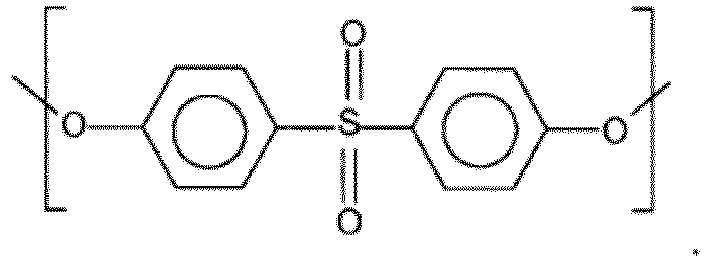
- Härtbares Gemisch gemäß Ansprüchen 1 bis 4, wobei die Polyimidkomponente aus wenigstens einem Polyimid der Formel (II) besteht, wobei A ausgewählt ist aus den folgenden difunktionellen Gruppen:a) Alkylen mit 2 bis 12 Kohlenstoffatomen;b) einer mono- oder dicarbocyclischen aliphatischen Gruppe;c) einer verbrückten multicyclischen aliphatischen Gruppe;d) einer heterocyclischen aliphatischen Gruppe;e) einer mono- oder dicarbocyclischen aromatischen Gruppe;f) einer verbrückten multicyclischen aromatischen Gruppe;g) einer heterocyclischen aromatischen Gruppe;h) einer der folgenden Gruppen:
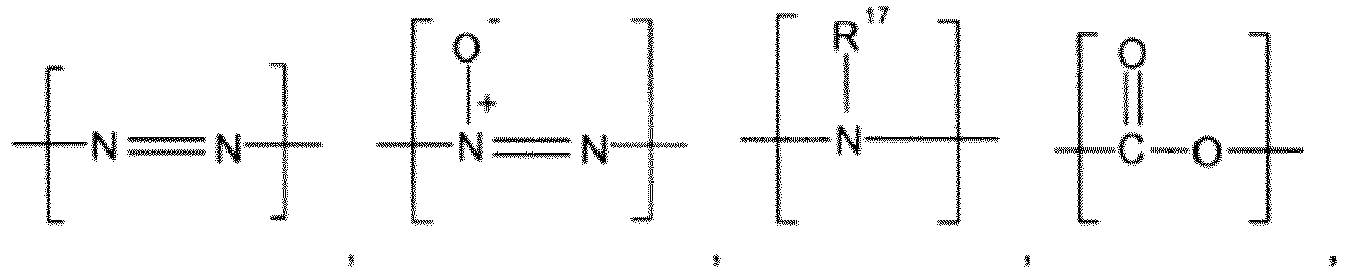

 wobei R17, R18, R19, R20, R21 und R23 gleich oder verschieden sind und jedes unabhängig von den anderen Alkyl mit 1 bis 6 Kohlenstoffatomen ist,und wobei R22 und R24 gleich oder verschieden sind und jedes unabhängig von dem anderen Alkylen mit 1 bis 6 Kohlenstoffatomen ist;i) einer Gruppe der Formel (IX),


- Härtbares Gemisch gemäß Ansprüchen 1 bis 5, wobei B in Formel (II) ausgewählt ist aus den folgenden Gruppen:

- Härtbares Gemisch gemäß Ansprüchen 1 bis 6, wobei die Polyimidkomponente aus wenigstens einem Polyimid ausgewählt aus 4,4'-Bismaleimidodiphenylmethan, Bis(3-methyl-5-ethyl-4-maleimidophenyl)methan, Bis(3,5-dimethyl-4-maleimidophenyl)methan, 4,4'-Bismaleimidodiphenylether, 4,4'-Bismaleimidodiphenylsulfon, 3,3'-Bismaleimidodiphenylsulfon, Bismaleimidodiphenylindan, 2,4-Bismaleimidotoluol, 2,6-Bismaleimidotoluol, 1,3-Bismaleimidobenzol, 1,2-Bismaleimidobenzol, 1,4-Bismaleimidobenzol, 1,2-Bismaleimidoethan, 1,6-Bismaleimidohexan, 1,6-Bismaleimido-(2,2,4-trimethyl)hexan, 1,6-Bismaleimido-(2,4,4-trimethyl)hexan, 1,4-Bismaleimidocyclohexan, 1,3-Bis(maleimidomethyl)cyclohexan, 1,4-Bis(maleimidomethyl)cyclohexan und 4,4'-Bismaleimidodicyclohexylmethan besteht.
- Härtbares Gemisch gemäß Ansprüchen 1 bis 7, wobei
RM % als 5 Gew.-% bis 70 Gew.-% definiert ist;
RP % als 1 Gew.-% bis 60 Gew.-% definiert ist; und
RC % als 20 Gew.-% bis 80 Gew.-% definiert ist. - Härtbares Gemisch gemäß Ansprüchen 1 bis 8, ferner umfassend:einen Härtungsbeschleuniger odereinen Härtungshemmer.
- Verfahren zum Herstellen eines härtbaren Gemischs gemäß Ansprüchen 1 bis 9, umfassend den Schritt:Mischen einer Comonomerkomponente gemäß Ansprüchen 1 bis 4, einer Polyimidkomponente gemäß Ansprüchen 1 und 5 bis 7 und eines Maleimids der Formel (I) gemäß Anspruch 1 bei einer Temperatur in dem Bereich von 60 °C bis 180 °C, um ein härtbares Gemisch als tiefschmelzende niederviskose Masse (Harz) zu erhalten.
- Verfahren zum Herstellen eines härtbaren Gemischs gemäß Ansprüchen 1 bis 9, umfassend die Schritte:Lösen einer Comonomerkomponente gemäß Ansprüchen 1 bis 4, einer Polyimidkomponente gemäß Ansprüchen 1 und 5 bis 7 und eines Maleimids der Formel (I) gemäß Anspruch 1 in einem Lösungsmittel undAbstreifen des Lösungsmittels, um ein härtbares Gemisch als lösungsmittelfreie tiefschmelzende niederviskose Masse (Harz) zu erhalten.
- Verfahren gemäß Anspruch 11, wobei das Lösungsmittel 1,3-Dioxolan oder ein 1,3-Dioxolan-enthaltendes Lösungsmittel ist.
- Verfahren zum Herstellen eines härtbaren Präpolymers, umfassend den Schritt:Halten eines härtbaren Gemischs gemäß Ansprüchen 1 bis 9 bei einer Temperatur in dem Bereich von 25 °C bis 280 °C für eine ausreichende Zeit, um ein Präpolymer zu erhalten, das bei Anwendung von Wärme und/oder Druck noch formbar ist.
- Härtbares Präpolymer, erhältlich gemäß dem Verfahren gemäß Anspruch 13.
- Verfahren zum Herstellen eines vernetzten Polymers, umfassend den Schritt:Erhitzen eines härtbaren Gemischs gemäß Ansprüchen 1 bis 9 oder eines härtbaren Präpolymers gemäß Anspruch 14 auf eine Temperatur in dem Bereich von 70 °C bis 280 °C für eine Zeit, die für vollständige Härtung ausreicht.
- Vernetztes Polymer, erhältlich gemäß dem Verfahren gemäß Anspruch 15.
- Verfahren zum Herstellen eines Verbundmaterials, umfassend die Schritte:Aufbringen oder Mischen eines härtbaren Gemischs in der Form eines niederviskosen, schmelzstabilen Harzes, erhältlich gemäß dem Verfahren gemäß Anspruch 10 oder 11, oder eines Präpolymers gemäß Anspruch 14 auf einen bzw. mit einem faserförmigen oder partikelförmigen Verstärkungsstoff (Füllstoff);und anschließend Härten.
- Verbundmaterial, erhältlich gemäß dem Verfahren gemäß Anspruch 17.
- Verwendung eines härtbaren Gemischs gemäß Ansprüchen 1 bis 9 für die Herstellung eines Präpolymers oder eines vernetzten Polymers.
Priority Applications (1)
| Application Number | Priority Date | Filing Date | Title |
|---|---|---|---|
| EP14709323.1A EP2978794B1 (de) | 2013-03-28 | 2014-03-12 | Härtbare mischungen basierend auf xylylenbismaleimid |
Applications Claiming Priority (3)
| Application Number | Priority Date | Filing Date | Title |
|---|---|---|---|
| EP13161579 | 2013-03-28 | ||
| PCT/EP2014/054824 WO2014154485A1 (en) | 2013-03-28 | 2014-03-12 | Curable mixtures based on xylylene bismaleimide |
| EP14709323.1A EP2978794B1 (de) | 2013-03-28 | 2014-03-12 | Härtbare mischungen basierend auf xylylenbismaleimid |
Publications (2)
| Publication Number | Publication Date |
|---|---|
| EP2978794A1 EP2978794A1 (de) | 2016-02-03 |
| EP2978794B1 true EP2978794B1 (de) | 2017-05-03 |
Family
ID=48013830
Family Applications (1)
| Application Number | Title | Priority Date | Filing Date |
|---|---|---|---|
| EP14709323.1A Active EP2978794B1 (de) | 2013-03-28 | 2014-03-12 | Härtbare mischungen basierend auf xylylenbismaleimid |
Country Status (8)
| Country | Link |
|---|---|
| US (1) | US9828468B2 (de) |
| EP (1) | EP2978794B1 (de) |
| JP (1) | JP6388909B2 (de) |
| CN (1) | CN105073836B (de) |
| CA (1) | CA2908183C (de) |
| ES (1) | ES2629379T3 (de) |
| PT (1) | PT2978794T (de) |
| WO (1) | WO2014154485A1 (de) |
Families Citing this family (15)
| Publication number | Priority date | Publication date | Assignee | Title |
|---|---|---|---|---|
| EP3144289A1 (de) * | 2015-09-16 | 2017-03-22 | Evonik Technochemie GmbH | [(2-ethoxy-5-trans-1-propen-1-yl)-phenoxyl]-terminierte verbindungen |
| CN107760026A (zh) * | 2016-08-18 | 2018-03-06 | 臻鼎科技股份有限公司 | 树脂组合物及应用该树脂组合物的胶片及覆铜板 |
| JP6859724B2 (ja) * | 2017-01-30 | 2021-04-14 | 三菱瓦斯化学株式会社 | 樹脂組成物、プリプレグ、金属箔張積層板、樹脂シート、及びプリント配線板 |
| JP7065832B2 (ja) * | 2017-04-19 | 2022-05-12 | 昭和電工株式会社 | 硬化性樹脂組成物、その硬化物、及びその硬化物を含む構造体 |
| CN106977717B (zh) * | 2017-04-26 | 2019-03-26 | 黑龙江省科学院石油化学研究院 | 一种含烯基酯基化合物及其制备方法和利用其改性的双马来酰亚胺树脂 |
| JP6867894B2 (ja) * | 2017-06-22 | 2021-05-12 | エア・ウォーター株式会社 | 組成物、エポキシ樹脂硬化剤、エポキシ樹脂組成物、熱硬化性組成物、硬化物、半導体装置、および層間絶縁材料 |
| CN109796745B (zh) * | 2017-11-16 | 2021-12-21 | 台光电子材料(昆山)有限公司 | 树脂组合物及由其制成的物品 |
| EP3632941B1 (de) * | 2018-10-01 | 2023-08-23 | Cubicure GmbH | Harzzusammensetzung |
| JP7576027B2 (ja) * | 2018-10-18 | 2024-10-30 | メルク パテント ゲゼルシャフト ミット ベシュレンクテル ハフツング | 誘電コポリマー材料 |
| JP7181525B2 (ja) * | 2018-11-05 | 2022-12-01 | 地方独立行政法人大阪産業技術研究所 | 電子部品保護膜用アリルフェノール-マレイミド共重合体を生成するための樹脂組成物、およびその共重合体からなる電子部品保護膜 |
| CN109749641B (zh) * | 2019-01-24 | 2021-04-09 | 黑龙江省科学院石油化学研究院 | 一种高耐温等级双马来酰亚胺结构胶膜及其制备方法和应用 |
| WO2020217674A1 (ja) * | 2019-04-26 | 2020-10-29 | Dic株式会社 | 硬化性樹脂組成物 |
| JP7756324B2 (ja) * | 2020-09-11 | 2025-10-20 | パナソニックIpマネジメント株式会社 | 樹脂組成物、プリプレグ、樹脂付きフィルム、樹脂付き金属箔、金属張積層板、及び配線板 |
| US20220411583A1 (en) * | 2021-06-23 | 2022-12-29 | Rolls-Royce Plc | Liquid processable bismaleimide-triazine resins |
| CN117050308A (zh) * | 2023-07-21 | 2023-11-14 | 航天特种材料及工艺技术研究所 | 一种适用于热压罐零吸胶工艺的低温固化、室温长贮存性双马树脂及制备方法 |
Family Cites Families (24)
| Publication number | Priority date | Publication date | Assignee | Title |
|---|---|---|---|---|
| US3127414A (en) | 1962-01-12 | 1964-03-31 | Du Pont | Preparation of m-phenylenedimaleimide |
| BE754723A (fr) | 1969-08-12 | 1971-02-11 | Rhone Poulenc Sa | Procede de preparation de |
| JPS5430440B2 (de) * | 1974-03-19 | 1979-10-01 | ||
| CH615935A5 (de) | 1975-06-19 | 1980-02-29 | Ciba Geigy Ag | |
| CH634558A5 (de) | 1978-04-06 | 1983-02-15 | Ciba Geigy Ag | Verfahren zur herstellung von aliphatischen n-substituierten maleinimiden. |
| US4351932A (en) * | 1980-03-27 | 1982-09-28 | Hitco | Bis-maleimide/divinyl aryl crosslinking agent resin system |
| EP0178546B1 (de) | 1984-10-15 | 1993-08-18 | Sumitomo Chemical Company, Limited | Hitzehärtbare Harzzusammensetzung |
| ES2058062T3 (es) | 1986-01-18 | 1994-11-01 | Technochemie Gmbh | Resinas curables. |
| CA1274048A (en) | 1986-07-15 | 1990-09-11 | Linda A. Domeier | Bismaleimide formulations containing olefinic ether modifiers |
| EP0296112A3 (de) * | 1987-06-18 | 1989-09-06 | Ciba-Geigy Ag | Lagerstabile härtbare Mischungen |
| US4855450A (en) | 1987-12-22 | 1989-08-08 | University Of Dayton | Process for the preparation of aromatic ether bismaleimides |
| US5747615A (en) | 1988-04-29 | 1998-05-05 | Cytec Technology Corp. | Slurry-mixed heat-curable resin systems having superior tack and drape |
| DE3828096A1 (de) | 1988-08-18 | 1990-02-22 | Technochemie Gmbh | Alkenylphenol modifizierte polyimide |
| JPH03139509A (ja) * | 1989-10-24 | 1991-06-13 | Nitto Denko Corp | 粉体樹脂組成物 |
| DE4024193A1 (de) | 1990-07-30 | 1992-02-06 | Technochemie Gmbh | Mit neuen alkenylphenoxyalkanen modifizierte polyimide, deren verwendung sowie die neuen alkenylphenoxyalkane |
| JPH04202252A (ja) * | 1990-11-29 | 1992-07-23 | Nippon Oil & Fats Co Ltd | クロロスルホン化ポリエチレン組成物 |
| JPH0762057B2 (ja) * | 1990-11-30 | 1995-07-05 | 積水フアインケミカル株式会社 | 硬化性組成物 |
| JP3250044B2 (ja) * | 1991-06-03 | 2002-01-28 | バンティコ アクチエンゲゼルシャフト | 改良された加工特性を備える貯蔵安定なポリイミドプレプレグ |
| CN101166790B (zh) * | 2005-04-28 | 2012-10-03 | Cytec技术有限公司 | 制造性能改善的双马来酰亚胺树脂体系 |
| US8043534B2 (en) | 2005-10-21 | 2011-10-25 | Designer Molecules, Inc. | Maleimide compositions and methods for use thereof |
| JP2007308676A (ja) * | 2006-04-18 | 2007-11-29 | Mitsubishi Gas Chem Co Inc | 熱硬化性ポリイミド樹脂組成物及びその硬化物 |
| TWI342323B (en) * | 2007-01-22 | 2011-05-21 | Chang Chun Plastics Co Ltd | Thermoset resin modified polyimide resin composition |
| JP5381146B2 (ja) * | 2008-03-31 | 2014-01-08 | 三菱樹脂株式会社 | 繊維強化プリプレグ及び硬化物 |
| US8686162B2 (en) | 2010-08-25 | 2014-04-01 | Designer Molecules Inc, Inc. | Maleimide-functional monomers in amorphous form |
-
2014
- 2014-03-12 JP JP2016504551A patent/JP6388909B2/ja active Active
- 2014-03-12 PT PT147093231T patent/PT2978794T/pt unknown
- 2014-03-12 CN CN201480018838.1A patent/CN105073836B/zh active Active
- 2014-03-12 CA CA2908183A patent/CA2908183C/en active Active
- 2014-03-12 US US14/779,189 patent/US9828468B2/en active Active
- 2014-03-12 ES ES14709323.1T patent/ES2629379T3/es active Active
- 2014-03-12 EP EP14709323.1A patent/EP2978794B1/de active Active
- 2014-03-12 WO PCT/EP2014/054824 patent/WO2014154485A1/en not_active Ceased
Also Published As
| Publication number | Publication date |
|---|---|
| CN105073836A (zh) | 2015-11-18 |
| CN105073836B (zh) | 2017-06-27 |
| CA2908183C (en) | 2020-12-29 |
| JP2016514742A (ja) | 2016-05-23 |
| CA2908183A1 (en) | 2014-10-02 |
| US9828468B2 (en) | 2017-11-28 |
| EP2978794A1 (de) | 2016-02-03 |
| WO2014154485A1 (en) | 2014-10-02 |
| JP6388909B2 (ja) | 2018-09-12 |
| US20160053054A1 (en) | 2016-02-25 |
| PT2978794T (pt) | 2017-07-05 |
| ES2629379T3 (es) | 2017-08-09 |
| US20160264735A2 (en) | 2016-09-15 |
Similar Documents
| Publication | Publication Date | Title |
|---|---|---|
| CA2908183C (en) | Curable mixtures based on xylylene bismaleimide | |
| EP0672044A1 (de) | Bisnadimide | |
| EP3350150B1 (de) | Alkenylphenoxy-substituierte 1,1-diphenylethylene, verfahren zu deren herstellung und deren verwendung | |
| JP6567067B2 (ja) | [(2−エトキシ−5−trans−1−プロペン−1−イル)−フェノキシル]末端化合物 | |
| CA3226883A1 (en) | Novel bismaleimide compounds having improved solubility and their use in curable compositions | |
| GGL et al. | Polyimides, eg bismaleimide functional compounds, are useful monomers that have found wide applications in composite resins, adhesives, and moulding compounds. Such polyimides are known to be capable of polymerizing to yield polymerization-and polyadoition products possessing high glass transition temperature, high modulus, and good heat resistanCe properties. | |
| HK1254378B (zh) | [(2-乙氧基-5-反式-1-丙烯-1-基)-苯氧基]封端化合物 | |
| HK1254379B (zh) | 烯基苯氧基取代的1,1-二苯基乙烯、它们的制备方法和它们的用途 | |
| WO2017108946A1 (en) | Thermosetting resin compositions |
Legal Events
| Date | Code | Title | Description |
|---|---|---|---|
| PUAI | Public reference made under article 153(3) epc to a published international application that has entered the european phase |
Free format text: ORIGINAL CODE: 0009012 |
|
| 17P | Request for examination filed |
Effective date: 20150923 |
|
| AK | Designated contracting states |
Kind code of ref document: A1 Designated state(s): AL AT BE BG CH CY CZ DE DK EE ES FI FR GB GR HR HU IE IS IT LI LT LU LV MC MK MT NL NO PL PT RO RS SE SI SK SM TR |
|
| AX | Request for extension of the european patent |
Extension state: BA ME |
|
| DAX | Request for extension of the european patent (deleted) | ||
| GRAP | Despatch of communication of intention to grant a patent |
Free format text: ORIGINAL CODE: EPIDOSNIGR1 |
|
| INTG | Intention to grant announced |
Effective date: 20161110 |
|
| GRAS | Grant fee paid |
Free format text: ORIGINAL CODE: EPIDOSNIGR3 |
|
| GRAA | (expected) grant |
Free format text: ORIGINAL CODE: 0009210 |
|
| AK | Designated contracting states |
Kind code of ref document: B1 Designated state(s): AL AT BE BG CH CY CZ DE DK EE ES FI FR GB GR HR HU IE IS IT LI LT LU LV MC MK MT NL NO PL PT RO RS SE SI SK SM TR |
|
| REG | Reference to a national code |
Ref country code: GB Ref legal event code: FG4D |
|
| REG | Reference to a national code |
Ref country code: AT Ref legal event code: REF Ref document number: 889908 Country of ref document: AT Kind code of ref document: T Effective date: 20170515 Ref country code: CH Ref legal event code: EP |
|
| REG | Reference to a national code |
Ref country code: IE Ref legal event code: FG4D |
|
| REG | Reference to a national code |
Ref country code: DE Ref legal event code: R096 Ref document number: 602014009294 Country of ref document: DE |
|
| REG | Reference to a national code |
Ref country code: PT Ref legal event code: SC4A Ref document number: 2978794 Country of ref document: PT Date of ref document: 20170705 Kind code of ref document: T Free format text: AVAILABILITY OF NATIONAL TRANSLATION Effective date: 20170623 |
|
| REG | Reference to a national code |
Ref country code: ES Ref legal event code: FG2A Ref document number: 2629379 Country of ref document: ES Kind code of ref document: T3 Effective date: 20170809 Ref country code: NL Ref legal event code: FP |
|
| REG | Reference to a national code |
Ref country code: LT Ref legal event code: MG4D |
|
| PG25 | Lapsed in a contracting state [announced via postgrant information from national office to epo] |
Ref country code: GR Free format text: LAPSE BECAUSE OF FAILURE TO SUBMIT A TRANSLATION OF THE DESCRIPTION OR TO PAY THE FEE WITHIN THE PRESCRIBED TIME-LIMIT Effective date: 20170804 Ref country code: LT Free format text: LAPSE BECAUSE OF FAILURE TO SUBMIT A TRANSLATION OF THE DESCRIPTION OR TO PAY THE FEE WITHIN THE PRESCRIBED TIME-LIMIT Effective date: 20170503 Ref country code: NO Free format text: LAPSE BECAUSE OF FAILURE TO SUBMIT A TRANSLATION OF THE DESCRIPTION OR TO PAY THE FEE WITHIN THE PRESCRIBED TIME-LIMIT Effective date: 20170803 Ref country code: HR Free format text: LAPSE BECAUSE OF FAILURE TO SUBMIT A TRANSLATION OF THE DESCRIPTION OR TO PAY THE FEE WITHIN THE PRESCRIBED TIME-LIMIT Effective date: 20170503 Ref country code: FI Free format text: LAPSE BECAUSE OF FAILURE TO SUBMIT A TRANSLATION OF THE DESCRIPTION OR TO PAY THE FEE WITHIN THE PRESCRIBED TIME-LIMIT Effective date: 20170503 |
|
| PG25 | Lapsed in a contracting state [announced via postgrant information from national office to epo] |
Ref country code: SE Free format text: LAPSE BECAUSE OF FAILURE TO SUBMIT A TRANSLATION OF THE DESCRIPTION OR TO PAY THE FEE WITHIN THE PRESCRIBED TIME-LIMIT Effective date: 20170503 Ref country code: RS Free format text: LAPSE BECAUSE OF FAILURE TO SUBMIT A TRANSLATION OF THE DESCRIPTION OR TO PAY THE FEE WITHIN THE PRESCRIBED TIME-LIMIT Effective date: 20170503 Ref country code: BG Free format text: LAPSE BECAUSE OF FAILURE TO SUBMIT A TRANSLATION OF THE DESCRIPTION OR TO PAY THE FEE WITHIN THE PRESCRIBED TIME-LIMIT Effective date: 20170803 Ref country code: IS Free format text: LAPSE BECAUSE OF FAILURE TO SUBMIT A TRANSLATION OF THE DESCRIPTION OR TO PAY THE FEE WITHIN THE PRESCRIBED TIME-LIMIT Effective date: 20170903 Ref country code: PL Free format text: LAPSE BECAUSE OF FAILURE TO SUBMIT A TRANSLATION OF THE DESCRIPTION OR TO PAY THE FEE WITHIN THE PRESCRIBED TIME-LIMIT Effective date: 20170503 Ref country code: LV Free format text: LAPSE BECAUSE OF FAILURE TO SUBMIT A TRANSLATION OF THE DESCRIPTION OR TO PAY THE FEE WITHIN THE PRESCRIBED TIME-LIMIT Effective date: 20170503 |
|
| PG25 | Lapsed in a contracting state [announced via postgrant information from national office to epo] |
Ref country code: RO Free format text: LAPSE BECAUSE OF FAILURE TO SUBMIT A TRANSLATION OF THE DESCRIPTION OR TO PAY THE FEE WITHIN THE PRESCRIBED TIME-LIMIT Effective date: 20170503 Ref country code: EE Free format text: LAPSE BECAUSE OF FAILURE TO SUBMIT A TRANSLATION OF THE DESCRIPTION OR TO PAY THE FEE WITHIN THE PRESCRIBED TIME-LIMIT Effective date: 20170503 Ref country code: SK Free format text: LAPSE BECAUSE OF FAILURE TO SUBMIT A TRANSLATION OF THE DESCRIPTION OR TO PAY THE FEE WITHIN THE PRESCRIBED TIME-LIMIT Effective date: 20170503 Ref country code: DK Free format text: LAPSE BECAUSE OF FAILURE TO SUBMIT A TRANSLATION OF THE DESCRIPTION OR TO PAY THE FEE WITHIN THE PRESCRIBED TIME-LIMIT Effective date: 20170503 Ref country code: CZ Free format text: LAPSE BECAUSE OF FAILURE TO SUBMIT A TRANSLATION OF THE DESCRIPTION OR TO PAY THE FEE WITHIN THE PRESCRIBED TIME-LIMIT Effective date: 20170503 |
|
| REG | Reference to a national code |
Ref country code: DE Ref legal event code: R097 Ref document number: 602014009294 Country of ref document: DE |
|
| PG25 | Lapsed in a contracting state [announced via postgrant information from national office to epo] |
Ref country code: SM Free format text: LAPSE BECAUSE OF FAILURE TO SUBMIT A TRANSLATION OF THE DESCRIPTION OR TO PAY THE FEE WITHIN THE PRESCRIBED TIME-LIMIT Effective date: 20170503 |
|
| PLBE | No opposition filed within time limit |
Free format text: ORIGINAL CODE: 0009261 |
|
| STAA | Information on the status of an ep patent application or granted ep patent |
Free format text: STATUS: NO OPPOSITION FILED WITHIN TIME LIMIT |
|
| REG | Reference to a national code |
Ref country code: FR Ref legal event code: PLFP Year of fee payment: 5 |
|
| 26N | No opposition filed |
Effective date: 20180206 |
|
| PG25 | Lapsed in a contracting state [announced via postgrant information from national office to epo] |
Ref country code: SI Free format text: LAPSE BECAUSE OF FAILURE TO SUBMIT A TRANSLATION OF THE DESCRIPTION OR TO PAY THE FEE WITHIN THE PRESCRIBED TIME-LIMIT Effective date: 20170503 |
|
| PG25 | Lapsed in a contracting state [announced via postgrant information from national office to epo] |
Ref country code: MC Free format text: LAPSE BECAUSE OF FAILURE TO SUBMIT A TRANSLATION OF THE DESCRIPTION OR TO PAY THE FEE WITHIN THE PRESCRIBED TIME-LIMIT Effective date: 20170503 |
|
| PG25 | Lapsed in a contracting state [announced via postgrant information from national office to epo] |
Ref country code: LU Free format text: LAPSE BECAUSE OF NON-PAYMENT OF DUE FEES Effective date: 20180312 |
|
| REG | Reference to a national code |
Ref country code: AT Ref legal event code: UEP Ref document number: 889908 Country of ref document: AT Kind code of ref document: T Effective date: 20170503 |
|
| REG | Reference to a national code |
Ref country code: DE Ref legal event code: R081 Ref document number: 602014009294 Country of ref document: DE Owner name: EVONIK OPERATIONS GMBH, DE Free format text: FORMER OWNER: EVONIK DEGUSSA GMBH, 45128 ESSEN, DE |
|
| PG25 | Lapsed in a contracting state [announced via postgrant information from national office to epo] |
Ref country code: MT Free format text: LAPSE BECAUSE OF NON-PAYMENT OF DUE FEES Effective date: 20180312 |
|
| REG | Reference to a national code |
Ref country code: CH Ref legal event code: PFA Owner name: EVONIK OPERATIONS GMBH, DE Free format text: FORMER OWNER: EVONIK DEGUSSA GMBH, DE |
|
| REG | Reference to a national code |
Ref country code: ES Ref legal event code: PC2A Owner name: EVONIK OPERATIONS GMBH Effective date: 20200624 |
|
| PG25 | Lapsed in a contracting state [announced via postgrant information from national office to epo] |
Ref country code: MK Free format text: LAPSE BECAUSE OF NON-PAYMENT OF DUE FEES Effective date: 20170503 Ref country code: CY Free format text: LAPSE BECAUSE OF FAILURE TO SUBMIT A TRANSLATION OF THE DESCRIPTION OR TO PAY THE FEE WITHIN THE PRESCRIBED TIME-LIMIT Effective date: 20170503 Ref country code: HU Free format text: LAPSE BECAUSE OF FAILURE TO SUBMIT A TRANSLATION OF THE DESCRIPTION OR TO PAY THE FEE WITHIN THE PRESCRIBED TIME-LIMIT; INVALID AB INITIO Effective date: 20140312 |
|
| PG25 | Lapsed in a contracting state [announced via postgrant information from national office to epo] |
Ref country code: AL Free format text: LAPSE BECAUSE OF FAILURE TO SUBMIT A TRANSLATION OF THE DESCRIPTION OR TO PAY THE FEE WITHIN THE PRESCRIBED TIME-LIMIT Effective date: 20170503 |
|
| REG | Reference to a national code |
Ref country code: BE Ref legal event code: HC Owner name: EVONIK OPERATIONS GMBH; DE Free format text: DETAILS ASSIGNMENT: CHANGE OF OWNER(S), CHANGEMENT DE NOM DU PROPRIETAIRE; FORMER OWNER NAME: EVONIK DEGUSSA GMBH Effective date: 20200403 |
|
| REG | Reference to a national code |
Ref country code: NL Ref legal event code: HC Owner name: EVONIK OPERATIONS GMBH; DE Free format text: DETAILS ASSIGNMENT: CHANGE OF OWNER(S), CHANGE OF OWNER(S) NAME Effective date: 20200928 |
|
| REG | Reference to a national code |
Ref country code: AT Ref legal event code: HC Ref document number: 889908 Country of ref document: AT Kind code of ref document: T Owner name: EVONIK OPERATIONS GMBH, DE Effective date: 20210315 |
|
| P01 | Opt-out of the competence of the unified patent court (upc) registered |
Effective date: 20230526 |
|
| PGFP | Annual fee paid to national office [announced via postgrant information from national office to epo] |
Ref country code: ES Payment date: 20250429 Year of fee payment: 12 |
|
| PGFP | Annual fee paid to national office [announced via postgrant information from national office to epo] |
Ref country code: CH Payment date: 20250401 Year of fee payment: 12 |
|
| REG | Reference to a national code |
Ref country code: CH Ref legal event code: U11 Free format text: ST27 STATUS EVENT CODE: U-0-0-U10-U11 (AS PROVIDED BY THE NATIONAL OFFICE) Effective date: 20260401 |
|
| PGFP | Annual fee paid to national office [announced via postgrant information from national office to epo] |
Ref country code: GB Payment date: 20260324 Year of fee payment: 13 |
|
| PGFP | Annual fee paid to national office [announced via postgrant information from national office to epo] |
Ref country code: DE Payment date: 20260319 Year of fee payment: 13 Ref country code: IE Payment date: 20260319 Year of fee payment: 13 |
|
| PGFP | Annual fee paid to national office [announced via postgrant information from national office to epo] |
Ref country code: AT Payment date: 20260320 Year of fee payment: 13 |
|
| PGFP | Annual fee paid to national office [announced via postgrant information from national office to epo] |
Ref country code: BE Payment date: 20260319 Year of fee payment: 13 Ref country code: IT Payment date: 20260324 Year of fee payment: 13 |
|
| PGFP | Annual fee paid to national office [announced via postgrant information from national office to epo] |
Ref country code: NL Payment date: 20260319 Year of fee payment: 13 |
|
| PGFP | Annual fee paid to national office [announced via postgrant information from national office to epo] |
Ref country code: FR Payment date: 20260320 Year of fee payment: 13 |
|
| PGFP | Annual fee paid to national office [announced via postgrant information from national office to epo] |
Ref country code: TR Payment date: 20260304 Year of fee payment: 13 |
|
| PGFP | Annual fee paid to national office [announced via postgrant information from national office to epo] |
Ref country code: PT Payment date: 20260226 Year of fee payment: 13 |