EP2979462B1 - Procédé et système pour faciliter une itinérance lte entre opérateurs domestique et visité - Google Patents
Procédé et système pour faciliter une itinérance lte entre opérateurs domestique et visité Download PDFInfo
- Publication number
- EP2979462B1 EP2979462B1 EP14775777.7A EP14775777A EP2979462B1 EP 2979462 B1 EP2979462 B1 EP 2979462B1 EP 14775777 A EP14775777 A EP 14775777A EP 2979462 B1 EP2979462 B1 EP 2979462B1
- Authority
- EP
- European Patent Office
- Prior art keywords
- lte
- hpmn
- gateway
- vpmn
- roaming
- Prior art date
- Legal status (The legal status is an assumption and is not a legal conclusion. Google has not performed a legal analysis and makes no representation as to the accuracy of the status listed.)
- Active
Links
Images






Classifications
-
- H—ELECTRICITY
- H04—ELECTRIC COMMUNICATION TECHNIQUE
- H04W—WIRELESS COMMUNICATION NETWORKS
- H04W8/00—Network data management
- H04W8/02—Processing of mobility data, e.g. registration information at HLR [Home Location Register] or VLR [Visitor Location Register]; Transfer of mobility data, e.g. between HLR, VLR or external networks
- H04W8/08—Mobility data transfer
- H04W8/12—Mobility data transfer between location registers or mobility servers
-
- H—ELECTRICITY
- H04—ELECTRIC COMMUNICATION TECHNIQUE
- H04W—WIRELESS COMMUNICATION NETWORKS
- H04W12/00—Security arrangements; Authentication; Protecting privacy or anonymity
- H04W12/06—Authentication
-
- H—ELECTRICITY
- H04—ELECTRIC COMMUNICATION TECHNIQUE
- H04W—WIRELESS COMMUNICATION NETWORKS
- H04W4/00—Services specially adapted for wireless communication networks; Facilities therefor
- H04W4/12—Messaging; Mailboxes; Announcements
- H04W4/14—Short messaging services, e.g. short message services [SMS] or unstructured supplementary service data [USSD]
-
- H—ELECTRICITY
- H04—ELECTRIC COMMUNICATION TECHNIQUE
- H04W—WIRELESS COMMUNICATION NETWORKS
- H04W76/00—Connection management
- H04W76/10—Connection setup
- H04W76/12—Setup of transport tunnels
Definitions
- the present disclosure generally relates to telecommunication. More specifically, the disclosure relates to method and system for enabling and facilitating roaming of subscribers equipped with Long-Term Evolution (LTE) devices between a Visited Public Mobile Network (VPMN) and a Home Public Mobile Network (HPMN) under certain circumstances that are not supported by standards promulgated by the Third Generation Partnership Project (3GPP) or the Global Standard for Mobile Communications Association (GSMA).
- LTE Long-Term Evolution
- VPMN Visited Public Mobile Network
- HPMN Home Public Mobile Network
- 3GPP Third Generation Partnership Project
- GSMA Global Standard for Mobile Communications Association
- 2G Global System for Mobile communications
- GPRS General Packet Radio Service
- EDGE Enhanced Data rates for GSM Evolution
- UMTS Universal Mobile Telecommunications System
- LTE commonly denominates the 3GPP Evolved Packet System (EPS) as well as its Evolved-Universal Terrestrial Radio Access.
- EPS Evolved Packet System
- LTE technology offers a wireless broadband system with higher data rates, lower latency, and higher spectrum efficiency.
- the LTE technology also introduces an Evolved Core Network (EPC) which is based on new interfaces and protocols.
- the EPC is using Internet Protocol and Diameter as main supporting protocols, while the legacy core network rather used the SS7 or C7 signaling paradigm.
- LTE roaming however, remains underdeveloped. There are several issues that limit the potential capability of LTE roaming. The first one is the spectrum spread (44 3GPP defined frequency bands) but it tends to become less and less true as the chipset and device manufacturers are supporting more and more frequency bands in a LTE device. At the same time, LTE1800 is widely adopted by 43% of the commercial networks and already enables roaming in a large number of destinations. In a longer run, the Asia-Pacific Telecommunity 700 MHz (APT700) appears to be gaining momentum and may become the long-term worldwide LTE roaming frequency band.
- APT700 Asia-Pacific Telecommunity 700 MHz
- LTE subscribers are high average revenue per user (ARPU) roamers that could provide an increase of revenues to both the home and visited operators if LTE roaming is enabled.
- ARPU average revenue per user
- Some visited operators have an LTE access network and 2G/3G roaming agreements but no LTE roaming agreement. These visited operators would like to allow subscribers equipped with a LTE device and associated with another operator (with which the subscribers have a 2G/3G roaming agreement) to roam on the visited operator LTE network. Likewise, some home operators that have no LTE access network would like to allow their subscribers equipped with a LTE device to roam onto the LTE access network of operators with whom the home operators have an LTE roaming agreement. Additionally, some roaming hub operators have LTE roaming agreements with visited operators and 2G/3G roaming agreements with a home operator. These roaming hub operators may also seek to provide the above-mentioned use-cases as a service to the home and visited operators.
- the HPMN may wish to avoid upgrading its internal infrastructure to comply with the standard implementation (i.e., upgrade its HLRs for supporting LTE security parameters (KASME) and the Gr+ (Gr Plus) interface.
- KASME LTE security parameters
- Gr+ Gr+
- a PLMN may comprise one or more wireless communication networks, e.g., an LTE network, a UMTS network, a GSM network, etc.
- a VPLMN and a HPLMN may be deployed by different network operators, which may have a roaming agreement.
- US2010/0190497 discloses according to the abstract a method of controlling an attach procedure of a device to a telecommunications network following receipt of an attach rejection from the telecommunications network, the method including assessing the authenticity of the attach rejection, and selecting a criterion for performing a subsequent attach attempt by the device to the network in dependence upon the authenticity assessment.
- the authenticity may be assessed by determining whether the rejection was received by an authenticated communication link or a signed message.
- the authenticity may also be assessed by checking that the cause of the reject is consistent with information held by the device.
- the selected criterion may be power cycling of the device or the passage of a time period.
- the present invention provides a method for managing mobile device roaming according to claim 1 and a system according to claim 12. Embodiments of the invention are defined in the dependent claims.
- an example method includes a Diameter S6a interface to Mobile Application Part (MAP) Gr interface interworking function for receiving Diameter messages for a subscriber in a visited network.
- the example method may further include transforming the Diameter into MAP messages, and vice versa.
- the method may further include deriving EPS authentication vectors from UMTS vectors received from HLR and deriving LTE subscription parameters from GPRS subscription parameters received from the HLR.
- the example method may include utilizing a GTPv2-c S8 interface interworking function for changing GTPv2-c messages into GTPv1-c for a subscriber in a visited network. In an aspect, this may include mapping GTPv2-c message parameters into GTPv1-c parameters.
- LTERoaming4All at least these aspects of the example system and method disclosed herein may be referred to as "LTERoaming4All.”
- the present disclosure provides example systems, apparatuses, and methods for facilitating LTE roaming. Aspects of the present disclosure allow a subscriber from a HPMN equipped with a LTE device to roam on a LTE capable VPMN.
- an LTERoaming4All module can be implemented in different networks to facilitate LTE roaming under certain circumstances that are not presently implemented by the 3GPP standard or the GSMA. When deployed in the VPMN, the LTERoaming4All module facilitates improved LTE roaming capability, as there is no need of LTE roaming agreement between the VPMN and the HPMN according to aspects of the present disclosure.
- existing legacy interfaces are used for interconnecting with the HPMN.
- the LTERoaming4All module when deployed in the VPMN, is configured to provide a local IP connection to the Internet. Additionally or alternatively, when deployed in a non-LTE HPMN (i.e., not having upgraded its HLR with Gr+ (Gr Plus) capabilities) LTERoaming4All enables LTE roaming of HPMN subscribers equipped with LTE devices onto the VPMN LTE access network. Furthermore, when deployed in a roaming hub network, the LTERoaming4All module may be configured to realize improved roaming in the above-mentioned use-cases and enables hub solution providers to resell those implementations to HPMN and VPMN.
- an LTERoaming4All module in its infrastructure to implement one or more of the example solutions described in the present disclosure.
- This module enables efficient interworking between the LTE roaming interfaces S6a Diameter and Gr MAP, as well as between the S8 GTPv2-c interface and the Gp GTPv1-c interface.
- FIG. 1 illustrates a system 100 that implements an LTERoaming4All 102 solution in a VPMN 108, in accordance with an example aspect of the present disclosure.
- LTERoaming4All module 102 may be deployed in VPMN 108 to enable inbound roaming of subscribers of HPMN 104 equipped with LTE device 106, which may be compatible with VPMN 108 LTE frequency bands, and where HPMN 104 and VPMN 108 have no LTE roaming agreement.
- LTE device 106 which may be compatible with VPMN 108 LTE frequency bands, and where HPMN 104 and VPMN 108 have no LTE roaming agreement.
- This enables a subscriber associated with HPMN 104 to register with VPMN 108 and enables VPMN 108 to authenticate the subscriber associated with HPMN 104. It also enables the subscriber to utilize an IP connection in the LTE access network with its HPMN 104 GGSN 122.
- system 100 may represent one or more network elements configured to interconnect the HPMN 104 and the VPMN 108.
- HPMN 104 may include an HLR 124 that connects to a STP-H 118 in HPMN 104 over a Signaling System 7 (SS7) link, a GGSN 122 that connects to a BGW-H 120 in HPMN 104 over an Internet Protocol (IP) network, and a DNS-H 126 that connects to LTERoaming4All module 102 in VPMN 108 over the IP network.
- SS7 Signaling System 7
- IP Internet Protocol
- System 100 further includes an MME 110 in VPMN 108 that connects to the LTERoaming4All module 102 over a Diameter connection, and an SGW 112 that connects to LTERoamign4AII 102 module over an IP network.
- the MME 110 further connects to the DNS-V 128 and to the SGW 112.
- LTERoaming4All module 102 connects with STP-V 114 over a Signaling System 7 (SS7) link and to BGW-V 116 over an IP network within VPMN 108.
- LTERoaming4All module 102 allows LTE roaming of subscriber of HPMN 104 into LTE access network of VPMN 108 without HPMN 104 and VPMN 108 implementing an LTE roaming agreement.
- HPMN 104 and VPMN 108 may also include various other network components (not shown in FIG. 1 ), depending on the architecture under consideration.
- FIG. 2 illustrates a system 138 that implements the LTERoaming4All 102 solution in the HPMN 104, in accordance with an aspect of the present disclosure.
- LTERoaming4AII module 102 may be deployed in HPMN 104 to enable outbound roaming of HPMN 104 subscribers in VPMN 108, for example, when the subscriber is equipped with an LTE device 106 that is compatible with VPMN 108 LTE frequency bands, and where HPMN 104 has no LTE access network or Evolved Packet Core that would enable the interworking between the HPMN 104 and the VPMN 108.
- This enables the subscriber from HPMN 104 to register in VPMN 108 and allows the VPMN 108 to authenticate the subscriber. It also enables the subscriber to establish and utilize an IP connection in the LTE access network with its HPMN GGSN 122.
- system 138 represents network elements configured to interconnect the HPMN 104 and the VPMN 108.
- HPMN 104 includes a Home Location Register (HLR) 124 that connects over a Signaling System 7 (SS7) link to LTERoaming4AII module 102, a GGSN 122 connected over IP network to LTERoaming4All module 102 and a DNS-H 126 that connects over IP network to LTERoaming4All module 102.
- System 138 further includes in VPMN 108 a MME 110 that connects to the DEA-V 132 over a Diameter connection, and an SGW 112 that connects to BGW-V 116 over an IP network.
- the MME 110 further connects to the DNS-V 128 and to SGW 112. It will also be apparent to a person skilled in the art that HPMN 104 and VPMN 108 may also include various other network components (not shown in FIG. 2 ), depending on the architecture under consideration.
- LTERoaming4AII module 102 connects with DEA-H 130 over a Diameter connection and to BGW-H 120 over an IP network within HPMN 104.
- LTERoaming4All module 102 may be configured to allow LTE roaming of subscriber of non-LTE HPMN 104 into LTE access network of VPMN 108.
- FIG. 3 illustrates a system 140 that implements the LTERoaming4All 102 solution in a roaming HUB 134 network, in accordance with an aspect of the present disclosure.
- LTERoaming4All module 102 is deployed in the roaming HUB 134 network to enable outbound roaming of subscribers equipped with LTE device 106, wherein the LTE device 106 is compatible with VPMN 108 LTE frequency bands.
- the subscriber and associated LTE device 106 may be relocating from HPMN 104, and HPMN 104 may have no LTE access network.
- LTERoaming4All module 102 may enable inbound roaming of subscribers equipped with LTE devices 106 compatible with VPMN 108 LTE frequency bands and coming from HPMN 104, wherein VPMN 108 and HPMN 104 have no LTE roaming agreement. This may enable the subscriber from HPMN 104 to register in VPMN 108 and may enable VPMN 108 to authenticate the subscriber and its associated LTE device 106. It also enables the subscriber to establish and utilize an IP connection in the LTE access network with its HPMN GGSN 122.
- system 140 may represent one or more network elements configured to interconnect the HPMN 104 and the VPMN 108.
- HPMN 104 may include an HLR 124 that connects over a Signaling System 7 (SS7) link to STP-H 118, a GGSN 122 connected to BGW-H 120 over an IP network, and a DNS-H 126 that connects to LTERoaming4All module 102 over the IP network.
- system 140 may further include an MME 110 associated with VPMN 108 that connects to the DEA-V 132 over a Diameter connection and a SGW 112 that connects to BGW-V 116 over an IP network. The MME 110 further connects to the DNS-V 128.
- HPMN 104 and VPMN 108 may also include various other network components (not shown in FIG. 3 ), depending on the architecture under consideration.
- LTERoaming4All module 102 may connect with DEA-V 132 over a Diameter connection, and may connect to BGW-V 116 over an IP network within VPMN 108. LTERoaming4All module 102 may further connect with STP-H 118 within HPMN 104 over a Signaling System 7 (SS7) link, and may connect to BGW-H 120 within HPMN 104 over an IP network. In an aspect, LTERoaming4All module 102 may allow LTE roaming of subscriber 106 associated with non-LTE HPMN 104 into an LTE access network of VPMN 108 when the roaming agreements are managed by a roaming HUB 134 and the HUB 134 as no LTE roaming agreement with the HPMN 104.
- SS7 Signaling System 7
- FIG. 4 illustrates how LTERoaming4All module 102 can be further configured to execute two unique and interworking functions.
- One such function may manage the interworking between the Diameter S6a interface and the MAP Gr interface, in accordance with an aspect of the present disclosure.
- the second function may manage the interworking between the GTPv2-c S8 interface and the GTPv1-c Gp one, in accordance with an aspect of the present disclosure.
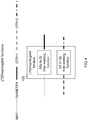
- FIG. 5 illustrates a sub-system component of the LTERoaming4All module 102 that performs the interworking between the Diameter S6a interface and the MAP Gr interface, in accordance with an aspect of the present disclosure.
- the sub-system component may be configured to implement three functions to enhance the scenario 1 described in 3GPP TS 29.305 such that the pre-3GPP Release 8 HLR 124 must not be upgraded to support Rel-8 EPS security and to transfer of Rel-8 security parameters.
- the three functions may comprise the MAP to Diameter interworking function, a Key Derivation Function, and a GPRS to EPS subscription mapping function.
- FIG. 6 illustrates the standard Key Derivation Function as defined in TS 33.401, which may implemented in LTERoaming4All 102 solution:
- FIG. 7 represents a flow diagram illustrating the Evolved Mobility Management ATTACH procedure between the subscriber's LTE device 106, the MME 110, and the HLR 124, in accordance with an example aspect of the present disclosure.
- the subscriber's LTE device 106 may send an ATTACH request to the MME 108.
- the MME 110 may send a Diameter AuthenticationInformationRequest message to the LTERoaming4All module 102.
- the LTERoaming4All module 102 may change the Diameter AuthenticationInformationRequest into a MAP Send-Authentication-Information-Request, and may route the MAP Send-Authentication-Information-Request onward to the HLR 124.
- the HLR 124 may send a MAP Send-Authentication-Information-Response back to the LTERoaming4All module 102 with the 3G authentication vectors (RAND, Expected User Response (XRES), CK, IK, Authentication Token (AUTN)).
- the LTERoaming4All module 102 may derive the KASME from the received confidentiality key (CK), integrity key (IK), and the ServingNetworkId.
- the LTERoaming4All module 102 may be configured to transform the MAP Send-Authentication-Information-Response into a Diameter AuthenticationInformationResponse, replace the 3G authentication vectors by EPS vectors (RAND, XRES, KASME, AUTN), and send back the Diameter AuthenticationInformationResponse to the MME 110.
- the MME 110 may then authenticate the subscriber.
- the MME 110 may continue the ATTACH procedure by sending a Diameter UpdateLocationRequest message to the LTERoaming4All module 102.
- the LTERoaming4All module 102 may change the Diameter UpdateLocationRequest into a MAP Update-GPRS-Location-Request and may route the MAP Update-GPRS-Location-Request onward to the HLR 124. Furthermore, several MAP InsertSubscriberlnformation requests and responses may be exchanged between the LTERoaming4All module 102 and the HLR 124, and may carry some or all of the GPRS subscription information. Once the exchange is completed, the HLR 124 may send back a MAP Update-GPRS-Location-Response message to the LTERoaming4All module 102.
- LTERoaming4All module 102 may transform the MAP Update-GPRS-Location-Response message into a Diameter Update-Location-Answer message, may replace the GPRS subscription information by EPS subscription information, and/or may route the message back to the MME 110. Additionally, the MME 110 may complete the ATTACH procedure by sending an Evolved Mobility Management ATTACH accept message to the subscriber's LTE device 106. In addition, for simplicity of the present disclosure, the session creation procedure is not shown in FIG. 7 , but is detailed in reference to FIG.9 , below.
- FIG. 8 illustrates a sub-system component of the LTERoaming4All 102 that may be configured to perform the interworking between the GTPv2-c S8 interface and the GTPv1-c Gp one, in accordance with an aspect of the present disclosure.
- FIG. 9 represents a flow diagram illustrating the creation of a GTP tunnel between the SGW 112 and the GGSN 122 by LTERoaming4All module 102, in accordance with an aspect of the present disclosure. The flow diagram of FIG.
- the SGW 112 may initiate GTP tunnel creation by sending a Create Session Request GTPv2-c message to LTERoaming4All module 102.
- LTERoaming4All module 102 may change the Create Session Request GTPv2-c message into a Create PDP Context Request GTPv1-c message and may send the Create PDP Context Request GTPv1-c message to the GGSN 122. Thereafter, the GGSN 122 may accept the GTP tunnel creation and may send a Create PDP Context Response GTPv1-c message back to LTERoaming4All 102.
- LTERoaming4All module 102 may then change the Create PDP Context Response GTPv1-c message into a Create Session Response GTPv2-c message and may send the Create Session Response GTPv2-c message back to the SGW 112.
- the GTP tunnel may be established and may allow user plan traffic to flow between the SGW 112 and the GGSN 122.
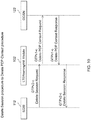
- FIG. 10 illustrates a flow diagram illustrating how deletion of a GTP tunnel between the SGW 112 and the GGSN 122 is enabled by LTERoaming4All module 102, in accordance with an example aspect of the present disclosure.
- the flow diagram does not explicitly depict the exchange between the MME 110 and the SGW 112 or the exchange between the MME 110 and the LTE device 106, as these exchanges are performed in accordance with the standard and as LTERoaming4All module 102 is not involved at this stage. Such exchanges, however, are contemplated by the present disclosure.
- the SGW 112 may initiate deletion of the GTP tunnel by sending a Delete Session Request GTPv2-c message to LTERoaming4All module 102.
- LTERoaming4All module 102 may change the Delete Session Request GTPv2-c message into a Delete PDP Context Request GTPv1-c message and may send the Delete PDP Context Request GTPv1-c message to the GGSN 122. Thereafter, the GGSN 122 may accept the GTP tunnel deletion and may send a Delete PDP Context Response GTPv1-c message back to LTERoaming4All module 102.
- LTERoaming4All module 102 may change the Delete PDP Context Response GTPv1-c message into a Delete Session Response GTPv2-c message and may sends the Delete Session Response GTPv2-c message back to the SGW 112. Accordingly, the GTP tunnel may be deleted.
- FIG. 11 represents a flow diagram illustrating how a GTP tunnel modification between the GGSN 122 and the SGW 112 may be enabled by LTERoaming4All module 102 in accordance with an aspect of the present disclosure.
- the GGSN 122 may initiate the GTP tunnel modification by sending an Update PDP Context Request GTPv1-c message to LTERoaming4All module 102.
- LTERoaming4All module 102 may change the Update PDP Context Request GTPv1-c message into an Update Bearer Request GTPv2-c message and may send the Update Bearer Request GTPv2-c message to the SGW 112.
- the flow diagram does not explicitly show the exchange between the SGW 112 and the MME 110 or the exchange between the MME 110 and the LTE device 106, as these exchanges are performed in accordance with the standard and as the LTERoaming4AII module 102 is not involved at this stage. These exchanges, however, are fully contemplated by the present disclosure.
- the SGSW may accept the GTP tunnel modification and may send an Update Bearer Response GTPv2-c message back to LTERoaming4All module 102. Thereafter, LTERoaming4All module 102 may change the Update Bearer Response GTPv2-c message into an Update PDP Context Response GTPv1-c message and may send the Update PDP Context Response GTPv1-c message back to the GGSN 122. Accordingly, the GTP tunnel may be modified.
- FIG. 12 represents a flow diagram illustrating how a GTP tunnel modification at an inter-RAT change from 2G/3G to LTE between the SGW 112 and the MME 110 is enabled by LTERoaming4All module 102, in accordance with an aspect of the present disclosure.
- the SGW 112 may initiate the GTP tunnel modification by sending a Modify Bearer Request GTPv2-c message to LTERoaming4All module 102.
- LTERoaming4All module 102 may change the Modify Bearer Request GTPv2-c message into an Update PDP Context Request GTPv1-c message and may send the Update PDP Context Request GTPv1-c message back to the SGW 112.
- the GGSN 122 may accept the GTP tunnel modification and may send an Update PDP Context Response GTPv1-c message back to LTERoaming4All module 102.
- LTERoaming4All module 102 may change the Update PDP Context Response GTPv1-c message into a Modify Bearer Response GTPv2-c message and may send the Modify Bearer Response GTPv2-c message back to the SGW 112. Accordingly, the GTP tunnel is modified.
- FIG. 13 illustrates a system 142 that may be configured to implement the LTERoaming4All solution in the VPMN 108, in accordance with an aspect of the present disclosure.
- LTERoaming4All module 102 may be deployed in VPMN 108 and may be configured to enable inbound roaming of subscribers of HPMN 104 equipped with an LTE device 106, wherein the LTE device 106 is compatible with VPMN 108 LTE frequency bands and wherein HPMN 104 and VPMN 108 have no LTE roaming agreement. This enables the subscriber of HPMN 104 to register in VPMN 108 and to authenticate the subscriber LTE device 106.
- system 142 may represent one or more network elements configured to interconnect the HPMN 104 and the VPMN 108.
- HPMN 104 includes an HLR 124 that connects to a STP-H 118 in HPMN 104 over a Signaling System 7 (SS7) link.
- System 142 may further include a MME 110 in VPMN 108 that may connect to the LTERoaming4All module 102 module over a Diameter connection and an SGW 112 that connects to a PGW-V 136.
- the MME 110 further connects to the DNS-V 128 and to the SGW 112. It will also be apparent to a person skilled in the art that HPMN 104 and VPMN 108 may also include various other network components (not shown in FIG. 13 ), depending on the architecture under consideration.
- LTERoaming module 102 may connect with STP-V 114 over a Signaling System 7 (SS7) link. Furthermore, LTERoaming4All module 102 may be configured to allow LTE roaming of subscriber of HPMN 104 into LTE access network of VPMN 108 without the implementation of an LTE roaming agreement and to provide a local IP connection.
- SS7 Signaling System 7
- FIG. 14 represents a flow diagram illustrating how a mobile-terminating short message (SMS-MT) (e.g., communicated according to a Short Message Service (SMS)), such as a Mobile Application Part-Mobile Terminating-Forward-Short Message (MAP-MT-Forward-SM), may be delivered to Circuit Switched Fallback (CSFB) LTE device 106.
- SMS-GMSC 144 may initially attempt delivery of the short message in the packet switched (PS) domain where the MME does not support the Diameter SGd interface with the Short Message Service Center (SMSC) defined in 3GPP Release 11.
- PS packet switched
- SMSC Short Message Service Center
- the SMS-GMSC 144 may query the HLR 124 to retrieve the location of the subscribers by sending a MAP Send-Routing-Information-for-SM-Request.
- the HLR 124 may send a Send-Routing-Information-for-SM-Response back to the SMS-GMSC 144 with the Serving GRPS Support Node (SGSN) and the Mobile Switching Center (MSC) addresses.
- SGSN Serving GRPS Support Node
- MSC Mobile Switching Center
- the SGSN address in the Send-Routing-Information-for-SM-Response may be associated with the LTRoaming4All module 122.
- the SM-GSMC 144 may attempt first delivery of the SMS-MT in the PS domain, as the SM-GSMC 144 is configured to do so.
- the LTERoaming4All module 122 may receive the MAP MT-Forward-SM-Request message and may return a reject message with an error code of "facility not supported.” Thereafter, the SMS-GMSC 144 may retry delivery in the circuit-switched (CS) domain and may send a MAP MT-Forward-SM-Request to the Visited Mobile Switching Center (VMSC) 146. The VMSC 146 may further relay the Deliver-SM that was encapsulated in the MAP MT-Forward-SM-Request to the MME 110 over the SGs interface, and the MME 110 may deliver the Deliver-SM to the subscriber LTE device 106.
- CS circuit-switched
- VMSC Visited Mobile Switching Center
- the subscriber LTE device 106 may acknowledge successful delivery of the message in the delivery-report, which may be sent back to the SMS-GMSC 144 through the MME 110 and VMSC 146.
- the LTERoaming4All solution contemplated by the present disclosure enables LTE roaming of subscribers equipped with LTE devices onto LTE-capable VPLMNs under circumstances that are not presently supported by the 3GPP standards and/or by the GSMA.
- the LTERoaming4All solution described herein may be deployed in the VPMN and may allow inbound roaming of subscribers associated with an HPMN equipped with LTE devices that are compatible with VPMN LTE frequency bands, and may be implemented where HPMN and VPMN have no LTE roaming agreement.
- the LTERoaming4All solution may be deployed in HPMN to enable outbound roaming of subscribers of HPMN equipped with LTE devices that are compatible with VPMN LTE frequency bands, and where the subscriber LTE devices are associated with an HPMN that has no LTE access network, and, therefore, no 3GPP Release 8 HLR or PGW.
- the LTERoaming4AII solution may be deployed in the roaming HUB network to enable outbound roaming of subscribers equipped with LTE devices that are compatible with VPMN LTE frequency bands, and where the subscriber LTE devices are associated with and/or originate from an HPMN that has no LTE access network.
- the LTERoaming4All may additionally or alternatively enable inbound roaming of subscribers equipped with LTE devices that are compatible with VPMN LTE frequency bands and originate from (or are otherwise associated with) an HPMN that has no LTE roaming agreement with the VPMN. It should be obvious for a person skilled in the art that other example arrangements, configurations, advantages, methodologies, and architectures are possible.
- interworking functions may include:
- implementations of LTERoaming4All involving are not exclusive to roaming situations. Instead, the same or similar functionality may be extended to non-roaming implementations.
- the interworking function between GTPv2-c S8 and GTPv1-c Gp interfaces described herein may likewise be implemented across non-roaming S5 and Gn interfaces.
- the interworking function between Diameter S6a and MAP Gr interfaces allows authentication, mobility and subscription management between a MME and a pre-Release 8 (Rel-8) HLR, where the pre-Rel-8 HLR does not support Rel-8 EPS security or transfer of Rel-8 security parameters.
- This scenario is not defined in the 3GPP standard TS 29.305.
- the interworking function between Diameter S6a and MAP Gr interfaces performs the interworking between Diameter and MAP protocols according to the 3GPP standard TS 29.305 except that it derives and replaces the UMTS authentication vectors by Evolved Packet System (EPS) authentication vectors and derives and replaces the GPRS subscription information by EPS subscription information.
- EPS Evolved Packet System
- the LTERoaming4All module 102 may be configured to reject the Short Message delivery by sending a MAP MT-Forward-SM-Response message with a configurable user error including but not limited to "facility not supported" to force the SMSC, the SMS-Router, or the IP Short Message Gateway (IP-SM-GW) to retry SMS delivery across the CS domain or IP Multimedia Subsystem (IMS) domain.
- IP-SM-GW IP Short Message Gateway
- the interworking function between the Diameter S6a and MAP Gr interfaces may include a Key Derivation Function that may be utilized to compute the KASME key from CK, IK, and ServingNetwork ID (SN ID) that may be used to replace the CK and IK in an EPS authentication vector set.
- SN ID ServingNetwork ID
- FC 0 ⁇ 10
- P 0 SN id
- L 0 length of SN id i . e .
- SQN Sequence Number
- AK Anonymity Key
- AUTN Authentication Token
- SQN ⁇ AK may extracted from AUTN received in the authentication quintet (RAND, XRES, CK, IK, AUTN) as AUTN is the concatenation of SQN ⁇ AK .
- AMF Authentication Management Field
- MAC Message Authentication Code
- the SN ID may consist of Mobile Country Code (MCC) and Mobile Network Code (MNC) of the Visited-PLMN-Id Attribute Value Pair (AVP) received in the Authentication-Information-Request, and may be encoded as an octet string according to the following table: 8 7 6 5 4 3 2 1 MCC digit 2 MCC digit 1 octet 1 MNC digit 3 MCC digit 3 octet 2 MNC digit 2 MNC digit 1 octet 3
- the input key may be equal to the concatenation of CK and IK (CK ⁇ IK), each of which may be received in the authentication quintet (RAND, XRES, CK, IK, AUTN).
- the interworking function between the Diameter S6a and MAP Gr interfaces may include a function to modify or replace the received GPRS subscription information into EPS subscription information.
- the entire GPRS subscription information may be replaced by an EPS subscription profile configured in the LTERoaming4All module.
- the EPS subscription information may be mapped from the GPRS subscription information.
- LTERoaming4All module 102 may be configured to map Quality-of-Service (QoS) information (QCI) associated with one or more communication sessions between networks or systems.
- QCI may be derived according to the table below: QCI Traffic Class Traffic Handling Priority Signalling Indication Source Statistics Descriptor 7 Conversational N/A N/A Speech 7 Conversational N/A N/A Unknown 7 Conversational N/A N/A Unknown 6 Streaming N/A N/A Unknown 5 Interactive 1 Yes N/A 6 Interactive 1 No N/A 7 Interactive 2 No N/A 8 Interactive 3 No N/A 9 Background N/A N/A N/A
- Max-Requested-Bandwidth-UL and Max-Requested-Bandwidth-DL may be mapped one-to-one to/from the pre-Rel-8 bearer parameters Maximum Guaranteed Bit Rate (MBR) of the Packet Data Protocol (PDP) context associated with traffic classes "conversational" or "streaming.” Otherwise, Max-Requested-Bandwidth-UL and Max-Requested-Bandwidth-DL may be configured independently in the LTERoaming4AII module 102.
- MRR Maximum Guaranteed Bit Rate
- Allocation and Retention Priority parameter may be derived according to the table below: Pre-Rel-8 ARP Value EPS Bearer ARP Priority Value 1 1 2 H+1 3 M+1
- priority values may include H (high priority) and/or M (medium priority)).
- the interworking function between GTPv2-c S8 and GTPv1-c interfaces allows creating and managing a GTP tunnel between a SGW and a GGSN.
- a one-to-one mapping between GTPv2-c messages and GTPv1-c message is not always feasible.
- the LTERoaming4All module 102 may generate one or more GTPv2-c messages and may transmit the one or more GTPv2-c messages to the SGW if those messages have no equivalent in GTPv1-c and if the messages are required to manage the GTP tunnel with the SGW.
- the LTERoaming4All module 102 may further generate GTPv1-c messages and transmit the GTPv1-c messages to the GGSN if those messages have no equivalent in GTPv2-c and if the messages are required to manage the GTP tunnel with the GGSN.
- the below tables provides the mapping of GTPv1-c messages into GTPv2-c messages in an embodiment of the present disclosure.
- GTPv2-c message GTPv1-c message
- GTPv1-c message Create Session Request Create PDP Context Request Create Session Response Create PDP Context Response Delete Session Request Delete PDP Context Request Delete Session Response Delete PDP Context Response Update Bearer Request Update PDP Context Request Update Bearer Response Update PDP Context Response Create Bearer Request Initiate PDP Context Activation Request Create Bearer Response Initiate PDP Context Activation Response Delete Bearer Request Delete Sec PDP Context Request Delete Bearer Response Delete Sec PDP Context Response Modify Bearer Command Update PDP Context Request Modify Bearer Request Update PDP Context Request Modify Bearer Response Update PDP Context Response Bearer Resource Command Update PDP Context Request Or Delete Sec PDP Context Request
- LTE Information Elements(TLIV) LTE IE Type 3G Information Elements(TV, TLV) 3G IE Type TLV/ TV IMSI 1 IMSI 2 TV MSISDN 76 MSISDN 134 TLV MEI 75 IMEI 151 TLV ULI 86 ULI 152 TLV Serving Network 83 RAI 3 TV RAT Type 82 RAT Type 151 TLV Cause 2 Cause 1 TV FTEID 87 TEID + GSN 16/17 TV Address 133 TLV APN 71 APN 131 TLV Selection Mode 128 Selection Mode 15 TV PDN Type 99 PDN Address(PAA) 79 End User Address 128 TLV EBI/LBI 73 NSAPI 20 TV APN Restriction 127 APN Restriction 149 TLV APN-AMBR 72 APN-AMBR 198 TLV PCO 78 PCO 132 TLV Bearer Contexts to be created(M) 93
- the modules, components, systems, and apparatuses disclosed by the present disclosure can take the form of one or more hardware components, one or more software components, or may include both hardware and software components.
- software may include, but is not limited to, firmware, resident software, and microcode, which may include one or more instructions that may be executed by a processor or any other component or device configured to execute computer-readable instructions.
- the modules, components, systems, and apparatuses disclosed by the present disclosure may be configured to execute the various methods or methodologies disclosed herein.
- the disclosure can take the form of a computer program product, accessible from a computer-usable or computer-readable medium providing program code for use by, or in connection with, a computer or any instruction execution system.
- a computer-usable or computer readable medium can be any apparatus that can contain, store, communicate, propagate, or transport the program for use by or in connection with the instruction execution system, apparatus, or device.
- the computer-readable medium can be an electronic, magnetic, optical, electromagnetic, infrared, or semiconductor system (or apparatus or device) or a propagation medium.
- Examples of a computer-readable medium may include, but are not limited to, a semiconductor or solid state memory, magnetic tape, a removable computer diskette, a random access memory (RAM), a read-only memory (ROM), a rigid magnetic disk and an optical disk.
- Current examples of optical disks include compact disk-read only memory (CDROM), compact disk-read/write (CD-R/W) and Digital Versatile Disk (DVD), those these examples are in no way limiting.
- the components of present system described above include any combination of computing components and devices operating together.
- the components of the present system can also be components or subsystems within a larger computer system or network.
- the present system components can also be coupled with any number of other components (not shown), such as other buses, controllers, memory devices, and data input/output devices, in any number of combinations.
- any number or combination of other processor-based components may be carrying out the functions of the present system.
- Computer-readable media in which such formatted data and/or instructions may be embodied include, but are not limited to, non-volatile storage media in various forms (e.g., optical, magnetic or semiconductor storage media) and carrier waves that may be used to transfer such formatted data and/or instructions through wireless, optical, or wired signaling media or any combination thereof.
- the present disclosure may be implemented with a non-LTE HPMN 104 or when a subscriber is roaming in a VPMN without an LTE roaming agreement with the HPMN, as described above.
- the present disclosure may also be effectively implemented with an LTE-capable HPMN 104 or any other network of common carrier telecommunications in which end-users are configured to operate within a home network to which they normally subscribe, but which have the capability of also operating on other neighboring networks, which may even be across international borders.
- the examples presented by the disclosure are described using terms and constructs drawn largely from the EPS mobile telephony infrastructure. However, use of these examples should not be interpreted as limiting the disclosure to those media.
- the system and method can be of use and provided through any type of telecommunications medium, including, but not limited to: (i) any mobile telephony network (including, but not limited to, GSM, 3GSM, 3G, CDMA, WCDMA or GPRS, satellite phones or other mobile telephone networks or systems); (ii) any WiFi apparatus or access point ( e.g., as utilized in a home or subscribed network, but also configured for use on a visited or non-home or non-accustomed network), including apparatuses not dedicated to telecommunications ( e.g., personal computers, Palm-type or Windows Mobile devices); (iii) an entertainment console platform such as Sony Playstation, PSP or other apparatus that are capable of sending and receiving telecommunications over home or non-home networks; and/or (iv) fixed-line devices made for receiving
Landscapes
- Engineering & Computer Science (AREA)
- Computer Networks & Wireless Communication (AREA)
- Signal Processing (AREA)
- Databases & Information Systems (AREA)
- Computer Security & Cryptography (AREA)
- Mobile Radio Communication Systems (AREA)
Claims (12)
- Procédé de gestion d'itinérance de dispositif mobile, comprenant :la réception, au niveau d'une passerelle associée à un réseau mobile public visité, VPMN, (108), d'un message de requête provenant d'un dispositif d'évolution à long terme, LTE, (106) associé à un réseau mobile public domestique, HPMN, (104), dans lequel le message de requête demande l'accès sans fil à un réseau d'accès LTE associé au VPMN (108) ;l'autorisation, au niveau de la passerelle, de l'enregistrement du dispositif LTE (106) auprès du réseau d'accès LTE associé au VPMN (108) ;la fourniture, au niveau de la passerelle, d'une connexion sous protocole internet, (IP), au dispositif LTE (106),caractérisé en ce que :le HPMN (104) est un HPMN non capable de LTE et un concentrateur d'itinérance (134) est déployé entre le HPMN (104) et le VPMN (108), afin d'autoriser une itinérance vers l'étranger d'un abonné équipé d'un dispositif LTE et associé au HPMN non LTE dans le réseau d'accès LTE du VPMN (108),dans lequel un accord d'itinérance LTE existe entre le VPMN (108) et la plateforme d'itinérance (134), et aucun accord d'itinérance LTE n'existe entre la plateforme d'itinérance (134) et le HPMN (104),dans lequel l'autorisation de l'enregistrement du dispositif LTE comprend un interfonctionnement entre une interface Diameter S6a et une interface Gr de sous-système d'application mobile, MAP,dans lequel la plateforme d'itinérance exécute une fonction d'interfonctionnement entre l'interface Diameter S6a vers l'entité de gestion de mobilité, MME, du VPMN et l'interface Gr du sous-système d'application de mobilité, vers le registre des abonnés locaux, HLR, pré-Release 8 du HPMN,dans lequel la fonction d'interfonctionnement dérive et remplace les vecteurs d'authentification de système de télécommunication mobile universel, UMTS avec des vecteurs d'authentification de système par paquets évolué, EPS,dans lequel la fonction d'interfonctionnement dérive et remplace les informations de souscription de service général de paquets radio, GPRS avec les informations de souscription d'EPS.
- Procédé selon la revendication 1, comprenant en outre la tunnellisation de la connexion IP de retour vers le HPMN (104).
- Procédé selon la revendication 1, dans lequel la connexion IP est propre au VPMN (108).
- Procédé selon l'une quelconque des revendications 1 à 3, comprenant en outre :le rejet, au niveau de la passerelle, d'un message de requête de finalisation de transmission de message court de mobile-sous-système d'application mobile avec une erreur utilisateur configurable ;le fait de forcer, au niveau de la passerelle, un contrôleur de service de messages courts, SMS, un routeur de SMS, ou une passerelle de messages courts IP à délivrer un message court par le biais d'un sous-système multimédia IP ou d'un centre de commutation mobile visité.
- Procédé selon la revendication 1 à 3, dans lequel un registre d'abonnés locaux, HLR, associé au HPMN (104) comprend un pré-troisième projet de partenariat 3GPP, Release-8 HLR qui est incompatible avec la sécurité du système de paquets évolué 3GPP Release 8 et ne supporte pas le transfert de paramètres de sécurité 3GPP Release-8.
- Procédé selon la revendication 1 à 3, comprenant :le remplacement, via la passerelle, d'un ou plusieurs vecteurs d'authentification 3G dans un message de réponse d'envoi d'informations d'authentification de sous-système d'application mobile reçu d'un registre d'abonnés locaux dans le HPMN (104) avec des vecteurs d'authentification de système de paquets évolué, EPS ;l'envoi, via la passerelle, des vecteurs d'authentification d'EPS à une entité de gestion mobile, MME, dans le VPMN (108) dans un message de réponse d'informations d'authentification de Diameter.
- Procédé selon la revendication 1 à 3, comprenant :le remplacement, par la passerelle, d'informations de souscription de service général de paquets radio dans un message de demande d'insertion de données d'abonné de sous-système d'application mobile reçu d'un registre d'abonnés locaux du HPMN (104) avec des informations de souscription de système de paquets évolué, EPS ;l'envoi, par la passerelle, des informations de souscription d'EPS à une entité de gestion mobile dans le VPMN (108) dans un message de réponse de mise-à-jour-de localisation de Diameter.
- Procédé selon l'une quelconque des revendications 1 à 7, comprenant en outre l'interfonctionnement, via la passerelle, entre une interface GTPv2-c S8 et une interface GTPv1-c.
- Procédé selon la revendication 8, comprenant en outre la connexion, via la passerelle, d'une passerelle de desserte dans le VPMN (108) et d'un noeud de support de GPRS de passerelle dans le HPMN (104).
- Procédé selon la revendication 8, comprenant en outre la connexion, via la passerelle, d'une passerelle de service dans le VPMN (108) avec un noeud de support de GPRS de passerelle ou une passerelle de réseau de données de paquets dans le VPMN (108).
- Procédé selon la revendication 8, comprenant en outre la connexion, via la passerelle, d'une passerelle de desserte dans le HPMN (104) et d'un noeud de support de GPRS de passerelle dans le HPMN (104) ;
- Système de gestion d'itinérance de dispositif mobile et configuré pour effectuer le procédé selon l'une quelconque des revendications 1-11.
Applications Claiming Priority (2)
| Application Number | Priority Date | Filing Date | Title |
|---|---|---|---|
| US201361806703P | 2013-03-29 | 2013-03-29 | |
| PCT/US2014/032171 WO2014160935A2 (fr) | 2013-03-29 | 2014-03-28 | Procédés et appareil pour faciliter une itinérance lte entre opérateurs domestique et visité |
Publications (3)
| Publication Number | Publication Date |
|---|---|
| EP2979462A2 EP2979462A2 (fr) | 2016-02-03 |
| EP2979462A4 EP2979462A4 (fr) | 2016-12-14 |
| EP2979462B1 true EP2979462B1 (fr) | 2019-05-22 |
Family
ID=51625683
Family Applications (1)
| Application Number | Title | Priority Date | Filing Date |
|---|---|---|---|
| EP14775777.7A Active EP2979462B1 (fr) | 2013-03-29 | 2014-03-28 | Procédé et système pour faciliter une itinérance lte entre opérateurs domestique et visité |
Country Status (4)
| Country | Link |
|---|---|
| US (1) | US10292040B2 (fr) |
| EP (1) | EP2979462B1 (fr) |
| ES (1) | ES2745276T3 (fr) |
| WO (1) | WO2014160935A2 (fr) |
Cited By (2)
| Publication number | Priority date | Publication date | Assignee | Title |
|---|---|---|---|---|
| US10973082B2 (en) | 2017-06-19 | 2021-04-06 | Huawei Technologies Co., Ltd. | Registration method, session establishment method, terminal, and AMF entity |
| US11882091B1 (en) | 2022-11-10 | 2024-01-23 | T-Mobile Usa, Inc. | Allocation of internet protocol addresses based on a location of a visited network |
Families Citing this family (52)
| Publication number | Priority date | Publication date | Assignee | Title |
|---|---|---|---|---|
| CN105101064A (zh) * | 2014-04-28 | 2015-11-25 | 阿尔卡特朗讯 | 用于为进行漫游的移动终端提供服务的方法、装置和系统 |
| KR102183654B1 (ko) * | 2014-08-07 | 2020-11-27 | 애플 인크. | 제3자 서버가 문제에 직면하는 경우 애플리케이션으로부터의 트래픽의 제어 |
| CN107251608A (zh) * | 2014-09-22 | 2017-10-13 | 环球触控公司 | 用于本地数据服务的通信交换 |
| EP3018941B1 (fr) | 2014-11-10 | 2021-08-18 | Vodafone GmbH | Établissement d'un service de porteuse dans un réseau de télécommunications |
| EP3139649A1 (fr) * | 2015-09-04 | 2017-03-08 | Gemalto Sa | Procédé pour authentifier un abonné dans un réseau local |
| EP3358876B1 (fr) * | 2015-09-29 | 2020-12-23 | Soracom, Inc. | Appareil de commande de passerelle dans un système de communications mobiles |
| WO2017184103A1 (fr) | 2016-04-18 | 2017-10-26 | Hewlett Packard Enterprise Development Lp | Restrictions d'itinérance de défaut spécifiques de classes d'itinérance de service |
| FR3051094A1 (fr) * | 2016-05-04 | 2017-11-10 | Orange | Systeme d'orientation du trafic d'un utilisateur en situation d'itinerance, procedes, entite et plateforme mis en oeuvre dans ce systeme |
| CN107786981B (zh) * | 2016-08-31 | 2021-06-04 | 华为技术有限公司 | 一种防止信令攻击方法及装置 |
| CN109644126B (zh) * | 2016-09-30 | 2022-05-13 | 英特尔公司 | 用于异构型网络中的多个设备认证的技术 |
| US10470154B2 (en) | 2016-12-12 | 2019-11-05 | Oracle International Corporation | Methods, systems, and computer readable media for validating subscriber location information |
| KR102549946B1 (ko) * | 2017-01-09 | 2023-06-30 | 삼성전자주식회사 | 이동통신 환경에서 단말의 초기 접속 요청 메시지를 라우팅하는 방법 및 관련 파라미터 |
| EP3574608B1 (fr) * | 2017-01-25 | 2022-03-30 | Koninklijke KPN N.V. | Garantie d'authenticité et d'intégrité d'échange de signalisation entre des réseaux mobiles |
| WO2018231855A1 (fr) * | 2017-06-15 | 2018-12-20 | Palo Alto Networks, Inc. | Sécurité basée sur l'emplacement dans des réseaux de fournisseurs de services |
| US10834136B2 (en) | 2017-06-15 | 2020-11-10 | Palo Alto Networks, Inc. | Access point name and application identity based security enforcement in service provider networks |
| US10708306B2 (en) | 2017-06-15 | 2020-07-07 | Palo Alto Networks, Inc. | Mobile user identity and/or SIM-based IoT identity and application identity based security enforcement in service provider networks |
| US10616200B2 (en) | 2017-08-01 | 2020-04-07 | Oracle International Corporation | Methods, systems, and computer readable media for mobility management entity (MME) authentication for outbound roaming subscribers using diameter edge agent (DEA) |
| US10200852B1 (en) * | 2017-08-24 | 2019-02-05 | Syniverse Technologies, Llc | Method and system of enabling roaming services in a data-only network to a user equipment requiring a dual attachment to packet and circuit switched networks |
| US10700926B2 (en) * | 2017-11-10 | 2020-06-30 | International Business Machines Corporation | Accessing gateway management console |
| US11689414B2 (en) | 2017-11-10 | 2023-06-27 | International Business Machines Corporation | Accessing gateway management console |
| US12052358B2 (en) | 2018-01-12 | 2024-07-30 | Qualcomm Incorporated | Method and apparatus for multiple registrations |
| US11553381B2 (en) * | 2018-01-12 | 2023-01-10 | Qualcomm Incorporated | Method and apparatus for multiple registrations |
| US10931668B2 (en) | 2018-06-29 | 2021-02-23 | Oracle International Corporation | Methods, systems, and computer readable media for network node validation |
| US10306459B1 (en) * | 2018-07-13 | 2019-05-28 | Oracle International Corporation | Methods, systems, and computer readable media for validating a visitor location register (VLR) using a signaling system No. 7 (SS7) signal transfer point (STP) |
| US10834045B2 (en) * | 2018-08-09 | 2020-11-10 | Oracle International Corporation | Methods, systems, and computer readable media for conducting a time distance security countermeasure for outbound roaming subscribers using diameter edge agent |
| EP3884728A4 (fr) * | 2018-11-19 | 2022-09-07 | Telefonaktiebolaget Lm Ericsson (Publ) | Noeud de réseau radio, noeud de réseau et procédés pour établir une connexion sécurisée avec l'équipement utilisateur (ue) |
| US10952063B2 (en) | 2019-04-09 | 2021-03-16 | Oracle International Corporation | Methods, systems, and computer readable media for dynamically learning and using foreign telecommunications network mobility management node information for security screening |
| US11962585B2 (en) | 2019-08-20 | 2024-04-16 | Cisco Technology, Inc. | Guest onboarding of devices onto 3GPP-based networks with use of realm-based discovery of identity providers and mutual authentication of identity federation peers |
| US11411925B2 (en) | 2019-12-31 | 2022-08-09 | Oracle International Corporation | Methods, systems, and computer readable media for implementing indirect general packet radio service (GPRS) tunneling protocol (GTP) firewall filtering using diameter agent and signal transfer point (STP) |
| US20230179989A1 (en) * | 2020-05-21 | 2023-06-08 | Nokia Technologies Oy | Appararus, method, and computer program |
| US12563640B2 (en) * | 2020-05-28 | 2026-02-24 | Google Llc | Adjusting radio access network connections based on communication failures |
| US11553342B2 (en) | 2020-07-14 | 2023-01-10 | Oracle International Corporation | Methods, systems, and computer readable media for mitigating 5G roaming security attacks using security edge protection proxy (SEPP) |
| CN111913977B (zh) * | 2020-08-19 | 2023-10-20 | 上海莉莉丝网络科技有限公司 | 数据的处理方法、设备和介质 |
| US11751056B2 (en) | 2020-08-31 | 2023-09-05 | Oracle International Corporation | Methods, systems, and computer readable media for 5G user equipment (UE) historical mobility tracking and security screening using mobility patterns |
| US11825310B2 (en) | 2020-09-25 | 2023-11-21 | Oracle International Corporation | Methods, systems, and computer readable media for mitigating 5G roaming spoofing attacks |
| US11832172B2 (en) | 2020-09-25 | 2023-11-28 | Oracle International Corporation | Methods, systems, and computer readable media for mitigating spoofing attacks on security edge protection proxy (SEPP) inter-public land mobile network (inter-PLMN) forwarding interface |
| US11622255B2 (en) | 2020-10-21 | 2023-04-04 | Oracle International Corporation | Methods, systems, and computer readable media for validating a session management function (SMF) registration request |
| US11528251B2 (en) | 2020-11-06 | 2022-12-13 | Oracle International Corporation | Methods, systems, and computer readable media for ingress message rate limiting |
| US11770694B2 (en) | 2020-11-16 | 2023-09-26 | Oracle International Corporation | Methods, systems, and computer readable media for validating location update messages |
| US11956628B2 (en) | 2020-11-23 | 2024-04-09 | Cisco Technology, Inc. | Openroaming for private communication systems |
| US11818570B2 (en) | 2020-12-15 | 2023-11-14 | Oracle International Corporation | Methods, systems, and computer readable media for message validation in fifth generation (5G) communications networks |
| US11812271B2 (en) | 2020-12-17 | 2023-11-07 | Oracle International Corporation | Methods, systems, and computer readable media for mitigating 5G roaming attacks for internet of things (IoT) devices based on expected user equipment (UE) behavior patterns |
| US11641585B2 (en) * | 2020-12-30 | 2023-05-02 | T-Mobile Usa, Inc. | Cybersecurity system for outbound roaming in a wireless telecommunications network |
| US11700510B2 (en) | 2021-02-12 | 2023-07-11 | Oracle International Corporation | Methods, systems, and computer readable media for short message delivery status report validation |
| US11516671B2 (en) | 2021-02-25 | 2022-11-29 | Oracle International Corporation | Methods, systems, and computer readable media for mitigating location tracking and denial of service (DoS) attacks that utilize access and mobility management function (AMF) location service |
| CN115209396B (zh) * | 2021-04-09 | 2023-12-12 | 中国移动通信集团辽宁有限公司 | 通信方法、装置、电子设备、网络设备及存储介质 |
| US11671818B1 (en) | 2021-04-29 | 2023-06-06 | T-Mobile Usa, Inc. | Reliable local breakout for roaming devices |
| US11689912B2 (en) | 2021-05-12 | 2023-06-27 | Oracle International Corporation | Methods, systems, and computer readable media for conducting a velocity check for outbound subscribers roaming to neighboring countries |
| CN115515083B (zh) * | 2021-06-07 | 2024-03-15 | 中国移动通信集团浙江有限公司 | 消息发放方法、装置、服务器及存储介质 |
| US12452640B2 (en) | 2022-12-01 | 2025-10-21 | T-Mobile Usa, Inc. | Automated audits relating to network configuration updates in response to roaming partner updates |
| US12549941B2 (en) | 2022-12-01 | 2026-02-10 | T-Mobile Usa, Inc. | Secure tunnel as a service for 5G networks |
| US12495335B2 (en) * | 2022-12-20 | 2025-12-09 | T-Mobile Usa, Inc. | Selective routing control for circuit switched fallback |
Citations (1)
| Publication number | Priority date | Publication date | Assignee | Title |
|---|---|---|---|---|
| US20100190497A1 (en) * | 2008-12-11 | 2010-07-29 | Christopher David Pudney | Telecommunications network access rejection |
Family Cites Families (9)
| Publication number | Priority date | Publication date | Assignee | Title |
|---|---|---|---|---|
| US7664494B2 (en) * | 2003-02-14 | 2010-02-16 | Roamware, Inc. | Signaling and packet relay method and system including general packet radio service (“GPRS”) |
| US20070281687A1 (en) * | 2003-02-14 | 2007-12-06 | Roamware Inc. | Method and system for providing PLN service to inbound roamers in a VPMN using a sponsor network when no roaming relationship exists between HPMN and VPMN |
| ATE493851T1 (de) * | 2004-03-10 | 2011-01-15 | Roamware Inc | Multimedia-nachrichtenübermittlungssysteme eines eingangs-roamers |
| US20090047947A1 (en) * | 2007-08-02 | 2009-02-19 | Qualcomm Incorporated | Dynamic gateway selection based on data service and roaming protocol |
| WO2011098155A1 (fr) | 2010-02-09 | 2011-08-18 | Telefonaktiebolaget Lm Ericsson (Publ) | Procédé et appareil destinés à être utilisés avec un réseau d'accès à connectivité ip |
| WO2011100166A2 (fr) | 2010-02-11 | 2011-08-18 | Tekelec | Procédés, systèmes et supports lisibles par ordinateur pour adaptation dynamique de profil d'abonné |
| US9526119B2 (en) | 2011-06-29 | 2016-12-20 | Telefonaktiebolaget Lm Ericsson (Publ) | Methods and apparatus for multiple data packet connections |
| AU2012278797B2 (en) * | 2011-07-06 | 2017-02-23 | Mobileum, Inc. | Network traffic redirection (NTR) in long term evolution (LTE) |
| US20130053029A1 (en) | 2011-08-23 | 2013-02-28 | Kirankumar Anchan | Supporting services to a roaming user equipment within a local network of a wireless communications system |
-
2014
- 2014-03-28 EP EP14775777.7A patent/EP2979462B1/fr active Active
- 2014-03-28 US US14/781,280 patent/US10292040B2/en active Active
- 2014-03-28 ES ES14775777T patent/ES2745276T3/es active Active
- 2014-03-28 WO PCT/US2014/032171 patent/WO2014160935A2/fr not_active Ceased
Patent Citations (1)
| Publication number | Priority date | Publication date | Assignee | Title |
|---|---|---|---|---|
| US20100190497A1 (en) * | 2008-12-11 | 2010-07-29 | Christopher David Pudney | Telecommunications network access rejection |
Cited By (3)
| Publication number | Priority date | Publication date | Assignee | Title |
|---|---|---|---|---|
| US10973082B2 (en) | 2017-06-19 | 2021-04-06 | Huawei Technologies Co., Ltd. | Registration method, session establishment method, terminal, and AMF entity |
| US11523465B2 (en) | 2017-06-19 | 2022-12-06 | Huawei Technologies Co., Ltd. | Registration method, session establishment method, terminal, and AMF entity |
| US11882091B1 (en) | 2022-11-10 | 2024-01-23 | T-Mobile Usa, Inc. | Allocation of internet protocol addresses based on a location of a visited network |
Also Published As
| Publication number | Publication date |
|---|---|
| WO2014160935A3 (fr) | 2014-11-20 |
| EP2979462A2 (fr) | 2016-02-03 |
| EP2979462A4 (fr) | 2016-12-14 |
| US10292040B2 (en) | 2019-05-14 |
| US20160165432A1 (en) | 2016-06-09 |
| WO2014160935A2 (fr) | 2014-10-02 |
| ES2745276T3 (es) | 2020-02-28 |
Similar Documents
| Publication | Publication Date | Title |
|---|---|---|
| EP2979462B1 (fr) | Procédé et système pour faciliter une itinérance lte entre opérateurs domestique et visité | |
| EP2979475B1 (fr) | Activation de services de voix sur évolution à long terme (volte) pour abonnés itinérants entrants non-volte | |
| US9713053B2 (en) | Network traffic redirection (NTR) in long term evolution (LTE) | |
| US10028174B2 (en) | Steering of roaming in LTE and legacy network environment | |
| US8452279B2 (en) | Traffic redirection on data roaming traffic | |
| US9445257B2 (en) | Method and system for providing cloud subscriber identity module (SIM) | |
| US8374602B2 (en) | Method and system for providing roaming services to prepaid roamers of a home network | |
| EP2638736B1 (fr) | Procédé et système permettant un accès sur demande aux données | |
| US20160295544A1 (en) | Enhanced cloud sim | |
| US20150172993A1 (en) | Method and system for smartcall re-routing | |
| US9572011B2 (en) | Value added module in predictive intelligence | |
| US9848318B2 (en) | Camel roaming adaptations | |
| US20130065582A1 (en) | Seamless sms back | |
| EP2514221B1 (fr) | Méthode, appareil et produit programme d'ordinateur pour fournir des adaptations d'itinérance camel | |
| HK1192676A (en) | Network traffic redirection (ntr) in long term evolution (lte) | |
| HK1192676B (en) | Network traffic redirection (ntr) in long term evolution (lte) |
Legal Events
| Date | Code | Title | Description |
|---|---|---|---|
| PUAI | Public reference made under article 153(3) epc to a published international application that has entered the european phase |
Free format text: ORIGINAL CODE: 0009012 |
|
| 17P | Request for examination filed |
Effective date: 20151023 |
|
| AK | Designated contracting states |
Kind code of ref document: A2 Designated state(s): AL AT BE BG CH CY CZ DE DK EE ES FI FR GB GR HR HU IE IS IT LI LT LU LV MC MK MT NL NO PL PT RO RS SE SI SK SM TR |
|
| AX | Request for extension of the european patent |
Extension state: BA ME |
|
| DAX | Request for extension of the european patent (deleted) | ||
| REG | Reference to a national code |
Ref country code: DE Ref legal event code: R079 Free format text: PREVIOUS MAIN CLASS: H99Z9999999999 Ipc: H99Z0099000000 Ref document number: 602014047286 Country of ref document: DE |
|
| A4 | Supplementary search report drawn up and despatched |
Effective date: 20161115 |
|
| RIC1 | Information provided on ipc code assigned before grant |
Ipc: H04W 76/02 20090101ALN20161109BHEP Ipc: H04W 4/14 20090101ALN20161109BHEP Ipc: H04W 12/06 20090101ALN20161109BHEP Ipc: H04W 8/12 20090101AFI20161109BHEP Ipc: H04W 92/02 20090101ALN20161109BHEP |
|
| STAA | Information on the status of an ep patent application or granted ep patent |
Free format text: STATUS: EXAMINATION IS IN PROGRESS |
|
| 17Q | First examination report despatched |
Effective date: 20180123 |
|
| REG | Reference to a national code |
Ref country code: DE Ref legal event code: R079 Ref document number: 602014047286 Country of ref document: DE Free format text: PREVIOUS MAIN CLASS: H99Z0099000000 Ipc: H04W0008120000 |
|
| GRAP | Despatch of communication of intention to grant a patent |
Free format text: ORIGINAL CODE: EPIDOSNIGR1 |
|
| STAA | Information on the status of an ep patent application or granted ep patent |
Free format text: STATUS: GRANT OF PATENT IS INTENDED |
|
| RIC1 | Information provided on ipc code assigned before grant |
Ipc: H04W 12/06 20090101ALN20181122BHEP Ipc: H04W 4/14 20090101ALN20181122BHEP Ipc: H04W 76/12 20180101ALN20181122BHEP Ipc: H04W 92/02 20090101ALN20181122BHEP Ipc: H04W 8/12 20090101AFI20181122BHEP |
|
| INTG | Intention to grant announced |
Effective date: 20181211 |
|
| RIC1 | Information provided on ipc code assigned before grant |
Ipc: H04W 92/02 20090101ALN20181122BHEP Ipc: H04W 4/14 20090101ALN20181122BHEP Ipc: H04W 76/12 20180101ALN20181122BHEP Ipc: H04W 8/12 20090101AFI20181122BHEP Ipc: H04W 12/06 20090101ALN20181122BHEP |
|
| GRAS | Grant fee paid |
Free format text: ORIGINAL CODE: EPIDOSNIGR3 |
|
| GRAA | (expected) grant |
Free format text: ORIGINAL CODE: 0009210 |
|
| STAA | Information on the status of an ep patent application or granted ep patent |
Free format text: STATUS: THE PATENT HAS BEEN GRANTED |
|
| AK | Designated contracting states |
Kind code of ref document: B1 Designated state(s): AL AT BE BG CH CY CZ DE DK EE ES FI FR GB GR HR HU IE IS IT LI LT LU LV MC MK MT NL NO PL PT RO RS SE SI SK SM TR |
|
| REG | Reference to a national code |
Ref country code: GB Ref legal event code: FG4D |
|
| REG | Reference to a national code |
Ref country code: CH Ref legal event code: EP |
|
| REG | Reference to a national code |
Ref country code: IE Ref legal event code: FG4D |
|
| REG | Reference to a national code |
Ref country code: DE Ref legal event code: R096 Ref document number: 602014047286 Country of ref document: DE |
|
| REG | Reference to a national code |
Ref country code: AT Ref legal event code: REF Ref document number: 1137575 Country of ref document: AT Kind code of ref document: T Effective date: 20190615 |
|
| RAP2 | Party data changed (patent owner data changed or rights of a patent transferred) |
Owner name: MOBILEUM INC. |
|
| REG | Reference to a national code |
Ref country code: NL Ref legal event code: MP Effective date: 20190522 |
|
| REG | Reference to a national code |
Ref country code: LT Ref legal event code: MG4D |
|
| PG25 | Lapsed in a contracting state [announced via postgrant information from national office to epo] |
Ref country code: FI Free format text: LAPSE BECAUSE OF FAILURE TO SUBMIT A TRANSLATION OF THE DESCRIPTION OR TO PAY THE FEE WITHIN THE PRESCRIBED TIME-LIMIT Effective date: 20190522 Ref country code: NO Free format text: LAPSE BECAUSE OF FAILURE TO SUBMIT A TRANSLATION OF THE DESCRIPTION OR TO PAY THE FEE WITHIN THE PRESCRIBED TIME-LIMIT Effective date: 20190822 Ref country code: HR Free format text: LAPSE BECAUSE OF FAILURE TO SUBMIT A TRANSLATION OF THE DESCRIPTION OR TO PAY THE FEE WITHIN THE PRESCRIBED TIME-LIMIT Effective date: 20190522 Ref country code: LT Free format text: LAPSE BECAUSE OF FAILURE TO SUBMIT A TRANSLATION OF THE DESCRIPTION OR TO PAY THE FEE WITHIN THE PRESCRIBED TIME-LIMIT Effective date: 20190522 Ref country code: PT Free format text: LAPSE BECAUSE OF FAILURE TO SUBMIT A TRANSLATION OF THE DESCRIPTION OR TO PAY THE FEE WITHIN THE PRESCRIBED TIME-LIMIT Effective date: 20190922 Ref country code: SE Free format text: LAPSE BECAUSE OF FAILURE TO SUBMIT A TRANSLATION OF THE DESCRIPTION OR TO PAY THE FEE WITHIN THE PRESCRIBED TIME-LIMIT Effective date: 20190522 Ref country code: NL Free format text: LAPSE BECAUSE OF FAILURE TO SUBMIT A TRANSLATION OF THE DESCRIPTION OR TO PAY THE FEE WITHIN THE PRESCRIBED TIME-LIMIT Effective date: 20190522 Ref country code: AL Free format text: LAPSE BECAUSE OF FAILURE TO SUBMIT A TRANSLATION OF THE DESCRIPTION OR TO PAY THE FEE WITHIN THE PRESCRIBED TIME-LIMIT Effective date: 20190522 |
|
| REG | Reference to a national code |
Ref country code: CH Ref legal event code: NV Representative=s name: VALIPAT S.A. C/O BOVARD SA NEUCHATEL, CH |
|
| PG25 | Lapsed in a contracting state [announced via postgrant information from national office to epo] |
Ref country code: BG Free format text: LAPSE BECAUSE OF FAILURE TO SUBMIT A TRANSLATION OF THE DESCRIPTION OR TO PAY THE FEE WITHIN THE PRESCRIBED TIME-LIMIT Effective date: 20190822 Ref country code: LV Free format text: LAPSE BECAUSE OF FAILURE TO SUBMIT A TRANSLATION OF THE DESCRIPTION OR TO PAY THE FEE WITHIN THE PRESCRIBED TIME-LIMIT Effective date: 20190522 Ref country code: RS Free format text: LAPSE BECAUSE OF FAILURE TO SUBMIT A TRANSLATION OF THE DESCRIPTION OR TO PAY THE FEE WITHIN THE PRESCRIBED TIME-LIMIT Effective date: 20190522 Ref country code: GR Free format text: LAPSE BECAUSE OF FAILURE TO SUBMIT A TRANSLATION OF THE DESCRIPTION OR TO PAY THE FEE WITHIN THE PRESCRIBED TIME-LIMIT Effective date: 20190823 |
|
| REG | Reference to a national code |
Ref country code: DE Ref legal event code: R082 Ref document number: 602014047286 Country of ref document: DE |
|
| PG25 | Lapsed in a contracting state [announced via postgrant information from national office to epo] |
Ref country code: RO Free format text: LAPSE BECAUSE OF FAILURE TO SUBMIT A TRANSLATION OF THE DESCRIPTION OR TO PAY THE FEE WITHIN THE PRESCRIBED TIME-LIMIT Effective date: 20190522 Ref country code: SK Free format text: LAPSE BECAUSE OF FAILURE TO SUBMIT A TRANSLATION OF THE DESCRIPTION OR TO PAY THE FEE WITHIN THE PRESCRIBED TIME-LIMIT Effective date: 20190522 Ref country code: DK Free format text: LAPSE BECAUSE OF FAILURE TO SUBMIT A TRANSLATION OF THE DESCRIPTION OR TO PAY THE FEE WITHIN THE PRESCRIBED TIME-LIMIT Effective date: 20190522 Ref country code: EE Free format text: LAPSE BECAUSE OF FAILURE TO SUBMIT A TRANSLATION OF THE DESCRIPTION OR TO PAY THE FEE WITHIN THE PRESCRIBED TIME-LIMIT Effective date: 20190522 Ref country code: CZ Free format text: LAPSE BECAUSE OF FAILURE TO SUBMIT A TRANSLATION OF THE DESCRIPTION OR TO PAY THE FEE WITHIN THE PRESCRIBED TIME-LIMIT Effective date: 20190522 |
|
| REG | Reference to a national code |
Ref country code: DE Ref legal event code: R097 Ref document number: 602014047286 Country of ref document: DE |
|
| PG25 | Lapsed in a contracting state [announced via postgrant information from national office to epo] |
Ref country code: SM Free format text: LAPSE BECAUSE OF FAILURE TO SUBMIT A TRANSLATION OF THE DESCRIPTION OR TO PAY THE FEE WITHIN THE PRESCRIBED TIME-LIMIT Effective date: 20190522 |
|
| REG | Reference to a national code |
Ref country code: ES Ref legal event code: FG2A Ref document number: 2745276 Country of ref document: ES Kind code of ref document: T3 Effective date: 20200228 |
|
| PLBE | No opposition filed within time limit |
Free format text: ORIGINAL CODE: 0009261 |
|
| STAA | Information on the status of an ep patent application or granted ep patent |
Free format text: STATUS: NO OPPOSITION FILED WITHIN TIME LIMIT |
|
| PG25 | Lapsed in a contracting state [announced via postgrant information from national office to epo] |
Ref country code: TR Free format text: LAPSE BECAUSE OF FAILURE TO SUBMIT A TRANSLATION OF THE DESCRIPTION OR TO PAY THE FEE WITHIN THE PRESCRIBED TIME-LIMIT Effective date: 20190522 |
|
| 26N | No opposition filed |
Effective date: 20200225 |
|
| PG25 | Lapsed in a contracting state [announced via postgrant information from national office to epo] |
Ref country code: PL Free format text: LAPSE BECAUSE OF FAILURE TO SUBMIT A TRANSLATION OF THE DESCRIPTION OR TO PAY THE FEE WITHIN THE PRESCRIBED TIME-LIMIT Effective date: 20190522 |
|
| PG25 | Lapsed in a contracting state [announced via postgrant information from national office to epo] |
Ref country code: SI Free format text: LAPSE BECAUSE OF FAILURE TO SUBMIT A TRANSLATION OF THE DESCRIPTION OR TO PAY THE FEE WITHIN THE PRESCRIBED TIME-LIMIT Effective date: 20190522 |
|
| PG25 | Lapsed in a contracting state [announced via postgrant information from national office to epo] |
Ref country code: MC Free format text: LAPSE BECAUSE OF FAILURE TO SUBMIT A TRANSLATION OF THE DESCRIPTION OR TO PAY THE FEE WITHIN THE PRESCRIBED TIME-LIMIT Effective date: 20190522 |
|
| REG | Reference to a national code |
Ref country code: BE Ref legal event code: MM Effective date: 20200331 |
|
| PG25 | Lapsed in a contracting state [announced via postgrant information from national office to epo] |
Ref country code: IE Free format text: LAPSE BECAUSE OF NON-PAYMENT OF DUE FEES Effective date: 20200328 |
|
| PG25 | Lapsed in a contracting state [announced via postgrant information from national office to epo] |
Ref country code: BE Free format text: LAPSE BECAUSE OF NON-PAYMENT OF DUE FEES Effective date: 20200331 |
|
| REG | Reference to a national code |
Ref country code: AT Ref legal event code: UEP Ref document number: 1137575 Country of ref document: AT Kind code of ref document: T Effective date: 20190522 |
|
| PG25 | Lapsed in a contracting state [announced via postgrant information from national office to epo] |
Ref country code: MT Free format text: LAPSE BECAUSE OF FAILURE TO SUBMIT A TRANSLATION OF THE DESCRIPTION OR TO PAY THE FEE WITHIN THE PRESCRIBED TIME-LIMIT Effective date: 20190522 Ref country code: CY Free format text: LAPSE BECAUSE OF FAILURE TO SUBMIT A TRANSLATION OF THE DESCRIPTION OR TO PAY THE FEE WITHIN THE PRESCRIBED TIME-LIMIT Effective date: 20190522 |
|
| PG25 | Lapsed in a contracting state [announced via postgrant information from national office to epo] |
Ref country code: MK Free format text: LAPSE BECAUSE OF FAILURE TO SUBMIT A TRANSLATION OF THE DESCRIPTION OR TO PAY THE FEE WITHIN THE PRESCRIBED TIME-LIMIT Effective date: 20190522 Ref country code: IS Free format text: LAPSE BECAUSE OF FAILURE TO SUBMIT A TRANSLATION OF THE DESCRIPTION OR TO PAY THE FEE WITHIN THE PRESCRIBED TIME-LIMIT Effective date: 20190922 |
|
| P01 | Opt-out of the competence of the unified patent court (upc) registered |
Free format text: CASE NUMBER: UPC_APP_327470/2023 Effective date: 20230524 |
|
| PGFP | Annual fee paid to national office [announced via postgrant information from national office to epo] |
Ref country code: DE Payment date: 20250314 Year of fee payment: 12 |
|
| PGFP | Annual fee paid to national office [announced via postgrant information from national office to epo] |
Ref country code: LU Payment date: 20250317 Year of fee payment: 12 |
|
| PGFP | Annual fee paid to national office [announced via postgrant information from national office to epo] |
Ref country code: AT Payment date: 20250319 Year of fee payment: 12 |
|
| PGFP | Annual fee paid to national office [announced via postgrant information from national office to epo] |
Ref country code: FR Payment date: 20250314 Year of fee payment: 12 |
|
| PGFP | Annual fee paid to national office [announced via postgrant information from national office to epo] |
Ref country code: IT Payment date: 20250314 Year of fee payment: 12 Ref country code: GB Payment date: 20250314 Year of fee payment: 12 |
|
| PGFP | Annual fee paid to national office [announced via postgrant information from national office to epo] |
Ref country code: ES Payment date: 20250409 Year of fee payment: 12 |
|
| PGFP | Annual fee paid to national office [announced via postgrant information from national office to epo] |
Ref country code: CH Payment date: 20250401 Year of fee payment: 12 |