EP2979485B1 - Procédé et système de contrôle de trafic dans un réseau local sans fil - Google Patents
Procédé et système de contrôle de trafic dans un réseau local sans fil Download PDFInfo
- Publication number
- EP2979485B1 EP2979485B1 EP14715384.5A EP14715384A EP2979485B1 EP 2979485 B1 EP2979485 B1 EP 2979485B1 EP 14715384 A EP14715384 A EP 14715384A EP 2979485 B1 EP2979485 B1 EP 2979485B1
- Authority
- EP
- European Patent Office
- Prior art keywords
- wireless
- user
- traffic
- private
- flow control
- Prior art date
- Legal status (The legal status is an assumption and is not a legal conclusion. Google has not performed a legal analysis and makes no representation as to the accuracy of the status listed.)
- Active
Links
Images



Classifications
-
- H—ELECTRICITY
- H04—ELECTRIC COMMUNICATION TECHNIQUE
- H04L—TRANSMISSION OF DIGITAL INFORMATION, e.g. TELEGRAPHIC COMMUNICATION
- H04L47/00—Traffic control in data switching networks
- H04L47/10—Flow control; Congestion control
- H04L47/12—Avoiding congestion; Recovering from congestion
- H04L47/125—Avoiding congestion; Recovering from congestion by balancing the load, e.g. traffic engineering
-
- H—ELECTRICITY
- H04—ELECTRIC COMMUNICATION TECHNIQUE
- H04W—WIRELESS COMMUNICATION NETWORKS
- H04W28/00—Network traffic management; Network resource management
- H04W28/02—Traffic management, e.g. flow control or congestion control
- H04W28/0231—Traffic management, e.g. flow control or congestion control based on communication conditions
-
- H—ELECTRICITY
- H04—ELECTRIC COMMUNICATION TECHNIQUE
- H04L—TRANSMISSION OF DIGITAL INFORMATION, e.g. TELEGRAPHIC COMMUNICATION
- H04L47/00—Traffic control in data switching networks
- H04L47/10—Flow control; Congestion control
- H04L47/20—Traffic policing
-
- H—ELECTRICITY
- H04—ELECTRIC COMMUNICATION TECHNIQUE
- H04L—TRANSMISSION OF DIGITAL INFORMATION, e.g. TELEGRAPHIC COMMUNICATION
- H04L47/00—Traffic control in data switching networks
- H04L47/10—Flow control; Congestion control
- H04L47/22—Traffic shaping
-
- H—ELECTRICITY
- H04—ELECTRIC COMMUNICATION TECHNIQUE
- H04W—WIRELESS COMMUNICATION NETWORKS
- H04W24/00—Supervisory, monitoring or testing arrangements
- H04W24/08—Testing, supervising or monitoring using real traffic
-
- H—ELECTRICITY
- H04—ELECTRIC COMMUNICATION TECHNIQUE
- H04W—WIRELESS COMMUNICATION NETWORKS
- H04W72/00—Local resource management
- H04W72/50—Allocation or scheduling criteria for wireless resources
- H04W72/56—Allocation or scheduling criteria for wireless resources based on priority criteria
-
- H—ELECTRICITY
- H04—ELECTRIC COMMUNICATION TECHNIQUE
- H04W—WIRELESS COMMUNICATION NETWORKS
- H04W84/00—Network topologies
- H04W84/02—Hierarchically pre-organised networks, e.g. paging networks, cellular networks, WLAN [Wireless Local Area Network] or WLL [Wireless Local Loop]
- H04W84/10—Small scale networks; Flat hierarchical networks
- H04W84/12—WLAN [Wireless Local Area Networks]
Definitions
- the present invention provides a method and system for controlling data traffic in a wireless LAN, such as an IEEE 802.11x LAN.
- a wireless LAN such as an IEEE 802.11x LAN.
- embodiments of the present invention provide for traffic shaping and/or policing to be performed between users connected via a common wireless access point in dependence on user priority, and/or the modulation scheme being used to transmit data to and from the user.
- DCF Distributed Coordination Function
- Traffic control is a well known concept in computer networking.
- Linux Traffic Control 'tc' (see http://unixhelp.ed.ac.uk/CGI/man-cgi?tc+8 ) implements a mechanism for implementing traffic policing, shaping, scheduling and dropping.
- 802.11 Wi-Fi networks access to the transmission medium has been traditionally controlled using the Distributed Coordination Function (see: http://en.wikipedia.org/wiki/Distributed Coordination Function ).
- this mechanism attempts to make access to the medium "fair", in the sense that each station has an equal chance of being the next one to put a packet on the air. Essentially each station is allowed to transmit the same number of packets as each of the others.
- WMM QoS (a profile of the IEEE802.11e Quality of Service spec) modifies the DCF to allow for the prioritisation of certain types of traffic based on a number of traffic categories: Voice, Video, Best Efforts and Background.
- HCF hybrid coordination function
- HCCA HCF Controlled Channel Access
- EDCA Enhanced Distributed Channel Access
- TC Traffic Categories
- emails could be assigned to a low priority class
- VoIP Voice over Wireless LAN
- TXOP Transmit Opportunity
- TXOP Transmission Control Protocol
- MSDU MAC service data unit
- MMPDU MAC management protocol data unit
- the levels of priority in EDCA are called access categories (ACs).
- the contention window (CW) can be set according to the traffic expected in each access category, with a wider window needed for categories with heavier traffic.
- the CWmin and CWmax values are calculated from aCWmin and aCWmax values, respectively, that are defined for each physical layer supported by 802.11e.
- Li and Soung disclose a method for ensuring fairness in terms of equal airtime where they consider infrastructure WLANs in which all WSs communicate with an AP. They assume the AP maintains a separate queue for each WS so that for the downlink traffic, it can allocate different bandwidths to the queues in a flexible manner. For downlink traffic, the AP acts as the coordinator to allocate the air-time equally to the WSs. For uplink traffic scheduling they disclose either:
- CWMin's initial CWs
- the value of CWMin's can be distributed from the AP to the WSs, since the AP knows the individual air-time used by one burst from each WS.
- US2012/0224484 describes a wireless network management system in which Quality of Service (QoS) measurements and controls are incorporated only in the network (i.e. Access Points (APs) or controllers) and therefore QoS and Service Level Agreements (SLAs) can be achieved with all deployed client stations versus standards based approaches that require additional capabilities in network nodes, client stations and in most cases modifications to the applications.
- QoS Quality of Service
- SLAs Service Level Agreements
- SLAs can be provided exploiting traffic prioritisation, capacity improvements through load distribution, and adjacent channel interference mitigation discretely or in combination with standards based mechanisms.
- Embodiments of the invention attempt to address the two issues of user prioritisation and fairer sharing of available bandwidth identified above, by making modifications to the traffic control system within access points in a wireless LAN (WLAN) network, leaving the mobile stations unchanged, and without changing the network's physical or MAC layer.
- WLAN wireless LAN
- Embodiments of the invention therefore define a new traffic control system for WLAN access points.
- the traffic control system works in dependence on a first new input - user priority (supplied by an authentication server). This allows different service levels to be provided to different classes of customer.
- the traffic control system polices and/or shapes traffic based on a second new input - a modulation rate detector, which measures the modulation rate at which each connected client is sending its traffic, and uses it to indirectly cause fairer use of the available air interface capacity (e.g. by causing TCP streams to back off when they detect packet loss).
- the traffic control system is able to manage the air interface utilisation split between public and private Wi-Fi users, to ensure that private users do not have their Wi-Fi air interface network capacity unduly impaired by public users.
- a method of controlling data traffic in a wireless local area network as set out in claim 1.
- a traffic flow control limit calculator for use with a wireless local area network access point as set out in claim 9.
- the traffic flow control limit is a traffic shaper limit or traffic policer limit.
- the traffic flow control limit calculator forms part of a wireless LAN access point, the access point further including a wireless network interface; upstream and downstream traffic control systems; a modulation rate detector; and a user priority store.
- the calculator may be physically separate from the access point, for example in a WLAN architecture where lightweight access points are controlled by a separate network controller.
- Embodiments of the invention relate to channel capacity allocation and utilisation by multiple wireless stations in a wireless local area network.
- the typical usage scenario is where a wireless access point operating in accordance with one or more of the IEEE 802.11 family of standards provides network access to one or more wireless stations operated by users.
- the wireless stations may be any mix of computers such as laptops, tablet devices such as iPads® and the like, or other mobile devices such as smartphones.
- the users may be a mix of public users and private users, the distinction being that private users will typically access the wireless access point using an encrypted connection using the WEP, WPA or WPA2 security protocols, and will typically be granted a greater share of the access point's resources than public users.
- all or almost all of the users may be public users, such as for access points located to provide network access to users in public locations such as hotels, airports, railway stations and the like.
- embodiments of the invention provide a traffic control system for WLAN traffic that provides for fairer use of the wireless resource based on concepts of user priority, and wireless resource utilisation.
- embodiments of the invention try to provide a higher priority user with a greater share of use of the wireless resource than a lower priority user.
- embodiments of the invention also try to prevent "inefficient" users with low modulation rates from capturing the wireless resource, and blocking the use thereof by more efficient users who are able to user higher modulation rates. For example, a user at the edge of coverage who has to use a less efficient modulation scheme than a closer user who can use a more efficient modulation scheme should be prevented from using more than his share of the wireless bandwidth.
- FIG. 1 is a block diagram of an access point according to the present invention.
- the access point includes a backhaul interface which is arranged to provide backhaul for upstream and downstream data from the access point to a core network, such as the Internet.
- a core network such as the Internet.
- the backhaul interface passes downstream data to a downstream traffic control system, comprising in turn a policer module, a queue system and a scheduler.
- the scheduler passes user data to the Wi-Fi interface module for transmission over the wireless interface to the user wireless devices.
- access point architectures may be used, for example controller based architectures where the access point functionality is split between a lightweight access point (AP) and a separate WLAN controller.
- AP lightweight access point
- an upstream traffic control system comprises a policer, a queue system and scheduler, arranged in order to receive upstream user data from the Wi-Fi interface.
- the scheduler outputs the user data to the backhaul interface for onward transmission over the Internet or other network to which the access point is connected.
- the access point also comprises control elements, in the form of an authenticator and a user priority selector and store.
- the authenticator stores user priority information as well as information as to whether a user is a public user or a private user. This information is passed when required to the user priority selector and store.
- the user priority selector passes user priority information to the policer in the upstream traffic control system, and also to the scheduler in the downstream traffic control system.
- modulation rate and airtime usage detector This receives information from the Wi-Fi interface relating to upstream packets and utilisation of the air interface.
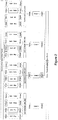
- Figure 2 illustrates example traffic queues for different data traffic types for different users, and how they can be policed or shaped depending on whether the traffic is being sent upstream or downstream.
- Each client is a conventional WLAN enabled device, such as a computer, smartphone, or tablet.
- the first step is to perform authentication for each client. Authentication is performed using the Extensible Authentication Protocol, defined in RFC 3748 and related IETF standards. The authentication process is as follows:-
- the present embodiment provides a method and system to adapt the traffic shaping and/or policing that is applied to transmitted packets.
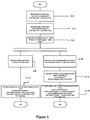
- the present embodiment provides a method and system which runs repeatedly, and repeatedly performs an evaluation at s.3.4 as to whether the total traffic that is being transmitted via the access point is above a total threshold measure, for example 80% of the channel capacity. If it is, then at s.3.8 a "tighten shaping" operation is undertaken, as will be described in more detail below. Alternatively, if the total traffic is below the total threshold measure, then at s. 3.6 a "relax shaping" operation is undertaken, again as will be described in more detail later.
- a total threshold measure for example 80% of the channel capacity.
- the process then proceeds to a wait state 3.2, where a timer counts down to the next assessment time to evaluate the condition of s.3.4.
- traffic shaping and/or policing arrangement of the present embodiment can run repeatedly. For example, traffic shaping may be undertaken every 0.1 seconds or so.
- the Modulation Rate / Air time Usage Detector detects the current modulation rates of each client and measures the % of available airtime used by each client for each QoS class (upstream + downstream) over a specified period (e.g. 0.1 second) and passes the information to the Upstream and Downstream Traffic Control Systems.
- the Downstream Scheduler & Upstream policer calculate the effective data rate for each client in each QoS class (e.g. by multiplying the channel utilisation by the modulation rate).
- Example values before the system has been applied are shown in the table below: Client ID (MAC address) Priority Modulation Rate (Mbps) % Airtime Used (Data rate Mbps) for QoS Class: Voice % Airtime Used (Data rate Mbps) for QoS Class: Video % Airtime Used (Data rate Mbps) for QoS Class: Best Efforts (or no WMM QoS) % Airtime Used (Data rate Mbps) for QoS Class: Background Client 1 MAC Public-1 54 25 (13.5) Client 2 MAC Public-3 1 54 (0.54) Client 3 MAC Public-1 54 1 (0.54) Client 4 MAC Private 54 1 (0.54) 4. Operation of the system then proceeds according to Figure 3 , as described above. With usage of the available airtime at 81% (above the 80% Total-Threshold value), the system proceeds down the Tighten Shaping Flowchart, as shown in Figure 4 .
- Pri_threshold may be set at for example 70% of the available channel capacity, thus leaving 30% available for public use. That is, the sum of the private threshold level and a public threshold level Pub_threshold should equal to 100% of the available channel capacity (which may itself be only a fraction e.g. 80% of the theoretical maximum, due to user interfering wireless users on adjacent access points).
- Airtime _ shaper _ limit Max Pri _ threshold / Private _ traffic _ load * current _ user _ threshold Minimum _ private _ airtime _ usage where the maximum of the two choices is chosen.
- the current_user_threshold is the current threshold limit for that user. This equation calculates the new threshold for that user.
- the available capacity is either shared equally to meet the capacity limit, or adapted over iterations such that it distributes spare private capacity to those stations demanding extra capacity, but ensures that each private station receives at least a minimum entitlement.
- an evaluation is carried out to determine if the public traffic load is above a preset public traffic threshold Pub_threshold e.g. 30%, as discussed previously. If this is the case, then the traffic shaping should be tightened, using s.4.18 to 4.22. Otherwise, the tighten shaping procedure can end. In many embodiments the relax shaping procedure can then be invoked, often depending on the outcome of the flowchart of Figure 3 on its next iteration.
- Pub_threshold e.g. 30%
- the minimum priority weighted public airtime threshold provides the lowest unit of airtime that may be allocated, as will be seen from s.4.22.
- an airtime shaper limit is set for each public user, using the above found variables.
- the limit is set to the maximum value of either: i) the product of the user's present threshold with the ratio of preset public threshold level to the actual public traffic load; or ii) the product of the minimum priority weighted public airtime threshold with a variable dependent on the user priority, calculated as (( n + 1) - user_priority ), where there are n priority levels.
- there are three priority levels although in other embodiments there may be more than or fewer than three.
- a higher priority user will be allocated more airtime than a lower priority user.
- traffic shaping is applied in the downstream direction (see Figure 2 ).
- User traffic quotas are enforced at the relevant client shapers.
- the QoS shapers are only used to prevent abuse of the higher WMM QoS classes (e.g. 100kbps for Voice, 15Mbps Video) (Note: for simplicity, details of upstream policing have been omitted.
- both upstream and downstream traffic are considered for calculating an individual client's usage. Each user's total airtime usage quota is calculated as shown, but it is allocated between upstream and downstream traffic in a similar manner to the way traffic is allocated between users.
- Upstream traffic is policed, where the downstream traffic is shaped.
- the channel is now running below capacity so the system operates the Relax Shaping process of Figure 5 , as described below.
- the traffic load looks as follows (Note that Client 1 is now running at its requested rate, and would be permitted to run faster if it wanted to): Client ID (MAC address) Priority Modulation Rate (Mbps) % Airtime Used (Data rate Mbps) for QoS Class: Voice % Airtime Used (Data rate Mbps) for QoS Class: Video % Airtime Used (Data rate Mbps) for QoS Class: Best Efforts (or no WMM QoS) % Airtime Used (Data rate Mbps) for QoS Class: Background Client 1 MAC Public-1 54 27 (14) Client 2 MAC Public-3 1 13 (0.13) Client 3 MAC Public-1 54 40 (21.9) Client 4 MAC Private 54 0 (0)
- the relax shaping process of s.3.6 is performed as follows. Firstly, at steps 5.2 and 5.4 the private and public traffic loads are calculated, in the same manner as previously described in steps 4.2 and 4.12 respectively previously. Then, a free_airtime_fraction value is found at s.5.6, which is equal to the total available airtime, minus the amount that is being used already for public and private users. In this respect, recall that the relax shaping process is being used because their should now be free airtime from at least one of the public or private allocations, because a previous user has stopped transmitting or receiving.
- a private_user_count variable is then found at s.5.8 , equal to the number of private users, and this is then deployed in s.5.10 to determine each user's airtime shaper limit to be the lower of :
- the relax shaping procedure either sets the new airtime shaper limit to be a function of the old limit plus a share of the free airtime that is available, or to a set figure depending on a difference between the total and public loads, or the private threshold, whichever is the smallest.
- the objective is to relax the traffic shaping as quickly as possible once capacity becomes available, without overshooting so that traffic tightening then becomes necessary.
- a priority weighted public user count is found to be the sum over all public users of the variable (( n +1) - user_priority_level, where n is the number of user priority levels.
- Priority _ weighted _ public _ user _ count ⁇ n + 1 ⁇ user _ priority _ level where n is the number of priority levels.
- the minimum priority weighted public airtime threshold provides the lowest unit of airtime that may be allocated, as will be seen from s.5.16. Note that s.5.12 and 5.14 are identical to s.4.18 and 4.20 described previously during the tighten operation.
- the described embodiment of the invention provides mechanisms to allow for the sharing of a Wi-Fi access point between both private and public users, and to allow for different classes of user to be differentiated therebetween.
- the mechanisms also take into account the modulation being used by a particular WS, to prevent a WS at the edge of coverage or transmitting with low power and hence using an inefficient modulation scheme from using up more than its fair share of the wireless resource.
- the mechanisms provide for a fairer distribution of the wireless access point resources between the wireless stations, whilst allowing the wireless access point operator to provide for classes of user and to be able to influence the wireless resource allocation between such user classes.
- the modulation rate detector, user priority store, and policers and schedulers are involved in the calculation and enforcement of the traffic flow control limits, and in some embodiments the relevant elements or functionality of each may be collectively considered as a traffic flow control calculator.
Landscapes
- Engineering & Computer Science (AREA)
- Computer Networks & Wireless Communication (AREA)
- Signal Processing (AREA)
- Small-Scale Networks (AREA)
- Mobile Radio Communication Systems (AREA)
Claims (15)
- Procédé de régulation du trafic de données dans un réseau local sans fil (WLAN), comprenant :la détermination de niveaux de priorité de classes de trafic de données respectifs pour des paquets de données de stations sans fil communiquant avec un point d'accès sans fil ;le calcul d'une charge de trafic sans fil sur le WLAN en fonction de débits de données et de taux de modulation des stations sans fil ; etpour une station sans fil, l'établissement d'une limite de régulation de flux de trafic en fonction du niveau de priorité de classe de trafic de données de la station sans fil et de la charge de trafic sans fil calculée ;dans lequel l'établissement comprend la réduction d'une limite de régulation de flux de trafic quand la charge de trafic sans fil dépasse un niveau de seuil, et l'augmentation de la limite de régulation de flux de trafic quand la charge de trafic sans fil est inférieure au niveau de seuil,caractérisé par :
pour chacune des stations sans fil :la détermination d'un niveau de priorité d'utilisateur pour un utilisateur de la station sans fil, ledit niveau de priorité d'utilisateur comprenant des informations indiquant qu'un utilisateur est un utilisateur public ou un utilisateur privé, les utilisateurs privés étant des utilisateurs qui accèdent au point d'accès sans fil à l'aide d'une connexion cryptée utilisant des protocoles de sécurité ; etdans lequel la limite de régulation de trafic est établie en outre conformément au niveau de priorité d'utilisateur déterminé pour cette station sans fil, la limite de régulation de flux de trafic étant établie en fonction des informations indiquant qu'un utilisateur est un utilisateur public ou un utilisateur privé. - Procédé selon la revendication 1, dans lequel la charge de trafic sans fil est calculée comme la somme pour toutes les stations sans fil du débit de données de la station sans fil sur le taux de modulation.
- Procédé selon la revendication 1 ou 2, dans lequel l'établissement comprend en outre :la détermination d'un compte d'utilisateurs pondéré par les priorités d'utilisateurs en fonction des niveaux de priorités des utilisateurs, un utilisateur d'une priorité supérieure contribuant davantage au compte qu'un utilisateur de priorité inférieure ;l'utilisation du compte d'utilisateurs pondéré par les priorités d'utilisateurs pour calculer un seuil de temps d'antenne pondéré par la priorité d'utilisateur en fonction d'une valeur de seuil de trafic et du compte d'utilisateurs pondéré par les priorités d'utilisateurs ;dans lequel la limite de régulation de flux de trafic est établie en outre en fonction du seuil de temps d'antenne pondéré par la priorité d'utilisateur minimum.
- Procédé selon la revendication 3, dans lequel pour réduire une limite de régulation de flux de trafic d'une station sans fil, la limite est établie à la plus haute :i) d'une première valeur calculée en fonction de la limite actuelle de la station sans fil et d'un rapport de la valeur de seuil de trafic et de la charge de trafic sans fil calculée ; ouii) d'une deuxième valeur calculée en fonction du seuil de temps d'antenne pondéré par la priorité minimum et du niveau de priorité d'utilisateur de la station sans fil, un niveau de priorité d'utilisateur supérieur de la station ans fil entraînant une deuxième valeur calculée plus élevée.
- Procédé selon la revendication 3 ou 4, dans lequel pour augmenter une limite de régulation de flux de trafic d'une station sans fil, la limite est établie à la plus basse :i) d'une troisième valeur calculée en fonction de la limite actuelle de la station sans fil, d'une durée de temps d'antenne libre, du niveau de priorité d'utilisateur de la station sans fil, et du compte d'utilisateurs pondéré par les priorités d'utilisateurs ; ouii) d'une quatrième valeur calculée en fonction d'une différence entre un niveau de trafic disponible total et une charge de trafic courante pour une autre classe de stations sans fil, et de la valeur de seuil de trafic.
- Procédé selon la revendication 5, dans lequel le point d'accès sans fil génère un réseau sans fil public et un réseau sans fil privé et les stations sans fil sont des stations sans fil de réseau sans fil public, l'autre classe de stations sans fil comprenant des stations sans fil de réseau sans fil privé.
- Procédé selon la revendication 6, comprenant en outre, pour une station sans fil de réseau sans fil privé, lors de la réduction d'une limite de régulation de flux de trafic d'une station sans fil de réseau sans fil privé, l'établissement de la limite à la plus haute :i) d'une cinquième valeur correspondant à l'attribution de temps d'antenne actuelle de la station sans fil mise à l'échelle par une valeur de mise à l'échelle calculée en fonction d'un seuil de temps d'antenne privé et d'une utilisation de temps d'antenne privé totale ; ouii) d'une sixième valeur correspondant à une distribution sensiblement équitable du seuil de temps d'antenne privé sur le nombre de stations sans fil de réseau sans fil privé.
- Procédé selon la revendication 6 ou 7, comprenant en outre, pour une station sans fil de réseau sans fil privé, lors de l'augmentation d'une limite de régulation de flux de trafic d'une station sans fil de réseau sans fil privé, l'établissement de la limite à la plus basse :i) d'une septième valeur calculée en fonction de l'attribution de temps d'antenne actuel de la station sans fil de réseau sans fil privé, d'une durée de temps d'antenne libre et du nombre d'utilisateurs privés ; ouii) d'une huitième valeur correspondant à la plus haute :a) d'une différence entre le niveau de trafic disponible total et la charge de trafic courante pour les stations sans fil publiques ; etb) d'une valeur de seuil de trafic pour les stations sans fil de réseau sans fil privé.
- Calculateur de limite de régulation de flux de trafic destiné à être utilisé avec un point d'accès de réseau local sans fil, le calculateur étant conçu pour :i) déterminer des niveaux de priorité de classes de trafic de données respectifs pour des paquets de données de stations sans fil communiquant avec un point d'accès sans fil;ii) calculer une charge de trafic sans fil sur le WLAN en fonction de débits de données et de taux de modulation de stations sans fil déterminés par un détecteur de taux de modulation ; etiii) pour une station sans fil, établir une limite de régulation de flux de trafic en fonction du niveau de priorité de classe de trafic de données de la station sans fil et de la charge de trafic sans fil calculée ;dans lequel l'établissement comprend la réduction d'une limite de régulation de flux de trafic quand la charge de trafic sans fil dépasse un niveau de seuil, et l'augmentation de la limite de régulation de flux de trafic quand la charge de trafic sans fil est inférieure au niveau de seuil, caractérisé en ce que :
pour chaque station sans fil, le calculateur est conçu en outre pour :déterminer un niveau de priorité d'utilisateur pour un utilisateur de la station sans fil, ledit niveau de priorité d'utilisateur comprenant des informations indiquant qu'un utilisateur est un utilisateur public ou un utilisateur privé, les utilisateurs privés étant des utilisateurs qui accèdent au point d'accès sans fil à l'aie d'une connexion cryptée utilisant des protocoles de sécurité ; etétablir en outre la limite de régulation de trafic conformément au niveau de priorité d'utilisateur déterminé pour cette station sans fil, la limite de régulation de flux de trafic étant établie en fonction des informations indiquant qu'un utilisateur est un utilisateur public ou un utilisateur privé. - Calculateur de limite de régulation de flux de trafic selon la revendication 9, dans lequel la charge de trafic sans fil est calculée comme la somme pour toutes les stations sans fil du débit de données des stations sans fil sur le taux de modulation.
- Calculateur de limite de régulation de flux de trafic selon la revendication 9 ou 10, dans lequel l'établissement comprend en outre :la détermination d'un compte d'utilisateurs pondéré par les priorités d'utilisateurs en fonction des niveaux de priorité d'utilisateur, un utilisateur d'une priorité supérieure contribuant davantage au compte qu'un utilisateur de priorité inférieure ;l'utilisation du compte d'utilisateurs pondéré par les priorités d'utilisateurs pour calculer un seuil de temps d'antenne pondéré par la priorité d'utilisateur en fonction d'une valeur de seuil de trafic et du compte d'utilisateurs pondéré par les priorités d'utilisateurs ;dans lequel la limite de régulation de flux de trafic est établie en outre en fonction du seuil de temps d'antenne pondéré par la priorité d'utilisateur minimum.
- Calculateur de limite de régulation de flux de trafic selon la revendication 11, dans lequel pour réduire une limite de régulation de flux de trafic d'une station sans fil, la limite est établie à la plus haute :i) d'une première valeur calculée en fonction de la limite actuelle de la station sans fil et d'un rapport de la valeur de seuil de trafic et de la charge de trafic sans fil calculée ; ouii) d'une deuxième valeur calculée en fonction du seuil de temps d'antenne pondéré par la priorité minimum et du niveau de priorité d'utilisateur de la station sans fil, un niveau de priorité d'utilisateur supérieur de la station sans fil entraînant une deuxième valeur calculée plus élevée.
- Calculateur de limite de régulation de flux de trafic selon la revendication 11 ou 12, dans lequel pour augmenter une limite de régulation de flux de trafic d'une station sans fil, la limite est établie à la plus basse :i) d'une troisième valeur calculée en fonction de la limite actuelle de la station sans fil, d'une durée de temps d'antenne libre, du niveau de priorité d'utilisateur de la station sans fil, et du compte d'utilisateurs pondéré par les priorités d'utilisateurs ; ouii) d'une quatrième valeur calculée en fonction d'une différence entre un niveau de trafic disponible total et une charge de trafic courante pour une autre classe de stations sans fil, et de la valeur de seuil de trafic.
- Calculateur de limite de régulation de flux de trafic selon la revendication 13, dans lequel le point d'accès sans fil est exploitable pour générer un réseau sans fil public et un réseau sans fil privé et les stations sans fil sont des stations sans fil de réseau sans fil public, l'autre classe de stations sans fil comprenant des stations sans fil de réseau sans fil privé.
- Calculateur de limite de régulation de flux de trafic selon la revendication 14, comprenant en outre, pour une station sans fil de réseau sans fil privé, lors de la réduction d'une limite de régulation de flux de trafic d'une station sans fil de réseau sans fil privé, l'établissement de la limite à la plus haute :i) d'une cinquième valeur correspondant à l'attribution de temps d'antenne actuelle de la station sans fil mise à l'échelle par une valeur de mise à l'échelle calculée en fonction d'un seuil de temps d'antenne privé et d'une utilisation de temps d'antenne privé totale ; ouii) d'une sixième valeur correspondant à une distribution sensiblement équitable du seuil de temps d'antenne privé sur le nombre de stations sans fil de réseau sans fil privé ;ou lors de l'augmentation d'une limite de régulation de flux de trafic d'une station sans fil de réseau sans fil privé, l'établissement de la limite à la plus basse :i) d'une septième valeur calculée en fonction de l'attribution de temps d'antenne actuel de la station sans fil de réseau sans fil privé, d'une durée de temps d'antenne libre et du nombre d'utilisateurs privés ; ouii) d'une huitième valeur correspondant à la plus haute :a) d'une différence entre le niveau de trafic disponible total et la charge de trafic courante pour les stations sans fil publiques ; etb) d'une valeur de seuil de trafic pour les stations sans fil de réseau sans fil privé.
Priority Applications (1)
| Application Number | Priority Date | Filing Date | Title |
|---|---|---|---|
| EP14715384.5A EP2979485B1 (fr) | 2013-03-28 | 2014-03-27 | Procédé et système de contrôle de trafic dans un réseau local sans fil |
Applications Claiming Priority (3)
| Application Number | Priority Date | Filing Date | Title |
|---|---|---|---|
| EP20130250045 EP2785103A1 (fr) | 2013-03-28 | 2013-03-28 | Procédé et système de contrôle de trafic dans un réseau local sans fil |
| EP14715384.5A EP2979485B1 (fr) | 2013-03-28 | 2014-03-27 | Procédé et système de contrôle de trafic dans un réseau local sans fil |
| PCT/GB2014/000123 WO2014155045A1 (fr) | 2013-03-28 | 2014-03-27 | Procédé et système de régulation de trafic dans un réseau local sans fil |
Publications (2)
| Publication Number | Publication Date |
|---|---|
| EP2979485A1 EP2979485A1 (fr) | 2016-02-03 |
| EP2979485B1 true EP2979485B1 (fr) | 2021-04-07 |
Family
ID=48092867
Family Applications (2)
| Application Number | Title | Priority Date | Filing Date |
|---|---|---|---|
| EP20130250045 Ceased EP2785103A1 (fr) | 2013-03-28 | 2013-03-28 | Procédé et système de contrôle de trafic dans un réseau local sans fil |
| EP14715384.5A Active EP2979485B1 (fr) | 2013-03-28 | 2014-03-27 | Procédé et système de contrôle de trafic dans un réseau local sans fil |
Family Applications Before (1)
| Application Number | Title | Priority Date | Filing Date |
|---|---|---|---|
| EP20130250045 Ceased EP2785103A1 (fr) | 2013-03-28 | 2013-03-28 | Procédé et système de contrôle de trafic dans un réseau local sans fil |
Country Status (4)
| Country | Link |
|---|---|
| US (1) | US9853899B2 (fr) |
| EP (2) | EP2785103A1 (fr) |
| CN (1) | CN105191394B (fr) |
| WO (1) | WO2014155045A1 (fr) |
Families Citing this family (26)
| Publication number | Priority date | Publication date | Assignee | Title |
|---|---|---|---|---|
| US11109244B2 (en) | 2012-04-06 | 2021-08-31 | Plume Design, Inc. | Optimization of distributed Wi-Fi networks |
| EP2785123A1 (fr) | 2013-03-26 | 2014-10-01 | BRITISH TELECOMMUNICATIONS public limited company | Système de communication |
| EP2785093A1 (fr) | 2013-03-28 | 2014-10-01 | British Telecommunications public limited company | Sélection de point d'accès dans un réseau sans fil |
| WO2015101769A1 (fr) | 2013-12-31 | 2015-07-09 | British Telecommunications Public Limited Company | Procédé et point d'accès sans fil correspondant pour un ajustement de débit de données d'utilisateurs secondaires |
| CN105940646B (zh) * | 2014-01-29 | 2019-11-01 | 交互数字Ce专利控股公司 | 多用户WiFi带宽分配方法及设备 |
| US9468020B2 (en) * | 2014-09-19 | 2016-10-11 | Cable Television Laboratories, Inc. | Network traffic prioritization |
| CN105792381A (zh) | 2014-12-23 | 2016-07-20 | 华为技术有限公司 | 无线局域网中的竞争调节方法、装置以及系统 |
| TWI551181B (zh) * | 2015-04-13 | 2016-09-21 | 瑞昱半導體股份有限公司 | 一種提供頻帶使用時間公平性的方法及其無線基地台 |
| CN106254259B (zh) * | 2015-06-09 | 2019-11-29 | 中兴通讯股份有限公司 | 一种流量控制的方法及装置 |
| US20160381597A1 (en) * | 2015-06-24 | 2016-12-29 | Relay2, Inc. | WiFi Airtime Allocation |
| US20180300190A1 (en) | 2015-06-24 | 2018-10-18 | Relay2, Inc. | Mobile application service engine (mase) |
| US10306412B2 (en) * | 2015-07-01 | 2019-05-28 | DISH Technologies L.L.C. | Method for adjusting a wireless network based on whether a device is being used |
| US10142240B1 (en) | 2015-09-30 | 2018-11-27 | The Directv Group, Inc. | Method and system for performing diagnostics in a gateway device based on monitoring parameters |
| US9432999B1 (en) * | 2015-11-19 | 2016-08-30 | Uwatec Sárl | Optimization of airtime among Wi-Fi clients connected to an access point |
| JP6794474B2 (ja) * | 2016-03-18 | 2020-12-02 | プリューム デザイン インコーポレイテッドPlume Design, Inc. | 分散Wi−Fiネットワークの最適化 |
| US10602368B2 (en) * | 2016-12-29 | 2020-03-24 | Intel IP Corporation | Method and device for controlling access to a limited access spectrum |
| JP6715536B2 (ja) * | 2017-03-29 | 2020-07-01 | サイレックス・テクノロジー株式会社 | 無線基地局装置及び通信制御方法 |
| CN107231664B (zh) * | 2017-05-25 | 2019-11-08 | 上海连尚网络科技有限公司 | 一种用于对用户设备进行流量控制的方法与设备 |
| CN107371221B (zh) * | 2017-09-22 | 2019-06-07 | Oppo广东移动通信有限公司 | 选择网络的方法、装置、移动终端及可读存储介质 |
| US11252609B2 (en) | 2017-11-27 | 2022-02-15 | Nec Platforms, Ltd. | Wireless LAN system, communication speed upper limit setting method, and non-transitory computer-readable medium having communication speed upper limit setting program stored thereon |
| US11337077B2 (en) | 2018-03-29 | 2022-05-17 | British Telecommunications Public Limited Company | Method of channel selection in a wireless network |
| US20200100143A1 (en) * | 2018-09-20 | 2020-03-26 | Cisco Technology, Inc. | Traffic shaping methods and apparatus for providing wireless contention reduction and airtime fairness for multimedia traffic flows in a wireless network |
| WO2020078730A1 (fr) | 2018-10-16 | 2020-04-23 | British Telecommunications Public Limited Company | Mesurages de la performance d'un canal dans des réseaux locaux sans fil |
| US11096201B2 (en) | 2019-10-10 | 2021-08-17 | Motorola Solutions, Inc. | Method of scheduling downloads for communication devices connected to a download server through a common access point |
| CN114830712B (zh) * | 2020-03-03 | 2024-10-01 | Oppo广东移动通信有限公司 | 测量方法和终端设备 |
| CN112134811B (zh) * | 2020-09-30 | 2022-08-09 | 安徽极玩云科技有限公司 | 一种cdn云平台流量调度方法 |
Family Cites Families (19)
| Publication number | Priority date | Publication date | Assignee | Title |
|---|---|---|---|---|
| US7068632B1 (en) | 2000-07-14 | 2006-06-27 | At&T Corp. | RSVP/SBM based up-stream session setup, modification, and teardown for QOS-driven wireless LANs |
| US7668201B2 (en) | 2003-08-28 | 2010-02-23 | Symbol Technologies, Inc. | Bandwidth management in wireless networks |
| JP2005341432A (ja) | 2004-05-28 | 2005-12-08 | Ntt Docomo Inc | 周波数選択装置、移動通信システムおよびマルチバンド制御方法 |
| US20060146709A1 (en) | 2004-12-30 | 2006-07-06 | Boris Ginzburg | Device, system and method for limiting data rates supported by a wireless LAN |
| US8082347B2 (en) | 2005-11-28 | 2011-12-20 | Cisco Technology, Inc. | Providing probe signals from a node to a centralized controller |
| US20070291711A1 (en) | 2006-06-14 | 2007-12-20 | Ibahn General Holdings Corporation | Techniques for wireless deployment |
| US9148823B2 (en) * | 2006-07-05 | 2015-09-29 | Nokia Technologies Oy | Ensuring quality of service for private short-range wireless networks |
| US20080080388A1 (en) | 2006-10-02 | 2008-04-03 | Tropos Networks Inc. | Probe response suppression |
| US7580393B2 (en) | 2006-10-02 | 2009-08-25 | Tropos Networks, Inc. | Probe response determination |
| US7924793B2 (en) | 2006-11-20 | 2011-04-12 | At&T Intellectual Property I, L.P. | Methods and apparatus to manage bandwidth in a wireless network |
| US7855963B2 (en) | 2006-12-21 | 2010-12-21 | Aruba Networks, Inc. | Capacity estimation and proportional sharing of varying capacity channels |
| EP2127258A1 (fr) * | 2007-01-22 | 2009-12-02 | Koninklijke Philips Electronics N.V. | Recalcule d'un quota de temps d'émission dans un réseau local sans fil pour une meilleure utilisation de la bande passante |
| WO2010093297A1 (fr) | 2009-02-16 | 2010-08-19 | Telefonaktiebolaget Lm Ericsson (Publ) | Contrôle d'activation de cellule dans un réseau de radiocommunication |
| JP5671879B2 (ja) | 2010-08-24 | 2015-02-18 | ソニー株式会社 | 無線通信装置、プログラム、無線通信方法、および無線通信システム |
| US8660008B2 (en) * | 2011-03-02 | 2014-02-25 | 3Inova Networks Inc. | Traffic management in distributed wireless networks |
| US9307414B2 (en) | 2012-05-03 | 2016-04-05 | Blackberry Limited | Co-existence aware rate support |
| EP2785123A1 (fr) | 2013-03-26 | 2014-10-01 | BRITISH TELECOMMUNICATIONS public limited company | Système de communication |
| EP2785093A1 (fr) | 2013-03-28 | 2014-10-01 | British Telecommunications public limited company | Sélection de point d'accès dans un réseau sans fil |
| WO2015101769A1 (fr) | 2013-12-31 | 2015-07-09 | British Telecommunications Public Limited Company | Procédé et point d'accès sans fil correspondant pour un ajustement de débit de données d'utilisateurs secondaires |
-
2013
- 2013-03-28 EP EP20130250045 patent/EP2785103A1/fr not_active Ceased
-
2014
- 2014-03-27 CN CN201480025326.8A patent/CN105191394B/zh active Active
- 2014-03-27 WO PCT/GB2014/000123 patent/WO2014155045A1/fr not_active Ceased
- 2014-03-27 EP EP14715384.5A patent/EP2979485B1/fr active Active
- 2014-03-27 US US14/780,990 patent/US9853899B2/en active Active
Non-Patent Citations (1)
| Title |
|---|
| None * |
Also Published As
| Publication number | Publication date |
|---|---|
| CN105191394A (zh) | 2015-12-23 |
| US20160043953A1 (en) | 2016-02-11 |
| EP2979485A1 (fr) | 2016-02-03 |
| US9853899B2 (en) | 2017-12-26 |
| WO2014155045A1 (fr) | 2014-10-02 |
| EP2785103A1 (fr) | 2014-10-01 |
| CN105191394B (zh) | 2018-10-16 |
Similar Documents
| Publication | Publication Date | Title |
|---|---|---|
| EP2979485B1 (fr) | Procédé et système de contrôle de trafic dans un réseau local sans fil | |
| TWI390904B (zh) | 無線區域網路服務管理品質 | |
| US9622255B2 (en) | Network traffic prioritization | |
| JP4401352B2 (ja) | スケジューラ・システム及びその方法 | |
| CN104641714B (zh) | 用于分配和调度下行链路传输的方法 | |
| GB2571250A (en) | Method and apparatus for reporting quantity of data for direct-link transmission in a wireless network | |
| JP2004512705A (ja) | QoS制御の無線LANにおけるフレームの分類 | |
| US9119227B2 (en) | Network array, forwarder device and method of operating a forwarder device | |
| CN101977446A (zh) | 在无线网络中提供服务质量保证的方法及系统 | |
| Majkowski et al. | Dynamic TXOP configuration for Qos enhancement in IEEE 802.11 e wireless LAN | |
| CN107852708B (zh) | 用于跨越多个资源维度进行无线电资源分配的系统和方法 | |
| US9756651B2 (en) | Wireless device and method for setting packet de-queue scheduling of packet queue device based on airtime quota allocation | |
| Chaouchi et al. | Adaptive QoS management for IEEE 802.11 future wireless ISPs | |
| Majkowski et al. | Enhanced TXOP scheme for efficiency improvement of WLAN IEEE 802.11 e | |
| Ge | QoS provisioning for IEEE 802.11 MAC protocols | |
| Liu et al. | Dynamic admission and congestion control for real-time traffic in IEEE 802.11 e wireless LANs | |
| Shin et al. | Multi-channel MAC protocol for QoS support in ad-hoc network | |
| KR100989089B1 (ko) | 무선랜환경에서 서비스 품질보장을 위한 혼합분산제어방법 | |
| Daher et al. | Load Observation and Control model for Load balancing with QoS in WLAN | |
| Suhonen et al. | Class of service support layer for wireless mesh networks | |
| WO2025245324A1 (fr) | Retour d'opportunité de transmission (txop) | |
| EP4714219A1 (fr) | Coordination de points d'accès multiples reposant sur priorité de liaison | |
| Wu et al. | A credit-based distributed protocol for long-term fairness in IEEE 802.11 single-hop networks | |
| Choi et al. | QoS Provisioning in IEEE 802.11 WLAN | |
| KR20090021869A (ko) | IEEE 802.11e HCCA 프로토콜의 스케줄링방법 및 시스템 |
Legal Events
| Date | Code | Title | Description |
|---|---|---|---|
| PUAI | Public reference made under article 153(3) epc to a published international application that has entered the european phase |
Free format text: ORIGINAL CODE: 0009012 |
|
| 17P | Request for examination filed |
Effective date: 20151026 |
|
| AK | Designated contracting states |
Kind code of ref document: A1 Designated state(s): AL AT BE BG CH CY CZ DE DK EE ES FI FR GB GR HR HU IE IS IT LI LT LU LV MC MK MT NL NO PL PT RO RS SE SI SK SM TR |
|
| AX | Request for extension of the european patent |
Extension state: BA ME |
|
| DAX | Request for extension of the european patent (deleted) | ||
| RAP1 | Party data changed (applicant data changed or rights of an application transferred) |
Owner name: BRITISH TELECOMMUNICATIONS PUBLIC LIMITED COMPANY |
|
| STAA | Information on the status of an ep patent application or granted ep patent |
Free format text: STATUS: EXAMINATION IS IN PROGRESS |
|
| 17Q | First examination report despatched |
Effective date: 20200310 |
|
| REG | Reference to a national code |
Ref country code: DE Ref legal event code: R079 Ref document number: 602014076346 Country of ref document: DE Free format text: PREVIOUS MAIN CLASS: H04W0028000000 Ipc: H04L0012813000 |
|
| GRAP | Despatch of communication of intention to grant a patent |
Free format text: ORIGINAL CODE: EPIDOSNIGR1 |
|
| STAA | Information on the status of an ep patent application or granted ep patent |
Free format text: STATUS: GRANT OF PATENT IS INTENDED |
|
| RIC1 | Information provided on ipc code assigned before grant |
Ipc: H04W 28/02 20090101ALI20201012BHEP Ipc: H04L 12/813 20130101AFI20201012BHEP |
|
| INTG | Intention to grant announced |
Effective date: 20201028 |
|
| GRAS | Grant fee paid |
Free format text: ORIGINAL CODE: EPIDOSNIGR3 |
|
| GRAA | (expected) grant |
Free format text: ORIGINAL CODE: 0009210 |
|
| STAA | Information on the status of an ep patent application or granted ep patent |
Free format text: STATUS: THE PATENT HAS BEEN GRANTED |
|
| AK | Designated contracting states |
Kind code of ref document: B1 Designated state(s): AL AT BE BG CH CY CZ DE DK EE ES FI FR GB GR HR HU IE IS IT LI LT LU LV MC MK MT NL NO PL PT RO RS SE SI SK SM TR |
|
| REG | Reference to a national code |
Ref country code: GB Ref legal event code: FG4D |
|
| REG | Reference to a national code |
Ref country code: AT Ref legal event code: REF Ref document number: 1381126 Country of ref document: AT Kind code of ref document: T Effective date: 20210415 Ref country code: CH Ref legal event code: EP |
|
| REG | Reference to a national code |
Ref country code: DE Ref legal event code: R096 Ref document number: 602014076346 Country of ref document: DE |
|
| REG | Reference to a national code |
Ref country code: IE Ref legal event code: FG4D |
|
| REG | Reference to a national code |
Ref country code: LT Ref legal event code: MG9D |
|
| REG | Reference to a national code |
Ref country code: NL Ref legal event code: MP Effective date: 20210407 Ref country code: AT Ref legal event code: MK05 Ref document number: 1381126 Country of ref document: AT Kind code of ref document: T Effective date: 20210407 |
|
| PG25 | Lapsed in a contracting state [announced via postgrant information from national office to epo] |
Ref country code: HR Free format text: LAPSE BECAUSE OF FAILURE TO SUBMIT A TRANSLATION OF THE DESCRIPTION OR TO PAY THE FEE WITHIN THE PRESCRIBED TIME-LIMIT Effective date: 20210407 Ref country code: BG Free format text: LAPSE BECAUSE OF FAILURE TO SUBMIT A TRANSLATION OF THE DESCRIPTION OR TO PAY THE FEE WITHIN THE PRESCRIBED TIME-LIMIT Effective date: 20210707 Ref country code: AT Free format text: LAPSE BECAUSE OF FAILURE TO SUBMIT A TRANSLATION OF THE DESCRIPTION OR TO PAY THE FEE WITHIN THE PRESCRIBED TIME-LIMIT Effective date: 20210407 Ref country code: FI Free format text: LAPSE BECAUSE OF FAILURE TO SUBMIT A TRANSLATION OF THE DESCRIPTION OR TO PAY THE FEE WITHIN THE PRESCRIBED TIME-LIMIT Effective date: 20210407 Ref country code: NL Free format text: LAPSE BECAUSE OF FAILURE TO SUBMIT A TRANSLATION OF THE DESCRIPTION OR TO PAY THE FEE WITHIN THE PRESCRIBED TIME-LIMIT Effective date: 20210407 Ref country code: LT Free format text: LAPSE BECAUSE OF FAILURE TO SUBMIT A TRANSLATION OF THE DESCRIPTION OR TO PAY THE FEE WITHIN THE PRESCRIBED TIME-LIMIT Effective date: 20210407 |
|
| REG | Reference to a national code |
Ref country code: DE Ref legal event code: R079 Ref document number: 602014076346 Country of ref document: DE Free format text: PREVIOUS MAIN CLASS: H04L0012813000 Ipc: H04L0047200000 |
|
| PG25 | Lapsed in a contracting state [announced via postgrant information from national office to epo] |
Ref country code: IS Free format text: LAPSE BECAUSE OF FAILURE TO SUBMIT A TRANSLATION OF THE DESCRIPTION OR TO PAY THE FEE WITHIN THE PRESCRIBED TIME-LIMIT Effective date: 20210807 Ref country code: LV Free format text: LAPSE BECAUSE OF FAILURE TO SUBMIT A TRANSLATION OF THE DESCRIPTION OR TO PAY THE FEE WITHIN THE PRESCRIBED TIME-LIMIT Effective date: 20210407 Ref country code: GR Free format text: LAPSE BECAUSE OF FAILURE TO SUBMIT A TRANSLATION OF THE DESCRIPTION OR TO PAY THE FEE WITHIN THE PRESCRIBED TIME-LIMIT Effective date: 20210708 Ref country code: PT Free format text: LAPSE BECAUSE OF FAILURE TO SUBMIT A TRANSLATION OF THE DESCRIPTION OR TO PAY THE FEE WITHIN THE PRESCRIBED TIME-LIMIT Effective date: 20210809 Ref country code: PL Free format text: LAPSE BECAUSE OF FAILURE TO SUBMIT A TRANSLATION OF THE DESCRIPTION OR TO PAY THE FEE WITHIN THE PRESCRIBED TIME-LIMIT Effective date: 20210407 Ref country code: NO Free format text: LAPSE BECAUSE OF FAILURE TO SUBMIT A TRANSLATION OF THE DESCRIPTION OR TO PAY THE FEE WITHIN THE PRESCRIBED TIME-LIMIT Effective date: 20210707 Ref country code: ES Free format text: LAPSE BECAUSE OF FAILURE TO SUBMIT A TRANSLATION OF THE DESCRIPTION OR TO PAY THE FEE WITHIN THE PRESCRIBED TIME-LIMIT Effective date: 20210407 Ref country code: RS Free format text: LAPSE BECAUSE OF FAILURE TO SUBMIT A TRANSLATION OF THE DESCRIPTION OR TO PAY THE FEE WITHIN THE PRESCRIBED TIME-LIMIT Effective date: 20210407 Ref country code: SE Free format text: LAPSE BECAUSE OF FAILURE TO SUBMIT A TRANSLATION OF THE DESCRIPTION OR TO PAY THE FEE WITHIN THE PRESCRIBED TIME-LIMIT Effective date: 20210407 |
|
| REG | Reference to a national code |
Ref country code: DE Ref legal event code: R097 Ref document number: 602014076346 Country of ref document: DE |
|
| PG25 | Lapsed in a contracting state [announced via postgrant information from national office to epo] |
Ref country code: RO Free format text: LAPSE BECAUSE OF FAILURE TO SUBMIT A TRANSLATION OF THE DESCRIPTION OR TO PAY THE FEE WITHIN THE PRESCRIBED TIME-LIMIT Effective date: 20210407 Ref country code: EE Free format text: LAPSE BECAUSE OF FAILURE TO SUBMIT A TRANSLATION OF THE DESCRIPTION OR TO PAY THE FEE WITHIN THE PRESCRIBED TIME-LIMIT Effective date: 20210407 Ref country code: CZ Free format text: LAPSE BECAUSE OF FAILURE TO SUBMIT A TRANSLATION OF THE DESCRIPTION OR TO PAY THE FEE WITHIN THE PRESCRIBED TIME-LIMIT Effective date: 20210407 Ref country code: DK Free format text: LAPSE BECAUSE OF FAILURE TO SUBMIT A TRANSLATION OF THE DESCRIPTION OR TO PAY THE FEE WITHIN THE PRESCRIBED TIME-LIMIT Effective date: 20210407 Ref country code: SM Free format text: LAPSE BECAUSE OF FAILURE TO SUBMIT A TRANSLATION OF THE DESCRIPTION OR TO PAY THE FEE WITHIN THE PRESCRIBED TIME-LIMIT Effective date: 20210407 Ref country code: SK Free format text: LAPSE BECAUSE OF FAILURE TO SUBMIT A TRANSLATION OF THE DESCRIPTION OR TO PAY THE FEE WITHIN THE PRESCRIBED TIME-LIMIT Effective date: 20210407 |
|
| PLBE | No opposition filed within time limit |
Free format text: ORIGINAL CODE: 0009261 |
|
| STAA | Information on the status of an ep patent application or granted ep patent |
Free format text: STATUS: NO OPPOSITION FILED WITHIN TIME LIMIT |
|
| RAP4 | Party data changed (patent owner data changed or rights of a patent transferred) |
Owner name: BRITISH TELECOMMUNICATIONS PUBLIC LIMITED COMPANY |
|
| 26N | No opposition filed |
Effective date: 20220110 |
|
| PG25 | Lapsed in a contracting state [announced via postgrant information from national office to epo] |
Ref country code: IS Free format text: LAPSE BECAUSE OF FAILURE TO SUBMIT A TRANSLATION OF THE DESCRIPTION OR TO PAY THE FEE WITHIN THE PRESCRIBED TIME-LIMIT Effective date: 20210807 Ref country code: AL Free format text: LAPSE BECAUSE OF FAILURE TO SUBMIT A TRANSLATION OF THE DESCRIPTION OR TO PAY THE FEE WITHIN THE PRESCRIBED TIME-LIMIT Effective date: 20210407 |
|
| PG25 | Lapsed in a contracting state [announced via postgrant information from national office to epo] |
Ref country code: IT Free format text: LAPSE BECAUSE OF FAILURE TO SUBMIT A TRANSLATION OF THE DESCRIPTION OR TO PAY THE FEE WITHIN THE PRESCRIBED TIME-LIMIT Effective date: 20210407 |
|
| PG25 | Lapsed in a contracting state [announced via postgrant information from national office to epo] |
Ref country code: MC Free format text: LAPSE BECAUSE OF FAILURE TO SUBMIT A TRANSLATION OF THE DESCRIPTION OR TO PAY THE FEE WITHIN THE PRESCRIBED TIME-LIMIT Effective date: 20210407 |
|
| REG | Reference to a national code |
Ref country code: CH Ref legal event code: PL |
|
| REG | Reference to a national code |
Ref country code: BE Ref legal event code: MM Effective date: 20220331 |
|
| PG25 | Lapsed in a contracting state [announced via postgrant information from national office to epo] |
Ref country code: LU Free format text: LAPSE BECAUSE OF NON-PAYMENT OF DUE FEES Effective date: 20220327 Ref country code: LI Free format text: LAPSE BECAUSE OF NON-PAYMENT OF DUE FEES Effective date: 20220331 Ref country code: IE Free format text: LAPSE BECAUSE OF NON-PAYMENT OF DUE FEES Effective date: 20220327 Ref country code: CH Free format text: LAPSE BECAUSE OF NON-PAYMENT OF DUE FEES Effective date: 20220331 |
|
| PG25 | Lapsed in a contracting state [announced via postgrant information from national office to epo] |
Ref country code: BE Free format text: LAPSE BECAUSE OF NON-PAYMENT OF DUE FEES Effective date: 20220331 |
|
| P01 | Opt-out of the competence of the unified patent court (upc) registered |
Effective date: 20230623 |
|
| PG25 | Lapsed in a contracting state [announced via postgrant information from national office to epo] |
Ref country code: HU Free format text: LAPSE BECAUSE OF FAILURE TO SUBMIT A TRANSLATION OF THE DESCRIPTION OR TO PAY THE FEE WITHIN THE PRESCRIBED TIME-LIMIT; INVALID AB INITIO Effective date: 20140327 |
|
| PG25 | Lapsed in a contracting state [announced via postgrant information from national office to epo] |
Ref country code: MK Free format text: LAPSE BECAUSE OF FAILURE TO SUBMIT A TRANSLATION OF THE DESCRIPTION OR TO PAY THE FEE WITHIN THE PRESCRIBED TIME-LIMIT Effective date: 20210407 Ref country code: CY Free format text: LAPSE BECAUSE OF FAILURE TO SUBMIT A TRANSLATION OF THE DESCRIPTION OR TO PAY THE FEE WITHIN THE PRESCRIBED TIME-LIMIT Effective date: 20210407 |
|
| PG25 | Lapsed in a contracting state [announced via postgrant information from national office to epo] |
Ref country code: TR Free format text: LAPSE BECAUSE OF FAILURE TO SUBMIT A TRANSLATION OF THE DESCRIPTION OR TO PAY THE FEE WITHIN THE PRESCRIBED TIME-LIMIT Effective date: 20210407 |
|
| PG25 | Lapsed in a contracting state [announced via postgrant information from national office to epo] |
Ref country code: MT Free format text: LAPSE BECAUSE OF FAILURE TO SUBMIT A TRANSLATION OF THE DESCRIPTION OR TO PAY THE FEE WITHIN THE PRESCRIBED TIME-LIMIT Effective date: 20210407 |
|
| PGFP | Annual fee paid to national office [announced via postgrant information from national office to epo] |
Ref country code: GB Payment date: 20260219 Year of fee payment: 13 |
|
| PGFP | Annual fee paid to national office [announced via postgrant information from national office to epo] |
Ref country code: DE Payment date: 20260219 Year of fee payment: 13 |
|
| PGFP | Annual fee paid to national office [announced via postgrant information from national office to epo] |
Ref country code: FR Payment date: 20260219 Year of fee payment: 13 |