EP2980256A1 - Tôle d'acier haute performance, résistant à l'usure et faiblement allié et procédé de fabrication de cette dernière - Google Patents
Tôle d'acier haute performance, résistant à l'usure et faiblement allié et procédé de fabrication de cette dernière Download PDFInfo
- Publication number
- EP2980256A1 EP2980256A1 EP14776517.6A EP14776517A EP2980256A1 EP 2980256 A1 EP2980256 A1 EP 2980256A1 EP 14776517 A EP14776517 A EP 14776517A EP 2980256 A1 EP2980256 A1 EP 2980256A1
- Authority
- EP
- European Patent Office
- Prior art keywords
- equal
- less
- resistant steel
- steel sheet
- performance low
- Prior art date
- Legal status (The legal status is an assumption and is not a legal conclusion. Google has not performed a legal analysis and makes no representation as to the accuracy of the status listed.)
- Granted
Links
Images
Classifications
-
- C—CHEMISTRY; METALLURGY
- C22—METALLURGY; FERROUS OR NON-FERROUS ALLOYS; TREATMENT OF ALLOYS OR NON-FERROUS METALS
- C22C—ALLOYS
- C22C38/00—Ferrous alloys, e.g. steel alloys
- C22C38/18—Ferrous alloys, e.g. steel alloys containing chromium
- C22C38/40—Ferrous alloys, e.g. steel alloys containing chromium with nickel
- C22C38/54—Ferrous alloys, e.g. steel alloys containing chromium with nickel with boron
-
- C—CHEMISTRY; METALLURGY
- C21—METALLURGY OF IRON
- C21D—MODIFYING THE PHYSICAL STRUCTURE OF FERROUS METALS; GENERAL DEVICES FOR HEAT TREATMENT OF FERROUS OR NON-FERROUS METALS OR ALLOYS; MAKING METAL MALLEABLE, e.g. BY DECARBURISATION OR TEMPERING
- C21D1/00—General methods or devices for heat treatment, e.g. annealing, hardening, quenching or tempering
- C21D1/56—General methods or devices for heat treatment, e.g. annealing, hardening, quenching or tempering characterised by the quenching agents
- C21D1/60—Aqueous agents
-
- C—CHEMISTRY; METALLURGY
- C21—METALLURGY OF IRON
- C21D—MODIFYING THE PHYSICAL STRUCTURE OF FERROUS METALS; GENERAL DEVICES FOR HEAT TREATMENT OF FERROUS OR NON-FERROUS METALS OR ALLOYS; MAKING METAL MALLEABLE, e.g. BY DECARBURISATION OR TEMPERING
- C21D6/00—Heat treatment of ferrous alloys
- C21D6/001—Heat treatment of ferrous alloys containing Ni
-
- C—CHEMISTRY; METALLURGY
- C21—METALLURGY OF IRON
- C21D—MODIFYING THE PHYSICAL STRUCTURE OF FERROUS METALS; GENERAL DEVICES FOR HEAT TREATMENT OF FERROUS OR NON-FERROUS METALS OR ALLOYS; MAKING METAL MALLEABLE, e.g. BY DECARBURISATION OR TEMPERING
- C21D6/00—Heat treatment of ferrous alloys
- C21D6/002—Heat treatment of ferrous alloys containing Cr
-
- C—CHEMISTRY; METALLURGY
- C21—METALLURGY OF IRON
- C21D—MODIFYING THE PHYSICAL STRUCTURE OF FERROUS METALS; GENERAL DEVICES FOR HEAT TREATMENT OF FERROUS OR NON-FERROUS METALS OR ALLOYS; MAKING METAL MALLEABLE, e.g. BY DECARBURISATION OR TEMPERING
- C21D6/00—Heat treatment of ferrous alloys
- C21D6/004—Heat treatment of ferrous alloys containing Cr and Ni
-
- C—CHEMISTRY; METALLURGY
- C21—METALLURGY OF IRON
- C21D—MODIFYING THE PHYSICAL STRUCTURE OF FERROUS METALS; GENERAL DEVICES FOR HEAT TREATMENT OF FERROUS OR NON-FERROUS METALS OR ALLOYS; MAKING METAL MALLEABLE, e.g. BY DECARBURISATION OR TEMPERING
- C21D6/00—Heat treatment of ferrous alloys
- C21D6/005—Heat treatment of ferrous alloys containing Mn
-
- C—CHEMISTRY; METALLURGY
- C21—METALLURGY OF IRON
- C21D—MODIFYING THE PHYSICAL STRUCTURE OF FERROUS METALS; GENERAL DEVICES FOR HEAT TREATMENT OF FERROUS OR NON-FERROUS METALS OR ALLOYS; MAKING METAL MALLEABLE, e.g. BY DECARBURISATION OR TEMPERING
- C21D6/00—Heat treatment of ferrous alloys
- C21D6/008—Heat treatment of ferrous alloys containing Si
-
- C—CHEMISTRY; METALLURGY
- C21—METALLURGY OF IRON
- C21D—MODIFYING THE PHYSICAL STRUCTURE OF FERROUS METALS; GENERAL DEVICES FOR HEAT TREATMENT OF FERROUS OR NON-FERROUS METALS OR ALLOYS; MAKING METAL MALLEABLE, e.g. BY DECARBURISATION OR TEMPERING
- C21D8/00—Modifying the physical properties of ferrous metals or ferrous alloys by deformation combined with, or followed by, heat treatment
- C21D8/02—Modifying the physical properties of ferrous metals or ferrous alloys by deformation combined with, or followed by, heat treatment during manufacturing of plates or strips
- C21D8/0247—Modifying the physical properties of ferrous metals or ferrous alloys by deformation combined with, or followed by, heat treatment during manufacturing of plates or strips characterised by the heat treatment
- C21D8/0263—Modifying the physical properties of ferrous metals or ferrous alloys by deformation combined with, or followed by, heat treatment during manufacturing of plates or strips characterised by the heat treatment following hot rolling
-
- C—CHEMISTRY; METALLURGY
- C21—METALLURGY OF IRON
- C21D—MODIFYING THE PHYSICAL STRUCTURE OF FERROUS METALS; GENERAL DEVICES FOR HEAT TREATMENT OF FERROUS OR NON-FERROUS METALS OR ALLOYS; MAKING METAL MALLEABLE, e.g. BY DECARBURISATION OR TEMPERING
- C21D9/00—Heat treatment, e.g. annealing, hardening, quenching or tempering, adapted for particular articles; Furnaces therefor
- C21D9/46—Heat treatment, e.g. annealing, hardening, quenching or tempering, adapted for particular articles; Furnaces therefor for sheet metals
-
- C—CHEMISTRY; METALLURGY
- C22—METALLURGY; FERROUS OR NON-FERROUS ALLOYS; TREATMENT OF ALLOYS OR NON-FERROUS METALS
- C22C—ALLOYS
- C22C38/00—Ferrous alloys, e.g. steel alloys
- C22C38/001—Ferrous alloys, e.g. steel alloys containing N
-
- C—CHEMISTRY; METALLURGY
- C22—METALLURGY; FERROUS OR NON-FERROUS ALLOYS; TREATMENT OF ALLOYS OR NON-FERROUS METALS
- C22C—ALLOYS
- C22C38/00—Ferrous alloys, e.g. steel alloys
- C22C38/002—Ferrous alloys, e.g. steel alloys containing In, Mg, or other elements not provided for in one single group C22C38/001 - C22C38/60
-
- C—CHEMISTRY; METALLURGY
- C22—METALLURGY; FERROUS OR NON-FERROUS ALLOYS; TREATMENT OF ALLOYS OR NON-FERROUS METALS
- C22C—ALLOYS
- C22C38/00—Ferrous alloys, e.g. steel alloys
- C22C38/02—Ferrous alloys, e.g. steel alloys containing silicon
-
- C—CHEMISTRY; METALLURGY
- C22—METALLURGY; FERROUS OR NON-FERROUS ALLOYS; TREATMENT OF ALLOYS OR NON-FERROUS METALS
- C22C—ALLOYS
- C22C38/00—Ferrous alloys, e.g. steel alloys
- C22C38/04—Ferrous alloys, e.g. steel alloys containing manganese
-
- C—CHEMISTRY; METALLURGY
- C22—METALLURGY; FERROUS OR NON-FERROUS ALLOYS; TREATMENT OF ALLOYS OR NON-FERROUS METALS
- C22C—ALLOYS
- C22C38/00—Ferrous alloys, e.g. steel alloys
- C22C38/06—Ferrous alloys, e.g. steel alloys containing aluminium
-
- C—CHEMISTRY; METALLURGY
- C22—METALLURGY; FERROUS OR NON-FERROUS ALLOYS; TREATMENT OF ALLOYS OR NON-FERROUS METALS
- C22C—ALLOYS
- C22C38/00—Ferrous alloys, e.g. steel alloys
- C22C38/08—Ferrous alloys, e.g. steel alloys containing nickel
-
- C—CHEMISTRY; METALLURGY
- C22—METALLURGY; FERROUS OR NON-FERROUS ALLOYS; TREATMENT OF ALLOYS OR NON-FERROUS METALS
- C22C—ALLOYS
- C22C38/00—Ferrous alloys, e.g. steel alloys
- C22C38/12—Ferrous alloys, e.g. steel alloys containing tungsten, tantalum, molybdenum, vanadium, or niobium
-
- C—CHEMISTRY; METALLURGY
- C22—METALLURGY; FERROUS OR NON-FERROUS ALLOYS; TREATMENT OF ALLOYS OR NON-FERROUS METALS
- C22C—ALLOYS
- C22C38/00—Ferrous alloys, e.g. steel alloys
- C22C38/14—Ferrous alloys, e.g. steel alloys containing titanium or zirconium
-
- C—CHEMISTRY; METALLURGY
- C22—METALLURGY; FERROUS OR NON-FERROUS ALLOYS; TREATMENT OF ALLOYS OR NON-FERROUS METALS
- C22C—ALLOYS
- C22C38/00—Ferrous alloys, e.g. steel alloys
- C22C38/18—Ferrous alloys, e.g. steel alloys containing chromium
- C22C38/22—Ferrous alloys, e.g. steel alloys containing chromium with molybdenum or tungsten
-
- C—CHEMISTRY; METALLURGY
- C22—METALLURGY; FERROUS OR NON-FERROUS ALLOYS; TREATMENT OF ALLOYS OR NON-FERROUS METALS
- C22C—ALLOYS
- C22C38/00—Ferrous alloys, e.g. steel alloys
- C22C38/18—Ferrous alloys, e.g. steel alloys containing chromium
- C22C38/24—Ferrous alloys, e.g. steel alloys containing chromium with vanadium
-
- C—CHEMISTRY; METALLURGY
- C22—METALLURGY; FERROUS OR NON-FERROUS ALLOYS; TREATMENT OF ALLOYS OR NON-FERROUS METALS
- C22C—ALLOYS
- C22C38/00—Ferrous alloys, e.g. steel alloys
- C22C38/18—Ferrous alloys, e.g. steel alloys containing chromium
- C22C38/26—Ferrous alloys, e.g. steel alloys containing chromium with niobium or tantalum
-
- C—CHEMISTRY; METALLURGY
- C22—METALLURGY; FERROUS OR NON-FERROUS ALLOYS; TREATMENT OF ALLOYS OR NON-FERROUS METALS
- C22C—ALLOYS
- C22C38/00—Ferrous alloys, e.g. steel alloys
- C22C38/18—Ferrous alloys, e.g. steel alloys containing chromium
- C22C38/28—Ferrous alloys, e.g. steel alloys containing chromium with titanium or zirconium
-
- C—CHEMISTRY; METALLURGY
- C22—METALLURGY; FERROUS OR NON-FERROUS ALLOYS; TREATMENT OF ALLOYS OR NON-FERROUS METALS
- C22C—ALLOYS
- C22C38/00—Ferrous alloys, e.g. steel alloys
- C22C38/18—Ferrous alloys, e.g. steel alloys containing chromium
- C22C38/32—Ferrous alloys, e.g. steel alloys containing chromium with boron
-
- C—CHEMISTRY; METALLURGY
- C22—METALLURGY; FERROUS OR NON-FERROUS ALLOYS; TREATMENT OF ALLOYS OR NON-FERROUS METALS
- C22C—ALLOYS
- C22C38/00—Ferrous alloys, e.g. steel alloys
- C22C38/18—Ferrous alloys, e.g. steel alloys containing chromium
- C22C38/40—Ferrous alloys, e.g. steel alloys containing chromium with nickel
- C22C38/44—Ferrous alloys, e.g. steel alloys containing chromium with nickel with molybdenum or tungsten
-
- C—CHEMISTRY; METALLURGY
- C22—METALLURGY; FERROUS OR NON-FERROUS ALLOYS; TREATMENT OF ALLOYS OR NON-FERROUS METALS
- C22C—ALLOYS
- C22C38/00—Ferrous alloys, e.g. steel alloys
- C22C38/18—Ferrous alloys, e.g. steel alloys containing chromium
- C22C38/40—Ferrous alloys, e.g. steel alloys containing chromium with nickel
- C22C38/46—Ferrous alloys, e.g. steel alloys containing chromium with nickel with vanadium
-
- C—CHEMISTRY; METALLURGY
- C22—METALLURGY; FERROUS OR NON-FERROUS ALLOYS; TREATMENT OF ALLOYS OR NON-FERROUS METALS
- C22C—ALLOYS
- C22C38/00—Ferrous alloys, e.g. steel alloys
- C22C38/18—Ferrous alloys, e.g. steel alloys containing chromium
- C22C38/40—Ferrous alloys, e.g. steel alloys containing chromium with nickel
- C22C38/48—Ferrous alloys, e.g. steel alloys containing chromium with nickel with niobium or tantalum
-
- C—CHEMISTRY; METALLURGY
- C22—METALLURGY; FERROUS OR NON-FERROUS ALLOYS; TREATMENT OF ALLOYS OR NON-FERROUS METALS
- C22C—ALLOYS
- C22C38/00—Ferrous alloys, e.g. steel alloys
- C22C38/18—Ferrous alloys, e.g. steel alloys containing chromium
- C22C38/40—Ferrous alloys, e.g. steel alloys containing chromium with nickel
- C22C38/50—Ferrous alloys, e.g. steel alloys containing chromium with nickel with titanium or zirconium
-
- C—CHEMISTRY; METALLURGY
- C22—METALLURGY; FERROUS OR NON-FERROUS ALLOYS; TREATMENT OF ALLOYS OR NON-FERROUS METALS
- C22C—ALLOYS
- C22C38/00—Ferrous alloys, e.g. steel alloys
- C22C38/18—Ferrous alloys, e.g. steel alloys containing chromium
- C22C38/40—Ferrous alloys, e.g. steel alloys containing chromium with nickel
- C22C38/58—Ferrous alloys, e.g. steel alloys containing chromium with nickel with more than 1.5% by weight of manganese
-
- C—CHEMISTRY; METALLURGY
- C21—METALLURGY OF IRON
- C21D—MODIFYING THE PHYSICAL STRUCTURE OF FERROUS METALS; GENERAL DEVICES FOR HEAT TREATMENT OF FERROUS OR NON-FERROUS METALS OR ALLOYS; MAKING METAL MALLEABLE, e.g. BY DECARBURISATION OR TEMPERING
- C21D2211/00—Microstructure comprising significant phases
- C21D2211/001—Austenite
-
- C—CHEMISTRY; METALLURGY
- C21—METALLURGY OF IRON
- C21D—MODIFYING THE PHYSICAL STRUCTURE OF FERROUS METALS; GENERAL DEVICES FOR HEAT TREATMENT OF FERROUS OR NON-FERROUS METALS OR ALLOYS; MAKING METAL MALLEABLE, e.g. BY DECARBURISATION OR TEMPERING
- C21D2211/00—Microstructure comprising significant phases
- C21D2211/008—Martensite
-
- Y—GENERAL TAGGING OF NEW TECHNOLOGICAL DEVELOPMENTS; GENERAL TAGGING OF CROSS-SECTIONAL TECHNOLOGIES SPANNING OVER SEVERAL SECTIONS OF THE IPC; TECHNICAL SUBJECTS COVERED BY FORMER USPC CROSS-REFERENCE ART COLLECTIONS [XRACs] AND DIGESTS
- Y02—TECHNOLOGIES OR APPLICATIONS FOR MITIGATION OR ADAPTATION AGAINST CLIMATE CHANGE
- Y02P—CLIMATE CHANGE MITIGATION TECHNOLOGIES IN THE PRODUCTION OR PROCESSING OF GOODS
- Y02P10/00—Technologies related to metal processing
- Y02P10/20—Recycling
Definitions
- the present invention relates to wear-resistant steel and particularly, to a high-performance low-alloy wear-resistant steel sheet and a method of manufacturing the same, which steel plate has the typical mechanical properties: a tensile strength of more than 1400Mpa, an elongation rate of more than 11%, Brinell Hardness of more than 450HB, and -40°C Charpy V-notch longitudinal impact energy of more than 50J.
- Wear-resistant steel sheets are widely applied on mechanical products in the field of projects with very serious operational conditions and requiring high strength and high wear-resistance, mining, agriculture, cement production, harbor, electrical power and metallurgy, such as earth mover, loading machine, excavator, dumper, grab bucket, stack-reclaimer, delivery bending structure, etc..
- austenitic high-manganese steel is usually selected to manufacture the wear-resistant parts. Under the effect of large impact load, austenitic high-manganese steel may be strained to induce martensite phase transfomation so as to improve the wear resistance thereof. Austenitic high-manganese steel are not suitable for wide application owing to the limitation of high alloy content, bad machining and welding performance, and low original hardness.
- China Patent CN1140205A discloses a wear-resistant steel with medium and high carbon and medium alloy, that is produced by casting, and has high contents of carbon and alloy elements (Cr, Mo, etc.), which results inevitably in bad welding and machining performance.
- China Patent CN1865481A discloses a Bainite wear-resistant steel which has high contents of carbon and alloy elements (Si, Mn, Cr, Mo, etc.), thereby being of poor welding performance; and which is produced by air cooling after rolling or by stack cooling, thereby being of low mechanical properties.
- the objective of the present invention is to provide a high-performance low-alloy wear-resistant steel sheet and a method of manufacturing the same, which steel plate has the typical mechanical properties: a tensile strength of more than 1400Mpa, an elongation rate of more than 11%, Brinell Hardness of more than 450HB, and -40°C Charpy V-notch longitudinal impact energy of more than 50J. It matches the high strength, high hardness and high toughness, and has good machining performance, thereby very beneficial to the wide application on projects.
- the present invention takes the following technical solution:
- a high-performance low-alloy wear-resistant steel sheet which has the chemical compositions in weight percentage: C: 0.21-0.32%; Si: 0.10-0.50%; Mn: 0.60-1.60%; B: 0.0005-0.0040%; Cr: less than or equal to 1.50%; Mo: less than or equal to 0.80%; Ni: less than or equal to 1.50%; Nb: less than or equal to 0.080%; V: less than or equal to 0.080%; Ti: less than or equal to 0.060%; Al: 0.010-0.080%; Ca: 0.0010-0.0080%; N: less than or equal to 0.0080%; O: less than or equal to 0.0080%; H: less than or equal to 0.0004%; P: less than or equal to 0.015%; S: less than or equal to 0.010%; and (Cr/5+Mn/6+50B): more than or equal to 0.
- Carbon is the most basic and important element in the wear-resistant steel, that can improve the strength and hardness of the steel, and thus further improve the wear resistance thereof. However it is not good for the toughness and welding performance of the steel. Accordingly, the carbon content in the steel should be controlled between 0.21-0.32wt%, preferably, between 0.21-0.30wt%.
- Silicon is subjected to solid solution in ferrite and austenite, to improve their hardness and strength, but excessive silicon may result in sharply decreasing the toughness of the steel. Simultaneously, due to that the affinity between silicon and oxygen is better than that between the silicon and Fe, it is easy to generate silicates with low melting point during welding, and increase the flowability of slag and melted metals, thereby affecting the quality of welding seams. Hence its content should not be too much.
- the silicon content in the wear-resistant steel of the present invention should be controlled between 0.10-0.50 wt%, preferably, between 0.10-0.40 wt%.
- Manganese improves sharply the hardenability of the steel, and reduces the transformation temperature and critical cooling speed thereof. However, when the content of manganese is too high, it may have a grain coarsening tendency, increasing the susceptibility to tempering embrittleness and prone to causing segregation and cracks of casting blanks, thus lowering the performance of the steel sheet.
- the manganese content in the wear-resistant steel of the present invention should be controlled between 0.60-1.60wt%, preferably, between 0.60-1.50wt%.
- B Boron: boron can improve the hardenability of steel, but excessive boron may result in hot shortness, and affect the welding performance and hot machining performance. Consequently, it is necessary to control the content of B.
- the content of B in the wear-resistant steel is controlled between 0.0005-0.0040wt%, preferably, between 0.0005-0.0020 wt%.
- Chromium can decrease the critical cooling speed and improve the hardenability of the steel. Chromium may form multiple kinds of carbides such as (Fe,Cr) 3 C, (Fe,Cr) 7 C 3 and (Fe,Cr) 23 C 7 , that can improve the strength and hardness. During tempering, chromium can prevent or retard the precipitation and aggregation of carbide, and improve the temper stability.
- the chromium content in the wear-resistant steel of the present invention should be controlled less than or equal to 1.50wt%, preferably, between 0.10-1.20%.
- Molybdenum can refine grains and improve the strength and toughness. Molybdenum exists in the sosoloid phase and carbide phase of the steel, hence, the steel containing molybdenum has effects of solid solution and carbide dispersion strengthening. Molybdenum is the element that can reduce the temper brittleness, with improving the temper stability.
- the molybdenum content in the wear-resistant steel of the present invention should be controlled less than or equal to 0.80wt%, preferably less than or equal to 0.60%wt%.
- Nickel can reduce the critical cooling speed, and improve the hardenability. Nickel is mutually soluble with ferrum in any ratio, and improves the low-temperature toughness of the steel through refining the ferrite grains, and has the effect of obviously decreasing the cold shortness transformation temperature. For the high level wear-resistant steel with high low-temperature toughness, nickel is a very beneficial additive element. However, excessive nickel may lead to the difficulty of descaling on the surface of the steel sheet and remarkably increase cost, whereby its content should be controlled.
- the nickel content in the wear-resistant steel of the present invention should be controlled less than or equal to 1.50wt%, preferably less than or equal to 1.20wt%.
- Niobium the effects of refining grains and precipitation strengthening of niobium contribute notably to the obdurability of the material, and Nb is the strong former of carbide and nitride which can strongly restrict the growth of austenite grains. Nb improves or enhances the performance of the steel mainly through precipitation strengthening and phase transformation strengthening, and it has been considered as one of the most effective hardening agent in the HSLA steel.
- the niobium content in the wear-resistant steel of the present invention should be controlled less than or equal to 0.080wt%, preferably between 0.005-0.080wt%.
- Vanadium the addition of vanadium is to refine grains, to make the austenite grains free from too coarsening during heating the steel blank. Thus, during the subsequent multi-pass rolling, the steel grains can be further refined and the strength and toughness of the steel is improved.
- the vanadium content in the wear-resistant steel of the present invention should be controlled less than or equal to 0.080wt%, preferably less than or equal to 0.060wt%.
- Aluminum and nitrogen in the steel may form fine and indissolvable AlN particles, which can refine the grains in the steel.
- Aluminum can refine the grains in the steel, stabilify nitrogen and oxygen in the steel, alleviate the susceptibility of the steel to the notch, reduce or eliminate the ageing effect and improve the toughness thereof.
- the content of Al in the wear-resistant steel is controlled between 0.010-0.080wt%, preferably, between 0.020-0.080wt%.
- Titanium is one of the formers of strong carbide, and forms fine TiC particles together with carbon. TiC particles are fine, and distributed along the grain boundary, that can reach the effect of refining grains. Harder TiC particles can improve the wear resistance of the steel.
- the content of titanium in the wear-resistant steel is controlled less than or equal to 0.060wt%, preferably, between 0.005-0.060wt%.
- Aluminum and titanium can form fine particles and further refine grains, while aluminum can ensure the formation of fine Ti particles and allow full play of titanium to refine grains. Accordingly, the range of the total content of aluminum plus titanium should be controlled more than or equal to 0.010% and less than or equal to 0.13%, preferably, more than or equal to 0.01% and less than or equal to 0.12%.
- Calcium contributes remarkably to the deterioration of the inclusions in the cast steel, and the addition of an appropriate amount of calcium in the cast steel may transform the strip like sulfide inclusions into spherical CaS or (Ca, Mn) S inclusions.
- the oxide and sulfide inclusions formed by calcium have low density and tend to float and to be removed. Calcium also reduces the segregation of sulfide at the grain boundary notably. All of those are beneficial to improve the quality of the cast steel, and further improve the performance thereof.
- the content of calcium in the wear-resistant steel is controlled between 0.0010-0.0080wt%, preferably, between 0.0010-0.0060wt%.
- Phosphorus and sulphur are harmful elements in the wear-resistant steel, and the content thereof should be controlled strictly.
- the content of phosphorus in the steel of the present invention is controlled less than or equal to 0.015wt%, preferably less than or equal to 0.012wt%; the content of sulphur therein controlled less than or equal to 0.010wt%, preferably less than or equal to 0.005wt%.
- Nitrogen, oxygen and hydrogen excessive nitrogen, oxygen and hydrogen in the steel is harmful to the performances such as welding performance, impact toughness and crack resistance, and may reduce the quality and lifetime of the steel sheet. But too strict controlling may substantially increase the production cost. Accordingly, the content of nitrogen in the steel of the present invention is controlled less than or equal to 0.0080wt%, preferably less than or equal to 0.0050wt%; the content of oxygen therein controlled less than or equal to 0.0080wt%, preferably less than or equal to 0.0050wt%; the content of hydrogen therein controlled less than or equal to 0.0004wt%, preferably less than or equal to 0.0003wt%.
- the steel related in the present invention matches high strength, high hardness and high toughness on basis of adding micro-alloy elements through scientific design on the element types and contents.
- the steel has a tensile strength of more than 1400Mpa, an elongation rate of more than 11%, Brinell Hardness of more than 450HB, and -40°C Charpy V-notch longitudinal impact energy of more than 50J.
- the steel sheet can be obtained through stages of smelting as the aforementioned proportions of the chemical compositions, casting, heating, rolling and cooling directly after rolling; wherein in the heating stage, the slab heating temperature is 1000-1200°C, and the heat preservation time is 1-3 hours; in the stage of rolling, the rough rolling temperature is 900-1150°C, while the finish rolling temperature is 780-880°C; in the stage of cooling, the steel is water cooled to below 400°C, then air cooled to the ambient temperature, wherein the speed of water cooling is more than or equal to 20°C/s.
- the stage of cooling directly after rolling further includes a stage of tempering, in which the heating temperature is 100-400°C, and the heat preservation time is 30-120min.
- the heating temperature is 1000-1150°C; more preferably the heating temperature is 1000-1130°C; and most preferably, the heating temperature is 1000-1110°C for improving the production efficiency, and preventing the austenite grains from overgrowth and the surface of the billet from strongly oxidizing.
- the rough rolling temperature is 900-1100°C, and the reduction rate in the stage of rough rolling is more than 20%, while the finish rolling temperature is 780-860°C, and the reduction rate in the stage of finish rolling is more than 40%; more preferably, the rough rolling temperature is 900-1080°C, and the reduction rate in the stage of rough rolling is more than 25%, while the finish rolling temperature is 780-855°C, and the reduction rate in the stage of finish rolling is more than 45%; most preferably, the rough rolling temperature is 910-1080°C, and the reduction rate in the stage of rough rolling is more than 28%, while the finish rolling temperature is 785-855°C, and the reduction rate in the stage of finish rolling is more than 50%.
- the cease cooling temperature is below 380°C, the water cooling speed is more than or equal to 23°C/s; more preferably, the cease cooling temperature is below 350°C, the water cooling speed is more than or equal to 27°C/s; most preferably, the cease cooling temperature is below 330°C, and the water cooling speed is more than or equal to 30°C/s.
- the heating temperature is 100-380°C, and the heat preservation time is 30-100min; more preferably, the heating temperature is 120-380°C, the heat preservation time is 30-100min; most preferably, the heating temperature is 150-380°C, the heat preservation time is 30-100min.
- the obtained wear-resistant steel sheet Due to the scientifically designed contents of carbon and alloy elements in the high-performance low-alloy wear-resistant steel sheet of the present invention, and through the refinement strengthening effects of the alloy elements and controlling the rolling and cooling process for structural refinement and strengthening, the obtained wear-resistant steel sheet has high performances such as high hardness, high strength, high elongation rate, and good impact toughness etc., excellent wear resistance, and is easy to be machined such as cut, bended, thereby having high applicability.
- the wear-resistant steel sheet of the present invention gives priority to medium-low carbon and low alloy, and makes full use of the characteristics of refinement and strengthening of the micro-alloy elements such as Nb, Ti or the like, reducing the contents of carbon and alloy elements such as Cr, Mo, and Ni, and ensuring the good mechanical properties and excellent welding performance of the wear-resistant steel sheet.
- the wear-resistant steel sheet of the present invention is produced by TMCP process, and through controlling the process parameters such as start rolling and finish rolling temperatures, rolling deformation amount, and cooling speed in the TMCP process, the structure refinement and strengthening effects are achieved, and further the contents of carbon and alloy elements are reduced, thereby obtaining the steel sheet with excellent mechanical properties and welding performance, etc. Moreover, the process has the characteristics of short work flow, high efficiency, energy conservation and low cost etc.
- the wear-resistant steel sheet of the present invention has the advantages such as high strength, high hardness, high low-temperature toughness (typical mechanical properties thereof: a tensile strength of more than 1400Mpa, an elongation rate of more than 11%, Brinell Hardness of more than 450HB, and -40°C Charpy V-notch longitudinal impact energy of more than 50J), and has good welding performance.
- the wear-resistant steel sheet of the present invention makes full use of the addition of the alloy elements and the controlled rolling and controlled cooling processes to obtain fine martensite structures and retained austenite (wherein the volume fraction of the retained austenite is less than or equal to 5%), which are beneficial for matching nicely the strength, hardness and toughness of the wear-resistant steel sheet.
- the wear-resistant steel sheet of the present invention has apparent advantages, and owing to being obtained by controlling the content of carbon and alloy elements and the controlled rolling and controlled cooling, it is of low cost, high strength and hardness, good low-temperature toughness, excellent machining performance, high weldability, and applicable for a variety of vulnerable parts mechanical equipments, whereby this kind of wear-resistant steel sheet is the natural tendency of the development of the social economy and iron-steel industries.
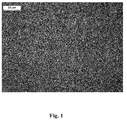
- Figure 1 is a photograph of the microstructure of the steel sheet in Embodiment 6 according to the present invention.
- Table 1 shows the chemical compositions in weight percentage of the wear-resistant steel sheet in Embodiments 1-10 and the steel sheet in the contrastive example 1 (which is an embodiment in the patent CN1865481A ).
- the method of manufacturing them is: the respective smelt raw materials are treated in the following stages: smelting - casting --- heating --- rolling --- cooling directly after rolling --- tempering (not necessary), and the chemical elements in weight percentage are controlled, wherein, in the stage of heating, the slab heating temperature is 1000-1200°C, and the hear preservation time is 1-3 hours; in the stage of rolling, the rough rolling temperature is 900-1150°C, while the finish rolling temperature is 780-880°C; in the stage of cooling, the steel is water cooled to below 400°C, then air cooled to the ambient temperature, wherein the speed of water cooling is more than or equal to 20°C/s; in the stage of tempering, the heating temperature is 100-400°C, and the heat preservation time is 30-120 min.
- Embodiments 1-10 The specific process parameters in Embodiments 1-10 are shown in Table 2.
- Table 1 Chemical Compositions in Embodiments 1-10 and in Contrastive Example 1 (unit: wt%) C Si Mn P S Cr Mo Ni Nb V Ti Al B Ca N O H Embodiment 1 0.21 0.50 1.25 0.010 0.005 0.60 0.33 / 0.016 / 0.019 0.027 0.0012 0.0030 0.0042 0.0060 0.0004 Embodiment 2 0.23 0.26 1.50 0.009 0.010 / 0.28 0.35 0.020 0.080 0.005 0.035 0.0005 0.0020 0.0080 0.0040 0.0002 Embodiment 3 0.24 0.40 1.33 0.015 0.004 0.22 / / 0.026 / / 0.010 0.0013 0.0080 0.0050 0.0028 0.0002 Embodiment 4 0.25 0.37 1.23 0.008 0.003 0.62 0.26 / / / 0.022 0.020 0.0015
- Embodiment 1 1000 2 950 25 795 51 water 25 300 / / 25 Embodiment 2 1120 2 1050 30 830 62 water 33 250 / / 37 Embodiment 3 1050 2 995 20 806 46 water 20 400 / / 35 Embodiment 4 1080 2 1010 33 780 40 water 40 170 / / 20 Embodiment 5 1100 2.5 1060 28 815 55 water 33 265 / / 39 Embodiment 6 1110 2.5 1080 41 880 66 water 36 205 / / 28 Embodiment 7 1130 2.5 1110 37 856 70 water 42 Ambient Temp.
- Embodiments 1-10 are tested for mechanical properties, and the results thereof are shown in Table 3.
- Table 3 Hardness HBW Transverse Stretch Charpy V-notch Longitudinal Impact Energy (-40°C), J Tensile Strength MPa Elongation rate % Embodiment 1 478 1480 14% 85 Embodiment 2 489 1515 14% 81 Embodiment 3 505 1555 14% 78 Embodiment 4 519 1580 14% 75 Embodiment 5 525 1610 14% 71 Embodiment 6 531 1640 14% 69 Embodiment 7 538 1660 13% 68 Embodiment 8 542 1695 13% 65 Embodiment 9 553 1730 13% 60 Embodiment 10 559 1750 13% 53 Contrastive Example 1 About 400 (HRC43) 1250 10 -
- the wear-resistant steel sheet in Embodiments 1-10 has a tensile strength of 1450-1800Mpa, an elongation rate of 13-14%, Brinell Hardness of 470-560HBW, and -40°C Charpy V-notch longitudinal impact energy of 50-90J, which indicates that the wear-resistant steel sheet of the present invention has not only high strength, high hardness, good elongation rate etc. but also excellent low-temperature impact toughness.
- the strength, hardness, and elongation rate of the steel sheet of the present invention are obviously superior to that in contrastive example 1.
- the wear resistance test is performed on ML-100 abrasive wear testing machine.
- the axis of the sample is perpendicular to the steel sheet surface, and the wear surface of the sample is the rolled surface of the steel sheet.
- the sample is machined into a step-like cylinder body with a tested part of ⁇ 4mm and a clamped part of ⁇ 5mm.
- the sample is rinsed by alcohol, and dried by a blower, then weighted on a scale with a precision of ten thousandth. The measured weight is taken as the original weight, then it is mounted onto an elastic clamp.
- the test is performed by an abrasive paper with 80 grits, under an effect of a load 84N.
- a spiral line may be drawn on the abrasive paper by the sample.
- weighting is performed for three times, and the average results are used. Then the weight loss is calculated, and the weight loss per meter indicates the wear rate of the sample (mg/M).
- the wear resistance test is performed on the super-strength high-toughness low-alloy wear-resistant steel sheet in Embodiments 1-10 of the present invention.
- the wearing test results of the steel in these embodiments according to the present invention and the contrastive example 2 are shown in Table 4.
- a Y-slit weld cracking test is performed, and five groups are tested.
- the constrained welding seams are welded through the rich Ar gas shielding weld, by using JM-58 welding wires of ⁇ 1.2.
- the angular deformation of the test piece is strictly controlled. After welding, they are cooled to the ambient temperature, so as to weld the tested seams.
- the seams are welded under the ambient temperature and 48 hours after completing the welding, the cracks on the surfaces, sections and root of the seams are detected. This detection is carried out by dissection test and staining.
- the welding conditions are 170A ⁇ 25V ⁇ 160mm/min.
- the welding performance test is performed on the wear-resistant steel sheet of Embodiments 1-10 according to the present invention, and the test results are shown as Table 5.
- Table 5 The Results of Welding Performance Test of Embodiments 1-10 Preheat Temp. Sample No. Surface Crack Ratio, % Root Crack Ratio, % Section Crack Ratio,% Ambient. Temp.
- Embodiment 1 85°C 1 0 0 0 25°C 66% 2 0 0 0 3 0 0 0 4 0 0 0 5 0 0 0 Embodiment 2 93°C 1 0 0 0 32°C 59% 2 0 0 0 3 0 0 0 4 0 0 0 5 0 0 0 Embodiment 3 105°C 1 0 0 0 26°C 62% 2 0 0 0 3 0 0 0 4 0 0 0 5 0 0 0 Embodiment 4 118°C 1 0 0 0 29°C 61% 2 0 0 0 3 0 0 0 4 0 0 0 5 0 0 0 Embodiment 5 138°C 1 0 0 0 0 33°C 66% 2 0 0 0 0 3 0 0 0 4 0 0 0 5 0 0 0 Embodiment 6
- the microstructures are obtained by checking the wear-resistant steel sheet of Embodiment 5. As shown in Fig. 1 , the microstructures are fine martensite and a trace of retained austenite, wherein the volume fraction of the retained austenite is less than or equal to 5%, which ensures that the steel sheet has excellent mechanical properties.
- the present invention under the reasonable conditions of production process, designs scientifically the compositions of carbon and alloy elements, and the ratios thereof, reducing the cost of alloys; and makes full use of TMCP processes to refine and strengthen the structures, such that the obtained wear-resistant steel sheet has high performance, such as high hardness, high strength, high elongation rate and good impact toughness etc., has excellent welding performance and wear resistance, and easy to be machined such as cut, bended, thereby having high applicability.
Landscapes
- Chemical & Material Sciences (AREA)
- Engineering & Computer Science (AREA)
- Mechanical Engineering (AREA)
- Materials Engineering (AREA)
- Metallurgy (AREA)
- Organic Chemistry (AREA)
- Physics & Mathematics (AREA)
- Thermal Sciences (AREA)
- Crystallography & Structural Chemistry (AREA)
- Heat Treatment Of Steel (AREA)
Applications Claiming Priority (2)
| Application Number | Priority Date | Filing Date | Title |
|---|---|---|---|
| CN201310105169.9A CN103205627B (zh) | 2013-03-28 | 2013-03-28 | 一种低合金高性能耐磨钢板及其制造方法 |
| PCT/CN2014/074100 WO2014154140A1 (fr) | 2013-03-28 | 2014-03-26 | Tôle d'acier haute performance, résistant à l'usure et faiblement allié et procédé de fabrication de cette dernière |
Publications (3)
| Publication Number | Publication Date |
|---|---|
| EP2980256A1 true EP2980256A1 (fr) | 2016-02-03 |
| EP2980256A4 EP2980256A4 (fr) | 2016-09-28 |
| EP2980256B1 EP2980256B1 (fr) | 2020-07-29 |
Family
ID=48753030
Family Applications (1)
| Application Number | Title | Priority Date | Filing Date |
|---|---|---|---|
| EP14776517.6A Active EP2980256B1 (fr) | 2013-03-28 | 2014-03-26 | Tôle d'acier haute performance, résistant à l'usure et faiblement allié et procédé de fabrication de cette dernière |
Country Status (9)
| Country | Link |
|---|---|
| US (1) | US10745785B2 (fr) |
| EP (1) | EP2980256B1 (fr) |
| JP (1) | JP6211099B2 (fr) |
| KR (2) | KR20150086551A (fr) |
| CN (1) | CN103205627B (fr) |
| AU (1) | AU2014243558B2 (fr) |
| NZ (1) | NZ708747A (fr) |
| WO (1) | WO2014154140A1 (fr) |
| ZA (1) | ZA201504290B (fr) |
Cited By (2)
| Publication number | Priority date | Publication date | Assignee | Title |
|---|---|---|---|---|
| US10577671B2 (en) | 2013-08-30 | 2020-03-03 | Rautaruukki Oyj | High-hardness hot-rolled steel product, and a method of manufacturing the same |
| EP4621092A4 (fr) * | 2022-11-18 | 2026-02-25 | Posco Co Ltd | Tôle d'acier laminée à chaud et son procédé de fabrication |
Families Citing this family (49)
| Publication number | Priority date | Publication date | Assignee | Title |
|---|---|---|---|---|
| CN103205627B (zh) | 2013-03-28 | 2015-08-26 | 宝山钢铁股份有限公司 | 一种低合金高性能耐磨钢板及其制造方法 |
| CN103614658A (zh) * | 2013-10-22 | 2014-03-05 | 芜湖市鸿坤汽车零部件有限公司 | 一种高强度耐磨低碳钢材料及其制备方法 |
| CN103614620A (zh) * | 2013-10-24 | 2014-03-05 | 铜陵市经纬流体科技有限公司 | 一种高强耐磨性合金钢材料及其制备方法 |
| CN103820717A (zh) * | 2014-01-28 | 2014-05-28 | 莱芜钢铁集团有限公司 | 钢板及其制备方法 |
| CN105200337A (zh) * | 2014-06-23 | 2015-12-30 | 鞍钢股份有限公司 | 一种高强度耐磨钢板及其生产方法 |
| CN104480406A (zh) * | 2014-11-28 | 2015-04-01 | 宝山钢铁股份有限公司 | 一种低合金高强高韧钢板及其制造方法 |
| CN104532157A (zh) * | 2014-12-19 | 2015-04-22 | 宝山钢铁股份有限公司 | 一种屈服强度900~1000MPa级调质高强钢及其生产方法 |
| JP6394378B2 (ja) * | 2014-12-26 | 2018-09-26 | 新日鐵住金株式会社 | 耐摩耗鋼板およびその製造方法 |
| CN104561829B (zh) * | 2014-12-30 | 2017-05-24 | 中车戚墅堰机车车辆工艺研究所有限公司 | 一种铁路辙叉用高耐磨钢及其制造方法 |
| CN104651735B (zh) * | 2015-03-06 | 2017-01-18 | 武汉钢铁(集团)公司 | 一种韧性大于50J/cm2的低合金耐磨钢及生产方法 |
| CN105002441A (zh) * | 2015-08-11 | 2015-10-28 | 内蒙古包钢钢联股份有限公司 | 一种高淬透性耐磨斗齿用钢 |
| JP6597450B2 (ja) * | 2016-03-29 | 2019-10-30 | 日本製鉄株式会社 | 耐摩耗鋼板及びその製造方法 |
| CN105937008A (zh) * | 2016-06-27 | 2016-09-14 | 江阴兴澄特种钢铁有限公司 | 一种薄规格耐磨钢及其制造方法 |
| CN106244920B (zh) * | 2016-08-08 | 2019-01-22 | 武汉钢铁有限公司 | 布氏硬度450级耐磨钢及其制造方法 |
| CN106191678B (zh) * | 2016-08-24 | 2018-06-26 | 武汉钢铁有限公司 | 用中薄板坯直接轧制的抗拉强度≥1700MPa热成形钢及生产方法 |
| JP6583374B2 (ja) * | 2016-09-28 | 2019-10-02 | Jfeスチール株式会社 | 耐摩耗鋼板および耐摩耗鋼板の製造方法 |
| CN108930002B (zh) * | 2017-05-26 | 2020-08-25 | 宝山钢铁股份有限公司 | 硬度500hb浆体疏浚管用耐磨蚀钢板及其生产方法 |
| CN108950421B (zh) * | 2017-05-26 | 2020-08-25 | 宝山钢铁股份有限公司 | 硬度600hb浆体疏浚管用耐磨蚀钢板及其生产方法 |
| CN107290488A (zh) * | 2017-07-18 | 2017-10-24 | 国网河南省电力公司检修公司 | 变电设备sf6气体检测固定装置 |
| CN108034886B (zh) * | 2017-11-15 | 2019-12-27 | 东北大学 | 一种低密度轻质自卸车车厢用耐磨钢板及其制备方法 |
| EP3530761B1 (fr) * | 2018-02-23 | 2022-04-27 | Vallourec Deutschland GmbH | Aciers à haute résistance et à haute ténacité |
| US20200354808A1 (en) | 2018-03-22 | 2020-11-12 | Nippon Steel Corporation | Abrasion resistant steel and method for producing same |
| KR102175570B1 (ko) * | 2018-09-27 | 2020-11-06 | 주식회사 포스코 | 우수한 경도와 충격인성을 갖는 내마모강 및 그 제조방법 |
| KR102119959B1 (ko) * | 2018-09-27 | 2020-06-05 | 주식회사 포스코 | 우수한 경도와 충격인성을 갖는 내마모강 및 그 제조방법 |
| CN111748728B (zh) * | 2019-03-27 | 2022-01-14 | 宝山钢铁股份有限公司 | 一种易焊接高强高韧耐磨钢板及其制造方法 |
| CN110004371B (zh) * | 2019-05-07 | 2020-12-18 | 南京钢铁股份有限公司 | 一种耐磨钢及冶炼方法 |
| CN110499456B (zh) * | 2019-07-31 | 2021-06-04 | 江阴兴澄特种钢铁有限公司 | 一种表面质量优良的耐磨钢及其制备方法 |
| CN110726734A (zh) * | 2019-10-29 | 2020-01-24 | 中船黄埔文冲船舶有限公司 | 一种焊丝抗裂性实验方法 |
| CN111961977B (zh) * | 2020-09-09 | 2022-02-18 | 鞍钢股份有限公司 | 一种hb500级别高耐磨薄钢板及其生产方法 |
| PE20231720A1 (es) * | 2020-09-10 | 2023-10-24 | Jfe Steel Corp | Junta de soldadura y metodo de fabricacion de la junta de soldadura |
| KR102498156B1 (ko) * | 2020-12-18 | 2023-02-08 | 주식회사 포스코 | 저온 충격인성이 우수한 고경도 방탄강 및 이의 제조방법 |
| KR102498147B1 (ko) * | 2020-12-18 | 2023-02-08 | 주식회사 포스코 | 저온 충격인성이 우수한 고경도 방탄강 및 이의 제조방법 |
| KR102498155B1 (ko) * | 2020-12-18 | 2023-02-08 | 주식회사 포스코 | 저온 충격인성이 우수한 고경도 방탄강 및 이의 제조방법 |
| KR102498149B1 (ko) * | 2020-12-18 | 2023-02-08 | 주식회사 포스코 | 저온 충격인성이 우수한 고경도 방탄강 및 이의 제조방법 |
| CN113025888B (zh) * | 2021-02-07 | 2022-04-19 | 首钢集团有限公司 | 一种耐磨蚀性高强钢及其制备方法 |
| JP7215646B1 (ja) * | 2021-06-11 | 2023-01-31 | Jfeスチール株式会社 | 高強度鋼板およびその製造方法 |
| MX2023014591A (es) * | 2021-06-11 | 2023-12-15 | Jfe Steel Corp | Chapa de acero de alta resistencia y metodo para fabricar la misma. |
| CN113249553B (zh) * | 2021-06-25 | 2021-11-05 | 宁波威乐新材料科技有限公司 | 一种钢材的淬火方法、热成型工艺以及钢材工件 |
| CN115679200A (zh) * | 2021-07-30 | 2023-02-03 | 宝山钢铁股份有限公司 | 一种传动轴用钢及其制造方法 |
| KR20230024090A (ko) * | 2021-08-11 | 2023-02-20 | 주식회사 포스코 | 저온인성이 우수한 고경도 방탄강 및 그 제조방법 |
| CN115725892B (zh) * | 2021-08-25 | 2023-11-14 | 宝山钢铁股份有限公司 | 一种布氏硬度550hb级耐磨钢及其生产方法 |
| CN116024491A (zh) * | 2021-10-27 | 2023-04-28 | 宝山钢铁股份有限公司 | 一种低硬度高韧性锯片钢及其制造方法 |
| CN116334475A (zh) * | 2021-12-22 | 2023-06-27 | 中国石油天然气集团有限公司 | 一种超深井井架用经济型550MPa热轧H型钢和生产方法 |
| CN114480945A (zh) * | 2022-01-18 | 2022-05-13 | 甘肃酒钢集团宏兴钢铁股份有限公司 | 一种利用在线余热生产30mm以下调质耐磨钢板NM400的方法 |
| CN114672735A (zh) * | 2022-04-12 | 2022-06-28 | 南京钢铁股份有限公司 | 一种500hb级以上的耐磨钢及其生产方法 |
| WO2024022531A1 (fr) * | 2022-07-29 | 2024-02-01 | 宝山钢铁股份有限公司 | Tôle d'acier résistante à la corrosion et résistante à l'usure et procédé de fabrication s'y rapportant |
| CN115821156B (zh) * | 2022-11-10 | 2024-04-19 | 舞阳钢铁有限责任公司 | 固定海上结构用特厚s355mlo钢板及其生产方法 |
| KR20250158533A (ko) | 2024-04-30 | 2025-11-06 | 현대제철 주식회사 | 저탄소 합금강 및 그 제조방법 |
| CN118345316B (zh) * | 2024-06-18 | 2024-11-08 | 内蒙古科技大学 | 一种耐磨钢板及其制备方法 |
Family Cites Families (21)
| Publication number | Priority date | Publication date | Assignee | Title |
|---|---|---|---|---|
| SU759614A1 (ru) * | 1978-06-12 | 1980-08-30 | Inst Litya An Ussr | Сталь |
| JPS6431928A (en) * | 1987-07-27 | 1989-02-02 | Kawasaki Steel Co | Manufacture of wear-resistant steel stock by direct hardening |
| JPH01172550A (ja) * | 1987-12-25 | 1989-07-07 | Nippon Steel Corp | 耐熱亀裂性に優れた高硬度高靭性耐摩耗鋼 |
| KR950008691B1 (ko) * | 1993-03-31 | 1995-08-04 | 포항종합제철주식회사 | 내마모용 강판의 제조방법 |
| CN1140205A (zh) | 1995-03-28 | 1997-01-15 | 王宇辉 | 一种中碳中合金耐磨钢 |
| JP3616726B2 (ja) * | 1998-12-22 | 2005-02-02 | 日本高周波鋼業株式会社 | 白点発生防止鋼及びその製造方法 |
| JP2005298909A (ja) * | 2004-04-13 | 2005-10-27 | Nippon Steel Corp | 表面割れの少ない鋳片 |
| CN1865481A (zh) | 2005-05-19 | 2006-11-22 | 宝钢集团上海梅山有限公司 | 一种贝氏体耐磨钢板制备工艺 |
| JP5145803B2 (ja) * | 2007-07-26 | 2013-02-20 | Jfeスチール株式会社 | 低温靭性および耐低温焼戻し脆化割れ特性に優れた耐磨耗鋼板 |
| JP5145805B2 (ja) * | 2007-07-26 | 2013-02-20 | Jfeスチール株式会社 | ガス切断面性状および耐低温焼戻し脆化割れ特性に優れた耐磨耗鋼板 |
| CN101638755A (zh) | 2009-08-21 | 2010-02-03 | 东北大学 | 高韧性超高强度耐磨钢板及其生产方法 |
| WO2011061812A1 (fr) * | 2009-11-17 | 2011-05-26 | 住友金属工業株式会社 | Acier haute ténacité résistant à l'abrasion et son procédé de fabrication |
| CN102199737B (zh) * | 2010-03-26 | 2012-09-19 | 宝山钢铁股份有限公司 | 一种600hb级耐磨钢板及其制造方法 |
| EP2581465B1 (fr) * | 2010-06-14 | 2019-01-30 | Nippon Steel & Sumitomo Metal Corporation | Article moulé estampé à chaud, procédé pour la production d'une tôle d'acier pour l'estampage à chaud et procédé pour la production d'un article moulé estampé à chaud |
| JP5845674B2 (ja) * | 2010-07-16 | 2016-01-20 | Jfeスチール株式会社 | 曲げ加工性および低温靱性に優れる高張力鋼板およびその製造方法 |
| US20120132322A1 (en) | 2010-11-30 | 2012-05-31 | Kennametal Inc. | Abrasion resistant steel, method of manufacturing an abrasion resistant steel and articles made therefrom |
| BR112013025002B1 (pt) * | 2011-03-29 | 2023-09-26 | Jfe Steel Corporation | Chapa grossa de aço resistente à abrasão e método para produção da mesma |
| CN102560272B (zh) | 2011-11-25 | 2014-01-22 | 宝山钢铁股份有限公司 | 一种超高强度耐磨钢板及其制造方法 |
| CN102747280B (zh) * | 2012-07-31 | 2014-10-01 | 宝山钢铁股份有限公司 | 一种高强度高韧性耐磨钢板及其制造方法 |
| CN102876969B (zh) * | 2012-07-31 | 2015-03-04 | 宝山钢铁股份有限公司 | 一种超高强度高韧性耐磨钢板及其制造方法 |
| CN103205627B (zh) | 2013-03-28 | 2015-08-26 | 宝山钢铁股份有限公司 | 一种低合金高性能耐磨钢板及其制造方法 |
-
2013
- 2013-03-28 CN CN201310105169.9A patent/CN103205627B/zh active Active
-
2014
- 2014-03-26 JP JP2015554049A patent/JP6211099B2/ja active Active
- 2014-03-26 US US14/761,352 patent/US10745785B2/en active Active
- 2014-03-26 KR KR1020157018018A patent/KR20150086551A/ko not_active Ceased
- 2014-03-26 NZ NZ708747A patent/NZ708747A/en unknown
- 2014-03-26 KR KR1020177016488A patent/KR102076053B1/ko active Active
- 2014-03-26 WO PCT/CN2014/074100 patent/WO2014154140A1/fr not_active Ceased
- 2014-03-26 AU AU2014243558A patent/AU2014243558B2/en active Active
- 2014-03-26 EP EP14776517.6A patent/EP2980256B1/fr active Active
-
2015
- 2015-06-12 ZA ZA2015/04290A patent/ZA201504290B/en unknown
Cited By (2)
| Publication number | Priority date | Publication date | Assignee | Title |
|---|---|---|---|---|
| US10577671B2 (en) | 2013-08-30 | 2020-03-03 | Rautaruukki Oyj | High-hardness hot-rolled steel product, and a method of manufacturing the same |
| EP4621092A4 (fr) * | 2022-11-18 | 2026-02-25 | Posco Co Ltd | Tôle d'acier laminée à chaud et son procédé de fabrication |
Also Published As
| Publication number | Publication date |
|---|---|
| US10745785B2 (en) | 2020-08-18 |
| WO2014154140A1 (fr) | 2014-10-02 |
| KR20150086551A (ko) | 2015-07-28 |
| NZ708747A (en) | 2016-11-25 |
| AU2014243558A1 (en) | 2015-08-06 |
| EP2980256A4 (fr) | 2016-09-28 |
| CN103205627B (zh) | 2015-08-26 |
| KR20170073715A (ko) | 2017-06-28 |
| AU2014243558B2 (en) | 2016-07-21 |
| JP6211099B2 (ja) | 2017-10-11 |
| EP2980256B1 (fr) | 2020-07-29 |
| CN103205627A (zh) | 2013-07-17 |
| JP2016509631A (ja) | 2016-03-31 |
| KR102076053B1 (ko) | 2020-02-11 |
| US20160032432A1 (en) | 2016-02-04 |
| ZA201504290B (en) | 2016-05-25 |
Similar Documents
| Publication | Publication Date | Title |
|---|---|---|
| EP2980256B1 (fr) | Tôle d'acier haute performance, résistant à l'usure et faiblement allié et procédé de fabrication de cette dernière | |
| US10494706B2 (en) | High-toughness low alloy wear-resistant steel sheet and method of manufacturing method thereof the same | |
| US10208369B2 (en) | High-hardness low-alloy wear-resistant steel sheet and method of manufacturing the same | |
| EP2881486B1 (fr) | Plaque d'acier résistant à l'abrasion, très résistante et très dure, et son procédé de préparation | |
| EP2881487B1 (fr) | Plaque d'acier résistant à l'abrasion, extrêmement résistante et très dure, et son procédé de préparation | |
| EP2881485A1 (fr) | Plaque en acier résistant à l'abrasion présentant une résistance élevée et une ténacité élevée, et son procédé de préparation | |
| CN103194674B (zh) | 一种hb360级耐磨钢板及其制造方法 |
Legal Events
| Date | Code | Title | Description |
|---|---|---|---|
| PUAI | Public reference made under article 153(3) epc to a published international application that has entered the european phase |
Free format text: ORIGINAL CODE: 0009012 |
|
| 17P | Request for examination filed |
Effective date: 20150715 |
|
| AK | Designated contracting states |
Kind code of ref document: A1 Designated state(s): AL AT BE BG CH CY CZ DE DK EE ES FI FR GB GR HR HU IE IS IT LI LT LU LV MC MK MT NL NO PL PT RO RS SE SI SK SM TR |
|
| AX | Request for extension of the european patent |
Extension state: BA ME |
|
| DAX | Request for extension of the european patent (deleted) | ||
| A4 | Supplementary search report drawn up and despatched |
Effective date: 20160829 |
|
| RIC1 | Information provided on ipc code assigned before grant |
Ipc: C21D 8/02 20060101ALI20160823BHEP Ipc: C22C 38/50 20060101ALI20160823BHEP Ipc: C22C 38/02 20060101ALI20160823BHEP Ipc: C22C 38/26 20060101ALI20160823BHEP Ipc: C22C 38/00 20060101ALI20160823BHEP Ipc: C22C 38/08 20060101ALI20160823BHEP Ipc: C22C 38/46 20060101ALI20160823BHEP Ipc: C22C 38/44 20060101ALI20160823BHEP Ipc: C22C 38/04 20060101AFI20160823BHEP Ipc: C21D 1/60 20060101ALI20160823BHEP Ipc: C22C 38/06 20060101ALI20160823BHEP Ipc: C22C 38/12 20060101ALI20160823BHEP Ipc: C22C 38/54 20060101ALI20160823BHEP Ipc: C22C 38/24 20060101ALI20160823BHEP Ipc: C22C 38/22 20060101ALI20160823BHEP Ipc: C22C 38/32 20060101ALI20160823BHEP Ipc: C21D 6/00 20060101ALI20160823BHEP Ipc: C22C 38/14 20060101ALI20160823BHEP Ipc: C22C 38/48 20060101ALI20160823BHEP Ipc: C21D 9/46 20060101ALI20160823BHEP Ipc: C22C 38/28 20060101ALI20160823BHEP |
|
| STAA | Information on the status of an ep patent application or granted ep patent |
Free format text: STATUS: EXAMINATION IS IN PROGRESS |
|
| 17Q | First examination report despatched |
Effective date: 20180209 |
|
| GRAP | Despatch of communication of intention to grant a patent |
Free format text: ORIGINAL CODE: EPIDOSNIGR1 |
|
| STAA | Information on the status of an ep patent application or granted ep patent |
Free format text: STATUS: GRANT OF PATENT IS INTENDED |
|
| INTG | Intention to grant announced |
Effective date: 20200320 |
|
| GRAS | Grant fee paid |
Free format text: ORIGINAL CODE: EPIDOSNIGR3 |
|
| GRAA | (expected) grant |
Free format text: ORIGINAL CODE: 0009210 |
|
| STAA | Information on the status of an ep patent application or granted ep patent |
Free format text: STATUS: THE PATENT HAS BEEN GRANTED |
|
| AK | Designated contracting states |
Kind code of ref document: B1 Designated state(s): AL AT BE BG CH CY CZ DE DK EE ES FI FR GB GR HR HU IE IS IT LI LT LU LV MC MK MT NL NO PL PT RO RS SE SI SK SM TR |
|
| REG | Reference to a national code |
Ref country code: CH Ref legal event code: EP |
|
| REG | Reference to a national code |
Ref country code: AT Ref legal event code: REF Ref document number: 1295868 Country of ref document: AT Kind code of ref document: T Effective date: 20200815 |
|
| REG | Reference to a national code |
Ref country code: IE Ref legal event code: FG4D |
|
| REG | Reference to a national code |
Ref country code: DE Ref legal event code: R096 Ref document number: 602014068305 Country of ref document: DE |
|
| REG | Reference to a national code |
Ref country code: FI Ref legal event code: FGE |
|
| REG | Reference to a national code |
Ref country code: SE Ref legal event code: TRGR |
|
| REG | Reference to a national code |
Ref country code: LT Ref legal event code: MG4D |
|
| REG | Reference to a national code |
Ref country code: NL Ref legal event code: MP Effective date: 20200729 |
|
| REG | Reference to a national code |
Ref country code: SK Ref legal event code: T3 Ref document number: E 35772 Country of ref document: SK |
|
| REG | Reference to a national code |
Ref country code: AT Ref legal event code: MK05 Ref document number: 1295868 Country of ref document: AT Kind code of ref document: T Effective date: 20200729 |
|
| PG25 | Lapsed in a contracting state [announced via postgrant information from national office to epo] |
Ref country code: NO Free format text: LAPSE BECAUSE OF FAILURE TO SUBMIT A TRANSLATION OF THE DESCRIPTION OR TO PAY THE FEE WITHIN THE PRESCRIBED TIME-LIMIT Effective date: 20201029 Ref country code: ES Free format text: LAPSE BECAUSE OF FAILURE TO SUBMIT A TRANSLATION OF THE DESCRIPTION OR TO PAY THE FEE WITHIN THE PRESCRIBED TIME-LIMIT Effective date: 20200729 Ref country code: BG Free format text: LAPSE BECAUSE OF FAILURE TO SUBMIT A TRANSLATION OF THE DESCRIPTION OR TO PAY THE FEE WITHIN THE PRESCRIBED TIME-LIMIT Effective date: 20201029 Ref country code: LT Free format text: LAPSE BECAUSE OF FAILURE TO SUBMIT A TRANSLATION OF THE DESCRIPTION OR TO PAY THE FEE WITHIN THE PRESCRIBED TIME-LIMIT Effective date: 20200729 Ref country code: HR Free format text: LAPSE BECAUSE OF FAILURE TO SUBMIT A TRANSLATION OF THE DESCRIPTION OR TO PAY THE FEE WITHIN THE PRESCRIBED TIME-LIMIT Effective date: 20200729 Ref country code: GR Free format text: LAPSE BECAUSE OF FAILURE TO SUBMIT A TRANSLATION OF THE DESCRIPTION OR TO PAY THE FEE WITHIN THE PRESCRIBED TIME-LIMIT Effective date: 20201030 Ref country code: PT Free format text: LAPSE BECAUSE OF FAILURE TO SUBMIT A TRANSLATION OF THE DESCRIPTION OR TO PAY THE FEE WITHIN THE PRESCRIBED TIME-LIMIT Effective date: 20201130 Ref country code: AT Free format text: LAPSE BECAUSE OF FAILURE TO SUBMIT A TRANSLATION OF THE DESCRIPTION OR TO PAY THE FEE WITHIN THE PRESCRIBED TIME-LIMIT Effective date: 20200729 |
|
| PG25 | Lapsed in a contracting state [announced via postgrant information from national office to epo] |
Ref country code: RS Free format text: LAPSE BECAUSE OF FAILURE TO SUBMIT A TRANSLATION OF THE DESCRIPTION OR TO PAY THE FEE WITHIN THE PRESCRIBED TIME-LIMIT Effective date: 20200729 Ref country code: PL Free format text: LAPSE BECAUSE OF FAILURE TO SUBMIT A TRANSLATION OF THE DESCRIPTION OR TO PAY THE FEE WITHIN THE PRESCRIBED TIME-LIMIT Effective date: 20200729 Ref country code: LV Free format text: LAPSE BECAUSE OF FAILURE TO SUBMIT A TRANSLATION OF THE DESCRIPTION OR TO PAY THE FEE WITHIN THE PRESCRIBED TIME-LIMIT Effective date: 20200729 Ref country code: IS Free format text: LAPSE BECAUSE OF FAILURE TO SUBMIT A TRANSLATION OF THE DESCRIPTION OR TO PAY THE FEE WITHIN THE PRESCRIBED TIME-LIMIT Effective date: 20201129 |
|
| PG25 | Lapsed in a contracting state [announced via postgrant information from national office to epo] |
Ref country code: NL Free format text: LAPSE BECAUSE OF FAILURE TO SUBMIT A TRANSLATION OF THE DESCRIPTION OR TO PAY THE FEE WITHIN THE PRESCRIBED TIME-LIMIT Effective date: 20200729 |
|
| PG25 | Lapsed in a contracting state [announced via postgrant information from national office to epo] |
Ref country code: EE Free format text: LAPSE BECAUSE OF FAILURE TO SUBMIT A TRANSLATION OF THE DESCRIPTION OR TO PAY THE FEE WITHIN THE PRESCRIBED TIME-LIMIT Effective date: 20200729 Ref country code: CZ Free format text: LAPSE BECAUSE OF FAILURE TO SUBMIT A TRANSLATION OF THE DESCRIPTION OR TO PAY THE FEE WITHIN THE PRESCRIBED TIME-LIMIT Effective date: 20200729 Ref country code: DK Free format text: LAPSE BECAUSE OF FAILURE TO SUBMIT A TRANSLATION OF THE DESCRIPTION OR TO PAY THE FEE WITHIN THE PRESCRIBED TIME-LIMIT Effective date: 20200729 Ref country code: IT Free format text: LAPSE BECAUSE OF FAILURE TO SUBMIT A TRANSLATION OF THE DESCRIPTION OR TO PAY THE FEE WITHIN THE PRESCRIBED TIME-LIMIT Effective date: 20200729 Ref country code: SM Free format text: LAPSE BECAUSE OF FAILURE TO SUBMIT A TRANSLATION OF THE DESCRIPTION OR TO PAY THE FEE WITHIN THE PRESCRIBED TIME-LIMIT Effective date: 20200729 Ref country code: RO Free format text: LAPSE BECAUSE OF FAILURE TO SUBMIT A TRANSLATION OF THE DESCRIPTION OR TO PAY THE FEE WITHIN THE PRESCRIBED TIME-LIMIT Effective date: 20200729 |
|
| REG | Reference to a national code |
Ref country code: DE Ref legal event code: R097 Ref document number: 602014068305 Country of ref document: DE |
|
| PG25 | Lapsed in a contracting state [announced via postgrant information from national office to epo] |
Ref country code: AL Free format text: LAPSE BECAUSE OF FAILURE TO SUBMIT A TRANSLATION OF THE DESCRIPTION OR TO PAY THE FEE WITHIN THE PRESCRIBED TIME-LIMIT Effective date: 20200729 |
|
| PLBE | No opposition filed within time limit |
Free format text: ORIGINAL CODE: 0009261 |
|
| STAA | Information on the status of an ep patent application or granted ep patent |
Free format text: STATUS: NO OPPOSITION FILED WITHIN TIME LIMIT |
|
| 26N | No opposition filed |
Effective date: 20210430 |
|
| PG25 | Lapsed in a contracting state [announced via postgrant information from national office to epo] |
Ref country code: SI Free format text: LAPSE BECAUSE OF FAILURE TO SUBMIT A TRANSLATION OF THE DESCRIPTION OR TO PAY THE FEE WITHIN THE PRESCRIBED TIME-LIMIT Effective date: 20200729 |
|
| PG25 | Lapsed in a contracting state [announced via postgrant information from national office to epo] |
Ref country code: MC Free format text: LAPSE BECAUSE OF FAILURE TO SUBMIT A TRANSLATION OF THE DESCRIPTION OR TO PAY THE FEE WITHIN THE PRESCRIBED TIME-LIMIT Effective date: 20200729 |
|
| REG | Reference to a national code |
Ref country code: CH Ref legal event code: PL |
|
| GBPC | Gb: european patent ceased through non-payment of renewal fee |
Effective date: 20210326 |
|
| REG | Reference to a national code |
Ref country code: BE Ref legal event code: MM Effective date: 20210331 |
|
| PG25 | Lapsed in a contracting state [announced via postgrant information from national office to epo] |
Ref country code: CH Free format text: LAPSE BECAUSE OF NON-PAYMENT OF DUE FEES Effective date: 20210331 Ref country code: LI Free format text: LAPSE BECAUSE OF NON-PAYMENT OF DUE FEES Effective date: 20210331 Ref country code: LU Free format text: LAPSE BECAUSE OF NON-PAYMENT OF DUE FEES Effective date: 20210326 Ref country code: FR Free format text: LAPSE BECAUSE OF NON-PAYMENT OF DUE FEES Effective date: 20210331 Ref country code: GB Free format text: LAPSE BECAUSE OF NON-PAYMENT OF DUE FEES Effective date: 20210326 Ref country code: IE Free format text: LAPSE BECAUSE OF NON-PAYMENT OF DUE FEES Effective date: 20210326 |
|
| PG25 | Lapsed in a contracting state [announced via postgrant information from national office to epo] |
Ref country code: BE Free format text: LAPSE BECAUSE OF NON-PAYMENT OF DUE FEES Effective date: 20210331 |
|
| PG25 | Lapsed in a contracting state [announced via postgrant information from national office to epo] |
Ref country code: HU Free format text: LAPSE BECAUSE OF FAILURE TO SUBMIT A TRANSLATION OF THE DESCRIPTION OR TO PAY THE FEE WITHIN THE PRESCRIBED TIME-LIMIT; INVALID AB INITIO Effective date: 20140326 |
|
| PG25 | Lapsed in a contracting state [announced via postgrant information from national office to epo] |
Ref country code: CY Free format text: LAPSE BECAUSE OF FAILURE TO SUBMIT A TRANSLATION OF THE DESCRIPTION OR TO PAY THE FEE WITHIN THE PRESCRIBED TIME-LIMIT Effective date: 20200729 |
|
| PG25 | Lapsed in a contracting state [announced via postgrant information from national office to epo] |
Ref country code: MK Free format text: LAPSE BECAUSE OF FAILURE TO SUBMIT A TRANSLATION OF THE DESCRIPTION OR TO PAY THE FEE WITHIN THE PRESCRIBED TIME-LIMIT Effective date: 20200729 |
|
| PG25 | Lapsed in a contracting state [announced via postgrant information from national office to epo] |
Ref country code: TR Free format text: LAPSE BECAUSE OF FAILURE TO SUBMIT A TRANSLATION OF THE DESCRIPTION OR TO PAY THE FEE WITHIN THE PRESCRIBED TIME-LIMIT Effective date: 20200729 |
|
| PG25 | Lapsed in a contracting state [announced via postgrant information from national office to epo] |
Ref country code: MT Free format text: LAPSE BECAUSE OF FAILURE TO SUBMIT A TRANSLATION OF THE DESCRIPTION OR TO PAY THE FEE WITHIN THE PRESCRIBED TIME-LIMIT Effective date: 20200729 |
|
| PGFP | Annual fee paid to national office [announced via postgrant information from national office to epo] |
Ref country code: SE Payment date: 20260327 Year of fee payment: 13 |
|
| PGFP | Annual fee paid to national office [announced via postgrant information from national office to epo] |
Ref country code: DE Payment date: 20260317 Year of fee payment: 13 |
|
| PGFP | Annual fee paid to national office [announced via postgrant information from national office to epo] |
Ref country code: FI Payment date: 20260326 Year of fee payment: 13 |
|
| PGFP | Annual fee paid to national office [announced via postgrant information from national office to epo] |
Ref country code: SK Payment date: 20260324 Year of fee payment: 13 |