EP2980572A1 - Biocapteur et procédé pour sa fabrication - Google Patents
Biocapteur et procédé pour sa fabrication Download PDFInfo
- Publication number
- EP2980572A1 EP2980572A1 EP13879676.8A EP13879676A EP2980572A1 EP 2980572 A1 EP2980572 A1 EP 2980572A1 EP 13879676 A EP13879676 A EP 13879676A EP 2980572 A1 EP2980572 A1 EP 2980572A1
- Authority
- EP
- European Patent Office
- Prior art keywords
- reagent
- electrode
- biosensor
- reaction
- insulating layer
- Prior art date
- Legal status (The legal status is an assumption and is not a legal conclusion. Google has not performed a legal analysis and makes no representation as to the accuracy of the status listed.)
- Granted
Links
Images





Classifications
-
- G—PHYSICS
- G01—MEASURING; TESTING
- G01N—INVESTIGATING OR ANALYSING MATERIALS BY DETERMINING THEIR CHEMICAL OR PHYSICAL PROPERTIES
- G01N27/00—Investigating or analysing materials by the use of electric, electrochemical, or magnetic means
- G01N27/26—Investigating or analysing materials by the use of electric, electrochemical, or magnetic means by investigating electrochemical variables; by using electrolysis or electrophoresis
- G01N27/28—Electrolytic cell components
- G01N27/30—Electrodes, e.g. test electrodes; Half-cells
- G01N27/327—Biochemical electrodes, e.g. electrical or mechanical details for in vitro measurements
- G01N27/3271—Amperometric enzyme electrodes for analytes in body fluids, e.g. glucose in blood
- G01N27/3272—Test elements therefor, i.e. disposable laminated substrates with electrodes, reagent and channels
-
- G—PHYSICS
- G01—MEASURING; TESTING
- G01N—INVESTIGATING OR ANALYSING MATERIALS BY DETERMINING THEIR CHEMICAL OR PHYSICAL PROPERTIES
- G01N27/00—Investigating or analysing materials by the use of electric, electrochemical, or magnetic means
- G01N27/26—Investigating or analysing materials by the use of electric, electrochemical, or magnetic means by investigating electrochemical variables; by using electrolysis or electrophoresis
- G01N27/416—Systems
- G01N27/4166—Systems measuring a particular property of an electrolyte
-
- G—PHYSICS
- G01—MEASURING; TESTING
- G01N—INVESTIGATING OR ANALYSING MATERIALS BY DETERMINING THEIR CHEMICAL OR PHYSICAL PROPERTIES
- G01N33/00—Investigating or analysing materials by specific methods not covered by groups G01N1/00 - G01N31/00
- G01N33/48—Biological material, e.g. blood, urine; Haemocytometers
- G01N33/50—Chemical analysis of biological material, e.g. blood, urine; Testing involving biospecific ligand binding methods; Immunological testing
- G01N33/53—Immunoassay; Biospecific binding assay; Materials therefor
- G01N33/543—Immunoassay; Biospecific binding assay; Materials therefor with an insoluble carrier for immobilising immunochemicals
- G01N33/54366—Apparatus specially adapted for solid-phase testing
- G01N33/54373—Apparatus specially adapted for solid-phase testing involving physiochemical end-point determination, e.g. wave-guides, FETS, gratings
- G01N33/5438—Electrodes
-
- G—PHYSICS
- G01—MEASURING; TESTING
- G01N—INVESTIGATING OR ANALYSING MATERIALS BY DETERMINING THEIR CHEMICAL OR PHYSICAL PROPERTIES
- G01N33/00—Investigating or analysing materials by specific methods not covered by groups G01N1/00 - G01N31/00
- G01N33/48—Biological material, e.g. blood, urine; Haemocytometers
- G01N33/50—Chemical analysis of biological material, e.g. blood, urine; Testing involving biospecific ligand binding methods; Immunological testing
- G01N33/66—Chemical analysis of biological material, e.g. blood, urine; Testing involving biospecific ligand binding methods; Immunological testing involving blood sugars, e.g. galactose
Definitions
- the present invention involves a biosensor used for determining concentration of physical signs and a method of manufacturing the same.
- reaction reagents added to the electrode system are also different.
- the reaction reagents such as glucose oxidase are added to a working electrode.
- the enzyme reaction reagent dissolves in blood, glucose in the blood will react with the oxidase on the working electrode, and then electron acceptor will be reduced.
- the reduced electron acceptor will be electrochemically oxidized and the concentration of glucose in the sample can be obtained by calculating the current value of oxidation.
- the basic structure of this type of biosensors includes an insulative substrate, on which there's an electrode system which at least contains a working electrode and a counter electrode, and at least one working electrode is covered by reaction reagents that produce detectable signals according to concentration of determined substance in the sample; and a channel for detecting sample is formed by separating layer, the channel is on the working electrode and the counter electrode.
- an instrument reads the testing results according to the signals.
- the amount of reaction reagent in the channel for detecting the sample reaction has a great influence on the test result. Therefore, how to precisely control the amount of reaction reagents that acts in the reaction has been a big technical problem in this field.
- the amount of reaction reagents that acts in the reaction is equal to the product of area of sample channel and the thickness of reaction reagent layer, therefore, it is a major problem that shall be solved to accurately control both sizes of sample channels among different products produced at the same batch and the uniformity of thickness of reaction reagent.
- an electrode comprising an insulative substrate 16 that have a rectangle reagent-diffusion control zone 18, the electrode that needs reaction reagents and exposed by the rectangle reagent-diffusion control zone is rightly the active zone of the electrode.
- the reaction reagents have been dropped onto the control zone 18 and contact with the electrode, and other parts of the electrode that have not acted in the reaction will not be dropped by the reaction reagents since they are covered by the insulating plate 16, hence, the reaction reagents will be limited in the required area on the working electrode.
- the reagent will form a hemispheric drop in the groove of the rectangle control zone because of surface tension, which causes the uneven of reagent thickness at the electrode to form a result of thick center and thin edge, especially, at the edge of coatings area, it would be uneven, or the reaction reagents would concentrate on the center of electrode active region.
- the edge surface tension of hemispheric drop prevents the further diffusion around, which causes reagent blanks between reagent edge and four vertex angles, which means those four vertex angles can not be filled up with by reaction reagents.
- Some the active region of the electrode of biosensors produced in this way may be evenly filled up with by the reaction reagent, while some vertex angles in the active region of the electrode have no reaction reagents or the covered thickness are not uniform.
- the lack of reaction reagent at some parts of the electrode will cause that some samples fail in acting in the reaction, and the unevenness of thickness of the reaction reagents covered at the electrode will make the changes of reaction rate which does not conform the pre-established method, which will lead to the inaccuracy of testing results.
- biosensor Since the size of biosensor that is used to detect the glucose concentration of human's blood is very tiny, and the detection mechanism is also very complex, moreover, the applied blood sample amount is often between 0.3 and 1.0 micrometer, therefore, present technical level can only bring a relatively accurate detection result. According to the statutory requirements of biosensor that is used to detect the glucose concentration of human blood from U.S. FDA: as long as the positive or negative deviation of over 95% of detection result and standard glucose concentration is within 20%, the product is considered as a qualified one. It can be seen that it is very difficult technically to improve the detection accuracy of the glucose concentration of human blood by biosensor.
- diabetes patients in the worldwide have been increased to 366 million at present, and this number is expected to reach nearly 600 million within 20 years.
- the prevalence rate of diabetes has been increased by nearly two times within 10 years.
- the prevalence rate of Chinese adult diabetes was 9.7% , and diabetes patients have been reached to more than 140,000,000. Due to the huge cardinal number, even if the testing accuracy rate can be increased by 1%, then, in the world, 3.6 million person-time will be avoid of being misdiagnosed, so there will be 3.6 million people benefit from that, which would bring considerable economic and social interests.
- one of purposes of the present invention is to provide a biosensor with precise positioning and low amount of reaction reagents
- a biosensor comprising an insulative substrate and an electrode system on the insulative substrate, the electrode system includes a reaction reagent that can react with samples to be detected and an insulating layer thereon; the electrode system is partially covered by the insulating layer, but forms a closed region without any insulating layer covered, the reaction reagent lies on the closed region, the reaction reagent lies on a part of the electrode which is in the closed region; the closed region formed by the insulating layer has a non-sharp-angled closed boundary; and the reaction reagent covers the closed region, and it does not extend beyond the closed boundary.
- the shape of the closed boundary selected from a circle, an oval, two relative ovals, or rectangle with four circular vertex angles.
- the reaction reagent exactly fills the closed region, and the area covered by the reaction reagent is equal to the area of the closed region.
- the thickness of the insulating layer is 1-50 micrometers.
- the thickness of the insulating layer is 3-30 micrometers.
- the material of the insulating layer is hydrophobic material.
- the electrode system comprising an assisted diffusion electrode at both sides of the electrodes in the electrode system covered by the reaction reagent, and the assisted diffusion electrodes stand side by side with the electrodes covered by the detection reagent.
- the second purpose of the present invention is to provide a method of manufacturing a biosensor, comprising:
- the closed boundaries of the closed region selected from a circle, an oval or a square body with four circular vertex angles.
- the thickness of the insulating layer is 3-30 micrometers.
- the third purpose of the present invention is to provide a biosensor, comprising an insulative substrate and an electrode system on the insulative substrate, wherein the electrode system comprises a reaction reagent that can react with samples to be detected thereon, wherein the electrode system includes functional electrodes for detection and assisted diffusion electrodes for controlling the diffusion of the reaction reagent, and the functional electrodes are located between the assisted diffusion electrodes.
- the present invention comprises at least two assisted diffusion electrodes.
- At least two assisted diffusion electrodes are respectively located at the outsides of the functional electrode.
- the functional electrodes comprises a working electrode, a counter electrode and a reference electrode, and the functional electrodes are arranged in parallel with the assisted diffusion electrode, and are roughly parallel to each other.
- assisted diffusion electrodes which is located in the outer side of the functional electrode.
- the present invention comprising an insulating layer which covers part of the electrode system, the insulating layer forms a closed region without an insulating layer at the location of the reaction reagent, the reaction reagent locates on the electrode in the closed region, the closed region has a non-sharp-angled closed boundary surrounded by the insulating layer, and the reaction reagent covers the closed region, it does not extend beyond the closed boundary.
- the thickness of the insulating layer is 3-30 micrometers.
- Advances of the present invention include: according to a large number of experiments show that, because of the application of sample-adding pattern in non-sharp-angled reagent diffusion control zone, the biosensor described in the present invention has effectively overcome the edge effect of the reaction reagent, which makes reaction reagent evenly distribute at corresponding regions of the electrode, so that it can accurately control the uniformity of reaction reagent thicknesses of biosensors produced at the same batch so as to improve the accuracy of testing results.
- the added reaction reagent fills with the addition zone of reaction reagent that has the same shape with it, which avoids the phenomenon that those four vertex angles added by reaction reagent have not been filled up with by reaction reagent.
- the described manufacturing method of the present invention is simple, so there is no need to control the dosage of reaction reagent without any complicated steps.
- this assisted diffusion electrode is able to overcome the surface tension of the insulative substrate, which makes the reagents can smoothly and evenly distribute in the electrode system and arrive their pre-established places. Besides, the reaction reagents will not overflow the pre-established region.
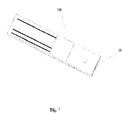
- the biosensor 100 consists of an insulative substrate 1 and an electrode system on the insulative substrate.
- the electrode system includes working electrode 2, counter electrode 3 and reference electrode 4.
- the reagent diffusion control layer 5 covers certain areas of the electrode system, and the control layer 5 includes a reagent diffusion control zone 6 which has an opening.
- the reagent diffusion control layer 5 is insulating material, hence, it is also called as insulating layer, i.e. the reagent diffusion control layer is equal to insulating layer in this patent application.
- the opening area of the reagent diffusion control zone 6 is equal to the area of the reagent which is added on the electrode, and the opening is precisely located on the active region of the electrode.
- the active region of the electrode refers to the part of electrodes having the reaction reagent and can transmit electronic signals.
- a gap layer 7 with a groove is on the reagent diffusion control layer 5
- an upper cover 8 covers the gap layer 7 and forms a sample channel 10 used to add sample.
- the biosensor of the present invention consists of an insulative substrate 1 and an electrode system on the insulative substrate.
- the electrode system comprising an insulating layer 5 and the reaction reagent that reacts with the test sample.
- the insulating layer 5 covers part of electrode system, while it has formed a closed region 6 without any insulating layer at the place of the reaction reagent. (This closed region is equal to the reagent diffusion control zone 6), the reaction reagent stands on the electrodes of the closed region 6, the closed region surrounded by the insulating layer has a non-sharp-angled closed boundary. The reaction reagent covers the closed region, but it does not go beyond the closed boundary.
- the shapes of the closed boundary may be a circle, an oval, two relative ovals, or four rectangles with its vertex angles of circular arcs.
- the reaction reagent exactly fills the closed region, and the coverage area of reaction reagent is equal to the area of the closed region.
- the thickness of the insulating layer is 1-50 micrometers. It would be better that the thickness of the insulating layer is 3-30 micrometers.
- the material of the insulating layer is hydrophobic material.
- the vertical sample-adding technology can be utilized, that is, the upper cover with a sample-adding hole adheres to the control layer 5, and the sample-adding hole of the upper cover precisely stands at the reagent diffusion control zone, and its area is equal to or a little smaller than the opening area of this control zone. That is, when the sample is added to the sample-adding hole, the sample vertical mobility contacts and reacts with the reagent in the control zone.
- the reagent diffusion control zone 6 is a hole without any sharp angles, and the added reaction reagent diffuses is in the control zone and it is able to reach all of pre-established regions in the control zone.
- the shapes of the reagent diffusion control zone may be a hole with a circular arc, such as a circle, an oval, a calabash and so on.
- the shapes can also be other shapes without any sharp angles, such as a quadrangle with its four circular-arc vertex angles within the diffusion control zone.
- the depth of the reagent diffusion control zone 6 is 1-50 micrometers, the depth of 3-30 micrometers is better, and the depth of 5-20 micrometers is the best.
- the upper cover 8 When the upper cover 8 covers the gap layer 7, it with the groove-shape of gap layer 7 forms a sample-adding channel 10. In order to make samples smoothly flow through the channel and finally arrive in the electrode system, there is also an air hole 11 of the sample-adding channel 10 for the upper cover 8.
- FIG.2 is a method of the biosensor in the embodiment of FIG.3 in the present invention.
- the manufacturing method described in the present invention is not limited to those steps showed in FIG.2 .
- the insulative substrate 1 and the electrode system on the insulative substrate there is the insulative substrate 1 and the electrode system on the insulative substrate.
- the electrode system described in this embodiment includes a working electrode 2, a counter electrode 3 and a reference electrode 4.
- the electrode system includes a working electrode 2, a counter electrode 3 and a reference electrode 4, and it also comprising an assisted diffusion electrode 12 showed in FIG.7 .
- the insulative substrate 1 can use but it is not limited to the following insulation materials: carbon, polystyrene, polycarbonate, polyvinyl chloride resin and polyester and so on.
- the substrate is made up of polyethylene glycol terephthalate (PET) .
- PET polyethylene glycol terephthalate
- the thickness of the substrate is 3-10 mils, for example, 5 mils (mil, milli-inch, a distance unit, 1 mil is equal to one thousandth of inch, that is 0.0254 millimeter.) PET strip can provide proper support, and it is also suitable to 14 mils PET albuginea. Of course, many different thicknesses can also play a very excellent function in the present invention.
- the insulative substrate provides supports for both electrode and electrode wire.
- the method of manufacturing a biosensor in the present invention includes following steps:
- the various ways can be used to put electrode on the insulative substrate 1. These ways include but not just be limited to screen printing, ink-jet printing, binding agent bonding, lithographic plate printing, laser carving and so on. Silver or silver chloride, graphite, palladium, gold, platinum, iridium stainless steel and other suitable electric-conduction materials can be used as the material of electrode.
- the electrode can be made up of these materials together, instead of single material. For example, the electrode that contacts with the contact end of the detection instrument is made of silver material.
- the reagent diffusion control layer 5 is placed on the electrode system, and the reagent diffusion control zone 6 in the control layer perfectly stands on the active region of the electrode system.
- the reaction reagent 200 has been added to the reagent diffusion control zone 6, and it evenly diffuses in the active region of the electrode, moreover, the reagent area that actually covers in the electrode is equal to the pre-established region.
- the reagent diffusion control layer 5 has been placed in the electrode system, such as bonding, heat-sealing, ultrasonic welding or grinding and so on.
- the reagent diffusion control layer 5 comes from hydrophobic materials, such as insulating polyphenyl ethylene, insulating hydrophobic ink or glue.
- the glue may be double faced adhesive tape, single faced adhesive tape or transferred adhesive tape and so on.
- the reagent diffusion control layer 5 is a double faced adhesive tape, one side of the double faced adhesive tape can make the control layer adhered to the substrate with an electrode system, another side of the double faced adhesive tape, the upper cover 8 may be adhered to the gap layer 7.
- the reaction reagent contains one or more chemical components which are used to detect the existence or concentration of the analyte in the liquid sample.
- the reaction reagents of electrochemical biosensor consist of oxidordeuctase and mediator, they are used to detect samples, producing a reaction product that can be detected by electronic detection system.
- the reaction reagents include glucose oxidase, hexaammine ruthenium (III) chloride, BSA, CaSO4, TritonX-100 and PVP and so on.
- the reaction reagents have been added to the electrode through various techniques, such as screen printing, liquid dropping adding, knife coating, spraying of groove nozzle and so on.
- the gap layer 7 with the groove 9 will be put on the substrate that is equipped with an electrode system and reaction reagents.
- gap layer covers the electrode that does not contact with samples, and the reaction reagent is exposed in the groove 9.
- the gap layer dose not cover the electrode which is opposite end of the electrode with the reaction reagent layer, the exposed electrode can touch the pin of a detecting instrument 300, just as the connection method that is showed in FIG.17 .
- the gap layer has been placed on the electrode system, such as bonding, heat-sealing, ultrasonic welding or grinding and so on.
- the groove 9 can be made a hydrophilic treatment, for example, the surface of the groove is coated surfactant or carried out plasma treatment, making the surface of the groove contacted with samples full of hyprophilia.
- the upper cover 8 places on the gap layer 7 to produce biosensor.
- FIG.2E after the upper cover 8 has been placed on the gap layer with the groove, it makes the groove 9 become a channel 10 for the sample to enter into the biosensor.
- the sample enters into the biosensor through an inlet, it enters into successfully utilizing the capillary function formed by groove and contact the reaction reagent.
- the material of upper cover selected from an insulating hydrophobic material or other kinds of materials.
- the upper cover 8 has the gas vent 11, the gas vent 11 is located on the groove 9 and far away from the entry end of the sample inlet.
- the electrode system includes functional electrodes, such as a working electrode 2, a counter electrode 3 and a reference electrode 4.
- the electrode system also comprising the assisted diffusion electrode 12 on the insulative substrate, and the assisted diffusion electrode can assist the reaction reagent added on the functional electrodes quickly and evenly diffuse in the electrode.
- Both sides of the electrode system that needs the addition of reaction reagent have the assisted diffusion electrode.
- the functional electrode is located between assisted diffusion electrodes, and the assisted diffusion electrodes are located at the outside of functional electrode separately. The distance between the assisted diffusion electrodes and the functional electrodes is proper, and this distance makes the front end of reaction reagent dropping added at the functional electrodes can touch the assisted diffusion electrodes.
- the assisted diffusion electrodes are made up of porous materials, such as carbon electrode.
- porous materials such as carbon electrode.
- assisted diffusion electrodes that are used to increase the diffusion speed of reagent at any place where the diffusion speed of reagent is relatively slow.
- the assisted diffusion electrode will be made a hydrophilic treating in advance in accord with the nature of adding solution.
- the biosensor also comprising a reaction reagent diffusion control layer 5 covered the electrode system, and the control layer 5 comprising a the reagent diffusion control zone 6 which comprising an opening.
- the area of opening in the reagent diffusion control zone 6 is the same as the area of reagent added on the electrode, and it is precisely located on the active region of the electrode.
- the gap layer 7 comprising the groove 9 is on the reaction reagent diffusion control layer 5, the upper cover 8 covers the gap layer 7 and forms a sample channel 10 used to add samples with the groove 9 of gap layer 7.
- the upper cover 8 comprising a gas vent, when the sample flows through the channel by capillary action, the gas at the front of the sample is ejected through the gas vent 11, which ensures the sample flows in the channel successfully.
- the reagent diffusion control zone 6 is a hole without any sharp angles, and the added reaction reagent diffuses in the control zone, and it is able to reach all of pre-established regions in the control zone.
- the shapes of the reagent diffusion control zone may be a hole with a circular arc, such as a circle, an oval, a calabash and so on.
- the shapes can also be other shapes without any sharp angles, such as a quadrangle with its four circular-arc vertex angles within the diffusion control zone.
- the biosensor showed in Fig. 7 is manufactured utilizing the method showed in Fig. 2 .
- the assisted diffusion electrode 12 is installed on the insulative substrate.
- the biosensor in the present invention consists of an insulative substrate 1 and an electrode system on the insulative substrate.
- the electrode system comprises a reaction reagent that can react with the sample.
- the electrode system comprising functional electrodes that are used for detection (2, 3, 4) and an assisted diffusion electrode that are used to control the diffusion of reaction reagents (10, 12), and the functional electrode is located between the assisted diffusion electrodes.
- the biosensor comprises at least two assisted diffusion electrodes.
- the two assisted diffusion electrodes are located at the outside of the functional electrode separately. The distance between the assisted diffusion electrodes and the functional electrodes perfectly makes the front end of the reaction reagent added at the functional electrodes can touch the assisted diffusion electrodes.
- the functional electrodes comprising a working electrode, a counter electrode and a reference electrode, and all of these functional electrodes stand side by side with the assisted electrodes, and almost parallel.
- the biosensor comprising two assisted diffusion electrodes located at the outside of the functional electrode separately. It comprises an insulating layer that covers a part of the electrode system.
- the insulating layer has formed a closed region without any insulating layer at the place of the reaction reagent, the reaction reagent is on the closed region of the electrode.
- the closed region surrounded by the insulating layer has a non-sharp-angled closed boundary.
- the reaction reagent covers the closed region, and it does not go beyond the closed boundary.
- the shapes of the closed boundary may be a circle, an oval, two relative ovals, or four rectangles with its vertex angles of circular arcs.
- the thickness of the insulating layer is 3-30 micrometers.
- sign 200 is the reaction reagent after diffused
- sign 6 is a closed region surrounded by insulating materials (it is also called as the reagent diffusion control zone in this application)
- sign 7 is a gap layer
- sign 9 is a groove formed by the gap layer 7
- the gap layer 7 is used to form a sample channel 10
- the sample channel 10 is formed by the side wall of the groove9, the insulative substrate 1 and the upper cover 8.
- reaction reagents in the channel 10 Only those reaction reagents in the channel 10 can react with the samples, the quantity of the reaction reagents in the channel 10 is an important factor for the detection results. Therefore, it would be beneficial to improve the accuracy of detection results of these products to effectively reduce the deviation of the reaction reagent quantity within the channels among various products produced at the same batch.
- the closed region 6 formed by the insulating layer is square, rectangle and other sharp-angled shapes.
- the shapes of reaction reagents after diffusion in the closed region 6 are very different (because the reaction reagent is not easy to cover all of sharp-angled regions).
- the thickness of the reaction reagent after reagent diffusion in different products exist great difference, it cause the amount of the reaction reagent in the channel 10 has a big difference. That is, amount of the reaction reagents in the channel 10 are poor consistency. It will lead to rather different detecting results for various products produced at the same batch to detect the same samples, so as to an inaccuracy of detecting results.
- the closed region 6 (it is also called as the reagent diffusion control zone in this application) formed by insulating layer is square, rectangle and other sharp-angled shapes.
- the reaction reagents When liquid reaction reagents are added, it is easier for the reaction reagents to fills all of the closed region 6 than the prior art, it is not easy to leave some "dead angles" that are not covered by the reaction reagents. Therefore, when different products of the same batch are added with reaction reagents, the shapes of reaction reagents after diffusion in the closed region 6 are less differences (they are basically in line with the sharps in the closed regions).
- reaction reagents they are hardly different in their areas after the diffusion of reaction reagents (they are basically in line with the areas of the closed regions), and the total amount of the added reaction reagents are equal, so the thicknesses of reaction reagents among different products are almost equal after the diffusion, and the amount of reaction reagents in the channel 10 is basically equal. That is, among different products, the quantities of the reaction reagents within the channel 10 are good consistency. It will lead to hardly different detecting results for various products produced at the same batch to detect the same samples so as to improve the accuracy of detecting results.
- the research and experimental results showed that: Adding assisted electrodes in the regions where the reaction reagent is hard to arrive (including the regions that the reaction often or occasionally can not arrive within a pre-established time) or the regions where the reagent is obviously later to arrive than other regions (this region shall be covered by the reaction reagents) will improve the diffusion ability of these reaction reagents in these regions. Therefore, it is beneficial to promote the even diffusion of reaction reagents within the closed region and to cover the whole closed region, while they will not go beyond the boundary of this closed region, so as to achieve the goal of even thicknesses of reaction reagents after the diffusion.
- reaction reagent fills, fills up with, properly fills, properly fills up with, covers, properly covers (or other similar terminology) the closed region 6. It means that the reaction reagent has basically covered the whole area of the closed region 6, but it is fundamentally not beyond or exceeded the boundary of the closed region 6. According to above analysis, this technology improves the accuracy of test results.
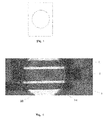
- the reaction reagents have been added to the electrodes through the oval reagent control zone by spot-dropping.
- digital microscope Type of microscope MOTICAM 2306, Manufacturer, MOTIC China Group Co., Ltd
- the reaction reagents added to the electrodes diffuse evenly without any exceeding outside the refined boundary of reagent diffusion control zone sideline 6-1.
- the reaction reagent 200 covered the whole reaction reagent zone established by sideline 6-1, and the whole control zone reflects the color of the reaction reagent. Therefore, in the biosensor in this embodiment, the reaction reagents have a good uniformity in electrodes.
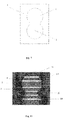
- the reagent diffusion control layer 5 comprising a rounded reagent diffusion control zone 6.
- the reaction reagents have been added to the electrodes through the oval reagent control zone by spot-dropping.
- digital microscope Type of microscope MOTICAM 2306, Manufacturer, MOTIC China Group Co., Ltd
- the added reaction reagents evenly diffuse in the working electrode 2, the counter electrode 3 and the reference electrodes without any exceeding outside the refined boundary of reagent diffusion control zone sideline 6-1.
- reaction reagent 200 covered the whole reagent zone, that is, the whole control zone reflects the color of reaction reagent. Therefore, in the biosensor in this embodiment, the reaction reagents have a good uniformity in electrodes.
- the electrode system of the biosensor comprising functional electrodes 2, 3, 4 and an assisted electrode 12.
- the biosensor also comprises a control layer of the reaction reagent diffusion 5 with an oval regent diffusion control zone 6.
- the reaction reagents have been added to the electrodes through the oval reagent control zone by spot-dropping.
- digital microscope Type of microscope MOTICAM 2306, Manufacturer, MOTIC China Group Co., Ltd
- reaction reagent 200 coved the whole reagent zone, that is, the whole control zone reflects the color of reaction reagent. Therefore, in the biosensor in this embodiment, the reaction reagents have a good uniformity in the electrodes.
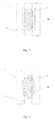
- End-to-end double-oval reagent diffusion control layer can be used to manufacture two biosensors at the same time.
- two sets of electrode systems are placed on the insulative substrate by end-to-end, the electrode system comprising a working electrode 2, a counter electrode 3 and a reference electrode 4, and it also comprising an assisted diffusion electrode 12.
- the electrode system comprising a working electrode 2, a counter electrode 3 and a reference electrode 4, and it also comprising an assisted diffusion electrode 12.
- the reaction reagents are added on the electrode system.
- the reaction reagents have been added to the electrodes through the oval reagent control zone by spot-dropping.
- digital microscope Type of microscope MOTICAM 2306, Manufacturer, MOTIC China Group Co., Ltd
- the reaction reagents added to the electrodes diffuse evenly without any exceeding outside the refined boundary 6-1 of reagent diffusion control zone.
- the reaction reagent 200 covered the whole reagent zone, that is, the whole control zone reflects the color of reaction reagent. Therefore, the reaction reagents have a good uniformity in the electrodes of this embodiment.
- the double-rectangle reagent diffusion control layer can be used to manufacture two biosensors at the same time.
- two sets of electrode systems are placed on the insulative substrate by end-to-end, the electrode system comprising a working electrode 2, a counter electrode 3 and a reference electrode 4, and it also comprising an assisted diffusion electrode 12.
- the electrode system comprising a working electrode 2, a counter electrode 3 and a reference electrode 4, and it also comprising an assisted diffusion electrode 12.
- there are three assisted diffusion electrodes 12 two of them lie the outside of two sets of functional electrodes (a working electrode 2, a counter electrode 3 and a reference electrode 4), and the other is in the middle of the two sets of functional electrodes as a commonly-used assisted diffusion electrode.
- FIG.9 after the reaction reagent diffusion-layer has been placed on the electrode system, the reaction reagents are added on the electrode system.
- the reaction reagents have been added to the electrodes through the oval reagent control zone by spot-dropping.
- digital microscope Type of microscope MOTICAM 2306, Manufacturer, MOTIC China Group Co., Ltd
- the reaction reagents added to the electrodes diffuse evenly without any exceeding outside the refined boundary 6-1 of reagent diffusion control zone.
- the reaction reagent 200 covered the whole reagent zone, that is, the whole control zone reflects the color of reaction reagent. Therefore, the reaction reagents have a good uniformity in the electrodes of this embodiment.
- the biosensor is manufactured as described in the prior art.
- the insulative substrate 1 has been added to the electrode system, and the diffusion control layer 5 with rectangle reagent diffusion control zone 6 covers the electrode system, and the rectangle reagent diffusion control zone lies on the active region of the electrode system, that means the region is the region of the electrode which needs to be added reaction reagent.
- the reaction reagents have been added to the electrodes through the groove hole in the reagent diffusion control zone by spot-dropping method, and then the gap layer 7 and the upper cover 8 are coved.
- reaction reagents After the reaction reagents have been added to the electrode system, using digital microscope (Type of microscope MOTICAM 2306, Manufacturer, MOTIC China Group Co., Ltd) to take photos to the distribution of reagents in the electrodes so as to observe the distribution of reagents in the electrodes.
- digital microscope Type of microscope MOTICAM 2306, Manufacturer, MOTIC China Group Co., Ltd
- the added reaction reagents can not cover the whole rectangle zone, and there is no reagent in the four angles 50 in the rectangle diffusion control zone, and the added reagent overflows both sides of the rectangle zone, which causes the non-uniformity of reagent thickness in the electrode.
- Glucose concentrations in standard are detected by the biosensor of embodiment 3 of the present invention depicted in Table 1 and Figure 15 .
- the electrode system of the biosensor includes an assisted diffusion electrode and reagent diffusion control layer with an oval reagent diffusion control zone.
- the test results show that the detected correlation coefficient R 2 has reached to 0.9993.
- Glucose concentrations in standard are detected by the biosensors of the prior art in embodiment 6 depicted in Table 2 and Figure 16 .
- the biosensor does not include an assisted diffusion electrode, reagent diffusion control zone of the biosensor is a rectangle with an orthogonal vertex angle. The test results show that the detected correlation coefficient R 2 has just reached to 0.9941.
Landscapes
- Health & Medical Sciences (AREA)
- Life Sciences & Earth Sciences (AREA)
- Immunology (AREA)
- Chemical & Material Sciences (AREA)
- Molecular Biology (AREA)
- Hematology (AREA)
- Engineering & Computer Science (AREA)
- Biochemistry (AREA)
- General Health & Medical Sciences (AREA)
- Analytical Chemistry (AREA)
- General Physics & Mathematics (AREA)
- Physics & Mathematics (AREA)
- Pathology (AREA)
- Biomedical Technology (AREA)
- Urology & Nephrology (AREA)
- Chemical Kinetics & Catalysis (AREA)
- Electrochemistry (AREA)
- Cell Biology (AREA)
- Medicinal Chemistry (AREA)
- Food Science & Technology (AREA)
- Microbiology (AREA)
- Biotechnology (AREA)
- Biophysics (AREA)
- Diabetes (AREA)
- Investigating Or Analysing Biological Materials (AREA)
- Apparatus Associated With Microorganisms And Enzymes (AREA)
Applications Claiming Priority (2)
| Application Number | Priority Date | Filing Date | Title |
|---|---|---|---|
| CN201310104732.0A CN103454321B (zh) | 2013-03-28 | 2013-03-28 | 生物传感器及其制造方法 |
| PCT/CN2013/087654 WO2014153968A1 (fr) | 2013-03-28 | 2013-11-22 | Biocapteur et procédé pour sa fabrication |
Publications (3)
| Publication Number | Publication Date |
|---|---|
| EP2980572A1 true EP2980572A1 (fr) | 2016-02-03 |
| EP2980572A4 EP2980572A4 (fr) | 2016-10-26 |
| EP2980572B1 EP2980572B1 (fr) | 2023-08-16 |
Family
ID=49736926
Family Applications (1)
| Application Number | Title | Priority Date | Filing Date |
|---|---|---|---|
| EP13879676.8A Active EP2980572B1 (fr) | 2013-03-28 | 2013-11-22 | Biocapteur et procédé de fabrication d'un biocapteur |
Country Status (6)
| Country | Link |
|---|---|
| US (1) | US20160139072A1 (fr) |
| EP (1) | EP2980572B1 (fr) |
| JP (1) | JP6154538B2 (fr) |
| CN (1) | CN103454321B (fr) |
| ES (1) | ES2961683T3 (fr) |
| WO (1) | WO2014153968A1 (fr) |
Cited By (1)
| Publication number | Priority date | Publication date | Assignee | Title |
|---|---|---|---|---|
| EP3926338A4 (fr) * | 2019-02-15 | 2022-03-30 | PHC Holdings Corporation | Biocapteur |
Families Citing this family (4)
| Publication number | Priority date | Publication date | Assignee | Title |
|---|---|---|---|---|
| CN107328830B (zh) * | 2017-07-20 | 2019-09-20 | 浙江亿联康医疗科技有限公司 | 一种生物传感器 |
| CN109946352A (zh) * | 2018-11-08 | 2019-06-28 | 利多(香港)有限公司 | 用于电势型生物传感器的反应试剂及其应用 |
| CN109946353A (zh) * | 2018-11-08 | 2019-06-28 | 利多(香港)有限公司 | 电势型生物传感器和检测方法 |
| CN111239228A (zh) * | 2020-02-24 | 2020-06-05 | 江苏鱼跃医疗设备股份有限公司 | 一种电化学生物传感器及测量血液阻抗相角的方法 |
Family Cites Families (27)
| Publication number | Priority date | Publication date | Assignee | Title |
|---|---|---|---|---|
| JPS63120247A (ja) * | 1986-11-10 | 1988-05-24 | Takeda Medical:Kk | 簡易酵素電極 |
| JP2502656B2 (ja) * | 1988-02-19 | 1996-05-29 | 松下電器産業株式会社 | バイオセンサの製造法 |
| US5658443A (en) * | 1993-07-23 | 1997-08-19 | Matsushita Electric Industrial Co., Ltd. | Biosensor and method for producing the same |
| JP3214188B2 (ja) * | 1993-10-08 | 2001-10-02 | 松下電器産業株式会社 | バイオセンサおよびその製造法 |
| JPH1134462A (ja) * | 1997-07-14 | 1999-02-09 | Mitsubishi Pencil Co Ltd | 印鑑ホルダー |
| EP1035411B1 (fr) * | 1999-03-05 | 2007-09-12 | F.Hoffmann-La Roche Ag | Capteur électrochimique |
| US6471839B1 (en) * | 1999-05-20 | 2002-10-29 | Matsushita Electric Industrial Co., Ltd. | Biosensor |
| US20050026589A1 (en) * | 1999-07-29 | 2005-02-03 | Bryan Holland | Remote locator system using A E911-enabled wireless system |
| US6645359B1 (en) * | 2000-10-06 | 2003-11-11 | Roche Diagnostics Corporation | Biosensor |
| JP4197085B2 (ja) * | 2000-04-25 | 2008-12-17 | パナソニック株式会社 | バイオセンサ |
| CA2494250C (fr) * | 2002-08-13 | 2009-02-10 | Gunze Limited | Biodetecteur et son procede d'elaboration |
| US7655119B2 (en) * | 2003-10-31 | 2010-02-02 | Lifescan Scotland Limited | Meter for use in an improved method of reducing interferences in an electrochemical sensor using two different applied potentials |
| US7807043B2 (en) * | 2004-02-23 | 2010-10-05 | Oakville Hong Kong Company Limited | Microfluidic test device |
| WO2005124291A1 (fr) * | 2004-06-16 | 2005-12-29 | Robert Buck | Capteur de debit |
| JPWO2006057225A1 (ja) * | 2004-11-25 | 2008-06-05 | 松下電器産業株式会社 | センサデバイス |
| CN2791894Y (zh) * | 2005-05-19 | 2006-06-28 | 胜光科技股份有限公司 | 用于燃料电池具毛细流道结构的流道板 |
| US7467530B2 (en) * | 2005-07-29 | 2008-12-23 | New Hampton Technologies Llc | Vehicle lock |
| JP2007298325A (ja) * | 2006-04-28 | 2007-11-15 | Matsushita Electric Ind Co Ltd | 電極チップ及びその製造方法 |
| KR100829400B1 (ko) * | 2006-11-30 | 2008-05-15 | 주식회사 인포피아 | 바이오센서 |
| JP2010071846A (ja) * | 2008-09-19 | 2010-04-02 | Seiko Epson Corp | バイオセンサおよびバイオセンサの製造方法 |
| CN201497726U (zh) * | 2009-05-05 | 2010-06-02 | 尹良红 | 生物传感器 |
| CN101900701B (zh) * | 2009-05-25 | 2014-07-16 | 利多(香港)有限公司 | 生物传感器 |
| TWM375871U (en) * | 2009-08-21 | 2010-03-11 | Apex Biotechnology Corp | Biochemical test strip, measurement device, and biochemical test system |
| JP5583984B2 (ja) * | 2010-02-15 | 2014-09-03 | 極東開発工業株式会社 | コンクリートポンプ車両 |
| JP2012242366A (ja) * | 2011-05-24 | 2012-12-10 | Sharp Corp | バイオセンサとこれを用いた分析方法 |
| US8603309B2 (en) * | 2011-09-12 | 2013-12-10 | Nova Biomedical Corporation | Disposable sensor for electrochemical detection of hemoglobin |
| CN203324219U (zh) * | 2013-03-28 | 2013-12-04 | 利多(香港)有限公司 | 生物传感器 |
-
2013
- 2013-03-28 CN CN201310104732.0A patent/CN103454321B/zh active Active
- 2013-11-22 JP JP2016504455A patent/JP6154538B2/ja active Active
- 2013-11-22 ES ES13879676T patent/ES2961683T3/es active Active
- 2013-11-22 US US14/775,687 patent/US20160139072A1/en not_active Abandoned
- 2013-11-22 WO PCT/CN2013/087654 patent/WO2014153968A1/fr not_active Ceased
- 2013-11-22 EP EP13879676.8A patent/EP2980572B1/fr active Active
Cited By (1)
| Publication number | Priority date | Publication date | Assignee | Title |
|---|---|---|---|---|
| EP3926338A4 (fr) * | 2019-02-15 | 2022-03-30 | PHC Holdings Corporation | Biocapteur |
Also Published As
| Publication number | Publication date |
|---|---|
| ES2961683T3 (es) | 2024-03-13 |
| JP2016512894A (ja) | 2016-05-09 |
| CN103454321A (zh) | 2013-12-18 |
| EP2980572B1 (fr) | 2023-08-16 |
| US20160139072A1 (en) | 2016-05-19 |
| EP2980572A4 (fr) | 2016-10-26 |
| JP6154538B2 (ja) | 2017-06-28 |
| WO2014153968A1 (fr) | 2014-10-02 |
| CN103454321B (zh) | 2015-09-09 |
Similar Documents
| Publication | Publication Date | Title |
|---|---|---|
| EP2980573B1 (fr) | Biocapteur et procédé de fabrication d'un biocapteur | |
| CA2838176C (fr) | Compensation de volume d'echantillonnage inadequat dans les dispositifs biodetecteurs | |
| EP2980572B1 (fr) | Biocapteur et procédé de fabrication d'un biocapteur | |
| JP4501793B2 (ja) | バイオセンサ | |
| CN111272850B (zh) | 葡萄糖传感器的工作电极 | |
| JP2010243514A (ja) | フレア状に形成された試料受入チャンバーを持つ試験片 | |
| CN101900701A (zh) | 生物传感器 | |
| AU2013279297B2 (en) | Electrochemical-based analytical test strip with intersecting sample-receiving chambers | |
| CN203324219U (zh) | 生物传感器 | |
| EP4528258A1 (fr) | Biocapteur et procédé de fabrication s'y rapportant | |
| US9453812B2 (en) | End-fill electrochemical-based analytical test strip with perpendicular intersecting sample-receiving chambers | |
| CN102243201A (zh) | 生物感测试片 | |
| CN203551502U (zh) | 生物传感器 | |
| CN206431088U (zh) | 一种生物传感器 | |
| CN216208770U (zh) | 一种测定分析物含量的试条 | |
| CN113820375B (zh) | 一种测定体液中选定特征物质的电化学传感器及制备方法 | |
| CN206431093U (zh) | 一种开放式扩散控制区生物传感器 | |
| CN116754624A (zh) | 生物传感器的敏感层的制备方法 | |
| HK1209796B (en) | Electrochemical-based analytical test strip with intersecting sample-receiving chambers |
Legal Events
| Date | Code | Title | Description |
|---|---|---|---|
| PUAI | Public reference made under article 153(3) epc to a published international application that has entered the european phase |
Free format text: ORIGINAL CODE: 0009012 |
|
| 17P | Request for examination filed |
Effective date: 20150826 |
|
| AK | Designated contracting states |
Kind code of ref document: A1 Designated state(s): AL AT BE BG CH CY CZ DE DK EE ES FI FR GB GR HR HU IE IS IT LI LT LU LV MC MK MT NL NO PL PT RO RS SE SI SK SM TR |
|
| AX | Request for extension of the european patent |
Extension state: BA ME |
|
| DAX | Request for extension of the european patent (deleted) | ||
| A4 | Supplementary search report drawn up and despatched |
Effective date: 20160922 |
|
| RIC1 | Information provided on ipc code assigned before grant |
Ipc: G01N 27/26 20060101AFI20160916BHEP Ipc: G01N 33/487 20060101ALI20160916BHEP Ipc: C12Q 1/00 20060101ALI20160916BHEP |
|
| STAA | Information on the status of an ep patent application or granted ep patent |
Free format text: STATUS: REQUEST FOR EXAMINATION WAS MADE |
|
| RAP1 | Party data changed (applicant data changed or rights of an application transferred) |
Owner name: LEADWAY (HK) LIMITED |
|
| STAA | Information on the status of an ep patent application or granted ep patent |
Free format text: STATUS: EXAMINATION IS IN PROGRESS |
|
| 17Q | First examination report despatched |
Effective date: 20190212 |
|
| REG | Reference to a national code |
Ref country code: DE Ref legal event code: R079 Free format text: PREVIOUS MAIN CLASS: G01N0027260000 Ipc: G01N0027327000 Ref country code: DE Ref legal event code: R079 Ref document number: 602013084460 Country of ref document: DE Free format text: PREVIOUS MAIN CLASS: G01N0027260000 Ipc: G01N0027327000 |
|
| GRAP | Despatch of communication of intention to grant a patent |
Free format text: ORIGINAL CODE: EPIDOSNIGR1 |
|
| STAA | Information on the status of an ep patent application or granted ep patent |
Free format text: STATUS: GRANT OF PATENT IS INTENDED |
|
| RIC1 | Information provided on ipc code assigned before grant |
Ipc: G01N 33/543 20060101ALI20230207BHEP Ipc: G01N 27/327 20060101AFI20230207BHEP |
|
| INTG | Intention to grant announced |
Effective date: 20230221 |
|
| RAP3 | Party data changed (applicant data changed or rights of an application transferred) |
Owner name: LEADWAY (HK) LIMITED |
|
| GRAS | Grant fee paid |
Free format text: ORIGINAL CODE: EPIDOSNIGR3 |
|
| GRAA | (expected) grant |
Free format text: ORIGINAL CODE: 0009210 |
|
| STAA | Information on the status of an ep patent application or granted ep patent |
Free format text: STATUS: THE PATENT HAS BEEN GRANTED |
|
| AK | Designated contracting states |
Kind code of ref document: B1 Designated state(s): AL AT BE BG CH CY CZ DE DK EE ES FI FR GB GR HR HU IE IS IT LI LT LU LV MC MK MT NL NO PL PT RO RS SE SI SK SM TR |
|
| REG | Reference to a national code |
Ref country code: GB Ref legal event code: FG4D |
|
| REG | Reference to a national code |
Ref country code: CH Ref legal event code: EP Ref country code: DE Ref legal event code: R096 Ref document number: 602013084460 Country of ref document: DE |
|
| REG | Reference to a national code |
Ref country code: IE Ref legal event code: FG4D |
|
| P01 | Opt-out of the competence of the unified patent court (upc) registered |
Effective date: 20230811 |
|
| REG | Reference to a national code |
Ref country code: LT Ref legal event code: MG9D |
|
| REG | Reference to a national code |
Ref country code: NL Ref legal event code: MP Effective date: 20230816 |
|
| REG | Reference to a national code |
Ref country code: AT Ref legal event code: MK05 Ref document number: 1600526 Country of ref document: AT Kind code of ref document: T Effective date: 20230816 |
|
| PG25 | Lapsed in a contracting state [announced via postgrant information from national office to epo] |
Ref country code: GR Free format text: LAPSE BECAUSE OF FAILURE TO SUBMIT A TRANSLATION OF THE DESCRIPTION OR TO PAY THE FEE WITHIN THE PRESCRIBED TIME-LIMIT Effective date: 20231117 |
|
| PG25 | Lapsed in a contracting state [announced via postgrant information from national office to epo] |
Ref country code: IS Free format text: LAPSE BECAUSE OF FAILURE TO SUBMIT A TRANSLATION OF THE DESCRIPTION OR TO PAY THE FEE WITHIN THE PRESCRIBED TIME-LIMIT Effective date: 20231216 |
|
| PG25 | Lapsed in a contracting state [announced via postgrant information from national office to epo] |
Ref country code: SE Free format text: LAPSE BECAUSE OF FAILURE TO SUBMIT A TRANSLATION OF THE DESCRIPTION OR TO PAY THE FEE WITHIN THE PRESCRIBED TIME-LIMIT Effective date: 20230816 Ref country code: RS Free format text: LAPSE BECAUSE OF FAILURE TO SUBMIT A TRANSLATION OF THE DESCRIPTION OR TO PAY THE FEE WITHIN THE PRESCRIBED TIME-LIMIT Effective date: 20230816 Ref country code: PT Free format text: LAPSE BECAUSE OF FAILURE TO SUBMIT A TRANSLATION OF THE DESCRIPTION OR TO PAY THE FEE WITHIN THE PRESCRIBED TIME-LIMIT Effective date: 20231218 Ref country code: NO Free format text: LAPSE BECAUSE OF FAILURE TO SUBMIT A TRANSLATION OF THE DESCRIPTION OR TO PAY THE FEE WITHIN THE PRESCRIBED TIME-LIMIT Effective date: 20231116 Ref country code: NL Free format text: LAPSE BECAUSE OF FAILURE TO SUBMIT A TRANSLATION OF THE DESCRIPTION OR TO PAY THE FEE WITHIN THE PRESCRIBED TIME-LIMIT Effective date: 20230816 Ref country code: LV Free format text: LAPSE BECAUSE OF FAILURE TO SUBMIT A TRANSLATION OF THE DESCRIPTION OR TO PAY THE FEE WITHIN THE PRESCRIBED TIME-LIMIT Effective date: 20230816 Ref country code: LT Free format text: LAPSE BECAUSE OF FAILURE TO SUBMIT A TRANSLATION OF THE DESCRIPTION OR TO PAY THE FEE WITHIN THE PRESCRIBED TIME-LIMIT Effective date: 20230816 Ref country code: IS Free format text: LAPSE BECAUSE OF FAILURE TO SUBMIT A TRANSLATION OF THE DESCRIPTION OR TO PAY THE FEE WITHIN THE PRESCRIBED TIME-LIMIT Effective date: 20231216 Ref country code: HR Free format text: LAPSE BECAUSE OF FAILURE TO SUBMIT A TRANSLATION OF THE DESCRIPTION OR TO PAY THE FEE WITHIN THE PRESCRIBED TIME-LIMIT Effective date: 20230816 Ref country code: GR Free format text: LAPSE BECAUSE OF FAILURE TO SUBMIT A TRANSLATION OF THE DESCRIPTION OR TO PAY THE FEE WITHIN THE PRESCRIBED TIME-LIMIT Effective date: 20231117 Ref country code: FI Free format text: LAPSE BECAUSE OF FAILURE TO SUBMIT A TRANSLATION OF THE DESCRIPTION OR TO PAY THE FEE WITHIN THE PRESCRIBED TIME-LIMIT Effective date: 20230816 Ref country code: AT Free format text: LAPSE BECAUSE OF FAILURE TO SUBMIT A TRANSLATION OF THE DESCRIPTION OR TO PAY THE FEE WITHIN THE PRESCRIBED TIME-LIMIT Effective date: 20230816 |
|
| PG25 | Lapsed in a contracting state [announced via postgrant information from national office to epo] |
Ref country code: PL Free format text: LAPSE BECAUSE OF FAILURE TO SUBMIT A TRANSLATION OF THE DESCRIPTION OR TO PAY THE FEE WITHIN THE PRESCRIBED TIME-LIMIT Effective date: 20230816 |
|
| REG | Reference to a national code |
Ref country code: ES Ref legal event code: FG2A Ref document number: 2961683 Country of ref document: ES Kind code of ref document: T3 Effective date: 20240313 |
|
| PG25 | Lapsed in a contracting state [announced via postgrant information from national office to epo] |
Ref country code: SM Free format text: LAPSE BECAUSE OF FAILURE TO SUBMIT A TRANSLATION OF THE DESCRIPTION OR TO PAY THE FEE WITHIN THE PRESCRIBED TIME-LIMIT Effective date: 20230816 Ref country code: RO Free format text: LAPSE BECAUSE OF FAILURE TO SUBMIT A TRANSLATION OF THE DESCRIPTION OR TO PAY THE FEE WITHIN THE PRESCRIBED TIME-LIMIT Effective date: 20230816 Ref country code: EE Free format text: LAPSE BECAUSE OF FAILURE TO SUBMIT A TRANSLATION OF THE DESCRIPTION OR TO PAY THE FEE WITHIN THE PRESCRIBED TIME-LIMIT Effective date: 20230816 Ref country code: DK Free format text: LAPSE BECAUSE OF FAILURE TO SUBMIT A TRANSLATION OF THE DESCRIPTION OR TO PAY THE FEE WITHIN THE PRESCRIBED TIME-LIMIT Effective date: 20230816 Ref country code: CZ Free format text: LAPSE BECAUSE OF FAILURE TO SUBMIT A TRANSLATION OF THE DESCRIPTION OR TO PAY THE FEE WITHIN THE PRESCRIBED TIME-LIMIT Effective date: 20230816 Ref country code: SK Free format text: LAPSE BECAUSE OF FAILURE TO SUBMIT A TRANSLATION OF THE DESCRIPTION OR TO PAY THE FEE WITHIN THE PRESCRIBED TIME-LIMIT Effective date: 20230816 |
|
| REG | Reference to a national code |
Ref country code: DE Ref legal event code: R097 Ref document number: 602013084460 Country of ref document: DE |
|
| PLBE | No opposition filed within time limit |
Free format text: ORIGINAL CODE: 0009261 |
|
| STAA | Information on the status of an ep patent application or granted ep patent |
Free format text: STATUS: NO OPPOSITION FILED WITHIN TIME LIMIT |
|
| REG | Reference to a national code |
Ref country code: CH Ref legal event code: PL |
|
| PG25 | Lapsed in a contracting state [announced via postgrant information from national office to epo] |
Ref country code: MC Free format text: LAPSE BECAUSE OF FAILURE TO SUBMIT A TRANSLATION OF THE DESCRIPTION OR TO PAY THE FEE WITHIN THE PRESCRIBED TIME-LIMIT Effective date: 20230816 |
|
| PG25 | Lapsed in a contracting state [announced via postgrant information from national office to epo] |
Ref country code: LU Free format text: LAPSE BECAUSE OF NON-PAYMENT OF DUE FEES Effective date: 20231122 |
|
| PG25 | Lapsed in a contracting state [announced via postgrant information from national office to epo] |
Ref country code: CH Free format text: LAPSE BECAUSE OF NON-PAYMENT OF DUE FEES Effective date: 20231130 |
|
| 26N | No opposition filed |
Effective date: 20240517 |
|
| PG25 | Lapsed in a contracting state [announced via postgrant information from national office to epo] |
Ref country code: MC Free format text: LAPSE BECAUSE OF FAILURE TO SUBMIT A TRANSLATION OF THE DESCRIPTION OR TO PAY THE FEE WITHIN THE PRESCRIBED TIME-LIMIT Effective date: 20230816 Ref country code: LU Free format text: LAPSE BECAUSE OF NON-PAYMENT OF DUE FEES Effective date: 20231122 Ref country code: CH Free format text: LAPSE BECAUSE OF NON-PAYMENT OF DUE FEES Effective date: 20231130 Ref country code: SI Free format text: LAPSE BECAUSE OF FAILURE TO SUBMIT A TRANSLATION OF THE DESCRIPTION OR TO PAY THE FEE WITHIN THE PRESCRIBED TIME-LIMIT Effective date: 20230816 |
|
| REG | Reference to a national code |
Ref country code: BE Ref legal event code: MM Effective date: 20231130 |
|
| REG | Reference to a national code |
Ref country code: IE Ref legal event code: MM4A |
|
| PG25 | Lapsed in a contracting state [announced via postgrant information from national office to epo] |
Ref country code: IE Free format text: LAPSE BECAUSE OF NON-PAYMENT OF DUE FEES Effective date: 20231122 |
|
| PG25 | Lapsed in a contracting state [announced via postgrant information from national office to epo] |
Ref country code: BE Free format text: LAPSE BECAUSE OF NON-PAYMENT OF DUE FEES Effective date: 20231130 |
|
| PG25 | Lapsed in a contracting state [announced via postgrant information from national office to epo] |
Ref country code: IE Free format text: LAPSE BECAUSE OF NON-PAYMENT OF DUE FEES Effective date: 20231122 Ref country code: BE Free format text: LAPSE BECAUSE OF NON-PAYMENT OF DUE FEES Effective date: 20231130 |
|
| PG25 | Lapsed in a contracting state [announced via postgrant information from national office to epo] |
Ref country code: BG Free format text: LAPSE BECAUSE OF FAILURE TO SUBMIT A TRANSLATION OF THE DESCRIPTION OR TO PAY THE FEE WITHIN THE PRESCRIBED TIME-LIMIT Effective date: 20230816 |
|
| PG25 | Lapsed in a contracting state [announced via postgrant information from national office to epo] |
Ref country code: BG Free format text: LAPSE BECAUSE OF FAILURE TO SUBMIT A TRANSLATION OF THE DESCRIPTION OR TO PAY THE FEE WITHIN THE PRESCRIBED TIME-LIMIT Effective date: 20230816 |
|
| PG25 | Lapsed in a contracting state [announced via postgrant information from national office to epo] |
Ref country code: IT Free format text: LAPSE BECAUSE OF NON-PAYMENT OF DUE FEES Effective date: 20231122 |
|
| PG25 | Lapsed in a contracting state [announced via postgrant information from national office to epo] |
Ref country code: IT Free format text: LAPSE BECAUSE OF NON-PAYMENT OF DUE FEES Effective date: 20231122 |
|
| PG25 | Lapsed in a contracting state [announced via postgrant information from national office to epo] |
Ref country code: CY Free format text: LAPSE BECAUSE OF FAILURE TO SUBMIT A TRANSLATION OF THE DESCRIPTION OR TO PAY THE FEE WITHIN THE PRESCRIBED TIME-LIMIT; INVALID AB INITIO Effective date: 20131122 |
|
| PG25 | Lapsed in a contracting state [announced via postgrant information from national office to epo] |
Ref country code: HU Free format text: LAPSE BECAUSE OF FAILURE TO SUBMIT A TRANSLATION OF THE DESCRIPTION OR TO PAY THE FEE WITHIN THE PRESCRIBED TIME-LIMIT; INVALID AB INITIO Effective date: 20131122 |
|
| PG25 | Lapsed in a contracting state [announced via postgrant information from national office to epo] |
Ref country code: TR Free format text: LAPSE BECAUSE OF FAILURE TO SUBMIT A TRANSLATION OF THE DESCRIPTION OR TO PAY THE FEE WITHIN THE PRESCRIBED TIME-LIMIT Effective date: 20230816 |
|
| PGFP | Annual fee paid to national office [announced via postgrant information from national office to epo] |
Ref country code: DE Payment date: 20251117 Year of fee payment: 13 |
|
| PGFP | Annual fee paid to national office [announced via postgrant information from national office to epo] |
Ref country code: GB Payment date: 20251126 Year of fee payment: 13 |
|
| PGFP | Annual fee paid to national office [announced via postgrant information from national office to epo] |
Ref country code: FR Payment date: 20251127 Year of fee payment: 13 |
|
| PGFP | Annual fee paid to national office [announced via postgrant information from national office to epo] |
Ref country code: ES Payment date: 20251210 Year of fee payment: 13 |