EP2980576A1 - Elektrochemisches Sensorsystem und Erfassungsverfahren - Google Patents
Elektrochemisches Sensorsystem und Erfassungsverfahren Download PDFInfo
- Publication number
- EP2980576A1 EP2980576A1 EP14179338.0A EP14179338A EP2980576A1 EP 2980576 A1 EP2980576 A1 EP 2980576A1 EP 14179338 A EP14179338 A EP 14179338A EP 2980576 A1 EP2980576 A1 EP 2980576A1
- Authority
- EP
- European Patent Office
- Prior art keywords
- liquid medium
- electrodes
- sensor element
- sample
- electrode
- Prior art date
- Legal status (The legal status is an assumption and is not a legal conclusion. Google has not performed a legal analysis and makes no representation as to the accuracy of the status listed.)
- Withdrawn
Links
- 238000000034 method Methods 0.000 title claims description 71
- 239000007788 liquid Substances 0.000 claims abstract description 56
- 238000003487 electrochemical reaction Methods 0.000 claims abstract description 26
- 239000002609 medium Substances 0.000 claims description 47
- 238000005259 measurement Methods 0.000 claims description 46
- 230000008569 process Effects 0.000 claims description 30
- 239000000243 solution Substances 0.000 claims description 29
- 238000006243 chemical reaction Methods 0.000 claims description 23
- 239000003153 chemical reaction reagent Substances 0.000 claims description 22
- 230000000694 effects Effects 0.000 claims description 18
- 239000000758 substrate Substances 0.000 claims description 18
- 239000000356 contaminant Substances 0.000 claims description 16
- 239000013626 chemical specie Substances 0.000 claims description 15
- 239000012088 reference solution Substances 0.000 claims description 14
- 238000012360 testing method Methods 0.000 claims description 14
- 239000004020 conductor Substances 0.000 claims description 11
- 238000011065 in-situ storage Methods 0.000 claims description 11
- BQCADISMDOOEFD-UHFFFAOYSA-N Silver Chemical compound [Ag] BQCADISMDOOEFD-UHFFFAOYSA-N 0.000 claims description 10
- 229910052709 silver Inorganic materials 0.000 claims description 10
- 239000004332 silver Substances 0.000 claims description 10
- 239000012736 aqueous medium Substances 0.000 claims description 9
- 230000015572 biosynthetic process Effects 0.000 claims description 9
- 230000003139 buffering effect Effects 0.000 claims description 9
- 229910000510 noble metal Inorganic materials 0.000 claims description 9
- 230000008859 change Effects 0.000 claims description 8
- 229910052751 metal Inorganic materials 0.000 claims description 7
- 239000002184 metal Substances 0.000 claims description 7
- KDLHZDBZIXYQEI-UHFFFAOYSA-N Palladium Chemical compound [Pd] KDLHZDBZIXYQEI-UHFFFAOYSA-N 0.000 claims description 6
- BASFCYQUMIYNBI-UHFFFAOYSA-N platinum Chemical compound [Pt] BASFCYQUMIYNBI-UHFFFAOYSA-N 0.000 claims description 6
- 238000005070 sampling Methods 0.000 claims description 6
- 239000006172 buffering agent Substances 0.000 claims description 5
- 238000004140 cleaning Methods 0.000 claims description 5
- 239000006179 pH buffering agent Substances 0.000 claims description 5
- 238000012545 processing Methods 0.000 claims description 4
- 239000010409 thin film Substances 0.000 claims description 4
- 238000009529 body temperature measurement Methods 0.000 claims description 3
- 239000000872 buffer Substances 0.000 claims description 3
- 238000013500 data storage Methods 0.000 claims description 3
- PCHJSUWPFVWCPO-UHFFFAOYSA-N gold Chemical compound [Au] PCHJSUWPFVWCPO-UHFFFAOYSA-N 0.000 claims description 3
- 229910052737 gold Inorganic materials 0.000 claims description 3
- 239000010931 gold Substances 0.000 claims description 3
- 239000012535 impurity Substances 0.000 claims description 3
- 229910052763 palladium Inorganic materials 0.000 claims description 3
- 229910052697 platinum Inorganic materials 0.000 claims description 3
- 230000007774 longterm Effects 0.000 claims description 2
- 239000007769 metal material Substances 0.000 claims description 2
- 239000007787 solid Substances 0.000 claims description 2
- 239000011550 stock solution Substances 0.000 claims description 2
- 229910045601 alloy Inorganic materials 0.000 claims 1
- 239000000956 alloy Substances 0.000 claims 1
- 239000000523 sample Substances 0.000 description 85
- QGZKDVFQNNGYKY-UHFFFAOYSA-N Ammonia Chemical compound N QGZKDVFQNNGYKY-UHFFFAOYSA-N 0.000 description 80
- 229910021529 ammonia Inorganic materials 0.000 description 36
- QGZKDVFQNNGYKY-UHFFFAOYSA-O Ammonium Chemical compound [NH4+] QGZKDVFQNNGYKY-UHFFFAOYSA-O 0.000 description 25
- FAPWRFPIFSIZLT-UHFFFAOYSA-M Sodium chloride Chemical compound [Na+].[Cl-] FAPWRFPIFSIZLT-UHFFFAOYSA-M 0.000 description 23
- XLYOFNOQVPJJNP-UHFFFAOYSA-N water Substances O XLYOFNOQVPJJNP-UHFFFAOYSA-N 0.000 description 17
- NHNBFGGVMKEFGY-UHFFFAOYSA-N Nitrate Chemical compound [O-][N+]([O-])=O NHNBFGGVMKEFGY-UHFFFAOYSA-N 0.000 description 15
- 229910002651 NO3 Inorganic materials 0.000 description 14
- 238000004458 analytical method Methods 0.000 description 13
- 239000000203 mixture Substances 0.000 description 10
- 239000011780 sodium chloride Substances 0.000 description 10
- 238000007254 oxidation reaction Methods 0.000 description 9
- 238000002360 preparation method Methods 0.000 description 9
- IOVCWXUNBOPUCH-UHFFFAOYSA-M Nitrite anion Chemical compound [O-]N=O IOVCWXUNBOPUCH-UHFFFAOYSA-M 0.000 description 8
- 239000001257 hydrogen Substances 0.000 description 8
- 229910052739 hydrogen Inorganic materials 0.000 description 8
- 239000000463 material Substances 0.000 description 8
- 230000003647 oxidation Effects 0.000 description 8
- UFHFLCQGNIYNRP-UHFFFAOYSA-N Hydrogen Chemical compound [H][H] UFHFLCQGNIYNRP-UHFFFAOYSA-N 0.000 description 7
- 150000002500 ions Chemical class 0.000 description 7
- 239000012488 sample solution Substances 0.000 description 7
- 239000013535 sea water Substances 0.000 description 7
- 230000008901 benefit Effects 0.000 description 6
- 239000003651 drinking water Substances 0.000 description 6
- 238000004519 manufacturing process Methods 0.000 description 6
- 229910000069 nitrogen hydride Inorganic materials 0.000 description 6
- 239000012086 standard solution Substances 0.000 description 6
- 235000020188 drinking water Nutrition 0.000 description 5
- 238000005516 engineering process Methods 0.000 description 5
- 238000012544 monitoring process Methods 0.000 description 5
- 235000015097 nutrients Nutrition 0.000 description 5
- 238000006722 reduction reaction Methods 0.000 description 5
- 239000003643 water by type Substances 0.000 description 5
- 229910021607 Silver chloride Inorganic materials 0.000 description 4
- 230000003750 conditioning effect Effects 0.000 description 4
- 238000001514 detection method Methods 0.000 description 4
- 239000010408 film Substances 0.000 description 4
- 239000011521 glass Substances 0.000 description 4
- 230000007246 mechanism Effects 0.000 description 4
- 230000009467 reduction Effects 0.000 description 4
- HKZLPVFGJNLROG-UHFFFAOYSA-M silver monochloride Chemical compound [Cl-].[Ag+] HKZLPVFGJNLROG-UHFFFAOYSA-M 0.000 description 4
- RYFMWSXOAZQYPI-UHFFFAOYSA-K trisodium phosphate Chemical compound [Na+].[Na+].[Na+].[O-]P([O-])([O-])=O RYFMWSXOAZQYPI-UHFFFAOYSA-K 0.000 description 4
- 229910000406 trisodium phosphate Inorganic materials 0.000 description 4
- VEXZGXHMUGYJMC-UHFFFAOYSA-M Chloride anion Chemical compound [Cl-] VEXZGXHMUGYJMC-UHFFFAOYSA-M 0.000 description 3
- -1 ammonium ions Chemical class 0.000 description 3
- 238000001311 chemical methods and process Methods 0.000 description 3
- 238000012937 correction Methods 0.000 description 3
- 229940005654 nitrite ion Drugs 0.000 description 3
- 229920003023 plastic Polymers 0.000 description 3
- 239000004033 plastic Substances 0.000 description 3
- WCUXLLCKKVVCTQ-UHFFFAOYSA-M potassium chloride Inorganic materials [Cl-].[K+] WCUXLLCKKVVCTQ-UHFFFAOYSA-M 0.000 description 3
- 239000001103 potassium chloride Substances 0.000 description 3
- 235000011164 potassium chloride Nutrition 0.000 description 3
- 229910000108 silver(I,III) oxide Inorganic materials 0.000 description 3
- 238000011282 treatment Methods 0.000 description 3
- 239000012670 alkaline solution Substances 0.000 description 2
- 238000013459 approach Methods 0.000 description 2
- 239000007864 aqueous solution Substances 0.000 description 2
- 239000008280 blood Substances 0.000 description 2
- 210000004369 blood Anatomy 0.000 description 2
- 239000000919 ceramic Substances 0.000 description 2
- 239000003795 chemical substances by application Substances 0.000 description 2
- 238000002484 cyclic voltammetry Methods 0.000 description 2
- 230000006866 deterioration Effects 0.000 description 2
- 230000007613 environmental effect Effects 0.000 description 2
- 230000002209 hydrophobic effect Effects 0.000 description 2
- 238000007654 immersion Methods 0.000 description 2
- 239000003014 ion exchange membrane Substances 0.000 description 2
- 238000000691 measurement method Methods 0.000 description 2
- 238000005086 pumping Methods 0.000 description 2
- 230000035945 sensitivity Effects 0.000 description 2
- 239000010865 sewage Substances 0.000 description 2
- 239000001488 sodium phosphate Substances 0.000 description 2
- 238000003860 storage Methods 0.000 description 2
- 239000000126 substance Substances 0.000 description 2
- 239000012085 test solution Substances 0.000 description 2
- 231100000331 toxic Toxicity 0.000 description 2
- 230000002588 toxic effect Effects 0.000 description 2
- 235000019801 trisodium phosphate Nutrition 0.000 description 2
- 239000002351 wastewater Substances 0.000 description 2
- 229910017611 Ag(NH3)2 Inorganic materials 0.000 description 1
- 229910019142 PO4 Inorganic materials 0.000 description 1
- ZLMJMSJWJFRBEC-UHFFFAOYSA-N Potassium Chemical compound [K] ZLMJMSJWJFRBEC-UHFFFAOYSA-N 0.000 description 1
- 229910000831 Steel Inorganic materials 0.000 description 1
- XSQUKJJJFZCRTK-UHFFFAOYSA-N Urea Chemical compound NC(N)=O XSQUKJJJFZCRTK-UHFFFAOYSA-N 0.000 description 1
- HCHKCACWOHOZIP-UHFFFAOYSA-N Zinc Chemical compound [Zn] HCHKCACWOHOZIP-UHFFFAOYSA-N 0.000 description 1
- 239000002250 absorbent Substances 0.000 description 1
- 230000002745 absorbent Effects 0.000 description 1
- 230000004075 alteration Effects 0.000 description 1
- 238000004082 amperometric method Methods 0.000 description 1
- 150000001450 anions Chemical class 0.000 description 1
- 239000008346 aqueous phase Substances 0.000 description 1
- 235000013405 beer Nutrition 0.000 description 1
- 238000004159 blood analysis Methods 0.000 description 1
- 235000012206 bottled water Nutrition 0.000 description 1
- 239000004202 carbamide Substances 0.000 description 1
- 238000007385 chemical modification Methods 0.000 description 1
- 239000007795 chemical reaction product Substances 0.000 description 1
- 239000003638 chemical reducing agent Substances 0.000 description 1
- 230000000536 complexating effect Effects 0.000 description 1
- 229910052593 corundum Inorganic materials 0.000 description 1
- 239000010431 corundum Substances 0.000 description 1
- 230000001419 dependent effect Effects 0.000 description 1
- 238000013461 design Methods 0.000 description 1
- 239000012777 electrically insulating material Substances 0.000 description 1
- 239000007772 electrode material Substances 0.000 description 1
- 238000003411 electrode reaction Methods 0.000 description 1
- 238000001704 evaporation Methods 0.000 description 1
- 230000008020 evaporation Effects 0.000 description 1
- 238000000855 fermentation Methods 0.000 description 1
- 230000004151 fermentation Effects 0.000 description 1
- 239000012530 fluid Substances 0.000 description 1
- 235000013305 food Nutrition 0.000 description 1
- 238000009472 formulation Methods 0.000 description 1
- 239000013505 freshwater Substances 0.000 description 1
- 239000000446 fuel Substances 0.000 description 1
- 239000007789 gas Substances 0.000 description 1
- 150000002431 hydrogen Chemical class 0.000 description 1
- 239000008235 industrial water Substances 0.000 description 1
- 238000003780 insertion Methods 0.000 description 1
- 230000037431 insertion Effects 0.000 description 1
- 230000002452 interceptive effect Effects 0.000 description 1
- 238000011835 investigation Methods 0.000 description 1
- 238000004255 ion exchange chromatography Methods 0.000 description 1
- 210000003734 kidney Anatomy 0.000 description 1
- 238000002386 leaching Methods 0.000 description 1
- 210000004185 liver Anatomy 0.000 description 1
- 238000012423 maintenance Methods 0.000 description 1
- 235000013622 meat product Nutrition 0.000 description 1
- 239000012528 membrane Substances 0.000 description 1
- 150000002730 mercury Chemical class 0.000 description 1
- 150000002739 metals Chemical class 0.000 description 1
- 235000013336 milk Nutrition 0.000 description 1
- 239000008267 milk Substances 0.000 description 1
- 210000004080 milk Anatomy 0.000 description 1
- 238000012986 modification Methods 0.000 description 1
- 230000004048 modification Effects 0.000 description 1
- 239000008239 natural water Substances 0.000 description 1
- 230000007935 neutral effect Effects 0.000 description 1
- 150000002823 nitrates Chemical class 0.000 description 1
- 150000002826 nitrites Chemical class 0.000 description 1
- 231100000252 nontoxic Toxicity 0.000 description 1
- 230000003000 nontoxic effect Effects 0.000 description 1
- 239000007800 oxidant agent Substances 0.000 description 1
- 239000003973 paint Substances 0.000 description 1
- 239000011236 particulate material Substances 0.000 description 1
- 238000002161 passivation Methods 0.000 description 1
- 230000000737 periodic effect Effects 0.000 description 1
- 231100000572 poisoning Toxicity 0.000 description 1
- 230000000607 poisoning effect Effects 0.000 description 1
- 229920000573 polyethylene Polymers 0.000 description 1
- 238000004313 potentiometry Methods 0.000 description 1
- 238000002203 pretreatment Methods 0.000 description 1
- 238000011946 reduction process Methods 0.000 description 1
- 230000004044 response Effects 0.000 description 1
- 150000003839 salts Chemical class 0.000 description 1
- 238000007650 screen-printing Methods 0.000 description 1
- 229910000161 silver phosphate Inorganic materials 0.000 description 1
- 239000002002 slurry Substances 0.000 description 1
- 238000001179 sorption measurement Methods 0.000 description 1
- 238000004544 sputter deposition Methods 0.000 description 1
- 230000003068 static effect Effects 0.000 description 1
- 239000010959 steel Substances 0.000 description 1
- 239000013589 supplement Substances 0.000 description 1
- 239000004094 surface-active agent Substances 0.000 description 1
- 239000003440 toxic substance Substances 0.000 description 1
- 238000012549 training Methods 0.000 description 1
- 238000012546 transfer Methods 0.000 description 1
- 210000002700 urine Anatomy 0.000 description 1
- 238000005353 urine analysis Methods 0.000 description 1
- 239000002699 waste material Substances 0.000 description 1
- 238000003809 water extraction Methods 0.000 description 1
- 235000014101 wine Nutrition 0.000 description 1
- 229910052725 zinc Inorganic materials 0.000 description 1
- 239000011701 zinc Substances 0.000 description 1
Images


Classifications
-
- G—PHYSICS
- G01—MEASURING; TESTING
- G01N—INVESTIGATING OR ANALYSING MATERIALS BY DETERMINING THEIR CHEMICAL OR PHYSICAL PROPERTIES
- G01N27/00—Investigating or analysing materials by the use of electric, electrochemical, or magnetic means
- G01N27/26—Investigating or analysing materials by the use of electric, electrochemical, or magnetic means by investigating electrochemical variables; by using electrolysis or electrophoresis
- G01N27/416—Systems
- G01N27/49—Systems involving the determination of the current at a single specific value, or small range of values, of applied voltage for producing selective measurement of one or more particular ionic species
-
- G—PHYSICS
- G01—MEASURING; TESTING
- G01N—INVESTIGATING OR ANALYSING MATERIALS BY DETERMINING THEIR CHEMICAL OR PHYSICAL PROPERTIES
- G01N27/00—Investigating or analysing materials by the use of electric, electrochemical, or magnetic means
- G01N27/26—Investigating or analysing materials by the use of electric, electrochemical, or magnetic means by investigating electrochemical variables; by using electrolysis or electrophoresis
- G01N27/28—Electrolytic cell components
- G01N27/30—Electrodes, e.g. test electrodes; Half-cells
- G01N27/38—Cleaning of electrodes
-
- G—PHYSICS
- G01—MEASURING; TESTING
- G01N—INVESTIGATING OR ANALYSING MATERIALS BY DETERMINING THEIR CHEMICAL OR PHYSICAL PROPERTIES
- G01N27/00—Investigating or analysing materials by the use of electric, electrochemical, or magnetic means
- G01N27/26—Investigating or analysing materials by the use of electric, electrochemical, or magnetic means by investigating electrochemical variables; by using electrolysis or electrophoresis
- G01N27/416—Systems
- G01N27/4163—Systems checking the operation of, or calibrating, the measuring apparatus
-
- G—PHYSICS
- G01—MEASURING; TESTING
- G01N—INVESTIGATING OR ANALYSING MATERIALS BY DETERMINING THEIR CHEMICAL OR PHYSICAL PROPERTIES
- G01N33/00—Investigating or analysing materials by specific methods not covered by groups G01N1/00 - G01N31/00
- G01N33/18—Water
- G01N33/188—Determining the state of nitrification
-
- G—PHYSICS
- G01—MEASURING; TESTING
- G01N—INVESTIGATING OR ANALYSING MATERIALS BY DETERMINING THEIR CHEMICAL OR PHYSICAL PROPERTIES
- G01N33/00—Investigating or analysing materials by specific methods not covered by groups G01N1/00 - G01N31/00
- G01N33/18—Water
- G01N33/1886—Water using probes, e.g. submersible probes, buoys
Definitions
- the invention relates to a sensor system for the identification and/or measurement of levels of target species in aqueous solution, and in particular for the identification and/or determination of levels of contaminant species such as nutrient species in the aqueous phase.
- the invention is particularly directed to the provision of such a sensor system in a convenient portable/hand-held and a continuously operated form and/or adapted for use for the identification and/or measurement of levels of target species in water in a real (i.e. non-laboratory) and in particular external environment.
- the invention also relates to a method for the identification and/or determination of levels of target species in aqueous solution.
- ISE ion selective electrode
- Ion exchange membrane plastic type electrodes suffer badly from the effects of debris in the aqueous sample, surfactants, particulate material, etc., can cause deterioration of the sensors performance. ISE electrodes whatever the type and nature of the membrane must therefore be routinely cleaned, ideally after each measurement.
- a most important limitation of the present sensor technology is the inability of such sensors to be used directly in waters which have high or changing levels of salinity.
- wet methods are prone to interference from the strong oxidising or reducing agents or complexing species found in the water samples.
- Well known wet methods require a sample to be taken to the laboratory for measurement with suitable bench-type equipment, e.g., ion chromatography, Kjeldahl apparatus, etc.
- suitable bench-type equipment e.g., ion chromatography, Kjeldahl apparatus, etc.
- these types of measurements are often accepted as standard, but require time, effort, and technical data interpretation by qualified staff.
- Colour change chemistry methods such as the Nessler Method are also dependent upon the use of toxic mercury salts requiring additional measures to control safety and disposal of spent samples.
- the Nessler Method also suffers from a number of commonly found interfering species.
- Preferred embodiments of the present invention seek to overcome the above described disadvantages of the prior art.
- a sensor system for assessing a target species in a liquid medium, said sensor system comprising a sensor element adapted to co-operate with a sample of liquid medium to be tested, said sensor element comprising at least three electrodes, and said sensor system further comprising a power source adapted to apply via a potentiostat a pre-determined potential to the sensor, said potential difference being determined by the potential associated with an electrochemical reaction characteristic in said liquid medium of said target species, and output means adapted to output data corresponding to the current passing through said liquid medium when a sample co-operates with said sensor element and said electrochemical reaction occurs.
- a method for assessing a target species in a liquid medium comprising the steps of:
- a sensor system for measuring the concentration, or indicating the presence or presence at a predetermined level of, a target contaminant species in an aqueous medium comprises a sensor element having a sample receiving area for receiving a sample of aqueous medium to be sampled and which comprises at least three electrodes each comprising a layer of conductor deposited upon an insulating substrate, and further comprising a power source adapted to apply a pre-determined potential difference across two of the electrodes determined by the potential associated with an electrochemical reaction characteristic of the target species, and output means to output data corresponding to the current generated thereby when a sample is in place on the sampling area.
- a sensor system for measuring the concentration, or indicating the presence or presence at a predetermined level a target contaminant species in an aqueous medium comprises a sensor element providing contact with a sample of aqueous medium and which comprises at least three electrodes each comprising of suitably and accurately dimensioned, high purity noble metal electrodes, and further comprising a power source adapted to apply a pre-determined potential difference across two of the electrodes determined by the potential associated with an electrochemical reaction characteristic of the target species, and output means to output data corresponding to the current generated thereby when a sample is in contact with the sampling area.
- the active part of the sensor system thus comprises three or more active small mutually insulated electrode sites in the sample collection area and contacting the aqueous sample by being immersed in the sample solution.
- the general principles of chemistry underlying the operation of the sensor system in this active area will be known.
- the power source is connected to the sensor system to create a sensor system control circuit which can effectively function as apotentiostat.
- Sensor system sensitivity performance can be improved by use of other well- known circuits producing chrono-amperometric, cyclic voltammetry measurements or better differential square wave pulsed techniques.
- Two electrodes are polarised when immersed in the sample at a pre-determined potential characteristic of an electrochemical reaction (E°) indicative of the species under investigation. Polarising the electrodes results in generation of a current as the electrochemical reaction involving the target species proceeds, and this quite rapidly settles into a steady change state where the current is proportional to the concentration of the target species.
- One of the electrodes is used to provide a reference point so that the working electrode can be set at a specific potential.
- the third electrode, the counter completes the circuit.
- the applied voltage which is carefully selected to carry out a specific and unique process or reaction in the sensor cell, results ultimately in the generation of an electric current.
- This current is directly related to the process being carried out at the sensor cell and is either an oxidation or reduction process at the working electrode.
- the sensor system concentration range can be extended by including a pre-measurement potential polarisation step. In this process the electrode is polarised at a potential close to the pre-determined potential characteristic of the electrochemical reaction. After a pre-determined and experimentally derived period of time allowing for the current value decay the specific reaction potential is applied and the measurement proceeds.
- This 2-stage approach provides for measurement capability and over a significant range of concentration, but without the need for different electrode areas to be required.
- the system employs known and established electrochemical principles
- the sensor is greatly simplified over many prior art systems, which employ large-scale electrodes and/or which employ potentiometric principles where a potential difference is measured.
- the sensor is in effect pre-calibrated and provided with an integral reference electrode. There is no need for calibration in the field.
- the system in its portable configuration requires only a small sample of liquid to function effectively.
- a small volume of liquid to be tested in a receptacle in which the electrode is placed Larger quantities of sample may also be used as in the continuously operated variant.
- the sensor is immersed into a liquid to be tested such that a sample contacts the sample receiving area, either by direct immersion in situ or, more conveniently, by immersion of the sensor in a quantity of collected sample in a suitable container.
- the electrodes acting in this manner are small, cheap and in one such preferred embodiment are intended to be disposable.
- Dimensional control of the sensor element is tightly controlled, and the dimensions of the areas of the 3 or more electrodes are controlled to pre-determined tolerances. Further, the spacing between the 3 or more electrodes is also determined to set dimensional tolerances. Small variations in electrode surface areas can influence the measurement results and so is also controlled in the sensor unit manufacturing process. Because of the accurate control of properties of the electrodes which is possible by using conductor layer on insulating substrate technology, for example thick or thin film conductor technology, in particular with noble metals of very high purity, separate sensor electrode elements do not need to be separately calibrated. Purity of the metal deposited is crucial and highly important in obtaining acceptable repeatability.
- the behaviour of the electrodes varies to a sufficiently small extent, when using very pure metal, to render this unnecessary. Consequently the sensor system is self-referencing, and is therefore very easy to use in real environmental situations in the field to a reasonable level of accuracy.
- a strong advantage of the present invention is in its ability to be used quickly for in-situ/in-field type measurements. In this respect an advantage by comparison with other methods that require collection of a sample and transport to a laboratory for analysis. Alternatively, pre-treating the sample on site and subsequent analysis at a laboratory is avoided the method provides for an immediacy of results.
- the electrodes are relatively small in size providing a low cost measurement solution.
- solution conditioning reagents are introduced to the sample by suitable valves and pumping system to deliver suitable and small quantities of the necessary reagents.
- the life-time of the sensor system in the continuous use embodiment can be extended by the periodic application of suitable potential changes to effectively and efficiently remove the collected or deposited reaction products from the electrode surface.
- the cleaning process is achieved by monitoring the current passed by the sensor and over time and when a pre-determined value is reached the cleaning process is actuated. This cleaning stage returns the electrode surface to an almost as new condition, allowing the sensor system to be operated remotely and for extended periods of time. This provides for a sensor system that allows a low cost of operation.
- a pH buffering agent is a preferably non-toxic chemical reagent, which will adjust the pH of the sample to a value acceptable and necessary for the characteristic electrochemical process to be tested.
- a buffering agent is selected to vary the pH of the initial solution to free into solution a species related to and indicative of the contaminant species under test, the characteristic electrochemical process to be tested by the sensor being one involving this related species.
- a solution of interest when testing for ammonia/ammonium ion, a solution of interest would have a buffer added, changing the pH of the test solution to a pH value in excess of pH 9.
- a suitable and specific voltage free liberated ammonia present in the sample is oxidised, by the current producing electrochemical process.
- the method provides for a method of detection and analysis where the solution pH varies between neutral and an alkaline value and using a cyclic voltammetry, or similar method with suitable peak detection algorithms used in the control system software.
- This approach could be used in applications where the ammonia is introduced as a gas, perhaps as a source of nutrient, and where it does not immediately convert to ammonium ions.
- a standard reference reagent that is a reagent which sets up a suitable standard reference cell in situ involving the reference electrode to provide a reference for the working electrode.
- suitable for target species such as ammonia/ammonium ion
- sodium chloride is added to a suitable standard solution concentration, for example at a concentration of around 30 gl -1 to the solution. That is part of the standard solution described which, in conjunction with the silver reference electrode, will set up a standard Ag/AgCl reference in situ on the device.
- the electrode units are inexpensive to manufacture, allowing a measurement to be made by the user at little cost. It is practical in one embodiment for the electrodes to be intended for disposable single use. The sensor is not manufactured from glass and is therefore less fragile. It is also practical in a second embodiment for the electrodes to be used continuously and over a long period of time.
- the senor system in all configurations is simple to use.
- it can be fabricated as a "black box" comprising, in compact operative association, a holder for a removable and optionally disposable electrode, a power source, an output means, access to the sample collection area when an electrode is inserted, and an actuator to initiate measurement, and optionally further a readily user readable display.
- a user merely needs to insert an electrode, place into the volume of sample, and press a button to initiate the measurement process.
- the process is equally simple. Conditioning reagent solutions are introduced via pipe-work to the sensor and the system is switched on. It then follows a pre-determined software based sequence of operations to facilitate the measurement process and data reporting.
- the measurement process is quick, requiring only one or two minutes or so before a subsequent measurement result is displayed.
- the measurement method is both safe and environmentally friendly, an important advantage over some existing methods.
- the conditioning reagents do not require separate preparation (c.f. ISE system for example where a calibration is necessary then followed by reagent treatment of sample for measurement, etc,). With the sensor system all the necessary steps are obtained when the sample is put in contact with the electrode assembly.
- the power source causes the sensor system circuit to function as a potentiostat.
- a variant of the simple potentiostatic circuit that of a differential pulsed square wave voltametric circuit could be used, and suitable control means are provided in the power source to effect this.
- a simple chrono-amperometric method of operation could also be used, or another suitable electrochemical process.
- the power source may be any suitable electrical power source, and is preferably portable for use in the field, and for example comprises a battery, for example remotely rechargeable, a fuel cell, optionally disposable, or the like.
- the output means deals with a primary output of a quasi-steady state current, or alternatively a measured current value selected at a pre-determined region of potential and comprises processing means to output this as unit readable data corresponding to this current in any suitable form.
- unit readable data may be suitable for output to any suitable display means and/or any suitable data register in data storage and/or processing means such as a computer.
- the output means might be adapted such that the data may correspond to measured current, which can then by compared to a reference database to produce useful data indicative of the concentration and/or presence and/or presence at a predetermined level of the target species in the solution under test.
- the output means may be associated with conversion circuitry to convert the primary output, for example by comparison to pre-recorded reference data, to secondary output comprising unit readable data directly indicative of indicative of the concentration and/or presence and/or presence at a predetermined level of the target species in the solution under test.
- the sensor system preferably further comprises display means to display the output data in a user readable form.
- the display may comprise an alphanumeric display indicative of the current generated in the circuit at steady state under test and/or indicative of the concentration and/or presence of the target species in the sample.
- the display may comprise a digitised display adapted to indicate one of a small number of discrete states, for example presence or absence of the target species, or presence at a small number of pre-determined levels.
- the display may incorporate audio elements, for example emitting a sound if the target species is present or presence at a pre-determined level.
- the sensor system also provides for efficient data transfer from a remote location to a laboratory base via internet or mobile phone data mechanisms.
- the sensor electrode unit is formed as three or more conductor electrodes provided as layers of conductive material, for example thick or thin films, on an insulating substrate, and so configured that a sample is in contact with the three electrodes simultaneously.
- Each of the at least three electrodes therefore presents a free external surface comprising at least a part of the sample collection area.
- the at least three electrodes are deposited on a single supporting substrate.
- the electrodes comprise a first electrode making up a central generally circular portion, and second and third electrodes concentrically annular or partially annular there around.
- the central electrodes can serve as the working electrodes
- the first outer annular electrode can serve as the reference electrode
- the second outer annular electrode can serve as the counter electrode.
- the electrodes may again be similarly concentrically arrayed.
- one or other of the outer annular electrode areas is divided into two mutually insulating portions, to comprise two of the four electrodes.
- Other geometries will readily suggest themselves. Close control over the dimensions of the electrode components is essential.
- Each electrode comprises a layer of conducting material and in particular metallic material laid down upon an insulating substrate. Suitable layer thicknesses are preferably below 1 mm.
- the layer is preferably applied as a film by any suitable film technology to form a conductive film on the substrate surface.
- Metallic layers can be fabricated by any suitable method, such as for example screen-printing, sputtering, evaporation, and associated techniques which are known for laying down and bonding metals to hydrophobic substrates. Manufacturing techniques suitable for producing either thin film or thick film electrode units are suitable for the functioning of the sensor system.
- the electrodes are fabricated from noble metals of high purity, and in particular of materials selected from silver, gold, platinum, palladium in substantially pure form or as alloyed combinations thereof, in particular with additional impurity levels of less than 0.5%, more preferably less than 0.05% and more preferably still less than 0.01%.
- the sensor electrodes may be manufactured from accurately dimensioned noble bare metal substrates in intimate and direct contact with the sample medium, or positioned behind a permeable frit to provide for physical protection of the electrodes. Pre-calibration of the sensor electrodes in this embodiment is also a benefit of the sensor system. Electrodes fabricated from the materials and in the manner of the invention allow for carefully controlled electrode properties. As a consequence the system is in effect pre-calibrated, and it is not necessary to calibrate for each electrode. It is not necessary to calibrate the system in a reference solution before use in like manner to prior art sensor systems, in part because the invention enables the use of standard solution materials combined on the electrode units. The sensor system of the invention this offers the potential to replace more laborious laboratory based and less sensitive in-field analytical methods. Electrode materials and configurations can be pre-selected to be tailored to the electrochemical reaction to be used as characteristic of the target species.
- the senor includes temperature measuring means and/or means to input a measured temperature at the time of sampling, and the conversion circuitry, or suitable software algorithms, or combinations thereof, then incorporates means to make a temperature compensation to raw output data based upon this temperature measurement relative to standard conditions.
- the means to make a temperature compensation may comprise an electronic temperature compensation circuit.
- This temperature compensation circuit is used to overcome effects of external changes upon the standard and reference electrode potentials, and the temperature/current relationships via the Arrhenius Relationship.
- the temperature compensation circuitry becomes highly important when the system is used in hot countries or when there are temperature fluctuations.
- the temperature compensation circuitry would be an 'offset' controlled by an algorithm in suitable system software and related to a simple temperature measurement.
- the sensor includes conductivity measuring means to measure conductivity of the sample solution on the electrodes at the time of sampling, and the conversion circuitry incorporates means to make a conductivity compensation to raw output data based upon this measurement relative to standard conditions.
- the device thus always gives the same signal for the particular target species concentration being measured. Moreover, the occasional apparent curvature and minor variations noted of signal at low concentrations of target ion is amply corrected and eliminated.
- the invention performs a simple test in a convenient and portable manner rapidly and without the need for detailed pre-calibration or for a separate reference electrode and is thus particularly suited to use in the field.
- the sensor is potentially more accurate than prior art systems for use in the field, and offers levels of accuracy to present an effective in field alternative to prior art use of sampling and subsequent examination by expensive laboratory equipment at a remote site.
- the electrode is self-referencing. In accordance with the principle of operation of the sensor system, this is achieved by provision of an integral reference electrode, and by chemical modification of the sample in situ to create a reference solution. This can be achieved by adding the reference medium to the sample in situ.
- the sensor element is provided with a layer of a suitable chemical species deposited on the upper surface in the sample collection area such as to be rapidly and very soluble in the aqueous sample and placed thereon to effect formation of a suitable reference solution for operation of the reference electrode.
- a suitable buffering species may be similarly applied additionally or alternatively.
- the addition of the conditioning reagents to the sample solution and application of a suitable potential will provide for the establishment of a suitable and stable reference electrode.
- a silver/silver chloride reference system with an alkaline potassium or sodium chloride reference solution will be familiar. This is the case for instance in prior art systems for the measurements of ammonia/ammonium ion levels.
- a sample is collected sodium chloride added to a standard level. This may be added separately once the sample is in place, but is conveniently provided in the form of a deposited layer of standard reagent to sufficient level to go into solution once the aqueous sample is placed on the sample collection area and thus effect formation of the referenced solution. Other deposited species will be appropriate for other reference standards.
- a preferred method of manufacture of electrodes is to cover or paint the electrode area with standard mixture solution and allow to dry.
- the electrode is preferably then protectively packaged for environmental protection, for example protectively packed in plastic, say a thin polythene container for storage, before being used for measurements.
- a matting layer applicable to the electrode surface and preimpregnated with standard mixture solution.
- the matting may be very fine woven or non-woven material, such as plastic material, which has the capability to absorb water. This is soaked with standard mixture solution and allowed to dry.
- matting of suitable size and shape to cover the electrode contact area is provided in kit form in combination with an electrode to be slipped over or temporarily affixed on to the electrode prior to use. This would provide a larger reservoir than a simple painted surface preparation. Both alternatives avoid the need to provide additional standard reagent and offer a simple single use electrode element.
- a method of measuring the concentration, or indicating the presence or presence at a predetermined level of a target contaminant species in an aqueous medium comprising the steps of:
- a reference solution is created by addition of a suitable chemical species to the collected sample in situ in the sample collection area.
- the sample collection area of the sensor element is pre-prepared by provision of the suitable chemical species deposited thereon in solid form and able to go into solution when the aqueous sample is applied thereto to effect formation of the reference solution.
- the suitable chemical species are delivered by pumping from a suitable stock solution receptacle.
- Figure 6 is a schematic side elevation showing a three electrode sensor element suitable for the continuously operated embodiment.
- Figure 7 shows a possible comparator offset circuit arrangement to effect temperature and conductivity conversions.
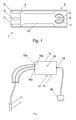
- the sensor element (1) comprises noble metallic layers deposited upon an inert, hydrophobic and electrically insulating material, for example a corundum ceramic base (3).
- Deposited metallic layers comprise a working electrode (5) of silver, a reference electrode (6) of silver, and an auxiliary electrode (7) of silver.
- Three electrodes (5 to 7) are mutually insulated and connected to the other end of the sensor element by conducting paths (9). The electrodes are exposed in a small sample collection area (2), and the deposited conducting layers otherwise protected by a dielectric protection layer (10).
- a disposable electrode (1) is mounted in a housing (11) and a power source (13) drives the reaction.
- the measurement process is started by actuation of the button (15).
- Potentially static conditions can be varied by the control (17).
- Input data is collected from each electrode via the inputs (18 a-c), converted into machine readable form by the unit (13), and transmitted via the output (19) to a connection (20) for onward analysis by computer.
- Figure 3a is a basic circuit without provision for temperature compensation.
- Figure 3b incorporates two thermistors to connect for E 0 variation with temperature and for the variation in signal current associated with changes in temperature.
- the senor element In use testing for ammonia/ammonium ion the sensor element is placed/immersed in the aqueous sample (2). Already present is a reagent comprising a mixture of tri-sodium phosphate and sodium chloride.
- the tri-sodium phosphate is a buffer reagent which will adjust the pH of the sample to a value, which is acceptable and necessary for the measurement process to be carried out.
- Our method relies upon changing the pH of the test solution to a pH value in excess of pH 9. At this alkaline pH value, and with the application of a suitable and specific voltage, free liberated ammonia present in the sample is oxidised.
- the degree of pH buffering is required to ensure a high degree of conversion of ammonium ion to ammonia irrespective of the original pH of the sample solution source.
- the sodium chloride is a reference reagent.
- An Ag reference electrode is formed as soon as sample liquid (containing NaCl/Na 3 PO 4 ) is present on the surface of the Ag substrate that is being used as the reference electrode.
- concentration of NaCl is such that the conditions of the liquid test sample composition are considered. For example 30 gl -1 NaCl would be suitable for pure water, drinking water, river water, seawater, and provides for a constant and the same reference electrode potential for all levels of chlorinity in the sample volume.
- the suitable mixture of Na 3 PO 4 /NaCl, the standard reagent may be dissolved directly into the liquid sample.
- a preferred method however is that during preparation of the electrode the reagent mixture dissolved in water is applied on the surface of the Ag electrode, dried and then sealed for subsequent use.
- a pre-soaked and dried piece of absorbent material e.g., capillary matting, and like a stamp hinge
- This item could be packaged similarly with the electrode itself.
- a sensor element (9) is immersed in the sample where the three working electrodes are exposed.
- the standard reagent effects change of the sample pH to a suitable alkaline pH value, and a specific suitable voltage applied to the working electrode (5) by the unit (13).
- the free liberated ammonia present in the alkaline sample is oxidised.
- the oxidation process is carried out electrochemically via the application of the specific and controlled voltage.
- the applied voltage is carefully selected to carry out the specific and unique process/reaction in the sensor cell, which results ultimately in the generation of electric current.
- This current is directly proportional to the concentration of the species being measured, and is related to the process being carried out in the sensor cell, as is illustrated for the working example ammonia/ammonium ion system by the plot of current versus concentration in figure 4 .
- the sensor can provide measurements of ammonia and ammonium ions over the concentration range 0.5 to 100 ppm w/v. This can be extended to include up to several grams per litre levels of concentration by using the 2-stage potential step. Also, over a temperature range suitable for use in the field, with ambient temperature ranging from 5 to 30 °C at least.
- Speed of response for the instrument to achieve 90 % of final value is around two minutes.
- Figure 5 illustrates an alternative embodiment of sensor element (1). This is generally similar to the sensor element of Figure 1 , and where applicable like reference numerals are used. However it is provided with four electrodes, specifically to deal with a nitrate based chemistry. In particular, two working electrodes (5a, 5b) are provided respectively to drive a reduction and an oxidation reaction. The four electrodes (5a, 5b, 6, 7) are mutually insulated as before and connected to the other end of the sensor element by four conducting paths (9). In some cases the fourth or a fifth electrode could be switched electronically to allow for electrical conductivity measurement corrections as described earlier, or generation of hydrogen as required.
- the chemistry is as follows.
- hydrogen is not necessarily generated by application of a negative potential to the additional electrode (5b) in the sensor electrode assembly. All that may be necessary is the application of a potential of sufficient magnitude (the E° at pH 9 to 14) to automatically reduce the nitrate/nitrite ions to free ammonia.
- a potential of sufficient magnitude the E° at pH 9 to 14
- the potential of electrode (5b) could be made sufficiently negative to generate hydrogen.
- hydrogen need not be generated, but by application of a potential around the E 0 value for the reduction reaction involved for nitrate to ammonium ion (ammonia) i.e., a somewhat more positive value than that which is required to generate free hydrogen.
- the current derived from the conversion of nitrate/nitrite ion to ammonium ion, not employing hydrogen generation will also be directly related to their original concentration.
- by a further step change in potential it is possible to obtain the subsequent ammonia oxidation signal current.
- a fourth electrode (5b) is not employed, but by a timer switch mechanism the working electrode is polarised to generate hydrogen for a short time. The potential is then changed to that required for the conversion of nitrite to ammonium ion.
- the substrate is coated as described earlier for the NH 4 /NH 3 type but now with a suitable mixture of containing a reagent to provide for a pH of around 6.8.
- a suitable mixture of containing a reagent to provide for a pH of around 6.8.
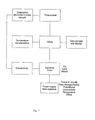
- Figure 6 shows a possible comparator offset circuit arrangement to effect temperature and conductivity conversions to raw data to accommodate deviation from standard conditions.
- the circuit helps to correct the signal produced by the potentiostat before it passes into storage/display etc.
- the potentiostat current signal from the electrochemical process (oxidation of ammonia in this case) and as generally preferred is converted into a voltage output signal by the usual means.
- the value is fed into the offset on one of the three channels provided: the other two channel inputs are for the conductivity circuit (when on 'lock' status as below) and the temperature compensation circuit, also in voltage modes.
- a net voltage potentiostat signal due to positive and negative input voltages from the conductivity and temperature compensation is delivered. This resultant signal is then fed into the store/display part of the system.
- the conductivity circuit in the example is a conventional and simple high frequency ac type circuit. It is connected to the fourth electrode on the disposable electrode assembly and the counter electrode. A conductivity measurement is made and after three of four seconds the circuit output is electronically 'locked' to provide a constant low dc output to one of the three inputs on the offset circuit.
- a sensor system for determining the presence, and if required concentration, of a target species in a liquid medium. This could, for example, the detection of a contaminant in an aqueous medium such as ammonia in drinking water, river water or effluent discharge.
- the sensor system includes a sensor element 1 that is adapted to co-operate with and be inserted into the liquid medium that is being tested.
- the sensor element 1 has at least three electrodes 5, 6 and 7 and one of these electrodes is preferably used as a reference electrode.
- the sensor system also includes a power source 13 which applies a predetermined potential, via a potentiostat to the sensor.
- the potential is determined by the potential associated with an electric chemical reaction characteristic in the liquid medium of the target species.
- the sensor system further includes an output, in the form of connector 20, that output data corresponding to the current flowing through the liquid medium when the sensor element 1 is inserted into the sample and the electrochemical reaction is occurring due to the potential applied across the electrodes of the sensor.
- the sensor element 1 is removable and replaceable within a housing 11.
- Each sensor element 1 includes an insulating substrate, in the form of a ceramic base 3, onto which a layer of conductor is deposited.
- the electrodes must be consistently and accurately dimensioned on the substrate and are preferably formed from a high purity noble metal. These noble metals are preferably selected from silver, gold, platinum and palladium and are in substantially pure form with impurity levels of less than 0.5%, more preferably less than 0.05% and most preferably less than 0.01%. However, non-metallic electrodes can be used.
- Bare metal electrodes can also be used, particularly where the apparatus is used for continuous monitoring, wherein variations in contaminant level are the target rather than absolute values of the contaminant.
- this continuous monitoring which is typically within a flowing aqueous body.
- a chemical species is provided to effect the formulation of a reference solution and/or buffering of the aqueous body adjacent the electrode assembly.
- the power source and potentiostat circuit are adapted to provide a continuous and long-term operation in a remote environment.
- the sample Prior to the insertion of the sensor element 1 into the sample, the sample has a pH buffering agent added thereto to adjust the pH of the sample to a preferred value which is characteristic of the electrochemical reaction.
- pH buffering agents and the characteristic electric chemical reactions are set out above. This variation of the pH by the addition of the buffering agent force into solution a species related to and indicative of the target species which the sensor is determining the presence and concentration of and being the species related to the characteristic electric current reaction performed by the sensor within the sample.
- the sensor system may also include the use of a reference agent (for example Sodium Chloride) which is added to the sample of liquid medium when sensor element is introduced into the sample.
- a reference agent for example Sodium Chloride
- This reference agent as well as the buffering solution may be deposited directly onto the sensor element, preferably on the electrode area in the form of a dry layer or as a matting layer.
- the power source can be integrated into a circuit with the sensor element so that the sensor element is caused to function as the potentiostat.
- the power source may also include a controller which acts in combination with the sensor element to create one of a range of electric coprocessors which affects the assessment of the target species.
- the controller can also co-operate with the sensor element in an electric chemical process that provides a two-stage application of the potential difference applied to the sensor element.
- a measure of the current passing through the liquid medium over time is used to determine the condition of the sensor and, if appropriate, to initiate a change in the potential applied to the electrode to facilitate cleaning of the electrode surface.
- the output of the sensor system is connected to a display device which includes an alphanumeric display providing an indication of the current passing through the liquid medium at steady-state under test and/or that is indicative of the concentration or presence of the target species in the sample of liquid medium.
- a display device which includes an alphanumeric display providing an indication of the current passing through the liquid medium at steady-state under test and/or that is indicative of the concentration or presence of the target species in the sample of liquid medium.
- This may alternatively be a digitised display that indicates one of a small number of discrete states including, but not limited to, the presence or absence of the target species or presence at a small number of predetermined levels.
- the sensor element 1 preferably includes three electrodes, 5, 6 and 7 and these are arranged concentrically with respect to each other and most preferably, as shown in figure 1 , with a central first circular electrode 5 and two annular or partially annular electrodes 6 and 7 arrange concentrically around the circular electrode 5.
- one of the annular or partially annular electrodes may be divided into two portions, the sensor element therefore comprising four electrodes.
- the sensor element 1 may include temperature measuring apparatus to allow for compensation for variations in temperature. It may also include conductivity measuring means to allow the output to compensate for variations in conductivity within the sample.
Landscapes
- Life Sciences & Earth Sciences (AREA)
- Health & Medical Sciences (AREA)
- Chemical & Material Sciences (AREA)
- Physics & Mathematics (AREA)
- Immunology (AREA)
- Pathology (AREA)
- Molecular Biology (AREA)
- General Physics & Mathematics (AREA)
- General Health & Medical Sciences (AREA)
- Analytical Chemistry (AREA)
- Biochemistry (AREA)
- Chemical Kinetics & Catalysis (AREA)
- Electrochemistry (AREA)
- Engineering & Computer Science (AREA)
- Medicinal Chemistry (AREA)
- Food Science & Technology (AREA)
- Biomedical Technology (AREA)
- Investigating Or Analyzing Materials By The Use Of Electric Means (AREA)
Priority Applications (2)
| Application Number | Priority Date | Filing Date | Title |
|---|---|---|---|
| EP14179338.0A EP2980576A1 (de) | 2014-07-31 | 2014-07-31 | Elektrochemisches Sensorsystem und Erfassungsverfahren |
| EP15178441.0A EP2980577A1 (de) | 2014-07-31 | 2015-07-27 | Elektrochemisches sensorsystem und erfassungsverfahren |
Applications Claiming Priority (1)
| Application Number | Priority Date | Filing Date | Title |
|---|---|---|---|
| EP14179338.0A EP2980576A1 (de) | 2014-07-31 | 2014-07-31 | Elektrochemisches Sensorsystem und Erfassungsverfahren |
Publications (1)
| Publication Number | Publication Date |
|---|---|
| EP2980576A1 true EP2980576A1 (de) | 2016-02-03 |
Family
ID=51257381
Family Applications (2)
| Application Number | Title | Priority Date | Filing Date |
|---|---|---|---|
| EP14179338.0A Withdrawn EP2980576A1 (de) | 2014-07-31 | 2014-07-31 | Elektrochemisches Sensorsystem und Erfassungsverfahren |
| EP15178441.0A Withdrawn EP2980577A1 (de) | 2014-07-31 | 2015-07-27 | Elektrochemisches sensorsystem und erfassungsverfahren |
Family Applications After (1)
| Application Number | Title | Priority Date | Filing Date |
|---|---|---|---|
| EP15178441.0A Withdrawn EP2980577A1 (de) | 2014-07-31 | 2015-07-27 | Elektrochemisches sensorsystem und erfassungsverfahren |
Country Status (1)
| Country | Link |
|---|---|
| EP (2) | EP2980576A1 (de) |
Cited By (7)
| Publication number | Priority date | Publication date | Assignee | Title |
|---|---|---|---|---|
| WO2018134297A1 (de) * | 2017-01-19 | 2018-07-26 | Fraunhofer-Gesellschaft zur Förderung der angewandten Forschung e.V. | SYSTEM ZUR BESTIMMUNG UND/ODER ÜBERWACHUNG EINER ZUSTANDSGRÖßE EINES MESSOBJEKTS UND ENTSPRECHENDES VERFAHREN |
| CN110579524A (zh) * | 2018-06-07 | 2019-12-17 | 卓越有限公司 | 用于清洁、调节、校准和/或调整电流传感器的方法 |
| CN110741248A (zh) * | 2017-06-11 | 2020-01-31 | 彼得·斯特兹 | 基于芯片的多通道电化学转换器及其使用方法 |
| EP3773095A4 (de) * | 2018-04-12 | 2022-01-26 | SmartWash Solutions, LLC | Tragbares validierungssystem mit sensor |
| CN114544725A (zh) * | 2020-11-25 | 2022-05-27 | 五鼎生物技术股份有限公司 | 生化试片 |
| CN114778629A (zh) * | 2022-04-28 | 2022-07-22 | 孟栋栋 | 一种用于医疗内分泌科临床抽血检测装置 |
| US11913902B2 (en) | 2014-10-06 | 2024-02-27 | Smartwash Solutions, Llc | Portable sensor validation system |
Families Citing this family (3)
| Publication number | Priority date | Publication date | Assignee | Title |
|---|---|---|---|---|
| ES2725248B2 (es) * | 2018-03-20 | 2020-03-03 | Univ Burgos | Procedimiento de deteccion y determinacion de ion cloruro en muestras liquidas |
| JPWO2021070870A1 (de) * | 2019-10-09 | 2021-04-15 | ||
| CA3215257A1 (en) * | 2021-05-20 | 2022-11-24 | Precision Planting Llc | Methods of analyzing one or more agricultural materials, and systems thereof |
Citations (3)
| Publication number | Priority date | Publication date | Assignee | Title |
|---|---|---|---|---|
| WO1995004271A1 (en) * | 1993-07-30 | 1995-02-09 | Capteur Sensors & Analysers Ltd. | Analysis of liquid solutions |
| WO2001057513A2 (en) * | 2000-02-07 | 2001-08-09 | Steris Inc. | Electrochemical sensor for the specific detection of peracetic acid in aqueous solutions using pulse amperometric methods |
| US20050252790A1 (en) * | 2002-04-09 | 2005-11-17 | Dobson John V | Electrochemical sensor system and sensing method |
Family Cites Families (1)
| Publication number | Priority date | Publication date | Assignee | Title |
|---|---|---|---|---|
| EP0418404B1 (de) * | 1989-09-15 | 1996-02-21 | Hewlett-Packard GmbH | Methode zur Bestimmung der optimalen Arbeitsbedingungen in einem elektrochemischen Detektor und elektrochemischer Detektor, diese Methode benutzend |
-
2014
- 2014-07-31 EP EP14179338.0A patent/EP2980576A1/de not_active Withdrawn
-
2015
- 2015-07-27 EP EP15178441.0A patent/EP2980577A1/de not_active Withdrawn
Patent Citations (3)
| Publication number | Priority date | Publication date | Assignee | Title |
|---|---|---|---|---|
| WO1995004271A1 (en) * | 1993-07-30 | 1995-02-09 | Capteur Sensors & Analysers Ltd. | Analysis of liquid solutions |
| WO2001057513A2 (en) * | 2000-02-07 | 2001-08-09 | Steris Inc. | Electrochemical sensor for the specific detection of peracetic acid in aqueous solutions using pulse amperometric methods |
| US20050252790A1 (en) * | 2002-04-09 | 2005-11-17 | Dobson John V | Electrochemical sensor system and sensing method |
Cited By (11)
| Publication number | Priority date | Publication date | Assignee | Title |
|---|---|---|---|---|
| US11913902B2 (en) | 2014-10-06 | 2024-02-27 | Smartwash Solutions, Llc | Portable sensor validation system |
| WO2018134297A1 (de) * | 2017-01-19 | 2018-07-26 | Fraunhofer-Gesellschaft zur Förderung der angewandten Forschung e.V. | SYSTEM ZUR BESTIMMUNG UND/ODER ÜBERWACHUNG EINER ZUSTANDSGRÖßE EINES MESSOBJEKTS UND ENTSPRECHENDES VERFAHREN |
| US11906462B2 (en) | 2017-01-19 | 2024-02-20 | Fraunhofer-Gesellschaft Zur Foerderung Der Angewandten Forschung E.V. | System for determining and/or monitoring a state variable of a measurement object and respective method |
| CN110741248A (zh) * | 2017-06-11 | 2020-01-31 | 彼得·斯特兹 | 基于芯片的多通道电化学转换器及其使用方法 |
| EP3773095A4 (de) * | 2018-04-12 | 2022-01-26 | SmartWash Solutions, LLC | Tragbares validierungssystem mit sensor |
| EP4393612A3 (de) * | 2018-04-12 | 2024-09-04 | SmartWash Solutions, LLC | Tragbares sensorvalidierungssystem |
| CN110579524A (zh) * | 2018-06-07 | 2019-12-17 | 卓越有限公司 | 用于清洁、调节、校准和/或调整电流传感器的方法 |
| CN110579524B (zh) * | 2018-06-07 | 2023-09-19 | 卓越有限公司 | 用于清洁、调节、校准和/或调整电流传感器的方法 |
| CN114544725A (zh) * | 2020-11-25 | 2022-05-27 | 五鼎生物技术股份有限公司 | 生化试片 |
| CN114778629A (zh) * | 2022-04-28 | 2022-07-22 | 孟栋栋 | 一种用于医疗内分泌科临床抽血检测装置 |
| CN114778629B (zh) * | 2022-04-28 | 2023-10-20 | 孟栋栋 | 一种用于医疗内分泌科临床抽血检测装置 |
Also Published As
| Publication number | Publication date |
|---|---|
| EP2980577A1 (de) | 2016-02-03 |
Similar Documents
| Publication | Publication Date | Title |
|---|---|---|
| EP2980576A1 (de) | Elektrochemisches Sensorsystem und Erfassungsverfahren | |
| US20050252790A1 (en) | Electrochemical sensor system and sensing method | |
| Ota et al. | Encyclopedia of applied electrochemistry | |
| Tercier et al. | A Novel Voltammetric In‐Situ Profiling System for ContinuousReal‐Time Monitoring of Trace Elements in Natural Waters | |
| Luther et al. | In situ deployment of voltammetric, potentiometric, and amperometric microelectrodes from a ROV to determine dissolved O2, Mn, Fe, S (− 2), and pH in porewaters | |
| Cuartero et al. | Environmental water analysis with membrane electrodes | |
| US20170363572A1 (en) | Contaminant detection device and method | |
| Lv et al. | A simplified electrochemical instrument equipped with automated flow-injection system and network communication technology for remote online monitoring of heavy metal ions | |
| Tercier-Waeber et al. | Submersible voltammetric probes for in situ real-time trace element measurements in surface water, groundwater and sediment-water interface | |
| Tupiti et al. | Sensitive inorganic arsenic speciation on a voltammetric platform in environmental water samples | |
| Howell et al. | The determination of trace metals in estuarine and coastal waters using a voltammetric in situ profiling system | |
| Vandenhecke et al. | A stripping chronopotentiometric (SCP) method with a gold film electrode for determining inorganic arsenic species in seawater | |
| Williams et al. | Field-based heavy metal analyser for the simultaneous determination of multiple cations on-site | |
| RU2320975C1 (ru) | Способ измерения плотности морской воды на больших глубинах с подводного носителя | |
| Wang | Stripping-based electrochemical metal sensors for environmental monitoring | |
| Dweik et al. | Rapid determination of total organic carbon (toc) in water systems | |
| Gobet et al. | Microelectrode array sensor for water quality monitoring | |
| Kim et al. | On-site water nitrate monitoring system based on automatic sampling and direct measurement with ion-selective electrodes | |
| EP4206652B1 (de) | Verfahren zur messung der konzentration einer chemischen spezies unter verwendung einer reagenzienbasislinie | |
| Uppuluri | Smart sensors for monitoring pH, dissolved oxygen, electrical conductivity, and temperature in water | |
| RU2102736C1 (ru) | Способ инверсионно-вольтамперометрического определения разновалентных форм мышьяка в водных растворах | |
| Li et al. | A portable sensor system for determination of copper ions in waters with Android device | |
| Aisopou et al. | Multi-parameter water quality sensors for water supply systems | |
| Agir et al. | Detection and quantification of arsenic in water using electronic tongue | |
| Paul | Nanosensors for Detecting Pollutants in Water |
Legal Events
| Date | Code | Title | Description |
|---|---|---|---|
| PUAI | Public reference made under article 153(3) epc to a published international application that has entered the european phase |
Free format text: ORIGINAL CODE: 0009012 |
|
| AK | Designated contracting states |
Kind code of ref document: A1 Designated state(s): AL AT BE BG CH CY CZ DE DK EE ES FI FR GB GR HR HU IE IS IT LI LT LU LV MC MK MT NL NO PL PT RO RS SE SI SK SM TR |
|
| AX | Request for extension of the european patent |
Extension state: BA ME |
|
| STAA | Information on the status of an ep patent application or granted ep patent |
Free format text: STATUS: THE APPLICATION IS DEEMED TO BE WITHDRAWN |
|
| 18D | Application deemed to be withdrawn |
Effective date: 20160804 |