EP2981027B1 - Gestion de ressources pour réservations de flux - Google Patents
Gestion de ressources pour réservations de flux Download PDFInfo
- Publication number
- EP2981027B1 EP2981027B1 EP15178586.2A EP15178586A EP2981027B1 EP 2981027 B1 EP2981027 B1 EP 2981027B1 EP 15178586 A EP15178586 A EP 15178586A EP 2981027 B1 EP2981027 B1 EP 2981027B1
- Authority
- EP
- European Patent Office
- Prior art keywords
- talker
- attribute
- listener
- memory
- stream
- Prior art date
- Legal status (The legal status is an assumption and is not a legal conclusion. Google has not performed a legal analysis and makes no representation as to the accuracy of the status listed.)
- Active
Links
Images
Classifications
-
- H—ELECTRICITY
- H04—ELECTRIC COMMUNICATION TECHNIQUE
- H04L—TRANSMISSION OF DIGITAL INFORMATION, e.g. TELEGRAPHIC COMMUNICATION
- H04L67/00—Network arrangements or protocols for supporting network services or applications
- H04L67/50—Network services
- H04L67/51—Discovery or management thereof, e.g. service location protocol [SLP] or web services
-
- H—ELECTRICITY
- H04—ELECTRIC COMMUNICATION TECHNIQUE
- H04L—TRANSMISSION OF DIGITAL INFORMATION, e.g. TELEGRAPHIC COMMUNICATION
- H04L65/00—Network arrangements, protocols or services for supporting real-time applications in data packet communication
- H04L65/60—Network streaming of media packets
- H04L65/61—Network streaming of media packets for supporting one-way streaming services, e.g. Internet radio
-
- H—ELECTRICITY
- H04—ELECTRIC COMMUNICATION TECHNIQUE
- H04N—PICTORIAL COMMUNICATION, e.g. TELEVISION
- H04N21/00—Selective content distribution, e.g. interactive television or video on demand [VOD]
- H04N21/40—Client devices specifically adapted for the reception of or interaction with content, e.g. set-top-box [STB]; Operations thereof
- H04N21/43—Processing of content or additional data, e.g. demultiplexing additional data from a digital video stream; Elementary client operations, e.g. monitoring of home network or synchronising decoder's clock; Client middleware
- H04N21/436—Interfacing a local distribution network, e.g. communicating with another STB or one or more peripheral devices inside the home
- H04N21/43615—Interfacing a Home Network, e.g. for connecting the client to a plurality of peripherals
-
- H—ELECTRICITY
- H04—ELECTRIC COMMUNICATION TECHNIQUE
- H04N—PICTORIAL COMMUNICATION, e.g. TELEVISION
- H04N21/00—Selective content distribution, e.g. interactive television or video on demand [VOD]
- H04N21/40—Client devices specifically adapted for the reception of or interaction with content, e.g. set-top-box [STB]; Operations thereof
- H04N21/43—Processing of content or additional data, e.g. demultiplexing additional data from a digital video stream; Elementary client operations, e.g. monitoring of home network or synchronising decoder's clock; Client middleware
- H04N21/436—Interfacing a local distribution network, e.g. communicating with another STB or one or more peripheral devices inside the home
- H04N21/4363—Adapting the video stream to a specific local network, e.g. a Bluetooth® network
- H04N21/43637—Adapting the video stream to a specific local network, e.g. a Bluetooth® network involving a wireless protocol, e.g. Bluetooth®, RF or wireless LAN [IEEE 802.11]
Definitions
- the disclosure relates to implementing stream reservations for network devices.
- Data streams that are sent from a source device may be advertised to one or more listeners via network devices, such as switches, bridges, etc.
- the network devices may selectively propagate advertisements of the data streams based upon an availability of resources at the switch.
- a listener may subscribe to an advertised data stream by sending a request to receive the stream to a network device that is in communication with the listener.
- US 2012/0314597 A1 discloses a stream reservation protocol for audio/video networks taking into account bandwidth limitation of a path from a talker to a listener and employing a talker advertised failed message including a traffic specification.
- a computing device comprising:
- a method of managing incoming talker attributes in a networked computing device comprising:
- a method of managing received listener attributes in a networked computing device comprising; receiving a listener attribute identifying a requested data stream; determining if the listener attribute is stored in a storage device of the networked computing device; responsive to determining that the listener attribute is not stored on the memory device, determining if the storage device has available memory for storing the listener attribute; and responsive to determining that the storage device does not have available memory for storing the listener attribute, selectively discarding a talker attribute identifying the data stream stored on the networked computing device.
- Data streams (e.g., audio/video media streams) that follow a reserved path through a network may originate from a talker device (e.g., a DVD player or other audio/video source device) and terminate at one or more listener devices (e.g., a television or other audio/video sink device).
- Each talker may advertise available stream(s) to every device in the network via network switches or other network devices in accordance with a suitable protocol, such as the Stream Reservation Protocol (SRP) described in IEEE 802.1-2011, Clause 35 (the entire contents of which are incorporated herein by reference) and utilized in Audio Video Bridging systems (described in IEEE 802.1BA-2011, the entire contents of which incorporated herein by reference).
- the switches may be configured to store the talker advertisement information internally in case a listener device wishes to attach to that stream at some future time. Networks often contain a mixture of switches with some switches including more resources than other switches.
- switches may propagate talker advertisements in the direction away from the talker. As each switch propagates the talker information it will send it as a Talker Advertise if the switch has enough resources to support the stream, or as a Talker Failed if the switch does not have enough resources. As defined in SRP both the Talker Advertise and Talker Failed information must be stored by the switch. Presently, the behavior of SRP is undefined when switches run out of memory resources, which may lead to unpredictable responses to such conditions or difficulty in correcting such issues.
- This disclosure describes a switch that is configured to store and propagate talker information until available memory resources are exhausted; at which point the switch may selectively forward all talker information as Talker Failed messages, set a Reservation Failure Code to (10) Out of MSRP resources, and not store the associated talker information.
- the switch may also selectively attempt to free memory by removing outdated, uninteresting, unused, or otherwise low priority stored attributes (e.g., listener or talker information received via listener or talker advertise/fail messages).
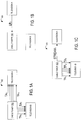
- FIGS. 1A - 1C show an example home networking system 100 including a data source (e.g., cable tuner 102) configured to provide audio/video data to one or more data sinks (e.g., television A and television B in FIG. 1A ) in the form of televised channels.
- Cable tuner 102 may be a networked computing device having a bandwidth capacity that is substantially equal to one televised channel's worth of streamed data. In other words, cable tuner 102 may only be capable of transmitting one channel at a time. As illustrated in FIG.
- cable tuner 102 may provide a plurality of Talker Advertise messages TA 1 - TA N to each of television A and television B, such that each available channel (e.g., channels 1 - N) is advertised to the televisions.
- television A sends a Listener Ready message LR 1 to cable tuner 102 indicating a selection of a channel for receiving at the television.
- LR 1 may be transmitted responsive to a user input indicating that the user intends to view televised content on channel 1.
- cable tuner 102 may begin transmitting stream 1 (e.g., an audio/video data stream comprising content from the selected television channel 1 identified in the Listener Ready message LR 1 ) to television A as requested. Since cable tuner 102 is bandwidth-limited to transmitting one televised channel at a time in this example, the Talker Advertise messages TA 2 - TA N directed to television B are changed to Talker Failed messages TF 2 - TF N . Talker Advertise message TA 1 may still be transmitted as the cable tuner 102 may be able to accommodate the transmission of the associated channel to both television A and television B.
- stream 1 e.g., an audio/video data stream comprising content from the selected television channel 1 identified in the Listener Ready message LR 1
- an error message derived from TF2 may be sent to television B to indicate that the channel is unable to be broadcast due to a lack of resource availability.
- FIGS. 1A-1C illustrate an example of responses to a lack of bandwidth resources.
- other resources may affect the propagation of Talker Advertise and Talker Failed messages.
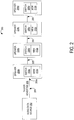
- FIG. 2 illustrates an example in which available memory affects the storage of Talker Advertise messages.
- FIG. 2 shows an example network 200 including a talker computing device (e.g., audio data source 202) and a plurality of listener computing devices (e.g., speakers 204a-204d).
- Each speaker may exhibit switch behavior in the illustrated example, as each speaker may include a networking device such as switch 206a-206d for receiving and propagating data.
- the speakers may include one or more logic devices and storage devices (e.g., processors and memory) for executing stored instructions to process incoming data, allocate resources for incoming streams, etc. As shown, the speakers may be arranged in a daisy chain configuration such that the speakers are communicatively connected to propagate data to a next speaker in the chain and/or to receive data from a prior speaker in the chain based on the location of the speaker within the chain.
- the speakers may be connected to one another and the audio data source via any suitable wired or wireless communication link 205, including but not limited to Ethernet, WiFi, BLUETOOTH, etc.
- each speaker may include a wireless transceiver configured to receive and transmit radiofrequency signals from one or more data sources, other speakers, and/or other suitable devices.
- a first speaker in a daisy chain may be connected to an audio data source via a different type of communication link than the communication links between the speakers.
- one or more different types of communication links may be provided between different speakers in the daisy chain. It is to be understood that the illustrated configuration (e.g., physical layout, communication links, etc.) is exemplary and any suitable configuration of talkers and listeners may be utilized to provide the communication described herein.
- audio data source 202 may transmit a Talker Advertise message 208 indicating the presence and availability of the data stream.
- each speaker may serve as a node (e.g., a transit node or an end node) or a switch/bridge along the path of the advertised data stream, each speaker may attempt to allocate resources for the data stream (e.g., check for bandwidth availability on associated output ports of a switch 206a-206d of the speaker) in response to receiving the Talker Advertise message on an associated port (e.g., ingress port 209a of speaker 204a).
- Some of the speakers may have different resources available to accommodate the Talker Advertise.
- speakers 204a and 204b may have larger capacity memory storage devices (e.g., memory 212a and 212b) than the memory storage devices of speakers 204c and 204d (e.g., memory 212c and 212d).
- each speaker may attempt to store and propagate the talker information. While speakers 204a and 204b may successfully perform such actions, speaker 204c may not have enough available memory in memory storage device 212c to store the talker information. Accordingly, based on the available memory space in each of the speakers, the Talker Advertise may be stored and propagated by speakers 204a and 204b, but may not be able to be stored by speaker 204c. In other systems that employ SRP, the Talker Advertise may be dropped by speaker 204c and talker information may not be forwarded to other nodes of the network (e.g., speaker 204d).
- the Talker Advertise may be dropped by speaker 204c and talker information may not be forwarded to other nodes of the network (e.g., speaker 204d).
- speaker 204c may selectively attempt to remove elements stored in memory (e.g., unused or uninteresting Talker Advertise messages, which may still be valid, but have no listeners down this branch of the network that are interested in the messages) to free up space for storing the incoming Talker Advertise message and/or accommodate the stream identified by the incoming Talker Advertise message.
- the uninteresting Talker Advertise messages may be designated as uninteresting based on the determination that no Listener Ready messages have been received for the Talker Advertise message from any one of the listeners downstream from that listener and/or if each of the listeners downstream from that listener did not send a Listener Ready message associated with that Talker Advertise message.
- speakers 204a and/or 204b are able to serve the listener (e.g., playback the audio stream associated with the Talker Advertise message 208), even if the Talker Advertise message is not stored later in the daisy chain (e.g., at speakers 204c and 204d).
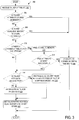
- FIG. 3 shows a method 300 for managing talker attributes (e.g., Talker Advertise and Talker Failed messages), which may be performed at a switch or other node of a network (e.g., switch 206a-d of speakers 204a-d as illustrated in FIG. 2 ) by executing, with a processor, instructions stored on a memory device.
- method 300 includes receiving a talker attribute.
- the talker attribute may be received at a node of a network, such as a switch of speaker 204a of FIG. 2 .
- the method includes determining if the talker attribute is already stored in memory (e.g., the memory associated with the switch).
- the method proceeds to 306 to proceed as defined by SRP in IEEE 802.1Q. In other words, if the talker attribute is already stored in memory, it is not necessary to store it again, so the talker attribute may be propagated as necessary.
- the method proceeds to 308 to determine whether there is enough available memory to store the attribute. If there is sufficient memory (e.g., if the attribute may be stored without exceeding the remaining storage capacity of the memory device and/or without exceeding a threshold capacity level of the memory device - "YES” at 308), the method proceeds to 306 to adhere to SRP. If sufficient memory is not available (e.g., if the talker attribute is a new attribute and there is no room to store it and/or if the talker attribute was previously discarded - "NO” at 308), the method proceeds to 310 to determine whether there is a listener attribute stored in memory for the stream identified in the talker attribute.
- a listener attribute for the stream identified in the talker attribute may indicate the presence of a listener device that has requested the stream. If there is a listener attribute for the stream (e.g., "YES" at 310), a listener may be available and/or requesting to receive the stream and steps may be taken to attempt to manage resources at the network node (e.g., a memory device associated with a switch) to accommodate the incoming talker attribute received at 302. Accordingly, the method may proceed to 312 to attempt to free attribute memory.
- the network node e.g., a memory device associated with a switch
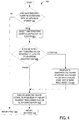
- Method 400 may be performed at a switch or other node of a network (e.g., switch 206a-d of speakers 204a-d as illustrated in FIG. 2 ) by executing, with a processor, instructions stored on a memory device.
- method 400 includes determining if uninteresting talker registrations with no associated listeners are stored. Uninteresting talker registrations may include talker registrations that are time stamped and/or were stored/received at any time prior to a most recent (e.g., an incoming) talker attribute.
- Uninteresting talker registrations may additionally or alternatively include talker registrations that are time stamped and/or were stored/received longer than a threshold time prior to a receipt/attempted storage time of a most recent (e.g., an incoming) talker attribute.
- uninteresting talker registration may include talker registrations that are newer (e.g., time stamped/stored/received after a receipt/attempted storage time of an incoming talker attribute).
- the determination at 402 may indicate whether outdated, uninteresting, unused, or otherwise low priority data is being stored in the memory of a network node (e.g., the memory associated with a switch in the network).
- the method proceeds to 404 to return an indication of failure to free memory resources. For example, if the storage device is full of data other than talker attributes and/or only stores new talker attributes and/or talker attributes with associated listener attributes (indicating that a listener is receiving or requesting to receive the stream associated with the talker attributes), removing such stored data may disrupt operations of the network.
- the method proceeds to 406 to select one of the uninteresting talker registrations to discard.
- the method includes determining if the selected uninteresting talker registration is a failed registration (e.g., stored data relating to a Talker Failed message) or an advertise registration (e.g., stored data relating to a Talker Advertise message).
- the method proceeds to 410 to propagate the uninteresting Talker Advertise message as a Talker Failed message with a failure code of "Out of MSRP Resources," which may be designated with a failure code number 10. If the selected uninteresting talker registration is a failed registration (e.g., "FAILED” at 408), the uninteresting talker registration would have already been propagated as a Talker Failed and the method proceeds to 412 to remove the selected talker attribute from memory and set a TalkerAttrDiscarded flag (e.g., an indication that a talker attribute has been discarded) on an ingress port associated with the uninteresting talker registration.
- a TalkerAttrDiscarded flag e.g., an indication that a talker attribute has been discarded
- the TalkerAttrDiscarded flag may be cleared on the ingress port when a Talker LeaveAll Event (e.g., a redeclaration of talker attributes) is processed on that port. The clearing may be performed before processing any attributes associated with the LeaveAll Event.
- the method proceeds to 414 to return a "success" indication indicating that memory resources were successfully freed by releasing a stored uninteresting talker registration.
- the "fail” and "success" indications at 404 and 414, respectively, may be provided to the switch to determine whether the free attribute memory process was successful (e.g., at decision block 314 of FIG. 3 ).
- the method proceeds as defined by SRP in IEEE 802.1Q, as indicated at 306. For example, if memory is available to store the talker attribute after freeing up memory at 312, the talker attribute may be stored and propagated to a next node in the network. If the free attribute memory process was not successful (e.g., "NO" at 314), the method proceeds to 316 to determine if the talker attribute is a Talker Advertise.
- the method proceeds to 318 to propagate the talker attribute as a Talker Failed with the failure code of "Out of MSRP Resources" and/or the numerical code designating such a type of failure (e.g., failure code 10). In other words, a failure to free attribute memory may result in too few resources being able to handle the stream identified in the Talker Advertise. If the talker attribute is not an advertise message (e.g., if the talker attribute is a Talker Failed, "NO" at 316), the method proceeds to 320 to propagate the Talker Failed as is.
- the method After propagating the Talker Failed (e.g., either the Talker Failed generated at 318 or the as-is Talker Failed at 320), the method includes setting a TalkerAttDiscarded flag on the ingress port associated with the talker attribute (e.g., the port at which the talker attribute was received) and not storing or otherwise discarding the talker attribute, as indicated at 322.
- the talker attribute e.g., the port at which the talker attribute was received
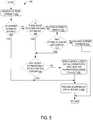
- FIG. 5 is a flow chart of a method 500 for managing incoming listener attributes at a switch or other network node, which may be performed at the switch or other network node (e.g., switch 206a-d of speakers 204a-d as illustrated in FIG. 2 ) by executing, with a processor, instructions stored on a memory device.
- method 500 includes receiving a listener attribute.
- the method includes determining if the listener attribute is already stored in a memory device associated with the switch. If the listener attribute is already stored (e.g., "YES" at 504), there is no need to attempt to store the attribute again, and the method proceeds to 506 to continue as defined by SRP in IEEE 802.1Q. For example, the listener attribute may be propagated to a next switch or node in the network.
- the method may proceed to 508 to determine if there is enough free/available memory storage space to store the listener attribute. If there is not enough available memory (e.g., "NO” at 508), the method proceeds to 510 to perform a free attribute memory routine. For example, the free attribute memory routine 400 described in FIG. 4 may be performed at 510. At 512, the method includes determining if the free attribute memory routine was successful (e.g., whether memory was freed by discarding a previously stored and low priority/uninteresting talker attribute).
- a failure message may be transmitted to the listener in order to inform the listener of the failure and/or of a reason for the failure.
- the method proceeds to 516 to determine if a talker attribute has been stored (e.g., is present in memory) for the stream identified in the listener attribute. If the talker attribute has been stored for the stream identified in the listener attribute (e.g., "YES" at 516), the stream may be established and the method may proceed as defined by SRP in IEEE 802.1Q at 506 to provide the stream to the listener.
- the method proceeds to 518 to send a LeaveAll Event (e.g., a request to redeclare Talker attributes) to all other ports that have the TalkerAttrDiscarded flag set.
- a LeaveAll Event e.g., a request to redeclare Talker attributes
- the absence of the talker attribute may indicate that the attribute was discarded at an earlier point in time.
- discarded attributes may trigger the setting of the TalkerAttrDiscarded flag, so sending a LeaveAll Event to ports that have this flag set may speed up the time it takes to create a reservation related to discarded attributes by focusing the redeclaration on ports that may be missing attributes.
- the method proceeds to 506 to continue as defined by SRP in IEEE 802.1Q.
- the talker attribute associated with the stream identified in the incoming listener attribute may be stored responsive to the LeaveAll Event and the stream may be registered and provided to the listener as detailed in IEEE 802.1Q.
- switches or other devices that exhibit switch behavior may participate in larger networks regardless of differences in available resources. While a switch may still allow the same number of streams to flow through when using the modified Stream Reservation Protocol methods provided in the present disclosure as the same switch using the present Stream Reservation Protocol defined in IEEE 802.1Q, the switch of the present disclosure may exist and operate on networks that advertise many more streams than the switch has resources to support. Instead of ignoring incoming talker/listener attributes when resources become scarce, the switches of the present disclosure may additionally prioritize talker attributes and selectively discard uninteresting/low priority talker attributes to allow higher priority talker attributes to be stored rather than ignored.
Landscapes
- Engineering & Computer Science (AREA)
- Multimedia (AREA)
- Signal Processing (AREA)
- Computer Networks & Wireless Communication (AREA)
- Data Exchanges In Wide-Area Networks (AREA)
- Small-Scale Networks (AREA)
Claims (3)
- Dispositif informatique comprenant :un dispositif de réseau qui reçoit et transmet des flux de données et des informations relatives aux flux de données à d'autres dispositifs dans un réseau ;un processeur ; etun dispositif de stockage qui stocke les informations relatives aux flux de données et des instructions exécutables par le processeur pour :la réception d'un premier attribut de locuteur identifiant le flux de données et comprenant un message Annonce du locuteur ou Echec du locuteur ;l'élimination sélective d'un second attribut de locuteur identifiant un flux de données et comprenant un message annonce du locuteur ou échec du locuteur, le second attribut de locuteur étant stocké sur le dispositif de stockage avant de recevoir le premier attribut de locuteur ; etle stockage du premier attribut de locuteur ; etdans lequel l'élimination sélective du second attribut de locuteur comprend l'élimination du second attribut de locuteur en réponse à la détermination que le dispositif de stockage ne dispose pas de mémoire disponible pour stocker l'attribut de locuteur et en réponse à la détermination qu'un second attribut de locuteur n'a pas d'auditeur associé sur la base d'une absence d'attribut d'auditeur identifiant le flux annoncé dans le dispositif de stockage et est plus âgé qu'un temps seuil ;la détermination que le second attribut de locuteur est une annonce du locuteur ou un échec du locuteur et la propagation d'un échec du locuteur à un autre dispositif de réseau dans le réseau avec un code d'échec indiquant que le dispositif de réseau manque de ressources en réponse à la détermination que le second attribut de locuteur est une annonce du locuteur ; etdans lequel les instructions sont en outre exécutables pour enregistrer des flux annoncés identifiés par les attributs de locuteur, tels que définis dans le protocole de réservation de flux de IEEE 802.1Q.
- Dispositif informatique selon la revendication 1, dans lequel l'élimination sélective du second attribut de locuteur comprend en outre le retrait du second attribut de locuteur du dispositif de stockage et la définition d'un indicateur indiquant que le second attribut de locuteur a été éliminé, l'indicateur étant défini sur un port d'entrée du dispositif de réseau associé au second attribut de locuteur.
- Dispositif informatique selon l'une des revendications 1 à 2, dans lequel le premier attribut de locuteur identifie un flux de données annoncé et dans lequel l'élimination sélective du second attribut de locuteur comprend en outre le fait de ne pas éliminer le second attribut de locuteur en réponse à la détermination que le dispositif de stockage ne stocke pas d'attribut d'auditeur identifiant le flux de données annoncé et/ou comprenant en outre la transmission du premier attribut de locuteur en tant qu'échec du locuteur, l'élimination de l'attribut de locuteur et la définition d'un indicateur indiquant que le premier attribut de locuteur a été éliminé en réponse à la détermination que ce dispositif de stockage ne stocke pas d'attribut d'auditeur identifiant le flux de données annoncé.
Applications Claiming Priority (1)
| Application Number | Priority Date | Filing Date | Title |
|---|---|---|---|
| US201462030318P | 2014-07-29 | 2014-07-29 |
Publications (2)
| Publication Number | Publication Date |
|---|---|
| EP2981027A1 EP2981027A1 (fr) | 2016-02-03 |
| EP2981027B1 true EP2981027B1 (fr) | 2019-10-16 |
Family
ID=53785477
Family Applications (1)
| Application Number | Title | Priority Date | Filing Date |
|---|---|---|---|
| EP15178586.2A Active EP2981027B1 (fr) | 2014-07-29 | 2015-07-28 | Gestion de ressources pour réservations de flux |
Country Status (2)
| Country | Link |
|---|---|
| US (1) | US9998549B2 (fr) |
| EP (1) | EP2981027B1 (fr) |
Families Citing this family (2)
| Publication number | Priority date | Publication date | Assignee | Title |
|---|---|---|---|---|
| CN113543234B (zh) * | 2020-04-13 | 2025-08-12 | 中兴通讯股份有限公司 | 端口资源预留方法、电子设备及存储介质 |
| US12363179B2 (en) * | 2021-07-13 | 2025-07-15 | Telefonaktiebolaget Lm Ericsson (Publ) | Method and apparatus for inter-domain configuration of time-sensitive networks |
Family Cites Families (6)
| Publication number | Priority date | Publication date | Assignee | Title |
|---|---|---|---|---|
| US5519707A (en) * | 1992-10-13 | 1996-05-21 | Synoptics Communications, Inc. | Multiplexing of communications services on a virtual service path in an ATM network or the like |
| US20040087367A1 (en) * | 2002-10-31 | 2004-05-06 | Hendrickson Robert J. | Real-time rules-based service management system for gaming activities |
| US8074248B2 (en) * | 2005-07-26 | 2011-12-06 | Activevideo Networks, Inc. | System and method for providing video content associated with a source image to a television in a communication network |
| US8619803B2 (en) * | 2011-05-05 | 2013-12-31 | Harman International Industries, Incorporated | Sparse mode system |
| CN103597778A (zh) * | 2011-06-08 | 2014-02-19 | 三星电子株式会社 | 用于音频视频网络的增强流预留协议 |
| US9232026B2 (en) * | 2011-12-21 | 2016-01-05 | Harman International Industries, Incorporated | System for communicating control messages in an AVB network |
-
2015
- 2015-07-28 EP EP15178586.2A patent/EP2981027B1/fr active Active
- 2015-07-29 US US14/812,641 patent/US9998549B2/en active Active
Non-Patent Citations (1)
| Title |
|---|
| None * |
Also Published As
| Publication number | Publication date |
|---|---|
| US20160036926A1 (en) | 2016-02-04 |
| US9998549B2 (en) | 2018-06-12 |
| EP2981027A1 (fr) | 2016-02-03 |
Similar Documents
| Publication | Publication Date | Title |
|---|---|---|
| TWI658714B (zh) | 產生具有有限拓撲資訊之資料流 | |
| US11509744B2 (en) | Resource request management using bandwidth allocation and time slots | |
| KR101887581B1 (ko) | 플로우 기반의 패킷 전송 장치 및 그것의 패킷 처리 방법 | |
| CN103929492A (zh) | 业务链负载均衡方法及其装置、系统 | |
| EP3979577B1 (fr) | Procédé de commande de congestion de file d'attente, dispositif et support d'informations | |
| US9660836B2 (en) | Network topology discovery | |
| CN109286957B (zh) | 一种回源链路的切换方法、装置、电子设备及存储介质 | |
| CN110336885A (zh) | 边缘节点分配方法、装置、调度服务器及存储介质 | |
| US10715617B2 (en) | Stream reservation class converter | |
| US20170126572A1 (en) | Determining Quality Information for a Route | |
| KR20190124749A (ko) | 미션 크리티컬 데이터 통신 시스템에서의 데이터 송수신 방법 및 장치 | |
| US8675478B2 (en) | Network based switchover to original content after ad-insertion device failure | |
| EP2981027B1 (fr) | Gestion de ressources pour réservations de flux | |
| CN107277780B (zh) | 一种广播消息发送方法及装置、移动终端 | |
| TWI555358B (zh) | Communication frame transfer device and communication system | |
| CN106789655B (zh) | 一种路由通告报文的发送方法和装置 | |
| US9420583B2 (en) | Combined voice and data communications in a distributed hybrid allocation and reservation multiple access mobile wireless network | |
| US10956942B2 (en) | Synchronization of play of targeted media content with time slots in radio broadcast signal | |
| JP5742424B2 (ja) | 通信装置及び方法、並びに制御装置 | |
| CN107925603A (zh) | 用于运行数据处理设备的方法、装置和计算机程序 | |
| CN106899473B (zh) | 辅助分段式隧道与非分段式隧道之间的切换的传播叶计数信息 | |
| CN115334014B (zh) | 虚拟交换机和数据传输系统 | |
| CN101727751B (zh) | 路况点播系统及方法 | |
| CN107749851B (zh) | 网关复用的方法、装置和系统 | |
| WO2017000649A1 (fr) | Procédé et appareil de transmission de données multimédia par diffusion en continu |
Legal Events
| Date | Code | Title | Description |
|---|---|---|---|
| PUAI | Public reference made under article 153(3) epc to a published international application that has entered the european phase |
Free format text: ORIGINAL CODE: 0009012 |
|
| AK | Designated contracting states |
Kind code of ref document: A1 Designated state(s): AL AT BE BG CH CY CZ DE DK EE ES FI FR GB GR HR HU IE IS IT LI LT LU LV MC MK MT NL NO PL PT RO RS SE SI SK SM TR |
|
| AX | Request for extension of the european patent |
Extension state: BA ME |
|
| 17P | Request for examination filed |
Effective date: 20160803 |
|
| RBV | Designated contracting states (corrected) |
Designated state(s): AL AT BE BG CH CY CZ DE DK EE ES FI FR GB GR HR HU IE IS IT LI LT LU LV MC MK MT NL NO PL PT RO RS SE SI SK SM TR |
|
| STAA | Information on the status of an ep patent application or granted ep patent |
Free format text: STATUS: EXAMINATION IS IN PROGRESS |
|
| 17Q | First examination report despatched |
Effective date: 20170725 |
|
| REG | Reference to a national code |
Ref country code: DE Ref legal event code: R079 Ref document number: 602015039803 Country of ref document: DE Free format text: PREVIOUS MAIN CLASS: H04L0012260000 Ipc: H04N0021436000 |
|
| RIC1 | Information provided on ipc code assigned before grant |
Ipc: H04L 29/08 20060101ALI20190328BHEP Ipc: H04N 21/436 20110101AFI20190328BHEP Ipc: H04N 21/4363 20110101ALI20190328BHEP Ipc: H04L 29/06 20060101ALI20190328BHEP |
|
| GRAP | Despatch of communication of intention to grant a patent |
Free format text: ORIGINAL CODE: EPIDOSNIGR1 |
|
| STAA | Information on the status of an ep patent application or granted ep patent |
Free format text: STATUS: GRANT OF PATENT IS INTENDED |
|
| INTG | Intention to grant announced |
Effective date: 20190517 |
|
| GRAS | Grant fee paid |
Free format text: ORIGINAL CODE: EPIDOSNIGR3 |
|
| GRAA | (expected) grant |
Free format text: ORIGINAL CODE: 0009210 |
|
| STAA | Information on the status of an ep patent application or granted ep patent |
Free format text: STATUS: THE PATENT HAS BEEN GRANTED |
|
| AK | Designated contracting states |
Kind code of ref document: B1 Designated state(s): AL AT BE BG CH CY CZ DE DK EE ES FI FR GB GR HR HU IE IS IT LI LT LU LV MC MK MT NL NO PL PT RO RS SE SI SK SM TR |
|
| REG | Reference to a national code |
Ref country code: GB Ref legal event code: FG4D |
|
| REG | Reference to a national code |
Ref country code: CH Ref legal event code: EP |
|
| REG | Reference to a national code |
Ref country code: DE Ref legal event code: R096 Ref document number: 602015039803 Country of ref document: DE |
|
| REG | Reference to a national code |
Ref country code: IE Ref legal event code: FG4D |
|
| REG | Reference to a national code |
Ref country code: AT Ref legal event code: REF Ref document number: 1192480 Country of ref document: AT Kind code of ref document: T Effective date: 20191115 |
|
| REG | Reference to a national code |
Ref country code: NL Ref legal event code: MP Effective date: 20191016 |
|
| REG | Reference to a national code |
Ref country code: LT Ref legal event code: MG4D |
|
| REG | Reference to a national code |
Ref country code: AT Ref legal event code: MK05 Ref document number: 1192480 Country of ref document: AT Kind code of ref document: T Effective date: 20191016 |
|
| PG25 | Lapsed in a contracting state [announced via postgrant information from national office to epo] |
Ref country code: BG Free format text: LAPSE BECAUSE OF FAILURE TO SUBMIT A TRANSLATION OF THE DESCRIPTION OR TO PAY THE FEE WITHIN THE PRESCRIBED TIME-LIMIT Effective date: 20200116 Ref country code: FI Free format text: LAPSE BECAUSE OF FAILURE TO SUBMIT A TRANSLATION OF THE DESCRIPTION OR TO PAY THE FEE WITHIN THE PRESCRIBED TIME-LIMIT Effective date: 20191016 Ref country code: NO Free format text: LAPSE BECAUSE OF FAILURE TO SUBMIT A TRANSLATION OF THE DESCRIPTION OR TO PAY THE FEE WITHIN THE PRESCRIBED TIME-LIMIT Effective date: 20200116 Ref country code: GR Free format text: LAPSE BECAUSE OF FAILURE TO SUBMIT A TRANSLATION OF THE DESCRIPTION OR TO PAY THE FEE WITHIN THE PRESCRIBED TIME-LIMIT Effective date: 20200117 Ref country code: PL Free format text: LAPSE BECAUSE OF FAILURE TO SUBMIT A TRANSLATION OF THE DESCRIPTION OR TO PAY THE FEE WITHIN THE PRESCRIBED TIME-LIMIT Effective date: 20191016 Ref country code: AT Free format text: LAPSE BECAUSE OF FAILURE TO SUBMIT A TRANSLATION OF THE DESCRIPTION OR TO PAY THE FEE WITHIN THE PRESCRIBED TIME-LIMIT Effective date: 20191016 Ref country code: LT Free format text: LAPSE BECAUSE OF FAILURE TO SUBMIT A TRANSLATION OF THE DESCRIPTION OR TO PAY THE FEE WITHIN THE PRESCRIBED TIME-LIMIT Effective date: 20191016 Ref country code: NL Free format text: LAPSE BECAUSE OF FAILURE TO SUBMIT A TRANSLATION OF THE DESCRIPTION OR TO PAY THE FEE WITHIN THE PRESCRIBED TIME-LIMIT Effective date: 20191016 Ref country code: ES Free format text: LAPSE BECAUSE OF FAILURE TO SUBMIT A TRANSLATION OF THE DESCRIPTION OR TO PAY THE FEE WITHIN THE PRESCRIBED TIME-LIMIT Effective date: 20191016 Ref country code: PT Free format text: LAPSE BECAUSE OF FAILURE TO SUBMIT A TRANSLATION OF THE DESCRIPTION OR TO PAY THE FEE WITHIN THE PRESCRIBED TIME-LIMIT Effective date: 20200217 Ref country code: SE Free format text: LAPSE BECAUSE OF FAILURE TO SUBMIT A TRANSLATION OF THE DESCRIPTION OR TO PAY THE FEE WITHIN THE PRESCRIBED TIME-LIMIT Effective date: 20191016 Ref country code: LV Free format text: LAPSE BECAUSE OF FAILURE TO SUBMIT A TRANSLATION OF THE DESCRIPTION OR TO PAY THE FEE WITHIN THE PRESCRIBED TIME-LIMIT Effective date: 20191016 |
|
| PG25 | Lapsed in a contracting state [announced via postgrant information from national office to epo] |
Ref country code: IS Free format text: LAPSE BECAUSE OF FAILURE TO SUBMIT A TRANSLATION OF THE DESCRIPTION OR TO PAY THE FEE WITHIN THE PRESCRIBED TIME-LIMIT Effective date: 20200224 Ref country code: RS Free format text: LAPSE BECAUSE OF FAILURE TO SUBMIT A TRANSLATION OF THE DESCRIPTION OR TO PAY THE FEE WITHIN THE PRESCRIBED TIME-LIMIT Effective date: 20191016 Ref country code: HR Free format text: LAPSE BECAUSE OF FAILURE TO SUBMIT A TRANSLATION OF THE DESCRIPTION OR TO PAY THE FEE WITHIN THE PRESCRIBED TIME-LIMIT Effective date: 20191016 |
|
| PG25 | Lapsed in a contracting state [announced via postgrant information from national office to epo] |
Ref country code: AL Free format text: LAPSE BECAUSE OF FAILURE TO SUBMIT A TRANSLATION OF THE DESCRIPTION OR TO PAY THE FEE WITHIN THE PRESCRIBED TIME-LIMIT Effective date: 20191016 |
|
| REG | Reference to a national code |
Ref country code: DE Ref legal event code: R097 Ref document number: 602015039803 Country of ref document: DE |
|
| PG2D | Information on lapse in contracting state deleted |
Ref country code: IS |
|
| PG25 | Lapsed in a contracting state [announced via postgrant information from national office to epo] |
Ref country code: DK Free format text: LAPSE BECAUSE OF FAILURE TO SUBMIT A TRANSLATION OF THE DESCRIPTION OR TO PAY THE FEE WITHIN THE PRESCRIBED TIME-LIMIT Effective date: 20191016 Ref country code: RO Free format text: LAPSE BECAUSE OF FAILURE TO SUBMIT A TRANSLATION OF THE DESCRIPTION OR TO PAY THE FEE WITHIN THE PRESCRIBED TIME-LIMIT Effective date: 20191016 Ref country code: EE Free format text: LAPSE BECAUSE OF FAILURE TO SUBMIT A TRANSLATION OF THE DESCRIPTION OR TO PAY THE FEE WITHIN THE PRESCRIBED TIME-LIMIT Effective date: 20191016 Ref country code: CZ Free format text: LAPSE BECAUSE OF FAILURE TO SUBMIT A TRANSLATION OF THE DESCRIPTION OR TO PAY THE FEE WITHIN THE PRESCRIBED TIME-LIMIT Effective date: 20191016 Ref country code: IS Free format text: LAPSE BECAUSE OF FAILURE TO SUBMIT A TRANSLATION OF THE DESCRIPTION OR TO PAY THE FEE WITHIN THE PRESCRIBED TIME-LIMIT Effective date: 20200216 |
|
| PLBE | No opposition filed within time limit |
Free format text: ORIGINAL CODE: 0009261 |
|
| STAA | Information on the status of an ep patent application or granted ep patent |
Free format text: STATUS: NO OPPOSITION FILED WITHIN TIME LIMIT |
|
| PG25 | Lapsed in a contracting state [announced via postgrant information from national office to epo] |
Ref country code: SK Free format text: LAPSE BECAUSE OF FAILURE TO SUBMIT A TRANSLATION OF THE DESCRIPTION OR TO PAY THE FEE WITHIN THE PRESCRIBED TIME-LIMIT Effective date: 20191016 Ref country code: SM Free format text: LAPSE BECAUSE OF FAILURE TO SUBMIT A TRANSLATION OF THE DESCRIPTION OR TO PAY THE FEE WITHIN THE PRESCRIBED TIME-LIMIT Effective date: 20191016 Ref country code: IT Free format text: LAPSE BECAUSE OF FAILURE TO SUBMIT A TRANSLATION OF THE DESCRIPTION OR TO PAY THE FEE WITHIN THE PRESCRIBED TIME-LIMIT Effective date: 20191016 |
|
| 26N | No opposition filed |
Effective date: 20200717 |
|
| PG25 | Lapsed in a contracting state [announced via postgrant information from national office to epo] |
Ref country code: SI Free format text: LAPSE BECAUSE OF FAILURE TO SUBMIT A TRANSLATION OF THE DESCRIPTION OR TO PAY THE FEE WITHIN THE PRESCRIBED TIME-LIMIT Effective date: 20191016 |
|
| PG25 | Lapsed in a contracting state [announced via postgrant information from national office to epo] |
Ref country code: MC Free format text: LAPSE BECAUSE OF FAILURE TO SUBMIT A TRANSLATION OF THE DESCRIPTION OR TO PAY THE FEE WITHIN THE PRESCRIBED TIME-LIMIT Effective date: 20191016 |
|
| REG | Reference to a national code |
Ref country code: CH Ref legal event code: PL |
|
| REG | Reference to a national code |
Ref country code: BE Ref legal event code: MM Effective date: 20200731 |
|
| PG25 | Lapsed in a contracting state [announced via postgrant information from national office to epo] |
Ref country code: CH Free format text: LAPSE BECAUSE OF NON-PAYMENT OF DUE FEES Effective date: 20200731 Ref country code: LU Free format text: LAPSE BECAUSE OF NON-PAYMENT OF DUE FEES Effective date: 20200728 Ref country code: LI Free format text: LAPSE BECAUSE OF NON-PAYMENT OF DUE FEES Effective date: 20200731 Ref country code: FR Free format text: LAPSE BECAUSE OF NON-PAYMENT OF DUE FEES Effective date: 20200731 |
|
| PG25 | Lapsed in a contracting state [announced via postgrant information from national office to epo] |
Ref country code: BE Free format text: LAPSE BECAUSE OF NON-PAYMENT OF DUE FEES Effective date: 20200731 |
|
| PG25 | Lapsed in a contracting state [announced via postgrant information from national office to epo] |
Ref country code: IE Free format text: LAPSE BECAUSE OF NON-PAYMENT OF DUE FEES Effective date: 20200728 |
|
| PG25 | Lapsed in a contracting state [announced via postgrant information from national office to epo] |
Ref country code: TR Free format text: LAPSE BECAUSE OF FAILURE TO SUBMIT A TRANSLATION OF THE DESCRIPTION OR TO PAY THE FEE WITHIN THE PRESCRIBED TIME-LIMIT Effective date: 20191016 Ref country code: MT Free format text: LAPSE BECAUSE OF FAILURE TO SUBMIT A TRANSLATION OF THE DESCRIPTION OR TO PAY THE FEE WITHIN THE PRESCRIBED TIME-LIMIT Effective date: 20191016 Ref country code: CY Free format text: LAPSE BECAUSE OF FAILURE TO SUBMIT A TRANSLATION OF THE DESCRIPTION OR TO PAY THE FEE WITHIN THE PRESCRIBED TIME-LIMIT Effective date: 20191016 |
|
| PG25 | Lapsed in a contracting state [announced via postgrant information from national office to epo] |
Ref country code: MK Free format text: LAPSE BECAUSE OF FAILURE TO SUBMIT A TRANSLATION OF THE DESCRIPTION OR TO PAY THE FEE WITHIN THE PRESCRIBED TIME-LIMIT Effective date: 20191016 |
|
| P01 | Opt-out of the competence of the unified patent court (upc) registered |
Effective date: 20230527 |
|
| PGFP | Annual fee paid to national office [announced via postgrant information from national office to epo] |
Ref country code: GB Payment date: 20250619 Year of fee payment: 11 |
|
| PGFP | Annual fee paid to national office [announced via postgrant information from national office to epo] |
Ref country code: DE Payment date: 20250620 Year of fee payment: 11 |