EP2983122A1 - Développement personnalisé de produits et de services sur la base de motivateurs intrinsèques - Google Patents
Développement personnalisé de produits et de services sur la base de motivateurs intrinsèques Download PDFInfo
- Publication number
- EP2983122A1 EP2983122A1 EP14179865.2A EP14179865A EP2983122A1 EP 2983122 A1 EP2983122 A1 EP 2983122A1 EP 14179865 A EP14179865 A EP 14179865A EP 2983122 A1 EP2983122 A1 EP 2983122A1
- Authority
- EP
- European Patent Office
- Prior art keywords
- respective quantitative
- intrinsic
- motivators
- test subject
- controller unit
- Prior art date
- Legal status (The legal status is an assumption and is not a legal conclusion. Google has not performed a legal analysis and makes no representation as to the accuracy of the status listed.)
- Withdrawn
Links
Images
Classifications
-
- G—PHYSICS
- G06—COMPUTING OR CALCULATING; COUNTING
- G06Q—INFORMATION AND COMMUNICATION TECHNOLOGY [ICT] SPECIALLY ADAPTED FOR ADMINISTRATIVE, COMMERCIAL, FINANCIAL, MANAGERIAL OR SUPERVISORY PURPOSES; SYSTEMS OR METHODS SPECIALLY ADAPTED FOR ADMINISTRATIVE, COMMERCIAL, FINANCIAL, MANAGERIAL OR SUPERVISORY PURPOSES, NOT OTHERWISE PROVIDED FOR
- G06Q30/00—Commerce
- G06Q30/02—Marketing; Price estimation or determination; Fundraising
- G06Q30/0201—Market modelling; Market analysis; Collecting market data
-
- G—PHYSICS
- G06—COMPUTING OR CALCULATING; COUNTING
- G06Q—INFORMATION AND COMMUNICATION TECHNOLOGY [ICT] SPECIALLY ADAPTED FOR ADMINISTRATIVE, COMMERCIAL, FINANCIAL, MANAGERIAL OR SUPERVISORY PURPOSES; SYSTEMS OR METHODS SPECIALLY ADAPTED FOR ADMINISTRATIVE, COMMERCIAL, FINANCIAL, MANAGERIAL OR SUPERVISORY PURPOSES, NOT OTHERWISE PROVIDED FOR
- G06Q30/00—Commerce
- G06Q30/02—Marketing; Price estimation or determination; Fundraising
- G06Q30/0241—Advertisements
- G06Q30/0251—Targeted advertisements
- G06Q30/0269—Targeted advertisements based on user profile or attribute
-
- G—PHYSICS
- G06—COMPUTING OR CALCULATING; COUNTING
- G06Q—INFORMATION AND COMMUNICATION TECHNOLOGY [ICT] SPECIALLY ADAPTED FOR ADMINISTRATIVE, COMMERCIAL, FINANCIAL, MANAGERIAL OR SUPERVISORY PURPOSES; SYSTEMS OR METHODS SPECIALLY ADAPTED FOR ADMINISTRATIVE, COMMERCIAL, FINANCIAL, MANAGERIAL OR SUPERVISORY PURPOSES, NOT OTHERWISE PROVIDED FOR
- G06Q30/00—Commerce
- G06Q30/02—Marketing; Price estimation or determination; Fundraising
- G06Q30/0241—Advertisements
- G06Q30/0251—Targeted advertisements
- G06Q30/0269—Targeted advertisements based on user profile or attribute
- G06Q30/0271—Personalized advertisement
-
- G—PHYSICS
- G06—COMPUTING OR CALCULATING; COUNTING
- G06Q—INFORMATION AND COMMUNICATION TECHNOLOGY [ICT] SPECIALLY ADAPTED FOR ADMINISTRATIVE, COMMERCIAL, FINANCIAL, MANAGERIAL OR SUPERVISORY PURPOSES; SYSTEMS OR METHODS SPECIALLY ADAPTED FOR ADMINISTRATIVE, COMMERCIAL, FINANCIAL, MANAGERIAL OR SUPERVISORY PURPOSES, NOT OTHERWISE PROVIDED FOR
- G06Q30/00—Commerce
- G06Q30/02—Marketing; Price estimation or determination; Fundraising
- G06Q30/0278—Product appraisal
Definitions
- the present invention relates to the personalized development of products and services based on the matching with intrinsic personalized motivators, and optionally with sensory perception, biometric and/or physiologic characteristics.
- Advertisement may be helpful, but does not fully remedy the problem since advertising is almost as much art as it is science. Furthermore, advertising agencies rather attempt to ascertain what will appeal to the masses, and not a particular individual, and then position products or services in a light which it guesses will sell those products. Demographic data is collected and reviewed to study which products appeal to various demographic groups, and advertisement media may be tailored to reach those demographic groups. However, the personal preferences and motivations are not recorded and covered by such approach.
- Online sales have allowed advertising to evolve, and products or services may now be allowed to a user for the customer to purchase based upon personal preferences, for example, illustrated by the purchasing history of the user.
- the advertising agency and seller may also have additional data sources to quantify user demand which the advertiser and seller may analyze and study to better position themselves with respect to segments of society that may purchase their goods. Again, however, such analysis will not reflect personal preferences of a particular customer.
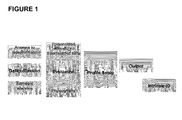
- the present invention relates to a method for the personalized development of products and services based on the matching with intrinsic personalized motivators, the method comprising: (a) receiving a controller unit a respective quantitative rating being indicative of a scaled value for each of the plurality of intrinsic motivators associated with a product or service to be personalized; (b) receiving in a controller unit a respective quantitative rating being indicative of a scaled value for quantitative rating obtained in step (a) with the respective quantitative rating obtained in each of the plurality of intrinsic motivators associated with a test subject; (c) assigning the respective step (b); and (d) transmitting from the controller unit, based upon the assignment obtained in step (c), a profile of intrinsic motivators being indicative for the test subject in order to personalize a product or service.
- the plurality of intrinsic motivators employed in step (a) and step (b) independently comprises at least five, particularly at least ten, and more particularly at least 20 intrinsic motivators.
- the respective quantitative ratings obtained in step (a) and step (b) are calculated based on cumulative scaled values for the entire plurality of intrinsic motivators.
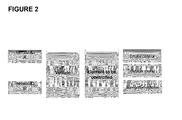
- the method further comprises the matching with the sensory perception of the test subject, comprising: (b') receiving in a controller unit a respective quantitative rating being indicative of a scaled value for each preferred way of individual sensory perception associated with the test subject; and (c) assigning the respective quantitative rating obtained in step (a) with the respective quantitative rating obtained in step (b), and the respective quantitative rating obtained in step (b').
- the method further comprises the matching with biometric and/or physiologic characteristics of the test subject, comprising: (b") receiving in a controller unit a respective quantitative rating being indicative of a scaled value for each of the biometric and/or physiologic characteristics associated with the test subject; and (c) assigning the respective quantitative rating obtained in step (a) with the respective quantitative rating obtained in step (b), the respective quantitative rating obtained in step (b"), and optionally the respective quantitative rating obtained in step (b').
- the method further comprises (e) storing the profile of intrinsic motivators obtained in step (d) on a computer-readable storage medium.
- the identity of the test subject is not disclosed along with the profile of intrinsic motivators determined.
- step (a), step (b), step (b'), and step (b") are received in the controller based on manual input by means of keyboard or touchscreen.
- step (a), step (b), step (b'), and step (b") are received in the controller unit based on speech input and/or based on visual input by means of a camera.
- step (a) and step (b) are determined by using standardized psychometric analyses.
- the preferred ways of individual sensory perception determined in step (b') are selected from the group consisting of seeing, hearing, smelling, tasting, and touching.
- biometric and/or physiologic characteristics determined in step (b") are selected from the group consisting of face recognition parameters and electrical conductivity of the skin.
- the controller unit is part of a computer system (e.g. a laptop or a mobile device, such as a cell phone).
- a computer system e.g. a laptop or a mobile device, such as a cell phone.
- the present invention relates to a computer system being adapted for performing the personalization of products and services based on the matching with intrinsic personalized motivators, the system comprising: a controller unit for receiving and processing a respective quantitative rating being indicative of a scaled value for each of the plurality of intrinsic motivators associated with a product or service to be personalized and for receiving and processing a respective quantitative rating being indicative of a scaled value for each of the plurality of intrinsic motivators associated with a test subject; and a unit for transmitting from the controller unit, based upon the assignment of the respective quantitative ratings processed by the controller unit, a profile of intrinsic motivators being indicative for the test subject in order to personalize a product or service.
- the method further comprises (f) assigning the profile of intrinsic motivators obtained in step (d) with one or more chemical and/or physical parameters of the product or service being personalized.
- the present invention relates to a method for the personalized development of products and services based on the matching with intrinsic personalized motivators, the method comprising:
- the present invention provides for a method including a controller unit for receiving and processing data (that is, including a processor unit as such), and a unit for transmitting from the controller unit, based upon the assignment of the respective quantitative ratings processed by the controller unit, a profile of intrinsic motivators being indicative for the test subject in order to personalize a product or service.
- the system further includes executable software that is executable on demand for assessing intrinsic motivators and matching them with products and/or services to be personalized for a particular test subject.
- the method to be performed receives subjective (i.e. intrinsic) and objective data of a test person, processes and transforms these data into a personalized profile, and assigns this information with intrinsic personalized motivators.
- this personalized information can be further supplemented with sensory perception data and/or biometric characteristics and/or physiologic characteristics of the test person.
- the entity of the data results in a personalized profile that is then matched with personalized data associated with the products and/or services to be personalized, for example data obtained from a reference group of subjects.
- the controller unit is part of a computer system, such as a desktop computer, a laptop or a mobile device, such as a cell phone, a diagnostic apparatus, and the like.
- the computer system relates to cloud computing.
- Intrinsic personalized motivators may be on a conscious or unconscious level and access values inherent in a test subject.
- the test subject will provide value related data as input into a computerized apparatus, wherein the data may be processed by a programmable algorithm to correlate the input data with one or more core values useful to make a decision whether or not a product and/or service matches with the intrinsic personalized motivators of the test subject.
- the profile of intrinsic personalized motivators of a test subject obtained may be stored on a suitable computer-readable storage medium, for example on a SIM card or a microchip, in a mobile phone or the on-board computer of a vehicle.
- the identity of the test subject is not disclosed along with the profile of intrinsic motivators determined.
- the profile is thereby stored without any link to the identity of a test subject.
- the personalized profile stored may be used as a reference (e.g., as a database) for assessing another test subject, thus resulting in a further "fine-tuning" of quality of data obtained.
- the method of the present invention comprises the receiving of a respective quantitative rating being indicative of a scaled value for each of the plurality of intrinsic motivators associated with a product or service to be personalized, and the receiving of a respective quantitative rating being indicative of a scaled value for each of the plurality of intrinsic motivators associated with a test subject.
- scaled value denotes that the quantitative ratings, that is, the primary data obtained, are transformed by employing one or more computer algorithms into a relative numerical value within a particular scale of values associated with a particular intrinsic motivator to be assessed.
- the plurality of intrinsic motivators employed in step (a) and step (b) independently comprises at least five, particularly at least ten, and more particularly at least 20 intrinsic motivators.
- intrinsic motivator refers to any psychological factor associated with a test subject, wherein such factor influences the satisfaction with a decision taken by the test subject.
- step (a) and step (b) can be further processed individually and may also be grouped and further processed according to the specific requirements of an application to be employed.
- the respective quantitative ratings obtained in step (a) and step (b) are each calculated based on cumulative scaled values for the entire plurality of intrinsic motivators.
- the respective quantitative ratings obtained in either one or both of step (a) and step (b) are determined by using standardized psychometric analyses which are well established in the art, such as Myers Briggs Type Indicator (MBTI) test, the Five Factor Model (FFM) or the Personal Life Driver analysis.
- MBTI Myers Briggs Type Indicator
- FAM Five Factor Model
- the method according to the present invention can be performed by employing a single standardized psychometric analysis or a combination of two or more such tests.
- the method further comprises the matching with the sensory perception of the test subject, comprising:
- the ways of individual sensory perception determined in step (b') are selected from the group consisting of seeing, hearing, smelling, tasting, and touching.
- the determination of sensory perception may also comprise the analysis of two or more of the group consisting of seeing, hearing, smelling, tasting, and touching.
- the determination of sensory perception may be accomplished by employing standard detection systems, such as cameras, acoustic sensor systems, olfactory detectors, and the like.
- the method further comprises the matching with biometric and/or physiologic characteristics of the test subject, comprising:
- the biometric and/or physiologic characteristics determined in step (b") are selected from the group consisting of face recognition parameters, such as the dilatation of the pupils or reddened skin, e.g. as an indicator of stress, and electrical conductivity of the skin, for example by measuring the sweating at the hands of a test subject.
- Further characteristics to be analyzed may also include metabolic rates, blood levels of hormones (e.g., adrenaline, cortisol, insulin), neurotransmitters (e.g., dopamine, serotonin, acetylcholine), neuropeptides (e.g. the opioid inhibitory endorphins), and the like.
- the method additionally and/or alternatively comprises a comparison of the specific values obtained from the test subject with reference values such as data retrieved from the scientific or clinical literature.
- step (a), step (b), step (b'), and step (b") are received in the controller unit based on manual input by means of keyboard or touchscreen.
- step (a), step (b), step (b'), and step (b") are received in the controller based on speech input and/or based on visual input by means of a camera.
- step (a), step (b), step (b'), and step (b") are received in the controller unit based on a combination of manual input, speech input and/or visual input by means of a camera.
- the method further comprises (f) assigning the profile of intrinsic motivators obtained in step (d) with one or more chemical and/or physical parameters of the product or service being personalized.
- chemical and/or physical parameters include hardness, durability, density, elasticity, and the like.
- the present invention relates to a computer system being adapted for performing the personalization of products and services based on the matching with intrinsic personalized motivators, the system comprising:
- the method of the present invention may be employed for personalizing advertising on television.
- Personal intrinsic motivators can be determined by means of a camera arranged at the screen and detecting biometric data/face recognition parameters.
- the remote control can be equipped with a touchscreen for detecting conductivity of the skin.
- the voice of the user can be recorded via the remote control and analyzed for stress. All parameters are received in a computer server and processed in comparison to a reference.
- the entity of scaled values for each of the intrinsic motivators results in a profile of the user that is indicative in order to select TV programs or movies to be played. For example, indicates the profile of the user that he is stressed, a relaxing movie is selected.
- Example 2 Personalized menu control in a vehicle
- the method of the present invention may be employed in a vehicle in order to personalize vehicle handling and driving characteristics.
- the personal intrinsic motivators can be detected via a camera in the rear mirror and/or the front shield (e.g., for detecting stress or calmness) and sensors in the steering wheel (e.g. for detecting conductivity of the skin).
- relevant parameters such as road surface, weather conditions, and gas consumption will predominantly be incorporated when establishing a corresponding profile.
- a corresponding profile of intrinsic motivators might result in an activation of speed control, and the like.
- aspects of the present disclosure may be embodied as a system, method or computer program product. Accordingly, aspects of the present disclosure may take the form of an entirely hardware embodiment, an entirely software embodiment (including firmware, resident software, micro-code, etc.) or an embodiment combining software and hardware aspects that may all generally be referred to herein as a "circuit", "module” or “system”. Furthermore, aspects of the present disclosure may take the form of a computer program product embodied in one or more computer readable medium(s) having computer readable program code embodied thereon.
- the computer readable medium may be a computer readable signal medium or a computer readable storage medium.
- a computer readable storage medium may be, for example, but not limited to, an electronic, magnetic, optical, electromagnetic, infrared, or semiconductor system, apparatus, or device, or any suitable combination of the foregoing.
- a computer readable storage medium may be any tangible medium that may contain, or store, a program for use, by or in connection with an instruction execution system, apparatus, or device.
- a computer readable signal medium may include a propagated data signal with computer readable program code embodied therein, for example, in baseband or as part of a carrier wave. Such a propagated signal may take any of a variety of forms, including, but not limited to, electro-magnetic, optical, or any suitable combination thereof.
- a computer readable signal medium may be any computer readable medium that is not a computer readable storage medium and that may communicate, propagate, or transport a program for use by or in connection with an instruction execution system, apparatus, or device.
- Program code embodied on a computer readable medium may be transmitted using any appropriate medium, including but not limited to wireless, wireline, optical fiber cable, RF, etc., or any suitable combination of the foregoing.
- Computer program code for carrying out operations for aspects of the present invention may be written in any combination of one or more programming languages, including an object oriented programming language such as Java, Smalltalk, C++, or the like and conventional procedural programming languages, such as the "C" programming language or similar programming languages.
- the program code may execute entirely on the user's computer, partly on the user's computer, as a stand-alone software package, partly on the user's computer and partly on a remote computer or entirely on the remote computer or server.
- the remote computer may be connected to the user's computer through any type of network, including a local area network (LAN) or a wide area network (WAN), or the connection may be made to an external computer (for example, through the Internet using an Internet Service Provider).
- LAN local area network
- WAN wide area network
- Internet Service Provider for example, AT&T, MCI, Sprint, EarthLink, MSN, GTE, etc.
- These computer program instructions may also be stored in a computer readable medium that may direct a computer, other programmable data processing apparatus, or other devices to function in a particular manner, such that the instructions stored in the computer readable medium produce an article of manufacture including instructions, which implement the function/act specified in the flowchart and/or block diagram block or blocks.
- the computer program instructions may also be loaded onto a computer, other programmable data processing apparatus, or other devices to cause a series of operational steps to be performed on the computer, other programmable apparatus, or other devices to produce a computer implemented process such that the instructions, which execute on the computer or other programmable apparatus, provide processes for implementing the functions/acts specified in the flowchart and/or block diagram, block, or blocks.
- each block in the block diagrams may represent a module, segment, or portion of code, which comprises one or more executable instructions for implementing the specified logical function(s).
- the functions, discussed hereinabove may occur out of the disclosed order. For example, two functions taught in succession may, in fact, be executed substantially concurrently, or the functions may sometimes be executed in the reverse order depending upon the functionality involved.
- each block of the block diagrams, and combinations of blocks in the block diagrams may be implemented by special purpose hardware-based systems that perform the specified functions or acts, or combinations of special purpose hardware and computer instructions.
Landscapes
- Business, Economics & Management (AREA)
- Strategic Management (AREA)
- Engineering & Computer Science (AREA)
- Accounting & Taxation (AREA)
- Development Economics (AREA)
- Finance (AREA)
- Entrepreneurship & Innovation (AREA)
- Economics (AREA)
- Game Theory and Decision Science (AREA)
- Marketing (AREA)
- Physics & Mathematics (AREA)
- General Business, Economics & Management (AREA)
- General Physics & Mathematics (AREA)
- Theoretical Computer Science (AREA)
- Data Mining & Analysis (AREA)
- Medical Treatment And Welfare Office Work (AREA)
- Measurement And Recording Of Electrical Phenomena And Electrical Characteristics Of The Living Body (AREA)
Priority Applications (2)
| Application Number | Priority Date | Filing Date | Title |
|---|---|---|---|
| EP14179865.2A EP2983122A1 (fr) | 2014-08-05 | 2014-08-05 | Développement personnalisé de produits et de services sur la base de motivateurs intrinsèques |
| PCT/EP2015/068059 WO2016020439A1 (fr) | 2014-08-05 | 2015-08-05 | Développement personnalisé de produits et de services d'après des motivateurs intrinsèques |
Applications Claiming Priority (1)
| Application Number | Priority Date | Filing Date | Title |
|---|---|---|---|
| EP14179865.2A EP2983122A1 (fr) | 2014-08-05 | 2014-08-05 | Développement personnalisé de produits et de services sur la base de motivateurs intrinsèques |
Publications (1)
| Publication Number | Publication Date |
|---|---|
| EP2983122A1 true EP2983122A1 (fr) | 2016-02-10 |
Family
ID=51300553
Family Applications (1)
| Application Number | Title | Priority Date | Filing Date |
|---|---|---|---|
| EP14179865.2A Withdrawn EP2983122A1 (fr) | 2014-08-05 | 2014-08-05 | Développement personnalisé de produits et de services sur la base de motivateurs intrinsèques |
Country Status (2)
| Country | Link |
|---|---|
| EP (1) | EP2983122A1 (fr) |
| WO (1) | WO2016020439A1 (fr) |
Citations (4)
| Publication number | Priority date | Publication date | Assignee | Title |
|---|---|---|---|---|
| US20080004951A1 (en) * | 2006-06-29 | 2008-01-03 | Microsoft Corporation | Web-based targeted advertising in a brick-and-mortar retail establishment using online customer information |
| US20090222305A1 (en) * | 2008-03-03 | 2009-09-03 | Berg Jr Charles John | Shopper Communication with Scaled Emotional State |
| US20110224875A1 (en) * | 2010-03-10 | 2011-09-15 | Cuddihy Mark A | Biometric Application of a Polymer-based Pressure Sensor |
| US20130246174A1 (en) * | 2011-10-17 | 2013-09-19 | Robert Davidson | Methods for and apparatus for associating emotional motivators with products |
-
2014
- 2014-08-05 EP EP14179865.2A patent/EP2983122A1/fr not_active Withdrawn
-
2015
- 2015-08-05 WO PCT/EP2015/068059 patent/WO2016020439A1/fr not_active Ceased
Patent Citations (4)
| Publication number | Priority date | Publication date | Assignee | Title |
|---|---|---|---|---|
| US20080004951A1 (en) * | 2006-06-29 | 2008-01-03 | Microsoft Corporation | Web-based targeted advertising in a brick-and-mortar retail establishment using online customer information |
| US20090222305A1 (en) * | 2008-03-03 | 2009-09-03 | Berg Jr Charles John | Shopper Communication with Scaled Emotional State |
| US20110224875A1 (en) * | 2010-03-10 | 2011-09-15 | Cuddihy Mark A | Biometric Application of a Polymer-based Pressure Sensor |
| US20130246174A1 (en) * | 2011-10-17 | 2013-09-19 | Robert Davidson | Methods for and apparatus for associating emotional motivators with products |
Also Published As
| Publication number | Publication date |
|---|---|
| WO2016020439A1 (fr) | 2016-02-11 |
Similar Documents
| Publication | Publication Date | Title |
|---|---|---|
| Harris et al. | Digital neuropsychology beyond computerized cognitive assessment: applications of novel digital technologies | |
| US20230230140A1 (en) | Data processing system with machine learning engine to provide output generating functions | |
| JP7074069B2 (ja) | 情報処理装置および方法、並びにプログラム | |
| US10878344B2 (en) | Data processing system with machine learning engine to provide output generating functions | |
| CN110570941B (zh) | 一种基于文本语义向量模型评估心理状态的系统和装置 | |
| US20250061492A1 (en) | Data processing system with machine learning engine to provide output generating functions | |
| US20200090812A1 (en) | Machine learning for measuring and analyzing therapeutics | |
| JP7650509B2 (ja) | 健康管理システム、健康管理装置、健康管理プログラムおよび健康管理方法 | |
| WO2022212740A2 (fr) | Systèmes et procédés d'évaluation numérique de la fonction cognitive reposant sur la parole | |
| Bitkina et al. | User stress in artificial intelligence: modeling in case of system failure | |
| KR20190023723A (ko) | 빅데이터와 웰니스 관광지표를 활용한 관광상품 추천 시스템 | |
| CN118366674A (zh) | 一种个性化医疗数据分析与疾病风险评估方法及装置 | |
| CN117524471A (zh) | 基于行为特征的健康管理方法 | |
| US20210166804A1 (en) | Anxiety detection using wearables | |
| US20220114674A1 (en) | Health lab data model for risk assessment | |
| Vimaleswaran et al. | E-Therapy improvement monitoring platform for depression using facial emotion detection of youth | |
| EP2983122A1 (fr) | Développement personnalisé de produits et de services sur la base de motivateurs intrinsèques | |
| Codina-Filbà et al. | Mobile eHealth platform for home monitoring of bipolar disorder | |
| CN111198960A (zh) | 用户画像数据的确定方法、装置、电子设备及存储介质 | |
| Saputra et al. | Comparing User Experience Maxim and inDrive Applications Using the User Experience Questionnaire | |
| Reiner | Expanding the functionality of speech recognition in radiology: creating a real-time methodology for measurement and analysis of occupational stress and fatigue | |
| Jeevanandam et al. | A Novel Experiment Design for Studying Multiple Cognitive Factors in Conditionally Automated Driving Contexts | |
| So et al. | Sanora: a conversational AI agent for multimodal digital biomarkers of mental health | |
| KR102618067B1 (ko) | 알레르기 질환의 증상 발생을 예측하는 방법 및 장치 | |
| Vehovar et al. | Identifying a Set of Key Paradata Indicators in Web Surveys Based on the Relationship with Response Quality, Respondent Characteristics and Survey Estimates |
Legal Events
| Date | Code | Title | Description |
|---|---|---|---|
| PUAI | Public reference made under article 153(3) epc to a published international application that has entered the european phase |
Free format text: ORIGINAL CODE: 0009012 |
|
| AK | Designated contracting states |
Kind code of ref document: A1 Designated state(s): AL AT BE BG CH CY CZ DE DK EE ES FI FR GB GR HR HU IE IS IT LI LT LU LV MC MK MT NL NO PL PT RO RS SE SI SK SM TR |
|
| AX | Request for extension of the european patent |
Extension state: BA ME |
|
| STAA | Information on the status of an ep patent application or granted ep patent |
Free format text: STATUS: THE APPLICATION IS DEEMED TO BE WITHDRAWN |
|
| 18D | Application deemed to be withdrawn |
Effective date: 20160811 |