EP2983282A2 - Gleichspannungswandler mit drei anschlüssen - Google Patents
Gleichspannungswandler mit drei anschlüssen Download PDFInfo
- Publication number
- EP2983282A2 EP2983282A2 EP15178296.8A EP15178296A EP2983282A2 EP 2983282 A2 EP2983282 A2 EP 2983282A2 EP 15178296 A EP15178296 A EP 15178296A EP 2983282 A2 EP2983282 A2 EP 2983282A2
- Authority
- EP
- European Patent Office
- Prior art keywords
- switching device
- converter
- port
- switching
- loads
- Prior art date
- Legal status (The legal status is an assumption and is not a legal conclusion. Google has not performed a legal analysis and makes no representation as to the accuracy of the status listed.)
- Withdrawn
Links
Images


Classifications
-
- H—ELECTRICITY
- H02—GENERATION; CONVERSION OR DISTRIBUTION OF ELECTRIC POWER
- H02M—APPARATUS FOR CONVERSION BETWEEN AC AND AC, BETWEEN AC AND DC, OR BETWEEN DC AND DC, AND FOR USE WITH MAINS OR SIMILAR POWER SUPPLY SYSTEMS; CONVERSION OF DC OR AC INPUT POWER INTO SURGE OUTPUT POWER; CONTROL OR REGULATION THEREOF
- H02M3/00—Conversion of DC power input into DC power output
- H02M3/02—Conversion of DC power input into DC power output without intermediate conversion into AC
- H02M3/04—Conversion of DC power input into DC power output without intermediate conversion into AC by static converters
- H02M3/10—Conversion of DC power input into DC power output without intermediate conversion into AC by static converters using discharge tubes with control electrode or semiconductor devices with control electrode
- H02M3/145—Conversion of DC power input into DC power output without intermediate conversion into AC by static converters using discharge tubes with control electrode or semiconductor devices with control electrode using devices of a triode or transistor type requiring continuous application of a control signal
- H02M3/155—Conversion of DC power input into DC power output without intermediate conversion into AC by static converters using discharge tubes with control electrode or semiconductor devices with control electrode using devices of a triode or transistor type requiring continuous application of a control signal using semiconductor devices only
- H02M3/156—Conversion of DC power input into DC power output without intermediate conversion into AC by static converters using discharge tubes with control electrode or semiconductor devices with control electrode using devices of a triode or transistor type requiring continuous application of a control signal using semiconductor devices only with automatic control of output voltage or current, e.g. switching regulators
-
- H—ELECTRICITY
- H02—GENERATION; CONVERSION OR DISTRIBUTION OF ELECTRIC POWER
- H02M—APPARATUS FOR CONVERSION BETWEEN AC AND AC, BETWEEN AC AND DC, OR BETWEEN DC AND DC, AND FOR USE WITH MAINS OR SIMILAR POWER SUPPLY SYSTEMS; CONVERSION OF DC OR AC INPUT POWER INTO SURGE OUTPUT POWER; CONTROL OR REGULATION THEREOF
- H02M3/00—Conversion of DC power input into DC power output
- H02M3/02—Conversion of DC power input into DC power output without intermediate conversion into AC
- H02M3/04—Conversion of DC power input into DC power output without intermediate conversion into AC by static converters
- H02M3/10—Conversion of DC power input into DC power output without intermediate conversion into AC by static converters using discharge tubes with control electrode or semiconductor devices with control electrode
- H02M3/145—Conversion of DC power input into DC power output without intermediate conversion into AC by static converters using discharge tubes with control electrode or semiconductor devices with control electrode using devices of a triode or transistor type requiring continuous application of a control signal
- H02M3/155—Conversion of DC power input into DC power output without intermediate conversion into AC by static converters using discharge tubes with control electrode or semiconductor devices with control electrode using devices of a triode or transistor type requiring continuous application of a control signal using semiconductor devices only
-
- H—ELECTRICITY
- H02—GENERATION; CONVERSION OR DISTRIBUTION OF ELECTRIC POWER
- H02M—APPARATUS FOR CONVERSION BETWEEN AC AND AC, BETWEEN AC AND DC, OR BETWEEN DC AND DC, AND FOR USE WITH MAINS OR SIMILAR POWER SUPPLY SYSTEMS; CONVERSION OF DC OR AC INPUT POWER INTO SURGE OUTPUT POWER; CONTROL OR REGULATION THEREOF
- H02M3/00—Conversion of DC power input into DC power output
- H02M3/02—Conversion of DC power input into DC power output without intermediate conversion into AC
- H02M3/04—Conversion of DC power input into DC power output without intermediate conversion into AC by static converters
- H02M3/10—Conversion of DC power input into DC power output without intermediate conversion into AC by static converters using discharge tubes with control electrode or semiconductor devices with control electrode
- H02M3/145—Conversion of DC power input into DC power output without intermediate conversion into AC by static converters using discharge tubes with control electrode or semiconductor devices with control electrode using devices of a triode or transistor type requiring continuous application of a control signal
- H02M3/155—Conversion of DC power input into DC power output without intermediate conversion into AC by static converters using discharge tubes with control electrode or semiconductor devices with control electrode using devices of a triode or transistor type requiring continuous application of a control signal using semiconductor devices only
- H02M3/156—Conversion of DC power input into DC power output without intermediate conversion into AC by static converters using discharge tubes with control electrode or semiconductor devices with control electrode using devices of a triode or transistor type requiring continuous application of a control signal using semiconductor devices only with automatic control of output voltage or current, e.g. switching regulators
- H02M3/158—Conversion of DC power input into DC power output without intermediate conversion into AC by static converters using discharge tubes with control electrode or semiconductor devices with control electrode using devices of a triode or transistor type requiring continuous application of a control signal using semiconductor devices only with automatic control of output voltage or current, e.g. switching regulators including plural semiconductor devices as final control devices for a single load
- H02M3/1582—Buck-boost converters
-
- H—ELECTRICITY
- H02—GENERATION; CONVERSION OR DISTRIBUTION OF ELECTRIC POWER
- H02M—APPARATUS FOR CONVERSION BETWEEN AC AND AC, BETWEEN AC AND DC, OR BETWEEN DC AND DC, AND FOR USE WITH MAINS OR SIMILAR POWER SUPPLY SYSTEMS; CONVERSION OF DC OR AC INPUT POWER INTO SURGE OUTPUT POWER; CONTROL OR REGULATION THEREOF
- H02M3/00—Conversion of DC power input into DC power output
- H02M3/02—Conversion of DC power input into DC power output without intermediate conversion into AC
- H02M3/04—Conversion of DC power input into DC power output without intermediate conversion into AC by static converters
- H02M3/10—Conversion of DC power input into DC power output without intermediate conversion into AC by static converters using discharge tubes with control electrode or semiconductor devices with control electrode
- H02M3/145—Conversion of DC power input into DC power output without intermediate conversion into AC by static converters using discharge tubes with control electrode or semiconductor devices with control electrode using devices of a triode or transistor type requiring continuous application of a control signal
- H02M3/155—Conversion of DC power input into DC power output without intermediate conversion into AC by static converters using discharge tubes with control electrode or semiconductor devices with control electrode using devices of a triode or transistor type requiring continuous application of a control signal using semiconductor devices only
- H02M3/156—Conversion of DC power input into DC power output without intermediate conversion into AC by static converters using discharge tubes with control electrode or semiconductor devices with control electrode using devices of a triode or transistor type requiring continuous application of a control signal using semiconductor devices only with automatic control of output voltage or current, e.g. switching regulators
- H02M3/158—Conversion of DC power input into DC power output without intermediate conversion into AC by static converters using discharge tubes with control electrode or semiconductor devices with control electrode using devices of a triode or transistor type requiring continuous application of a control signal using semiconductor devices only with automatic control of output voltage or current, e.g. switching regulators including plural semiconductor devices as final control devices for a single load
- H02M3/1584—Conversion of DC power input into DC power output without intermediate conversion into AC by static converters using discharge tubes with control electrode or semiconductor devices with control electrode using devices of a triode or transistor type requiring continuous application of a control signal using semiconductor devices only with automatic control of output voltage or current, e.g. switching regulators including plural semiconductor devices as final control devices for a single load with a plurality of power processing stages connected in parallel
Definitions
- Embodiments of the invention relate generally to power converters and, more particularly, to a DC-DC power converter connectable to multiple energy sources and loads to allocate power therebetween.
- DC-DC voltage converters e.g., bi-directional boost converters
- the bi-directional boost converters act to increase, or "boost", the voltages provided from the energy storage units to the DC link to meet the power demands of the electric motor.
- the ratio of the DC link voltage to the energy storage unit voltage(s) is typically greater than 2:1.
- the bi-directional boost converters enable such an increase in voltage supplied to the DC link without the need for an increase in the size of the energy storage units (e.g., number of energy storage units connected in series).
- Embodiments of the invention are directed to a DC-DC power converter connectable to multiple energy sources and loads to allocate power therebetween.
- a three port DC-DC converter includes an arrangement of switching devices consisting of a first switching device, a second switching device, and a third switching device.
- the three port DC-DC converter also includes a pair of input channels that provide current to the arrangement of switching devices, with the pair of input channels connected to and receiving or sending power from or to a plurality of energy sources or loads.
- the three port DC-DC converter further includes an output channel that outputs a controlled power from or to the three port DC-DC converter.
- the first switching device, the second switching device, and the third switching device are selectively controllable to provide a controlled power to the output channel from the plurality of energy sources or loads connected to the input channels.
- a three port DC-DC converter in accordance with another aspect of the invention, includes a first voltage conversion circuit having an inductor and a pair of switching devices coupled to the inductor.
- the three port DC-DC converter also includes a second voltage conversion circuit having an inductor and a pair of switching devices coupled to the inductor.
- the three port DC-DC converter further includes a first input channel and a second input channel connected to the first and second voltage conversion circuits, respectively, with each of the input channels providing power to its respective voltage conversion circuit from one or more energy sources or loads connected thereto.
- the pair of switching devices in the first voltage conversion circuit and the pair of switching devices in the second switching device are formed from an arrangement of a first switching device, a second switching device and a third switching device, with the first and second voltage conversion circuits having a shared current path between an output channel of the three port DC-DC converter.
- a multi-energy source system includes a direct current (DC) link, a load coupled to the DC link and configured to receive energy from the DC link, a three port DC/DC converter comprising an output channel coupled to the DC link and comprising first and second input channels, a first energy source coupled to the first input channel of the three port DC/DC converter, and a second energy source coupled to the second input channel of the three port DC/DC converter.
- DC direct current
- the three port DC/DC converter further includes an arrangement of switching devices consisting of a first switching device, a second switching device, and a third switching device, and a controller in operable communication with the arrangement of switching devices to selectively operate each of the first switching device, the second switching device, and the third switching device in one of an On state and an Off state.
- the controller is programmed to selectively operate each of the first switching device, the second switching device, and the third switching device in one of the On state and the Off state so as to control current flow between the first and second energy sources and the output channel.
- Embodiments of the invention provide a three port DC-DC converter that includes an arrangement of three switching devices therein that are selectively controllable to provide a controlled output power from the converter.
- a plurality of energy sources or loads are provided on one side of the three port DC-DC converter and connected thereto via input channels of the converter, with the arrangement of three switching devices being controlled to selectively provide power from one or more of the energy sources to an output of the converter, or to provide power to multiple loads from the input of the converter.
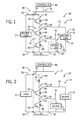
- FIGS. 1-3 illustrate various embodiments of a three port DC-DC converter that each integrates two DC-DC converters (i.e., voltage conversion circuits) with a shared current path between them.
- FIG. 1 shows a buck-boost type three-port DC-DC converter 10 which can achieve bidirectional power flow.
- FIG. 2 shows a boost type three-port DC-DC converter 12 that can deliver power from a low voltage side to a high voltage side.
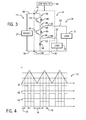
- FIG. 3 shows a buck type three port DC-DC converter 14 that can deliver power from a high voltage side to a low voltage side.
- the three port DC-DC converter 10, 12, 14 in each of the embodiments of FIGS. 1-3 is connected to a plurality of energy providing or energy consuming devices (i.e., energy sources or loads) of differing voltages - such that a boosting or bucking of voltages is performed by the three port DC-DC converter 10, 12, 14.
- At least two sources/loads are provided on one side of the three port DC-DC converter 10, 12, 14-with FIGS. 1-3 each showing a first source/load 16 and a second source/load 18 provided on one side of the converter. While only a first and second load/source 16, 18 are shown connected to the DC-DC converter 10, 12, 14, it is recognized that additional sources/loads may be connected thereto - with such sources/loads being connected in parallel or series.
- a source/load 20 is also provided on the side of the converter opposite the first and second sources/loads 16, 18. It is pointed out that DC capacitors may be put at the terminals for smoothing the voltage, and this is not drawn in the FIGS. 1-3 .
- a buck-boost type three-port DC-DC converter 10 is provided as part of a multi-energy storage device system 22 - with the sources/ loads 16, 18, 20 being in the form of a first energy storage device 16 (e.g., an energy battery), a second energy storage device 18 (e.g., a high specific-power energy storage device), and a load 20 (e.g., DC-AC inverter and AC motor).
- a first energy storage device 16 e.g., an energy battery
- a second energy storage device 18 e.g., a high specific-power energy storage device
- a load 20 e.g., DC-AC inverter and AC motor
- the first energy storage device 16 may be in the form of a high specific energy battery or high energy density battery, such as a Li-ion, sodium-metal halide, sodium nickel chloride, sodium-sulfur, or zinc-air battery, for example, that can achieve an energy density on the order of 100 W-hr/kg or greater.
- the second energy storage device 18 may be a high-specific power energy storage device, such as an ultracapacitor bank comprised of multiple cells having a cell capacitance that is greater than 500 Farads per cell, for example.
- the first energy storage device 16 and second energy storage device 18 are coupled together on a low-voltage side 24 of buck-boost type three-port DC-DC converter 10, wherein a negative terminal 26 of first energy storage device 16 and a negative terminal 28 of second energy storage device 18 are coupled to a bus 30, while a positive terminal 32 of first energy storage device 16 is coupled to a bus 34, which is a positive bus that connects through an inductor 36 to input channel 38 of buck-boost type three-port DC-DC converter 10 on the low-voltage side 24 of the converter.
- a positive terminal 40 of second energy storage device 18 is coupled to a bus 42, which is coupled through an inductor 44 on the low-voltage side 24 at input channel 46 of buck-boost type three-port DC-DC converter 10.
- buck-boost type three-port DC-DC converter 10 acts to boost the voltage provided by low-voltage side 24 of system 22 to high-voltage side 48 of system 22, as well as to regulate the voltage and provide over-current protection to first energy storage device 16 and second energy storage device 18.
- Different power allocation strategies can be applied to the system. For example, both energy storage device 18 and energy storage device 16 can provide power simultaneously to the load 20. It could also be operated in a way that one source provide the power for most of the time while the other is used as the backup.
- the converter is constructed to include a first voltage conversion circuit 50 and a second voltage conversion circuit 52 therein that have a shared current path therebetween.
- Each of the first conversion circuit 50 and the second conversion circuit 52 includes a respective input channel 38, 46 having an inductor 36, 44 thereon, as previously described, through which the conversion circuits 50, 52 are connected to the first and second energy storage devices 16, 18, respectively.
- the first and second conversion circuits 50, 52 Upon performing of a desired a boosting of voltages, the first and second conversion circuits 50, 52 provide a voltage output to an output channel 54 of the three port DC-DC converter 10, with the output channel 54 providing the boosted voltage to a DC link 56 to which the load 20 is connected.
- the buck-boost type three-port DC-DC converter 10 further includes an arrangment of three switching devices - i.e., a first switching device 58, a second switching device 60, and a third switching device 62 - for selectively boosting and bucking voltages in the system between first and second energy storage devices 16, 18 and load 20.
- each switching device 58, 60, 62 is formed as a half phase module that includes a switch 64 coupled to a diode 66 (i.e., a switch/diode pair).
- Switches 64 are shown, for illustrative purposes, as insulated gate bipolar transistors (IGBTs).
- IGBTs IGBTs
- Any appropriate electronic switch can be used, such as, for example, metal oxide semiconductor field effect transistors (MOSFETs), silicon carbide (SiC) MOSFETs, Gallium nitride (GaN) devices, bipolar junction transistors (BJTs), and metal oxide semiconductor controlled thyristors (MCTs).
- MOSFETs metal oxide semiconductor field effect transistors
- SiC silicon carbide
- GaN Gallium nitride
- BJTs bipolar junction transistors
- MCTs metal oxide semiconductor controlled thyristors
- the switching devices 58, 60, 62 are arranged such that the first switching device 58 operably connects to a positive terminal of the output channel 54 and the third switching device 62 operably connects to a negative terminal of the output channel 54, with the second switching device 60 having one terminal operably connected to the first switching device 58 and a second terminal operably connected to the third switching device 62.
- the switching devices 58, 60, 62 are further arranged such that the first switching device 58 and the second switching device 60 are operably connected to a terminal of the inductor 36, and the second switching device 60 and the third switching device 62 are operably connected to a terminal of the inductor 44.
- the switching devices 58, 60, 62 collectively serve as the switching devices for the first voltage conversion circuit 50 and the second voltage conversion circuit 52.
- the switching devices 58, 60, 62 forming each of the first voltage conversion circuit 50 and the second voltage conversion circuit 52 (in part), a shared current path is utilized between the first and second voltage conversion circuits 50, 52 between and the output channel 54 of the three port DC-DC converter 10.
- a controller 68 that is in operable communication with the arrangement of switching devices 58, 60, 62 to selectively operate each of the first switching device 58, the second switching device 60, and the third switching device 62 in one of an On state (i.e., conducting/conducted state) and an Off state (i.e., non-conducting/non-conducted state).
- the controller 68 selectively applies gate signals to the switching devices 58, 60, 62 (i.e., to switches 64) in order to switch them to the On state and control a current flow through the switching devices 58, 60, 62, such that power can be selectively drawn from the first energy storage device 16 and/or second energy storage device 18.
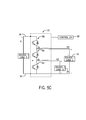
- FIG. 4 shows one of the possible sequences of gate signals G1, G2, G3 provided to the respective switching devices 58, 60, 62 of the buck-boost type converter 10 by controller 68.
- the illustrated modulation strategy 70 is applicable to both buck and boost operation modes of the three-port DC-DC converter 10 and provides smoothing when switching between the modes. With the device turned on, the current could be either direction depending on the power flow. With respect to the modulation strategy 70, it is recognized that the voltage of the first energy storage device 16 should be higher than that of the second energy storage device 18 due to the unidirectional voltage blocking capabilities of the device.
- FIG. 5A shows an operating mode when power flows among the DC bus 56 and the first energy storage device 16 when the first switching device 58 and the third switching device 62 conduct current.
- This sequence of gate signals provided to the switching devices 58, 60, 62 by controller 68 - with the first switching device 58 and the third switching device 62 being in the On state and the second switching device 60 being in the Off state - is illustrated in FIG. 4 during a period 72.
- the voltage Va is V1 and the voltage Vb is 0, as shown in FIG. 5A .
- FIG. 5B shows the operating mode when the power flows among DC bus 56 and both the first and second energy storage devices 16, 18 when both first switching device 58 and second switching device 60 conduct current.
- This sequence of gate signals provided to the switching devices 58, 60, 62 by controller 68 - with the first switching device 58 and the second switching device 60 being in the On state and the third switching device 62 being in the Off state - is illustrated in FIG. 4 during a period 74.
- both voltage Va and Vb equal to V1, as shown in FIG. 5B .
- FIG. 5C shows the operating mode when both of the first and second energy storage devices 16, 18 are disconnected from the DC bus 56 when the second switching device 60 and the third switching device 62 conduct current.
- This sequence of gate signals provided to the switching devices 58, 60, 62 by controller 68 - with the second switching device 60 and the third switching device 62 being in the On state and the first switching device 58 being in the Off state - is illustrated in FIG. 4 during a period 76.
- both voltage Va and Vb equal to 0, as shown in FIG. 5C .
- the modulation strategy 70 implemented by the controller 68 allows for the voltage/power regulations of different ports (i.e., the input ports/channels 38, 46 and the output port/channel 54) to be independent from one another.
- the allocation of power and integration of the multiple energy sources/loads 16, 18, 20 can thus be provided with full controllability.
- the boost type three-port DC-DC converter 12 of FIG. 2 and the buck type three port DC-DC converter 14 of FIG. 3 are essentially the same in construction and in operation, with only minor variances.
- the boost type three-port DC-DC converter 12 of FIG. 2 it can be seen that the first switching device 58 is in the form of a unidirectional diode 66 (rather than a half phase module, as in the boost-buck type three-port DC-DC converter of FIG. 1 ).
- the third switching device 62 is in the form of a unidirectional diode 66 (rather than a half phase module, as in the boost-buck type three-port DC-DC converter of FIG. 1 ).
- the switching devices 58, 60, 62 in each of the boost type three-port DC-DC converter 12 of FIG. 2 and the buck type three port DC-DC converter 14 of FIG. 3 would be controlled in a way similar to the one described in controller 68 with certain modifications..
- FIGS. 1-3 - and the control thereof described with respect to FIGS. 4 and 5A-5C - are useable with different arrangements of sources and loads, and that there are other possible configurations of the proposed DC-DC topologies when integrating different sources/loads.
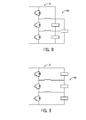
- FIG. 6 illustrates a configuration 80 where the sources/loads are connected in series on one side of the converter
- FIGS. 7-9 illustrate configurations 82, 84, 86 where three sources/loads are provided on one side of the converter.
- the energy sources/loads can also be positioned at high voltage DC link directly, as may be done in hybrid electrical vehicles for example. It is further recognized that the configurations 80, 82, 84, 86 of FIG. 6 and FIGS. 7-9 can also be applied to buck-type three port DC-DC converters and boost-type three port DC-DC converters.
- embodiments of the invention thus provide a three port DC-DC converter connectable to multiple energy sources and loads to allocate power therebetween.
- the DC-DC converter includes an arrangement of three switching devices therein and a shared current path, such that the total number of switching devices in the converter is less than that typically found in a parallel or series arrangement of two port DC-DC converters. Accordingly, compared with existing arrangements of two port DC-DC converters arts, the number of the switching devices in the three port DC-DC converter is reduced by 25%. Therefore, the size and weight of the converter can be reduced.
- a standard device module design can be implemented with different sizing schemes of the hybrid energy sources/loads with the same total power rating. Therefore, it makes a source/load system design much more flexible and reduces the new product manufacture cost.
- the conduction loss of the system can also be reduced in certain operating range due to higher current rating devices used in the topology.
- a three port DC-DC converter includes an arrangement of switching devices consisting of a first switching device, a second switching device, and a third switching device.
- the three port DC-DC converter also includes a pair of input channels that provide current to the arrangement of switching devices, with the pair of input channels connected to and receiving or sending power from or to a plurality of energy sources or loads.
- the three port DC-DC converter further includes an output channel that outputs a controlled power from or to the three port DC-DC converter.
- the first switching device, the second switching device, and the third switching device are selectively controllable to provide a controlled power to the output channel from the plurality of energy sources or loads connected to the input channels.
- a three port DC-DC converter includes a first voltage conversion circuit having an inductor and a pair of switching devices coupled to the inductor.
- the three port DC-DC converter also includes a second voltage conversion circuit having an inductor and a pair of switching devices coupled to the inductor.
- the three port DC-DC converter further includes a first input channel and a second input channel connected to the first and second voltage conversion circuits, respectively, with each of the input channels providing power to its respective voltage conversion circuit from one or more energy sources or loads connected thereto.
- the pair of switching devices in the first voltage conversion circuit and the pair of switching devices in the second switching device are formed from an arrangement of a first switching device, a second switching device and a third switching device, with the first and second voltage conversion circuits having a shared current path between to an output channel of the three port DC-DC converter.
- a multi-energy source system includes a direct current (DC) link, a load coupled to the DC link and configured to receive energy from the DC link, a three port DC/DC converter comprising an output channel coupled to the DC link and comprising first and second input channels, a first energy source coupled to the first input channel of the three port DC/DC converter, and a second energy source coupled to the second input channel of the three port DC/DC converter.
- DC direct current
- the three port DC/DC converter further includes an arrangement of switching devices consisting of a first switching device, a second switching device, and a third switching device, and a controller in operable communication with the arrangement of switching devices to selectively operate each of the first switching device, the second switching device, and the third switching device in one of an On state and an Off state.
- the controller is programmed to selectively operate each of the first switching device, the second switching device, and the third switching device in one of the On state and the Off state so as to control current flow between the first and second energy sources and the output channel.
Landscapes
- Engineering & Computer Science (AREA)
- Power Engineering (AREA)
- Dc-Dc Converters (AREA)
Applications Claiming Priority (1)
| Application Number | Priority Date | Filing Date | Title |
|---|---|---|---|
| US14/449,274 US20160036323A1 (en) | 2014-08-01 | 2014-08-01 | Three port dc-dc converter |
Publications (2)
| Publication Number | Publication Date |
|---|---|
| EP2983282A2 true EP2983282A2 (de) | 2016-02-10 |
| EP2983282A3 EP2983282A3 (de) | 2016-04-06 |
Family
ID=53761220
Family Applications (1)
| Application Number | Title | Priority Date | Filing Date |
|---|---|---|---|
| EP15178296.8A Withdrawn EP2983282A3 (de) | 2014-08-01 | 2015-07-24 | Gleichspannungswandler mit drei anschlüssen |
Country Status (6)
| Country | Link |
|---|---|
| US (1) | US20160036323A1 (de) |
| EP (1) | EP2983282A3 (de) |
| JP (1) | JP2016036249A (de) |
| KR (1) | KR20160016636A (de) |
| CN (1) | CN105322787A (de) |
| BR (1) | BR102015018279A2 (de) |
Cited By (1)
| Publication number | Priority date | Publication date | Assignee | Title |
|---|---|---|---|---|
| CN110138217A (zh) * | 2019-06-19 | 2019-08-16 | 河北科技大学 | 一种三端口dc-dc变换器及其控制方法 |
Families Citing this family (19)
| Publication number | Priority date | Publication date | Assignee | Title |
|---|---|---|---|---|
| US9878635B1 (en) * | 2013-02-13 | 2018-01-30 | University Of Maryland | Powertrain system in plug-in electric vehicles |
| US9876427B2 (en) * | 2014-03-04 | 2018-01-23 | Toyo Electric Mfg. Co., Ltd. | DC/DC power conversion device with first and second loads |
| JP6303938B2 (ja) * | 2014-09-10 | 2018-04-04 | トヨタ自動車株式会社 | 電圧変換器 |
| CN105978325B (zh) * | 2016-06-17 | 2018-03-27 | 华中科技大学 | 非隔离型单磁芯三端口直流变换器 |
| US10128786B2 (en) | 2017-01-13 | 2018-11-13 | Ford Global Technologies, Llc | Electric vehicle electric drive system |
| DE112017006894T5 (de) * | 2017-01-23 | 2019-10-02 | Mitsubishi Electric Corporation | Energie-umwandlungseinrichtung und energie-umwandlungssystem |
| ES2829324T3 (es) * | 2017-03-21 | 2021-05-31 | Siemens Energy AS | Sistema de distribución de energía |
| KR102454222B1 (ko) * | 2017-07-21 | 2022-10-17 | 현대자동차주식회사 | 전기 자동차 |
| CN107896058B (zh) * | 2017-11-14 | 2020-09-08 | 深圳市航天新源科技有限公司 | 非隔离多端口变换器 |
| US10491130B2 (en) | 2017-12-21 | 2019-11-26 | Hamilton Sundstrand Corporation | Multi-purpose power conversion module |
| CN108768162A (zh) * | 2018-06-16 | 2018-11-06 | 江苏云之尚节能科技有限公司 | 一种三端口直流转换器 |
| KR102768514B1 (ko) * | 2019-03-12 | 2025-02-18 | 디씨벨 인크. | 다중 포트 전력 변환기 장치 |
| CN110071636B (zh) * | 2019-05-30 | 2021-07-06 | 广东工业大学 | 一种直流变换电路 |
| CN110855144B (zh) * | 2019-11-19 | 2021-03-23 | 西南交通大学 | 非隔离型三端口直流变换器及其控制方法和电路 |
| US11476765B2 (en) * | 2020-12-15 | 2022-10-18 | Otis Elevator Company | Multi-port buck-boost converter and method of control |
| US12088108B2 (en) * | 2021-06-08 | 2024-09-10 | Hamilton Sundstrand Corporation | Smart power router and protection for medium voltage DC distribution |
| JP7589126B2 (ja) * | 2021-09-27 | 2024-11-25 | 公益財団法人鉄道総合技術研究所 | 電力変換装置 |
| CN114337263B (zh) * | 2022-02-21 | 2022-12-02 | 小米汽车科技有限公司 | 电动车辆及其控制电源电路 |
| CN115603567B (zh) * | 2022-10-20 | 2025-12-16 | 陕西科技大学 | 一种非隔离型多模式三端口dc-dc变换器及控制方法 |
Citations (2)
| Publication number | Priority date | Publication date | Assignee | Title |
|---|---|---|---|---|
| US6268666B1 (en) * | 1999-02-25 | 2001-07-31 | Southwest Research Institute | Bi-directional power conversion apparatus for combination of energy sources |
| US20140084879A1 (en) * | 2012-09-21 | 2014-03-27 | Honda Motor Co., Ltd. | Power supply device |
Family Cites Families (6)
| Publication number | Priority date | Publication date | Assignee | Title |
|---|---|---|---|---|
| US6833635B2 (en) * | 2002-07-08 | 2004-12-21 | Artesyn Technologies, Inc. | Dual input DC-to-DC power converter |
| TWI390827B (zh) * | 2008-09-22 | 2013-03-21 | Ablerex Electronics Co Ltd | 具中性點之雙向直流/直流電壓轉換裝置及應用該電壓轉換裝置的不斷電系統 |
| US8853888B2 (en) * | 2008-12-17 | 2014-10-07 | Illinois Institute Of Technology | Multiple-input DC-DC converter |
| CH703453A2 (de) * | 2010-07-15 | 2012-01-31 | Woodward Ids Switzerland Ag | Differenz-Steller als String-Konverter. |
| JP5492040B2 (ja) * | 2010-09-22 | 2014-05-14 | 株式会社豊田中央研究所 | 電源システム |
| JP6122701B2 (ja) * | 2013-06-06 | 2017-04-26 | 本田技研工業株式会社 | 電源装置 |
-
2014
- 2014-08-01 US US14/449,274 patent/US20160036323A1/en not_active Abandoned
-
2015
- 2015-07-24 EP EP15178296.8A patent/EP2983282A3/de not_active Withdrawn
- 2015-07-28 KR KR1020150106569A patent/KR20160016636A/ko not_active Withdrawn
- 2015-07-29 JP JP2015149098A patent/JP2016036249A/ja active Pending
- 2015-07-30 BR BR102015018279A patent/BR102015018279A2/pt not_active Application Discontinuation
- 2015-07-31 CN CN201510461556.5A patent/CN105322787A/zh not_active Withdrawn
Patent Citations (2)
| Publication number | Priority date | Publication date | Assignee | Title |
|---|---|---|---|---|
| US6268666B1 (en) * | 1999-02-25 | 2001-07-31 | Southwest Research Institute | Bi-directional power conversion apparatus for combination of energy sources |
| US20140084879A1 (en) * | 2012-09-21 | 2014-03-27 | Honda Motor Co., Ltd. | Power supply device |
Cited By (1)
| Publication number | Priority date | Publication date | Assignee | Title |
|---|---|---|---|---|
| CN110138217A (zh) * | 2019-06-19 | 2019-08-16 | 河北科技大学 | 一种三端口dc-dc变换器及其控制方法 |
Also Published As
| Publication number | Publication date |
|---|---|
| CN105322787A (zh) | 2016-02-10 |
| JP2016036249A (ja) | 2016-03-17 |
| EP2983282A3 (de) | 2016-04-06 |
| US20160036323A1 (en) | 2016-02-04 |
| BR102015018279A2 (pt) | 2016-02-02 |
| KR20160016636A (ko) | 2016-02-15 |
Similar Documents
| Publication | Publication Date | Title |
|---|---|---|
| EP2983282A2 (de) | Gleichspannungswandler mit drei anschlüssen | |
| EP3916976B1 (de) | Wechselstrom-gleichstrom-umwandlungssysteme mit erweiterter spannungsverstärkung | |
| CN107791851B (zh) | 用于主电容器放电的备用电力供应 | |
| US20120069604A1 (en) | Compact power converter with high efficiency in operation | |
| US9203323B2 (en) | Very high efficiency uninterruptible power supply | |
| EP2562021B1 (de) | System und Verfahren zur Steuerung regenerativer elektrischer Energie | |
| US12255529B2 (en) | Power factor correction and DC-DC multiplexing converter and uninterruptible power supply including the same | |
| US9793710B2 (en) | Energy storing device with cooling elements, and method for cooling energy storing cells | |
| EP3255771B1 (de) | Bidirektionaler gleichspannungswandler | |
| JP2011103761A (ja) | 電力変換装置 | |
| Singh et al. | An improved two-stage non-isolated converter for on-board plug-in hybrid EV battery charger | |
| CN102969893A (zh) | 一种高增益升压型直流变换器 | |
| CN102810987A (zh) | 车辆电驱动系统和车辆电力系统 | |
| CN112224060B (zh) | 一种车辆及其能量转换装置与动力系统 | |
| EP4002667A1 (de) | Gleichspannungswandler eines einergieumwandlungssystems | |
| US10232717B2 (en) | High voltage on-board network structure for vehicles | |
| CN112224055B (zh) | 能量转换装置、动力系统以及车辆 | |
| CN112224052B (zh) | 能量转换装置、动力系统以及车辆 | |
| JP6953634B2 (ja) | Dc/dcコンバータを備える車両充電器 | |
| CN103296910A (zh) | 储能装置的直流电压截取装置和由储能装置生成直流电压的方法 | |
| CN103296900B (zh) | 储能装置的直流电压截取装置和由储能装置生成直流电压的方法 | |
| US20230143719A1 (en) | Vehicle Power Conversion System and Method | |
| CN112224038A (zh) | 一种能量转换装置、动力系统及车辆 | |
| VARDHAN et al. | speed control of dc motor using isolated dc-dc converter | |
| CN110994993B (zh) | 一种多通道双向升降压电路 |
Legal Events
| Date | Code | Title | Description |
|---|---|---|---|
| PUAI | Public reference made under article 153(3) epc to a published international application that has entered the european phase |
Free format text: ORIGINAL CODE: 0009012 |
|
| AK | Designated contracting states |
Kind code of ref document: A2 Designated state(s): AL AT BE BG CH CY CZ DE DK EE ES FI FR GB GR HR HU IE IS IT LI LT LU LV MC MK MT NL NO PL PT RO RS SE SI SK SM TR |
|
| AX | Request for extension of the european patent |
Extension state: BA ME |
|
| PUAL | Search report despatched |
Free format text: ORIGINAL CODE: 0009013 |
|
| AK | Designated contracting states |
Kind code of ref document: A3 Designated state(s): AL AT BE BG CH CY CZ DE DK EE ES FI FR GB GR HR HU IE IS IT LI LT LU LV MC MK MT NL NO PL PT RO RS SE SI SK SM TR |
|
| AX | Request for extension of the european patent |
Extension state: BA ME |
|
| RIC1 | Information provided on ipc code assigned before grant |
Ipc: H02M 3/158 20060101AFI20160229BHEP Ipc: H02M 3/155 20060101ALI20160229BHEP |
|
| 17P | Request for examination filed |
Effective date: 20161006 |
|
| RBV | Designated contracting states (corrected) |
Designated state(s): AL AT BE BG CH CY CZ DE DK EE ES FI FR GB GR HR HU IE IS IT LI LT LU LV MC MK MT NL NO PL PT RO RS SE SI SK SM TR |
|
| STAA | Information on the status of an ep patent application or granted ep patent |
Free format text: STATUS: EXAMINATION IS IN PROGRESS |
|
| 17Q | First examination report despatched |
Effective date: 20161209 |
|
| STAA | Information on the status of an ep patent application or granted ep patent |
Free format text: STATUS: THE APPLICATION IS DEEMED TO BE WITHDRAWN |
|
| 18D | Application deemed to be withdrawn |
Effective date: 20201216 |