EP2983532B1 - Produit à priser par voie orale sans fumée et lyophilisé avec tabac ou sans tabac et son procédé de fabrication - Google Patents
Produit à priser par voie orale sans fumée et lyophilisé avec tabac ou sans tabac et son procédé de fabrication Download PDFInfo
- Publication number
- EP2983532B1 EP2983532B1 EP14715312.6A EP14715312A EP2983532B1 EP 2983532 B1 EP2983532 B1 EP 2983532B1 EP 14715312 A EP14715312 A EP 14715312A EP 2983532 B1 EP2983532 B1 EP 2983532B1
- Authority
- EP
- European Patent Office
- Prior art keywords
- product
- snuff
- tobacco
- tobacco snuff
- freeze
- Prior art date
- Legal status (The legal status is an assumption and is not a legal conclusion. Google has not performed a legal analysis and makes no representation as to the accuracy of the status listed.)
- Active
Links
Images

Classifications
-
- A—HUMAN NECESSITIES
- A24—TOBACCO; CIGARS; CIGARETTES; SIMULATED SMOKING DEVICES; SMOKERS' REQUISITES
- A24B—MANUFACTURE OR PREPARATION OF TOBACCO FOR SMOKING OR CHEWING; TOBACCO; SNUFF
- A24B15/00—Chemical features or treatment of tobacco; Tobacco substitutes, e.g. in liquid form
- A24B15/18—Treatment of tobacco products or tobacco substitutes
- A24B15/183—Treatment of tobacco products or tobacco substitutes sterilization, preservation or biological decontamination
-
- A—HUMAN NECESSITIES
- A24—TOBACCO; CIGARS; CIGARETTES; SIMULATED SMOKING DEVICES; SMOKERS' REQUISITES
- A24B—MANUFACTURE OR PREPARATION OF TOBACCO FOR SMOKING OR CHEWING; TOBACCO; SNUFF
- A24B13/00—Tobacco for pipes, for cigars, e.g. cigar inserts, or for cigarettes; Chewing tobacco; Snuff
-
- A—HUMAN NECESSITIES
- A24—TOBACCO; CIGARS; CIGARETTES; SIMULATED SMOKING DEVICES; SMOKERS' REQUISITES
- A24F—SMOKERS' REQUISITES; MATCH BOXES; SIMULATED SMOKING DEVICES
- A24F23/00—Cases for tobacco, snuff, or chewing tobacco
- A24F23/02—Tobacco pouches
-
- B—PERFORMING OPERATIONS; TRANSPORTING
- B65—CONVEYING; PACKING; STORING; HANDLING THIN OR FILAMENTARY MATERIAL
- B65B—MACHINES, APPARATUS OR DEVICES FOR, OR METHODS OF, PACKAGING ARTICLES OR MATERIALS; UNPACKING
- B65B63/00—Auxiliary devices, not otherwise provided for, for operating on articles or materials to be packaged
- B65B63/08—Auxiliary devices, not otherwise provided for, for operating on articles or materials to be packaged for heating or cooling articles or materials to facilitate packaging
Definitions
- the present invention relates to a freeze dried oral smokeless tobacco snuff or non-tobacco snuff product and to a method of manufacturing such a product.
- Snuff is available in two forms, as dry snuff for oral or nasal use and moist (or wet) snuff for oral use.
- moist snuff There are two types of moist snuff, the American and the Scandinavian type.
- American-type moist snuff is available in a loose form or as pre-packed pouches and is typically used between the lower gum and lip.
- Snus is the Scandinavian-type of moist snuff which is also available in loose form or as pre-packed portions in pouches. Snus is typically used between the upper gum and lip.
- Oral smokeless non-tobacco snuff products are products, which do not contain tobacco, resembling oral smokeless tobacco snuff products and are used in the same way as oral smokeless tobacco snuff products.
- Oral smokeless tobacco snuff or non-tobacco moist snuff products such as snus, usually comprise 30 to 60 weight-% moisture. These products require refrigeration until use in order to prevent, for example, degeneration of flavour and aroma and pH instability. Therefore, their shelf life is rather limited. Moreover, a particular problem of snuff products with high moisture content is moisture migration during storage causing spotting of the pouch paper and as a consequence discoloration of the same.
- dryer snuff products available on the market with a moisture content of about between 30 to 20 weight-%.
- the organoleptic properties of these semi-dry products, such as mouth feel and texture are usually inferior to those of oral smokeless tobacco moist snuff or non-tobacco moist snuff products with high moisture content.
- properties such as pH stability are affected and consequently, their shelf life is affected too, though to a lesser extent than products with higher moisture content.
- US 3,693,629 discloses a chewing tobacco cake that may be formed by a freeze-drying process.
- US 2008/0029110 discloses a smokeless tobacco product which may have a moisture content of 15 wt%.
- R A Andersen (Effect of storage conditions on nitrosated, acylated, and oxidized pyridine alkaloid derivatives in smokeless tobacco products.”, Cancer Research, 1 November 1989 (1989-11-01), pages 5895-5900 ) is directed to effects of storage conditions of alkaloid derivatives in smokeless tobacco products and discloses, during a step in the sample preparation, an intermediate product in the form of a dry snuff composition which is freeze dried and has a moisture content of less than 15 weight-%.
- the present invention provides a freeze dried oral smokeless tobacco snuff or non-tobacco snuff product and a method of manufacturing the freeze dried oral smokeless tobacco snuff or non-tobacco snuff product.
- freeze dried oral smokeless tobacco snuff or non-tobacco snuff product and the method of its manufacturing according to the present invention are defined in the appended claims.
- the present invention provides an improved smokeless tobacco snuff or non-tobacco snuff product with significantly longer shelf life than that of existing moist or semi-dry oral smokeless tobacco snuff or non-tobacco snuff products, while having organoleptic properties comparable to those of existing oral smokeless tobacco moist snuff or non-tobacco moist snuff products.
- the method of manufacturing the freeze dried oral smokeless tobacco snuff or non-tobacco snuff product of the invention comprises:
- freeze dried snuff an oral smokeless tobacco snuff or non-tobacco snuff product that has first been prepared according to any known snuff manufacturing process in the art, such as, e.g., those described herein below and then afterwards has been freeze dried according to any known freeze drying process, wherein the moist snuff product is first frozen and thereafter moisture is removed from the product at a temperature below that of the freezing point of water by applying a reduced air pressure, under which the frozen moisture in the product sublimes directly from the solid phase to the gas phase.
- Snus which is the Swedish term for oral snuff, is used herein as a description for an oral tobacco snuff or non-tobacco snuff product produced in a heat-treatment process instead of by fermentation.
- the product may be provided in particulate form, as a loose powder, or portion packed in a pouch.
- Porate is used herein for a particle size of the product which enables the final product to be provided in so-called loose form, from which a pinch of snus may be made in individual sizes by the person using the product.
- the final water content is typically higher than 40 wt%, but semi-dry products having less than 40 wt% water content are also available. Snus is typically used between the upper gum and lip.
- moisture content may include water, humectants, liquid additives such as flavourants, and/or other liquid compounds or compositions of compounds.
- the moisture content in the product can , e.g., be calculated according to the method described in AOAC, Official Methods of Analysis, Vol. 1, Chapter 3, p.64 (1990, 15th editi on)or that described in Federal Register, Vol 74, No. 4, 07/01/2009/Notices, page 716,Chapter III .
- flavour and “flavourant” refer to a substance used to influence the aroma and/or taste of the smokeless tobacco snuff or non-tobacco snuff product, including, but not limited to, essential oils, single flavour compounds, compounded flavourings, and extracts. They may be in any form, for example, oil, liquid, or powder.
- organoleptic refers to relating or contributing to the integrated sensory perception by the consumer that includes, for example, any combination of aroma, fragrance, flavour, taste, odour, texture, mouth feel, or the like.
- the terms “unstable pH” and “pH instability” refer to the natural process of decreasing pH which is exhibited by all moist snuff products during storage.
- the decreased pH is a result of on-going chemical processes in the moist tobacco or non-tobacco composition, processes that cause neutralization of the pH regulator, such as a base, for example, sodium carbonate, added to the product during manufacturing.
- a base for example, sodium carbonate
- the freeze dried product of the invention has a moisture content of less than 15 weight-%, and may have a moisture content of less than about 10 weight-%, less than about 9 weight-%, less than about 8 weight-%, less than about 7 weight-%, less than about 6 weight-%, less than about 5 weight-%, less than about 4 weight-%, less than about 3 weight-%, or less than about 2 weight-%.
- the freeze dried product of the invention may have a moisture content of about between 0 to less than 20 weight-%, 2 to less than about 15 weight-%, 2 to 10 weight-%, 2 to 9 weight-%, 2 to 8 weight-%, or 2 to 7 weight-%.
- the freeze dried product of the invention can be stored at room temperature without refrigeration, while the product properties are preserved. Preservation is possible because the greatly reduced moisture content inhibits the processes that would normally spoil or degrade the product.
- the organoleptic properties of the freeze dried product of the invention upon use are comparable to those of existing oral smokeless tobacco moist snuff or non-tobacco moist snuff products.
- the present invention provides a freeze dried oral smokeless tobacco snuff or non-tobacco snuff product with a significantly improved pH stability during storage as compared to the existing moist or semi-dry oral smokeless tobacco snuff or non-tobacco snuff products.
- the present invention further provides a freeze dried oral smokeless tobacco snuff or non-tobacco snuff product in the form of pouches or sachets where spotting of the wrapping material of the pouch or sachet during storage is eliminated.
- the organoleptic properties of the smokeless tobacco snuff or non-tobacco snuff product of the invention upon re-moisturizing are superior to those of existing semi-dry smokeless tobacco snuff or non-tobacco snuff products.
- the freeze-dried product of the invention can be re-moisturized much more quickly and easily as compared to that of conventionally dry or semi-dry oral smokeless products, because the freeze drying process leaves microscopic pores. The pores are created by the ice crystals that sublimate, leaving gaps or pores in their place.
- the product of the invention regains the organoleptic properties it possessed prior to freeze drying when re-moisturized prior to or during use.
- freeze-drying increases the shelf life of freeze dried oral smokeless tobacco snuff or non-tobacco snuff products significantly even for many years, while preserving the organoleptic properties of the products.
- the freeze dried product of the invention may be re-moisturized by the end user either prior to use or in the mouth during use.
- Re-moisturizing before use may be obtained by addition of a liquid onto the freeze dried oral smokeless tobacco snuff or non-tobacco snuff product. This may be done, for example, by using a pipette in case of a product in a loose, particulate form, or by dipping in a liquid in case of a product in the form of a pouch.
- Suitable liquids may include water, any alcoholic drink, such as whisky, rum or gin, coffee or tea, or any soft drink such as soda, Coca-Cola or any kind of fruit juice.
- Moist snuff is known as either Swedish-type snus or American-type moist snuff.
- snus manufacturing is presented by e.g. ESTOC, European Smokeless Tobacco Council, and the GothiaTek® quality standard for snus. Methods for the manufacture of American type moist snuff and chewing tobacco are described in e.g. 'Wahlberg, I., Ringberger, T. (1999) Smokeless Tobacco. In: Tobacco: Production, Chemistry and Technology, (eds D.L. Davis & M.T. Nielsen) pp. 452-460. World Agriculture Series, Blackwell Science Ltd. Tobacco is the raw material in any oral smokeless tobacco snuff product.
- the principle of snus manufacturing is to mix ground or cut tobacco with water and sodium chloride and heat treating the mixture for a period of time long enough, typically several hours, and at a temperature high enough, to meet the demands for pasteurization.
- the heat treatment also gives texture and colour to the mixture and enhances the natural tobacco flavours.
- After heat treatment the mixture is chilled.
- Additives such as pH-regulators and flavourings are then added and the mixture may be adjusted in water content.
- the ready-made blend is packed, typically in cans or boxes as loose snus or as portions (pouches or sachets).
- American-type moist snuff is commonly produced through a fermentation process of moisturized ground or cut tobacco. Flavours and ingredients are mixed to the blend and water is added to adjust the moisture content.
- American-type moist snuff is available in a loose form or as pre-packed pouches.
- Manufacturing of oral smokeless non-tobacco snuff products may be adapted to follow the procedure of manufacturing of oral smokeless tobacco snuff products, where tobacco is replaced by non-tobacco raw material, typically constituted of non-tobacco fibres originated from plant materials.
- Suitable non-tobacco fibres are plant fibres having high dietary fibre content. Examples of such materials are oat fibres (dietary fibre content >85%), apple fibres (dietary fibre content approx. 50-60%), sugar beet fibres (dietary fibre content approx. 65-75%), potato fibres (dietary fibre content approx. 70%), corn fibres (dietary fibre content approx. 70-80%), buckwheat fibres (dietary fibre content approx. 90%), cocoa fibres (dietary fibre content approx.
- Oral smokeless non-tobacco snuff products are used in the same manner as the corresponding oral smokeless tobacco snuff products. They offer a healthier alternative to oral smokeless tobacco snuff products, since they do not contain tobacco and usually do not contain any nicotine either.
- the smokeless tobacco snuff or non-tobacco snuff product according to the present invention may be manufactured according to the GothiaTek® standard.
- the method comprises a heat treatment.
- the heat treatment may be a pasteurization process.
- the temperature during the pasteurization process may be held at about 70-100°C during approximately 1 to 30 hours, or approximately 10 hours.
- the method comprises a cooling step, wherein the temperature of the blend is cooled down to 15-30°C, preferably approx. 20°C, during 0.5 to 2 hours of applied cooling while stirring.
- the manufacturing method is kept in a closed system and handling of all ingredients complies with food safety regulations.
- freeze-drying works by first freezing a material and then reducing the surrounding pressure to allow the frozen water/moisture in the material to sublimate directly from the solid phase to the gas phase.
- a complete freeze drying process may include three stages such as freezing, primary drying, and if needed, secondary drying.
- freezing is usually done using a freeze-drying machine. In this step, it is important to cool the material below its triple point, the lowest temperature at which the solid and liquid phases of the material can coexist. This ensures that sublimation rather than melting will occur in the following steps. Larger crystals are easier to freeze-dry. To produce larger crystals, the product should be frozen slowly or be cycled up and down in temperature. Usually, the freezing temperatures are between -50 °C and -80 °C. In a lab the freezing temperature may be higher, e.g., such as between -15 °C and -80. The freezing phase is the most critical in the whole freeze-drying process, because the product may be spoiled if badly done.
- the pressure is lowered (to the range of a few millibars), and enough heat is supplied to the material for the moisture to sublime.
- the amount of heat necessary can be calculated using the sublimating molecules' latent heat of sublimation.
- about 95% of the moisture in the material is sublimated.
- pressure is controlled through the application of partial vacuum. The vacuum speeds up the sublimation, making it useful as a deliberate drying process.
- a cold condenser chamber and/or condenser plates provide a surface(s) for the water vapour to re-solidify on. This condenser plays no role in keeping the material frozen; rather, it prevents water vapour from reaching the vacuum pump, which could degrade the pump's performance. Condenser temperatures are typically below -50 °C.
- the secondary drying phase aims to remove unfrozen water/moisture molecules, since the ice was removed in the primary drying phase.
- This part of the freeze-drying process is governed by the material's adsorption isotherms.
- the temperature is raised higher than in the primary drying phase, and can even be above 0 °C, to break any physico-chemical interactions that have formed between the water molecules and the frozen material.
- the pressure is also lowered in this stage to encourage desorption (typically in the range of microbars, or fractions of a Pascal).
- the vacuum may be broken with an inert gas, such as nitrogen, or with ambient air, before the material is sealed.
- an inert gas such as nitrogen
- the final residual water/moisture content in the product may be as low as around 1 to 4 weight-%.
- freeze-dryers There are essentially three categories of freeze-dryers: the manifold freeze-dryer, the rotary freeze-dryer and the tray style freeze-dryer. Two components are common to all types of freeze-dryers: a vacuum pump to reduce the ambient gas pressure in a vessel containing the substance to be dried and a condenser to remove the moisture by condensation on a surface cooled to -40 to -80 °C.
- the manifold, rotary and tray type freeze-dryers differ in the method by which the dried substance is interfaced with a condenser. In manifold freeze-dryers a short usually circular tube is used to connect multiple containers with the dried product to a condenser.
- the rotary and tray freeze-dryers have a single large reservoir for the dried substance.
- any known freeze drying technique and freeze drying equipment may be used to freeze dry the product of the invention, as long as the desired properties, such as, e.g., the organoleptic properties, of the end product remain intact/do not deteriorate.
- the oral smokeless tobacco snuff or non-tobacco snuff product of the invention may be freeze dried before packaging or after packaging.
- steps c) and d) in the independent method claim may occur in any order.
- the oral smokeless tobacco snuff or non-tobacco snuff product of the invention may be freeze dried, either in its loose, particulate form, or portioned packed in pouches or sachets. Freeze drying is conducted until desired moisture content in the product is obtained.
- Freeze drying of the smokeless tobacco snuff or non-tobacco snuff product of the invention may be performed in its loose, particulate form.
- the loose moist snuff product is then placed in the freeze drier, where freeze drying is conducted until desired moisture content is achieved.
- the obtained freeze-dried product may either be packed in cans or boxes as is, or be portion formed into pouches or sachets, which subsequently may be packed in cans or boxes.
- freeze drying of the smokeless tobacco snuff or non-tobacco snuff product of the invention may be performed after it has been packed in cans or boxes in its loose, particulate form.
- the loose moist snuff product in cans or boxes is then placed in the freeze drier, where freeze drying is conducted until desired moisture content is obtained.
- the smokeless tobacco snuff or non-tobacco snuff product of the invention may be freeze dried after it has been portion formed into pouches or sachets.
- the pouches or sachets are then placed in the freeze drier, where freeze drying is conducted until desired moisture content is achieved.
- the freeze dried pouches or sachets may then be packed into cans or boxes.
- the smokeless tobacco snuff or non-tobacco snuff product of the invention may optionally be flavoured.
- the flavouring may be performed by adding one or more flavour substances to the product.
- the flavouring may be done prior to or after the freeze-drying process.
- the product of the invention may be flavoured prior to freeze drying.
- the flavoured moist snuff product in its loose, particulate form or portion formed into pouches or sachets, is then placed in the freeze drier, where freeze drying is conducted until desired moisture content is obtained.
- the risk of evaporation of flavour substances during freeze-drying should be considered when choosing flavour substances.
- Flavouring after freeze drying may be done either on freeze-dried product in loose, particulate form or on freeze-dried product portion formed into pouches or sachets.
- Flavouring of freeze dried product in loose, particulate form may be performed by mixing the freeze dried product with one or more flavour substances.
- the loose flavoured freeze dried snuff product may then either be packed in cans or boxes as is, or portion formed into pouches or sachets first and then packed in cans or boxes.
- Flavouring of freeze dried product in form of pouches or sachets may be performed by spraying a flavour solution onto the pouches. It may also be performed by dipping the pouches in a flavour solution, or by injecting a flavour solution into the pouches.
- the oral smokeless tobacco snuff or non-tobacco snuff product of the invention may be flavoured by the end user.
- this may be performed by applying a liquid onto the product.
- the liquid may, for example, be a flavour solution, any alcoholic drink, any soft drink or any beverage such as coffee or tea.
- the flavouring by the end user may also be performed by the use of a flavour capsule, the content of which is then applied on the product.
- the flavouring by the end user may be performed by dipping the product into a liquid.
- the flavouring by the end user may also be performed by applying a liquid onto the product.
- the liquid may, for example, be a flavour solution, any alcoholic drink, any soft drink or any beverage such as coffee or tea.
- the flavouring by the end user may also be performed by the use of a flavour capsule, the content of which is then applied on the product.
- 1500 g snus was produced in accordance with GothiaTek® standard.
- a mixture of ground tobacco, sodium chloride and water was heat treated at a temperature of 100 °C for 2 hours and thereafter at a declining temperature of 100-70 C for 8 hours, reaching a water content of about 36 %.
- the mixture was chilled to about 20 °C and sodium carbonate was added to adjust the mixture to an alkaline pH of about 8,3 and water was added to adjust the moisture content to about 56 %.
- the resulting snus had a moisture content of 55,7 % and a pH value of 8,25.
- the snus was flavoured with a standard General flavour profile.
- the snus was then formed into pouches of approximately 1 g each, using a SM NYPS machine ( US Patent Specification No. 6.135.120 , "Device for packing of finely divided, moistened tobacco material", Löfman et al.). Standard viscose based non-woven fabric for snus was used as wrapping material for the snus portions.
- the second sample (Sample 2) was dried in a conventional convection oven at a temperature of 60 °C until the moisture content was 15 %.
- the third sample (Sample 3) was freeze dried according to the following procedure: The sample was frozen overnight in a freezer set at -18 °C. The sample was then transferred to a lab scale freeze dryer (Leybold Vacuum LYOVAC GT2), in which the pressure was lowered to 0,06 mbar to allow sublimation of moisture to take place. This was conducted until the moisture content of the sample was 6 %.
- a lab scale freeze dryer Leybold Vacuum LYOVAC GT2
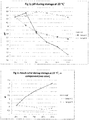
- Figure 1 shows the measured pH value of all samples, i.e., Reference, Sample 2 (conventionally dried) and sample 3 according to the invention (freeze dried), measured at different time points.
- all samples had the same start pH value of 8,25 (-1 w).
- the obtained results show that the colour stability of a freeze dried oral smokeless tobacco snuff product pouch according to the present invention (Sample 3) is better than that of a reference product with high moisture content (Ref).
- Component a red colour
- Component b yellow colour
- Samples 2 and 3 showed similar colour stability behaviour.
- 500 g snus was produced in accordance with GothiaTek® standard.
- a mixture of ground tobacco, sodium chloride, glycerol, and water was heat treated at a temperature of 100 °C for 2 hours and thereafter at a declining temperature of 100-70 °C for 8 hours, reaching a moisture content of about 48%.
- the mixture was chilled to about 20 °C and sodium carbonate was added to adjust the mixture to an alkaline pH of about 8,4 and water was added to adjust the moisture content to about 58 %.
- the resulting snus had a moisture content of 58,2 weight-% and a pH of 8,31.
- the snus sample was frozen overnight in a freezer set at -18 °C.
- the sample was then transferred to a lab scale freeze dryer (Leybold Vacuum LYOVAC GT2), in which the pressure was lowered to 0,06 mbar to allow sublimation of moisture to take place. This was conducted until the moisture content of the sample was 9 weight-%.
- sample A The freeze-dried loose snus was then divided into two samples (sample A and B). One was flavoured with a standard General flavour profile.
- sample A The flavoured loose snus (sample A) was then divided into two subsamples (sample A1 and A2).
- Sample A1 was formed into pouches by hand in the lab.
- Standard viscose based non-woven fabric for snus was used as wrapping material for the snus portions.
- Sample A2 was packed as is into cans by hand in the lab.
- sample B The unflavoured snus sample (sample B) was formed into pouches by hand in the lab. Standard viscose based non-woven fabric for snus was used as wrapping material for the snus portions. These pouches where then divided into two subsamples (samples B1 and B2). Sample B1 was flavoured with a standard General flavour profile by applying a flavour solution onto the pouches. Sample B2 was left unflavoured.
Landscapes
- Health & Medical Sciences (AREA)
- Life Sciences & Earth Sciences (AREA)
- General Health & Medical Sciences (AREA)
- Molecular Biology (AREA)
- Chemical & Material Sciences (AREA)
- Chemical Kinetics & Catalysis (AREA)
- General Chemical & Material Sciences (AREA)
- Engineering & Computer Science (AREA)
- Mechanical Engineering (AREA)
- Manufacture Of Tobacco Products (AREA)
Claims (11)
- Produit oral de tabac à priser sans fumée ou à priser sans tabac lyophilisé avec une teneur en humidité inférieure à 15 % en poids, dans lequel ledit produit est sous la forme d'un sachet ou en vrac, sous forme particulaire, et dans lequel le produit est conditionné dans des canettes ou des boîtes.
- Produit selon la revendication 1, dans lequel le produit a une teneur en humidité inférieure à 10 % en poids.
- Produit selon la revendication 1 ou 2, dans lequel le produit a une teneur en humidité inférieure à 8 % en poids.
- Produit selon l'une quelconque des revendications précédentes, dans lequel le produit oral produit de tabac à priser sans fumée ou à priser sans tabac est du snus, qui est un produit oral de tabac à priser ou à priser sans tabac produit dans un processus de traitement thermique.
- Procédé de fabrication d'un produit oral de tabac à priser sans fumée ou à priser sans tabac lyophilisé avec une teneur en humidité inférieure à 15 % en poids, ledit procédé comprenant les étapes consistant à :a) fournir un mélange de tabac ou de matériau sans tabac, d'eau et facultativement d'autres ingrédients ;b) traiter ledit mélange ;c) lyophiliser le mélange traité ; etd) conditionner le produit fini, tel quel ou par portions, dans des canettes ou des boîtes.
- Procédé selon la revendication 5, dans lequel le traitement dudit mélange comprend un traitement thermique.
- Procédé selon la revendication 6, dans lequel le traitement thermique est un processus de pasteurisation.
- Procédé selon l'une quelconque des revendications 5 à 7, comprenant en outre la formation du produit de tabac ou sans tabac dans des sachets ; et le conditionnement des sachets.
- Procédé selon l'une quelconque des revendications 5 à 8, dans lequel la formation dans des sachets a lieu avant la lyophilisation et le produit oral de tabac à priser sans fumée ou à priser sans tabac est ensuite lyophilisé dans les sachets.
- Procédé selon l'une quelconque des revendications 5 à 9, dans lequel un ou plusieurs agents aromatisants est/sont ajoutés au produit oral de tabac à priser sans fumée ou à priser sans tabac avant ou après la lyophilisation.
- Procédé selon la revendication 10, dans lequel les un ou plusieurs agents aromatisants est/sont ajoutés au produit oral de tabac à priser sans fumée ou à priser sans tabac après lyophilisation.
Priority Applications (2)
| Application Number | Priority Date | Filing Date | Title |
|---|---|---|---|
| SI201431429T SI2983532T1 (sl) | 2013-04-09 | 2014-04-04 | Liofiliziran peroralni brezdimni tobačni njuhalni ali netobačni njuhalni izdelek ter postopek izdelave le-tega |
| EP14715312.6A EP2983532B1 (fr) | 2013-04-09 | 2014-04-04 | Produit à priser par voie orale sans fumée et lyophilisé avec tabac ou sans tabac et son procédé de fabrication |
Applications Claiming Priority (3)
| Application Number | Priority Date | Filing Date | Title |
|---|---|---|---|
| EP13162941 | 2013-04-09 | ||
| PCT/EP2014/056866 WO2014166845A1 (fr) | 2013-04-09 | 2014-04-04 | Tabac à priser sans fumée ou produit à priser sans tabac lyophilisé et procédé de fabrication correspondant |
| EP14715312.6A EP2983532B1 (fr) | 2013-04-09 | 2014-04-04 | Produit à priser par voie orale sans fumée et lyophilisé avec tabac ou sans tabac et son procédé de fabrication |
Publications (2)
| Publication Number | Publication Date |
|---|---|
| EP2983532A1 EP2983532A1 (fr) | 2016-02-17 |
| EP2983532B1 true EP2983532B1 (fr) | 2019-10-16 |
Family
ID=48082988
Family Applications (1)
| Application Number | Title | Priority Date | Filing Date |
|---|---|---|---|
| EP14715312.6A Active EP2983532B1 (fr) | 2013-04-09 | 2014-04-04 | Produit à priser par voie orale sans fumée et lyophilisé avec tabac ou sans tabac et son procédé de fabrication |
Country Status (7)
| Country | Link |
|---|---|
| US (1) | US10278416B2 (fr) |
| EP (1) | EP2983532B1 (fr) |
| CA (1) | CA2907967A1 (fr) |
| DK (1) | DK2983532T3 (fr) |
| RU (1) | RU2015147693A (fr) |
| SI (1) | SI2983532T1 (fr) |
| WO (1) | WO2014166845A1 (fr) |
Families Citing this family (9)
| Publication number | Priority date | Publication date | Assignee | Title |
|---|---|---|---|---|
| CN104770859B (zh) * | 2015-02-11 | 2019-12-13 | 贵州中烟工业有限责任公司 | 含荞麦属植物颗粒的口含型无烟气烟草制品及其制备方法 |
| EP3172975B1 (fr) | 2015-11-27 | 2019-04-17 | JT International S.A. | Procédé de préparation d'une composition à base de tabac |
| US11877590B2 (en) | 2019-03-27 | 2024-01-23 | Fiedler & Lundgren Ab | Smokeless tobacco composition |
| US11617744B2 (en) | 2019-12-09 | 2023-04-04 | Nico Ventures Trading Limited | Moist oral compositions |
| SE544911C2 (en) * | 2020-12-15 | 2022-12-27 | Airly Tech Ab | Regeneration of snuff pouches |
| EP4018849B1 (fr) | 2020-12-22 | 2024-10-23 | Swedish Match North Europe AB | Produit à usage oral en sachet |
| CN112869227B (zh) * | 2021-02-09 | 2023-03-10 | 云南中烟新材料科技有限公司 | 一种烟草水提浸膏的制备方法 |
| CN114304697B (zh) * | 2021-12-23 | 2023-06-23 | 秦皇岛烟草机械有限责任公司 | 一种烟丝干燥方法 |
| US12295412B2 (en) * | 2022-01-28 | 2025-05-13 | Altria Client Services Llc | Oral pouch product |
Family Cites Families (7)
| Publication number | Priority date | Publication date | Assignee | Title |
|---|---|---|---|---|
| US3223090A (en) | 1963-09-11 | 1965-12-14 | Brown & Williamson Tobacco Corp | Reconstituted tobacco products and method of making same |
| US3693629A (en) * | 1971-06-01 | 1972-09-26 | Brown & Williamson Tobacco Corp | Lightly prized tobacco |
| US4068671A (en) | 1975-07-25 | 1978-01-17 | Amf Incorporated | Nicotine removal process |
| US5387416A (en) * | 1993-07-23 | 1995-02-07 | R. J. Reynolds Tobacco Company | Tobacco composition |
| US7810507B2 (en) * | 2006-02-10 | 2010-10-12 | R. J. Reynolds Tobacco Company | Smokeless tobacco composition |
| SE534627C2 (sv) * | 2010-02-17 | 2011-11-01 | Swedish Match North Europe Ab | Orala rökfria tobaksprodukter och orala rökfria icke tobaksinnehållande snusprodukter innehållande karbamid |
| US10881132B2 (en) * | 2011-12-14 | 2021-01-05 | R.J. Reynolds Tobacco Company | Smokeless tobacco product comprising effervescent composition |
-
2014
- 2014-04-04 WO PCT/EP2014/056866 patent/WO2014166845A1/fr not_active Ceased
- 2014-04-04 EP EP14715312.6A patent/EP2983532B1/fr active Active
- 2014-04-04 RU RU2015147693A patent/RU2015147693A/ru not_active Application Discontinuation
- 2014-04-04 DK DK14715312.6T patent/DK2983532T3/da active
- 2014-04-04 SI SI201431429T patent/SI2983532T1/sl unknown
- 2014-04-04 CA CA2907967A patent/CA2907967A1/fr not_active Abandoned
- 2014-04-04 US US14/774,104 patent/US10278416B2/en active Active
Non-Patent Citations (2)
| Title |
|---|
| ERNST VOGES: "Tobacco Encyclopedia", TOBACCO ENCYCLOPEDIA., 1 January 2000 (2000-01-01), DE, pages 52,224, XP055443017, ISBN: 978-3-920615-46-2, Retrieved from the Internet <URL:-> [retrieved on 20180122] * |
| R A ANDERSEN: "Effect of storage conditions on nitrosated, acylated, and oxidized pyridine alkaloid derivatives in smokeless tobacco products.", CANCER RESEARCH, 1 November 1989 (1989-11-01), pages 5895 - 5900, XP055443023, Retrieved from the Internet <URL:http://www.ncbi.nlm.nih.gov/pubmed/2790803> [retrieved on 20180122] * |
Also Published As
| Publication number | Publication date |
|---|---|
| EP2983532A1 (fr) | 2016-02-17 |
| SI2983532T1 (sl) | 2020-02-28 |
| US20160015077A1 (en) | 2016-01-21 |
| DK2983532T3 (da) | 2020-01-20 |
| CA2907967A1 (fr) | 2014-10-16 |
| RU2015147693A (ru) | 2017-05-16 |
| WO2014166845A1 (fr) | 2014-10-16 |
| US10278416B2 (en) | 2019-05-07 |
Similar Documents
| Publication | Publication Date | Title |
|---|---|---|
| EP2983532B1 (fr) | Produit à priser par voie orale sans fumée et lyophilisé avec tabac ou sans tabac et son procédé de fabrication | |
| CN102481016B (zh) | 烟草产品 | |
| US9066538B2 (en) | Cured tobacco and method therefor | |
| JP2022519542A (ja) | pH調整剤を含む経口用ニコチン製品 | |
| US20050115580A1 (en) | Flavored smokeless tobacco and methods of making | |
| RU2720765C2 (ru) | Растворимый кофе, удерживающий ароматические вещества | |
| WO2016097294A1 (fr) | Produit de tabac humide à priser par voie orale sans fumée | |
| CN109965339A (zh) | 烟草处理 | |
| CN102933086A (zh) | 茶的制备方法 | |
| EA019211B1 (ru) | Кофейная композиция и способ ее получения | |
| JP2004518449A (ja) | 芳香供給成分の安定化 | |
| MXPA02002569A (es) | Procesamiento de tabaco. | |
| AU2012359201A1 (en) | Tobacco-containing article | |
| EP3361877B1 (fr) | Produit de the et procédé de production d'un produit de the | |
| RU2462105C1 (ru) | Курительная смесь для кальяна | |
| BR112017027962B1 (pt) | Processo para a preparação de um produto de café instantâneo | |
| EP3019039B1 (fr) | Composition de tabac sans fumée et son procédé de fabrication | |
| RU2428888C1 (ru) | Способ изготовления бездымного табачного изделия (варианты) | |
| JP7461467B2 (ja) | 加工済葉たばこの製造方法、及び葉たばこの保管方法 | |
| JP7808413B2 (ja) | 着香茶の製造方法 | |
| JP6073091B2 (ja) | インスタントドリンクの茶飲料を製造する方法 | |
| CN104247797A (zh) | 一种蓝莓花袋泡茶的制备方法 | |
| CA3269040A1 (fr) | Café torréfié | |
| KR20230079731A (ko) | 연향차 제조방법 | |
| HK1171626B (en) | Tobacco products |
Legal Events
| Date | Code | Title | Description |
|---|---|---|---|
| PUAI | Public reference made under article 153(3) epc to a published international application that has entered the european phase |
Free format text: ORIGINAL CODE: 0009012 |
|
| 17P | Request for examination filed |
Effective date: 20151105 |
|
| AK | Designated contracting states |
Kind code of ref document: A1 Designated state(s): AL AT BE BG CH CY CZ DE DK EE ES FI FR GB GR HR HU IE IS IT LI LT LU LV MC MK MT NL NO PL PT RO RS SE SI SK SM TR |
|
| AX | Request for extension of the european patent |
Extension state: BA ME |
|
| DAX | Request for extension of the european patent (deleted) | ||
| STAA | Information on the status of an ep patent application or granted ep patent |
Free format text: STATUS: EXAMINATION IS IN PROGRESS |
|
| 17Q | First examination report despatched |
Effective date: 20170627 |
|
| GRAP | Despatch of communication of intention to grant a patent |
Free format text: ORIGINAL CODE: EPIDOSNIGR1 |
|
| STAA | Information on the status of an ep patent application or granted ep patent |
Free format text: STATUS: GRANT OF PATENT IS INTENDED |
|
| INTG | Intention to grant announced |
Effective date: 20190618 |
|
| GRAS | Grant fee paid |
Free format text: ORIGINAL CODE: EPIDOSNIGR3 |
|
| GRAA | (expected) grant |
Free format text: ORIGINAL CODE: 0009210 |
|
| STAA | Information on the status of an ep patent application or granted ep patent |
Free format text: STATUS: THE PATENT HAS BEEN GRANTED |
|
| AK | Designated contracting states |
Kind code of ref document: B1 Designated state(s): AL AT BE BG CH CY CZ DE DK EE ES FI FR GB GR HR HU IE IS IT LI LT LU LV MC MK MT NL NO PL PT RO RS SE SI SK SM TR |
|
| REG | Reference to a national code |
Ref country code: GB Ref legal event code: FG4D |
|
| REG | Reference to a national code |
Ref country code: CH Ref legal event code: EP |
|
| REG | Reference to a national code |
Ref country code: DE Ref legal event code: R096 Ref document number: 602014055210 Country of ref document: DE |
|
| REG | Reference to a national code |
Ref country code: IE Ref legal event code: FG4D |
|
| REG | Reference to a national code |
Ref country code: AT Ref legal event code: REF Ref document number: 1190422 Country of ref document: AT Kind code of ref document: T Effective date: 20191115 |
|
| REG | Reference to a national code |
Ref country code: SE Ref legal event code: TRGR |
|
| REG | Reference to a national code |
Ref country code: DK Ref legal event code: T3 Effective date: 20200114 |
|
| REG | Reference to a national code |
Ref country code: NO Ref legal event code: T2 Effective date: 20191016 |
|
| REG | Reference to a national code |
Ref country code: NL Ref legal event code: MP Effective date: 20191016 |
|
| REG | Reference to a national code |
Ref country code: LT Ref legal event code: MG4D |
|
| REG | Reference to a national code |
Ref country code: CH Ref legal event code: NV Representative=s name: VALIPAT S.A. C/O BOVARD SA NEUCHATEL, CH |
|
| PG25 | Lapsed in a contracting state [announced via postgrant information from national office to epo] |
Ref country code: ES Free format text: LAPSE BECAUSE OF FAILURE TO SUBMIT A TRANSLATION OF THE DESCRIPTION OR TO PAY THE FEE WITHIN THE PRESCRIBED TIME-LIMIT Effective date: 20191016 Ref country code: NL Free format text: LAPSE BECAUSE OF FAILURE TO SUBMIT A TRANSLATION OF THE DESCRIPTION OR TO PAY THE FEE WITHIN THE PRESCRIBED TIME-LIMIT Effective date: 20191016 Ref country code: LT Free format text: LAPSE BECAUSE OF FAILURE TO SUBMIT A TRANSLATION OF THE DESCRIPTION OR TO PAY THE FEE WITHIN THE PRESCRIBED TIME-LIMIT Effective date: 20191016 Ref country code: GR Free format text: LAPSE BECAUSE OF FAILURE TO SUBMIT A TRANSLATION OF THE DESCRIPTION OR TO PAY THE FEE WITHIN THE PRESCRIBED TIME-LIMIT Effective date: 20200117 Ref country code: PL Free format text: LAPSE BECAUSE OF FAILURE TO SUBMIT A TRANSLATION OF THE DESCRIPTION OR TO PAY THE FEE WITHIN THE PRESCRIBED TIME-LIMIT Effective date: 20191016 Ref country code: BG Free format text: LAPSE BECAUSE OF FAILURE TO SUBMIT A TRANSLATION OF THE DESCRIPTION OR TO PAY THE FEE WITHIN THE PRESCRIBED TIME-LIMIT Effective date: 20200116 Ref country code: PT Free format text: LAPSE BECAUSE OF FAILURE TO SUBMIT A TRANSLATION OF THE DESCRIPTION OR TO PAY THE FEE WITHIN THE PRESCRIBED TIME-LIMIT Effective date: 20200217 Ref country code: FI Free format text: LAPSE BECAUSE OF FAILURE TO SUBMIT A TRANSLATION OF THE DESCRIPTION OR TO PAY THE FEE WITHIN THE PRESCRIBED TIME-LIMIT Effective date: 20191016 Ref country code: LV Free format text: LAPSE BECAUSE OF FAILURE TO SUBMIT A TRANSLATION OF THE DESCRIPTION OR TO PAY THE FEE WITHIN THE PRESCRIBED TIME-LIMIT Effective date: 20191016 |
|
| PG25 | Lapsed in a contracting state [announced via postgrant information from national office to epo] |
Ref country code: RS Free format text: LAPSE BECAUSE OF FAILURE TO SUBMIT A TRANSLATION OF THE DESCRIPTION OR TO PAY THE FEE WITHIN THE PRESCRIBED TIME-LIMIT Effective date: 20191016 Ref country code: IS Free format text: LAPSE BECAUSE OF FAILURE TO SUBMIT A TRANSLATION OF THE DESCRIPTION OR TO PAY THE FEE WITHIN THE PRESCRIBED TIME-LIMIT Effective date: 20200224 Ref country code: HR Free format text: LAPSE BECAUSE OF FAILURE TO SUBMIT A TRANSLATION OF THE DESCRIPTION OR TO PAY THE FEE WITHIN THE PRESCRIBED TIME-LIMIT Effective date: 20191016 |
|
| PG25 | Lapsed in a contracting state [announced via postgrant information from national office to epo] |
Ref country code: AL Free format text: LAPSE BECAUSE OF FAILURE TO SUBMIT A TRANSLATION OF THE DESCRIPTION OR TO PAY THE FEE WITHIN THE PRESCRIBED TIME-LIMIT Effective date: 20191016 |
|
| REG | Reference to a national code |
Ref country code: DE Ref legal event code: R097 Ref document number: 602014055210 Country of ref document: DE |
|
| PG2D | Information on lapse in contracting state deleted |
Ref country code: IS |
|
| PG25 | Lapsed in a contracting state [announced via postgrant information from national office to epo] |
Ref country code: RO Free format text: LAPSE BECAUSE OF FAILURE TO SUBMIT A TRANSLATION OF THE DESCRIPTION OR TO PAY THE FEE WITHIN THE PRESCRIBED TIME-LIMIT Effective date: 20191016 Ref country code: EE Free format text: LAPSE BECAUSE OF FAILURE TO SUBMIT A TRANSLATION OF THE DESCRIPTION OR TO PAY THE FEE WITHIN THE PRESCRIBED TIME-LIMIT Effective date: 20191016 Ref country code: IS Free format text: LAPSE BECAUSE OF FAILURE TO SUBMIT A TRANSLATION OF THE DESCRIPTION OR TO PAY THE FEE WITHIN THE PRESCRIBED TIME-LIMIT Effective date: 20200216 |
|
| PLBE | No opposition filed within time limit |
Free format text: ORIGINAL CODE: 0009261 |
|
| STAA | Information on the status of an ep patent application or granted ep patent |
Free format text: STATUS: NO OPPOSITION FILED WITHIN TIME LIMIT |
|
| PG25 | Lapsed in a contracting state [announced via postgrant information from national office to epo] |
Ref country code: SK Free format text: LAPSE BECAUSE OF FAILURE TO SUBMIT A TRANSLATION OF THE DESCRIPTION OR TO PAY THE FEE WITHIN THE PRESCRIBED TIME-LIMIT Effective date: 20191016 Ref country code: IT Free format text: LAPSE BECAUSE OF FAILURE TO SUBMIT A TRANSLATION OF THE DESCRIPTION OR TO PAY THE FEE WITHIN THE PRESCRIBED TIME-LIMIT Effective date: 20191016 Ref country code: SM Free format text: LAPSE BECAUSE OF FAILURE TO SUBMIT A TRANSLATION OF THE DESCRIPTION OR TO PAY THE FEE WITHIN THE PRESCRIBED TIME-LIMIT Effective date: 20191016 |
|
| 26N | No opposition filed |
Effective date: 20200717 |
|
| PG25 | Lapsed in a contracting state [announced via postgrant information from national office to epo] |
Ref country code: MC Free format text: LAPSE BECAUSE OF FAILURE TO SUBMIT A TRANSLATION OF THE DESCRIPTION OR TO PAY THE FEE WITHIN THE PRESCRIBED TIME-LIMIT Effective date: 20191016 |
|
| PG25 | Lapsed in a contracting state [announced via postgrant information from national office to epo] |
Ref country code: FR Free format text: LAPSE BECAUSE OF NON-PAYMENT OF DUE FEES Effective date: 20200430 Ref country code: LU Free format text: LAPSE BECAUSE OF NON-PAYMENT OF DUE FEES Effective date: 20200404 |
|
| REG | Reference to a national code |
Ref country code: BE Ref legal event code: MM Effective date: 20200430 |
|
| PG25 | Lapsed in a contracting state [announced via postgrant information from national office to epo] |
Ref country code: BE Free format text: LAPSE BECAUSE OF NON-PAYMENT OF DUE FEES Effective date: 20200430 |
|
| PG25 | Lapsed in a contracting state [announced via postgrant information from national office to epo] |
Ref country code: IE Free format text: LAPSE BECAUSE OF NON-PAYMENT OF DUE FEES Effective date: 20200404 |
|
| REG | Reference to a national code |
Ref country code: AT Ref legal event code: UEP Ref document number: 1190422 Country of ref document: AT Kind code of ref document: T Effective date: 20191016 |
|
| PG25 | Lapsed in a contracting state [announced via postgrant information from national office to epo] |
Ref country code: TR Free format text: LAPSE BECAUSE OF FAILURE TO SUBMIT A TRANSLATION OF THE DESCRIPTION OR TO PAY THE FEE WITHIN THE PRESCRIBED TIME-LIMIT Effective date: 20191016 Ref country code: MT Free format text: LAPSE BECAUSE OF FAILURE TO SUBMIT A TRANSLATION OF THE DESCRIPTION OR TO PAY THE FEE WITHIN THE PRESCRIBED TIME-LIMIT Effective date: 20191016 Ref country code: CY Free format text: LAPSE BECAUSE OF FAILURE TO SUBMIT A TRANSLATION OF THE DESCRIPTION OR TO PAY THE FEE WITHIN THE PRESCRIBED TIME-LIMIT Effective date: 20191016 |
|
| PG25 | Lapsed in a contracting state [announced via postgrant information from national office to epo] |
Ref country code: MK Free format text: LAPSE BECAUSE OF FAILURE TO SUBMIT A TRANSLATION OF THE DESCRIPTION OR TO PAY THE FEE WITHIN THE PRESCRIBED TIME-LIMIT Effective date: 20191016 |
|
| P01 | Opt-out of the competence of the unified patent court (upc) registered |
Effective date: 20230521 |
|
| PGFP | Annual fee paid to national office [announced via postgrant information from national office to epo] |
Ref country code: SI Payment date: 20250307 Year of fee payment: 12 |
|
| PGFP | Annual fee paid to national office [announced via postgrant information from national office to epo] |
Ref country code: CZ Payment date: 20250311 Year of fee payment: 12 |
|
| PGFP | Annual fee paid to national office [announced via postgrant information from national office to epo] |
Ref country code: DE Payment date: 20250414 Year of fee payment: 12 |
|
| PGFP | Annual fee paid to national office [announced via postgrant information from national office to epo] |
Ref country code: GB Payment date: 20250414 Year of fee payment: 12 Ref country code: DK Payment date: 20250414 Year of fee payment: 12 |
|
| PGFP | Annual fee paid to national office [announced via postgrant information from national office to epo] |
Ref country code: NO Payment date: 20250415 Year of fee payment: 12 |
|
| PGFP | Annual fee paid to national office [announced via postgrant information from national office to epo] |
Ref country code: CH Payment date: 20250501 Year of fee payment: 12 |
|
| PGFP | Annual fee paid to national office [announced via postgrant information from national office to epo] |
Ref country code: AT Payment date: 20250415 Year of fee payment: 12 |
|
| PGFP | Annual fee paid to national office [announced via postgrant information from national office to epo] |
Ref country code: SE Payment date: 20250415 Year of fee payment: 12 |