EP2986265B1 - Dispositif de jogging simulé passif - Google Patents
Dispositif de jogging simulé passif Download PDFInfo
- Publication number
- EP2986265B1 EP2986265B1 EP14808000.5A EP14808000A EP2986265B1 EP 2986265 B1 EP2986265 B1 EP 2986265B1 EP 14808000 A EP14808000 A EP 14808000A EP 2986265 B1 EP2986265 B1 EP 2986265B1
- Authority
- EP
- European Patent Office
- Prior art keywords
- pedal
- motor
- rocking
- pedals
- bumper
- Prior art date
- Legal status (The legal status is an assumption and is not a legal conclusion. Google has not performed a legal analysis and makes no representation as to the accuracy of the status listed.)
- Active
Links
Images





Classifications
-
- A—HUMAN NECESSITIES
- A61—MEDICAL OR VETERINARY SCIENCE; HYGIENE
- A61H—PHYSICAL THERAPY APPARATUS, e.g. DEVICES FOR LOCATING OR STIMULATING REFLEX POINTS IN THE BODY; ARTIFICIAL RESPIRATION; MASSAGE; BATHING DEVICES FOR SPECIAL THERAPEUTIC OR HYGIENIC PURPOSES OR SPECIFIC PARTS OF THE BODY
- A61H1/00—Apparatus for passive exercising; Vibrating apparatus; Chiropractic devices, e.g. body impacting devices, external devices for briefly extending or aligning unbroken bones
-
- A—HUMAN NECESSITIES
- A61—MEDICAL OR VETERINARY SCIENCE; HYGIENE
- A61H—PHYSICAL THERAPY APPARATUS, e.g. DEVICES FOR LOCATING OR STIMULATING REFLEX POINTS IN THE BODY; ARTIFICIAL RESPIRATION; MASSAGE; BATHING DEVICES FOR SPECIAL THERAPEUTIC OR HYGIENIC PURPOSES OR SPECIFIC PARTS OF THE BODY
- A61H1/00—Apparatus for passive exercising; Vibrating apparatus; Chiropractic devices, e.g. body impacting devices, external devices for briefly extending or aligning unbroken bones
- A61H1/02—Stretching or bending or torsioning apparatus for exercising
- A61H1/0237—Stretching or bending or torsioning apparatus for exercising for the lower limbs
- A61H1/0266—Foot
-
- A—HUMAN NECESSITIES
- A61—MEDICAL OR VETERINARY SCIENCE; HYGIENE
- A61H—PHYSICAL THERAPY APPARATUS, e.g. DEVICES FOR LOCATING OR STIMULATING REFLEX POINTS IN THE BODY; ARTIFICIAL RESPIRATION; MASSAGE; BATHING DEVICES FOR SPECIAL THERAPEUTIC OR HYGIENIC PURPOSES OR SPECIFIC PARTS OF THE BODY
- A61H1/00—Apparatus for passive exercising; Vibrating apparatus; Chiropractic devices, e.g. body impacting devices, external devices for briefly extending or aligning unbroken bones
- A61H1/005—Moveable platforms, e.g. vibrating or oscillating platforms for standing, sitting, laying or leaning
-
- A—HUMAN NECESSITIES
- A61—MEDICAL OR VETERINARY SCIENCE; HYGIENE
- A61H—PHYSICAL THERAPY APPARATUS, e.g. DEVICES FOR LOCATING OR STIMULATING REFLEX POINTS IN THE BODY; ARTIFICIAL RESPIRATION; MASSAGE; BATHING DEVICES FOR SPECIAL THERAPEUTIC OR HYGIENIC PURPOSES OR SPECIFIC PARTS OF THE BODY
- A61H23/00—Percussion or vibration massage, e.g. using supersonic vibration; Suction-vibration massage; Massage with moving diaphragms
- A61H23/006—Percussion or tapping massage
-
- A—HUMAN NECESSITIES
- A63—SPORTS; GAMES; AMUSEMENTS
- A63B—APPARATUS FOR PHYSICAL TRAINING, GYMNASTICS, SWIMMING, CLIMBING, OR FENCING; BALL GAMES; TRAINING EQUIPMENT
- A63B23/00—Exercising apparatus specially adapted for particular parts of the body
- A63B23/035—Exercising apparatus specially adapted for particular parts of the body for limbs, i.e. upper or lower limbs, e.g. simultaneously
- A63B23/04—Exercising apparatus specially adapted for particular parts of the body for limbs, i.e. upper or lower limbs, e.g. simultaneously for lower limbs
-
- A—HUMAN NECESSITIES
- A61—MEDICAL OR VETERINARY SCIENCE; HYGIENE
- A61H—PHYSICAL THERAPY APPARATUS, e.g. DEVICES FOR LOCATING OR STIMULATING REFLEX POINTS IN THE BODY; ARTIFICIAL RESPIRATION; MASSAGE; BATHING DEVICES FOR SPECIAL THERAPEUTIC OR HYGIENIC PURPOSES OR SPECIFIC PARTS OF THE BODY
- A61H1/00—Apparatus for passive exercising; Vibrating apparatus; Chiropractic devices, e.g. body impacting devices, external devices for briefly extending or aligning unbroken bones
- A61H1/006—Apparatus for applying pressure or blows for compressive stressing of a part of the skeletal structure, e.g. for preventing or alleviating osteoporosis
-
- A—HUMAN NECESSITIES
- A61—MEDICAL OR VETERINARY SCIENCE; HYGIENE
- A61H—PHYSICAL THERAPY APPARATUS, e.g. DEVICES FOR LOCATING OR STIMULATING REFLEX POINTS IN THE BODY; ARTIFICIAL RESPIRATION; MASSAGE; BATHING DEVICES FOR SPECIAL THERAPEUTIC OR HYGIENIC PURPOSES OR SPECIFIC PARTS OF THE BODY
- A61H2201/00—Characteristics of apparatus not provided for in the preceding codes
- A61H2201/01—Constructive details
- A61H2201/0119—Support for the device
- A61H2201/0126—Support for the device on a wall
-
- A—HUMAN NECESSITIES
- A61—MEDICAL OR VETERINARY SCIENCE; HYGIENE
- A61H—PHYSICAL THERAPY APPARATUS, e.g. DEVICES FOR LOCATING OR STIMULATING REFLEX POINTS IN THE BODY; ARTIFICIAL RESPIRATION; MASSAGE; BATHING DEVICES FOR SPECIAL THERAPEUTIC OR HYGIENIC PURPOSES OR SPECIFIC PARTS OF THE BODY
- A61H2201/00—Characteristics of apparatus not provided for in the preceding codes
- A61H2201/12—Driving means
- A61H2201/1207—Driving means with electric or magnetic drive
- A61H2201/1215—Rotary drive
-
- A—HUMAN NECESSITIES
- A61—MEDICAL OR VETERINARY SCIENCE; HYGIENE
- A61H—PHYSICAL THERAPY APPARATUS, e.g. DEVICES FOR LOCATING OR STIMULATING REFLEX POINTS IN THE BODY; ARTIFICIAL RESPIRATION; MASSAGE; BATHING DEVICES FOR SPECIAL THERAPEUTIC OR HYGIENIC PURPOSES OR SPECIFIC PARTS OF THE BODY
- A61H2201/00—Characteristics of apparatus not provided for in the preceding codes
- A61H2201/14—Special force transmission means, i.e. between the driving means and the interface with the user
- A61H2201/1418—Cam
-
- A—HUMAN NECESSITIES
- A61—MEDICAL OR VETERINARY SCIENCE; HYGIENE
- A61H—PHYSICAL THERAPY APPARATUS, e.g. DEVICES FOR LOCATING OR STIMULATING REFLEX POINTS IN THE BODY; ARTIFICIAL RESPIRATION; MASSAGE; BATHING DEVICES FOR SPECIAL THERAPEUTIC OR HYGIENIC PURPOSES OR SPECIFIC PARTS OF THE BODY
- A61H2201/00—Characteristics of apparatus not provided for in the preceding codes
- A61H2201/16—Physical interface with patient
- A61H2201/1602—Physical interface with patient kind of interface, e.g. head rest, knee support or lumbar support
- A61H2201/164—Feet or leg, e.g. pedal
-
- A—HUMAN NECESSITIES
- A61—MEDICAL OR VETERINARY SCIENCE; HYGIENE
- A61H—PHYSICAL THERAPY APPARATUS, e.g. DEVICES FOR LOCATING OR STIMULATING REFLEX POINTS IN THE BODY; ARTIFICIAL RESPIRATION; MASSAGE; BATHING DEVICES FOR SPECIAL THERAPEUTIC OR HYGIENIC PURPOSES OR SPECIFIC PARTS OF THE BODY
- A61H2201/00—Characteristics of apparatus not provided for in the preceding codes
- A61H2201/16—Physical interface with patient
- A61H2201/1657—Movement of interface, i.e. force application means
- A61H2201/1676—Pivoting
-
- A—HUMAN NECESSITIES
- A61—MEDICAL OR VETERINARY SCIENCE; HYGIENE
- A61H—PHYSICAL THERAPY APPARATUS, e.g. DEVICES FOR LOCATING OR STIMULATING REFLEX POINTS IN THE BODY; ARTIFICIAL RESPIRATION; MASSAGE; BATHING DEVICES FOR SPECIAL THERAPEUTIC OR HYGIENIC PURPOSES OR SPECIFIC PARTS OF THE BODY
- A61H2203/00—Additional characteristics concerning the patient
- A61H2203/04—Position of the patient
- A61H2203/0406—Standing on the feet
-
- A—HUMAN NECESSITIES
- A61—MEDICAL OR VETERINARY SCIENCE; HYGIENE
- A61H—PHYSICAL THERAPY APPARATUS, e.g. DEVICES FOR LOCATING OR STIMULATING REFLEX POINTS IN THE BODY; ARTIFICIAL RESPIRATION; MASSAGE; BATHING DEVICES FOR SPECIAL THERAPEUTIC OR HYGIENIC PURPOSES OR SPECIFIC PARTS OF THE BODY
- A61H2203/00—Additional characteristics concerning the patient
- A61H2203/04—Position of the patient
- A61H2203/0443—Position of the patient substantially horizontal
- A61H2203/0456—Supine
Definitions
- the present invention relates to a portable, electrically powered machine for passive upward lifting and downward tapping of the feet in seated or supine humans.
- Sitting is unhealthy. Both longer lengths and fewer breaks from sitting time increase metabolic risk and transitioning to a greater sedentary time for one day reduced insulin sensitivity significantly. Reduction in daily ambulatory activity increased insulin response to an oral glucose tolerance test and visceral fat mass at 1 and 2 weeks, respectively.
- T2D diabetes type 2
- insulin sensitivity insulin resistance
- hyperinsulinemia insulin secretion
- ⁇ -cell function in the pancreas deteriorates and insulin is no longer secreted in appropriate amounts to compensate for low insulin sensitivity leading to glucose intolerance, hyperglycemia and the subsequent diagnosis of T2D.
- Diabetes is associated with fatty liver disease, cognitive decline and some cancers, and, end-stage complications include blindness, renal failure, amputation and cardiovascular disease. Persons with T2D have approximately a twofold increased mortality rate and the associated costs put a huge economic burden on health care systems.
- the diabetes epidemic has become global. An estimated 500 million people worldwide are obese and another 1.5 billion are overweight. About 3 million people die each year due to overweight and obesity. In 2011, 366 million people worldwide had diabetes and it caused 4.6 million deaths. The International Diabetes Federation estimates that by 2030, the number of individuals with diabetes will rise by almost 43% to 552 million. In 2011, about 280 million people had pre-diabetes; by 2030 this number is expected to rise to nearly 400 million. Therefore, determining effective prevention and treatment strategies are essential.
- inactivity-induced decrease in insulin sensitivity is that the presence of decreased insulin sensitivity is necessary to develop pre-diabetes, in turn a precursor to T2D.
- Individuals with T2D have shorter average life span.
- lifetime physical inactivity is associated with increased T2D prevalence and mortality.
- glucose metabolism becomes dysfunctional prior to changes in body fat content and/or VO2max suggesting that this malady likely is inactivity-induced rather than whole body adiposity induced.
- Adolescents with T2D spent 56 more minutes per day being sedentary than their age-matched non-diabetic controls. Sitting time was also inversely associated with glycaemia even when correcting for physical activity.
- Television watching time can be used as a strong surrogate of sitting or sedentary time. Television watching time >40 vs. ⁇ 1 h a week increases the risk of developing T2D by 50- 70%.
- the link between television watching time (a surrogate of sitting time) and risk of T2D is not substantially altered when correcting for daily physical activity. Even if an individual has increased physical activity levels they are still at risk if sedentary behavior is not corrected. In adults at high risk of T2D, time spent sedentary is strongly and adversely associated with 2-h OGTT glucose levels.7
- All-cause mortality hazard ratios were 1.02 (95% CI, 0.95-1.09), 1.15 (1.06-1.25), and 1.40 (1.27-1.55) for 4 to less than 8, 8 to less than 11, and 11 or more hours per day of sitting, respectively, compared with less than 4 h/d, adjusting for physical activity and other confounders.
- the population-attributable fraction for sitting was 6.9%.
- the speed for walking on a treadmill while working at a computer is less than 0.894 m/s (2 miles per hour).
- treadmill desks require compliance with the same ergonomic safety standards recommended for any computer desk, including placement such that the user's wrists are flat by the keyboard, their elbows form a 90-degree angle when typing, and their eyes may look forward to the monitor.
- Users who tested treadmill desks reported advice to retain a traditional desk with a seat and to alternate between sitting and walking at different desks while becoming accustomed to the treadmill desk. Additionally, reading email and surfing the Internet were found to be easier to manage than learning to type or write while standing and walking which is a multitasking procedure. Talking on the phone while walking can be disruptive in some cases either because of changing the breathing rate of the user or because of the noise from the treadmill itself.
- a treadmill desk is not intended to provide aerobic exercise but to set the user's metabolism over the basal metabolic rate, e.g. to increase non-exercise activity thermogenesis (NEAT).
- NEAT non-exercise activity thermogenesis
- treadmill desks do not address the other major problem of excessive sitting, the development of endothelial dysfunction.
- Endothelial dysfunction occurs when cells lining the inner wall of blood vessels exposed to flowing blood 1) fail to release beneficial mediators into the circulation, 2) release diminished amounts of beneficial mediators into the circulation, and/or 3) release deleterious substances into the circulation.
- the underlying basis for endothelial dysfunction is reduced shear stress to the inner lining of blood vessels (endothelium) from blood flowing slowly or oscillating to and fro over it.
- Endothelial dysfunction is caused by chronic exposure to various stressors such as oxidative stress and inflammation resulting in impaired endothelial nitric oxide bioavailability.
- Biomechanical forces on the endothelium including low and oscillatory shear stress associated with hypertension and arteriosclerosis are also important causes of endothelial dysfunction.
- Smoking increases oxidative stress and is a major risk to endothelial dysfunction.
- insulin resistance and signaling is impaired.
- Increased vascular inflammation including enhanced expression of interleukin-6 (IL-6), vascular cellular adhesion molecule-1 (VCAM-1) and monocyte chemoattractant protein (MCP-1) are observed, as is a marked decrease in NO bioavailability.
- IL-6 interleukin-6
- VCAM-1 vascular cellular adhesion molecule-1
- MCP-1 monocyte chemoattractant protein
- AGE advanced glycation end products
- patients with diabetes invariably show an impairment of endothelium-dependent vasodilation, a marker of endothelium dysfunction. Therefore, understanding and treating endothelial dysfunction is a major focus in the prevention of vascular complications associated with all forms of diabetes mellitus.
- endothelial dysfunction is reduced bioavailability of nitric oxide
- oral administration of L-arginine is met with increasing levels of arginase that produce deleterious free oxygen radicals.
- Increased activity of arginase in endothelial dysfunction due to low or oscillatory shear stress is present in hypertension, pulmonary arterial hypertension, atherosclerosis, myocardial ischemia, congestive heart failure, and diabetes mellitus.
- Elevated levels of arginases cause eNOS uncoupling in that eNOS reaction with L-arginine produces superoxide instead of nitric oxide which results in vascular oxidative stress and inflammatory responses.
- Increased laminar and pulsatile shear stress to the endothelium during exercise or WBPA inhibits release of arginases thereby improving endothelial dysfunction.
- Laminar shear stress occurs when blood flow increases over the endothelial surface which in turn mechanically distorts and realigns individual cells making this layer in contact with the blood stream.
- Pulsatile shear stress occurs during the normal state of pulsatile blood flow as a function of heart rate that increases with exercise. It can also be increased by addition of pulses via a pulsatile pump over a steady flow pump in an in-vitro isolated perfused, blood vessel preparation where increased amounts of nitric oxide are detected.
- vascular endothelial function is essential for maintenance of vascular health vasomotor control of both conduit and resistance vessels. These functions are due to the production of numerous autacoids, of which nitric oxide (NO) has been the most widely studied and important. Exercise training has been shown, in many animal and human studies, to augment endothelial, NO-dependent vasodilatation in both large and small vessels.
- NO nitric oxide
- shear rate (estimate of shear stress without accounting for blood viscosity) is lower in the femoral artery versus the brachial artery in the supine, standing, and seated positions.
- repeated sedentary activity presents a chronic stimulus in the lower extremity which promotes the development of atherosclerosis.
- blood pools in the leg, and both peripheral resistance and blood pressure in the leg increase.
- Sitting upright produces low mean shear stress in the legs as compared to the supine position, which over time may influence endothelial function.
- Low mean shear stress due to sedentary activity elevates oxidative stress that promotes atherogenesis.
- Atherosclerosis atheroprone
- endothelial dysfunction inflammation that can be combated by exercise by exercise or by anything that introduces additional pulses into the circulation
- whole body periodic acceleration adds pulses as a function of the frequency of repetitively moving a supine subject on a motorized platform head to foot to and fro about 100 to 180 times a minute.
- small pulses are added to the circulation which are superimposed upon the normal pulse.
- Pulsatile (PSS) and laminar shear stress (LSS) during exercise or in the case of PSS whole body periodic acceleration (WBPA) cause the release of beneficial mediators: 1) vasodilators - nitric oxide (NO), prostacyclin, endothelium derived hyperpolarizing factor, adrenomedullin, C-natruretic peptide, SIRT1, BH4; 2) antiproliferative - NO, prostacyclin, transforming growth factor-B, heparin; 3) antithrombotic - NO, prostacyclin, tissue plasminogen activator (tPA), protein C, tissue factor inhibitor, 3) angiogenesis - vascular endothelial growth factor (VEGF).
- beneficial mediators 1) vasodilators - nitric oxide (NO), prostacyclin, endothelium derived hyperpolarizing factor, adrenomedullin, C-natruretic peptide, SIRT1, BH4; 2) antipro
- pulsatile and laminar shear stress that increase endothelial derived NO which in turn may increases brain derived neurotrophic factor (BDNF) and glial derived neurotrophic factor (GDNF) as well as SIRT1 in brain and muscle.
- BDNF brain derived neurotrophic factor
- GDNF glial derived neurotrophic factor
- SIRT1 SIRT1 in brain and muscle.
- PSS increases eNOS in the myocardium and neuronal nitric oxide synthase (nNOS) in heart and skeletal muscle.
- Nitric oxide released from activation of eNOS promotes release of endothelial progenitor cells and stem cells from the bone marrow into the circulation, a necessity for neovascularization.
- Pulsatile shear stress increases Kruppel-Like Factor-2 (KLF2) that is necessary for up-regulation of eNOS & thrombomodulin, activates SIRT1 that acts to prevent vascular cellular senescence, dysfunction and atherosclerosis and upregulates GTPCH I, the rate-limiting enzyme of BH4 biosynthesis, favoring NO over superoxide generation by eNOS thereby preventing and treating eNOS uncoupling. All these actions promote a healthy endothelium and improve endothelial dysfunction.
- KLF2 Kruppel-Like Factor-2
- the improved metabolic function associated with exercise comes at minimal financial cost, while a pharmaceutical intervention carries a substantial financial commitment from both the individual and healthcare provider.
- regular exercise is associated with a myriad of beneficial effects ranging from the prevention and treatment of mental disorders and cancer to alleviating symptoms and improving quality of life in many chronic diseases.
- exercise is implicated in a systemic improvement of health with little to no risk of adverse side effects. Pharmaceuticals are often associated with undesirable side effects, and are inherently designed to be specific, eliminating the possibility of a systemic health improvement.
- exercise as part of a lifestyle intervention, induces superior improvements compared to pharmaceutical intervention in subjects with metabolic disease. In light of these arguments, it makes both health and financial sense that exercise becomes a first-line tool in both the prevention and treatment of obesity and obesity-related disease
- Beneficial mediators such as NO derived from eNOS and others can counteract inflammatory mediators.
- increased PSS produced by WBPA stimulates activity of eNOS to increase NO that blunts the late inflammatory response in allergic bronchial asthma through inhibition of nuclear factor kappa beta.
- NO is the most important beneficial mediator released by PSS; its actions are listed below.
- Vasodilator acts on vascular smooth muscle to increase cGMP (improves organ blood flow with substantial increases in cerebral blood flow and myocardial microvascular blood flow).
- Anti-atherosclerotic prevents adhesion of leukocytes & platelets to endothelium that cause endothelium dysfunction; prevents adhesion of leucocytes and platelets to endothelium that cause injury.
- Anti-inflammatory inhibits NF- ⁇ , STAT3, and inflammatory cytokines that together with free oxygen radicals (ROS) are responsible for pathogenesis of many chronic diseases.
- ROS free oxygen radicals
- Anticytokines suppresses TNF- ⁇ and IL-1.
- Antichemokines downregulates MIP-1 and MIP-2.
- Antiapoptotic downregulates p53, inhibits human caspases, induces expressions of heat shock proteins.
- Reduces oxidative stress scavenges ROS and RNS; inhibits NADPH oxidase activity.
- Anti-tumorigenic inhibits NF- ⁇ activity and other protumorigenic genes.
- Organ preconditioning, conditioning & postconditioning minimizes deleterious effects of ischemia to heart, brain, gut, lungs, liver, kidneys and skeletal muscles.
- Anti-diabetogenic promotes glucose uptake by cardiac and skeletal muscles as well as adipose tissues; combats microvascular complications.
- corticostriatal plasticity strengthens interconnections at neural synapses thereby relieving movement, learning, & fatigue disorders in neurological diseases.
- EPCs endothelial progenitor cells
- BDNF & GDNF Brain and Glial Derived Neurotrophic Factors (BDNF & GDNF) and SIRT1.
- WBPA whole body periodic acceleration
- WBPA increased the phosphorylation of endothelial nitric oxide synthase (eNOS) in skeletal muscle.
- eNOS endothelial nitric oxide synthase
- the proangiogenic effect of WBPA on ischemic limb was blunted in eNOS-deficient mice indicating that the stimulatory effects of WBPA on revascularization are eNOS dependent.
- Quantitative real-time polymerase chain reaction analysis showed significant increases in angiogenic growth factor expression in ischemic hindlimb by WBPA.
- Facilitated blood flow recovery was observed in a mouse model of diabetes despite there being no changes in glucose tolerance and insulin sensitivity.
- both a single session and 7-day repeated sessions of WBPA significantly improved blood flow in the lower extremity of patients with peripheral arterial disease.
- increased pulsatile shear stress increased blood supply to ischemic lower extremities through activation of eNOS signaling and upregulation of proangiogenic growth factor in ischemic skeletal
- eNOS signaling plays an important role in endothelial dysfunction and vascular inflammation in the presence of insulin resistance.
- eNOS-dependent NO production is essential for the activation of insulin signaling. Therefore, increased shear stress through WBPA or aerobic exercise over the long term improves glucose tolerance and insulin sensitivity through phosphorylation of eNOS in heart and skeletal muscle as well as adipose tissue.
- SIRT1 which is increased by caloric restriction as well as pulsatile shear stress, is closely associated with lifespan elongation under CR.
- SIRT1 regulates glucose/lipid metabolism through its deacetylase activity on many substrates.
- SIRT1 in pancreatic ⁇ -cells positively regulates insulin secretion and protects cells from oxidative stress and inflammation, and has positive roles in the metabolic pathway via the modulation in insulin signaling.
- SIRT1 also regulates adiponectin secretion, inflammation, glucose production, oxidative stress, mitochondrial function, and circadian rhythms.
- SIRT1 activators including resveratrol (present in small quantities in wine) have been demonstrated to have beneficial effects on glucose homeostasis and insulin sensitivity in animal models of insulin resistance.
- MicroRNAs (miRs) in vascular endothelial cells play an essential role in shear stress-regulated endothelial responses.
- Atheroprotective pulsatile shear stress (PSS) induces miRs that inhibit mediators of oxidative stress and inflammation while promoting those involved in maintaining vascular homeostasis.
- PSS Atheroprotective pulsatile shear stress
- miRs that inhibit mediators of oxidative stress and inflammation while promoting those involved in maintaining vascular homeostasis.
- multiple transcription factors are shear stress-inducible, a myriad of miRs can be induced or repressed by shear stress-inducible transcription factors.
- Kruppel-Like Factor-2 Kruppel-Like Factor-2
- endothelial nitric oxide synthase eNOS
- thrombomodulin eNOS
- nuclear factor erythroid 2-related factor 2 that exert antiinflammatory, antithrombotic, and antioxidative effects in endothelial cells.
- ICM-1 adhesion molecule 1
- VCAM-1 VCAM-1
- E-selectin the downregulation of adhesion molecule 1
- Both shear stress-sensitive miR-30b and miR-10a directly inhibit VCAM-1 and E-selectin.
- the PSS -sensitive miR-181b inhibits the NF- ⁇ B pathway by directly targeting importin- ⁇ 3 to decrease nuclear accumulation of p50 and p65 PSS is atheroprotective because it activates myocyte enhancer factor-5 (MEF5)/ERK5/MEF2 and AMP-activated protein kinase (AMPK) pathways, which merge at the transcriptional upregulation of KLF2.
- MEF5 myocyte enhancer factor-5
- AMPK AMP-activated protein kinase
- SIRT1 level was significantly higher in ECs exposed to physiologically relevant pulsatile flow than oscillatory flow.
- Endothelial dysfunction which is signified by increased oxidative and inflammatory responses
- SIRT1 activation by pulsatile flow may prevent EC dysfunction and counteract the risk factors associated with atherosclerosis.
- therapeutic interventions such as resveratrol (a substance in wine advocated for its potential lengthening of life span)
- shear stress is more physiologically relevant to a direct effect on increasing SIRT1.
- SIRT1 level and activity increases SIRT1 level and activity, mitochondrial biogenesis, and expression of SIRT1-regulated genes in cultured endothelial cells (ECs).
- ECs endothelial cells
- SIRT1 level was significantly higher in ECs exposed to physiologically relevant pulsatile flow than pathophysiologically relevant oscillatory flow.
- endothelial dysfunction which is signified by increased oxidative and inflammatory responses
- SIRT1 activation by pulsatile flow may prevent EC dysfunction and counteract the risk factors associated with atherosclerosis.
- shear stress is more physiologically relevant and pulsatile shear stress optimal.
- SIRT1 plays an important role in maintaining neuronal health during aging. Hypothalamic functions that affect feeding behavior, endocrine function, and circadian rhythmicity are all regulated by SIRT1. Finally, SIRT1 plays protective roles in several neurodegenerative diseases including Alzheimer's, Parkinson's, and motor neuron diseases, which may relate to its functions in metabolism, stress resistance, and genomic stability.
- SIRT1 Although the relevance of SIRT1 as a longevity gene has been disputed, its activation prevents diet-induced obesity and overexpression limits the risk of cancer and can thereby affect lifespan. As such, SIRT1 should be considered as a candidate for preventing and/ or treating age-related diseases and for increasing healthspan. In fact, in contrast to increasing lifespan, which has limited medical relevance, improving healthspan has an immediate clinical and public health impact, given the ever increasing 'greying' of the world population.
- SIRT1 Activation of SIRT1 has been observed in human skeletal muscle after 2 weeks and 6 weeks of exercise training. Consistent with these observations, exercise training improves oxidative capacity and fatty acid oxidation in skeletal muscle from obese adults, improves insulin sensitivity in obesity and type II diabetes, and decreases both risk factors for, and symptoms of, metabolic disease. In summary, exercise appears to activate the SIRT1/PGC-1 ⁇ axis and improve skeletal muscle mitochondrial function and metabolic health. These results highlight the preventative and therapeutic potential of exercise for obesity and obesity-related disease.
- Apparatuses are known that are intended to the solve problems relating to the sedentary lifestyle described above.
- U.S. Patent 4,862,875 to Heaton Samuel discloses a leg exerciser for use by a person sitting in a chair.
- the device is located in front of the chair and the user puts his feet onto two boards which are at an acute angle to the horizontal.
- a mechanism including a drive motor or flywheel inside the device, rocks the boards anti-phase about a horizontal axis lying transverse to the feet between acute angle positions. Sections of the boards lift out of and back into the planes of the boards during each cycle of rocking to lift and lower the user's toes relative to the remainder of the feet so that the feet are subjected to exercise movements similar to walking movements.
- the exerciser drives the leg blood pump with a view to improving the user's leg circulation. However, it does not supply useful mediators or pulsatile sheer stress.
- U.S. Patent 7,090,648 to Sackner, Marvin A. et al. relates to external addition of pulses to fluid channels of body to release or suppress endothelial mediators and to determine effectiveness of such intervention.
- a method of treatment is shown in which periodic acceleration is applied to the patient's fluid filled channels, thereby stimulating endothelial release of beneficial mediators and suppressing non-beneficial mediators.
- the periodic acceleration is provided by a reciprocating movement platform, which periodically accelerates the body, or a part thereof, in a headwards-footwards direction at a defined frequency.
- One disclosed portion of this patent relates to a means for shifting the patient's legs up and down while the patient is seated, using an adjustable frequency, rotary motor mechanism that is cam adjustable for vertical displacement. While this relates to applying periodic acceleration of the legs, no mention is made of how it is accomplished.
- U.S. Patent 8,323,156 to Ozawa, Takahisa et al. , relates to a piece of equipment that exercises the legs of a user without excessively straining the knee joint.
- the equipment is not configured to apply pulsatile stress to the patient's fluid filled channels.
- Roberts VC, Sabri S, Pietroni MC et al., "Passive flexion and femoral vein flow: a study using a motorized foot mover," Br Med J 1971; 3 (5766):78-81 describes a machine used to produce the controlled passive flexion of the foot (foot mover) is shown in the Figure 12 .
- the machine is intended for use on supine subjects, whether conscious or unconscious, and can be clamped to any operating table or bed as required. It consists essentially of a foot board which is pivoted in the region of the ankle. The feet are held in contact with the board, controlled oscillation of which is produced by an electrically driven crank mechanism.
- the foot can be flexed through an angle of 0° about the vertical.
- this device is not intended for use while sitting and does not have structure for providing a pulsatile effect, e.g., to the patient's fluid filled channels.
- the device has an accelerometer-containing, micro-electronic system that detects the motion of when the stepper is in use.
- the accelerometer is a tri-axial micro electro mechanical systems accelerometer that is equipped with USB functionality that enables the sensor to interface with a personal computer (PC) via a standard USB cable.
- PC personal computer
- the software then enables the user to monitor the use of the office-place stepping device from a PC.
- this device provides an active exercise of the user and hence requires multitasking, limiting the efficiency of work being done by the user.
- Shimomura K, Murase N, Osada T et al. "A study of passive weight-bearing lower limb exercise effects on local muscles and whole body oxidative metabolism: a comparison with simulated horse riding, bicycle, and walking exercise," Dyn Med 2009;8:4 , includes a description of a prototype machine to passively exercise the lower limbs.
- This equipment is composed of a saddle on which a subject sits, a rod to support the saddle, and two foot plates attached at the oblique front position to mount the feet.
- the saddle is adjustable for height so that the subject can do half-loaded exercise by keeping the flexion angle of the knee constant. The body weight of the subject was thus supported at three points by the saddle and both foot plates.
- the device induced motorized movements that moved the saddle repetitively in the front oblique direction.
- the foot plates are designed to move downward in harmony with the support rod motion, which allows the subject to do exercise while maintaining the knee joint angle because the distance between the saddle and foot plates was constant.
- Repeated alternate right or left side shifts of the subject's center of gravity caused by oblique movements of the support rod imposed a larger amount of load on the lower limbs on the side of the slanted rod because the limbs were mobilized to regain body balance.
- the exercise intensity can be changed by varying the slant cycles. Intensities at 0.8, 1.2, and 1.6 Hz for 3 minutes each with a 5-minute rest between performances were studied. Passive weight-bearing lower limb exercise using this machine could provide approximately 3 MET of exercise and the thigh exhibited muscle activity equivalent to that of 80-watt bicycle or 6 km/hr walking exercise.
- WO 90/01312 discloses a method and device for providing passive exercise treatment for increasing the amount, strength and proper anatomical distribution of bone in a patient suffering from a bone disorder.
- This document discloses a motorized machine for passively applying a tapping force to the bottoms of a user's feet, the machine comprising:
- US 2011/0256983 A1 discloses a rehabilitation system that combines robotic and interactive gaming.
- DE 10 2005 014 204 A1 discloses a stimulator that produces a movement of lower limb.
- US 4,862,875 discloses a leg exercise for use by a person sitting on a chair.
- a motorized machine as claimed in claim 1 is provided.
- the at least one pedal has two pedals, one for each foot of the user and the at last one bumper has two bumpers, one for each of the two pedals.
- the rocking of one of the two pedals is anti-phase with the rocking of the other of the two pedals.
- the rocking of one of the two pedals is in-phase with the rocking of the other of the two pedals.
- the pedal rocking mechanism has: two cams, each cam eccentrically coupled to an end of the camshaft; and two pedal coupling mechanisms, each corresponding to one of the two pedals, each pedal coupling mechanism configured to contact one of the two cams, the cam cooperating with the pedal coupling mechanism to convert rotational motion of the cam to reciprocating motion of the pedal coupling mechanism so as cause the rocking motion of the pedals.
- the camshaft is coupled to the output shaft of the motor by a pulley and belt mechanism.
- the camshaft is coupled to the output shaft of the motor by a gear mechanism.
- the height adjustment of the two bumpers provides a tapping force to the bumper of approximately 0.1 to 0.5 g.
- the beneficial mediators include at least one from the group consisting of: nitric oxide, prostacyclin, tissue plasminogen activator, adrenomedullin, SIRT1, Brain and Glial Derived Neurotrophic Factors (BDNF & GDNF), Kruppel Like Factor 2, Superoxide Dismutase, Glutathione Peroxidase 1, Catalase, Total Antioxidant Capacity, and Anti Apoptotic Proteins: p-Akt, Bcl2, and Bcl2/Bax, HSP27.
- BDNF & GDNF Brain and Glial Derived Neurotrophic Factors
- Kruppel Like Factor 2 Superoxide Dismutase
- Glutathione Peroxidase 1 Catalase
- Total Antioxidant Capacity and Anti Apoptotic Proteins: p-Akt, Bcl2, and Bcl2/Bax, HSP27.
- the pulsatile acceleration to the user having a force sufficient to increase pulsatile shear stress to the endothelium is of sufficient magnitude to suppress inflammatory and pro-cancergenic factors, including at least one from the group consisting of: nuclear factor kappa beta, endothelin-1, STAT3, and Pro-Apoptotic Proteins: Fas, TRAILR2, Bad, Caspase 3,8.
- the tapping provides pulsatile acceleration to the user having a force sufficient to increase pulsatile shear stress as related to the addition of pulses into the vascular circulation, heart, lymphatic channels, interstitial spaces, skeletal muscle and bone interstices, as well as slight increases of cyclic strain to the blood vessels and lymphatic channels.
- the tapping provides pulsatile acceleration to the user having a force sufficient to increase the activity and content of endothelial nitric oxide synthase (eNOS) in blood vessels, heart and skeletal muscle, as well as to increase the activity of neuronal nitric oxide synthase (nNOS) in the heart and skeletal muscle.
- eNOS endothelial nitric oxide synthase
- the efficacy of treatment using the motorized machine after a single or multiple sessions over a single duration of from about 10 to 30 minutes or more can be ascertained by sensing release of nitric oxide into the circulation by one or more of the following: a) descent of the dicrotic notch of the pulse waveform from any non-invasive or invasive technology that provides a raw arterial pulse waveform with a photoplethysmographic sensor placed upon the finger and/or ear, b) fall in blood photoplethysmographic sensor placed upon the finger and/or ear, b) fall in blood pressure measured by conventional means from baseline and during treatment upon termination of treatment that may last several minutes, and/or c) a subjective, pleasant feeling of warmth and tingling over the skin of the lower extremities that may rise upwards toward the head.
- the motor is a DC brushless motor.
- the machine further comprises an input for supplying power to the motor.
- the motorized machine may be used as follows: repeatedly adding pulses and minimally increasing cyclic strain, using the striking of the bumper with the foot pedals, to the body's fluid filled channels over the body's own pulse such that even during periods when pulses are not imparted, bioavailability of the beneficial mediators is greater than the preoperational period.
- the motorized machine may be used as follows: adding pulses, using the striking of the bumper with the foot pedals, to the body's fluid filled channels over the body's own pulse sufficient to stimulate endothelial release of at least one of nitric oxide, prostacyclin, tissue plasminogen activator (t-PA), adrenomedullin, endothelial dependent hyperpolarizing factor (EDHF), endothelial dependent relaxing factor, endothelial growth factors, and transcription factors.
- t-PA tissue plasminogen activator
- EDHF endothelial dependent hyperpolarizing factor
- endothelial dependent relaxing factor endothelial growth factors, and transcription factors.
- the motorized machine may be used as follows: adding pulses, using the striking of the bumper with the foot pedals, to the body's fluid filled channels over the body's own pulse sufficient to increase the activity and content of endothelial nitric oxide synthase (eNOS) in blood vessels, heart and skeletal muscle, as well as to increase the activity of neuronal nitric oxide synthase (nNOS) in the heart and skeletal muscle.
- eNOS endothelial nitric oxide synthase
- nNOS neuronal nitric oxide synthase
- release of nitric oxide from eNOS stimulated by pulsatile shear stress brought about by the added pulses increases release of endothelial progenitor and CD34 cells into the circulation from bone marrow that serve a reparative role in damaged vascular endothelium as occurs in arteriosclerosis.
- nNOS neuronal nitric oxide synthesis
- vagal nerve tone as measured by heart rate variability so as to produce several beneficial actions including suppression of adverse immunologic substances that can be elevated in disease states such as tumor necrosis factor alpha (TNF- ⁇ ).
- TNF- ⁇ tumor necrosis factor alpha
- the foot pedals when driven in rocking motion by the motor, are configured to passively move the feet in a reciprocal sinusoidal up and down motion with one end of the foot board actively rising and falling approximately 0.032 m (1.25”) with the other end serving as a pivot point around the rocking axis, and the two foot pedals are set approximately 0.305 m (12") apart on the horizontal plane.
- the machine further includes a mounting bracket, arranged at the bottom of the machine, to facilitate mounting of the machine on a vertical support, so as to permit use of the machine by a user lying in a bed.
- the change of dicrotic notch or wave position is computed by measuring the amplitude of the digital pulse wave divided by the height of the dicrotic notch or wave above the end-diastolic level (a/b ratio); alternately, the height of the dicrotic notch or wave above the end-diastolic level divided by the amplitude of the digital pulse wave ratio may be reported.
- the dicrotic notch rather than the dicrotic wave was utilized to compute the a/b ratio since the peak of the reflective wave particularly at baseline was usually difficult to detect in elderly subjects.
- the a/b ratio increases when nitric oxide is released into the circulation and this change is specific for an acute rise of nitric oxide in the circulation.
- Cyclic variation of the dicrotic notch in a patient with fibromyalgia is shown in FIG. 1 .
- the left side of the figure shows pulse wave and the seven-beat, ensemble-averaged from R-wave of electrocardiogram triggered pulse wave at baseline. Each pulse wave of the ensemble-averaged pulse represents an average of the seven preceding pulses.
- the dicrotic notch is marked as the peak, large upward deflection in diastole of the second derivative of the ensemble-averaged waveform.
- the a/b ratio is computed on a pulse-by-pulse basis.
- the right side shows, during whole-body, periodic acceleration, added pulses and movement artifacts obscure the dicrotic notch position of the raw pulse wave.
- the ensemble-averaged pulse depicts cyclic variation of the dicrotic notch position and a/b ratios. The latter is a trace that automatically depicts a/b ratios on a beat-by-beat basis.
- repeated contact is provided to the feet of a user, such as by a tapping motion, to supply pulsatile acceleration to the user.
- passive movement is applied only to the feet such that the finger is isolated from motion artifacts while the added pulses are too small to be depicted on the digital pulse wave.
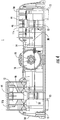
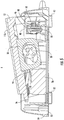
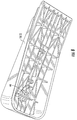
- FIGS. 2-8 and 11 show an exemplary embodiment of an apparatus in accordance with the present invention.
- the apparatus according the first embodiment includes a pair of foot pedals, each of which are driven to up and down, rocking movement about an axis transverse to the feet, preferably alternating, i.e., anti-phase, motion of the two foot pedals.
- each movement of the foot pedals can be associated with a percussive contact of a portion of the underside of the foot pedal, which percussive contact passes along to the user a pulsatile impact which, as is discussed above, increases shear stress to mechanically stimulate the endothelial cells to increase the activity of genes responsible for release of beneficial mediators.
- the tapping simulates the beneficial effects that occur, for example, while running, in which Pulsatile shear stress (PSS) is increased by addition of pulses generated by the tapping.
- PSS Pulsatile shear stress
- a pulse is added to the circulation that is superimposed upon the body's own pulses and is detected in the radial arterial pressure waveform.
- the feet will be placed on the pedals such that the toes will be raised (and then lowered) in relation to the heels by the rocking of the pedals, and the tapping applied to the toe portion of each foot.
- the apparatus is advantageously symmetrical in design so as to permit the heels, rather than the toes, to be raised and lowered, by the user turning the apparatus around 180° and placing his or her feet in the opposite direction. Such reversed usage of the apparatus results in the pulse being delivered to the heel of the user rather than to the toe.
- the apparatus in accordance with an embodiment of the present invention, includes a housing top 14, a housing bottom 15, and left and right foot pedals, 10 and 12, having surfaces 11a and 11b, respectively, for receiving the feet of a user.
- the bottom of the apparatus preferably includes bottom stabilizer posts 13, e.g., made of rubber, to contact the ground, provide a leveling function and prevent slippage of the apparatus during use.
- the exercise device 1 may include a speed adjustment control 16, which can vary the speed of the up and down motion of the pedal 10 and 12.
- the adjustment control can be in the form of a knob, switch, lever or other user-selectable device.
- the control 16 is depicted in the figures as a knob.
- the housing top 14 and housing bottom 15 are preferably coupled to one another using screws 17.
- a force adjustment control 18 is provided, a portion of which is accessible through an opening in the housing top 14 to allow adjustment of the intensity of tapping or striking force provided by the device 1.
- the ability to adjust the speed of the up and down motion of the pedals 10, 12 is optional and may be omitted.
- the apparatus does not include the adjustment control knob 16, but rather operates at a set speed approximating the average steps per minute during jogging of 140-150 steps per minute.
- the set speed is based upon the observation that steps per minute during jogging at 1.79 m/s (4 mph), or a 15 minute mile, or 1.92 m/s (4.3 mph), or a 14 minute mile, is 140 steps per minute or 150 steps per minute, respectively, see, for example, http://www.ontherunevents.com/ns0060.htm, and, in the case of adjustable speed configuration, may be set to approximately 60 to 180 steps per minute, and preferably, in a single speed configuration, set to approximately 140 or 150 steps per minute, a speed similar to typical jogging, as discussed above.
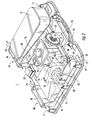
- FIG. 7 shows the interior without the housing top 14 and without right pedal 12.
- the interior of the device 1 includes mechanical and electrical elements that cooperate to cause the pedals to rockingly reciprocate, e.g., anti-phase to one another, between up and down positions, the pedals being rotatable, preferably at a rearward portion of each pedal, about a common axis.
- the rocking motion for the movement of the pedals is provided in the first embodiment by a driving mechanism that includes a motor 20, the drive shaft of which drives a motor pulley 22.
- a stop/start button 21 is preferably provided to start the operation of the motor.
- the motor 20 is preferably a motor of a well-known type, such as a DC brushless motor, of a power sufficient to drive pedals of the apparatus. Power to the motor 20 is supplied, e.g., using power connector 23, or by disposable or rechargeable batteries, not shown.
- the motor pulley 22 contacts a belt 24 which is also contacting a camshaft pulley 26.
- the belt transfers rotational motion of the motor pulley 22 to provide rotational motion to the camshaft pulley 26.
- This rotation in turn causes a camshaft 28, arranged along an axis perpendicular to the camshaft pulley 26 and transverse to the feet, to rotate.
- a cam 30 is eccentrically coupled to each end of the camshaft 28.
- the eccentricity is provided, in the present embodiment, by the camshaft 28 coupling with the cam 30 in an off-center manner, that is, coupling to the cam 30 at a point on the cam 30 axially offset from the center of the cam 30.
- the off-center coupling causes eccentric rotating motion of each cam 30. While the cam 30 and the camshaft 28 are shown in the first embodiment as being distinct elements, the cam 30 can also be an integrally formed portion of each end of the camshaft 28.
- each cam 30 is arranged in a channel 31 provided in a pedal coupling member 32.
- the channel 31 is configured such that the eccentric motion of the cam 30 causes the coupling member 32 to reciprocate, such that a front end of the coupling member 32 moves up and down to a greater extent than the rear end of the coupling member 32.
- each coupling member 32 is affixed, for example, by screws 34, to the underside of the respective foot pedals 10 and 12.
- the cams 30 are arranged in the channel 31 of the respective pedal coupling members 32 such that the motion provided to the two pedal coupling members 32 by virtue of the eccentricity of the cams 30 at each end of the camshaft 28, generates alternating, i.e., anti-phase, reciprocating up and down motion of the pedals 10 and 12, so that, preferably, when one pedal is moving up, the other is moving down.
- the cams can be configured to provide in-phase movement of the pedals.
- the motion of the camshaft 28, driven by the pulleys 22 and 26 and the motor 20, drives the pedals in an up and down motion about a common axis 34.
- the common axis 34 is preferably provided towards the rear of each pedal 10, 12 being rotatably mounted around a pedal axle 36, disposed along the common axis 34. While the disclosed embodiment shows the common axis disposed at an extreme end of each pedal, the invention is not limited to this configuration, and the device could be alternatively set up with the axis of rotation located away from an extreme end, while still providing the rocking motion.
- the motor 20 is mounted on a mounting plate 38, to which various elements of the driving mechanism described above are also coupled, either directly or indirectly.
- the mounting plate 38 is located between the housing top 14 and the housing bottom 15 and acts as a chassis for mounting internal components of the exercise device 1.
- the mounting plate 38 is preferably made of a lightweight metal, for example aluminum, steel, or the like. However any sufficiently strong and lightweight material can used, such as carbon reinforced plastic, or other similar material, that will result in a lightweight travel-friendly device.
- the mounting plate 38 includes two pedal mounting flanges 40 structured to secure each pedal axle 36 and the rear of each pedal 10, 12. Also coupled to the mounting plate 38 are bearing blocks 42, each of which receives and secures an end of the camshaft 28, or a tubular extension thereof, to allow rotation of the camshaft 28.
- the mechanism for converting the rotational motion of the reciprocating motion of the pedals is shown above using a pulley and belt system, as would be appreciated, the invention is not limited to this embodiment. Any manner of converting the rotational output of the motor to reciprocating motion of the pedals may be employed.
- the output shaft of the motor 20 can be arranged perpendicular to the camshaft, and a bevel gear configuration used to drive the camshaft.
- Another variation would use a motor having output shafts along the rotational axis of the camshaft so as to directly drive the camshaft.
- the motor 20 can be adjustable to increase or decrease the speed of the movement of the pedals.
- a motor controller 56 is provided, which controls the speed of the motor 20 in accordance with the position of the speed adjustment knob 16.
- Such adjustment is well-known in the art and can be done in any conventional manner, for example by use of a potentiometer controlled by the knob 16, in which the motor speed is varied proportionally to a position of the knob 16, or electrical or digital equivalents thereof.
- the controller 56 is digitally or otherwise configured to receive information from the knob 16 and, based on this information, control the speed of the motor 20.
- each pedal 10, 12 is configured to contact a top portion of a bumper 46, at an inside contact surface 44 of each pedal, at the bottom of the downward toe stroke of each pedal provided by the reciprocating motion of the coupling members 32.
- Each bumper 46 one arranged under each pedal respectively, includes a bumper cover 48, for example made of rubber, and a bumper body 50, the lower part of which is a threaded cylindrical portion having threads 51.
- the bumper body 50 is threadingly coupled to the mounting plate 38 such that rotation of the bumper body 50 effects an adjustment of its height with respect to the bumper body 50, as well as its proximity with respect to the contact surface 44 of the pedal 10, 12.
- an annular screw jack 52 is configured such that inner threads 53 of each annular screw jack 52 mate with corresponding threads 51 of the cylindrical portion oft he bumper body 50, so as to cause, upon a rotation oft he annular screw jacks 52, a corresponding rotation of the bumper body 50, causing a change in the height of the bumper body relative to the mounting plate 38.
- Each screw jack 52 having threads 53 is coupled to a tension cable 54 that wraps around the screw jack 52.
- the tension cable 54 is adjusted by the force adjustment control 18.
- the force adjustment control can be in the form of a knob, switch, lever or other user-selectable device.
- the control 18 is depicted in the figures as a knob.
- the force adjustment control knob 18 is coupled to the tension cable 54 so that adjustment of the knob18 in a first direction bumpers 46, by twisting the screw jack 52 in one direction, e.g., clockwise, and adjustment of the control knob 18 in a second direction lowers bumpers 46, by twisting the screw jack 52 in an opposite direction, e.g., counter-clockwise.
- the knob 18 is preferably coupled to the mounting plate 38 at a dedicated rectangular portion 58 of the mounting plate 38, as can be seen in the figures.
- the configuration of the bumper 46 and the control knob 18 allows for adjustment of the intensity of striking of the pedal 10, 12, in particular the contact surface 44, with the top of the bumper 46 by the turning of the control knob 18. The higher the position of the top of the bumpers 46, results in an increase of the pulsatile force applied to the bumpers 46.
- the height of the bumper 46 is adjusted to allow for tapping that provides a range of pulsatile acceleration having a force sufficient to increase pulsatile shear stress to the endothelium, of sufficient magnitude to cause the release of beneficial mediators, such as nitric oxide, prostacyclin, tissue plasminogen activator, adrenomedullin, SIRT1, Brain and Glial Derived Neurotrophic Factors (BDNF & GDNF), Kruppel Like Factor 2, Superoxide Dismutase, Glutathione Peroxidase 1, Catalase, Total Antioxidant Capacity, Anti Apoptotic Proteins: p-Akt, Bcl2, and Bcl2/Bax, HSP27.
- beneficial mediators such as nitric oxide, prostacyclin, tissue plasminogen activator, adrenomedullin, SIRT1, Brain and Glial Derived Neurotrophic Factors (BDNF & GDNF), Kruppel Like Factor 2, Superoxide Dis
- Such tapping to the feet provided by the apparatus can increase pulsatile shear stress as related to the addition of pulses into the vascular circulation, heart lymphatic channels, interstitial spaces, skeletal muscle and bone interstices, as well as slight increases of cyclic strain to the blood vessels and lymphatic channels.
- the tapping is also settable so as to increase the activity and content of endothelial nitric oxide synthase (eNOS) in blood vessels, heart and skeletal muscle, as well as to increase the activity of neuronal nitric oxide synthase (nNOS) in the heart and skeletal muscle.
- eNOS endothelial nitric oxide synthase
- nNOS neuronal nitric oxide synthase
- adding the pulses, using the striking of the bumper with the foot pedals, to the body's fluid filled channels over the body's own pulse stimulates endothelial release of at least one of nitric oxide, prostacyclin, tissue plasminogen activator (t-PA), adrenomedullin, endothelial dependent hyperpolarizing factor (EDHF), endothelial dependent relaxing factor, endothelial growth factors, and transcription factors, etc.
- t-PA tissue plasminogen activator
- EDHF endothelial dependent hyperpolarizing factor
- endothelial dependent relaxing factor endothelial growth factors, and transcription factors, etc.
- the efficacy of treatment after a single or multiple sessions over a single duration of from about 10 to 30 minutes or more can be ascertained by sensing release of nitric oxide into the circulation by one or more of the following,
- the use of the apparatus also results in the suppression of inflammatory and pro-cancergenic factors such as nuclear factor kappa beta, endothelin-1, STAT3, and Pro-Apoptotic Proteins: Fas, TRAILR2, Bad, Caspase 3,8.
- inflammatory and pro-cancergenic factors such as nuclear factor kappa beta, endothelin-1, STAT3, and Pro-Apoptotic Proteins: Fas, TRAILR2, Bad, Caspase 3,8.
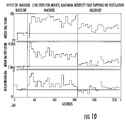
- FIG. 9 shows the descent of dicrotic notch as a reflection of Nitric Oxice released into circulation using the apparatus in accordance with the present invention.
- the uppermost graph in the figure depicts the dicrotic notch from the raw photoplethsmographic sensor signal placed over the distal joint of the index finger.
- the dicrotic notch is high on the diastolic limb of the pulse wave in a normal position with almost no positional variability from beat to beat.
- the middle graph in the figure depicts the finger pulse during operation of the apparatus according to the present invention without foot tapping at 180 steps per minute.
- the dicrotic notch shows variability from beat to beat as it descends down the diastolic limb of the pulse wave (force is ⁇ 0.2 g).
- some pulses are in a similar position as the baseline pulse.
- the lowermost graph in the figure depicts the finger pulse during operation of the apparatus according to the present invention with foot tapping at 180 steps per minute.
- the dicrotic notch shows variability from beat to beat as it descends down the diastolic limb of the pulse wave (force ranges from 0.2 to 0.7 g and varies according to subject's weight and involuntary force applied by the subject).
- the dicrotic notch of all pulses have a lower position on the diastolic limb of the pulse wave than baseline and the recordings made with no tapping. The lower the position of the dicrotic notch, the greater the nitric oxide release into the circulation thereby producing the greater effectiveness of the actions of this molecule in the body.
- minute ventilation was measured in three seated, normal subjects during application of pulses in accordance with the apparatus of the present invention at 140 steps per minute with maximum foot tapping during a 25 minute period.
- Non-invasive respiratory inductive plethysmography was utilized for the measurements. Minute ventilation increased approximately 3 liters over baseline as a result of increases in both tidal volume and respiratory rate. This increase was similar to that found in three supine, normal subjects during 20 minutes of WBPA applied in the supine posture.
- measurements were made with a pneumotachograph and mouthpiece assembly. The Force ranged from 0.2 to 0.7 g.
- a pleasant tingling sensation of the skin over the lower extremities extending up the trunk occurs that lasts seconds to minutes. This is often accompanied by a fall in mean blood pressure of 5 to 10 mm Hg. It may be analogous to post-exercise hypotension after exercise that is thought to be related to an increase of nitric oxide release.
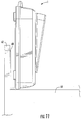
- FIG. 11 shows application of the apparatus 1 in a vertical orientation, so that a user can use it while lying on a bed.
- the apparatus can be fitted with, or have, a bracket 60 extending from the bottom thereof, in this case extending leftward in the figure with respect to the apparatus 1.
- the bracket 60 is configured to securely and adjustably mount to a vertically oriented support member 62, for example a headboard portion of a bed 64.
- a vertically oriented support member 62 for example a headboard portion of a bed 64.
Landscapes
- Health & Medical Sciences (AREA)
- Physical Education & Sports Medicine (AREA)
- General Health & Medical Sciences (AREA)
- Public Health (AREA)
- Rehabilitation Therapy (AREA)
- Life Sciences & Earth Sciences (AREA)
- Animal Behavior & Ethology (AREA)
- Pain & Pain Management (AREA)
- Epidemiology (AREA)
- Veterinary Medicine (AREA)
- Orthopedic Medicine & Surgery (AREA)
- Pharmaceuticals Containing Other Organic And Inorganic Compounds (AREA)
- Percussion Or Vibration Massage (AREA)
- Rehabilitation Tools (AREA)
- Acyclic And Carbocyclic Compounds In Medicinal Compositions (AREA)
- Medicines That Contain Protein Lipid Enzymes And Other Medicines (AREA)
- Mechanical Control Devices (AREA)
- Instructional Devices (AREA)
- Medicines Containing Plant Substances (AREA)
Claims (8)
- Machine motorisée (1) pour appliquer passivement une force de claquement aux parties inférieures des pieds d'un utilisateur, la machine comprenant :un boîtier ;un mécanisme de définition d'axe couplé au boîtier, le mécanisme de définition d'axe étant configuré pour définir un axe de balancement ;au moins une pédale (10, 12) positionnée pour recevoir un pied de l'utilisateur et montée sur l'axe de balancement pour un mouvement de balancement de ladite au moins une pédale ;un moteur (20) disposé à l'intérieur du boîtier, le moteur étant configuré pour générer un mouvement de rotation à un arbre de sortie du moteur ;un mécanisme de balancement de pédale couplé à l'arbre de sortie et entraîné par le moteur (20), le mécanisme de balancement de pédale étant configuré pour traduire le mouvement de rotation généré par le moteur en mouvement alternatif de balancement vers le haut et vers le bas de ladite au moins une pédale autour de l'axe de balancement ; etau moins un amortisseur (46), couplé de manière réglable en hauteur au boîtier, situé sous et à l'écart d'une partie inférieure de ladite au moins une pédale, le mécanisme de balancement de pédale comprenant un arbre à cames couplé à l'arbre de sortie du moteur, une came couplée excentriquement à une extrémité de l'arbre à cames, et un élément de couplage de pédale couplé à une face inférieure de la pédale, l'élément de couplage de pédale comprenant un canal, la came étant disposée dans le canal pour convertir le mouvement rotatif de la came en mouvement alternatif de l'élément de couplage de pédale afin de fournir une application positive de force pour entraîner la partie inférieure de la pédale vers le haut et vers le bas en direction et en s'éloignant dudit au moins un amortisseur (46),dans laquelle le moteur (20), le mécanisme de balancement de pédale, ladite au moins une pédale (10, 12) et ledit au moins un amortisseur (46) sont configurés de manière à coopérer pour entraîner, pendant le fonctionnement du moteur, la partie inférieure de ladite au moins une pédale à claquer contre ledit au moins un amortisseur (46) à une partie inférieure d'une course descendante de la pédale afin de permettre une accélération pulsatile à la partie inférieur du pied de l'utilisateur, où la hauteur de l'amortisseur (46) est réglable pour permettre de claquement fournissant une accélération pulsatile d'environ 0,1 g à 0,5 g, ce qui est suffisant pour augmenter la contrainte de cisaillement pulsatile à l'endothélium, d'une amplitude suffisante pour provoquer la libération des médiateurs bénéfiques.
- Machine motorisée (1) selon la revendication 1, dans laquelle ladite au moins une pédale (10, 12) comprend deux pédales (10, 12), une pour chaque pied de l'utilisateur et ledit au moins un amortisseur (46) comprend deux amortisseurs, un pour chacune des deux pédales.
- Machine motorisée (1) selon la revendication 2, dans laquelle le balancement d'une pédale parmi les deux pédales (10, 12) est en antiphase avec le balancement de l'autre pédale parmi les deux pédales.
- Machine motorisée (1) selon la revendication 2, dans laquelle le balancement d'une pédale parmi les deux pédales (10, 12) est en phase avec le balancement de l'autre pédale parmi les deux pédales.
- Machine motorisée (1) selon la revendication 4, dans laquelle l'arbre à cames (28) est couplé à l'arbre de sortie du moteur par une poulie (22) et un mécanisme de courroie (24).
- Machine motorisée (1) selon la revendication 4, dans laquelle l'arbre à cames (28) est couplé à l'arbre de sortie du moteur par un mécanisme de transmission.
- Machine motorisée (1) selon l'une quelconque des revendications 1 à 6, dans laquelle le moteur est un moteur à courant continu sans balai.
- Machine motorisée (1) selon l'une quelconque des revendications 1 à 6, dans laquelle la machine comprend en outre une entrée pour alimenter le moteur en énergie.
Applications Claiming Priority (2)
| Application Number | Priority Date | Filing Date | Title |
|---|---|---|---|
| US201361830448P | 2013-06-03 | 2013-06-03 | |
| PCT/US2014/040534 WO2014197385A1 (fr) | 2013-06-03 | 2014-06-02 | Dispositif de jogging simulé passif |
Publications (3)
| Publication Number | Publication Date |
|---|---|
| EP2986265A1 EP2986265A1 (fr) | 2016-02-24 |
| EP2986265A4 EP2986265A4 (fr) | 2016-09-21 |
| EP2986265B1 true EP2986265B1 (fr) | 2020-03-11 |
Family
ID=52008515
Family Applications (1)
| Application Number | Title | Priority Date | Filing Date |
|---|---|---|---|
| EP14808000.5A Active EP2986265B1 (fr) | 2013-06-03 | 2014-06-02 | Dispositif de jogging simulé passif |
Country Status (13)
| Country | Link |
|---|---|
| US (1) | US9622933B2 (fr) |
| EP (1) | EP2986265B1 (fr) |
| JP (1) | JP6814630B2 (fr) |
| KR (1) | KR101938451B1 (fr) |
| CN (1) | CN105431124B (fr) |
| AU (1) | AU2014275182B2 (fr) |
| BR (1) | BR112015029909B1 (fr) |
| CA (1) | CA2914868C (fr) |
| IL (1) | IL242891B (fr) |
| MX (1) | MX368585B (fr) |
| NZ (1) | NZ714225A (fr) |
| RU (1) | RU2688794C2 (fr) |
| WO (1) | WO2014197385A1 (fr) |
Families Citing this family (13)
| Publication number | Priority date | Publication date | Assignee | Title |
|---|---|---|---|---|
| US10070796B2 (en) * | 2015-02-04 | 2018-09-11 | General Electric Company | Systems and methods for quantitative microcirculation state monitoring |
| KR101828307B1 (ko) * | 2016-04-14 | 2018-02-13 | 주식회사 이랜시스 | 발끝치기 운동기구 |
| US10625112B2 (en) * | 2016-05-16 | 2020-04-21 | Matthew Boyd Burkhardt | Flexor and extensor exercise device |
| JP6080332B1 (ja) * | 2016-10-26 | 2017-02-15 | 株式会社ツインズ | 運動器具 |
| ES2684542B2 (es) * | 2017-03-29 | 2019-03-07 | Campos Jose Luis Galvez | Aparato ejercitador de las extremidades inferiores del cuerpo humano |
| CN110650717B (zh) | 2017-05-26 | 2021-04-30 | 株式会社苏蓑家 | 健康促进装置 |
| US20190183406A1 (en) * | 2017-12-20 | 2019-06-20 | Jose Antonio ADAMS | Prevention and Treatment of Sepsis Using a Simulated Exercise Device |
| WO2019125447A1 (fr) * | 2017-12-20 | 2019-06-27 | Adams Jose Antonio | Prévention et traitement de la septicémie à l'aide d'un dispositif d'exercice simulé |
| CN109589484A (zh) * | 2018-11-29 | 2019-04-09 | 中国地质大学(武汉) | 一种梦境影响的宠物智能交互装置及方法 |
| WO2021023676A1 (fr) * | 2019-08-06 | 2021-02-11 | U-Sana Medical Ag | Dispositif thérapeutique |
| US11267093B2 (en) * | 2020-02-10 | 2022-03-08 | Pratt & Whitney Canada Corp. | System and method for managing machine tool maintenance |
| CN114931725A (zh) * | 2021-01-15 | 2022-08-23 | 王纯 | 一种神经康复用装置 |
| US20240157193A1 (en) * | 2022-11-15 | 2024-05-16 | Kenneth W Stearns | Stepper exercise apparatus |
Citations (2)
| Publication number | Priority date | Publication date | Assignee | Title |
|---|---|---|---|---|
| JP2003339800A (ja) * | 2002-05-28 | 2003-12-02 | Zero:Kk | 歩行模擬刺激型健康増進機 |
| JP2012011064A (ja) * | 2010-07-02 | 2012-01-19 | Tosaku Kojima | 静脈還流促進装置 |
Family Cites Families (22)
| Publication number | Priority date | Publication date | Assignee | Title |
|---|---|---|---|---|
| FR1073904A (fr) * | 1952-02-26 | 1954-09-30 | Table basculante universelle de mécanothérapie | |
| FR1F (fr) * | 1960-02-17 | 1961-03-03 | Georges Tixier | Nouveau médicament, plus spécialement utilisé en gériatrie, dans les états asthéniques sous toutes leurs formes, dans certaines affections respiratoires et nerveuses et en rhumatologie. |
| US3318304A (en) | 1963-09-18 | 1967-05-09 | Gurewich Vladimir | Mechanical device for reducing blood clotting in legs |
| SU1335309A1 (ru) * | 1985-09-18 | 1987-09-07 | Гомельское Специальное Конструкторско-Технологическое Бюро Сейсмической Техники С Опытным Производством | Устройство дл тренировки |
| GB8707591D0 (en) * | 1987-03-31 | 1987-05-07 | Heaton S | Leg exerciser |
| US4842265A (en) * | 1987-12-10 | 1989-06-27 | Kirk Chester E | Multi-mode CPM physiotherapy foot manipulating device |
| US4967737A (en) * | 1988-08-03 | 1990-11-06 | Osteg Dyne Inc. | Method and device for treating bone disorders characterized by low bone mass |
| US5046484A (en) * | 1988-08-03 | 1991-09-10 | Osteo-Dyne, Inc. | Method and device for treating bone disorders characterized by low bone mass |
| US6155976A (en) * | 1997-03-14 | 2000-12-05 | Nims, Inc. | Reciprocating movement platform for shifting subject to and fro in headwards-footwards direction |
| US7211054B1 (en) * | 1998-11-06 | 2007-05-01 | University Of Rochester | Method of treating a patient with a neurodegenerative disease using ultrasound |
| US6572514B1 (en) * | 1998-12-09 | 2003-06-03 | Kathleen E. Calafato | Exerciser with counter-reciprocating pedals |
| WO2002026194A2 (fr) * | 2000-09-28 | 2002-04-04 | Non-Invasive Monitoring Systems, Inc. | Addition extérieure d'impulsions à des canaux anatomiques de fluide pour libérer ou supprimer des médiateurs endothéliaux et pour déterminer l'effectivité d'une telle intervention |
| US7179236B2 (en) * | 2000-12-07 | 2007-02-20 | Galvez Campos Jose Luis | System for exercising the lower extremities in seated persons |
| MY136316A (en) * | 2001-02-13 | 2008-09-30 | Sanofi Aventis Deutschland | Acylated 6,7,8,9-tetrahydro-5h-benzocycloheptenyl amines and their use as pharmaceutical. |
| US20020183663A1 (en) * | 2001-06-04 | 2002-12-05 | Shun-Tsung Lu | Obliquely erected muscle exercise walker |
| AU2003237888A1 (en) | 2002-05-15 | 2003-12-02 | Non-Invasive Monitoring Systems, Inc. | Reciprocating movement platform for the external addition of pulses to the fluid channels of a subject |
| DE102005014204A1 (de) * | 2005-03-29 | 2006-10-05 | Steinert, Christoph, Dipl.-Phys. Dr.rer.nat. | Bewegungssimulator zur Simulation der natürlichen Gehbewegung am sitzenden Menschen |
| EP1909731A1 (fr) * | 2005-07-18 | 2008-04-16 | Juvent, Inc. | Ensemble therapeutique vibrant utile pour traiter et prevenir l'apparition de la thrombose veineuse profonde |
| US20080139979A1 (en) * | 2005-07-18 | 2008-06-12 | Juvent, Inc. | Vibrational therapy assembly adapted for removably mounting to a bed |
| WO2008015299A1 (fr) * | 2006-08-04 | 2008-02-07 | Osetech, S.L. | Appareil et procédé de stimulation biomécanique pour régénération osseuse |
| JP4680303B2 (ja) * | 2008-10-06 | 2011-05-11 | 幹夫 福永 | 脊椎矯正装置 |
| US8206267B2 (en) * | 2009-12-04 | 2012-06-26 | Northeastern University | Virtual ankle and balance trainer system |
-
2014
- 2014-06-02 NZ NZ714225A patent/NZ714225A/en unknown
- 2014-06-02 CN CN201480032561.8A patent/CN105431124B/zh active Active
- 2014-06-02 AU AU2014275182A patent/AU2014275182B2/en active Active
- 2014-06-02 US US14/895,417 patent/US9622933B2/en active Active
- 2014-06-02 CA CA2914868A patent/CA2914868C/fr active Active
- 2014-06-02 JP JP2016518380A patent/JP6814630B2/ja active Active
- 2014-06-02 MX MX2015016597A patent/MX368585B/es active IP Right Grant
- 2014-06-02 EP EP14808000.5A patent/EP2986265B1/fr active Active
- 2014-06-02 RU RU2015150257A patent/RU2688794C2/ru active
- 2014-06-02 KR KR1020157035075A patent/KR101938451B1/ko active Active
- 2014-06-02 WO PCT/US2014/040534 patent/WO2014197385A1/fr not_active Ceased
- 2014-06-02 BR BR112015029909-1A patent/BR112015029909B1/pt active IP Right Grant
-
2015
- 2015-12-02 IL IL242891A patent/IL242891B/en active IP Right Grant
Patent Citations (2)
| Publication number | Priority date | Publication date | Assignee | Title |
|---|---|---|---|---|
| JP2003339800A (ja) * | 2002-05-28 | 2003-12-02 | Zero:Kk | 歩行模擬刺激型健康増進機 |
| JP2012011064A (ja) * | 2010-07-02 | 2012-01-19 | Tosaku Kojima | 静脈還流促進装置 |
Also Published As
| Publication number | Publication date |
|---|---|
| HK1217425A1 (zh) | 2017-01-13 |
| US20160128889A1 (en) | 2016-05-12 |
| RU2688794C2 (ru) | 2019-05-22 |
| EP2986265A1 (fr) | 2016-02-24 |
| AU2014275182B2 (en) | 2017-12-21 |
| BR112015029909A2 (pt) | 2017-07-25 |
| IL242891B (en) | 2018-10-31 |
| MX368585B (es) | 2019-10-08 |
| JP6814630B2 (ja) | 2021-01-20 |
| CA2914868A1 (fr) | 2014-12-11 |
| KR101938451B1 (ko) | 2019-01-14 |
| BR112015029909A8 (pt) | 2019-12-17 |
| NZ714225A (en) | 2018-05-25 |
| JP2016523611A (ja) | 2016-08-12 |
| MX2015016597A (es) | 2016-07-22 |
| CN105431124B (zh) | 2018-04-20 |
| BR112015029909B1 (pt) | 2022-05-10 |
| CN105431124A (zh) | 2016-03-23 |
| EP2986265A4 (fr) | 2016-09-21 |
| KR20160016849A (ko) | 2016-02-15 |
| WO2014197385A1 (fr) | 2014-12-11 |
| AU2014275182A1 (en) | 2015-12-03 |
| CA2914868C (fr) | 2018-04-17 |
| RU2015150257A3 (fr) | 2018-03-28 |
| US9622933B2 (en) | 2017-04-18 |
| RU2015150257A (ru) | 2017-07-14 |
Similar Documents
| Publication | Publication Date | Title |
|---|---|---|
| EP2986265B1 (fr) | Dispositif de jogging simulé passif | |
| DK2387438T3 (en) | Treatment | |
| Wang et al. | Tai Chi Chuan training is associated with enhanced endothelium‐dependent dilation in skin vasculature of healthy older men | |
| Kilgas et al. | Physiological responses to acute cycling with blood flow restriction | |
| Ballaz et al. | Acute peripheral blood flow response induced by passive leg cycle exercise in people with spinal cord injury | |
| Lu et al. | Comparison of the effects of Tai Chi Chuan and Wai Tan Kung exercises on autonomic nervous system modulation and on hemodynamics in elder adults | |
| Sakata et al. | Positive effects of a qigong and aerobic exercise program on physical health in elderly Japanese women: an exploratory study | |
| Beltrami et al. | No evidence that hyperpnea-based respiratory muscle training affects indexes of cardiovascular health in young healthy adults | |
| Jacobs et al. | Appraisal of physiological fitness in persons with spinal cord injury | |
| HK1217425B (zh) | 被動式模擬慢跑裝置 | |
| Shanb et al. | Comparison the acute effect of moderate-intensity treadmill exercise and arm crank exercise on autonomic cardiac functions in adult male | |
| Hishikawa et al. | Kinesiophysiological analysis associated with changes in subjective intensities in belt electrode-skeletal muscle electrical stimulation: A prospective exploratory study | |
| Noikhammueang et al. | High-intensity interval exercise with blood flow restriction improves vascular function in obese male adolescents | |
| RU2393836C1 (ru) | Способ оптимизации функциональной реактивности сердечно-сосудистой системы при артериальной гипертонии, дислипидемии и абдоминальном ожирении в пожилом и старческом возрасте | |
| RU2388471C1 (ru) | Способ нормализации функциональной реактивности сердечно-сосудистой системы при артериальной гипертонии, дислипидемии и абдоминальном ожирении | |
| Zago et al. | Whole-body vibration | |
| Tarabini et al. | Whole-Body Vibration | |
| Jayesh et al. | Role of exercises in restoring and in maintenance of cardiac health | |
| Limphatcharaporn et al. | Immediate Effects of Specific Warm-Up and Static Stretching on Cardiovascular and Oxygen Consumption Parameters during 5 Km Treadmill Running | |
| Shatalova | Role of cardiorespiratory fitness in the relation between physical activity and arterial stiffness and hippocampal volume in inactive older adults | |
| Kim et al. | Cardiopulmonary Response to Robot-Assisted Tilt Table With Regard to Its Components | |
| Clausen | Differences in excess post-exercise oxygen consumption (EPOC) after reduced exertion high-intensity interval | |
| RU2390337C1 (ru) | Способ нормализации функциональной реактивности сердечно-сосудистой системы при артериальной гипертонии, дислипидемии, нарушении толерантности к глюкозе и абдоминальном ожирении | |
| RU2392936C1 (ru) | Способ оптимизации функциональной реактивности сердечно-сосудистой системы у больных с артериальной гипертонией и метаболическим синдромом пожилого и старческого возраста | |
| Bane | Effects of Blood Flow Restriction Resistance Training on Strength, Vascular and Motor Function in Persons with Parkinson's Disease |
Legal Events
| Date | Code | Title | Description |
|---|---|---|---|
| PUAI | Public reference made under article 153(3) epc to a published international application that has entered the european phase |
Free format text: ORIGINAL CODE: 0009012 |
|
| 17P | Request for examination filed |
Effective date: 20151120 |
|
| AK | Designated contracting states |
Kind code of ref document: A1 Designated state(s): AL AT BE BG CH CY CZ DE DK EE ES FI FR GB GR HR HU IE IS IT LI LT LU LV MC MK MT NL NO PL PT RO RS SE SI SK SM TR |
|
| AX | Request for extension of the european patent |
Extension state: BA ME |
|
| DAX | Request for extension of the european patent (deleted) | ||
| A4 | Supplementary search report drawn up and despatched |
Effective date: 20160823 |
|
| RIC1 | Information provided on ipc code assigned before grant |
Ipc: A61H 1/02 20060101ALI20160817BHEP Ipc: A61H 1/00 20060101AFI20160817BHEP Ipc: A61H 23/02 20060101ALI20160817BHEP Ipc: A61H 23/00 20060101ALI20160817BHEP |
|
| STAA | Information on the status of an ep patent application or granted ep patent |
Free format text: STATUS: EXAMINATION IS IN PROGRESS |
|
| 17Q | First examination report despatched |
Effective date: 20190416 |
|
| GRAP | Despatch of communication of intention to grant a patent |
Free format text: ORIGINAL CODE: EPIDOSNIGR1 |
|
| STAA | Information on the status of an ep patent application or granted ep patent |
Free format text: STATUS: GRANT OF PATENT IS INTENDED |
|
| INTG | Intention to grant announced |
Effective date: 20191004 |
|
| GRAS | Grant fee paid |
Free format text: ORIGINAL CODE: EPIDOSNIGR3 |
|
| GRAA | (expected) grant |
Free format text: ORIGINAL CODE: 0009210 |
|
| STAA | Information on the status of an ep patent application or granted ep patent |
Free format text: STATUS: THE PATENT HAS BEEN GRANTED |
|
| AK | Designated contracting states |
Kind code of ref document: B1 Designated state(s): AL AT BE BG CH CY CZ DE DK EE ES FI FR GB GR HR HU IE IS IT LI LT LU LV MC MK MT NL NO PL PT RO RS SE SI SK SM TR |
|
| REG | Reference to a national code |
Ref country code: GB Ref legal event code: FG4D |
|
| REG | Reference to a national code |
Ref country code: CH Ref legal event code: EP |
|
| REG | Reference to a national code |
Ref country code: AT Ref legal event code: REF Ref document number: 1242243 Country of ref document: AT Kind code of ref document: T Effective date: 20200315 |
|
| REG | Reference to a national code |
Ref country code: DE Ref legal event code: R096 Ref document number: 602014062249 Country of ref document: DE |
|
| REG | Reference to a national code |
Ref country code: IE Ref legal event code: FG4D |
|
| REG | Reference to a national code |
Ref country code: CH Ref legal event code: NV Representative=s name: SCHMAUDER AND PARTNER AG PATENT- UND MARKENANW, CH Ref country code: CH Ref legal event code: PCOW Free format text: NEW ADDRESS: 780 LAKE ROAD, MIAMI, FL 33137 (US) $ SACKNER, MARVIN, THE GRAND 1717 NORTH BAY SHORE DR, MIAMI, FL 33132 (US) |
|
| REG | Reference to a national code |
Ref country code: NO Ref legal event code: T2 Effective date: 20200311 |
|
| REG | Reference to a national code |
Ref country code: SE Ref legal event code: TRGR |
|
| REG | Reference to a national code |
Ref country code: NL Ref legal event code: FP |
|
| PG25 | Lapsed in a contracting state [announced via postgrant information from national office to epo] |
Ref country code: RS Free format text: LAPSE BECAUSE OF FAILURE TO SUBMIT A TRANSLATION OF THE DESCRIPTION OR TO PAY THE FEE WITHIN THE PRESCRIBED TIME-LIMIT Effective date: 20200311 Ref country code: FI Free format text: LAPSE BECAUSE OF FAILURE TO SUBMIT A TRANSLATION OF THE DESCRIPTION OR TO PAY THE FEE WITHIN THE PRESCRIBED TIME-LIMIT Effective date: 20200311 |
|
| PG25 | Lapsed in a contracting state [announced via postgrant information from national office to epo] |
Ref country code: BG Free format text: LAPSE BECAUSE OF FAILURE TO SUBMIT A TRANSLATION OF THE DESCRIPTION OR TO PAY THE FEE WITHIN THE PRESCRIBED TIME-LIMIT Effective date: 20200611 Ref country code: GR Free format text: LAPSE BECAUSE OF FAILURE TO SUBMIT A TRANSLATION OF THE DESCRIPTION OR TO PAY THE FEE WITHIN THE PRESCRIBED TIME-LIMIT Effective date: 20200612 Ref country code: LV Free format text: LAPSE BECAUSE OF FAILURE TO SUBMIT A TRANSLATION OF THE DESCRIPTION OR TO PAY THE FEE WITHIN THE PRESCRIBED TIME-LIMIT Effective date: 20200311 Ref country code: HR Free format text: LAPSE BECAUSE OF FAILURE TO SUBMIT A TRANSLATION OF THE DESCRIPTION OR TO PAY THE FEE WITHIN THE PRESCRIBED TIME-LIMIT Effective date: 20200311 |
|
| REG | Reference to a national code |
Ref country code: LT Ref legal event code: MG4D |
|
| PG25 | Lapsed in a contracting state [announced via postgrant information from national office to epo] |
Ref country code: CZ Free format text: LAPSE BECAUSE OF FAILURE TO SUBMIT A TRANSLATION OF THE DESCRIPTION OR TO PAY THE FEE WITHIN THE PRESCRIBED TIME-LIMIT Effective date: 20200311 Ref country code: SM Free format text: LAPSE BECAUSE OF FAILURE TO SUBMIT A TRANSLATION OF THE DESCRIPTION OR TO PAY THE FEE WITHIN THE PRESCRIBED TIME-LIMIT Effective date: 20200311 Ref country code: EE Free format text: LAPSE BECAUSE OF FAILURE TO SUBMIT A TRANSLATION OF THE DESCRIPTION OR TO PAY THE FEE WITHIN THE PRESCRIBED TIME-LIMIT Effective date: 20200311 Ref country code: SK Free format text: LAPSE BECAUSE OF FAILURE TO SUBMIT A TRANSLATION OF THE DESCRIPTION OR TO PAY THE FEE WITHIN THE PRESCRIBED TIME-LIMIT Effective date: 20200311 Ref country code: RO Free format text: LAPSE BECAUSE OF FAILURE TO SUBMIT A TRANSLATION OF THE DESCRIPTION OR TO PAY THE FEE WITHIN THE PRESCRIBED TIME-LIMIT Effective date: 20200311 Ref country code: LT Free format text: LAPSE BECAUSE OF FAILURE TO SUBMIT A TRANSLATION OF THE DESCRIPTION OR TO PAY THE FEE WITHIN THE PRESCRIBED TIME-LIMIT Effective date: 20200311 Ref country code: PT Free format text: LAPSE BECAUSE OF FAILURE TO SUBMIT A TRANSLATION OF THE DESCRIPTION OR TO PAY THE FEE WITHIN THE PRESCRIBED TIME-LIMIT Effective date: 20200805 Ref country code: IS Free format text: LAPSE BECAUSE OF FAILURE TO SUBMIT A TRANSLATION OF THE DESCRIPTION OR TO PAY THE FEE WITHIN THE PRESCRIBED TIME-LIMIT Effective date: 20200711 |
|
| REG | Reference to a national code |
Ref country code: AT Ref legal event code: MK05 Ref document number: 1242243 Country of ref document: AT Kind code of ref document: T Effective date: 20200311 |
|
| REG | Reference to a national code |
Ref country code: DE Ref legal event code: R097 Ref document number: 602014062249 Country of ref document: DE |
|
| PLBE | No opposition filed within time limit |
Free format text: ORIGINAL CODE: 0009261 |
|
| STAA | Information on the status of an ep patent application or granted ep patent |
Free format text: STATUS: NO OPPOSITION FILED WITHIN TIME LIMIT |
|
| PG25 | Lapsed in a contracting state [announced via postgrant information from national office to epo] |
Ref country code: AT Free format text: LAPSE BECAUSE OF FAILURE TO SUBMIT A TRANSLATION OF THE DESCRIPTION OR TO PAY THE FEE WITHIN THE PRESCRIBED TIME-LIMIT Effective date: 20200311 Ref country code: ES Free format text: LAPSE BECAUSE OF FAILURE TO SUBMIT A TRANSLATION OF THE DESCRIPTION OR TO PAY THE FEE WITHIN THE PRESCRIBED TIME-LIMIT Effective date: 20200311 Ref country code: DK Free format text: LAPSE BECAUSE OF FAILURE TO SUBMIT A TRANSLATION OF THE DESCRIPTION OR TO PAY THE FEE WITHIN THE PRESCRIBED TIME-LIMIT Effective date: 20200311 Ref country code: MC Free format text: LAPSE BECAUSE OF FAILURE TO SUBMIT A TRANSLATION OF THE DESCRIPTION OR TO PAY THE FEE WITHIN THE PRESCRIBED TIME-LIMIT Effective date: 20200311 |
|
| 26N | No opposition filed |
Effective date: 20201214 |
|
| PG25 | Lapsed in a contracting state [announced via postgrant information from national office to epo] |
Ref country code: PL Free format text: LAPSE BECAUSE OF FAILURE TO SUBMIT A TRANSLATION OF THE DESCRIPTION OR TO PAY THE FEE WITHIN THE PRESCRIBED TIME-LIMIT Effective date: 20200311 Ref country code: SI Free format text: LAPSE BECAUSE OF FAILURE TO SUBMIT A TRANSLATION OF THE DESCRIPTION OR TO PAY THE FEE WITHIN THE PRESCRIBED TIME-LIMIT Effective date: 20200311 |
|
| PG25 | Lapsed in a contracting state [announced via postgrant information from national office to epo] |
Ref country code: LU Free format text: LAPSE BECAUSE OF NON-PAYMENT OF DUE FEES Effective date: 20200602 |
|
| REG | Reference to a national code |
Ref country code: BE Ref legal event code: MM Effective date: 20200630 |
|
| PG25 | Lapsed in a contracting state [announced via postgrant information from national office to epo] |
Ref country code: BE Free format text: LAPSE BECAUSE OF NON-PAYMENT OF DUE FEES Effective date: 20200630 |
|
| PG25 | Lapsed in a contracting state [announced via postgrant information from national office to epo] |
Ref country code: TR Free format text: LAPSE BECAUSE OF FAILURE TO SUBMIT A TRANSLATION OF THE DESCRIPTION OR TO PAY THE FEE WITHIN THE PRESCRIBED TIME-LIMIT Effective date: 20200311 Ref country code: MT Free format text: LAPSE BECAUSE OF FAILURE TO SUBMIT A TRANSLATION OF THE DESCRIPTION OR TO PAY THE FEE WITHIN THE PRESCRIBED TIME-LIMIT Effective date: 20200311 Ref country code: CY Free format text: LAPSE BECAUSE OF FAILURE TO SUBMIT A TRANSLATION OF THE DESCRIPTION OR TO PAY THE FEE WITHIN THE PRESCRIBED TIME-LIMIT Effective date: 20200311 |
|
| PG25 | Lapsed in a contracting state [announced via postgrant information from national office to epo] |
Ref country code: MK Free format text: LAPSE BECAUSE OF FAILURE TO SUBMIT A TRANSLATION OF THE DESCRIPTION OR TO PAY THE FEE WITHIN THE PRESCRIBED TIME-LIMIT Effective date: 20200311 Ref country code: AL Free format text: LAPSE BECAUSE OF FAILURE TO SUBMIT A TRANSLATION OF THE DESCRIPTION OR TO PAY THE FEE WITHIN THE PRESCRIBED TIME-LIMIT Effective date: 20200311 |
|
| REG | Reference to a national code |
Ref country code: DE Ref legal event code: R081 Ref document number: 602014062249 Country of ref document: DE Owner name: MWT IP HOLDER, LLC, MT. PLEASANT, US Free format text: FORMER OWNERS: ADAMS, JOSE ANTONIO, MIAMI, FL, US; SACKNER, MARVIN, MIAMI, FL, US |
|
| REG | Reference to a national code |
Ref country code: GB Ref legal event code: 732E Free format text: REGISTERED BETWEEN 20230112 AND 20230118 |
|
| REG | Reference to a national code |
Ref country code: NO Ref legal event code: CHAD Owner name: MWT IP HOLDER, US |
|
| REG | Reference to a national code |
Ref country code: NL Ref legal event code: PD Owner name: MWT IP HOLDER, LLC; US Free format text: DETAILS ASSIGNMENT: CHANGE OF OWNER(S), ASSIGNMENT; FORMER OWNER NAME: SACKNER, MARVIN Effective date: 20230627 |
|
| REG | Reference to a national code |
Ref country code: DE Ref legal event code: R082 Ref document number: 602014062249 Country of ref document: DE Representative=s name: ALPSPITZ IP ALLGAYER UND PARTNER PATENTANWAELT, DE |
|
| PGFP | Annual fee paid to national office [announced via postgrant information from national office to epo] |
Ref country code: NL Payment date: 20250409 Year of fee payment: 12 |
|
| PGFP | Annual fee paid to national office [announced via postgrant information from national office to epo] |
Ref country code: DE Payment date: 20250402 Year of fee payment: 12 |
|
| PGFP | Annual fee paid to national office [announced via postgrant information from national office to epo] |
Ref country code: GB Payment date: 20250401 Year of fee payment: 12 |
|
| PGFP | Annual fee paid to national office [announced via postgrant information from national office to epo] |
Ref country code: NO Payment date: 20250610 Year of fee payment: 12 |
|
| PGFP | Annual fee paid to national office [announced via postgrant information from national office to epo] |
Ref country code: IT Payment date: 20250522 Year of fee payment: 12 |
|
| PGFP | Annual fee paid to national office [announced via postgrant information from national office to epo] |
Ref country code: FR Payment date: 20250401 Year of fee payment: 12 |
|
| PGFP | Annual fee paid to national office [announced via postgrant information from national office to epo] |
Ref country code: IE Payment date: 20250402 Year of fee payment: 12 |
|
| PGFP | Annual fee paid to national office [announced via postgrant information from national office to epo] |
Ref country code: SE Payment date: 20250411 Year of fee payment: 12 |
|
| PGFP | Annual fee paid to national office [announced via postgrant information from national office to epo] |
Ref country code: CH Payment date: 20250701 Year of fee payment: 12 |