EP2986635B1 - Administration efficace de grands gènes par des vecteurs aav doubles - Google Patents
Administration efficace de grands gènes par des vecteurs aav doubles Download PDFInfo
- Publication number
- EP2986635B1 EP2986635B1 EP14721802.8A EP14721802A EP2986635B1 EP 2986635 B1 EP2986635 B1 EP 2986635B1 EP 14721802 A EP14721802 A EP 14721802A EP 2986635 B1 EP2986635 B1 EP 2986635B1
- Authority
- EP
- European Patent Office
- Prior art keywords
- aav
- dual
- vectors
- sequence
- plasmid
- Prior art date
- Legal status (The legal status is an assumption and is not a legal conclusion. Google has not performed a legal analysis and makes no representation as to the accuracy of the status listed.)
- Active
Links
Images




Classifications
-
- A—HUMAN NECESSITIES
- A61—MEDICAL OR VETERINARY SCIENCE; HYGIENE
- A61K—PREPARATIONS FOR MEDICAL, DENTAL OR TOILETRY PURPOSES
- A61K48/00—Medicinal preparations containing genetic material which is inserted into cells of the living body to treat genetic diseases; Gene therapy
- A61K48/005—Medicinal preparations containing genetic material which is inserted into cells of the living body to treat genetic diseases; Gene therapy characterised by an aspect of the 'active' part of the composition delivered, i.e. the nucleic acid delivered
-
- A—HUMAN NECESSITIES
- A61—MEDICAL OR VETERINARY SCIENCE; HYGIENE
- A61P—SPECIFIC THERAPEUTIC ACTIVITY OF CHEMICAL COMPOUNDS OR MEDICINAL PREPARATIONS
- A61P27/00—Drugs for disorders of the senses
- A61P27/02—Ophthalmic agents
-
- C—CHEMISTRY; METALLURGY
- C07—ORGANIC CHEMISTRY
- C07K—PEPTIDES
- C07K14/00—Peptides having more than 20 amino acids; Gastrins; Somatostatins; Melanotropins; Derivatives thereof
- C07K14/435—Peptides having more than 20 amino acids; Gastrins; Somatostatins; Melanotropins; Derivatives thereof from animals; from humans
- C07K14/705—Receptors; Cell surface antigens; Cell surface determinants
-
- C—CHEMISTRY; METALLURGY
- C12—BIOCHEMISTRY; BEER; SPIRITS; WINE; VINEGAR; MICROBIOLOGY; ENZYMOLOGY; MUTATION OR GENETIC ENGINEERING
- C12N—MICROORGANISMS OR ENZYMES; COMPOSITIONS THEREOF; PROPAGATING, PRESERVING, OR MAINTAINING MICROORGANISMS; MUTATION OR GENETIC ENGINEERING; CULTURE MEDIA
- C12N15/00—Mutation or genetic engineering; DNA or RNA concerning genetic engineering, vectors, e.g. plasmids, or their isolation, preparation or purification; Use of hosts therefor
- C12N15/09—Recombinant DNA-technology
- C12N15/63—Introduction of foreign genetic material using vectors; Vectors; Use of hosts therefor; Regulation of expression
- C12N15/79—Vectors or expression systems specially adapted for eukaryotic hosts
- C12N15/85—Vectors or expression systems specially adapted for eukaryotic hosts for animal cells
- C12N15/86—Viral vectors
-
- C—CHEMISTRY; METALLURGY
- C12—BIOCHEMISTRY; BEER; SPIRITS; WINE; VINEGAR; MICROBIOLOGY; ENZYMOLOGY; MUTATION OR GENETIC ENGINEERING
- C12N—MICROORGANISMS OR ENZYMES; COMPOSITIONS THEREOF; PROPAGATING, PRESERVING, OR MAINTAINING MICROORGANISMS; MUTATION OR GENETIC ENGINEERING; CULTURE MEDIA
- C12N2750/00—MICROORGANISMS OR ENZYMES; COMPOSITIONS THEREOF; PROPAGATING, PRESERVING, OR MAINTAINING MICROORGANISMS; MUTATION OR GENETIC ENGINEERING; CULTURE MEDIA ssDNA viruses
- C12N2750/00011—Details
- C12N2750/14011—Parvoviridae
- C12N2750/14111—Dependovirus, e.g. adenoassociated viruses
- C12N2750/14141—Use of virus, viral particle or viral elements as a vector
- C12N2750/14143—Use of virus, viral particle or viral elements as a vector viral genome or elements thereof as genetic vector
-
- C—CHEMISTRY; METALLURGY
- C12—BIOCHEMISTRY; BEER; SPIRITS; WINE; VINEGAR; MICROBIOLOGY; ENZYMOLOGY; MUTATION OR GENETIC ENGINEERING
- C12N—MICROORGANISMS OR ENZYMES; COMPOSITIONS THEREOF; PROPAGATING, PRESERVING, OR MAINTAINING MICROORGANISMS; MUTATION OR GENETIC ENGINEERING; CULTURE MEDIA
- C12N2800/00—Nucleic acids vectors
- C12N2800/40—Systems of functionally co-operating vectors
-
- C—CHEMISTRY; METALLURGY
- C12—BIOCHEMISTRY; BEER; SPIRITS; WINE; VINEGAR; MICROBIOLOGY; ENZYMOLOGY; MUTATION OR GENETIC ENGINEERING
- C12N—MICROORGANISMS OR ENZYMES; COMPOSITIONS THEREOF; PROPAGATING, PRESERVING, OR MAINTAINING MICROORGANISMS; MUTATION OR GENETIC ENGINEERING; CULTURE MEDIA
- C12N2840/00—Vectors comprising a special translation-regulating system
- C12N2840/20—Vectors comprising a special translation-regulating system translation of more than one cistron
-
- C—CHEMISTRY; METALLURGY
- C12—BIOCHEMISTRY; BEER; SPIRITS; WINE; VINEGAR; MICROBIOLOGY; ENZYMOLOGY; MUTATION OR GENETIC ENGINEERING
- C12N—MICROORGANISMS OR ENZYMES; COMPOSITIONS THEREOF; PROPAGATING, PRESERVING, OR MAINTAINING MICROORGANISMS; MUTATION OR GENETIC ENGINEERING; CULTURE MEDIA
- C12N2840/00—Vectors comprising a special translation-regulating system
- C12N2840/44—Vectors comprising a special translation-regulating system being a specific part of the splice mechanism, e.g. donor, acceptor
-
- C—CHEMISTRY; METALLURGY
- C12—BIOCHEMISTRY; BEER; SPIRITS; WINE; VINEGAR; MICROBIOLOGY; ENZYMOLOGY; MUTATION OR GENETIC ENGINEERING
- C12N—MICROORGANISMS OR ENZYMES; COMPOSITIONS THEREOF; PROPAGATING, PRESERVING, OR MAINTAINING MICROORGANISMS; MUTATION OR GENETIC ENGINEERING; CULTURE MEDIA
- C12N2840/00—Vectors comprising a special translation-regulating system
- C12N2840/44—Vectors comprising a special translation-regulating system being a specific part of the splice mechanism, e.g. donor, acceptor
- C12N2840/445—Vectors comprising a special translation-regulating system being a specific part of the splice mechanism, e.g. donor, acceptor for trans-splicing, e.g. polypyrimidine tract, branch point splicing
Definitions
- the present invention relates to constructs, vectors, relative host cells and pharmaceutical compositions which allow an effective gene therapy, in particular of genes larger than 5Kb.
- IRDs Inherited retinal degenerations
- RP retinitis pigmentosa
- LCA Leber congenital amaurosis
- STGD Stargardt disease
- AAV vector serotypes such as AAV2/8, which efficiently targets PR ( 10-14 ) and RPE, further supports this approach.
- AAV AAV vector serotypes
- a major limitation of AAV is its cargo capacity, which is thought to be limited to around 5 kb, the size of the parental viral genome ( 15-19 ). This limits the application of AAV gene therapy approaches for common IRDs that are caused by mutations in genes whose coding sequence (CDS) is larger than 5 kb (herein referred to as large genes).
- Stargardt disease (STGD; MIM#248200) is the most common form of inherited macular degeneration caused by mutations in the ABCA4 gene (CDS: 6822 bp), which encodes the all-trans retinal transporter located in the PR outer segment ( 20 );
- Usher syndrome type IB (USH1B; MIM#276900) is the most severe form of RP and deafness caused by mutations in the MYO7A gene (CDS: 6648 bp) ( 21 ) encoding the unconventional MYO7A, an actin-based motor expressed in both PR and RPE within the retina ( 22-24 ).
- Cone-rod dystrophy type 3 fundus flavimaculatus, age-related macular degeneration type 2, Early-onset severe retinal dystrophy, and Retinitis pigmentosa type 19 are also associated with ABCA4 mutations (ABCA4-associated diseases).
- oversize vectors have been investigated to overcome the limitation of AAV cargo capacity.
- administration of oversize AAV vectors achieves therapeutically-relevant levels of transgene expression in rodent and canine models of human inherited diseases ( 27-30 ), including the retina of the Abca4- / - and shaker 1 ( sh1 ) mouse models of STGD and USH1B ( 27 , 30 )
- the mechanism underlying oversize AAV-mediated transduction remains elusive.
- oversize AAV vectors do not contain a pure population of intact large size genomes but rather a heterogeneous mixture of mostly truncated genomes ⁇ 5kb in length ( 15-18 ). Following infection, reassembly of these truncated genomes in the target cell nucleus has been proposed as a mechanism for oversize AAV vector transduction ( 15-17, 31 ) . Independent of transduction mechanism and in vivo efficacy, the heterogeneity in oversize AAV genome sizes is a major limitation for their application in human gene therapy.
- AAV genomes to undergo intermolecular concatemerization is exploited to transfer large genes in vivo by splitting a large gene expression cassette into halves ( ⁇ 5kb in size), each contained in one of two separate (dual) AAV vectors ( 33-35 ).
- a splice donor (SD) signal is placed at the 3' end of the 5'-half vector and a splice acceptor (SA) signal is placed at the 5'end of the 3'-half vector.
- SD splice donor
- SA splice acceptor
- trans-splicing results in the production of a mature mRNA and full-size protein (33).
- Trans-splicing has been successfully used to express large genes in muscle and retina ( 36-37 ) .
- Reich et al. (37) used the trans-splicing strategy with AAV2 and AAV5 capsids and show that both vectors transduce both retinal pigment epithelium and photoreceptors using LacZ gene as a reporter gene. This strategy was not employed using a therapeutic and/or large gene.
- the two halves of a large transgene expression cassette contained in dual AAV vectors may contain homologous overlapping sequences (at the 3' end of the 5'-half vector and at the 5' end of the 3'-half vector, dual AAV overlapping), which will mediate reconstitution of a single large genome by homologous recombination (34).
- This strategy depends on the recombinogenic properties of the transgene overlapping sequences (38).
- a third dual AAV strategy is based on adding a highly recombinogenic region from an exogenous gene [i.e. alkaline phosphatase, AP ( 35, 39 )] to the trans-splicing vector.
- the added region is placed downstream of the SD signal in the 5'-half vector and upstream of the SA signal in the 3'-half vector in order to increase recombination between the dual AAVs.
- US2010/003218 is directed to an AP-based hybrid dual vector system. The document shows the transduction efficiency of the AP-based hybrid dual vector expressing mini-dystrophin but no data concerning efficacy.
- This invention was made with the support of the Italian Telethon Foundation (grant TGM11MT1 and European funds).
- the Italian Telethon Foundation has rights in this invention.
- AAV adeno-associated viral
- STGD Stargardt disease
- USH1B Usher syndrome type IB
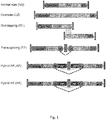
- the inventors Taking advantage of AAV ability to undergo intermolecular concatemerization, the inventors generated dual AAV vectors which reconstitute a large gene by either splicing (trans-splicing), homologous recombination (overlapping), or a combination of the two (hybrid).
- the inventors compared several AAV-based strategies side-by-side in HEK293 cells and in mouse and pig retina in vivo using EGFP , ABCA4 or MYO7A.
- the levels of retinal transduction by dual trans-splicing or hybrid AAV resulted in a significant improvement of the phenotype of Abca4- / - and sh1 mouse models of STGD and USH1B.
- Dual AAV trans-splicing or hybrid vectors are an attractive strategy for gene therapy of retinal diseases that require delivery of large genes.
- a dual construct system to express the coding sequence of a gene of interest in an host cell, said coding sequence consisting of a 5'end portion and of a 3'end portion, said dual construct system comprising:
- nucleotide sequence of the ITRs derives from the same or different AAV serotype.
- the 3'-ITR of the first plasmid and the 5'-ITR of the second plasmid are from the same AAV serotype.
- the 5'-ITR and 3'-ITR of the first plasmid and the 5'-ITR and 3'-ITR of the second plasmid are respectively from different AAV serotypes.
- the 5'-ITR of the first plasmid and the 3'-ITR of the second plasmid are from different AAV serotypes.
- the coding sequence is split into the 5' end portion and the 3' end portion at a natural exon-exon junction.
- nucleic acid sequence of the splicing acceptor signal consists of the sequence: GATAGGCACCTATTGGTCTTACTGACATCCACTTTGCCTTTCTCTCCACAG (SEQ ID No. 2).
- the spicing acceptor signal and the splicing donor signal may also be chosen by the skilled person in the art among sequences known in the art.
- Spliceosomal introns often reside within the sequence of eukaryotic protein-coding genes.
- a donor site (5' end of the intron), a branch site (near the 3' end of the intron) and an acceptor site (3' end of the intron) are required for splicing.
- the splice donor site includes an almost invariant sequence GU at the 5' end of the intron, within a larger, less highly conserved region.
- the splice acceptor site at the 3' end of the intron terminates the intron with an almost invariant AG sequence.
- Upstream (5'-ward) from the AG there is a region high in pyrimidines (C and U), or polypyrimidine tract. Upstream from the polypyrimidine tract is the branchpoint, which includes an adenine nucleotide.
- the first plasmid further comprises at least one enhancer sequence, operably linked to the coding sequence.
- Any known suitable enhancer sequence may be selected by the skilled person in the art.
- the coding sequence is a nucleotide sequence encoding a protein able to correct a genetic disease, in particular an inherited retinal degeneration.
- the coding sequence is selected from the group consisting of: ABCA4, MYO7A, CEP290, CDH23, EYS, USH2a, GPR98 or ALMS1.
- AAV adeno-associated virus
- the adeno-associated virus (AAV) vectors are selected from the same or different AAV serotypes.
- the adeno-associated virus is selected from the serotype 2, the serotype 8, the serotype 5, the serotype 7 or the serotype 9.
- a host cell comprising the dual viral vector system according to the invention.
- the host cell is a mammalian cell, a human cell, a retinal cell, a non-embryonic stem cell.
- the dual construct system of the invention, the dual viral vector system of the invention or the host cell of the invention for medical use, preferably for use in a gene therapy, still preferably for the treatment and/or prevention of a pathology or disease characterized by a retinal degeneration.
- the retinal degeneration is inherited.
- the pathology or disease is selected from the group consisting of: retinitis pigmentosa, Leber congenital amaurosis (LCA), Stargardt disease, Usher disease, Alstrom syndrome, a disease caused by a mutation in the ABCA4 gene (also named a ABCA4-associated disease).
- Cone-rod dystrophy type 3 fundus flavimaculatus, age-related macular degeneration type 2, Early-onset severe retinal dystrophy, and Retinitis pigmentosa type 19 are examples of disease caused by a mutation in the ABCA4 gene (ABCA4-associated diseases).
- a pharmaceutical composition comprising the dual construct system according to the invention, the dual viral vector system according to the invention or the host cell according to the invention and pharmaceutically acceptable vehicle. It is a further embodiment of the invention a method for treating and/or preventing a pathology or disease characterized by a retinal degeneration comprising administering to a subject in need thereof an effective amount of the dual construct system as described herein , the dual viral vector system as described herein or the host cell as described herein .
- nucleic acid consisting of SEQ ID No. 3 for use as a recombinogenic region.
- an in vitro method to induce genetic recombination comprising using the sequence consisting of SEQ ID No. 3 and the sequence consisting of SEQ ID No. 3 for use in a method to induce genetic recombination.
- the promoter is selected from the group consisting of: cytomegalovirus promoter, Rhodopsin promoter, Rhodopsin kinase promoter, Interphotoreceptor retinoid binding protein promoter, vitelliform macular dystrophy 2 promoter.
- cytomegalovirus promoter Rhodopsin promoter
- Rhodopsin kinase promoter Rhodopsin kinase promoter
- Interphotoreceptor retinoid binding protein promoter Interphotoreceptor retinoid binding protein promoter
- vitelliform macular dystrophy 2 promoter any suitable promoter known in the art may be used.
- the coding sequence is split into a first and a second fragment (5' end portion and 3' end portion) at a natural exon-exon junction.
- each fragment of the coding sequence should not exceed a size of 10 kb.
- each 5' end portion and 3' end portion may have a size of 4.5Kb, 5Kb, 5.5 Kb, 6Kb, 6.5 Kb, 7kb, 7.5 Kb, 8 Kb, 8.5 Kb, 9Kb, 9.5 Kb or a smaller size.
- Adeno-associated virus is a family of viruses that differs in nucleotide and amino acid sequence, genome structure, pathogenicity, and host range. This diversity provides opportunities to use viruses with different biological characteristics to develop different therapeutic applications.
- adenoviral-based systems As with any delivery tool, the efficiency, the ability to target certain tissue or cell type, the expression of the gene of interest, and the safety of adenoviral-based systems are important for successful application of gene therapy. Significant efforts have been dedicated to these areas of research in recent years. Various modifications have been made to Adeno-associated virus-based vectors and helper cells to alter gene expression, target delivery, improve viral titers, and increase safety.
- the present invention represents an improvement in this design process in that it acts to efficiently deliver genes of interest into such viral vectors.
- Viruses are logical tools for gene delivery. They replicate inside cells and therefore have evolved mechanisms to enter the cells and use the cellular machinery to express their genes. The concept of virus-based gene delivery is to engineer the virus so that it can express the gene of interest.
- viruses from several different families have been modified to generate viral vectors for gene delivery. These viruses include retroviruses, lentivirus, adenoviruses, adeno-associated viruses, herpes simplex viruses, picornaviruses, and alphaviruses.
- the present invention preferably employs adeno-associated viruses.
- An ideal adeno-associated virus based vector for gene delivery must be efficient, cell-specific, regulated, and safe. The efficiency of delivery is important because it can determine the efficacy of the therapy. Current efforts are aimed at achieving cell-type-specific infection and gene expression with adeno-associated viral vectors. In addition, adeno-associated viral vectors are being developed to regulate the expression of the gene of interest, since the therapy may require long-lasting or regulated expression. Safety is a major issue for viral gene delivery because most viruses are either pathogens or have a pathogenic potential. It is important that during gene delivery, the patient does not also inadvertently receive a pathogenic virus that has full replication potential.
- Adeno-associated virus is a small virus which infects humans and some other primate species. AAV is not currently known to cause disease and consequently the virus causes a very mild immune response. Gene therapy vectors using AAV can infect both dividing and quiescent cells and persist in an extrachromosomal state without integrating into the genome of the host cell. These features make AAV a very attractive candidate for creating viral vectors for gene therapy, and for the creation of isogenic human disease models.
- Wild-type AAV has attracted considerable interest from gene therapy researchers due to a number of features. Chief amongst these is the virus's apparent lack of pathogenicity. It can also infect non-dividing cells and has the ability to stably integrate into the host cell genome at a specific site (designated AAVS1) in the human chromosome 19. The feature makes it somewhat more predictable than retroviruses, which present the threat of a random insertion and of mutagenesis, which is sometimes followed by development of a cancer. The AAV genome integrates most frequently into the site mentioned, while random incorporations into the genome take place with a negligible frequency. Development of AAVs as gene therapy vectors, however, has eliminated this integrative capacity by removal of the rep and cap from the DNA of the vector.
- the desired gene together with a promoter to drive transcription of the gene is inserted between the inverted terminal repeats (ITR) that aid in concatamer formation in the nucleus after the single-stranded vector DNA is converted by host cell DNA polymerase complexes into double-stranded DNA.
- ITR inverted terminal repeats
- AAV-based gene therapy vectors form episomal concatamers in the host cell nucleus. In non-dividing cells, these concatemers remain intact for the life of the host cell. In dividing cells, AAV DNA is lost through cell division, since the episomal DNA is not replicated along with the host cell DNA. Random integration of AAV DNA into the host genome is detectable but occurs at very low frequency.
- AAVs also present very low immunogenicity, seemingly restricted to generation of neutralizing antibodies, while they induce no clearly defined cytotoxic response. This feature, along with the ability to infect quiescent cells present their dominance over adenoviruses as vectors for the human gene therapy.
- AAV genome, transcriptome and proteome AAV genome, transcriptome and proteome
- the AAV genome is built of single-stranded deoxyribonucleic acid (ssDNA), either positive-or negative-sensed, which is about 4.7 kilobase long.
- the genome comprises inverted terminal repeats (ITRs) at both ends of the DNA strand, and two open reading frames (ORFs): rep and cap.
- ITRs inverted terminal repeats
- ORFs open reading frames
- the former is composed of four overlapping genes encoding Rep proteins required for the AAV life cycle, and the latter contains overlapping nucleotide sequences of capsid proteins: VP1, VP2 and VP3, which interact together to form a capsid of an icosahedral symmetry.
- the Inverted Terminal Repeat (ITR) sequences comprise 145 bases each. They were named so because of their symmetry, which was shown to be required for efficient multiplication of the AAV genome. Another property of these sequences is their ability to form a hairpin, which contributes to so-called self-priming that allows primase-independent synthesis of the second DNA strand.
- the ITRs were also shown to be required for both integration of the AAV DNA into the host cell genome (19th chromosome in humans) and rescue from it, as well as for efficient encapsidation of the AAV DNA combined with generation of a fully assembled, deoxyribonuclease-resistant AAV particles.
- ITRs seem to be the only sequences required in cis next to the therapeutic gene: structural ( cap ) and packaging ( rep ) genes can be delivered in trans. With this assumption many methods were established for efficient production of recombinant AAV (rAAV) vectors containing a reporter or therapeutic gene. However, it was also published that the ITRs are not the only elements required in cis for the effective replication and encapsidation. A few research groups have identified a sequence designated cis-acting Rep-dependent element (CARE) inside the coding sequence of the rep gene. CARE was shown to augment the replication and encapsidation when present in cis.
- CARE Rep-dependent element
- AAV2 Serotype 2
- HSPG heparan sulfate proteoglycan
- FGFR-1 fibroblast growth factor receptor 1
- AAV-2 adeno-associated virus type 2
- Craig Meyers a professor of immunology and microbiology at the Penn State College of Medicine in Pennsylvania. This could lead to a new anti-cancer agent.
- AAV2 is the most popular serotype in various AAV-based research, it has been shown that other serotypes can be more effective as gene delivery vectors.
- AAV6 appears much better in infecting airway epithelial cells
- AAV7 presents very high transduction rate of murine skeletal muscle cells (similarly to AAV1 and AAV5)
- AAV8 is superb in transducing hepatocytes
- AAV1 and 5 were shown to be very efficient in gene delivery to vascular endothelial cells.
- most AAV serotypes show neuronal tropism, while AAV5 also transduces astrocytes.
- Serotypes can differ with the respect to the receptors they are bound to.
- AAV4 and AAV5 transduction can be inhibited by soluble sialic acids (of different form for each of these serotypes), and AAV5 was shown to enter cells via the platelet-derived growth factor receptor.
- the delivery vehicles of the present invention may be administered to a patient.
- a skilled worker would be able to determined appropriate dosage rates.
- the term "administered” includes delivery by viral or non-viral techniques.
- Viral delivery mechanisms include but are not limited to adenoviral vectors, adeno-associated viral (AAV) vectors, herpes viral vectors, retroviral vectors, lentiviral vectors, and baculoviral vectors etc as described above.
- Non-viral delivery mechanisms include lipid mediated transfection, liposomes, immunoliposomes, lipofectin, cationic facial amphiphiles (CFAs) and combinations thereof.
- the delivery of one or more therapeutic genes by a vector system according to the present invention may be used alone or in combination with other treatments or components of the treatment.
- the present invention also provides a pharmaceutical composition for treating an individual by gene therapy, wherein the composition comprises a therapeutically effective amount of the vector/construct or host cell of the present invention comprising one or more deliverable therapeutic and/or diagnostic transgenes(s) or a viral particle produced by or obtained from same.
- the pharmaceutical composition may be for human or animal usage. Typically, a physician will determine the actual dosage which will be most suitable for an individual subject and it will vary with the age, weight and response of the particular individual.
- the composition may optionally comprise a pharmaceutically acceptable carrier, diluent, excipient or adjuvant. The choice of pharmaceutical carrier, excipient or diluent can be selected with regard to the intended route of administration and standard pharmaceutical practice.
- compositions may comprise as - or in addition to - the carrier, excipient or diluent any suitable binder(s), lubricant(s), suspending agent(s), coating agent(s), solubilising agent(s), and other carrier agents that may aid or increase the viral entry into the target site (such as for example a lipid delivery system).
- the pharmaceutical compositions can be administered by any one or more of: inhalation, in the form of a suppository or pessary, topically in the form of a lotion, solution, cream, ointment or dusting powder, by use of a skin patch, orally in the form of tablets containing excipients such as starch or lactose, or in capsules or ovules either alone or in admixture with excipients, or in the form of elixirs, solutions or suspensions containing flavouring or colouring agents, or they can be injected parenterally, for example intracavernosally, intravenously, intramuscularly or subcutaneously.
- compositions may be best used in the form of a sterile aqueous solution which may contain other substances, for example enough salts or monosaccharides to make the solution isotonic with blood.
- compositions may be administered in the form of tablets or lozenges which can be formulated in a conventional manner.
- host cell or host cell genetically engineered relates to host cells which have been transduced, transformed or transfected with the construct or with the vector described previously.
- bacterial cells such as E. coli, Streptomyces, Salmonella typhimurium, fungal cells such as yeast, insect cells such as Sf9, animal cells such as CHO or COS, plant cells, etc.
- said host cell is an animal cell, and most preferably a human cell.
- the invention further provides a host cell comprising any of the recombinant expression vectors described herein.
- the host cell can be a cultured cell or a primary cell, i.e., isolated directly from an organism, e.g., a human.
- the host cell can be an adherent cell or a suspended cell, i.e., a cell that grows in suspension.
- Suitable host cells include, for instance, DH5 ⁇ , E. coli cells, Chinese hamster ovarian cells, monkey VERO cells, COS cells, HEK293 cells, and the like.
- the plasmids used for AAV vector production were derived from either the pZac2.1 (52) or pAAV2.1 (53) plasmids that contain the inverted terminal repeats (ITRs) of AAV serotype 2 (Table 1). N.B.
- CMV cytomegalovirus promoter
- CBA chicken beta-actin
- RHO human Rhodopsin promoter
- RHOK human Rhodopsin kinase promoter
- Vmd2 vitelliform macular dystrophy 2 promoter
- EGFP enhanced green fluorescent protein
- ABCA4 human ATP-binding cassette, sub-family A, member 4
- MYO7A human MYOSIN VIIA
- SV40 simian virus 40 poly-adenilation signal
- BGH bovine growth hormone poly-adenilation signal
- 3xflag 3xflag tag
- HA hemagglutinin tag
- AP alkaline phosphatase recombinogenic region
- AK F1 phage recombinogenic region
- TS trans-splicing
- ITR5:2 plasmid with the left ITR from AAV serotype 5 and the right ITR from AAV serotype 2
- Normal size and oversize AAV vector plasmids contained full length expression cassettes including the promoter, the full-length transgene CDS and the poly-adenilation signal (pA) (Table 1).
- the two separate AAV vector plasmids (5' and 3') required to generate dual AAV vectors contained either the promoter followed by the N-terminal portion of the transgene CDS (5' plasmid) or the C-terminal portion of the transgene CDS followed by the pA signal (3' plasmid, Table 1).
- Normal size EGFP plasmids were generated by cloning the EGFP CDS of pAAV2.1-CMV-EGFP plasmid (720 bp) ( 53 ) in pZac2.1 ( 52 ); oversize EGFP was generated from pAAV2.1-CMV-EGFP ( 53 ) by inserting a DNA stuffer sequence of 3632 bp from human ABCA4 (NM_000350.2, bp 1960-5591) upstream of the CMV promoter and a second DNA stuffer sequence of 3621 bp, composed of: murine ABCA4 (NM 007378.1, 1066-1 and 7124-6046 bp; 2145 total bp) and human Harmonin (NM153676.3 131-1606 bp; 1476 total bp), downstream of the pA signal (This construct was used in the experiments of Fig.
- the EGFP CDS (720 bp) was split into two constructs: one containing the N-terminal CDS (PMID: 9759496, bp 1-393) and the other containing the C-terminal CDS (PMID: 9759496, bp 394-720).
- the oversize ABCA4 plasmids contained the full-length human ABCA4 CDS (GeneNM_000350.2, bp 105-6926), while the oversize MY07A plasmids contained the full-length human MY07A CDS from isoform 1 (NM_000260.3, bp 273-6920).
- the ABCA4 and MY07A CDS were split into two constructs, one containing N-terminal CDS ( ABCA4: NM_000350.2, bp 105-3588; MIO7A : NM_000350.2, bp 273-3782) and the other containing C-terminal CDS ( ABCA4 : NM_000350.2, bp 2819-6926; MYO7A: NM_000350.2, bp 2913-6920). Therefore, the region of homology shared by overlapping vector plasmids was 770bp for ABCA4 and 870 bp for MYO7A.
- the human CEP290 CDS was split into two constructs, one containing N-terminal CDS (CEP290: NM_025114,bp 345-4076) and the other containing C-terminal CDS (CEP290: NM_025114, bp 3575-7784). Therefore, the region of homology shared by overlapping vector plasmids was 502 bp.
- ABCA4 and MY07A CDS were split at a natural exon-exon junction.
- ABCA4 was split between exons 19-20 (5' half: NM_000350.2, 105-3022 bp; 3' half: NM_000350.2, bp 3023-6926) and MY07A was split between exons 24-25 (5' half: NM_000350.2, bp 273-3380; 3' half: NM_000350.2, bp 3381-6926).
- ABCA4 and MYO7A proteins were both tagged at their C-terminus: ABCA4 with either the 3xflag (gactacaaagaccatgacggtgattataaagatcatgacatcgactacaaggatgacgatgacaag) or hemagglutinin (HA) tag (tatccgtatgatgtgccggattatgcg); MYO7A with the HA tag only.
- the CEP290 CDS was split at a natural exon-exon junction: between exons 29-30 (5' half: NM_025114, 345-3805; 3' half: NM_025114, 3806-7784).
- the CEP290 protein was tagged at its C-terminus with the hemagglutinin (HA) tag.
- the splice donor (SD) and splice acceptor (SA) signals contained in trans-splicing and hybrid dual AAV vector plasmids are as follows: 5'GTAAGTATCAAGGTTACAAGACAGGTTTAAGGAGACCAATAGAAACTGGGCTT GTCGAGACAGAAGACTCTTGCGTTTCT-3' (SD) SEQ ID No. 1; 5'GATAGGCACCTATTGGTCTTACTGACATCCACTTTGCCTTTCTCTCCACAG-3' (SA), SEQ ID No. 2.
- hybrid AP vector plasmids (present in both first and second plasmids) were derived from alkaline phosphate (AP) genes (NM_001632, bp 823-1100), as previously described ( 39 ).
- AP alkaline phosphate
- hybrid AK vector plasmids (present in both first and second plasmids) were derived from the phage F1 genome (Gene Bank accession number: J02448.1; bp 5850-5926).
- the AK sequence is: 5'GGGATTTTGCCGATTTCGGCCTATTGGTTAAAAAATGAGCTGATTTAACAAAAA TTTAACGCGAATTTTAACAAAAT-3', SEQ ID No. 3.
- the ubiquitous CMV promoter is that contained in pZac2.1 ( 52 ) or pAAV2.1-CMV-EGFP ( 53 ); the ubiquitous CBA promoter was derived from pAAV2.1-CBA-EGFP ( 11 ), the PR-specific human RHO and RHOK promoters were derived from pAAV2.1-RHO-EGFP and pAAV2.1RHOK-EGFP, respectively ( 10 ); the RPE-specific Vmd2 promoter (NG_009033.1, 4870-5470bp) corresponds to the previously described EcoRI-XcmI promoter fragment ( 41 ) and was amplified by human genomic DNA.
- the plasmids for the production of AAV2 vectors with heterologous ITRs are the following: pZac5:2-CMV-5' ABCA4 -SD-AK, pZac2:5-AK-SD-3' ABCA4-3xflag , pAAV5:2-CBA-5' MYO7A -SD-AK and pAAV2:5-AK-SD-3' MYO7A HA (Table 1).
- a coding sequence of ABCA4, MYO7A and CEP290 which are preferably respectively selected from the sequences herein enclosed, or sequences encoding the same amino acid sequence due to the degeneracy of the genetic code, is functionally linked to a promoter sequence able to regulate the expression thereof in a mammalian retinal cell, particularly in photoreceptor cells.
- Suitable promoters that can be used according to the invention include the cytomegalovirus promoter, Rhodopsin promoter, Rhodopsin kinase promoter, Interphotoreceptor retinoid binding protein promoter, vitelliform macular dystrophy 2 promoter, fragments and variants thereof retaining a transcription promoter activity.
- Viral delivery systems include but are not limited to adenoviral vectors, adeno-associated viral (AAV) vectors, pseudotyped AAV vectors, herpes viral vectors, retroviral vectors, lentiviral vectors, baculoviral vectors.
- Pseudotyped AAV vectors are those which contain the genome of one AAV serotype in the capsid of a second AAV serotype; for example an AAV2/8 vector contains the AAV8 capsid and the AAV 2 genome ( Auricchio et al. (2001) Hum. Mol. Genet. 10(26):3075-81 ).
- Such vectors are also known as chimeric vectors.
- Other examples of delivery systems include ex vivo delivery systems, which include but are not limited to DNA transfection methods such as electroporation, DNA biolistics, lipid-mediated transfection, compacted DNA-mediated transfection.
- AAV vector The construction of an AAV vector can be carried out following procedures and using techniques which are known to a person skilled in the art.
- the theory and practice for adeno-associated viral vector construction and use in therapy are illustrated in several scientific and patent publications (the following bibliography is herein incorporated by reference: Flotte TR. Adeno-associated virus-based gene therapy for inherited disorders. Pediatr Res. 2005 Dec;58(6):1143-7 ; Goncalves MA. Adeno-associated virus: from defective virus to effective vector, Virol J. 2005 May 6;2:43 ; Surace EM, Auricchio A. Adeno-associated viral vectors for retinal gene transfer. Prog Retin Eye Res.
- Suitable administration forms of a pharmaceutical composition containing AAV vectors include, but are not limited to, injectable solutions or suspensions, eye lotions and ophthalmic ointment.
- the AAV vector is administered by subretinal injection, e.g. by injection in the subretinal space, in the anterior chamber or in the retrobulbar space.
- the viral vectors are delivered via subretinal approach (as described in Bennicelli J, et al Mol Ther. 2008 Jan 22 ; Reversal of Blindness in Animal Models of Leber Congenital Amaurosis Using Optimized AAV2-mediated Gene Transfer).
- the doses of virus for use in therapy shall be determined on a case by case basis, depending on the administration route, the severity of the disease, the general conditions of the patients, and other clinical parameters. In general, suitable dosages will vary from 10 8 to 10 13 vg (vector genomes)/eye.
- AAV vectors were produced by the TIGEM AAV Vector Core by triple transfection of HEK293 cells followed by two rounds of CsC12 purification ( 54 ).
- physical titers [genome copies (GC)/ml] were determined by averaging the titer achieved by dot-blot analysis ( 55 ) and by PCR quantification using TaqMan ( 54 ) (Applied Biosystems, Carlsbad, CA).
- HEK293 cells were maintained in Dulbecco's modified Eagle's medium (DMEM) containing 10% fetal bovine serum and 2 mM L-glutamine (GIBCO, Invitrogen S.R.L., Milan, Italy). Cells were plated in six-well plates at a density of 2 ⁇ 10 6 cells/well and transfected 16 hours later with 1,3 ⁇ g of pDeltaF6 helper plasmid which contains the Ad helper genes ( 56 ) using the calcium phosphate method.
- DMEM Dulbecco's modified Eagle's medium
- GEBCO Invitrogen S.R.L., Milan, Italy
- mice were housed at the Institute of Genetics and Biophysics animal house (Naples, Italy) and maintained under a 12-hour light/dark cycle (10-50 lux exposure during the light phase).
- C57BL/6 and BALB/c mice were purchased from Harlan Italy SRL (Udine, Italy).
- Albino Abca4- / - mice were generated through successive crosses and backcrosses with BALB/c mice (homozygous for Rpe65 Leu450) ( 57 ) and maintained inbred.
- the pigmented sh1 mice used in this study were either Usher 1B affected ( sh1- / - ) or unaffected ( sh1 +/- and sh1 +/+).
- the genotype for the MYO7A 4626SB allele was performed by PCR analysis of genomic DNA (extracted from the mouse tail tip) followed by DNA sequencing.
- the primers used for the PCR amplification are as follows: Fw1 (GTGGAGCTTGACATCTACTTGACC) and Rev3 (AGCTGACCCTCATGACTCTGC), which generate a product of 712 bp that was sequenced with the Fw1 primer.
- the Large White Female pigs used in this study were registered as purebred in the LWHerd Book of the Italian National Pig Breeders' Association (Azienda Agricola Pasotti, Imola, Italy).
- mice (4-5 weeks-old) were anesthetized with an intraperitoneal injection of 2 ml/100 g body weight of avertin [1.25% w/v of 2,2,2-tribromoethanol and 2.5% v/v of 2-methyl-2-butanol (Sigma-Aldrich, Milan, Italy)] (58), then AAV2/8 vectors were delivered subretinally via a trans-scleral transchoroidal approach as described by Liang et al (59). All eyes were treated with 1 ⁇ L of vector solution.
- the AAV2/8 doses (GC/eye) delivered vary across the different mouse experiments as it is described in the "RESULTS" section.
- AAV2 /1-CMV -human Tyrosinase 60 (dose: 2x10 8 GC/eye) or AAV2/5-CMV-EGFP (encoding normal size EGFP, dose: 4x10 8 GC/eye) was added to the AAV2/8 vector solution that was subretinally delivered to albino ( Abca4- / - and BALB/c) ( Fig. 6B , 7-8 ) or pigmented sh1 mice ( Fig. 10-11 ), respectively. This allowed us to mark the RPE within the transduced part of the eyecup, which was subsequently dissected and analyzed. ( Fig. 6B , 7-8 , 10-11 ).
- Subretinal delivery of AAV vectors to the pig retina was performed as previously described ( 11 ). All eyes were treated with 100 ⁇ L of AAV2/8 vector solution.
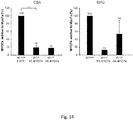
- the AAV2/8 dose was 1x10 10 ( Fig. 3B ) or 1x10 11 GC of each vector/eye ( Fig. 5B and 16 ) and co-injection of dual AAV vectors resulted in a total dose of 2x10 10 GC/eye or 2x10 11 GC/eye, respectively.
- Samples (HEK293 cells, retinas or eyecups) for Western blot analysis were lysed in RIPA buffer (50 mM Tris-Hcl pH 8.0, 150mM NaCl, 1% NP40, 0.5% Na-Deoxycholate, 1mM EDTA pH 8.0, 0.1% SDS) to extract EGFP and MYO7A proteins, or in SIE buffer (250 mM sucrose, 3 mM imidazole pH 7.4, 1% ethanol, and 1% NP-40) to extract ABCA4 protein.
- RIPA buffer 50 mM Tris-Hcl pH 8.0, 150mM NaCl, 1% NP40, 0.5% Na-Deoxycholate, 1mM EDTA pH 8.0, 0.1% SDS
- SIE buffer 250 mM sucrose, 3 mM imidazole pH 7.4, 1% ethanol, and 1% NP-40
- Pig samples (the treated areas of the retina as well as whole RPE sheets) were lysed in RIPA buffer to extract MYO7A from RPE sheets, and in SIE buffer to extract MYO7A and ABCA4 from retinas.
- Lysis buffers were supplemented with protease inhibitors (Complete Protease inhibitor cocktail tablets, Roche, Milan, Italy) and 1 mM phenylmethylsulfonyl.
- protease inhibitors Complete Protease inhibitor cocktail tablets, Roche, Milan, Italy
- phenylmethylsulfonyl After lysis EGFP and MYO7A samples were denatured at 99°C for 5 minutes in IX Laemli Sample buffer; ABCA4 samples were denatured at 37°C for 15 minutes in IX Laemli sample buffer supplemented with 4M urea. Lysates were separated by 7% (ABCA4 and MYO7A samples) or 12% (EGFP samples) SDS-polyacrylamide gel electrophoresis.
- the antibodies used for immuno-blotting are as follows: anti EGFP (sc-8334, Santa Cruz, Dallas, Texas, USA, 1:500); anti-3xflag (A8592, Sigma-Aldrich, 1:1000); anti-Myo7a (polyclonal, Primm Srl, Milan, Italy, 1:500) generated using a peptide corresponding to aminoacids 941-1070 of the human MYO7A protein; anti-HA antibody (PRB-101P-200, HA.11, Covance, Princeton, NJ, USA, 1:2000); anti- ⁇ Tubulin (T5201,Sigma Aldrich, 1:10000); anti-Filamin A (catalog#4762, Cell Signaling Technology, Danvers, MA, USA, 1:1000); anti-Dysferlin (Dysferlin, clone Ham1/7B6, MONX10795, Tebu-bio, Le Perray-en-Yveline, France, 1:500 ).
- the fundus live-imaging was performed by dilating the eye of C57BL/6 with a drop of tropicamide 1% (Visufarma, Rome, Italy) and subsequent eye stimulation with a 300W flash. Fundus photographs were taken using a Topcon TRC-50IX retinal camera connected to a charge-coupled-device Nikon D1H digital camera (Topcon Medical System, Oakland, NJ, USA).
- mice C57BL/6 mice or Large White pigs ( 11 ) were enucleated one month after AAV2/8 injection.
- Mouse eyes were fixed in 4% paraformaldehyde over-night and infiltrated with 30% sucrose over-night; the cornea and the lens were then dissected and the eyecups were embedded in optimal cutting temperature compound (O.C.T. matrix, Kaltek, Padua, Italy).
- Pig eyes were fixed in 4% paraformaldehyde for 48 hours, infiltrated with 10% sucrose for 4 hours, 20% sucrose for 4 hours and finally 30% sucrose overnight.
- the cornea, the lens, and the vitreous body were dissected and the EGFP-positive portions of the eyecups were embedded in optimal cutting temperature compound (O.C.T. matrix, Kaltek).
- Serial cryosections (10 ⁇ m thick) were cut along the horizontal meridian and progressively distributed on slides. Retinal histology pictures were captured using a Zeiss Axiocam (Carl Zeiss, Oberkochen, Germany).
- eyes were harvested from Abca4- / - or sh1 mice at 3 and 2 months after AAV injection, respectively. Eyes were fixed in 0.2% glutaraldehyde-2% paraformaldehyde in 0.1M PHEM buffer pH 6.9 (240 mM PIPES, 100 mM HEPES, 8mM MgCl 2 , 40 mM EGTA) for 2 hours and then rinsed in 0.1 M PHEM buffer. Eyes were then dissected under light or fluorescence microscope to select the Tyrosinase- or EGFP-positive portions of the eyecups of albino ( Abca4- / - and BALB/c) and pigmented sh1 mice, respectively.
- 0.1M PHEM buffer pH 6.9 240 mM PIPES, 100 mM HEPES, 8mM MgCl 2 , 40 mM EGTA
- the transduced portion of the eyecups were subsequently embedded in 12% gelatin, infused with 2.3M sucrose and frozen in liquid nitrogen. Cryosections (50 nm) were cut using a Leica Ultramicrotome EM FC7 (Leica Microsystems) and extreme care was taken to align PR connecting cilia longitudinally. Measurements of RPE thickness and counts of lipofuscin granules in Abca4- / - eyes were performed by a masked operator (Roman Polishchuk) using the iTEM software (Olympus SYS, Hamburg, Germany). Briefly, RPE thickness was measured in at least 30 different areas along the specimen length using the "Arbitrary Line" tool of iTEM software.
- the "Touch count” module of the iTEM software was utilized to count the number of lipofuscin granules in the 25 ⁇ m 2 areas distributed randomly across the RPE layer. The granule density was expressed as number of granules per 25 ⁇ m 2 .
- the immuno-gold analysis aimed at testing the expression of ABCA4-HA in Abca4- / - samples after AAV vector delivery was performed by incubating cryosections successively with monoclonal anti-HA antibody (MMS-101P-50, Covance, 1:50), rabbit anti-mouse IgG, and 10-nm gold particle-conjugated protein A.
- cryosections of sh1 mice were successively incubated with anti-rhodopsin antibody (1D4, ab5417, Abcam, Cambridge, UK, 1:100), rabbit anti-mouse IgG, and 10-nm gold particle-conjugated protein A.
- the quantification of gold density of rhodospin in the connecting cilia was performed by a masked operator using iTEM software (Olympus SYS). Briefly, the "Touch count" module of the iTEM software was used to count the number of gold particles per cilium that were normalized to the cilium perimeter (nm) that was measured using the "Closed polygon tool". Gold density was expressed as gold particles/nm.
- Immunogold labelled cryosections were analyzed under FEI Tecnai-12 (FEI, Eindhoven, The Netherlands) electron microscope equipped with a Veletta CCD camera for digital image acquisition.
- the inventors generated oversize (OZ), dual AAV trans-splicing (TS), and hybrid vectors that included either the reporter EGFP, the therapeutic ABCA4-3xflag or the MYO7A-HA coding sequences.
- the inventors also generated dual AAV trans-splicing (TS), and hybrid vectors that included the therapeutic CEP290 tagged at its C-terminus with HA tag.
- the recombinogenic sequences included in the dual AAV hybrid vectors were based on either a previously reported region of the alkaline phosphatase transgene (AP, dual AAV hybrid AP) (39) or a 77 bp sequence from the the F1 phage genome (AK, dual AAV hybrid AK) that the inventors found to be recombinogenic in previous experiments (Colella and Auricchio, unpublished data).
- the inventors also generated dual AAV overlapping (OV) vectors for ABCA4, MY07A and CEP290.
- the inventors did not generate dual AAV OV vectors for EGFP because the efficiency of this approach relies on transgene-specific overlaps for reconstitution (38) and therefore cannot be extrapolated from one gene to another.
- the inventors used AAV2/2 vectors for the in vitro experiments, with the ubiquitous cytomegalovirus (CMV) or chicken beta-actin (CBA) promoters, which efficiently transduce HEK293 cells ( 40 ).
- CMV ubiquitous cytomegalovirus
- CBA chicken beta-actin
- the inventors also generated dual AAV AK vectors with heterologous ITRs ( Fig. 17a ) encoding ABCA4 and MYO7A.
- AAV vectors with heterologous ITRs were packaged in AAV capsids from serotype 2 and tested in vitro.
- AAV2/8 vectors which efficiently transduce RPE and PR ( 10-12 ) but poorly infect HEK293 cells, and either the ubiquitous CBA and CMV promoters ( 11 ), or the RPE-specific vitelliform macular dystrophy 2 (VMD2) ( 41 ) or the PR-specific Rhodopsin (RHO) and Rhodopsin kinase (RHOK) promoters ( 10 ) (Table 1).
- Dual AAV vectors allow high levels of transduction in vitro.
- the inventors initially compared the efficiency of the various OZ, dual AAV OV, TS and hybrid AP and AK strategies for AAV-mediated large gene transduction in vitro by infecting HEK293 cells with the AAV2/2 vectors [multiplicity of infection, m.o.i.: 10 5 genome copies (GC)/cell of each vector] with ubiquitous promoters (CMV for EGFP, ABCA4-3xflag, and CEP290-HA, and CBA for MYO7A-HA).
- AAV2/2 vectors multiplicity of infection, m.o.i.: 10 5 genome copies (GC)/cell of each vector
- CMV ubiquitous promoters
- CEP290-HA CBA for MYO7A-HA
- Dual AAV TS and hybrid AK but not OV vectors transduce mouse and pig photoreceptors.
- the inventors then evaluated each of the AAV-based systems for large gene transduction in the mouse retina.
- the inventors used the therapeutic ABCA4 and MY07A genes ( Fig. 3 ).
- the inventors used EGFP to evaluate the AAV OZ and the dual AAV TS, hybrid AP and AK approaches ( Fig. 4 ).
- the inventors used dual AAV OV vectors that contained either the PR-specific RHO and RHOK, or the RPE-specific VMD2 (dose of each vector/eye: 1x10 9 GC) promoters.
- the inventors detected ABCA4 protein expression in retinas injected with the VMD2 but not in those containing the RHO and RHOK promoters ( Fig. 3A ). These results were also confirmed in the Large White pig retina.
- the pig retina is an excellent model to evaluate vector efficiency because of its size, which is similar to the human retina, and because it is enriched with cones that are concentrated in a streak-like region whose cone density is comparable to that of the primate macula ( 11 ).
- the inventors injected Large White pig subretinally with dual AAV OV vectors encoding ABCA4-3xflag (dose of each vector/eye: 1x10 10 GC), and observed ABCA4 protein expression with the CMV but not the RHO promoter ( Fig. 3B ).
- subretinal administration of dual AAV OV vectors encoding MYO7A-HA resulted in weak MYO7A protein expression in the mouse retina with the ubiquitous CBA (dose of each vector/eye: 2.5x10 9 GC) and no detectable expression with the RHO (dose of each vector/eye: 3.2x10 9 GC) promoter ( Fig. 3C ).
- the dual AAV OV approach was more efficient for large gene transfer to RPE than to PR, which are a major target of gene therapy for IRDs, such as STGD and USH1B.
- the inventors evaluated the retinal transduction properties of the AAV OZ and dual AAV TS, hybrid AP, and AK approaches.
- the inventors initially used EGFP, which allowed us to easily localize transgene expression in the various retinal cell types including PR as well as to properly compare the levels of AAV-based large transgene transduction to those of a single AAV NS vector.
- C57BL/6 mice were subretinally injected with AAV NS, OZ and dual AAV TS, and hybrid AP and AK vectors (dose of each vector/eye: 1.7x10 9 GC), all encoding EGFP under the transcriptional control of the CMV promoter.
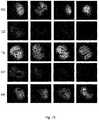
- the inventors assessed PR-specific transduction levels in C57BL/6 mice following subretinal administration of dual AAV TS and hybrid AK vectors, which appears the most promising for large gene reconstitution in PR, as well as AAV NS vectors for comparison (dose of each vector/eye: 2.4x10 9 GC). All vectors encoded EGFP under the transcriptional control of the PR-specific RHO promoter. One month after vector administration retinas were cryosectioned and analyzed under a fluorescence microscope ( Fig. 5A ). All approaches resulted in high levels of PR transduction, which seemed more consistent with the single AAV NS vector.
- Dual AAV vectors improve the retinal phenotype of STGD and USH1B mouse models.
- the inventors investigated them in the retina of two mouse models of IRDs, STGD and USH1B caused by mutations in the large ABCA4 and MY07A genes, respectively.
- the Abca4- / - mouse model does not undergo severe PR degeneration ( 42 )
- the absence of the ABCA4-encoded all-trans retinal transporter in PR outer segments ( 43-44 ) causes an accumulation of lipofuscin in PR as well as in RPE, as result of PR phagocytosis by RPE ( 45 ).
- both the number of lipofuscin granules in the RPE and the thickness of RPE cells are greater in Abca4- / - mice than in control mice ( 45 ).
- the Abca4- / - mouse model is characterized by delayed dark adaptation (57, 62).
- ABCA4 is expressed specifically in PR
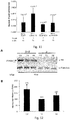
- the inventors generated dual AAV TS and hybrid AK vectors encoding ABCA4-3xflag under the transcriptional control of the RHO promoter. These vectors were subretinally injected in wild-type C57BL/6 mice (dose of each vector/eye: 3-5x10 9 GC) and one month later retinas were lysed and analyzed by Western blot with anti-3xflag antibodies. Both approaches resulted in robust yet variable levels of ABCA4-3xflag expression. ABCA4-3xflag expression levels were more consistent in retina treated with the dual AAV hybrid AK vectors ( Fig. 6A ). These results were confirmed in Large White pigs (data not shown).
- the inventors then tested PR transduction levels and efficacy of dual AAV-mediated MYO7A gene transfer in the retina of sh1 mice, the most commonly used model of USH1B ( 23-24, 46- 48).
- sh1 mice a deficiency in the motor Myo7a causes the mis-localization of RPE melanosomes ( 47 ), which do not enter into the RPE microvilli, and the accumulation of rhodopsin at the PR connecting cilium ( 48 ).
- MYO7A is expressed in both RPE and PR ( 22-23 )
- the inventors then used dual AAV TS and hybrid AK vectors expressing MYO7AHA under the transcriptional control of the ubiquitous CBA promoter.
- the inventors then subretinally injected the CBA sets of dual AAV TS and hybrid AK vectors (dose of each vector/eye: 2.5x10 9 GC) in one month-old sh 1 mice.
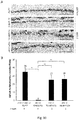
- the inventors assessed RPE melanosome ( Fig. 10 ) and rhodopsin localization ( Fig. 11 ) by analysis of semi-thin retinal section and by immuno-electron microscopy, respectively.
- the sh1- / - melanosomes do not enter the RPE microvilli after delivery of control vectors (each single 5' half of the dual-AAV strategies, Fig. 10 ).
- the number of RPE melanosomes correctly localized apically was significantly improved after the delivery of either dual AAV TS or hybrid AK vectors encoding MYO7A ( Fig. 10B ).
- the inventors also found that the MYO7A expression mediated by dual AAV TS and hybrid AK vectors reduced the accumulation of rhodopsin at the connecting cilium of sh1- / - PR ( Fig. 11 ).
- AAV-mediated gene therapy is effective in animal models and in patients with inherited blinding conditions ( 5-9 , 49), its application to diseases affecting the retina and requiring a transfer of genes larger than 5kb (referred to as large genes) is inhibited by AAV limited cargo capacity.
- AAV limited cargo capacity the inventors compared the efficiency of various AAV-based strategies for large gene transduction including: AAV OZ and dual AAV OV, TS and hybrid approaches in vitro and in mouse and pig retina.
- inventors selected a 77 bp sequence from the F1 phage genome that the inventors identified for its recombinogenic properties and used in the dual hybrid approach (AK, dual AAV hybrid AK).
- the inventors' in vitro and in vivo results show that the dual AAV hybrid AK surprisingly outperforms the dual AAV hybrid AP and that all dual AAV strategies the inventors tested (with the exception of the dual AAV hybrid AP) outperform AAV OZ vectors in terms of transduction levels. This may be explained by the homogenous size of the dual AAV genome population when compared to OZ genomes, which may favor the generation of transcriptionally active large transgene expression cassettes.
- dual AAV OV approach seems particularly interesting when compared to the TS or hybrid AK approaches as dual AAV OV vectors only contain sequences belonging to the therapeutic transgene expression cassette.
- the inventors administered dual AAV OV vectors to the subretinal space of adult mice and pigs, the inventors were only able to detect expression of the large ABCA4 protein when the ubiquitous or the RPE-specific promoters, but not the PR-specific promoters, were used. This may suggest that the homologous recombination required for dual AAV OV reconstitution is more efficient in RPE than PR.
- Dual AAV TS and hybrid AK approaches efficiently transduce mouse and pig PR, differently from what the inventors observed with dual AAV OV. This is consistent with the knowledge that the mechanism of large gene reconstitution mediated by dual AAV TS and hybrid AK approaches may be via ITR-mediated head-to-tail rejoining ( 32, 35, 51 ) rather than homologous recombination.
- dual AAV may be effective for treating inherited blinding conditions that require relatively low levels of transgene expression, i.e. diseases inherited as autosomal recessive.
- the inventors show that subretinal delivery of dual AAV TS and hybrid AK improves and even normalizes the retinal defects of two animal models of inherited retinal diseases, STGD and USH1B, which are due to mutations in large genes and are attractive targets of gene therapy.
- the genome size of dual AAV vectors is homogenous, which means identity and safety issues related to their use should be less considerable than those related to AAV OZ vectors, which have heterogeneous genome sizes.
- the inventors detected neither ERG or retinal histological abnormalities in the mice that the inventors followed up to 1-2 months after dual AAV vector delivery (data not shown).
- the inventors identified a new recombinogenic sequence (AK) that strikingly improves the performance of the AAV dual hybrid vector system.
- dual AAV vectors are efficient both in vitro and in the retina in vivo. While dual AAV OV vectors efficiently transduce RPE, they do not transduce PR, whereas dual AAV TS and hybrid AK approaches drive efficient large gene reconstitution in both cell types.
- Administration of dual AAV TS and hybrid AK approaches improved the retinal phenotype of mouse models of STGD and USH1B, providing evidence of the efficacy of these strategies for gene therapy for these and other blinding conditions, which require large gene transfer to retinal PR as well as RPE.
- AAV vectors for gene therapies not only to eyes, but also to muscle as well as to other organs and tissues.
- Diseases other than IRD caused by defective genes larger than 5 kb include non-limiting examples of muscular dystrophies, dysferlin deficencies (limb-girdle muscular dystrophy type 2B and Miyoshi myopathy), Cystic Fibrosis, Hemophilia.
Landscapes
- Health & Medical Sciences (AREA)
- Life Sciences & Earth Sciences (AREA)
- Chemical & Material Sciences (AREA)
- Genetics & Genomics (AREA)
- Organic Chemistry (AREA)
- Engineering & Computer Science (AREA)
- Zoology (AREA)
- General Health & Medical Sciences (AREA)
- Biotechnology (AREA)
- Molecular Biology (AREA)
- Bioinformatics & Cheminformatics (AREA)
- Wood Science & Technology (AREA)
- General Engineering & Computer Science (AREA)
- Biomedical Technology (AREA)
- Biochemistry (AREA)
- Biophysics (AREA)
- Medicinal Chemistry (AREA)
- Plant Pathology (AREA)
- Microbiology (AREA)
- Virology (AREA)
- Physics & Mathematics (AREA)
- Toxicology (AREA)
- Cell Biology (AREA)
- Proteomics, Peptides & Aminoacids (AREA)
- Gastroenterology & Hepatology (AREA)
- Immunology (AREA)
- Pharmacology & Pharmacy (AREA)
- Veterinary Medicine (AREA)
- Animal Behavior & Ethology (AREA)
- Public Health (AREA)
- Epidemiology (AREA)
- Ophthalmology & Optometry (AREA)
- General Chemical & Material Sciences (AREA)
- Chemical Kinetics & Catalysis (AREA)
- Nuclear Medicine, Radiotherapy & Molecular Imaging (AREA)
- Medicines Containing Material From Animals Or Micro-Organisms (AREA)
- Medicines That Contain Protein Lipid Enzymes And Other Medicines (AREA)
- Micro-Organisms Or Cultivation Processes Thereof (AREA)
- Pharmaceuticals Containing Other Organic And Inorganic Compounds (AREA)
Claims (14)
- Système de construction double pour exprimer la séquence codante d'un gène d'intérêt dans une cellule hôte, ladite séquence codante consistant en une partie d'extrémité 5' et une partie d'extrémité 3', ledit système de construction double comprenant :a) un premier plasmide comprenant dans une direction 5'-3' :- une séquence de répétition terminale inversée en 5' (5'-ITR) d'AAV ;- une séquence de promoteur ;- la partie d'extrémité 5' de ladite séquence codante, ladite partie d'extrémité 5' étant liée opérationnellement à et sous le contrôle dudit promoteur ;- une séquence d'acide nucléique d'un signal donneur d'épissage ; et- une séquence de répétition terminale inversée en 3' (3'-ITR) d'AAV ; etb) un second plasmide comprenant dans une direction 5'-3' :où ledit premier plasmide comprend en outre une séquence d'acide nucléique d'une région recombinogène en position 5' de la 3'-ITR d'AAV dudit premier plasmide et en position 3' de la séquence d'acide nucléique du signal donneur d'épissage et où ledit second plasmide comprend en outre la séquence d'acide nucléique de la région recombinogène en position 3' de la 5'-ITR d'AAV dudit second plasmide et en position 5' de la séquence d'acide nucléique du signal accepteur d'épissage, où la région recombinogène est une région recombinogène de phage F1 qui est constituée de la séquence- une séquence de répétition terminale inversée en 5' (5'-ITR) d'AAV ;- une séquence d'acide nucléique d'un signal accepteur d'épissage ;- l'extrémité 3' de ladite séquence codante ;- une séquence d'acide nucléique de signal de poly-adénylation ; et- une séquence de répétition terminale inversée en 3' (3'-ITR) d'AAV,(SEQ ID n° 3) ou un de ses fragments qui maintient la propriété recombinogène de SEQ ID n° 3,

où après introduction dudit premier plasmide et dudit second plasmide dans la cellule hôte, ladite séquence codante se reconstitue au moyen des signaux donneur d'épissage et accepteur d'épissage. - Système de construction double selon la revendication 1, dans lequel la séquence nucléotidique des ITR dérive du même sérotype d'AAV ou de sérotypes d'AAV différents, de préférence la 3'-ITR du premier plasmide et la 5'-ITR du second plasmide sont du même sérotype d'AAV, de préférence la 5'-ITR et la 3'-ITR du premier plasmide et la 5'-ITR et la 3'-ITR du second plasmide sont respectivement de différents sérotypes d'AAV, de préférence la 5'-ITR du premier plasmide et la 3'-ITR du second plasmide sont de sérotypes d'AAV différents.
- Système de construction double selon l'une quelconque des revendications précédentes, dans lequel la séquence d'acide nucléique du signal donneur d'épissage consiste en la séquence :
 (SEQ ID n° 1), et/ou où la séquence d'acide nucléique du signal accepteur d'épissage consiste en la séquence GATAGGCACCTATTGGTCTTACTGACATCCACTTTGCCTTTTCTCTCCACAG (SEQ ID n° 2).
- Système de construction double selon l'une quelconque des revendications précédentes dans lequel la séquence codante est une séquence nucléotidique codant pour une protéine capable de corriger une dégénérescence rétinienne héritée.
- Système de construction double selon la revendication 4 dans lequel la séquence codante est choisie dans le groupe constitué par : ABCA4, MYO7A, CEP290, CDH23, EYS, USH2a, GPR98 ou ALMS1.
- Système de vecteur viral de virus adéno-associé (AAV) double comprenant :a) un premier vecteur viral d'AAV contenant le premier plasmide tel que défini dans l'une quelconque des revendications 1 à 5, etb) un second vecteur viral d'AAV contenant le second plasmide tel que défini dans l'une quelconque des revendications 1 à 5.
- Système de vecteur viral d'AAV double selon la revendication 6 dans lequel les vecteurs de virus adéno-associés (AAV) sont choisis parmi les mêmes ou différents sérotypes d'AAV, de préférence le virus adéno-associé est choisi parmi le sérotype 2, le sérotype 8, le sérotype 5, le sérotype 7 ou le sérotype 9.
- Cellule hôte comprenant le système de vecteur viral double selon l'une quelconque des revendications 6 à 7.
- Système de construction double selon l'une quelconque des revendications 1 à 5, système de vecteur viral double selon l'une quelconque des revendications 6 à 7 ou cellule hôte selon la revendication 8 destiné à un usage médical, de préférence destiné à être utilisé en thérapie génique.
- Système de construction double, système de vecteur viral double, cellule hôte selon la revendication 9 destiné à être utilisé dans le traitement et/ou la prévention d'une pathologie ou d'une maladie caractérisée par une dégénérescence rétinienne, de préférence la dégénérescence rétinienne est héritée, de préférence la pathologie ou la maladie est choisie dans le groupe constitué par : la rétinite pigmentée, l'amaurose congénitale de Leber (LCA), la maladie de Stargardt, la maladie de Usher, le syndrome d'Alstrom, une maladie provoquée par une mutation dans le gène ABCA4.
- Composition pharmaceutique comprenant le système de construction double selon l'une quelconque des revendications 1 à 5, le système de vecteur vecteur viral double selon l'une quelconque des revendications 6 à 7 ou la cellule hôte selon la revendication 8 et un véhicule pharmaceutiquement acceptable.
- Acide nucléique constitué de SEQ ID n° 3 ou d'un de ses fragments qui maintient la propriété recombinogène de SEQ ID n° 3 pour une utilisation comme région recombinogène.
- Procédé in vitro pour induire la recombinaison génétique comprenant l'utilisation de la séquence consistant en SEQ ID n° 3 ou un de ses fragments qui maintient la propriété recombinogène de SEQ ID n° 3.
- Séquence constituée de SEQ ID n° 3 ou un de ses fragments qui maintient la propriété recombinogène de SEQ ID n° 3 destinée à être utilisée dans une méthode de traitement, de préférence par thérapie génique, où le méthode induit la recombinaison génétique.
Applications Claiming Priority (2)
| Application Number | Priority Date | Filing Date | Title |
|---|---|---|---|
| US201361813342P | 2013-04-18 | 2013-04-18 | |
| PCT/EP2014/058000 WO2014170480A1 (fr) | 2013-04-18 | 2014-04-18 | Administration efficace de grands gènes par des vecteurs aav doubles |
Publications (2)
| Publication Number | Publication Date |
|---|---|
| EP2986635A1 EP2986635A1 (fr) | 2016-02-24 |
| EP2986635B1 true EP2986635B1 (fr) | 2018-10-03 |
Family
ID=50678160
Family Applications (1)
| Application Number | Title | Priority Date | Filing Date |
|---|---|---|---|
| EP14721802.8A Active EP2986635B1 (fr) | 2013-04-18 | 2014-04-18 | Administration efficace de grands gènes par des vecteurs aav doubles |
Country Status (11)
| Country | Link |
|---|---|
| US (2) | USRE50283E1 (fr) |
| EP (1) | EP2986635B1 (fr) |
| JP (1) | JP6453307B2 (fr) |
| CN (1) | CN105408352B (fr) |
| AU (1) | AU2014255665B2 (fr) |
| CA (1) | CA2909733C (fr) |
| DK (1) | DK2986635T3 (fr) |
| EA (1) | EA034575B1 (fr) |
| ES (1) | ES2704677T3 (fr) |
| MX (1) | MX365711B (fr) |
| WO (1) | WO2014170480A1 (fr) |
Families Citing this family (107)
| Publication number | Priority date | Publication date | Assignee | Title |
|---|---|---|---|---|
| US9217155B2 (en) | 2008-05-28 | 2015-12-22 | University Of Massachusetts | Isolation of novel AAV'S and uses thereof |
| US8734809B2 (en) | 2009-05-28 | 2014-05-27 | University Of Massachusetts | AAV's and uses thereof |
| EP2561073B1 (fr) | 2010-04-23 | 2016-08-24 | University of Massachusetts | Vecteurs aav ciblant le système nerveux central et leurs procédés d'utilisation |
| US9546369B2 (en) | 2010-04-23 | 2017-01-17 | University Of Massachusetts | Multicistronic expression constructs |
| WO2013075008A1 (fr) | 2011-11-16 | 2013-05-23 | University Of Florida Research Foundation Inc. | Systèmes de vecteur double aav pour une thérapie génique |
| AU2014255665B2 (en) | 2013-04-18 | 2018-08-02 | Fondazione Telethon | Effective delivery of large genes by dual AAV vectors |
| US10072251B2 (en) | 2014-02-19 | 2018-09-11 | University Of Massachusetts | Recombinant AAVS having useful transcytosis properties |
| CA2942515C (fr) | 2014-03-18 | 2025-12-09 | University Of Massachusetts | Compositions a base de virus adeno-associe recombinant raav et methodes de traitement de la sclerose laterale amyotrophique |
| WO2015187825A2 (fr) | 2014-06-03 | 2015-12-10 | University Of Massachusetts | Compositions et méthodes de modulation de l'expression de la dysferline |
| EP3151866B1 (fr) | 2014-06-09 | 2023-03-08 | Voyager Therapeutics, Inc. | Capsides chimériques |
| US10370432B2 (en) | 2014-10-03 | 2019-08-06 | University Of Massachusetts | Heterologous targeting peptide grafted AAVS |
| CN107073051B (zh) | 2014-10-21 | 2021-08-24 | 马萨诸塞大学 | 重组aav变体及其用途 |
| RU2716991C2 (ru) | 2014-11-05 | 2020-03-17 | Вояджер Терапьютикс, Инк. | Полинуклеотиды aadc для лечения болезни паркинсона |
| WO2016077687A1 (fr) | 2014-11-14 | 2016-05-19 | Voyager Therapeutics, Inc. | Compositions et méthodes de traitement de la sclérose latérale amyotrophique (sla) |
| KR20230145206A (ko) | 2014-11-14 | 2023-10-17 | 보이저 테라퓨틱스, 인크. | 조절성 폴리뉴클레오티드 |
| EP3256170B1 (fr) | 2015-02-13 | 2020-09-23 | University of Massachusetts | Compositions et procédés pour l'administration transitoire de nucléases |
| SI3265571T1 (sl) * | 2015-03-03 | 2022-10-28 | Fondazione Telethon | Več vektorski sistem in njegove uporabe |
| US11046955B2 (en) | 2015-04-24 | 2021-06-29 | University Of Massachusetts | Modified AAV constructs and uses thereof |
| HK1253299A1 (zh) | 2015-06-04 | 2019-06-14 | INSERM (Institut National de la Santé et de la Recherche Médicale) | 一种通过基因治疗治疗眼疾病的改进方法 |
| EP3364997B1 (fr) | 2015-10-22 | 2024-01-17 | University of Massachusetts | Aspartoacylase en thérapie génique dans le traitement de la maladie de canavan |
| WO2017070516A1 (fr) | 2015-10-22 | 2017-04-27 | University Of Massachusetts | Vecteurs du sérotype de virus adéno-associés ciblant la prostate |
| CA3005474A1 (fr) | 2015-11-19 | 2017-05-26 | The Trustees Of The University Of Pennsylvania | Compositions et procedes de correction de maladie oculaire hereditaire |
| CA3008264A1 (fr) | 2015-12-14 | 2017-06-22 | The Trustees Of The University Of Pennsylvania | Therapie genique pour troubles oculaires |
| JP7007273B2 (ja) * | 2015-12-22 | 2022-01-24 | アンセルム(アンスティチュート・ナシオナル・ドゥ・ラ・サンテ・エ・ドゥ・ラ・ルシェルシュ・メディカル) | 遺伝子治療用の改良された複合型二重組換えaavベクターシステム |
| CA3011939A1 (fr) | 2016-02-02 | 2017-08-10 | University Of Massachusetts | Procede pour ameliorer l'efficacite de l'administration au systeme nerveux central d'un gene aav par voie systemique |
| CA3012344A1 (fr) | 2016-02-12 | 2017-08-17 | University Of Massachusetts | Agents therapeutiques a base de micro-arn anti-angiogeniques pour l'inhibition de la neovascularisation corneenne |
| US11207426B2 (en) | 2016-04-05 | 2021-12-28 | University Of Massachusetts | Compositions and methods for selective inhibition of grainyhead-like protein expression |
| US11413356B2 (en) | 2016-04-15 | 2022-08-16 | University Of Massachusetts | Methods and compositions for treating metabolic imbalance |
| US11299751B2 (en) | 2016-04-29 | 2022-04-12 | Voyager Therapeutics, Inc. | Compositions for the treatment of disease |
| KR20240056729A (ko) | 2016-05-18 | 2024-04-30 | 보이저 테라퓨틱스, 인크. | 조절성 폴리뉴클레오티드 |
| KR102427379B1 (ko) | 2016-05-18 | 2022-08-02 | 보이저 테라퓨틱스, 인크. | 헌팅톤 질환을 치료하기 위한 조성물 및 방법 |
| US11882815B2 (en) | 2016-06-15 | 2024-01-30 | University Of Massachusetts | Recombinant adeno-associated viruses for delivering gene editing molecules to embryonic cells |
| EP3472328A1 (fr) * | 2016-06-15 | 2019-04-24 | Oxford University Innovation Limited | Système de vecteur viral adéno-associé à double chevauchement pour exprimer abc4a |
| EP3510161A4 (fr) * | 2016-08-23 | 2020-04-22 | Akouos, Inc. | Compositions et méthodes pour traiter une déficience auditive non associée à l'âge chez un sujet humain |
| WO2018044933A1 (fr) | 2016-08-30 | 2018-03-08 | The Regents Of The University Of California | Procédés de ciblage et d'administration biomédicaux, et dispositifs et systèmes pour la mise en œuvre de ceux-ci |
| US10457940B2 (en) | 2016-09-22 | 2019-10-29 | University Of Massachusetts | AAV treatment of Huntington's disease |
| AU2017341849B2 (en) | 2016-10-13 | 2024-03-21 | University Of Massachusetts | AAV capsid designs |
| WO2018162748A1 (fr) | 2017-03-10 | 2018-09-13 | Genethon | Traitement de la glycogénose de type iii |
| CN110709095B (zh) * | 2017-04-05 | 2024-05-03 | 马萨诸塞大学 | 小基因治疗 |
| WO2018195555A1 (fr) * | 2017-04-21 | 2018-10-25 | The Board Of Trustees Of The Leland Stanford Junior University | Intégration de polynucléotides induite par crispr/cas 9, par recombinaison homologue séquentielle de vecteurs donneurs de virus adéno-associés |
| KR102606810B1 (ko) * | 2017-05-05 | 2023-11-27 | 유니버시티 오브 플로리다 리서치 파운데이션, 인코포레이티드 | 오토펄린을 발현시키기 위한 조성물 및 방법 |
| JP2020518258A (ja) | 2017-05-05 | 2020-06-25 | ボイジャー セラピューティクス インコーポレイテッドVoyager Therapeutics,Inc. | 筋萎縮性側索硬化症(als)治療組成物および方法 |
| JP2020518259A (ja) | 2017-05-05 | 2020-06-25 | ボイジャー セラピューティクス インコーポレイテッドVoyager Therapeutics,Inc. | ハンチントン病治療組成物および方法 |
| US11859179B2 (en) | 2017-05-09 | 2024-01-02 | University Of Massachusetts | Methods of treating amyotrophic lateral sclerosis (ALS) |
| JP7766393B2 (ja) | 2017-06-14 | 2025-11-10 | ザ・トラステイーズ・オブ・ザ・ユニバーシテイ・オブ・ペンシルベニア | 眼疾患のための遺伝子療法 |
| JOP20190269A1 (ar) | 2017-06-15 | 2019-11-20 | Voyager Therapeutics Inc | بولي نوكليوتيدات aadc لعلاج مرض باركنسون |
| CA3070087A1 (fr) | 2017-07-17 | 2019-01-24 | Voyager Therapeutics, Inc. | Systeme de guide de trajectoire d'appareillage en reseau |
| EP3808849A1 (fr) | 2017-08-03 | 2021-04-21 | Voyager Therapeutics, Inc. | Compositions et procédés pour l'administration d'aav |
| CN111448321A (zh) | 2017-09-22 | 2020-07-24 | 马萨诸塞大学 | Sod1双表达载体及其用途 |
| AU2018338728B2 (en) | 2017-09-29 | 2025-01-02 | Centre National De La Recherche Scientifique (Cnrs) | Rescue of central and peripheral neurological phenotype of Friedreich's Ataxia by intravenous delivery |
| KR102735096B1 (ko) * | 2017-10-11 | 2024-11-28 | (주)셀트리온 | 고발현 및 고기능성 목적 단백질의 생산을 위한 발현 카세트 및 이의 이용 |
| TW202413649A (zh) | 2017-10-16 | 2024-04-01 | 美商航海家醫療公司 | 肌萎縮性脊髓側索硬化症(als)之治療 |
| EP3697908A1 (fr) | 2017-10-16 | 2020-08-26 | Voyager Therapeutics, Inc. | Traitement de la sclérose latérale amyotrophique (sla) |
| EP3724326A1 (fr) * | 2017-12-11 | 2020-10-21 | Editas Medicine, Inc. | Méthodes et compositions liées à cpf1 pour l'édition génique |
| IL325122A (en) * | 2018-02-22 | 2026-02-01 | Akouos Inc | Compositions and methods for treating non-age-related hearing impairment in humans |
| WO2019195726A1 (fr) | 2018-04-05 | 2019-10-10 | Oxford University Innovation Limited | Compositions et méthodes de traitement de la maladie de stargardt |
| KR102866133B1 (ko) | 2018-04-17 | 2025-09-30 | 더 트러스티스 오브 더 유니버시티 오브 펜실바니아 | 트랜스-스플라이싱 분자 |
| US11660353B2 (en) * | 2018-04-27 | 2023-05-30 | Decibel Therapeutics, Inc. | Compositions and methods for treating sensorineural hearing loss using otoferlin dual vector systems |
| CN112703016B (zh) | 2018-04-27 | 2024-11-22 | 分贝治疗公司 | 肌球蛋白15启动子及其用途 |
| KR20210019996A (ko) | 2018-05-15 | 2021-02-23 | 보이저 테라퓨틱스, 인크. | 파킨슨병의 치료를 위한 조성물 및 방법 |
| WO2019236995A1 (fr) | 2018-06-08 | 2019-12-12 | University Of Massachusetts | Oligonucléotides antisens pour restaurer l'expression de la protéine dysferline dans des cellules de patients souffrant d'une dysferlinopathie |
| US20210277417A1 (en) * | 2018-06-25 | 2021-09-09 | Akouos, Inc. | Methods of treating clrn1-associated hearing loss and/or vision loss |
| WO2020014625A1 (fr) * | 2018-07-13 | 2020-01-16 | Akouos, Inc. | Méthodes de traitement de la perte d'audition neurosensorielle non syndromique |
| CN109136266B (zh) * | 2018-08-10 | 2022-02-18 | 深圳泓熙生物科技发展有限公司 | 用于治疗或预防结晶样视网膜色素变性的基因载体及其用途 |
| EP3856762A1 (fr) | 2018-09-28 | 2021-08-04 | Voyager Therapeutics, Inc. | Constructions d'expression de frataxine comprenant des promoteurs modifiés et leurs méthodes d'utilisation |
| WO2020077295A1 (fr) * | 2018-10-11 | 2020-04-16 | Decibel Therapeutics, Inc. | Vecteurs aav1 et leurs utilisations pour le traitement d'indications otiques |
| IL282362B2 (en) | 2018-10-15 | 2025-10-01 | Fond Telethon Ets | Intein proteins and their uses |
| WO2020093018A1 (fr) * | 2018-11-01 | 2020-05-07 | University Of Florida Research Foundation, Incorporated | Thérapie génique à vecteur de vaa double de l'otoferline à codon optimisé |
| EP3880827A4 (fr) * | 2018-11-07 | 2023-04-26 | Akouos, Inc. | Compositions et procédés pour induire la différenciation d'une cellule capillaire |
| EP4063510A1 (fr) * | 2018-11-07 | 2022-09-28 | Akouos, Inc. | Utilisation de vecteurs viraux adéno-associés pour corriger des défauts de gène/exprimer des protéines dans des cellules ciliées et de soutien dans l'oreille interne |
| WO2020106916A1 (fr) * | 2018-11-21 | 2020-05-28 | Stridebio, Inc. | Vecteurs viraux recombinants et acides nucléiques pour leur production |
| KR20220022107A (ko) * | 2018-12-05 | 2022-02-24 | 아베오나 테라퓨틱스 인코퍼레이티드 | 유전자 전달을 위한 재조합 아데노-연관 바이러스 벡터 |
| SG11202106356QA (en) * | 2018-12-20 | 2021-07-29 | Vigeneron Gmbh | An optimized acceptor splice site module for biological and biotechnological applications |
| CA3129422A1 (fr) | 2019-02-08 | 2020-08-13 | Decibel Therapeutics, Inc. | Promoteurs de myosine 15 et utilisations associees |
| EP3921032A4 (fr) | 2019-02-08 | 2022-11-30 | Decibel Therapeutics, Inc. | Compositions et procédés de traitement de la surdité neurosensorielle à l'aide de systèmes à deux vecteurs pour l'otoferline |
| BR112021020539A2 (pt) * | 2019-04-17 | 2022-01-04 | Univ Pennsylvania | Terminador de hélice tripla para trans-splicing de rna eficiente |
| WO2020214990A1 (fr) * | 2019-04-17 | 2020-10-22 | Ascidian Therapeutics, Inc. | Lignée cellulaire abca4 et méthodes d'utilisation |
| EP3956453A4 (fr) * | 2019-04-19 | 2023-02-22 | University of Massachusetts | Thérapies géniques contre le syndrome d'usher (ush1b) |
| EP3956452A4 (fr) * | 2019-04-19 | 2023-03-15 | University of Massachusetts | Thérapies géniques pour le syndrome d'usher (ush2a) |
| WO2020236815A1 (fr) | 2019-05-20 | 2020-11-26 | University Of Massachusetts | Thérapie à base de mini-gènes |
| JP2022538598A (ja) * | 2019-06-25 | 2022-09-05 | ミガル ガリラヤ リサーチ インスティテュート リミテッド | プレmRNAのトランススプライシングに基づく合成転写用論理「AND」ゲートを作製するためのシステムおよびその使用 |
| US20220267802A1 (en) * | 2019-07-15 | 2022-08-25 | President And Fellows Of Harvard College | Methods and compositions for gene delivery |
| KR20220130093A (ko) | 2019-10-30 | 2022-09-26 | 데시벨 테라퓨틱스, 인크. | 오토펄린 듀얼 벡터 시스템을 사용한 감각신경성 난청을 치료하기 위한 조성물 및 방법 |
| EP4073257A1 (fr) * | 2019-12-09 | 2022-10-19 | UCL Business Ltd | Composition de thérapie génique et traitement de cardiomyopathie liée à la myh7 |
| CN113122657B (zh) * | 2019-12-31 | 2022-07-29 | 上海吉凯基因医学科技股份有限公司 | 一种多重aav病毒滴度的检测方法 |
| KR20220157944A (ko) | 2020-02-21 | 2022-11-29 | 아카우오스, 인크. | 인간 대상체에서 비-연령-연관 청각 장애를 치료하기 위한 조성물 및 방법 |
| CN115666658A (zh) | 2020-04-01 | 2023-01-31 | 佛罗里达州大学研究基金会 | 具有提高的治疗ush1b的安全性的双aav-myo7a载体 |
| AU2021265838A1 (en) * | 2020-04-29 | 2022-10-20 | Saliogen Therapeutics, Inc. | Compositions and methods for treatment of inherited macular degeneration |
| US20230287458A1 (en) * | 2020-07-14 | 2023-09-14 | Abeona Therapeutics Inc. | Recombinant adeno-associated viral vectors for multipartite gene delivery |
| CN111926085B (zh) * | 2020-08-21 | 2022-05-31 | 云南农业大学 | 一种影响鸡肌肉亮度的分子标记及其应用 |
| KR20230118887A (ko) | 2020-12-03 | 2023-08-14 | 센츄리 쎄라퓨틱스 인코포레이티드 | 유전자 조작 세포 및 이의 용도 |
| US11661459B2 (en) | 2020-12-03 | 2023-05-30 | Century Therapeutics, Inc. | Artificial cell death polypeptide for chimeric antigen receptor and uses thereof |
| AR124414A1 (es) | 2020-12-18 | 2023-03-22 | Century Therapeutics Inc | Sistema de receptor de antígeno quimérico con especificidad de receptor adaptable |
| CN116964209A (zh) * | 2021-02-12 | 2023-10-27 | 格雷菲克斯公司 | 视网膜疾病的基因治疗 |
| US11603541B2 (en) | 2021-05-06 | 2023-03-14 | Kinase Pharma Inc. | Compositions and method of making a complex able to increase production of a cetuximab-like protein (CLP) in a target cell |
| IL308356A (en) * | 2021-05-12 | 2024-01-01 | Fond Telethon | Vector system |
| EP4522758A4 (fr) | 2022-05-13 | 2026-05-06 | Ascidian Therapeutics Inc | Molécules de trans-épissage abca4 |
| CN115074369B (zh) * | 2022-06-24 | 2023-10-20 | 成都金唯科生物科技有限公司 | 表达全长abca4基因的腺相关病毒载体及应用 |
| CN118345117A (zh) * | 2023-01-16 | 2024-07-16 | 苏州吉恒基因科技有限公司 | 重组腺相关病毒大基因包装表达载体的构建生产和用途 |
| WO2024229049A1 (fr) * | 2023-05-01 | 2024-11-07 | University Of Florida Research Foundation, Incorporated | Doubles vecteurs aav pour le traitement de la maladie de stargardt |
| EP4709868A1 (fr) * | 2023-05-08 | 2026-03-18 | Wisconsin Alumni Research Foundation | Constructions d'aav recombinés pour une expression de transgène accrue |
| AU2024317892A1 (en) * | 2023-07-29 | 2025-08-28 | Limited Liability Company «Genetic Technologies» (Llc «Genetic Technologies») | Adeno-associated virus-based expression vectors |
| WO2025155923A1 (fr) | 2024-01-17 | 2025-07-24 | The Broad Institute, Inc. | Modifications de capsides de vaa permettant une administration améliorée de gènes à l'échelle du snc par l'intermédiaire d'interactions avec le récepteur de la transferrine |
| WO2025160155A1 (fr) | 2024-01-22 | 2025-07-31 | The Broad Institute, Inc. | Ciblage épigénétique de maladies à prions |
| WO2025217174A1 (fr) | 2024-04-08 | 2025-10-16 | The Broad Institute, Inc. | Modifications de capside d'aav qui permettent une délivrance améliorée de gènes à l'échelle du snc par l'intermédiaire d'interactions avec l'anhydrase carbonique iv |
| WO2025217163A2 (fr) | 2024-04-08 | 2025-10-16 | The Broad Institute, Inc. | Nouveaux capsides aav se liant à cd59 humain |
| CN121079423A (zh) * | 2024-04-09 | 2025-12-05 | 云舟生物科技(广州)股份有限公司 | 一种基因递送载体及其应用 |
Family Cites Families (47)
| Publication number | Priority date | Publication date | Assignee | Title |
|---|---|---|---|---|
| US5166331A (en) | 1983-10-10 | 1992-11-24 | Fidia, S.P.A. | Hyaluronics acid fractions, methods for the preparation thereof, and pharmaceutical compositions containing same |
| EP0356130A3 (fr) | 1988-08-22 | 1991-09-11 | Genencor International, Inc. | Origine de réplication simple brin mobile du phage f1 |
| US6255071B1 (en) * | 1996-09-20 | 2001-07-03 | Cold Spring Harbor Laboratory | Mammalian viral vectors and their uses |
| FR2763959A1 (fr) | 1997-06-02 | 1998-12-04 | Transgene Sa | Nouveaux vecteurs adenoviraux recombinants comprenant une sequence d'epissage |
| GB9720465D0 (en) * | 1997-09-25 | 1997-11-26 | Oxford Biomedica Ltd | Dual-virus vectors |
| GB9803351D0 (en) | 1998-02-17 | 1998-04-15 | Oxford Biomedica Ltd | Anti-viral vectors |
| US6846970B1 (en) * | 1999-07-19 | 2005-01-25 | Plant Bioscience Limited | Transformation method and transgenic plants produced thereby |
| AU7895700A (en) | 1999-10-15 | 2001-04-30 | Dalhousie University | Method and vector for producing and transferring trans-spliced peptides |
| GB0009760D0 (en) | 2000-04-19 | 2000-06-07 | Oxford Biomedica Ltd | Method |
| JP2006506044A (ja) * | 2002-04-19 | 2006-02-23 | ジョージア テック リサーチ コーポレイション | タンパク質分泌ダイナミクスの加速のための組成物及び方法 |
| JP4528623B2 (ja) | 2002-09-16 | 2010-08-18 | プロメガ コーポレイション | 迅速分解性レポーター融合タンパク質 |
| US20120283232A9 (en) | 2003-11-12 | 2012-11-08 | Zhengjun Wang | Process for making a pharmaceutical composition |
| US20060141049A1 (en) | 2003-11-12 | 2006-06-29 | Allergan, Inc. | Triamcinolone compositions for intravitreal administration to treat ocular conditions |
| US20050101582A1 (en) | 2003-11-12 | 2005-05-12 | Allergan, Inc. | Compositions and methods for treating a posterior segment of an eye |
| US20070224278A1 (en) | 2003-11-12 | 2007-09-27 | Lyons Robert T | Low immunogenicity corticosteroid compositions |
| DE602005011928D1 (de) | 2004-01-20 | 2009-02-05 | Allergan Inc | Zusammensetzungen für die lokalisierte therapie des auges, vorzugsweise enthaltend triamcinolon-acetonid und hyaluronsäure |
| WO2005110374A1 (fr) | 2004-04-30 | 2005-11-24 | Allergan, Inc. | Systemes de distribution de medicaments intraoculaires contenant un agent therapeutique, une cyclodextrine et un composant polymere |
| US20070059336A1 (en) | 2004-04-30 | 2007-03-15 | Allergan, Inc. | Anti-angiogenic sustained release intraocular implants and related methods |
| US20060182783A1 (en) | 2004-04-30 | 2006-08-17 | Allergan, Inc. | Sustained release intraocular drug delivery systems |
| WO2006043965A1 (fr) | 2004-10-14 | 2006-04-27 | Allergan, Inc. | Compositions ophtalmiques therapeutiques contenant des excipients sans danger pour la retine et leurs methodes |
| US7410765B2 (en) | 2004-11-17 | 2008-08-12 | The Regents Of The University Of California | System for protease mediated protein expression |
| US20090082321A1 (en) | 2007-09-21 | 2009-03-26 | Allergan, Inc. | Steroid containing drug delivery systems |
| JP4948845B2 (ja) | 2006-02-08 | 2012-06-06 | 財団法人 東京都医学総合研究所 | 神経変性疾患治療用物質のスクリーニング方法 |
| CA2644952A1 (fr) | 2006-03-01 | 2007-09-13 | The University Of Utah Research Foundation | Procedes et compositions relatifs a la synthese de peptides cycliques |
| US8470965B2 (en) * | 2006-03-01 | 2013-06-25 | University Of Utah Research Foundation | Methods and compositions related to cyclic peptide synthesis |
| JP5332064B2 (ja) * | 2007-03-01 | 2013-11-06 | ウェルスタット イムノセラピューティクス, エルエルシー | 炎症により特徴付けられる疾患の治療 |
| US8642067B2 (en) | 2007-04-02 | 2014-02-04 | Allergen, Inc. | Methods and compositions for intraocular administration to treat ocular conditions |
| US20090214478A1 (en) * | 2008-02-21 | 2009-08-27 | Alberto Auricchio | Method of treating ocular diseases by gene therapy |
| US8394604B2 (en) | 2008-04-30 | 2013-03-12 | Paul Xiang-Qin Liu | Protein splicing using short terminal split inteins |
| US8236557B2 (en) * | 2008-05-28 | 2012-08-07 | University Of Missouri-Columbia | Hybrid-AAV vectors to deliver large gene expression cassette |
| US20100098772A1 (en) | 2008-10-21 | 2010-04-22 | Allergan, Inc. | Drug delivery systems and methods for treating neovascularization |
| AU2009316660B2 (en) | 2008-11-19 | 2015-01-29 | Amrys, Inc. | Compositions and methods for the assembly of polynucleotides |
| BRPI1014253A2 (pt) | 2009-07-02 | 2016-04-12 | Merz Pharma Gmbh & Co Kgaa | polinucleotídeo codificado um polipeptídeo de neurotoxina, vetor, célula hospedeira, anticorpo, uso de um polinucleotídeo, método para a fabricação de um polipeptídeo de neurotoxina e método para a fabricação de um medicamento |
| KR102096534B1 (ko) | 2011-09-28 | 2020-04-03 | 에라 바이오테크, 에스.에이. | 분할된 인테인 및 그의 이용 |
| WO2013075008A1 (fr) * | 2011-11-16 | 2013-05-23 | University Of Florida Research Foundation Inc. | Systèmes de vecteur double aav pour une thérapie génique |
| AU2014255665B2 (en) | 2013-04-18 | 2018-08-02 | Fondazione Telethon | Effective delivery of large genes by dual AAV vectors |
| CN106232618A (zh) | 2013-10-11 | 2016-12-14 | 马萨诸塞眼科耳科诊所 | 预测祖先病毒序列的方法及其用途 |
| GB201403684D0 (en) | 2014-03-03 | 2014-04-16 | King S College London | Vector |
| SI3265571T1 (sl) | 2015-03-03 | 2022-10-28 | Fondazione Telethon | Več vektorski sistem in njegove uporabe |
| US11007280B2 (en) | 2015-03-17 | 2021-05-18 | Vrije Universiteit Brussel | Optimized liver-specific expression systems for FVIII and FIX |
| CN108603235A (zh) | 2015-07-30 | 2018-09-28 | 马萨诸塞眼科耳科诊所 | 祖先病毒序列及其用途 |
| PT3408292T (pt) | 2016-01-29 | 2023-07-19 | Univ Princeton | Inteínas divididas com excecional atividade de splicing |
| EP3472328A1 (fr) | 2016-06-15 | 2019-04-24 | Oxford University Innovation Limited | Système de vecteur viral adéno-associé à double chevauchement pour exprimer abc4a |
| KR102622411B1 (ko) | 2016-10-14 | 2024-01-10 | 프레지던트 앤드 펠로우즈 오브 하바드 칼리지 | 핵염기 에디터의 aav 전달 |
| PT3589730T (pt) | 2017-02-28 | 2024-02-28 | Univ Pennsylvania | Vetor de vírus adenoassociado (aav) de clado f e suas utilizações |
| IL282362B2 (en) | 2018-10-15 | 2025-10-01 | Fond Telethon Ets | Intein proteins and their uses |
| IL308356A (en) | 2021-05-12 | 2024-01-01 | Fond Telethon | Vector system |
-
2014
- 2014-04-18 AU AU2014255665A patent/AU2014255665B2/en active Active
- 2014-04-18 MX MX2015014423A patent/MX365711B/es active IP Right Grant
- 2014-04-18 DK DK14721802.8T patent/DK2986635T3/en active
- 2014-04-18 ES ES14721802T patent/ES2704677T3/es active Active
- 2014-04-18 EP EP14721802.8A patent/EP2986635B1/fr active Active
- 2014-04-18 JP JP2016508186A patent/JP6453307B2/ja active Active
- 2014-04-18 CN CN201480035105.9A patent/CN105408352B/zh active Active
- 2014-04-18 WO PCT/EP2014/058000 patent/WO2014170480A1/fr not_active Ceased
- 2014-04-18 CA CA2909733A patent/CA2909733C/fr active Active
- 2014-04-18 US US17/541,846 patent/USRE50283E1/en active Active
- 2014-04-18 EA EA201591992A patent/EA034575B1/ru not_active IP Right Cessation
- 2014-04-18 US US14/785,229 patent/US10494645B2/en not_active Ceased
Non-Patent Citations (1)
| Title |
|---|
| None * |
Also Published As
| Publication number | Publication date |
|---|---|
| USRE50283E1 (en) | 2025-01-28 |
| CN105408352B (zh) | 2020-01-14 |
| JP2016516424A (ja) | 2016-06-09 |
| EA034575B1 (ru) | 2020-02-21 |
| CA2909733C (fr) | 2023-10-17 |
| AU2014255665A1 (en) | 2015-11-12 |
| MX365711B (es) | 2019-06-11 |
| CN105408352A (zh) | 2016-03-16 |
| EA201591992A1 (ru) | 2016-04-29 |
| US10494645B2 (en) | 2019-12-03 |
| ES2704677T3 (es) | 2019-03-19 |
| JP6453307B2 (ja) | 2019-01-16 |
| EP2986635A1 (fr) | 2016-02-24 |
| US20160076054A1 (en) | 2016-03-17 |
| CA2909733A1 (fr) | 2014-10-23 |
| WO2014170480A1 (fr) | 2014-10-23 |
| BR112015026422A2 (pt) | 2017-11-14 |
| AU2014255665B2 (en) | 2018-08-02 |
| DK2986635T3 (en) | 2019-01-28 |
| MX2015014423A (es) | 2016-07-28 |
Similar Documents
| Publication | Publication Date | Title |
|---|---|---|
| EP2986635B1 (fr) | Administration efficace de grands gènes par des vecteurs aav doubles | |
| ES2919880T3 (es) | Sistemas de vectores múltiples y usos de los mismos | |
| US11819478B2 (en) | Selective gene therapy expression system | |
| JP7303816B2 (ja) | Aavベクター | |
| JP2019533428A (ja) | 標的遺伝子導入のための方法および組成物 | |
| KR102629418B1 (ko) | 최적화된 cln1 유전자 및 발현 카세트 및 그의 용도 | |
| JP2011512145A (ja) | 遺伝子治療による眼疾患の処置方法 | |
| US20230285596A1 (en) | Compositions and methods for the treatment of niemann-pick type c1 disease | |
| KR20250102134A (ko) | Atp7b 유전자 요법 | |
| US20220389450A1 (en) | Vector system | |
| US20260124322A1 (en) | Atp7b gene therapy | |
| BR112015026422B1 (pt) | Sistema de construto duplo para expressar a sequência de codificação de um gene de interesse em uma célula hospedeira, sistema de vetor viral vírus adenoassociado (aav) duplo, célula hospedeira microbiana, composição farmacêutica e método in vitro para induzir a recombinação genética | |
| WO2025162267A1 (fr) | Système à double vecteur pour exprimer une protéine myo7a, et son utilisation | |
| CN121399266A (zh) | 耳蜗外毛细胞特异性启动子及其应用 | |
| Auricchio et al. | Expanding AAV cargo capacity for gene therapy of Stargardt disease |
Legal Events
| Date | Code | Title | Description |
|---|---|---|---|
| PUAI | Public reference made under article 153(3) epc to a published international application that has entered the european phase |
Free format text: ORIGINAL CODE: 0009012 |
|
| 17P | Request for examination filed |
Effective date: 20151118 |
|
| AK | Designated contracting states |
Kind code of ref document: A1 Designated state(s): AL AT BE BG CH CY CZ DE DK EE ES FI FR GB GR HR HU IE IS IT LI LT LU LV MC MK MT NL NO PL PT RO RS SE SI SK SM TR |
|
| AX | Request for extension of the european patent |
Extension state: BA ME |
|
| DAX | Request for extension of the european patent (deleted) | ||
| STAA | Information on the status of an ep patent application or granted ep patent |
Free format text: STATUS: EXAMINATION IS IN PROGRESS |
|
| 17Q | First examination report despatched |
Effective date: 20161028 |
|
| REG | Reference to a national code |
Ref country code: DE Ref legal event code: R079 Ref document number: 602014033339 Country of ref document: DE Free format text: PREVIOUS MAIN CLASS: C07K0014705000 Ipc: C12N0015860000 |
|
| RIC1 | Information provided on ipc code assigned before grant |
Ipc: A61K 48/00 20060101ALI20180219BHEP Ipc: C12N 15/86 20060101AFI20180219BHEP Ipc: C07K 14/705 20060101ALI20180219BHEP |
|
| GRAP | Despatch of communication of intention to grant a patent |
Free format text: ORIGINAL CODE: EPIDOSNIGR1 |
|
| STAA | Information on the status of an ep patent application or granted ep patent |
Free format text: STATUS: GRANT OF PATENT IS INTENDED |
|
| INTG | Intention to grant announced |
Effective date: 20180409 |
|
| GRAJ | Information related to disapproval of communication of intention to grant by the applicant or resumption of examination proceedings by the epo deleted |
Free format text: ORIGINAL CODE: EPIDOSDIGR1 |
|
| STAA | Information on the status of an ep patent application or granted ep patent |
Free format text: STATUS: EXAMINATION IS IN PROGRESS |
|
| GRAR | Information related to intention to grant a patent recorded |
Free format text: ORIGINAL CODE: EPIDOSNIGR71 |
|
| GRAS | Grant fee paid |
Free format text: ORIGINAL CODE: EPIDOSNIGR3 |
|
| STAA | Information on the status of an ep patent application or granted ep patent |
Free format text: STATUS: GRANT OF PATENT IS INTENDED |
|
| INTC | Intention to grant announced (deleted) | ||
| GRAA | (expected) grant |
Free format text: ORIGINAL CODE: 0009210 |
|
| STAA | Information on the status of an ep patent application or granted ep patent |
Free format text: STATUS: THE PATENT HAS BEEN GRANTED |
|
| INTG | Intention to grant announced |
Effective date: 20180823 |
|
| AK | Designated contracting states |
Kind code of ref document: B1 Designated state(s): AL AT BE BG CH CY CZ DE DK EE ES FI FR GB GR HR HU IE IS IT LI LT LU LV MC MK MT NL NO PL PT RO RS SE SI SK SM TR |
|
| REG | Reference to a national code |
Ref country code: GB Ref legal event code: FG4D |
|
| REG | Reference to a national code |
Ref country code: CH Ref legal event code: EP Ref country code: AT Ref legal event code: REF Ref document number: 1048647 Country of ref document: AT Kind code of ref document: T Effective date: 20181015 |
|
| REG | Reference to a national code |
Ref country code: IE Ref legal event code: FG4D Ref country code: DE Ref legal event code: R096 Ref document number: 602014033339 Country of ref document: DE |
|
| REG | Reference to a national code |
Ref country code: DK Ref legal event code: T3 Effective date: 20190122 |
|
| REG | Reference to a national code |
Ref country code: NL Ref legal event code: FP |
|
| REG | Reference to a national code |
Ref country code: CH Ref legal event code: NV Representative=s name: DENNEMEYER AG, CH |
|
| REG | Reference to a national code |
Ref country code: LT Ref legal event code: MG4D Ref country code: NO Ref legal event code: T2 Effective date: 20181003 |
|
| REG | Reference to a national code |
Ref country code: AT Ref legal event code: MK05 Ref document number: 1048647 Country of ref document: AT Kind code of ref document: T Effective date: 20181003 |
|
| REG | Reference to a national code |
Ref country code: ES Ref legal event code: FG2A Ref document number: 2704677 Country of ref document: ES Kind code of ref document: T3 Effective date: 20190319 |
|
| PG25 | Lapsed in a contracting state [announced via postgrant information from national office to epo] |
Ref country code: LV Free format text: LAPSE BECAUSE OF FAILURE TO SUBMIT A TRANSLATION OF THE DESCRIPTION OR TO PAY THE FEE WITHIN THE PRESCRIBED TIME-LIMIT Effective date: 20181003 Ref country code: HR Free format text: LAPSE BECAUSE OF FAILURE TO SUBMIT A TRANSLATION OF THE DESCRIPTION OR TO PAY THE FEE WITHIN THE PRESCRIBED TIME-LIMIT Effective date: 20181003 Ref country code: PL Free format text: LAPSE BECAUSE OF FAILURE TO SUBMIT A TRANSLATION OF THE DESCRIPTION OR TO PAY THE FEE WITHIN THE PRESCRIBED TIME-LIMIT Effective date: 20181003 Ref country code: CZ Free format text: LAPSE BECAUSE OF FAILURE TO SUBMIT A TRANSLATION OF THE DESCRIPTION OR TO PAY THE FEE WITHIN THE PRESCRIBED TIME-LIMIT Effective date: 20181003 Ref country code: LT Free format text: LAPSE BECAUSE OF FAILURE TO SUBMIT A TRANSLATION OF THE DESCRIPTION OR TO PAY THE FEE WITHIN THE PRESCRIBED TIME-LIMIT Effective date: 20181003 Ref country code: BG Free format text: LAPSE BECAUSE OF FAILURE TO SUBMIT A TRANSLATION OF THE DESCRIPTION OR TO PAY THE FEE WITHIN THE PRESCRIBED TIME-LIMIT Effective date: 20190103 Ref country code: IS Free format text: LAPSE BECAUSE OF FAILURE TO SUBMIT A TRANSLATION OF THE DESCRIPTION OR TO PAY THE FEE WITHIN THE PRESCRIBED TIME-LIMIT Effective date: 20190203 Ref country code: FI Free format text: LAPSE BECAUSE OF FAILURE TO SUBMIT A TRANSLATION OF THE DESCRIPTION OR TO PAY THE FEE WITHIN THE PRESCRIBED TIME-LIMIT Effective date: 20181003 Ref country code: AT Free format text: LAPSE BECAUSE OF FAILURE TO SUBMIT A TRANSLATION OF THE DESCRIPTION OR TO PAY THE FEE WITHIN THE PRESCRIBED TIME-LIMIT Effective date: 20181003 |
|
| PG25 | Lapsed in a contracting state [announced via postgrant information from national office to epo] |
Ref country code: RS Free format text: LAPSE BECAUSE OF FAILURE TO SUBMIT A TRANSLATION OF THE DESCRIPTION OR TO PAY THE FEE WITHIN THE PRESCRIBED TIME-LIMIT Effective date: 20181003 Ref country code: SE Free format text: LAPSE BECAUSE OF FAILURE TO SUBMIT A TRANSLATION OF THE DESCRIPTION OR TO PAY THE FEE WITHIN THE PRESCRIBED TIME-LIMIT Effective date: 20181003 Ref country code: GR Free format text: LAPSE BECAUSE OF FAILURE TO SUBMIT A TRANSLATION OF THE DESCRIPTION OR TO PAY THE FEE WITHIN THE PRESCRIBED TIME-LIMIT Effective date: 20190104 Ref country code: AL Free format text: LAPSE BECAUSE OF FAILURE TO SUBMIT A TRANSLATION OF THE DESCRIPTION OR TO PAY THE FEE WITHIN THE PRESCRIBED TIME-LIMIT Effective date: 20181003 Ref country code: PT Free format text: LAPSE BECAUSE OF FAILURE TO SUBMIT A TRANSLATION OF THE DESCRIPTION OR TO PAY THE FEE WITHIN THE PRESCRIBED TIME-LIMIT Effective date: 20190203 |
|
| REG | Reference to a national code |
Ref country code: DE Ref legal event code: R097 Ref document number: 602014033339 Country of ref document: DE |
|
| PLBE | No opposition filed within time limit |
Free format text: ORIGINAL CODE: 0009261 |
|
| STAA | Information on the status of an ep patent application or granted ep patent |
Free format text: STATUS: NO OPPOSITION FILED WITHIN TIME LIMIT |
|
| PG25 | Lapsed in a contracting state [announced via postgrant information from national office to epo] |
Ref country code: RO Free format text: LAPSE BECAUSE OF FAILURE TO SUBMIT A TRANSLATION OF THE DESCRIPTION OR TO PAY THE FEE WITHIN THE PRESCRIBED TIME-LIMIT Effective date: 20181003 Ref country code: SK Free format text: LAPSE BECAUSE OF FAILURE TO SUBMIT A TRANSLATION OF THE DESCRIPTION OR TO PAY THE FEE WITHIN THE PRESCRIBED TIME-LIMIT Effective date: 20181003 Ref country code: SM Free format text: LAPSE BECAUSE OF FAILURE TO SUBMIT A TRANSLATION OF THE DESCRIPTION OR TO PAY THE FEE WITHIN THE PRESCRIBED TIME-LIMIT Effective date: 20181003 Ref country code: EE Free format text: LAPSE BECAUSE OF FAILURE TO SUBMIT A TRANSLATION OF THE DESCRIPTION OR TO PAY THE FEE WITHIN THE PRESCRIBED TIME-LIMIT Effective date: 20181003 |
|
| 26N | No opposition filed |
Effective date: 20190704 |
|
| PG25 | Lapsed in a contracting state [announced via postgrant information from national office to epo] |
Ref country code: SI Free format text: LAPSE BECAUSE OF FAILURE TO SUBMIT A TRANSLATION OF THE DESCRIPTION OR TO PAY THE FEE WITHIN THE PRESCRIBED TIME-LIMIT Effective date: 20181003 |
|
| PG25 | Lapsed in a contracting state [announced via postgrant information from national office to epo] |
Ref country code: MC Free format text: LAPSE BECAUSE OF FAILURE TO SUBMIT A TRANSLATION OF THE DESCRIPTION OR TO PAY THE FEE WITHIN THE PRESCRIBED TIME-LIMIT Effective date: 20181003 Ref country code: LU Free format text: LAPSE BECAUSE OF NON-PAYMENT OF DUE FEES Effective date: 20190418 |
|
| PG25 | Lapsed in a contracting state [announced via postgrant information from national office to epo] |
Ref country code: TR Free format text: LAPSE BECAUSE OF FAILURE TO SUBMIT A TRANSLATION OF THE DESCRIPTION OR TO PAY THE FEE WITHIN THE PRESCRIBED TIME-LIMIT Effective date: 20181003 |
|
| PG25 | Lapsed in a contracting state [announced via postgrant information from national office to epo] |
Ref country code: IE Free format text: LAPSE BECAUSE OF NON-PAYMENT OF DUE FEES Effective date: 20190418 |
|
| PG25 | Lapsed in a contracting state [announced via postgrant information from national office to epo] |
Ref country code: CY Free format text: LAPSE BECAUSE OF FAILURE TO SUBMIT A TRANSLATION OF THE DESCRIPTION OR TO PAY THE FEE WITHIN THE PRESCRIBED TIME-LIMIT Effective date: 20181003 |
|
| PG25 | Lapsed in a contracting state [announced via postgrant information from national office to epo] |
Ref country code: MT Free format text: LAPSE BECAUSE OF FAILURE TO SUBMIT A TRANSLATION OF THE DESCRIPTION OR TO PAY THE FEE WITHIN THE PRESCRIBED TIME-LIMIT Effective date: 20181003 Ref country code: HU Free format text: LAPSE BECAUSE OF FAILURE TO SUBMIT A TRANSLATION OF THE DESCRIPTION OR TO PAY THE FEE WITHIN THE PRESCRIBED TIME-LIMIT; INVALID AB INITIO Effective date: 20140418 |
|
| PG25 | Lapsed in a contracting state [announced via postgrant information from national office to epo] |
Ref country code: MK Free format text: LAPSE BECAUSE OF FAILURE TO SUBMIT A TRANSLATION OF THE DESCRIPTION OR TO PAY THE FEE WITHIN THE PRESCRIBED TIME-LIMIT Effective date: 20181003 |
|
| P01 | Opt-out of the competence of the unified patent court (upc) registered |
Effective date: 20230519 |
|
| REG | Reference to a national code |
Ref country code: DE Ref legal event code: R082 Ref document number: 602014033339 Country of ref document: DE Representative=s name: KRAUS & LEDERER PARTGMBB, DE |
|
| PGFP | Annual fee paid to national office [announced via postgrant information from national office to epo] |
Ref country code: NL Payment date: 20250414 Year of fee payment: 12 |
|
| PGFP | Annual fee paid to national office [announced via postgrant information from national office to epo] |
Ref country code: DE Payment date: 20250410 Year of fee payment: 12 |
|
| PGFP | Annual fee paid to national office [announced via postgrant information from national office to epo] |
Ref country code: ES Payment date: 20250507 Year of fee payment: 12 Ref country code: DK Payment date: 20250417 Year of fee payment: 12 |
|
| PGFP | Annual fee paid to national office [announced via postgrant information from national office to epo] |
Ref country code: NO Payment date: 20250409 Year of fee payment: 12 |
|
| PGFP | Annual fee paid to national office [announced via postgrant information from national office to epo] |
Ref country code: BE Payment date: 20250414 Year of fee payment: 12 Ref country code: IT Payment date: 20250411 Year of fee payment: 12 |
|
| PGFP | Annual fee paid to national office [announced via postgrant information from national office to epo] |
Ref country code: FR Payment date: 20250410 Year of fee payment: 12 |
|
| PGFP | Annual fee paid to national office [announced via postgrant information from national office to epo] |
Ref country code: CH Payment date: 20250501 Year of fee payment: 12 |
|
| PGFP | Annual fee paid to national office [announced via postgrant information from national office to epo] |
Ref country code: GB Payment date: 20260319 Year of fee payment: 13 |