EP2988564A1 - Procédé et appareil d'envoi et d'acquisition de signalisation d'autorisation - Google Patents
Procédé et appareil d'envoi et d'acquisition de signalisation d'autorisation Download PDFInfo
- Publication number
- EP2988564A1 EP2988564A1 EP13882249.9A EP13882249A EP2988564A1 EP 2988564 A1 EP2988564 A1 EP 2988564A1 EP 13882249 A EP13882249 A EP 13882249A EP 2988564 A1 EP2988564 A1 EP 2988564A1
- Authority
- EP
- European Patent Office
- Prior art keywords
- information field
- resources
- pdcch
- pieces
- grant
- Prior art date
- Legal status (The legal status is an assumption and is not a legal conclusion. Google has not performed a legal analysis and makes no representation as to the accuracy of the status listed.)
- Granted
Links
Images


Classifications
-
- H—ELECTRICITY
- H04—ELECTRIC COMMUNICATION TECHNIQUE
- H04W—WIRELESS COMMUNICATION NETWORKS
- H04W72/00—Local resource management
- H04W72/20—Control channels or signalling for resource management
- H04W72/23—Control channels or signalling for resource management in the downlink direction of a wireless link, i.e. towards a terminal
-
- H—ELECTRICITY
- H04—ELECTRIC COMMUNICATION TECHNIQUE
- H04L—TRANSMISSION OF DIGITAL INFORMATION, e.g. TELEGRAPHIC COMMUNICATION
- H04L5/00—Arrangements affording multiple use of the transmission path
-
- H—ELECTRICITY
- H04—ELECTRIC COMMUNICATION TECHNIQUE
- H04L—TRANSMISSION OF DIGITAL INFORMATION, e.g. TELEGRAPHIC COMMUNICATION
- H04L5/00—Arrangements affording multiple use of the transmission path
- H04L5/003—Arrangements for allocating sub-channels of the transmission path
- H04L5/0053—Allocation of signalling, i.e. of overhead other than pilot signals
-
- H—ELECTRICITY
- H04—ELECTRIC COMMUNICATION TECHNIQUE
- H04L—TRANSMISSION OF DIGITAL INFORMATION, e.g. TELEGRAPHIC COMMUNICATION
- H04L5/00—Arrangements affording multiple use of the transmission path
- H04L5/0091—Signalling for the administration of the divided path, e.g. signalling of configuration information
-
- H—ELECTRICITY
- H04—ELECTRIC COMMUNICATION TECHNIQUE
- H04L—TRANSMISSION OF DIGITAL INFORMATION, e.g. TELEGRAPHIC COMMUNICATION
- H04L1/00—Arrangements for detecting or preventing errors in the information received
- H04L1/12—Arrangements for detecting or preventing errors in the information received by using return channel
- H04L1/16—Arrangements for detecting or preventing errors in the information received by using return channel in which the return channel carries supervisory signals, e.g. repetition request signals
- H04L1/18—Automatic repetition systems, e.g. Van Duuren systems
- H04L1/1812—Hybrid protocols; Hybrid automatic repeat request [HARQ]
- H04L1/1819—Hybrid protocols; Hybrid automatic repeat request [HARQ] with retransmission of additional or different redundancy
-
- H—ELECTRICITY
- H04—ELECTRIC COMMUNICATION TECHNIQUE
- H04L—TRANSMISSION OF DIGITAL INFORMATION, e.g. TELEGRAPHIC COMMUNICATION
- H04L1/00—Arrangements for detecting or preventing errors in the information received
- H04L1/12—Arrangements for detecting or preventing errors in the information received by using return channel
- H04L1/16—Arrangements for detecting or preventing errors in the information received by using return channel in which the return channel carries supervisory signals, e.g. repetition request signals
- H04L1/18—Automatic repetition systems, e.g. Van Duuren systems
- H04L1/1822—Automatic repetition systems, e.g. Van Duuren systems involving configuration of automatic repeat request [ARQ] with parallel processes
-
- H—ELECTRICITY
- H04—ELECTRIC COMMUNICATION TECHNIQUE
- H04L—TRANSMISSION OF DIGITAL INFORMATION, e.g. TELEGRAPHIC COMMUNICATION
- H04L5/00—Arrangements affording multiple use of the transmission path
- H04L5/003—Arrangements for allocating sub-channels of the transmission path
- H04L5/0048—Allocation of pilot signals, i.e. of signals known to the receiver
-
- H—ELECTRICITY
- H04—ELECTRIC COMMUNICATION TECHNIQUE
- H04L—TRANSMISSION OF DIGITAL INFORMATION, e.g. TELEGRAPHIC COMMUNICATION
- H04L5/00—Arrangements affording multiple use of the transmission path
- H04L5/003—Arrangements for allocating sub-channels of the transmission path
- H04L5/0048—Allocation of pilot signals, i.e. of signals known to the receiver
- H04L5/0051—Allocation of pilot signals, i.e. of signals known to the receiver of dedicated pilots, i.e. pilots destined for a single user or terminal
-
- H—ELECTRICITY
- H04—ELECTRIC COMMUNICATION TECHNIQUE
- H04W—WIRELESS COMMUNICATION NETWORKS
- H04W72/00—Local resource management
- H04W72/12—Wireless traffic scheduling
- H04W72/121—Wireless traffic scheduling for groups of terminals or users
Definitions
- the present disclosure relates to the field of communication, and in particular to a method and device for sending or acquiring a grant signalling.
- a base station (referred to as an Evolved Node B, eNodeB, in the LTE system) on a network side may dynamically send, through a Physical Downlink Control Channel (PDCCH) or Enhanced Physical Downlink Control Channel (EPDCCH) or high-layer configuration signalling (for example, Radio Resource Control (RRC) signalling or Medium Access Control (MAC) signalling), or pre-configure a DownLink (DL) grant and an UpLink (UL) grant to User Equipment (UE) for the UE to acquire a resource of its Physical Downlink Shared Channel (PDSCH) or Physical Uplink Shared Channel (PUSCH).
- the UE receives the PDSCH or sends the PUSCH on the corresponding resource in a manner indicated by grant signalling according to the obtained DL grant or UL grant (or the preconfigured DL grant and UL
- the PDCCH and the EPDCCH are used for bearing Downlink Control Information (DCI).
- DCI Downlink Control Information
- LTE initially adopts the PDCCH; however, because there exists stronger interference between different types of eNodeBs in a heterogeneous network, e.g., interference of a macro eNodeB to a pico eNodeB, and interference of a home eNodeB to a macro eNodeB, a UE-specific pilot-based multi-antenna transmission method for solving the abovementioned interference problem is put forward in a subsequent version of LTE.
- a PDCCH is mapped to a PDSCH area, and a frequency division multiplexing manner similar to that used in PDSCH multiplexing may be adopted to realize frequency-domain coordination of inter-cell interference.
- Such an enhanced PDCCH is called an EPDCCH.
- a Control Channel Element is taken as a unit for a physical resource transmitted by a PDCCH, wherein the size of each CCE is 9 Resource Element Groups (REG), i.e. 36 resource elements, and each PDCCH occupies 1, 2, 4 or 8 CCEs.
- REG Resource Element Groups
- the PDCCH occupying 1 CCE may be started from a location of any CCE
- the PDCCH occupying 2 CCEs is started from a location of an even CCE
- the PDCCH occupying 4 CCEs is started from a location of a CCE of which the sequence number is an integral multiple of 4
- the PDCCH occupying 8 CCEs is started from a location of a CCE of which the sequence number is an integral multiple of 8.
- Each aggregation level L corresponds to one search space, wherein there are two types of search spaces, i.e., a Common Search Space (CSS) and a UE-Specific Search Space (USS).
- CSS Common Search Space
- USS UE-Specific Search Space
- a control domain bearing a PDCCH consists of a group of CCEs, specifically, N CCE,k CCEs numbered from 0 to N CCK,k -1.
- UE needs to detect, in each non-Discontinuous Reception (non-DRX) subframe, a group of PDCCH candidates to acquire control information, the detection referring to decoding the PDCCHs in the group according to all DCI formats to be detected.
- the newly considered EPDCCH in LTE continues to use a framework design of a PDCCH as much as possible, concepts of an EPDCCH Enhanced CCE (eCCE) and the eCCE aggregation as well as a design of a search manner of an EPDCCH in an eCCE-set-based search space all continue to use the manners adopted for the PDCCH, and the only difference lies in the specific aggregation levels, the division of eCCEs and the change of resource locations of the EPDCCH to a new resource area.
- eCCE Enhanced CCE
- the PDCCH or EPDCCH in LTE is distinguished by different types of DCI formats, and each DCI format and each information field in the DCI formats in LTE are defined in 3GPP TS 36.212, wherein DCI format 0 and DCI format 4 are used for UL grant; and DCI format 1, DCI format 1 A, format 1 B, format 1C, format 1 D, format 2, format 2A, format 2B, format 2C and format 2D are used for DL grant.
- Each DCI format contains a 16-bit Cyclic Redundancy Check (CRC), and each CRC may correspond to an RNTI in an implicit coding manner, that is, the CRC is scrambled by the RNTI.
- CRC Cyclic Redundancy Check
- RNTIs defined in LTE include Cell Radio Network Temporary Identifiers (C-RNTI), Semi-Persistent Scheduling Radio Network Temporary Identifiers (SPS-RNTI), Random Access Radio Network Temporary Identifiers (RA-RNTI), Paging Radio Network Temporary Identifiers (P-RNTI) and Temporary Cell Radio Network Temporary Identifiers (TC-RNTI), wherein the C-RNTI and SPS-RNTI are UE-specific, can distinguish UE and are identifiers allocated to the UE by a network.
- C-RNTI Cell Radio Network Temporary Identifiers
- SPS-RNTI Semi-Persistent Scheduling Radio Network Temporary Identifiers
- RA-RNTI Random Access Radio Network Temporary Identifiers
- P-RNTI Paging Radio Network Temporary Identifiers
- TC-RNTI Temporary Cell Radio Network Temporary Identifiers
- the control signalling format for bearing a DL grant or a UL grant on a PDCCH or an EPDCCH in LTE is for single UE, that is, one PDCCH or EPDCCH signalling can be granted to only one piece of UE. Therefore, when there are many pieces of UE, overhead of the PDCCH is relatively high, and increase of the overhead will reduce data throughput of a system and namely reduce spectral efficiency. Under the condition that the overhead of the PDCCH is fixed, the number of the UE that can be scheduled at a certain moment is limited, then scheduling of a part of UE needs to be delayed, and the resource at the moment may also not be fully used, thereby causing influence on the throughput or user perception.
- the embodiments of the present disclosure provide a method and device for sending or acquiring a grant signalling, so as to solve at least one of the technical problems that data throughput and spectral efficiency of a system are reduced by higher PDCCH overhead caused by the fact that one PDCCH or EPDCCH signalling can be granted to only one piece of UE in a related art.
- a method for sending a grant signalling includes: configuring one Multi-Physical Downlink Control Channel (M-PDCCH); and sending a grant signalling to N pieces of UE through the M-PDCCH, wherein N is a positive integer more than 1.
- M-PDCCH Multi-Physical Downlink Control Channel
- a control information format of the M-PDCCH includes: a common information field and/or a UE-specific information field, wherein the common information field and/or the UE-specific information field contains the grant signalling.
- the M-PDCCH includes: an M-PDCCH bearing an UL grant and/or an M-PDCCH bearing a DL grant.
- the common information field includes at least one of: a Modulation and Coding Scheme (MCS) and redundancy version information field, a resource allocation information field, a carrier indicator information field, a new data indicator information field, an UL Demodulation Reference Signal (DMRS) information field, a Channel State Information (CSI) request information field, a Sounding Reference Signal (SRS) request information field and a frequency hopping indicator information field; and/or under a condition that the M-PDCCH is the M-PDCCH bearing the DL grant, the common information field includes at least one of: an MCS information field, a Hybrid Automatic Repeat Request (HARQ) process number information field, a resource allocation information field, a carrier indicator information field, a new data indicator information field, a redundancy version information field and an SRS request information field.
- MCS Modulation and Coding Scheme
- HARQ Hybrid Automatic Repeat Request
- configuring one M-PDCCH includes: sequencing the common information field and the UE-specific information field according to a predefined arrangement order of the common information field and the UE-specific information field in the control information format of the M-PDCCH; or sequencing the UE-specific information fields of various pieces of UE according to a predefined arrangement order of the UE-specific information fields of various pieces of UE in the N pieces of UE.
- sequencing the UE-specific information field of each piece of UE according to the predefined arrangement order of the UE-specific information field of each piece of UE in the N pieces of UE includes: configuring one index to each piece of UE in the N pieces of UE, and sequencing the UE-specific information field of each piece of UE in the N pieces of UE according to indication of the index of each piece of UE; and/or sequencing the UE-specific information field of each piece of UE in the N pieces of UE according to N values obtained by a modulo operation taking N C-RNTIs of the N pieces of UE as dividends and N as divisors, wherein the N values obtained by the modulo operation taking the N C-RNTIs of the N pieces of UE corresponding to the same M-PDCCH as dividends and N as divisors are different from each other.
- the method further includes: configuring one Multi-user RNTI (M-RNTI) to the N pieces of UE through a high-layer signalling, wherein the M-RNTI corresponds to the M-PDCCH.
- M-RNTI Multi-user RNTI
- the resource allocation information field is used for indicating one group of resources, wherein the one group of resources includes N parts of sub-resources, and the N parts of sub-resources are transmitted to the N pieces of UE according to a predefined resource indication rule, wherein one-to-one correspondence exists between the N parts of sub-resources and the N pieces of UE.
- the predefined resource indication rule includes that: each piece of UE in the N pieces of UE corresponds to one index respectively, and one-to-one correspondence exists between indexes of the N pieces of UE and the N parts of sub-resources; and/or a modulo operation is performed taking N C-RNTIs of the N pieces of UE as dividends and N as divisors, and one-to-one correspondence exists between N values obtained by the modulo operation and the N parts of sub-resources, wherein the N values obtained by the modulo operation taking the N C-RNTIs of the N pieces of UE corresponding to the same M-PDCCH as dividends and N as divisors are different from each other.
- the one-to-one correspondence between the N parts of sub-resources and the N pieces of UE in the predefined resource indication rule is changed along with a change in a subframe index.
- the one group of resources are continuous resources, or the one group of resources include N clusters of resources, wherein resources of each cluster in the N clusters of resources are continuous resources on a frequency band, and different clusters of resources are discontinuous.
- the one group of resources are divided into the N parts of sub-resources in at least one of manners as follows: sequential division and extraction at preset intervals.
- a resource exchange indicator indicates whether to reorganize the one-to-one correspondence between the N parts of sub-resources and the N pieces of UE or not.
- the resource allocation information field indicates the same resource to the N pieces of UE, and the N pieces of UE perform data communication with an eNodeB on the same resource by virtue of a multi-user Multiple Input Multiple Output (MIMO) multi-antenna technology.
- MIMO Multiple Input Multiple Output
- a correspondence between each piece of UE in the N pieces of UE and antenna ports is determined according to at least one piece of the following predefined information: signalling, C-RNTI, subframe index, and predefined value.
- a payload of a control information format of the M-PDCCH is the same as a payload of a control information format for single-user grant.
- the M-PDCCH includes at least one of: a single-Transmission Time Interval (TTI) grant M-PDCCH and a multi-TTI grant M-PDCCH.
- TTI Transmission Time Interval
- a scheduling manner for the M-PDCCH is indicated by an RNTI and/or CRC for scrambling the M-PDCCH, wherein the scheduling manner includes at least one of: multi-user scheduling and single-user scheduling.
- the sent grant signalling includes: a shared grant signalling.
- the method further includes: sending a common grant signalling to the N pieces or UE and/or sending a UE-specific grant signalling to each of one or more pieces of UE in the N pieces of UE, wherein one or more of the shared grant signalling, the UE-specific grant signalling and the common grant signalling are sent to the N pieces of UE.
- sending the shared grant signalling includes: sending, through the M-PDCCH, the shared grant signalling to the N pieces of UE in a search space shared by the N pieces of UE; sending the common grant signalling includes: sending the common grant signalling to the N pieces of the UE in a common search space; and sending the UE-specific grant signalling includes: sending the UE-specific grant signalling in one or more of the common search space, the search space shared by the N pieces of the UE and a UE-specific search space.
- the value of N is notified to the N pieces of UE through an RRC signalling.
- a method for acquiring a grant signalling includes: detecting an M-PDCCH, wherein the M-PDCCH is used for sending a grant signalling to N pieces of UE, and N is a positive integer more than 1; and acquiring the grant signalling in the M-PDCCH.
- acquiring the grant signalling in the M-PDCCH includes: acquiring the grant signalling according to a control information format of the M-PDCCH, wherein the control information format includes: a common information field and/or a UE-specific information field, wherein the common information field and/or the UE-specific information field contains the grant signalling.
- a piece of UE determines, according to a predefined resource indication rule, one part of sub-resources corresponding to the UE itself in one group of resources indicated by the resource allocation information field, wherein the one group of resources includes N parts of sub-resources, wherein one-to-one correspondence exists between the N parts of sub-resources and the N pieces of UE.
- the UE determining, according to the predefined resource indication rule, one part of sub-resources corresponding to the UE itself in the one group of resources indicated by the resource allocation information field includes: the UE determining one part of sub-resources corresponding to the UE itself according to an index corresponding to the UE; or the UE performing a modulo operation taking its own C-RNTI as a dividend and N as a divisor, and determining one part of sub-resources corresponding to the UE itself according to a correspondence between the value obtained by the modulo operation and its corresponding part of sub-resources.
- the one group of resources are continuous resources, or the one group of resources include N clusters of resources, wherein resources of each cluster in the N clusters of resources are continuous resources on a frequency band, and different clusters of resources are discontinuous.
- the one group of resources are divided into the N parts of sub-resources in at least one of manners as follows: sequential division and extraction at preset intervals.
- the method further includes: communicating with an eNodeB according to a manner indicated by the common information field and/or the UE-specific information field.
- detecting the M-PDCCH includes: detecting the M-PDCCH according to an M-RNTI configured by an eNodeB.
- the acquired grant signalling includes: a shared grant signalling.
- the method further includes: acquiring a common grant signalling and/or a UE-specific grant signalling.
- acquiring the shared grant signalling includes: detecting the M-PDCCH in a search space shared by the N pieces of UE to acquire the shared grant signalling; acquiring the common grant signalling includes: acquiring the common grant signalling in a common search space; and acquiring the UE-specific grant signalling in one of manners as follows: acquiring the UE-specific grant signalling in the common search space, or acquiring the UE-specific grant signalling in the common search space and a UE-specific search space, or acquiring the UE-specific grant signalling in the common search space, the search space shared by the N pieces of UE and the UE-specific search space.
- the M-PDCCH is transmitted on a PDCCH and/or an EPDCCH, and each M-PDCCH corresponds to one control information format.
- a device for sending a grant signalling which includes: a configuration unit, configured to configure an M-PDCCH; and a first sending unit, configured to send a grant signalling to N pieces of UE through the M-PDCCH, wherein N is a positive integer more than 1.
- a control information format of the M-PDCCH includes: a common information field and/or a UE-specific information field, wherein the common information field and/or the UE-specific information field contains the grant signalling.
- the M-PDCCH includes: an M-PDCCH bearing an UL grant and/or an M-PDCCH bearing a DL grant.
- the common information field includes at least one of: an MCS and redundancy version information field, a resource allocation information field, a carrier indicator information field, a new data indicator information field, an UL DMRS information field, a CSI request information field, an SRS request information field and a frequency hopping indicator information field; and/or under a condition that the M-PDCCH is the M-PDCCH bearing the DL grant, the common information field includes at least one of: an MCS information field, an HARQ process number information field, a resource allocation information field, a carrier indicator information field, a new data indicator information field, a redundancy version information field and an SRS request information field.
- the configuration unit includes: a first sequencing module, configured to sequence the common information field and the UE-specific information field according to a predefined arrangement order of the common information field and the UE-specific information field in the control information format of the M-PDCCH; or a second sequencing module, configured to sequence the UE-specific information fields of various pieces of UE according to a predefined arrangement order of the UE-specific information fields of various pieces of UE in the N pieces of UE.
- the resource allocation information field is used for indicating one group of resources, wherein the one group of resources includes N parts of sub-resources, and the N parts of sub-resources are transmitted to the N pieces of UE according to a predefined resource indication rule, wherein one-to-one correspondence exists between the N parts of sub-resources and the N pieces of UE.
- the one group of resources are continuous resources, or the one group of resources include N clusters of resources, wherein resources of each cluster in the N clusters of resources are continuous resources on a frequency band, and different clusters of resources are discontinuous.
- the grant signalling sent by the first sending unit includes: a shared grant signalling; and the device further includes: a second sending unit, configured to send a common grant signalling to the N pieces or UE, and/or a third sending unit, configured to send a UE-specific grant signalling to each of one or more pieces of UE in the N pieces of UE.
- the first sending unit includes: a first sending module, configured to send, through the M-PDCCH, the shared grant signalling to the N pieces of UE in a search space shared by the N pieces of UE;
- the second sending unit includes: a second sending module, configured to send the common grant signalling to the N pieces of the UE in a common search space;
- the third sending unit includes: a third sending module, configured to send the UE-specific grant signalling in one or more of the common search space, the search space shared by the N pieces of the UE and a UE-specific search space.
- a device for acquiring a grant signalling which includes: a detection unit, configured to detect an M-PDCCH, wherein the M-PDCCH is used for sending a grant signalling to N pieces of UE, and N is a positive integer more than 1; and a first acquisition unit, configured to acquire the grant signalling in the M-PDCCH.
- the first acquisition unit includes: an acquisition module, configured to acquire the grant signalling according to a control information format of the M-PDCCH, wherein the control information format includes: a common information field and/or a UE-specific information field, wherein the common information field and/or the UE-specific information field contains the grant signalling.
- the device further includes: a determination unit, configured to, under a condition that the common information field includes a resource allocation information field, determine, according to a predefined resource indication rule, one part of sub-resources corresponding to a piece of UE, where the determination unit locates, in one group of resources indicated by the resource allocation information field, wherein the one group of resources includes N parts of sub-resources, wherein one-to-one correspondence exists between the N parts of sub-resources and the N pieces of UE.
- a determination unit configured to, under a condition that the common information field includes a resource allocation information field, determine, according to a predefined resource indication rule, one part of sub-resources corresponding to a piece of UE, where the determination unit locates, in one group of resources indicated by the resource allocation information field, wherein the one group of resources includes N parts of sub-resources, wherein one-to-one correspondence exists between the N parts of sub-resources and the N pieces of UE.
- the determination unit includes: a first determination module, configured to determine one part of sub-resources corresponding to the UE according to an index corresponding to the UE; or a second determination module, configured to perform a modulo operation taking a C-RNTI of the UE as a dividend and N as a divisor, and determine one part of sub-resources corresponding to the UE according to a correspondence between the value obtained by the modulo operation and its corresponding part of sub-resources.
- the one group of resources are continuous resources, or the one group of resources include N clusters of resources, wherein resources of each cluster in the N clusters of resources are continuous resources on a frequency band, and different clusters of resources are discontinuous.
- the device further includes: a communication unit, configured to, after the grant signalling in the M-PDCCH is acquired, communicate with an eNodeB according to a manner indicated by the common information field and/or the UE-specific information field.
- the detection unit includes: a detection module, configured to detect the M-PDCCH according to an M-RNTI configured by an eNodeB.
- the grant signalling acquired by the first acquisition unit includes: a shared grant signalling; and the device further includes a second acquisition unit, configured to acquire a common grant signalling, and/or a third acquisition unit, configured to acquire a UE-specific grant signalling.
- the first acquisition unit includes: a first acquisition module, configured to detect the M-PDCCH in a search space shared by the N pieces of UE to acquire the shared grant signalling;
- the second acquisition unit includes: a second acquisition module, configured to acquire the common grant signalling in a common search space;
- the third acquisition unit includes: a third acquisition module, configured to acquire the UE-specific grant signalling in one of manners as follows: acquiring the UE-specific grant signalling in the common search space, or acquiring the UE-specific grant signalling in the common search space and a UE-specific search space, or acquiring the UE-specific grant signalling in the common search space, the search space shared by the N pieces of UE and the UE-specific search space.
- the grant signalling is sent to multiple pieces of UE through one M-PDCCH, so that overall PDCCH overhead is reduced, the technical problem that data throughput and spectral efficiency of the system are reduced by higher PDCCH overhead caused by the fact that one PDCCH or EPDCCH signalling can be granted to only one piece of UE in a related technology is solved, and the technical effect of improving the data throughput and spectral efficiency of the system is achieved.
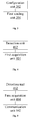
- An embodiment of the present disclosure provides an example method for sending a grant signalling, and as shown in Fig. 1 , the method includes the following steps:
- the grant signalling is sent to multiple pieces of UE through one M-PDCCH, so that overall PDCCH overhead is reduced, the technical problem that data throughput and spectral efficiency of the system are reduced by higher PDCCH overhead caused by the fact that one PDCCH or EPDCCH signalling can be granted to only one piece of UE in the related technology is solved, and the technical effect of improving the data throughput and spectral efficiency of the system is achieved.
- a control information format (e.g., DCI format) of the M-PDCCH may include, but not limited to: a common information field and/or a UE-specific information field, wherein the common information field and/or the UE-specific information field contains the grant signalling.
- the M-PDCCH may include: an M-PDCCH bearing an UL grant and/or an M-PDCCH bearing a DL grant. Contents of the common information fields corresponding to the M-PDCCHs in the two forms are described below.
- the common information field may include, but not limited to, at least one of information fields as follows: an MCS and redundancy version information field, a resource allocation information field, a carrier indicator information field, a new data indicator information field, an UL DMRS information field, a CSI request information field, an SRS request information field and a frequency hopping indicator information field.
- the common information field may include, but not limited to, at least one of information fields as follows: an MCS information field, a HARQ process number information field, a resource allocation information field, a carrier indicator information field, a new data indicator information field, a redundancy version information field and an SRS request information field.
- the M-PDCCH is mainly configured according to a set location order and contents of the common information field and the UE-specific information field in the corresponding DCI format.
- configuring one M-PDCCH includes: sequencing the common information field and the UE-specific information field according to a predefined arrangement order of the common information field and the UE-specific information field in the control information format of the M-PDCCH; or sequencing the UE-specific information fields of various pieces of UE according to a predefined arrangement order of the UE-specific information fields of various pieces of UE in the N pieces of UE.
- sequencing the UE-specific information field of each piece of UE according to the predefined arrangement order of the UE-specific information field of each piece of UE in the N pieces of UE includes: configuring one index to each piece of UE in the N pieces of UE, and sequencing the UE-specific information field of each piece of UE in the N pieces of UE according to indication of the index of each piece of UE; and/or sequencing the UE-specific information field of each piece of UE in the N pieces of UE according to N values obtained by a modulo operation taking N C-RNTIs of the N pieces of UE as dividends and N as divisors, wherein the N values obtained by the modulo operation taking the N C-RNTIs of the N pieces of UE corresponding to the same M-PDCCH as dividends and N as divisors are different from each other.
- the arrangement order of the common information field and the UE-specific information field is predefined in the control information format of the M-PDCCH; and the UE-specific information fields of various pieces of UE in the control information format of the M-PDCCH are sequenced according to a rule, wherein sequencing according to the rule may include that: an eNodeB configures one index to each of the N pieces of UE, and then sequencing is performed according to the indexes of the N pieces of UE; or it is limited that such requirement should be met: the N values obtained by a modulo operation taking N C-RNTIs corresponding to the N pieces of UE on the same M-PDCCH as dividends and N as divisors, i.e., (C-RNTI mod N), should be different from each other, and then sequencing is performed according to numerical values of C-RNTIs mod N.
- C-RNTI mod N the N values obtained by a modulo operation taking N C-RNTIs corresponding to the N pieces of UE on the same M-PDCCH as
- the eNodeB configures an RNTI (recorded as an M-RNTI) shared by the N pieces of UE to the N pieces of UE, and the M-RNTI is used for detecting the M-PDCCH.
- the method further includes: configuring one M-RNTI to the N pieces of UE through a high-layer signalling, wherein the M-RNTI corresponds to the M-PDCCH.
- the M-PDCCH may employ the resource allocation information field as the common information field, and the resource allocation information field is used for indicating one group of resources, wherein the one group of resources includes N parts of sub-resources, and the N parts of sub-resources are transmitted to the N pieces of UE according to a predefined resource indication rule, wherein one-to-one correspondence exists between the N parts of sub-resources and the N pieces of UE.
- the predefined resource indication rule may include that: each piece of UE in the N pieces of UE corresponds to one index respectively, and one-to-one correspondence exists between indexes of the N pieces of UE and the N parts of sub-resources; and/or a modulo operation is performed taking N C-RNTIs of the N pieces of UE as dividends and N as divisors, and one-to-one correspondence exists between N values obtained by the modulo operation and the N parts of sub-resources, wherein the N values obtained by the modulo operation taking the N C-RNTIs of the N pieces of UE corresponding to the same M-PDCCH as dividends and N as divisors are different from each other.
- the one-to-one correspondence between the N parts of sub-resources and the N pieces of UE in the predefined resource indication rule may be changed along with a change in a subframe index.
- the correspondence is constructed according to (C-RNTI + SubframeIndex) mod N or (Signal + SubframeIndex) mod N, wherein SubframeIndex represents the subframe index, and Signal represents a predefined value.
- the one group of resources are continuous resources, or the one group of resources include N clusters of resources, wherein resources of each cluster in the N clusters of resources are continuous resources on a frequency band, different clusters of resources are discontinuous, and each cluster of resources is namely one part of sub-resources; or the one group of resources indicated by the resource allocation information field is equally divided into N parts of sub-resources according to a predefined rule, wherein the predefined rule may include: sequential division and extraction at preset intervals.
- the correspondence between the N parts of sub-resources and the N pieces of UE may be indicated by adding one resource exchange indicator, and in another example embodiment, an indicator may further be added to indicate whether to reorganize the correspondence of the N parts of sub-resources.
- the eNodeB may indicate the same resource to the N pieces of UE through the resource allocation information field, and the N pieces of UE perform data communication with an eNodeB on the same resource by virtue of a multi-user MIMO multi-antenna technology.
- a correspondence between each piece of UE in the N pieces of UE and antenna ports may be determined according to at least one piece of the following predefined information: signalling, C-RNTI, subframe index, and predefined value.
- a payload of a control information format (e.g., DCI format Payload) of the M-PDCCH is the same as a payload of a certain control information format for single-user grant.
- the M-PDCCH may include: a single-TTI grant M-PDCCH and a multi-TTI grant M-PDCCH.
- the M-PDCCH may support multi-user scheduling and may also support single-user scheduling, and a scheduling manner for the M-PDCCH may be indicated by an RNTI and/or CRC for scrambling the M-PDCCH.
- the method further includes: sending a common grant signalling to the N pieces or UE and/or sending a UE-specific grant signalling to each of one or more pieces of UE in the N pieces of UE, wherein one or more of the shared grant signalling, the UE-specific grant signalling and the common grant signalling are sent to the N pieces of UE.
- the UE-specific grant signalling (specific for one UE), the shared grant signalling (shared by multiple pieces of UE) and the common grant signalling (common to all the UE) may be simultaneously transmitted, or any two of the three may be transmitted, or any one of the three may be transmitted, or none of the three is transmitted.
- the shared grant signalling may be sent in a manner of: sending, through the M-PDCCH, the shared grant signalling to the N pieces of UE in a search space shared by the N pieces of UE; the common grant signalling may be sent in a manner of: sending the common grant signalling to the N pieces of the UE in a common search space; and the UE-specific grant signalling may be sent in a manner of: sending the UE-specific grant signalling in one or more of the common search space, the search space shared by the N pieces of the UE and a UE-specific search space.
- the value of N may be notified to the UE through an RRC signalling.
- an example method for acquiring a grant signalling is further provided, and from a UE side, as shown in Fig. 2 , the method includes the following steps:
- acquiring the grant signalling in the M-PDCCH in Step S204 may include: acquiring the grant signalling according to a control information format of the M-PDCCH, wherein the control information format includes: a common information field and/or a UE-specific information field, wherein the common information field and/or the UE-specific information field contains the grant signalling.
- a piece of UE determines, according to a predefined resource indication rule, one part of sub-resources corresponding to the UE itself in one group of resources indicated by the resource allocation information field, wherein the one group of resources includes N parts of sub-resources, wherein one-to-one correspondence exists between the N parts of sub-resources and the N pieces of UE.
- the one group of resources is divided into the N parts of sub-resources in, but not limited to, at least one of manners as follows: sequential division and extraction at preset intervals.
- the UE determining, according to the predefined resource indication rule, one part of sub-resources corresponding to the UE itself in the one group of resources indicated by the resource allocation information field includes: the UE determining one part of sub-resources corresponding to the UE itself according to an index corresponding to the UE; or the UE performing a modulo operation taking its own C-RNTI as a dividend and N as a divisor, and determining one part of sub-resources corresponding to the UE itself according to a correspondence between the value obtained by the modulo operation and its corresponding part of sub-resources.
- the one group of resources are continuous resources, or the one group of resources include N clusters of resources, wherein resources of each cluster in the N clusters of resources are continuous resources on a frequency band, and different clusters of resources are discontinuous.
- the method may further include: after the grant signalling in the M-PDCCH is acquired, communicating with an eNodeB according to a manner indicated by the common information field and/or the UE-specific information field.
- the M-PDCCH may be detected, according to an M-RNTI configured by an eNodeB, to acquire the common information field and/or the UE-specific information field, and communication with the eNodeB may be performed according to the manner indicated by the acquired common information field and/or UE-specific information field.
- the shared grant signalling may be acquired in a manner of: detecting the M-PDCCH in a search space shared by the N pieces of UE to acquire the shared grant signalling; the common grant signalling may be acquired in a manner of: acquiring the common grant signalling in a common search space; and the UE-specific grant signalling may be acquired in one of manners as follows: acquiring the UE-specific grant signalling in the common search space, or acquiring the UE-specific grant signalling in the common search space and a UE-specific search space, or acquiring the UE-specific grant signalling in the common search space, the search space shared by the N pieces of UE and the UE-specific search space.
- the M-PDCCH may be transmitted on a PDCCH, and may be transmitted on an EPDCCH alternatively, wherein each M-PDCCH corresponds to one control information format.
- a device for sending a grant signalling is further provided, which is preferably located in an eNodeB and configured to implement the abovementioned embodiments and example embodiments, and what has been described will not be repeated.
- a term "unit” or “module”, used below, is a combination of software and/or hardware capable of realizing preset functions.
- the device described in the following embodiment is preferably implemented by software, but the implementation of the device with hardware or the combination of software and hardware is also possible and conceivable.
- Fig. 3 is an example structure diagram of a grant signaling sending device according to an embodiment of the present disclosure, and as shown in Fig. 3 , the device includes: a configuration unit 302 and a first sending unit 304. The structure is described below.
- the configuration unit 302 is configured to configure an M-PDCCH; and the first sending unit 304 is coupled with the configuration unit 302, and is used for sending a grant signalling to N pieces of UE through the M-PDCCH, wherein N is a positive integer more than 1.
- the configuration unit 302 includes: a first sequencing module, configured to sequence a common information field and a UE-specific information field according to a predefined arrangement order of the common information field and the UE-specific information field in a control information format of the M-PDCCH; or a second sequencing module, configured to sequence the UE-specific information fields of various pieces of UE according to a predefined arrangement order of the UE-specific information fields of various pieces of UE in the N pieces of UE.
- a first sequencing module configured to sequence a common information field and a UE-specific information field according to a predefined arrangement order of the common information field and the UE-specific information field in a control information format of the M-PDCCH
- a second sequencing module configured to sequence the UE-specific information fields of various pieces of UE according to a predefined arrangement order of the UE-specific information fields of various pieces of UE in the N pieces of UE.
- the grant signalling sent by the first sending unit 304 includes: a shared grant signalling; and the device further includes: a second sending unit, configured to send a common grant signalling to the N pieces or UE, and/or a third sending unit, configured to send a UE-specific grant signalling to each of one or more pieces of UE in the N pieces of UE.
- the first sending unit 304 includes: a first sending module, configured to send, through the M-PDCCH, the shared grant signalling to the N pieces of UE in a search space shared by the N pieces of UE; the second sending unit includes: a second sending module, configured to send the common grant signalling to the N pieces of the UE in a common search space; and the third sending unit includes: a third sending module, configured to send the UE-specific grant signalling in one or more of the common search space, the search space shared by the N pieces of the UE and a UE-specific search space.
- Another embodiment of the present disclosure further provides a device for acquiring a grant signalling, which is preferably located in UE and, as shown in Fig. 4 , includes: a detection unit 402, configured to detect an M-PDCCH, wherein the M-PDCCH is used for sending a grant signalling to N pieces of UE, and N is a positive integer more than 1; and a first acquisition unit 404, coupled with the detection unit 402 and configured to acquire the grant signalling in the M-PDCCH.
- the first acquisition unit 404 includes: an acquisition module, configured to acquire the grant signalling according to a control information format of the M-PDCCH, wherein the control information format includes: a common information field and/or a UE-specific information field, wherein the common information field and/or the UE-specific information field contains the grant signalling.
- the device further includes: a determination unit, configured to, under a condition that the common information field includes a resource allocation information field, determine, according to a predefined resource indication rule, one part of sub-resources corresponding to a piece of UE, where the determination unit locates, in one group of resources indicated by the resource allocation information field, wherein the one group of resources includes N parts of sub-resources, wherein one-to-one correspondence exists between the N parts of sub-resources and the N pieces of UE.
- a determination unit configured to, under a condition that the common information field includes a resource allocation information field, determine, according to a predefined resource indication rule, one part of sub-resources corresponding to a piece of UE, where the determination unit locates, in one group of resources indicated by the resource allocation information field, wherein the one group of resources includes N parts of sub-resources, wherein one-to-one correspondence exists between the N parts of sub-resources and the N pieces of UE.
- the determination unit includes: a first determination module, configured to determine one part of sub-resources corresponding to the UE according to an index corresponding to the UE; or a second determination module, configured to perform a modulo operation taking a C-RNTI of the UE as a dividend and N as a divisor, and determine one part of sub-resources corresponding to the UE according to a correspondence between the value obtained by the modulo operation and its corresponding part of sub-resources.
- the one group of resources are continuous resources, or the one group of resources include N clusters of resources, wherein resources of each cluster in the N clusters of resources are continuous resources on a frequency band, and different clusters of resources are discontinuous.
- the device further includes: a communication unit 502, coupled with the first acquisition unit 404 and configured to, after the grant signalling in the M-PDCCH is acquired, communicate with an eNodeB according to a manner indicated by the common information field and/or the UE-specific information field.
- a communication unit 502 coupled with the first acquisition unit 404 and configured to, after the grant signalling in the M-PDCCH is acquired, communicate with an eNodeB according to a manner indicated by the common information field and/or the UE-specific information field.
- the detection unit includes: a detection module, configured to detect the M-PDCCH according to an M-RNTI configured by an eNodeB.
- the grant signalling acquired by the first acquisition unit includes: a shared grant signalling; and the device further includes a second acquisition unit, configured to acquire a common grant signalling, and/or a third acquisition unit, configured to acquire a UE-specific grant signalling
- the first acquisition unit may include: a first acquisition module, configured to detect the M-PDCCH in a search space shared by the N pieces of UE to acquire the shared grant signalling
- the second acquisition unit includes: a second acquisition module, configured to acquire the common grant signalling in a common search space
- the third acquisition unit includes: a third acquisition module, configured to acquire the UE-specific grant signalling in one of manners as follows: acquiring the UE-specific grant signalling in the common search space, or acquiring the UE-specific grant signalling in the common search space and a UE-specific search space, or acquiring the UE-specific grant signalling in the common search space, the search space shared by the N pieces of UE and the UE-specific search space.
- the physical downlink control information (DCI) of an LTE system consists of multiple information fields, and the numbers of information fields and bit overhead of each information field in different DCI formats are different, specifically as shown in 3GPP TS 36.212.
- DCI formats proportions of overhead of a resource allocation information field and an MCS information field are higher, but these information fields may be the same for multiple pieces of UE, or may be jointly indicated to reduce the overhead.
- only single-UE grant signalling design is proposed in the related art, and in some circumstances, excessive DCI overhead may cause influence on throughput of the system.
- the embodiments of the present disclosure propose a multi-user grant signalling joint sending method for reducing DCI overhead, a processing principle is to send a grant signalling to multiple pieces of UE through one M-PDCCH.
- a processing principle is to send a grant signalling to multiple pieces of UE through one M-PDCCH.
- the technical solution has the advantages that the overall overhead is reduced on the premise of ensuring effective indication of each necessary information field.
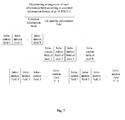
- Fig. 6 and Fig. 7 are example diagrams of a control information format (e.g., DCI format) of an M-PDCCH in a method according to an embodiment of the present disclosure.
- the DCI format predefines arrangement locations of a common information field and a UE-specific information field in the format: as shown in Fig. 6 , the DCI format includes X common information fields and Y UE-specific information fields, wherein the X common information fields are arranged in front according to a preset rule, the Y UE-specific information fields are arranged behind according to the preset rule, and the same type of UE-specific information fields of various pieces of UE are arranged together according to a UE arrangement rule; or, as shown in Fig.
- the DCI format includes X common information fields which are arranged in front according to a preset rule, then all the UE-specific information fields of each piece of UE are arranged according to a preset rule at first, and then all of the UE-specific information fields of various pieces of UE are arranged according to a UE arrangement rule, wherein the numbers of types of the UE-specific information fields of each piece of UE may be different, for example, Y_1 and Y_N may be adopted for representation.
- a multi-user UL grant signalling joint-sending method may include: predefining a control information format of an M-PDCCH for joint-sending UL grant signalling of two users, the control information format sequentially including the following information fields: ⁇ a resource allocation information field (common information field), a CSI request information field (common information field), an SRS request information field (common information field), a frequency hopping indicator information field (common information field), a power control command information field of the user with index 0, a power control command information field of the user with index 1, a new data indicator information field of the user with index 0, a new data indicator information field of the user with index 1, an MCS and redundancy version information field of the user with index 0, an MCS and redundancy version information field of the user with index 1, an UL DMRS information field of the user with index 0, an UL DMRS information field of the user with index 1 ⁇ , wherein the sequence of the information fields is not limited as long as a fixed sequence is predetermined, and an CSI request information field (
- the eNodeB pairs and groups a part of UE in a connected state according to a current condition, and configures one M-RNTI for each group through a high-layer signalling, wherein M-PDCCHs are in one-to-one correspondence with M-RNTIs, and the two users in the group can detect the M-PDCCH bearing their UL grant according to the M-RNTI.
- indexes i.e. index 0 and index 1
- indexes are respectively configured to the two users in each group through a high-layer signalling, and each user in the group can acquire information in its own UE-specific information field only according to the index.
- the information in the common information fields is acquired by both users.
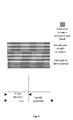
- the eNodeB indicates one group of resources through the resource allocation information field, as shown in Fig. 8 , the one group of resources is equally divided into two parts, and according to higher and lower locations on frequency band, the lower resources are determined to be the first part of sub-resources, which are the resources allocated to the user with index 0, and the sub-resources of the second part are resources allocated to the user with index 1.
- a 1-bit exchange indicator used for indicating whether to perform resource exchange or not may be added into the resource allocation information field, when the exchange indicator is 0, it is indicated that no resources are exchanged, and the sub-resources of the first part are still the resources allocated to the user with index 0, and when the exchange indicator is 1, it is indicated to exchange the resources, and the sub-resources of the first part become the resources allocated to the user with index 1.
- Fig. 8 shows a group of resources which are continuous on frequency band, and the content in Fig. 8 only serves as an example, and the resource allocation information field may indicate a group of continuous resources or a group of discrete resources according to a resource allocation method. The other information fields in the common information fields indicate completely the same content for the two users.
- a multi-user UL grant signalling joint-sending method may include: predefining a control information format of an M-PDCCH for joint-sending UL grant signalling of two users, the control information format sequentially including the following information fields: ⁇ a resource allocation information field (common information field), a CSI request information field (common information field), an SRS request information field (common information field), a frequency hopping indicator information field (common information field), an UL DMRS information field (common information field), a power control command information field of user 1, a power control command information field of user 2, a new data indicator information field of user 1, a new data indicator information field of user 2, an MCS and redundancy version information field of user 1, an MCS and redundancy version information field of user 2 ⁇ , wherein the sequence of the information fields is not limited as long as a fixed sequence is predetermined, and an eNodeB and UE both follow the sequence of the information fields in the control information format.
- the users acquire information in their own UE-specific information fields from the control information format of the M-PDCCH according to such an appointed relationship. The information in the common information fields is acquired by both users.
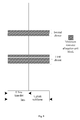
- the eNodeB indicates one group of resources through the resource allocation information field, as shown in Fig. 9 , the one group of resources always includes two clusters, each cluster is a part of continuous resources, the two clusters are discontinuous, and the sizes of the two clusters of resources may be different, and is indicated by a resource allocation manner. It is pre-appointed that according to higher and lower locations on frequency band, the lower resources are determined to be the first part of sub-resources, which are the resources allocated to user 0, and the sub-resources of the second part are resources allocated to user 1.
- a 1-bit exchange indicator used for indicating whether to perform resource exchange or not may be added into the resource allocation information field, when the exchange indicator is 0, it is indicated that no resources are exchanged, and the sub-resources of the first part are still the resources allocated to user 0, and when the exchange indicator is 1, it is indicated to exchange the resources, and the sub-resources of the first part become the resources allocated to user 1.
- the other information fields in the common information fields indicate completely the same content for the two users.
- a multi-user UL grant signalling joint-sending method may include: predefining a control information format of an M-PDCCH for joint-sending UL grant signalling of two users, the control information format sequentially including the following information fields: ⁇ a resource allocation information field (common information field), a CSI request information field (common information field), an SRS request information field (common information field), a frequency hopping indicator information field (common information field), a power control command information field of the user with index 0, a power control command information field of the user with index 1, a new data indicator information field of the user with index 0, a new data indicator information field of the user with index 1, an MCS and redundancy version information field of the user with index 0, an MCS and redundancy version information field of the user with index 1, an UL DMRS information field of the user with index 0, an UL DMRS information field of the user with index 1 ⁇ , wherein the sequence of the information fields is not limited as long as a fixed sequence is predetermined, and an CSI request information field (
- the eNodeB pairs and groups a part of UE in a connected state according to a current condition, and configures one M-RNTI for each group through a high-layer signalling, wherein M-PDCCHs are in one-to-one correspondence with M-RNTIs, and the two users in the group can detect the M-PDCCH bearing an UL grant according to the M-RNTI.
- indexes i.e. index 0 and index 1
- indexes are respectively configured to the two users in each group through a high-layer signalling, and each user in the group can acquire information in its own UE-specific information field only according to the index.
- the information in the common information fields is acquired by both users.
- the eNodeB indicates one group of resources through the resource allocation information field, and the eNodeB assigns that various users use the group of resources together.
- the two users perform data communication with the eNodeB on the same resource by virtue of a multi-user MIMO multi-antenna technology, and the UE configures high-orthogonality reference signals for distinguishing the users through the UL DMRS information fields.
- Antenna ports and/or DMRS sequences corresponding to each user are determined according to predefined information, wherein the predefined information includes, but not limited to, at least one of: signalling (RRC), C-RNTIs and a subframe index.
- RRC signalling
- an LTE-system-based multi-user UL grant signalling joint-sending method includes: predefining a control information format (called DCI format 4M) of an M-PDCCH for joint-sending UL grant signalling of two users, so that a payload of DCI format 4M is the same as a payload of DCI format 4 of an LTE PDCCH/EPDCCH, wherein the payload refers to the total number of bits of the DCI format (because CRC in both DCI formats has 16 bits, CRC is not included in the payload), and includes bits of each information field and padding bits, so as to conveniently avoid increase of PDCCH/EPDCCH blind detection times.
- DCI format 4M control information format
- the payload refers to the total number of bits of the DCI format (because CRC in both DCI formats has 16 bits, CRC is not included in the payload), and includes bits of each information field and padding bits, so as to conveniently avoid increase of PDCCH/EPDCCH blind detection times.
- DCI format 4M sequentially includes the following information fields: ⁇ a 14-bit resource allocation information field (common information field), a 1-bit exchange indicator information field (common information field), a 1-bit frequency hopping indicator information field (common information field), a 3-bit UL DMRS information field (common information field), a 2-bit power control command information field of a user with index 0, a 2-bit power control command information field of a user with index 1, a 1-bit new data indicator information field of the user with index 0, a 1-bit new data indicator information field of the user with index 1, a 5-bit MCS and redundancy version information field of the user with index 0, a 5-bit MCS and redundancy version information field of the user with index 1, a 1-bit CSI request information field of the user with index 0, a 1-bit CSI request information field of the user with index 0, a 1-bit CSI request information field of the user with index 0, a 1-bit CSI request information field of the user with index 0, a 1-bit CSI request information field of the user with index 0, a 1-
- the eNodeB pairs and groups a part of users in a connected state according to a current condition, and configures one M-RNTI for each group through a high-layer signalling.
- the two users in the group detect the M-PDCCH of DCI format 4M according to the M-RNTI, and the two users perform M-PDCCH and single-user PDCCH/EPDCCH blind detection in a search space which is shared by the two users and determined according to the M-RNTI, and do not detect a search space determined according to C-RNTIs, so that increase of blind detection times is avoided.
- indexes i.e. index 0 and index 1
- each user in the group can acquire information in its own UE-specific information field only according to the index.
- the information in the common information fields is acquired by both users.
- the eNodeB adopts a discontinuous resource allocation manner, i.e., an existing UL resource allocation type 1 to allocate two clusters through the resource allocation information field, wherein each cluster is a part of continuous resources, the two clusters are discontinuous, and the sizes of different clusters of resources may be different.
- the overhead of the resource allocation information field under the 20Mhz system bandwidth is 14-bits. It is appointed that according to higher and lower locations on frequency band, the lower cluster is determined to be the first part of sub-resources which are the resources allocated to user 0, and the sub-resources of the second part are resources allocated to user 1.
- the 1-bit exchange indication information improves resource allocation flexibility.
- a 1-bit exchange indicator used for indicating whether to perform resource exchange or not may be added into the resource allocation information field, when the exchange indicator is 0, it is indicated that no resources are exchanged, and the sub-resources of the first part are still the resources allocated to the user with index 0, and when the exchange indicator is 1, it is indicated to exchange the resources, and the sub-resources of the first part become the resources allocated to the user with index 1.
- the other information fields in the common information fields indicate completely the same content for the two users.
- the M-PDCCH may be a single-TTI grant M-PDCCH or a multi-TTI grant M-PDCCH, and a high-layer signalling semi-static configuration manner may be adopted to configure whether the M-PDCCH is effective in single-TTI grant or 2 or 4-TTI grant, so that overhead of LTE control signalling is further reduced.
- an LTE-system-based multi-user DL grant signalling joint-sending method includes: predefining a control information format (called DCI format 2M) of an M-PDCCH for joint-sending DL grant signalling of two users.
- the DCI format 2M at least includes one common information field, and a payload of DCI format 2M is made the same as a payload of DCI format 4 of an LTE PDCCH/EPDCCH.
- An eNodeB pairs and groups a part of users in a connected state according to a current condition, and configures one M-RNTI for each group through a high-layer signalling.
- the two users in the group detect the M-PDCCH corresponding to DCI format 2M according to the M-RNTI, and the two users perform M-PDCCH and single-user PDCCH/EPDCCH blind detection in a search space which is shared by the two users and determined according to the M-RNTI, and do not detect a search space determined according to C-RNTIs, so that increase of blind detection times is avoided.
- indexes i.e. index 0 and index 1
- each user in the group can acquire information in its own UE-specific information field only according to the index.
- the information in the common information fields is acquired by both users.
- the eNodeB allocates 2 clusters on the basis of a certain existing-LTE-based resource allocation type through a resource allocation information field, wherein each cluster is a part of continuous resources, the two clusters are discontinuous, and the sizes of different clusters of resources may be different. It is appointed that according to higher and lower locations on frequency band, the lower cluster is determined to be the first part of sub-resources which are resources allocated to user 0, and the sub-resources of the second part are resources allocated to user 1.
- the 1-bit exchange indication information field improves resource allocation flexibility.
- a 1-bit exchange indicator used for indicating whether to perform resource exchange or not may be added into the resource allocation information field, when the exchange indicator is 0, it is indicated that no resources are exchanged, and the sub-resources of the first part are still the resources allocated to the user with index 0, and when the exchange indicator is 1, it is indicated to exchange the resources, and the sub-resources of the first part become the resources allocated to the user with index 1.
- the other information fields in the common information fields indicate completely the same content for the two users.
- a multi-user UL grant signalling joint-sending method includes: predefining a control information format of an M-PDCCH for joint-sending UL grant signalling of three users, the control information format sequentially including the following information fields: ⁇ a resource allocation information field (common information field), a CSI request information field (common information field), an SRS request information field (common information field), a frequency hopping indicator information field (common information field), an UL DMRS information field (common information field), a power control command information field of user 1, a power control command information field of user 2, a power control command information field of user 3, a new data indicator information field of user 1, a new data indicator information field of user 2, a new data indicator information field of user 3, an MCS and redundancy version information field of user 1, an MCS and redundancy version information field of user 2, an MCS and redundancy version information field of user 3 ⁇ , wherein the sequence of the information fields is not limited as long as a fixed sequence is predetermined, and an MCS and redundancy
- the UE acquires information in its own UE-specific information field from the control information format of the M-PDCCH according to such an appointed relationship, and information in the common information fields is acquired by the three users.
- the eNodeB indicates one group of resources through the resource allocation information field, the one group of resources always includes three clusters, each cluster is a part of continuous resources, the three clusters are discontinuous, and the sizes of different clusters of resources may be different, and are indicated by a resource allocation manner. It is appointed that according to higher and lower locations on frequency band, the lower cluster is determined to be the first part of sub-resources which are resources allocated to user 0, the sub-resources of the second part are resources allocated to user 1, and the sub-resources of the third part are resources allocated to user 2.
- a 2-bit exchange indicator used for indicating whether to perform resource exchange or not may be added into the resource allocation information field, when the exchange indicator is 00, it is indicated that no resources are exchanged, and the sub-resources of each part are still the resources allocated to the users with corresponding indexes; when the exchange indicator is 01, it is indicated to exchange the resources, the sub-resources of the first part become the resources allocated to the user with index 1, the sub-resources of the second part become the resources allocated to the user with index 2 and the sub-resources of the third part become the resources allocated to the user with index 0; when the exchange indicator is 10, it is indicated to exchange the resources, the sub-resources of the first part become the resources allocated to the user with index 2, the sub-resources of the second part become the resources allocated to the user with index 0 and the sub-resources of the third part become the resources allocated to the user with index 1; and when the exchange indicator is 11, it is indicated to exchange the resources, the sub-re
- an LTE-system-based multi-user method for sending a grant signalling includes: predefining a control information format (called DCI format X) of an M-PDCCH for sending UL grant signalling of N users, wherein under a condition that a common information field includes a resource allocation information field, the resource allocation information field indicates the same resource to N pieces of UE, and the N pieces of UE perform data communication with an eNodeB on the same resource by virtue of a multi-user MIMO multi-antenna technology.
- the N pieces of UE have the same MCS level or are configured with their respective MCS levels through signalling.
- a correspondence between each piece of UE in the N pieces of UE and antenna ports is determined according to at least one piece of the following predefined information: signalling, C-RNTIs, a subframe index and a predefined value.
- the antenna ports corresponding to various pieces of UE are configured through specific RRC signalling respectively, or it is determined that different users correspond to different antenna ports according to modulo operation taking the C-RNTIs as dividends, or the manner for determining the antenna ports is changed along with a change in the subframe index.
- a reference signal sequence corresponding to the antenna ports may be determined according to at least one of the signalling, the C-RNTIs, the subframe index and the predefined value.
- software is further provided, which is configured to execute the technical solutions described in the abovementioned embodiments and example embodiments.
- a storage medium in which the abovementioned software is stored, the storage medium including, but not limited to: a compact disc, a floppy disk, a hard disk, an erasable memory and the like.
- the embodiments of the present disclosure achieve the following technical effects: the grant signalling is sent to multiple pieces of UE through one M-PDCCH, so that overall PDCCH overhead is reduced, the technical problem that data throughput and spectral efficiency of the system are reduced by higher PDCCH overhead caused by the fact that one PDCCH or EPDCCH signalling can be granted to only one piece of UE in the related technology is solved, and the technical effect of improving the data throughput and spectral efficiency of the system is achieved.
- each module or step of the present disclosure may be implemented by a universal computing device, and the modules or steps can be concentrated on a single computing device or distributed on a network formed by a plurality of computing devices, and may optionally be implemented by programmable codes executable for the computing devices, so that the modules or steps may be stored in a storage device for execution with the computing devices, or the shown or described steps may be executed in a sequence different from the sequence here under a certain condition, or the modules or steps may form each integrated circuit module, or multiple modules or steps therein may form a single integrated circuit module for implementation.
- the present disclosure is not limited to any specific hardware and software combination.
- the technical solutions provided by the embodiments of the present disclosure may be applied to the field of communication, the technical problem that data throughput and spectral efficiency of a system are reduced by higher PDCCH overhead caused by the fact that one PDCCH or EPDCCH signalling can be granted to only one piece of UE in the related technology is solved, and the technical effect of improving the data throughput and spectral efficiency of the system is achieved.
Landscapes
- Engineering & Computer Science (AREA)
- Signal Processing (AREA)
- Computer Networks & Wireless Communication (AREA)
- Mobile Radio Communication Systems (AREA)
Applications Claiming Priority (2)
| Application Number | Priority Date | Filing Date | Title |
|---|---|---|---|
| CN201310135921.4A CN104113925B (zh) | 2013-04-18 | 2013-04-18 | 授权信令发送、获取方法及装置 |
| PCT/CN2013/091099 WO2014169694A1 (fr) | 2013-04-18 | 2013-12-31 | Procédé et appareil d'envoi et d'acquisition de signalisation d'autorisation |
Publications (3)
| Publication Number | Publication Date |
|---|---|
| EP2988564A1 true EP2988564A1 (fr) | 2016-02-24 |
| EP2988564A4 EP2988564A4 (fr) | 2016-04-06 |
| EP2988564B1 EP2988564B1 (fr) | 2018-05-02 |
Family
ID=51710519
Family Applications (1)
| Application Number | Title | Priority Date | Filing Date |
|---|---|---|---|
| EP13882249.9A Not-in-force EP2988564B1 (fr) | 2013-04-18 | 2013-12-31 | Procédés et appareils d'envoi et d'acquisition de signalisation d'autorisation |
Country Status (4)
| Country | Link |
|---|---|
| US (1) | US10021718B2 (fr) |
| EP (1) | EP2988564B1 (fr) |
| CN (1) | CN104113925B (fr) |
| WO (1) | WO2014169694A1 (fr) |
Cited By (2)
| Publication number | Priority date | Publication date | Assignee | Title |
|---|---|---|---|---|
| WO2016140877A1 (fr) * | 2015-03-02 | 2016-09-09 | Qualcomm Incorporated | Procédés et appareil de sondage et de retour d'informations d'état de canal |
| US10111132B2 (en) | 2015-03-02 | 2018-10-23 | Qualcomm Incorporated | Methods and apparatus for channel state information sounding and feedback |
Families Citing this family (22)
| Publication number | Priority date | Publication date | Assignee | Title |
|---|---|---|---|---|
| US11581999B2 (en) * | 2014-10-08 | 2023-02-14 | Qualcomm Incorporated | Reference signal design for wireless communications |
| CN104469962B (zh) * | 2014-11-14 | 2018-02-23 | 北京邮电大学 | 一种异构网络联合资源调度方法、装置及用户终端 |
| CN106034360B (zh) * | 2015-03-17 | 2020-04-10 | 上海朗帛通信技术有限公司 | 一种多用户叠加的传输方法和装置 |
| CN107615843B (zh) * | 2015-06-24 | 2020-08-07 | 华为技术有限公司 | 上行数据传输的方法和装置 |
| CN106686740A (zh) * | 2015-11-06 | 2017-05-17 | 中兴通讯股份有限公司 | 一种下行控制信息的发送/检测方法、基站及用户设备 |
| WO2017091992A1 (fr) * | 2015-12-03 | 2017-06-08 | 华为技术有限公司 | Procédé de traitement de format d'informations de commande, station de base et équipement d'utilisateur |
| JP7005499B2 (ja) * | 2015-12-21 | 2022-01-21 | クゥアルコム・インコーポレイテッド | 高効率ワイヤレスローカルエリアネットワークのためのプリアンブル設計態様 |
| GB201602150D0 (en) * | 2016-02-05 | 2016-03-23 | Nec Corp | Communication system |
| CN105722229B (zh) * | 2016-02-05 | 2019-08-27 | 北京佰才邦技术有限公司 | 信道的选择方法和装置 |
| WO2018000362A1 (fr) * | 2016-06-30 | 2018-01-04 | 华为技术有限公司 | Procédé de planification de ressources et dispositif correspondant |
| CN107659907B (zh) * | 2016-07-25 | 2022-08-12 | 北京三星通信技术研究有限公司 | 一种接收公共信令的方法及设备 |
| US10334577B2 (en) * | 2016-08-12 | 2019-06-25 | Qualcomm Incorporated | Downlink control channel structure for low latency applications |
| CN110351868B (zh) * | 2018-04-04 | 2022-07-19 | 中国信息通信研究院 | 一种移动通信上行信息调度方法、终端、网络设备和系统 |
| CN110351783B (zh) * | 2018-04-04 | 2022-08-26 | 展讯通信(上海)有限公司 | 未授权频段上的频域资源分配方法、装置及基站 |
| WO2020047806A1 (fr) * | 2018-09-06 | 2020-03-12 | 北京小米移动软件有限公司 | Procédé de transmission d'informations de rétroaction, dispositif, appareil et système |
| AU2018441890B2 (en) | 2018-09-17 | 2022-04-14 | Guangdong Oppo Mobile Telecommunications Corp.,Ltd. | Communication method, terminal device and network device |
| CN111083791B (zh) * | 2018-10-22 | 2021-10-01 | 华为技术有限公司 | 数据传输方法及装置 |
| TWI775045B (zh) * | 2019-02-15 | 2022-08-21 | 聯發科技股份有限公司 | 用於啟用或停用授權配置之方法及裝置 |
| FI3949614T3 (fi) * | 2019-04-02 | 2025-06-10 | Zte Corp | Laskevan siirtosuunnan ohjaussignalointi langattomassa viestinnässä |
| CN111600683B (zh) * | 2019-06-06 | 2022-02-01 | 维沃移动通信有限公司 | 处理方法及设备 |
| CN110138536B (zh) * | 2019-06-11 | 2022-02-08 | 深圳市锐尔觅移动通信有限公司 | 物理下行控制信道的发送方法、装置和存储介质 |
| US12574932B2 (en) * | 2021-07-13 | 2026-03-10 | Apple Inc. | Transmission padding efficiency improvement |
Family Cites Families (10)
| Publication number | Priority date | Publication date | Assignee | Title |
|---|---|---|---|---|
| WO2008015543A2 (fr) * | 2006-08-01 | 2008-02-07 | Nokia Corporation | Structure de canal de commande partagée pour une allocation de ressource mimo à utilisateur multiple |
| JPWO2008114510A1 (ja) * | 2007-03-19 | 2010-07-01 | パナソニック株式会社 | 無線通信基地局装置および無線通信方法 |
| KR101468490B1 (ko) * | 2007-05-02 | 2014-12-10 | 삼성전자주식회사 | 무선 통신 시스템에서 제어 채널들의 집합을 한정하여 송수신하는 방법 및 장치 |
| US8374109B2 (en) * | 2008-03-27 | 2013-02-12 | Qualcomm Incorporated | Methods of sending control information for users sharing the same resource |
| US20110194511A1 (en) * | 2010-02-10 | 2011-08-11 | Qualcomm Incorporated | Multi-user control channel assignment |
| US8270359B2 (en) * | 2010-03-15 | 2012-09-18 | Motorola Mobility Llc | Antenna port information signaling in wireless communication system |
| JP2012080416A (ja) * | 2010-10-04 | 2012-04-19 | Sony Corp | 基地局、無線通信方法、プログラム、無線通信システム、および無線端末 |
| TWI459777B (zh) * | 2011-07-11 | 2014-11-01 | Mediatek Inc | 加強型傳呼的方法及其機器類型通訊裝置 |
| WO2013017154A1 (fr) * | 2011-07-29 | 2013-02-07 | Fujitsu Limited | Canal de commande pour communication sans fil |
| JP6147335B2 (ja) | 2012-05-18 | 2017-06-14 | ロモ ウインド アーゲー | 少なくとも1つの風力タービンブレードのピッチ角を制御するための方法 |
-
2013
- 2013-04-18 CN CN201310135921.4A patent/CN104113925B/zh active Active
- 2013-12-31 WO PCT/CN2013/091099 patent/WO2014169694A1/fr not_active Ceased
- 2013-12-31 EP EP13882249.9A patent/EP2988564B1/fr not_active Not-in-force
- 2013-12-31 US US14/785,065 patent/US10021718B2/en active Active
Cited By (3)
| Publication number | Priority date | Publication date | Assignee | Title |
|---|---|---|---|---|
| WO2016140877A1 (fr) * | 2015-03-02 | 2016-09-09 | Qualcomm Incorporated | Procédés et appareil de sondage et de retour d'informations d'état de canal |
| US10111132B2 (en) | 2015-03-02 | 2018-10-23 | Qualcomm Incorporated | Methods and apparatus for channel state information sounding and feedback |
| US10200101B2 (en) | 2015-03-02 | 2019-02-05 | Qualcomm Incorporated | Methods and apparatus for channel state information sounding and feedback |
Also Published As
| Publication number | Publication date |
|---|---|
| US20160088651A1 (en) | 2016-03-24 |
| CN104113925A (zh) | 2014-10-22 |
| CN104113925B (zh) | 2019-06-11 |
| US10021718B2 (en) | 2018-07-10 |
| WO2014169694A1 (fr) | 2014-10-23 |
| EP2988564B1 (fr) | 2018-05-02 |
| EP2988564A4 (fr) | 2016-04-06 |
Similar Documents
| Publication | Publication Date | Title |
|---|---|---|
| EP2988564B1 (fr) | Procédés et appareils d'envoi et d'acquisition de signalisation d'autorisation | |
| US20230099882A1 (en) | System and Method for Delay Scheduling | |
| US10225058B2 (en) | Terminal device, base station device, communication method, and integrated circuit for processing demodulation reference signals | |
| CN103650447B (zh) | 发射或接收pdcch的方法和用于该方法的用户设备或基站 | |
| KR101598523B1 (ko) | 하향링크 제어 신호 수신 방법 및 사용자기기와, 하향링크 제어 신호 전송 방법 및 기지국 | |
| US20190074949A1 (en) | Demodulation reference signal processing method, base station and user equipment | |
| US9756658B2 (en) | System and method for contention-free random access | |
| US9444557B2 (en) | Terminal device, a base station device, a communication method, and an integrated circuit for processing demodulation reference signals | |
| JP5902821B2 (ja) | 制御チャネルを受信および送信する方法、ユーザ機器ならびに基地局 | |
| US9602255B2 (en) | System and method for data channel transmission and reception | |
| US9426800B2 (en) | Terminal device, base station device, and integrated circuit to determine parameters related to demodulation reference signals (DMRS) | |
| CN101800942A (zh) | Mcch改变信息的传输方法及系统 | |
| EP2911327A1 (fr) | Procédé d'émission-réception d'informations de commande, et appareil à cet effet | |
| US9425933B2 (en) | Terminal device, base station device, and intergrated circuit |
Legal Events
| Date | Code | Title | Description |
|---|---|---|---|
| PUAI | Public reference made under article 153(3) epc to a published international application that has entered the european phase |
Free format text: ORIGINAL CODE: 0009012 |
|
| 17P | Request for examination filed |
Effective date: 20151021 |
|
| AK | Designated contracting states |
Kind code of ref document: A1 Designated state(s): AL AT BE BG CH CY CZ DE DK EE ES FI FR GB GR HR HU IE IS IT LI LT LU LV MC MK MT NL NO PL PT RO RS SE SI SK SM TR |
|
| AX | Request for extension of the european patent |
Extension state: BA ME |
|
| A4 | Supplementary search report drawn up and despatched |
Effective date: 20160303 |
|
| RIC1 | Information provided on ipc code assigned before grant |
Ipc: H04W 72/12 20090101AFI20160226BHEP Ipc: H04W 72/14 20090101ALI20160226BHEP |
|
| DAX | Request for extension of the european patent (deleted) | ||
| STAA | Information on the status of an ep patent application or granted ep patent |
Free format text: STATUS: EXAMINATION IS IN PROGRESS |
|
| 17Q | First examination report despatched |
Effective date: 20170331 |
|
| GRAP | Despatch of communication of intention to grant a patent |
Free format text: ORIGINAL CODE: EPIDOSNIGR1 |
|
| STAA | Information on the status of an ep patent application or granted ep patent |
Free format text: STATUS: GRANT OF PATENT IS INTENDED |
|
| RIC1 | Information provided on ipc code assigned before grant |
Ipc: H04L 5/00 20060101ALI20171101BHEP Ipc: H04W 72/12 20090101AFI20171101BHEP Ipc: H04W 72/14 20090101ALI20171101BHEP |
|
| INTG | Intention to grant announced |
Effective date: 20171204 |
|
| GRAS | Grant fee paid |
Free format text: ORIGINAL CODE: EPIDOSNIGR3 |
|
| GRAA | (expected) grant |
Free format text: ORIGINAL CODE: 0009210 |
|
| STAA | Information on the status of an ep patent application or granted ep patent |
Free format text: STATUS: THE PATENT HAS BEEN GRANTED |
|
| AK | Designated contracting states |
Kind code of ref document: B1 Designated state(s): AL AT BE BG CH CY CZ DE DK EE ES FI FR GB GR HR HU IE IS IT LI LT LU LV MC MK MT NL NO PL PT RO RS SE SI SK SM TR |
|
| REG | Reference to a national code |
Ref country code: GB Ref legal event code: FG4D |
|
| REG | Reference to a national code |
Ref country code: CH Ref legal event code: EP Ref country code: AT Ref legal event code: REF Ref document number: 996595 Country of ref document: AT Kind code of ref document: T Effective date: 20180515 |
|
| REG | Reference to a national code |
Ref country code: DE Ref legal event code: R096 Ref document number: 602013037096 Country of ref document: DE Ref country code: IE Ref legal event code: FG4D |
|
| REG | Reference to a national code |
Ref country code: DE Ref legal event code: R096 Ref document number: 602013037096 Country of ref document: DE |
|
| REG | Reference to a national code |
Ref country code: NL Ref legal event code: MP Effective date: 20180502 |
|
| REG | Reference to a national code |
Ref country code: LT Ref legal event code: MG4D |
|
| PG25 | Lapsed in a contracting state [announced via postgrant information from national office to epo] |
Ref country code: SE Free format text: LAPSE BECAUSE OF FAILURE TO SUBMIT A TRANSLATION OF THE DESCRIPTION OR TO PAY THE FEE WITHIN THE PRESCRIBED TIME-LIMIT Effective date: 20180502 Ref country code: ES Free format text: LAPSE BECAUSE OF FAILURE TO SUBMIT A TRANSLATION OF THE DESCRIPTION OR TO PAY THE FEE WITHIN THE PRESCRIBED TIME-LIMIT Effective date: 20180502 Ref country code: LT Free format text: LAPSE BECAUSE OF FAILURE TO SUBMIT A TRANSLATION OF THE DESCRIPTION OR TO PAY THE FEE WITHIN THE PRESCRIBED TIME-LIMIT Effective date: 20180502 Ref country code: BG Free format text: LAPSE BECAUSE OF FAILURE TO SUBMIT A TRANSLATION OF THE DESCRIPTION OR TO PAY THE FEE WITHIN THE PRESCRIBED TIME-LIMIT Effective date: 20180802 Ref country code: FI Free format text: LAPSE BECAUSE OF FAILURE TO SUBMIT A TRANSLATION OF THE DESCRIPTION OR TO PAY THE FEE WITHIN THE PRESCRIBED TIME-LIMIT Effective date: 20180502 Ref country code: NO Free format text: LAPSE BECAUSE OF FAILURE TO SUBMIT A TRANSLATION OF THE DESCRIPTION OR TO PAY THE FEE WITHIN THE PRESCRIBED TIME-LIMIT Effective date: 20180802 |
|
| PG25 | Lapsed in a contracting state [announced via postgrant information from national office to epo] |
Ref country code: LV Free format text: LAPSE BECAUSE OF FAILURE TO SUBMIT A TRANSLATION OF THE DESCRIPTION OR TO PAY THE FEE WITHIN THE PRESCRIBED TIME-LIMIT Effective date: 20180502 Ref country code: HR Free format text: LAPSE BECAUSE OF FAILURE TO SUBMIT A TRANSLATION OF THE DESCRIPTION OR TO PAY THE FEE WITHIN THE PRESCRIBED TIME-LIMIT Effective date: 20180502 Ref country code: GR Free format text: LAPSE BECAUSE OF FAILURE TO SUBMIT A TRANSLATION OF THE DESCRIPTION OR TO PAY THE FEE WITHIN THE PRESCRIBED TIME-LIMIT Effective date: 20180803 Ref country code: NL Free format text: LAPSE BECAUSE OF FAILURE TO SUBMIT A TRANSLATION OF THE DESCRIPTION OR TO PAY THE FEE WITHIN THE PRESCRIBED TIME-LIMIT Effective date: 20180502 Ref country code: RS Free format text: LAPSE BECAUSE OF FAILURE TO SUBMIT A TRANSLATION OF THE DESCRIPTION OR TO PAY THE FEE WITHIN THE PRESCRIBED TIME-LIMIT Effective date: 20180502 |
|
| REG | Reference to a national code |
Ref country code: AT Ref legal event code: MK05 Ref document number: 996595 Country of ref document: AT Kind code of ref document: T Effective date: 20180502 |
|
| PG25 | Lapsed in a contracting state [announced via postgrant information from national office to epo] |
Ref country code: CZ Free format text: LAPSE BECAUSE OF FAILURE TO SUBMIT A TRANSLATION OF THE DESCRIPTION OR TO PAY THE FEE WITHIN THE PRESCRIBED TIME-LIMIT Effective date: 20180502 Ref country code: RO Free format text: LAPSE BECAUSE OF FAILURE TO SUBMIT A TRANSLATION OF THE DESCRIPTION OR TO PAY THE FEE WITHIN THE PRESCRIBED TIME-LIMIT Effective date: 20180502 Ref country code: PL Free format text: LAPSE BECAUSE OF FAILURE TO SUBMIT A TRANSLATION OF THE DESCRIPTION OR TO PAY THE FEE WITHIN THE PRESCRIBED TIME-LIMIT Effective date: 20180502 Ref country code: EE Free format text: LAPSE BECAUSE OF FAILURE TO SUBMIT A TRANSLATION OF THE DESCRIPTION OR TO PAY THE FEE WITHIN THE PRESCRIBED TIME-LIMIT Effective date: 20180502 Ref country code: SK Free format text: LAPSE BECAUSE OF FAILURE TO SUBMIT A TRANSLATION OF THE DESCRIPTION OR TO PAY THE FEE WITHIN THE PRESCRIBED TIME-LIMIT Effective date: 20180502 Ref country code: AT Free format text: LAPSE BECAUSE OF FAILURE TO SUBMIT A TRANSLATION OF THE DESCRIPTION OR TO PAY THE FEE WITHIN THE PRESCRIBED TIME-LIMIT Effective date: 20180502 Ref country code: DK Free format text: LAPSE BECAUSE OF FAILURE TO SUBMIT A TRANSLATION OF THE DESCRIPTION OR TO PAY THE FEE WITHIN THE PRESCRIBED TIME-LIMIT Effective date: 20180502 |
|
| REG | Reference to a national code |
Ref country code: DE Ref legal event code: R097 Ref document number: 602013037096 Country of ref document: DE |
|
| PG25 | Lapsed in a contracting state [announced via postgrant information from national office to epo] |
Ref country code: IT Free format text: LAPSE BECAUSE OF FAILURE TO SUBMIT A TRANSLATION OF THE DESCRIPTION OR TO PAY THE FEE WITHIN THE PRESCRIBED TIME-LIMIT Effective date: 20180502 Ref country code: SM Free format text: LAPSE BECAUSE OF FAILURE TO SUBMIT A TRANSLATION OF THE DESCRIPTION OR TO PAY THE FEE WITHIN THE PRESCRIBED TIME-LIMIT Effective date: 20180502 |
|
| PLBE | No opposition filed within time limit |
Free format text: ORIGINAL CODE: 0009261 |
|
| STAA | Information on the status of an ep patent application or granted ep patent |
Free format text: STATUS: NO OPPOSITION FILED WITHIN TIME LIMIT |
|
| 26N | No opposition filed |
Effective date: 20190205 |
|
| PG25 | Lapsed in a contracting state [announced via postgrant information from national office to epo] |
Ref country code: SI Free format text: LAPSE BECAUSE OF FAILURE TO SUBMIT A TRANSLATION OF THE DESCRIPTION OR TO PAY THE FEE WITHIN THE PRESCRIBED TIME-LIMIT Effective date: 20180502 |
|
| REG | Reference to a national code |
Ref country code: CH Ref legal event code: PL |
|
| PG25 | Lapsed in a contracting state [announced via postgrant information from national office to epo] |
Ref country code: LU Free format text: LAPSE BECAUSE OF NON-PAYMENT OF DUE FEES Effective date: 20181231 Ref country code: MC Free format text: LAPSE BECAUSE OF FAILURE TO SUBMIT A TRANSLATION OF THE DESCRIPTION OR TO PAY THE FEE WITHIN THE PRESCRIBED TIME-LIMIT Effective date: 20180502 |
|
| REG | Reference to a national code |
Ref country code: BE Ref legal event code: MM Effective date: 20181231 Ref country code: IE Ref legal event code: MM4A |
|
| PG25 | Lapsed in a contracting state [announced via postgrant information from national office to epo] |
Ref country code: IE Free format text: LAPSE BECAUSE OF NON-PAYMENT OF DUE FEES Effective date: 20181231 |
|
| PG25 | Lapsed in a contracting state [announced via postgrant information from national office to epo] |
Ref country code: AL Free format text: LAPSE BECAUSE OF FAILURE TO SUBMIT A TRANSLATION OF THE DESCRIPTION OR TO PAY THE FEE WITHIN THE PRESCRIBED TIME-LIMIT Effective date: 20180502 Ref country code: BE Free format text: LAPSE BECAUSE OF NON-PAYMENT OF DUE FEES Effective date: 20181231 |
|
| PG25 | Lapsed in a contracting state [announced via postgrant information from national office to epo] |
Ref country code: CH Free format text: LAPSE BECAUSE OF NON-PAYMENT OF DUE FEES Effective date: 20181231 Ref country code: LI Free format text: LAPSE BECAUSE OF NON-PAYMENT OF DUE FEES Effective date: 20181231 |
|
| PG25 | Lapsed in a contracting state [announced via postgrant information from national office to epo] |
Ref country code: MT Free format text: LAPSE BECAUSE OF NON-PAYMENT OF DUE FEES Effective date: 20181231 |
|
| PG25 | Lapsed in a contracting state [announced via postgrant information from national office to epo] |
Ref country code: TR Free format text: LAPSE BECAUSE OF FAILURE TO SUBMIT A TRANSLATION OF THE DESCRIPTION OR TO PAY THE FEE WITHIN THE PRESCRIBED TIME-LIMIT Effective date: 20180502 |
|
| PG25 | Lapsed in a contracting state [announced via postgrant information from national office to epo] |
Ref country code: PT Free format text: LAPSE BECAUSE OF FAILURE TO SUBMIT A TRANSLATION OF THE DESCRIPTION OR TO PAY THE FEE WITHIN THE PRESCRIBED TIME-LIMIT Effective date: 20180502 |
|
| PG25 | Lapsed in a contracting state [announced via postgrant information from national office to epo] |
Ref country code: CY Free format text: LAPSE BECAUSE OF FAILURE TO SUBMIT A TRANSLATION OF THE DESCRIPTION OR TO PAY THE FEE WITHIN THE PRESCRIBED TIME-LIMIT Effective date: 20180502 Ref country code: HU Free format text: LAPSE BECAUSE OF FAILURE TO SUBMIT A TRANSLATION OF THE DESCRIPTION OR TO PAY THE FEE WITHIN THE PRESCRIBED TIME-LIMIT; INVALID AB INITIO Effective date: 20131231 Ref country code: MK Free format text: LAPSE BECAUSE OF NON-PAYMENT OF DUE FEES Effective date: 20180502 |
|
| PG25 | Lapsed in a contracting state [announced via postgrant information from national office to epo] |
Ref country code: IS Free format text: LAPSE BECAUSE OF FAILURE TO SUBMIT A TRANSLATION OF THE DESCRIPTION OR TO PAY THE FEE WITHIN THE PRESCRIBED TIME-LIMIT Effective date: 20180902 |
|
| REG | Reference to a national code |
Ref country code: DE Ref legal event code: R082 Ref document number: 602013037096 Country of ref document: DE Ref country code: DE Ref legal event code: R081 Ref document number: 602013037096 Country of ref document: DE Owner name: GUANGDONG OPPO MOBILE TELECOMMUNICATIONS CORP., CN Free format text: FORMER OWNER: ZTE CORPORATION, SHENZHEN, GUANGDONG, CN |
|
| REG | Reference to a national code |
Ref country code: GB Ref legal event code: 732E Free format text: REGISTERED BETWEEN 20210624 AND 20210630 |
|
| PGFP | Annual fee paid to national office [announced via postgrant information from national office to epo] |
Ref country code: DE Payment date: 20211222 Year of fee payment: 9 Ref country code: FR Payment date: 20211229 Year of fee payment: 9 Ref country code: GB Payment date: 20211223 Year of fee payment: 9 |
|
| P01 | Opt-out of the competence of the unified patent court (upc) registered |
Effective date: 20230412 |
|
| REG | Reference to a national code |
Ref country code: DE Ref legal event code: R119 Ref document number: 602013037096 Country of ref document: DE |
|
| GBPC | Gb: european patent ceased through non-payment of renewal fee |
Effective date: 20221231 |
|
| PG25 | Lapsed in a contracting state [announced via postgrant information from national office to epo] |
Ref country code: GB Free format text: LAPSE BECAUSE OF NON-PAYMENT OF DUE FEES Effective date: 20221231 Ref country code: DE Free format text: LAPSE BECAUSE OF NON-PAYMENT OF DUE FEES Effective date: 20230701 |
|
| PG25 | Lapsed in a contracting state [announced via postgrant information from national office to epo] |
Ref country code: FR Free format text: LAPSE BECAUSE OF NON-PAYMENT OF DUE FEES Effective date: 20221231 |