EP2989207B1 - Ko-lösungsmittel zur produktion reaktiver zwischenprodukte aus biomasse - Google Patents
Ko-lösungsmittel zur produktion reaktiver zwischenprodukte aus biomasse Download PDFInfo
- Publication number
- EP2989207B1 EP2989207B1 EP14788138.7A EP14788138A EP2989207B1 EP 2989207 B1 EP2989207 B1 EP 2989207B1 EP 14788138 A EP14788138 A EP 14788138A EP 2989207 B1 EP2989207 B1 EP 2989207B1
- Authority
- EP
- European Patent Office
- Prior art keywords
- thf
- acid
- solvent
- biomass
- furfural
- Prior art date
- Legal status (The legal status is an assumption and is not a legal conclusion. Google has not performed a legal analysis and makes no representation as to the accuracy of the status listed.)
- Active
Links
Images






Classifications
-
- C—CHEMISTRY; METALLURGY
- C13—SUGAR INDUSTRY
- C13K—SACCHARIDES OBTAINED FROM NATURAL SOURCES OR BY HYDROLYSIS OF NATURALLY OCCURRING DISACCHARIDES, OLIGOSACCHARIDES OR POLYSACCHARIDES
- C13K1/00—Glucose; Glucose-containing syrups
- C13K1/02—Glucose; Glucose-containing syrups obtained by saccharification of cellulosic materials
-
- C—CHEMISTRY; METALLURGY
- C07—ORGANIC CHEMISTRY
- C07D—HETEROCYCLIC COMPOUNDS
- C07D307/00—Heterocyclic compounds containing five-membered rings having one oxygen atom as the only ring hetero atom
- C07D307/02—Heterocyclic compounds containing five-membered rings having one oxygen atom as the only ring hetero atom not condensed with other rings
- C07D307/04—Heterocyclic compounds containing five-membered rings having one oxygen atom as the only ring hetero atom not condensed with other rings having no double bonds between ring members or between ring members and non-ring members
- C07D307/06—Heterocyclic compounds containing five-membered rings having one oxygen atom as the only ring hetero atom not condensed with other rings having no double bonds between ring members or between ring members and non-ring members with only hydrogen atoms or radicals containing only hydrogen and carbon atoms, directly attached to ring carbon atoms
- C07D307/08—Preparation of tetrahydrofuran
-
- C—CHEMISTRY; METALLURGY
- C07—ORGANIC CHEMISTRY
- C07D—HETEROCYCLIC COMPOUNDS
- C07D307/00—Heterocyclic compounds containing five-membered rings having one oxygen atom as the only ring hetero atom
- C07D307/02—Heterocyclic compounds containing five-membered rings having one oxygen atom as the only ring hetero atom not condensed with other rings
- C07D307/34—Heterocyclic compounds containing five-membered rings having one oxygen atom as the only ring hetero atom not condensed with other rings having two or three double bonds between ring members or between ring members and non-ring members
- C07D307/38—Heterocyclic compounds containing five-membered rings having one oxygen atom as the only ring hetero atom not condensed with other rings having two or three double bonds between ring members or between ring members and non-ring members with substituted hydrocarbon radicals attached to ring carbon atoms
- C07D307/40—Radicals substituted by oxygen atoms
- C07D307/46—Doubly bound oxygen atoms, or two oxygen atoms singly bound to the same carbon atom
- C07D307/48—Furfural
- C07D307/50—Preparation from natural products
-
- C—CHEMISTRY; METALLURGY
- C07—ORGANIC CHEMISTRY
- C07G—COMPOUNDS OF UNKNOWN CONSTITUTION
- C07G1/00—Low-molecular-weight derivatives of lignin
-
- C—CHEMISTRY; METALLURGY
- C12—BIOCHEMISTRY; BEER; SPIRITS; WINE; VINEGAR; MICROBIOLOGY; ENZYMOLOGY; MUTATION OR GENETIC ENGINEERING
- C12P—FERMENTATION OR ENZYME-USING PROCESSES TO SYNTHESISE A DESIRED CHEMICAL COMPOUND OR COMPOSITION OR TO SEPARATE OPTICAL ISOMERS FROM A RACEMIC MIXTURE
- C12P17/00—Preparation of heterocyclic carbon compounds with only O, N, S, Se or Te as ring hetero atoms
- C12P17/02—Oxygen as only ring hetero atoms
- C12P17/04—Oxygen as only ring hetero atoms containing a five-membered hetero ring, e.g. griseofulvin, vitamin C
-
- C—CHEMISTRY; METALLURGY
- C12—BIOCHEMISTRY; BEER; SPIRITS; WINE; VINEGAR; MICROBIOLOGY; ENZYMOLOGY; MUTATION OR GENETIC ENGINEERING
- C12P—FERMENTATION OR ENZYME-USING PROCESSES TO SYNTHESISE A DESIRED CHEMICAL COMPOUND OR COMPOSITION OR TO SEPARATE OPTICAL ISOMERS FROM A RACEMIC MIXTURE
- C12P19/00—Preparation of compounds containing saccharide radicals
- C12P19/02—Monosaccharides
-
- C—CHEMISTRY; METALLURGY
- C12—BIOCHEMISTRY; BEER; SPIRITS; WINE; VINEGAR; MICROBIOLOGY; ENZYMOLOGY; MUTATION OR GENETIC ENGINEERING
- C12P—FERMENTATION OR ENZYME-USING PROCESSES TO SYNTHESISE A DESIRED CHEMICAL COMPOUND OR COMPOSITION OR TO SEPARATE OPTICAL ISOMERS FROM A RACEMIC MIXTURE
- C12P7/00—Preparation of oxygen-containing organic compounds
- C12P7/02—Preparation of oxygen-containing organic compounds containing a hydroxy group
- C12P7/04—Preparation of oxygen-containing organic compounds containing a hydroxy group acyclic
- C12P7/06—Ethanol, i.e. non-beverage
- C12P7/08—Ethanol, i.e. non-beverage produced as by-product or from waste or cellulosic material substrate
- C12P7/10—Ethanol, i.e. non-beverage produced as by-product or from waste or cellulosic material substrate substrate containing cellulosic material
-
- D—TEXTILES; PAPER
- D21—PAPER-MAKING; PRODUCTION OF CELLULOSE
- D21C—PRODUCTION OF CELLULOSE BY REMOVING NON-CELLULOSE SUBSTANCES FROM CELLULOSE-CONTAINING MATERIALS; REGENERATION OF PULPING LIQUORS; APPARATUS THEREFOR
- D21C3/00—Pulping cellulose-containing materials
- D21C3/20—Pulping cellulose-containing materials with organic solvents or in solvent environment
-
- D—TEXTILES; PAPER
- D21—PAPER-MAKING; PRODUCTION OF CELLULOSE
- D21C—PRODUCTION OF CELLULOSE BY REMOVING NON-CELLULOSE SUBSTANCES FROM CELLULOSE-CONTAINING MATERIALS; REGENERATION OF PULPING LIQUORS; APPARATUS THEREFOR
- D21C3/00—Pulping cellulose-containing materials
- D21C3/22—Other features of pulping processes
- D21C3/222—Use of compounds accelerating the pulping processes
-
- C—CHEMISTRY; METALLURGY
- C12—BIOCHEMISTRY; BEER; SPIRITS; WINE; VINEGAR; MICROBIOLOGY; ENZYMOLOGY; MUTATION OR GENETIC ENGINEERING
- C12P—FERMENTATION OR ENZYME-USING PROCESSES TO SYNTHESISE A DESIRED CHEMICAL COMPOUND OR COMPOSITION OR TO SEPARATE OPTICAL ISOMERS FROM A RACEMIC MIXTURE
- C12P2201/00—Pretreatment of cellulosic or lignocellulosic material for subsequent enzymatic treatment or hydrolysis
-
- Y—GENERAL TAGGING OF NEW TECHNOLOGICAL DEVELOPMENTS; GENERAL TAGGING OF CROSS-SECTIONAL TECHNOLOGIES SPANNING OVER SEVERAL SECTIONS OF THE IPC; TECHNICAL SUBJECTS COVERED BY FORMER USPC CROSS-REFERENCE ART COLLECTIONS [XRACs] AND DIGESTS
- Y02—TECHNOLOGIES OR APPLICATIONS FOR MITIGATION OR ADAPTATION AGAINST CLIMATE CHANGE
- Y02E—REDUCTION OF GREENHOUSE GAS [GHG] EMISSIONS, RELATED TO ENERGY GENERATION, TRANSMISSION OR DISTRIBUTION
- Y02E50/00—Technologies for the production of fuel of non-fossil origin
- Y02E50/10—Biofuels, e.g. bio-diesel
Definitions
- the disclosure is directed single phase aqueous co-solvent system for treating lignocellulosic biomass to extract lignin and produce reactive intermediates such as monomeric sugars, furfural, 5-HMF, and levulinic acid that are important renewable precursors for producing sustainable liquid transportation fuels and chemicals.
- Lignocellulosic biomass is the most abundant resource of organic carbon on Earth and is the only renewable resource that is cheap enough to replace fossil fuels and sustain energy demands in the transportation sector.
- Such biomass is composed of three major polymeric components: cellulose, hemicellulose, and lignin.
- Cellulose is crystalline in structure and is comprised of linear ⁇ -1,4 linked glucose units known as glucan.
- Hemicellulose is amorphous in structure and is often primarily comprised of polymeric chains of ⁇ -1,4 linked xylose units known as xylan, a major hemicellulose component in most hardwood species, agricultural residues, and herbaceous energy crops.
- Lignin is a cross-linked heterogeneous complex covalently bonded to hemicellulose involving polymers of phenyl propanol units called monolignols. Only the maximum utilization of these three components from lignocellulosic biomass to produce reactive intermediates, including fuel precursors, will allow the economic production of biofuels to sustain current and future energy demands.
- the disclosure describes a method for biorefinery that maximizes the utilization of saccharides and carbonaceous material from all types of raw lignocellulosic biomass for the production of reactive intermediates at yields amenable for conversion to biofuels and biochemicals.
- the method involves a one-step reaction of raw cellulosic biomass using a single-phase mixture of aqueous tetrahydrofuran (THF) that further includes an acid catalyst.
- THF aqueous tetrahydrofuran
- the biomass is incubated at a temperature of about 100 °C or greater.
- the reaction catalyzes and facilitates the production of hydrolyzed biomass sugars such as xylose and glucose and the like and the production of dehydration products from the hydrolyzed biomass sugars (e.g., furfural (FF), 5-hydroxymethylfurfural (5-HMF), and levulinic acid (LA)) and the removal of acid-insoluble lignin from the remaining unreacted hexose-rich solids.
- hydrolyzed biomass sugars such as xylose and glucose and the like
- dehydration products e.g., furfural (FF), 5-hydroxymethylfurfural (5-HMF), and levulinic acid (LA)
- FF furfural
- LA levulinic acid
- This process is advantageous to other cellulosic pretreatment and conversion technologies due to the low operating and material cost of this one-step integrated single-phase approach, the high yields of dehydration and sugar products, the ease of scale-up as a batch or continuous process, the non-specific requirement of the cellulosic material used as feed, and the high recyclability of the low-boiling solvent.
- the disclosure utilizes a water-miscible solvent, namely tetrahydrofuran, as a co-solvent in a one-pot reaction scheme to promote the targeted production of both primary and secondary reactive intermediates (RIs), such as monomeric sugars, furfural, 5-hydroxymethylfurfural, and levulinic acid, and isolated lignin, directly from lignocellulosic biomass.
- RIs reactive intermediates
- the THF co-solvent mixture is used in conjunction with an acid-based catalyst.
- Such reactive intermediates can be used as fuel precursors.
- THF is used as a co-solvent in an integrated biorefinery process to enhance the production of reactive intermediates directly from lignocellulosic or cellulosic biomass.
- THF is a low boiling solvent that can be produced directly from furfural as a final co-product through catalytic decarbonylation to furan followed by hydrogenation.
- the disclosure provides THF in a single phase solution with water and a suitable acid catalyst to promote the (1) fractionation and (2) deconstruction/solubilization of raw biomass and (3) enhance the production of RIs in a one-step catalytic conversion.
- THF as a co-solvent can (4) directly solubilize Klason-lignin as well as degradation tars that would normally accumulate without THF.
- the solvent system can also allow the production a glucan-rich pretreated solid that can be more readily enzymatically hydrolyzed into fermentable glucose than that from typical pretreatment technologies or further thermochemically converted into more levulinic acid.
- the disclosure provides a method for production of reactive intermediates from biomass, comprising: treating a biomass with a composition comprising a co-solvent mixture of aqueous THF under conditions to produce a solid glucan-rich material, monomeric sugars, furfural, 5-hydroxymethylfurfural and lignin products.
- the disclosure also provides a method for production of reactive intermediates from biomass, comprising: treating a biomass with a composition comprising a co-solvent mixture of aqueous tetrahydrofuran and an acid catalyst under conditions to produce a solid glucan-rich material, monomeric sugars, furfural, 5-hydroxymethylfurfural and lignin products.
- the co-solvent mixture is monophasic at Standard Temperature and Pressure (STP).
- the acid catalyst is selected from the group consisting of mineral acids, organic acids, and metal halide acids.
- the acid catalyst is sulfuric acid, hydrochloric acid, nitric acid, acetic acid, formic acid, trifluoroacetic acid, or FeCl 3 .
- the conditions include heating the combination of the biomass and composition to 100°C to 220°C.
- the method further comprises removing and/or recovering THF from the liquid phase after co-solvent pretreatment of biomass.
- the method further comprises removing and/or recovery of lignin from the co-solvent treated biomass by precipitation as a solid after the removal of THF from the liquid phase.
- the method further comprises removing and/or recovering furfural from a liquid phase after co-solvent treatment of the biomass by azeotropic distillation or solvent extraction. In yet another embodiment, the method further comprises removing and/or recovering furfural from the vapor phase during and/or after co-solvent treatment by boiling and/or steam stripping. In another embodiment of the foregoing, the furfural is further processed to be catalytically upgraded to produce THF and/or methyl-THF. In another embodiment, the method further comprises recovering a liquid product comprising of C5 and C6 monosaccharides and/or their oligomers. In yet a further embodiment, the liquid product is neutralized by a base.
- the method further comprises recovering a solid product after co-solvent treatment of biomass, wherein the solid comprises a glucan-rich material.
- the glucan-rich material is further treated with one or more enzymes that remove xylooligomers and higher chain length polymers of xylose to produce xylose monomers.
- the glucan-rich material is further treated with one or more enzymes that remove glucooligomers and higher chain length polymers of glucose to produce glucose monomers.
- the glucan-rich material can be treated with a low boiling acids such as trifluoroacetic acid, formic acid, acetic acid and the like to produce glucose and related oligomers.
- the glucan-rich solid is incubated with microorganisms and/or with added enzymes to produce an alcohol, fatty acids, or other products by fermentation.
- the glucan material can be used to produce a micro-crystalline cellulose (MCC).
- MCC micro-crystalline cellulose
- the alcohol is ethanol.
- the alcohol contains 1 or more carbon molecules.
- the microorganism is selected from the group consisting of a yeast, a bacteria, a mold, and a fungi.
- the microorganism is engineered to express a non-naturally occurring biosynthetic pathway for metabolizing a carbon source from the treated biomass to produce an alcohol, or other metabolite.
- the glucan-rich material is used as paper pulp.
- the lignin is further processed and captured by THF or dimethylsulfoxide (DMSO) as a liquid.
- the acid catalyst is a Lewis Acid and/or Bronsted Acid.
- the acid catalyst is an acidic metal halide.
- the acidic metal halide is selected from the group consisting of AlCl 3 , CuCl 2 , CrCl 3 , FeCl 3 , and ZrOCl 2 .
- the aqueous THF co-solvent comprises a THF:water volume ratio of about 1:5 to about 7:1.
- the treatment method lacks any salt or any added ionic salts.
- the treatment method does not include any THF:water ratio of greater than 7:1 (e.g., less than 7:1, 6:1, 5:1 etc.).
- the disclosure also provides a method for the combined fractionation and catalytic conversion of biomass to produce reactive intermediates from biomass, comprising: treating a biomass with a co-solvent mixture comprising THF, water, and an acid catalyst under conditions to produce furfural, 5-HMF, levulinic acid, glucan-rich material, and lignin.
- a co-solvent mixture comprising THF, water, and an acid catalyst under conditions to produce furfural, 5-HMF, levulinic acid, glucan-rich material, and lignin.
- the co-solvent mixture is monophasic at Standard Temperature and Pressure (STP).
- the acid catalyst is selected from the group consisting of mineral acids, organic acids, metal halide acids, and solid acid catalysts.
- the acid catalyst is selected from the group consisting of sulfuric acid, hydrochloric acid, nitric acid, formic acid, trifluoroacetic acid, FeCl 3 , AlCl 3 , CuCl 2 and any combination thereof.
- the conditions include heating the combination of the biomass and co-solvent mixture to 130°C to 250°C.
- a steam injection system is used to heat the reaction.
- the method further comprises removing and/or recovering THF from the liquid phase after co-solvent treatment of the biomass.
- the method further comprises removing and/or recovery of lignin from the co-solvent treatment of the biomass by precipitation as a solid after the removal of THF from liquid phase.
- the method further comprises removing and/or recovering furfural and/or 5-HMF from a liquid phase of the co-solvent treatment of the biomass by distillation. In another embodiment, the method further comprises removing and/or recovery furfural from the vapor phase during and/or after co-solvent treatment by boiling and/or steam stripping. In another embodiment, the furfural is further processed to be catalytically decarbonylated and hydrogenated to produce THF. In another embodiment, the method further comprises extracting and/or recovering furfural and/or 5-HMF from a liquid phase of the co-solvent treatment of the biomass by a water-immiscible organic solvent.
- the immiscible organic solvent is an ether, ketone, alcohol, alkane or any combination thereof.
- the method further comprises recovering a solid product after co-solvent treatment of the biomass, wherein the solid comprises a glucan-rich material.
- the glucan-rich material is further treated with one or more enzymes that remove glucooligomers and higher chain length polymers of glucose to produce glucose monomers.
- the glucan-rich solid is incubated with microorganisms and/or enzymes to produce an alcohol or other fermentation product.
- the glucan-rich solid is further catalytically converted to 5-HMF and/or levulinic acid.
- the lignin is further processed and captured by THF or DMSO as a liquid.
- the acid catalyst is a Lewis Acid or Bronsted Acid.
- the acid catalyst is a metal halide acid.
- the metal halide acid is selected from the group consisting of AlCl 3 , CuCl 2 , CrCl 3 , FeCl 3 , and ZrOCl 2 .
- the THF:water volume ratio is about 1:1 to about 7:1.
- the treatment method lacks any salt or any added ionic salts.
- the treatment method does not include any THF:water ratio of greater than 7:1 (e.g., less than 7:1, 6:1, 5:1 etc.).
- the disclosure also provide a system for carrying out the methods described herein.
- the system comprises a vessel for mixing a biomass with a co-solvent aqueous THF solution.
- One or more fluidly connected valves and tubes can be used to transport treated biomass to additional vessels for separation of solids and liquids.
- additional vessels or chambers can include heating elements, sedimentation systems and the like (see, Figure 2A-D ).
- the disclosure also provides a composition comprising a biomass and a THF aqueous co-solvent and further includes an acid catalyst.
- the THF aqueous co-solvent comprises a THF:water volume ratio of 1:3 to 7:1.
- the acid catalyst is a Lewis acid.
- the Lewis acid is sulfuric acid.
- the acid catalyst is a metal halide acid.
- the acid catalyst is a Br ⁇ nsted acid.
- the metal halide acid is selected from the group consisting of AlCl 3 , CuCl 2 , CrCl 3 , FeCl 3 , and ZrOCl 2 .
- US4058411 discloses a lignocellulosic biomass comprising an aqueous THF medium and an acid catalyst.
- Hamid et al “Production of furans from rice straw by single phase and biphasic systems” , Carbohydrate research, 2010 discloses the production of HMF and furfural by acid hydrolysis in a single aqueous phase.
- EP2489780 discloses a method for processing lignocellulose by contacting the lignocellulosic substrate with a biphasic liquid system.
- US4664717 discloses a method for hydrolyzing polysaccharides by contacting them with urea and sulfuric acid in the presence of water.
- a reactive intermediate (RI) as used herein includes any sugar or sugar dehydration product that can be biologically, chemically, or catalytically converted into fuels and chemicals.
- Cellulosic and lignocellulosic biomass residues and wastes such as agricultural residues, wood, forestry wastes, sludge from paper manufacture, and municipal and industrial solid wastes, provide a potentially large renewable feedstock for the production of chemicals, plastics, fuels and feeds.
- Cellulosic and lignocellulosic biomass residues and wastes composed of carbohydrate polymers comprising cellulose, hemicellulose, and lignin can be generally treated by a variety of chemical, mechanical and enzymatic means to release primarily hexose and pentose sugars, which can then be fermented to useful products including ethanol or dehydrated by acids to furfural, 5-HMf, and levulinic acid, which can then be catalytically upgraded to gasoline, diesel, and jet range fuels.
- Pretreatment methods are used to make the carbohydrate polymers of cellulosic and lignocellulosic materials more readily available to saccharification enzymes or acid catalysts.
- Standard pretreatment methods have historically utilized primarily strong acids at high temperatures; however due to high energy costs, high equipment costs, high pretreatment catalyst recovery costs and incompatibility with saccharification enzymes, alternative methods are being developed, such as enzymatic pretreatment, or the use of acid or base at milder temperatures where decreased hydrolysis of biomass carbohydrate polymers occurs during pretreatment, requiring improved enzyme systems to saccharify both cellulose and hemicellulose.
- Figure 1 outlines a reaction network for the production of ethanol and gasoline, jet, and diesel range fuel products from primary and secondary reactive intermediates.
- xylose from hemicellulose and glucose from cellulose can be fermented to ethanol or dehydrated with acid catalysts to produce the secondary reactive intermediates such as furfural and 5-HMF.
- Further 5-HMF hydrolysis results in equimolar formation of more stable products levulinic acids (Las) and formic acid.
- LA can also be synthesized from furfural by a furfuryl alcohol intermediate.
- These secondary reactive intermediates can be catalytically upgraded into potential fuel products by selective hydrogenation over metal-based solid catalysts.
- reactive intermediates such as furfural, hydroxymethylfurfural, and levulinic acid, which are formed during the acid catalyzed pretreatment of cellulosic biomass, can be hydrogenated and hydrodeoxygenated into alkanes that are compatible with the existing fuel infrastructure ("drop-in” fuels) by the action of heterogeneous catalysts (Xing et al. 2010 and Huber et al. 2005).
- RIs can be produced at higher concentrations from raw biomass by additional heating and the action of an acid catalyst in aqueous conditions (Zeitsch 2000).
- Fig. 1 depicts the hydrolysis and dehydration pathways for glucan and xylan to form RIs (see also scheme 1).
- xylan is first hydrolyzed into xylose, which is then dehydrated with the removal of three water molecules to form furfural. Further dehydration of furfural at high temperatures will produce formic acid.
- glucan is hydrolyzed into glucose, which then dehydrated to form HMF.
- HMF is highly unstable in an aqueous environment and will rapidly breakdown to equimolar amounts of levulinic acid and formic acid until the HMF is consumed (Karinen 2011).
- Furfural is a heterocyclic aldehyde that is made from agricultural raw materials rich in pentosans and is useful as a furanic precursor.
- the maximum theoretical yield of furfural that can be obtained from xylan is 0.7273. Since pentosan hydrolysis occurs at a much faster rate than the formation of furfural from a pentose sugar, the kinetics of hydrolysis can be mostly disregarded in the optimization of furfural production. Because arabinose typically follows the same reaction pathway as xylose, it is reasonable to approximate that all the pentosan content in most biomass types except softwoods is xylan (Zeitsch 2000).
- furfural can degrade under an aqueous environment by self-resinification or condensation with a pentose-to-furfural intermediate, removing furfural from the catalytically active phase by vaporization can prevent these loss reactions from occurring (Zeitsch 2000).
- furfural is produced predominantly in China from various agricultural wastes at reported yields of less than 50%, with higher yields owing to the continuous removal of furfural by steam stripping (Win 2005). Continuous distillation following steam stripping allows for product purity of up to 99.5% (Win 2005).
- HMF is the 6-carbon analog of furfural with an additional alcohol group on a branched carbon. It can be produced by dehydration from either fructose or glucose with higher yields from the former (Karinen 2011). The maximum theoretical yield of HMF from glucan is 0.7785. Due to the less stable ring structure of fructose than glucose, the formation of HMF is faster from fructose. Further hydrolysis of HMF in the aqueous phase leads to levulinic acid and formic acid, which are stable species with no further hydrolysis products (Kuster 1990). Levulinic acid is also considered an important platform chemical for biofuel synthesis (Dautzenberg 2010; Werpy and Peterson 2004).
- RIs such as furfural and levulinic acid, that can be made directly from biomass sugars, are useful building blocks for the production of high-value chemicals and fuels.
- Gasoline and diesel-range alkanes can be catalytically produced from these RIs, and continued efforts to improve their synthesis have made this pathway attractive as an industrially relevant biofuels platform.
- Furfural is of interest as it is one of the only natural precursors to furan-based chemicals and is commercially produced at low yields (50 mol%) from xylan-rich lignocellulosic residues today.
- Furfural is typically synthesized from the acid-catalyzed dehydration of C5 sugars (arabinose and xylose) whereas levulinic acid can be made from either C5 or C6 sugars (glucose, galactose, and mannose).
- Water-soluble Br ⁇ nsted acids e.g., acid catalysts
- HCl and H 2 SO 4 have typically been used to catalyze such dehydration reactions, but homogeneous and heterogeneous solid catalysts have also been applied successfully.
- the major routes to converting cellulosic biomass into biofuels include gasification of biomass to syngas and subsequent Fischer-Tropsch synthesis, pyrolysis and liquefaction of biomass to bio-oils, aqueous phase catalytic processing of sugars dehydration compounds, and sugar hydrolysis by pretreatment followed by enzymatic hydrolysis of solids residue for microbial fermentation (Yang and Wyman 2008).
- Process yields, production costs, and feedstock availability are key limitations to these routes, and high product yields must be achieved from biomass sugars, while using the simplest process that is effective for many feedstock types.
- raw biomass needs to be pretreated to maximize the accessibility and utilization of the sugars.
- Pretreatment technologies such as with dilute acid, can recover pentose sugars from hemicellulose with high yields and reduce the recalcitrance of the remaining cellulose fraction. Acid neutralization must follow dilute acid pretreatment and the presence of non-sugar byproducts can inhibit downstream biocatalysts.
- This disclosure provides for the use of tetrahydrofuran (THF), a polar cyclic ether, as a miscible co-solvent in aqueous solution with or without an acid catalyst for the purpose of pretreating lignocellulosic biomass.
- THF tetrahydrofuran
- a polar cyclic ether a miscible co-solvent in aqueous solution with or without an acid catalyst for the purpose of pretreating lignocellulosic biomass.
- THF in a single phase aqueous mixture is extremely effective at performing the solubilization, fractionation, and pretreatment of lignocellulosic biomass to achieve high yields of total sugars and extracted lignin product for their efficient conversion into renewable chemicals and fuels.
- THF co-solvent pretreatment is beneficial over competing pretreatment technologies in at least the following ways: (1) THF co-solvent promotes the solubilization of hemicellulose and cellulose fractions and catalyzes their hydrolysis to directly obtain high yields of C5 and C6 sugars at lower severities than leading pretreatments such as using water-only, dilute acid-only, or Organosolv; (2) THF co-solvent pretreatment dramatically improves the accessibility of lignocellulosic biomass to saccharification enzymes allowing higher total yields of C5 and C6 sugars to be obtained at lower enzyme loadings and reaction severities than dilute acid-only pretreatment; (3) THF co-solvent can dissolve and depolymerize nearly all the lignin (over 90% delignification) to be effectively recovered by precipitation from the liquid phase upon removal of THF; (4) THF co-solvent can be used with mineral acids, organic acids, metal salt acids, and base catalysts to tune the product distribution for various co-production schemes; (5) pretreated
- THF co-solvent refers to a medium wherein the co-solvent medium is monophasic (e.g., single-phase) at Standard Temperature and Pressure (STP) and contains an aqueous medium and THF.
- STP Standard Temperature and Pressure
- the relative ratios of, for example, water and THF can range from 1:5 to 7:1 THF:water.
- an “acid catalyst” generally refers to a water-soluble acid.
- the acid catalyst is selected from the group consisting of a mineral acid, a metal-halide acid, a heteropolyacid, an organic acid, or a combination thereof.
- the acid catalyst is a mineral acid selected from the group consisting of phosphoric acid, sulfuric acid, hydrochloric acid, and any combination thereof.
- the acid catalyst is an organic acid selected from the group consisting of acetic acid, an alkyl sulfonic acid, an aryl sulfonic acid, formic acid, a halogenated acetic acid, a halogenated alkylsulfonic acid, a halogenated aryl sulfonic acid, oxalic acid, and any combination thereof.
- Various metal-halide acids are known and include, for example, AlCl 3 ⁇ 6H 2 O, C U Cl 2 ⁇ 2H 2 O, CrCl 3 ⁇ 6H 2 O, FeCl 3 ⁇ 6H 2 O and ZrOCl 2 ⁇ 8H 2 O
- the disclosure provides a one-pot reaction scheme where a single-phase solvent mixture of, for example, water, tetrahydrofuran, and a mineral acid at a temperature of about 100 °C or more will catalyze and facilitate the production of furanic compounds from the hydrolyzed biomass sugars and the removal of acid-insoluble lignin from the remaining unreacted solids.
- a single-phase solvent mixture of, for example, water, tetrahydrofuran, and a mineral acid at a temperature of about 100 °C or more will catalyze and facilitate the production of furanic compounds from the hydrolyzed biomass sugars and the removal of acid-insoluble lignin from the remaining unreacted solids.
- the purpose of the invention is to use the single phase solvent mixture to (1) hydrolyze all of the pentosans and some of the hexosans from raw lignocellulosic biomass into their respective monomeric sugars, (2) catalyze the dehydration of the resulting monomeric sugars into furfural (FF), hydroxymethylfurfural (HMF), levulinic acid (LA), and formic acid (FA) at high yields, (3) dissolve and extract the acid-insoluble Klason lignin from the biomass into the liquid fraction for their later conversion into high-value byproducts, and (4) generate an easily hydrolysable hexose-rich solid fraction that can be used for enzymatic digestion, fermentation, or chemical conversion. From the outcomes of the results shown below, there is sufficient evidence that the purposes 1-4 can be achieved in a relevant biorefinery setting.
- THF tetrahydrofuran
- THF is a low boiling solvent that can be produced industrially from the cyclization of 1,4-butanediol and recovered as an azeotrope with water. However, it can also be synthesized directly from furfural through catalytic decarbonylation to furan followed by hydrogenation.
- THF is a versatile extracting solvent that has favorable properties for enhancing furfural yields from extracted hemicellulosic sugars and raw biomass in a biphasic environment.
- THF is naturally miscible with water and would need to be saturated with solute to form an independent phase.
- a catalysts e.g., an acid catalyst such as a mineral acid catalyst (e.g., sulfuric acid (H 2 SO 4 ) or nitric acid), a metal halide acid catalyst (e.g., FeCl 3 ), or an organic acid (e.g., acetic acid or formic acid)
- an acid catalyst such as a mineral acid catalyst (e.g., sulfuric acid (H 2 SO 4 ) or nitric acid), a metal halide acid catalyst (e.g., FeCl 3 ), or an organic acid (e.g., acetic acid or formic acid)
- the THF co-solvent was also able to directly solubilize Klason lignin from raw maple wood as well as degradation tars that would normally accumulate without THF.
- the solvent system also produces a glucan-rich pretreated solids fraction that can be more readily enzymatically hydrolyzed into fermentable glucose than that from typical pretreatment technologies or further can be chemically converted to additional levulinic acid.
- THF is an exceptionally effective single phase co-solvent for integrated biomass reactions that enhance reactive intermediate yields during biomass deconstruction, as well as delignification.
- dilute sulfuric acid in a miscible solution of THF and water higher overall yields of furfural, 5-HMF, and LA were achieved from maple wood than in prior reactions conditions.
- sulfuric acid favors furfural and LA production
- tuning of this co-solvent system with different catalysts was examined and demonstrated to improve yields for co-production of furfural and 5-HMF.
- MIBK methyl isobutyl ketone
- Metal halides are inexpensive acid catalysts that are well studied for selectively promoting alternate reaction mechanisms of xylose to furfural and glucose to 5-HMF compared to traditional mineral acids.
- aldose-to-ketose isomerization of glucose to fructose and xylose to xylulose was observed in the presence of certain bi- and trivalent metal cations that can more easily undergo acid-catalyzed dehydration.
- metal halides accelerates several competing loss reactions that could potentially decrease product yields.
- metal halides When used in biphasic and expensive ionic-liquid co-solvent systems, metal halides demonstrated good performance with pure sugars but poor performance on cellulose and biomass, necessitating additional biomass pretreatment.
- metal halide acid catalysts in combination with THF is as a miscible co-solvent that significantly improves yields for co-production of both furfural and 5-HMF from lignocellulosic biomass such as shown with maple wood and corn stover.
- biomass pretreatment and catalytic dehydration of soluble sugars can be performed in a one-pot reaction.
- Exemplary metal salt acid catalysts AlCl 3 , CuCl 2 , CrCl 3 , FeCl 3 , and ZrOCl 2 can be used.
- each of the foregoing metal salt acid catalysts was studied for sugar conversion and selectivity for furfural, 5-HMF, and LA production by applying the co-solvent system to pure sugars.
- reaction severity and solvent (THF) loadings can be optimized for scale to achieve the highest co-production of furfural and 5-HMF yields.
- the results reveal how different Bronsted and Lewis acids can be applied in the THF co-solvent reaction strategy to maximize overall yields of furanic products for a biorefinery process.
- the disclosure demonstrates that metal halides are noncorrosive and highly selective acid catalysts suitable for co-production of furfural and 5-HMF directly from lignocellulosic biomass without a separate pretreatment step.
- the disclosure demonstrates that coupling metal halides with THF as a green co-solvent in a highly effective single phase conversion strategy provide useful co-production yields of furfural and 5-HMF directly from biomass, producing a clean product stream suitable for catalytic hydrogenation to final fuel products.
- the ratio of THF and water by volume can be adjusted in the system and can range from 1:5 to greater than 7:1 THF:water ( e.g., 1:4, 1:3, 1:2, 1:1, 2:1, 3:1, 4:1, 5:1, 6:1, 7:1 etc. vol:vol ).
- the percentage of the acid catalyst can be varied to optimize the desired production, based upon the amount of biomass, the desired product, temperature and THF:water ratio.
- the range of acid catalyst loading needed for THF co-solvent pretreatment range of 0 wt% to 10 wt% depending on the type of acid.
- a 4:1 THF:water ratio and 1 wt% FeCl 3 co-solvent reaction achieved 95% yield of furfural and 51% yield of 5-HMF directly from maple wood and similar yields from corn stover after 60 min reaction at 170°C.
- concentration or volume contribution
- THF extracted over 90% of the lignin from biomass that could be recovered as a fine powder. Due to its low boiling point, THF was recovered by room temperature vacuum distillation. Furfural and 5-HMF can be concentrated by an immiscible extracting solvent and the catalyst can be recycled in the aqueous stream.
- THF co-solvent pretreatments in batch, continuous flow-through, or plug flow configurations for either (A) traditional pretreatment of biomass followed by enzymatic hydrolysis or (B) direct solubilization of biomass to recover sugars without the need for an enzymatic hydrolysis step.
- THF co-solvent can be applied to a heated flow-through reactor at >1:1 THF:water ratios with little or no acid to effectively solubilize biomass and release mono- and oligo- saccharides that are then concentrated by the removal and recovery of THF.
- the total sugar yields (stage 1 + stage 2) for typical pretreatments is calculated by the addition of total soluble sugar yield (C5 + C6 sugars) released after the heated reaction (stage 1, pretreatment) and the total sugar soluble yield released after treatment of the pretreated solids with saccharification enzymes (stage 2). Due to their overwhelming majority in biomass composition, it is generally safe to assume all C5 sugars as xylose and all C6 sugars as glucose. Sugars can be quantified by High Pressure Liquid Chromatography (HPLC). Total lignin is calculated by the mass of total lignin precipitated upon recovery of THF solvent whereas delignification is calculated by the percentage of lignin remaining in the pretreated material over the initial lignin content of the raw material.
- HPLC High Pressure Liquid Chromatography
- the cellulosic material used as a biomass source can be any material containing cellulose.
- Cellulose is generally found, for example, in the stems, leaves, hulls, husks, and cobs of plants or leaves, branches, and wood of trees.
- the cellulosic material can be, but is not limited to, herbaceous material, agricultural residue, forestry residue, municipal solid waste, waste paper, and pulp and paper mill residue.
- the cellulosic material can be any type of biomass including, but not limited to, wood resources, municipal solid waste, wastepaper, crops, and crop residues (see, for example, Wiselogel et al., 1995, in Handbook on Bioethanol (Charles E. Wyman, editor), pp.
- the cellulose may be in the form of lignocellulose, a plant cell wall material containing lignin, cellulose, and hemicellulose in a mixed matrix.
- optimization of the methods of the disclosure can be achieved by adjustment of the reaction temperature, the amount, type, condition, and particle size of the raw biomass, the type and concentration of the acid involved, and the ratio of THF to water in the solvent water mixture.
- the application of this invention in a continuous process where the product and solvent are continuously removed can further improve the yields of the RIs and allow for better integration into a large scale production process.
- Furfural is also a known chemical precursor to THF manufacture and the integration of this invention with a downstream catalytic hydrogenation process can supply the THF needed in the reaction as well as provide a potential platform for biochemical and biofuel production.
- the resulting hexosan rich solid fraction from the process may be enzymatically digested to yield fermentable hexose sugars or used as a direct feed to Simultaneous Saccharification and Fermentation (SSF) and Consolidated Bioprocessing (CPB) processes.
- SSF Simultaneous Saccharification and Fermentation
- CPB Consolidated Bioprocessing
- the remaining lignin can be precipitated and used for producing novel aromatic compounds or carbon-based compounds such as carbon fiber or carbon nanotubes.
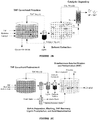
- Figure 2A depicts a process outline that shows one possibility for the efficient production of FPs and isolated lignin using the disclosed co-solvent system. Since THF is miscible in the aqueous phase, a higher solids loading can be achieved for greater thermal efficiency compared to a two phase system. Optimization of the highest % solids will be determined by the type and moisture content of the raw feedstock and the processing equipment options. As shown in Figure 2A , raw biomass is first combined into a mixture containing the co-solvent (in this case THF), water, and an acid catalyst.
- the co-solvent in this case THF
- the slurry is then fed into a screw-type Pandia reactor, designated in Figure 2A by (1), much like the ones used in the 1960s for continuous furfural production, to keep residence times reasonably uniform and minimize unnecessary by-product formation.
- Rapid reactor heat up is provided by high-pressure (HP) steam from an HP boiler (2).
- HP high-pressure
- the hot slurry is quickly released at the reactor exit into a separation unit (3).
- water-volatile components such as furfural and THF, can be flashed along with steam to a distillation unit (4).
- the THF azeotrope contains only about 4.6 wt% water so its recovery at this composition is not demanding as additional drying is unnecessary.
- the dotted lines from (4) in Figure 2A show the THF and water recycle streams.
- 5-HMF and LA are not volatilized with the water and are concentrated with some hydrolyzed glucose in the remaining aqueous layer in (3).
- solvent extraction or vacuum distillation can reduce unwanted reactions.
- the concentrated aqueous solution can be sent directly to a second continuous reactor (6) for a higher temperature reaction.
- the removal of THF from the liquid phase following the reaction causes the dissolved lignin to precipitate as a solid residue. Due to its sticky nature, a suitable solvent is likely needed to redissolve the extracted lignin for further processing and catalytic upgrading into fuel or chemical products. In line with this, pure THF readily re-dissolves the recovered lignin.
- the solids can be washed, neutralized, and enzymatically hydrolyzed into fermentable glucose or used as processed feed for SSF or CBP operations.
- This approach has an added benefit that the combination of high severity reaction conditions with lignin removal make the resulting solids more easily hydrolyzed with low enzyme doses than has been achieved with other pretreatment systems that are constrained by the need to use low severities to avoid large loses of xylose to furfural when xylose fermentation is targeted.
- the glucan-rich material can be directly sent to a second high temperature reactor for additional LA production (6).
- Sulphuric acid is a low-cost mineral acid that is suitable for use as an acid catalyst in this co-solvent system.
- Other catalysts include, but are not limited to, mineral acids, organic acids, metal halide acids, and heterogeneous acid catalysts can all be applied in this co-solvent system.
- FeCl 3 is a solid acid catalyst that can be applied to selectively achieve high furfural yields from xylose and high 5-HMF yields from solubilized glucose while minimizing LA formation. Under similar reaction conditions, application of FeCl 3 catalyst increases the amount of glucan-rich pretreated material which remains after the reaction as compared to an equivalent mass-loading of H 2 SO 4 . This will allow for more glucose production by enzymatic hydrolysis.
- heterogeneous solid catalysts such as porous membrane resins and zeolites can also be used to promote specific target FPs/RIs or reactions.
- a higher mass yield was obtained of remaining pretreated glucan-rich material (25 wt% of glucan initially present in maple wood for FeCl 3 vs. 21 wt% for H 2 SO 4 as shown in Fig. 11 ) and equivalent furfural production when compared to the reactions with sulphuric acid (85% of theoretical for FeCl 3 vs. 87% of theoretical for H 2 SO 4 , shown in Table 4).
- the co-solvent system can be specifically used to target the release of xylose sugars, extraction of acid-insoluble lignin, and improving enzymatic digestibility of the remaining glucan-rich material for efficient glucose production using lower enzyme loadings that typically needed with traditional pretreatment strategies. This variation which maximizes monosaccharide production can then be integrated with downstream chemical and biological conversion routes to produce fuels.
- this variation depicts moderately severe reaction conditions in the first stage (150 - 200 °C, 0.5-5wt% acid catalyst loading) to target the production of furfural from xylose as it is the least stable RI in the catalytically active phase.
- the overall recovery of FPs can increase.
- Some 5-HMF will be produced from the hydrolysed hexoses and the remaining glucan-rich solids can be used for glucose production by enzymatic hydrolysis, levulinic acid production in a higher severity second stage reaction (>200 °C, >1 wt% acid catalyst loading), or as direct feed for SSF and CBP operations.
- RI production from lignocellulosic biomass is integrated with simultaneous catalytic upgrading of RIs to fuel products such as "drop-in" hydrocarbon fuels and/or gasoline and diesel blendstock.
- fuel products such as "drop-in" hydrocarbon fuels and/or gasoline and diesel blendstock.
- moderate to high severity conditions 150-220 °C
- suitable catalysts furfural and 5-HMF will be first produced and simultaneously recovered for catalytic conversion into drop-in fuels by selective hydrogenation and/or hydrodeoxygenation.
- the remaining glucose and glucan-rich material will then be subjected to a second high severity reaction (170-250 °C) to produce additional 5-HMF and/or LA for the direct catalytic conversion into drop-in fuels also by selective hydrogenation and/or hydrodeoxygenation.
- simultaneous catalytic upgrading of FPs in both stages can occur either in the vapor phase above the reaction at each stage ( Fig. 2D ), or directly in the liquid phase where sugar dehydration reactions are also taking place. If the final fuel products produced by catalytic upgrading at each stage are more stable than the FPs they were produced from, they can be returned to the reaction vessel for final recovery at the end of the second stage reaction as shown in Figure 2D .
- the purpose of a two-stage reaction is to maximize the yields of stable fuel products from furfural in the first stage before the production of fuel products from LA and/or 5-HMF in the second stage. Lignin will be extracted and recovered following furfural production.
- the cellulosic material is herbaceous material. In another embodiment, the cellulosic material is agricultural residue. In another embodiment, the cellulosic material is forestry residue. In another embodiment, the cellulosic material is municipal solid waste. In another embodiment, the cellulosic material is waste paper. In another embodiment, the cellulosic material is pulp and paper mill residue.
- the cellulosic material is corn stover. In another embodiment, the cellulosic material is corn fiber. In another embodiment, the cellulosic material is corn cob. In another embodiment, the cellulosic material is orange peel. In another embodiment, the cellulosic material is rice straw. In another embodiment, the cellulosic material is wheat straw. In another embodiment, the cellulosic material is switch grass. In another embodiment, the cellulosic material is miscanthus. In another embodiment, the cellulosic material is bagasse.
- the acid-catalyzed reactions of maple wood, D-xylose, and furfural in this disclosure were carried out in solvent and non-solvent water solutions.
- the solvent solution consisted of a 50 vol% (1:1) mixture of THF (>99% purity, Fisher Scientific, Pittsburgh, PA) and deionized (DI) water.
- Concentrated sulfuric acid 72 wt%, Ricca Chemical Company
- DI water was used to prepare the 1 wt% sulfuric acid solution.
- the reactions were then carried out in a high-pressure continuously stirred 1 L Parr reactor (Parr Instrument Company).
- the reactor temperature was directly measured by an in-line thermocouple (Omega, K-type). All reactions were maintained at 170 °C (443 K) by convective heating from a fluidized sand bath (Techne, Princeton, NJ) set at 340 °C (613 K) to reduce heat-up time. A PID controller regulated the sand bath temperature. Mixing was performed by twin 6-blade impellers operating at 200 rpm by a top mounted electric motor. The reaction temperature was stabilized by using a mechanical winch to control the height of the reactor over the sand bath. At the conclusion of a run, the reactor was cooled by quickly lowering it into a large room temperature water bath next to the sand bath.
- Start time was defined as when the temperature first reached 170 °C, and final reaction time was recorded when the reactor first touched the cooling water bath. All liquid containing receptacles used were made of glass to prevent the loss of furfural and THF that was observed when plastics were used for the experiments.
- Maple wood reactions were carried out using air-dried ( ⁇ 5% moisture content) maple wood chips obtained in upper New York by Mascoma Corporation (Lebanon, NH). The chips were milled and sieved down to 1 mm particle size. The dried and milled samples were then stored at room temperature in gallon-sized Ziploc® bags that were hand-pressed to remove excess air. Maple wood composition was measured according to the established National Renewable Energy Laboratory (NREL) procedure (version 8-03-2012) in triplicates with the result: 40.9 ⁇ 0.3 wt.% glucan, 15.5 ⁇ 0.2% xylan, 2.1 ⁇ 0.1% mannan, 24.4 ⁇ 0.3% K-lignin, and 17.1% other material.
- NREL National Renewable Energy Laboratory
- Equation (5) A first-order approximation of xylose dehydration is represented by Equation (5) where D represents the dehydration products.
- the expression for the rate of xylose (X) disappearance and calculation of the rate constant are given in Equations (6), (7), and (8). Since acid concentration (A) was held constant throughout the studies, it was combined into the overall rate constant k. where k will be determined by linear fitting of Equation (8). Results after 30 min were not used in the linear fitting as the xylose solution became too dilute for accurate quantification. Because not all dehydration products are furfural, determination of the furfural yield for each reaction was used to calculate the furfural selectivity by Equation (9):
- Table 1 compares yield data for furfural, LA, and HMF production from maple wood and D-xylose between THF co-solvent and non-solvent reactions. Runs 2 to 4 in Table 1 compare the highest furfural, LA, and HMF yields obtained from maple wood reactions using 1:3, 1:1, and 3:1 volume ratios of THF and water respectively. Lower RI yields overall were observed in the 1:3 mixture, identical yields of furfural were achieved with 1:1 and 3:1 solutions, and the highest yields of LA and HMF were obtained from the 3:1 mixture. Although higher solvent ratios may result in marginal yield benefits, additional solvent recovery costs, increased heating requirements, and limited solids loading are likely to be detrimental to process economics. For these reasons, a 1:1 solvent ratio was chosen for further investigation.
- Runs 1 and 3 compare the non-solvent and THF reactions at 40 min when furfural yield was highest.
- Runs 5 and 6 compare the non-solvent and THF reactions at 120 min when there was greater LA production.
- the presence of THF co-solvent significantly improved the yields of furfural ( ⁇ 25 mol% improvement) and HMF ( ⁇ 10 mol%) at 40 min, and levulinic acid ( ⁇ 8 mol%) yields at 120 min as compared to the non-solvent case.
- HMF is an important platform chemical that is first produced from the acid catalyzed dehydration of hexoses.
- HMF When HMF is allowed to remain in the catalytically-active aqueous phase, it will readily hydrolyze to form equimolar amounts of LA and formic acid (FA).
- LA is more stable than HMF in an aqueous environment, higher final yields of LA were observed in single phase reactions.
- the application of solid acid catalysts have been shown to improve HMF selectivity when using THF. The highest yield of furfural, the primary RI targeted in this study, was 87 mol% of theoretical at 40 min in both the 1:1 and 3:1 THF co-solvent reactions.
- LA yields were approximately 11 mol% with 1:1 THF, 29 mol% with 3:1 THF, and 7 mol% without (Table 1).
- the room temperature liquid densities after the 40 min reactions (0.9987 g L -1 with 1:1 THF and 1.0152 g L -1 without THF at 21 °C) accounted for a 2% difference in the maximum furfural yield.
- the highest furfural yield was achieved much sooner (40 min) than the highest LA yield (120 min). Due to the more acid labile amorphous structure of hemicellulose, the rate of hydrolysis of xylan from hemicellulose was much greater than that of glucan from crystalline cellulose.
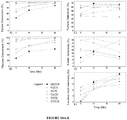
- Figure 2A-D compares the concentration profiles of the RIs produced from the maple wood reactions with and without THF as a co-solvent over 60 min of reaction.
- the higher initial concentration of glucose (10 min) in the THF reaction suggested that THF helped to enhance the hydrolysis of cellulose to release glucose much sooner than the non-solvent case.
- the concentration of glucose in the THF reaction had started to decrease and the formation of LA and consumption of glucose became significantly greater than the non-solvent case.
- the column first used could not differentiate xylose, mannose, and galactose monomers by their retention times so a lumped concentration profile is shown.
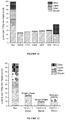
- Figure 3E shows the composition of the remaining solid fraction after reactions with and without THF on the basis of 100 g of raw maple wood.
- Unique to the THF co-solvent reactions was the nearly complete removal of acid-insoluble lignin and degradation tars that accumulate with the non-solvent reactions. Over 90% (by wt.) of the insoluble lignin was removed by THF and the amount of insolubles remaining in the solid fraction was minimal throughout the reaction ( Fig. 3E ). Without THF, insoluble lignin was initially reduced, but the formation of insoluble tars and degradation products increased over the course of the reaction. Upon vacuum filtration of the reaction liquor, the unreacted solids in the THF reactions were almost exclusively composed of glucan (85 wt% at 40 min, Fig.
- Equation (9) was employed to calculate the furfural selectivity for these reactions.
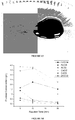
- furfural selectivity was initially higher (72% at 10 min) ( Figure 4A ), but as the reaction proceeded, selectivity to furfural decreased dramatically to only 59% by 50 min. As more furfural was produced, the formation of irreversible byproducts increased.
- furfural selectivity was initially lower (67% at 10 min) but continued to increase over the course of the reaction, surpassing the non-solvent selectivity at 20 min to reach a maximum of 74% by 40 min.
- Figure 4B shows the degradation of 6.5 g L -1 pure furfural at 170 °C under solvent and non-solvent conditions. After 50 min of reaction, furfural loss was only about 3% with THF in the solution, whereas the non-solvent case saw furfural losses of up to 16%. The 13% difference in furfural loss between the two cases in Figure 4B accounted for most of the furfural yield difference between the solvent and non-solvent reactions with pure xylose, which shows that THF plays a primary role in preventing furfural loss by resinification. Interestingly, formic acid formation accounted for nearly all the furfural lost in the THF reactions but less than half of the furfural lost in the non-solvent reactions.
- THF as a co-solvent in a biomass conversion process to improve RI yields
- the combined benefits of higher RI yields and complete fractionation of biomass from this solvent system can be achieved at commercial scale by modifying existing continuous furfural technologies with additional separation and recycle processes to collect the pretreated biomass, isolate the lignin fraction for upgrading, and recover the low-boiling solvent.
- Figure 2D shows a simplified conceptual process flow diagram for the integrated production of reactive intermediates and lignin from cellulosic biomass using THF as a co-solvent.
- a suitable feedstock such as milled wood chips
- a solution containing THF and an acid catalyst is then soaked in a solution containing THF and an acid catalyst.
- the slurry is then fed into a screw-type Pandia reactor (1), much like the ones used in the 1960s for continuous furfural production, to keep residence times reasonably uniform to minimize unnecessary byproduct formation.
- Rapid reactor heat up is provided by high-pressure steam from a boiler (2) to temperatures of around 170 °C or higher, depending on the durability of the vessel.
- the hot slurry is quickly released at the exit of the Pandia reactor into a separation unit (3) at reduced pressures.
- water-volatile components such as furfural and THF, are flashed or boiled off with steam to distillation (4).
- the THF azeotrope contains only about 4.6 wt% water so its recovery at this composition is not demanding as additional drying is not necessary.
- the dotted lines from (4) in Figure 2D show the recycle streams for both THF and water.
- HMF, LA, and sulfuric acid are not volatilized with the water and are concentrated with some hydrolyzed glucose in the remaining aqueous layer in (3).
- solvent extraction or vacuum distillation can be applied to reduce unwanted reactions.
- the concentrated aqueous solution can be sent directly to a continuously stirred reactor (CSTR) (6) for a higher temperature reaction (>200 °C).
- LA of up to 75 mol% yield of theoretical could be obtained from cellulose enriched maple wood after the extraction of hemicellulose by hydrothermal pretreatment.
- the production of LA in this case was obtained from a 200 °C batch reaction with a higher solids loading (10 wt%) more concentrated sulfuric acid (1.5 wt%) and without using any solvent.
- the purified furfural product can be sold as is or decarbonylated and hydrogenated to make additional THF. Hydrogenation remains the most versatile option to upgrade furfural and levulinic acid to fuel products, but the source and cost of hydrogen for catalytic upgrading of these RIs must be carefully considered.
- Furfural can be upgraded to furfuryl alcohol (FFA), tetrahydrofurfuryl alcohol, and dihydropyran. Methylfuran and methyltetrahydrofuran are hydrogenated products of FFA which can directly serve as gasoline additives. Aldol condensation and dimerization of furfural followed by hydrodeoxygenation can produce alkanes up to tridecanes.
- FFA furfuryl alcohol
- Methylfuran and methyltetrahydrofuran are hydrogenated products of FFA which can directly serve as gasoline additives. Aldol condensation and dimerization of furfural followed by hydrodeoxygenation can produce alkanes up to tridecanes.
- LA is more stable than HMF in aqueous solution, it is an important primary product from cellulose in this process that can be a valuable chemical precursor to levulinate esters, GVL, MTHF, and other potential fuel products by hydrogenation.
- LA's high boiling point (245 °C) makes it difficult to separate by distillation without applying a vacuum, so maintaining a concentrated LA product stream will improve separation economics and allow for solvent extraction. Since the production of LA benefits from more severe reaction conditions, a two-stage production strategy for both furfural and LA will achieve the highest RI yields from biomass.
- THF itself is a versatile chemical that has commercial application as a solvent for the manufacture of plastics and is closely related to 1,4-butanediol (BDO) and ⁇ -butyrolactone (GBL). Since THF polymers (PolyTHF and PTMEG) are also major commercial products, further investigation into the application of these products will be of great interest, particularly for the potential production of THF from furfural.
- the disclosure demonstrates the application of THF as a single-phase co-solvent for significantly enhancing yields of RIs from aqueous processing of lignocellulosic biomass, such as maple wood or corn stover.
- a single phase solution of THF and water can (1) improve hydrolysis of hemicellulosic and cellulosic polysaccharides; (2) help catalyze dehydration of the resulting monomeric sugars into FF, hydroxymethylfurfural (HMF), and levulinic acid (LA) at high yields; (3) dissolve the acid-insoluble lignin and degradation products from biomass into the liquid fraction for conversion into high-value byproducts; and (4) generate an easily hydrolysable glucan-rich solid fraction that can be used for enzymatic digestion, fermentation, or further chemical conversion.
- HMF hydroxymethylfurfural
- LA levulinic acid
- the targeted production of reactive intermediates from lignocellulosic biomass by an integrated single phase solvent process with THF allows for the effective utilization of all major constituents of lignocellulose, including lignin.
- the energy-light strategy that is proposed here was designed to complement the most recent advances in catalytic technology, while providing an efficient solution for handling raw feedstock. Increased flexibility in the types of end products allows for continued advancements in improving the deconstruction and catalytic upgrading of lignocellulosic biomass for conversion into renewable fuels and chemicals.
- THF co-solvent solution was prepared on a volume basis of increasing the amount of THF additions to realize 1:1 (THF 50 % v/v) to 7:1 (THF 87.5 % v/v) THF-to-water ratios.
- Metal halide catalysts were purchased from Sigma Aldrich (St. Louis, MO, US).
- each metal halide catalyst AlCl 3 ⁇ 6H 2 O, CuCl 2 ⁇ 2H 2 O, CrCl 3 ⁇ 6H 2 O, FeCl 3 ⁇ 6H 2 O, and ZrOCl 2 ⁇ 8H 2 O
- Concentrated sulfuric acid 72 wt% H 2 SO 4
- Ricca Chemical Company Alington, TX
- the pure sugar reaction mixtures were prepared in 1:1 THF:water co-solvent solutions containing 20 g/L glucose or 10 g/L xylose and 0.1M (anhydrous) loading of the metal halide catalyst based on total liquid volume. Due to the different Bronsted acidities of each catalyst (Table 3), all solutions were normalized to 1.6 pH by titrating with 72 wt% concentrated sulfuric acid. An acidity of 1.6 pH was selected because it was close to the Bronsted acidity of the most acidic 0.1M ZrOCl 2 -containing mixture (Table 3). Pure sugar solutions containing only sulfuric acid were also prepared and titrated to 1.6 pH to directly compare with metal halide acid catalysts as an acid control. Table 3.
- Hastelloy pipe reactors Hastelloy C-276, O.D. of 0.0127 m or 0.5 in.
- the pipe reactors were loaded into a heavy-duty custom steam chamber made of readily available steam rated (to 1 MPa steam pressure) 316 stainless steel 0.102 m (4 in.) internal diameter fittings (McMaster, Santa Fe Springs, CA).
- a high-pressure steam boiler (FB-075-L, Fulton Companies, Pulaski, NY) provided steam for rapid and stable heating of triplicate tube reactors.
- each reaction tube was transferred into 2 mL glass vials. These samples were centrifuged (2500 rpms for 20 min) and the supernatant was transferred into glass HPLC vials for HPLC analysis by an Agilent 1200 system equipped with a Bio-Rad Aminex® HPX-87H column and RI detector with an eluent (5 mM sulfuric acid) flow rate of 0.6 ml/min.
- Corn stover or maple wood solids loadings were calculated based on the total mass of the reaction (800 g) so that each reaction contained 5 wt% solids (40 g dry basis) and 1 wt% acid (7.6 g by anhydrous weight) based on THF:water mixture weight (760 g). Biomass mixtures were then allowed to pre-soak overnight at 4°C to insure an even distribution of acid catalyst within the biomass pores. Contents were then left in the laboratory for an hour for the temperature to reach about room temperature prior to reaction.
- the whole biomass slurry was then transferred to a high-pressure continuously stirred 1 L Parr reactor (Parr Instrument Company, Moline, IL) heated by a 4 kW fluidized sand bath (Model SBL-2D, Techne, Princeton, NJ). Mixing was performed by twin 6-blade impellers operating at 200 rpm by a top mounted electric motor, and the reactor temperature was directly measured by an in-line thermocouple (Omega, K-type). At the conclusion of a run, the reactor was cooled by quickly lowering it into a large room temperature water bath. All liquid containing receptacles were made of glass to prevent the loss of furfural and THF that was observed when plastics were used.
- the reaction liquor was transferred to a glass bottle with a screw-on cap that was tapped with a 0.25 in. metal hose barb fitting.
- the fitting was connected by a flexible hose to a vacuum pump to perform vacuum distillation of THF.
- the liquor was agitated by a magnetic stir bar on a stir plate as THF was boiled off at room temperature under vacuum.
- the extracted lignin precipitates from solution as a black resinous solid.
- the solid lignin residue was then separated from the liquor and crushed to a fine powder by a ceramic mortar and pestle. The powder was then rinsed with water, air-dried, and then rinsed with diethyl ether.
- the resulting fine lignin powder product is shown in Figure 13 .
- Table 3 shows the measured pH for the sugar co-solvent solutions containing 0.1M of each metal halide before reaction. It is known that metal oxide species form when the metal halides are hydrolyzed by water at elevated temperatures and the formation of OH ligands (as electron pair donors) during hydrolysis of the metal cations increases their acidity. The resulting pH of the solution is related to the first hydrolysis constant of the cationic species, where Zr and Fe cations to be the strongest. Metal chlorides are also known to form stable adducts with THF which can influence their ionizability and catalytic activity.
- Each metal halide was added based on their anhydrous catalyst mass to a concentration of 0.1M for each reaction.
- the sugar solutions were then loaded into Hastelloy tube reactors (10 mL working volume) and heated to 170°C by a custom designed stainless steel steam chamber. The reaction proceeded until the steam was turned off and the chamber was flooded with cold tap water to quench the reaction.
- Figure 10A and 10B the conversion of both xylose and glucose was significantly improved by all metal acid catalysts beyond what was possible for sulfuric acid alone in the THF co-solvent system.
- the relative performances of the metal halides were also very consistent for glucose and xylose.
- the most active metals were Cr, Zr, and Al due to their high Lewis acid strength, achieving nearly complete conversion of xylose by 5 min and glucose by 10 min.
- Cu- and Fe-based catalysts were notably slower in sugar conversion, but still achieved near complete conversion after 20 min.
- THF ketose sugars were present in sulfuric acid reactions suggesting that THF can also interact with sugars to promote isomerization and supports early observations that THF co-solvent helped catalyze dehydration of aldose sugars over a comparable non-solvent reaction using only sulfuric acid.
- THF co-solvent helped catalyze dehydration of aldose sugars over a comparable non-solvent reaction using only sulfuric acid.
- THF may assist the metal halides to achieve high reactive intermediate yields.
- the primary fractions of lignocellulosic biomass of interest for catalytic conversion to platform chemicals are cellulose, hemicellulose, and lignin.
- Xylan contained within amorphous hemicellulose presents the most readily available source of sugars as it can be completely hydrolyzed at mild to moderate severity reaction.
- Cellulose on the other hand, is composed of crystalline polymeric glucose chains that are a primary source of C6 but remains the most recalcitrant sugar fraction to acid hydrolysis and is usually treated with cellulase enzymes after pretreatment to achieve high yields of glucose monomers in solution. Because the hemicellulose fraction of lignocellulosic biomass is far more acid-labile than crystalline cellulose, furfural is produced much sooner than 5-HMF and LA.
- an integrated conversion strategy to co-produce furfural and 5-HMF directly from biomass must be tunable to minimize competing side reactions of the least stable products to maximize product yields. For this reason, optimization for high furfural yields is a primary concern as the glucan remaining in the slower solubilizing cellulose fraction can be recovered as a solid product for further enzymatic and/or acid hydrolysis into glucose, biological conversion into alcohol fuels (e.g., ethanol) or thermochemical conversion into 5-HMF, and/or LA.
- alcohol fuels e.g., ethanol
- the THF co-solvent strategy allowed additional tuning by increasing THF concentrations in water to achieve greater selectivity to 5-HMF and increased biomass solubilization.
- the data compared the performance of the metal halide catalysts against sulfuric acid in 1 L THF co-solvent reactions with 5 wt% loading of maple wood or corn stover. Table 4 lists the reaction conditions at which the highest overall yields of furfural and 5-HMF were achieved from the biomass reactions.
- the THF:water ratio was also varied from 1:1 to 7:1 (by volume) to determine the extent of improved product yields and the limit of the single phase regime.
- metal halide catalysts demonstrated very consistent performance on both maple wood and corn stover, achieving maximum furfural yields close to that of sulfuric acid for a 1:1 THF:water mixture.
- 5-HMF yields were more comparable among catalysts, but metal halides produced lower LA yields compared to sulfuric acid owing to their increased selectivity to 5-HMF as found for pure sugar reactions.
- FeCl 3 was the best performer due to its higher Br ⁇ nsted acidity, slower xylose conversion rates, and higher furfural selectivity at longer reaction times.
- AlCl 3 and CuCl 2 were middle performers owing to their more moderate Bronsted character, with trade-offs between high 5-HMF yields or high furfural yields, respectively, consistent with their selectivity with pure sugar reactions.
- FIG. 11 shows the composition of raw maple wood solids and the distribution of the major components into the solids remaining after reaction on the mass basis of 100 g of raw maple wood feed.
- biomass solubilization with metal halides was reduced compared to sulfuric acid.
- over 90% of the maple wood K-lignin was removed during all metal halide reactions, except with ZrOCl 2 , leaving behind a substantial amount of glucan-rich solids that contain no hemicellulose and minute amounts of other components.
- FeCl 3 significantly outperformed sulfuric acid and the other metal halides and achieved the highest reported co-production yields of furfural (95% for maple wood and corn stover) and 5-HMF (51% for maple wood and 45% for corn stover) from lignocellulosic biomass by a one-pot single phase reaction.
- the higher solvent ratio was also beneficial to further reducing yields of LA (6-7% at 4:1 ratio), the most difficult product to recover due to its high boiling point.
- FeCl 3 proved to be the best metal halide for catalyzing co-production of furfural and 5-HMF in a biomass process using THF as a miscible co-solvent.
- compositional analysis of this solid fraction also revealed that a large glucan portion remained unsolubilized and most of the lignin was still intact and not extracted as would be expected in a single phase reaction with THF.
- Operating pressures of about 265 psig were also the highest observed and close to the sum of the saturated vapor pressures of water and THF, consistent with expectations for a two phase system.
- biomass often has moisture contents of up to 50% by weight for woods, elevated solvent ratios would likely hurt biomass processing economics by consuming more heat that is an important consideration when comparing other co-solvent systems.
- FIG. 2B outlines a proposed integrated THF co-solvent strategy for application of metal halide catalysts to enhance direct conversion of biomass into furfural and 5-HMF followed by two possibilities for their hydrogenation to MF and DMF, respectively.
- the experimental work in this study focused on producing high FP yields to be most compatible with leading downstream catalytic upgrading operations.
- raw biomass and acid catalyst are loaded into a reactor along with THF co-solvent.
- high yields of both furfural and 5-HMF are achieved, and the reacted slurry is then collected and filtered to separate the solid residues.
- THF is a low boiling solvent (66°C) and forms a 95.4% azeotrope with water, it could be easily flashed off in a biorefinery to be recovered and recycled. In fact, room temperature vacuum distillation was sufficient to recover THF from the water phase.
- THF tridecane
- aqueous stream resulting from THF removal could be fed directly to a catalytic reactor if desired, depending on the catalyst system chosen for upgrading furfural and 5-HMF.
- the aqueous stream containing the catalyst could be recycled as FeCl 3 -containing aqueous streams have been shown to remain effective over several reactions in other systems.
- THF is an effective co-solvent for pretreatment of lignocellulosic biomass between solvent-to-water ratios of 1:5 (by volume) or higher, up to 7:1 (vol:vol) to specifically maximize monomeric sugar yields from biomass.
- Operating temperatures for THF co-solvent pretreatment range from 100°C to 220°C.
- the range of acid catalyst loading needed for THF co-solvent pretreatment range of 0 wt% to 10 wt% depending on the type of acid.
- THF co-solvent pretreatments can be operated in batch, continuous flow-through, or plug flow configurations for either (A) traditional pretreatment of biomass followed by enzymatic hydrolysis or (B) direct solubilization of biomass to recover sugars without the need for an enzymatic hydrolysis step afterwards.
- THF co-solvent can be applied to a heated flow-through reactor at >1:1 THF:water ratios with little or no acid to effectively solubilize biomass and release mono- and oligo-saccharides that are then concentrated by the removal and recovery of THF.
- stage 1 + stage 2 The total sugar yields (stage 1 + stage 2) for typical pretreatments is calculated by the addition of total soluble sugar yield (C5 + C6 sugars) released after the heated reaction (stage 1, pretreatment) and the total sugar soluble yield released after treatment of the pretreated solids with saccharification enzymes (stage 2).
- Consecutive batch reactions at 170 °C were performed using dilute sulfuric acid (1 wt%, aka. dilute acid-only or no-THF). From the mass and composition of the remaining solids (per 100 g basis of raw maple wood) presented in Figure 3E , a significantly higher degree of biomass solubilization was observed in the presence of THF than without. For the reactions containing a 1:1 mixture of THF and water, over 90 wt% of the acid-insoluble Klason lignin (K-lignin) initially present in maple wood was removed into the liquid phase by 10 min, producing a solid residue that was highly glucan-rich (>85 wt% glucan).
- K-lignin Klason lignin
- Table 5 shows a comparison of the solubilization of hemicellulose, cellulose, and lignin fractions of poplar wood by pretreatment with dilute acid-only, organosolv, and THF co-solvent methods at the same reaction conditions. Because the reaction condition in these experiments were of lower severity than shown in Figure 3 , one can see that THF co-solvent pretreatment catalyzes and enhances the solubilization of all major lignocellulosic fractions beyond what is capable by an equivalent Organosolv (ethanol) or dilute acid-only pretreatment. This means that much lower severity reaction conditions are needed with THF co-solvent pretreatment to hydrolyze the same amount of sugars as the other two leading pretreatment methods. Table 5.
- Solubilization of hemicellulose, cellulose, and lignin fractions of poplar by pretreatment with dilute acid-only, organosolv, and THF co-solvent methods Substrate Solvent Reaction time (min) Temp (°C) Catalyst Loading % Hemicellulose Solubilized % Cellulose Solubilized % Lignin Solubilized Poplar wood Water-only 25 160 0.5 wt% H 2 SO 4 85 2 0 Poplar wood 1:1 EtOH:Water 25 160 0.5 wt% H 2 SO 4 85 4 70 Poplar wood 1:1 THF:Water 25 160 0.5 wt% H 2 SO 4 91 15 86
- Figure 12 compares the composition of the remaining solids using different acid catalysts after THF co-solvent pretreatment with maple wood on a 100 g basis of the raw material.
- the reaction severities were significantly higher than typically used for pretreatment to recover sugars as the metal halide catalysts can be used to tune the pretreatment method to produce high yields of furfural from hydrolyzed C5 sugars instead.
- cellulase enzymes are the workhorses for hydrolyzing and converting glucan in biomass into fermentable glucose
- the accessibility of the pretreated material to these enzymes indicate the effectiveness of the pretreatment strategy.
- the amount of cellulases used also contribute to a significant cost in the overall process so reducing the enzyme loadings necessary to achieve high sugar yields is beneficial.
- acid catalyzed THF co-solvent pretreated material is much more accessible to enzymatic hydrolysis than reactions without THF at the same reaction conditions for multiple feedstocks corn stover, poplar wood, and maple wood.
- both THF and non-THF pretreatments of corn stover were optimized for maximum total sugar recovery at 30 mg/g enzyme loading.
- the optimum conditions for THF co-solvent pretreatment 150°C, 25 min, 0.5 wt% acid
- non-THF dilute acid-only pretreatment 160°C, 20 min, 0.5 wt% acid
- the enzyme loadings were then reduced in (see, Figure 18 ) to observe how the glucose conversion yield responded.
- THF co-solvent pretreated corn stover demonstrated significantly improved response to reduced loadings of Accellerase® 1500 cellulase (DuPont) than water-only pretreated corn stover when dilute sulfuric acid was used as a catalyst.
- Accellerase® 1500 cellulase DuPont
- water-only pretreated corn stover when dilute sulfuric acid was used as a catalyst.
- THF co-solvent at 5 and 15 mg/g glucan cellulase protein loadings, nearly all the glucan in the pretreated corn stover was released as glucose after 100 h. Also, by extrapolation of the glucose release curve for the 2 mg/g case, this low enzyme loading can also achieve nearly complete glucose release at longer hydrolysis times as shown in Figure 18 (diamonds).
- the total sugar yields (xylose and glucose) obtained from THF and non-THF pretreated corn stover is compared in Figure 19 .
- total sugar yield was effectively theoretical ( ⁇ 97%) at enzyme loadings as low as 2 mg/g glucan for THF pretreated corn stover (After 20 days), whereas dilute acid-only pretreated corn stover required 30 mg/g to achieve ⁇ 89% yield of total sugars (After 14 days).
- THF co-solvent pretreatment effectively reduced the enzyme demand by ⁇ 10X over traditional dilute acid-only pretreatment for corn stover.
- THF co-solvent pretreated corn stover achieved maximum yields (97%) in only 1 day compared to dilute acid-only pretreatment's maximum yield (85%) achieved after 14 days. Not only is the maximum total sugar yield higher for THF co-solvent pretreatment, but the conversion by enzyme is much more rapid. This is indication that THF co-solvent is effective in maximizing accessibility by removal of hemicellulose and lignin fractions and doesn't inhibit enzyme function that is observed by dilute acid-only pretreatment. The high xylose yields observed also indicate that THF co-solvent is highly effective in maximizing sugar yields from both hemicellulose and cellulose biomass fractions.
- Figure 20 compares the ethanol yields from SSF of THF and non-THF pretreated corn stover and Avicel® cellulose by S. Cerevisiae in 250 mL scale shake flask experiments (50 mL working volume). In these experiments, flasks were loaded with 4 wt% glucan, autoclaved for 30 minutes, pre-hydrolyzed with Accellerase 1500 cellulase at 15 mg/g glucan loading for 18 h (150 rpm, 50°C), and inoculated to an optical density (OD) of 0.5 at 600 nm (130RPM, 37°C).
- Accellerase 1500 cellulase at 15 mg/g glucan loading for 18 h (150 rpm, 50°C)
- OD optical density
- THF co-solvent pretreated corn stover achieved higher ethanol yields at a sooner time in SSF than both dilute acid-only pretreated corn stover and Avicel® cellulose.
- the THF pretreated material did not demonstrate any major inhibitory effects to ethanol titers.
- a maximum of 87% ethanol yield was achieved by THF pretreated corn stover, whereas only 80% ethanol yield was achieved by dilute acid-only pretreated corn stover, and 75% ethanol yield from Avicel® cellulose as a control.
- Figure 21 compares the solids solubilization capability yields from CBP of pretreated poplar wood using C. thermocellum as the biological catalyst to perform both the saccharification of the sugars and simultaneous conversion of sugars to ethanol.
- CBP solids solubilization is a metric used to determine the performance of the substrate.
- the higher solids solubilization achieved by THF co-solvent pretreated poplar wood ( Figure 21 ; legend D) is comparable and better than that of ethanol-organosolv pretreatment ( Figure 21 ; legend B) and far superior to dilute acid-only pretreatment ( Figure 21 ; legend A). Reaction conditions and label identities are listed in the table below the plot in Figure 21 .
Landscapes
- Chemical & Material Sciences (AREA)
- Organic Chemistry (AREA)
- Life Sciences & Earth Sciences (AREA)
- Zoology (AREA)
- Engineering & Computer Science (AREA)
- Wood Science & Technology (AREA)
- General Health & Medical Sciences (AREA)
- Biochemistry (AREA)
- Health & Medical Sciences (AREA)
- Bioinformatics & Cheminformatics (AREA)
- Microbiology (AREA)
- General Chemical & Material Sciences (AREA)
- Chemical Kinetics & Catalysis (AREA)
- General Engineering & Computer Science (AREA)
- Biotechnology (AREA)
- Genetics & Genomics (AREA)
- Emergency Medicine (AREA)
- Preparation Of Compounds By Using Micro-Organisms (AREA)
- Low-Molecular Organic Synthesis Reactions Using Catalysts (AREA)
- Catalysts (AREA)
- Processing Of Solid Wastes (AREA)
- Organic Low-Molecular-Weight Compounds And Preparation Thereof (AREA)
- Production Of Liquid Hydrocarbon Mixture For Refining Petroleum (AREA)
- Treatment Of Sludge (AREA)
Claims (16)
- Verfahren für die Herstellung von reaktiven Zwischenprodukten aus Biomasse, das Folgendes umfasst:
Behandeln einer Biomasse mit einer Zusammensetzung, die eine einphasige Colösungsmittelmischung von wässrigem Tetrahydrofuran (THF) und einen Säurekatalysator umfasst, unter Bedingungen zur Herstellung einer flüssigen Phase, die aus Biomasse stammende, monomere Zucker, Oligosaccharide und Ligninprodukte umfasst, und eines festen Stoffs, der aus Biomasse stammende Polysaccharide umfasst. - Verfahren nach Anspruch 1, wobei die Colösungsmittelmischung bei Standard Temperature and Pressure (STP) (Normalbedingungen) einphasig ist.
- Verfahren nach Anspruch 1, wobei der Säurekatalysator aus der Gruppe ausgewählt ist, die aus Mineralsäuren, organischen Säuren und Metallhalogenidsäuren besteht, bevorzugt wobei der Säurekatalysator Folgendes ist: Schwefelsäure, Salzsäure, Phosphorsäure, Salpetersäure, Ameisensäure, Essigsäure, Trifluoressigsäure oder FeCl3.
- Verfahren nach Anspruch 1, wobei die Bedingungen das Erhitzen der Kombination aus der Biomasse und Zusammensetzung auf 100 °C bis 220 °C einschließen.
- Verfahren nach Anspruch 1, das weiter das Entfernen und/oder Rückgewinnen von THF aus der flüssigen Phase nach der Vorbehandlung von Biomasse mit Colösungsmittel umfasst.
- Verfahren nach Anspruch 1 oder 5, das weiter das Entfernen und/oder Rückgewinnen von Lignin aus der mit Colösungsmittel behandelten Biomasse durch Ausfällung eines Feststoffs nach der Entfernung von THF aus der flüssigen Phase umfasst, bevorzugt wobei Lignin weiter verarbeitet und durch THF oder DMSO als Flüssigkeit eingefangen wird.
- Verfahren nach Anspruch 1, das weiter das Entfernen und/oder Rückgewinnen von Furfural aus einer flüssigen Phase nach der Behandlung der Biomasse mit Colösungsmittel durch azeotrope Destillation oder Lösungsmittelextraktion umfasst, bevorzugt wobei das Furfural weiter verarbeitet wird, um zur Herstellung von THF und/oder Methyl-THF katalytisch aufgewertet zu werden.
- Verfahren nach Anspruch 1, das weiter das Entfernen und/oder Rückgewinnen von Furfural aus der Dampfphase während und/oder nach der Behandlung mit Colösungsmittel durch Sieden und/oder Dampfstrippen umfasst, bevorzugt wobei das Furfural weiter verarbeitet wird, um zur Herstellung von THF und/oder Methyl-THF katalytisch aufgewertet zu werden.
- Verfahren nach Anspruch 1, das weiter das Rückgewinnen eines flüssigen Produkts umfasst, das aus C5- und C6-Monosacchariden und ihren Oligomeren besteht, bevorzugt wobei das flüssige Produkt durch eine Base neutralisiert wird.
- Verfahren nach Anspruch 1, das weiter das Rückgewinnen eines festen Produkts nach der Behandlung von Biomasse mit Colösungsmittel umfasst, wobei der Feststoff einen glucanreichen Stoff umfasst, bevorzugt(i) wobei der glucanreiche Stoff weiter mit einem oder mehreren Enzymen behandelt wird, die Xylooligomere und Polymere mit höherer Kettenlänge von Xylose entfernen, um Xylosemonomere herzustellen; oder(ii) wobei der glucanreiche Stoff weiter mit einem oder mehreren Enzymen behandelt wird, die Glucooligomere und Polymere mit höherer Kettenlänge von Glucose entfernen, um Glucosemonomere herzustellen; oder(iii) wobei der glucanreiche Feststoff mit Mikroorganismen und/oder mit zugegebenen Enzymen inkubiert wird, um durch Fermentation einen Alkohol oder andere Produkte herzustellen, bevorzugt wobei(a) der Alkohol Ethanol ist; oder(b) der Alkohol 1 oder mehrere Kohlenstoffmoleküle enthält; oder (c) der Mikroorganismus aus der Gruppe ausgewählt ist, die aus einer Hefe, einem Bakterium, einem Schimmelpilz und einem Pilz steht.
- Verfahren nach Anspruch 1 oder 10, wobei der glucanreiche Stoff als Papierpulpe verwendet wird.
- Verfahren nach Anspruch 1, wobei der Säurekatalysator eine Lewis-Säure und/oder Brønsted-Säure ist oder
wobei der Säurekatalysator ein saures Metallhalogenid ist, bevorzugt
wobei das saure Metallhalogenid aus der Gruppe ausgewählt ist, die aus AlCl3, CuCl2, CrCl3, FeCl3 und ZrOCl2 besteht. - Verfahren nach Anspruch 1, wobei das wässrige THF ein THF : Wasser-Volumenverhältnis von 1 : 5 bis 5 : 1 umfasst.
- Verfahren für die kombinierte Fraktionierung und katalytische Umwandlung von Biomasse zur Herstellung von reaktiven Zwischenprodukten aus Biomasse, das Folgendes umfasst:
Behandeln einer Biomasse mit einer einphasigen Colösungsmittelmischung, die THF, Wasser und einen Säurekatalysator umfasst, unter Bedingungen zur Herstellung von Furfural, 5-HMF, Lävulinsäure, glucanreichem Stoff und Lignin, bevorzugt wobei(i) die Colösungsmittelmischung bei Standard Temperature and Pressure (Normalbedingungen) einphasig ist; oder(ii) der Säurekatalysator aus der Gruppe ausgewählt ist, die aus Mineralsäuren, organischen Säuren, Metallhalogenidsäuren und festen Säurekatalysatoren besteht; oder(iii) der Säurekatalysator aus der Gruppe ausgewählt ist, die aus Folgenden besteht: Schwefelsäure, Salzsäure, Salpetersäure, Ameisensäure, Essigsäure, Trifluoressigsäure, FeCl3, AlCl3, CuCl2 und jedweder Kombination davon; oder(iv) die Bedingungen das Erhitzen der Kombination aus der Biomasse und Colösungsmittelmischung auf 130 °C bis 250 °C einschließen; oder(v) weiter das Entfernen und/oder Rückgewinnen von THF aus der flüssigen Phase nach der Behandlung der Biomasse mit Colösungsmittel umfasst wird; oder(vi) weiter das Entfernen und/oder Rückgewinnen von Lignin aus der Behandlung der Biomasse mit Colösungsmittel durch Ausfällung eines Feststoffs nach der Entfernung von THF aus der flüssigen Phase umfasst wird, bevorzugt wobei das Lignin weiter verarbeitet und durch THF oder DMSO als Flüssigkeit eingefangen wird; oder(vii) weiter das Entfernen und/oder Rückgewinnen von Furfural und/oder 5-HMF aus einer flüssigen Phase der Behandlung der Biomasse mit Colösungsmittel durch Destillation umfasst wird, bevorzugt wobei das Furfural weiter verarbeitet wird, um zur Herstellung von THF katalytisch decarbonyliert und hydriert zu werden; oder(viii) weiter das Entfernen und/oder Rückgewinnen von Furfural aus der Dampfphase während und/oder nach der Behandlung mit Colösungsmittel durch Sieden und/oder Dampfstrippen umfasst wird; oder(ix) weiter das Extrahieren und/oder Rückgewinnen von Furfural und/oder 5-HMF aus einer flüssigen Phase der Behandlung der Biomasse mit Colösungsmittel durch ein nicht mit Wasser mischbares organisches Lösungsmittel umfasst wird, bevorzugt wobei das nicht mit Wasser mischbare organische Lösungsmittel ein Ether, Keton, Alkohol, Alkan oder jedwede Kombination davon ist; oder(x) weiter das Rückgewinnen eines festen Produkts nach der Behandlung der Biomasse mit Colösungsmittel umfasst wird, wobei der Feststoff einen glucanreichen Stoff umfasst, bevorzugt
wobei der glucanreiche Stoff weiter mit einem oder mehreren Enzymen behandelt wird, die Glucooligomere und Polymere mit höherer Kettenlänge von Glucose entfernen, um Glucosemonomere herzustellen; oder(xi) wobei der glucanreiche Feststoff mit Mikroorganismen und/oder mit Enzymen inkubiert wird, um einen Alkohol oder andere Fermentationsprodukte herzustellen; oder
wobei der glucanreiche Feststoff weiter katalytisch zu 5-HMF und/oder Lävulinsäure umgewandelt wird; oder(xii) wobei der Säurekatalysator eine Lewis-Säure oder Brønsted-Säure ist; oder(xiii) wobei der Säurekatalysator eine Metallhalogenidsäure ist, bevorzugt wobei die Metallhalogenidsäure aus der Gruppe ausgewählt ist, die aus AlCl3, CuCl2, CrCl3, FeCl3 und ZrOCl2 besteht; oder(xiv) wobei das THF : Wasser-Volumenverhältnis 1 : 1 bis 7 : 1 beträgt. - Verfahren nach Anspruch 10 oder 14(x), wobei der glucanreiche Stoff zu Glucose und Glucoseoligomeren unter Verwendung einer Säure, die aus der Gruppe ausgewählt ist, die aus Ameisensäure, Essigsäure, Trifluoressigsäure und jedweder Kombination davon besteht, hydrolysiert wird.
- Zusammensetzung, die eine Biomasse und eine einphasige Colösungsmittelmischung aus THF und Wasser umfasst, wobei das THF : Wasser-Volumenverhältnis 1 : 3 bis 7 : 1 beträgt, die einen Säurekatalysator umfasst,
bevorzugt
wobei der Säurekatalysator eine Brønsted-Säure ist; oder
wobei der Säurekatalysator eine Lewis-Säure ist,
bevorzugt
wobei die Lewis-Säure Schwefelsäure ist; oder
wobei der Säurekatalysator eine Metallhalogenidsäure ist,
bevorzugt
wobei die Metallhalogenidsäure aus der Gruppe ausgewählt ist, die aus AlCl3, CuCl2, CrCl3, FeCl3 und ZrOCl2 besteht.
Applications Claiming Priority (2)
| Application Number | Priority Date | Filing Date | Title |
|---|---|---|---|
| US201361816713P | 2013-04-27 | 2013-04-27 | |
| PCT/US2014/035506 WO2014176531A2 (en) | 2013-04-27 | 2014-04-25 | Co-solvent to produce reactive intermediates from biomass |
Publications (3)
| Publication Number | Publication Date |
|---|---|
| EP2989207A2 EP2989207A2 (de) | 2016-03-02 |
| EP2989207A4 EP2989207A4 (de) | 2016-11-23 |
| EP2989207B1 true EP2989207B1 (de) | 2018-11-28 |
Family
ID=51792522
Family Applications (1)
| Application Number | Title | Priority Date | Filing Date |
|---|---|---|---|
| EP14788138.7A Active EP2989207B1 (de) | 2013-04-27 | 2014-04-25 | Ko-lösungsmittel zur produktion reaktiver zwischenprodukte aus biomasse |
Country Status (8)
| Country | Link |
|---|---|
| US (2) | US10774394B2 (de) |
| EP (1) | EP2989207B1 (de) |
| JP (1) | JP6535321B2 (de) |
| CN (1) | CN105264080B (de) |
| AU (2) | AU2014256941B2 (de) |
| BR (1) | BR112015026960B1 (de) |
| CA (1) | CA2910274C (de) |
| WO (1) | WO2014176531A2 (de) |
Families Citing this family (25)
| Publication number | Priority date | Publication date | Assignee | Title |
|---|---|---|---|---|
| JP6447061B2 (ja) * | 2014-11-28 | 2019-01-09 | 三菱ケミカル株式会社 | フルフラール製造触媒の回収方法、フルフラール製造触媒、および該フルフラール製造触媒を用いたフルフラールの製造方法 |
| US20170159076A1 (en) * | 2015-12-04 | 2017-06-08 | Arbiom Inc. | Method for fractionating a lignocellulosic biomass |
| FI127191B (en) * | 2015-12-23 | 2018-01-15 | Neste Oyj | Combined production of levulinic acid and furfural from biomass |
| FI127020B (en) | 2015-12-23 | 2017-09-29 | Neste Oyj | Selective method for the conversion of levulinic acid to gamma valerolactone |
| JP6961963B2 (ja) | 2016-04-01 | 2021-11-05 | 三菱ケミカル株式会社 | フルフラールの製造方法 |
| CN105777674B (zh) * | 2016-04-14 | 2019-01-08 | 南京工业大学 | 一种利用微通道反应装置制备糠醛、羟甲基糠醛、乙酰丙酸的方法 |
| WO2017201233A1 (en) * | 2016-05-20 | 2017-11-23 | Poet Research, Inc. | Methods of removing one or more compounds from a lignocellulosic hydrolysate via gas stripping, and related systems |
| EP3464257B1 (de) * | 2016-06-02 | 2025-12-17 | Basf Se | Verfahren zur herstellung von furfural |
| WO2018035083A1 (en) * | 2016-08-17 | 2018-02-22 | Basudeb Saha | An integrated process for direct saccharification and dehydration of intact biomass to furfurals |
| US10723859B2 (en) * | 2017-07-17 | 2020-07-28 | University Of Kentucky Research Foundation | Lignin valorization in ionic liquids and deep eutectic solvent via catalysis and biocatalysis |
| BR112020009540A2 (pt) | 2017-11-16 | 2020-11-03 | Poet Research, Inc. | métodos para propagar micro-organismos para fermentação e métodos e sistemas relacionados |
| CN108017790B (zh) * | 2017-12-13 | 2018-12-07 | 济南圣泉集团股份有限公司 | 一种生产高活性木质素和副产糠醛的方法及应用 |
| TWI664291B (zh) * | 2018-11-14 | 2019-07-01 | 遠東新世紀股份有限公司 | 自含有葡萄糖之原料製備5-羥甲基糠醛的方法 |
| CN109970690B (zh) * | 2019-04-23 | 2021-02-12 | 北京林业大学 | 一种利用固体酸催化生物质绿色高效制备糠醛的方法 |
| US12359372B2 (en) * | 2019-11-13 | 2025-07-15 | American Science And Technology | Catalyst free organosolv process, system and method for fractionation of lignocellulosic materials and bioproducts recovery |
| CN112796134A (zh) * | 2020-10-13 | 2021-05-14 | 中国林业科学研究院林产化学工业研究所 | 一种生物基极性非质子溶剂体系中木质纤维预处理的方法 |
| CN112899001B (zh) * | 2021-01-15 | 2022-01-11 | 江苏大学 | 一种大型海藻高效多联产的方法及生物炭和电容器电极 |
| EP4301831A4 (de) * | 2021-03-05 | 2025-03-26 | LYGG Corporation | Verwendung von ketosäuren zur ligninstabilisierung während der extraktion aus lignocellulosehaltiger biomasse |
| CN113024492A (zh) * | 2021-03-25 | 2021-06-25 | 北京林业大学 | 一种基于四氢糠醇/水的玉米秸秆综合利用的方法 |
| CN113106128B (zh) * | 2021-05-27 | 2022-11-15 | 华南农业大学 | 一种高浓度杨木同步糖化发酵制备乙醇的方法 |
| CN113289680B (zh) * | 2021-06-02 | 2022-09-13 | 河北科技大学 | 一种双相催化剂及其制备方法和在木质纤维素生物质转化中的应用 |
| CN113234772B (zh) * | 2021-06-04 | 2022-06-14 | 华南农业大学 | 一种杨木酶解生产葡萄糖的方法 |
| CN116024021A (zh) * | 2021-10-27 | 2023-04-28 | 中国石油化工股份有限公司 | 一种制备生物质基燃料组分的方法及生物质基燃料组分 |
| FI20216275A1 (en) * | 2021-12-14 | 2023-06-15 | Chempolis Oy | Method and device for processing biomass |
| CN116675722B (zh) * | 2023-03-10 | 2024-07-02 | 中国科学院广州能源研究所 | 一种高分子固体酸联合两相溶剂定向解离木质纤维素的方法 |
Family Cites Families (35)
| Publication number | Priority date | Publication date | Assignee | Title |
|---|---|---|---|---|
| US4058411A (en) | 1976-08-30 | 1977-11-15 | General Electric Company | Decrystallization of cellulose |
| CA1100266A (en) * | 1977-08-31 | 1981-05-05 | Laszlo Paszner | Organosolv delignification and saccharification process for lignocellulosic plant materials |
| US4664717A (en) * | 1982-11-26 | 1987-05-12 | Union Oil Company Of California | Methods for hydrolyzing polysaccharides and compositions useful therein |
| US4806474A (en) | 1985-06-10 | 1989-02-21 | Miles Inc. | Preparation of mycelial chitosan and glucan fractions from microbial biomass |
| US4806285A (en) | 1987-11-04 | 1989-02-21 | Arizona Technology Development Corp. | Hydrogenated grindelia acids and their methyl, glycerol and pentaerythritol esters |
| US5730837A (en) * | 1994-12-02 | 1998-03-24 | Midwest Research Institute | Method of separating lignocellulosic material into lignin, cellulose and dissolved sugars |
| US6479677B1 (en) * | 2000-10-26 | 2002-11-12 | Pure Energy Corporation | Processes for the preparation of 2-methylfuran and 2-methyltetrahydrofuran |
| GB0218012D0 (en) * | 2002-08-05 | 2002-09-11 | Ciba Spec Chem Water Treat Ltd | Production of a fermentation product |
| EP1937892A4 (de) * | 2005-07-08 | 2011-11-30 | Biopulping Int Inc | Verfahrensbehandlung lignocellulosischer materialien |
| AT504440B1 (de) * | 2006-11-13 | 2012-03-15 | Neufeld Klaus | Ballaststoff |
| WO2008134037A1 (en) | 2007-04-27 | 2008-11-06 | Regents Of The Universty Of California | Treatment of lignocellulosic biomass with surfactants |
| EP2215455B1 (de) * | 2007-11-02 | 2014-03-05 | Ceres, Inc. | Verfahren zur Formulierung eines NIR-Modells zur Verwendung bei der Biomassenverarbeitung |
| FI121541B (fi) * | 2008-04-21 | 2010-12-31 | Kemira Oyj | Menetelmä muurahaishapon talteenottamiseksi |
| US20110201084A1 (en) * | 2008-07-25 | 2011-08-18 | The Regents Of The University Of California | Enzymatic hydrolysis of cellulosic biomass through enhanced removal of oligomers |
| US8236972B2 (en) | 2008-07-29 | 2012-08-07 | Georgia Tech Research Corporation | Molecular mass enhancement of biological feedstocks |
| US20110207922A1 (en) | 2008-09-29 | 2011-08-25 | Nippon Shokubai Co. Ltd | Monosaccharide preparation method |
| WO2010054322A1 (en) | 2008-11-07 | 2010-05-14 | Solazyme, Inc. | Cosmetic compositions comprising microalgal components |
| BRPI1008287A2 (pt) | 2009-02-24 | 2016-03-15 | Gevo Inc | métodos de preparação de butadieno e isopreno renováveis |
| US20100222626A1 (en) * | 2009-02-27 | 2010-09-02 | Nippon Sheet Glass Company, Limited | Method of treating a biomass material |
| US8263792B2 (en) * | 2009-09-24 | 2012-09-11 | Board Of Regents, The University Of Texas System | Biomass refining by selective chemical reactions |
| US8790542B2 (en) * | 2009-09-30 | 2014-07-29 | Sandia Corporation | Compositions and methods useful for ionic liquid treatment of biomass |
| CN102741418B (zh) | 2009-10-13 | 2016-12-07 | 普渡研究基金会 | 用于制备富含葡聚糖的生物质材料的方法 |
| CZ302789B6 (cs) | 2009-11-25 | 2011-11-09 | Zentiva, K. S. | Zpusob zvýšení rozpustnosti farmaceuticky aktivních látek a cílený (kontrolovaný) transport do streva |
| US20120270277A1 (en) | 2009-12-21 | 2012-10-25 | Coftco Corporation | Biomass Hydrolysis Process |
| CN103097437A (zh) * | 2010-06-10 | 2013-05-08 | 阿文德·马立纳什·拉里 | 生物质的分馏方法 |
| JP5933578B2 (ja) | 2010-11-25 | 2016-06-15 | シュトゥディエンゲゼルシャフト・コーレ・ミット・ベシュレンクテル・ハフツングStudiengesellschaft Kohle mbH | セルロースを酸触媒解重合する方法 |
| EP2489780B1 (de) * | 2011-02-16 | 2016-07-13 | Rheinisch-Westfälische Technische Hochschule Aachen | Integriertes Verfahren zur selektiven Spaltung und Trennung von Lignozellulose in die Hauptbestandteile |
| WO2012141993A1 (en) * | 2011-04-09 | 2012-10-18 | Amyris, Inc. | Process for preparing hexamethylenediamine and polyamides therefrom |
| US8524925B2 (en) | 2011-10-31 | 2013-09-03 | E I Du Pont De Nemours And Company | Production of furfural from biomass |
| US20130115661A1 (en) * | 2011-11-09 | 2013-05-09 | Thesis Chemistry, Llc | Method for producing biobased chemicals from cultivated plant biomass |
| CN102558106B (zh) * | 2011-12-15 | 2014-12-17 | 北京金骄生物质化工有限公司 | 一种利用废弃生物质制备2-甲基四氢呋喃的方法 |
| UA116630C2 (uk) * | 2012-07-03 | 2018-04-25 | Ксілеко, Інк. | Спосіб перетворення цукру на фурфуриловий спирт |
| US8772515B2 (en) * | 2012-10-11 | 2014-07-08 | Wisconsin Alumni Research Foundation | Method to convert biomass to 5-(hydroxymethyl)-furfural (HMF) and furfural using lactones, furans, and pyrans as solvents |
| US9359650B2 (en) * | 2013-12-20 | 2016-06-07 | Wisconsin Alumni Research Foundation | Biomass pre-treatment for co-production of high-concentration C5- and C6-carbohydrates and their derivatives |
| US11623205B2 (en) * | 2018-03-08 | 2023-04-11 | The Regents Of The University Of California | Method and system for hybrid catalytic biorefining of biomass to methylated furans and depolymerized technical lignin |
-
2014
- 2014-04-25 JP JP2016510804A patent/JP6535321B2/ja active Active
- 2014-04-25 US US14/787,090 patent/US10774394B2/en active Active
- 2014-04-25 CN CN201480032402.8A patent/CN105264080B/zh active Active
- 2014-04-25 EP EP14788138.7A patent/EP2989207B1/de active Active
- 2014-04-25 WO PCT/US2014/035506 patent/WO2014176531A2/en not_active Ceased
- 2014-04-25 BR BR112015026960-5A patent/BR112015026960B1/pt active IP Right Grant
- 2014-04-25 AU AU2014256941A patent/AU2014256941B2/en active Active
- 2014-04-25 CA CA2910274A patent/CA2910274C/en active Active
-
2018
- 2018-08-16 AU AU2018217276A patent/AU2018217276B2/en active Active
-
2020
- 2020-08-31 US US17/008,180 patent/US12371753B2/en active Active
Non-Patent Citations (1)
| Title |
|---|
| None * |
Also Published As
| Publication number | Publication date |
|---|---|
| BR112015026960A8 (pt) | 2019-12-31 |
| US12371753B2 (en) | 2025-07-29 |
| CN105264080A (zh) | 2016-01-20 |
| US20160076112A1 (en) | 2016-03-17 |
| CA2910274A1 (en) | 2014-10-30 |
| AU2014256941B2 (en) | 2018-05-17 |
| BR112015026960A2 (pt) | 2017-07-25 |
| US10774394B2 (en) | 2020-09-15 |
| JP6535321B2 (ja) | 2019-06-26 |
| US20200399722A1 (en) | 2020-12-24 |
| AU2014256941A1 (en) | 2015-11-05 |
| CA2910274C (en) | 2022-01-18 |
| WO2014176531A2 (en) | 2014-10-30 |
| AU2018217276A1 (en) | 2018-08-30 |
| JP2016524525A (ja) | 2016-08-18 |
| BR112015026960B1 (pt) | 2021-07-27 |
| AU2018217276B2 (en) | 2020-07-02 |
| EP2989207A2 (de) | 2016-03-02 |
| WO2014176531A3 (en) | 2015-01-08 |
| EP2989207A4 (de) | 2016-11-23 |
| CN105264080B (zh) | 2020-02-07 |
Similar Documents
| Publication | Publication Date | Title |
|---|---|---|
| US12371753B2 (en) | Co-solvent to produce reactive intermediates from biomass | |
| Steinbach et al. | Pretreatment technologies of lignocellulosic biomass in water in view of furfural and 5-hydroxymethylfurfural production-a review | |
| Cai et al. | Coupling metal halides with a co-solvent to produce furfural and 5-HMF at high yields directly from lignocellulosic biomass as an integrated biofuels strategy | |
| Jung et al. | Acidic pretreatment | |
| US10138218B2 (en) | Process for preparing furfural from biomass | |
| Cai et al. | Integrated furfural production as a renewable fuel and chemical platform from lignocellulosic biomass | |
| Luterbacher et al. | Targeted chemical upgrading of lignocellulosic biomass to platform molecules | |
| Kim et al. | Two-stage pretreatment of rice straw using aqueous ammonia and dilute acid | |
| CA2954308C (en) | Closed-loop production of furfural from biomass | |
| Nakasu et al. | Acid post-hydrolysis of xylooligosaccharides from hydrothermal pretreatment for pentose ethanol production | |
| US10093639B2 (en) | Process for preparing furfural from biomass | |
| Peng et al. | Chemicals from hemicelluloses: A review | |
| US10253009B2 (en) | One-step production of furfural from biomass | |
| Zhu et al. | Sulfonated vermiculite-mediated catalysis of reed (phragmites communis) into furfural for enhancing the biosynthesis of 2-furoic acid with a dehydrogenase biocatalyst in a one-pot manner | |
| Ceaser et al. | High-yield selective conversion of pretreated milled softwood mixture to glucose by oxalic acid impregnation and microwave-assisted hydrolysis–Application to bio-ethanol production | |
| US20150031092A1 (en) | Process for pretreatment of the lignocellulosic biomass with a hydrated inorganic salt making it possible to obtain a cellulosic fraction and a hemicellulosic fraction | |
| Cai | Co-Solvent Enhanced Production of Platform Fuel Precursors From Lignocellulosic Biomass | |
| He¹ et al. | hybrid strategy in an EaCl: Gly-water medium |
Legal Events
| Date | Code | Title | Description |
|---|---|---|---|
| PUAI | Public reference made under article 153(3) epc to a published international application that has entered the european phase |
Free format text: ORIGINAL CODE: 0009012 |
|
| 17P | Request for examination filed |
Effective date: 20151014 |
|
| AK | Designated contracting states |
Kind code of ref document: A2 Designated state(s): AL AT BE BG CH CY CZ DE DK EE ES FI FR GB GR HR HU IE IS IT LI LT LU LV MC MK MT NL NO PL PT RO RS SE SI SK SM TR |
|
| AX | Request for extension of the european patent |
Extension state: BA ME |
|
| RIN1 | Information on inventor provided before grant (corrected) |
Inventor name: CAI, CHARLES, M. Inventor name: ZHANG, TAIYING Inventor name: KUMAR, RAJEEV Inventor name: WYMAN, CHARLES, E. |
|
| DAX | Request for extension of the european patent (deleted) | ||
| A4 | Supplementary search report drawn up and despatched |
Effective date: 20161026 |
|
| RIC1 | Information provided on ipc code assigned before grant |
Ipc: C12P 7/10 20060101AFI20161019BHEP |
|
| STAA | Information on the status of an ep patent application or granted ep patent |
Free format text: STATUS: EXAMINATION IS IN PROGRESS |
|
| 17Q | First examination report despatched |
Effective date: 20170811 |
|
| GRAP | Despatch of communication of intention to grant a patent |
Free format text: ORIGINAL CODE: EPIDOSNIGR1 |
|
| STAA | Information on the status of an ep patent application or granted ep patent |
Free format text: STATUS: GRANT OF PATENT IS INTENDED |
|
| RIC1 | Information provided on ipc code assigned before grant |
Ipc: C13K 1/02 20060101ALI20180205BHEP Ipc: C12P 7/10 20060101AFI20180205BHEP |
|
| INTG | Intention to grant announced |
Effective date: 20180228 |
|
| GRAJ | Information related to disapproval of communication of intention to grant by the applicant or resumption of examination proceedings by the epo deleted |
Free format text: ORIGINAL CODE: EPIDOSDIGR1 |
|
| STAA | Information on the status of an ep patent application or granted ep patent |
Free format text: STATUS: EXAMINATION IS IN PROGRESS |
|
| GRAS | Grant fee paid |
Free format text: ORIGINAL CODE: EPIDOSNIGR3 |
|
| STAA | Information on the status of an ep patent application or granted ep patent |
Free format text: STATUS: GRANT OF PATENT IS INTENDED |
|
| GRAP | Despatch of communication of intention to grant a patent |
Free format text: ORIGINAL CODE: EPIDOSNIGR1 |
|
| INTC | Intention to grant announced (deleted) | ||
| INTG | Intention to grant announced |
Effective date: 20180724 |
|
| GRAA | (expected) grant |
Free format text: ORIGINAL CODE: 0009210 |
|
| STAA | Information on the status of an ep patent application or granted ep patent |
Free format text: STATUS: THE PATENT HAS BEEN GRANTED |
|
| AK | Designated contracting states |
Kind code of ref document: B1 Designated state(s): AL AT BE BG CH CY CZ DE DK EE ES FI FR GB GR HR HU IE IS IT LI LT LU LV MC MK MT NL NO PL PT RO RS SE SI SK SM TR |
|
| REG | Reference to a national code |
Ref country code: CH Ref legal event code: EP |
|
| REG | Reference to a national code |
Ref country code: AT Ref legal event code: REF Ref document number: 1070264 Country of ref document: AT Kind code of ref document: T Effective date: 20181215 |
|
| REG | Reference to a national code |
Ref country code: DE Ref legal event code: R096 Ref document number: 602014037034 Country of ref document: DE |
|
| REG | Reference to a national code |
Ref country code: IE Ref legal event code: FG4D |
|
| REG | Reference to a national code |
Ref country code: NL Ref legal event code: FP |
|
| REG | Reference to a national code |
Ref country code: SE Ref legal event code: TRGR |
|
| REG | Reference to a national code |
Ref country code: LT Ref legal event code: MG4D |
|
| REG | Reference to a national code |
Ref country code: AT Ref legal event code: MK05 Ref document number: 1070264 Country of ref document: AT Kind code of ref document: T Effective date: 20181128 |
|
| PG25 | Lapsed in a contracting state [announced via postgrant information from national office to epo] |
Ref country code: BG Free format text: LAPSE BECAUSE OF FAILURE TO SUBMIT A TRANSLATION OF THE DESCRIPTION OR TO PAY THE FEE WITHIN THE PRESCRIBED TIME-LIMIT Effective date: 20190228 Ref country code: NO Free format text: LAPSE BECAUSE OF FAILURE TO SUBMIT A TRANSLATION OF THE DESCRIPTION OR TO PAY THE FEE WITHIN THE PRESCRIBED TIME-LIMIT Effective date: 20190228 Ref country code: LT Free format text: LAPSE BECAUSE OF FAILURE TO SUBMIT A TRANSLATION OF THE DESCRIPTION OR TO PAY THE FEE WITHIN THE PRESCRIBED TIME-LIMIT Effective date: 20181128 Ref country code: AT Free format text: LAPSE BECAUSE OF FAILURE TO SUBMIT A TRANSLATION OF THE DESCRIPTION OR TO PAY THE FEE WITHIN THE PRESCRIBED TIME-LIMIT Effective date: 20181128 Ref country code: IS Free format text: LAPSE BECAUSE OF FAILURE TO SUBMIT A TRANSLATION OF THE DESCRIPTION OR TO PAY THE FEE WITHIN THE PRESCRIBED TIME-LIMIT Effective date: 20190328 Ref country code: ES Free format text: LAPSE BECAUSE OF FAILURE TO SUBMIT A TRANSLATION OF THE DESCRIPTION OR TO PAY THE FEE WITHIN THE PRESCRIBED TIME-LIMIT Effective date: 20181128 Ref country code: LV Free format text: LAPSE BECAUSE OF FAILURE TO SUBMIT A TRANSLATION OF THE DESCRIPTION OR TO PAY THE FEE WITHIN THE PRESCRIBED TIME-LIMIT Effective date: 20181128 Ref country code: HR Free format text: LAPSE BECAUSE OF FAILURE TO SUBMIT A TRANSLATION OF THE DESCRIPTION OR TO PAY THE FEE WITHIN THE PRESCRIBED TIME-LIMIT Effective date: 20181128 |
|
| PG25 | Lapsed in a contracting state [announced via postgrant information from national office to epo] |
Ref country code: GR Free format text: LAPSE BECAUSE OF FAILURE TO SUBMIT A TRANSLATION OF THE DESCRIPTION OR TO PAY THE FEE WITHIN THE PRESCRIBED TIME-LIMIT Effective date: 20190301 Ref country code: AL Free format text: LAPSE BECAUSE OF FAILURE TO SUBMIT A TRANSLATION OF THE DESCRIPTION OR TO PAY THE FEE WITHIN THE PRESCRIBED TIME-LIMIT Effective date: 20181128 Ref country code: RS Free format text: LAPSE BECAUSE OF FAILURE TO SUBMIT A TRANSLATION OF THE DESCRIPTION OR TO PAY THE FEE WITHIN THE PRESCRIBED TIME-LIMIT Effective date: 20181128 Ref country code: PT Free format text: LAPSE BECAUSE OF FAILURE TO SUBMIT A TRANSLATION OF THE DESCRIPTION OR TO PAY THE FEE WITHIN THE PRESCRIBED TIME-LIMIT Effective date: 20190328 |
|
| PG25 | Lapsed in a contracting state [announced via postgrant information from national office to epo] |
Ref country code: PL Free format text: LAPSE BECAUSE OF FAILURE TO SUBMIT A TRANSLATION OF THE DESCRIPTION OR TO PAY THE FEE WITHIN THE PRESCRIBED TIME-LIMIT Effective date: 20181128 Ref country code: DK Free format text: LAPSE BECAUSE OF FAILURE TO SUBMIT A TRANSLATION OF THE DESCRIPTION OR TO PAY THE FEE WITHIN THE PRESCRIBED TIME-LIMIT Effective date: 20181128 Ref country code: CZ Free format text: LAPSE BECAUSE OF FAILURE TO SUBMIT A TRANSLATION OF THE DESCRIPTION OR TO PAY THE FEE WITHIN THE PRESCRIBED TIME-LIMIT Effective date: 20181128 Ref country code: IT Free format text: LAPSE BECAUSE OF FAILURE TO SUBMIT A TRANSLATION OF THE DESCRIPTION OR TO PAY THE FEE WITHIN THE PRESCRIBED TIME-LIMIT Effective date: 20181128 |
|
| REG | Reference to a national code |
Ref country code: DE Ref legal event code: R097 Ref document number: 602014037034 Country of ref document: DE |
|
| PG25 | Lapsed in a contracting state [announced via postgrant information from national office to epo] |
Ref country code: EE Free format text: LAPSE BECAUSE OF FAILURE TO SUBMIT A TRANSLATION OF THE DESCRIPTION OR TO PAY THE FEE WITHIN THE PRESCRIBED TIME-LIMIT Effective date: 20181128 Ref country code: RO Free format text: LAPSE BECAUSE OF FAILURE TO SUBMIT A TRANSLATION OF THE DESCRIPTION OR TO PAY THE FEE WITHIN THE PRESCRIBED TIME-LIMIT Effective date: 20181128 Ref country code: SM Free format text: LAPSE BECAUSE OF FAILURE TO SUBMIT A TRANSLATION OF THE DESCRIPTION OR TO PAY THE FEE WITHIN THE PRESCRIBED TIME-LIMIT Effective date: 20181128 Ref country code: SK Free format text: LAPSE BECAUSE OF FAILURE TO SUBMIT A TRANSLATION OF THE DESCRIPTION OR TO PAY THE FEE WITHIN THE PRESCRIBED TIME-LIMIT Effective date: 20181128 |
|
| PLBE | No opposition filed within time limit |
Free format text: ORIGINAL CODE: 0009261 |
|
| STAA | Information on the status of an ep patent application or granted ep patent |
Free format text: STATUS: NO OPPOSITION FILED WITHIN TIME LIMIT |
|
| PG25 | Lapsed in a contracting state [announced via postgrant information from national office to epo] |
Ref country code: SI Free format text: LAPSE BECAUSE OF FAILURE TO SUBMIT A TRANSLATION OF THE DESCRIPTION OR TO PAY THE FEE WITHIN THE PRESCRIBED TIME-LIMIT Effective date: 20181128 |
|
| 26N | No opposition filed |
Effective date: 20190829 |
|
| REG | Reference to a national code |
Ref country code: CH Ref legal event code: PL |
|
| REG | Reference to a national code |
Ref country code: BE Ref legal event code: MM Effective date: 20190430 |
|
| PG25 | Lapsed in a contracting state [announced via postgrant information from national office to epo] |
Ref country code: MC Free format text: LAPSE BECAUSE OF FAILURE TO SUBMIT A TRANSLATION OF THE DESCRIPTION OR TO PAY THE FEE WITHIN THE PRESCRIBED TIME-LIMIT Effective date: 20181128 Ref country code: LU Free format text: LAPSE BECAUSE OF NON-PAYMENT OF DUE FEES Effective date: 20190425 |
|
| PG25 | Lapsed in a contracting state [announced via postgrant information from national office to epo] |
Ref country code: CH Free format text: LAPSE BECAUSE OF NON-PAYMENT OF DUE FEES Effective date: 20190430 Ref country code: LI Free format text: LAPSE BECAUSE OF NON-PAYMENT OF DUE FEES Effective date: 20190430 |
|
| PG25 | Lapsed in a contracting state [announced via postgrant information from national office to epo] |
Ref country code: BE Free format text: LAPSE BECAUSE OF NON-PAYMENT OF DUE FEES Effective date: 20190430 |
|
| PG25 | Lapsed in a contracting state [announced via postgrant information from national office to epo] |
Ref country code: TR Free format text: LAPSE BECAUSE OF FAILURE TO SUBMIT A TRANSLATION OF THE DESCRIPTION OR TO PAY THE FEE WITHIN THE PRESCRIBED TIME-LIMIT Effective date: 20181128 |
|
| PG25 | Lapsed in a contracting state [announced via postgrant information from national office to epo] |
Ref country code: CY Free format text: LAPSE BECAUSE OF FAILURE TO SUBMIT A TRANSLATION OF THE DESCRIPTION OR TO PAY THE FEE WITHIN THE PRESCRIBED TIME-LIMIT Effective date: 20181128 |
|
| PG25 | Lapsed in a contracting state [announced via postgrant information from national office to epo] |
Ref country code: MT Free format text: LAPSE BECAUSE OF FAILURE TO SUBMIT A TRANSLATION OF THE DESCRIPTION OR TO PAY THE FEE WITHIN THE PRESCRIBED TIME-LIMIT Effective date: 20181128 Ref country code: HU Free format text: LAPSE BECAUSE OF FAILURE TO SUBMIT A TRANSLATION OF THE DESCRIPTION OR TO PAY THE FEE WITHIN THE PRESCRIBED TIME-LIMIT; INVALID AB INITIO Effective date: 20140425 |
|
| PG25 | Lapsed in a contracting state [announced via postgrant information from national office to epo] |
Ref country code: MK Free format text: LAPSE BECAUSE OF FAILURE TO SUBMIT A TRANSLATION OF THE DESCRIPTION OR TO PAY THE FEE WITHIN THE PRESCRIBED TIME-LIMIT Effective date: 20181128 |
|
| PGFP | Annual fee paid to national office [announced via postgrant information from national office to epo] |
Ref country code: NL Payment date: 20250427 Year of fee payment: 12 |
|
| PGFP | Annual fee paid to national office [announced via postgrant information from national office to epo] |
Ref country code: FI Payment date: 20250425 Year of fee payment: 12 |
|
| PGFP | Annual fee paid to national office [announced via postgrant information from national office to epo] |
Ref country code: DE Payment date: 20250429 Year of fee payment: 12 |
|
| PGFP | Annual fee paid to national office [announced via postgrant information from national office to epo] |
Ref country code: GB Payment date: 20250428 Year of fee payment: 12 |
|
| PGFP | Annual fee paid to national office [announced via postgrant information from national office to epo] |
Ref country code: FR Payment date: 20250425 Year of fee payment: 12 |
|
| PGFP | Annual fee paid to national office [announced via postgrant information from national office to epo] |
Ref country code: IE Payment date: 20250428 Year of fee payment: 12 |
|
| PGFP | Annual fee paid to national office [announced via postgrant information from national office to epo] |
Ref country code: SE Payment date: 20250507 Year of fee payment: 12 |