EP2991932B1 - Neuartiges material aus uran, gadolinium und sauerstoff sowie verwendung davon als verbrauchbares neutronengift - Google Patents
Neuartiges material aus uran, gadolinium und sauerstoff sowie verwendung davon als verbrauchbares neutronengift Download PDFInfo
- Publication number
- EP2991932B1 EP2991932B1 EP14722782.1A EP14722782A EP2991932B1 EP 2991932 B1 EP2991932 B1 EP 2991932B1 EP 14722782 A EP14722782 A EP 14722782A EP 2991932 B1 EP2991932 B1 EP 2991932B1
- Authority
- EP
- European Patent Office
- Prior art keywords
- pellet
- uranium
- gadolinium
- oxide
- defined according
- Prior art date
- Legal status (The legal status is an assumption and is not a legal conclusion. Google has not performed a legal analysis and makes no representation as to the accuracy of the status listed.)
- Active
Links
Images




Classifications
-
- G—PHYSICS
- G21—NUCLEAR PHYSICS; NUCLEAR ENGINEERING
- G21C—NUCLEAR REACTORS
- G21C7/00—Control of nuclear reaction
- G21C7/02—Control of nuclear reaction by using self-regulating properties of reactor materials, e.g. Doppler effect
- G21C7/04—Control of nuclear reaction by using self-regulating properties of reactor materials, e.g. Doppler effect of burnable poisons
-
- C—CHEMISTRY; METALLURGY
- C01—INORGANIC CHEMISTRY
- C01G—COMPOUNDS CONTAINING METALS NOT COVERED BY SUBCLASSES C01D OR C01F
- C01G43/00—Compounds of uranium
-
- G—PHYSICS
- G21—NUCLEAR PHYSICS; NUCLEAR ENGINEERING
- G21C—NUCLEAR REACTORS
- G21C3/00—Reactor fuel elements and their assemblies; Selection of substances for use as reactor fuel elements
- G21C3/30—Assemblies of a number of fuel elements in the form of a rigid unit
- G21C3/32—Bundles of parallel pin-, rod-, or tube-shaped fuel elements
- G21C3/326—Bundles of parallel pin-, rod-, or tube-shaped fuel elements comprising fuel elements of different composition; comprising, in addition to the fuel elements, other pin-, rod-, or tube-shaped elements, e.g. control rods, grid support rods, fertile rods, poison rods or dummy rods
-
- C—CHEMISTRY; METALLURGY
- C01—INORGANIC CHEMISTRY
- C01P—INDEXING SCHEME RELATING TO STRUCTURAL AND PHYSICAL ASPECTS OF SOLID INORGANIC COMPOUNDS
- C01P2002/00—Crystal-structural characteristics
- C01P2002/70—Crystal-structural characteristics defined by measured X-ray, neutron or electron diffraction data
- C01P2002/76—Crystal-structural characteristics defined by measured X-ray, neutron or electron diffraction data by a space-group or by other symmetry indications
-
- C—CHEMISTRY; METALLURGY
- C01—INORGANIC CHEMISTRY
- C01P—INDEXING SCHEME RELATING TO STRUCTURAL AND PHYSICAL ASPECTS OF SOLID INORGANIC COMPOUNDS
- C01P2002/00—Crystal-structural characteristics
- C01P2002/70—Crystal-structural characteristics defined by measured X-ray, neutron or electron diffraction data
- C01P2002/77—Crystal-structural characteristics defined by measured X-ray, neutron or electron diffraction data by unit-cell parameters, atom positions or structure diagrams
-
- C—CHEMISTRY; METALLURGY
- C01—INORGANIC CHEMISTRY
- C01P—INDEXING SCHEME RELATING TO STRUCTURAL AND PHYSICAL ASPECTS OF SOLID INORGANIC COMPOUNDS
- C01P2004/00—Particle morphology
- C01P2004/80—Particles consisting of a mixture of two or more inorganic phases
- C01P2004/82—Particles consisting of a mixture of two or more inorganic phases two phases having the same anion, e.g. both oxidic phases
-
- C—CHEMISTRY; METALLURGY
- C01—INORGANIC CHEMISTRY
- C01P—INDEXING SCHEME RELATING TO STRUCTURAL AND PHYSICAL ASPECTS OF SOLID INORGANIC COMPOUNDS
- C01P2006/00—Physical properties of inorganic compounds
- C01P2006/88—Isotope composition differing from the natural occurrence
-
- Y—GENERAL TAGGING OF NEW TECHNOLOGICAL DEVELOPMENTS; GENERAL TAGGING OF CROSS-SECTIONAL TECHNOLOGIES SPANNING OVER SEVERAL SECTIONS OF THE IPC; TECHNICAL SUBJECTS COVERED BY FORMER USPC CROSS-REFERENCE ART COLLECTIONS [XRACs] AND DIGESTS
- Y02—TECHNOLOGIES OR APPLICATIONS FOR MITIGATION OR ADAPTATION AGAINST CLIMATE CHANGE
- Y02E—REDUCTION OF GREENHOUSE GAS [GHG] EMISSIONS, RELATED TO ENERGY GENERATION, TRANSMISSION OR DISTRIBUTION
- Y02E30/00—Energy generation of nuclear origin
- Y02E30/30—Nuclear fission reactors
Definitions
- the present invention relates to a new material based on uranium, gadolinium and oxygen, having a crystalline phase enriched with gadolinium.
- Such a material is particularly advantageous in the context of its use as consumable neutron poison in a nuclear fuel element, used for example in light water nuclear reactors.
- the increase of the solubilized boron content in the primary circuit is likely to generate certain problems, in particular in terms of degradation of the coefficient of moderator reactivity, corrosion and safety of the installation, as explained in the document FR 2 789 404 , and increase tritium production.
- solubilized boron is likely to expand during an increase in temperature, thus inducing a positive contribution to the reactivity coefficient of the reactor ( ⁇ m ).
- the amount of dissolved boron must therefore be maintained below a maximum limit, in order to meet the criterion of a negative moderator reactivity coefficient ( ⁇ m ⁇ 0) under all operating conditions of the reactor.
- boric acid H 3 BO 3 can induce problems of direct corrosion, but also, as explained in the document FR 2 789 404 indirect corrosion induced for example by lithium, introduced as a pH control agent to compensate for the amount of boric acid.
- the risk of inadvertent boron dilution is considered to be one of the main initiators of the reactivity insertion type (RIA) accident in reactor safety studies.
- the neutron activation reactions on boron constitute the main source of production, in the primary circuit, of tritium (B 10 + n ⁇ H 3 + 2He 4 ), an undesirable radionuclide element, whose release is sought to be reduced. in the environment for reasons of safety and radiation protection.
- Neutron poison means an element with high neutron capture power and used to compensate, at least in part, for the excess reactivity of fissile media.
- neutron poison also called “absorbent or temporary neutron capturing” to designate a poison which disappears progressively during the operation of the nuclear reactor.
- These poisons are generally based on gadolinium, erbium, samarium, europium or other isotope which, following a neutron capture, produces an isotope of low absorption cross section.
- gadolinium in the solid state is the most used.
- the density of gadolinium varies only very slightly with temperature, it does not induce a positive contribution to the coefficient of reactivity of moderator ⁇ m .
- the most absorbing are 155 Gd and 157 Gd, these two isotopes representing almost 100% of the natural gadolinium-related absorption.
- isotopes 155 and 157 of gadolinium are transmuted into isotopes 156 and 158 respectively, these two isotopes being on the other hand very small cross sections. This property makes gadolinium a consumable poison of choice.
- the concentration of gadolinium in the solid state in the fuel can not be controlled by an external system. Gadolinium shrinks and disappears with fuel consumption.
- gadolinium is generally used in oxide form, Gd 2 O 3 , mixed in adequate proportion with uranium oxide UO 2 , or a mixture of fissile materials, to form fuel pellets. a number of rods in a nuclear fuel assembly.
- homogeneous pellets consisting of a solid solution of (U, Gd) O 2 .
- the Gd 2 O 3 contents of these pellets do not exceed 20% by weight, to remain in the area of the FCC (face-centered cubic) solid solution of the UO 2 -Gd 2 O 3 system .
- the document FR2 536 571 discloses the use, in uranium oxide pellets, of gadolinium oxide Gd 2 O 3 as a neutron absorber, in a weight percentage of less than 12%.
- gadolinium can be distributed in the nuclear fuel pellets as macro-masses or may be present in a specific radial distribution.
- a macro-mass distribution of Gd 2 O 3 as envisaged by Balestrieri [1], has the advantage of a higher thermal conductivity than that obtained with a UO 2 -Gd 2 O 3 solid solution mentioned above. -above.
- gadolinium oxide Gd 2 O 3 is likely to pose problems of incompatibility with UO 2 (especially in terms of anisotropic expansion) and solubility in water (under typical reactor operating conditions). pressurized water for example), which hinders its use in UO 2 pellets.
- the document US 4,587,087 proposes for its part nuclear fuel pellets comprising a core of fissile material, for example uranium oxide, coated with a first layer comprising mainly boron, possibly in combination with other consumable poisons, and a second layer of hydrophobic material formed mainly of niobium.
- the document US 4,668,468 proposes the implementation, in some pencils of the assembly, pellets with radial poisoning according to different distribution variants, so as to minimize the amount of neutron poison necessary to control the reactivity. It more particularly describes pellets comprising, either at their inner zone or at their outer zone, a homogeneous mixture of gadolinium and enriched uranium.
- pellets having a cylindrical inner portion comprising from 4 to 8% by weight of Gd 2 O 3 mixed with natural or depleted uranium, and an annular outer part formed of UO 2 enriched in 235 U are proposed.
- phase Gd 6 UO 12 is of crystallographic structure of the rhombohedral type and belongs to the symmetry group R3 (it can also be indexed in a hexagonal structure).
- Two types of methods for obtaining the Gd 6 UO 12 phase at the laboratory scale are reported in the literature: from UO 2 and Gd 2 O 3 co-milled powders [2], or from U 3 O 8 [3].
- the Delta phase proves to be unstable under high temperature sintering conditions, typically used for the production of UO 2 pellets. It is therefore not possible to envisage its use as a consumable poison of nuclear fuel pellets.
- the present invention aims precisely to propose a novel U-O-Gd material having a crystalline phase enriched in gadolinium and compatible with its use as a consumable neutron poison of a nuclear fuel element, for example for pellets.
- the present invention relates, according to a first aspect, to a material based on uranium (U), gadolinium (Gd) and oxygen (O) having a crystalline phase of crystallographic structure of cubic type, with a Atomic ratio Gd / [Gd + U] ranging from 0.6 to 0.93, the uranium being present at oxidation degree + IV and / or + V.
- U uranium
- Gd gadolinium
- O oxygen
- phase C1 phase C1
- phase C2 phase C2
- the material according to the invention can advantageously be used as a consumable neutron poison of a nuclear fuel element.
- the present invention aims at the use of a material as defined above, as a consumable neutron poison of a nuclear fuel element, for example for a light water or heavy water nuclear reactor.
- the material according to the invention can thus be used in pellets used for nuclear fuel rods, or in plate-type nuclear fuels.
- the evolution of the reactivity of the reactor can be better controlled with the implementation of pellets according to the invention than with conventional homogeneous pellets consisting of a solid solution of (U, Gd) O 2 .
- the use of the material according to the invention makes it possible to reduce, or even to completely get rid of, the use of other absorbent / neutron poisons.
- it makes it possible to reduce or totally eliminate the use of dissolved boron in the reactor coolant circuit and / or dissolved in the moderator.
- the use of the material according to the invention as a consumable neutron poison thus makes it possible to overcome the disadvantages, discussed above, induced by the use of large quantities of boron, in particular to reduce the problems of corrosion, tritium production and the risk of accident of reactivity.
- the material based on uranium (U), gadolinium (Gd) and oxygen (O) according to the invention is characterized by a crystalline phase of crystallographic structure of cubic type, with an atomic ratio Gd / [Gd + U] ranging from 0.6 to 0.93, the uranium being present at oxidation state + IV and / or + V.
- the material according to the invention has a crystalline phase, hereinafter referred to as "cubic 1" or "C1" phase, whose atomic ratio Gd / [Gd + U] is between 0.79 and 0.93.
- This phase C1 more particularly presents a crystallographic structure of cubic type of mesh parameter (a 1 ), close to that of c-Gd 2 O 3 (mesh parameter of approximately 10.83 ⁇ ), between 10.8 and 10.9 ⁇ .
- the material according to the invention has a crystalline phase, hereinafter referred to as "cubic phase 2" or "C2", whose atomic ratio Gd / [Gd + U] is between 0.6 and 0.71.
- This phase C2 more particularly has a crystallographic structure of cubic type of mesh parameter (a 2 ), close to that of the UO 2 (mesh parameter of approximately 5.47 ⁇ ), between 5.3 and 5, 5 ⁇ .
- the material according to the invention is of two-phase type, having both a cubic phase 1 and a cubic phase 2 as defined above.
- the material according to this third variant has a crystalline phase with an overall Gd / [Gd + U] atomic ratio strictly greater than 0.71 and strictly less than 0.79.
- the uranium present in a material of the invention may be natural uranium (mixture of 234 U, 235 U and 238 U).
- it may be uranium whose natural isotopic composition is modified, in particular uranium isotopically enriched in 235 U or uranium isotopically depleted in 235 U.
- the gadolinium present in a material according to the invention may be natural gadolinium (a mixture of 152 Gd / 154 Gd / 155 Gd / 156 Gd / 157 Gd / 158 Gd / 160 Gd).
- it may be gadolinium which the natural isotopic composition is changed in its report 155 Gd / total Gd and / or by a report 157 Gd / Gd total, especially with a content of 155 Gd and / or 157 Gd increased compared to natural gadolinium.
- the gadolinium of the material according to the invention may have the following isotopic vectors: 100% 155 Gd; 50% 155 Gd + 50% 157 Gd.
- Example 4 which follows and in Figures 7.a. and 8 it is possible, by varying the isotopic vector to gadolinium, more precisely the total 155 Gd / Gd isotopic ratios and / or 157 Gd / Gd total , to obtain controlled gadolinium depletion kinetics.
- the present invention relates to a process for the preparation of a material as defined above, comprising a sintering step at a temperature ranging from 1,200 to 2,200 ° C. and under a reducing atmosphere, of a powder formed of a mixture of uranium oxide and gadolinium oxide (Gd 2 O 3 ), in proportions such that gadolinium is present in the final powder in a Gd / [Gd + U] atomic ratio ranging from 0.6 to 0.93.
- the uranium oxide may be more particularly uranium dioxide (UO 2 ) or a higher oxide such as U 3 O 8 (triuranium octaoxide).
- the powder is formed by mixing a first powder of uranium dioxide UO 2 and a second powder of gadolinium oxide Gd 2 O 3 , in a weight ratio Gd 2 O 3 / (UO 2 + Gd 2 O 3 ) greater than or equal to 40% by weight.
- the sintering step may be performed on the powder, prior to its implementation in a nuclear fuel element, for example for a pellet.
- this sintering step can be performed during the development of the nuclear fuel element.
- the sintering may be performed at the level of the powder deposited in the form of a slip on the surface of a pellet comprising at least one fissile material, or even fertile (green pellet simply pressed by compaction, or pre-sintered), by total sintering of the pellet.
- the material of the invention is then formed directly on the pellet, after sintering.
- the sintering step under a reducing atmosphere can be carried out by any technique known to those skilled in the art.
- It can be operated by heating the powder at a temperature ranging from 1200 to 2200 ° C, in particular from 1600 to 1800 ° C.
- reducing atmosphere an atmosphere having an oxygen potential, pO 2 , of less than -300 kJ / mol, in particular between -550 kJ / mol and -300 kJ / mol during sintering.
- the reducing atmosphere may be more particularly an atmosphere incorporating hydrogen, for example an argon atmosphere (with potentially a few ppm of O 2 impurity) added to 5 mol% of hydrogen.
- an atmosphere incorporating hydrogen for example an argon atmosphere (with potentially a few ppm of O 2 impurity) added to 5 mol% of hydrogen.
- the sintering time may be greater than or equal to 1 hour, in particular ranging from 3 to 8 hours.
- the material according to the invention finds a particularly advantageous application as consumable neutron poison of a nuclear fuel element.
- REL light water nuclear reactors
- PEL heavy water reactors
- nuclear reactor is understood to mean the usual meaning of the term to this day, that is to say power generation plants from nuclear fission reactions using fuel elements in which the fissions that release the heat output, the latter being extracted from the elements by heat exchange with a heat transfer fluid which ensures their cooling.
- the material can thus be used in nuclear fuel elements, conventionally encountered in nuclear installations, such as rods formed of a plurality of pellets stacked on one another, or plates, as described more specifically in FIG. following text.
- the present invention relates, in another of its aspects, to a nuclear fuel pellet comprising a material as defined above.
- the pellets designate ceramic fuel elements of cylindrical shape, and whose stack in a cladding tube constitutes a pencil of a nuclear assembly.
- a pellet according to the invention is a heterogeneous pellet, as represented in FIG. figure 1 formed of at least one inner part, in particular cylindrical (1), comprising at least one fissile material, even fertile; and coated with an annular outer portion (2) formed wholly or partly of a material according to the invention.
- the tablet of the invention is cylindrical in shape, like the pellets conventionally encountered in nuclear fuel rods.
- Other forms can of course be envisaged, for example a generally elliptical shape, as described in the application FR 2,953,637 .
- a tablet of the invention may have the dimensions of conventional pellets. For example, it may have a radius of between 3.8 mm and 4.4 mm (for example: 4.05 to 4.25 mm); and height of between 3 and 20 mm, typically between 12 and 16 mm.
- the annular outer portion (2) has a thickness (e) ranging from 0.05 to 7.5% of the total radius (R) of said wafer, in particular ranging from 1 to 3.5% .
- the annular outer portion may thus have a thickness (e), measured along the axis of the radius of the pellet, of between 2 and 300 ⁇ m, in particular between 30 and 250 ⁇ m.
- the thickness of the annular outer portion (2), and therefore the consumable neutron poison proportion according to the invention of the pellet can be advantageously adjusted to better control the evolution of the reactivity of the reactor, and to approach an evolution optimal.
- fertile material is meant a material consisting of fertile atoms, that is, atoms whose nucleus can be converted, directly or indirectly, into a fissile nucleus by neutron capture.
- a fertile material may be for example U 238 .
- fisile material is meant a material whose nuclei are susceptible to fission by neutron absorption, such as, for example, U 235 .
- pellets according to the invention may be formed in whole or in part of uranium oxide (UO 2 ), plutonium oxide (PuO 2 ), thorium oxide (ThO 2 ) or a mixture of these fissile materials, for example (U, Pu) O 2 .
- the heart of the pellets is formed of uranium oxide.
- the uranium may be natural uranium or uranium whose isotopic vector is modified, for example uranium isotopically enriched in U 235 .
- a heterogeneous pellet according to the invention may be formed by pressing the powders.
- a pellet according to the invention can be molded according to the structure represented in FIG. figure 1 by compression of a first powder comprising at least one fissile material and dedicated to form the core of the pellet, and of a second powder formed wholly or partly of a material according to the invention and dedicated to form the outer part annular.
- the pellet thus molded is then sintered according to techniques known to those skilled in the art, under reducing conditions, for example under an argon (or nitrogen) atmosphere supplemented with hydrogen.
- the sintering is more preferably carried out at a temperature ranging from 1200 to 2200 ° C., in particular from 1600 to 1800 ° C.
- This embodiment is particularly advantageous for forming pellets with an outer annular layer of thickness, along the radius axis, of at least 50 microns.
- the annular outer portion (2) may be formed by depositing a slip on the surface of a pellet dedicated to form the core of the final pellet according to the invention.
- a tablet (10) according to the invention can be prepared from a powder of material according to the invention, formed prior to its implementation in step (i) of the process of the invention.
- the material according to the invention can be produced directly at the pellet, during the overall sintering in step (iv) of the pellet under reducing conditions.
- the slip in step (ii) can be formed, conventionally, by mixing the powder of step (i) with a liquid medium that can easily be removed by heating or natural evaporation, in particular ethanol.
- the pellet (1) on the surface of which is deposited the slip and dedicated to form the core of the heterogeneous pellet (10) of the invention, is preferably a pressed pellet. It can be carried out by any conventional method known to those skilled in the art for the preparation of nuclear fuel pellets.
- the pellet (1) may be unsintered, sintered or pre-sintered.
- the sintering may be more particularly carried out by heating the pressed pellet at high temperature, especially at a temperature above 1200 ° C., in particular under a reducing atmosphere.
- pre-sintered pellet means a pellet which has been subjected to a heat treatment below the sintering conditions, for example at a temperature ranging from 1000 to 1500 ° C., in particular of approximately 1200 ° C., especially under reducing atmosphere. Pre-sintering advantageously makes it possible to improve the cohesion of the pellet, without achieving complete densification.
- the slip obtained at the end of step (ii) may be deposited on the surface of the core pellet (1), by immersing the pellet in the slip.
- Step (iii) may include drying the slip layer deposited on the surface of the wafer, for example by leaving the wafer on the surface of which is deposited the slip, in the open air, for a period of from 5 to 30 minutes and, optionally, by heating between 40 and 90 ° C, typically between 50 and 60 ° C.
- the sintering in step (iv) can be carried out under argon atmosphere added with hydrogen, for example under an argon atmosphere added to 5 mol% hydrogen.
- this sintering step is carried out at a temperature ranging from 1200 ° C to 2200 ° C, in particular from 1600 to 1800 ° C.
- this sintering step is carried out for a duration greater than or equal to 1 hour, in particular ranging from 3 to 8 hours.
- pellets according to the invention can be used in nuclear fuel rods.
- nuclear fuel rod is meant conventionally, a tubular fuel element, small diameter, closed at both ends, constituting the core of a nuclear reactor, and containing a fissile or fertile material.
- a pencil is more particularly formed of a plurality of fuel pellets stacked on each other, and a sheath surrounding the stack of pellets.
- the sheath of a pencil provided for a pressurized water reactor may be made of zirconium alloy or M5 alloy (ZrNbO).
- Several pencils form an assemblage; and several assemblies form the core of a nuclear reactor.
- the invention thus relates, in another of its aspects, to a nuclear fuel rod comprising fuel pellets as defined above.
- a pencil according to the invention may consist exclusively of pellets according to the invention, identical or different.
- it may comprise, in addition to pellets according to the invention, other pellets which are not poisoned by the material of the invention, for example homogeneous pellets of UO 2 .
- the invention also relates to a nuclear fuel assembly, for example used for a light water reactor, comprising fuel rods according to the invention, as defined above.
- the number and the positioning of the rods according to the invention, in a conventional assembly formed of a network of rods, can be adjusted so as to lead to an optimal control of the reactor, as illustrated in Example 4 which follows and in Figures 7.a. and 8 .
- the gadolinium enriched rods according to the invention are regularly distributed in the fuel assembly.
- An appropriate distribution of the fuel assemblies containing gadolinium according to the invention in the nuclear reactor core makes it possible to achieve a more even radial distribution of the power, and this during a whole cycle of operation of the core before recharging.
- a conventional assembly formed of a 17x17 network may incorporate from 4 to 64 rods according to the invention, the other rods may be formed of conventional non-poisoned pellets, for example homogeneous pellets of UO 2 enriched with U 235 .
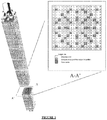
- the figure 3 represents, by way of example, schematically, a fuel assembly formed of a network 17x17, composed of 265 fuel rods including 25 rods (GD) formed of pellets according to the invention, the other rods (U) being formed of homogeneous pellets of UO 2 .
- the fuel rods are held by a structure comprising 24 guide tubes (TG).
- the material according to the invention can be used as consumable neutron poison in nuclear fuel elements, other than pencils.
- the invention relates to a nuclear fuel element of plate-type geometry, comprising one or more fissile zones, even fertile, coated (s), at least in part, a material according to the invention.
- the figure 9.a represents, schematically, an overview of such a nuclear fuel assembly (100) comprising a stack of sheathed plates ( figure 9.b ), containing a fissile material.
- the sheath is generally made of an aluminum alloy.
- the assembly may comprise one or more plates (103) comprising a fissile zone (101), for example of UO 2 , at least partially coated with a layer (102) of gadolinium-enriched material according to the invention.
- the other plates (104) may be standard non-poisoned plates.
- a plate (103) may more particularly consist of a network of pellets (111) of nuclear fuel, for example UO 2 pellets, located in a network of cells (6), interposed between two plates (7). 8).
- a plate-type fuel element structure is described in more detail in the document FR 2,889,765 .
- some or all of the pellets (111) incorporated in the plate-type fuel element may be coated, at least in part, with a layer (112) formed of a material according to the invention, as visualized, for cutting, on the figure 10.b .
- a powder of material according to the invention is prepared, as described in Example 1, by sintering a mixture of UO 2 and Gd 2 O 3 , in a weight ratio Gd 2 O 3 / (UO 2 + Gd 2 O 3 ) 80%, at 1700 ° C and under a reducing atmosphere of Ar, H 2 5% for 4 hours.
- a pellet is molded according to the structure presented in figure 1 with a cylindrical inner portion formed from a uranium oxide powder and an annular outer portion formed from the Gd-enriched powder obtained above.
- a thin partition made with two concentric crowns. The finished filling, the thin partition is removed and the pressing done.
- the cylindrical core has a radius (R 1 ) of about 4 mm; the annular outer portion has a thickness (e) of about 50 to 250 microns depending on the desired anti-reactivity supply.
- the pellet is then sintered under reducing conditions with an Ar H 2 5% atmosphere for 4 hours.
- a pellet consisting of fissile material (1) is shaped by compaction with a cylindrical geometry.
- pre-sintering of this pellet can be carried out.
- An annular outer portion formed from the gadolinium-enriched powder obtained in step (i) according to the A- or B- mode, is deposited, for example in the form of a slip (formed from the powder and ethanol), on the cylindrical surface, then the slip is dried.
- the pellet is then sintered under reducing conditions with an Ar H 2 5% (molar) atmosphere for 4 hours.
- the cylindrical core with fissile / fertile elements, has a radius of about 4 mm; the annular outer portion, with gadolinium, has a thickness of about 30 to 250 microns depending on the desired anti-reactivity intake.
- the figure 2 shows the pellet observed in section by light microscopy.
- the neutron performance of different 17x17 nuclear fuel assemblies is modeled using the APOLLO2 calculation code.
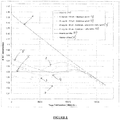
- Curve 2 on the graph of the figure 4 represents the evolution of the infinite multiplication factor of a so-called “ideal” reactor.
- an "ideal" reactor in the sense of the modelizations carried out, is a reactor which has a real reactivity, ⁇ real , of +2 000 cfm up to the point of operation (3). This over-reactivity makes it possible to maneuver the reactor (for example, to increase power).
- the figure 5 presents the evolution of the multiplication factor in infinite medium, K infinite in hot condition (that is to say considering the effect of temperature), of a fictitious UO 2 based fuel assembly as a function of average combustion rate of the assembly, for 17x17 assemblies.
- the figure 7.b shows the neutron effect obtained for assemblies incorporating conventional homogeneous pellet rods consisting of a solid solution of (U, Gd) O 2 to 8% by weight of Gd 2 O 3 .
Landscapes
- Physics & Mathematics (AREA)
- Engineering & Computer Science (AREA)
- Chemical & Material Sciences (AREA)
- Organic Chemistry (AREA)
- Plasma & Fusion (AREA)
- General Engineering & Computer Science (AREA)
- High Energy & Nuclear Physics (AREA)
- Life Sciences & Earth Sciences (AREA)
- Inorganic Chemistry (AREA)
- Geology (AREA)
- General Life Sciences & Earth Sciences (AREA)
- Chemical Kinetics & Catalysis (AREA)
- Monitoring And Testing Of Nuclear Reactors (AREA)
- Inorganic Compounds Of Heavy Metals (AREA)
Claims (15)
- Material auf der Basis von Uran (U), Gadolinium (Gd) und Sauerstoff (O), mit einer kristallinen Phase mit kubischem Kristallgitter, mit einem Atomverhältnis Gd/[Gd+U] zwischen 0,6 und 0,93, bei dem das Uran im Oxidationsgrad +IV und/oder +V vorliegt.
- Material nach Anspruch 1, mit einer als kubische Phase 1 bezeichneten kristallinien Phase, in der das Atomverhältnis Gd/[Gd+U] zwischen 0,79 und 0,93 beträgt, wobei das kubische Kristallgitter vorzugsweise einen Gitterparameter (a1) zwischen 10,8 und 10,9 Å hat.
- Material nach Anspruch 1, mit einer als kubische Phase 2 bezeichneten kristallinen Phase, in der das Atomverhältnis Gd/[Gd+U] zwischen 0,6 und 0,71 beträgt, wobei das kubische Kristallgitter vorzugsweise einen Gitterparameter (a2) zwischen 5,3 und 5,5 Å hat.
- Material nach Anspruch 1, mit zwei Phasen, das eine kubische Phase 1 aufweist, wie sie in Anspruch 2 definiert ist und eine kubische Phase 2, wie sie in Anspruch 3 definiert ist.
- Material nach einem der vorstehenden Ansprüche, bei der das Uran ein mit dem Isotop U235 angereichertes Uran, ein mit dem Isotop U235 abgereichertes Uran oder Natururan ist und/oder das Gadolinium Naturgadolinium oder ein Gadolinium ist, das in seinem Isotopenverhältnis 155Gd/Gdgesamt und/oder 157Gd/Gdgesamt modifiziert ist.
- Verfahren zur Herstellung eines Materials nach einem der Ansprüche 1 bis 5, mit einem Schritt des Sinterns, bei einer Temperatur von 1200 bis 2200 °C und in reduzierender Atmosphäre, eines Pulvers, das gebildet ist aus einem Gemisch aus Uranoxid wie etwa UO2 oder einem höheren Oxid wie etwa U3O8, und Gadoliniumoxid Gd2O3, in Verhältnissen, in denen das Gadolinium in einem Atomverhältnis Gd/[Gd+U] zwischen 0,6 und 0,93 vorliegt.
- Verfahren nach dem vorstehenden Anspruch, bei dem das Sintern in einer Atmosphäre aus Argon mit einem Zusatz von 5 Mol-% Wasserstoff und/oder während einer Dauer ausgeführt wird, die größer oder gleich 1 Stunde, insbesondere 3 bis 8 Stunden ist.
- Verwendung eines Materials nach einem der Ansprüche 1 bis 5 als konsumierbares Neutronengift in einem Kernbrennstoffelement.
- Kernbrennstoffpastille mit einem Material nach einem der Ansprüche 1 bis 5.
- Pastille nach dem vorstehenden Anspruch, welche Pastille eine heterogene Pastille (10) ist, gebildet aus mindestens einem inneren, insbesondere zylindrischen Teil (1), der wenigstens ein spaltbares oder ergiebiges Material aufweist, umhüllt von einem ringförmigen äußeren Teil (2), der ganz oder zum Teil aus einem Material gemäß einem der Ansprüche 1 bis 5 gebildet ist.
- Pastille nach Anspruch 10, bei der der genannte ringförmige äußere Teil (2) eine Dicke (e) von 0,05 bis 7,5 % des Radius (R) der genannten Pastille hat und/oder der genannte zylindrische innere Teil (1) ganz oder zum Teil aus Uranoxid, Plutoniumoxid, Thoriumoxid oder Gemischen hieraus, insbesondere aus Uranoxid gebildet ist.
- Verfahren zur Herstellung einer Kernbrennstoffpastille nach einem der Ansprüche 10 und 11, mit wenigstens den Schritten, die bestehen in:(i) Bereitstellen eines Pulvers, das ein Material enthält, wie es in einem der Ansprüche 1 bis 5 definiert ist,
oder eines Pulvers, das aus einer Mischung aus Uranoxid wie etwa UO2 oder einem höheren Oxid wie etwa U3O8 und Gadoliniumoxid Gd2O3 gebildet ist, in solchen Verhältnissen, dass das Gadolinium in einem Atomverhältnis Gd/[Gd+U] von 0,6 bis 0,93 vorliegt,(ii) Herstellen eines Schlammes aus dem Pulver aus Schritt (i),(iii) Auftragen des Pulvers in der Form des Schlammes auf die Oberfläche einer Pastille, vorzugsweise einer gepressten Pastille, die wenigstens ein spaltbares oder ergiebiges Material enthält, und(iv) Sintern der am Ende des Schrittes (iii) erhaltenen Pastille unter reduzierender Atmosphäre bei einer Temperatur zwischen 1200 °C und 2200 °C,wobei der Schritt (iii) vorzugsweise das Trocknen der auf die Oberfläche der Pastille aufgetragenen Schlammschicht einschließt. - Kernbrennstoffstab mit Brennstoffpastillen, wie sie in einem der Ansprüche 9 bis 11 definiert sind.
- Kernbrennstoffbaugruppe mit Brennstoffstäben, wie sie in Anspruch 13 definiert sind.
- Kernbrennstoffelement mit plattenförmiger Geometrie, mit einer oder mehreren spaltbaren oder ergiebigen Zonen, die zumindest zum Teil mit einem Material nach einem der Ansprüche 1 bis 5 umhüllt ist/sind.
Applications Claiming Priority (2)
| Application Number | Priority Date | Filing Date | Title |
|---|---|---|---|
| FR1353910A FR3005046B1 (fr) | 2013-04-29 | 2013-04-29 | Nouveau materiau a base d'uranium, de gadolinium et d'oxygene et son utilisation comme poison neutronique consommable |
| PCT/IB2014/060971 WO2014177980A1 (fr) | 2013-04-29 | 2014-04-24 | Nouveau materiau a base d'uranium, de gadolinium et d'oxygene et son utilisation comme poison neutronique consommable |
Publications (2)
| Publication Number | Publication Date |
|---|---|
| EP2991932A1 EP2991932A1 (de) | 2016-03-09 |
| EP2991932B1 true EP2991932B1 (de) | 2017-03-29 |
Family
ID=49054696
Family Applications (1)
| Application Number | Title | Priority Date | Filing Date |
|---|---|---|---|
| EP14722782.1A Active EP2991932B1 (de) | 2013-04-29 | 2014-04-24 | Neuartiges material aus uran, gadolinium und sauerstoff sowie verwendung davon als verbrauchbares neutronengift |
Country Status (7)
| Country | Link |
|---|---|
| US (1) | US10062459B2 (de) |
| EP (1) | EP2991932B1 (de) |
| JP (1) | JP6409051B2 (de) |
| CN (1) | CN105377763B (de) |
| ES (1) | ES2626990T3 (de) |
| FR (1) | FR3005046B1 (de) |
| WO (1) | WO2014177980A1 (de) |
Families Citing this family (5)
| Publication number | Priority date | Publication date | Assignee | Title |
|---|---|---|---|---|
| EP3257050B1 (de) * | 2015-02-11 | 2021-05-26 | Candu Energy Inc. | Kernbrennstoff mit einem neutronenabsorbergemisch |
| CA3017939A1 (en) * | 2016-03-29 | 2017-10-05 | Ultra Safe Nuclear Corporation | Fully ceramic microencapsulated fuel fabricated with burnable poison as sintering aid |
| CN110164573B (zh) * | 2018-02-13 | 2023-12-12 | 韩国原子力研究院 | 导热率提高的核燃料粒料及其制备方法 |
| US11403315B2 (en) * | 2019-11-21 | 2022-08-02 | Bank Of America Corporation | Reporting and knowledge discovery for databases |
| CN113921150A (zh) * | 2021-09-24 | 2022-01-11 | 中国核电工程有限公司 | 用于固体钆中子毒物棒泄漏的检测方法 |
Family Cites Families (17)
| Publication number | Priority date | Publication date | Assignee | Title |
|---|---|---|---|---|
| US3122484A (en) | 1960-04-18 | 1964-02-25 | Haig P Iskenderian | Reactor having fuel element coated with burnable poison |
| SE366015B (de) * | 1970-08-10 | 1974-04-08 | Gen Electric | |
| DE2939415C2 (de) * | 1979-09-28 | 1981-11-26 | Kraftwerk Union AG, 4330 Mülheim | Verfahren zur Herstellung von hochdichten oxidischen Kernbrennstoffkörpern |
| FR2536571A1 (fr) * | 1982-11-19 | 1984-05-25 | Commissariat Energie Atomique | Procede de fabrication de pastilles de combustible nucleaire contenant un absorbant neutronique temporaire |
| US4587087A (en) | 1983-02-22 | 1986-05-06 | Westinghouse Electric Corp. | Burnable absorber coated nuclear fuel |
| US4668468A (en) | 1984-06-01 | 1987-05-26 | Electric Power Research Institute, Inc. | Reactivity control of nuclear fuel pellets by volumetric redistribution of fissile, fertile and burnable poison material |
| US4671927A (en) | 1984-12-03 | 1987-06-09 | Westinghouse Electric Corp. | Nuclear fuel rod containing a hybrid gadolinium oxide, boron carbide burnable absorber |
| US4678629A (en) | 1985-09-05 | 1987-07-07 | Westinghouse Electric Corp. | Nuclear fuel pellet containing gadolinia |
| JPH0854484A (ja) * | 1994-08-10 | 1996-02-27 | Toshiba Corp | 原子炉の燃料集合体 |
| FR2789404B1 (fr) | 1999-02-05 | 2001-03-02 | Commissariat Energie Atomique | Alliage de zirconium et de niobium comprenant de l'erbium comme poison neutronique consommable, son procede de preparation et piece comprenant ledit alliage |
| CN1133176C (zh) * | 2001-03-30 | 2003-12-31 | 中国核动力研究设计院 | 用U3O8粉末制备Gd2O3UO2可燃毒物燃料芯块的方法 |
| FR2889765B1 (fr) | 2005-08-10 | 2011-06-24 | Commissariat Energie Atomique | Element combustible de type plaque macrostructuree |
| CN101169983A (zh) * | 2006-10-25 | 2008-04-30 | 中国核动力研究设计院 | 溶胶凝胶法制备Gd2O3-UO2微球的工艺 |
| CN101572127B (zh) * | 2008-04-28 | 2012-10-03 | 中科华核电技术研究院有限公司 | 一种核燃料棒、核燃料组件及核反应堆堆芯 |
| FR2953637B1 (fr) | 2009-12-04 | 2012-03-23 | Commissariat Energie Atomique | Crayon de combustible nucleaire et procede de fabrication de pastilles d'un tel crayon |
| US8755483B2 (en) * | 2010-06-25 | 2014-06-17 | Aerojet Rocketdyne Of De, Inc. | Nuclear fuel |
| KR101165452B1 (ko) * | 2010-10-20 | 2012-07-12 | 한국수력원자력 주식회사 | 이종 첨가 원소의 결정립계 및 결정립계 주변의 고용 농도 조절 방법 및 이를 이용한 결정립이 큰 핵연료 소결체의 제조방법. |
-
2013
- 2013-04-29 FR FR1353910A patent/FR3005046B1/fr active Active
-
2014
- 2014-04-24 JP JP2016511151A patent/JP6409051B2/ja active Active
- 2014-04-24 CN CN201480037507.2A patent/CN105377763B/zh active Active
- 2014-04-24 US US14/787,986 patent/US10062459B2/en active Active
- 2014-04-24 ES ES14722782.1T patent/ES2626990T3/es active Active
- 2014-04-24 EP EP14722782.1A patent/EP2991932B1/de active Active
- 2014-04-24 WO PCT/IB2014/060971 patent/WO2014177980A1/fr not_active Ceased
Non-Patent Citations (1)
| Title |
|---|
| None * |
Also Published As
| Publication number | Publication date |
|---|---|
| CN105377763B (zh) | 2017-06-27 |
| FR3005046B1 (fr) | 2015-05-15 |
| JP6409051B2 (ja) | 2018-10-17 |
| JP2016522780A (ja) | 2016-08-04 |
| US10062459B2 (en) | 2018-08-28 |
| US20160104548A1 (en) | 2016-04-14 |
| FR3005046A1 (fr) | 2014-10-31 |
| ES2626990T3 (es) | 2017-07-26 |
| EP2991932A1 (de) | 2016-03-09 |
| WO2014177980A1 (fr) | 2014-11-06 |
| CN105377763A (zh) | 2016-03-02 |
Similar Documents
| Publication | Publication Date | Title |
|---|---|---|
| RU2735243C2 (ru) | Полностью керамическое микроинкапсулированное топливо, изготовленное с выгорающим поглотителем в качестве интенсификатора спекания | |
| EP2462591B1 (de) | Verfahren für den betrieb eines druckwasserkernreaktors mit funktion für den übergang von einem plutoniumgleichgewichtszyklus zu einem uraniumgleichgewichtszyklus sowie entsprechende kernbrennstoffanordnung | |
| EP2991932B1 (de) | Neuartiges material aus uran, gadolinium und sauerstoff sowie verwendung davon als verbrauchbares neutronengift | |
| FR2944643B1 (fr) | Coeur de reacteur a eau legere et assemblage combustible | |
| EP2474000A1 (de) | Verfahren für die herstellung eines porösen kernbrennstoffes mit mindestens einem minoren aktinid | |
| EP1683162B1 (de) | Verfahren zur herstellung von kernbrennstoffpellets auf der basis von gemischten oxiden (u,pu)o2 oder (u,th)o2 | |
| US9679666B2 (en) | Uranium dioxide nuclear fuel pellet having metallic microcells and fabricating method thereof | |
| US10043595B2 (en) | Uranium dioxide nuclear fuel pellet having ceramic microcells | |
| FR2962842A1 (fr) | Coeur de reacteur a eau legere et assemblage combustible. | |
| FR3030500A1 (fr) | Procede de fabrication d'une pastille d'au moins un oxyde metallique, son utilisation comme combustible nucleaire | |
| CA2324880C (fr) | Alliage de zirconium et de niobium comprenant de l'erbium comme poison neutronique consommable son procede de preparation et piece comprenant ledit alliage | |
| FR3056814A1 (fr) | Assemblage combustible pour reacteur a eau legere, cœur du reacteur a eau legere et procede de fabrication d'un assemblage combustible mox | |
| Keiser Jr et al. | Microstructural analysis of irradiated U-Mo fuel plates: recent results | |
| KR20090109238A (ko) | 고연소도 사용후핵연료를 이용한 핵연료 소결체 제조방법 | |
| Dandi et al. | Conceptual design of the double tube burnable poison for the next generation small modular reactor | |
| WO2026087721A1 (fr) | Combustible de type mox poreux pour réacteurs à neutrons rapides | |
| KR101621433B1 (ko) | 환형 가연성 독봉 제조방법 | |
| FR3025650A1 (fr) | Reacteur a neutrons rapides, a cœur contenant des elements combustibles a basse temperature de fonctionnement nominal, et preferablement de faible diametre, et un materiau moderateur | |
| FR3157965A1 (fr) | Méthode de production de combustible nucléaire | |
| JPS5868692A (ja) | 沸騰水形原子炉 | |
| WO2007065836A1 (fr) | Combustible nucleaire comportant un poison consommable et un procede de fabrication d'un tel combustible |
Legal Events
| Date | Code | Title | Description |
|---|---|---|---|
| PUAI | Public reference made under article 153(3) epc to a published international application that has entered the european phase |
Free format text: ORIGINAL CODE: 0009012 |
|
| 17P | Request for examination filed |
Effective date: 20151130 |
|
| AK | Designated contracting states |
Kind code of ref document: A1 Designated state(s): AL AT BE BG CH CY CZ DE DK EE ES FI FR GB GR HR HU IE IS IT LI LT LU LV MC MK MT NL NO PL PT RO RS SE SI SK SM TR |
|
| AX | Request for extension of the european patent |
Extension state: BA ME |
|
| RIN1 | Information on inventor provided before grant (corrected) |
Inventor name: PIECK, DARIO Inventor name: PONTILLON, YVES Inventor name: MATHERON, PIERRE Inventor name: DESGRANGES, LIONEL |
|
| DAX | Request for extension of the european patent (deleted) | ||
| GRAP | Despatch of communication of intention to grant a patent |
Free format text: ORIGINAL CODE: EPIDOSNIGR1 |
|
| INTG | Intention to grant announced |
Effective date: 20161020 |
|
| STAA | Information on the status of an ep patent application or granted ep patent |
Free format text: STATUS: GRANT OF PATENT IS INTENDED |
|
| GRAS | Grant fee paid |
Free format text: ORIGINAL CODE: EPIDOSNIGR3 |
|
| GRAA | (expected) grant |
Free format text: ORIGINAL CODE: 0009210 |
|
| STAA | Information on the status of an ep patent application or granted ep patent |
Free format text: STATUS: THE PATENT HAS BEEN GRANTED |
|
| AK | Designated contracting states |
Kind code of ref document: B1 Designated state(s): AL AT BE BG CH CY CZ DE DK EE ES FI FR GB GR HR HU IE IS IT LI LT LU LV MC MK MT NL NO PL PT RO RS SE SI SK SM TR |
|
| REG | Reference to a national code |
Ref country code: GB Ref legal event code: FG4D Free format text: NOT ENGLISH |
|
| REG | Reference to a national code |
Ref country code: CH Ref legal event code: EP |
|
| REG | Reference to a national code |
Ref country code: AT Ref legal event code: REF Ref document number: 879576 Country of ref document: AT Kind code of ref document: T Effective date: 20170415 |
|
| REG | Reference to a national code |
Ref country code: IE Ref legal event code: FG4D Free format text: LANGUAGE OF EP DOCUMENT: FRENCH |
|
| REG | Reference to a national code |
Ref country code: DE Ref legal event code: R096 Ref document number: 602014008109 Country of ref document: DE |
|
| REG | Reference to a national code |
Ref country code: FR Ref legal event code: PLFP Year of fee payment: 4 |
|
| REG | Reference to a national code |
Ref country code: SE Ref legal event code: TRGR |
|
| REG | Reference to a national code |
Ref country code: ES Ref legal event code: FG2A Ref document number: 2626990 Country of ref document: ES Kind code of ref document: T3 Effective date: 20170726 |
|
| PG25 | Lapsed in a contracting state [announced via postgrant information from national office to epo] |
Ref country code: HR Free format text: LAPSE BECAUSE OF FAILURE TO SUBMIT A TRANSLATION OF THE DESCRIPTION OR TO PAY THE FEE WITHIN THE PRESCRIBED TIME-LIMIT Effective date: 20170329 Ref country code: GR Free format text: LAPSE BECAUSE OF FAILURE TO SUBMIT A TRANSLATION OF THE DESCRIPTION OR TO PAY THE FEE WITHIN THE PRESCRIBED TIME-LIMIT Effective date: 20170630 Ref country code: FI Free format text: LAPSE BECAUSE OF FAILURE TO SUBMIT A TRANSLATION OF THE DESCRIPTION OR TO PAY THE FEE WITHIN THE PRESCRIBED TIME-LIMIT Effective date: 20170329 Ref country code: NO Free format text: LAPSE BECAUSE OF FAILURE TO SUBMIT A TRANSLATION OF THE DESCRIPTION OR TO PAY THE FEE WITHIN THE PRESCRIBED TIME-LIMIT Effective date: 20170629 Ref country code: LT Free format text: LAPSE BECAUSE OF FAILURE TO SUBMIT A TRANSLATION OF THE DESCRIPTION OR TO PAY THE FEE WITHIN THE PRESCRIBED TIME-LIMIT Effective date: 20170329 |
|
| REG | Reference to a national code |
Ref country code: NL Ref legal event code: MP Effective date: 20170329 |
|
| REG | Reference to a national code |
Ref country code: AT Ref legal event code: MK05 Ref document number: 879576 Country of ref document: AT Kind code of ref document: T Effective date: 20170329 |
|
| PG25 | Lapsed in a contracting state [announced via postgrant information from national office to epo] |
Ref country code: RS Free format text: LAPSE BECAUSE OF FAILURE TO SUBMIT A TRANSLATION OF THE DESCRIPTION OR TO PAY THE FEE WITHIN THE PRESCRIBED TIME-LIMIT Effective date: 20170329 Ref country code: BG Free format text: LAPSE BECAUSE OF FAILURE TO SUBMIT A TRANSLATION OF THE DESCRIPTION OR TO PAY THE FEE WITHIN THE PRESCRIBED TIME-LIMIT Effective date: 20170629 Ref country code: LV Free format text: LAPSE BECAUSE OF FAILURE TO SUBMIT A TRANSLATION OF THE DESCRIPTION OR TO PAY THE FEE WITHIN THE PRESCRIBED TIME-LIMIT Effective date: 20170329 |
|
| PG25 | Lapsed in a contracting state [announced via postgrant information from national office to epo] |
Ref country code: NL Free format text: LAPSE BECAUSE OF FAILURE TO SUBMIT A TRANSLATION OF THE DESCRIPTION OR TO PAY THE FEE WITHIN THE PRESCRIBED TIME-LIMIT Effective date: 20170329 |
|
| PG25 | Lapsed in a contracting state [announced via postgrant information from national office to epo] |
Ref country code: CZ Free format text: LAPSE BECAUSE OF FAILURE TO SUBMIT A TRANSLATION OF THE DESCRIPTION OR TO PAY THE FEE WITHIN THE PRESCRIBED TIME-LIMIT Effective date: 20170329 Ref country code: AT Free format text: LAPSE BECAUSE OF FAILURE TO SUBMIT A TRANSLATION OF THE DESCRIPTION OR TO PAY THE FEE WITHIN THE PRESCRIBED TIME-LIMIT Effective date: 20170329 Ref country code: RO Free format text: LAPSE BECAUSE OF FAILURE TO SUBMIT A TRANSLATION OF THE DESCRIPTION OR TO PAY THE FEE WITHIN THE PRESCRIBED TIME-LIMIT Effective date: 20170329 Ref country code: EE Free format text: LAPSE BECAUSE OF FAILURE TO SUBMIT A TRANSLATION OF THE DESCRIPTION OR TO PAY THE FEE WITHIN THE PRESCRIBED TIME-LIMIT Effective date: 20170329 Ref country code: SK Free format text: LAPSE BECAUSE OF FAILURE TO SUBMIT A TRANSLATION OF THE DESCRIPTION OR TO PAY THE FEE WITHIN THE PRESCRIBED TIME-LIMIT Effective date: 20170329 Ref country code: IT Free format text: LAPSE BECAUSE OF FAILURE TO SUBMIT A TRANSLATION OF THE DESCRIPTION OR TO PAY THE FEE WITHIN THE PRESCRIBED TIME-LIMIT Effective date: 20170329 |
|
| PG25 | Lapsed in a contracting state [announced via postgrant information from national office to epo] |
Ref country code: IS Free format text: LAPSE BECAUSE OF FAILURE TO SUBMIT A TRANSLATION OF THE DESCRIPTION OR TO PAY THE FEE WITHIN THE PRESCRIBED TIME-LIMIT Effective date: 20170729 Ref country code: SM Free format text: LAPSE BECAUSE OF FAILURE TO SUBMIT A TRANSLATION OF THE DESCRIPTION OR TO PAY THE FEE WITHIN THE PRESCRIBED TIME-LIMIT Effective date: 20170329 Ref country code: PL Free format text: LAPSE BECAUSE OF FAILURE TO SUBMIT A TRANSLATION OF THE DESCRIPTION OR TO PAY THE FEE WITHIN THE PRESCRIBED TIME-LIMIT Effective date: 20170329 |
|
| REG | Reference to a national code |
Ref country code: CH Ref legal event code: PL |
|
| REG | Reference to a national code |
Ref country code: DE Ref legal event code: R097 Ref document number: 602014008109 Country of ref document: DE |
|
| REG | Reference to a national code |
Ref country code: IE Ref legal event code: MM4A |
|
| PG25 | Lapsed in a contracting state [announced via postgrant information from national office to epo] |
Ref country code: DK Free format text: LAPSE BECAUSE OF FAILURE TO SUBMIT A TRANSLATION OF THE DESCRIPTION OR TO PAY THE FEE WITHIN THE PRESCRIBED TIME-LIMIT Effective date: 20170329 Ref country code: MC Free format text: LAPSE BECAUSE OF FAILURE TO SUBMIT A TRANSLATION OF THE DESCRIPTION OR TO PAY THE FEE WITHIN THE PRESCRIBED TIME-LIMIT Effective date: 20170329 |
|
| PLBE | No opposition filed within time limit |
Free format text: ORIGINAL CODE: 0009261 |
|
| STAA | Information on the status of an ep patent application or granted ep patent |
Free format text: STATUS: NO OPPOSITION FILED WITHIN TIME LIMIT |
|
| PG25 | Lapsed in a contracting state [announced via postgrant information from national office to epo] |
Ref country code: LU Free format text: LAPSE BECAUSE OF NON-PAYMENT OF DUE FEES Effective date: 20170424 Ref country code: CH Free format text: LAPSE BECAUSE OF NON-PAYMENT OF DUE FEES Effective date: 20170430 Ref country code: LI Free format text: LAPSE BECAUSE OF NON-PAYMENT OF DUE FEES Effective date: 20170430 |
|
| 26N | No opposition filed |
Effective date: 20180103 |
|
| PG25 | Lapsed in a contracting state [announced via postgrant information from national office to epo] |
Ref country code: IE Free format text: LAPSE BECAUSE OF NON-PAYMENT OF DUE FEES Effective date: 20170424 |
|
| REG | Reference to a national code |
Ref country code: FR Ref legal event code: PLFP Year of fee payment: 5 |
|
| PG25 | Lapsed in a contracting state [announced via postgrant information from national office to epo] |
Ref country code: SI Free format text: LAPSE BECAUSE OF FAILURE TO SUBMIT A TRANSLATION OF THE DESCRIPTION OR TO PAY THE FEE WITHIN THE PRESCRIBED TIME-LIMIT Effective date: 20170329 |
|
| PG25 | Lapsed in a contracting state [announced via postgrant information from national office to epo] |
Ref country code: MT Free format text: LAPSE BECAUSE OF FAILURE TO SUBMIT A TRANSLATION OF THE DESCRIPTION OR TO PAY THE FEE WITHIN THE PRESCRIBED TIME-LIMIT Effective date: 20170329 |
|
| PG25 | Lapsed in a contracting state [announced via postgrant information from national office to epo] |
Ref country code: HU Free format text: LAPSE BECAUSE OF FAILURE TO SUBMIT A TRANSLATION OF THE DESCRIPTION OR TO PAY THE FEE WITHIN THE PRESCRIBED TIME-LIMIT; INVALID AB INITIO Effective date: 20140424 |
|
| PG25 | Lapsed in a contracting state [announced via postgrant information from national office to epo] |
Ref country code: CY Free format text: LAPSE BECAUSE OF FAILURE TO SUBMIT A TRANSLATION OF THE DESCRIPTION OR TO PAY THE FEE WITHIN THE PRESCRIBED TIME-LIMIT Effective date: 20170329 |
|
| PG25 | Lapsed in a contracting state [announced via postgrant information from national office to epo] |
Ref country code: MK Free format text: LAPSE BECAUSE OF FAILURE TO SUBMIT A TRANSLATION OF THE DESCRIPTION OR TO PAY THE FEE WITHIN THE PRESCRIBED TIME-LIMIT Effective date: 20170329 |
|
| PG25 | Lapsed in a contracting state [announced via postgrant information from national office to epo] |
Ref country code: TR Free format text: LAPSE BECAUSE OF FAILURE TO SUBMIT A TRANSLATION OF THE DESCRIPTION OR TO PAY THE FEE WITHIN THE PRESCRIBED TIME-LIMIT Effective date: 20170329 |
|
| PG25 | Lapsed in a contracting state [announced via postgrant information from national office to epo] |
Ref country code: PT Free format text: LAPSE BECAUSE OF FAILURE TO SUBMIT A TRANSLATION OF THE DESCRIPTION OR TO PAY THE FEE WITHIN THE PRESCRIBED TIME-LIMIT Effective date: 20170329 |
|
| PG25 | Lapsed in a contracting state [announced via postgrant information from national office to epo] |
Ref country code: AL Free format text: LAPSE BECAUSE OF FAILURE TO SUBMIT A TRANSLATION OF THE DESCRIPTION OR TO PAY THE FEE WITHIN THE PRESCRIBED TIME-LIMIT Effective date: 20170329 |
|
| PGFP | Annual fee paid to national office [announced via postgrant information from national office to epo] |
Ref country code: DE Payment date: 20250417 Year of fee payment: 12 |
|
| PGFP | Annual fee paid to national office [announced via postgrant information from national office to epo] |
Ref country code: GB Payment date: 20250424 Year of fee payment: 12 Ref country code: ES Payment date: 20250519 Year of fee payment: 12 |
|
| PGFP | Annual fee paid to national office [announced via postgrant information from national office to epo] |
Ref country code: BE Payment date: 20250417 Year of fee payment: 12 |
|
| PGFP | Annual fee paid to national office [announced via postgrant information from national office to epo] |
Ref country code: FR Payment date: 20250422 Year of fee payment: 12 |
|
| PGFP | Annual fee paid to national office [announced via postgrant information from national office to epo] |
Ref country code: SE Payment date: 20250423 Year of fee payment: 12 |