EP2993183B1 - Anti-hpv-e7-antikörper - Google Patents
Anti-hpv-e7-antikörper Download PDFInfo
- Publication number
- EP2993183B1 EP2993183B1 EP15182048.7A EP15182048A EP2993183B1 EP 2993183 B1 EP2993183 B1 EP 2993183B1 EP 15182048 A EP15182048 A EP 15182048A EP 2993183 B1 EP2993183 B1 EP 2993183B1
- Authority
- EP
- European Patent Office
- Prior art keywords
- hpv
- protein
- antibody
- present
- monoclonal
- Prior art date
- Legal status (The legal status is an assumption and is not a legal conclusion. Google has not performed a legal analysis and makes no representation as to the accuracy of the status listed.)
- Active
Links
Images








Classifications
-
- C—CHEMISTRY; METALLURGY
- C07—ORGANIC CHEMISTRY
- C07K—PEPTIDES
- C07K16/00—Immunoglobulins [IG], e.g. monoclonal or polyclonal antibodies
- C07K16/08—Immunoglobulins [IG], e.g. monoclonal or polyclonal antibodies against material from viruses
- C07K16/081—DNA viruses
- C07K16/084—Papillomaviridae (F); Polyomaviridae (F), e.g. SV40, BK virus or JC virus
-
- G—PHYSICS
- G01—MEASURING; TESTING
- G01N—INVESTIGATING OR ANALYSING MATERIALS BY DETERMINING THEIR CHEMICAL OR PHYSICAL PROPERTIES
- G01N33/00—Investigating or analysing materials by specific methods not covered by groups G01N1/00 - G01N31/00
- G01N33/48—Biological material, e.g. blood, urine; Haemocytometers
- G01N33/50—Chemical analysis of biological material, e.g. blood, urine; Testing involving biospecific ligand binding methods; Immunological testing
- G01N33/53—Immunoassay; Biospecific binding assay; Materials therefor
- G01N33/569—Immunoassay; Biospecific binding assay; Materials therefor for microorganisms, e.g. protozoa, bacteria, viruses
- G01N33/56983—Viruses
-
- C—CHEMISTRY; METALLURGY
- C07—ORGANIC CHEMISTRY
- C07K—PEPTIDES
- C07K2317/00—Immunoglobulins specific features
- C07K2317/30—Immunoglobulins specific features characterized by aspects of specificity or valency
- C07K2317/33—Crossreactivity, e.g. for species or epitope, or lack of said crossreactivity
-
- C—CHEMISTRY; METALLURGY
- C07—ORGANIC CHEMISTRY
- C07K—PEPTIDES
- C07K2317/00—Immunoglobulins specific features
- C07K2317/30—Immunoglobulins specific features characterized by aspects of specificity or valency
- C07K2317/34—Identification of a linear epitope shorter than 20 amino acid residues or of a conformational epitope defined by amino acid residues
-
- G—PHYSICS
- G01—MEASURING; TESTING
- G01N—INVESTIGATING OR ANALYSING MATERIALS BY DETERMINING THEIR CHEMICAL OR PHYSICAL PROPERTIES
- G01N2333/00—Assays involving biological materials from specific organisms or of a specific nature
- G01N2333/005—Assays involving biological materials from specific organisms or of a specific nature from viruses
- G01N2333/01—DNA viruses
- G01N2333/025—Papovaviridae, e.g. papillomavirus, polyomavirus, SV40, BK virus, JC virus
-
- G—PHYSICS
- G01—MEASURING; TESTING
- G01N—INVESTIGATING OR ANALYSING MATERIALS BY DETERMINING THEIR CHEMICAL OR PHYSICAL PROPERTIES
- G01N2469/00—Immunoassays for the detection of microorganisms
- G01N2469/10—Detection of antigens from microorganism in sample from host
Definitions
- the present invention relates to monoclonal anti-HPV (human papillomavirus) E7 antibodies capable of specifically recognising an epitope of the C-terminal region of a HPV 16 E7 protein, diagnostic compositions and kits comprising said antibodies as well as methods for immunohistochemical and ELISA-based diagnosis of HPV infections utilizing said antibodies.
- HPV human papillomavirus
- HPVs Human papillomaviruses
- HPVs sexually transmitted infections with human papillomaviruses
- the double stranded DNA HPVs are divided into high-risk HPVs associated with squamous intraepithelial lesions with a high potential for progression to invasive squamous cell carcinoma, and low-risk HPVs associated with benign hyperplasia.
- HPV 16 is the most prevalent genotype worldwide with an incidence in squamous cell carcinoma of approximately 55 %, followed by HPV 18 (approximately 17 %) and HPV 45 (4-9 %).
- Pap Smears or Papanicolaou test; Papanicolaou, 1942, Science, 95:438-439
- the result of the cytological analysis is dependent on detection of abnormal cells by experienced pathologists.
- Pap Smear diagnosis is still characterized by a high rate of false-positive and false-negative results ( Foucar, 2005, Semin Diagn Pathol, 22(2):147-155 ).
- a sensitive DNA detection assay e.g., Hybrid capture 2TM; Digene Inc., USA
- this assay is well suited to detect infections by papillomaviruses of the high-risk type, it cannot discriminate between transient infections, which spontaneously regress in most cases, and the onset of cervical cancer.
- diagnostic systems have been developed that detect the presence of E6/E7 mRNA in cervical smears, as a surrogate marker for the expression of the viral oncoproteins E6 and E7.
- E7 protein seems to be the superior diagnostic tool.
- Various antibodies are already known in the art, but they either display low sensitivity or specificity or are described to cross-react with the E7 proteins of various HPV types. Also, as polyclonal antibodies can only be produced in a limited quantity by one animal, there are batch-to-batch differences. The difficulty to produce highly specific and sensitive monoclonal antibodies against E7 proteins is mainly due to the low immunogenicity of E7 proteins.
- WO 07/059492 discloses methods, assays and kits for the detection of HPV DNA or proteins, employing inter alia monoclonal and polyclonal antibodies against the HPV 16 E7 protein, capable of reliably detecting the rather high amount of around 1 ⁇ g of recombinant HPV 16 E7 protein.
- WO 05/026731 discloses a combination of antibodies comprising (a) anti-HPV-16 E7 antibody obtainable by (i) eliciting an in vivo humoral response against HPV-16 E7 protein or a fragment thereof in a goat and (ii) affinitypurifying antibodies as obtained in the eliciting step (i) and (b) an anti-HPV-18 E7 antibody.
- the described and-HPV-16 E7 antibody crossreacts with E7 proteins of other high risk HPV types.
- WO 06/085822 relates to the display of defined segments of HPV 16 and 18 E7 oncoproteins excluding evolutionary conserved motives as well as regions with high similarity to E7 proteins of low-risk HPVs on phage for use as immunogens in order to establish antibodies, e.g. mouse monoclonal antibodies.
- FR 2 794371 discloses polyepitopic peptide fragments from HPV 16 E6 and E7 that bind to HLA molecules and medical applications thereof, including the generation of mAbs and the use in diagnosis.
- the technical problem underlying the present invention is to overcome the aforementioned difficulties and to provide highly specific and more sensitive means for a cost-efficient, rapid and reliable diagnosis of high-risk HPV infections.
- the present invention solves its underlying problem according to the teaching of the independent Accordingly, the present Invention provides a hybridoma cell line, which has the accession no. DSM ACC3034 and a monoclonal antibody, obtainable from the supernatant of the hybridoma cell line, which is capable of specifically recognising an epitope of the C-terminal region of the HPV 16 E7 protein.
- the present application shows that the epitope comprises the amino acid sequence set forth in SEQ ID No. 3, 6 or 7.
- antibody as employed herein preferably refers to a full immunoglobulin, like an IgG, IgA, IgM, IgD or IgE but in another embodiment may also refer to a fragment of an antibody, like an F(ab), F(abc), Fv, Fc or F(ab) 2 or a fused antibody, a fused antibody fragment or another derivative of the antibody of the present invention as long as it still displays the specificity and sensitivity of the full immunoglobulin of the present invention.
- specificity or “specifically recognising/binding” is understood to refer to the property of an antibody to specifically recognise or bind to preferably only one specific epitope and preferably shows no or substantially no cross-reactivity to another epitope.
- specificity or “specifically recognising/binding” means that the antibody specifically recognises or binds to preferably only one specific epitope and preferably shows no or substantially no cross-reactivity to another epitope, wherein said epitope is unique for one protein, such that the antibody shows no or substantially no cross-reactivity to another epitope and another protein.
- sensitivity refers to the detection limit of an antibody, which is preferably low, i. e. at least below a concentration of 1 ⁇ g of the protein to be detected.
- epitope refers to an antigenic region of a given protein which consists of 4 to 50, preferably 5 to 15, preferably 8 to 11 amino acids, or more. This antigenic region or epitope is specifically recognised by the antigen binding site(s) of the antibody.
- C-terminal region is understood to refer to the at most 30, 35, 40, 45, 50, 55 or 60 C-terminal amino acids of the HPV E7 protein.
- the monoclonal anti-HPV E7 antibody specifically recognises an epitope of the zinc finger domain of the C-terminal region of the HPV E7 protein, preferably said epitope is a conformational epitope.
- the monoclonal antibodies according to the present invention are preferably used to detect native, i. e. non-denatured HPV E7 proteins.
- the term "conformational epitope” refers to a three-dimensional epitope which the antibody specifically recognises or binds to as opposed to a linear epitope.
- Linear epitopes are determined solely by the amino acid sequence, whereas conformational epitopes are determined by the three-dimensional surface features, i. e. the tertiary structure. Therefore, the amino acids of a conformational epitope defining the antigenicity of a protein do not necessarily have to be consecutive amino acids of the protein but can be distant from each other in the primary protein sequence to form the conformational epitope, only if the protein is folded in its tertiary structure. Usually, such conformational epitopes cannot be recognised by the antibody, if the protein is denatured, i. e. not folded into its tertiary structure.
- HPV E7 proteins contain a zinc finger domain in their C-terminal part, which forms a highly ordered rigid structure, mainly due to 4 cystein residues. These cystein residues coordinate zinc and thereby represent a conformational epitope.
- the monoclonal antibodies according to the present invention which are capable of recognising or binding to such a conformational epitope, are able to detect a HPV E7 protein in a highly specific and highly sensitive manner.
- the present description discloses a monoclonal antibody which is capable of specifically recognising an epitope of the C-terminal region, preferably the zinc finger domain, of the E7 protein of HPV 16 subtypes, in particular HPV types 16, 31, 33, 35, 52, 58 or of HPV 18 subtypes, in particular HPV types 18, 39, 45, 59, 68, 70 or of both HPV 16 and 18 subtypes.
- the recognised epitope is a conformational epitope.
- the recognised epitope comprises the amino acid sequence set forth in SEQ ID No. 1 (not according to the present invention) which is a common epitope sequence motif present in epitopes described herein.
- the epitope motif characterised by SEQ ID No. 1 represents a consensus epitope motif for HPV 16 and 18 subtypes and is: Val Cys Pro Xaa Cys, with Xaa being any amino acid.
- Consensus epitope motif refers to specific parts of an epitope which are shared by the E7 proteins of HPV 16 and/or 18 subtypes. Despite sharing such a consensus epitope motif, the C-terminal regions of HPV 16 and/or 18 subtypes, in particular the specific epitopes contained therein and containing this epitope motif are, due to specific amino acid sequences and/or a specific conformation of the amino acid sequence, substantially different enough, so that specific antibodies are able to specifically recognise a particular E7 protein from a specific HPV type, i. e. are capable of identifying specifically one particular HPV type.
- the disclosed monoclonal antibody is capable of specifically recognising an epitope of the C-terminal region, preferably the zinc finger domain, of HPV 16 subtypes, in particular 16, 31, 33, 35, 52 and 58.
- the recognised epitope is a conformational epitope.
- the recognised epitope comprises the amino acid sequence set forth in SEQ ID No. 2 (not according to the present invention) which is a common sequence motif present in epitopes of the HPV 16 subtypes.
- the epitope motif characterised by the amino acid sequence of SEQ ID No. 2 represents a consensus epitope motif specific for HPV 16 subtypes, and is: Gly Xaa Xaa Xaa Xaa Val Cys Pro Xaa Cys, with Xaa being any amino acid.
- the monoclonal antibody is capable of specifically recognising the E7 protein of HPV 16.
- the recognised epitope comprises, preferably consists of, the amino acid sequence set forth in SEQ ID No. 3.
- the epitope characterised by the amino acid sequence of SEQ ID No. 3 represents a specific conformational epitope of the zinc finger domain in the C-terminal part of the HPV 16 E7 protein, and is: Gly Thr Leu Gly Ile Val Cys Pro Ile Cys Ser Gln Lys. These amino acids represent positions 85 to 97 of the HPV 16 E7 protein.
- a further embodiment of the conformational epitope is represented by the amino acid sequence of SEQ ID No.
- SEQ ID No. 6 represents an embodiment of the conformational epitope of SEQ ID No. 3 and 7 and is: Thr Leu Gly Ile Val Cys Pro Ile Cys Ser Gln Lys. These amino acids represent positions 86 to 97 of the HPV 16 E7 protein. All of these epitope sequences comprise two of the four cystein residues which coordinate the zinc ion of the zing finger domain in two CXXC motifs.
- Epitope mapping using microarrays with HPV 16 E7 derived synthetic 13 mer peptides identified this epitope to be recognised by the monoclonal antibody of the present invention very specifically (see figure 10 ).
- An alignment of HPV E7 protein sequences suggested that especially the amino acids upstream and downstream of the highly conserved 90VCPXC94 motif within the epitope of SEQ ID No. 3, 6 and 7 provide the specific recognition of the HPV 16 E7 protein by the monoclonal antibody of the present invention.
- the monoclonal antibody recognising this epitope has to be used in much higher concentrations (e. g. 15 ⁇ g/ml to detect 10 ng of purified protein) in applications like Western blot or protein recognition in cell lysates, where the proteins are denatured, than known polyclonal antibodies against HPV 16 E7.
- This epitope preferably C-terminal conformational epitope, lies within a region of the E7 protein usually displaying low immunogenicity.
- the monoclonal antibody recognising the epitope as given in SEQ ID No. 3 and 7, in particular SEQ ID No. 6, is able to specifically detect the E7 protein of HPV 16 in a highly sensitive manner and does not cross-react with E7 proteins of other HPV types, preferably in non-denaturing applications.
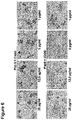
- the monoclonal antibody against HPV 16 E7 did not cross react with the E7 proteins of HPV 18 or HPV 45, when these proteins were overexpressed in U-2OS cells.
- the monoclonal antibody against HPV 16 E7 strongly detected endogenous E7 protein of HPV 16 positive CaSki cells in immunofluorescence experiments. In contrast, no signal was observed in untransfected U-2OS cells or in HPV 18 positive HeLa cells.
- an ELISA assay using E7 proteins of different HPV types was employed. Also, no cross reactivity was found against the E7 proteins of other HPV types such as other high risk HPV genotypes and the two most common low risk HPV types, HPV 6 and HPV 11.
- preincubation of the monoclonal antibody against HPV 16 E7 with the purified HPV 16 E7 protein prevented the detection of cell associated HPV 16 E7, since the antibody was already specifically bound to the preincubated HPV 16 E7 protein.
- the present monoclonal antibody is at least 20 times, in particular at least 100 times, more sensitive with no loss of specificity.
- the highly specific antibody according to the present invention is suitable to serve as a highly effective and reliable diagnostic tool.
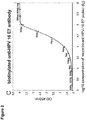
- the monoclonal anti-HPV 16 E7 antibody according to the present invention is able to detect low amounts such as 1 pg, in particular 500 fg, of HPV 16 E7 protein in an ELISA-based assay (enzyme-linked immunosorbant assay), whereas the antibodies disclosed in WO 07/059492 could only detect concentrations of HPV 16 E7 protein of about 1 ⁇ g.
- the monoclonal anti-HPV 16 E7 antibody according to the present invention can therefore be used in much lower concentrations, for example 10 pg/ ⁇ l, which renders its application as a diagnostic tool also more cost-effective.
- HPV 16 E7 Using the present monoclonal antibody against HPV 16 E7 it could also be shown that subcellular localisation of HPV 16 E7 protein varies during cell cycle between predominantly cytoplasmic and predominantly nuclear.
- E7 protein levels increase from undetectable to substantial levels during carcinogenesis.
- the highly sensitive monoclonal antibodies according to the invention it is possible to detect not only tumor cells of squamous cell carcinoma and adenocarcinomas, but also cells of high-grade precancerous cervical intraepithelial neoplasia and carcinoma in situ (CIN III and CIS) as well as cervical intraepithelial glandular neoplasia grade III and adenocarcinoma in situ (CIGN III and AIS), which were reported to have a high potential to progress to invasive cancer.
- CIN III and CIS cervical intraepithelial glandular neoplasia grade III and adenocarcinoma in situ
- the monoclonal antibodies according to the present invention can discriminate between low grade precancerous lesions of squamous cell and glandular origin (CIN I-II, CIGN I-II on the one hand, and high-grade precancers (CIN III, CIS, CIGN III) and cancers (CxCa, AdCa) of squamous cell and glandular origin on the other hand.
- the monoclonal antibodies according to the present invention can serve as a new tool to identify high-grade precancers and cancers of squamous cell and glandular origin.
- the monoclonal antibody of the invention which is specifically capable to recognise the E7 protein of HPV 16, specifically recognizes an epitope comprising SEQ ID No. 3 and 7, in particular SEQ ID No. 6. and comprises, preferably consists of a heavy chain having the cDNA sequence SEQ ID No. 9 or a light chain having having the cDNA sequence SEQ ID No. 10 or both.
- a monoclonal antibody or fragment thereof, wherein said antibody or antibody fragment comprises an amino acid sequence coded by at least one of SEQ ID No. 9 or 10 is disclosed.
- mutated versions of SEQ ID No. 9 or 10 i. e. sequences that comprise additions, deletions and/or substitutions of single or multiple nucleotides compared to SEQ ID No. 9 or 10 as long as the antibody or antibody fragment coded by the mutated sequence may still display the specificity and sensitivity of the full immunoglobulin.
- the present invention also relates to a hybridoma cell line, preferably a mammalian, most preferred a rabbit hybridoma cell line, capable of producing the above-identified monoclonal antibody according to the invention, in particular of the antibody capable of recognising an epitope of the C-terminal region of HPV 16, in particular a conformational epitope.
- the present invention relates to the hybridoma cell line which has the accession no. DSM ACC 3034.
- the present invention also relates to the monoclonal antibody, which is obtainable from the supernatant of a hybridoma cell line according to the present invention.
- hybridoma cell line refers to a cell line obtained by fusing myeloma cells, preferably immortalized, mammalian, in particular rabbit, lymphoid cells with B-cells of the spleen of a mammal, preferably a rabbit that has been immunized with the desired antigen, i. e. a purified HPV E7 protein.
- myeloma cells preferably immortalized, mammalian, in particular rabbit, lymphoid cells with B-cells of the spleen of a mammal, preferably a rabbit that has been immunized with the desired antigen, i. e. a purified HPV E7 protein.
- Such an immortal hybridoma cell line is able to produce one specific and defined type of antibody which is secreted into the cell culture medium or supernatant.
- the term “monoclonal” refers to the cell line from which the antibody is obtained, wherein all the cells are clones of a single parent
- hybridoma cell lines can be grown indefinitely in the suitable cell culture media thereby providing an infinite source of the monoclonal antibody, without batch-to-batch variations. This is particularly advantageous for an application of monoclonal antibodies in clinical diagnostic routines, as time-consuming tests of new antibody batches can be omitted and diagnostic methods produce constant and reliable results.
- the present description also discloses a monoclonal antibody which is capable of specifically recognising an epitope of the C-terminal region, preferably the zinc finger domain, of HPV 18 subtypes, in particular 18, 39, 45, 59, 68 and 70.
- the recognised epitope is a conformational epitope.
- the epitope comprises the amino acid sequence set forth in SEQ ID No. 4 (not according to the present invention), which is a common sequence motif present in epitopes of the HPV 18 subtypes and is: Phe Val Cys Pro Xaa Cys Ala Xaa Xaa Gin, with Xaa being any amino acid.
- the epitope motif characterised by the amino acid sequence of SEQ ID No. 4 (not according to the present invention) represents a consensus epitope motif of the HPV 18 subtypes.
- the present description discloses a monoclonal anti-HPV E7 antibody, which is capable of specifically recognising an epitope of the N-terminal region of a human papillomavirus E7 protein.
- the disclosed monoclonal antibody is capable of specifically recognising an epitope of the N-terminal region of the E7 protein of HPV 16 subtypes, in particular HPV types 16, 31, 33, 35, 52, 58 or of HPV 18 subtypes, in particular HPV types 18, 39, 45, 59, 68, 70 or of both HPV 16 and 18 subtypes.
- N-terminal region refers to the at most 30, 35, 40, 45, 50, 55 or 60 N-terminal amino acids of the HPV E7 protein.
- the disclosed monoclonal antibody specifically recognises an epitope of the N-terminal region of the E7 protein of HPV 18 subtypes, in particular HPV types 18, 39, 45, 59, 68, 70, preferably of HPV 18, HPV 45 or both.
- the disclosed antibody specifically recognising the N-terminal region of HPV 18 E7 protein shows cross-reactivity with HPV 11, 45, 56, 58, 59 and 70.
- the antibody specifically recognising the N-terminal region of HPV 18 E7 protein shows a high level of cross-reactivity with HPV 18, 45 and 56, an intermediate level of cross-reactivity with HPV 6 and 39, and a low level of cross-reactivity with HPV 11, 33, 52, 58, and 59 with the respective E7 proteins transiently overexpressed by U-2OS cells in an immunofluorescence assay.
- the disclosed monoclonal antibody capable of specifically recognising an epitope of the N-terminal region of the HPV 18 E7 protein only substantially crossreacts with the E7 protein of HPV 45.
- the disclosed monoclonal antibody capable of specifically recognising an epitope of the N-terminal region was able to strongly detect endogenous E7 protein of HPV 18 positive HeLa cells, whereas no signal was obtained in untransfected U-2OS cells or in HPV 16 positive CaSki cells, in both immunofluorescence and western blot experiments.
- the recognised specific N-terminal epitope comprises, preferably consists of, the amino acid sequence set forth in SEQ ID No. 5 (not according to the present invention) and is: Lys Ala Thr Leu Gln Asp Ile Val Leu. These amino acids represent positions 5 to 13 of the HPV 18 E7 protein.
- a further embodiment of the disclosed N-terminal epitope is represented by the amino acid sequence of SEQ ID No. 8 (not according to the present invention) and is: Pro Lys Ala Thr Leu Gln Asp Ile Val Leu. These amino acids represent positions 4 to 13 of the HPV 18 E7 protein.
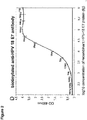
- the disclosed monoclonal anti-HPV 18 E7 antibody is able to detect low amounts such as 1 pg, in particular 500 fg, of HPV 18 E7 protein in an ELISA-based assay.
- the present description also discloses a hybridoma cell line, preferably a mammalian, most preferred a rabbit, hybridoma cell line, capable of producing the monoclonal antibody capable of specifically recognising an epitope of the N-terminal region of the HPV 18 E7 protein, preferably capable of recognising an epitope with the amino acid sequence of SEQ ID No. 5 or 8(not according to the present invention).
- the hybridoma cell line has the accession no. DSM ACC 3035.
- the present description also discloses the monoclonal antibody, which is obtainable from the supernatant of a hybridoma cell line.
- the monoclonal antibodies according to the present invention are mammalian, preferably rabbit, monoclonal antibodies (RabMabs), preferably produced by a rabbit hybridoma cell line. Due to a more sophisticated immune system, rabbits are able to produce more elaborate antibodies than mice. This advantage combined with the possibility to create rabbit hybridoma cell lines makes it possible to obtain high quality monoclonal antibodies.
- the monoclonal antibodies according to the present invention may be detectably labelled themselves with a radioactive, enzymatic or fluorescent group.
- a variety of techniques is available for labelling biomolecules such as antibodies, which are well-known to the person skilled in the art.
- Commonly used labels comprise inter alia fluorochroms, like fluorescein, rhodamine, Texas Red, Cy3 or Cy5, enzymes like peroxidase, horse radish peroxidase, ⁇ -galactosidase, alkaline phosphatase or acetylcholinesterase, radioactive isotopes, digoxygenin, colloidal metals, chemi- or bioluminescent compounds.
- the monoclonal antibodies according to the present invention are labelled with biotin.
- the antibodies of the present invention are detected by secondary methods, like indirect immunofluorescence. Accordingly, detectably labelled secondary antibodies may be employed to specifically detect the monoclonal antibodies according to the present invention.
- the present invention also relates to a diagnostic composition, comprising the monoclonal antibodies according to the present invention as an active agent.
- Said diagnostic composition may, in a preferred embodiment, comprise the monoclonal antibody of the present invention in soluble form or liquid phase.
- the present antibodies are bound, attached and/or linked to a solid support.
- the present diagnostic composition comprises the monoclonal antibodies according to the invention formulated with a diagnostically acceptable carrier, diluent, buffer or storage solution.
- the diagnostic composition of the present invention comprises in a preferred embodiment the monoclonal antibodies individually or in combinations according to the requirements of the intended application.
- said diagnostic composition is used for the immunological, preferably immunohistological, immunofluorescence- or ELISA-based detection of HPV E7 protein in a biological sample to enable the diagnosis of HPV infections.
- the present invention also relates to a diagnostic kit, comprising the monoclonal antibodies according to the invention as a first agent and other antibodies directed against HPV E7 proteins as a second agent.
- the antibodies used as a second agent are preferably polyclonal goat antibodies, capable of recognising the E7 proteins of high-risk HPV 16, 18, 31, 33, 35, 39, 45, 52, 56, 58 and 59.
- the diagnostic kit of the present invention comprises in a preferred embodiment the monoclonal antibodies individually or in combinations according to the requirements of the intended application.
- the diagnostic kit according to the present invention is preferably used for immunological, preferably immunohistochemical, immunofluorescence- or ELISA-based detection of HPV E7 protein, thereby enabling the diagnosis of HPV infections.
- the diagnostic kit of the present invention further comprises optionally one or more buffers, storage solutions and/or other reagents or materials required for medical, scientific or diagnostic purposes.
- parts of the diagnostic kit can be packaged individually in vials or bottles or in combination in containers or multi-container units.
- the use of the monoclonal antibodies according to the present invention in an in vitro method in particular an immunological, preferably immunohistochemical or immunofluorescence-based in vitro method or an ELISA-based, preferably direct or sandwich ELISA, in vitro method is also contemplated by the present invention.
- the monoclonal antibodies according to the present invention might be advantageously used in a test strip, for example a lateral flow test, for the detection of HPV E7 proteins.
- the present invention relates to an in vitro method for the detection of HPV 16 E7 protein, comprising i) incubating a biological sample with the monoclonal antibody according to the present invention and ii) measuring and/or detecting HPV 16 E7 protein in the biological sample by measuring and/or detecting the antibody specifically bound to the E7 protein.
- the provides present invention also provides an in vitro method for the immunological, preferably immunohistochemical or immunofluorescence-based diagnosis of HPV 16 infections, comprising a) incubating a biological sample with the monoclonal antibodies according to the present invention and b) measuring and/or detecting HPV 16 E7 protein in the biological sample by measuring and/or detecting the antibody specifically bound to the E7 protein and thereby allowing the diagnosis of a HPV 16 infection.
- the application of the monoclonal antibodies according to the present invention in such a diagnostic method allows for a highly sensitive and reliable detection of high-risk HPV infections, as the monoclonal antibodies according to the present invention display a very high signal-to-noise ratio with negligible background.
- the monoclonal antibody against the C-terminus of HPV 16 E7 according to the present invention is used in this method, since it shows no cross-reactivity with other HPV types and a very high sensitivity.
- biological sample as employed herein is understood to refer to any kind of biological tissue, cells and/or organs, preferably cervix biopsies or smears, preferably Pap Smears.
- the present invention further relates to an in vitro method for the ELISA-based diagnosis of HPV 16 infections, comprising aa) coating a support with capture antibodies directed against HPV E7 proteins, bb) adding a biological sample, preferably a cell lysate, to the coated support, cc) incubating the support with the monoclonal detection antibody according to the present invention, and dd) identifying HPV 16 E7 protein specifically bound by the capture antibodies by measuring and/or detecting the monoclonal detection antibody specifically bound to the E7 protein and thereby allowing the diagnosis of a HPV 16 infection.
- the antibodies according to the present invention are preferably biotinylated, since this leads to an increase in specificity and sensitivity of the HPV E7 detection.
- polyclonal goat antibodies are used as capture antibodies for the ELISA-based diagnosis method, which are capable of recognising the E7 proteins of high-risk HPV types 16, 18, 31, 33, 35, 39, 45, 52, 56, 58 and 59.
- these polyclonal goat antibodies only bind E7 proteins of high-risk HPV types
- the application of the anti-HPV 16 E7 antibody as detection antibodies advantageously allows the detection of high-risk HPV types 16.
- support or solid support ELISA-plates are preferably used but different carriers or materials may as well be chosen by the person skilled in the art.
- Cell lysates to be tested with the ELISA-based method are preferably prepared from biological samples, preferably cervix biopsies or smears, preferably Pap Smears.
- the column (HiTrapTM Protein G HP 5 ml; GE Healthcare) was washed with 5-10 column volumes of binding buffer at 5 ml/min. The filtered supernatant was applied and the column washed with 5-10 column volumes of binding buffer; eluted with 6x2 ml elution, buffer (0.1 M glycine-HCl, pH 2,7) into collection tubes with 80 ⁇ l 3 M Tris-HCl, pH 9. After elution, the column was washed with 5-10 column volumes of binding buffer followed by 5-10 column volumes of 20 % ethanol.
- IgG-containing fractions were pooled and dialyzed overnight at 4 °C against dialysis buffer (166 mM potassium phosphate, 83 mM glycine, pH 7.2). After dialysis, samples were concentrated using concentration tubes (Amicon Ultra, MWCO 10,000 Millipore). Finally, the sample was cleared by centrifugation (13,000 rpm, 4 °C, 10 min) and the IgG concentration was determined using OD at 280 nm. Aliquots were stored in liquid nitrogen.
- Hybridoma clones producing the desired antibodies were selected after further testing and a hybridoma clone producing monoclonal anti-HPV 16 E7 antibodies has been deposited on 16 th of December 2009 with the DSMZ, Braunschweig, Germany, under the accession no. DSM ACC 3034 and a second hybridoma clone producing monoclonal anti-HPV 18 E7 antibodies (not according to the present invention) has been deposited on 16 th of December 2009 with the DSMZ under the accession no. DSM ACC 3035.
- U-2OS-cells (HPV negative) were transiently transfected with vectors for overexpression of selected E7 proteins.
- cells were fixed in 4% (w/v) PFA/PBS and permeabilized with 0.1% (w/v) sodium citrate/0.3% (v/v) Triton X-100. After blocking with 1% (w/v) bovine serum albumin/PBS, cells were incubated for 1 h with the monoclonal anti-HPV 16 E7 of the present invention or anti-HPV 18 E7 (not according to the present invention) (25 ⁇ g/ml) at room temperature and analyzed by confocal microscopy.
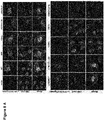
- the anti-HPV 16 E7 antibody of the present invention did not cross-react with E7 proteins of other HPV types, such as HPV 18 and HPV 45, and the anti-HPV 18 E7 antibody (not according to the present invention) was able to detect E7 proteins of HPV 18 and 45, 11, 56, 58, 59 and 70.
- the assay was carried out as follows: Wells of microtiter plates (Maxisorp F, Nunc, Vienna) were coated overnight (4°C) with different amounts (2.5 and 10 ng) of recombinant bacterially produced untagged HPV E7 proteins in 100 ⁇ l of coating buffer (0.1 M NaHCO3, pH 9.6). After washing three times in PBS, pH 7.4, containing 0.05 % Tween20, wells were blocked with 300 ⁇ l Universal Casein Diluent/Blocker (UCDB, SDT, Baesweiler, Germany) for 2 hours at room temperature. Wells were washed three times.
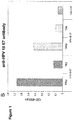
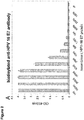
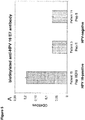
- the monoclonal antibody against HPV 16 E7 very strongly detected the HPV 16 E7 protein, but did not cross react with all other HPV types, including ten other high-risk HPV genotypes and the two most common low-risk HPV viruses, HPV 6 and HPV 11.
- the specificity of the anti-HPV 18 E7 antibody was also analyzed by Western blot.
- Purified recombinant E7 protein of the HPV types 16 and 18 was separated by SDS-PAGE and analyzed by Western blot using the anti-HPV 18 E7 antibody. No signal was obtained for recombinant E7 protein of HPV 16, whereas positive signals were obtained for recombinant HPV 18 E7 ( Figure 12 ).
- specific signals were obtained with the anti-HPV 18 E7 antibody, when extracts of transiently transfected U-2OS cells, expressing FLAG-tagged versions of HPV 18 E7, were analyzed.
- endogenous E7 proteins of HPV 18 positive HeLa cells, but not of HPV-16 positive CaSki cells were detectable by Western blot ( Figure 12 ).
- Immunohistochemistry was performed on paraffin-embedded tissue sections derived from cervical biopsies. 2 ⁇ m sections were mounted on slides, deparaffinized in xylene (2 x 12 minutes), rehydrated and processed for antigen retrieval by treatment for 1 hour in a steamer in Target Retrieval Solution (DAKO S1700) for the detection of HPV E7. Endogenous peroxidase activity was blocked by incubation in 20 % H 2 O 2 /methanol for 30 minutes. Sections were washed and incubated for 15 minutes in blocking buffer (10 % goat or rabbit serum from DAKOCytomation Germany, respectively, 5 % BSA in 1xTris buffer). Blocking solution was removed.
- blocking buffer (10 % goat or rabbit serum from DAKOCytomation Germany, respectively, 5 % BSA in 1xTris buffer. Blocking solution was removed.
- the sections were either incubated with the biotinylated monoclonal rabbit anti-HPV 16 E7 or 18 E7 (not according to the present invention) antibodies (at appropriate dilutions) for 1h at room temperature in 5 % BSA/1x TBS in a wet chamber. Samples were rinsed in 1x Tris/0.1 % Tween20 and incubated with secondary IgGs (DAKOCytomation, Germany) for 45 min at room temperature in a wet chamber. After washing, samples were incubated with streptavidin peroxidase conjugate (Sigma, Vienna) for 30 minutes at room temperature. Bound antibodies were visualized with DAB solution (Sigma, Vienna) as substrate.
- the anti-HPV 16 E7 antibody of the present invention recognised almost all epithelial tumor cells within the tumor islets but stained no cells in adjacent connective tissues. No HPV 16 E7 protein was detected in normal cervical specimens, neither in connective tissue and cervical glandular epithelia nor in normal cervical squamous epithelia.
- the anti-HPV 16 E7 as well as the anti-HPV 18 E7 antibody could detect the respective protein in the four biopsies in which HPV DNA was undetectable by the PCR analysis, suggesting that the cells of these biopsies were indeed HPV infected which was not detected by the PCR analysis.
- LBC samples from healthy women were spiked with CaSki cells (HPV 16 positive), and U-2OS cells (HPV negative) and processed according to the following protocol: CaSki cells and U-2OS cells were harvested and resuspended in ThinPrep-Buffer (Cytyc SA, Geneva, Switzerland).
- Cervical swabs were resuspended in ThinPrep-Buffer, mixed with the cultured cells, and 10 to 100 ⁇ l of the mixture were dropped with a pipette on a ThinPrep-glass slide (Cytyc SA, Geneva, Switzerland). The cells were allowed to dry over night at room temperature. Cells were fixed using 4% PFA at RT for 30 min in a cuvette, and washed by gentle shaking 2 x 5 min at RT in TBS + 0.05% Tween20.
- cells were incubated with 10 mM NaCitrate pH 6.0 + 0.3% TritonX100 for 15 min at RT in a cuvette, washed 2 x 5 min at RT in TBS + 0.05% Tween20. After peroxidase blocking, slides were incubated for 30 min with 200 ⁇ l normal goat serum (DakoCytomation) in a wet chamber (1:10 dilution in 1 % BSA-TBS + 0.05%Tween20). Each slide was incubated with 200 ⁇ l primary antibody at appropriate dilution in 1% BSA-TBS + 0.05% Tween20 for 1 hour at RT in a wet chamber.
- normal goat serum DakoCytomation
- cervical smears were collected from the cervix using a brush.
- the brush was placed immediately into the collecting tube containing 1 ml lysis buffer without protease inhibitors (PBS- 0.1 % Tween20). After the stick of the brush was shortened and the collecting tube was closed, the sample was stored immediately at -80 °C until use. The sample was thawed at room temperature and immediately 20 ⁇ l of 50x protease inhibitor stock solution (complete EDTA-free, Roche) per collecting tube was added. After resuspending the remaining sample on the brush by mixing it in the lysis buffer, the remaining liquid from the brush was wiped off at the edge of the tube and the brush was discarded. The sample was centrifuged at 4 °C, 13,000 rpm for 20 min. Supernatants were processed in the ELISA procedure.
- 100 ⁇ l coating buffer (0.1 M NaHCO 3 , pH 9.6) containing a mixture of goat polyclonal anti-high-risk HPV antibodies was added to each well of a 96 well plate (F96 Maxisorp Nunc-Immuno Plate), and incubated overnight at 4 °C. Wells were washed 3x with washing buffer (PBS, 0.05 % Tween 20; pH 7.4); 300 ⁇ l blocking buffer (Universal Casein Diluent/Blocker, SDT) was added to each well, and incubated for 2 hours at room temperature.
- washing buffer PBS, 0.05 % Tween 20; pH 7.4
- 300 ⁇ l blocking buffer Universal Casein Diluent/Blocker, SDT
- E7 protein or cell lysate 200 ⁇ l; diluted in lysis buffer: PBS, 0.1 % Tween, protease inhibitors
- the monoclonal detection antibodies of the present invention were biotinylated and incubated with streptavidin-poly-HRP-conjugate instead of a secondary antibody, an additional signal amplification could be achieved.
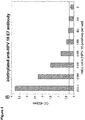
- the specific detection limit of the monoclonal antibodies was reduced to 500 fg - 1 pg in case of HPV 16 E7 (according to the present invention) and to 250 fg - 500 fg for HPV 18 E7 protein (see figure 2 ).
- HPV negative cells U-2OS
- HeLa cells HPV 18 positive
- CaSki cells HPV 16 positive
- Cell mixtures were lysed and analyzed by ELISA (see above).
- cervical smears were tested.
- two consecutive Pap Smears were taken from patients or healthy probands.
- One sample was used for cytological classification according to Papanicolaou and subsequent determination of the HPV subtype by PCR analysis.
- the second sample was processed for the ELISA protocol (see above).
- five samples were processed (one HPV 16 positive, one HPV 18 positive and three HPV negative), yielding clear signals above background using the antibodies for the HPV 16 and 18 (not according to the present invention) positive samples, whereas the HPV negative samples did not produce a detectable signal.
- the analysed mutant HPV 16 E7 proteins were: H2P (change of histidine residue nr. 2 to proline), C24G (change of cysteine residue nr. 24 to glycine), deletions in the ⁇ 1-sheet ( ⁇ 52YNIVT56), the ⁇ 2-sheet ( ⁇ 65LRL67), and the ⁇ 1-helix ( ⁇ 75DIR77 and ⁇ 79LEDLL83) as well as point mutations in the zinc coordination site of the zinc finger domain (C58G, C91G and C58G/C91G).
- the positions of the mutations within the HPV 16 E7 protein are also indicated in figure 9 .
- the monoclonal antibody against HPV 16 E7 recognised all deletion mutants, but was not able to recognise the point mutations concerning the cystein residues of the zinc coordination site.
- the recognised epitope is located in the zinc finger structure and, more importantly, an intact zinc finger domain, which can not be formed if one or more of the cystein residues is mutated, is necessary for the efficient recognition of the HPV 16 E7 protein by the monoclonal anti HPV 16 E7 antibody.
- known polyclonal antibodies against HPV 16 E7 which do not recognise the specific conformational epitope recognised by the monoclonal antibody against HPV 16 E7 also can detect the mutations concerning the cystein residues of the zinc finger domain.
- HPV 16 E7 epitopes were analyzed by JPT Peptide Technologies GmbH (Berlin, Germany) using peptide microarrays. To do this, a collection of 44 different HPV 16 E7 derived 13mer peptides, positioned on peptide microarrays, were incubated with the monoclonal antibody against HPV 16 E7 and unrelated rabbit control antibodies. The determination of peptide-antibody binding was performed by RepliTope-analysis where the peptide microarray was incubated with the primary antibody followed by a fluorescently labelled secondary antibody (anti-rabbit-Cy5). After washing the peptide microarrays were dried using a microarray centrifuge and scanned in a high resolution microarray scanning system with appropriate wavelength settings.
- peptides 43 and 44 which comprise amino acids 85 to 97 (SEQ ID No. 3) and 86 to 98 (SEQ ID No. 7), respectively, are specifically recognised by the monoclonal antibody against HPV 16 E7, indicating that these amino acids represent the recognised epitope.
- HPV 18 E7 derived overlapping 11mer peptides was used for epitope mapping for the anti-HPV 18 E7 antibody (not according to the present invention).
- the peptide microarrays were incubated with the anti-HPV 18 E7 antibody as well as two unrelated monoclonal antibodies.
- peptides 1 to 3 which comprise the N-terminal amino acids 4 to 13 of the HPV 18 E7 protein are specifically recognized by the anti-HPV 18 E7 antibody (not according to the present invention).
Landscapes
- Health & Medical Sciences (AREA)
- Life Sciences & Earth Sciences (AREA)
- Chemical & Material Sciences (AREA)
- Immunology (AREA)
- Virology (AREA)
- Engineering & Computer Science (AREA)
- Molecular Biology (AREA)
- General Health & Medical Sciences (AREA)
- Biochemistry (AREA)
- Medicinal Chemistry (AREA)
- Urology & Nephrology (AREA)
- Hematology (AREA)
- Organic Chemistry (AREA)
- Biomedical Technology (AREA)
- Tropical Medicine & Parasitology (AREA)
- Food Science & Technology (AREA)
- Biotechnology (AREA)
- Cell Biology (AREA)
- Proteomics, Peptides & Aminoacids (AREA)
- Microbiology (AREA)
- Biophysics (AREA)
- Genetics & Genomics (AREA)
- Physics & Mathematics (AREA)
- Analytical Chemistry (AREA)
- General Physics & Mathematics (AREA)
- Pathology (AREA)
- Peptides Or Proteins (AREA)
- Preparation Of Compounds By Using Micro-Organisms (AREA)
Claims (12)
- Hybridomzelllinie mit der Zugangsnummer DSM ACC3034.
- Monoklonaler Antikörper, erhältlich aus dem Überstand der Hybridomzelllinie nach Anspruch 1.
- Monoklonaler Antikörper nach Anspruch 2, wobei der Antikörper mit einer radioaktiven, enzymatischen oder fluoreszierenden Gruppe markiert ist.
- Diagnosezusammensetzung, umfassend den monoklonalen Antikörper nach Anspruch 2 als Wirkstoff.
- Diagnosekit, umfassend den monoklonalen Antikörper nach Anspruch 2 als ein erstes Mittel und gegen HPV E7-Proteine gerichtete Antikörper als zweites Mittel.
- In-vitro-Verfahren zur Detektion des HPV 16 E7-Proteins, umfassendi) Inkubieren einer biologischen Probe mit dem monoklonalen Antikörper nach Anspruch 2 undii) Messen und/oder Detektieren des HPV 16 E7-Proteins in der biologischen Probe durch Messen und/oder Detektieren des spezifisch an das E7-Protein gebundenen Antikörpers.
- In-vitro-Verfahren zur immunologischen, vorzugsweise immunhistochemischen oder immunfluoreszenz-basierten Diagnose von HPV 16-Infektionen, umfassenda) Inkubieren einer biologischen Probe mit dem monoklonalen Antikörper nach Anspruch 2 undb) Detektieren des HPV 16 E7-Proteins in der biologischen Probe durch Detektieren des spezifisch an das E7-Protein gebundenen Antikörpers und dabei Ermöglichen der Diagnose einer HPV 16-Infektion.
- In-vitro-Verfahren für die ELISA-basierte Diagnose von HPV 16-Infektionen, umfassendaa) Beschichten eines Trägers mit gegen HPV E7-Proteine gerichteten Fängerantikörpern,bb) Zugeben einer biologischen Probe zu dem beschichteten Träger,cc) Inkubieren des Trägers mit dem monoklonalen Detektionsantikörper nach Anspruch 2,dd) Identifizieren des von den Fängerantikörpern spezifisch gebundenen HPV 16 E7-Proteins durch Detektieren des spezifisch an das E7-Protein gebundenen monoklonalen Detektionsantikörpers und dabei Ermöglichen der Diagnose einer HPV 16-lnfektion.
- Verwendung des monoklonalen Antikörpers nach Anspruch 2 zur Herstellung einer Diagnosezusammensetzung für die In-vitro-Detektion eines HPV 16 E7-Proteins in einer biologischen Probe.
- Verwendung des monoklonalen Antikörpers nach Anspruch 9, wobei der Antikörper an einen festen Träger gebunden, daran befestigt und/oder damit verknüpft ist.
- Verfahren zur Herstellung einer Diagnosezusammensetzung, umfassend den Schritt Formulieren des monoklonalen Antikörpers nach Anspruch 2 mit einem akzeptablen Träger, Verdünnungsmittel, Puffer oder einer akzeptablen Lagerungslösung.
- Verwendung einer Diagnosezusammensetzung, umfassend den monoklonalen Antikörper nach Anspruch 2, für die immunologische, vorzugsweise ELISA-basierte Detektion eines HPV 16 E7-Proteins in einer biologischen Probe, wobei der Antikörper an einen festen Träger gebunden, daran befestigt und/oder damit verknüpft ist.
Applications Claiming Priority (4)
| Application Number | Priority Date | Filing Date | Title |
|---|---|---|---|
| EP10001569A EP2357197A1 (de) | 2010-02-16 | 2010-02-16 | Anti-HPV-E7-Antikörper |
| EP10011978 | 2010-09-30 | ||
| EP11704189.7A EP2536758B1 (de) | 2010-02-16 | 2011-02-16 | Anti-hpv-e7-antikörper |
| PCT/EP2011/000728 WO2011101122A1 (en) | 2010-02-16 | 2011-02-16 | Anti-hpv e7 antibodies |
Related Parent Applications (2)
| Application Number | Title | Priority Date | Filing Date |
|---|---|---|---|
| EP11704189.7A Division-Into EP2536758B1 (de) | 2010-02-16 | 2011-02-16 | Anti-hpv-e7-antikörper |
| EP11704189.7A Division EP2536758B1 (de) | 2010-02-16 | 2011-02-16 | Anti-hpv-e7-antikörper |
Publications (2)
| Publication Number | Publication Date |
|---|---|
| EP2993183A1 EP2993183A1 (de) | 2016-03-09 |
| EP2993183B1 true EP2993183B1 (de) | 2020-02-26 |
Family
ID=43919806
Family Applications (2)
| Application Number | Title | Priority Date | Filing Date |
|---|---|---|---|
| EP15182048.7A Active EP2993183B1 (de) | 2010-02-16 | 2011-02-16 | Anti-hpv-e7-antikörper |
| EP11704189.7A Active EP2536758B1 (de) | 2010-02-16 | 2011-02-16 | Anti-hpv-e7-antikörper |
Family Applications After (1)
| Application Number | Title | Priority Date | Filing Date |
|---|---|---|---|
| EP11704189.7A Active EP2536758B1 (de) | 2010-02-16 | 2011-02-16 | Anti-hpv-e7-antikörper |
Country Status (6)
| Country | Link |
|---|---|
| US (2) | US9249212B2 (de) |
| EP (2) | EP2993183B1 (de) |
| CA (2) | CA2788006C (de) |
| DK (2) | DK2993183T3 (de) |
| ES (2) | ES2778654T3 (de) |
| WO (1) | WO2011101122A1 (de) |
Families Citing this family (21)
| Publication number | Priority date | Publication date | Assignee | Title |
|---|---|---|---|---|
| EP2567972A1 (de) | 2011-09-12 | 2013-03-13 | Adriacell S.p.A. | Antikörper gegen das E7-Protein des Humanen Papillomvirus (HPV) |
| WO2013038016A2 (en) * | 2011-09-16 | 2013-03-21 | Fujirebio Diagnostics Ab | Monoclonal antibodies for detection of high-risk human papillomavirus oncoprotein e7 |
| CN105175538B (zh) * | 2012-06-08 | 2019-01-08 | 厦门大学 | 抗hpv l1 蛋白的广谱单克隆抗体或其抗原结合片段及它们的用途 |
| JP6496962B2 (ja) | 2014-02-14 | 2019-04-10 | バイオベンチャーズ・リミテッド・ライアビリティ・カンパニーBioVentures, LLC | アセトアミノフェン−タンパク質付加物およびその使用方法 |
| CN105316361B (zh) * | 2014-08-01 | 2017-11-28 | 广东拓谱康生物科技有限公司 | 携带人乳头瘤病毒16型突变型E7m58抗原基因的重组腺相关病毒载体及其构建方法与应用 |
| CN105504049B (zh) * | 2014-09-26 | 2019-07-05 | 艾托金生物医药(苏州)有限公司 | 宫颈癌相关的hpv e7蛋白单克隆抗体及其应用 |
| EP3015863A1 (de) * | 2014-10-31 | 2016-05-04 | Mikrogen GmbH | Immunologischer Test zum Nachweis von E7-Onkoproteinen in biologischen Proben |
| EP3227681B1 (de) | 2014-12-03 | 2020-10-21 | Bioventures, LLC | Anti-acetaminophen-antikörper und acetaminophenproteinaddukte |
| CN105131113B (zh) * | 2015-08-26 | 2019-09-06 | 艾托金生物医药(苏州)有限公司 | 用于宫颈癌检测和分级的单隆抗体及其应用 |
| CN106610378A (zh) * | 2016-02-26 | 2017-05-03 | 弗雷米德生物医药技术(天津)有限公司 | 一种hpv16型e7蛋白的检测试剂盒 |
| US10191046B2 (en) * | 2016-05-23 | 2019-01-29 | Se-Hwan Paek | Immunobiosensor and sensor system including the same |
| CN107556379B (zh) * | 2016-07-01 | 2021-05-28 | 艾托金生物医药(苏州)有限公司 | 识别高危hpv e7蛋白的单克隆抗体及其应用 |
| KR20190062505A (ko) | 2016-10-03 | 2019-06-05 | 주노 쎄러퓨티크스 인코퍼레이티드 | Hpv-특이적 결합 분자 |
| US20190112673A1 (en) | 2017-05-10 | 2019-04-18 | Genomic Vision | Association between integration of high-risk hpv genomes detected by molecular combing and the severity and/or clinical outcome of cervical lesions |
| US11952408B2 (en) | 2017-10-03 | 2024-04-09 | Juno Therapeutics, Inc. | HPV-specific binding molecules |
| CN112566698A (zh) | 2018-04-05 | 2021-03-26 | 朱诺治疗学股份有限公司 | T细胞受体和表达该t细胞受体的工程化细胞 |
| EP3887552A1 (de) | 2018-11-30 | 2021-10-06 | Genomic Vision | Assoziation zwischen der integration von hpv- oder hiv-virusgenomen und der schwere und/oder dem klinischen ergebnis von erkrankungen wie hpv-assoziierten zervikalen läsionen oder aids-pathologie |
| CN114276439B (zh) * | 2021-11-03 | 2023-10-24 | 源道隆(苏州)医学科技有限公司 | 可结合人乳头瘤病毒的抗体50a11及其应用 |
| CN114935649B (zh) * | 2022-06-15 | 2023-07-25 | 广东赛尔生物科技有限公司 | 一种hpv病毒检测试剂盒 |
| CN118852417B (zh) * | 2024-07-16 | 2026-05-15 | 郑州大学 | Hpv56亚型l1蛋白、其表位肽、单克隆抗体、杂交瘤细胞及其应用 |
| CN120424201B (zh) * | 2025-06-20 | 2025-10-21 | 北京溯本源和生物科技有限公司 | 一种用于hpv16型e7蛋白检测的单克隆抗体4f6及应用 |
Family Cites Families (5)
| Publication number | Priority date | Publication date | Assignee | Title |
|---|---|---|---|---|
| FR2794371B1 (fr) * | 1999-10-07 | 2004-06-18 | Biovector Therapeutics | Fragments proteiquespolyepitopiques, leur obtention et leurs utilisations notamment en vaccination |
| US7026443B1 (en) * | 1999-12-10 | 2006-04-11 | Epimmune Inc. | Inducing cellular immune responses to human Papillomavirus using peptide and nucleic acid compositions |
| US20070166699A1 (en) | 2003-09-17 | 2007-07-19 | Amynon Biotech Gmbh | Combination of anti-hpv-16 and 18 antibodies and uses thereof |
| US20070037180A1 (en) * | 2005-02-10 | 2007-02-15 | Olle Nilsson | Site-specific immunization in order to establish antibodies with specificity for the E7 oncoprotein of high-risk HPV's |
| US7732166B2 (en) | 2005-11-15 | 2010-06-08 | Oncohealth Corporation | Detection method for human pappilomavirus (HPV) and its application in cervical cancer |
-
2011
- 2011-02-16 DK DK15182048.7T patent/DK2993183T3/da active
- 2011-02-16 ES ES15182048T patent/ES2778654T3/es active Active
- 2011-02-16 CA CA2788006A patent/CA2788006C/en active Active
- 2011-02-16 CA CA3012796A patent/CA3012796C/en active Active
- 2011-02-16 US US13/578,985 patent/US9249212B2/en not_active Expired - Fee Related
- 2011-02-16 EP EP15182048.7A patent/EP2993183B1/de active Active
- 2011-02-16 EP EP11704189.7A patent/EP2536758B1/de active Active
- 2011-02-16 WO PCT/EP2011/000728 patent/WO2011101122A1/en not_active Ceased
- 2011-02-16 DK DK11704189.7T patent/DK2536758T3/en active
- 2011-02-16 ES ES11704189T patent/ES2712892T3/es active Active
-
2016
- 2016-01-06 US US14/988,981 patent/US9902763B2/en not_active Expired - Fee Related
Non-Patent Citations (1)
| Title |
|---|
| None * |
Also Published As
| Publication number | Publication date |
|---|---|
| US9902763B2 (en) | 2018-02-27 |
| CA3012796A1 (en) | 2011-08-25 |
| EP2536758B1 (de) | 2019-01-02 |
| CA2788006C (en) | 2021-08-31 |
| DK2536758T3 (en) | 2019-03-04 |
| ES2778654T3 (es) | 2020-08-11 |
| ES2712892T3 (es) | 2019-05-16 |
| WO2011101122A1 (en) | 2011-08-25 |
| US20130029322A1 (en) | 2013-01-31 |
| US9249212B2 (en) | 2016-02-02 |
| US20160237143A1 (en) | 2016-08-18 |
| CA3012796C (en) | 2021-08-31 |
| EP2536758A1 (de) | 2012-12-26 |
| EP2993183A1 (de) | 2016-03-09 |
| CA2788006A1 (en) | 2011-08-25 |
| DK2993183T3 (da) | 2020-03-30 |
Similar Documents
| Publication | Publication Date | Title |
|---|---|---|
| EP2536758B1 (de) | Anti-hpv-e7-antikörper | |
| AU2005228026B2 (en) | Methods and compositions for the detection of cervical disease | |
| US8865162B2 (en) | Monoclonal antibodies against HPV proteins | |
| JP4809408B2 (ja) | 異形成と新生物病巣または前新生物病巣を区別するための方法 | |
| JP5819851B2 (ja) | Hpv関連の癌の治療及びスクリーニングのための細胞に基づいた高処理能力hpv免疫アッセイ | |
| US20100209904A1 (en) | Antibodies for oncogenic strains of HPV and methods of their use | |
| CN105131113B (zh) | 用于宫颈癌检测和分级的单隆抗体及其应用 | |
| US20150023979A1 (en) | Antibodies Against E7 Protein of Human Papilloma Virus (HPV) | |
| EP2357197A1 (de) | Anti-HPV-E7-Antikörper | |
| US8968995B2 (en) | Detection, screening, and diagnosis of HPV-associated cancers | |
| Dreier et al. | Subcellular localization of the human papillomavirus 16 E7 oncoprotein in CaSki cells and its detection in cervical adenocarcinoma and adenocarcinoma in situ | |
| Dixon et al. | Characterization and clinical validation of MCM2 and TOP2A monoclonal antibodies in the BD ProEx™ C assay: An immunoassay which detects aberrant S-phase induction in cervical tissue | |
| Henderson et al. | The selection and characterization of antibodies to minichromosome maintenance proteins that highlight cervical dysplasia | |
| AU2011202593A1 (en) | Methods and compositions for the detection of cervical disease |
Legal Events
| Date | Code | Title | Description |
|---|---|---|---|
| PUAI | Public reference made under article 153(3) epc to a published international application that has entered the european phase |
Free format text: ORIGINAL CODE: 0009012 |
|
| AC | Divisional application: reference to earlier application |
Ref document number: 2536758 Country of ref document: EP Kind code of ref document: P |
|
| AK | Designated contracting states |
Kind code of ref document: A1 Designated state(s): AL AT BE BG CH CY CZ DE DK EE ES FI FR GB GR HR HU IE IS IT LI LT LU LV MC MK MT NL NO PL PT RO RS SE SI SK SM TR |
|
| 17P | Request for examination filed |
Effective date: 20160909 |
|
| RBV | Designated contracting states (corrected) |
Designated state(s): AL AT BE BG CH CY CZ DE DK EE ES FI FR GB GR HR HU IE IS IT LI LT LU LV MC MK MT NL NO PL PT RO RS SE SI SK SM TR |
|
| STAA | Information on the status of an ep patent application or granted ep patent |
Free format text: STATUS: EXAMINATION IS IN PROGRESS |
|
| 17Q | First examination report despatched |
Effective date: 20170802 |
|
| GRAP | Despatch of communication of intention to grant a patent |
Free format text: ORIGINAL CODE: EPIDOSNIGR1 |
|
| STAA | Information on the status of an ep patent application or granted ep patent |
Free format text: STATUS: GRANT OF PATENT IS INTENDED |
|
| INTG | Intention to grant announced |
Effective date: 20190906 |
|
| GRAS | Grant fee paid |
Free format text: ORIGINAL CODE: EPIDOSNIGR3 |
|
| GRAA | (expected) grant |
Free format text: ORIGINAL CODE: 0009210 |
|
| STAA | Information on the status of an ep patent application or granted ep patent |
Free format text: STATUS: THE PATENT HAS BEEN GRANTED |
|
| AC | Divisional application: reference to earlier application |
Ref document number: 2536758 Country of ref document: EP Kind code of ref document: P |
|
| AK | Designated contracting states |
Kind code of ref document: B1 Designated state(s): AL AT BE BG CH CY CZ DE DK EE ES FI FR GB GR HR HU IE IS IT LI LT LU LV MC MK MT NL NO PL PT RO RS SE SI SK SM TR |
|
| REG | Reference to a national code |
Ref country code: GB Ref legal event code: FG4D |
|
| REG | Reference to a national code |
Ref country code: CH Ref legal event code: EP |
|
| REG | Reference to a national code |
Ref country code: AT Ref legal event code: REF Ref document number: 1237531 Country of ref document: AT Kind code of ref document: T Effective date: 20200315 |
|
| REG | Reference to a national code |
Ref country code: IE Ref legal event code: FG4D |
|
| REG | Reference to a national code |
Ref country code: DE Ref legal event code: R096 Ref document number: 602011065316 Country of ref document: DE |
|
| REG | Reference to a national code |
Ref country code: DK Ref legal event code: T3 Effective date: 20200324 |
|
| REG | Reference to a national code |
Ref country code: FI Ref legal event code: FGE |
|
| REG | Reference to a national code |
Ref country code: NL Ref legal event code: FP |
|
| REG | Reference to a national code |
Ref country code: SE Ref legal event code: TRGR |
|
| REG | Reference to a national code |
Ref country code: NO Ref legal event code: T2 Effective date: 20200226 |
|
| REG | Reference to a national code |
Ref country code: GR Ref legal event code: EP Ref document number: 20200400935 Country of ref document: GR Effective date: 20200615 |
|
| PG25 | Lapsed in a contracting state [announced via postgrant information from national office to epo] |
Ref country code: RS Free format text: LAPSE BECAUSE OF FAILURE TO SUBMIT A TRANSLATION OF THE DESCRIPTION OR TO PAY THE FEE WITHIN THE PRESCRIBED TIME-LIMIT Effective date: 20200226 |
|
| REG | Reference to a national code |
Ref country code: ES Ref legal event code: FG2A Ref document number: 2778654 Country of ref document: ES Kind code of ref document: T3 Effective date: 20200811 |
|
| REG | Reference to a national code |
Ref country code: LT Ref legal event code: MG4D |
|
| PG25 | Lapsed in a contracting state [announced via postgrant information from national office to epo] |
Ref country code: LV Free format text: LAPSE BECAUSE OF FAILURE TO SUBMIT A TRANSLATION OF THE DESCRIPTION OR TO PAY THE FEE WITHIN THE PRESCRIBED TIME-LIMIT Effective date: 20200226 Ref country code: IS Free format text: LAPSE BECAUSE OF FAILURE TO SUBMIT A TRANSLATION OF THE DESCRIPTION OR TO PAY THE FEE WITHIN THE PRESCRIBED TIME-LIMIT Effective date: 20200626 Ref country code: BG Free format text: LAPSE BECAUSE OF FAILURE TO SUBMIT A TRANSLATION OF THE DESCRIPTION OR TO PAY THE FEE WITHIN THE PRESCRIBED TIME-LIMIT Effective date: 20200526 Ref country code: HR Free format text: LAPSE BECAUSE OF FAILURE TO SUBMIT A TRANSLATION OF THE DESCRIPTION OR TO PAY THE FEE WITHIN THE PRESCRIBED TIME-LIMIT Effective date: 20200226 |
|
| PG25 | Lapsed in a contracting state [announced via postgrant information from national office to epo] |
Ref country code: PT Free format text: LAPSE BECAUSE OF FAILURE TO SUBMIT A TRANSLATION OF THE DESCRIPTION OR TO PAY THE FEE WITHIN THE PRESCRIBED TIME-LIMIT Effective date: 20200719 Ref country code: LT Free format text: LAPSE BECAUSE OF FAILURE TO SUBMIT A TRANSLATION OF THE DESCRIPTION OR TO PAY THE FEE WITHIN THE PRESCRIBED TIME-LIMIT Effective date: 20200226 Ref country code: EE Free format text: LAPSE BECAUSE OF FAILURE TO SUBMIT A TRANSLATION OF THE DESCRIPTION OR TO PAY THE FEE WITHIN THE PRESCRIBED TIME-LIMIT Effective date: 20200226 Ref country code: SM Free format text: LAPSE BECAUSE OF FAILURE TO SUBMIT A TRANSLATION OF THE DESCRIPTION OR TO PAY THE FEE WITHIN THE PRESCRIBED TIME-LIMIT Effective date: 20200226 Ref country code: SK Free format text: LAPSE BECAUSE OF FAILURE TO SUBMIT A TRANSLATION OF THE DESCRIPTION OR TO PAY THE FEE WITHIN THE PRESCRIBED TIME-LIMIT Effective date: 20200226 Ref country code: RO Free format text: LAPSE BECAUSE OF FAILURE TO SUBMIT A TRANSLATION OF THE DESCRIPTION OR TO PAY THE FEE WITHIN THE PRESCRIBED TIME-LIMIT Effective date: 20200226 Ref country code: CZ Free format text: LAPSE BECAUSE OF FAILURE TO SUBMIT A TRANSLATION OF THE DESCRIPTION OR TO PAY THE FEE WITHIN THE PRESCRIBED TIME-LIMIT Effective date: 20200226 |
|
| REG | Reference to a national code |
Ref country code: DE Ref legal event code: R097 Ref document number: 602011065316 Country of ref document: DE |
|
| PLBE | No opposition filed within time limit |
Free format text: ORIGINAL CODE: 0009261 |
|
| STAA | Information on the status of an ep patent application or granted ep patent |
Free format text: STATUS: NO OPPOSITION FILED WITHIN TIME LIMIT |
|
| 26N | No opposition filed |
Effective date: 20201127 |
|
| PG25 | Lapsed in a contracting state [announced via postgrant information from national office to epo] |
Ref country code: SI Free format text: LAPSE BECAUSE OF FAILURE TO SUBMIT A TRANSLATION OF THE DESCRIPTION OR TO PAY THE FEE WITHIN THE PRESCRIBED TIME-LIMIT Effective date: 20200226 Ref country code: PL Free format text: LAPSE BECAUSE OF FAILURE TO SUBMIT A TRANSLATION OF THE DESCRIPTION OR TO PAY THE FEE WITHIN THE PRESCRIBED TIME-LIMIT Effective date: 20200226 |
|
| PG25 | Lapsed in a contracting state [announced via postgrant information from national office to epo] |
Ref country code: MC Free format text: LAPSE BECAUSE OF FAILURE TO SUBMIT A TRANSLATION OF THE DESCRIPTION OR TO PAY THE FEE WITHIN THE PRESCRIBED TIME-LIMIT Effective date: 20200226 |
|
| PG25 | Lapsed in a contracting state [announced via postgrant information from national office to epo] |
Ref country code: LU Free format text: LAPSE BECAUSE OF NON-PAYMENT OF DUE FEES Effective date: 20210216 |
|
| PGFP | Annual fee paid to national office [announced via postgrant information from national office to epo] |
Ref country code: NL Payment date: 20230220 Year of fee payment: 13 |
|
| PGFP | Annual fee paid to national office [announced via postgrant information from national office to epo] |
Ref country code: NO Payment date: 20230217 Year of fee payment: 13 Ref country code: IE Payment date: 20230215 Year of fee payment: 13 Ref country code: FR Payment date: 20230220 Year of fee payment: 13 Ref country code: FI Payment date: 20230222 Year of fee payment: 13 Ref country code: ES Payment date: 20230317 Year of fee payment: 13 Ref country code: DK Payment date: 20230220 Year of fee payment: 13 Ref country code: CH Payment date: 20230307 Year of fee payment: 13 Ref country code: AT Payment date: 20230215 Year of fee payment: 13 |
|
| PG25 | Lapsed in a contracting state [announced via postgrant information from national office to epo] |
Ref country code: HU Free format text: LAPSE BECAUSE OF FAILURE TO SUBMIT A TRANSLATION OF THE DESCRIPTION OR TO PAY THE FEE WITHIN THE PRESCRIBED TIME-LIMIT; INVALID AB INITIO Effective date: 20110216 Ref country code: CY Free format text: LAPSE BECAUSE OF FAILURE TO SUBMIT A TRANSLATION OF THE DESCRIPTION OR TO PAY THE FEE WITHIN THE PRESCRIBED TIME-LIMIT Effective date: 20200226 |
|
| PGFP | Annual fee paid to national office [announced via postgrant information from national office to epo] |
Ref country code: SE Payment date: 20230220 Year of fee payment: 13 Ref country code: IT Payment date: 20230228 Year of fee payment: 13 Ref country code: GR Payment date: 20230215 Year of fee payment: 13 Ref country code: GB Payment date: 20230221 Year of fee payment: 13 Ref country code: DE Payment date: 20230131 Year of fee payment: 13 Ref country code: BE Payment date: 20230220 Year of fee payment: 13 |
|
| REG | Reference to a national code |
Ref country code: DE Ref legal event code: R082 Ref document number: 602011065316 Country of ref document: DE Representative=s name: KRAUS & LEDERER PARTGMBB, DE |
|
| PG25 | Lapsed in a contracting state [announced via postgrant information from national office to epo] |
Ref country code: MK Free format text: LAPSE BECAUSE OF FAILURE TO SUBMIT A TRANSLATION OF THE DESCRIPTION OR TO PAY THE FEE WITHIN THE PRESCRIBED TIME-LIMIT Effective date: 20200226 |
|
| REG | Reference to a national code |
Ref country code: DE Ref legal event code: R119 Ref document number: 602011065316 Country of ref document: DE |
|
| REG | Reference to a national code |
Ref country code: DK Ref legal event code: EBP Effective date: 20240229 |
|
| PG25 | Lapsed in a contracting state [announced via postgrant information from national office to epo] |
Ref country code: MT Free format text: LAPSE BECAUSE OF FAILURE TO SUBMIT A TRANSLATION OF THE DESCRIPTION OR TO PAY THE FEE WITHIN THE PRESCRIBED TIME-LIMIT Effective date: 20200226 |
|
| REG | Reference to a national code |
Ref country code: CH Ref legal event code: PL |
|
| REG | Reference to a national code |
Ref country code: SE Ref legal event code: EUG |
|
| REG | Reference to a national code |
Ref country code: NL Ref legal event code: MM Effective date: 20240301 |
|
| PG25 | Lapsed in a contracting state [announced via postgrant information from national office to epo] |
Ref country code: FI Free format text: LAPSE BECAUSE OF NON-PAYMENT OF DUE FEES Effective date: 20240216 |
|
| PG25 | Lapsed in a contracting state [announced via postgrant information from national office to epo] |
Ref country code: GR Free format text: LAPSE BECAUSE OF NON-PAYMENT OF DUE FEES Effective date: 20240904 |
|
| REG | Reference to a national code |
Ref country code: AT Ref legal event code: MM01 Ref document number: 1237531 Country of ref document: AT Kind code of ref document: T Effective date: 20240216 |
|
| PG25 | Lapsed in a contracting state [announced via postgrant information from national office to epo] |
Ref country code: CH Free format text: LAPSE BECAUSE OF NON-PAYMENT OF DUE FEES Effective date: 20240229 |
|
| GBPC | Gb: european patent ceased through non-payment of renewal fee |
Effective date: 20240216 |
|
| PG25 | Lapsed in a contracting state [announced via postgrant information from national office to epo] |
Ref country code: AT Free format text: LAPSE BECAUSE OF NON-PAYMENT OF DUE FEES Effective date: 20240216 |
|
| PG25 | Lapsed in a contracting state [announced via postgrant information from national office to epo] |
Ref country code: NO Free format text: LAPSE BECAUSE OF NON-PAYMENT OF DUE FEES Effective date: 20240229 Ref country code: GR Free format text: LAPSE BECAUSE OF NON-PAYMENT OF DUE FEES Effective date: 20240904 Ref country code: FI Free format text: LAPSE BECAUSE OF NON-PAYMENT OF DUE FEES Effective date: 20240216 Ref country code: CH Free format text: LAPSE BECAUSE OF NON-PAYMENT OF DUE FEES Effective date: 20240229 Ref country code: AT Free format text: LAPSE BECAUSE OF NON-PAYMENT OF DUE FEES Effective date: 20240216 |
|
| PG25 | Lapsed in a contracting state [announced via postgrant information from national office to epo] |
Ref country code: NL Free format text: LAPSE BECAUSE OF NON-PAYMENT OF DUE FEES Effective date: 20240301 |
|
| PG25 | Lapsed in a contracting state [announced via postgrant information from national office to epo] |
Ref country code: NL Free format text: LAPSE BECAUSE OF NON-PAYMENT OF DUE FEES Effective date: 20240301 |
|
| REG | Reference to a national code |
Ref country code: BE Ref legal event code: MM Effective date: 20240229 |
|
| PG25 | Lapsed in a contracting state [announced via postgrant information from national office to epo] |
Ref country code: DE Free format text: LAPSE BECAUSE OF NON-PAYMENT OF DUE FEES Effective date: 20240903 |
|
| PG25 | Lapsed in a contracting state [announced via postgrant information from national office to epo] |
Ref country code: DK Free format text: LAPSE BECAUSE OF NON-PAYMENT OF DUE FEES Effective date: 20240229 |
|
| PG25 | Lapsed in a contracting state [announced via postgrant information from national office to epo] |
Ref country code: BE Free format text: LAPSE BECAUSE OF NON-PAYMENT OF DUE FEES Effective date: 20240229 |
|
| PG25 | Lapsed in a contracting state [announced via postgrant information from national office to epo] |
Ref country code: GB Free format text: LAPSE BECAUSE OF NON-PAYMENT OF DUE FEES Effective date: 20240216 |
|
| PG25 | Lapsed in a contracting state [announced via postgrant information from national office to epo] |
Ref country code: FR Free format text: LAPSE BECAUSE OF NON-PAYMENT OF DUE FEES Effective date: 20240229 |
|
| PG25 | Lapsed in a contracting state [announced via postgrant information from national office to epo] |
Ref country code: IE Free format text: LAPSE BECAUSE OF NON-PAYMENT OF DUE FEES Effective date: 20240216 |
|
| PG25 | Lapsed in a contracting state [announced via postgrant information from national office to epo] |
Ref country code: IE Free format text: LAPSE BECAUSE OF NON-PAYMENT OF DUE FEES Effective date: 20240216 Ref country code: GB Free format text: LAPSE BECAUSE OF NON-PAYMENT OF DUE FEES Effective date: 20240216 Ref country code: FR Free format text: LAPSE BECAUSE OF NON-PAYMENT OF DUE FEES Effective date: 20240229 Ref country code: DK Free format text: LAPSE BECAUSE OF NON-PAYMENT OF DUE FEES Effective date: 20240229 Ref country code: DE Free format text: LAPSE BECAUSE OF NON-PAYMENT OF DUE FEES Effective date: 20240903 Ref country code: BE Free format text: LAPSE BECAUSE OF NON-PAYMENT OF DUE FEES Effective date: 20240229 |
|
| PG25 | Lapsed in a contracting state [announced via postgrant information from national office to epo] |
Ref country code: IT Free format text: LAPSE BECAUSE OF NON-PAYMENT OF DUE FEES Effective date: 20240216 |
|
| REG | Reference to a national code |
Ref country code: AT Ref legal event code: UEP Ref document number: 1237531 Country of ref document: AT Kind code of ref document: T Effective date: 20200226 |
|
| REG | Reference to a national code |
Ref country code: ES Ref legal event code: FD2A Effective date: 20250331 |
|
| PG25 | Lapsed in a contracting state [announced via postgrant information from national office to epo] |
Ref country code: ES Free format text: LAPSE BECAUSE OF NON-PAYMENT OF DUE FEES Effective date: 20240217 |
|
| PG25 | Lapsed in a contracting state [announced via postgrant information from national office to epo] |
Ref country code: SE Free format text: LAPSE BECAUSE OF NON-PAYMENT OF DUE FEES Effective date: 20240217 |
|
| PG25 | Lapsed in a contracting state [announced via postgrant information from national office to epo] |
Ref country code: TR Free format text: LAPSE BECAUSE OF FAILURE TO SUBMIT A TRANSLATION OF THE DESCRIPTION OR TO PAY THE FEE WITHIN THE PRESCRIBED TIME-LIMIT Effective date: 20200226 |