EP2993409B1 - Verfahren und Temperatursteueranordnung zum elektrischen Aufwärmen eines Nahrungsmittels, Verfahren zur Steuerung eines Haushaltsgerätes und Haushaltsgerät - Google Patents
Verfahren und Temperatursteueranordnung zum elektrischen Aufwärmen eines Nahrungsmittels, Verfahren zur Steuerung eines Haushaltsgerätes und Haushaltsgerät Download PDFInfo
- Publication number
- EP2993409B1 EP2993409B1 EP14183283.2A EP14183283A EP2993409B1 EP 2993409 B1 EP2993409 B1 EP 2993409B1 EP 14183283 A EP14183283 A EP 14183283A EP 2993409 B1 EP2993409 B1 EP 2993409B1
- Authority
- EP
- European Patent Office
- Prior art keywords
- food
- temperature
- temperature control
- load
- heating elements
- Prior art date
- Legal status (The legal status is an assumption and is not a legal conclusion. Google has not performed a legal analysis and makes no representation as to the accuracy of the status listed.)
- Not-in-force
Links
- 235000013305 food Nutrition 0.000 title claims description 85
- 238000010438 heat treatment Methods 0.000 title claims description 76
- 238000000034 method Methods 0.000 title claims description 41
- 238000011156 evaluation Methods 0.000 claims description 17
- 238000002360 preparation method Methods 0.000 claims description 11
- 238000005485 electric heating Methods 0.000 claims description 5
- 238000010411 cooking Methods 0.000 description 23
- 230000006399 behavior Effects 0.000 description 18
- 238000011161 development Methods 0.000 description 16
- 230000018109 developmental process Effects 0.000 description 16
- 238000010586 diagram Methods 0.000 description 4
- 238000009434 installation Methods 0.000 description 3
- 230000001419 dependent effect Effects 0.000 description 2
- 238000005265 energy consumption Methods 0.000 description 2
- 235000015219 food category Nutrition 0.000 description 2
- 230000005855 radiation Effects 0.000 description 2
- 230000009286 beneficial effect Effects 0.000 description 1
- 238000010276 construction Methods 0.000 description 1
- 235000014510 cooky Nutrition 0.000 description 1
- 238000013461 design Methods 0.000 description 1
- 238000001514 detection method Methods 0.000 description 1
- 230000005611 electricity Effects 0.000 description 1
- 230000006870 function Effects 0.000 description 1
- 238000012423 maintenance Methods 0.000 description 1
- 238000004519 manufacturing process Methods 0.000 description 1
- 238000007620 mathematical function Methods 0.000 description 1
- 230000007246 mechanism Effects 0.000 description 1
- 230000003278 mimic effect Effects 0.000 description 1
- 235000015277 pork Nutrition 0.000 description 1
- 230000004044 response Effects 0.000 description 1
Images




Classifications
-
- F—MECHANICAL ENGINEERING; LIGHTING; HEATING; WEAPONS; BLASTING
- F24—HEATING; RANGES; VENTILATING
- F24C—DOMESTIC STOVES OR RANGES ; DETAILS OF DOMESTIC STOVES OR RANGES, OF GENERAL APPLICATION
- F24C7/00—Stoves or ranges heated by electric energy
- F24C7/08—Arrangement or mounting of control or safety devices
- F24C7/082—Arrangement or mounting of control or safety devices on ranges, e.g. control panels, illumination
- F24C7/085—Arrangement or mounting of control or safety devices on ranges, e.g. control panels, illumination on baking ovens
-
- A—HUMAN NECESSITIES
- A47—FURNITURE; DOMESTIC ARTICLES OR APPLIANCES; COFFEE MILLS; SPICE MILLS; SUCTION CLEANERS IN GENERAL
- A47J—KITCHEN EQUIPMENT; COFFEE MILLS; SPICE MILLS; APPARATUS FOR MAKING BEVERAGES
- A47J37/00—Baking; Roasting; Grilling; Frying
- A47J37/12—Deep fat fryers, e.g. for frying fish or chips
- A47J37/1266—Control devices, e.g. to control temperature, level or quality of the frying liquid
-
- H—ELECTRICITY
- H05—ELECTRIC TECHNIQUES NOT OTHERWISE PROVIDED FOR
- H05B—ELECTRIC HEATING; ELECTRIC LIGHT SOURCES NOT OTHERWISE PROVIDED FOR; CIRCUIT ARRANGEMENTS FOR ELECTRIC LIGHT SOURCES, IN GENERAL
- H05B1/00—Details of electric heating devices
- H05B1/02—Automatic switching arrangements specially adapted to apparatus ; Control of heating devices
- H05B1/0227—Applications
- H05B1/0252—Domestic applications
- H05B1/0258—For cooking
- H05B1/0261—For cooking of food
- H05B1/0263—Ovens
Definitions
- Document DE 40 29 181 A1 "Heating of Ovens" discloses to use all heating elements during a first heat-up phase to bring an oven to a set temperature using the maximum available heating capacity. Further then, in a second phase, a duty cycle is maintained that corresponds to a temperature to be maintained. In case the temperature reaches a lower temperature threshold, the maximum heating power is switched on again.
- Document EP 2110605 A1 “Cooking Method” is about improving cooking results when starting from an ambient temperature.
- the solution proposes to manage different duty cycles for upper and lower heating elements. As it has been found out that food may burn during the first heat-up phase when using all heating elements at maximum power, a food detection is proposed based on a heat-up delay that is measured, which causes the pre-heat process not to be applied.
- a device for heating food includes a housing and a plurality of heated shelves or trays supported on the housing.
- Each tray includes a heater and a temperature sensor.
- the heater is operable to heat the tray and the temperature sensor is capable of sensing the temperature of the tray.
- a controller is coupled to each heater and each temperature sensor, and the controller is configured to operate the heater as a function of the tray temperature. Different predetermined duty cycles may be switched.
- the invention is based on the problem to improve the power efficiency of a kitchen oven.
- control mechanisms are combined during heating, a thermostatic control of the temperature range to be maintained as well as a duty cycle power control which provides a duty cycle independence of a load to be heated are used.
- a thermostatic control of the temperature range to be maintained as well as a duty cycle power control which provides a duty cycle independence of a load to be heated are used.
- a duty cycle power control which provides a duty cycle independence of a load to be heated are used.
- temperature control is still thermostatically maintained in case the oven door is opened or for other reasons the duty cycle power control leads to an underrun, respectively overshooting of a desired temperature optimum for cooking.
- the temperature control arrangement according to this embodiment of the present invention works with plural heating elements by multi-cycle power control; and beneficially in the case of controlling plural heating elements allowing to individually switch the heating elements and control the power of the heating elements being switched on in dependency of the food load determined or entered as well as the power required for heating the food to the food preparation temperature.
- the food mass can be entered by a food mass input means in order to be able to appropriately determine the duty cycle that is required to heat the corresponding food mass.
- the food mass input means is constructed in the form of a scale.
- such an implementation relieves the operator from the duty to manually input the food mass, and instead automatically determines the weight of the food inside of the oven, which can then be used by the duty cycle power control to determine the appropriate duty cycle.
- such a scale can be integrated within the oven and be operated in an initial phase when the oven is started to determine the weight of the food in order to determine the load present in the oven.
- an embodiment of the arrangement according to the present invention comprises means for evaluating the thermal inertia of the food to be heated in order to be able to determine the load inside of the oven.
- Such a means beneficially allows it to automatically determine the load with minimum additional devices/ components required; and in particular allows it to automate the cooking or baking process as much as possible while requiring a minimum of user intervention.
- a control power value is determined in dependency of the food mass/thermal inertia.
- the duty cycle power control or the multi-cycle power control can be directly instructed to adapt the proper duty cycle corresponding to the load inside of the oven without requiring additional measures.
- a control power value corresponds to the food mass/thermal inertia in a way that it is dependent in a mathematical function, e.g. proportional or inverse proportional to the load, respectively food mass.
- thermometer and a clock are provided in order to determine a temperature-over-time behavior as a measure to determine the thermal inertia.
- a minimum installation is required in order to deliver proper results and automatic control of the duty cycle corresponding to the load inside of the oven for the duty cycle power control.
- an inclination angle of a temperature-over-time linear slope is determined as a measure for the temperature-over-time behavior.
- Such an angle can be beneficially used as a parameter to determine a proper control power value for the duty cycle power control or the multi-cycle power control.
- the load evaluation unit is adapted to provide a lower power value for a larger inclination angle.
- the control power value can be determined in a correct way, and if the oven heats faster, this will lead to a larger inclination angle and thus be indicative of a lower food mass.
- the load evaluation unit is adapted to set a 100% duty cycle once an inclination angle is determined that corresponds to a 3 kg food mass corresponding to a respective load inside of the oven.
- the full heating power is required in order to keep the appropriate temperature inside the oven.
- an embodiment of the method according to the present invention provides for a power-efficient heating and cooking of the food while using temperature control and subsequently duty cycle power control or multi-cycle power control depending on the load of the food to be heated, while on the other hand controlling the temperature range to be maintained by the multi-cycle power control.
- power is only used as required by the load in the oven, while at the same time a temperature band suitable for optimal cooking or baking of the food can be maintained.
- the number of devices/installations required in the oven is kept at a minimum increasing the reliability of the oven.
- the method for the electrical heating of food according to this embodiment the present invention is beneficially suitable to operate with plural heating elements by multi-cycle power control for plural heating elements.
- plural control possibilities are provided in either switching the number of heating elements and controlling the duty cycle of the respective heating elements as well in dependency of the food mass and the predetermined food preparation temperature. In this manner, energy can be saved without sacrificing the quality of the cooking or baking results.
- the food load can automatically be determined or be entered by a user, thus providing optimum flexibility in operation and also a simple way of manufacturing and construction.
- the number of plural heating elements comprises two, as two heating elements in most cases are sufficient and can be controlled in a technical efficient manner, while at the same time saving energy and cost.
- the predetermined food preparation temperature is substantially the same as the heat-up temperature within a certain range, beneficially in +/- 5°C or +/- 2°C, or being identical. In this manner, an efficient energy consumption can be combined with a simple technique for control and the provision of optimum cooking or baking results.
- a two-stage power control can be applied by in a first stage switching the number of heating elements according to the power required for heating the food; and in a second stage controlling the number of activated heating elements by a multi-cycle power control.
- this control is done by an oscillating relay whose opening- respectively closing time corresponds to the duty cycle desired depending on the circuitry being used.
- a temperature control element is beneficially arranged in series to plural heating elements in order to provide an optimum circuit design with a minimum number of parts and efficient operation.
- a lower mass is associated to a lower duty cycle.
- a lower mass requires less energy to be heated while at the same time also requires less intermittent exposure to heat in order to maintain a certain temperature, which is adapted by the multi-cycle power control operating at a lower duty cycle once a lower load is present inside of the oven.
- the corresponding duty cycle is determined by a temperature-over-time behavior of the oven temperature.
- a load can be determined to be heated inside of the oven, because a higher mass of food, representing a higher load, will lead to a higher heat-up delay of the oven, a fact that can be exploited to adjust the multi-cycle power control appropriately to the mass to be heated.
- this comprises a temperature control arrangement according to the present invention, because such a temperature control arrangement optimally controls the power use of a household appliance, respectively a kitchen oven, in such a manner that it only uses the minimum amount of power needed and required to appropriately heat the food inside the oven.
- this comprises the method for the electrical heating of food according to the present invention.
- This method is optimally suitable for the electrical heating of food making use a multi-cycle power control, which duty cycle is adapted to the load inside of the oven.
- a multi-cycle power control which duty cycle is adapted to the load inside of the oven.
- a basic temperature control arrangement may comprise parts in the kitchen oven 1500 such as a heating element 1100, which may be comprised of an upper heating element and a lower heating element; and may also be constructed as a circular heating element established with a fan to distribute the heat in the oven.
- a power supply 1700 and 1600 of the arrangement 1000 is present.
- the drawing further shows a duty cycle power control 1200 and a thermostatic temperature control 1300 which are connected in series to each other and to the heating element 1100 and to the power supply 1700, 1600.
- a duty cycle adjuster 1250 is shown that is coupled to the duty cycle power control 1200 and is further connected to a thermometer 1260 and to a timer 1270.
- the duty cycle adjuster 1250 also comprises a load evaluation unit 1255.
- the load evaluation unit is adapted to generate a control power value for the duty cycle power control on the basis of a thermal inertia that is determined with the thermometer and the timer measuring the heat-up time of the oven under certain frame parameters. It may comprise a table that is stored in a memory which stores certain frame parameters for an empty oven and the heat-up time for these frame parameters.
- it may comprise reference data in a memory for certain loads, e.g. 1 kg, 1 pound, 2 kg and so forth, and the associated heat-up time corresponding to a certain heat-up temperature.
- the frame parameters may be selected to conform to certain suitable cooking temperatures.
- the heating should be started at basically room temperature.
- the heat-up time in comparison to the heat-up time of an empty oven leads to a certain delay until a certain frame parameter temperature is reached which corresponds to the load that is present in form of a food to be heated in the oven.
- the inclination angle of a temperature-over-time linear slope is indicative of the load present in the oven, e.g. in ovens present on the market, e.g. a heating capacity of 3 kW is present in form of electric heating elements in the oven.
- the load in the oven corresponds to a mass of 3 kg of food, then it has been found by the applicant this should go along with a duty cycle of 100%.
- a duty cycle corresponding to 1.5 kg of food inside the oven is not 50%, but rather 70%, and the one of 1 kg more close to 45%.
- the switch of the e.g. thermostat 1300 is closed and the heater is directly connected to the power supply 1700, 1600.
- the duty cycle power control 1200 becomes active and controls the power supply to the heating element 1100 with a duty cycle corresponding to the load inside the oven as explained above.
- the heat up temperature value may be e.g. a fixed value set as 180°C or e.g. as 160°C.
- the duty cycle power control 1200 may mimic a simple temperature control element that safeguards a certain temperature range, in particular a certain upper temperature, under operation of the duty cycle power control.
- a temperature control element may e.g. be behave like a capillary tube actuator that e.g. may serve as a controller that limits the upper temperature in order to prevent scorching of the food to be heated.
- the temperature control element will e.g. only be activated once the heat-up switch 1300 has opened.
- a temperature control element maybe designed in hardware firmware or software.
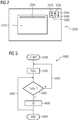
- a household appliance 2000 in the form of a kitchen oven comprises a door closing a cooking cavity 2100 with a handle 2200.
- a control panel is shown that comprises mass input means 2310, 2320 and an indication 2330.
- a controller may be provided 2400, which may contain the duty cycle power adjuster.
- the user may activate a cooking program and may input a food mass by means of input keys 2310 and 2320.
- An indication may be given 2330 as to which temperature is currently present, if a preheat process is run, and as to which mass is detected inside of the oven, or which duty cycle is run, e.g. 60%, giving the user an indication of how much power is saved with the household appliance.
- the household appliance 2000 may contain a scale, not shown in the drawing.
- the scale may measure the weight of the food and provide the information to the load evaluation unit 1255.
- the temperature-over-time behavior of the oven that is heated may be determined in order to determine a load that is present inside of the oven and adjust the duty cycle appropriately.
- a load corresponding to 3 kg corresponds to a duty cycle of 100%
- a lower load corresponds to a lower duty cycle, e.g. a load of 1.5 kg does not correspond to a duty cycle of 50%, but rather to a duty cycle of 70% due to the non-linear behavior of the heater, thermal losses and thermal radiation and so forth.
- Fig. 3 shows a method not covered by the invention.
- the oven is heated with full power 3200.
- an inquiry is performed as to which temperature is reached, is the temperature at the heat-up temperature, then, in the yes case, the duty cycle power control is activated operating the heater with a duty cycle that corresponds to the load inside of the oven. It is branched back in front of the inquiry 3450, where within a loop the temperature is controlled. Once the temperature is not satisfying a temperature criterion that is questioned inside of the inquiry 3300 it is branched back after the start 3350; and full heating power is activated.
- This branching back can either be done by closing the thermostatic control 1300, or by instructing the duty cycle power adjuster by means of the temperature control element 1300 to heat at full duty cycle 100%, until the temperature has reached a predefined temperature again and the duty cycle power control 3400 can be adapted to further control the cooking process.
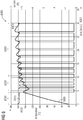
- Fig. 4 shows an example of a temperature-over-time behavior.
- temperature-over-time linear slopes 4300, 4350, 4400 and 4450 are shown.
- the diagram 4000 shows a temperature 4100 over time 4200. Further, inclination angles 4500, 4550, 4600 and 4650 are shown. On the other hand, a time delay 4700 is also shown.
- frame parameters are the ambient temperature 4850 and the heat-up temperature 4800.
- any other temperatures as frame parameters can be used, e.g. such a temperature-over-time behavior may be stored inside the load evaluation unit 1255.
- a temperature-over-time behavior corresponding to an inclination angle 4550 corresponding to a certain load in the oven is shown, e.g. this load may be 1 kg.
- This load is associated to an inclination angle 4550. In this case, this may correspond to a duty cycle of 60%.
- a higher load e.g. meaning a roast being in the oven, is heated which corresponds to an inclination angle of 4600 and a temperature-over-time behavior 4400.
- a time delay between an empty oven and a 1 kg load 4700 is also shown. As the inclination angle, this time delay is also indicative of the load and can be used to adjust the duty cycle power control. Under 4400, most probably the duty cycle will already be at 80% corresponding to a load of a food mass of 2 kg to 2.5 kg.
- a food mass of 3 kg is heated that corresponds to an inclination angle of 4650.
- Such a food mass heated in a common kitchen oven having a heating power of 3 kW corresponds to e.g. a 100% duty cycle, as with such a high mass, the full heating power is needed to keep the mass at a predetermined cooking temperature.
- Experimental data can be acquired corresponding to various loads in the oven and to various frame parameters to build a table of food masses, loads, frame parameters /temperatures and inclination angles. Such a table can then be consulted during operation, to get for an associated inclination angle or a time delay at a certain stage of the cooking process a corresponding duty cycle value.
- thermal processes are non-linear, and as such the dependency of duty cycle and load inside the oven will be non-linear.
- Fig. 5 to 7 show different temperature-over-time behaviors.
- Fig. 5 indicated by 5000 shows the operation of an oven under a small load.
- Fig. 6 indicated by reference 6000 shows an operation of the oven under a small load with higher heating power, and
- Fig. 7 indicated by 7000 shows the operation of an oven under a heavy load, such as for instance when a pork roast is prepared.
- the other cases referenced by 5000 and 6000 may be indicating the baking of cookies.
- Reference 5020 is indicative of the room temperature.
- References 5005, respectively 6005, respectively 7005 indicate the electric current, whereas the intervals 5200, respectively 6200, respectively 7200 indicate an initial heat-up phase following the reaching of the set temperature, and the intervals 5300, 6300 and 7300 are indicative of a cooking phase where the temperature is maintained.
- heat-up times 5500, 6500 and 7500 are shown.
- the heat-up times are indicative of a speed of heat-up in the oven in the presence of different loads. Those times can serve to determine the load itself, as the further conditions of the oven like temperature behavior can be determined without the load and then compared with the behavior under a load.
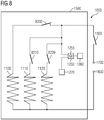
- FIG. 8 shows a basic configuration of a temperature control arrangement for plural heating elements.
- the plural heating elements are controlled with a multi-cycle power control 8200, 8210 and 8220.
- the plural heating elements are identified by 1100, 1110 and 1120.
- the number of heating elements can be switched according to the power required for heating the food to a predetermined food preparation temperature and maintaining this temperature. In this manner, it is not always required to switch on all of the heating elements.
- heating elements that are activated can be controlled by the multi-cycle power control 8200, 8210 and 8220.
- Such a multi-cycle power control may, for instance, operate a relay that switches the heating elements on for a certain amount of time depending on the power required to maintain the food preparation temperature.
- the e.g. individually activated heating elements 1100, 1110 and 1120 can be individually operated at a different duty cycle as required to maintain a proper food preparation temperature.
- the user sets a food load and sets a food preparation temperature.
- an optimum number of heating elements may be kept activated and operated by the multi-cycle power control 8200, 8210 and 8220 in order to provide optimum cooking respectively baking results, while at the same time saving energy and securing an efficient operation of the heating arrangement.
Landscapes
- Engineering & Computer Science (AREA)
- Food Science & Technology (AREA)
- Chemical & Material Sciences (AREA)
- Combustion & Propulsion (AREA)
- Mechanical Engineering (AREA)
- General Engineering & Computer Science (AREA)
- Electric Stoves And Ranges (AREA)
Claims (20)
- Temperatursteueranordnung (1000) zum elektrischen Erhitzen eines Nahrungsmittels in einem Hohlraum (1500) eines Haushaltsgeräts, das mindestens umfasst:- eine Vielzahl elektrischer Heizelemente (1100, 1110, 1120);- eine Mehrfachzyklen-Leistungsteuerung (8200) für die Vielzahl der elektrischen Heizelemente (1100, 1110, 1120),- ein Temperatursteuerelement (1300);- eine automatische Auswerteinheit (1255) für die Nahrungsmittelbeladung,
dadurch gekennzeichnet, dass- das Temperatursteuerelement (1300) und die Mehrfachzyklen-Leistungssteuerung (8200, 8210, 8220) miteinander in Reihe geschaltet sind und mit jeweils der Vielzahl der elektrischen Heizelemente (1100, 1110, 1120) in Reihe geschaltet sind; und- die jeweilige automatische Auswerteinheit (1255) für die Nahrungsmittelbeladung mit der Mehrfachzyklen-Leistungssteuerung (8200, 8210, 8220) verbunden ist; und- die Mehrfachzyklen-Leistungssteuerung (8200, 8210, 8220) geeignet ist, um Leistung gemäß einem Steuerleistungswert auszugeben, der von der Beladungsauswerteinheit (1255) zugeführt wird. - Temperatursteueranordnung (1000) nach Anspruch 1, wobei die Beladungsauswerteinheit (1255) Masseneingabemittel (2320) für die zu erhitzende Nahrungsmittelmasse umfasst.
- Temperatursteueranordnung (1000) nach Anspruch 2, wobei das Masseneingabemittel (2320) eine Waage umfasst.
- Temperatursteueranordnung (1000) nach Anspruch 2, wobei die Beladungsauswerteinheit (1255) Mittel zum Auswerten einer Wärmeträgheit des aufzuwärmenden Nahrungsmittels umfasst.
- Temperatursteueranordnung (1000) nach Anspruch 4, wobei die Beladungsauswerteinheit (1255) geeignet ist, in Abhängigkeit von der Nahrungsmittelmasse/Wärmeträgheit des Nahrungsmittels einen Steuerleistungswert bereitzustellen.
- Temperatursteueranordnung (1000) nach Anspruch 5, wobei die Beladungsauswerteinheit geeignet ist, entsprechend der Nahrungsmittelmasse/Wärmeträgheit des zu erhitzenden Nahrungsmittels einen Steuerleistungswert bereitzustellen.
- Temperatursteueranordnung (1000) nach Anspruch 6, ferner umfassend ein Thermometer (1260) und einen Zeitgeber (1270), die geeignet sind, ein Verhalten der Temperatur im Zeitverlauf zu bestimmen.
- Temperatursteueranordnung (1000) nach Anspruch 7, wobei die Beladungsauswerteinheit geeignet ist, um einen Neigungswinkel (4550) einer linearen Steigung einer Temperatur im Zeitverlauf zu bestimmen.
- Temperatursteueranordnung (1000) nach Anspruch 7, wobei die Beladungsauswerteinheit geeignet ist, für einen größeren Neigungswinkel einen niedrigeren Steuerleistungswert bereitzustellen.
- Temperatursteueranordnung (1000) nach Anspruch 9, wobei der Neigungswinkel einer linearen Steigung, der einer Masse von 3 kg entspricht, einem Leistungswert für einen Arbeitszyklus von 100 % entspricht.
- Verfahren (3000) zum elektrischen Aufwärmen von Nahrungsmittel in einem Haushaltsgerät, das die Temperatursteueranordnung nach einem der Ansprüche 1 bis 10 verwendet, und mindestens umfasst:- Aufwärmen des Nahrungsmittel in einem Hohlraum des Haushaltsgeräts mit einer vollen Heizkapazität (3200) einer Vielzahl von Heizelementen (1100, 1110, 1120), bis eine vorbestimmte Aufheiztemperatur des Hohlraums erreicht ist;- Bestimmen einer Nahrungsmittelbeladung des Nahrungsmittels unter Verwendung der Auswerteinheit (1255) für die Nahrungsmittelbeladung;- Umschalten (3400) auf eine Mehrfachzyklen-Leistungssteuerung (8200, 8210, 8220) für die Vielzahl der Heizelemente (1100, 1110, 1120), um eine vorbestimmte Nahrungsmittelzubereitungstemperatur (3300) des Hohlraums aufrecht zu erhalten,- wobei eine vorbestimmte Anzahl der Vielzahl der Heizelemente (1100, 1110, 1120), die der vorbestimmten Nahrungsmittelbeladung entspricht, durch die Mehrfachzyklen-Leistungssteuerung (8200, 8210, 8220) aktiviert wird und ein Arbeitszyklus der aktivierten Anzahl der Heizelemente (1100, 1110, 1120) gemäß der bestimmten Nahrungsmittelbeladung durch die Mehrfachzyklen-Leistungssteuerung (8200, 8210, 8220) angepasst wird;- Steuern der vorbestimmten Nahrungsmittelzubereitungstemperatur (3300) des Hohlraums (1500) mit einem Temperatursteuerelement (1300).
- Verfahren (3000) nach Anspruch 11, wobei- die Nahrungsmittelbeladung automatisch während des Aufheizens bestimmt werden kann, indem der Zeitverlauf des Temperaturanstiegs von mindestens einem von dem Hohlraum (1500) und dem Nahrungsmittel bestimmt und ausgewertet wird.
- Verfahren (3000) nach einem der Ansprüche 11 bis 12, wobei die Vielzahl der Heizelemente (1100, 1110, 1120) mindestens zwei umfasst.
- Verfahren (3000) nach einem der Ansprüche 11 bis 13, wobei- die vorbestimmte Nahrungsmittelzubereitungstemperatur in demselben Bereich wie die vorbestimmte Aufheiztemperatur liegt, vorzugsweise plus/ minus 5 °C, weiter bevorzugt plus/minus 2 °C, am meisten bevorzugt dieselbe Temperatur;- wobei entweder die Aufheiztemperatur oder die Nahrungsmittelzubereitungstemperatur, vorzugsweise beide, von dem Anwender festgelegt werden können.
- Verfahren (3000) nach einem der Ansprüche 11 bis 14, wobei die Mehrfachzyklen-Leistungssteuerung (8200, 8210, 8220) eine vorbestimmte Durchschnittsleistung der aktivierten Anzahl der Heizelemente (1100, 1110, 1120) steuert, die der bestimmten Nahrungsmittelbeladung entspricht,
wobei die aktivierte Anzahl der Heizelemente (1100, 1110, 1120) vorzugsweise parallel zueinander und in Reihe zu der Mehrfachzyklen-Leistungssteuerung (8200, 8210, 8220) angeordnet ist. - Verfahren (3000) nach einem der Ansprüche 11 bis 15, wobei das Temperatursteuerelement (1300) in Reihe zu der Vielzahl der Heizelemente (1100, 1110, 1120) angeordnet ist.
- Verfahren (3000) nach einem der Ansprüche 11 bis 16, wobei einem niedrigeren Arbeitszyklus eine niedrigere Masse zugeordnet ist.
- Verfahren (3000) nach einem der Ansprüche 11 bis 17, wobei der Arbeitszyklus aus einem Verhalten der Temperatur im Zeitverlauf (1250, 1260, 1270) bestimmt wird.
- Haushaltsgerät (2000), insbesondere ein Küchenofen, umfassend eine Temperatursteueranordnung (1000) gemäß einem der Ansprüche 1 bis 10.
- Verfahren zum Steuern eines Haushaltsgeräts (2000), umfassend ein Verfahren zum elektrischen Aufwärmen von Nahrungsmittel (3000) gemäß einem der Ansprüche 11 bis 18.
Priority Applications (2)
| Application Number | Priority Date | Filing Date | Title |
|---|---|---|---|
| EP14183283.2A EP2993409B1 (de) | 2014-09-02 | 2014-09-02 | Verfahren und Temperatursteueranordnung zum elektrischen Aufwärmen eines Nahrungsmittels, Verfahren zur Steuerung eines Haushaltsgerätes und Haushaltsgerät |
| EP14199081.2A EP2993410B1 (de) | 2014-09-02 | 2014-12-19 | Verfahren und Temperatursteuerungsanordnung zum elektrischen Aufwärmen eines Lebensmittels |
Applications Claiming Priority (1)
| Application Number | Priority Date | Filing Date | Title |
|---|---|---|---|
| EP14183283.2A EP2993409B1 (de) | 2014-09-02 | 2014-09-02 | Verfahren und Temperatursteueranordnung zum elektrischen Aufwärmen eines Nahrungsmittels, Verfahren zur Steuerung eines Haushaltsgerätes und Haushaltsgerät |
Publications (2)
| Publication Number | Publication Date |
|---|---|
| EP2993409A1 EP2993409A1 (de) | 2016-03-09 |
| EP2993409B1 true EP2993409B1 (de) | 2017-06-21 |
Family
ID=51429215
Family Applications (2)
| Application Number | Title | Priority Date | Filing Date |
|---|---|---|---|
| EP14183283.2A Not-in-force EP2993409B1 (de) | 2014-09-02 | 2014-09-02 | Verfahren und Temperatursteueranordnung zum elektrischen Aufwärmen eines Nahrungsmittels, Verfahren zur Steuerung eines Haushaltsgerätes und Haushaltsgerät |
| EP14199081.2A Active EP2993410B1 (de) | 2014-09-02 | 2014-12-19 | Verfahren und Temperatursteuerungsanordnung zum elektrischen Aufwärmen eines Lebensmittels |
Family Applications After (1)
| Application Number | Title | Priority Date | Filing Date |
|---|---|---|---|
| EP14199081.2A Active EP2993410B1 (de) | 2014-09-02 | 2014-12-19 | Verfahren und Temperatursteuerungsanordnung zum elektrischen Aufwärmen eines Lebensmittels |
Country Status (1)
| Country | Link |
|---|---|
| EP (2) | EP2993409B1 (de) |
Families Citing this family (14)
| Publication number | Priority date | Publication date | Assignee | Title |
|---|---|---|---|---|
| WO2016139246A1 (en) * | 2015-03-04 | 2016-09-09 | Arcelik Anonim Sirketi | A cooking device wherein the heater is controlled |
| EP3400802A1 (de) * | 2017-05-08 | 2018-11-14 | Electrolux Appliances Aktiebolag | Verfahren zum steuern eines kochvorgangs in einem gargerät |
| EP3482661B1 (de) * | 2017-11-14 | 2021-05-26 | Vorwerk & Co. Interholding GmbH | Verfahren zur anpassung einer heizleistung wenigstens eines heizelementes eines hausgeräts |
| CN109583696B (zh) * | 2018-10-29 | 2021-10-26 | 东北电力大学 | 基于rbf神经网络的单个电采暖设备调节能力评估方法 |
| US10865999B2 (en) | 2019-03-01 | 2020-12-15 | Midea Group Co., Ltd. | Targeted oven self-clean preheat temperature control |
| US11009238B2 (en) | 2019-03-01 | 2021-05-18 | Midea Group Co., Ltd. | Staged oven self-clean preheat temperature control |
| CN110507209B (zh) * | 2019-08-28 | 2021-11-12 | 惠而浦(中国)股份有限公司 | 一种智能烹饪方法和具有探针的智能烹饪器具 |
| EP3804585B1 (de) * | 2019-10-10 | 2022-12-07 | Electrolux Appliances Aktiebolag | Verfahren zum betrieb eines kochofens |
| CN111030117B (zh) * | 2019-12-06 | 2023-10-20 | 中国人民解放军空军勤务学院 | 一种机载饮食加热组件的电气控制系统 |
| EP3878613B1 (de) | 2020-03-09 | 2024-06-26 | Braun GmbH | Elektrischer rasierapparat |
| AU2021340635B2 (en) | 2020-09-08 | 2024-11-21 | June Life, Inc. | System and method for individual heating element control |
| DE102020214636A1 (de) * | 2020-11-20 | 2022-05-25 | BSH Hausgeräte GmbH | Haushaltsgargerät und Verfahren zum Betreiben desselben |
| CN114129062A (zh) * | 2021-12-14 | 2022-03-04 | 广东美的厨房电器制造有限公司 | 烹饪设备及其控制方法、控制装置和可读存储介质 |
| CN114711643B (zh) * | 2022-03-31 | 2024-06-18 | 海信家电集团股份有限公司 | 一种烤箱及其温度控制方法 |
Family Cites Families (6)
| Publication number | Priority date | Publication date | Assignee | Title |
|---|---|---|---|---|
| GB451329A (en) | 1935-04-02 | 1936-08-04 | Westinghouse Electric & Mfg Co | Improvements in or relating to temperature control systems |
| US4447693A (en) * | 1979-09-06 | 1984-05-08 | Litton Systems, Inc. | Power controlled microwave oven |
| DE4029181A1 (de) | 1990-09-14 | 1992-03-19 | Miele & Cie | Beheizung von backoefen |
| US8061266B2 (en) * | 2007-03-02 | 2011-11-22 | Track Corp. | Food warming and holding device construction and method |
| DE102007046923A1 (de) * | 2007-09-28 | 2009-04-23 | Rational Ag | Verfahren zur vereinfachten Programmierung von Programmen eines Gargerätes und Gargerät zum Durchführen solch eines Verfahrens |
| EP2110605B1 (de) | 2008-04-15 | 2015-07-01 | Whirlpool Corporation | Kochverfahren |
-
2014
- 2014-09-02 EP EP14183283.2A patent/EP2993409B1/de not_active Not-in-force
- 2014-12-19 EP EP14199081.2A patent/EP2993410B1/de active Active
Non-Patent Citations (1)
| Title |
|---|
| None * |
Also Published As
| Publication number | Publication date |
|---|---|
| EP2993410A1 (de) | 2016-03-09 |
| EP2993409A1 (de) | 2016-03-09 |
| EP2993410B1 (de) | 2019-02-20 |
Similar Documents
| Publication | Publication Date | Title |
|---|---|---|
| EP2993409B1 (de) | Verfahren und Temperatursteueranordnung zum elektrischen Aufwärmen eines Nahrungsmittels, Verfahren zur Steuerung eines Haushaltsgerätes und Haushaltsgerät | |
| CN109976434B (zh) | 调整家用器具的至少一个加热件的加热功率的方法 | |
| EP2225493B1 (de) | Ofen | |
| US10677472B2 (en) | Control method for oven broiling | |
| US8776776B2 (en) | Baking system for a gas cooking appliance | |
| EP3190857B1 (de) | Kochgerät und verfahren zur steuerung eines kochgeräts | |
| US9927128B2 (en) | Method for operating an oven appliance and a control system for an oven appliance | |
| EP2110605A1 (de) | Kochverfahren | |
| EP3056821A1 (de) | Nahrungsmittelofen für den Haushalt und Verfahren zum Aufwärmen eines Nahrungsmittels in einem Nahrungsmittelofen für den Haushalt | |
| RU2539458C2 (ru) | Печь | |
| US6979804B1 (en) | Automated oven calibration system | |
| CN109936882B (zh) | 加热控制方法、装置、加热器具和计算机可读存储介质 | |
| CN104287612B (zh) | 蒸汽烤箱 | |
| CN220958560U (zh) | 烤箱 | |
| CN106667287B (zh) | 电烹饪器的控制方法、装置及电烹饪器 | |
| EP4019848B1 (de) | Verfahren zum betreiben eines backofens | |
| KR101209599B1 (ko) | 오븐의 조리물 량에 따른 온도제어방법 | |
| EP2887763A1 (de) | Verfahren, Vorrichtung und Computerprogrammprodukt zur Steuerung einer mit Wärmeträgheit assoziierten Wärmequelle | |
| KR100662481B1 (ko) | 전기 오븐의 히터 제어방법 | |
| JPH0421994B2 (de) | ||
| EP3575693B1 (de) | Elektrischer ofen und verfahren zum betreiben | |
| KR101017171B1 (ko) | 전기오븐 및 그 작동방법 | |
| JP2011185506A (ja) | オーブントースター | |
| CN102151070A (zh) | 烧煮器装置 | |
| WO2016139246A1 (en) | A cooking device wherein the heater is controlled |
Legal Events
| Date | Code | Title | Description |
|---|---|---|---|
| PUAI | Public reference made under article 153(3) epc to a published international application that has entered the european phase |
Free format text: ORIGINAL CODE: 0009012 |
|
| AK | Designated contracting states |
Kind code of ref document: A1 Designated state(s): AL AT BE BG CH CY CZ DE DK EE ES FI FR GB GR HR HU IE IS IT LI LT LU LV MC MK MT NL NO PL PT RO RS SE SI SK SM TR |
|
| AX | Request for extension of the european patent |
Extension state: BA ME |
|
| 17P | Request for examination filed |
Effective date: 20160909 |
|
| RBV | Designated contracting states (corrected) |
Designated state(s): AL AT BE BG CH CY CZ DE DK EE ES FI FR GB GR HR HU IE IS IT LI LT LU LV MC MK MT NL NO PL PT RO RS SE SI SK SM TR |
|
| GRAJ | Information related to disapproval of communication of intention to grant by the applicant or resumption of examination proceedings by the epo deleted |
Free format text: ORIGINAL CODE: EPIDOSDIGR1 |
|
| GRAP | Despatch of communication of intention to grant a patent |
Free format text: ORIGINAL CODE: EPIDOSNIGR1 |
|
| GRAP | Despatch of communication of intention to grant a patent |
Free format text: ORIGINAL CODE: EPIDOSNIGR1 |
|
| RIC1 | Information provided on ipc code assigned before grant |
Ipc: F24C 7/08 20060101AFI20170103BHEP Ipc: H05B 1/02 20060101ALI20170103BHEP Ipc: H05B 6/64 20060101ALI20170103BHEP Ipc: A47J 37/00 20060101ALI20170103BHEP Ipc: A47J 37/12 20060101ALI20170103BHEP |
|
| INTG | Intention to grant announced |
Effective date: 20170124 |
|
| GRAS | Grant fee paid |
Free format text: ORIGINAL CODE: EPIDOSNIGR3 |
|
| GRAA | (expected) grant |
Free format text: ORIGINAL CODE: 0009210 |
|
| AK | Designated contracting states |
Kind code of ref document: B1 Designated state(s): AL AT BE BG CH CY CZ DE DK EE ES FI FR GB GR HR HU IE IS IT LI LT LU LV MC MK MT NL NO PL PT RO RS SE SI SK SM TR |
|
| REG | Reference to a national code |
Ref country code: GB Ref legal event code: FG4D |
|
| REG | Reference to a national code |
Ref country code: CH Ref legal event code: EP |
|
| REG | Reference to a national code |
Ref country code: IE Ref legal event code: FG4D |
|
| REG | Reference to a national code |
Ref country code: AT Ref legal event code: REF Ref document number: 903309 Country of ref document: AT Kind code of ref document: T Effective date: 20170715 |
|
| REG | Reference to a national code |
Ref country code: DE Ref legal event code: R096 Ref document number: 602014010919 Country of ref document: DE |
|
| REG | Reference to a national code |
Ref country code: FR Ref legal event code: PLFP Year of fee payment: 4 |
|
| REG | Reference to a national code |
Ref country code: NL Ref legal event code: MP Effective date: 20170621 |
|
| PG25 | Lapsed in a contracting state [announced via postgrant information from national office to epo] |
Ref country code: HR Free format text: LAPSE BECAUSE OF FAILURE TO SUBMIT A TRANSLATION OF THE DESCRIPTION OR TO PAY THE FEE WITHIN THE PRESCRIBED TIME-LIMIT Effective date: 20170621 Ref country code: NO Free format text: LAPSE BECAUSE OF FAILURE TO SUBMIT A TRANSLATION OF THE DESCRIPTION OR TO PAY THE FEE WITHIN THE PRESCRIBED TIME-LIMIT Effective date: 20170921 Ref country code: FI Free format text: LAPSE BECAUSE OF FAILURE TO SUBMIT A TRANSLATION OF THE DESCRIPTION OR TO PAY THE FEE WITHIN THE PRESCRIBED TIME-LIMIT Effective date: 20170621 Ref country code: GR Free format text: LAPSE BECAUSE OF FAILURE TO SUBMIT A TRANSLATION OF THE DESCRIPTION OR TO PAY THE FEE WITHIN THE PRESCRIBED TIME-LIMIT Effective date: 20170922 Ref country code: LT Free format text: LAPSE BECAUSE OF FAILURE TO SUBMIT A TRANSLATION OF THE DESCRIPTION OR TO PAY THE FEE WITHIN THE PRESCRIBED TIME-LIMIT Effective date: 20170621 |
|
| REG | Reference to a national code |
Ref country code: LT Ref legal event code: MG4D |
|
| REG | Reference to a national code |
Ref country code: AT Ref legal event code: MK05 Ref document number: 903309 Country of ref document: AT Kind code of ref document: T Effective date: 20170621 |
|
| PG25 | Lapsed in a contracting state [announced via postgrant information from national office to epo] |
Ref country code: NL Free format text: LAPSE BECAUSE OF FAILURE TO SUBMIT A TRANSLATION OF THE DESCRIPTION OR TO PAY THE FEE WITHIN THE PRESCRIBED TIME-LIMIT Effective date: 20170621 Ref country code: SE Free format text: LAPSE BECAUSE OF FAILURE TO SUBMIT A TRANSLATION OF THE DESCRIPTION OR TO PAY THE FEE WITHIN THE PRESCRIBED TIME-LIMIT Effective date: 20170621 Ref country code: LV Free format text: LAPSE BECAUSE OF FAILURE TO SUBMIT A TRANSLATION OF THE DESCRIPTION OR TO PAY THE FEE WITHIN THE PRESCRIBED TIME-LIMIT Effective date: 20170621 Ref country code: RS Free format text: LAPSE BECAUSE OF FAILURE TO SUBMIT A TRANSLATION OF THE DESCRIPTION OR TO PAY THE FEE WITHIN THE PRESCRIBED TIME-LIMIT Effective date: 20170621 Ref country code: BG Free format text: LAPSE BECAUSE OF FAILURE TO SUBMIT A TRANSLATION OF THE DESCRIPTION OR TO PAY THE FEE WITHIN THE PRESCRIBED TIME-LIMIT Effective date: 20170921 |
|
| PG25 | Lapsed in a contracting state [announced via postgrant information from national office to epo] |
Ref country code: SK Free format text: LAPSE BECAUSE OF FAILURE TO SUBMIT A TRANSLATION OF THE DESCRIPTION OR TO PAY THE FEE WITHIN THE PRESCRIBED TIME-LIMIT Effective date: 20170621 Ref country code: EE Free format text: LAPSE BECAUSE OF FAILURE TO SUBMIT A TRANSLATION OF THE DESCRIPTION OR TO PAY THE FEE WITHIN THE PRESCRIBED TIME-LIMIT Effective date: 20170621 Ref country code: AT Free format text: LAPSE BECAUSE OF FAILURE TO SUBMIT A TRANSLATION OF THE DESCRIPTION OR TO PAY THE FEE WITHIN THE PRESCRIBED TIME-LIMIT Effective date: 20170621 Ref country code: RO Free format text: LAPSE BECAUSE OF FAILURE TO SUBMIT A TRANSLATION OF THE DESCRIPTION OR TO PAY THE FEE WITHIN THE PRESCRIBED TIME-LIMIT Effective date: 20170621 Ref country code: CZ Free format text: LAPSE BECAUSE OF FAILURE TO SUBMIT A TRANSLATION OF THE DESCRIPTION OR TO PAY THE FEE WITHIN THE PRESCRIBED TIME-LIMIT Effective date: 20170621 |
|
| PG25 | Lapsed in a contracting state [announced via postgrant information from national office to epo] |
Ref country code: ES Free format text: LAPSE BECAUSE OF FAILURE TO SUBMIT A TRANSLATION OF THE DESCRIPTION OR TO PAY THE FEE WITHIN THE PRESCRIBED TIME-LIMIT Effective date: 20170621 Ref country code: IS Free format text: LAPSE BECAUSE OF FAILURE TO SUBMIT A TRANSLATION OF THE DESCRIPTION OR TO PAY THE FEE WITHIN THE PRESCRIBED TIME-LIMIT Effective date: 20171021 Ref country code: SM Free format text: LAPSE BECAUSE OF FAILURE TO SUBMIT A TRANSLATION OF THE DESCRIPTION OR TO PAY THE FEE WITHIN THE PRESCRIBED TIME-LIMIT Effective date: 20170621 Ref country code: PL Free format text: LAPSE BECAUSE OF FAILURE TO SUBMIT A TRANSLATION OF THE DESCRIPTION OR TO PAY THE FEE WITHIN THE PRESCRIBED TIME-LIMIT Effective date: 20170621 |
|
| REG | Reference to a national code |
Ref country code: DE Ref legal event code: R097 Ref document number: 602014010919 Country of ref document: DE |
|
| PLBE | No opposition filed within time limit |
Free format text: ORIGINAL CODE: 0009261 |
|
| STAA | Information on the status of an ep patent application or granted ep patent |
Free format text: STATUS: NO OPPOSITION FILED WITHIN TIME LIMIT |
|
| PG25 | Lapsed in a contracting state [announced via postgrant information from national office to epo] |
Ref country code: DK Free format text: LAPSE BECAUSE OF FAILURE TO SUBMIT A TRANSLATION OF THE DESCRIPTION OR TO PAY THE FEE WITHIN THE PRESCRIBED TIME-LIMIT Effective date: 20170621 |
|
| REG | Reference to a national code |
Ref country code: CH Ref legal event code: PL |
|
| 26N | No opposition filed |
Effective date: 20180322 |
|
| PG25 | Lapsed in a contracting state [announced via postgrant information from national office to epo] |
Ref country code: MC Free format text: LAPSE BECAUSE OF FAILURE TO SUBMIT A TRANSLATION OF THE DESCRIPTION OR TO PAY THE FEE WITHIN THE PRESCRIBED TIME-LIMIT Effective date: 20170621 |
|
| REG | Reference to a national code |
Ref country code: IE Ref legal event code: MM4A |
|
| REG | Reference to a national code |
Ref country code: BE Ref legal event code: MM Effective date: 20170930 |
|
| PG25 | Lapsed in a contracting state [announced via postgrant information from national office to epo] |
Ref country code: LU Free format text: LAPSE BECAUSE OF NON-PAYMENT OF DUE FEES Effective date: 20170902 |
|
| PG25 | Lapsed in a contracting state [announced via postgrant information from national office to epo] |
Ref country code: IE Free format text: LAPSE BECAUSE OF NON-PAYMENT OF DUE FEES Effective date: 20170902 Ref country code: LI Free format text: LAPSE BECAUSE OF NON-PAYMENT OF DUE FEES Effective date: 20170930 Ref country code: CH Free format text: LAPSE BECAUSE OF NON-PAYMENT OF DUE FEES Effective date: 20170930 |
|
| PG25 | Lapsed in a contracting state [announced via postgrant information from national office to epo] |
Ref country code: BE Free format text: LAPSE BECAUSE OF NON-PAYMENT OF DUE FEES Effective date: 20170930 Ref country code: SI Free format text: LAPSE BECAUSE OF FAILURE TO SUBMIT A TRANSLATION OF THE DESCRIPTION OR TO PAY THE FEE WITHIN THE PRESCRIBED TIME-LIMIT Effective date: 20170621 |
|
| REG | Reference to a national code |
Ref country code: FR Ref legal event code: PLFP Year of fee payment: 5 |
|
| PG25 | Lapsed in a contracting state [announced via postgrant information from national office to epo] |
Ref country code: MT Free format text: LAPSE BECAUSE OF NON-PAYMENT OF DUE FEES Effective date: 20170902 |
|
| GBPC | Gb: european patent ceased through non-payment of renewal fee |
Effective date: 20180902 |
|
| PG25 | Lapsed in a contracting state [announced via postgrant information from national office to epo] |
Ref country code: HU Free format text: LAPSE BECAUSE OF FAILURE TO SUBMIT A TRANSLATION OF THE DESCRIPTION OR TO PAY THE FEE WITHIN THE PRESCRIBED TIME-LIMIT; INVALID AB INITIO Effective date: 20140902 |
|
| PG25 | Lapsed in a contracting state [announced via postgrant information from national office to epo] |
Ref country code: CY Free format text: LAPSE BECAUSE OF FAILURE TO SUBMIT A TRANSLATION OF THE DESCRIPTION OR TO PAY THE FEE WITHIN THE PRESCRIBED TIME-LIMIT Effective date: 20170621 Ref country code: GB Free format text: LAPSE BECAUSE OF NON-PAYMENT OF DUE FEES Effective date: 20180902 |
|
| PGFP | Annual fee paid to national office [announced via postgrant information from national office to epo] |
Ref country code: FR Payment date: 20190927 Year of fee payment: 6 Ref country code: IT Payment date: 20190925 Year of fee payment: 6 Ref country code: DE Payment date: 20190918 Year of fee payment: 6 |
|
| PG25 | Lapsed in a contracting state [announced via postgrant information from national office to epo] |
Ref country code: MK Free format text: LAPSE BECAUSE OF FAILURE TO SUBMIT A TRANSLATION OF THE DESCRIPTION OR TO PAY THE FEE WITHIN THE PRESCRIBED TIME-LIMIT Effective date: 20170621 |
|
| PG25 | Lapsed in a contracting state [announced via postgrant information from national office to epo] |
Ref country code: TR Free format text: LAPSE BECAUSE OF FAILURE TO SUBMIT A TRANSLATION OF THE DESCRIPTION OR TO PAY THE FEE WITHIN THE PRESCRIBED TIME-LIMIT Effective date: 20170621 |
|
| PG25 | Lapsed in a contracting state [announced via postgrant information from national office to epo] |
Ref country code: PT Free format text: LAPSE BECAUSE OF FAILURE TO SUBMIT A TRANSLATION OF THE DESCRIPTION OR TO PAY THE FEE WITHIN THE PRESCRIBED TIME-LIMIT Effective date: 20170621 |
|
| PG25 | Lapsed in a contracting state [announced via postgrant information from national office to epo] |
Ref country code: AL Free format text: LAPSE BECAUSE OF FAILURE TO SUBMIT A TRANSLATION OF THE DESCRIPTION OR TO PAY THE FEE WITHIN THE PRESCRIBED TIME-LIMIT Effective date: 20170621 |
|
| REG | Reference to a national code |
Ref country code: DE Ref legal event code: R119 Ref document number: 602014010919 Country of ref document: DE |
|
| PG25 | Lapsed in a contracting state [announced via postgrant information from national office to epo] |
Ref country code: DE Free format text: LAPSE BECAUSE OF NON-PAYMENT OF DUE FEES Effective date: 20210401 Ref country code: FR Free format text: LAPSE BECAUSE OF NON-PAYMENT OF DUE FEES Effective date: 20200930 |
|
| PG25 | Lapsed in a contracting state [announced via postgrant information from national office to epo] |
Ref country code: IT Free format text: LAPSE BECAUSE OF NON-PAYMENT OF DUE FEES Effective date: 20200902 |