EP2995157B1 - Optimization of signalling of absolute grants for uplink transmission using time-division multiplexing - Google Patents
Optimization of signalling of absolute grants for uplink transmission using time-division multiplexing Download PDFInfo
- Publication number
- EP2995157B1 EP2995157B1 EP13724766.4A EP13724766A EP2995157B1 EP 2995157 B1 EP2995157 B1 EP 2995157B1 EP 13724766 A EP13724766 A EP 13724766A EP 2995157 B1 EP2995157 B1 EP 2995157B1
- Authority
- EP
- European Patent Office
- Prior art keywords
- grant
- absolute grant
- terminal device
- uplink transmission
- intended
- Prior art date
- Legal status (The legal status is an assumption and is not a legal conclusion. Google has not performed a legal analysis and makes no representation as to the accuracy of the status listed.)
- Active
Links
Images

Classifications
-
- H—ELECTRICITY
- H04—ELECTRIC COMMUNICATION TECHNIQUE
- H04W—WIRELESS COMMUNICATION NETWORKS
- H04W72/00—Local resource management
- H04W72/12—Wireless traffic scheduling
- H04W72/1263—Mapping of traffic onto schedule, e.g. scheduled allocation or multiplexing of flows
- H04W72/1268—Mapping of traffic onto schedule, e.g. scheduled allocation or multiplexing of flows of uplink data flows
-
- H—ELECTRICITY
- H04—ELECTRIC COMMUNICATION TECHNIQUE
- H04W—WIRELESS COMMUNICATION NETWORKS
- H04W72/00—Local resource management
- H04W72/20—Control channels or signalling for resource management
- H04W72/23—Control channels or signalling for resource management in the downlink direction of a wireless link, i.e. towards a terminal
-
- H—ELECTRICITY
- H04—ELECTRIC COMMUNICATION TECHNIQUE
- H04L—TRANSMISSION OF DIGITAL INFORMATION, e.g. TELEGRAPHIC COMMUNICATION
- H04L5/00—Arrangements affording multiple use of the transmission path
- H04L5/0091—Signalling for the administration of the divided path, e.g. signalling of configuration information
- H04L5/0096—Indication of changes in allocation
- H04L5/0098—Signalling of the activation or deactivation of component carriers, subcarriers or frequency bands
-
- H—ELECTRICITY
- H04—ELECTRIC COMMUNICATION TECHNIQUE
- H04W—WIRELESS COMMUNICATION NETWORKS
- H04W28/00—Network traffic management; Network resource management
- H04W28/02—Traffic management, e.g. flow control or congestion control
- H04W28/0205—Traffic management, e.g. flow control or congestion control at the air interface
-
- H—ELECTRICITY
- H04—ELECTRIC COMMUNICATION TECHNIQUE
- H04W—WIRELESS COMMUNICATION NETWORKS
- H04W74/00—Wireless channel access
- H04W74/002—Transmission of channel access control information
- H04W74/006—Transmission of channel access control information in the downlink, i.e. towards the terminal
Definitions
- the present invention relates to an apparatus, a method, a system, and a computer program product related to Wideband Code Division Multiple Access (WCDMA) transmission in the Uplink (UL) direction, especially the High Speed Uplink Packet Access (HSUPA) subsystem. More particularly, the present invention relates to an apparatus, a method, a system, and a computer program product for uplink grant procedure in 3GPP WCDMA transmission.
- WCDMA Wideband Code Division Multiple Access
- HSUPA High Speed Uplink Packet Access
- TDM scheduling is known to be useful in UL WCDMA as the influence of Multiple Access interference is limited since substantially only one UE transmits at a time. TDM scheduling might be a good extension for a SINR-based scheduling concept as proposed by Nokia Siemens Networks, improving the obtained results.
- TDM In the context of WCDMA, TDM describes a situation in which one selected UE in a given cell consumes most of the Noise Rise over Thermal Noise (RoT) resources by transmitting with high data rate for a short period of time (several TTIs - several tens/hundreds of TTIs) while at the same time other UEs either stop their transmission or their transmission consumes significantly less resources.
- RoT Noise Rise over Thermal Noise
- the scheduling in HSUPA is based on "Scheduling Grants", which imposes the E-DPDCH/DPCCH power ratio for a given UE. Grants are sent to the UEs over E-AGCH channel (absolute value of the grant is sent to a given UE) or over E-RGCH channel (relative grants, information on whether the current grant should be increased or decreased). Since E-RGCH carries only gradual grant updates and TDM scheduling requires more dramatic changes, the present application considers the E-AGCH channel.
- the time after which the grant issued by NodeB is effective in the UE is described in 3GPP TS 25.214 in chapter 6B.3:
- a wireless transmit/receive unit activates a primary uplink carrier and a primary downlink carrier and activates or deactivates a secondary uplink carrier based on a signal from a network or upon detection of a pre-configured condition.
- the WTRU may deactivate the secondary uplink carrier based on inactivity of the E-DCH transmission, a buffer status, a channel condition, or power constraints.
- DPCCH dedicated physical control channel
- the initial DPCCH transmission power may be set based on a DPCCH transmission power on the primary uplink carrier or to a value signaled by a network.
- a default grant value may be used for initial E-DCH transmission upon activation of the secondary uplink carrier.
- Korean patent application publication number KR 2007/0094443 relates to a method and an apparatus for effectively allocating transmission resources in a mobile communication system to reduce a signaling overhead for allocating transmission resources, and minimize collision or a waste of transmission resources.
- a grant channel receiving unit (1220) receives transmission resource allocation information indicating a change situation of transmission resources allocated to a terminal from a network node.
- a resource pool management unit (1225) manages transmission resource information indicating the allocated transmission resources according to the transmission resource allocation information.
- a CRC (Cyclic Redundancy Check) calculating unit (1235) determines packet decoding control information with respect to packet data desired to be transmitted, and calculates a CRC with respect to the transmission resource information and the packet decoding control information.
- a CRC adder (1250) adds the CRC to the packet decoding control information and transmits it to the network node.
- European patent application number EP 2,448,320 A1 relate to providing a a method for switching from a dual stream to a single stream in an uplink Multiple Input Multiple Output (MIMO) mode.
- the method includes: sending a scheduling command with a value of absolute grant being zero _ grant to a secondary data stream; and after a preset time since the scheduling command takes effect, sending a switching command that instructs a terminal to switch from an uplink MIMO dual stream to an uplink MIMO single stream.
- the scheduling command is sent first to control the communication terminal to stop sending new data in the secondary stream and only retransmit the data to be retransmitted; and then the switching command is sent a period of time later.
- European patent application number EP 2,408,246 A1 relates to a communication method and system using MIMO technology.
- the communication method includes: a network side device determines whether a UE uses a single-stream mode or a multi-stream mode as an uplink data transmission mode; and the network side device notifies the UE of indication information indicating the determined uplink data transmission mode.
- the communication system includes a network side device and a UE, where the network side device includes a determination module for determining whether the UE uses a single-stream mode or a multi-stream mode as an uplink data transmission mode, and a notification module for notifying the UE of indication information indicating the determined uplink data transmission mode of the UE.
- the communication method and system help the UE to use a specific uplink data transmission mode in combination with various factors, therefore reducing a delay of an uplink data transmission, improving an uplink data transmission speed, thereby meeting development needs of uplink high-speed data communication services of the UE.
- nullifying means adapted to set a grant for an uplink transmission to zero if a received absolute grant is not intended for the apparatus.
- the apparatus may further comprise checking means adapted to check if the received absolute grant is intended for the apparatus; updating means adapted to update the grant for the uplink transmission based on the received absolute grant if the absolute grant is intended for the apparatus.
- the checking means may be adapted to check that the received absolute grant is intended for the apparatus if a cyclic redundancy check performed on the received absolute grant succeeds.
- the apparatus may further comprise monitoring means adapted to monitor if the received message is encoded by a predetermined code; wherein the nullifying means may be adapted to set the grant to zero only if the received message is encoded by the predetermined code.
- the predetermined code may be an orthogonal variable spreading factor code.
- nullifying processor adapted to set a grant for an uplink transmission to zero if a received absolute grant is not intended for the apparatus.
- the apparatus may further comprise checking processor adapted to check if the received absolute grant is intended for the apparatus; updating processor adapted to update the grant for the uplink transmission based on the received absolute grant if the absolute grant is intended for the apparatus.
- the checking processor may be adapted to check that the received absolute grant is intended for the apparatus if a cyclic redundancy check performed on the received absolute grant succeeds.
- the apparatus may further comprise monitoring processor adapted to monitor if the received message is encoded by a predetermined code; wherein the nullifying processor may be adapted to set the grant to zero only if the received message is encoded by the predetermined code.
- the predetermined code may be an orthogonal variable spreading factor code.
- an apparatus comprising first updating means adapted to update a grant for an uplink transmission based on an absolute grant received at a time of reception at a first predetermined time relative to the time of reception; second updating means adapted to update the grant for the uplink transmission based on the absolute grant at a second predetermined time relative to the time of reception, wherein the second predetermined time is different from the first predetermined time; selecting means adapted to select, based on a value of the absolute grant, one of the first updating means and the second updating means for updating the grant.
- the selecting means may be adapted to select the first updating means if the value of the absolute grant is equal to or less than a predefined threshold or inactive and to select the second updating means if the value of the absolute grant is larger than the predefined threshold.
- the first predetermined time may be one transmission time interval longer than the second predetermined time.
- the absolute grant may comprise a grant of a long term evolution network.
- an apparatus comprising first updating processor adapted to update a grant for an uplink transmission based on an absolute grant received at a time of reception at a first predetermined time relative to the time of reception; second updating processor adapted to update the grant for the uplink transmission based on the absolute grant at a second predetermined time relative to the time of reception, wherein the second predetermined time is different from the first predetermined time; selecting processor adapted to select, based on a value of the absolute grant, one of the first updating processor and the second updating processor for updating the grant.
- the selecting processor may be adapted to select the first updating processor if the value of the absolute grant is equal to or less than a predefined threshold or inactive and to select the second updating processor if the value of the absolute grant is larger than the predefined threshold.
- the first predetermined time may be one transmission time interval longer than the second predetermined time.
- the absolute grant may comprise a grant of a long term evolution network.
- a user equipment comprising an apparatus according to any of the above.
- an apparatus comprising monitoring means adapted to monitor if a first absolute grant is provided to a first terminal device; preventing means adapted to prevent providing a second absolute grant to a second terminal device different from the first terminal device if it is monitored that the first absolute grant is provided.
- the apparatus may further comprise providing means adapted to provide the first absolute grant to the first terminal device.
- the apparatus may further comprise first coding means adapted to encode the first absolute grant by a predetermined code.
- the predetermined code may be an orthogonal variable spreading factor code.
- an apparatus comprising monitoring processor adapted to monitor if a first absolute grant is provided to a first terminal device; preventing processor adapted to prevent providing a second absolute grant to a second terminal device different from the first terminal device if it is monitored that the first absolute grant is provided.
- the apparatus may further comprise providing processor adapted to provide the first absolute grant to the first terminal device.
- the apparatus may further comprise first coding processor adapted to encode the first absolute grant by a predetermined code.
- the predetermined code may be an orthogonal variable spreading factor code.
- an apparatus comprising first providing means adapted to provide an absolute grant for a grant of an uplink transmission at a first predetermined time relative to an intended time for updating the grant; second providing means adapted to provide the absolute grant at a second predetermined time relative to the intended time, wherein the first predetermined time is different from the second predetermined time; selecting means adapted to select, based on a value of the absolute grant, one of the first providing means and the second providing means for providing the absolute grant.
- the selecting means may be adapted to select the first providing means if the value of the absolute grant is equal to or less than a predefined threshold or inactive and to select the second providing means if the value of the absolute grant is larger than the predefined threshold.
- the first predetermined time may be one transmission time interval longer than the second predetermined time.
- an apparatus comprising first providing processor adapted to provide an absolute grant for a grant of an uplink transmission at a first predetermined time relative to an intended time for updating the grant; second providing processor adapted to provide the absolute grant at a second predetermined time relative to the intended time, wherein the first predetermined time is different from the second predetermined time; selecting processor adapted to select, based on a value of the absolute grant, one of the first providing processor and the second providing processor for providing the absolute grant.
- the selecting processor may be adapted to select the first providing processor if the value of the absolute grant is equal to or less than a predefined threshold or inactive and to select the second providing processor if the value of the absolute grant is larger than the predefined threshold.
- the first predetermined time may be one transmission time interval longer than the second predetermined time.
- a method comprising setting a grant for an uplink transmission to zero if a received absolute grant is not intended for an apparatus performing the method.
- the method may further comprise checking if the received absolute grant is intended for the apparatus; updating the grant for the uplink transmission based on the received absolute grant if the absolute grant is intended for the apparatus.
- the checking may comprises that the received absolute grant is intended for the apparatus if a cyclic redundancy check performed on the received absolute grant succeeds.
- the method may further comprise monitoring if the received message is encoded by a predetermined code; wherein the grant may be set to zero only if the received message is encoded by the predetermined code.
- the predetermined code may be an orthogonal variable spreading factor code.
- a method comprising updating a grant for an uplink transmission based on an absolute grant received at a time of reception at a first predetermined time relative to the time of reception; updating the grant for the uplink transmission based on the absolute grant at a second predetermined time relative to the time of reception, wherein the second predetermined time is different from the first predetermined time; selecting, based on a value of the absolute grant, one of the first first predetermined time and the second predetermined time for the updating of the grant.
- the selecting may be adapted to select the first predetermined time if the value of the absolute grant is equal to or less than a predefined threshold or inactive and to select the second predetermined time if the value of the absolute grant is larger than the predefined threshold.
- the first predetermined time may be one transmission time interval longer than the second predetermined time.
- a method comprising monitoring if a first absolute grant is provided to a first terminal device; preventing providing a second absolute grant to a second terminal device different from the first terminal device if it is monitored that the first absolute grant is provided.
- the method may further comprise providing the first absolute grant to the first terminal device.
- the method may further comprise encoding the first absolute grant by a predetermined code.
- the predetermined code may be an orthogonal variable spreading factor code.
- a method comprising providing an absolute grant for a grant of an uplink transmission at a first predetermined time relative to an intended time for updating the grant; providing the absolute grant at a second predetermined time relative to the intended time, wherein the first predetermined time is different from the second predetermined time; selecting, based on a value of the absolute grant, one of the first predetermined time and the second predetermined time for the providing of the absolute grant.
- the selecting may be adapted to select the first predetermined time if the value of the absolute grant is equal to or less than a predefined threshold or inactive and to select the second predetermined time if the value of the absolute grant is larger than the predefined threshold.
- the first predetermined time may be one transmission time interval longer than the second predetermined time.
- the absolute grant may comprise a grant of a long term evolution network.
- the method according to any of the eleventh to fourteenth aspects may be a method of grant timing.
- a computer program product comprising a set of instructions which, when executed on an apparatus, is configured to cause the apparatus to carry out the method according to any one of the eleventh to fourteenth aspects.
- the computer program product may be embodied as a computer-readable medium or directly loadable into the apparatus.
- the apparatus is configured to perform the corresponding method, although in some cases only the apparatus or only the method are described.
- TDM scheduling can be realized in the conventional 3GPP WCDMA system.
- the signalling overhead is significant. It is assumed that in the TDM mode the NodeB has to nominate one UE which will transmit for the next period, while another UE transmitting in the previous period has to be informed that it has to stop the transmission. For that 2 commands have to be issued:
- the signalling overhead is reduced and/or the problem of not utilized TTIs in case of TDM scheduling is solved.
- all other UEs who receive an E-AGCH transmission which is not intended for them (the CRC check fails) automatically set their Serving Grants to zero. This way a single E-AGCH command would provide an absolute grant for one UE and at the same time silence other UEs in a cell.
- the E-AGCH for TDM UEs is transmitted using dedicated OVSF code. This ensures that grant signalling to legacy UEs does not interfere with grant signalling for TDM.
- the grant channel overhead is limited and at the same time all advantages coming from the TDM scheduling are facilitated. Also, wasting of recourses (specifically E-DPDCH TTIs) due to inefficient grant signaling is avoided.
- Fig. 1 shows an apparatus according to an embodiment of the invention.
- the apparatus may be a terminal device such as a UE, or an element thereof.
- Fig. 2 shows a method according to an embodiment of the invention.
- the apparatus according to Fig. 1 may perform the method of Fig. 2 but is not limited to this method.
- the method of Fig. 2 may be performed by the apparatus of Fig. 1 but is not limited to being performed by this apparatus.
- the apparatus comprises nullifying means 10.
- the nullifying means 10 sets a grant for an uplink transmission to zero if a received absolute grant is not intended for the apparatus (S10). That is, if an absolute grant not intended for the apparatus is received, the apparatus is silent on the uplink channel (e.g. E-DCH) for which the absolute grant is received.
- the checking (S5), whether or not the received absolute grant is intended for the apparatus may be performed by the apparatus, too, or the result of such a check may be received from another apparatus.
- Fig. 3 shows an apparatus according to an embodiment of the invention.
- the apparatus may be a base station device such as an eNB , or an element thereof.
- Fig. 4 shows a method according to an embodiment of the invention.
- the apparatus according to Fig. 3 may perform the method of Fig. 4 but is not limited to this method.
- the method of Fig. 4 may be performed by the apparatus of Fig. 3 but is not limited to being performed by this apparatus.
- the apparatus comprises monitoring means 110 and preventing means 120.
- the monitoring means 110 monitors if a first absolute grant is provided to a first terminal device (S110). If it is monitored that the first absolute grant is provided, the preventing means 120 prevents providing a second absolute grant to a second terminal device different from the first terminal device. Thus, the signaling overhead is reduced.
- the time after which the grant sent from NodeB is effective depends on the value of the grant. That is, the time when the absolute grant sent from the NodeB becomes effective in the UE is different, depending on whether the absolute grant is ZERO or INACTIVE, or different therefrom.
- the distinction criterion may be "equal to or less than a predetermined threshold" (or INACTIVE).
- the timing is kept as described in 3GPP TS 25.214 v11.5.0:
- the delay is calculated as above, but additional delay is added such that this grant is applied with a different delay than grants where the value does not fulfil the condition for the grant value.
- the additional delay is positive such that a grant where the value fulfils the condition is applied relatively later than other grants not fulfilling the condition.
- the additional delay may be negative, such that a grant where the value fulfils the condition is applied relatively earlier than other grants not fulfilling the condition.
- it must be ensured that the time for applying the absolute grant is sufficiently long taking into account e.g. propagation time and processing time. "Relatively later" and “relatively earlier” mean relative to the TTI where the absolute grant is received.
- the additional delay is indicated in terms of TTI. In some embodiments, it is 1 TTI.
- NodeB may react most flexible because the grants for the UE to become active and for the UE to become silent are provided as closely as possible (with different update timings) relative to each other.
- the invention is not limited to the timing according to 3GPP TS 25.214 as timing for the grants with grant values not fulfilling the above condition.
- grants with grant values fulfilling the condition may be applied with a delay according to 3GPP TS 25.214, and grants not fulfilling the condition may be applied at a different timing.
- none of the different timings may be that of 3GPP TS 25.214.
- Fig. 5 shows an apparatus.
- the apparatus may be a terminal device such as a UE, or an element thereof.
- Fig. 6 shows a method.
- the apparatus according to Fig. 5 may perform the method of Fig. 6 but is not limited to this method.
- the method of Fig. 6 may be performed by the apparatus of Fig. 5 but is not limited to being performed by this apparatus.
- the apparatus comprises selecting means 210, first updating means 220, and second updating means 230.
- the first updating means 220 updates a grant for an uplink transmission based on an absolute grant received at a time of reception at a first predetermined time relative to the time of reception (S220).
- the second updating means 230 updates the grant for the uplink transmission based on the absolute grant at a second predetermined time relative to the time of reception (S230).
- the second predetermined time is different from the first predetermined time.
- the first and second updating means correspond functionally to each other except that they apply different delays to the updating of the grant relative to the reception of the absolute grant.
- the selecting means 210 selects, based on a value of the absolute grant, one of the first updating means and the second updating means for updating the grant (S210). For example, the selecting means 210 checks if the value of the received absolute grant is equal to or less than a predetermined threshold or inactive. Then, it selects one of the first and second updating means (220, 230) dependent on the result of the check.
- Fig. 7 shows an apparatus.
- the apparatus may be a base station device such as an eNB, or an element thereof.
- Fig. 8 shows a method.
- the apparatus according to Fig. 7 may perform the method of Fig. 8 but is not limited to this method.
- the method of Fig. 8 may be performed by the apparatus of Fig. 7 but is not limited to being performed by this apparatus.
- the apparatus comprises selecting means 310, first providing means 320, and second providing means 330.
- the first providing means 320 provides an absolute grant for a grant of an uplink transmission at a first predetermined time relative to an intended time for updating the grant (S320).
- the second providing means 330 provides the absolute grant at a second predetermined time relative to the intended time (S330).
- the first predetermined time is different from the second predetermined time.
- the first and second predetermined times indicate how long in advance (before the grants should really be updated) the apparatus provides the absolute grant.
- the first and second providing means correspond functionally to each other except that they apply different lead times before the updating of the grant.
- the selecting means 310 selects, based on a value of the absolute grant, one of the first providing means and the second providing means for providing the absolute grant (S310). For example, the selecting means 310 checks if the value of the absolute grant to be provided is equal to or less than a predetermined threshold or inactive. Then, it selects one of the first and second updating means (320, 330) dependent on the result of the check.
- a terminal (device) or a user equipment may be a mobile phone, a smart phone, a PDA, a laptop or any other terminal which may be attached to networks of the respective technologies such as LTE, LTE-A or UMTS.
- a base station (device) may be any base station of the respective technology such as a NodeB, an eNodeB, an access point, etc., irrespective of its coverage area, such as macro cell, pico cell, femto cell.
- NodeB and eNodeB are considered to e equivalent to each other if not otherwise stated or clear from the contect.
- Names of network elements, protocols, and methods are based on current standards. In other versions or other technologies, the names of these network elements and/or protocols and/or methods may be different, as long as they provide a corresponding functionality.
- exemplary embodiments of the present invention provide, for example a terminal device such as a user equipment, or a component thereof, an apparatus embodying the same, a method for controlling and/or operating the same, and computer program(s) controlling and/or operating the same as well as mediums carrying such computer program(s) and forming computer program product(s).
- exemplary embodiments of the present invention provide, for example a base station device such as an eNB, or a component thereof, an apparatus embodying the same, a method for controlling and/or operating the same, and computer program(s) controlling and/or operating the same as well as mediums carrying such computer program(s) and forming computer program product(s).
- Implementations of any of the above described blocks, apparatuses, systems, techniques or methods include, as non limiting examples, implementations as hardware, software, firmware, special purpose circuits or logic, general purpose hardware or controller or other computing devices, or some combination thereof.
Landscapes
- Engineering & Computer Science (AREA)
- Signal Processing (AREA)
- Computer Networks & Wireless Communication (AREA)
- Mobile Radio Communication Systems (AREA)
Description
- The present invention relates to an apparatus, a method, a system, and a computer program product related to Wideband Code Division Multiple Access (WCDMA) transmission in the Uplink (UL) direction, especially the High Speed Uplink Packet Access (HSUPA) subsystem. More particularly, the present invention relates to an apparatus, a method, a system, and a computer program product for uplink grant procedure in 3GPP WCDMA transmission.
-
- 3GPP
- 3rd Generation Partnership Project
- CRC
- Cyclic Redundancy Check
- DPCCH
- Dedicated Physical Control Channel
- eNB
- Evolved Node B
- E-AGCH
- Enhanced Absolute Grant Channel
- E-DCH
- Enhanced Dedicated Channel
- E-DPDCH
- Enhanced Dedicated Physical Data Channel
- E-RGCH
- Enhanced Relative Grant Channel
- E-RNTI
- E-DCH RNTI
- EUL
- Enhanced Uplink
- E-UTRAN
- Evolved UTRAN
- FDD
- Frequency Division Duplex
- GSM
- Global System for Mobile Communication
- HSUPA
- High Speed Uplink Packet Access
- LTE™
- Long Term Evolution
- LTE-A™
- Long Term Evolution- Advanced
- OVSF
- Orthogonal Variable Spreading Factor
- RNTI
- Radio Network Temporary Identifier
- RoT
- Rise over Thermal
- RX
- Receive
- SFN
- SubFrame Number
- SI
- Study Item
- SINR
- Signal to Interference and Noise Ratio
- TDM
- Time Division Multiplex
- TS
- Technical Specification
- TTI
- Transmission Timing Interval
- TX
- Transmit
- UE
- User Equipment
- UL
- Uplink
- UMTS
- Universal Mobile Telecommunication System
- UTRAN
- UMTS RAN
- WCDMA
- Wideband Code Division Multiplex Access
- WiFi™
- Wireless Fidelity
- In 3GPP, the work on Study Item on Further EUL enhancements [RP-122019 New SI proposal: Study in Further EUL Enhancements] is active, with many companies contributing their ideas. Contributions in the area of Time Division Multiplexing (TDM) for HSUPA are expected, however no concrete proposals were published yet. TDM scheduling is known to be useful in UL WCDMA as the influence of Multiple Access interference is limited since substantially only one UE transmits at a time. TDM scheduling might be a good extension for a SINR-based scheduling concept as proposed by Nokia Siemens Networks, improving the obtained results.
- In the context of WCDMA, TDM describes a situation in which one selected UE in a given cell consumes most of the Noise Rise over Thermal Noise (RoT) resources by transmitting with high data rate for a short period of time (several TTIs - several tens/hundreds of TTIs) while at the same time other UEs either stop their transmission or their transmission consumes significantly less resources. Hence, TDM of WCDMA effectively corresponds to a classical TDM system such as GSM although the mechanisms behind are quite different therefrom.
- The scheduling in HSUPA is based on "Scheduling Grants", which imposes the E-DPDCH/DPCCH power ratio for a given UE. Grants are sent to the UEs over E-AGCH channel (absolute value of the grant is sent to a given UE) or over E-RGCH channel (relative grants, information on whether the current grant should be increased or decreased). Since E-RGCH carries only gradual grant updates and TDM scheduling requires more dramatic changes, the present application considers the E-AGCH channel.
- The time after which the grant issued by NodeB is effective in the UE is described in 3GPP TS 25.214 in chapter 6B.3:
The UE shall first take into account E-DCH control data received in sub-frame j of the E-AGCH frame associated with SFN i in the higher layer procedures which correspond to E-DCH transmission in sub-frame t of the E-DPDCH frame associated with SFN i+s where:

- United States patent application publication number
US 2010/130219 A1 relates to method and apparatus for utilizing a plurality of uplink carriers and downlink carriers. A wireless transmit/receive unit (WTRU) activates a primary uplink carrier and a primary downlink carrier and activates or deactivates a secondary uplink carrier based on a signal from a network or upon detection of a pre-configured condition. The WTRU may deactivate the secondary uplink carrier based on inactivity of the E-DCH transmission, a buffer status, a channel condition, or power constraints. When the secondary uplink carrier is activated, dedicated physical control channel (DPCCH) transmission may be initiated predetermined time periods prior to initiating E-DCH transmissions. The initial DPCCH transmission power may be set based on a DPCCH transmission power on the primary uplink carrier or to a value signaled by a network. A default grant value may be used for initial E-DCH transmission upon activation of the secondary uplink carrier. - Korean patent application publication number
KR 2007/0094443 - European patent application number
EP 2,448,320 A1 relate to providing a a method for switching from a dual stream to a single stream in an uplink Multiple Input Multiple Output (MIMO) mode. The method includes: sending a scheduling command with a value of absolute grant being zero _ grant to a secondary data stream; and after a preset time since the scheduling command takes effect, sending a switching command that instructs a terminal to switch from an uplink MIMO dual stream to an uplink MIMO single stream. In the embodiments of the present invention, the scheduling command is sent first to control the communication terminal to stop sending new data in the secondary stream and only retransmit the data to be retransmitted; and then the switching command is sent a period of time later. In this way, when the communication terminal switches from the uplink MIMO dual stream to the uplink MIMO single stream, no data or only a relatively small amount of data exists in the secondary stream, which helps to reduce data loss, and meanwhile, to simplify the HARQ design for switching from an uplink MIMO dual stream to an uplink MIMO single stream. - European patent application number
EP 2,408,246 A1 relates to a communication method and system using MIMO technology. The communication method includes: a network side device determines whether a UE uses a single-stream mode or a multi-stream mode as an uplink data transmission mode; and the network side device notifies the UE of indication information indicating the determined uplink data transmission mode. The communication system includes a network side device and a UE, where the network side device includes a determination module for determining whether the UE uses a single-stream mode or a multi-stream mode as an uplink data transmission mode, and a notification module for notifying the UE of indication information indicating the determined uplink data transmission mode of the UE. The communication method and system help the UE to use a specific uplink data transmission mode in combination with various factors, therefore reducing a delay of an uplink data transmission, improving an uplink data transmission speed, thereby meeting development needs of uplink high-speed data communication services of the UE. - "3rd Generation Partnership Project: Technical Specification Group Radio Access Network: Enhanced uplink; Overall description; Stage 2 (Release 11)" TS 25.319, V11.6.0 is a technical specification of the overall support of Frequency Division Duplex, Time Division Duplex Enhanced Uplink in Universal Terrestrial Radio Access.
- It is an object of the present invention to improve the prior art. In detail, it is an object to reduce the grant channel overhead and to improve TDM scheduling.
- The present invention is defined by the appended independent claims. Certain more specific aspects are defined by the dependent claims.
- There is provided an apparatus, comprising nullifying means adapted to set a grant for an uplink transmission to zero if a received absolute grant is not intended for the apparatus.
- The apparatus may further comprise checking means adapted to check if the received absolute grant is intended for the apparatus; updating means adapted to update the grant for the uplink transmission based on the received absolute grant if the absolute grant is intended for the apparatus.
- In the apparatus, the checking means may be adapted to check that the received absolute grant is intended for the apparatus if a cyclic redundancy check performed on the received absolute grant succeeds.
- The apparatus may further comprise monitoring means adapted to monitor if the received message is encoded by a predetermined code; wherein the nullifying means may be adapted to set the grant to zero only if the received message is encoded by the predetermined code.
- In the apparatus, the predetermined code may be an orthogonal variable spreading factor code.
- There is provided an apparatus, comprising nullifying processor adapted to set a grant for an uplink transmission to zero if a received absolute grant is not intended for the apparatus.
- The apparatus may further comprise checking processor adapted to check if the received absolute grant is intended for the apparatus; updating processor adapted to update the grant for the uplink transmission based on the received absolute grant if the absolute grant is intended for the apparatus.
- In the apparatus, the checking processor may be adapted to check that the received absolute grant is intended for the apparatus if a cyclic redundancy check performed on the received absolute grant succeeds.
- The apparatus may further comprise monitoring processor adapted to monitor if the received message is encoded by a predetermined code; wherein the nullifying processor may be adapted to set the grant to zero only if the received message is encoded by the predetermined code.
- In the apparatus, the predetermined code may be an orthogonal variable spreading factor code.
- There is provided an apparatus, comprising first updating means adapted to update a grant for an uplink transmission based on an absolute grant received at a time of reception at a first predetermined time relative to the time of reception; second updating means adapted to update the grant for the uplink transmission based on the absolute grant at a second predetermined time relative to the time of reception, wherein the second predetermined time is different from the first predetermined time; selecting means adapted to select, based on a value of the absolute grant, one of the first updating means and the second updating means for updating the grant.
- In the apparatus, the selecting means may be adapted to select the first updating means if the value of the absolute grant is equal to or less than a predefined threshold or inactive and to select the second updating means if the value of the absolute grant is larger than the predefined threshold.
- In the apparatus, the first predetermined time may be one transmission time interval longer than the second predetermined time.
- In the apparatus, the absolute grant may comprise a grant of a long term evolution network.
- There is provided an apparatus, comprising first updating processor adapted to update a grant for an uplink transmission based on an absolute grant received at a time of reception at a first predetermined time relative to the time of reception; second updating processor adapted to update the grant for the uplink transmission based on the absolute grant at a second predetermined time relative to the time of reception, wherein the second predetermined time is different from the first predetermined time; selecting processor adapted to select, based on a value of the absolute grant, one of the first updating processor and the second updating processor for updating the grant.
- In the apparatus, the selecting processor may be adapted to select the first updating processor if the value of the absolute grant is equal to or less than a predefined threshold or inactive and to select the second updating processor if the value of the absolute grant is larger than the predefined threshold.
- In the apparatus, the first predetermined time may be one transmission time interval longer than the second predetermined time.
- In the apparatus according to any of the first to fourth aspects, the absolute grant may comprise a grant of a long term evolution network.
- There is provided a user equipment, comprising an apparatus according to any of the above.
- There is provided an apparatus, comprising monitoring means adapted to monitor if a first absolute grant is provided to a first terminal device; preventing means adapted to prevent providing a second absolute grant to a second terminal device different from the first terminal device if it is monitored that the first absolute grant is provided.
- The apparatus may further comprise providing means adapted to provide the first absolute grant to the first terminal device.
- The apparatus may further comprise first coding means adapted to encode the first absolute grant by a predetermined code.
- In the apparatus, the predetermined code may be an orthogonal variable spreading factor code.
- There is provided an apparatus, comprising monitoring processor adapted to monitor if a first absolute grant is provided to a first terminal device; preventing processor adapted to prevent providing a second absolute grant to a second terminal device different from the first terminal device if it is monitored that the first absolute grant is provided.
- The apparatus may further comprise providing processor adapted to provide the first absolute grant to the first terminal device.
- The apparatus may further comprise first coding processor adapted to encode the first absolute grant by a predetermined code.
- In the apparatus, the predetermined code may be an orthogonal variable spreading factor code.
- There is provided an apparatus, comprising first providing means adapted to provide an absolute grant for a grant of an uplink transmission at a first predetermined time relative to an intended time for updating the grant; second providing means adapted to provide the absolute grant at a second predetermined time relative to the intended time, wherein the first predetermined time is different from the second predetermined time; selecting means adapted to select, based on a value of the absolute grant, one of the first providing means and the second providing means for providing the absolute grant.
- In the apparatus, the selecting means may be adapted to select the first providing means if the value of the absolute grant is equal to or less than a predefined threshold or inactive and to select the second providing means if the value of the absolute grant is larger than the predefined threshold.
- In the apparatus, the first predetermined time may be one transmission time interval longer than the second predetermined time.
- There is provided an apparatus, comprising first providing processor adapted to provide an absolute grant for a grant of an uplink transmission at a first predetermined time relative to an intended time for updating the grant; second providing processor adapted to provide the absolute grant at a second predetermined time relative to the intended time, wherein the first predetermined time is different from the second predetermined time; selecting processor adapted to select, based on a value of the absolute grant, one of the first providing processor and the second providing processor for providing the absolute grant.
- In the apparatus, the selecting processor may be adapted to select the first providing processor if the value of the absolute grant is equal to or less than a predefined threshold or inactive and to select the second providing processor if the value of the absolute grant is larger than the predefined threshold.
- In the apparatus, the first predetermined time may be one transmission time interval longer than the second predetermined time.
- There is provided a method, comprising setting a grant for an uplink transmission to zero if a received absolute grant is not intended for an apparatus performing the method.
- The method may further comprise checking if the received absolute grant is intended for the apparatus; updating the grant for the uplink transmission based on the received absolute grant if the absolute grant is intended for the apparatus.
- In the method, the checking may comprises that the received absolute grant is intended for the apparatus if a cyclic redundancy check performed on the received absolute grant succeeds.
- The method may further comprise monitoring if the received message is encoded by a predetermined code; wherein the grant may be set to zero only if the received message is encoded by the predetermined code.
- In the method, the predetermined code may be an orthogonal variable spreading factor code.
- There is provided a method, comprising updating a grant for an uplink transmission based on an absolute grant received at a time of reception at a first predetermined time relative to the time of reception; updating the grant for the uplink transmission based on the absolute grant at a second predetermined time relative to the time of reception, wherein the second predetermined time is different from the first predetermined time; selecting, based on a value of the absolute grant, one of the first first predetermined time and the second predetermined time for the updating of the grant.
- In the method, the selecting may be adapted to select the first predetermined time if the value of the absolute grant is equal to or less than a predefined threshold or inactive and to select the second predetermined time if the value of the absolute grant is larger than the predefined threshold.
- In the method, the first predetermined time may be one transmission time interval longer than the second predetermined time.
- There is provided a method, comprising monitoring if a first absolute grant is provided to a first terminal device; preventing providing a second absolute grant to a second terminal device different from the first terminal device if it is monitored that the first absolute grant is provided.
- The method may further comprise providing the first absolute grant to the first terminal device.
- The method may further comprise encoding the first absolute grant by a predetermined code.
- In the method, the predetermined code may be an orthogonal variable spreading factor code.
- There is provided a method, comprising providing an absolute grant for a grant of an uplink transmission at a first predetermined time relative to an intended time for updating the grant; providing the absolute grant at a second predetermined time relative to the intended time, wherein the first predetermined time is different from the second predetermined time; selecting, based on a value of the absolute grant, one of the first predetermined time and the second predetermined time for the providing of the absolute grant.
- In the method, the selecting may be adapted to select the first predetermined time if the value of the absolute grant is equal to or less than a predefined threshold or inactive and to select the second predetermined time if the value of the absolute grant is larger than the predefined threshold.
- In the method, the first predetermined time may be one transmission time interval longer than the second predetermined time.
- In the method according to any of the eleventh to fourteenth aspects, the absolute grant may comprise a grant of a long term evolution network.
- The method according to any of the eleventh to fourteenth aspects may be a method of grant timing.
- There is provided a computer program product comprising a set of instructions which, when executed on an apparatus, is configured to cause the apparatus to carry out the method according to any one of the eleventh to fourteenth aspects. The computer program product may be embodied as a computer-readable medium or directly loadable into the apparatus.
- According to embodiments of the invention, at least one of the following advantages may be achieved:
- grant channel overhead is reduced;
- the gain of TDM scheduling is enhanced;
- backwards compatibility is ensured.
- It is to be understood that any of the above modifications can be applied singly or in combination to the respective aspects to which they refer, unless they are explicitly stated as excluding alternatives.
- Further details, features, objects, and advantages are apparent from the following detailed description of the preferred embodiments of the present invention which is to be taken in conjunction with the appended drawings, wherein
-
Fig. 1 shows an apparatus according to an embodiment of the invention; -
Fig. 2 shows a method according to an embodiment of the invention; -
Fig. 3 shows an apparatus according to an embodiment of the invention; -
Fig. 4 shows a method according to an embodiment of the invention; -
Fig. 5 shows an apparatus according to an embodiment of the invention; -
Fig. 6 shows a method according to an embodiment of the invention; -
Fig. 7 shows an apparatus according to an embodiment of the invention; and -
Fig. 8 shows a method according to an embodiment of the invention; - Herein below, certain embodiments of the present invention are described in detail with reference to the accompanying drawings, wherein the features of the embodiments can be freely combined with each other unless otherwise described. However, it is to be expressly understood that the description of certain embodiments is given for by way of example only, and that it is by no way intended to be understood as limiting the invention to the disclosed details.
- Moreover, it is to be understood that the apparatus is configured to perform the corresponding method, although in some cases only the apparatus or only the method are described.
- TDM scheduling can be realized in the conventional 3GPP WCDMA system. However, the signalling overhead is significant. It is assumed that in the TDM mode the NodeB has to nominate one UE which will transmit for the next period, while another UE transmitting in the previous period has to be informed that it has to stop the transmission. For that 2 commands have to be issued:
- 1. E-AGCH with either ZERO, INACTIVE or very low Absolute Grant Value addressing the UE transmitting in the previous period
- 2. E-AGCH with Absolute Grant Value for a UE nominated to transmit in the next period. Typically, in TDM mode, the absolute grant value is relatively high.
- In this example it is assumed that further UEs in the cell are not transmitting data or transmit low data rates.
- After sending the ZERO-grant to currently transmitting UE we lose one TTI (no UE transmitting with high datarate in the next TTI) before the next UE receives and applies new absolute grant because only one absolute grant may be transmitted per TTI. This reduces gains coming from the TDM scheduling.
- According to some embodiments of the invention, the signalling overhead is reduced and/or the problem of not utilized TTIs in case of TDM scheduling is solved.
- Conventionally, in HSUPA, all active UEs monitor the E-AGCH channel. When a transmission occurs each UE tries to decode the grant message by performing a CRC check with its E-RNTI, which is associated uniquely to each UE in the cell. If a UE successfully decodes the grant it starts the grant update procedure (set their Serving Grant to the value indicated in the grant message).
- According to some embodiments of the invention, all other UEs who receive an E-AGCH transmission which is not intended for them (the CRC check fails) automatically set their Serving Grants to zero. This way a single E-AGCH command would provide an absolute grant for one UE and at the same time silence other UEs in a cell.
- According to some embodiments of the invention, the E-AGCH for TDM UEs is transmitted using dedicated OVSF code. This ensures that grant signalling to legacy UEs does not interfere with grant signalling for TDM.
- Thus, the grant channel overhead is limited and at the same time all advantages coming from the TDM scheduling are facilitated. Also, wasting of recourses (specifically E-DPDCH TTIs) due to inefficient grant signaling is avoided.
-
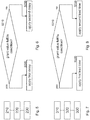
Fig. 1 shows an apparatus according to an embodiment of the invention. The apparatus may be a terminal device such as a UE, or an element thereof.Fig. 2 shows a method according to an embodiment of the invention. The apparatus according toFig. 1 may perform the method ofFig. 2 but is not limited to this method. The method ofFig. 2 may be performed by the apparatus ofFig. 1 but is not limited to being performed by this apparatus. - The apparatus comprises nullifying means 10.
- The nullifying means 10 sets a grant for an uplink transmission to zero if a received absolute grant is not intended for the apparatus (S10). That is, if an absolute grant not intended for the apparatus is received, the apparatus is silent on the uplink channel (e.g. E-DCH) for which the absolute grant is received. The checking (S5), whether or not the received absolute grant is intended for the apparatus may be performed by the apparatus, too, or the result of such a check may be received from another apparatus.
-
Fig. 3 shows an apparatus according to an embodiment of the invention. The apparatus may be a base station device such as an eNB , or an element thereof.Fig. 4 shows a method according to an embodiment of the invention. The apparatus according toFig. 3 may perform the method ofFig. 4 but is not limited to this method. The method ofFig. 4 may be performed by the apparatus ofFig. 3 but is not limited to being performed by this apparatus. - The apparatus comprises monitoring means 110 and preventing
means 120. - The monitoring means 110 monitors if a first absolute grant is provided to a first terminal device (S110). If it is monitored that the first absolute grant is provided, the preventing means 120 prevents providing a second absolute grant to a second terminal device different from the first terminal device. Thus, the signaling overhead is reduced.
- According to some embodiments of the invention, it is avoided to loose 1 TTI every time when the scheduled UE changes in the TDM mode. In order to avoid this loss, the time after which the grant sent from NodeB is effective depends on the value of the grant. That is, the time when the absolute grant sent from the NodeB becomes effective in the UE is different, depending on whether the absolute grant is ZERO or INACTIVE, or different therefrom. In some embodiments, instead of ZERO or INACTIVE, the distinction criterion may be "equal to or less than a predetermined threshold" (or INACTIVE).
- In some embodiments thereof, if the value of the grant is not equal to ZERO (equal to or less than the predetermined threshold) or INACTIVE, the timing is kept as described in 3GPP TS 25.214 v11.5.0:
The UE shall first take into account E-DCH control data received in sub-frame j of the E-AGCH frame associated with SFN i in the higher layer procedures which correspond to E-DCH transmission in sub-frame t of the E-DPDCH frame associated with SFN i+s where:

- On the other hand, if the grant value is equal to ZERO (equal to or less than a predetermined threshold) or INACTIVE, the delay is calculated as above, but additional delay is added such that this grant is applied with a different delay than grants where the value does not fulfil the condition for the grant value.
- Typically, the additional delay is positive such that a grant where the value fulfils the condition is applied relatively later than other grants not fulfilling the condition. However, in some embodiments, the additional delay may be negative, such that a grant where the value fulfils the condition is applied relatively earlier than other grants not fulfilling the condition. In such a case, it must be ensured that the time for applying the absolute grant is sufficiently long taking into account e.g. propagation time and processing time. "Relatively later" and "relatively earlier" mean relative to the TTI where the absolute grant is received.
- Typically, the additional delay is indicated in terms of TTI. In some embodiments, it is 1 TTI. Thus, NodeB may react most flexible because the grants for the UE to become active and for the UE to become silent are provided as closely as possible (with different update timings) relative to each other.
- The invention is not limited to the timing according to 3GPP TS 25.214 as timing for the grants with grant values not fulfilling the above condition. For example, grants with grant values fulfilling the condition may be applied with a delay according to 3GPP TS 25.214, and grants not fulfilling the condition may be applied at a different timing. Also, none of the different timings may be that of 3GPP TS 25.214.
-
Fig. 5 shows an apparatus. The apparatus may be a terminal device such as a UE, or an element thereof.Fig. 6 shows a method. The apparatus according toFig. 5 may perform the method ofFig. 6 but is not limited to this method. The method ofFig. 6 may be performed by the apparatus ofFig. 5 but is not limited to being performed by this apparatus. - The apparatus comprises selecting means 210, first updating means 220, and second updating means 230.
- The first updating means 220 updates a grant for an uplink transmission based on an absolute grant received at a time of reception at a first predetermined time relative to the time of reception (S220).
- The second updating means 230 updates the grant for the uplink transmission based on the absolute grant at a second predetermined time relative to the time of reception (S230). The second predetermined time is different from the first predetermined time. Thus, the first and second updating means correspond functionally to each other except that they apply different delays to the updating of the grant relative to the reception of the absolute grant.
- The selecting means 210 selects, based on a value of the absolute grant, one of the first updating means and the second updating means for updating the grant (S210). For example, the selecting means 210 checks if the value of the received absolute grant is equal to or less than a predetermined threshold or inactive. Then, it selects one of the first and second updating means (220, 230) dependent on the result of the check.
-
Fig. 7 shows an apparatus. The apparatus may be a base station device such as an eNB, or an element thereof.Fig. 8 shows a method. The apparatus according toFig. 7 may perform the method ofFig. 8 but is not limited to this method. The method ofFig. 8 may be performed by the apparatus ofFig. 7 but is not limited to being performed by this apparatus. - The apparatus comprises selecting means 310, first providing means 320, and second providing means 330.
- The first providing means 320 provides an absolute grant for a grant of an uplink transmission at a first predetermined time relative to an intended time for updating the grant (S320).
- The second providing means 330 provides the absolute grant at a second predetermined time relative to the intended time (S330). The first predetermined time is different from the second predetermined time. The first and second predetermined times indicate how long in advance (before the grants should really be updated) the apparatus provides the absolute grant. Thus, the first and second providing means correspond functionally to each other except that they apply different lead times before the updating of the grant.
- The selecting means 310 selects, based on a value of the absolute grant, one of the first providing means and the second providing means for providing the absolute grant (S310). For example, the selecting means 310 checks if the value of the absolute grant to be provided is equal to or less than a predetermined threshold or inactive. Then, it selects one of the first and second updating means (320, 330) dependent on the result of the check.
- Instead of in LTE or LTE-A, embodiments of the invention may be employed in other radio networks where uplink transmissions are scheduled by base stations, such as CDMA, EDGE, UMTS, WiFi networks, etc.. A terminal (device) or a user equipment may be a mobile phone, a smart phone, a PDA, a laptop or any other terminal which may be attached to networks of the respective technologies such as LTE, LTE-A or UMTS. A base station (device) may be any base station of the respective technology such as a NodeB, an eNodeB, an access point, etc., irrespective of its coverage area, such as macro cell, pico cell, femto cell. In particular, in the present application, NodeB and eNodeB are considered to e equivalent to each other if not otherwise stated or clear from the contect.
- Names of network elements, protocols, and methods are based on current standards. In other versions or other technologies, the names of these network elements and/or protocols and/or methods may be different, as long as they provide a corresponding functionality.
- If not otherwise stated or otherwise made clear from the context, the statement that two entities are different means that they are differently addressed. It does not necessarily mean that they are based on different hardware. That is, each of the entities described in the present description may be based on a different hardware, or some or all of the entities may be based on the same hardware.
- According to the above description, it should thus be apparent that exemplary embodiments of the present invention provide, for example a terminal device such as a user equipment, or a component thereof, an apparatus embodying the same, a method for controlling and/or operating the same, and computer program(s) controlling and/or operating the same as well as mediums carrying such computer program(s) and forming computer program product(s). Furthermore, it should thus be apparent that exemplary embodiments of the present invention provide, for example a base station device such as an eNB, or a component thereof, an apparatus embodying the same, a method for controlling and/or operating the same, and computer program(s) controlling and/or operating the same as well as mediums carrying such computer program(s) and forming computer program product(s).
- Implementations of any of the above described blocks, apparatuses, systems, techniques or methods include, as non limiting examples, implementations as hardware, software, firmware, special purpose circuits or logic, general purpose hardware or controller or other computing devices, or some combination thereof.
- It is to be understood that what is described above is what is presently considered the preferred embodiments of the present invention. However, it should be noted that the description of the preferred embodiments is given by way of example only and that various modifications may be made without departing from the scope of the invention as defined by the appended claims.
Claims (15)
- A method for performance by an apparatus (10) of a terminal device, comprising:receiving from a base stationat the apparatus, an absolute grant related to uplink transmission; and characterized by comprising:
setting (S10) a grant for an uplink transmission to zero if a received absolute grant is not intended for the apparatus. - The method according to claim 1, further comprisingchecking if the received absolute grant is intended for the apparatus;updating the grant for the uplink transmission based on the received absolute grant if the absolute grant is intended for the apparatus.
- The method according to claim 2, wherein
the checking comprises that the received absolute grant is intended for the apparatus if a cyclic redundancy check performed on the received absolute grant succeeds. - The method according to any of claims 1 to 3, further comprisingmonitoring if the received absolute grant is encoded by a predetermined code dedicated to another terminal device; whereinthe grant is set to zero only if the received absolute grant is encoded by the predetermined code.
- The method according to claim 4, wherein the predetermined code is an orthogonal variable spreading factor code.
- A method for performance by an apparatus of a base station, comprising
monitoring (S110) if a first absolute grant intended for a first uplink transmission is provided to a first terminal device; and characterized by comprising:
preventing (S120) providing a second absolute grant for a second uplink transmission intended for a second terminal device different from the first terminal device if it is monitored that the first absolute grant is provided. - The method according to claim 6, further comprising
providing the first absolute grant intended for the first terminal device. - The method according to any of claims 6 and 7, further comprising
encoding the first absolute grant by a predetermined code dedicated to the first terminal device. - The method according to claim 8, wherein the predetermined code is an orthogonal variable spreading factor code.
- The method according to any of claims 1 to 9, wherein the absolute grant comprises a grant of a long term evolution network.
- A computer program product comprising a set of instructions which, when executed on an apparatus of a terminal device, is configured to cause the apparatus to carry out the steps of the method according to any one of method claims 1 to 5.
- A computer program product comprising a set of instructions which, when executed on an apparatus of a base station, is configured to cause the apparatus to carry out the steps of the method according to any one of method claims 6 to 10.
- The computer program product according to any of claims 11 and 12, embodied as a computer-readable medium or directly loadable into the apparatus.
- An apparatus of a terminal device, the apparatus comprising:
receiving means adapted to receive from a base station an absolute grant related to uplink transmission and characterized by comprising:
nullifying means (10) adapted to set a grant for an uplink transmission to zero if a received absolute grant is not intended for the apparatus. - An apparatus of a base station, the apparatus, comprising
monitoring means (110) adapted to monitor if a first absolute grant for a first uplink transmission is provided to a first terminal device; and characterized by comprising:
preventing means (120) adapted to prevent providing a second absolute grant for a second uplink transmission to a second terminal device different from the first terminal device if it is monitored that the first absolute grant is provided.
Applications Claiming Priority (1)
| Application Number | Priority Date | Filing Date | Title |
|---|---|---|---|
| PCT/EP2013/059565 WO2014180500A1 (en) | 2013-05-08 | 2013-05-08 | Optimization of signalling of absolute grants for uplink transmission using time-division multiplexing |
Publications (2)
| Publication Number | Publication Date |
|---|---|
| EP2995157A1 EP2995157A1 (en) | 2016-03-16 |
| EP2995157B1 true EP2995157B1 (en) | 2022-01-05 |
Family
ID=48485132
Family Applications (1)
| Application Number | Title | Priority Date | Filing Date |
|---|---|---|---|
| EP13724766.4A Active EP2995157B1 (en) | 2013-05-08 | 2013-05-08 | Optimization of signalling of absolute grants for uplink transmission using time-division multiplexing |
Country Status (4)
| Country | Link |
|---|---|
| US (1) | US11064517B2 (en) |
| EP (1) | EP2995157B1 (en) |
| CN (1) | CN105359610B (en) |
| WO (1) | WO2014180500A1 (en) |
Families Citing this family (3)
| Publication number | Priority date | Publication date | Assignee | Title |
|---|---|---|---|---|
| CN104519587B (en) * | 2013-09-26 | 2018-10-02 | 华为技术有限公司 | Scheduling authorization control method, user equipment and network equipment |
| US10237889B2 (en) | 2015-12-09 | 2019-03-19 | Qualcomm Incorporated | Conditional uplink grant |
| EP3409060B1 (en) * | 2016-01-29 | 2021-07-07 | LG Electronics Inc. | Method for processing an uplink grant after the last uplink transmission in wireless communication system and a device therefor |
Family Cites Families (10)
| Publication number | Priority date | Publication date | Assignee | Title |
|---|---|---|---|---|
| KR100651548B1 (en) * | 2004-11-05 | 2006-11-29 | 삼성전자주식회사 | Method and apparatus for scheduling uplink data transmission in mobile telecommunication system using ue-id |
| KR100943585B1 (en) | 2006-03-17 | 2010-02-23 | 삼성전자주식회사 | Method and apparatus for allocating transmission resource in mobile communication system |
| US7746961B2 (en) * | 2006-04-11 | 2010-06-29 | Telefonaktiebolaget L M Ericsson (Publ) | Efficient detection of predetermined sequences |
| CN104883245B (en) * | 2008-11-25 | 2018-05-29 | 交互数字专利控股公司 | A kind of user equipment, method and wireless network by user equipment execution |
| WO2010102443A1 (en) | 2009-03-10 | 2010-09-16 | 华为技术有限公司 | Communication method utilizing uplink multiple input multiple output technique and system thereof |
| CN101959238B (en) | 2009-07-15 | 2013-04-17 | 华为技术有限公司 | Method and device for switching dual stream to single stream in uplink MIMO mode |
| KR20110047128A (en) * | 2009-10-29 | 2011-05-06 | 엘지전자 주식회사 | Method of operation of a terminal in a wireless communication system using a plurality of uplink frequencies |
| US8451785B2 (en) * | 2009-11-09 | 2013-05-28 | Telefonaktiebolaget L M Ericsson (Publ) | Control signal aggregation in a multi-carrier WCDMA system |
| TW202029678A (en) * | 2012-01-24 | 2020-08-01 | 美商內數位專利控股公司 | A Wireless Transmit/Receive Unit, A Method Implemented Therein and A Network Node |
| US9608783B2 (en) * | 2012-12-03 | 2017-03-28 | Telefonaktiebolaget Lm Ericsson (Publ) | Methods and devices for enabling high user bitrates in mixed-traffic scenarios |
-
2013
- 2013-05-08 EP EP13724766.4A patent/EP2995157B1/en active Active
- 2013-05-08 WO PCT/EP2013/059565 patent/WO2014180500A1/en not_active Ceased
- 2013-05-08 US US14/889,479 patent/US11064517B2/en active Active
- 2013-05-08 CN CN201380078108.6A patent/CN105359610B/en active Active
Also Published As
| Publication number | Publication date |
|---|---|
| US11064517B2 (en) | 2021-07-13 |
| CN105359610A (en) | 2016-02-24 |
| CN105359610B (en) | 2020-10-16 |
| EP2995157A1 (en) | 2016-03-16 |
| US20160088653A1 (en) | 2016-03-24 |
| WO2014180500A1 (en) | 2014-11-13 |
Similar Documents
| Publication | Publication Date | Title |
|---|---|---|
| US12408163B2 (en) | Identifying a resource for transmitting a first uplink channel | |
| EP3269068B1 (en) | Defining sub-subchannels for data communication using separately provided frequency and time resources and related terminals and network nodes | |
| KR101750843B1 (en) | Information transmission method, user equipment and base station | |
| US11985635B2 (en) | Wireless communication method, system, network device, and user equipment for improving transmission performance | |
| EP2996418B1 (en) | Carrier switching method and base station | |
| JP5437243B2 (en) | Base station apparatus and communication control method | |
| CN107659528B (en) | Method and device for shortening downlink subframe in time division duplex system | |
| US11425708B2 (en) | Resource management method and related device | |
| EP3402269A1 (en) | Communication method and communication device | |
| KR20230025789A (en) | Management of single-shot HARQ-ACK codebooks together with HARQ-ACK codebooks with set priority levels | |
| KR20180092978A (en) | Network support for distributed non-scheduled transmissions | |
| EP2850891B1 (en) | Multireceiver timing advance provisioning | |
| EP4278766B1 (en) | Congestion control for sidelink transmissions | |
| JP2014512743A (en) | Method and apparatus for determining timing of feedback information | |
| EP3386254B1 (en) | Cross-carrier scheduling methods, and apparatuses | |
| CN110267352B (en) | User terminal scheduling method and device | |
| US11064517B2 (en) | Optimization of signalling of absolute grants for uplink transmission using time-division multiplexing | |
| EP2705686B1 (en) | Control signalling in carrier aggregation systems | |
| EP3637646B1 (en) | Information transmitting and receiving method and device | |
| US20140369277A1 (en) | Method and Apparatus for Communication Using a Shared Uplink Wireless Communication Channel | |
| HK1226877B (en) | Downlink subframe shortening method and apparatus in time-division duplex systems | |
| HK1226877A1 (en) | Downlink subframe shortening method and apparatus in time-division duplex systems |
Legal Events
| Date | Code | Title | Description |
|---|---|---|---|
| PUAI | Public reference made under article 153(3) epc to a published international application that has entered the european phase |
Free format text: ORIGINAL CODE: 0009012 |
|
| 17P | Request for examination filed |
Effective date: 20151208 |
|
| AK | Designated contracting states |
Kind code of ref document: A1 Designated state(s): AL AT BE BG CH CY CZ DE DK EE ES FI FR GB GR HR HU IE IS IT LI LT LU LV MC MK MT NL NO PL PT RO RS SE SI SK SM TR |
|
| AX | Request for extension of the european patent |
Extension state: BA ME |
|
| DAX | Request for extension of the european patent (deleted) | ||
| STAA | Information on the status of an ep patent application or granted ep patent |
Free format text: STATUS: EXAMINATION IS IN PROGRESS |
|
| 17Q | First examination report despatched |
Effective date: 20180928 |
|
| RAP1 | Party data changed (applicant data changed or rights of an application transferred) |
Owner name: NOKIA SOLUTIONS AND NETWORKS OY |
|
| REG | Reference to a national code |
Ref country code: DE Ref legal event code: R079 Ref document number: 602013080590 Country of ref document: DE Free format text: PREVIOUS MAIN CLASS: H04W0072120000 Ipc: H04W0028020000 |
|
| GRAP | Despatch of communication of intention to grant a patent |
Free format text: ORIGINAL CODE: EPIDOSNIGR1 |
|
| STAA | Information on the status of an ep patent application or granted ep patent |
Free format text: STATUS: GRANT OF PATENT IS INTENDED |
|
| RIC1 | Information provided on ipc code assigned before grant |
Ipc: H04W 28/02 20090101AFI20210702BHEP Ipc: H04W 72/12 20090101ALI20210702BHEP |
|
| INTG | Intention to grant announced |
Effective date: 20210802 |
|
| GRAS | Grant fee paid |
Free format text: ORIGINAL CODE: EPIDOSNIGR3 |
|
| GRAA | (expected) grant |
Free format text: ORIGINAL CODE: 0009210 |
|
| STAA | Information on the status of an ep patent application or granted ep patent |
Free format text: STATUS: THE PATENT HAS BEEN GRANTED |
|
| AK | Designated contracting states |
Kind code of ref document: B1 Designated state(s): AL AT BE BG CH CY CZ DE DK EE ES FI FR GB GR HR HU IE IS IT LI LT LU LV MC MK MT NL NO PL PT RO RS SE SI SK SM TR |
|
| REG | Reference to a national code |
Ref country code: GB Ref legal event code: FG4D |
|
| REG | Reference to a national code |
Ref country code: CH Ref legal event code: EP |
|
| REG | Reference to a national code |
Ref country code: AT Ref legal event code: REF Ref document number: 1461688 Country of ref document: AT Kind code of ref document: T Effective date: 20220115 |
|
| REG | Reference to a national code |
Ref country code: DE Ref legal event code: R096 Ref document number: 602013080590 Country of ref document: DE |
|
| REG | Reference to a national code |
Ref country code: IE Ref legal event code: FG4D |
|
| REG | Reference to a national code |
Ref country code: LT Ref legal event code: MG9D |
|
| REG | Reference to a national code |
Ref country code: NL Ref legal event code: MP Effective date: 20220105 |
|
| REG | Reference to a national code |
Ref country code: AT Ref legal event code: MK05 Ref document number: 1461688 Country of ref document: AT Kind code of ref document: T Effective date: 20220105 |
|
| PG25 | Lapsed in a contracting state [announced via postgrant information from national office to epo] |
Ref country code: NL Free format text: LAPSE BECAUSE OF FAILURE TO SUBMIT A TRANSLATION OF THE DESCRIPTION OR TO PAY THE FEE WITHIN THE PRESCRIBED TIME-LIMIT Effective date: 20220105 |
|
| PG25 | Lapsed in a contracting state [announced via postgrant information from national office to epo] |
Ref country code: SE Free format text: LAPSE BECAUSE OF FAILURE TO SUBMIT A TRANSLATION OF THE DESCRIPTION OR TO PAY THE FEE WITHIN THE PRESCRIBED TIME-LIMIT Effective date: 20220105 Ref country code: RS Free format text: LAPSE BECAUSE OF FAILURE TO SUBMIT A TRANSLATION OF THE DESCRIPTION OR TO PAY THE FEE WITHIN THE PRESCRIBED TIME-LIMIT Effective date: 20220105 Ref country code: PT Free format text: LAPSE BECAUSE OF FAILURE TO SUBMIT A TRANSLATION OF THE DESCRIPTION OR TO PAY THE FEE WITHIN THE PRESCRIBED TIME-LIMIT Effective date: 20220505 Ref country code: NO Free format text: LAPSE BECAUSE OF FAILURE TO SUBMIT A TRANSLATION OF THE DESCRIPTION OR TO PAY THE FEE WITHIN THE PRESCRIBED TIME-LIMIT Effective date: 20220405 Ref country code: LT Free format text: LAPSE BECAUSE OF FAILURE TO SUBMIT A TRANSLATION OF THE DESCRIPTION OR TO PAY THE FEE WITHIN THE PRESCRIBED TIME-LIMIT Effective date: 20220105 Ref country code: HR Free format text: LAPSE BECAUSE OF FAILURE TO SUBMIT A TRANSLATION OF THE DESCRIPTION OR TO PAY THE FEE WITHIN THE PRESCRIBED TIME-LIMIT Effective date: 20220105 Ref country code: ES Free format text: LAPSE BECAUSE OF FAILURE TO SUBMIT A TRANSLATION OF THE DESCRIPTION OR TO PAY THE FEE WITHIN THE PRESCRIBED TIME-LIMIT Effective date: 20220105 Ref country code: BG Free format text: LAPSE BECAUSE OF FAILURE TO SUBMIT A TRANSLATION OF THE DESCRIPTION OR TO PAY THE FEE WITHIN THE PRESCRIBED TIME-LIMIT Effective date: 20220405 |
|
| PG25 | Lapsed in a contracting state [announced via postgrant information from national office to epo] |
Ref country code: PL Free format text: LAPSE BECAUSE OF FAILURE TO SUBMIT A TRANSLATION OF THE DESCRIPTION OR TO PAY THE FEE WITHIN THE PRESCRIBED TIME-LIMIT Effective date: 20220105 Ref country code: LV Free format text: LAPSE BECAUSE OF FAILURE TO SUBMIT A TRANSLATION OF THE DESCRIPTION OR TO PAY THE FEE WITHIN THE PRESCRIBED TIME-LIMIT Effective date: 20220105 Ref country code: GR Free format text: LAPSE BECAUSE OF FAILURE TO SUBMIT A TRANSLATION OF THE DESCRIPTION OR TO PAY THE FEE WITHIN THE PRESCRIBED TIME-LIMIT Effective date: 20220406 Ref country code: FI Free format text: LAPSE BECAUSE OF FAILURE TO SUBMIT A TRANSLATION OF THE DESCRIPTION OR TO PAY THE FEE WITHIN THE PRESCRIBED TIME-LIMIT Effective date: 20220105 Ref country code: AT Free format text: LAPSE BECAUSE OF FAILURE TO SUBMIT A TRANSLATION OF THE DESCRIPTION OR TO PAY THE FEE WITHIN THE PRESCRIBED TIME-LIMIT Effective date: 20220105 |
|
| PG25 | Lapsed in a contracting state [announced via postgrant information from national office to epo] |
Ref country code: IS Free format text: LAPSE BECAUSE OF FAILURE TO SUBMIT A TRANSLATION OF THE DESCRIPTION OR TO PAY THE FEE WITHIN THE PRESCRIBED TIME-LIMIT Effective date: 20220505 |
|
| REG | Reference to a national code |
Ref country code: DE Ref legal event code: R097 Ref document number: 602013080590 Country of ref document: DE |
|
| PG25 | Lapsed in a contracting state [announced via postgrant information from national office to epo] |
Ref country code: SM Free format text: LAPSE BECAUSE OF FAILURE TO SUBMIT A TRANSLATION OF THE DESCRIPTION OR TO PAY THE FEE WITHIN THE PRESCRIBED TIME-LIMIT Effective date: 20220105 Ref country code: SK Free format text: LAPSE BECAUSE OF FAILURE TO SUBMIT A TRANSLATION OF THE DESCRIPTION OR TO PAY THE FEE WITHIN THE PRESCRIBED TIME-LIMIT Effective date: 20220105 Ref country code: RO Free format text: LAPSE BECAUSE OF FAILURE TO SUBMIT A TRANSLATION OF THE DESCRIPTION OR TO PAY THE FEE WITHIN THE PRESCRIBED TIME-LIMIT Effective date: 20220105 Ref country code: EE Free format text: LAPSE BECAUSE OF FAILURE TO SUBMIT A TRANSLATION OF THE DESCRIPTION OR TO PAY THE FEE WITHIN THE PRESCRIBED TIME-LIMIT Effective date: 20220105 Ref country code: DK Free format text: LAPSE BECAUSE OF FAILURE TO SUBMIT A TRANSLATION OF THE DESCRIPTION OR TO PAY THE FEE WITHIN THE PRESCRIBED TIME-LIMIT Effective date: 20220105 Ref country code: CZ Free format text: LAPSE BECAUSE OF FAILURE TO SUBMIT A TRANSLATION OF THE DESCRIPTION OR TO PAY THE FEE WITHIN THE PRESCRIBED TIME-LIMIT Effective date: 20220105 |
|
| PLBE | No opposition filed within time limit |
Free format text: ORIGINAL CODE: 0009261 |
|
| STAA | Information on the status of an ep patent application or granted ep patent |
Free format text: STATUS: NO OPPOSITION FILED WITHIN TIME LIMIT |
|
| PG25 | Lapsed in a contracting state [announced via postgrant information from national office to epo] |
Ref country code: AL Free format text: LAPSE BECAUSE OF FAILURE TO SUBMIT A TRANSLATION OF THE DESCRIPTION OR TO PAY THE FEE WITHIN THE PRESCRIBED TIME-LIMIT Effective date: 20220105 |
|
| 26N | No opposition filed |
Effective date: 20221006 |
|
| REG | Reference to a national code |
Ref country code: CH Ref legal event code: PL |
|
| REG | Reference to a national code |
Ref country code: BE Ref legal event code: MM Effective date: 20220531 |
|
| PG25 | Lapsed in a contracting state [announced via postgrant information from national office to epo] |
Ref country code: MC Free format text: LAPSE BECAUSE OF FAILURE TO SUBMIT A TRANSLATION OF THE DESCRIPTION OR TO PAY THE FEE WITHIN THE PRESCRIBED TIME-LIMIT Effective date: 20220105 Ref country code: LU Free format text: LAPSE BECAUSE OF NON-PAYMENT OF DUE FEES Effective date: 20220508 Ref country code: LI Free format text: LAPSE BECAUSE OF NON-PAYMENT OF DUE FEES Effective date: 20220531 Ref country code: CH Free format text: LAPSE BECAUSE OF NON-PAYMENT OF DUE FEES Effective date: 20220531 |
|
| PG25 | Lapsed in a contracting state [announced via postgrant information from national office to epo] |
Ref country code: SI Free format text: LAPSE BECAUSE OF FAILURE TO SUBMIT A TRANSLATION OF THE DESCRIPTION OR TO PAY THE FEE WITHIN THE PRESCRIBED TIME-LIMIT Effective date: 20220105 |
|
| REG | Reference to a national code |
Ref country code: FR Ref legal event code: PLFP Year of fee payment: 11 |
|
| PG25 | Lapsed in a contracting state [announced via postgrant information from national office to epo] |
Ref country code: IE Free format text: LAPSE BECAUSE OF NON-PAYMENT OF DUE FEES Effective date: 20220508 |
|
| PG25 | Lapsed in a contracting state [announced via postgrant information from national office to epo] |
Ref country code: BE Free format text: LAPSE BECAUSE OF NON-PAYMENT OF DUE FEES Effective date: 20220531 |
|
| P01 | Opt-out of the competence of the unified patent court (upc) registered |
Effective date: 20230527 |
|
| PG25 | Lapsed in a contracting state [announced via postgrant information from national office to epo] |
Ref country code: IT Free format text: LAPSE BECAUSE OF FAILURE TO SUBMIT A TRANSLATION OF THE DESCRIPTION OR TO PAY THE FEE WITHIN THE PRESCRIBED TIME-LIMIT Effective date: 20220105 |
|
| PG25 | Lapsed in a contracting state [announced via postgrant information from national office to epo] |
Ref country code: HU Free format text: LAPSE BECAUSE OF FAILURE TO SUBMIT A TRANSLATION OF THE DESCRIPTION OR TO PAY THE FEE WITHIN THE PRESCRIBED TIME-LIMIT; INVALID AB INITIO Effective date: 20130508 |
|
| PG25 | Lapsed in a contracting state [announced via postgrant information from national office to epo] |
Ref country code: MK Free format text: LAPSE BECAUSE OF FAILURE TO SUBMIT A TRANSLATION OF THE DESCRIPTION OR TO PAY THE FEE WITHIN THE PRESCRIBED TIME-LIMIT Effective date: 20220105 Ref country code: CY Free format text: LAPSE BECAUSE OF FAILURE TO SUBMIT A TRANSLATION OF THE DESCRIPTION OR TO PAY THE FEE WITHIN THE PRESCRIBED TIME-LIMIT Effective date: 20220105 |
|
| PG25 | Lapsed in a contracting state [announced via postgrant information from national office to epo] |
Ref country code: MT Free format text: LAPSE BECAUSE OF FAILURE TO SUBMIT A TRANSLATION OF THE DESCRIPTION OR TO PAY THE FEE WITHIN THE PRESCRIBED TIME-LIMIT Effective date: 20220105 |
|
| PGFP | Annual fee paid to national office [announced via postgrant information from national office to epo] |
Ref country code: DE Payment date: 20250402 Year of fee payment: 13 |
|
| PGFP | Annual fee paid to national office [announced via postgrant information from national office to epo] |
Ref country code: GB Payment date: 20250401 Year of fee payment: 13 |
|
| PGFP | Annual fee paid to national office [announced via postgrant information from national office to epo] |
Ref country code: FR Payment date: 20250401 Year of fee payment: 13 |
|
| PG25 | Lapsed in a contracting state [announced via postgrant information from national office to epo] |
Ref country code: TR Free format text: LAPSE BECAUSE OF FAILURE TO SUBMIT A TRANSLATION OF THE DESCRIPTION OR TO PAY THE FEE WITHIN THE PRESCRIBED TIME-LIMIT Effective date: 20220105 |