EP2995170B1 - Procédé et appareil pour une signalisation de dispositif sans contention sans un noeud de réseau de commande - Google Patents
Procédé et appareil pour une signalisation de dispositif sans contention sans un noeud de réseau de commande Download PDFInfo
- Publication number
- EP2995170B1 EP2995170B1 EP14795117.2A EP14795117A EP2995170B1 EP 2995170 B1 EP2995170 B1 EP 2995170B1 EP 14795117 A EP14795117 A EP 14795117A EP 2995170 B1 EP2995170 B1 EP 2995170B1
- Authority
- EP
- European Patent Office
- Prior art keywords
- user equipment
- devices
- network
- disambiguation
- new
- Prior art date
- Legal status (The legal status is an assumption and is not a legal conclusion. Google has not performed a legal analysis and makes no representation as to the accuracy of the status listed.)
- Active
Links
Images




Classifications
-
- H—ELECTRICITY
- H04—ELECTRIC COMMUNICATION TECHNIQUE
- H04W—WIRELESS COMMUNICATION NETWORKS
- H04W4/00—Services specially adapted for wireless communication networks; Facilities therefor
- H04W4/90—Services for handling of emergency or hazardous situations, e.g. earthquake and tsunami warning systems [ETWS]
-
- H—ELECTRICITY
- H04—ELECTRIC COMMUNICATION TECHNIQUE
- H04W—WIRELESS COMMUNICATION NETWORKS
- H04W76/00—Connection management
- H04W76/10—Connection setup
- H04W76/14—Direct-mode setup
-
- H—ELECTRICITY
- H04—ELECTRIC COMMUNICATION TECHNIQUE
- H04W—WIRELESS COMMUNICATION NETWORKS
- H04W74/00—Wireless channel access
- H04W74/02—Hybrid access
-
- H—ELECTRICITY
- H04—ELECTRIC COMMUNICATION TECHNIQUE
- H04W—WIRELESS COMMUNICATION NETWORKS
- H04W8/00—Network data management
- H04W8/005—Discovery of network devices, e.g. terminals
-
- H—ELECTRICITY
- H04—ELECTRIC COMMUNICATION TECHNIQUE
- H04W—WIRELESS COMMUNICATION NETWORKS
- H04W8/00—Network data management
- H04W8/26—Network addressing or numbering for mobility support
-
- H—ELECTRICITY
- H04—ELECTRIC COMMUNICATION TECHNIQUE
- H04W—WIRELESS COMMUNICATION NETWORKS
- H04W16/00—Network planning, e.g. coverage or traffic planning tools; Network deployment, e.g. resource partitioning or cells structures
- H04W16/14—Spectrum sharing arrangements between different networks
-
- H—ELECTRICITY
- H04—ELECTRIC COMMUNICATION TECHNIQUE
- H04W—WIRELESS COMMUNICATION NETWORKS
- H04W74/00—Wireless channel access
- H04W74/002—Transmission of channel access control information
-
- H—ELECTRICITY
- H04—ELECTRIC COMMUNICATION TECHNIQUE
- H04W—WIRELESS COMMUNICATION NETWORKS
- H04W84/00—Network topologies
- H04W84/18—Self-organising networks, e.g. ad-hoc networks or sensor networks
Definitions
- friends that are in close proximity to each other may wish to communicate with each other.
- Other cases include devices such as parking meters talking to mobile wireless devices within range to help a mobile wireless device find a free parking space. Other examples are possible.
- half-duplex devices For half-duplex devices more than one transmission may be needed to address multiple subsets of devices that may have different send and receive timings.
- mechanisms are provided that may be used by either full duplex or non-full duplex devices.
- Each device is aware of the device signals used by the neighbors in the neighbors set of the device.
- the device obtains a DS that is unique within its neighbor set, as described below.
- DS may be re-used by other devices within the network or within other networks that are outside of the neighbor set of the particular device.
- the uniqueness of the DS may be expanded to three, four or more hops.
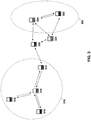
- FIG. 1 shows a plurality of devices.
- device 110 communicates with and has a neighboring set of devices 120 and 122.
- devices 110, 120 and 122 have different DSs that are distinguishable from each other.
- DS for device 110 is unique when compared to devices 120 and 122, this does not restrict the other UEs within the network from having the same DS.
- device 140 may have the same DS as device 110 since they are not within one node of each other.
- device 150 may have the same DS as device 122 since they are not within one node of each other.
- the UE may be configured with a UE specific DRX.
- UEs supporting CA use of one or more SCells, aggregated with the PCell, for increased bandwidth;
- SCells supporting out of coverage communication establish UE identity and determine neighbourSet - Network controlled mobility, i.e.
- the UE If the UE is operating in D2D mode out of eNB coverage it shall attempt to connect to an existing network, either in network coverage or out of it. If an out of coverage network is found the UE sets the device signal identity as newDeviceSignalIdentity. Once part of a out of coverage network the UE shall maintain a neighbourSet. Physical layer will report device identities of new neighbours in the MAC.
- FIG. 2 shows the timing of two devices that are neighbors of each other. Since the devices are neighbors, the two devices have different DSIDs.
- first device timing 210 The timing of the devices is shown in Figure 2 as first device timing 210 and second device timing 220.
- the first device has a DS comprising a DSID 212 and a DSB 214 in the signal grid.
- the second device has a DS comprising a DSID 222 and a DSB 224 in the signal grid
- a first observer and a second observer detect the DSID 212 and 222 in a non-coherent fashion. Further, such DSIDs 212 and 222 may act as a pilots for neighbors for DSBs from the same device
- DSB 214 and 224 carry the signalling component of the DS which is expected to be decoded coherently by the neighbors who are already aware of the DSID. However, as seen by time plot 230, the first observer may have overlapping signals from DSID 212 and DSID 222.
- the second observer may have overlapping signals from DSID 222 and DSID 212, as seen by time plot 232. These overlapping signals from DSID 222 and DSID 212 may still be decodable by the observers that are not part of the network because the signals are separated in code and the observer may collect several samples of the periodically repeating signals.
- some configuration information for D2D communication is available to devices.
- this may be practical in scenarios such as in public safety, where the devices may be calibrated and configured when in coverage of public safety systems and before public safety personnel spread out to areas where there is no coverage.
- the public safety equipment may further be manufactured with some common configuration and may also be further configured periodically when being delivered to first responders in accordance with the requirements of end users.
- parameters that may have configurations includes slot sizes, new device signals (NDSs), resource maps, maximum SP, and/or range of permissible SP values, among others.
- some of the configuration information may be changed after the deployment in a given network.
- Dynamic reconfiguration may increase the complexity of the system and may be used in cases where it is needed.
- such information may be provided in system information messages.
- the system information may be provided to new devices by existing devices after they join the network as one of the initial data transmissions to the new device, for example.
- the amount of data that is needed to be provided dynamically is minimized in order to speed up the incorporation of isolated devices into the network.
- the identity at the radio access network (RAN) level is provided. While identifiers are available in other domains, such as authentication, such identifiers may not be available at the radio access network.
- the main use of identities at the RAN level is disambiguation for signals and communication.
- RAN level identities for UEs are provided by the eNB when it is present. However, in accordance with the present embodiments, no eNB is present and thus the unambiguous identities must be generated by the devices themselves.
- the devices need DSs that are unique within the neighbor set.
- the identity of a given device signal is referred to herein as the DSID.
- signaling is provided which can reuse DSIDs that are used by devices more than two hops away. In other words, the DSIDs may be reused outside the neighbor set of a device's neighbors where such reuse does not cause ambiguity. However, in other embodiments, more than two hops may be used for unique DSIDs.
- devices have unique identifiers (UIDs) that can be represented by a bit-string.
- UIDs may be embedded in the devices during manufacture.
- UIDs may be the Institute for Electrical And Electronics Engineers (IEEE) medium access control (MAC) addresses, or may be generated through some pseudo random function which may produce a UID bit-string of adequate length to ensure that the probability of another device with the same bit string is adequately small.
- IEEE Institute for Electrical And Electronics Engineers
- MAC medium access control
- the DSID which is only required to be unique within each neighbor set and may change due to changes in neighboring devices
- the UID which is expected to be unique within the system and expected to be either permanent or to change infrequently.
- a new device is one that does not have a valid DSID. It is not therefore part of a neighbor set and does not have a neighbor set of its own to begin with. This is contrasted with devices that are already in the network which have a valid network set and DSID.
- parameters such as k, SP, minimal slot size for a DS reception and expected range may be determined during system configuration and conveyed in system information broadcasts transmitted by devices that are in a network. In other embodiments, these parameters may be pre-specified, for example in a standard or by a device manufacturer or carrier, and programmed into the devices.
- Two new devices shown by references 330 and 332 wish to start D2D communication.
- device 330 can see both devices 312 and 324, where device 312 and 324 cannot see each other and are part of different networks of devices.
- Device 330 can also see device 332.
- Device 332 can see device 330 and can also see devices 324 and 322.
- devices 312 and 324 are not in each other's range before the arrival of device 330, devices 312 and 324 had no reason to ensure that the DSID of device 312 did not conflict with the DSID of device 324.
- the insertion of device 330 in the middle causes the creation of a neighbor set in device 330, where devices 312 and 324 need to be accommodated unambiguously. This may therefore cause an ambiguity irrespective of the DSID that device 330 is assigned. Such ambiguity is referred to below as network ambiguity.
- devices 330 and 332 are both within range of device 324. If both try to join the network at about the same time, device 324 will receive various new device signals. The new device signal seen at device 324 therefore needs to be disambiguated such that both devices 330 and 332 are identified unambiguously in the neighbor set of device 324. The ambiguity created by multiple new devices is referred to herein as new device ambiguity.
- both devices 330 and 332 are new devices within a range of each other. Therefore, the NDS they send to each other needs disambiguation as well. Since this is the same ambiguity as at the start of the system, when two isolated nodes are attempting to connect, this is referred to herein as startup ambiguity.
- the reservation in response to the NDS may indicate to the neighbor set that resources for the disambiguation signals will use the same resources that would otherwise carry DSIDs, thus preventing use by neighbor devices of such resources for any previous ongoing device signals.
- the new devices know the resources that are reserved for disambiguation, either by means of a configuration, or by reading the DSBs of network devices.
- the set of resources may be configured to be similarly positioned as the resources to send the NDS but larger in size.
- Network devices are free to use these resources when there are no new devices, but reserve them for new devices upon the receipt of one or more NDSs.
- the DADS signals may use DSIDs other than NDS to improve the probability of decoding the UIDs.
- the use of DSID for DADS is generally separated in resources from normal DSID transmissions since resource reservations for DADS are effected before such transmissions are made.
- device 420 may then signal the UIDP end, as shown by message 478.
- Such messages include information regarding existing neighbors in a DSB.
- a new device that does not have a neighbor set will start by listening for DSs for some number of SPs to identify its neighbors. However, in some cases there may be no DSs observed, because either there are no devices within range or because none of the devices that are in range have a valid neighbor set and therefore do not have a valid DSID.
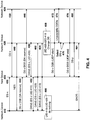
- Figure 6 demonstrates the signalling procedures between a new device and an existing device.
- the approach may be realized by using the DS framework as defined above.
- New devices are initially allowed to transmit DSs with only approximate timing when joining a system.
- Existing network devices that participated in the join procedures and helped the new device acquire the DSID may provide a set of possible transmission opportunities in time to the new device in the form of corrections to the approximately timed DS signal. These opportunities are such that when the new device picks one or more of the opportunities to transmit its DSs, the network device that has offered the opportunity will be able to receive it.
Landscapes
- Engineering & Computer Science (AREA)
- Computer Networks & Wireless Communication (AREA)
- Signal Processing (AREA)
- Databases & Information Systems (AREA)
- Business, Economics & Management (AREA)
- Health & Medical Sciences (AREA)
- Emergency Management (AREA)
- Environmental & Geological Engineering (AREA)
- Public Health (AREA)
- Mobile Radio Communication Systems (AREA)
Claims (11)
- Procédé au niveau d'un premier équipement utilisateur (422, 510, 610) destiné à se connecter et à fonctionner dans un système sans fil (310, 320) sans dispositif de commande central, le procédé comprenant :
la réception (430, 432 ; 622) d'un ou de plusieurs signaux de dispositif depuis un ou plusieurs deuxièmes équipements utilisateur correspondants (410, 420 ; 520 ; 612) dans le système sans fil (310, 320) et dans les limites d'une portée de communication du premier équipement utilisateur ;
et caractérisé en ce que les signaux de dispositif reçus sont séparés en code de façon à pouvoir être reçus distinctement au niveau du premier équipement utilisateur, et en ce que chaque signal de dispositif comporte un identifiant de signal de dispositif, DSID, (222) et un bloc de signalisation, DSB (224), le DSB fournissant des moyens pour l'attribution de ressources pour des communications sans conflit dans le système sans fil, dans lequel le procédé comprend en outre :l'envoi (440, 630) de nouveaux signaux de dispositif, NDS, aux un ou plusieurs deuxièmes équipements utilisateur, où les NDS sont envoyés en utilisant des ressources temporelles et radio calculées en utilisant les un ou plusieurs signaux de dispositif reçus de sorte que les NDS n'interfèrent pas avec d'autres signaux de dispositif depuis les un ou plusieurs deuxièmes équipements utilisateur ;la réception (560, 660), depuis les un ou plusieurs deuxièmes équipements, d'informations concernant un ensemble de DSID non utilisés par un autre équipement utilisateur dans le système sans fil dans un nombre prédéterminé de sauts du premier équipement utilisateur ;la sélection (574, 670) d'un DSID inutilisé en utilisant les informations reçues pour identifier sans ambiguïté le premier équipement utilisateur parmi les autres équipements utilisateur dans le nombre prédéterminé de sauts ;l'envoi (660) aux un ou plusieurs deuxièmes équipements utilisateur, d'un signal de dispositif comportant le DSID sélectionné avec une synchronisation provisoire ; etla réception, depuis chacun des un ou plusieurs deuxièmes équipements utilisateur, d'une correction pour la synchronisation provisoire afin de fournir au premier équipement utilisateur une opportunité de transmission de signal de dispositif sans conflit. - Procédé selon la revendication 1, comprenant :après l'envoi des NDS, la réception (450, 452) d'un ou de plusieurs signaux de dispositif de réseau de désambiguïsation depuis les un ou plusieurs deuxièmes équipements utilisateur, chacun des signaux de dispositif de réseau de désambiguïsation indiquant un identifiant unique (UID-410, UID-420) du deuxième équipement utilisateur correspondant (410, 420) et le DSID utilisé pour les signaux de dispositif transmis par le deuxième équipement utilisateur correspondant ;la détermination d'une ambiguïté de réseau lorsque deux signaux de dispositif de réseau de désambiguïsation reçus indiquent deux DSID identiques reçus mais des identifiants uniques différents (UID-410, UID-420) ;la transmission (460, 464) des deux signaux de dispositif de réseau de désambiguïsation à l'ensemble des deuxièmes équipements utilisateur (410, 420) ;la réception d'informations sur un ensemble de DSID non disponibles depuis l'un des deux deuxièmes équipements utilisateur qui ont envoyé les deux signaux de dispositif de réseau de désambiguïsation indiquant les mêmes DSID ;la sélection d'un nouveau DSID pour le deuxième équipement utilisateur qui a fourni les informations reçues, le nouveau DSID étant sélectionné (476) en utilisant les informations reçues ; etl'envoi du nouveau DSID au deuxième équipement utilisateur qui a fourni les informations reçues.
- Procédé selon la revendication 2, dans lequel la transmission des un ou plusieurs signaux de réseau de désambiguïsation est effectuée plusieurs fois à des intervalles de temps aléatoires en utilisant des ressources radio réservées à la désambiguïsation.
- Procédé selon la revendication 1, dans lequel pendant une connexion d'au moins un troisième équipement utilisateur (512) au système sans fil (310, 320), le troisième équipement utilisateur (512) étant dans les limites de la portée de communication du premier équipement utilisateur (510), le procédé comprend en outre, après l'envoi des NDS :la transmission d'un ou de plusieurs premiers signaux de dispositif de désambiguïsation aux un ou plusieurs deuxièmes équipements utilisateur (520) et audit troisième équipement utilisateur (512), les premiers signaux de dispositif de désambiguïsation indiquant un identifiant unique (UID-510) du premier équipement utilisateur (510) ;la réception (540) d'un second signal de dispositif de désambiguïsation depuis le troisième équipement utilisateur (512), le second signal de dispositif de désambiguïsation indiquant un identifiant unique (UID-512) du troisième équipement utilisateur (512) ;en réponse à la détermination d'une nouvelle ambiguïté de dispositif par la réception du second signal de dispositif de désambiguïsation depuis le troisième équipement utilisateur, la détermination d'une commande du premier équipement utilisateur (510) par rapport au troisième équipement utilisateur (512) sur la base des identifiants uniques respectifs (UID-510, UID-512) ;le fait de déterminer si le premier équipement utilisateur doit résoudre la nouvelle ambiguïté de dispositif en utilisant ladite commande ; etsi le premier équipement utilisateur doit résoudre l'ambiguïté, le premier équipement utilisateur effectue ladite étape de sélection (574) d'un DSID inutilisé avant que le troisième équipement utilisateur sélectionne un DSID ; etl'envoi d'un message (584) au troisième équipement utilisateur indiquant le DSID sélectionné.
- Procédé selon la revendication 1, dans lequel les NDS sont transmis de manière ambiguë en ce qui concerne un autre nouvel équipement utilisateur (512) se connectant au système sans fil (310, 320) et dans les limites de la portée de communication du premier équipement utilisateur.
- Procédé selon la revendication 4, dans lequel les ressources pour les un ou plusieurs premiers signaux de dispositif de désambiguïsation sont réservées et signalées (534) par les un ou plusieurs deuxièmes équipements utilisateur (520, 522) dans la région de conflit.
- Procédé selon la revendication 4, dans lequel la transmission des un ou plusieurs signaux de dispositif de désambiguïsation est effectuée plusieurs fois à des intervalles de temps aléatoires pendant les ressources radio réservées à la désambiguïsation.
- Procédé selon la revendication 1, dans lequel les un ou plusieurs signaux de dispositif sont reçus périodiquement.
- Procédé selon la revendication 1, dans lequel la réception d'une correction pour la synchronisation provisoire comprend la réception de deux signaux de dispositif avec une différence de synchronisation delta (Δ), dans lequel la différence de synchronisation delta est utilisée pour régler la synchronisation provisoire.
- Équipement utilisateur (900) destiné à fonctionner dans un système sans fil (310, 320) sans dispositif de commande central, l'équipement utilisateur comprenant :un processeur (938) ; etun sous-système de communication (911),dans lequel l'équipement utilisateur est configuré pour effectuer les étapes de procédé selon l'une quelconque des revendications 1 à 9 afin de se connecter au système sans fil.
- Produit de programme informatique comprenant des instructions lisibles par ordinateur qui, lorsqu'elles sont exécutées par un processeur d'un équipement utilisateur, sont configurées pour effectuer les étapes selon l'une quelconque des revendications 1 à 9.
Applications Claiming Priority (2)
| Application Number | Priority Date | Filing Date | Title |
|---|---|---|---|
| US13/888,944 US9226329B2 (en) | 2013-05-07 | 2013-05-07 | Method and apparatus for contention free device signaling without a controlling network node |
| PCT/CA2014/000398 WO2014179860A1 (fr) | 2013-05-07 | 2014-05-02 | Procédé et appareil pour une signalisation de dispositif sans contention sans un nœud de réseau de commande |
Publications (3)
| Publication Number | Publication Date |
|---|---|
| EP2995170A1 EP2995170A1 (fr) | 2016-03-16 |
| EP2995170A4 EP2995170A4 (fr) | 2016-04-27 |
| EP2995170B1 true EP2995170B1 (fr) | 2020-03-18 |
Family
ID=51864747
Family Applications (1)
| Application Number | Title | Priority Date | Filing Date |
|---|---|---|---|
| EP14795117.2A Active EP2995170B1 (fr) | 2013-05-07 | 2014-05-02 | Procédé et appareil pour une signalisation de dispositif sans contention sans un noeud de réseau de commande |
Country Status (4)
| Country | Link |
|---|---|
| US (1) | US9226329B2 (fr) |
| EP (1) | EP2995170B1 (fr) |
| CA (1) | CA2908747C (fr) |
| WO (1) | WO2014179860A1 (fr) |
Families Citing this family (11)
| Publication number | Priority date | Publication date | Assignee | Title |
|---|---|---|---|---|
| RU2622865C2 (ru) * | 2013-04-10 | 2017-06-20 | Телефонактиеболагет Л М Эрикссон (Пабл) | Оборудование пользователя, сетевой узел и выполняемые в них способы осуществления и обеспечения связи типа "устройство-устройство" (d2d) в сети радиосвязи |
| EP3008968B1 (fr) * | 2013-06-13 | 2019-04-24 | Sony Corporation | Appareil et procédé de télécommunications |
| WO2014198479A1 (fr) * | 2013-06-13 | 2014-12-18 | Sony Corporation | Appareil et procédés de télécommunications |
| US9210690B2 (en) | 2013-08-08 | 2015-12-08 | Blackberry Limited | Method and system for initial synchronization and collision avoidance in device to device communications without network coverage |
| US9602997B2 (en) * | 2013-10-08 | 2017-03-21 | Futurewei Technologies, Inc. | Operating states for D2D discovery |
| WO2015065017A1 (fr) * | 2013-10-28 | 2015-05-07 | 엘지전자 주식회사 | Procédé et appareil d'émission et de réception d'un signal pour un terminal dispositif-à-dispositif dans un système de communication sans fil |
| US20160269953A1 (en) * | 2013-10-31 | 2016-09-15 | Lg Electronics Inc. | Method for reselecting cell performed by terminal in wireless communication system and terminal using the method |
| US9826395B2 (en) * | 2014-03-21 | 2017-11-21 | Telefonaktiebolaget Lm Ericsson (Publ) | Methods and devices for addressing device to device communications |
| US10727970B2 (en) * | 2016-05-13 | 2020-07-28 | Telefonaktiebolaget Lm Ericsson (Publ) | Methods and user equipment, radio transmitter and network node for managing positioning reference signals |
| US11711827B2 (en) * | 2020-04-09 | 2023-07-25 | Qualcomm Incorporated | Downlink positioning reference signal configuration and processing in full duplex scenarios |
| CN115551088A (zh) * | 2021-06-30 | 2022-12-30 | 海能达通信股份有限公司 | 一种资源分配方法及相关装置 |
Family Cites Families (10)
| Publication number | Priority date | Publication date | Assignee | Title |
|---|---|---|---|---|
| US7653031B2 (en) | 2003-03-05 | 2010-01-26 | Timothy Gordon Godfrey | Advance notification of transmit opportunities on a shared-communications channel |
| DE102008003710A1 (de) | 2008-01-09 | 2009-07-16 | Eberhard Herter | Funksystem für mobile Teilnehmer |
| US8817676B2 (en) * | 2008-11-03 | 2014-08-26 | Samsung Electronics Co., Ltd. | Method and system for station-to-station directional wireless communication |
| CN101771586B (zh) | 2008-11-14 | 2013-10-09 | 华为终端有限公司 | Wi-Fi点对点网络实现添加设备的方法、系统和设备 |
| KR101763978B1 (ko) * | 2010-05-25 | 2017-08-01 | 인터디지탈 패튼 홀딩스, 인크 | 비연속 수신에서의 리튜닝 갭 및 스케줄링 갭 |
| EP2617258B1 (fr) * | 2010-09-14 | 2019-03-27 | Nokia Technologies Oy | Procédures de communication d2d : balisage ; diffusion générale ; résolution de conflit |
| EP2727424B1 (fr) | 2011-06-29 | 2017-01-25 | Telefonaktiebolaget LM Ericsson (publ) | Procédé et équipement d'utilisateur pour communication pair-à-pair |
| US8804689B2 (en) * | 2012-05-16 | 2014-08-12 | Qualcommm Incorporated | Methods and apparatus for peer-to-peer communications resource scheduling |
| TWI620459B (zh) * | 2012-05-31 | 2018-04-01 | 內數位專利控股公司 | 在蜂巢式通訊系統中賦能直鏈通訊排程及控制方法 |
| US9154267B2 (en) * | 2012-07-02 | 2015-10-06 | Intel Corporation | Sounding reference signal (SRS) mechanism for intracell device-to-device (D2D) communication |
-
2013
- 2013-05-07 US US13/888,944 patent/US9226329B2/en active Active
-
2014
- 2014-05-02 CA CA2908747A patent/CA2908747C/fr active Active
- 2014-05-02 EP EP14795117.2A patent/EP2995170B1/fr active Active
- 2014-05-02 WO PCT/CA2014/000398 patent/WO2014179860A1/fr not_active Ceased
Non-Patent Citations (1)
| Title |
|---|
| None * |
Also Published As
| Publication number | Publication date |
|---|---|
| US20140334456A1 (en) | 2014-11-13 |
| EP2995170A4 (fr) | 2016-04-27 |
| CA2908747A1 (fr) | 2014-11-13 |
| WO2014179860A1 (fr) | 2014-11-13 |
| CA2908747C (fr) | 2018-03-13 |
| US9226329B2 (en) | 2015-12-29 |
| EP2995170A1 (fr) | 2016-03-16 |
Similar Documents
| Publication | Publication Date | Title |
|---|---|---|
| EP2995170B1 (fr) | Procédé et appareil pour une signalisation de dispositif sans contention sans un noeud de réseau de commande | |
| JP7173566B2 (ja) | 方法、通信装置、及びユーザ機器 | |
| US10708850B2 (en) | Wireless communications over unlicensed radio frequency spectrum | |
| US11546943B2 (en) | Uplink carrier selection for PRACH transmission between a NR dedicated carrier and a LTE/NR shared carrier | |
| US10542411B2 (en) | UE-based D2D discovery | |
| US10757697B2 (en) | Discovery signal measurement timing configuration for SCells in asynchronous networks | |
| EP3334201B1 (fr) | Dispositif terminal et procédé correspondant | |
| EP2481249B1 (fr) | Opération d'un réseau multiporteuse | |
| US9226226B2 (en) | Method and apparatus of performing a discovery procedure | |
| US9532204B2 (en) | Cellular network assisted device to device (D2D) discovery | |
| US9204461B2 (en) | Method for random access to uplink in multi-carrier aggregation environment | |
| EP4255051B1 (fr) | Configuration d'un signal de synchronisation supplémentaire | |
| US20140254429A1 (en) | Signaling for device-to-device wireless communication | |
| JP2019110598A (ja) | ネットワークサービス範囲なしのデバイス間通信における初期同期および衝突回避のための方法およびシステム | |
| CN109952720A (zh) | 波束成形系统中的新型无线电随机接入 | |
| CN113630764A (zh) | 由能力降低的nr设备提供早期指示的系统和方法 | |
| US20190182003A1 (en) | Data transmission method on unlicensed spectrum, and device | |
| CN107113900B (zh) | D2d通信的连接支持方法和无线设备 | |
| CN119450790A (zh) | 由用户设备执行的方法以及用户设备 |
Legal Events
| Date | Code | Title | Description |
|---|---|---|---|
| PUAI | Public reference made under article 153(3) epc to a published international application that has entered the european phase |
Free format text: ORIGINAL CODE: 0009012 |
|
| 17P | Request for examination filed |
Effective date: 20150923 |
|
| AK | Designated contracting states |
Kind code of ref document: A1 Designated state(s): AL AT BE BG CH CY CZ DE DK EE ES FI FR GB GR HR HU IE IS IT LI LT LU LV MC MK MT NL NO PL PT RO RS SE SI SK SM TR |
|
| AX | Request for extension of the european patent |
Extension state: BA ME |
|
| A4 | Supplementary search report drawn up and despatched |
Effective date: 20160331 |
|
| RIC1 | Information provided on ipc code assigned before grant |
Ipc: H04W 84/18 20090101ALN20160323BHEP Ipc: H04W 8/26 20090101ALN20160323BHEP Ipc: H04W 16/14 20090101ALN20160323BHEP Ipc: H04W 72/12 20090101AFI20160323BHEP |
|
| DAX | Request for extension of the european patent (deleted) | ||
| STAA | Information on the status of an ep patent application or granted ep patent |
Free format text: STATUS: EXAMINATION IS IN PROGRESS |
|
| 17Q | First examination report despatched |
Effective date: 20180112 |
|
| REG | Reference to a national code |
Ref country code: DE Ref legal event code: R079 Ref document number: 602014062561 Country of ref document: DE Free format text: PREVIOUS MAIN CLASS: H04W0092180000 Ipc: H04W0008260000 |
|
| GRAP | Despatch of communication of intention to grant a patent |
Free format text: ORIGINAL CODE: EPIDOSNIGR1 |
|
| STAA | Information on the status of an ep patent application or granted ep patent |
Free format text: STATUS: GRANT OF PATENT IS INTENDED |
|
| RIC1 | Information provided on ipc code assigned before grant |
Ipc: H04W 8/26 20090101AFI20191003BHEP Ipc: H04W 84/18 20090101ALN20191003BHEP Ipc: H04W 16/14 20090101ALN20191003BHEP Ipc: H04W 8/00 20090101ALN20191003BHEP |
|
| INTG | Intention to grant announced |
Effective date: 20191024 |
|
| RIN1 | Information on inventor provided before grant (corrected) |
Inventor name: MUKHERJEE, BISWAROOP Inventor name: GAGE, WILLIAM ANTHONY Inventor name: NOVAK, ROBERT |
|
| GRAS | Grant fee paid |
Free format text: ORIGINAL CODE: EPIDOSNIGR3 |
|
| GRAA | (expected) grant |
Free format text: ORIGINAL CODE: 0009210 |
|
| STAA | Information on the status of an ep patent application or granted ep patent |
Free format text: STATUS: THE PATENT HAS BEEN GRANTED |
|
| AK | Designated contracting states |
Kind code of ref document: B1 Designated state(s): AL AT BE BG CH CY CZ DE DK EE ES FI FR GB GR HR HU IE IS IT LI LT LU LV MC MK MT NL NO PL PT RO RS SE SI SK SM TR |
|
| REG | Reference to a national code |
Ref country code: GB Ref legal event code: FG4D |
|
| REG | Reference to a national code |
Ref country code: DE Ref legal event code: R096 Ref document number: 602014062561 Country of ref document: DE |
|
| REG | Reference to a national code |
Ref country code: AT Ref legal event code: REF Ref document number: 1247323 Country of ref document: AT Kind code of ref document: T Effective date: 20200415 Ref country code: IE Ref legal event code: FG4D |
|
| PG25 | Lapsed in a contracting state [announced via postgrant information from national office to epo] |
Ref country code: RS Free format text: LAPSE BECAUSE OF FAILURE TO SUBMIT A TRANSLATION OF THE DESCRIPTION OR TO PAY THE FEE WITHIN THE PRESCRIBED TIME-LIMIT Effective date: 20200318 Ref country code: FI Free format text: LAPSE BECAUSE OF FAILURE TO SUBMIT A TRANSLATION OF THE DESCRIPTION OR TO PAY THE FEE WITHIN THE PRESCRIBED TIME-LIMIT Effective date: 20200318 Ref country code: NO Free format text: LAPSE BECAUSE OF FAILURE TO SUBMIT A TRANSLATION OF THE DESCRIPTION OR TO PAY THE FEE WITHIN THE PRESCRIBED TIME-LIMIT Effective date: 20200618 |
|
| REG | Reference to a national code |
Ref country code: NL Ref legal event code: MP Effective date: 20200318 |
|
| PG25 | Lapsed in a contracting state [announced via postgrant information from national office to epo] |
Ref country code: LV Free format text: LAPSE BECAUSE OF FAILURE TO SUBMIT A TRANSLATION OF THE DESCRIPTION OR TO PAY THE FEE WITHIN THE PRESCRIBED TIME-LIMIT Effective date: 20200318 Ref country code: SE Free format text: LAPSE BECAUSE OF FAILURE TO SUBMIT A TRANSLATION OF THE DESCRIPTION OR TO PAY THE FEE WITHIN THE PRESCRIBED TIME-LIMIT Effective date: 20200318 Ref country code: GR Free format text: LAPSE BECAUSE OF FAILURE TO SUBMIT A TRANSLATION OF THE DESCRIPTION OR TO PAY THE FEE WITHIN THE PRESCRIBED TIME-LIMIT Effective date: 20200619 Ref country code: BG Free format text: LAPSE BECAUSE OF FAILURE TO SUBMIT A TRANSLATION OF THE DESCRIPTION OR TO PAY THE FEE WITHIN THE PRESCRIBED TIME-LIMIT Effective date: 20200618 Ref country code: HR Free format text: LAPSE BECAUSE OF FAILURE TO SUBMIT A TRANSLATION OF THE DESCRIPTION OR TO PAY THE FEE WITHIN THE PRESCRIBED TIME-LIMIT Effective date: 20200318 |
|
| REG | Reference to a national code |
Ref country code: LT Ref legal event code: MG4D |
|
| PG25 | Lapsed in a contracting state [announced via postgrant information from national office to epo] |
Ref country code: NL Free format text: LAPSE BECAUSE OF FAILURE TO SUBMIT A TRANSLATION OF THE DESCRIPTION OR TO PAY THE FEE WITHIN THE PRESCRIBED TIME-LIMIT Effective date: 20200318 |
|
| PG25 | Lapsed in a contracting state [announced via postgrant information from national office to epo] |
Ref country code: SM Free format text: LAPSE BECAUSE OF FAILURE TO SUBMIT A TRANSLATION OF THE DESCRIPTION OR TO PAY THE FEE WITHIN THE PRESCRIBED TIME-LIMIT Effective date: 20200318 Ref country code: LT Free format text: LAPSE BECAUSE OF FAILURE TO SUBMIT A TRANSLATION OF THE DESCRIPTION OR TO PAY THE FEE WITHIN THE PRESCRIBED TIME-LIMIT Effective date: 20200318 Ref country code: IS Free format text: LAPSE BECAUSE OF FAILURE TO SUBMIT A TRANSLATION OF THE DESCRIPTION OR TO PAY THE FEE WITHIN THE PRESCRIBED TIME-LIMIT Effective date: 20200718 Ref country code: SK Free format text: LAPSE BECAUSE OF FAILURE TO SUBMIT A TRANSLATION OF THE DESCRIPTION OR TO PAY THE FEE WITHIN THE PRESCRIBED TIME-LIMIT Effective date: 20200318 Ref country code: CZ Free format text: LAPSE BECAUSE OF FAILURE TO SUBMIT A TRANSLATION OF THE DESCRIPTION OR TO PAY THE FEE WITHIN THE PRESCRIBED TIME-LIMIT Effective date: 20200318 Ref country code: RO Free format text: LAPSE BECAUSE OF FAILURE TO SUBMIT A TRANSLATION OF THE DESCRIPTION OR TO PAY THE FEE WITHIN THE PRESCRIBED TIME-LIMIT Effective date: 20200318 Ref country code: EE Free format text: LAPSE BECAUSE OF FAILURE TO SUBMIT A TRANSLATION OF THE DESCRIPTION OR TO PAY THE FEE WITHIN THE PRESCRIBED TIME-LIMIT Effective date: 20200318 Ref country code: PT Free format text: LAPSE BECAUSE OF FAILURE TO SUBMIT A TRANSLATION OF THE DESCRIPTION OR TO PAY THE FEE WITHIN THE PRESCRIBED TIME-LIMIT Effective date: 20200812 |
|
| REG | Reference to a national code |
Ref country code: AT Ref legal event code: MK05 Ref document number: 1247323 Country of ref document: AT Kind code of ref document: T Effective date: 20200318 |
|
| REG | Reference to a national code |
Ref country code: DE Ref legal event code: R097 Ref document number: 602014062561 Country of ref document: DE |
|
| PLBE | No opposition filed within time limit |
Free format text: ORIGINAL CODE: 0009261 |
|
| STAA | Information on the status of an ep patent application or granted ep patent |
Free format text: STATUS: NO OPPOSITION FILED WITHIN TIME LIMIT |
|
| PG25 | Lapsed in a contracting state [announced via postgrant information from national office to epo] |
Ref country code: ES Free format text: LAPSE BECAUSE OF FAILURE TO SUBMIT A TRANSLATION OF THE DESCRIPTION OR TO PAY THE FEE WITHIN THE PRESCRIBED TIME-LIMIT Effective date: 20200318 Ref country code: LI Free format text: LAPSE BECAUSE OF NON-PAYMENT OF DUE FEES Effective date: 20200531 Ref country code: CH Free format text: LAPSE BECAUSE OF NON-PAYMENT OF DUE FEES Effective date: 20200531 Ref country code: MC Free format text: LAPSE BECAUSE OF FAILURE TO SUBMIT A TRANSLATION OF THE DESCRIPTION OR TO PAY THE FEE WITHIN THE PRESCRIBED TIME-LIMIT Effective date: 20200318 Ref country code: DK Free format text: LAPSE BECAUSE OF FAILURE TO SUBMIT A TRANSLATION OF THE DESCRIPTION OR TO PAY THE FEE WITHIN THE PRESCRIBED TIME-LIMIT Effective date: 20200318 Ref country code: IT Free format text: LAPSE BECAUSE OF FAILURE TO SUBMIT A TRANSLATION OF THE DESCRIPTION OR TO PAY THE FEE WITHIN THE PRESCRIBED TIME-LIMIT Effective date: 20200318 Ref country code: AT Free format text: LAPSE BECAUSE OF FAILURE TO SUBMIT A TRANSLATION OF THE DESCRIPTION OR TO PAY THE FEE WITHIN THE PRESCRIBED TIME-LIMIT Effective date: 20200318 |
|
| 26N | No opposition filed |
Effective date: 20201221 |
|
| PG25 | Lapsed in a contracting state [announced via postgrant information from national office to epo] |
Ref country code: PL Free format text: LAPSE BECAUSE OF FAILURE TO SUBMIT A TRANSLATION OF THE DESCRIPTION OR TO PAY THE FEE WITHIN THE PRESCRIBED TIME-LIMIT Effective date: 20200318 |
|
| REG | Reference to a national code |
Ref country code: BE Ref legal event code: MM Effective date: 20200531 |
|
| PG25 | Lapsed in a contracting state [announced via postgrant information from national office to epo] |
Ref country code: LU Free format text: LAPSE BECAUSE OF NON-PAYMENT OF DUE FEES Effective date: 20200502 |
|
| PG25 | Lapsed in a contracting state [announced via postgrant information from national office to epo] |
Ref country code: IE Free format text: LAPSE BECAUSE OF NON-PAYMENT OF DUE FEES Effective date: 20200502 |
|
| PG25 | Lapsed in a contracting state [announced via postgrant information from national office to epo] |
Ref country code: BE Free format text: LAPSE BECAUSE OF NON-PAYMENT OF DUE FEES Effective date: 20200531 Ref country code: SI Free format text: LAPSE BECAUSE OF FAILURE TO SUBMIT A TRANSLATION OF THE DESCRIPTION OR TO PAY THE FEE WITHIN THE PRESCRIBED TIME-LIMIT Effective date: 20200318 |
|
| PG25 | Lapsed in a contracting state [announced via postgrant information from national office to epo] |
Ref country code: TR Free format text: LAPSE BECAUSE OF FAILURE TO SUBMIT A TRANSLATION OF THE DESCRIPTION OR TO PAY THE FEE WITHIN THE PRESCRIBED TIME-LIMIT Effective date: 20200318 Ref country code: MT Free format text: LAPSE BECAUSE OF FAILURE TO SUBMIT A TRANSLATION OF THE DESCRIPTION OR TO PAY THE FEE WITHIN THE PRESCRIBED TIME-LIMIT Effective date: 20200318 Ref country code: CY Free format text: LAPSE BECAUSE OF FAILURE TO SUBMIT A TRANSLATION OF THE DESCRIPTION OR TO PAY THE FEE WITHIN THE PRESCRIBED TIME-LIMIT Effective date: 20200318 |
|
| PG25 | Lapsed in a contracting state [announced via postgrant information from national office to epo] |
Ref country code: MK Free format text: LAPSE BECAUSE OF FAILURE TO SUBMIT A TRANSLATION OF THE DESCRIPTION OR TO PAY THE FEE WITHIN THE PRESCRIBED TIME-LIMIT Effective date: 20200318 Ref country code: AL Free format text: LAPSE BECAUSE OF FAILURE TO SUBMIT A TRANSLATION OF THE DESCRIPTION OR TO PAY THE FEE WITHIN THE PRESCRIBED TIME-LIMIT Effective date: 20200318 |
|
| REG | Reference to a national code |
Ref country code: DE Ref legal event code: R081 Ref document number: 602014062561 Country of ref document: DE Owner name: MALIKIE INNOVATIONS LTD., IE Free format text: FORMER OWNER: BLACKBERRY LIMITED, WATERLOO, ONTARIO, CA |
|
| REG | Reference to a national code |
Ref country code: GB Ref legal event code: 732E Free format text: REGISTERED BETWEEN 20240530 AND 20240605 |
|
| PGFP | Annual fee paid to national office [announced via postgrant information from national office to epo] |
Ref country code: DE Payment date: 20250528 Year of fee payment: 12 |
|
| PGFP | Annual fee paid to national office [announced via postgrant information from national office to epo] |
Ref country code: FR Payment date: 20250526 Year of fee payment: 12 |
|
| PGFP | Annual fee paid to national office [announced via postgrant information from national office to epo] |
Ref country code: GB Payment date: 20260319 Year of fee payment: 13 |