EP2995272A1 - Improved method for depilation by photothermolysis with melanin - Google Patents
Improved method for depilation by photothermolysis with melanin Download PDFInfo
- Publication number
- EP2995272A1 EP2995272A1 EP13883985.7A EP13883985A EP2995272A1 EP 2995272 A1 EP2995272 A1 EP 2995272A1 EP 13883985 A EP13883985 A EP 13883985A EP 2995272 A1 EP2995272 A1 EP 2995272A1
- Authority
- EP
- European Patent Office
- Prior art keywords
- melanin
- hair
- skin
- photothermolysis
- laser
- Prior art date
- Legal status (The legal status is an assumption and is not a legal conclusion. Google has not performed a legal analysis and makes no representation as to the accuracy of the status listed.)
- Granted
Links
Images


Classifications
-
- A—HUMAN NECESSITIES
- A61—MEDICAL OR VETERINARY SCIENCE; HYGIENE
- A61B—DIAGNOSIS; SURGERY; IDENTIFICATION
- A61B18/00—Surgical instruments, devices or methods for transferring non-mechanical forms of energy to or from the body
- A61B18/18—Surgical instruments, devices or methods for transferring non-mechanical forms of energy to or from the body by applying electromagnetic radiation, e.g. microwaves
- A61B18/20—Surgical instruments, devices or methods for transferring non-mechanical forms of energy to or from the body by applying electromagnetic radiation, e.g. microwaves using laser
- A61B18/203—Surgical instruments, devices or methods for transferring non-mechanical forms of energy to or from the body by applying electromagnetic radiation, e.g. microwaves using laser applying laser energy to the outside of the body
-
- A—HUMAN NECESSITIES
- A61—MEDICAL OR VETERINARY SCIENCE; HYGIENE
- A61K—PREPARATIONS FOR MEDICAL, DENTAL OR TOILETRY PURPOSES
- A61K8/00—Cosmetics or similar toiletry preparations
- A61K8/18—Cosmetics or similar toiletry preparations characterised by the composition
- A61K8/72—Cosmetics or similar toiletry preparations characterised by the composition containing organic macromolecular compounds
-
- A—HUMAN NECESSITIES
- A61—MEDICAL OR VETERINARY SCIENCE; HYGIENE
- A61N—ELECTROTHERAPY; MAGNETOTHERAPY; RADIATION THERAPY; ULTRASOUND THERAPY
- A61N5/00—Radiation therapy
- A61N5/06—Radiation therapy using light
- A61N5/0613—Apparatus adapted for a specific treatment
- A61N5/062—Photodynamic therapy, i.e. excitation of an agent
-
- A—HUMAN NECESSITIES
- A61—MEDICAL OR VETERINARY SCIENCE; HYGIENE
- A61Q—SPECIFIC USE OF COSMETICS OR SIMILAR TOILETRY PREPARATIONS
- A61Q9/00—Preparations for removing hair or for aiding hair removal
- A61Q9/04—Depilatories
-
- A—HUMAN NECESSITIES
- A61—MEDICAL OR VETERINARY SCIENCE; HYGIENE
- A61B—DIAGNOSIS; SURGERY; IDENTIFICATION
- A61B18/00—Surgical instruments, devices or methods for transferring non-mechanical forms of energy to or from the body
- A61B2018/00315—Surgical instruments, devices or methods for transferring non-mechanical forms of energy to or from the body for treatment of particular body parts
- A61B2018/00452—Skin
- A61B2018/00476—Hair follicles
-
- A—HUMAN NECESSITIES
- A61—MEDICAL OR VETERINARY SCIENCE; HYGIENE
- A61K—PREPARATIONS FOR MEDICAL, DENTAL OR TOILETRY PURPOSES
- A61K2800/00—Properties of cosmetic compositions or active ingredients thereof or formulation aids used therein and process related aspects
- A61K2800/80—Process related aspects concerning the preparation of the cosmetic composition or the storage or application thereof
- A61K2800/81—Preparation or application process involves irradiation
-
- A—HUMAN NECESSITIES
- A61—MEDICAL OR VETERINARY SCIENCE; HYGIENE
- A61K—PREPARATIONS FOR MEDICAL, DENTAL OR TOILETRY PURPOSES
- A61K2800/00—Properties of cosmetic compositions or active ingredients thereof or formulation aids used therein and process related aspects
- A61K2800/80—Process related aspects concerning the preparation of the cosmetic composition or the storage or application thereof
- A61K2800/91—Injection
Definitions
- the proposed invention relates to a new improved melanin-enhanced photothermolysis hair removal method for white, blond or gray hair applicable to the beauty and photoepilation salon industry.
- the fundamental principle of laser hair removal is selective photothermolysis (SPTL), the coincidence of a specific wavelength of light and a duration of impulses such as to obtain an optimum effect on a chosen tissue with a minimum effect on the surrounding tissue.
- SPTL selective photothermolysis
- Lasers can cause localized damage on selectively heating dark target matter, melanin, in the area that causes hair growth, the follicle, while not heating the rest of the skin.
- the light is absorbed by the dark objects so that the laser energy may be absorbed by dark skin matter, but with much greater speed and intensity.
- This dark target matter, or chromophore may be natural or may be introduced artificially.
- Melanin is considered to be the main chromophore for laser hair removal. Melanin occurs naturally in the skin and gives skin and hair their color. There are two types of melanin in hair. Eumelanin gives hair its chestnut or brown color, while pheomelanin gives hair its blond or red color. Due to the selective absorption of laser light photons, only black or chestnut hair can be removed. Laser works best with thick brown hair. Fair skin and brown hair are an ideal combination, being the most effective and producing the best results, but the new lasers are now capable of targeting dark brown hair with some success in dark-skinned patients.
- the new lasers can target hair with little or no melanin by applying liposome-encapsulated artificial melanin solutions onto the skin, which is only accumulated in the hair and its follicle. In this manner, even patients with lighter-colored hair can remove unwanted hair using laser or IPL (Intense Pulsed Light) devices.
- IPL Intense Pulsed Light
- Liposomal melanin lotions have been used in recent years with conflicting results.
- the main drawback of this method is that the patient must apply the melanin preparation six to eight times a day, two to five weeks prior to photoepilation, in order to allow absorption by the hair follicles.
- Successful hair removal was proportional to the amount of solution applied, i.e. the application of greater amounts of product leads to greater hair removal but with a higher cost.
- dermal puncture has been proposed as a new physical strategy for increasing the transdermal application of drugs. Since 1995, this technique has been used to achieve percutaneous collagen induction aimed at reducing skin imperfections [References 28 and 29]. To date, dermal puncture has been proposed mainly as an effective method for treating scars and wrinkles [References 30 and 31], and is carried out by rolling a special device over the skin which comprises a rotating body having a variable number of microneedles.
- the improved melanin-enhanced photothermolysis hair removal method proposed by the invention consists of an improved method of applying artificial melanin for the permanent removal of white, gray and blond hair based on the use of light energy that is absorbed by topically applied artificial melanin granules, resulting in death of the hair-producing tissue.
- This method reduces the application time for introducing artificial melanin in the hair follicle and the amount of product required to induce hair removal.
- Liposome-encapsulated artificial melanin penetrates in greater amounts and more quickly through the skin using a roller device having microneedles.
- the roller After the liposomal melanin solution is applied onto the skin, the roller is made to roll over the skin.
- the needles penetrate the skin, opening micro-channels wherethrough melanin penetrates through the epidermis until reaching the hair follicle.
- this artificial melanin in the hair follicle is the chromophore for the selective photothermolysis of unwanted non-pigmented hair. Since the channels in the skin remain open for a long time, additional melanin can penetrate through the skin. Optionally, this method can be enhanced by means of a massage or similar measures.
- the number of channels opened therein may be specifically controlled, in addition to the degree to which the melanin can penetrate through the treated skin. Since the opened channels close again after a few minutes, damage to the epidermis is minimal. Therefore, the initially mentioned damage related to the removal of the epidermis does not occur in the case of the invention. In any case, light reddening of the skin is observed which, however, subsides completely in a few days, in most cases in one or two days. Therefore, the skin treatment practically has no side-effects and, in general, is completely painless.
- Another advantage consists of the fact that the time required for the product to penetrate through the skin (hair follicle) and also the amount of product used may be considerably reduced, since the penetration of the ingredient through the lower skin layers is highly effective. All this simplifies and cheapens the method.
- the method is carried out using a liposomal sepia melanin solution, due to its resemblance to human melanin, as follows:
- Granular clusters of a brownish color in the stratum basale at intracellular level can be observed scattered throughout the papillary dermis.
- the post-laser biopsy reveals microvascular lesions (areas with extravasation of blood from capillaries) in the papillary dermis. Differences with regard to application with a roller and microneedles and without a roller can be observed. With a roller and microneedles the pigment is deeper and reaches the papillary dermis.
Landscapes
- Health & Medical Sciences (AREA)
- Life Sciences & Earth Sciences (AREA)
- Animal Behavior & Ethology (AREA)
- General Health & Medical Sciences (AREA)
- Public Health (AREA)
- Veterinary Medicine (AREA)
- Physics & Mathematics (AREA)
- Biomedical Technology (AREA)
- Engineering & Computer Science (AREA)
- Surgery (AREA)
- Optics & Photonics (AREA)
- Nuclear Medicine, Radiotherapy & Molecular Imaging (AREA)
- Epidemiology (AREA)
- Otolaryngology (AREA)
- Dermatology (AREA)
- Heart & Thoracic Surgery (AREA)
- Medical Informatics (AREA)
- Molecular Biology (AREA)
- Electromagnetism (AREA)
- Birds (AREA)
- Radiology & Medical Imaging (AREA)
- Pathology (AREA)
- Biophysics (AREA)
- Cosmetics (AREA)
- Radiation-Therapy Devices (AREA)
- Medicinal Preparation (AREA)
Abstract
Description
- The proposed invention relates to a new improved melanin-enhanced photothermolysis hair removal method for white, blond or gray hair applicable to the beauty and photoepilation salon industry.
- The fundamental principle of laser hair removal is selective photothermolysis (SPTL), the coincidence of a specific wavelength of light and a duration of impulses such as to obtain an optimum effect on a chosen tissue with a minimum effect on the surrounding tissue. Lasers can cause localized damage on selectively heating dark target matter, melanin, in the area that causes hair growth, the follicle, while not heating the rest of the skin. The light is absorbed by the dark objects so that the laser energy may be absorbed by dark skin matter, but with much greater speed and intensity. This dark target matter, or chromophore, may be natural or may be introduced artificially.
- Melanin is considered to be the main chromophore for laser hair removal. Melanin occurs naturally in the skin and gives skin and hair their color. There are two types of melanin in hair. Eumelanin gives hair its chestnut or brown color, while pheomelanin gives hair its blond or red color. Due to the selective absorption of laser light photons, only black or chestnut hair can be removed. Laser works best with thick brown hair. Fair skin and brown hair are an ideal combination, being the most effective and producing the best results, but the new lasers are now capable of targeting dark brown hair with some success in dark-skinned patients.
- The new lasers can target hair with little or no melanin by applying liposome-encapsulated artificial melanin solutions onto the skin, which is only accumulated in the hair and its follicle. In this manner, even patients with lighter-colored hair can remove unwanted hair using laser or IPL (Intense Pulsed Light) devices. The idea of selective staining of follicles of blond, white and gray hair could be an excellent approach to permanent laser hair removal.
- Liposomal melanin lotions have been used in recent years with conflicting results.
- In this connection, mention should be made of the pre-existence of patent
US5766214 (Thomas L. Mehl and Nardo Zaias ), where reference is made to the foregoing, through the topical application of liposome-encapsulated melanin to darken the hair follicles before subjecting the skin to photoepilation. - The main drawback of this method is that the patient must apply the melanin preparation six to eight times a day, two to five weeks prior to photoepilation, in order to allow absorption by the hair follicles. Successful hair removal was proportional to the amount of solution applied, i.e. the application of greater amounts of product leads to greater hair removal but with a higher cost.
- Recently, the use of dermal puncture has been proposed as a new physical strategy for increasing the transdermal application of drugs. Since 1995, this technique has been used to achieve percutaneous collagen induction aimed at reducing skin imperfections [References 28 and 29]. To date, dermal puncture has been proposed mainly as an effective method for treating scars and wrinkles [References 30 and 31], and is carried out by rolling a special device over the skin which comprises a rotating body having a variable number of microneedles.
- These types of devices are disclosed in patents
WO0249711 EP1764129 (Horst LIEBL). - The improved melanin-enhanced photothermolysis hair removal method proposed by the invention consists of an improved method of applying artificial melanin for the permanent removal of white, gray and blond hair based on the use of light energy that is absorbed by topically applied artificial melanin granules, resulting in death of the hair-producing tissue.
- This method reduces the application time for introducing artificial melanin in the hair follicle and the amount of product required to induce hair removal.
- Liposome-encapsulated artificial melanin penetrates in greater amounts and more quickly through the skin using a roller device having microneedles.
- After the liposomal melanin solution is applied onto the skin, the roller is made to roll over the skin. In this case the needles penetrate the skin, opening micro-channels wherethrough melanin penetrates through the epidermis until reaching the hair follicle.
- In such cases, this artificial melanin in the hair follicle is the chromophore for the selective photothermolysis of unwanted non-pigmented hair. Since the channels in the skin remain open for a long time, additional melanin can penetrate through the skin. Optionally, this method can be enhanced by means of a massage or similar measures.
- Depending on the frequency with which the device moves over the skin, the number of channels opened therein may be specifically controlled, in addition to the degree to which the melanin can penetrate through the treated skin. Since the opened channels close again after a few minutes, damage to the epidermis is minimal. Therefore, the initially mentioned damage related to the removal of the epidermis does not occur in the case of the invention. In any case, light reddening of the skin is observed which, however, subsides completely in a few days, in most cases in one or two days. Therefore, the skin treatment practically has no side-effects and, in general, is completely painless.
- Another advantage consists of the fact that the time required for the product to penetrate through the skin (hair follicle) and also the amount of product used may be considerably reduced, since the penetration of the ingredient through the lower skin layers is highly effective. All this simplifies and cheapens the method.
- In order to supplement this specification and aid understanding thereof, the following drawings have been included:
-
FIGURE 1 . Shows images of the skin marked with a fluorescent dye to detect the location of liposome-encapsulated melanin for laser removal of white hair. A1 and B1 correspond to samples without fluorescence excitation. A2 and B2 show the exact location of the melanin inside the hair, due to which it is a good target for light absorption to achieve removal thereof. -
FIGURE 2 . Shows a sectional view of the skin, in which its different components and those of the hair follicle are shown, in addition to a representation of the absorbed melanin liposomes. -
FIGURE 3 . Shows a representation of the manner in which to apply the microneedle roller in order to achieve homogenous dermal puncture. - In a preferred embodiment of the invention, the method is carried out using a liposomal sepia melanin solution, due to its resemblance to human melanin, as follows:
- Disinfection of the skin before applying the method.
- Shaving of the area of skin to be treated.
- Washing of the skin with cleansing lotion, rubbing a cotton bud impregnated with the lotion, without using alcohol or acetone.
- The melanin solution is applied at a concentration of 0.4 %-0.7 % onto the skin for 30 seconds, eight times in each direction, and gently massaged.
- Apply the melanin solution to the microneedle roller device. Penetration of the melanin solution through the skin is achieved by rolling the device having a roller or rollers over the area to be treated. The device has one or more small paint rollers, measuring 20 mm in diameter and 20 mm in length, and the cylinder surface houses 24 circular series of eight needles each, measuring 0.5 mm in length and 0.02 mm in diameter. The tool is made to roll for 3 minutes in different directions: horizontally, vertically and diagonally, and from right to left. This ensures an even perforation pattern, resulting in approximately 250-300 perforations/cm2.
- The melanin solution is re-applied onto the treated area using the roller for 30 seconds, eight times in each direction, gently massaging for 1 or 2 minutes.
- The treated area is left to rest for a period of 5 to 7 minutes in order to allow full absorption of the melanin.
- Prior to laser exposure, the skin is washed using water and soap.
- Subject the skin to be treated to laser or IPL.
- Twenty patients were treated with microneedle rollers to produce a dermal puncture every 3 minutes combined with a liposomal melanin solution on one side of the arm and only with a melanin solution on the other side, and the result was evaluated.
- Results. The side that received combined treatment (dermal puncture + melanin solution) showed a statistically significant reduction in comparison with the side treated only with a melanin solution and the clinical symptoms improved significantly.
- Conclusions. This study suggests the potential use of combining dermal puncture with rollers and microneedles with a liposomal melanin solution to achieve better results in laser hair removal treatments for white, gray and blond hair.
- Granular clusters of a brownish color in the stratum basale at intracellular level. These brownish-black deposits can be observed scattered throughout the papillary dermis. The post-laser biopsy reveals microvascular lesions (areas with extravasation of blood from capillaries) in the papillary dermis. Differences with regard to application with a roller and microneedles and without a roller can be observed. With a roller and microneedles the pigment is deeper and reaches the papillary dermis.
Claims (1)
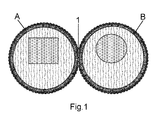
- Security seal, of those used for the authentication of documents, characterized in that consists of two symmetrical halves (A) and (B), which are folded in the middle (1), so that they overlap ; said symmetrical halves (A) and (B) include reactive inks and security soluble solvent.
Priority Applications (2)
| Application Number | Priority Date | Filing Date | Title |
|---|---|---|---|
| PL13883985T PL2995272T3 (en) | 2013-05-07 | 2013-05-07 | Improved method for depilation by photothermolysis with melanin |
| PT138839857T PT2995272T (en) | 2013-05-07 | 2013-05-07 | Improved method for depilation by photothermolysis with melanin |
Applications Claiming Priority (1)
| Application Number | Priority Date | Filing Date | Title |
|---|---|---|---|
| PCT/ES2013/070088 WO2014181002A1 (en) | 2013-05-07 | 2013-05-07 | Improved method for depilation by photothermolysis with melanin |
Publications (3)
| Publication Number | Publication Date |
|---|---|
| EP2995272A1 true EP2995272A1 (en) | 2016-03-16 |
| EP2995272A4 EP2995272A4 (en) | 2016-11-02 |
| EP2995272B1 EP2995272B1 (en) | 2017-10-18 |
Family
ID=51866837
Family Applications (1)
| Application Number | Title | Priority Date | Filing Date |
|---|---|---|---|
| EP13883985.7A Active EP2995272B1 (en) | 2013-05-07 | 2013-05-07 | Improved method for depilation by photothermolysis with melanin |
Country Status (6)
| Country | Link |
|---|---|
| US (1) | US20160135889A1 (en) |
| EP (1) | EP2995272B1 (en) |
| ES (1) | ES2650737T3 (en) |
| PL (1) | PL2995272T3 (en) |
| PT (1) | PT2995272T (en) |
| WO (1) | WO2014181002A1 (en) |
Families Citing this family (3)
| Publication number | Priority date | Publication date | Assignee | Title |
|---|---|---|---|---|
| CN111513451B (en) * | 2019-02-03 | 2023-09-26 | 鲍坚斌 | Gray hair removal component, hair comb and system |
| US10909879B1 (en) * | 2020-07-16 | 2021-02-02 | Elyse Enterprises LLC | Multilingual interface for three-step process for mimicking plastic surgery results |
| US10952519B1 (en) | 2020-07-16 | 2021-03-23 | Elyse Enterprises LLC | Virtual hub for three-step process for mimicking plastic surgery results |
Family Cites Families (10)
| Publication number | Priority date | Publication date | Assignee | Title |
|---|---|---|---|---|
| US5472456A (en) * | 1995-01-06 | 1995-12-05 | Larsky; Edvin G. | Electrophoretic apparatus and method for applying therapeutic, cosmetic and dyeing solutions to hair |
| US5766214A (en) * | 1996-04-18 | 1998-06-16 | Mehl, Sr.; Thomas L. | Melanin enhanced photothermolysis hair removal |
| US6248102B1 (en) * | 1997-04-04 | 2001-06-19 | Keralase Ltd. | Method of hair removal by transcutaneous application of laser light |
| US6168590B1 (en) * | 1997-08-12 | 2001-01-02 | Y-Beam Technologies, Inc. | Method for permanent hair removal |
| DE10063634B4 (en) * | 2000-12-20 | 2006-01-12 | Liebl, Horst, Zelsheim | Device and method for introducing an active substance into the skin |
| DE102005043929B3 (en) * | 2005-09-14 | 2006-04-13 | Liebl, Horst, Zelsheim | Device to put a substance into the skin comprises parallel rollers with protruding needles situated such that their outer cirumferences do not overlap, enabling safe and even application of substance |
| US20080287931A1 (en) * | 2007-05-18 | 2008-11-20 | Jones Dennis R | Use of iontophoresis and ultrasound to deliver melanin or other chromophores for laser hair removal |
| US20090149796A1 (en) * | 2007-12-06 | 2009-06-11 | Jones Dennis R | Use of Iontophoresis and Ultrasound to Deliver Melanin or Other Chromophores for Laser Hair Removal |
| US20100311671A1 (en) * | 2009-03-25 | 2010-12-09 | Kai Pharmaceuticals | Transdermal delivery of pkc modulatory peptides through microporated skin |
| GB2472778B (en) * | 2009-08-17 | 2014-11-19 | Barnet Medical Devices Ltd | A microneedle roller with a sterilising ultrasound generator and/or ultraviolet light |
-
2013
- 2013-05-07 PT PT138839857T patent/PT2995272T/en unknown
- 2013-05-07 EP EP13883985.7A patent/EP2995272B1/en active Active
- 2013-05-07 ES ES13883985.7T patent/ES2650737T3/en active Active
- 2013-05-07 US US14/787,100 patent/US20160135889A1/en not_active Abandoned
- 2013-05-07 PL PL13883985T patent/PL2995272T3/en unknown
- 2013-05-07 WO PCT/ES2013/070088 patent/WO2014181002A1/en not_active Ceased
Also Published As
| Publication number | Publication date |
|---|---|
| EP2995272B1 (en) | 2017-10-18 |
| EP2995272A4 (en) | 2016-11-02 |
| ES2650737T3 (en) | 2018-01-22 |
| WO2014181002A1 (en) | 2014-11-13 |
| PL2995272T3 (en) | 2018-03-30 |
| PT2995272T (en) | 2018-01-02 |
| US20160135889A1 (en) | 2016-05-19 |
Similar Documents
| Publication | Publication Date | Title |
|---|---|---|
| Arora et al. | Automated microneedling device-a new tool in dermatologist's kit-a review. | |
| US20180071024A1 (en) | Enhanced efficacy and targeted topical delivery of drugs to skin with nanoparticles | |
| Vanstone et al. | Precise laser poration to control drug delivery into and through human nail | |
| EP2995272B1 (en) | Improved method for depilation by photothermolysis with melanin | |
| Piccolo et al. | Resurfacing with a new 675‐nm laser device: A case series. | |
| Chung et al. | Factors affecting depth of penetration in microneedling-and laser-assisted drug delivery: the importance of timing of topical application | |
| JP2014502896A (en) | Optical treatment equipment for scalp and hair | |
| Kubik et al. | Assessment of Safety and Mechanisms of Action of the 1470 nm LaserMe Device | |
| Bjerring | Photorejuvenation–an overview | |
| Maia-Figueiró et al. | Semi-quantitative histological analysis of the effect of intense pulsed light (IPL) and carbon dioxide (CO2) intradermic injection on fibroblast and collagen proliferation in the skin of Wistar rats | |
| RU2550012C1 (en) | Method for tattoo removal | |
| Omi | Photopneumatic technology in acne treatment and skin rejuvenation: histological assessment | |
| Kwon et al. | Effect of cosmetic ingredients as functional agents: synergistic action of electroporation and sonophoresis in clinical efficacy | |
| McAlister et al. | Microneedles in improving skin appearance and enhanced delivery of cosmeceuticals | |
| Shetty | Dermaroller | |
| Requena et al. | Strategies to improve drug delivery in topical PDT | |
| US20100331832A1 (en) | Method for treating skin | |
| Webber et al. | Dermatological Applications of Drug Delivery Systems | |
| Santos et al. | Auxilary Procedures | |
| Tiwari | Lasers for pigmentation | |
| Zhou et al. | Light and Laser Treatments | |
| Kalil et al. | Intense Pulsed Light and Drug Delivery | |
| Goldman | Technology approaches to the medical spa: art plus science equal rejuvenation | |
| Sharad | Treatment of Acne Scars With a Combination of Chemical Peels and Microneedling | |
| Lanigan | Lasers in dermatology |
Legal Events
| Date | Code | Title | Description |
|---|---|---|---|
| PUAI | Public reference made under article 153(3) epc to a published international application that has entered the european phase |
Free format text: ORIGINAL CODE: 0009012 |
|
| 17P | Request for examination filed |
Effective date: 20151125 |
|
| AK | Designated contracting states |
Kind code of ref document: A1 Designated state(s): AL AT BE BG CH CY CZ DE DK EE ES FI FR GB GR HR HU IE IS IT LI LT LU LV MC MK MT NL NO PL PT RO RS SE SI SK SM TR |
|
| AX | Request for extension of the european patent |
Extension state: BA ME |
|
| DAX | Request for extension of the european patent (deleted) | ||
| A4 | Supplementary search report drawn up and despatched |
Effective date: 20160930 |
|
| RIC1 | Information provided on ipc code assigned before grant |
Ipc: A61B 18/20 20060101AFI20160926BHEP Ipc: A61N 5/06 20060101ALI20160926BHEP Ipc: A61M 37/00 20060101ALI20160926BHEP |
|
| RIC1 | Information provided on ipc code assigned before grant |
Ipc: A61B 18/20 20060101AFI20170314BHEP Ipc: A61N 5/06 20060101ALI20170314BHEP Ipc: A61M 37/00 20060101ALI20170314BHEP |
|
| GRAP | Despatch of communication of intention to grant a patent |
Free format text: ORIGINAL CODE: EPIDOSNIGR1 |
|
| INTG | Intention to grant announced |
Effective date: 20170511 |
|
| GRAS | Grant fee paid |
Free format text: ORIGINAL CODE: EPIDOSNIGR3 |
|
| GRAA | (expected) grant |
Free format text: ORIGINAL CODE: 0009210 |
|
| AK | Designated contracting states |
Kind code of ref document: B1 Designated state(s): AL AT BE BG CH CY CZ DE DK EE ES FI FR GB GR HR HU IE IS IT LI LT LU LV MC MK MT NL NO PL PT RO RS SE SI SK SM TR |
|
| REG | Reference to a national code |
Ref country code: GB Ref legal event code: FG4D |
|
| REG | Reference to a national code |
Ref country code: CH Ref legal event code: EP |
|
| REG | Reference to a national code |
Ref country code: AT Ref legal event code: REF Ref document number: 937267 Country of ref document: AT Kind code of ref document: T Effective date: 20171115 Ref country code: IE Ref legal event code: FG4D |
|
| REG | Reference to a national code |
Ref country code: DE Ref legal event code: R096 Ref document number: 602013028263 Country of ref document: DE |
|
| REG | Reference to a national code |
Ref country code: RO Ref legal event code: EPE |
|
| REG | Reference to a national code |
Ref country code: PT Ref legal event code: SC4A Ref document number: 2995272 Country of ref document: PT Date of ref document: 20180102 Kind code of ref document: T Free format text: AVAILABILITY OF NATIONAL TRANSLATION Effective date: 20171220 |
|
| REG | Reference to a national code |
Ref country code: NL Ref legal event code: FP |
|
| REG | Reference to a national code |
Ref country code: ES Ref legal event code: FG2A Ref document number: 2650737 Country of ref document: ES Kind code of ref document: T3 Effective date: 20180122 |
|
| REG | Reference to a national code |
Ref country code: LT Ref legal event code: MG4D |
|
| REG | Reference to a national code |
Ref country code: AT Ref legal event code: MK05 Ref document number: 937267 Country of ref document: AT Kind code of ref document: T Effective date: 20171018 |
|
| PG25 | Lapsed in a contracting state [announced via postgrant information from national office to epo] |
Ref country code: NO Free format text: LAPSE BECAUSE OF FAILURE TO SUBMIT A TRANSLATION OF THE DESCRIPTION OR TO PAY THE FEE WITHIN THE PRESCRIBED TIME-LIMIT Effective date: 20180118 Ref country code: SE Free format text: LAPSE BECAUSE OF FAILURE TO SUBMIT A TRANSLATION OF THE DESCRIPTION OR TO PAY THE FEE WITHIN THE PRESCRIBED TIME-LIMIT Effective date: 20171018 Ref country code: FI Free format text: LAPSE BECAUSE OF FAILURE TO SUBMIT A TRANSLATION OF THE DESCRIPTION OR TO PAY THE FEE WITHIN THE PRESCRIBED TIME-LIMIT Effective date: 20171018 Ref country code: LT Free format text: LAPSE BECAUSE OF FAILURE TO SUBMIT A TRANSLATION OF THE DESCRIPTION OR TO PAY THE FEE WITHIN THE PRESCRIBED TIME-LIMIT Effective date: 20171018 |
|
| REG | Reference to a national code |
Ref country code: FR Ref legal event code: PLFP Year of fee payment: 6 |
|
| PG25 | Lapsed in a contracting state [announced via postgrant information from national office to epo] |
Ref country code: GR Free format text: LAPSE BECAUSE OF FAILURE TO SUBMIT A TRANSLATION OF THE DESCRIPTION OR TO PAY THE FEE WITHIN THE PRESCRIBED TIME-LIMIT Effective date: 20180119 Ref country code: IS Free format text: LAPSE BECAUSE OF FAILURE TO SUBMIT A TRANSLATION OF THE DESCRIPTION OR TO PAY THE FEE WITHIN THE PRESCRIBED TIME-LIMIT Effective date: 20180218 Ref country code: HR Free format text: LAPSE BECAUSE OF FAILURE TO SUBMIT A TRANSLATION OF THE DESCRIPTION OR TO PAY THE FEE WITHIN THE PRESCRIBED TIME-LIMIT Effective date: 20171018 Ref country code: LV Free format text: LAPSE BECAUSE OF FAILURE TO SUBMIT A TRANSLATION OF THE DESCRIPTION OR TO PAY THE FEE WITHIN THE PRESCRIBED TIME-LIMIT Effective date: 20171018 Ref country code: AT Free format text: LAPSE BECAUSE OF FAILURE TO SUBMIT A TRANSLATION OF THE DESCRIPTION OR TO PAY THE FEE WITHIN THE PRESCRIBED TIME-LIMIT Effective date: 20171018 Ref country code: BG Free format text: LAPSE BECAUSE OF FAILURE TO SUBMIT A TRANSLATION OF THE DESCRIPTION OR TO PAY THE FEE WITHIN THE PRESCRIBED TIME-LIMIT Effective date: 20180118 Ref country code: RS Free format text: LAPSE BECAUSE OF FAILURE TO SUBMIT A TRANSLATION OF THE DESCRIPTION OR TO PAY THE FEE WITHIN THE PRESCRIBED TIME-LIMIT Effective date: 20171018 |
|
| REG | Reference to a national code |
Ref country code: DE Ref legal event code: R097 Ref document number: 602013028263 Country of ref document: DE |
|
| PG25 | Lapsed in a contracting state [announced via postgrant information from national office to epo] |
Ref country code: SK Free format text: LAPSE BECAUSE OF FAILURE TO SUBMIT A TRANSLATION OF THE DESCRIPTION OR TO PAY THE FEE WITHIN THE PRESCRIBED TIME-LIMIT Effective date: 20171018 Ref country code: DK Free format text: LAPSE BECAUSE OF FAILURE TO SUBMIT A TRANSLATION OF THE DESCRIPTION OR TO PAY THE FEE WITHIN THE PRESCRIBED TIME-LIMIT Effective date: 20171018 Ref country code: EE Free format text: LAPSE BECAUSE OF FAILURE TO SUBMIT A TRANSLATION OF THE DESCRIPTION OR TO PAY THE FEE WITHIN THE PRESCRIBED TIME-LIMIT Effective date: 20171018 Ref country code: CZ Free format text: LAPSE BECAUSE OF FAILURE TO SUBMIT A TRANSLATION OF THE DESCRIPTION OR TO PAY THE FEE WITHIN THE PRESCRIBED TIME-LIMIT Effective date: 20171018 |
|
| PLBE | No opposition filed within time limit |
Free format text: ORIGINAL CODE: 0009261 |
|
| STAA | Information on the status of an ep patent application or granted ep patent |
Free format text: STATUS: NO OPPOSITION FILED WITHIN TIME LIMIT |
|
| PG25 | Lapsed in a contracting state [announced via postgrant information from national office to epo] |
Ref country code: SM Free format text: LAPSE BECAUSE OF FAILURE TO SUBMIT A TRANSLATION OF THE DESCRIPTION OR TO PAY THE FEE WITHIN THE PRESCRIBED TIME-LIMIT Effective date: 20171018 |
|
| 26N | No opposition filed |
Effective date: 20180719 |
|
| PG25 | Lapsed in a contracting state [announced via postgrant information from national office to epo] |
Ref country code: SI Free format text: LAPSE BECAUSE OF FAILURE TO SUBMIT A TRANSLATION OF THE DESCRIPTION OR TO PAY THE FEE WITHIN THE PRESCRIBED TIME-LIMIT Effective date: 20171018 |
|
| REG | Reference to a national code |
Ref country code: CH Ref legal event code: PL |
|
| REG | Reference to a national code |
Ref country code: BE Ref legal event code: MM Effective date: 20180531 |
|
| PG25 | Lapsed in a contracting state [announced via postgrant information from national office to epo] |
Ref country code: MC Free format text: LAPSE BECAUSE OF FAILURE TO SUBMIT A TRANSLATION OF THE DESCRIPTION OR TO PAY THE FEE WITHIN THE PRESCRIBED TIME-LIMIT Effective date: 20171018 |
|
| REG | Reference to a national code |
Ref country code: IE Ref legal event code: MM4A |
|
| PG25 | Lapsed in a contracting state [announced via postgrant information from national office to epo] |
Ref country code: CH Free format text: LAPSE BECAUSE OF NON-PAYMENT OF DUE FEES Effective date: 20180531 Ref country code: LI Free format text: LAPSE BECAUSE OF NON-PAYMENT OF DUE FEES Effective date: 20180531 |
|
| PG25 | Lapsed in a contracting state [announced via postgrant information from national office to epo] |
Ref country code: LU Free format text: LAPSE BECAUSE OF NON-PAYMENT OF DUE FEES Effective date: 20180507 |
|
| PG25 | Lapsed in a contracting state [announced via postgrant information from national office to epo] |
Ref country code: IE Free format text: LAPSE BECAUSE OF NON-PAYMENT OF DUE FEES Effective date: 20180507 |
|
| PG25 | Lapsed in a contracting state [announced via postgrant information from national office to epo] |
Ref country code: BE Free format text: LAPSE BECAUSE OF NON-PAYMENT OF DUE FEES Effective date: 20180531 |
|
| PG25 | Lapsed in a contracting state [announced via postgrant information from national office to epo] |
Ref country code: MT Free format text: LAPSE BECAUSE OF NON-PAYMENT OF DUE FEES Effective date: 20180507 |
|
| PG25 | Lapsed in a contracting state [announced via postgrant information from national office to epo] |
Ref country code: TR Free format text: LAPSE BECAUSE OF FAILURE TO SUBMIT A TRANSLATION OF THE DESCRIPTION OR TO PAY THE FEE WITHIN THE PRESCRIBED TIME-LIMIT Effective date: 20171018 |
|
| PG25 | Lapsed in a contracting state [announced via postgrant information from national office to epo] |
Ref country code: HU Free format text: LAPSE BECAUSE OF FAILURE TO SUBMIT A TRANSLATION OF THE DESCRIPTION OR TO PAY THE FEE WITHIN THE PRESCRIBED TIME-LIMIT; INVALID AB INITIO Effective date: 20130507 Ref country code: MK Free format text: LAPSE BECAUSE OF NON-PAYMENT OF DUE FEES Effective date: 20171018 Ref country code: CY Free format text: LAPSE BECAUSE OF FAILURE TO SUBMIT A TRANSLATION OF THE DESCRIPTION OR TO PAY THE FEE WITHIN THE PRESCRIBED TIME-LIMIT Effective date: 20171018 |
|
| PG25 | Lapsed in a contracting state [announced via postgrant information from national office to epo] |
Ref country code: AL Free format text: LAPSE BECAUSE OF FAILURE TO SUBMIT A TRANSLATION OF THE DESCRIPTION OR TO PAY THE FEE WITHIN THE PRESCRIBED TIME-LIMIT Effective date: 20171018 |
|
| PGFP | Annual fee paid to national office [announced via postgrant information from national office to epo] |
Ref country code: NL Payment date: 20220519 Year of fee payment: 10 |
|
| REG | Reference to a national code |
Ref country code: NL Ref legal event code: MM Effective date: 20230601 |
|
| PG25 | Lapsed in a contracting state [announced via postgrant information from national office to epo] |
Ref country code: NL Free format text: LAPSE BECAUSE OF NON-PAYMENT OF DUE FEES Effective date: 20230601 |
|
| PGFP | Annual fee paid to national office [announced via postgrant information from national office to epo] |
Ref country code: DE Payment date: 20250521 Year of fee payment: 13 |
|
| PGFP | Annual fee paid to national office [announced via postgrant information from national office to epo] |
Ref country code: GB Payment date: 20250527 Year of fee payment: 13 |
|
| PGFP | Annual fee paid to national office [announced via postgrant information from national office to epo] |
Ref country code: IT Payment date: 20250527 Year of fee payment: 13 |
|
| PGFP | Annual fee paid to national office [announced via postgrant information from national office to epo] |
Ref country code: FR Payment date: 20250528 Year of fee payment: 13 |
|
| PGFP | Annual fee paid to national office [announced via postgrant information from national office to epo] |
Ref country code: ES Payment date: 20250827 Year of fee payment: 13 |
|
| PGFP | Annual fee paid to national office [announced via postgrant information from national office to epo] |
Ref country code: PL Payment date: 20260506 Year of fee payment: 14 |
|
| PGFP | Annual fee paid to national office [announced via postgrant information from national office to epo] |
Ref country code: RO Payment date: 20260506 Year of fee payment: 14 |
|
| PGFP | Annual fee paid to national office [announced via postgrant information from national office to epo] |
Ref country code: PT Payment date: 20260505 Year of fee payment: 14 |