EP2995408A1 - Power circular saw - Google Patents
Power circular saw Download PDFInfo
- Publication number
- EP2995408A1 EP2995408A1 EP15157178.3A EP15157178A EP2995408A1 EP 2995408 A1 EP2995408 A1 EP 2995408A1 EP 15157178 A EP15157178 A EP 15157178A EP 2995408 A1 EP2995408 A1 EP 2995408A1
- Authority
- EP
- European Patent Office
- Prior art keywords
- dust collector
- circular saw
- cutting
- grip
- sawblade
- Prior art date
- Legal status (The legal status is an assumption and is not a legal conclusion. Google has not performed a legal analysis and makes no representation as to the accuracy of the status listed.)
- Withdrawn
Links
Images



Classifications
-
- B—PERFORMING OPERATIONS; TRANSPORTING
- B23—MACHINE TOOLS; METAL-WORKING NOT OTHERWISE PROVIDED FOR
- B23D—PLANING; SLOTTING; SHEARING; BROACHING; SAWING; FILING; SCRAPING; LIKE OPERATIONS FOR WORKING METAL BY REMOVING MATERIAL, NOT OTHERWISE PROVIDED FOR
- B23D59/00—Accessories specially designed for sawing machines or sawing devices
- B23D59/006—Accessories specially designed for sawing machines or sawing devices for removing or collecting chips
- B23D59/0064—Accessories specially designed for sawing machines or sawing devices for removing or collecting chips by suction
Definitions
- the present invention relates to a power circular saw.
- Atypical power circular saw includes a protection cover that covers the upper side of the circular sawblade to minimize the portion of the sawblade exposed to the user.
- Japanese Laid-Open Patent Publication No. 2005-169519 describes an example of a power circular saw.
- the protection cover of such a power circular saw may include an open portion or a transparent portion so that a user can visually check the edge of the sawblade.
- the power circular saw of the above publication includes a dust collector case at one side of the protection cover in the lateral direction to collect cutting chips, which are produced when cutting a workpiece.
- the power circular saw includes a base plate. A hole extends through the base plate. The circular saw is inserted through the hole of the base plate.
- enlargement of the dust collector case increases the amount of the dust collector case projected sideward from the base plate in a plan view. As a result, the dust collector case may come into contact with a workpiece or come into contact with a wall. This would lower the working efficiency.
- One embodiment of the present invention is a power circular saw including a motor, a circular sawblade configured to be driven and rotated by the motor, a cutting chip passage through which cutting chips pass when the circular sawblade performs cutting, and a grip extending in a cutting direction of the circular sawblade.
- the cutting chip passage is arranged to traverse a lower side of the grip in a direction intersecting the direction in which the grip extends.
- the electric circular saw according to the present invention increases the working efficiency.
- a power circular saw 1 has a main body 2 including a curved grip 3, which extends in the longitudinal direction of the circular saw 1.
- a power supply unit 4 which accommodates a battery (not illustrated), is arranged on the rear end of the grip 3.
- the distal end of the grip 3 includes a handle 5 so that the user can hold the grip 3 with one hand and hold the handle 5 with the other hand.
- a motor 6, which serves as a drive source, is coupled to a circular sawblade 7 by a reduction drive (not illustrated), which is arranged in the main body 2.
- the motor 6 is located on one side (first side) of the main body 2, and the circular sawblade 7 is located on the other side (second side) of the main body 2.
- a base plate 8 is located below the main body 2.
- the circular sawblade 7 is coupled to the rotation shaft 9, which projects from the main body 2.
- the circular sawblade 7 is projected through an opening (not illustrated) formed in the base plate 8. Further, the circular sawblade 7 is arranged so that its rotational plane is substantially parallel to the main body 2.
- the base plate 8 and the main body 2 are pivoted about a pivot shaft (not illustrated) located at the front side of the base plate 8 to adjust the amount of the circular sawblade 7 projected from the opening.
- An upper cover 11 and a lower cover 12 each cover the blade edge of the circular sawblade 7 from three sides.
- the upper cover 11 serves as a protection cover.
- a pipe 13a is arranged at the rear side of the upper cover 11.
- the upper cover 11 has a thickness in the axial direction of the rotation shaft 9. Further, the upper cover 11 is box-shaped and includes an open lower end. In the present embodiment, the side wall of the upper cover 11 near the rotation shaft 9 includes a semicircular opening 14.
- the lower cover 12 has a U-shaped cross-section and is formed to be arcuate in conformance with the circumference of the circular sawblade 7. In the same manner as the upper cover 11, the lower cover 12 is supported by the main body 2 integrally with the circular sawblade 7. The lower cover 12 covers the lower side of the circular sawblade 7. More specifically, the lower cover 12 covers the portion of the circular sawblade 7 projecting downward from the base plate 8.
- the blade edge of the circular sawblade 7 is exposed from the distal end 12a of the lower cover 12 below the base plate 8.
- the exposed blade edge functions as a cutting portion C that cuts the workpiece.
- the user holds the grip 3 and the handle 5 and positions the cutting portion C (exposed blade edge) of the circular sawblade 7 in contact with a workpiece.
- the user operates a switch S, which is located on the main body 2, and moves the circular sawblade 7 forward to cut the workpiece.
- the power circular saw 1 is used by placing the circular sawblade 7 at the front of the power circular saw 1 in contact with a workpiece located below the circular sawblade 7.
- the lower cover 12 is pivotal about the rotation shaft 9. When pivoted, the rear end of the lower cover 12 is movable into the upper cover.
- An elastic member (not illustrated) urges the lower cover 12 in a pivot direction in which the distal end 12a moves toward the front side.
- the distal end 12a contacts the portion of the workpiece opposing the cutting portion C.
- the user is able to acknowledge the cutting depth based on the amount of the lower cover 12 moved into the upper cover 11.
- the rear peripheral portion of the upper cover 11 includes a discharge port 11 a that discharges cutting chips, which are produced when the circular sawblade 7 cuts a workpiece, out of the upper cover 11.
- the front peripheral portion of the upper cover 11 is curved in conformance with the circumference of the circular sawblade 7.
- the motor 6 is driven to rotate the circular sawblade 7 about the rotation shaft 9 in the counterclockwise direction as viewed in Fig. 1 (direction indicated by arrow in Fig. 1 ). This generates an airstream flowing along the rotation direction of the circular sawblade 7 in the upper cover 11.
- the cutting chips produced when cutting a workpiece is drawn into the upper cover 11 by the airstream and discharged out of the power circular saw 1 from the pipe 13a, which is connected to the discharge port 11 a of the upper cover 11.
- the pipe 13a includes two ends that are both open.
- the pipe 13a is generally L-shaped so that the two open ends extend in directions that are generally orthogonal to each other.
- the first end of the pipe 13a is connected to the discharge port 11a of the upper cover 11.
- the pipe 13a extends through an opening 3a under the grip 3 toward the first side of the main body 2 from the second side of the main body 2.
- the second end (discharge end) of the pipe 13a is located at the first side of the main body 2.
- a dust collector case 13c which is, for example, box-shaped is attached to the second end 13b of the pipe 13a.
- the pipe 13a and the dust collector case 13c form a cutting chip passage.
- the power supply 4 supplies the motor 6 with power and drives the motor 6, and the drive force of the motor 6 rotates the circular sawblade 7.
- the power circular saw 1 is moved forward with the base plate 8 placed on the workpiece to cut the workpiece.
- the power circular sawblade 1 includes the dust collector case 13c, which is connected by the pipe 13a to the upper cover 11.
- the pipe 13a extends through the opening 3a under the grip 3 toward the first side of the main body 2, which is where the motor 6 is located. Accordingly, the second end 13b (discharge end) of the pipe 13a and the circular sawblade 7 (upper cover 11) are located at opposite sides of the power circular saw 1. This reduces the amount the dust collector case 13c is projected sideward in the lateral direction from the base plate 8. Further, the dust collector case 13c is attached to the second end 13b of the pipe 13a. Thus, even when attaching the large dust collector case 13c, the amount the dust collector case 13c projects sideward from the base plate 8 may be reduced. It is preferred that the size of the dust collector case 13c be such that the dust collector case 13c does not project sideward from the motor 6 (motor case).
- the power circular saw 1 in the present embodiment has the advantages described below.
- the pipe 13a traverses the lower side of the grip 3, that is, the opening 3a.
- the pipe 13a is not restricted to such a structure.
- the power circular saw 1 may include a pipe 15a.
- the pipe 15a is a straight pipe.
- a dust collector case 15b traverses the lower side of the grip 3 (i.e., opening 3a).
- the pipe 15a and the dust collector case 15b may form a cutting chip passage.
- the pipe 13a and the dust collector case 13c form the cutting chip passage.
- the cutting chip passage may be formed by only the pipe 13a.
- the cutting chip passage may be formed by dust collector cases 16a and 16b, which are coupled to traverse the lower side of the grip 3 (i.e., opening 3a).
- the dust collector case 16b is formed to be coupled in a removable manner to the dust collector case 16a.
- the present disclosure includes the embodiments described below.
- a power circular saw (1) includes a motor (6), a circular sawblade (7) configured to be driven and rotated by the motor (6), a cutting chip passage (13a; 13a,13c; 15a,15b; or 16a,16b) through which cutting chips pass when the circular sawblade (7) performs cutting, and a grip (3) extending in a cutting direction of the circular sawblade (7).
- the cutting chip passage (13a; 13a,13c; 15a,15b; or 16a,16b) is arranged to traverse a lower side (3a) of the grip (3) in a direction intersecting the direction in which the grip (3) extends.
- the cutting chip passage (13a; 13a,13c; 15a,15b; or 16a,16b) extends from a protection cover (11) that covers an upper side of the circular sawblade (7).
- the cutting chip passage (13a; or 13a,13c) includes a pipe (13a) extending from the protection cover (11).
- the pipe (13a) includes an open end (13b) extending in a direction intersecting the direction in which the grip (3) extends.
- the pipe (13a) is arranged to traverse the lower side (3a) of the grip (3).
- the cutting chip passage (13a,13c; or 15a,15b) includes a pipe (13a; 15a) extending from the protection cover (11) and a dust collector case (13c; 15b) attached to an end of the pipe (13a; 15a).
- the dust collector case (13c; 15b) is located at the side of the grip (3) opposite to the circular sawblade (7).
- the cutting chip passage (16a,16b) is a dust collector case (16a,16b) that extends from the protection cover (11) and is able to contain the cutting chips.
- the dust collector case (16a,16b) includes a first dust collector case (16a) attached to the protection cover (11) and a second dust collector case (16b) coupled in a removable manner to the first dust collector case (16a).
Landscapes
- Engineering & Computer Science (AREA)
- Mechanical Engineering (AREA)
- Sawing (AREA)
Abstract
Description
- The present invention relates to a power circular saw.
- Atypical power circular saw includes a protection cover that covers the upper side of the circular sawblade to minimize the portion of the sawblade exposed to the user. Japanese Laid-Open Patent Publication No.
2005-169519 - The protection cover of such a power circular saw may include an open portion or a transparent portion so that a user can visually check the edge of the sawblade.
- Further, the power circular saw of the above publication includes a dust collector case at one side of the protection cover in the lateral direction to collect cutting chips, which are produced when cutting a workpiece.
- The power circular saw includes a base plate. A hole extends through the base plate. The circular saw is inserted through the hole of the base plate. When the dust collector case is arranged on one side of the protection cover, enlargement of the dust collector case increases the amount of the dust collector case projected sideward from the base plate in a plan view. As a result, the dust collector case may come into contact with a workpiece or come into contact with a wall. This would lower the working efficiency.
- It is an object of the present invention to provide an electric circular saw that increases the working efficiency.
- One embodiment of the present invention is a power circular saw including a motor, a circular sawblade configured to be driven and rotated by the motor, a cutting chip passage through which cutting chips pass when the circular sawblade performs cutting, and a grip extending in a cutting direction of the circular sawblade. The cutting chip passage is arranged to traverse a lower side of the grip in a direction intersecting the direction in which the grip extends.
- The electric circular saw according to the present invention increases the working efficiency.
- Other aspects and advantages of the present invention will become apparent from the following description, taken in conjunction with the accompanying drawings, illustrating by way of example the principles of the invention.
- The invention, together with objects and advantages thereof, may best be understood by reference to the following description of the presently preferred embodiments together with the accompanying drawings in which:
-
Fig. 1 is a schematic side view showing one embodiment of a power circular saw; -
Fig. 2 is a perspective view of the power circular saw illustrated inFig. 1 ; -
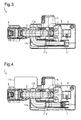
Fig. 3 is a plan view of the power circular saw illustrated inFig. 1 ; -
Fig. 4 is a plan view of the power circular saw illustrated inFig. 1 and a dust collector case attached to the circular saw; -
Fig. 5 is a schematic perspective view showing a further example of a power circular saw; -
Fig. 6 is a side view of the power circular saw illustrated inFig. 5 ; -
Fig. 7 is a side view of the power circular saw illustrated inFig. 5 ; -
Fig. 8 is a plan view showing another example of a power circular saw; -
Fig. 9 is a perspective view of the power circular saw illustrated inFig. 8 ; and -
Fig. 10 is a perspective view of the power circular saw illustrated inFig. 8 . - One embodiment of a
power circular saw 1 will now be described. - As illustrated in
Figs. 1 and 2 , apower circular saw 1 has amain body 2 including acurved grip 3, which extends in the longitudinal direction of thecircular saw 1. Apower supply unit 4, which accommodates a battery (not illustrated), is arranged on the rear end of thegrip 3. The distal end of thegrip 3 includes ahandle 5 so that the user can hold thegrip 3 with one hand and hold thehandle 5 with the other hand. Amotor 6, which serves as a drive source, is coupled to a circular sawblade 7 by a reduction drive (not illustrated), which is arranged in themain body 2. Themotor 6 is located on one side (first side) of themain body 2, and the circular sawblade 7 is located on the other side (second side) of themain body 2. - A
rotation shaft 9, which extends from the reduction drive, projects from the second side of themain body 2. Abase plate 8 is located below themain body 2. The circular sawblade 7 is coupled to therotation shaft 9, which projects from themain body 2. The circular sawblade 7 is projected through an opening (not illustrated) formed in thebase plate 8. Further, the circular sawblade 7 is arranged so that its rotational plane is substantially parallel to themain body 2. Thebase plate 8 and themain body 2 are pivoted about a pivot shaft (not illustrated) located at the front side of thebase plate 8 to adjust the amount of the circular sawblade 7 projected from the opening. - An
upper cover 11 and alower cover 12 each cover the blade edge of the circular sawblade 7 from three sides. In the present embodiment, theupper cover 11 serves as a protection cover. Apipe 13a is arranged at the rear side of theupper cover 11. - The
upper cover 11 has a thickness in the axial direction of therotation shaft 9. Further, theupper cover 11 is box-shaped and includes an open lower end. In the present embodiment, the side wall of theupper cover 11 near therotation shaft 9 includes asemicircular opening 14. Theupper cover 11, which is supported by themain body 2 integrally with the circular sawblade 7, covers the upper side of the circular sawblade 7. More specifically, theupper cover 11 covers the portion of the circular sawblade 7 projecting upward from thebase plate 8. - The
lower cover 12 has a U-shaped cross-section and is formed to be arcuate in conformance with the circumference of the circular sawblade 7. In the same manner as theupper cover 11, thelower cover 12 is supported by themain body 2 integrally with the circular sawblade 7. Thelower cover 12 covers the lower side of the circular sawblade 7. More specifically, thelower cover 12 covers the portion of the circular sawblade 7 projecting downward from thebase plate 8. - In the present embodiment, the blade edge of the circular sawblade 7 is exposed from the
distal end 12a of thelower cover 12 below thebase plate 8. The exposed blade edge functions as a cutting portion C that cuts the workpiece. - During use, the user holds the
grip 3 and thehandle 5 and positions the cutting portion C (exposed blade edge) of the circular sawblade 7 in contact with a workpiece. The user operates a switch S, which is located on themain body 2, and moves the circular sawblade 7 forward to cut the workpiece. - In this manner, the power
circular saw 1 is used by placing the circular sawblade 7 at the front of the power circular saw 1 in contact with a workpiece located below the circular sawblade 7. - In the present embodiment, the
lower cover 12 is pivotal about therotation shaft 9. When pivoted, the rear end of thelower cover 12 is movable into the upper cover. An elastic member (not illustrated) urges thelower cover 12 in a pivot direction in which thedistal end 12a moves toward the front side. When cutting a workpiece, thedistal end 12a contacts the portion of the workpiece opposing the cutting portion C. When thelower cover 12 is pushed by the workpiece and pivoted, the user is able to acknowledge the cutting depth based on the amount of thelower cover 12 moved into theupper cover 11. - The rear peripheral portion of the
upper cover 11 includes adischarge port 11 a that discharges cutting chips, which are produced when the circular sawblade 7 cuts a workpiece, out of theupper cover 11. - In the present embodiment, the front peripheral portion of the
upper cover 11 is curved in conformance with the circumference of the circular sawblade 7. Themotor 6 is driven to rotate the circular sawblade 7 about therotation shaft 9 in the counterclockwise direction as viewed inFig. 1 (direction indicated by arrow inFig. 1 ). This generates an airstream flowing along the rotation direction of the circular sawblade 7 in theupper cover 11. The cutting chips produced when cutting a workpiece is drawn into theupper cover 11 by the airstream and discharged out of the powercircular saw 1 from thepipe 13a, which is connected to thedischarge port 11 a of theupper cover 11. - As illustrated in
Figs. 2 and3 , thepipe 13a includes two ends that are both open. Thepipe 13a is generally L-shaped so that the two open ends extend in directions that are generally orthogonal to each other. The first end of thepipe 13a is connected to thedischarge port 11a of theupper cover 11. Thepipe 13a extends through anopening 3a under thegrip 3 toward the first side of themain body 2 from the second side of themain body 2. Thus, the second end (discharge end) of thepipe 13a is located at the first side of themain body 2. - Referring to
Fig. 4 , adust collector case 13c which is, for example, box-shaped is attached to thesecond end 13b of thepipe 13a. In the present embodiment, thepipe 13a and thedust collector case 13c form a cutting chip passage. - The operation of the
power circular saw 1 in the present embodiment will now be described. - The
power supply 4 supplies themotor 6 with power and drives themotor 6, and the drive force of themotor 6 rotates the circular sawblade 7. Thepower circular saw 1 is moved forward with thebase plate 8 placed on the workpiece to cut the workpiece. - The power
circular sawblade 1 includes thedust collector case 13c, which is connected by thepipe 13a to theupper cover 11. Thepipe 13a extends through theopening 3a under thegrip 3 toward the first side of themain body 2, which is where themotor 6 is located. Accordingly, thesecond end 13b (discharge end) of thepipe 13a and the circular sawblade 7 (upper cover 11) are located at opposite sides of thepower circular saw 1. This reduces the amount thedust collector case 13c is projected sideward in the lateral direction from thebase plate 8. Further, thedust collector case 13c is attached to thesecond end 13b of thepipe 13a. Thus, even when attaching the largedust collector case 13c, the amount thedust collector case 13c projects sideward from thebase plate 8 may be reduced. It is preferred that the size of thedust collector case 13c be such that thedust collector case 13c does not project sideward from the motor 6 (motor case). - The
power circular saw 1 in the present embodiment has the advantages described below. - (1) The
pipe 13a extends under thegrip 3 in a direction intersecting the direction in which thegrip 3 extends. This allows thesecond end 13b of thepipe 13a, to which thedust collector case 13c is attached, to be located at the side of thegrip 3 opposite to the upper cover 11 (circular sawblade 7). Thus, even when thedust collector case 13c is attached to thepipe 13a, thepipe 13a and thedust collector case 13c do not project sideward from thebase plate 8 at the side where the upper cover 11 (circular sawblade 7) is located. This improves the working efficiency when using thepower circular saw 1. - (2) The
pipe 13a extends from thedischarge port 11a of theupper cover 11, which covers the upper side of the circular sawblade 7. This limits the scattering of cutting chips. - (3) The
power circular saw 1 includes thedust collector case 13c, which is attachable to thepipe 13a that extends from theupper cover 11. Thedust collector case 13c further limits the scattering of cutting chips and improves the working efficiency. - (4) The relatively large
dust collector case 13c is located at the side of thegrip 3 opposite to the circular sawblade 7. Thus, thedust collector case 13c is not located on the side where the upper cover 11 (circular sawblade 7) is located. This limits contact of thedust collector case 13c with a wall or a workpiece at the side where the upper cover 11 (circular sawblade 7) is located, and thedust collector case 13c does not adversely affect the working efficiency. - It should be apparent to those skilled in the art that the present invention may be embodied in many other specific forms without departing from the spirit or scope of the invention. Particularly, it should be understood that the present invention may be embodied in the following forms.
- In the above embodiment, the
pipe 13a traverses the lower side of thegrip 3, that is, theopening 3a. However, thepipe 13a is not restricted to such a structure. - For example, as illustrated in
Figs. 5 to 7 , thepower circular saw 1 may include apipe 15a. For example, thepipe 15a is a straight pipe. In this structure, instead of thepipe 15a, adust collector case 15b traverses the lower side of the grip 3 (i.e., opening 3a). In this modified example, thepipe 15a and thedust collector case 15b may form a cutting chip passage. - In the above embodiment, the
pipe 13a and thedust collector case 13c form the cutting chip passage. Instead, for example, the cutting chip passage may be formed by only thepipe 13a. - Further, as illustrated in
Figs. 8 to 10 , the cutting chip passage may be formed bydust collector cases dust collector case 16b is formed to be coupled in a removable manner to thedust collector case 16a. - The above embodiment and the above modified examples may be combined with one another.
- The present disclosure includes the embodiments described below.
- A power circular saw (1) includes a motor (6), a circular sawblade (7) configured to be driven and rotated by the motor (6), a cutting chip passage (13a; 13a,13c; 15a,15b; or 16a,16b) through which cutting chips pass when the circular sawblade (7) performs cutting, and a grip (3) extending in a cutting direction of the circular sawblade (7). The cutting chip passage (13a; 13a,13c; 15a,15b; or 16a,16b) is arranged to traverse a lower side (3a) of the grip (3) in a direction intersecting the direction in which the grip (3) extends.
- The cutting chip passage (13a; 13a,13c; 15a,15b; or 16a,16b) extends from a protection cover (11) that covers an upper side of the circular sawblade (7).
- The cutting chip passage (13a; or 13a,13c) includes a pipe (13a) extending from the protection cover (11). The pipe (13a) includes an open end (13b) extending in a direction intersecting the direction in which the grip (3) extends. The pipe (13a) is arranged to traverse the lower side (3a) of the grip (3).
- The cutting chip passage (13a,13c; or 15a,15b) includes a pipe (13a; 15a) extending from the protection cover (11) and a dust collector case (13c; 15b) attached to an end of the pipe (13a; 15a).
- The dust collector case (13c; 15b) is located at the side of the grip (3) opposite to the circular sawblade (7).
- The cutting chip passage (16a,16b) is a dust collector case (16a,16b) that extends from the protection cover (11) and is able to contain the cutting chips.
- The dust collector case (16a,16b) includes a first dust collector case (16a) attached to the protection cover (11) and a second dust collector case (16b) coupled in a removable manner to the first dust collector case (16a).
Claims (7)
- A power circular saw (1) comprising:a motor (6);a circular sawblade (7) configured to be driven and rotated by the motor (6);a cutting chip passage (13a; 13a,13c; 15a,15b; or 16a,16b) through which cutting chips pass when the circular sawblade (7) performs cutting; anda grip (3) extending in a cutting direction of the circular sawblade (7),the power circular saw (1) characterized in thatthe cutting chip passage (13a; 13a,13c; 15a,15b; or 16a,16b) is arranged to traverse a lower side (3a) of the grip (3) in a direction intersecting the direction in which the grip (3) extends.
- The power circular saw (1) according to claim 1, characterized in that the cutting chip passage (13a; 13a,13c; 15a,15b; or 16a,16b) extends from a protection cover (11) that covers an upper side of the circular sawblade (7).
- The power circular saw (1) according to claim 2, characterized in that:the cutting chip passage (13a; or 13a,13c) includes a pipe (13a) extending from the protection cover (11);the pipe (13a) includes an open end (13b) extending in a direction intersecting the direction in which the grip (3) extends; andthe pipe (13a) is arranged to traverse the lower side (3a) of the grip (3).
- The power circular saw (1) according to claim 2, characterized in that the cutting chip passage (13a,13c; or 15a,15b) includes
a pipe (13a; 15a) extending from the protection cover (11), and
a dust collector case (13c; 15b) attached to an end of the pipe (13a; 15a). - The power circular saw (1) according to claim 4, characterized in that the dust collector case (13c; 15b) is located at the side of the grip (3) opposite to the circular sawblade (7).
- The power circular saw (1) according to claim 2, characterized in that the cutting chip passage (16a,16b) is a dust collector case (16a,16b) that extends from the protection cover (11) and is able to contain the cutting chips.
- The power circular saw (1) according to claim 6, characterized in that the dust collector case (16a,16b) includes
a first dust collector case (16a) attached to the protection cover (11), and
a second dust collector case (16b) coupled in a removable manner to the first dust collector case (16a).
Applications Claiming Priority (1)
| Application Number | Priority Date | Filing Date | Title |
|---|---|---|---|
| JP2014185805A JP6380931B2 (en) | 2014-09-12 | 2014-09-12 | Electric circular saw |
Publications (1)
| Publication Number | Publication Date |
|---|---|
| EP2995408A1 true EP2995408A1 (en) | 2016-03-16 |
Family
ID=52627039
Family Applications (1)
| Application Number | Title | Priority Date | Filing Date |
|---|---|---|---|
| EP15157178.3A Withdrawn EP2995408A1 (en) | 2014-09-12 | 2015-03-02 | Power circular saw |
Country Status (3)
| Country | Link |
|---|---|
| EP (1) | EP2995408A1 (en) |
| JP (1) | JP6380931B2 (en) |
| CN (1) | CN105984002B (en) |
Cited By (1)
| Publication number | Priority date | Publication date | Assignee | Title |
|---|---|---|---|---|
| CN106112119A (en) * | 2016-08-12 | 2016-11-16 | 无锡欧玛森远洋工程设备有限公司 | A kind of sawing machine chip removal device |
Citations (5)
| Publication number | Priority date | Publication date | Assignee | Title |
|---|---|---|---|---|
| JP2004195566A (en) * | 2002-12-16 | 2004-07-15 | Makita Corp | Cutter |
| JP2005169519A (en) | 2003-12-08 | 2005-06-30 | Makita Corp | Dust collection circular saw |
| EP2143533A1 (en) * | 2008-07-07 | 2010-01-13 | Panasonic Electric Works Co., Ltd. | Electric saw |
| US20100269353A1 (en) * | 2009-04-24 | 2010-10-28 | Martin Charles B | Portable cutting device with on-board debris collection |
| JP2011177857A (en) * | 2010-03-03 | 2011-09-15 | Makita Corp | Dust collection structure of cutting tool |
Family Cites Families (7)
| Publication number | Priority date | Publication date | Assignee | Title |
|---|---|---|---|---|
| DE4238936A1 (en) * | 1992-11-19 | 1994-05-26 | Bosch Gmbh Robert | Electromotive circular saw |
| JP3214295B2 (en) * | 1995-05-12 | 2001-10-02 | 日立工機株式会社 | Portable dust collection circular saw |
| DE50309102D1 (en) * | 2002-11-22 | 2008-03-20 | Bosch Gmbh Robert | Electric circular saw machine |
| WO2008008429A1 (en) * | 2006-07-13 | 2008-01-17 | Eastway Fair Company Limited | Portable power tool for cutting concrete board and other substrates |
| US20100058911A1 (en) * | 2008-09-11 | 2010-03-11 | Jay Aaron Goddard | Blade Guard for Power Tool Having an Evacuation System |
| JP5500055B2 (en) * | 2010-12-03 | 2014-05-21 | マックス株式会社 | Portable cutting machine |
| CN203198005U (en) * | 2013-02-25 | 2013-09-18 | 吴杨 | Wood board cutting machine |
-
2014
- 2014-09-12 JP JP2014185805A patent/JP6380931B2/en not_active Expired - Fee Related
-
2015
- 2015-03-02 CN CN201510092482.2A patent/CN105984002B/en not_active Expired - Fee Related
- 2015-03-02 EP EP15157178.3A patent/EP2995408A1/en not_active Withdrawn
Patent Citations (5)
| Publication number | Priority date | Publication date | Assignee | Title |
|---|---|---|---|---|
| JP2004195566A (en) * | 2002-12-16 | 2004-07-15 | Makita Corp | Cutter |
| JP2005169519A (en) | 2003-12-08 | 2005-06-30 | Makita Corp | Dust collection circular saw |
| EP2143533A1 (en) * | 2008-07-07 | 2010-01-13 | Panasonic Electric Works Co., Ltd. | Electric saw |
| US20100269353A1 (en) * | 2009-04-24 | 2010-10-28 | Martin Charles B | Portable cutting device with on-board debris collection |
| JP2011177857A (en) * | 2010-03-03 | 2011-09-15 | Makita Corp | Dust collection structure of cutting tool |
Cited By (1)
| Publication number | Priority date | Publication date | Assignee | Title |
|---|---|---|---|---|
| CN106112119A (en) * | 2016-08-12 | 2016-11-16 | 无锡欧玛森远洋工程设备有限公司 | A kind of sawing machine chip removal device |
Also Published As
| Publication number | Publication date |
|---|---|
| CN105984002A (en) | 2016-10-05 |
| CN105984002B (en) | 2019-02-15 |
| JP6380931B2 (en) | 2018-08-29 |
| JP2016055402A (en) | 2016-04-21 |
Similar Documents
| Publication | Publication Date | Title |
|---|---|---|
| US9101993B2 (en) | Portable cutter | |
| US9434013B2 (en) | Sheet cutting shears | |
| CN105142835B (en) | Electric tool | |
| US9233427B2 (en) | Portable battery-powered reciprocating saw | |
| US10220457B2 (en) | Cutting device | |
| US20180207831A1 (en) | Circular saw | |
| CN202147269U (en) | Scrap collecting assembly and power tool having the same | |
| US10293422B2 (en) | Blade for a reciprocating saw | |
| CN101642834A (en) | Handheld reciprocating saw and operating method thereof | |
| WO2014119128A1 (en) | Handheld electric cutting machine | |
| EP3275582A2 (en) | Miter saw | |
| EP2886233A1 (en) | Power circular saw | |
| US20100162574A1 (en) | Electric pruner | |
| JP6926440B2 (en) | Portable cutting machine | |
| US20170291237A1 (en) | Portable Machine Tool comprising an SDS Tool Holder | |
| EP2995408A1 (en) | Power circular saw | |
| CN100486784C (en) | Electric circular saw | |
| JP5092567B2 (en) | Portable tools | |
| CN209850002U (en) | Portable cutting machine | |
| CN101607324A (en) | Cutting machine | |
| WO2014159674A1 (en) | Oscillating tool | |
| JP3161968U (en) | Electric circular saw | |
| JPH06335904A (en) | Electric circular saw dust collecting mechanism | |
| JP4626588B2 (en) | Portable router | |
| CN205254233U (en) | Metal cutting electric circular saw |
Legal Events
| Date | Code | Title | Description |
|---|---|---|---|
| PUAI | Public reference made under article 153(3) epc to a published international application that has entered the european phase |
Free format text: ORIGINAL CODE: 0009012 |
|
| 17P | Request for examination filed |
Effective date: 20150302 |
|
| AK | Designated contracting states |
Kind code of ref document: A1 Designated state(s): AL AT BE BG CH CY CZ DE DK EE ES FI FR GB GR HR HU IE IS IT LI LT LU LV MC MK MT NL NO PL PT RO RS SE SI SK SM TR |
|
| AX | Request for extension of the european patent |
Extension state: BA ME |
|
| STAA | Information on the status of an ep patent application or granted ep patent |
Free format text: STATUS: EXAMINATION IS IN PROGRESS |
|
| 17Q | First examination report despatched |
Effective date: 20200622 |
|
| GRAP | Despatch of communication of intention to grant a patent |
Free format text: ORIGINAL CODE: EPIDOSNIGR1 |
|
| STAA | Information on the status of an ep patent application or granted ep patent |
Free format text: STATUS: GRANT OF PATENT IS INTENDED |
|
| INTG | Intention to grant announced |
Effective date: 20210216 |
|
| STAA | Information on the status of an ep patent application or granted ep patent |
Free format text: STATUS: THE APPLICATION IS DEEMED TO BE WITHDRAWN |
|
| 18D | Application deemed to be withdrawn |
Effective date: 20210629 |