EP2995627B1 - Synthèse de systèmes nanoparticulaires transporteurs de gènes à base de chitosane - Google Patents
Synthèse de systèmes nanoparticulaires transporteurs de gènes à base de chitosane Download PDFInfo
- Publication number
- EP2995627B1 EP2995627B1 EP14184168.4A EP14184168A EP2995627B1 EP 2995627 B1 EP2995627 B1 EP 2995627B1 EP 14184168 A EP14184168 A EP 14184168A EP 2995627 B1 EP2995627 B1 EP 2995627B1
- Authority
- EP
- European Patent Office
- Prior art keywords
- chitosan
- mchi
- armchi
- nanoparticular
- modified
- Prior art date
- Legal status (The legal status is an assumption and is not a legal conclusion. Google has not performed a legal analysis and makes no representation as to the accuracy of the status listed.)
- Active
Links
Images

Classifications
-
- C—CHEMISTRY; METALLURGY
- C08—ORGANIC MACROMOLECULAR COMPOUNDS; THEIR PREPARATION OR CHEMICAL WORKING-UP; COMPOSITIONS BASED THEREON
- C08B—POLYSACCHARIDES; DERIVATIVES THEREOF
- C08B37/00—Preparation of polysaccharides not provided for in groups C08B1/00 - C08B35/00; Derivatives thereof
- C08B37/0006—Homoglycans, i.e. polysaccharides having a main chain consisting of one single sugar, e.g. colominic acid
- C08B37/0024—Homoglycans, i.e. polysaccharides having a main chain consisting of one single sugar, e.g. colominic acid beta-D-Glucans; (beta-1,3)-D-Glucans, e.g. paramylon, coriolan, sclerotan, pachyman, callose, scleroglucan, schizophyllan, laminaran, lentinan or curdlan; (beta-1,6)-D-Glucans, e.g. pustulan; (beta-1,4)-D-Glucans; (beta-1,3)(beta-1,4)-D-Glucans, e.g. lichenan; Derivatives thereof
- C08B37/0027—2-Acetamido-2-deoxy-beta-glucans; Derivatives thereof
- C08B37/003—Chitin, i.e. 2-acetamido-2-deoxy-(beta-1,4)-D-glucan or N-acetyl-beta-1,4-D-glucosamine; Chitosan, i.e. deacetylated product of chitin or (beta-1,4)-D-glucosamine; Derivatives thereof
-
- A—HUMAN NECESSITIES
- A61—MEDICAL OR VETERINARY SCIENCE; HYGIENE
- A61K—PREPARATIONS FOR MEDICAL, DENTAL OR TOILETRY PURPOSES
- A61K47/00—Medicinal preparations characterised by the non-active ingredients used, e.g. carriers or inert additives; Targeting or modifying agents chemically bound to the active ingredient
- A61K47/50—Medicinal preparations characterised by the non-active ingredients used, e.g. carriers or inert additives; Targeting or modifying agents chemically bound to the active ingredient the non-active ingredient being chemically bound to the active ingredient, e.g. polymer-drug conjugates
- A61K47/69—Medicinal preparations characterised by the non-active ingredients used, e.g. carriers or inert additives; Targeting or modifying agents chemically bound to the active ingredient the non-active ingredient being chemically bound to the active ingredient, e.g. polymer-drug conjugates the conjugate being characterised by physical or galenical forms, e.g. emulsion, particle, inclusion complex, stent or kit
- A61K47/6921—Medicinal preparations characterised by the non-active ingredients used, e.g. carriers or inert additives; Targeting or modifying agents chemically bound to the active ingredient the non-active ingredient being chemically bound to the active ingredient, e.g. polymer-drug conjugates the conjugate being characterised by physical or galenical forms, e.g. emulsion, particle, inclusion complex, stent or kit the form being a particulate, a powder, an adsorbate, a bead or a sphere
- A61K47/6927—Medicinal preparations characterised by the non-active ingredients used, e.g. carriers or inert additives; Targeting or modifying agents chemically bound to the active ingredient the non-active ingredient being chemically bound to the active ingredient, e.g. polymer-drug conjugates the conjugate being characterised by physical or galenical forms, e.g. emulsion, particle, inclusion complex, stent or kit the form being a particulate, a powder, an adsorbate, a bead or a sphere the form being a solid microparticle having no hollow or gas-filled cores
- A61K47/6929—Medicinal preparations characterised by the non-active ingredients used, e.g. carriers or inert additives; Targeting or modifying agents chemically bound to the active ingredient the non-active ingredient being chemically bound to the active ingredient, e.g. polymer-drug conjugates the conjugate being characterised by physical or galenical forms, e.g. emulsion, particle, inclusion complex, stent or kit the form being a particulate, a powder, an adsorbate, a bead or a sphere the form being a solid microparticle having no hollow or gas-filled cores the form being a nanoparticle, e.g. an immuno-nanoparticle
- A61K47/6931—Medicinal preparations characterised by the non-active ingredients used, e.g. carriers or inert additives; Targeting or modifying agents chemically bound to the active ingredient the non-active ingredient being chemically bound to the active ingredient, e.g. polymer-drug conjugates the conjugate being characterised by physical or galenical forms, e.g. emulsion, particle, inclusion complex, stent or kit the form being a particulate, a powder, an adsorbate, a bead or a sphere the form being a solid microparticle having no hollow or gas-filled cores the form being a nanoparticle, e.g. an immuno-nanoparticle the material constituting the nanoparticle being a polymer
- A61K47/6939—Medicinal preparations characterised by the non-active ingredients used, e.g. carriers or inert additives; Targeting or modifying agents chemically bound to the active ingredient the non-active ingredient being chemically bound to the active ingredient, e.g. polymer-drug conjugates the conjugate being characterised by physical or galenical forms, e.g. emulsion, particle, inclusion complex, stent or kit the form being a particulate, a powder, an adsorbate, a bead or a sphere the form being a solid microparticle having no hollow or gas-filled cores the form being a nanoparticle, e.g. an immuno-nanoparticle the material constituting the nanoparticle being a polymer the polymer being a polysaccharide, e.g. starch, chitosan, chitin, cellulose or pectin
-
- B—PERFORMING OPERATIONS; TRANSPORTING
- B82—NANOTECHNOLOGY
- B82Y—SPECIFIC USES OR APPLICATIONS OF NANOSTRUCTURES; MEASUREMENT OR ANALYSIS OF NANOSTRUCTURES; MANUFACTURE OR TREATMENT OF NANOSTRUCTURES
- B82Y5/00—Nanobiotechnology or nanomedicine, e.g. protein engineering or drug delivery
-
- C—CHEMISTRY; METALLURGY
- C12—BIOCHEMISTRY; BEER; SPIRITS; WINE; VINEGAR; MICROBIOLOGY; ENZYMOLOGY; MUTATION OR GENETIC ENGINEERING
- C12N—MICROORGANISMS OR ENZYMES; COMPOSITIONS THEREOF; PROPAGATING, PRESERVING, OR MAINTAINING MICROORGANISMS; MUTATION OR GENETIC ENGINEERING; CULTURE MEDIA
- C12N15/00—Mutation or genetic engineering; DNA or RNA concerning genetic engineering, vectors, e.g. plasmids, or their isolation, preparation or purification; Use of hosts therefor
- C12N15/09—Recombinant DNA-technology
- C12N15/87—Introduction of foreign genetic material using processes not otherwise provided for, e.g. co-transformation
- C12N15/88—Introduction of foreign genetic material using processes not otherwise provided for, e.g. co-transformation using microencapsulation, e.g. using amphiphile liposome vesicle
Definitions
- the present invention relates to novel biocompatible compounds of chitosan as well as amine modified(MChi), and reducible-amine modified forms (ARMChi) thereof for use as gene carrier systems.
- the present invention also pertains to nanoparticle forms of the chitosan compounds according to the present invention which provide higher efficiency and lower toxicity for transfection of genes in a biotechnological therapy.
- the main purpose of the gene therapy is to overcome the genetic abnormality via transferring the genetic material to the targeted site of the patient.
- the pre-clinical or clinical gene therapy researches have been improved rapidly in order to provide the regeneration of the defective biological functions or maintenance of homeostasis for the last fifteen years.
- Gene therapy provides great hope especially for the treatment of genetic diseases, cancer, cardiovascular diseases and viral infection.
- Gene therapy aims not only to treat the diseases but also aims to transport recombinant genetic materials to the nucleus allowing the gene expression wherein activated or deactivated protein synthesis occurs.
- Transfection is the transfer of a gene to the nucleus of another cell via various methods, such as electroporation, gene microinjection, viral gene transfer, non-viral gene transfer and introduction thereof into the cell's DNA.
- the carrier systems which deliver gene for the gene expression, are called "vector".
- the vectors are divided into two main groups as viral and non-viral.
- the viral vectors carry out effective transfection due to their structures but the use of these vectors is limited because of their weak characteristics, such as cytotoxicity, viral combination etc. Because of their said negative characteristics, the researchers have tended to use non-viral vectors.
- the non-viral vectors are used in a rate of less than 25 percent in clinical treatments, and rest of the use is directed to the viral vectors. Since 1989 when the first gene therapy was performed, this approach is applied to more than 3000 patients by means of 600 procedures. ( AMIJI, M.M., 2005, Polymeric Gene Delivery, CRC Press, London, 0-8493-1934-X .; KWON, G.S., 2005, Polymeric Drug Delivery, Taylor & Francis Group, Boca Raton, 978-0-8247-2532-7 ).
- the non-viral vector systems are not effective enough for the gene transfer, therefore there is no commercial products of these systems. These systems are divided into two groups as lipophilic and polymeric vectors.
- the cationic liposomes which are used before and during clinical studies, have the same toxicity values as viral vectors.
- TAIRA, K., KATAOKA, K., NIIDOME T., 2005, Non-Viral Gene Therapy, Springer, 4-431-25122-7 ; WONG, S.Y., PELET, J.M., PUTNAM, D., 2007, Polymer Systems For Gene Delivery-Past, Present And Future, Progress ⁇ n Polymer Science, 32, 799-837 ).
- polymeric carrier systems which are as effective as viral vectors and have low toxicity.
- the most important advantage of polymeric vectors and polypeptides is the enhancement of their efficacy by allowing various modifications which improve the genetic material release characteristics of the polymers to the targeted site ( THOMAS, M., KLIBANOV, A.M., 2003, Non-Viral Gene Therapy: Polycation-Mediated DNA Delivery, Applied Microbiology And Biotechnology, 62, 27-34 ).
- the other advantages of the cationic polymers are low toxicity, immune response sensitivity, ease in production and stability (Mandke, R.; Singh, J.
- the transgenic polymers are preferred generally in gene delivery due to their ability to be easily modified.
- the transgenic polymers are divided into two groups; synthetic transgenic polymers and the natural transgenic polymers.
- the natural polymers generally used in gene delivery are the poly(aminoacids), such as poly-L-lysine (PLL), polyornithine, polyarginine etc., chitosan, dextran, collagen, gelatin and their modified derivatives (TIERA, M.J.; WINNIK, F.M.; 2006, FERNANDES, J.C., 2006, Synthetic and natural polycations for gene therapy: State of the art and new perspectives. Curr. Gene Ther.
- the synthetic transgenic polymers can be classified as non-biodegradable synthetic transgenic polymers (polyethylene imine (PEI), polyethylene glycol (PEG) conjugates etc.), biodegradable transgenic synthetic polymers (poly( ⁇ -aminoesters (PBAE), polyamido amines, poly-imidazole etc.), polyethylene oxide/polypropylene oxide copolymers and polymeric polyethylene oxide, and polyalkyl cyanoacrylate nano-microspheres.
- PES polyethylene imine
- PEG polyethylene glycol
- PBAE poly( ⁇ -aminoesters
- PBAE polyamido amines
- poly-imidazole etc. polyethylene oxide/polypropylene oxide copolymers and polymeric polyethylene oxide
- polyalkyl cyanoacrylate nano-microspheres polyalkyl cyanoacrylate nano-microspheres.
- Chitosan is one of the prominent non-viral gene carriers in gene therapy.
- Chitosan which is a cheap, biocompatible, biodegradable and non-toxic cationic polymer, is a linear polysaccharide, composed of glucosamine and N-acetyl glucosamine units linked by ⁇ (1-4) glycosidic bonds and a partially deacetylated product of the natural polysaccharide chitin ( BSME, W.C.S. Scaleless Dieting: The Essential Survival Kit for the Overweight, Obese and Diabetics; AuthorHouse: Bloomington, 2011 . ELKINS, R.; HENNEN, W.J. Chitosan; Woodland Publishing, 1996 ).
- the molecule itself and its degradation products display other excellent biological properties such as immunological, antibacterial and wound-healing activity.
- Various possible modification reactions such as nitration, phosphorylation, sulphation, thiolation, acylation, hydroxyalkylation, graft polymerization, amination, combination of chitosan derivatives with cyclodextrins etc. can easily be applied.
- Chitosan has high positive charge density due to d-glucosamine units in its structure.
- amine groups on the chitosan are protonated in acidic and neutral pH and chitosan forms polyelectrolyte complexes with the negatively charged DNA ( AMIJI, M.M., 2005, POLYMERIC GENE DELIVERY, CRC PRESS, LONDON, 0-8493-1934-X , CHO, Y.-W.; HAN, S.-S.; KO, S.-W. 2000, PVA CONTAINING CHITO-OLIGOSACCHARIDE SIDE CHAIN.
- chitosan and its derivatives are recognized as safe and efficient cationic carriers for gene delivery ( AMIJI, M.M., 2005, POLYMERIC GENE DELIVERY, CRC PRESS, LONDON, 0-8493-1934-X , PARK, S.; JEONG, E.J.; LEE, J.; RHIM, T.; LEE, S.K.; LEE, K.Y., 2013, Preparation and characterization of nonaarginine-modified chitosan nanoparticles for siRNA delivery. Carbohyd. Polym.
- the current invention is related to the synthesis and characterization of biocompatible modified chitosan (MChi) and reducible-modified chitosan structures (RMChi) which can be further modified to an amine modified form (ARMChi), which are found as suitable gene carrier systems.
- MChi biocompatible modified chitosan
- RMChi reducible-modified chitosan structures
- ARMChi amine modified form
- the present invention also relates to the application of these modified compounds in biotechnology by way of realizing the said compounds in the form of nanoparticles for administering a biologically useful genetic material to a host organism.
- the current invention is related to the modified compounds of chitosan as mentioned above as well as novel use thereof as gene carrier vectors in cell transfection, gene transfer and gene therapies.
- the inventors in studies they have conducted, aimed to synthesize modified chitosan nanoparticles not synthesized before, forming complexes with the conventional plasmid DNAs (pDNA; i.e. green fluorescense protein gene; GFP) at a desirable rate and appropriate zeta potential value along with desirable particle size values without displaying high toxicity.
- pDNA i.e. green fluorescense protein gene
- GFP green fluorescense protein gene
- modified chitosan having desired features can basically be obtained by using N-(2-hydroxyethyl)ethylenediamine (HE-EDA) via the modification of the amine group on Chitosan.
- HE-EDA N-(2-hydroxyethyl)ethylenediamine
- an amine modified chitosan molecule that is modified by using N-(2-hydroxyethyl) ethylenediamine (HE-EDA).
- HE-EDA N-(2-hydroxyethyl) ethylenediamine
- the inventors have duly noted that treatment of the conventionally available natural chitosan polymer with HE-EDA prominently increases the amine groups on chitosan's linear polymeric chain. This gives rise to novel polymers efficiently binding and delivering of genes to a target host as demonstrated in the Examples. These novel compounds are simply referred to as MChi.
- chitosan may for instance be dissolved in a solvent and then HE-EDA can be poured onto this solution followed by precipitation and drying of MChi.
- the solvent used is preferably acetic acid.
- An exemplary reaction scheme is shown below to show the amine modification of the Chitosan polymer by using HE-EDA:
- Chitosan or modified form thereof can be brought into a reducible form by way of treating the same with a disulphur compound such as allyl disulfide which results in modified reducible chitosan moieties.
- a disulphur compound such as allyl disulfide which results in modified reducible chitosan moieties.
- Chi or modified form thereof (MChi) is initially treated with a gelation reaction which is then treated with a disulphur compound as mentioned above, followed by precipitation and drying.
- a disulphur compound such as Cerium-ammonium nitrate (CAN) in the procedure can be advantageous to allow formation of free radical groups.
- the gelation reaction may be conducted at a temperature for instance between 60 and 85 °C, and more preferably 70-75 °C.
- the RMChi moieties can advantageously be used as an intermediate to produce amine modified reducible chitosan (ARMChi) which is also found as an efficient gene carrier system in the context of the present invention.
- Said RMChi is treated with ethylene diamine (EDA) that increases the free amine content.
- EDA ethylene diamine
- RMChi is dissolved in a solvent solution, preferably comprising acetic acid, treated with ethylene diamine (EDA) and then recovered by way of known methods such as dialysis and lyophilization.
- RMChi amine modified reducible chitosan moieties
- nanoparticles comprising MChi or ARMChi moieties as shown above, or a mixture thereof serving as carrier systems.
- the inventors have found out that said MChi and ARMChi structures can advantageously be converted into a nanoparticular form.
- the nanoparticular forms according to the present invention require less amount of chitosan derivatives for carrying a particular amount of genetic material, hence ensuring a higher efficiency of transfection. That is the same amount of pDNA can form complexes with less amount of polymeric nanoparticular system as compared to controls including chitosan.
- Such nanoparticles are prepared from amine modified chitosan (MChi) or amine modified reducible derivative of chitosan (ARMCHi) according to the present invention by way of a method known in the art such as ionic gelation method.
- MChi and/or ARMChi may for instance be dissolved in a suitable solvent and then treated with gel forming compound, such as a crosslinking compound, more preferably with sodium tripolyphosphate (TPP) followed by drying.
- gel forming compound such as a crosslinking compound, more preferably with sodium tripolyphosphate (TPP) followed by drying.
- TPP sodium tripolyphosphate
- the solution used in this method may further be incorporated a disulfide protecting compound such as hydrogen peroxide for ARMChi.
- preferred particle size is between 100 - 210 nm, and preferably about 100 nm which gives excellent results.
- the polydispersity value of amine modified chitosan nanoparticles is 0.100-0.800, preferably 0.300-0.750, and more preferably the polydispersity value is about 0.400.
- the zeta potential value of amine modified chitosan nanoparticles can be between 1.50-50 mV, preferably 8-40 mV, and more preferably 39-49.5 mV.
- the particle size is between 100-210 nm, more preferably about 110 nm.
- the polydispersity value of reduced modified chitosan nanoparticles is 0.100-0.800, preferably 0.200-0.500, more preferably 0.220-0.480, and most preferably the polydispersity value is about 0.220.
- the zeta potential value of amine modified reduced chitosan nanoparticles is between 1.5 to 50 mV, but preferably is 34-55 mV, and more preferably 34-50 mV.
- An advantageous feature of the complexes according to the present invention is that, for the modified chitosan nanoparticles (gnMChi), a polymer:pDNA ratio of 1:1 would be sufficient unlike the unmodified chitosan which require much more chitosan polymer for delivering same amount of DNA.
- a polymer:pDNA ratio of 1:2 would be sufficent for form forming complexes with all pDNA.
- HE-EDA N-(2-hydroxyethyl)ethylenediamine
- Ethylenediamine (EDA) used for the ARMChi sythesis, was purchased from Sigma-Aldrich (USA).
- CAN Cerium-ammonium nitrate
- allyl disulphide as thiol component
- TPP sodium tripolyphosphate
- yeast extract Natural Based, (-) free amino acids
- Triptone Bacto
- sodium chloride for the molecular biology
- yeast extract Natural Based, (-) free amino acids
- Triptone Bacto
- sodium chloride for the molecular biology
- competent bacteria cells calcium chloride (CaCl 2 ) (for the cell culture test) (Sigma) and glycerol (for the molecular biology) (Sigma) were used.
- Tris base (Sigma; USA), glacial acetic acid (Merck; Germany) and EDTA (Sigma; USA) for the preparation of Tris-Acetate-EDTA buffer (TAE, pH 8.0), agarose, ethidium bromide (for the molecular biology) and bromphenol blue (Sigma; USA) were used for the gel electrophoresis experiments.
- Dulbecco modified eagle medium (DMEM) were used and for the preparation of this medium, L-glutamate, sodium pyruvate, sodium bicarbonate (NaHCO 3 ), peniciline and streptomycin, which were obtained from Sigma; USA, were used.
- fetal calf serum (FCS) (Sigma; USA) was used for the FCS-containig DMEM (FCS+DMEM).
- FCS+DMEM fetal calf serum
- trypan blue was used as the colorant (Sigma; USA).
- the synthesis of MChi was carried out via modification of the amine component of methylol groups in HE-EDA in order to increase the amine amount on the chitosan molecule.
- the chitosan molecule was dissolved in 4% acetic acid solution.
- N-(2-hydroxyethyl)ethylenediamine (HE-EDA) was poured into the chitosan solution (0,5 moles HE-EDA per 1 mole glycosamine -) and mixed at 70 °C for 30 min.
- the MChi was precipitated in cold aceton solution, dried under vacuum at 40 °C and stored at +4 °C.
- RMChi compound is realized via the modification of the Chi compound, the synthesis thereof is described in the paragraph above, with a disulphur compound (allyl disulfide) under nitrogen atmosphere.
- a disulphur compound allyl disulfide
- a mixture of 4 g Chi and 108 mL water was stirred at 70-75 °C for one hour. Then the mixture was cooled to at 35 ⁇ 1 °C and treated with CAN (0.005 mol/L) as initiator for 15 min to allow the formation of free radical groups.
- CAN 0.005 mol/L
- diallyl-disulfide component (1 mole diallyl-disulfide / per 1 mole glucosamine) was added into the reactor and mixed for 3 hours.
- the purification at the end of the reaction time, was realized with the precipitation of the mixture in the presence of excessive cold-methanol. Following this step it is filtrated and washed with ethyl alcohol. The obtained product is dried at 50 °C in the vacuumed incubator.
- RMChi product was modified with the ethylene diamine (EDA) for increasing the free amine content on the chitosan.
- EDA ethylene diamine
- RMChi product was dissolved in acetic acid solution (1% v/v) and then the EDA solution (1,1 mole EDA / per 1 mole glucosamine) was dropped into this solution.
- the hydrogen peroxide solution (0,3% v/v) was added for the inhibition of the degradation of the disulfide bonds. The reaction was occurred at 45 °C for 48 h.
- the product (ARMChi) was dialysed with dialysis socks (Medicell International Ltd, Size 3 Inf Die 20/32-15,9mm, MWCO-12-14000 Daltons) at 10 ⁇ 1 °C for the purification and then lyophilized at -30 ⁇ 1 °C on 0,01 mbar (Lyovac GT2E, Steris, Germany). ARMChi was stored at +4 °C.
- the structure of synthesized MChi and ARMChi synthesized were identified by Fourier Transform Infrared Spectrophotometer (FTIR) technique. The analysis was performed using Digilab Excalibur-FTS 3000 MX model FT-IR apparatus. For FTIR analysis, tablets prepared by dilution where a sample/KBr ratio is of 1/200, is used and recorded at a wavenumber range of 400-4000 cm -1 .
- FTIR Fourier Transform Infrared Spectrophotometer
- the nanoparticular carrier systems from MChi and ARMChi are prepared via the ionic gelation method.
- the MChi and ARMChi were dissolved into %1 acetic acid solution and diluted with distilled water to be prepared in different concentrations.
- TPP-water solution (%0,1 m/v) was prepared and dropped onto the MChi or ARMChi solutions at a constant stirring rate (250 rpm) for an hour.
- a hydrogen peroxide solution (0,3% v/v) was added to inhibit the degradation of the ARMChi's disulfide bonds.
- the nanoparticles (nMChi and nARMChi) are stored at +4 °C.
- nMChi and nARMChi were treated with the pDNA in different amounts (m/m) (gnMChi, gnARMChi) and analysed.
- nMChi, nARMChi, gnMChi and gnARMChi were measured in deionized water at 25 °C with Zetasizer Nano Series (Malvern Instruments, England) instrument. Therefore, the particles sizes of nanoparticles have been measured based on Dynamic Light Scattering (DLS) expressed in terms of Z-average.
- DLS Dynamic Light Scattering
- Polydispersity index of the nanoparticles is an indication of how narrow a Gaussian size distribution would be that could represent the fitted DLS data.
- DMEM-Stock For the solution preparation, the powder DMEM containing L-glutamate and sodium pyruvate is used. The stock solution was prepared with 13,38 g DMEM powder, 3,7 g NaHCO 3 , 60 mg penicillin and 100 mg streptomycin.
- FCS with DMEM FCS with DMEM (DMEM+FCS): DMEM+FCS medium (200 mL) was prepared with 174 mL DMEM Stock, 20 mL FCS, 2 mL Na-pyruvate, 2 mL L-glutamine and 2 mL non-essential aminoacid. DMEM+FCS medium was consumed within 1 week after preparation because of the low stability of aminoaicds and L-glutamine at +4°C.
- DMEM-FCS medium 200 mL was prepared with 194 mL DMEM Stock, 2 mL Na-pyruvate, 2 mL L-glutamine and 2 mL non-essential aminoacid. DMEM-FCS medium was consumed within 1 week after preparation because of the low stability of aminoacids and L-glutamine at +4°C.
- Cryovial containing cells were removed from liquid nitrogen and were dissolved in 37 °C water bath. To purify the cells in the cryovial from DMSO, the content were centrifuged with 5 ml of DMEM for 5 min. at 2000 rpm. Then the supernatant were discarded and the cells were dispersed within 1 ml of DMEM. The concentration of POF, POEF and HEK293 cells obtained is measured by hemacytometric method with Thoma cell counting chamber. During counting by hemacytometric method, the viability of cells is also detected by using %0.4 trypan blue. After this procedure, the cells are plated into cell culture dishes at appropriate rate per unit cm 2 and are allowed to proliferate for 1 day.
- the cells replicated and calculated with techniques described above to be used in the studies, are dispensed to petri dishes at appropriate concentration.
- nMChi and nARMChi are done with xCELLigence RTCA (Roche, Germany).
- the working principle of the apparatus is based on the measurement of electrical impedances of cells which are cultivated in gold plate (E-Plate 96) consisting 96 well, via gold electrodes.
- RTCA registers the electrical impedance changes which are caused by the cells numerical changes whereby the cell proliferation and viability in real time are registered.
- E-Plate 96 100 ⁇ l cell culture medium is added in each 96 weell of E-Plate 96. E-Plate 96 is kept at room temperature for 30 minutes. At the end of the period, E-Plate 96 is placed into the xCELLigence and background value is measured.
- HEK293 and POF cells Two different cell types: HEK293 and POF cells, are used in cytotoxicity studies. After measuring the background value, the cells (30000) are plated into each well for 30 minutes at room temperature. At the end of the period, E-Plate is placed into the device and waited one day for cell proliferation. After one day, the cells are controlled, then DMEM+FCS medium is removed and DMEM-FCS (200 ⁇ L) and nMChi and nARMChi products in varying concentrations are added into each well.
- DMEM-FCS The products were allowed to contact with cells for 4 hours. At the end of 4 hours, DMEM-FCS and the products are removed, DMEM+FCS is added onto the cells and cell proliferations were followed for 72 hours.
- 20000 cells thawed are plated into each of 24 well and incubated one day for proliferation at 37°C in CO 2 incubator. At the end of 1 day, cell proliferation is controlled with microscope and DMEM+FCS is removed. The nanoparticular systems and DMEM-FCS are added to the cells and the cells are incubated for 4 hours at 37°C in CO 2 incubator. After 4 hours, consumed DMEM-FCS and the nanoparticule systems are removed and then DMEM+FCS is added into the cells instead. The cells were incubated for 3 days at 37°C in a CO 2 incubator.
- the transfection efficiencies of nanoparticle carriers meaning cell transfection of GFP coding pDNA were analysed with Olympus IX71 reverse microscope under 460-480 nm fluorescence light. Based on the green fluorescence displayed by cells, transfected cells were determined and the numerical values were obtained by the examination of photographs of the specific regions on wells with the imaging system.
- the inventors present the results of the studies related to the synthesis of MChi having desired characteristics and development of nanoparticles using these MChis as well as their remarks hereinbelow.
- nMChi 5 formulations are determined as the most appropriate nanoparticle formulations having 102,9 nm particle size, 0,404 PDI and 41,9 ⁇ 5,63 mV zeta potential.
- the fact that almost all of the nanoparticles prepared from modified chitosan based polymers have about 0,400 PDI value is because of the wide range of molecular weight distribution of chitosan in the market.
- nARMChi 5 product which has 110,8 nm particle size, 0,221 PDI and 42,7 ⁇ 6,63 mV zeta potential, is more appropriate product than the other nanoparticles.
- nanoparticles prepared with amine modified chitosans synthesized by using HE-EDA have the desired particle size, polydispersity and zeta potential value.
- amine modified chitosans wherein chitosan is treated with a disulphur compound, namely allyl disulphide and reduced said compounds.
- a disulphur compound namely allyl disulphide and reduced said compounds.
- These reduced compounds are modified by using ethylene diamine (EDA).
- EDA ethylene diamine
- the product formed (ARMChi) as a result of this modification is purified and brought into a form ready to be used.
- the inventors in order to investigate the complex formation between the nanoparticles of the invention and plasmid DNA, have prepared various formulations.
- the formed complexes identified based on the nanoparticle types used are: gnChi, gnMChi and gnARMChi.
- formulations prepared by the combination of said nanoparticles with pDNA complexes of different ratios are formed. These complexes are analyzed by gel electrophoresis technique and the results thereof are presented below.
- the polymer:pDNA ratio should be at least 4:1 so that the unmodified chitosan nanoparticles form complexes with all pDNA.
- the 1:1 ratio is sufficient for nanoparticles prepared with the modified chitosans of the present invention to form complexes with all pDNA.
- a feature of the complexes prepared with modified chitosan nanoparticles is that the polymer:pDNA ratio is about 1:1.
- the polymer:pDNA ratio of 1:2 is sufficent for the formulations prepared with nanoparticles obtained by further modification of reduced modified chitosan in order to form complexes with all pDNA.
- cytotoxicity tests of MChi and ARMChi were conducted with two types of cells (HEK293 and POF) by RTCA.
- the chitosan is used as positive control group and PEI is used as negative control group in these tests.
- both a polymer solution with the concentration level used in transfection studies (7,5 ⁇ g/mL) and with the concentration level which are highly above of that level are analysed in order to determine the most toxic level (25 ⁇ g/mL, 50 ⁇ g/mL, 150 ⁇ g/mL).
- the percentage of cell viability as calculated based on time-dependent cell index values are given by RTCA.
- the negative control group performed with HEK293 cells, followed by the addition of samples on cells at 24 th hour, especially at a concentration level of 7,5 ⁇ g/mL, even at 28 th hour, it is observed that the viability decreases to a range of 40-50%. In general, in all concentration levels used at usual working conditions a decrease of 50% is observed. At the end of the 72 nd hours, although the cell viability is 90% and 60% at a PEI concentration of 7,5 ⁇ g/mL and 25 ⁇ g/mL respectively, and higher toxicity is observed compared to the other modified synthesized polymers.
- the chitosan used as positive control does not display any toxic effect on cells since it is a natural polysaccharide.
- MChi polymer no significant reduction in cell viability is observed compared to chitosan at both 28th and 72nd hours at all concentrations except at 150 ⁇ g/mL concentration.
- ARMChi polymers the toxic effect is not seen at 7,5 ⁇ g/mL, 25 ⁇ g/mL and 50 ⁇ g/mL concentrations. However, at higher concentrations than those used in transfection studies such as 150 ⁇ g/mL, the toxic effect is observed.
- polymer concentration can be between 7 - 150 ⁇ g/mL.
- Unmodified chitosan nanoparticles are prepared as control group. Accordingly, transfection in HEK293 cells is the highest wherein the cell number is 20000, the polymer:pDNA ratio is 2:1 and 3:1, the amount of plasmid used is 2,12 ⁇ g and the transfection efficiency is 15%. In POF cells, another type of cells used in the study, it is observed that the cell number is 20000 and no transfection is occurred.
- the transfection is the highest wherein the cell number is 20000, the polymer:pDNA ratio is 7:1, the amount of plasmid used is 2,12 ⁇ g and the transfection efficiency is 95% for HEK293 and 20% for POF cells, respectively.
- the increase of the amine group in the molecular structure of chitosan in gnMChi polymer allows the complex formation of same amount of plasmid with smaller amount of polymeric nanoparticles.
- the transfection efficiency results of the gnARMChi 5 nanoparticles in both types of cells used in the study, i.e. HEK293 and POF cells, the transfection is the highest wherein the cell number is 20000, the polymer:pDNA ratio is 7:1 and 5:1 and the amount of plasmid used is 2,12 ⁇ g, the transfection efficiency is 95% for HEK293 and 20% for POF cells, respectively.
- the control group Chi it is observed that depending on the modification reactions in gnARMChi polymer, the presence of reducible groups resulted with the increase in the amine groups in the molecular structure of chitosan, as seen in gel electrophoresis experiment, i.e.
- the same amount of pDNA can form complexes with less amount of polymeric nanoparticular system compared to chitosan and gnMChi product.
- the modification applied on chitosan molecule increases the transfection in an efficient way in both cell types.
- both gnMChi nanoparticles and gnARMChi nanoparticles provide high transfection efficiency compared to MChi formulation in HEK293 cells, gnARMChi nanoparticles provide lower transfection in POF cells.
- the gnARMChi nanoparticles provide lower transfection efficiency than gnMChi nanoparticles.
- the main reason for this is that the ionic interaction between ARMChi polymer and pDNA is stronger than the ionic interaction between MChi polymer and pDNA.
Landscapes
- Health & Medical Sciences (AREA)
- Chemical & Material Sciences (AREA)
- Life Sciences & Earth Sciences (AREA)
- Engineering & Computer Science (AREA)
- Nanotechnology (AREA)
- General Health & Medical Sciences (AREA)
- Medicinal Chemistry (AREA)
- Animal Behavior & Ethology (AREA)
- Molecular Biology (AREA)
- Pharmacology & Pharmacy (AREA)
- Bioinformatics & Cheminformatics (AREA)
- Immunology (AREA)
- Public Health (AREA)
- Veterinary Medicine (AREA)
- Epidemiology (AREA)
- Biochemistry (AREA)
- Materials Engineering (AREA)
- Chemical Kinetics & Catalysis (AREA)
- Polymers & Plastics (AREA)
- Organic Chemistry (AREA)
- Pharmaceuticals Containing Other Organic And Inorganic Compounds (AREA)
- Medicinal Preparation (AREA)
- Medicines That Contain Protein Lipid Enzymes And Other Medicines (AREA)
Claims (15)
- Chitosan modifié par une amine (MChi) répondant à la formule suivante :

- Dérivé de chitosan modifié réductible (RMChi) répondant à l'une ou l'autre des formules suivantes :

- Dérivé de chitosan réductible modifié par une amine (ARMCHi) répondant à l'une ou l'autre des formules suivantes :
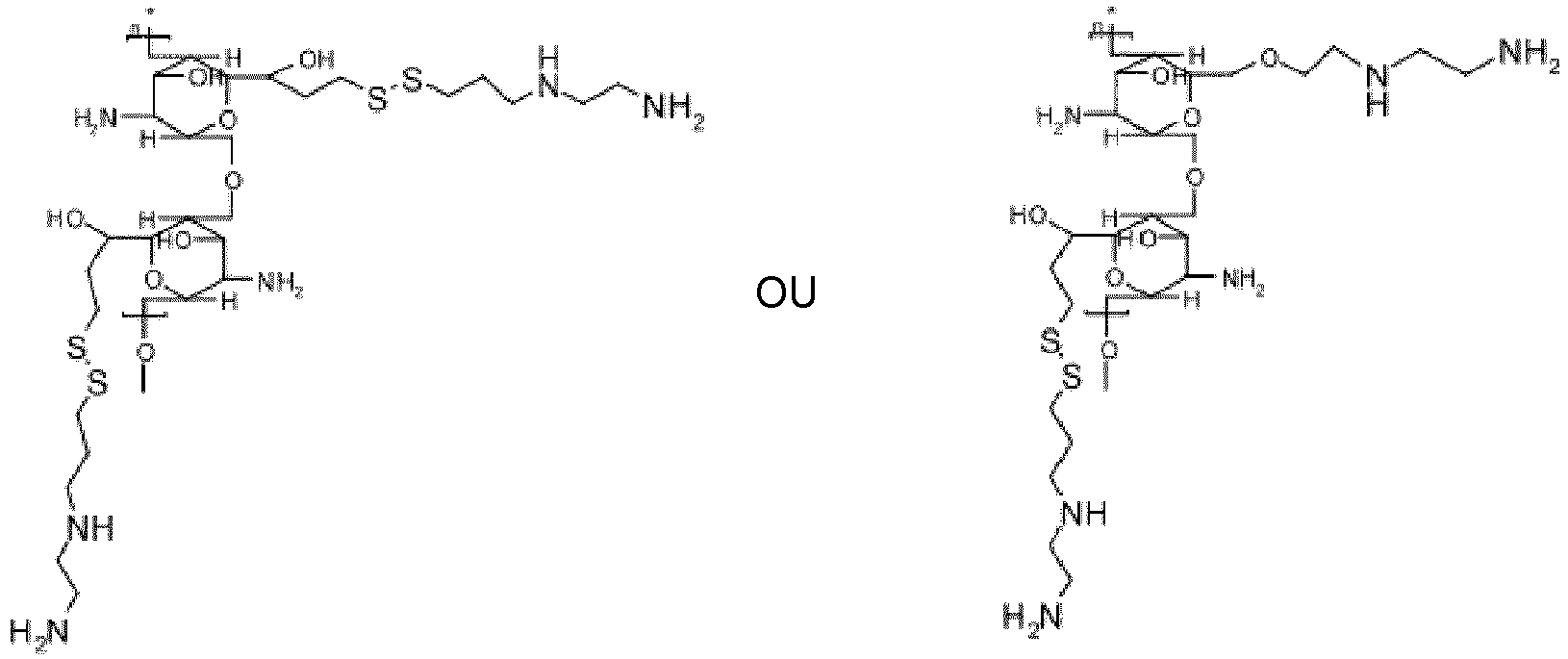
- Forme nanoparticulaire d'un chitosan modifié par une amine (MChi) selon la revendication 1 ou d'un dérivé de chitosan réductible modifié par une amine (ARMCHi) selon la revendication 3 pour utilisation en tant que support en thérapie génique.
- Forme nanoparticulaire selon la revendication 4, dans laquelle le MChi ou le ARMChi a une taille de particule inférieure à 210 nm.
- Forme nanoparticulaire selon la revendication 5, dans laquelle le MChi ou le ARMChi a une taille de particule comprise entre 100 et 210 nm.
- Forme nanoparticulaire selon la revendication 4, dans laquelle la valeur de polydispersité du MChi ou ARMChi nanoparticulaire est comprise entre 0,100 et 0,800.
- Forme nanoparticulaire selon la revendication 4, dans laquelle la valeur de potentiel zêta du MChi ou ARMChi nanoparticulaire est comprise entre 1,50 et 50,00 mV.
- Procédé de production d'un chitosan modifié par une amine (MChi) selon la revendication 1 comprenant la réaction d'un chitosan répondant à la formule suivante :
 dans laquelle n est un nombre entier différent de zéro,avec la N-(2-hydroxyéthyl)éthylène diamine.
 - Procédé de production de dérivés de chitosan modifiés réductibles (RMChi) selon la revendication 2, comprenant la réaction d'un chitosan ou d'une forme modifiée par une amine de celui-ci répondant aux formules suivantes :

 dans lesquelles n est un nombre entier différent de 0,avec un composé de disulfure d'allyle de formule :
- Procédé selon la revendication 10 comprenant une étape de gélatinisation avant la réaction avec le composé de disulfure d'allyle.
- Procédé de production de dérivés de chitosan réductibles modifiés par une amine (ARMCHi) selon la revendication 3 comprenant la réaction de l'un ou l'autre des composés selon la revendication 2 avec l'éthylène diamine.
- Procédé de production d'une forme nanoparticulaire d'un chitosan modifié par une amine (MChi) selon la revendication 1 ou d'un dérivé de chitosan réductible modifié par une amine (ARMCHi) selon la revendication 3 comprenant la préparation de nanoparticules ayant une taille de particule inférieure à 210 nm par un procédé de gélification ionique.
- Forme nanoparticulaire selon la revendication 4 qui est complexée avec un ADN plasmidique.
- Forme nanoparticulaire selon la revendication 14 pour utilisation en thérapie génique des cellules fibroblastiques chez l'homme ou l'animal.
Priority Applications (1)
| Application Number | Priority Date | Filing Date | Title |
|---|---|---|---|
| EP14184168.4A EP2995627B1 (fr) | 2014-09-09 | 2014-09-09 | Synthèse de systèmes nanoparticulaires transporteurs de gènes à base de chitosane |
Applications Claiming Priority (1)
| Application Number | Priority Date | Filing Date | Title |
|---|---|---|---|
| EP14184168.4A EP2995627B1 (fr) | 2014-09-09 | 2014-09-09 | Synthèse de systèmes nanoparticulaires transporteurs de gènes à base de chitosane |
Publications (2)
| Publication Number | Publication Date |
|---|---|
| EP2995627A1 EP2995627A1 (fr) | 2016-03-16 |
| EP2995627B1 true EP2995627B1 (fr) | 2016-12-28 |
Family
ID=51518616
Family Applications (1)
| Application Number | Title | Priority Date | Filing Date |
|---|---|---|---|
| EP14184168.4A Active EP2995627B1 (fr) | 2014-09-09 | 2014-09-09 | Synthèse de systèmes nanoparticulaires transporteurs de gènes à base de chitosane |
Country Status (1)
| Country | Link |
|---|---|
| EP (1) | EP2995627B1 (fr) |
Family Cites Families (1)
| Publication number | Priority date | Publication date | Assignee | Title |
|---|---|---|---|---|
| FR2754823A1 (fr) * | 1996-10-23 | 1998-04-24 | Transgene Sa | Nouveaux derives du chitosan, compositions comportant du chitosan ou ses derives et application de ces compositions sur le transfert d'acide nucleique dans une cellule hote |
-
2014
- 2014-09-09 EP EP14184168.4A patent/EP2995627B1/fr active Active
Non-Patent Citations (1)
| Title |
|---|
| None * |
Also Published As
| Publication number | Publication date |
|---|---|
| EP2995627A1 (fr) | 2016-03-16 |
Similar Documents
| Publication | Publication Date | Title |
|---|---|---|
| Aranda-Barradas et al. | Effect of molecular weight of chitosan on the physicochemical, morphological, and biological properties of polyplex nanoparticles intended for gene delivery | |
| Lin et al. | Injectable supramolecular hydrogel formed from α-cyclodextrin and PEGylated arginine-functionalized poly (l-lysine) dendron for sustained MMP-9 shRNA plasmid delivery | |
| Aravindan et al. | Effect of acyl chain length on transfection efficiency and toxicity of polyethylenimine | |
| Wu et al. | Development of a safe and efficient gene delivery system based on a biodegradable tannic acid backbone | |
| Wang et al. | Photoluminescent and biodegradable polycitrate-polyethylene glycol-polyethyleneimine polymers as highly biocompatible and efficient vectors for bioimaging-guided siRNA and miRNA delivery | |
| Morris et al. | Folate mediated histidine derivative of quaternised chitosan as a gene delivery vector | |
| Qian et al. | Synthesis and preliminary cellular evaluation of phosphonium chitosan derivatives as novel non-viral vector | |
| Gök et al. | Efficient polycation non-viral gene delivery system with high buffering capacity and low molecular weight for primary cells: Branched poly (β-aminoester) containing primary, secondary and tertiary amine groups | |
| Li et al. | Cell penetrating peptide-based polyplexes shelled with polysaccharide to improve stability and gene transfection | |
| Xia et al. | Polyglutamic acid based polyanionic shielding system for polycationic gene carriers | |
| Gök et al. | Effect of the linear aliphatic amine functionalization on in vitro transfection efficiency of chitosan nanoparticles | |
| US10640592B2 (en) | Cation polymer capable of removing positive charges through oxidative response, a preparation method and application | |
| Liu et al. | TAT-functionalized PEI-grafting rice bran polysaccharides for safe and efficient gene delivery | |
| EP2070970A2 (fr) | Réactif de transfection | |
| CN105566511A (zh) | 电荷翻转普鲁兰多糖衍生物及其合成方法和用途 | |
| EP2666482A1 (fr) | Composition de particule et composition pharmaceutique l'utilisant | |
| Zhou et al. | Retracted Article: A highly antibacterial polymeric hybrid micelle with efficiently targeted anticancer siRNA delivery and anti-infection in vitro/in vivo | |
| Guo et al. | Diol glycidyl ether-bridged low molecular weight PEI as potential gene delivery vehicles | |
| CN107142281A (zh) | 聚酰胺‑胺树状大分子与纳米金颗粒的复合物作为非病毒载体进行基因转染的应用方法 | |
| WO2011003766A1 (fr) | Copolymère biodégradable comprenant de lamylopectine ou du glycogène approprié pour ladministration de molécules dacide nucléique dans les cellules | |
| Bansal et al. | Galactomannan-PEI based non-viral vectors for targeted delivery of plasmid to macrophages and hepatocytes | |
| CN102731775A (zh) | 聚精胺阳离子及其构建方法和纳米颗粒的制备方法 | |
| CN103497961B (zh) | 一种基因载体系统及其制备方法 | |
| JP3493608B2 (ja) | 医用高分子及びその用途 | |
| EP2995627B1 (fr) | Synthèse de systèmes nanoparticulaires transporteurs de gènes à base de chitosane |
Legal Events
| Date | Code | Title | Description |
|---|---|---|---|
| PUAI | Public reference made under article 153(3) epc to a published international application that has entered the european phase |
Free format text: ORIGINAL CODE: 0009012 |
|
| AK | Designated contracting states |
Kind code of ref document: A1 Designated state(s): AL AT BE BG CH CY CZ DE DK EE ES FI FR GB GR HR HU IE IS IT LI LT LU LV MC MK MT NL NO PL PT RO RS SE SI SK SM TR |
|
| AX | Request for extension of the european patent |
Extension state: BA ME |
|
| 17P | Request for examination filed |
Effective date: 20160317 |
|
| RBV | Designated contracting states (corrected) |
Designated state(s): AL AT BE BG CH CY CZ DE DK EE ES FI FR GB GR HR HU IE IS IT LI LT LU LV MC MK MT NL NO PL PT RO RS SE SI SK SM TR |
|
| RIN1 | Information on inventor provided before grant (corrected) |
Inventor name: GOK, MEHMET KORAY Inventor name: PABUCCUOGLU, SERHAT Inventor name: CEVHER, ERDAL Inventor name: DEMIR, KAMBER Inventor name: PABUCCUOGLU, M SAADET |
|
| GRAP | Despatch of communication of intention to grant a patent |
Free format text: ORIGINAL CODE: EPIDOSNIGR1 |
|
| GRAS | Grant fee paid |
Free format text: ORIGINAL CODE: EPIDOSNIGR3 |
|
| GRAA | (expected) grant |
Free format text: ORIGINAL CODE: 0009210 |
|
| INTG | Intention to grant announced |
Effective date: 20161031 |
|
| RAP1 | Party data changed (applicant data changed or rights of an application transferred) |
Owner name: GOEK, MEHMET KORAY Owner name: PABUCCUOGLU, SERHAT Owner name: ISTANBUL UNIVERSITESI REKTOERLUEGUE Owner name: DEMIR, KAMBER Owner name: PABUCCUOGLU, SAADET Owner name: CEVHER, ERDAL |
|
| RIN1 | Information on inventor provided before grant (corrected) |
Inventor name: CEVHER, ERDAL Inventor name: PABUCCUOGLU, SERHAT Inventor name: DEMIR, KAMBER Inventor name: PABUCCUOGLU, M SAADET Inventor name: GOEK, MEHMET KORAY |
|
| AK | Designated contracting states |
Kind code of ref document: B1 Designated state(s): AL AT BE BG CH CY CZ DE DK EE ES FI FR GB GR HR HU IE IS IT LI LT LU LV MC MK MT NL NO PL PT RO RS SE SI SK SM TR |
|
| REG | Reference to a national code |
Ref country code: GB Ref legal event code: FG4D |
|
| REG | Reference to a national code |
Ref country code: CH Ref legal event code: EP |
|
| REG | Reference to a national code |
Ref country code: AT Ref legal event code: REF Ref document number: 857201 Country of ref document: AT Kind code of ref document: T Effective date: 20170115 |
|
| REG | Reference to a national code |
Ref country code: IE Ref legal event code: FG4D |
|
| REG | Reference to a national code |
Ref country code: DE Ref legal event code: R096 Ref document number: 602014005798 Country of ref document: DE |
|
| PG25 | Lapsed in a contracting state [announced via postgrant information from national office to epo] |
Ref country code: LV Free format text: LAPSE BECAUSE OF FAILURE TO SUBMIT A TRANSLATION OF THE DESCRIPTION OR TO PAY THE FEE WITHIN THE PRESCRIBED TIME-LIMIT Effective date: 20161228 |
|
| REG | Reference to a national code |
Ref country code: LT Ref legal event code: MG4D |
|
| PG25 | Lapsed in a contracting state [announced via postgrant information from national office to epo] |
Ref country code: SE Free format text: LAPSE BECAUSE OF FAILURE TO SUBMIT A TRANSLATION OF THE DESCRIPTION OR TO PAY THE FEE WITHIN THE PRESCRIBED TIME-LIMIT Effective date: 20161228 Ref country code: LT Free format text: LAPSE BECAUSE OF FAILURE TO SUBMIT A TRANSLATION OF THE DESCRIPTION OR TO PAY THE FEE WITHIN THE PRESCRIBED TIME-LIMIT Effective date: 20161228 Ref country code: NO Free format text: LAPSE BECAUSE OF FAILURE TO SUBMIT A TRANSLATION OF THE DESCRIPTION OR TO PAY THE FEE WITHIN THE PRESCRIBED TIME-LIMIT Effective date: 20170328 Ref country code: GR Free format text: LAPSE BECAUSE OF FAILURE TO SUBMIT A TRANSLATION OF THE DESCRIPTION OR TO PAY THE FEE WITHIN THE PRESCRIBED TIME-LIMIT Effective date: 20170329 |
|
| REG | Reference to a national code |
Ref country code: NL Ref legal event code: MP Effective date: 20161228 |
|
| REG | Reference to a national code |
Ref country code: AT Ref legal event code: MK05 Ref document number: 857201 Country of ref document: AT Kind code of ref document: T Effective date: 20161228 |
|
| PG25 | Lapsed in a contracting state [announced via postgrant information from national office to epo] |
Ref country code: HR Free format text: LAPSE BECAUSE OF FAILURE TO SUBMIT A TRANSLATION OF THE DESCRIPTION OR TO PAY THE FEE WITHIN THE PRESCRIBED TIME-LIMIT Effective date: 20161228 Ref country code: FI Free format text: LAPSE BECAUSE OF FAILURE TO SUBMIT A TRANSLATION OF THE DESCRIPTION OR TO PAY THE FEE WITHIN THE PRESCRIBED TIME-LIMIT Effective date: 20161228 Ref country code: RS Free format text: LAPSE BECAUSE OF FAILURE TO SUBMIT A TRANSLATION OF THE DESCRIPTION OR TO PAY THE FEE WITHIN THE PRESCRIBED TIME-LIMIT Effective date: 20161228 |
|
| PG25 | Lapsed in a contracting state [announced via postgrant information from national office to epo] |
Ref country code: NL Free format text: LAPSE BECAUSE OF FAILURE TO SUBMIT A TRANSLATION OF THE DESCRIPTION OR TO PAY THE FEE WITHIN THE PRESCRIBED TIME-LIMIT Effective date: 20161228 |
|
| PG25 | Lapsed in a contracting state [announced via postgrant information from national office to epo] |
Ref country code: RO Free format text: LAPSE BECAUSE OF FAILURE TO SUBMIT A TRANSLATION OF THE DESCRIPTION OR TO PAY THE FEE WITHIN THE PRESCRIBED TIME-LIMIT Effective date: 20161228 Ref country code: EE Free format text: LAPSE BECAUSE OF FAILURE TO SUBMIT A TRANSLATION OF THE DESCRIPTION OR TO PAY THE FEE WITHIN THE PRESCRIBED TIME-LIMIT Effective date: 20161228 Ref country code: CZ Free format text: LAPSE BECAUSE OF FAILURE TO SUBMIT A TRANSLATION OF THE DESCRIPTION OR TO PAY THE FEE WITHIN THE PRESCRIBED TIME-LIMIT Effective date: 20161228 Ref country code: SK Free format text: LAPSE BECAUSE OF FAILURE TO SUBMIT A TRANSLATION OF THE DESCRIPTION OR TO PAY THE FEE WITHIN THE PRESCRIBED TIME-LIMIT Effective date: 20161228 Ref country code: IS Free format text: LAPSE BECAUSE OF FAILURE TO SUBMIT A TRANSLATION OF THE DESCRIPTION OR TO PAY THE FEE WITHIN THE PRESCRIBED TIME-LIMIT Effective date: 20170428 |
|
| PG25 | Lapsed in a contracting state [announced via postgrant information from national office to epo] |
Ref country code: BG Free format text: LAPSE BECAUSE OF FAILURE TO SUBMIT A TRANSLATION OF THE DESCRIPTION OR TO PAY THE FEE WITHIN THE PRESCRIBED TIME-LIMIT Effective date: 20170328 Ref country code: IT Free format text: LAPSE BECAUSE OF FAILURE TO SUBMIT A TRANSLATION OF THE DESCRIPTION OR TO PAY THE FEE WITHIN THE PRESCRIBED TIME-LIMIT Effective date: 20161228 Ref country code: ES Free format text: LAPSE BECAUSE OF FAILURE TO SUBMIT A TRANSLATION OF THE DESCRIPTION OR TO PAY THE FEE WITHIN THE PRESCRIBED TIME-LIMIT Effective date: 20161228 Ref country code: PL Free format text: LAPSE BECAUSE OF FAILURE TO SUBMIT A TRANSLATION OF THE DESCRIPTION OR TO PAY THE FEE WITHIN THE PRESCRIBED TIME-LIMIT Effective date: 20161228 Ref country code: PT Free format text: LAPSE BECAUSE OF FAILURE TO SUBMIT A TRANSLATION OF THE DESCRIPTION OR TO PAY THE FEE WITHIN THE PRESCRIBED TIME-LIMIT Effective date: 20170428 Ref country code: BE Free format text: LAPSE BECAUSE OF FAILURE TO SUBMIT A TRANSLATION OF THE DESCRIPTION OR TO PAY THE FEE WITHIN THE PRESCRIBED TIME-LIMIT Effective date: 20161228 Ref country code: SM Free format text: LAPSE BECAUSE OF FAILURE TO SUBMIT A TRANSLATION OF THE DESCRIPTION OR TO PAY THE FEE WITHIN THE PRESCRIBED TIME-LIMIT Effective date: 20161228 Ref country code: AT Free format text: LAPSE BECAUSE OF FAILURE TO SUBMIT A TRANSLATION OF THE DESCRIPTION OR TO PAY THE FEE WITHIN THE PRESCRIBED TIME-LIMIT Effective date: 20161228 |
|
| REG | Reference to a national code |
Ref country code: DE Ref legal event code: R097 Ref document number: 602014005798 Country of ref document: DE |
|
| PLBE | No opposition filed within time limit |
Free format text: ORIGINAL CODE: 0009261 |
|
| STAA | Information on the status of an ep patent application or granted ep patent |
Free format text: STATUS: NO OPPOSITION FILED WITHIN TIME LIMIT |
|
| PG25 | Lapsed in a contracting state [announced via postgrant information from national office to epo] |
Ref country code: DK Free format text: LAPSE BECAUSE OF FAILURE TO SUBMIT A TRANSLATION OF THE DESCRIPTION OR TO PAY THE FEE WITHIN THE PRESCRIBED TIME-LIMIT Effective date: 20161228 |
|
| 26N | No opposition filed |
Effective date: 20170929 |
|
| PG25 | Lapsed in a contracting state [announced via postgrant information from national office to epo] |
Ref country code: SI Free format text: LAPSE BECAUSE OF FAILURE TO SUBMIT A TRANSLATION OF THE DESCRIPTION OR TO PAY THE FEE WITHIN THE PRESCRIBED TIME-LIMIT Effective date: 20161228 |
|
| REG | Reference to a national code |
Ref country code: DE Ref legal event code: R119 Ref document number: 602014005798 Country of ref document: DE |
|
| REG | Reference to a national code |
Ref country code: CH Ref legal event code: PL |
|
| PG25 | Lapsed in a contracting state [announced via postgrant information from national office to epo] |
Ref country code: MC Free format text: LAPSE BECAUSE OF FAILURE TO SUBMIT A TRANSLATION OF THE DESCRIPTION OR TO PAY THE FEE WITHIN THE PRESCRIBED TIME-LIMIT Effective date: 20161228 |
|
| REG | Reference to a national code |
Ref country code: IE Ref legal event code: MM4A |
|
| PG25 | Lapsed in a contracting state [announced via postgrant information from national office to epo] |
Ref country code: LU Free format text: LAPSE BECAUSE OF NON-PAYMENT OF DUE FEES Effective date: 20170909 |
|
| REG | Reference to a national code |
Ref country code: FR Ref legal event code: ST Effective date: 20180531 |
|
| PG25 | Lapsed in a contracting state [announced via postgrant information from national office to epo] |
Ref country code: DE Free format text: LAPSE BECAUSE OF NON-PAYMENT OF DUE FEES Effective date: 20180404 Ref country code: LI Free format text: LAPSE BECAUSE OF NON-PAYMENT OF DUE FEES Effective date: 20170930 Ref country code: CH Free format text: LAPSE BECAUSE OF NON-PAYMENT OF DUE FEES Effective date: 20170930 Ref country code: IE Free format text: LAPSE BECAUSE OF NON-PAYMENT OF DUE FEES Effective date: 20170909 |
|
| PG25 | Lapsed in a contracting state [announced via postgrant information from national office to epo] |
Ref country code: FR Free format text: LAPSE BECAUSE OF NON-PAYMENT OF DUE FEES Effective date: 20171002 |
|
| PG25 | Lapsed in a contracting state [announced via postgrant information from national office to epo] |
Ref country code: MT Free format text: LAPSE BECAUSE OF NON-PAYMENT OF DUE FEES Effective date: 20170909 |
|
| GBPC | Gb: european patent ceased through non-payment of renewal fee |
Effective date: 20180909 |
|
| PG25 | Lapsed in a contracting state [announced via postgrant information from national office to epo] |
Ref country code: HU Free format text: LAPSE BECAUSE OF FAILURE TO SUBMIT A TRANSLATION OF THE DESCRIPTION OR TO PAY THE FEE WITHIN THE PRESCRIBED TIME-LIMIT; INVALID AB INITIO Effective date: 20140909 |
|
| PG25 | Lapsed in a contracting state [announced via postgrant information from national office to epo] |
Ref country code: GB Free format text: LAPSE BECAUSE OF NON-PAYMENT OF DUE FEES Effective date: 20180909 Ref country code: CY Free format text: LAPSE BECAUSE OF FAILURE TO SUBMIT A TRANSLATION OF THE DESCRIPTION OR TO PAY THE FEE WITHIN THE PRESCRIBED TIME-LIMIT Effective date: 20161228 |
|
| PG25 | Lapsed in a contracting state [announced via postgrant information from national office to epo] |
Ref country code: MK Free format text: LAPSE BECAUSE OF FAILURE TO SUBMIT A TRANSLATION OF THE DESCRIPTION OR TO PAY THE FEE WITHIN THE PRESCRIBED TIME-LIMIT Effective date: 20161228 |
|
| PG25 | Lapsed in a contracting state [announced via postgrant information from national office to epo] |
Ref country code: AL Free format text: LAPSE BECAUSE OF FAILURE TO SUBMIT A TRANSLATION OF THE DESCRIPTION OR TO PAY THE FEE WITHIN THE PRESCRIBED TIME-LIMIT Effective date: 20161228 |
|
| PGFP | Annual fee paid to national office [announced via postgrant information from national office to epo] |
Ref country code: TR Payment date: 20250908 Year of fee payment: 12 |