EP2995687B1 - Beta-glucosidase thermostable - Google Patents
Beta-glucosidase thermostable Download PDFInfo
- Publication number
- EP2995687B1 EP2995687B1 EP15184676.3A EP15184676A EP2995687B1 EP 2995687 B1 EP2995687 B1 EP 2995687B1 EP 15184676 A EP15184676 A EP 15184676A EP 2995687 B1 EP2995687 B1 EP 2995687B1
- Authority
- EP
- European Patent Office
- Prior art keywords
- glucosidase
- thermostable
- activity
- amino acid
- temperature
- Prior art date
- Legal status (The legal status is an assumption and is not a legal conclusion. Google has not performed a legal analysis and makes no representation as to the accuracy of the status listed.)
- Not-in-force
Links
- 108010047754 beta-Glucosidase Proteins 0.000 title claims description 205
- 102000006995 beta-Glucosidase Human genes 0.000 title claims description 201
- 230000000694 effects Effects 0.000 claims description 91
- 239000002773 nucleotide Substances 0.000 claims description 58
- 125000003729 nucleotide group Chemical group 0.000 claims description 58
- 108010031186 Glycoside Hydrolases Proteins 0.000 claims description 54
- 238000000034 method Methods 0.000 claims description 54
- 102000005744 Glycoside Hydrolases Human genes 0.000 claims description 52
- 229920001184 polypeptide Polymers 0.000 claims description 46
- 108090000765 processed proteins & peptides Proteins 0.000 claims description 46
- 102000004196 processed proteins & peptides Human genes 0.000 claims description 46
- 229920002678 cellulose Polymers 0.000 claims description 43
- 239000001913 cellulose Substances 0.000 claims description 42
- 108091033319 polynucleotide Proteins 0.000 claims description 42
- 102000040430 polynucleotide Human genes 0.000 claims description 42
- 239000002157 polynucleotide Substances 0.000 claims description 42
- 239000000203 mixture Substances 0.000 claims description 40
- 239000013604 expression vector Substances 0.000 claims description 31
- 238000004519 manufacturing process Methods 0.000 claims description 25
- 239000000463 material Substances 0.000 claims description 22
- 239000007857 degradation product Substances 0.000 claims description 17
- 101710121765 Endo-1,4-beta-xylanase Proteins 0.000 claims description 13
- 125000003275 alpha amino acid group Chemical group 0.000 claims 2
- 108090000623 proteins and genes Proteins 0.000 description 78
- 150000001413 amino acids Chemical group 0.000 description 75
- 239000000758 substrate Substances 0.000 description 65
- 102000004190 Enzymes Human genes 0.000 description 47
- 108090000790 Enzymes Proteins 0.000 description 47
- IFBHRQDFSNCLOZ-IIRVCBMXSA-N 4-nitrophenyl-α-d-galactoside Chemical compound O[C@@H]1[C@@H](O)[C@@H](O)[C@@H](CO)O[C@@H]1OC1=CC=C([N+]([O-])=O)C=C1 IFBHRQDFSNCLOZ-IIRVCBMXSA-N 0.000 description 46
- 229940088598 enzyme Drugs 0.000 description 45
- 238000006460 hydrolysis reaction Methods 0.000 description 45
- 239000000243 solution Substances 0.000 description 42
- 235000010980 cellulose Nutrition 0.000 description 41
- 230000007062 hydrolysis Effects 0.000 description 38
- 102000004169 proteins and genes Human genes 0.000 description 34
- 238000006243 chemical reaction Methods 0.000 description 33
- 108020004414 DNA Proteins 0.000 description 31
- 108700026244 Open Reading Frames Proteins 0.000 description 28
- 230000003197 catalytic effect Effects 0.000 description 27
- 241000588724 Escherichia coli Species 0.000 description 26
- 239000000872 buffer Substances 0.000 description 21
- 230000014509 gene expression Effects 0.000 description 21
- 239000002689 soil Substances 0.000 description 21
- 230000003301 hydrolyzing effect Effects 0.000 description 20
- 238000005259 measurement Methods 0.000 description 20
- FWMNVWWHGCHHJJ-SKKKGAJSSA-N 4-amino-1-[(2r)-6-amino-2-[[(2r)-2-[[(2r)-2-[[(2r)-2-amino-3-phenylpropanoyl]amino]-3-phenylpropanoyl]amino]-4-methylpentanoyl]amino]hexanoyl]piperidine-4-carboxylic acid Chemical compound C([C@H](C(=O)N[C@H](CC(C)C)C(=O)N[C@H](CCCCN)C(=O)N1CCC(N)(CC1)C(O)=O)NC(=O)[C@H](N)CC=1C=CC=CC=1)C1=CC=CC=C1 FWMNVWWHGCHHJJ-SKKKGAJSSA-N 0.000 description 17
- 239000006228 supernatant Substances 0.000 description 17
- 210000004027 cell Anatomy 0.000 description 16
- XLYOFNOQVPJJNP-UHFFFAOYSA-N water Substances O XLYOFNOQVPJJNP-UHFFFAOYSA-N 0.000 description 15
- 229920001221 xylan Polymers 0.000 description 14
- 150000004823 xylans Chemical class 0.000 description 14
- 108010076504 Protein Sorting Signals Proteins 0.000 description 13
- 230000008569 process Effects 0.000 description 12
- QKNYBSVHEMOAJP-UHFFFAOYSA-N 2-amino-2-(hydroxymethyl)propane-1,3-diol;hydron;chloride Chemical compound Cl.OCC(N)(CO)CO QKNYBSVHEMOAJP-UHFFFAOYSA-N 0.000 description 10
- 241000196324 Embryophyta Species 0.000 description 10
- NBIIXXVUZAFLBC-UHFFFAOYSA-N Phosphoric acid Chemical compound OP(O)(O)=O NBIIXXVUZAFLBC-UHFFFAOYSA-N 0.000 description 10
- 150000001875 compounds Chemical class 0.000 description 10
- 108010059892 Cellulase Proteins 0.000 description 9
- 108010008885 Cellulose 1,4-beta-Cellobiosidase Proteins 0.000 description 9
- 230000001747 exhibiting effect Effects 0.000 description 9
- 239000007788 liquid Substances 0.000 description 9
- 244000005700 microbiome Species 0.000 description 9
- 239000000523 sample Substances 0.000 description 9
- MLJYKRYCCUGBBV-YTWAJWBKSA-N 4-nitrophenyl beta-D-xyloside Chemical compound O[C@@H]1[C@@H](O)[C@H](O)CO[C@H]1OC1=CC=C([N+]([O-])=O)C=C1 MLJYKRYCCUGBBV-YTWAJWBKSA-N 0.000 description 8
- 108091028043 Nucleic acid sequence Proteins 0.000 description 8
- 230000015556 catabolic process Effects 0.000 description 8
- 238000006731 degradation reaction Methods 0.000 description 8
- 238000004925 denaturation Methods 0.000 description 8
- 230000036425 denaturation Effects 0.000 description 8
- 238000005516 engineering process Methods 0.000 description 8
- 230000002255 enzymatic effect Effects 0.000 description 8
- 239000008213 purified water Substances 0.000 description 8
- 239000002028 Biomass Substances 0.000 description 7
- 229920002134 Carboxymethyl cellulose Polymers 0.000 description 7
- 235000010948 carboxy methyl cellulose Nutrition 0.000 description 7
- 238000012258 culturing Methods 0.000 description 7
- 238000010586 diagram Methods 0.000 description 7
- 108010038658 exo-1,4-beta-D-xylosidase Proteins 0.000 description 7
- 230000036961 partial effect Effects 0.000 description 7
- 238000012163 sequencing technique Methods 0.000 description 7
- 238000011282 treatment Methods 0.000 description 7
- IFBHRQDFSNCLOZ-UHFFFAOYSA-N 2-(hydroxymethyl)-6-(4-nitrophenoxy)oxane-3,4,5-triol Chemical compound OC1C(O)C(O)C(CO)OC1OC1=CC=C([N+]([O-])=O)C=C1 IFBHRQDFSNCLOZ-UHFFFAOYSA-N 0.000 description 6
- BTJIUGUIPKRLHP-UHFFFAOYSA-N 4-nitrophenol Chemical compound OC1=CC=C([N+]([O-])=O)C=C1 BTJIUGUIPKRLHP-UHFFFAOYSA-N 0.000 description 6
- 102000005575 Cellulases Human genes 0.000 description 6
- 108010084185 Cellulases Proteins 0.000 description 6
- SRBFZHDQGSBBOR-IOVATXLUSA-N D-xylopyranose Chemical compound O[C@@H]1COC(O)[C@H](O)[C@H]1O SRBFZHDQGSBBOR-IOVATXLUSA-N 0.000 description 6
- LFQSCWFLJHTTHZ-UHFFFAOYSA-N Ethanol Chemical compound CCO LFQSCWFLJHTTHZ-UHFFFAOYSA-N 0.000 description 6
- 241000233866 Fungi Species 0.000 description 6
- 229920001503 Glucan Polymers 0.000 description 6
- FAPWRFPIFSIZLT-UHFFFAOYSA-M Sodium chloride Chemical compound [Na+].[Cl-] FAPWRFPIFSIZLT-UHFFFAOYSA-M 0.000 description 6
- 125000000539 amino acid group Chemical group 0.000 description 6
- 238000004458 analytical method Methods 0.000 description 6
- 230000000813 microbial effect Effects 0.000 description 6
- 150000002772 monosaccharides Chemical class 0.000 description 6
- 229920001542 oligosaccharide Polymers 0.000 description 6
- 238000000746 purification Methods 0.000 description 6
- 241000062078 Fervidobacterium sp. Species 0.000 description 5
- 229910000147 aluminium phosphate Inorganic materials 0.000 description 5
- 239000007864 aqueous solution Substances 0.000 description 5
- 238000002022 differential scanning fluorescence spectroscopy Methods 0.000 description 5
- 238000002474 experimental method Methods 0.000 description 5
- 150000002482 oligosaccharides Chemical class 0.000 description 5
- 239000000047 product Substances 0.000 description 5
- 238000002415 sodium dodecyl sulfate polyacrylamide gel electrophoresis Methods 0.000 description 5
- 239000000126 substance Substances 0.000 description 5
- 238000011144 upstream manufacturing Methods 0.000 description 5
- 108020004705 Codon Proteins 0.000 description 4
- WQZGKKKJIJFFOK-GASJEMHNSA-N Glucose Natural products OC[C@H]1OC(O)[C@H](O)[C@@H](O)[C@@H]1O WQZGKKKJIJFFOK-GASJEMHNSA-N 0.000 description 4
- 241000238631 Hexapoda Species 0.000 description 4
- FFEARJCKVFRZRR-BYPYZUCNSA-N L-methionine Chemical compound CSCC[C@H](N)C(O)=O FFEARJCKVFRZRR-BYPYZUCNSA-N 0.000 description 4
- 241000736262 Microbiota Species 0.000 description 4
- 240000004808 Saccharomyces cerevisiae Species 0.000 description 4
- 238000002835 absorbance Methods 0.000 description 4
- 230000009471 action Effects 0.000 description 4
- 230000008859 change Effects 0.000 description 4
- 238000010367 cloning Methods 0.000 description 4
- 230000007071 enzymatic hydrolysis Effects 0.000 description 4
- 238000006047 enzymatic hydrolysis reaction Methods 0.000 description 4
- 210000003527 eukaryotic cell Anatomy 0.000 description 4
- 239000000284 extract Substances 0.000 description 4
- 239000011536 extraction buffer Substances 0.000 description 4
- 239000008103 glucose Substances 0.000 description 4
- 229930182470 glycoside Natural products 0.000 description 4
- 150000002338 glycosides Chemical class 0.000 description 4
- 108010002430 hemicellulase Proteins 0.000 description 4
- 230000002209 hydrophobic effect Effects 0.000 description 4
- 230000001965 increasing effect Effects 0.000 description 4
- 210000004962 mammalian cell Anatomy 0.000 description 4
- 229930182817 methionine Natural products 0.000 description 4
- 239000013642 negative control Substances 0.000 description 4
- 210000001236 prokaryotic cell Anatomy 0.000 description 4
- 238000003753 real-time PCR Methods 0.000 description 4
- 230000006798 recombination Effects 0.000 description 4
- 230000002829 reductive effect Effects 0.000 description 4
- 239000007787 solid Substances 0.000 description 4
- 239000013598 vector Substances 0.000 description 4
- 238000012070 whole genome sequencing analysis Methods 0.000 description 4
- GUBGYTABKSRVRQ-CUHNMECISA-N D-Cellobiose Chemical compound O[C@@H]1[C@@H](O)[C@H](O)[C@@H](CO)O[C@H]1O[C@@H]1[C@@H](CO)OC(O)[C@H](O)[C@H]1O GUBGYTABKSRVRQ-CUHNMECISA-N 0.000 description 3
- 108010032083 Glucan 1,4-beta-Glucosidase Proteins 0.000 description 3
- 108050009637 Glycoside hydrolase family 1 Proteins 0.000 description 3
- 102000001426 Glycoside hydrolase family 1 Human genes 0.000 description 3
- 229920002488 Hemicellulose Polymers 0.000 description 3
- 108020005350 Initiator Codon Proteins 0.000 description 3
- PYMYPHUHKUWMLA-UHFFFAOYSA-N arabinose Natural products OCC(O)C(O)C(O)C=O PYMYPHUHKUWMLA-UHFFFAOYSA-N 0.000 description 3
- SRBFZHDQGSBBOR-UHFFFAOYSA-N beta-D-Pyranose-Lyxose Natural products OC1COC(O)C(O)C1O SRBFZHDQGSBBOR-UHFFFAOYSA-N 0.000 description 3
- 238000011088 calibration curve Methods 0.000 description 3
- 238000005119 centrifugation Methods 0.000 description 3
- KRKNYBCHXYNGOX-UHFFFAOYSA-N citric acid Chemical compound OC(=O)CC(O)(C(O)=O)CC(O)=O KRKNYBCHXYNGOX-UHFFFAOYSA-N 0.000 description 3
- 230000000593 degrading effect Effects 0.000 description 3
- 238000011161 development Methods 0.000 description 3
- 238000001962 electrophoresis Methods 0.000 description 3
- 210000002472 endoplasmic reticulum Anatomy 0.000 description 3
- 238000006911 enzymatic reaction Methods 0.000 description 3
- 238000000605 extraction Methods 0.000 description 3
- 229940059442 hemicellulase Drugs 0.000 description 3
- 238000011534 incubation Methods 0.000 description 3
- 238000003780 insertion Methods 0.000 description 3
- 230000037431 insertion Effects 0.000 description 3
- 102000039446 nucleic acids Human genes 0.000 description 3
- 108020004707 nucleic acids Proteins 0.000 description 3
- 150000007523 nucleic acids Chemical class 0.000 description 3
- 239000013612 plasmid Substances 0.000 description 3
- 230000035484 reaction time Effects 0.000 description 3
- 230000000717 retained effect Effects 0.000 description 3
- 239000011780 sodium chloride Substances 0.000 description 3
- FYGDTMLNYKFZSV-URKRLVJHSA-N (2s,3r,4s,5s,6r)-2-[(2r,4r,5r,6s)-4,5-dihydroxy-2-(hydroxymethyl)-6-[(2r,4r,5r,6s)-4,5,6-trihydroxy-2-(hydroxymethyl)oxan-3-yl]oxyoxan-3-yl]oxy-6-(hydroxymethyl)oxane-3,4,5-triol Chemical compound O[C@@H]1[C@@H](O)[C@H](O)[C@@H](CO)O[C@H]1OC1[C@@H](CO)O[C@@H](OC2[C@H](O[C@H](O)[C@H](O)[C@H]2O)CO)[C@H](O)[C@H]1O FYGDTMLNYKFZSV-URKRLVJHSA-N 0.000 description 2
- LWFUFLREGJMOIZ-UHFFFAOYSA-N 3,5-dinitrosalicylic acid Chemical compound OC(=O)C1=CC([N+]([O-])=O)=CC([N+]([O-])=O)=C1O LWFUFLREGJMOIZ-UHFFFAOYSA-N 0.000 description 2
- 241000589158 Agrobacterium Species 0.000 description 2
- 229920002498 Beta-glucan Polymers 0.000 description 2
- 230000004544 DNA amplification Effects 0.000 description 2
- 238000007400 DNA extraction Methods 0.000 description 2
- 206010059866 Drug resistance Diseases 0.000 description 2
- -1 EC 3.2.1.176) Proteins 0.000 description 2
- 108010001817 Endo-1,4-beta Xylanases Proteins 0.000 description 2
- ZHNUHDYFZUAESO-UHFFFAOYSA-N Formamide Chemical compound NC=O ZHNUHDYFZUAESO-UHFFFAOYSA-N 0.000 description 2
- 108700007698 Genetic Terminator Regions Proteins 0.000 description 2
- ROHFNLRQFUQHCH-UHFFFAOYSA-N Leucine Natural products CC(C)CC(N)C(O)=O ROHFNLRQFUQHCH-UHFFFAOYSA-N 0.000 description 2
- 239000002202 Polyethylene glycol Substances 0.000 description 2
- MTCFGRXMJLQNBG-UHFFFAOYSA-N Serine Natural products OCC(N)C(O)=O MTCFGRXMJLQNBG-UHFFFAOYSA-N 0.000 description 2
- CDBYLPFSWZWCQE-UHFFFAOYSA-L Sodium Carbonate Chemical compound [Na+].[Na+].[O-]C([O-])=O CDBYLPFSWZWCQE-UHFFFAOYSA-L 0.000 description 2
- 241001215623 Talaromyces cellulolyticus Species 0.000 description 2
- 229960000723 ampicillin Drugs 0.000 description 2
- AVKUERGKIZMTKX-NJBDSQKTSA-N ampicillin Chemical compound C1([C@@H](N)C(=O)N[C@H]2[C@H]3SC([C@@H](N3C2=O)C(O)=O)(C)C)=CC=CC=C1 AVKUERGKIZMTKX-NJBDSQKTSA-N 0.000 description 2
- 238000012197 amplification kit Methods 0.000 description 2
- 230000001580 bacterial effect Effects 0.000 description 2
- WQZGKKKJIJFFOK-VFUOTHLCSA-N beta-D-glucose Chemical compound OC[C@H]1O[C@@H](O)[C@H](O)[C@@H](O)[C@@H]1O WQZGKKKJIJFFOK-VFUOTHLCSA-N 0.000 description 2
- 239000002551 biofuel Substances 0.000 description 2
- 238000004364 calculation method Methods 0.000 description 2
- 229940106157 cellulase Drugs 0.000 description 2
- 239000003795 chemical substances by application Substances 0.000 description 2
- 239000000287 crude extract Substances 0.000 description 2
- 230000003247 decreasing effect Effects 0.000 description 2
- 238000012217 deletion Methods 0.000 description 2
- 230000037430 deletion Effects 0.000 description 2
- 238000007865 diluting Methods 0.000 description 2
- YERABYSOHUZTPQ-UHFFFAOYSA-P endo-1,4-beta-Xylanase Chemical compound C=1C=CC=CC=1C[N+](CC)(CC)CCCNC(C(C=1)=O)=CC(=O)C=1NCCC[N+](CC)(CC)CC1=CC=CC=C1 YERABYSOHUZTPQ-UHFFFAOYSA-P 0.000 description 2
- 230000007613 environmental effect Effects 0.000 description 2
- 238000001914 filtration Methods 0.000 description 2
- 239000007850 fluorescent dye Substances 0.000 description 2
- 238000009396 hybridization Methods 0.000 description 2
- 238000010348 incorporation Methods 0.000 description 2
- 230000001939 inductive effect Effects 0.000 description 2
- 230000000977 initiatory effect Effects 0.000 description 2
- 238000011068 loading method Methods 0.000 description 2
- 230000014759 maintenance of location Effects 0.000 description 2
- 230000001404 mediated effect Effects 0.000 description 2
- 230000007935 neutral effect Effects 0.000 description 2
- 239000002245 particle Substances 0.000 description 2
- 230000002085 persistent effect Effects 0.000 description 2
- 229920001223 polyethylene glycol Polymers 0.000 description 2
- 229920001282 polysaccharide Polymers 0.000 description 2
- 239000005017 polysaccharide Substances 0.000 description 2
- 150000004804 polysaccharides Chemical class 0.000 description 2
- 238000002360 preparation method Methods 0.000 description 2
- 239000002994 raw material Substances 0.000 description 2
- 238000011160 research Methods 0.000 description 2
- 230000002441 reversible effect Effects 0.000 description 2
- 230000003248 secreting effect Effects 0.000 description 2
- 238000000926 separation method Methods 0.000 description 2
- 230000032258 transport Effects 0.000 description 2
- 238000000108 ultra-filtration Methods 0.000 description 2
- 108700026220 vif Genes Proteins 0.000 description 2
- 238000005406 washing Methods 0.000 description 2
- DBTMGCOVALSLOR-DEVYUCJPSA-N (2s,3r,4s,5r,6r)-4-[(2s,3r,4s,5r,6r)-3,5-dihydroxy-6-(hydroxymethyl)-4-[(2s,3r,4s,5s,6r)-3,4,5-trihydroxy-6-(hydroxymethyl)oxan-2-yl]oxyoxan-2-yl]oxy-6-(hydroxymethyl)oxane-2,3,5-triol Chemical compound O[C@@H]1[C@@H](O)[C@H](O)[C@@H](CO)O[C@H]1O[C@@H]1[C@@H](O)[C@H](O[C@H]2[C@@H]([C@@H](CO)O[C@H](O)[C@@H]2O)O)O[C@H](CO)[C@H]1O DBTMGCOVALSLOR-DEVYUCJPSA-N 0.000 description 1
- GUBGYTABKSRVRQ-XLOQQCSPSA-N Alpha-Lactose Chemical compound O[C@@H]1[C@@H](O)[C@@H](O)[C@@H](CO)O[C@H]1O[C@@H]1[C@@H](CO)O[C@H](O)[C@H](O)[C@H]1O GUBGYTABKSRVRQ-XLOQQCSPSA-N 0.000 description 1
- 241000203069 Archaea Species 0.000 description 1
- 241000972773 Aulopiformes Species 0.000 description 1
- 241000894006 Bacteria Species 0.000 description 1
- 241001148536 Bacteroides sp. Species 0.000 description 1
- 208000023514 Barrett esophagus Diseases 0.000 description 1
- 108091003079 Bovine Serum Albumin Proteins 0.000 description 1
- ZKTPOUXCUHYLDZ-SAYNGHPTSA-N C(CCCC[C@@H]1SC[C@@H]2NC(=O)N[C@H]12)(=O)NCCCCNC(=O)C1CCC(CC1)CN1C(C=CC1=O)=O Chemical compound C(CCCC[C@@H]1SC[C@@H]2NC(=O)N[C@H]12)(=O)NCCCCNC(=O)C1CCC(CC1)CN1C(C=CC1=O)=O ZKTPOUXCUHYLDZ-SAYNGHPTSA-N 0.000 description 1
- 241001674013 Chrysosporium lucknowense Species 0.000 description 1
- 235000005956 Cosmos caudatus Nutrition 0.000 description 1
- 238000001712 DNA sequencing Methods 0.000 description 1
- 102100039371 ER lumen protein-retaining receptor 1 Human genes 0.000 description 1
- YQYJSBFKSSDGFO-UHFFFAOYSA-N Epihygromycin Natural products OC1C(O)C(C(=O)C)OC1OC(C(=C1)O)=CC=C1C=C(C)C(=O)NC1C(O)C(O)C2OCOC2C1O YQYJSBFKSSDGFO-UHFFFAOYSA-N 0.000 description 1
- 241000206211 Fervidobacterium islandicum Species 0.000 description 1
- 229920001917 Ficoll Polymers 0.000 description 1
- 102000040594 GH3 family Human genes 0.000 description 1
- 108091071558 GH3 family Proteins 0.000 description 1
- 101710154606 Hemagglutinin Proteins 0.000 description 1
- 101000812437 Homo sapiens ER lumen protein-retaining receptor 1 Proteins 0.000 description 1
- UFHFLCQGNIYNRP-UHFFFAOYSA-N Hydrogen Chemical compound [H][H] UFHFLCQGNIYNRP-UHFFFAOYSA-N 0.000 description 1
- ROHFNLRQFUQHCH-YFKPBYRVSA-N L-leucine Chemical compound CC(C)C[C@H](N)C(O)=O ROHFNLRQFUQHCH-YFKPBYRVSA-N 0.000 description 1
- COLNVLDHVKWLRT-QMMMGPOBSA-N L-phenylalanine Chemical compound OC(=O)[C@@H](N)CC1=CC=CC=C1 COLNVLDHVKWLRT-QMMMGPOBSA-N 0.000 description 1
- GUBGYTABKSRVRQ-QKKXKWKRSA-N Lactose Natural products OC[C@H]1O[C@@H](O[C@H]2[C@H](O)[C@@H](O)C(O)O[C@@H]2CO)[C@H](O)[C@@H](O)[C@H]1O GUBGYTABKSRVRQ-QKKXKWKRSA-N 0.000 description 1
- 229920001543 Laminarin Polymers 0.000 description 1
- 239000005717 Laminarin Substances 0.000 description 1
- 229920002097 Lichenin Polymers 0.000 description 1
- KDXKERNSBIXSRK-UHFFFAOYSA-N Lysine Natural products NCCCCC(N)C(O)=O KDXKERNSBIXSRK-UHFFFAOYSA-N 0.000 description 1
- 239000004472 Lysine Substances 0.000 description 1
- 229920000168 Microcrystalline cellulose Polymers 0.000 description 1
- AYRXSINWFIIFAE-UHFFFAOYSA-N O6-alpha-D-Galactopyranosyl-D-galactose Natural products OCC1OC(OCC(O)C(O)C(O)C(O)C=O)C(O)C(O)C1O AYRXSINWFIIFAE-UHFFFAOYSA-N 0.000 description 1
- 101710093908 Outer capsid protein VP4 Proteins 0.000 description 1
- 101710135467 Outer capsid protein sigma-1 Proteins 0.000 description 1
- 101710176177 Protein A56 Proteins 0.000 description 1
- 108010026552 Proteome Proteins 0.000 description 1
- 102000007056 Recombinant Fusion Proteins Human genes 0.000 description 1
- 108010008281 Recombinant Fusion Proteins Proteins 0.000 description 1
- 238000012300 Sequence Analysis Methods 0.000 description 1
- 239000012505 Superdex™ Substances 0.000 description 1
- 108700005078 Synthetic Genes Proteins 0.000 description 1
- 108020005038 Terminator Codon Proteins 0.000 description 1
- 241000204652 Thermotoga Species 0.000 description 1
- 241000204664 Thermotoga neapolitana Species 0.000 description 1
- RTAQQCXQSZGOHL-UHFFFAOYSA-N Titanium Chemical compound [Ti] RTAQQCXQSZGOHL-UHFFFAOYSA-N 0.000 description 1
- 240000008042 Zea mays Species 0.000 description 1
- 235000005824 Zea mays ssp. parviglumis Nutrition 0.000 description 1
- 235000002017 Zea mays subsp mays Nutrition 0.000 description 1
- 239000002253 acid Substances 0.000 description 1
- 239000012445 acidic reagent Substances 0.000 description 1
- 238000001042 affinity chromatography Methods 0.000 description 1
- 238000013019 agitation Methods 0.000 description 1
- 239000002154 agricultural waste Substances 0.000 description 1
- 239000003513 alkali Substances 0.000 description 1
- BFNBIHQBYMNNAN-UHFFFAOYSA-N ammonium sulfate Chemical compound N.N.OS(O)(=O)=O BFNBIHQBYMNNAN-UHFFFAOYSA-N 0.000 description 1
- 229910052921 ammonium sulfate Inorganic materials 0.000 description 1
- 235000011130 ammonium sulphate Nutrition 0.000 description 1
- 238000013459 approach Methods 0.000 description 1
- 125000003118 aryl group Chemical group 0.000 description 1
- 238000003556 assay Methods 0.000 description 1
- 239000002585 base Substances 0.000 description 1
- 239000011324 bead Substances 0.000 description 1
- 108010005774 beta-Galactosidase Proteins 0.000 description 1
- 102000005936 beta-Galactosidase Human genes 0.000 description 1
- GINJFDRNADDBIN-FXQIFTODSA-N bilanafos Chemical compound OC(=O)[C@H](C)NC(=O)[C@H](C)NC(=O)[C@@H](N)CCP(C)(O)=O GINJFDRNADDBIN-FXQIFTODSA-N 0.000 description 1
- 230000015572 biosynthetic process Effects 0.000 description 1
- 229940098773 bovine serum albumin Drugs 0.000 description 1
- 239000001768 carboxy methyl cellulose Substances 0.000 description 1
- 239000008112 carboxymethyl-cellulose Substances 0.000 description 1
- 210000002421 cell wall Anatomy 0.000 description 1
- 150000001773 cellobioses Chemical class 0.000 description 1
- FYGDTMLNYKFZSV-ZWSAEMDYSA-N cellotriose Chemical compound O[C@@H]1[C@@H](O)[C@H](O)[C@@H](CO)O[C@H]1O[C@@H]1[C@@H](CO)O[C@@H](O[C@@H]2[C@H](OC(O)[C@H](O)[C@H]2O)CO)[C@H](O)[C@H]1O FYGDTMLNYKFZSV-ZWSAEMDYSA-N 0.000 description 1
- 238000004587 chromatography analysis Methods 0.000 description 1
- 239000004927 clay Substances 0.000 description 1
- 230000000295 complement effect Effects 0.000 description 1
- 239000002299 complementary DNA Substances 0.000 description 1
- 238000007906 compression Methods 0.000 description 1
- 230000006835 compression Effects 0.000 description 1
- 239000012468 concentrated sample Substances 0.000 description 1
- 238000007796 conventional method Methods 0.000 description 1
- 235000005822 corn Nutrition 0.000 description 1
- 239000012228 culture supernatant Substances 0.000 description 1
- 238000007405 data analysis Methods 0.000 description 1
- 238000013461 design Methods 0.000 description 1
- 230000002542 deteriorative effect Effects 0.000 description 1
- 150000002016 disaccharides Chemical class 0.000 description 1
- 238000004090 dissolution Methods 0.000 description 1
- 238000004520 electroporation Methods 0.000 description 1
- 108010091371 endoglucanase 1 Proteins 0.000 description 1
- 108010091384 endoglucanase 2 Proteins 0.000 description 1
- 108010092450 endoglucanase Z Proteins 0.000 description 1
- 230000005284 excitation Effects 0.000 description 1
- 239000000706 filtrate Substances 0.000 description 1
- 238000009472 formulation Methods 0.000 description 1
- 239000002803 fossil fuel Substances 0.000 description 1
- 239000012634 fragment Substances 0.000 description 1
- 238000002523 gelfiltration Methods 0.000 description 1
- 238000012215 gene cloning Methods 0.000 description 1
- 238000012268 genome sequencing Methods 0.000 description 1
- DLRVVLDZNNYCBX-CQUJWQHSSA-N gentiobiose Chemical compound O[C@@H]1[C@@H](O)[C@H](O)[C@@H](CO)O[C@H]1OC[C@@H]1[C@@H](O)[C@H](O)[C@@H](O)C(O)O1 DLRVVLDZNNYCBX-CQUJWQHSSA-N 0.000 description 1
- 238000010438 heat treatment Methods 0.000 description 1
- 239000000185 hemagglutinin Substances 0.000 description 1
- 238000004128 high performance liquid chromatography Methods 0.000 description 1
- 238000003384 imaging method Methods 0.000 description 1
- 230000006698 induction Effects 0.000 description 1
- 238000011419 induction treatment Methods 0.000 description 1
- 230000003993 interaction Effects 0.000 description 1
- 230000003834 intracellular effect Effects 0.000 description 1
- 238000005342 ion exchange Methods 0.000 description 1
- BPHPUYQFMNQIOC-NXRLNHOXSA-N isopropyl beta-D-thiogalactopyranoside Chemical compound CC(C)S[C@@H]1O[C@H](CO)[C@H](O)[C@H](O)[C@H]1O BPHPUYQFMNQIOC-NXRLNHOXSA-N 0.000 description 1
- 229930027917 kanamycin Natural products 0.000 description 1
- 229960000318 kanamycin Drugs 0.000 description 1
- SBUJHOSQTJFQJX-NOAMYHISSA-N kanamycin Chemical compound O[C@@H]1[C@@H](O)[C@H](O)[C@@H](CN)O[C@@H]1O[C@H]1[C@H](O)[C@@H](O[C@@H]2[C@@H]([C@@H](N)[C@H](O)[C@@H](CO)O2)O)[C@H](N)C[C@@H]1N SBUJHOSQTJFQJX-NOAMYHISSA-N 0.000 description 1
- 229930182823 kanamycin A Natural products 0.000 description 1
- 239000008101 lactose Substances 0.000 description 1
- 125000001909 leucine group Chemical group [H]N(*)C(C(*)=O)C([H])([H])C(C([H])([H])[H])C([H])([H])[H] 0.000 description 1
- 229920005610 lignin Polymers 0.000 description 1
- 230000004807 localization Effects 0.000 description 1
- 125000003588 lysine group Chemical group [H]N([H])C([H])([H])C([H])([H])C([H])([H])C([H])([H])C([H])(N([H])[H])C(*)=O 0.000 description 1
- 239000003550 marker Substances 0.000 description 1
- 238000002844 melting Methods 0.000 description 1
- 230000008018 melting Effects 0.000 description 1
- 239000012528 membrane Substances 0.000 description 1
- 108020004999 messenger RNA Proteins 0.000 description 1
- 235000019813 microcrystalline cellulose Nutrition 0.000 description 1
- 239000008108 microcrystalline cellulose Substances 0.000 description 1
- 229940016286 microcrystalline cellulose Drugs 0.000 description 1
- 239000011259 mixed solution Substances 0.000 description 1
- 238000002156 mixing Methods 0.000 description 1
- 238000012986 modification Methods 0.000 description 1
- 230000004048 modification Effects 0.000 description 1
- 238000010369 molecular cloning Methods 0.000 description 1
- 230000035772 mutation Effects 0.000 description 1
- 230000025308 nuclear transport Effects 0.000 description 1
- 230000003287 optical effect Effects 0.000 description 1
- COLNVLDHVKWLRT-UHFFFAOYSA-N phenylalanine Natural products OC(=O)C(N)CC1=CC=CC=C1 COLNVLDHVKWLRT-UHFFFAOYSA-N 0.000 description 1
- 229920000036 polyvinylpyrrolidone Polymers 0.000 description 1
- 239000001267 polyvinylpyrrolidone Substances 0.000 description 1
- 235000013855 polyvinylpyrrolidone Nutrition 0.000 description 1
- 239000011148 porous material Substances 0.000 description 1
- 239000000843 powder Substances 0.000 description 1
- 230000001376 precipitating effect Effects 0.000 description 1
- 238000001556 precipitation Methods 0.000 description 1
- 239000012460 protein solution Substances 0.000 description 1
- 230000009467 reduction Effects 0.000 description 1
- 238000010839 reverse transcription Methods 0.000 description 1
- 210000004767 rumen Anatomy 0.000 description 1
- 235000019515 salmon Nutrition 0.000 description 1
- 238000005185 salting out Methods 0.000 description 1
- 150000003839 salts Chemical class 0.000 description 1
- 238000005070 sampling Methods 0.000 description 1
- 238000012216 screening Methods 0.000 description 1
- 238000010845 search algorithm Methods 0.000 description 1
- 230000028327 secretion Effects 0.000 description 1
- 230000035939 shock Effects 0.000 description 1
- 238000004904 shortening Methods 0.000 description 1
- 229910000029 sodium carbonate Inorganic materials 0.000 description 1
- 239000002904 solvent Substances 0.000 description 1
- 241000894007 species Species 0.000 description 1
- 238000003756 stirring Methods 0.000 description 1
- 239000004094 surface-active agent Substances 0.000 description 1
- 238000003786 synthesis reaction Methods 0.000 description 1
- 210000001519 tissue Anatomy 0.000 description 1
- 229910052719 titanium Inorganic materials 0.000 description 1
- 239000010936 titanium Substances 0.000 description 1
- 230000009466 transformation Effects 0.000 description 1
- 239000011534 wash buffer Substances 0.000 description 1
- 238000001238 wet grinding Methods 0.000 description 1
Images



Classifications
-
- C—CHEMISTRY; METALLURGY
- C12—BIOCHEMISTRY; BEER; SPIRITS; WINE; VINEGAR; MICROBIOLOGY; ENZYMOLOGY; MUTATION OR GENETIC ENGINEERING
- C12N—MICROORGANISMS OR ENZYMES; COMPOSITIONS THEREOF; PROPAGATING, PRESERVING, OR MAINTAINING MICROORGANISMS; MUTATION OR GENETIC ENGINEERING; CULTURE MEDIA
- C12N9/00—Enzymes; Proenzymes; Compositions thereof; Processes for preparing, activating, inhibiting, separating or purifying enzymes
- C12N9/14—Hydrolases (3)
- C12N9/24—Hydrolases (3) acting on glycosyl compounds (3.2)
- C12N9/2402—Hydrolases (3) acting on glycosyl compounds (3.2) hydrolysing O- and S- glycosyl compounds (3.2.1)
- C12N9/2405—Glucanases
- C12N9/2434—Glucanases acting on beta-1,4-glucosidic bonds
- C12N9/2445—Beta-glucosidase (3.2.1.21)
-
- C—CHEMISTRY; METALLURGY
- C12—BIOCHEMISTRY; BEER; SPIRITS; WINE; VINEGAR; MICROBIOLOGY; ENZYMOLOGY; MUTATION OR GENETIC ENGINEERING
- C12N—MICROORGANISMS OR ENZYMES; COMPOSITIONS THEREOF; PROPAGATING, PRESERVING, OR MAINTAINING MICROORGANISMS; MUTATION OR GENETIC ENGINEERING; CULTURE MEDIA
- C12N9/00—Enzymes; Proenzymes; Compositions thereof; Processes for preparing, activating, inhibiting, separating or purifying enzymes
- C12N9/14—Hydrolases (3)
- C12N9/24—Hydrolases (3) acting on glycosyl compounds (3.2)
- C12N9/2402—Hydrolases (3) acting on glycosyl compounds (3.2) hydrolysing O- and S- glycosyl compounds (3.2.1)
- C12N9/2477—Hemicellulases not provided in a preceding group
- C12N9/248—Xylanases
- C12N9/2482—Endo-1,4-beta-xylanase (3.2.1.8)
-
- C—CHEMISTRY; METALLURGY
- C12—BIOCHEMISTRY; BEER; SPIRITS; WINE; VINEGAR; MICROBIOLOGY; ENZYMOLOGY; MUTATION OR GENETIC ENGINEERING
- C12P—FERMENTATION OR ENZYME-USING PROCESSES TO SYNTHESISE A DESIRED CHEMICAL COMPOUND OR COMPOSITION OR TO SEPARATE OPTICAL ISOMERS FROM A RACEMIC MIXTURE
- C12P19/00—Preparation of compounds containing saccharide radicals
- C12P19/02—Monosaccharides
-
- C—CHEMISTRY; METALLURGY
- C12—BIOCHEMISTRY; BEER; SPIRITS; WINE; VINEGAR; MICROBIOLOGY; ENZYMOLOGY; MUTATION OR GENETIC ENGINEERING
- C12P—FERMENTATION OR ENZYME-USING PROCESSES TO SYNTHESISE A DESIRED CHEMICAL COMPOUND OR COMPOSITION OR TO SEPARATE OPTICAL ISOMERS FROM A RACEMIC MIXTURE
- C12P19/00—Preparation of compounds containing saccharide radicals
- C12P19/14—Preparation of compounds containing saccharide radicals produced by the action of a carbohydrase (EC 3.2.x), e.g. by alpha-amylase, e.g. by cellulase, hemicellulase
-
- C—CHEMISTRY; METALLURGY
- C12—BIOCHEMISTRY; BEER; SPIRITS; WINE; VINEGAR; MICROBIOLOGY; ENZYMOLOGY; MUTATION OR GENETIC ENGINEERING
- C12Y—ENZYMES
- C12Y302/00—Hydrolases acting on glycosyl compounds, i.e. glycosylases (3.2)
- C12Y302/01—Glycosidases, i.e. enzymes hydrolysing O- and S-glycosyl compounds (3.2.1)
- C12Y302/01008—Endo-1,4-beta-xylanase (3.2.1.8)
-
- C—CHEMISTRY; METALLURGY
- C12—BIOCHEMISTRY; BEER; SPIRITS; WINE; VINEGAR; MICROBIOLOGY; ENZYMOLOGY; MUTATION OR GENETIC ENGINEERING
- C12Y—ENZYMES
- C12Y302/00—Hydrolases acting on glycosyl compounds, i.e. glycosylases (3.2)
- C12Y302/01—Glycosidases, i.e. enzymes hydrolysing O- and S-glycosyl compounds (3.2.1)
- C12Y302/01021—Beta-glucosidase (3.2.1.21)
-
- C—CHEMISTRY; METALLURGY
- C12—BIOCHEMISTRY; BEER; SPIRITS; WINE; VINEGAR; MICROBIOLOGY; ENZYMOLOGY; MUTATION OR GENETIC ENGINEERING
- C12P—FERMENTATION OR ENZYME-USING PROCESSES TO SYNTHESISE A DESIRED CHEMICAL COMPOUND OR COMPOSITION OR TO SEPARATE OPTICAL ISOMERS FROM A RACEMIC MIXTURE
- C12P2203/00—Fermentation products obtained from optionally pretreated or hydrolyzed cellulosic or lignocellulosic material as the carbon source
-
- Y—GENERAL TAGGING OF NEW TECHNOLOGICAL DEVELOPMENTS; GENERAL TAGGING OF CROSS-SECTIONAL TECHNOLOGIES SPANNING OVER SEVERAL SECTIONS OF THE IPC; TECHNICAL SUBJECTS COVERED BY FORMER USPC CROSS-REFERENCE ART COLLECTIONS [XRACs] AND DIGESTS
- Y02—TECHNOLOGIES OR APPLICATIONS FOR MITIGATION OR ADAPTATION AGAINST CLIMATE CHANGE
- Y02E—REDUCTION OF GREENHOUSE GAS [GHG] EMISSIONS, RELATED TO ENERGY GENERATION, TRANSMISSION OR DISTRIBUTION
- Y02E50/00—Technologies for the production of fuel of non-fossil origin
- Y02E50/10—Biofuels, e.g. bio-diesel
Definitions
- the present invention relates to a thermostable ⁇ -glucosidase, a polynucleotide that encodes the aforementioned thermostable ⁇ -glucosidase, an expression vector for expressing the aforementioned thermostable ⁇ -glucosidase, a transformant incorporated with the aforementioned expression vector, and a method for producing a cellulose degradation product using the aforementioned thermostable ⁇ -glucosidase.
- Plant biomass or lignocellulose is the most abundant renewable energy source on earth. From the viewpoints of global environmental conservation and fossil fuel depletion, the biorefinery using plant biomass as a biofuel or a raw material of chemical products such as ethanol has attracted attention.
- the main component in the dry weight of plant biomass is lignocellulose composed of polysaccharides, such as celluloses and hemicelluloses, and lignin. Polysaccharides are hydrolyzed into monosaccharides such as glucose and xylose by glycoside hydrolases, and are then used as a biofuel or a raw material of chemical products.
- Lignocellulose having a complex structure is persistent and is difficult to degrade or hydrolyze with a single glycoside hydrolase enzyme.
- three types of enzymes i.e., an endoglucanase (cellulase or endo-1,4- ⁇ -D-glucanase, EC 3.2.1.4), an exo-type cellobiohydrolase (1,4- ⁇ -cellobiosidase or cellobiohydrolase, EC 3.2.1.91, EC 3.2.1.176), and a ⁇ -glucosidase (EC 3.2.1.21) are required.
- xylanase endo-1,4- ⁇ -xylanase, EC 3.2.1.8
- hemicellulase and other plant cell wall degrading enzymes.
- thermostable glycoside hydrolases have been obtained by isolating and identifying the thermophilic microorganisms that live in a high temperature environment, cloning the genes from these cultured and isolated microorganisms and determining the DNA sequence thereof, followed by the expression thereof using Escherichia coli , filamentous fungi and the like.
- a thermostable ⁇ -glucosidase (with an optimum temperature of 70°C and an optimum pH of 3.5 to 4.0) derived from a filamentous fungus Acremonium cellulolyticus has been disclosed in Patent Document 1.
- thermostable ⁇ -glucosidases with an optimum temperature of 55°C and an optimum pH of 4.5 to 5.1
- a thermostable ⁇ -glucosidase (with an optimum temperature of 80°C and an optimum pH of 5 to 6) derived from a Thermoanaerobactor species has been disclosed in Patent Document 3.
- a thermostable ⁇ -glucosidase (with an optimum temperature of 80°C and an optimum pH of 4.6) derived from Thermoascas auranticus has been disclosed in Non-Patent Document 1.
- Non-Patent Document 3 discloses the 1,4-beta-D-glucan glucohydrolase from Thermotoga neapolitana which optimum pH is 6.5, optimum temperature is 95°C, and is highly thermostable, retaining 85% activity after incubation for 9 hours at 90°C and 88% activity after 1 hour at 95°C, see abstract.
- This 1,4-beta-D-glucan glucohydrolase shows 53.20% identity with of SEQ ID NO:1 for present application, see abstract and figure 5 .
- Patent Document 4 discloses a beta-glucosidase (SEQ ID NO: 16), from the genus Thermotoga , isolated from Yellowstone National Park. It grows optimally at 75°C in a low salt medium with cellulose as a substrate and N2 in gas phase (see p. 9, paragraph 2), and shows 87.20% identity with SEQ ID NO: 1 and 76.30% identity with SEQ ID NO: 2 of the present application.
- the enzymes can be used inter alia in the corn wet milling industry, see page 5, paragraph 2.
- Non-Patent Document 4 discloses a beta-glucosidase from Penicilium piceum which has an optimal temperature of 60°C and an optimal pH of 5.0, and shows both beta-glucosidase and beta-xylosidase activity (see page 660, left hand column, paragraph 1 - right-hand column, paragraph 4).
- Non-Patent Document 5 discloses a beta glucosidase from Chrysosporium lucknowense which shows about 60% identity with several GH3 beta-glucosidases and 37% identity with the GH3 beta-xylosidase from Sulfobolus solfataricus.
- Non-Patent Document 6 discloses the concept of isolating beta glucosidases from hot springs using a large-scale metagenome sequencing approach, the isolated beta-glucosidase has high activity an cellobiose, cellotriose and lactose showing high activity at temperature of 90°C and pH of 6.5 (see abstract, page 49, left-hand column, paragraphs 1-4; page 50, left-hand column, paragraph 2 - page 51, right-hand column, paragraph 1; table 2, fig. 5 ).
- Non-Patent Document 7 discloses the obtention of a GH family 3 beta-glucosidase/xylosidase (RuBGX1) from yak rumen metagenome which displays beta-glucosidase activity on aryl glucopyranosides and natural cello-oligosaccharides substrates, and beta-xylosidase activity on xylooligosaccharides substrates, 65% identity with a beta-glucosidase from Bacteroides sp. D20 and optimum pH of 6.0 and optimum temperature of 60°C (see abstract; page 80, left-hand column, paragraph 3; page 81, right-hand column, last paragraph - page 83, left-hand column, paragraph 1, table 1, figure 2 ).
- RuBGX1 beta-glucosidase/xylosidase
- thermostable ⁇ -glucosidase which exhibits hydrolytic activity using p-nitrophenyl- ⁇ -D-glucopyranoside (hereinafter, may be abbreviated as PNPG) as a substrate at least under conditions of a temperature of 75°C and a pH of 7, a polynucleotide that encodes the aforementioned thermostable ⁇ -glucosidase, an expression vector for expressing the aforementioned thermostable ⁇ -glucosidase, a transformant incorporated with the aforementioned expression vector, and a method for producing a cellulose degradation product using the aforementioned thermostable ⁇ -glucosidase.
- PNPG p-nitrophenyl- ⁇ -D-glucopyranoside
- thermostable ⁇ -glucosidases having novel amino acid sequences by extracting DNA directly from hot spring high temperature soils and conducting large-scale metagenome sequencing of hardly culturable microbiota. This has led to the completion of the present invention.
- thermostable ⁇ -glucosidase polynucleotide, expression vector, transformant, method for producing a thermostable ⁇ -glucosidase, glycoside hydrolase mixture and method for producing a cellulose degradation product according to the present invention
- the following aspects [1] to [10] can be mentioned.
- thermostable ⁇ -glucosidase according to the present invention has hydrolytic activity using PNPG as a substrate at least under conditions of a temperature of 75°C and a pH of 7. For this reason, the aforementioned thermostable ⁇ -glucosidase is suitable for a hydrolysis process of materials composed of lignocellulose containing cellulose, for example, materials containing a compound having ⁇ -glycosidic bonds, under high temperature conditions.
- polynucleotide, the expression vector incorporated with the aforementioned polynucleotide and the transformant introduced with the aforementioned expression vector according to the present invention are suitably used for the production of the thermostable ⁇ -glucosidase according to the present invention.
- microorganisms including filamentous fungi, bacteria and archaea are difficult to culture, and about 99% of the microorganisms living in the microbial environments such as soil are said to be unknown microbes.
- the culturing of microorganisms living in a high temperature environment is extremely difficult, and it is thought that merely 0.1% or less of the microorganisms living in soils have been isolated and cultured with the currently available microbial culturing techniques. This difficulty to culture such microorganisms living in high temperature soils is one factor to hinder the development of thermostable enzymes.
- the inventors of the present invention extracted the genomic DNA (metagenomic DNA) of microbial groups from the collected high temperature hot spring soils (for example, hot spring water of 58 to 78°C that contains soil, mud, microbial mats, biofilms and the like may be mentioned), and conducted shotgun sequencing and annotation of the metagenomic DNA.
- 291 open reading frames (ORFs) encoding amino acid sequences similar to those of the known ⁇ -glucosidase enzymes (for example, amino acid sequences in which an expectation value (E-value) is less than 1e -20 ) were obtained.
- OJ1G-364-1 thermostable ⁇ -glucosidases having PNPG degradation activity (hereinafter, may be referred to as "OJ1G-364-1") were obtained from these ORFs.
- the amino acid sequence of OJ1G-364-1 and the nucleotide sequence encoding the amino acid sequence of OJ1G-364-1 are represented by SEQ ID NO: 1 and SEQ ID NO: 2, respectively.
- OJ1G-364-1 exhibited high hydrolysis activity for PNPG, and also exhibited degradation activity for p-nitrophenyl- ⁇ -D-xylopyranoside (hereinafter, may be abbreviated as PNPX), xylan, and phosphoric acid swollen Avicel (hereinafter, may be abbreviated as PSA), while exhibiting almost no degradation activity for carboxymethyl cellulose (hereinafter, may be abbreviated as CMC). From this substrate specificity, OJ1G-364-1 is suggested to be a ⁇ -glucosidase having ⁇ -glucosidase activity and also having a certain level of xylanase activity.
- PNPX p-nitrophenyl- ⁇ -D-xylopyranoside
- PSA phosphoric acid swollen Avicel
- CMC carboxymethyl cellulose
- ⁇ -glucosidase activity refers to an activity in which by using a compound containing a ⁇ -glycosidic bond as a substrate and performing hydrolysis of the substrate, a monosaccharide can be produced.
- the "compound containing a ⁇ -glycosidic bond” can be exemplified by, for example, a glucan having a ⁇ -glycosidic bond, an oligosaccharide having a ⁇ -glycosidic bond, and the like.
- xylanase activity refers to an activity to hydrolyze xylan (xylan hydrolysis activity) by using xylan as a substrate.
- the expression "having activity” or “exhibiting activity” refers to an action on at least one substrate and means that a significant difference occurs in the hydrolyzed amount of reducing ends of the substrate or the color reaction as compared to the negative control.
- the expression "having ⁇ -glucosidase activity” refers to an action on at least a compound containing a ⁇ -glycosidic bond as a substrate, and means that a significant difference occurs in the hydrolyzed amount of the reducing ends of the substrate or the color reaction as compared to the negative control.
- the expression "having ⁇ -glucosidase activity” refers to an action on at least PNPG as a substrate, and means that a significant difference occurs in the hydrolyzed amount of the reducing ends of the substrate or the color reaction as compared to the negative control.
- the expression "having xylanase activity” refers to an action on at least xylan as a substrate, and means that a significant difference occurs in the hydrolyzed amount of reducing ends of the substrate or the color reaction as compared to the negative control.
- the expression "having ⁇ -glucosidase activity” means having 3U / mg or more hydrolytic activity for at least PNPG under condition of a pH of 7.0 and in a temperature range of 50 to 85°C.
- the expression "having ⁇ -glucosidase activity” means having 20U / mg or more hydrolytic activity for at least PNPG under condition of a temperature of 50 to 80°C and in a pH range of 5.0 to 8.0.
- OJ1G-364-1 was searched in publicly known amino acid sequence databases, resulting that the amino acid sequence showing the highest sequence identity was of a ⁇ -glucosidase (Genbank Registration ID: AAN60220.1) (SEQ ID NO: 6) of Fervidobacterium sp. YNP, with the sequence identity (homology) thereof of 88%. From the substrate specificity and the sequence identity of the amino acid sequence with that of the already known proteins, it is clear that OJ1G-364-1 is a novel ⁇ -glucosidase having ⁇ -glucosidase activity.
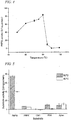
- OJ1G-364-1 has hydrolytic activity using PNPG as a substrate ( ⁇ -glucosidase activity) at least under conditions of a temperature of 80°C and a pH of 7. Actually, as shown in Example 1 ⁇ 8> described later, OJ1G-364-1 exhibits ⁇ -glucosidase activity within a temperature range from 50 to 85°C. More specifically, the ⁇ -glucosidase activity of OJ1G-364-1 tended to be increased as the temperature was increased within a range from 50 to 80°C and tended to be decreased rapidly when the temperature exceeded 80°C.
- one or two or more amino acids can be deleted, substituted, or added, without deteriorating the bioactivity.
- one or two or more amino acids can be deleted, substituted, or added, without causing loss of glycoside hydrolytic activity, including ⁇ -glucosidase activity.
- thermostable ⁇ -glucosidase according to the present invention is a thermostable ⁇ -glucosidase having a ⁇ -glucosidase catalytic domain which includes:
- polypeptide in which an amino acid is deleted means that a portion of the amino acids which constitute the polypeptide is missing (that is, removed).
- polypeptide in which an amino acid is substituted means that an amino acid which constitutes the polypeptide is replaced with a different amino acid.
- polypeptide in which an amino acid is added means that a new amino acid is inserted within the polypeptide.
- the number of amino acids to be deleted, substituted, or added in the amino acid sequence represented by SEQ ID NO: 1 is preferably from 1 to 20, more preferably from 1 to 10, and still more preferably from 1 to 5.
- sequence identity with the amino acid sequence represented by SEQ ID NO: 1 is not particularly limited as long as it is 90% or greater but less than 100%, although it is preferable to be 95% or greater but less than 100%, and more preferably 98% or greater but less than 100%.
- sequence identity between a pair of amino acid sequences is obtained such that: two amino acid sequences are juxtaposed while having gaps in some parts accounting for insertion and deletion so that the largest numbers of corresponding amino acids can be matched, and the sequence identity is deemed to be the proportion of the matched amino acids relative to the whole amino acid sequences excluding the gaps, in the resulting alignment.
- sequence identity between a pair of amino acid sequences can be obtained by using a variety of homology search software publicly known in the art.
- sequence identity value between amino acid sequences in the present invention is obtained by calculation on the basis of an alignment obtained from a publicly known homology search software BLASTP.
- polypeptides of (B) and (C) may be those that are artificially designed, or may also be homologues of OJ1G-364-1 and the like, or partial proteins thereof.
- the aforementioned polypeptides of (A) to (C) may be respectively synthesized in a chemical manner based on the amino acid sequence, or may also be produced by a protein expression system using the polynucleotide according to the present invention that will be described later.
- the aforementioned polypeptides of (B) and (C) can also be respectively synthesized artificially based on a polypeptide including the amino acid sequence represented by SEQ ID NO: 1, by using a genetic recombination technique to introduce amino acid mutation(s).
- the aforementioned polypeptides of (A) to (C) has hydrolytic activity (that is, ⁇ -glucosidase activity) using PNPG as a substrate at least under conditions of a temperature of 75°C and a pH of 7. For this reason, a thermostable ⁇ -glucosidase can be obtained by having any one of the aforementioned polypeptides of (A) to (C) as the ⁇ -glucosidase catalytic domain.
- thermostable ⁇ -glucosidase uses PNPG as a substrate.
- the aforementioned thermostable ⁇ -glucosidase may also use another type of ⁇ -glucan other than PNPG, an oligosaccharide, or the like as a substrate.
- thermostable ⁇ -glucosidase examples include PNPX; a glucan composed of ⁇ -1,3 bonds and ⁇ -1,4 bonds such as lichenan; xylan; a crystalline cellulose, such as Avicel, a bacterial crystalline cellulose (bacterial microcrystalline cellulose, BMCC) and a filter paper; PSA; CMC, a glucan composed of ⁇ -1,4 bonds; an oligosaccharide composed of ⁇ -1,4 bonds such as cellobiose; a glucan composed of ⁇ -1,3 bonds and ⁇ -1,6 bonds such as laminarin; a glucan composed of ⁇ -1,3 bonds; a glucan composed of ⁇ -1,6 bonds; and an oligosaccharide composed of ⁇ -1,6 bonds such as gentiobiose.
- PNPX a glucan composed of ⁇ -1,3 bonds and ⁇ -1,4 bonds such as lichenan
- xylan such as Avicel,
- thermostable ⁇ -glucosidase As the thermostable ⁇ -glucosidase according to the present invention, a thermostable ⁇ -glucosidase that also uses, in addition to PNPG, at least one member selected from the group consisting of PNPX, PSA, and xylan as a substrate is preferred.
- thermostable ⁇ -glucosidase according to the present invention preferably exhibits hydrolytic activity ( ⁇ -glucosidase activity) using PNPG as a substrate at least under conditions of a pH of 7 within a temperature range from 60 to 80°C, and more preferably within a temperature range from 50 to 85°C.
- the optimum temperature of the thermostable ⁇ -glucosidase according to the present invention is, at least under a condition of a pH of 7, preferably within the range from 60 to 85°C, more preferably within the range from 70 to 85°C, and still more preferably within the range from 75 to 80°C.
- thermostable ⁇ -glucosidase varies depending on the reaction temperature, it is within a pH range from 6.0 to 7.5.
- thermostable ⁇ -glucosidase according to the present invention those exhibiting ⁇ -glucosidase activity at least within a pH range of 5.0 to 8.0 are preferred, and those exhibiting ⁇ -glucosidase activity within a pH range of 4.0 to 8.0 are more preferred.
- thermostable ⁇ -glucosidase according to the present invention may also have, in addition to the aforementioned thermostable ⁇ -glucosidase activity, another type of cellulose hydrolysis activity other than the ⁇ -glucosidase activity.
- another type of cellulose hydrolysis activity can be exemplified by endoglucanase activity, xylanase activity, xylosidase activity, cellobiohydrolase activity, and the like, and xylanase activity is preferred.
- thermostable ⁇ -glucosidase according to the present invention may be an enzyme solely consisting of a ⁇ -glucosidase catalytic domain which includes any one of the aforementioned polypeptides of (A) to (C), or may further include other domains.
- other domains include a domain present in the known ⁇ -glucosidases other than the ⁇ -glucosidase catalytic domain.
- the thermostable ⁇ -glucosidase according to the present invention also includes enzymes obtained by substituting a ⁇ -glucosidase catalytic domain in a publicly known ⁇ -glucosidase with the aforementioned polypeptides of (A) to (C).
- thermostable ⁇ -glucosidase according to the present invention further includes, in addition to the ⁇ -glucosidase catalytic domain, a domain other than the ⁇ -glucosidase catalytic domain, it is preferable to include a cellulose-binding module.
- the cellulose-binding module may be either on the upstream (N-end side) or the downstream (C-end side) of the ⁇ -glucosidase catalytic domain.
- the cellulose-binding module and the ⁇ -glucosidase catalytic domain may be directly linked, or linked via a linker domain of an appropriate length.
- thermostable ⁇ -glucosidase according to the present invention is preferably such that the cellulose-binding module is present on the upstream or the downstream of the ⁇ -glucosidase catalytic domain via a linker domain, more preferably such that the cellulose-binding module is present on the upstream of the ⁇ -glucosidase catalytic domain via a linker domain.
- the cellulose-binding module contained in the thermostable ⁇ -glucosidase according to the present invention may suffice if it is a domain having an ability to bind to cellulose, for example, a domain having an ability to bind to PSA or a crystalline Avicel.
- the amino acid sequence thereof is not particularly limited.
- a cellulose-binding module of an already known protein or appropriately modified product thereof may be used.
- the thermostable ⁇ -glucosidase according to the present invention has a ⁇ -glucosidase catalytic domain and a cellulose-binding module, it is preferable that these are linked via a linker sequence.
- the amino acid sequence, the length, and the like, of the linker sequence are not particularly limited.
- thermostable ⁇ -glucosidase according to the present invention may also have a signal peptide enabling to transport it to a specific region to effect localization within a cell, or a signal peptide to effect extracellular secretion, at the N end or the C end.
- a signal peptide can be exemplified by an apoplastic transport signal peptide, an endoplasmic reticulum retention signal peptide, a nuclear transport signal peptide, a secretory signal peptide, or the like.
- the endoplasmic reticulum retention signal peptide can be exemplified by, for example, a signal peptide including a HDEL amino acid sequence, or the like.
- thermostable ⁇ -glucosidase according to the present invention has a signal peptide at the N end or the C end
- the thermostable ⁇ -glucosidase expressed in a transformant can be secreted outside the cell, or can be localized in the intracellular endoplasmic reticulum, or the like.
- thermostable ⁇ -glucosidase according to the present invention may also be added with, for example, various types of tags at the N end or the C end of the thermostable ⁇ -glucosidase, so as to enable easy and convenient purification in a case of the production using an expression system.
- tags for example, it is possible to use a tag for usual use in the expression or purification of a recombinant protein, such as a His tag, a HA (hemagglutinin) tag, a Myc tag, and a Flag tag.
- the polynucleotide according to the present invention encodes the thermostable ⁇ -glucosidase according to the present invention.
- the aforementioned thermostable ⁇ -glucosidase can be produced by using the expression system of a host made by introducing an expression vector incorporated with the polynucleotide into the host.
- polynucleotide according to the present invention is a polynucleotide having a region that encodes a ⁇ -glucosidase catalytic domain which includes:
- nucleotide sequence that encodes a polypeptide including an amino acid sequence having at least 90% sequence identity with the amino acid sequence represented by SEQ ID NO: 1, as well as having hydrolytic activity using PNPG as a substrate at least under conditions of a temperature of 75°C and a pH of 7.
- a "polynucleotide in which a nucleotide is deleted” means that a portion of the nucleotides which constitute the polynucleotide is missing (that is, removed).
- a "polynucleotide in which a nucleotide is substituted" means that a nucleotide which constitutes the polynucleotide is replaced with a different nucleotide.
- a "polynucleotide in which a nucleotide is added” means that a new nucleotide is inserted within the polynucleotide.
- the term "under a stringent condition" can be exemplified by the method described in Molecular Cloning - A Laboratory Manual Third Edition (Sambrook et al., Cold Spring Harbor Laboratory Press ).
- the example thereof includes a condition in which hybridization is performed by incubation in a hybridization buffer including 6 ⁇ SSC (composition of 20 ⁇ SSC: 3M sodium chloride, 0.3M citric acid solution, and pH7.0), 5 ⁇ Denhardt's solution (composition of 100 ⁇ Denhardt's solution: 2 mass% bovine serum albumin, 2 mass% Ficoll, 2 mass% polyvinylpyrrolidone), 0.5 mass% SDS, 0.1 mg/mL salmon sperm DNA, and 50% formamide, at a temperature of 42 to 70°C for several hours to overnight.
- the washing buffer for use in the washing after the incubation is preferably 1 ⁇ SSC solution containing 0.1 mass% SDS, and more preferably 0.1 ⁇ SSC solution containing
- nucleotide sequences of (a) to (e) it is preferable to select a degenerate codon having high frequency of usage in the host.
- the above-mentioned nucleotide sequence of (a) may be either the nucleotide sequence represented by SEQ ID NO: 2, or a nucleotide sequence altered to have a codon having high frequency of usage in the host without changing the amino acid sequence to be encoded by the nucleotide sequence represented by SEQ ID NO: 2.
- these codons can be altered by a publicly known gene sequence modification technique or artificial gene synthesis.
- the polynucleotide including the nucleotide sequence represented by SEQ ID NO: 2 may be synthesized in a chemical manner based on the nucleotide sequence information, or may be obtained as a full length of a gene that encodes OJ1G-364-1 (may be referred to as "OJ1G-364-1 gene” or "gene clone OJ1G-364-1") or a partial region thereof including the ⁇ -glucosidase catalytic domain from the natural world by using a genetic recombination technique.
- the full length of the OJ1G-364-1 gene or the partial region thereof can be obtained by, for example, collecting a sample containing microorganisms from the natural world, and conducting PCR using the genomic DNA recovered from the sample as a template, with a forward primer and a reverse primer designed on the basis of the nucleotide sequence represented by SEQ ID NO: 2 by a conventional method.
- the cDNA synthesized by a reverse transcription reaction using mRNA recovered from the sample as a template may also be used as a template.
- the sample for recovering the nucleic acid serving as a template is a sample collected from a high temperature environment such as hot spring soil.
- sequence identity with the nucleotide sequence represented by SEQ ID NO: 2 is not particularly limited as long as it is 80% or greater but less than 100%, although it is preferable to be 85% or greater but less than 100%, more preferably 90% or greater but less than 100%, and still more preferably 95% or greater but less than 100%.
- sequence identity between a pair of nucleotide sequences is obtained such that: two nucleotide sequences are juxtaposed while having gaps in some parts accounting for insertion and deletion so that the largest numbers of corresponding nucleotides can be matched, and the sequence identity is deemed to be the proportion of the matched nucleotides relative to the whole nucleotide sequences excluding gaps, in the resulting alignment.
- sequence identity between a pair of nucleotide sequences can be obtained by using a variety of homology search software publicly known in the art.
- sequence identity value between nucleotide sequences in the present invention is obtained by calculation on the basis of an alignment obtained from a publicly known homology search software BLASTN.
- the polynucleotide including the aforementioned nucleotide sequence of (b), (c), or (d) can be respectively synthesized artificially by deleting, substituting, or adding one or two or more nucleotides in a polynucleotide including the nucleotide sequence represented by SEQ ID NO: 2.
- the aforementioned nucleotide sequence of (b), (c), or (d) may also be a full length sequence of a homologous gene of the OJ1G-364-1 gene or a partial sequence thereof.
- the homologous gene of the OJ1G-364-1 gene can be obtained by a genetic recombination technique for use in obtaining a homologous gene of a gene whose nucleotide sequence has been already known.
- the polynucleotide according to the present invention may have only the region that encodes the ⁇ -glucosidase catalytic domain, or may also have a region that encodes a cellulose-binding module, a linker sequence, various types of signal peptides, various types of tags, or the like, in addition to the aforementioned region.
- the expression vector according to the present invention is incorporated with the aforementioned polynucleotide according to the present invention, and is able to express a polypeptide having hydrolytic activity using PNPG as a substrate at least under conditions of a temperature of 75°C and a pH of 7 in a host cell. That is, it is an expression vector which is incorporated with the aforementioned polynucleotide according to the present invention in a state where the aforementioned thermostable ⁇ -glucosidase according to the present invention can be expressed.
- the expression vector it is necessary for the expression vector to be incorporated with an expression cassette including, from the upstream, DNA having a promoter sequence, the aforementioned polynucleotide according to the present invention, and DNA having a terminator sequence.
- an expression cassette including, from the upstream, DNA having a promoter sequence, the aforementioned polynucleotide according to the present invention, and DNA having a terminator sequence.
- the incorporation of the polynucleotide into the expression vector can be performed by using a well-known genetic recombination technique. It is also possible to use a commercially available expression vector preparation kit for the incorporation of the polynucleotide into the expression vector.
- an "expression vector” is a vector including, from the upstream, DNA having a promoter sequence, DNA having a sequence for incorporating foreign DNA, and DNA having a terminator sequence.
- the expression vector may be a vector to be introduced into a prokaryotic cell such as E.coli, or to be introduced into a eukaryotic cell such as a yeast, a filamentous fungus, a cultured insect cell, a cultured mammalian cell, or a plant cell.
- a prokaryotic cell such as E.coli
- a eukaryotic cell such as a yeast, a filamentous fungus, a cultured insect cell, a cultured mammalian cell, or a plant cell.
- an arbitrary expression vector for usual use can be adopted corresponding to the respective host.
- the expression vector according to the present invention is an expression vector incorporated with not only the aforementioned polynucleotide according to the present invention but also a drug resistance gene or the like. This is because it makes it easy to screen host cells transformed by the expression vector and untransformed host cells.
- the drug resistance gene can be exemplified by a kanamycin resistance gene, a hygromycin resistance gene, a bialaphos resistance gene, or the like.
- the transformant according to the present invention is introduced with the above-mentioned expression vector according to the present invention.
- the thermostable ⁇ -glucosidase according to the present invention can be expressed.
- the host to introduce the expression vector may be a prokaryotic cell such as E.coli or a eukaryotic cell such as a yeast, a filamentous fungus, a cultured insect cell, a cultured mammalian cell, or a plant cell. That is, the transformant according to the present invention is E.coli, a yeast, a filamentous fungus, a cultured insect cell, a cultured mammalian cell, a plant cell, or the like which is introduced with the expression vector according to the present invention.
- thermostable ⁇ -glucosidase according to the present invention can be produced more easily and conveniently with high yield.
- a thermostable ⁇ -glucosidase which is more thermostable can be produced by using a transformant of a eukaryotic cell rather than by using a transformant of a prokaryotic cell.
- the method to produce the transformant using the expression vector is not particularly limited, and a method for usual use in the production of transformants can be conducted.
- the concerned method can be exemplified by an Agrobacterium-mediated method, a particle gun method, an electroporation method, a PEG (polyethylene glycol) method, and the like. Of these, if the host is a plant cell, a particle gun method or an Agrobacterium-mediated method is preferred.
- the obtained transformant is generally able to be cultured by a usual method in the same manner as that of the untransformed host.
- the method for producing a thermostable ⁇ -glucosidase according to the present invention is a method to produce a thermostable ⁇ -glucosidase in the aforementioned transformant according to the present invention.
- the thermostable ⁇ -glucosidase according to the present invention is expressed constitutively.
- thermostable ⁇ -glucosidase is expressed in the concerned transformant by culturing the transformant and conducting an induction treatment suitable for the respective expression-inducing condition.
- thermostable ⁇ -glucosidase produced by the transformant may be used in a state of being retained in the transformant, or may be extracted/purified from the transformant.
- the method to extract or purify the thermostable ⁇ -glucosidase from the transformant is not particularly limited as long as the method does not deteriorate the activity of the thermostable ⁇ -glucosidase, and the extraction can be done by a method for usual use in the extraction of a polypeptide from cells or biological tissues.
- the method can be exemplified by a method in which the transformant is immersed in an appropriate extraction buffer to extract the thermostable ⁇ -glucosidase, and thereafter the liquid extract and the solid residue are separated.
- the extraction buffer preferably contains a solubilizing agent such as a surfactant. If the transformant is a plant, the transformant may be previously shredded or crushed before immersing in an extraction buffer.
- thermostable ⁇ -glucosidase in the liquid extract can be purified by using a publicly known purification method such as a salting-out method, an ultrafiltration method, or a chromatography method.
- thermostable ⁇ -glucosidase according to the present invention is expressed while the secretory signal peptide is held in the transformant, a solution containing the thermostable ⁇ -glucosidase can be easily and conveniently obtained by culturing the transformant and thereafter recovering a culture liquid supernatant made by removal of the transformant from the obtained culture product.
- thermostable ⁇ -glucosidase according to the present invention has a tag such as a His tag, the thermostable ⁇ -glucosidase in a liquid extract or in a culture supernatant can be easily and conveniently purified by an affinity chromatography method using the tag.
- the method for producing a thermostable ⁇ -glucosidase according to the present invention includes the culturing of the transformant according to the present invention to produce a thermostable ⁇ -glucosidase within the transformant, and, according to need, the extraction and purification of the thermostable ⁇ -glucosidase from the transformant.
- the glycoside hydrolase mixture according to the present invention can also be used as a mixture containing the aforementioned thermostable ⁇ -glucosidase according to the present invention, or a thermostable ⁇ -glucosidase produced by the aforementioned method for producing a thermostable ⁇ -glucosidase according to the present invention, and at least one or more types of other glycoside hydrolases.
- the thermostable ⁇ -glucosidase produced by the aforementioned method for producing a thermostable ⁇ -glucosidase according to the present invention may be in a state of being included in the transformant, or may be extracted or purified from the transformant.
- thermostable ⁇ -glucosidase according to the present invention as a mixture with other glycoside hydrolases in the reaction to degrade a material composed of lignocellulose containing cellulose, the material composed of lignocellulose containing persistent cellulose can be more efficiently degraded.
- the other glycoside hydrolase than the aforementioned thermostable ⁇ -glucosidase to be contained in the glycoside hydrolase mixture is not particularly limited as long as it has hydrolysis activity for cellulose or hemicellulose.
- the other glycoside hydrolase than the aforementioned ⁇ -glucosidase to be contained in the glycoside hydrolase mixture can be exemplified by hemicellulases such as xylanase or ⁇ -xylosidase, cellobiohydrolase, ⁇ -glucosidase, endoglucanase, or the like.
- the glycoside hydrolase mixture according to the present invention is preferably a mixture further containing at least either one of glycoside hydrolases (i.e., a hemicellulase or an endoglucanase), and more preferably a mixture containing both of glycoside hydrolases (i.e., a hemicellulase and an endoglucanase).
- thermostable ⁇ -glucosidase a mixture further containing, in addition to the thermostable ⁇ -glucosidase, at least one of glycoside hydrolases selected from the group consisting of xylanase, ⁇ -xylosidase, cellobiohydrolase, and endoglucanase is preferred; and a mixture containing all of glycoside hydrolases (i.e., xylanase, ⁇ -xylosidase, cellobiohydrolase, and endoglucanase) is more preferred.
- the other glycoside hydrolase to be contained in the glycoside hydrolase mixture is preferably a thermostable glycoside hydrolase having glycoside hydrolysis activity at least at a temperature of 70°C, and more preferably a thermostable glycoside hydrolase having glycoside hydrolysis activity at a temperature of 70 to 85°C.
- thermostable glycoside hydrolase having glycoside hydrolysis activity at least at a temperature of 70°C and more preferably a thermostable glycoside hydrolase having glycoside hydrolysis activity at a temperature of 70 to 85°C.
- the glycoside hydrolase mixture contains only thermostable glycoside hydrolases, it becomes possible, by using the glycoside hydrolase mixture for the hydrolysis process of a material composed of lignocellulose containing cellulose, to conduct the hydrolysis reaction of the material composed of lignocellulose containing cellulose under a high temperature environment where the hydrolysis temperature is from 70 to 85°C (high temperature hydrolysis). With this high temperature hydrolysis, the amount of enzymes and the time for hydrolysis can be remarkably reduced, and the cost for hydrolysis can be largely cut out.
- the method for producing a lignocellulose degradation product according to the present invention is a method to degrade a material composed of lignocellulose containing cellulose, for example, a material containing a compound with a ⁇ -glycosidic bond, to thereby obtain the degradation product thereof, with the thermostable ⁇ -glucosidase according to the present invention.
- thermostable ⁇ -glucosidase for example, a material containing a compound with a ⁇ -glycosidic bond is brought into contact with the thermostable ⁇ -glucosidase according to the present invention, the transformant according to the present invention, a thermostable ⁇ -glucosidase produced by the method for producing a thermostable ⁇ -glucosidase according to the present invention, or the glycoside hydrolase mixture according to the present invention.
- a lignocellulose degradation product for example, a degradation product of cellulose (for example, a degradation product in a state where the ⁇ -glycosidic bonds in the aforementioned material have been fully or partially degraded, and such a degradation product can be exemplified by monosaccharide such as glucose and xylose, oligosaccharide consisting of such the monosaccharide and the like) is produced.
- the material composed of lignocellulose containing cellulose is not particularly limited as long as it contains cellulose, for example, a compound containing a ⁇ -glycosidic bond.
- a material can be exemplified by cellulose-based biomass such as a weed and an agricultural waste, used paper, or the like.
- the above material is preferably subjected to a physical treatment such as crushing or shredding, a chemical treatment with an acid, alkali, or the like, or a treatment such as immersing in an appropriate buffer or a dissolution treatment, or the like, prior to being brought into contact with the thermostable ⁇ -glucosidase according to the present invention.
- a physical treatment such as crushing or shredding, a chemical treatment with an acid, alkali, or the like, or a treatment such as immersing in an appropriate buffer or a dissolution treatment, or the like, prior to being brought into contact with the thermostable ⁇ -glucosidase according to the present invention.
- the reaction condition of the hydrolysis reaction of the material composed of lignocellulose containing cellulose may suffice if the condition allows the thermostable ⁇ -glucosidase to exhibit ⁇ -glucosidase activity.
- the reaction time of the hydrolysis reaction is appropriately adjusted in consideration of the type, the method of pretreatment, the amount, or the like, of the material composed of lignocellulose containing cellulose to be supplied to the hydrolysis.
- the hydrolysis reaction can be carried out in a reaction time of 10 minutes to 100 hours, and 1 to 100 hours when degrading the cellulose-based biomass.
- the hydrolysis reaction of the aforementioned material composed of lignocellulose containing cellulose it is also preferable to use at least one or more types of other glycoside hydrolases simultaneously or separately, in addition to the thermostable ⁇ -glucosidase according to the present invention.
- the other glycoside hydrolase may be the same as the glycoside hydrolase that can be contained in the aforementioned glycoside hydrolase mixture, and it is preferable to be a thermostable glycoside hydrolase having glycoside hydrolysis activity at least at a temperature of 70°C, and preferably at least at a temperature of 70 to 85°C.
- thermostable ⁇ -glucosidase according to the present invention the transformant according to the present invention, or a thermostable ⁇ -glucosidase produced by the method for producing a thermostable ⁇ -glucosidase according to the present invention, and another aspect is the use of the aforementioned glycoside hydrolase mixture.
- soil DNA was collected from neutral to weakly alkaline hot springs and subjected to nucleotide sequencing of the metagenomic DNA of the microbiota constituting the soil.
- hot spring water containing soil, clay, and biomat was collected from five sampling points having gushing high temperature outdoor hot springs in three areas in Japan (metagenomic DNA samples N2, AR19, AR15, OJ1, and HI). These hot spring soil samples were within a range of temperature from 58 to 78°C and a pH of 7.2 to 8 at the time of the collection.
- DNA was extracted from 10 g of each of the collected hot spring soil samples by using the DNA extraction kit (ISOIL Large for Beads ver.2, manufactured by NIPPON GENE Co., Ltd.). 5 ⁇ g of the extracted DNA was subjected to shotgun sequencing of the metagenomic DNA by using the sequencer GS FLX Titanium 454 manufactured by Roche Diagnostics K.K. The remaining DNA was used for PCR cloning of the ⁇ -glucosidase gene.
- the DNA extraction kit ISOIL Large for Beads ver.2, manufactured by NIPPON GENE Co., Ltd.
- 5 ⁇ g of the extracted DNA was subjected to shotgun sequencing of the metagenomic DNA by using the sequencer GS FLX Titanium 454 manufactured by Roche Diagnostics K.K. The remaining DNA was used for PCR cloning of the ⁇ -glucosidase gene.
- the metagenomic DNA sequencing was carried out using the hot spring soil sample OJ1. By so doing, a data set of the whole genome sequence (WGS) with an average read length of 390 bp, a total read number of 6,301,450, and a total quantity of sequenced genomes of 2,456,206,434 bp, was obtained.
- WGS whole genome sequence
- the total of the quality filter processed reads and 100 bp or longer assemble contigs was 1.9 Gbp. This data set was used for the ⁇ -glucosidase enzyme gene analysis. Out of the total read number of 6,301,450, 3,908,909 reads were assembled into contigs (188,991 contigs in total). Of these, the longest contig length was 278,185 bp.
- the result of the GH family classification of 291 ORFs predicted as candidate sequences of ⁇ -glucosidase is shown in Table 1. Those that covered 70% or more of the sequence of GH catalytic domain were counted. The sequences exhibiting a coverage of the GH catalytic domain of less than 70% and the sequences whose homologues could not be found in the Pfam database were classified as unknown GH. As shown in Table 1, 14 ⁇ -glucosidase ORFs belonging to the GH1 family were obtained. On the other hand, 71 ORF sequences belonging to the GH3 family, 17 ORFs belonging to the GH31 family, and 9 ORFs belonging to the GH43 family were obtained, respectively.
- Primers were designed for all of these 111 ORFs including incomplete sequences in which the presence of ⁇ -glucosidase catalytic domain sequences could be confirmed, and these genes were cloned from the hot spring soil metagenomic DNA by PCR.
- initiation codons (L, V) other than methionine (M) were predicted at times, and the number of full-length ORFs indicated in Table 1 also include ORFs with these initiation codons.
- primers were designed so as to add the codon sequence of methionine (ATG) to the 3' end of the sequence.
- the open reading frame OJ1G-364 encoded a polypeptide (SEQ ID NO: 1) including 438 amino acid residues and was a full-length sequence (SEQ ID NO: 2), such that the polypeptide started from methionine which was an amino acid residue at position 1, and the 3' end of the nucleotide sequence encoding the polypeptide ended with a termination codon. From the sequence homology of motifs, 432 amino acids from phenylalanine (F) at position 7 to serine (S) at the end at position 438 in the polypeptide encoded by the open reading frame OJ1G-364 were predicted to be a catalytic domain of the Glycoside hydrolase family 1.
- FIG. 1 shows a pairwise alignment of the amino acid sequence of the ⁇ - glucosidase catalytic domain of the open reading frame OJ1G-364 (completely identical with the OJ1G-364-1 gene) and the amino acid sequence of the ⁇ -glucosidase (Genbank registration ID: AAN60220.1) of Fervidobacterium sp. YNP.
- the black/white inverted amino acids denote the same amino acid residues (identical) throughout all of these amino acid sequences, and the shaded amino acids denote similar amino acid residues (similar) in these amino acid sequences.
- PCR was conducted using a hot spring soil DNA that had been amplified by the genomic DNA amplification kit (GenomiPhi V2 DNA Amplification Kit, manufactured by GE Healthcare) as a template, and by using a forward primer composed of the nucleotide sequence represented by SEQ ID NO: 5 (5'-CACCATGATAAAGAGATCCGATTTTC-3': obtained by adding 4 nucleotides (CACC) to the 5'-end side of the nucleotide sequence represented by SEQ ID NO: 3.
- the nucleotides CACC added on the 5' side is a sequence for insertion into a vector) and a reverse primer composed of the nucleotide sequence represented by SEQ ID NO: 4 (5'-TTACGATATGAGGAAATCTTTCAACC-3').
- SEQ ID NO: 3 is a nucleotide sequence which is homologous (identical) with a partial sequence including the nucleotides at position 1 to 22 of the nucleotide sequence represented by SEQ ID NO: 2.
- nucleotide sequence represented by SEQ ID NO: 4 is a nucleotide sequence which is complementary with a partial sequence including the nucleotides at position 1292 to 1317 of the nucleotide sequence represented by SEQ ID NO: 2.
- the amplified PCR products were inserted in the pET101/D-TOPO vector of Champion pET Directional TOPO Expression Kits (manufactured by Life Technologies), and transformed into the One Shot T0P10 strain.
- Positive clones were selected by colony PCR, and then cultured in a LB liquid medium containing 100 mg/L ampicillin at a temperature of 37°C and 200 rpm for 17 to 20 hours, followed by the preparation of plasmids using the miniprep kit (Wizard plus SV Minipreps DNA Purification System, manufactured by Promega). The prepared plasmids were sequenced by using the 3730 DNA Analyzer (manufactured by Life Technologies Corporation).
- OJ1G-364-1 and OJ1G-364-7 Two gene clones OJ1G-364-1 and OJ1G-364-7 were obtained from the open reading frame OJ1G-364 by PCR cloning.
- the nucleotide sequence of OJ1G-364-1 which was a ⁇ -glucosidase candidate gene included 1,317 bp in the same manner as the open reading frame OJ1G-364 (SEQ ID NO: 2), and was encoding exactly the same amino acid sequence as that of OJ1G-364.
- the ⁇ -glucosidase candidate gene OJ1G-364-7 was a single amino acid variant of OJ1G-364, and leucine (L) at position 124 in the amino acid sequence of OJ1G-364 (SEQ ID NO: 2) was serine (S).
- the polypeptide (OJ1G-364-1) encoded by the ⁇ -glucosidase candidate gene OJ1G-364-1 (hereafter, may be referred to as an "OJ1G-364-1 gene") was composed of 438 amino acids, and no signal peptide was detected.
- OJ1G-364-1 was a polypeptide in which 433 amino acids (K3-L435) from lysine at position 3 to leucine at position 435 showed a partial amino acid sequence of the ⁇ -glucosidase catalytic domain belonging to the GH1 family.
- the plasmids having the target gene were introduced in E.coli for protein expression by a heat shock method.
- the BL21 Star (DE3) strain furnished in the Champion pET Directional TOPO Expression Kits (manufactured by Life Technologies) was used as the competent cell for the transformation.
- the gene recombinant E.coli homogenate supernatant was loaded onto an ion-exchange column HiTrap Q HP (manufactured by GE Healthcare) equilibrated with 50 mM Tris-HCl buffer (pH8.0), by which proteins were fractionated with 0 to 50% concentration gradient with 50 mM Tris-HCl buffer (pH8.0) containing 1M NaCl using a middle-to-high pressure liquid chromatography system AKTA design (manufactured by GE Healthcare).
- the fractions exhibiting ⁇ -glucosidase activity were all mixed and then subjected to solution exchange into 50 mM Tris-HCl buffer (pH8.0) containing 750 mM ammonium sulfate using a centrifugal ultrafiltration membrane VIVASPIN 20 (manufactured by Sartorius stedim).
- the fractions with ⁇ -glucosidase activity after the solution exchange were loaded onto a hydrophobic interaction separation column HiTrap Phnenyl HP (manufactured by GE Healthcare) equilibrated with the same solution, by which proteins were fractionated with 0 to 100% concentration gradient with 50 mM Tris-HCl buffer (pH8.0).
- the fractions exhibiting ⁇ -glucosidase activity were all mixed and then concentrated by using the VIVASPIN 20 until the liquid volume reached to about 8 mL.
- the concentrated sample was added to a gel filtration column Hiload 26/60 superdex 200 pg (manufactured by GE Healthcare) equilibrated with 50 mM Tris-HCl buffer (pH8.0) containing 150 mM NaCl, and fractionated by flowing the same buffer of 1 to 1.5 fold volume of the column volume at a flow rate of 2 to 3 mL/min.
- the fractions exhibiting ⁇ -glucosidase activity were all mixed and then subjected to solution exchange into 50 mM Tris-HCl buffer (pH8.0) and concentrated. By so doing, a purified enzyme having the final concentration of about 1 mg/mL was obtained.
- the gene recombinant E.coli homogenate supernatant and the purified enzyme were checked by SDS-PAGE (SDS-polyacrylamide gel electrophoresis) analysis.
- SDS PAGE of the gene recombinant E.coli homogenate supernatant and the purified enzyme were respectively conducted by using the AnykD Criterion TGX Strain-Free Precast Gel (manufactured by Bio-Rad Laboratories, Inc.).
- the electrophoresis samples prepared by respectively mixing the supernatant or the purified enzyme diluted to 0.13 mg/mL with Tris-SDS ⁇ ME treatment solution (manufactured by Cosmo Bio Co., Ltd.) at 1:1 were treated at a temperature of 98°C for 10 minutes.
- FIG. 2 shows the SDS-PAGE analysis result of the gene recombinant E.coli homogenate supernatant prepared from the transformed E.coli introduced with the OJ1G-364-1 gene and the purified enzyme which was purified from the gene recombinant E.coli homogenate supernatant.
- the lane 1 is a molecular weight marker for proteins
- the lanes 2 and 3 show the electrophoresis patterns of the gene recombinant E.coli homogenate supernatant and the purified enzyme, respectively.
- PNPG was used as a substrate in the measurement of the ⁇ -glucosidase activity.
- the pH dependency of the PNPG hydrolysis activity of the enzymatic protein (OJ1G-364-1) encoded by the OJ1G-364-1 gene was investigated.
- a purified enzyme solution prepared by diluting the purified enzyme obtained from the above-mentioned process ⁇ 7> to 0.005 mg/mL with 50 mM Tris-HCl buffer (pH 8.0) was used.
- the measurement of the PNPG hydrolysis activity of the purified enzyme was conducted by allowing a mixture solution composed of 50 ⁇ L of a 40 mM PNPG aqueous solution, 50 ⁇ L of McIlvaine buffer (at a pH of 3.0, 4.0, 5.0, 6.0, 6.5, 7.0 or 8.0), 80 ⁇ L of purified water, and 20 ⁇ L of the purified enzyme solution, to react at a temperature of 50°C or 80°C for 15 minutes (enzyme final concentration: 0.0005 mg/mL, substrate final concentration: 10mM).
- the absorbance at 420 nm was measured by using a spectrophotometer, and the amount of p-nitrophenol in the supernatant was calculated by using a calibration curve prepared with p-nitrophenol.
- the amount of p-nitrophenol produced by the enzymatic hydrolysis was obtained by the difference from the control lot.
- the enzymatic activity for producing 1 ⁇ mol of p-nitrophenol per minute was defined as 1U, and the value obtained by dividing it by the amount of protein was defined as the specific activity (U/mg).
- each measurement was performed by three independent experiments, from which the mean value and the standard errors were obtained.
- the measurement of the PNPG hydrolysis activity of the purified enzyme was conducted by performing the enzymatic reaction in the same manner as in the case of examining the pH dependency of the PNPG hydrolysis activity of OJ1G-364-1, except for using a phosphoric acid buffer of a pH of 7.0 in place of the Mcllvaine buffer and conducting at a reaction temperature of 50, 60, 70, 75, 80, 85, 90, or 99°C. Then, the absorbance at 420 nm of the supernatant of the mixture solution after the reaction was measured to obtain the amount of p-nitrophenol produced by the hydrolysis.
- FIG. 3 is a diagram showing the measurement results of the PNPG hydrolysis activity of the purified enzyme OJ1G-364-1 at a temperature of 50°C or 80°C at respective pH values, wherein the horizontal axis represents the pH.
- FIG. 4 is a diagram showing the measurement results of the PNPG hydrolysis activity (pH7.0) at respective temperatures, wherein the horizontal axis represents the temperature. The pH was plotted by the actual measurement values of the mixture solution containing the substrate, the buffer, and the enzyme.
- the purified enzyme of OJ1G-364-1 exhibited high PNPG hydrolysis activity in a temperature range from 60 to 80°C ( FIG. 4 ).
- the optimum temperature (T opt ) showing the highest activity was 80°C at a pH of 7.0.
- T opt The optimum temperature showing the highest activity was 80°C at a pH of 7.0.
- the purified enzyme of OJ1G-364-1 exhibited high PNPG hydrolysis activity within a range of pH5 to 8 at a reaction temperature from 50 to 80°C ( FIG. 3 ).
- the optimum pH varied depending on the reaction temperature, which was a pH of 7.05 (actual measurement value) at a temperature of 50°C, and a pH of 7.1 (actual measurement value) at a temperature of 80°C.
- a low level of PNPG hydrolysis activity was observed in the purified enzyme of OJ1G-364-1 in ranges of a reaction temperature of 50°C and a pH of 3.25, and a reaction temperature of 80°C and a pH of 3.3 to 4.2.
- the hydrolysis activities for various cellulose substrates and hemicellulose substrates were investigated with the enzymatic protein (OJ1G-364-1) encoded by the OJ1G-364-1 gene.
- a purified enzyme solution prepared by diluting the purified enzyme obtained from the above-mentioned process ⁇ 7> to 0.005 mg/mL with 50 mM Tris-HCl buffer (pH 8.0) was used.
- substrates PNPG (manufactured by Sigma-Aldrich Co. LLC.), PNPX (manufactured by Sigma-Aldrich Co. LLC.), CMC (manufactured by Sigma-Aldrich Co. LLC.), PSA, and xylan (derived from beechwood, manufactured by Sigma-Aldrich Co. LLC.) were used.
- PSA was prepared by once dissolving an Avicel powder (fine crystalline cellulose powder, manufactured by Merck) with a phosphoric acid solution, then precipitating it by adding sterile purified water, and thereafter washing the same until the pH reached 5 or higher. It should be noted that PSA used for all the following experiments was prepared by the above method.
- reaction solution a mixture solution composed of 50 ⁇ L of phosphoric acid buffer at a pH of 7.0, 20 ⁇ L of the purified enzyme solution, the substrate aqueous solution and purified water was used.
- concentration and amount of the substrate solution and the amount of purified water to be added to the mixture solution were set in such a manner that 50 ⁇ L of a 40 mM substrate aqueous solution and 80 ⁇ L of purified water were added when PNPG or PNPX was used as the substrate, 100 ⁇ L of a 1% by mass substrate aqueous solution and 30 ⁇ L of purified water were added when CMC, PSA or xylan was used as the substrate.
- Each mixture solution was incubated at a temperature of 50°C or 80°C for 15 minutes to thereby carry out the enzymatic reaction.
- the substrate solution and the mixture of the purified enzyme solution and purified water and the buffer were respectively and separately kept at retained reaction temperatures for 5 minutes, and then mixed. This timing was set to the initiation of the reaction.
- agitation at 1,400 rpm was applied to the mixture solution using the Thermomixer (manufactured by Eppendorf AG) so as to avoid the precipitation of the substrate.
- the resulting mixture was treated by heating at a temperature of 100°C for 5 minutes, cooled down on ice for 5 minutes, and then centrifuged at 17,400g for 5 minutes at room temperature. By so doing, the supernatant was obtained.
- the absorbance at 540 nm was measured by using a spectrophotometer, and the amount of reduced sugar in the supernatant was calculated by using a calibration curve prepared with glucose (calibration curve prepared with xylose when xylan was used as a substrate).
- the amount of reduced sugar produced by the enzymatic hydrolysis was obtained by the difference from the control lot.
- the enzymatic activity for producing 1 ⁇ mol of reduced sugar per minute was defined as 1U, and the value obtained by dividing it by the amount of protein was defined as the specific activity (U/mg).
- OJ1G-364-1 exhibited high hydrolysis activity for PNPG, and also exhibited degradation activity for PNPX, xylan, and PSA (only at 80°C). On the other hand, OJ1G-364-1 exhibited almost no degradation activity for CMC. From these results, it was shown that OJ1G-364-1 was ⁇ -glucosidase and also has a certain level of xylanase activity.
- DSF Differential scanning fluorimetry
- SYPRO Orange emit fluorescence in the nonpolar conditions when binding to the hydrophobic site, while the emission is suppressed in the polar conditions when dissolved in water.
- the protein structure is unfolded in the thermal denaturation temperature, and the hydrophobic regions of the protein are exposed to the protein surface.
- SYPRO Orange binds to this exposed hydrophobic region, by the excitation light having a wavelength of 470 to 480 nm, strong fluorescence having a peak near a wavelength of 595 nm is emitted.
- the PCR plate was sealed with Optical Flat 8-Cap Strips (manufactured by Bio-Rad Laboratories, Inc.), the temperature of the well was increased by 0.2°C from 30°C up to 100°C by a real-time PCR machine (CFX96 Touch Real-Time PCR System, manufactured by Bio-Rad Laboratories, Inc.), and following a lapse of 10 seconds after the target temperature was achieved, the fluorescence intensity of each well was measured simultaneously.
- CFX96 Touch Real-Time PCR System manufactured by Bio-Rad Laboratories, Inc.
- SYPRO Orange was excited by a light emitting diode (LED) having a wavelength range of 450 to 490 nm, the SYPRO Orange emitted light was passed through a band pass filter of 560 to 580 nm range, the measurement of the fluorescence intensity was performed with a CCD camera, and changes in the fluorescence intensity were plotted as a function of temperature.
- the data analysis was carried out using the analysis software CFX Manager (manufactured by Bio-Rad Laboratories, Inc.) supplied with the real-time PCR machine. Each measurement was performed by three independent experiments.
- FIG. 6 shows changes in the fluorescence intensity of SYPRO Orange caused in association with the thermal denaturation exhibited by the OJ1G-364-1 enzymatic protein which was measured by the DSF method.
- the upper graph in FIG. 6 shows measured data
- the lower graph in FIG. 6 shows the first derivative "- d (Fluorescence)/ dt " of the fluorescence intensity change curve in the upper graph of FIG. 6 .
- the thermal denaturation temperature (melting temperature; Tm value) was defined as the local minimum value of the first derivative ("- d (Fluorescence)/ dt " shown on the Y axis of the lower graph in FIG. 6 ) of the fluorescence intensity curve that is a function of temperature.
- the local minimum points were observed at two locations near 50°C and 83°C. Since the OJ1G-364-1 enzymatic protein also exhibited the enzymatic activity in the range of 60°C to 80°C, it was thought that the local minimum point near 50°C suggested some sort of structural change in the protein molecule but did not indicate the thermal denaturation, and the actual thermal denaturation temperature was indicated by the local minimum point of around 83°C.
Landscapes
- Chemical & Material Sciences (AREA)
- Organic Chemistry (AREA)
- Life Sciences & Earth Sciences (AREA)
- Engineering & Computer Science (AREA)
- Zoology (AREA)
- Health & Medical Sciences (AREA)
- Wood Science & Technology (AREA)
- Bioinformatics & Cheminformatics (AREA)
- Genetics & Genomics (AREA)
- General Health & Medical Sciences (AREA)
- General Engineering & Computer Science (AREA)
- Biochemistry (AREA)
- Microbiology (AREA)
- Biotechnology (AREA)
- Biomedical Technology (AREA)
- Molecular Biology (AREA)
- Medicinal Chemistry (AREA)
- Chemical Kinetics & Catalysis (AREA)
- General Chemical & Material Sciences (AREA)
- Enzymes And Modification Thereof (AREA)
- Micro-Organisms Or Cultivation Processes Thereof (AREA)
- Preparation Of Compounds By Using Micro-Organisms (AREA)
Claims (9)
- β-glucosidase thermostable comprenant un polypeptide consistant en une séquence d'acides aminés représentée par SEQ ID NO: 1.
- Polynucléotide comprenant une séquence de nucléotides qui code un polypeptide consistant en une séquence d'acides aminés représentée par SEQ ID NO: 1.
- Polynucléotide selon la revendication 2, dans lequel ledit polypeptide a une activité de xylanase.
- Vecteur d'expression, qui est incorporé avec le polynucléotide selon la revendication 2 ou 3, et qui est apte à exprimer un polypeptide ayant une activité de β-glucosidase dans une cellule hôte.
- Transformant, qui est introduit avec le vecteur d'expression selon la revendication 4.
- Transformant selon la revendication 5, qui est un microbe eucaryote.
- Procédé de production d'une β-glucosidase thermostable, le procédé comprenant la production d'une β-glucosidase thermostable dans le transformant selon la revendication 5 ou 6.
- Mélange de glycoside hydrolases, comprenant la β-glucosidase thermostable selon la revendication 1, une β-glucosidase thermostable codée par le polynucléotide selon la revendication 2 ou 3, ou une β-glucosidase thermostable produite par le procédé de production d'une β-glucosidase thermostable selon la revendication 7, et au moins un ou plusieurs types d'autres glycoside hydrolases.
- Procédé de production d'un produit de dégradation de lignocellulose, le procédé comprenant la production d'un produit de dégradation de lignocellulose contenant un produit de dégradation de cellulose en amenant un matériau composé de lignocellulose contenant de la cellulose en contact avec la β-glucosidase thermostable selon la revendication 1, une β-glucosidase thermostable codée par le polynucléotide selon la revendication 2 ou 3, le transformant selon la revendication 5 ou 6, une β-glucosidase thermostable produite par le procédé de production d'une β-glucosidase thermostable selon la revendication 7, ou le mélange de glycoside hydrolases selon la revendication 8.
Applications Claiming Priority (1)
| Application Number | Priority Date | Filing Date | Title |
|---|---|---|---|
| JP2014184909A JP6319904B2 (ja) | 2014-09-11 | 2014-09-11 | 耐熱性β−グルコシダーゼ |
Publications (2)
| Publication Number | Publication Date |
|---|---|
| EP2995687A1 EP2995687A1 (fr) | 2016-03-16 |
| EP2995687B1 true EP2995687B1 (fr) | 2019-08-07 |
Family
ID=54105728
Family Applications (1)
| Application Number | Title | Priority Date | Filing Date |
|---|---|---|---|
| EP15184676.3A Not-in-force EP2995687B1 (fr) | 2014-09-11 | 2015-09-10 | Beta-glucosidase thermostable |
Country Status (3)
| Country | Link |
|---|---|
| US (1) | US9752135B2 (fr) |
| EP (1) | EP2995687B1 (fr) |
| JP (1) | JP6319904B2 (fr) |
Families Citing this family (1)
| Publication number | Priority date | Publication date | Assignee | Title |
|---|---|---|---|---|
| JP6330240B2 (ja) * | 2014-12-12 | 2018-05-30 | 本田技研工業株式会社 | 耐熱性β−グルコシダーゼ |
Family Cites Families (5)
| Publication number | Priority date | Publication date | Assignee | Title |
|---|---|---|---|---|
| DE69729870T2 (de) * | 1996-01-11 | 2006-03-02 | Diversa Corp., San Diego | Glykosidaseenzyme |
| JPH1052274A (ja) | 1996-08-12 | 1998-02-24 | Kikkoman Corp | 耐熱性β−グルコシダーゼ遺伝子、新規な組み換え体DNA及び耐熱性β−グルコシダーゼの製造法 |
| AU2001292292A1 (en) | 2000-09-29 | 2002-04-08 | Meiji Seika Kaisha Ltd. | Novel enzyme having beta-glucosidase activity and use thereof |
| JP4689807B2 (ja) | 2000-09-29 | 2011-05-25 | 独立行政法人産業技術総合研究所 | 新規なβ−グルコシダーゼ |
| JP6330240B2 (ja) * | 2014-12-12 | 2018-05-30 | 本田技研工業株式会社 | 耐熱性β−グルコシダーゼ |
-
2014
- 2014-09-11 JP JP2014184909A patent/JP6319904B2/ja active Active
-
2015
- 2015-09-10 EP EP15184676.3A patent/EP2995687B1/fr not_active Not-in-force
- 2015-09-10 US US14/850,732 patent/US9752135B2/en not_active Expired - Fee Related
Non-Patent Citations (1)
| Title |
|---|
| None * |
Also Published As
| Publication number | Publication date |
|---|---|
| JP2016054699A (ja) | 2016-04-21 |
| JP6319904B2 (ja) | 2018-05-09 |
| US20160076016A1 (en) | 2016-03-17 |
| EP2995687A1 (fr) | 2016-03-16 |
| US9752135B2 (en) | 2017-09-05 |
Similar Documents
| Publication | Publication Date | Title |
|---|---|---|
| EP3031926B1 (fr) | Beta-glucosidase thermostable | |
| EP2982749B1 (fr) | Beta-xylosidase thermostable appartenant à la famille gh 3 | |
| EP2990482B1 (fr) | Xylanase thermostable appartenant à la famille gh 10 | |
| US9598681B2 (en) | Thermostable β-xylosidase belonging to GH family 3 | |
| EP2995686B1 (fr) | Beta-glucosidase thermostable | |
| US9752135B2 (en) | Thermostable β-glucosidase | |
| EP2982751B1 (fr) | Endoglucanase hyperthermostable appartenant à la famille gh 12 | |
| EP3225688B1 (fr) | Cellobiohydrolase thermostable | |
| EP3031927B1 (fr) | Cellobiohydrolase thermostable | |
| EP2980210A1 (fr) | Xylanase thermostable appartenant à la famille gh 10 | |
| EP3095858B1 (fr) | Glycoside hydrolase thermostable | |
| EP2982750B1 (fr) | Endoglucanase hyperthermostable appartenant à la famille gh 12 | |
| EP3133155B1 (fr) | Endoglucanase hyperthermostable | |
| EP3133156B1 (fr) | Endoglucanase hyperthermostable | |
| EP3067418B1 (fr) | Cellobiohydrolase thermostable |
Legal Events
| Date | Code | Title | Description |
|---|---|---|---|
| PUAI | Public reference made under article 153(3) epc to a published international application that has entered the european phase |
Free format text: ORIGINAL CODE: 0009012 |
|
| 17P | Request for examination filed |
Effective date: 20150910 |
|
| AK | Designated contracting states |
Kind code of ref document: A1 Designated state(s): AL AT BE BG CH CY CZ DE DK EE ES FI FR GB GR HR HU IE IS IT LI LT LU LV MC MK MT NL NO PL PT RO RS SE SI SK SM TR |
|
| AX | Request for extension of the european patent |
Extension state: BA ME |
|
| 17Q | First examination report despatched |
Effective date: 20161017 |
|
| STAA | Information on the status of an ep patent application or granted ep patent |
Free format text: STATUS: EXAMINATION IS IN PROGRESS |
|
| GRAP | Despatch of communication of intention to grant a patent |
Free format text: ORIGINAL CODE: EPIDOSNIGR1 |
|
| STAA | Information on the status of an ep patent application or granted ep patent |
Free format text: STATUS: GRANT OF PATENT IS INTENDED |
|
| INTG | Intention to grant announced |
Effective date: 20190225 |
|
| GRAS | Grant fee paid |
Free format text: ORIGINAL CODE: EPIDOSNIGR3 |
|
| GRAA | (expected) grant |
Free format text: ORIGINAL CODE: 0009210 |
|
| STAA | Information on the status of an ep patent application or granted ep patent |
Free format text: STATUS: THE PATENT HAS BEEN GRANTED |
|
| AK | Designated contracting states |
Kind code of ref document: B1 Designated state(s): AL AT BE BG CH CY CZ DE DK EE ES FI FR GB GR HR HU IE IS IT LI LT LU LV MC MK MT NL NO PL PT RO RS SE SI SK SM TR |
|
| REG | Reference to a national code |
Ref country code: GB Ref legal event code: FG4D |
|
| REG | Reference to a national code |
Ref country code: CH Ref legal event code: EP Ref country code: AT Ref legal event code: REF Ref document number: 1163937 Country of ref document: AT Kind code of ref document: T Effective date: 20190815 |
|
| REG | Reference to a national code |
Ref country code: DE Ref legal event code: R096 Ref document number: 602015035142 Country of ref document: DE |
|
| REG | Reference to a national code |
Ref country code: IE Ref legal event code: FG4D |
|
| REG | Reference to a national code |
Ref country code: NL Ref legal event code: MP Effective date: 20190807 |
|
| REG | Reference to a national code |
Ref country code: LT Ref legal event code: MG4D |
|
| PG25 | Lapsed in a contracting state [announced via postgrant information from national office to epo] |
Ref country code: PT Free format text: LAPSE BECAUSE OF FAILURE TO SUBMIT A TRANSLATION OF THE DESCRIPTION OR TO PAY THE FEE WITHIN THE PRESCRIBED TIME-LIMIT Effective date: 20191209 Ref country code: FI Free format text: LAPSE BECAUSE OF FAILURE TO SUBMIT A TRANSLATION OF THE DESCRIPTION OR TO PAY THE FEE WITHIN THE PRESCRIBED TIME-LIMIT Effective date: 20190807 Ref country code: SE Free format text: LAPSE BECAUSE OF FAILURE TO SUBMIT A TRANSLATION OF THE DESCRIPTION OR TO PAY THE FEE WITHIN THE PRESCRIBED TIME-LIMIT Effective date: 20190807 Ref country code: HR Free format text: LAPSE BECAUSE OF FAILURE TO SUBMIT A TRANSLATION OF THE DESCRIPTION OR TO PAY THE FEE WITHIN THE PRESCRIBED TIME-LIMIT Effective date: 20190807 Ref country code: LT Free format text: LAPSE BECAUSE OF FAILURE TO SUBMIT A TRANSLATION OF THE DESCRIPTION OR TO PAY THE FEE WITHIN THE PRESCRIBED TIME-LIMIT Effective date: 20190807 Ref country code: NO Free format text: LAPSE BECAUSE OF FAILURE TO SUBMIT A TRANSLATION OF THE DESCRIPTION OR TO PAY THE FEE WITHIN THE PRESCRIBED TIME-LIMIT Effective date: 20191107 Ref country code: BG Free format text: LAPSE BECAUSE OF FAILURE TO SUBMIT A TRANSLATION OF THE DESCRIPTION OR TO PAY THE FEE WITHIN THE PRESCRIBED TIME-LIMIT Effective date: 20191107 Ref country code: NL Free format text: LAPSE BECAUSE OF FAILURE TO SUBMIT A TRANSLATION OF THE DESCRIPTION OR TO PAY THE FEE WITHIN THE PRESCRIBED TIME-LIMIT Effective date: 20190807 |
|
| REG | Reference to a national code |
Ref country code: AT Ref legal event code: MK05 Ref document number: 1163937 Country of ref document: AT Kind code of ref document: T Effective date: 20190807 |
|
| PG25 | Lapsed in a contracting state [announced via postgrant information from national office to epo] |
Ref country code: AL Free format text: LAPSE BECAUSE OF FAILURE TO SUBMIT A TRANSLATION OF THE DESCRIPTION OR TO PAY THE FEE WITHIN THE PRESCRIBED TIME-LIMIT Effective date: 20190807 Ref country code: RS Free format text: LAPSE BECAUSE OF FAILURE TO SUBMIT A TRANSLATION OF THE DESCRIPTION OR TO PAY THE FEE WITHIN THE PRESCRIBED TIME-LIMIT Effective date: 20190807 Ref country code: IS Free format text: LAPSE BECAUSE OF FAILURE TO SUBMIT A TRANSLATION OF THE DESCRIPTION OR TO PAY THE FEE WITHIN THE PRESCRIBED TIME-LIMIT Effective date: 20191207 Ref country code: LV Free format text: LAPSE BECAUSE OF FAILURE TO SUBMIT A TRANSLATION OF THE DESCRIPTION OR TO PAY THE FEE WITHIN THE PRESCRIBED TIME-LIMIT Effective date: 20190807 Ref country code: GR Free format text: LAPSE BECAUSE OF FAILURE TO SUBMIT A TRANSLATION OF THE DESCRIPTION OR TO PAY THE FEE WITHIN THE PRESCRIBED TIME-LIMIT Effective date: 20191108 Ref country code: ES Free format text: LAPSE BECAUSE OF FAILURE TO SUBMIT A TRANSLATION OF THE DESCRIPTION OR TO PAY THE FEE WITHIN THE PRESCRIBED TIME-LIMIT Effective date: 20190807 |
|
| PG25 | Lapsed in a contracting state [announced via postgrant information from national office to epo] |
Ref country code: TR Free format text: LAPSE BECAUSE OF FAILURE TO SUBMIT A TRANSLATION OF THE DESCRIPTION OR TO PAY THE FEE WITHIN THE PRESCRIBED TIME-LIMIT Effective date: 20190807 |
|
| PG25 | Lapsed in a contracting state [announced via postgrant information from national office to epo] |
Ref country code: RO Free format text: LAPSE BECAUSE OF FAILURE TO SUBMIT A TRANSLATION OF THE DESCRIPTION OR TO PAY THE FEE WITHIN THE PRESCRIBED TIME-LIMIT Effective date: 20190807 Ref country code: PL Free format text: LAPSE BECAUSE OF FAILURE TO SUBMIT A TRANSLATION OF THE DESCRIPTION OR TO PAY THE FEE WITHIN THE PRESCRIBED TIME-LIMIT Effective date: 20190807 Ref country code: AT Free format text: LAPSE BECAUSE OF FAILURE TO SUBMIT A TRANSLATION OF THE DESCRIPTION OR TO PAY THE FEE WITHIN THE PRESCRIBED TIME-LIMIT Effective date: 20190807 Ref country code: EE Free format text: LAPSE BECAUSE OF FAILURE TO SUBMIT A TRANSLATION OF THE DESCRIPTION OR TO PAY THE FEE WITHIN THE PRESCRIBED TIME-LIMIT Effective date: 20190807 Ref country code: DK Free format text: LAPSE BECAUSE OF FAILURE TO SUBMIT A TRANSLATION OF THE DESCRIPTION OR TO PAY THE FEE WITHIN THE PRESCRIBED TIME-LIMIT Effective date: 20190807 Ref country code: IT Free format text: LAPSE BECAUSE OF FAILURE TO SUBMIT A TRANSLATION OF THE DESCRIPTION OR TO PAY THE FEE WITHIN THE PRESCRIBED TIME-LIMIT Effective date: 20190807 |
|
| PG25 | Lapsed in a contracting state [announced via postgrant information from national office to epo] |
Ref country code: CZ Free format text: LAPSE BECAUSE OF FAILURE TO SUBMIT A TRANSLATION OF THE DESCRIPTION OR TO PAY THE FEE WITHIN THE PRESCRIBED TIME-LIMIT Effective date: 20190807 Ref country code: IS Free format text: LAPSE BECAUSE OF FAILURE TO SUBMIT A TRANSLATION OF THE DESCRIPTION OR TO PAY THE FEE WITHIN THE PRESCRIBED TIME-LIMIT Effective date: 20200224 Ref country code: SM Free format text: LAPSE BECAUSE OF FAILURE TO SUBMIT A TRANSLATION OF THE DESCRIPTION OR TO PAY THE FEE WITHIN THE PRESCRIBED TIME-LIMIT Effective date: 20190807 Ref country code: MC Free format text: LAPSE BECAUSE OF FAILURE TO SUBMIT A TRANSLATION OF THE DESCRIPTION OR TO PAY THE FEE WITHIN THE PRESCRIBED TIME-LIMIT Effective date: 20190807 Ref country code: SK Free format text: LAPSE BECAUSE OF FAILURE TO SUBMIT A TRANSLATION OF THE DESCRIPTION OR TO PAY THE FEE WITHIN THE PRESCRIBED TIME-LIMIT Effective date: 20190807 |
|
| REG | Reference to a national code |
Ref country code: CH Ref legal event code: PL |
|
| REG | Reference to a national code |
Ref country code: DE Ref legal event code: R097 Ref document number: 602015035142 Country of ref document: DE |
|
| PLBE | No opposition filed within time limit |
Free format text: ORIGINAL CODE: 0009261 |
|
| STAA | Information on the status of an ep patent application or granted ep patent |
Free format text: STATUS: NO OPPOSITION FILED WITHIN TIME LIMIT |
|
| PG2D | Information on lapse in contracting state deleted |
Ref country code: IS |
|
| PG25 | Lapsed in a contracting state [announced via postgrant information from national office to epo] |
Ref country code: LU Free format text: LAPSE BECAUSE OF NON-PAYMENT OF DUE FEES Effective date: 20190910 Ref country code: LI Free format text: LAPSE BECAUSE OF NON-PAYMENT OF DUE FEES Effective date: 20190930 Ref country code: IE Free format text: LAPSE BECAUSE OF NON-PAYMENT OF DUE FEES Effective date: 20190910 Ref country code: CH Free format text: LAPSE BECAUSE OF NON-PAYMENT OF DUE FEES Effective date: 20190930 |
|
| REG | Reference to a national code |
Ref country code: BE Ref legal event code: MM Effective date: 20190930 |
|
| 26N | No opposition filed |
Effective date: 20200603 |
|
| PG25 | Lapsed in a contracting state [announced via postgrant information from national office to epo] |
Ref country code: BE Free format text: LAPSE BECAUSE OF NON-PAYMENT OF DUE FEES Effective date: 20190930 Ref country code: SI Free format text: LAPSE BECAUSE OF FAILURE TO SUBMIT A TRANSLATION OF THE DESCRIPTION OR TO PAY THE FEE WITHIN THE PRESCRIBED TIME-LIMIT Effective date: 20190807 |
|
| GBPC | Gb: european patent ceased through non-payment of renewal fee |
Effective date: 20191107 |
|
| PG25 | Lapsed in a contracting state [announced via postgrant information from national office to epo] |
Ref country code: GB Free format text: LAPSE BECAUSE OF NON-PAYMENT OF DUE FEES Effective date: 20191107 |
|
| PG25 | Lapsed in a contracting state [announced via postgrant information from national office to epo] |
Ref country code: CY Free format text: LAPSE BECAUSE OF FAILURE TO SUBMIT A TRANSLATION OF THE DESCRIPTION OR TO PAY THE FEE WITHIN THE PRESCRIBED TIME-LIMIT Effective date: 20190807 |
|
| PG25 | Lapsed in a contracting state [announced via postgrant information from national office to epo] |
Ref country code: HU Free format text: LAPSE BECAUSE OF FAILURE TO SUBMIT A TRANSLATION OF THE DESCRIPTION OR TO PAY THE FEE WITHIN THE PRESCRIBED TIME-LIMIT; INVALID AB INITIO Effective date: 20150910 Ref country code: MT Free format text: LAPSE BECAUSE OF FAILURE TO SUBMIT A TRANSLATION OF THE DESCRIPTION OR TO PAY THE FEE WITHIN THE PRESCRIBED TIME-LIMIT Effective date: 20190807 |
|
| PGFP | Annual fee paid to national office [announced via postgrant information from national office to epo] |
Ref country code: DE Payment date: 20210803 Year of fee payment: 7 |
|
| PG25 | Lapsed in a contracting state [announced via postgrant information from national office to epo] |
Ref country code: MK Free format text: LAPSE BECAUSE OF FAILURE TO SUBMIT A TRANSLATION OF THE DESCRIPTION OR TO PAY THE FEE WITHIN THE PRESCRIBED TIME-LIMIT Effective date: 20190807 |
|
| PGFP | Annual fee paid to national office [announced via postgrant information from national office to epo] |
Ref country code: FR Payment date: 20220709 Year of fee payment: 8 |
|
| REG | Reference to a national code |
Ref country code: DE Ref legal event code: R119 Ref document number: 602015035142 Country of ref document: DE |
|
| PG25 | Lapsed in a contracting state [announced via postgrant information from national office to epo] |
Ref country code: DE Free format text: LAPSE BECAUSE OF NON-PAYMENT OF DUE FEES Effective date: 20230401 |
|
| PG25 | Lapsed in a contracting state [announced via postgrant information from national office to epo] |
Ref country code: FR Free format text: LAPSE BECAUSE OF NON-PAYMENT OF DUE FEES Effective date: 20230930 |