EP2995702A1 - Zinkherstellungsverfahren - Google Patents
Zinkherstellungsverfahren Download PDFInfo
- Publication number
- EP2995702A1 EP2995702A1 EP14794146.2A EP14794146A EP2995702A1 EP 2995702 A1 EP2995702 A1 EP 2995702A1 EP 14794146 A EP14794146 A EP 14794146A EP 2995702 A1 EP2995702 A1 EP 2995702A1
- Authority
- EP
- European Patent Office
- Prior art keywords
- zinc
- zinc chloride
- crude
- chloride
- production method
- Prior art date
- Legal status (The legal status is an assumption and is not a legal conclusion. Google has not performed a legal analysis and makes no representation as to the accuracy of the status listed.)
- Withdrawn
Links
- 239000011701 zinc Substances 0.000 title claims abstract description 195
- HCHKCACWOHOZIP-UHFFFAOYSA-N Zinc Chemical compound [Zn] HCHKCACWOHOZIP-UHFFFAOYSA-N 0.000 title claims abstract description 189
- 229910052725 zinc Inorganic materials 0.000 title claims abstract description 189
- 238000004519 manufacturing process Methods 0.000 title claims abstract description 122
- JIAARYAFYJHUJI-UHFFFAOYSA-L zinc dichloride Chemical compound [Cl-].[Cl-].[Zn+2] JIAARYAFYJHUJI-UHFFFAOYSA-L 0.000 claims abstract description 658
- 239000011592 zinc chloride Substances 0.000 claims abstract description 328
- 235000005074 zinc chloride Nutrition 0.000 claims abstract description 328
- 239000000428 dust Substances 0.000 claims abstract description 202
- 238000000746 purification Methods 0.000 claims abstract description 132
- 238000010891 electric arc Methods 0.000 claims abstract description 126
- XLOMVQKBTHCTTD-UHFFFAOYSA-N Zinc monoxide Chemical compound [Zn]=O XLOMVQKBTHCTTD-UHFFFAOYSA-N 0.000 claims abstract description 120
- 238000002386 leaching Methods 0.000 claims abstract description 102
- 238000005868 electrolysis reaction Methods 0.000 claims abstract description 100
- KZBUYRJDOAKODT-UHFFFAOYSA-N Chlorine Chemical compound ClCl KZBUYRJDOAKODT-UHFFFAOYSA-N 0.000 claims abstract description 91
- 239000011787 zinc oxide Substances 0.000 claims abstract description 60
- 238000010438 heat treatment Methods 0.000 claims abstract description 40
- 238000006243 chemical reaction Methods 0.000 claims abstract description 30
- 238000001816 cooling Methods 0.000 claims abstract description 16
- VEXZGXHMUGYJMC-UHFFFAOYSA-N Hydrochloric acid Chemical compound Cl VEXZGXHMUGYJMC-UHFFFAOYSA-N 0.000 claims description 106
- 229910052751 metal Inorganic materials 0.000 claims description 62
- 239000002184 metal Substances 0.000 claims description 62
- XLYOFNOQVPJJNP-UHFFFAOYSA-N water Substances O XLYOFNOQVPJJNP-UHFFFAOYSA-N 0.000 claims description 55
- 238000001035 drying Methods 0.000 claims description 46
- 229910021511 zinc hydroxide Inorganic materials 0.000 claims description 44
- 229910001510 metal chloride Inorganic materials 0.000 claims description 42
- UGZADUVQMDAIAO-UHFFFAOYSA-L zinc hydroxide Chemical compound [OH-].[OH-].[Zn+2] UGZADUVQMDAIAO-UHFFFAOYSA-L 0.000 claims description 42
- 229940007718 zinc hydroxide Drugs 0.000 claims description 42
- 239000007864 aqueous solution Substances 0.000 claims description 41
- 239000003795 chemical substances by application Substances 0.000 claims description 29
- HEMHJVSKTPXQMS-UHFFFAOYSA-M Sodium hydroxide Chemical group [OH-].[Na+] HEMHJVSKTPXQMS-UHFFFAOYSA-M 0.000 claims description 24
- 238000002425 crystallisation Methods 0.000 claims description 24
- 230000008025 crystallization Effects 0.000 claims description 24
- 239000000155 melt Substances 0.000 claims description 24
- 239000002994 raw material Substances 0.000 claims description 23
- 238000009835 boiling Methods 0.000 claims description 22
- 238000005660 chlorination reaction Methods 0.000 claims description 19
- 239000000243 solution Substances 0.000 claims description 19
- KWYUFKZDYYNOTN-UHFFFAOYSA-M Potassium hydroxide Chemical compound [OH-].[K+] KWYUFKZDYYNOTN-UHFFFAOYSA-M 0.000 claims description 15
- 239000007787 solid Substances 0.000 claims description 8
- 238000002844 melting Methods 0.000 claims description 7
- 230000008018 melting Effects 0.000 claims description 7
- 230000001376 precipitating effect Effects 0.000 claims description 5
- 238000000034 method Methods 0.000 description 49
- XEEYBQQBJWHFJM-UHFFFAOYSA-N Iron Chemical compound [Fe] XEEYBQQBJWHFJM-UHFFFAOYSA-N 0.000 description 26
- ZAMOUSCENKQFHK-UHFFFAOYSA-N Chlorine atom Chemical compound [Cl] ZAMOUSCENKQFHK-UHFFFAOYSA-N 0.000 description 24
- 239000000460 chlorine Substances 0.000 description 24
- 229910052801 chlorine Inorganic materials 0.000 description 24
- 239000000203 mixture Substances 0.000 description 22
- 239000012535 impurity Substances 0.000 description 19
- 239000007789 gas Substances 0.000 description 17
- 230000007423 decrease Effects 0.000 description 16
- 238000006298 dechlorination reaction Methods 0.000 description 15
- 239000002699 waste material Substances 0.000 description 15
- 239000006227 byproduct Substances 0.000 description 14
- 239000012320 chlorinating reagent Substances 0.000 description 11
- 150000003839 salts Chemical class 0.000 description 11
- 229910052742 iron Inorganic materials 0.000 description 10
- 230000015572 biosynthetic process Effects 0.000 description 9
- 239000000463 material Substances 0.000 description 9
- 238000003786 synthesis reaction Methods 0.000 description 9
- VTYYLEPIZMXCLO-UHFFFAOYSA-L Calcium carbonate Chemical compound [Ca+2].[O-]C([O-])=O VTYYLEPIZMXCLO-UHFFFAOYSA-L 0.000 description 8
- 239000000470 constituent Substances 0.000 description 7
- 235000011121 sodium hydroxide Nutrition 0.000 description 7
- UXVMQQNJUSDDNG-UHFFFAOYSA-L Calcium chloride Chemical compound [Cl-].[Cl-].[Ca+2] UXVMQQNJUSDDNG-UHFFFAOYSA-L 0.000 description 6
- 239000001110 calcium chloride Substances 0.000 description 6
- 229910001628 calcium chloride Inorganic materials 0.000 description 6
- 239000011261 inert gas Substances 0.000 description 6
- VEXZGXHMUGYJMC-UHFFFAOYSA-M Chloride anion Chemical compound [Cl-] VEXZGXHMUGYJMC-UHFFFAOYSA-M 0.000 description 5
- 238000004064 recycling Methods 0.000 description 5
- 239000012047 saturated solution Substances 0.000 description 5
- CURLTUGMZLYLDI-UHFFFAOYSA-N Carbon dioxide Chemical compound O=C=O CURLTUGMZLYLDI-UHFFFAOYSA-N 0.000 description 4
- UFHFLCQGNIYNRP-UHFFFAOYSA-N Hydrogen Chemical compound [H][H] UFHFLCQGNIYNRP-UHFFFAOYSA-N 0.000 description 4
- 238000003723 Smelting Methods 0.000 description 4
- 235000010216 calcium carbonate Nutrition 0.000 description 4
- 229960003563 calcium carbonate Drugs 0.000 description 4
- 229910000019 calcium carbonate Inorganic materials 0.000 description 4
- 239000000126 substance Substances 0.000 description 4
- 230000002194 synthesizing effect Effects 0.000 description 4
- OKTJSMMVPCPJKN-UHFFFAOYSA-N Carbon Chemical compound [C] OKTJSMMVPCPJKN-UHFFFAOYSA-N 0.000 description 3
- 229910052784 alkaline earth metal Inorganic materials 0.000 description 3
- 150000001342 alkaline earth metals Chemical class 0.000 description 3
- 229910052799 carbon Inorganic materials 0.000 description 3
- 230000003247 decreasing effect Effects 0.000 description 3
- 238000004090 dissolution Methods 0.000 description 3
- 238000004821 distillation Methods 0.000 description 3
- 230000000694 effects Effects 0.000 description 3
- 238000001704 evaporation Methods 0.000 description 3
- 230000002349 favourable effect Effects 0.000 description 3
- 239000007788 liquid Substances 0.000 description 3
- 238000011084 recovery Methods 0.000 description 3
- 238000007670 refining Methods 0.000 description 3
- NLXLAEXVIDQMFP-UHFFFAOYSA-N Ammonia chloride Chemical compound [NH4+].[Cl-] NLXLAEXVIDQMFP-UHFFFAOYSA-N 0.000 description 2
- IJGRMHOSHXDMSA-UHFFFAOYSA-N Atomic nitrogen Chemical compound N#N IJGRMHOSHXDMSA-UHFFFAOYSA-N 0.000 description 2
- MYMOFIZGZYHOMD-UHFFFAOYSA-N Dioxygen Chemical compound O=O MYMOFIZGZYHOMD-UHFFFAOYSA-N 0.000 description 2
- LFQSCWFLJHTTHZ-UHFFFAOYSA-N Ethanol Chemical compound CCO LFQSCWFLJHTTHZ-UHFFFAOYSA-N 0.000 description 2
- 239000004606 Fillers/Extenders Substances 0.000 description 2
- CDBYLPFSWZWCQE-UHFFFAOYSA-L Sodium Carbonate Chemical compound [Na+].[Na+].[O-]C([O-])=O CDBYLPFSWZWCQE-UHFFFAOYSA-L 0.000 description 2
- QAOWNCQODCNURD-UHFFFAOYSA-N Sulfuric acid Chemical compound OS(O)(=O)=O QAOWNCQODCNURD-UHFFFAOYSA-N 0.000 description 2
- 239000001569 carbon dioxide Substances 0.000 description 2
- 229910002092 carbon dioxide Inorganic materials 0.000 description 2
- 239000003575 carbonaceous material Substances 0.000 description 2
- 239000004568 cement Substances 0.000 description 2
- 239000000919 ceramic Substances 0.000 description 2
- 238000004140 cleaning Methods 0.000 description 2
- 229910001873 dinitrogen Inorganic materials 0.000 description 2
- 229910001882 dioxygen Inorganic materials 0.000 description 2
- 238000001914 filtration Methods 0.000 description 2
- 239000012530 fluid Substances 0.000 description 2
- 150000002894 organic compounds Chemical class 0.000 description 2
- 238000000926 separation method Methods 0.000 description 2
- QGZKDVFQNNGYKY-UHFFFAOYSA-N Ammonia Chemical compound N QGZKDVFQNNGYKY-UHFFFAOYSA-N 0.000 description 1
- ZKQDCIXGCQPQNV-UHFFFAOYSA-N Calcium hypochlorite Chemical compound [Ca+2].Cl[O-].Cl[O-] ZKQDCIXGCQPQNV-UHFFFAOYSA-N 0.000 description 1
- 229910021577 Iron(II) chloride Inorganic materials 0.000 description 1
- 229910021578 Iron(III) chloride Inorganic materials 0.000 description 1
- 229910020344 Na2Zn Inorganic materials 0.000 description 1
- 229910021626 Tin(II) chloride Inorganic materials 0.000 description 1
- 229910021627 Tin(IV) chloride Inorganic materials 0.000 description 1
- 239000002253 acid Substances 0.000 description 1
- 239000003513 alkali Substances 0.000 description 1
- PNEYBMLMFCGWSK-UHFFFAOYSA-N aluminium oxide Inorganic materials [O-2].[O-2].[O-2].[Al+3].[Al+3] PNEYBMLMFCGWSK-UHFFFAOYSA-N 0.000 description 1
- 235000019270 ammonium chloride Nutrition 0.000 description 1
- 238000004458 analytical method Methods 0.000 description 1
- QVGXLLKOCUKJST-UHFFFAOYSA-N atomic oxygen Chemical compound [O] QVGXLLKOCUKJST-UHFFFAOYSA-N 0.000 description 1
- 239000011230 binding agent Substances 0.000 description 1
- 238000007664 blowing Methods 0.000 description 1
- AXCZMVOFGPJBDE-UHFFFAOYSA-L calcium dihydroxide Chemical compound [OH-].[OH-].[Ca+2] AXCZMVOFGPJBDE-UHFFFAOYSA-L 0.000 description 1
- 239000000920 calcium hydroxide Substances 0.000 description 1
- 235000011116 calcium hydroxide Nutrition 0.000 description 1
- 229940095643 calcium hydroxide Drugs 0.000 description 1
- 229910001861 calcium hydroxide Inorganic materials 0.000 description 1
- BRPQOXSCLDDYGP-UHFFFAOYSA-N calcium oxide Chemical compound [O-2].[Ca+2] BRPQOXSCLDDYGP-UHFFFAOYSA-N 0.000 description 1
- 239000000292 calcium oxide Substances 0.000 description 1
- 235000012255 calcium oxide Nutrition 0.000 description 1
- ODINCKMPIJJUCX-UHFFFAOYSA-N calcium oxide Inorganic materials [Ca]=O ODINCKMPIJJUCX-UHFFFAOYSA-N 0.000 description 1
- 229940087373 calcium oxide Drugs 0.000 description 1
- 239000003638 chemical reducing agent Substances 0.000 description 1
- 150000001805 chlorine compounds Chemical class 0.000 description 1
- 239000000571 coke Substances 0.000 description 1
- 150000001875 compounds Chemical class 0.000 description 1
- 238000007796 conventional method Methods 0.000 description 1
- 238000005260 corrosion Methods 0.000 description 1
- 230000007797 corrosion Effects 0.000 description 1
- 239000013078 crystal Substances 0.000 description 1
- 230000018044 dehydration Effects 0.000 description 1
- 238000006297 dehydration reaction Methods 0.000 description 1
- 230000008021 deposition Effects 0.000 description 1
- 150000002013 dioxins Chemical class 0.000 description 1
- 238000010304 firing Methods 0.000 description 1
- 238000007429 general method Methods 0.000 description 1
- 229910052736 halogen Inorganic materials 0.000 description 1
- 150000002367 halogens Chemical class 0.000 description 1
- 229910001385 heavy metal Inorganic materials 0.000 description 1
- XLYOFNOQVPJJNP-UHFFFAOYSA-M hydroxide Chemical compound [OH-] XLYOFNOQVPJJNP-UHFFFAOYSA-M 0.000 description 1
- 239000002440 industrial waste Substances 0.000 description 1
- 238000011835 investigation Methods 0.000 description 1
- 150000002500 ions Chemical class 0.000 description 1
- NMCUIPGRVMDVDB-UHFFFAOYSA-L iron dichloride Chemical compound Cl[Fe]Cl NMCUIPGRVMDVDB-UHFFFAOYSA-L 0.000 description 1
- RBTARNINKXHZNM-UHFFFAOYSA-K iron trichloride Chemical compound Cl[Fe](Cl)Cl RBTARNINKXHZNM-UHFFFAOYSA-K 0.000 description 1
- 238000004898 kneading Methods 0.000 description 1
- HWSZZLVAJGOAAY-UHFFFAOYSA-L lead(II) chloride Chemical compound Cl[Pb]Cl HWSZZLVAJGOAAY-UHFFFAOYSA-L 0.000 description 1
- 229910044991 metal oxide Inorganic materials 0.000 description 1
- 150000004706 metal oxides Chemical class 0.000 description 1
- 238000002156 mixing Methods 0.000 description 1
- 238000000465 moulding Methods 0.000 description 1
- 239000003921 oil Substances 0.000 description 1
- 239000005416 organic matter Substances 0.000 description 1
- 230000003647 oxidation Effects 0.000 description 1
- 238000007254 oxidation reaction Methods 0.000 description 1
- 230000001590 oxidative effect Effects 0.000 description 1
- 239000001301 oxygen Substances 0.000 description 1
- 229910052760 oxygen Inorganic materials 0.000 description 1
- 239000003973 paint Substances 0.000 description 1
- 238000010422 painting Methods 0.000 description 1
- 239000004033 plastic Substances 0.000 description 1
- 239000000843 powder Substances 0.000 description 1
- 230000036632 reaction speed Effects 0.000 description 1
- 229920006395 saturated elastomer Polymers 0.000 description 1
- HBMJWWWQQXIZIP-UHFFFAOYSA-N silicon carbide Chemical compound [Si+]#[C-] HBMJWWWQQXIZIP-UHFFFAOYSA-N 0.000 description 1
- 229910010271 silicon carbide Inorganic materials 0.000 description 1
- 239000002002 slurry Substances 0.000 description 1
- 229910000029 sodium carbonate Inorganic materials 0.000 description 1
- 229940001593 sodium carbonate Drugs 0.000 description 1
- 235000017550 sodium carbonate Nutrition 0.000 description 1
- 229940083608 sodium hydroxide Drugs 0.000 description 1
- KKCBUQHMOMHUOY-UHFFFAOYSA-N sodium oxide Chemical compound [O-2].[Na+].[Na+] KKCBUQHMOMHUOY-UHFFFAOYSA-N 0.000 description 1
- 229910001948 sodium oxide Inorganic materials 0.000 description 1
- 229910001220 stainless steel Inorganic materials 0.000 description 1
- 239000010935 stainless steel Substances 0.000 description 1
- 238000009628 steelmaking Methods 0.000 description 1
- PJYXVICYYHGLSW-UHFFFAOYSA-J tetrachloroplumbane Chemical compound Cl[Pb](Cl)(Cl)Cl PJYXVICYYHGLSW-UHFFFAOYSA-J 0.000 description 1
- AXZWODMDQAVCJE-UHFFFAOYSA-L tin(II) chloride (anhydrous) Chemical compound [Cl-].[Cl-].[Sn+2] AXZWODMDQAVCJE-UHFFFAOYSA-L 0.000 description 1
- HPGGPRDJHPYFRM-UHFFFAOYSA-J tin(iv) chloride Chemical compound Cl[Sn](Cl)(Cl)Cl HPGGPRDJHPYFRM-UHFFFAOYSA-J 0.000 description 1
Images

Classifications
-
- C—CHEMISTRY; METALLURGY
- C22—METALLURGY; FERROUS OR NON-FERROUS ALLOYS; TREATMENT OF ALLOYS OR NON-FERROUS METALS
- C22B—PRODUCTION AND REFINING OF METALS; PRETREATMENT OF RAW MATERIALS
- C22B19/00—Obtaining zinc or zinc oxide
- C22B19/20—Obtaining zinc otherwise than by distilling
- C22B19/26—Refining solutions containing zinc values, e.g. obtained by leaching zinc ores
-
- C—CHEMISTRY; METALLURGY
- C25—ELECTROLYTIC OR ELECTROPHORETIC PROCESSES; APPARATUS THEREFOR
- C25C—PROCESSES FOR THE ELECTROLYTIC PRODUCTION, RECOVERY OR REFINING OF METALS; APPARATUS THEREFOR
- C25C3/00—Electrolytic production, recovery or refining of metals by electrolysis of melts
- C25C3/34—Electrolytic production, recovery or refining of metals by electrolysis of melts of metals not provided for in groups C25C3/02 - C25C3/32
-
- C—CHEMISTRY; METALLURGY
- C22—METALLURGY; FERROUS OR NON-FERROUS ALLOYS; TREATMENT OF ALLOYS OR NON-FERROUS METALS
- C22B—PRODUCTION AND REFINING OF METALS; PRETREATMENT OF RAW MATERIALS
- C22B19/00—Obtaining zinc or zinc oxide
- C22B19/02—Preliminary treatment of ores; Preliminary refining of zinc oxide
-
- C—CHEMISTRY; METALLURGY
- C22—METALLURGY; FERROUS OR NON-FERROUS ALLOYS; TREATMENT OF ALLOYS OR NON-FERROUS METALS
- C22B—PRODUCTION AND REFINING OF METALS; PRETREATMENT OF RAW MATERIALS
- C22B19/00—Obtaining zinc or zinc oxide
- C22B19/20—Obtaining zinc otherwise than by distilling
- C22B19/22—Obtaining zinc otherwise than by distilling with leaching with acids
-
- C—CHEMISTRY; METALLURGY
- C22—METALLURGY; FERROUS OR NON-FERROUS ALLOYS; TREATMENT OF ALLOYS OR NON-FERROUS METALS
- C22B—PRODUCTION AND REFINING OF METALS; PRETREATMENT OF RAW MATERIALS
- C22B19/00—Obtaining zinc or zinc oxide
- C22B19/28—Obtaining zinc or zinc oxide from muffle furnace residues
-
- C—CHEMISTRY; METALLURGY
- C22—METALLURGY; FERROUS OR NON-FERROUS ALLOYS; TREATMENT OF ALLOYS OR NON-FERROUS METALS
- C22B—PRODUCTION AND REFINING OF METALS; PRETREATMENT OF RAW MATERIALS
- C22B19/00—Obtaining zinc or zinc oxide
- C22B19/30—Obtaining zinc or zinc oxide from metallic residues or scraps
-
- C—CHEMISTRY; METALLURGY
- C22—METALLURGY; FERROUS OR NON-FERROUS ALLOYS; TREATMENT OF ALLOYS OR NON-FERROUS METALS
- C22B—PRODUCTION AND REFINING OF METALS; PRETREATMENT OF RAW MATERIALS
- C22B19/00—Obtaining zinc or zinc oxide
- C22B19/32—Refining zinc
-
- C—CHEMISTRY; METALLURGY
- C22—METALLURGY; FERROUS OR NON-FERROUS ALLOYS; TREATMENT OF ALLOYS OR NON-FERROUS METALS
- C22B—PRODUCTION AND REFINING OF METALS; PRETREATMENT OF RAW MATERIALS
- C22B7/00—Working up raw materials other than ores, e.g. scrap, to produce non-ferrous metals and compounds thereof; Methods of a general interest or applied to the winning of more than two metals
- C22B7/006—Wet processes
- C22B7/007—Wet processes by acid leaching
-
- C—CHEMISTRY; METALLURGY
- C22—METALLURGY; FERROUS OR NON-FERROUS ALLOYS; TREATMENT OF ALLOYS OR NON-FERROUS METALS
- C22B—PRODUCTION AND REFINING OF METALS; PRETREATMENT OF RAW MATERIALS
- C22B7/00—Working up raw materials other than ores, e.g. scrap, to produce non-ferrous metals and compounds thereof; Methods of a general interest or applied to the winning of more than two metals
- C22B7/02—Working-up flue dust
-
- C—CHEMISTRY; METALLURGY
- C25—ELECTROLYTIC OR ELECTROPHORETIC PROCESSES; APPARATUS THEREFOR
- C25B—ELECTROLYTIC OR ELECTROPHORETIC PROCESSES FOR THE PRODUCTION OF COMPOUNDS OR NON-METALS; APPARATUS THEREFOR
- C25B1/00—Electrolytic production of inorganic compounds or non-metals
- C25B1/01—Products
- C25B1/24—Halogens or compounds thereof
- C25B1/26—Chlorine; Compounds thereof
-
- C—CHEMISTRY; METALLURGY
- C25—ELECTROLYTIC OR ELECTROPHORETIC PROCESSES; APPARATUS THEREFOR
- C25C—PROCESSES FOR THE ELECTROLYTIC PRODUCTION, RECOVERY OR REFINING OF METALS; APPARATUS THEREFOR
- C25C7/00—Constructional parts, or assemblies thereof, of cells; Servicing or operating of cells
-
- Y—GENERAL TAGGING OF NEW TECHNOLOGICAL DEVELOPMENTS; GENERAL TAGGING OF CROSS-SECTIONAL TECHNOLOGIES SPANNING OVER SEVERAL SECTIONS OF THE IPC; TECHNICAL SUBJECTS COVERED BY FORMER USPC CROSS-REFERENCE ART COLLECTIONS [XRACs] AND DIGESTS
- Y02—TECHNOLOGIES OR APPLICATIONS FOR MITIGATION OR ADAPTATION AGAINST CLIMATE CHANGE
- Y02P—CLIMATE CHANGE MITIGATION TECHNOLOGIES IN THE PRODUCTION OR PROCESSING OF GOODS
- Y02P10/00—Technologies related to metal processing
- Y02P10/20—Recycling
Definitions
- the present invention relates to a zinc production method, and more particularly relates to a zinc production method of using, as a raw material, electric arc furnace dust generated at the time of dissolution smelting of scraps, or secondary dust generated in a reduction furnace at the time of recycling a part of the electric arc furnace dust as an iron-making raw material or a cement extender, in an electric arc furnace method being one of iron-making process.
- electric arc furnace dust is generated as industrial waste containing a zinc oxide component of about 1. 5% to 2.0% of an amount of steelmaking, at the time of dissolution smelting of scrap. It has been said that twenty million tons of electric arc furnace dust is generated in the world and 500, 000 tons of electric arc furnace dust is generated in Japan. A part of the electric arc furnace dust is further reduced in a reduction furnace and recycled as an iron-making rawmaterial or a cement extender. Exhaust gas generated from the reduction furnace contains secondary dust (crude zinc oxide) in which zinc oxide is condensed.
- the electric arc furnace dust Most of iron scrap is generated from discarded electric appliance or discarded vehicles. A surface for painting of the discarded electric appliance or discarded vehicle has been galvanized. The scrap contains paint, plastic, oil, and the like. Therefore, the electric arc furnace dust also contains harmful organic matter such as chlorides and dioxins, in addition to heavy metals such as zinc and lead. Meanwhile, the electric arc furnace dust contains about 20% to 30% iron and 20% to 30% zinc. Therefore, the electric arc furnace dust is very useful as resources.
- Main recycling technique is Wells furnace method, and other than this, a plasma method, an electric melting reduction method, an MF furnace method, a rotating bed furnace method, and the like can be mentioned.
- Patent Document 1 relates to a zinc recovery method, and discloses a metal zinc recovery method from electric arc furnace dust containing zinc oxide generated from an iron scrap refining furnace or the like of the electric arc furnace method. Specifically, Patent Document 1 discloses mixing and kneading electric arc furnace dust or secondary dust with metal iron-containing powder, a reducing agent, a binding agent, and water, and thereafter, molding and further firing the mixture in a reduction furnace. With this configuration, in Patent Document 1, zinc oxide in the electric arc furnace dust or in the secondary dust is recovered as metal zinc vapor.
- Patent Document 1 Japanese Patent Laid-Open Publication No. 2002-105550
- the composition of the recovered metal zinc has a purity of 3N at most, and thus there is a room for improvement of purity.
- electrolysis of an aqueous solution of dilute sulfuric acid is used.
- the current density thereof is as low as 500 A/m 2
- zinc bare metal that has grown on a cathode surface needs to be recovered by detaching the cathode. Therefore, a recovery work andfacilitiestherefor are required. Accordingly, in the electrolysis method in the wet refining, a plant tends to be large in order to obtain a scale merit for reducing the cost, and thus there is a trend of building a large-scale plant.
- electric arc furnace dust can be turned into an intermediate material being crude zinc oxide; however, crude zinc oxide needs to be delivered into a large-scale zinc smelter, by bearing the transportation cost.
- the present inventors have conducted vigorous investigations and have found that the above problems can be solved by extracting a zinc component in the electric arc furnace dust or in the secondary dust to obtain anhydrous zinc chloride, and then distilling and purifying the anhydrous zinc chloride and treating the anhydrous zinc chloride according to a molten salt electrolysis method, thereby completing the present invention.
- the present invention has been achieved in view of the above problems, and an object of the present invention is to provide a zinc production method that is suitable for treatment of electric arc furnace dust containing a large amount of chlorine without requiring any additional cost for dechlorination, can produce high-purity zinc bare metal having a purity of 4N or higher, and enables operations with a compact device.
- the present invention has a configuration such that crude zinc chloride being anhydrous metal chloride containing zinc chloride as a main component is produced from a compound containing, as a main component, zinc obtained by bringing a zinc oxide component in electric arc furnace dust or in secondary dust into contact with a chlorine gas, chlorinating agent containing chlorine such as calcium chloride, hydrochloric acid or an alkaline agent, and purified by distillation and then electrolyzed by a molten salt electrolysis method.
- the present invention has a basic concept of obtaining high-purity zinc bare metal having a purity of 4N or higher.
- a molten salt electrolysis bath in the present invention uses chloride. Therefore, even if the material contains a chlorine component, additional cost for dechlorination, which has been required in the conventional method, is not required, which is advantageous for treatment of electric arc furnace dust or the like containing a large amount of chlorine.
- Zinc chloride in the crude zinc chloride is gasified, condensed, and distilled, thereby purifying zinc chloride by separating (distilling) zinc chloride from other metal chloride components by using a vapor pressure difference therebetween.
- the metal zinc having a purity of 4N or higher is obtained by subjecting the purified zinc chloride obtained by the purification process to the molten salt electrolysis as an electrolysis bath.
- productivity ten times that of the existing electrolysis of aqueous solution that is, 5000 A/m 2 per 1 m 2 of a surface area of an electrode can be obtained as compared to the current density of about 500 A/m 2 in the existing electrolysis of aqueous solution. Accordingly, the facilities therefor can be made compact. Further, according to the molten salt electrolysis method of zinc chloride according to the present invention, if the temperature of the electrolysis bath is set to a melting point or higher of metal zinc, zinc bare metal obtained by electrolytic deposition can be extracted from the bottom of an electrolytic tank in a molten state.
- a first aspect of the present invention is to provide a zinc production method comprising: a reaction step of obtaining crude zinc chloride from a zinc oxide component in electric arc furnace dust containing zinc oxide or in secondary dust generated at a time of reducing the electric arc furnace dust in a reduction furnace; a purification step of heating the crude zinc chloride obtained at the reaction step to produce zinc chloride vapor, and cooling and condensing the zinc chloride vapor, thereby obtaining purified zinc chloride; and an electrolysis step of electrolyzing the purified zinc chloride obtained at the purification step in a molten state to obtain a zinc melt and a chlorine gas.
- the reaction step is a leaching step of bringing the electric arc furnace dust or the secondary dust into contact with a chlorine gas to extract a zinc oxide component in the electric arc furnace dust or in the secondary dust as crude zinc chloride.
- the electric arc furnace dust or the secondary dust is brought into contact with the chlorine gas obtained by electrolysis at the electrolysis step.
- the chlorine gas used as a chlorinating agent can be brought into contact with calciumcarbonate, calciumhydroxide, calciumoxide, sodium carbonate, sodium hydroxide, sodiumoxide, ammonia gas, or the like, to turn the chlorine gas into a chlorinating agent in the form of calcium chloride, calcium hypochlorite, ammonium chloride, or the like, and then the chlorinating agent can be brought into contact with the electric arc furnace dust or the like.
- calcium chloride separately prepared or the like can be used as such a chlorinating agent.
- a mixture in which electric arc furnace dust or the like is premixed with calcium carbonate or the like is prepared and the mixture material can be brought into contact with a chlorine gas.
- An organic compound such as carbon or alcohol can be mixed in a raw material of such a mixture.
- the purification step includes a first purification step of bringing the crude zinc chloride extracted at the leaching step into contact with a chlorine gas in a molten state to oxidize a metal component other than zinc in the crude zinc chloride, thereby turning the metal component into metal chloride having a lower boiling point than that of zinc chloride, and then heating the crude zinc chloride to evaporate and separate the metal chloride therefrom, and a second purification step of heating the crude zinc chloride having undergone the first purification step to produce zinc chloride vapor, and cooling and condensing the zinc chloride vapor to obtain purified zinc chloride, and at the electrolysis step, the purified zinc chloride obtained at the second purification step is used.
- the metal chloride having the low boiling point obtained in the first purification step and/or the metal chloride component in a residue, from which purified zinc chloride is separated, obtained in the second purification step can be used as the chlorinating agent in the reaction step described above.
- the crude zinc chloride in a molten state is brought into contact with the chlorine gas obtained by electrolysis at the electrolysis step.
- the reaction step is a leaching step of bringing the electric arc furnace dust or the secondary dust into contact with hydrochloric acid to extract a zinc oxide component in the electric arc furnace dust or in the secondary dust as crude zinc chloride, and further includes a drying step of bringing the crude zinc chloride extracted at the leaching step into contact with a chlorine gas, after heating the crude zinc chloride to separate water contained in the crude zinc chloride therefrom as water vapor, and at the purification step, the crude zinc chloride having undergone the drying step is heated.
- the electric arc furnace dust or the secondary dust is brought into contact with the hydrochloric acid produced by using the chlorine gas obtained by electrolysis at the electrolysis step as a raw material.
- water is used simultaneously at a time of bringing the electric arc furnace dust or the secondary dust into contact with the hydrochloric acid.
- the reaction step includes a leaching step of bringing the electric arc furnace dust or the secondary dust into contact with an aqueous solution of an alkaline agent to turn a zinc oxide component in the electric arc furnace dust or in the secondary dust into zinc hydroxide, thereby obtaining a leaching solution containing the zinc hydroxide, a crystallization step of precipitating and settling the zinc hydroxide from the leaching solution obtained at the leaching step, and separating and recovering the zinc hydroxide therefrom as a solid, and a chlorination step of bringing the zinc hydroxide separated and recovered at the crystallization step into contact with hydrochloric acid to obtain crude zinc chloride, and further includes a drying step of bringing the crude zinc chloride obtained at the chlorination step into contact with a chlorine gas, after heating the crude zinc chloride to separate water contained in the crude zinc chloride therefrom as water vapor, and at the purification step, the crude zinc chloride having undergone the drying step is
- an aqueous solution from which the zinc hydroxide has been separated and recovered at the crystallization step is used as the aqueous solution of an alkaline agent.
- the zinc hydroxide separated and recovered at the crystallization step is brought into contact with hydrochloric acid produced by using the chlorine gas obtained by the electrolysis at the electrolysis step as a raw material.
- an alkaline agent in the aqueous solution of an alkaline agent is sodium hydroxide or potassium hydroxide.
- the crude zinc chloride from which water has been separated as water vapor is brought into contact with the chlorine gas obtained by the electrolysis at the electrolysis step.
- the purification step include a first purification step of bringing the crude zinc chloride having undergone the drying step into contact with a chlorine gas in a molten state to oxidize a metal component other than zinc in the crude zinc chloride, thereby turning the metal component into metal chloride having a lower boiling point than that of zinc chloride, and then heating the crude zinc chloride to evaporate and separate the metal chloride therefrom, and a second purification step of heating the crude zinc chloride having undergone the first purification step to produce zinc chloride vapor, and cooling and condensing the zinc chloride vapor to obtain purified zinc chloride, and at the electrolysis step, the purified zinc chloride obtained at the second purification step is used.
- the crude zinc chloride having undergone the drying step is brought into contact with the chlorine gas obtained by the electrolysis at the electrolysis step.
- the crude zinc chloride is maintained in a temperature range from 50°C to 450°C inclusive, in a state in which a pressure of a gas phase adjacent thereto is maintained within a range of a gauge pressure of 200 pascals or lower.
- the crude zinc chloride is produced by heating and melting the crude zinc chloride, and by maintaining a pressure of a gas phase adjacent to a melt phase at 200 pascals or lower in a state in which a temperature of the melt phase is maintained within a range from 250°C to 750°C inclusive.
- the zinc production method includes the reaction step of obtaining the crude zinc chloride from the zinc oxide component in the electric arc furnace dust containing zinc oxide or in the secondary dust generated at the time of reducing the electric arc furnace dust in the reduction furnace, the purification step of heating the crude zinc chloride obtained at the reaction step to produce the zinc chloride vapor, and cooling and condensing the zinc chloride vapor, thereby obtaining the purified zinc chloride, and the electrolysis step of electrolyzing the purified zinc chloride obtained at the purification step in a molten state to obtain the zinc melt and the chlorine gas.
- a zinc production method that is suitable for treatment of the electric arc furnace dust or the like containing a large amount of chlorine without requiring any additional cost for dechlorination, can produce zinc bare metal having a high purity of 4N or higher, and enables operations with a compact device can be realized.
- these components and the zinc chloride component can be separated from each other by using a vapor pressure difference therebetween.
- the reaction step is a leaching step of bringing the electric arc furnace dust or the secondary dust into contact with the chlorine gas to extract the zinc oxide component in the electric arc furnace dust or in the secondary dust as the crude zinc chloride. Consequently, a zinc production method that is more suitable for treatment of the electric arc furnace dust or the like containing a large amount of chlorine without requiring any additional cost for dechlorination, can produce zinc bare metal having a high purity of 4N or higher more reliably, and enables operations with a more compact device can be realized.
- the electric arc furnace dust or the secondary dust is brought into contact with the chlorine gas obtained by the electrolysis at the electrolysis step, thereby enabling to realize a zinc production method that can decrease generation of waste.
- the chlorine gas used as a chlorinating agent when the chlorine gas used as a chlorinating agent is to be brought into contact with calcium carbonate or the like to turn the chlorine gas into a chlorinating agent in the form of calcium chloride, which is then brought into contact with the electric arc furnace dust or the like, the chlorine gas can be used in a form that is easily handled with possibility of leakage or the like being decreased. Further, the residence time of the chlorinating agent in a chlorination reaction device can be extended. Identical effects can be obtained when calcium chloride or the like prepared separately is used as the chlorinating agent.
- the purification step includes the first purification step of bringing the crude zinc chloride extracted at the leaching step into contact with the chlorine gas in a molten state to oxidize metal components other than zinc in the crude zinc chloride, thereby turning the metal components into metal chloride having a lower boiling point than that of zinc chloride, and then heating the crude zinc chloride to evaporate and separate the metal chloride therefrom, and the second purification step of heating the crude zinc chloride having undergone the first purification step to produce zinc chloride vapor, and cooling and condensing the zinc chloride vapor to obtain the purified zinc chloride.
- the purified zinc chloride obtained at the second purification step is used.
- a zinc production method that is more suitable for treatment of the electric arc furnace dust or the like containing a large amount of chlorine without requiring any additional cost for dechlorination, can remove impurities contained in the crude zinc chloride more reliably and produce zinc bare metal having a high purity of 4N or higher more reliably, and enables operations with a more compact device can be realized.
- the second purification step even if an alkaline metal component or an alkaline-earth metal component coexists in the crude zinc chloride, these components and the zinc chloride component can be separated from each other by using a vapor pressure difference therebetween.
- the metal chloride having a low boiling point obtained at the first purification step and/or the metal chloride component in the residue, from which the purified zinc chloride is separated, obtained at the second purification step is used as the chlorinating agent in the reaction step described above, a zinc production method that can decrease generation of waste can be realized.
- the crude zinc chloride in a molten state is brought into contact with the chlorine gas obtained by the electrolysis at the electrolysis step, thereby enabling to realize a zinc production method that can decrease generation of waste.
- the reaction step is a leaching step of bringing the electric arc furnace dust or the secondary dust into contact with hydrochloric acid to extract the zinc oxide component in the electric arc furnace dust or in the secondary dust as crude zinc chloride, and further includes the drying step of bringing the crude zinc chloride extracted at the leaching step into contact with the chlorine gas, after the crude zinc chloride is heated to separate water contained in the crude zinc chloride as water vapor.
- the crude zinc chloride having undergone the drying step is heated, thereby enabling to realize a zinc production method that is suitable for treatment of the electric arc furnace dust or the like containing a large amount of chlorine without requiring any additional cost for dechlorination, can produce zinc bare metal having a high purity of 4N or higher more reliably, and enables operations with a more compact device.
- the electric arc furnace dust or the secondary dust is brought into contact with the hydrochloric acid produced by using the chlorine gas obtained by the electrolysis at the electrolysis step as a raw material, thereby enabling to realize a zinc production method that can decrease generation of waste.
- water is used simultaneously at the time of bringing the electric arc furnace dust or the secondary dust into contact with the hydrochloric acid, thereby enabling to realize a zinc production method that can handle a low-quality material containing a large amount of impurities.
- the reaction step includes the leaching step of bringing the electric arc furnace dust or the secondary dust into contact with the aqueous solution of an alkaline agent to turn the zinc oxide component in the electric arc furnace dust or in the secondary dust into zinc hydroxide, thereby obtaining the leaching solution containing the zinc hydroxide, the crystallization step of precipitating and settling the zinc hydroxide from the leaching solution obtained at the leaching step, and separating and recovering the zinc hydroxide therefrom as a solid, and the chlorination step of bringing the zinc hydroxide separated and recovered at the crystallization step into contact with hydrochloric acid to obtain the crude zinc chloride.
- the reaction step further includes the drying step of bringing the crude zinc chloride obtained at the crystallization step into contact with the chlorine gas, after the crude zinc chloride is heated to separate water contained in the crude zinc chloride as water vapor.
- the crude zinc chloride having undergone the drying step is heated, thereby enabling to realize a zinc production method that is more suitable for treatment of the electric arc furnace dust or the like containing a large amount of chlorine without requiring any additional cost for dechlorination, can produce zinc bare metal having a high purity of 4N or higher more reliably, and enables operations with a more compact device.
- the aqueous solution from which the zinc hydroxide has been separated and recovered at the crystallization step is used as the aqueous solution of an alkaline agent, thereby enabling to realize a zinc production method that can decrease generation of waste.
- the zinc hydroxide separated and recovered at the crystallization step is brought into contact with the hydrochloric acid produced by using the chlorine gas obtained by the electrolysis at the electrolysis step as a raw material, thereby enabling to realize a zinc production method that can decrease generation of waste.
- the alkaline agent in the aqueous solution of an alkaline agent is sodium hydroxide or potassium hydroxide, thereby enabling to realize a zinc production method that can dissolve selectively the zinc oxide component without dissolving an iron component in the aqueous solution.
- the crude zinc chloride after water is separated therefrom as water vapor is brought into contact with the chlorine gas obtained by the electrolysis at the electrolysis step, thereby enabling to realize a zinc production method that can decrease generation of waste.
- the purification step include the first purification step of bringing the crude zinc chloride having undergone the drying step into contact with the chlorine gas in a molten state to oxidize metal components other than zinc in the crude zinc chloride, thereby turning the metal components into metal chloride having a lower boiling point than that of zinc chloride, and then heating the crude zinc chloride to evaporate and separate the metal chloride therefrom, and the second purification step of heating the crude zinc chloride having undergone the first purification step to produce zinc chloride vapor, and cooling and condensing the zinc chloride vapor to obtain the purified zinc chloride.
- the purified zinc chloride obtained at the second purification step is used, thereby enabling to realize a zinc production method that is more suitable for treatment of the electric arc furnace dust or the like containing a large amount of chlorine without requiring any additional cost for dechlorination, can remove impurities contained in the crude zinc chloride more reliably and produce zinc bare metal having a high purity of 4N or higher more reliably, and enables operations with a more compact device.
- the second purification step if an alkaline metal component or an alkaline-earth metal component and the like coexist in the crude zinc chloride, these components and the zinc chloride component can be separated from each other by using a vapor pressure difference therebetween.
- the crude zinc chloride having undergone the drying step is brought into contact with the chlorine gas obtained by the electrolysis at the electrolysis step, thereby enabling to realize a zinc production method that can decrease generation of waste.
- the crude zinc chloride is maintained in the temperature range from 50°C to 450°C inclusive, in a state in which the pressure of the gas phase adjacent thereto is maintained within a range of gauge pressure of 200 pascals or lower. Consequently, low-boiling point components corresponding to the vapor partial pressure at the temperature can be evaporated, thereby enabling to remove impurities contained in the crude zinc chloride.
- the zinc chloride vapor is produced by heating and melting the crude zinc chloride and maintaining the pressure of the gas phase adjacent to the melt phase thereof at 200 pascals or lower, in a state in which the temperature of the melt phase is maintained in the range from 250°C to 750°C inclusive. Consequently, the zinc chloride vapor corresponding to the vapor partial pressure at the temperature can be produced and condensed, thereby enabling to obtain high-purity zinc chloride.
- a zinc production method according to a first embodiment of the present invention is described in detail with reference to FIG. 1 .
- FIG. 1 shows steps of the zinc production method according to the first embodiment of the present invention.
- a chlorine gas 8 is brought into contact with electric arc furnace dust 1 or secondary-dust 1 generated in a reduction furnace at the time of recycling the electric arc furnace dust 1 or a part thereof as an iron-making raw material, in a tubular furnace (not shown), thereby extracting a zinc oxide component in the electric arc furnace dust 1 or in the secondary dust 1 as crude zinc chloride 3.
- the leaching step 101 is a reaction step to obtain the crude zinc chloride 3 from the zinc oxide component in the electric arc furnace dust 1 or in the secondary dust 1.
- the composition of the secondary dust 1 is shown in Table 1, and the composition of the crude zinc chloride 3 obtained from the secondary dust 1 is shown in Table 2.
- the powdery electric arc furnace dust 1 or the powdery secondary dust 1 is dispersed and immersed in a molten zinc chloride bath (not shown) prepared beforehand, and the chlorine gas 8 is blown into the molten zinc chloride bath.
- a reaction of substituting an oxygen component constituting metal oxide in the electric arc furnace dust 1 or in the secondary dust 1 by chlorine proceeds to extract the crude zinc chloride 3, thereby producing an oxygen gas 2 as a by-product.
- metal components such as Fe contained in the electric arc furnace dust 1 or the secondary dust 1
- a part thereof is extracted together with a zinc component and mixed in the crude zinc chloride 3 as chloride, and the remainder thereof is separated as a residue 4.
- the zinc production method can be performed in a closed cycle, it is favorable to use gas produced as a by-product in an anode at an electrolysis step 103 described later as the chlorine gas 8 to be used at the leaching step 101.
- the crude zinc chloride 3 having the composition shown in Table 2, obtained in the leaching step 101, is distilled and purified to obtain purified zinc chloride 6.
- the crude zinc chloride 3 is stored in a crucible arranged in a muffle furnace and the temperature in the muffle furnace is maintained at 600°C, and the crude zinc chloride 3 is heated and melted in the crucible to maintain a melt thereof at 600°C and the pressure in the muffle furnace is maintained at a gauge pressure of 200 pascals or lower. Subsequently, the melt of the crude zinc chloride 3 gasifies to produce zinc chloride vapor. The produced zinc chloride vapor is cooled and condensed, and distilled, that is, distilled to obtain the purified zinc chloride 6 having a composition shown in Table 3.
- a metal chloride component 5 having a lower boiling point than that of zinc chloride gasifies earlier than zinc chloride, and is separated from the zinc chloride vapor.
- a metal chloride component 7 having a higher boiling point than that of zinc chloride remains in the crucible as liquid after zinc chloride has gasified.
- the pressure in the muffle furnace is controlled so that the total pressure of a gas phase coming in contact with the crude zinc chloride 3 is maintained at a gauge pressure of 200 pascals or lower, by controlling a supply system (not shown) of an inert gas automatically or manually to blow the inert gas such as a nitrogen gas into the muffle furnace.
- the pressure only needs to be a pressure sufficient for producing the zinc chloride vapor from the melt in which the crude zinc chloride 3 melts, and a lower limit thereof depends on airtight performance of the muffle furnace.
- the pressure can be reduced more than the atmospheric pressure so long as the muffle furnace does not suck external air, and an upper limit thereof is preferably a gauge pressure of 200 pascals or lower, taking into consideration the convenience of the configuration of the supply system of the inert gas and the muffle furnace.
- the pressure in the muffle furnace in a steady state is equal to the pressure of the gas phase coming in contact with the melt of the crude zinc chloride 3 in the crucible.
- the temperature in the muffle furnace can be a temperature sufficient for melting the crude zinc chloride 3 and maintaining a molten state thereof by controlling a heating mechanism (not shown) automatically or manually.
- the lower limit thereof needs to be a temperature sufficient for maintaining the temperature of the melt of the crude zinc chloride 3 in the crucible at 250°C or higher, and the upper limit thereof is preferably a temperature for maintaining the temperature of the melt of the crude zinc chloride 3 in the crucible at 750°C or lower, taking into consideration the convenience of the configuration of the muffle furnace and the heating mechanism (not shown).
- the temperature of the muffle furnace in a steady state is equal to the temperature of the melt of the crude zinc chloride 3 in the crucible.
- the muffle furnace and the crucible arranged therein are not shown.
- the crude zinc chloride 3 may be distilled by using a general distillation device, which is lined with alumina or ceramics such as silicon carbide having corrosion resistance with respect to high-temperature metal chloride, instead of the muffle furnace and the crucible arranged therein.
- the purified zinc chloride 6 having the composition shown in Table 3, obtained through the purification step 102, is stored in an electrolytic bath and melted by maintaining the bath temperature thereof at 500°C.
- the purified zinc chloride 6 in a molten state is electrolyzed to obtain zinc melt 9 containing metal zinc, and the chlorine gas 8 is produced as a by-product.
- a result shown in Table 4 is obtained.
- an electrolytic bath lined with ceramics that houses a carbon electrode therein can be used as an example. [Table 4] Zn (%) Pb (%) Fe (%) Cu (%) Cd (%) Sn (%) Si (%) 99.99 0.0002 0.0008 0.001 0.0001 0.0002 -
- the method of the present embodiment described above includes the leaching step 101 of bringing the electric arc furnace dust 1 containing zinc oxide or the secondary dust 1 containing zinc oxide generated at the time of reducing the electric arc furnace dust 1 in a reduction furnace into contact with the chlorine gas 8 to extract a zinc oxide component in the electric arc furnace dust 1 or in the secondary dust 1 as the crude zinc chloride 3, the purification step 102 of heating the crude zinc chloride 3 extracted at the leaching step 101 to produce zinc chloride vapor, and cooling and condensing the zinc chloride vapor, thereby obtaining the purified zinc chloride 6, and the electrolysis step 103 of electrolyzing the purified zinc chloride 6 obtained at the purification step 102 in a molten state to obtain the zinc melt 9 and the chlorine gas 8.
- a zinc production method that is suitable for treatment of the electric arc furnace dust or the like containing a large amount of chlorine without requiring any additional cost for dechlorination, can produce high-purity zinc bare metal having a purity of 4N or higher, and enables operations with a compact device can be realized.
- the electric arc furnace dust 1 or the secondary dust 1 is brought into contact with the chlorine gas 8 obtained by the electrolysis at the electrolysis step 103, thereby enabling to realize a zinc production method that decreases generation of waste.
- the crude zinc chloride 3 is heated and melted, and in a state in which the temperature of the melt phase thereof is maintained in a range from 250°C to 750°C inclusive, the pressure of the gas phase adjacent to the melt phase is maintained at a gauge pressure of 200 pascals or lower, thereby enabling to produce and condense the zinc chloride vapor corresponding to the vapor partial pressure at the temperature and to obtain high-purity zinc chloride.
- a zinc production method according to a second embodiment of the present invention is described next in detail with reference to FIG. 2 .
- FIG. 2 shows steps of the zinc production method according to the second embodiment of the present invention.
- the zinc production method according to the present embodiment is mainly different from the zinc production method according to the first embodiment in that the purification step 102 is segmented into a first purification step 201 and a second purification step 202, both using a muffle furnace and a crucible arranged therein.
- the purification step 102 is segmented into a first purification step 201 and a second purification step 202, both using a muffle furnace and a crucible arranged therein.
- explanations are given while focusing on the above difference, and constituent elements identical to those of the first embodiment are denoted by like reference numerals and the explanations thereof will be omitted.
- the leaching step 101 being a reaction step of obtaining the crude zinc chloride 3 from the zinc oxide component in the electric arc furnace dust 1 or the secondary dust 1 is the same as that of the first embodiment.
- the first purification step 201 and the second purification step 202 according to the present embodiment are described next.
- distillation at the purification step 102 described in the first embodiment is performed in such a manner that the zinc chloride component in the crude zinc chloride 3 is gasified, condensed, and distilled to obtain the purified zinc chloride 6, which is then supplied to the electrolysis step 103 as an electrolysis bath.
- the crude zinc chloride 3 containing impurities obtained at the leaching step 101 which is the same as that of the first embodiment, is maintained at a temperature range from 50°C to 450°C inclusive, in a state in which the pressure of a gas phase adjacent thereto is maintained within a range of a gauge pressure of 200 pascals or lower.
- the first purification step 201 by bringing the crude zinc chloride 3 containing impurities in this state into contact with the chlorine gas 8, to oxidize metal components, being impurities other than zinc contained in the crude zinc chloride 3, thereby turning the metal components into metal chloride having a lower boiling point than that of zinc chloride, and then the metal chloride is gasified and distilled, while maintaining a heated state thereof.
- FeCl 2 , SnCl 2 , and PbCl 2 being metal components other than zinc contained in the crude zinc chloride 3 are respectively oxidized to FeCl 3 , SnCl 4 , and PbCl 4 to become the metal chloride component 5 having a lower boiling point than that of zinc chloride.
- the metal chloride component 5 is gasified earlier than zinc chloride and separated from the zinc chloride vapor.
- the chlorine gas 8 it is preferable to use a chlorine gas 8 produced as a by-product in the anode at the electrolysis step 103, because the zinc production method can be performed in a closed cycle.
- the pressure in the muffle furnace to be used at the first purification step 201 is controlled typically so that the total pressure of the gas phase coming in contact with the crude zinc chloride 3 is maintained at a gauge pressure of 200 pascals or lower, by controlling a supply system (not shown) of an inert gas automatically or manually to blow the inert gas such as a nitrogen gas into the muffle furnace.
- the pressure only needs to be a pressure sufficient for producing metal chloride vapor from the melt in which metal chloride resulting from impurities contained in the crude zinc chloride 3 melts, and a lower limit thereof is preferably a gauge pressure of -200 pascals in view of the airtight performance of the muffle furnace.
- an upper limit thereof is preferably a gauge pressure of 200 pascals or lower, taking into consideration the convenience of the configuration of the supply system of the inert gas and the muffle furnace.
- the temperature in the muffle furnace only needs to be a temperature sufficient for melting metal chloride resulting from impurities contained in the crude zinc chloride 3 and maintaining a molten state by controlling a heating mechanism (not shown) automatically or manually.
- the lower limit thereof needs to be temperature sufficient for maintaining the temperature of the melt of the metal chloride in the crucible at 50°C or higher, and the upper limit thereof is preferably a temperature sufficient for maintaining the temperature of the melt of the metal chloride in the crucible at 450°C or lower, taking into consideration the convenience of the configuration of the muffle furnace and the heating mechanism (not shown).
- the purified zinc chloride 6 is obtained by gasifying and distilling a zinc chloride component from crude zinc chloride 3' having undergone the first purification step 201.
- anhydrous zinc chloride being a main component of the crude zinc chloride 3' is heated and gasified while being melted.
- the crude zinc chloride 3' is heated and melted, and in a state in which a temperature of the melt phase thereof is maintained in a range from 250°C to 750°C inclusive, the zinc chloride vapor is produced by maintaining the pressure of the gas phase adjacent to the melt phase at 200 pascals or lower.
- the produced zinc chloride vapor is cooled, condensed, and distilled to obtain the purified zinc chloride 6 separated from the metal chloride component 7 having a higher boiling point than that of zinc chloride.
- the metal chloride component 7 containing, as a main component, calcium chloride, or the like having a higher boiling point than that of zinc chloride remains as liquid after zinc chloride has been gasified.
- the purified zinc chloride 6 obtained at the second purification step 202 is delivered to the next electrolysis step 103, which is the same as that of the first embodiment.
- the zinc production method includes the leaching step 101 of bringing the electric arc furnace dust 1 containing zinc oxide or the secondary dust 1 containing zinc oxide generated at the time of reducing the electric arc furnace dust 1 in the reduction furnace into contact with the chlorine gas 8 to extract the zinc oxide component in the electric arc furnace dust 1 or in the secondary dust 1 as the crude zinc chloride 3, the first purification step 201 of bringing the crude zinc chloride 3 extracted at the leaching step 101 into contact with the chlorine gas 8 in a molten state, to oxidize metal components other than zinc in the crude zinc chloride 3, thereby turning the metal components into the metal chloride 5 having a lower boiling point than that of zinc chloride, and then heating the crude zinc chloride 3 to evaporate and separate the metal chloride 5 therefrom, the second purification step 202 of heating the crude zinc chloride 3' having undergone the first purification step 201 to produce zinc chloride vapor, and cooling and condensing the zinc chloride vapor to obtain the purified zinc chloride 6, and the electrolysis step
- a zinc production method that is suitable for treatment of the electric arc furnace dust or the like containing a large amount of chlorine without requiring any additional cost for dechlorination, can produce zinc bare metal having a high purity of 4N or higher, and enables operations with a compact device can be realized.
- the crude zinc chloride 3 is brought into contact with the chlorine gas 8 obtained by the electrolysis at the electrolysis step 103, thereby enabling to realize a zinc production method that can decrease generation of waste.
- the crude zinc chloride 3 is maintained in a temperature range from 50°C to 450°C inclusive, in a state in which the pressure of the gas phase adjacent thereto is maintained within a range of a gauge pressure of 200 pascals or lower, thereby evaporating a low-boiling point component corresponding to the vapor partial pressure at the temperature. Accordingly, impurities contained in the crude zinc chloride can be removed.
- the crude zinc chloride 3' is heated and melted, and in a state in which the temperature of the melt phase thereof is maintained in a range from 250°C to 750°C inclusive, the zinc chloride vapor corresponding to the partial pressure at the temperature can be produced and condensed by maintaining the pressure of the gas phase adjacent to the melt phase at a gauge pressure of 200 pascals or lower, thereby enabling to obtain high-purity zinc chloride.
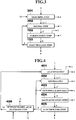
- a zinc production method according to a third embodiment of the present invention is described next in detail with reference to FIG. 3 .
- FIG. 3 shows steps of the zinc production method according to the third embodiment of the present invention.
- the zinc production method according to the present embodiment is mainly different from the zinc production method according to the first embodiment in that the leaching step 101 is replaced by a new leaching step 301 and a drying step 302 is added thereto.
- the leaching step 101 is replaced by a new leaching step 301 and a drying step 302 is added thereto.
- explanations are given while focusing on the above difference, and constituent elements identical to those of the first embodiment are denoted by like reference numerals and the explanations thereof will be omitted.
- hydrochloric acid 10 is used instead of the chlorine gas 8 in the first embodiment. That is, at the leaching step 301, the hydrochloric acid 10 is brought into contact with the electric arc furnace dust 1 or the secondary dust 1 having the composition shown in Table 1 described above in a tubular furnace, to extract a zinc oxide component in the electric arc furnace dust 1 or in the secondary dust 1 as the crude zinc chloride 3. In this case, at the leaching step 301, water 11 is produced as a by-product instead of the oxygen gas 2. Regarding the metal component such as iron contained in the electric arc furnace dust 1 or in the secondary dust 1, a part thereof is extracted together with the zinc component and mixed in the crude zinc chloride 3 as chloride, and the remainder thereof is separated as the residue 4.
- water can be used simultaneously with the hydrochloric acid 10, to extract the crude zinc chloride 3 as liquid.
- water can be added as water vapor together with the hydrochloric acid 10 to the electric arc furnace dust 1 or the secondary dust 1, or after water is added to and kneaded with the solid electric arc furnace dust 1 or secondary dust 1 beforehand and the hydrochloric acid 10 can be brought into contact therewith.
- crude zinc chloride can be obtained as an aqueous solution containing zinc chloride as a main component, by blowing the hydrochloric acid (gas) 10 into slurry prepared by adding water beforehand to the solid electric arc furnace dust 1 or secondary dust 1.
- a low-quality material containing a large amount of impurities can be also handled by simultaneously using a wet fluid cleaning method, which has been in operation widely in industrial fields.
- a wet fluid cleaning method a method of settling and separating metal components in impurities as hydroxide by adding an alkaline agent to an aqueous solution of crude zinc chloride to control the pH thereof can be mentioned.
- the crude zinc chloride obtained as the aqueous solution can be also prepared so as to become a saturated aqueous solution of zinc chloride and zinc chloride can be supplementarily separated therefrom and purified by crystallizing and filtering zinc chloride. According to this method, a low-quality material containing a large amount of impurities can be also handled, and the consumption of thermal energy for evaporating moisture at the time of thermal dehydration can be decreased.
- the chlorine gas 8 produced as a by-product in the anode at the electrolysis step 103 is preferably used as a raw material, from a viewpoint that the zinc production method can be performed in a closed cycle.
- a method of producing the hydrochloric acid 10 by reacting and synthesizing the chlorine gas 8 with a hydrogen gas can be mentioned.
- the hydrogen gas can be obtained by a method of using water vapor to reform LP gas. Further, such a method can be adopted that the chlorine gas 8 mixed with water vapor is brought into contact with a carbon material such as red-burning cokes to directly synthesize the hydrochloric acid 10.
- carbon dioxide is produced as a by-product.
- the water 11 produced as a by-product at the leaching step 301 is separated from the crude zinc chloride 3, and the crude zinc chloride 3 is brought into contact with the chlorine gas 8 to obtain anhydrous crude zinc chloride 3".
- the water 11 produced as a by-product at the leaching step 301 is heated up to 400°C by a heating mechanism (not shown) and turned into water vapor, to evaporate and separate the water vapor from the crude zinc chloride 3, the crude zinc chloride 3 is brought into contact with the chlorine gas 8, thereby obtaining the anhydrous crude zinc chloride 3" having a composition shown in Table 5.
- Table 5 Zn (%) Pb (%) Fe (%) Cu (%) Cd (%) Sn (%) Si (%) 44.10 1.2944 0.0137 0.00006 0.00007 0.00006 0.00003
- the anhydrous crude zinc chloride 3" obtained at the drying step 302 is then delivered to the purification step 102 in the subsequent stage, being the same as that of the first embodiment.
- the electrolysis step 103 same as that of the first and second embodiments is performed.
- the zinc production method includes the leaching step 301 of bringing the electric arc furnace dust 1 containing zinc oxide or the secondary dust 1 containing zinc oxide generated at the time of reducing the electric arc furnace dust 1 in the reduction furnace into contact with the hydrochloric acid 1, to extract the zinc oxide component in the electric arc furnace dust 1 or in the secondary dust 1 as the crude zinc chloride 3, and the drying step 302 of bringing the crude zinc chloride 3 extracted at the leaching step 301 into contact with the chlorine gas 8, after the crude zinc chloride 3 is heated to separate the water 11 contained in the crude zinc chloride 3 therefrom as water vapor.
- the zinc production method also includes the purification step 102 of heating the crude zinc chloride 3' ' having undergone the drying step 302 to produce zinc chloride vapor, and cooling and condensing the zinc chloride vapor to obtain the purified zinc chloride 6, and the electrolysis step 103 of electrolyzing the purified zinc chloride 6 obtained at the purification step 102 in a molten state to obtain the zinc melt 9 and the chlorine gas 8. Consequently, a zinc production method that is suitable for treatment of the electric arc furnace dust or the like containing a large amount of chlorine without requiring any additional cost for dechlorination, can produce zinc bare metal having a high purity of 4N or higher, and enables operations with a compact device can be realized.
- the electric arc furnace dust 1 or the secondary dust 1 is brought into contact with the hydrochloric acid 10 produced by using the chlorine gas 8 obtained by the electrolysis at the electrolysis step 302 as a raw material, thereby enabling to realize a zinc production method that can decrease generation of waste.
- the leaching step 301 as water is used simultaneously at the time of bringing the electric arc furnace dust 1 or the secondary dust 1 into contact with the hydrochloric acid 10, it is possible to realize a zinc production method that can handle a low-quality material containing a large amount of impurities.
- the crude zinc chloride 3 after the water 11 is separated therefrom as water vapor is brought into contact with the chlorine gas 8 obtained by the electrolysis at the electrolysis step 102, thereby enabling to realize a zinc production method that can decrease generation of waste.
- a zinc production method according to a fourth embodiment of the present invention is described next in detail with reference to FIG. 4 .
- FIG. 4 shows steps of the zinc production method according to the fourth embodiment of the present invention.
- the zinc production method according to the present embodiment is mainly different from the zinc production method according to the first embodiment in that the leaching step 101 is replaced by a new leaching step 401, a drying step 402 is further added, the purification step 102 is segmented into a first purification step 403 and a second purification step 404 both using a muffle furnace and a crucible arranged therein, and a hydrochloric acid synthesis step 406 is further added.
- the leaching step 401 which is a reaction step to obtain the crude zinc chloride 3 from the zinc oxide component in the electric arc furnace dust 1 or in the secondary dust 1, the hydrochloric acid 10 is used instead of the chlorine gas 8 of the first embodiment. That is, the leaching step 401 is the same as the leaching step 301 according to the third embodiment.
- the drying step 402 the water 11 produced as a by-product at the leaching step 401 is heated up to 400°C by a heating mechanism (not shown) to separate and remove the water 11 as water vapor, to turn the crude zinc chloride 3 into anhydrous salt. That is, the drying step 402 is the same as the drying step 302 according to the third embodiment.
- the crude zinc chloride 3" containing impurities which are obtained at the drying step 402, is brought into contact with the chlorine gas 8 to oxidize metal components, being impurities other than zinc contained in the crude zinc chloride 3", thereby turning the metal components into metal chloride having a lower boiling point than that of zinc chloride, and then the metal chloride is gasified and distilled. That is, the first purification step 403 is the same as the first purification step 201 according to the second embodiment, although using the crude zinc chloride 3" being anhydrous salt.
- the zinc chloride component is gasified and distilled from the crude zinc chloride 3' having undergone the first purification step 403, thereby obtaining the purified zinc chloride 6. That is, the second purification step 404 is the same as the second purification step 202 according to the second embodiment.
- the purified zinc chloride 6 obtained at the second purification step 404 is electrolyzed in a molten state to obtain the zinc melt 9 containing high-purity metal zinc and the chlorine gas 8. That is, the electrolysis step 405 is the same as the electrolysis step 103 according to the first to third embodiments.
- the hydrochloric acid 10 is produced by using as a raw material the chlorine gas 8 produced as a by-product in the anode at the electrolysis step 103.
- the chlorine gas 8 is reacted and synthesized with a hydrogen gas to produce the hydrochloric acid 10.
- the hydrogen gas is obtained by a method such as a water-gas-shift reaction that reforms an LP gas by using the water vapor 11.
- a method of directly synthesizing the hydrochloric acid 10 by bringing the chlorine gas 8 mixed with the water vapor 11 into contact with a red-heated carbon material 12 can be also adopted.
- carbon dioxide 13 is produced as a by-product.
- the zinc production method includes the leaching step 401 of bringing the electric arc furnace dust 1 containing zinc oxide or the secondary dust 1 containing zinc oxide generated at the time of reducing the electric arc furnace dust 1 in the reduction furnace into contact with the hydrochloric acid 10 to extract the zinc oxide component in the electric arc furnace dust 1 or in the secondary dust 1 as the crude zinc chloride 3, and the drying step 402 of bringing the crude zinc chloride 3 extracted at the leaching step 401 into contact with the chlorine gas 8, after the crude zinc chloride 3 is heated to separate the water 11 contained in the crude zinc chloride 3 as water vapor.
- the zinc production method further includes the first purification step 403 of bringing the crude zinc chloride 3" having undergone the drying step 402 into contact with the chlorine gas 8, to oxidize metal components other than zinc in the crude zinc chloride 3", thereby turning the metal components into the metal chloride 5 having a lower boiling point than that of zinc chloride, and then heating the crude zinc chloride 3", to evaporate and separate the metal chloride component 5 therefrom.
- the zinc production method further includes the second purification step 404 of heating the crude zinc chloride 3" having undergone the first purification step 403 to produce zinc chloride vapor, and cooling and condensing the zinc chloride vapor to obtain the purified zinc chloride 6, and the electrolysis step 405 of electrolyzing the purified zinc chloride 6 obtained at the second purification step 404 in a molten state to obtain the zinc melt 9 and the chlorine gas 8. Consequently, a zinc production method that is suitable for treatment of the electric arc furnace dust or the like containing a large amount of chlorine without requiring any additional cost for dechlorination, can produce zinc bare metal having a high purity of 4N or higher, and enables operations with a compact device can be realized.
- the electric arc furnace dust 1 or the secondary dust 1 is brought into contact with the hydrochloric acid 10 produced by using as a raw material the chlorine gas 8 obtained by the electrolysis at the electrolysis step 405, thereby enabling to realize a zinc production method that can decrease generation of waste.
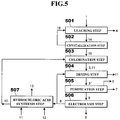
- a zinc production method according to a fifth embodiment of the present invention is described next in detail with reference to FIG. 5 .
- FIG. 5 shows steps of the zinc production method according to the fifth embodiment of the present invention.
- the zinc production method according to the present embodiment is mainly different from the zinc production method according to the first embodiment in that a leaching step 501, a crystallization step 502, and a chlorination step 503 are used instead of the leaching step 101 as the reaction step to obtain the crude zinc chloride 3 from the zinc oxide component in the electric arc furnace dust 1 or in the secondary dust 1, and a hydrochloric acid synthesis step 507 is further added.
- a leaching step 501, a crystallization step 502, and a chlorination step 503 are used instead of the leaching step 101 as the reaction step to obtain the crude zinc chloride 3 from the zinc oxide component in the electric arc furnace dust 1 or in the secondary dust 1, and a hydrochloric acid synthesis step 507 is further added.
- an aqueous solution 16 of an alkaline agent is used. That is, at the leaching step 501, the zinc oxide component in the electric arc furnace dust 1 or in the secondary dust 1 having the composition shown in Table 1 described above is brought into contact with a aqueous solution of sodium hydroxide, being the aqueous solution 16 of an alkaline agent, maintained in a concentration of 48% and at 100°C by a heating mechanism (not shown), while being stirred in a stainless steel beaker (not shown), to turn the zinc oxide component in the electric arc furnace dust 1 or in the secondary dust 1 into zinc hydroxide, thereby extracting a leaching solution 14 containing the zinc hydroxide.
- aqueous solution 16 of an alkaline agent it is preferred to use the aqueous solution of an alkaline agent produced at the crystallization step 502 described later, because the zinc production method can be performed in a closed cycle.
- a reaction formula between the aqueous solution of sodium hydroxide and zinc oxide is shown in a chemical formula (1), and the zinc hydroxide component in the leaching solution 14 exists in solution as complex ion such as Zn(OH) 4 2- .
- the crude zinc chloride 3 containing the water 11 which is obtained by converting a zinc component contained in the extracted leaching solution 14 into zinc chloride, is dried, purified, and treated by the molten salt electrolysis method.
- the treatment at the leaching step 501 can be said to be particularly effective for treatment of dust containing a large amount of iron components.
- the electric arc furnace dust 1 or the secondary dust 1 having undergone the leaching step 501 is not contaminated by an acid or chlorine component, and in the case of treatment of the electric arc furnace dust 1 or the secondary dust 1 containing a chlorine component, the chlorine component can be dissolved and removed by the aqueous solution 16 of an alkaline agent. Therefore, the present embodiment is particularly effective when the electric arc furnace dust 1 or the secondary dust 1 having undergone the leaching step 501 is utilized as an iron-making raw material or the like.
- the metal component such as iron contained in the electric arc furnace dust 1 or in the secondary dust 1
- a part thereof is extracted together with the zinc component and mixed in the crude zinc chloride 3 as chloride, and the remainder thereof is separated therefrom as the residue 4.
- the leaching solution 14 is cooled and turned into a saturated solution of zinc hydroxide, and zinc hydroxide (Zn(OH) 2 ) 15 is precipitated and settled as a solid, and then filtered by a Nutsche (not shown) and separated therefrom.
- the reaction formula is shown in the following chemical formula (2). [Chemical formula 2] 2NaZn(OH) 4 ⁇ Zn(OH) 2 +2NaOH
- the leaching solution 14 after separating and recovering the zinc hydroxide 15 therefrom can be repeatedly and cyclically used as the aqueous solution 16 of an alkaline agent, which is convenient. Separation of the zinc hydroxide 15 can be performed by filtration by a filter press or the like or centrifugal separation. To increase the reaction speed, it is favorable that the leaching solution 14 is hot alkali at a temperature of 50°C or higher. Further, although various conditions of the composition, temperature, and the like of the leaching solution 14 and the aqueous solution 16 of an alkaline agent cyclically used depend on the quality level of the raw material, the leaching solution 14 and the aqueous solution 16 of an alkaline agent can be adjusted by a general method.
- an aqueous solution of zinc chloride is obtained by adding 35% hydrochloric acid 10 to separated and recovered crystals of the zinc hydroxide 15 and bringing the hydrochloric acid 10 into contact therewith.
- the aqueous solution of zinc chloride is evaporated to dryness, thereby obtaining the crude zinc chloride 3 having the composition shown in Table 1 described above and the water 11.
- the hydrochloric acid 10 it is preferred to use the hydrochloric acid 10 produced at the hydrochloric acid synthesis step 507 described later, because the zinc production method can be performed in a closed cycle.
- the drying step 504 the water 11 obtained at the chlorination step 503 is heated to be separated and dehydrated as water vapor, thereby turning the crude zinc chloride 3 into anhydrous salt. That is, the drying step 504 is the same as the drying step 302 according to the third embodiment and the drying step 402 according to the fourth embodiment.
- the purification step 505 the crude zinc chloride 3" having the composition shown in Table 2 described above, which is obtained through the drying step 504, is distilled and purified to obtain the purified zinc chloride 6 having the composition shown in Table 3 described above. That is, the purification step 505 is the same as the purification step 102 according to the first and second embodiments.
- the electrolysis step 506 the purified zinc chloride 6 having the composition shown in Table 3 described above, which is obtained through the purification step 505, is electrolyzed in a molten state to obtain the zinc melt 9 containing high-purity metal zinc and the chlorine gas 8. That is, the electrolysis step 506 is the same as the electrolysis step 103 according to the first to third embodiments and the electrolysis step 405 according to the fourth embodiment.
- the hydrochloric acid 10 is produced by using the chlorine gas produced as a by-product in the anode at the electrolysis step 506 as a raw material. That is, the hydrochloric acid synthesis step 507 is the same as the hydrochloric acid synthesis step 406 according to the fourth embodiment.
- the zinc production method includes the leaching step 501 of bringing the electric arc furnace dust 1 containing zinc oxide or the secondary dust 1 generated at the time of reducing the electric arc furnace dust 1 in the reduction furnace into contact with the aqueous solution 16 of an alkaline agent to turn the zinc oxide component in the electric arc furnace dust 1 or in the secondary dust 1 into zinc hydroxide, thereby obtaining the leaching solution 14 containing the zinc hydroxide, the crystallization step 502 of turning the leaching solution 14 obtained at the leaching step 501 into the saturated solution of zinc hydroxide and precipitating and settling the zinc hydroxide 15 from the saturated solution, thereby separating and recovering the zinc hydroxide 15 therefrom as a solid, and the chlorination step 503 of bringing the zinc hydroxide 15 separated and recovered at the crystallization step 502 into contact with the hydrochloric acid 10 to obtain the crude zinc chloride 3.
- the zinc production method includes the drying step 504 of heating the crude zinc chloride 3 obtained at the chlorination step 503 and bringing the crude zinc chloride 3 into contact with the chlorine gas 8, after the water 11 contained in the crude zinc chloride 3 is separated therefrom as water vapor, the purification step 505 of heating the crude zinc chloride 3" having undergone the drying step 504 to produce zinc chloride vapor, and cooling and condensing the zinc chloride vapor to obtain the purified zinc chloride 6, and the electrolysis step of electrolyzing the purified zinc chloride 6 obtained at the purification step 505 in a molten state, thereby obtaining the zinc melt 9 and the chlorine gas 8.
- a zinc production method that is suitable for treatment of an electric arc furnace dust or the like containing a large amount of chlorine without requiring any additional cost for dechlorination, can produce zinc bare metal having a high purity of 4N or higher, and enables operations with a compact device can be realized.
- the aqueous solution after the zinc hydroxide 15 has been separated and recovered therefrom at the crystallization step 502 is reused as the aqueous solution 16 of an alkaline agent, thereby enabling to realize a zinc production method that can decrease generation of waste.
- the zinc hydroxide 15 separated and recovered at the crystallization step 502 is brought into contact with the hydrochloric acid produced by using the chlorine gas 8 obtained by the electrolysis at the electrolysis step 506 as a raw material, thereby enabling to realize a zinc production method that can decrease generation of waste.
- the alkaline agent in the aqueous solution 16 of an alkaline agent is sodium hydroxide or potassium hydroxide, thereby enabling to realize a zinc production method that can dissolve selectively a zinc oxide component without dissolving an iron component in an aqueous solution.
- a zinc production method according to a sixth embodiment of the present invention is described next in detail with reference to FIG. 6 .
- FIG. 6 shows steps of the zinc production method according to the sixth embodiment of the present invention.
- the zinc production method according to the present embodiment is mainly different from the zinc production method according to the first embodiment in that a leaching step 601, a crystallization step 602, and a chlorination step 603 are used instead of the leaching step 101, as the reaction step to obtain the crude zinc chloride 3 from the zinc oxide component in the electric arc furnace dust 1 or the secondary dust 1, the purification step 102 is segmented into a first purification step 605 and a second purification step 606 both using a muffle furnace and a crucible arranged therein, and a hydrochloric acid synthesis step 608 is further added.
- a leaching step 601 a crystallization step 602
- a chlorination step 603 are used instead of the leaching step 101, as the reaction step to obtain the crude zinc chloride 3 from the zinc oxide component in the electric arc furnace dust 1 or the secondary dust 1, the purification step 102 is segmented into a first purification step 605 and a second purification step 606 both using a muffle furnace
- the leaching step 601, the crystallization step 602, the chlorination step 603, the drying step 604, and an electrolysis step 607 are respectively the same as the leaching step 501, the crystallization step 502, the chlorination step 503, the drying step 504, and the electrolysis step 506 according to the fifth embodiment.
- the crude zinc chloride 3" containing impurities, obtained at the drying step 604, is brought into contact with the chlorine gas 8, thereby oxidizing metal components being impurities other than zinc contained in the crude zinc chloride 3" and turning the metal components into metal chloride having a lower boiling point than that of zinc chloride, and then the metal chloride is gasified and distilled. That is, at the first purification step 605, although the crude zinc chloride 3" being anhydrous salt is used, the first purification step 605 is the same as the first purification step 201 according to the second embodiment, and as the first purification step 403 according to the fourth embodiment.
- the zinc chloride component is gasified and distilled from the crude zinc chloride 3' having undergone the first purification step 605, thereby obtaining the purified zinc chloride 6. That is, the second purification step 606 is the same as the second purification step according to the second embodiment, and as the second purification step 404 according to the fourth embodiment.
- the zinc production method includes the leaching step 601 of bringing the electric arc furnace dust 1 containing zinc oxide or the secondary dust 1 generated at the time of reducing the electric arc furnace dust 1 in the reduction furnace into contact with the aqueous solution 16 of an alkaline agent to turn the zinc oxide component in the electric arc furnace dust 1 or in the secondary dust 1 into zinc hydroxide, thereby obtaining the leaching solution 14 containing the zinc hydroxide, and the crystallization step 602 of turning the leaching solution 14 obtained at the leaching step 601 into a saturated solution of zinc hydroxide and precipitating and settling the zinc hydroxide 15 from the saturated solution, thereby separating and recovering the zinc hydroxide 15 therefrom as a solid.
- the zinc production method also includes the first purification step 605 of bringing the crude zinc chloride 3" having undergone the drying step 604 into contact with the chlorine gas 8 in a molten state to oxidize the metal components other than zinc in the crude zinc chloride 3", and heating the crude zinc chloride 3" after turning the metal components into the metal chloride 5 having a lower boiling point than zinc chloride, thereby evaporating and separating the metal chloride 5 there from, the second purification step 606 of heating the crude zinc chloride 3' having undergone the first purification step 605 to produce zinc chloride vapor, and cooling and condensing the zinc chloride vapor to obtain the purified zinc chloride 6, and the electrolysis step 607 of electrolyzing the purified zinc chloride 6 obtained at the second purification step 606 in a molten state, thereby obtaining the zinc melt 9 and the chlorine gas 8.
- a zinc production method that is suitable for treatment of the electric arc furnace dust or the like containing a large amount of chlorine without requiring any additional cost for dechlorination, can produce zinc bare metal having a high purity of 4N or higher, and enables operations with a compact device can be realized.
- a zinc production method that is suitable for treatment of electric arc furnace dust or the like containing a large amount of chlorine without requiring any additional cost for dechlorination, can produce zinc bare metal having a high purity of 4N or higher, and enables operations with a compact device can be provided. Therefore, because of its general purposes and universal characteristics, applications of the present invention can be expected in a wide range in a zinc production method that uses, as an iron-making raw material, electric arc furnace dust generated at the time of dissolution smelting of scraps, or secondary dust generated in a reduction furnace at the time of recycling a part of the electric arc furnace dust, in the electric arc furnace method being one of iron-making process.
Landscapes
- Chemical & Material Sciences (AREA)
- Engineering & Computer Science (AREA)
- Metallurgy (AREA)
- Organic Chemistry (AREA)
- Materials Engineering (AREA)
- Mechanical Engineering (AREA)
- Manufacturing & Machinery (AREA)
- Electrochemistry (AREA)
- Chemical Kinetics & Catalysis (AREA)
- Life Sciences & Earth Sciences (AREA)
- Environmental & Geological Engineering (AREA)
- General Life Sciences & Earth Sciences (AREA)
- Geology (AREA)
- Inorganic Chemistry (AREA)
- Geochemistry & Mineralogy (AREA)
- Manufacture And Refinement Of Metals (AREA)
- Electrolytic Production Of Metals (AREA)
Applications Claiming Priority (2)
| Application Number | Priority Date | Filing Date | Title |
|---|---|---|---|
| JP2013098317 | 2013-05-08 | ||
| PCT/JP2014/062373 WO2014181833A1 (ja) | 2013-05-08 | 2014-05-08 | 亜鉛製造方法 |
Publications (2)
| Publication Number | Publication Date |
|---|---|
| EP2995702A1 true EP2995702A1 (de) | 2016-03-16 |
| EP2995702A4 EP2995702A4 (de) | 2017-02-22 |
Family
ID=51867310
Family Applications (1)
| Application Number | Title | Priority Date | Filing Date |
|---|---|---|---|
| EP14794146.2A Withdrawn EP2995702A4 (de) | 2013-05-08 | 2014-05-08 | Zinkherstellungsverfahren |
Country Status (5)
| Country | Link |
|---|---|
| US (1) | US9920398B2 (de) |
| EP (1) | EP2995702A4 (de) |
| JP (1) | JP5935098B2 (de) |
| CN (1) | CN105378149A (de) |
| WO (1) | WO2014181833A1 (de) |
Families Citing this family (7)
| Publication number | Priority date | Publication date | Assignee | Title |
|---|---|---|---|---|
| CN107760882B (zh) * | 2017-09-30 | 2018-09-21 | 重庆科技学院 | 利用含氧化钙工业粉尘提炼电炉制钢粉尘中锌的方法 |
| TWI665166B (zh) * | 2017-10-05 | 2019-07-11 | 政桓有限公司 | Preparation method of high-efficiency composite active material zinc oxide powder |
| JP6656709B2 (ja) * | 2017-12-28 | 2020-03-04 | 株式会社キノテック | 亜鉛地金の製造方法 |
| CN109433115B (zh) * | 2018-09-27 | 2023-11-21 | 昆明理工大学 | 一种生物质热解和提纯氧化锌的装置及方法 |
| CN109797280A (zh) * | 2018-11-26 | 2019-05-24 | 山西锌创研环境科技有限公司 | 钢铁低锌灰危废物余热发电用于电解锌生产的方法及系统 |
| CN110257634B (zh) * | 2019-07-04 | 2021-04-02 | 湖南新威凌金属新材料科技股份有限公司 | 一种可回收氯化锌废液的锌粉生产装置 |
| CN116219190A (zh) * | 2022-11-30 | 2023-06-06 | 中国恩菲工程技术有限公司 | 一种基于氯化法的炼锌方法 |
Family Cites Families (10)
| Publication number | Priority date | Publication date | Assignee | Title |
|---|---|---|---|---|
| US4572771A (en) * | 1985-01-31 | 1986-02-25 | Amax Inc. | Zinc recovery from steel plant dusts and other zinciferous materials |
| US5683488A (en) * | 1992-01-15 | 1997-11-04 | Metals Recycling Technologies Corp. | Method for producing an iron feedstock from industrial furnace waste streams |
| US5709730A (en) * | 1995-01-23 | 1998-01-20 | Cashman; Joseph B. | Hydrometallurgical processing of flue dust |
| KR20000052340A (ko) | 1999-01-23 | 2000-08-25 | 이호인 | 아연페라이트가 함유된 제강분진으로부터 염산과 금속아연의 회수방법 |
| JP3080947B1 (ja) * | 1999-02-05 | 2000-08-28 | 日本磁力選鉱株式会社 | 電気炉ダストの処理方法 |
| CN1125883C (zh) * | 1999-07-09 | 2003-10-29 | 水口山有色金属有限责任公司 | 一种高纯锌金属的制备方法 |
| JP3727232B2 (ja) | 2000-09-26 | 2005-12-14 | 竹四 阿座上 | 亜鉛回収法 |
| KR100896607B1 (ko) * | 2001-10-03 | 2009-05-08 | 유미코르 | 아연 함유 물질로부터 염화아연을 제조하는 방법 |
| JP5281779B2 (ja) * | 2007-09-20 | 2013-09-04 | Dowaメタルマイン株式会社 | 亜鉛電解液の製造方法 |
| CN102086526A (zh) * | 2009-12-08 | 2011-06-08 | 上海太阳能工程技术研究中心有限公司 | ZnCl2熔盐电解制锌的方法 |
-
2014
- 2014-05-08 WO PCT/JP2014/062373 patent/WO2014181833A1/ja not_active Ceased
- 2014-05-08 US US14/889,206 patent/US9920398B2/en active Active
- 2014-05-08 JP JP2015515893A patent/JP5935098B2/ja active Active
- 2014-05-08 EP EP14794146.2A patent/EP2995702A4/de not_active Withdrawn
- 2014-05-08 CN CN201480038120.9A patent/CN105378149A/zh active Pending
Non-Patent Citations (1)
| Title |
|---|
| See references of WO2014181833A1 * |
Also Published As
| Publication number | Publication date |
|---|---|
| WO2014181833A1 (ja) | 2014-11-13 |
| CN105378149A (zh) | 2016-03-02 |
| US9920398B2 (en) | 2018-03-20 |
| JPWO2014181833A1 (ja) | 2017-02-23 |
| JP5935098B2 (ja) | 2016-06-15 |
| EP2995702A4 (de) | 2017-02-22 |
| US20160138130A1 (en) | 2016-05-19 |
Similar Documents
| Publication | Publication Date | Title |
|---|---|---|
| US9920398B2 (en) | Zinc production method | |
| KR101370007B1 (ko) | 금속 제조를 위한 열적 및 전기화학적 방법 | |
| CN106893864B (zh) | 一种从黑铜泥中回收砷的方法 | |
| JP6099167B2 (ja) | 電炉ダストを原料とする亜鉛製造方法 | |
| CN111533156A (zh) | 焚烧飞灰的处理工艺和焚烧灰渣的处理工艺 | |
| JP5062111B2 (ja) | 脱銅スライムからの高純度亜砒酸水溶液の製造方法 | |
| WO2017110877A1 (ja) | ヒ素の固定化方法及びヒ素含有ガラス固化体 | |
| JP5370777B2 (ja) | 銅硫化物からの銅の回収方法 | |
| JP5370683B2 (ja) | 銅硫化物からの銅の回収方法 | |
| JP6656709B2 (ja) | 亜鉛地金の製造方法 | |
| CN104762474A (zh) | 一种由辉钼矿制备钼酸铵的方法 | |
| JP2008081799A (ja) | 鉛の回収方法 | |
| CN109368688A (zh) | 一种高纯度氧化锌间接法的生产工艺 | |
| CN103194621A (zh) | 一种硫渣的处理方法 | |
| JPH0717374B2 (ja) | スクラツプからのガリウムの回収方法 | |
| JP2014218697A (ja) | 亜鉛製造方法 | |
| JP2011178586A (ja) | 多結晶シリコンの精製方法 | |
| US2425995A (en) | Process for treating oxidized ores of zinc | |
| JP7565585B2 (ja) | 炭酸亜鉛の製造方法 | |
| JP2002534602A (ja) | アルミニウムのスクラップを冷却剤として使用する炭素熱によるアルミニウムの製造 | |
| JP7756379B2 (ja) | 亜鉛回収方法 | |
| CN116534870B (zh) | 提钛尾渣脱氯耦合矿化封存CO2联产NH4Cl的方法及应用 | |
| US20260132041A1 (en) | Magnesium chloride purification systems, devices and methods | |
| KR20130102310A (ko) | 조산화 아연의 정제공정시 발생되는 배가스의 처리방법 | |
| CN119932334A (zh) | 一种湿法炼锌工艺 |
Legal Events
| Date | Code | Title | Description |
|---|---|---|---|
| PUAI | Public reference made under article 153(3) epc to a published international application that has entered the european phase |
Free format text: ORIGINAL CODE: 0009012 |
|
| 17P | Request for examination filed |
Effective date: 20151204 |
|
| AK | Designated contracting states |
Kind code of ref document: A1 Designated state(s): AL AT BE BG CH CY CZ DE DK EE ES FI FR GB GR HR HU IE IS IT LI LT LU LV MC MK MT NL NO PL PT RO RS SE SI SK SM TR |
|
| AX | Request for extension of the european patent |
Extension state: BA ME |
|
| RAP1 | Party data changed (applicant data changed or rights of an application transferred) |
Owner name: KINOTECH SOLAR ENERGY CORPORATION |
|
| DAX | Request for extension of the european patent (deleted) | ||
| A4 | Supplementary search report drawn up and despatched |
Effective date: 20170124 |
|
| RIC1 | Information provided on ipc code assigned before grant |
Ipc: C22B 7/02 20060101ALI20170118BHEP Ipc: C25C 3/34 20060101AFI20170118BHEP Ipc: C25C 7/00 20060101ALI20170118BHEP Ipc: C22B 9/02 20060101ALI20170118BHEP Ipc: C22B 19/30 20060101ALI20170118BHEP Ipc: C22B 19/32 20060101ALI20170118BHEP Ipc: C25B 1/26 20060101ALI20170118BHEP |
|
| STAA | Information on the status of an ep patent application or granted ep patent |
Free format text: STATUS: REQUEST FOR EXAMINATION WAS MADE |
|
| STAA | Information on the status of an ep patent application or granted ep patent |
Free format text: STATUS: THE APPLICATION IS DEEMED TO BE WITHDRAWN |
|
| 18D | Application deemed to be withdrawn |
Effective date: 20181201 |