EP2996252A1 - Bestimmung und steuerung der strahlungsabsorption - Google Patents
Bestimmung und steuerung der strahlungsabsorption Download PDFInfo
- Publication number
- EP2996252A1 EP2996252A1 EP15184488.3A EP15184488A EP2996252A1 EP 2996252 A1 EP2996252 A1 EP 2996252A1 EP 15184488 A EP15184488 A EP 15184488A EP 2996252 A1 EP2996252 A1 EP 2996252A1
- Authority
- EP
- European Patent Office
- Prior art keywords
- user terminal
- data transfer
- information
- instantaneous value
- specific absorption
- Prior art date
- Legal status (The legal status is an assumption and is not a legal conclusion. Google has not performed a legal analysis and makes no representation as to the accuracy of the status listed.)
- Withdrawn
Links
- 238000010521 absorption reaction Methods 0.000 title claims abstract description 34
- 230000005855 radiation Effects 0.000 title description 8
- 238000012546 transfer Methods 0.000 claims abstract description 50
- 230000015654 memory Effects 0.000 claims description 20
- 238000004590 computer program Methods 0.000 claims description 18
- 238000000034 method Methods 0.000 claims description 12
- 230000001413 cellular effect Effects 0.000 claims description 6
- 238000009826 distribution Methods 0.000 claims description 3
- 238000004891 communication Methods 0.000 description 32
- 230000005540 biological transmission Effects 0.000 description 9
- 230000005670 electromagnetic radiation Effects 0.000 description 8
- 230000006870 function Effects 0.000 description 8
- 238000010295 mobile communication Methods 0.000 description 5
- 238000005516 engineering process Methods 0.000 description 4
- 238000005259 measurement Methods 0.000 description 4
- 230000001133 acceleration Effects 0.000 description 3
- 230000000694 effects Effects 0.000 description 3
- 230000007774 longterm Effects 0.000 description 3
- 238000007726 management method Methods 0.000 description 3
- 238000012545 processing Methods 0.000 description 3
- 238000004519 manufacturing process Methods 0.000 description 2
- 238000003860 storage Methods 0.000 description 2
- 239000000969 carrier Substances 0.000 description 1
- 238000010276 construction Methods 0.000 description 1
- 238000013461 design Methods 0.000 description 1
- 238000011161 development Methods 0.000 description 1
- 230000005672 electromagnetic field Effects 0.000 description 1
- 230000014509 gene expression Effects 0.000 description 1
- 230000009931 harmful effect Effects 0.000 description 1
- 239000000383 hazardous chemical Substances 0.000 description 1
- 231100000206 health hazard Toxicity 0.000 description 1
- 230000000977 initiatory effect Effects 0.000 description 1
- 230000014759 maintenance of location Effects 0.000 description 1
- 238000013468 resource allocation Methods 0.000 description 1
- 230000000630 rising effect Effects 0.000 description 1
- 230000003936 working memory Effects 0.000 description 1
Images
Classifications
-
- H—ELECTRICITY
- H04—ELECTRIC COMMUNICATION TECHNIQUE
- H04B—TRANSMISSION
- H04B1/00—Details of transmission systems, not covered by a single one of groups H04B3/00 - H04B13/00; Details of transmission systems not characterised by the medium used for transmission
- H04B1/38—Transceivers, i.e. devices in which transmitter and receiver form a structural unit and in which at least one part is used for functions of transmitting and receiving
- H04B1/3827—Portable transceivers
- H04B1/3833—Hand-held transceivers
- H04B1/3838—Arrangements for reducing RF exposure to the user, e.g. by changing the shape of the transceiver while in use
-
- H—ELECTRICITY
- H04—ELECTRIC COMMUNICATION TECHNIQUE
- H04W—WIRELESS COMMUNICATION NETWORKS
- H04W24/00—Supervisory, monitoring or testing arrangements
-
- H—ELECTRICITY
- H04—ELECTRIC COMMUNICATION TECHNIQUE
- H04W—WIRELESS COMMUNICATION NETWORKS
- H04W52/00—Power management, e.g. Transmission Power Control [TPC] or power classes
- H04W52/04—Transmission power control [TPC]
- H04W52/18—TPC being performed according to specific parameters
- H04W52/28—TPC being performed according to specific parameters using user profile, e.g. mobile speed, priority or network state, e.g. standby, idle or non-transmission
- H04W52/288—TPC being performed according to specific parameters using user profile, e.g. mobile speed, priority or network state, e.g. standby, idle or non-transmission taking into account the usage mode, e.g. hands-free, data transmission or telephone
-
- H—ELECTRICITY
- H04—ELECTRIC COMMUNICATION TECHNIQUE
- H04W—WIRELESS COMMUNICATION NETWORKS
- H04W52/00—Power management, e.g. Transmission Power Control [TPC] or power classes
- H04W52/04—Transmission power control [TPC]
- H04W52/30—Transmission power control [TPC] using constraints in the total amount of available transmission power
- H04W52/36—Transmission power control [TPC] using constraints in the total amount of available transmission power with a discrete range or set of values, e.g. step size, ramping or offsets
- H04W52/367—Power values between minimum and maximum limits, e.g. dynamic range
-
- H—ELECTRICITY
- H04—ELECTRIC COMMUNICATION TECHNIQUE
- H04B—TRANSMISSION
- H04B1/00—Details of transmission systems, not covered by a single one of groups H04B3/00 - H04B13/00; Details of transmission systems not characterised by the medium used for transmission
- H04B1/38—Transceivers, i.e. devices in which transmitter and receiver form a structural unit and in which at least one part is used for functions of transmitting and receiving
- H04B1/3827—Portable transceivers
- H04B1/3833—Hand-held transceivers
- H04B1/3838—Arrangements for reducing RF exposure to the user, e.g. by changing the shape of the transceiver while in use
- H04B2001/3844—Arrangements for reducing RF exposure to the user, e.g. by changing the shape of the transceiver while in use with means to alert the user that a certain exposure has been reached
Definitions
- the exemplary and non-limiting embodiments of the invention relate generally to wireless communication systems.
- Embodiments of the invention relate especially to apparatuses, methods, and computer program products in determining and controlling radiation absorption in wireless communication systems.
- the mobile communication devices communicate with communications networks using radio frequency transmissions.
- the effect of electromagnetic radio frequency radiation on users has been studied in recent years but no conclusive results on the harmful effects have yet been discovered. All radio communication devices must fulfil government issued safety criteria regarding radiation properties. However, users of the devices may want to monitor radiation exposure themselves.
- an apparatus comprising: at least one processor; and at least one memory including computer program code, the at least one memory and the computer program code configured to, with the at least one processor, cause the apparatus at least to: determine a specific absorption ratio value given to the user terminal; receive information on the power level of signals at least one radio transceiver of a user terminal has received from one or more external transmitters; determine information on the power level of the signals transmitted by the at least one radio transceiver of the user terminal on the basis of the information on the power level of signals at least one radio transceiver of a user terminal has received; determine information on the call connection and data transfer status of the user terminal; receive information from one or more sensors of the user terminal; determine an instantaneous value for the specific absorption ratio in the basis on the received and determined information and properties of the user terminal; compare the instantaneous value to a predetermined threshold; and control the voice call and data transfer capabilities of the user terminal on the basis of the comparison and the call connection and data transfer status of
- a method comprising: determining a specific absorption ratio value given to the user terminal; receiving information on the power level of signals at least one radio transceiver of a user terminal has received from one or more external transmitters; determining information on the power level of the signals transmitted by the at least one radio transceiver of the user terminal on the basis of the information on the power level of signals at least one radio transceiver of a user terminal has received; determining information on the call connection and data transfer status of the user terminal; receiving information from one or more sensors of the user terminal; determining an instantaneous value for the specific absorption ratio on the basis on the received and determined information and properties of the user terminal; comparing the instantaneous value to a predetermined threshold; and controlling the voice call and data transfer capabilities of the user terminal on the basis of the comparison and the call connection and data transfer status of the user terminal.
- a computer program product embodied on a distribution medium readable by a computer and comprising program instructions which, when loaded into an apparatus, execute the steps: determining a specific absorption ratio value given to the user terminal; receiving information on the power level of signals at least one radio transceiver of a user terminal has received from one or more external transmitters; determining information on the power level of the signals transmitted by the at least one radio transceiver of the user terminal on the basis of the information on the power level of signals at least one radio transceiver of a user terminal has received; determining information on the call connection and data transfer status of the user terminal; receiving information from one or more sensors of the user terminal; determining an instantaneous value for the specific absorption ratio on the basis on the received and determined information and properties of the user terminal; comparing the instantaneous value to a predetermined threshold; and controlling the voice call and data transfer capabilities of the user terminal on the basis of the comparison and the call connection and data transfer status of the user terminal.
- UMTS universal mobile telecommunications system
- LTE long term evolution
- LTE-A long term evolution advanced
- WLAN Wireless Local Area Network
- WiFi Wireless Local Area Network
- IEEE 802.11 standard, worldwide interoperability for microwave access (WiMAX), Bluetooth®, personal communications services (PCS) and systems using ultra-wideband (UWB) technology.
- IEEE refers to the Institute of Electrical and Electronics Engineers.
- LTE and LTE-A are developed by the Third Generation Partnership Project 3GPP.
- Embodiments of the invention are applicable to apparatuses in communication system or any combination of different communication systems that support required functionalities.
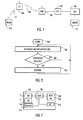
- FIG 1 illustrates an example of an access architecture based on a long term evolution advanced (LTE Advanced, LTE-A) system.
- LTE-A long term evolution advanced
- the LTE-A system is one example of a system where embodiments of the invention may be applied.
- Figure 1 illustrates a simplified view of a communication environment only showing some elements and functional entities, all being logical units whose implementation may differ from what is shown.
- the connections shown in Figure 1 are logical connections; the actual physical connections may be different. It is apparent to a person skilled in the art that the systems also comprise other functions and structures. It should be appreciated that the functions, structures, elements and the protocols used in or for communication are irrelevant to the actual invention. Therefore, they need not to be discussed in more detail here.
- Figure 1 shows an eNodeB 100 connected to an Evolved Packet Core EPC 102 of a communication system.
- the eNodeB's form a part of the radio access network (RAN) of the communication system.
- RAN radio access network
- the eNodeB 100 which may also be called a base station of the radio system, may host the functions for Radio Resource Management: Radio Bearer Control, Radio Admission Control, Connection Mobility Control, Dynamic Resource Allocation (scheduling).
- the counterpart on the EPC side can be a serving gateway (S-GW, routing and forwarding user data packets), packet data network gateway (P-GW, for providing connectivity of user devices (UEs) to external packet data networks), and/or mobile management entity (MME), etc.
- S-GW serving gateway
- P-GW packet data network gateway
- MME mobile management entity
- the MME (not shown) is responsible for the overall user terminal control in mobility, session/call and state management with assistance of the eNodeBs through which the user terminals may connect to the network.
- the communication system is also able to communicate with other networks, such as a public switched telephone network or the Internet 104.
- networks such as a public switched telephone network or the Internet 104.
- eNodeBs or their functionalities may be implemented by using any node, host, server or access point etc. entity suitable for such a usage.
- the user terminal UT 106 (also called user device, user equipment, terminal device, etc.) illustrates one type of an apparatus which communicates 108 with the communication network.
- the communication may comprise both voice calls and data traffic, such as a data connection to a network server 112, for example.
- the user terminal typically refers to a portable computing device that includes wireless mobile communication devices operating with or without a subscriber identification module (SIM), including, but not limited to, the following types of devices: a mobile station (mobile phone), smartphone and personal digital assistant (PDA), for example.
- SIM subscriber identification module
- mobile station mobile phone
- smartphone personal digital assistant
- the user terminal is configured to perform one or more of user equipment functionalities.
- the device may also be called a subscriber unit, mobile station, remote terminal, access terminal, user equipment (UE) just to mention but a few names or apparatuses.
- UE user equipment
- the user terminal 106 may be in radio connection with one or more external transceivers.
- One type of the external transceiver is the eNodeB 100.
- the user terminal 106 may be in connection with one or more wireless network base stations or nodes 110.
- the base stations 110 may be WLAN or WiFi base stations or routers, for example.
- the user terminal may have a Bluetooth connection with another device.
- the radio connections between user terminals and base stations or eNodeBs utilise various frequency bands which are standardised and controlled by international treaties and local authorities.
- GSM systems typically utilise 450, 900 and 1800 MHz frequency bands
- UMTS systems typically utilise 800, 1900 and 2100 MHz frequency bands
- WLAN or WiFi typically utilise various frequency bands between 2,4 GHz and 5,9 GHz.
- the mentioned frequency bands are merely illustrative examples as also other frequency bands may be used by the systems in different countries.
- An embodiment of the invention provides an apparatus configured to determine an instantaneous value for specific absorption ratio of a user terminal of a wireless communication system.
- the apparatus may be configured to control the operations of the user terminal on the basis of determined information.
- SAR specific absorption rate
- Figure 2 is a flowchart illustrating a simplified example embodiment of the invention.
- the example illustrates the operation of an apparatus configured to determine the amount of electromagnetic radiation the user of the user terminal is exposed to and control the voice call and data transfer capabilities of the user terminal.
- the apparatus may be the user terminal or a part of a user terminal running suitable software configured to control the execution of following steps. The example starts at step 200.
- step 202 the apparatus is configured to determine an instantaneous value for the specific absorption ratio of a user terminal. Details of the determination are described below.
- the apparatus is configured to compare the determined instantaneous value for SAR to a predetermined threshold value.
- the predetermined threshold value is the maximum SAR limit allowed for user terminals.
- step 206 the apparatus is configured to control the voice call and data transfer capabilities of the user terminal on the basis of the comparison.
- the user terminals may be configured to connect to the Internet and transmit and/or receive data without active user involvement. Therefore, even when the user terminal is in a pocket near the user's body there may be ongoing data transfer happening.
- the user terminal may use maximum allowed transmission power without the user actually being aware of the situation. For example, even when a base station is relatively near the user terminal may transit at a high power if the user is located in environment having large constructions between the user and the base station.
- Figure 3 illustrates results of the instantaneous SAR measurement.
- the maximum allowed SAR value for the user terminal in the US is 1.6 W/Kg in 1g of tissue. This value assumes that the user terminal is 1 cm away from the body of the user. In practise however, the user terminal may be right beside the body when the terminal is held in a pocket.
- Figure 3 shows the maximum allowed SAR 1.6 W/Kg as a horizontal line.
- X-axis denotes time. The user is outside walking towards an underground parking lot and the instantaneous SAR stays low.
- the user enters the underground parking lot and the user terminal is forced to increase transmission power to reach the base station the terminal is connected to.
- the instantaneous SAR increases over the allowed SAR limit, because the terminal is closer to body than 1 cm.
- the SAR falls again to a lower value.
- the data traffic of the user terminal may be controlled to avoid the large instantaneous SAR values, such as the values between time instants 302, and 304 in Figure 3 .
- software running in the user terminal may be configured to detect that the instantaneous SAR value is rising given threshold level in time instant 302. If the software detects that the user terminal is transmitting data, the transmission may be interrupted or limited temporarily, for example. Based on the information on the power level of the signal received from the base station and the location of the user terminal, for example, the software may determine that at time instant 304 the instantaneous SAR value will be below the threshold and the data transmission may be enabled. The terminal properties and quality of the signal received from the base station may be taken into account in the determination.
- the possible instantaneous SAR value is estimated when the transmission of the user terminal is interrupted or limited temporarily.
- the possible instantaneous SAR value falls below a given limit, the transmission of the user terminal is enabled.
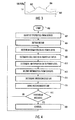
- Figure 4 is a flowchart illustrating a simplified example embodiment of the invention.
- the example illustrates the operation of an apparatus configured to determine the amount of electromagnetic radiation the user of the user terminal is exposed to and control the voice call and data transfer capabilities of the user terminal.
- the apparatus may be the user terminal or a part of a user terminal running suitable software configured to control the execution of following steps. The example starts at step 400.
- the apparatus is configured to determine the model of the user terminal, transmit a query to a network server regarding the properties of the user terminal and receive from the server information on the properties of the user terminal.
- the apparatus is configured to determine the specific absorption rate (SAR) value given to the user terminal.
- SAR specific absorption rate
- the SAR value may be part of the properties received from a server in step 402.
- the apparatus is configured to receive information on the power level of signals at least one radio transceiver of a user terminal has received from one or more external transmitters.
- the controller of the apparatus may query from the radio modem or radio modems of the transceiver of the user terminal the strength of the signal or signals received from base stations or eNodeB's the user terminal is connected to.
- the apparatus is configured to determine information on the call connection and data transfer status of the user terminal.
- the apparatus may determine whether there is an ongoing call or data transfer.
- the properties of the data transfer may be determined, i.e. if the data traffic is utilising a cellular connection, WLAN (WiFi) or another connection.
- the apparatus is configured to determine information on the power level of the signals transmitted by the at least one radio transceiver of the user terminal.
- the controller of the apparatus is configured to determine the information based on measurements made from the outputs of the radio modem or modems of the transceiver of the user terminal.
- the controller of the apparatus is configured to estimate the information based on the power level of the signals received by the user terminal and information on the system the user terminal is communicating with and the user terminal propertied. The call connection and data transfer status may be taken into account.
- the apparatus is configured to receive information from one or more sensors of the user terminal.
- the one or more sensors of the user terminal comprise proximity, acceleration, location and temperature sensors. The use of sensors is explained further below.
- the apparatus is configured to determine an instantaneous value for the specific absorption ratio on the basis on the received and determined information and properties of the user terminal.
- the apparatus first determines an estimate for the amount of electromagnetic radiation on the basis on the received and determined information and the properties of the user terminal.
- the determined amount electromagnetic radiation may comprise information on the radiation originating from the external transmitter and the radio transceiver of the user terminal.
- powers of both the received and transmitted signal may be taken into account.
- the apparatus may be configured to determine an estimate for the user radiation exposure.
- the information received from the sensors may be utilised in determining the estimate for the user radiation exposure on the basis of estimate for the amount of electromagnetic radiation.
- the sensors may be used to determine where the user terminal is located in relation to the user of the terminal. If the sensors indicate that the terminal is located away from the user it may be determined that the amount of radiation the user is exposed to is small compared to the amount of electromagnetic radiation. This is due to the attenuation due to distance. This may be the case when there is an on-going data transfer but the proximity and acceleration sensors indicate that the terminal is stable, for example on a table.
- the sensors may also indicate that the user terminal is in a pocket, for example. If the user terminal is held by the ear of the user, as may be the case when there is an on-going call and no hands-free equipment is in use, the amount of radiation is greater as the distance between the user terminal antenna and user is shorter.
- the location sensor may comprise a satellite location receiver such as GPS (Global Positioning System) or Glonass, for example.
- GPS Global Positioning System
- Glonass Glonass
- the instantaneous value for the specific absorption ratio may be determined on the basis of the above determined values.
- the maximum SAR value of the user terminal may be utilised in the determination.
- the instantaneous SAR is estimated on the basis of the transmission power and known SAR characteristics of the user terminal and the location of the user terminal in relation to the user's body. If the maximum transmission power of a user terminal is known for different access methods (GSM, UMTS, LTE, for example), and the maximum SAR for the user terminal is known, the instantaneous SAR may be estimated utilising the information on the location of the terminal.
- GSM Global System for Mobile communications
- the apparatus is configured to store the determined instantaneous value for the specific absorption ratio.
- the value may be stored in the memory of the user terminal. Also related to the SAR data may be stored, such as time, location, transmit/received signal power data, for example.
- the value is stored in a network server.
- the SAR values are stored in the user terminal memory and transmitted to a network server at given time intervals. For example, the determined information may be sent to the network server once per day.
- the apparatus is configured to compare the determined instantaneous value for SAR to a predetermined threshold value.
- the predetermined threshold value is the maximum SAR limit allowed for user terminals.
- the predetermined threshold value may be stored in the user terminal memory. It may be a pre-programmed value, a value given by the user or a value downloaded from a network server.
- the apparatus is configured to control the voice call and data transfer capabilities of the user terminal on the basis of the comparison and the call connection and data transfer status of the user terminal.
- Figure 5 is a flowchart illustrating an example embodiment.
- the flowchart gives an example how the apparatus may control voice call capabilities of a user terminal.
- the apparatus may be the user terminal or a part of a user terminal running suitable software configured to control the execution of following steps.
- the example starts at step 500.
- the apparatus is configured to determine an estimate for the instantaneous SAR.
- the apparatus is configured to determine that the determined SAR may larger than a predetermined threshold value and that the user is about to initiate a voice call at this potential high SAR situation.
- the apparatus may be configured to prompt the user to confirm the initiation of a voice call when instantaneous SAR is larger than a predetermined threshold value.
- step 510 The embodiment ends in step 510.
- the apparatus when the user is about to initiate a voice call at a high radiation situation, the apparatus may be configured to alert the user with a message or vibration indicating that making a voice call would lead to a high radiation exposure.
- This kind of situation may arise for example when the user is located underground where the radio path to the base station serving the user terminal is obscured by buildings.
- the user may select to postpone the call until a more suitable location is reached.
- Figure 6 is a flowchart illustrating an example embodiment.
- the apparatus may be the user terminal or a part of a user terminal running suitable software configured to control the execution of following steps.
- the example starts at step 600.
- step 602 the apparatus is configured to estimate SAR caused by a cellular connection.
- step 604 the apparatus is configured to estimate SAR caused by local area network connection.
- step 606 the apparatus is configured to compare the estimated SAR values.
- step 608 the apparatus is configured to control the data transfer capabilities of the user terminal by controlling data transfer to utilise the connection causing smaller SAR.
- step 610 The embodiment ends in step 610.
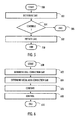
- Figure 7 illustrates an embodiment.
- the figure illustrates a simplified example of an apparatus in which embodiments of the invention may be applied.
- the apparatus is a user terminal or a part of a user terminal.
- the apparatus is depicted herein as an example illustrating some embodiments. It is apparent to a person skilled in the art that the apparatus may also comprise other functions and/or structures and not all described functions and structures are required. Although the apparatus has been depicted as one entity, different modules and memory may be implemented in one or more physical or logical entities.
- the apparatus of the example includes a control circuitry or controller 700 configured to control at least part of the operation of the apparatus.
- the control circuitry 700 is configured to execute one or more applications.
- the apparatus may comprise a memory 702 for storing data and/or applications. Furthermore the memory may store software 704 executable by the control circuitry 700. The memory may be integrated in the control circuitry.
- the apparatus may comprise a communication interface 706.
- the communication interface is operationally connected to the control circuitry 700.
- the communication interface may comprise a transceiver which enables the apparatus to communicate with other apparatuses and be in connection with the internet, for example.
- the communication interface may comprise several radio units enabling the apparatus to utilise for communication a cellular network such as LTE, LTE-A, UMTS, or a wireless network (WLAN, WiFi, WiMAX).
- the software 704 may comprise a computer program comprising program code means adapted to cause the control circuitry 700 of the apparatus to control and communicate with the communication interface 706.
- the apparatus may further comprise user interface 710 operationally connected to the control circuitry 700.
- the interface may comprise a (touch sensitive) display, a keypad, a microphone, and a speaker, for example.
- the apparatus may further comprise sensors 712.
- the sensors may comprise proximity, acceleration, location and temperature sensors, for example.
- the location sensor also may be realized with a satellite positioning receiver 714 which enables the controller to determine the location of the apparatus.
- the applications may cause the apparatus to determine a specific absorption ratio value given to the user terminal; receive information on the power level of signals at least one radio transceiver of a user terminal has received from one or more external transmitters; determine information on the power level of the signals transmitted by the at least one radio transceiver of the user terminal; determine information on the call connection and data transfer status of the user terminal; receive information from one or more sensors of the user terminal; determine an instantaneous value for the specific absorption ratio on the basis on the received and determined information and properties of the user terminal; compare the instantaneous value to a predetermined threshold; and control the voice call and data transfer capabilities of the user terminal on the basis of the comparison and the call connection and data transfer status of the user terminal.
- the apparatuses or control circuitries able to perform the above-described steps may be implemented as an electronic digital computer, or a circuitry which may comprise a working memory (RAM), a central processing unit (CPU), and a system clock.
- the CPU may comprise a set of registers, an arithmetic logic unit, and a controller.
- the controller or the circuitry is controlled by a sequence of program instructions transferred to the CPU from the RAM.
- the controller may contain a number of microinstructions for basic operations. The implementation of microinstructions may vary depending on the CPU design.
- the program instructions may be coded by a programming language, which may be a high-level programming language, such as C, Java, etc., or a low-level programming language, such as a machine language, or an assembler.
- the electronic digital computer may also have an operating system, which may provide system services to a computer program written with the program instructions.
- circuitry refers to all of the following: (a) hardware-only circuit implementations, such as implementations in only analog and/or digital circuitry, and (b) combinations of circuits and software (and/or firmware), such as (as applicable): (i) a combination of processor(s) or (ii) portions of processor(s)/software including digital signal processor(s), software, and memory(ies) that work together to cause an apparatus to perform various functions, and (c) circuits, such as a microprocessor(s) or a portion of a microprocessor(s), that require software or firmware for operation, even if the software or firmware is not physically present.
- circuitry' applies to all uses of this term in this application.
- the term 'circuitry' would also cover an implementation of merely a processor (or multiple processors) or a portion of a processor and its (or their) accompanying software and/or firmware.
- the term 'circuitry' would also cover, for example and if applicable to the particular element, a baseband integrated circuit or applications processor integrated circuit for a mobile phone or a similar integrated circuit in a server, a cellular network device, or another network device.
- An embodiment provides a computer program embodied on a distribution medium, comprising program instructions which, when loaded into an electronic apparatus, are configured to control the apparatus to execute the embodiments described above.
- the computer program may be in source code form, object code form, or in some intermediate form, and it may be stored in some sort of carrier, which may be any entity or device capable of carrying the program.
- carrier include a record medium, computer memory, read-only memory, and a software distribution package, for example.
- the computer program may be executed in a single electronic digital computer or it may be distributed amongst a number of computers.
- the apparatus may also be implemented as one or more integrated circuits, such as application-specific integrated circuits ASIC.
- Other hardware embodiments are also feasible, such as a circuit built of separate logic components.
- a hybrid of these different implementations is also feasible.
Landscapes
- Engineering & Computer Science (AREA)
- Signal Processing (AREA)
- Computer Networks & Wireless Communication (AREA)
- Mobile Radio Communication Systems (AREA)
- Telephone Function (AREA)
- Chemical & Material Sciences (AREA)
- Health & Medical Sciences (AREA)
- Biochemistry (AREA)
- General Health & Medical Sciences (AREA)
- General Physics & Mathematics (AREA)
- Immunology (AREA)
- Pathology (AREA)
- Analytical Chemistry (AREA)
- Life Sciences & Earth Sciences (AREA)
- Physics & Mathematics (AREA)
- Electrochemistry (AREA)
- Chemical Kinetics & Catalysis (AREA)
Applications Claiming Priority (1)
| Application Number | Priority Date | Filing Date | Title |
|---|---|---|---|
| FI20145790A FI125934B (en) | 2014-09-10 | 2014-09-10 | Determination and control of radiation absorption |
Publications (1)
| Publication Number | Publication Date |
|---|---|
| EP2996252A1 true EP2996252A1 (de) | 2016-03-16 |
Family
ID=54198928
Family Applications (1)
| Application Number | Title | Priority Date | Filing Date |
|---|---|---|---|
| EP15184488.3A Withdrawn EP2996252A1 (de) | 2014-09-10 | 2015-09-09 | Bestimmung und steuerung der strahlungsabsorption |
Country Status (3)
| Country | Link |
|---|---|
| US (1) | US10263657B2 (de) |
| EP (1) | EP2996252A1 (de) |
| FI (1) | FI125934B (de) |
Families Citing this family (5)
| Publication number | Priority date | Publication date | Assignee | Title |
|---|---|---|---|---|
| US9613516B2 (en) * | 2015-03-19 | 2017-04-04 | Ebay Inc. | System and methods for soiled garment detection and notification |
| CA2928994C (en) | 2016-05-05 | 2021-08-10 | Ibrahim O. MOHAMED | System and method of reducing specific absorption rate from mobile devices |
| CN112449414B (zh) * | 2019-08-30 | 2022-07-22 | 上海华为技术有限公司 | 一种发射功率的分配方法、网络设备以及存储介质 |
| US11838888B2 (en) * | 2020-08-14 | 2023-12-05 | T-Mobile Usa, Inc. | Monitoring of radio frequency signal levels within a wireless communication network |
| US20250151051A1 (en) * | 2023-11-03 | 2025-05-08 | Qualcomm Incorporated | Scheduling procedures for wireless communication |
Citations (3)
| Publication number | Priority date | Publication date | Assignee | Title |
|---|---|---|---|---|
| US20020016155A1 (en) * | 2000-05-17 | 2002-02-07 | Philippe Charbonnier | Mobile telephone and method for the parametrization of the telephone |
| US20100203862A1 (en) * | 2009-02-09 | 2010-08-12 | Friedlander Gil | Method and a system for controlling and tracking radiation emitted from mobile phones |
| US20140171141A1 (en) * | 2011-07-18 | 2014-06-19 | Nokia Corporation | Intelligent radio frequency power control |
Family Cites Families (6)
| Publication number | Priority date | Publication date | Assignee | Title |
|---|---|---|---|---|
| US6985113B2 (en) * | 2003-04-18 | 2006-01-10 | Matsushita Electric Industrial Co., Ltd. | Radio antenna apparatus provided with controller for controlling SAR and radio communication apparatus using the same radio antenna apparatus |
| US20090047998A1 (en) * | 2007-08-16 | 2009-02-19 | Motorola, Inc. | Method and apparatus for controlling power transmission levels for a mobile station having transmit diversity |
| US8417296B2 (en) | 2008-06-05 | 2013-04-09 | Apple Inc. | Electronic device with proximity-based radio power control |
| US8810425B2 (en) * | 2010-06-18 | 2014-08-19 | The Invention Science Fund I, Llc | Travel route mapping based on radiation exposure risks |
| US8781437B2 (en) | 2011-03-04 | 2014-07-15 | Qualcomm Incorporated | Systems and methods for dynamic transmission power limit back-off for specific absorption rate compliance |
| CN102510295B (zh) * | 2011-10-12 | 2016-06-15 | 中兴通讯股份有限公司 | 降低sar峰值的无线终端及其降低sar峰值的方法 |
-
2014
- 2014-09-10 FI FI20145790A patent/FI125934B/en not_active IP Right Cessation
- 2014-09-11 US US14/483,754 patent/US10263657B2/en active Active
-
2015
- 2015-09-09 EP EP15184488.3A patent/EP2996252A1/de not_active Withdrawn
Patent Citations (3)
| Publication number | Priority date | Publication date | Assignee | Title |
|---|---|---|---|---|
| US20020016155A1 (en) * | 2000-05-17 | 2002-02-07 | Philippe Charbonnier | Mobile telephone and method for the parametrization of the telephone |
| US20100203862A1 (en) * | 2009-02-09 | 2010-08-12 | Friedlander Gil | Method and a system for controlling and tracking radiation emitted from mobile phones |
| US20140171141A1 (en) * | 2011-07-18 | 2014-06-19 | Nokia Corporation | Intelligent radio frequency power control |
Also Published As
| Publication number | Publication date |
|---|---|
| FI125934B (en) | 2016-04-15 |
| US20160072538A1 (en) | 2016-03-10 |
| FI20145790A7 (fi) | 2016-03-11 |
| US10263657B2 (en) | 2019-04-16 |
Similar Documents
| Publication | Publication Date | Title |
|---|---|---|
| US10462192B2 (en) | Radio resource management for packet-switched voice communication | |
| US11265789B2 (en) | Method and apparatus for managing co-existence interference | |
| US10263657B2 (en) | Determining and controlling radiation absorption in a user terminal | |
| CN112584412B (zh) | 一种波束切换的方法、装置及通信设备 | |
| CN110710149B (zh) | 信息确定方法、终端设备和网络设备 | |
| US20200205124A1 (en) | Paging Method, Terminal Device, and Network Device | |
| WO2015175134A1 (en) | Licensed shared access for long term evolution | |
| CN109691164B (zh) | 无线资源管理测量的方法、终端设备和网络设备 | |
| CN115885525B (zh) | 一种用于定位的方法和装置 | |
| EP4316045A1 (de) | Ue-uplink-timing für nichtterrestrische netzwerke | |
| CN113826436B (zh) | 一种通信方法、装置及设备 | |
| CN108702800A (zh) | 终端直通通信方法、终端设备和网络设备 | |
| US11503596B2 (en) | Data transmission method, terminal device, and network device | |
| CN111133804A (zh) | 无线通信方法和终端设备 | |
| EP2733973B1 (de) | Teilnehmerendgerätidentifizierung | |
| AU2017445532A1 (en) | Wireless communication method, terminal device, and network device | |
| US20240260052A1 (en) | Non-terrestrial user equipment measurements | |
| EP2950597B1 (de) | Bestimmung und steuerung der strahlenexposition | |
| CN116830711A (zh) | 一种通信的方法和通信装置 | |
| EP2950469B1 (de) | Bestimmung und steuerung der strahlenexposition | |
| EP2950468B1 (de) | Strahlungsexpositionsbestimmung | |
| CN103581919A (zh) | 频率选择的方法、用户设备和基站 | |
| EP2988463B1 (de) | Sicherstellung der leistung von normalleistungsträgern | |
| EP3611973A1 (de) | Drahtloskommunikationsverfahren und -vorrichtung | |
| FI126790B (en) | Control of user terminal groups |
Legal Events
| Date | Code | Title | Description |
|---|---|---|---|
| PUAI | Public reference made under article 153(3) epc to a published international application that has entered the european phase |
Free format text: ORIGINAL CODE: 0009012 |
|
| AK | Designated contracting states |
Kind code of ref document: A1 Designated state(s): AL AT BE BG CH CY CZ DE DK EE ES FI FR GB GR HR HU IE IS IT LI LT LU LV MC MK MT NL NO PL PT RO RS SE SI SK SM TR |
|
| AX | Request for extension of the european patent |
Extension state: BA ME |
|
| 17P | Request for examination filed |
Effective date: 20160916 |
|
| RBV | Designated contracting states (corrected) |
Designated state(s): AL AT BE BG CH CY CZ DE DK EE ES FI FR GB GR HR HU IE IS IT LI LT LU LV MC MK MT NL NO PL PT RO RS SE SI SK SM TR |
|
| 17Q | First examination report despatched |
Effective date: 20180919 |
|
| STAA | Information on the status of an ep patent application or granted ep patent |
Free format text: STATUS: THE APPLICATION IS DEEMED TO BE WITHDRAWN |
|
| 18D | Application deemed to be withdrawn |
Effective date: 20200603 |