EP2996302B1 - Verfahren und vorrichtung zum senden von benutzerspezifischen referenzsignalen - Google Patents
Verfahren und vorrichtung zum senden von benutzerspezifischen referenzsignalen Download PDFInfo
- Publication number
- EP2996302B1 EP2996302B1 EP14794884.8A EP14794884A EP2996302B1 EP 2996302 B1 EP2996302 B1 EP 2996302B1 EP 14794884 A EP14794884 A EP 14794884A EP 2996302 B1 EP2996302 B1 EP 2996302B1
- Authority
- EP
- European Patent Office
- Prior art keywords
- modulus
- reference signal
- user
- specific reference
- matrix
- Prior art date
- Legal status (The legal status is an assumption and is not a legal conclusion. Google has not performed a legal analysis and makes no representation as to the accuracy of the status listed.)
- Active
Links
Images

Classifications
-
- H—ELECTRICITY
- H04—ELECTRIC COMMUNICATION TECHNIQUE
- H04B—TRANSMISSION
- H04B7/00—Radio transmission systems, i.e. using radiation field
- H04B7/02—Diversity systems; Multi-antenna system, i.e. transmission or reception using multiple antennas
- H04B7/022—Site diversity; Macro-diversity
- H04B7/024—Co-operative use of antennas of several sites, e.g. in co-ordinated multipoint or co-operative multiple-input multiple-output [MIMO] systems
-
- H—ELECTRICITY
- H04—ELECTRIC COMMUNICATION TECHNIQUE
- H04B—TRANSMISSION
- H04B1/00—Details of transmission systems, not covered by a single one of groups H04B3/00 - H04B13/00; Details of transmission systems not characterised by the medium used for transmission
- H04B1/02—Transmitters
- H04B1/04—Circuits
- H04B1/0475—Circuits with means for limiting noise, interference or distortion
-
- H—ELECTRICITY
- H04—ELECTRIC COMMUNICATION TECHNIQUE
- H04B—TRANSMISSION
- H04B7/00—Radio transmission systems, i.e. using radiation field
- H04B7/02—Diversity systems; Multi-antenna system, i.e. transmission or reception using multiple antennas
- H04B7/04—Diversity systems; Multi-antenna system, i.e. transmission or reception using multiple antennas using two or more spaced independent antennas
- H04B7/0413—MIMO systems
- H04B7/0417—Feedback systems
- H04B7/0421—Feedback systems utilizing implicit feedback, e.g. steered pilot signals
-
- H—ELECTRICITY
- H04—ELECTRIC COMMUNICATION TECHNIQUE
- H04B—TRANSMISSION
- H04B7/00—Radio transmission systems, i.e. using radiation field
- H04B7/02—Diversity systems; Multi-antenna system, i.e. transmission or reception using multiple antennas
- H04B7/04—Diversity systems; Multi-antenna system, i.e. transmission or reception using multiple antennas using two or more spaced independent antennas
- H04B7/06—Diversity systems; Multi-antenna system, i.e. transmission or reception using multiple antennas using two or more spaced independent antennas at the transmitting station
- H04B7/0613—Diversity systems; Multi-antenna system, i.e. transmission or reception using multiple antennas using two or more spaced independent antennas at the transmitting station using simultaneous transmission
- H04B7/0615—Diversity systems; Multi-antenna system, i.e. transmission or reception using multiple antennas using two or more spaced independent antennas at the transmitting station using simultaneous transmission of weighted versions of same signal
- H04B7/0617—Diversity systems; Multi-antenna system, i.e. transmission or reception using multiple antennas using two or more spaced independent antennas at the transmitting station using simultaneous transmission of weighted versions of same signal for beam forming
-
- H—ELECTRICITY
- H04—ELECTRIC COMMUNICATION TECHNIQUE
- H04L—TRANSMISSION OF DIGITAL INFORMATION, e.g. TELEGRAPHIC COMMUNICATION
- H04L5/00—Arrangements affording multiple use of the transmission path
- H04L5/0001—Arrangements for dividing the transmission path
- H04L5/0014—Three-dimensional division
- H04L5/0023—Time-frequency-space
-
- H—ELECTRICITY
- H04—ELECTRIC COMMUNICATION TECHNIQUE
- H04L—TRANSMISSION OF DIGITAL INFORMATION, e.g. TELEGRAPHIC COMMUNICATION
- H04L5/00—Arrangements affording multiple use of the transmission path
- H04L5/003—Arrangements for allocating sub-channels of the transmission path
- H04L5/0048—Allocation of pilot signals, i.e. of signals known to the receiver
- H04L5/0051—Allocation of pilot signals, i.e. of signals known to the receiver of dedicated pilots, i.e. pilots destined for a single user or terminal
-
- H—ELECTRICITY
- H04—ELECTRIC COMMUNICATION TECHNIQUE
- H04L—TRANSMISSION OF DIGITAL INFORMATION, e.g. TELEGRAPHIC COMMUNICATION
- H04L9/00—Cryptographic mechanisms or cryptographic arrangements for secret or secure communications; Network security protocols
- H04L9/40—Network security protocols
-
- H—ELECTRICITY
- H04—ELECTRIC COMMUNICATION TECHNIQUE
- H04B—TRANSMISSION
- H04B7/00—Radio transmission systems, i.e. using radiation field
- H04B7/02—Diversity systems; Multi-antenna system, i.e. transmission or reception using multiple antennas
- H04B7/04—Diversity systems; Multi-antenna system, i.e. transmission or reception using multiple antennas using two or more spaced independent antennas
- H04B7/0413—MIMO systems
-
- H—ELECTRICITY
- H04—ELECTRIC COMMUNICATION TECHNIQUE
- H04B—TRANSMISSION
- H04B7/00—Radio transmission systems, i.e. using radiation field
- H04B7/02—Diversity systems; Multi-antenna system, i.e. transmission or reception using multiple antennas
- H04B7/04—Diversity systems; Multi-antenna system, i.e. transmission or reception using multiple antennas using two or more spaced independent antennas
- H04B7/0413—MIMO systems
- H04B7/0456—Selection of precoding matrices or codebooks, e.g. using matrices antenna weighting
-
- H—ELECTRICITY
- H04—ELECTRIC COMMUNICATION TECHNIQUE
- H04L—TRANSMISSION OF DIGITAL INFORMATION, e.g. TELEGRAPHIC COMMUNICATION
- H04L5/00—Arrangements affording multiple use of the transmission path
- H04L5/003—Arrangements for allocating sub-channels of the transmission path
- H04L5/0058—Allocation criteria
- H04L5/0062—Avoidance of ingress interference, e.g. ham radio channels
Definitions
- the present disclosure relates to the field of communications, and in particular, to a method and a device for transmitting a user-specific reference signal.
- the Multiple-Input Multiple-Out, MIMO, technology is widely used in wireless communication systems such as the Long Term Evolution, LTE.
- a key processing step is precoding.
- a base station transmits signals to multiple terminals using a same frequency and a same time slot; and since the multiple terminals cannot corporate with each other, mutual interferences among the multiple terminals are caused and signals received by the terminals are of poor quality.
- the mutual interferences among the terminals can be reduced through performing a precoding processing at the base station side. Specifically, when performing the precoding processing, the base station needs to obtain a state of a downlink channel and perform the precoding processing using the state of the downlink channel.
- a method for enabling a terminal to obtain the downlink channel response information includes that: mapping a user-specific reference signal to a resource block scheduled by the terminal, by the base station through transmitting the user-specific reference signal to the terminal, such that the terminal obtains the downlink channel response information through channel estimation.
- the precoding may be classified into linear precoding and nonlinear precoding generally, and the Tomlinson Harashima Precoding, THP, is a typical nonlinear precoding technology.
- the base station needs to perform an interference elimination processing on the user-specific reference signal, such that the terminal obtains a relative accurate state of the downlink channel.
- an interference elimination processing is performed on the user-specific reference signal and a data signal.
- the power of the user-specific reference signal may be increased through the interference elimination processing, and a transmitting power for the data signal may be decreased due to a limited transmitting power of the base station, thereby degrading performance of a communication system.
- a modulus operation needs to be performed to control the power of the user-specific reference signal.
- the user-specific reference signal may have a modulus offset through the modulus operation, and the modulus offset of the user-specific reference signal can not be obtained by the terminal; hence, a relative large error may be caused in the channel estimation performed by the terminal, and the communication system is of poor performance.
- US patent application 2012/327881A discloses a transmission device for transmitting data signals and dedicated reference signals in a multiplexing manner.
- a interference subtractor subtracts an interference signal f k from a data signal s k and input the signal (f k -s k ) to a modulo operation part to carry out a modulo operation on (f k -s k ), and input the resultant signal (f k -s k ) to an interference calculator for generating the interference signal f k .
- the resultant signal (f k -s k ) is also input to a linear filter multiplier and then to an IFFT part and a GI insertion part for transmission by a transmitter.
- PEH E C Y ET AL "power and modulo loss tradeoff with expanded soft demapper for LDPC coded GMD-THP MIMO systems", IEEE TRANSACTIONS ON WIRELESS COMMUNICATIONS (2009-02-01 ), discloses performing a tradeoff between power loss and modulo loss to improves the performance of the LDPC coded GMD-THP systems.
- the method and the device for transmitting a user-specific reference signal it is not necessary to perform modulus operation on the user-specific reference signal, and the user-specific reference signal may not have any offset. Therefore, a relative accurate state of a downlink channel can be obtained by the terminal, the accuracy of the channel estimation is enhanced, and performance of the communication system is improved.
- the method is applied to a wireless communication system having an MIMO function.
- the method may be executed by a base station or an access point AP, to transmit a user-specific reference signal; and the user-specific reference signal is mapped to a resource block scheduled by a terminal, such that downlink channel response information may be obtained by the terminal through channel estimation.
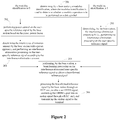
- the method includes steps 101 to 103.
- the method according to the embodiment of the present disclosure may be implemented by a base station or a specified functional module of a base station, which is not limited here.
- the method for transmitting a user-specific reference signal it is not necessary to perform the modulus operation on the user-specific reference signal, and the user-specific reference signal may not have any offset. Therefore, a relative accurate state of a downlink channel is obtained by the terminal, the accuracy of the channel estimation is enhanced, and performance of the communication system is improved.
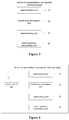
- the method includes steps 201 to 206.
- the modulus operation is mainly used to control the power of an interference-eliminated data symbol.
- the base station may perform a power control on the data symbol, i.e., control the power of the data symbol through multiplying the original data symbol by a preset power factor.
- a terminal also needs to perform a signal restoration through a modulus operation and demodulate the data symbol by using constellation extension; and during this operation, a performance loss is caused, which may be referred to as "a modulus loss”.
- a performance loss is caused, which may be referred to as "a power loss”.
- the modulus loss may be determined by the base station based on a difference between a signal-to-noise ratio obtained in a case that the modulus operation is performed on a data symbol and a signal-to-noise ratio obtained in a case that no modulus operation is performed on the data symbol.
- the modulus loss may be obtained by simulation, i.e., a difference between a signal-to-noise ratio obtained in a case that modulus operation is performed and a signal-to-noise ratio obtained in a case that no modulus operation is performed, when a certain MCS is used and a preset packet error rate (usually, 10%) is reached during receiving a data symbol by a receiving terminal.
- a preset packet error rate usually, 10%
- the power loss may be determined by the base station based on the preset power factor. For example, after the data symbol is multiplied by the power factor, the receiving terminal determines a value, by which the signal-to-noise ratio of a received data symbol decreases, as the power loss.
- a following approach may be used by the base station to determine the modulus identification: determining values of the modulus loss and the power loss; determining, by the base station in a case that the modulus loss is greater than the power loss, the modulus identification to be 0 for instructing a modulus unit to perform no modulus operation on the data symbol; or determining, by the base station in a case that the modulus loss is less than the power loss, the modulus identification to be 1 for instructing the modulus unit to perform a modulus operation on the data symbol.
- step 202 and step 204 are performed in a case that the modulus identification is 0; or step 203 is performed in a case that the modulus identification is 1.
- the base station determines that an interference elimination amount of the user-specific reference signal is not 0, and the power of the user-specific reference signal may be increased; hence, the power of the user-specific reference signal needs to be restricted.
- the base station may control the power of the user-specific reference signal, through a power control unit, by means of multiplying the user-specific reference signal by the preset power factor.
- the base station 203 determining, by the base station in a case that the modulus identification is 1, the interference elimination amount as 0, i.e., performing no interference elimination processing on the user-specific reference signal.
- a modulated data symbol is a, and a is a complex vector having a dimension of S ⁇ 1, where S represents the number of terminals; a i represents a data symbol transmitted from a base station to a terminal i .
- the base station has N transmitting antennas, and each terminal has one receiving antenna.
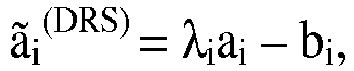
- ⁇ i DRS ⁇ i a i ⁇ b i
- a i a symbol of an i-th stream original user reference signal
- ⁇ i the power factor which is used in calculation according to the preset approach.
- the power of the user-specific reference signal is controlled based on the power factor and there is no need to perform the modulus operation; hence, a problem that the user-specific reference signal generates an offset due to the modulus operation is avoided, which facilitates the terminal obtaining a relative accurate state of the downlink channel, enhances the accuracy of the channel estimation, and improves the performance of the communication system.
- the number of control signalings may not be increased, thereby saving the signaling overhead.
- x DRS Q a ⁇ DRS s
- x (DRS) represents a beamformed reference signal
- Q represents a beamforming matrix
- ⁇ (DRS) represents an input signal to be beamformed, which is obtained through step 202 and step 204
- S represents the number of terminals.
- IFFT Inverse Fast Fourier Transformer
- DAC Digital-to-Analog Converter
- the method for transmitting a user-specific reference signal it is not necessary to perform the modulus operation on the user-specific reference signal, and the user-specific reference signal may not have any offset. Therefore, a relative accurate state of a downlink channel is obtained by the terminal, the accuracy of the channel estimation is enhanced, and performance of the communication system is improved.
- it is allowed to perform the interference elimination processing on the user-specific reference signal; hence, the terminal can perform a relative accurate channel estimation and obtain information of interference among data streams, and the quality of the received signal is improved.
- the device for transmitting a user-specific reference signal according to an embodiment of the present disclosure.
- the device is applicable to a base station, and can implement the methods shown in Figure 1 and Figure 2 .
- the device includes a determination unit 31, an interference elimination unit 32, a beamforming unit 33, and a radio frequency transmitting unit 34.
- the determination unit 31 is configured to determine a modulus identification.
- the interference elimination unit 32 is configured to perform an interference elimination processing on a user-specific reference signal based on the modulus identification determined by the determination unit 31 to obtain an interference-eliminated user-specific reference signal.
- the beamforming unit 33 is configured to perform a beamforming processing on the interference-eliminated user-specific reference signal to obtain a beamformed reference signal.
- the radio frequency transmitting unit 34 is configured to perform an IFFT inverse fast fourier transform and a digital-to-analogue conversion on the beamformed reference signal to obtain an analogue signal for the user-specific reference signal, and transmit the analogue reference signal to a user terminal.
- the determination unit 31 is further configured to determine values of a modulus loss and a power loss. Specifically, the determination unit 31 is configured to determine the modulus loss based on a difference between a signal-to-noise ratio obtained in a case that a modulus operation is performed on a data symbol and a signal-to-noise ratio obtained in a case that no modulus operation is performed on the data symbol, and determine the power loss based on a preset power factor.
- the determination unit 31 is configured to determine the modulus identification as 1 for instructing a modulus unit to perform a modulus operation on the data symbol, in a case that the modulus loss is less than the power loss.
- the interference elimination unit 32 is configured to determine an interference elimination amount as 0, i.e., perform no interference elimination processing on the user-specific reference signal, in a case that the modulus identification is determined as 1 by the determination unit 31.
- the determination unit 31 is further configured to determine the modulus identification as 0 for instructing the modulus unit to perform no modulus operation on the data symbol, in a case that the modulus loss is greater than the power loss.
- the interference elimination unit 32 is configured to determine an interference elimination amount with a preset approach and perform an interference elimination processing on the user-specific reference signal according to the interference elimination amount, in a case that the modulus identification is determined as 0 by the determination unit 31.
- the device further includes a power control unit 35.
- the power control unit 35 is configured to perform power control on the user-specific reference signal based on the preset power factor, in a case that the modulus identification is determined as 0 by the determination unit 31.
- the device for transmitting a user-specific reference signal With the device for transmitting a user-specific reference signal according to the embodiment of the present disclosure, it is not necessary to perform modulus operation on the user-specific reference signal, and the user-specific reference signal may not have any offset. Therefore, a relative accurate state of a downlink channel is obtained by the terminal, the accuracy of the channel estimation is enhanced, and performance of the communication system is improved.
- it is allowed to perform the interference elimination processing on the user-specific reference signal; hence, the terminal can perform a relative accurate channel estimation and obtain information of interference among data streams, and the quality of the received signal is improved.
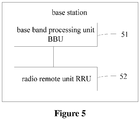
- the base station is applied to a communication system supporting nonlinear precoding, and can implement the methods shown in Figure 1 and Figure 2 .
- the base station includes a Base Band Unit 51 and a Radio Remote Unit 52.
- the Base Band Unit, BBU, 51 is configured to determine a modulus identification, perform an interference elimination processing on a user-specific reference signal based on the modulus identification to obtain an interference-eliminated user-specific reference signal, and perform a beamforming processing on the interference-eliminated user-specific reference signal to obtain a beamformed reference signal.
- the Radio Remote Unit, RRU, 52 is configured to perform an IFFT inverse fast fourier transform and a digital-to-analogue conversion on the beamformed reference signal to obtain an analogue signal for the user-specific reference signal, and transmit the analogue reference signal to a user terminal.
- the BBU is further configured to determine values of a modulus loss and a power loss.
- the BBU is configured to determine the modulus loss based on a difference between a signal-to-noise ratio obtained in a case that a modulus operation is performed on a data symbol and a signal-to-noise ratio obtained in a case that no modulus operation is performed on the data symbol; and determine the power loss based on a preset power factor.
- the BBU is configured to determine the modulus identification as 0 for instructing a modulus unit to perform no modulus operation on the data symbol, in a case that the modulus loss is greater than the power loss.
- the BBU is further configured to determine the modulus identification as 1 for instructing the modulus unit to perform a modulus operation on the data symbol, in a case that the modulus loss is less than the power loss.
- the BBU is configured to determine an interference elimination amount with a preset approach, and perform an interference elimination processing on the user-specific reference signal according to the interference elimination amount, in a case that the modulus identification is determined as 0.
- the BBU is further configured to determine the interference elimination amount as 0, i.e., perform no interference elimination processing on the user-specific reference signal, in a case that the modulus identification is determined as 1.
- the BBU is further configured to perform power control on the user-specific reference signal based on the preset power factor, in a case that the modulus identification is determined as 0.
- the base station With the base station according to the embodiment of the present disclosure, it is not necessary to perform modulus operation on the user-specific reference signal for transmitting the user-specific reference signal, and the user-specific reference signal may not have any offset. Therefore, a relative accurate state of a downlink channel is obtained by the terminal, the accuracy of the channel estimation is enhanced, and performance of the communication system is improved.
- it is allowed to perform the interference elimination processing on the user-specific reference signal; hence, the terminal can perform a relative accurate channel estimation and obtain information of interference among data streams, and the quality of the received signal is improved.
- the present disclosure may be implemented by means of software in conjunction with necessary general-purpose hardware, or may be implemented by means of hardware, and the software in conjunction with hardware is preferred in many cases.
- essential parts or parts contributing to the conventional technology of technical solutions of the present disclosure may be embodied as a computer software product.
- the computer software product may be stored in a readable storage medium, such as, a floppy disc, a hard disk or an optical disk of a computer, and the computer software product includes multiple instructions for controlling a computer device (which may be a personal computer, a server or a network device or the like) to perform the methods described in various embodiments of the present disclosure.
Landscapes
- Engineering & Computer Science (AREA)
- Signal Processing (AREA)
- Computer Networks & Wireless Communication (AREA)
- Computer Security & Cryptography (AREA)
- Mobile Radio Communication Systems (AREA)
- Radio Transmission System (AREA)
Claims (6)
- Verfahren zum Übertragen eines benutzerspezifischen Referenzsignals, umfassend:Bestimmen eines Moduloverlusts basierend auf einem Unterschied zwischen einem Signal-Rausch-Verhältnis, das in einem Fall erhalten wird, in dem eine Modulooperation bei einem Datensymbol durchgeführt wird, und einem Signal-Rausch-Verhältnis, das in einem Fall erhalten wird, in dem keine Modulooperation bei dem Datensymbol durchgeführt wird;Bestimmen eines Leistungsverlusts basierend auf einem Unterschied zwischen einem Signal-Rausch-Verhältnis, das in einem Fall erhalten wird, in dem eine Leistungssteuerung bei einem Datensymbol durchgeführt wird, und einem Signal-Rausch-Verhältnis, das in einem Fall erhalten wird, in dem keine Leistungssteuerung bei dem Datensymbol durchgeführt wird, wobei die Leistungssteuerung ein Multiplizieren des Datensymbols mit einem vorgegebenen Leistungsfaktor umfasst;Bestimmen (101) einer Moduloidentifikation und Durchführen einer Interferenzbeseitigungsverarbeitung bei einem benutzerspezifischen Referenzsignal basierend auf der Moduloidentifikation, um ein interferenzbeseitigtes benutzerspezifisches Referenzsignal zu erhalten;Durchführen (102) einer Beamforming-Verarbeitung bei dem interferenzbeseitigten benutzerspezifischen Referenzsignal, um ein strahlgeformtes Referenzsignal zu erhalten; undDurchführen (103) einer inversen schnellen Fourier-Transformation (Inverse Fast Fourier Transform, IFFT) und einer Digital-Analog-Wandlung bei dem strahlgeformten Referenzsignal, um ein analoges Signal für das benutzerspezifische Referenzsignal zu erhalten, und Übertragen des analogen Referenzsignals zu einem Benutzerendgerät,wobei das Bestimmen (101) der Moduloidentifikation Folgendes umfasst:Bestimmen der Moduloidentifikation als 0 in einem Fall, in dem der Moduloverlust größer als der Leistungsverlust ist, wobei eine Moduloidentifikation von 0 ein Anweisen dazu angibt, keine Modulooperation bei dem Datensymbol durchzuführen; undwobei das Durchführen der Interferenzbeseitigungsverarbeitung bei dem benutzerspezifischen Referenzsignal basierend auf der Moduloidentifikation Folgendes umfasst:
Bestimmen einer Interferenzbeseitigungsmenge und Durchführen der Interferenzbeseitigungsverarbeitung bei dem benutzerspezifischen Referenzsignal gemäß der Interferenzbeseitigungsmenge in einem Fall, in dem die Moduloidentifikation 0 ist. - Verfahren nach Anspruch 1, wobei der vorgegebene Leistungsfaktor λ1 mit der folgenden Formel bestimmt wird:
 wobei lii für ein (i,i). Element in einer Matrix L steht; und lik für ein (i,k). Element in der Matrix L steht, wobei die Matrix L eine untere Dreiecksmatrix mit positiven Elementen auf einer Diagonalen ist,und H = LQH, wobei H für eine Kanalmatrix steht und QHQ = I, wobei I eine Einheitsmatrix ist.
 - Verfahren nach Anspruch 1, wobei das Bestimmen der Interferenzbeseitigungsmenge Folgendes umfasst: Bestimmen der Interferenzbeseitigungsmenge mit einem vorgegebenen Ansatz,
wobei der vorgegebene Ansatz wie folgt ist:

- Basisstation, umfassend:eine Bestimmungseinheit (31), die dazu konfiguriert ist, einen Moduloverlust basierend auf einem Unterschied zwischen einem Signal-Rausch-Verhältnis, das in einem Fall erhalten wird, in dem eine Modulooperation bei einem Datensymbol durchgeführt wird, und einem Signal-Rausch-Verhältnis, das in einem Fall erhalten wird, in dem keine Modulooperation bei dem Datensymbol durchgeführt wird, zu bestimmen; einen Leistungsverlust basierend auf einem Unterschied zwischen einem Signal-Rausch-Verhältnis, das in einem Fall erhalten wird, in dem eine Leistungssteuerung bei einem Datensymbol durchgeführt wird, und einem Signal-Rausch-Verhältnis, das in einem Fall erhalten wird, in dem keine Leistungssteuerung bei dem Datensymbol durchgeführt wird, zu bestimmen, wobei die Leistungssteuerung ein Multiplizieren des Datensymbols mit einem vorgegebenen Leistungsfaktor umfasst; und eine Moduloidentifikation zu bestimmen;eine Interferenzbeseitigungseinheit (32), die dazu konfiguriert ist, eine Interferenzbeseitigungsverarbeitung bei einem benutzerspezifischen Referenzsignal basierend auf der Moduloidentifikation durchzuführen, die durch die Bestimmungseinheit (31) bestimmt wird, um ein interferenzbeseitigtes benutzerspezifisches Referenzsignal zu erhalten;eine Beamforming-Einheit (33), die dazu konfiguriert ist, eine Beamforming-Verarbeitung bei dem interferenzbeseitigten benutzerspezifischen Referenzsignal durchzuführen, um ein strahlgeformtes Referenzsignal zu erhalten; undeine Funkfrequenzübertragungseinheit (34), die dazu konfiguriert ist, eine inverse schnelle Fourier-Transformation (Inverse Fast Fourier Transform, IFFT) und eine Digital-Analog-Wandlung bei dem strahlgeformten Referenzsignal durchzuführen, um ein analoges Signal für das benutzerspezifische Referenzsignal zu erhalten, und das analoge Referenzsignal zu einem Benutzerendgerät zu übertragen,wobei die Bestimmungseinheit (31) dazu konfiguriert ist, die Moduloidentifikation in einem Fall, in dem der Moduloverlust größer als der Leistungsverlust ist, als 0 zu bestimmen, wobei die Moduloidentifikation von 0 ein Anweisen einer Moduloeinheit dazu angibt, keine Modulooperation bei dem Datensymbol durchzuführen; unddie Interferenzbeseitigungseinheit (32) dazu konfiguriert ist, eine Interferenzbeseitigungsmenge zu bestimmen und in einem Fall, in dem die Moduloidentifikation durch die Bestimmungseinheit als 0 bestimmt ist, eine Interferenzbeseitigungsverarbeitung bei dem benutzerspezifischen Referenzsignal gemäß der Interferenzbeseitigungsmenge durchzuführen.
- Basisstation nach Anspruch 4, wobei der vorgegebene Leistungsfaktor λ1 mit der folgenden Formel bestimmt wird:
 wobei lii für ein (i,i). Element in einer Matrix L steht; und lik für ein (i,k). Element in der Matrix L steht, wobei die Matrix L eine untere Dreiecksmatrix mit positiven Elementen auf einer Diagonalen ist,und H = LQH , wobei H für eine Kanalmatrix steht und QHQ = I, wobei I eine Einheitsmatrix ist.
 - Basisstation nach Anspruch 4, wobei die Interferenzbeseitigungseinheit (32) dazu konfiguriert ist, die Interferenzbeseitigungsmenge mit einem vorgegebenen Ansatz zu bestimmen,
wobei der vorgegebene Ansatz wie folgt ist:


Applications Claiming Priority (2)
| Application Number | Priority Date | Filing Date | Title |
|---|---|---|---|
| CN201310172592.0A CN104144136B (zh) | 2013-05-10 | 2013-05-10 | 用户专用参考信号的发送方法及装置 |
| PCT/CN2014/077262 WO2014180354A1 (zh) | 2013-05-10 | 2014-05-12 | 用户专用参考信号的发送方法及装置 |
Publications (3)
| Publication Number | Publication Date |
|---|---|
| EP2996302A1 EP2996302A1 (de) | 2016-03-16 |
| EP2996302A4 EP2996302A4 (de) | 2016-03-16 |
| EP2996302B1 true EP2996302B1 (de) | 2019-04-03 |
Family
ID=51853204
Family Applications (1)
| Application Number | Title | Priority Date | Filing Date |
|---|---|---|---|
| EP14794884.8A Active EP2996302B1 (de) | 2013-05-10 | 2014-05-12 | Verfahren und vorrichtung zum senden von benutzerspezifischen referenzsignalen |
Country Status (5)
| Country | Link |
|---|---|
| US (1) | US9438323B2 (de) |
| EP (1) | EP2996302B1 (de) |
| JP (1) | JP6112257B2 (de) |
| CN (1) | CN104144136B (de) |
| WO (1) | WO2014180354A1 (de) |
Families Citing this family (7)
| Publication number | Priority date | Publication date | Assignee | Title |
|---|---|---|---|---|
| JPWO2016121251A1 (ja) | 2015-01-29 | 2017-11-09 | ソニー株式会社 | 装置及び方法 |
| US10924164B2 (en) | 2018-05-29 | 2021-02-16 | Skyworks Solutions, Inc. | Beamforming communication systems with power control based on antenna pattern configuration |
| CN108989258B (zh) * | 2018-07-13 | 2020-04-21 | 电信科学技术第五研究所有限公司 | 一种prach基带信号的求模实现结构及实现方法 |
| US10784910B1 (en) * | 2018-09-28 | 2020-09-22 | Perspecta Labs Inc. | Multi-antenna jamming/interference protection for waveforms |
| CN112383595B (zh) * | 2020-11-02 | 2022-08-26 | 河南工学院 | 基于物联网技术的智能生产线设备运行数据的传输方法及系统 |
| US12143250B2 (en) | 2022-06-21 | 2024-11-12 | Soochow University | Optical interconnect system and method for data center |
| CN115173950B (zh) * | 2022-06-21 | 2023-07-07 | 苏州大学 | 数据中心光互连系统及方法 |
Family Cites Families (9)
| Publication number | Priority date | Publication date | Assignee | Title |
|---|---|---|---|---|
| KR100969771B1 (ko) * | 2007-01-31 | 2010-07-13 | 삼성전자주식회사 | 통신 시스템에서 신호 송수신 장치 및 방법 |
| JP5248130B2 (ja) | 2008-01-31 | 2013-07-31 | 株式会社東芝 | 無線送信方法及び装置 |
| KR101552274B1 (ko) * | 2009-08-14 | 2015-09-10 | 삼성전자주식회사 | 릴레이를 위한 백홀 서브프레임의 기준 신호 구성 방법 및 장치 |
| CN101800993A (zh) * | 2010-01-19 | 2010-08-11 | 重庆邮电大学 | Lte-a系统下行参考信号的发送方法 |
| JP5686427B2 (ja) * | 2010-02-05 | 2015-03-18 | シャープ株式会社 | 送信装置、受信装置、無線通信システム、送信制御方法、受信制御方法、及び、プロセッサ |
| JP5547988B2 (ja) * | 2010-03-01 | 2014-07-16 | シャープ株式会社 | 通信システム、送信装置、受信装置、通信方法 |
| CN102340377A (zh) | 2011-10-17 | 2012-02-01 | 中兴通讯股份有限公司 | 一种非线性预编码处理方法、装置和系统 |
| CN102832982B (zh) * | 2012-08-08 | 2015-01-07 | 华为技术有限公司 | 带有mimo加速器的基站及其控制方法 |
| US9374719B2 (en) * | 2013-04-03 | 2016-06-21 | Qualcomm Incorporated | Channel state information reference signal (CSI-RS) handling for network assisted interference cancellation |
-
2013
- 2013-05-10 CN CN201310172592.0A patent/CN104144136B/zh active Active
-
2014
- 2014-05-12 JP JP2016512219A patent/JP6112257B2/ja not_active Expired - Fee Related
- 2014-05-12 WO PCT/CN2014/077262 patent/WO2014180354A1/zh not_active Ceased
- 2014-05-12 EP EP14794884.8A patent/EP2996302B1/de active Active
-
2015
- 2015-11-05 US US14/933,763 patent/US9438323B2/en active Active
Non-Patent Citations (1)
| Title |
|---|
| None * |
Also Published As
| Publication number | Publication date |
|---|---|
| CN104144136A (zh) | 2014-11-12 |
| EP2996302A1 (de) | 2016-03-16 |
| WO2014180354A1 (zh) | 2014-11-13 |
| EP2996302A4 (de) | 2016-03-16 |
| CN104144136B (zh) | 2017-12-15 |
| US20160056869A1 (en) | 2016-02-25 |
| JP6112257B2 (ja) | 2017-04-12 |
| US9438323B2 (en) | 2016-09-06 |
| JP2016520267A (ja) | 2016-07-11 |
Similar Documents
| Publication | Publication Date | Title |
|---|---|---|
| EP2996302B1 (de) | Verfahren und vorrichtung zum senden von benutzerspezifischen referenzsignalen | |
| US10951454B2 (en) | Precoding in wireless systems using orthogonal time frequency space multiplexing | |
| EP2604008B1 (de) | Subband-feedback zur strahlformung bei downlink-mimo-konfigurationen mit mehreren benutzern | |
| US8553521B2 (en) | MIMO beamforming-based single carrier frequency division multiple access system | |
| US8270909B2 (en) | Sounding and steering protocols for wireless communications | |
| US8451926B2 (en) | Method and device for pre-coding in multiple input multiple output system | |
| US11121899B2 (en) | Signal quality control method for basestations having multiple antennas | |
| US8675720B2 (en) | Noise estimation filter | |
| US10644773B2 (en) | Feedback channel information using pre-coders in a wireless communication system | |
| US8498363B2 (en) | Compensating for frequency offsets on a base station | |
| CN110035442B (zh) | 无线通信装置以及无线通信方法 | |
| US20200052945A1 (en) | Method and arrangement for signal distortion mitigation | |
| CN105490980A (zh) | 一种载波频偏估计方法和系统 | |
| US8913515B2 (en) | Measuring and improving multiuser downlink reception quality in wireless local area networks | |
| US10009076B2 (en) | Method and apparatus for obtaining downlink data in a massive MIMO system | |
| EP2611044B1 (de) | Adaptive Sendestrahlformung | |
| US20120163356A1 (en) | Implicit beamforming using partial channel state information | |
| US9716534B2 (en) | Base station and massive MIMO communication method | |
| Jee et al. | A comparative study on the compensation schemes for transceiver I/Q imbalances of massive MIMO system | |
| US9036461B2 (en) | LTE—advanced transmit diversity decoders | |
| US20230070849A1 (en) | Wireless communication system, wireless communication method, and transmission device |
Legal Events
| Date | Code | Title | Description |
|---|---|---|---|
| PUAI | Public reference made under article 153(3) epc to a published international application that has entered the european phase |
Free format text: ORIGINAL CODE: 0009012 |
|
| 17P | Request for examination filed |
Effective date: 20151119 |
|
| A4 | Supplementary search report drawn up and despatched |
Effective date: 20160216 |
|
| AK | Designated contracting states |
Kind code of ref document: A1 Designated state(s): AL AT BE BG CH CY CZ DE DK EE ES FI FR GB GR HR HU IE IS IT LI LT LU LV MC MK MT NL NO PL PT RO RS SE SI SK SM TR |
|
| AX | Request for extension of the european patent |
Extension state: BA ME |
|
| DAX | Request for extension of the european patent (deleted) | ||
| STAA | Information on the status of an ep patent application or granted ep patent |
Free format text: STATUS: EXAMINATION IS IN PROGRESS |
|
| 17Q | First examination report despatched |
Effective date: 20161116 |
|
| GRAP | Despatch of communication of intention to grant a patent |
Free format text: ORIGINAL CODE: EPIDOSNIGR1 |
|
| STAA | Information on the status of an ep patent application or granted ep patent |
Free format text: STATUS: GRANT OF PATENT IS INTENDED |
|
| INTG | Intention to grant announced |
Effective date: 20181011 |
|
| GRAS | Grant fee paid |
Free format text: ORIGINAL CODE: EPIDOSNIGR3 |
|
| GRAA | (expected) grant |
Free format text: ORIGINAL CODE: 0009210 |
|
| STAA | Information on the status of an ep patent application or granted ep patent |
Free format text: STATUS: THE PATENT HAS BEEN GRANTED |
|
| AK | Designated contracting states |
Kind code of ref document: B1 Designated state(s): AL AT BE BG CH CY CZ DE DK EE ES FI FR GB GR HR HU IE IS IT LI LT LU LV MC MK MT NL NO PL PT RO RS SE SI SK SM TR |
|
| REG | Reference to a national code |
Ref country code: GB Ref legal event code: FG4D |
|
| REG | Reference to a national code |
Ref country code: CH Ref legal event code: EP Ref country code: AT Ref legal event code: REF Ref document number: 1117166 Country of ref document: AT Kind code of ref document: T Effective date: 20190415 |
|
| REG | Reference to a national code |
Ref country code: DE Ref legal event code: R096 Ref document number: 602014044090 Country of ref document: DE |
|
| REG | Reference to a national code |
Ref country code: IE Ref legal event code: FG4D |
|
| REG | Reference to a national code |
Ref country code: NL Ref legal event code: MP Effective date: 20190403 |
|
| REG | Reference to a national code |
Ref country code: LT Ref legal event code: MG4D |
|
| REG | Reference to a national code |
Ref country code: AT Ref legal event code: MK05 Ref document number: 1117166 Country of ref document: AT Kind code of ref document: T Effective date: 20190403 |
|
| PG25 | Lapsed in a contracting state [announced via postgrant information from national office to epo] |
Ref country code: NL Free format text: LAPSE BECAUSE OF FAILURE TO SUBMIT A TRANSLATION OF THE DESCRIPTION OR TO PAY THE FEE WITHIN THE PRESCRIBED TIME-LIMIT Effective date: 20190403 |
|
| PG25 | Lapsed in a contracting state [announced via postgrant information from national office to epo] |
Ref country code: SE Free format text: LAPSE BECAUSE OF FAILURE TO SUBMIT A TRANSLATION OF THE DESCRIPTION OR TO PAY THE FEE WITHIN THE PRESCRIBED TIME-LIMIT Effective date: 20190403 Ref country code: PT Free format text: LAPSE BECAUSE OF FAILURE TO SUBMIT A TRANSLATION OF THE DESCRIPTION OR TO PAY THE FEE WITHIN THE PRESCRIBED TIME-LIMIT Effective date: 20190803 Ref country code: AL Free format text: LAPSE BECAUSE OF FAILURE TO SUBMIT A TRANSLATION OF THE DESCRIPTION OR TO PAY THE FEE WITHIN THE PRESCRIBED TIME-LIMIT Effective date: 20190403 Ref country code: FI Free format text: LAPSE BECAUSE OF FAILURE TO SUBMIT A TRANSLATION OF THE DESCRIPTION OR TO PAY THE FEE WITHIN THE PRESCRIBED TIME-LIMIT Effective date: 20190403 Ref country code: NO Free format text: LAPSE BECAUSE OF FAILURE TO SUBMIT A TRANSLATION OF THE DESCRIPTION OR TO PAY THE FEE WITHIN THE PRESCRIBED TIME-LIMIT Effective date: 20190703 Ref country code: HR Free format text: LAPSE BECAUSE OF FAILURE TO SUBMIT A TRANSLATION OF THE DESCRIPTION OR TO PAY THE FEE WITHIN THE PRESCRIBED TIME-LIMIT Effective date: 20190403 Ref country code: CZ Free format text: LAPSE BECAUSE OF FAILURE TO SUBMIT A TRANSLATION OF THE DESCRIPTION OR TO PAY THE FEE WITHIN THE PRESCRIBED TIME-LIMIT Effective date: 20190403 Ref country code: LT Free format text: LAPSE BECAUSE OF FAILURE TO SUBMIT A TRANSLATION OF THE DESCRIPTION OR TO PAY THE FEE WITHIN THE PRESCRIBED TIME-LIMIT Effective date: 20190403 Ref country code: ES Free format text: LAPSE BECAUSE OF FAILURE TO SUBMIT A TRANSLATION OF THE DESCRIPTION OR TO PAY THE FEE WITHIN THE PRESCRIBED TIME-LIMIT Effective date: 20190403 |
|
| PG25 | Lapsed in a contracting state [announced via postgrant information from national office to epo] |
Ref country code: PL Free format text: LAPSE BECAUSE OF FAILURE TO SUBMIT A TRANSLATION OF THE DESCRIPTION OR TO PAY THE FEE WITHIN THE PRESCRIBED TIME-LIMIT Effective date: 20190403 Ref country code: RS Free format text: LAPSE BECAUSE OF FAILURE TO SUBMIT A TRANSLATION OF THE DESCRIPTION OR TO PAY THE FEE WITHIN THE PRESCRIBED TIME-LIMIT Effective date: 20190403 Ref country code: BG Free format text: LAPSE BECAUSE OF FAILURE TO SUBMIT A TRANSLATION OF THE DESCRIPTION OR TO PAY THE FEE WITHIN THE PRESCRIBED TIME-LIMIT Effective date: 20190703 Ref country code: LV Free format text: LAPSE BECAUSE OF FAILURE TO SUBMIT A TRANSLATION OF THE DESCRIPTION OR TO PAY THE FEE WITHIN THE PRESCRIBED TIME-LIMIT Effective date: 20190403 Ref country code: GR Free format text: LAPSE BECAUSE OF FAILURE TO SUBMIT A TRANSLATION OF THE DESCRIPTION OR TO PAY THE FEE WITHIN THE PRESCRIBED TIME-LIMIT Effective date: 20190704 |
|
| REG | Reference to a national code |
Ref country code: CH Ref legal event code: PL |
|
| PG25 | Lapsed in a contracting state [announced via postgrant information from national office to epo] |
Ref country code: AT Free format text: LAPSE BECAUSE OF FAILURE TO SUBMIT A TRANSLATION OF THE DESCRIPTION OR TO PAY THE FEE WITHIN THE PRESCRIBED TIME-LIMIT Effective date: 20190403 Ref country code: IS Free format text: LAPSE BECAUSE OF FAILURE TO SUBMIT A TRANSLATION OF THE DESCRIPTION OR TO PAY THE FEE WITHIN THE PRESCRIBED TIME-LIMIT Effective date: 20190803 |
|
| REG | Reference to a national code |
Ref country code: DE Ref legal event code: R097 Ref document number: 602014044090 Country of ref document: DE |
|
| PG25 | Lapsed in a contracting state [announced via postgrant information from national office to epo] |
Ref country code: DK Free format text: LAPSE BECAUSE OF FAILURE TO SUBMIT A TRANSLATION OF THE DESCRIPTION OR TO PAY THE FEE WITHIN THE PRESCRIBED TIME-LIMIT Effective date: 20190403 Ref country code: LI Free format text: LAPSE BECAUSE OF NON-PAYMENT OF DUE FEES Effective date: 20190531 Ref country code: CH Free format text: LAPSE BECAUSE OF NON-PAYMENT OF DUE FEES Effective date: 20190531 Ref country code: EE Free format text: LAPSE BECAUSE OF FAILURE TO SUBMIT A TRANSLATION OF THE DESCRIPTION OR TO PAY THE FEE WITHIN THE PRESCRIBED TIME-LIMIT Effective date: 20190403 Ref country code: RO Free format text: LAPSE BECAUSE OF FAILURE TO SUBMIT A TRANSLATION OF THE DESCRIPTION OR TO PAY THE FEE WITHIN THE PRESCRIBED TIME-LIMIT Effective date: 20190403 Ref country code: SK Free format text: LAPSE BECAUSE OF FAILURE TO SUBMIT A TRANSLATION OF THE DESCRIPTION OR TO PAY THE FEE WITHIN THE PRESCRIBED TIME-LIMIT Effective date: 20190403 Ref country code: MC Free format text: LAPSE BECAUSE OF FAILURE TO SUBMIT A TRANSLATION OF THE DESCRIPTION OR TO PAY THE FEE WITHIN THE PRESCRIBED TIME-LIMIT Effective date: 20190403 |
|
| REG | Reference to a national code |
Ref country code: BE Ref legal event code: MM Effective date: 20190531 |
|
| PLBE | No opposition filed within time limit |
Free format text: ORIGINAL CODE: 0009261 |
|
| STAA | Information on the status of an ep patent application or granted ep patent |
Free format text: STATUS: NO OPPOSITION FILED WITHIN TIME LIMIT |
|
| PG25 | Lapsed in a contracting state [announced via postgrant information from national office to epo] |
Ref country code: SM Free format text: LAPSE BECAUSE OF FAILURE TO SUBMIT A TRANSLATION OF THE DESCRIPTION OR TO PAY THE FEE WITHIN THE PRESCRIBED TIME-LIMIT Effective date: 20190403 Ref country code: LU Free format text: LAPSE BECAUSE OF NON-PAYMENT OF DUE FEES Effective date: 20190512 Ref country code: IT Free format text: LAPSE BECAUSE OF FAILURE TO SUBMIT A TRANSLATION OF THE DESCRIPTION OR TO PAY THE FEE WITHIN THE PRESCRIBED TIME-LIMIT Effective date: 20190403 |
|
| 26N | No opposition filed |
Effective date: 20200106 |
|
| PG25 | Lapsed in a contracting state [announced via postgrant information from national office to epo] |
Ref country code: TR Free format text: LAPSE BECAUSE OF FAILURE TO SUBMIT A TRANSLATION OF THE DESCRIPTION OR TO PAY THE FEE WITHIN THE PRESCRIBED TIME-LIMIT Effective date: 20190403 |
|
| PG25 | Lapsed in a contracting state [announced via postgrant information from national office to epo] |
Ref country code: IE Free format text: LAPSE BECAUSE OF NON-PAYMENT OF DUE FEES Effective date: 20190512 |
|
| PG25 | Lapsed in a contracting state [announced via postgrant information from national office to epo] |
Ref country code: SI Free format text: LAPSE BECAUSE OF FAILURE TO SUBMIT A TRANSLATION OF THE DESCRIPTION OR TO PAY THE FEE WITHIN THE PRESCRIBED TIME-LIMIT Effective date: 20190403 Ref country code: BE Free format text: LAPSE BECAUSE OF NON-PAYMENT OF DUE FEES Effective date: 20190531 |
|
| PG25 | Lapsed in a contracting state [announced via postgrant information from national office to epo] |
Ref country code: FR Free format text: LAPSE BECAUSE OF NON-PAYMENT OF DUE FEES Effective date: 20190603 |
|
| PG25 | Lapsed in a contracting state [announced via postgrant information from national office to epo] |
Ref country code: CY Free format text: LAPSE BECAUSE OF FAILURE TO SUBMIT A TRANSLATION OF THE DESCRIPTION OR TO PAY THE FEE WITHIN THE PRESCRIBED TIME-LIMIT Effective date: 20190403 |
|
| PG25 | Lapsed in a contracting state [announced via postgrant information from national office to epo] |
Ref country code: HU Free format text: LAPSE BECAUSE OF FAILURE TO SUBMIT A TRANSLATION OF THE DESCRIPTION OR TO PAY THE FEE WITHIN THE PRESCRIBED TIME-LIMIT; INVALID AB INITIO Effective date: 20140512 Ref country code: MT Free format text: LAPSE BECAUSE OF FAILURE TO SUBMIT A TRANSLATION OF THE DESCRIPTION OR TO PAY THE FEE WITHIN THE PRESCRIBED TIME-LIMIT Effective date: 20190403 |
|
| REG | Reference to a national code |
Ref country code: DE Ref legal event code: R079 Ref document number: 602014044090 Country of ref document: DE Free format text: PREVIOUS MAIN CLASS: H04L0029060000 Ipc: H04L0065000000 |
|
| PG25 | Lapsed in a contracting state [announced via postgrant information from national office to epo] |
Ref country code: MK Free format text: LAPSE BECAUSE OF FAILURE TO SUBMIT A TRANSLATION OF THE DESCRIPTION OR TO PAY THE FEE WITHIN THE PRESCRIBED TIME-LIMIT Effective date: 20190403 |
|
| PGFP | Annual fee paid to national office [announced via postgrant information from national office to epo] |
Ref country code: GB Payment date: 20220401 Year of fee payment: 9 |
|
| GBPC | Gb: european patent ceased through non-payment of renewal fee |
Effective date: 20230512 |
|
| PG25 | Lapsed in a contracting state [announced via postgrant information from national office to epo] |
Ref country code: GB Free format text: LAPSE BECAUSE OF NON-PAYMENT OF DUE FEES Effective date: 20230512 |
|
| PGFP | Annual fee paid to national office [announced via postgrant information from national office to epo] |
Ref country code: DE Payment date: 20250402 Year of fee payment: 12 |