EP2996382A1 - Verfahren zur anpassung physikalischer ressourcen, vorrichtung und steuereinheit - Google Patents
Verfahren zur anpassung physikalischer ressourcen, vorrichtung und steuereinheit Download PDFInfo
- Publication number
- EP2996382A1 EP2996382A1 EP13885716.4A EP13885716A EP2996382A1 EP 2996382 A1 EP2996382 A1 EP 2996382A1 EP 13885716 A EP13885716 A EP 13885716A EP 2996382 A1 EP2996382 A1 EP 2996382A1
- Authority
- EP
- European Patent Office
- Prior art keywords
- physical resources
- workload
- adjusted
- load
- adjusted physical
- Prior art date
- Legal status (The legal status is an assumption and is not a legal conclusion. Google has not performed a legal analysis and makes no representation as to the accuracy of the status listed.)
- Granted
Links
Images



Classifications
-
- H—ELECTRICITY
- H04—ELECTRIC COMMUNICATION TECHNIQUE
- H04L—TRANSMISSION OF DIGITAL INFORMATION, e.g. TELEGRAPHIC COMMUNICATION
- H04L41/00—Arrangements for maintenance, administration or management of data switching networks, e.g. of packet switching networks
- H04L41/04—Network management architectures or arrangements
-
- G—PHYSICS
- G06—COMPUTING OR CALCULATING; COUNTING
- G06F—ELECTRIC DIGITAL DATA PROCESSING
- G06F9/00—Arrangements for program control, e.g. control units
- G06F9/06—Arrangements for program control, e.g. control units using stored programs, i.e. using an internal store of processing equipment to receive or retain programs
- G06F9/46—Multiprogramming arrangements
- G06F9/50—Allocation of resources, e.g. of the central processing unit [CPU]
- G06F9/5083—Techniques for rebalancing the load in a distributed system
-
- H—ELECTRICITY
- H04—ELECTRIC COMMUNICATION TECHNIQUE
- H04L—TRANSMISSION OF DIGITAL INFORMATION, e.g. TELEGRAPHIC COMMUNICATION
- H04L41/00—Arrangements for maintenance, administration or management of data switching networks, e.g. of packet switching networks
- H04L41/34—Signalling channels for network management communication
- H04L41/344—Out-of-band transfers
-
- H—ELECTRICITY
- H04—ELECTRIC COMMUNICATION TECHNIQUE
- H04L—TRANSMISSION OF DIGITAL INFORMATION, e.g. TELEGRAPHIC COMMUNICATION
- H04L43/00—Arrangements for monitoring or testing data switching networks
- H04L43/08—Monitoring or testing based on specific metrics, e.g. QoS, energy consumption or environmental parameters
- H04L43/0805—Monitoring or testing based on specific metrics, e.g. QoS, energy consumption or environmental parameters by checking availability
- H04L43/0817—Monitoring or testing based on specific metrics, e.g. QoS, energy consumption or environmental parameters by checking availability by checking functioning
-
- H—ELECTRICITY
- H04—ELECTRIC COMMUNICATION TECHNIQUE
- H04L—TRANSMISSION OF DIGITAL INFORMATION, e.g. TELEGRAPHIC COMMUNICATION
- H04L47/00—Traffic control in data switching networks
- H04L47/10—Flow control; Congestion control
- H04L47/12—Avoiding congestion; Recovering from congestion
- H04L47/125—Avoiding congestion; Recovering from congestion by balancing the load, e.g. traffic engineering
-
- H—ELECTRICITY
- H04—ELECTRIC COMMUNICATION TECHNIQUE
- H04L—TRANSMISSION OF DIGITAL INFORMATION, e.g. TELEGRAPHIC COMMUNICATION
- H04L47/00—Traffic control in data switching networks
- H04L47/70—Admission control; Resource allocation
- H04L47/82—Miscellaneous aspects
- H04L47/822—Collecting or measuring resource availability data
-
- H—ELECTRICITY
- H04—ELECTRIC COMMUNICATION TECHNIQUE
- H04W—WIRELESS COMMUNICATION NETWORKS
- H04W72/00—Local resource management
- H04W72/50—Allocation or scheduling criteria for wireless resources
- H04W72/54—Allocation or scheduling criteria for wireless resources based on quality criteria
- H04W72/542—Allocation or scheduling criteria for wireless resources based on quality criteria using measured or perceived quality
-
- H—ELECTRICITY
- H04—ELECTRIC COMMUNICATION TECHNIQUE
- H04L—TRANSMISSION OF DIGITAL INFORMATION, e.g. TELEGRAPHIC COMMUNICATION
- H04L41/00—Arrangements for maintenance, administration or management of data switching networks, e.g. of packet switching networks
- H04L41/08—Configuration management of networks or network elements
- H04L41/0803—Configuration setting
- H04L41/0813—Configuration setting characterised by the conditions triggering a change of settings
- H04L41/0816—Configuration setting characterised by the conditions triggering a change of settings the condition being an adaptation, e.g. in response to network events
-
- H—ELECTRICITY
- H04—ELECTRIC COMMUNICATION TECHNIQUE
- H04L—TRANSMISSION OF DIGITAL INFORMATION, e.g. TELEGRAPHIC COMMUNICATION
- H04L43/00—Arrangements for monitoring or testing data switching networks
- H04L43/08—Monitoring or testing based on specific metrics, e.g. QoS, energy consumption or environmental parameters
- H04L43/0876—Network utilisation, e.g. volume of load or congestion level
- H04L43/0888—Throughput
-
- H—ELECTRICITY
- H04—ELECTRIC COMMUNICATION TECHNIQUE
- H04L—TRANSMISSION OF DIGITAL INFORMATION, e.g. TELEGRAPHIC COMMUNICATION
- H04L43/00—Arrangements for monitoring or testing data switching networks
- H04L43/16—Threshold monitoring
Definitions
- the present invention relates to the field of electronic technologies, and in particular, to a method and an apparatus for adjusting a physical resource, and a controller.
- functions of a radio network layer may be divided into two parts: a CP (Control Plane, control plane) function and a UP (User Plane, user plane) function.
- CP Control Plane, control plane
- UP User Plane, user plane
- the CP and UP functions are generally carried by using different physical boards, for example, boards including two types: a CP board and a UP board.
- An operator needs to purchase a certain quantity of CP boards and a certain quantity of UP boards according to predictions.
- it is difficult to accurately predict a CP/UP capability requirement. Therefore, when the predictions are not accurate, one type of board is wasted, and the other type of board is insufficient. If adjustment needs to be performed, the type of board that is insufficient needs to be purchased again, so that an adjustment cycle is long.
- manual intervention is required in an adjustment process, which causes a service interruption.
- Embodiments of the present invention provide a method and an apparatus for adjusting a physical resource, so that a physical resource can be adjusted and allocated automatically according to load statuses of CP and UP.
- an embodiment of the present invention provides a method for adjusting a physical resource, including:
- the adjusting physical resources of the CP and the UP according to the quantity of to-be-adjusted physical resources that is obtained through calculation includes:
- the collecting load information of a CP from a control plane CP board, collecting load information of a UP from a user plane UP board, and obtaining, according to the corresponding load information, that a CP workload and a UP includes:
- the calculating a quantity of to-be-adjusted physical resources in the case that the CP workload and the UP workload meet a preset balancing adjustment condition includes:
- the calculating a quantity of to-be-adjusted physical resources includes:
- the first possible implementation manner of the first aspect, the second possible implementation manner of the first aspect, the third possible implementation manner of the first aspect, the fourth possible implementation manner of the first aspect, or the fifth possible implementation manner of the first aspect in a sixth possible implementation manner, that the CP workload and the UP workload meet the preset balancing adjustment condition refers to that an absolute value of a difference between or a ratio of the CP workload and the UP workload is beyond a preset range threshold.
- the adjusting physical resources of the CP and the UP according to the quantity of to-be-adjusted physical resources that is obtained through calculation includes:
- the adjusting physical resources of the CP and the UP according to the quantity of to-be-adjusted physical resources that is obtained through calculation includes:
- the adjusting physical resources of the CP and the UP according to the quantity of to-be-adjusted physical resources that is obtained through calculation includes:
- the method further includes:
- the redundant plane refers to a plane of the CP and the UP that has a smaller workload obtained by comparing the acquired CP workload with the acquired UP workload; and the scarce plane refers to a plane of the CP and the UP that has a larger workload obtained by comparing the acquired CP workload with the acquired UP workload.
- the adjusting physical resources of the CP and the UP according to the quantity of to-be-adjusted physical resources that is obtained through calculation includes:
- an embodiment of the present invention provides an apparatus for adjusting a physical resource, including:
- the adjusting module includes:
- the collecting module includes:
- the calculating module includes:
- the calculating unit is specifically configured to calculate the quantity of to-be-adjusted physical resources, so that an absolute value of a difference between or a ratio of a load value which is obtained by sharing a current total workload of the CP on each CP physical resource that is obtained after adjusting is performed according to the quantity of to-be-adjusted physical resources, and a load value which is obtained by sharing a current total workload of the UP on each UP physical resource that is obtained after adjusting is performed according to the quantity of to-be-adjusted physical resources is within a preset range threshold.
- the calculating module further includes:
- the adjusting module is specifically configured to: in the case that the CP is used as the redundant plane, change a logic type of boards, which are in boards of the CP and whose quantity is indicated by the quantity of to-be-adjusted physical resources, into a UP logic type to implement a UP function; or in the case that the UP is used as the redundant plane, change a logic type of boards, which are in boards of the UP and whose quantity is indicated by the quantity of to-be-adjusted physical resources, into a CP logic type to implement a CP function.
- the adjusting module is specifically configured to: in the case that the CP is used as the redundant plane, modify a software configuration, delete, according to the software configuration, CP software instances whose quantity corresponds to the quantity of to-be-adjusted physical resources, and create, on physical resources that become idle, of UP software instances whose quantity corresponds to the quantity of to-be-adjusted physical resources; or in the case that the UP is used as the redundant plane, modify a software configuration, delete, according to the software configuration, UP software instances whose quantity corresponds to the quantity of to-be-adjusted physical resources, and create, on physical resources that become idle, CP software instances whose quantity corresponds to the quantity of to-be-adjusted physical resources.
- the adjusting module is specifically configured to: in the case that the CP is used as the redundant plane, reduce, according to an indication of the quantity of to-be-adjusted physical resources, a quantity of physical resources used by CP software instances, and allocate, to UP software instances for use, physical resources whose quantity corresponds to a quantity of to-be-adjusted physical resources that become idle; or in the case that the UP is used as the redundant plane, reduce, according to an indication of the quantity of to-be-adjusted physical resources, a quantity of physical resources used by UP software instances, and allocate, to CP software instances for use, physical resources whose quantity corresponds to a quantity of to-be-adjusted physical resources that become idle.
- the apparatus further includes:
- an embodiment of the present invention further provides a controller, including a control board, a CP board, and a UP board, where:
- control board includes the apparatus for adjusting a physical resource according to the second aspect.
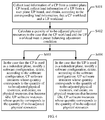
- FIG. 1 is a schematic flowchart of a method for adjusting a physical resource according to an embodiment of the present invention.
- the method in this embodiment of the present invention may be implemented by, for example, a device such as a controller.
- the controller may be, for example, a BSC (Base Station Controller, base station controller) or an RNC (Radio Network Controller, radio network controller), which is not limited in this embodiment of the present invention.
- the method includes:
- a CP may be used to implement application protocols including an RANAP (Radio Access Network Application Part, radio access network application part), an RNSAP (Radio Network Subsystem Application Part, radio network subsystem application part), an NBAP (NodeB Application Part, base station application part), transport bearer signaling protocol, and the like, and is responsible for establishment and maintenance of bearers such as an RAB (Radio Access Bearer, radio access bearer), an RB (Radio Bear, radio bearer), and an RL (Radio link, radio link).
- RANAP Radio Access Network Application Part, radio access network application part
- RNSAP Radio Network Subsystem Application Part, radio network subsystem application part
- NBAP NodeB Application Part, base station application part
- transport bearer signaling protocol and the like
- bearers such as an RAB (Radio Access Bearer, radio access bearer), an RB (Radio Bear, radio bearer), and an RL (Radio link, radio link).
- a UP may be used to carry an output stream and data for an application of an end user.
- the CP may include several software instances and physical resources (such as a CPU) used to carry the several software instances, and the software instances are used to implement a logical function of a control plane of a radio access network.
- the UP may also include several software instances and physical resources (such as a CPU) used to carry the several software instances, and the software instances are used to implement a logical function of a user plane of the radio access network.
- the load information of the control plane CP and that of the user plane UP may include, but is not limited to, for example, one piece of or any combination of information such as CPU usage, a quantity of users, and throughput.
- the CP workload and the UP workload in S101 may refer to a load of the CP when the CP is busy and a load of the UP when the UP is busy; or an average CP load and an average UP load.
- the load of the CP when the CP is busy and the load of the UP when the UP is busy refer to a maximum load of the CP and that of the UP within a period of time, for example, one or any combination of the following: maximum CPU usage, a maximum quantity of users, and maximum throughput of the CP and those of the UP in two days.
- the load information may be collected and recorded in a preset time interval, and a maximum load value may be determined in the preset time interval, so that the load of the CP when the CP is busy and the load of the UP when the UP is busy may be obtained.
- the preset time interval may be 15 minutes
- load statuses of the UP and the CP in the time interval are collected every 15 minutes (for example, an average load of 10 CPUs of the CP or the UP when the 10 CPUs are busy in the 15 minutes)
- a maximum load of UP loads and a maximum load of CP loads in the preset time interval that are collected in two days are used as the load of the UP when the UP is busy and the load of the CP when the CP is busy respectively.
- the average CP load and the average UP load refer to an average load of the CP and that of the UP within a period of time, for example, one or any combination of the following: average CPU usage, an average quantity of users, and average throughput of the CP and those of the UP in two days.
- the load information may be collected and recorded in a preset time interval, CP and UP loads in the preset time interval may be determined, and all CP and UP loads in the preset time interval that are collected in a time cycle of an adjustment are averaged, so that the average CP load and the average UP load may be obtained.
- the preset time interval is 15 minutes
- load statuses of the UP and CP in the preset time interval are collected every 15 minutes
- all UP and CP loads in 15 minutes that are collected in two days are averaged and averages are used as the average CP load and the average UP load.
- S102 Calculate a quantity of to-be-adjusted physical resources in the case that the CP workload and the UP workload meet a preset balancing adjustment condition.
- That the CP workload and the UP workload meet the preset balancing adjustment condition may refer to that an absolute value of a difference between or a ratio of the CP workload and the UP workload is beyond a preset range threshold. That is, one workload is greater than the other workload. In the case that the two values are equal or approximately equal (the difference between or the ratio of the two values is within the range threshold), the balancing adjustment condition is not met, and balance adjustment is not required.
- a plane in the CP and the UP that has a smaller workload is a redundant plane, and a physical resource in the redundant plane is redundant and may be adjusted and invoked to the other plane for use.
- a plane with a larger workload is a scarce plane.
- the quantity of to-be-adjusted physical resources that is obtained through calculation in S102 is used to indicate a quantity of physical resources invoked from the redundant plane to the scarce plane, such as a quantity of CPUs.
- the calculating a quantity of to-be-adjusted physical resources may be directly using all unused physical resources on the redundant plane as the quantity of to-be-adjusted physical resources according to a workload of the redundant plane; or calculating the quantity of to-be-adjusted physical resources only according to a physical resource requirement of the scarce plane; or calculating the quantity of to-be-adjusted physical resources according to a quantity of CP physical resources allocated to the CP, the CP workload, a quantity of UP physical resources currently allocated to the UP, and the UP workload.
- S103 Adjust physical resources of the CP and the UP according to the quantity of to-be-adjusted physical resources that is obtained through calculation.
- a specific adjusting manner includes, but is not limited to, any one or more of the following manners: automatically changing a logic type of a board, modifying a software configuration, modifying a binding relationship between a service and a physical resource, submitting a resource to an operating system OS for automatic scheduling by the OS, performing virtualization, and performing cloud computing.
- the adjusting in S103 may include: in the case that the CP is used as the redundant plane, changing a logic type of boards, which are in boards of the CP and whose quantity is indicated by the quantity of to-be-adjusted physical resources, into a UP logic type to implement a UP function; or in the case that the UP is used as the redundant plane, changing a logic type of boards, which are in boards of the UP and whose quantity is indicated by the quantity of to-be-adjusted physical resources, into a CP logic type to implement a CP function.
- the adjusting in S103 may include: in the case that the CP is used as the redundant plane, modifying a software configuration, deleting, according to the software configuration, CP software instances whose quantity corresponds to the quantity of to-be-adjusted physical resources, and creating, on physical resources that become idle, UP software instances whose quantity corresponds to the quantity of to-be-adjusted physical resources; or in the case that the UP is used as the redundant plane, modifying a software configuration, deleting, according to the software configuration, UP software instances whose quantity corresponds to the quantity of to-be-adjusted physical resources, and creating, on physical resources that become idle, CP software instances whose quantity corresponds to the quantity of to-be-adjusted physical resources.
- the adjusting in S103 may include: in the case that the CP is used as the redundant plane, reducing, according to an indication of the quantity of to-be-adjusted physical resources, a quantity of physical resources used by CP software instances, and allocating, to UP software instances for use, physical resources whose quantity corresponds to a quantity of to-be-adjusted physical resources that become idle; or in the case that the UP is used as the redundant plane, reducing, according to an indication of the quantity of to-be-adjusted physical resources, a quantity of physical resources used by UP software instances, and allocating, to CP software instances for use, physical resources whose quantity corresponds to a quantity of to-be-adjusted physical resources that become idle.
- the method further includes:
- a shutdown Shutdown operation may be further performed according to the quantity of to-be-adjusted physical resources that is obtained through calculation, that is, a new user is prohibited from being allocated to the to-be-adjusted physical resource (may be allocated to other physical resources that are not adjusted), and wait for an old user (a user who has been deployed on these to-be-adjusted physical resources) to hang up naturally, and adjustment and allocation are then performed.
- the adjusting process does not interrupt a call of an existing user, a new user may also perform access normally, and the entire adjusting process does not adversely affect the end user.
- S103 in this embodiment of the present invention may be specifically automatically adjusting physical resources of the CP and the UP according to the quantity of to-be-adjusted physical resources that is obtained through calculation.
- S103 may also include: sending adjustment instruction information according to the quantity of to-be-adjusted physical resources that is obtained through calculation, to instruct a user to adjust the physical resources of the CP and the UP according to the quantity of to-be-adjusted physical resources that is obtained through calculation, where the user is mainly an operation and maintenance engineer.
- FIG. 2 is a schematic flowchart of another method for adjusting a physical resource according to an embodiment of the present invention.
- the method of this embodiment of the present invention may be implemented by using a device such as a network controller in a 3G/2G network. Specifically, the method includes:
- the load information of the CP and that of the UP may be actively reported by the CP board and the UP board (which may be a unified board or two separated boards), or may be load information fed back to a device such as a network controller by the CP board and the UP board in response to a load collecting request after the device such as the controller initiates the load collecting request to the CP board and the UP board.
- S202 Determine, in the case that the CP workload and the UP workload meet the preset balancing adjustment condition, a quantity of CP physical resources currently allocated to the CP and a quantity of UP physical resources currently allocated to the UP.
- Whether the CP workload and the UP workload are balanced is first determined, and if the CP workload and the UP workload are unbalanced, that is, if the workload of one plane is larger, and the workload of the other plane is smaller, it may be considered that the balancing adjustment condition is met.
- the quantity of CP physical resources allocated to the CP and the quantity of UP physical resources allocated to the UP may be a quantity of CP physical resources allocated to the CP and a quantity of UP physical resources allocated to the UP respectively that are recorded after a network controller is established, or a quantity of CP physical resources and a quantity of UP physical resources that are recorded after a previous adjustment of physical resources.
- S203 Calculate the quantity of to-be-adjusted physical resources according to the quantity of CP physical resources currently allocated to the CP, the CP workload, the quantity of UP physical resources currently allocated to the UP, and the UP workload.
- the calculating a quantity of to-be-adjusted physical resources includes: calculating the quantity of to-be-adjusted physical resources, so that an absolute value of a difference between or a ratio of a load value which is obtained by sharing a current total workload of the CP on each CP physical resource that is obtained after adjusting is performed according to the quantity of to-be-adjusted physical resources, and a load value which is obtained by sharing a current total workload of the UP on each UP physical resource that is obtained after adjusting is performed according to the quantity of to-be-adjusted physical resources is within a preset range threshold.
- Num CP ⁇ CPLoad busy in the expression on the left side of the equal sign indicates a total load of the CP when physical resources currently allocated to the CP are all under maximum loads (loads of the CP when the CP is busy), and the expression on the left indicates a load of the total workload after X physical resources are increased for the CP, where the load is shared on each physical resource.
- Num UP ⁇ UPLoad busy in the expression on the right side of the equal sign in formula 1 indicates a total load of the UP when physical resources currently allocated to the UP are all under maximum loads (loads of the UP when the UP is busy), and the expression on the right indicates a load of a total workload after X physical resources are reduced for the CP, where the load is shared on each physical resource.
- the UP is the scarce plane
- the CP is the redundant plane
- a calculation formula in a case in which a workload refers to a load in busy hours may be obtained.
- CPLoad busy in formula 2 is replaced with the average CP load CPLoad avg
- UPLoad busy is replaced with the average UP load UPLoad avg .
- calculation formula for the quantity of to-be-adjusted physical resources in this embodiment of the present invention is not limited to the foregoing calculation according to a maximum load value and an average value, and may also be calculation according to another load statistical value.
- a specific adjusting manner includes, but is not limited to, any one or more of the following manners: changing a logic type of a board, modifying a software configuration, modifying a binding relationship between a service and a physical resource, submitting a resource to an operating system OS for automatic scheduling by the OS, performing virtualization, and performing cloud computing.
- the adjusting may include: in the case that the CP is used as the redundant plane, changing a logic type of boards, which are in boards of the CP and whose quantity is indicated by the quantity of to-be-adjusted physical resources, into a UP logic type to implement a UP function; or in the case that the UP is used as the redundant plane, changing a logic type of boards, which are in boards of the UP and whose quantity is indicated by the quantity of to-be-adjusted physical resources, into a CP logic type to implement a CP function.
- the adjusting may include: in the case that the CP is used as the redundant plane, modifying a software configuration, deleting, according to the software configuration, CP software instances whose quantity corresponds to the quantity of to-be-adjusted physical resources, and creating, on physical resources that become idle, UP software instances whose quantity corresponds to the quantity of to-be-adjusted physical resources; or in the case that the UP is used as the redundant plane, modifying a software configuration, deleting, according to the software configuration, UP software instances whose quantity corresponds to the quantity of to-be-adjusted physical resources, and creating, on physical resources that become idle, CP software instances whose quantity corresponds to the quantity of to-be-adjusted physical resources.
- the adjusting may include: in the case that the CP is used as the redundant plane, reducing, according to an indication of the quantity of to-be-adjusted physical resources, a quantity of physical resources used by CP software instances, and allocating, to UP software instances for use, physical resources whose quantity corresponds to a quantity of to-be-adjusted physical resources that become idle; or in the case that the UP is used as the redundant plane, reducing, according to an indication of the quantity of to-be-adjusted physical resources, a quantity of physical resources used by UP software instances, and allocating, to CP software instances for use, physical resources whose quantity corresponds to a quantity of to-be-adjusted physical resources that become idle.
- the method further includes:
- a shutdown Shutdown operation is performed according to the quantity of to-be-adjusted physical resources that is obtained through calculation, that is, a new user is prohibited from being allocated to the to-be-adjusted physical resource (may be allocated to other physical resources that are not adjusted), and wait for an old user (a user deployed on these to-be-adjusted physical resources) to hang up naturally, and adjustment and allocation are then performed.
- the adjusting process does not interrupt a call of an existing user, a new user may also perform access normally, and the entire adjusting process does not adversely affect the end user.
- CPU usage information is load information is used as an example for description.
- S1. Collect the load information of the CP and collect the load information of the UP. For example, specifically, 15 minutes may be used as a granularity (a time interval) to collect statistics of CPU usage of each CPU in the CP in the time interval (for example, an average value in the time interval is acquired), and then an average value of the CPU usage of all the CPUs in the CP in the time interval is acquired, to obtain average CPU usage of the CP in the time interval, that is, a CP load CPLoad in the time interval.
- a time interval granularity
- a total load of the CP when the CP is busy and that of the UP when the UP is busy in an adjustment cycle are calculated as the load of the CP when the CP is busy and the load of the UP when the UP is busy:
- CPLoad Busy Avg CPload Busy , 1 , CPload Busy , 2 , ... , CPload Busy , N ;
- UPLoad Busy Avg UPload Busy , 1 , UPload Busy , 2 , ... , UPload Busy , N , where CPLoad Busy,i refers to the CP load on the Kth day, and UPLoad Busy,i refers to the UP load on the Kth day.
- a value of a quantity M of time intervals in the time cycle of the adjustment is set by a user as required, and the value of M may be set as required to determine an adjusting time, for example, the user determines the value of M according to a time when a network controller is generally idle, to determine the adjusting time.
- the CP workload and the UP workload are represented by the load of the CP when the CP is busy and the load of the UP when the UP is busy.
- CPload i is a CP load obtained by collecting statistics in the ith time interval in M time intervals
- CPLoad avg is an average CP load
- UPload i is a UP load obtained by collecting statistics in the ith time interval in the M time intervals, and is an average UP load.
- CPLoad Busy,k - UPLoad Busy,k If an absolute value of CPLoad Busy,k - UPLoad Busy,k is large and greater than a preset threshold, it indicates that the loads are unbalanced, where one side is relatively idle, and the other side is relatively busy. In this case, an adjustment needs to be performed.
- a specific adjusting manner includes, but is not limited to, any one or more of the following manners: changing a logic type of a board, modifying a software configuration, modifying a binding relationship between a service and a physical resource, submitting a resource to an operating system OS for automatic scheduling by the OS, performing virtualization, and performing cloud computing.
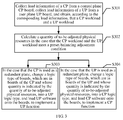
- FIG. 3 is a schematic flowchart of a specific method for adjusting a physical resource according to an embodiment of the present invention.
- adjusting a physical resource is completed by changing a logic type of a board.
- the method includes:
- the board in this embodiment is a unified board, that is, a physical board shared by the CP and the UP, and both functional software used to implement a CP logical function and functional software used to implement a UP logical function are disposed on the physical board.
- a logical function that a board may carry may be modified in a manner of changing a logic type. Specific modification may be directly starting the CP logical function of the board or starting the UP logical function of the board.
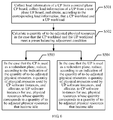
- FIG. 4 is a schematic flowchart of another specific method for adjusting a physical resource according to an embodiment of the present invention.
- adjusting a physical resource is completed by modifying a software configuration.
- the method includes:
- FIG. 5 is a schematic diagram of an adjustment in the method for adjusting a physical resource in FIG. 4 .
- a physical resource may be, for example, a resource such as a CPU, a core of the CPU, or a thread.
- a square box indicates a UP software instance
- an oval box indicates a CP software instance.
- a board has a total of 10 physical resources, which are evenly allocated to the UP and the CP at an initial stage.
- a UP software instance is loaded, according to the quantity of to-be-adjusted physical resources, in the CPU corresponding to the CP.
- a CP software instance is loaded, according to the quantity of to-be-adjusted physical resources, in a physical resource corresponding to the UP.
- the board in this embodiment may be a unified board or two separated boards.
- a physical resource used by the CP and a physical resource used by the UP are defined by configuring software.
- FIG. 6 is a schematic flowchart of still another specific method for adjusting a physical resource according to an embodiment of the present invention.
- adjusting a physical resource is completed by modifying a binding relationship between a service and a physical resource.
- the method includes:
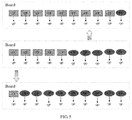
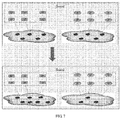
- FIG. 7 is a schematic diagram of an adjustment in the method for adjusting a physical resource in FIG. 6 .
- a pool used by the UP and a CP pool refer to physical resource pools including resources such as a CPU, a core of a CPU, and a thread.
- a square box indicates a UP software instance
- an oval box indicates a CP software instance.
- a physical resource in the pool used by the UP is scheduled to the CP pool, to carry a CP service.
- FIG. 8 is a schematic diagram of an adjustment based on scheduling by an operating system OS.
- UP and CP pools share physical resource pools including a resource such as a CPU, a core of a CPU, or a thread, and the OS performs scheduling according to the quantity of to-be-adjusted physical resources, and a capability of the physical resource, to load a software instance of a corresponding plane.
- a square box indicates a UP software instance
- an oval box indicates a CP software instance.
- FIG. 9 is a schematic structural diagram of an apparatus for adjusting a physical resource according to an embodiment of the present invention.
- the apparatus for adjusting a physical resource in this embodiment of the present invention may be disposed in a device such as a controller.
- the controller may be, for example, a BSC or an RNC, which is not limited in this embodiment of the present invention.
- the apparatus may also be used as a third-party device, which is deployed outside a network controller and is communicatively connected to the controller.
- the apparatus for adjusting a physical resource may specifically include:
- the CP may include several software instances and physical resources (such as a CPU) used to carry the several software instances, and the software instances are used to implement a logical function of a control plane of a radio access network.
- the UP may also include several software instances and physical resources (such as a CPU) used to carry the several software instances, and the software instance is used to implement a logical function of a user plane of the radio access network.
- the load information of the control plane CP and that of the user plane UP may include, but is not limited to, for example, one piece of or any combination of information such as CPU usage, a quantity of users, and throughput.
- the CP workload and the UP workload may refer to a load of the CP when the CP is busy and a load of the UP when the UP is busy; for example, one or any combination of the following: maximum CPU usage, a maximum quantity of users, and maximum throughput of the CP and those of the UP in two days; or an average CP load and an average UP load, for example, one or any combination of the following: average CPU usage, an average quantity of users, and average throughput of the CP and those of the UP in two days.
- the collecting module 1 may collect and record CP and UP loads in a preset time interval, for example, 15 minutes, then, when a time cycle of an adjustment, for example, two days, comes, the collecting module 1 uses maximum load values as a load of the CP when the CP is busy and a load of the UP when the UP is busy, or averages all CP and UP loads in preset time intervals that are collected in the time cycle of the adjustment, that is, two days, to obtain the average CP load and the average UP load.
- the collecting module 1 may also collect and record load information in unequal time intervals, for example, randomly collect load statuses of the UP and the CP in time intervals such as 15 minutes and 30 minutes.
- That the CP workload and the UP workload meet the preset balancing adjustment condition may refer to that an absolute value of a difference between or a ratio of the CP workload and the UP workload is beyond a preset range threshold. That is, one workload is greater than the other workload. In the case that the two values are equal or approximately equal (the difference between or the ratio of the two values is within the range threshold), the balancing adjustment condition is not met, and balance adjustment is not required.
- a plane in the CP and the UP that has a smaller workload is a redundant plane, and a physical resource in the redundant plane is redundant and may be adjusted and invoked to the other plane for use.
- a plane with a larger workload is a scarce plane.
- the quantity of to-be-adjusted physical resources calculated by the calculating module 2 is specifically used to indicate a quantity of physical resources, such as a quantity of CPUs, which are invoked from the redundant plane to the scarce plane.
- the calculating, by the calculating module 2, the quantity of to-be-adjusted physical resources may be directly using unused physical resource in the redundant plane as the quantity of to-be-adjusted physical resources according to a workload of the redundant plane; or only calculating the quantity of to-be-adjusted physical resources according to a physical resource requirement of the scarce plane; or calculating the quantity of to-be-adjusted physical resources according to a quantity of CP physical resources allocated to the CP, the CP workload, a quantity of UP physical resources currently allocated to the UP, and the UP workload.
- a specific adjusting manner used by the adjusting module 3 includes, but is not limited to, any one or more of the following manners: automatically changing a logic type of a board, modifying a software configuration, modifying a binding relationship between a service and a physical resource, submitting a resource to an operating system OS for automatic scheduling by the OS, performing virtualization, and performing cloud computing.
- the adjusting module 3 when adjusting a physical resource, is specifically configured to: in the case that the CP is used as the redundant plane, change a logic type of boards, which are in boards of the CP and whose quantity is indicated by the quantity of to-be-adjusted physical resources, into a UP logic type to implement a UP function; or in the case that the UP is used as the redundant plane, change a logic type of boards, which are in boards of the UP and whose quantity is indicated by the quantity of to-be-adjusted physical resources, into a CP logic type to implement a CP function.
- the adjusting module 3 is specifically configured to: in the case that the CP is used as the redundant plane, modify a software configuration, delete, according to the software configuration, CP software instances whose quantity corresponds to the quantity of to-be-adjusted physical resources, and create, on physical resources that become idle, UP software instances whose quantity corresponds to the quantity of to-be-adjusted physical resources; or in the case that the UP is used as the redundant plane, modify a software configuration, delete, according to the software configuration, UP software instances whose quantity corresponds to the quantity of to-be-adjusted physical resources, and create, on physical resources that become idle, CP software instances whose quantity corresponds to the quantity of to-be-adjusted physical resources.
- the adjusting module 3 is specifically configured to: in the case that the CP is used as the redundant plane, reduce, according to an indication of the quantity of to-be-adjusted physical resources, a quantity of physical resources used by CP software instances, and allocate, to UP software instances for use, physical resources whose quantity corresponds to a quantity of to-be-adjusted physical resources that become idle; or in the case that the UP is used as the redundant plane, reduce, according to an indication of the quantity of to-be-adjusted physical resources, a quantity of physical resources used by UP software instances, and allocate, to CP software instances for use, physical resources whose quantity corresponds to a quantity of to-be-adjusted physical resources that become idle.
- the adjusting module 3 may specifically be an adjusting unit, configured to automatically adjust physical resources of the CP and the UP according to the quantity of to-be-adjusted physical resources that is obtained through calculation.
- the adjusting module 3 is an instructing unit, configured to send adjustment instruction information according to the quantity of to-be-adjusted physical resources that is obtained through calculation, to instruct a user to adjust physical resources of the CP and the UP according to the quantity of to-be-adjusted physical resources that is obtained through calculation.
- FIG. 10 is a schematic structural diagram of another apparatus for adjusting a physical resource according to an embodiment of the present invention.
- the apparatus for adjusting a physical resource in this embodiment of the present invention may be disposed in a device such as a controller.
- the controller may be, for example, a BSC or an RNC, which is not limited in this embodiment of the present invention.
- the apparatus may also be used as a third-party device, which is deployed outside a network controller and is communicatively connected to the controller.
- the apparatus for adjusting a physical resource may specifically include the collecting module 1, the calculating module 2, and the adjusting module 3 in the foregoing embodiment corresponding to the FIG. 9 .
- the collecting module 1 in the apparatus for adjusting a physical resource may specifically include:
- the recording unit 12 records a load of a corresponding plane in busy hours for the calculating module 2 to use in calculation.
- the calculating module 2 in the apparatus for adjusting a physical resource may specifically include:
- the load of the CP when the CP is busy and the load of the UP when the UP is busy are unbalanced, that is, the load of one plane in busy hours is larger, and the load of the other plane in busy hours is smaller, it may be considered that the balancing adjustment condition is met, and adjustment needs to be performed.
- the quantity of CP physical resources allocated to the CP and the quantity of UP physical resources allocated to the UP may be a quantity of CP physical resources allocated to the CP and a quantity of UP physical resources allocated to the UP respectively that are recorded after a network controller is established, or a quantity of CP physical resources and a quantity of UP physical resources that are recorded after a previous adjustment of physical resources.
- the principle of calculating the quantity of to-be-adjusted physical resources by the calculating unit 22 includes: an absolute value of a difference between or a ratio of a load value which is obtained by sharing a current total workload of the CP on each CP physical resource that is obtained after adjusting is performed according to the quantity of to-be-adjusted physical resources, and a load value which is obtained by sharing a current total workload of the UP on each UP physical resource that is obtained after adjusting is performed according to the quantity of to-be-adjusted physical resources is within a preset range threshold.
- a specific calculation formula refer to formula 1, formula 2 and formula 3 in the foregoing method embodiments.
- the calculating module 2 may further include the following units, configured to determine whether the balancing adjustment condition is met, including:
- the adjusting module 3 in the apparatus for adjusting a physical resource is specifically configured to: in the case that the CP is used as the redundant plane, change a logic type of boards, which are in boards of the CP and whose quantity is indicated by the quantity of to-be-adjusted physical resources, into a UP logic type to implement a UP function; or in the case that the UP is used as the redundant plane, change a logic type of boards, which are in boards of the UP and whose quantity is indicated by the quantity of to-be-adjusted physical resources, into a CP logic type to implement a CP function.
- the adjusting module 3 is specifically configured to: in the case that the CP is used as the redundant plane, change a logic type of boards, which are in boards of the CP and whose quantity is indicated by the quantity of to-be-adjusted physical resources, into a UP logic type to implement a UP function; or in the case that the UP is used as the redundant plane, change a logic type of boards, which are in boards of the UP and whose quantity is indicated by the quantity of to-be-adjusted physical resources, into a CP logic type to implement a CP function.
- the adjusting module 3 is specifically configured to: in the case that the CP is used as the redundant plane, modify a software configuration, delete, according to the software configuration, CP software instances whose quantity corresponds to the quantity of to-be-adjusted physical resources, and create, on physical resources that become idle, UP software instances whose quantity corresponds to the quantity of to-be-adjusted physical resources; or in the case that the UP is used as the redundant plane, modify a software configuration, delete, according to the software configuration, UP software instances whose quantity corresponds to the quantity of to-be-adjusted physical resources, and create, on physical resources that become idle, CP software instances whose quantity corresponds to the quantity of to-be-adjusted physical resources.
- the adjusting module 3 may specifically have all the foregoing three physical resource adjusting functions, and may select a manner according to a specific requirement to adjust a physical resource.
- the adjusting module 3 may further include the following modules to perform corresponding processing:
- a shutdown Shutdown operation is performed according to the quantity of to-be-adjusted physical resources that is obtained through calculation, and after the determining module 4 determines the to-be-adjusted physical resource, the control module 5 prohibits allocating a new user to the to-be-adjusted physical resource (may allocate the new user to other physical resources that are not adjusted), and waits for an old user (a user deployed on these to-be-adjusted physical resources) to hang up naturally, and adjustment and allocation are then performed.
- the adjusting process does not interrupt a call of an existing user, a new user may also perform access normally, and the entire adjusting process does not adversely affect the end user.
- FIG. 11 is a schematic structural diagram of a controller according to an embodiment of the present invention.
- the controller of this embodiment of the present invention includes a control board 100, a CP board 200, and a UP board 300, where:
- control board 100 of this embodiment of the present invention includes the foregoing apparatus for adjusting a physical resource in the embodiments corresponding to FIG. 9 and FIG. 10 .
- control board 100 refer to the foregoing method and apparatus embodiments corresponding to FIG. 1 to FIG. 9 , which are not described herein again.
- the program may be stored in a computer-readable storage medium. When the program runs, the processes of the methods in the embodiments are performed.
- the foregoing storage medium may include: a magnetic disk, an optical disc, a read-only memory (Read-Only Memory, ROM), or a random access memory (Random Access Memory, RAM).
Landscapes
- Engineering & Computer Science (AREA)
- Computer Networks & Wireless Communication (AREA)
- Signal Processing (AREA)
- Software Systems (AREA)
- Theoretical Computer Science (AREA)
- Physics & Mathematics (AREA)
- Environmental & Geological Engineering (AREA)
- General Engineering & Computer Science (AREA)
- General Physics & Mathematics (AREA)
- Quality & Reliability (AREA)
- Debugging And Monitoring (AREA)
- Stored Programmes (AREA)
- Management, Administration, Business Operations System, And Electronic Commerce (AREA)
- Supply And Distribution Of Alternating Current (AREA)
Applications Claiming Priority (1)
| Application Number | Priority Date | Filing Date | Title |
|---|---|---|---|
| PCT/CN2013/076602 WO2014190557A1 (zh) | 2013-05-31 | 2013-05-31 | 一种物理资源调整方法、装置及控制器 |
Publications (3)
| Publication Number | Publication Date |
|---|---|
| EP2996382A1 true EP2996382A1 (de) | 2016-03-16 |
| EP2996382A4 EP2996382A4 (de) | 2016-04-20 |
| EP2996382B1 EP2996382B1 (de) | 2020-07-08 |
Family
ID=50363950
Family Applications (1)
| Application Number | Title | Priority Date | Filing Date |
|---|---|---|---|
| EP13885716.4A Active EP2996382B1 (de) | 2013-05-31 | 2013-05-31 | Verfahren zur anpassung physikalischer ressourcen, vorrichtung und steuereinheit |
Country Status (4)
| Country | Link |
|---|---|
| US (1) | US10142997B2 (de) |
| EP (1) | EP2996382B1 (de) |
| CN (1) | CN103703830B (de) |
| WO (1) | WO2014190557A1 (de) |
Families Citing this family (7)
| Publication number | Priority date | Publication date | Assignee | Title |
|---|---|---|---|---|
| CN107959705B (zh) * | 2016-10-18 | 2021-08-20 | 阿里巴巴集团控股有限公司 | 流式计算任务的分配方法和控制服务器 |
| US10986516B2 (en) * | 2017-03-10 | 2021-04-20 | Huawei Technologies Co., Ltd. | System and method of network policy optimization |
| CN107707424A (zh) * | 2017-09-11 | 2018-02-16 | 厦门集微科技有限公司 | 负载状态的控制方法及系统 |
| US11678252B2 (en) | 2018-10-05 | 2023-06-13 | Huawei Technologies Co., Ltd. | Quality of service information notification to user equipment, users, and application server |
| CN111190728B (zh) * | 2019-12-13 | 2023-08-25 | 北京山石网科信息技术有限公司 | 资源调整方法及装置 |
| WO2022018466A1 (en) * | 2020-07-22 | 2022-01-27 | Citrix Systems, Inc. | Determining server utilization using upper bound values |
| CN119814560A (zh) * | 2024-12-20 | 2025-04-11 | 新华三技术有限公司 | 一种配置控制面cp的方法和网络设备 |
Family Cites Families (9)
| Publication number | Priority date | Publication date | Assignee | Title |
|---|---|---|---|---|
| CN101114927A (zh) * | 2006-07-24 | 2008-01-30 | 华为技术有限公司 | 一种实现负载均衡的系统及方法 |
| FI20085217A0 (fi) * | 2008-03-07 | 2008-03-07 | Nokia Corp | Tietojenkäsittelyjärjestely |
| CN101447939B (zh) * | 2008-12-16 | 2011-09-28 | 中国移动通信集团北京有限公司 | 一种业务分配方法和负载均衡器 |
| ES2391017B1 (es) * | 2010-04-07 | 2013-10-09 | Vodafone España, S.A.U | Procedimiento y dispositivo para reducir la congestion de trafico en controladores de red radio |
| US8681622B2 (en) * | 2010-12-17 | 2014-03-25 | Tekelec, Inc. | Policy and charging rules function (PCRF) and performance intelligence center (PIC) based congestion control |
| US8516493B2 (en) * | 2011-02-01 | 2013-08-20 | Futurewei Technologies, Inc. | System and method for massively multi-core computing systems |
| EP2592863B1 (de) * | 2011-11-14 | 2014-01-08 | Alcatel Lucent | Verteilter Belastungsausgleich in einem Funkzugriffsnetzwerk |
| CN103634801B (zh) * | 2012-08-20 | 2018-02-09 | 中兴通讯股份有限公司 | 资源分配方法和装置 |
| EP2918096B1 (de) * | 2012-11-08 | 2020-01-08 | Telefonaktiebolaget LM Ericsson (publ) | Pcrf-vorrichtung und verkehrsverarbeitungsverfahren für eine pcrf |
-
2013
- 2013-05-31 CN CN201380001444.0A patent/CN103703830B/zh active Active
- 2013-05-31 WO PCT/CN2013/076602 patent/WO2014190557A1/zh not_active Ceased
- 2013-05-31 EP EP13885716.4A patent/EP2996382B1/de active Active
-
2015
- 2015-11-25 US US14/951,629 patent/US10142997B2/en active Active
Also Published As
| Publication number | Publication date |
|---|---|
| US10142997B2 (en) | 2018-11-27 |
| WO2014190557A1 (zh) | 2014-12-04 |
| US20160081103A1 (en) | 2016-03-17 |
| CN103703830B (zh) | 2017-11-17 |
| EP2996382B1 (de) | 2020-07-08 |
| EP2996382A4 (de) | 2016-04-20 |
| CN103703830A (zh) | 2014-04-02 |
Similar Documents
| Publication | Publication Date | Title |
|---|---|---|
| US10142997B2 (en) | Method and apparatus for adjusting physical resource, and controller | |
| CN109471705B (zh) | 任务调度的方法、设备及系统、计算机设备 | |
| US20150324232A1 (en) | Resource management method and apparatus for virtual machine system, and virtual machine system | |
| EP4571506A1 (de) | Ressourcenplanungsverfahren und zugehörige vorrichtung | |
| EP3675420A1 (de) | Verteiltes speichersystem-upgrade-verwaltungsverfahren und vorrichtung und verteiltes speichersystem | |
| CN111988234A (zh) | 过载保护方法、装置、服务器及存储介质 | |
| CN109614228B (zh) | 基于动态负载均衡方式的综合监控前置系统及工作方法 | |
| CN111506423A (zh) | 一种资源的调度方法、装置、电子设备及存储介质 | |
| WO2020252902A1 (zh) | 云服务器自检方法、装置、设备及计算机可读存储介质 | |
| EP4206863A1 (de) | Stromverbrauchverwaltungsverfahren und zugehörige vorrichtung | |
| CN103942105A (zh) | 一种获取资源利用情况的方法和装置 | |
| CN103744735B (zh) | 一种多核资源的调度方法及装置 | |
| CN107872825A (zh) | 一种负载均衡方法及装置、基站 | |
| CN104333879A (zh) | 一种负荷分担方法及装置 | |
| CN109739634A (zh) | 一种原子任务执行方法及装置 | |
| CN114721810A (zh) | 边缘云资源协同调度方法、云管理平台和边缘云节点 | |
| WO2018233679A1 (zh) | 负荷均衡方法及装置 | |
| CN102263666B (zh) | 基于业务流量许可进行业务调度的方法、装置及系统 | |
| CN112203329B (zh) | 一种基于负载均衡的邻区选择方法及装置 | |
| JP2015512593A (ja) | リソースオペレーション方法および装置 | |
| CN114064226A (zh) | 容器集群的资源调协方法、调协装置及存储介质 | |
| CN114416355A (zh) | 资源调度方法、装置、系统、电子设备及介质 | |
| CN117750514B (zh) | 卫星资源的分配方法、装置、存储介质和电子设备 | |
| JP5997659B2 (ja) | 分散処理システムおよび分散処理方法 | |
| CN111158899A (zh) | 一种数据的采集方法、采集器、任务管理中心以及系统 |
Legal Events
| Date | Code | Title | Description |
|---|---|---|---|
| PUAI | Public reference made under article 153(3) epc to a published international application that has entered the european phase |
Free format text: ORIGINAL CODE: 0009012 |
|
| 17P | Request for examination filed |
Effective date: 20151208 |
|
| AK | Designated contracting states |
Kind code of ref document: A1 Designated state(s): AL AT BE BG CH CY CZ DE DK EE ES FI FR GB GR HR HU IE IS IT LI LT LU LV MC MK MT NL NO PL PT RO RS SE SI SK SM TR |
|
| AX | Request for extension of the european patent |
Extension state: BA ME |
|
| A4 | Supplementary search report drawn up and despatched |
Effective date: 20160322 |
|
| RIC1 | Information provided on ipc code assigned before grant |
Ipc: H04L 12/54 20060101ALI20160316BHEP Ipc: G06F 9/50 20060101ALI20160316BHEP Ipc: H04W 28/10 20090101AFI20160316BHEP |
|
| DAX | Request for extension of the european patent (deleted) | ||
| GRAP | Despatch of communication of intention to grant a patent |
Free format text: ORIGINAL CODE: EPIDOSNIGR1 |
|
| STAA | Information on the status of an ep patent application or granted ep patent |
Free format text: STATUS: GRANT OF PATENT IS INTENDED |
|
| INTG | Intention to grant announced |
Effective date: 20200228 |
|
| GRAS | Grant fee paid |
Free format text: ORIGINAL CODE: EPIDOSNIGR3 |
|
| GRAA | (expected) grant |
Free format text: ORIGINAL CODE: 0009210 |
|
| STAA | Information on the status of an ep patent application or granted ep patent |
Free format text: STATUS: THE PATENT HAS BEEN GRANTED |
|
| AK | Designated contracting states |
Kind code of ref document: B1 Designated state(s): AL AT BE BG CH CY CZ DE DK EE ES FI FR GB GR HR HU IE IS IT LI LT LU LV MC MK MT NL NO PL PT RO RS SE SI SK SM TR |
|
| REG | Reference to a national code |
Ref country code: AT Ref legal event code: REF Ref document number: 1289837 Country of ref document: AT Kind code of ref document: T Effective date: 20200715 Ref country code: CH Ref legal event code: EP |
|
| REG | Reference to a national code |
Ref country code: DE Ref legal event code: R096 Ref document number: 602013070608 Country of ref document: DE |
|
| REG | Reference to a national code |
Ref country code: IE Ref legal event code: FG4D |
|
| REG | Reference to a national code |
Ref country code: LT Ref legal event code: MG4D |
|
| REG | Reference to a national code |
Ref country code: AT Ref legal event code: MK05 Ref document number: 1289837 Country of ref document: AT Kind code of ref document: T Effective date: 20200708 |
|
| REG | Reference to a national code |
Ref country code: NL Ref legal event code: MP Effective date: 20200708 |
|
| PG25 | Lapsed in a contracting state [announced via postgrant information from national office to epo] |
Ref country code: ES Free format text: LAPSE BECAUSE OF FAILURE TO SUBMIT A TRANSLATION OF THE DESCRIPTION OR TO PAY THE FEE WITHIN THE PRESCRIBED TIME-LIMIT Effective date: 20200708 Ref country code: NO Free format text: LAPSE BECAUSE OF FAILURE TO SUBMIT A TRANSLATION OF THE DESCRIPTION OR TO PAY THE FEE WITHIN THE PRESCRIBED TIME-LIMIT Effective date: 20201008 Ref country code: AT Free format text: LAPSE BECAUSE OF FAILURE TO SUBMIT A TRANSLATION OF THE DESCRIPTION OR TO PAY THE FEE WITHIN THE PRESCRIBED TIME-LIMIT Effective date: 20200708 Ref country code: GR Free format text: LAPSE BECAUSE OF FAILURE TO SUBMIT A TRANSLATION OF THE DESCRIPTION OR TO PAY THE FEE WITHIN THE PRESCRIBED TIME-LIMIT Effective date: 20201009 Ref country code: FI Free format text: LAPSE BECAUSE OF FAILURE TO SUBMIT A TRANSLATION OF THE DESCRIPTION OR TO PAY THE FEE WITHIN THE PRESCRIBED TIME-LIMIT Effective date: 20200708 Ref country code: SE Free format text: LAPSE BECAUSE OF FAILURE TO SUBMIT A TRANSLATION OF THE DESCRIPTION OR TO PAY THE FEE WITHIN THE PRESCRIBED TIME-LIMIT Effective date: 20200708 Ref country code: BG Free format text: LAPSE BECAUSE OF FAILURE TO SUBMIT A TRANSLATION OF THE DESCRIPTION OR TO PAY THE FEE WITHIN THE PRESCRIBED TIME-LIMIT Effective date: 20201008 Ref country code: LT Free format text: LAPSE BECAUSE OF FAILURE TO SUBMIT A TRANSLATION OF THE DESCRIPTION OR TO PAY THE FEE WITHIN THE PRESCRIBED TIME-LIMIT Effective date: 20200708 Ref country code: HR Free format text: LAPSE BECAUSE OF FAILURE TO SUBMIT A TRANSLATION OF THE DESCRIPTION OR TO PAY THE FEE WITHIN THE PRESCRIBED TIME-LIMIT Effective date: 20200708 Ref country code: PT Free format text: LAPSE BECAUSE OF FAILURE TO SUBMIT A TRANSLATION OF THE DESCRIPTION OR TO PAY THE FEE WITHIN THE PRESCRIBED TIME-LIMIT Effective date: 20201109 |
|
| PG25 | Lapsed in a contracting state [announced via postgrant information from national office to epo] |
Ref country code: IS Free format text: LAPSE BECAUSE OF FAILURE TO SUBMIT A TRANSLATION OF THE DESCRIPTION OR TO PAY THE FEE WITHIN THE PRESCRIBED TIME-LIMIT Effective date: 20201108 Ref country code: PL Free format text: LAPSE BECAUSE OF FAILURE TO SUBMIT A TRANSLATION OF THE DESCRIPTION OR TO PAY THE FEE WITHIN THE PRESCRIBED TIME-LIMIT Effective date: 20200708 Ref country code: RS Free format text: LAPSE BECAUSE OF FAILURE TO SUBMIT A TRANSLATION OF THE DESCRIPTION OR TO PAY THE FEE WITHIN THE PRESCRIBED TIME-LIMIT Effective date: 20200708 Ref country code: LV Free format text: LAPSE BECAUSE OF FAILURE TO SUBMIT A TRANSLATION OF THE DESCRIPTION OR TO PAY THE FEE WITHIN THE PRESCRIBED TIME-LIMIT Effective date: 20200708 |
|
| PG25 | Lapsed in a contracting state [announced via postgrant information from national office to epo] |
Ref country code: NL Free format text: LAPSE BECAUSE OF FAILURE TO SUBMIT A TRANSLATION OF THE DESCRIPTION OR TO PAY THE FEE WITHIN THE PRESCRIBED TIME-LIMIT Effective date: 20200708 |
|
| REG | Reference to a national code |
Ref country code: DE Ref legal event code: R097 Ref document number: 602013070608 Country of ref document: DE |
|
| PG25 | Lapsed in a contracting state [announced via postgrant information from national office to epo] |
Ref country code: RO Free format text: LAPSE BECAUSE OF FAILURE TO SUBMIT A TRANSLATION OF THE DESCRIPTION OR TO PAY THE FEE WITHIN THE PRESCRIBED TIME-LIMIT Effective date: 20200708 Ref country code: SM Free format text: LAPSE BECAUSE OF FAILURE TO SUBMIT A TRANSLATION OF THE DESCRIPTION OR TO PAY THE FEE WITHIN THE PRESCRIBED TIME-LIMIT Effective date: 20200708 Ref country code: CZ Free format text: LAPSE BECAUSE OF FAILURE TO SUBMIT A TRANSLATION OF THE DESCRIPTION OR TO PAY THE FEE WITHIN THE PRESCRIBED TIME-LIMIT Effective date: 20200708 Ref country code: EE Free format text: LAPSE BECAUSE OF FAILURE TO SUBMIT A TRANSLATION OF THE DESCRIPTION OR TO PAY THE FEE WITHIN THE PRESCRIBED TIME-LIMIT Effective date: 20200708 Ref country code: DK Free format text: LAPSE BECAUSE OF FAILURE TO SUBMIT A TRANSLATION OF THE DESCRIPTION OR TO PAY THE FEE WITHIN THE PRESCRIBED TIME-LIMIT Effective date: 20200708 Ref country code: IT Free format text: LAPSE BECAUSE OF FAILURE TO SUBMIT A TRANSLATION OF THE DESCRIPTION OR TO PAY THE FEE WITHIN THE PRESCRIBED TIME-LIMIT Effective date: 20200708 |
|
| PLBE | No opposition filed within time limit |
Free format text: ORIGINAL CODE: 0009261 |
|
| STAA | Information on the status of an ep patent application or granted ep patent |
Free format text: STATUS: NO OPPOSITION FILED WITHIN TIME LIMIT |
|
| PG25 | Lapsed in a contracting state [announced via postgrant information from national office to epo] |
Ref country code: AL Free format text: LAPSE BECAUSE OF FAILURE TO SUBMIT A TRANSLATION OF THE DESCRIPTION OR TO PAY THE FEE WITHIN THE PRESCRIBED TIME-LIMIT Effective date: 20200708 |
|
| 26N | No opposition filed |
Effective date: 20210409 |
|
| PG25 | Lapsed in a contracting state [announced via postgrant information from national office to epo] |
Ref country code: SK Free format text: LAPSE BECAUSE OF FAILURE TO SUBMIT A TRANSLATION OF THE DESCRIPTION OR TO PAY THE FEE WITHIN THE PRESCRIBED TIME-LIMIT Effective date: 20200708 |
|
| PG25 | Lapsed in a contracting state [announced via postgrant information from national office to epo] |
Ref country code: SI Free format text: LAPSE BECAUSE OF FAILURE TO SUBMIT A TRANSLATION OF THE DESCRIPTION OR TO PAY THE FEE WITHIN THE PRESCRIBED TIME-LIMIT Effective date: 20200708 |
|
| REG | Reference to a national code |
Ref country code: DE Ref legal event code: R119 Ref document number: 602013070608 Country of ref document: DE |
|
| REG | Reference to a national code |
Ref country code: CH Ref legal event code: PL |
|
| PG25 | Lapsed in a contracting state [announced via postgrant information from national office to epo] |
Ref country code: LI Free format text: LAPSE BECAUSE OF NON-PAYMENT OF DUE FEES Effective date: 20210531 Ref country code: MC Free format text: LAPSE BECAUSE OF FAILURE TO SUBMIT A TRANSLATION OF THE DESCRIPTION OR TO PAY THE FEE WITHIN THE PRESCRIBED TIME-LIMIT Effective date: 20200708 Ref country code: LU Free format text: LAPSE BECAUSE OF NON-PAYMENT OF DUE FEES Effective date: 20210531 Ref country code: CH Free format text: LAPSE BECAUSE OF NON-PAYMENT OF DUE FEES Effective date: 20210531 |
|
| REG | Reference to a national code |
Ref country code: BE Ref legal event code: MM Effective date: 20210531 |
|
| PG25 | Lapsed in a contracting state [announced via postgrant information from national office to epo] |
Ref country code: IE Free format text: LAPSE BECAUSE OF NON-PAYMENT OF DUE FEES Effective date: 20210531 Ref country code: DE Free format text: LAPSE BECAUSE OF NON-PAYMENT OF DUE FEES Effective date: 20211201 |
|
| PG25 | Lapsed in a contracting state [announced via postgrant information from national office to epo] |
Ref country code: FR Free format text: LAPSE BECAUSE OF NON-PAYMENT OF DUE FEES Effective date: 20210531 |
|
| PG25 | Lapsed in a contracting state [announced via postgrant information from national office to epo] |
Ref country code: BE Free format text: LAPSE BECAUSE OF NON-PAYMENT OF DUE FEES Effective date: 20210531 |
|
| PG25 | Lapsed in a contracting state [announced via postgrant information from national office to epo] |
Ref country code: HU Free format text: LAPSE BECAUSE OF FAILURE TO SUBMIT A TRANSLATION OF THE DESCRIPTION OR TO PAY THE FEE WITHIN THE PRESCRIBED TIME-LIMIT; INVALID AB INITIO Effective date: 20130531 |
|
| PG25 | Lapsed in a contracting state [announced via postgrant information from national office to epo] |
Ref country code: CY Free format text: LAPSE BECAUSE OF FAILURE TO SUBMIT A TRANSLATION OF THE DESCRIPTION OR TO PAY THE FEE WITHIN THE PRESCRIBED TIME-LIMIT Effective date: 20200708 |
|
| PG25 | Lapsed in a contracting state [announced via postgrant information from national office to epo] |
Ref country code: MK Free format text: LAPSE BECAUSE OF FAILURE TO SUBMIT A TRANSLATION OF THE DESCRIPTION OR TO PAY THE FEE WITHIN THE PRESCRIBED TIME-LIMIT Effective date: 20200708 |
|
| PG25 | Lapsed in a contracting state [announced via postgrant information from national office to epo] |
Ref country code: MT Free format text: LAPSE BECAUSE OF FAILURE TO SUBMIT A TRANSLATION OF THE DESCRIPTION OR TO PAY THE FEE WITHIN THE PRESCRIBED TIME-LIMIT Effective date: 20200708 |
|
| PGFP | Annual fee paid to national office [announced via postgrant information from national office to epo] |
Ref country code: GB Payment date: 20250401 Year of fee payment: 13 |
|
| PG25 | Lapsed in a contracting state [announced via postgrant information from national office to epo] |
Ref country code: TR Free format text: LAPSE BECAUSE OF FAILURE TO SUBMIT A TRANSLATION OF THE DESCRIPTION OR TO PAY THE FEE WITHIN THE PRESCRIBED TIME-LIMIT Effective date: 20200708 |