EP2996407A1 - Mobilstation, basisstation, mobilkommunikationsverfahren, übertragungssteuerungsverfahren und empfangssteuerungsverfahren - Google Patents
Mobilstation, basisstation, mobilkommunikationsverfahren, übertragungssteuerungsverfahren und empfangssteuerungsverfahren Download PDFInfo
- Publication number
- EP2996407A1 EP2996407A1 EP14795351.7A EP14795351A EP2996407A1 EP 2996407 A1 EP2996407 A1 EP 2996407A1 EP 14795351 A EP14795351 A EP 14795351A EP 2996407 A1 EP2996407 A1 EP 2996407A1
- Authority
- EP
- European Patent Office
- Prior art keywords
- mobile station
- base station
- quality information
- srs
- csi
- Prior art date
- Legal status (The legal status is an assumption and is not a legal conclusion. Google has not performed a legal analysis and makes no representation as to the accuracy of the status listed.)
- Withdrawn
Links
Images




Classifications
-
- H—ELECTRICITY
- H04—ELECTRIC COMMUNICATION TECHNIQUE
- H04W—WIRELESS COMMUNICATION NETWORKS
- H04W52/00—Power management, e.g. Transmission Power Control [TPC] or power classes
- H04W52/02—Power saving arrangements
- H04W52/0209—Power saving arrangements in terminal devices
- H04W52/0212—Power saving arrangements in terminal devices managed by the network, e.g. network or access point is leader and terminal is follower
- H04W52/0216—Power saving arrangements in terminal devices managed by the network, e.g. network or access point is leader and terminal is follower using a pre-established activity schedule, e.g. traffic indication frame
-
- H—ELECTRICITY
- H04—ELECTRIC COMMUNICATION TECHNIQUE
- H04W—WIRELESS COMMUNICATION NETWORKS
- H04W72/00—Local resource management
- H04W72/50—Allocation or scheduling criteria for wireless resources
- H04W72/54—Allocation or scheduling criteria for wireless resources based on quality criteria
-
- H—ELECTRICITY
- H04—ELECTRIC COMMUNICATION TECHNIQUE
- H04L—TRANSMISSION OF DIGITAL INFORMATION, e.g. TELEGRAPHIC COMMUNICATION
- H04L1/00—Arrangements for detecting or preventing errors in the information received
- H04L1/0001—Systems modifying transmission characteristics according to link quality, e.g. power backoff
- H04L1/0023—Systems modifying transmission characteristics according to link quality, e.g. power backoff characterised by the signalling
- H04L1/0027—Scheduling of signalling, e.g. occurrence thereof
-
- H—ELECTRICITY
- H04—ELECTRIC COMMUNICATION TECHNIQUE
- H04W—WIRELESS COMMUNICATION NETWORKS
- H04W24/00—Supervisory, monitoring or testing arrangements
- H04W24/10—Scheduling measurement reports ; Arrangements for measurement reports
-
- H—ELECTRICITY
- H04—ELECTRIC COMMUNICATION TECHNIQUE
- H04W—WIRELESS COMMUNICATION NETWORKS
- H04W72/00—Local resource management
- H04W72/20—Control channels or signalling for resource management
- H04W72/21—Control channels or signalling for resource management in the uplink direction of a wireless link, i.e. towards the network
-
- H—ELECTRICITY
- H04—ELECTRIC COMMUNICATION TECHNIQUE
- H04W—WIRELESS COMMUNICATION NETWORKS
- H04W76/00—Connection management
- H04W76/20—Manipulation of established connections
- H04W76/28—Discontinuous transmission [DTX]; Discontinuous reception [DRX]
-
- H—ELECTRICITY
- H04—ELECTRIC COMMUNICATION TECHNIQUE
- H04W—WIRELESS COMMUNICATION NETWORKS
- H04W52/00—Power management, e.g. Transmission Power Control [TPC] or power classes
- H04W52/04—Transmission power control [TPC]
- H04W52/18—TPC being performed according to specific parameters
- H04W52/24—TPC being performed according to specific parameters using SIR [Signal to Interference Ratio] or other wireless path parameters
- H04W52/241—TPC being performed according to specific parameters using SIR [Signal to Interference Ratio] or other wireless path parameters taking into account channel quality metrics, e.g. SIR, SNR, CIR or Eb/lo
-
- Y—GENERAL TAGGING OF NEW TECHNOLOGICAL DEVELOPMENTS; GENERAL TAGGING OF CROSS-SECTIONAL TECHNOLOGIES SPANNING OVER SEVERAL SECTIONS OF THE IPC; TECHNICAL SUBJECTS COVERED BY FORMER USPC CROSS-REFERENCE ART COLLECTIONS [XRACs] AND DIGESTS
- Y02—TECHNOLOGIES OR APPLICATIONS FOR MITIGATION OR ADAPTATION AGAINST CLIMATE CHANGE
- Y02D—CLIMATE CHANGE MITIGATION TECHNOLOGIES IN INFORMATION AND COMMUNICATION TECHNOLOGIES [ICT], I.E. INFORMATION AND COMMUNICATION TECHNOLOGIES AIMING AT THE REDUCTION OF THEIR OWN ENERGY USE
- Y02D30/00—Reducing energy consumption in communication networks
- Y02D30/70—Reducing energy consumption in communication networks in wireless communication networks
Definitions
- the present invention relates to a mobile station and a base station in a mobile communication system such as LTE. More particularly, the present invention relates to a technique for controlling transmission and reception of signals between a mobile station and a base station in a mobile communication system to which DRX control is applied.
- DRX Discontinuous Reception control
- UE Long Term Evolution
- DRX Discontinuous Reception
- non-patent document 1 in which, when there is no data to be transmitted/received by the mobile station for equal to or greater than a predetermined period, the mobile station discontinuously receives a downlink control channel (PDCCH: Physical Downlink Control Channel) transmitted by the base station (eNB) only in a particular period.
- PDCCH Physical Downlink Control Channel
- the mobile station is managed as an Active state or an Inactive state based on RRC Connected of the mobile station changed to a DRX state by the DRX control.
- the mobile station in an Active state monitors PDCCH, and transmits, to the base station, CSI (Channel State Information: channel state information)/ SRS (Sounding Reference Signal: reference signal for measuring uplink channel quality) (in other words, the mobile station performs CSI/SRS reporting).
- CSI includes channel quality information (CQI), precoding matrix indicator (PMI), rank indicator (RI) and the like.
- the mobile station in an Inactive state does not monitor PDCCH and does not transmit CSI/SRS so that battery consumption of the mobile station can be reduced.
- the time in an Active state is also referred to as Active Time.
- DRX command MAC CE DRX command MAC Control Element
- SR scheduling request
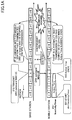
- Fig. 1A is a diagram showing operation of the mobile station and the base station in DRX control.
- "n" (“n-3" - “n+9" indicates a subframe (subframe: 1 ms).
- drx-InactivityTimer is started (S11).
- the base station transmits DRX command MAC CE to the mobile station to change a DRX state of the mobile station to an Inactive state (S12).
- the mobile station that receives DRX command MAC CE stops the running drx-InactivityTimer to end an Active Time (S13).
- the mobile station since the Active Time suddenly ends at the reception of DRX command MAC CE, there is a possibility that the mobile station cannot stop transmission of CSI/SRS immediately. Therefore, the mobile station transmits CSI/SRS to the base station (S14). On the other hand, the base station does not ascertain whether the mobile station to which DRX command MAC CE has been transmitted in step S12 stops transmission process of CSI/SRS. That is, there is a problem in that mismatch (inconsistency) occurs since expected operation for the process on CSI/SRS is different between the base station and the mobile station or operation of CSI/SRS process cannot be specified with each other.
- mismatch inconsistency
- the occurrence of the mismatch has an effect in which, for example, when CSI/SRS is not transmitted from the mobile station while the base station expects transmission of CSI/SRS from the mobile station, the base station decodes noise and interference and the like in the process of estimation of link quality of the mobile station to estimate the quality based on them so that estimation accuracy deteriorates.
- the base station decodes noise and interference and the like in the process of estimation of link quality of the mobile station to estimate the quality based on them so that estimation accuracy deteriorates.
- the CSI/SRS collides with an uplink (UL) signal transmitted from another mobile station so that interference occurs.
- n-4approach a process for estimating a state of the mobile station after elapse of 4ms based on a state and information (in an Active state or not, for example) of the mobile station in each time (subframe(TTI)) so as to determine whether to transmit CSI/SRS after the elapse of 4ms.
- the mobile station performs a transmission process of CSI/SRS at the time point of subframe "n", and the base station performs a reception process.
- the mobile station does not perform the transmission process of CSI/SRS at the time point of subframe "n", and the base station does not perform the reception process.
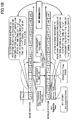
- Fig. 1B is a diagram showing operation of the mobile station and the base station in the DRX control when n-4approach is applied.
- the mobile station determines whether to perform a transmission process of CSI/SRS after 4ms (subframe "n+2") based on an estimated state after 4ms at the time point of subframe "n-2" (S11a).
- the mobile station can estimate, at the time point of subframe "n-2", that the state after 4ms is an Active time, that is, an Active state.
- the mobile station is controlled so as to transmit CSI/SRS at the time point of subframe "n+2".
- the base station determines whether to perform a transmission process of CSI/SRS after 4ms (subframe "n+2") based on the estimated state after 4ms at the time point of subframe "n-2" (S11b).
- the base station since the base station does not transmit DRX command MAC CE at the time point of subframe "n-2", the base station determines that the state of the mobile station at subframe "n+2 is an Active state, and the base station is controlled so as to try to receive CSI/SRS at the time point of subframe "n+2". Then, the mobile station transmits CSI/SRS to the base station based on the determination result in step S11a (S14). Accordingly, by applying n-4approach in the DRX control, whether to perform transmission/reception process of CSI/SRS in the mobile station/base station at the time point of subframe "n+4" is determined based on the state of the mobile station at the time point of subframe "n". Thus, occurrence of mismatch like the case of Fig. 1A can be avoided.
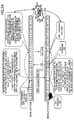
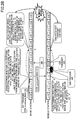
- Figs. 2A and 2B are diagrams showing operation of the mobile station and the base station when SR is triggered in DRX control to which n-4approach is applied.
- Fig. 2A shows operation in a case where CSI/SRS transmission (reception) determination process by n-4approach is performed after SR is triggered in the mobile station.
- SR is transmitted from the mobile station to the base station after elapse of a predetermined time.
- SR is triggered in the mobile station (S21).
- the base station transmits DRX command MAC CE to the target mobile station to change a DRX state of the mobile station to an Inactive state (S22).
- the mobile station determines, based on a state at the time point of subframe "n", whether to perform a transmission process of CSI/SRS after 4ms (subframe "n+4") (S23).
- the base station since the base station transmits DRX command MAC CE at the time point of subframe "n", the base station determines that a state of the mobile station is not an Active state, so that the base station is controlled so as not to expect transmission of CSI/SRS from the mobile station at the time point of subframe "n+4".
- SR is transmitted from the mobile station to the base station based on the trigger in step S21 (S25). Then, the mobile station transmits CSI/SRS to the base station based on the determination process of step S23 (S26).
- the base station has been controlled so as not to expect transmission of CSI/SRS from the mobile station based on the determination process of step S24.
- the base station since the base station receives SR at the time point of subframe "n+2", it is uncertain whether to expect or not transmission of CSI/SRS from the mobile station. That is, a problem may occur in which mismatch occurs since expected operation on transmission/reception process of CSI/SRS is different between the mobile station and the base station, or operation of CSI/SRS reporting cannot be specified.
- Fig. 2B shows operation in a case where SR is triggered in the mobile station after CSI/SRS transmission (reception) determination process is performed based on n-4approach.
- the mobile station determines, based on a state at the time point of subframe "n", whether to perform a transmission process of CSI/SRS after 4ms (subframe "n+4") (S32).
- the present invention is contrived in view of the above-mentioned points, and an object of the present invention is to avoid occurrence of mismatch of operation between a mobile station that transmits CSI/SRS that is quality information and a base station that expects CSI/SRS in a mobile communication system to which DRX control is applied.
- a mobile station of the present invention is configured as a mobile station that communicates with a base station, including:
- a mobile station of the present invention can be configured as a mobile station that communicates with a base station, including:
- a base station of the present invention can be configured as a base station that communicates with a mobile station, including:
- the present invention even when a scheduling request is transmitted from a mobile station to a base station in a mobile communication system to which DRX control is applied, it becomes possible to avoid occurrence of mismatch of operation between the mobile station that transmits CSI/SRS that is quality information and the base station that expects CSI/SRS.
- Fig. 3 is a block diagram of a mobile communication system in an embodiment of the present invention.
- the mobile communication system in the embodiment of the present invention is a communication system of an LTE scheme, and includes a base station eNB and a mobile station UE.
- the base station eNB transmits, to the mobile station UE, PDCCH, PDSCH, P-HICH(Physical HARQ Indicator Channel) and the like.
- the mobile station UE transmits, to the base station eNB, PUSCH (Physical Uplink Shared Channel), PUCCH, and PRACH (Physical Random Access Channel).
- PUSCH Physical Uplink Shared Channel
- PUCCH Physical Uplink Control Channel
- PRACH Physical Random Access Channel
- the base station eNB transmits, to the mobile station UE, downlink information (downlink user data, for example) via DL-SCH mapped to PDSCH.
- the mobile station UE transmits, to the base station eNB, uplink information (uplink user data, for example) via UL-SCH mapped to PUSCH.
- the mobile station UE transmits, to the base station eNB, control information such as "Scheduling Request (SR)" defined in 3GPP.
- SR Service Request
- Fig. 4 shows a functional block diagram of the mobile station UE in an embodiment of the present invention.
- the mobile station UE includes a DRX state management unit 11, a CSI/SRS resource management unit 12, a DL signal reception unit 13, and an UL signal transmission unit 14.
- Fig. 4 shows only functional units especially related to the present invention in the mobile station UE, and the mobile station UE also includes at least functions, not shown in the figure, for performing operation complying with the LTE scheme.
- the DRX state management unit 11 manages whether the mobile station is in a DRX (discontinuous reception) state or not in DRX control. Also, the DRX state management unit 11 manages RRC Connected of the mobile station UE that has changed to a DRX state as an Active state or an Inactive state.
- the DRX state management unit 11 manages the mobile station UE as an Active state in the following cases (1)-(4).
- the DRX state management unit 11 determines, based on a determination process of n-4approach, whether to transmit CSI or SRS (CSI/SRS) that is quality information indicating radio quality after elapse of a predetermined time (subframe "n+4") from a current time point (subframe "n", for example).
- CSI/SRS CSI or SRS
- the above-mentioned (2) includes a case where SR is actually transmitted, and a case where SR is triggered (from a time when SR is triggered until SR is transmitted). In an after-mentioned second embodiment, the above-mentioned (2) is excluded from determination criteria used for Active state determination in the determination process of n-4approach.
- the CSI/SRS resource management unit 12 assigns a resource for CSI/SRS transmission from resources for PUCCH.
- the DL signal reception unit 13 receives DRX command MAC CE and the like transmitted by the base station eNB via DL-SCH. Then, the DL signal reception unit 13 outputs a received DRX command MAC CE to the DRX state management unit 11.
- the UL signal transmission unit 14 transmits, to the base station eNB, SR and CSI/SRS and the like via PUCCH.
- the DL signal reception unit 13 and the UL signal transmission unit 14 perform transmission and reception processes of control data (C-plane data) and user data (U-Plane data) other than the above-mentioned signals.
- Fig. 5 is a functional block diagram of the base station eNB in an embodiment of the present invention.
- the base station eNB includes a DRX state management unit 21, a CSI/SRS resource management unit 22, an UL signal reception unit 23 and a DL signal transmission unit 24.
- Fig. 5 shows only functional units especially related to the present invention in the base station eNB, and the base station eNB also includes at least functions, not shown in the figure, for performing operation complying with the LTE scheme.
- the DRX state management unit 21 manages whether the mobile station UE under the base station eNB is in a DRX state or not in DRX control. More particularly, the DRX state management unit 21 manages the mobile station UE which is a transmission destination as Active/Inactive state based on transmission of DRX command MAC CE for changing the mobile station UE into an Inactive state, reception of SR transmitted from the mobile station UE, and the like.
- the DRX state management unit 21 determines, based on a determination process of n-4approach, whether to expect transmission of CSI/SRS from the mobile station UE, that is, whether to try to receive CSI/SRS.
- the CSI/SRS resource management unit 22 assigns a resource for CSI/SRS reception from resources for PUCCH.
- the UL signal reception unit 23 receives SR, CSI/SRS and the like transmitted from the mobile station UE via PUCCH.
- the DL signal transmission unit 24 transmits, to the base station eNB, DRX command MAC CE and the like via DL-SCH.
- the DL signal transmission unit 24 includes a scheduler function.
- the UL signal reception unit 23 and the DL signal transmission unit 24 perform transmission and reception processes of control data and user data other than the above-mentioned signals.
- three control methods are proposed on CSI/SRS in DRX control.
- three control methods are described as first to third embodiments respectively.
- the mobile station performs control such that, even though it is determined "not to transmit CSI/SRS" based on the determination process of n-4approach in the mobile station UE, the mobile station UE transmits CSI/SRS if SR is transmitted after the determination process. That is, the mobile station UE transmits CSI/SRS when SR is transmitted irrespective of the determination result of n-4approach.
- the base station eNB performs control so as to "always expect (try reception process of) CSI/SRS" from the mobile station UE after receiving SR from the mobile station UE.
- FIG. 6A shows process content in a case where SR is triggered before a determination process of n-4approach is performed in the mobile station UE.
- Fig. 6B shows process content in a case where SR is triggered after a determination process of n-4approach is performed in the mobile station UE.
- SR is triggered in the mobile station (S101).
- the DRX state management unit 21 of the base station eNB generates DRX command MAC CE for changing a DRX state of the mobile station UE to an Inactive state, and transmits the generated DRX command MAC CE to the target mobile station UE via the DL signal transmission unit 24 (S102).
- the DL signal reception unit 13 of the mobile station UE receives the DRX command MAC CE transmitted from the base station eNB, and outputs the received DRX command MAC CE to the DRX state management unit 11.
- the DRX state management unit 11 performs a determination process of n-4approach based on a state (Active/Inactive state) at the time point of subframe "n” for determining whether to transmit CSI/SRS in subframe "n+4" or not (S103).
- the DRX state management unit 11 ends an Active Time since it receives DRX command MAC CE at the time point subframe "n". But, since SR has been triggered at the time point of subframe "n-3" (before determination process of n-4approach), the DRX state management unit 11 determines "to transmit CSI/SRS". The determination process of n-4approach by the DRX state management unit 11 is performed in each subframe.
- the DRX state management unit 21 of the base station eNB performs a determination process of n-4approach (S104). More particularly, since DRX command MAC CE has been transmitted in step S102, the DRX state management unit 21 determines that the state of the mobile station UE is not an Active state, so as to determine "not to expect CSI/SRS" from the mobile station UE at the time point of subframe "n+4".
- the UL signal transmission unit 14 of the mobile station UE transmits, to the base station eNB, SR based on the trigger in step S101 (S105), and notifies the DRX state management unit 11 that a transmission process of SR is executed. Also, the UL signal reception unit 23 of the base station eNB receives SR transmitted from the mobile station UE, and notifies the DRX state management unit 21 of the reception of SR.
- the CSI/SRS management unit 12 of the mobile station UE controls the CSI/SRS resource management unit 12 based on the result of determination performed in step S103 (to transmit CSI/SRS) so as to transmit CSI/SRS to the base station eNB (S106).
- the DRX state management unit 21 of the base station eNB determines "not to expect CSI/SRS" from the mobile station UE in step S104, the DRX state management unit 21 controls the CSI/SRS resource management unit 22 so as "to always expect CSI/SRS after SR reception" in a case where SR is received beforehand (S107).
- mismatch does not occur between the mobile station UE and the base station eNB for the process of CSI/SRS.
- the DRX state management unit 21 of the base station eNB generates DRX command MAC CE, and transmits the generated DRX command MAC CE to the target mobile station UE via the DL signal transmission unit 24 (S111).
- the DL signal reception unit 13 of the mobile station UE receives the DRX command MAC CE transmitted from the base station eNB, and outputs the received DRX command MAC CE to the DRX state management unit 11.
- the DRX state management unit 11 performs a determination process of n-4approach (S112). More particularly, the DRX state management unit 11 determines "not to transmit CSI/SRS" at the time point of subframe "n+4" since the state is not an Active state due to the reception of DRX command MAC CE at the time point of subframe "n".
- the DRX state management unit 21 of the base station eNB performs a determination process of n-4approach (S113). More particularly, since DRX command MAC CE has been transmitted in step S101, the DRX state management unit 21 determines that the state of the mobile station UE is not an Active state, so as to determine "not to expect CSI/SRS" from the mobile station UE at the time point of subframe "n+4".
- SR is triggered in the mobile station UE (S114), so that SR based on the trigger is transmitted to the base station eNB by the UL signal transmission unit 14 (S115).
- the UL signal transmission unit 14 notifies the DRX state management unit 11 that transmission process of SR has been executed.
- the UL signal reception unit 23 of the base station eNB receives SR transmitted from the mobile station UE, and notifies the DRX state management unit 21 of the reception of SR.
- the DRX state management unit 11 of the mobile station UE determines "not to transmit CSI/SRS" in step S112, it controls the CSI/SRS resource management unit 12 so as "to transmit CSI/SRS" since SR is transmitted in step S115 (S116).
- the DRX state management unit 21 of the base station eNB determines "not to expect CSI/SRS" from the mobile station UE in step S113, the DRX state management unit 21 controls the CSI/SRS resource management unit 22 so as "to always expect CSI/SRS after SR reception" in a case where SR is received beforehand (S117).
- mismatch does not occur between the mobile station UE and the base station eNB for the process of CSI/SRS.
- Fig. 7 is a flowchart diagram showing a process procedure per 1 subframe, and is described as a process at a time point of subframe "n+4", for example.
- the DRX state management unit 11 of the mobile station UE determines whether the determination result by n-4approach performed at the time point of subframe "n” is "not to transmit CSI/SRS" at the time point of subframe "n+4" (S201).
- step S201 If it is determined “not to transmit CSI/SRS" at the time point of subframe "n+4" (Yes in step S201), it is determined whether SR transmission has been performed from the subframe "n” when the determination process of n-4approach was performed until subframe "n+4" (S202).
- the DRX state management unit 11 controls the CSI/SRS resource management unit 12 to transmit CSI/SRS to the base station eNB (S203).
- CSI/SRS is not transmitted.
- the mobile station UE when SR is transmitted from the mobile station UE (when SR is received by the base station eNB), the mobile station UE is controlled so as to transmit CSI/SRS and the base station eNB is controlled so as to expect transmission of CSI/SRS from the mobile station UE. Therefore, occurrence of mismatch of the process of CSI/SRS in the mobile station UE and the base station eNB can be avoided.
- the mobile station performs control such that, even though SR is transmitted from the mobile station UE after it is determined "not to transmit CSI/SRS" based on the determination process of n-4approach in the mobile station UE, the mobile station UE does not transmit CSI/SRS.
- the above-mentioned (2) "a case where SR is transmitted" is excluded from determination criteria used for Active state determination of the mobile station UE in the determination process of n-4approach by the mobile station UE.
- the base station eNB performs control so as "not to expect CSI/SRS (not to try reception process)".
- FIG. 8A shows process content in a case where SR is triggered before a determination process of n-4approach is performed in the mobile station UE.
- Fig. 8B shows process content in a case where SR is triggered after a determination process of n-4approach is performed in the mobile station UE.
- the same processes as those of Figs. 6A and 6B are assigned the same step numbers, and detailed descriptions for these are not provided.
- the DRX state management unit 11 of the mobile station UE performs determination process of n-4approach in a subframe "n" (S103a).
- the above-mentioned (2) "a case where SR is transmitted (including a state from a time when SR is triggered until SR is transmitted)" is excluded from determination criteria used for Active state determination of the mobile station UE in the determination process of n-4approach.
- the DRX state management unit 11 determines "not to transmit CSI/SRS" since "a case where SR is transmitted (including a state from a time when SR is triggered until SR is transmitted)" is excluded from the determination criteria for Active state determination in n-4approach.
- the CSI/SRS management unit 12 of the mobile station UE controls the CSI/SRS resource management unit 12 so as not to transmit CSI/SRS based on the result of determination performed in step S103a ("not to transmit CSI/SRS") (S106a).
- the DRX state management unit 21 of the base station eNB controls the CSI/SRS resource management unit 22 so as "not to expect CSI/SRS" which is the normal determination result by n-4approach (S107a).
- mismatch does not occur between the mobile station UE and the base station eNB for the process of CSI/SRS.
- the DRX state management unit 11 of the mobile station UE performs determination process of n-4approach (excluding "a case where SR is transmitted (including a state from a time when SR is triggered until SR is transmitted)" from the determination criteria for Active state determination) (S112a). More specifically, since the mobile station UE is not in an Active state due to reception of DRX command MAC CE at the time point of subframe "n", the DRX state management unit 11 determines "not to transmit CSI/SRS" at the time point of subframe "n+4".
- the CSI/SRS management unit 11 of the mobile station UE controls the CSI/SRS resource management unit 12 so as "not to transmit CSI/SRS" based on the result of "not to transmit CSI/SRS" determined in step S112a (S116a).
- the DRX state management unit 21 of the base station eNB controls the CSI/SRS resource management unit 22 so as "not to expect CSI/SRS" which is the normal determination result by n-4approach (S117a).
- mismatch does not occur between the mobile station UE and the base station eNB for the process of CSI/SRS.
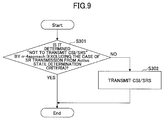
- Fig. 9 is a flowchart diagram showing a process procedure per 1 subframe, and is described as a process at a time point of subframe "n+4", for example.
- the DRX state management unit 11 of the mobile station UE determines whether the determination result by n-4approach performed at the time point of subframe "n" (excluding "a case where SR is transmitted (including a state from a time when SR is triggered until SR is transmitted)" from the determination criteria for Active state determination) is "not to transmit CSI/SRS" at the time point of subframe "n+4" (S301).
- the DRX state control unit 11 controls the CSI/SRS resource management unit 12 so as to transmit CSI/SRS to the base station eNB (S302).
- the second embodiment by excluding "a case where SR is transmitted (including a state from the time when SR is triggered until SR is transmitted)" from the Active determination criteria in the determination process of n-4approach in the mobile station UE, mismatch occurrence of processes on CSI/SRS between the mobile station UE and the base station eNB can be avoided irrespective of the timing (order) between the trigger of SR and the determination process of n-4approach.
- the base station eNB even though SR is received after it is determined "not to expect CSI/SRS" from the mobile station UE based on the determination process of n-4approach in the base station eNB, the base station eNB performs control so as not to try (so as to neglect) reception of the first CSI/SRS transmitted by the mobile station UE after receiving SR.
- the first CSI/SRS transmitted by the mobile station UE after receiving SR is CSI/SRS arriving at the base station eNB initially or until predetermined time (20ms, for example) elapses after the base station eNB receives SR.
- "control so as not to try (so as to neglect) reception of CSI/SRS" in the third embodiment is, for example, control for performing scheduling so as not to assign resources to other mobile stations UE such that an influence is not exerted on other mobile stations UE when CSI/SRS from the mobile station UE arrives at the base station eNB.
- UL resources are assigned such that UL resources used for UL transmission of other mobile stations UE do not collide with an (time, frequency) UL resource used for transmission of CSI/SRS by the mobile station UE.
- the mobile station UE can arbitrarily decide whether to transmit CSI/SRS after transmission of SR.
- FIG. 10A shows process content in a case where SR is triggered before a determination process of n-4approach is performed in the mobile station UE.
- Fig. 10B shows process content in a case where SR is triggered after a determination process of n-4approach is performed in the mobile station UE.
- the same processes as those of Figs. 6A and 6B are assigned the same step numbers, and detailed descriptions for these are not provided.
- the CSI/SRS management unit 12 of the mobile station UE controls the CSI/SRS resource management unit 12 so as to transmit CSI/SRS to the base station eNB (S106b).
- control whether to transmit or not
- transmission process of CSI/SRS can be arbitrarily determined when transmission of SR or trigger of SR is performed.
- the DRX state management unit 21 of the base station eNB receives SR after determining "not to expect CSI/SRS" from the mobile station UE in step S104, the DRX state management unit 21 neglects the first CSI/SRS transmitted from the mobile station after receiving SR and controls the CSI/SRS resource management unit 22 so as to perform scheduling such that an influence is not exerted on other mobile stations UE (S107b).
- control can be performed such that an influence is not exerted on other mobile stations UE by scheduling control on CSI/SRS by the base station eNB.
- the DRX state management unit 11 of the mobile station UE controls the CSI/SRS resource management unit 12 so as "not to transmit CSI/SRS" (S116b).
- the DRX state management unit 21 of the base station eNB since the DRX state management unit 21 of the base station eNB receives SR after determining "not to expect CSI/SRS" from the mobile station UE in step S113, the DRX state management unit 21 controls the CSI/SRS resource management unit 22 so as to neglect the first CSI/SRS transmitted from the mobile station after receiving SR (S117b). In this case, the DRX state management unit 11 controls the CSI/SRS resource management unit 22 so as to expect next (second time, or after elapse of predetermined time) CSI/SRS from the mobile station UE.
- Fig. 11 is a flowchart diagram showing a process procedure per 1 subframe, and is described as a process at a time point of subframe "n+4", for example.
- the DRX state management unit 21 of the base station eNB determines whether the determination result by n-4approach performed at the time point of subframe "n” is "not to expect CSI/SRS" from the mobile station UE at the time point of subframe "n+4" (5401).
- step S401 If it is determined “not to expect CSI/SRS" at the time point of subframe "n+4" (Yes in step S401), it is determined whether SR reception has been performed from subframe "n” when the determination process of n-4approach was performed until subframe "n+4" (S402).
- the DRX state management unit 21 controls the CSI/SRS resource management unit 22 to perform scheduling so as to neglect the first CSI/SRS transmitted from the mobile station UE after receiving SR and so as not to exert an influence on other mobile apparatuses UE (S403).
- the DRX state management unit 21 causes the CSI/SRS resource management unit 12 to perform control based on the determination result by n-4approach.
- the base station eNB if the base station eNB receives SR after it is determined "not to expect CSI/SRS" by n-4approach in the base station eNB, the base station eNB performs control so as to neglect the first CSI/SRS after reception of SR, and so as not to exert an influence to other mobile stations UE.
- effects due to mismatch occurrence on processes of CSI/SRS between the mobile station UE and the base station eNB can be suppressed.
- effects due to mismatch occurrence can be suppressed by changing control content by the base station eNB.
- implementation is easier compared with a case of changing process content of mobile stations UE since the number of mobile stations and the number of types of the mobile stations are greater than those of the base stations eNB in general.
- the present invention can be also applied not only to the case where the Active Time is suddenly stopped but also to a case where the Active Time is suddenly extended, so that mismatch of processes on CSI/SRS between the mobile station UE and the base station eNB can be avoided.
- the Scheduling Request transmitted from the mobile station UE to the base station eNB is an example of a control signal, and the present invention can be applied also to a case where a control signal other than the Scheduling Request is transmitted.
- each apparatus may be implemented in hardware, software, or a combination thereof.
- the software that operates according to the present invention (software executed by a processor provided in the user apparatus UE, software executed by a processor provided in the base station eNB) may be stored in any proper storage medium such as a Random Access Memory (RAM), a flash memory, a Read Only Memory (ROM), an EPROM, an EEPROM, a register, a hard disk (HDD), a removable disk, a CD-ROM, a database, a server and the like.
Landscapes
- Engineering & Computer Science (AREA)
- Computer Networks & Wireless Communication (AREA)
- Signal Processing (AREA)
- Quality & Reliability (AREA)
- Mobile Radio Communication Systems (AREA)
Applications Claiming Priority (2)
| Application Number | Priority Date | Filing Date | Title |
|---|---|---|---|
| JP2013099326A JP6227277B2 (ja) | 2013-05-09 | 2013-05-09 | 移動局、及び送信制御方法 |
| PCT/JP2014/062191 WO2014181779A1 (ja) | 2013-05-09 | 2014-05-02 | 移動局、基地局、移動通信システム、送信制御方法及び受信制御方法 |
Publications (2)
| Publication Number | Publication Date |
|---|---|
| EP2996407A1 true EP2996407A1 (de) | 2016-03-16 |
| EP2996407A4 EP2996407A4 (de) | 2016-08-24 |
Family
ID=51867259
Family Applications (1)
| Application Number | Title | Priority Date | Filing Date |
|---|---|---|---|
| EP14795351.7A Withdrawn EP2996407A4 (de) | 2013-05-09 | 2014-05-02 | Mobilstation, basisstation, mobilkommunikationsverfahren, übertragungssteuerungsverfahren und empfangssteuerungsverfahren |
Country Status (6)
| Country | Link |
|---|---|
| US (1) | US9750033B2 (de) |
| EP (1) | EP2996407A4 (de) |
| JP (1) | JP6227277B2 (de) |
| CN (1) | CN105191439A (de) |
| RU (1) | RU2644148C2 (de) |
| WO (1) | WO2014181779A1 (de) |
Families Citing this family (6)
| Publication number | Priority date | Publication date | Assignee | Title |
|---|---|---|---|---|
| RU2724320C1 (ru) * | 2016-11-02 | 2020-06-22 | Телефонактиеболагет Лм Эрикссон (Пабл) | Управление воздействием переключения srs на передачи по каналу восходящей линии связи |
| US10743319B2 (en) * | 2017-05-01 | 2020-08-11 | Qualcomm Incorporated | Method of base station beam refinement |
| WO2019191954A1 (zh) * | 2018-04-04 | 2019-10-10 | Oppo广东移动通信有限公司 | 传输信息的方法和终端设备 |
| US12294437B2 (en) | 2018-07-02 | 2025-05-06 | Huawei Technologies Co., Ltd. | System and method for link recovery with discontinuous reception |
| WO2020049736A1 (ja) * | 2018-09-07 | 2020-03-12 | 株式会社Nttドコモ | ユーザ端末及び無線通信方法 |
| US11190949B2 (en) * | 2019-11-22 | 2021-11-30 | Charter Communications Operating, Llc | Methods and apparatus for monitoring contested spectrum and/or responding to the detection of an incumbent user |
Family Cites Families (8)
| Publication number | Priority date | Publication date | Assignee | Title |
|---|---|---|---|---|
| CA2408423C (en) * | 2001-10-17 | 2013-12-24 | Nec Corporation | Mobile communication system, communication control method, base station and mobile station to be used in the same |
| RU2414105C2 (ru) * | 2005-06-14 | 2011-03-10 | Нтт Досомо, Инк. | Мобильная станция, базовая станция и способ осуществления связи |
| EP2120476A4 (de) * | 2007-03-01 | 2014-01-01 | Ntt Docomo Inc | Basisstationseinrichtung und kommunikationssteuerverfahren |
| US8606336B2 (en) * | 2008-03-20 | 2013-12-10 | Blackberry Limited | System and method for uplink timing synchronization in conjunction with discontinuous reception |
| WO2010126842A1 (en) * | 2009-04-27 | 2010-11-04 | Interdigital Patent Holdings, Inc. | Reference signals for positioning measurements |
| CN102257859B (zh) * | 2011-06-01 | 2013-08-07 | 华为技术有限公司 | 混合非连续接收方法及基站和用户设备 |
| JP6096775B2 (ja) * | 2011-08-12 | 2017-03-15 | テレフオンアクチーボラゲット エルエム エリクソン(パブル) | 不連続受信(drx)と共に構成されるユーザ機器のアクティブ時間ステータスに基づくアップリンク制御シグナリングを送信すべきかの決定 |
| CN103988455B (zh) * | 2011-10-12 | 2017-08-25 | 三星电子株式会社 | 移动通信系统中用于发送反向控制信号的方法和设备 |
-
2013
- 2013-05-09 JP JP2013099326A patent/JP6227277B2/ja active Active
-
2014
- 2014-05-02 CN CN201480025713.1A patent/CN105191439A/zh active Pending
- 2014-05-02 EP EP14795351.7A patent/EP2996407A4/de not_active Withdrawn
- 2014-05-02 WO PCT/JP2014/062191 patent/WO2014181779A1/ja not_active Ceased
- 2014-05-02 RU RU2015147872A patent/RU2644148C2/ru active
- 2014-05-02 US US14/889,345 patent/US9750033B2/en active Active
Also Published As
| Publication number | Publication date |
|---|---|
| US9750033B2 (en) | 2017-08-29 |
| WO2014181779A1 (ja) | 2014-11-13 |
| RU2015147872A (ru) | 2017-06-15 |
| CN105191439A (zh) | 2015-12-23 |
| JP2014220683A (ja) | 2014-11-20 |
| RU2644148C2 (ru) | 2018-02-08 |
| EP2996407A4 (de) | 2016-08-24 |
| JP6227277B2 (ja) | 2017-11-08 |
| US20160119934A1 (en) | 2016-04-28 |
Similar Documents
| Publication | Publication Date | Title |
|---|---|---|
| US11910470B2 (en) | DRX handling in LTE license assisted access operation | |
| US12041634B2 (en) | Conditional uplink radio resource utilization in a cellular network | |
| EP2827662B1 (de) | Verfahren und vorrichtung für ressourcenzuweisung | |
| EP2756717B1 (de) | Verfahren und vorrichtung für eine interferenzbasierte gemeinsame planung von peer-to-peer-verknüpfungen mit einem wwan | |
| CN104969627A (zh) | 减小连接模式非连续接收中的功率消耗 | |
| US20180242243A1 (en) | User device, network node, method and computer program product | |
| EP2996407A1 (de) | Mobilstation, basisstation, mobilkommunikationsverfahren, übertragungssteuerungsverfahren und empfangssteuerungsverfahren | |
| EP2763467A1 (de) | Drahtloses kommunikationssystem, mobilstation, basisstation und steuerverfahren für das drahtlose kommunikationssystem | |
| US10028315B2 (en) | User apparatus and signal transmission control method | |
| US10939459B2 (en) | Scheduling-free transmission method and apparatus | |
| EP3189614B1 (de) | Steuerung der kanalreferenzsignalübertragung in einem mobilfunknetz | |
| EP3619897B1 (de) | Nichtkontinuierliche übertragung von sounding referenzsignalen in aufwärtsrichtung | |
| CN117999813A (zh) | 主动cot请求 |
Legal Events
| Date | Code | Title | Description |
|---|---|---|---|
| PUAI | Public reference made under article 153(3) epc to a published international application that has entered the european phase |
Free format text: ORIGINAL CODE: 0009012 |
|
| 17P | Request for examination filed |
Effective date: 20151112 |
|
| AK | Designated contracting states |
Kind code of ref document: A1 Designated state(s): AL AT BE BG CH CY CZ DE DK EE ES FI FR GB GR HR HU IE IS IT LI LT LU LV MC MK MT NL NO PL PT RO RS SE SI SK SM TR |
|
| AX | Request for extension of the european patent |
Extension state: BA ME |
|
| DAX | Request for extension of the european patent (deleted) | ||
| A4 | Supplementary search report drawn up and despatched |
Effective date: 20160725 |
|
| RIC1 | Information provided on ipc code assigned before grant |
Ipc: H04L 1/00 20060101ALI20160719BHEP Ipc: H04W 76/04 20090101ALI20160719BHEP Ipc: H04W 72/04 20090101ALI20160719BHEP Ipc: H04W 72/08 20090101ALI20160719BHEP Ipc: H04W 24/10 20090101ALI20160719BHEP Ipc: H04W 52/24 20090101ALN20160719BHEP Ipc: H04W 72/12 20090101ALI20160719BHEP Ipc: H04W 52/02 20090101AFI20160719BHEP |
|
| 17Q | First examination report despatched |
Effective date: 20170421 |
|
| GRAP | Despatch of communication of intention to grant a patent |
Free format text: ORIGINAL CODE: EPIDOSNIGR1 |
|
| RIC1 | Information provided on ipc code assigned before grant |
Ipc: H04W 72/12 20090101ALI20180403BHEP Ipc: H04W 72/04 20090101ALI20180403BHEP Ipc: H04W 76/28 20180101ALI20180403BHEP Ipc: H04W 52/24 20090101ALN20180403BHEP Ipc: H04W 52/02 20090101AFI20180403BHEP Ipc: H04W 72/08 20090101ALI20180403BHEP Ipc: H04W 24/10 20090101ALI20180403BHEP Ipc: H04L 1/00 20060101ALI20180403BHEP |
|
| INTG | Intention to grant announced |
Effective date: 20180419 |
|
| RIC1 | Information provided on ipc code assigned before grant |
Ipc: H04W 76/28 20180101ALI20180410BHEP Ipc: H04W 24/10 20090101ALI20180410BHEP Ipc: H04L 1/00 20060101ALI20180410BHEP Ipc: H04W 52/24 20090101ALN20180410BHEP Ipc: H04W 72/04 20090101ALI20180410BHEP Ipc: H04W 52/02 20090101AFI20180410BHEP Ipc: H04W 72/12 20090101ALI20180410BHEP Ipc: H04W 72/08 20090101ALI20180410BHEP |
|
| STAA | Information on the status of an ep patent application or granted ep patent |
Free format text: STATUS: THE APPLICATION IS DEEMED TO BE WITHDRAWN |
|
| 18D | Application deemed to be withdrawn |
Effective date: 20180830 |