EP2997372B1 - Biochip, antigen bouquet, optical reader and method for detecting and monitoring diseases - Google Patents
Biochip, antigen bouquet, optical reader and method for detecting and monitoring diseases Download PDFInfo
- Publication number
- EP2997372B1 EP2997372B1 EP14736473.1A EP14736473A EP2997372B1 EP 2997372 B1 EP2997372 B1 EP 2997372B1 EP 14736473 A EP14736473 A EP 14736473A EP 2997372 B1 EP2997372 B1 EP 2997372B1
- Authority
- EP
- European Patent Office
- Prior art keywords
- biochip
- fact
- antigen
- image
- drawer
- Prior art date
- Legal status (The legal status is an assumption and is not a legal conclusion. Google has not performed a legal analysis and makes no representation as to the accuracy of the status listed.)
- Active
Links
Images




Classifications
-
- G—PHYSICS
- G01—MEASURING; TESTING
- G01N—INVESTIGATING OR ANALYSING MATERIALS BY DETERMINING THEIR CHEMICAL OR PHYSICAL PROPERTIES
- G01N33/00—Investigating or analysing materials by specific methods not covered by groups G01N1/00 - G01N31/00
- G01N33/48—Biological material, e.g. blood, urine; Haemocytometers
- G01N33/50—Chemical analysis of biological material, e.g. blood, urine; Testing involving biospecific ligand binding methods; Immunological testing
- G01N33/53—Immunoassay; Biospecific binding assay; Materials therefor
- G01N33/564—Immunoassay; Biospecific binding assay; Materials therefor for pre-existing immune complex or autoimmune disease, i.e. systemic lupus erythematosus, rheumatoid arthritis, multiple sclerosis, rheumatoid factors or complement components C1-C9
-
- B—PERFORMING OPERATIONS; TRANSPORTING
- B01—PHYSICAL OR CHEMICAL PROCESSES OR APPARATUS IN GENERAL
- B01L—CHEMICAL OR PHYSICAL LABORATORY APPARATUS FOR GENERAL USE
- B01L3/00—Containers or dishes for laboratory use, e.g. laboratory glassware; Droppers
-
- B—PERFORMING OPERATIONS; TRANSPORTING
- B01—PHYSICAL OR CHEMICAL PROCESSES OR APPARATUS IN GENERAL
- B01L—CHEMICAL OR PHYSICAL LABORATORY APPARATUS FOR GENERAL USE
- B01L3/00—Containers or dishes for laboratory use, e.g. laboratory glassware; Droppers
- B01L3/50—Containers for the purpose of retaining a material to be analysed, e.g. test tubes
- B01L3/502—Containers for the purpose of retaining a material to be analysed, e.g. test tubes with fluid transport, e.g. in multi-compartment structures
- B01L3/5027—Containers for the purpose of retaining a material to be analysed, e.g. test tubes with fluid transport, e.g. in multi-compartment structures by integrated microfluidic structures, i.e. dimensions of channels and chambers are such that surface tension forces are important, e.g. lab-on-a-chip
- B01L3/502715—Containers for the purpose of retaining a material to be analysed, e.g. test tubes with fluid transport, e.g. in multi-compartment structures by integrated microfluidic structures, i.e. dimensions of channels and chambers are such that surface tension forces are important, e.g. lab-on-a-chip characterised by interfacing components, e.g. fluidic, electrical, optical or mechanical interfaces
-
- B—PERFORMING OPERATIONS; TRANSPORTING
- B01—PHYSICAL OR CHEMICAL PROCESSES OR APPARATUS IN GENERAL
- B01L—CHEMICAL OR PHYSICAL LABORATORY APPARATUS FOR GENERAL USE
- B01L3/00—Containers or dishes for laboratory use, e.g. laboratory glassware; Droppers
- B01L3/50—Containers for the purpose of retaining a material to be analysed, e.g. test tubes
- B01L3/502—Containers for the purpose of retaining a material to be analysed, e.g. test tubes with fluid transport, e.g. in multi-compartment structures
- B01L3/5027—Containers for the purpose of retaining a material to be analysed, e.g. test tubes with fluid transport, e.g. in multi-compartment structures by integrated microfluidic structures, i.e. dimensions of channels and chambers are such that surface tension forces are important, e.g. lab-on-a-chip
- B01L3/50273—Containers for the purpose of retaining a material to be analysed, e.g. test tubes with fluid transport, e.g. in multi-compartment structures by integrated microfluidic structures, i.e. dimensions of channels and chambers are such that surface tension forces are important, e.g. lab-on-a-chip characterised by the means or forces applied to move the fluids
-
- B—PERFORMING OPERATIONS; TRANSPORTING
- B01—PHYSICAL OR CHEMICAL PROCESSES OR APPARATUS IN GENERAL
- B01L—CHEMICAL OR PHYSICAL LABORATORY APPARATUS FOR GENERAL USE
- B01L3/00—Containers or dishes for laboratory use, e.g. laboratory glassware; Droppers
- B01L3/50—Containers for the purpose of retaining a material to be analysed, e.g. test tubes
- B01L3/502—Containers for the purpose of retaining a material to be analysed, e.g. test tubes with fluid transport, e.g. in multi-compartment structures
- B01L3/5027—Containers for the purpose of retaining a material to be analysed, e.g. test tubes with fluid transport, e.g. in multi-compartment structures by integrated microfluidic structures, i.e. dimensions of channels and chambers are such that surface tension forces are important, e.g. lab-on-a-chip
- B01L3/502738—Containers for the purpose of retaining a material to be analysed, e.g. test tubes with fluid transport, e.g. in multi-compartment structures by integrated microfluidic structures, i.e. dimensions of channels and chambers are such that surface tension forces are important, e.g. lab-on-a-chip characterised by integrated valves
-
- B—PERFORMING OPERATIONS; TRANSPORTING
- B01—PHYSICAL OR CHEMICAL PROCESSES OR APPARATUS IN GENERAL
- B01L—CHEMICAL OR PHYSICAL LABORATORY APPARATUS FOR GENERAL USE
- B01L9/00—Supporting devices; Holding devices
- B01L9/52—Supports specially adapted for flat sample carriers, e.g. for plates, slides, chips
- B01L9/527—Supports specially adapted for flat sample carriers, e.g. for plates, slides, chips for microfluidic devices, e.g. used for lab-on-a-chip
-
- G—PHYSICS
- G01—MEASURING; TESTING
- G01N—INVESTIGATING OR ANALYSING MATERIALS BY DETERMINING THEIR CHEMICAL OR PHYSICAL PROPERTIES
- G01N21/00—Investigating or analysing materials by the use of optical means, i.e. using sub-millimetre waves, infrared, visible or ultraviolet light
-
- G—PHYSICS
- G01—MEASURING; TESTING
- G01N—INVESTIGATING OR ANALYSING MATERIALS BY DETERMINING THEIR CHEMICAL OR PHYSICAL PROPERTIES
- G01N21/00—Investigating or analysing materials by the use of optical means, i.e. using sub-millimetre waves, infrared, visible or ultraviolet light
- G01N21/62—Systems in which the material investigated is excited whereby it emits light or causes a change in wavelength of the incident light
- G01N21/63—Systems in which the material investigated is excited whereby it emits light or causes a change in wavelength of the incident light optically excited
- G01N21/64—Fluorescence; Phosphorescence
- G01N21/645—Specially adapted constructive features of fluorimeters
-
- G—PHYSICS
- G01—MEASURING; TESTING
- G01N—INVESTIGATING OR ANALYSING MATERIALS BY DETERMINING THEIR CHEMICAL OR PHYSICAL PROPERTIES
- G01N21/00—Investigating or analysing materials by the use of optical means, i.e. using sub-millimetre waves, infrared, visible or ultraviolet light
- G01N21/62—Systems in which the material investigated is excited whereby it emits light or causes a change in wavelength of the incident light
- G01N21/63—Systems in which the material investigated is excited whereby it emits light or causes a change in wavelength of the incident light optically excited
- G01N21/64—Fluorescence; Phosphorescence
- G01N21/6486—Measuring fluorescence of biological material, e.g. DNA, RNA, cells
-
- G—PHYSICS
- G01—MEASURING; TESTING
- G01N—INVESTIGATING OR ANALYSING MATERIALS BY DETERMINING THEIR CHEMICAL OR PHYSICAL PROPERTIES
- G01N33/00—Investigating or analysing materials by specific methods not covered by groups G01N1/00 - G01N31/00
- G01N33/48—Biological material, e.g. blood, urine; Haemocytometers
- G01N33/50—Chemical analysis of biological material, e.g. blood, urine; Testing involving biospecific ligand binding methods; Immunological testing
- G01N33/53—Immunoassay; Biospecific binding assay; Materials therefor
- G01N33/543—Immunoassay; Biospecific binding assay; Materials therefor with an insoluble carrier for immobilising immunochemicals
- G01N33/54366—Apparatus specially adapted for solid-phase testing
-
- B—PERFORMING OPERATIONS; TRANSPORTING
- B01—PHYSICAL OR CHEMICAL PROCESSES OR APPARATUS IN GENERAL
- B01L—CHEMICAL OR PHYSICAL LABORATORY APPARATUS FOR GENERAL USE
- B01L2200/00—Solutions for specific problems relating to chemical or physical laboratory apparatus
- B01L2200/02—Adapting objects or devices to another
- B01L2200/026—Fluid interfacing between devices or objects, e.g. connectors, inlet details
- B01L2200/027—Fluid interfacing between devices or objects, e.g. connectors, inlet details for microfluidic devices
-
- B—PERFORMING OPERATIONS; TRANSPORTING
- B01—PHYSICAL OR CHEMICAL PROCESSES OR APPARATUS IN GENERAL
- B01L—CHEMICAL OR PHYSICAL LABORATORY APPARATUS FOR GENERAL USE
- B01L2200/00—Solutions for specific problems relating to chemical or physical laboratory apparatus
- B01L2200/10—Integrating sample preparation and analysis in single entity, e.g. lab-on-a-chip concept
-
- B—PERFORMING OPERATIONS; TRANSPORTING
- B01—PHYSICAL OR CHEMICAL PROCESSES OR APPARATUS IN GENERAL
- B01L—CHEMICAL OR PHYSICAL LABORATORY APPARATUS FOR GENERAL USE
- B01L2300/00—Additional constructional details
- B01L2300/06—Auxiliary integrated devices, integrated components
- B01L2300/0627—Sensor or part of a sensor is integrated
- B01L2300/0654—Lenses; Optical fibres
-
- B—PERFORMING OPERATIONS; TRANSPORTING
- B01—PHYSICAL OR CHEMICAL PROCESSES OR APPARATUS IN GENERAL
- B01L—CHEMICAL OR PHYSICAL LABORATORY APPARATUS FOR GENERAL USE
- B01L2300/00—Additional constructional details
- B01L2300/08—Geometry, shape and general structure
- B01L2300/0809—Geometry, shape and general structure rectangular shaped
- B01L2300/0816—Cards, e.g. flat sample carriers usually with flow in two horizontal directions
-
- B—PERFORMING OPERATIONS; TRANSPORTING
- B01—PHYSICAL OR CHEMICAL PROCESSES OR APPARATUS IN GENERAL
- B01L—CHEMICAL OR PHYSICAL LABORATORY APPARATUS FOR GENERAL USE
- B01L2300/00—Additional constructional details
- B01L2300/08—Geometry, shape and general structure
- B01L2300/0809—Geometry, shape and general structure rectangular shaped
- B01L2300/0819—Microarrays; Biochips
-
- B—PERFORMING OPERATIONS; TRANSPORTING
- B01—PHYSICAL OR CHEMICAL PROCESSES OR APPARATUS IN GENERAL
- B01L—CHEMICAL OR PHYSICAL LABORATORY APPARATUS FOR GENERAL USE
- B01L2300/00—Additional constructional details
- B01L2300/08—Geometry, shape and general structure
- B01L2300/0861—Configuration of multiple channels and/or chambers in a single devices
-
- B—PERFORMING OPERATIONS; TRANSPORTING
- B01—PHYSICAL OR CHEMICAL PROCESSES OR APPARATUS IN GENERAL
- B01L—CHEMICAL OR PHYSICAL LABORATORY APPARATUS FOR GENERAL USE
- B01L2300/00—Additional constructional details
- B01L2300/08—Geometry, shape and general structure
- B01L2300/0861—Configuration of multiple channels and/or chambers in a single devices
- B01L2300/087—Multiple sequential chambers
-
- B—PERFORMING OPERATIONS; TRANSPORTING
- B01—PHYSICAL OR CHEMICAL PROCESSES OR APPARATUS IN GENERAL
- B01L—CHEMICAL OR PHYSICAL LABORATORY APPARATUS FOR GENERAL USE
- B01L2300/00—Additional constructional details
- B01L2300/08—Geometry, shape and general structure
- B01L2300/0861—Configuration of multiple channels and/or chambers in a single devices
- B01L2300/0883—Serpentine channels
-
- B—PERFORMING OPERATIONS; TRANSPORTING
- B01—PHYSICAL OR CHEMICAL PROCESSES OR APPARATUS IN GENERAL
- B01L—CHEMICAL OR PHYSICAL LABORATORY APPARATUS FOR GENERAL USE
- B01L2300/00—Additional constructional details
- B01L2300/16—Surface properties and coatings
-
- B—PERFORMING OPERATIONS; TRANSPORTING
- B01—PHYSICAL OR CHEMICAL PROCESSES OR APPARATUS IN GENERAL
- B01L—CHEMICAL OR PHYSICAL LABORATORY APPARATUS FOR GENERAL USE
- B01L2400/00—Moving or stopping fluids
- B01L2400/04—Moving fluids with specific forces or mechanical means
-
- B—PERFORMING OPERATIONS; TRANSPORTING
- B01—PHYSICAL OR CHEMICAL PROCESSES OR APPARATUS IN GENERAL
- B01L—CHEMICAL OR PHYSICAL LABORATORY APPARATUS FOR GENERAL USE
- B01L2400/00—Moving or stopping fluids
- B01L2400/04—Moving fluids with specific forces or mechanical means
- B01L2400/0403—Moving fluids with specific forces or mechanical means specific forces
- B01L2400/0406—Moving fluids with specific forces or mechanical means specific forces capillary forces
-
- B—PERFORMING OPERATIONS; TRANSPORTING
- B01—PHYSICAL OR CHEMICAL PROCESSES OR APPARATUS IN GENERAL
- B01L—CHEMICAL OR PHYSICAL LABORATORY APPARATUS FOR GENERAL USE
- B01L2400/00—Moving or stopping fluids
- B01L2400/06—Valves, specific forms thereof
-
- G—PHYSICS
- G01—MEASURING; TESTING
- G01N—INVESTIGATING OR ANALYSING MATERIALS BY DETERMINING THEIR CHEMICAL OR PHYSICAL PROPERTIES
- G01N21/00—Investigating or analysing materials by the use of optical means, i.e. using sub-millimetre waves, infrared, visible or ultraviolet light
- G01N21/62—Systems in which the material investigated is excited whereby it emits light or causes a change in wavelength of the incident light
- G01N21/63—Systems in which the material investigated is excited whereby it emits light or causes a change in wavelength of the incident light optically excited
- G01N21/64—Fluorescence; Phosphorescence
- G01N21/6428—Measuring fluorescence of fluorescent products of reactions or of fluorochrome labelled reactive substances, e.g. measuring quenching effects, using measuring "optrodes"
- G01N2021/6439—Measuring fluorescence of fluorescent products of reactions or of fluorochrome labelled reactive substances, e.g. measuring quenching effects, using measuring "optrodes" with indicators, stains, dyes, tags, labels, marks
-
- G—PHYSICS
- G01—MEASURING; TESTING
- G01N—INVESTIGATING OR ANALYSING MATERIALS BY DETERMINING THEIR CHEMICAL OR PHYSICAL PROPERTIES
- G01N21/00—Investigating or analysing materials by the use of optical means, i.e. using sub-millimetre waves, infrared, visible or ultraviolet light
- G01N21/62—Systems in which the material investigated is excited whereby it emits light or causes a change in wavelength of the incident light
- G01N21/63—Systems in which the material investigated is excited whereby it emits light or causes a change in wavelength of the incident light optically excited
- G01N21/64—Fluorescence; Phosphorescence
- G01N21/6428—Measuring fluorescence of fluorescent products of reactions or of fluorochrome labelled reactive substances, e.g. measuring quenching effects, using measuring "optrodes"
-
- G—PHYSICS
- G01—MEASURING; TESTING
- G01N—INVESTIGATING OR ANALYSING MATERIALS BY DETERMINING THEIR CHEMICAL OR PHYSICAL PROPERTIES
- G01N2333/00—Assays involving biological materials from specific organisms or of a specific nature
- G01N2333/195—Assays involving biological materials from specific organisms or of a specific nature from bacteria
- G01N2333/20—Assays involving biological materials from specific organisms or of a specific nature from bacteria from Spirochaetales (O), e.g. Treponema, Leptospira
-
- G—PHYSICS
- G01—MEASURING; TESTING
- G01N—INVESTIGATING OR ANALYSING MATERIALS BY DETERMINING THEIR CHEMICAL OR PHYSICAL PROPERTIES
- G01N2800/00—Detection or diagnosis of diseases
- G01N2800/26—Infectious diseases, e.g. generalised sepsis
-
- G—PHYSICS
- G01—MEASURING; TESTING
- G01N—INVESTIGATING OR ANALYSING MATERIALS BY DETERMINING THEIR CHEMICAL OR PHYSICAL PROPERTIES
- G01N2800/00—Detection or diagnosis of diseases
- G01N2800/56—Staging of a disease; Further complications associated with the disease
-
- G—PHYSICS
- G01—MEASURING; TESTING
- G01N—INVESTIGATING OR ANALYSING MATERIALS BY DETERMINING THEIR CHEMICAL OR PHYSICAL PROPERTIES
- G01N2800/00—Detection or diagnosis of diseases
- G01N2800/60—Complex ways of combining multiple protein biomarkers for diagnosis
-
- Y—GENERAL TAGGING OF NEW TECHNOLOGICAL DEVELOPMENTS; GENERAL TAGGING OF CROSS-SECTIONAL TECHNOLOGIES SPANNING OVER SEVERAL SECTIONS OF THE IPC; TECHNICAL SUBJECTS COVERED BY FORMER USPC CROSS-REFERENCE ART COLLECTIONS [XRACs] AND DIGESTS
- Y02—TECHNOLOGIES OR APPLICATIONS FOR MITIGATION OR ADAPTATION AGAINST CLIMATE CHANGE
- Y02A—TECHNOLOGIES FOR ADAPTATION TO CLIMATE CHANGE
- Y02A50/00—TECHNOLOGIES FOR ADAPTATION TO CLIMATE CHANGE in human health protection, e.g. against extreme weather
- Y02A50/30—Against vector-borne diseases, e.g. mosquito-borne, fly-borne, tick-borne or waterborne diseases whose impact is exacerbated by climate change
Definitions
- the present invention relates to a biochip comprising an antigen bouquet, to be inserted into an optical reader and relates to a method for detecting and monitoring antibodies associated with the presence of diseases in biological samples, using such biochip and such optical reader.
- the present invention was first directed to solve the technical problem of how to use and improve the performance of such technology and simultaneously detect autoimmunity related Lyme disease and coinfection of B. burgdorferi with other pathogenic bacteria, such as Babesia microti and Ehrlichia.
- Lyme disease is an endemic disease, transmitted by ticks and caused by the bacterium Borrelia burgdorferi f.l., affecting 63 countries around the world, including the 27 member States of the European Union and also the United States of America.
- the first symptoms of Lyme disease include fever, headache, fatigue, depression and a characteristic skin rash called erythema migrans. When detected in due time, the infection and the symptoms can be eliminated with the use of antibiotics. However, if this disease is not treated, the disease progresses and symptoms may affect the central nervous system, heart and joints, the symptoms becoming much more difficult to deal with and the disease more difficult to treat.
- Borrelia burgdorferi f.l. is a pleomorphic bacterium with a complex life cycle that encompasses a multitude of forms, including the form of corkscrew (called parental, because it is the form that this bacterium has when infects the host), the form of cysts (without cell wall), among other forms.
- parental because it is the form that this bacterium has when infects the host
- cysts without cell wall
- all the bacteria with deficient cell wall (CWDB), including Borrelia were only linked to clinically relevant diseases during the last few decades. The lack of wall in this type of bacteria makes them very difficult to detect by the usual screening methods, such as the light microscope and serological pattern test. This is because this type of bacteria triggers an immune response different from the normal pattern.
- the CWDB creates severe difficulties in diagnosing and treating certain infections, remaining in the body for a long period of time, frequently causing chronic diseases.
- the bacterium Borrelia burgdorferi f.l. was implicated in more severe clinical manifestations, such as borreliosis neocortical (neuroborreliosis), which has been associated with Alzheimer's disease.
- Lyme disease symptoms are similar to a flu, headaches, pains in the joints, gastrointestinal problems, sensitivity to light/sound and a general malaise, but the variety of symptoms differs from patient to patient: some patients present only infections on the skin while others only develop late symptoms, as arthritis. As only 60% of patients develop characteristics of "erythema migrans" and approximately 25-30% of patients remember to have been bitten by ticks, the remaining 10-15% of the patients are only confirmed by laboratory tests. The late stage symptoms of this disease are a result, in part, of the lack of sensitivity and efficiency of diagnostic tools that are able to detect the disease in its early stages, when it is easily treated.
- ELISA positive immunological test
- WB Western Blot
- Both tests have lack of sensitivity and the interpretation of WB varies from laboratory to laboratory.
- the main limitations of ELISA are the false positive results due to interference with an IgM rheumatoid factor and false negative IgM results due to competition with specific IgG (Hansen, 1994). Another problem with this method is to distinguish active from past infection.
- WB assays appears to be as sensitive and specific as ELISA but is in fact more laborious to perform, needs more sample volume and is more expensive (Carlsson et al., 1998; Magnarelli et al., 2004).
- the advantage of WB is that antibodies can be detected, which may recognize different antigens of a given infectious agent, and the disadvantage is the possible identification of nonspecific antigens or cross-reactive epitopes.
- conformational epitopes may be lost (Hansen, 1994) and WB results are also dependent on the B. burgdorferi strains. Therefore WB is often used to just corroborate or support results from other diagnostic methods.
- Document US 2013/0273572 A1 discloses a method for diagnosing Lyme disease status in biological samples obtained or derived from a mammal, determining antibodies to Borrelia burgdorferi outer surface proteins (Osp) and also discloses means to identify mammals having early, intermediate or chronic B. burgdorferi infection.
- a lateral flow device comprising OspA, OspC and OspF antigens in physical association with a solid matrix.
- Another embodiment discloses a multiplex assay comprising the OspA, OspC and OspF antigens provided in association with fluorescent beads.
- the OspA, OspC and OspF antigens are contacted with a biological sample derived from an equine in a manner that antibodies to such antigens, if present, will bind to the antigen and will thereby be immobilized on the antigen/fluorescent bead complexes.
- a detectably labelled anti-equine specific antibody is added and a multiplex analyser is used to detect the fluorescent beads and therefore determining the status of Lyme disease.
- Binding of antibodies to flagellar antigen or OspC8 peptide was detected by fluorescein isothiocyanate-conjugated rabbit antihuman IgM antibody and IgG antibody. Fluorescence values higher than two times over the mean value of healthy controls were interpreted as being positive for antigen-specific IgG or IgM antibodies.
- This document teaches that, taken together, a protein biochip, as a potential substitution of ELISA, and WB method offer the opportunity to study serum immunity in a multiplicity of patients simultaneously. It also mentions that the disclosed data stimulate the extended application of biochips by using more antigens and more specific and longer peptide epitopes.
- Document EP1239279B1 discloses a reader for biochips, such as DNA chips and protein chips, comprising a laser for emitting an excitation light, a lens for collimating such excitation light, an optical detector for detecting fluorescent light produced by such excitation light at samples deposited on said biochip.
- This reader further comprises means adapted for condensing said excitation light; means for scanning the biochip with the condensed laser beam so as to reduce the influence of speckle noise.
- Microfluidic biochip based on SPR optical reading for the detection of Legionella pneumophila E. De Lorenzis et al. discloses an immunosensor for highly sensitive detection of L. pneumophila using Surface Plasmon Resonance (SPR) as transducing technique. To minimize the impact of this microorganism on environmental water, an accurate procedure was required to determine the presence and its enumeration. Although there are many methods known for detection of L. pneumophila in water, such as culture method or PCR techniques, they are labour-intensive and time-consuming systems. To overcome these problems, label-free biosensors for this pathogen were considered highly desirable.
- SPR Surface Plasmon Resonance
- the object of the present invention regards an integrated system and method for detecting and monitoring the presence of antibodies associated to different stages of diseases in the presence of a given antigen bouquet comprised within a biochip to be read in an optical detector according to a specific revealing and detection method.
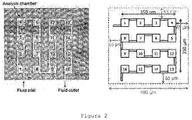
- the present invention comprises a biochip with specifically designed configuration and microfluidic properties ( Figure 1 ) that increases the speed and effectiveness of the whole process of detection and monitoring.
- This biochip is to be read in a specifically adapted optical reader for which an algorithm was developed and implemented to provide faster and more selective results, with a revealing method using quantum dots (qDots) which are intrinsically bright, have very narrow emission spectra, have photo-stability and are easy to use.
- qDots quantum dots
- the use of these qDots in biomedical applications is just emerging and gaining popularity. Due to their spectral characteristics the qDots have fundamental high performance in a variety of applications.
- an antigen bouquet with at least 16 antigen coatings for primary linking to antibodies present in biological samples bearing Lyme disease and providing complexes suitable for linking specifically to secondary antibodies wherein it provides the detection of early, acute and chronic Lyme disease stages and also provides the detection of autoimmune related Lyme disease and coinfection with other antigens, other than B. burdorferi, such as Babesia microti and Ehrlichia.
- the object of the present invention was to develop a novel integrated biochip technology system and method to improve clinical diagnostic, disease monitoring, and treatment of Lyme disease, by enabling specific and sensitive detection of the human serological response against Borrelia infections and ultimately in any given biological samples for detecting and monitoring the stage of other diseases.
- the selection of the antigenic Borrelial peptides and proteins that configure the biochip technology was a crucial step: the chronic nature of Lyme disease and the antigenic diversity of the spirochetes suggested that antigenic variation plays an important role in immune invasion. For this reason, peptides from different components of Borrelia during different cycles were included for a best screening of Borrelia infection and other diseases.
- another fundamental selection criteria was to choose peptides and proteins that have been proved to be antigens able to elicit specific serological responses in acute and chronic infections in Lyme patients.
- outer surface proteins outer surface proteins, autoimmune-related antigens, immunodominant antigens, variable major protein antigenic peptides, and proteins from decorin-binding proteins of Borrelia were tested in the present study, to evaluate their potential immunogenicity and their incorporation into the chip device.
- the chosen antigens and its selection reason are described as follows.
- VMP Variable Major protein
- VIsE Variable Major Protein Like Sequence
- variable regions of VlsE facing outwards are constantly changed by recombination; thus, the attacking immune system consistently encounters new altered antigen epitopes.
- the invariable regions are masked by the variable regions and, in living Borrelia bacteria, are protected from direct attack by the immune system.
- the complete VlsE protein is presented to the immune system and the host also forms antibodies against the invariable and conserve regions of VlsE. These antibodies are highly suitable for diagnosis of borreliosis because of the high level of conservation of their target antigens.
- OspE outer surface proteins E
- OspA decorin binding protein A
- DbpA decorin binding protein A
- Another outer surface lipoprotein that could serve as a biomarker for chronic Lyme disease is the 31 kDa Osp A.
- this 19 kDa membrane protein plays a key role in the mammal colonization of the bacteria27. It has been reported to be a sensitive and a specific antigen for the serodiagnosis of Lyme arthritis or neuroborreliosis28; for this reason, this protein could be an excellent biomarker for Borrelia infection.
- Lyme disease Long-term chronic manifestations of Lyme disease are increasingly thought to be due to induced autoimmune conditions, rather than acute pro-inflammatory action by the infection.
- Antigenic mimicry of infectious agents and autoantigens is a proposed pathomechanism for autoimmune diseases.
- Borrelia spirochete could be another trigger of this process where amino acid sequence homology with self- antigens may trigger multi-organ system disorder in genetically predisposed individuals31.
- LFA 1 leukocyte function-associated antigen 1
- MBP myelin basic protein
- rArp arthritis-related proteins GST-like self-antigen
- a prominent late manifestation of B. burgdorferi infection is Lyme arthritis.
- Development of antibody reactivity to outer surface protein A (OspA) occurs towards the beginning of prolonged arthritic episodes.
- the progression to an autoimmune state begins with a crossreactive response between OspA and a self-antigen, the leukocyte function- associated antigen 1 (LFA 1).
- LFA-1 is found on all T-cells and also on B-cells, macrophages and neutrophils and is involved in cell recruitment to the site of infection.
- OspA stimulates a particularly strong TH1 response in genetically susceptible individuals, which may be one of the several factors that can help to set the stage for a putative autoimmune response in affected joints33.
- the Identification of this cross-reactivity between OspA and LFAl may provide a model for development of autoimmune disease induced by B. Burgdorferi, providing then, an important antigen to incorporate into diagnostic tools.
- both human collagen type I and MBP could be potential biomarkers for autoimmune disorders elicited by Borrelia infection.
- rArp GST-like self-antigen
- This 37 kDa arthritis-related protein of B. burgdorferi outer-surface protein has been shown to prevent or reduce the severity of arthritis.
- Antibody responses to this single protein resembling glutathione-S-Transference were tested in 124 antibiotic-treated patients with early or late manifestations of Lyme disease.
- the protein was cloned, expressed and purified during the present development.
- Babesia species represent some of the most common infectious parasites among wild and domestic animals and are gaining increasing interest as emerging causes of zoonoses in humans. They require competent non-vertebrate and vertebrate hosts to maintain transmission cycles, infecting ixodid ticks and vertebrate erythrocytes. Several species have been shown to infect humans, although Babesia microti is the specie most frequently identified. Although the Babesia was originally identified as endemic in the Northeastern United States and parts of the Midwest, the parasite has expanded the distribution to many parts of Europe and Japan. Clinical signs in animals and in humans are not specific diagnostic measures for babesiosis, especially in asymptomatic or mixed infection in areas of endemicity.
- MSP2 major surface protein 2
- HME human monocytic ehrlichiosis
- HGE human granulocytic ehrlichiosis
- MSP2 major surface protein 2
- MSP2 is encoded by a multigene family, resulting in the expression of variant B cell epitopes.
- MSP2 includes conserved regions that enhances the antibody response against Ehrlichia pathogens40,41. Therefore, measurements of IgG and IgM antibody against these highly conserved regions of MSP2 are the best method for assessing humoral immune response against Ehrlichia pathogens.
- cyst forms of Borrelia burgdorferi in the biochip test.
- Cystic forms also called spheroplasts or starvation forms
- B. burgdorferi bacterial cells that allows the spirochete to survive in a hostile environment.
- the Borrelia spirochete finds itself in a hostile environment it appears to change into a cyst form, covering itself with a transparent mucoid capsule; one cause of a hostile environment is antibiotics in the body serum.
- the cyst opens and the spirochete is released.
- cyst inoculation When in the cystic form, conventional antibiotic therapy will not destroy the Lyme spirochete. It has been reported that cyst inoculation in mice induces a specific antibody response as a sign of vigorous humoral immune response, thus indicating probable active infection. Considering this, cyst lysates was included to improve Lyme disease diagnosis.
- Serum samples from patients confirmed with Lyme disease were tested by ELISA against the antigens previously described, in order to select the best immunogenic response antigens for the biochip.
- a preferred embodiment of the antigen bouquet of the present invention is Figure 3 .
- the biochip of the present invention ( Figure 1 ) comprises the bouquet of antigens (described above and with a preferred embodiment in Figure 3 ) in microfluidic chambers, and was built as follows:
- the main objective of this deliverable is to present the development of a complete user-friendly automated reader specifically adapted for highly sensitive fluorescent read-out technology with Quantum Dots (QD) fluorescent markers performed in the biochip of the present invention.
- QD Quantum Dots
- the Quantum Dots are a marker added to the system in order to measure how biochemical markers interact with patient serum or other biological, preferably fluid, samples.
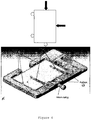
- the biochip optical reader of the present invention is for highly sensitive fluorescent read-out technology comprising a fluorescence detector containing an inner structure comprising a light source, preferably LED (16), a camera (17), a lens tube (18), Kohler illumination system (19), motorized translation stage for auto-focus (20), a mechanical frame (21), and a fixed objective positioner (22), and such fluorescence detector containing an intermediate structure comprising light shields (23), a housing frame (24), a plug panel (25), a stiffener (26), a computer compartment, an outer structure comprising the main casing (27), a touch screen (28), ventilation holes (29) and a trap door (30) wherein the fluorescence detector is specifically designed to use quantum dot fluorescent markers and is specifically adapted to be optically coupled and aligned with a biochip insertion and removal system (31) through a clamping system (32) and an auto-focus
- the clamping system (32) comprises three contact points of reference with mechanical stoppers (33) with adjustable position and two pushers (34) which push the biochip against these stoppers wherein in addition to the X, Y clamps, two elastic clamps hold the biochip in position along the Z-axis and the return springs (35) pull back the pushers to allow the insertion and removal of the biochip.
- the insertion and removal system (31) consists of a drawer system comprising a piece of magnetic stainless steel material and a guiding mechanism with two guideway chariots (36) per rail, where in the closed position the drawer is blocked by an electromagnet (37) wherein the contact between the drawer and the electromagnet ensures a perfect X-axis alignment between the detector and the biochip, keeping the detector isolated from light, and in the opened position the drawer is blocked with two permanent magnets (38) to maintain it in position during the biochip loading.
- the Biochip is loaded with at least 16 specific antigens for antibodies developed for Lyme disease.
- the biological sample preferably serum or cerebrospinal fluid, supposedly infected is collected and loaded into the chambers of biochip, waits a few seconds so that the sample flows inside the biochip. Then, the excess of sample is removed and a mixture of reagents and chemical buffers is loaded into the chamber, a process that is repeated twice. After this procedure, the biochip is inserted into the specifically adapted optical reader to be analysed with the help of an easy to use software, the algorithm of wish was developed in the present invention (Figure 7).
- the antibodies for secondary linkage (known as "secondary antibodies"), who recognize the IgM and IgG antibodies attached to the antigens, are conjugated with Quantum Dots.
- second antibodies who recognize the IgM and IgG antibodies attached to the antigens.
- an antibody in the sample binds to an antigen and afterwards with a secondary antibody, the following connection is expected to occur: antigen - sample antibody - secondary antibody - Quantum dot.
- the Biochip Reader of the present invention will excite these Quantum Dots which in turn transmit fluorescence, reading this signal as a positive indication of the presence of infection in the sample and further interpretation parameters apply regarding the stage (early, acute or chronic) and type (autoimmune or coinfection) for the case of Lyme disease.
- An innovative set of antigens was designed, which we call a new bouquet of 16 specific antigens, to be used in whole or in part for the detection of Lyme disease, they being described as: IgG and IgM, both used as positive control for the immune reaction; Cell Lysates of E. Coli, used as negative control for infection of Borrelia burgdorferi f.l.; OspC (Outer Surface Protein C), C2 19-mer (DAASVNGIAKGIKGIVDAA) and C6 25-mer (MKKDDQIAAAMVLRGMAKDGQFALK).
- rDbpA antigen DbpA
- the protein will be expressed as a fusion protein with a 6-His-Tag in position N-terminal.
- the 6-His-tag is small, not immunogenic and will allow the purification through connection matrices of ionized metal.
- the plasmid and amplicon from DbpA protein were seen on a 0,8% agarose gel (330 V for 70 minutes) and purified with QiAQuick Gel Extraction.
- the cleavaged DbpA was then connected to the digested plasmid, in a ratio of 1:3, for 3 hours at room temperature, and 5 ⁇ L transformed into cells E. coli NEB 5-alpha (25 ⁇ L).
- the mixture of transformation 200 ⁇ L was placed on plates Luria-Bertani (LB), containing these plates 50 ⁇ g of ampicillin per mL, and grown during the night at 37 °C.
- TOP10 cell is because it is a strain of recA/endA, capable of transporting L- arabinose, but not capable of its metabolization.
- the DNA of DbpA construct of these 200 mL of culture is purified with Qiafilter Plasmid Midi kit (Qiagen #12243), transformed (2,8 ⁇ l, ⁇ 100 ng) in cells TOP10 (15 ⁇ l), and grown in plates of LB (100 ⁇ g/mL ampicillin) at 37°C during the night. Finally, one of the colonies was again replaced to generate stocks in glycerin and for expressing rDbpA.
- plasmid pBAD/His Invitrogen
- the recombinant plasmid is amplified and purified as described in the previous section to the DbpA, but instead of HindIII, EcoRI was used.
- the cleavaged Arp was then connected to the plasmid of digestion, in a ratio of 1:3, during 75 minutes at ambient temperature, and 5 ⁇ L transformed into cells E. coli NEB 5-alpha (25 ⁇ L) .
- the mixture of transformation 200 ⁇ L was placed on plates Luria-Bertani (LB), containing these plates 50 ⁇ g of ampicillin per mL, and grow during the night at 37 °C.
- the DNA of Arp construct was purified with Qiafilter Plasmid Midi kit (Qiagen #12243, transformed (1 ⁇ L, ⁇ 100 ng) in cells TOP10 (15 ⁇ L), and grows in plaques of LB (100 ⁇ g/mL ampicillin) at 37 °C during the night. Finally, one of the colonies was again replicated to generate stocks in glycerin and for expressing rArpn.
- a sample of the patient, which is possibly infected with the Lyme disease is initially collected.
- This sample can be a fluid (urine, whole blood, serum, plasma, cerebrospinal fluid, sweat, saliva) or tissue lysates (of different tissues).
- tissue lysates of different tissues.
- the qDots listed above are fundamental, because they are revealing agents that will allow the identification of the linkage between the first agent of connection of the reaction (one of 16 antigens fixed in Biochip) with the analyte (sample) and then with the second agent of connection to the trapped antibody (IgG or IgM). If there is a linkage between the first agent of connection of, the analyte, and then with the second agent of ligation of the reaction, when the biochip is scanned in the optical reader of the present invention, fluorescence will be emitted, indicating that the test was positive for Lyme disease and the patient is infected with the bacterium Borrelia. If a connection does not occur, this means that the sample of the patient does not have antibodies against the bacterium Borrelia burgdorferi f.l. and the patient is not infected with Lyme disease in any extent.
- QuantumDots are a distinct group of fluorescent compounds that differ from conventional methods in that they have unique spectral characteristics. Their cores of heavy metals are responsible by these original spectral characteristics and are composed of potentiometer material: selene to cadmium (CdSe) or indium phosphide And gallium (InGaP).
- the cores usually possess technological properties of coating that allows the combination with various biomolecules, including antibodies, proteins and peptides. This coating is also a polymer which provides a surface soluble in water that can modify the combination with other biomolecules such as antibodies and proteins.
- qDots are adjustable in size (2-50 nm), usually of 10-20 nm, have spherical shape, that allows qDots to be adjusted to a specific wavelength emission.
- the qDots are intrinsically bright, have very narrow emission spectra, have photo-stability, are easy to use, and can be used in a multitude of applications.
- the use of these Dots in biomedical applications is just emerging and gaining popularity. Due to their spectral characteristics the qDots have fundamental high performance in a variety of applications, such as flow cytometry, immuno-histochemistry or in our case, as molecules of detection for human sera and other biological samples.
- qDots 525 and 625 were chosen particularly for the case of the antigen bouquet used for detecting Lyme disease.
- the number mentioned after qDots corresponds to the emission peak of the said qDot, in our case the qDots chosen for this invention will have peaks of emission at 525 nm (qDots 525) and 625 nm (qDots 625).
- Both qDots will be combined with secondary antibodies that are anti-human IgG or anti-human IgM forming the second complex "Legend-Qdot". This complex will recognise and connect to the first complex ligand-analyte (human serum), in case that serum comprises antibodies against Borrelia burgdorferi f.l.
- the Ligand immobilized (antigen) - analyte (serum antibodies) - Second Ligand (secondary antibody) - qDot complex will be excited to the wavelengths referred above, and will transmit fluorescence, accusing a positive diagnosis for Lyme disease.
- IgG will be revealed and quantified by qDot 525
- IgM will be revealed and quantified by qDot 625, in order to differentiate not only the different stages (early, acute and chronic) or absence of the disease but also to detect antibodies associated to autoimmunity related to Lyme disease and coinfection between B. burgdorferi and other antigens.
Landscapes
- Health & Medical Sciences (AREA)
- Chemical & Material Sciences (AREA)
- Life Sciences & Earth Sciences (AREA)
- Immunology (AREA)
- Analytical Chemistry (AREA)
- General Health & Medical Sciences (AREA)
- Hematology (AREA)
- Engineering & Computer Science (AREA)
- Physics & Mathematics (AREA)
- Chemical Kinetics & Catalysis (AREA)
- Pathology (AREA)
- General Physics & Mathematics (AREA)
- Biochemistry (AREA)
- Clinical Laboratory Science (AREA)
- Biomedical Technology (AREA)
- Molecular Biology (AREA)
- Urology & Nephrology (AREA)
- Dispersion Chemistry (AREA)
- Medicinal Chemistry (AREA)
- Food Science & Technology (AREA)
- Microbiology (AREA)
- Cell Biology (AREA)
- Biotechnology (AREA)
- Nuclear Medicine, Radiotherapy & Molecular Imaging (AREA)
- Rheumatology (AREA)
- Rehabilitation Therapy (AREA)
- Peptides Or Proteins (AREA)
- Investigating, Analyzing Materials By Fluorescence Or Luminescence (AREA)
- Optics & Photonics (AREA)
- Investigating Or Analysing Materials By Optical Means (AREA)
Applications Claiming Priority (2)
| Application Number | Priority Date | Filing Date | Title |
|---|---|---|---|
| PT106942A PT106942B (pt) | 2013-05-15 | 2013-05-15 | Biochip (1) e bouquet de 16 antigénios (2) para a deteção da doença de lyme aguda e crónica |
| PCT/PT2014/000030 WO2014185803A2 (en) | 2013-05-15 | 2014-05-13 | Biochip, antigen bouquet, optical reader and method for detecting and monitoring diseases |
Publications (2)
| Publication Number | Publication Date |
|---|---|
| EP2997372A2 EP2997372A2 (en) | 2016-03-23 |
| EP2997372B1 true EP2997372B1 (en) | 2019-06-19 |
Family
ID=51136743
Family Applications (1)
| Application Number | Title | Priority Date | Filing Date |
|---|---|---|---|
| EP14736473.1A Active EP2997372B1 (en) | 2013-05-15 | 2014-05-13 | Biochip, antigen bouquet, optical reader and method for detecting and monitoring diseases |
Country Status (5)
| Country | Link |
|---|---|
| US (1) | US20160123978A1 (da) |
| EP (1) | EP2997372B1 (da) |
| DK (1) | DK2997372T5 (da) |
| PT (1) | PT106942B (da) |
| WO (1) | WO2014185803A2 (da) |
Cited By (1)
| Publication number | Priority date | Publication date | Assignee | Title |
|---|---|---|---|---|
| EP4078150B1 (en) * | 2019-12-19 | 2024-07-24 | Vidya Holdings Ltd | System comprising an apparatus and a cartridge for assay measurement |
Families Citing this family (13)
| Publication number | Priority date | Publication date | Assignee | Title |
|---|---|---|---|---|
| US11725233B2 (en) | 2015-11-16 | 2023-08-15 | Revere Biosensors, Llc | Systems and methods for identifying and distinguishing genetic samples |
| US20180372742A1 (en) * | 2015-12-10 | 2018-12-27 | Immport Therapeutics, Inc. | Babesia Biomarkers for Diagnostic and Screening In Vitro Diagnostic Test |
| EP3252470B1 (en) | 2016-06-03 | 2020-07-29 | Te?ted Oy | A method and a solid support for detecting tick-borne microbes in a biological sample |
| CN105974237A (zh) * | 2016-06-16 | 2016-09-28 | 昆山金箭机械设备有限公司 | 液晶屏幕检测设备的测试机构 |
| CA3063106A1 (en) | 2017-05-09 | 2018-11-15 | Revere Biosensors, Llc | Systems and methods for identifying and distinguishing genetic samples |
| KR101993305B1 (ko) * | 2017-06-01 | 2019-06-26 | 주식회사 스몰머신즈 | 유체 분석용 마이크로 칩 |
| CA3107770C (en) | 2018-08-16 | 2023-09-05 | Emd Millipore Corporation | Closed bioprocessing device |
| US12565676B2 (en) | 2019-03-01 | 2026-03-03 | Revere Biosensors, Llc | Systems and methods for separating decoded arrays |
| US12364744B2 (en) | 2020-11-25 | 2025-07-22 | Lankenau Institute For Medical Research | Methods and compositions for the diagnosis, prophylaxis and treatment of Lyme disease |
| CN116823607B (zh) * | 2023-06-25 | 2024-10-01 | 青岛百创智能制造技术有限公司 | 扫描图像处理方法、装置及设备 |
| WO2025049353A1 (en) * | 2023-08-25 | 2025-03-06 | Focus on Lyme Foundation | Multi-antigen diagnostic for detecting lyme disease |
| CN118735860B (zh) * | 2024-06-06 | 2025-07-11 | 南宁市基诺生物技术有限公司 | 基于人工智能的蛋白芯片检测分析方法及系统 |
| CN119555937B (zh) * | 2025-01-26 | 2025-05-20 | 杭州奥泰生物技术股份有限公司 | 一种犬虫媒病五联抗体检测卡及其制备方法和试剂盒 |
Citations (2)
| Publication number | Priority date | Publication date | Assignee | Title |
|---|---|---|---|---|
| US20060194267A1 (en) * | 2005-02-25 | 2006-08-31 | Aristo Vojdani | Methods and kit for diagnosing tick borne illnesses |
| US20120142023A1 (en) * | 2010-12-02 | 2012-06-07 | Ascoli Carl A | Proteins and method for detection of lyme disease |
Family Cites Families (4)
| Publication number | Priority date | Publication date | Assignee | Title |
|---|---|---|---|---|
| JP3783826B2 (ja) | 2000-01-17 | 2006-06-07 | 横河電機株式会社 | バイオチップ読み取り装置 |
| US20070074972A1 (en) * | 2005-09-13 | 2007-04-05 | Fluidigm Corporation | Microfluidic assay devices and methods |
| US9056291B2 (en) * | 2005-11-30 | 2015-06-16 | Micronics, Inc. | Microfluidic reactor system |
| WO2012047607A2 (en) | 2010-09-27 | 2012-04-12 | Cornell University | Methods for diagnosing lyme disease |
-
2013
- 2013-05-15 PT PT106942A patent/PT106942B/pt active IP Right Grant
-
2014
- 2014-05-13 EP EP14736473.1A patent/EP2997372B1/en active Active
- 2014-05-13 US US14/891,616 patent/US20160123978A1/en not_active Abandoned
- 2014-05-13 DK DK14736473.1T patent/DK2997372T5/da active
- 2014-05-13 WO PCT/PT2014/000030 patent/WO2014185803A2/en not_active Ceased
Patent Citations (2)
| Publication number | Priority date | Publication date | Assignee | Title |
|---|---|---|---|---|
| US20060194267A1 (en) * | 2005-02-25 | 2006-08-31 | Aristo Vojdani | Methods and kit for diagnosing tick borne illnesses |
| US20120142023A1 (en) * | 2010-12-02 | 2012-06-07 | Ascoli Carl A | Proteins and method for detection of lyme disease |
Non-Patent Citations (7)
| Title |
|---|
| "Stages of Lyme Disease - Topic Overview", Retrieved from the Internet <URL:www.webmd.com> [retrieved on 20171027] * |
| ANONYMOUS: "Chronic Lyme disease - Wikipedia", 19 May 2017 (2017-05-19), XP055380461, Retrieved from the Internet <URL:https://en.wikipedia.org/wiki/Chronic_Lyme_disease> [retrieved on 20170612] * |
| BIESIADA G ET AL: "Lyme disease: Review", ARCHIVES OF MEDICAL SCIENCE 2012 TERMEDIA PUBLISHING HOUSE LTD. POL, vol. 8, no. 6, December 2012 (2012-12-01), pages 978 - 982, ISSN: 1734-1922 * |
| DU ET AL: "Antigen biochips verify and extend the scope of antibody detection in Lyme borreliosis", DIAGNOSTIC MICROBIOLOGY AND INFECTIOUS DISEASE, ELSEVIER, AMSTERDAM, NL, vol. 59, no. 4, 20 September 2007 (2007-09-20), pages 355 - 363, XP022373407, ISSN: 0732-8893, DOI: 10.1016/J.DIAGMICROBIO.2007.06.006 * |
| HIEP T TRAN ET AL: "Novel Multiplex Test for Lyme Disease", 2 August 2010 (2010-08-02), XP055104045, Retrieved from the Internet <URL:http://www.rockland-inc.com/> [retrieved on 20140224] * |
| HIEP T TRAN ET AL: "Novel Multiplex Test for Lyme Disease", 2 August 2010 (2010-08-02), XP055104045, Retrieved from the Internet <URL:http://www.rockland-inc.com/uploadedFiles/Support/Poster on LymeDisease_PhaseI.pdf> [retrieved on 20140224] * |
| SINGH S K ET AL: "Lyme borreliosis: from infection to autoimmunity.", CLINICAL MICROBIOLOGY AND INFECTION : THE OFFICIAL PUBLICATION OF THE EUROPEAN SOCIETY OF CLINICAL MICROBIOLOGY AND INFECTIOUS DISEASES JUL 2004, vol. 10, no. 7, July 2004 (2004-07-01), pages 598 - 614, ISSN: 1198-743X * |
Cited By (2)
| Publication number | Priority date | Publication date | Assignee | Title |
|---|---|---|---|---|
| EP4078150B1 (en) * | 2019-12-19 | 2024-07-24 | Vidya Holdings Ltd | System comprising an apparatus and a cartridge for assay measurement |
| US12654164B2 (en) | 2019-12-19 | 2026-06-16 | Panacea Diagnostics Ltd | System comprising an apparatus and a cartridge for assay measurement |
Also Published As
| Publication number | Publication date |
|---|---|
| DK2997372T3 (da) | 2019-09-23 |
| WO2014185803A2 (en) | 2014-11-20 |
| US20160123978A1 (en) | 2016-05-05 |
| PT106942A (pt) | 2014-11-17 |
| WO2014185803A3 (en) | 2015-02-26 |
| PT106942B (pt) | 2020-09-10 |
| DK2997372T5 (da) | 2019-10-14 |
| EP2997372A2 (en) | 2016-03-23 |
Similar Documents
| Publication | Publication Date | Title |
|---|---|---|
| US20160123978A1 (en) | Biochip, antigen bouquet, optical reader and method for detecting and monitoring diseases | |
| Corstjens et al. | Tools for diagnosis, monitoring and screening of Schistosoma infections utilizing lateral-flow based assays and upconverting phosphor labels | |
| Magnarelli | Current status of laboratory diagnosis for Lyme disease | |
| US8313915B2 (en) | Early detection of canine lyme disease by specific peptides and antibodies | |
| Uhaa et al. | Evaluation of specificity of indirect enzyme-linked immunosorbent assay for diagnosis of human Q fever | |
| EP2618148A1 (en) | Time-resolved fluorescence energy transfer (tr-fret) assay for detecting exposure to an infectious organism | |
| US20050272104A1 (en) | Method for detection of Mycobacterium tuberculosis antigens in biological fluids | |
| JP2011518338A (ja) | ボレリア・ブルグドルフェリ(borreliaburgdorferi)の細胞エンベロープタンパク質のアレイ | |
| Alifrangis et al. | IgG reactivities against recombinant Rhoptry-Associated Protein-1 (rRAP-1) are associated with mixed Plasmodium infections and protection against disease in Tanzanian children | |
| RU2549698C2 (ru) | Химерный белок боррелии, нуклеиновая кислота, кодирующая такой белок, экспрессирующая кассета, вектор, способ и набор для диагностики лайм-боррелиоза, вакцина для профилактики боррелиоза | |
| Ramzy et al. | Evaluation of a recombinant antigen-based antibody assay for diagnosis of bancroftian filariasis in Egypt | |
| US8012699B2 (en) | Recombinant antigens for diagnosis and prevention of murine typhus | |
| Mahmuda et al. | Monoclonal antibodies in immunodiagnostic assays: a review of recent applications | |
| WO2014028726A1 (en) | Compositions and methods for the detection of bacterial infections assciated with lyme disease | |
| Tilton | Laboratory aids for the diagnosis of Borrelia burgdorferi infection | |
| US8338566B2 (en) | Characterization of BBK07 antigen of Borrelia burgdorferi and methods of use | |
| WO1998029132A9 (en) | Early detection of mycobacterial disease | |
| EP0952849A1 (en) | Early detection of mycobacterial disease | |
| Kositanont et al. | Application of immunoproteomics to leptospirosis: towards clinical diagnostics and vaccine discovery | |
| Alasel et al. | Promising alternatives for one-tier testing of Lyme borreliosis | |
| Enroth et al. | Diagnostic accuracy of a rapid whole-blood test for detection of Helicobacter pylori | |
| CA2222886A1 (en) | Early diagnostic test | |
| EP1674868A1 (en) | Method and device for detection of mycobacterium tuberculosis antigens in biological fluids | |
| US7928194B2 (en) | Recombinant antigen for diagnosis and prevention of murine typhus | |
| Graves et al. | Laboratory diagnosis of rickettsial infection |
Legal Events
| Date | Code | Title | Description |
|---|---|---|---|
| PUAI | Public reference made under article 153(3) epc to a published international application that has entered the european phase |
Free format text: ORIGINAL CODE: 0009012 |
|
| 17P | Request for examination filed |
Effective date: 20151215 |
|
| AK | Designated contracting states |
Kind code of ref document: A2 Designated state(s): AL AT BE BG CH CY CZ DE DK EE ES FI FR GB GR HR HU IE IS IT LI LT LU LV MC MK MT NL NO PL PT RO RS SE SI SK SM TR |
|
| AX | Request for extension of the european patent |
Extension state: BA ME |
|
| RAP1 | Party data changed (applicant data changed or rights of an application transferred) |
Owner name: MICROLIQUID SL Owner name: BCA BORRELIOSE CENTRUM AUGSBERG BETRIEBS GMBH & CO Owner name: MICRO BIO DEVICES S.R.L. Owner name: STAB VIDA-INVESTIGACAO E SERVICOS EM CIENCIAS BIOL |
|
| RAP1 | Party data changed (applicant data changed or rights of an application transferred) |
Owner name: MICRO BIO DEVICES S.R.L. Owner name: MICROLIQUID SL Owner name: STAB VIDA-INVESTIGACAO E SERVICOS EM CIENCIAS BIOL Owner name: BCA-CLINIC BETRIEBS GMBH & CO. KG |
|
| RIN1 | Information on inventor provided before grant (corrected) |
Inventor name: DE BORJA BARREDO, FRANCISCO Inventor name: DE LEAO E FLORES, ALCINO ORFEU Inventor name: ALTIERI, GIOVANNI UGO |
|
| DAX | Request for extension of the european patent (deleted) | ||
| RIN1 | Information on inventor provided before grant (corrected) |
Inventor name: GILBERT, LEONA Inventor name: WHITLOW, HARRY J. Inventor name: GARCIA-NOGALES, PAULA Inventor name: DORMALE, GUERRIC MEURICE DE Inventor name: PUTTARAKSA, NITIPON Inventor name: DEMARTEAU, JAN |
|
| PUAG | Search results despatched under rule 164(2) epc together with communication from examining division |
Free format text: ORIGINAL CODE: 0009017 |
|
| STAA | Information on the status of an ep patent application or granted ep patent |
Free format text: STATUS: EXAMINATION IS IN PROGRESS |
|
| 17Q | First examination report despatched |
Effective date: 20170621 |
|
| B565 | Issuance of search results under rule 164(2) epc |
Effective date: 20170621 |
|
| RIC1 | Information provided on ipc code assigned before grant |
Ipc: C07K 14/44 20060101ALI20170616BHEP Ipc: G01N 33/543 20060101AFI20170616BHEP |
|
| GRAP | Despatch of communication of intention to grant a patent |
Free format text: ORIGINAL CODE: EPIDOSNIGR1 |
|
| STAA | Information on the status of an ep patent application or granted ep patent |
Free format text: STATUS: GRANT OF PATENT IS INTENDED |
|
| RIN1 | Information on inventor provided before grant (corrected) |
Inventor name: WHITLOW, HARRY J. Inventor name: DORMALE, GUERRIC MEURICE DE Inventor name: PUTTARAKSA, NITIPON Inventor name: GILBERT, LEONA Inventor name: GARCIA-NOGALES, PAULA Inventor name: DEMARTEAU, JEAN |
|
| INTG | Intention to grant announced |
Effective date: 20181213 |
|
| RAP1 | Party data changed (applicant data changed or rights of an application transferred) |
Owner name: MICROLIQUID SL Owner name: MICRO BIO DEVICES S.R.L. Owner name: STAB VIDA - INVESTIGACAO E SERVICOS EM CIENCIAS BI Owner name: BCA-CLINIC BETRIEBS GMBH & CO. KG |
|
| GRAS | Grant fee paid |
Free format text: ORIGINAL CODE: EPIDOSNIGR3 |
|
| GRAA | (expected) grant |
Free format text: ORIGINAL CODE: 0009210 |
|
| STAA | Information on the status of an ep patent application or granted ep patent |
Free format text: STATUS: THE PATENT HAS BEEN GRANTED |
|
| RAP1 | Party data changed (applicant data changed or rights of an application transferred) |
Owner name: MICROLIQUID SL Owner name: STAB VIDA - INVESTIGACAO E SERVICOS EM CIENCIAS BI Owner name: RATIONAL MECHANICS SA Owner name: BCA-CLINIC BETRIEBS GMBH & CO. KG |
|
| AK | Designated contracting states |
Kind code of ref document: B1 Designated state(s): AL AT BE BG CH CY CZ DE DK EE ES FI FR GB GR HR HU IE IS IT LI LT LU LV MC MK MT NL NO PL PT RO RS SE SI SK SM TR |
|
| RAP1 | Party data changed (applicant data changed or rights of an application transferred) |
Owner name: MICROLIQUID SL Owner name: BCA-CLINIC BETRIEBS GMBH & CO. KG Owner name: STAB VIDA - INVESTIGACAO E SERVICOS EM CIENCIAS BI Owner name: RATIONAL MECHANICS SA |
|
| REG | Reference to a national code |
Ref country code: GB Ref legal event code: FG4D |
|
| REG | Reference to a national code |
Ref country code: CH Ref legal event code: EP |
|
| REG | Reference to a national code |
Ref country code: IE Ref legal event code: FG4D |
|
| REG | Reference to a national code |
Ref country code: DE Ref legal event code: R096 Ref document number: 602014048623 Country of ref document: DE |
|
| REG | Reference to a national code |
Ref country code: AT Ref legal event code: REF Ref document number: 1146177 Country of ref document: AT Kind code of ref document: T Effective date: 20190715 |
|
| REG | Reference to a national code |
Ref country code: CH Ref legal event code: NV Representative=s name: OFFICE ERNEST T. FREYLINGER S.A., CH |
|
| REG | Reference to a national code |
Ref country code: DK Ref legal event code: T3 Effective date: 20190919 |
|
| REG | Reference to a national code |
Ref country code: DK Ref legal event code: T5 Effective date: 20191004 |
|
| REG | Reference to a national code |
Ref country code: SE Ref legal event code: TRGR |
|
| REG | Reference to a national code |
Ref country code: DK Ref legal event code: T5 Effective date: 20191007 |
|
| REG | Reference to a national code |
Ref country code: NL Ref legal event code: MP Effective date: 20190619 |
|
| PG25 | Lapsed in a contracting state [announced via postgrant information from national office to epo] |
Ref country code: LT Free format text: LAPSE BECAUSE OF FAILURE TO SUBMIT A TRANSLATION OF THE DESCRIPTION OR TO PAY THE FEE WITHIN THE PRESCRIBED TIME-LIMIT Effective date: 20190619 Ref country code: AL Free format text: LAPSE BECAUSE OF FAILURE TO SUBMIT A TRANSLATION OF THE DESCRIPTION OR TO PAY THE FEE WITHIN THE PRESCRIBED TIME-LIMIT Effective date: 20190619 Ref country code: HR Free format text: LAPSE BECAUSE OF FAILURE TO SUBMIT A TRANSLATION OF THE DESCRIPTION OR TO PAY THE FEE WITHIN THE PRESCRIBED TIME-LIMIT Effective date: 20190619 |
|
| REG | Reference to a national code |
Ref country code: LT Ref legal event code: MG4D Ref country code: NO Ref legal event code: T2 Effective date: 20190619 |
|
| PG25 | Lapsed in a contracting state [announced via postgrant information from national office to epo] |
Ref country code: BG Free format text: LAPSE BECAUSE OF FAILURE TO SUBMIT A TRANSLATION OF THE DESCRIPTION OR TO PAY THE FEE WITHIN THE PRESCRIBED TIME-LIMIT Effective date: 20190919 Ref country code: RS Free format text: LAPSE BECAUSE OF FAILURE TO SUBMIT A TRANSLATION OF THE DESCRIPTION OR TO PAY THE FEE WITHIN THE PRESCRIBED TIME-LIMIT Effective date: 20190619 Ref country code: LV Free format text: LAPSE BECAUSE OF FAILURE TO SUBMIT A TRANSLATION OF THE DESCRIPTION OR TO PAY THE FEE WITHIN THE PRESCRIBED TIME-LIMIT Effective date: 20190619 |
|
| REG | Reference to a national code |
Ref country code: AT Ref legal event code: MK05 Ref document number: 1146177 Country of ref document: AT Kind code of ref document: T Effective date: 20190619 |
|
| PG25 | Lapsed in a contracting state [announced via postgrant information from national office to epo] |
Ref country code: EE Free format text: LAPSE BECAUSE OF FAILURE TO SUBMIT A TRANSLATION OF THE DESCRIPTION OR TO PAY THE FEE WITHIN THE PRESCRIBED TIME-LIMIT Effective date: 20190619 Ref country code: AT Free format text: LAPSE BECAUSE OF FAILURE TO SUBMIT A TRANSLATION OF THE DESCRIPTION OR TO PAY THE FEE WITHIN THE PRESCRIBED TIME-LIMIT Effective date: 20190619 Ref country code: PT Free format text: LAPSE BECAUSE OF FAILURE TO SUBMIT A TRANSLATION OF THE DESCRIPTION OR TO PAY THE FEE WITHIN THE PRESCRIBED TIME-LIMIT Effective date: 20191021 Ref country code: RO Free format text: LAPSE BECAUSE OF FAILURE TO SUBMIT A TRANSLATION OF THE DESCRIPTION OR TO PAY THE FEE WITHIN THE PRESCRIBED TIME-LIMIT Effective date: 20190619 Ref country code: NL Free format text: LAPSE BECAUSE OF FAILURE TO SUBMIT A TRANSLATION OF THE DESCRIPTION OR TO PAY THE FEE WITHIN THE PRESCRIBED TIME-LIMIT Effective date: 20190619 Ref country code: CZ Free format text: LAPSE BECAUSE OF FAILURE TO SUBMIT A TRANSLATION OF THE DESCRIPTION OR TO PAY THE FEE WITHIN THE PRESCRIBED TIME-LIMIT Effective date: 20190619 Ref country code: SK Free format text: LAPSE BECAUSE OF FAILURE TO SUBMIT A TRANSLATION OF THE DESCRIPTION OR TO PAY THE FEE WITHIN THE PRESCRIBED TIME-LIMIT Effective date: 20190619 |
|
| PG25 | Lapsed in a contracting state [announced via postgrant information from national office to epo] |
Ref country code: IS Free format text: LAPSE BECAUSE OF FAILURE TO SUBMIT A TRANSLATION OF THE DESCRIPTION OR TO PAY THE FEE WITHIN THE PRESCRIBED TIME-LIMIT Effective date: 20191019 Ref country code: SM Free format text: LAPSE BECAUSE OF FAILURE TO SUBMIT A TRANSLATION OF THE DESCRIPTION OR TO PAY THE FEE WITHIN THE PRESCRIBED TIME-LIMIT Effective date: 20190619 Ref country code: IT Free format text: LAPSE BECAUSE OF FAILURE TO SUBMIT A TRANSLATION OF THE DESCRIPTION OR TO PAY THE FEE WITHIN THE PRESCRIBED TIME-LIMIT Effective date: 20190619 Ref country code: ES Free format text: LAPSE BECAUSE OF FAILURE TO SUBMIT A TRANSLATION OF THE DESCRIPTION OR TO PAY THE FEE WITHIN THE PRESCRIBED TIME-LIMIT Effective date: 20190619 |
|
| PG25 | Lapsed in a contracting state [announced via postgrant information from national office to epo] |
Ref country code: TR Free format text: LAPSE BECAUSE OF FAILURE TO SUBMIT A TRANSLATION OF THE DESCRIPTION OR TO PAY THE FEE WITHIN THE PRESCRIBED TIME-LIMIT Effective date: 20190619 |
|
| PG25 | Lapsed in a contracting state [announced via postgrant information from national office to epo] |
Ref country code: PL Free format text: LAPSE BECAUSE OF FAILURE TO SUBMIT A TRANSLATION OF THE DESCRIPTION OR TO PAY THE FEE WITHIN THE PRESCRIBED TIME-LIMIT Effective date: 20190619 |
|
| PG25 | Lapsed in a contracting state [announced via postgrant information from national office to epo] |
Ref country code: IS Free format text: LAPSE BECAUSE OF FAILURE TO SUBMIT A TRANSLATION OF THE DESCRIPTION OR TO PAY THE FEE WITHIN THE PRESCRIBED TIME-LIMIT Effective date: 20200224 |
|
| REG | Reference to a national code |
Ref country code: DE Ref legal event code: R097 Ref document number: 602014048623 Country of ref document: DE |
|
| PLBE | No opposition filed within time limit |
Free format text: ORIGINAL CODE: 0009261 |
|
| STAA | Information on the status of an ep patent application or granted ep patent |
Free format text: STATUS: NO OPPOSITION FILED WITHIN TIME LIMIT |
|
| PG2D | Information on lapse in contracting state deleted |
Ref country code: IS |
|
| PGFP | Annual fee paid to national office [announced via postgrant information from national office to epo] |
Ref country code: NO Payment date: 20200514 Year of fee payment: 7 Ref country code: CH Payment date: 20200520 Year of fee payment: 7 Ref country code: DK Payment date: 20200518 Year of fee payment: 7 |
|
| 26N | No opposition filed |
Effective date: 20200603 |
|
| PG25 | Lapsed in a contracting state [announced via postgrant information from national office to epo] |
Ref country code: SI Free format text: LAPSE BECAUSE OF FAILURE TO SUBMIT A TRANSLATION OF THE DESCRIPTION OR TO PAY THE FEE WITHIN THE PRESCRIBED TIME-LIMIT Effective date: 20190619 |
|
| PG25 | Lapsed in a contracting state [announced via postgrant information from national office to epo] |
Ref country code: MC Free format text: LAPSE BECAUSE OF FAILURE TO SUBMIT A TRANSLATION OF THE DESCRIPTION OR TO PAY THE FEE WITHIN THE PRESCRIBED TIME-LIMIT Effective date: 20190619 |
|
| REG | Reference to a national code |
Ref country code: BE Ref legal event code: MM Effective date: 20200531 |
|
| PG25 | Lapsed in a contracting state [announced via postgrant information from national office to epo] |
Ref country code: LU Free format text: LAPSE BECAUSE OF NON-PAYMENT OF DUE FEES Effective date: 20200513 |
|
| PG25 | Lapsed in a contracting state [announced via postgrant information from national office to epo] |
Ref country code: IE Free format text: LAPSE BECAUSE OF NON-PAYMENT OF DUE FEES Effective date: 20200513 |
|
| PG25 | Lapsed in a contracting state [announced via postgrant information from national office to epo] |
Ref country code: BE Free format text: LAPSE BECAUSE OF NON-PAYMENT OF DUE FEES Effective date: 20200531 |
|
| PGFP | Annual fee paid to national office [announced via postgrant information from national office to epo] |
Ref country code: FI Payment date: 20210518 Year of fee payment: 8 Ref country code: FR Payment date: 20210429 Year of fee payment: 8 Ref country code: DE Payment date: 20210528 Year of fee payment: 8 |
|
| PGFP | Annual fee paid to national office [announced via postgrant information from national office to epo] |
Ref country code: SE Payment date: 20210430 Year of fee payment: 8 Ref country code: GB Payment date: 20210521 Year of fee payment: 8 |
|
| REG | Reference to a national code |
Ref country code: DK Ref legal event code: EBP Effective date: 20210531 |
|
| REG | Reference to a national code |
Ref country code: NO Ref legal event code: MMEP |
|
| REG | Reference to a national code |
Ref country code: CH Ref legal event code: PL |
|
| PG25 | Lapsed in a contracting state [announced via postgrant information from national office to epo] |
Ref country code: NO Free format text: LAPSE BECAUSE OF NON-PAYMENT OF DUE FEES Effective date: 20210531 Ref country code: LI Free format text: LAPSE BECAUSE OF NON-PAYMENT OF DUE FEES Effective date: 20210531 Ref country code: CH Free format text: LAPSE BECAUSE OF NON-PAYMENT OF DUE FEES Effective date: 20210531 |
|
| PG25 | Lapsed in a contracting state [announced via postgrant information from national office to epo] |
Ref country code: DK Free format text: LAPSE BECAUSE OF NON-PAYMENT OF DUE FEES Effective date: 20210531 |
|
| PG25 | Lapsed in a contracting state [announced via postgrant information from national office to epo] |
Ref country code: MT Free format text: LAPSE BECAUSE OF FAILURE TO SUBMIT A TRANSLATION OF THE DESCRIPTION OR TO PAY THE FEE WITHIN THE PRESCRIBED TIME-LIMIT Effective date: 20190619 Ref country code: CY Free format text: LAPSE BECAUSE OF FAILURE TO SUBMIT A TRANSLATION OF THE DESCRIPTION OR TO PAY THE FEE WITHIN THE PRESCRIBED TIME-LIMIT Effective date: 20190619 |
|
| PG25 | Lapsed in a contracting state [announced via postgrant information from national office to epo] |
Ref country code: MK Free format text: LAPSE BECAUSE OF FAILURE TO SUBMIT A TRANSLATION OF THE DESCRIPTION OR TO PAY THE FEE WITHIN THE PRESCRIBED TIME-LIMIT Effective date: 20190619 |
|
| PG25 | Lapsed in a contracting state [announced via postgrant information from national office to epo] |
Ref country code: GR Free format text: LAPSE BECAUSE OF FAILURE TO SUBMIT A TRANSLATION OF THE DESCRIPTION OR TO PAY THE FEE WITHIN THE PRESCRIBED TIME-LIMIT Effective date: 20190619 |
|
| REG | Reference to a national code |
Ref country code: DE Ref legal event code: R119 Ref document number: 602014048623 Country of ref document: DE |
|
| REG | Reference to a national code |
Ref country code: SE Ref legal event code: EUG |
|
| GBPC | Gb: european patent ceased through non-payment of renewal fee |
Effective date: 20220513 |
|
| PG25 | Lapsed in a contracting state [announced via postgrant information from national office to epo] |
Ref country code: SE Free format text: LAPSE BECAUSE OF NON-PAYMENT OF DUE FEES Effective date: 20220514 Ref country code: FI Free format text: LAPSE BECAUSE OF NON-PAYMENT OF DUE FEES Effective date: 20220513 |
|
| PG25 | Lapsed in a contracting state [announced via postgrant information from national office to epo] |
Ref country code: FR Free format text: LAPSE BECAUSE OF NON-PAYMENT OF DUE FEES Effective date: 20220531 |
|
| PG25 | Lapsed in a contracting state [announced via postgrant information from national office to epo] |
Ref country code: GB Free format text: LAPSE BECAUSE OF NON-PAYMENT OF DUE FEES Effective date: 20220513 Ref country code: DE Free format text: LAPSE BECAUSE OF NON-PAYMENT OF DUE FEES Effective date: 20221201 |