EP2997489B1 - Verfahren und vorrichtung zur effizienten mobildatenübertragung - Google Patents
Verfahren und vorrichtung zur effizienten mobildatenübertragung Download PDFInfo
- Publication number
- EP2997489B1 EP2997489B1 EP14798023.9A EP14798023A EP2997489B1 EP 2997489 B1 EP2997489 B1 EP 2997489B1 EP 14798023 A EP14798023 A EP 14798023A EP 2997489 B1 EP2997489 B1 EP 2997489B1
- Authority
- EP
- European Patent Office
- Prior art keywords
- storage devices
- data
- wireless data
- network
- mobile communication
- Prior art date
- Legal status (The legal status is an assumption and is not a legal conclusion. Google has not performed a legal analysis and makes no representation as to the accuracy of the status listed.)
- Not-in-force
Links
- 238000000034 method Methods 0.000 title claims description 42
- 230000005540 biological transmission Effects 0.000 title description 5
- 238000010295 mobile communication Methods 0.000 claims description 68
- 230000001413 cellular effect Effects 0.000 claims description 18
- 230000015654 memory Effects 0.000 claims description 16
- 238000012546 transfer Methods 0.000 description 6
- 230000008901 benefit Effects 0.000 description 5
- 230000008569 process Effects 0.000 description 4
- 238000000060 site-specific infrared dichroism spectroscopy Methods 0.000 description 4
- 238000004891 communication Methods 0.000 description 3
- 230000003287 optical effect Effects 0.000 description 2
- 230000001360 synchronised effect Effects 0.000 description 2
- 230000001052 transient effect Effects 0.000 description 2
- 235000008694 Humulus lupulus Nutrition 0.000 description 1
- 230000009471 action Effects 0.000 description 1
- 230000008859 change Effects 0.000 description 1
- 238000005516 engineering process Methods 0.000 description 1
- 230000007717 exclusion Effects 0.000 description 1
- 230000006870 function Effects 0.000 description 1
- 238000010801 machine learning Methods 0.000 description 1
- 238000012986 modification Methods 0.000 description 1
- 230000004048 modification Effects 0.000 description 1
- 238000012545 processing Methods 0.000 description 1
- 230000009467 reduction Effects 0.000 description 1
- 238000010079 rubber tapping Methods 0.000 description 1
- 238000012876 topography Methods 0.000 description 1
- 238000012795 verification Methods 0.000 description 1
Images


Classifications
-
- H—ELECTRICITY
- H04—ELECTRIC COMMUNICATION TECHNIQUE
- H04W—WIRELESS COMMUNICATION NETWORKS
- H04W4/00—Services specially adapted for wireless communication networks; Facilities therefor
-
- H—ELECTRICITY
- H04—ELECTRIC COMMUNICATION TECHNIQUE
- H04L—TRANSMISSION OF DIGITAL INFORMATION, e.g. TELEGRAPHIC COMMUNICATION
- H04L67/00—Network arrangements or protocols for supporting network services or applications
- H04L67/01—Protocols
- H04L67/10—Protocols in which an application is distributed across nodes in the network
- H04L67/1097—Protocols in which an application is distributed across nodes in the network for distributed storage of data in networks, e.g. transport arrangements for network file system [NFS], storage area networks [SAN] or network attached storage [NAS]
Definitions
- This disclosure concerns using storage devices to retrieve data for use on a mobile communication device.
- US 6 836 663 B1 discloses a method of caching where a wireless communications device sends a request to a proximal device to obtain network data if the network data is not available in a local memory on the wireless communications device. If the proximal device has the requested information, then a copy of the data is sent to the wireless communications device.
- a computer-implemented method for retrieving data for use on a mobile communication device comprising:
- the data is sent to the storage devices and is therefore available to other mobile devices.
- the same or a different mobile communication device retrieves the same data a second time, the data is still only retrieved once over the second wireless data network. Therefore, data transfer over the second wireless data network is reduced.
- the first wireless data network may be a relatively fast wireless data network with local data access and the second wireless data network may be a relatively slow wireless data network with global data access.
- the data that is received over the slow global network is sent to the storage devices over the fast local network.
- the data becomes local and the storage devices can allow other devices to access the data over the fast local network. This reduces data transfer on the slow global network and results in a better user experience since the data can be downloaded faster over the fast local network.
- the first wireless data network may connect the mobile communication device with the one or more storage devices directly, and the second network may be a cellular network.
- the cellular network can therefore offer higher bandwidth to other services or reduce costs by providing less bandwidth.
- the method may further comprise:
- Detecting the first wireless data network may be based on a predefined network identifier.
- the method may further comprise establishing a direct connection to the one or more storage devices using the storage device as an access point to the first wireless data network.
- the method may further comprise: sending data stored in memory on the mobile communication device to the one or more storage devices to allow retrieval of the data from the one or more storage devices over the first wireless data network.
- the method may further comprise:
- the method may further comprise:
- the data is exchanged between the additional and existing storage devices and therefore the storage devices are synchronised.
- the method does not rely on a single storage device and when an existing storage device becomes unavailable, the additional storage device can seamlessly take over the provision of data to the mobile communication devices.
- the storage method works even when the network architecture is transient because of the movement of the mobile communication devices.
- the method may further comprise selecting the mobile communication device to be configured as the storage device based on device features of the mobile communication device.
- Determining whether the data is accessible from one or more storage devices over a first wireless data network may comprise:
- Sending the data to the one or more storage devices may be performed during or after the data is used on the mobile communication device.
- the method further may further comprise:
- the method may further comprise: if it is determined that the data is accessible from the one or more storage devices over the first wireless data network, retrieving the data from the one or more storage devices for use on the mobile communication device over the first wireless data network.
- the second wireless data network may be distinct to the first wireless data network.
- a mobile communication device for retrieving data for use on the mobile communication device, the mobile communication device comprising:
- Fig. 1 illustrates an example application scenario 100 comprising a bus 102, a first user 104 on the bus 102 listening to a podcast on a first mobile communication device 106, such as a smart phone, a second user 108 also on the bus 102 watching streaming videos over the Internet on a second smart phone 110 and a third user 112 about to board the bus browsing the Internet on a third smart phone 114.
- a first mobile communication device 106 such as a smart phone
- a second user 108 also on the bus 102 watching streaming videos over the Internet on a second smart phone 110 and a third user 112 about to board the bus browsing the Internet on a third smart phone 114.
- the application scenario 100 further comprises a base station 120 of a cellular network, such as 3G or LTE.
- the cellular network allows the users 104, 108 and 112 to transfer data to and from the Internet or other sources.
- the cellular network may be considered a global network in this context since the access to data is not restricted to data that is locally available. Typically, this global network is relatively slower than local networks.
- Caches are used in personal computers, for example, between the processor and the hard drive to overcome low access times to the data on the hard drive. Since all data is passed through the cache, the cache has full access to the data and can therefore determine an optimal storage strategy.
- the base station 120 is the last downstream node that is controlled by the operator of the cellular network and there is no proximal node that has access to the data consumed by all three users 104, 108 and 110.
- the use of local caches shared between multiple users is currently limited.
- Most modern mobile communication devices not only have an interface to connect to the relatively slow cellular network using base station 12 but also a further interface to connect to another mobile communication device directly over a relatively fast wireless data network with local data access, such as via WiFi or Bluetooth.
- Reference to slow or fast networks may refer to the time it takes to transfer data as well as the latency time between a request for data and a reply from the network.
- Operating the cellular network requires significant capital expenditure for the infrastructure, such as base stations, in most cases, the relatively slow cellular network also incurs a high data transfer cost compared to the relatively fast local network, which does not require expensive infrastructure and comparatively attracts lower transfer cost.
- a local network can be established that allows the smart phones 104, 108 and 114 to share data.
- one or more of the smart phones 104, 108 and 114 act as a storage device that similarly to a cache device can store data locally. That locally stored data can be accessed by the smart phones 104, 108 and 114 without using bandwidth to the base station 120.
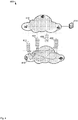
- Fig. 2 illustrates a mobile communication device 200, such as a smart phone
- the smart phone 200 comprises a first network interface 202 and a second network interface 204 both being connected to a processor 206.
- the first network interface 202 and the second network interface 204 are shown as separate modules, it is to be understood that a shared architecture, such as software defined radio, may also be used to access different networks.
- the processor 206 is further connected to program memory 216, data memory 218 and to display 220 via display port 222.
- a user 224 operates the smart phone 200 to access and view data such as video content.
- Software that is an executable program, stored on program memory 216 causes the processor 206 to perform the method in Fig. 3 .
- the software may be in the form typically referred to as an Ap. That is, the processor determines via the first network interface 202 whether the data is accessible from a storage device, retrieves the data via the second network interface 204 if it is not available from the storage device and sends the retrieved data to the storage device via the first network interface 202.
- the executable program is a smart phone app that is installed on the smart phone 200 via an application provider, such as the Apple's App Store, Google Play or Amazon App Store.
- the processor 206 may receive data, such as video data or status data, from data memory 218 as well as from the network interfaces 202 and 204 and the display port 222, which is connected to a display 220.
- any kind of data port may be used to receive data, such as a network connection, a memory interface, a pin of the chip package of processor 206, or logical ports, such as IP sockets or parameters of functions stored on program memory 216 and executed by processor 206. These parameters may be handled by-value or by-reference in the source code.
- the processor 206 may receive data through all these interfaces, which includes memory access of volatile memory, such as cache or RAM, or non-volatile memory, such as an optical disk drive, hard disk drive, storage server or cloud storage.
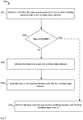
- Fig. 3 illustrates a computer-implemented method 300 for retrieving data for use on a mobile communication device 200, such as a smart phone.
- the data may be used on the mobile communication device 200 in different ways.
- the data is a video file and is stored on data store 218 such that the user 224 can watch the video at a later stage.
- the data is a video stream and is not stored on the device 200 but is watched by the user 224 as it is being downloaded.
- the video may be buffered by the device to account for variations in download speed.
- Video data other types of data are also applicable, such as HTML websites, electronic books, audio streams/files, smart phone apps and the like.
- Method 300 is performed by processor 206 and commences by determining 302 whether the data is accessible from one or more storage devices over a first wireless data network.
- Fig. 4 illustrates a schematic of the scenario in Fig, 1 but with four mobile communication devices 402, 404, 406 and 408.
- the mobile communication devices 402, 404, 406 and 408 are in a limited geographic area that is referred to here as local, such as a train carriage, a bus, a hotel lobby, train station, etc. It is assumed that the mobile communication devices 402, 404, 406 and 408 are in the area for a period of time, that is, the scenario is quasi stationary.
- each of the mobile communication devices 402, 404, 406 and 408 is connected to a first wireless data network 410 and a second wireless data network 412.
- Devices 404 and 408 are storage devices, which means that these devices 404 and 408 temporarily store data, such that the stored data can be retrieved from the other devices.
- the storage devices 404 and 408 are ordinary smart phones carried by different users and therefore, the storage devices 404 and 408 also provide browser functionality.
- the main feature requirement of a storage device is that it can communicate on the first wireless network 410 and the memory 218 is sufficiently large to store content to be sent to the other devices of the first wireless network 410 when requested.
- the term browser is not limited to displaying a website but also comprises other ways of the user downloading and using data, such as a video application or a downloadable music store.
- Devices 402 and 406 are browser only devices, which means that these devices do not provide cached data to other devices.
- the first wireless data network 410 allows the mobile communication devices 402, 404, 406 and 408 to connect with storage devices 404 and 408. It is noted that in cases where storage devices 404 and 408 provide browser functionality, storage device 404 can also connect to storage device 408 and vice versa via first wireless network 410.
- the first wireless network is a Wifi network and the storage devices 404 and 408 are configured as access points of the Wifi network.
- the browser devices 402 and 406 establish a direct connection to the storage devices 404 and 408 by using the storage devices 404 and 408 as access points.
- the mobile communication devices 402, 404, 406 and 408 are further connected to a data host 414 via a second wireless data network 412.
- the second wireless data network 412 may be a cellular data network, such as 3G, LTE or managed Wifi network, for example, city-wide Wifi. It is noted that the browser functionality in storage devices 404 and 408 is optional and therefore, in some examples, the storage devices 404 and 408 are not connected the second wireless data network 412.
- the users of the mobile communication devices 402, 404, 406 and 408 have accounts with the operators of the second wireless data network 412 and the second wireless data network 412 allows access to data stored on data hosts any where in the world, that is, global access to data.
- the data host 414 is the original source of all data that is available to the mobile communication devices 402, 404, 406 and 408. Of course, in practical applications, there will be more than one data hosts to host the original data.
- a user of device 402 wishes to access data, such as a video, on device 402.
- the user selects the video by tapping the screen of the device where a link to the video is presented.
- the device 402 establishes a direct connection to storage device 404 and sends a request for the video to the storage device 404.
- the video has not previously been accessed by any of the mobile communication devices 402, 404, 406 and 408 and therefore, the video is not accessible from storage device 404.
- storage device 404 sends an access denied message to the originating device 402.
- device 402 Since device 402 receives the access denied message, it is determined 304 that the video is not accessible from the one or more storage devices, which means the device 402 needs to retrieve the video from elsewhere.
- the device 402 retrieves 306 the video from data host 414, such as a YouTube server, over the second wireless data network 412.
- the second wireless data network 412 is different to the first wireless data network 410 in the sense that the two networks are of a different type.
- a 3G cellular network is different to a Wifi network and a managed city-wide Wifi network is different to a local self-organised Wifi network.
- the first and second wireless network are also disjoint in that the devices that are used by device 402 to download the content from the second wireless data network 412 does not include devices that the device 402 uses to check for the existence and download data from the first wireless data network 410.
- a managed city-wide Wifi network with global data access is generally slower and more expensive than a local self-organised Wifi network because the data in the self-organised Wifi network is transferred directly without any additional 'hops' through the infrastructure. Further, the global data access also makes accessing data over the managed city-wide Wifi network slower since the data has to be retrieved from remote data hosts which inevitably leads to additional delay times.
- the device 402 After retrieving the video from the data host 414, the device 402 sends the video to one or both of the storage devices 404 and 408 over the first wireless data network 410.
- the device 402 may temporarily store the video locally and wait until the entire video is completely downloaded before sending the video to the storage devices 404 and 408.
- the device 402 may also send the video data as it is received without or with little storage on the device 402, that is, the device 402 directly forwards the video stream to the storage devices 404 and 408. This way, device 402 sends the data to the storage devices 404 and 408 during the time the data is used.
- the data may be sent asynchronously after the data is used.
- the device 402 may decide when to send the data such that the sending of the data is least recognised by the user in the form of reduction of device performance, such as download speed from the storage devices 404 and 408.
- the storage devices 404 and 408 store the video and the next time one of the mobile communication devices 402, 404, 406 and 408 sends a request for the same video to the storage devices 404 and 408, the storage devices 404 and 408 reply with an acknowledge message. This means it is determined that the data is accessible from the storage devices 404 and 408 over the first wireless data network and the requesting device retrieves the data from the storage devices 404 and 408 for use on the mobile communication device over the first wireless data network.
- the two storage devices 404 and 408 are synchronised and share the same data. That is, if storage device 404 was the only storage device to receive the data from device 402, storage device 402 would send the data to device 408 automatically. As a result, the device 402 requesting a video can choose one of the storage devices 404 or 408 to request the video, such as by choosing the storage device with the highest signal strength. In other examples, the storage devices 404 and 408 store different data. In that case, the requesting device 402 sends a requesting message to both storage devices 404 and 408 and one of the storage devices 404 or 408 will reply with an acknowledge message if the video is stored on that device.
- the setup of the mobile communication devices 402, 404, 406 and 408 is quasi stationary, which also means that from time to time, the topography defined by the mobile communication devices 402, 404, 406 and 408 changes. Such a change may be caused by an additional user joining an existing group, such as in Fig. 1 where user 112 with device 114 enters the bus 102.
- the reference numerals for devices 106, 110 and 114 in Fig. 1 are equivalent to the reference numerals 402, 404 and 406 in Fig. 4 and can be used interchangeably. In the following description, it is assumed that the device 114 that enters the bus in Fig. 1 is represented by device 406 in Fig. 4 .
- the device 406 which has the same configuration as device 200 of Fig. 2 , first detects the first wireless network 410 by searching for a Wifi network.
- Storage devices 404 and 408 advertise their availability via specific SSID broadcast, typically by previously having active the Wifi hotspot mode on the storage devices.
- the first wireless network 410 advertises with a predefined network identifier, such as an SSID of "Croudsourced stash WLAN".
- Predefined may also mean that the network identifier follows certain predefined rules, such as it starts with "Crowdsourced stash" and is followed by an identifier of the respective storage device.
- Device 406 in active discovery mode searches for these advertisements. Connection to the first wireless network 410 by device 406 is secured using known security
- each storage device 404 and 408 acts as an access point to an independent Wifi network, such that two different Wifi networks with two different SSIDs are available in the example of Fig. 4 .
- both storage devices 404 and 408 are nodes of a single Wifi network.
- the device 406 establishes a connection to the storage devices 404 and 408 over the local Wifi network 410 and can then determine whether certain data is accessible on storage devices 404 and 408 as explained before.
- device 406 may copy the entire local on board cache onto the storage of the storage devices 404 and 408 such that the data stored on the on board cache in device 406 becomes available to other devices in the area.
- the transient nature of the topology may also apply to the storage devices 404 and 408 under the control of a self-organisation procedure.
- the two users 104 and 108 of Fig. 1 may have just entered the bus 102 and none of the devices 106 and 110 is configured as a storage device.
- the user's device 114 determines an availability of any storage devices, such as by searching for valid Wifi SSIDs or by sending request messages to devices 106 and 110.
- device 114 configures one of the devices 106, 110 or 114 as storage devices.
- configuring a storage device requires a verification process that obtains from the storage device the device features, such as type processor, capability and storage capability.
- the storage device must establish authentication information, such as a password.
- authentication information such as a password.
- a minimum number of storage devices is defined. In that case, when the number of available storage devices is below the minimum number, device 114 configures a further device as storage device.
- the storage devices exchange data over the first wireless data network to synchronise their respective stored data.
- Exchanging data comprises sending data to the existing storage devices or receiving data from the existing storage devices or both. This allows retrieval of the data from the one or more existing storage devices and the one or more additional storage devices over the first wireless data network. This way, the storage devices are redundant and when a user leaves the bus 102 this is configured as a storage device, other storage devices can take over without any loss in stored data.
- the devices collect device information on features of the multiple devices, such as available RAM, processor power, workload, battery status. Wifi speed, etc.
- the device features are converted into a score such that features that increase the potential service level are associated with a higher score.
- the device with the highest score, or the multiple devices with the highest scores are then selected and configured as storage devices.
- Storage devices 404 and 408 after receiving data content from device 402 or from another storage device 404 and 408 during synchronisation, makes a local decision as to whether it is useful or not to update in storage with the new content. This typically depends on the content replacement strategy used such as least recently used or least frequently requested.
- Suitable computer readable media may include volatile (e.g. RAM) and/or non-volatile (e.g. ROM, disk) memory, carrier waves and transmission media.
- Exemplary carrier waves may take the form of electrical, electromagnetic or optical signals conveying digital data steams along a local network or a publically accessible network such as the internet.
Landscapes
- Engineering & Computer Science (AREA)
- Computer Networks & Wireless Communication (AREA)
- Signal Processing (AREA)
- Mobile Radio Communication Systems (AREA)
Claims (15)
- Computerimplementiertes Verfahren zum Abrufen von Daten zur Verwendung in einer mobilen Kommunikationsvorrichtung (402, 404, 406, 408), wobei das Verfahren umfasst:Bestimmen, ob die Daten von einer oder mehreren Speichervorrichtungen über ein erstes drahtloses Datennetz (410) zugänglich sind, wobei das erste drahtlose Datennetz der mobilen Vorrichtung erlaubt, sich mit der einen oder den mehreren Speichervorrichtungen zu verbinden; undgekennzeichnet durchdann, wenn bestimmt wird, dass die Daten von der einen oder den mehreren Speichervorrichtungen nicht zugänglich sind,Abrufen der Daten über ein zweites drahtloses Datennetz eines von dem ersten drahtlosen Datennetz (412) verschiedenen Typs, wobei das zweite drahtlose Datennetz der mobilen Kommunikationsvorrichtung erlaubt, sich mit einem Daten-Host zu verbinden, undSenden der Daten an die eine oder die mehreren Speichervorrichtungen über das erste drahtlose Datennetz (410).
- Verfahren nach Anspruch 1, wobei das erste drahtlose Datennetz ein relativ schnelles drahtloses Datennetz mit einem lokalen Datenzugang ist und das zweite drahtlose Datennetz ein relativ langsames drahtloses Datennetz mit einem globalen Datenzugang ist.
- Verfahren nach Anspruch 1 oder 2, wobei das erste drahtlose Datennetz die mobile Kommunikationsvorrichtung mit der einen oder den mehreren Speichervorrichtungen direkt verbindet und das zweite Netz ein Mobilfunknetz ist.
- Verfahren nach einem der vorhergehenden Ansprüche, das ferner umfasst:Detektieren des ersten drahtlosen Datennetzes;Identifizieren der einen oder der mehreren Speichervorrichtungen in dem ersten drahtlosen Datennetz; undEinrichten einer Verbindung zwischen der mobilen Kommunikationsvorrichtung und der einen oder den mehreren Speichervorrichtungen über das erste drahtlose Datennetz.
- Verfahren nach Anspruch 4, wobei das Detektieren des ersten drahtlosen Datennetzes auf einer vordefinierten Netzkennung beruht.
- Verfahren nach einem der vorhergehenden Ansprüche, das ferner umfasst:
Einrichten einer direkten Verbindung mit der einen oder den mehreren Speichervorrichtungen unter Verwendung der Speichervorrichtung als einem Zugangspunkt zu dem ersten drahtlosen Datennetz. - Verfahren nach einem der vorhergehenden Ansprüche, ferner umfassend:
Senden von in einem Speicher auf der mobilen Kommunikationsvorrichtung gespeicherten Daten an die eine oder die mehreren Speichervorrichtungen, um ein Abrufen der Daten von der einen oder den mehreren Speichervorrichtungen über das erste drahtlose Datennetz zu erlauben. - Verfahren nach einem der vorhergehenden Ansprüche, ferner umfassend:Bestimmen einer Verfügbarkeit der einen oder der mehreren Speichervorrichtungen; undKonfigurieren der mobilen Kommunikationsvorrichtung als eine Speichervorrichtung anhand der bestimmten Verfügbarkeit.
- Verfahren nach Anspruch 8, ferner umfassend:Konfigurieren der mobilen Kommunikationsvorrichtung als eine zusätzliche Speichervorrichtung, die zusätzlich zu der einen oder den mehreren existierenden Speichervorrichtungen vorhanden ist; undAustauschen von Daten zwischen der einen oder den mehreren existierenden Speichervorrichtungen und der zusätzlichen Speichervorrichtung über das erste drahtlose Datennetz.
- Verfahren nach Anspruch 8 oder 9, das ferner umfasst, die mobile Kommunikationsvorrichtung, die als die Speichervorrichtung zu konfigurieren ist, anhand von Vorrichtungsmerkmalen der mobilen Kommunikationsvorrichtung auszuwählen.
- Verfahren nach einem der vorhergehenden Ansprüche, wobei das Senden der Daten an die eine oder die mehreren Speichervorrichtungen während oder nach dem Verwenden der Daten in der mobilen Kommunikationsvorrichtung, ausgeführt wird.
- Verfahren nach einem der vorhergehenden Ansprüche, das ferner umfasst, dann, wenn bestimmt wird, dass die Daten von der einen oder den mehreren Speichervorrichtungen über das erste drahtlose Datennetz zugänglich sind, die Daten von der einen oder den mehreren Speichervorrichtungen für die Verwendung in der mobilen Kommunikationsvorrichtung über das erste drahtlose Datennetz abzurufen.
- Verfahren nach einem der vorhergehenden Ansprüche, wobei das zweite drahtlose Datennetz von dem ersten drahtlosen Datennetz verschieden ist.
- Software, die dann, wenn sie in einem Computer installiert ist, bewirkt, dass der Computer das Verfahren nach einem oder mehreren der Ansprüche 1 bis 13 ausführt.
- Mobile Kommunikationsvorrichtung zum Abrufen von Daten für die Verwendung in der mobilen Kommunikationsvorrichtung (200), wobei die mobile Kommunikationsvorrichtung umfasst:eine erste Netzschnittstelle (202), um die mobile Kommunikationsvorrichtung über ein erstes drahtloses Datennetz mit einer oder mehreren Speichervorrichtungen zu verbinden,dadurch gekennzeichnet, dassdie Vorrichtung eine zweite Netzschnittstelle (204) umfasst, um die mobile Kommunikationsvorrichtung über ein zweites drahtloses Datennetz, das von dem ersten drahtlosen Datennetz verschieden ist, mit einem Daten-Host zu verbinden,einen Prozessor (206), um zu bestimmen, ob die Daten von der einen oder den mehreren Speichervorrichtungen über das erste drahtlose Datennetz zugänglich sind, unddann, wenn bestimmt wird, dass die Daten von der einen oder den mehreren Speichervorrichtungen nicht zugänglich sind, die Daten über das zweite drahtlose Datennetz abzurufen und die Daten an die eine oder die mehreren Speichervorrichtungen über das erste drahtlose Datennetz zu senden.
Applications Claiming Priority (2)
| Application Number | Priority Date | Filing Date | Title |
|---|---|---|---|
| AU2013901755A AU2013901755A0 (en) | 2013-05-17 | Cache system for efficient mobile data distribution | |
| PCT/AU2014/050042 WO2014183171A1 (en) | 2013-05-17 | 2014-05-19 | System for efficient mobile data distribution |
Publications (3)
| Publication Number | Publication Date |
|---|---|
| EP2997489A1 EP2997489A1 (de) | 2016-03-23 |
| EP2997489A4 EP2997489A4 (de) | 2017-01-25 |
| EP2997489B1 true EP2997489B1 (de) | 2018-09-26 |
Family
ID=51897523
Family Applications (1)
| Application Number | Title | Priority Date | Filing Date |
|---|---|---|---|
| EP14798023.9A Not-in-force EP2997489B1 (de) | 2013-05-17 | 2014-05-19 | Verfahren und vorrichtung zur effizienten mobildatenübertragung |
Country Status (2)
| Country | Link |
|---|---|
| EP (1) | EP2997489B1 (de) |
| WO (1) | WO2014183171A1 (de) |
Families Citing this family (2)
| Publication number | Priority date | Publication date | Assignee | Title |
|---|---|---|---|---|
| WO2017020074A1 (en) * | 2015-07-31 | 2017-02-09 | National Ict Australia Limited | Storage device to receive data for use on a mobile communication device |
| US10448434B1 (en) | 2017-06-27 | 2019-10-15 | Vivint, Inc. | Dedicated wireless network for security and automation system |
Family Cites Families (5)
| Publication number | Priority date | Publication date | Assignee | Title |
|---|---|---|---|---|
| JP4299911B2 (ja) * | 1999-03-24 | 2009-07-22 | 株式会社東芝 | 情報転送システム |
| AU6909100A (en) * | 1999-08-16 | 2001-03-13 | Orblynx, Inc. | Caching data in a network |
| US6836663B1 (en) | 2000-09-22 | 2004-12-28 | Motorola, Inc. | Wireless communications device with network cache function |
| US7702817B2 (en) * | 2003-10-28 | 2010-04-20 | Microsoft Corporation | Wireless network access technologies for retrieving a virtual resource via a plurality of wireless network interfaces |
| US8838783B2 (en) * | 2010-07-26 | 2014-09-16 | Seven Networks, Inc. | Distributed caching for resource and mobile network traffic management |
-
2014
- 2014-05-19 EP EP14798023.9A patent/EP2997489B1/de not_active Not-in-force
- 2014-05-19 WO PCT/AU2014/050042 patent/WO2014183171A1/en not_active Ceased
Non-Patent Citations (1)
| Title |
|---|
| None * |
Also Published As
| Publication number | Publication date |
|---|---|
| EP2997489A4 (de) | 2017-01-25 |
| WO2014183171A1 (en) | 2014-11-20 |
| EP2997489A1 (de) | 2016-03-23 |
Similar Documents
| Publication | Publication Date | Title |
|---|---|---|
| US10986387B1 (en) | Content management for a distributed cache of a wireless mesh network | |
| US10244023B2 (en) | Active offline storage management for streaming media application used by multiple client devices | |
| CN104618506B (zh) | 一种众包的内容分发网络系统、方法与装置 | |
| US9749403B2 (en) | Managing content distribution in a wireless communications environment | |
| US9749400B2 (en) | Cooperative loading of webpages based on shared meta information | |
| US10979498B2 (en) | System, method and device for provision and management of web resource | |
| US9390200B2 (en) | Local caching device, system and method for providing content caching service | |
| US11089103B1 (en) | Content management in a distributed cache of a wireless mesh network | |
| WO2015117570A1 (en) | Network acceleration method, apparatus and device based on router device | |
| US20160277215A1 (en) | Data transfer method and system | |
| CN105208059A (zh) | 一种内容分发方法、终端、服务器,及系统 | |
| CN103455439B (zh) | 本地缓存装置以及用于提供内容缓存服务的系统和方法 | |
| US20130007863A1 (en) | Streaming video to cellular phones | |
| EP3878156B1 (de) | Verfahren und vorrichtungen zur inhaltsbereitstellung über mobile netzwerke mit steuerungs- und benutzerebenentrennung (cups) durch mehrzugangs-edge-computing (mec) | |
| CN103703747A (zh) | 互联网内容存储方法和设备 | |
| CN104469394A (zh) | 一种视频资源获取方法、后台服务器、视频客户端及系统 | |
| US8331861B2 (en) | Content distribution and synchronization techniques and devices | |
| EP2936781A1 (de) | Effiziente zwischenspeicherauswahl für inhaltsbereitstellungsnetzwerke und benutzervorrichtungen | |
| EP2997489B1 (de) | Verfahren und vorrichtung zur effizienten mobildatenübertragung | |
| Tang et al. | A user‐centric cooperative edge caching scheme for minimizing delay in 5G content delivery networks | |
| US10382981B2 (en) | Cellular network protocol optimizations | |
| CN103430505A (zh) | 移动媒体内容递送 | |
| US11057489B2 (en) | Content deployment method and delivery controller | |
| WO2023246488A1 (zh) | 内容提供方法及装置 | |
| Chiasserini | Content wanted: A different shade of D2D communications |
Legal Events
| Date | Code | Title | Description |
|---|---|---|---|
| PUAI | Public reference made under article 153(3) epc to a published international application that has entered the european phase |
Free format text: ORIGINAL CODE: 0009012 |
|
| 17P | Request for examination filed |
Effective date: 20151124 |
|
| AK | Designated contracting states |
Kind code of ref document: A1 Designated state(s): AL AT BE BG CH CY CZ DE DK EE ES FI FR GB GR HR HU IE IS IT LI LT LU LV MC MK MT NL NO PL PT RO RS SE SI SK SM TR |
|
| AX | Request for extension of the european patent |
Extension state: BA ME |
|
| DAX | Request for extension of the european patent (deleted) | ||
| A4 | Supplementary search report drawn up and despatched |
Effective date: 20170104 |
|
| RIC1 | Information provided on ipc code assigned before grant |
Ipc: H04W 4/00 20090101ALI20161222BHEP Ipc: H04L 29/08 20060101ALI20161222BHEP Ipc: H04W 48/18 20090101ALI20161222BHEP Ipc: G06F 15/173 20060101AFI20161222BHEP |
|
| GRAP | Despatch of communication of intention to grant a patent |
Free format text: ORIGINAL CODE: EPIDOSNIGR1 |
|
| STAA | Information on the status of an ep patent application or granted ep patent |
Free format text: STATUS: GRANT OF PATENT IS INTENDED |
|
| RIC1 | Information provided on ipc code assigned before grant |
Ipc: G06F 15/173 20060101AFI20170928BHEP Ipc: H04W 4/00 20090101ALI20170928BHEP Ipc: H04W 48/18 20090101ALI20170928BHEP Ipc: H04L 29/08 20060101ALI20170928BHEP |
|
| INTG | Intention to grant announced |
Effective date: 20171017 |
|
| GRAJ | Information related to disapproval of communication of intention to grant by the applicant or resumption of examination proceedings by the epo deleted |
Free format text: ORIGINAL CODE: EPIDOSDIGR1 |
|
| STAA | Information on the status of an ep patent application or granted ep patent |
Free format text: STATUS: REQUEST FOR EXAMINATION WAS MADE |
|
| INTC | Intention to grant announced (deleted) | ||
| GRAP | Despatch of communication of intention to grant a patent |
Free format text: ORIGINAL CODE: EPIDOSNIGR1 |
|
| STAA | Information on the status of an ep patent application or granted ep patent |
Free format text: STATUS: GRANT OF PATENT IS INTENDED |
|
| INTG | Intention to grant announced |
Effective date: 20180410 |
|
| GRAS | Grant fee paid |
Free format text: ORIGINAL CODE: EPIDOSNIGR3 |
|
| GRAA | (expected) grant |
Free format text: ORIGINAL CODE: 0009210 |
|
| STAA | Information on the status of an ep patent application or granted ep patent |
Free format text: STATUS: THE PATENT HAS BEEN GRANTED |
|
| AK | Designated contracting states |
Kind code of ref document: B1 Designated state(s): AL AT BE BG CH CY CZ DE DK EE ES FI FR GB GR HR HU IE IS IT LI LT LU LV MC MK MT NL NO PL PT RO RS SE SI SK SM TR |
|
| REG | Reference to a national code |
Ref country code: GB Ref legal event code: FG4D |
|
| REG | Reference to a national code |
Ref country code: CH Ref legal event code: EP |
|
| REG | Reference to a national code |
Ref country code: AT Ref legal event code: REF Ref document number: 1046856 Country of ref document: AT Kind code of ref document: T Effective date: 20181015 |
|
| REG | Reference to a national code |
Ref country code: IE Ref legal event code: FG4D |
|
| REG | Reference to a national code |
Ref country code: DE Ref legal event code: R096 Ref document number: 602014033087 Country of ref document: DE |
|
| REG | Reference to a national code |
Ref country code: NL Ref legal event code: MP Effective date: 20180926 |
|
| PG25 | Lapsed in a contracting state [announced via postgrant information from national office to epo] |
Ref country code: GR Free format text: LAPSE BECAUSE OF FAILURE TO SUBMIT A TRANSLATION OF THE DESCRIPTION OR TO PAY THE FEE WITHIN THE PRESCRIBED TIME-LIMIT Effective date: 20181227 Ref country code: BG Free format text: LAPSE BECAUSE OF FAILURE TO SUBMIT A TRANSLATION OF THE DESCRIPTION OR TO PAY THE FEE WITHIN THE PRESCRIBED TIME-LIMIT Effective date: 20181226 Ref country code: NO Free format text: LAPSE BECAUSE OF FAILURE TO SUBMIT A TRANSLATION OF THE DESCRIPTION OR TO PAY THE FEE WITHIN THE PRESCRIBED TIME-LIMIT Effective date: 20181226 Ref country code: SE Free format text: LAPSE BECAUSE OF FAILURE TO SUBMIT A TRANSLATION OF THE DESCRIPTION OR TO PAY THE FEE WITHIN THE PRESCRIBED TIME-LIMIT Effective date: 20180926 Ref country code: RS Free format text: LAPSE BECAUSE OF FAILURE TO SUBMIT A TRANSLATION OF THE DESCRIPTION OR TO PAY THE FEE WITHIN THE PRESCRIBED TIME-LIMIT Effective date: 20180926 Ref country code: LT Free format text: LAPSE BECAUSE OF FAILURE TO SUBMIT A TRANSLATION OF THE DESCRIPTION OR TO PAY THE FEE WITHIN THE PRESCRIBED TIME-LIMIT Effective date: 20180926 Ref country code: FI Free format text: LAPSE BECAUSE OF FAILURE TO SUBMIT A TRANSLATION OF THE DESCRIPTION OR TO PAY THE FEE WITHIN THE PRESCRIBED TIME-LIMIT Effective date: 20180926 |
|
| REG | Reference to a national code |
Ref country code: LT Ref legal event code: MG4D |
|
| PG25 | Lapsed in a contracting state [announced via postgrant information from national office to epo] |
Ref country code: AL Free format text: LAPSE BECAUSE OF FAILURE TO SUBMIT A TRANSLATION OF THE DESCRIPTION OR TO PAY THE FEE WITHIN THE PRESCRIBED TIME-LIMIT Effective date: 20180926 Ref country code: LV Free format text: LAPSE BECAUSE OF FAILURE TO SUBMIT A TRANSLATION OF THE DESCRIPTION OR TO PAY THE FEE WITHIN THE PRESCRIBED TIME-LIMIT Effective date: 20180926 Ref country code: HR Free format text: LAPSE BECAUSE OF FAILURE TO SUBMIT A TRANSLATION OF THE DESCRIPTION OR TO PAY THE FEE WITHIN THE PRESCRIBED TIME-LIMIT Effective date: 20180926 |
|
| REG | Reference to a national code |
Ref country code: AT Ref legal event code: MK05 Ref document number: 1046856 Country of ref document: AT Kind code of ref document: T Effective date: 20180926 |
|
| PG25 | Lapsed in a contracting state [announced via postgrant information from national office to epo] |
Ref country code: EE Free format text: LAPSE BECAUSE OF FAILURE TO SUBMIT A TRANSLATION OF THE DESCRIPTION OR TO PAY THE FEE WITHIN THE PRESCRIBED TIME-LIMIT Effective date: 20180926 Ref country code: PL Free format text: LAPSE BECAUSE OF FAILURE TO SUBMIT A TRANSLATION OF THE DESCRIPTION OR TO PAY THE FEE WITHIN THE PRESCRIBED TIME-LIMIT Effective date: 20180926 Ref country code: IS Free format text: LAPSE BECAUSE OF FAILURE TO SUBMIT A TRANSLATION OF THE DESCRIPTION OR TO PAY THE FEE WITHIN THE PRESCRIBED TIME-LIMIT Effective date: 20190126 Ref country code: ES Free format text: LAPSE BECAUSE OF FAILURE TO SUBMIT A TRANSLATION OF THE DESCRIPTION OR TO PAY THE FEE WITHIN THE PRESCRIBED TIME-LIMIT Effective date: 20180926 Ref country code: AT Free format text: LAPSE BECAUSE OF FAILURE TO SUBMIT A TRANSLATION OF THE DESCRIPTION OR TO PAY THE FEE WITHIN THE PRESCRIBED TIME-LIMIT Effective date: 20180926 Ref country code: RO Free format text: LAPSE BECAUSE OF FAILURE TO SUBMIT A TRANSLATION OF THE DESCRIPTION OR TO PAY THE FEE WITHIN THE PRESCRIBED TIME-LIMIT Effective date: 20180926 Ref country code: CZ Free format text: LAPSE BECAUSE OF FAILURE TO SUBMIT A TRANSLATION OF THE DESCRIPTION OR TO PAY THE FEE WITHIN THE PRESCRIBED TIME-LIMIT Effective date: 20180926 Ref country code: IT Free format text: LAPSE BECAUSE OF FAILURE TO SUBMIT A TRANSLATION OF THE DESCRIPTION OR TO PAY THE FEE WITHIN THE PRESCRIBED TIME-LIMIT Effective date: 20180926 Ref country code: NL Free format text: LAPSE BECAUSE OF FAILURE TO SUBMIT A TRANSLATION OF THE DESCRIPTION OR TO PAY THE FEE WITHIN THE PRESCRIBED TIME-LIMIT Effective date: 20180926 |
|
| PG25 | Lapsed in a contracting state [announced via postgrant information from national office to epo] |
Ref country code: SM Free format text: LAPSE BECAUSE OF FAILURE TO SUBMIT A TRANSLATION OF THE DESCRIPTION OR TO PAY THE FEE WITHIN THE PRESCRIBED TIME-LIMIT Effective date: 20180926 Ref country code: PT Free format text: LAPSE BECAUSE OF FAILURE TO SUBMIT A TRANSLATION OF THE DESCRIPTION OR TO PAY THE FEE WITHIN THE PRESCRIBED TIME-LIMIT Effective date: 20190126 Ref country code: SK Free format text: LAPSE BECAUSE OF FAILURE TO SUBMIT A TRANSLATION OF THE DESCRIPTION OR TO PAY THE FEE WITHIN THE PRESCRIBED TIME-LIMIT Effective date: 20180926 |
|
| REG | Reference to a national code |
Ref country code: DE Ref legal event code: R097 Ref document number: 602014033087 Country of ref document: DE |
|
| PG25 | Lapsed in a contracting state [announced via postgrant information from national office to epo] |
Ref country code: DK Free format text: LAPSE BECAUSE OF FAILURE TO SUBMIT A TRANSLATION OF THE DESCRIPTION OR TO PAY THE FEE WITHIN THE PRESCRIBED TIME-LIMIT Effective date: 20180926 |
|
| PLBE | No opposition filed within time limit |
Free format text: ORIGINAL CODE: 0009261 |
|
| STAA | Information on the status of an ep patent application or granted ep patent |
Free format text: STATUS: NO OPPOSITION FILED WITHIN TIME LIMIT |
|
| 26N | No opposition filed |
Effective date: 20190627 |
|
| PG25 | Lapsed in a contracting state [announced via postgrant information from national office to epo] |
Ref country code: SI Free format text: LAPSE BECAUSE OF FAILURE TO SUBMIT A TRANSLATION OF THE DESCRIPTION OR TO PAY THE FEE WITHIN THE PRESCRIBED TIME-LIMIT Effective date: 20180926 |
|
| REG | Reference to a national code |
Ref country code: CH Ref legal event code: PL |
|
| PG25 | Lapsed in a contracting state [announced via postgrant information from national office to epo] |
Ref country code: LI Free format text: LAPSE BECAUSE OF NON-PAYMENT OF DUE FEES Effective date: 20190531 Ref country code: MC Free format text: LAPSE BECAUSE OF FAILURE TO SUBMIT A TRANSLATION OF THE DESCRIPTION OR TO PAY THE FEE WITHIN THE PRESCRIBED TIME-LIMIT Effective date: 20180926 Ref country code: CH Free format text: LAPSE BECAUSE OF NON-PAYMENT OF DUE FEES Effective date: 20190531 |
|
| REG | Reference to a national code |
Ref country code: BE Ref legal event code: MM Effective date: 20190531 |
|
| PG25 | Lapsed in a contracting state [announced via postgrant information from national office to epo] |
Ref country code: LU Free format text: LAPSE BECAUSE OF NON-PAYMENT OF DUE FEES Effective date: 20190519 |
|
| PG25 | Lapsed in a contracting state [announced via postgrant information from national office to epo] |
Ref country code: TR Free format text: LAPSE BECAUSE OF FAILURE TO SUBMIT A TRANSLATION OF THE DESCRIPTION OR TO PAY THE FEE WITHIN THE PRESCRIBED TIME-LIMIT Effective date: 20180926 |
|
| PG25 | Lapsed in a contracting state [announced via postgrant information from national office to epo] |
Ref country code: IE Free format text: LAPSE BECAUSE OF NON-PAYMENT OF DUE FEES Effective date: 20190519 |
|
| PG25 | Lapsed in a contracting state [announced via postgrant information from national office to epo] |
Ref country code: BE Free format text: LAPSE BECAUSE OF NON-PAYMENT OF DUE FEES Effective date: 20190531 |
|
| PG25 | Lapsed in a contracting state [announced via postgrant information from national office to epo] |
Ref country code: CY Free format text: LAPSE BECAUSE OF FAILURE TO SUBMIT A TRANSLATION OF THE DESCRIPTION OR TO PAY THE FEE WITHIN THE PRESCRIBED TIME-LIMIT Effective date: 20180926 |
|
| PG25 | Lapsed in a contracting state [announced via postgrant information from national office to epo] |
Ref country code: MT Free format text: LAPSE BECAUSE OF FAILURE TO SUBMIT A TRANSLATION OF THE DESCRIPTION OR TO PAY THE FEE WITHIN THE PRESCRIBED TIME-LIMIT Effective date: 20180926 Ref country code: HU Free format text: LAPSE BECAUSE OF FAILURE TO SUBMIT A TRANSLATION OF THE DESCRIPTION OR TO PAY THE FEE WITHIN THE PRESCRIBED TIME-LIMIT; INVALID AB INITIO Effective date: 20140519 |
|
| PG25 | Lapsed in a contracting state [announced via postgrant information from national office to epo] |
Ref country code: MK Free format text: LAPSE BECAUSE OF FAILURE TO SUBMIT A TRANSLATION OF THE DESCRIPTION OR TO PAY THE FEE WITHIN THE PRESCRIBED TIME-LIMIT Effective date: 20180926 |
|
| P01 | Opt-out of the competence of the unified patent court (upc) registered |
Effective date: 20230524 |
|
| PGFP | Annual fee paid to national office [announced via postgrant information from national office to epo] |
Ref country code: FR Payment date: 20230517 Year of fee payment: 10 Ref country code: DE Payment date: 20230519 Year of fee payment: 10 |
|
| PGFP | Annual fee paid to national office [announced via postgrant information from national office to epo] |
Ref country code: GB Payment date: 20230519 Year of fee payment: 10 |
|
| REG | Reference to a national code |
Ref country code: DE Ref legal event code: R119 Ref document number: 602014033087 Country of ref document: DE |
|
| GBPC | Gb: european patent ceased through non-payment of renewal fee |
Effective date: 20240519 |
|
| PG25 | Lapsed in a contracting state [announced via postgrant information from national office to epo] |
Ref country code: DE Free format text: LAPSE BECAUSE OF NON-PAYMENT OF DUE FEES Effective date: 20241203 |
|
| PG25 | Lapsed in a contracting state [announced via postgrant information from national office to epo] |
Ref country code: FR Free format text: LAPSE BECAUSE OF NON-PAYMENT OF DUE FEES Effective date: 20240531 |
|
| PG25 | Lapsed in a contracting state [announced via postgrant information from national office to epo] |
Ref country code: GB Free format text: LAPSE BECAUSE OF NON-PAYMENT OF DUE FEES Effective date: 20240519 |