EP2998937B1 - Dispositif d'affichage pour vehicules, notamment vehicules utilitaires - Google Patents
Dispositif d'affichage pour vehicules, notamment vehicules utilitaires Download PDFInfo
- Publication number
- EP2998937B1 EP2998937B1 EP15185665.5A EP15185665A EP2998937B1 EP 2998937 B1 EP2998937 B1 EP 2998937B1 EP 15185665 A EP15185665 A EP 15185665A EP 2998937 B1 EP2998937 B1 EP 2998937B1
- Authority
- EP
- European Patent Office
- Prior art keywords
- vehicle
- obstacle
- display
- calculation unit
- display system
- Prior art date
- Legal status (The legal status is an assumption and is not a legal conclusion. Google has not performed a legal analysis and makes no representation as to the accuracy of the status listed.)
- Active
Links
Images



Classifications
-
- G—PHYSICS
- G06—COMPUTING OR CALCULATING; COUNTING
- G06V—IMAGE OR VIDEO RECOGNITION OR UNDERSTANDING
- G06V20/00—Scenes; Scene-specific elements
- G06V20/50—Context or environment of the image
- G06V20/56—Context or environment of the image exterior to a vehicle by using sensors mounted on the vehicle
- G06V20/58—Recognition of moving objects or obstacles, e.g. vehicles or pedestrians; Recognition of traffic objects, e.g. traffic signs, traffic lights or roads
-
- G—PHYSICS
- G06—COMPUTING OR CALCULATING; COUNTING
- G06T—IMAGE DATA PROCESSING OR GENERATION, IN GENERAL
- G06T11/00—Two-dimensional [2D] image generation
-
- B—PERFORMING OPERATIONS; TRANSPORTING
- B60—VEHICLES IN GENERAL
- B60R—VEHICLES, VEHICLE FITTINGS, OR VEHICLE PARTS, NOT OTHERWISE PROVIDED FOR
- B60R1/00—Optical viewing arrangements; Real-time viewing arrangements for drivers or passengers using optical image capturing systems, e.g. cameras or video systems specially adapted for use in or on vehicles
- B60R1/20—Real-time viewing arrangements for drivers or passengers using optical image capturing systems, e.g. cameras or video systems specially adapted for use in or on vehicles
- B60R1/22—Real-time viewing arrangements for drivers or passengers using optical image capturing systems, e.g. cameras or video systems specially adapted for use in or on vehicles for viewing an area outside the vehicle, e.g. the exterior of the vehicle
- B60R1/23—Real-time viewing arrangements for drivers or passengers using optical image capturing systems, e.g. cameras or video systems specially adapted for use in or on vehicles for viewing an area outside the vehicle, e.g. the exterior of the vehicle with a predetermined field of view
- B60R1/24—Real-time viewing arrangements for drivers or passengers using optical image capturing systems, e.g. cameras or video systems specially adapted for use in or on vehicles for viewing an area outside the vehicle, e.g. the exterior of the vehicle with a predetermined field of view in front of the vehicle
-
- G—PHYSICS
- G06—COMPUTING OR CALCULATING; COUNTING
- G06V—IMAGE OR VIDEO RECOGNITION OR UNDERSTANDING
- G06V20/00—Scenes; Scene-specific elements
- G06V20/50—Context or environment of the image
- G06V20/52—Surveillance or monitoring of activities, e.g. for recognising suspicious objects
-
- H—ELECTRICITY
- H04—ELECTRIC COMMUNICATION TECHNIQUE
- H04N—PICTORIAL COMMUNICATION, e.g. TELEVISION
- H04N23/00—Cameras or camera modules comprising electronic image sensors; Control thereof
- H04N23/50—Constructional details
- H04N23/54—Mounting of pick-up tubes, electronic image sensors, deviation or focusing coils
-
- H—ELECTRICITY
- H04—ELECTRIC COMMUNICATION TECHNIQUE
- H04N—PICTORIAL COMMUNICATION, e.g. TELEVISION
- H04N23/00—Cameras or camera modules comprising electronic image sensors; Control thereof
- H04N23/60—Control of cameras or camera modules
- H04N23/63—Control of cameras or camera modules by using electronic viewfinders
-
- B—PERFORMING OPERATIONS; TRANSPORTING
- B60—VEHICLES IN GENERAL
- B60R—VEHICLES, VEHICLE FITTINGS, OR VEHICLE PARTS, NOT OTHERWISE PROVIDED FOR
- B60R2300/00—Details of viewing arrangements using cameras and displays, specially adapted for use in a vehicle
- B60R2300/30—Details of viewing arrangements using cameras and displays, specially adapted for use in a vehicle characterised by the type of image processing
- B60R2300/304—Details of viewing arrangements using cameras and displays, specially adapted for use in a vehicle characterised by the type of image processing using merged images, e.g. merging camera image with stored images
- B60R2300/305—Details of viewing arrangements using cameras and displays, specially adapted for use in a vehicle characterised by the type of image processing using merged images, e.g. merging camera image with stored images merging camera image with lines or icons
Definitions
- the present invention relates to a display device for vehicles, in particular commercial vehicles.
- Usually vehicles are equipped with devices for indirect vision in the immediate vehicle environment, such as side mirrors.
- Commercial vehicles for example, as a device for indirect vision, a main mirror on each of the driver side and the passenger side provided with which the driver can see a flat and horizontal part of the lane of certain width, which extends from a specified distance behind the eyes of the driver to the Horizon stretches. A strip of lesser width is also visible by means of these mirrors for the driver, but already starts at a shorter distance behind the eyes of the driver.
- wide-angle mirrors are also provided on both sides of the commercial vehicle, with which in each case an area behind the eyes of the driver can be viewed in a certain extension in the longitudinal direction of the vehicle, which is wider than the area visible through the main mirror, but only a certain length extends along the vehicle.
- a vehicle-mounted display can display at least a stylized recording of the passenger car from a bird's eye view. Sensors can detect an immediate area around the passenger car. If there is an appropriate detection of an obstacle, corresponding symbols flash on the display.
- an image acquisition unit continuously acquires an image, which is supplied by the image acquisition unit (video) data, for example by means of a calculation unit and, optionally after further processing, to a display located in the cab reproducing the driver permanently and at any time the corresponding surrounding area of the vehicle and possibly additional information, such.
- video image acquisition unit
- a display located in the cab reproducing the driver permanently and at any time the corresponding surrounding area of the vehicle and possibly additional information, such.
- collision indications, distances and the like represents the area around the vehicle.
- DE 10 2010 042 026 A1 discloses a method and apparatus for generating an image of at least one object in an environment of a vehicle in which the object has areas that are not visible to a sensor / camera of the vehicle.
- US 2014/0036064 A1 discloses a vision system for a vehicle which is particularly suitable for reversing the vehicle.
- DE 10 2010 010912 A1 discloses a driver assistance device with optical representation of detected objects.
- the DE 10 2011 010 624 A1 a display device for legally prescribed fields of view of a commercial vehicle in a cab of the commercial vehicle, the at least a display unit adapted to display at least two of the legally prescribed fields of view permanently and in real time on the display unit in the cab.
- an image display apparatus and method which allows any differences between the relative position of an obstacle, as it appears in a bird's-eye view image and in its current relative position, to be checked on the same display.
- a bird's eye view image is created from various captured images, which can display the vehicle environment. Thereupon, the bird's-eye view image and a single image captured by a camera are simultaneously displayed when an obstacle in the vehicle environment has been detected.
- a real image captured by a camera is usually displayed in real time by a reproduction unit for the driver in order to provide the driver with insight into areas which are difficult to see.
- the real images captured by the camera are a detailed representation of the prevailing scene of the vehicle environment at the time of acquisition.
- the real images captured by the camera have a wealth of information that, however, may be only partially of interest to the driver of the vehicle.
- directional indications refer to a vehicle, in particular commercial vehicle, during normal forward travel.
- lateral direction thus means that direction which is along the vertical to a forward direction of travel vector of the motor vehicle and corresponds to the left-right direction.
- immediate vehicle environment describes an area that extends directly from the vehicle adjacent to a predetermined distance, for example about 5 m, and around the vehicle.
- remote vehicle environment describes an area adjacent to the "immediate vehicle environment” and extending outward from the immediate vehicle environment.
- the term “remote vehicle environment” describes an area around the vehicle that is, for example, more than 5 meters away from the vehicle, as described above.
- a "stylized representation” is to be understood as a representation of an object whose appearance, as occurs in nature or reality, is abstracted and represented only in its essential basic structures.
- a “symbolic representation” describes a representation of an object whose appearance, as occurs in nature or reality, is greatly modified and represented with a predetermined symbol shape.
- obstacles in the description of this invention refer to any objects that may be in the immediate or distant vehicle environment while traveling with a vehicle, particularly a commercial vehicle.
- objects are meant that are of interest to the driver, eg. B. those objects with which the vehicle can collide and cause an accident.
- obstacles are in particular mobile objects, such as other road users, vehicles, cyclists, motorcyclists, pedestrians, etc. to call, for the most part an increased risk from the vehicle and represent an increased risk to the vehicle.
- stationary objects such as street signs, street posts, street lamps, garbage cans, Litfubbklalen, parked vehicles or other non-moving objects to name, which may also be of interest to the driver in addition to the moving obstacles.
- this may be an advantage in a Auspark- or maneuvering, so that the driver does not accidentally overlooks one of the stationary objects and causes a collision with this.
- they are moving objects of primary interest to the driver.
- those stationary object obstacles may be obstacles in the sense of the present application which are of interest to the driver for the current driving behavior and driving maneuvers and be critical, for example a street lamp located at an intersection in the area of the lane during a turning operation.
- the invention is based on the idea of providing a display device for a vehicle, in particular a commercial vehicle, which has a detection device that can be attached to the vehicle, a calculation unit that is connected to the detection device and a display unit that is connected to the calculation unit.
- the detection device is configured to detect at least a part of the immediate vehicle environment and to generate corresponding signals to the detected part of the immediate vehicle environment.
- the calculation unit is configured to receive the signals generated by the detection device, to detect obstacles in the detected vehicle environment and to generate a playback image.
- the playback image contains the vehicle in stylized or symbolic representation and, if at least one obstacle has been determined, the at least one detected obstacle in stylized or symbolic representation.
- the at least one detected obstacle is arranged on the display image relative to the vehicle in such a way as it is in reality relative to the vehicle.
- the reproduction unit is designed to display the playback image generated by the calculation unit inside the vehicle by the driver.
- the display device provides the driver with a playback image that represents the vehicle and at least one detected obstacle, which is located in the immediate vicinity of the vehicle, each stylized or symbolic.
- the driver can be presented with the current vehicle environment in a stylized and simplified manner and the driver quickly, easily and reliably provided with the relevant information about any obstacles in the immediate vehicle environment.
- the driver is provided and displayed only the necessary and relevant information of the vehicle environment, which is why the driver can "inform at a glance" about the vehicle environment, without being distracted by additional, irrelevant and annoying for the driver and irritating information.
- additional, irrelevant and disturbing for the driver and irritating information (video) to name ads that z.
- the playback image has a neutral background, such as a monochrome background, on which the vehicle and the detected obstacles are stylized or symbolized, so that the driver can quickly and easily read the necessary information.
- the display device may be adapted to have at least two different symbols, each of which may be associated with different obstacles, in particular movable and non-movable obstacles, stored and capable of displaying at least one of the symbols at a particular time. Further, as described in more detail below, the display device may be adapted to select the icons to be displayed after the obstacle has been removed from the vehicle (i.e., relative position) and / or type of obstacle (ie, moving obstacle or stationary obstacle).
- the display device can continuously, i.e. continuously, change over time the representation of the obstacle on the display image. in real time, or clocked, i. at intervals, done.
- movement of the obstacle on the display image may be fluid or halting, i. gradually, be imaged.
- the playback image represents the vehicle and the detected obstacle in plan view.
- the playback image represents the vehicle and the detected obstacle in bird's eye view in the forward direction of the vehicle from back to front, although other known representation perspectives are possible. With the two perspectives mentioned, it is easier for the driver to quickly gain an overview of the immediate vehicle environment, since he can quickly and reliably orientate himself to the stylized or symbolic representations, in particular of his own vehicle.
- the type and / size of the detected obstacle can be determined and the stylized or symbolic representation of the detected obstacle can be modified depending on the specific type and / or size of the obstacle.
- the modified representation of the obstacle or the selected symbol for the obstacle of the driver on the playback picture Quickly identify what type of obstacle, such as pedestrians, cyclists, motorcyclists or another vehicle, it is.
- the size of the obstacle can be determined and stylized in the case of symbolic representation are taken into account. So z. For example, a small vehicle may be represented with a smaller icon than a large bus, and both the small vehicle and the large bus may be represented with the same symbol.
- At least a part of a remote vehicle environment can also be detected.
- the playback image may be modified such that the playback image includes at least one hint area indicative of the obstacle detected in the remote vehicle environment and the location of the detected obstacle relative to the vehicle.
- the playback image in the lower and / or upper area each have a picture strip as a hint area, the z. Flashing, discoloring or otherwise indicating if an obstacle has been detected in the remote vehicle environment.
- the display unit is adapted to project the display image onto the windshield of the vehicle or onto a screen mounted separately in the driver's compartment of the vehicle, which is transparent, semi-transparent or non-transparent, for example by means of a head-up display or an OLED ( Organic Light Emitting Diode) displays.
- a head-up display or an OLED ( Organic Light Emitting Diode) displays By projecting the playback image on the windshield an at least partially transparent image is generated that affects the direct view of the driver through the windscreen only limited.
- the driver can still safely control the vehicle while continuing to be informed of any obstacles in the immediate and distant vehicle surroundings by means of the playback picture.
- the display image is projected onto a lower portion of the windshield and centered in front of the driver, so that the driver can pivot back and forth with the direct view from the direct view of the playback image with only small eye and head movements. This also contributes to the fast, uncomplicated and reliable informing about the vehicle environment.
- the playback image can also be projected onto other surfaces located in the interior of the vehicle, for example on the A-pillar.
- the playback image may be output on a display arranged inside the vehicle, for example on the display of a currently unused navigation device.
- the playback image can be viewed on a separate display in the driver's cab of the vehicle display or screen for the driver.
- the detection device is adapted to detect the entire immediate vehicle environment, i. H. the area completely directly around the vehicle.
- the display device according to the invention is able to detect the entire immediate vehicle environment and evaluate with respect to obstacles. The driver can therefore be provided with a playback image informing him of all objects in the immediate vicinity of the vehicle.
- the detection device can detect the immediate and remote vehicle surroundings by means of radar sensors and / or ultrasound sensors and / or image recording units, such as cameras, which can be attached to the vehicle, in particular commercial vehicle.
- the radar sensors and / or ultrasonic sensors and / or image recording units can send signals corresponding to the calculation unit, which can then be evaluated with regard to obstacles.
- the radar sensors and / or ultrasound sensors and / or image recording units can directly detect an obstacle in the detected part of the vehicle environment and send a corresponding signal to the calculation unit.
- the determination of the type of obstacle can be based on the movement behavior of the detected obstacle.
- previously determined obstacle data can be stored in a memory of the calculation unit and taken into account when determining new obstacles. For example, a pedestrian can make abrupt changes in direction while another vehicle, such as a car, can make only certain changes of direction in a given time.
- the playback image can be modified such that a plurality of detected obstacles of the same kind, which are relative to the vehicle in a certain area, to an obstacle group summarized and can be provided with a visual reference, such as a bracket or a frame around the obstacle group. This leads to an additional simplification of the playback image and can inform the driver qualitatively about obstacles in the bracket and indicate accordingly.
- the playback image permanently has the stylized or symbolically represented vehicle.
- the reproduction unit is designed to display the reproduction image generated and received by the calculation unit permanently and in real time.
- the detection device is also preferably designed to detect permanently and in real time part of the immediate and / or remote vehicle environment.
- the calculation unit is then designed to process the received signals permanently and in real time. Permanent means here that, for example, the presentation of the playback image is not interrupted by other information (temporally), so that the driver at any time can look at the playback unit in the vehicle environment and pointed out relevant obstacles.
- condition which is to be described as “permanently” and to be encompassed by it may also optionally be based on the ignition state of the vehicle or, for example, on a state in which a driver may be in the vehicle, eg. B. depending on detecting a located in the vicinity of the vehicle or in the vehicle key device, be extended.
- the vehicle is centrally located on the playback image so that the immediate vehicle environment contained in the playback image is approximately equal on all sides and thus the driver is informed equivalently of the entire immediate vehicle environment.
- the stylized or symbolic representation of the vehicle can take place instead of in digital form in the playback image as a replica of the vehicle applied to a display.
- the vehicle may be glued as a molded part on the display, wherein behind the display, the playback image is displayed digitally, which represents only the detected obstacles.
- the movement speed and / or direction of movement of the determined obstacle can be determined and the stylized or symbolic representation of the detected obstacle can be modified depending on the determined movement speed and / or movement direction of the obstacle.
- the symbol shape of the obstacle on the display image may be distorted depending on the speed of movement of the obstacle, and thus may preferably indicate the approximate direction of movement and, depending on the magnitude of the distortion, the speed of movement of the obstacle.
- a stationary pedestrian can be represented as a circular point
- a moving pedestrian can be represented as an oval or elliptical point.
- the longitudinal axis of the oval or elliptical point can indicate the direction of movement of the obstacle.
- the calculation unit may generate an arrow in the playback image that indicates the direction of movement of the obstacle. The length of the arrow can be selected in proportion to the speed of the obstacle.
- the playback image can be subdivided into several zones which, for example, can be arranged substantially concentrically around the vehicle stylized or symbolically represented on the playback image.
- the plurality of zones preferably represent critical and less critical zones, with the critical zones closer to the vehicle and the less critical zones further away from the vehicle.
- the zones may, for example, be displayed in the form of lines on the playback picture or, alternatively, be invisible.
- the calculation unit may be further configured to determine in which zone the detected obstacle is located.
- the calculation unit may be configured to modify the stylized or symbolic representation of the obstacle on the playback image, for example in different colors or in different brightness (brightness levels) or by a certain other symbol or in different sizes.
- the display device may represent the obstacle (s) differently depending on its distance.
- the playback image can also be modified such that the playback image additionally lane lines having a trace of the vehicle limit. Should the driver unintentionally deviate from the lane, for example without setting a turn signal, the lane line to which the vehicle deviates from the optimum lane can be graphically highlighted. As a result, the calculation unit can further help to provide the driver with a kind of lane keeping assistance.
- the lane lines can be displayed permanently and / or immutable in the playback image.
- the permanently displayed lane lines which indicate the lane of the vehicle, support the driver and have the function to better and faster oriented on the playback picture.
- the trajectory of the obstacle located in the immediate vicinity of the vehicle can be recorded and displayed in the form of an obstacle lane, wherein the displayed obstacle lane, consisting of various previously displayed positions of the obstacle, becomes time-faded and transparent.
- the driver can be informed of the past trajectory of the obstacle, from which he may possibly estimate a future trajectory.
- the future trajectory of the obstacle can be estimated and displayed on the playback image by means of z. B. an arrow or a future obstacle track are displayed.
- the obstacle type can be determined by means of object recognition, with each movement type being assigned a movement behavior.
- the assigned movement behavior can be stored specific to obstacles in a memory or a database.
- the Fig. 1 schematically represents the immediate vehicle environment of a vehicle 10, in particular a commercial vehicle.
- the non-hatched areas 11-16 respectively represent areas that can be detected by a front mirror, a front side mirror and the main mirrors and the wide-angle mirrors.
- the stand in the Fig. 1 hatched areas 17 and 18, each representing areas that can not be detected by the facilities for indirect vision.
- Fig. 2 are schematically those viewing range of the vehicle 10 of the Fig. 1 shown that can be detected directly by the driver of the vehicle 10.
- the non-hatched areas 21-25 each represent areas that can be directly detected by drivers.
- the stands in the Fig. 2 hatched area 26, which represents the area that can not be detected directly by the driver of the vehicle 10.
- the area 26 therefore separates the areas 22 and 23 or the areas 23 and 26 from one another, since the A pillars of the vehicle 10 block the direct view here.
- main mirror and wide-angle mirror see Fig. 5 ), which partially obstruct the driver's direct vision, so that the area 26 separates the areas 21 and 22 and the areas 24 and 25, respectively.
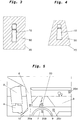
- FIG. 3 a reproduced image 20 produced by a display device according to the invention and viewable by the driver.
- the reproduction image 20 has a reproduction image 20 in FIG Fig. 3 shown stylized representation of the vehicle 10 and a detected by a detection device of the display device according to the invention immediate vehicle environment 30 on.
- the playback image 20 is in the Fig.
- the playback image 20 may have any other shape, such as round, oval, elliptical, triangular, trapezoidal.
- the vehicle 10 and the detected immediate vehicle environment 30 are shown in plan view.
- the playback image 20 is shown in trapezoidal shape and represents the vehicle 10 and the detected immediate vehicle environment 30 in bird's eye view in the forward direction of the vehicle 10 from the rear to the front. Due to the bird's-eye view of Fig. 4 For example, the vehicle 10 is partially distorted on the display image 20.
- the Fig. 5 schematically shows the driver's compartment of the vehicle 10 from the perspective of a driver. From the Fig. 5 shows, among other things, that the main mirror 2, the wide-angle mirror 4 and the A-pillar 6, the direct view into the vehicle environment partially obstruct (see Fig. 2 ). Furthermore, in the Fig. 5 shown different positions at which a display unit of the display device according to the invention can represent the playback image 20 - 20d.
- the position of the reproduction image 20 on the windshield 8 of the vehicle 10 is preferred, wherein the reproduction image 20 can be projected by the reproduction unit, for example a projector, head-up display or OLED display.
- the playback image 20 is preferably located at the lower portion of the windshield 8 and centered in front of the driver, so just above the steering wheel 9.
- Alternative positions for the playback image 20a - 20d are z.
- B a projection on the A-pillar 6, a representation in the instrument panel 7, a representation or projection next to the steering wheel 9 or in an upper, substantially central region
- a separate screen can be mounted in the vehicle interior, onto which the playback image 20 can be projected.
- the screen is preferably located between the driver and the windshield 8, for example on the dashboard.
- the screen can be angled relative to the front screen 8.
- commercial vehicles have Almost vertically extending windscreens, which is why an angled canvas can lead to a better projection and representation of the playback image 20.
- the canvas can be completely transparent, semitransparent or even not transparent.
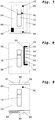
- exemplary playback images 20 are shown at various times, each representing the vehicle and an obstacle 40 detected in the immediate vehicle environment 30, such as an automobile. As a pedestrian, have. That in the Fig. 6a to 6c illustrated obstacle 40 is symbolically contained in the form of a circular dot in the playback image 20.
- FIGS Fig. 6a - 6c the vehicle 10 standing at an intersection in front of a red traffic light.
- the obstacle 40 is still right behind the vehicle 10, for example, on a pavement, not shown in the playback image.
- the obstacle 40 has moved to right next to the vehicle 10.
- the driver can not detect the obstacle via the direct view and even with difficulty through the side mirrors.
- the obstacle 40 has moved further forward and is now right in front of the vehicle 10. Even at this time, the driver 40 can detect the obstacle 40 on the direct view or the mirror of the vehicle 10 only difficult.
- the driver can be provided continuously or at timed intervals a playback image that him to the in the Fig. 6a - 6b informed about the immediate vehicle environment and he can quickly and reliably detect the obstacle 40.
- FIG. 12 shows an exemplary playback image 20 that includes the vehicle 10, detected obstacles 40, 42, and 44, such as pedestrians, and a detected obstacle 46, such as a vehicle. Furthermore, goes from the Fig. 7 that the immediate vehicle environment 30 contained in the playback image 20 is divided into three zones, namely a near-vehicle zone 52, a middle zone 54 and a more remote zone 56.
- the zones 52, 54, 56 are each delimited by dashed lines, the dashed lines can be displayed in the playback image 20 or alternatively can be invisible on the playback image 20. Zones 52, 54, and 56 are critical, less critical, and sometimes noncritical regions depending on the distance from the vehicle 10.
- zones 52, 54, 56 may be dependent on other parameters, such as driver visibility of the vehicle , To be defined, so that directly visible areas classified as uncritical and not directly visible areas, such. As the range of the blind spot, can be classified as a critical area.
- a calculation unit of the display device detects an obstacle 40 located in the zone 52
- the calculation unit can modify the playback image such that the critical obstacle 40 is highlighted, for example in red and / or flashing and / or otherwise changed.
- the obstacles 42 and 44 located in different zones 54, 56 are also shown differently, for example, with different colors or brightness or luminance.
- the obstacle 46 which is partially in the zone 54 and partially in the zone 56, can be represented as a function of the larger portion in which it is located in one of the two zones 54, 56.
- the representation of the obstacle 46 corresponds to the representation of an obstacle in the zone 54, i. the zone in which the main part of the obstacle 46 lies.
- the playback image 20 comprises the vehicle 10 in a stylized representation and a plurality of obstacles 40 - 45, which are relative to the vehicle in a common area of the vehicle environment 30.
- the computing unit may combine obstacles 40-45 located in a common area in the vehicle environment to form an obstacle group 48 and mark it by means of an indicator 50, for example a bracket ,
- the obstacles 40 - 45 as in the Fig. 8 shown to be of the same obstacle type.
- different types of obstacles located in a common area in the vehicle environment may be grouped together to form an obstacle group.
- the hint 50 may be configured to frame the obstacle group 48 only partially so that the individual obstacles 40-45 are still clearly visible.
- the indication 50 can be configured such that the individual obstacles 40-45 are completely covered by the reference 50 and accordingly the obstacles 40-45 can no longer be recognized individually.
- the indicia 50 covers the obstacles 40-45, but is at least partially transparent, so that the obstacles 40 - 45 are still partially visible individually.
- FIG. 9 another example playback image 20 is shown. That in the Fig. 9 Playback image 20 shown has the vehicle 10 and a detected in the immediate vehicle environment 30 obstacle 40 in stylized or symbolic representation.
- the playback image 20 has the Fig. 9 an upper reference area 60 subdivided into two sections 61, 62, and a lower reference area 64 divided into two sections 65, 66, wherein in other embodiments the reference areas 60 and 64 may each have only one section or more than two sections.
- the calculation unit may modify that indication area corresponding to the approximate position of the obstacle determined in the remote vehicle area relative to the vehicle such that the driver receives an indication of the obstacle located in the remote vehicle environment.
- the computing unit modifies the representation of the left portion 65 of the lower hint area 64, for example, by hatching, coloring, or otherwise indicating that the driver is aware that an obstacle may be moving from the remote vehicle environment into the immediate vehicle environment 30 ,
- FIG. 10 - 12 Further exemplary playback images 20 are shown.
- the in the Fig. 10 - 12 Playback images 20 shown each have the vehicle 10 and the lane 70 of the vehicle 10 limiting lane lines 72, 74.
- Lane lines 72, 74 may, for example, correspond to the lane lines actually on the roadway.
- the lane lines 72, 74 are stationary relative to the vehicle and shown in identical shape.
- the calculation unit may modify the reproduction image 20 such that the lane line (in FIG Fig. 11 the lane line 72) is highlighted. As a result, the driver can be signaled that an unwanted lane deviation exists.
- the lane generator may generate the lane lines 72, 74 on the display image 20 during the lane change such that the lane lines correspond to the actual position of the lane lines 72, 74 relative to the vehicle (see FIG Fig. 12 ).
Landscapes
- Engineering & Computer Science (AREA)
- Multimedia (AREA)
- Physics & Mathematics (AREA)
- General Physics & Mathematics (AREA)
- Theoretical Computer Science (AREA)
- Signal Processing (AREA)
- Mechanical Engineering (AREA)
- Traffic Control Systems (AREA)
- Automation & Control Theory (AREA)
- Transportation (AREA)
- Instrument Panels (AREA)
- Controls And Circuits For Display Device (AREA)
- Closed-Circuit Television Systems (AREA)
- Human Computer Interaction (AREA)
- Chemical & Material Sciences (AREA)
- Combustion & Propulsion (AREA)
- Mathematical Physics (AREA)
- Fittings On The Vehicle Exterior For Carrying Loads, And Devices For Holding Or Mounting Articles (AREA)
Claims (14)
- Dispositif d'affichage pour un véhicule (10), en particulier véhicule utilitaire, avec :un dispositif de détection pouvant être monté sur le véhicule (10), qui est réalisé pour détecter au moins une partie de l'environnement immédiat du véhicule (30) et générer des signaux correspondant à la partie détectée de l'environnement immédiat du véhicule (30),une unité de calcul en communication avec le dispositif de détection, qui est réalisée pour recevoir les signaux générés par le dispositif de détection, déterminer des obstacles (40 - 46) dans l'environnement immédiat du véhicule (30) détecté et générer une image de rendu (20, 20a - 20d), qui présente le véhicule (30) dans une représentation stylisée ou symbolique et l'obstacle (40 - 46) déterminé dans l'environnement immédiat du véhicule (30) dans une représentation stylisée ou symbolique et dans une position relative par rapport au véhicule (10), etune unité de rendu communiquant avec l'unité de calcul, qui est réalisée pour représenter l'image de rendu (20, 20a - 20d) générée par l'unité de calcul de façon visible par le conducteur à l'intérieur du véhicule (10),caractérisé en ce que l'unité de calcul est réalisée en outre pour déterminer une vitesse de déplacement et/ou un sens de déplacement de l'obstacle (40 - 46) et représenter le déplacement de l'obstacle (40 - 46) déterminé par rapport au véhicule (10) sur des images de rendu (20, 20a - 20d) en continu ou de manière cadencée.
- Dispositif d'affichage selon la revendication 1, dans lequel l'image de rendu (20, 20a - 20d) est une représentation du véhicule (10) et de l'obstacle (40 - 46) déterminé dans une vue de dessus ou une vue en perspective dans la marche avant du véhicule (10) de l'arrière vers l'avant.
- Dispositif d'affichage selon l'une quelconque des revendications précédentes, dans lequel l'unité de calcul est réalisée en outre pour déterminer le type et/ou la taille de l'obstacle (40 - 46) déterminé et modifier la représentation stylisée ou symbolique de l'obstacle (40 - 46) déterminé en fonction du type et/ou de la taille déterminée de l'obstacle (40 - 46).
- Dispositif d'affichage selon l'une quelconque des revendications précédentes, dans lequel
le dispositif de détection est réalisé en outre pour détecter au moins une partie d'un environnement éloigné du véhicule et générer des signaux correspondant à la partie détectée de l'environnement éloigné du véhicule,
l'unité de calcul est réalisée en outre pour déterminer des obstacles (40 - 46) dans l'environnement éloigné du véhicule et modifier l'image de rendu (20, 20a - 20d) de telle manière qu'une zone de notification (60, 64) est contenue dans l'image de rendu (20, 20a - 20d), qui signale l'obstacle (40 - 46) déterminé dans l'environnement éloigné du véhicule et la position relative de l'obstacle (40 - 46) déterminé par rapport au véhicule (10). - Dispositif d'affichage selon l'une quelconque des revendications précédentes, dans lequel l'unité de rendu est réalisée pour projeter l'image de rendu (20, 20a - 20d) sur le pare-brise (8) du véhicule (10), de préférence au bord inférieur du pare-brise (8) et au milieu devant le conducteur du véhicule (10).
- Dispositif d'affichage selon l'une quelconque des revendications 1 à 4, dans lequel l'unité de rendu présente un affichage tête haute, un affichage OLED et/ou une unité d'affichage dans le tableau de bord.
- Dispositif d'affichage selon l'une quelconque des revendications précédentes, dans lequel l'unité de détection est réalisée pour détecter l'ensemble de l'environnement immédiat du véhicule (30), qui s'étend entièrement autour du véhicule (10).
- Dispositif d'affichage selon l'une quelconque des revendications précédentes, dans lequel le dispositif de détection présente au moins un capteur radar et/ou au moins un capteur à ultrasons et/ou au moins une caméra.
- Dispositif d'affichage selon l'une quelconque des revendications précédentes, dans lequel l'unité de calcul est réalisée en outre pour regrouper des obstacles (40 - 46) déterminés dans l'environnement immédiat du véhicule (30) en un groupe d'obstacles (48) et modifier l'image de rendu (20, 20a - 20d) de telle manière que l'image de rendu (20, 20a - 20d) présente une notification (50), qui signale le groupe d'obstacles (48).
- Dispositif d'affichage selon l'une quelconque des revendications précédentes, dans lequel l'unité de calcul est réalisée en outre pour diviser l'environnement immédiat du véhicule (30) détecté en au moins deux zones (52, 54, 56) et en fonction de la zone (52, 54, 56) dans laquelle se trouve l'obstacle (40 - 46) déterminé, modifier la représentation stylisée ou symbolique de l'obstacle (40 - 46).
- Dispositif d'affichage selon l'une quelconque des revendications précédentes, dans lequel l'unité de calcul est réalisée en outre pour déterminer une vitesse de déplacement et/ou un sens de déplacement de l'obstacle (40 - 46) et en fonction de la vitesse de déplacement et/ou du sens de déplacement, modifier la représentation stylisée ou symbolique de l'obstacle (40 - 46).
- Dispositif d'affichage selon l'une quelconque des revendications précédentes, dans lequel l'unité de calcul est réalisée en outre pour déterminer une vitesse de déplacement et/ou un sens de déplacement de l'obstacle (40 - 46) et déterminer la trajectoire de l'obstacle (40 - 46) déterminé et la représenter sous forme de voie d'obstacle sur l'image de rendu (20, 20a - 20d).
- Dispositif d'affichage selon la revendication 12, dans lequel l'unité de calcul est réalisée en outre pour estimer la future trajectoire de l'obstacle (40 - 46) déterminé et la représenter sur l'image de rendu (20, 20a - 20d) sous forme de voie d'obstacle future.
- Dispositif d'affichage selon l'une quelconque des revendications précédentes, dans lequel l'unité de calcul est réalisée en outre pour déterminer des lignes de chaussée (72, 74) sur l'image de rendu qui affichent une voie du véhicule (10).
Applications Claiming Priority (1)
| Application Number | Priority Date | Filing Date | Title |
|---|---|---|---|
| DE102014014662.6A DE102014014662A1 (de) | 2014-09-19 | 2014-09-19 | Anzeigeeinrichtung für Fahrzeuge, insbesondere Nutzfahrzeuge |
Publications (3)
| Publication Number | Publication Date |
|---|---|
| EP2998937A2 EP2998937A2 (fr) | 2016-03-23 |
| EP2998937A3 EP2998937A3 (fr) | 2016-04-13 |
| EP2998937B1 true EP2998937B1 (fr) | 2017-12-27 |
Family
ID=54238199
Family Applications (1)
| Application Number | Title | Priority Date | Filing Date |
|---|---|---|---|
| EP15185665.5A Active EP2998937B1 (fr) | 2014-09-19 | 2015-09-17 | Dispositif d'affichage pour vehicules, notamment vehicules utilitaires |
Country Status (6)
| Country | Link |
|---|---|
| US (1) | US10192121B2 (fr) |
| EP (1) | EP2998937B1 (fr) |
| JP (1) | JP6147824B2 (fr) |
| KR (1) | KR20160034235A (fr) |
| DE (1) | DE102014014662A1 (fr) |
| ES (1) | ES2660994T3 (fr) |
Families Citing this family (14)
| Publication number | Priority date | Publication date | Assignee | Title |
|---|---|---|---|---|
| DE102016007522B4 (de) | 2016-06-20 | 2022-07-07 | Mekra Lang Gmbh & Co. Kg | Spiegelersatzsystem für ein Fahrzeug |
| DE102016211229A1 (de) * | 2016-06-23 | 2017-12-28 | Zf Friedrichshafen Ag | Vorrichtung zum Erkennen der Umgebung eines Mobilfahrzeugs |
| WO2018168531A1 (fr) * | 2017-03-13 | 2018-09-20 | マクセル株式会社 | Dispositif d'affichage tête-haute |
| JP6919256B2 (ja) * | 2017-03-22 | 2021-08-18 | 日本電気株式会社 | 俯瞰画像生成装置、俯瞰画像表示システム、俯瞰画像生成方法及びプログラム |
| JP7193911B2 (ja) * | 2017-09-28 | 2022-12-21 | 株式会社Subaru | 車両の対象物情報提供装置 |
| KR102306790B1 (ko) | 2017-11-08 | 2021-09-30 | 삼성전자주식회사 | 컨텐츠 시각화 장치 및 방법 |
| CN109935107B (zh) * | 2017-12-18 | 2023-07-14 | 姜鹏飞 | 一种提升交通通视范围的方法及装置 |
| DE102018205965B4 (de) * | 2018-04-19 | 2026-04-02 | Zf Friedrichshafen Ag | Verfahren und Steuergerät zum Kennzeichnen einer Person |
| US10360714B1 (en) * | 2018-09-14 | 2019-07-23 | Lyft, Inc. | Systems and methods for displaying autonomous vehicle environmental awareness |
| US11138449B2 (en) * | 2018-09-28 | 2021-10-05 | Intel Corporation | Obstacle representation display |
| KR102106976B1 (ko) * | 2018-12-20 | 2020-05-29 | 재단법인대구경북과학기술원 | 도플러 정보를 이용한 차량의 후방 또는 사각지대 탐지 장치 및 그 방법 |
| CN110223400B (zh) * | 2019-05-22 | 2022-04-05 | 未来(北京)黑科技有限公司 | 网约车的接单方法及装置、存储介质和电子装置 |
| JP7517252B2 (ja) * | 2021-06-04 | 2024-07-17 | トヨタ自動車株式会社 | 車両用表示装置、車両用表示システム、車両用表示方法及びプログラム |
| WO2025209651A1 (fr) * | 2024-04-04 | 2025-10-09 | Stoneridge Electronics Ab | Système de surveillance par caméra avec caractéristiques d'afficheur tête haute |
Family Cites Families (45)
| Publication number | Priority date | Publication date | Assignee | Title |
|---|---|---|---|---|
| JP3102250B2 (ja) * | 1994-02-14 | 2000-10-23 | 三菱自動車工業株式会社 | 車両用周囲情報表示装置 |
| US7426437B2 (en) * | 1997-10-22 | 2008-09-16 | Intelligent Technologies International, Inc. | Accident avoidance systems and methods |
| JP4008252B2 (ja) | 2001-05-25 | 2007-11-14 | 本田技研工業株式会社 | 危険車両情報提供装置、及びそのプログラム |
| EP1709568A4 (fr) * | 2003-12-15 | 2009-07-29 | Sarnoff Corp | Procede et appareil de suivi d'objets avant la detection imminente d'une collision |
| US7526103B2 (en) * | 2004-04-15 | 2009-04-28 | Donnelly Corporation | Imaging system for vehicle |
| US7720580B2 (en) * | 2004-12-23 | 2010-05-18 | Donnelly Corporation | Object detection system for vehicle |
| EP1696669B1 (fr) | 2005-02-24 | 2013-07-03 | Aisin Seiki Kabushiki Kaisha | Dispositif de surveillance des environs d'un véhicule |
| JP4687160B2 (ja) * | 2005-03-14 | 2011-05-25 | アイシン精機株式会社 | 周辺監視装置 |
| JP2006341641A (ja) * | 2005-06-07 | 2006-12-21 | Nissan Motor Co Ltd | 映像表示装置及び映像表示方法 |
| US7786898B2 (en) * | 2006-05-31 | 2010-08-31 | Mobileye Technologies Ltd. | Fusion of far infrared and visible images in enhanced obstacle detection in automotive applications |
| JP2008219063A (ja) * | 2007-02-28 | 2008-09-18 | Sanyo Electric Co Ltd | 車両周辺監視装置及び方法 |
| US8184159B2 (en) * | 2007-03-26 | 2012-05-22 | Trw Automotive U.S. Llc | Forward looking sensor system |
| US8451107B2 (en) * | 2007-09-11 | 2013-05-28 | Magna Electronics, Inc. | Imaging system for vehicle |
| JP5072576B2 (ja) * | 2007-12-20 | 2012-11-14 | アルパイン株式会社 | 画像表示方法および画像表示装置 |
| US8305444B2 (en) | 2008-11-14 | 2012-11-06 | Toyota Motor Engineering & Manufacturing North America, Inc. | Integrated visual display system |
| JP5099451B2 (ja) * | 2008-12-01 | 2012-12-19 | アイシン精機株式会社 | 車両周辺確認装置 |
| WO2010099416A1 (fr) * | 2009-02-27 | 2010-09-02 | Magna Electronics | Système d'alerte pour véhicule |
| TWI365145B (en) * | 2009-11-02 | 2012-06-01 | Ind Tech Res Inst | Method and system for asisting driver |
| DE102010010912A1 (de) * | 2010-03-10 | 2010-12-02 | Daimler Ag | Fahrerassistenzvorrichtung mit optischer Darstellung erfasster Objekte |
| JP5555526B2 (ja) * | 2010-04-06 | 2014-07-23 | 東芝アルパイン・オートモティブテクノロジー株式会社 | 車両用ディスプレイ装置 |
| DE102010042026B4 (de) * | 2010-10-06 | 2020-11-26 | Robert Bosch Gmbh | Verfahren zum Erzeugen eines Abbildes mindestens eines Objekts in einer Umgebung eines Fahrzeugs |
| EP2481637B1 (fr) * | 2011-01-28 | 2014-05-21 | Nxp B.V. | Système et procédé d'assistance de parking |
| DE102011010624B4 (de) * | 2011-02-08 | 2014-10-16 | Mekra Lang Gmbh & Co. Kg | Anzeigevorrichtung für Sichtfelder eines Nutzfahrzeugs |
| EP2723069B1 (fr) * | 2011-06-16 | 2017-10-18 | Aisin Seiki Kabushiki Kaisha | Dispositif de surveillance de périphérie de véhicule |
| JP5682788B2 (ja) * | 2011-09-27 | 2015-03-11 | アイシン精機株式会社 | 車両周辺監視装置 |
| KR20130037274A (ko) * | 2011-10-06 | 2013-04-16 | 엘지이노텍 주식회사 | 멀티뷰 카메라를 이용한 주차 보조 장치 및 방법 |
| TWI468647B (zh) * | 2011-10-13 | 2015-01-11 | Altek Autotronics Corp | 障礙物偵測系統及其障礙物偵測方法 |
| DE102011084762A1 (de) * | 2011-10-19 | 2013-04-25 | Robert Bosch Gmbh | Verfahren und Vorrichtung zur Ermittlung einer Position eines Objektes in einem Umfeld eines Fahrzeugs |
| US9580013B2 (en) * | 2011-11-02 | 2017-02-28 | Magna Electronics Inc. | Vehicle vision system with asymmetric anamorphic lens |
| US10071687B2 (en) * | 2011-11-28 | 2018-09-11 | Magna Electronics Inc. | Vision system for vehicle |
| EP2856207B1 (fr) * | 2012-05-29 | 2020-11-11 | Brightway Vision Ltd. | Imagerie à déclenchement périodique ayant recours à une profondeur de champ adaptative |
| JP5829980B2 (ja) * | 2012-06-19 | 2015-12-09 | トヨタ自動車株式会社 | 路側物検出装置 |
| US8810381B2 (en) | 2012-06-29 | 2014-08-19 | Yazaki North America, Inc. | Vehicular heads up display with integrated bi-modal high brightness collision warning system |
| KR102028720B1 (ko) | 2012-07-10 | 2019-11-08 | 삼성전자주식회사 | 위험 요소에 대한 정보를 디스플레이하는 투명 디스플레이 장치 및 그 방법 |
| JP5629740B2 (ja) * | 2012-09-21 | 2014-11-26 | 株式会社小松製作所 | 作業車両用周辺監視システム及び作業車両 |
| US9723272B2 (en) * | 2012-10-05 | 2017-08-01 | Magna Electronics Inc. | Multi-camera image stitching calibration system |
| WO2014095071A1 (fr) * | 2012-12-21 | 2014-06-26 | Harman Becker Automotive Systems Gmbh | Système pour véhicule |
| DE102013002111B4 (de) * | 2013-02-08 | 2021-11-18 | Mekra Lang Gmbh & Co. Kg | Sichtsystem für Fahrzeuge, insbesondere Nutzfahrzeuge |
| JP6252316B2 (ja) * | 2014-03-31 | 2017-12-27 | 株式会社デンソー | 車両用表示制御装置 |
| US20150339589A1 (en) * | 2014-05-21 | 2015-11-26 | Brain Corporation | Apparatus and methods for training robots utilizing gaze-based saliency maps |
| KR102051142B1 (ko) * | 2014-06-13 | 2019-12-02 | 현대모비스 주식회사 | 차량용 운전자 위험 지수 관리 시스템 및 그 방법 |
| IL236114A (en) * | 2014-12-07 | 2016-04-21 | Yoav Grauer | Object detection enhancement of reflection-based imaging unit |
| US9933264B2 (en) * | 2015-04-06 | 2018-04-03 | Hrl Laboratories, Llc | System and method for achieving fast and reliable time-to-contact estimation using vision and range sensor data for autonomous navigation |
| US9840003B2 (en) * | 2015-06-24 | 2017-12-12 | Brain Corporation | Apparatus and methods for safe navigation of robotic devices |
| US10446031B2 (en) * | 2017-03-14 | 2019-10-15 | Hyundai Mobis Co., Ltd. | Apparatus and method of safety support for vehicle |
-
2014
- 2014-09-19 DE DE102014014662.6A patent/DE102014014662A1/de not_active Withdrawn
-
2015
- 2015-09-16 JP JP2015183084A patent/JP6147824B2/ja active Active
- 2015-09-17 ES ES15185665.5T patent/ES2660994T3/es active Active
- 2015-09-17 EP EP15185665.5A patent/EP2998937B1/fr active Active
- 2015-09-18 US US14/857,979 patent/US10192121B2/en active Active
- 2015-09-21 KR KR1020150133248A patent/KR20160034235A/ko not_active Ceased
Non-Patent Citations (1)
| Title |
|---|
| None * |
Also Published As
| Publication number | Publication date |
|---|---|
| JP2016105580A (ja) | 2016-06-09 |
| DE102014014662A1 (de) | 2016-03-24 |
| EP2998937A2 (fr) | 2016-03-23 |
| US10192121B2 (en) | 2019-01-29 |
| KR20160034235A (ko) | 2016-03-29 |
| JP6147824B2 (ja) | 2017-06-14 |
| EP2998937A3 (fr) | 2016-04-13 |
| ES2660994T3 (es) | 2018-03-27 |
| US20160086042A1 (en) | 2016-03-24 |
Similar Documents
| Publication | Publication Date | Title |
|---|---|---|
| EP2998937B1 (fr) | Dispositif d'affichage pour vehicules, notamment vehicules utilitaires | |
| EP3401167B1 (fr) | Système de remplacement de rétroviseur en tant que système de surveillance par cémera d'un véhicule automobile, en particulier d'un véhicule utilitaire | |
| DE102017202115B4 (de) | Fahrzeugeigene vorrichtung, verfahren zum steuern einer fahrzeugeigenen vorrichtung und computerlesbares speichermedium | |
| EP3437929B1 (fr) | Système de vision à champs de vision / effet d'incrustation de la zone de vision en fonction de la situation de conduite | |
| EP2073185B1 (fr) | Procédé destiné à l'affichage de consignes d'alerte dans un véhicule automobile et dispositif d'affichage correspondant | |
| DE102004012604B4 (de) | Verfahren zum Betrieb eines Darstellungssystems in einem Fahrzeug zum Anfahren eines Parkplatzes | |
| DE102018206087B4 (de) | Verfahren zur Kommunikation eines Kraftfahrzeugs mit einem Verkehrsteilnehmer sowie Kraftfahrzeug zur Durchführung des Verfahrens | |
| EP1931538A1 (fr) | Dispositif de vision nocturne pour automobile | |
| DE102011080928B4 (de) | Verfahren zur Unterstützung eines Fahrers eines Kraftfahrzeugs | |
| DE102008028303A1 (de) | Anzeigesystem und Programm | |
| DE102017100004A1 (de) | Verfahren zum Bereitstellen von zumindest einer Information aus einem Umgebungsbereich eines Kraftfahrzeugs, Anzeigesystem für ein Kraftfahrzeug, Fahrerassistenzsystem für ein Kraftfahrzeug sowie Kraftfahrzeug | |
| EP3219533A2 (fr) | Système de vision pour un véhicule, notamment pour un véhicule utilitaire | |
| DE102004047481A1 (de) | Verfahren zur Anzeige eines Fahrzeugfahrraums | |
| DE102013018543A1 (de) | Fahrerassistenzsystem für Fahrzeuge, insbesondere Nutzfahrzeuge | |
| DE19911648A1 (de) | Verfahren zur Anzeige von Objekten | |
| DE102013210826A1 (de) | Verfahren zum Betreiben einer Anzeigevorrichtung, Computer-Programmprodukt, Anzeigevorrichtung | |
| DE102010054221A1 (de) | Verfahren zur Assistenz eines Fahrers bei Spurwechseln und Spurwechselassistenzsystem | |
| DE102011121763A1 (de) | Verfahren zur Darstellung einer Abstandsinformation auf einer Anzeigevorrichtung eines Fahrzeugs | |
| DE102017116690A1 (de) | Vorrichtung zur Blickfeldkontrolle | |
| DE102016214046A1 (de) | Verfahren zum Betreiben eines Fahrerassistenzsystems mit einer Datenbrille sowie ein Anzeigesystem mit einer Datenbrille | |
| WO2005028256A2 (fr) | Visualisation de l'angle mort derriere un montant a d'un vehicule | |
| DE102017223439B4 (de) | Warnvorrichtung vor Gefahrensituationen für ein Kraftfahrzeug | |
| DE102010008346A1 (de) | Rückblickvorrichtung eines Personenkraftwagens | |
| DE102015121114A1 (de) | Optische Rückmeldevorrichtung für ein Kraftfahrzeug, Fahrerassistenzsystem sowie Kraftfahrzeug | |
| WO2010149184A1 (fr) | Dispositif de rétrovision de véhicule sans rétroviseur latéral |
Legal Events
| Date | Code | Title | Description |
|---|---|---|---|
| PUAL | Search report despatched |
Free format text: ORIGINAL CODE: 0009013 |
|
| PUAI | Public reference made under article 153(3) epc to a published international application that has entered the european phase |
Free format text: ORIGINAL CODE: 0009012 |
|
| AK | Designated contracting states |
Kind code of ref document: A2 Designated state(s): AL AT BE BG CH CY CZ DE DK EE ES FI FR GB GR HR HU IE IS IT LI LT LU LV MC MK MT NL NO PL PT RO RS SE SI SK SM TR |
|
| AX | Request for extension of the european patent |
Extension state: BA ME |
|
| AK | Designated contracting states |
Kind code of ref document: A3 Designated state(s): AL AT BE BG CH CY CZ DE DK EE ES FI FR GB GR HR HU IE IS IT LI LT LU LV MC MK MT NL NO PL PT RO RS SE SI SK SM TR |
|
| AX | Request for extension of the european patent |
Extension state: BA ME |
|
| RIC1 | Information provided on ipc code assigned before grant |
Ipc: G06T 11/60 20060101AFI20160308BHEP Ipc: G06T 11/00 20060101ALI20160308BHEP |
|
| 17P | Request for examination filed |
Effective date: 20160706 |
|
| RBV | Designated contracting states (corrected) |
Designated state(s): AL AT BE BG CH CY CZ DE DK EE ES FI FR GB GR HR HU IE IS IT LI LT LU LV MC MK MT NL NO PL PT RO RS SE SI SK SM TR |
|
| REG | Reference to a national code |
Ref country code: DE Ref legal event code: R079 Ref document number: 502015002680 Country of ref document: DE Free format text: PREVIOUS MAIN CLASS: G06T0011600000 Ipc: G06T0011000000 |
|
| GRAP | Despatch of communication of intention to grant a patent |
Free format text: ORIGINAL CODE: EPIDOSNIGR1 |
|
| RIC1 | Information provided on ipc code assigned before grant |
Ipc: G06T 11/00 20060101AFI20170627BHEP Ipc: B60R 1/00 20060101ALI20170627BHEP |
|
| INTG | Intention to grant announced |
Effective date: 20170727 |
|
| GRAS | Grant fee paid |
Free format text: ORIGINAL CODE: EPIDOSNIGR3 |
|
| GRAA | (expected) grant |
Free format text: ORIGINAL CODE: 0009210 |
|
| AK | Designated contracting states |
Kind code of ref document: B1 Designated state(s): AL AT BE BG CH CY CZ DE DK EE ES FI FR GB GR HR HU IE IS IT LI LT LU LV MC MK MT NL NO PL PT RO RS SE SI SK SM TR |
|
| REG | Reference to a national code |
Ref country code: GB Ref legal event code: FG4D Free format text: NOT ENGLISH |
|
| REG | Reference to a national code |
Ref country code: CH Ref legal event code: EP |
|
| REG | Reference to a national code |
Ref country code: AT Ref legal event code: REF Ref document number: 958900 Country of ref document: AT Kind code of ref document: T Effective date: 20180115 |
|
| REG | Reference to a national code |
Ref country code: IE Ref legal event code: FG4D Free format text: LANGUAGE OF EP DOCUMENT: GERMAN |
|
| REG | Reference to a national code |
Ref country code: DE Ref legal event code: R096 Ref document number: 502015002680 Country of ref document: DE |
|
| REG | Reference to a national code |
Ref country code: NL Ref legal event code: FP |
|
| REG | Reference to a national code |
Ref country code: ES Ref legal event code: FG2A Ref document number: 2660994 Country of ref document: ES Kind code of ref document: T3 Effective date: 20180327 |
|
| PG25 | Lapsed in a contracting state [announced via postgrant information from national office to epo] |
Ref country code: LT Free format text: LAPSE BECAUSE OF FAILURE TO SUBMIT A TRANSLATION OF THE DESCRIPTION OR TO PAY THE FEE WITHIN THE PRESCRIBED TIME-LIMIT Effective date: 20171227 Ref country code: FI Free format text: LAPSE BECAUSE OF FAILURE TO SUBMIT A TRANSLATION OF THE DESCRIPTION OR TO PAY THE FEE WITHIN THE PRESCRIBED TIME-LIMIT Effective date: 20171227 Ref country code: NO Free format text: LAPSE BECAUSE OF FAILURE TO SUBMIT A TRANSLATION OF THE DESCRIPTION OR TO PAY THE FEE WITHIN THE PRESCRIBED TIME-LIMIT Effective date: 20180327 |
|
| REG | Reference to a national code |
Ref country code: LT Ref legal event code: MG4D |
|
| PG25 | Lapsed in a contracting state [announced via postgrant information from national office to epo] |
Ref country code: LV Free format text: LAPSE BECAUSE OF FAILURE TO SUBMIT A TRANSLATION OF THE DESCRIPTION OR TO PAY THE FEE WITHIN THE PRESCRIBED TIME-LIMIT Effective date: 20171227 Ref country code: HR Free format text: LAPSE BECAUSE OF FAILURE TO SUBMIT A TRANSLATION OF THE DESCRIPTION OR TO PAY THE FEE WITHIN THE PRESCRIBED TIME-LIMIT Effective date: 20171227 Ref country code: RS Free format text: LAPSE BECAUSE OF FAILURE TO SUBMIT A TRANSLATION OF THE DESCRIPTION OR TO PAY THE FEE WITHIN THE PRESCRIBED TIME-LIMIT Effective date: 20171227 Ref country code: GR Free format text: LAPSE BECAUSE OF FAILURE TO SUBMIT A TRANSLATION OF THE DESCRIPTION OR TO PAY THE FEE WITHIN THE PRESCRIBED TIME-LIMIT Effective date: 20180328 Ref country code: BG Free format text: LAPSE BECAUSE OF FAILURE TO SUBMIT A TRANSLATION OF THE DESCRIPTION OR TO PAY THE FEE WITHIN THE PRESCRIBED TIME-LIMIT Effective date: 20180327 |
|
| PG25 | Lapsed in a contracting state [announced via postgrant information from national office to epo] |
Ref country code: CY Free format text: LAPSE BECAUSE OF FAILURE TO SUBMIT A TRANSLATION OF THE DESCRIPTION OR TO PAY THE FEE WITHIN THE PRESCRIBED TIME-LIMIT Effective date: 20171227 Ref country code: EE Free format text: LAPSE BECAUSE OF FAILURE TO SUBMIT A TRANSLATION OF THE DESCRIPTION OR TO PAY THE FEE WITHIN THE PRESCRIBED TIME-LIMIT Effective date: 20171227 Ref country code: SK Free format text: LAPSE BECAUSE OF FAILURE TO SUBMIT A TRANSLATION OF THE DESCRIPTION OR TO PAY THE FEE WITHIN THE PRESCRIBED TIME-LIMIT Effective date: 20171227 Ref country code: CZ Free format text: LAPSE BECAUSE OF FAILURE TO SUBMIT A TRANSLATION OF THE DESCRIPTION OR TO PAY THE FEE WITHIN THE PRESCRIBED TIME-LIMIT Effective date: 20171227 |
|
| PG25 | Lapsed in a contracting state [announced via postgrant information from national office to epo] |
Ref country code: PL Free format text: LAPSE BECAUSE OF FAILURE TO SUBMIT A TRANSLATION OF THE DESCRIPTION OR TO PAY THE FEE WITHIN THE PRESCRIBED TIME-LIMIT Effective date: 20171227 Ref country code: SM Free format text: LAPSE BECAUSE OF FAILURE TO SUBMIT A TRANSLATION OF THE DESCRIPTION OR TO PAY THE FEE WITHIN THE PRESCRIBED TIME-LIMIT Effective date: 20171227 Ref country code: RO Free format text: LAPSE BECAUSE OF FAILURE TO SUBMIT A TRANSLATION OF THE DESCRIPTION OR TO PAY THE FEE WITHIN THE PRESCRIBED TIME-LIMIT Effective date: 20171227 Ref country code: IS Free format text: LAPSE BECAUSE OF FAILURE TO SUBMIT A TRANSLATION OF THE DESCRIPTION OR TO PAY THE FEE WITHIN THE PRESCRIBED TIME-LIMIT Effective date: 20180427 |
|
| REG | Reference to a national code |
Ref country code: FR Ref legal event code: PLFP Year of fee payment: 4 |
|
| PG25 | Lapsed in a contracting state [announced via postgrant information from national office to epo] |
Ref country code: MT Free format text: LAPSE BECAUSE OF FAILURE TO SUBMIT A TRANSLATION OF THE DESCRIPTION OR TO PAY THE FEE WITHIN THE PRESCRIBED TIME-LIMIT Effective date: 20171227 |
|
| REG | Reference to a national code |
Ref country code: DE Ref legal event code: R097 Ref document number: 502015002680 Country of ref document: DE |
|
| PLBE | No opposition filed within time limit |
Free format text: ORIGINAL CODE: 0009261 |
|
| STAA | Information on the status of an ep patent application or granted ep patent |
Free format text: STATUS: NO OPPOSITION FILED WITHIN TIME LIMIT |
|
| PG25 | Lapsed in a contracting state [announced via postgrant information from national office to epo] |
Ref country code: DK Free format text: LAPSE BECAUSE OF FAILURE TO SUBMIT A TRANSLATION OF THE DESCRIPTION OR TO PAY THE FEE WITHIN THE PRESCRIBED TIME-LIMIT Effective date: 20171227 |
|
| 26N | No opposition filed |
Effective date: 20180928 |
|
| PG25 | Lapsed in a contracting state [announced via postgrant information from national office to epo] |
Ref country code: SI Free format text: LAPSE BECAUSE OF FAILURE TO SUBMIT A TRANSLATION OF THE DESCRIPTION OR TO PAY THE FEE WITHIN THE PRESCRIBED TIME-LIMIT Effective date: 20171227 |
|
| PG25 | Lapsed in a contracting state [announced via postgrant information from national office to epo] |
Ref country code: MC Free format text: LAPSE BECAUSE OF FAILURE TO SUBMIT A TRANSLATION OF THE DESCRIPTION OR TO PAY THE FEE WITHIN THE PRESCRIBED TIME-LIMIT Effective date: 20171227 |
|
| REG | Reference to a national code |
Ref country code: CH Ref legal event code: PL |
|
| REG | Reference to a national code |
Ref country code: BE Ref legal event code: MM Effective date: 20180930 |
|
| REG | Reference to a national code |
Ref country code: IE Ref legal event code: MM4A |
|
| PG25 | Lapsed in a contracting state [announced via postgrant information from national office to epo] |
Ref country code: LU Free format text: LAPSE BECAUSE OF NON-PAYMENT OF DUE FEES Effective date: 20180917 |
|
| PG25 | Lapsed in a contracting state [announced via postgrant information from national office to epo] |
Ref country code: IE Free format text: LAPSE BECAUSE OF NON-PAYMENT OF DUE FEES Effective date: 20180917 |
|
| PG25 | Lapsed in a contracting state [announced via postgrant information from national office to epo] |
Ref country code: CH Free format text: LAPSE BECAUSE OF NON-PAYMENT OF DUE FEES Effective date: 20180930 Ref country code: LI Free format text: LAPSE BECAUSE OF NON-PAYMENT OF DUE FEES Effective date: 20180930 Ref country code: BE Free format text: LAPSE BECAUSE OF NON-PAYMENT OF DUE FEES Effective date: 20180930 |
|
| PG25 | Lapsed in a contracting state [announced via postgrant information from national office to epo] |
Ref country code: TR Free format text: LAPSE BECAUSE OF FAILURE TO SUBMIT A TRANSLATION OF THE DESCRIPTION OR TO PAY THE FEE WITHIN THE PRESCRIBED TIME-LIMIT Effective date: 20171227 |
|
| PG25 | Lapsed in a contracting state [announced via postgrant information from national office to epo] |
Ref country code: PT Free format text: LAPSE BECAUSE OF FAILURE TO SUBMIT A TRANSLATION OF THE DESCRIPTION OR TO PAY THE FEE WITHIN THE PRESCRIBED TIME-LIMIT Effective date: 20171227 |
|
| PG25 | Lapsed in a contracting state [announced via postgrant information from national office to epo] |
Ref country code: SE Free format text: LAPSE BECAUSE OF FAILURE TO SUBMIT A TRANSLATION OF THE DESCRIPTION OR TO PAY THE FEE WITHIN THE PRESCRIBED TIME-LIMIT Effective date: 20171227 Ref country code: MK Free format text: LAPSE BECAUSE OF NON-PAYMENT OF DUE FEES Effective date: 20171227 Ref country code: HU Free format text: LAPSE BECAUSE OF FAILURE TO SUBMIT A TRANSLATION OF THE DESCRIPTION OR TO PAY THE FEE WITHIN THE PRESCRIBED TIME-LIMIT; INVALID AB INITIO Effective date: 20150917 |
|
| PG25 | Lapsed in a contracting state [announced via postgrant information from national office to epo] |
Ref country code: AL Free format text: LAPSE BECAUSE OF FAILURE TO SUBMIT A TRANSLATION OF THE DESCRIPTION OR TO PAY THE FEE WITHIN THE PRESCRIBED TIME-LIMIT Effective date: 20171227 |
|
| REG | Reference to a national code |
Ref country code: AT Ref legal event code: MM01 Ref document number: 958900 Country of ref document: AT Kind code of ref document: T Effective date: 20200917 |
|
| PG25 | Lapsed in a contracting state [announced via postgrant information from national office to epo] |
Ref country code: AT Free format text: LAPSE BECAUSE OF NON-PAYMENT OF DUE FEES Effective date: 20200917 |
|
| P01 | Opt-out of the competence of the unified patent court (upc) registered |
Effective date: 20230427 |
|
| REG | Reference to a national code |
Ref country code: DE Ref legal event code: R082 Ref document number: 502015002680 Country of ref document: DE Representative=s name: ALPSPITZ IP ALLGAYER UND PARTNER PATENTANWAELT, DE |
|
| PGFP | Annual fee paid to national office [announced via postgrant information from national office to epo] |
Ref country code: DE Payment date: 20250919 Year of fee payment: 11 |
|
| PGFP | Annual fee paid to national office [announced via postgrant information from national office to epo] |
Ref country code: NL Payment date: 20250922 Year of fee payment: 11 |
|
| PGFP | Annual fee paid to national office [announced via postgrant information from national office to epo] |
Ref country code: GB Payment date: 20250923 Year of fee payment: 11 |
|
| PGFP | Annual fee paid to national office [announced via postgrant information from national office to epo] |
Ref country code: FR Payment date: 20250925 Year of fee payment: 11 |
|
| PGFP | Annual fee paid to national office [announced via postgrant information from national office to epo] |
Ref country code: IT Payment date: 20250930 Year of fee payment: 11 |
|
| PGFP | Annual fee paid to national office [announced via postgrant information from national office to epo] |
Ref country code: ES Payment date: 20251020 Year of fee payment: 11 |