EP3000219B1 - Datenquellenzugang über proxy - Google Patents
Datenquellenzugang über proxy Download PDFInfo
- Publication number
- EP3000219B1 EP3000219B1 EP13728776.9A EP13728776A EP3000219B1 EP 3000219 B1 EP3000219 B1 EP 3000219B1 EP 13728776 A EP13728776 A EP 13728776A EP 3000219 B1 EP3000219 B1 EP 3000219B1
- Authority
- EP
- European Patent Office
- Prior art keywords
- connection
- data source
- proxy
- network site
- source device
- Prior art date
- Legal status (The legal status is an assumption and is not a legal conclusion. Google has not performed a legal analysis and makes no representation as to the accuracy of the status listed.)
- Active
Links
Images



Classifications
-
- H—ELECTRICITY
- H04—ELECTRIC COMMUNICATION TECHNIQUE
- H04L—TRANSMISSION OF DIGITAL INFORMATION, e.g. TELEGRAPHIC COMMUNICATION
- H04L67/00—Network arrangements or protocols for supporting network services or applications
- H04L67/50—Network services
- H04L67/56—Provisioning of proxy services
-
- H—ELECTRICITY
- H04—ELECTRIC COMMUNICATION TECHNIQUE
- H04L—TRANSMISSION OF DIGITAL INFORMATION, e.g. TELEGRAPHIC COMMUNICATION
- H04L67/00—Network arrangements or protocols for supporting network services or applications
- H04L67/01—Protocols
- H04L67/12—Protocols specially adapted for proprietary or special-purpose networking environments, e.g. medical networks, sensor networks, networks in vehicles or remote metering networks
-
- H—ELECTRICITY
- H04—ELECTRIC COMMUNICATION TECHNIQUE
- H04L—TRANSMISSION OF DIGITAL INFORMATION, e.g. TELEGRAPHIC COMMUNICATION
- H04L63/00—Network architectures or network communication protocols for network security
- H04L63/10—Network architectures or network communication protocols for network security for controlling access to devices or network resources
-
- H—ELECTRICITY
- H04—ELECTRIC COMMUNICATION TECHNIQUE
- H04L—TRANSMISSION OF DIGITAL INFORMATION, e.g. TELEGRAPHIC COMMUNICATION
- H04L67/00—Network arrangements or protocols for supporting network services or applications
- H04L67/01—Protocols
- H04L67/02—Protocols based on web technology, e.g. hypertext transfer protocol [HTTP]
Definitions
- the present application relates generally to connectivity between objects using communication protocols.
- Communication-enabled devices may exchange messages using various protocols.
- a desktop or laptop computer may access the Internet using hypertext transport protocol, HTTP, run over internet protocol, IP.
- An end station such as a computer or a smartphone, for example, may receive real time media content over real time transport, RTP, protocol.
- Protocols may be employed as a protocol stack which comprises protocols with distinct features used together.
- a payload portion of a first protocol data unit may comprise a protocol data unit of a second protocol, the payload portion of the protocol data unit of the second protocol in turn comprising a protocol data unit of a third protocol.
- CoAP constrained application protocol
- the constrained application protocol, CoAP is a software protocol that may be employed in communication involving as at least one party a node with limited resources, such as power, processing capability or memory.
- CoAP allows for interactive communication with such nodes to enable them to interact with further nodes via network connections.
- Networks employing CoAP may include sensor networks, for example, wherein sensor nodes may be simple, resource-constrained devices enabled to perform measurements of physical properties, or capture media such as sound.
- sensor nodes may periodically provide measurement results they have produced, or they may be configured to provide a measurement result to a querying node responsive to a request.
- request may be conveyed using CoAP, for example.
- a same-origin policy is a security concept that may be employed in browser-side programming languages, such as javascript.
- the policy permits executable elements originating from a network site to use each other's resources and parts.
- the policy may be configured to restrict use of resources and/or parts of executable elements originating from a different site.
- Document US2006/112171 discloses a system to control devices using a remote control device using an HTTP interface.
- a media center device may store copies of information of separate devices connected with the media center device via a subnetwork.
- an apparatus comprising at least one processor configured to execute software stored in a memory comprised in the apparatus, wherein the software thereby causes the apparatus to at least retrieve, from a network site, a computer executable program, open a first connection to a data source device distinct from the network site, open, using the computer executable program, a second connection to a proxy device, distinct from the network site and the data source device, to request the proxy device to proxy content from the data source device, the second connection employing a first protocol and indicating the network site as a source of the computer executable program, and receive from the proxy device information of the data source device.
- a method comprising retrieving, from a network site, a computer executable program, causing opening of a first connection to a data source device distinct from the network site; causing opening, using the computer executable program, of a second connection to a proxy device, distinct from the network site and the data source device, to request the proxy device to proxy content from the data source device, the second connection indicating the network site as a source of the computer executable program, and receiving from the proxy device information of the data source device
- the invented communication method may enable proxying content from smart objects in a flexible way that doesn't violate a same origin security policy.
- Executable code may be received from a network, for example to a browser, to access and proxy the content in a secured way.
- An example is a trusted web application which can access resource-constrained peripheral devices via a proxy device to locally proxy the content.
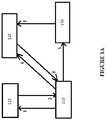
- FIGURE 1A illustrates a first example system capable of supporting at least some embodiments of the invention.
- browser 110 which may comprise, for example, a web browser such as a HTTP browser operating on a computing device, such as a personal computer, smartphone or tablet device.
- Network site 120 may comprise, for example, a world wide web, WWW, site accessible to browser 110.
- Smart device 130 may comprise, for example, a sensor such as a sensor that is capable of measuring a physical property such as temperature, moisture, presence of smoke, humidity, speed or noise level.
- a sensor may comprise alternatively an actuator, such as a window opener, or a camera device, for example.
- Proxy device 140 may comprise, for example, a HTTP/CoAP proxy. Proxy device 140 may be disposed in a network location such as the Internet, or in a home network, for example. In some embodiments, smart device 130 and proxy device 140 are located in the same home environment but in other embodiments this is not the case.
- Browser 110 may interface toward network site 120 via a wire-line or at least in part wireless interface.
- the interface from browser 110 to network site 120 may comprise, in part, a cellular interface such as a long term evolution, LTE, or wideband code division multiple access, WCDMA, interface, for example.
- Browser 110 may interface toward smart device 130 via an interface which may comprise, for example, a near-field communication, NFC, interface, a wireless local area network, WLAN, interface, or a low-power radio interface such as Bluetooth, for example.
- Browser 110 may use an interface comprised in a device running browser 110.
- Smart device 130 may interface toward proxy device 140 via a wired or at least in part wireless interface, such as Ethernet, WLAN, a cellular interface or Bluetooth, for example.
- Browser 110 may interface toward proxy device 140 via a wired or at least in part wireless interface.
- browser 110, smart device 130 and proxy device 140 are comprised in the same local-area network, wherein the local-area network may comprise a WLAN network.
- FIG. 1A illustrate signaling.
- Arrow 1 denotes browser 110 contacting network site 120 to request information, for example to request a web page.
- Arrow 2 denotes network site 120 responsively providing at least the requested information, for example the web page.
- the provided information may comprise a computer executable program, such as for example a script program or an executable file.
- the program may be configured to act toward smart device 130 to mirror or cache data contained therein, to allow smart device 130 to be in a sleep or energy-saving mode for longer periods of time uninterrupted, for example.
- browser 110 may contact smart device 130 and provide a credential of itself, or at least an identity or address of itself, to smart device 130. This is illustrated in FIG. 1A as arrow 3.
- Browser 110 may provide an address of proxy device 140 to smart device 130 over the interface interconnecting browser 110 and smart device 130.
- browser 110 is configured to obtain at least one of an address and an identity of proxy device 140 from smart device 130, in case smart device 130 is configured with at least one of an address and identity of proxy device 140.
- a trust relationship may be established between browser 110 and smart device 130.
- Arrow 3 while illustrated as one-way, may comprise two-way communication between browser 110 and smart device 130.
- browser 110 may request proxy device 140 to proxy content from smart device 130, for example in browser 110.
- browser 110 may indicate network site 120 as an origin of the computer executable program.
- browser 110 may employ cross-origin resource sharing, CORS.
- CORS cross-origin resource sharing
- browser 110 may provide credentials of at least one of itself and smart object 130.
- a credential of browser 110 may in this aspect comprise, for example, a credential of a device running browser 110, or a credential of the computer executable program obtained in browser 110 in the phase illustrated by arrow 2.
- proxy device 140 is enabled to decide whether to accept a communication from network site 120 despite the fact that the communication illustrated as arrow 3 physically originates from browser 110.
- Browser 110 may be configured to prevent computer executable programs from network site 120 from accessing proxy device 140 unless network site 120 is indicated as the origin. Credentials provided by browser 110 may enable proxy device 140 to decide to co-operate with browsers 110 only if they've been in contact with smart device 130 previously.
- smart device 130 may send to proxy device 140 a message, such as for example a CoAP message, to register itself to proxy device 140.
- smart device 130 may provide credentials of at least one of itself and browser 110.
- a credential of browser 110 may in this aspect comprise, for example, a credential of a device running browser 110, or a credential of the computer executable program obtained in browser 110 in the phase illustrated by arrow 2.
- the chronological order of the communications illustrated by arrows 4 and 5 may vary depending on the embodiment.
- proxy device 140 may forward the message received in proxy device 140 from smart device 130 to browser 110 to initiate content proxying.
- the message may be forwarded in a different form, for example if the message from smart device 130 was a CoAP message, such as for example a CoAP PUT, GET, POST or DELETE, proxy device 140 may translate it into HTTP format before forwarding it to browser 110.
- Proxy device 140 in effect establishes a web storage relationship, which may be either local or session storage.
- a session storage may comprise that data is stored for a duration of a browser tab, wherein when the browser tab is closed, the data stored in the session storage is deleted.
- Browser 110 may store each received content item of smart device 130 in browser 110, for example as a name/value pair.
- nodes on the Internet may obtain access to content items of smart device 130 by requesting them from browser 110.
- other applications running in browser 110, or in a device running browser 110 may access the content items of smart device 130.
- multiple browsers 110 running on multiple nodes may access the content items of smart device 130 from proxy device 140.
- browser 110 may be directed by the computer executable program obtained in the phase illustrated by arrow 2 to perform its part in actions illustrated by arrows 3, 4 and 6.
- browser 110 may perform a similar sequence with respect to more than one smart device, to proxy at least partly content from each.
- FIGURE 1B illustrates a second example system capable of supporting at least some embodiments of the invention.
- the functioning of the system of FIG. 1B is similar to that of the system of FIG. 1A .
- mobile 110 or FIG. 1B may run browser 110 of FIG. 1A .
- Running in this context may comprise that executable code of the browser is stored in a memory of mobile 110, and a processor of mobile 110 is executing the executable code of the browser.
- sensor unit 150 of FIG. 1B may function as smart device 130 of FIG. 1A
- proxy 160 of FIG. 1B may function as proxy device 140 of FIG. 1A .
- mobile 110 may be connected, for example continuously connected, to the Internet via wireless link 115, base station 120, connection 121, core network node 130, connection 131 and gateway 140.
- Mobile 110 may communicate with sensor unit 150 via Bluetooth, for example, and with proxy 160 via WLAN or via a wire-line connection, for example.
- Connection 151 between sensor unit 150 and proxy 160 may be a wire-line connection, or alternatively at least in part a wireless connection.
- the system of FIG. 1B is illustrative of only one example system, to which the invention is not restricted to.
- a first apparatus such as for example an apparatus capable of running browser 110.
- the first apparatus may be configured, by a computer executable program stored in a memory comprised in the apparatus, to at least open a first connection to a data source device, open a second connection to a proxy device, the second connection employing a first protocol and a cross origin resource sharing context, and to receive from the proxy device information of the data source device.
- the data source device may comprise, for example, a device such as smart device 130 of FIG. 1A or sensor unit 150 of FIG. 1B .
- the first connection may be arranged to establish a trust relationship between a browser and the data source device. Establishing a trust relationship may comprise transmitting and/or receiving at least one credential.
- the first apparatus may be configured to transmit and/or receive at least one credential over the second connection.
- the at least one credential communicated over the second connection may comprise at least one of a credential of the first apparatus and a credential of a browser running on the first apparatus.
- Information of the data source device may comprise measurement data or status information, for example.
- the first apparatus is further caused to receive information comprising the computer executable program.
- the computer executable program may comprise, at least in part, an executable script embedded in a web page the first apparatus is enabled to access.
- the first protocol comprises a hypertext transport protocol, such as HTTP. Examples of executable script types include javascript, jscript, Ejscript, ActionScript, ECMAscript and Jscript.NET.
- the first connection comprises at least one of a NFC, WLAN and low-power radio connection.
- a low-power radio connection may comprise a Bluetooth or Bluetooth low energy connection, for example.
- the first apparatus is caused to indicate over the second connection an address of the web page.
- the address of the web page may be indicated as an origin of a computer executable program executed by the first apparatus.
- a second apparatus such as for example a proxy device 140.
- the second apparatus comprises at least one processor, at least one memory including computer program code, the at least one memory and the computer program being code configured to, with the at least one processor, cause the apparatus to at least receive a first message from a data source device.
- the first message may comprise a registration of the data source device, or more generally the first message may be configured to cause the second apparatus to initialize a state for the data source device in the second apparatus.
- the second apparatus may also be caused to receive a second message from a node, the second message comprising an indication of a source of a computer executable program running in the node.
- the indication of the source of the computer executable program may comprise an indication of source of the second message.
- the first message may comprise a request to start mirroring data of the data source device.
- the first message may enable the second apparatus to associate the data source device with a node.
- the first message comprises a constrained application protocol, CoAP, registration request.
- the first message may comprise a credential of the data source device and/or a credential of a web application, such as for example an application transmitting the second message.
- a web application may comprise an executable script, such as a javascript program, as described above.
- the second message may use a cross origin resource sharing mechanism.
- the second message may comprise a credential of at least one of a web application running on the node, the node and the data source device.
- the second apparatus may be configured to refuse to provide data of the data source device to the node.
- the second apparatus may be configured to refuse to provide data of the data source device to the node.
- the second apparatus is further caused to assign storage space for resource data of the data source device. In some embodiments, this comprises requesting storage space to be assigned in the node.
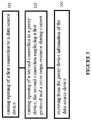
- FIGURE 3 is a first flowgraph illustrating phases of an example method in accordance with at least some embodiments of the invention.
- the phases of the illustrated method may be performed in browser 110, for example.
- the phases of the illustrated method may be caused to be performed by a script program running in browser 110, for example.
- Phase 310 comprises causing opening of a first connection to a data source device.
- Phase 320 comprises causing opening of a second connection to a proxy device, the second connection employing a first protocol and a cross origin resource sharing context.
- phase 330 comprises receiving from the proxy device information of the data source device.
- FIGURE 4 is a second flowgraph illustrating phases of an example method in accordance with at least some embodiments of the invention.
- the phases of the illustrated method may be performed in proxy device 140, for example.
- Phase 410 comprises receiving a first message from a data source device.
- Phase 420 comprises receiving a second message from a node, the second message comprising an indication of a source of a computer executable program running in the node
- FIGURE 2 illustrates a block diagram of an apparatus 10 such as, for example, a mobile terminal, in accordance with an example embodiment of the invention.
- the illustrated mobile terminal may be arranged to run browser 110, for example. While several features of the apparatus are illustrated and will be hereinafter described for purposes of example, other types of electronic devices, such as mobile telephones, mobile computers, portable digital assistants, PDAs, pagers, laptop computers, desktop computers, gaming devices, televisions, routers, home gateways, and other types of electronic systems, may employ various embodiments of the invention.
- the mobile terminal 10 may include at least one antenna 12 in communication with a transmitter 14 and a receiver 16. Alternatively transmit and receive antennas may be separate.
- the mobile terminal 10 may also include a processor 20 configured to provide signals to and receive signals from the transmitter and receiver, respectively, and to control the functioning of the apparatus.
- Processor 20 may be configured to control the functioning of the transmitter and receiver by effecting control signaling via electrical leads to the transmitter and receiver.
- processor 20 may be configured to control other elements of apparatus 10 by effecting control signaling via electrical leads connecting processor 20 to the other elements, such as for example a display or a memory.
- the processor 20 may, for example, be embodied as various means including circuitry, at least one processing core, one or more microprocessors with accompanying digital signal processor(s), one or more processor(s) without an accompanying digital signal processor, one or more coprocessors, one or more multi-core processors, one or more controllers, processing circuitry, one or more computers, various other processing elements including integrated circuits such as, for example, an application specific integrated circuit, ASIC, or field programmable gate array, FPGA, or some combination thereof.
- a processor comprising exactly one processing core may be referred to as a single-core processor, while a processor comprising more than one processing core may be referred to as a multi-core processor. Accordingly, although illustrated in FIG.
- the processor 20 comprises a plurality of processors or processing cores.
- Signals sent and received by the processor 20 may include signaling information in accordance with an air interface standard of an applicable cellular system, and/or any number of different wireline or wireless networking techniques, comprising but not limited to Wi-Fi, wireless local access network, WLAN, techniques such as Institute of Electrical and Electronics Engineers, IEEE, 802.11, 802.16, and/or the like.
- these signals may include speech data, user generated data, user requested data, and/or the like.
- the apparatus may be capable of operating with one or more air interface standards, communication protocols, modulation types, access types, and/or the like.
- the apparatus may be capable of operating in accordance with various first generation, 1G, second generation, 2G, 2.5G, third-generation, 3G, communication protocols, fourth-generation, 4G, communication protocols, Internet Protocol Multimedia Subsystem, IMS, communication protocols, for example, session initiation protocol, SIP, and/or the like.
- the apparatus may be capable of operating in accordance with 2G wireless communication protocols IS-136, Time Division Multiple Access TDMA, Global System for Mobile communications, GSM, IS-95, Code Division Multiple Access, CDMA, and/or the like.
- the mobile terminal may be capable of operating in accordance with 2.5G wireless communication protocols General Packet Radio Service. GPRS, Enhanced Data GSM Environment, EDGE, and/or the like.
- the apparatus may be capable of operating in accordance with 3G wireless communication protocols such as Universal Mobile Telecommunications System, UMTS, Code Division Multiple Access 2000, CDMA2000, Wideband Code Division Multiple Access, WCDMA, Time Division-Synchronous Code Division Multiple Access, TD-SCDMA, and/or the like.
- the apparatus may be additionally capable of operating in accordance with 3.9G wireless communication protocols such as Long Term Evolution, LTE, or Evolved Universal Terrestrial Radio Access Network, E-UTRAN, and/or the like.
- the apparatus may be capable of operating in accordance with fourth-generation, 4G, wireless communication protocols such as LTE Advanced and/or the like as well as similar wireless communication protocols that may be developed in the future.
- 3G wireless communication protocols such as Universal Mobile Telecommunications System, UMTS, Code Division Multiple Access 2000, CDMA2000, Wideband Code Division Multiple Access, WCDMA, Time Division-Synchronous Code Division Multiple Access, TD-SCDMA, and/or the like.
- the apparatus may be additionally capable of
- NAMPS Narrow-band Advanced Mobile Phone System
- TACS Total Access Communication System
- apparatus 10 may be capable of operating according to Wi-Fi or Worldwide Interoperability for Microwave Access, WiMAX, protocols.
- the processor 20 may comprise circuitry for implementing audio/video and logic functions of apparatus 10.
- the processor 20 may comprise a digital signal processor device, a microprocessor device, an analogue-to-digital converter, a digital-to-analogue converter, and/or the like. Control and signal processing functions of the mobile terminal may be allocated between these devices according to their respective capabilities.
- the processor may additionally comprise an internal voice coder, VC, 20a, an internal data modem, DM, 20b, and/or the like.
- the processor may comprise functionality to operate one or more software programs, which may be stored in memory. In general, processor 20 and stored software instructions may be configured to cause apparatus 10 to perform actions.
- processor 20 may be capable of operating a connectivity program, such as a web browser.
- the connectivity program may allow the mobile terminal 10 to transmit and receive web content, such as location-based content, according to a protocol, such as wireless application protocol, WAP, hypertext transfer protocol, HTTP, and/or the like
- Apparatus 10 may also comprise a user interface including, for example, an earphone or speaker 24, a ringer 22, a microphone 26, a display 28, a user input interface, and/or the like, which may be operationally coupled to the processor 20.
- the processor 20 may comprise user interface circuitry configured to control at least some functions of one or more elements of the user interface, such as, for example, the speaker 24, the ringer 22, the microphone 26, the display 28, and/or the like.
- the processor 20 and/or user interface circuitry comprising the processor 20 may be configured to control one or more functions of one or more elements of the user interface through computer program instructions, for example, software and/or firmware, stored on a memory accessible to the processor 20, for example, volatile memory 40, non-volatile memory 42, and/or the like.
- the apparatus may comprise a battery for powering various circuits related to the mobile terminal, for example, a circuit to provide mechanical vibration as a detectable output.
- the user input interface may comprise devices allowing the apparatus to receive data, such as a keypad 30, a touch display, which is not shown, a joystick, which is not shown, and/or at least one other input device.
- the keypad may comprise numeric 0-9 and related keys, and/or other keys for operating the apparatus.
- apparatus 10 may also include one or more means for sharing and/or obtaining data.
- the apparatus may comprise a short-range radio frequency, RF, transceiver and/or interrogator 64 so data may be shared with and/or obtained from electronic devices in accordance with RF techniques.
- the apparatus may comprise other short-range transceivers, such as, for example, an infrared, IR, transceiver 66, a BluetoothTM, BT, transceiver 68 operating using BluetoothTM brand wireless technology developed by the BluetoothTM Special Interest Group, a wireless universal serial bus, USB, transceiver 70 and/or the like.
- the BluetoothTM transceiver 68 may be capable of operating according to low power or ultra-low power BluetoothTM technology, for example, WibreeTM, radio standards.
- the apparatus 10 and, in particular, the short-range transceiver may be capable of transmitting data to and/or receiving data from electronic devices within a proximity of the apparatus, such as within 10 meters, for example.
- the apparatus may be capable of transmitting and/or receiving data from electronic devices according to various wireless networking techniques, including 6LoWpan, Wi-Fi, Wi-Fi low power, WLAN techniques such as IEEE 802.11 techniques, IEEE 802.15 techniques, IEEE 802.16 techniques, and/or the like.
- the apparatus 10 may comprise memory, such as a subscriber identity module, SIM, 38, a removable user identity module, R-UIM, and/or the like, which may store information elements related to a mobile subscriber.
- the apparatus may comprise other removable and/or fixed memory.
- the apparatus 10 may include volatile memory 40 and/or non-volatile memory 42.
- volatile memory 40 may include Random Access Memory, RAM, including dynamic and/or static RAM, on-chip or off-chip cache memory, and/or the like.
- Non-volatile memory 42 which may be embedded and/or removable, may include, for example, read-only memory, flash memory, magnetic storage devices, for example, hard disks, floppy disk drives, magnetic tape, etc., optical disc drives and/or media, non-volatile random access memory, NVRAM, and/or the like. Like volatile memory 40, non-volatile memory 42 may include a cache area for temporary storage of data. At least part of the volatile and/or non-volatile memory may be embedded in processor 20.
- the memories may store one or more software programs, instructions, pieces of information, data, and/or the like which may be used by the apparatus for performing functions of the mobile terminal. For example, the memories may comprise an identifier, such as an international mobile equipment identification, IMEI, code, capable of uniquely identifying apparatus 10.
- IMEI international mobile equipment identification
- FIG. 2 is described above primarily in the context of a mobile device, certain of the components discussed, such as memories, processors and transceivers, can be employed to implement a network-side device.
- a technical effect of one or more of the example embodiments disclosed herein is that smart devices may be enabled to remain in a sleep mode for longer times. Another technical effect of one or more of the example embodiments disclosed herein is that access to data of smart devices is improved. Another technical effect of one or more of the example embodiments disclosed herein is that access to data of smart devices is rendered more reliable.
- Embodiments of the present invention may be implemented in software, hardware, application logic or a combination of software, hardware and application logic.
- the software, application logic and/or hardware may reside on memory 40, the control apparatus 20 or electronic components, for example.
- the application logic, software or an instruction set is maintained on any one of various conventional computer-readable media.
- a "computer-readable medium" may be any media or means that can contain, store, communicate, propagate or transport the instructions for use by or in connection with an instruction execution system, apparatus, or device, such as a computer, with one example of a computer described and depicted in FIGURE 2 .
- a computer-readable medium may comprise a computer-readable non-transitory storage medium that may be any media or means that can contain or store the instructions for use by or in connection with an instruction execution system, apparatus, or device, such as a computer.
- the scope of the invention comprises computer programs configured to cause methods according to embodiments of the invention to be performed.
- the different functions discussed herein may be performed in a different order and/or concurrently with each other. Furthermore, if desired, one or more of the above-described functions may be optional or may be combined.
Landscapes
- Engineering & Computer Science (AREA)
- Signal Processing (AREA)
- Computer Networks & Wireless Communication (AREA)
- Computing Systems (AREA)
- General Engineering & Computer Science (AREA)
- Computer Security & Cryptography (AREA)
- Computer Hardware Design (AREA)
- Health & Medical Sciences (AREA)
- General Health & Medical Sciences (AREA)
- Medical Informatics (AREA)
- Mobile Radio Communication Systems (AREA)
- Information Transfer Between Computers (AREA)
- Telephone Function (AREA)
Claims (9)
- Vorrichtung (10) umfassend:
zumindest einen Prozessor (20), der so konfiguriert ist, dass er Software ausführt, die in einem in der Vorrichtung (10) vorhandenen Speicher (40) abgelegt ist, wobei die Software die Vorrichtung (10) veranlasst, zumindest:von einer Netzwerk-Seite ein von einem Rechner ausführbares Programm abzurufen;eine erste Verbindung zu einer Datenquellenvorrichtung zu öffnen, die sich von der Netzwerk-Seite unterscheidet;Unter Verwendung des von einem Rechner ausführbaren Programms Öffnen einer zweiten Verbindung mit einer Proxy-Vorrichtung, um die Proxy-Vorrichtung aufzufordern, Inhalte von der Datenquellenvorrichtung zu vertreten, wobei die zweite Verbindung ein erstes Protokoll verwendet und die Netzwerk-Seite als Quelle des von einem Rechner ausführbaren Programms angibt, undvom Proxy-Gerät Informationen von der Datenquellenvorrichtung empfängt. - Vorrichtung (10) nach Anspruch 1, wobei die Vorrichtung (10) so konfiguriert ist, dass sie in der zweiten Verbindung das Cross-Origin Resource Sharing (CORS), (herkunftsübergreifende gemeinsame Nutzung von Ressourcen) einsetzt.
- Vorrichtung (10) nach Anspruch 1 oder 2, wobei das von einem Rechner ausführbare Programm ein ausführbares Skript umfasst, das in eine Webseite eingebettet ist.
- Vorrichtung (10) nach einem beliebigen der vorstehenden Ansprüche, wobei das erste Protokoll ein Hypertext-Transportprotokoll umfasst.
- Vorrichtung (10) nach einem beliebigen der vorstehenden Ansprüche, wobei die erste Verbindung zumindest eine Nahfeld-Kommunikationsverbindung, eine drahtlose lokale Netzwerkverbindung oder eine Funkverbindung mit geringer Leistung umfasst.
- Vorrichtung (10) nach einem beliebigen der vorstehenden Ansprüche, wobei die Vorrichtung (10) so konfiguriert ist, dass sie eine Vertrauensbeziehung herstellt und über die erste Verbindung eine Kennung der Proxy-Vorrichtung kommuniziert, wobei die Erstellung einer Vertrauensbeziehung das Senden und/oder Empfangen zumindest eines Berechtigungsnachweises umfassen kann.
- Vorrichtung (10) nach einem beliebigen der vorstehenden Ansprüche 3 bis 6, wobei die Vorrichtung dazu veranlasst wird, über die zweite Verbindung eine Adresse der Webseite anzugeben.
- Verfahren, umfassend:Ein von einem Rechner ausführbares Programm von einer Netzwerk-Seite abrufen;das Öffnen einer ersten Verbindung zu einer Datenquellenvorrichtung veranlassen (310), die sich von der Netzwerk-Seite unterscheidet;Unter Verwendung des von einem Rechner ausführbaren Programms das Öffnen (320) einer zweiten Verbindung zu einer Proxy-Vorrichtung veranlassen, die sich von der Netzwerk-Seite und der Datenquellenvorrichtung unterscheidet, um die Proxy-Vorrichtung aufzufordern, Inhalte von der Datenquellenvorrichtung zu vertreten, wobei die zweite Verbindung die Netzwerk-Seite als Quelle des von einem Rechner ausführbaren Programms angibt, undempfangen (330) der Informationen der Datenquellenvorrichtung vom Proxy-Gerät.
- Rechnerprogramm, das so konfiguriert ist, dass es die Durchführung eines Verfahrens nach Anspruch 8 veranlasst.
Applications Claiming Priority (1)
| Application Number | Priority Date | Filing Date | Title |
|---|---|---|---|
| PCT/FI2013/050540 WO2014188049A1 (en) | 2013-05-20 | 2013-05-20 | Access to data source via proxy |
Publications (2)
| Publication Number | Publication Date |
|---|---|
| EP3000219A1 EP3000219A1 (de) | 2016-03-30 |
| EP3000219B1 true EP3000219B1 (de) | 2020-09-30 |
Family
ID=48626071
Family Applications (1)
| Application Number | Title | Priority Date | Filing Date |
|---|---|---|---|
| EP13728776.9A Active EP3000219B1 (de) | 2013-05-20 | 2013-05-20 | Datenquellenzugang über proxy |
Country Status (4)
| Country | Link |
|---|---|
| US (2) | US10652347B2 (de) |
| EP (1) | EP3000219B1 (de) |
| CN (1) | CN105556928B (de) |
| WO (1) | WO2014188049A1 (de) |
Families Citing this family (6)
| Publication number | Priority date | Publication date | Assignee | Title |
|---|---|---|---|---|
| WO2015107388A1 (en) | 2014-01-15 | 2015-07-23 | Nokia Technologies Oy | Method and apparatus for direct control of smart devices with a remote source |
| US10498831B2 (en) * | 2014-11-13 | 2019-12-03 | Convida Wireless, Llc | Communication sessions at a CoAP protocol layer |
| US10650621B1 (en) | 2016-09-13 | 2020-05-12 | Iocurrents, Inc. | Interfacing with a vehicular controller area network |
| US10924377B2 (en) * | 2018-09-11 | 2021-02-16 | Citrix Systems, Inc. | Systems and methods for application scripts for cross-domain applications |
| US11722549B2 (en) * | 2021-04-21 | 2023-08-08 | Tencent America LLC | Method and apparatus of CoAP support for IoT streaming devices in a media scene description system |
| US20250077611A1 (en) * | 2023-08-30 | 2025-03-06 | Microsoft Technology Licensing, Llc | Accelerating in-browser tasks of an unprivileged web application |
Family Cites Families (27)
| Publication number | Priority date | Publication date | Assignee | Title |
|---|---|---|---|---|
| EP1148681B1 (de) * | 2000-04-20 | 2005-12-07 | Nokia Corporation | Verfahren zur Übertragung von Ressourceninformation |
| DE10065471A1 (de) * | 2000-12-28 | 2002-07-18 | Viag Interkom Gmbh & Co | Telekommunikationssystem, insbesondere zum Übertragen von Softwareprogrammen sowie ein geeignetes Verfahren hierzu und eine Einschubkassette |
| US8000320B2 (en) * | 2001-02-08 | 2011-08-16 | Logic Tree Corporation | System for providing multi-phased, multi-modal access to content through voice and data devices |
| US7367051B1 (en) * | 2002-07-18 | 2008-04-29 | Art Technology Group, Inc. | Automated methods and processes for establishing media streaming connections through firewalls and proxy servers and countermeasures thereto |
| US20030217126A1 (en) * | 2002-05-14 | 2003-11-20 | Polcha Andrew J. | System and method for automatically configuring remote computer |
| US20140143852A1 (en) * | 2008-08-21 | 2014-05-22 | Ntrepid Corporation | Secure network privacy system |
| US20050135382A1 (en) * | 2003-12-19 | 2005-06-23 | Ross Bert W. | Connection management system |
| JP4157079B2 (ja) * | 2004-08-04 | 2008-09-24 | インターナショナル・ビジネス・マシーンズ・コーポレーション | 情報処理システム、通信方法、プログラム、記録媒体、及びアクセス中継サービスシステム |
| US20060112171A1 (en) * | 2004-11-19 | 2006-05-25 | Rader Shawn T | System and method to control devices using a remote control device via hypertext transfer protocol (HTTP) |
| US8817295B2 (en) * | 2006-08-31 | 2014-08-26 | Brother Kogyo Kabushiki Kaisha | Communication system and printer therefor |
| WO2010108165A1 (en) * | 2009-03-20 | 2010-09-23 | The Trustees Of Princeton University | Systems and methods for network acceleration and efficient indexing for caching file systems |
| US9275405B1 (en) * | 2009-04-02 | 2016-03-01 | Sprint Communications Company L.P. | Content provider sponsored data services system and methods |
| CN102652445B (zh) * | 2009-12-09 | 2016-02-03 | 皇家飞利浦电子股份有限公司 | 基于代理冗余的无线通信方法 |
| US20110265166A1 (en) * | 2010-04-26 | 2011-10-27 | Research In Motion Limited | Integrated authentication |
| CN102281251B (zh) | 2010-06-09 | 2014-12-17 | 中兴通讯股份有限公司 | 一种实现智能家居应用的装置、系统和方法 |
| US9736873B2 (en) * | 2010-06-25 | 2017-08-15 | Interdigital Patent Holdings, Inc. | Interface of an M2M server with the 3GPP core network |
| CN102316606A (zh) * | 2010-06-29 | 2012-01-11 | 上海贝尔股份有限公司 | 一种无线WiFi服务代理实现方法及其装置 |
| US8843623B2 (en) * | 2011-02-28 | 2014-09-23 | Mckesson Financial Holdings | Methods, apparatuses, and computer program products for automated remote data collection |
| US8924581B1 (en) * | 2012-03-14 | 2014-12-30 | Amazon Technologies, Inc. | Managing data transfer using streaming protocols |
| US9667360B2 (en) * | 2012-03-31 | 2017-05-30 | Intel Corporation | Proximate communication with a target device |
| US9137281B2 (en) * | 2012-06-22 | 2015-09-15 | Guest Tek Interactive Entertainment Ltd. | Dynamically enabling guest device supporting network-based media sharing protocol to share media content over local area computer network of lodging establishment with subset of in-room media devices connected thereto |
| KR101362384B1 (ko) * | 2012-08-09 | 2014-02-21 | 한국과학기술원 | 웹 플랫폼을 이용한 아이피 기반 IoT 사물 브라우징 방법 및 시스템 |
| US10032180B1 (en) * | 2012-10-04 | 2018-07-24 | Groupon, Inc. | Method, apparatus, and computer program product for forecasting demand using real time demand |
| US9344512B2 (en) * | 2012-12-13 | 2016-05-17 | Qualcomm Incorporated | Loading a re-directed web resource on a web browser of a client device in a communications system |
| KR101697320B1 (ko) * | 2013-01-11 | 2017-01-18 | 한국전자통신연구원 | 인터넷 기반 센서 데이터 전송 지원을 위한 장치 및 방법 |
| EP2962485B1 (de) * | 2013-03-01 | 2019-08-21 | Intel IP Corporation | Wlan-verkehr-offload |
| US20160088545A1 (en) * | 2013-05-14 | 2016-03-24 | Telefonaktiebolaget L M Ericsson (Publ) | A node and method for small data communications |
-
2013
- 2013-05-20 WO PCT/FI2013/050540 patent/WO2014188049A1/en not_active Ceased
- 2013-05-20 EP EP13728776.9A patent/EP3000219B1/de active Active
- 2013-05-20 CN CN201380078302.4A patent/CN105556928B/zh active Active
- 2013-05-20 US US14/891,970 patent/US10652347B2/en active Active
-
2020
- 2020-04-06 US US16/840,490 patent/US11277486B2/en active Active
Non-Patent Citations (1)
| Title |
|---|
| None * |
Also Published As
| Publication number | Publication date |
|---|---|
| US10652347B2 (en) | 2020-05-12 |
| WO2014188049A1 (en) | 2014-11-27 |
| US20160094673A1 (en) | 2016-03-31 |
| EP3000219A1 (de) | 2016-03-30 |
| CN105556928A (zh) | 2016-05-04 |
| US20200236186A1 (en) | 2020-07-23 |
| CN105556928B (zh) | 2019-06-11 |
| US11277486B2 (en) | 2022-03-15 |
Similar Documents
| Publication | Publication Date | Title |
|---|---|---|
| US11277486B2 (en) | Access to data source via proxy | |
| EP2732674B1 (de) | Verfahren und vorrichtung zur verteilung von sensordaten | |
| KR101826114B1 (ko) | 통신 네트워크로의 접속을 제공하기 위한 방법, 컴퓨터 판독가능한 비-일시적 저장 매체 및 라우터 | |
| US20170094581A1 (en) | Relaying apparatus of a mobile device, and method thereof | |
| CN102611728B (zh) | 方便远程下载的方法和系统 | |
| TW202219782A (zh) | 用於儲存的系統、以及用於實行通訊管理的裝置及方法 | |
| CN104769587A (zh) | 用于访问短url的抢先框架 | |
| KR101695669B1 (ko) | 네이티브 애플리케이션 핫스팟 | |
| US11588786B2 (en) | Gateway for mobile terminated wireless communication in a 5G or other next generation wireless network | |
| Aljohani et al. | Real time face detection in ad hoc network of android smart devices | |
| US11405481B2 (en) | System and methods for service layer cache management | |
| CN110399578A (zh) | 页面访问方法及装置 | |
| US20170325092A1 (en) | Discovery mechanism for service server connection | |
| EP2842356B1 (de) | Aktualisierung von abonnementinformationen | |
| WO2018137528A1 (zh) | 资源访问方法及装置 | |
| WO2019136120A1 (en) | Cross-domain discovery between service layer systems and web of things systems | |
| US8595481B1 (en) | Method, manufacture, and apparatus for centralized wifi encryption for guest | |
| CN116074383B (zh) | Dns消息的发送方法、终端及网络侧设备 | |
| JP2025522441A (ja) | O-ranにおけるsmo非リアルタイムricによるai/mlワークフローサービスおよび消費のためのシステムおよび方法 | |
| US10834184B2 (en) | Sending a sensor node a request for sensor data that identifies another node to process the data | |
| Chang et al. | Intelligent adaptation for UEC video/voice over IP with access control | |
| Nieto et al. | Security and QoS relationships in mobile platforms | |
| CN103227750B (zh) | 控制报文传输的方法、装置和系统 | |
| CN117792664A (zh) | 一种数据流的风险检测方法、装置以及存储介质 | |
| CN117858083A (zh) | 个人物联网中设备认证方法、装置及通信设备 |
Legal Events
| Date | Code | Title | Description |
|---|---|---|---|
| PUAI | Public reference made under article 153(3) epc to a published international application that has entered the european phase |
Free format text: ORIGINAL CODE: 0009012 |
|
| 17P | Request for examination filed |
Effective date: 20151210 |
|
| AK | Designated contracting states |
Kind code of ref document: A1 Designated state(s): AL AT BE BG CH CY CZ DE DK EE ES FI FR GB GR HR HU IE IS IT LI LT LU LV MC MK MT NL NO PL PT RO RS SE SI SK SM TR |
|
| AX | Request for extension of the european patent |
Extension state: BA ME |
|
| DAX | Request for extension of the european patent (deleted) | ||
| STAA | Information on the status of an ep patent application or granted ep patent |
Free format text: STATUS: EXAMINATION IS IN PROGRESS |
|
| 17Q | First examination report despatched |
Effective date: 20180621 |
|
| RAP1 | Party data changed (applicant data changed or rights of an application transferred) |
Owner name: NOKIA TECHNOLOGIES OY |
|
| REG | Reference to a national code |
Ref country code: DE Ref legal event code: R079 Ref document number: 602013072924 Country of ref document: DE Free format text: PREVIOUS MAIN CLASS: H04L0029080000 Ipc: H04L0029060000 |
|
| RIC1 | Information provided on ipc code assigned before grant |
Ipc: H04L 29/06 20060101AFI20200221BHEP |
|
| GRAP | Despatch of communication of intention to grant a patent |
Free format text: ORIGINAL CODE: EPIDOSNIGR1 |
|
| STAA | Information on the status of an ep patent application or granted ep patent |
Free format text: STATUS: GRANT OF PATENT IS INTENDED |
|
| INTG | Intention to grant announced |
Effective date: 20200422 |
|
| GRAS | Grant fee paid |
Free format text: ORIGINAL CODE: EPIDOSNIGR3 |
|
| GRAA | (expected) grant |
Free format text: ORIGINAL CODE: 0009210 |
|
| STAA | Information on the status of an ep patent application or granted ep patent |
Free format text: STATUS: THE PATENT HAS BEEN GRANTED |
|
| AK | Designated contracting states |
Kind code of ref document: B1 Designated state(s): AL AT BE BG CH CY CZ DE DK EE ES FI FR GB GR HR HU IE IS IT LI LT LU LV MC MK MT NL NO PL PT RO RS SE SI SK SM TR |
|
| REG | Reference to a national code |
Ref country code: CH Ref legal event code: EP Ref country code: GB Ref legal event code: FG4D |
|
| REG | Reference to a national code |
Ref country code: DE Ref legal event code: R096 Ref document number: 602013072924 Country of ref document: DE Ref country code: AT Ref legal event code: REF Ref document number: 1319964 Country of ref document: AT Kind code of ref document: T Effective date: 20201015 |
|
| REG | Reference to a national code |
Ref country code: IE Ref legal event code: FG4D |
|
| PG25 | Lapsed in a contracting state [announced via postgrant information from national office to epo] |
Ref country code: HR Free format text: LAPSE BECAUSE OF FAILURE TO SUBMIT A TRANSLATION OF THE DESCRIPTION OR TO PAY THE FEE WITHIN THE PRESCRIBED TIME-LIMIT Effective date: 20200930 Ref country code: BG Free format text: LAPSE BECAUSE OF FAILURE TO SUBMIT A TRANSLATION OF THE DESCRIPTION OR TO PAY THE FEE WITHIN THE PRESCRIBED TIME-LIMIT Effective date: 20201230 Ref country code: NO Free format text: LAPSE BECAUSE OF FAILURE TO SUBMIT A TRANSLATION OF THE DESCRIPTION OR TO PAY THE FEE WITHIN THE PRESCRIBED TIME-LIMIT Effective date: 20201230 Ref country code: SE Free format text: LAPSE BECAUSE OF FAILURE TO SUBMIT A TRANSLATION OF THE DESCRIPTION OR TO PAY THE FEE WITHIN THE PRESCRIBED TIME-LIMIT Effective date: 20200930 Ref country code: FI Free format text: LAPSE BECAUSE OF FAILURE TO SUBMIT A TRANSLATION OF THE DESCRIPTION OR TO PAY THE FEE WITHIN THE PRESCRIBED TIME-LIMIT Effective date: 20200930 Ref country code: GR Free format text: LAPSE BECAUSE OF FAILURE TO SUBMIT A TRANSLATION OF THE DESCRIPTION OR TO PAY THE FEE WITHIN THE PRESCRIBED TIME-LIMIT Effective date: 20201231 |
|
| REG | Reference to a national code |
Ref country code: AT Ref legal event code: MK05 Ref document number: 1319964 Country of ref document: AT Kind code of ref document: T Effective date: 20200930 |
|
| PG25 | Lapsed in a contracting state [announced via postgrant information from national office to epo] |
Ref country code: RS Free format text: LAPSE BECAUSE OF FAILURE TO SUBMIT A TRANSLATION OF THE DESCRIPTION OR TO PAY THE FEE WITHIN THE PRESCRIBED TIME-LIMIT Effective date: 20200930 Ref country code: LV Free format text: LAPSE BECAUSE OF FAILURE TO SUBMIT A TRANSLATION OF THE DESCRIPTION OR TO PAY THE FEE WITHIN THE PRESCRIBED TIME-LIMIT Effective date: 20200930 |
|
| REG | Reference to a national code |
Ref country code: NL Ref legal event code: MP Effective date: 20200930 |
|
| REG | Reference to a national code |
Ref country code: LT Ref legal event code: MG4D |
|
| PG25 | Lapsed in a contracting state [announced via postgrant information from national office to epo] |
Ref country code: SM Free format text: LAPSE BECAUSE OF FAILURE TO SUBMIT A TRANSLATION OF THE DESCRIPTION OR TO PAY THE FEE WITHIN THE PRESCRIBED TIME-LIMIT Effective date: 20200930 Ref country code: RO Free format text: LAPSE BECAUSE OF FAILURE TO SUBMIT A TRANSLATION OF THE DESCRIPTION OR TO PAY THE FEE WITHIN THE PRESCRIBED TIME-LIMIT Effective date: 20200930 Ref country code: NL Free format text: LAPSE BECAUSE OF FAILURE TO SUBMIT A TRANSLATION OF THE DESCRIPTION OR TO PAY THE FEE WITHIN THE PRESCRIBED TIME-LIMIT Effective date: 20200930 Ref country code: LT Free format text: LAPSE BECAUSE OF FAILURE TO SUBMIT A TRANSLATION OF THE DESCRIPTION OR TO PAY THE FEE WITHIN THE PRESCRIBED TIME-LIMIT Effective date: 20200930 Ref country code: PT Free format text: LAPSE BECAUSE OF FAILURE TO SUBMIT A TRANSLATION OF THE DESCRIPTION OR TO PAY THE FEE WITHIN THE PRESCRIBED TIME-LIMIT Effective date: 20210201 Ref country code: EE Free format text: LAPSE BECAUSE OF FAILURE TO SUBMIT A TRANSLATION OF THE DESCRIPTION OR TO PAY THE FEE WITHIN THE PRESCRIBED TIME-LIMIT Effective date: 20200930 Ref country code: CZ Free format text: LAPSE BECAUSE OF FAILURE TO SUBMIT A TRANSLATION OF THE DESCRIPTION OR TO PAY THE FEE WITHIN THE PRESCRIBED TIME-LIMIT Effective date: 20200930 |
|
| PG25 | Lapsed in a contracting state [announced via postgrant information from national office to epo] |
Ref country code: PL Free format text: LAPSE BECAUSE OF FAILURE TO SUBMIT A TRANSLATION OF THE DESCRIPTION OR TO PAY THE FEE WITHIN THE PRESCRIBED TIME-LIMIT Effective date: 20200930 Ref country code: IS Free format text: LAPSE BECAUSE OF FAILURE TO SUBMIT A TRANSLATION OF THE DESCRIPTION OR TO PAY THE FEE WITHIN THE PRESCRIBED TIME-LIMIT Effective date: 20210130 Ref country code: AL Free format text: LAPSE BECAUSE OF FAILURE TO SUBMIT A TRANSLATION OF THE DESCRIPTION OR TO PAY THE FEE WITHIN THE PRESCRIBED TIME-LIMIT Effective date: 20200930 Ref country code: AT Free format text: LAPSE BECAUSE OF FAILURE TO SUBMIT A TRANSLATION OF THE DESCRIPTION OR TO PAY THE FEE WITHIN THE PRESCRIBED TIME-LIMIT Effective date: 20200930 Ref country code: ES Free format text: LAPSE BECAUSE OF FAILURE TO SUBMIT A TRANSLATION OF THE DESCRIPTION OR TO PAY THE FEE WITHIN THE PRESCRIBED TIME-LIMIT Effective date: 20200930 |
|
| PG25 | Lapsed in a contracting state [announced via postgrant information from national office to epo] |
Ref country code: SK Free format text: LAPSE BECAUSE OF FAILURE TO SUBMIT A TRANSLATION OF THE DESCRIPTION OR TO PAY THE FEE WITHIN THE PRESCRIBED TIME-LIMIT Effective date: 20200930 |
|
| REG | Reference to a national code |
Ref country code: DE Ref legal event code: R097 Ref document number: 602013072924 Country of ref document: DE |
|
| PLBE | No opposition filed within time limit |
Free format text: ORIGINAL CODE: 0009261 |
|
| STAA | Information on the status of an ep patent application or granted ep patent |
Free format text: STATUS: NO OPPOSITION FILED WITHIN TIME LIMIT |
|
| PG25 | Lapsed in a contracting state [announced via postgrant information from national office to epo] |
Ref country code: DK Free format text: LAPSE BECAUSE OF FAILURE TO SUBMIT A TRANSLATION OF THE DESCRIPTION OR TO PAY THE FEE WITHIN THE PRESCRIBED TIME-LIMIT Effective date: 20200930 |
|
| 26N | No opposition filed |
Effective date: 20210701 |
|
| PG25 | Lapsed in a contracting state [announced via postgrant information from national office to epo] |
Ref country code: IT Free format text: LAPSE BECAUSE OF FAILURE TO SUBMIT A TRANSLATION OF THE DESCRIPTION OR TO PAY THE FEE WITHIN THE PRESCRIBED TIME-LIMIT Effective date: 20200930 |
|
| REG | Reference to a national code |
Ref country code: DE Ref legal event code: R079 Ref document number: 602013072924 Country of ref document: DE Free format text: PREVIOUS MAIN CLASS: H04L0029060000 Ipc: H04L0065000000 |
|
| PG25 | Lapsed in a contracting state [announced via postgrant information from national office to epo] |
Ref country code: SI Free format text: LAPSE BECAUSE OF FAILURE TO SUBMIT A TRANSLATION OF THE DESCRIPTION OR TO PAY THE FEE WITHIN THE PRESCRIBED TIME-LIMIT Effective date: 20200930 |
|
| REG | Reference to a national code |
Ref country code: CH Ref legal event code: PL |
|
| PG25 | Lapsed in a contracting state [announced via postgrant information from national office to epo] |
Ref country code: CH Free format text: LAPSE BECAUSE OF NON-PAYMENT OF DUE FEES Effective date: 20210531 Ref country code: LI Free format text: LAPSE BECAUSE OF NON-PAYMENT OF DUE FEES Effective date: 20210531 Ref country code: LU Free format text: LAPSE BECAUSE OF NON-PAYMENT OF DUE FEES Effective date: 20210520 Ref country code: MC Free format text: LAPSE BECAUSE OF FAILURE TO SUBMIT A TRANSLATION OF THE DESCRIPTION OR TO PAY THE FEE WITHIN THE PRESCRIBED TIME-LIMIT Effective date: 20200930 |
|
| REG | Reference to a national code |
Ref country code: BE Ref legal event code: MM Effective date: 20210531 |
|
| PG25 | Lapsed in a contracting state [announced via postgrant information from national office to epo] |
Ref country code: IE Free format text: LAPSE BECAUSE OF NON-PAYMENT OF DUE FEES Effective date: 20210520 |
|
| PG25 | Lapsed in a contracting state [announced via postgrant information from national office to epo] |
Ref country code: IS Free format text: LAPSE BECAUSE OF FAILURE TO SUBMIT A TRANSLATION OF THE DESCRIPTION OR TO PAY THE FEE WITHIN THE PRESCRIBED TIME-LIMIT Effective date: 20210130 |
|
| PG25 | Lapsed in a contracting state [announced via postgrant information from national office to epo] |
Ref country code: BE Free format text: LAPSE BECAUSE OF NON-PAYMENT OF DUE FEES Effective date: 20210531 |
|
| REG | Reference to a national code |
Ref country code: FR Ref legal event code: PLFP Year of fee payment: 11 |
|
| PG25 | Lapsed in a contracting state [announced via postgrant information from national office to epo] |
Ref country code: HU Free format text: LAPSE BECAUSE OF FAILURE TO SUBMIT A TRANSLATION OF THE DESCRIPTION OR TO PAY THE FEE WITHIN THE PRESCRIBED TIME-LIMIT; INVALID AB INITIO Effective date: 20130520 |
|
| PG25 | Lapsed in a contracting state [announced via postgrant information from national office to epo] |
Ref country code: CY Free format text: LAPSE BECAUSE OF FAILURE TO SUBMIT A TRANSLATION OF THE DESCRIPTION OR TO PAY THE FEE WITHIN THE PRESCRIBED TIME-LIMIT Effective date: 20200930 |
|
| P01 | Opt-out of the competence of the unified patent court (upc) registered |
Effective date: 20230527 |
|
| PG25 | Lapsed in a contracting state [announced via postgrant information from national office to epo] |
Ref country code: MK Free format text: LAPSE BECAUSE OF FAILURE TO SUBMIT A TRANSLATION OF THE DESCRIPTION OR TO PAY THE FEE WITHIN THE PRESCRIBED TIME-LIMIT Effective date: 20200930 |
|
| PG25 | Lapsed in a contracting state [announced via postgrant information from national office to epo] |
Ref country code: TR Free format text: LAPSE BECAUSE OF FAILURE TO SUBMIT A TRANSLATION OF THE DESCRIPTION OR TO PAY THE FEE WITHIN THE PRESCRIBED TIME-LIMIT Effective date: 20200930 |
|
| PG25 | Lapsed in a contracting state [announced via postgrant information from national office to epo] |
Ref country code: MT Free format text: LAPSE BECAUSE OF FAILURE TO SUBMIT A TRANSLATION OF THE DESCRIPTION OR TO PAY THE FEE WITHIN THE PRESCRIBED TIME-LIMIT Effective date: 20200930 |
|
| PGFP | Annual fee paid to national office [announced via postgrant information from national office to epo] |
Ref country code: DE Payment date: 20250402 Year of fee payment: 13 |
|
| PGFP | Annual fee paid to national office [announced via postgrant information from national office to epo] |
Ref country code: GB Payment date: 20250401 Year of fee payment: 13 |
|
| PGFP | Annual fee paid to national office [announced via postgrant information from national office to epo] |
Ref country code: FR Payment date: 20250401 Year of fee payment: 13 |